
La

Novembre-Dicembre/Novembre-Décembre/November-December


La
Novembre-Dicembre/Novembre-Décembre/November-December

La prochaine Expositon universelle aura lieu au Japon du 13 avril au 13 octobre 2025, sur l’île artfcielle Yumeshima à Osaka. Son thème est “Concevoir la société du futur, Imaginer notre vie de demain” et se décline sous trois axes : Sauver des vies, Inspirer des vies et Connecter des vies. C’est sous ce dernier angle que la Principauté de Monaco a imaginé son Pavillon, résultat d’un concours d’architecture remporté par deux jeunes architectes monégasques d’Atelier Pierre et The A Group. Leur projet, est l’expression de la rencontre du jardin méditerranéen et du jardin japonais. Ce pavillon, dont le thème est “Take Care of Wonder”, incarne à la fois les actons de Monaco sur son territoire et à l’étranger, tout en ofrant aux scénographes des espaces fexibles pour développer des installatons captvantes, refétant notamment l’atenton que Monaco porte à la protecton de l’environnement. En collaboraton avec le paysagiste Julien Rossignol, les architectes ont travaillé à une réinterprétaton des motfs japonais avec des touches méditerranéennes. L’architecture du pavillon, composé de trois bâtments, en métal réféchissant, s’eface au proft du paysage. Dans le premier espace, les visiteurs pourront vivre une expérience virtuelle permetant la visite de lieux emblématques de la Principauté. Le second édifce retracera l’histoire et l’engagement de Monaco en matère d’environnement, à travers des livres et consoles interactfs. Dans le dernier bâtment, les visiteurs pourront découvrir les beautés du monde marin en étant plongés en immersion dans les profondeurs des océans.
La prossima Esposizione Universale si svolgerà in Giappone dal 13 aprile al 13 otobre 2025, sull’isola artfciale Yumeshima a Osaka. Tema di questa edizione è “Progetare la società del futuro, Immaginare la nostra vita di domani” suddiviso in tre assi: Salvare vite, Ispirare vite e Connetere vite. È da quest’ultma angolazione che il Principato di Monaco ha immaginato il proprio Padiglione, risultato di un concorso di architetura vinto da due giovani architet monegaschi Atelier Pierre e The A Group. Il progeto esprime l’incontro tra il giardino mediterraneo e il giardino giapponese. Il padiglione, il cui tema è “Take Care of Wonder”, incarna le azioni di Monaco sul suo territorio e all’estero, ofrendo allo stesso tempo agli scenograf spazi fessibili per sviluppare installazioni coinvolgent, ponendo al centro dell’atenzione l’impegno di Monaco per la protezione dell’ambiente. In collaborazione con il paesaggista Julien Rossignol, i progetst hanno lavorato a una reinterpretazione di motvi giapponesi con tocchi mediterranei. L’architetura del padiglione composto da tre edifci, realizzat in metallo rifetente, si fa discreta a favore del paesaggio. Nel primo spazio i visitatori potranno vivere un’esperienza virtuale atraverso i luoghi emblematci del Principato. Il secondo edifcio ripercorrerà la storia e l’impegno di Monaco a favore dell’ambiente, atraverso libri e pannelli interatvi. Nell’ultmo edifcio i visitatori potranno scoprire le bellezze del mondo marino immergendosi nelle profondità degli oceani.
The forthcoming World Expo will be held in Japan from 13th April-13th October 2025 on the manmade island of Yumeshima in Osaka. The theme of this editon is ‘Designing the society of the future, Imagining our life tomorrow’ and is divided into three main areas: Saving lives, Inspiring lives and Connectng lives. The Principality of Monaco has designed its own Pavilion from this later perspectve. It is the result of an architecture competton won by two young Monegasque architecture frms, Atelier Pierre and The A Group. The project envisages a coming together of a Mediterranean garden and Japanese garden. The pavilion, whose theme is ‘Take Care of Wonder’, embodies Monaco’s acton both home and abroad, while, at the same tme, ofering set designers fexible spaces for creatng eye-catching installatons focusing on Monaco’s commitment to environmental protecton. Working with the landscape architect Julien Rossignol, the designers have given a fresh twist to Japanese paterns by adding Mediterranean and Provençal touches. The architecture of the three buildings, which are made of refectve metal, tends to blend into the landscape. The three building surrounded by this garden can all be visited. The frst space allows visitors to enjoy a sensory experience of everyday life; as well as a virtual experience around distnctve locatons in the Principality. The second building retraces Monaco’s history and its commitment to the environment through books and interactve panels. Visitors to the last building will discover the beauty of the marine world by diving into the ocean depths.

cotodeste.it
Metal de Coto d’Este est une collecton en grès cérame Kerlite 5Plus, colorée dans la masse et décorée avec un système à jet d’encre haute défniton basé sur de multples combinaisons graphiques soigneusement sélectonnées. La technologie à jet d’encre, appliquée à la producton de grès cérame, permet d’obtenir des surfaces, des couleurs et des efets chromatques uniques, reproduisant les facetes du métal avec une fdélité et une résoluton maximales. Dans la Marble House, une villa privée de 520 m2 conçue par OON Architecture à Buenos Aires, les grandes dalles de céramique ultra-fnes de Kerlite 5plus ont été utlisées pour metre en valeur et souligner les volumes modernes et minimaux de la villa et pour donner un caractère contemporain et rafné à l’ensemble de la structure.
Metal di Coto d’Este è una collezione in gres porcellanato Kerlite 5Plus, colorato in massa e decorato con sistema ink jet ad alta defnizione sulla base di molteplici combinazioni grafche accuratamente selezionate. La tecnologia ink jet, applicata alla produzione del gres porcellanato, consente di otenere superfci, colori ed efet cromatci unici, riproducendo con la massima fedeltà e risoluzione le sfaccetature del metallo. In Marble House, una villa privata di 520 m2 progetata da OON Architecture a Buenos Aires, le grandi lastre ceramiche ultrasotli di Kerlite 5plus sono state utlizzate per esaltare e sotolineare i volumi moderni e minimali e per conferire un caratere contemporaneo e ricercato all’intera strutura.
Metal by Coto d’Este is a collecton made of Kerlite 5Plus masscoloured porcelain tles decorated with a high-defniton ink jet system based on multple carefully selected graphic combinatons. Ink jet technology used for manufacturing porcelain tles can create unique surfaces, colours and chromatc efects, reproducing the facets of metal with the utmost fdelity and resoluton. Marble House, a 520 m2 private home designed by OON Architecture in Buenos Aires, incorporates large, ultra-thin ceramic Kerlite 5plus tles to enhance and emphasise its modern, minimalist structures and make the entre constructon look more contemporary and elegant.
Le Solid Surface HIMACS Alpine White a été choisi pour le revêtement de The Drum, le nouveau centre de conférences de la faculté des sciences sociales de l’université de Shefeld conçue par HLM Architects. De forme circulaire et composé de trois niveaux, surmontés d’un toit en verre pour laisser entrer la lumière, The Drum est entèrement revêtu de plaques HIMACS Alpine White. Plus de 1 300 pièces individuelles ont été thermoformées par les fabricants 3G Joinery & Shopftng, avec plus de 80 rayons diférents pour créer un aspect élégant et homogène. Grâce à sa surface non poreuse HIMACS est extrêmement rapide et facile à netoyer, tandis que ses propriétés thermoformables lui permetent d’être moulé dans n’importe quelle forme et n’importe quelle taille. L’absence de joints visibles garantt également une fniton parfaite qui empêche la saleté, les bactéries et les virus de s’accumuler sur la surface.
HIMACS Alpine White Solid Surface è stato scelto per il rivestmento di The Drum, il nuovo centro congressi della Facoltà di Scienze Sociali dell’Università di Shefeld progetato da HLM Architects. Di forma circolare e composto da tre livelli, sormontat da un teto in vetro per far entrare la luce, The Drum è interamente rivestto in lastre HIMACS Alpine White. Oltre 1.300 element singoli sono stat termoformat dai produtori 3G Joinery & Shopftng, con oltre 80 raggi diversi per creare un aspeto elegante e senza soluzione di contnuità. Grazie alla sua superfcie non porosa, HIMACS è estremamente veloce e facile da pulire, mentre le sue proprietà termoformabili gli permetono di essere modellato in qualsiasi forma e dimensione. L’assenza di giunture a vista garantsce inoltre una fnitura perfeta che impedisce l’accumulo di sporco, bateri e virus sulla superfcie.
HIMACS Alpine White Solid Surface was chosen for the cladding of The Drum, a new conference centre serving the Faculty of Social Sciences at the University of Shefeld designed by HLM Architects. Circular in shape and built over three levels surmounted by a glass roof to let in light, The Drum is entrely clad in HIMACS Alpine White panels. Over 1,300 individual elements were thermoformed by the manufacturers, 3G Joinery & Shopftng, with over 80 diferent radii to create a seamless, elegant look. Thanks to its non-porous surface, HIMACS is extremely quick and easy to clean, while its thermoformable propertes allow it to be moulded into any shape or size. The absence of any visible joints also guarantees a perfect fnish that prevents dirt, bacteria or viruses from building up on its surface.

Conçus par l’agence A+ Architecture le Palais des congrès et Casino au Cap d’Agde sont caractérisés par une grande façade AA100 incurvée de Kawneer qui, avec une structure métallique blanche, favorise la lumière naturelle. Grâce à ses vues d’aluminium extrafnes, la soluton AA100 améliore la performance thermique et la sécurité et apporte un style contemporain à l’esthétque des deux bâtments, qui ofrent une vue imprenable sur la staton. Des portes KANADA AA®765 ont également été intégrées dans l’ensemble du bâtment, ainsi que des fenêtres à ouvrant visible KALORY.

Progetat dallo studio A+ Architecture, il Palais des Congrès e il Casinò di Cap d’Agde (Francia) sono caraterizzat da una grande facciata curva AA100 di Kawneer che, con una strutura in metallo bianco, favorisce la luce naturale. Grazie a serrament in alluminio extrasotli, la soluzione AA100 migliora le prestazioni termiche e la sicurezza, apportando uno stle contemporaneo all’estetca dei due edifci. Delle porte KANADA AA®765 e delle fnestre con ante a vista KALORY sono state inoltre integrate in tuto il complesso.
Designed by A+ Architecture, the Palais des Congrès and Casino in Cap d’Agde (France) feature a large curved AA100 façade made of Kawneer with a white metal structure that atracts natural light. With extra-thin aluminium frames, the use of AA100 improves heat insulaton and security, bringing a contemporary style to the aesthetcs of the two buildings. KANADA AA®765 doors and KALORY casement windows have also been incorporated throughout the complex.
Ca’ Select, Venezia
Studio Marcante – Testa marcante-testa.it
Le projet Ca’ Select occupe l’intérieur d’un bâtment véniten du quarter de Cannaregio transformé en espace multfonctonnel pour la producton et la promoton du biter historique Select, connu comme l’ingrédient de base du Spritz véniten. L’espace de 700 m2 est répart sur trois niveaux et est divisé en trois zones fonctonnelles : une zone de producton pour les phases de macératon des principales matères premières Select, une zone d’expositon qui trace le lien historique avec la ville de Venise et un espace polyvalent caractérisé par le bar/comptoir en vetrofusione, conçu par les architectes. Les fermes en bois d’origine du plafond restent visibles et consttuent l’élément de contnuité spatale tandis que le parcours des espaces d’expositon, imaginé par le Studio Fludd, permet au visiteur de découvrir l’histoire de Select. L’expérience globale du nouvel espace, rythmée par de grands rideaux, est conçue comme une séquence théâtrale où le public devient le protagoniste. Les matériaux utlisés dans le projet appartennent aux traditons artsanales locales, tandis que l’expression architecturale est le résultat d’une réinterprétaton stylistque contnue, selon l’approche qui caractérise la recherche de l’agence Marcante-Testa. Les mosaïques conçues sur mesure à l’entrée sont inspirées des croquis de Mariano Fortuny et fabriquées à la main par l’historique Fornace Orsoni, le sol de style véniten est enrichi d’incrustatons de verre et de marbre tandis que les revêtements du comptoir/bar en vetrofusione rappellent les vagues de la lagune. Une approche similaire a été utlisée pour le choix des luminaires de Mariano Fortuny : des “disques” de lumière suspendus au-dessus du comptoir/bar, à ses célèbres lampes de sol indirectes en passant par les précieuses appliques en tssu le long de lignes perceptves pour délimiter l’espace.
Client: Montenegro Group; Project: Studio Marcante – Testa; Project and content management: MindTheGap Studio; Content of the exhibition design: Studio Fludd; Project Manager: arch. Roberta Minici; Safety manager and coordinator: arch. Sebastiano Cibien; Plants and facilities design: PGS ingegneria – Studio Associato; Building Construction: Steelwood Engineering; Safety Manager and coordinator: Sebastiano Cibien; Building Construction: Steelwood Engineering; Plant engineering work: Gruppo Frassati, VEM Sistemi; Set-up Arrangements: Steelwood Engineering, Gruppo Frassati, Amap, WonderGlass; Photo: Helenio Barbetta
Il progeto Ca’ Select occupa l’interno di un immobile veneziano nel sestere Cannaregio trasformato in uno spazio polifunzionale per la produzione e la promozione dello storico biter Select, noto come l’ingrediente base per lo Spritz veneziano.
Lo spazio, di 700 m2, si sviluppa su tre livelli ed è suddiviso in tre zone funzionali: un’area produtva per le fasi di macerazione delle principali materie prime del Select, un’area espositva ove raccontare il legame storico con la cità di Venezia e uno spazio polivalente caraterizzato dal bancone bar/ mixology in vetro fusione, disegnato dai progetst.
Le capriate originali in legno del softo rimaste in vista e costtuiscono l’elemento di contnuità spaziale mentre il percorso in quota delle aree espositve, a curatela dello Studio Fludd, permete al visitatore di conoscere la storia di Select.
L’esperienza complessiva del nuovo spazio, scandito da grandi sipari, è immaginata come una sequenza teatrale dove il pubblico diventa protagonista. I materiali utlizzat nel progeto appartengono a tradizioni artgianali locali, mentre il disegno è fruto di una contnua reinterpretazione stlistca secondo l’approccio che caraterizza la ricerca dello studio Marcante-Testa. I mosaici su disegno all’ingresso sono ispirat a dei bozzet di Mariano Fortuny e realizzat a mano dalla storica Fornace Orsoni, il pavimento in seminato alla veneziana è arricchito con intarsi in vetro e marmo mentre i rivestment del bancone bar in vetrofusione, richiamano il moto ondoso della laguna. Analogo approccio quello usato per la scelta degli apparecchi illuminant di Mariano Fortuny: dai “dischi” di luce sospesi sopra il bancone bar, fno alle sue celebri luci indirete da terra e alle preziose lampade da parete in tessuto collocate lungo linee percetve per delimitare lo spazio.


The Ca’ Select project takes up the inside of a Venetan building in the Cannaregio district that has been converted into a multfunctonal space for the producton and promoton of famous old Select aperitf famous for being the main ingredient in a Venetan Spritz.
The 700 m2 space is spread over three levels and divided into three operatng areas: a producton area for the steeping of Select’s main raw materials, an exhibiton area providing informaton about its historic links with the city of Venice, and a mult-purpose space featuring a designer bar/mixology counter made of fused glass.
The original wooden ceiling trusses are stll visible creatng a sense of spatal contnuity, while the elevated exhibiton areas, designed by Studio Fludd, provided visitors with informaton about the history of Select. The overall experience of the new space, marked by large curtains, is treated like a theatrical sequence focused around the public. The materials used in the project are part of local craf traditon, while the design is the result of the kind of constant stylistc reinterpretaton associated with approach adopted by the Marcante-Testa frm. The designer mosaics at the entrance are inspired by sketches by Mariano Fortuny and were handmade by famous old Fornace Orsoni. The Venetan-style foor is embellished with glass and marble inlays, while the fused glass surface of the bar evokes the waves in the lagoon. A similar approach was adopted when choosing the lightng fxtures designed by Mariano Fortuny: including the “discs” of light suspended above the bar counter to his famous indirect foor lights and high-quality fabric wall lamps set along the perceptual lines to border the space.


Le Pavillon Bosio, École Supérieure d’Arts Plastques de la Ville de Monaco, à présenté une intéressante expositon axée sur les relatons entre corps, espaces et images. S’appuyant sur le fonds de Geneviève Stephenson, photographe témoin de la danse contemporaine de 1985 à 1995, les jeunes commissaires, Eléonore Kabouche et Léah Friedman – anciennes élèves du Pavillon Bosio – ont tssé des correspondances subtles et passionnantes avec des œuvres d’artstes contemporains. Grâce à la découverte des archives de la photographe, composées de trages argentques originaux, de planches contact, d’enveloppes minuteusement classées par l’auteure, Éléonore Kabouche, pette nièce de Geneviève Stephenson, et Léah Friedman, ont travaillé sur le concept d’une nouvelle forme de danse, celle qui émerge du parcours de l’œil à l’intérieur de l’image.
Cete expositon marque le début d’un travail important de recherche et de conservaton du fonds de Geneviève Stephenson, qui a su saisir dans sa recherche personnelle l’innovaton du langage du corps inité avec la “Nouvelle Danse”.
Il Pavillon Bosio, Scuola Superiore di Art Plastche di Monaco, ha presentato un’interessante mostra incentrata sulle relazioni tra corpi, spazi e immagini. Atngendo dal fondo di Geneviève Stephenson, fotografa testmone della danza contemporanea dal 1985 al 1995, le giovani curatrici, Eléonore Kabouche e Léah Friedman – ex studentesse del Pavillon Bosio – hanno intrecciato sotli ed emozionant connessioni con le opere di artst contemporanei. Grazie alla scoperta dell’archivio della fotografa, composto da stampe ai sali d’argento originali, provini, buste accuratamente classifcat dall’autore, Éléonore Kabouche, pronipote di Geneviève Stephenson, e Léah Friedman, hanno lavorato al conceto di una nuova forma di danza, che emerge dal percorso dell’occhio all’interno dell’immagine. Questa mostra segna l’inizio di un importante lavoro di ricerca e conservazione sui fondi di Geneviève Stephenson, che ha saputo cogliere nella sua ricerca personale l’innovazione del linguaggio del corpo iniziata con la “Nuova Danza”.
Ouverte en mai 2024 dans l’école historique conçue par Jean Prouvé à Vantoux (Grand Est), la Galerie Nathan Chiche fait revivre ce joyau architectural, tout en préservant son héritage. Ce nouveau lieu dédié à l’art contemporain contnuera de reféter l’esthétque industrielle de Prouvé, dans une vision moderne créant un pont entre l’architecture utlitaire et l’exploraton artstque contemporaine. Inaugurée en 1951, à la suite d’un concours lancé par le Ministère de l’Éducaton Natonale en 1949, l’école de Vantoux s’est distnguée par une méthode révolutonnaire : un montage entèrement à sec, grâce à l’assemblage de tôles et de composants par boulonnages et clips, permetant de réaliser l’édifce en seulement deux semaines. L’inscripton de l’école à l’inventaire supplémentaire des monuments historiques en 2001 souligne son importance culturelle et patrimoniale.


The Pavillon Bosio at the High School of Plastc Arts in Munich recently presented an interestng exhibiton focusing on the relatonships between bodies, spaces and images. Drawing on the collecton belonging to Geneviève Stephenson, a photographer who had a keen interest in shootng contemporary dance from 1985-1995, the young curators, Eléonore Kabouche and Léah Friedman – former students of the Pavillon Bosio – wove subtle and excitng connectons between the works of contemporary artsts.
Thanks to the discovery of the photographer’s archive consistng of original silver salts prints, specimens and envelopes all carefully classifed, Éléonore Kabouche, greatgranddaughter of Geneviève Stephenson, and Léah Friedman, have worked on the concept of a new form of dance that emerges from the path the eye takes across these images. This exhibiton marks the beginning of important research and conservaton work on the collectons owned by Geneviève Stephenson, whose own research captured innovaton in body language that began with “New Dance”.
From Jean Prouvé to Nathan Chiche
nathanchiche.com
Inaugurata nel maggio 2024 nella storica scuola progetata da Jean Prouvé a Vantoux (Grand Est), la Galleria Nathan Chiche ridà una nuova vita questo edifcio emblematco d’architetura smontabile, preservandone l’identtà storica. La galleria, dedicata all’arte contemporanea, contnuerà a rifetere l’estetca industriale di Prouvé, in una visione moderna creando un ponte tra l’architetura utlitaristca e l’esplorazione artstca contemporanea. Inaugurata nel 1951, in seguito a un concorso bandito dal Ministero della Pubblica Istruzione nel 1949, la scuola di Vantoux si è distnta per un metodo rivoluzionario: il montaggio interamente a secco, grazie all’assemblaggio di lastre e component mediante bullonatura e clip, che ha permesso di completare l’edifcio in sole due setmane. L’inclusione della scuola nell’inventario supplementare dei monument storici nel 2001 ne sotolinea l’importanza culturale e patrimoniale.

Opened in May 2024 in the famous old school designed by Jean Prouvé in Vantoux (Grand Est), Nathan Chiche Gallery will breathe new life into this emblematc building made of dismantlable architecture, thereby preserving its historic identty. The gallery, dedicated to contemporary art, will contnue to refect Prouvé’s industrial aesthetcs along modern lines, creatng a bridge between utlitarian architecture and contemporary artstc experimentaton. Ofcially opened in 1951 following a competton launched by the Ministry of Educaton in 1949, the school in Vantoux stood out for its revolutonary constructon method: the slabs and components were entrely dry-assembled using bolts and clips, which meant the building could be completed in just two weeks. The inclusion of the school in the supplementary inventory of historical monuments in 2001 underlines its cultural and heritage importance.
Malgré la situaton complexe du marché suite aux graves crises internatonales, la 41ème éditon de Cersaie, le salon internatonal de la céramique pour l’architecture et l’ameublement de salle de bains, qui s’est déroulée à BolognaFiere du 23 au 27 septembre, a confrmé sa grande capacité d’atracton avec la partcipaton de 606 entreprises, dont 332 du secteur du carrelage, 91 du secteur de l’ameublement de salle de bains, 183 appartenant aux secteurs de l’installaton, des matères premières, des nouvelles surfaces et des actvités de services. Sur les cinq jours du salon, la partcipaton de 95.321 visiteurs (-4% par rapport à l’éditon de l’année dernière) démontre une présence importante des opérateurs internatonaux (47.095 contre 47.634 en 2023, -1%) et une baisse de 6,7 %. des opérateurs italiens (48.226 contre 51.685), réafrmant la leadership de la céramique italienne sur les marchés mondiaux grâce à la valeur reconnue de son design et aux caractéristques distnctves du produit Made in Italy. Le vaste programme d’événements, toujours d’un grand intérêt et savamment orchestré, a vu 1 200 partcipants à la Lecto Magistralis donnée au Cersaie par Riken Yamamoto, lauréat du 13e prix Pritzker ; les centaines d’architectes présents aux autres événements du programme “Construire, Vivre, Penser”; les 18 Café della Stampa et l’afux important enregistré dans la Cità della Posa. Plus de 240 opérateurs venus d’Europe, d’Amérique du Nord, de la zone du Golfe et d’Afrique composaient la délégaton du Cersaie Business, avec une forte présence de journalistes du monde enter rendue possible grâce à la précieuse collaboraton du Ministère Italien des Afaires étrangères et d’Agence italienne pour le commerce extérieur.

Despite the complex market situaton resultng from the serious internatonal crisis, the 41st editon of Cersaie, an Internatonal Exhibiton of Ceramic Tiles and Bathroom Furnishings, held at BolognaFiere from 2327/9/2024 was as well atended as ever, atractng 606 companies, 332 operatng in the ceramic tles industry, 91 in the bathroom furnishings sector, and 183 in the installaton, raw materials, new surfaces and services industries, proving once again that ceramics made in Italy are stll a leading player on world markets thanks to the absolute quality of its design work and the distnctve features and traits of Italian products. As usual there was an extremely interestng and skilfully orchestrated schedule of events with an audience of 1,200 partcipants for the special lecture given by Riken Yamamoto, the 13th Pritzker Prize winner to visit the Cersaie exhibiton. Hundreds of architects atended the other events on the “Building, Dwelling, Thinking” programme and the 18 Caf della Stampa and so-called Cità della Posa also atracted large crowds. Over 240 operators from Europe, North America, the Gulf region and Africa made up the Cersaie Business delegaton, including large numbers of journalists from all over the world thanks to an invaluable working partnership with the Ministry of Foreign Afairs and Italian Trade Agency.
Nonostante la complessa situazione di mercato conseguente alle gravi crisi internazionali la 41° edizione di Cersaie, Salone internazionale della ceramica per l’architetura e dell’arredobagno (23-27/9/2024), ha confermato la sua grande capacità di atrazione con la partecipazione di 606 aziende, di cui 332 del comparto piastrelle di ceramica, 91 dell’arredobagno, 183 appartenent ai setori della posa, delle materie prime, delle nuove superfci, delle atvità di servizio. Nelle cinque giornate di fera sono state registrate 95.321 presenze (-4% rispeto all’edizione dello scorso anno) come conseguenza di una sostanziale tenuta degli operatori internazionali (47.095 rispeto a 47.634 nel 2023, -1%) e una diminuzione del 6,7% degli operatori italiani (48.226 rispeto a 51.685), a dimostrazione che la ceramica Made in Italy contnua ad essere leader sui mercat mondiali grazie al valore assoluto del proprio design e a carateristche distntve del prodoto italiano. Sempre di grande interesse e sapientemente orchestrato l’ampio programma di event che ha visto 1.200 partecipant alla Lecto Magistralis di Riken Yamamoto, 13° premio Pritzker presente a Cersaie; le centnaia di architet present agli altri event del programma “Costruire, Abitare, Pensare”; i 18 Café della stampa e il grande afusso registrato alla Cità della Posa. Oltre 240 operatori provenient da Europa, Nord America, area del Golfo ed Africa hanno poi composto la delegazione del Cersaie Business, con una forte presenza di giornalist da tuto il mondo resa possibile grazie alla preziosa collaborazione con il Ministero degli Afari Esteri e della Cooperazione Internazionale ed ICE Agenzia.

fakro.com
Situé dans le centre historique de Bruxelles, le nouveau siège du Conseil Supérieur de l’Audiovisuel, Fédératon Wallonie-Bruxelles (CSA) occupe un bâtment du XIXe siècle entèrement rénové par l’agence Ledroit Pierret Polet Architectes. Le grand espace de travail du rez-de-chaussée est inondé de lumière zénithale grâce au plafond presque totalement transparent, composé de 9 lucarnes en forme de pyramide tronquée surmontées de 9 fenêtres pour toits plats Fakro. Il s’agit de fenêtres très avancées pour toits plats, caractérisées par d’excellents paramètres d’isolaton thermique et phonique, des performances élevées et un système de contrôle automatque avancé. De plus, pour permetre un échange d’air naturel, l’une des fenêtres pour toits plats Fakro a été spécialement installée avec un moteur électrique avec télécommande.
Situata nel centro storico di Bruxelles, la nuova sede del Conseil Supérieur de l’Audiovisuel, Fédératon Wallonie-Bruxelles (CSA) occupa un fabbricato otocentesco completamente ristruturato dallo studio Ledroit Pierret Polet Architects. Il grande spazio di lavoro al piano terreno è inondato dalla luce zenitale grazie al softo quasi completamente trasparente, composto da 9 lucernari tronco-piramidali sormontat da 9 fnestre per tet piat Fakro. Si trata di fnestre per tet piat altamente evolute, caraterizzate da otmi parametri termofonoisolant, da prestazioni al vertce di categoria e da un sistema di controllo automatco avanzato. Inoltre per consentre il ricambio dell’aria naturale, una delle fnestre da teto piato Fakro è stata appositamente installata con motorizzazione eletrica con comando a distanza.

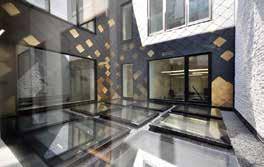
Located in the old city centre of Brussels, the new headquarters of the Conseil Supérieur de l’Audiovisuel, Fédératon Wallonie-Bruxelles (CSA) takes up an entre 19th century building that has been completely renovated by Ledroit Pierret Polet Architects. The large work space on the ground foor is fooded with zenith light thanks to the almost totally transparent ceiling made of 9 truncated pyramid skylights surmounted by 9 fat Fakro roof windows. These are highly advanced fat roof windows with excellent heat insulaton propertes, class-leading performance ratngs and an advanced automatc control system. In additon, one of the Fakro fat roof windows has been specially fted with a remotecontrolled electric motor to enable natural air conditoning.
Au milieu du paysage pitoresque de Kančevci, en Slovénie, se trouvent deux Tiny Houses conçues par les architectes Maja et Goran Dominko, en collaboraton avec Mitos Grup, spécialiste des constructons ossature bois. Les micro-maisons sont recouvertes d’une coque en aluminium blanc Prefalz de Prefa. Le revêtement a été posé en diférentes largeurs qui donnent à la matère une apparence douce et fuide. Un détail sur l’avant-toit est partculièrement intéressant : la transiton du toit à la façade est réalisée avec un pli légèrement saillant sans interrompre visuellement les joints vertcaux. Il n’y a pas de véritable goutère puisque la surface du toit n’est que de 21 m². Les bâtments font parte du lieu événementel Pri Momi et servent de logements confortables pour les fêtes, mariages et fêtes de famille.
Sul pendio della cità di Kančevci, in Slovenia, gli architet Maja e Goran Dominko hanno realizzato in collaborazione con Mitos Grup, specialist delle costruzioni in legno, due Tiny Houses caraterizzate da un rivestmento in alluminio bianco puro Prefalz di Prefa. Le lastre di diferent larghezze si estendono sui lat lunghi e sul teto e creano così l’impressione che un manto sia stato disteso sulle case di legno per proteggerle. Partcolarmente interessante un detaglio della gronda: la transizione dal teto alla facciata è realizzata con una piega leggermente sporgente senza interrompere visivamente i giunt vertcali. Non è presente una vera grondaia poiché la superfcie del teto è di soli 21m². Le Tiny Hoses fanno parte del luogo per event Pri Momi e vengono utlizzate per feste, matrimoni e riunioni in famiglia.
Né de la rénovaton d’une ancienne grange, Vineho est un hébergement de charme en Italie, conçu par Paolo Mario Ornato. Dans l’espace détente et dans la salle de dégustaton, des systèmes coulissants panoramiques en aluminium Schüco ASE 67 PD assurent la contnuité entre l’intérieur et l’extérieur, optmisant l’apport de lumière naturelle. Le système en aluminium Schüco AWS 75.SI+ utlisé pour les éléments fxes, les fenêtres et les portes-fenêtres et le système Schüco ADS 75.SI+ pour les portes d’entrée donnent un style cohérent à l’ensemble. Toutes les entrées sont équipées de serrures motorisées Schüco SafeMatc.
On the sloping town of Kančevci in Slovenia, architects Maja and Goran Dominko, in partnership with Mitos Grup, specialists in tmber constructons, have built two Tiny Houses featuring Prefa’s Prefalz pure white aluminium cladding. The sheets of diferent widths extend over the long sides and roof to create the impression that a mantle has been spread over the wooden houses to protect them. A detail of the eaves is partcularly interestng: the transiton from the roof to the façade takes the form of a gently protruding fold without visually interruptng the vertcal joints. There is no real eaves as the roof area is only 21 m². The Tiny Houses are part of the Pri Momi events venue and are used for hostng partes, weddings and family gatherings.

Nata dalla ristruturazione di una vecchia stalla, Vineho è una strutura ricetva di charme nelle Langhe, progetata da Paolo Mario Ornato. Nella zona relax e nella sala degustazione stat installat i sistemi scorrevoli panoramici in alluminio Schüco ASE 67 PD, che danno contnuità tra interni ed esterni otmizzando l’apporto di luce naturale. Il sistema in alluminio Schüco AWS 75.SI+ utlizzato per le specchiature fsse, le fnestre e le porte fnestre e il sistema Schüco ADS 75.SI+ per le porte d’ingresso conferiscono uno stle coerente all’intera strutura. Tut gli ingressi sono dotat di serrature motorizzate Schüco SafeMatc.
Developed from the renovaton of an old stable, Vineho is a charming accommodaton facility in Italy designed by Paolo Mario Ornato. Schüco ASE 67 PD aluminium panoramic sliding systems have been installed in the relaxaton area and tastng room, which create contnuity between the interior and exterior by optmising the infow of natural light. The Schüco AWS 75.SI+ aluminium system used for the fxed mirrors, windows and balcony doors and the Schüco ADS 75.SI+ system used for the entrance doors give a recognisable style to the entre building. All the entrances are fted with Schüco SafeMatc.
PREMIO INTERNAZIONALE ALLA COMMITTENZA DI ARCHITETTURA INTERNATIONAL PRIZE FOR COMMISSIONING A BUILDING
2024/2025 TREDICESIMA EDIZIONE 2024/2025 THIRTEENTH EDITION

L’unico premio dedicato ai COMMITTENTI che lavorano in sintonia con i propri ARCHITETTI abbiano realizzato un’opera di qualità nell’arco degli ultimi 5 anni.
We’re looking for CLIENTS who have realized a great project working harmoniously together with their ARCHITECTS in the last 5 years.
Una giuria internazionale premierà Committenti pubblici e privati per progetti di particolare pregio architettonico, urbanistico, ambientale e sociale.
An international jury will award public and private Clients for successful projects of architecture, urban, environmental, landscaping, social value.
ISCRIZIONE GRATUITA: AUTUNNO/INVERNO 2024/2025 FREE SUBSCRIPTION: FALL/WINTER 2024/2025
Geze, spécialiste des systèmes automatques pour portes, fenêtres et technologies de sécurité, a fourni et installé 24 systèmes de portes automatques pour la Torre Pharo à Milan (projet Studio Park Associat), en coopératon avec Gualini Spa –Groupe Costm, responsable de la réalisaton de la façade. La première phase du projet a vu la fourniture de portes d’entrée avec foncton d’issue de secours, créées en combinant l’automatsaton Geze ECdrive T2 et les profls GE50NR. Dans la deuxième phase du projet, Geze a fourni les portes coulissantes automatques dédiées au cloisonnement des paliers des ascenseurs toujours via l’automatsaton ECdrive T2 et les proflés en aluminium Geze GE50N.
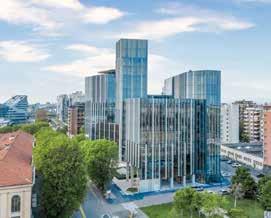
Geze, specialista di sistemi automatci per porte, fnestre e tecnologia di sicurezza, ha fornito e installato per Torre Pharo a Milano (progeto Studio Park Associat) 24 sistemi di porte automatche, in cooperazione con Gualini Spa – Gruppo Costm, incaricata della realizzazione della facciata. La prima fase del progeto ha visto la fornitura di bussole d’ingresso con funzione di via di fuga, realizzate coniugando l’automazione Geze ECdrive T2 e i profli dedicat GE50NR. Nella seconda fase del progeto Geze ha fornito le porte automatche scorrevoli dedicate alla compartmentazione degli sbarchi ascensori, sempre atraverso l’automazione ECdrive T2 e profli in alluminio dedicat Geze GE50NR.
Geze, a specialist in automatc systems for doors, windows and security technology, has supplied and installed 24 automatc door systems in Pharo Towe in Milan (Studio Park Associat project) in partnership with Gualini Spa – Gruppo Costm, which was commissioned to build the façade. The frst phase of the project saw the supply of entrance turnstles with an emergency exit functon made by combining Geze ECdrive T2 automaton and GE50NR dedicated profles. Geze supplied the automatc sliding doors for the second phase of the project, designed to compartmentalise the lif landings, again using Geze ECdrive T2 automaton and dedicated GE50NR aluminium profles.
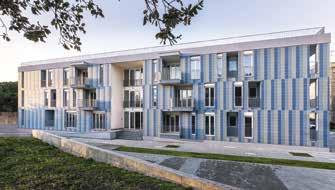
Les dalles en grès cérame de la collecton Unicolore de Casalgrande Padana ont été choisies par les architectes Giancarlo Scognamiglio et Elvira Romano pour habiller les façades de deux immeubles résidentels à Portci (Naples). Les dalles de 30x30 cm dans les tons Blu Forte, Blu et Grigio Perla ont été posées vertcalement et en décalé combinant les diférentes couleurs de la palete. L’utlisaton de dalles en grès cérame Casalgrande Padana dans les revêtements extérieurs protège le bâtment contre les intempéries et les agents polluants, lui conférant d’importants avantages en matère d’isolaton thermo-acoustque. De plus elle élimine les ponts thermiques et la condensaton en surface, met en valeur l’esthétque de façade et maintent dans la durée ses caractéristques esthétques et techniques.
Le piastrelle in gres porcellanato della collezione Unicolore di Casalgrande Padana sono state scelte dagli architet Giancarlo Scognamiglio ed Elvira Romano per rivestre le faciate di due edifci residenziali a Portci (Napoli). Le piastrelle in formato 30x30 cm nelle tonalità Blu Forte, Blu e Grigio Perla sono state posate in facciata miscelando la palete cromatca con andamento sfalsato e vertcale.
L’utlizzo delle lastre in gres porcellanato Casalgrande Padana nei rivestment esterni protegge l’edifcio contro le intemperie e gli agent inquinant conferendogli important vantaggi in termini d’isolamento termo-acustco, elimina i pont termici, e valorizza l’estetca della facciata e mantene nel tempo le carateristche estetche e tecniche.
GLISSE R de Gibus est une verrière panoramique qui allie design minimal et hautes performances, transformant les balcons, loggias, terrasses et vérandas en espaces polyvalents, indoor et outdoor à la fois. Il s’agit d’une verrière à panneaux en verre trempé monolithique qui comporte des panneaux sans cadre périmétrique en aluminium et qui coulissent sur des rails parallèles. Disponible en diférentes confguratons et avec ouverture latérale ou centrale, ce modèle peut être réalisé en diférentes tailles et en grandes dimensions.
The ceramic tles from Casalgrande Padana’s Unicolore collecton were chosen by the architects Giancarlo Scognamiglio and Elvira Romano to clad the facades of two residental buildings in Portci (Naples). 30x30 cm tles in the shades of Blu Forte, Blu and Grigio Perla were fted on the façade, mixing the colour palete to create a staggered, vertcal patern. The use of Casalgrande Padana ceramic tles on the external cladding protects the building against the weather and pollutng agents, guaranteeing some notable advantages in terms of thermo-acoustc insulaton, eliminatng heat bridges and enhances the façade’s appearance while maintaining its good looks and technical propertes over tme.

GLISSE R by Gibus is a type of panoramic glazing that combines a minimalist design with a high performance ratng, transforming balconies, loggias, terraces and verandas into versatle indoor and outdoor setngs. It is a kind of tempered monolithic glazing with panels that have no aluminium perimeter frame and slide on parallel tracks. Available in diferent confguratons with a side or central opening, this model can be manufactured in various (even large) sizes.
GLISSE R di Gibus è una vetrata panoramica che coniuga design minimale ed elevate prestazioni trasformando balconi, logge, terrazze e verande, in ambient versatli, insieme indoor e outdoor. Si trata di una vetrata a pannelli in vetro monolitco temperato che presenta pannelli privi di telaio perimetrale in alluminio e scorrevoli su binari a vie parallele. Disponibile in diferent confgurazioni e con apertura laterale o centrale, questo modello può essere realizzato in diverse misure e in dimensioni elevate.


fneoglass.eu
FINEO by AGC, fabricant européen de solutons de vitrages isolants sous vide à hautes performances a présenté Fineo-T qui permetra d’ateindre des hauteurs maximales jusqu’à 3 000 mm ! Les vitrages isolants sous vide de Fineo, sont d’environ d’un ters plus légers qu’un triple vitrage isolant, ne contennent ni gaz inertes, ni joints organiques, sont 100 % recyclable, tout en conservant leurs performances d’isolaton.
FINEO by AGC, produtore europeo di soluzioni di vetrate isolant sotovuoto ad alte prestazioni, ha presentato Fineo-T che consentrà di raggiungere altezze massime fno a 3.000 mm! Le vetrate isolant sotovuoto di Fineo sono circa un terzo più leggere delle vetrate isolant triple, non contengono gas inert o guarnizioni organiche, sono riciclabili al 100%, pur mantenendo le loro carateristche di isolamento.
FINEO by AGC, a European manufacturer of high performance vacuum insulatng glass products, has brought out Fineo-T catering for maximum heights of up to 3,000 mm! Fineo’s vacuum insulatng glass units are approximately one third lighter than triple glazing, contain no inert gases or organic seals, and are 100% recyclable while retaining their insulatng propertes.
Conçu par Chabanne Architecte, le centre aquatque Odyssée d’Aulnay-sous-Bois déplie un bâtment sculptural de béton et métal blancs de presque 7 000 m2 et 2 600 m2 de surface d’eau – l’une des plus grandes de France. Les quelque 850 m2 de solutons aluminium WICONA mises en œuvre par l’entreprise Plastalu, contribuent à l’excellente performance environnementale de l’ensemble. Le système grille MECANO 52 serreurs flants a permis de gérer la forme complexe du bâtment, intégrant, selon les endroits, des châssis WICLINE 65 ouvrant visible HI (haute isolaton), des ouvrants pompiers, des portllons barreaudés (entre l’intérieur et l’extérieur du bassin nordique), des ventelles motorisées et des portes WICSTYLE 65.
wicona.fr

Designed by Chabanne Architecte, Odyssée Aquatc Centre in Aulnay-sous-Bois features a sculptural form made of white concrete and metal covering almost 7,000 sm2, plus 2,600 m2 of basins, among the largest in France. The approximately 850 m2 of WICONA aluminium solutons installed by Plastalu contribute to its outstanding overall environmental performance ratngs. The MECANO 52 streamlined grid system enabled the complex shape of the building to be carefully controlled, incorporatng WICLINE 65 frames with HI (high insulaton) visible openings, fre resistant openings, safety turnstles (between the inside and outside of the northern pool), motorised louvres and WICSTYLE 65 doors.
D’une superfcie totale de 450 m² et doté de 5 plateaux, l’immeuble de l’agence d’architecture Philippe Dubus, dans la ville de Malakof, est caractérisé par des façades totalement vitrées. Cete enveloppe cristalline se dessine et prend vie grâce aux 30 baies coulissantes LUMEAL à ouvrant caché qui afchent des dimensions XXL (L. 5 m x h. 2,5 m). Ces baies ont été fabriquées et posées en applique extérieure par AMDF qui a également mis en œuvre une porte d’entrée et un ouvrant SOLEAL pour l’édicule donnant accès à la terrasse. Toutes les solutons Technal ont été fabriquées en aluminium Hydro CIRCAL® 75R. Ce matériau est composé d’au moins 75 % d’aluminium recyclé postconsommaton et possède l’une des empreintes carbone les plus faibles au monde soit 1,9 kg de CO2/kg d’aluminium (78 % de moins que la moyenne européenne).

technal.com
Progetato dallo studio
Chabanne Architecte, il centro acquatco Odyssée ad Aulnaysous-Bois sviluppa una forma scultorea in cemento bianco e metallo di quasi 7.000 m2 e 2.600m2 di bacini, tra i più grandi in Francia. I circa 850m2 di soluzioni in alluminio WICONA installat dall’azienda Plastalu contribuiscono all’otme prestazioni ambientali dell’insieme. Il sistema a griglia flante MECANO 52 ha permesso di gestre la forma complessa dell’edifcio, integrando, a seconda della localizzazione, i telai WICLINE 65 con aperture a vista HI (alto isolamento), aperture ant fuoco, tornelli di sicurezza (tra l’interno e l’esterno della piscina nordica), lamelle motorizzate e porte WICSTYLE 65.
Con una superfcie totale di 450 m2 per 5 piani di altezza, l’edifcio dello studio di architetura Philippe Dubus a Malakof (Francia), è caraterizzato da facciate completamente vetrate. Questo involucro cristallino prende vita grazie alle 30 fnestre vetrate scorrevoli LUMEAL con aperture nascoste che hanno dimensioni XXL (L. 5 m x h. 2,5 m). Quest element sono stat prodot e installat da AMDF che ha posato anche una porta d’ingresso e un’apertura SOLEAL che dà accesso alla terrazza. Tute le soluzioni Technal sono state realizzate in alluminio Hydro CIRCAL® 75R. Questo materiale è composto per almeno il 75% da alluminio riciclato post-consumo e ha un’impronta di carbonio tra le più basse al mondo, ovvero 1,9 kg di CO2/kg di alluminio (78% in meno rispeto alla media europea).
Covering a total area of 450 m2 and 5 storeys in height, the building designed by the architectural frm Philippe Dubus in Malakof (France) features fully glazed façades. This crystalline shell is brought to life by i0 LUMEAL sliding glass windows with concealed openings that are XXL in size (L. 5 m x h. 2.5 m). These features were manufactured and installed by AMDF, which also installed an entrance door and a SOLEAL opening providing access to the terrace. All the Technal features are made of Hydro CIRCAL® 75R aluminium. This material is composed of at least 75% postconsumer recycled aluminium and has one of the lowest carbon footprints in the world, i.e. 1.9 kg of CO2/kg of aluminium (78% less than the European average).

Des résultats favorables et encourageants synthétsent le bilan de l’éditon 2024 du Mondial du Bâtment organisé à Paris Expo Porte de Versailles du 30 septembre au 3 octobre dernier. Pendant 4 jours, les salons BATIMAT, IDÉOBAIN, INTERCLIMA et EQUIPBAIE/METALEXPO, venu aux côtés des trois salons historiques, ont accueilli plus de 135 000 partcipants, enregistrant une progression en phase avec l’augmentaton du nombre d’exposants qui ont été 2022 (+15%). Le Mondial du Bâtment s’est imposé comme l’évènement d’infuence sur l’ensemble des sujets liés à la transformaton du secteur et notamment la rénovaton énergétque concrétsée par la présence de diférents espaces Renodays. Un programme unique de rencontres qui a réuni plus de 350 conférences et animatons avec plus de 700 intervenants, a abordé les grand sujets au cœur de la flière et les défs auxquels elle doit faire face tels la rénovaton énergétque, l’innovaton, les territoires et les Femmes & Hommes du bâtment. Événement incontournable et très atendu, les Awards de l’Innovaton ont enregistré 228 candidatures (+36 % par rapport à 2022). Autre acton d’envergure, BATIMAT a accueilli le Climate Sense, une expérience immersive unique imaginée par Christan Clot, explorateur-chercheur, Fondateur et CEO du Human Adaptaton Insttute conçue pour simuler un espace et des situatons de vie à +50°C. Forts de ce bilan, les organisateurs travaillent d’ores et déjà sur la prochaine éditon du Mondial du Bâtment qui aura lieu du 28 septembre au 1er octobre 2026, à Paris Expo de la Porte de Versailles.
www.batmat.com

Risultat favorevoli e incoraggiant sintetzzano i risultat dell’edizione 2024 del Mondial du Bâtment organizzato a Paris Expo Porte de Versailles dal 30 setembre al 3 otobre. Per 4 giorni, i saloni BATIMAT, IDÉOBAIN, INTERCLIMA ed EQUIPBAIE/METALEXPO, che ha raggiunto i tre soloni storici, hanno accolto più di 135.000 partecipant, registrando una progressione in linea con l’aumento del numero di espositori pari a 2022 (+15%). Il Mondial du Bâtment si è afermato come l’evento di infuenza su tut i temi legat alla trasformazione del setore e in partcolare al rinnovamento energetco concretzzato dalla presenza di diversi spazi Renodays. Un programma di conferenze unico, che ha riunito oltre 350 convegni ed event, supportato da più di 700 relatori, ha afrontato i principali temi al centro del setore e le sfde che si trova ad afrontare come il rinnovamento energetco, l’innovazione, i territori e le Donne e gli Uomini delle costruzioni. Evento focalizzante e molto ateso, gli Innovaton Awards hanno registrato 228 candidature (+36% rispeto al 2022). Altro evento di grande interesse ospitato da BATIMAT, Climate Sense, un’esperienza immersiva unica immaginata da Christan Clot, esploratore-ricercatore, fondatore e CEO dello Human Adaptaton Insttute, progetata per simulare uno spazio e situazioni di vita a +50°C. Fort di risult in crescita, gli organizzatori stanno già lavorando alla prossima edizione del Mondial du Bâtment che si svolgerà dal 28 setembre al 1 otobre 2026, a Paris Expo Porte de Versailles.

Favourable and encouraging is the best way to sum up the results of the 2024 editon of the Mondial du Bâtment held at Paris Expo Porte de Versailles from 30th September-3rd October. Over four days, the BATIMAT, IDÉOBAIN, INTERCLIMA and EQUIPBAIE/METALEXPO exhibitons, together with the event’s three main historic salons, welcomed more than 135,000 visitors and a total of 2022 exhibitors (+15%). The Mondial du Bâtment has established itself as the infuental event on everything related to the transformaton of the is industry and energy renovaton in partcular, as testfed by the presence of several Renodays spaces. A unique conference schedule of over 350 conferences and events featuring over 700 speakers addressed the main issues at the focus of this industry and the challenges it faces, such as energy renovaton, innovaton, territories and the Women and Men of the Building Industry. A key and highly antcipated event, the Innovaton Awards registered 228 entries (+36% compared to 2022). Another highly interestng event hosted by BATIMAT was Climate Sense, a unique immersive experience devised by Christan Clot, an explorer-researcher and the founder and CEO of the Human Adaptaton Insttute. Climate Sense was designed to simulate a space and living conditons at +50°C. Buoyed by the boom in interest, the organisers are already working on the next editon of the Mondial du Bâtment, which will take place from 28th September-1st October 2026 at Paris Expo Porte de Versailles.
AA.VV.
Roberto Sambonet. La teoria della forma / The theory of form Electa, Milano 2024, ill. col. e b/n, 300 pp
Entre graphisme, design et peinture, l’œuvre de Roberto Sambonet échappe à tout étiquetage. Plutôt que de le poursuivre dans différents champs d’action, nous avons cherché un dénominateur commun à ses multiples intérêts. Au-delà des notes biographiques d’une vie aventureuse, nous nous sommes concentrés sur les contours d’une pensée animée par une curiosité scientifque pour l’acte créatif du design. Après avoir accepté ses suggestions et retrouvé les traces d’une méthode opérationnelle impliquant peintures, dessins, aquarelles et objets, nous avons peut-être trouvé les règles d’une théorie générale de la forme. Non pas un boulier de formules, mais plutôt le plaisir d’observer ce qui se passe lorsque l’ordre rigoureux de la géométrie est exposé au déf de la liberté. Textes et essais de Nina Bassoli, Elisa Camesasca, Matteo Iannello, Daniele Ledda, Enrico Morteo, Guia Sambonet e Marco Sammicheli.

Between graphics, design and painting, Roberto Sambonet’s work eludes easy cataloging. Rather than pursuing him in different felds of action, the authors looked for a common denominator that would hold together his multifaceted interests. Going beyond the biographical notes of an adventurous life, we focused on the contours of a way of thinking animated by a scientifc interest in the creative act of design.

SILVIA DALZERO
Fra grafca, design e pittura, il lavoro di Roberto Sambonet sfugge a una facile catalogazione. Anziché inseguirlo nei diversi campi d’azione, si è qui cercato un comun denominatore che ne tenesse insieme i multiformi interessi. Andando oltre le note biografche di una vita comunque avventurosa, si sono messi a fuoco i contorni di un modo di pensare animato da un interesse scientifco per l’atto creativo del progetto. Accettati i suoi suggerimenti e ripercorse le tracce di un metodo operativo che coinvolge quadri, disegni, acquerelli e oggetti, si sono forse ritrovate le regole per una teoria generale della forma. Non un abaco di formule, quanto il gusto di osservare cosa succede a esporre l’ordine rigoroso della geometria alla sfda della libertà. Testi e saggi di Nina Bassoli, Elisa Camesasca, Matteo Iannello, Daniele Ledda, Enrico Morteo, Guia Sambonet e Marco Sammicheli.
Having accepted his suggestions and retraced the traces of an operational method involving paintings, drawings, watercolors and objects, the book perhaps found the rules for a general theory of form. Not an abacus of formulas, but rather the pleasure of observing what happens when the rigorous order of geometry is exposed to the challenge of freedom. Texts and essays by Nina Bassoli, Elisa Camesasca, Matteo Iannello, Daniele Ledda, Enrico Morteo, Guia Sambonet and Marco Sammicheli.
Nuovi muri. Il ritorno di un’antica fgura nei territori del mondo LetteraVentidue Edizioni, Siracusa 2023, 204 pp
La liste des murs qui séparent les villes et les nations est désormais très longue, témoignant du fait qu’après un XXe siècle marqué par les guerres mondiales et la guerre froide, non seulement les barrières ne sont pas tombées, mais elles ont aussi considérablement augmenté, au point de constituer une présence signifcative et inattendue sur la scène mondiale. La nouvelle carte du monde ne raconte pas seulement l’histoire des frontières entre les États, elle raconte aussi celle de phénomènes migratoires historiques, d’inégalités sociales de plus en plus profondes, de guerres généralisées, etc.
La lista dei muri che dividono città e nazioni è oggi lunghissima, a testimonianza del fatto che dopo la stagione novecentesca delle Guerre Mondiali e della Guerra Fredda le barriere non solo non sono cadute ma sono aumentate in modo considerevole, sino a costituire una presenza rilevante e imprevista nello scenario globale. La nuova mappa del mondo non racconta solo la storia dei confni tra stati ma anche quella di fenomeni migratori epocali, diseguaglianze sociali sempre più estreme, guerre diffuse.
The list of walls that divide cities and nations is now very long, testifying to the fact that after the twentieth century season of the World Wars and the Cold War, the barriers not only did not fall but increased considerably, to the point of constituting a signifcant and unexpected presence in the global scenario. The new map of the world tells not only the story of the borders between states but also that of epochal migratory phenomena, increasingly extreme social inequalities, widespread wars.
Ce livre dévoile une vision de l’avenir qui change le paradigme et dans laquelle l’intelligence artifcielle (IA) transforme l’architecture en machines pensantes. Robert Cha, architecte et artiste visionnaire, explore le domaine où l’IA transforme de simples structures en entités vivantes et respirantes. Avec un ensemble étonnant de 128 œuvres d’art originales générées par l’IA, de dialogues captivants et de poèmes évocateurs, le tout accompagné des Variations Goldberg de J.S. Bach, il offre une perspective unique sur l’avenir de notre environnement bâti. L’exploration de la “boîte noire” de l’IA par Cha révèle des idées qui intrigueront les architectes, les artistes, les futurologues, les universitaires et tous ceux qui sont fascinés par l’intersection de la technologie et de la créativité.
Il libro svela una visione del futuro che cambia paradigma, in cui l’intelligenza artifciale (IA) trasforma l’architettura in macchine pensanti. Robert Cha, architetto e artista visionario, si addentra nel regno in cui l’IA trasforma semplici strutture in entità viventi e respiranti. Con una straordinaria miscela di 128 opere d’arte originali generate dall’IA, dialoghi accattivanti e poesie evocative, il tutto armonizzato con le Variazioni Goldberg di Bach, offre una prospettiva unica sul futuro del nostro ambiente costruito. L’esplorazione di Cha della “scatola nera” dell’IA rivela intuizioni che incuriosiranno architetti, artisti, futuristi, accademici e chiunque sia affascinato dall’intersezione tra tecnologia e creatività.
ROBERT CHA
AI Sapien. Variations on Architecture and the Future ORO Editions, San Francisco 2024, 192 pp
The book unveils a paradigm-shifting vision of the future where artifcial intelligence (AI) transforms architecture into thinking machines. Robert Cha, a visionary architect and artist, delves into the realm where AI transforms mere structures into living, breathing entities. With a stunning blend of 128 original AIgenerated artworks, captivating dialogues, and evocative poetry, all harmonized with Bach’s Goldberg Variations, it offers a unique perspective on the future of our built environment. Cha’s exploration of AI’s “Black Box” reveals insights that will intrigue architects, artists, futurists, academics, and anyone fascinated by the intersection of technology and creativity.



segreteria@alpidesignawards.it


ALPI DESIGN AWARDS è il premio internazionale dell’Associazione ALPI+MILANO APS in partnership con l’Arca International, che vogliono assegnare un importante riconoscimento ai designer, professionisti e aziende che realizzano progetti e prodotti per la sostenibilità della Montagna.
ALPI DESIGN AWARDS est le prix international de l’association ALPI+MILANO APS qui, en partenariat avec l’Arca International, souhaite décerner une reconnaissance importante aux concepteurs, aux professionnels et aux entreprises qui réalisent des projets et des produits durables pour la montagne.
ALPI DESIGN AWARDS is the international award of the ALPI+MILANO APS Association in partnership with l’Arca International, who want to assign an important recognition to designers, professionals and companies that create projects and products for the sustainability of the mountains.

Ce livre sur la vie et le travail d’Issey Miyake offre un aperçu inédit de la vision et de l’audace du styliste japonais. Il représente une sorte d’encyclopédie de référence sur les innovations textiles et techniques d’Issey Miyake entre 1960 et 2022, publiée sous la direction de Midori Kitamura, directrice du Miyake Design Studio, qui a travaillé aux côtés de Miyake pendant plus de 45 ans. Grâce à une fusion unique de poésie et de pragmatisme, les créations de Miyake brouillent les frontières entre tradition, technologie moderne et activités de tous les jours. Des photos magnifques montrent ses créations dans toute leur originalité quotidienne. Dans son essai, Kazuko Koike propose à la fois une chronologie complète du travail d’Issey Miyake et un portrait inédit qui décrit l’ambition et les inspirations qui l’ont guidé dès le début de son adolescence.
ISSEY MIYAKE
Essay by Kazuko Koike
Taschen, Cologne 2024, Multilingual (English, Japanese) 448 pp

Questa storia defnitiva della vita e del lavoro di Issey Miyake offre una visione unica della visione e dell’audacia del designer. Il libro è un riferimento enciclopedico alle innovazioni materiali e tecniche di Miyake dal 1960 al 2022, supervisionate da Midori Kitamura, presidente del Miyake Design Studio che ha lavorato al fanco di Miyake per oltre 45 anni.
Con una fusione unica di poesia e praticità, le creazioni di Miyake sfumano i confni tra tradizione, tecnologia moderna e funzionalità quotidiana. Splendide fotografe catturano i suoi abiti nella loro particolare originalità quotidiana. Nel suo saggio, Kazuko Koike offre sia una cronologia completa del lavoro di Miyake, sia un proflo personale senza precedenti, esaminando l’ambizione e le ispirazioni che hanno guidato il suo repertorio fn dall’adolescenza
This defnitive history of the life and work of Issey Miyake offers unique insight into the designer’s vision and daring. The book is an encyclopedic reference to Miyake’s material and technical innovations from 1960 to 2022, overseen by Midori Kitamura, the chairman of the Miyake Design Studio who worked alongside Miyake for over 45 years.
With a unique fusion of poetry and practicality, Miyake’s creations blur the boundaries between tradition, modern technology, and everyday function. Stunning photographs capture his clothes in their particular quotidian originality. In her essay, Kazuko Koike offers both a complete chronology of Miyake’s work, and an unprecedented personal profle, looking at the ambition and inspirations that have driven his repertoire from teenage years.
I. M. Pei. Life Is Architecture curated by Shirley Surya, Aric Chen Thames and Hudson, London/New York 2024, 471 ill., 400 pp
I. M. Pei (1917-2019) a été l’un des architectes les plus infuents dans le monde. La vie et l’œuvre d’I. M. Pei sont évoquées ici à travers six thèmes qui ont été au cœur de son approche originale de l’architecture : l’identité transculturelle, le réaménagement urbain, l’art et la forme civique, l’innovation matérielle et structurelle, la politique et le mécénat, et la régénération des archétypes culturels et historiques. Réunissant des documents d’archives inédits, des essais spécialement commandés, de nouvelles photographies et des contributions personnelles de ceux qui ont connu I. M. Pei et travaillé avec lui, ce livre présente à la fois des aspects connus et moins connus de la vie et de la carrière de l’architecte, tout en confrmant sa position dans l’histoire de l’architecture et dans la culture populaire.

I. M. Pei (1917-2019) è stato uno degli architetti più infuenti al mondo. La vita e il lavoro di Pei vengono qui esplorati attraverso sei temi che erano centrali nel suo approccio unico all’architettura: identità transculturale, riqualifcazione urbana, arte e forma civica, innovazione materiale e strutturale, politica e mecenatismo e rigenerazione di archetipi culturali e storici. Riunendo materiali d’archivio inediti, saggi appositamente commissionati, nuove fotografe e contributi personali di coloro che hanno conosciuto e lavorato con Pei, questo libro presenta aspetti sia celebrati che meno noti della vita e della carriera dell’architetto, consolidando al contempo la sua posizione nella storia dell’architettura e nella cultura popolare.
GAUTHIER BOLLE, MAXIME DECOMMER
Entretien avec Manuelle Gautrand
Editions Le Moniteur, Paris 2024, 144 pp
Cet ouvrage met en lumière le parcours de l’architecte française Manuelle Gautrand, qui a notamment réalisé l’extension du LaM à Villeneuve-d’Ascq, le showroom Citroën et la transformation de la Gaîté Lyrique à Paris. L’entretien qu’ont réalisé les auteurs est structuré en trois parties : la première est celle de la construction du regard de l’architecte au cours de ses années d’apprentissage ; la deuxième retrace l’épanouissement et l’affrmation de sa méthode de conception, et d’organisation de son travail; la troisième est consacrée aux questions de la transmission et de la transformation de l’existant, inscrivant sa pratique dans des enjeux actuels.

I. M. Pei (1917-2019) was one of the world’s most infuential architects. Pei’s life and work are explored here through six topics that were central to his unique approach to architecture: transcultural identity, urban redevelopment, art and civic form, material and structural innovation, politics and patronage, and regenerating cultural and historical archetypes. Bringing together previously unpublished archival materials, specially commissioned essays, new photography, and personal contributions from those who knew and worked with Pei, this book presents both celebrated and lesser-known aspects of the architect’s life and career while solidifying his position in architectural history and popular culture.
Quest’opera mette in risalto la carriera dell’architetto francese Manuelle Gautrand, che ha realizzato in particolare l’ampliamento del LaM a Villeneuve-d’Ascq, lo showroom Citroën e la trasformazione della Gaîté Lyrique a Parigi. L’intervista realizzata dagli autori è strutturata in tre parti: la prima è quella della costruzione della prospettiva dell’architetto durante i suoi anni di apprendistato; la seconda ripercorre lo sviluppo e l’affermazione del suo metodo di progettazione e di organizzazione del suo lavoro; la terza è dedicata alle questioni di trasmissione e trasformazione dell’esistente, collocandone la pratica in questioni attuali.
This work highlights the career of the French architect Manuelle Gautrand, who designed in particular the extension of the LaM in Villeneuve-d’Ascq, the Citroën showroom and the transformation of the Gaîté Lyrique in Paris. The interview conducted by the authors is structured in three parts: the frst is that of the construction of the architect’s perspective during her years of apprenticeship; the second traces the development and affrmation of her method of design and organization of her work; the third is dedicated to the questions of transmission and transformation of the existing, placing her practice in current issues.
N° de commission paritaire : n. 0226 T 87573
Dépôt légal : à parution
N° ISSN : 1027-460X
N° TVA Intracommunautaire : FR 66000037266
Imprimé en Italie - Printed in Italy
Toute reproduction totale ou partielle des contenus de cette revue est interdite, sauf autorisation de l’éditeur. È vietata la riproduzione totale o parziale del contenuto della rivista senza l’autorizzazione dell’editore.
Total or partial reproduction of the magazine without previous authorization by the editor is prohibited.
Cover

La revue internationale d’architecture, design et communication visuelle
The international magazine of architecture, design and visual communication La rivista internazionale di architettura, design e comunicazione visiva
Koichi Takada Architects, Upper House, South Brisbane, Australia (photo: Tom Ferguson; source v2com).
EDITORIALE/EDITORIAL/EDITOR’S TEXT
Addio
Adieu
Farewell
Edmond Pastor, Cesare M. Casati
Elena Cardani, Elena Tomei
Maurizio Vitta, Carmelo Strano, Mario Pisani, Luigi Prestinenza Puglisi
MONITOR
Michele Bazan Giordano
EXPERIENCE ALULA
Saudi Arabia
FUTURE
- MANTA RAY DRONE
Northrop Grumman
- FLIRT H2
Stadler
- JOBY AIR TAXI
Jobi Aviation
- MOMO
MIT Media Lab/Aeroastro
COMPETITIONS
Cesare M. Casati
Forme strane
Formes bizarres
Cesare M. Casati
Culver City, An Exemplary Idea
AREP Groupe, Monom, Czech Republic; SO IL Architects, Belgium; Dar Arafa Architecture, Egypt; Amelia Tavella, France; 08 36 50 60 68 76 82 24 10 34 28 30 00 110 116 120 122 124
Strange Forms
Editeur
Editore
Publisher S.A.M. M.D.O.
Société anonyme monégasque
31, avenue Princesse Grace MC 98000 Monaco tél. +377 92 16 51 51
Représentant Légal Rappresentante legale
Legal Representative
Edmond Pastor
Secrétariat de l’éditeur
Segreteria dell’editore
Publisher assistant
France Lanza
Directeur de la publication
Direttore responsabile
Editor
Cesare Maria Casati direzione@groupep.mc
Comité de direction
Comitato di direzione
Management committee
Matteo Citterio, Joseph di Pasquale
Consultants culturels / Consulenti culturali
Cultural consultants
Aldo Castellano, Carmelo Strano, Maurizio Vitta
Comité scientifque / Comitato scientifco
Scientifc committee
Piero Castiglioni, Odile Decq, Giorgietto Giugiaro, Gianpiero Jacobelli, Dominique Perrault, Paolo Riani, Joseph Rykwert, Alain Sarfati, Piero Sartogo
Concessionaria pubblicità per l’Italia MKT Worldwide Corso Sempione, 12 20154 Milano
Mob. +39 335 80 00 863 / +39 335 60 27 824 mezzanzanica@mktworldwide.com prestinoni@mktworldwide.com
- A+M HOUSE
Santa Monica Canyon, USA
- (W)RAPPER
Los Angeles, USA
- GLASS FOREST
Culver City, USA
Eric Owen Moss
FERRERO TECHNICAL CENTER
Alba (CN), Italy
Frigerio Design Group
CACTO BUILDING
Cascais, Portugal
Miguel Arruda Arquitectos Associados
TIANFU CULTURAL CENTER
Chengdu, Sichuan, China
And Studio
UPPER HOUSE
South Brisbane, Australia Koichi Takada Architects
SHORT
AROUND THE WORLD
Secrétariat commercial/production
Segreteria commerciale/traffco
Marketing secretariat
Claire Nardone tel. +377 92 16 51 54 claire.nardone@groupep.mc
Rédaction de Milan
Redazione di Milano
Editorial staff in Milan
Elena Tomei
via privata Martiri Triestini, 6 20148 Milano tel. +39 344 28 38 786 redazione@groupep.mc
Rédaction de Monaco
Redazione di Monaco
Editorial staff in Monaco
Elena Cardani
31, av. Princesse Grace
MC 98000 Monaco tél. +377 92 16 51 54 redaction@groupep.mc
Architects Claerhout – Van Biervliet & Adriaan Claerhout, Belgium; OODA, Albania; Fortuny-Alventosa, Morell Arquitectes, Spain;
andblack design studio, India; IDIN Architects, Thailand; X.C Studio, USA.
Luigi Prestinenza Puglisi, Giulia Mura TOPOI Temi chiave e protagonisti del prossimo futuro: Caarpa
Questions clés et protagonistes du proche avenir Key issues and players in the near future
DESIGN
- THIS IS IT YACHT
Centro Stile of The Italian Sea Group for Tecnomar
Carmelo Strano
Elena Santoro: Il disegno sperimentale Dessin Expérimentale
Experimental Drawings
Carmelo Strano
Alda Mercante è Alda Casal
Comptabilité et logistique événements
Amministrazione e logistica eventi Administration and logistics events mdo@groupep.mc
Correspondant au Japon / Corrispondente in Giappone / Correspondent in Japan
Toshyuki Kita
Correspondant IFI / Corrispondente IFI
Correspondent IFI
Sebastiano Raneri sabastiano.raneri@gmail.com
Communication / Comunicazione
Communication Alda Mercante comunicazione@groupep.mc
Mise en page / Impaginazione / Page layout
Giorgio E. Giurdanella
Traductions / Traduzioni / Translations
Isabelle-Béatrice Marcherat, Martyn J. Anderson
Abonnements / Abbonamenti
Subscriptions
SAM M.D.O. 31, avenue Princesse Grace MC 98000 Monaco tel. +377 92 16 51 54 arcainternational@groupep.mc www.arcadata.com
Distribution internationale dans les librairies
Distribuzione internazionale nelle librerie
International Distribution for bookshops A.I.E. – Agenzia Italiana di Esportazione Srl Via Manzoni, 12 20089 Rozzano (MI), Italy tel. +39 02 57 53 911 fax +39 02 57 51 26 06 info@aie-mag.com
Impression / Stampa / Printed by Litotipografa Alcione Via G. Galilei, 47 38015 Lavis (TN) Italia
Depuis 1996, année où nous avons lancé l’Arca International avec Cesare Maria Casati, le monde de la presse spécialisée a connu une profonde transformation, notamment avec l’avènement de la communication numérique qui a fortement impacté le milieu de l’information.
Malgré la passion que j’ai toujours cultivé pour l’architecture moderne et contemporaine, l’innovation technologique et de la pensée dans le domaine de la construction, il est temps de passer la main. Ce numéro 181 sera le dernier de l’Arca International
J’adresse un grand merci aux fdèles lecteurs qui nous suivent depuis toutes ces années, aux entreprises qui nous ont fait confance et aux collaborateurs qui ont contribué à maintenir la haute qualité du contenu.
Dal 1996 quando con Cesare Maria Casati abbiamo lanciato l’Arca International il mondo della stampa specializzata ha subito una profonda trasformazione soprattutto con l’avvento della comunicazione digitale che ha fortemente impattato il campo dell’informazione.
Nonostante la passione che ho sempre coltivato per l’architettura moderna e contemporanea, l’innovazione tecnologica e di pensiero del settore delle costruzioni, oggi è tempo di passare la mano.
Questo sarà l’ultimo numero del l’Arca International. Un grazie sincero ai lettori fedeli che ci hanno seguito per tutti questi anni, alle aziende che ci hanno dato fducia e ai collaboratori che hanno contribuito a mantenere elevata la qualità dei contenuti.
Since Cesare Maria Casati and I launched l’Arca International in 1996 the specialist publishing industry has undergone profound changes, especially with the advent of digital communication that has had a notable impact on the realm of information. Despite the passion I have always nurtured for modern/contemporary architecture, technological innovation and innovative thinking in the building industry, it is now time to move on. This will be the last issue of l’Arca International
A heartfelt thank you to all the loyal readers who have remained faithful to us over all these years, to the businesses that have put their trust in us, and to the contributors who have ensured the content has always been of the highest standard.
EDITORIALE / EDITORIAL / EDITOR’S TEXT
Cari amici, sono passati molti anni dal lontano 1986 quando iniziai l’avventura de l’Arca, poi trasformata in edizione internazionale con l’Arca International. Sia io che Edmond Pastor, amico e generoso editore, abbiamo raggiunto un’età importante che ci obbliga a passare la mano.
Questo numero sarà l’ultimo da noi diretto e prodotto e spero che la testata resti una testimonianza di come un appassionato dell’architettura, dopo aver diretto Domus e altre testate, e un editore illuminato, siano riusciti a diffondere e proteggere internazionalmente la cultura del progetto.
Sempre senza condizionamenti di mode accademiche o di tendenze ideologiche, credo che l’Arca International sia riuscita a presentare e analizzare progetti e idee da tutto il mondo, scrivendo in tre lingue, e arricchire la produzione culturale del Principato di Monaco che ci ospita.
Un grazie e un abbraccio particolare a Elena Tomei ed Elena Cardani che da decenni mi hanno seguito con intelligenza, affetto e lealtà; a loro si aggiungono egualmente cari anche Claire Nardone e France Lanza. Un grazie particolare e affettuoso anche a Maurizio Vitta. fratello di avventura, Emilio Ambasz, Miguel Arruda, Martyn J. Anderson, Matteo e Titi Casati, Aldo Castellano, Jacqueline Ceresoli, Matteo Citterio, Joseph di Pasquale, Giorgio Giurdanella, Guido Ghilardi, Gianpiero Jacobelli, Toshiyuki Kita, Kengo Kuma, Michele Giordano, Isabelle Béatrice Marcherat, Sergio Mazzoleni, Alda Mercante, Maria Grazia Pellegrina, Dominique Perrault, Mario Pisani, Luigi Prestinenza Puglisi, Sebastiano Raneri, Paolo Riani, Franca Rottola, Alain Sarfati, Piero Sartogo, Carmelo Strano, Paolo Emilio Sfriso e i tanti altri che mi hanno accompagnato in questi anni.
Data la mia età non è un arrivederci ma un addio e abbraccio e ringrazio tutti i lettori e amici in tutto il mondo che mi hanno seguito con affetto e interesse. Addio.
Chers amis, de nombreuses années se sont écoulées depuis 1986, lorsque j’ai commencé l’aventure de l’Arca, transformée ensuite en une édition internationale avec l’Arca International. Edmond Pastor, ami et généreux éditeur, et moi-même avons atteint un âge qui nous oblige à passer la main. Ce numéro sera le dernier que nous dirigerons et produirons, et j’espère que la revue restera un témoignage de la façon dont un passionné d’architecture, après avoir dirigé Domus et d’autres revues, et un éditeur éclairé, ont réussi à diffuser et à protéger la culture du design à l’échelle internationale. Sans jamais se laisser infuencer par des modes académiques ou des tendances idéologiques, je crois que l’Arca International a réussi à présenter et à analyser des projets et des idées du monde entier, en écrivant en trois langues, et à enrichir la production culturelle de la Principauté de Monaco qui nous accueille.
Un remerciement et une chaleureuse étreinte à Elena Tomei et Elena Cardani qui m’ont suivi pendant des décennies avec intelligence, affection et loyauté, ainsi qu’à Claire Nardone et France Lanza. Mes remerciements sincères et affectueux également à Martyn J. Anderson, Matteo et Titi Casati, Aldo Castellano, Jacqueline Ceresoli, Matteo Citterio, Joseph di Pasquale, Giorgio Giurdanella, Guido Ghilardi, Gianpiero Jacobelli, Toshiyuki Kita, Kengo Kuma, Michele Giordano, Isabelle Béatrice Marcherat, Sergio Mazzoleni, Alda Mercante, Mariagrazia Pellegrina, Dominique Perrault, Mario Pisani, Luigi Prestinenza Puglisi, Sebastiano Raneri, Paolo Riani, Franca Rottola, Alain Sarfati, Piero Sartogo, Carmelo Strano, Paolo Emilio Sfriso et Maurizio Vitta frère d’aventure. Compte tenu de mon âge, il ne s’agit pas d’un au revoir mais d’un adieu et je remercie tous les lecteurs et amis du monde entier qui m’ont suivi avec intérêt et affection.
Adieu
Dear friends, many years have passed since 1986 when I set off on a venture called l’Arca, later transformed into an international edition in the form of l’Arca International. Both me and Edmond Pastor, a friend and generous publisher, have reached an age that means it is time to hand over the reins.
This issue will be the last one we edit and publish, and I hope that the magazine will continue to bear testimony to how an architecture fan, who had previously directed Domus and other magazines, and an enlightened publisher, succeeded in spreading and protecting the culture of design on an international scale.
Refusing to bow to academic trends or ideological tendencies, I believe that l’Arca International has succeeded in presenting and analysing projects and ideas from all over the world, publishing in three languages and contributing to the cultural scene in the Principality of Monaco where we are an based. A special thanks and warm embrace to Elena Tomei and Elena Cardani, who have followed me for decades with intelligence, affection and loyalty; and my equally affectionate thanks also go to Claire Nardone and France Lanza. A very special and affectionate thank you to Maurizio Vitta, my brother in arms on this adventure, Emilio Ambasz, Miguel Arruda, Martyn J. Anderson, Matteo and Titi Casati, Aldo Castellano, Jacqueline Ceresoli, Matteo Citterio, Joseph di Pasquale, Giorgio Giurdanella, Guido Ghilardi, Gianpiero Jacobelli, Toshiyuki Kita, Kengo Kuma, Michele Giordano, Isabelle Béatrice Marcherat, Sergio Mazzoleni, Alda Mercante, Maria Grazia Pellegrina, Dominique Perrault, Mario Pisani, Luigi Prestinenza Puglisi, Sebastiano Raneri, Paolo Riani, Franca Rottola, Alain Sarfati, Piero Sartogo, Carmelo Strano, Paolo Emilio Sfriso and all those other people who have been on this journey with me over so many years.
Given my age, this is not a “see you later” but a farewell, and I would like to thank and embrace all the readers and friends around the world who have followed me with affection and interest.
Farewell.

Dal 1991, quando siamo entrate a far parte della redazione de l’Arca, sono passati oltre trent’anni, anni di crescita professionale, di condivisione di esperienze, di arricchimento intellettuale e di sinergie multidisciplinari, ma anche anni di profondi cambiamenti culturali, tecnologici e generazionali che hanno impattato con conseguenze non sempre felici il mondo dell’editoria e della comunicazione.
Abbiamo accompagnato queste trasformazioni facendo evolvere la rivista, modernizzandola nel corso degli anni, dinamizzandola con nuove rubriche e nuovi collaboratori fno all’importante svolta introdotta con il nuovo editore monegasco, Sam MDO, che ha permesso di passare da rivista bilingue, l’Arca, a rivista trilingue, l’Arca International, interamente in italiano, francese e inglese. Un percorso costellato da iniziative di successo, a volte intervallate da qualche scelta poco capita o recepita, ma portate avanti con lo stesso spirito di innovazione e proiezione verso il futuro delle origini della rivista, in una visione di unicità del prodotto editoriale, di onestà e obiettività dell’informazione.
Questo è l’ultimo numero de l’Arca International, una scelta coraggiosa, ma inevitabile, che ci proietta verso un nuovo ambizioso progetto che vedrà presto il giorno.
Ringraziamo con affetto il nostro carismatico editore di Monaco, Edmond Pastor, il nostro infaticabile direttore di sempre Cesare Maria Casati, la preziosissima segretaria di redazione Claire Nardone, e France Lanza, insostituibile assistente di direzione, i fedeli traduttori e i tanti altri collaboratori e colleghi che ci hanno accompagnato nel corso degli anni, i grafci editoriali, i tantissimi studi di architettura che da tutto il mondo hanno sempre risposto con puntualità ed effcienza alle nostre richieste.
Plus de trente ans se sont écoulés depuis 1991, lorsque nous avons rejoint la rédaction de l’Arca, des années de croissance professionnelle, de partage d’expériences, d’enrichissement intellectuel et de synergie pluridisciplinaire, mais aussi années de profonds changements culturels, technologiques et générationnels qui ont impacté le monde de l’édition et de la communication avec des conséquences pas toujours heureuses. Nous avons accompagné ces transformations en faisant évoluer la revue, en la modernisant au fl des ans, en la dynamisant avec de nouvelles rubriques et de nouveaux collaborateurs jusqu’au virage important franchi avec Sam MDO, le nouvel éditeur monégasque qui a permis de passer d’une revue bilingue, l’Arca, à une revue trilingue, l’Arca International, proposant des articles en italien, en français et en anglais. Un parcours jalonné d’initiatives réussies, parfois émaillées de choix mal compris ou mal accueillis, mais menées avec l’esprit d’innovation et de projection vers l’avenir qui a animé la revue dès l’origine, suivant une vision d’unicité du produit éditorial, d’honnêteté et d’objectivité de l’information. Ce numéro est le dernier de l’Arca International, un choix courageux mais inévitable qui nous porte vers un nouveau projet ambitieux qui verra bientôt le jour.
Nous remercions avec affection Edmond Pastor, notre charismatique éditeur à Monaco, Cesare Maria Casati, notre infatigable directeur de publication, Claire Nardone, notre très précieuse secrétaire de rédaction et France Lanza, notre irremplaçable assistante de direction, nos fdèles traducteurs et collaborateurs, nos graphistes et les nombreuses agences d’architecture nationales et internationales qui ont toujours répondu rapidement et clairement à nos questions.
We joined the editorial team of l’Arca over thirty years ago in 1991. Since then we have grown on a professional level, shared many experiences, learnt a lot and been part of numerous multidisciplinary synergies. We have also witness profound cultural, technological and generational changes that have impacted the world of publishing and communication with consequences and have not always been pleasant. We have moved with these changes by evolving the magazine, modernising it over the years, enhancing it with new columns and new contributors. A key turning point was the takeover by our new Monegasque publisher, Sam MDO, which enabled us to go from being a bilingual magazine, l’Arca, to a trilingual magazine, l’Arca International, published entirely in Italian, French and English. Along the way there have been numerous successes and, at times, a few poorly understood or perceived decisions, which, however, have been carried forward with the same spirit of innovation and eye for the future that the magazine has had from the very beginning. A vision of a unique editorial product based around honesty and focused on providing objective information.
This is the last issue of l’Arca International, a brave but inevitable decision that drives us towards an ambitious new project soon to see the light of day.
We would like to express our heartfelt thanks to our charismatic editor in Monaco, Edmond Pastor, our tireless editor-in-chief Cesare Maria Casati, our invaluable editorial secretary Claire Nardone, and France Lanza, irreplaceable assistant to the president, the faithful translators and many other collaborators and colleagues who have accompanied us over the years, the graphic designers and numerous architectural frms from all over the world that have always responded promptly and purposefully to our requests.
Non fu per caso che l’Arca trovò il nome nella storia della Bibbia. Non lo rinvenne, però, né nella sua dizione arcaica del costruire, né in quello del suo antico fondatore, ovvero Noè, il contadino, l’agricoltore. Lo trovò invece in quella colomba che partì e tornò con in bocca un ramoscello d’olivo. Gli animali e gli uomini che abbandonarono la nave seguirono la loro sorte. La colomba, invece, portò loro il futuro tutto da inventare, la sfda delle novità, il coraggio di cambia -
l’Arca, classe 1986, Milano. Da allora la rivista ha subito nel tempo varie trasformazioni soprattutto a livello editoriale e grafco, e però senza perdere di vista il suo target. Cesare Casati, che l’ha fondata dopo altre esperienze di direttore (non ultima Domus, da buon allievo di Gio Ponti), è stato sempre il garante di se stesso e della “famiglia” direttoriale-redazionale suscettibile di variabili lungo tutti questi anni (citerò uno per tutti Maurizio Vitta quale costante “colonna”). Più modestamente ho sempre vantato il fatto che il primo numero, novembre 1986, si apriva con un mio saggio dedicato alla spazialità di Zaha Hadid; ma oggi partecipo all’ultimo numero con l’ossimoro di un grande piacere e di un
Con sincera amarezza mi appresto a dare l’ultimo saluto a una rivista alla quale mi sento profondamente legato. Non solo per ciò che ho appreso dagli articoli apparsi sulle sue pagine, ma per gli anni nei quali ho prestato la mia collaborazione grazie all’apertura del suo direttore e del magnifco staff che lo ha affancato. Ho avuto la fortuna di scrivere anche le premesse dei libri della casa editrice, come l’ultimo dedicato alle opere di Massimo Mercurio in corso di stampa.
l’Arca è stata davvero una fonte di continuo stimolo per la conoscenza di ciò che avveniva nel mondo dell’architettura.
È per me molto difficile raccontare, evitando di commuovermi, il mio attaccamento a l’Arca
Dovete sapere che quando cominciavo a occuparmi di critica di architettura, verso la metà degli anni ‘90, il pano -
Maurizio Vitta
re. Quel ramoscello d’olivo non fu il segno di una continuità, ma l’avviso di un mutamento incessante. Era l’idea che la storia non si fa solo raccontandola, ma vivendola giorno per giorno. Il destino de l’Arca, rinnovatosi ne l’Arca Internationa l, è restato, fn dall’inizio, il senso dell’architettura in quanto scoperta di materie e forme sempre vive, magari solo sognate, ma incisive. E’ stata la lezione di Gio Ponti: amate l’architettura come la vita. Ma la vita è per
Carmelo Strano
grande rammarico.
Altra grande risorsa: la grande “famiglia” era supportata anche da esponenti della famiglia Casati, a cominciare da uno splendido “pilotis” lecurbusieriano, la sempre-dolce Alda Casal, moglie del sedicente burbero direttore, ricca di inventiva, e ben impegnata anche come artista e scrittrice. Ricordo gli entusiasmi iniziali a base di riunioni frequenti e poi le periodiche sollecitazioni del direttore: ognuno porti le sue idee, dobbiamo cambiare! Casati: uomo appassionato e anche umorale, nel senso più ovvio di cambiamenti di umore. Ma ho sempre visto questi umori tramutarsi subito in inquietudine e da inquietudine in azione pratica. Ed è questo, a mio avviso, che ha
Mario Pisani
Non solo in Italia ma anche in numerosi Paesi del mondo. Le sue pagine sono state un valido strumento di diffusione della migliore produzione mondiale, con l’accurata presentazione di quella più stimolanti. Ciò ha fatto in modo che tornasse a forire una comunità di spiriti liberi che si riconoscono nella qualità del costruire e nel suo essere espressione di ciò che esprime, con sensibilità e intelligenza, lo spirito del nostro tempo.
Tutto ciò è avvenuto fn dalla pubblicazione del primo numero, accolto con interesse e curiosità, tanti anni orsono, perché si avvertiva che i mensili di quegli
sua natura mobile, capricciosa, infedele, che l’architetto deve inseguire nei suoi tortuosi meandri. La storia di questa rivista è l’avventura di una esplorazione faticosa e ricca di imprevisti. L’architettura d’oggi si presenta anzitutto come disciplina organizzata, consapevole del proprio statuto culturale, gelosa dei suoi meriti didattici.
L’architettura come lezione è dunque il merito di queste pagine, coscienti del ruolo disciplinare a esse assegnato. Per
Luigi Prestinenza Puglisi
rama era dominato da riviste alle quali era difficile accedere, gestite come cancelli chiusi controllati da direttori-custodi che non lasciavano passare nulla se non per appartenenza.
Questo voleva dire che, se eri una voce
tenuto sempre in gran forma l’Arca, e per di più col valore aggiunto del senso della famiglia di cui ho detto.
Personalmente, in quel periodo e – fno alla metà degli anni Novanta – sono stato un adultero, con doppia famiglia: quella casatiana, con urgenze quasi quotidiane, e quella, anch’essa patriarcale, retta da Pierre Restany, vecchio amico di Cesare e direttore della rivista d’arte e costume D’Ars, luogo di rifessioni sui caratteri dei nuovi tempi ma con ritmi ben più lenti. Due meravigliose palestre di vita culturale che si integravano effcacemente. Il motto Il faut être de son temps – che ho sempre fatto mio – veniva rinfocolato da queste due “famiglie” fno a “infettare” in qualche modo il
anni, attenti a pubblicare i soliti personaggi, non riuscivano a colmare il vuoto di proposte. In un clima stagnante apparve quella sorta di scatola nera, un Totem disegnato, come l’intera gabbia editoriale, da Bob Noorda, lo stesso personaggio che ha inventato la segnaletica della metropolitana milanese. Rammento la passione con la quale si discuteva dei vari progetti presentati e degli editoriali che puntualmente riuscivano a cogliere gli argomenti più pungenti del nostro orizzonte culturale. Tra i numerosi motivi di interesse vi è stato anche il fatto che, fn dai primi numeri, ha accolto e ospitato i
indipendente e poco gestibile, era difficile pubblicare e comunque dovevi farlo sempre sotto controllo (nel senso che certi argomenti, anche se non era esplicitamente detto, erano tassativamente da evitare).
contro, le stesse illustrazioni, gli stessi schemi grafci compongono una qualità progettuale che fa di ogni opera pubblicata da l’Arca e poi da l’Arca International un esempio della molteplicità delle soluzioni proposte dalla cultura di oggi. Si pensi prima di tutto ai rapporti sempre più stretti tra l’architettura e la tecnologia, che fa d’ogni progetto un campo sempre più esteso di decisioni tecniche o formali, oppure all’annosa questione dei rapporti tra il costruito e
il naturale, ricca di interrogativi e contraddizioni.
All’interno di queste problematiche l’immaginazione dell’architetto si snoda liberamente nella feconda realizzazione del progetto, portando alla luce non solo le sue qualità tecniche, ma anche la loro bellezza.
Tutti i progetti pubblicati su l’Arca comunicano un senso di meraviglia, lontana dal piacere barocco, ma vicina allo stupore per l’opera ben riuscita.
Ciò conferisce alle architetture proposte, alle loro foto, ai loro disegni una forte impronta teatrale, che rende ogni progetto un personaggio, ricco di implicazioni.
La storia de l’Arca e de l’Arca International è stata dunque una storia nella quale l’architettura ha trovato la sua massima espressione.
La loro chiusura attende solo che la colomba ritorni portando con sé il nuovo messaggio.
mio pensiero teorico tra flosofa sociologica ed estetica. Anni di estrinsecazione estesa dell’individualismo, foriero di degrado etico ma in sé ricco di fermenti sorretti dal clima post-moderno – e ormai vagamente tale – che pure osteggiavo già dagli inizi anni Ottanta non ritenendolo suffcientemente robusto per sostituirsi alla modernità. Dalla nascita a oggi l’Arca ha agitato internazionalmente il fenomeno architettura e le sue problematiche più profonde e capillari. Con questo doppio binario: l’analisi del singolo progetto normalmente motivato sul piano sociologico e la ricerca dei nuovi valori e di un’ontologia aggiornata dell’architettura. Un piglio che riguarda anche il design, non un second best. Un cammino
responsabile sul piano specialistico e sul piano etico, peraltro integrato da spaccati di novità o di rivisitazioni o di rifessioni di fondo nel campo dell’arte di cui chi scrive normalmente si è fatto carico, da una certa data anche col contributo integrativo di Jacqueline Ceresoli. Tutto tranquillo e liscio? Nient’affatto. Da buon polemista Casati stimolava la dialettica, il contraddittorio. Le idee come contenuto primario. Cesare, apriamo questa rubrica? Trenta secondi di rifessione e quasi sempre era un sì, felice della novità. Casati, già dalle pagine di Domus, è stato molto attento alle neoavanguardie, molto attento e sensibile alla tensione al nuovo, al fermento, al frizzante, al linguaggio deviante come mi pia-
ce dire o, per citare Restany, all’altra faccia dell’arte. Abilissimo e trascinante ambidestro disegnatore, dha elargito spesso pillole di questo suo valore comunicativo talvolta anche a contenuto satirico o piccante se del caso.
Questo dico per sottolineare il clima in cui questa “famiglia” ha lavorato. Per quasi quarant’anni. Perlustrare l’archivio del l’Arca signifcherebbe evidenziare quattro decenni di fenomeni nell’architettura. E se l’architettura è quella disciplina inventiva o creativa che insiste in un dialogo stretto con la società, l’Arca porta immarcescibilmente la testimonianza viva della vita pubblica e privata in un lungo arco di tempo.
miei articoli. Ho mandato, con qualche trepidazione, il primo su un’opera realizzata da Massimiliano Fuksas. Questo si è trasformato in una citazione delle prime due righe dell’attacco e dopo aver perso le virgolette, appariva in fondo la frma di un’altra persona. Anni dopo ha ricordato l’episodio il compagno dell’autrice per il quale nutrivo una stima sincera perché autore di architetture di sicuro signifcato, molte delle quali realizzate nella Capitale. L’episodio venne del tutto ignorato e non ha turbato la reciproca simpatia. Tra i numerosi ricordi che riafforano alla mente, forse dovuti al rito dell’addio,
rammento la confessione di Enzo Zacchiroli, un coetaneo di Bruno Signorini autore della Johns Hopkins University a Bologna. Aspettava la pubblicazione della rivista per stilare una sorta di classifca su ciò che lo stimolava ed entrava in sintonia con il suo modo di vedere l’architettura.
Ora dovremo fare a meno di questa presenza perché come denuncia il monaco Claude Frollo, inventato da Victor Hugo nel suo capolavoro Ceci tuera cela ovvero questo ucciderà quello, indicando da una parte un libro a stampa, dall’altra la grande cattedrale. Le grandi cattedra-
li, Biblia pauperum che per secoli hanno rappresentato l’architettura, saranno sconftte dalla stampa che comincia a produrre libri. Oggi possiamo affermare che internet, divenuta la fonte della conoscenza e della diffusione del sapere, ha fnito per uccidere la stampa, messa ai margini dal ciclo continuo delle immagini.
Ancora una volta l’architettura sembra venire detronizzata e smarrire il suo ruolo nella società. Alle lettere di pietra di Orfeo si succede il rito continuo delle immagini che troppo spesso senza sedimentare svaniscono come neve al sole.
Cesare Casati, invece, oltre a darmi credito sin dall’inizio e cioè sin da quando ero un pivellino e firmavo alcuni articoli con lo pseudonimo Marcello Del Campo, mi ha sempre lasciato libero di esprimermi anche con pezzi taglienti, per esempio, contro l’Accademia. Casati, nel corso di una collaborazione che è durata quasi trenta anni, mi ha segnalato studi importanti sui quali scrivere e mi ha chiesto a sua volta di segnalargli giovani e voci nuove. Sem-
pre in nome della libertà di scelta e di critica.
A l’Arca e a Cesare devo molto e, oggi che la rivista sta chiudendo, penso che verrà a mancare un pezzo di una storia che è anche mia.
Ce n’est pas par hasard que l’Arca trouva son nom dans l’histoire de la Bible. Toutefois, elle ne le trouva ni dans son sens archaïque de construction, ni dans celui de son ancien fondateur, Noé, le paysan, l’agriculteur. Elle le trouva en revanche dans cette colombe qui partit et revint avec un rameau d’olivier dans son bec. Les animaux et les hommes qui abandonnèrent le bateau suivirent leur destin. La colombe, elle, leur apporta l’avenir à inventer, le déf
l’Arca, classe 1986, Milan. Depuis, la revue a subi plusieurs transformations au fl du temps, surtout au niveau éditorial et graphique, mais sans jamais perdre de vue ses objectifs. Cesare Casati, qui l’a fondée après avoir acquis d’autres expériences en qualité de directeur (notamment de Domus, en tant que digne élève de Gio Ponti), a toujours été le garant de son intégrité et de la “famille” éditoriale et rédactionnelle qui a connu des changements au fl de toutes ces années (mais je mentionnerai une fois pour toutes Maurizio Vitta comme “pilier” permanent jusqu’à ce jour ; plus modestement, je me suis toujours enorgueilli du fait que le premier numéro de la revue, celui de novembre 1986, s’ouvrait sur un de mes essais consacré à la spatialité de Zaha Hadid; mais aujourd’hui, je participe au dernier
C’est avec beaucoup de tristesse que je salue une dernière fois cette revue à laquelle je suis profondément attaché. Non seulement pour ce que j’ai appris grâce aux articles parus dans ses pages, mais aussi pour les années pendant lesquelles j’ai collaboré grâce à l’ouverture d’esprit de son directeur et à la magnifque équipe qui l’a assisté. J’ai également eu la chance de rédiger les préfaces des livres de la maison d’édition, comme le plus récent, consacré aux travaux de Massimo Mercurio, en cours d’impression.
l’Arca International a été une véritable source de stimulation continue pour ap-
Maurizio Vitta
de la nouveauté, le courage de changer. Ce rameau d’olivier ne fut pas le signe de la continuité, mais l’annonce d’un changement incessant. C’était l’idée qu’on ne fait pas l’histoire seulement en la racontant, mais en la vivant jour après jour. Le destin de l’Arca, renouvelé dans l’Arca International, est restée, depuis le début, le sens de l’architecture en tant que découverte de matières et de formes toujours vivantes, peut-être seulement rê-
Carmelo Strano
numéro avec à la fois un grand plaisir et un grand regret.
Une autre grande ressource : la grande “famille” était également soutenue par des membres de la famille Casati en chair et en os, à commencer par un splendide “pilotis” à la Le Corbusier, la très douce Alda Casal, épouse du directeur soi-disant bourru, pleine de créativité et également très engagée comme artiste et ecrivaine. Je me souviens de l’enthousiasme initial alimenté par des réunions fréquentes, ainsi que par les exhortations récurrentes du directeur : que chacun apporte ses idées, il faut changer ! Casati : fondateur et homme doté d’une longue expérience dans l’édition spécialisée, mais aussi “label” de la revue. Un homme passionné, mais aussi lunatique, avec ses sautes d’humeur. Mais j’ai toujours vu ces
Mario Pisani
prendre ce qui se passait dans le monde de l’architecture. Non seulement en Italie, mais aussi dans beaucoup de pays à travers le monde. Ses pages ont été un outil précieux pour la diffusion de la meilleure production mondiale, avec une présentation soignée des plus stimulantes. Cela a permis à une communauté d’esprits libres qui se reconnaissent dans la qualité de la construction et dans le fait qu’elle exprime, avec sensibilité et intelligence, l’esprit de notre temps, de refeurir. Il en est ainsi depuis la publication du premier numéro, qui a été accueilli avec intérêt et curiosité, il y a des années désormais,
vées, mais incisives. Telle a été la leçon de Gio Ponti: aimer l’architecture comme la vie. Mais la vie est par nature mobile, capricieuse, infdèle, que l’architecte doit poursuivre dans ses méandres tortueux. L’histoire de cette revue est l’aventure d’une exploration laborieuse et pleine d’imprévus. L’architecture d’aujourd’hui se présente avant tout comme une discipline organisée, consciente de son statut culturel, jalouse de ses mérites didactiques.
humeurs se transformer aussitôt en inquiétude et d’inquiétude en action concrète. Et c’est ce qui, selon moi, a toujours permis à l’Arca de rester en pleine forme, et qui plus est, avec le sens de la famille dont j’ai parlé. Personnellement, à cette époque, et jusqu’au milieu des années 1990, j’ai été adultère, avec une double famille : celle de Casati, avec des urgences quasi quotidiennes, et celle, également patriarcale, de Pierre Restany, vieil ami de Cesare et directeur du magazine d’art et de cultures contemporaines D’Ars, lieu de réfexion sur la nature des temps nouveaux, mais aux rythmes bien plus lents. Deux magnifques laboratoires de la vie culturelle qui se complétaient à merveille. La devise “Il faut être de son temps”, que j’ai toujours fait mienne, était réactualisée par ces deux
parce que l’on avait l’impression que les revues mensuelles de cette époque-là, qui se concentraient sur les personnages habituels, n’étaient pas en mesure de combler le vide de propositions. Dans un climat apathique est apparue cette sorte de boîte noire, un Totem conçu, comme tout le layout, par Bob Noorda, qui est l’auteur également de la signalétique du métro de Milan. Je me souviens de la passion avec laquelle nous discutions des différents projets présentés et des éditoriaux qui reprenaient ponctuellement les questions les plus brûlantes de notre horizon culturel. Parmi les nombreux motifs d’intérêt, il y a eu aussi le fait que,
Il m’est très diffcile de raconter, sans m’émouvoir, mon attachement à l’Arca
Luigi Prestinenza Puglisi
Il faut savoir que lorsque j’ai commencé à m’intéresser à la critique d’architecture, vers le milieu des années 1990, le secteur était dominé par des revues auxquelles il était diffcile d’accéder, gérées comme des portes fermées contrôlées par des directeurs de rédaction-gardiens qui ne laissaient rien passer, si ce n’est par appartenance à un groupe. Cela signifait que, si vous étiez une voix indépendante et diffcilement gé-
rable, il était diffcile de publier et, dans tous les cas, vous deviez toujours le faire sous contrôle (en ce sens que certains sujets, même s’ils n’étaient pas explicitement mentionnés, devaient absolument être évités). Au contraire, Cesare Casati, en plus
L’architecture comme leçon est donc le mérite de ces pages, conscientes du rôle méthodologique qui leur est attribué. Par contre, les mêmes illustrations, les mêmes schémas graphiques composent une qualité de conception qui fait de chaque œuvre publiée par l’Arca puis par l’Arca International un exemple de la pluralité des solutions proposées par la culture d’aujourd’hui. On pense d’abord à la relation de plus en plus étroite entre l’architecture et la technologie,
qui fait de chaque projet un champ toujours plus étendu de décisions techniques ou formelles, ou à l’éternelle question du rapport entre le bâti et le naturel, pleine d’interrogations et de contradictions. Au sein de ces problèmes, l’imagination de l’architecte se révèle librement dans la réalisation réussie du projet, qui met en lumière non seulement ses qualités techniques, mais aussi sa beauté. Tous les projets publiés transmettent un sentiment d’émerveille-
ment, loin du plaisir baroque, mais proche de l’étonnement devant le travail bien fait. Cela confère aux architectures proposées, à leurs photos, à leurs dessins, une forte empreinte théâtrale, qui fait de chaque projet un personnage riche d’implications. L’histoire de l’Arca et de l’Arca International a donc été une histoire où l’architecture a trouvé sa plus haute expression. Leur fermeture n’attend plus que le retour de la colombe, porteuse d’un nouveau message.
“familles” jusqu’à “contaminer” en quelque sorte, ma réfexion théorique entre philosophie sociologique et esthétique. Des années d’expression poussée de l’individualisme, porteur de dégradation éthique mais en soi riche de ferments alimentés par le climat postmoderne – et aujourd’hui vaguement semblable – auquel je m’opposais déjà au début des années 1980, ne le jugeant pas assez solide pour remplacer la modernité. De sa naissance à aujourd’hui, l’Arca a agité sur la scène internationale le phénomène de l’architecture et ses enjeux les plus fondamentaux et les plus subtiles. Avec cette double piste : l’analyse du projet individuel normalement motivé sur le plan sociologique et la recherche de nouvelles valeurs et d’une ontologie actualisée de l’architecture. Une
approche qui concerne également le design, et non un pis-aller. Un parcours responsable sur le plan professionnel et éthique, complété par ailleurs par de nouvelles idées ou des réfexions de fond dans le domaine de l’art dont je me suis normalement chargé, avec, à partir d’une certaine date, la contribution complémentaire de Jacqueline Ceresoli. Tout se passe dans le calme et en douceur ? Pas du tout. En bon polémiste, Casati stimulait la dialectique et le contradictoire. Et je ne me suis certainement pas fait prier. Les idées comme contenu primordial. Cesare, ouvrons cette rubrique ? Trente secondes de réfexion et c’était presque toujours un oui, heureux de la nouveauté. Déjà dans les pages de Domus, Casati était très attentif aux néo-avant-gardes, très attentif et sensible
à la tension que suscite la nouveauté, au ferment, au pétillant, au langage déviant comme j’aime à le dire ou, pour citer Pierre Restany, à l’autre face de l’art. Dessinateur ambidextre extrêmement doué et passionnant, il distribuait souvent des perles de sa valeur expressive et communicative, parfois même au contenu satirique ou piquant, selon les cas, au cours des travaux ou en les attendant. Je dis cela pour souligner le climat dans lequel cette “famille” a travaillé, pendant près de quarante ans. Explorer les archives de l’Arca, serait mettre en lumière quatre décennies de phénomènes architecturaux. Et si l’architecture est cette matière inventive ou créative qui prône un dialogue étroit avec la société l’Arca est un témoignage vivant et immortel de la vie publique et privée sur une longue période.
dès les premiers numéros, elle avait accueilli mes articles. J’ai envoyé le premier article, avec une certaine appréhension, sur un ouvrage réalisé par Massimiliano Fuksas. Il s’est transformé en une citation des deux premières lignes de l’accroche, et après avoir perdu les guillemets, c’est la signature de quelqu’un d’autre qui apparaissait en bas. Des années plus tard, le compagnon de l’auteure, que j’estimais sincèrement parce qu’il était le créateur d’architectures d’une grande importance, la plupart construites dans la capitale, s’est souvenu de cet épisode. Cet épisode fut complètement ignoré et n’a pas affecté la
sympathie réciproque.
Parmi les nombreux souvenirs qui me reviennent à l’esprit, peut-être en raison de cet adieu, je me souviens de la confession d’Enzo Zacchiroli, un contemporain de Bruno Signorini auteur de l’université Johns Hopkins de Bologne. Il attendait la sortie de la revue pour établir une sorte de classement de ce qui le stimulait et correspondait à sa façon de voir l’architecture. Nous devrons désormais nous passer de cette présence car comme le déplore le prêtre Claude Frollo, personnage inventé par Victor Hugo dans son chef-d’œuvre Ceci tuera cela, en indiquant d’une part
de m’accorder sa confance dès le début, c’est-à-dire lorsque j’étais un débutant et que je signais quelques articles sous le pseudonyme de Marcello Del Campo, m’a toujours laissé libre de m’exprimer, même dans des articles virulents, par exemple, contre l’académie.
un livre imprimé, de l’autre la grande cathédrale. Les grandes cathédrales, Biblia pauperum qui ont représenté l’architecture pendant des siècles, seront vaincues par l’imprimerie qui commence à produire des livres. Aujourd’hui, nous pouvons affrmer qu’Internet, qui est devenu la source de la connaissance et de sa diffusion, a fni par tuer la presse, mise en marge par le cycle continu des images. Une fois de plus, l’architecture semble être détrônée et perdre son rôle dans la société. Aux lettres de pierre d’Orphée succède le rite continu des images qui, trop souvent sans se fxer, s’évanouissent comme neige au soleil.
Au cours d’une collaboration qui a duré près de trente ans, Cesare Casati m’a signalé des études importantes à commenter et m’a demandé de lui indiquer à mon tour des jeunes prometteurs et des voix nouvelles, toujours au nom de la liberté de choix et de critique.
Je dois beaucoup à l’Arca et à Cesare et, aujourd’hui, au moment où la revue ferme ses portes, je pense qu’un morceau d’une histoire qui est aussi la mienne va disparaître.
It was no coincidence that l’Arca (the Ark) was named after a story in the Bible. But it did not come from that archaic word for a building or the building of the Ark, namely Noah, a peasant and a farmer. It actually came from the dove that few off and then returned with an olive branch in its mouth. The animals and men who left the Ark simply followed their fate. The dove, on the other hand, brought them the future that was waiting to be created,
l’Arca, class of 1986, Milan. Since then the magazine has undergone various transformations over time, especially on an editorial/ graphic levels, but without losing sight of its target audience. Cesare Casati, who founded it after other experiences as an editor (not least at Domus under the mentorship of Gio Ponti), has always been the guarantor of himself and of an editorial-publishing “family” that has had a number of fxed points over all these years (but I will mention one in particular, Maurizio Vitta, who has been a “bearing column” right down to the present day; on a more scale, I have always been able to boast that the frst issue, back in November 1986, opened with an essay of mine dedicated to Zaha Hadid’s spatiality; but I am now contributing to this last issue with an oxymoronic
It is with sincere regret that I bid farewell to a magazine to which I feel deeply attached. Not only for what I have learnt from the articles it published, but for the years we worked together thanks to the openness of its editor-in-chief and the magnifcent staff that supported him. I have also had the good fortune to write introductions to some of the books it has published, such as the recent publication about the works of Massimo Mercurio, which is currently going to print.
l’Arca has truly been a stimulating source of constant information about what has been happening in the world of architec-
It is very diffcult for me to talk about my close ties with l’Arca without getting emotional. It is worth noting that when I started working as an architecture critic in the mid-1990s, the editorial landscape was dominated by journals that were dif-
Maurizio Vitta
the challenge associated with new things, the courage to change. That olive branch was not a sign of continuity, it was the announcement of incessant change. It was the idea that history is not made just by telling it, but by living it day by day.
The fate of l’Arca and its revamped version l’Arca International has from the beginning always been a sense of architecture as the discovery of materials and forms that are alive, perhaps only dreamt of, but inci-
Carmelo Strano
sense of great pleasure and great regret. Another great resource: this big “family” has always been able to draw on the support of members of the Casati family in the fesh, starting with that oh-so-sweet and wonderful Lecurbusian “pilotis”, Alda Casal, wife of the self-styled gruff editor-in-chief, rich in inventiveness and also very engaged as an artist and writer. I remember the initial enthusiasm at all those regular meetings and then the editor’s occasional reminders: everyone bring your own ideas, we must change! Casati: founder and man of long editorial experience but also the magazine’s main “label”. A passionate and also humorous man and, yes, I do mean that in the most obvious sense of his changing moods.
But I have always seen these moods swing
Mario Pisani
ture. Not only in Italy but also in numerous countries around the world. Its pages have been a valuable means of promoting the world’s best and most stimulating designs. This has enabled a community of free spirits to fourish once again; people who recognise themselves in high-quality building that expresses the spirit of the age in which we live with sensitivity and intelligence.
This has been the case ever since the frst issue was published, which was greeted with interest and curiosity many years ago, since there was a general feeling that the monthly magazines back then, which
sive. That is what Gio Ponti taught us: love architecture like life. But life is by its very nature feeting, capricious, unfaithful and architects are called upon to follow its tortuous meanderings. The story of this magazine is an adventurous and exhausting exploration of all kinds of unexpected events. Today’s architecture presents itself frst and foremost as an organised discipline, aware of its own cultural status, jealous of its didactic merits. The magazine has the merit
Luigi Prestinenza Puglisi
fcult to get into and run behind closed doors under the control of editors-custodians who only let you in if your were part of the clique. This meant that, if you were an independent voice who always said what you thought, then it was hard
instantly into restlessness and then from restlessness into pragmatic action. And it is this, in my opinion, that has always kept l’Arca in such great shape, with the added value of the sense of family I mentioned above. Personally, during that period and – until the mid-1990s – I was an adulterer with a double family: Casatian family with so much urgent issues to deal with on an almost daily basis, and another patriarchal family headed by Pierre Restany, an old friend of Caesar’s and editor of the art and lifestyle magazine D’Ars, a place for refecting on the latest events at a much slower pace. Two wonderful bastions of cultural life that complemented each other so effectively. The motto Il faut être de son temps – which I have always made my own –was revamped by these two “families” to the
all published the work of the usual suspects, were unable to fll a certain void in terms of architectural designs. During this period of stagnation, a sort of black box appeared, a Totem designed by Bob Noorda, the same man who designed the Milan underground signs. I remember the passion with which we discussed the various projects proposed and the editorials that regularly managed to tackle the most cutting-edge topics on our cultural scene. Amongst other interesting things, it welcomed and accommodated my articles right from the very frst issue. It was with some trepidation that I sent in my frst
to get published and, in any case, you were always kept under a tight leash (in the sense that certain subjects, even if this was not explicitly said, were absolutely to be avoided).
Cesare Casati, on the other hand, not only
of explaining architecture, aware of the disciplinary role it has been assigned. On the other hand, the illustrations and graphics are of such design quality that every work/project published in l’Arca and later in l’Arca International are an example of everything modern-day architectural design has to offer. The frst thing to come to mind is the increasingly close relationship between architecture and technology, which makes every new project an ever-expanding feld
of technical or formal measures examining the age-old question of the relationship between the built and the natural, a minefeld of issues and contradictions. These problems enable the architect’s imagination to freely unfold in the successful creation of a project, bringing to light not only its technical qualities, but also their beauty. All the projects published in l’Arca convey a sense of wonder, a far cry from baroque pleasure but much closer to
amazement upon the completion of a successful endeavour. This gives the architectural works showcased, and the photos and drawings of them, a powerful theatrical feel that runs each project into a character in its own right, full of implications. The story of l’Arca and l’Arca International has, therefore, been a story that has exalted architecture. As their story now draws to a close, we wait for the dove to return with a new message.
point of somehow “infecting”my theoretical thinking with something between sociological philosophy and aesthetics. Years of extensive outward-driven individualism, harbinger of ethical degradation but in itself rich in input through the post-modern – now only vaguely so – a movement I had been opposing since the early 1980s, since I did not consider it to be robust enough to replace modernity. From its inception to the present day, l’Arca has attempted to shake up the international of architecture scene and its deepest and most far-reaching issues. Working along these twin lines: the analysis of individual project normally motivated on a sociological level and the search for new values and an updated ontology of architecture. An approach that was equally focused on design, which never
played second fddle. A responsible approach both on a specialist and ethical level, supplemented by glimpses of innovations, revisitations or poignant refections in the feld of art that this particular writer has often taken on, from a certain point onwards also drawing on the help of Jacqueline Ceresoli. Did everything always run quietly and smoothly? Not at all. As a good polemicist, Casati encouraged dialectics and contradiction. And this writer certainly didn’t hold back. Ideas as the main content.
Cesare, shall we start this new column? Thirty seconds’ thought and the answer was almost always yes, happy to be starting something new. Casati was already very attentive to the neo-avant-garde movement back when he was working for Domus, acutely aware of
and sensitive to the power of the new, its bubbling ferment, its deviant language as I like to pot it or to quote Restany, the other side of art. An extremely skilful and enthralling ambidextrous draughtsman, his works and their implications were full of expressive and communicative value, sometimes even with satirical or spicy content when appropriate. My intention here is to emphasise the atmosphere in which this “family” has worked. For almost forty years. Scouring the archives of l’Arca would mean highlighting four decades of phenomena in architecture. And if architecture is an inventive or creative discipline that insists on close interaction with society, then l’Arca bears immortal living testimony to public and private life over a lengthy period of time.
article about a work designed by Massimiliano Fuksas. The article was reduced to just the frst two lines and then, after removing the inverted commas, somebody else’s signature appeared at the bottom of the article. Years later, the writer’s companion, for whom I had the utmost esteem as the designer of architecture of real signifcance (much of which built in the capital), mentioned what had happened, but we let bygones be bygones and remained on excellent terms.
Among the many memories that come back to mind, perhaps due to the ritual of saying farewell, I recall a confession Enzo
Zacchiroli once made, a contemporary of Bruno Signorini’s from Johns Hopkins University in Bologna. He used to wait for the magazine to be published to draw up a sort of ranking of what motivated him and was in tune with his way of seeing architecture.
Now we will have to do without this input because as the monk Claude Frollo noted (the character invented by Victor Hugo in his masterpiece) Ceci tuera cela (i.e. this will kill that) as he pointed towards a printed book on one hand and the great cathedral on the other. The great cathedrals, Biblia pauperum that represented
architecture for centuries, would be defeated by the printing press as it began producing books.
We can now say that the Internet, which has become a source of information and of spreading knowledge, has ended up killing the press, which has been pushed to the sidelines by a constant fow of images. Once again, architecture seems to have been dethroned and lost its role in society.
The stone letters of Orpheus give way to the constant ritual of images which, too often, vanish like snow in the sun before they have even made their mark.
gave me a free hand right from the start, i.e. from when I was a rookie critic and wrote a few articles under the pseudonym Marcello Del Campo, always giving me complete freedom of expression, even if my writing was highly critical of, say, the
Academy. Over the almost thirty years that we worked together, Casati suggested numerous important frms I should write about and also asked me to let him know about any talented young architects or new voices on the scene. Always allow-
ing me complete freedom of choice and criticism.
I owe a great deal to l’Arca and to Cesare and, now that the magazine is closing, I think a piece of a history that I have also been part of is coming to an end.
Milan lui a dédié une petite place, non loin de la station de métro Repubblica. Lina Bo, née en décembre 1914 à Rome, est l’une des rares femmes architectes à avoir obtenu son diplôme dans la capitale italienne. Après s’être installée à Milan, elle a travaillé avec Gio Ponti et Carlo Pagani, avant de créer sa propre agence. En 1944, après le bombardement de son atelier, elle est appelée à diriger Domus. Elle est surtout appréciée pour les travaux qu’elle a réalisés au Brésil, où elle avait “émigré” en 1946 avec son mari, Pietro Maria Bardi, un critique d’art déjà très connu à l’époque. Ils avaient embarqué ensemble à Gênes sur un navire marchand, l’Almirante Jaceguay, à destination de Rio de Janeiro. Elle est restée au Brésil pour toujours. Pas même la dictature militaire ne l’a poussée à quitter São Paulo, où elle est décédée en 1992. Elle a conçu le bâtiment emblématique de cette ville, l’audacieux musée d’art et la Casa de Vidro (la maison de verre), la résidence du couple, dans le quartier Morumbi qui était désertique à l’époque. Lina Bo a été mise à l’honneur dans une belle exposition organisée au Musée Galata à Gênes


Mpar Oliviero Pluviano, correspondant historique de l’Ansa au Brésil. Les nombreux panneaux exposés (avec des légendes de Daniela Altimani) ne parlent pas seulement de Lina Bo, mais aussi de plus de 120 personnalités italiennes, vivantes ou non, qui eurent un rôle fondamental dans l’histoire, petite ou grande, du Brésil : de l’ingénieur Domenico Sambuceti, le premier “immigrant” italien en Amazonie, au XVIIIe siècle, directeur des travaux du Fort Royal Prince de Beira, à l’impératrice Teresa de Bourbon, qui épousa un roi brésilien. On y trouve aussi des peintres, des musiciens, des graphistes comme Maria Bonomi, des religieux, des commerçants, des agriculteurs, des charcutiers, des pilotes (Senna), des acteurs de théâtre, des comédiens (Adolfo Celi a longtemps vécu et travaillé au Brésil), des journalistes, dont beaucoup ont dû faire leurs armes au prix de sacrifces, mais qui ont fni par obtenir des résultats éclatants. Comme l’exposition se tenait à Gênes, la priorité absolue a été donnée aux Liguriens, mais peu importe car, au-delà des régionalismes, la présence persistante au Brésil a été cent pour cent italienne, y compris Giuseppe Garibaldi.

ilano le ha dedicato una piazzetta, non lontano dalla MM Repubblica. Lina Bo, romana, classe1914, è stata fra le pochissime donne architetto laureatasi a Roma. Trasferitasi a Milano, ha lavorato negli studi di Gio Ponti e Carlo Pagani per poi mettersi in proprio. E nel ‘44, dopo un bombardamento del suo atelier, fu chiamata a dirigere Domus. È apprezzata soprattutto per i lavori realizzati in Brasile dove “emigrò”, con il marito Pietro Maria Bardi, già allora notissimo critico d’arte, nel ’46, imbarcandosi a Genova su un mercantile, l’Almirante Jaceguay, diretto a Rio de Janeiro. In Brasile restò per sempre. Neppure la dittatura militare la portò ad abbandonare San Paolo dove morì nel ’92. Progettò l’edifcio-icona di quella città, l’ardito Museo d’Arte e la Casa di Vidro, residenza della coppia, nell’allora desertico quartiere di Morumbi. Solo per citare le sue opere più note. La Bo, è stata omaggiata in una bella mostra che si è tenuta a Genova al Museo Galata, organizzata dallo storico
corrispondente dell’Ansa in Brasile, Oliviero Pluviano. I tanti pannelli esposti (con i testi curati da Daniela Altimani) non raccontano però solo della Bo, ma di oltre 120 personaggi italiani, viventi e no, che ebbero (o hanno) un ruolo fondamentale nella storia, grande o piccola, del Brasile: da Domenico Sambuceti, primo “immigrato” italiano in Amazzonia (XVIII secolo) progettista del Real Forte Príncipe da Beira all’imperatrice Teresa di Borbone che sposò un re brasiliano. Ma anche pittori, musicisti, graphic designer come Maria Bonomi, religiosi, negozianti, agricolotori, salumieri, piloti (Senna), teatranti, attori (il nostro Adolfo Celi visse e lavorò a lungo in Brasile), giornalisti, molti dei quali dovettero, farsi le ossa con sacrifci, ottenendo infne risultati clamorosi. Data la location genovese della mostra si è data priorità assoluta ai liguri, ma poco importa perché, al di là dei regionalismi, la persistente presenza in quei luoghi è stata italiana al cento per cento. Giuseppe Garibaldi compreso.
Milan has dedicated a small square to her, not far from Repubblica metro station. Lina Bo, born in Rome in 1914, was one of the very few women architects who graduated in Rome. After moving to Milan, she worked at Gio Ponti and Carlo Pagani’s frms before setting up her own business. And then in 1944, after her workshop was bombed, she was asked to edit Domus magazine. She is especially appreciated for her work in Brazil where she “emigrated” with her husband Pietro Maria Bardi, a well-known art critic at the time, in 1946, embarking on a merchant ship called the Almirante Jaceguay in Genao bound for Rio de Janeiro. She never left Brazil. Not even the military dictatorship made her leave São Paulo, where she died in ‘92. She designed one of the city’s most iconic buildings, the eye-catching Art Museum and Vidro House, the couple’s home in the then deserted Morumbi district. Just some of her bestknown works. Bo was honoured in a wonderful exhibition held at Galata Museum in Genoa organised by Ansa’s historic correspondent in Brazil, Oliviero Pluviano. The numerous panels on display (with explanatory texts by Daniela Altimani) ae not just about Bo, they also tell us about over 120 Italian personalities, both living and dead, who had (or have) a fundamental role, to some extent or other, in Brazil’s history: from Domenico Sambuceti, the frst Italian ‘immigrant’ to Amazonia (18th century), designer of the Real Forte Príncipe da Beira, to Empress Teresa of Bourbon, who married a Brazilian king. Not to mention various painters, musicians, graphic designers like Maria Bonomi, clergymen, shopkeepers, farmers, sausage makers, racing drivers (Senna), theatrical performers, actors (our very own Adolfo Celi lived and worked in Brazil for a long time) and journalists, many of whom had to make great sacrifce before eventually achieving great success. Given the Genoese location of the exhibition, absolute priority was given to Ligurians, but that is fairly irrelevant because, regionalisms aside, everyone in question was one hundred per cent Italian. Giuseppe Garibaldi included.
La Galerie d’Art Glenda Cinquegrana de Milan, via Settembrini 17, a exposé les clichés érotiques de la photographe et ex mannequin allemande Ellen von Unwerth à côté de ceux, tout aussi érotiques, d’Helmut Newton (titre de l’exposition Eroticism in fashion photography). Un succès sans précédent. Peut-être aussi en raison de la volonté du public de ne pas se plier à la dictature galopante du politiquement correct, d’autant plus que Ellen von Unwerth, bien que favorable à #MeToo, soutient que ses modèles, des femmes fères et courageuses, sont “parfaitement conscientes de leur rôle dans le monde, et que les poses qui, aux yeux des immanquables moralistes, peuvent paraître “inconvenantes” ou machistes sont, en réalité, un motif de ferté pour ces femmes: elles sont féministes au sens le plus vrai et le plus naturel du terme”, malgré les poses très érotiques, souvent lesbiennes ou légèrement bondage (toutes simulées, jamais hard, sauf dans l’esprit de ceux qui les regardent d’un autre œil). Même si Helmut Newton a immortalisé Ellen von Unwerth comme modèle, la photographe allemande a beaucoup appris à ses cotés, et la présentation de ses photos avec celles du grand photographe est une source de ferté pour elle. Ainsi, une Ava Gardner qui n’est plus toute jeune (Newton), Vincent Cassel qui mord la jambe voilée de Monica Bellucci (von Unwerth), Naomi Campbell en version Baby Woman photographiée assise sur les toilettes les jambes écartées (von Unwerth), la merveilleuse photo géante en couleurs de la mannequin américaine Kristen McMenamy complètement nue, adossée à un mur décrépi, photographiée à Monte-Carlo par Newton, de Claudia Schiffer pour Guess, Linda Evangelista avec Kristen Turlington pour Vogue Italia (von Unwerth) et bien d’autres encore. Un hymne à la liberté de l’image en ces temps diffciles.


La Galleria Cinquegrana di Milano, via Settembrini 17, ha esposto le immagini erotiche della fotografa nonché ex modella tedesca Ellen Von UnWerth accanto a quelle, altrettanto erotiche, di Helmut Newton, suo maestro (titolo della mostra “Eroticism in fashion photography”). Un successo senza precedenti. Forse anche per un desiderio da parte del pubblico di non genufettersi alla dilagante dittatura del politicamente corretto, tanto più che la Von UnWerth, pur favorevole al MeToo sostiene che le sue modelle, donne fere e coraggiose, sono “perfettamente consapevoli del proprio ruolo nel mondo, e che le pose che agli immancabili moralisti possono apparire “sconvenienti” o maschiliste sono in realtà, per quelle ragazze, motivo di orgoglio: sono femministe nel senso più vero e genuino del termine”, nonostante gli atteggiamenti fortemente erotici, spesso lesbici o di leggero bondage (tutto fnto, mai hard, salvo che nella mente di chi guardi con altri intenti). Anche se Newton ha immortalato la Von UnWerth in veste di modella, la fotografa tedesca da lui ha imparato molto. E l’accostamente delle sue immagini a quelle del Maestro la inorgoglisce non poco. Ed ecco così Ava Gardner non più giovane (Newton); Vincent Cassel che morde la gamba velata di Monica Bellucci (Von UnWerth); Naomi Campbell in versione Baby Woman fotografata a gambe larghe seduta sul water (Von UnWerth); la meravigliosa gigantografa a colori della top-model americana Kristen McMenamy completamente nuda, appoggiata a un muro scrostato, fotografata a Montecarlo da Newton, di Claudia Schiffer per Guess, Linda Evangelista insieme con Kristen Turlington per Vogue Italia (Von UnWerth) e tante altre. Un inno alla libertà d’immagine in tempi cupi.

VS NEWTON
Galleria Cinquegrana at Via Settembrini 17 in Milan held an exhibition of erotic images by the German photographer and former model Ellen Von UnWerth alongside the equally erotic images of her master, Helmut Newton (the exhibition was entitled “Eroticism in fashion photography”).
An unprecedented success. Perhaps also due to a desire on the part of the public not to bend to the rampant dictatorship of political correctness, all the more so since Von UnWerth (despite being a supporter of the “MeToo” movement) maintains that her models, proud and courageous women, are “perfectly aware of their role in the world, and that the poses that moralists may fnd “improper” or chauvinist are actually something those girls are proud of: they are feminists in the truest and most genuine sense of the word”, despite the highly erotic, often lesbian or slightly bondage-style poses (all fake, never hard, except in the minds of the beholder). Although Newton immortalised Von UnWerth as a model, the German photographer learnt a lot from him. And the juxtaposition of her images with those of the maestro is a source of considerable pride to her. And so we have photos of Ava Gardner, no longer young (Newton); Vincent Cassel biting Monica Bellucci’s veiled leg (Von UnWerth); Naomi Campbell looking like a Baby Woman with her legs apart sitting on the toilet (Von UnWerth); the marvellous giant colour photograph of the American supermodel Kristen McMenamy completely nude, leaning against a decrepit wall, photographed in Monte Carlo by Newton, Claudia Schiffer shot for Guess, Linda Evangelista together with Kristen Turlington for Vogue Italia (Von UnWerth) and many others. A tribute to freedom of photography in these dark times.


En août dernier, la Direction des Affaires culturelles de la Principauté de Monaco a parrainé une très belle exposition consacrée à AIUla. Cette région au patrimoine historique et environnemental extraordinaire s’étend sur plus de 22 000 kilomètres carrés au nordouest de l’Arabie saoudite, le long de l’ancienne route de l’encens. La nouvelle promenade du Larvotto, dessinée par Renzo Piano en bord de mer à Monaco, a accueilli pendant un mois l’exposition de photographies intitulée “AlUla : A Tapestry of Creativity” qui présentait des œuvres de huit artistes émergents saoudiens et internationaux qui, à travers leurs expériences immersives, ont interprété le caractère unique de ces paysages. En plus de l’intérêt artistique, ce projet représente la première exposition photographique publique d’Arts AlUla hors du Royaume d’Arabie saoudite, ainsi qu’une étape importante du programme de promotion culturelle, historique et touristique d’AlUla promu par la Commission Royale pour AlUla (RCU). En effet, en 2016, le Royaume saoudien a lancé un programme ambitieux intitulé Vision 2030, qui vise à moderniser l’économie nationale en réduisant la dépendance pétrolière et en misant sur le renforcement de secteurs industriels diversifés tels que les énergies renouvelables, la défense et, naturellement, le tourisme. Dans ce contexte de transformation du pays, la création, en 2017, de la Commission Royale pour AlUla (RCU) a représenté l’un des projets les plus intéressants en termes de portée culturelle, artistique, environnementale et de soutien à la créativité, destiné à valoriser et à sauvegarder une région aux richesses paysagères et archéologiques extraordinaires. Au cœur des vastes étendues de l’Arabie saoudite, AlUla réunit non seulement d’importants vestiges archéologiques, comme la ville d’Hégra (ou Mada’in Saleh), classée au patrimoine mondial de l’UNESCO, mais aussi une extraordinaire richesse paysagère, depuis la zone désertique où se succèdent des étendues sablonneuses, des canyons rocheux et des plateaux basaltiques, jusqu’à l’oasis verdoyante qui entoure la vieille ville. Grâce à son important patrimoine historique et naturel, AlUla est l’un des mégaprojets qui visent à développer l’offre culturelle et touristique du Royaume saoudien grâce à l’amélioration des infrastructures et à la création d’un complexe archéologique, réceptif et culturel conçu comme une sorte de musée vivant, le tout dans une perspective de développement durable. La Commission Royale pour AlUla (RCU) multiplie les partenariats afn de s’entourer de compétences techniques, économiques et intellectuelles internationales. AFALULA, l’agence française pour le développement d’AIUla, est partenaire de nombreux projets, tels que l’Ashar Tented Resort conçu par AW2 (en partenariat avec le groupe Accor) ou Villa Hegra de Lacaton & Vassal, une sorte de Villa Médicis à Rome ou de la Casa Velázquez à Madrid dédiée au soutien de jeunes artistes. Parmi les autres projets en cours, citons le célèbre Sharaan Resort conçu par Jean Nouvel dans la réserve naturelle de Sharaan ou le Musée d’art contemporain conçu par Lina Ghotmeh Architecture. L’art et la promotion de jeunes artistes saoudiens sont au cœur de projets d’exposition intéressants. Outre l’exposition présentée à Monaco par Arts AlUla, “Desert X AIUla 2024” est une exposition internationale d’art contemporain en plein air très intéressante qui présente des œuvres d’artistes saoudiens et internationaux dans différents lieux, allant du paysage désertique de Wadi AlFann, alias “la Vallée des Arts” aux rochers de lave de Harrat Uwayrid, une zone de soixante-cinq kilomètres carrés destinée à devenir une nouvelle destination pour l’art contemporain. Manal AlDowayan, Agnes Denes, Michael Heizer, Ahmed Mater et James Turrell sont les cinq artistes invités à réaliser les premières œuvres d’art spécifques au site qui seront inaugurées en 2026.
Lo scorso agosto, il Principato di Monaco, attraverso la Direzione degli Affari Culturali, è stato tra i perspicaci patrocinatori di una suggestiva esposizione dedicata ad AIUla, una regione dallo straordinario patrimonio storico e naturale che si estende per oltre 22 mila chilometri quadrati e mezzo nel nord ovest dell’Arabia Saudita, lungo l’antica Via dell’Incenso. La promenade du Larvotto, il nuovo lungomare di Monaco disegnato da Renzo Piano, ha ospitato per un mese la mostra fotografca “AlUla: A Tapestry of Creativity” presentando le opere di 8 tra artisti emergenti e affermati, sauditi e internazionali, che hanno interpretato attraverso diverse sensibilità l’unicità dei questi paesaggi. Oltre all’interesse artistico, questa iniziativa, che rappresenta la prima mostra fotografca pubblica di Arts AlUla fuori dal Regno dell’Arabia Saudita, è una tappa importante del piano di promozione storico-culturale e turistica di AlUla guidato dalla Royal Commision for AlUla. Il Regno Saudita ha infatti lanciato nel 2016 l’ambizioso programma Vision 2030 che mira a modernizzare l’economia nazionale riducendo la dipendenza dal petrolio e puntando sul potenziamento di settori industriali diversifcati come le energie rinnovali, la difesa e appunto il turismo. In questo contesto di trasformazione del Paese, l’istituzione nel 2017 della Royal Commision for AlUla (RCU) è uno dei progetti più interessanti per portata culturale, artistica, ambientale e di sostegno alla creatività destinato a mettere in valore e salvaguardare una regione di straordinarie ricchezze paesaggistiche e archeologiche. Immersa nelle vaste distese dell’Arabia Saudita, AlUla concentra oltre alle importanti testimonianze archeologiche, tra cui la città di Hegra patrimonio mondiale dell’UNESCO, una straordinaria ricchezza paesaggistica, dalla zona desertica che alterna distese di sabbia, canyon rocciosi, altopiani basaltici a una verdissima oasi che circonda la città vecchia. Grazie a questo importante patrimonio storico e naturale, AlUla è uno dei mega progetti destinati a sviluppare l’offerta culturale e turistica de Regno Saudita attraverso il potenziamento delle infrastrutture e la creazione di un complesso archeologico, ricettivo e culturale concepiti come una sorta di museo vivente, il tutto in un’ottica di sviluppo sostenibile. L’RCU sta stringendo molti partenariati al fne di circondarsi di competenze tecniche, economiche e intellettuali internazionali. AFALULA, l’agenzia francese per lo sviluppo di AlUla, è partner di numerosi progetti, tra cui Ashar Tented Resort di AW2 (Accor) o Villa Hegra di Lacaton &Vassal, una sorta di Villa Medici di Roma o Casa Velázquez a Madrid dedicata alla sostegno di giovani artisti. Tra gli altri progetti in corso, il famoso Sharaan Resort nella riserva di naturale di Sharaan frmato da Jean Nouvel o il Museo d’Arte contemporanea di Lina Ghotmeh Architecture. L’arte e la promozione di giovani artisti sauditi sono al centro di interessanti iniziative espositive. Oltre alla mostra presentata a Monaco da Arts AlUla, “Desert X” è un’interessantissima mostra internazionale d’arte all’aperto che ospita opere di artisti sauditi e internazionali in luoghi diversi, dal paesaggio desertico di Wadi AlFann ai terreni di roccia lavica di Harrat Uwayrid e ancora il progetto Wadi AlFann, la Valle dell’Arte, un’area che si estende per 65 km2 destinata a diventare una nuova destinazione d’arte contemporanea. Manal AlDowayan, Agnes Denes, Michael Heizer, Ahmed Mater e James Turrell, sono i primi cinque artisti invitati a creare delle opere site-specifc che verranno inaugurate nel 2026.

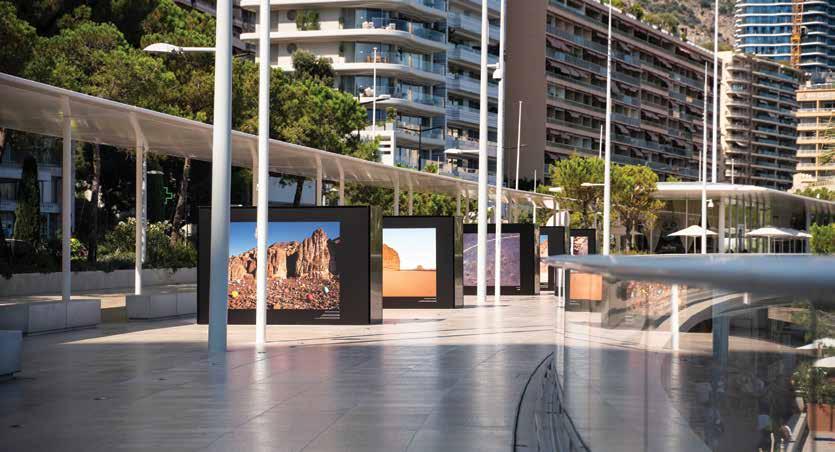
Last August, the Principality of Monaco’s Directorate of Cultural Affairs was one of the discerning patrons of a striking exhibition dedicated to AIUla, a region with an extraordinary historical and natural heritage stretching over 22,000 square kilometres in the north-west of Saudi Arabia along the ancient Incense Route. For an entire month, the promenade du Larvotto, Monaco’s new promenade designed by Renzo Piano, hosted a photographic exhibition entitled “AlUla: A Tapestry of Creativity” presenting the works of 8 emerging and well-established Saudi and international artists who gave their own twist to the uniqueness of these landscapes according to their own artistic sensibilities. In addition to its artistic interest, this project, which is Arts AlUla’s frst public photographic exhibition outside the Kingdom of Saudi Arabia, is an important step in AlUla’s cultural-historical/ tourist promotion plan headed by the Royal Commission for AlUla. The Saudi Kingdom actually launched its ambitious Vision 2030 programme in 2016, which aims to modernise the national economy by reducing dependence on oil and focusing on strengthening such diverse industries as renewable energy, defence and, indeed, tourism. Within the framework of the country’s transformation, the establishment in 2017 of the Royal Commission for AlUla (RCU) is one of the most interesting projects in terms of its cultural, artistic, environmental and creative support scope aimed at enhancing and safeguarding a region of extraordinary landscape/archaeological riches. Nestled in the vast expanses of Saudi Arabia, AlUla boasts not only important archaeological sites, including the UNESCO World Heritage city of Hegra, but also an extraordinary richness of landscape from the desert region, which features expanses of sand, rocky canyons and basaltic plateaus, to verdant oases surrounding the old city. Thanks to this important historical and natural heritage, AlUla is one of the mega-projects aimed at boosting the Saudi Kingdom’s cultural and tourist appeal by improving the infrastructure and creating an archaeological, hospitality and cultural complex designed to be a kind of living museum, all with a view to sustainable growth. The RCU is forging many partnerships so that it can draw on a wealth of international technical, economic and intellectual expertise. AFALULA, the French development agency for ALULA, is a partner in several projects, including Ashar Tented Resort by AW2 (Accor) or Villa Hegra by Lacaton&Vassal, a kind of Villa Médicis in Rome or Casa Velázquez in Madrid focused on supporting young artists. Other ongoing projects include the famous Sharaan Resort in the Sharaan Nature Reserve by Jean Nouvel and the Museum of Contemporary Art designed by Lina Ghotmeh Architecture. Art and the promoting of young Saudi artists are the focus of interesting exhibition projects. In addition to the exhibition presented in Munich by Arts AlUla, Desert X is a very interesting international openair art exhibition featuring works by Saudi and international artists set in a variety of locations from the desert landscape of Wadi AlFann to the lava rock terrain of Harrat Uwayrid. Not to mention the Wadi AlFann project, the Valley of Art, an area covering 65 square kilometres destined to become a new destination for contemporary art. Manal AlDowayan, Agnes Denes, Michael Heizer, Ahmed Mater and James Turrell are the frst fve artists invited to create site-specifc works that will be inaugurated in 2026.


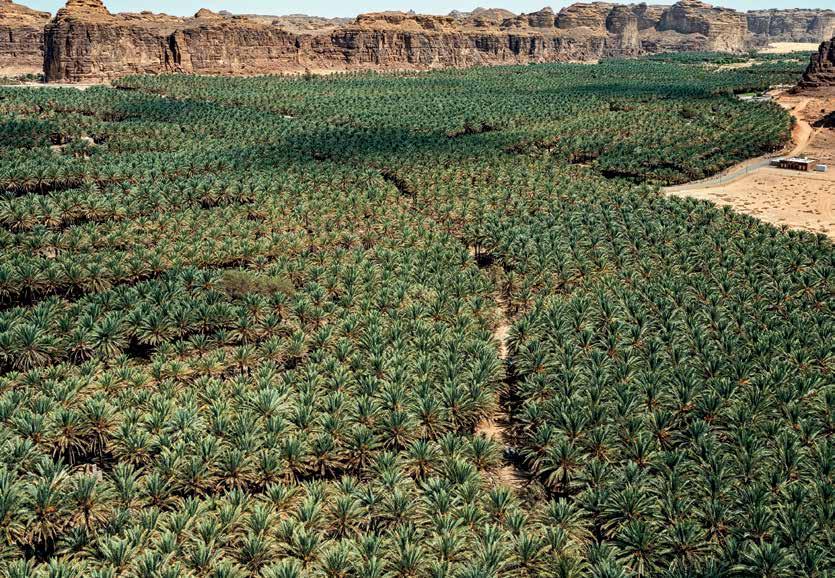


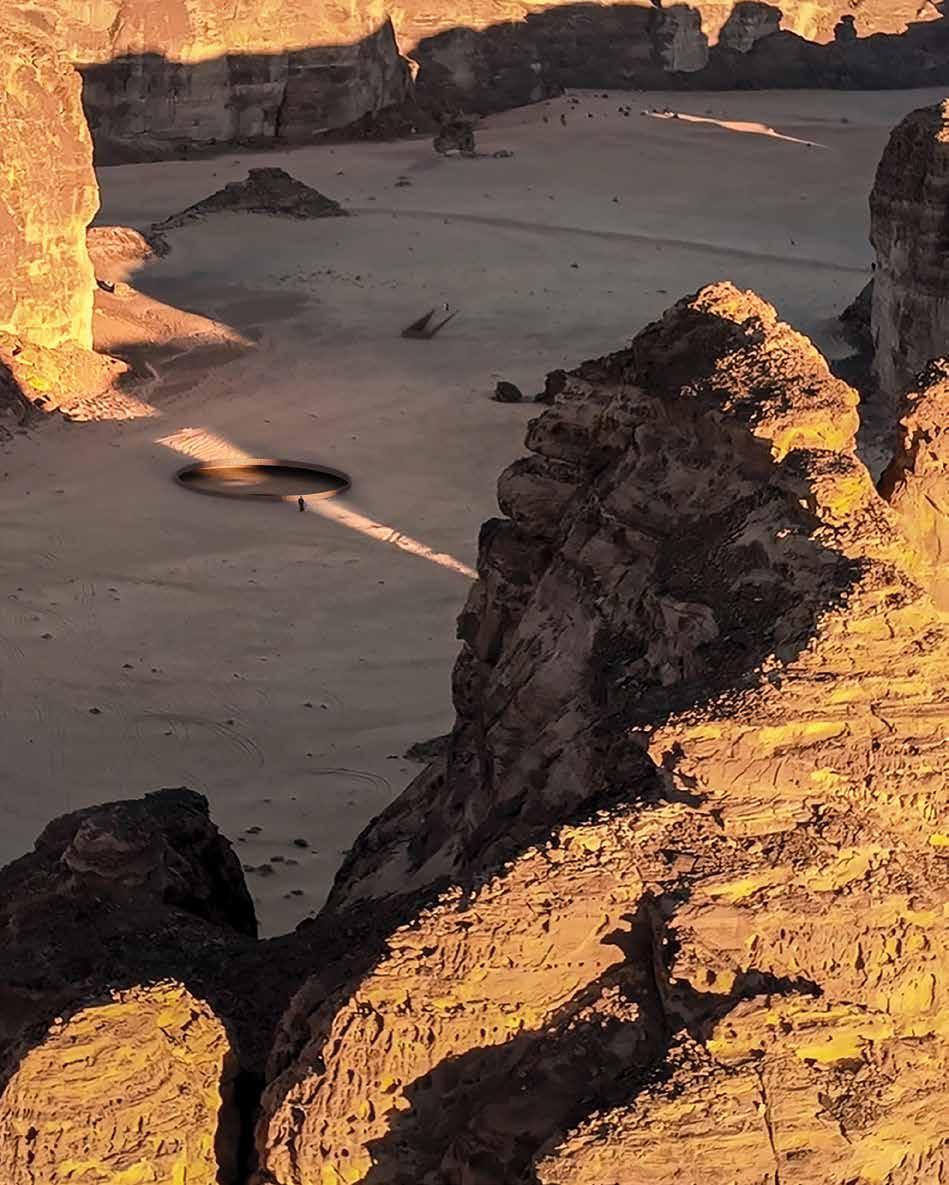


L
e Manta Ray est une nouvelle catégorie de drones sous-marins autonome (UUV). Ce drone, qui tire son nom du grand poisson ailé, est conçu pour accomplir des missions à longue portée et de longue durée dans des zones océaniques inaccessibles à l’homme.
Le Manta Ray est :
- capable de transporter toutes sortes de chargements pour des missions spécifques
- autonome, il ne nécessite pas d’assistance humaine sur place
- économe en énergie, il peut s’ancrer sur le fond marin et entrer en mode veille à faible consommation d’énergie pendant une longue période
- modulaire, il peut être expédié facilement partout dans le monde, dans cinq conteneurs standard, en vue d’un assemblage sur place.
Manta Ray è una nuova classe di veicoli sottomarini senza equipaggio (UUV). Il drone, che prende il nome dal grande pesce alato, è progettato per missioni a lungo raggio e di lunga durata in aree oceaniche inaccessibili all’uomo.
Manta Ray è:
- Capace di trasportare vari carichi utili per diverse missioni
- Autonomo, non richiede supporto umano in loco
- Effcienza energetica, in grado di ancorarsi sul fondo del mare ed entrare in uno stato di ibernazione a basso consumo
- Modulare, per consentire una facile spedizione in cinque container standard per la distribuzione globale e l’assemblaggio in loco.
Manta Ray is a new class of uncrewed underwater vehicles (UUVs). Named after the large, winged fsh, the drone is designed for longrange, long-duration missions in ocean areas inaccessible to humans.
Manta Ray is:
- Capable of carrying various payloads for different missions
- Autonomous, requiring no human support on-site
- Energy-effcient, able to anchor on the seafoor and enter a low-power hibernation state
- Modular, allowing easy shipment in fve standard shipping containers for global deployment and on-site assembly.
Le transport ferroviaire est la solution de mobilité la plus durable en raison de sa faible consommation d’énergie par passager-kilomètre. Pour les lignes où les trains à moteur diesel sont encore utilisés, Stadler a développé le FLIRT H2 qui fonctionne à l’hydrogène.
FLIRT est l’acronyme de “Fast Light Intercity and Regional Train”, à savoir un train léger et rapide pour les itinéraires interurbains et régionaux, et H2 est la formule chimique de l’hydrogène. Ce train à hydrogène est doté de 12 piles à combustible de 100 kW chacune, pour une puissance totale de 1,2 MW. La véritable force du FLIRT H2 c’est son autonomie. Grâce à une combinaison de piles à combustible, de batteries et de systèmes de récupération d’énergie de freinage, ce train à hydrogène peut parcourir des centaines de kilomètres avec un seul plein d’hydrogène. Lors d’un test, le train a parcouru 2 803 km avec un seul plein d’hydrogène lors d’un voyage de 46 heures.
Il trasporto su rotaia è la soluzione di mobilità più sostenibile, grazie al suo basso consumo energetico per passeggero-chilometro. Per le tratte in cui i treni diesel sono ancora in uso, Stadler ha sviluppato il FLIRT H2 a idrogeno.
FLIRT come “Fast Light Intercity and Regional Train”, treno veloce leggero per tratte intercity e regionali, e H2 come formula chimica dell’idrogeno.
Questo treno a idrogeno ha 12 celle a combustibile da 100 kW ciascuna, per una potenza complessiva di 1,2 MW. La vera forza del FLIRT H2 è la sua autonomia: grazie a un mix di celle a combustibile, batterie e sistemi di recupero dell’energia in frenata, questo treno a idrogeno può percorrere centinaia di chilometri con un singolo rifornimento di idrogeno. In un test ha percorso in 46 ore 2.803 km con un solo pieno di idrogeno.
Rail transport is the most sustainable mobility solution, thanks to its low energy consumption per passenger kilometre. For routes where diesel trains are still in use, Stadler has developed the hydrogen-powered FLIRT H2.
FLIRT as “Fast Light Intercity and Regional Train”, a light fast train for intercity and regional routes, and H2 as the chemical formula of hydrogen. This hydrogen train has 12 fuel cells of 100 kW each, for a total power of 1.2MW. The real strength of the FLIRT H2 is its autonomy: thanks to a mix of fuel cells, batteries and braking energy recovery systems, this hydrogen train can travel hundreds of kilometers on a single hydrogen refueling.
In one test it traveled 2,803 km in 46 hours on a single tank of hydrogen.


L’
avion, propulsé par six moteurs électriques à hydrogène, qui décolle et atterrit verticalement, se base sur le programme de développement de taxis aériens électriques à batterie de Joby Aviation et témoigne du potentiel de l’hydrogène pour permettre des trajets régionaux sans émissions qui ne nécessitent pas de piste d’atterrissage. En juillet dernier, il a réussi à faire voler un taxi aérien hydrogène-électrique, le premier du genre, sur 523 miles, avec de l’eau comme seul sous-produit.
L’aereo, alimentato da sei motori elettrici a idrogeno, che decolla e atterra verticalmente, si basa sul programma di sviluppo di taxi aerei elettrici a batteria di Joby Aviation e dimostra il potenziale dell’idrogeno per viaggi regionali senza emissioni che non richiedono una pista. Lo scorso luglio, ha volato con successo in un test dimostrativo, il primo del suo genere, per 523 miglia, con l’acqua come unico sottoprodotto.
The aircraft, powered by six hydrogen-electric motors, which takes off and lands vertically, builds on Joby Aviation’s successful battery-electric air taxi development program, and demonstrates the potential for hydrogen to unlock emissions-free, regional journeys that don’t require a runway. Last July, it has successfully fown a frst-of-its-kind hydrogen-electric air taxi demonstrator 523 miles, with water as the only by-product.


D’ici 2030, nous pourrions assister à une augmentation du tourisme spatial et, très probablement, la présence de l’homme sur l’orbite terrestre basse (OTB) marquera le passage à une vie au-delà de la Terre. Même si réaliser le rêve de poser le pied sur la planète rouge n’est pas encore pour demain, vivre sur la Lune n’est pas un concept utopique. L’un des défs à relever consiste à offrir un refuge sûr aux habitants dans des conditions inhospitalières. Le projet Momo vise à remédier à cette situation en proposant un habitat lunaire modulaire pouvant s’auto-assembler pour plus de praticité. Prévu pour être déployé lors de la mission Artémis III, Momo sera la première base lunaire (pour deux personnes). Momo est un petit habitat in situ semi-permanent destiné à l’exploration spatiale avant l’établissement d’une base lunaire permanente.
Entro il 2030 potremmo vedere un aumento del turismo spaziale e molto probabilmente lo stanziamento umano nell’orbita terrestre bassa innescherà il passaggio alla vita oltre la Terra. Anche se ci vogliono ancora decenni per realizzare il sogno di mettere piede sul Pianeta Rosso, vivere sulla superfcie lunare non è un desiderio inverosimile. Una delle sfde è fornire un rifugio sicuro agli abitanti che vivono in condizioni inospitali. Il progetto Momo vuole affrontare questo problema con un’opzione fatpack, autoassemblante e modulare per praticità. Per essere impiegato su Artemis III, Momo sarà il primo (2 persone) modulo di allunaggio. Momo è un piccolo habitat semi-permanente in situ per l’esplorazione spaziale prima della creazione di una base lunare permanente.
By 2030 we could see a rise in space tourism and most likely the human habitation of the Low Earth Orbit will trigger the shift towards living beyond Earth. Even though realizing the dream of setting foot on the red planet is some decades still to go, living on the lunar surface is not a far-fetched craving.
One of the challenges is to provide a safe haven for inhabitants in inhospitable conditions. Momo project wants to address this with a fatpack self-assembling and modular option for practicality.
To be deployed in Artemis III, Momo will be frst (2 person) lunar landing. Momo is a small, semi-permanent in situ habitat for space exploration ahead of establishing a permanent lunar base.
Promoter
Tuku City Council
www.turku.f
Brief
L’idée de créer un nouveau musée à Turku est née en 2011, lorsque la ville avait été désignée capitale européenne de la culture. Le projet de musée fait également partie des programmes de la ville prévus pour célébrer son 800e anniversaire en 2029. L’emplacement choisi est un site de 15 000 m2 sur les rives du feuve Aura, près du château de Turku.
Dans le cadre des plans de requalifcation de la ville, cette zone d’industrie légère devrait devenir le premier quartier artistique de Turku.
L’idea iniziale per un nuovo museo a Turku è nata nel 2011, quando la città è stata Capitale Europea della Cultura. L’iniziativa del museo rientra anche nei piani della città di celebrare il suo 800° anniversario nel 2029. La location prescelta è un sito di 15.000 m2 sulle rive del fume Aura, vicino al Castello di Turku. Nell’ambito dei piani di riqualifcazione della città, questa zona industriale leggera dovrebbe diventare il primo quartiere artistico di Turku.
The initial idea for a new museum in Turku began in 2011 when the city was the European Capital of Culture. The museum initiative is also part of the city’s plans to celebrate its 800th anniversary in 2029. The chosen location is a 15,000 m2 site on the banks of river Aura, near the Turku Castle.
As part of the city’s redevelopment plans, this light-industrial area is planned to become Turku’s frst arts quarter.
Winner
Sigge Architects
Le projet, sélectionné parmi plus de 400 propositions, crée une structure perméable le long de la côte, agissant comme un catalyseur pour la régénération de la zone. L’objectif du musée est de présenter les recherches scientifques les plus innovantes en proposant une grande variété d’expositions, d’installations audiovisuelles et d’espaces didactiques. La construction devrait commencer en 2027 et s’achever en 2029 ; l’ouverture au public est prévue pour 2030.
La proposta, selezionata tra le oltre 400 inviate, crea una struttura permeabile lungo il litorale, fungendo da catalizzatore per la rigenerazione dell’area. Il museo mira a mostrare la ricerca scientifca più innovativa attraverso un’ampia varietà di mostre, installazioni audiovisive e spazi educativi. Si prevede che la costruzione inizierà nel 2027 e sarà completata entro il 2029, con l’apertura al pubblico prevista per il 2030.
The proposal, selected out of over 400 entries, creates a permeable structure along the waterfront, acting as a catalyst for the regeneration of the area. The museum aims to showcase the most innovative scientifc research through a wide variety of exhibitions, audio-visual installations, and educational spaces. Construction is expected to start in 2027 and be completed by 2029, with a public opening scheduled for 2030.


Promoter
Reimagine Seoul’s Program
Seoul Metropolitan Government english.seoul.go.kr
Brief
Concours international organisé pour transformer la Nodeul Island de Séoul, une ile inhabitée sur le feuve Han, en un parc public animé.
Competizione globale per trasformare l’isola disabitata Nodeul di Seoul, sul fume Han, in un vivace parco pubblico.
Global competition to transform Seoul’s uninhabited Nodeul Island on the Han River into a lively public park.
Winner
Heatherwick Studio
Intitulé “Soundscape”, le projet retenu “crée un parcours d’espaces scéniques sur différents niveaux qui peuvent accueillir des spectacles musicaux et des performances artistiques”. Situé dans un paysage verdoyant et riche en biodiversité, le projet renvoie au relief montagneux de Séoul et aux formes des ondes sonores. Sélectionné à l’issue d’une série d’expositions et de concertations qui ont duré un an et à l’issue du vote public des habitants de la ville, l’agence Heatherwick estime que son projet offre la possibilité de relier les habitants de Séoul à la nature, à la culture et à la communauté. Les visiteurs de l’île de Nodeul découvrent un paysage en constante évolution qui change au gré des saisons. La nouvelle ile de Nodeul devrait être ouverte aux visiteurs à partir de 2027.
Intitolato “Soundscape”, il progetto vincitore “crea una scia di spazi drammatici su diversi livelli che possono ospitare performance musicali e interventi artistici”. Situato all’interno di un paesaggio verde e ricco di biodiversità, il design riecheggia il terreno montuoso di Seoul e i modelli delle onde sonore. Selezionato dopo una serie di mostre, consultazioni e un voto pubblico durato un anno da parte della gente della città, Heatherwick Studio ritiene che il loro design offra l’opportunità di connettere gli abitanti di Seoul con la natura, la cultura e gli altri. I visitatori dell’isola di Nodeul incontrano un paesaggio in continua evoluzione che si adatta alle stagioni e ai sensi. Si prevede che la nuova isola Nodeul sarà aperta ai visitatori nel 2027.
Titled “Soundscape,” the winning project “creates a trail of dramatic spaces on different levels that can host musical performances and artistic interventions.” Situated within a green and biodiverse landscape, the design echoes Seoul’s mountainous terrain and the patterns of sound waves.
Selected after a year-long series of exhibitions, consultations, and a public vote by the people of the city, Heatherwick Studio believes their design offers an opportunity to connect Seoulites with nature, culture, and each other. Visitors to Nodeul Island encounter an ever-changing landscape that adjusts to the seasons and senses. The new Nodeul Island is expected to be open to visitors in 2027.
Cesare Maria Casati
L’architettura di questi tempi sta opponendosi alle tradizioni estetiche che pratichiamo normalmente, proponendo forme bizzarre e audaci sempre più simili a oggetti misteriosi e inutili, appartenenti forse a un mondo ludico e qualche volta infantile.
L’architecture va aujourd’hui contre les traditions esthétiques que nous pratiquons habituellement, en proposant des formes bizarres et audacieuses qui s’apparentent de plus en plus à des objets mystérieux et inutiles, qui appartiennent peut-être à un monde ludique et parfois puéril.
Architecture these days is going against the aesthetic traditions we normally practice, proposing bizarre and bold forms that are increasingly similar to mysterious and useless objects, perhaps belonging to a playful and sometimes infantile world.

Dubai, UAE
Binghatti Development
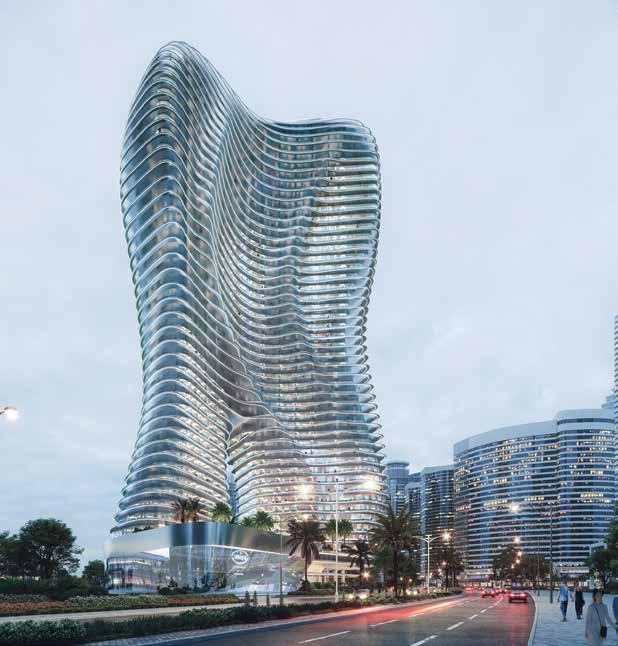

CACTUS TOWERS
Copenhagen, Denmark
BIG


by Cesare Maria Casati

Un esempio contemporaneo di come la buona architettura possa trasformare una periferia degradata può essere trovato a Culver City, dove un team di marito/moglie, cliente/sviluppatore di Frederick e Laurie Samitaur Smith e Eric Owen Moss, giovane architetto, con la complicità di un sindaco italoamericano, di cui ho dimenticato il nome, hanno, progetto dopo progetto, prodotto un esperimento unico di architettura di edifci su scala urbana. Anche la loro storia è unica. Frederick era un ex assistente artistico di Pablo Picasso. Laurie è stata la ballerina principale della produzione di apertura di una delle grandi sale per spettacoli di Los Angeles, ereditano dal padre di Samitaur, impresario e possessore di molti terreni ed edifci fatiscenti a Culver City e decidono di cambiare vita dedicandosi al recupero del patrimonio paterno.
Culver City, cittadina alla periferia di Los Angeles, come tutte le periferie americane, era un sistema urbano degradato caratterizzato da disoccupazione e delinquenza e Samitaur e Larie videro l’occasione della loro vita di esperimentare l’utilità della loro cultura e sensibilità applicandosi al suo recupero e trasformazione. Vendettero per una cifra a nove zeri di dollari la propria collezione di opere d’arte e decisero di investire tutto sulla trasformazione della città con l’aiuto del giovane Eric Owen Moss convincendolo a interpretare in scala architettonica i valori del cubismo come processo mentale e visivo. Frederick Samitaur mi spiegò di come si sviluppò il loro azzardo economico, etico e sociale.
Una volta installati a Culver City si sono concentrati su quattro aree contemporaneamente iniziando a organizzare e informare gli abitanti. Ciò includeva l’assistenza nell’assicurare fnanziamenti per i miglioramenti della casa. Hanno tenuto seminari su
come “vivere con i propri mezzi”. Li hanno incoraggiati a risparmiare denaro credendo che in futuro avrebbero ottenuto il lavoro che avrebbero fornito. Nello stesso tempo hanno lavorato per creare posti di lavoro. Con l’obiettivo di creare 600 posti di lavoro in un’area di 1500 case, iniziando con piccoli programmi di formazione legati al lavoro e alle nuove tecnologie. Come terza operazione hanno portato l’arte. Discutendo in forum aperti del signifcato di bellezza fsica e interiore, di come la letteratura sia piena di esempi su come le differenze sociali basate sulla ricchezza e sullo status sociale fossero meno importanti dello sviluppo delle menti di una persona. Hanno utilizzato l’architettura per ridefnire i nuovi “luoghi” cambiando le facciate del prodotto edilizio esistente. Hanno incorporato nelle nuove strutture e nuovi “luoghi” un senso dell’arte contemporanea studiando il Cubismo e le geometrie della matematica non lineare espresse in quel movimento Poi hanno preteso che ognuno dei loro edifci, una volta terminati, mirassero a raggiungere un impatto critico che avrebbe fatto sì che le persone fossero sopraffatte da un senso positivo di progresso e cultura oltre un senso di protezione e di stupore. I nuovi edifci modernissimi e stupendi allontanavano spontaneamente intorno a loro tutte le situazioni sociali fragili e compromesse richiamando i cittadini che restavano a nuove iniziative di ristrutturazione e di imprenditorialità. Operazione a macchia di leopardo in tutta la città che oggi vede Culver City, dopo la scomparsa di questi due personaggi eroici, completamente trasformata.
Samitaur-Smith mi precisò che il loro era un piano urbanistico privato e che non cercava di essere fnanziato dal governo ma voleva rimanere indipendente per non deformare o corrompere la loro visione.
Un exemple contemporain de la manière dont une bonne architecture peut transformer une banlieue dégradée se trouve à Culver City, où une équipe de mari et femme, client-promoteur, composée de Frederick et Laurie Samitaur Smith et d’Eric Owen Moss, un jeune architecte, a, avec la complicité d’un maire italo-américain dont j’ai oublié le nom, produit, projet après projet, une expérience unique en matière d’architecture de bâtiment à l’échelle de la ville.
Leur histoire est également unique. Frederick a été l’assistant artistique de Pablo Picasso. Comme le père de Samitaur était impresario et propriétaire de nombreux terrains et bâtiments délabrés à Culver City, ils ont décidé de changer de vie en se consacrant à la restauration de l’héritage de leur père. Culver City, petite ville de la banlieue de Los Angeles, était, comme toutes les banlieues des métropoles américaines, un système urbain dégradé caractérisé par le chômage et la délinquance.
Samitaur et Larie y ont vu l’occasion d’une vie d’expérimenter l’utilité de leur culture et de leur sensibilité en s’appliquant à la transformation de Culver City.
Ils ont vendu leur collection d’art pour une somme astronomique à neuf zéros et ont décidé de l’investir entièrement dans la métamorphose de la ville en s’appuyant sur l’aide du jeune Eric Owen, qu’ils ont convaincu d’interpréter à l’échelle architecturale les valeurs du cubisme en tant que processus mental et visuel.
Frederick Samitaur a expliqué comment s’est déroulé leur pari économique, éthique et social.
Une fois installés à Culver City, ils ont concentré leurs efforts sur quatre zones simultanément et ont commencé à organiser et à informer les habitants. Ils ont notamment aidés les habitants à obtenir des fonds pour l’amélioration de leur logement. Ils ont organisé des séminaires sur la manière de “vivre selon ses moyens”. Ils les ont encouragés à économiser de l’argent en pensant que les futurs emplois seraient à la hauteur de leurs attentes.
Dans le même temps, ils se sont efforcés de créer des emplois. L’objectif était de créer 600 emplois dans une zone de 1 500 maisons, en commençant par de petits programmes de formation liés au travail et aux nouvelles technologies.
Dans un troisième temps, ils ont fait appel à l’art. La littérature regorge d’exemples montrant que les différences sociales fondées sur la richesse et le statut social étaient moins importantes que le développement de l’esprit d’une personne. Ils ont utilisé l’architecture pour redéfnir de nouveaux “lieux” en modifant les façades des bâtiments existants. Ils ont incorporé dans les nouvelles structures et les nouveaux “lieux” un sens de l’art contemporain en étudiant le cubisme et les géométries des mathématiques non linéaires exprimées dans ce mouvement. Ils ont ensuite exigé que chacun de leurs bâtiments, une fois achevé, vise à atteindre un impact critique qui provoquerait chez les gens un sentiment positif de progrès et de culture, ainsi qu’un sentiment de protection et d’admiration. Les nouveaux bâtiments étonnants écartaient spontanément toutes les situations sociales fragiles et compromises autour d’eux, attirant les citoyens restants vers de nouvelles initiatives de rénovation et d’entrepreneuriat. Des opérations ponctuelles à travers la ville qui voient aujourd’hui Culver City, après la disparition de ces deux personnages héroïques, complètement transformée.
Samitaur-Smith m’a précisé qu’il s’agissait d’un plan d’urbanisme privé et qu’ils ne cherchaient pas de fnancement public, mais souhaitaient rester indépendants pour ne pas déformer ou corrompre leur vision.
A modern-day example of how good architecture can transform a blighted suburb can be found in Culver City, where a husband/wife, client/developer team (Frederick and Laurie Samitaur Smith) and Eric Owen Moss, a young architect aided and abetted by an Italian-American mayor, whose name I have forgotten, have, project after project, carried out a unique experiment in urban-scale architectural constructions.
Their story is also unique. Frederick was a former artistic assistant to Pablo Picasso. Laurie was the principal dancer in the opening production of one of Los Angeles’ great entertainment halls. After inheriting a fortune from Samitaur’s father, an impresario and owner of plenty of land and dilapidated buildings in Culver City, they decided to change their lives and focus solely on restoring the father’s heritage.
Culver City, a small town on the outskirts of Los Angeles, was, like all the suburbs of American metropolises, a degraded urban system characterised by unemployment and delinquency, and Samitaur and Larie saw the opportunity of a lifetime to make the most of their culture and sensitivity by applying themselves to salvaging and redeveloping Culver City. They sold their art collection for a whopping nine zero fgure in dollars and decided to invest it all in transforming the city with the help of young Eric Owen Moss, persuading him to draw on the tenets of cubism as a mental and visual process to create an architectural design.
Frederick Samitaur told me how this fnancial, and social gamble took shape.
After settling in Culver City, they focused on four areas simultaneously and began to organise and inform the local residents. This included assistance in securing funding for home improvements. They held seminars on how to “live within one’s means”. They encouraged the locals to save money in the frm belief they would be working for them in the future.
At the same time they focused on creating jobs. They aimed at creating 600 jobs in an area of 1,500 houses, starting with small training programmes related to employment and new technologies.
The third thing they did was to introduce art. Discussing in open forums the meaning of physical and inner beauty and how literature is full of examples of social differences based on wealth and status being less important than cultivating a person’s mind.
They used architecture to redefne new “places” by changing the facades of existing real estate. They incorporated a sense of contemporary art into the new constructions and new “places” by studying Cubism and the geometries of non-linear mathematics embodied in that movement. Next they decided that each of their buildings, when completed, would aim to make the kind of critical impact that would overwhelm people with a positive sense of progress and culture, as well as a feeling of safety and amazement.
Stunning new buildings spontaneously resolved all the social fragility around them, drawing the remaining citizens into new renovation-business projects. Business boomed throughout the city and, now that these two heroic fgures are no longer with us, Culver City has been completely transformed.
Samitaur-Smith told me that their urban plan was a private enterprise and that they had not sought government funding. They wanted to remain independent so their vision would not be distorted or corrupted.


Eric Owen Moss est né et a grandi à Los Angeles, en Californie. Il a obtenu une licence en arts à l’université de Californie à Los Angeles, ainsi qu’un master en architecture à l’université de Californie à Berkeley, au College of Environmental Design et à la Graduate School of Design de l’université de Harvard. L’agence Eric Owen Moss Architects (EOMA) a été fondée en 1973. Le bureau basé à Culver City a réalisé des projets aux États-Unis et dans le monde entier. Eric Owen Moss et EOMA ont reçu plus de 150 prix de design locaux, nationaux et internationaux. Eric Owen Moss a également reçu le prix américain d’architecture 2020, également connu sous le nom de prix Louis H. Sullivan, décerné par le Chicago Athenaeum et le Centre européen d’architecture, d’art, de design et d’études urbaines.
Eric Moss a enseigné dans de grandes universités du monde entier, notamment à Harvard, Yale, Columbia, à l’Université des arts appliqués de Vienne, à l’Académie royale de Copenhague et à l’Université Tsinghua de Pékin. Il a longtemps été professeur à à l’Institut d’architecture de Californie du Sud (SCI-Arc), dont il a été le directeur de 2002 à 2015.
Eric Owen Moss è nato e cresciuto a Los Angeles, California. Ha conseguito una laurea in Arti presso l’Università della California a Los Angeles e un Master in Architettura presso l’Università della California a Berkeley, il College of Environmental Design e la Graduate School of Design dell’Università di Harvard.
Eric Owen Moss Architects (EOMA) è stato fondato nel 1973. Lo studio con sede a Culver City ha completato progetti negli Stati Uniti e in tutto il mondo. Moss ed EOMA hanno ottenuto oltre 150 premi di design locali, nazionali e internazionali. Eric Owen Moss ha anche ricevuto l’American Prize for Architecture 2020, noto anche come Louis H. Sullivan Award, dal Chicago Athenaeum e dall’European Centre for Architecture Art Design and Urban Studies. Moss ha ricoperto incarichi di docenza presso importanti università in tutto il mondo, tra cui Harvard, Yale, Columbia, l’Università di Arti Applicate di Vienna, la Royal Academy di Copenaghen e la Tsinghua University di Pechino. È stato a lungo professore presso il Southern California Institute of Architecture (SCI-Arc), di cui è stato direttore dal 2002 al 2015.
Eric Owen Moss was born and raised in Los Angeles, California. He received a Bachelor of Arts from the University of California at Los Angeles, and holds Master’s Degrees in Architecture from the University of California at Berkeley, College of Environmental Design and Harvard University’s Graduate School of Design.
Eric Owen Moss Architects (EOMA) was founded in 1973. The Culver Citybased offce has completed projects in the United States and around the world. Moss and EOMA have garnered over 150 local, national, and international design awards. Eric Owen Moss was also awarded the 2020 American Prize for Architecture, also known as the Louis H. Sullivan Award, from the Chicago Athenaeum and European Centre for Architecture Art Design and Urban Studies. Moss has held teaching positions at major universities around the world including Harvard, Yale, Columbia, the University of Applied Arts in Vienna, the Royal Academy in Copenhagen, and Tsinghua University in Beijing. He has been a longtime professor at the Southern California Institute of Architecture (SCI-Arc) and served as its director from 2002-2015.

Santa Monica Canyon, USA
Vous pensez que vous savez. Et puis vous ne savez plus.
Vous reconnaissez tout d’un coup. Et puis vous ne le ferez plus.
Voici une règle?
Ce n’est pas comme ça Carré dans le ciel.
Absent en bas.
Le toit est rectangulaire.
Le sous-sol n’est pas ainsi.
Peut-être symétrique.
Se dissout, mais lentement. Les murs s’inclinent, Ce n’est pas tout ce que nous avons. Asymétrique.
Oui, alors ce n’est pas le cas, Du canal au nord, Jusqu’au bout du terrain.
La fenêtre est un morceau. Les fenêtres en morceaux. En caoutchouc, Y compris les plis.
La mer est à l’ouest, Des voiles tout autour, Un bâtiment d’options.
La tension est à son comble.
Deux adolescents aventureux et un adulte sont les habitants.
La forme extérieure de la maison se transforme verticalement, passant d’un plan rectangulaire au niveau du toit à un plan aux courbes variables au niveau du sol “la guitare”. Les murs périmétriques se transforment continuellement entre ces deux formes de plan. La maison de quatre étages est organisée autour d’un atrium central traversé par une passerelle à chaque niveau et comprenant un escalier menant à tous les étages et à la terrasse sur le toit qui donne sur la mer. L’escalier et les passerelles sont entourés d’un théâtre, d’une salle de conférence, de plusieurs chambres à coucher et de salles de bains. Deux places de parking sont couvertes par des toits courbes en forme de cuvette qui forment l’extérieur caoutchouté du théâtre intérieur incliné situé un niveau plus haut.
Pensi di sapere. E poi non lo sai. All’improvviso riconosci. E poi non lo saprai più.
Ecco una regola? Non è così. Quadrato nel cielo. Assente sotto.
Il tetto è rettangolare. Il seminterrato non è così. Forse simmetrico. Si dissolve, ma lentamente.
I muri si inclinano, Non è tutto ciò che abbiamo. Asimmetrico.
Sì, allora non lo è, Dal canale a nord,
Fino alla fne del lotto. La fnestra è un pezzo. Le fnestre a pezzi.
Fatte di gomma, Incluse le pieghe.
Il mare è a ovest, Vele tutt’intorno, Un edifcio di opzioni. La tensione abbonda.
Due adolescenti avventurosi e un adulto sono i residenti.
La forma esterna della casa si trasforma verticalmente, da rettangolare sul tetto a un piano variamente curvo a terra, “la chitarra”. I muri perimetrali sono in continua trasformazione tra queste due forme di piano. La casa a quattro piani è organizzata attorno a un atrio centrale attraversato da un ponte a ogni livello e comprende una scala per tutti i piani e la terrazza sul tetto che si affaccia sul mare. Un teatro, un’area per simposi e numerose camere da letto e bagni circondano la scala e le passerelle. Due posti auto sono coperti da sofftti curvi a forma di ciotola che formano l’esterno gommato del teatro interno inclinato con posti a sedere al piano superiore.

You think you know. And then you don’t. You suddenly recognize. And then you won’t. Here a rule?
There not so.
Square in the sky. Absent below.
Roof’s rectangular. Basement’s not so. Perhaps symmetrical. Dissolves, but slow.
Walls incline, Not all we’ve got. Asymmetrical.
Yes, then it’s not, From the canal on the north, To the end of the lot.
Window’s a piece. Windows in pieces. Made out of rubber, Including the creases. The sea’s to the west, Sails all around, A building of options. The tension abounds.
Two adventurous teenagers and one adult are the residents.
The exterior shape of the house transforms vertically – from rectangular at the roof to a variously curving plan at the ground –“the guitar”. The perimeter walls are in continuous transformation between those two plan shapes. The four-story house is organized around a central atrium crossed by a bridge at each level and including a stair to all foors and the roof deck which looks over the sea. A theatre, symposium area, and multiple bedrooms and bathrooms surround the stair and bridges.
Two parking spaces are covered by curving, bowl-shaped soffts that form the rubberized exterior of the sloping interior theatre seating one level above.


Client: Eric Owen Moss
Project Team: Eric Owen Moss, Lead Designer; Eric McNevin, Project Director; Raul Garcia, Project Architect; Michael Robin, Designer; Andrew Wright, Designer
Structural Engineer: Hooman Nastarin/NAST Enterprises Corp.
Windows: Arcadia, Fleetwood, Custom glazing for corner windows; Skylights: Velux; HVAC: Daikin; Pavers: Stepstone; Flooring: Baltic Birch Plywood; Tile: Daltile; Bathroom Fixtures: Kohler; Bathroom Sinks: Lacava; Toilets: Toto; Bathtubs: Hydrosystems; Kitchen Fixtures: Hansgrohe; Kitchen Appliances: Bosch; Kitchen Counter: Caesarstone Solid Surface; Panel-face Refrigerator: Leibherr; Lighting: DMF
Chairs: Herman Miller
Custom Furniture Design: Eric Owen Moss Architects
Wood Furniture Fabrication: A Single Tree, and DMC
Steel Furniture and Railing Fabrication: Tom Farrage & Co.

Los Angeles, USA
L’agence Eric Owen Moss Architects a récemment achevé la construction de (W) rapper, un nouvel immeuble de bureaux de 80 m de haut et la dernière contribution d’EOMA à un plan de revalorisation de 35 ans d’une ancienne zone industrielle et manufacturière située dans le centre de Los Angeles et à Culver City, en Californie. Le concept structurel de (W)rapper a vu le jour en 1998 et a été présenté pour la première fois dans le cadre d’une exposition au Wexner Center de Columbus, dans l’Ohio. Contrairement aux systèmes structurels conventionnels des tours, basés sur des colonnes organisées selon une grille modulaire, (W)rapper est soutenu par un réseau de bandes curvilignes qui partent d’un certain nombre de points géométriques centraux. Chaque bande incurvée est enroulée autour de l’enveloppe largement rectiligne du bâtiment et pliée autour de chaque angle vertical et horizontal du bâtiment jusqu’à ce qu’elle atteigne le sol. Les bandes sont soutenues par une fondation isolée qui sépare la structure de la tour au-dessus des fondations de l’isolateur au-dessous, ce qui permet au bâtiment de réagir et de s’adapter en toute sécurité en cas d’événement sismique.
Les bandes d’acier sont recouvertes d’un revêtement ignifuge à base de ciment, et le noyau du bâtiment est revêtu d’une fnition en plâtre de ciment à deux couches. Les bandes sont positionnées sur le périmètre du bâtiment, créant ainsi des planchers libres de colonnes, offrant un maximum d’options d’aménagement intérieur. Le noyau des ascenseurs et des services publics du bâtiment est décalé vers le sud, libérant l’intérieur des bureaux et offrant un maximum de fexibilité. Les 17 étages de bureaux sont répartis sur trois hauteurs différentes d’un étage à l’autre. Le site (W)rapper combine des bâtiments existants et rénovés avec de nouvelles constructions, ajoutant de la densité et proposant de nouvelles solutions en matière de plans de bureaux. Le projet est le premier de trois nouvelles tours conçues par EOMA pour le quartier. Les deux autres tours ont été approuvées par la ville de Los Angeles, et un pont piétonnier reliant Culver City à l’ouest de Los Angeles, qui unifera deux communautés numériques locales en plein essor, fait actuellement l’objet de discussions avec les agences publiques locales.
Eric Owen Moss Architects ha recentemente completato la costruzione di (W) rapper, un nuovo edifcio per uffci alto 80m e l’ultimo contributo EOMA a un piano di riqualifcazione in corso da 35 anni per un’ex zona industriale e manifatturiera nel centro di Los Angeles e Culver City, California.
Il concetto strutturale di (W)rapper ha avuto origine nel 1998 ed è stato presentato per la prima volta in una mostra al Wexner Center di Columbus, Ohio. A differenza dei sistemi strutturali convenzionali per grattacieli basati su colonne organizzate lungo linee di griglia modulari, (W)rapper è supportato da una rete di fasce curvilinee che originano da una serie di punti centrali geometrici. Ogni fascia curva è avvolta attorno all’involucro edilizio in gran parte rettilineo e ripiegata attorno a ogni angolo verticale e orizzontale dell’edifcio fno a raggiungere il suolo.
Le fasce sono supportate da una base isolata di fondazione che separa la struttura della torre soprastante dalle fondamenta dell’isolatore sottostanti, consentendo all’edifcio di rispondere e muoversi in modo sicuro e protetto in qualsiasi evento sismico.
Le fasce in acciaio sono rivestite con un rivestimento ignifugo cementizio e il nucleo dell’edifcio è rivestito con una fnitura in intonaco cementizio a due strati. Le fasce sono posizionate sul perimetro dell’edifcio creando una planimetria aperta e senza colonne che offre la massima opportunità per le opzioni di progettazione degli interni.
L’ascensore e il nucleo di servizio dell’edifcio sono spostati a sud, liberando gli interni degli uffci e offrendo la massima fessibilità della planimetria.
I 17 piani degli uffci sono distribuiti in tre diverse opzioni di altezza da pavimento a pavimento.
Il sito (W)rapper combina sia edifci esistenti che ristrutturati con nuove costruzioni, aggiungendo densità e offrendo nuove opzioni di planimetria degli uffci. Il progetto è la prima di tre nuove torri progettate da EOMA per la zona. Le altre due torri sono state approvate dalla città di Los Angeles e un ponte pedonale che collega Culver City a ovest con Los Angeles che unirà due comunità digitali locali e in rapida crescita è attualmente in discussione con le agenzie governative locali.
Eric Owen Moss Architects recently completed construction of (W)rapper, a new 80-m tall offce building and the latest EOMA contribution to an on-going 35-year revitalization plan for a former industrial and manufacturing zone in Central Los Angeles and Culver City, California.
(W)rapper’s structural concept originated in 1998 and was frst presented in an exhibit at the Wexner Center in Columbus, Ohio. Unlike conventional high-rise structural systems based on columns organized along modular grid lines, (W)rapper is supported by a network of curvilinear bands originating from a number of geometric center points. Each curving band is wrapped around the largely rectilinear building envelope, and folded around each vertical and horizontal corner of the building until it reaches the ground.
The bands are supported on a base isolated foundation which separates the tower structure above from the isolator foundations below, allowing the building to respond and move safely and securely in any seismic event.
The steel bands are coated with cementitious freproofng, and the building core is clad in a two-coat cement plaster fnish. The bands are positioned on the building perimeter creating an open, column-free foor plan that provides the maximum opportunity for interior planning options.
The elevator and utility core of the building is offset to the south, freeing the offce interiors, and providing the maximum foor plan fexibility.
The 17 offce foors are distributed as three different foor-to-foor height options.
The (W)rapper site combines both existing and remodeled buildings with new construction, adding density and offering new offce plan options.
The project is the frst of three new towers designed by EOMA for the area.
The other two towers have been approved by the City of Los Angeles, and a pedestrian bridge connecting Culver City to the west with Los Angeles that will unify two local and burgeoning digital communities is currently being discussed with local government agencies.


Client: Samitaur Constructs/Frederick and Laurie Samitaur Smith
Project: Eric Owen Moss Architects (EOMA)
Principal and Lead Designer: Eric Owen Moss
Project Director: Dolan Daggett
Project Architect: Vanessa Jauregui
Project Team: Maxime Lefebvre, Hugo Ventura, Raul Garcia, Eric McNevin, Juan Villarreal, Scott Nakao, Diana Rodriguez, Emmanuel Osorno, Renata Galan, Brennen Huller, Sean Briski, Nicholas Barger, Zarmine Nigohos, Tanveer Sami, Richard Yoo, Christine Lawson, Francisco Delgado
Geotechnical Engineer: WSP
Structural, MEP Engineer (Development), Civil Engineer: Arup
Landscape Architect: Land Images
Commissioning: Green Dinosaur
Shoring Engineer: Earth Support Systems
Surveyor: J.O. Nelson & Associates
Technology: Vantage
Acoustics: Arup, Antonio Acoustics
Traffc: KOA Corporation
Hardware: Jon Wiseman

Culver City, USA
Glass Forest, situé au 8511 Warner Drive, fournira des places de stationnement aux nouvelles entreprises du quartier Hayden Tract à Culver City, en Californie.
La transformation des bâtiments industriels existants en bureaux créatifs et animés, ainsi que l’ajout de nouvelles structures de bureaux, nécessitent une augmentation substantielle de l’espace de stationnement. La nouvelle structure fournira 800 places supplémentaires. En plus du parking, 4 000 m2 d’espace commercial et un restaurant de 1 000 m2 seront situés sur le périmètre intérieur d’une cour ouverte à cinq côtés et à trois étages. Deux niveaux complets – les étages deux et trois au-dessous du niveau du sol – sont occupés par le parking. Le niveau -1 du restaurant, un étage sous le niveau du sol, le niveau 0 des commerces, au niveau du sol, et le niveau 2 des commerces, au-dessus du niveau du sol, sont directement accessibles depuis les voitures garées à ces étages ou depuis les escaliers et les ascenseurs qui relient tous les étages du garage aux promenades et aux passerelles de tous les niveaux des commerces. La cour est ouverte au sud et, à l’ouest, au nord et à l’est, elle est entourée par les parois vitrées inclinées qui entourent les trois étages de l’espace commercial. La cour de 250 m2 au niveau -1 s’ouvre sur des ponts et des passerelles, une verrière et le ciel, et peut être utilisée pour des expositions en plein air et des spectacles de petite envergure. L’espace de la cour et les ponts sont partiellement couverts par un plan de verre horizontal, soutenu par 18 fermes qui enjambent la cour en contrebas. Les membrures supérieures des fermes sont des tubes d’acier, les membrures inférieures sont des câbles d’acier et les membrures verticales de compression sont des cylindres de verre structurel feuilleté. Sous les câbles, 196 cylindres de verre s’étendent, chacun d’un diamètre de 61 cm et d’une longueur variant, apparaissant comme un champ de tubes de verre transparents suspendus au-dessus de la cour. Un toit de gazon couvre le dernier étage commercial, réduisant les charges de chauffage et de refroidissement, et servant de petit parc sur le toit.
Glass Forest all’8511 Warner Drive fornirà un parcheggio per le nuove attività commerciali della zona nell’Hayden Tract a Culver City, California. La conversione degli edifci industriali esistenti in vivaci spazi per uffci creativi, così come l’aggiunta di nuove strutture per uffci, richiede un aumento sostanziale dello spazio per il parcheggio. La nuova struttura fornirà 800 posti aggiuntivi. Oltre al parcheggio, 4.000 m2 di spazio commerciale e un ristorante di 1.000 m2 saranno situati sul perimetro interno di uno spazio aperto a cinque lati e tre piani con cortile. Due livelli completi, i piani due e tre sotto il livello del suolo, sono occupati dal parcheggio. Il livello -1 del ristorante, l livello commerciale 0, a livello del suolo, e il livello commerciale due, sopra il livello del suolo, sono direttamente accessibili dalle auto parcheggiate su quei piani o dalle scale e dagli ascensori che collegano tutti i piani del garage ai marciapiedi e ai ponti su tutti i livelli commerciali. Il cortile è aperto a sud mentre a ovest, nord ed est è circondato dalle pareti di vetro inclinate che racchiudono i tre piani dello spazio commerciale. Il cortile di 250m2 al livello -1 si apre su ponti e passerelle, un tetto di vetro e il cielo sopra, e può essere utilizzato per mostre all’aperto e spettacoli su piccola scala. Lo spazio del cortile e i ponti sono parzialmente coperti da un piano di vetro orizzontale, sostenuto da 18 capriate che attraversano il cortile sottostante. Le corde superiori delle capriate sono tubi di acciaio; le corde inferiori sono cavi di acciaio; e le corde verticali e compressive sono cilindri di vetro strutturale laminato. Ci sono 196 cilindri di vetro che si estendono sotto i cavi, ciascuno di 61 cm di diametro e di lunghezza variabile, che appaiono come un campo di tubi di vetro trasparente sospesi sopra il cortile.
Un tetto in zolle erbose copre il piano superiore del negozio, riducendo sia i carichi di riscaldamento che di raffreddamento e fungendo da piccolo parco sul tetto.
Glass Forest at 8511 Warner Drive will provide parking for new area businesses in the Hayden Tract in Culver City, California.
The conversion of the existing industrial buildings into bustling creative offce space, as well as the addition of new offce structures, requires a substantial increase in parking space. The new structure will supply 800 additional spaces.
In addition to the parking, 4,000 m2 of retail space and a 1,000 m2 restaurant will be located on the interior perimeter of a fve sided, three story, open courtyard space. Two full levels – foors two and three below grade – are flled with parking. The restaurant level -1, one foor below grade, retail level 0, at grade, and retail level two, above grade, are directly accessible from parked cars on those foors or from stairs and elevators that connect all garage foors to walks and bridges on all retail levels. The courtyard is open to the south, and on the west, north, and east is surrounded by the inclined glass walls that enclose the three foors of retail space. The 250 m2 courtyard at the -1 level opens to bridges and walkways, a glass roof, and the sky above, and can be used for outdoor exhibitions and small scale performances.
The courtyard space and bridges are partially covered by a horizontal glass plane, supported by 18 trusses that span the courtyard below. The top chords of the trusses are steel tubes; the bottom chords are steel cables; and the vertical, compressive chords are cylinders of laminated structural glass. There are 196 glass cylinders extending below the cables, each 61 cm in diameter, and varying in length from fve to fourteen feet, appearing as a feld of transparent glass tubes suspended over the court. A sod roof covers the top retail foor, reducing both heating and cooling loads, and serving as a small roof-top park.
Key Staff 2009 – Current
Dolan Daggett, Raul Garcia, Hugo Ventura, Saba Samiei, Eric McNevin, Lena Larionova, Vanessa Jauregui, Cayetana Lopez, Melissa Peter, Tanveer Sami, Herbert Ng; Environmental: Sirius Environmental; Traffc: KOA Corporation
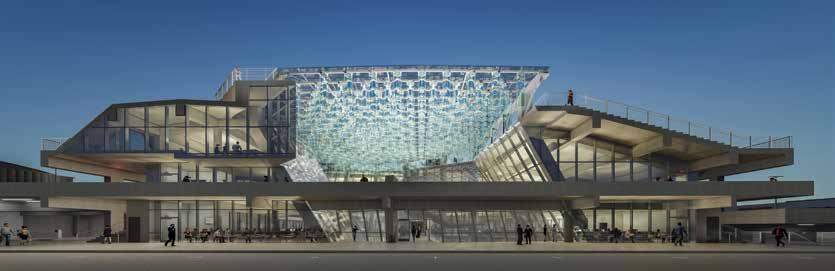


Le Ferrero Technical Center représente la nouvelle frontière de l’architecture industrielle, conçue au nom de la qualité absolue pour répondre aux principes de l’industrie 4.0 en visant une production automatisée et interconnectée, avec un lien de réciprocité entre l’homme et la machine, en relation avec son écosystème. La technologie, présente dans chaque aspect du nouveau centre, n’est jamais ostentatoire, mais toujours intégrée de manière harmonieuse à une architecture distinctive et rassurante où faire converger l’identité d’entreprise, italienne leader du secteur de la confserie. Résultant d’un concours sur invitation lancé en 2017, le centre est né de la nécessité de rassembler et de rendre complémentaires et interconnectées les activités d’engineering de l’entreprise, notamment celles destinées à la conception des nouvelles installations de production, avec l’atelier où ces dernières sont préassemblées et testées : un savoir-faire très précieux que l’entreprise a voulu retrouver à son siège d’Alba, une ville intimement liée à son histoire.
Pouvant regrouper les fonctions de direction et les fonctions opérationnelles, le nouveau centre, un bâtiment bioclimatique et à consommation d’énergie quasi nulle (nZEB, pour “nearly Zero Energy Building”) s’étend sur 12 700 mètres carrés et accueille plus de 200 salariés Il se caractérise par une architecture simple et linéaire qui dissimule les systèmes et les parties techniques, et dont le volume compact optimise tous les apports passifs et limite la quantité de ressources nécessaires à son fonctionnement et à son entretien.
Le grand hall d’entrée à toute hauteur et entièrement vitré, conçu pour l’accès des salariés et l’accueil des visiteurs, concentre en un seul espace la perception de tout l’univers Ferrero présent dans le bâtiment. À l’intérieur, un escalier métallique scénographique de couleur rouge vif traverse le volume comme une sorte de “promenade suspendue” et offre à ceux qui l’empruntent une vue d’emblée sur certaines des activités exercées au cœur du bâtiment : en effet, les grandes baies vitrées des mezzanines, des espaces dédiés à l’expérimentation, des salles de réunion, des bureaux des consultants, une aire de détente et les vestiaires du personnel donnent sur la triple hauteur du hall.
Toutes les parties techniques et les installations sont in-
tégrées dans les façades ou dissimulées à l’intérieur de la Mezzanine, qui allie conception et production sur ses 3 300 mètres carrés. La structure est agrémentée d’un toit plat et débordant vers le sud avec un auvent léger doté d’un brise-soleil réalisé avec des lames à section elliptique, pour protéger les baies vitrées des bureaux contre les rayons du soleil.
L’atelier de 3 500 mètres carrés, avec sa grande travée de 25 mètres et sa longueur de plus de 100 mètres, abrite les activités de montage des machines. Un plan régulier et essentiel avec des structures blanches apparentes, où les processus de fabrication et les installations intégrés à l’architecture sont laissés apparents. Des ouvertures dans les façades permettent de capter l’air et la lumière naturelle tout en protégeant de la lumière directe du soleil, réinterprétant ainsi le hangar industriel traditionnel qui n’a pas pu être reproduit ici en raison de la stratifcation des activités du bâtiment.
Une série de patios verts, que l’architecte a appelés “jardins volants”, ont été aménagés au centre du grand espace ouvert pour remplir des fonctions bioclimatiques, acoustiques et esthétiques, et garantir ainsi une meilleure qualité sensorielle et un éclairage naturel, tout en permettant d’intégrer des moments de détente et de rencontre au sein de la vie professionnelle.
Les bureaux, situés au dernier étage, s’étendent sur un espace ouvert de 4 100 mètres carrés qui abrite des salles de réunion, des espaces privés et des aires de détente, permettant aux travailleurs de bénéfcier de postes de travail ergonomiques donnant sur le paysage. Les espaces sont caractérisés par des baies vitrées et des ouvertures modulaires, continues et transparentes, avec peu d’éléments fxes et des géométries coordonnées qui offrent un maximum de fexibilité.
Le volume est réalisé avec des matériaux industriels, principalement assemblés à sec. Une installation photovoltaïque montée sur le toit garantit une production d’énergie correspondant à 300 kWp.
Les parkings extérieurs permettent de lutter contre les nuisances lumineuses grâce à un système intelligent qui commande l’éclairage que lorsqu’il y a de la circulation.

Il Ferrero Technical Center rappresenta la nuova frontiera dell’architettura industriale, pensata nel nome della qualità totale per rispondere ai principi della manifattura 4.0 puntando a una produzione automatizzata e interconnessa, con una reciprocità tra uomo e macchina, in relazione con il suo ecosistema. La tecnologia, presente in ogni aspetto del nuovo Polo, non è mai ostentata, ma sempre integrata armoniosamente in un’architettura riconoscibile e rassicurante, dove far convergere l’identità aziendale, la storia e il know-how del gruppo.
Frutto di un concorso a inviti indetto nel 2017, nasce dall’esigenza di riunire e rendere complementari e interconnesse le attività di engineering dell’azienda, in particolare quelle destinate alla progettazione dei nuovi impianti di produzione, con l’offcina dove gli stessi vengono preassemblati e testati: un know-how preziosissimo, che l’azienda ha voluto nella sede di Alba, città intrinsecamente legata alla sua storia.
Capace di affancare le funzioni direzionali a quelle operative, il nuovo polo, un edifcio bioclimatico e nZEB (nearly Zero Energy Building) si estende su 12.700 m2 e ospita oltre 200 dipendenti. Un’architettura semplice e lineare che cela alla vista impianti e parti tecniche; dove il volume compatto massimizza tutti gli apporti passivi e limita le risorse per la sua gestione e manutenzione.
La grande hall di ingresso a tutt’altezza, interamente vetrata, dedicata all’accesso dei dipendenti e all’accoglienza dei visitatori, concentra in un unico spazio la percezione di tutto il mondo Ferrero ospitato nell’edifcio. Al suo interno una scenografca scala metallica in un colore rosso vibrante attraversa il volume come una sorta di “passeggiata sospesa” e offre a chi la percorre una prima vista su alcune delle attività nel cuore dell’edifcio: sulla tripla altezza della hall si affacciano infatti le ampie vetrate dei mezzanini, locali che ospitano zone sperimentali, sale riunioni, uffci per i consulenti, un’area relax e gli spogliatoi per il personale.
Tutte le parti tecniche e gli impianti sono integrati nelle facciate o celati all’interno del Mezzanino, che connette con i suoi 3.300 m2 progettazione e produzione. La struttura è completata da una copertura piana e aggettante che sporge a sud con una leggera pensilina con un frangisole realizzato con pale a sezione ellittica, a protezione delle vetrate degli uffci dai raggi solari.
L’offcina di 3.500 m2, con la sua ampia campata di 25 m e la sua lunghezza di oltre 100 m, ospita il montaggio dei macchinari. Una pianta regolare, essenziale, con strutture a vista di colore bianco, dove le lavorazioni e gli impianti architettonicamente integrati sono lasciati a vista. Aperture nelle facciate catturano la luce naturale e l’aria proteggendo dall’irraggiamento diretto del sole, reinterpretando il tipico shed industriale che qui - per la stratifcazione delle funzioni dell’edifcio - non poteva essere riproposto.
Una serie di patii verdi, denominati dall’architetto “giardini volanti”, sono stati inseriti al centro del grande open space per assolvere funzione bioclimatica, acustica ed estetica, e assicurare così una migliore qualità sensoriale e un’illuminazione naturale; e permettendo al tempo stesso di integrare nella vita lavorativa momenti di relax e incontro. Gli spazi uffcio, collocati all’ultimo piano, si estendono su un open space di 4.100 m2 che ospita sale meeting, spazi privati e aree relax, permettendo ai lavoratori di utilizzare postazioni ergonomiche che sono proiettate sul panorama paesaggistico. Gli spazi sono caratterizzati da vetrate e aperture modulari, continue e trasparenti, con pochi elementi fssi e geometrie coordinate che offrono massima fessibilità. Il volume è realizzato con materiali industriali, in prevalenza montati a secco. Un impianto fotovoltaico sulla copertura garantisce una produzione di energia pari a 300 kW di picco. I parcheggi esterni garantiscono il controllo dell’inquinamento luminoso grazie a un sistema smart, che ne controlla l’accensione solo in presenza di traffco.
Client: Ferrero Group
Project: Frigerio Design Group (www.frigeriodesign.it)
E. Frigerio with C. Ginocchio (project leader), S.Rota, S. Stevanè, D. Bona, M. Verdona, F. Valido, A. Alessi, A. Chiappini
Structures: Redesco Progetti
Structural Design PFTE, PD, PE: M.E. Giuliani, F.Inzaghi
MEP: Ariatta Ingegneria dei Sistemi A.Ariatta, G.Ariatta, C.Zeni, M.Zoppo Vigna
Flying Gardens: AG&P greenscape / E. Bortolotti
Acoustics: E. Bocca
Construction Supervision, CSE: Recchi Engineering
P.Porporato, G. Parnisari, M.Durbano, F. Rubini, M. Rubini
General Contractor: Co.Ge.Fa.
The Ferrero Technical Center represents a new frontier for industrial architecture all in the name of total quality, adhering to the standards of Industry 4.0, focusing on automated and interconnected production, where people and machines work in unison, while respecting its ecosystem. Technology is ubiquitous throughout the new center, but it is never obtrusive. It is always seamlessly integrated in a recognizable and reassuring architecture, bringing together the group’s corporate identity, history and know-how.
Following a competition by invitation held in 2017, it stems from the need to combine the company’s engineering operations, in particular those devoted to designing new production lines, with the workshop where they are preassembled and tested: invaluable know-how the company wanted to keep in Alba, Italy, a city intrinsically linked to its history.
The new center supports management and operational functions and boasts a 12,700 m2 ecological building that is nZEB (nearly Zero Energy Building) and will host 200 employees. Simple and linear architecture conceals plants and technical equipment.
The compact building maximizes all the passive space and minimizes the resources needed for operations and maintenance. The huge lobby is glazed entirely. It is the reception area and staff entrance and concentrates the perception of the whole Ferrero universe into a single space. Inside there is a metal grand staircase in vibrant red that goes up like a “suspended walkway” offering an initial view over some of the operations at the core of the building.
Overlooking the lobby are the enormous windows of the mezzanines, experimentation areas, conference rooms, offce space for consultants, a lounge and changing rooms for staff. All the technical areas and systems are integrated in the facades or hidden in the mezzanine, connecting its 3,300 m2 of design and production. The structure has a fat, jutting roof with a south-facing shade and sun-breaker portico with elliptical blades.
The 3,500 m2 workshop, with its open span of 25 m and length of over 100 m, is where the machinery is assembled. Its foorplan is essential and rectangular, white in colour, with its metalwork and architectural plant in full view. Openings in the facade capture natural light and air while shading direct sunlight, thereby reinterpreting the typical industrial shed, which could not be achieved here due to the building’s layered construction. A series of green patios, the architect calls “hanging gardens”, are placed at the center of the large open space to provide a bioclimatic, acoustic and aesthetic function. They also improve sensorial quality and natural light while at the same time integrating moments of relaxation and encounters for staff. The offce space, located on the last foor, extends over an open space of 4,100 m2. It holds conference rooms, private areas and relaxation space enabling workers to use ergonomic stations overlooking the landscape. The areas are characterised by glazing and modular openings, continuous and transparent. There are few fxed elements and the geometries are coordinated to provide maximum fexibility. The building is dry-assembled industrial material is used in its construction.
A photovoltaic system is installed on the roof that generates up to 300 kW peak. A smart lighting system is used in the parking areas to lower light pollution. It ensures the lights are on only in the presence of traffc.


Le front de mer de Cascais est constitué d’une série de fortifcations qui ont été organisées comme première défense de l’accès maritime à la ville de Lisbonne. Ces fortifcations étaient espacées par des résidences d’été, construites après 1870, suite à l’installation de la famille royale et de la Cour à Cascais pendant la période estivale. Cette reconnaissance sociopolitique s’est consolidée au XXe siècle pendant la période de l’Estado Novo, faisant de Cascais l’un des endroits les plus intéressants pour les investissements immobiliers. En haut de la construction précédente, qui a été complètement démolie, le plan actuel de la Rua Nova da Alfarrobeira est conservé, de même que son usage résidentiel.
La nouvelle zone de construction au-dessus du niveau du sol se compose de quatre étages, le dernier étant complété par la toiture utilisée pour les zones d’accès communes. Les deux sous-sols du parking sont équipés d’un ascenseur destiné aux véhicules spécialement conçu à cet effet. La récupération de l’espace de la zone postérieure, où la construction d’un étage est en cours, lui permet une exposition solaire correcte ainsi qu’une lecture sud de l’océan Atlantique où la baie de Cascais est insérée.
La volumétrie parallélépipédique de la nouvelle construction poursuit un nouveau cadre morphotypologique dans les constructions existantes à sa périphérie. Cette volumétrie fait l’objet d’une peau composée de profls métalliques blancs, de section rectangulaire qui, en plus du contenu abstrait qu’ils offrent à la construction, contribuent au contrôle thermique grâce à l’ombre qu’ils produisent, en se déplaçant latéralement dans les zones de fenestration. Ces profls métalliques, qui se prolongent jusqu’au toit, reçoivent des segments de lumière LED au design asymétrique, dans le but de contribuer intentionnellement à la déconstruction du bâtiment. Ces traces lumineuses sont également distribuées de manière asymétrique sur le premier étage du bâtiment de la Rua Nova da Alfarrobeira.
Il lungomare di Cascais è costituito da una sequenza di fortifcazioni che furono organizzate come prima difesa dell’accesso marittimo alla città di Lisbona. Queste fortifcazioni erano intervallate da ville estive, costruite dopo il 1870, in seguito all’insediamento della famiglia reale e della corte a Cascais durante il periodo estivo. Tale convalida socio-politica fu consolidata nel XX secolo durante il periodo Estado Novo, rendendo Cascais uno dei luoghi più preziosi per gli investimenti immobiliari.
In cima alla precedente costruzione, che fu completamente demolita, viene mantenuta l’attuale planimetria di Rua Nova da Alfarrobeira, così come il suo uso residenziale.
La nuova area di costruzione sopra il livello del suolo, è composta da quattro piani dove l’ultimo è completato con l’uso dell’area del tetto, a cui sono associate le aree di accesso comuni. I due sotterranei del parcheggio hanno un ascensore per veicoli dimensionato a questo scopo. Il recupero della spazialità della zona posteriore, dove si sta realizzando la costruzione di un piano, consente una corretta esposizione al sole e una lettura a sud dell’Oceano Atlantico dove si inserisce la baia di Cascais.
La volumetria parallelepipeda della nuova costruzione persegue un nuovo quadro morfotipologico nelle costruzioni esistenti sulla sua periferia.
Questa volumetria è oggetto di una pelle composta da profli metallici bianchi, a sezione rettangolare che, oltre al contenuto astratto che offrono alla costruzione, contribuiscono attraverso l’ombreggiatura che producono, al controllo termico, muovendosi lateralmente nelle zone fnestrate.
Questi profli metallici, che si estendono fno al tetto, ricevono segmenti di luce LED con un design asimmetrico, con l’obiettivo di contribuire così alla decostruzione intenzionale dell’edifcio.
Queste tracce di luce sono distribuite asimmetricamente anche sul piano anteriore dell’edifcio in Rua Nova da Alfarrobeira.
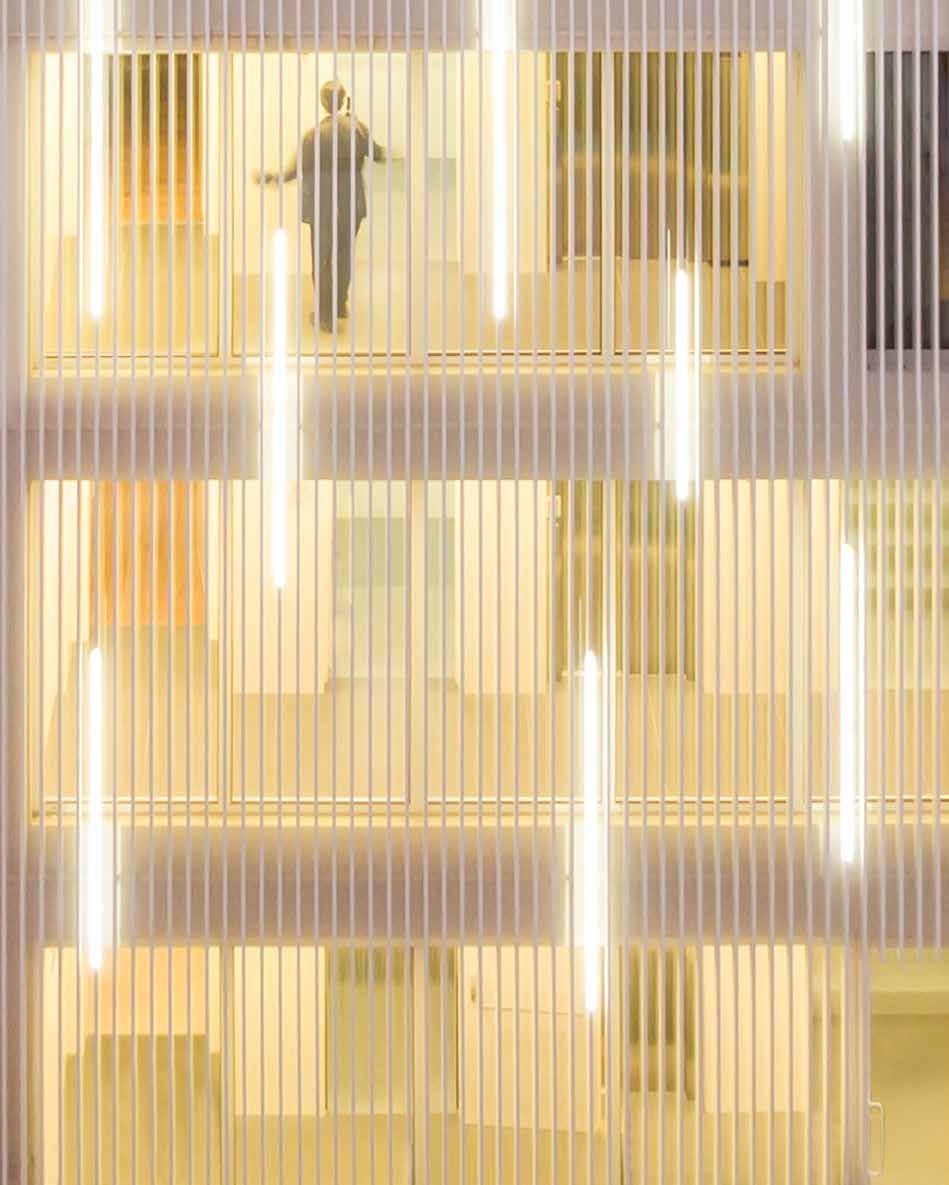


The seafront of Cascais is made up of a sequence of fortifcations that were organized as a frst defense of maritime access to the city of Lisbon. These fortifcations were interspersed with summer villas, built after 1870, following the installation of the Royal Family and the Court in Cascais during the summer period.
This socio-political validation was consolidated in the 20th century during the Estado Novo period, making Cascais one of the most valuable places for real estate investment.
On top of the previous construction, which was completely demolished, the current plan of Rua Nova da Alfarrobeira is maintained, as well as its residential use.
The new construction area above groung level, consists of four foors where the last one is complemented with the use of the roof area, to which the common access areas are associated. The two parking basements have a lift for vehicles dimensioned for this purpose.

The recovery of the spatiality of the back area, where the construction of a foor is taking place, allows it a correct sun exposure as well as a south reading of the Atlantic Ocean where Cascais Bay is inserted. The parallelepiped volumetry of the new construction pursues a new morphotypological framework in the existing constructions on its periphery.
This volumetry is the object of a skin made up of white metallic profles, with a rectangular section which, in addition to the abstrack content they offer to the construction, contribute through the shading they produce, for their thermal control, moving laterally in the fenestration areas.
These metal profles, whitch extend to the roof, receive segments of LED light with an asymmetrical design, with the aim of thus contributing to the intentional deconstruction of the building. These light traces are also distributed asymmetrically on the front foor of the building on Rua Nova da Alfarrobeira.


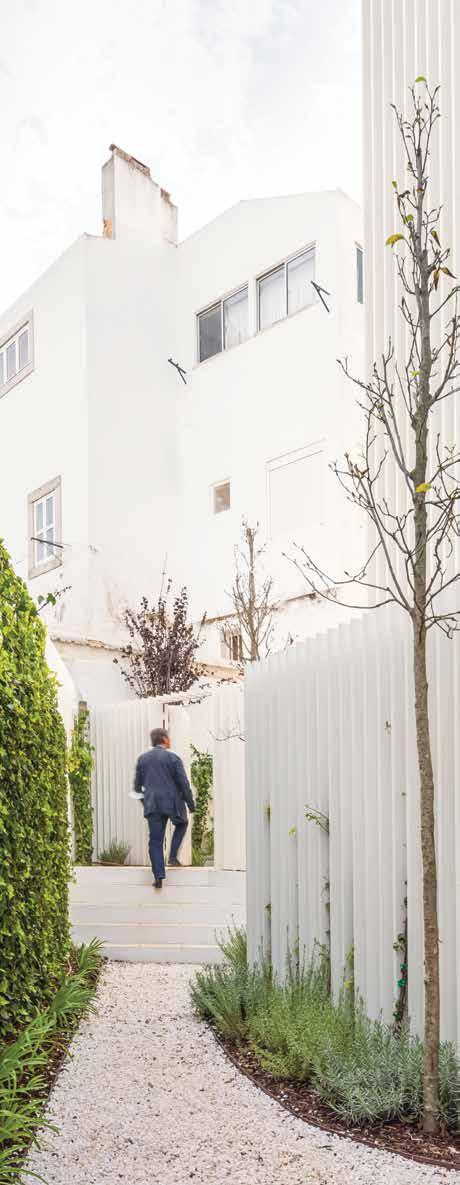


Developer: A. Santo Mediação Imobiliária
Project: Miguel Arruda Arquitectos Associados (miguelarruda.com)
Project Team: Miguel Arruda, Pedro Nogueira, Guilherme Arruda, Marco Jerónimo
Main Contractor: MAP Engenharia. Commercialization: Pret Investimentos
Fernando Guerra


Le centre culturel de Tianfu, qui couvre une superfcie de 1200m2, se trouve dans la nouvelle zone de développement expérimental de Tianfu New Town, qui fait partie de la ville de Chengdu. Chengdu est la capitale de la province du Sichuan, et est viscéralement tournée vers les montagnes, porte d’entrée du Tibet tout proche. Habitat du panda géant, animal devenu le symbole de la Chine, et des forêts de bambous, Chengdu a une longue histoire de construction urbaine et un patrimoine important.
Avec la création de la nouvelle aire de Tianfu, la ville s’est fxé un nouveau déf : concevoir une zone de référence pour la construction d’une “ville-parc”, une “ville à croissance naturelle” et d’“habitation poétique”. Cette “ville-parc” s’étendra sur une aire de 670 hectares qui se caractérise actuelle-
ment par des champs, des forêts et des collines, petites sœurs de la montagne Yangqi, qui confèrent à cette région son caractère paisible. L’identité particulière de la nouvelle zone de Tianfu reposera sur le concept de “ville-parc”.
Pierre angulaire de cette politique de développement expérimental, la salle d’exposition et centre culturel de Tianfu défnit la future identité du nouveau quartier.
S’inspirant de la culture du bambou dans la province du Sichuan, le bâtiment est perché au sommet d’une colline, comme s’il émergeait de la terre, refétant ainsi la recherche entre architecture, ville et nature. Le concept architectural reprend l’idée d’une oie sauvage s’envolant du sud de la colline, déployant ses ailes au-dessus de la végétation des montagnes et de la forêt. Ce vol fait écho au décollage de la ville

créative numérique de Tianfu et traduit le nouveau concept de ville-parc qui incarne “une ville à croissance naturelle” et “à habitat poétique”.
En termes de fonction, ce centre culturel représente à la fois une vitrine pour le développement de la ville et un témoignage de la construction de ce quartier. Cette position singulière “pour voir et être vu” a guidé tout le projet jusqu’à la construction fnale. La façade du bâtiment présente une grande surface de mur-rideau en verre nervuré invisible qui refète la zone humide de Yanqi dans le pavillon et prolonge la vue du parc à l’intérieur, atténuant ainsi la frontière entre le bâtiment et la nature.
Le premier étage du bâtiment prend la forme d’une colonnade surélevée, avec des avant-toits en porte-à-faux, sous
lesquels les gens peuvent se promener. Vu de loin, le corps principal du bâtiment semble se tenir “debout” en porte-àfaux, prêt à déployer ses avant-toits comme des ailes pour prendre son envol. Vu de plus près, en revanche, le corps principal du bâtiment “se retranche” dans les montagnes, ce qui permet aux visiteurs de porter leur regard sur le paysage environnant.
Le hall à l’intérieur du bâtiment comprend un patio surélevé, avec des fenêtres lumineuses qui ont saillie pour un plus grand apport de lumière tamisée par des grilles de bambou. Dans l’optique d’une construction durable et à faible émission de carbone, la décoration du plafond est réalisée en bambou, plante typique de la région du Sichuan, pour former les grilles en bambou et en acier.

Il Centro Culturale Tianfu di 1.200 m² si trova nella nuova zona di sviluppo sperimentale di Tianfu New Town, parte di Chengdu. Chengdu, capitale della provincia del Sichuan, è visceralmente rivolta verso le montagne, porta del vicino Tibet. Bastione dell’animale totem cinese, il panda, e delle foreste di bambù, Chengdu ha una lunga storia di costruzione urbana e un ricco patrimonio.
Con la creazione della nuova zona di Tianfu, la città si è posta una nuova sfda: progettare un’area dimostrativa per la costruzione di una “città parco”, una “città di crescita naturale” e una “abitazione poetica”. Questa “città parco” ” si estenderà su un’area sviluppata di 670 ettari, attualmente dominata da campi, foreste e colline, le sorelle minori del monte Yangqi, che conferiscono alla regione il suo carattere di serenità su cui si baserà l’identità singolare della nuova area di Tianfu il concetto di parco-città. La pietra angolare di questa politica di sviluppo sperimentale, la sala espositiva e culturale di Tianfu Center, dà il tono alla futura identità della nuova area di Tianfu.
Ricerca tra architettura, città e natura Ispirandosi alla cultura del bambù del Sichuan, l’edifcio è arroccato in cima a una collina, come se emergesse dalla terra, rifettendo una ricerca tra architettura, città e natura. Il concept architettonico si basa sull’idea di un’oca selvatica che prende il volo dal sud della collina, spiegando le ali in mezzo al verde delle montagne e dei boschi. Questo volo riecheggia il decollo della Città Creativa Digitale di Tianfu e trasmette il nuovo paradigma di una città-parco che esprime “una città di crescita naturale” e “una città di abitazione poetica”. Dal punto di vista funzionale, questo Centro Culturale rappresenta sia una vetrina per lo sviluppo della città, sia una testimonianza della costruzione di questa zona. Questo singolare posizionamento, “vedere ed essere visti”, ha guidato l’intero progetto fno alla costruzione fnale. La facciata dell’edifcio utilizza un’ampia superfcie continua di vetro nervato nascosto per rifettere la zona umida di Yanqi nel padiglione ed estendere la scena del parco all’interno, dissolvendo il confne tra edifcio e natura. Il primo piano dell’edifcio assume la forma di un colonnato rialzato, con grondaia sporgente, permettendo agli utenti a passeggiare sotto. Da lontano, il corpo principale dell’edifcio sembra ergersi “in posizione eretta”, a sbalzo, pronto a distendere la grondaia come ali per spiccare il volo. Da vicino, invece, il corpo principale dell’edifcio “si ritira” tra le montagne, permettendo ai visitatori di spaziare con lo sguardo sulle montagne circostanti. L’atrio interno dell’edifcio è caratterizzato da un patio rialzato, con fnestre luminose che sporgono per attirare la luce all’interno dell’edifcio, dove la luce viene fltrata attraverso griglie di bambù per creare un’atmosfera confortevole di luce diffusa. Nell’ottica di una costruzione sostenibile e a basse emissioni di carbonio, la decorazione del sofftto è caratterizzata dal bambù, una pianta rappresentativa della regione del Sichuan, che forma le griglie di acciaio e bambù.
The 1,200 m² Tianfu Cultural Center is located in the new experimental development zone of Tianfu New Town, part of Chengdu. Chengdu, capital city of Sichuan province, is viscerally turned towards the mountains, gateway to neighboring Tibet. A bastion of the Chinese totem animal, the Panda, and of bamboo forests, Chengdu has a long history of urban construction and a rich heritage.
With the establishment of the new Tianfu zone, the city has set itself a new challenge: to design a demonstration area for the construction of a “park city”, a “city of natural growth” and “poetic habitation”. This “park city” is to be spread over a 670-hectare developed area, currently dominated by felds, forests and hills, the little sisters of Yangqi Mountain, which gives the region its character of serenity. The singular identity of the new Tianfu area will be based on the park-city concept. The cornerstone of this experimental development policy, the Tianfu Exhibition Hall and Cultural Center, sets the tone for the future identity of the new Tianfu area. Research between architecture, city and nature Drawing on the bamboo culture of Sichuan, the building is perched atop a hill, as if emerging from the earth, refecting a search between architecture, city and nature. The architectural concept is based on the idea of a wild goose taking fight from the south of the hill, spreading its wings amid the greenery of the mountains and forest. This fight echoes the take-off of the Tianfu Digital Creative City, and conveys the new paradigm of a park city expressing “a city of natural growth” and “a city of poetic habitation”.
In terms of function, this cultural center represents both a showcase for the city’s development and a witness to the construction of this area. This singular positioning, “to see and be seen”, guided the entire design through to fnal construction.
The building’s façade uses a large curtain wall surface of hidden ribbed glass to refect the Yanqi wetland into the pavilion, and extend the park scene into the interior, dissolving the boundary between building and nature.
The frst foor of the building takes the form of a raised colonnade, with projecting eaves, allowing users to stroll beneath. From a distance, the main body of the building appears to stand “upright” in an overhanging position, ready to spread its eaves like wings to take fight. Up close, however, the main body of the building “retreats” into the mountains, allowing visitors to wander their gaze over the surrounding mountains.
The building’s interior atrium features a raised patio, with light windows that protrude to draw light into the building, where light is fltered through bamboo grids to create a comfortable atmosphere of diffused light. With a view to sustainable, low-carbon construction, the ceiling decoration features bamboo, a plant representative of the Sichuan region, to form the bamboo-steel grids.

Owner: Tianfu Investment Group
Project: And Studio (www.andstudio.net)
Duccio Cardelli and Ning Wang
Photo: ©Arch-Exist Photography


Upper House est la première collaboration entre Aria Property Group et Koichi Takada Architects. Sa conception architecturale met en valeur la beauté naturelle de Brisbane, son mode de vie urbain décontracté et son climat subtropical doux. Ponctuant l’horizon de la ville d’une pergola en bois et d’une oasis tropicale sur le toit, Upper House dispose de 1 000 m2 d’équipements destinés au bien-être.
Ce bâtiment multirésidentiel de 33 étages propose 188 appartements de luxe dans une architecture expressive qui évoque le fguier de la baie de Mereton. Une œuvre d’art de cinq étages sur la façade transmet un message sur les peuples autochtones d’Australie. Les lignes courbes de l’architecture sont en harmonie avec cette œuvre, Bloodlines Weaving String and Water, 2023, qui s’exprime sur du métal perforé, plié et rétroéclairé afn de donner vie à l’histoire autochtone et au récit traditionnel. L’artiste Judy Watson explique : “Des lignes de lumière sillonnent la rivière et la terre. Les itinéraires locaux suivent les chemins de randonnée des Aborigènes. Ce sont les liens du sang qui nous unissent au pays et à la culture”. L’engagement d’Aria Property Group en faveur de l’art se poursuit dans le hall d’entrée de Hope Street, qui est une galerie publique destinée à présenter des artistes émergents, conformément à la mission du Fish Lane Arts Precinct, situé à proximité. Tous les appartements de l’Upper House bénéfcient d’un balcon extérieur et sont orientés de manière stratégique afn de préserver l’intimité ou d’offrir une vue sur le quartier des affaires de Brisbane à l’est ou sur un paysage montagneux verdoyant à l’ouest. Le décalage des balcons permet également d’équilibrer la lumière naturelle et l’ombre. 3.544 plantes – entre espèces locales et tropicales – soigneusement sélectionnées pour leur capacité à prospérer sous le climat local, garantissent un paysage résilient et un mini écosystème qui ajoute de la vie au toit et témoigne d’un grand engagement en faveur de la durabilité. Les rangées d’arbres et de feuillages servent d’isolant naturel, réduisant ainsi la dépendance en matière de chauffage et de rafraîchissement artifciels. La récupération de l’eau de pluie dans un réservoir de 40kL permet d’irriguer toutes les plantes. Les résidents de l’Upper House mettent en pratique le partage des ressources grâce à une fotte de véhicules électriques en carsharing, et le bâtiment est équipé de bornes de recharge pour véhicules électriques - avec la possibilité de les intégrer dans 100 % des places de parking.
Le prochain bâtiment réalisé dans le cadre de la collaboration entre Aria Property Group et Koichi Takada Architects sera Urban Forest. Également situé dans le quartier de South Brisbane, Urban Forest est une tour résidentielle de trente étages dont la façade est recouverte de plus de 25 000 plantes locales, qui sont déjà en cours de culture pour les besoins du projet. L’immeuble résidentiel le plus écologique du monde a été soumis à l’approbation du conseil municipal de Brisbane et sera achevé avant les Jeux olympiques de Brisbane en 2032.
Upper House è la prima collaborazione completata tra Aria Property Group e Koichi Takada Architects e l’architettura è progettata per celebrare la bellezza naturale di Brisbane, lo stile di vita urbano rilassato e il mite clima subtropicale. Punteggiando lo skyline della città con un pergolato in legno e un’oasi tropicale sul tetto, Upper House offre 1.000 m² di servizi per il benessere.
Questo edifcio multi-residenziale di 33 piani offre 188 appartamenti di lusso all’interno di un’architettura espressiva che fa riferimento al fco di Moreton Bay, un’opera d’arte di 5 piani sulla facciata condividendo un messaggio sui popoli indigeni dell’Australia.
Le linee curve dell’architettura si armonizzano con l’opera d’arte della facciata che attinge direttamente dalla storia del sito. Bloodlines Weaving String and Water, Judy Watson 2023, è espresso su metallo perforato, piegato e retroilluminato per dare vita alla storia indigena e alla narrazione tradizionale. L’artista afferma: “Linee di luce si incrociano sul fume e sulla terra. I percorsi locali seguono i sentieri escursionistici aborigeni. Sono le linee di sangue che ci avvicinano al Paese e alla sua cultura”. L’impegno di Aria Property Group per l’arte continua all’interno della hall di Hope Street, che è uno spazio pubblico per esporre artisti emergenti, in linea con la loro missione del vicino Fish Lane Arts Precinct.
Tutti gli appartamenti Upper House godono di uno spazio esterno con balcone e sono orientati strategicamente per garantire privacy o aprirsi verso viste del CBD di Brisbane a est o di un paesaggio verde montuoso a ovest. Le sporgenze sfalsate dei balconi bilanciano anche luce e ombra naturali.
3.544 piante, una combinazione di specie autoctone e tropicali, attentamente selezionate per la loro capacità di prosperare nel clima locale, assicurano un paesaggio resiliente e un mini ecosistema che aggiunge vitalità all’ambiente del tetto e mostrano un grande impegno per la sostenibilità. Gli strati di alberi e fogliame fungono da isolante naturale, riducendo la dipendenza dal riscaldamento e dal raffreddamento artifciali. La raccolta dell’acqua piovana in un serbatoio di acqua piovana da 40 kL. I residenti di Upper House mettono in pratica la condivisione delle risorse attraverso una fotta di veicoli elettrici in car sharing e l’edifcio è dotato di stazioni di ricarica per veicoli elettrici, con la possibilità di integrarle nel 100% dei parcheggi. Il prossimo progetto della collaborazione tra Aria Property Group e Koichi Takada Architects sarà la Urban Forest. Anch’essa situata nel distretto di South Brisbane, Urban Forest è una torre residenziale di 30 piani con una facciata ricoperta da oltre 25.000 piante autoctone, che sono già state coltivate per il progetto. L’edifcio residenziale più ecologico del mondo è in attesa di approvazione da parte del Brisbane City Council e sarà completato prima delle Olimpiadi di Brisbane del 2032.
Upper House is the frst completed collaboration between Aria Property Group and Koichi Takada Architects and the architecture is designed to celebrate Brisbane’s natural beauty, relaxed urban lifestyle and mild sub-tropical climate. Punctuating the city skyline with a timber pergola and tropical rooftop oasis, Upper House has 1,000 m² of wellbeing amenities.
This 33-storey multi-residential building delivers 188 luxury apartments inside expressive architecture that references the Moreton Bay Fig tree, a 5-storeyartwork on the façade sharing a message about Australia’s indigenous people. The curvaceous lines of the architecture exist in harmony with the façade artwork that draws directly from the site’s history. Bloodlines Weaving String and Water, Judy Watson 2023, is expressed on perforated metal, folded and backlit in order to bring to life indigenous history and traditional narrative. Artist Judy Watson says, “Lines of light criss-cross the river and the land. Local routes follow Aboriginal walking tracks. They are the bloodlines that pull us to Country and culture.”
Aria Property Group’s commitment to art continues inside the Hope Street lobby, which is a public gallery space to showcase emerging artists, aligning with their mission of the nearby Fish Lane Arts Precinct.
All Upper House apartments enjoy outdoor balcony space and are strategically oriented to provide privacy, or open out towards views of the Brisbane CBD to the east or a mountainous green landscape to the west. The staggered balcony protrusions also balance natural light and shade.
3,544 plantings – a combination of native and tropical species – carefully selected for their ability to thrive in the local climate, ensure a resilient landscape and mini ecosystem that adds vitality to the rooftop setting and show a great commitment to sustainability.
The layers of trees and foliage serve as a natural insulator, reducing reliance on artifcial heating and cooling. Rainwater harvesting in a 40kL rainwater tank provides irrigation to all plantings.
Upper House’s residents put resource sharing into practice through an electric vehicle carshare feet, and the building is equipped with e-vehicle charging stations – with the ability to integrate them throughout 100% of car parking spaces. The next building in the collaboration between Aria Property Group and Koichi Takada Architects will be Urban Forest. Also located in the South Brisbane precinct, Urban Forest is a 30-storey residential tower with a façade covered in over 25,000 native plants – which are already being grown for the project. The world’s greenest residential building is with Brisbane City Council for approval and will be completed ahead of the Brisbane Olympics in 2032.
Client: Aria Property Group
Project and Interior Design: Koichi Takada Architects (koichitakada.com)
Builder: Minicon
Photo source: v2com






Sono anni che Richard England, l’autore di architetture in grado di esprimere a Malta, il suo luogo dell’anima, lo spirito del nostro tempo, si sta occupando con passione e dedizione di un giardino. Un’oasi che mescola natura e architettura. Una sorta di città di fondazione, con i classici assi, pronta ad accogliere residenti e ospiti di un ostello per anziani, rendendo rigoglioso e invitante un angolo di quest’isola pietrosa che impiega ciò che ha sotto per alzare costruzioni. Ho avuto la fortuna di visitarlo in diverse occasioni. Dal primo nucleo, destinato all’ospitalità di coloro che hanno fondato questa benefca associazione ispirata al buon samaritano. A seguire quindi col giardino che è cresciuto nel corso del tempo arricchendosi di percorsi sui quali si affacciano volumi architettonici, portici e portali, cappelle di meditazione, vasche d’acqua e la presenza rigogliosa di alberi e piante. Di recente è avvenuta l’inaugurazione, una festa con musica e canti e la presentazione dell’opera nelle diverse lingue del Mediterraneo, liquido amniotico della nostra civiltà (Magris).
L’autore, che ben conosce gli alberi citati dalla Bibbia, ha realizzato un’opera d’arte totale dove i segni primari dell’architettura, i volumi puri che evocano la lezione di Le Corbusier, coni, piramidi, cubi e colonnati si mescolano con la natura e l’acqua, in una tacita risposta alla violenza del mondo contemporaneo. Il tutto in sintonia con i desiderata dell’individuo e in grado di cogliere la bellezza del creato, promessa di paradiso. Del resto in cosa mai consiste questo luogo se non nella proiezione del giardino dell’Eden?
Richard England ci rammenta, con Jorge Luis Borges, che è giunto il tempo per compiere un gesto irreparabile, tornare a stabilire un legame tra l’albero, l’architettura e l’individuo. Rafforza la rifessione di Emilio Ambasz che scrivendo sui lavori di Louis Barragan, considerato da England con Ricardo
Legorreta un suo mentore, sostiene: “nei miei giardini, nelle mie case ho sempre cercato di far sì che il placido sussurro del silenzio prevalesse su tutto. Nelle mie fontane canta il silenzio [...] Ho la sensazione, in mezzo agli alberi, che un giardino contenga l’universo intero”. Il nostro progettista ne è pienamente consapevole e in questo tempo lungo e meditato ha trasformato il suo giardino in un luogo in costante movimento, grazie alla luce e al colore. Brulicante di vita perché in costante crescita. Il suo aspetto si modifca grazie all’effetto del vento, del sole, dei colori e degli imprevedibili accadimenti della vita. Dello scorrere dell’acqua e della presenza di coloro che lo hanno voluto e realizzato e che passeggiano in questo spazio o si fermano in una cappella a rifettere sul futuro consapevoli che il tempo del giardino è quello della vita stessa. Assai diverso di un tempo meccanico che insegue bellezze effmere come quello che oggi governano le nostre esistenze mentre per millenni, nelle diverse culture del mondo, la felicità umana è stata identifcata come un’esistenza vissuta in giardino.
Vi è un ulteriore episodio che vale la pena menzionare. Le belle icone che compiano nelle cappelle del giardino, luoghi di meditazione e di preghiera, portano la frma di Marc England, fglio del progettista e artista di opere pensate per sedimentare nell’immaginario collettivo. Alludono ad un passaggio del testimone tra padre e fglio. Simile a quello che si trova nel portico del Duomo di Civita Castellana realizzato dai marmorari romani e che annota: “Giacomo, cittadino romano, fece quest’opera con suo fglio dilettissimo Cosma, nell’anno del Signore 1210”. Ci piace pensare che tornando a Malta sia possibile trovare un segno che oltre al nome del progettista riporti quello di Marc, suo fglio dilettissimo.
Mario Pisani

Depuis des années, Richard England, l’architecte capable d’exprimer l’esprit de notre époque à Malte, son lieu de prédilection, travaille avec passion et dévouement à la création d’un jardin. Une oasis qui mêle nature et architecture. Une sorte de ville de fondation, avec des axes classiques, prête à accueillir les résidents et les hôtes d’un foyer pour personnes âgées, rendant luxuriant et accueillant un coin de cette île rocailleuse qui utilise ce qu’elle a en dessous pour élever des bâtiments. J’ai eu la chance de visiter ce lieu unique à plusieurs occasions. Du premier noyau, destiné à l’hospitalité de ceux qui ont fondé cette association caritative inspirée du Bon Samaritain. Puis au jardin, qui s’est développé au fl du temps, en s’enrichissant d’allées surplombées de volumes architecturaux, de portiques et de portails, de chapelles de méditation, de bassins d’eau et de la présence luxuriante d’arbres et de plantes. L’inauguration a récemment eu lieu, dans une ambiance festive, avec de la musique et des chants, et la présentation du projet dans les différentes langues de la Méditerranée, ce liquide amniotique de notre civilisation (Magris).
L’auteur, qui connaît bien les arbres mentionnés dans la Bible, a créé une œuvre d’art totale où les signes premiers de l’architecture, les volumes purs qui évoquent la leçon de Le Corbusier, les cônes, les pyramides, les cubes et les colonnades se mêlent à la nature et à l’eau, en réponse tacite à la violence du monde contemporain. Le tout en accord avec les désirs de l’individu et capable de capter la beauté de la création, promesse de paradis. Du reste, qu’est-ce que ce lieu si ce n’est une projection du jardin d’Éden ?
Richard England nous rappelle, avec Jorge Luis Borges, que le temps est venu de faire un geste irréparable, revenir pour établir un lien entre l’arbre, l’architecture et l’individu. Il renforce la réfexion d’Emilio Ambasz qui, en écrivant sur les travaux
Client: The Society of Christian Doctrine Founded in 1907 by Malta-born Ġorġ Preca recently named Saint Project: Richard England (architectrichardengland.com) Glass Panels: Marc England Lighting: Light and Design Solutions.
Landscaping: Zammit Nurseries
de Luis Barragán – qu’England considère comme l’un de ses mentors, avec Ricardo Legorreta – affrme : “Dans mes jardins, dans mes maisons, j’ai toujours essayé de faire prévaloir sur tout le placide murmure du silence. Dans mes fontaines, le silence chante [...]J’ai le sentiment, au milieu des arbres, qu’un jardin contient tout l’univers”. Notre créateur en est pleinement conscient et dans ce temps long et réféchi, il a transformé son jardin en un lieu en perpétuel mouvement, grâce à la lumière et aux couleurs. Il est plein de vie parce qu’il grandit sans cesse. Son aspect change sous l’effet du vent, du soleil, des couleurs et des événements imprévisibles de la vie, de l’eau qui s’écoule et de la présence de ceux qui l’ont voulu et réalisé, et qui se promènent dans cet espace ou s’arrêtent dans une chapelle pour réféchir à l’avenir, conscients que le temps du jardin est celui de la vie elle-même. Un temps bien différent d’un temps mécanique qui court après des beautés éphémères comme celles qui régissent nos existences aujourd’hui, alors que depuis des millénaires, dans les différentes cultures du monde, le bonheur de l’homme est identifé à une existence vécue dans un jardin. Un autre épisode mérite d’être mentionné. Les belles icônes présentes dans les chapelles du jardin, lieux de méditation et de prière, portent la signature de Marc England, fls du concepteur et artiste d’œuvres conçues pour s’ancrer dans l’imaginaire collectif. Elles évoquent un passage de témoin entre le père et le fls. Celle qui se trouve dans le portique de la cathédrale de Civita Castellana, réalisée par des marbriers romains indique: “Giacomo, citoyen romain, a réalisé cette œuvre avec son fls bien-aimé Cosmas, en l’an de grâce 1210”. Nous aimons penser qu’en retournant à Malte, il est possible de trouver un signe qui, en plus du nom du concepteur, porte celui de Marc, son fls bien-aimé.
Mario Pisani
For years now Richard England, whose architectural designs in Malta, the place where his heart lies, embody the spirit of the age in which we live, has been working passionately and with great dedication on a garden. An oasis of nature and architecture. A sort of foundation city ready to welcome residents and guests of a hostel for the elderly into the lush and inviting surroundings of a tiny niche of this stony island that draws on what lies beneath the ground to raise up buildings. I have been lucky enough to visit it on several occasions. The frst building was constructed to accommodate the people who founded this charitable association inspired by the Good Samaritan. Then there is the garden, which has grown over time, embellished with paths surrounded by architectural structures, porticoes and portals, meditation chapels, pools of water and luscious trees and plants. The offcial opening was held recently, a party with music and songs and the presentation of the new architectural work in the various languages of the Mediterranean, the amniotic fuid of our civilisation (Magris). The architect, who is well versed in the trees mentioned in the Bible, has created a total work of art in which the main features of architecture, the kind of pure structures Le Corbusier taught us how to use, cones, pyramids, cubes and colonnades mingle with nature and water in a tacit response to the violence of the contemporary world. All in tune with the desires of individual people while capturing the beauty of creation, a taste of paradise. After all, what on earth is this place if not a projection of the Garden of Eden?
Richard England reminds us, as Jorge Luis Borges did, that the time has come to make an irreparable gesture, reestablishing a link between trees, architecture and people. It reinforces the thoughts expressed by Emilio Ambasz who, when writing about the work of Louis Barragan (who England considers to be his mentor along with Ricardo Legorreta), stated that: “in my gardens, in my houses, I have always tried to make the gentle whisper of silence prevail over everything. In my fountains, silence sings [...] I have the feeling, out among the trees, that a garden contains the whole universe”. Our architectural designer is fully aware of this and over a long, thoughtful period of time he has transformed his garden into a place in constant motion with the help of light and colour. Teeming with life because it is constantly growing. Its appearance changes through the effect of the wind, sun, colours and unpredictable events of life. The fow of water and the presence of those who wanted and created it and who walk through this space or stop off at a chapel to refect on the future, aware that time passes in the garden at the same pace as life itself. This is a quite different notion of time from the mechanical time of chasing ephemeral beauties, like those that control our lives today. For millennia, the world’s different cultures identifed human happiness with life lived in a garden. There is something else worth mentioning. The beautiful icons in the garden chapels, places of meditation and prayer, bear the hallmark of Marc England, son of the designer and an artist whose works are designed to rest in the collective psyche. They allude to a passing of the baton from father to son. Along similar lines to the portico in Civita Castellana Cathedral built by Roman marble workers, which notes that: “James, a Roman citizen, carried out this work with his beloved son Cosmas in the year of our Lord 1210”. We like to think that going back to Malta we can discover a sign, which, in addition to the name of the architect, also carries the name of his beloved son, Marc.


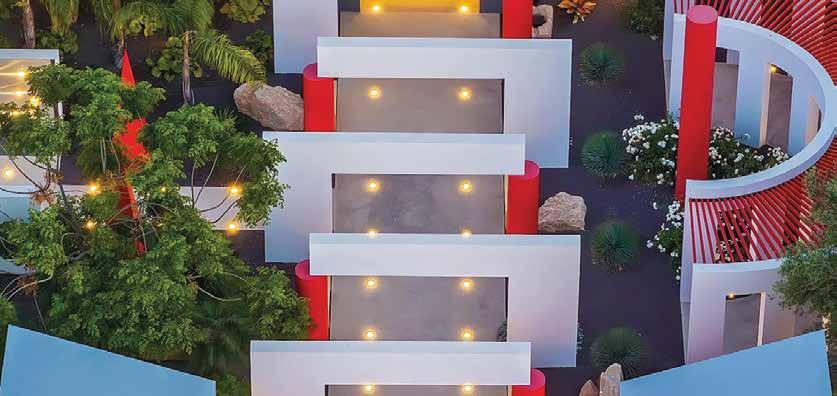


Jihlava, Czech Republic

Dans le cadre du programme de développement du train à grand vitesse lancé par le gouvernement tchèque le long de la ligne Prague-Brno-Ostrava, le groupe AREP, avec son partenaire local Monom, a remporté le concours de la nouvelle gare de Jihlava au cœur d’un réseau d’infrastructures complexe et d’un riche paysage naturel. L’architecture du terminal est sobre et expressive à la fois, un point de repère dans le paysage, un landmark, qui épouse la topographie du site et utilise les infrastructures existantes pour limiter les constructions supplémentaires. Conçue pour s’adapter au climat local, cette gare post-carbone intègre des méthodes bioclimatiques (effet de serre en hiver, éclairage naturel, ventilation traversante, dispositifs de protection, etc.), une architecture passive, une toiture photovoltaïque, le recours à des matériaux biosourcés et géosourcés et le réemploi de terres excavées (50 000 m3).
Un auvent formant un grand ruban en structure bois (couverte de zinc) traverse le paysage et guide les passagers depuis la descente du bus et des voitures vers les quais, en passant par la salle des échanges de la gare, logée sous le viaduc ferroviaire de la ligne à grande vitesse. Avec une capacité de 6 000 passagers et 118 trains par jours, la gare présente un vaste hall (2000 m2), ouvert sur les quatre côtés et positionné légèrement en surplomb des voies conventionnelles et du paysage. Le parvis et la gare sont positionnés à un niveau intermédiaire, entre le niveau haut du viaduc et le niveau bas de la ligne conventionnelle. Il suffra de descendre ou de monter d’un niveau pour rejoindre les trains Suivant le même principe d’infrastructure habitée, l’intermodalité bus, voitures, vélos, taxis, se fait de plein pied avec la salle des échanges de la gare. Le début des travaux est prévu pour 2029.
Client: Sprava zeleznic Project: Groupe AREP (www.arep.fr), AREP Architectes and Monom (www.monom.cz)


Nel quadro del piano di sviluppo dei treni ad alta velocità promosso dal governo ceco lungo la linea Praga-BrnoOstrava, il gruppo AREP, insieme al partner locale Monom, ha vinto il concorso per la nuova stazione di Jihlava, nel cuore di una complessa rete infrastrutturale e un ricco paesaggio naturale. L’architettura del terminal è lineare ed espressiva allo stesso tempo, un punto di riferimento nel paesaggio, un landmark che sposa la topografa del sito e utilizza le infrastrutture esistenti per limitare ulteriori costruzioni. Progettata per adattarsi al clima locale, questa stazione post-carbonio integra metodi bioclimatici (effetto serra in inverno, illuminazione naturale, ventilazione traversante, dispositivi di protezione, ecc.), architettura passiva, una copertura fotovoltaica, l’uso di materiali di origine biologica e geolocalizzata e il riutilizzo dei terreni di scavo (50.000 m3). Una tettoia che forma un grande nastro con struttura in legno rivestita di zinco, attraversa il paesaggio e guida i passeggeri dalla discesa di bus e delle auto verso i binari, passando per la sala multi scambio della stazione, ricavata sotto il viadotto ferroviario della linea ad alta velocità. Con una capacità di 6.000 passeggeri e 118 treni al giorno, la stazione dispone di un’ampia hall (2.000m2), aperta su quattro lati e posizionata leggermente in aggetto sui binari e sul paesaggio. Il piazzale e la stazione sono posizionati a una quota intermedia, tra il viadotto, in alto, e la quota bassa della linea ferroviaria tradizionale. Basterà scendere o salire di un livello per raggiungere i treni alta velocità.
Seguendo lo stesso principio dell’infrastruttura abitata, l’intermodalità di autobus, auto, biciclette, taxi viene effettuata direttamente dalla zona multi scambio della stazione. L’inizio dei lavori è previsto per il 2029.
As part of the high-speed train development plan promoted by the Czech government along the Prague-Brno-Ostrava line, the AREP Group, together with its local partner Monom, won a competition launched to design the new Jihlava station right in the heart of a complex infrastructural network and luscious natural landscape. The terminal’s architecture is both linear and stylish, a landmark on its surroundings that blends in with the topography of the site and uses the existing infrastructure to limit further construction. Designed to adapt to the local climate, this post-carbon station integrates bioclimatic methods (greenhouse effect in winter, natural lighting, crossventilation, protective devices, etc.), passive architecture, a photovoltaic roof, the use of biological and geo-localised materials, and the reuse of excavated soil (50,000 m3).
A canopy forming a large ribbon with a wooden structure coated in zinc crosses the landscape and guides passengers from the bus stops and car drop-off point to the tracks, passing through the station’s main hall built under the railway viaduct of the high-speed line. With a capacity of 6,000 passengers and 118 trains per day, the station has a large hall (2,000 m2) open on four sides and positioned slightly overhanging the tracks and surrounding landscape. The forecourt and station are positioned at an intermediate height between the viaduct, above, and old low-level railway line. Passengers just descend or ascend one level to reach the high-speed trains. Following the same principle as an inhabited infrastructure, buses, cars, bicycles and taxis can be accessed directly from the station’s multi -interchange zone. Building work is scheduled to begin in 2029.

Common Thread est un tunnel translucide immersif réalisé avec un textile tissé 3D, qui relie le jardin du couvent des Capucins, un monastère du XIXe siècle à Bruges, autrefois inaccessibile, à la ville. Évoquant la dentelle, spécialité brugeoise par excellence, cette structure tubulaire est réalisée avec un tissu innovant pour créer une expérience spatiale complexe à l’intérieur d’un tunnel en spirale. Elle attire les visiteurs, qui débouchent sur une cour éclairée par le soleil et s’engagent dans une exploration aléatoire de l’histoire, de l’artisanat et de la technologie. Le jardin transformé renferme des mondes différents, mêlant passé et avenir, forme et matière, mémoire et espace, dans le cadre verdoyant qui entoure le monastère.
Common Thread è una sorta di galleria immersiva traslucida realizzata in tessuto lavorato 3D che collega il cortile di un monastero del XIX secolo di Bruges, precedentemente inaccessibile, alla città. Ispirata alla tradizione della lavorazione del merletto della città medievale, l’installazione utilizza un tessuto innovativo per creare un’intricata esperienza spaziale in un tunnel ondulato. Attira i visitatori, che arrivano in un cortile illuminato dal sole e si immergono in un’esplorazione casuale di storia, artigianato e tecnologia. Il giardino trasformato contiene molteplici mondi, che intrecciano passato e futuro, forma e materia, memoria e spazio, sul ricco sfondo dei dintorni del monastero.
Common Thread is an immersive passage made from a 3D knit textile connecting a previously inaccessible 19thcentury monastery courtyard in Bruges back to the city. Inspired by the medieval city’s lace-making tradition, the installation uses an innovative woven fabric to create an intricate spatial experience in a wavelike tunnel. It draws visitors in, emerging into a sunlit courtyard and engaging in a serendipitous exploration of history, craft, and technology.
The transformed garden contains multiple worlds, threading past and future, form and matter, memory and space, against the rich backdrop of the monastery’s surroundings.
Client: Bruges Triennial Project: SO IL Architects (so-il.org) Design Team: Jing Liu, Florian Idenburg, Fabian Puller Membrane Design and Production: Dr. Mariana Popescu, Anass Kariouh Engineering: Diederik Veenendaal, Alessio Vigorito,
Assembly Contributions: Nick Gereels, Valentin Lorenzen da Silva, Jade Verlinde, Jean-Pierre Gereels, Frieder Ringel, Robin Oval


Dar Arafa Architecture

Depuis sa fondation par Salah Al-Din au XIIe siècle avant J.-C., la citadelle du Caire (ou Citadelle de Saladin) est généralement reconnue comme le siège du pouvoir politique égyptien. Depuis lors, elle a accueilli la dynastie des Ayyoubides, les Mamelouks, les Ottomans, la famille de Muhammad Ali, l’occupation britannique et, en 1952, les dignitaires égyptiens. Mais rares sont ceux qui savent que la Citadelle du Caire a été le siège des projets de développement. Aujourd’hui, même si son pouvoir politique s’est estompé, sa position montre clairement qu’elle était le siège du pouvoir de conception grâce aux innovations et aux merveilles d’ingénierie militaire telles que les tours, les remparts, les portes, les fortifcations et les ouvrages hydrauliques, qui ne se limitaient pas simplement à des ouvrages architecturaux tels que les mosquées, les palais, les salles royales et les iwan. À l’intérieur de ces merveilles, nous trouvons le design, les sculptures et le graphisme, des contributions qui ont proliféré et inspiré le monde du design, comme la Kiswa, le tissu qui recouvre la Kaaba, vénérée, vue et adorée par des millions de pèlerins musulmans. GEMMA, la proposition de Waleed Arafa, a mis cette histoire en lumière lors de la Semaine du design (25/2-2/3/2024) pour célébrer une sorte de continuum, un ADN qui imprègne les résultats que ce lieu a donnés tel qu’il est aujourd’hui.
La proposition reprend la géométrie élémentaire des lignes de travail, souvent négligées et cachées par les stratifcations plus évidentes des produits de design les plus récents, et rend hommage à toutes les merveilles perdues ou démolies qui n’existent plus aujourd’hui mais apparaissent comme un fantôme qui nous appartient et qui relie simultanément le matériel et l’immatériel.
Una consapevolezza diffusa riconosce nella Cittadella del Cairo la sede del potere politico egiziano. Fin dalla sua fondazione da parte di Salah Al-Din, nel XII secolo a.C. Da allora ha ospitato la dinastia degli Ayyubidi, i Mamelucchi, gli Ottomani, la famiglia di Muhammad Ali, l’occupazione britannica e nel 1952 gli uffciali egiziani. Solo pochi sanno però che la Cittadella del Cairo è stata la sede del potere progettuale.
Oggi il suo potere politico è svanito, ma la sua posizione rende evidente il suo essere sede del potere progettuale grazie alle innovazioni e meraviglie di ingegneria militare come le torri, mura, porte, fortifcazioni e opere idrauliche che non si limitavano semplicemente ad architetture come le moschee, i palazzi, le sale le reali e gli iwan. All’interno di queste meraviglie troviamo il design, le sculture e la grafca, i contributi che hanno proliferato e ispirato il mondo del design come la Kisswa, la copertura della Ka’baa, venerata, vista e custodita da milioni di pellegrini musulmani. GEMMA, la proposta di Waaled Arafa, ha voluto evidenziare, nella Settimana del Design (25/2-2/3/2024), questa storia per celebrare una sorta di continuum, un DNA che permea i risultati che scaturiscono da questo luogo così com’è oggi.
La proposta ricorre alla geometria elementare delle linee di lavoro, spesso trascurate e nascoste dalle stratifcazioni più evidenti dei più recenti prodotti progettuali e rende onore a tutte le meraviglie perdute o demolite che oggi non esistono più ma compaiono come un fantasma che ci appartiene e connette simultaneamente il materiale e l’immateriale.
Mario Pisani

The Citadel of Cairo is widely acknowledged as the seat of Egyptian political power. Since it was originally built by Salah Al-Din in the 12th century BC, it has been the main seat of political power. Over time it has accommodated the Ayyubid dynasty, the Mamluks, the Ottomans, Muhammad Ali’s family, the British occupation and Egyptian offcials in 1952. Only a few people know, however, that the Cairo Citadel was also the seat of design power. Today, its political power has vanished, but it is still very much the focus of design power, thanks to innovations in and marvels of military engineering such as towers, walls, gates, fortifcations and hydraulic works that were more than just architectural works, such as mosques, palaces, royal halls and iwans. These wonders feature a combination of design, sculpture and graphics that have extended their infuence to embrace the world of design, inspiring such works as the Kisswa, the roof over the Ka’baa, venerated, visited and cherished by millions of Muslim pilgrims. GEMMA, Waaled Arafa’s project for Design Week (25/2-2/3/2024) set out to showcase this great story by commemorating a kind of continuum, the DNA running through everything still emerging from this place as it is today. The project draws on the geometric forms of basic lines of work, so often overlooked and hidden away by the more obvious stratifcations of the latest design products, and honours all those lost or demolished wonders that no longer exist today but reappear like ghosts that are part of our very being, connecting the tangible to the intangible.
Amelia Tavella

Lauréat du concours pour la réhabilitation et l’extension du SPA thermal O’Balia à Balaruc-les-Bains, unique en Méditerranée, le projet d’Amelia Tavella orchestre une rencontre entre géologie et traces du passé romain des lieux visant à ʺréinventer sans détruireʺ comme précise l’architecte. Inscrit au sein du projet d’aménagement du site thermal des Hespérides, l’ensemble est orienté vers l’étang de Thau, composant délicatement avec l’édifce existant. ʺMon architecture suit les traces d’un passé récent et ancien. L’édifce existant nous sert ainsi de guide. L’architecture élancée de l’aile de bois est conservée, faisant honneur au passé plus
récent. Une greffe minérale suivant les traces d’un temps plus ancien dévale la topographie vers le rivageʺ. Une architecture enracinée dans les lieux, rythmée par l’ordre majeur des colonnes en pierre, par la lumière et l’ouverture sur le paysage de la Méditerranée. Le SPA O’Badia couvre une surface de 3100m2 avec 4 000 m2 de parc paysager et offrira plusieurs services tels que des espaces de soins individuels, une halle bassin, des espaces d’expérience collective, 6 bassins thématisés dans un parc des sources chaudes ainsi qu’un bain de la déesse, le village Saunas (saunas, hammam), des boutiques et des espaces d’activités douces.
Vincitore del concorso per il recupero e l’ampliamento della SPA termale O’Balia a Balaruc-les-Bains, nel sud della Francia e unica nel Mediterraneo, il progetto di Amelia Tavella orchestra un incontro tra geologia e tracce del passato romano del luogo per ʺreinventare senza distruggereʺ come precisa l’architetto. Parte del progetto di sviluppo del sito termale Hespérides, il nuovo complesso termale è orientato verso la laguna di Thau, fondendosi delicatamente con l’edifcio esistente. ʺLa mia architettura segue le tracce di un passato recente e antico. L’edifcio esistente funge quindi da guida. L’architettura slanciata dell’ala
Client: Ville de Balaruc-les-Bains, France
Project: Amelia Tavella
Writer: Nina Bouraoui
Environmental quality: Atelier Franck Boutté
Technical design office: BETREC
Lighting: Scenarchie
Acoustic: Alternative Studio
Signaletic: Atelier Bastien Morin
Landscaping: Christophe Gautrand
Engineering: STC Ingenierie

in legno è stata conservata, onorando il passato più recente. Un innesto minerale seguendo le tracce di un tempo più antico si svilupuppa lungo la topografa verso la riva. Un’architettura radicata nel luogo, scandita dagli ordini maggiori delle colonne in pietra, dalla luce e dall’apertura sul paesaggio mediterraneo. La O’Badia SPA si estende su una superfcie di 3.100m2 con 4.000 m2 di parco paesaggistico e offrirà diversi servizi come spazi per trattamenti individuali, spazi esperienziali collettivi, 6 piscine a tema in un parco di sorgenti termali, il villaggio Saune (saune, hammam), negozi e aree relax.
Winner of a competition for the renovation and extension of O’Balia thermal spa in Balaruc-les-Bains in the south of France and unique of it kind in the Mediterranean, Amelia Tavella’s project orchestrates a coming together of geology and traces of the site’s Roman past to ʺreinvent without destroyingʺ as the architect is keen to point out. Part of the Hespérides spa site development project, the new spa facility overlooks Thau lagoon, blending gently in with the existing building. ʺMy architecture follows the traces of both the recent and ancient past. The existing building acts as a guide. The slender
architecture of the wooden wing has been preserved, honouring the more recent past. A mineral graft following traces of time gone by unfolds across the topography of the land towards the shore. Architecture rooted in its location, designed around rows of stone columns, light, and a sense of openness to the Mediterranean landscape. The O’Badia SPA covers an area of 3,100 m2 with 4,000 m2 of landscaped parkland and will offer various amenities, such as individual treatment spaces, collective experiential spaces, 6 themed pools in a thermal spring park, a Sauna Village (saunas, hammam), shops and pleasant activity areas.

La résidence entièrement souterraine dispose d’un grand patio central au cœur du bâtiment, entouré d’espaces extérieurs. L’idée d’un bâtiment souterrain offre de multiples avantages, notamment une excellente isolation thermique contre la chaleur et le froid. Elle a également moins d’impact visuel sur le paysage. La maison périscope offre une solution pour apporter la lumière et la vue nécessaires.
Le bâtiment est constitué d’un contour de structures mobiles à double miroir placées à un angle de 45°, fonctionnant comme un périscope. Les miroirs sont montés sur des structures qui peuvent être levées indépendamment afn d’optimiser la lumière et la vue pour les niveaux souterrains. Le bâtiment comporte deux niveaux souterrains et, en fonction de l’utilisation de l’espace à un moment donné, les miroirs peuvent être placés au niveau où la lumière et la vue sont demandées. La nuit, lorsque la lumière et la vue sur le paysage ne sont plus nécessaires, les structures de miroirs descendent pour disparaître à nouveau dans le paysage.
La structure supérieure du miroir sert également de bac à plantes pour les plantes suspendues et les arbustes, offrant ainsi une verdure luxuriante à l’intérieur du bâtiment.
La residenza, costruita completamente sotto il livello del terreno, ha un grande patio centrale al centro e un contorno di spazio esterno. L’idea di un edifcio sotterraneo offre molteplici vantaggi, tra cui un eccellente isolamento termico sia dal caldo che dal freddo. Ha anche un impatto visivo minore sul paesaggio. Anche gli spazi sotterranei sono impegnativi, poiché spesso forniscono un’atmosfera triste, buia e sgradevole e non hanno viste sul paesaggio circostante.
La Periscope House offre una soluzione per portare la luce e la vista necessarie. L’edifcio ha un contorno di strutture mobili a doppio specchio impostate a un angolo di 45°, che funzionano come un periscopio. Gli specchi sono montati su strutture che possono essere sollevate indipendentemente per ottimizzare la luce e la vista per i livelli sotterranei. L’edifcio ha 2 livelli sotterranei e, in base all’uso dello spazio in un determinato momento, gli specchi possono essere posizionati al livello in cui sono richieste luce e vista. Di notte, quando la luce e la vista sul paesaggio non sono più necessarie, le strutture a specchio scendono per scomparire di nuovo nel paesaggio. La struttura superiore a specchio funge anche da contenitore per piante e arbusti sospesi, regalando un verde lussureggiante in profondità nell’edifcio.
Architects: Claerhout-Van Biervliet Architects (www.claerhout-vanbiervliet.com) + studio Adriaan Claerhout (www.metamorphicartstudio.com)
Design Team: Xaveer Claerhout + Barbara Van Biervliet + Adriaan Claerhout Images: Adriaan Claerhout (source: v2com)
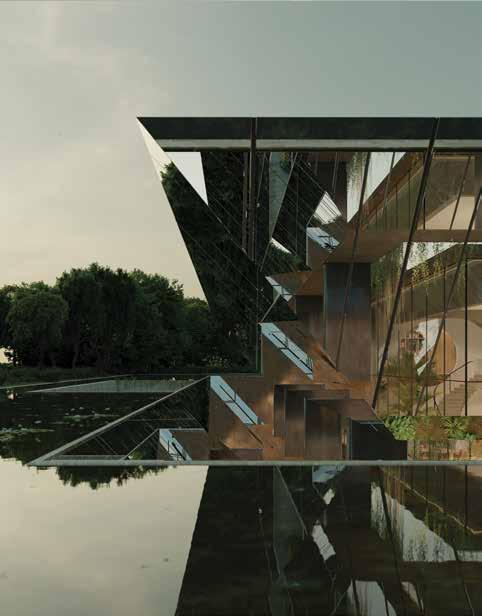
The residence, built completely below terrain level, has a large central patio at its heart, and a contour of outdoor space. The idea of a subterranean building offers multiple advantages, including excellent thermal insulation against both heat and cold. It also has less visual impact on the landscape. Underground spaces are also challenging, since they often provide a dreary, dark, and unpleasant atmosphere and lack views of the surrounding landscape.
The Periscope House offers a solution to bring the necessary light and view. The building has a contour of movable double mirror structures set at a 45° angle, functioning as a periscope. The mirrors are mounted on structures that can be independently raised in order to optimize light and view for the underground levels. The building has 2 subterranean levels and, according to the use of the space at a certain moment, the mirrors can be put at the level where light and view is requested. At night, when light and view on the scenery is no longer required, the mirror structures descend to disappear in the landscape again.The upper mirror construction also serves as a plant container for hanging plants and shrubs, offering lush green deep into the building.


Située au croisement de l’avenue Dritan Hoxha, dans la zone ouest de Tirana, en Albanie, cette tour de 50 étages, dans une zone de développement, est destinée à servir de symbole de la modernisation et de la croissance de la capitale albanaise. La structure abrite des logements, des commerces, des bureaux et des d’hôtels, refétant ainsi la vie dynamique de la ville. La structure paramétrique du bâtiment refète les motifs traditionnels des tapis albanais, créant une texture unique sur la façade. Caractérisé par deux volumes interconnectés de hauteurs différentes qui se rejoignent en s’inclinant dans le paysage urbain, l’ensemble crée une silhouette qui rappelle la grâce d’un ballet. Ce jeu de formes évite la création d’un volume urbain massif, donnant au bâtiment une présence élégante et emblématique. La stratégie de végétation intégrée imite la gradation naturelle que l’on trouve dans les montagnes albanaises, avec des plantes résilientes aux niveaux supérieurs refétant la fore de haute altitude, et des plantations variées sur les niveaux inférieurs faisant écho aux vallées de montagne, offrant une expérience variée et enrichissante avec une variété intéressante de textures et de parfums.
Situata all’incrocio di Dritan Hoxha Avenue, nella parte occidentale di Tirana, una zona di sviluppo, questa torre di 50 piani è progettata per diventare un’icona dello sviluppo e della modernizzazione della capitale albanese. L’edifcio unisce spazi residenziali, commerciali, direzionali e alberghieri, rifettendo la vivace vita urbana della città.
La struttura parametrica dell’edifcio rifette i motivi tradizionali dei tappeti albanesi, creando una texture unica sulla facciata. Caratterizzata da due volumi interconnessi di diverse altezze che si incontrano in un plié nel paesaggio urbano, creando una silhouette che ricorda la grazia di un balletto, l’interazione di queste forme evita la creazione di un volume urbano massiccio, conferendo all’edifcio una presenza elegante e iconica.
La strategia della vegetazione integrata imita la gradazione naturale che si trova nelle montagne albanesi, con piante resistenti ai livelli più alti che rifettono la fora d’alta quota e piantagioni variegate ai livelli inferiori che riecheggiano le valli, offrendo un’esperienza diversifcata e arricchente con un’interessante varietà di texture e profumi.

Project: OODA (ooda.eu)
Engineering: LAIII
Landscape: P4 - Artes E Técnicas Da Paisagem (Landscape Arts and Techniques) Visualizations: Plomp (source: v2com)


Located at the intersection of Dritan Hoxha Avenue, in the western part of Tirana, a development zone, this 50-foor tower is designed to become an icon of the development and modernization of the Albanian capital. The building unites residential, commercial, offce, and hotel space, refecting the city’s vibrant urban life. The parametric structure of the building refects the traditional patterns of Albanian carpets, creating a unique texture on the facade. Characterized by two interconnected volumes of different heights that meet in a plié in the urban landscape, creating a silhouette reminiscent of the grace of a ballet, the interplay of these forms avoids the creation of a massive urban volume, giving the building an elegant and iconic presence.
The integrated vegetation strategy mimics the natural gradation found in Albanian mountains, with resilient plants on the higher levels refecting the high-altitude fora, and varied plantings on the lower levels echoing the valleys, providing a diverse and enriching experience with an interesting variety of textures and scents.


Inca, Mallorca, Spain

Ce projet comprend 54 logements sociaux et un espace de stationnement sur un terrain rectangulaire de 3 266 m2. Le bâtiment est organisé selon un axe nord-sud qui donne naissance à deux volumes indépendants, en créant un espace public entre eux. Les unités d’habitation sont organisées autour d’un noyau central qui défnit les zones diurnes et nocturnes, en fonction des caractéristiques du site et de ses usages. Les logements disposent d’une ventilation transversale et d’espaces extérieurs : un jardin privé au rez-de-chaussée, et des terrasses et patios aux étages supérieurs, qui permettront de réguler l’excès de chaleur estivale grâce à des solutions passives. Les fnitions et les matériaux sont strictement liés à la circulabilité, en donnant la priorité aux matériaux vernaculaires et en travaillant avec l’industrie ou les artisans locaux. La façade est recouverte d’une double couche de céramique avec une isolation en coton recyclé et une isolation extérieure en liège et chaux projetée, développée par des entreprises locales. Les protections solaires sont en bois de mélèze, fabriquées par des artisans locaux.
Questo progetto è costituito da 54 case di protezione sociale e posti auto su un terreno di proprietà dell’Amministrazione, di forma rettangolare, di 3.266 m2 L’edifcio è organizzato lungo un asse nord-sud che dà origine a due volumi indipendenti, generando uno spazio pubblico tra di loro. I moduli abitativi sono organizzati attorno a un nucleo umido centrale che defnisce le aree giorno e notte, in base alle caratteristiche del sito e ai suoi usi. Le case hanno ventilazione incrociata e spazi esterni: un giardino privato al piano terra e terrazze e patii ai piani successivi, che consentiranno di regolare l’eccesso di calore estivo attraverso strategie passive. Le fniture e i materiali sono strettamente correlati alla circolarità, dando priorità a quelli vernacolari e lavorando con l’industria o gli artigiani locali. La facciata è risolta da una doppia lastra di ceramica con isolamento in cotone riciclato con isolamento esterno di sughero proiettato e calce grossolana sviluppata da aziende locali, le protezioni solari sono realizzate in legno di larice prodotto da artigiani locali.
Client: IBAVI (Public organization of social housing in the Balearic Islands)
Project: F-AM arquitectes (jjfortuny.com, (www.alventosamorell.com)
Architects in Charge: Joan J Fortuny Giró & Alventosa Morell Arquitectes


Collaborators: Oscar Canalis, Laura Jaume (architects), Estudi d’Enginyeria de les Illes Balears (engineering), Marco Menéndez, Jaime Oliver (technical architects) Marina Morey, Gori Llambias, Sandra Vargas (architects), Juan Fortuny, Joan Mas, Lluís Guasp (structural engineering)
Photo: José Hevia (source: v2com)

This project consists of 54 social protection homes and parking space on an Administration-owned, rectangular-shaped plot of 3,266 m2 area.
The building is organized along a north-south axis that gives rise of two independent volumes, generating a public space between them. The housing modules are organized around a central wet core that defnes day and night areas, according to the site characteristics and its uses. The homes have cross ventilation and outdoor spaces: a private garden on the ground foor, and terraces and patios on the successive foors, which will allow the excess of summer heat to be regulated through passive strategies. The fnishing and materials are strictly related to circularity, prioritizing the vernacular ones and working with local industry or craftsmen.
The façade is resolved by a double ceramic sheet with recycled cotton insulation with exterior insulation of projected cork and lime coarse developed by local companies, the solar protections are made of larch wood manufactured by local artisans.
Vijayawada, Andhra Pradesh India andblack design studio


Project: andblack design studio (www.andblackstudio.com)
Project Team: Jwalant Mahadevwala, Adity Rawat
Structural Consultant: Shehzad Irani, Schafbock design+workshop
Photo: Vinay Panjwani (source: v2com)

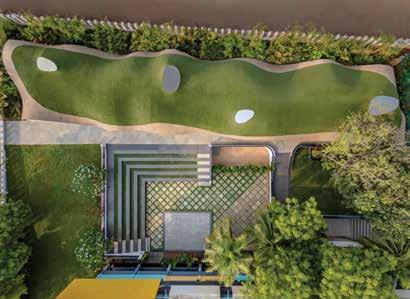
Dans une région où les systèmes éducatifs traditionnels dominent le secteur, Bloomingdale International School (Galileo Campus) met en lumière le pouvoir de transformation de l’architecture paramétrique en repoussant les limites de l’éducation et en remettant en question les normes conventionnelles. L’école maternelle occupe une surface de 400 m2 au sein du campus, attenante au bâtiment scolaire existant. Les deux bâtiments sont reliés par une cour en contrebas, qui suit la topographie du site et monte vers la nouvelle extension comme si elle escaladait une colline. La conception fusionne harmonieusement les espaces de jeu et d’apprentissage, brouillant les frontières entre les deux.
La cour augmente cet efet en se transformant en terrain de jeu, en salle de classe, en amphithéâtre ou en piscine, selon les besoins. Cette expérience spatiale est encore renforcée par l’utilisation de panneaux de verre pleine hauteur à la place des murs et des puits de lumière sur le toit de forme fuide – recouvert de gazon et reposant sur un espace structurel libre dépourvu de tout support interne ou de cloison. La structure a été réalisée dans le cadre d’un budget limité en adoptant un processus de construction efcace qui fait appel à des ressources et des technologies facilement disponibles.
In una regione in cui i sistemi educativi tradizionali dominano il settore, la Bloomingdale International School (Galileo Campus) evidenzia il potere trasformativo dell’architettura parametrica nello spingere i confni dell’istruzione e sfdare le norme convenzionali. La scuola materna occupa un’area di 400 m2 all’interno del campus, adiacente all’edifcio scolastico esistente. A collegare i due edifci c’è un cortile ribassato, che segue la topografa del sito e sale verso la nuova estensione come se si arrampicasse su una collina. Il design fonde perfettamente spazi per il gioco e l’apprendimento, sfumando i confni tra i due. Il cortile contribuisce a questo effetto adattandosi come parco giochi, aula, anfteatro o piscina per bambini a seconda delle esigenze della funzione. Questa esperienza spaziale è ulteriormente migliorata dall’uso di pannelli di vetro a tutta altezza al posto di pareti e lucernari sul tetto dalla forma fuida, ricoperto di erba e appoggiato su uno spazio strutturale libero da ostacoli e privo di supporti o partizioni interne. La struttura è stata realizzata con un budget limitato, adottando un processo di costruzione effciente che tiene conto di risorse e tecnologie facilmente reperibili.
In a region where traditional education systems dominate the sector, Bloomingdale International School (Galileo Campus) highlights the transformative power of parametric architecture in pushing the boundaries of education and challenging conventional norms.
The pre-school occupies a 400 m2 area within the campus, adjoining the existing school building. Connecting the two buildings is a sunken courtyard, following the topography of the site and ascending towards the new extension as if climbing a hill. The design seamlessly merges spaces for playing and learning, blurring the lines between the two.
The courtyard adds to this effect by adapting itself as a playground, a classroom, an amphitheater, or a puddle pool as the function demands. This spatial experience is further enhanced by the use of full-height glass panels in place of walls and skylights on the fuid form roof – covered in turf and resting on an unobstructed structural space devoid of any internal supports or partitions.
The structure has been realized within a limited budget by adopting an effcient construction process that considers readily available resources and technologies.
Chonburi, Thailand
IDIN Architects

Le café Harudot est le résultat d’une collaboration entre le propriétaire de la marque Nana Coffee Roasters et le patron qui a un intérêt particulier pour les plantes exotiques aux formes singulières. “Haru” (“printemps” en japonais) fait référence à un “nouveau départ” et à la “croissance”, tandis que “Dot” symbolise un “point de départ”. L’architecte a choisi de se concentrer sur ces concepts en mettant les arbres au cœur du projet. L’extérieur, qui utilise trois formes de toit simples de couleur noire pour un aspect discret, contraste avec la chaleur naturelle des murs en pin massif de l’espace intérieur. Le bâtiment, séparé en plus petites masses pour contrôler l’échelle de la forme du pignon, crée différentes zones telles que le bar, l’espace pour la consommation de café, un salon, une salle de réunion et des toilettes. La forme du bâtiment qui ressemble à des toits à pignon géants est écartée à certains endroits, ce qui permet à l’arbre de pénétrer à travers un vide vers le ciel tout en créant un espace semiextérieur en dessous. Ces vides ont également donné lieu à une forme courbe intéressante qui ajoute du mouvement et du dynamisme à l’architecture. La disposition des sièges est conçue comme un ruban, enveloppant l’espace intérieur pour créer une continuité, tandis que la hauteur des comptoirs varie pour s’adapter aux différentes fonctions et utilisations. Les sièges extérieurs sont en résine, mélangée à du marc de café, du riz et des feuilles pour souligner le thème du café
La caffetteria Harudot è il risultato di una collaborazione tra il proprietario del marchio Nana Coffee Roasters e il proprietario che ha un interesse particolare per le piante dalle forme uniche. “Haru” (“primavera” in giapponese), si riferisce a un “nuovo inizio” e “crescita”, mentre “Dot” simboleggia un “punto di partenza”. L’architetto ha scelto di concentrarsi su questi concetti includendo gli alberi nel cuore del design. L’esterno, utilizzando tre semplici forme a capanna di colore nero per un aspetto discreto, contrasta con le pareti in legno di pino caldo naturale dello spazio interno. L’edifcio è suddiviso in masse più piccole per renderlo più a misura d’uomo, il che stabilisce diverse zone come il bar, quella per bere il caffè, una lounge, una sala riunioni e i bagni. Il gigantesco tetto a due falde di ogni massa è “smontato” in alcune parti, consentendo al baobab nel cortile di penetrare attraverso un vuoto verso il cielo, creando uno spazio semi-esterno sottostante. Questi vuoti hanno anche dato origine a un’interessante forma curva che ha aggiunto dinamismo all’architettura. La disposizione dei posti a sedere è progettata come un nastro, avvolgendo lo spazio interno per creare continuità, mentre l’altezza dei banconi varia per adattarsi alle diverse funzioni e utilizzi. I posti a sedere all’aperto sono realizzati in resina, mescolata con fondi di caffè, riso e foglie per legarsi al tema del caffè.
Project: IDIN (Integrating Design Into Nature) Architects (www.idin-architects.com)
Photo: DOF Sky | Ground (source: v2com)


Harudot café is the result of a collaboration between the Nana Coffee Roasters brand owner and the landlord who has a particular interest in plants with unique forms. “Haru” (“Spring” in Japanese), refers to a “new beginning” and “growth” while “Dot” symbolizes a “starting point”. The architect chose to focus on these concepts by including trees in the heart of the design. The exterior, using three simple gable forms in black color for a subtle look, contrasts with the natural warm pine wood walls of the interior space.
The building is separated into smaller masses to make it more human-scale, which establishes different zones such as the bar, coffee drinking zone, a lounge, a meeting room, and the restrooms. The giant gable roof of each mass is pulled apart at certain parts, allowing the baobab planted in the courtyard to penetrate through a void to the sky, creating a semi-outdoor space underneath. These voids also resulted in an interesting curved form which added dynamism to the architecture.
The seating arrangement is designed to be cs like a ribbon, wrapping around the interior space to create continuity, whereas the height of the counters differ to suit the different functions and uses. The outdoor seating is made from resin, mixed with coffee grounds, rice, and leaves to tie into the coffee theme.


Angeles, USA
X.C Studio

Le projet du Museum of Uncertainty se trouve dans le site historique de La Brea Tar Pits à Los Angeles. Il comprend trois structures distinctes, chacune proposant une expérience multiforme aux visiteurs. En partant de Wilshire Boulevard, les visiteurs s’embarquent pour un voyage immersif simulant une immersion sous le goudron, avant d’arriver à l’espace de réception central du musée. À l’intérieur, ils découvrent une exposition de fossiles. Le bâtiment de recherche est relié à plusieurs sites de fouilles, créant un parcours labyrinthique où les visiteurs peuvent assister de près au processus de fouilles au niveau du sol. En outre, le bâtiment accueille des conférences et propose des activités éducatives. L’objectif est de déchiffrer et de dévoiler les récits cachés dans le goudron, afn de favoriser la réinterprétation et le partage de ces histoires captivantes avec les prochaines générations.
Il progetto concettuale per il Museum of Uncertainty è situato negli storici La Brea Tar Pits di Los Angeles. Comprende tre strutture distinte, ciascuna delle quali offre un’esperienza poliedrica per i visitatori. Partendo da Wilshire Boulevard, gli ospiti intraprendono un viaggio che simula l’immersione sotto il catrame, arrivando infne all’area di ritrovo centrale del museo. All’interno, incontrano una mostra di fossili. L’edifcio di ricerca è interconnesso con vari siti di scavo, creando un percorso labirintico dove i visitatori possono assistere da vicino al processo di scavo a livello del suolo. Inoltre, l’edifcio ospita conferenze e offre opportunità educative. L’obiettivo è decifrare e svelare le narrazioni nascoste nel catrame, consentendo la reinterpretazione e la condivisione di queste storie accattivanti con le generazioni future.
The conceptual project for the Museum of Uncertainty is situated in the historic La Brea Tar Pits of Los Angeles. It comprises three distinct structures, each offering a multifaceted experience for visitors. Starting at Wilshire Boulevard, guests embark on an immersive journey simulating submersion beneath the tar, ultimately arriving at the museum’s central gathering area. Inside, they encounter an exhibition featuring fossils. The research building is interconnected with various excavation sites, creating a labyrinthine pathway where visitors can witness the excavation process up close on the ground level. Additionally, the building hosts lectures and provides educational opportunities.
The goal is to decipher and unveil the narratives hidden within the tar, allowing for reinterpretation and sharing of these captivating stories with future generations.
Project: X.C Studio (www.xchenc.com)
Architect in Charge: Xuechen Chen
Images source: v2com


Temi chiave e protagonisti del prossimo futuro
Questions clés et protagonistes du proche avenir
Key issues and players in the near future curated by Luigi
Prestinenza Puglisi, Giulia Mura
Quando progettavamo degli edifci, noi studenti che frequentavamo la facoltà di architettura nella seconda metà degli anni settanta, ci comportavamo più o meno così. Disegnavamo un volume regolare abbastanza semplice che si relazionasse in qualche modo con il lotto e con l’intorno. Mettevamo a punto una pianta che ci convincesse dal punto di vista funzionale. Pensavamo, poi, ai prospetti cercando di fare in modo che aggetti e rientranze, pieni e vuoti fossero coerenti con la distribuzione della pianta. A questo punto verifcavamo nelle tre dimensioni, magari aiutandoci con prospettive e assonometrie che, comunque, poiché erano laboriose, erano sempre in numero limitato. C’erano delle varianti. I più bravi lavoravano su più fronti e con più scale e modalità di rappresentazione. Ma, comunque, nella maggior parte dei casi il processo era fortemente centrato sulla pianta e sui prospetti e il risultato portava a organismi che, per quanto si relazionassero al contesto circostante, erano autonomi da questo. Insomma, da un lato c’era l’oggetto progettato, dall’altro il paesaggio. Ho scoperto più tardi che si può fare benissimo a meno di un percorso così meccanicamente strutturato. Hans Scharoun, per esempio, affermava che nei propri edifci era superfua l’idea di prospetto. E ci vuole poco a capirlo: opere come la Filarmonica di Berlino sono costruite come frammenti di paesaggio. Lavorare a partire da questo atteggiamento poetico signifca abbandonare l’idea di chiusura in sé e per sé dell’edifcio. Per tentare un nuovo inizio. In inglese si usa la parola inception che è anche il titolo di un famoso flm. In cui il protagonista è un professionista che si occupa di estrarre i segreti dalle persone mentre queste dormono, infltrandosi nel sonno e generando un sogno condiviso. Nel nostro caso vorrebbe dire progettare condividendo i sogni, che ogni paesaggio possiede, piuttosto che optare per la rigidità di una buona distribuzione di pianta.

Insomma: occorre integrare l’edifcio con l’altro da sé, invece di caratterizzarlo attraverso una identità perentoria, rappresentata dal volume con i suoi quattro prospetti. La scommessa è il disegno del panorama non delle case. Con questo proposito vi invito a guardare i progetti di Caarpa.
Luigi Prestinenza Puglisi
Lorsque nous concevions des bâtiments, nous, les étudiants de la faculté d’architecture dans la seconde moitié des années 1970, nous nous comportions plus ou moins ainsi. Nous mettions au point un volume régulier plutôt simple qui devait se rapporter d’une manière ou d’une autre au terrain et à ses alentours. Nous avions élaboré un plan susceptible de nous convaincre au niveau fonctionnel. Ensuite, nous développions les façades en essayant de faire en sorte que les parties saillantes et les renfoncements, les pleins et les vides soient cohérents avec la distribution du plan. À ce stade, nous vérifons les trois dimensions, parfois à l’aide de perspectives et d’axonométries dont le nombre était toujours limité, en raison de leur caractère laborieux. Il y avait des variantes. Les meilleurs travaillaient sur plusieurs fronts et suivant plusieurs échelles et modes de représentation. Cependant, dans la plupart des cas, le processus était fortement axé sur le plan et sur les façades, et le résultat donnait des organismes qui, bien que liés à leur environnement, étaient indépendants de ce dernier. Bref, il y avait d’une part l’objet dessiné, d’autre part le paysage. J’ai découvert par la suite que l’on pouvait très bien se passer d’un parcours structuré de manière aussi mécanique. Hans Scharoun, par exemple, déclarait que pour ses bâtiments, l’idée de façade était superfue. Et il sufft de peu pour le comprendre : des ouvrages tels que la Philharmonie de Berlin sont construits comme des fragments de paysage. Travailler à partir de cette approche poétique, signife abandonner l’idée de fermeture du bâtiment en tant que tel. Pour tenter un nouveau départ. En anglais, on utilise le terme inception, qui est également le titre d’un célèbre flm où le protagoniste est un expert en extraction qui s’approprie les secrets enfouis au plus profond du subconscient d’un individu qui dort, en s’infltrant dans son sommeil et en générant un rêve partagé. Dans notre cas, cela voudrait dire concevoir en partageant les rêves, que tout paysage possède, plutôt que d’opter pour la rigidité d’une bonne distribution végétale. Bref, il faut intégrer le bâtiment avec l’autre, au lieu de le caractériser par une identité péremptoire, représentée par le volume et ses quatre façades. Le déf est la conception du paysage et non des maisons. En ce sens, je vous invite à découvrir les projets de Caarpa.
Luigi Prestinenza Puglisi
When we were designing buildings as students in the Faculty of Architecture in the latter half of the 1970s, this is, more or less, what we would do. We would design a fairly simple regular structure that would relate in some way to the building plot and its surroundings. We would then develop a plan we found convincing from a functional point of view. Next, we thought about the elevations, trying to ensure that projections and recesses, solids and voids, were consistent with the overall layout. At that point we would check the three dimensions, perhaps helping ourselves with perspectives and axonometries which, since they were so laborious, were always limited in number. There were variations. The better ones worked on several fronts and with several scales and modes of representation. Nevertheless, in most cases the process was mainly focused around the plan and elevations and this resulted in the design of organisms which, however they related to the surrounding context, were separate from it. In brief, on one hand there was the designed object, on the other the landscape. I discovered later on that you can work successfully without such a mechanically structured approach. Hans Scharoun, for example, said that the idea of a perspective was superfuous in his buildings. And it is easy to see what he meant: designs like the Berlin Philharmonic are constructed as fragments of landscape. Working from this stylistic perspective attitude means abandoning the idea of a building being enclosed in and on itself. Time for a fresh start. In English we use the word “inception”, which is also the title of a famous flm. The main character in this flm is a professional who extracts secrets from people while they sleep, infltrating their sleep and generating a shared dream. In our case it would mean designing based on shared dreams, the kind every setting has, rather than opting for the rigidity of a good layout. In a nutshell: the building needs to be integrated in what lies outside it, instead of giving it some domineering identity of its own, represented by the structure and its four elevations. The challenge is how to design the landscape, not the houses. With this in mind, I invite you to take a look at Caarpa’s projects.
Luigi Prestinenza
Puglisi

Marta Carraro, Francesco Forni, Alessandro Parodi, Fabrizio Polimone, Valeria Arena, Marta Bozzano – alias caarpa – sono i sei partner di un collettivo di architetti e paesaggisti con esperienze diversifcate ed eterogenee, fondato a Genova nel 2017. Una realtà giovane, brillante, impegnata in progetti multidisciplinari e multiscala in cui a fare da fl rouge è sempre il rapporto dialogico tra architettura e paesaggio, specialmente nella complessità dei contesti storici. Quei bravi ragazzi dei caarpa hanno capito l’importanza di lavorare adottando un approccio corale e aperto, simile a quello che in botanica chiameremo innesto: mettere a sistema disciplina e competenze trasversali, unirle, ibridarle, consentire loro di crescere prendendo il meglio l’una dall’altra. Il risultato, sono lavori dove il rigore compositivo, senza orpelli, sposa la componente cromatica, materica e soprattutto vegetale, generando ambienti, interni o esterni, che mettono al centro il benessere di chi li abiterà.
Marta Carraro, Francesco Forni, Alessandro Parodi, Fabrizio Polimone, Valeria Arena, Marta Bozzano – alias caarpa – sont les six partenaires d’un collectif d’architectes et de paysagistes aux expériences aussi diverses qu’hétérogènes, fondé à Gênes en 2017. Une réalité jeune et dynamique, engagée dans des projets pluridisciplinaires et multi-échelles dont le fl conducteur est toujours la relation dialogique entre l’architecture et le paysage, en particulier dans la complexité des contextes historiques. Les caarpa ont compris l’importance de travailler selon une approche chorale et ouverte, à l’instar de ce qu’on appelle greffe en botanique, c’est-à-dire systématiser matière et compétences transversales, les unir, les hybrider, leur permettre de se développer en prenant le meilleur les unes des autres. Cela donne des ouvrages où la rigueur de la composition, sans foritures, épouse la composante chromatique, matérielle et surtout végétale, générant des environnements, intérieurs ou extérieurs, qui placent au cœur du projet le bienêtre de ceux qui les habiteront.

Marta Carraro, Francesco Forni, Alessandro Parodi, Fabrizio Polimone, Valeria Arena, Marta Bozzano – aka Caarpa – are the six partners of a collective of architects and landscape architects with diverse and heterogeneous backgrounds that was founded in Genoa in 2017. A young and dynamic enterprise engaged in multidisciplinary and multiscale projects in which the common thread is always dialogical interaction between architecture and landscape, especially in the complexity of historical settings. The guys at Caarpa have understood the importance of working along the lines of a choral, open approach, similar to what in botany we would call grafting: systemising specifc, across-the-board skills, uniting them, hybridising them and allowing them to develop by taking the best from each other. This results in works combining compositional rigour with no frills and chromatic, material and, above all, vegetation-related aspects to generate both indoor and outdoor settings focused on the wellbeing of those who inhabit them.

Quante vite può avere un edifcio? Molte, e molto diverse tra loro, a quanto pare. E’ quanto accaduto per la riconversione dell’ex Cinema Diana, alla Spezia, oggi sede della società di comunicazione SunTimes Srl, che, nel corso degli anni, è stato prima una chiesa, poi una scuola pubblica, poi un teatro, poi un cinema-teatro, poi un cinema a luci rosse. Per ricordare le tracce di tutto questo – pur dovendo apportare, per ovvie ragioni, sostanziali modifche estetiche e strutturali per renderlo funzionale ai nuovi usi, contemporaneo e a norma – il progetto (con Manfroni&Associati e EXA engineering) sceglie di conservare alcuni frammenti architettonici, elementi che hanno caratterizzato la sua affascinante storia: la galleria del cinema e la sinuosa scala, probabilmente risalenti agli anni Trenta, il foyer, le tracce dei solai dei vecchi palchetti, i resti degli stucchi decorati e il grande arco di boccascena. I verdi e il rosa delle pareti. Portare la luce naturale nei locali bui del vecchio cinema è stato però l’obiettivo principale: un nuovo, grande patio coperto diffonde la luce dal tetto fno alla sala principale del pianterreno, determinando scorci inediti e nuove prospettive degli spazi interni. La facciata, infne, caratterizzata da una base in travertino e bucature ovali, è stata conservata e colorata di blu.

Combien de vies peut avoir un bâtiment ? Beaucoup, et très différentes les unes des autres, semble-t-il. C’est ce qui s’est passé avec la reconversion de l’ancien Cinéma Diana, à La Spezia, aujourd’hui siège de la société de communication SunTimes Srl, qui, au fl des ans, a d’abord été une église, puis une école publique, puis un théâtre, puis un cinéma pour flms pornographiques. Afn d’en conserver les traces – tout en devant apporter, pour des raisons évidentes, d’importantes modifcations esthétiques et structurelles pour le rendre fonctionnel pour ses nouvelles utilisations, contemporain et aux normes – le projet (avec Studio Manfroni & Associati et EXA engeneering) a choisi de conserver certains des éléments architecturaux qui ont caractérisé sa fascinante histoire, tels que la galerie et l’escalier sinueux, datant probablement des années 1930, le foyer, les traces des planchers des anciennes loges, les restes des stucs décorés et le grand arc de l’avant-scène. Les verts et le rose des murs. Cependant, l’objectif principal était de faire entrer la lumière naturelle dans les salles sombres du vieux cinéma : ainsi, un nouveau et grand patio couvert distribue la lumière du toit vers la salle principale du rez-de-chaussée, ce qui offre des vues inédites et de nouvelles perspectives sur les espaces intérieurs. Enfn, la façade, caractérisée par une base en travertin et des ouvertures ovales, a été conservée et peinte en bleu.
How many lives can a building have? Many, very different ones or so it seems. That is what happened with the conversion of former Cinema Diana in La Spezia into the new headquarters of the communications company, SunTimes Srl. Over the years, the building has been a church, then a public school, then a theatre and then a red-light cinema. To hold onto traces of all this – while having to make, for obvious reasons, substantial aesthetic and structural changes so it can serve its latest, sateof-the-art purposes – the project (in conjunction with Manfroni&Associati and EXA engineering) preserves selected architectural fragments that have characterised its fascinating history: the cinema gallery and winding staircase, probably dating back to the 1930s, the foyer, the patterns on the foors of the old balcony boxes, the remains of the decorated stuccoes, and the large proscenium arch. The greens and pinks on the walls have also been kept. Bringing natural light into the dark rooms of the old cinema was, however, the main aim: a new, large covered patio diffuses light from the roof into the main hall on the ground foor, resulting in unprecedented views and new perspectives of the interior spaces. Finally, the façade, with its distinctive travertine base and oval holes, was preserved and coloured blue.

È la componente onirica a legare questi due interventi di landscape: un piccolo padiglione temporaneo dai prospetti specchiati e la risistemazione di un giardino a fasce a Sori (GE), destinato precedentemente alla coltivazione agricola. Diversissimi, eppure simili, almeno nell’approccio: entrambi, infatti, producono meraviglia, interpretazioni contemporanee di capricci romantici. Il padiglione – il cui intento non è la mimesi ma l’amplifcazione visiva del verde, delle ville e del mare – conduce lo spettatore attraverso un viaggio, un sogno ad occhi aperti in cui tre giardini (acquatico, formale, mediterraneo), si dilatano in paesaggi infniti attraverso lo specchio. È invece uno spazio articolato nella distribuzione e complesso nella sezione, il giardino a gradoni, con vista mozzafato sull’intorno, ripensato dai caarpa come “un’architettura assente”. Un gioco di geometrie su differenti quote che disegnano reticoli d’ombra e terrazze per differenti zone relax, piscina inclusa. Un intervento elegantissimo, anche grazie all’ uso del verde: la vegetazione mediterranea, gli ulivi e le viti, la lavanda e il glicine, i colori caldi degli elicrisi e delle santoline che bilanciano i toni freddi di agapanti, salvie e rosmarini. Un sogno a occhi aperti.
C’est l’élément onirique qui relie ces deux projets paysagers : avec des façades en miroir et le réaménagement d’un jardin en bandes à Sori (prov. de Gênes), précédemment destiné à l’agriculture. Très différents, et pourtant similaires, du moins dans l’approche : tous deux, en effet, produisent un émerveillement, interprétations contemporaines de caprices romantiques. Le pavillon, dont la fnalité n’est pas la mimesis mais l’amplifcation visuelle des espaces verts, des villas et de la mer, entraîne le spectateur dans un voyage, un rêve éveillé dans lequel trois jardins (aquatique, formel, méditerranéen) se dilatent en paysages infnis à travers le miroir. Il s’agit en revanche d’un espace articulé dans sa distribution et complexe dans sa section, le jardin en terrasse, avec une vue imprenable sur les environs, repensé par les caarpa comme “une architecture absente”. Un jeu de géométries sur différentes hauteurs qui dessinent des grilles d’ombres et des terrasses pour différents espaces de détente, y compris la piscine. Un projet très élégant, notamment grâce à l’utilisation de la végétation : des plantes méditerranéennes, des oliviers et des vignes, de la lavande et de la glycine, les couleurs chaudes des hélichryses et des santolines qui compensent les tons froids de l’agapanthe, de la sauge et du romarin. Un rêve éveillé.
It is their dreamlike nature that links these two landscape projects: a small temporary pavilion with mirrored elevations and a project to redesign a strip garden in Sori (GE), previously used for farming purposes. Very different, yet similar, at least in approach: both are eye-catching contemporary twists on romantic whims. The pavilion –which is not designed with mimesis in mind but rather with the idea of visually amplifying the greenery, villas and the sea – takes the onlooker on a journey, a daydream in which three gardens (aquatic, formal, Mediterranean) expand into infnite landscapes through the mirror. It has an elaborate layout with a complex section, the terraced garden, with a breathtaking view of the surroundings. Caarpa has redesigned it as “absent architecture”. An interplay of geometrical patterns set on different heights that create shady patches and terraces forming various relaxation areas, including a swimming pool. A very elegant project, partly thanks to the use of greenery: Mediterranean vegetation, olive trees and vines, lavender and wisteria, the warm colours of helichrysums and santolinas counterbalancing the cool shades of agapanthus, sage and rosemary. A daydream.


Yacht de 43,5 m avec une coque en aluminium, et vitesse maximale de 19 nœuds. Six cabines spacieuses peuvent accueillir jusqu’à 12 personnes. L’espace réservé au propriétaire, d’une hauteur de 3,3 m, est doté d’un puits de lumière de forme organique et d’une terrasse panoramique. Dans tout l’intérieur, les puits de lumière et les fenêtres du sol au plafond atténuent les limites entre le yacht et l’océan, ce qui favorise une plus grande connexion avec le monde naturel tout en garantissant des vues à couper le souffe. Un jardin vertical très spécial s’étend sur deux ponts. Le yacht est également équipé d’un Seabob, d’un jet ski, d’un pneumatique de chasse de 15 m fabriqué par Technohull et d’un tender de 6 m fabriqué par Castoldi.
Yacht di 43,5 m, con scocca in alluminio, con velocità massima di 19 nodi. Sei spaziose cabine possono ospitare fno a 12 ospiti. L’area armatoriale con un’altezza di 3,3 m presenta un lucernario di forma organica e una terrazza panoramica. In tutto l’interno, lucernari e fnestre dal pavimento al sofftto riducono al minimo i confni tra lo yacht e l’oceano, favorendo una maggiore connessione con il mondo naturale e garantendo al contempo viste mozzafato. Un giardino verticale molto speciale si estende su due ponti. Lo yacht è dotato inoltre di Seabob, Jet Ski, un gommone da caccia da 15 m di Technohull, e un tender gommone da 6 m di Castoldi.
43.5m aluminium hull yacht with a top speed of 19 knots. Six spacious cabins can accommodate up to 12 guests.
The 3.3m high owner’s area features an organically shaped skylight and a panoramic terrace. Throughout the interior, skylights and foor-to-ceiling windows minimize the boundaries between the yacht and the ocean, encouraging a greater connection with the natural world while ensuring breathtaking views. A very special vertical garden extends across two decks.
The yacht is also equipped with a Seabob, Jet Ski, a 15m hunting RIB by Technohull, and a 6m RIB tender by Castoldi.


Giorgio Vasari consacra il disegno come attività che presiede all’architettura alla scultura alla pittura. Ma quest’ultima ha avuto sempre i maggiori allori rispetto al disegno, per il particolare impegno che richiede in termini di tempo e di costi, con conseguente maggior valore mercantile. Anche il cammino deviante dell’arte lungo il Novecento è signifcato dalla pittura. Ma un esempio di ribaltamento di questa visione è Francis Bacon i cui disegni presentano la stessa forza espressiva riservata alla pittura, a cominciare dagli autoritratti. Lo tiene ben presente l’artista Elena Santoro. Infatti, il maestro irlandese − da lei tanto amato − è suo punto di riferimento trasgressivo, assieme ad Arp, Duchamp, Magritte e altri. Questo in relazione all’intenso processo di metabolizzazione della sua recente sperimentazione nel disegno operata su un terreno analitico ma teso all’espressività. (esperienza analoga ha fatto nella fotografa, fno a servirsi, in anni recenti, dei principi della Realtà Aumentata). Il leit motiv dei suoi disegni (un corpus di oltre 200) è nel titolo: “Ri-trattando”. Inizialmente, il suo volto viene elaborato con composizione e tratto liberi stile Art Brut con esiti audaci e originali, in virtù di penna e pennarello (si aggiungeranno altri materiali). In una seconda fase, viene geometrizzato con tendenza all’astrazione. Ma non c’è ricerca di se stessa: il viso è un duttilissimo soggetto da piegare alle sue esigenze di sperimentazione linguistica, morfologica e compositiva e sarà sempre più fagocitato in una costruzione di segno puro. Una proposta di devianza paradigmatica nel disegno contemporaneo di ricerca con valori espressivi notevoli, in piena sinergia col clima multiculturale e con la mia idea estetica di Opera Ellittica. Lo dice particolarmente l’ultimo approdo, gli acetati “complessifcati”: sovrapposizione “in progress” di più disegni, in modo da poter risultare, ciascuno, parte integrante dell’unico disegno polifonico fnale.
Carmelo Strano
Pour Giorgio Vasari le dessin est une activité qui préside à l’architecture, à la sculpture et à la peinture. Mais cette dernière a toujours obtenu plus de lauriers que le dessin, en raison de l’engagement particulier qu’elle exige en termes de temps et de coûts, ce qui se traduit par une plus grande valeur marchande. Le chemin déviant de l’art tout au long du 20ème siècle est également marqué par la peinture. Mais un exemple de renversement de ce point de vue est celui de Francis Bacon, dont les dessins possèdent la même force expressive que celle réservée à la peinture, à commencer par les autoportraits. L’artiste Elena Santoro le garde à l’esprit. En effet, l’artiste irlandais, qu’elle apprécie tant, est sa référence transgressive, au même titre que Duchamp, Arp, Magritte et d’autres. Ceci est lié au processus de métabolisation intense de sa récente expérimentation du dessin à partir d’une base analytique, tout en recherchant l’expressivité (elle a fait une expérience similaire avec la photographie, jusqu’à se servir, ces dernières années, des principes de la réalité augmentée). Le mot d’ordre de ses dessins (un corpus qui en compte plus de 200) se trouve dans le titre : “Ri-trattando”. Dans un premier temps, son visage est élaboré avec des compositions et des traits libres de style Art Brut, avec des résultats audacieux et originaux, grâce au stylo et au feutre (d’autres matériaux seront ajoutés). Dans un deuxième temps, il se fait géométrique avec une tendance à l’abstraction. Mais il n’y a pas de recherche de soi : le visage est un sujet très malléable à plier selon ses besoins d’expérimentation linguistique, morphologique et de composition, et il sera de plus en plus englouti dans une construction de signe pur. Une proposition de déviance paradigmatique dans la conception de la recherche contemporaine avec des valeurs expressives remarquables, en pleine synergie avec le climat multiculturel et mon idée esthétique de l’Opéra Elliptique. Ceci est particulièrement évident dans la dernière nouveauté, les acétates “complexes” : superposition “in progress” de plusieurs dessins, de façon que chacun d’entre eux puisse faire partie intégrante du dessin polyphonique fnal.
Giorgio Vasari treats drawing as something that takes precedence over architecture, sculpture and painting but the latter has always been placed on a higher pedestal due to all the time and expense it involves, giving it greater mercantile value. Painting has also set the pathway for art throughout the 20th century, although a counter example to this is Francis Bacon, whose drawings have the same expressive force associated with painting, starting with his self-portraits. The artist Elena Santoro is well aware of this. The aforementioned Irish master − whom she loves so much − is her transgressive inspiration along with Arp, Duchamp, Magritte and others. This is related to the intense metabolic process characterising her recent experimentation in drawing on an analytical and also expressive level. (She has also experimented along similar lines in photography to the point of using the principles of Augmented Reality over recent years).
The leitmotif in her drawings (a corpus of over 200) is in the title: ‘Re-treating’. Initially, her own face is elaborated in a free compositional style reminiscent of Art Brut strokes producing bold and original results using a pen or felttip pen (other materials will be added). Next everything is geometrised in a way tending towards abstraction. But there is no self-exploration: the face is a ductile subject to be bent to her needs in terms of linguistic, morphological and compositional experimentation, progressively tending towards pure signs.
A project of paradigmatic deviance in contemporary experimental drawing with remarkable stylistic results in perfect synergy with the current multicultural climate and my aesthetic notion of an “Opera Ellittica”.
This is particularly evident in her latest works, her ‘complexifed’ acetates: an overlapping process “in progress” consisting of several drawings, each being an integral part of one fnal polyphonic drawing.


Nata a Marostica, multiforme artista e designer di ricerca e scrittrice. Accademia di Brera, e già nel 1964 presso Montedison esperimenta l’impiego delle materie plastiche nel campo espressivo. Intensa collaborazione con Gio Ponti: installazioni, ambientazioni, e oggetti d’arte per la Rinascente e per Fontana Arte di Milano. Brevetta nuovi sistemi per l’uso delle materie plastiche, elabora interventi pittorici su superfci soft con varie processualità e tecnologie. Agli inizi del Duemila si impegna professionalmente in un forte interesse per la narrativa. Esordisce col romanzo “L’ultima torre” (l’Arca Edizioni, Milano, 2006). Incide sottilmente e garbatamente nella psicologia profonda e anche negli stati d’animo effmeri. Una scrittura raffnata, elegante, in punta di piedi quasi a nascondere lo scrupoloso lavoro di lima per un uso essenziale, elegante ed effcace della parola e del periodare. Complesse trame gialle (senza tuff nel giallismo) affdate a una scrittura che appassiona. Trame che si fanno più audaci nel successivo romanzo “L’architetto di peluche” (ArcaData, Milano, 2011), opera che lascia presagire ulteriori sorprendenti dimensioni narrative. Il dato narrativo con le sue pieghe psicologiche si fa icastico come per una condizione di “valori plastici” di cui parlava lo storico dell’arte Bernard Berenson. La scrittrice si frma Alda Mercante, l’artista Alda Casal. Quest’ultima vanta un lungo curriculum puntellato da attenzione al design. Solo cenni, dopo le inziali iniziative con Gio Ponti: Textilia, Basilica Palladiana, Vicenza, 1989; Collettiva Deuxième Biennale de la Femme, Gran Palais, Parigi, 1991; Vers la liberté, Grand Palais, Parigi, 1991; collettiva Traditie & Mode, Nijmeegs Museum, Nijmegen Olanda; Arte e architettura, Spazio Ansaldo, Milano, 1992; Discovery of Italy, Spazio Armani, Milano e New York, 1993; Nuova Europa, in concomitanza Biennale di Venezia, 1995; Unimplosive Art, nell’ambito della Biennale di Venezia, 1997.
Née a Marostica (Vénétie), artiste polyvalente, designer de recherche et écrivaine. Académie de Brera, et dès 1964 à la Montedison, elle expérimente l’utilisation des matières plastiques dans le domaine de l’expression. Intense collaboration avec Gio Ponti : installations, mises en place et objets d’art pour La Rinascente et pour Fontana Arte à Milan. Elle fait breveter de nouveaux systèmes pour l’utilisation des matières plastiques, développe des applications picturales sur surfaces souples avec différents procédés et technologies. Au début des années 2000, elle se lance professionnellement dans la littérature. Son premier roman s’intitule “L’ultima torre” (l’Arca Edizioni, Milan, 2006). Ce roman touche subtilement et avec grâce la psychologie profonde et les états d’âme éphémères. Une écriture raffnée, élégante, sur la pointe des pieds, qui parvient presque à dissimuler le travail minutieux visant un emploi essentiel, élégant et effcace des mots et des paragraphes. Des intrigues complexes (sans tomber dans le polar) confées à un style d’écriture qui passionne. Des trames qui deviennent plus audacieuses dans le roman suivant “L’architetto di peluche” (ArcaData, Milan, 2011), une œuvre qui laisse présager d’autres dimensions narratives surprenantes. Le récit avec ses plis psychologiques devient icastique comme pour une condition de “valeurs plastiques” dont parlait l’historien de l’art Bernard Berenson. Comme écrivaine elle signe Alda Mercante, comme artiste Alda Casal. Cette dernière possède un long curriculum ponctué d’une attention particulière au design. Seulement quelques références, après les premières initiatives avec Gio Ponti : Textilia, Basilic palladiana, Vicence, 1989 ; Collettiva Deuxième Biennale de la Femme, Grand Palais, Paris, 1991 ; Vers la liberté, Grand Palais, Paris, 1991 ; collective Traditie & Mode, Nijmeegs museum, Nimègue Pays-Bas ; Arte e architettura, Spazio Ansaldo, Milan, 1992 ; Discovery of Italy, Spazio Armani, Milan et New York, 1993; Nuova Europa, dans le cadre de la Biennale de Venise, 1995 ; Unimplosive Art, dans le cadre de la Biennale de Venise, 1997.

Born in Marostica, a multifaceted artist and designer. At the Brera Academy and as early as 1964 at Montedison she experimented with the use of plastics for expressive purposes. She enjoyed a very close working partnership with Gio Ponti: installations, settings and art objects for Rinascente and Fontana Arte in Milan. She patented new systems for the use of plastics and devised pictorial projects on soft surfaces drawing on various processes and technologies. In the early 2000s, she became professionally engaged in the feld of fction. Her frst novel was entitled “The Last Tower” (l’Arca Edizioni, Milan, 2006). It subtly and gracefully delved into psychology and the concept of mood swings. A refned, elegant writing style, subtle enough to almost conceal the scrupulous work she put into making simple, elegant and effective use of words and punctuation. Complex detective plots (without plunging into detective fction) written in an enthralling style. Plots that got bolder in her next novel “L’architetto di peluche” (ArcaData, Milan, 2011), a story that pointed towards subsequent startling narrative developments. The psychological folds in her narration became extremely vivid displaying the kind of “plastic values” that the art historian Bernard Berenson referred. The writer went under the name Alda Mercante and was the artist Alda Casal.
The latter boasts a long curriculum including plenty of work in the feld of design. Her workings include, after some initial projects with Gio Ponti: Textilia, Basilica palladiana, Vicenza, 1989; Collective Deuxième Biennale de la Femme, Grand Palais, Paris, 1991; Vers la liberté, Grand Palais, Paris, 1991; Collective Traditie & Mode, Nijmeegs Museum, Nijmegen Holland; Arte e architettura, Spazio Ansaldo, Milan, 1992; Discovery of Italy, Spazio Armani, Milan and New York, 1993; Nuova Europa, in cojunction with the Venice Biennial, 1995; Unimplosive Art as part of the 1997 Venice Biennial.

Louise Bourgeois: I have been to hell and back. And let me tell you, it was wonderful 25/9/2024-19/1/2025
www.mori.art.museum
Au cours d’une carrière couvrant soixante-dix ans, et à travers une grande variété de médias comprenant l’installation, la sculpture, le dessin et la peinture, Louise Bourgeois a exploré les tensions au sein d’oppositions binaires à travers une invention formelle inégalée. Des oppositions telles que masculin et féminin, passif et actif, fguration et abstraction, conscient et inconscient, et d’autres encore, coexistent souvent au sein d’une même œuvre. Le sous-titre de l’exposition est emprunté à un travail sur tissu réalisé sur le tard, dans lequel elle a brodé ces mots sur un mouchoir. Il fait allusion aux fuctuations et au caractère ambivalent de ses émotions, ainsi qu’à son humour noir.
During a career that spanned 70 years, and in a wide variety of media – including installation, sculpture, drawing, and painting – Louise Bourgeois explored the tensions within binary oppositions through unrivaled formal invention. Polarities such as male and female, passive and active, fguration and abstraction, conscious and unconscious, and others, often coexist within the same work. The subtitle of the exhibition is taken from a late fabric work in which she embroidered these words on a handkerchief. It alludes to the fuctuations and ambivalent character of her emotions, as well as hinting at her black sense of humor.
KUNSTHAUS ZÜRICH
Marina Abramović
25/10/2024 – 16/2/2025 www.kunsthaus.ch
NPel corso di una carriera durata 70 anni e utilizzando un’ampia varietà di media – tra cui installazione, scultura, disegno e pittura – Louise Bourgeois ha esplorato le tensioni all’interno delle opposizioni binarie attraverso un’invenzione formale senza rivali. Polarità come maschile e femminile, passivo e attivo, fgurazione e astrazione, conscio e inconscio, e altre, spesso coesistono all’interno della stessa opera. Il sottotitolo della mostra è tratto da un’opera tarda in tessuto in cui ha ricamato queste parole su un fazzoletto. Allude alle futtuazioni e al carattere ambivalente delle sue emozioni, oltre che al suo senso dell’umorismo nero.

Louise Bourgeois, Arch of Hysteria, 1993 (Photo: Christopher Burke; ©The Easton Foundation/Licensed by JASPAR and VAGA at Artists Rights Society, NY)
remière rétrospective en Suisse de l’artiste performeuse Marina Abramović (Belgrade 1946), cette exposition comprend des sculptures, des vidéos, des installations et des performances qui offrent un panorama de son œuvre unique en son genre. Dans son travail, Marina Abramović n’a cessé de mettre à l’épreuve les limites de sa propre résistance physique et psychique – et a invité le public à partager avec elle ses expériences. Dans son œuvre plus tardive, elle se concentre sur l’élévation de l’esprit humain, la méditation et la guérison. Pour Marina Abramović, l’enjeu est toujours celui d’une nouvelle expérience de soi, mentale et émotionnelle.
GENOVA
PALAZZO DUCALE
Impression, Morisot Through 23/2/2025 palazzoducale.genova.it
Première grande exposition consacrée en Italie à Berthe Morisot (1841–1895), seule artiste peintre à exposer le 15 avril 1874 dans l’atelier du photographe Félix Nadar, une date qui a marqué la naissance de l’impressionnisme. Cette exposition a été organisée en collaboration avec le Musée des Beaux-Arts de Nice et grâce à des prêts des héritiers de Berthe Morisot. 86 œuvres regroupant peintures, gravures, aquarelles et pastels, ainsi que des documents photographiques et d’archives, permettent de découvrir la vie de l’artiste qui a su concilier sa vie familiale et sa carrière artistique, et entretenir des relations privilégiées avec les plus grands artistes de l’époque tels que Renoir, Monet, Manet, Degas, ainsi qu’avec des intellectuels comme Mallarmé et Zola.
Prima grande mostra in Italia sulla fgura di Berthe Morisot (18411895), unica pittrice a esporre il 15 aprile 1874 nello studio del fotografo Felix Nadar, data che ha segnato la nascita dell’Impressionismo. La mostra è organizzata in collaborazione con il Museo di Belle Arti di Nizza e con prestiti inediti degli eredi di Berthe Morisot. 86 opere, tra dipinti, acqueforti, acquerelli, pastelli, cui si aggiungono documenti fotografci e d’archivio, consentono di ripercorrere la vita dell’artista, che ha saputo conciliare vita familiare e carriera artistica, e intrattenere fecondi rapporti con i più grandi artisti dell’epoca come Renoir, Monet, Manet, Degas e con fgure di intellettuali quali Mallarmé e Zola.

The frst major exhibition in Italy on the fgure of Berthe Morisot (1841-1895), the only painter to exhibit on 15 April 1874 in the studio of photographer Felix Nadar, a date that marked the birth of Impressionism. The exhibition is organised in partnership with the Musée de Beaux-Arts de Nice and features some previously unshown works on loan from Berthe Morisot’s heirs. 86 works, including paintings, etchings, watercolours and pastels, plus photographic and archive documents allow us to retrace the life of an artist, who managed to reconcile family life and his artistic career, while also engaging in fruitful relations with leading artists of the day, such as Renoir, Monet, Manet and Degas, and intellectuals like Mallarmé and Zola.
Prima retrospettiva in Svizzera dell’artista performativa serba Marina Abramović (Belgrado 1946), la mostra comprende sculture, video, installazioni e performance che offrono una panoramica della sua opera unica nel suo genere. Nel suo lavoro Marina Abramović ha continuamente messo alla prova i limiti della propria resistenza fsica e psicologica – e ha invitato il pubblico a condividere con lei le proprie esperienze. Nelle opere più recenti, l’artista si concentra sull’elevazione dello spirito umano, sulla meditazione e sulla guarigione. Per Marina Abramović la questione è sempre quella di una nuova esperienza di sé, mentale ed emotiva.

Marina Abramović’s frst retrospective in Switzerland, this exhibition at the Kunsthaus Zürich, which features sculptures, videos, installations and performances, offers an insight into the life’s work of this unique performance artist. Marina Abramović (Belgrade 1946) has always tested the boundaries of her own physical and mental endurance – and invited the public to share those experiences with her. In her later work, she focuses on the elevation of the human spirit, meditation and healing. For her, every work is a new experience of herself, both mentally and emotionally.
NAPOLI
ARENA FLEGREA INDOOR/MOSTRA D’OLTREMARE
The World of Banksy. The Immersive Experience Through 4/5/2025 theworldofbanksy.it
Célèbre dans le monde entier, Banksy reste une énigme. Né à Bristol (c’est tout ce que l’on sait de lui), habile manipulateur des codes de communication de la culture de masse, il est connu pour avoir défé les règles du marché de l’art, en produisant des images qui continuent de fasciner. Plus de 120 œuvres sont présentées, comprenant des grafftis, des photographies, des installations et des impressions sur différents matériaux tels que la toile, le tissu, l’aluminium, le forex et le plexiglas, spécialement reproduits et rassemblés pour cette exposition. Les œuvres invitent le spectateur à réféchir sur le système et la société contemporaine. Elles sont des symboles de lutte et de contestation dans un monde où les intérêts économiques étouffent souvent le bien commun.
Famoso in tutto il mondo, Banksy rimane un enigma. Nato a Bristol (è tutto quello che sappiamo di lui), abile manipolatore dei codici comunicativi della cultura di massa, è noto per aver sfdato i confni del mercato dell’arte, producendo immagini che continuano ad affascinare il pubblico. Sono presentate più di 120 opere, tra cui graffti, fotografe, installazioni e stampe su vari materiali come tela, tessuto, alluminio, forex e plexiglass, appositamente riprodotte e raccolte per questa esposizione. Le opere invitano lo spettatore a rifettere sul sistema e sulla società contemporanea; sono simboli di lotta e di protesta in un mondo in cui gli interessi economici sovente soffocano il bene comune.

CÉRET
MUSÉE D’ART MODERNE
Max Jacob, le cubisme fantasque Through 1/12/2024 www.musee-ceret.com
L’ exposition réunit un peu plus de 120 d’œuvres les plus emblématiques de Max Jacob, dont de nombreux inédits, ainsi que plusieurs œuvres de ses contemporains, comme Jean Cocteau, Marie Laurencin, Pablo Picasso ou Marie Vassilieff. Le parcours explore la fantaisie et les paradoxes d’une personnalité aux multiples facettes se situant au cœur de la galaxie cubiste. À la fois poète, peintre, critique d’art, romancier et épistolier il est à l’origine de l’une des plus riches correspondances de son temps. L’exposition porte un nouveau regard sur le rôle du poète au sein de l’environnement cubiste et en particulier lors de son séjour à Céret en 1913.
HYÈRES
LA BANQUE, MUSÉE DES CULTURES ET DU PAYSAGE
Miró
Through 24/11/2024 hyeres.fr
L’exposition se concentre sur des œuvres de la maturité artistique de Joan Miró (1893-1983) suivant un parcours chronologique et thématique qui met en lumière l’évolution de l’artiste catalan et l’infuence des différents mouvements qu’il a traversés. 23 sculptures, 21 dessins, 16 maquettes d’œuvres, des peintures grands formats, des céramiques, des lithographies et des gravures démontrent l’incroyable virtuosité de Miró qui combine avec audace différentes techniques. Les dessins, lithographies et maquettes de l’exposition mêlent fusain, gouache, encre, collage et supports divers, tandis que ses sculptures en bronze, assemblées ou moulées, se parent parfois de couleurs vives.
Famous all over the world, Banksy remains an enigma. Born in Bristol (that is all we know about him) and a skilful manipulator of the communicative codes of mass culture, he is known for challenging the boundaries of the art market, producing images that continue to fascinate the public. More than 120 works are on show here, including graffti, photographs, installations and prints on various materials such as canvas, fabric, aluminium, forex and plexiglass, specially reproduced and collected for this exhibition. The works invite the onlooker to refect on the system and contemporary society in general; they are symbols of struggle and protest in a world where economic interests often suffocate the common good.

Joan Miró, Personnage devant le soleil, 1975, Charcoal, pastel and gouache on a double sheet of newspaper. Collection Fondation Maeght. Photo Claude Germain ©Successió Miró – ADAGP, Paris, 2024

La mostra si concentra sulle opere della maturità artistica di Joan Miró (18931983) seguendo un percorso cronologico e tematico che mette in luce l’evoluzione dell’artista catalano e l’infuenza dei diversi movimenti attraversati. 23 sculture, 21 disegni, 16 modelli di opere, dipinti di grande formato, ceramiche, litografe e incisioni dimostrano l’incredibile virtuosismo di Miró che combina audacemente diverse tecniche. I disegni, le litografe e i modelli in mostra combinano carboncino, tempera, inchiostro, collage e supporti vari, mentre le sue sculture in bronzo, assemblate o fuse, sono talvolta dipinte con colori vivaci.
The exhibition focuses on works arranged in chronological order from Joan Miró’s (1893-1983) later career, highlighting how the Catalan artist’s work developed and revealing the infuence of the various movements he embraced. 23 sculptures, 21 drawings, 16 scale models of his works, large-format paintings, ceramics, lithographs and engravings showcase Miró’s incredible virtuosity at boldly combining different techniques. The drawings, lithographs and scale models in the exhibition bring together charcoal, tempera, ink, collage and various media, while some of his bronze sculptures, assembled or cast, are painted in bright colours.
La mostra riunisce oltre 120 delle opere più emblematiche di Max Jacob, tra cui molte inedite, oltre a diverse opere dei suoi contemporanei, come Jean Cocteau, Marie Laurencin, Pablo Picasso e Marie Vassilieff. Il percorso espositivo esplora la fantasia e i paradossi di una personalità poliedrica situata nel cuore della galassia cubista. Allo stesso tempo poeta, pittore, critico d’arte, romanziere e scrittore è all’origine di una delle più ricche corrispondenze del suo tempo. La mostra riesamina il ruolo del poeta all’interno dell’ambiente cubista e in particolare durante il suo soggiorno a Céret nel 1913.
The exhibition brings together over 120 of Max Jacob’s most emblematic works, including many never previously displayed, along with several works by his contemporaries, such as Jean Cocteau, Marie Laurencin, Pablo Picasso and Marie Vassilieff. The exhibition explores the imagination and paradoxes of a multifaceted personality at the heart of Cubism. At once poet, painter, art critic, novelist and writer, he was a leading player in the art milieu of his day. The exhibition re-examines the poet’s role within the Cubist movement, particularly during the time he spent Céret in 1913.
THE DESIGN MUSEUM
Barbie®: The Exhibition Through 23/2/2025 www.designmuseum.org
Inaugurée à l’occasion du 65e anniversaire de la marque Barbie, l’exposition, réalisée en partenariat avec Mattel, explore l’évolution de l’apparence de la poupée Barbie par rapport aux changements culturels en cours. Elle présente en exclusivité les coulisses des processus de conception de Mattel et offre une étude détaillée de la poupée Barbie en tant que création innovante sur le plan technique et matériel. Au total, plus de 250 pièces sont exposées, allant de 1959 à nos jours. L’exposition comprend également la toute première présentation publique d’une poupée Barbie unique qui est allée dans l’espace. La poupée a passé six mois en orbite autour de la Terre dans la Station spatiale internationale en 2022. La poupée Barbie ressemble à Samantha Cristoforetti, astronaute de l’ESA et première femme européenne à commander l’ISS.

OI
naugurata per celebrare il 65° anniversario del marchio Barbie, Barbie®: The Exhibition, in collaborazione con Mattel, esplora il cambiamento dell’aspetto di Barbie in relazione ai cambiamenti culturali. Presenta approfondimenti esclusivi e dietro le quinte sui processi di progettazione di Mattel e offre un’esplorazione dettagliata della Barbie come creazione innovativa dal punto di vista tecnico e materiale. Sono esposti in totale oltre 250 pezzi, che vanno dal 1959 a oggi. La mostra include anche la prima esposizione pubblica di una Barbie unica che è stata nello spazio. La bambola ha trascorso sei mesi in orbita attorno alla Terra sulla Stazione Spaziale Internazionale nel 2022. La Barbie ha le sembianze di Samantha Cristoforetti, astronauta dell’ESA e prima donna comandante europea della SSI.
pening to mark the 65th anniversary of the Barbie brand, the exhibition in partnership with Mattel, explores Barbie’s changing appearance in relation to evolving cultural shifts. It presents exclusive, behind-the-scenes insights into Mattel’s design processes, and offers a detailed exploration of the Barbie doll as a technically and materially innovative creation. Over 250 pieces are on show in total, dating from 1959 to the present day. The exhibition also includes the very frst public display of a unique Barbie doll that has been into space. The doll spent six months orbiting the Earth on the International Space Station in 2022. The Barbie is a likeness of ESA astronaut and Europe’s frst female commander of the ISS, Samantha Cristoforetti.
PARIS, BOURSE DE COMMERCE FONDATION PINAULT
Arte Povera
Through 20/1/2025 www.pinaultcollection.com

Thomas Schütte. Bronzefrau Nr. 17 (Bronze Woman No. 17), 2006 (photo: The Art Institute of Chicago/ Art Resource; ©2024 Thomas Schütte/Artists Rights Society, New York/VG Bild-Kunst, Bonn)
Nell’universo di Thomas Schütte, acquerelli intimi, sculture fgurative monumentali, ceramiche vivide, modelli architettonici ed edifci completamente realizzati si affancano come indagini su estetica, storia e cultura. Questa mostra esplora la sorprendente varietà del suo lavoro e individua le linee guida che possono collegare un bunker a un busto. Il lavoro di Schütte sfda le norme artistiche consolidate rivitalizzando generi radicati nelle tradizioni passate e rendendoli rilevanti nel presente e per il futuro.
INEW YORK MOMA
Thomas Schütte Through 18/1/2025 www.moma.org
Dans l’univers de Thomas Schütte, aquarelles intimes, sculptures fguratives monumentales, céramiques vives, maquettes d’architecture et bâtiments entièrement réalisés se côtoient comme autant d’enquêtes sur l’esthétique, l’histoire et la culture. Cette exposition explore l’éblouissante variété de son travail et localise les lignes de passage qui peuvent relier un bunker à un buste. Le travail de Thomas Schütte remet en question les normes artistiques établies en revitalisant des genres ancrés dans les traditions passées et en les rendant pertinents pour le présent et le futur.
n Thomas Schütte’s universe, intimate watercolors, monumental fgurative sculptures, vivid ceramics, architectural models, and fully realized buildings stand side-by-side as inquiries into aesthetics, history, and culture.
This exhibition explores the dazzling variety of his work and locates the through lines that can connect a bunker to a bust. Schütte’s work challenges established artistic norms by revitalizing genres rooted in past traditions and making them relevant in the present and for the future.
Giuseppe Penone, Alpi marittime –Ho intrecciato tre alberi, 1968-1985 (Pinault Collection, at Castello di Rivoli Museo d’Arte Contemporanea, 1991.
Photo: Gérard Rondeau ©Adagp, Paris, 2024)
L’ exposition, entend retracer aussi bien la naissance italienne que le rayonnement international du mouvement, au travers d’un large ensemble d’œuvres majeures de l’Arte Povera. Elle accueillera également les prêts de plusieurs autres grandes collections publiques et privées, tant françaises qu’italiennes, dont celles des artistes de l’Arte Povera eux-mêmes. Au milieu des années 1960, certains artistes italiens commencent à exposer ensemble et à être associés à l’“Arte Povera”, terme inventé en 1967 par le critique d’art et commissaire d’exposition Germano Celant, qui l’a adapté au concept de “théâtre pauvre” du metteur en scène de théâtre expérimental polonais Jerzy Grotowski. Les artistes les plus étroitement associés à ce mouvement – Giovanni Anselmo, Alighiero Boetti, Pier Paolo Calzolari, Luciano Fabro, Jannis Kounellis, Mario Merz, Marisa Merz, Giulio Paolini, Pino Pascali, Giuseppe Penone, Michelangelo Pistoletto, Emilio Prini et Gilberto Zorio se sont principalement intéressés aux intersections entre l’art et la vie, entre nature et culture.
La mostra ripercorre la storia di questo movimento, dalla sua nascita in Italia alla sua diffusione nel mondo, attraverso un’ampia selezione di importanti opere dell’Arte Povera. Include anche opere in prestito da diverse altre importanti collezioni private e pubbliche in Francia e Italia, tra cui quelle degli stessi artisti dell’Arte Povera. A metà degli anni ‘60, vari artisti italiani iniziarono a esporre insieme sotto la bandiera di “Arte Povera”, un termine inventato nel 1967 dal critico d’arte e curatore Germano Celant, che lo adattò dal concetto di “teatro povero” proposto dal regista teatrale sperimentale polacco Jerzy Grotowski. Gli artisti più strettamente legati a questo movimento – Giovanni Anselmo, Alighiero Boetti, Pier Paolo Calzolari, Luciano Fabro, Jannis Kounellis, Mario Merz, Marisa Merz, Giulio Paolini, Pino Pascali, Giuseppe Penone, Michelangelo Pistoletto, Emilio Prini e Gilberto Zorio – erano principalmente interessati alle intersezioni tra arte e vita e tra natura e cultura.

The exhibition retraces the history of this movement, from its birth in Italy to its spread across the world, through a large selection of major works of Arte Povera. It also includes works on loan from several other major private and public collections in France and Italy, including those of the Arte Povera artists themselves. In the mid1960s, various Italian artists began to exhibit together under the banner of “Arte Povera”, or “poor art”, a term invented in 1967 by the art critic and curator Germano Celant, who adapted it from the concept of “poor theatre” put forth by Polish experimental theatre director Jerzy Grotowski.
The artists most closely associated with this movement – Giovanni Anselmo, Alighiero Boetti, Pier Paolo Calzolari, Luciano Fabro, Jannis Kounellis, Mario Merz, Marisa Merz, Giulio Paolini, Pino Pascali, Giuseppe Penone, Michelangelo Pistoletto, Emilio Prini, and Gilberto Zorio – were mainly interested in the intersections of art and life and of nature and culture.
MILANO
TRIENNALE
Gae Aulenti (1927-2012)
Through 12/1/2025 triennale.org
I mportante rétrospective consacrée à Gae Aulenti, l’une des personnalités les plus représentatives de l’architecture et du design contemporains. Au cours de plus de soixante ans de carrière, ce créateur éclectique a touché à de nombreux domaines : de l’aménagement urbain à la conception d’expositions, en passant par l’architecture du paysage et l’architecture d’intérieur, jusqu’à la conception de mobilier, le graphisme et même la conception de décors de théâtre. L’histoire de Gae Aulenti est présentée sous des formes analytiques et spectaculaires, pour raconter une manière personnelle de voir, d’imaginer et de concevoir la réalité qui a marqué les contextes italiens et étrangers de la seconde moitié du XXe siècle. Le parcours d’exposition est constitué d’aménagements à l’échelle 1:1, grâce aux documents originaux conservés dans les archives milanaises de l’architecte, notamment des dessins, des photographies et des maquettes.

AAmpia retrospettiva dedicata a Gae Aulenti, una delle fgure più rappresentative dell’architettura e del design contemporanei. In oltre 60 anni di carriera, la poliedrica progettista ha toccato numerosi ambiti: dal disegno a scala urbana all’exhibition design, dall’architettura del paesaggio alla progettazione degli interni, dal furniture design alla grafca, fno alla scenografa teatrale.
La vicenda di Gae Aulenti è presentata in forme analitiche e spettacolari, per raccontare un modo personale di vedere, immaginare e progettare la realtà che ha segnato contesti italiani e stranieri del secondo Novecento. Il percorso espositivo è costituito da ambienti in scala 1:1, grazie ai materiali originali conservati nell’archivio milanese dell’architetto, tra disegni, fotografe e maquette.
n extensive retrospective dedicated to Gae Aulenti, one of the most emblematic fgures in contemporary architecture and design. During a career spanning over 60 years, the multifaceted designer worked in numerous felds: from urban-scale design and exhibition design to landscape architecture, interior design, furniture design, graphics and even theatre set design. The story of Gae Aulenti is presented in a spectacular, analytical way that showcases his own very personal way of seeing, imagining and designing reality that left its mark both in Italy and overseas during the latter half of the 20th century. The exhibition consists of 1:1 scale settings drawing on original materials preserved in the architect’s Milanese archive, including drawings, photographs and scale models.
WEIL AM RHEIN
VITRA DESIGN MUSEUM
Nike: Form Follows Motion
Through 4/5/2025 www.design-museum.de
L’ accent est mis sur l’histoire du design de Nike : des débuts de l’entreprise dans les années 1960 et la conception de son célèbre logo “swoosh”, jusqu’aux produits emblématiques tels que Air Max et Flyknit. Au siège de l’entreprise, près de Portland, dans l’Oregon, les produits sont développés grâce à un mélange unique d’études scientifques, de recherche sportive et de sensibilité esthétique. Des centaines de concepteurs collaborent avec des spécialistes d’autres domaines, de l’ingénierie des matériaux à la biologie en passant par la mécanique corporelle, et bien sûr avec les meilleurs athlètes du monde.

L’attenzione è rivolta alla storia del design di Nike: dagli inizi dell’azienda negli anni ‘60 e dal design del suo famoso logo, lo “swoosh”, ai prodotti iconici come Air Max e Flyknit. Nella sede dell’azienda, vicino a Portland, Oregon, i prodotti vengono sviluppati attraverso un mix unico di studio scientifco, ricerca sportiva e sensibilità estetica. Centinaia di designer collaborano con specialisti in altri campi, dall’ingegneria dei materiali alla biologia alla meccanica del corpo e, naturalmente, con molti dei migliori atleti del mondo.
The focus is on Nike’s design history: from the company’s beginnings in the 1960s and the design of its famous “swoosh” logo, to iconic products such as Air Max and Flyknit.
At the company’s HQ, near Portland, Oregon, products are developed through a unique blend of scientifc study, sports research, and aesthetic sensibility. Hundreds of designers there collaborate with specialists in other felds, from material engineering to biology to body mechanics – and, of course, with many of the world’s best athletes.
NATIONAL BUILDING MUSEUM Capital Brutalism Through 25/2/2025 www.nbm.org
Les bâtiments brutalistes représentent une part importante de l’identité architecturale de Washington. Cette exposition aborde l’histoire, l’état actuel et l’avenir de l’architecture brutaliste, en mettant l’accent sur sept structures controversées et sur le système de métro de la Washington Metropolitan Aires Transit Authority. Elle présente des documents d’archives, des dessins, des maquettes d’architecte et des photos contemporaines qui retracent les origines du mouvement brutaliste dans la capitale américaine pendant la guerre froide. En outre, l’exposition présente des réaménagements spéculatifs réalisés par des agences d’architecture prestigieuses telles que Studio Gang, Brooks + Scarpa, Diller Scofdio + Renfro et BLDUS.

Gli edifci brutalisti sono una componente signifcativa dell’identità architettonica di Washington, DC. La mostra architettonica esamina la storia, le condizioni attuali e le prospettive future dell’architettura brutalista, evidenziando sette strutture controverse e il sistema metropolitano della Washington Metropolitan Area Transit Authority. Comprende documenti d’archivio, disegni, modelli architettonici e fotografe contemporanee che tracciano le origini del movimento brutalista nella capitale degli USA durante la Guerra Fredda. Inoltre, la mostra presenta riprogettazioni speculative, realizzate da importanti studi di architettura, tra cui Studio Gang, Brooks + Scarpa, Diller Scofdio + Renfro e BLDUS.
Brutalist buildings are a signifcant component of Washington, D.C.’s architectural identity. The architectural exhibition examines the history, present condition, and future prospects of Brutalist architecture, highlighting seven controversial structures and the Washington Metropolitan Area Transit Authority Metro system. It comprises archival documents, drawings, architectural models, and contemporary photographs tracing the origins of the Brutalist movement in the U.S. capital during the Cold War. Additionally, the exhibition presents speculative redesigns, crafted by leading architecture studios, including Studio Gang, Brooks + Scarpa, Diller Scofdio + Renfro, and BLDUS.
MUSÉE
Amélie Bertrand
Through 27/1/2025
www.musee-orangerie.fr
Depuis le début des années 2010, le vocabulaire d’Amélie Bertrand se compose de motifs – presque de signalétiques – que chacun peut appréhender aisément, murs en briques, grillages, chaines, carrelages de piscine, issus des réponses affchées par l’internet, à des interrogations en forme de motsclefs. Elle les combine ensuite en “espaces crédibles” formant des paysages toujours étranges, devant lesquels une sensation de mirage suscite souvent le malaise, explorant les possibilités et les contradictions de ces images artifcielles. Au centre de cet univers, les nymphéas deviennent des formes, ou peut-être à l’inverse, la forme géométrique devient nénuphar, un motif dont l’effcacité est prouvée, défnitivement vérifée, presque épuisée par l’immense série de Claude Monet et le décor immersif du musée de l’Orangerie.

Apartire dai primi anni 2010, il vocabolario di Amélie Bertrand è composto da motivi – quasi segni – che tutti possono facilmente comprendere: muri di mattoni, recinti, catene, piastrelle di piscine, tratti dalle risposte fornite online a domande sotto forma di parole chiave. Li ha poi combinati in “spazi credibili” formando strani paesaggi, che hanno provocato nello spettatore una sensazione di miraggio che spesso porta a disagio, esplorando le possibilità e le contraddizioni di queste immagini artifciali. Al centro di questo universo, le ninfe diventano forme, o forse il contrario, e la forma geometrica diventa una ninfea, simbolo di comprovata effcacia, defnitivamente controllata e quasi esaurita dalla vasta serie di Claude Monet e dall’immersivo decoro del Musée de l’Orangerie.
From the early 2010s, the vocabulary of Amélie Bertrand has been made up of motifs – almost signs – that everyone can easily understand: brick walls, fences, chains, swimming pool tiles, taken from answers given online to questions in the form of keywords. She then combined them into “credible spaces” forming strange landscapes, which provoked in the viewer a feeling of mirage often leading to discomfort, exploring the possibilities and contradictions of these artifcial images. At the center of this universe, nymphs become shapes, or perhaps the contrary, and the geometric form becomes a water lily, a symbol of proven effectiveness, defnitively checked and almost exhausted by the vast series by Claude Monet and the immersive decor of Musée de l’Orangerie.
WEIL AM RHEIN, VITRA SCHAUDEPOT
Science Fiction Design: From Space Age to Metaverse Through 11/5/2025 www.design-museum.de
Un grand nombre de flms de science-fction tels que Star Trek, 2001 l’Odyssée de l’espace ou Blade Runner sont remplis de décors qui ont infuencé l’image que nous nous faisons du futur. À l’inverse, nombre de créateurs d’objets destinés à un certain type de futur imaginaire s’inspirent de la science-fction. Plus d’une centaine d’objets de la collection du musée sont présentés dans une exposition futuriste réalisée par l’artiste numérique et designer argentin Andrés Reisinger. Complétée par des œuvres sélectionnées dans les domaines du cinéma et de la littérature, l’exposition présente une série d’exemples allant du début du XXe siècle à ce que l’on appelle l’ère spatiale des années 1960 et 1970, et même des objets de design récents qui ont été conçus exclusivement pour les mondes virtuels du métavers.
VIENNA, ALBERTINA MODERN
Erwin Wurm.
A 70th-Birthday Retrospective Through 9/3/2025 www.albertina.at
Erwin Wurm (1954 Bruck/Mur) est aujourd’hui l’un des artistes contemporains internationaux les plus connus et les plus acclamés. À l’occasion de son 70e anniversaire, l’Albertina Moderna présente pour la première fois une rétrospective complète de son œuvre aux multiples facettes, qui nous invite à faire la lumière sur les paradoxes et les absurdités de notre monde à travers des sculptures, des dessins, des manuels d’instruction, des vidéos et des photographies. Dans sa méthode artistique, Erwin Wurm analyse le concept de sculpture et l’introduit comme un étalon de mesure de notre monde contemporain.
Erwin Wurm (1954 Bruck/Mur) è oggi uno degli artisti contemporanei più affermati e noti a livello internazionale.
In occasione del suo 70° compleanno, l’Albertina Modern presenta per la prima volta una retrospettiva completa della sua opera poliedrica, che ci invita a mettere in luce i paradossi e le assurdità del nostro mondo sotto forma di sculture, disegni, manuali di istruzioni, video e fotografe.
Nel suo metodo artistico, Erwin Wurm esamina il concetto di scultoreo e lo introduce come metro di misura per il nostro mondo contemporaneo.


ENrwin Wurm (1954 Bruck/Mur) is today one of the most successful and best-known international contemporary artists.
On the occasion of his 70th birthday, the Albertina Modern is showing a comprehensive retrospective of his multifaceted work for the frst time, which invites us to illuminate the paradoxes and absurdities of our world in the form of sculptures, drawings, instruction manuals, videos and photographs.
In his artistic method, Erwin Wurm examines the concept of the sculptural and introduces it as a yardstick by which to measure our contemporary world.
1929-1955
Numerosi flm di fantascienza – da Star Trek a 2001: Odissea nello spazio a Blade Runner – sono popolati da un design che ha plasmato la nostra immagine del futuro. D’altra parte, molti designer di oggetti destinati a qualche tipo di futuro immaginario cercano ispirazione nel genere della fantascienza. Oltre 100 oggetti della collezione del museo sono allestiti in una mostra futuristica realizzata dall’artista visivo e designer argentino Andrés Reisinger. La mostra, completata da opere selezionate provenienti dal mondo del cinema e della letteratura, presenta una serie di esempi dall’inizio del XX secolo fno alla cosiddetta Space Age degli anni ‘60 e ‘70, e ai recenti oggetti di design concepiti esclusivamente per i mondi virtuali del metaverso.
umerous science fction flms – from Star Trek to 2001: A Space Odyssey to Blade Runner – are populated by designs that have shaped our image of the future. In reverse, many designers of objects destined for some type of imagined future seek inspiration in the genre of science fction. Over 100 objects from the museum’s collection are staged in a futuristic display by the Argentine visual artist and designer Andrés Reisinger. Supplemented by selected works from the realms of flm and literature, the show presents a range of examples from the early 20th century to the so-called Space Age of the 1960s and ’70s, and even further to recent design objects that have been conceived exclusively for the virtual worlds of the metaverse.

78 €
Par pers.*
WEEK-END
Découvrez la Riviera comme vous ne l’avez jamais vue et proftez de notre ofre à couper le soufe
Le caniveau de douche CeraFrame Liquid répond aux exigences des salles de bains sans joints. Adapté aux revêtements de sol à couche mince, il assure une continuité visuelle tout en garantissant une parfaite sécurité d’usage. Son design minimaliste magnifie la pureté des espaces aménagés. Compatible avec la famille de systèmes DallFlex.

dallmer.com/ceraframeliquid