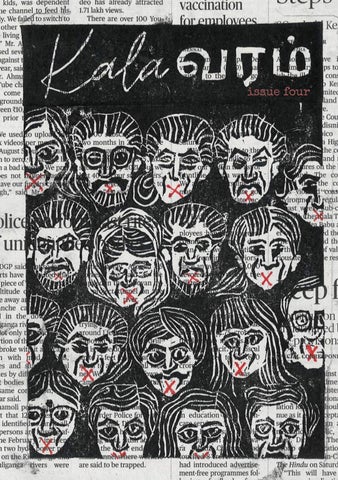
issue four
write your own
கலவர
/kələʋəɾəm/ KALAVARAM noun. riot, revolt, disorder
issue Four: Dissent
@zinedabaad
cover art By Tushar Kanol
A cry is Rising Abhilasha Sharma A cry is rising, brushing it off as just noise is not right It may cause an inferno, writing it off as a dwindling fire is not right. You may not agree with me, so be it, These differences are merely shallow lines, rendering them so deeply is not right. Big bold letters have sprung up on the streets, even the blind can read them, Casting off these voices of the street as worthless and irrelevant is not right. Just divide and mislead, this trick of crushing dissent is now conspicuous, Burning the pyres of millions to fire up a few hollow dreams, is not right. Hiding the hideous festering lesion with money, rose-tinted glasses, and colourful dupattas, Letting the pain become unbearable for the fear of being banished by our ‘own’, is not right
A Dead God Rohang Mishal They walk through the deserted streets A police gunshot echoes through a dying space A rabid dog barks in the distance It is raging and so are they. Exit wounds bleed From their traumatized minds And from the fresh wound on their ripe right leg The Devil’s hounds follow the bloody trail Dressed in God’s robes God is dead—inked graffiti—the wall wears It shouts in riot red God is dead It is resurrected in saffron In the streets and thick opaque air Hawk-eyed God Preys on dissent—circling/examining/silently Veiling—carcasses in rot Sooty seditious black God’s messengers holler on a TV set The dissenters know no road God’s eyes omnipresent— A raven caws A police gunshot echoes An author’s name gets written in a death note God is dead God’s hounds—on the chase—howl Bark Bark Bark
Rage births love In a land—barren Love grows limbs In sterile desolation—sprouts/blooms They hug—in futility’s nest God’s hounds are here Furious, Rabid, Evil, The God’s hounds shout: “God is not dead Say the name of the God” An omnipresent God in stasis; Dissent echoes From the chambers of hearts — loving/raging Shotguns silently fired They lie on the ground God’s hounds rejoice God is indeed dead God is dead.
Art by: Elina Alem
Art by: Isabel Vaz
Art by: Shivaang Upadhyay
എതിർശബ്ദ
ൾ
Bijitha Bhamini എതിർ കൾ ിെന രൂപവും ശബ്ദവും പലതായിരു ു. േക തും ക തും മാ തമ ഞാെന ് അവേയാേരാ ും ഉറെ െചാ ി. അരികുകളിൽ മാ തം നിർ ി, അക ള ളിലിരി ിടം തെ ു ഭാവി വെര തിരി ു േനാ ാെത നട തും, ഇടേ റ് പിടി വാ ുകളാൽ മുഷി ി ബ ള െട വിരസതയും, എ ിലിലയിൽ െവ നീ ിയ അ ം, വിശ വയറിെന മറ ് മട ിെയറി തും, പറയാൻ െവ ിയ കടുംവാ ുകെളെയ ാം അ നാള ിലൂെടെയരിയാൻ വി തും, എഴുതാെത വി േകാള ളിൽ എ ാെത േപന ു ിൽ മഷിയായുറ വാ ുകള ം, മറവിയുെട മരുഭൂവിേല ു യാ തയാ ിയ വര ുണ ിയ ഓർ കീറുകള ം, ഇറു ിപൂ ിയ ക ിമകൾ ക ു മടു കാഴ്ചകെള അ കാര ിെലാളി ി തും, േകൾവി െകാ ത് മാ തമ ചരി തെമ ു വായ്െമാഴികൾ പറ ു െവ തും, ആർ ുവിളി ി ം തുറ ാ വാതിലുകള ം, പിെ അധരേ ാണിെല, പാതിമരി വികൃതമാെയാരു ചിരിയായും, എതിർ ിെ നിമിഷ ൾ, ശബ്ദ ൾ… രൂപമി ാ രൂപ ളായി, ശബ്ദമി ാ ശബ്ദ ളായി, കരി ാറ കൂ െള വിഴു ിയ, പിളർ ു മാ ിയ േനാവായി, കാതട ി ു ഗർജനമായി, െചറുതായി, വലുതായി, പലതായി... എതിർ കള ിെന ഇ െലയുമി ും, േകൾ ാെത േപായതായി,
പറയാെത േപായതായി, അറിയാെത േപായതായി, എതിർ കള ിെനെയതിെര വരു ു... ഒ ു േചർ ും, ഒ ിരി ും, കൂ ം കൂ മായ ിെന വൻപടയായും, എതിർ കള ിെനെയതിെര വരു ു… ഇ ിനായി, നാേള ായി..
ethir shabdhangal (Counter Evocations) Bijitha Bhamini Translated by esvi anbu kothazham ethirppu*: a malayalam word that can be variously translated as resistance, opposition, counter, argument, rejection, defiance, dissent, objection, dissonance, hostility, alienation and so on. The original expresses each of these various meanings (and more, at once) at various moments throughout the poem and each (person’s) reading of the poem is sure to bring out a deeper meaning still. It seems illogical to try to translate that word in a singular way throughout the poem, when it has not been used as such. I have therefore retained the word ‘ethirppu’ (as sort of a proper noun), in singular and ‘ethirppukal’ as plural, for this translation. ethirppukal—they were myriad In form and sound. Each one of them saying out loud “It isn’t just what is seen and heard!” ethirppu...
Of walking away without a second glance, From those who shunt to corners, In the garb of offering a seat inside. Of the banality of relationships, Wrangled by troubled words. Of flinging back food served on the plate of leftovers, Blanking out the stomach’s hunger. Of sending all the harsh words longing to be uttered, Back down to burn through the gut. Of words—now ink frozen on the nibs of pens— That never reached unfilled columns. Of parched bits of memories, Sent away to the deserts of oblivion. Of much-despaired sights locked away, Behind the darkness of eyelids bound shut. 1 Of the colloquies spoken, left behind, That history is not only what has been heard so far. Of doors that don’t open even to the most eager calls, Then, as a half-dead, grotesque smile On the corner of the lips... The sounds and moments of Ethirppu. As formless forms, As voiceless voices, As a wound that swallowed, Uprooted entire crowds of granite, As a deafening roar. Small, big, many. Unheard, unspoken, unknown, Ethirppukal—of yesterdays and todays. Ethirppukal, they are coming towards you, Together, individuated, In hordes, forming formidable troops, Ethirppukal, they are coming towards you, For today, for tomorrow… 1The
original uses ‘vaamozhi’ which translates to oral histories. Colloquies is used here to denote oral histories.
ASURA Jyotsna Ramesh When I was born, as is customary for Tamil-Brahmin families, my birth chart was taken to be evaluated by an astrologer by my father’s family. Apparently, the astrologer had foretold that I possessed ASURA GUNAS (Demonic traits) inherently and would bring shame to the family, or so my Paternal Grandmother reported. Worried, my poor mother rushed to find some reassurance; in yet another astrologer. “It is based on interpretation, my dear. Some will interpret it as demonic, but it is simply GAMBHIRTA.1 She will think and behave like a Man”, said the second astrologer. Somewhat relieved, my mother began to raise her Demon child. But as I grew up, I began to embody traits that are frowned upon in a ‘good’ brahmin girl. Some inherited from my already deviant parents, and some of my own. You see, ‘good’ brahmin girls don’t eat onions, garlic, and meat and relish it they don’t talk back or loudly question the existence of God wear revealing clothes. parade their bodies and flaunt their periods. They hide it away in shame. They don't kiss Demon Girls and Boys in their parents’ house. Drink. Dance in a club. Smoke. They certainly don’t get high. They don’t fraternise with non-brahmins too much have premarital sex, especially on top, demand pleasure. Don't have orgasms…. feel comfortable in their own skin.
I...checked all the boxes. So was I an Asura? Maybe. In their eyes. Asuras are evil. Despicable. Shallow. Corrupted. They aren’t worthy of respect. Or acceptance. So they will never be happy. But…guess what? All around me I found more such “Corrupted’, “Vile’, ‘Unrefined’... but happy demons. Free. Unabashed. Fearless. I found my ASURA tribe. Fly high, demon child.
1
Valour, gravity, solemnity.
Art by: Ashani Padhye
Dread Hetvi J
Found Poem Aarohi Narain Amiable citizens Long dreamed of Alien invasion! We’re strangers In a strange land Rooted in ever shifting ground A sense of dislocation A realm Like a lonely hallucination Can breath make a place lush? In a landscape slow to give up its secrets The most valuable ambush is Rising to power Passionate metamorphosis of the everyday Our ancient Electric Joy. Note: this poem was created using words and phrases found in geography and nature magazines.
Art by: Zarah Udwadia
normal kaav ranj When i introduce my home to you I will not italicise it. I refuse To let my normal bend like the Coconut trees to your violent Winds. Amma is not amma. Chai is not unfamiliar to my Land, and you seem to have Wrung the word out too quickly In your own mouth anyway. No, i will not teach you How to pronounce kohinoor you should have learned every Glass edge of it by now. You Should know it better than me. How do you claim to be So unsure of all the words And stones and gods and Lives you robbed and kept To feed your own while we Starved in the streets Starved on the riverbeds Still starve in the spaces between The words ‘spice trade’ In your public school textbooks.
No, in my words i will stand tall. How dare you Stab the rest of the world with Your tongue, kiss us without asking, And then tell us to move softer To your touch. All so you can take It all in. feel like a king. How dare you.