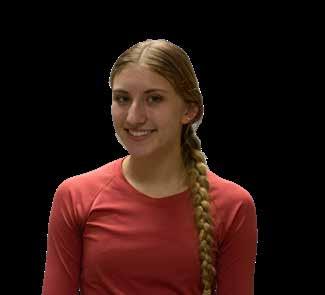
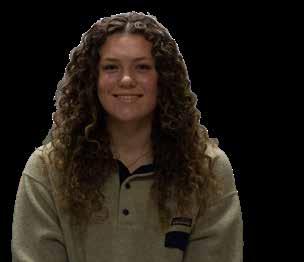
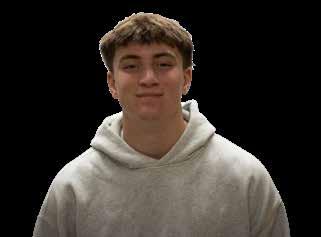
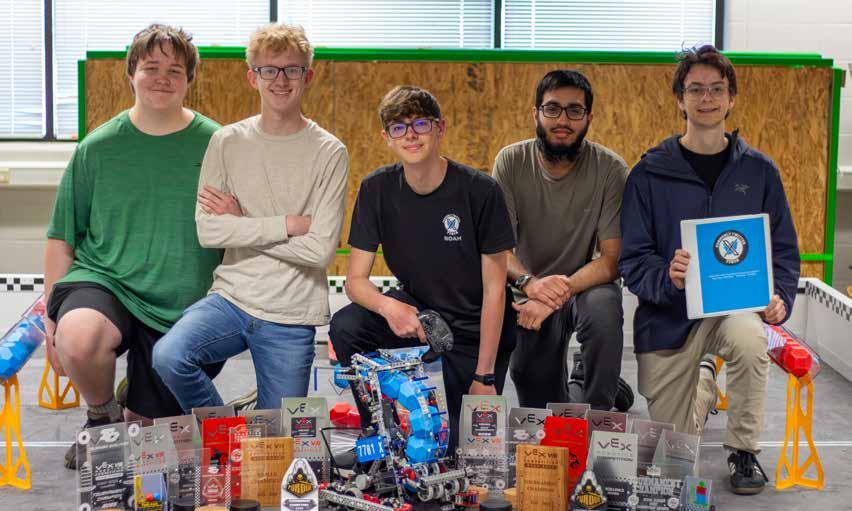
Junior Sam Wilson and Seniors Jacob Beardsley, Noah Anderson, Romaan Shaikh and Ernesto Martinez pose in the robotics room on April 7. Photo by Luke Kouns
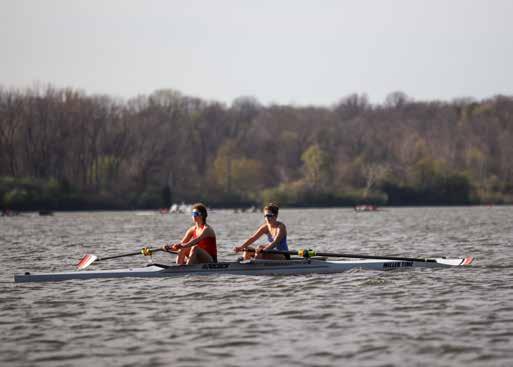
Pairs race each other at the Indianapolis Rowing Center on April 8. Photo by Ant Farrar
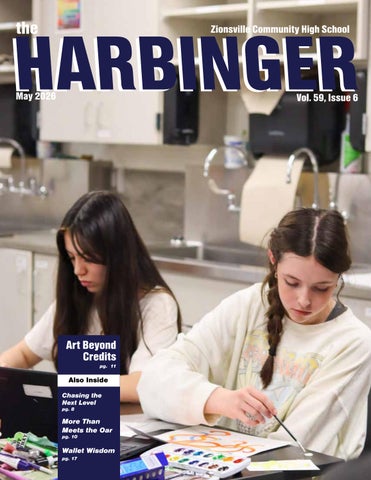
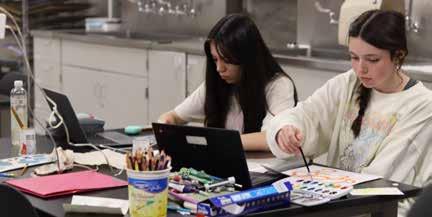
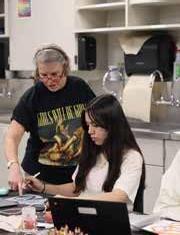
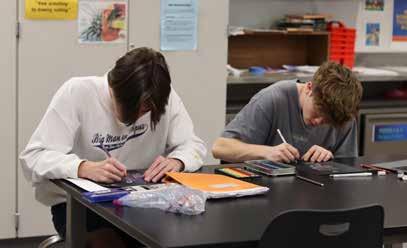
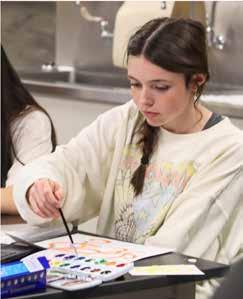
Cover: Sophomore Carwen Jones works on a paining in art teacher Brenda Jalaie’s Drawing II class on April 10. Photo by Srinithya Basireddy
First jobs valuable whether they are tied to future career goals or not
From McDonald’s to Azionaqua, seeing a ZCHS student at their job is an extremely common occurrence. For many students, an entry-level job is still the way to go, but recently, there has been an increase in students with internships or other career-focused jobs.
This shift reflects how students are beginning to think more intentionally about their futures, even during high school, as expectations continue to grow.
Internships are traditionally associated with college students, the ones who are definitely pursuing their career field of choice and are knee deep in the job-selection process. However, many high school students feel the rising pressure to obtain an internship as young as their sophomore year, in part because of work-based learning requirements in the new diploma.
At the same time, social media and peer comparison can amplify this pressure. In the past five years alone, college acceptance rates have dropped, with some top-tier schools seeing rates dip below 5% according to IvyWise.
Applications are at an alltime high even as acceptance rates decrease, creating one of the most competitive college environments we’ve seen in a long time. As a result of this, it feels that good grades and the typical extracurriculars are no longer enough. For many students, it has become a way to distinguish themselves.
Internships can be a valuable tool for students who are figuring out what career path suits them. A good internship can teach hard skills pertaining to the career field, while also teaching the soft skills of good communication in a professional setting, how to meet deadlines, and how to operate in a workplace. They can also serve as a test run before college, for students to see if they actually like the field they’ve chosen. In addition, they can help students build connections and gain insight from professionals.
On the flip side, internships can be a high-pressure environment that high school students may not be ready for. It can also often be difficult to find an internship, leading to weeks of stressful searching that may
Follow us on Instagram!
take up valuable time that could be spent elsewhere.
A typical job, like waiting tables or working in retail, is still a great learning experience for a student before college.
Many traditional teen jobs teach invaluable skills like patience, financial responsibility, and self-confidence. While it may not look as illustrious on a college resume, jobs like these are a crucial building block in a teen’s journey.
Another key skill that many students learn is time management, as an after-school job is likely to conflict with sports and other extracurricular activities. These experiences often shape a student’s work ethic over time.
There’s a certain aspect to a workplace that brings together people of all ages and backgrounds, and that is often something that can only be found in a good old after-school job. It’s an experience that often means more than just a paycheck.
Breaking: New News
Old and new homegrown publications provide the news of Zionsville
By Brody Brown, Copy Editor
It used to be that without news outlets, information spread through word of mouth. Now, information can spread faster than ever before. Lost from that word of mouth though, is the local angle.
Since 2025, Zionsville has experienced an influx of local publications focusing on community news, adapting to the internet-based future and highlighting the community.
According to the U.S. Census Bureau’s Service Annual Survey, between 2002 and 2020, estimated newspaper publishers revenue dropped by 52%, and periodical publishing has dropped by 40.5%.
Social media and the internet has taken over as the dominant channel for receiving news, whether it be Instagram, TikTok, or any number of publications that have moved online.
Current Publishing, founded in 2005, is an established publisher that focuses on stories coming from Zionsville and the surrounding north Indianapolis suburban area exclusively.
“We’re not like a typical newspaper where you’re going to see state or national news,” Spencer Durham, Current writer on Zionsville, said. “You’re going to get stories that are relevant to the suburban Indianapolis region as a whole. Our focus is hyperlocal.”
The Current focuses on Zionsville and the surrounding communities’ stories, which has established them as a reliable local outlet.
“I’m surprised with how many people read the Current,” Durham said. “The fact that so many people read the paper and seem to have a good relationship with the community lends itself to people reaching out and wanting to have stories told.”
During the Covid-19 pandemic, the Zionsville Times Sentinel closed as an independent entity, leaving a hole for locally-owned news. In February, journalists and longtime Zionsville residents Janelle Morrison and Steve Russo started Zionsville Post with the intent of filling that local news hole.
“We felt like we really lost that hometown source of information, but not just hard news topics, also the day-to-day goings-on in our town,” Morrison said. “We felt it was import-
ant to bring back something that represented what we loved most about the Time Sentinel–- it [covered] everything from high school sports to the government.”
According to the Indiana Business Journal, the Sentinel’s closure was caused by the difficulty in printing during the pandemic, which Morrison and Russo eschewed by posting online at their website and democratizing their stories.
“We look at this as an opportunity to reach out and invite others and get folks involved in this,” Morrison said.
Morrison and Russo have been highlighting stories, local events and community resources as a two-person team, describing the community as their “office”.
“Anytime you start something brand new, it’s a very organic process,” Morrison said. “For me, the greatest challenge is making sure we’re delivering on everything we’re offering and that we’re doing it at a very high level.”
Uniquely, Zionsville Post provides a page of resources that would serve the community in different facets like food insecurity, youth support and any sort of essential need.
“I’ve always felt that when we connect peo-
ple with the right resources, we’re doing more than just sharing information, we’re building a foundation of trust,” Morrison said. “Being a resident of this community myself, I’m truly inspired by the idea of helping my neighbors navigate what’s available to them so we can all thrive together.”
Another duo that’s been embracing the local independent news is Zionsville Today, a video-based news group highlighting the Zionsville community through sketch comedy reporting put on by their two anchors, Tim Burr and Boone Tasterfield.
Burr, whose real name is Dan Discenza, started the publication in December with the goal of entertaining and informing Zionsville.
“Maybe you come for the sketch comedy and social media stunts, but you stay to learn a little about your community,” Discenza said. “I wanted to create a news program that would be my love letter to Zionsville.”
Discenza’s co-anchor, seventh grader Boone Tasterfield, stars in the food review segments. Every post and segment Zionsville Today does is presented through a comedic lens.
“It’s funny and interesting to see a 12-year-old interviewing the CFO of Graeter’s or the regional manager of Torchy’s [Tacos],” Discenza said. “That’s helped drive a lot of interest, [but] we’re still trying to figure out our niche.”
Zionsville Today wants to expand soon, and will need more staff and anchors.
“We’re in the process of finding a high school correspondent,” Discenza said. “I’m in the process of monetizing the channel. I think that’s the linchpin that will help us unlock our growth.”
With the boom of local news, there are more chances than ever for people to engage in the Zionsville community and learn about what happens right outside their door.
“Local news impacts you the most, how your town spends money directly impacts you versus at a state or national level,” Durham said. “This is your community, you will see the effects of it.”
Spencer Durham editing a story for Current Publishing on Thursday, April 15. Photo by Brody Brown
Block around the Clock
Next school year, Zionsville Community High School will switch to a full block schedule. Students will have fewer classes each day but longer periods that provide flexibility and the opportunity to go further with content.
Principal Karen McDaniel said trying to keep up with seven different teachers and their rules can be a lot for students’ brains to handle.
“Transitioning to seven different classes all in one day is mentally tiring,” McDaniel said.
McDaniel said the school is trying to prepare students for life after graduation. According to Zionsville Community Schools, 94% of graduates attend college. Administrators want high school to feel more like a college schedule, with longer classes and potentially more downtime for seniors.
“Trying to mimic what college looks like for you while you’re here is a smart way to transition you,” McDaniel said.
Having a 90 minute class can be challenging when you’re sitting and listening to a lecture the entire time. Jennifer Drudge, math teacher, said teachers have to change how they teach so students don’t get bored.
“The thing that block schedules do the most is make teachers really think about the
“MAP is going to be an opportunity that will be new for all students, because it will be every other day.”
- Karen McDaniel, principal
instructional strategies we use,” Drudge said.
Science classes specifically will benefit from longer periods. The block schedule gives enough time to finish labs and experiments and talk through and review what students have learned.
ZCHS moves to full block schedule for upcoming school year
According to Zionsville Community Schools, between 97% and 99% of ZCHS students graduate and 94% of students go to college. Administrators want high school to feel more like a college schedule, with longer classes and more downtime.
“As a science teacher, formerly, I loved it,” Drudge said.
To make sure students stay engaged during 90 minute classes, the school is encouraging teachers to keep classrooms more active. Students can expect more group work and more use of whiteboards instead of sitting at a desk the entire period.
Students who have already experienced block schedules say it takes time to adjust.
Emerson Stubbs, freshman, experienced block at a previous school.
“I do feel like I learned better because they taught more material.”
A potential challenge with the new schedule is not seeing teachers every day.
“The biggest thing is, when you don’t see students on a day to day basis, you’ve got to help the kids understand the importance of reviewing the material even on the days they’re not in your class,” Drudge said.
McDaniel suggest that students break assignments into smaller parts instead of
waiting until the night before. She recommends doing a little bit each night to stay on track.
“Do your homework for that class that night, and then do the next day’s homework that night,” McDaniel.
MAP period will be one of the biggest changes in the new schedule. This 90 minute block is meant for extra help from the teacher or making up tests and meant to mimic a study hall.
“MAP is going to be an opportunity that’ll be new for all students, because it will be every other day,” McDaniel said.
Students can also look forward to adding extra minutes to passing periods and lunch. The overall goal is to make the building feel less stressful and give everyone a chance to take a break before the next class.
“Three extra minutes will allow students, especially those that go from math all the way to social studies the time to get there, and also feel like you have time to go to the restroom or get or fill up your water bottle or whatever that is,” McDaniel said.
While the change may feel overwhelming at first, administrators highlighted that the new schedule was created with students in mind, aiming to help better support their need and overall success.
“Students should be excited that the schedule is built for students,” McDaniel said.
Alexis Kern, Guest Reporter
The Civilian Cost
How the impact of war has changed
over
time and affected citizens differently
By Colin Adam, Perspectives Editor
In November 2025, the International Committee of the Red Cross (ICRC) found that over 130 armed conflicts were ongoing, double the number 15 years ago.
Although conflict has increased over time, the way people see and experience these conflicts has changed from previous wars, with updates in technology and differences in funding.
Technology plays a role in how conflict and war changes over time, leading to more advanced equipment capable of causing more harm.
Brandon Mooradian is a World and U.S. History teacher at ZCHS that teaches about conflicts like these regularly.
“War has always been hard. Whether it’s soldiers or civilians dying, it’s awful,” Mooradian said. “Technology, unfortunately, has gotten better at killing more people quickly.”
ians in these areas.”
Mooradian said being aware of current events is important, but these subjects aren’t healthy for continuous exposure for everyone.
“This next generation is fully aware of worldwide events,” Mooradian said. “And I don’t always think it’s psychologically great for everybody to know all the bad things happening in the world at one time.”
Technology isn’t the only thing that has changed war and conflicts over time, the ways wars are funded and the ways
$17.8 trillion of debt in 2014.
Over time war has become more expensive because of a multitude of factors, but the way civilians support wars has also changed. In the 1900s there was what’s called “total war” where every citizen was involved in the war at some point.
“People would become obviously active military members, work at factories or they would start rationing things, “ Mooradian said. “Everyone is involved in doing their part to help their nation or empire succeed.”
“War has always been hard.Whether it’s soldiers or civilians dying, it’s awful.” -Brandon Mooradian, Social Studies teacher
Media coverage of conflicts has also increased, allowing more people to learn and understand what’s going on in the world. However this exposure can come with negative effects.
“We see so many things on social media that we do become numb to some of the deaths,” Mooradian said. “And we do become numb to some of the damage whether it be physical or psychological damage that’s happening to soldiers and civil-
soldiers participate have changed along with it.
In World War I and World War II, the U.S. offered war bonds to civilians to help contribute to the wars. These worked by someone taking a loan to the government with the promise of it being paid back later with interest.
Norwich University found in a study that war bonds funded 63% of WWII, leaving the U.S. in $256.8 billion of debt. Compared to 21st century wars, where the U.S. was left in
The way people fought has even changed over the years with the removal of the draft. From the U.S. Civil War to the Cold War, the U.S. military was allowed to draft fit men to fight for their nation. This was later changed to a full volunteer system, as it is now, in 1973.
“Soldiers have more passion towards protecting the nation, more passion towards protecting fellow citizens. So I think that’s a great thing,” Mooradian said. “The draft is very disheartening, because you do have people, that’s not their dream, that’s not their life that they see. And unfortunately, in the past we’ve had a lot of people who were drafted that did lose their lives.”
Although soldiers face significant risks during
conflicts, civilians are affected as well.
“I think the tragedy of young people dying is something that we need to make sure that, whether it be U.S. soldiers, soldiers from another nation or wars that we’re not even involved with, I think it’s a tragedy at least. And should stay that way,” Mooradian said.
Recent data shows that civilians are more at risk than ever before. The Council of Foreign Relations found that between 1990 and 2000, civilians accounted for 90% of the world’s four million war-related deaths.
Vision of Humanity later found in 2024 that 110 million people are either refugees or internally displaced due to violent conflict.
“We see things on our televisions, on our computers or in the newspapers, but we’re really not living it,” Mooradian said. “Fortunately, we’re not living it, and unfortunately, some people are still living it.”
Article four of the Fourth Geneva Convention, 1949, defines “protected persons” as those in an international armed conflict or occupation who find themselves in the hands of a party or occupying power of which they are not nationals, providing them with fundamental protections against abuse, violence and discrimination.
Multiple United Nations bodies believe that article four is being broken in places such as Palestine, putting many at risk who aren’t involved in the conflict directly.
“There used to be more rules to war, there was almost kindness and an understanding of the rules to war, so at that point in time less citizens were dying,” Mooradian said.
“But now with the way that wars go today, I believe, there is a little uptick of more friendly fire and citizens unfortunately dying.”
Although the way war is experienced has changed over time, in the way we see it and how it affects people, war still affects many different people of various backgrounds over time.
“A life is very important,” Mooradian said. “If it’s an American life or if it’s the life of someone from another country, if it’s someone old, or young, or in the military, or a citizen, life is important.”
Designed by Colin Adam
Chasing the Next Level Student athletes weigh scholarships, school culture for college
By Addison Prieshoff, Reporter
High school sports draw in more than 8 million students across the United States each year according to the National Collegiate Athletic Association (NCAA), making sports one of the most influential aspects of a student’s life.
Beyond competition, sports often foster leadership, time management, and resilience that carry into other areas of a student’s life, shaping habits that extend well beyond graduation.
However, less than 10% of most high school athletes move on to the college level. Even less will make it to Division I. For many high school athletes, the difference
in where they play and if they play comes down to scholarships. This reality adds pressure throughout high school as athletes work to stand out in an increasingly competitive recruiting landscape, often dedicating countless hours to training, showcases, and skill development.
Almost $4 billion in athletics scholarships annually to more than 196,000 student athletes according to the NCAA.
These opportunities not only support athletic careers but also provide access to higher education that might otherwise be financially out of reach for many families, easing the burden of tuition and related
Indiana State Cross Country
Iexpenses.
Deciding where to go as an athlete can often be a difficult decision with many factors weighing in. Scholarships, resources, team environments, school curriculum and tuition costs are all key deciders in a student athlete’s journey to commitment.
In addition, relationships with coaches, campus culture, and long-term career goals can further influence an athlete’s final decision, making the process both exciting and overwhelming, especially as deadlines approach.
f senior Katy Green had been asked as a freshman what sport she would play in college, the answer would have been soccer. Running was originally just a last minute signup that was encouraged by a friend of hers. However, running became her passion as she discovered she had a talent for the sport. Now Green will be attending Indiana State University to run for their cross country and track teams.
“What drew me was definitely the team culture,” Green said.
Indiana State is well known in the world of running, as they frequently host the high school state championships for cross country and are hosting NCAA Nationals this year. Green describes the program as “a sleeper team”, as they have quietly outperformed schools like Purdue and Indiana University in past years.
“If you want to perform in college, you need to go into each day giving it your all,” Green said. “I feel like, academically, it’s the same.”
Scholarships were also a key factor for Green as she had narrowed down her decision between the D1 program at the University of Cincinnati, and the D1 program at Indiana State. In the end, however, she was offered a better financial package from ISU, sealing her decision to commit.
Katy Green
Brady Wright DePauw Swim
FFrom 5:00 a.m. practices to training up to 10 times a week, swimming is renowned as one of the most demanding sports in the high school circuit. Senior Brady Wright has given up more hours of sleep than he could count to pursue his passion for swimming, at a higher level.
“It’s always been a dream of mine to swim in college,” Wright said. “I really enjoy the challenge that swimming brings.”
Wright will be attending DePauw University in the fall of 2026 to swim and study political science on the pre-law track. For him, scholarships played a crucial role in helping to narrow down his college decision.
The level of commitment for swimming is extreme at the college level, and the flexibility of DePauw’s Division III program were key dealmakers for Wright. Additionally, he cites his biggest reason for his choice as his college coach who traveled often to watch him compete at meets and build a good relationship with him.
“Having her as a human resource is probably the biggest reason that made me ultimately choose DePauw,” Wright said.
For Wright, college is just as much about his degree as it is about swimming, as he hopes to attend law school after college.
“It’s really important to me to make sure th at I am getting a great education,” Wright said. “At the end of the day, sports are temporary.”
or senior Josie Imes, the decision to pursue her sport of volleyball in college was an easy one.
“I’d say my biggest push into playing in college was a brother that plays basketball in college,” Imes said. “He’s always kind of been an inspiration.”
Imes will be attending the University of Alabama on a full ride scholarship in the fall of 2026 to play volleyball. In her search for the perfect college and team, there were three main things that drew her to the Crimson Tide: the staff, the location and the overall atmosphere.
Playing time, a bigger monetary package, school support and a good program for her intended major of sports marketing were all factors in her decision.
“I’m probably going to dedicate most of my attention to playing volleyball,” Imes said. “But also, there’s going to be a lot of life after college sports.”
With the pride of becoming a D1 recruit in an extremely competitive sport comes a lot of sacrifice and hard work, whether that’s missing weekends with friends or spending late nights out in the gym.
“If you love the sport enough, those sacrifices seem like such a small price to pay,” Imes said.
Theo Schott Undecided
Georgia, Alabama, IU, Notre Dame, Iowa and Oregon are some of the most famous names in college football. Sophomore tight end Theo Schott has offers from each of them, adding up to a total of 22 offers from colleges across the country.
“I love going out there with my teammates on Friday nights and playing,” Schott said.
“Having the opportunity to do that at the next level is amazing.”
One thing that Schott is prioritizing in his search for the right school is their culture and environment. He cites having a strong relationship with the coaching staff as one of the biggest deciders for him.
Name, Image, and Likeness in college sports refers to the rights of student athletes concerning how they can be compensated for their personal brand through things like brand deals, endorsements and social media.
According to Connextions.Pro, Division I schools can share up to $20.5 million annually with their athletes through revenue-sharing pools, expanded scholarships, and education-related benefits.
Josie Imes University of Alabama Volleyball
More Than Meets the Oar
By Ant Farrar, Sports Editor
Usually in Zionsville, the spotlight falls on packed stands and Friday night lights. But miles away from all of that, a different athlete is putting in work that’s usually overlooked. Rowing, one of the most physically demanding sports available to ZCHS students, continues to go under the radar despite shaping some of the school’s most disciplined athletes.
For senior Hope Witzig, the journey into rowing didn’t start with a lifelong dream of the sport, but with curiosity.
ZCHS rowing builds endurance, discipline beyond the spotlight
“I initially joined because I didn’t have a sport and was looking to make new friends,” Witzig said. “From an outsider, I saw a unique community that allowed people of any skill level to be a part of.”
While rowing might not carry the same visibility and praise as other sports, what keeps Witzig motivated is simple. It’s the people around her.
“One of the few things that doesn’t change are the people passionate to be there,” Witzig said. “I show up to continue supporting my teammates and give back what the club has given me.”
For Junior Esteban Scheker, that same idea of growth defines the program, but he’s also seen how it’s drastically changed throughout the years.
“I’ve seen the rowing program grow vastly throughout my high school career, which has created a more competitive environment allowing the team to prosper,” Schecker said.
Unlike most traditional high school sports, Rowing stuck out to Scheker because of its unique versatility.
“What made me choose rowing is its
balance between strength and endurance,” Scheker said. “It allows rowers to do many recreational sports as well as cross-train across many sports.”
Despite that balance, it comes with a cost. The physical and mental toughness needed for the sport pushes athletes beyond their limits to learn and grow.
“Rowing is one of the most physically and mentally demanding sports,” Schecker said. “A rower feels about as much lactate as a 400-meter runner, but for over three to four minutes while having to maintain form and rhythm.”
Despite the constant grind everyday, Scheker believes that the school gives the sport the recognition it deserves.
“I believe our school gives enough recognition to this sport,” Schecker said. “We are noticed for our hard work, and that’s the most you could ask from a club sport.”
For Head coach Denise Bain and her staff, the challenges facing rowing go far beyond recognition, they’re built into the sport itself.
“You are not only managing your own athleticism, but also the water, the boat and equipment,” Bain said. “It is one of the few
sports that uses almost every muscle in the body.”
The sport’s demand is paired with a year-round training schedule that rivals nearly any other high school sport. Rowing athletes usually train between 15-25 hours a week, oftentimes adjusting to the harsh Indiana weather by having to move certain practices indoors.
However, the physical side is only one side of the equation. Rowing also requires a unique mental toughness.
“We focus on working through pain and fatigue, visualization skills, and pushing athletes to extreme intensity,” Bain said.
The responsibility that is shared builds something a lot deeper than just pure athleticism, according to Bain, the most noticeable growth in the athletes is mostly personal, not just physical.
“Self-confidence, leadership skills, work ethic, and adaptability increase,” Bain said.
Even though there are a lot of misconceptions that rowing is only for certain people or body types, Bain stresses that the sport is for anybody willing to put in the work.
“Rowing is for all body types, all ages, all abilities,” Bain said. “There is a place for everyone.”
While rowing may not command headlines and bring in packed crowds, its impact in the school runs deep. It builds athletes who understand discipline and teamwork at a level that only few sports can replicate.
“The boat can’t row if everyone doesn’t show up,” Bain said. “It’s a commitment to others at a level that might be different than in other sports.”
Rowing pair practicing at the Indiana Rowing Center on April 8. Photo by Ant Farrar
Art Beyond Credits
New art classes, format to encourage more students to try art
By Clara Vasey, Reporter
Even as art credits are disappearing from graduation requirements, Zionsville Community High School is revamping the art course offerings to prove to students the value of beauty and creativity.
Intro to 2D or 3D are no longer required before specialized classes past the 25-26 school year. These two intro classes are being combined into a one semester class of 2D/3D for those who want to try a bit of everything before diving into a specific class. This is in response to the recent changes to the high school diploma, which will no longer require fine arts credits.
“We saw a drop in enrollment last year, so we wanted to offer a wider variety of classes to spark student interest and get more people involved in art,” Grace Fletcher, Arts, Performing Arts and Wellness Department Chair said.
“My hope is that students will try a class, discover they enjoy it and choose to continue
exploring art in the future.”
Many aspects of art matter beyond what it might look like on a college application or high school transcript, according to longtime art teacher Brenda Jalaie.
“Artists, whether they’re movement artists, musical performing artists, visual artists or writers, those people are the ones that document our history,” Jalaie said. “They’re the people that help us understand what really came before us.”
Even if a student’s art does not become history, Jalaie and Fletcher believe they still learn perception, creativity and flexible thinking; skills necessary for any career.
Junior Briar Clayton is in Drawing II but plans to pursue a career in criminology. He still chooses to take art classes because of how it helps him decompress.
“I’m the worst drawer in there out of everyone, but I think I have more fun than probably 50% of the class,” Clayton said. “I’m just doing what I think would make me happy and what I find interesting.”
While most art is not functional, when completed it pleases the creator and viewers, an effect that is of equal importance to core subjects like math and science, according to Clayton.
“I would say art is important because it allows people to see a different side of you that you might not always show when you’re talking to someone,” Clayton said. “It allows you to see inside their brain without really having a conversation with them.”
There will also be three new art classes next year.
Jewelry, Peer Tutoring: Art Education and Printmaking. Art classes including these new ones are not only for
Sophomore Carwen Jones works on a paining in art teacher Brenda Jalaie’s Drawing II class on April 10.
according to Jalaie, being born an “artsy kid” is not real.
“Everybody’s got it in them,” Jalaie said. “... When we’re young and immature in our art making steps and process, we have a tendency to think things need to look realistic. But we kind of forget about the fact that most of the art that is touted as ‘amazing art’ is not realistic at all.”
The new format, which cuts prerequisites, opens art to anyone willing to get out their creative side. Sophomore Carwen Jones has a different take, valuing prerequisites because of how they push people beyond their comfort zone.
“I also think it was really nice to have those prerequisites because when I was in middle school, I thought I hated 3D art, and now it’s literally one of my favorite things to do because I got to experience more of it in Intro to 3D,” Jones said.
Regardless of the format of art classes at ZCHS, Jalaie elevates the value of art in that it proves our humanity; it is the legacy each generation leaves behind.
“If there wasn’t art, there would just be no emotion in life because of all the colors you can create with art and what stories you can tell,” Jones said.
Photo by Srinithya Basireddy
Technical X-celence
7701X’s legacy of dedication and success
By Luke Kouns,
The Zionsville Steel Eagles Robotics X team, the most awarded robotics team in Zionsville history, is composed of four-year members Noah Anderson, Jacob Beardsley, and Romaan Shaikh, along with second-year Ernesto Martinez, 12, and thirdyear Sam Wilson, 11.
In the team’s four-year career, they have qualified for the VEX V5 Indiana State Cham pionship four times and the VEX V5 Worlds Championship three times, including being the only Zionsville team to qualify this year.
“This year we qualified because of both an award and our performance,” Shaikh said. “No matter what, the entire team expects performance to keep going up. I think that pressure really is what drives us and gives us the motivation to continue working harder.”
The VEX V5 Robotics competition is a student-centered educational event that sees teams build a robot to play a yearly game. Along the way, they must learn and utilize re al-world engineering and collaboration skills.
“Students go through the entire engineer ing process,” Robotics coach Kenneth Kitts said. “From designing a robot to solve a specific task all the way up to competing with teams from other schools.”
The Robotics program gives students the opportunity to work on a large scale technical project on their own. These skills are espe cially important out of high school, where “independent inquiry and team management skills are very useful,” Martinez said.
“In sports, you have a coach that’s really driving everything,” Kitts said. “This is the first environment where most students have had to function completely independently as a team in everything they do. It’s up to them to set goals and try to achieve them”
To succeed in this independent environ ment, teams must embody a spirit of hard work and dedication. Anderson said that when it comes to robotics, “effort in equals results out.”
“Doing well in robotics is about the amount of time and energy you invest into it,” Beardsley said.
Looking back, the X team attributes a large part of their success and interest in robotics to the passion of older teams when they were just starting out. Shaikh said that when he was a freshman, the senior teams “were my heroes.”
“Inspiration from our elder team members as freshmen really inspired us to keep looking
for newer ways to build better drive trains or try to figure out better ways to track the robot’s position,” Shaikh said.
But the X team believed that more could still be done to support younger members. Anderson said that in their last two years the X team “wanted to mentor the younger teams better than anyone ever mentored us.”
Using resources such as Discord and Zionsville Robotics alumni, the X team has created a more established support network within the club. Teams now have easy access to dedicated parents, senior teams and gradu ated alumni if they need help.
“It’s impacted me most with the whole mentorship thing,” Wilson said. “It has sort of swayed my decision more towards teach ing. So next year I’ll be doing Cadet teaching as a follow up to that.”
But more than leaving Zionsville robotics with a lesson on dedication or a mentality of mentorship, X team demonstrates the one most important aspect for any successful robotics team.
“You need to be able to cooperate with your team,” Anderson said. “You need to be able to communicate well with each other. No one person can do robotics on their own.”
Feature Editor
Junior Sam Wilson and Seniors Jacob Beardsley, Noah Anderson, Romaan Shaikh and Ernesto Martinez pose in the robotics room on April 7.
Joining the Payroll
ZCHS
alumni return as teachers
By Hudson Couch, Guest Reporter
At the end of his senior year in college, Alex Gall was struggling to find an opportunity for student teaching near Bloomington. He decided to reach out to his former ZCHS Spanish teacher and mentor, Lindsay Alessandrini, who encouraged him to come back. He jumped on the opportunity.
Gall is one of several teachers at Zionsville Community High School who once walked the halls as a student.
“Right off the bat, she was like ‘You should do your semester here. Come see what we do, We’d love to have you back,” Gall said.
Gall, who graduated from Zionsville Community High School in 2019, never intended to come back to his hometown.
His original goal after high school was to move far away and get new experiences. But after coming back just for that one semester of student teaching, he was reminded of the experiences and people that made him love the school and community.
According to the National Library of Medicine, Gall is a part of a growing number of young people returning to their hometown for work. Hometowns hold memories and nostalgia for young people, which makes it easier to move back.
ZCHS alumni
Cassidy Spencer graduated from Ball State University in May 2020. After moving back home to Zionsville during
the quarantine, an opportunity to work at her old high school emerged.
“Coming in during a completely chaotic time in education and having people I was familiar with [made me feel] like I was two steps ahead of my peers that started teaching other places,” Spencer said.
“Coming in during a completely chaotic time in education and having people I was familiar with [made me feel] like I was two steps ahead of my peers that started teaching other places.”
- Cassidy Spencer, art teacher
Spencer has now worked at ZCHS longer than she was a student, which Spencer finds weird to think about.
Spencer said that teaching in the same classroom that she once had art in is still surreal.
Through the opportunity, Spencer has been able to grow closer to the school and community she once called home. She has a brother who is a senior at Zionsville and a sister in
middle school.
She has also strengthened her bonds with her high school art teachers, Grace Fletcher and Brenda Jalaie, who are now her co-workers.
Being from the school, it is easier for these teachers to understand the rigorous expectations set in Zionsville and beyond.
“As a former student, I recognize what high expectations have been set,” Gall said.
Teachers find it easier to assimilate into their departments and workplace after already having experience within it.
“If coming back feels exciting to you and you feel respected and have a good relationship with the people who you work with, that’s invaluable,” Spencer said.
Returning to teach in the community you grew up in also prepares you for the culture of the workplace and school.
“[There’s a large] number of stories and fun experiences that I get to have because I’m back where I was for those years,” Gall said. “I’m extremely grateful for that and have had an awesome time as a result.”
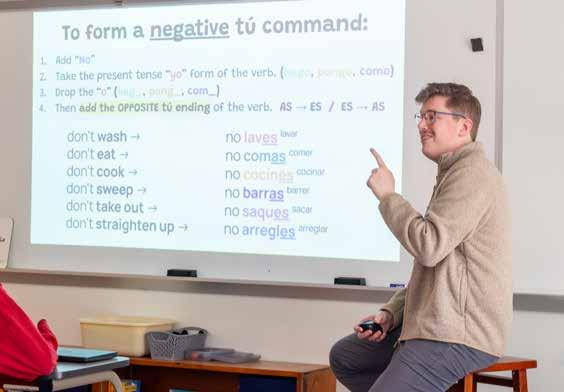
Alex Gall teaches Spanish on April 23. Photo by Lilly Steele
Heating Up
Here’s what climate change really is, some unique tips that are simple, easy to do
By Dhani Miller, Reporter
Climate change is the term for long term shifts in temperatures and weather patterns, which has taken place due to human activities since the 1800s. The main cause is the buildup of greenhouse gasses in the atmosphere, which traps heat.
Also known as global warming, climate change is the broader and more accepted term because climate change includes not only the rising surface temperatures, but also the side effects of global warming, such as melting glaciers, sea-level rise and extreme weather events.
Most people have heard about ways to combat climate change, but oftentimes they don’t take action. Simple things like recycling lowers energy use while manufacturing goods. Turning off lights and appliances when not using them saves electricity, which reduces the demand for power, decreasing the burning of fossil fuels at power plants, causing a reduction in greenhouse gas emissions.
The United States is just one of the 107 countries taking action to reduce emissions. The U.S. aims to cut carbon emissions in half by 2030 through implementing the Inflation Reduction Act and Bipartisan Infrastructure Law, which regulates methane emissions from oil and gas, and setting tighter fuel economy standards
for some vehicles.
The United States also signed the Paris Agreement, a treaty adopted by 195 countries, aiming to limit global warming in an effort to reduce carbon emissions. Every five years, the plan every country creates is revised to be more ambitious to continue making progress and take larger steps to combat climate change.
Climate change goes beyond polar bears and penguins, as humans are also feeling the negative impacts. Since 2018, wildfires in the U.S. have scorched thousands of homes and degraded air quality in many areas. In 2020, the Atlantic hurricane season had an all-time record of 30 named storms, significantly higher than the average of 12. That same year, droughts crippled parts of the southwestern United States.
ZCHS science teacher Lindsay Rooks said that students can make a difference by avoiding throwing away leftovers.
“One of the most powerful things students can do is pay attention to food waste,” Rooks said. “Most people don’t realize that when food decomposes in landfills, it produces methane, which is a strong greenhouse gas. Simply taking
only what you will eat, or composting leftovers is a small habit that can make a big difference.”
Rooks also suggests that changes students make will influence their household.
“When one student changes habits at home, it can impact an entire family, and that ripple effect is where the real change starts,” Rooks said.
Inked Up Behind
the tattoos of ZCHS students
“I got it because of the camp I worked at. Also, it looks cool.”
- Bowen Bigger, 12
“Our tattoos are from the show Gravity Falls, which we watched growing up, so getting them felt like a way to keep that part of our child hood with us while remind ing us of our
- Luke Steele, 12
“I already had some tattoos, but it was so special to share this with my twin brother. We -
nessee during a friend’s trip to see a concert, so that was fun! The character really represents us too, which is super cool.”
- Lilly Steele,
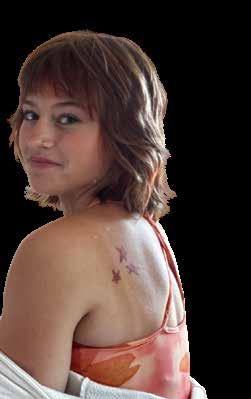
“My tattoo was drawn by my dad about a year before it was done. He didn’t know what it was for until it was already on me. I love my tattoo and people always ask me if I draw it on every single day because it looks like sharpie.
Photo submitted by Jarrard
Photo submitted by Bigger
Reporting by Addi Smith, Lilly Steele, and Luke Kouns
Working as a Teen
Long shifts, busy weekends, real responsibility show what teen jobs are really like
By Gia Villarrubia, Reporter
For many teenagers, getting a job is often seen as a way to earn extra spending money. But for those who actually get one, it becomes much more than that. Working as a teenager can shape respon sibility, independence, and confidence in ways that school alone cannot.
Balancing school, sports, friends and a job is not easy and it can be exhausting. Staying late at work after a full day of classes or giving up part of your weekend is not always fun. But at the same time, it kind of forces you to figure things out. You learn how to manage your time, show up when you’re supposed to and actually be responsible for something beyond school.
For a lot of teens, having a job also means having your own money for the first time. In stead of always asking your parents, you can decide what you want to spend or save. Even small things, like buying coffee or saving up for something bigger, start to feel different when its your money. It makes you realize how much things actually cost and makers working feel worth it
Getting a job as a teen does more than just give you money. It builds confidence in a way school doesn’t always like talking to customers,handling problems and figuring things out on your own. According to WebMD,working during adolescence can help teens develop responsibility and feel more prepared for future careers, which is something a lot of students don’t realize until they actually have a job.
In my experience working as a teenager has been a positive and rewarding experience. It has pushed me to become more responsible and develop skills that will benefit me in the future. It has also taught me to manage my time better and stay organized while balancing school and other responsibilities
I’ve been working for about two years now at a kids play cafe and also doing social media for a company, and they’ve taught me different things. At the cafe, weekends get really
keep up.
Having my own money has also made a difference. You realize pretty quickly how fast it goes, but it also feels better knowing you earned it. Overall, working hasn’t been easy, but it’s probably one of the main things that actually made me feel more prepared for what’s next.
That perspective is shared by other students as well. Junior Lelia Bauchle described how having a job has affected her daily life.
“I think having a job made me more logical about my decisions since you have to think about others beyond yourself in the workplace,” Bauchle Said
In addition, teen jobs can introduce students to expectations they may not experience in school. Being in a workplace means following rules, communicating clearly and being accountable to supervisors and coworkers. These experiences help students understand how to act in professional environments and
“I would go beyond labeling work experiences as valuable . I think that they are absolutely critical,” Marshall said.
He emphasized the importance of real world exposure at a young age
“Students need to get exposure to a variety of settings, interact with different people and experience different responsibilities,” Marshall said.
Teen jobs are not just about earning money. They are about building character, learning responsibility and gaining real world experience. For many teenagers those lessons last far longer than a paycheck.
Because of these benefits, teens should be encouraged to work, either through a parttime job or internship. Not every student’s situation is the same and school always comes first but having some form of work experience can be very beneficial and valuable. It prepares teens for adulthood in a way that is difficult to replicate elsewhere.
WALLET WI$DOM
Student financial responsibility questioned, advice for long-term improvement
By Ariana Spence, News Editor
To young children, money grows on the trees of their parents. As children grow, this unrealistic idea of money and its value should fade, but oftentimes, teens and young adults still carry these ideals far into and after high school. Financial literacy and monetary intelligence are valuable lifetime skills vital to success as an adult, and if these skills aren’t implemented and taught early on, their formation after high school is exceedingly more challenging.
Some financially irresponsible students, particularly those who are unemployed, should not be spending their money, or their parents mon-
ey, on expensive, worthless items like Balenciaga slides and Gucci backpacks. Even well-payed students shouldn’t be spending their money frivolously on unnecessary items.
Instead of wasting money on ‘trending’ items like Lululemon and goods with limited value like expensive colognes, students should be investing in stocks and putting their money into savings accounts to grow wealth over time and build financial skills, rather than allowing it to burn a hole in their pocket. Money isn’t just formed out of nowhere, and without the little extra ‘push’ of the gain from stocks and investments, the only money students will be earning after high school will be from their nine-tofive job. For those who may not be able to shake their frivolous spending habits, this finite supply of money will run out fast.
hygienic products shouldn’t be expensive.
This should be a wakeup call for many students. It’s incredibly irresponsible to be spending hundreds or even thousands of dollars on worthless financial liabilities that put zero cash in their pockets.
Although many students feel pressured to spend more in order to keep up with trends, in the long run, investing and saving are more important. Spending money on necessities like clothes and
Whether realizing or not, $200 cologne or $90 hoodies are not necessities to most high schoolers, and keeping up with trends isn’t nearly as important as many believe. What is? A retirement or savings account that will grow long-term and benefit them later in life. Instead of putting a hard-earned paycheck into overpriced and unnecessary items, a financially developing student should be putting their money into things that will make them more money in the future.
Financial responsibility, especially as a teenager, can set the stage for a future and extra wealth. Using their money to make more and to create a life for themselves is far more important and necessary than $600 Balenciaga slides. Just think of what other, more beneficial uses that $600 could have.
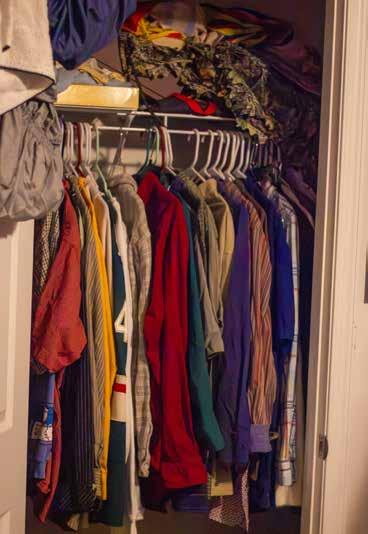
Senior Brody Brown’s closet, filled with clothes of many different types. Photo by Brody Brown
Graphics by Ariana Spence
More Fabulous
By Ariana Spence, News Editor
If Miranda Priestly purses her lips, you’ll know you’ve been fired. She’s only ever smiled at haute couture once. Millions of girls would kill to be her assistant; but for Andrea Sachs, this unexpected dream became a nightmare. No sleep, no family and no friends, that’s what Andrea learns will cost her to keep her job.
Source: Disney Plus
“The Devil Wears Prada” is an undeniably glamorous movie that blends the high-stakes reality and satire
of the fashion industry. Next year, another glamour will strut the catwalk, starring original cast members Anne Hathaway as Andrea Sachs and Meryl Streep as Miranda Priestly in “The Devil Wears Prada 2.” Expected for release on May 1, 2026, this trend-defying blowout is predicted to hit hard, but this anticipated sequel won’t be able to cover up the glamour of its original.
“The Devil Wears Prada” follows the twists and turns of fresh-out-of-college, chaotic Andrea Sachs’ growing career as a journalist; but after meeting fashion icon and tyrannical boss Miranda Priestly, her plan gets stopped in her tracks. Miranda hires her to be her assistant on-site, and Andrea struggles with keeping up with her boss’ strict and highstakes lifestyle. After a heavily-aided glow-up and attitude adjustment, Andrea adapts to Miranda’s wrath, until her career under Miranda’s company is threatened.
This dynamic, chic and introspective film hooks viewers’ eye for style, and grants a peek into the complex world of the fashion indus-
A review of the original “Devil Wears Prada” in anticipation of the sequel
try and the pressure it entails for its employees. Behind the gloss and six-inch heels, this movie wraps beautiful character development and nuanced fashion up in a bow. The film highlights how quickly one will sacrifice their personal life for their career, and how personal ideals can bend under the high-pressure environment of work.
This quality, polished film shows how Andrea’s journey and personal growth under Miranda demonstrates the reality of her work and the humor that comes with it. “The Devil Wears Prada” can’t be outshined by its peers in the film industry and will continue to set the standard with its’ fashion-forward style and glamorously evolved view on ambition in its truest form.
Watching this movie in anticipation for its sequel in May will remind viewers why the original will never submit to its successor, and as viewers revisit Andrea’s transformation, they’ll find that the movie’s message about self-worth and sacrifice will remain ever-relevant and important.
Project Hail Mary
A
review of “Project Hail Mary,” a great movie that condenses source material
By Luke Kouns, Feature Editor
Garnering praise for both its interesting story and accurate use of math and science, “Project Hail Mary” quickly became a popular science fiction novel for fans of author Andy Weir. In fact, the book is so dedicated to accurate science that it has become assigned reading for all Physics 2 students at ZCHS. But in the transition from book to movie, a lot can change, so does the science still hold up?
Simply put, no it does not. Nor did I really expect it to. The book is way too dense to include everything in a movie that’s two hours 26 minutes. So the movie has to pick and choose which aspects to focus on, and it chooses well.
The film leans into the adventurous side of the novel, focusing on the main character’s
unique situation and struggles, and less about his scientific aptitude. This choice results in a more fun and whimsical movie, almost like a more relaxed and ethereal version of Christopher Nolan’s “Interstellar”.
This choice, however, does not detract from the highly scientific base material. Only a notable few scientific aspects and characters are left out, the rest are carefully integrated into the film adaptation, even if some are relegated to fun background details.
The overall result is a fun science fiction space adventure with a relatable protagonist, an interesting storyline, engaging side characters and enough of the original scientific backing to interest fans of the novel, including myself.
Source: Sony Pictures
Be Your self
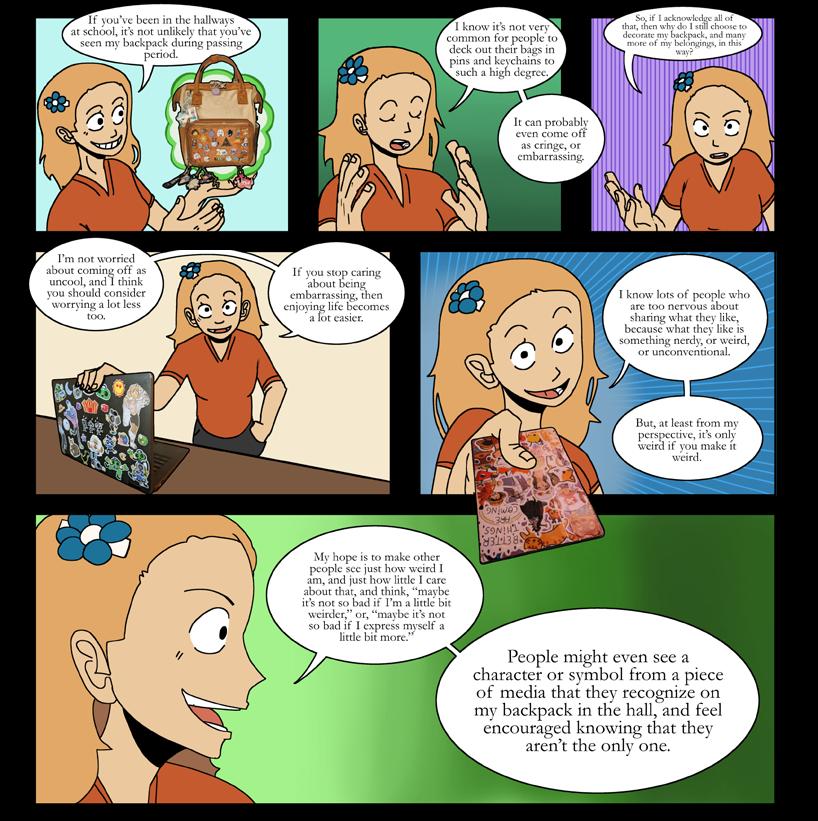
By Noelle Brooking, Comic Artist
Designed by Colin Adam
The Spring Play: CLUE
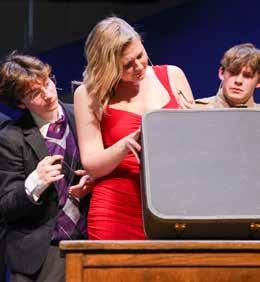
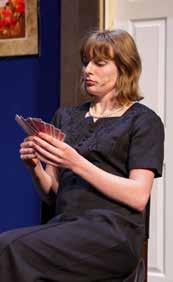
The “CLUE” stageplay is based on the popular board game by the same name. This unusual origin means the crew had to work extra hard to bring these cardboard cutout characters to life and tell their comedic story.
On April 17-19, the STAR Bank Performing Arts Center dimmed the lights and shined a spotlight on the cast and crew behind the ZCHS spring play: “CLUE.” Every aspect of this production was done in house by students, from designing and organizing the costumes, to creating an intricate set, and finally, bringing the characters to life in front of the audience’s eyes. Photos by Nat Enk
Dates, times, and locations are subject to change.