




развоја Републике Србије, решењем број 650-02-444/2019-03

учења : workbook - радна свеска / Гордана Марковић, Катарина Ковачевић ; [илустрације Драгутин Вукелић]. - 4. изд. - Београд : Завод за уџбенике, 2023 (Београд : “Дунав”). - 64 стр. : илустр. ; 27 cm
Тираж 2.000.
ISBN 978-86-17-20930-6
1. Ковачевић, Катарина, 1942- [аутор] COBISS.SR-ID 122886921
ISBN 978-86-17-20930-6
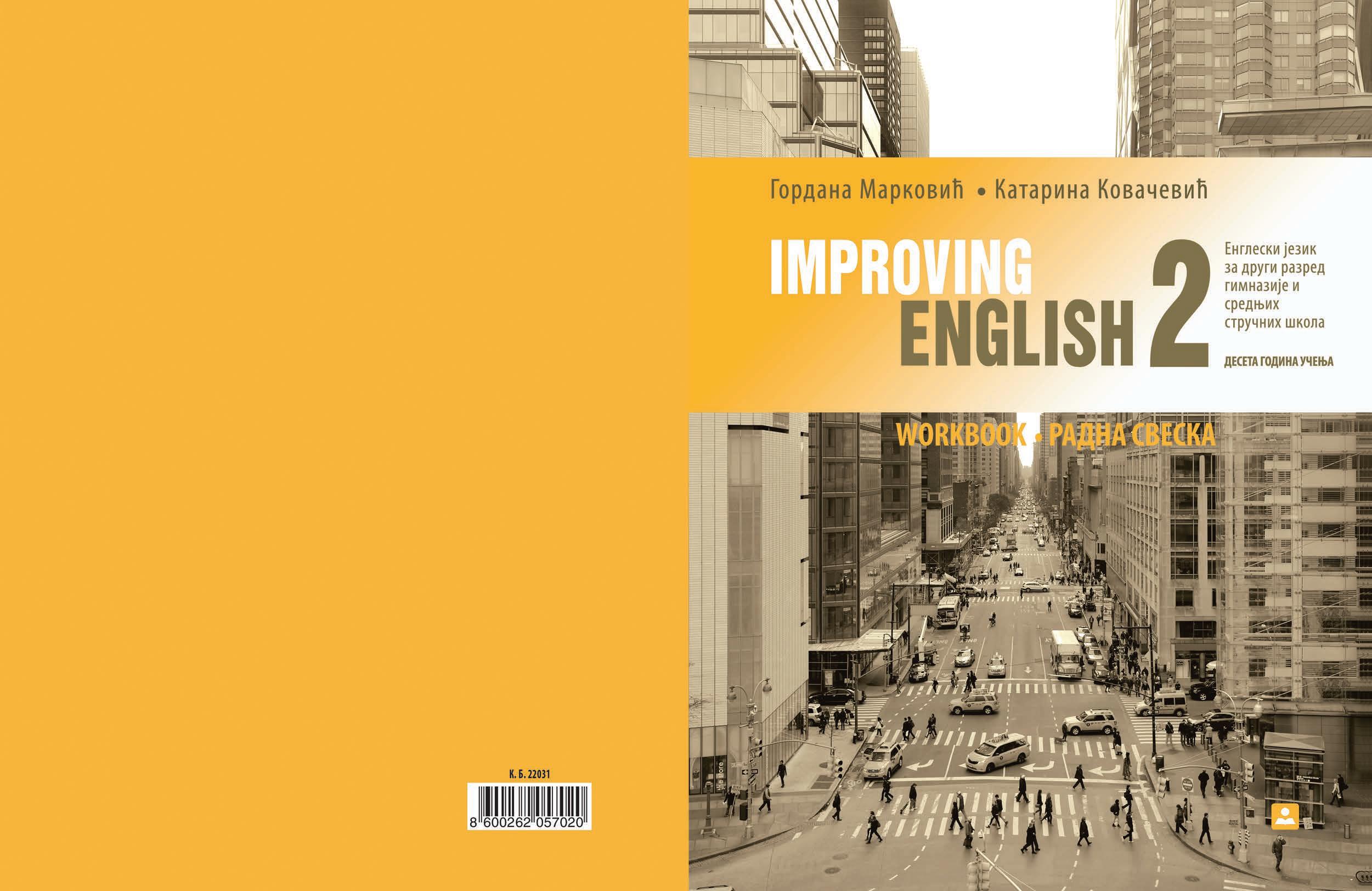
Cover page: Eighth Avenue, Manhattan, New York (Depositphotos)









Read the text and choose the answer (A–C) which best fits each gap.
Copenhagen and Amsterdam are both (1)____________ as the Venice of the North, mainly because they have canals and are very pretty. However, there is also the Venice of the UK – Birmingham.
It may not be the most (2)_________ city, but something you’ll often hear in Birmingham is the fact that it has ‘more canals than Venice’. However, it also has more trees than Paris and more parks than any other European city.
It is Britain’s second-largest city and it is rich with history and culture like any other city. What makes it special is its canal (3)____________. It is different (4)____________ to other canal cities. In Venice, the canals are concentrated and easily passable by gondolas, while in Birmingham they’re (5)___________ across the city.
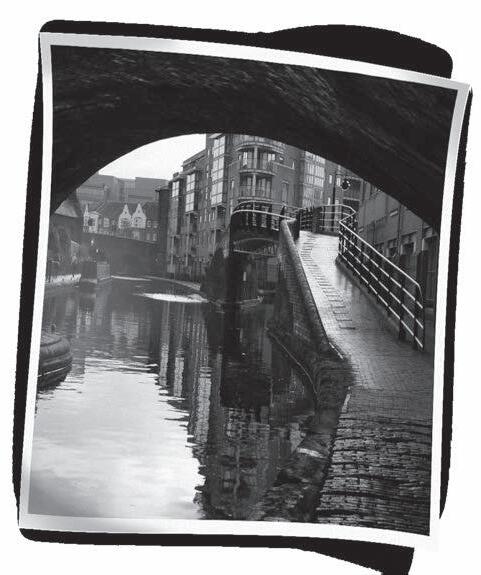
A trip along one of the canals is pleasantly quiet and (6)____________. Besides, you’ll get a much better (7)____________ of the city – not comparable perhaps to Venice, but certainly more complete. There are plenty of beautiful views. Colourful boats and historic canal architecture sit (8) ______________ with charming modern restaurants, bars and cafes.
1. A famous
B known
2. A attractive B nicest
3. A complex
B arrangement
4. A from B compared
5. A spread out B extend
6. A relaxed B reckless
7. A effect
B impression
8. A alongside B combined

C similar
C pretty
C network
C related
C stretch
C restful
C comparison
C side-by-side
Match the adjectives in box A with the nouns in box B to make collocations and write them down. There may be more than one combination, but only use each word once. Then practise making sentences with the collocations you have made.

1. appropriate 2. annual
3. bustling 4. deadly 5. striking 6. entire
7. medieval
8. prestigious
9. shallow 10. picturesque
a. place
b. beauty
c. fortress
d. city
e. infection
f. landscape
g. prize
h. school
i. life
j. waters
Use the adjectives from the box to complete the sentences.




1. The manager thinks your dress is not _______________ for the occasion.
2. Madonna performed onstage at the 37th _____________ American Music Awards.
3. If you are interested in the subject, then take some time and read the ____________ article.
4. They only found pottery, mainly from the 13th–15th centuries, but not gold.
5. The view of the mountains and the village below was very ______________.
It wasn’t an appropriate place for a wedding ceremony. annual / medieval / prestigious / picturesque / appropriate / entire
6. We all agree that it is a ______________ award and that he should be proud.
Make adjectives from the words in capital letters to complete the text. Use the following suffixes: -able, -ing, -al, -ive, -ous
Surrounded by stunning scenery, full of historic buildings and ____________ architecture, Edinburgh is the UK’s most visited destination after London. It has been the Scottish capital since the 15th century. There are two different areas, the Old Town, dominated by the ___________ medieval Castle, and the neoclassical New Town. Edinburgh Castle is an ____________ fortress which can be seen from all over town.
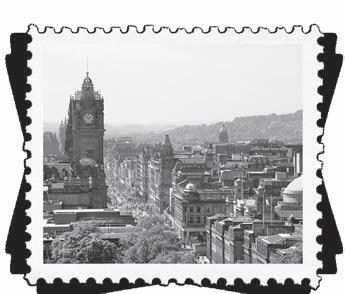
The wonderful combination of these two ____________ historical areas, each with their own important buildings, gives the city its own unique character. ______________ wonderful attractions make an immediate and ____________ impression on the many visitors who travel there.
In August Edinburgh becomes the ____________ centre of Europe, when the Edinburgh International Festival of Music and Drama is held.



Match the meanings of the phrasal verbs with GET in the sentences (1‒6) with the explanations (a‒f).
1. She’s going to ask her boss for a pay rise as she doesn’t have enough money to get by.
2. Simon gets on very well with his brothers. They never argue.
3. I’ve tried to phone them several times this morning, but I can’t get through. The line is constantly engaged.
4. We´re going to New York on 15th March and we hope to get back on 21st April.
5. Toni’s very disappointed about breaking up with Diana, but he´ll get over it.
6. The thieves got away with stealing the jewellery as they were never caught.
Fill in the blanks with: at, during, for, in, on or while.
1. It´s Jack’s birthday _______ Christmas.
2. I fell asleep _______ I was at the cinema.
3. I fell asleep _______ the performance. I was asleep _______ about twenty minutes!
4. _______ the moment the children are watching their favourite show.
5. They both visited the resort _______ 1996.
6. I read some magazines _______ I was waiting to see the doctor.
7. I´ve got to go to the bank, but I´ll be back _______ ten minutes.
8. Kate has been in this business _______ more than ten years.
a) return b) escape punishment c) succeed in contacting somebody by phone d) have a good relationship e) recover from f) manage financially
10. She ________________(get) wet unless she (take) an umbrella. 1
Put the verbs in brackets into the correct tense.
1. How many chocolates _____________________________ (you/eat) today?
2. She _________________(grow) fond of the town and now she ________________ (not/want) to leave.
3. We __________________(visit) the National Gallery this afternoon. _________________ (you/join) us?
4. I ___________________(be) to many job interviews, but I _______________ (not/get) a job yet.
5. She __________________(break) three records in the last four years.
6. Ann ___________________(make) a number of trips to the States this year.
7. Come on, let’s celebrate! Our team ______________ (win) the match. It is the second time this season that we ____________________(beat) our main rivals.
8. Susan __________________(want) to improve her French and that’s why she ____________________ (do) a language course in Paris at the moment.
9. Marko __________________(go) swimming twice a week. How often __________________(you/go)?
Discuss the difference in meaning between the pairs of sentences below.
1. a) What are you doing?
2. a) What are you thinking about?
3. a) He is rude!
b) What do you do?
b) What do you think about it?
b) He is being rude!
Match the sentences in box A with those in box B.
1. Where do you come from?
2. Where are you coming back from?
3. Do you see anything strange?
4. Mathew is seeing his friend from Australia tonight.
5. The Joneses are having breakfast.
6. My family has three houses.
Add since or for.
1. He has not been here _______ some time.
a. Are they meeting in a cafe?
b. No, it looks OK to me.
c. From a meeting.
d. Yes, I know you own a lot of property.
e. They are eating now.
f. From Spain.
2. I have been looking for that key _______ the last half an hour.
3. I haven’t seen Peter _______ he left Rome.
4. They have made considerable progress _______ they invented the new machine.
5. She hasn’t been her usual self _____ the last few days.
6. It hasn’t rained _________ January.
Make sentences by putting the verbs into the present simple, present continuous or present perfect. Add any other words that you need.
1. When / we / board / plane?__________________________________________________
2. I / keep / to a strict diet / these days
3. population / our country / grow older / century _________________________________
4. why / you / wear / your sister’s dress / today?
5. you / ever / suffer / from toothache?
6. at the moment / I / share / my bedroom / my brother _____________________________

AND GRAMMAR

track 4
Fill in the gaps with the verbs in the correct tense. Listen to the text to check. Macy’s Department Store is known for the parade that ____________ place every Thanksgiving. Everyone __________ forward to the Macy’s Thanksgiving Day Parade. It _________ a long tradition in the United States and it__________ the beginning of the Christmas shopping season. Macy’s Thanksgiving Day Parade always takes place in fabulous New York City. It _________ by Central Park and ends in front of Macy’s. For 84 years, Macy’s______________ young and old with the parade of high flying balloons and decorated floats. Famous entertainers, dancers, the best high school marching bands and the employees of Macy’s who handle the balloons in the parade _________ together on this day to make this amazing parade a spectacular event. About three and a half million spectators along the parade route in New York City and fifty million TV viewers ___________ the parade.

There is a mistake in most of these sentences. If a sentence is wrong, correct it.
1. He’s caused trouble ever since I’ve known him.
2. I know Charlie for five years.
3. I’ve always wondered why she suddenly left school.
4. I won’t go until I‘ll find out the truth.
5. This is the first time I am in the USA.
6. I want you to compare the present film with all the others you saw in your life. begin delight mark take watch come look be
TRANSLATION AND MEDIATION

Alex is a friend of yours from England who came to visit you. Your mother is taking you and your friend to Smederevo, but she doesn’t speak English and she wants you to tell Alex something about the town. Translate her words into English.
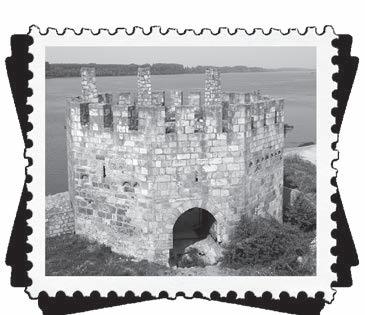
You: ________________________________________________________________________
You: ________________________________________________________________________
IDIOMS WITH GET

Match the idioms with get with the explanations.
1. get ahead
2. get a load off one’s mind
3. get down to doing something
4. get something into one’s head
5. get out of hand
6. get rid of

Use some of the expressions from the box to complete the sentences.
1. I’m sorry if what I said upset him, but I had to ____________________.
2. She decided to ______________ her old clothes. She doesn’t need them anymore.
3. You have to practise playing the piano every day if you want to ________________.
4. Things _________________ at the party and juice was spilt all over the couch.
a. begin to do something seriously
b. stop worrying about something
c. remove
d. become more successful than others
e. have a fixed idea in one’s mind
f. get out of control
Common expressions with the word BRIDGE
Explain the meaning of the word ‘bridge’ in the following sentences.
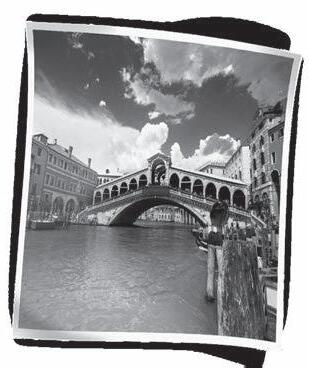
1. ‘A lot of water has passed under the bridge.’
2. They often gather in his house to play bridge.
3. ‘Cross that bridge when you come to it.’
4. Is it possible to bridge the gap between two generations?
1. He has married many women, but has never married. Who is he?
2. If you have it, you want to share it. If you share it, you don’t have it. What is it?
3. Light as a feather, there is nothing in it; the strongest man can’t hold it for much more than a minute.
4. What can run but never walks, has a mouth but never talks, has a head but never weeps, has a bed but never sleeps?
5. What can fill a room but takes up no space?
Breath
Light
A secret
A river
A priest
VOCABULARY

4 3 2 1
Complete the sentences by using the correct form of the words in the box.
1. Nobody believes that his ______________ will make changes for the better.
6. The day I left home is now a _______________ memory. /DISTANCE substitute greet effort pant
2. Since education is a long process, it requires time, _____________ and patience.
3. I’m glad to hear that that ugly billboard was finally ________________.
4. David was sent onto the pitch as a _____________ for an injured player.
5. The woman stopped running. Her heart was beating fast and she was ____________.
6. He came to the gate to ____________ his guests.
Complete the sentences using the correct forms of the words in capital letters.
1. Sending aid to the victims was simply a matter of common _________________. /DECENT
2. _________________ is working hard and doing your best. /DILIGENT
3. His _______________ was never doubted by those who knew him. /SINCERE
4. The discovery of penicillin proved to be __________________ to people. /BENEFIT
5. Did Jason give you a clear _________________ that he would help us? /INDICATE
Guess the meanings of the expressions with SPOT from the context and match them with their explanations (a–c).
have a soft spot for someone/something
Elaine has a soft spot for kittens. a) not able to move on the spot
The police were called and they were on the spot in three minutes. b) have a fondness for someone/something rooted to the spot
Mary was rooted to the spot and watched as the building collapsed.
c) in exactly the right place
Complete the sentences by using the correct form of the following verbs with down: calm, cut, let, pull and break.
1. She promised to _____________ on cigarettes to five a day.
2. They’re _____________ the old factory tomorrow. It will be sad to see it disappear!
3. She couldn’t _____________ because her exam results were very bad.
4. My mum’s TV _____________ and I had to repair it.
5. She promised to help me, but she _______ me _______.
Confusing words are words that are very similar and commonly confused. Choose the correct word to complete the questions.
1. _____ he wasn’t willing to go, he finally joined the group.
A Despite
B Although
2. She managed to _______ her children and make a good living.
A rise
B raise
3. Your opinion will have no _____ on my decision.
A effect
B affect
4. Please finish your work _____ six o’clock.
A by
B until
5. _____ I’m concerned, you can come along.
A As long as
B As far as
7. The _____ applauded enthusiastically after the play had finished.
A audience
B spectators
8. The ____ of the article drew my attention.
A title
B headline
9. He _____ down and immediately fell asleep.
A lay
B lie
10. You can choose from _____ four items on the list!
A between
B among
11. _____ his training and experience, he failed to qualify.
A Although
B Despite
6. I often about how things came to be the way they are today.
A wander
B wonder
12. He will arrive _____. Let’s wait.
A briefly
B shortly
Use the verbs from the box to complete the story.
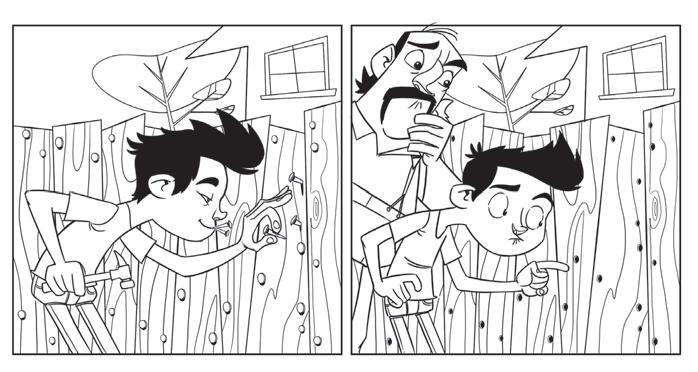
There once was a little boy who had a bad temper. His father (1)___________ him a bag of nails and told him that every time he (2)__________ his temper, he had to hammer a nail into the fence. The first day the boy had driven 20 nails into the fence. Over the next few weeks, as he (3) to control his anger, the number of nails hammered daily gradually (4) ___________ down. Finally, the day came when the boy didn’t lose his temper at all. Then his father suggested that the boy now should pull out one nail for each day that he was able to (5)____________ his temper. When all the nails were gone, the father took his son by the hand and (6) ___________ him to the fence. He said: ‘You (7)_____________ well, my son, but look at the holes in the fence. The fence will never be the same. When you say things in anger, they leave a scar just like this one. (8)__________ sure you control your temper the next time you are tempted to say something you will regret later.’
Write the forms of the following verbs.
Put the verbs in brackets into the correct tense.
1. A: ‘Where ______________(you/go) on holiday this year?’
B: ‘We ______________(not/decide) yet. How about you?’
2. A: ‘______________(you/come) home in a taxi last night?’
B: ‘Yes, it ______________(rain) when we ______________(leave) the theatre.’
3. My brother ____________(read) all Grisham’s books. He ___________(just/ finish) reading his latest novel.
4. I _____________(drop) my bag when I _____________(board) the plane.
5. Bob and I ______________(play) tennis twice at the new court since they _________(open) it last month.
6. They _____________(slip) and _________(fall) while they____________ (climb) the mountain.
7. ‘_____________(you/have) dinner yet?’ ‘Yes, I __________(have) it at 7.00.’
8. We _________________(miss) the last bus. Now we _________(have to) walk.
Write sentences using the prompts. Use for, since or ago.
E.g. I / not / play / basketball / four months – I haven’t played basketball for four months.
1. My best friend / stop / eat / meat / 2 years _______________________________________
2. Harry / not / meet / Sally / she / be / a student
3. I / last / play / basketball / four months
4. We / last / speak / to Ann / two weeks
5. My father / start working / in France / 6 months
Correcting mistakes
Add an indefinite article where necessary.
1. We have English three times week.
2. I saw brilliant rock band perform last night.
3. Football has been national pastime for years.
4. This is quite good story.
5. There is new English book on the desk.
6. Smog is problem in big cities.
Complete the sentences below with the following verbs: walk, stay, fall, go, swim.
1. I saw the girl _______________ off her horse.
2. I’d rather ___________ in the pool than ______________ down to the beach.
3. Your daughter has just come home crying. You’d better ________ and see what’s happened.
4. Let them ________ here tonight. It’ll be fun.
5. I am sure he was made ___________ to the party! He’d said he didn’t want to.
Which of the sentences below say that somebody saw:
a) the action completed?
b) the action in progress?
1. I watched the children playing in the garden.
2. I saw him slip and fall.
3. I watched the children cross the street and enter the building.
4. I heard her singing while I was passing.
5. I saw her open the drawer and take the notebook.
Question tags are used when you want the other person to confirm whether you are right or not, or just to agree with you.
There are some irregular question tags.

I’m handsome, aren’t I?
Nobody got 20 points on the test, did they?
Everybody likes clowns, don’t they?
Nobody is listening, are they?
Everybody is listening, aren’t they?
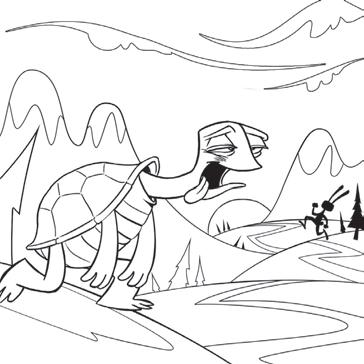
Translate the fable The Tortoise and the Hare.
Underline the auxiliary verbs in the sentences. Then add question tags.
Example: David hasn’t phoned yet, has he?
1. We are eating out tonight, ___________?
2. Jim can’t come with you, ____________?
3. They don’t know the results, _________?
4. Everybody was crying while watching the film, ____________?
5. She gave presents to all the members of the team, ____________?
6. Nobody has heard anything, _________?
7. Mary will certainly help you, ________ ?
pull (oneself) together
pull (someone’s) leg
pull strings/wires (informal) pull a long face
= gain control of your emotions = to play a joke on; tease or deceive = to use influence to get something done = an expression of unhappiness and dislike
Complete the sentences using the correct idiom.
1. The teacher asked the student to pull himself ____________ and to stop laughing.
2. I suggested going for a long walk and she pulled _______________.
3. I may be able to pull a few if you need the document urgently.
4. Don’t believe him! He’s just pulling ___________.
Complete each sentence with one phrase from the box.
1. ______________ the danger, Paul ran back into the burning house to save his friend.
according to apart from in favour of on behalf of as for in case of regardless of
2. ______________ the timetable, the next train isn’t due for two hours.
3. ______________ fire, smash the glass and push the button.
4. Personally, I am ______________ forbidding smoking completely!
5. I would like to thank you, ______________ everyone who was rescued.
6. ______________ you, no-one else knows that I have escaped.
7. ______________ Steve, he believes that we should stay where we are.
1. What can go up and come down without moving?
2. What goes up, but never comes down?
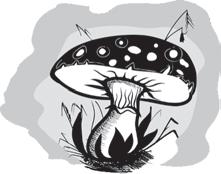
3. They come at night without being called and are lost in the day without being stolen.
4. What kind of room has no windows or doors?
5. I run, yet I have no legs. What am I?
A mushroom A nose Stars Your age The temperature
1 2
Circle the word which best fits the gap.
Sports and physical activity in general have a crucial (1)______ on our health and (2)_____. Activities in the fresh air, such as playing with a ball, running, riding a bicycle, playing tennis or walking, lead to an improvement in (3)______, health and physical shape.
Success and (4)_______ are both part of sporting life as well as everyday life. Playing sports teaches an athlete how to handle both, how to compete fearlessly and how to (5)______ hard times. (6)______, winning international sporting events is also a matter of national pride.
1. A impression B effect C affect
2. A well-being B comfort C goodness
3. A mood B feeling C emotion
4. A collapse B fall down C failure
5. A defeat B overcome C beat
6. A Above all B However C But

Use the words from the box in the correct form to complete the sentences below.
1. They will soon ___________ all their enemies.
2. The climbers were forced to ____________ along an unfamiliar path, in total darkness no less.
7. The situation is getting even worse, ____________ heavy attribute conquer object vehicle due to descent descend
3. They ___________ the success of the expedition to one man.
4. ‘ The incident occurred during the plane’s ____________,’ he said.
5. The ____________ was there for two days as its driver was staying at the hotel.
6. None of the students ______________ to the proposal because it was a good one.


Complete the table.
5. You’d better _______ John ________. He’s called twice already. 3 4 5 PREPOSITIONS
Noun Verb Adjective creation create creative imagine decisive tolerate thought sympathy
PHRASAL VERBS
Complete the sentences using phrasal verbs with CALL and STAND in the correct form.
1. We __________ you last night, but you weren’t at home.
2. Do you know what the initials Ms _____________?
3. Timothy the wedding _______ because he wasn’t in love with his fiancée.
4. When you _______________ somebody, you support them when they need you.

Add the prepositions.
1. They came ________a decision.
2. There are some exceptions _____ this rule.
3. Not one student ________ of ten passed the exam.
4. Whatever he did was _______ vain.
5. He is blind _______ the fact that she doesn’t love him.
6. They still can’t find an answer _______ this problem.
7. They died _______ starvation.
8. They were accused ________ cheating on the test.
9. He apologized ______ her ______ his behaviour.

Confusing words are words that are very similar and commonly confused. Choose the correct word to complete the questions. Each question has only one correct answer.
1. That painting by Picasso is _____.
A worthless
B priceless
2. You shouldn’t leave litter _____ on the ground.
A laying
B lying
3. Could you give me some _____ on this problem?
A advice
B advise
4. He is a very _____ person. He always has time to listen to people’s problems.
A sensible
B sensitive
5. Have you decided _____ you would like to come?
A weather
B whether
6. She usually works here, but she’s _________ in France.
A actually
B currently
7. Could you wait a moment? I would like to stop ____ my mother.
A to telephone
B telephoning
8. John _____ me $50 until next Monday.
A borrowed
B lent

Complete the sentences with a/an or the, where necessary.
1. Paul has spent ______ half of his life in ______ Far East.
2. ______ Mississippi is ______ largest and most important river in ______ North America.
3. _____ National Museum and _____ National Theatre are at _____ Republic Square.
4. ‘How much are ______ bananas over there? ’ ‘ They are 90 pence _______ kilo.’
5. _____ people we met while we were on ____ holiday in _____ north of England sent us _____ postcard yesterday.
6. ______ Andes are _______ mountain range in ______ South America.
7. ______ Lake Skadar is ______ largest in _______ Balkans.
8. _____ Plaza Hotel is on the corner of _____ 59th Street and _____ 5th Avenue.
9. _______ accommodation is difficult to find in _______ big cities.
10. What is _____ capital of _____ Netherlands: ______ Hague or _____ Amsterdam?

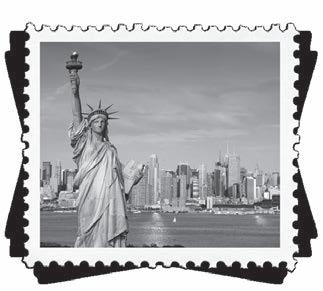
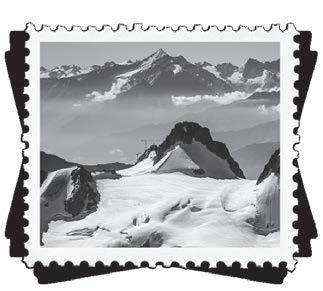
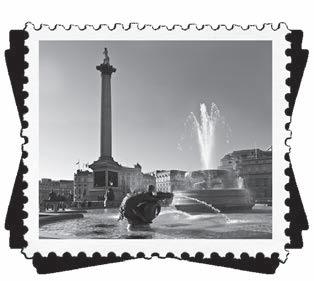
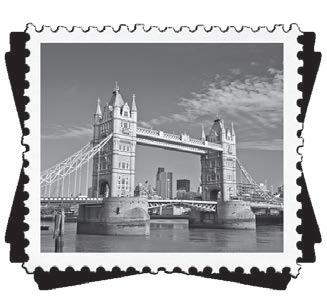
The definite article with place names Which is correct? Underline the correct answer.
1. Lake Ontario / The Lake Ontario
2. The Rhine / Rhine
3. Mount Blanc / The Mount Blanc
4. The Canary Islands / Canary Islands
5. National Theatre / The National Theatre
6. Trafalgar Square / The Trafalgar Square
7. Central Park / The Central Park
8. Fleet Street / The Fleet Street
9. Statue of Liberty / The Statue of Liberty
10. Tower Bridge / The Tower Bridge
Put the verbs in brackets into the correct tense.
In ancient times, a King (0) _placed a huge rock on a road. Then he (1)_________ (hide) himself and watched to see if anyone would remove the rock. Some of the king’s wealthiest merchants (2)__________(come) by and simply walked around it. Many loudly (3)____________(blame) the King for not keeping the roads clear, but none (4)___________ (do) anything about moving the stone out of the way.
Then a peasant came along. He (5)_______________ (carry) a load of vegetables. Upon approaching the rock, the peasant (6)___________ (lay) down his burden and tried to move the stone to the side of the road. After much pushing, he finally succeeded. After the peasant (7)_____________ (pick) up his load of vegetables, he noticed a purse. It (8)___________(lie) in the road where the rock (9)___________ (be). The purse (10)______________(contain) many gold coins and a note from the King indicating that the gold was for the person who removed the rock from the roadway.
The peasant learned what many of us never understand! Every obstacle presents an opportunity to improve our condition.
Because I had invited Lisa to join me. 4 5
Write answers in the past perfect using the prompts. Study the example first.
E.g. Why did you buy two theatre tickets? / invite Lisa
1. Why did you run to school? / miss the bus _______________________________________________________
2. Why did you walk to work? / take the car to the mechanic’s
3. Why did you buy a new mobile? / lose the old one _______________________________________________________
4. Why didn’t Peter pay the electricity bill? / spend the money on new clothes
Put the verbs in brackets into the correct tense.
1. A: ______________(you/see) my brother at the party last night?
2. B: No, by the time we ______________ (get) there he ______________(go).
3. He _______________(still/write) the report when the inspector (bring) the accused in.
4. I wish I _______________(accept) his offer! He _____________(already/earn) a fortune.
TRANSLATION AND MEDIATION
You, your brother and Alex are talking about sports. Alex wants to know more about what your brother thinks about sports and you have to translate what your brother says.
5. Donald ____________(work) on Saturday, so he_______________(not /go) to the party the day before.
6. (who/live) _______________ in that house before the Browns ___________ (buy) it?
7. By the time Mila_____________(finish) her studies, she (be) in Belgrade for over six years.
8. I wish I ______________(know) what to do. I cannot make up my mind.
Add the words/expressions from the box to the table to make fixed expressions.

homework, an accident, an excuse, promotion, an exam, an advantage, a room, a good time, a suggestion, a message, your best, research, a mistake, the beds, the shopping, bored, a career, married, a rest, a nice day, friends, a promise, somebody a favour
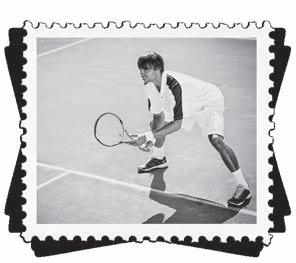
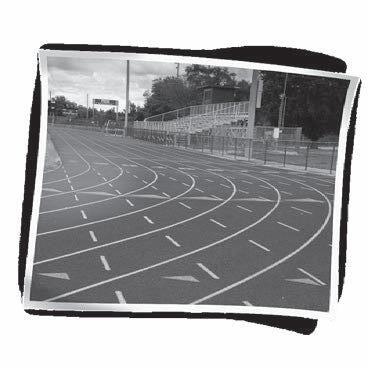
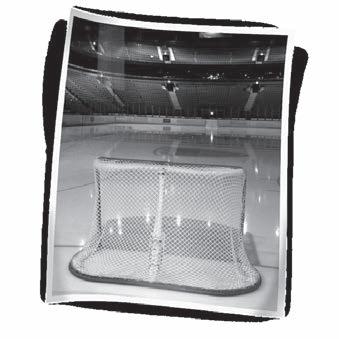
There are many different places where people play sport. Match each sport with the place where it is usually played.
1. athletics
2. tennis
3. gymnastics
4. ice-skating
5. football
6. swimming
7. boxing
8. golf
9. skiing
a. a track
b. a g ym
c. a pool
d. a slope
e. a rink
f. a pitch
g. a course
h. a court
i. a ring
Match the expressions and the explanations.

1. a white lie
2. a black sheep
3. paint the town red
4. to give the green light
5. blackmail
a. to give permission
c. a harmless lie
d. asking for money by using threats


b. to go out and enjoy yourself in the evening, often drinking
e. a person who brings shame to a family



Circle the correct answer.
1. Hurry up. The show is _______ start.
A coming to
B ready for
C about to D on the point of
2. When Diana ____ for her lesson, the teacher ____ the homework from the other students.
A arrived / was collecting
B was arriving / was collecting
C has arrived / has collected D arrives / is collecting
3. ‘How long ______ his neighbour?’ ‘Since 2010.’
A have you been
B were you
C you are D are you
4. ______ to your office when I saw you this morning?
A Have you gone
B Did you arrive C Were you going D Have you arrived
5. I cannot accuse him ___________ the documents myself.
A until I have checked B before I will check
C until I shall check D before I am checking
6. He went to the Grand Canyon where he _____________ before.
A wasn’t
B hadn’t been C hasn’t been D didn’t go
7. We’ll soon finish this and then we ________ a new project _____ April 1st.
A started/on
B have started/in
C start/on D started/in
8. Sorry, I can’t go shopping with you after work. __________ dinner with my cousins.
A I will have
B I’m having
C I have D I go for
9. I was so happy to see him again. I ______ him for a long time.
A haven’t seen
B saw
C don’t see D hadn’t seen
10. The telegram ______ at nine o’clock and _____ to him personally.
A has arrived / has been delivered
B arrived / was delivered C arrived / delivered D would arrive / delivered
11. He caught _____ cold and had to take ______ medicine.
A the / a
B the / ---
C --- / a D a / ---
12. I suggest you buy ______ bread and _______ pasta.
A a / some
B -- / some
C some / a D --- / the
13. Did you read about that couple _____ Time magazine or ____ Internet?
A in / on the
B in the / on
C in the / on the D in / ---
14. She was _______ about his proposal, but hoped she would make a good decision.
A under the weather B safe and sound
C in two minds D up to her neck
15. The bridge is not safe and should be _______ down.
A cut B pulled C brought D set
16. The last survey was _____ in 2010, but there’ll soon be a new one.
A worked out B figured out
C brought about D carried out


Circle the correct answer.
1. He ______ his keys! It’s terrible.

A will always lose B is always losing C is losing D always lose
2. After she ______cooking, she______ a shower.
3. I _______ reviews about that book and I think _____ buy it.

A has finished / had B has finish / has C had finished / has D had finished / had
A have read / I’ll B read / I’m going C will read / I’m going D had read / I’ll
4. I’d like to welcome you ______ the class.
A in behalf of B for behalf on C on behalf of D in name of 5. ______ time to visit the exhibition last week?
A Had you B Have you had C Did you have D Had you had 6. The boss _____ a break since it was almost two o’clock.
A suggested to have B suggested having C suggested me to have D suggested that having 7. He should really apologize for ______ us ______ earlier.
A not to let / know B not letting / know C not letting / to know D not let / know 8. Everybody succeeded ______ what they wanted, _______?
A to get / didn’t they B getting / did he C in getting / didn’t they D to get / didn’t he 9. I wish I ______younger so that I could marry again!
A am B were C had been D would be 10. _____ study hard when you were at school?
A Had you B Were you C Must you D Did you have to 11. I’m sure he will ring you as soon as he ______.
A will arrive B is arriving C arrived D has arrived 12. He looked tired because he ______ all day.
A work B had worked C has worked D is working 13. How long does it _____ to get to London? We’d like to visit _____ Tate Gallery.
A need / - B take / - C need / the D take / the 14. He was charged _____ murder and sentenced ____ ten years’ imprisonment.
A with / of B for / to C with / to D of / on 15. This problem is not as complicated as it appears. Let me _______ the students.
A explain it to B explain C to explain it to D to explain 16. We have to ______ tribute to that great man.
A make B send C pay D do

Use the words in the box to complete the text. established start despite from admittance leading set 1 2 3 4
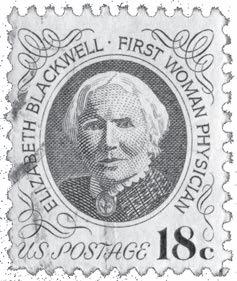
Elizabeth Blackwell was born in 1821, near Bristol. She moved to the United States with her family when she was 11. After her father’s death in 1838, she opened a school together with her mother and sister. Blackwell later decided to (1)________________ a career in medicine. But the road to becoming a doctor was not an easy one for her. After her (2)______________ to the college, she faced criticism from fellow students as well as the general public. But she held firm (3)______________ these challenges, slowly earning the respect of her peers. She became the first woman to graduate (4)______________ medical school in the United States.
After working in Paris and London, Elizabeth Blackwell (5)______________ a private practice in New York City. She created a medical school for women in the late 1860s. Soon after establishing the college, Elizabeth Blackwell returned to England. She (6)__________up a private practice in London and became a (7)_______________ public health activist during her lifetime.
Complete the sentences using the words from the KEY WORD LIST of UNIT 4. The first letter has been given.
1. I don’t a______________ to be wealthy, only famous.
2. I think that such a policy would d _________________ our industry.
3. We made this decision after e______________ consultations with teachers.
4. There are many reasons to c______________ that this is not the best solution.
5. The f_____________ problem is this: there is no money left!
Fill in the correct prepositions.
1. He was born ______ 6th March.
2. He focused _______ his work.
3. His research turned him _______ a celebrity.
4. He was dependent __________ his family.
5. They wanted to protect him _______ others.
Choose the most suitable phrase.
1. Tony always arrives exactly in time / on time for his lesson.
2. I can’t pick that last apple. It’s out of hand / out of reach.
3. Joe and I met on the plane completely by chance / by surprise.
4. The children spend most of their time out of doors / out of place.
5. I’m sorry but Jane isn’t here at present / at a time
6. How can Susan love Tom? They have nothing in common / in general.
7. They should be here soon. They are in the way / on the way.
8. Terry isn’t here. He’s away in business / on business.
Use the verbs turn, get or call in the correct forms to complete the sentences.
1. This could _____________ out to be much more serious than we thought.
2. ____________ off lights and electronic devices when they’re not in use.
3. I have to ______________ down to some revision for my exams. They start next week!
4. He is helpless. He has no relatives to ___________ to.
5. The burglars ____________ away with a lot of cash and some valuable paintings.
6. They ____________ off the match because of a fire at the stadium.
-ING

Use the verbs in the box in the correct forms to complete the sentences below.
1. The guard _____________ to let them enter the building.
2. Max ______________ to be an expert in science.
3. I don’t____________ starting work early.
4. The tourist guide _____________ going there by car instead of on foot. He says it’s a long way.
5. We can’t_____________ to go on holiday this year.
6. I __________ playing tennis with him. It’s a pity he isn’t here.
7. The job______________ travelling abroad once a month.
8. I _____________ him from stealing the painting.
9. She ______________ talking to her boss because she felt guilty.
mind ▪ avoid ▪ recommend ▪ claim ▪ prevent ▪ miss ▪ afford ▪ refuse ▪ involve
Choose the correct meaning (a) or (b) for the verbs in bold in each sentence.
1. I stopped working in the garden and sat down to rest.
a) to interrupt an activity in order to do something else
b) to give up an activity
2. Hilary stopped to say ‘hello’ to her friend when she saw her.
a) to interrupt an activity in order to do something else
b) to give up an activity
3. Uncle James remembers singing at various festivals when he was young.
a) not to forget an obligation b) to recall a past situation
4.‘Helen, remember to buy some bread on the way home.’
a) not to forget an obligation b) to recall a past situation
Use the phrases in the box to complete the sentences. There is more than one possibility.
1. She ______________ crying in front of her friends – it was such a sad film.
2. ‘I ______________ having a cup of tea.’ ‘Good idea!’
3. __________________ walking home instead of taking the car?
4. _______________ talking to the headmaster. He won’t let us do it.
5. ________________ complaining further.
PASSIVE VOICE
Complete the second sentence so that it means the same as the first one.
1. No one gave me any help with the homework. I _____________________________ any help with the homework.
2. The police are investigating the boy’s disappearance. The boy’s disappearance _________________________________.
3. People say swimming is good exercise for your back.
4. Nobody should do such things. Such things ______________________________.
5. We remind you not to leave your baggage unattended. Passengers ___________________________. 3 4 5 6
feel like how about there’s no point (in) it’s no use couldn’t help
Swimming _____________________________ good exercise for your back.
Rewrite these sentences using the passive.
E.g. When did somebody tell him the news? – When was he told the news?
1. How many books can people take out of the library?
2. The teacher didn’t show us the question paper.
3. Is somebody following us?
4. Have they eaten all the food?
5. The firm hasn’t offered me a job. _______________________________________________
6. Nobody explained to her what to do.
Put the verbs into the correct passive form.
1. A new restaurant __________________(open) next week.
2. He __________________(invite) to the party yesterday.
3. I __________________(give) the book by my friend last Sunday.
4. The road ________________________(repair) at the moment.
5. When the parents came home, the room _________________________(already/clean) by their children.
6. Miriam _________________(not / send) any text messages today and is sad.
Rewrite these sentences so that they mean the same, using passive-infinitive structures.
1. Scientists claim that a new drug will soon be released. It __________________________
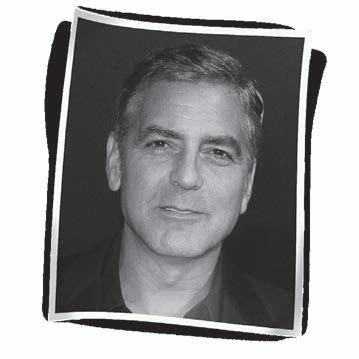
2. Many people consider George Clooney to be the best looking actor.
George Clooney ______________
3. CNN reported that thousands of people were homeless after hurricane Katrina.
Thousands of people ___________
4. Everybody expected Felix to land safely.
Felix _______________________
Be + adjective / the past participle + the infinitive structures
Study the examples:
A The verb TO BE with adjectives such as likely, bound, sure and the infinitive.
E.g. He is bound to leave soon. / Mary is likely to get the promotion.
Habits in the Past
B The verb TO BE with past participles such as used, engaged, meant, supposed, expected and the infinitive.
E.g. We are engaged to be married. / He was supposed to be here by now.
Remember that would is used for repeated actions in the past, but not states.
• When I lived in the village, I would wake up to the sound of birds singing
• I used to live in London. (not would).
Finish the sentences any way you like.
1. When I was a student, I would often _________________________.
2. My sister used to go to ____________________________________.
3. I used to hate ___________________________________________.
4. We would often gather together to ___________________________.
TRANSLATION AND MEDIATION
C Make new sentences using these infinitive constructions.
Three students are discussing the possibilities of visiting their friend in London. Translate their conversation for your English friend.
IDIOMS WITH TURN

Match the idioms and their explanations.
1. turned a blind eye to 2. turned a deaf ear
3. turn over a new leaf
4. turned (his) back on 5. turned ... inside out 6. the turn of the century
Which idioms with turn from box A go into the following sentences?
Put a number (1–6).

1. I took my dress back to the shop, but the manager _____ to my complaints.
2. I _____ the whole room ______, but couldn’t find my passport.
3. John got promoted and he _____ all of his associates.
4. There were major changes at _____ the 20th century.
5. The children made a huge mess in the restaurant, but their father ______ it.
6. Harry was always late for work, but when they cut his salary, he decided to _____.

Study the table. Then choose words from the list below and make pairs of sentences, as in the examples.
• A wide range of adjectives ending in -ed which follow the verbs to be, seem, appear, look and become describe people’s feelings, mental states or emotional reactions to something.
E.g. She was interested in the programme. / She felt satisfied when she passed the test.
• Adjectives ending in -ing usually describe things or the effect that something has on your ideas and feelings:
E.g. The programme was interesting. / The meeting was very satisfying.

a. change one’s behaviour for the better b. refused to listen to c. ignored; pretended not to know d. searched very systematically/carefully e. the end of one century and beginning of another f. refused to have any more contact with Example: The storm was terrifying. I was terrified by it. disappointed
Complete the second sentence so that it has a similar meaning to the first one.
Example: ‘I’m sorry I got home so late,’ said Sandra. /apologized Sandra apologized for getting home so late.
1. ‘I won’t tell anyone about it,’ said Suzie. /promised Suzie ________________________________ anyone about it.
2. ‘Laura, you should try being honest with your parents,’ said the headmaster. /advised The headmaster ___________________________ honest with her parents.
3. ‘You’ve been to the cinema instead of school, haven’t you? ’ said Mum. /accused Diana’s mother _________________________ instead of school.
4. ‘Perhaps we can try to talk him out of going there,’ said Steve. /suggested Steve ____________________________ out of going there.
5. ‘No, I will not speak to Tom,’ said the father. /refused The father ______________________________________ Tom.
6. ‘ Try practising the difficult points with your friends, Laura,’ the teacher said. /encouraged The teacher _____________________________________ with her friends.
Use the expressions from the box to complete the sentences.
1. I __________________ speaking in public, but I’ll manage somehow.
2. Christine _______________ eat meat, but now she is a vegetarian.
3. When I went away to school, it was hard _____________ living alone.
4. They came from families that _________________ eating dinner together.
5. She has started working nights and is still ________________ sleeping during the day.
6. Well, I am ________________ sleeping late.

1. Why is ‘U’ the happiest letter?
2. Why is the letter ‘ T ’ like an island?
3. What letter is a drink?
4. What letter is a body of water?
5. What four letters frighten a thief?
accustomed to were used to to get used to am not used to used to getting used to
FOR FUN
a. Because it is in the middle of waTer.
b. O.I.C.U. (Oh I see you!)
c. T. (tea)
d. C. (sea)
e. Because it is in the middle of ‘fun’.
3 ingredient gather diversity obesity relate artificial consume
Use the words from the box to complete the story.
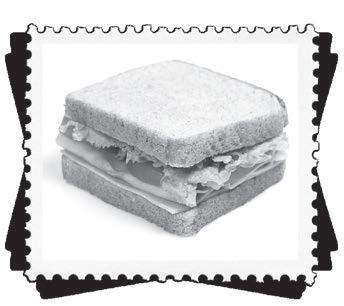
When the fourth Earl of Sandwich skipped his main ________ to save time at the card table and replaced it by putting a ___________ of beef between two pieces of bread in 1762, he began a trend that has dominated the UK food market ever since.

slice available served convenience meal ingredients on-the-go wrapped 1 2

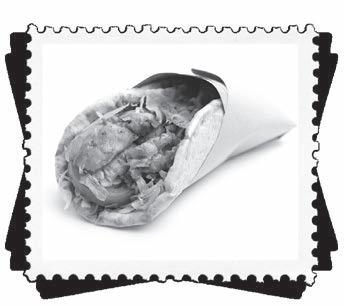
The great sandwich tradition has now moved a step further with the launch of the Conewich. It is a _____________ food developed and sold in the UK, aimed at busy people who eat on the move. It has the unique ability to hold very moist food. It consists of fresh bread __________ in a cone shape around a range of ______________: sauces, seafood, salads, beef, chicken, pork, cheese and so on. It can be held in one hand and easily eaten ____________, while walking, sitting at sports events, etc. A Conewich is ________ in a plastic container with an airtight lid. It is best ____________ warm.
Complete the sentences with the words in the box in the correct form. There is one extra word.
1. We were surprised to see such a ______________of food on the hotel table. 2. Unfortunately, it could take years to ___________enough evidence to bring charges against them.
3. These products will be widely _____________ when there’s a drop in price.
4. Past studies have found links between junk food and ____________.
5. _____________ flavours are added to some food to imitate natural flavours.
6. I want to find a newspaper article _____________ to organic food.
Complete the sentences with phrasal verbs with GIVE in their correct forms.
1. She __________ her old clothes _________ when she moved.
2. The enemy was forced to __________________.
3. My daughter has decided to _______________ her piano lessons. She’s tired of playing.
4. The walls ________________ a smell of paint for a week.
5. He doesn’t want to ______ ________ the secret of how the system works.
In each exercise, use the correct form of the word given in capitals.
1. Mark has a ______________ for all electrical things.
2. I was ______________ by her story of how she became the champion.
1. Success requires _______________, as well as ability.
2. Tests are used to _______________ how much material students have learned.
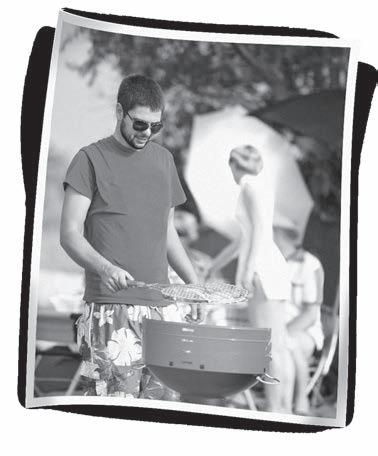
Of all our holidays, I like May Day best. It is ____ custom in my country to get up early on that day and go out of town to _____ picnic area where you can have _____ barbecue. We usually prepare some Serbian specialties, such as ______ hamburgers, ______ sausages and ______ chicken wings and put them in _____ pitta bread with ____ lot of onion. We enjoy being with our family and friends and we also enjoy playing __ volleyball and __ badminton. 4 1 2 GRAMMAR
1. The ancient Greeks had an knowledge of the stars.
2. They are still trying to ____________ their influence over European politics.
1. I sent a mail confirming that everything was OK and that the date was ________________ for our meeting.
2. We apologize for the error and any ______________ caused. track 16
Add an article where necessary and then listen to check.

Add an article where necessary.
1. Can you get me _____ orange, please? I think there are some on ____ table in _____ other room.
2. _____Christmas is the traditional season for reunions.
3. The town needed _____ new school.
4. Christie has been in _____ hospital for two weeks.
5. Switch off _____ air-conditioning, please. I have _____ cold.
6. ____ Swedish is a difficult language to learn.
7. ____ painting in _____ living room was given to me by _____ old friend.
8. Everyone in ____ department here uses ____ computer.
9. I had ____ eggs and bacon for _____ breakfast and wasn’t hungry until 4 p.m.
10. When my father was promoted at _____ work, he moved to _____ bigger office.
11. Excuse me, is there _____ post office near here? I have to post _____ letter.
3
Rewrite the following sentences as reported speech, using the introductory phrases.
1. ‘Does the bank have a branch in Belgrade, I wonder?’
He wondered __________________________________________________________.
2. ‘Is Peter coming to the meeting?’
He wanted to know _____________________________________________________.
3. ‘Where is their head office?’
He asked _____________________________________________________________.
4. ‘Will they accept our offer, I wonder?’
He wondered __________________________________________________________.
5. ‘Have they sent us all the documents?’
He asked _____________________________________________________________.
6. ‘How did they get this information, I wonder?’
She wondered __________________________________________________________.
7. ‘How long have the children been there?’ They wanted to know ____________________________________________________.
8. ‘Why did they choose to stay at home?’
I asked ________________________ ___.
4
Turn the following sentences into reported speech.
1. ‘Don’t come home late tonight,’ said Dad. ‘You have to get up early tomorrow.’
2. ‘Let’s go out tonight,’ he said. ‘We haven’t been out for ages.’
3. ‘Are you busy?’ he asked me. ‘I need to talk to you.’
4. ‘I’m bored,’ my sister said. ‘There’s nothing on TV.’
5. ‘Are you ready?’ mother said to her children ‘It’s time to go.’
SUMMARY OF REPORTING VERBS
advise encourage invite remind warn agree decide offer promise refuse threaten admit decide deny explain insist recommend suggest deny recommend suggest enjoy mind keep accuse (of) blame (for) congratulate (on) prevent (from) thank (for) apologize (for) insist (on) believe (in) succeed (in) rely (on)
Examples: My boss encouraged me to look for a new job. My sister insisted on doing the room herself. He finally admitted (that) he had tried to steal the painting.
Use the verbs from the box in the correct form to complete the sentences.
1. My mother _____________ me to switch off the oven before I went out.
2. My brother _______________ to help us and we had to do everything ourselves.
3. The other girl _____________ studying early in the morning.
4. She _______________ me for missing the plane.
5. He has_____________ in getting two tickets for Saturday’s basketball match.
6. She _______________ to give him a lift to work yesterday.
7. The postman _____________ taking the money and claimed he was innocent.
Complete the sentences on the left with the correct phrases from the right.
1. I prevented him ...
2. He accused me ...
3. They congratulated me ...
4. She saved me ...
5. She thanked me ...
a. for helping her clean up the mess.
b. on passing my driving test at the first attempt.
c. from falling into the river.
d. from leaving the building.
e. of stealing his pen.
Underline the nouns in the box which are uncountable. Then underline the correct answer in the sentences below.
1. My sister hasn’t got any / a furniture in her room.
2. He doesn’t want an advice / advice from you.
3. What a nice / nice weather! Let’s go out.
4. I gave him an / the information he needed.
5. We need to buy some / a basic kitchen equipment.
Use the words in the box to complete the sentences below. In some cases there is more than one possibility.
1. I can’t wait for you. I’ve got ___________ time.
2. We had ____________ snow last winter. I couldn’t drive to work.
3. ___________ animals can survive in the desert.
4. There aren’t __________ oranges left. Only two.
5. We had ________ cakes with our tea. I’m not hungry.
6. ‘How’s your sister today? ’ ‘ ___________better, thanks.’
7. There isn’t __________ butter left. We need to buy some more.
weather money pound advice equipment hair furniture desk information luggage knowledge music work job travel journey

a lot of much many little very few not much few
8. There are ___________ hotels in this town. I can’t find any proper accommodation.
TRANSLATION
Hi, Sarah,
You asked me how we make the Serbian corn bread (proja) you tried last time. My Grandma gave me the recipe in Serbian and I hope I have translated it correctly.
The original recipe:
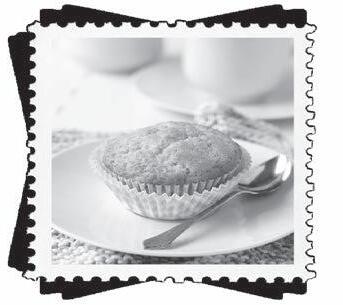
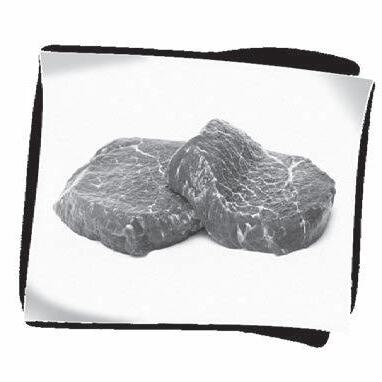
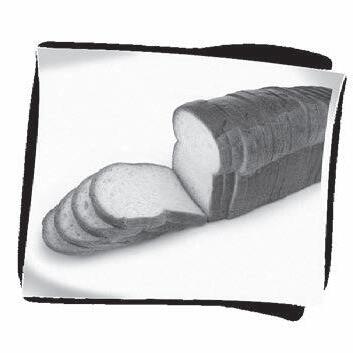
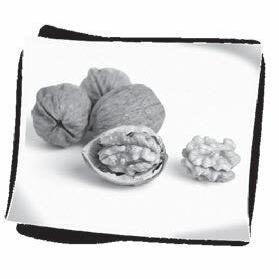
Match each verb in box A with the food item in box B that it is usually associated with. More than one combination is possible.
1. slice
2. peel
3. mash
4. beat
5. melt
6. crack
7. chop
8. grate


a. cheese
b. potatoes
c. eggs
d. nuts
e. meat
f. an orange
h. a loaf of bread

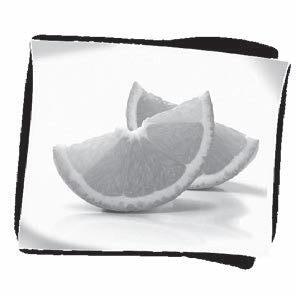
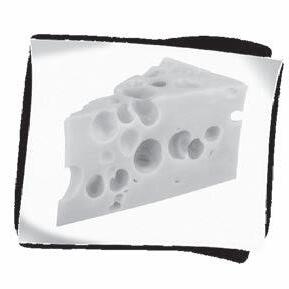
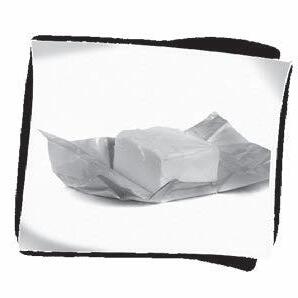
Complete the sentences with the correct tense of the verbs raise and rise.
1. Christie got angry, ________ to her feet and left the room.
2. They ____________ the blinds and let the sun into the room.
3. These days the sun _____________ at six thirty.
4. I’m trying to ____________ money from the bank to build a house.
5. The wind _________ and it started to rain so we returned home.
6. I can’t ________________ my left arm.
two peas in a pod cucumber hot cakes sardines pancake water
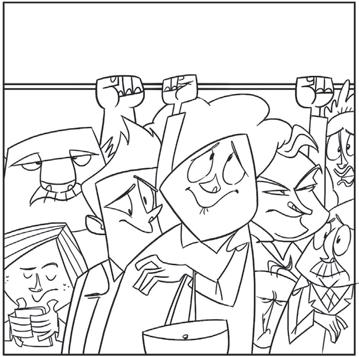
Complete the colloquial similes below with the correct items from the following list.
1. Even when doing an exam, Harry remains as cool as a _________________.
2. There are no hills for miles around. The countryside is as flat as a ________________.
3. They are identical twins; they are like ________________.
4. This record is in great demand. It is selling like ________________.
5. During the rush-hour, people are packed into buses like ________________.
6. She’s very extravagant. She spends money like
What do the underlined idioms in box A mean?
If you don’t know, find the explanations in box B.

1. We wanted the party to be a surprise, but Jane spilled the beans and spoiled it.
2. He’s always running about – he’s so full of beans
3. Oh, that’s a piece of cake. I can do it without even trying.
4. Jane has really got herself in a pickle
5 You can’t have your cake and eat it
a. in trouble; in a mess
b. full of energy
c. to have the best of both sides
d. reveal the secret
e. very easy

Complete the text with ONE word in each gap.
1 2 3 carefully days tomorrow for not on of while go a
The local sheriff was looking (1)__________ a deputy, so George, who was not exactly a smart guy, went in to try out for the job.
‘Okay,’ the sheriff said, ‘George, what is 1 and 1?’
‘11’ he replied. The sheriff thought to himself, ‘That’s (2)_________ what I meant, but he’s right.’
‘Which two (3)___________ of the week start with the letter ‘T’?’
‘Today and (4)__________.’ He was again surprised that George had supplied a correct answer that he had never thought (5)__________ himself.
‘Now George, listen (6)____________: Who killed Abraham Lincoln?’
George looked a little surprised himself, then thought really hard for (7)_________ minute and finally admitted, ‘I don’t know.’
‘Well, why don’t you (8)_________ home and work on that one for a (9)_______?’
So, George went over to the barbershop where his pals were waiting to hear the results of the interview. George was overjoyed. ‘It went great! First day on the job and I’m already working (10)___________ a murder case!’
Use the verbs from the texts in Unit 6 to complete the sentences below.
The first letter has been given to help you.
1. Dogs r____________ well when they are trained to help people with disabilities.
2. Nowadays, tourists u_____________ fewer expensive trips to distant regions.
3. Fire officials said it would take days to e_________________ the fire.
4. The storm was so strong that it caused buildings to c_______________.
5. It is sometimes hard to concentrate and m_____________ attention.
Finish the sentences (1–10) to make them meaningful, using the words (a–j).
1. She never speaks about her success. She is ____________.
2. She would never do anything stupid. She is ____________.
3. She always remembers her friends’ birthdays. She is _________.
4. She often shouts at people and then apologizes. She is _________.
5. He is very sure of himself. He is ____________.
6. She is always looking in the mirror. She is ____________.
7. He always tells the truth. He is ____________.
8. He never changes his mind. He is ____________.
9. You must be careful what you say to her. She is ____________.
10. He’s made a lot of friends. He is very____________.
a. sensitive
b. vain
c. outgoing
d. sensible
e. self-confident
f. moody
g. thoughtful
h. modest
i. honest
j. stubborn
Replace the underlined words in the sentences below with negative adjectives.
1. My brother is quite a sensible and mature person. _________________________ He is tolerant and patient, and a supportive friend. ________________________ He is also open-minded and thoughtful. _________________________________
2. My sister, on the other hand, is shy and sensitive ___________________________ However, she is reliable and honest _____________________________________
Study the meanings of the personality adjectives (column B) used to describe people’s characteristics according to the Zodiac signs. Decide which characteristics are positive and which are negative.
Aries (21/03 — 20/04) Positive: Negative: generous, efficient, outgoing, quicktempered, selfish, enthusiastic, arrogant
Taurus (21/04 — 20/05) Positive: Negative: reliable, affectionate, possessive, greedy, stable, selfish
Gemini (21/05 — 20/06) Positive: Negative: impatient, restless, witty, creative, curious, tense, communicative
Cancer (21/06 — 20/07) Positive: Negative: jealous, careful, cautious, moody, protective, sensitive, self-pitying
Leo (21/07 — 21/08) Positive: Negative:
Virgo (22/08 — 22/09)
Libra (23/09 — 22/10)
Scorpio (23/10 — 22/11)
Sagittarius (23/11 — 20/12)
Capricorn (21/12 — 19/01)
Aquarius (20/01 — 18/02)
Pisces (19/02 — 20/03)

bossy, confident, independent, ambitious, self-assured ,vain, arrogant
Positive: Negative: choosy, practical, obedient, truthful, reliable, inflexible, perfectionist
Positive: Negative: unreliable, diplomatic, easy-going, sociable, carefree, changeable
Positive: Negative: suspicious, passionate, strong-willed, energetic, narcissistic
Positive: Negative: energetic, optimistic, irresponsible, adventurous, honest, careless
Positive: Negative: responsible, conservative, persistent, sensible, pessimistic, thoughtful, moody
Positive: Negative: gentle, lively, unpredictable, inventive, friendly, rebellious, stubborn
Positive: Negative: irresolute, unstable, devoted, compassionate, generous, weak-willed
Make adjectives from the words in the box to complete the sentences below.
1. We all agreed that the job should be financially _________________.
2. They were good and ________________ parents.
3. This exercise is for those who already have an ____________ vocabulary.
4. For ski racing you have to be _____________, fit and strong.
5. The job is also extremely _____________ and I often feel tired.
Complete the sentences with phrasal verbs with LOOK.
1. She always looks _________ on people who don’t agree with her. I think she is very arrogant.
2. Well, if you look _________ to that singer, then it means you admire him.
3. They admitted making a mistake and promised to look _______ the matter.
5. Who will look __________ our cats while we are away?

4. If you can’t do it yourself, then look _________ the correct answer in an encyclopaedia.


Answer the questions with No and a full sentence. Use the present perfect continuous tense and the present perfect simple as in the example.
E.g. Have you started writing the report? (think about it / some time) No, I’ve been thinking about it for some time, but I haven’t started yet.
1. Have you done your room? (tidy / for an hour)
2. Has she finished typing the document? (work on / half an hour)
3. Have you found a new job? (look for / a week)
4. Has Robert sold his old car? (advertise it / two months)
5. Have the Parkins gone abroad? (plan to do / some time)
Write the second sentence using the prompts from the box.
He / not study / lately; he / work / all night; she / quarrel / with her sister; she / cry; he / work / in the garden;
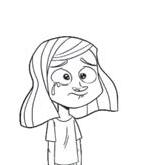
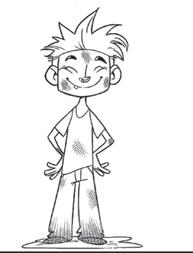
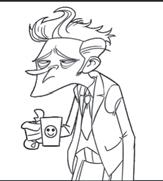
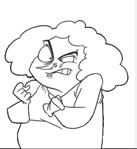
Ann Peter George
E.g. Tony has got some bad marks at school. He hasn’t been studying lately.
1. Sheila is upset. __
Sheila
2. George looks tired. _____________________________________
3. Ann’s eyes are red. _____________________________________
4. Peter’s clothes are dirty. _________________________________
Look at the newspaper headlines and write the first sentence of each story. Use the present perfect simple or continuous, as appropriate.
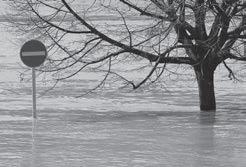

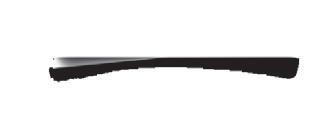
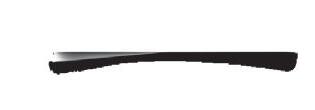
E.g. It has been raining for a week and there is a serious threat that the whole village will soon be flooded.
Finish these sentences using type 1 and 2 conditional sentences.
1. I will earn a lot of money if _________________________________________.
2. I’d give a lot to charity if ___________________________________________.
3. The world would be a much better place if _____________________________.
4. If we were in London today, we ______________________________________.
5. If I were you, I ___________________________________________________.
6. If I get promoted, I________________________________________________.
Complete the sentences using the words in the box. There is one word extra.
1. I ____________ recognize him if I saw him again, but I’m not sure.
2. I would buy these shoes if they ______________.
3. If we __________ together, we would do a much better job.
4. If we had some tools, we _________________ to repair the engine.
5. I _____________ help you with it if you pay me.
6. I ______________ risk losing the job if I could avoid it.
Translate the conversation between Dora and Julia for your English friend.
will would were working fitted might wouldn’t would be able
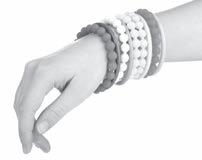
Study the phrases in the box and use them in the exercise. to (one’s) surprise/horror/mind in danger/charge/a hurry/debt/demand by mistake/sight/force/far/ear on end/purpose/one’s own/average/the hour at work/university/home/random out of danger/work/order/doors/breath
Use the correct prepositional phrase to complete the sentences.
1. You can’t use this computer because it is ___________________.
2. I know you didn’t take it _________________. You planned it.
3. He didn’t want to stay at home. He wanted to be _________________.
4. Students were chosen ________________ to take part in the survey.
5. My brother is still _________________, but he wants to find a job soon.
6. ______ my ___________, they offered me the job.
Put the following words into the sentences below.
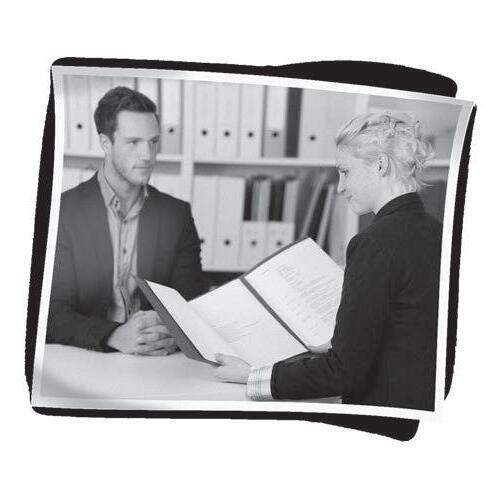
1. If you want to _____________for a job, you have to send in an ______________.
2. You may be asked to come for an _________________.
3. The people interviewing will possibly be interested in the _______________ that you gained at school.
4. They will be also interested in the _______________ you have had in previous jobs.
5. They may ask for ____________ written by your teachers or previous employers.
6. It is important for you to get some information about the ______________ and if there is a chance for __.
Match the beginnings of the proverbs in column A with an ending from column B. Explain the meaning of the proverbs and try to translate them into your language.
interview apply references application form promotion salary experience qualifications

1. If a job is worth doing,
2. All work and no play
3. The early bird
4. Too many cooks
5. Make hay
6. Never put off until tomorrow
a. what you can do today. b. catches the worm.
c. while the sun shines.
d. it’s worth doing it well.
e. makes Jack a dull boy.
f. spoil the broth.

Circle the correct answer.
1. I would prefer _______ in rather than _______ out tonight.
A staying / to go B staying / go C to stay / go D stay / to go
2. We all got accustomed to ______ our weekends in the country.
A spend B having spent C have spent D spending
3. The boxes ______ out when I arrived ______ my office.
A carried / at B were being carried / at C were being carried / to D were carried / in
4. I saw him _______ the street and _______ straight into the bank.
A crossed / went B cross / go C cross / enter D crossed / entered
5. ______ meat we had for _____ lunch was delicious.
A -- / -- B The / the C -- / the D The / --
6. How ______ furniture ______ arrived since yesterday morning?
A many / has B many / have C much / have D much / has
7. I cannot believe ______ you’ve just told me! You must be ______.
A what / lying B that / laying C which / lying D - / laying
8. Coming from the big city, he ______ like this.
A is not used to living B is not used to live C does not use to live D does not use to living
9. Tina was ______ because she ______ to such a fancy place before.
A exciting / had never been B excited / has never been C exciting / has never been D excited / had never been
10. You should go and buy ______ fruit and ______ coffee from the supermarket.
A a / some B a / a C some / -- D a / --
11. He was _______ not to marry her.
A insisted B concluded C decided D determined 12. During their stay at the hotel last week, the guests _____ various ways of making cocktails.
A were shown B have shown C had shown D have been shown 13. My son _______ while I was away on holiday.
A had my car fixed B has fixed my car C fix my car D has had my car fixed 14. No important studies in this field ________ so far.
A have completed B had to complete C have been completed D completed 15. I wish you ______ making that noise. It’s bothering me.
A will stop B can stop C would stop D stop 16. He says _____ study economics in London if the fees _______ cheaper.
A he’d / were B he’ll / will be C he’d / are D he’ll / were
Circle the correct answer.
1. The boy was so ______. He wouldn’t stop _______.
A unpolite / to shout B impolite / to shout C unpolite / shouting D impolite / shouting 2. B e careful! _____ fence is made of _____ stone.
A -- / --
3. _____ Prime Minister arrived _______ Belgrade on Sunday.
A -- / in
A rose
B the / the C -- / the D the / --
B The / at C The / in D -- / at 4. At the end of the performance, we all _______ and applauded for several minutes.
B were raised C raised D were risen
5. If I were you, ________ him another letter.
A I’ll write B I’m writing C I’ve written D I’d write 6. The robbers _______ and didn’t know where _____.
A were arrested / they’re taken
B were arrested / they were being taken C had arrested / they would take D arrested / they had taken
7. By the time I applied, all the holiday vouchers ________ used up.
A had been B have been C was D are
8. _____ Life teaches us _____ valuable lessons.
A The / -- B -- / -- C The / the D -- / the 9. When she left the office, she had the feeling she _____.
A was watched
B has been watched C was being watched D is watching
10. I can’t find my little sister. Do you know ______?
A where is she B is she anywhere C where she is D has she gone
11. We _____ my aunt next Friday because it’s her birthday. Mum arranged it last week.
A have visited B visited C will visit D are visiting 12. It seems that ________ children have come this time, ____________?
A less / does it
B lesser / doesn’t it C fewer / doesn’t it D fewer / haven’t they 13. As you ______ the house, you’ll be able to see Mrs Watson’s garden _____.
A pass / on your right hand
B pass / on your right C past / to your right side D past / on your right
14. Choose the correct option.
A He told he wasn’t feeling well. B He said he doesn’t feeling well. C He said he wasn’t feeling well. D He said he hasn’t felt good.
15. The judge _______ that the man was guilty and sentenced him _____ 10 years.
A convinced / for B was convinced / to C convinced / to D was convinced / for 16. I’m glad to hear that today’s _____ good for everyone.

A news are B the news is C news is D the news are
independently significant available required referred progress look up
Read the text and choose the correct word from the box to fill in the gaps.
5. He never asked her to marry him out of fear of _______________. REJECT 1 2 3 VOCABULARY

Technology is going to have a (1)_____________ impact on teaching and studying and it will change the way we learn and teach. Thanks to cloud* and mobile devices, technology will be integrated into every part of school. Textbooks and exercise books will be (2)___________ in digital, downloadable format. This way, students won’t have to carry heavy books from day to day and they will also be able to (3)_______________ a certain word or phrase in the whole E-book within seconds. Rather than being ‘taught’, students will be able to learn (4)________________ and in their own way. This approach is often (5)______________ to as ‘personalized learning’ because it allows students to choose subjects that interest them. Skills such as creativity, critical thinking, problem solving, communication and information literacy will be (6)______________ from every student. This of course means that the role of the teacher will change too. Instead of lecturing at the front of a classroom, a teacher will monitor students’ (7)______________.
*Cloud computing lets you use files and applications over the Internet.
Use the following words in the correct form to complete the sentences.
sophisticated ▪ anticipate ▪ accomplice ▪ ease ▪ assume ▪ explore
1. The cost turned out to be higher than he had ________________.
2. She __________________ from his expression that he was confused.
3. I must admit that it is a glamorous and _________________ restaurant.

4. The thief and both his _________________ were eventually caught and brought to justice.
5. They were sent to ________________ the caves of Altamira.
6. He doesn’t understand that I was only trying to ______________ his troubled mind.
Form the correct noun or adjective from the words in capital letters.
1. When I spilt the coffee on the paper, the words were no longer _______________. DISTINGUISH
2. I have read all the newspaper _________________ for a new car. ADVERTISE
3. Did you get the ________________ you wanted? PROMOTE
4. The author gave _______________ reasons for writing the article. VARIETY
Write the opposite of these adjectives using the correct prefixes. Then complete the sentences below with the new adjectives.
1. He claimed that the results were ______________ because they didn’t take into account all the reports.
6. She doesn’t have a typical haircut. It’s pretty _______________. ______expensive ______formal ______accurate ______forgettable ______satisfied ______loyal ______usual ______convenient ______responsible
2. It was a really _______________ experience and we are looking forward to going there again.
3. It would be _______________ to ignore the danger and go there.
4. He always phones at the most ______________ times when I’m doing some work.
5. I’m not satisfied with your work. Actually, I’m very _______________.
Match the tenses in the sentences (1–7) with their uses (a–g).
1. I’ll just go and get my coat.
2. People won’t go to Mars before the 22nd century.
3. I will not leave you alone tonight.
4. We’re meeting at the café.
5. Don’t phone too early because I’ll be sleeping.
6. The sky is so dark. It is going to rain.
7. Our train leaves at 4:45.
Put the verbs into the correct form.
a. fixed plans / arrangements
b. a promise
c. a timetable
d. an action that will be in progress at some time in the future
e. a prediction about the future
f. an immediate decision about what you are going to do
g. a conclusion regarding the immediate future
1. Well, what have you decided? What (wear/you) ___________________ at the party tonight?
2. I haven’t made up my mind yet. But I think I (find) ___________________ something nice in my mum’s wardrobe.
3. This is my last day here. I (go) ___________________ back to England tomorrow.
4. Hurry up! The conference (begin) ___________________ in 20 minutes.
5. This time tomorrow I (finally/drive) ___________________ my new car.
Underline the correct tense.
1. Just a minute, Tom, I’m getting / I’ll get / I’m going to get another chair from the kitchen.
2. Am I free on Thursday? I don’t know. I’m going to look / I’m looking / I’ll just look in my diary.
3. Have you ever wondered what exactly you will do / will be doing / you are going to do in ten years’ time?
4. I’m sorry, I can’t come today. We will have / We are having / We are going to have some friends to dinner.
Rewrite these sentences using have or get.
1. The mechanic changed the oil in my car.
5. My jacket is being cleaned at a dry cleaner’s. 3 4
5. [On the phone] ‘Hello, Henry. Listen, I’m really sorry, we’ll have to / we are going to have to / we are having to reschedule our meeting. I’ve just looked in my diary, and I’ll give / I’m going to give / I will be giving a lecture at that time.’
6. One day, I will open / I’m going to open / I’m opening a shop of my own.
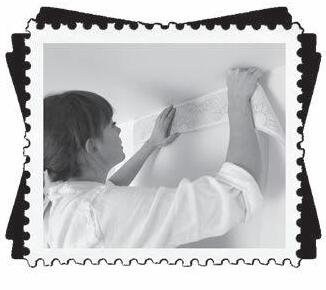
2. The hairdresser cut my hair in a completely different style.
3. A decorator has repainted our house.
4. A friend of mine, who’s an electrician, is going to repair my DVD player next week.
CAN/COULD/BE ABLE TO, MAY/MIGHT, MUST/MUSTN’T/HAVE TO WILL/WOULD, SHOULD/OUGHT TO HAVE/GET SOMETHING
5 Write the modal verbs on lines 1–9 according to their meanings. You may have to use the same modal more than once. There is an example.

permission
ability
obligation
prohibition
lack of necessity
advice and duty
possibility
probability
polite request
Modal verbs have many uses. We use them to show if we believe something is certain, probable or possible (or not), to talk about ability, to ask permission, to make requests and offers, and so on.
Fill in the gap with an appropriate form of the modal verb. Sometimes there is more than one possibility. The first one has been done as an example.
1. You should/must look at me when I am talking to you.
2. The test starts at 10.30. You ___________ be late.
3. Phone her now. She ___________ be at home by now.
4. Entrance to the museum was free. We _______________ pay to get in.
5. I ______________ help you, but I don’t want to.
6. I _______________ move the table. It was too heavy.
7. I think you ___________ see the doctor as soon as possible.
Should/ought to and shouldn’t/ought not to are used: a) to give advice, b) when you are expressing your opinion about something. Example: You should stop smoking.
Complete the sentences with should/ought to and a verb from the box. There are two extra verbs.
1. I think you _______________ a larger size. This one doesn’t fit you.
2. You _____________ your son with his homework so much. He must try harder.
3. You ________________ more if you want to lose weight.
4. The government _______________ teenagers to drive cars at fifteen.
help allow exercise decide eat buy
Must and can’t are used for a strong conviction that something is or isn’t true. May/might and could are used to express possibility.
Complete the sentences with these modals and a verb from the box. There is one extra verb.
1. She has a dog herself. She ___________________ pets.
2. John has gone to Paris. That _______________ him over there.
3. Barbara _____________ abroad next year, but only if she gets good grades this spring.
6. Although we cars that fly in 50 years’ time, I doubt it. love be (2x) have (2x) study vote
4. He always wears old clothes. He _____________ a lot of money.
5. (The phone rings) That ___________ Linda. She said she would call me for some advice.
Put the verbs into the correct form to make type 3 conditional sentences.
1. If the police _________________(come) earlier, they ____________(arrest) the burglar.
2. If he _________________(not / eat) so much, he ________________(not / put) on weight.
3. He ________________(be killed) if the driver ______________(not/manage) to stop the car.
4. You must admit that you _______________________(not/succeed) if your brother _____________(not/lend) you the money.
5. If I ______________(not/decide) to go by train, I __________________(not/meet) you.
Choose the correct conditional form (Conditional 1, 2 or 3) to complete the sentences.
1. If they __________________ (go) to England last year, they could’ve visited the old castles.
2. If you ___________________(be) the mayor, what would you do first?
3. If your friends _______________ (not/arrive) soon, we’ll go to eat without them.
4. I __________________ (buy) a new house if I had a better job.
5. If I ________________ (not/oversleep) this morning, I wouldn’t have missed the bus.
Verb tenses change in real or possible conditional statements. Verb tenses don’t change in unreal and unlikely conditional statements. Examples:
1. ‘If you had told me earlier, I could have helped you,’ Ann said. (unreal condition) Ann said that if he had told her earlier, she could have helped him. (no changes)
2. ‘If I were a better cook, I’d make you dinner,’ said Diana to Tom. (unlikely condition) Diana said that if she were a better cook, she would make Tom dinner. (no changes)
3. ‘If she wants, she will come,’ Tony said. (real condition) Tony said that if she wanted, she would come. (tense changed)
6. If she ______________ (know) all the facts, she wouldn’t have accepted the new job. 9 10 11 12
Put the verbs into the correct tense.
1. She said that if she ____________(have) more time, she _______________(bake) the cake herself, but she ____________(come) home late.
2. He doesn’t know the answer. He said that if he __________(know) it, he ___________(not say).
3. She said that if she ___________(be) younger, she ____________(marry) again.
4. He realized that if anybody ______________(be able) to save her, they _____________ (certainly/do) so.
Complete the second sentence so that it has a similar meaning to the first, using the word in bold. Do not change the form of the word in bold.
1. I doubt that it is easy for her to learn all the names. /must Learning all the names _______________________________________ for her.
2. She is probably feeling a bit depressed after getting the results. /can’t She _________________________________________ after getting the results.
3. I am going to hire someone to clean the windows. /cleaned I am going to _____________________________________________ tomorrow.
4. He didn’t tell me he was in trouble and I didn’t help him. /told If he ________________________________________________________ him.
6. He forgot to put his watch on – that’s why he was late. /if He wouldn’t ________________________________________ to put his watch on.
TRANSLATION AND MEDIATION FOR FUN
Use the expressions from the box to complete the sentences. If you are not sure of their meanings, look up the explanations in a dictionary.
1. You should spend less time gossiping and ____________ your work.
2. I hope you don’t ___________________ about marrying me.
3. We decided to go to Niagara Falls ____________________.
4. I don’t work slowly. ___________________, I’m very efficient.
5. He was ______________ the New York office and ran it very successfully.
Alex wants to ask your father what he would do if he were given a year off work on full pay. These are some of the answers that you have to translate. red blue rose black white purple
get on with (be) in charge (of) as a matter of fact on the spur of the moment have second thoughts (about something)
Complete each sentence with the correct colour. There is one extra word.
1. She always looks at the world through _______-coloured spectacles.
2. When I told him about his son’s behaviour, he was ___________ with rage.

3. She bought these goods on the _____________ market.
4. The children came into the house _________ with cold.
5. I can’t write any more cheques or I will be in the ______.
1 Read the text about Mozart and then do the exercise.
You might claim to know nothing about classical music, but you must have heard of Mozart and his music. His music is played in lifts, restaurants and shopping centres. He is the most popular composer in the western history of music.
Wolfgang’s great musical gifts were noticed from a very young age. At four, he played the piano. One year later, he composed his first melodies and at seven, he was an outstanding violin and piano player. That’s how he became known as a child prodigy* of international reputation. He had a tremendous musical memory and could play musical pieces by other composers after hearing them just once. Besides this, he had a talent for improvisation, a nice voice, and a joyful temperament.
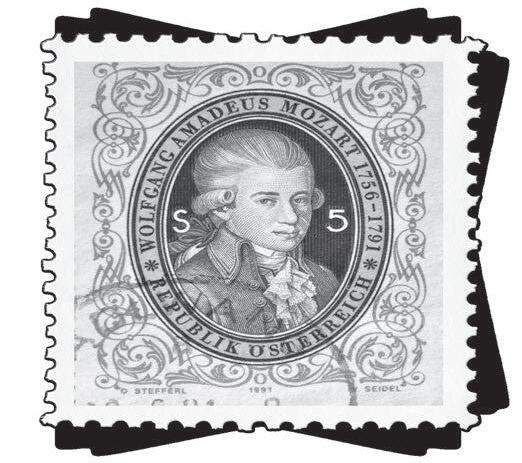
The popularization of Mozart in the 20th century did not come so much from the opera houses or concert halls, but from the stage and screen, although they didn’t portray an objective picture of Mozart and his life. prodigy* – a young person with exceptional qualities or abilities.

1. The author of this article says that you a) know nothing about classical music. b) have certainly heard of Mozart. c) don’t listen to classical music.
2. Mozart’s music can be heard a) only at concerts in concerts halls. b) only at concerts at music schools. c) in places which people visit frequently.
3. His excellent musical memory was shown a) in his improvisation. b) in singing songs.
c) by repeating music immediately after hearing it.
4. In the modern age people learned most about Mozart and his life by a) going to opera houses. b) watching theatre plays and films.
c) playing his music.
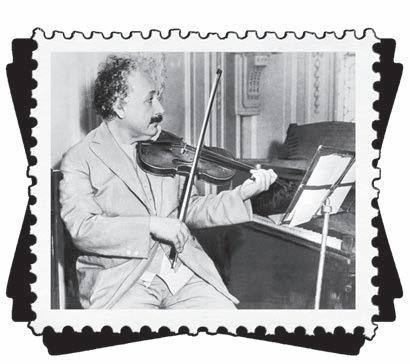
Use the words from the box to complete the sentences below.

venue cautious resort gain renowned revellers stunning
Fill in the gaps with either an article or preposition. Albert Einstein is recognized as one of _______ smartest men who has ever lived. ___ little known fact about Einstein is that when he was young, he was not ____ good pupil. His school teachers suggested that his parents get Albert _______ easy, manual labour job as soon as they could. Instead _______ following the school’s advice, Albert’s parents bought him ________ violin. Albert became good ________ the violin. Music was the key that helped Albert Einstein become so intelligent. Einstein himself said that ________ reason he was so smart is because he played _________ violin. He loved the music of Mozart and Bach most. Thankfully, one does not have to be a genius _________ these proportions to benefit from music-maths connections. 3 4 2
1. What do you hope to ___________ from this? Money or fame?
2. You should be _____________ and wise when choosing a partner.
3. Leonardo da Vinci was a ____________ painter, sculptor, architect, and engineer.
4. I liked our room because it had a ____________ view of the lake.
5. It is a popular winter _____________ and we go there to ski every year.
6. Most people travelled for hours to reach the __________.
7. When the _____________ had finally left the hotel nightclub, we could begin to clean up the mess.
Choose a synonym and an antonym from the list for the following words. The first one has been done as an example.
cautious
remarkable
increase
powerful


Complete these sentences by choosing the best adjective/noun collocation.
1. I’ve been to a relaxing/ depressing meeting at work. The management announced that the company would fire half the employees.
5. I am often irritated, but my sister has a very moving/calming influence on me. 5
2. This song has a really loud/catchy tune – I can’t stop humming it.
3. The book tells the cheerful/moving story of a young girl who was brought up in an orphanage.
4. After a tiring day at work in summer, there’s nothing I like better than a relaxing/cheerful shower.
Use the words in capital letters in the correct form to complete the sentences.
1. Aerobic activity can be of moderate or vigorous _____________. /INTENSE
2. Please look at the evidence more closely before drawing a ____________. /CONCLUDE
3. It’s no use getting _____________. We must wait until he gets here. /PATIENT
4. The railway network has been mostly ______________ in recent years. /COMPUTER
5. You don’t have to _____________ yourself. We all make mistakes. /JUSTICE
6. If you want to make friends, you should try and _____________ a bit more. /SOCIAL
1. Science has a language ________ its own.
2. There has been an increase ______ the number of refugees.
3. The article contained the results _____ a scientific experiment _____ physics.
4. He began his research _____ electricity.
5. He asked for the reason _____ the decision.
6. They discussed _____ the problems of poor families.
7. Penicillin was discovered _____ Alexander Fleming.
8. Some scientists disapproved _____ his methods.
Use the correct form of these words.
1. Mr Smith didn’t pay his bill last month so his telephone was _______ off.
2. These radiators don’t _______ off much heat.
3. We went to the airport to _________ our friends off.
4. Take bus number 67 and ______ off at the railway station.
5. The teacher told the pupils to ________ off the grass.
6. They __________ off the area because of the police investigation.
7. My sister has __________ off her engagement to Stephen.
8. The match has been _______ off till next Sunday.
9. Where would you like me to _________ you off?
Add the missing prepositions. Which verb doesn’t require a preposition? get drop go cut keep see put break give close
10. Two bombs _________ off in front of the theatre.
Circle the correct phrasal verbs in the sentences below.
1. She was so tired that she dropped off / took off in front of the TV.
2. It’s always difficult to make out / turn up a pupil’s handwriting.
3. When you leave the hotel, please show off / hand in your key at the reception.
4. The students who turned up / made out late were not allowed to attend the class.
5. When are you going to sort out / find out all these files? They look so untidy.
6. He doesn’t usually drive as fast as this. He’s just sorting out / showing off because you’re here.

Add one or more examples from the box to the following rules:
1. One-syllable adjectives form the comparative and superlative by adding –er, -est. E.g.______________________
2. One-syllable adjectives ending in -e, add -r, -st. E.g. ________________________
3. Two-syllable adjectives ending in -y, change -y to -i and add -er, -est. E.g. _________
4. Other two-syllable adjectives, use more and the most. E.g. ______________________
5. Longer adjectives, use more and the most. E.g. _______________________________
6. Adjectives that end in one vowel + one consonant double the last consonant before -er, -est. E.g.__________________________
7. Some adjectives do not follow the rules. E.g.__________________________________
happier, happiest; hotter, hottest; more honest, most honest; worse, worst; more comfortable, most comfortable; less, least; nicer, nicest; funnier, funniest; faster, fastest; more interesting, most interesting; more stupid, most stupid
Complete the second sentence so that it means the same as the first. Example: I have never seen such a beautiful girl. She is _____________________________. She is the most beautiful girl I have ever seen.
1. I have never seen such a tall building. It’s ___________________________________ __.
2. It’s the most difficult question I’ve ever been asked. I’ve never _________________ ____. _______________________________________________________________________.
3. I’ve never read such a boring book. It’s ______________________________________ _.
4. She is the toughest competitor I’ve ever met. I’ve never _________________________ _. _______________________________________________________________________.
5. It’s the most challenging job I’ve ever been offered. I’ve ________________________ _. ___________ __.
3
Look at the examples then use the cues (1–5) to write similar sentences using double comparatives.
The more interesting and dramatic the music, the more easily the information is remembered.
The earlier you leave, the sooner you’ll come back.
1. hard / study / good / marks / be ______________________________________________
2. little / expensive / computers / more / people / buy them ___________________________
3. bright / sun / happy / I feel __________________________________________________
4. you / soon / start / chances / have / finish / on time _______________________________
5. old / become / difficult / work becomes ________________________________________
4 5
Fill in the gaps using who, which or whose if necessary.
1. Did you receive the email ________ I sent three days ago?
2. There are few people ________ will wish him luck.
3. This is the man _________ daughter won the lottery last year.
4. Is this the best dress ________ you have?
5. Italian is the language ________ I speak best.
6. Julia Roberts is the actress _________ I admire most.
7. John is the only man _________ photos I’ll keep forever.
Fill in the gaps with where, when and why.
1. Do you know the reason ________ she didn’t come?
2. The hotel ________ she was staying caught fire last night.
3. That was the year ________ we met.
4. Her flat is in the house __________ my sister lives.
You are at the bus station and two girls from Wales who are going to EXIT ask you where to catch the bus to Novi Sad. Since you’ve just heard the following announcement, translate it for them.
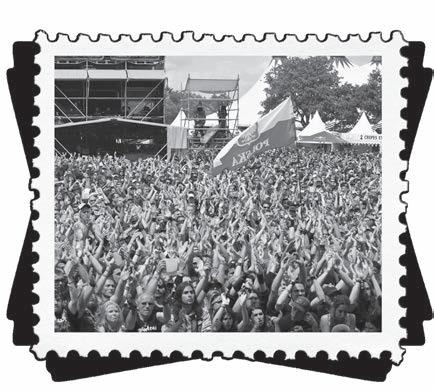
The following words make meaningful expressions with the verb take. Say what these expressions mean and use them in sentences of your own. Use a dictionary if you need to.
Example: She suddenly came into the room and took me by surprise. (= surprise)
Name the place where:
- you have your hair cut. _______________
Underline the word that doesn’t have a similar meaning.
1. AMAZING: astonishing, gifted, remarkable
2. ESSENTIAL: crucial, vital, strong
3. INTELLIGENT: brainy, smart, thoughtful
4. INITIALLY: gradually, at first, originally
5. RENOWNED: celebrated, noted, reliable

- you have your clothes cleaned. _______________
- you buy your ticket at the theatre. _______________
- you go to buy medicine in Britain/America. _______________
- you buy a book that is not new. _______________
- you pay your bill in a shop. _____________
- you buy notebooks and other writing material. _____________
The names of the places are given in the box. Find the correct answers.
dry cleaner’s, second-hand bookshop, hairdresser’s, box office, the cashier, chemist’s/drug store, stationer’s
a deep breath, a risk, revenge, notice, place, a bus, someone’s temperature, part, a photo, someone by surprise, a break FOR FUN SOLVE THE RIDDLES
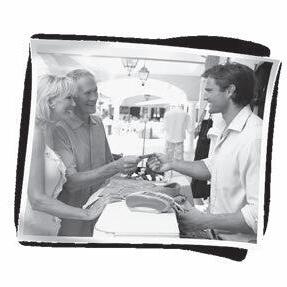
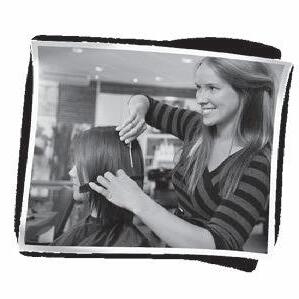
1. The more there is, the less you see.
2. The more you take, the more you leave behind.
3. Give it food and it will live; give it water and it will die.
4. Take off my skin and I won’t cry, but you will. What am I?
5. What has to be broken before it can be used?
Footsteps Fire
An egg
An onion Darkness


1
2 3
Read the text and choose the correct word from the box to fill in the gaps.
Two college seniors had a week of exams (1)__________ up. However, they decided to party (2)___________. So when they went to the test, they told the professor that their car had broken down the night before (3)___________ to a flat tyre and that they needed a bit more time to study.
The professor told them that they could have another day to study. That evening, (4)__________ boys studied all night until they were sure that they knew just about everything.
Arriving at class the next morning, each boy was told to go to (5)___________ classrooms to take the exam. Each shrugged and went to two different parts of the building. As each sat down, they read the first question:
‘For 5 points, (6)___________ the contents of an atom.’
At this (7)__________, they both thought that this was going to be a piece of cake, and answered the question with (8)___________. Then, the test continued...
‘For 95 points, tell me which tyre it was.’
Fill in the gaps using the words below in the correct form.
1. This inheritance will ____________ me to start my own business.
2. The president ______________ war on organized crime and criminals.
3. We were all sorry to learn that the sick child was _____________ to bed.
4. It’s no wonder he has changed because children are easily influenced by their _________.
5. Be careful! Those books are very rare and ____________.
Complete the sentences by using the correct form of the word in capital letters.
instead due separate coming point ease both explain peer enable precious confine declare
1. If you are not sure of your plans, it is best not to make firm ____________ now. /COMMIT
2. We must keep on trying, _________________ of past failures. /REGARD
3. I was about to speak when I observed a among the students. / DISTURB
4. As always, the choice depends on individual ________________ and pleasure. /PREFER
5. Sadly, there has been a rather development in the case. /FORTUNE
6. She was a devoted wife and a very ________________ mother. /AFFECTION
7. Tony is a terribly ____________________ person. /COMPETE
Fill in the missing prepositions.
1. He loves participating _____ all children’s games.
2. Some children are very good ____ mathematics, but bad ____ some other subjects.
3. Aren’t you ashamed ____ what you did to your parents?
4. He is only interested ____ speaking his own mind.
5. Thanks ____ their neighbours’ help, the fire didn’t destroy the house.
6. Do you believe ____ love _____ first sight?
7. His boss prevented him ______ publishing the truth.
8. I would like to congratulate you ____ your success.
9. B oth children are so different _____ their parents.

Complete the following sentences with an adverb which corresponds to the adjective given in the box. The first one has been done as an example.

good high quick quiet fast cautious immediate annual suitable
1. She did well in the competition.
2. Please close the door ____________. The baby is sleeping.
3. She ____________ filled in the answers, finishing in only 5 minutes.
4. He likes to drive _____________. He is not afraid of speed.
5. We continued ______________. She was afraid of his reaction.
6. He threw the ball ____________ into the air.
7. The gathering is held ____________, not monthly.
8. They replied _______________, without delay.
9. They were ______________ dressed for the occasion. Nobody came in jeans.
Complete the sentences with the comparative or superlative forms of the adverbs in brackets.
1. Jane arrived ________________ than I had expected. (late)
2. She behaved ________________ than she normally did. (badly)
3. They usually do the test much _________________ than they did yesterday. (well)
4. An elephant can live ________________ of all animals. (long)
5. Helen drives __________________ than her brother. (carefully)
6. Who trains __________________ in this team? (hard)
Rewrite the sentences putting the adverbs in the correct place.
1. They have thanked me for what I have done for them. /never
2. Do you swim in this lake? /sometimes
3. Helen was born. /on October 3rd /in the state of Virginia
4. When the accident happened, she was driving her car. /on the highway /last night /speedily
5. Put your hands. /on the table /quickly
6. They walked. /to the theatre /last night /in a hurry
7. Our team played football. /in Manchester /last month /successfully
8. The shops are open. /between 9 a.m. and 5 p.m. /always /in this street
Use a word/words from each box to make questions related to the topic. Add as many words as necessary. Make sure you use the correct tense (present simple, past simple, present perfect/continuous, past perfect). You may use a verb which is not in the list.
How long ago ….?
How many times…? When…? How often…? How long…?


VERBS see eat visit play go wait make do work practise travel
TIME EXPRESSIONS last summer/month today for a month yesterday yet for a long time since lately / recently ever ago this week

Example: How long have you been practising dancing?


TRANSLATION
Марко:
Лена:
видим други.
Марко: Зашто ниси?
Лена:
Translate the following joke.
Which word from column A goes with the words in column B? Make several sentences as examples.
whole name, aid, born, hand, class, sight, rate put childhood, class, cousin, hand, nature, sight, teeth, thoughts, rate first number, meal, wheat, hearted, length, sale second a stop to, to death, a law into force, into practice, aside, an end to cry one’s boats, the candle at both ends, with passion burn one’s eyes/heart out, oneself to sleep, for the moon
Use the expressions from the box to complete the sentences. If you are not sure of their meanings, look up the explanation in a dictionary. The first one has been done as an example.
6. If I were you, I would say yes. However, ________________ to decide! A B
take (any) notice of make up for it’s up to you be related to get even with take credit for (something)
1. I can’t ________________ all the success. Toby helped a lot.
I can’t take credit for all the success.
2. All these problems are closely ________________ the rise in unemployment.
3. Who knows what kind of revenge he might think up to _____________ them?!
4. They didn’t _______________ me, so I left.
5. She was absent from work last week and now she must work more to _____________ lost time.
Which of the following words and expressions go with do and which go with make? ...one’s best ...a speech ...war ...enquiries ...a discovery ...a good job ...certain ...one’s homework ...room for ...one’s apologies ...damage ...a complaint ...use of ...repairs ...a confession ...someone welcome ...an offer ...someone a lot of good
Find the answers in the box to complete the jokes.
Only once, sir. It was clean when I got in. No, it will be round and flat, sir. Dead? I didn’t even know it was ill. No, but the English did.
1st BOY: Did you have any trouble with your English in London?
TEACHER: What do you know about the Dead Sea?
1st BOY: Do you always have a bath in dirty water?
DINER: Waiter! Will my hamburger be long?
NERVOUS PASSENGER: How often do planes of this type crash?
2nd BOY:
PUPIL:
2nd BOY:
WAITER:
AIR HOSTESS:


Circle the correct answer.

1. By the time his daughter graduated last year, Bernard _____ his first million.
A had earned B has earned C earn D would earn 2. I’ll hand over all my files to my assistant before I _____.
A am leaving B leave C will leave D shall leave 3. According to _____ surveys, the majority of people are in favour of the new law.
A the most B most C most of D the most of 4. You _____ continue. You’ve made your point clearly enough already.
A needn’t B mustn’t C don’t have D won’t
5. That pop star, _____ son I know well, is organizing an international charity concert.
A which B whom C that D whose 6. The number of cases of violent crime has _____ recently.
A raised B risen C expanded D grow 7. I knew she _____ the washing because when I got home, she was ready to go out.
A did B had done C was doing D has done 8. There wasn’t _____ news in his letter.
A a great many B hardly any C a great deal of D a large number of 9. He is ______ to come sooner or later.
A bound B about C unlikely D let 10. He said that all good ______ welcome in the situation.
A advice is B advices are C advice was D advices were 11. _____ many people are unaware of it, our planet is slowly being destroyed.
A Since B Nevertheless C How D Although 12. He _____ that he had millions in his bank account.
A threatened B reminded C boasted D informed 13. She waited for twenty minutes and ______ decided to leave.
A lastly B finally C at the end D eventual 14. I’ll have to do overtime tonight, _____ is very tiresome.
A which B what C that D so
15. There were _____ tickets sold so the concert was cancelled.
A the few B less C few D such few 16. It is very difficult to ____ children nowadays.
A raised B rise C bring in D bring up


Circle the correct answer.
1. Bob ________ in the choir since he ________ ten.
A has been singing / was B has been singing / is C had sung / has been D sings / is
2. That’s the third coffee you _____ this evening.
A drink B have drunk C have been drinking D drank
3. The problem is _____ in summer.
A much more worse B much worse C much more bad D much worst
4. If I ________ to that party last week, I ____________ where she lives now.
A hadn’t gone / wouldn’t have found out B didn’t go / wouldn’t find out C didn’t go / wouldn’t have found out D hadn’t gone / wouldn’t find out
5. If he ________ earlier, he would have caught the bus.
A left B leave C had left D would leave
6. He feels _____. His horse can’t jump _____ enough.
A awfully / highly B badly / hardly C sad / high D sadly / highly
7. He was fined by the police for driving too _____.
A fastly B hard C speedy D fast
8. Do you think he ________ treat us if he ______ the match?
A would / won B would have / would win C will / will win D would / win
9. The film ______ for months already and I ________ it yet.
A has run / didn’t see B has been running / haven’t seen C has been running / didn’t see D is running / haven’t seen
10. No one was sure _____ William _______ to the party or not.
A when / would come B why / had come C whether / would come D what time / had come
11. If I _____ him at the university, I _____ him to my party.
A would have seen / had invited
B would see / would invite C have seen / would invite
D had seen / would have invited

12. Here are your trousers. I _____.
A have them cleaned
B had them cleaned C had clean them
D have been cleaned them
13. The dog ______ they got from their neighbour ran away.
A whose B who C whom D –14. I’d like ______ a book. Can you tell me _____ a bookshop near here?
A to buy / whether is there B to buy / if there’s C buying / is there D buying / if there is 15. He thanked me for what I _____ for him in the past.
A was going B have done C did D had done


Choose the word from the alternatives that has the same meaning as the word in bold.
1. It’s true that he lost all his money, but he never lost his dignity.
A ambition
B self-respect
C resolution
2. The boy was so hungry that he ate an entire chicken.
A full
B proper C whole
3. Our firm has maintained a high level of service for many years.
A carried out
B kept up
C turned on
4. Research indicates that this food can be harmful to our health.
A finds out
B looks out C points out
5. That soldier was described by his lawyer in court as ‘entirely honest and reliable’.
A broad-minded
B trustworthy C friendly
6. My teacher always emphasizes the importance of studying hard.
A assumes B requires C stresses
7. The Siberian Tiger is a magnificent animal. A careless
B wonderful C wild
8. Her annual income is about 10000 Euros.
A monthly B weekly C yearly
9. A significant number of pupils still refuse to wear a uniform.
A comparable B large C trivial
10. The council has a sophisticated computer system.
A advanced
B reasonable C unreliable
11. Her boss was impressed by her speed and efficiency. A arrogance B effectiveness C wisdom
12. Our initial impression about him was favourable.
A whole B first C general
Add get, turn, give or look in the correct form to complete the phrasal verbs in the following sentences.
1. Please ___________ the music down. I am speaking on the phone.
2. My brother failed his test, but I hope he’ll soon ________ over the disappointment.
3. I knew that if I moved, I would ________ myself away.
4. You mustn’t ________ down on people who have less money than you.
5. She ________ out fliers for the new gym yesterday.
6. I can’t________ through. The line’s constantly engaged.
7. Please ________ up more information on the Internet.

Add the right prefix to express a negative meaning (un-, in- or dis-).
1. not honest = ____honest
2. not favourable = ____favourable
3. not agreeable = ____agreeable
4. not interesting = ____interesting
5. not acceptable = ____acceptable
6. not interested = ____different
4 Add an article where necessary. _____ sky was covered with _____ heavy clouds darkening _____ moon and _____ stars. Suddenly, _____ cold wind rose. It brought _____ rain; first there were only ____ few drops, but soon they turned into _____ heavy shower. But after ____ short time ____ storm passed, _______ thunder grew weaker and _____ silence was interrupted only by ______ sound of _____ running water. _____ horizon was lit by ____ marvellous colours of ______ rainbow.

KEY TO PROGRESS CHECK
PROGRESS CHECK 1
Test 1
Test 2
PROGRESS CHECK 2
Test 1
Test 2
PROGRESS CHECK 3
Test 1
2