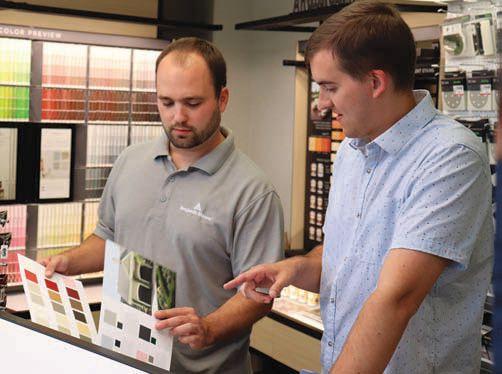
Learn from three retailers who have added new store locations, including Matt Lambert, owner of three Painter’s Alley locations in Washington state. Read his tips to realize success in your own expansion project.
Restoration Central
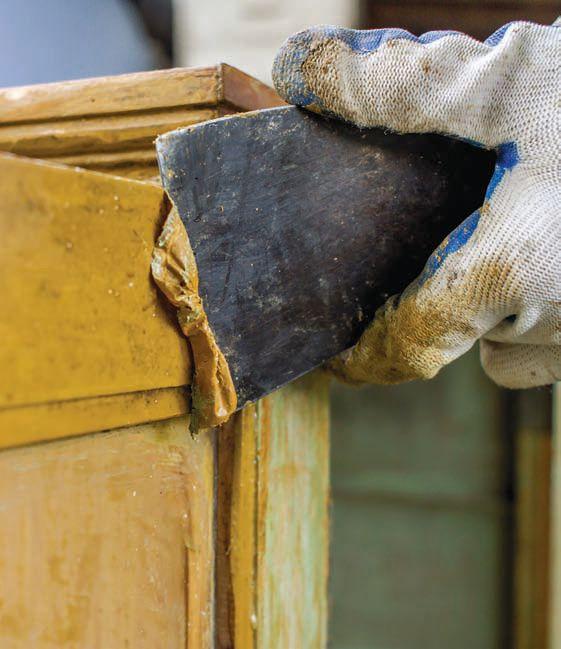
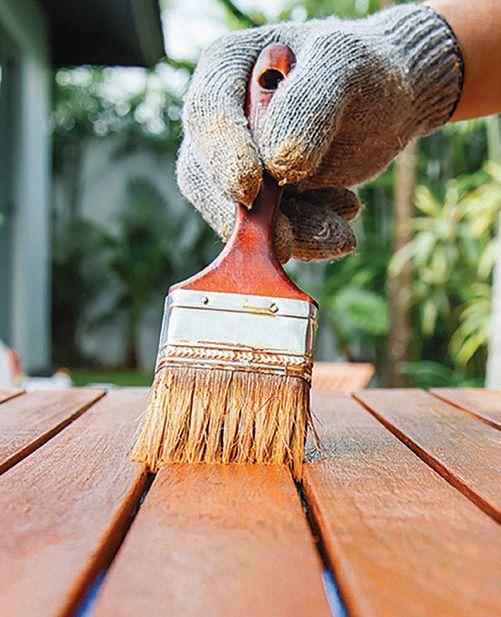
Whether your customers are rebuilding after a disaster or just refreshing an old rocking chair, find out what products your peers recommend for restoration projects across the spectrum.
Mix It Up With Accessories
Mixing and tinting equipment has evolved to meet the needs of even the busiest paint retail operations. Explore the available accessories and add-ons to serve your customers accurately and efficiently.
Industry Profile: Packaging Service Co.
When it comes to serving independent retailers, Packaging Service Co. Inc. focuses on dedication to a cause. Learn more about the company’s commitment to delivering on its promises.
PAINT & DECORATING RETAILER
(ISSN 1096-6927): Published monthly except December by the Paint and Decorating Retailers Association, 1401 Triad Center Drive, St. Peters, Missouri, 63376-7353. Phone: 800-737-0107.
Afew years back I was part of a discussion with a number of retailers who were talking about the challenges faced by today’s independent operators. While there was certainly no shortage of topics that came up, one theme that kept resurfacing throughout the narrative might surprise you.
It wasn’t finding good employees or access to capital or even maintaining a healthy work-life balance these retailers were discussing.
No, the one thing that kept finding its way into this conversation was scale. That’s right—scale.
The idea was simply that for an independent business to truly reach its potential, the owners had to find a way to create the kind of scale they needed to minimize costs while maximizing benefit for the organization.
So what’s the only way to create this kind of scale? Growth!
As a single-store operator, you can’t afford to hire an IT staffer to mine data from your POS or maintain your systems or develop a website. But split the cost of that IT staffer across three stores (or more), and suddenly the return on the investment makes sense.
The same was said for a variety of business assets that simply didn’t make financial sense for one store but did for multiple stores.
This need to grow and create the scale that’s necessary to take your business to the next level is just one of the reasons we are examining expansion in this month’s issue.
Growth, at least in this conversation, cured a lot of independent business ills.
This need to grow and create the scale that’s necessary to take your business to the next level is just one of the reasons we are examining expansion in this month’s issue.
Starting on Page 32, you can take a look at how several paint retailers have managed to grow their operations and the challenges and opportunities this growth has presented to them.
Hopefully, this article will get you thinking about all the ways you can create a greater economy of scale in your business, if you set your sights on growth.
Dan Tratensek DanT@nrha.org
Publisher, Executive Vice President, Sales Dan Simon dan@pdra.org
Phone: 800-737-0107, Fax: 636-229-4750
Editor-in-Chief
Dan Tratensek dant@nrha.org
Issue Contributors
Hilary Daninhirsch
Diane Franklin Graeme Haase
Heather Kauffman-Peters
Jerry Rabushka
EDITORIAL, DESIGN & PRODUCTION
Managing Editor
Melanie Moul
Lynnea Chom
Hans Cummings
Todd Taber
Kelsey Truex Nancy Vondersaar
Association Coordinator Tina Sullivan tina@pdra.org
ADVERTISING
Account Executive Brandi Hemmer brandi@pdra.org
Phone: 636-680-2785, Fax: 636-229-4750
PDRA EXECUTIVE LEADERSHIP
LeAnn Day Chief Executive Officer
OFFICERS
Craig Bond Chairman of the Board
Tommy’s Paint Pot, Eugene, Oregon DIRECTORS
Robert Mueller
Benjamin Moore Kelowna Kelowna, B.C., Canada
Jay Donnelly
Flanagan Paint & Supply St. Louis, Missouri
Lesley Davies-Baptista Paint Fair Ltd. Freeport, Grand Bahama, Bahamas
PDRA ADVISORY COMMITTEE
Dori Marks, PPG Industries
Thomas Hill, The Coatings Alliance
Eugene Andreassi, Benjamin Moore
Joe Jankoski, Hunter Douglas
Bob Clemence, Hyde Tools
John Shingledecker, Allpro Corp.
Richard Russo, Reed Exhibitions
Mike Dube, Lancaster
The Big Picture
Art of the Scoop
In the ice cream capital of the world, the dairy dessert is not only a treat, it’s a work of art. Le Mars, Iowa, is home to a sugar cone manufacturer and the largest private dairy in the world. More ice cream is made there than anywhere else in the U.S. In 2013, when the town wanted to celebrate its uniqueness, Mary Reynolds, the Le Mars Chamber of Commerce Main Street manager, thought what better way than with ice cream cone statues.
“We knew Chicago had cows, and I’m a big believer that if a big city can do it, a small city can, too,” says Reynolds. “So we looked into it, found a fabricator and had a mold made.”
Over the course of two years, the brightly painted 5 1/ 2-foot statues began appearing across town. Today, there are more than 55 statues throughout Le Mars. Local business owners bought the statues and paid for the work of a preapproved artist and to have them sealed for about $1,800 each.
“We encouraged businesses to offer something artistic to the community, instead of using the sculptures to market their business or sell something,” Reynolds says.
The ice cream cones were painted with acrylic craft paint and then triple-coated with a clear coat for a strong finish.
WE CAN GET YOU THERE
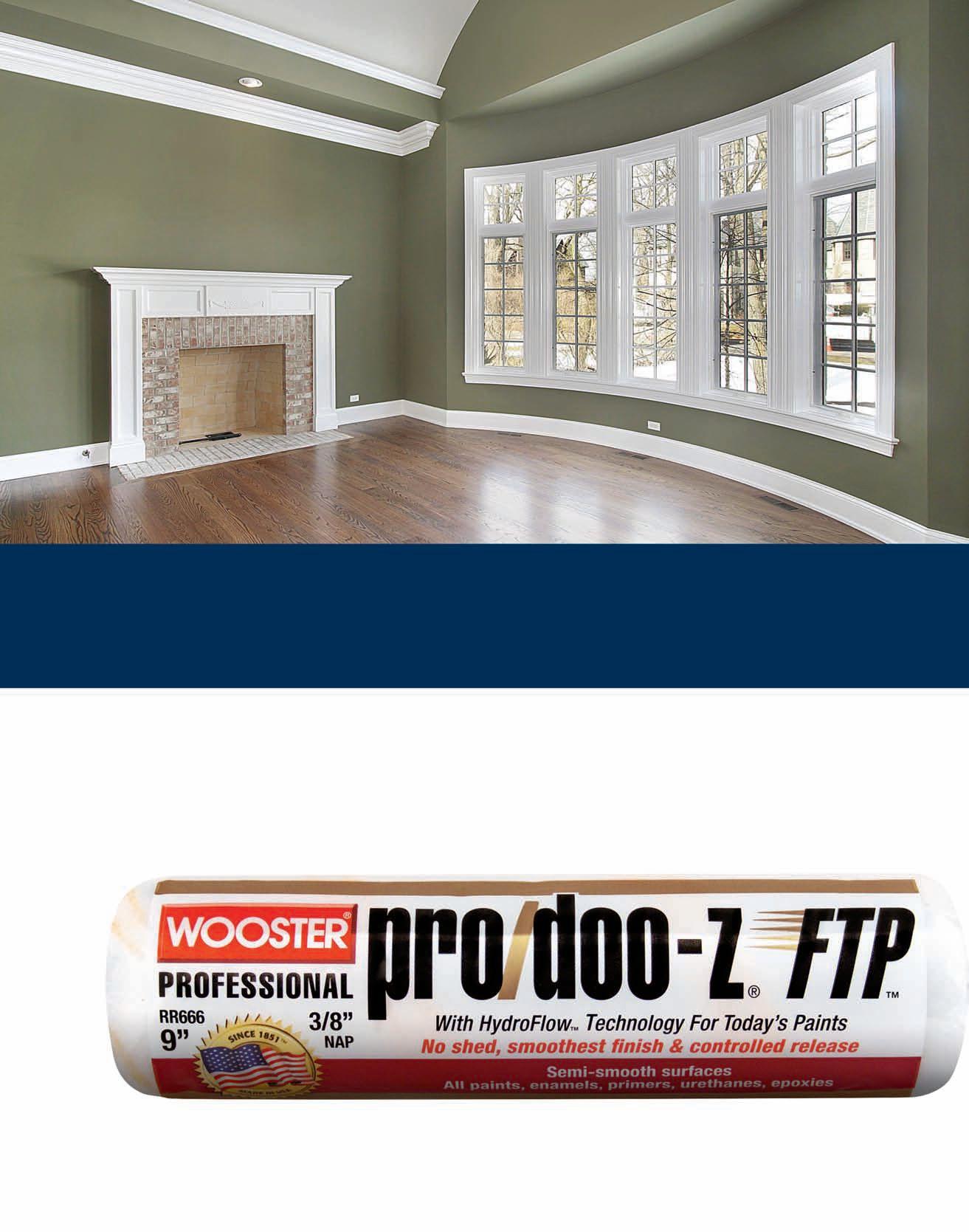
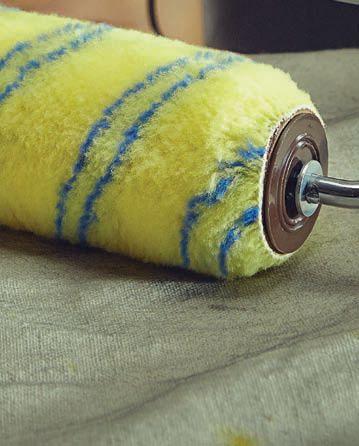
Bold color choices can be costly if they’re unsuccessfully applied. Rich hues need to ow smoothly from oor to ceiling to achieve seamless results—Pro/Doo-Z ® FTP® roller covers are the solution. When your customers need advice on how to transform their space into what they have in mind–tell them that Wooster is the way to get there.
Coordinating European Stylings
Bring a Continental Flair to Interior Design
Interior designers searching for inspiration need look no further than Arthouse. A leader in the UK’s home interior decorating industry, Arthouse offers wallcoverings, room dividers, decor products and more.
Encompassing multiple brands, Arthouse offers decorators a full line of products and inspirations for the interior designer looking to elevate their designs with European flair.
Designers can pick and choose from Arthouse’s collections. Their in-house design studio caters to a wide range of styles and budgets and has created coordinating collections inspired by modern trends. The collections include a combination of textured wallcoverings, cushions, mirrors and sculptures to help customers make a bold statement or simply provide a splash of color to their space.
Arthouse’s coving are made from DuroPolymer, a lightweight, water-resistant, paintable and 100 percent recyclable material. Wallpapers in the new collections demonstrate added value techniques such as textured metallic highlights, rich gloss, kiss foil and more. The wall art collection encompasses framed prints and canvases, sculptures, ornaments and signature animal heads.
“Established in 2000, Arthouse is one of the UK’s leaders in coordinated home interior products,” says Greg Godeau, Arthouse’s head of international sales. “Arthouse’s ethos is to use its unique team spirit, technical expertise and industry-leading creative talent to enable consumers to easily create magnificent, personal and stylish interiors.”
Arthouse products are available to dispatch to retailers from the company’s U.S. warehouse. For more information, visit arthouse.com .
Reusable Pouring Spout
The reusable Paint Ring snaps onto a standard 1-gallon paint can to protect the pan can cover groove and provide a pouring spout that can be wide and narrow. It features a magnetic holding pad for brushes and recycles dripping paint back into the can. It is made in the U.S.
The 3 & 1 Paint Ring paintring.com
Latex Paint Additive
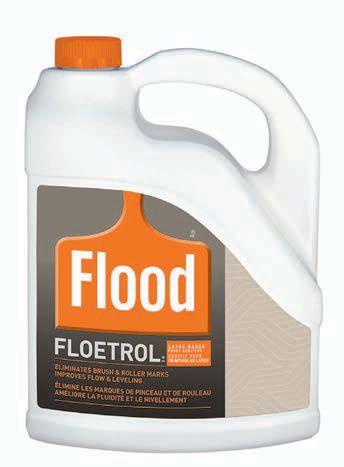
FLOETROL ® can be used to improve the flow of latex paints, primers, stains and textured coatings. Improved flow reduces brush and roller marks. In addition to reducing wear and tear on spray guns, FLOETROL inhibits rust on metal surfaces and can restore luster to faded, weathered fiberglass. Flood® Wood Finishes 800-321-3444 or visit flood.com
Tape
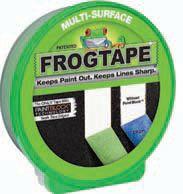
offers for use on washable and nonwashable textured surfaces. bleed filling in gaps on any surface for lines and will not sliver or tear when removed. Available or in 10- or 20-count contractor packs.
Technologies offers tape for use on washable and textured surfaces. GelTape stops paint bleed by in gaps on nearly any surface for sharp lines and will sliver or tear when being removed. Available individually
GelSeal 920-376-5105 or visit gelseal.com
Dust-Free Sander
Sponsored Product
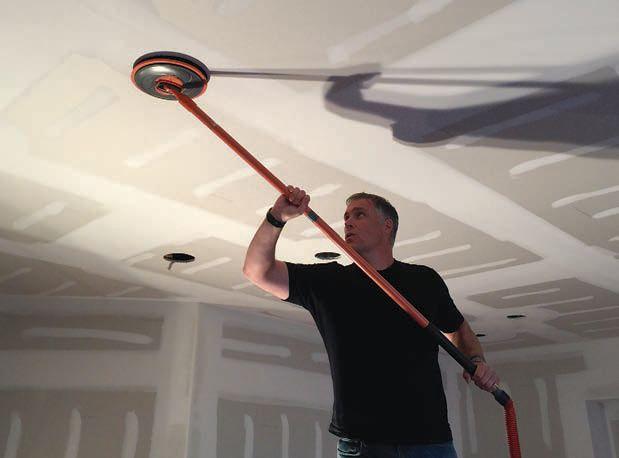
Full Circle International now has a vacuum-extracted dust-free sanding system to add utility to its sanding tools. The system is lightweight and adapts to fit any 12-gallon or larger wet/dry vacuum. The patented pole pivot allows for unrestricted range of motion. Full Circle International info@fullcircleinternational.com or fullcircleinternational.com
Car Air Fresheners
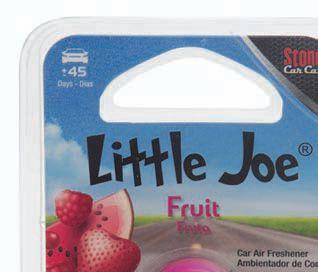
Little Joe ® and Little Pup ® air fresheners are the newest European import from Stoner Car Care. Made from colorful, fragrance-infused polymer plastic, these characters clip onto your vehicle’s air vent and will not stain or leak. Both Little Joe and Little Pup produce a scent that lasts at least 45 days. They’re available in cherry, new car, ocean splash, black velvet, strawberry, fruit, mint and vanilla and come in a variety of colors.
Stoner Car Care
800-227-5538 or visit stonercarcare.com
Color-Matching Tool
Sponsored Product
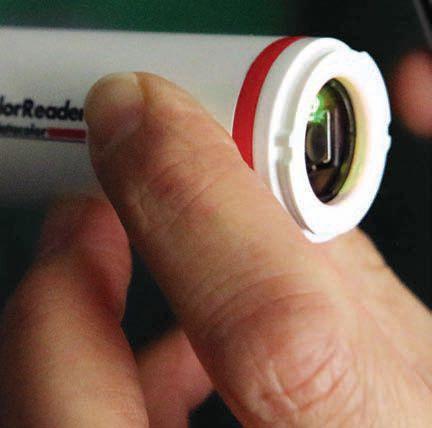
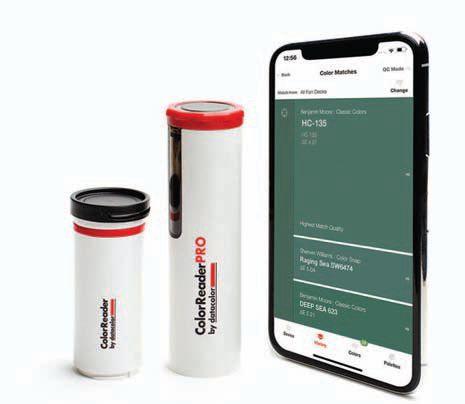
Datacolor’s ColorReader is a portable tool that saves time and money by giving on-the-spot, precise color-matching. Place the device flat on a surface and ColorReader provides your paint color-match and color standards with a greater than 90 percent accuracy rate.
Datacolor 609-528-1307 or smack@datacolor.com
Vulnerable Information
Cyberbreach Rattles Small Businesses
Bank holding company Capital One recently confirmed that a data breach has left exposed the personal information of 100 million individuals in the U.S. and roughly 6 million in Canada. The New York Times calls the incident “one of the largest-ever thefts of data from a bank.”
The Times reports that the majority of uncovered data was names and addresses, as opposed to Social Security numbers, credit cards or bank account numbers. However, approximately 140,000 Social Security numbers and 80,000 bank account numbers were accessed. In addition, 1 million social insurance numbers, Canada’s form of Social Security, were also exposed.
This personal information originated from credit card applications submitted by consumers and small businesses from 2005 to 2019, Capital One says. The account numbers were associated with “secured cards,” which are often held by consumers with bad credit, the Times article states.
“While I am grateful that the perpetrator has been caught, I am deeply sorry for what has happened,” says Richard D. Fairbank, Capital One chairman and CEO. “I sincerely apologize for the understandable worry this incident must be causing those affected and I am committed to making it right.”
Capital One says it will notify customers affected by the breach by mail and offer free, ongoing credit monitoring.
Tariffs on Chinese-Made Products Expand
The U.S. will place a 10 percent tariff on $300 billion worth of products made in China that pass through U.S. borders.
“We are disappointed the administration is doubling down on a flawed tariff strategy that is already slowing U.S. economic growth, creating uncertainty and discouraging investment,” David French, vice president of government relations at the National Retail Federation, says. “These additional tariffs will only threaten U.S. jobs and raise costs for American families on everyday goods.”
The initial round placed 10 to 25 percent tariffs on $200 billion worth of Chinese products. Those products included many paint and decorating mainstays, like acrylic and vinyl paints and varnishes, filters and wooden paintbrush handles, among others.
In early August, the Office of the U.S. Trade Representative said it would move forward with planned tariffs, but delay others until Dec. 15, including on products such as cellphones, laptops, certain chemicals and fireworks.
Members of Gen Z Become Retail Power Players
According to new data from Loss Prevention Media, nearly 60 percent of more than 1,000 members of Generation Z surveyed have visited a brick-and-mortar retail location within the last week. What’s more, 90 percent have made an in-store purchase during their visit.
Generation Z is broadly defined as people born between 1995 and 2012, according to Forbes
In addition to in-store brick-and-mortar purchases, Generation Z is also leveraging buy online, pickup in store (BOPIS) services. The data reveals nearly two-thirds of this cohort have bought a product online and picked it up directly at a brick-and-mortar location within the past month.
“As retailers work to market to the coveted Generation Z demographic, they must employ modern methods to attract younger shoppers,” says Georgianna W. Oliver, founder of Package Concierge, which commissioned the study. “The BOPIS strategy is only as strong as the ease and innovation of its fulfillment method, which is why we’re seeing traction for our automated locker system that simplifies and secures the entire process for both retailers and shoppers.”
3 Examples of How to Paint the Town Local Industry News
As a local paint and decorating retailer, you keep the town looking fresh. Your business adds vibrant value to the community with high-quality coatings and materials, but it’s about more than the paints you sell. For small businesses that rely on local patronage, supporting the community is just as important as selling to the community.
In Sedona, Arizona, PPG Paints retailer and family-owned business Sedona Paint Center works closely with the nearby Verde Valley Habitat for Humanity chapter. After business owners Michael and Michelle Lloyd connected with the organization at a chamber of commerce mixer, the Lloyds donated interior and exterior paint for new homes in the area.
“They’re helping people who have faced such hardships, and it’s so important to support them,” Michelle tells shop-local organization Independent We Stand. “We’re just a small piece of the puzzle, but we are so proud to be in a position to help.”
In Marshalltown, Iowa, Strand’s Industrial Coatings donated all the paint needed to complete a veteran’s memorial mural, which faces a veterans’ housing and health care facility. The second-generation family business also donated its product to restore a Vietnam-era Air Force jet and to transition an armored vehicle from military service to police use.
Finally, in LaSalle, Illinois, A & B Paint Supply ran a Buy 5, Give 1 campaign to support renovation plans for the nearby LaSalle Veterans’ Home. For every five gallons of PPG Wonder-Pro paint purchased during the monthlong campaign, the business donated one gallon to the veterans’ home, contributing 54 gallons by the end of the month.
“In the end, I’m truly blessed and excited to see our small community come together for this and be able to provide more than just a monetary donation,” general manager Brian Layhew says.
Think about how far your product and expertise could go in the local community. A fresh coat of paint could restore a historic building or spruce up a downtown facade. It might be just what the community needs to make deserving residents feel more at home.
Bill Brunelle
is the co-founder of Independent We Stand, which educates communities about the benefits of shopping locally. IWS inspires small business owners to celebrate their local status and community value. IWS is sponsored by STIHL, Do it Best Corp. and PPG Paints.
Brothers Carter and Steve Strand (right) of Strand’s Industrial Coatings in Marshalltown, Iowa, donated paint for a restoration project for this Vietnam-era Air Force jet.
By Jerry Rabushka
All the Extras
Adding More to Mixers, Shakers and Dispensers
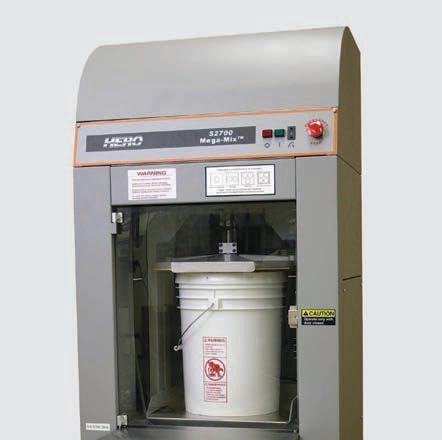
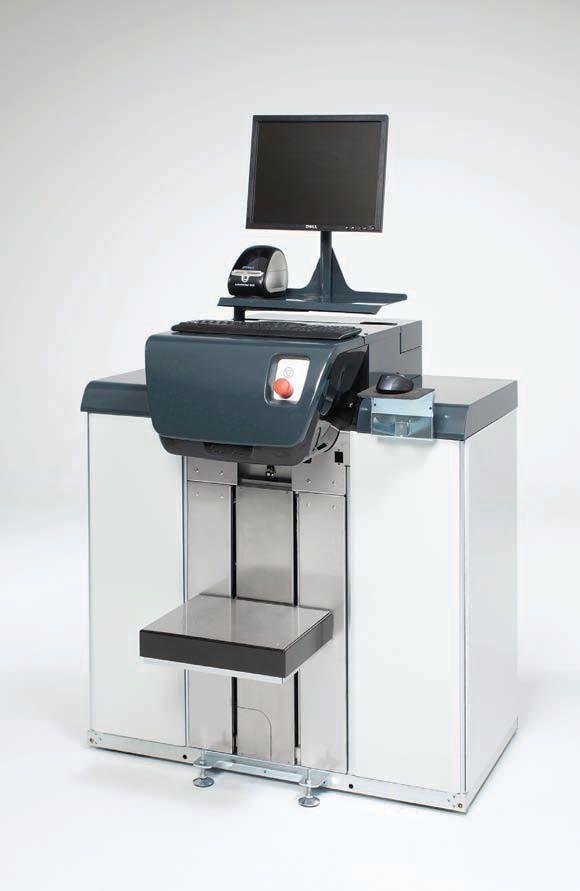
Mixers, shakers and dispensers are one of your most significant investments; whether you have one, two or a roomful, they’re your gateway to delivering just the right color in a timely fashion. To help you along the way, manufacturers bolster their equipment with accessories, tech support and in-person service to make sure you’re not all shook up about mixer malfunctions or seeing red when you should be seeing blue.
Learn to Adapt
It goes without saying that you don’t want to sell paint in containers you can’t shake. Most mixers, with the right accessory, can shake many sizes of cans. Along with that, there are accessories to help you speed up and clean up some repetitive tasks.
The 1-gallon vortex Speed Demon Paint Mixer from RADIA Products has an adapter that holds both quarts and pints so you can mix up smaller cans. It has a metal clasp for a more secure lock for high-volume mixing and a foam insert to accommodate sample-size mixing. The 5-gallon Speed Demon has an adapter for round and square gallon containers, and no matter how you mix, RADIA’s dryer box can move you beyond the coffee can and provide you with a safe and professional method of drying paint samples. One paint spill story per career is plenty for any retailer, and the last thing you want right before lunch is to drop a gallon all over the mixer, or worse, on your customer. Whether you’re putting a can into the mixer or into the hands of your customer, you’ll want the lid on tight. New from RADIA, the Auto Lid Press applies pressure evenly to the top of the can for an all-over seal in a single motion.
When it comes to determining what kind of accessories you need for your mixing and tinting equipment, think about what services you want to provide your customers. Creating accurate colors the first time is key to repeat business.
“We strongly recommend retailers use barcode scanners to prevent mistints associated with sales personnel grabbing the wrong tint base.”
—Chris Kosmala, HERO Products Group
It’s designed with a counter mount or mobile base plate to accommodate numerous environments, so you’ll always be able to find it. It works on gallon or quart cans as well as with metal, plastic and hybrid containers.
For those times you do need a mallet, RADIA’s Mallet Holder conveniently attaches to your mixer or dispenser, allowing for quick access.
HERO outfits all of its 1-gallon shakers with a quart, pint and half-pint adapter, says Chris Kosmala, vice president of marketing and key accounts at HERO Products Group.
“These adapters are essential for any paint store, as more retail customers are buying color samples to help them pick the best color for their homes,” he says.
HERO also offers two other adapters, one that is dedicated to opening and one that is dedicated to closing.
The HERO Bucket Buster is the fastest and easiest way to open most buckets and pails. Its rugged metal construction and unique high-leverage design provides for trouble-free bucket and pail opening.
The HERO SureSeal closes lids tightly, cleanly and quietly on pints, quarts and gallons with a simple rugged mechanism. It’s totally enclosed for safety and eliminates any worries about improperly fitted can lids, leakages or spills.
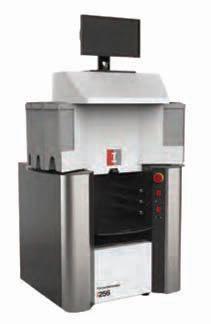
COROB’s CLEVERmix 700, a high-end gyroscopic mixer, sports a clever adapter that can shake up four 1-gallon cans, five quart-sized cans or five 1/16-gallon containers. For customers who want a lot of samples, this will make your job that much easier. Just place the adapter over the clamping plate and you’re ready to mix.
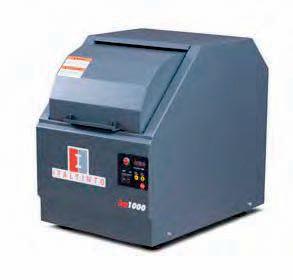
Terry Newton, executive vice president of ITALTINTO Group says ITALTINTO provides all container adapters at no additional charge.
“We also provide maintenance kits for our technology, and to take it one step further, we can provide parts and service for some competitive brands as well,” he says.
Accessory Tech-cessories
You can scan your customer base or you can scan a base for your customers with tech accessories that allow you, your staff, your painters and your homeowners to keep track of what paint goes where.
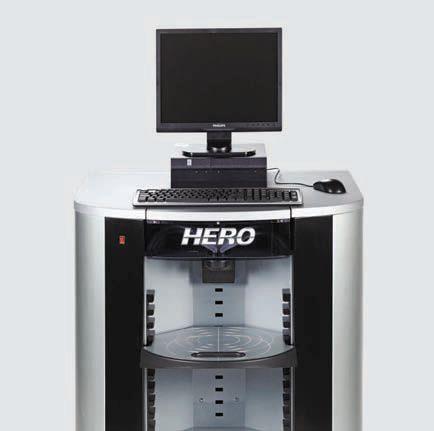
“HERO sells tint formula label printers and barcode scanners for your automatic dispensers,” Kosmala says. “We strongly recommend retailers use barcode scanners to prevent mistints associated with sales personnel grabbing the wrong tint base. They pay for themselves in less than a year.”
COROB customers also have the option to scan and print labels, says Brian McDaniel, strategic account manager.
“We provide a barcode scanner for verifying the base paint or to scan the code off the color chip,” he says. “We also have a label printer to show your staff and customers what color is in the can.”
Fluid Management lets you scan as well, says senior product manager Gary Lalla.
“The industry standard is now a tiny computer,” he says. “Because they are smaller, they adhere to the back of the monitor and take up less space. So, when you get busy, you have one less thing to worry about disturbing the cleanliness of the paint department.”
ITALTINTO’s dispensing software comes to you at no additional charge, Newton says, with two ways to put it to use.
“It can be the main dispensing software that appears on the monitor, or it can live behind well-known color-matching software, which offers a seamless and easy-to-use solution,” he says.
The company keeps pace with color-matching companies to ensure their software is up to date.
“We can integrate with the software of all well-known color-matching companies,” Newton says. “We are also working with up-and-coming providers to expand our offering to different regions that may adopt technology at a lower level to start.”
While ITALTINTO does offer some add-ons to go with their tinters, they prefer to help you find your own from a dedicated manufacturer.
“ITALTINTO offers humidifier sponge packs, barcode scanners, computers and tablets, but in most instances, we choose not to sell those accessories directly,” Newton says. “Rather, we empower our customers by helping them purchase those items from other established suppliers. ITALTINTO has dedicated itself to developing and manufacturing reliable and versatile dispensing and mixing technology since 1974. We leave the sponges and barcode scanners to those who are dedicated to providing those solutions directly and at the best possible acquisition price.”
Sending your customers home with the perfect color is part of mixing and tinting process. Be sure your equipment has all the tools necessary to avoid mistints, such as HERO’s barcode scanners.
When the Extras Are Included
While many accessories are offered as additional purchases and as add-ons and upgrades to existing machines, some companies include accessories with the initial purchase.
“Each HERO Automatic Dispenser comes with HERO’s exclusive and proprietary TintWise software,” Kosmala says. “It is intuitive and runs in the background when interfaced with all leading color-matching systems. In addition, it interfaces with all major global paint brand formula books. The software also provides the ability to create reports detailing colorant usage and transactional reports, to name just a few of the reports that can be generated to improve departmental efficiency.”
COROB offers retailers 24/7 technical support on its systems, and they can remote in to determine—and solve—the problem.
By looking over your tinting history, including factors such as amount of colorant or what time of day, you can improve your inventory management and even schedule your staff to adequately cover peak times.
COROB has incorporated some extras directly into its machines, again with an eye toward cutting down on some recurring tasks.
“We are the only brand to offer an integrated nozzle valve which completely eliminates the need for daily colorant purge,” McDaniel says. “We also offer filters on our machines, as professional painters, designers and architects are very discerning in the quality of the paint finish. These filters keep dried colorant particles out of the paint.”
The People Accessory
If you have questions or problems with your equipment at 7:30 and your painter needs 50 gallons of Louisiana Purple Sunrise in an eggshell by 8:00, you probably need an answer now, not in three weeks, not even at 8:02. Just like many of the accessories themselves, customer service is a must-have addition.
COROB has several services to keep you going.
“Our personnel have the most equipment knowledge and coatings experience,” says McDaniel. “COROB offers 24/7 technical support calls as well as remote diagnostics. We also offer preventative maintenance and extended warranty packages.”
The company offers online instruction as well.
“We provide how-to videos to address general maintenance and simple repairs,” McDaniel says.
A Fluid Management customer has similar options.
“If a customer knows the problem, they can watch a video or download a tech document that explains how to solve it,” says Lalla. “We also now have online chat.”
Due to the nature and importance of these machines, Lalla agrees that tech support is one of the most important accessories you can have.
He says Fluid Management will be ready the day after your plug hits the socket.
“We have what we call Day 2 support,” he says. “We don’t leave you hanging after an installation; we provide full support immediately after we install the dispenser.”
A bilingual call center gets your questions answered quickly.
“We also have team viewer, where we can take over your computer and do the work, so we don’t have to roll a truck,” he says. “We try to turn things around quickly, but depending on where the technician is, they might not be able to get to you until the next day, so we try to solve your issue over the phone as quickly as possible. It’s not just about getting the sale. It’s about providing our customers that extra value.”
THE PERFECT MEANS
When it comes to accessible accessories, ITALTINTO makes video tutorials a must-have.
“ITALTINTO has undertaken a project to provide how-to videos to assist retailers with their ongoing use and maintenance needs,” says Newton. “Our Team Viewer Service portal also allows us to troubleshoot in real time.”
ITALTINTO recommends phone first, technician second. It’s not that no one wants to come visit, they just want to get you back in service as soon as possible with minimal cost.
“ITALTINTO offers immediate resolution support on the phone,” says Newton. “We can schedule a service technician to visit if required, but we always try for first-call resolution where possible.”
“Technology for the paint industry is not extremely complicated, and if taken care of, rarely requires intervention.”
—Terry Newton, ITALTINTO Group
o 1/2 price freight
o Extra 5% off all orders shipping by Nov. 15/19
o Discounts on all models CALL TODAY FOR DETAILS
Prices in effect until Oct. 31, 2019
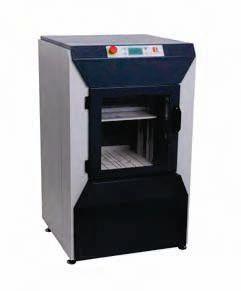
Many mixers and tinters have adapters available to adjust to any size can of paint, from 5-gallon drums all the way down to sample sizes.
Just like a car, the more ongoing TLC you provide your tinting equipment, the less chance it’s going to need an emergency trip to the shop.
“Care and maintenance are always the best ways to keep your technology in optimal working condition, so we strive to support that notion through outbound calling programs designed to provide you with peace of mind and ongoing communication.”
Plus, you shouldn’t need that much service because ITALTINTO equipment is designed to keep working.
“Technology for the paint industry is not extremely complicated, and if taken care of, rarely requires intervention,” says Newton. “ITALTINTO does not set aggressive service revenue levels because we believe we have a basic expectation from our customers to ensure optimal uptime and minimal service disruption.”
Customer service is a key tenet of HERO’s business philosophy.
“HERO supports all of its products with an unparalleled level of customer service,” Kosmala says. “We service our equipment with a team of factory field service technicians across North America, and we also have extensive relationships with all of the major third-party service companies across North America.”
This strategy includes a 24/7 customer service hotline with support in several languages. In 80 percent of cases, a phone call solves the problem, and you’ll be back in action quickly.
“HERO can provide online diagnostics on its line of automatic dispensers, as well as provide fast online fixes to basic operating issues,” Kosmala says.
The equipment is designed to be self-serviceable, which eliminates the need for a technician to come out to a store for simple repairs, he says.
“They also don’t require annual calibrations due to their exclusive and patented Progressive Cavity Pump Technology,” Kosmala says.
“The simplicity in the dispensing design and their use of PCP technology allows us to offer automatic dispensers with the lowest total cost of ownership in the industry.”
RADIA, which makes its products in the U.S., has a reputation for mixers that last from one generation to the next.
So, whether your accessory is something you pop in, snap on, clamp down, call up or click up, knowing all your options will help you get the best and longest performance out of your tinting and mixing equipment.
By Hilary Daninhirsch
3 Tips to Helping Customers Recover and Restore Combating Aging
Just like people, houses, wood and furniture will eventually experience the effects of aging. However, houses, wood and furniture can be restored and refurbished to look like new or repainted to breathe new life into an historic object.
Though homeowners do seek advice about what products are especially useful for restoration projects, the bulk of customers who seek out advice from paint retailers regarding what to buy are often contractors.
Paint & Decorating Retailer reached out to three retailers to learn more about the types of products they recommend to their customers for restoration projects. Read on to learn from their best practices and build up your restoration category.
Recovery After the Storm
Hurricanes are unfortunately a fact of life for many residents of coastal cities, something that Dar Rogers knows all too well.
Rogers is the North Carolina regional operations manager for Spectrum Paint Co., one of the largest independent paint and protective coatings retailers in the U.S. Spectrum operates 79 stores in the South and Midwest; Rogers is based in Wilmington, North Carolina, on the Atlantic coast.
When Hurricane Florence made landfall in September 2018, it dumped 24 inches of rain in three days in the Wilmington area and brought with it wind gusts over 100 mph.
“Wind-driven rain can get into the house through windows and doors, and with that wind comes the possible loss of the structural integrity of the house,” Rogers says. “You can lose whole roofs or portions of roofs, and rain can come down into the sub wall.”
Most of the damage in the area came from the flooding, Roger says, which can then cause mold.
“Mold spores are ever-present in your house—anyone who says they can remove all the mold is not being truthful—and the biggest factor is moisture,” he says. “Moisture allows the mold to form into colonies, which is where it becomes visible. Mold can cause respiratory illness and other adverse health effects.”
Although Rogers says he would not wish a hurricane on anyone, it is good for his business. He suspects that most mold remediation has already taken place for those who needed it from Hurricane Florence, but his stores in the affected area have seen an uptick in sales because of the damage.
He says the first step to mold remediation is to get the humidity down below 45 percent inside the structure and then to remove any damaged materials, including carpets, drywall, insulation and other porous building materials.
Many exterior surfaces, such as decks, can require extensive restoration after spending time in the elements. You can serve as the expert when your customers come to you with their restoration projects by boosting your team’s product knowledge.
“We come in during the next step,” he says. “You’d want to use a three-step process: clean, coat and kill.”
Spectrum teamed up with Fiberlock Technologies, a manufacturer of products used to address environmental, safety and health hazards. Spectrum now carries Fiberlock’s Advanced Peroxide Cleaner, a disinfectant called Shockwave and a fungicidal coating called Aftershock.
The Advanced Peroxide Cleaner lifts any organic matter to the surface and removes the stains. The Shockwave kills the mold on porous surfaces, whereas bleach only kills it at the surface level. Rogers then recommends customers use Aftershock, an antimicrobial designed to kill residual mold and mildew within the subwall and subflooring.
Rogers recommends these products to his customers who are engaged in mold remediation; he particularly likes that the U.S. Environmental Protection Agency approves all the products, and it’s safe to use with minimal protective gear.
Taking Care of Wood
When customers come into Reineke Decorating to replace rotten wood, such as pillars that have rotted around the base or rotten wood on window frames, owner Carl Reineke highly recommends the Abatron WoodEpox system, a product he’s been carrying in his store for more than five years.
He tells customers to apply a coat of the liquid wood filler, which will solidify the rotten wood until it dries with a sheen. He then recommends repeating the process.
“That does a super job giving that pillar some life again and basically gives it some stability,” Reineke says. “We have people who will drive 100 miles to pick this stuff up. As long as you do it right, we’ve had people tell us that the filler has been in there for 25 years. It’s really kind of an amazing product line.”
Solution for a Problem Solution
By the end of this year, the U.S. EPA intends to phase out the manufacturing and sales of paint strippers containing the solvent methylene chloride. Many paint stores independently have committed to banning sales of the products, as the chemical compound has been designated as toxic and linked to multiple deaths since 1980.
Though good for the environment and a boon for public health and safety, bans on the chemical pose a challenge for antique restorers and retailers who service that segment of clientele for one simple reason: to date, no equivalent replacement has been developed, at least not one that works as well, and importantly, as fast.
John Schultz’s family owns O’Gee Paint with three stores in the Miami area, and he sees a good deal of customers looking to strip and refinish furniture.
The professional’s choice for paint and drywall tools
Innovation developed from real world needs
Setting the quality standards for the industry
Committed to providing outstanding products, value and service
At his store, the majority of painters have gravitated toward strippers with methylene chloride, but the store actively has been testing environmentally safe replacement products. So far, they’ve looked at such brands as Sunnyside’s Back to Nature line of products, Dumond and Rock Miracle.
A challenge is that some of the nonmethylene chloride products take much longer to work—perhaps even waiting overnight, and sometimes a second application is needed.
“Some of the new strippers are very effective, and some not so much,” says Schultz. “Methylene chloride will strip everything, but it is dangerous to work with. The new green strippers work but tend to be specific to a particular coating, and you may have to try different ones to find which is most effective. We worked with Rock Miracle on a school board evaluation project, and out of the seven varieties, one or two worked really well on one school, and others worked better on a different school.”
As for finishes, Schultz says cabinet shop restorers seem to prefer lacquers, because they’re fast, but Schultz has his own preferences.
“Personally, I like oil-based polyurethanes: they’re very easy to apply, and form resilient and tough film,” he says. “It’s all very specific to what the customer wants and what they are doing; there’s not just one solution.”
They recently brought in General Finishes, and Schultz says their waterborne stains and clear finishes are easy to work with.
When customers do come and ask for furniture restoration product recommendations, Schultz has an array of questions to ask, including, “What is the piece like?” For example, if it’s veneered wood, he does not recommend water-based products on it because it could cause it to wrinkle.
“Waters and lacquers are very fast and so you have to know what you’re doing and to put them on right,” he says.
He also asks customers where the project will be completed.
“In Miami, it rains unpredictably, so if they’re doing it in the backyard, they may need a fast-drying oil,” he says. “If they’re working in a garage or a room in the house, we tend to push toward water-based products because of the low odor.”
Restoration of Homes
Much of the architecture in the historic district in Charleston, South Carolina, dates back over 200 years.
On a daily basis, Nathanael Woody, who serves as the regional operations manager for Spectrum Paints in South Carolina, fields questions from customers who are taking on repainting or restoration projects in historic homes.
Many retailers say a comparable substitute for methylene chloride-based paint strippers is yet to be developed. Testing products in your own store on various projects can help you become the place to find what consumers need.
“There is a long list of ordinances and regulations when it comes to preserving historical homes,” Woody says. “The Board of Architectural Review oversees the protection of historic homes. Standards apply, and contractors must know and strictly follow the rules.”
The process to repaint a historic home depends on the level of restoration. Colors even need to be approved if they are changed from the original color.
Most of the historic homes in Charleston were painted with lead paint, which has been banned since 1978. Spectrum Paints, which is located in the historic district, sells lead paint test kits.
“We sell primers that encapsulate and seal the lead paint to help lessen the prep work to repaint,” Woody says. “It’s a very intensive process if you do choose to remove lead paint.”
He does not encourage homeowners take on that task due to many regulations and guidelines. Instead, he advises them to find a contractor experienced with lead paint.
After investigating what is on the surface of the homes and determining its condition, the next step is the prep work.
“Prep work is the most important step before painting, and it is crucial. I can’t stress that enough,” Woody says. “Each job has different prep—walls, doors, trim and other surfaces. It isn’t enough to just wipe things down.”
One example, he says, is with oil-based paint, which was regularly used on trim and woodwork in older homes.
“You can’t just open a can of paint and start going; you have to clean the surface, so you don’t sand the dirt and grease into the wood surface. The primer will not stick to grease and dirt and will peel off,” he says. “Next, you have to sand it, clean it again, prime it and then use two coats of finish paint. In the case of historic homes, you also run the risk the paint being lead, and in that case the prep work is totally different. Also, the products you recoat with call for different prep work.”
Woody’s Charleston store specializes in many products that are used in historic homes, including Benjamin Moore, PPG and Spec Pro. Woody says it’s often not about the brand, but about offering the right product for the job at the right price.
Be aware of the local ordinances in your area that dictate certain restoration projects on historical homes. If customers who own these properties come to you with questions, be prepared to refer them to the right resources.
By Diane Franklin
Taking the Keys
How to Execute a Successful Store Expansion
There was a time, not so long ago, when savvy paint retailers were able to duplicate the success they were having with a single paint store by opening a second location, a third location—perhaps even a dozen more.
Over the past 25 years, however, a one-two punch has thwarted the ability of many retailers to expand. The first punch was the growth of the big boxes, which took business away from many locally owned outlets. The second punch was the Great Recession, which catered the economy and deeply impacted paint sales.
Now that the world is more than a decade removed from the recession, the paint industry has come back along with the rest of the economy. More paint retailers are increasingly in expansion mode again. Those who are expanding today have learned the lessons from the past—either through direct experience or by heeding the advice of their peers.
Paint & Decorating Retailer spoke with three retailers to learn more about their expansion strategies and their keys to executing successful expansion projects.
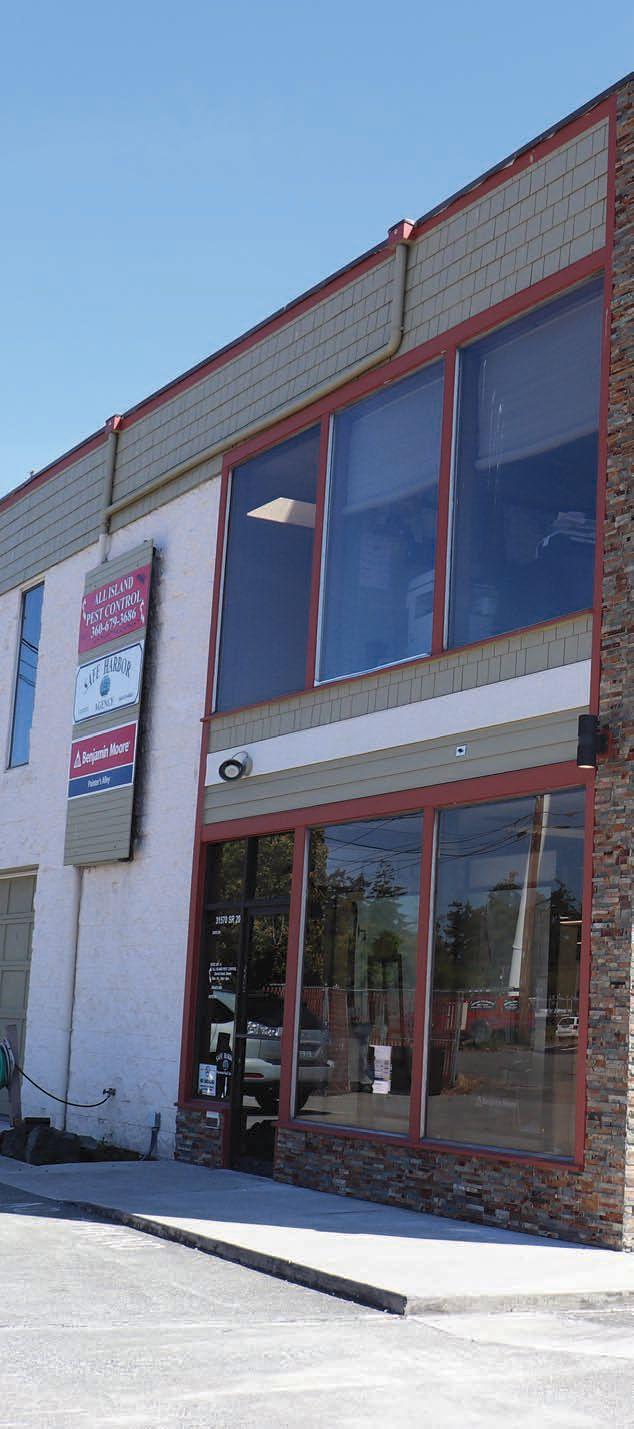
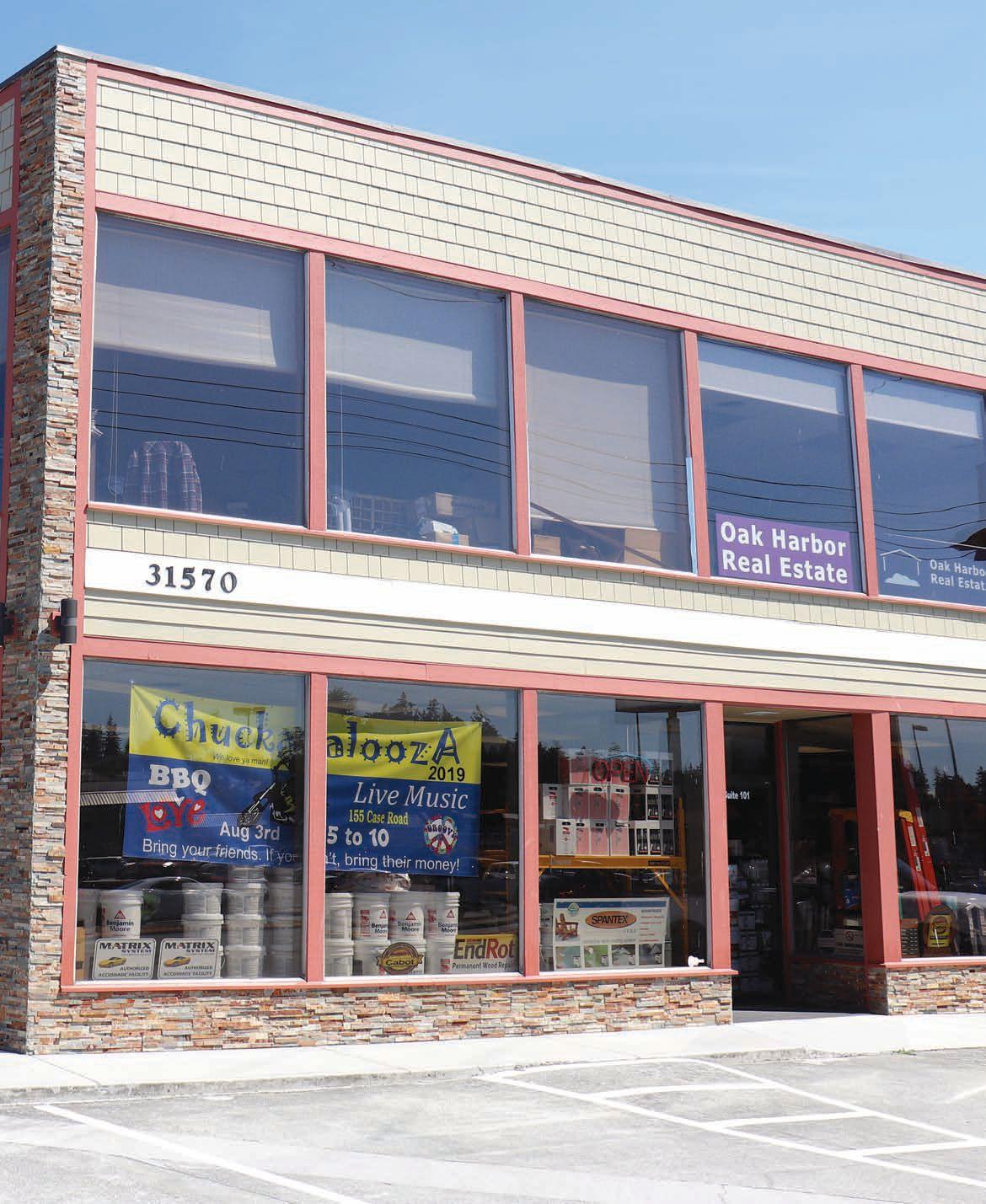
The Oak Harbor, Washington, location of Painter’s Alley was the first of three locations Matt Lambert opened with his parents.
Painter’s Alley
Oak Harbor, Washington
Painter’s Alley, headquartered in Oak Harbor, Washington, serves a unique market just north of Puget Sound.
Two of its stores—Oak Harbor and Freeland—are located on Whidbey Island, home to a major naval air station.
Oak Harbor is in the northern part of the island, while Freeland is located about 30 miles to the south. The third store, Anacortes, is located on Fidalgo Island, just across the bridge from Oak Harbor.
“It’s a very small, unique market but also very diverse,” says owner Matt Lambert. He describes Oak Harbor as a military town, Anacortes as a marine town—known as “the gateway to the San Juan Islands”—while Freeland is a second-home market for many residents in nearby Seattle.
Lambert and his parents Jeff and Mary Jo Lambert acquired the Oak Harbor store in 2005. In 2016, they opened the second store in Anacortes. The most recent addition occurred this year, with their purchase of the store in Freeland. Now, Lambert and his parents have separate business enterprises. He still owns Painter’s Alley, while Jeff and Mary Jo own a rental equipment business.
There was a 16-year gap between acquiring the Oak Harbor and Anacortes stores, but only a three-year gap between the opening of Anacortes and Freeland. The economy was a factor in the timing of the store openings—and so was Lambert’s experience level.
“When the economy began to tank in 2008, we were in a growth phase, so we never really felt the drop,” Lambert says. “I was still pretty young at the time—only in my 20s—so I still needed to figure a few things out.”
Given the weak economy, the Lambert family felt it wasn’t prudent to venture much beyond their core business. Around 2013, the Lamberts started having conversations with their paint supplier about opening a second store.
“It’s a big thing that we had the support of a company like Benjamin Moore behind us,” Lambert says.
Finding the right location was a key topic when discussions began in earnest about opening another store. They found it in a rental store in Anacortes whose owners were looking to retire.
Now the Anacortes location includes both the rental business and the paint operation in one storefront. Customers walk in the front door and head left for the paint store or right for the rental equipment business.
“It’s a really good fit,” Lambert says. “If someone comes into the rental business for a paint sprayer, they can buy their paint from us.”
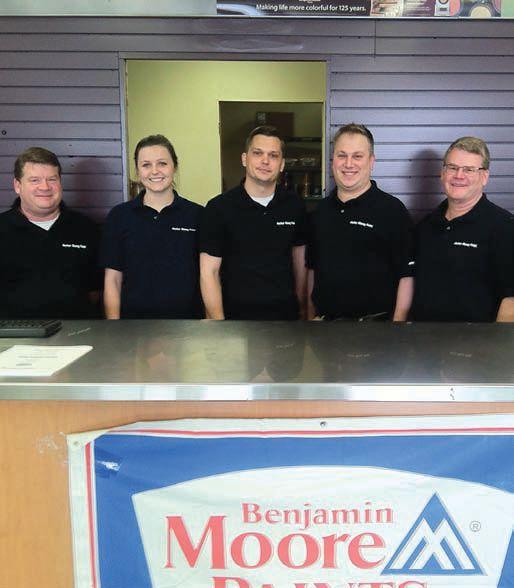
Matt Lambert (left) opened two additional store locations of his business Painter’s Alley in Washington state. He and his parents run complementary businesses—paint and rental—out of one storefront.
Lambert opened the Freeland store with an eye toward providing convenience. Customers from Freeland were sourcing their supplies from Oak Harbor, but that meant delivering paint up to an hour away. Last year, he sought a location that would limit his fuel costs and enhance his Freeland-area customers’ access to Painter’s Alley.
Another major move for Lambert was the purchase of a building in downtown Oak Harbor, where he relocated his flagship store. It’s the only building he currently owns, but he hopes to own more in the future.
Lambert’s buying group gives him a price advantage across the three stores. They mostly carry the same mix, though there are some differences to reflect variations in the customer base. Lambert says it’s important to use a sales approach that is tailored to the needs of the customers who walk in the door.
“Product mix is the biggest thing you need to know when you expand,” he says. “It’s not just mimicking what you did in Store 1 for Stores 2, 3 and 4.”
The key to fine-tuning each store, Lambert says, is to define your target market.
“It might take six months, a year or longer to do that,” he says. “The painters don’t come in right away. You’ve got to go out, solicit them and figure out what they like.”
Another key is staffing. Lambert initially ran the Anacortes store himself for the first year and hired new employees for the Oak Harbor location. Eventually, he found a manager for Anacortes. When he opened the Freeland store, he was able to promote an employee from within to manage that location.
While Lambert is considering a fourth or even fifth store, he says he has to make sure the numbers work and that the market is viable.
“There are two things that will dictate whether I will open up another store: cost and location,” he says. “You need to break everything out, including how much the staff is going to cost you. That’s the type of thing that will kill a store if not done correctly.”
Opening another location isn’t for everyone, Lambert says. “But if they’re up for the challenge, I would definitely recommend it.”
How to Create Buzz About Your New Store Location
You’ve read those articles featuring local retail stores’ grand opening events. These businesses are often in local headlines, and yours can, too.
The increased credibility from one news article or on-air interview can bring in more store traffic and sales than the most expensive ads. But don’t wait for the media to approach you first. Even if you don’t yet know all details, find out which reporters in your area cover small business so you can put a bug in their ear about your operation.
Generally, local reporters are on the lookout for news or features. News ties your business to current events, such as your store surviving a fire or sales increasing 20 percent during a recession. Features include business profiles or stories about your community involvement, such as where you’re opening a new location. Here are a few tips to take with you to your new store, especially if you’re opening up in a new area.
Be an expert. Regularly pitch new ideas to the media with press releases (including photos), giving the who, what, when, where, how and why. Your story should explain why you wanted to open a location in their area and how you’re going to support it.
Practice makes perfect. Before any live interview, practice relaying your story. State major points early on, and often, and never say anything “off the record.” Make yourself available for follow-up questions and include contact information for members of the public to reach out.
Share it online. Once the story is published, push it out on your social media channels and your website. Be sure your vendors and current customers know the details, too.
Being in the media connects people with your store, so don’t miss your chance when the timing is right. —By Claire Sykes
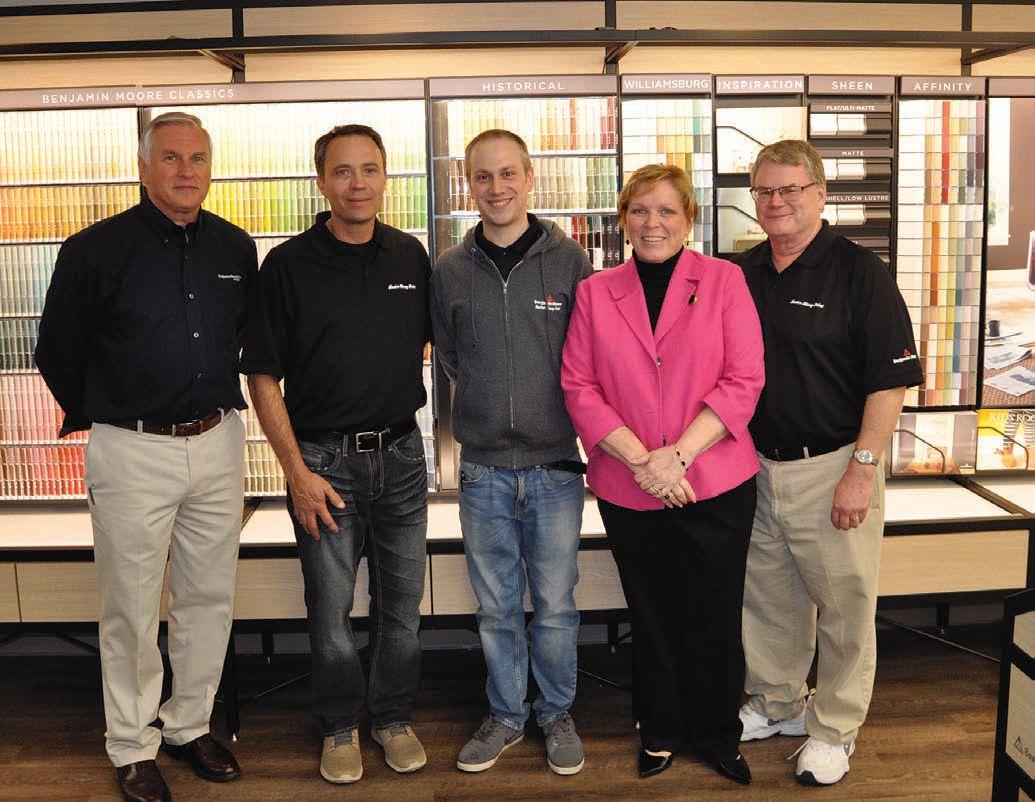
Lambert (left) has staffed each of his store locations with people who are capable of running the operations when he isn’t there.
C&S Paint Center
Jacksonville, North Carolina
C&S Paint Center owner Ron Choate has considerable experience with store expansions.
When the market softened, he sold his business based in Jacksonville, North Carolina, but now he’s back and expanding again.
The business was founded by Choate’s father in 1957. Choate assumed full ownership in 1984 and began expanding in 1991.
“My first branch store was in Wilmington, North Carolina, and throughout the 1990s, I added approximately four more stores,” he says.
Choate had a two-pronged approach to store expansion. In some cases, he would start up a new store in an underserved market. In other cases, he would find an existing retailer who wanted to vacate a market and was willing to sell.
“When the opportunity arose, I would buy someone out who wanted to get out of the business if I felt like it was a viable market,” he says.
By the mid-2000s, Choate had a total of 12 operating locations—mostly in southeastern North Carolina, but also in the Myrtle Beach and Florence, South Carolina, markets. Things were going smoothly until the Great Recession—or what Choate refers to as “the New Depression.”
At that point, he closed a few stores. In 2012, Choate sold his eight remaining store locations to a large national independent chain with the understanding that he could buy back his original location if he wanted to re-enter the paint business.
Two years later, that’s what he did. Since buying back his Jacksonville store, Choate has returned to expansion mode. He bought an existing store in Morehead City, North Carolina, and started up a store about 20 miles away in Cedar Point. He may add another store before the end of this year and possibly two more in 2020.
In the original version of his business, Choate stocked a complete selection of decorating products.
“Now we’re just a paint store,” he says. “The wallcovering business got very difficult to compete in, so we dropped that, and the window treatment business is dependent on getting good personnel, which is very hard to do.”
C&S Paint Center focuses on every aspect of the paint market, from homeowners to commercial and industrial accounts.
“We supplied the paint for the Battleship North Carolina, back when we had the stores in Wilmington,” Choate says. “We also do a lot of marine business because we are on the coast.”
Choate says one of the toughest nuts to crack when adding a location is finding good personnel.
“Employment is one of the things that ebbs and flows with the economy,” Choate says. “Right now, with the economy booming, it’s difficult to get people, and the wage scale is much higher. The paint business is still as competitive as it’s always been, and it squeezes you a little if you don’t buy right.”
To make sure he does buy right, Choate belongs to ALLPRO. He originally joined in 1992, and when he repurchased his store in 2014, one of the first things he did was rejoin.
“I feel like being in a buying group makes a huge difference as to whether you can compete and afford to expand,” he says.
To establish a new store location, Choate recommends turning to your paint supplier for help.
“Generally, if you’re growing, they’re willing to invest in your company,” he says. “They will help you pay for equipment and for outside salespeople to get you going. If you show them you can bring more to the table for them, they’re usually willing to work with you to make it easier.”
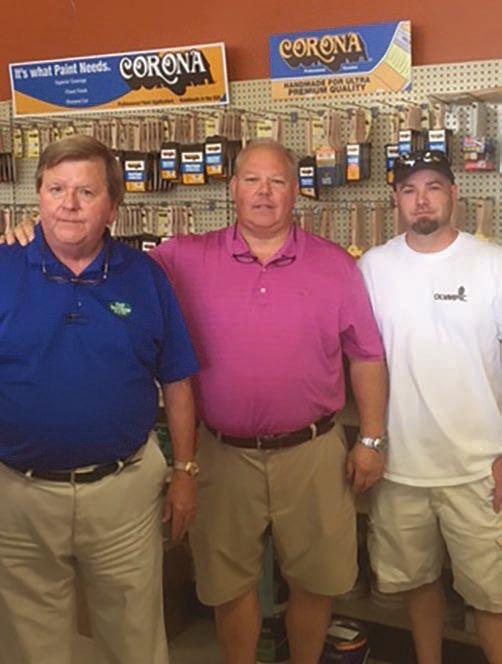
Ron Choate (left) has a solid team to help him, including 36-year store employee Victor Case (center) and Jason Reavis, Jacksonville store manager.
become
Kucker Haney Paint Co.
Hamilton, New Jersey
One of the most challenging elements about adding another store is finding a good location. That’s been the experience of Jim Haws, president of Kucker Haney Paint Co., a family-owned business with three stores in Mercer County, New Jersey. The original store opened under the name Haney Paint Center Inc. in 1950. Haws is a second-generation owner, following in the footsteps of his father, Don, who partnered with Tom Kucker in the late 1950s to form the company under its current name.
From its original location in Trenton, New Jersey, Kucker Haney Paint Co. moved to its current location in Hamilton in 1987. The store encompasses about 5,000 square feet, half of which is storage.
The first branch location, in East Windsor, opened in 2014. A second branch, in Princeton, launched in 2018. Both of those stores are about 2,400 square feet. When determining the location for the branch stores, Haws went into markets where existing retailers were departing.
“We purchased the East Windsor location from the old owner who was looking to retire,” says Haws. “We felt that the East Windsor area was growing and a branch store had a lot of potential.”
Similarly, Haws went into Princeton because an existing store owner was planning to retire and their mutual paint supplier, Benjamin Moore, wanted to ensure a continuing presence in the market. The existing retailer’s location was in downtown Princeton, close to the university, where the rents for potential retail locations were prohibitively high. It took more than three years to find a good retail location.
The site had previously been a restaurant, and in a tight real estate market, it proved to be the answer Haws was looking for.
Jim Haws (right) spent three years looking for the right retail store location in Princeton, New Jersey. The storefront was originally a restaurant and required extensive renovations to
just the right place for the third Kucker Haney Paint Co. location.
However, considerable work needed to be done to transform the building from a restaurant into a paint store. While the landlord took care of the required demolition, Haws was responsible for much of the renovation, including updating the electrical, installing new fixtures and giving the interior a cosmetic upgrade. From start to finish, the renovation process took more than six months at a cost of about $200,000—made more affordable thanks to financial considerations provided by his paint supplier.
“It needed a lot of work, but it turned out really nice,” Haws says.
To accommodate staffing needs of the new locations, Haws hired two new full-time employees. Each store serves a slightly different customer base, and as a result, the stores may have a few variations in their product mix.
“We stock the same basic items, but the store managers have the freedom to stock special items,” Haws says.
After the long process involved in the expansion, does Haws feel it was worth it?
“I’ll let you know in a year or two,” he says with good humor.
For a perfect line every time, InstaTrim is easy to work with and mess-free.
The pliable adhesive never dries out to allow for expansion and contraction. And, with no cure-time, it’s instantly paintable.
Jim Haws purchased the East Windsor, New Jersey, store location from a retailer who was looking to retire.
By Jerry Rabushka
All in One Package
PSC Thrives on Innovative Products and Catering to Independents
Even if your customers are not familiar with the name Packaging Service Co. Inc, they’re likely familiar with the fruits of its hard work. Innovative brands like Crown Solvents, Latex Agent and Workman’s Friend became a staple shortly after their introduction. But long before that, the company was providing exceptional products and services to the industry along with an uplifting work environment for its employees.
Like many companies that now distribute nationwide, Packaging Service Co. started off humbly, says marketing coordinator Gaby Mares. Founder Gabrial Baizan opened the business in 1971 to focus on developing paint chemicals for a national paint chain, but he also brought his love of learning and education to the company.
“Along with hard work and dedication, the importance of education is one of the main reasons for the company’s success and growth,” says Mares. “The Baizan family continues to instill the importance of education in all of their employees to help them develop as professionals and for personal growth.”
In addition to creating products for national chains, Packaging Service Co. developed long-lasting relationships with paint retailers. That strategy helped the company learn more about the problems painters needed to solve: safer stripping, coating difficult surfaces, even hand-washing. These relationships paid back, as retailers who had established trust with the company readily accepted new products into their stores.
“Products like our Lacquer Thinner created a household name for our company, which sustained its legacy for the years that followed,” Mares says. “What differentiates our company is that we continually push for diversified product lines, like our Workman’s Friend and STRP brands, that are unlike anything out in the marketplace now.”
Keeping Current With Chemistry
Packaging Services Co. is looking ahead by introducing new products and modifying its older catalog to stay relevant. The company is proud of its new line of paint strippers,
Packaging Service Co. founder Gabriel Baizan (center) and his family at the Pearland, Texas, facility.
which offer needed changes in advance of regulatory shifts in the industry regarding chemicals like methylene chloride.
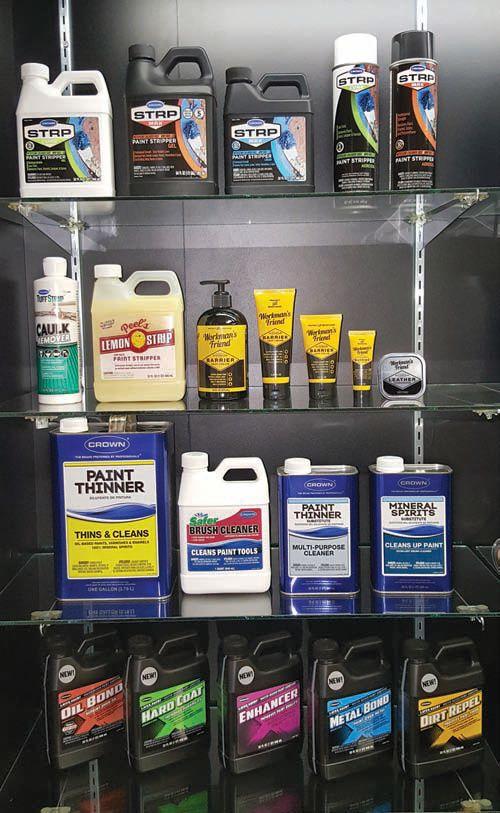
“Our goal is to create a safer environment and safer products, so we developed the STRP line of removers which is a less flammable and less toxic formula than other products in the marketplace,” says Mares. “These products were formulated to be safer than paint strippers with methylene chloride or NMP, and they are just as effective.”
Mares says a primary focus of updating the Crown brand was to continue supporting California’s safer environmental endeavors like its VOC program.
“Adapting our products for this marketplace requires us to be sure that our chemicals are as safe as possible,” she says. “In addition, we are committed to educating retailers and consumers on the substitute products that work similarly to existing products, allowing the customer to anticipate changes in the industry.”
A Focus on the Independent
When a representative from Packaging Service Co. comes to visit your operation, they’ll make sure you’re happy they came.
“Our outside sales force works directly with independent stores,” says Mares. “We have learned that our hands-on system works best for smaller independent retailers.”
Sales representatives work with you to customize a product selection for your specific customer base and then organize that selection in a well-designed product display to make sure those products move.
“We also deliver information to customers and retailers at pro shows and tradeshows,” says Mares. “Attending these events allows us to demo our products and talk to customers so we can better understand their needs. We are then able to understand customer expectations, how our products help them and how we can transform our products for the better.”
One product that was developed based on information gained from interacting directly with customers is the Workman’s Friend skin care line.
“Our Workman’s Friend line was designed to work as hard as our customers do. We learned that our customers’ work exposed their skin to harsh conditions, so we delivered a flexible solution,” Mares says.
“We maintain close relationships with paint distributors, and we work with paint store owner representatives to provide customized solutions.”
—Gaby Mares, Packaging Service Co.
“From our Barrier Skin Cream that protects and moisturizes, to a deep-cleaning hand cleaner, to our Healing Hand Cream that helps rejuvenate your hands, our formulations are directed specifically to make your life as easy as possible when it comes to preventing, preserving and cleaning your skin.”
While the company has made substantial progress over the years, the staff members at Packaging Service Co. always remember where they came from and the people who helped them grow. The company remains committed to independent retailers who put its products on their shelves.
“We maintain close relationships with paint distributors, and we work with paint store owner representatives to provide customized solutions,” says Mares. “We continuously invest in our facility to keep growing by launching unique and progressive products.”
As a category expert in branded, private-label and contract packaging programs, PSC delivers customized product solutions and value-added services.
Fresh Coat
3 Tips to Building Your Nest on Twitter
Each day, more than 500 million tweets from 326 million monthly users are sent over Twitter, one of the most popular social media platforms in the world. Finding ways you can use Twitter to highlight your staff, special events and key business information is a critical way to grow closer to customers and boost sales in the process.
In a recent article from business magazine Inc. , Thomas Griffin, co-founder and president of marketing software OptinMonster, explains the ways business owners can use Twitter to promote their brand and find new ways to reach shoppers. Check out these tips and try Twitter for your own company.
1 2 3
Put your best foot forward.
Promoting your business starts with ensuring your Twitter profile is professional and informative. Be sure to include a profile image that features your logo or storefront clearly. Also indicate your location and include a link to your website to make it as easy as possible for customers to reach you.
Set your business in motion.
According to Twitter, tweets that include videos are six times more likely to be retweeted than those with plain text. Griffin says video catches your followers’ eyes and can effectively promote your products. He says to keep videos shorter than a minute to keep people’s attention and best market your brand.
Review the nuts and bolts.
Only when independent paint retailers regularly monitor their Twitter analytics can they know when a marketing push has succeeded or fallen short. By checking your analytics, you can determine which tweets drew the most likes and retweets and which led followers to visit your main profile for more business information.
PDRA’s mission is simple.
We are here to help YOU become better, more profitable retailers! Join today and strengthen your team, your industry, and your association! Online Training for You & Your Team
As YOUR industry association, PDRA provides…
Marketing
And so much more!
“PDRA’s education and training courses provide employees with the information and confidence they need to succeed. The Compensation and Home Sweet Home Research Studies provided me with valuable information that I was able to apply to my business. Recently we started using the Content Marketing Program to support the communications we send out to local customers in the area. As the Paint Industry Association, PDRA supports all dealersTOGETHER WE ARE BETTER!”
Jay Donnelly | Flanagan Paint
PDRA Now
Make a Connection
Getting out of your operation for a networking event isn’t always feasible. But what if there were a space for you to connect with retailers throughout the U.S. and Canada just by unlocking your phone?
The Paint and Decorating Retailers Association is committed to making it easier for retailers to connect, which is why the organization launched a retailer-only private Facebook group. In the group, retailers are encouraged to ask each other questions about operations best practices, merchandising ideas, new product recommendations and more. It’s also a space to share success stories and challenges so everyone can learn from each other.
“We created the Facebook group because we understand how challenging it can be to find peers outside of buying group markets and other industry events,” says PDRA CEO LeAnn Day. “This space allows retailers to discover new ideas and make peer connections throughout the industry.”
If you’re interested in joining, find the PDRA on Facebook and click on Groups. You will be asked to answer a few questions about your business, and your membership will be approved by a Group administrator.
For more information about the group, contact PDRA association coordinator Tina Sullivan at 800-737-0107 or tina@pdra.org
What’s in Your Toolbox?
The PDRA has made available dozens of training resources for independent retailers to broaden their associates’ knowledge and skills. One valuable training program segment is the Trainer’s Toolbox, which is a swath of resources that help managers and trainers lead staff through exercises to develop specific skills.
Take a look at these suggestions for using a Trainer’s Toolbox exercise about building endcaps. Learn more about the program at pdra.org/education
3 Tips for Presenting the Exercise
“How to Build a Great Endcap”
What’s included: A Powerpoint presentation, a worksheet for trainees and Trainer’s Notes to guide the leader through the exercise.
1. Use the presentation during a staff meeting.
The Trainer’s Toolbox exercises are designed to be quick lessons for a large group or just one or two trainees. Leading everyone during a staff meeting can be a strong icebreaker. Consider pairing newer employees with long-time staff members.
2. Create a competition for small groups.
Part of this endcap exercise involves asking participants to design their own endcap. After walking everyone through the presentation and having staff draw their ideas on the worksheet, put them to the test. Ask each group to build the endcap they designed, and then have everyone vote on the best one. Treat the winning group to a gift card or lunch.
3. Don’t leave anyone out.
Even if you’ve owned the company for 40 years or your managers know all about endcaps, show your enthusiasm for training by participating in the activity yourself. The newest employees will appreciate your commitment and willingness to learn from other members of your team.
Industry Calendar
NOVEMBER 6-8
Home Improvement eRetailer Summit Kimpton Hotel Monaco Chicago Chicago eretailersummit.com
NOVEMBER 26-27
The National Paint and Decorating Show Ricoh Arena Coventry, England paintshow.co.uk
DECEMBER 5
NRHA State of Independents Conference NRHA Headquarters Indianapolis nrha.org/soic
FEBRUARY 7-8
Lancaster Florida Buying Show Gaylord Palms Hotel & Resort Kissimmee, Florida lancasterco.com/events
Orgill Spring Dealer Market Orange County Convention Center Orlando, Florida orgill.com
If you would like your event included in this list, email Melanie Moul at editor@pdra.org with the date, location and a brief overview of your event.
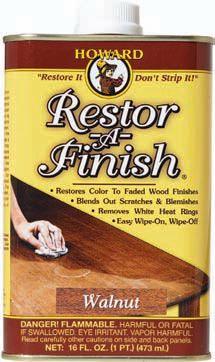
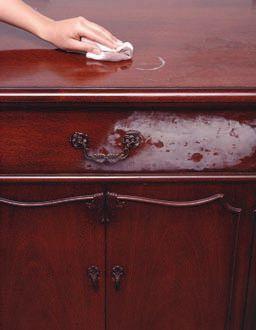
• Restor-A-Finish is a unique finish-penetrating formula that restores wood finishes while blending out minor scratches, blemishes, and abrasions
• With a simple wipe-on, wipe-off process, most finished wood surfaces that seem to need a complete refinishing job can be restored in a few minutes
• Removes white heat rings and water marks, sun fade, oxidation, smoke damage, etc.
• Available In: Neutral, Maple-Pine, Golden Oak, Walnut, Cherry, Mahogany, Dark Walnut, Dark Oak, and Ebony Brown
Independent Home Improvement Show Lands at IGC
Anew celebration of independent business took place at the 2019 Independent Garden Center Show in August.
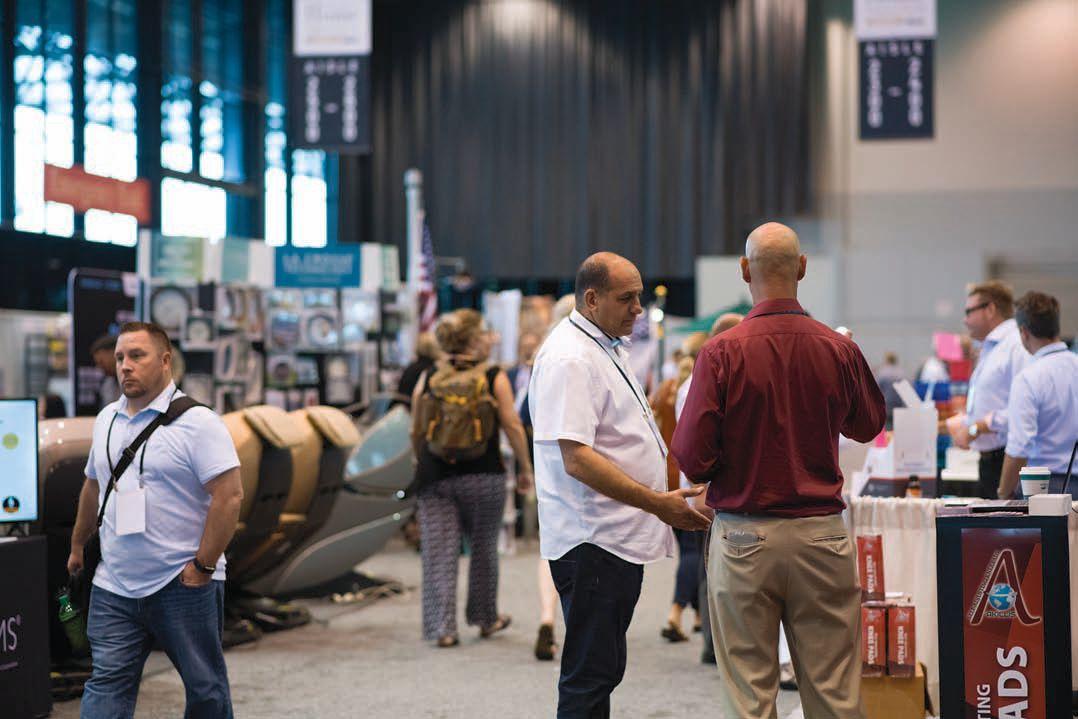
The inaugural Independent Home Improvement Show, Powered by the National Hardware Show®, was set up alongside the IGC Show vendors to give attendees a larger scope of companies that are eager to support the independent channel. There were opportunities for independent operators across the spectrum to find new products that will complement their business.
Feed-N-Wax
• Enhances the natural beauty and depth of grain in finished and unfinished wood
• Prevents drying and deterioration of all wood finishes
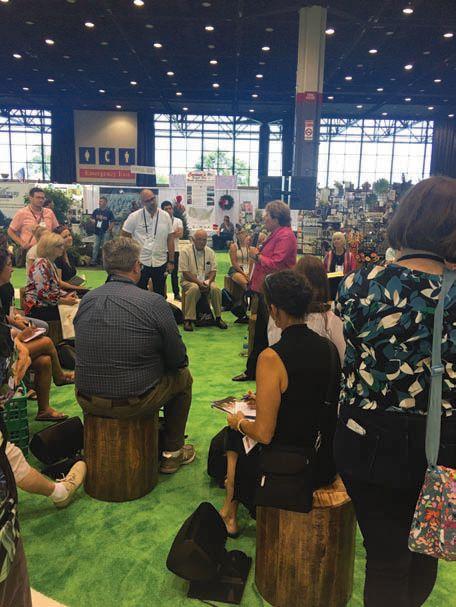
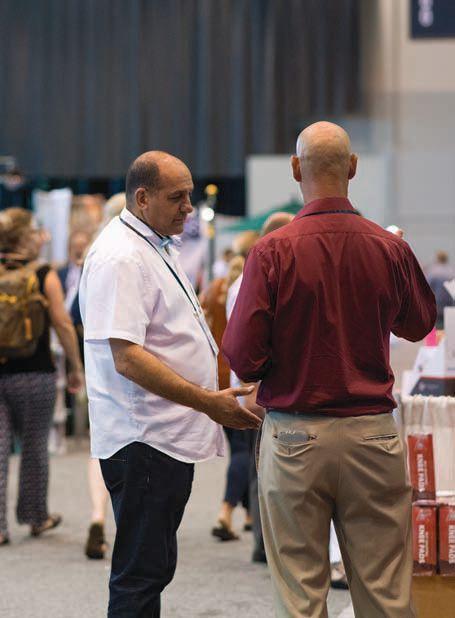
The Independent Home Improvement Show co-located at the 2019 IGC Show.
• Polishes all wood surfaces to a soft luster and protects with a coating of beeswax and carnauba wax
• Maintains the restored finish after using Restor-A-Finish
• Not intended for food-prep surfaces and
Eliminate white heat rings, water marks, sun fade, oxidation, smoke damage, etc.
“Many independent home improvement and hardware retail businesses include garden departments, and we have long recognized the IGC Show for its leadership as America’s biggest and best garden center event,” says Rich Russo, vice president of the National Hardware Show.
“Additionally, both retailer audiences potentially sell various home improvement and houseware items from the vendors we will bring. It’s a perfect fit.”
In addition to the Independent Home Improvement Show, the North American Retail Hardware Association also co-located two events. The State of Independents Midyear Review took place on day one, and the NRHA STIHL Foundations of Leadership Conference occurred on day two.
Stay tuned to future issues of Paint & Decorating Retailer magazine for more information about the National Hardware Show, which kicks off in Las Vegas, May 5, 2020.
Independent retailers had the opportunity to explore lawn and garden, hardware and paint vendors.
Guest Column Adding Products
Minimizing Risk
Being Confident in Your Expertise When Trying New Products
Independent retailers often have a lot of apprehension when it comes to buying new lines within established categories. Trusting a new line or company could mean additional manager training, building new brand recognition and uncertainty about what your peers are choosing. These are all things every manufacturing sales representative knows all too well. Quelling these issues and proving a product is worth your brick and mortar is what I do every day as SamaN’s vice president of U.S. sales. With a growing emphasis on retaining quality products among up-and-coming companies, it is becoming more important for vendors and retailers to develop quality relationships. Statistically, in the past, companies would spend 44 percent more focus on customer acquisition versus 18 percent that focused on retention. While the fight for retention over acquisition is rapidly growing, the haunt of smooth-talking salespeople leaving you high and dry still lingers.
Here are three tips I have gained through my interactions with retailers to help you decide if the product you are being offered is a safe and smart choice for your operation.
1. Ask for success stories. A confident salesperson should have several testimonials and contacts on hand to assure you are not the first to test the success of the line.
2. Ask how the company will help you sell. Ask to set up contractor training days and make this obligation a part of your opening order contract.
3. Ask for samples. Your contractors’ opinions are what matters, and often they are excited to test out new products. If they love it, then you know you have a safe investment.
Take these steps to ensure your risks are minimal. Remember, big boxes will often stick too strictly to brand loyalty for low costs and overlook quality startups or new innovation. Before you put your guard up the next time a manufacturing rep walks into your operation or you pass by an unfamiliar trade show booth, remember you can always learn something new.
I also work strategically with my social media group to drive targeted audiences to every new location I open for a minimum of three months. This averages to an audience of about 10,000 unique individuals within a 30 mile radius of the retailer’s address. In addition, I schedule hands-on FaceTime training for new employees which offers every staff member, no matter how far, the option to speak directly with SamaN and build a personal relationship with the products and their key benefits.
I have spent more time in the last 12 months training my new retailers’ contractors and sales teams than making any new calls because if I can’t guarantee a demand for promising sell through, then I am wasting my time and the retailer’s time.
Portions of this article were previously published at saman.ca/en/blog It has been edited for style and fit.
Ashley Fleming
As SamaN’s vice president of U.S. sales and marketing, Fleming has built relationships with distributors, sales agents and retail stores facilitating growth of the brand and sales. Her background in marketing and paint manufacturing gives her a unique industry perspective.
Guest Column Selling Skills
Make a Recommendation
Utilizing Your Color Expertise as a Selling Point
Retailers and their well-trained staff can be excellent resources for both professional and DIY customers by answering specific questions and recommending particular products. Retailers can also offer an added service to their customers by understanding current and future color trends in order to provide support to those customers who are often overwhelmed by the color selection process.
Learning about color and design trends can be beneficial to your business, make it easier for your customers to select the right paint color for their projects and ultimately lead to a sale for you. Review the following tips for helping your customers choose the perfect color.
Tips for Color Selection
Here are my favorite tips for retailers to use to help their customers choose the perfect hues for homes, businesses, multifamily spaces and more.
• Use industry resources. Paint providers can offer another level of expertise to their customers by drawing from the latest industry trends reports like the PPG PAINTS ™ 2020 Global Color Trends palette. PPG compiles various tools and brochures that are developed from industry-leading global color insights. Intended to make the color selection process easier, PPG offers trends palettes such as the Multi-Family Color Trends palette and Generational Color Trend palettes. These easy-to-navigate resources ensure retailers can help their customers choose colors that are on trend, while tailoring to their specific audience and space.
• Understand the flow of color. When assisting your customer with color selection, keep in mind that colors should flow as you go from space to space. You can help them begin by selecting their ideal hue for the largest and most centrally located space, most likely the living room or building lobby, and coordinate additional colors from there.
• Make the process fun. The PPG Paints Color Game is another tool that enables your customers to discover exactly which color collection best suits their style. Through a short series of questions, the tool examines the color schemes that are most attractive to an individual, the decor elements that make them feel comfortable within a space, and the sentiments they value most, among other qualifiers.
The answers to these questions will determine what five-color collection best represents their decor preferences. Once the perfect colors are chosen, your customers can digitally (and easily) paint their space in a variety of colors using the PPG Paints virtual room painter tool. Retailers can encourage customers to upload personal photos, browse designer color collections and explore popular colors by visiting ppgpaints.com to use the tool.
By partnering with a global color authority like PPG, independent retailers can ensure they’re delivering the most up-to-date, accessible color trends for both professional and DIY customers. Many aspects of the renovation and construction process are complicated; why not make selecting color easy?
Dee Schlotter
Schlotter has worked for PPG for more than 25 years, and as the senior color marketing manager, architectural coatings, she manages the development of color platforms and conducts national presentations to professionals in the hotel, retail, new home construction and residential markets.
Become a Woodsmith
This month, makers and craftspeople can get face-to-face with the crew from the “Woodsmith Shop” TV show and magazine as well as other well-known woodworkers during the first annual Woodsmith Workshop scheduled for Sept. 30 and Oct. 1 in Urbandale, Iowa. According to show host and workshop presenter, Phil Huber, the company launched its first in-person workshop to interact with their audience.
“We consider ourselves a teaching magazine with a focus on education,” says Huber, “We’re part of a larger media company that has a strong event focus, so we decided to host the workshop to reach existing and new audiences in person.”
The focus on education is evident in the variety of breakout sessions scheduled during the event, including Milling Your Own Lumber, Workshop Safety, Building Small Boxes, Sharpening Tools, Incorporating Hand Tools, Bandsaw Dovetails and Wood-Carving Techniques. Plus, according to Huber, paint and stain techniques will be baked into several of the presentations.
Presenters include George Vondriska from the Woodworkers Guild of America; James Hamilton from Stumpy Nubs Woodworking Journal; blogger Anne Briggs of Anne of All Trades; urban logger Matt Cremona; and “Woodsmith Shop” hosts Chris Fitch, Logan Wittmer and Huber.
According to Huber, the highlight of the event will be getting together with other woodworkers and makers.
“There’s always an exchange of ideas,” he says.
“Attendees will take the ideas home and expand on them. They’ll take a different approach; they will look at tools in a different way. I’m excited to see what they come up with.”
And, if the camaraderie doesn’t provide enough inspiration, the location is expected to contribute. The workshop will take place at Living History Farms, an outdoor history museum of Midwest and rural life.
“We wanted a location that’s more memorable than a convention center,” says Huber. “At the museum, attendees will be surrounded by museum pieces that were made by people in the past to inspire them.”
from paint store to problem solver
The entire Benjamin Moore & Co. Family of Brands includes much more than interior and exterior paint.
We offer coatings for virtually all surfaces, including metal, masonry, pools and parking lots.
Talk to your Benjamin Moore® representative to learn about the products that will transform your paint store into the ultimate problem solver.