


















By Karon Warren
hat will the trends in color be this year? Get the inside scoop from experts at the industry’s premier paint and coatings manufacturers.
35 Retailer Profile
By Steve Penhollow
As a young man, the owner of Redelico’s Paint & Decorating Center loved working outside. So why did he buy a paint store?
39 The Answer Man
By Steve Penhollow
In his 49-year career, Dave Kiesow overcame arthritis, cancer and heart trouble while helping and inspiring scores of retailers.
46 Cars and Colors
By Steve Stevens
A brand famous for its tape–both audio and masking–also makes automotive paint and now has its very first color of the year.
By Karon Warren
Metallic paints have retained their popularity with consumers by making themselves a good match for everyday paint colors.
71 Everybody Brands
By Steve Penhollow
What do gym bags, T-shirts, Bluetooth speakers and knives have in common? You can put your store’s name on all of them.
77
By Steve Penhollow
College students design and build solar-powered homes in a U.S. Department of Energy competition.





8 N ews
Khan’s color course, USGBC’s CEO, Disney debacle, employers’ cautious hiring.
18 Products
PPG caulk wins award, Festool launches sanders, Fluid releases new dispenser.
24 Q& A with E ugene A ndreassi
A Benjamin Moore vice president says merchandising matters more now than ever.
28 Q& A with R ay Heck
An executive at Tower Sealants shares the secrets behind good planograms for caulk.
89 Science
The science behind a coating that discourages people from relieving themselves in public.
91 I ndustry
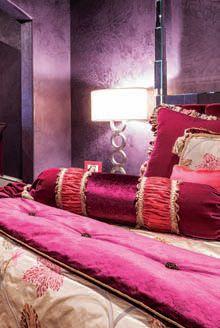
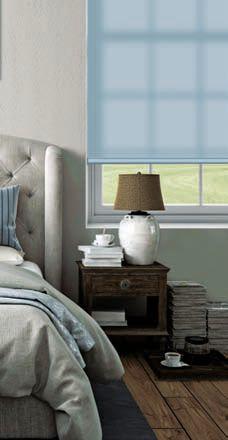
Comfortex Window Fashions tries to take the guesswork out of matching paint and window treatments.
95 Business
An update on Sherwin-Williams’ attempt to acquire the Valspar paint operation.


Publisher/Director of Sales

Looking back on my first six months with the PDra, I have had the opportunity to speak with many different retailers, manufacturers and distributors—all of which are very passionate about continuing to increase the relevancy of the independent paint retailer. Through my conversations, it’s clear the industry needs to expand upon four main initiatives: marketing, education, merchandising and technology.
In September, the PDRA launched Quarters Magazine , a custom publication that paint retailers can offer customers. The magazine has now morphed into an entire annual marketing program that will increase retailers’ visibility with consumers in their area. Consumers want inspiration and collaboration. The marketing program provides monthly communication to consumers that their local paint retailer is the expert and can support their needs.
I am very excited to share that the PDRA is also working on new education programs. These programs will provide members with networking opportunities, research information and various training courses. More details will be coming soon!
And in December, the PDRA launched a basic technology survey concerning the different types of software members are using. Once the survey closes, we will be reaching out to members to have further conversations concerning their needs.
In the year ahead, I look forward to working with members, manufacturers, distributors, buying groups and other associations to find additional new benefits and programs to help support independent paint retailers. I hope all of you have a safe and happy 2017!

Sincerely,

LeAnn Day leann@pdra.org
Dan Simon, dan@pdra.org
Editorial
Editor
Steve Stevens steve@pdra.org
Art Director
Murry Keith murry@pdra.org
Directories Editor/Circulation Manager
Lori Goad lori@pdra.org
Production Director
Jo Ann Ray jo@pdra.org
Director of Finance/Human Resources
Renée Nolte renee@pdra.org
Association Coordinator
Tina Sullivan tina@pdra.org
Account Executive
Brandi Hemmer brandi@pdra.org
a dv E rtising
Publisher/Director of Sales
Dan Simon dan@pdra.org
Phone: (800) 737-0107, Fax: (636) 229-4750
Account Executives
Richard Bright rbright@brightconcepts.net
Phone: (410) 869-3253, Fax: (530) 452-2266
Brandi Hemmer brandi@pdra.org
Phone: (636) 680-2785, Fax: (636) 229-4750
P dra EXECU tiv E lE ad E rs HiP
LeAnn Day
Executive Director
O fficers
Craig Bond
President and Western Region Director
Tommy’s Paint Pot, Eugene, Oregon
Jeff Baggaley
Past President
Color Company Decorating Centre Ltd., London, Ontario, Canada
Mike Fleck
Vice President/Treasurer and Eastern Region Director
Fleck’s Paint Spot, Toms River, New Jersey
D irectOrs
Robert Mueller
Director at Large
Benjamin Moore Kelowna, Kelowna, B.C., Canada
Jay Donnelly
Midwest Region Director
Flanagan Paint & Supply, St. Louis, Missouri
P dra a dvisory Committ EE
Dori Marks, PPG Industries
Thomas Hill, The Coatings Alliance
Eugene Andreassi, Benjamin Moore
Joe Jankoski, Hunter Douglas
Bob Clemence, Hyde Tools
John J. Petroci III, Dumond Chemicals
John Shingledecker, Allpro Corporation
Richard Russo, Reed Exhibitions



To teach people about the science of color, an educator famous for innovation worked with an animation studio famous for a fish named Nemo.
Khan Academy, an online education company that uses YouTube videos to teach students about a wide range of subjects, recently partnered with the Disney-owned computer-animation company Pixar to produce a video series about how people perceive and understand color. The series, “Color Science,” is part of a larger program, “Pixar in a Box,” designed to give users a “behind-the-scenes look at how Pixar artists do their job,” according to Khan Academy’s website. Pixar’s films include Finding Nemo , the Toy Story series and Monsters, Inc
According to the series’ introduction on the site, the videos are meant to explain how physics and the human brain determine the ways we perceive color and then how Pixar uses those concepts to tell stories. “Just as dialogue, acting and music are tools filmmakers use to
convey meaning and emotion, color can be used to the same effect. But determining ‘color’ is not as simple as saying ‘red’ or ‘brown,’ because there are endless shades of color in the visible spectrum. In this lesson, you will learn how color is determined partly by the physics of light and partly by how our brains perceive it.”
Videos in the series address various fundamental aspects of color, such as the light spectrum, RGB color and color space. They are narrated by Pixar color scientist Dominic Glynn. Pixar’s films Up and Toy Story 3 were nominated for Academy Awards for Best Picture, and many of the studio’s films have won widespread critical acclaim and numerous accolades, including multiple Oscars, Grammys and Golden Globes. To find the series, go to khanacademy.org and search for “color science.” •

Celebration, a Florida neighborhood created by the Walt Disney Company in the ’90s to be some sort of utopian village, has fallen on hard times, according to an article in The Wall Street Journal . Leaky roofs, mold and structural problems have made living there somewhat less than magical for some residents. “Some roofs of Celebration’s 105 condos and 4,000 singlefamily homes are shrouded in tarps to forestall leaks, while balconies, separated from buildings and supported by temporary beams, are completely unusable,” Audrey Wachs wrote for the Architect’s Newspaper. “Mold creeps up the insides of nylon-lined walls, a disastrous, moisturetrapping material choice for the Florida climate.”

The condo owners’ association filed a civil suit in April, seeking to force current Celebration co-owner Lexin Capital to pay for $15 million to $20 million in repairs. Metin
Negrin, president of private-equity firm Lexin Capital, told The Wall Street Journal that Disney’s architects and builders made many mistakes when planning and constructing Celebration. The Disney Company has little input into the town these days, The Wall Street Journal said.
O’Brien Products, maker of Dizzolve Brush Cleaner & Conditioner, recently announced that it had joined Paint Sundries Solutions (PSS), a national distribution network headquartered in Petaluma, California. “This is a major step forward for Dizzolve,” said company president Don O’Brien. “The innovative supply-chain solutions of PSS will allow us to access paint retailers nationwide.” PSS has distribution centers in Los Angeles, Dallas, Seattle and Salt Lake City, and delivers more than 10,000 products to 3,500 retailers nationally.
Former painting contractor O’Brien said he developed Dizzolve as a way of responding to the widespread call for greener products. “As a contractor of 35 years specializing in Victorian restoration, I had always been careful to protect the health of my workers and had handled toxic waste in accordance
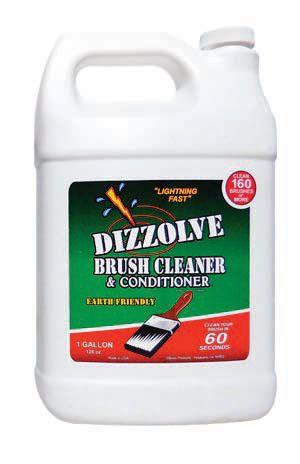
with sound environmental practice,” he said. “As a Paint and Decorating Contractors Association apprenticeship instructor, I passed this knowledge on to a new generation of painters.”
After the EPA began limiting VOCs in California, O’Brien said he was deeply disappointed in the first products that attempted to address those limits. “These Californiacompliant solvents were quite ineffective,” he said. “Painters began throwing away their brushes at day’s end because cleaning them became time-consuming and their brushes weren’t coming clean.”
Dizzolve, with almost zero VOCs, is nothing like those early products, O’Brien said. “The truly remarkable thing about Dizzolve,” he said, “is that it actually outperforms the traditional solvents and is less expensive.”


The U.S. Green Building Council, a membership-based nonprofit organization that promotes sustainability in buildings, recently announced that it had named former COO Mahesh Ramanujam as its new president and CEO.
Ramanujam took over for Rick Fedrizzi, who cofounded the company 23 years ago. “Mahesh is a remarkable leader,” said Fedrizzi, who is now chairman and CEO of the International WELL Building Institute. “His strong business background, his demonstrated track record and his amazing gift for inspiring the best in those around him make him the perfect CEO for USGBC at this time in its history. His global vision and his strategic approach give all of us great confidence that he will guide the organization to much success in the coming years.”
Ramanujam joined USGBC in 2009 as senior vice president of technology, and he was named COO in September 2011. “Since joining the USGBC team more than seven years ago, I have felt enormously appreciative to be in a position that allows me to give back and serve the critical mission of our organization,” said Ramanujam. “Our work has had a tremendous impact on millions of people as we strive to improve and enhance our world. USGBC is not just about buildings. It is about bold leadership to create business and community transformation while driving sustainability for all.”
USGBC board chair Fiona Cousins said the board looks forward to Ramanujam’s leadership. “Mahesh has already contributed a great deal to the organization and brings a strong mixture of vision and pragmatism to the organization, which will be crucial as the organization, and the world, continues to change,” she said.
Wildfires roared through Gatlinburg, Tennessee, in November, killing 14 people, injuring approximately 200 and destroying more than 2,000 buildings and other structures. According to a report from CNN published December 16, “Sevier County Mayor Larry Waters estimated the damage to be more than $500 million and the federal government said nearly 20,000 acres of the Great Smoky Mountains National Park have been scorched.”
According to multiple reports, the fire began Nov. 23 in a remote area of the park before moving five miles to Gatlinburg. Two juveniles have are being held for starting the blaze and local officials defended themselves against accusations that they could have done a better job managing the fire.
The fire spread due to intense drought conditions and unusually high wind gusts, some which were reported to reach 80 miles per hour. Embers could have been airborne for miles and eventually there were as many as 14 separate fires. According to ABC News, park deputy superintendent Clay Jordan said those things happen in extreme conditions in the western part of the country but are almost never seen in the eastern part. “First, we believe there was no way

we could have controlled the fire prior to the wind event,” Jordan told ABC News. “And second, the reality is that we believe that no number of firefighters or fire engines could have stopped the spread of the fire in such extreme wind conditions.”
According to ABC News, “Sevier County Mayor Larry Waters said officials at all levels will evaluate their response and determine what can be done better. He said everything is on the table but also said, ‘We couldn’t anticipate this kind of firestorm. I don’t think anybody could.’”

Much news is coming out of Benjamin Moore & Co., the Berkshire Hathaway coatings company based in Montvale, New Jersey.
Giving Moore, a Benjamin Moore foundation, announced that it was teaming up with the American Institute of Architects Foundation to administer the 2017 Diversity Advancement Scholarship program. It provides assistance to individuals from a minority race or ethnicity pursuing an architectural degree. Two students will be selected in April to win one $5,000 scholarship apiece this year and an additional $5,000 each per year for up to five years of their undergraduate architectural studies.
“Benjamin Moore & Co. and the Giving Moore Foundation are committed to supporting education initiatives for students of interior design and architecture,” said Mike Searles, CEO of Benjamin Moore & Co. and chairman of Giving Moore. “We are thrilled to partner once again with the American Institute of Architects Foundation and fund the Diversity Advancement Scholarship program. We look forward to seeing all that these students bring from their diverse backgrounds to a field that is changing the landscape of North America.”
new contractor loyalty program called Contractor Rewards. By purchasing Benjamin Moore products, contractors can accrue points that can be redeemed for merchandise.
And Houzz, the architecture and interior design website, said it is teaming up with Benjamin Moore to offer the Houzz Color Picker. Website users will be able to find a Benjamin Moore paint color for every photo available on Houzz.com. The Houzz Color Picker unit will appear on all photos uploaded to the photo lightbox at the Houzz website.

Also, the technology-consulting firm Microdesk announced that it had partnered with Benjamin Moore to launch a new application called the Benjamin Moore Color Suite for Revit. Autodesk Revit Architecture is an architectural design and documentation software application for architects and building professionals.
The new application allows designers using Autodesk to easily integrate color into their projects. The Benjamin Moore Color Suite for Revit gives architects and designers the freedom to choose paint colors, find product details and integrate those details into designs within the application.
Jeff Potter, foundation board president of the Fellowship in the American Institute of Architects, said the institute is grateful for the participation of Benjamin Moore. “The program was launched in 1970,” he said, “and it is because of partners like Giving Moore that we have been able to provide 2,300 minority architectural students with financial assistance over the past 46 years.”
Benjamin Moore also announced that it is introducing a
“We worked closely with Benjamin Moore to ensure that this new innovative and intuitive tool helps designers using Autodesk Seek to create models that provide a more accurate representation of the desired final product,” said Steve Martin, vice president of application development at Microdesk. “The opportunity to partner with Benjamin Moore on this project has been exciting, and we are seeing great results from designers.”
PPG announced in November that it agreed to acquire a Romanian architectural coatings manufacturer, Deutek S.A. PPG said it expects the transaction to close in the first quarter of 2017, following the receipt of regulatory approvals and satisfaction of customary closing conditions. Financial terms of the acquisition were not disclosed.

PPG touted the popularity and breadth of Deutek’s brand offerings in Romania. “Deutek, established in 1993, manufactures and markets a large portfolio of well-known professional and consumer paint brands, including OSKAR
and Danke,” PPG said. “The company’s products are sold in more than 120 do-ityourself stores and 3,500 independent retail outlets in Romania.” The company added that Deutek reported sales of 30 million euros in 2015.
“Deutek is a well-managed business with a long heritage of excellent customer service and a portfolio of leading, well-recognized brands in Romania,” Jean-Marie Greindl, PPG president for Europe, Middle East and Africa, said. “The acquisition adds the fastest-growing paint brands in Romania, where PPG has only a small presence in architectural coatings.”

Most U.S. hiring managers surveyed by DHI Group, Inc. say they will be more cautious about hiring in the first half of 2017 than they have been in the previous two years.
Fifty-six percent of hiring managers said they anticipate having to do some hiring in the first six months of the new year, which is a six-point drop from a survey conducted in June 2016 and a five-point drop from a survey conducted at the end of 2015.
The continued difficulty of finding qualified professionals remains the biggest reason for sluggishness in hiring. “Finding the right candidates for the right positions continues to be a challenge for America’s hiring managers, as demand for highly skilled professionals creates tension and competition among employers,” said Michael Durney, president and CEO of DHI Group. “To combat the time a position remains unfilled, recruiters are turning to sourcing and services which speed efficiency. But professionals remain ultimately in control and are asking for more money during the recruiting process.”
Given the shortage of desirable candidates, compensation is on the rise, DHI Group said. Fifty-nine percent of hiring
managers predicted that salaries offered to new hires would be greater in 2017. Companies that ignore the need for higher wages to attract desired talent do so at their peril, said Durney.
“Companies are missing a big opportunity by not evaluating salary trends and changing expectations for positions,” he said. “While some employers fail to stay current with rising salaries, savvy recruiters who keep up with changing market dynamics come out ahead and land top skilled talent.”
Seventy-five percent of hiring managers surveyed touted the importance of active recruitment versus waiting for the right employees to walk through the door.
“It’s becoming increasingly important for employers to have a proactive approach to attracting candidates,” said Durney, “one that goes beyond reacting when a position becomes available and extends to building a bench of talent and having candidates at the ready year-round. Services such as GetTalent and Lengo ease this pipelining process for employers to ensure candidates are engaged when a position opens up.” •


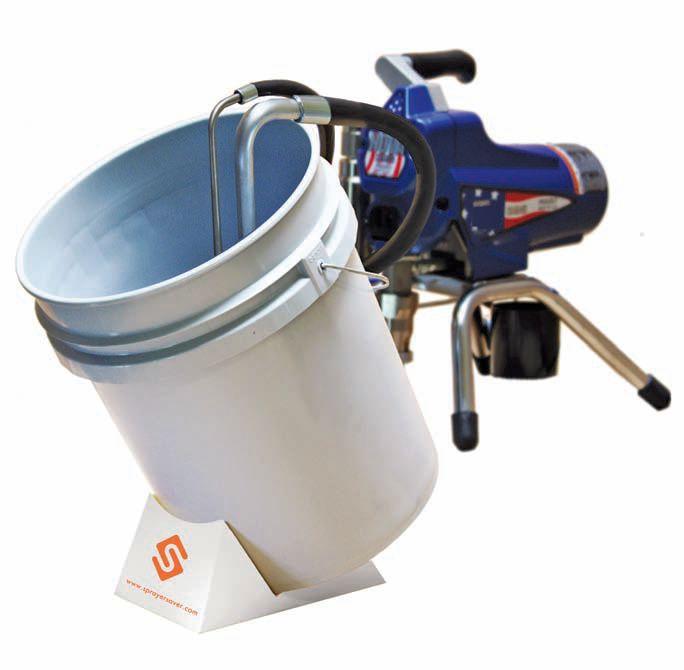
ASan Francisco–based painter has devised a new product that he said addresses an age-old problem for professional painters. The Sprayer Saver works with all commercial paint sprayers and tilts .the bucket so there is no wasted paint.
“I first built a prototype of the Sprayer Saver because I needed it for my own jobs, then all of my painter friends started asking for their own,” said Emmet Kauffman, the product’s inventor.
“That was one year ago, and now the Sprayer Saver is used every day by hundreds of painters.”
The Sprayer Saver is manufactured in the United States, Kauffman said. The bucket stand is constructed from high-strength plastics and can hold more than 500 pounds. A lip lock that fixes the bucket in position is a patentpending design.

Fluid Management Inc., a global manufacturer of dispensing and mixing equipment based in Wheeling, Illinois, announced recently that it is adding the Accutinter AT1600 series to its Accutinter line. The AT1600 series replaces the AT1500 series. Retailers will have two options from which to choose: the AT1600, which dispenses up to 24 ounces per minute, or the AT1600HS, which dispenses up to 64 ounces per minute.
Some key features of the AT1600 series include DVX dual-chamber pump technology with dispense accuracy down to 1/512th of an ounce, zero- and low-VOC compatibility, affordability, compact size and self-serviceability. “We’ve designed the AT1600 series Accutinter with the paint retailer customer in mind,” said Gary Lalla, senior commercial product manager at Fluid Management. “Customers are looking to have faster dispensing speeds to better serve our customer, and we are excited about bringing this product offering to the market.” Fluid Management’s ColorPro software allows retailers to manage formula books from a single screen and is fully compatible with common spectrophotometer devices.

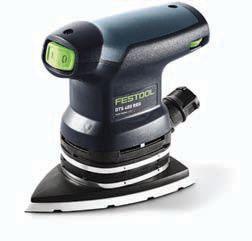
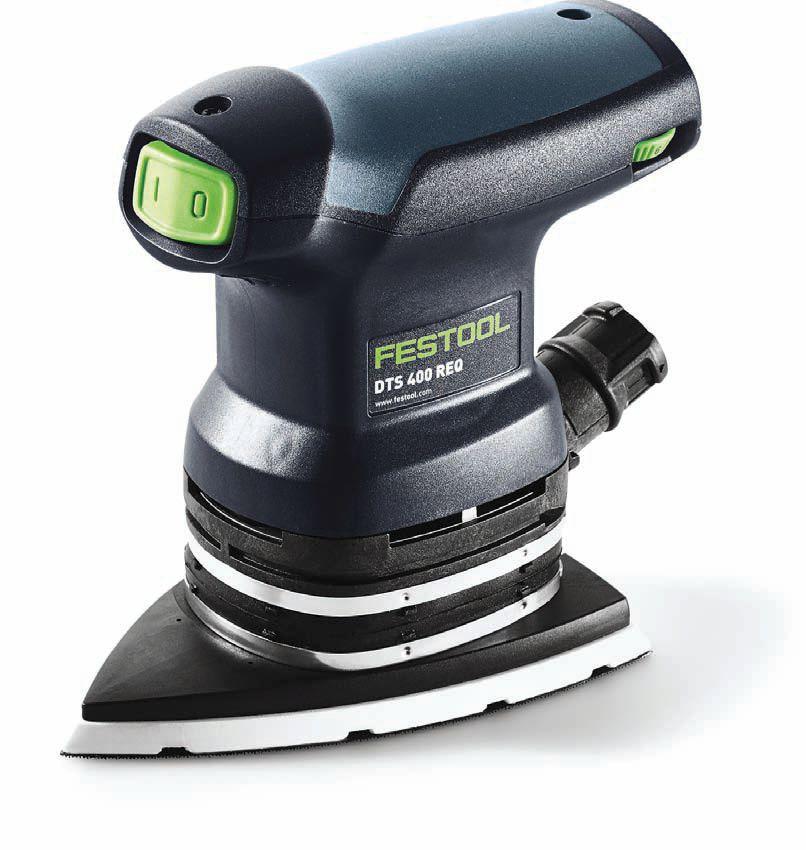
Festool introduced two new orbital sanders: the delta-shaped DTS 400 REQ and the rectangular RTS 400 REQ. New features include a 25 percent increase in power over previous models, a pad protector, a rubberized over-grip, a bayonet-style dust port connection and an optional reusable Longlife filter bag.
“Sanding is hard work, and these new orbital sanders are specifically designed to make that work easier,” said Leo Zirkler, vice president of marketing for Festool. “They’re powerful yet lightweight and compact—ideal for working on vertical and overhead surfaces—while providing superior finish quality.”
Homax, a PPG brand, recently introduced a new version of its Tough as Tile refinisher. It is designed to help restore aged and distressed porcelain, glazed ceramic tile and fiberglass surfaces. The new formulation features faster dry time, easier application, a more comfortable spray tip, an improved spray pattern, better drip resistance and a tougher finish.
“We know that one of homeowners’ biggest investments when it comes to home improvement is their bathroom space, as these projects
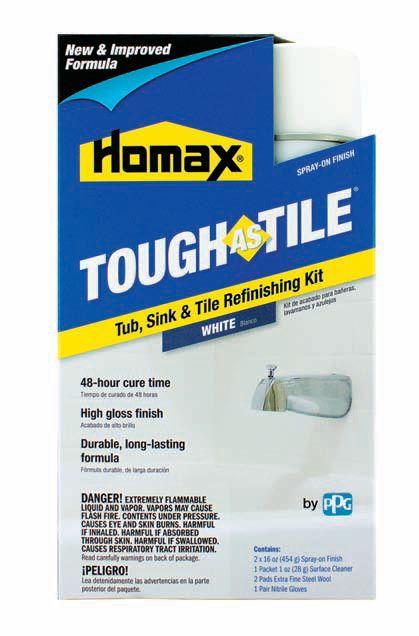

are expensive and time-consuming,” said Alana Zajdel, PPG senior marketing manager for the Homax brand. “With the new Homax Tough as Tile product, users can quickly and easily revamp the look of existing tubs, sinks or tile without spending a fortune or putting in days of manual labor. The Tough as Tile product is also perfect for professionals on a tight job budget or who need to get the job done quickly.”
The product is available as a spray-on or brush-on application and comes in two colors: bisque (aerosol only) and white (spray or brush).
PPG Industries acquired the Homax Group, Inc., a leading supplier of decorative wall and ceiling texture repair products, from Olympus Partners in 2014.
PPG also announced that its Fuze-It all-surface construction adhesive, under the Liquid Nails brand, was named one of the Top 100 Products of 2016 by This Old House magazine. In a blog post about Christmas gifts on the magazine’s website, the editors recommended Fuze-It, saying it is “a construction adhesive that sticks to almost everything in any weather condition. It bonds wet or dry surfaces, is up to 50 percent stronger than similar glues, and cures in a mere four to six hours. Plus, it has almost no VOCs, and
mistakes clean up with a rag, no solvents needed.”
“With Fuze-It all-surface adhesive,” said Mark Hembree, PPG senior marketing manager, “contractors and DIYers alike can rely on one product to handle nearly every job, no matter what materials they are using. The marketplace is always looking for more versatile products that are highly effective and save time. We’re excited to bring this technology to the marketplace.”
Mark Stypczynski, PPG manager of technical specifications, adhesives and sealants, and architectural coatings, said Fuze-It can adhere metal to metal or metal to plastic. “This will solve common jobsite challenges in determining what adhesive to use with different materials. It is a go-to choice for contractors and takes the guesswork out of everyday projects for DIYers.”
Hembree said Fuze-It was created to be a comprehensive, autonomous product that does not have to work in concert with anything else. “With Liquid Nails Fuze-It adhesive,” he said, “we take the guesswork out of selecting the best adhesive for particular jobs because it works on almost everything. We are proud to offer this versatile and unique technology to our customers and thrilled to be named a top product by This Old House magazine.” •


As the vice president of retail services for Benjamin Moore, Eugene Andreassi has seen a lot of paint stores. In fact, he spent seven years early in his career managing paint and hardware stores in New York. Born in Yonkers, just north of Manhattan, Andreassi studied history at nearby Purchase College. He has been with Benjamin Moore for 25 years, holding positions in sales, customer service, retailer relations, retail distribution, retail services and more. Paint & Decorating Retailer ’s editor, Steve Stevens, recently talked with Andreassi about the practice of merchandising in an independent retail environment.
PDR: Let’s establish what that term merchandising means. I’m not sure everyone has the same definition. Andreassi: You will get different definitions depending on who you speak with. I think from your perspective, merchandising isn’t just the simple laying out of merchandise so that it makes sense for store operations. It’s also a way of putting things in front of your customers that are of the greatest importance to them—those things that will resonate most closely with your shoppers, whether they are a professional, a consumer, a designer or a decorator.
PDR: Do you think merchandising is more important now than it used be, or less important?
Andreassi: I think it’s more important than ever. Every store sells goods, every store sells and merchandises products, so I think
The
Benjamin Moore vice president talks about how
to get better at merchandising and what the store of the future will look like.

it’s more important than ever that we do so in a way that makes it possible for shoppers to find what they want within that first minute or two of entering the store. That’s really, really critical. They’ve got to find what they’re looking for, unassisted, within that first minute or two to ensure that once they find it, they’ll maintain that whole shopping mindset that will allow them to shop the store. So they don’t just buy what they came in for, they shop the entire store. Simple, uncluttered merchandising will help them do that. We don’t need to have every single article in inventory out on the sales floor.
PDR: We’ve all walked into a store that’s sort of a mess and you don’t know where things are. It seems to be a common problem in some smaller stores.
Andreassi: It really is, and I think a lot of that is because the store footprint is so small that many stores are merchandised primarily for the convenience of the operator. Which
makes sense when you think about it. If I’m a store owner, I want to make it simple. Everything’s going to be out, so I don’t have to run around a lot.
PDR: So what specifically can retailers do to improve their merchandising efforts?
Andreassi: The very first thing they should do is look at it from the perspective of who’s shopping the store. Put themselves in the customer position. That takes a little bit of thinking. Go in there and just put yourself in the shoes of the consumer who may not know anything about the products. If they find the operator, that’s great, because the independent can offer a high level of service. We expect a level of product knowledge and industry expertise and service from the independents that you can’t get from a lot of other places, but that’s not always enough. Nor is it an expectation that one operator can handle every single person one at a time. So looking at it from that consumer’s perspective, they just need to see what they need to see and almost nothing else.
Also, something any retailer can do is remove all that unnecessary decor, messaging and stimuli. Amp up the lighting in the store—that’s a subject in itself. Guide your customer with good lighting to what it is that you want them to see. It could be a featured endcap, a product showcase, a sale item… You can actually guide them, unaided, just through really good ambient and feature lighting.
So by removing any other stimuli— older posters, old POP, messaging that may not be relevant or seasonal, everything in the store that detracts from the search and from the shopping experience—is something any retailer can do. The more focused they get
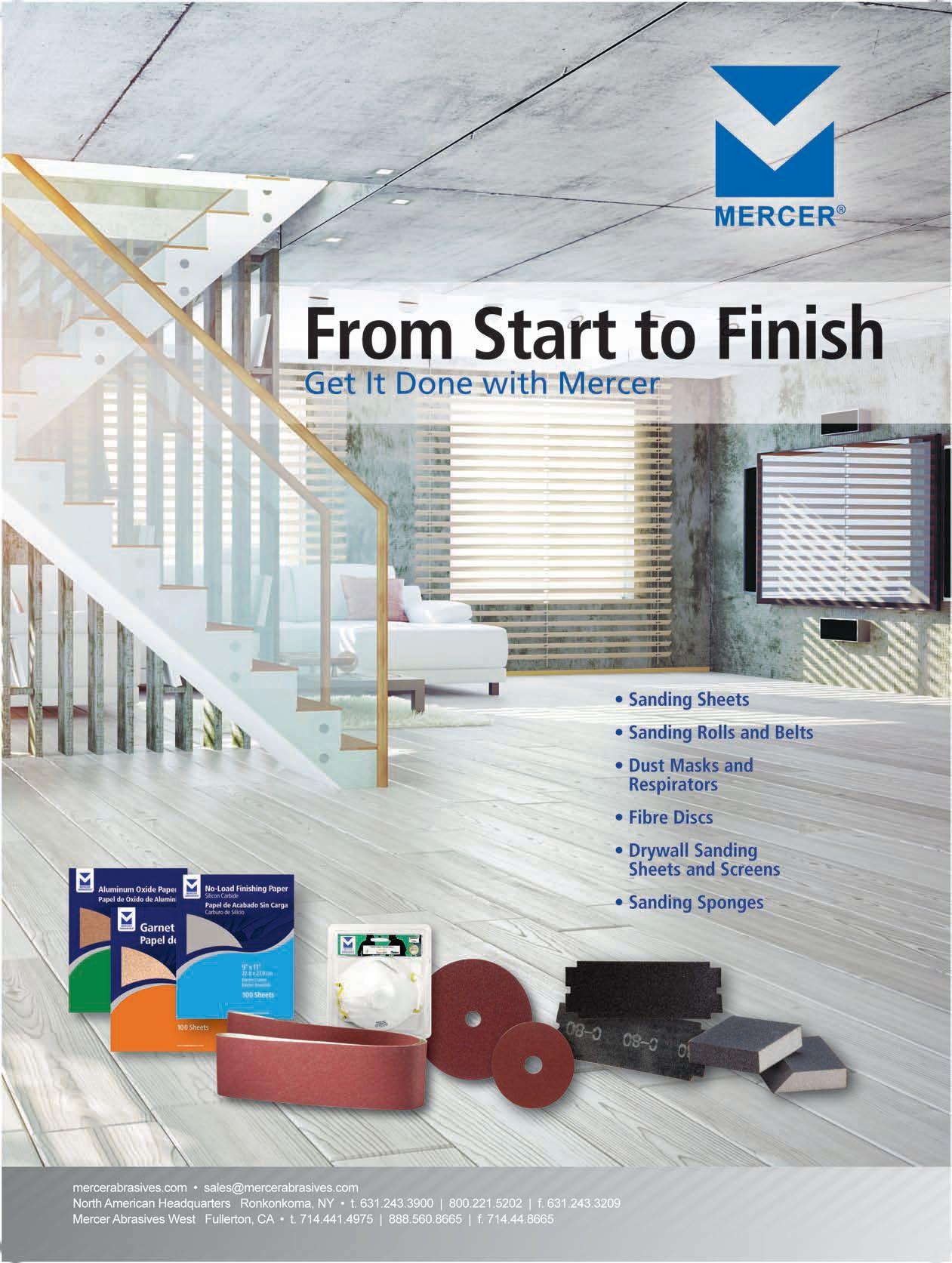
on guiding the consumer through a journey—through color, through product selection, through project support—the better and more successful the shopper will be in their search and the higher their satisfaction.
PDR: What resources are there for retailers who want to get better at these things?
Andreassi: Certainly, reaching out to your manufacturer for planograms is something retailers should do. Virtually any manufacturer will have planograms for the products they distribute. That would be a good place to go. Reaching out to your co-op, if you’re a member of one, on subjects like adjacencies and merchandising, I think, is probably something that not enough retailers take advantage of. The co-ops are very, very well versed in this. Reach out to your organization, the PDRA, for training. Also, reach out to your sundries vendors. They also are experts at this. They provide the goods, but adjacencies and merchandising is something that’s also in every one of their tool kits.
PDR: Benjamin Moore has what they call the “Store of the Future,” a concept you are now rolling out in the U.S. It seems as if a big part of the idea has to do with exploring better merchandising ideas.
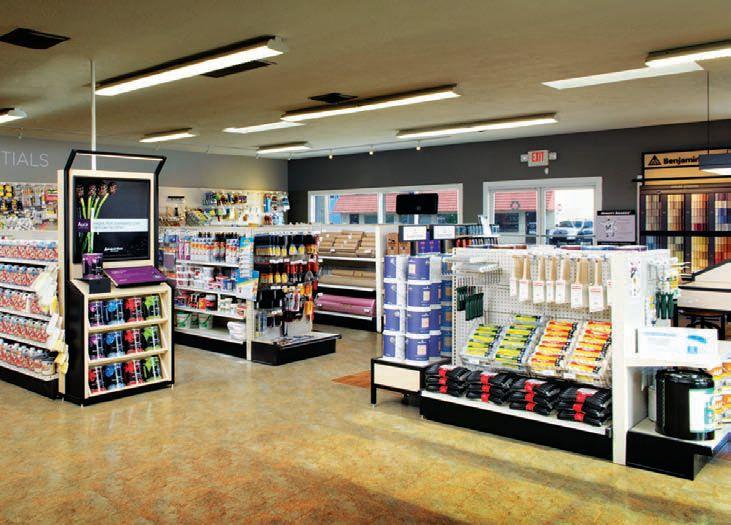
Andreassi: Sure, it does, and it forces the issue. With the “Store of the Future,” we wanted to create a very simple shopping experience and put an emphasis on showcasing. Showcasing is a wonderful thing, and the only way it works is by clearing out and creating space in a crowded
retail environment. So it forces the issue. With the store of the future, we put more of an emphasis on operations taking place in the warehouse space, and in many cases, that diminishes the retail space in a positive way. We find we don’t need as much. So it’s removal of excess inventory. To put it another way, we don’t need to have 24 quarts of a glazing compound on the shelf when a single run will do. So we are removing excess inventory and overstock, and cleaning up the retail space.
We also condense inventory into zones. We have a Project Essentials zone, a Color Studio zone and a Pro zone. So we’re merchandising the products that really appeal to each customer type. Contractor-focused products are in the professional zone, and consumer projects and products are in the project essential zone. But a mandate for stores of the future is to make it possible for that consumer to come in, take a look and know exactly where the store wants them to go and to be able to home in on the products they walked in for. But we also want to encourage them, once they’ve found what they’re looking for, to explore the store and be inspired to buy more. •

After studying chemistry and coatings technology at Kent State, Ray Heck started his career in the early 1990s working with Flood, the well-known maker of woodcare finishes. Eventually, the young man from the Cleveland suburbs ended up working with GE Silicone, where he oversaw the caulk category as the company’s North American marketing manager for construction products. He eventually went back to work for M-D Building Products, where he had been in the years after Flood, and he stayed there when they launched Tower Sealants. PDR recently talked with Heck about planograms and the challenges of merchandising caulk and sealant products.
PDR: How have caulking planograms changed over the years?
Heck: The planograms really started to change in the mid2000s. In 2004 or 2005, one of the messages that was coming from our partners was that they needed more structure. They needed to figure out how to make a little bit more sense out of what they had. You could walk into some retailers and the caulk aisle would be just a tragic nightmare. Customers wouldn’t know where to go to get what they needed. So in the mid-2000s, we really started to take a look at organizing planograms so they would be easier to shop.
PDR: What are some of the specific ways that planograms have changed to make it easier for customers?
The Tower Sealants vice president talks about how to merchandise with discipline and why caulk planograms are challenging.

Heck: Some of it has been pretty basic. What we do now is arrange materials so we have almost a good, better, best lineup. First we have your entry-level stuff, which is maybe an entry-level painter’s grade. Then we get up to that next category in the middle range and that’s really the biggest percentage of our sales—our white and clear caulking. They are great for painters, window installers and interior remodelers. They have a multitude of different purposes. They are siliconized and paintable, and the price point is up a little bit. Then we get up to the best category, where the high-performance products are. We have the urethane acrylics or maybe the high-end silicone or the hybrid, MS-type silicone, which would be your paintable silicones. They are higher priced and they are the go-to problem solvers. So in this good, better, best arrangement, we don’t have an entry-level product right next to a
supreme product. That makes it too difficult for customers to go in and figure out what they are looking for.
PDR: You’ve mentioned “getting rid of the noise” in a planogram. What do you mean by that?
Heck: My definition of noise in a planogram is when retailers overwhelm people with similar products. A lot of retailers end up with several different brands of the same exact product. It might be from us, it might be from company A or B. It could be from the GE guys. We all make similar products, right? Over a period of years, some retailers will start adding different brands into their set. Maybe they bought some during a promo period or maybe they’ve had contractors who have wanted a certain brand. Getting rid of the noise takes discipline and means that you have to make decisions that create a more shoppable, easier experience for customers. They get what they need quicker, and the store gets a better return on its investment because it is not over-planogrammed with four or five of the same product when it really only needs one.
PDR: What are the planogramming challenges specific to caulking?
Heck: There couldn’t be a more awkward product than a caulk tube, because of the way it is shaped and filled. All the material is up toward the tip, so you’ve got this product that doesn’t have any weight on its base. Everything’s up top. So when it stands, it wants to tip over. We’ve spent a lot of time working with display manufacturers to develop rack designs that will get these tubes to stand upright. But different retailers need different kinds of display packaging.
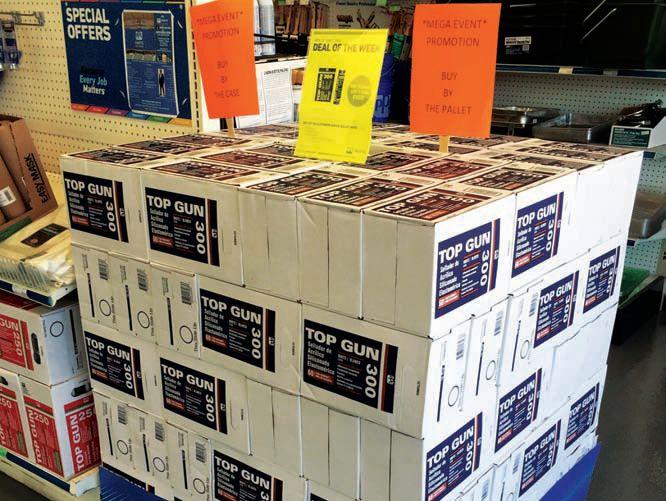
Sometimes stores with a lot of contractor business sell by the full case, so they will do a floor stack out and display. Planogramming for somebody who’s got a highvolume store isn’t quite as critical as it is for someone who sells more single tubes. Then there are stores that have standard gondola flat shelving and want to market from the caulk carton itself. So there are cartons designed for the top to come off so that the tubes can be marketed from the tray the caulk comes in. It depends on the retailer and what’s important to them and their customers. Even when we leave the stuff in the carton, we still try to get them to planogram it: good, better, best. Easy to choose and easy to use. •

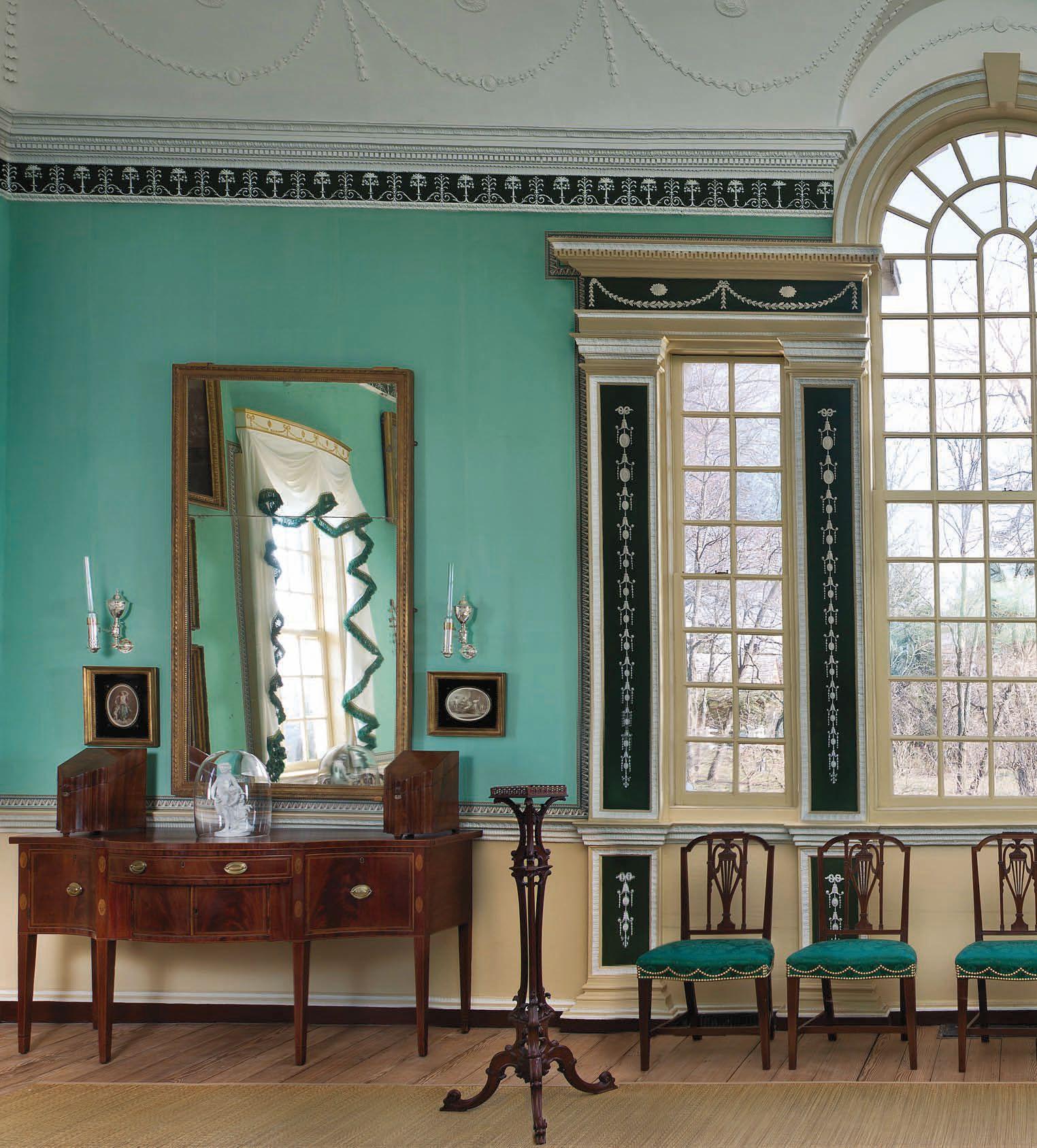
In 1735, a farmer, businessman and part-time sheriff named Augustine Washington built a one-and-a-half-story farmhouse on the banks the Potomac River in Virginia. His son George went on to become one of the most famous men in the world and the first president of the United States. When George inherited the property, he christened
the main house Mount Vernon. Today, Mount Vernon is a memorial to the former president, and paint manufacturer Fine Paints of Europe has helped keep the home’s color schemes as historically accurate as possible. The company partnered with the group that manages the Mount Vernon mansion to replicate the colors that existed in the house during George Washington’s time there.
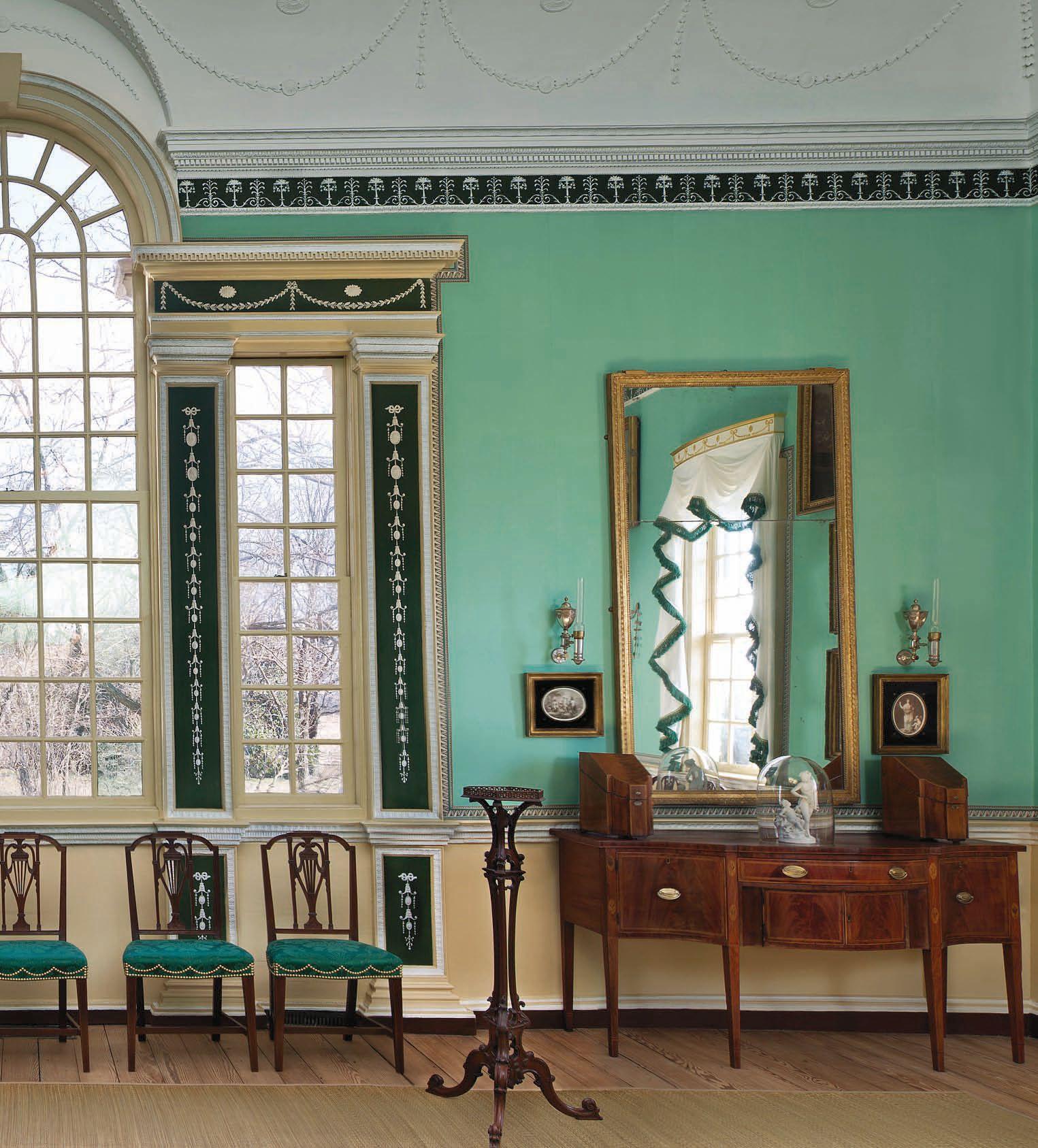
Photograph by Gavin Ashworth
Its place on a small-town’s main street makes this New Jersey business a throwback to the paint stores of yesteryear.
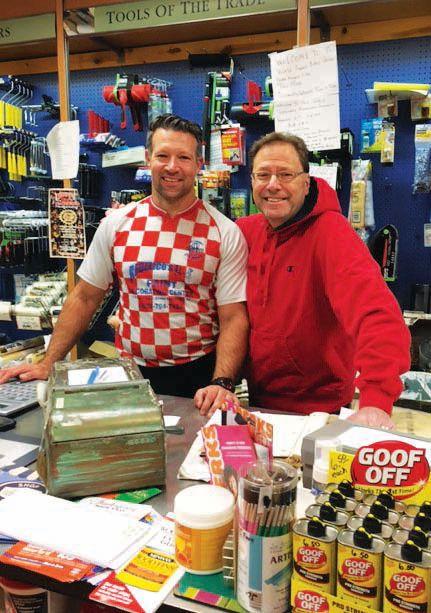
In the mid-1970s, Randy Redelico was doing well in the landscaping business and wasn’t thinking about switching jobs. Nevertheless, his brother tried to convince him to make a change. It involved a retail paint business that was for sale in Somerville, New Jersey.
“My brother, Greg, he’s a painting contractor,” said Redelico. “The previous owner of the store was looking
sell it. My brother comes to me and says, ‘Hey, Rand. Would you like to see if you’d be interested in working in a store?’ And I said, ‘In four walls? I’m outside doing grass and everything!’” At 23, Redelico wasn’t keen on spending his days indoors. But after meeting with then-owner Sidney Raymar, Redelico decided to experiment with a trial run. He worked part-time in the store for four months.
At the end of that span, he decided to sell his

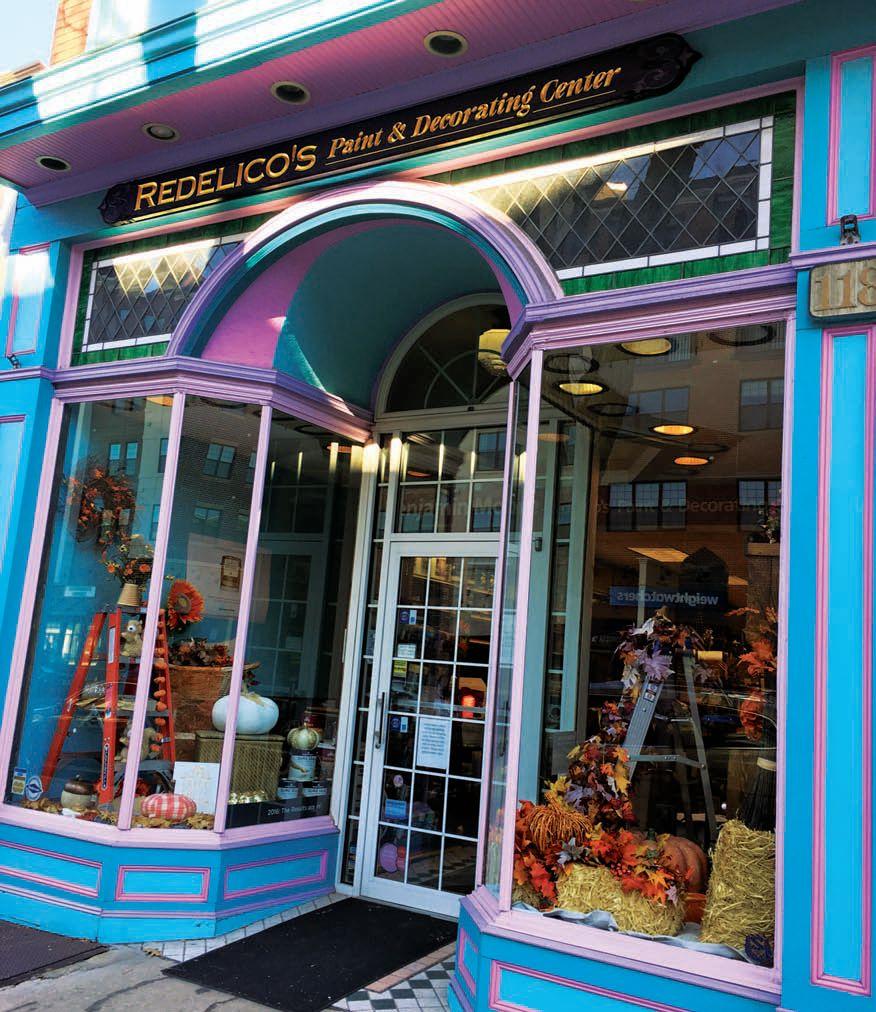
Redelico’s Paint & Decorating Center is a real throwback. The store actually gets random foot traffic, something most independent retailers don’t see much of these days.
landscaping business and buy the store with his brother as partner. Even so, Redelico didn’t think he’d be selling paint forever. “I said, ‘Aw, I’ll do this for a couple of years,’” he said. “And here I am, 40 years later. It’s been good. It’s been very successful.” Ironically, Redelico’s brother retained his contracting business so he didn’t have to stay in the store all day (and Redelico bought out his brother’s share in the mid-1980s).
Redelico’s Paint & Decorating Center is a real throwback and rarity in these times: It is located on a main thoroughfare in a resurgent downtown. Its storefront and building are charming and picturesque. The store actually gets random foot traffic, something most independent retailers don’t see much of these days.
The trending area where the store is located has been dubbed Restaurant Row, Redelico said. It’s a nickname that surely must be music to the ears of any nearby retailers. “There are a lot of restaurants in town,” he said. “And that brings a lot of people in.”
Three years ago, Redelico decided to sell the house where he had raised his family to his youngest daughter and move with his wife into the apartments above the store. The history of the building, which Redelico owns outright, is murky. The “town fathers” told him its first use in the late 1800s was as a funeral home. Redelico said a universal hallway connecting rooms in one of the upper floors would seem to support this contention. “There’s a church right there, so it makes sense that they would have built a funeral home next to it,” he said.
The business has changed a lot over the years, Redelico said, and even with the store’s unique geographical advantages, the recent recession hit hard. In the 1970s and 1980s, it was all big jobs, Redelico said. “Everybody was painting their whole house, and cash flow was going good,” he said. “We spent a lot of money, but a lot of money came in. The cash flow was there. People going out to do an addition on their house—they got the loan. Easy money.”
Before the recession, home construction and housing market slumps were always good for the store, Redelico said. “We always got busier in the past years,” he said.
“Our business boomed because people were fixing up their own houses and they were investing in them.”
The recession that began toward the end of the past decade presented unique challenges, Redelico said. “It was totally different than anything in the past,” he said. “All of a sudden people were underwater and getting foreclosed on their houses. When the crisis hit, I thought, We’ll get busier . But we didn’t. We got slower.” The store went from 12 employees at its peak to four now. “We probably do about half the business we did then,” said Redelico. “I find myself working more hours.”
But Redelico said he isn’t complaining. He loves the store and enjoys being there. “I’m 63 now,” he said. “I was 23 when I started, and I am 63 now. I thought I wouldn’t have to put in as many hours right now, but things change. A lot of paint store owners are doing more work now than they (continued on p. 100)







Newly retired Dave Kiesow spent almost five decades in paint stores—and he helped everyone he could along the way.
By Steve Penhollow
Dave Kiesow’s nearly 50-year career in the paint-selling business started inauspiciously. The year was 1967, and Kiesow was a senior in high school. “The girl I was dating,” he said, “her parents owned a paint store. At that time, she was embarrassed, but she said, ‘My father asked me to ask you if you’d like to earn $20 unloading a semi filled with cartons of paint.’ In 1967, $20 was a big deal. Gasoline was 29 cents a gallon. So I said, ‘Yeah, you’ve got a deal.’”
That successfully unloaded truck led to more unloading offers, which led to shelf-stocking offers. “The boss, her father, found out that when I was stocking shelves, customers would ask me, ‘Can you help me with this?’”
Kiesow recalled. “And I could. So I more or less put that apron away and came up from the warehouse and started helping people.”
Kiesow spent 16 years with that now-defunct store, Carlson Paint of Sioux Falls, South Dakota, and then received an offer in the early ’80s to open his own store from a large paint and sundries distributor called Fargo Paint & Glass. “I arranged to meet the ownership of this company that was buying this distribution center,” he said. “They wanted a retail location as well, and they had no experience with retail.”
Kiesow said he soon discovered how much he had to learn as well. “It was far more difficult being a manager and running a retail operation than I had ever imagined,”
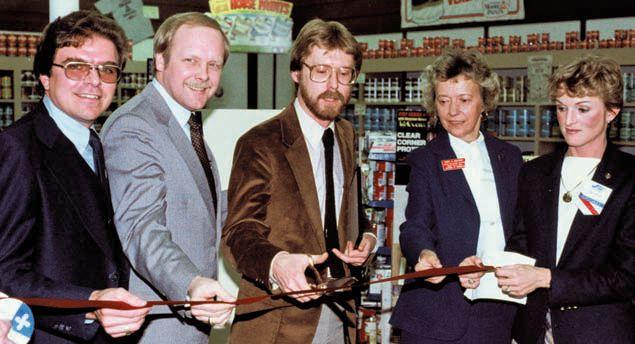
he said. But Kiesow, who retired in August 2016, did better than learn the ropes. From his base of operations at Sioux Falls Paint & Decorating, he helped a lot of other independent paint retailers get their start.
Retailers like Jim Wolcott, owner of Sioux City (Iowa) Paint & Decorating. After Wolcott bought his store as part of Benjamin Moore’s Temporary Co-Ownership (TCO) program, which provided cash-strapped entrepreneurs with initial funding, he needed advice on how to run it. The folks at Benjamin Moore
told him to contact Kiesow. “We were TCOs at the same time,” said Wolcott, “and we spun off from Benjamin Moore, meaning we paid them off and didn’t have to fall under their guidance anymore. We became friends from that.”
Wolcott said he and Kiesow joined a small buying group with an Omaha-based retailer, and they’d all share hot tips and trade secrets. “Some rep would call me with a good price on something, and I would call him and ask him if he wanted in on it,” said Wolcott. “He would do the same for me, and we kind of went back and forth.” Sioux Falls is sort of “at the edge of the world” where independent paint retailing is concerned, Wolcott said, so that put Kiesow in a unique position to help other store owners.
“There’s not a whole lot west of us,” said Wolcott, “so we’ve had quite a number of what they call indirect dealers that are too small to buy direct from the factory. So he would supply them with paint and sundries and training and know-how. A lot of them were hardware stores and lumberyards.”
Kiesow and Wolcott even organized conferences in Sioux City that brought together a lot of these small dealers. “We rented a conference room in a hotel in Sioux City, and we had all these dealers from all around this area come in,” said Wolcott. “We did hit

up Benjamin Moore for lunch money or whatever, because most of them were Benjamin Moore dealers anyway. We’d sit around and share ideas.”
Wolcott and Kiesow figured the first conference would be a success if people stayed for three or four hours. “Nobody wanted to leave the place,” said Wolcott. “We had dealers from way up into South Dakota and south of Omaha into Missouri. It was crazy. And then we all helped each other whenever we could. Dave did a lot of coordinating of that.”
Wolcott said Kiesow became respected enough that paint reps traveling through western states would name-drop him as a matter of course. “They would tell these other guys, ‘Hey, if you’ve got issues or you’re wondering about stuff, call Dave in Sioux Falls. He’s the answer man. He’ll help you out. He’ll give you good guidance and stuff.’”
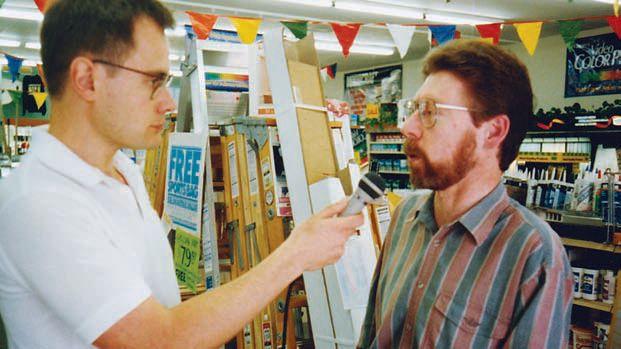
One of the retailers Kiesow helped was Kim Ebsen, owner of Kolorworks, in Madison, South Dakota. When she started her business in the early ’90s, Ebsen said she contacted people at Benjamin Moore for advice and guidance, and they pointed her in the direction of Kiesow. “He’s a very knowledgeable man,” she said. “He’s a great businessperson, too. I relied on his expertise as far as the business end of owning and operating a paint and decorating store.”
Kiesow recalled that he and Wolcott met Ebsen in Sioux City for a confab that went on longer than spouses and offspring were happy with. “They were rattling the doorknob on the conference-room door,” he said, laughing.
Another way Kiesow has inspired other retailers, Wolcott said, is with his unusual perseverance and steadfastness through personal adversity. Kiesow has contended with and battled through arthritis, cancer and serious heart issues. He said he was first diagnosed with arthritis when he was still quite young. “In 1991,” he said, “I had

to have both knees and both hips replaced because of arthritis.”
Wolcott said he recalls he and Kiesow having a big old time in Chicago at a PDRA meeting. “For a couple of guys from out in the country, that was pretty neat.” But Kiesow struggled to get around the Windy City, Wolcott said. “He was so
crippled up, he could not go over a curb from the sidewalk to the street by himself or get in and out of the bus.”
Yet Kiesow never complained. “He had all these health problems, and he never complained,” said Wolcott. “He went along on these bus things to visit stores. Shoot, we went to Dallas and did
an industrial training thing. You knew he was hurting. You could see it in his hands and in the way he walked. With all his problems, he was just such a great guy about helping anybody and everybody.”
Kiesow insisted that he had done his share of complaining, but said he also recognizes the power of positivity. “I did notice when I was going through treatment for cancer, the nurses would flat out tell you, ‘You’ll get through this. It’s going to work. Stay at it.’ They implied that attitude makes a difference.”
He saw fellow patients at the infusion center who were quite downbeat and dour, and he resolved not to be that way. “It’s like, ‘Gee, read a funny book. Tell a joke. It’s almost never as bad as you think it will be,’” said Kiesow. “Maybe I am just a lucky person. I am a lucky person. I got through it.”
A few years back, certain planets aligned in such a way that Kiesow knew the time for him to exit the business was fast approaching. A well-regarded regional chain called Hirshfield’s expressed interest in buying the store, and he sat on that information for a little while before acting on it. “That spring, finally it was like, ‘Yep, it’s time,’” he said. “I’d done 49 years, and I really didn’t want to get to 50 years working in a paint store. That’s just too much.”
Kiesow said an imminent 50-year high school reunion might have hastened things a little. “They always want to do a little publication,” he said, “and I just didn’t want to say, ‘I am still working in a paint store.’”
Since he walked away last August, Kiesow said he has had a perpetual smile on his face. “I don’t have to get up at 5:30 in the morning anymore,” he said. “I don’t have to worry about marketing, which is far more difficult than it used to be. I don’t have to try to find younger employees who will actually show up and not have their cell phones in their hands all the time.”
Ebsen said Kiesow’s product knowledge is unmatched and will be missed. “He’d run into all types of situations of applications and worst- and best-case scenarios,” she said. “I relied on him for a lot of product knowledge. He’s just a go-getter.
“He’s someone to take your hat off to,” said Ebsen. “A real role model.” •


Benjamin Moore & Co. worked with the American Institute of Architects (AIA) to renovate the Octagon House Museum, in Washington, D.C. President James Madison signed the Treaty of Ghent here, ending the War of 1812. According to the National Register of Historic Places, the home was used by Madison as a temporary residence after the British burned down the White House in 1814. Benjamin Moore and the AIA sought to restore the museum house to historically correct color schemes. Here, in the home’s stair hall, the painters used Dalila 319, Natura, flat, on the walls and Blue Porcelain 1641, Natura, flat, on the trim.



The world of automotive coatings makes for a dazzling rainbow of brightly hued cars, trucks and motorcycles.

By Steve Stevens


“These eye-catching shades react to direct light to deliver incredible shimmer and sparkle with color-changing effects.”


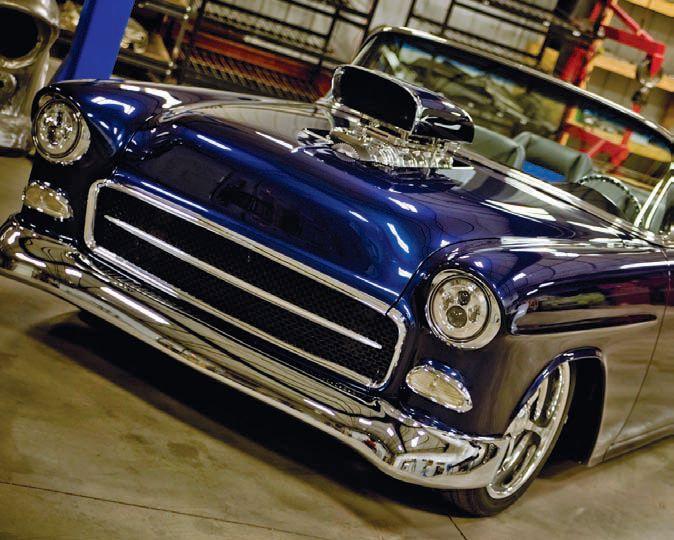
It isn’t onLy architectUraL Paints that get a coLor of the year
BASF Automotive Refinish showed off its color of the year for 2017 at the Specialty Equipment Market Association (SEMA) Show in Las Vegas in November. The company also introduced a new collection of 108 colors that provides “ … custom car builders and restoration shops the ability to deliver bright, extreme and one-of-a-kind, uncommon shades,” said BASF.
The company exhibited its first-ever color of the year, Reflexion Nebula, on a custom 2009 Nissan Skyline GT-R. BASF said the paint “transitions from blue to gray depending on the viewer’s vantage point,” adding that inspiration for the color was based on current trends.
“Our design team predicts a stronger presence of blue shades that offer versatility and broad appeal in the automotive space,” said Paul Czornij, head of design for BASF’s Color Excellence Group. “This is apparent in Reflexion Nebula, with its dynamic and scintillating look that is both playful and sophisticated.”
BASF said its new collection of colors, called the Zyrilliant Color Series, has 36 shades, 12 ground colors and 60 high-chroma colors that can be combined and applied using a tri-coat process. “These eye-catching shades react to direct light to
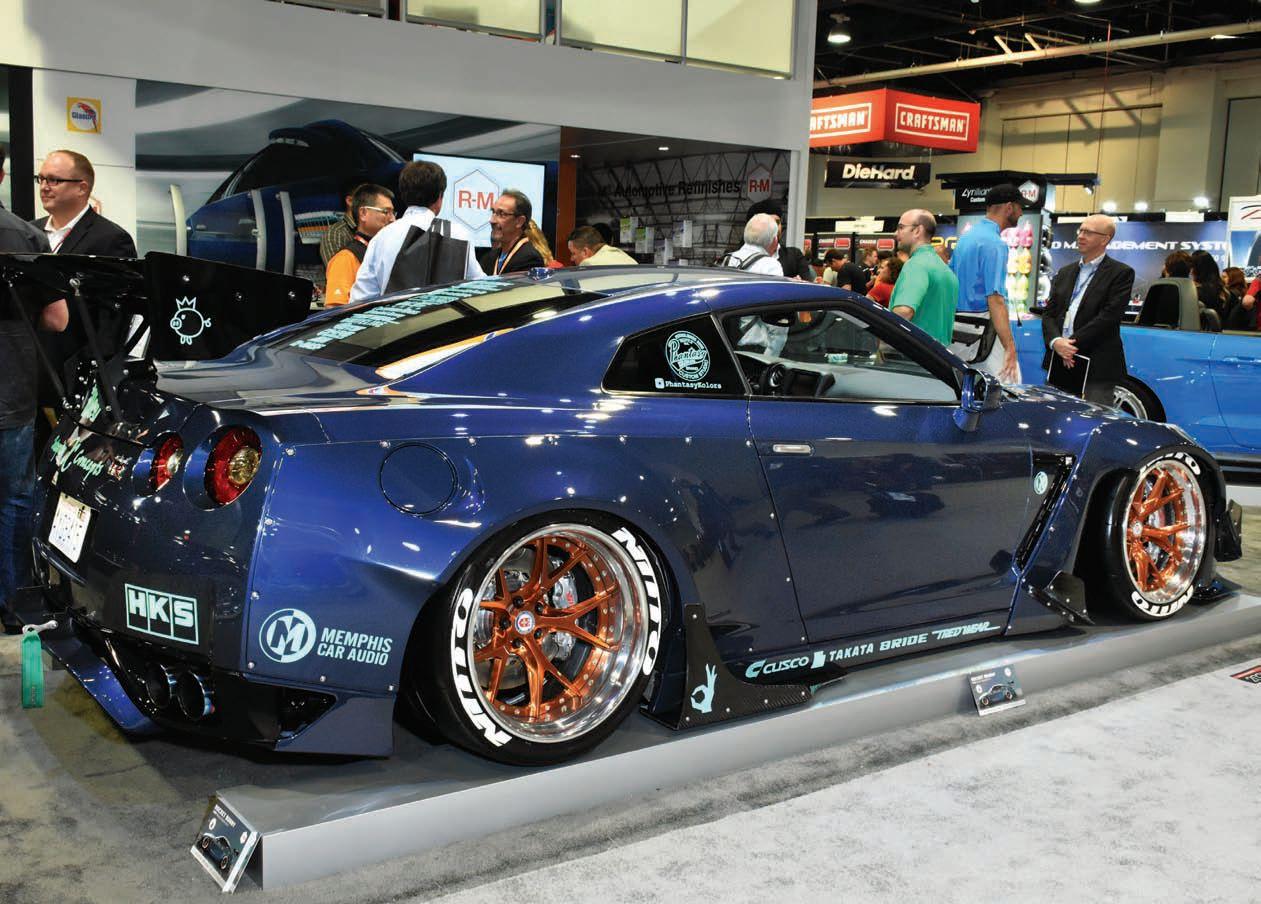
deliver incredible shimmer and sparkle with color-changing effects,” the company said.
Dan Bihlmeyer, head of North American marketing for BASF Automotive Refinish, said he believes the colors will encourage creativity in the marketplace. “Our new Zyrilliant Color Series provides customers with an easy-to-use collection that delivers truly unique and eye-catching results. Whether you’re looking for a bright, bold or exotic look, the series inspires people to experiment and create unique custom formulations.”
BASF’s Automotive Refinish business manufactures and markets coatings for the collision repair, commercial fleet and automotive specialty markets. Its paint products are supported by technical training programs, advanced color information systems, business management and planning tools.
Its parent company, BASF Corporation, is headquartered in Florham Park, New Jersey, and is the North American affiliate of BASF SE, based in Ludwigshafen, Germany. According to BASF, it has nearly 17,500 employees in North America and sales of $17.4 billion in 2015.
According to the company, “We create chemistry for a sustainable future. We combine economic success with environmental protection and social responsibility. The approximately 112,000 employees in the BASF Group work on contributing to the success of our customers in nearly all sectors and almost every country in the world.”
BASF’s global portfolio is organized into five segments: chemicals; performance products; functional materials and solutions; agricultural solutions; and oil and gas. BASF generated sales of more than 70 billion euros in 2015. •

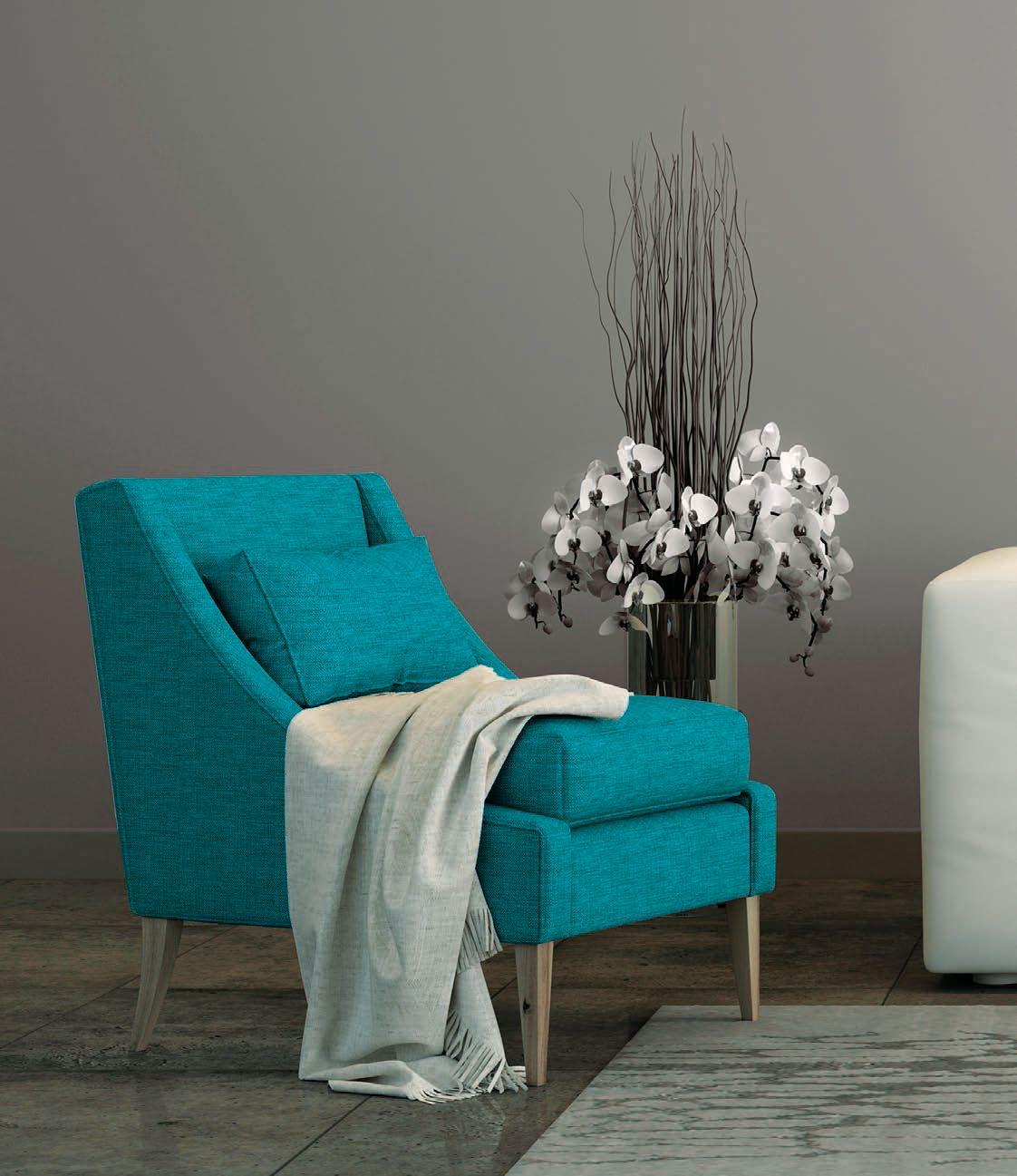
The experts say this year’s trends will be stuck in neutral.
Neutral shades of white, gray and beige, that is.
By Karon Warren

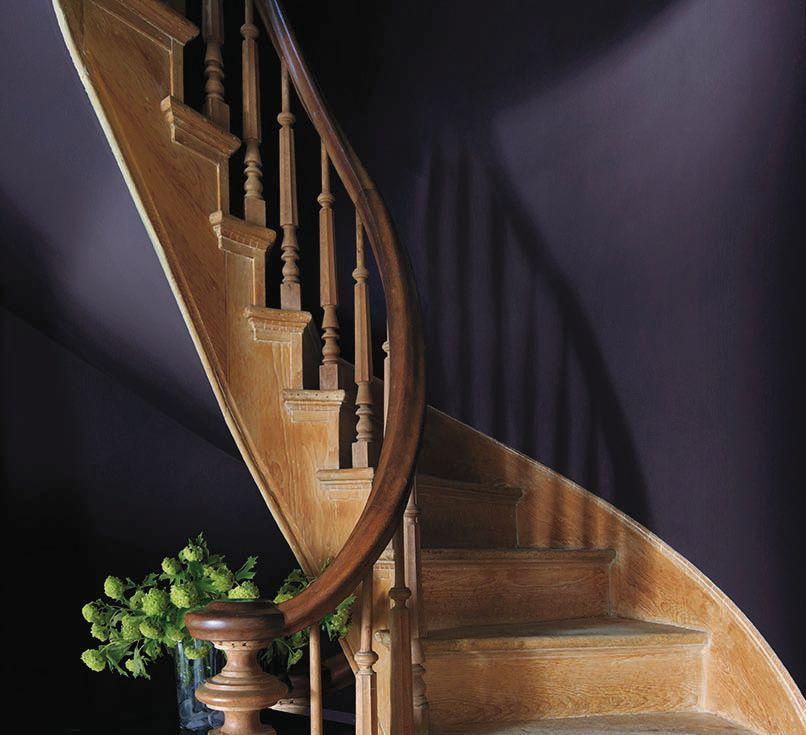
With 2017 under way, consumers are looking for a fresh yet low-key way to enhance the look of their homes, inside and out. Right now, that translates into great appeal for neutral colors combined with interest in some darker hues. It’s a color palette that is expected to endure in the months ahead.
“It speaks to the times,” said Mark Woodman, of Mark Woodman Design + Color LLC, in Laurel, Maryland, and past president of the Color Marketing Group. “It’s been a murky year and a half,” he said, referring to the onslaught of news about the election and other events around the world. “Gray can be a great stabilizer, but it can also reflect our feelings on things. We want to celebrate, have some sense of joy, but at the same time we’re looking at keeping it slightly subdued. Subdued joy, if you will.”
Various shades of gray top both the “trends” column and the “most popular” column for retailers. “Tones of gray continue to thrive as a popular option among our clients,” said Sixto Arroyo, general manager of the design department at Ricciardi Brothers Inc., in Maplewood, New Jersey. “People seem to perceive grays as the new neutral. It has been this way for a while, and we expect it to continue throughout early 2017.” Taupes, beiges and darker shades
of blue and navy have also escalated, he added. Manufacturers confirm that gray is very prevalent at the moment. “We continue to see the popularity of gray in the market with many of our top sellers in this category,” said Sandy Agar-Studelska, the color marketing and decorating products manager for Diamond Vogel Paints. “We have seen gray move cooler, with undertones of violet and blue, as well as warmer, with red and brown undertones.” Like Arroyo, Agar-

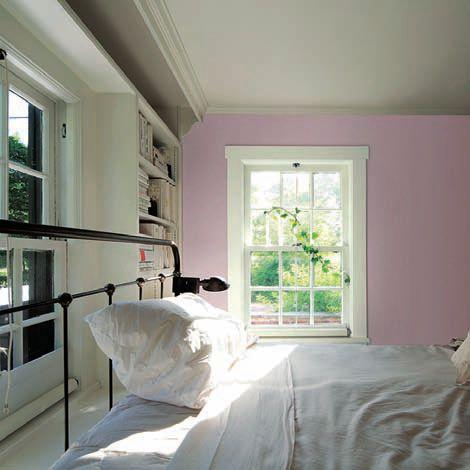
Olympic CLOUDBERRY
The soft violet is serene and calming, helping people focus on family and professional pursuits without distractions from the outside world.

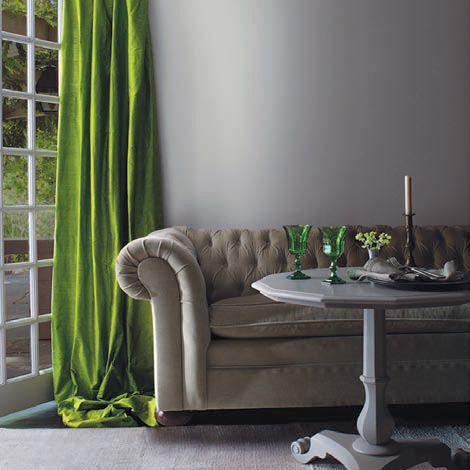
With its subtle depth and complexity, gray continues to be the go-to for neutral color and can provide a dramatic impact for both interiors and exteriors.
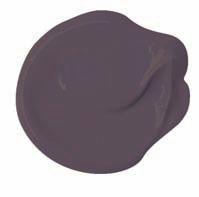
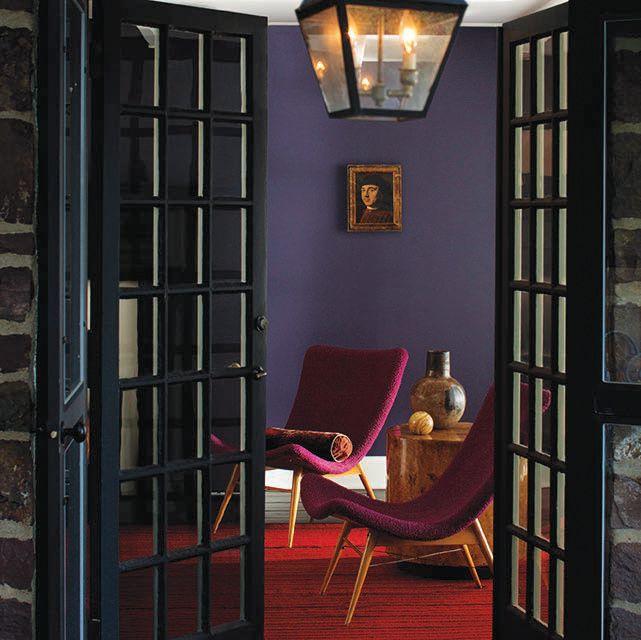
A deep, mystic purple that pairs perfectly with trending gray tones, Silverado mimics the deep, mysterious yet organic tones of outer space.
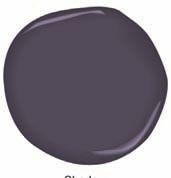
Allusive and enigmatic, Shadow calls to mind the past but can also make a contemporary statement. Sophisticated, provocative and poetic.

Studelska said beiges and taupes remain dominant choices, as do soft blues and greens. “Generally, the trend palette is soft, with deeper accent colors being toned with gray.”
While neutrals and various shades of white continue to be top sellers for Benjamin Moore, the company is seeing an interest and shift toward deeper, richer colors, said Priscilla Ghaznavi, color and design director at Benjamin Moore. “Matte finish in paint continues to grow for us
as people explore various sheens to add dimension and create texture in a space,” she said.
A similar shift is taking place at Dunn-Edwards. “Color is warming throughout the color spectrum and starting to trend away from grays,” said Sara McLean, the color marketing manager and editor at Dunn-Edwards Corporation. She noted a wider range of yellows to reds; greens and blues displaying more yellow undertones; and

Glidden Paint BYZANTINE BLUE
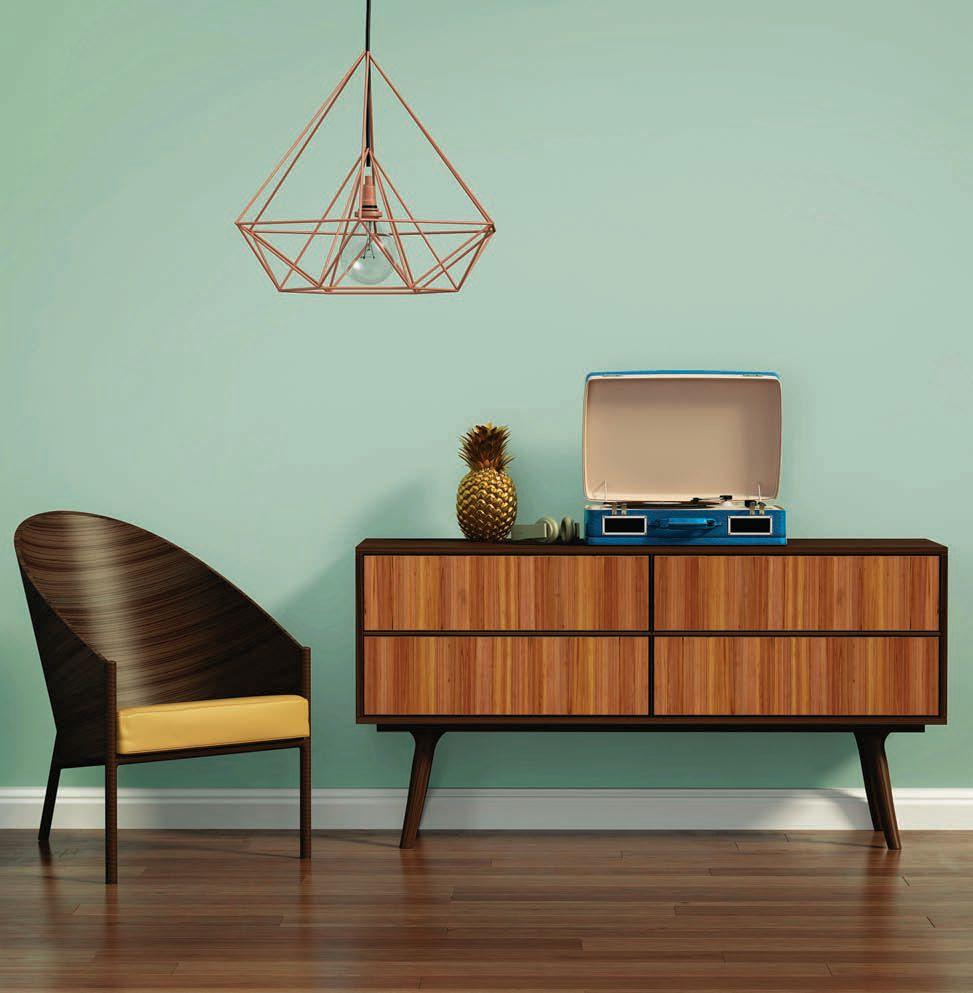
A playful yet peaceful purple, Byzantine Blue borrows the best qualities of blue and gray, making it an appealing color choice for most rooms.

Dunn-Edwards HO NEY GL OW
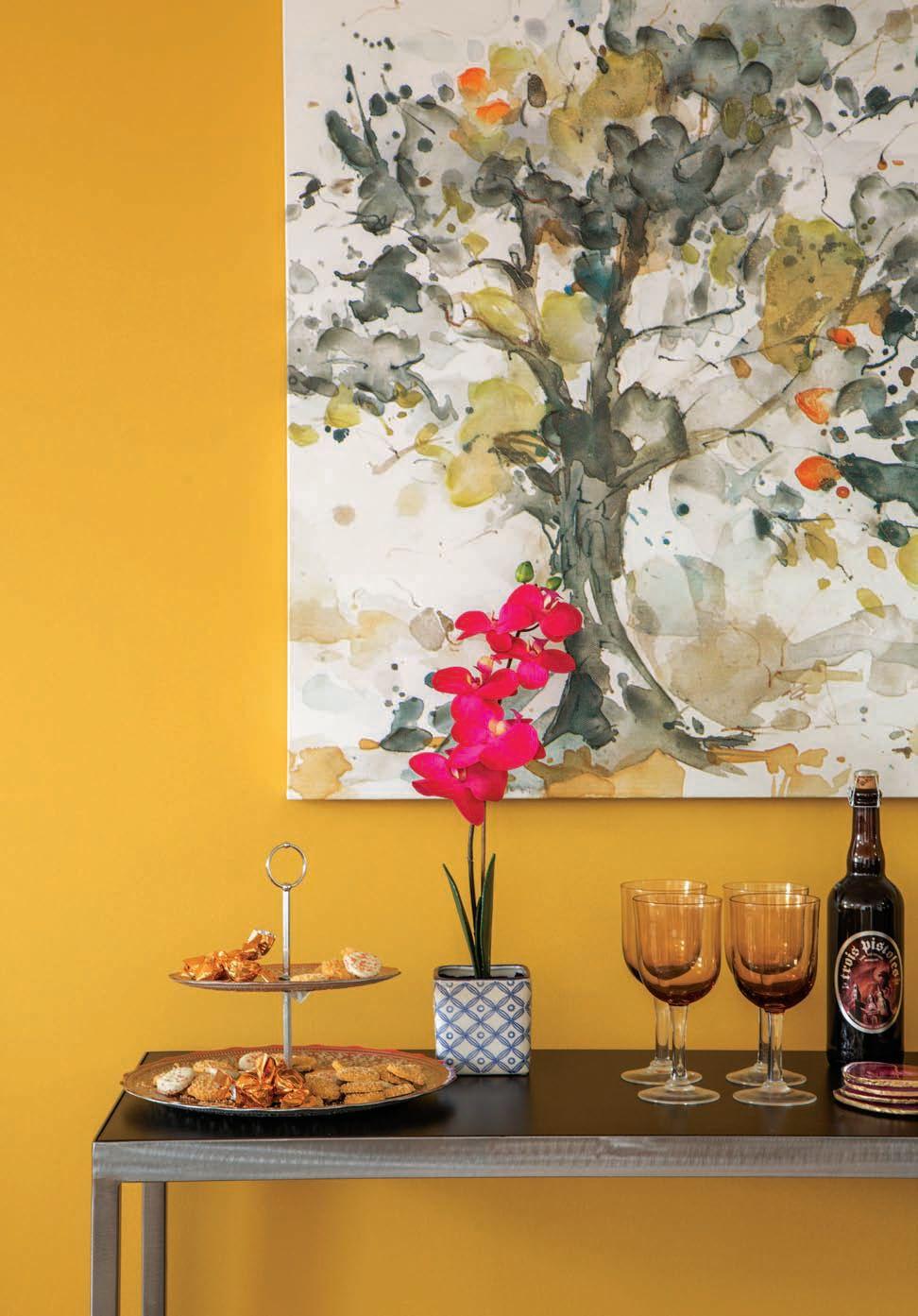
A warm color that is hopeful and optimistic, Honey Glow symbolizes the idea of starting over and creating new adventures.
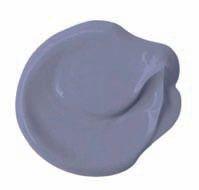
PPG Paints
VI O LET VER B ENA
A grayed-off, moody purple with a chameleon-like presence that can be as nostalgic as it is modern.

Diamond Vogel Paints
OCEAN ST O RM S
A muted blue that denotes classic styling along with the appeal of a restful gray. Implies the idea of easy living with a modern flair.

more beiges, browns and tans.
For example, reds are trending toward yellow-based and brown reds, and pinks are trending in hues ranging from a natural cherry blossom to an artificial cotton candy, said McLean. Trending oranges include copper and terracotta hues, as well as rosewood, amber and clay. Popular yellows range from yellow-green vegetal coloring to honey, lemon and banana.
On the green spectrum, vernal grassy tones, as well as fall khakis and deep pineland hues, are gaining favor, while blues from cerulean to deep, blackened blues are trending, she said. Purples and violets with red undertones also are popular.
Woodman backs this assessment, saying there has been an astounding amount of blue as well as an uptick in green. “Red has been interesting,” he said, particularly in a
We want to celebrate, have some sense of joy, but at the same time we’re looking at keeping it slightly subdued.
dark, dry, chilly color. “We see it in a broader sense around the globe. There is a depth and richness to it.”
Each year, paint manufacturers announce a “color of the year” that plays into the current color trends and forecasts. For many manufacturers, if not all, this winning color is chosen from existing color palettes. Much time and research is put into the selection process to ensure the chosen color is on trend and not just another fad.
“It’s not just pulled out of a hat,” said Woodman. “These are colors consumers are looking at and are attracted to. They aren’t done randomly. These aren’t just ‘stories.’ They’re carefully researched, thoughtful and insightful.”
For instance, at Kelly-Moore Paint Company, the color of
the year—Kettleman—was selected by professional interior designers. “As members of the forecasting organizations Color Marketing Group and Color Association of the United States, we selected the most influential colors that reflect home-decor trends for 2017,” said Mary Lawlor, manager of color marketing for Kelly-Moore. “The colors were presented in a survey to professional interior designers.”
The current trend for grays is clearly seen in such color-of-the-year choices as Kelly-Moore’s Kettleman, PPG Paints’ Violet Verbena and Olympic’s Cloudberry. Even colors like Glidden’s Byzantine Blue, Diamond Vogel Paint’s Ocean Storms and PPG Pittsburgh Paint’s Silverado have undertones of gray. However, the trend toward deep colors also is revealed in Dunn-Edwards’ Honey Glow and Benjamin Moore’s Shadow.
In most instances, paint manufacturers are pairing these colors of the year with color palettes that reflect 2017 trends, further enabling consumers to find on-trend colors that reflect the look they want for a specific space. These annual colors provide a great starting point for retailers working to help consumers find the colors they truly want.
“I feel that having the color-of-the-year display in our locations is helpful. Clients can visualize and adapt that selection if it fits into their color needs,” said Arroyo. “People are always curious and intrigued by what manufacturers select as the color of the year, but this does not mean they will select the color for their project. It all depends on the color palette, theme and depth of the color.”
(continued on p. 102)

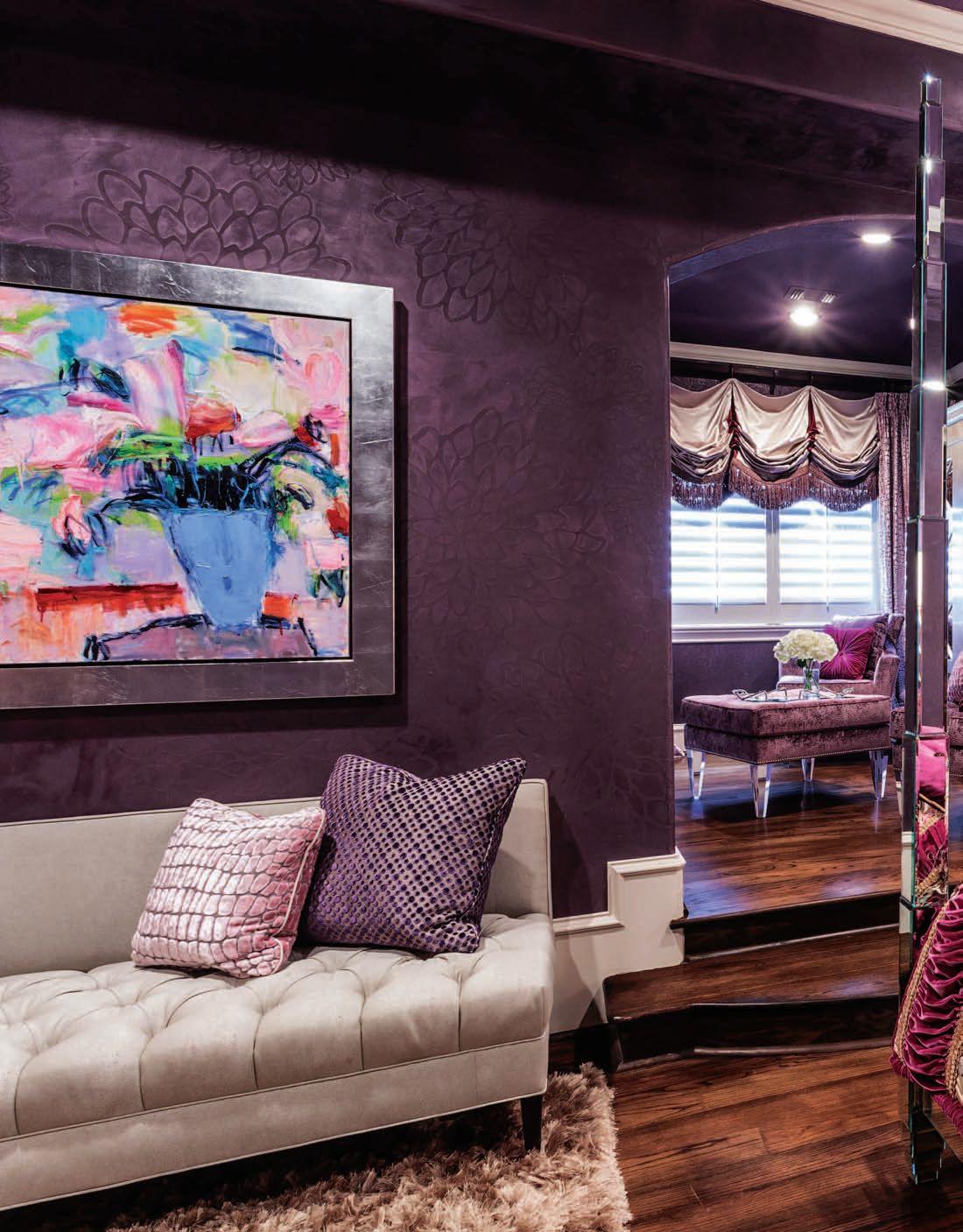


Metallic paints continue to be popular companions for traditional paints.
By Karon Warren
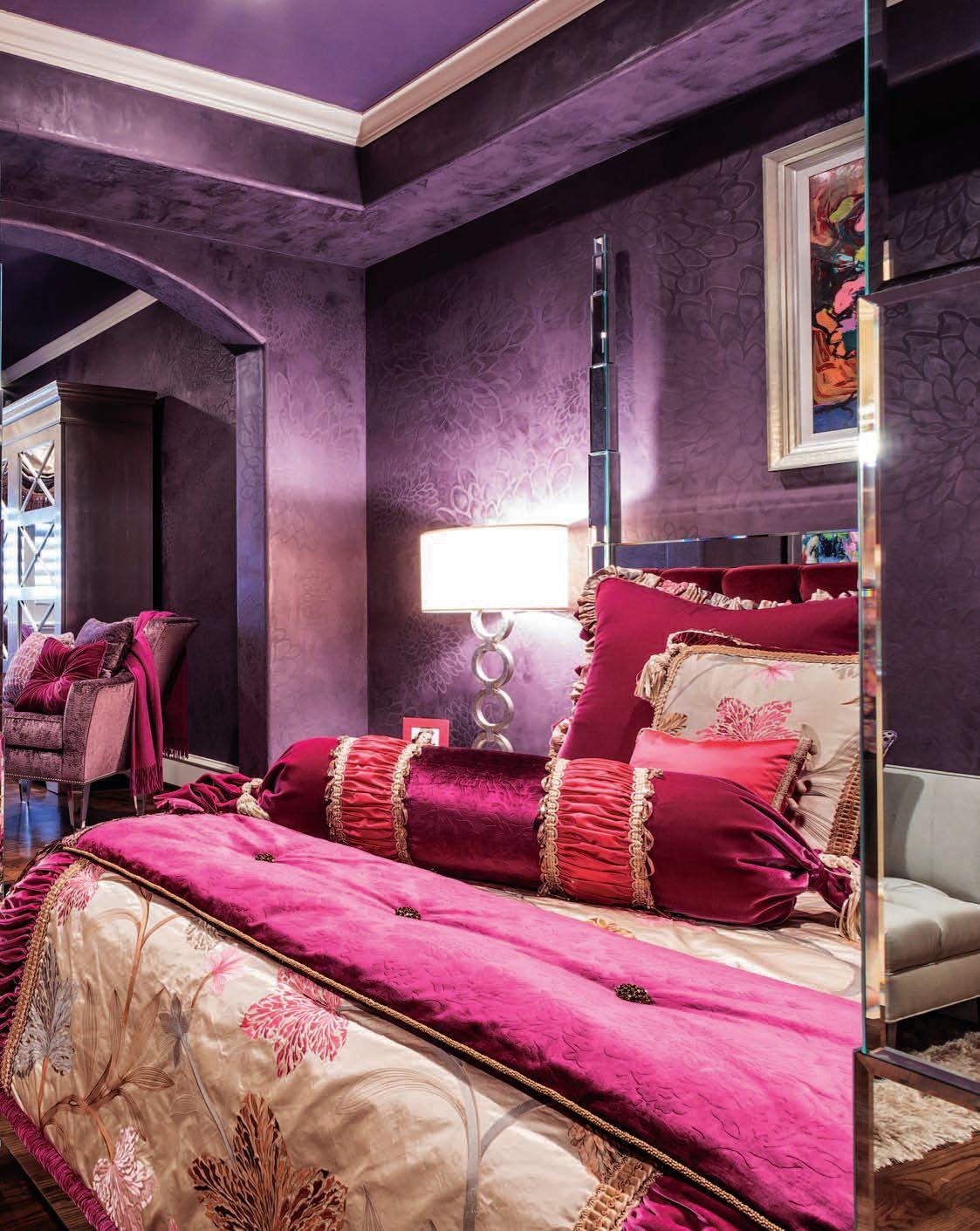
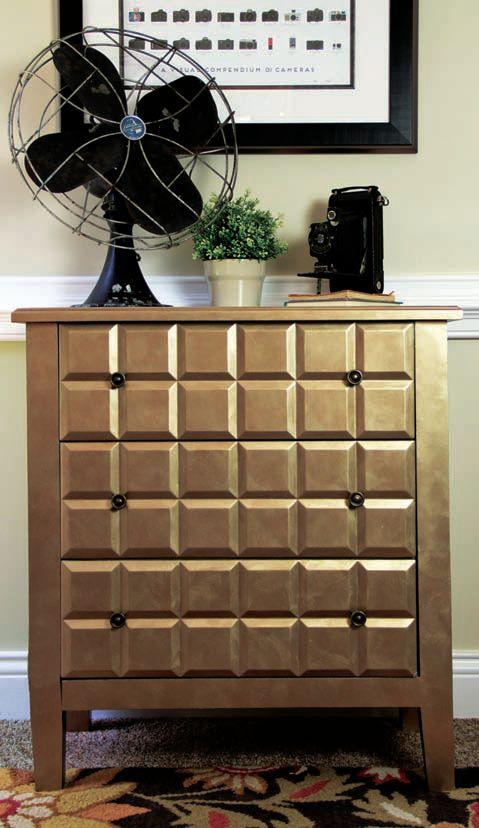
Given their name, it’s not surprising that the trend in metallics leans toward straight metallic colors. Think copper, rose gold, champagne bronze and silver. “The classics— silver and gold—will always be top sellers in the metallics category,” said Jenny Thavenet, senior brand manager for Rust-Oleum.“Oilrubbed bronze has now proven itself to be a classic metallic as well.”
That being said, a lot of variety remains in these popular colors that offer wide-ranging looks for the end user. “Color trends in metallic paints often mirror what is seen on the runways of the fashion world and the show floors of luxury automobile makers,” said Rebecca Spurlock, director of marketing for Crescent

Color trends in metallic paints often mirror what is seen on the runways of the fashion world and the show floors of luxury automobile makers.



Bronze. “In Paris, for example, fashion previews for spring 2017 are rich with metallic-infused fabrics and gold and silver boots from such well-known designers as Louis Vuitton and Gucci. By the same token, the color palette for Lexus, Cadillac and BMW for 2017 includes Atomic Silver, Eminent White Pearl, Glacier Silver and Autumn Shimmer, to name but a few.”
In terms of metallics, Jim Rogers, president of Modern Masters Inc., said these “runway” colors are being translated into an array of warm silvers and cooler golds, along with everything in between.
Many paint manufacturers are introducing their own colors of the year, and those colors are likely to have an effect on the metallics category. “The popularity of traditional colors do influence the sales of metallic paints,” said Bill Brabender, national sales manager at Crescent Bronze. “They set the tone for the types of metallic accents that will best complement the trending colors. For example, Sherwin-Williams has selected Poised Taupe as its color of the year for 2017. Metallic champagnes and bronze tones will enhance that color’s understated warmth. By contrast, Benjamin Moore has named Shadow, a smoky purple, as its 2017 color of the year. Smooth silvers and brilliant whites will pair well with this amethyst hue.”

Natalie Wright, manager of creative design and education at DecoArt Inc., agrees, saying that metallics make for great accent colors and are often paired with popular colors in home decor, fashion and technology. “Metallic hues will often be influenced by what opaque colors are trending in the market,” she said. “I would not be surprised to see a few jewel tones among the 2017 favorites.”
Sheri Zeman, owner of Faux Design Studio, in Addison, Illinois, backs up this statement. “Besides the shades of silver, gold and pearl, deep rich saturated colors like teal, purple and navy are popular,” she said. That being said, not every trendy color translates into a good match for metallics. “For our metallics, when you have a nonnatural metallic color, like purple metallic, sales tend to be not as high,” said Thavenet. “Although there are a few exceptions to the rule, such as cobalt blue, which is a great metallic color for bicycles.”



Although silver, gold, copper and bronze are mainstays in the metallics category, manufacturers are quick to remind retailers that these are not the only colors available. “We’d like paint retailers to know that metallics and pearlescents are available in an amazingly broad range of colors,” said Brabender. “We’re offering much more than silver and gold and an occasional copper thrown in for effect.” For example, the company offers a color group called Designer Tones, and retailers can receive a current color card showcasing the colors available.
At West Side Decorating Center, in Saginaw, Michigan, owner Gary Fahn-

drich said his designers and contractors prefer the Metaltech color palette. “The Metaltech line has 32 colors to choose from versus the Ralph Lauren and Sheffield lines, which are more limited,” he said. “Plus, their base system allows us to tweak the colors if needed. In addition, they can be used on the exterior, and they do not require a clear coat.”
The key is encouraging end users to see the possibilities of how metallic paints can fit into the color scheme for their painting projects. Priscilla Ghaznavi, color and design director at Benjamin Moore, offers retailers this suggestion: “The best way for a consumer to incorporate metallic paints into their overall color palette is by ensuring the undertones of the nonmetallic colors match or align with the metallic color(s) that will be used in the space,” she said.
Another suggestion, this time from
Rogers, is for retailers to point out how impactful colored metallics can be on furniture. “It gives a sparkly, glittery pop in the room as opposed to going after a lot of neutrals,” he said. “Even though metallics are neutral, it’s like a bump up. It’s a quality of color with a little bit of pizzazz to it, but it’s still kind of understated.”
Today’s consumers are experimenting
more with color and with metallics, and manufacturers are responding to this increased interest. “The DIY movement has encouraged a bolder and brighter launch of paint colors, including metallics,” said Wright. “We love seeing everyone’s creativity unfold, so expect to see some wonderful new products and colors being launched in 2017.” •


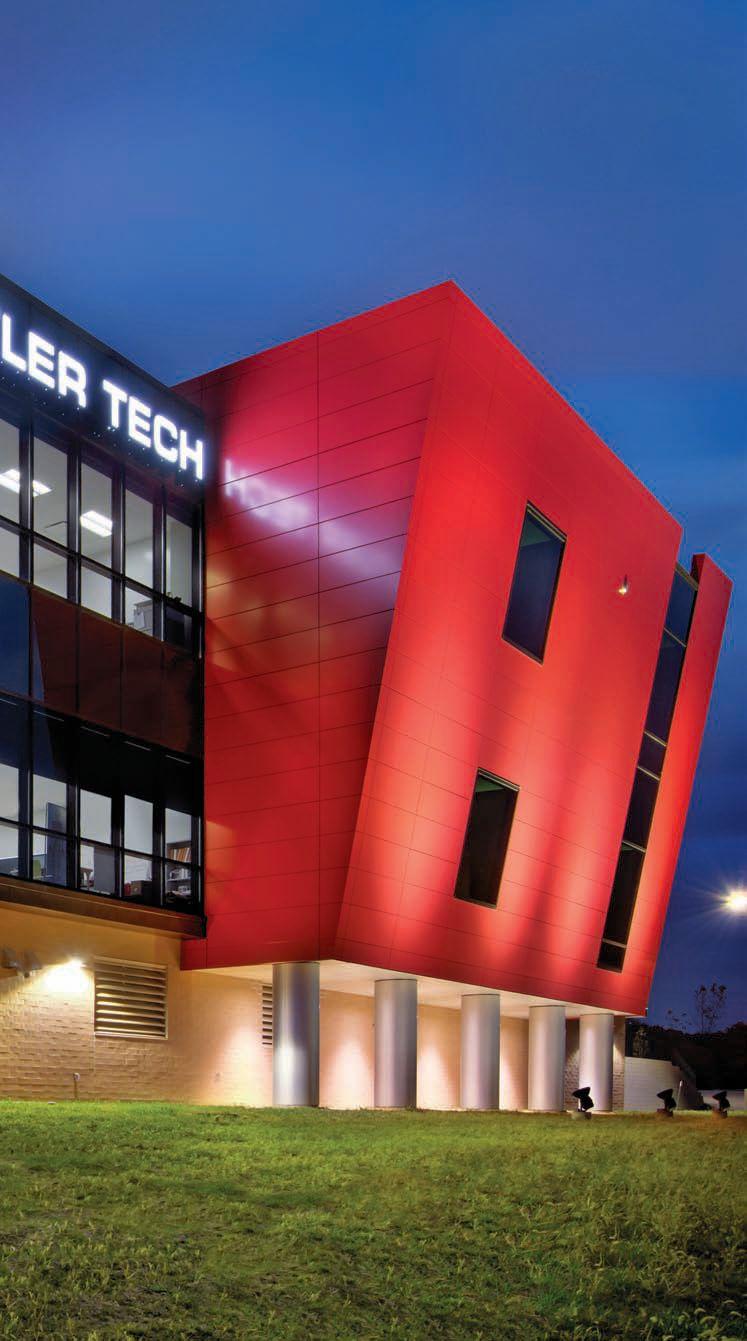
Historically speaking, school buildings have not always been the most colorful of structures. But in a design-conscious society, that might be changing. The Butler Tech Bioscience Center, a technical school in West Chester, Ohio, helps high school students bound for careers in the biomedical field, and its new building shows off a striking use of color by way of Valspar’s metal paint, Valflon. The idea behind the center is that students can attend classes there for their junior and senior years of high school and have access to hands-on learning experiences through the school’s partnership with local hospitals and medical groups.



Having your employees, contractors and loyal customers silently broadcast your message wherever they go is a marketing no-brainer.
By Steve Penhollow
An independent retailer whose employees aren’t wearing branded apparel is missing a golden opportunity, according to Marc Mathios, owner of Ace Apparel.
“Anyone who is not doing it should really, really consider it,” he said. “Because when someone crosses the threshold of your store, that’s an opportunity to speak to your brand, to have somebody see your brand on a piece of apparel and remember the name of your store and remember the brand that’s being presented.”
Branded apparel sends a strong and succinct message to customers as soon as they walk through the door, Mathios said. “If your employee is customer-facing, they’re going to look much more professional if they’re in a uniform shirt like a polo shirt or a button-down shirt as opposed to a T-shirt,” he said. The level of customer complaint (or, on the opposite end, the level of customer satisfaction) goes so much lower (or higher) if the person looks like he is prepared to do the job at hand, Mathios explained.
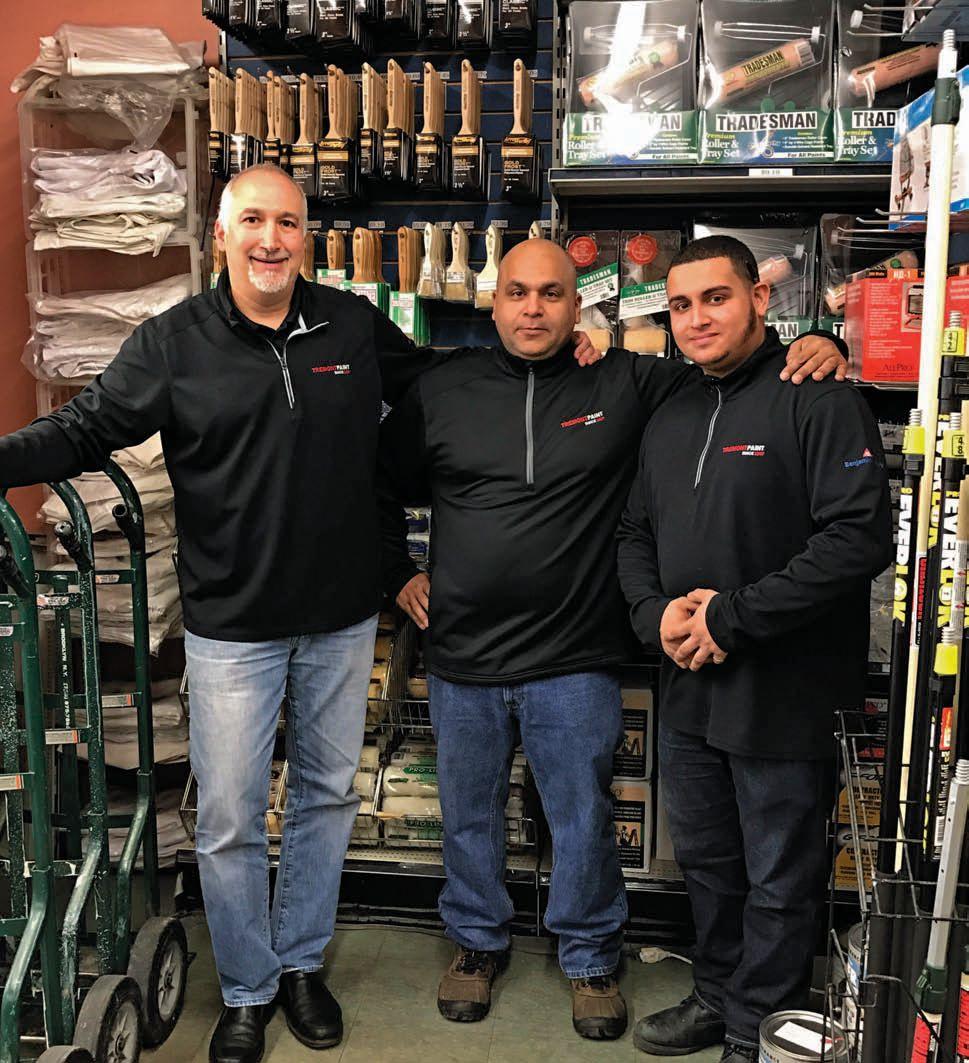
Mark Lipton, owner of Tremont Paint in New York City, said he has always believed in the old adage that clothes make the man. “I think if you look professional, then people have higher standards for you,” he said. “And I want my customers to have higher standards for my guys at the counter.”
Lipton doesn’t require his employees to wear a certain style of shirt, however. A company called AD-Vantage Inc. crafted an online store for Tremont Paint that allows the store’s employees to choose from a wide range of apparel options.
“[The website] has four seasons of stuff,” he said, “and employees are free to wear anything basically within that palette. Some people feel like every employee needs to look exactly the same. I’m not one who shares that point of view. I think every employee needs to look neat and presentable and clearly like an employee. But we have black shirts and red shirts. We have long-sleeved shirts and short-sleeved shirts.” One of the perks Lipton offers his employees is an annual uniform allowance.

Today’s moisture-wicking shirts are worlds removed from the polyester of the late 20th century, according to Mike Fox, of Fox Shops. “If you’re in the desert or if it’s a hot summer day,” he said, “these polyester shirts are so refined that they can provide you with the breathability that old polyester could never do. You’d cook in an old poly shirt. Not anymore. The fabric is thinner, lighter and more comfortable.” Fox said another notable advance in apparel has to do with the workmanship. “The quality of the embroidery and the silk screening has improved,” he said.
Branded apparel isn’t just for use as uniforms. Many retailers use branded apparel for promotional purposes and as a reward for exemplary employees and loyal customers. Lipton said the branded apparel and other branded items that independent retailers use as perks for staffers and clients have gone way beyond the free T-shirt.
1. Know your goal. Is it more about looks or branding?
2. Spread out costs by buying different items in different quarters.
3. Award long-term staffers with jackets or other high-end products.
Some of the biggest changes in branded apparel over the past 20 to 30 years have had to do with “fabric functionality,” according to Rebecca Loiselle, of DVE Manufacturing. “Apparel today has a plethora of features that were not available years ago,” she said, noting that antimicrobial, odor-control, breathability and moisture-management technologies are all prevalent in today’s garments. Fabrics can also have “UV protection, which is great for workers who are in the sun for long hours, and sealed seams on outerwear, for true wind and water protection,” she said.
4. Offer color options for employees.
5. Let employees choose what they like.
6. Ask your suppliers if they offer co-op programs.
~ Source: Paul McAuliffe, AD-Vantage, Inc.
There was a time not too long ago when everything had to be 100 percent cotton, said Paul McAuliffe, of AD-Vantage Inc. “It was sinful and embarrassing to buy, sell or wear anything with polyester in it 20 years ago, and now everything has to have it,” he said. “Why this has changed has to do with trends set by Under Armour with their fantastic products. Everyone wants moisture-management products.”
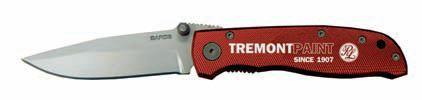
“We have stuff worth up to $150 to $200 that only our best customers get,” he said. “We’ll have a nice winter coat. We do gym bags, which is not exactly apparel, but they’re incredibly popular. This year we did little Bluetooth speakers. We have done high-quality flashlights and high-quality knives.”
Mathios said that his company does a lot of promotional T-shirts in the spring and promotional sweatshirts in the fall, of course, but also a lot of jackets. “We manufacture our own line of jackets,” he said. “Because we’re not buying from a mill, we’re literally taking out 30 to 40 percent of the logistics.”
Fox said he has even provided embroidered leather jackets to a client.
“That’s a really high-end scenario that I consider unusual,” he said. “But the embroidery looks great on leather.” Fox said he has also done some ski jackets as perks for paint-industry reps working in northern climes.
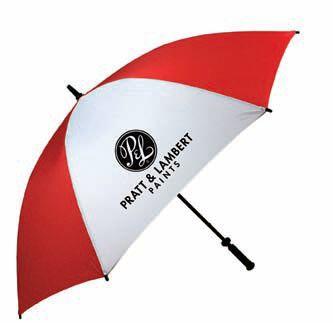
A dream scenario for some paint store owners would be to see a branded item take on a life of its own. Fox said he designed a patriotic shirt for Pratt & Lambert that achieved massive popularity far beyond the realm of retail paint sales.
Lipton believes that savvy independent paint store owners can sell branded apparel to customers. He said he knows of a fellow retailer who sells a popular branded shirt out of his store that has a joke about “drawers” on the front of it.
“And, so, they’re funny,” he said. “It’s a shirt that would sell in a store for probably $15. He sells it for $12 and

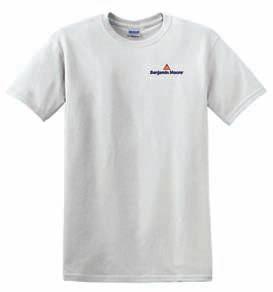
actually makes money because he gets half of it back from the [manufacturers referenced on the shirts], and so they find a way to turn a little profit on it.”
If an independent retailer can sell branded apparel to customers at a lower price than what the same article of clothing costs at a big-box store, it’s a win-win for everybody, Lipton said. It’s an idea he plans to test out more in the future. “If you’re a run-of-the-mill painter for us,” he said, “that means over the course of the year, I’ll give you a couple dozen T-shirts and, you know, baseball caps or something. But if I have a nice winter coat that you can buy elsewhere for $100 and I can offer a Tremont/Benjamin Moore branded version for $80, I might be able to sell that.”
Many retailers underestimate the power of branded apparel out in the world, Mathios said. He gave an example of a contractor walking into a Sherwin-Williams store wearing a shirt with an independent paint store’s logo on it, and another contractor in the store seeing that logo just as he’s dealing with a lack of service and quality.
“That is so targeted,” said Mathios. “You have somebody who is a billboard for your company walking into a place where there are other people who use the product.” •
Steve Penhollow is an award-winning journalist based in Fort Wayne, Indiana.



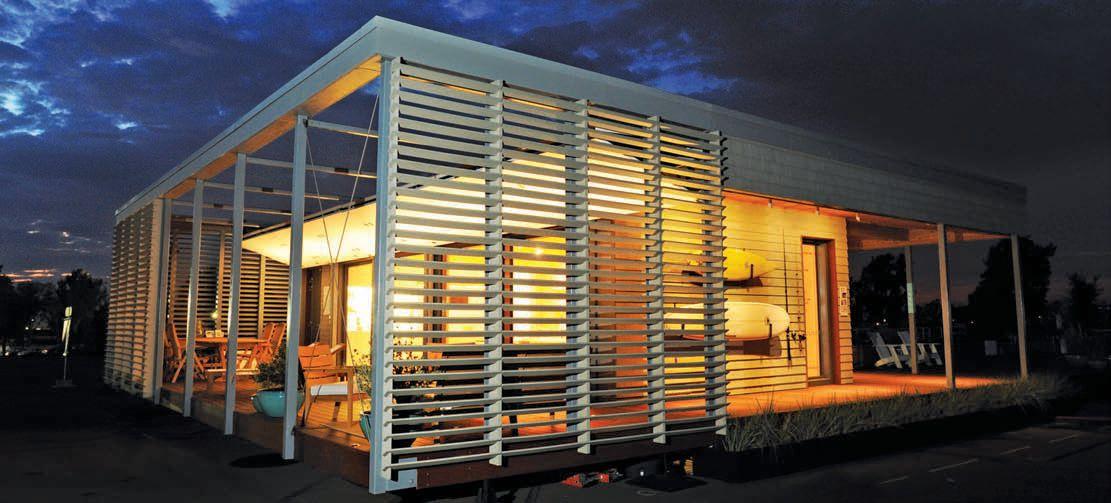
In a U.S. Department of Energy sponsored contest that takes two years to complete, college students from all over the world compete to build the best full-sized solar powered home.

Collegiate teams comprising thousands of international students gather to showcase the solar-powered houses they created for the U.S. Department of Energy’s Solar Decathlon. Once 16 competing teams are chosen, it is a nearly two-year process to build the houses.
“President Obama’s all-of-the-above energy strategy aims to create a safer and more sustainable planet, while ensuring American students and workers have
the skills they need for the challenging jobs of today and tomorrow,” said DOE Solar Decathlon director Richard King, in January 2016. “The Solar Decathlon competition supports the department’s commitment to improving the nation’s science, technology, engineering and mathematics [STEM] education efforts, and to building a more knowledge-intensive workforce.”
“The Solar Decathlon collegiate teams are showing


how clean energy products and efficient building design can help families and businesses reduce energy use and save money,” said Steven Chu, former U.S. Energy secretary. “The event challenges talented students to become pioneers of clean energy technology and helps ensure that our nation remains competitive in the workforce of tomorrow.”
The 16 teams that were chosen a year ago are now in the process of designing, constructing and testing their houses. They will reassemble those houses at the competition site on the outskirts of Denver.

For the first time in the competition’s history, the 2017 teams are competing for $2 million in prize money. The competition consists of 10 contests that take place over the course of 10 days. The purpose of the contests is to determine each house’s performance, livability and affordability. Even with free labor, Steven Mufson wrote for the Chicago Tribune, costs can bring the tab for most of the structures to $500,000 to $1 million each, paid for with Energy Department grants and individual and corporate donations.
Houses can be no larger than 800 square feet, along
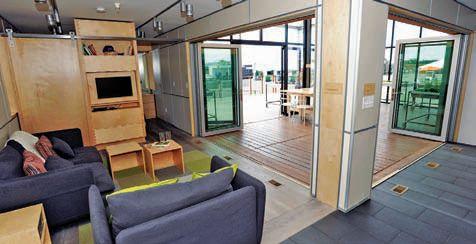
with height limits, David Templeton wrote in the Pittsburgh Post-Gazette “Solar-powered heating and cooling must keep temperatures between 72 and 76 degrees,” he wrote, “produce sufficient hot water, and keep relative humidity in the 40 to 60 percent comfort zone, among other requirements.”
Past houses have resembled pillows, contained waterfalls and incorporated raw sheep’s wool, according to Wendy Koch of the Gannett News Service. “The California house looks like a pillow but has an iPad app to control window shades and 3-D cameras to adjust lighting based on movement inside,” Koch wrote in 2011. “The University of Maryland’s ‘WaterShed’ has a waterfall designed to control humidity, and Purdue University’s ‘InHome’ has a self-watering biowall with vertically arranged plants.” For New Zealand’s vacation-style home, or “Kiwi bach,” students sheared sheep and stuffed the wool into the walls for insulation, New Zealand team member Nick Officer told Koch.
Passing the 10 contests can be difficult, Mufson wrote. “In 2005, several days of rain and clouds took a toll on solar-powered batteries.”
The Solar Decathlon is the brainchild of King, who joined the Energy Department in 1986. He told The Orange
“The students’ hard work is a testament to the endless possibilities attainable through math and science education.”



County Register that he came up with the idea for the decathlon in 1999 when he was looking for ways to freshen up solar power’s stodgy reputation. “Through the ’70s, we were putting up stuff that wasn’t working very well,” he said. “Solar kind of got a black eye. We went back to do our homework.”
The first Solar Decathlon was launched in 2002. The first five happened on the National Mall in Washington, D.C. In 2012, it was decided that the competition should be staged in other places. Two subsequent competitions were held in Orange County Great Park, located between Los Angeles and San Diego.
King said that solar home design has come a long way since 2002. “The real barriers were not the technology,” he said. “There were all the social barriers. Homeowners associations didn’t want [solar panels] on rooftops. People didn’t want to see them. Actually, some of them were kind of ugly in the early days. Builders didn’t know how to put them
up. You couldn’t find a solar installer anywhere in the Yellow Pages.”
Design wasn’t the only problem, he said. There was also marketing. “We needed to design more aesthetic homes to get over that marketing barrier, [instead of] just slapping stuff on rooftops,” he said. King told the Los Angeles Times that there are two myths about solar home technology. “One is that it doesn’t work,” he said. “The other is that it doesn’t look good. We’re here to prove the opposite.”
King said he believes that professional architects and builders have since appropriated the students’ designs, although it’s just conjecture. “You saw roofs that were solar systems and a roof all in one,” said King. “You saw doors made out of them. They started putting up skylights made out of solar cells. They said, ‘Here’s a solar panel, look what I can do with it.’ I think in the architectural field, the decathlon has made an impact.”
Robert Hansen, president and CEO


of Dow Corning, said his company participates in the Solar Decathlon because it appreciates that education is the foundation of innovation. “Education, research and development, and manufacturing are part of a cycle that allows the United States to compete in a fast-paced global market,” said Hansen. “Our participation in this year’s Solar Decathlon will help fulfill our promise to be an active, involved collaborator with students, researchers, manufacturers and governments as we prepare the next generation to address the complex problems in our world.”
Hansen said we’re at a pivotal moment in history.
“There has never been a more important time to further develop viable, renewable, clean, domestically generated energy sources, and there is no better way to achieve that goal than by challenging great minds from universities all over the world,” he said. “The students’ hard work is a testament to the endless possibilities attainable through math and science education. We hope these efforts will help fuel the next generation of scientific discovery.”
King said there are innovative ideas to be seen every year. “The beauty of doing this every two years is that they keep building better and better and better houses,” he said. • ~ Steve Penhollow








It’s a clever idea to coat the walls of public areas with a paint that repels a certain liquid back at the feet of the folks who first propelled it. But how does it work?
Cities around the world are employing a new weapon in their battle against public urination: walls that pee back. More than a year ago, Paint & Decorating Retailer mentioned San Francisco’s efforts to curb public urination (“To Pee or Not to Pee,” p. 49, October 2015) by using a paint that sprays the liquid back toward the individual who spouted it. But now the coatings are being used by municipalities in other parts of the world in an effort to keep their public areas clean. So how does it work?
According to Dr. Janet D. Stemwedel, a chemist and ethics professor who writes about those issues for Forbes magazine, the answer is both simple and
a complete mystery. “This might seem a bit weird at first, but as a patented product, it’s actually fairly typical,” Stemwedel said in a recent Forbes article. “The material safety sheet shows that it is mostly acetone (also used in nail varnish remover), with a few percent of silica (silicon dioxide—used in countless products and a major constituent of sand). The remaining 1 percent is the interesting bit—the unnamed additive that repels liquids. Interestingly, the company mentions that the final product is ‘susceptible to environmental conditions such as UV’, which means that the additive could be a type of polymer. But I can’t be sure, so don’t quote me on it.” •



The New York company puts the concept of color front and center in the window treatment category.
ounded in 1986 by Thomas J. Marusak and John Schenebly, Comfortex Window Fashions, in Maplewood, New York, originally created window coverings for greenhouse windows.
After noticing that people were using these greenhouse window treatments in their homes, the company created a double honeycomb cellular shade that would insulate an interior space from intense heat. Afterward, as John C. Fitzgerald, executive vice president of Comfortex put it, “We really began to take off from there.”
In the ensuing years, Comfortex said it acquired several companies in its efforts to grow. “We went from being a honeycomb company to a multi-product company,” said Fitzgerald. Today, the company offers a varied selection of custom window shades and blinds that includes cellular shades, pleated shades, roller and solar shades, roman shades, sheer horizontal shadings, vertical sheer shading, panel track shades, wood and wood alloy blinds, Woodwinds plantation shutters, cordless shades, motorized shades and the Highlights cornice valance.
In 2008, thanks to the recession, many of Comfortex’s competitors stopped making shades, the company said. During this same time, Comfortex said it developed technology to produce shades on demand, using high-tech manufacturing equipment to produce and digitally print fabric. Comfortex said the technology allows the company to offer custom colors
to its customers. “We have the capability of matching more than 30,000 paint colors right now,” said Fitzgerald.
Comfortex developed a tool recently to help paint dealers cross-promote paint and window shades. This tool became the foundation for Color Lux, a retail program Comfortex created for independent paint and decorating retailers. Through the pro-

gram, paint and decorating retailers can offer linen-weave window shades in 800 colors in any quantity, even if it’s just one shade. For every one of those 800 paint colors, Color Lux offers a matching color as well as three harmonizing colors, from which customers can choose their preferred shade color. “We are empowering retailers to cross-sell shades and paint, based on color,” said Fitzgerald. “People want a choice of color and then a choice within a color. We try to take the guesswork out of it.”
Right now, nearly a thousand retailers carry the Color Lux program in their stores, including Clinton Paint & Decorating in Clinton, Connecticut, where business manager Travis Brestelli said customers are responding to the program.

“Customers love the idea of having so many colors to coordinate or accent their window treatments with the walls,” he said. “Purchasing window treatments has traditionally been a much more intimidating process. Comfortex, through the innovative Color Lux line, has offered customers a simple and less intimidating experience while decorating their homes with window treatments.”
Implementing a successful Color Lux program is just the start for Comfortex, the company said. It is focused on getting the word out and expanding the number of dealers who carry the program. Currently, according to F itzgerald, approximately 35,000 paint dealers sell window shades, and Comfortex has just less than 1,000 of them. As he said, “We
have a sliver of that base,” and the company wants that number to grow.
“We have made it easy for independent retailers who are selling paint to cross-market window shades,” Fitzgerald continued. “They are paint people first, and some sell window shades. With a little work and investment, they could sell window shades that coordinate with paint and make more money. We make our dealers more successful when competing against home centers and online outlets. The more they sell, the more money they make, and consumers can’t shop for this online because it’s only found at independent retailers.”
At Clinton Paint & Decorating, Brestelli said he’s seeing results from Color Lux. “Comfortex gives the paint and decorating retailer so many more tools to incorporate window treatments and paint sales,” he said. “Comfortex helps our business stay competitive within our market by offering reasonable pricing and excellent, personal customer service. They also stand behind their product and are constantly looking for ways to be pioneers in the window-covering industry.”
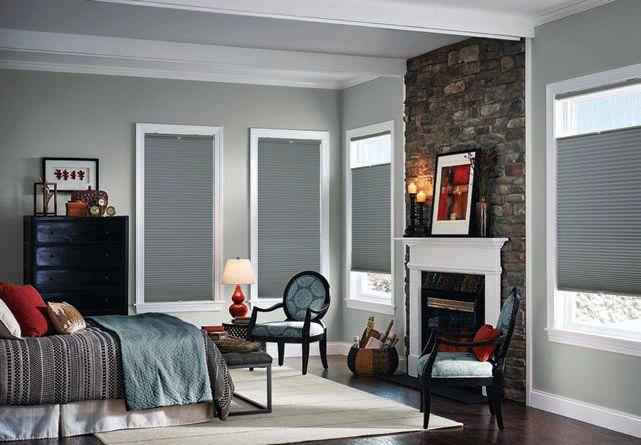
For its part, Comfortex seems to want to be a pioneer. “We want to keep developing this color platform, because color is
not going away,” said Fitzgerald. “We’re the only company in the window-shade category that can do this. It’s our proprietary manufacturing technology that enables us to cost-effectively market window shades in thousands of colors. We are on a journey of establishing our company as leaders in window shades based on color.” • Karon Warren


If
the deal gets past the world’s antitrust regulators, there will be winners and losers. But no one knows who they are yet.
Sherwin-Williams announced in late March that it had agreed to buy Valspar for between $9 billion and $11 billion. The deal would give Sherwin-Williams distribution in Lowe’s and Ace Hardware stores and thus expanded access to the DIY market. But the biggest benefits for the Cleveland company would seem to be gains from expansion into international markets. “Where Sherwin-Williams generates some 84 percent of its revenues from







domestic markets, Valspar derived 46 percent of its annual revenues last year from international markets,” Rich Duprey wrote in November on the financial advice website The Motley Fool. So the deal would seem to make long-term strategic sense for Sherwin-Williams.
Despite the strategic upside, some think the acquisition’s costs may not
benefit Sherwin-Williams. “On the face of it, the price was high,” according to a post on the blog of Tize, a company that makes software for the specialty chemicals industry. “Sherwin’s stock was down around 4 percent on the news, reflecting the large premium it paid.” High prices paid by companies eager to consolidate and expand have

doomed deals in the coatings industry before. In 2008, for example, the Dutch paint company AkzoNobel bought a rival, Imperial Chemical Industries, and became the second-largest architectural coatings company in the United States. But some thought the $16.2 billion price tag was too high, as Deutsche Bank analyst Tim Jones told Reuters after the deal was announced. Jones turned out to be right, and eventually Akzo had to sell its architectural coatings business in the U.S. altogether.
Still, the acquisition seems to make a lot of sense for Sherwin-Williams, especially in light of the surging economy and increased construction spending.



According to numbers from the U.S. Census Bureau, construction spending from January through October of 2016 was 4.5 percent higher than spending over the same time in the previous year. And the fact that the U.S. stock market had reached such stratospheric heights as of December 2016 might erase whatever risk the Cleveland paint company assumed by paying a high price for Valspar. In other words, rising profits will solve a lot of problems.
Whether or not the deal works out for Sherwin and Valspar, consolidation will mean bad news for a number of workers, some of whom won’t keep their jobs if the deal goes through. But that’s the

current reality in the coatings industry as paint companies look to expand in a world running out of room for growth. This, according to Charles Shaver, chairman and chief executive of the international coatings corporation Axalta Coating Systems, who said as much in an interview with the Philadelphia Inquirer published in December.
“The biggest challenge we face in coatings is the same one many sectors face right now, which is that the world overall isn’t growing,” said Shaver. “And so, when the world isn’t growing, that isn’t creating opportunity.” This leads to consolidation, Shaver said, and that stifles creativity. “When you get consolidation, people aren’t worried about innovation. So what happens is capital spending drops, R&D drops.”
The lack of global opportunity for growth is also dire news for the labor force. “How am I going to continue to grow in a world that isn’t growing?” Shaver said. “The way you grow in a world that isn’t growing is mergers. You take share from somebody else. In mergers and acquisitions, there’s always a human cost. People get fired. Facilities get shut down.


(continued from p. 36)
thought they ever would.”
Redelico said he likes seeing and servicing the customers who have been coming to the store for decades. “We have a good clientele,” he said. “We have a lot of steady people here—the customers who come back and are loyal to us. They’re loyal to us because of the service we provide. And the friendships. We have built friendships over the years, and that’s what’s going strong now.”
Good service involves something very much like empathizing with customers, said Redelico. “When people come here, we ask questions,” he said. “We ask what they’re doing. We feel like we’re doing the job. If we know exactly what they’re doing, then we know exactly what we’re doing.” Staffers run various scenarios with customers, gathering details about the goals of each project, Redelico said.
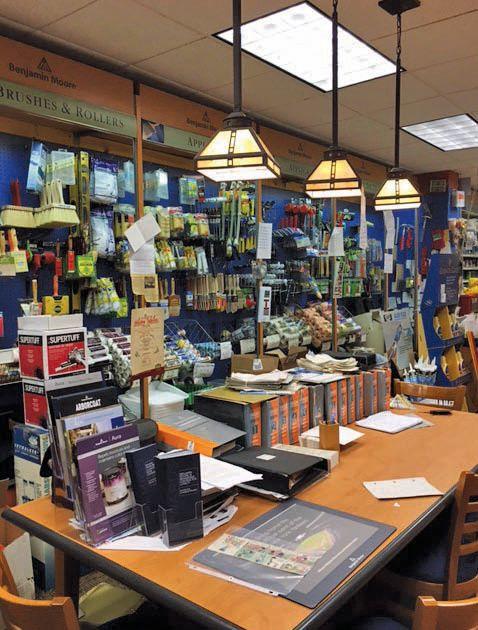
The store has slowly regained lost ground in the past three or four years. Redelico said he is grateful that he didn’t join many other independents in abandoning wallpaper when it fell out of
favor in the 1990s and early 2000s.
Now that wallpaper is on the rise again, it’s a differentiator, he said. “We got busy because we kept getting calls: ‘Nobody carries wallpaper anymore.’ And I’ll say, ‘Well, you come over here and look at our selection, and we’ll be glad to help you.’” He said his sister, Jennie, who has worked at the store for 35 of its 40 years, knows as much about wallpaper as anyone. Redelico said he plans to get out of the business in one fashion or another sometime over the next five years. His kids aren’t interested in taking over the paint store.
Luckily, Redelico’s Paint & Decorating Center is located on some prime real estate. “I have a couple of feelers out there for somebody buying it or renting this space and coming in here with a different business,” he said. “Somerville is really booming.” Whatever happens in that regard, Redelico said he and his wife have no intention of ever leaving town. •
~ Ste ve Penhollow


Color Forecast 2017 (continued from p. 58)
As 2017 progresses, don’t expect much change in the trending colors. “Color is going to be the evolution of gray,” said Woodman. “It’s still new; we still have people discovering it. Gray’s influence on other colors is important. Other colors will pop up, but it will come back to gray.”
Those other colors are expected to arise from palettes with warm tones. “There is a warming of all colors, so retailers will see the addition of more warm neutrals, golds, yellows in all values and browns, with a variety of fabrics, wallcoverings, textiles and paint applications,” said McLean.
According to Woodman, green, in particular, will soon take a place at the trending table. “Watch for the growth of green—it will rear its head in a good way,” he said, adding that retailers and consumers should look for a nice array, from a very pale green to richer, thriving greens. He added that we should also expect to see some contrast from oranges and reds. •





YOUR CONNECTION TO THE COMMUNIT Y OF PAINT AND DECORATING RETAILERS
The National Hardware Show’s vice president answers a few questions about this year’s event.
about the exclusive benefits of membership in the Paint & Decorating Retailers Association, call Tina Sullivan or Brandi Hemmer at 1-800-737-0107 or email info@pdra.org .


PDR: We hear the NHS has a new and better way to suggest products and exhibitors to show attendees in 2017. How does that work?


Russo: We want to help retailers maximize their time at the show, so we use the information they provide during registration to serve up exhibitor and product recommendations. We’ve refined this process for 2017 to offer better matches and new opportunities. Attendees will receive their recommendations via email, on our revamped website via the My Show planning tool and in the NHS mobile app. The best part about the mobile app is that we now have booth-to-booth directions. That makes it easier for retailers to find the companies they want to see.
PDR: Since many retailers come to the show looking for new SKUs, can you tell us about the areas of the show focused on new products?
Russo: We have several feature areas to source new products. New Product Launch offers over 60 products being shown for the first time ever. New Product World showcases over 700 products that have been in the market for less than a year. And retailers should make sure to stop by our Inventors Spotlight, where innovation meets perspiration, and see over 150 brand-new inventions. These featured areas are as exciting as they are diverse and may spark an idea, offer a solution for your customers or help you differentiate your store and mix up your product offerings.
PDR: Outside the paint and decorating segment, what sort of products are trending up?
Russo: Home technology—meaning “smart” home products—and connected technology are a new trend and theme at the show this year. You’ll see tons of new products and vendors offering new solutions to age-old problems within the home. Made in the USA is always popular, as consumers continue to demand products manufactured on United States soil using American labor.
The National Hardware Show will stay in the North and Central halls of the Las Vegas Convention Center and move back to the show’s traditional date pattern of Tuesday to Thursday, May 9 to 11. Visit nationalhardwareshow.com to find out more.

The PDRA is still accepting nominations for its annual $5,000 college scholarship. Each PDRA member may nominate up to two candidates. The scholarship is awarded to a college-bound person, and applications are available online at pdra.org. Applications and all required paperwork are due on or before March 10, 2017. Nominees cannot be more than 26 years old and must have reached at least the senior level of high school. They do not have to be a relative or employee of the PDRA member who is nominating them, and the award must be used for vocational college, college or postgraduate studies.

Go to pdra.org and dig into the numerous savings and benefits available to PDRA members. Register employees for online education programs—increase their knowledge and increase your sales. Make sure you’re getting your complimentary copy of PDR magazine, and check out our dealer locator, the in-store signage program and numerous other programs aimed at helping retailers succeed.

Value Paks, the coupon books containing .offers for free and discounted paint and decorating products and services amounting to thousands of dollars, will be updated for 2017 by February and available to all PDRA members. Individuals must be members to receive the savings. Join or renew a PDRA membership and receive the Value Pak by email. Members will be able to download a Value Pak at pdra.org
If you’re a PDRA member, help us make sure we have an accurate and complete version of your contact information. If we don’t, the right people might not find you through our online store locator. So go to the locator at pdra.org and check your information. To add links to your website and Facebook page, or to make updates or corrections, contact Tina Sullivan at tina@pdra.org .

Our Paint Drawdown Kit includes an eight-inch metal drawdown bar machined to deposit precisely three mils of paint. It also has a 10-inch-by-12-inch clipboard with 40 drawdown cards for product demos.

When Chuck Bickel bought a hardware and paint store from a retiring couple in 1984, he couldn’t have predicted how it would do. And he certainly couldn’t see 30 years into the future and know he’d one day own 10 of them. But Bickel, one of the PDRA’s newest members, turned out to have a knack for business and his number of stores grew. And is still growing. His eleventh Ace Fix-It Hardware and Paint store, located in Mercer, Pennsylvania, is set to open on April 1, 2017.
Bickel said he is a fan of PDR magazine (thanks, Chuck!) and is especially appreciative of the value offered by the PDRA’s education programs. “I guess we didn’t realize that we could start using those training programs. That’s what we are really after by joining the PDRA, having our people utilize the training programs that are offered online. I appreciate those. We’ve found a lot of useful information, a lot of things that we use in the stores.”
Bickel added that organizations like the PDRA and Ace Hardware make a big difference for independent owners who are looking to expand beyond a single store. “We are fortunate to have a good alignment with Ace Hardware, and so we do rely on them for some demographic information and site analysis and even referrals.”
He also said that owners without a good succession plan have been part of the reason behind his own expansion. “Many of the stores we have were acquired because of people retiring. If there’s no one in the family to carry on the business, they call us to purchase their store.”

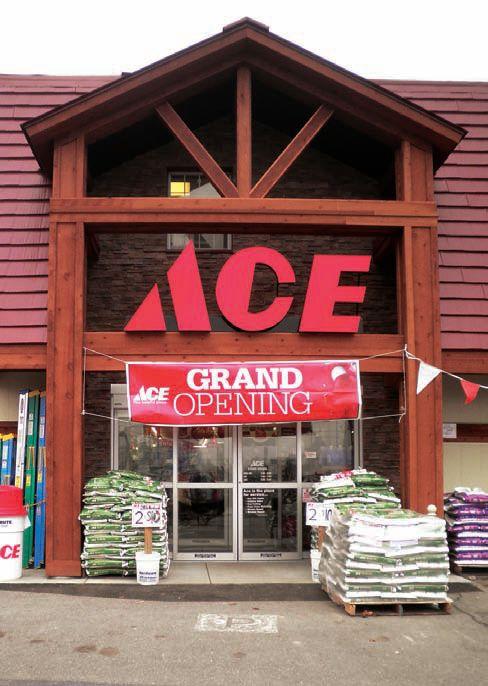



Stay ahead of the pack with the industry’s leading events, shows and exhibitions


May 9–11
The PDRA Paint & Accessories segment at the National Hardware Show is the single-largest buying opportunity in the U.S. for the paint sector. The events are to be held again this year at the Las Vegas Convention Center. Register at nationalhardwareshow.com, or contact PDRA membership coordinator Tina Sullivan at 800-737-0107 or tina@pdra.org for more information.
January 16–20
World of Concrete
World of Concrete is an annual event dedicated to the commercial concrete and masonry construction industries. This Las Vegas trade show features leading industry suppliers as well as new tools, machinery, equipment and safety training courses. Learn more at worldofconcrete.com
February 19–24
The Waterborne Symposium
The Waterborne Symposium is organized by faculty, staff and students at the University of Southern Mississippi’s School of Polymers and High Performance Materials (formerly the Department of Polymer Science). The symposium, held this year at the New Orleans Marriott, offers courses, discussions and showcases having to do with waterborne coatings technology. For more information, go to waterbornesymposium.com
March 13–15
The Middle East Coatings Show
The Middle East Coatings Show, held this year in Dubai, is focused on raw materials suppliers and equipment manufacturers for the coatings industry. The event will promote the latest paint and coatings technologies for the region’s environmental, manufacturing and industrial needs. Visit coatings-group.com to find out more.



Stockholm has a museum dedicated to the salvaged 17th-century warship pictured here. Called the Vasa, the massive wooden ship is famous mostly because in 1628 it did what it wasn’t supposed to do: sink. A 1:10 scale model (inset picture) sits in the museum next to the actual Vasa, and its striking colors show what the Swedish juggernaut probably looked like in its short heyday. But paint stores didn’t exist then. As chemist Sujata Kundu wrote in Forbes , pigments made from minerals were the colorants of the day: “[Painters] used everything from the rich red mineral cinnabar that consists of mercury sulfide, to the green malachite made from hydrated copper carbonate.”