









Follow us: facebook.com/PrevalSprayer | twitter.com/PrevalSprayer | youtube.com/user/prevalspraygun


















Follow us: facebook.com/PrevalSprayer | twitter.com/PrevalSprayer | youtube.com/user/prevalspraygun

Widespread Coverage
By Karon Warren
Aerosols may not be the trendiest of products, but they’ll shelves as long as DIYers are DIYing.


23 Retailer Profile
By Steve Penhollow
As a young woman, Jessica Smith never suspected she’d run her parents’ Minnesota store, Smith Brothers Decorating Center.
26 Speed Counts
By Steve Penhollow
The applicators category is more complicated than most retailers think. It’s changing fast because coatings are, too.
38 The Trouble With Decks
By Steve Penhollow
If customers don’t know how to maintain their deck, they might blame their retailer for the poor results.















IDON’T LIKE THE WORD FEBRUARY. Pronouncing it can make even a skilled orator feel like a spluttering toddler. Who in their right mind would put a B and an R together and then stick “uary” right after them? Come on.
I blame the Romans. They came up with the name, which, according to Wikipedia, comes from the Latin term februum,
to be a season without months, so January and February were the good time for our annual update on exterior deck and wood coatings (“The Trouble With Decks,” p. 38). Lest we forget the seasons of emerging category of aerosols (“Widespread Coverage,” p. 32) and the ever-changing but all-important topic of applicators (“Speed Counts,” p. 26).
I may start a petition to rename month number two (Pre-March? January Junior?). But whether or not my anti-February movement gains any steam, there will be at least one constant: We will keep writing and talking about the ways retailers can thrive during all 12 months of the year.

Sincerely,

Steve Stevens steve@pdra.org





Publisher/Director of Sales
Dan Simon, dan@pdra.org
EDITORIAL
Editor
Steve Stevens steve@pdra.org
Art Director
Murry Keith murry@pdra.org
Directories Editor/Circulation Manager
Lori Goad lori@pdra.org
Production Director
Jo Ann Ray jo@pdra.org
Director of Finance/Human Resources
Renée Nolte renee@pdra.org
Association Coordinator
Tina Sullivan tina@pdra.org
Account Executive
Brandi Hemmer brandi@pdra.org
ADVERTISING
Publisher/Director of Sales
Dan Simon dan@pdra.org
Phone: (800) 737-0107, Fax: (636) 229-4750
Account Executives
Richard Bright rbright@brightconcepts.net
Phone: (410) 869-3253, Fax: (530) 452-2266
Brandi Hemmer brandi@pdra.org
Phone: (636) 680-2785, Fax: (636) 229-4750
PDRA EXECUTIVE LEADERSHIP
LeAnn Day
Executive Director
O FFICERS
Craig Bond
President and Western Region Director
Tommy’s Paint Pot, Eugene, Oregon
Jeff Baggaley
Past President
Color Company Decorating Centre Ltd., London, Ontario, Canada
Mike Fleck
Vice President/Treasurer and Eastern Region Director
Fleck’s Paint Spot, Toms River, New Jersey
D IRECTORS
Robert Mueller
Director at Large
Benjamin Moore Kelowna, Kelowna, B.C., Canada
Jay Donnelly
Midwest Region Director
Flanagan Paint & Supply, St. Louis, Missouri
PDRA ADVISORY COMMITTEE
Dori Marks, PPG Industries
Thomas Hill, The Coatings Alliance
Eugene Andreassi, Benjamin Moore
Joe Jankoski, Hunter Douglas
Bob Clemence, Hyde Tools
John J. Petroci III, Dumond Chemicals
John Shingledecker, Allpro Corporation
Richard Russo, Reed Exhibitions


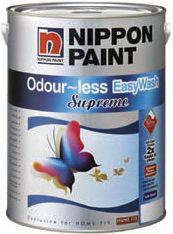








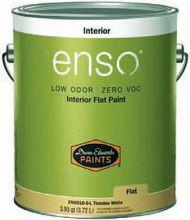
unn-Edwards Corporation, the large West Coast coatings manufacturer, has announced a merger with Nippon Paint Holdings of Japan.
Nippon Holdings is the world’s fourth-largest paint company, according to Dunn-Edwards, with $4.8 billion reported sales in 2015. “This is an extraordinary opportunity for both companies,“ said Karl Altergott, CEO of Los Angeles–based DunnEdwards. “We will continue business as usual as DunnEdwards, producing our superior paint and maintaining our culture that we’ve embraced for 91 years. Plus, we’ll
global leader.”
About the merger, current Nippon Paint president and CEO Tetsushi Tado said, “We have wanted to expand our architectural paints in the U.S. and have been searching for the right partner. It is important to us that Dunn-Edwards is the most environmentally
In yet another coatings manufacturer merger, Dunn-Edwards joins the Japanese paint company Nippon.
our mission. They are respected by both painting contractors and designers as a top choice. We enjoy the
Dunn-Edwards got its start as a wallpaper store, according to the company’s website. It was opened by Frank “Buddy” Dunn in Los Angeles in 1925. The business later expanded to include paint and, before too long, Dunn was making his own paint in a back room. The Dunn-Edwards Corporation was formed in 1938 when Dunn partnered with his friend Arthur C. Edwards. Edwards had a history as a professional painter and pigment salesman. Nippon Paint was founded in 1881 in Tokyo, Japan, by Jujiro Moteki, according to the Nippon website.
Nippon Paint Holdings operates more than 30 manufacturing plants throughout Asia and produces more than 1 million tons of paint and coatings annually, according to Dunn-Edwards.

In late 2016, the PPG Industries Foundation donated $15,000 to the Chicago Urban League to support the organization’s STEM (science, technology, engineering and math) program and its Project Ready summer camp. PPG Industries Foundation is the philanthropic arm of PPG Industries, the global coatings supplier.
According to PPG, Project Ready “engages AfricanAmerican students in disadvantaged communities in Chicago, offering them access to quality training in science

“Increasing and sustaining interest among AfricanAmericans in science and math education is critical to Saunders, manager of PPG’s plant in Batavia, Illinois. “As a global innovator in paints and coatings, PPG is dedicated to continued innovation in science and technology because the Chicago Urban League and strengthen the pipeline for
Chicago Urban League, said that the Chicago Urban League is committed to growing and maintaining the
the Project Ready program. This early exposure to science and technology concepts will help create a direct pathway from science and math education to STEM careers by providing educational support, career
RPM International Inc., the multinational coatings company based in Medina, Ohio, recently announced that it had acquired SPS Group, a Dutch coatings company. Purchase price was not disclosed. SPS Group has annual sales of $60 million, according to the company. Among RPM’s more well-known consumer brands are Rust-Oleum, Zinsser, DAP and Varathane.
This is RPM’s second acquisition in its fiscal 2017, according to Peter Neil of Market Realist, an investment information technology company. “RPM’s financial year is from June 1 to May 31,” he wrote. “Earlier in September, RPM acquired Specialty Polymer Coatings, a Canadian manufacturer dealing with the global oil and gas pipeline market with annual sales of $26 million.”
SPS Group is located about an hour south of ‘s-Hertogenbosch (“The Duke’s Forest”), a municipality in the southern Netherlands, according to StreetInsider.com. It will operate as part of RPM’s Rust-Oleum European business. “By leveraging the manufacturing and distribution strengths of SPS, we expect this acquisition to accelerate Rust-Oleum’s growth in the Netherlands and other nearby European countries,” said Frank C. Sullivan, RPM chairman and CEO. “It will also allow the existing customer base of SPS to benefit from Rust-Oleum technologies and innovations,” he added
The Valspar Corporation, an international manufacturer of coatings based in Minneapolis, has voluntarily issued a recall for wood cleaner and brightener products because of a faulty cap issue, according to the Consumer Product Safety Commission.

The CPSC said the products were sold in August and September under the Cabot brand in several states, including Minnesota and North Dakota. “A faulty cap seal can cause the containers to leak contents, posting a chemical hazard to consumers,” the CPSC wrote in the recall report. “Inhaling, ingesting or skin contact with the product can cause burning and other injuries.” There are 10,300 one-gallon products in the recall. Valspar is offering refunds. For more information, call 877-755-3336.

Hyde Group, a North American hand-tool manufacturer based in Southbridge, Massachusetts, recently announced that it had hired Gerald E. Overstreet as its category manager for drywall and masonry products in the group’s construction division. Overstreet came to Hyde Group from the Weiler Corporation, in Cresco, Pennsylvania, where he was national sales and market manager for hardware and construction distribution.
“Gerry brings more than 22 years of valuable knowledge and experience in product, sales and management positions in the channels we engage,” said Corey Talbot, vice president of marketing and product development for Hyde Group.


“And because his deep industry experience is coupled
comes to us with an already impressive understanding of our product line.”
Overstreet now manages the drywall and masonry categories for two Hyde Group companies: U.S.based Hyde Tools and Richard Tools in Canada. “He is such a great tactical thinker,” said Talbot, “able to apply critical thought to cross-disciplinary challenges, which is precisely the skill we look for in category management.” Overstreet is a graduate of the United States Military Academy at West Point and holds an MBA from Rensselaer Polytechnic Institute.

Exciting Windows, a national network of independent windowcoverings businesses, recently reached an agreement with Allpro Corporation to serve its paint-store-based members with sales training and marketing services. Allpro Corporation is a B2B purchasing cooperative comprising independent paint and decorating retailers.


LiquiGlide Inc. recently announced that the U.S.





The Sansin Corporation, the Canadian manufacturer of environmentally safe stains, wood cleaners and sealers, recently introduced Resolution, a new two-step, non-grain-raising
Dino DiFruscia, owner of an Italian restaurant called Dolcetto Risto, in London, Ontario, assessed the effects of Resolution in this way: “The resilient and actually look better than they did new
looked amazing and looked exactly the same after a they came out of winter storage and they looked exactly the same; not even a scratch on them from product is something I have never seen in my 36
Sansin says the product is “tougher, more beautiful


The Wooster Brush Company, one of the oldest manufacturers of paint applicators in the United States, recently introduced the professional Gold Edge paintbrush line. The line was developed as a direct result of customer requests “for a brush with increased rigidity,” according to the company.
The Gold Edge line grew out of Wooster’s popular professional Silver Tip line. In a review of Wooster’s Silver Tip brushes on his website, English decorator Charles Budd wrote, “The filaments are very soft, it cuts in well … and it holds paint well. Although being quite soft, the Silver Tip can hold heavier paints if need be, particularly after being used a while ... It’s a very good price for such a great brush.”
The professional Gold Edge paintbrush line utilizes a “filament blend of chemically tipped polyester,” the company said, and offers “super-smooth finishing capabilities.”
The filament is both fine and stiff, which virtually eliminates brush marks, yet it pushes paint farther on the surface and provides control. Gold Edge’s SKUs include angle sash, thin angle sash, semioval angle sash, flat sash and varnish.
Dunn-Edwards Paints fully rolled out its Aristoshield line of eco-friendly paint.
Aristoshield, the company said, is an “ultra-premium, water-based urethane alkyd paint that offers the look and durability of an oil-based enamel.” Aristoshield was voted an “Editor’s Pick: Best 2015 Interior Products” by Builder and Developer magazine. It was the only coating to make the list, which also included

Carrillo, product manager for Dunn-Edwards, “all in a complete range of tint bases. It’s a fabulous product that provides the upscale enamel look people want.” Aristoshield can be used on “properly prepared interior
masonry and drywall,” the company said.
In other Dunn-Edwards news, the L.A.-based coatings company recently entered into a merger agreement with Nippon Paint Holdings of Osaka, Japan. Nippon is the world’s fourthlargest paint company, with $4.8 billion of reported sales in 2015. The merger provides Nippon Paint with a platform for growth
opportunity for both
companies,” said Karl Altergott, CEO of Dunn-Edwards. “We will continue business as usual as Dunn-Edwards, producing our superior paint and maintaining our culture
of resources, new coatings technology and an opportunity



The Williamsburg brand and York Wallcoverings recently released their third collaborative project, dubbed Trend Meets Tradition III.
Kim Gates, a Colonial Williamsburg spokeswoman, told Central Penn Business Journal that a collaboration between the two entities just made sense. “Good design has always been good classic design,” she said. “You just need to interpret it for today’s market.” Gates said the wallpaper line has stirred a lot of international interest because there is a hunger “for all things American.”
Liza Gusler, the licensing manager for the Williamsburg brand, said the success of the line was a direct result of York’s vice president of design, Ron Redding, combining “his passion for Colonial Williamsburg’s design inspiration with his strong artistic talent.”
The latest wallpaper book made its debut at a textiles trade fair in Frankfurt, Germany, in January. The 12 patterns (with 60 wallpaper options total) create connections between “antiques, design motifs and architectural elements of the 18th and 19th centuries,” according to Williamsburg brand representatives.
As an interior design trend, wallpaper has roots in the 18th century, according to Melissa Fraley-Agguini, executive director of products for Colonial Williamsburg. “Colonial Williamsburg curators were at the forefront of discovering and documenting evidence of its use in colonial America,”
Titan Tool, a subsidiary of Wagner Holdings, in Plymouth, Minnesota, has expanded its line of premium TR1 tips—reversible airless tips for professional painting applications. The new HEA (high-efficiency airless) TR1 reversible airless tip allows spraying at lower pressures. It also
she told Williamsburg Yorktown Daily. “The spectacular third
best elements of 18th-century design with a 21st-century twist in color and scale,” she said. “The rich history behind each design and the printing technology behind each paper make this collection a unique and unexpected offering in the home-furnishings market.”
“We are so excited to debut the third Williamsburg ‘Trend Meets Tradition’ wallpaper collection,” said Gina Shaw, vice president of product development at York Wallcoverings. “It is a privilege to have access to the antique collections of Colonial Williamsburg and to turn those timeless designs into artful wallpapers using impressive printing technology.”
All Williamsburg-branded wallpapers feature York Wallcoverings’ proprietary adhesive system called Sure Strip, according to York representatives. It allows for easy installation and removal. Williamsburg-branded wallpapers tend to run from $40 to $60 per single roll.
In 2015, Colonial Williamsburg announced a license with York Wallcoverings to create wallpaper that fused classic designs with contemporary sensibilities. “As a lifelong student of historic design, I consider my collaboration with the Colonial Williamsburg Foundation to be one of the highlights of my career as a stylist at York Wallcoverings,” Redding said at the time. “I am truly privileged to be given access to their world-class archives.”

features an optimized dual orifice that atomizes latex and other common architectural paints at 1,000 PSI. The low-pressure technology reduces overspray by up to 55 percent, according to the company, while saving up to 35 percent in paint consumption. The HEA TR1 will be available in spring 2017.



This Minnesota store may have brothers in the name, but a woman runs it.

Regular customers appreciate Smith’s expertise, which may be atypically vast. Not only does she know about coatings and sundries, but she also knows about interior design, having studied it in college. “Our customers are about half contractors and half homeowners,” she said. “And, of course, a lot of the homeowners we get are middleaged women, and they probably like that I am a woman and appreciate my helping them pick out colors.”
Smith said she is seeing more and more women in paint-related businesses. “I am seeing more women in the general contracting industry,” she said. “We do a lot of commercial painting, and I see a lot of female project managers. It’s changing.”
Smith’s parents started Smith Brothers Decorating Center, in Ham Lake, Minnesota, in the early 1980s, when
“I am seeing more women in the general contracting industry. We do a lot of commercial painting and I see a lot of female project managers. It’s changing.”

she was 6. Her dad was, and still is, a painting contractor. The has since been bought out. Smith’s father opened the store, she said, because he was (and presumably still is) ambitious. “He just wanted to expand the business,” she said. “He’s an entrepreneur-type person. He is always looking for ways to grow. He is always looking for something else to add on.”
Joining the store permanently was not among Smith’s initial intentions for her career. She originally trained to be an elementary-school art teacher and then went back to
designer for several years, which dovetailed nicely into joining the store full-time. “It is very tied into this business,” she said.
(continued on p. 56)



Applicators have had to evolve rapidly to deal with the new breeds of eco-friendly coatings.

CBy Steve Penhollow
hanges in coatings drive changes in applicators. In recent years, the applicator industry has had to evolve at a fast pace, thanks to VOC compliance laws that led to reformulations of coatings that attempt to Ben Waksman, president of Corona Brush, said that manufacturers have had to develop brushes and rollers that bring out the best features of the coatings. “The trend has been toward coatings of varying viscosities for different applications,” said Waksman. “Some are quite thick and fast-drying, and others are much thinner.

brush and just the right density for the best paint pickup as well as release,” he continued. “It’s not just getting the brush or roller to load up with paint. It’s also applying it smoothly and rendering greater
Tom Niehoff, production manager at Pro Roller, said brushes with stiffer bristles were developed to contend with heavier coatings. Innovative mini-roller systems and a more diverse array of mini-covers have made painting jobs easier and faster than ever, he said. “[The mini-cover] is offered in fabrics that are suited for any paint job,” he said. “Roller covers have changed recently in type and makeup. New
works especially well with the new paints.” New fabric blends have improved the effectiveness of roller covers as well, he said.
Roller frames have also changed to increase effectiveness and ease of use, Niehoff said. The frames have “softer, more ergonomic grips,” he said.
Because new coatings give painters less open time, Waksman said, applicators have evolved to



later—they would call and say, ‘Ugh, I’ve got to pay to have some touch-ups done.” I always thought there must be a better way than scheduling the painters back in or making paint and brushes that aren’t worn out.”
Wiener admits that she used to use Wite-Out correction
She said she based her design on makeup applicators. The New York Times and is carried in Lowe’s stores, but sales have
stalled, Wiener said. She will soon release what she calls “an some DIYers, Waksman said, is higher-quality applicators.
need high-quality tools. Certainly a good paintbrush or roller
1. Good visibility and access. Successful displays are clean and easy to figure out so pros and DIYers alike can find what they need.
2. Key items at eye level. Use that valuable space to promote quality instead of chip brushes or throwaway products.
3. Variety, but not too much. Win loyalty by having a full selection of brushes—but not so full that customers get confused.
4. Smart employees. With the altered chemical properties in new paint products, being prepared for painter questions is especially important.
Source ~ Ben Waksman, Corona Brush president

Niehoff said a misconception persists among do-it-yourselfers that all applicators are created equal. “Stories of expensive coatings being applied with throwaway applicators and resulting in a
of the existence of a wide range of wide range of automobiles or wine. But when they purchase for themequivalent of economy cars and boxed
said he does carry some inexpensive
probably going to throw it away when
“You try to create a product that is going to have a longer working life and be most efficient with today’s paints.”
with customers about budget applicators
have to be much more focused about
This is where customer education of the biggest differences between independent retailers and big-box stores
hard to help customers avoid problems by he said.
Steve Penhollow is an award-winning journalist based in Fort Wayne, Indiana.





The aerosol category is growing, but not necessarily in the ways you’d expect.
By Karon Warren

According to manufacturers, the aerosol category remained strong in 2016 and even experienced growth in both the consumer and industrial segments of the industry. Those segments ranged from DIY users and muralists to hospitality clients and even industrial workers like those on oil and natural gas rigs.
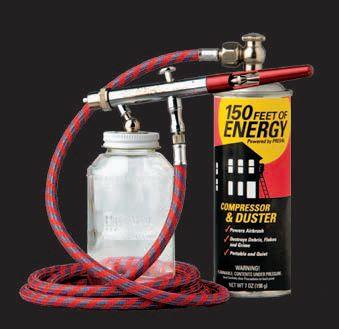
DIY use of paints is popular, so it’s not surprising that DIYers affected the growth of aerosols. “We are seeing more growth in aerosols primarily due to growth in the DIY segment regarding small projects,” said Sam Averbuch, president of Preval. “We expect to see this growth continue.”
But the impact of small projects on aerosols extends beyond DIY users. “Our aerosol division packages a full line of wood coatings into spray cans for small jobs and touch-ups,” said Chris Armold, aerosol manager at Gemini Aerosols Inc. “This area of our business has grown in 2016.” He credits this growth to the company’s salespeople, who pursued new opportunities and opened new accounts in both trade (paint store) and industrial application.
And, like other paints, aerosols are bene-
paints that focus on texture. “It’s growing in the sense of specialty paints,” said Barry Fleischer, president of Plutonium Paint. For example, people want to paint Formica countertops to look like marble. “We expect this to continue because people are looking for easier ways to create a surface, especially if it’s a relatively small area. It’s been showing up in the past
products every year.”







“Color trends are constantly changing and consumers want colors and finishes that are in line with those changing trends.”

Everyone in the paint and decorating industry has seen the impact color has had on many industry categories, and aerosols are no different. “Color trends are constantly changing,” said Mark Wilgen, brand director of small project paints for Rust-Oleum Corporation. “Consumers of their project needs.”
This demand for color applies to customers of all types and sizes. For example, at Gemini Aerosols, the customer base comprises contractors, industrial workers, cabinet builders and so on. “We have done a large amount of custom color
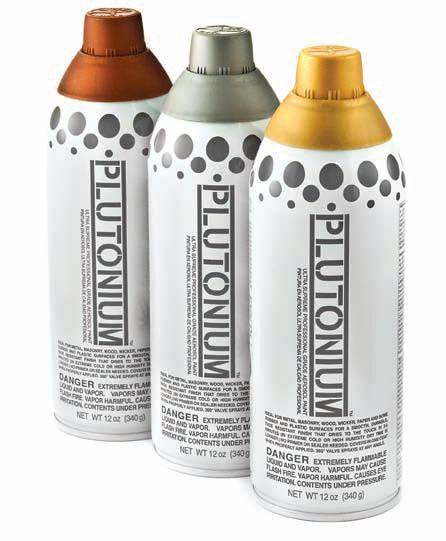

matching this year, so I’d have to say our customers want to see quality and consistency more than anything,” said Armold. Not surprisingly, basic colors constitute the category’s most popular products. “We see the top-selling spray paints
like metallics, glitters and chalk paints.”
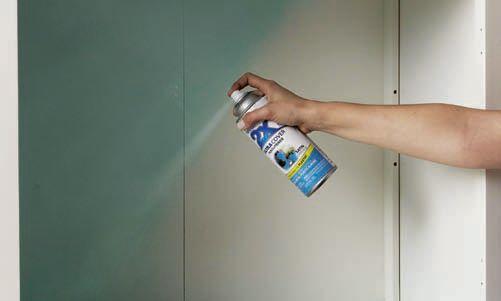
As aerosols evolve, manufacturers are faced with creating products that consumers want while complying with everchanging regulations on the category. Product innovations include changes that allow customers to use aerosols in new ways. “The main innovations in aerosols are adhesion to plastic and aerosols that combine paint and primer in one

can,” said Wilgen. Averbuch said one of the biggest innovations has been around rubberized paints like Plasti Dip, which allows you to spray-paint an object and then peel off the paint when you are ready for a change.
According to Armold, these are just the beginning of some interesting developments to come in aerosols. “One of the things I can see in the future is the development of a waterbased coating in aerosol that atomizes properly and has an extended shelf life,” he said. “I’m not certain it will happen in 2017, but I do think someone will develop one.”
In creating these new products, manufacturers must also meet government regulations and that can drive up costs for
retailers. “Compliance with government regulations that vary in different parts of the country can be challenging,” said Wilgen. For instance, the Globally Harmonized System of Class-
to industrial products, continues to test aerosol manufacturers with a large industrial client base. “It has been a challenge for our regulatory folks to calculate and develop the proper GHSArmold. “It’s been very time consuming for them. Our folks have really done a good job of learning the GHS system and have become a lot faster at calculating and producing GHS labeling and safety data sheets for new products.”

As 2017 unfolds, aerosol manufacturers look forward to what’s to come. “We’re excited about the opportunities for growth in the exact-match industrial paint and powder coatings touch-up business in the coming year,” said Armold,
adding that his company will be focused on this segment for 2017.
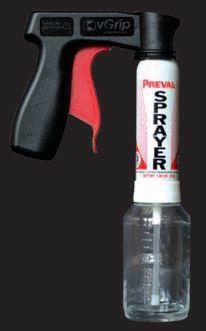
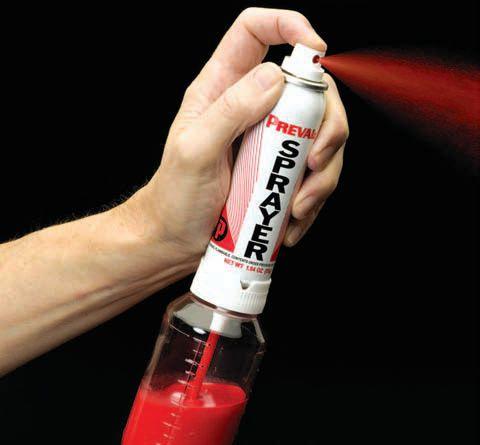
“We are seeing new paint technology that makes it easier for people to use the Preval sprayer,” said Averbuch. “In the
paints are very easy to spray.”
Fleischer is excited about breaking into

new segments that could lead to more growth. His company recently moved into the hospitality segment, along with muralists and even use on BMX bikes and in the automotive industry. He thought the company would attract more DIY customers, but instead it is seeing a big following with crafters. “What’s nice is we don’t sell to arts-and-crafts stores, so we push these customers to [independent] paint stores,” said Fleischer.
To ensure strong growth in aerosols, manufacturers recommend two key strategies for paint and decorating retailers. First, be colorful. “Updating color assortments and making the shopping experience as easy as possible are key to helping customers,” said Wilgen. “To be a destination for those consumers, you need to have a very strong
trends are always changing, and we can help make sure their product assortments are up to date and on trend with colors that are relevant to consumers.”
Second, showcase DIY examples. “Generally, the industry is growing with the DIY market, so any project-based promotion that makes it easy for the DIYer will help,” said Averbuch.
Fleischer said his company is committed to paint and decorating retailers because there’s no better place to buy an aerosol paint than an independent paint store. “They will spend more time with the customer because the prep is so huge,” he said. “They tell the customer what to do for the project to turn out right. I’d much rather push my customers to independent paint stores. And when they are there, they’ll buy other things.”
From all indications, growth in the aerosols category will not be limited to the past 12 months. Fleischer said he expects the category to keep expanding, with product innovations in color and texture, and he’s not alone. “I don’t think aerosols are going away anytime soon,” said Armold. “I look for the business to show steady growth over the next 10 years.”
Karon Warren is a freelance journalist based in Atlanta and has written about business, lifestyle and travel for more than 10 years.







If DIY customers can be convinced to do the job right, they might thank their retailer for the results.

By Steve Penhollow


Of all the aspects of home maintenance, decks may be the most widely and frequently neglected. Some homeowners seem unaware (perhaps willfully unaware) that decks require an annual checkup and seasonal upkeep.
Customers should be told that decks need to be examined yearly for dirt, mildew, wear and peeling, according to Mike Kozlowski, marketing director for Thompson’s WaterSeal. Many experts also recommend an annual cleaning. Customers need to be made aware of the splash test, Kozlowski said. It is designed to determine how a previous deck-sealing job is holding up. “Simply splash water onto a few boards and
watch to see if it’s rapidly absorbed,” he said. “If it is, that means the wood is not protected from water damage and it’s time to clean and seal your deck.”
Additional deck checkup recommendations from Kozlowski verge on the gymnastic. “It is also important to assess the safety of the structure,” he said. “You’ll need to walk your deck, taking bouncy steps along the way, and if any boards give in, they may need to be replaced.” A screwdriver or similar tool should be used to check for rot between boards, he said, and protruding nails and screws should be attended to (hammered in or replaced). They protrude because outdoor wood expands and contracts as the seasons change.
Dan Cohen, an executive vice president at ICP Construction, said homeowners should check for hairline cracks


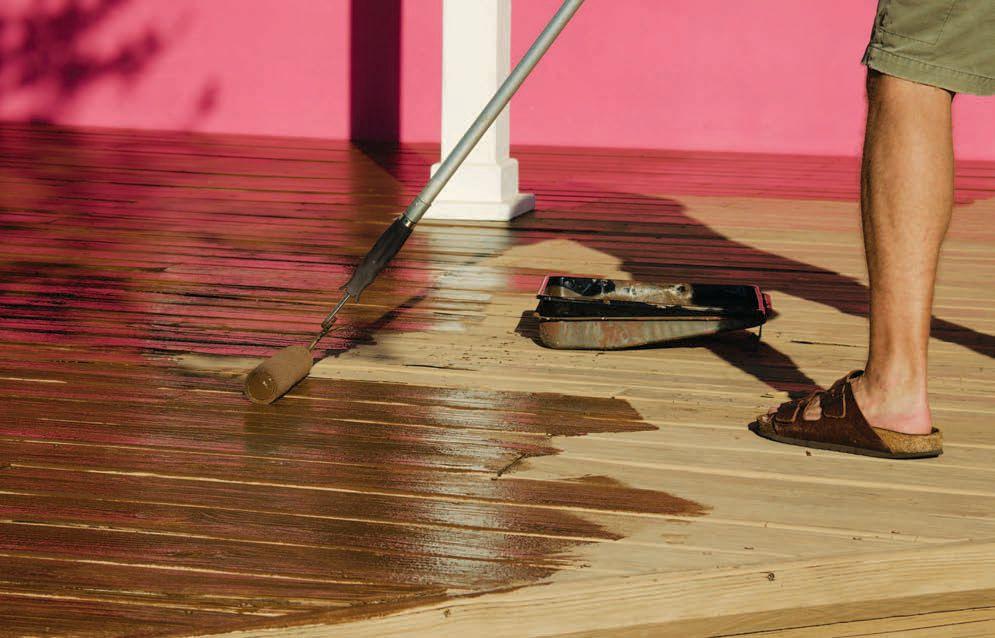




1. TAKE YOUR TIME. Allow the wood on a new deck to weather and then thoroughly prepare the surface before staining.
2. PREPARATION IS EVERYTHING. All wood needs to be cleaned thoroughly before staining; an oxygenated bleach works wonders.
3. BRIGHTENERS ARE BEAUTIFUL. A commonly missed step, brighteners open the pores of the wood and allow stain to soak in.
4. RINSE LIKE MAD. Whenever a customer works with chemicals, they should be sure to rinse them away. Leftover chemical residue can damage new stain.
5. AVOID THE CHEAP STUFF. You get what you pay for. Better ingredients cost more but will ultimately last longer.
6. CHECK OUT WATERBORNE STAINS. Some are durable and without solvents. The cleanup is easy, and they generally perform well.

the wrong deck coating for their needs, Bos said. “Waterbased and solvent-based formulas offer many different characteristics that should be considered when selecting a and clean-up characteristics can all affect your choice.”
This is where “a knowledgeable independent dealer” can really make their mark, he said, providing customers with information they might not be able to get elsewhere.
Cohen said there are so many product offerings in this category these days (“traditional alkyd- and linseed-oil-based
7. FOLLOW DIRECTIONS. Pay attention to how many coats are required and how much time should elapse between applications.
8. LESS IS PROBABLY MORE. Overapplication of certain stains can cause product buildup that can cause peeling.
9. THE PAINTBRUSH IS KING. Customers should always keep a paintbrush handy for vertical posts and spindles.
10. LET IT DRY. Make sure the deck is fully dry and cured before anyone is allowed to tramp across it.
11. MAINTAIN IT. Keep it clean, and when it shows signs of aging, a brightener and another coat of stain will keep the wood looking great.
Source ~ Dave Barnes, SaverSystems
stains, carrying oils, waterborne alkyds and latex stains”) that educating customers is essential. “Each has some positive factors of application or performance,” he said.
Water-based stains used to be woefully inadequate, but that is no longer the case, Barnes said. “Water-based products will resist darkening over time, are environmentally friendly and are easy to use and clean up,” he said. “The
these products tend to hold their color and appearance longer than oils do.”
Ric Peters, president of Shenandoah Paint and Wallpaper, in Harrisburg, Virginia, said he pushed oil-based products for years “because they had better penetration even though they faded faster in the darker colors.”
But that has changed. “In the past few years, Ben Moore and others, I’m sure, have come out with some outstanding waterborne acrylic products that equal or outperform the oil-based products and have much better fade resistance,” said Peters.
Also available are heavy-duty products called deck resurfacers, which are designed to extend the lives of extremely distressed decks. But Kozlowski and Bos said these sorts of coatings have disqualifying downsides. “The drawback,” said Kozlowski, “is that the coverage rate of average waterproofers and stains. Additionally, these coatings cannot be removed after application. It is therefore a one-time proposition.”
understand these products fully, Barnes said. “Every customer has a different scenario with their project, and different scenarios can require different solutions and different products,” he said. “All products need to be applied correctly, and what that means can vary by manufacture and product.” Strategies that dealers can use include providing educational information on their website, having liquid samples for users to test products and offering related literature and fan decks in the store, Barnes said.
A common mistake that retailers make when selling these products, Kozlowski said, is to promise a level of performance that the products can’t deliver. “At the end
on the performance of these products,” he said. “Some exterior decks are exposed to more rain and sunlight than others. Some decks have trees covering their area. Most label claims are subject to the optimal environment. However, as we all know,

Bos said a deck resurfacer is really no more than a stopgap measure. “Wood is a really robust material,” he said. “If the wood is decayed to the point that structural integrity is compromised, it should be replaced. If it hasn’t decayed but the homeowner is frustrated with the coating, they would be better off
the right workmanship to get the beauty and durability that only wood offers. We don’t believe in these cover-up formulas, as they generally promote conditions that cause wood decay.”
It is vitally important that retailers
everyone’s environment is different and most likely not like testing environments.”
Cohen described decks as “the most complained-about surface in the paint industry today.” So the future of deck coatings is, in some sense, oriented toward reducing those complaints. “The industry will continue to come forward with new resins and carrying systems,” he said. “We have, at the moment, multiple stain technologies in varying degrees of testing.”
Steve Penhollow is an award-winning journalist based in Fort Wayne, Indiana.





Can you spot the solar panel in this picture?
Big rectangular glass panels. That’s what most people are likely to imagine when they think of solar panels. But the Italian company Dyaqua has built some that look very different. Instead of glass, they look like everyday building materials.
These new “invisible panels,” as the company calls its products, are made to look like various types of surfaces, including concrete, stone, terra-cotta and wood. “The surface of the Invisible Panel is opaque and takes on the appearance of wood or concrete, but it is translucent to sun rays, permitting light to enter and feed the solar cells within,” per Dyaqua’s website.
A recent report from Durability + Design said the panels have a precise use. “The technology is aimed at
and other aesthetic considerations often block the installation of solar panels as an option to cut down on energy consumption.”
Dyaqua is using the online crowdfunding service Indiegogo to raise money to increase production, according to statements posted on the company’s Indiegogo pages. The company said its production capacity can’t currently meet demand outside of Europe, but potential supporters can visit the Indiegogo campaign and see a few examples of the product at work.
“In 2014, we collaborated with the ecological association Marevivo and the research center ENEA
solar stone,” Dyaqua said on Indiegogo. “It was placed on beautiful Capri Island, where other photovoltaic technologies are banned. The energy generated by Invisible Solar was used to light a century-old tree during the nighttime.”
As of December 13, the campaign was still active and seeking to raise $20,000 American dollars in an effort to increase production













Artistic finishes are on the rise, as is this California-based company that specializes in Venetian plasters and decorative paints.



Four decades ago, Meoded Paint founder and CEO Shlomo Meoded helped his father run the family paint store in Europe, where Meoded learned the various techniques and applications
realized the United States had an untapped set up his own showroom and began offering classes to teach
product from Italy, but it didn’t take him long to realize that he could provide his own products to the paint and
variety of Venetian plasters, low-VOC glitter and metallic the company is the only manufacturer of lime-based plasters
The decision appears to have been a good one, with

“There are so many different artistic finishes that can be accomplished with decorative paints it boggles the mind.”
continues to gain traction, we have adopted new products to meet the trends that designers are asking for,” said Meoded. “What initially started out as a company that sold Venetian plaster has now become the sole manufacturer of lime-based plasters in the United States, and we also provide a full line of decorative paints to complete any specialty paint project.”
As part of the company’s growth, Meoded Paints invested in a manufacturing plant and a 15,000-square-foot retail
Meoded. “We offer a state-of-the-art decorative space that is
host to our monthly decorative paint training classes and to interior designers who invite their clients to visit and choose
However, Meoded Paints is not content to settle for the success of its own showroom. This year, the company’s goals include expanding its dealer base in the United States and the unique quality of the company’s products. “In addition to developing our video series, we are concentrating on social media campaigns that will draw more consumers, designers, painters and contractors to our website and stores,” said Meoded. “As more customers become aware of the power



plasters, and they are happy with the quality because the product is made authentically. Shlomo really knows the material very well. He understands as a manufacturer how to produce a quality product.”
In addition, Babolcsay said he likes that Meoded Paints is based in California because he doesn’t have to go through the added expense or time waiting for an imported product, plus he receives better customer support. “Availability is a big, big plus for us,” said Babolcsay.
With feedback like this, Meoded Paints is certainly encouraged about the potential for company growth in the coming year. “The future looks promising with the improved economy,” said Meoded. “We are seeing lots of sample requests from major building-supply companies for plaster finishes in high-end hospitality businesses and corporate chain stores. There are so many different artistic finishes that can be accomplished with decorative paints, it
evolving market and dominate the specialty paint industry.” ~ Karon Warren




Tiny houses might be more than a quirky fad. While the smallliving phenomenon has gained traction among some Americans, the country’s regulatory agencies haven’t had sets of rules particular to those homes. That fact has been seen by many of the movement’s proponents as restraining the rise of the small-living philosophy. But that has begun to change, according to
A set of standards for building small homes will now be available for housing officials across the U.S. to adopt.



many who advocate for tiny homes, with the International Code Council passing the tiny house appendix in December. The appendix will be part of the 2018 International Residential
for their tiny house as long as “it’s built to meet the provisions of the adopted code appendix,” according to builder Andrew Morrison, owner of Tiny House Build, a company that helps people build small homes. “A lack of recognition of tiny houses

in the IRC had been a major hindrance to the creation of legal tiny houses in communities across the United States,” he said.
Tiny homes are residential structures that are dramatically smaller than the average American abode, which is now nearly 2,700 square feet, according to a 2015 Census Bureau report. Tiny homes are often around 500 square feet and typically place an emphasis on modern and innovative design, presumably to make up for lost space.
Morrison said the reasons for the “Tiny houses have gained popularity in the past few years as a result of
“Tiny houses have gained popularity in the past few years as a result of flatlined wages and a grassroots movement toward minimalism.”
wages and a grassroots movement toward minimalism.” He added that the new IRC appendix will help housing
those wanting to build tiny but also local building officials overwhelmed with applications for tiny-house projects,” said Morrison.
He also said the passage of the new rules did not come easily and wasn’t the work of himself alone, but rather is a result of work by “a team of architects, builders, designers and educators.”
The safety standards that come with the IRC appendix also seem welcome by small-living proponents. “[The appendix] brings much-needed safety standards to tiny-house construction,”
said B.A. Norrgard, a volunteer coordinator at Habitat for Humanity and founding member of the Tiny House Collaborative. “This is a huge breakthrough that holds incredible potential for positive change in the housing sector, which is in crisis.”
Morrison called the approval of the appendix “historic” but stressed that work
has just begun for him and his group. “Each jurisdiction currently enforcing the IRC must now adopt the appendix for it to become law.” He added, “We have a great group of enthusiastic people in the tiny-house community, and we will work together to continue the positive movement forward for the industry.”
~ Steve Stevens

Smith Brothers (continued from p. 24)
“I like working here. I would say, a few years ago when I started working here regularly, I
and people appreciate it.’ I really started
she grew grateful for the way things turned
The recession hit the store hard, as it




this stuff every day,” she said. “You can research stuff all you want, but if you don’t actually use it, you still don’t really quite get it.”
Smith said the contracting business has always brought commerce to the store and vice versa. “The two do end up tying together a lot,” she said. “So we might go to somebody’s house and they might start coming here to buy paint, or they might end up buying window blinds from us because they had us do some work at their house. Or somebody comes in to pick out paint colors and asks, ‘Do you know any painters?’ and I say, ‘Yeah. We are.’” Smith said she is careful to send homeowners to other contractors that do business with the store as well.
“You can research stuff all you want, but if you don’t actually use it, you still don’t really quite get it.”
The recession required no layoffs or reduction through attrition because the staff has always been small: No more than three or four people, including Smith, are employed at the store at any given moment. It helps that Smith is also the in-house decorator. “Yeah, that I needed to gain some of that, because blinds are a little scary.

But once I got going on that, I realized, ‘I can do this!’”
The recession put expansion plans on hold, and no one agrees on when, or if, they should be taken off hold. “I have one parent who’s all about expanding and one parent who is not,” said Smith. “So I guess it depends on where I want to go with it. I don’t think I have done enough thinking about that yet.”
The challenges of opening a second store aren’t limited to the state of the some really good employees in order to be able to open another store, and at that point you’re pretty much stealing from other stores,” said Smith. “I don’t know what else you could do. We have had some of ours stolen from us.”
If Smith takes ownership of the store, it goes without saying that she won’t be either of the brothers referred to in the name. She said she’s never considered slipping daughter in there. “I never really thought about it,” she said. “I been for 32 years.” ~ Steve Penhollow



YOUR CONNECTION TO THE COMMUNITY OF PAINT AND DECORATING RETAILERS
FOR MORE INFORMATION
about the exclusive benefits of membership in the Paint & Decorating Retailers Association, call Tina Sullivan or Brandi Hemmer at 1-800-737-0107 or email info@pdra.org .



When the National Hardware Show rolls around each May, PDRA member Jerry Keim always takes notice. For him, the show is a chance to discover new products. “I guess the big thing is just seeing if there’s anything new and different. I found a great stain line a few years back that has kind of become my go-to exterior stain. I wouldn’t have seen that if I hadn’t gone to the show.”
to better evaluate potential partners and products. “You see the ads in the trade magazines and it’s just not the same as meeting the people in person and stopping at their booth.”
Keim also said the location of the NHS presents a rare opportunity for him to combine work and pleasure.
“I enjoy the show for a number of reasons,” said Keim. “First, it’s nice to get away from the store. It’s a vacation, a nice place. The show itself, I enjoy going just to see what’s new. I’ve done that for many years, back even before the PDRA merged its show with the hardware show.”
Keim added that having the Lancaster show nearby is the icing on the cake. “We buy through Lancaster, and we always hit that show after the National Hardware Show.”
The event now is not the same as it was in those days before the two organizations joined efforts. Keim thinks it’s better. “I remember one of the last of the old shows I attended, it was like I walked away saying, ‘Boy, I don’t know if I’ll ever go back.’ But when the two shows got together, that kind of made things really interesting again,” he said.

Time is running out for PDRA members to nominate a deserving young person for the association’s annual $5,000 college scholarship. The scholarship is awarded to a college-bound person, and each PDRA member may nominate up to two candidates. Applications are available online at pdra.org , and are due, along with all required paperwork, on or before March 10, 2017. Nominees cannot be more than 26 years old and must have reached at least the senior level of high school. They do not have to be a relative or employee of the PDRA member who is nominating them, and the award must be used for vocational college, college or postgraduate studies.
If you’re a PDRA member, your business’s contact information should be listed online in our store locator, a Web-based search
out more about your business. Find the locator at pdra.org in the site’s navigation bar and make sure we have an accurate and complete version of your data. If you need to add links for your website and Facebook page, or make other updates or corrections, contact Tina Sullivan at tina@pdra.org



Value Paks— coupon books containing offers for thousands of dollars worth of free and discounted paint and decorating products and services—are available now for PDRA members to download at pdra.org . Join or renew a PDRA membership and receive the Value Pak by email. And remember to register your employees for our online education programs in time for the busy season; knowledge and customer service are the keys to successful sales. Go to our website and click on the Education tab to find out more.
Catalina Paints North Hollywood, California
Dugan’s Paint & Flooring Centers Laurie, Missouri
Forsyth Hardware & Homecenter Forsyth, Montana
Hessler Paint and Decorating Center Delray Beach, Florida
Jackson Paint & Glass Jackson, Wyoming
Kamloops Paint & Window Coverings Ltd. Kamloops, British Columbia

Mills Ace Hardware Lincoln City, Oregon
Patti-Lynn Interiors Stouffville, Ontario
Pino & Son Supply Union City, New Jersey
Walnut Hill Paint Dallas, Texas
Wigley’s Paint Inc. Waco, Texas




Stay ahead of the pack with the industry’s leading events, shows and exhibitions


May 9–11



The PDRA Paint & Accessories segment at the National Hardware Show is the single-largest buying opportunity in the U.S. for the paint sector. The events are to be held again this year at the Las Vegas Convention Center. Register at nationalhardwareshow.com or contact PDRA membership coordinator Tina Sullivan at 800-737-0107 or tina@pdra.org for more information.
February 19–24
The Waterborne Symposium
The Waterborne Symposium is organized by faculty, staff and students at the University of Southern Mississippi’s School of Polymers and High Performance Materials (formerly the Department of Polymer Science). The symposium, held this year at the New Orleans Marriott, offers courses, discussions and showcases having to do with waterborne coatings technology. To waterbornesymposium.com
March 4–5
The PACOA Spring Dealer Market PACOA, the Paint Applicator Corporation of America, is a wholesale distributor of paint, hardware, lumber and janitorial and building supplies. The organization serves independent retail dealers throughout the New York tri-state area. The event will be held at Queens College in Flushing, New York, in the Fitzgerald Gymnasium. Go to pacoa.com for more information.
March 12–15
The Coatings Alliance Dealer Meeting
The manufacturers of C2 Paints, the dealerowned cooperative, will be holding their 17th annual meeting in Cancun, Mexico. For more information, visit c2paint. com or contact Heather Connor at 716-853-5776.


School kids from Hardwick Elementary School, in Hardwick, Vermont, take a