




































dan@thehardwareconnection.com 317-797-6609
By Chris Jensen
dan@thehardwareconnection.com 317-797-6609
By Chris Jensen
Every family-owned retail business has a story. Our industry is filled with entrepreneurs who have taken interesting paths on their way to becoming a retailer. Some grew up working in the family business, while others decided to change careers and become their own boss.
I have always been intrigued to learn the stories of women retailers who have made their mark in an industry that has long been male-dominated. For decades, many family hardware businesses were structured in a similar fashion with the husband out on the sales floor and the wife back in the office handling the bookkeeping.
These days, you are just as likely to see the female members of the family taking care of customers, driving forklifts, cutting keys and explaining electrical projects on the sales floor, which is a refreshing change.
See our profiles of successful women hardware retailers beginning on page 28, all part of a special annual issue devoted to Women in Hardware. This is the fifth straight year we have published a special Women in Hardware section in our December issue, but it’s not like we ignore women retailers the rest of the year.

Our September/October issue frequently profiles women retailers who are Beacon Award winners. This year’s Beacon Award winners included Brenda Massey of Agricola Do it Best Hardware & Lumber in Lucedale, Miss.; Melanie Haley of Ace Hardware of Clarkston (Mich.); and Lizz Proctor of Proctor Ace Hardware in Jacksonville, Fla.
In this issue you can read about Meg Taylor, who spent seven years gaining invaluable experience outside the family business before coming back to Taylor’s Do it Centers in Virginia and using her digital marketing skills to attract the next generation of shoppers. We also profile Jamie Gentner of Center Hardware in San Francisco, who has found success with a non-traditional approach in a tough market while navigating a challenging move to a new location. Finally, you can read about Laura Backes of Osakis True Value Hardware in Minnesota, who discovered operating a hardware store in her small hometown is a dream come true.
These successful women hardware retailers all share common traits—they have found fulfillment in the retail hardware business, and they are all making their mark on their communities and the industry. ■

By Craig Cope
As a small business owner, you know that health insurance can be one of the most difficult issues to address. Who do I cover? Do I add healthcare benefits to cover a portion of the cost for my employees?
Now you can add another question to the seemly unending list: To save money, are you willing to wear a fitness tracker and provide the data it collects to your insurance provider?
The 2019 open enrollment period runs from November 1, 2018, to December 15, 2018. Many insurance providers are offering discounts or incentives if you participate in their fitness and diet tracking programs.
Tracking devices (FitBits, Apple Watches, smart watches and phones, etc.) have exploded in popularity and show no signs of slowing down. Forbes recently reported “worldwide wearable sales will grow by an average of 20 percent each year for the next five years with an expected 243 million-unit sales by 2022.”

While insurance companies have offered these or similar discounts or incentives for years, John Hancock recently made news when it announced in September that it will only offer plans with fitness tracking components.
The collecting and transmitting of this personal information have raised privacy and security concerns. Just how will this information be used? Will my information later be used to sell me future products? How will this information be safeguarded?
To illustrate the problem, look no further than a New York Times article published January 29, 2018. “Strava’s online exercise-tracking map unwittingly reveals remote military outposts — and even the identities of soldiers based there. The situation shows how data



Click Here to View Our Profile

collection can lead to unintended consequences.” Who would have thought an exercise-tracking app would have poised a national security threat?
Advocates of the programs point to many benefits including a healthier lifestyle, which benefits both the policyholders and companies. In addition, this is just some of the highly sensitive information insurance providers currently collect on policyholders and take all the necessary precautions to securely store it.
So just what data can these devices track and how can it be used? The simplest of these devices can track your steps, your heart rate, stress level, sleeping patterns and calories burned via a host of sensors in the device. The device then transmits the data to an app that aggregates all this information to develop a profile of the user.
The initial design of these devices was to provide users with immediate feedback about their activity level and progress toward user-established goals—think personal trainer on your wrist.
As technology has evolved, these devices have gotten significantly
better at tracking key metrics. Apple will often share stories about how their watch saved a life by accurately predicting the early signs of a heart attack and alerted the wearer to seek immediate medical attention.
In the past few weeks, we have now moved past personal wellness into the realm of medical device grade equipment, which involves the U.S. Food and Drug Administration (FDA). Apple announced its new Series 4 watch will be equipped with an electrocardiogram (ECG) sensor and app similar to a single-lead electrocardiogram.
Google made similar news when it announced plans that sister company DeepMind Health will become part of a newly created company Google Health. Both are significant announcements and indicate the tech giants are willing to develop products and services that involve the FDA.
It is still unclear what role, if any, these health-tracking devices will play in the health-care and insurance industries. However, what was once a fad has evolved into something significantly larger with widerreaching implications. ■




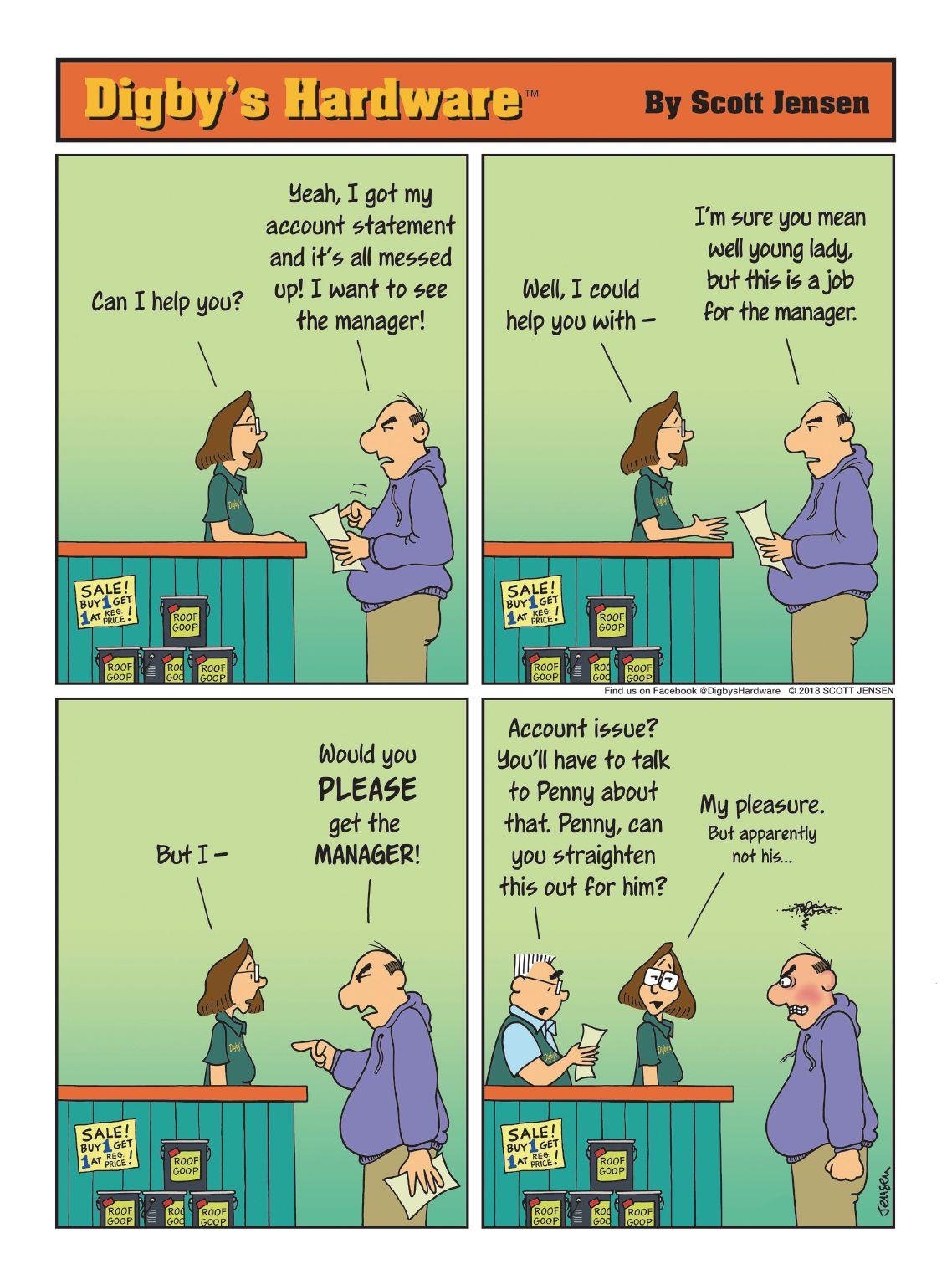




We have a customer who is a nearby business owner. I’ve told him he can take a part, like a bolt, and see if it works, then come back and pay for it. The customer has been doing this for years. We had a new employee who didn’t know about this arrangement. So the employee ran after this customer, who was already outside, asking for him to pay for his bolt. Now it’s sort of a joke every time the cus- tomer comes in.
Carol Beachy West Jefferson Hardware West Jefferson, Ohio



My favorite is when my father, Earle Little, was a teenage boy and came into the store to buy some .22 ammo for rabbit hunting. The clerk told Earle that he was not old enough to purchase the ammo. Earle pounded his fist on the counter and said “Someday I’m going to buy this store and buy ammo when I want!” A mere 18 years after that, he did just that and helped out at the store until he passed away last fall.
Kim Folchi
Sierra Valley Home Center
Loyalton, Calif.
You can’t make this stuff up. Some guy comes in looking for a fitting to hook a propane tank to a heater through a garden hose. We did not sell him any such thing. He had to go on down the road to look for that.
Darin Workman
Ace Hardware Forsyth Forsyth, Ga.


Once, a gentleman who had a camper on back of a pick- up truck asked us to help install a commode into his truck. We hobbled together some plumbing and a tank underneath. We got it working for him.
Jeff Idol Southside Hardware
High Point, N.C.





















How are sales and customer counts in 2018? We’re up about 11 percent in sales. Customer count is down, about 1 to 2 percent. Customers are just buying more per visit. I attribute the sales increase to the way we are advertising. We’re promoting free deliveries for any purchase over $200, and that helps a lot with sales, especially on items such as grills and water heaters, where we make a better margin.
Best niche categories? We’re big in rental equipment, such as backhoes, Bobcats and boom lifts. We’ve also added appliances through BrandSource. Sometimes when we sell lumber packages to build a house, we sell appliances to go with it. We’ve been selling appliances for about a year and a half. If other retailers are looking at selling appliances, I’d suggest going with an organization such as BrandSource, so you can purchase at the right price. Are you doing anything with digital marketing? Yes, we’ve moved into Facebook and it helps quite a bit.
We do some online advertising and that doesn’t cost as much as print advertising. We’re spending only 1 to 2 percent of total sales on advertising now, and we’re waiting to see how it does.
New initiatives planned for 2019? We are expanding more into the hardware business, because it’s more profitable than the lumber business. We recently switched from True Value to Ace and plan on devoting 10,000 to 12,000 square feet to hardware in each of our 12 locations.
Bill Cotton
Cotton’s Ace Hardware
Sainte
Genevieve, Mo.
How are sales and customer counts in 2018? We just relaunched the business in October. The store has been around since the 1950s, and I bought it from my brother when he retired. It’s the family’s business, and I want to make sure nothing changes.
Best niche categories? Rentals, including power tools and lawn and garden power equipment. We promote
Jeff Fafoglia
our rentals with a sign out front and through word of mouth.


Are you doing anything with digital marketing? Not yet.
New initiatives planned for 2019? We don’t have anything planned yet. I’m still getting my feet underneath me.
Jeff Fafoglia
Lakeside True Value Hardware
Springfield, Ill.
How are sales and customer counts in 2018? We’re about even with last year. Election years usually hurt us, and we’ve had a lot of rain this year, otherwise the year would have been better.
Best niche categories? Rental and small engine repair is about 10 to 15 percent of our business. I have 10 to 15 employees in those areas alone. Our goal as a store is to make sure customers walk out with everything they need. If they need a drill, mower or anything else, we’ll rent it—from power tools to mini-excavators.
New initiatives for 2019? We’re starting to plan 2019 right now. We’ll start on rental and work our way through the store. Bill Hornung Hornung’s Ace Hardware Linglestown, Pa.

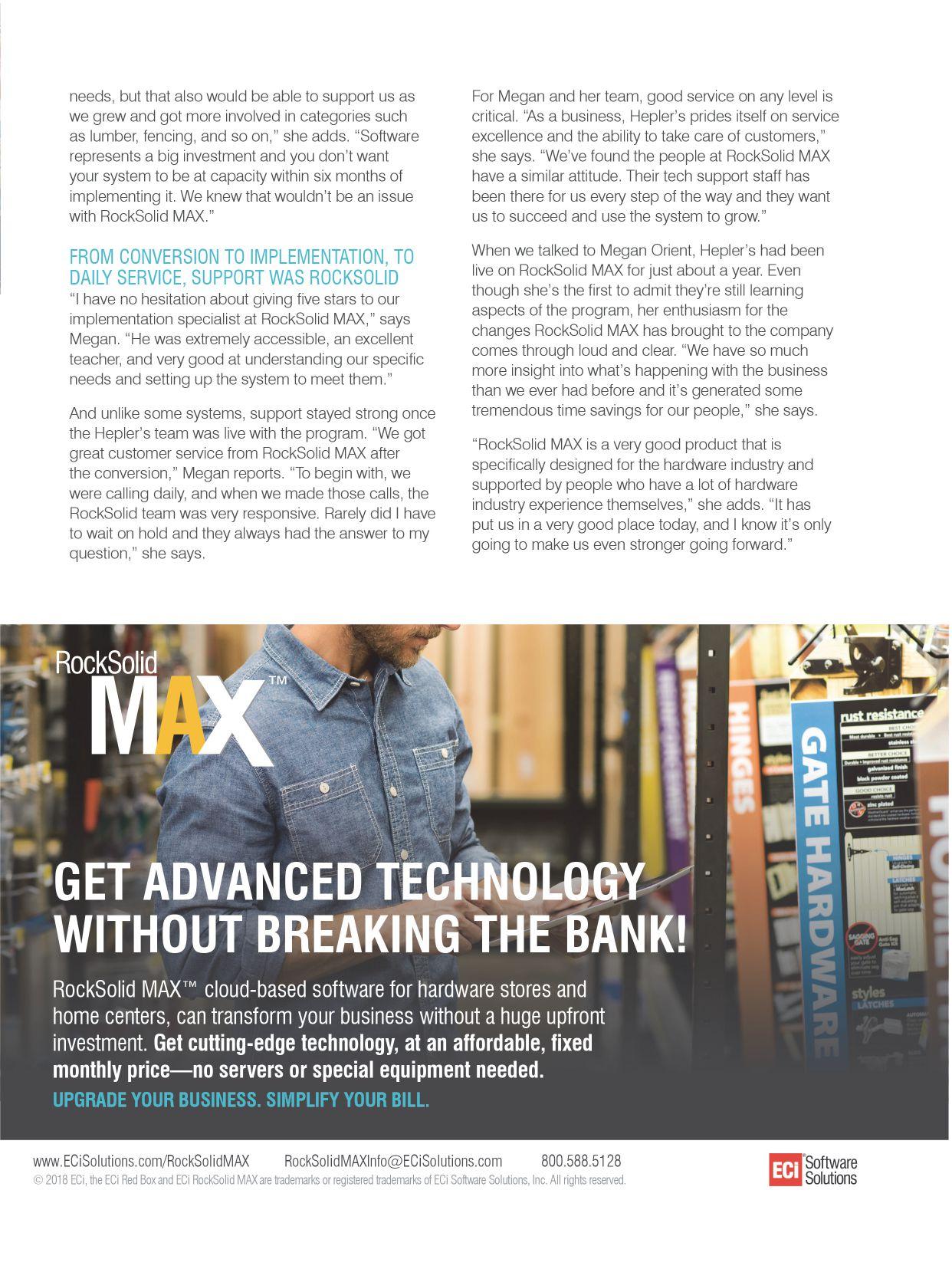
How are sales and customer counts in 2018? In sales, we’re flat and in customer count, we’re down about 3 percent over last year. We’ve been able to increase the average ticket. Because we’re sandwiched between two big-box stores and with Amazon’s growth, we’ve flat overall.
Best niche categories? We’re known for three things: STIHL power equipment, grilling and our services such as screen and window repair. We devote a lot of space to STIHL and grilling. With grilling, we rely on Traeger, Big Green Egg and Weber to draw in customers. We have been doing a tremendous amount of window and screen repairs, with the service accounting for about 8 percent of our business. It’s really helped to get the contractor business, where they bring in 20 to 30 screens at once. We also have sharpening service and lamp repair.
Are you doing anything with digital marketing? Not at the moment. We’ve done digital marketing before and it’s virtually impossible to determine an ROI. We’re not comfortable with that, so we let Ace do what they do and we latch onto that. Ace’s geofencing and mobile ads have improved that quite a bit. We just benefit from what Ace does.
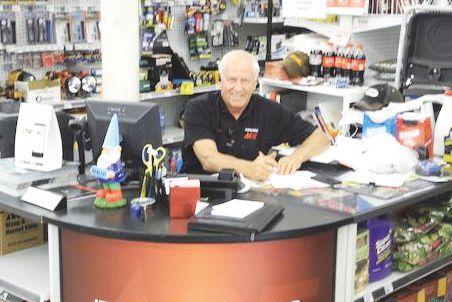
New initiatives planned for 2019? We’re working on a remodel with Ace Hardware, scheduled for the beginning of 2019. We’re about eight years old, and it’s time to upgrade. We’re also constantly on the lookout for new brands. I want to find the next Big Green Egg. I go to shows, do research on my own and talk to other retailers, through the NOVA retailer group. We bounce ideas off each other all the time, about product lines or methods of doing business. Socks seem to be hot, so we’re adding Two Left Feet socks.
Craig Smith Twins Ace Hardware Fairfax and Arlington, Va.
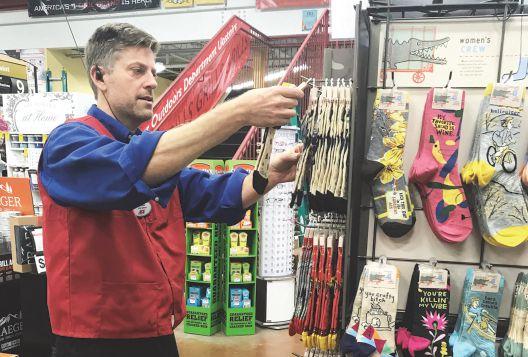
How are sales and customer counts in 2018? We’re up a little bit. I think it’s because of better advertising, but I can’t really narrow it down.
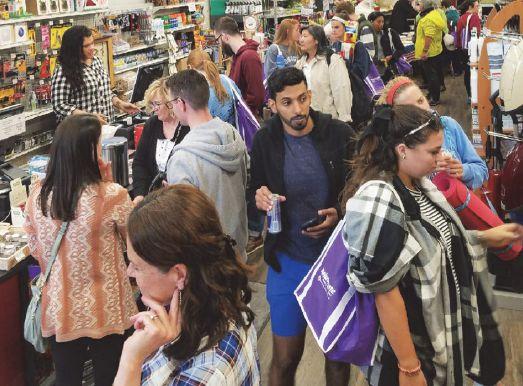
Best niche categories? We have a strong STIHL display and sell all kinds of accessories and power equipment. We also service what we sell in-house. The service is a big selling point. We’re the only store in about a 20-mile radius that offers in-house service. We have several professional tree services and some lawn businesses that rely on STIHL,



but mostly homeowners support those power equipment purchases.
Are you doing anything with digital marketing? We purchased a large, electronic outside sign. We have a website and we try to keep it updated. I promote the website on the outdoor sign.
New initiatives planned for 2019? We will be updating the building, painting and repairing the parking lot.
Dennis Deffenbaugh Lakewood Ace Hardware Langley,
Okla.
How are sales and customer counts in 2018? Great! We’re a brand-new store, just opened on September 12, so we don’t have a year-to-year comparison yet. We gauge off our business plan and comparable stores.
We’re exceeding those benchmarks. Our original orders from Ace were slated for single weekly deliveries, and we already had to change to two deliveries a week. Since we opened, we’ve had 11,000 customers through the registers. On an
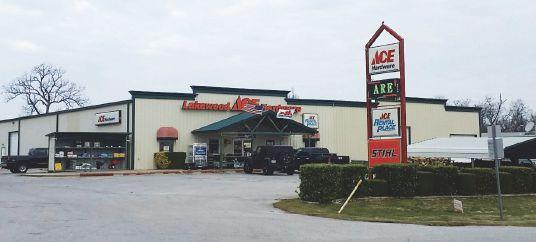
average Saturday, we have 180 to 200 customers. The response from the community has been amazing. We are the first hardware store in town. It took more than two years to open the doors, with a lot of planning and market research.
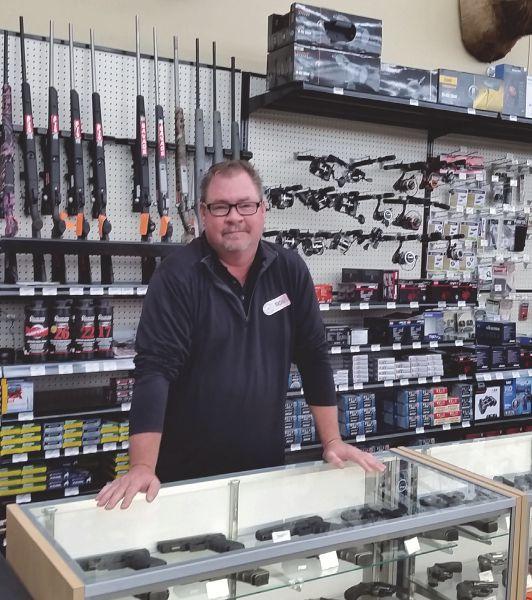
Best niche categories? We’re in a unique position and do big business in sporting goods. We have very strong niches in fishing, shooting, camping, RV, marine, firearms and crabbing. For our grand opening, we bought 150 crab traps, because we are close to the Oregon coast beach and in the crab capital of the world. All the crab traps sold out in two hours. After that, I bought an entire container of crap traps and promoted them on Black Friday to duplicate that success.
Are you doing anything with digital marketing? Facebook has been working right now, and we rely on Ace.com for links and pictures. We have been using the Ace direct mailer and that’s done well for us.
New initiatives planned for 2019? Based on customer response, we’re going to stick with the sporting aspect of the
store. In hardware, the garden section and housewares have been really good. I didn’t think that we could compete in simple things like mouse traps and cleaning supplies, but those are key categories. We’re sandwiched between a Walmart and a Fred Meyer, so it’s really surprising people are coming here for light bulbs and other everyday items. We had to raise our initial forecast by 40 percent to keep products in stock. In the first few weeks, we were chasing out of stocks.
Bob Leis
Newport Ace Hardware & Outdoor Newport, Ore.



t’s hard to believe that 2018 is almost over. It’s been quite a year. We’ve seen one of the biggest changes I’ve personally experienced in my 42 years in the hardware industry when the True Value owners voted to sell their company to a private investor.
New vendors continue to offer new and unique products to the independent hardware owners to sell in their stores and some of our oldest vendors continue to develop new innovative products for the hardware industry.
By Tom Chasteen

Consolidation continues at all three levels of the hardware channel and we’ve seen a lot of new people become hardware store owners, which is a very good sign for our industry. Every dynamic social structure and business structure must encourage and embrace “fresh blood” to remain viable both in the short term and the long term. As we all know, in our industry nothing remains the same for long.
TC-11 is an interesting product, originally developed to prevent rust and corrosion on heavy equipment (bulldozers, cranes, end loaders) being shipped to Hawaii. As you might imagine, anything being shipped on the deck of a cargo ship that is not protected arrives at its destination with both salt crystals and rust on the steel components of the equipment. Can you imagine spending $100,000 for a brand-new bulldozer and when you go to pick it up you see it covered in rust?
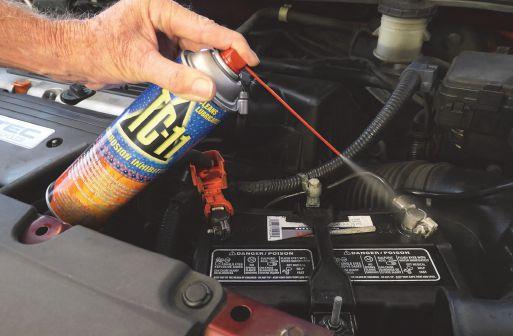
The founders of TC-11 developed a product that could be sprayed on before the equipment was shipped and sprayed on again after the equipment was unloaded off the ship that would help prevent and remove rust. It wasn’t long before TC-11 realized there were many, much smaller applications for TC-11 like protecting battery
terminals and electrical panels from moisture and corrosion. They started selling TC-11 in a 13-ounce aerosol can with a spray nozzle, a 2-ounce squeeze bottle and a 1/4-ounce needle pen.
Our testers all thought TC-11 was an excellent corrosion inhibitor and they liked the 13-ounce aerosol can size. However, what took me by surprise is how all of our testers commented on how much they like the refillable 1/4-ounce needle pen and how easy it was to put just a
few drops in a specific place. They used the pen on fishing reels, electrical components and boat steering contacts.
If your store is located in a highly salt-corrosive environment or where moisture is an issue, then TC-11 would make an excellent addition to your inventory mix. Check out the videos.

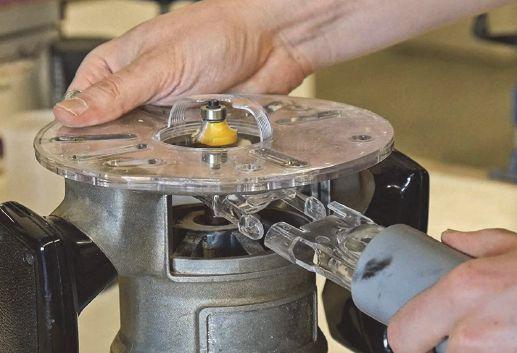
Oneida Air Systems has developed a unique Universal Dust-free Router Hood that takes 90 percent of the cleanup out of using a router. This product fits almost every power tool router brand and is easy to install and use.
Like all the Oneida Air products it attaches to a vacuum source. One note of caution is the fact a router kicks out so much debris it is imperative that you use a 1-1/2 to 2-inch suction hose, otherwise your suction hose will become clogged. If you have ever used a wood router or been around a woodworking shop, then you know how difficult it is to keep things clean. Each of our testers was amazed at how clean the work area was after using the Oneida router hood.
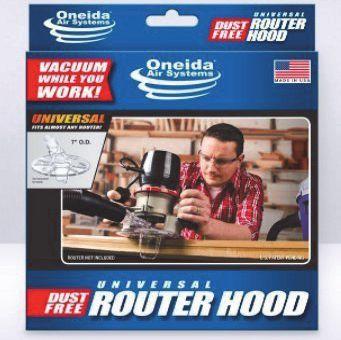
Another cool feature of the router hood is it is made of heavy-duty clear plastic so it does not become a vision issue as you are trying to use the router. In fact, all of our testers mentioned how much
easier it was to work without all the sawdust in the way.
If you sell routers you need to look into stocking the Oneida Universal Router Hood. Check out these video links.
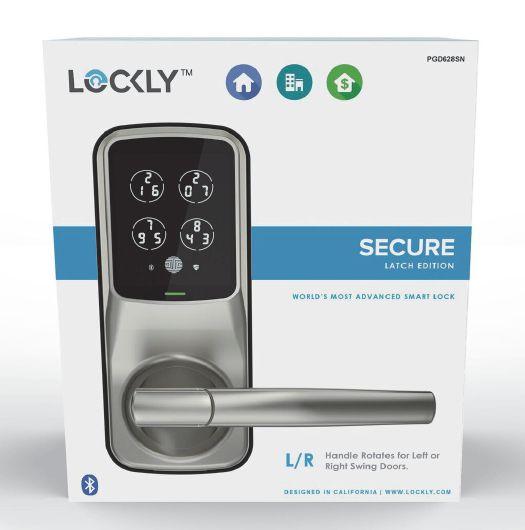
Lockly has entered the smart door lock market and has some new and interesting products. Lockly’s Smart Lock is available in deadbolt and latch editions with two finishes. It enables homeowners to go completely keyless and still

have multiple unlocking options. Each model features a patented Pin Genie™ Technology digital keypad that randomly shuffles the numbers in the keypad each time to prevent stolen access codes. Static keypads, where the numbers are always the same, are vulnerable to someone overseeing the code when entered.
In addition to pin code access the lock features a 3D fingerprint scanner, allowing for quick one-touch entry and storage for up to 99 fingerprints. All smart locks require a power source, which can pose a problem when the battery dies. Lockly installed a battery backup system, allowing the lock to be unlocked when the four AA batteries are completely dead or with a supplied physical key.
Our testers reported installation was straightforward and easy to complete. The programming can either be completed directly on the keypad or by downloading the free app. Take a minute to review the video. ■


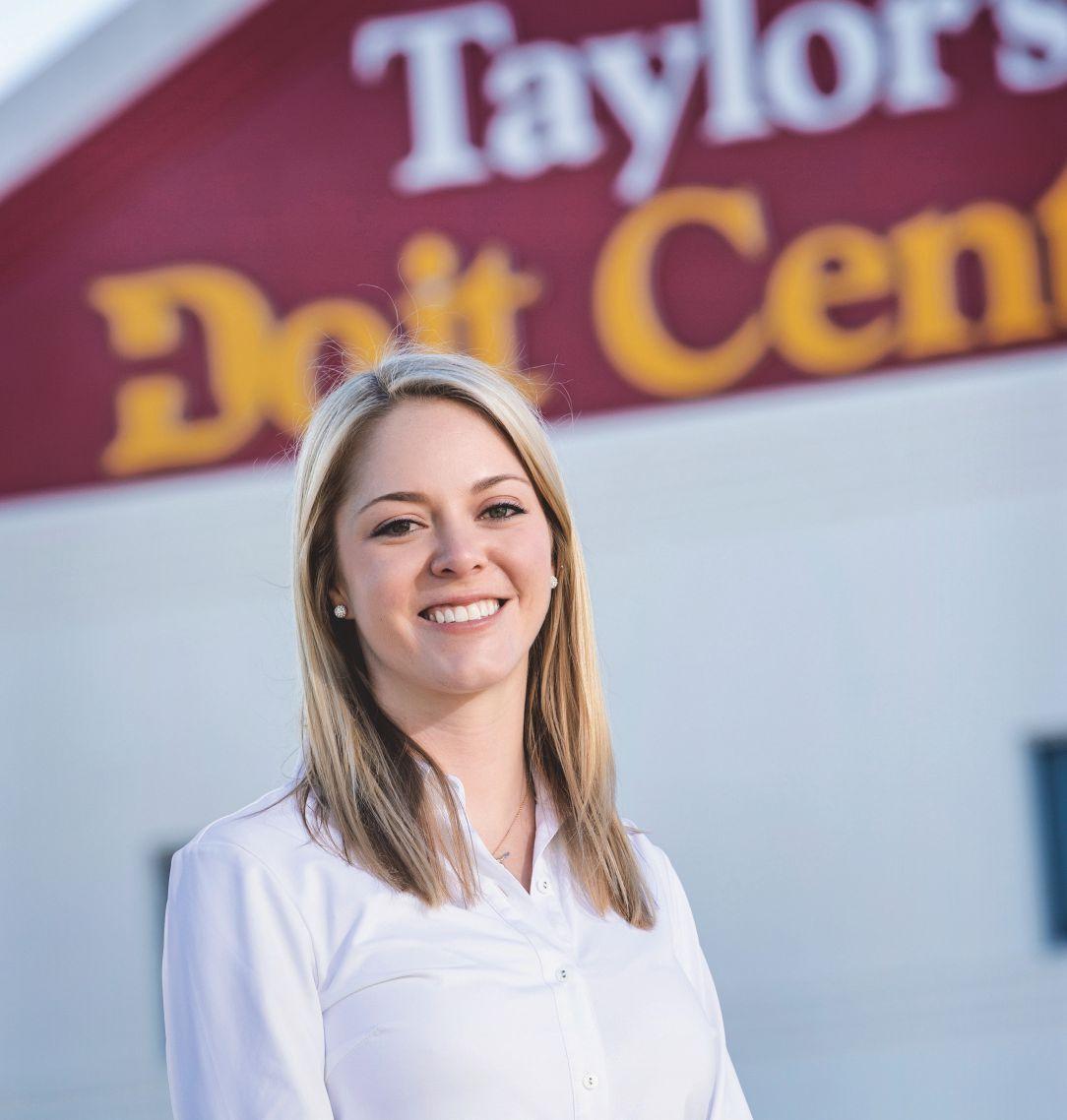
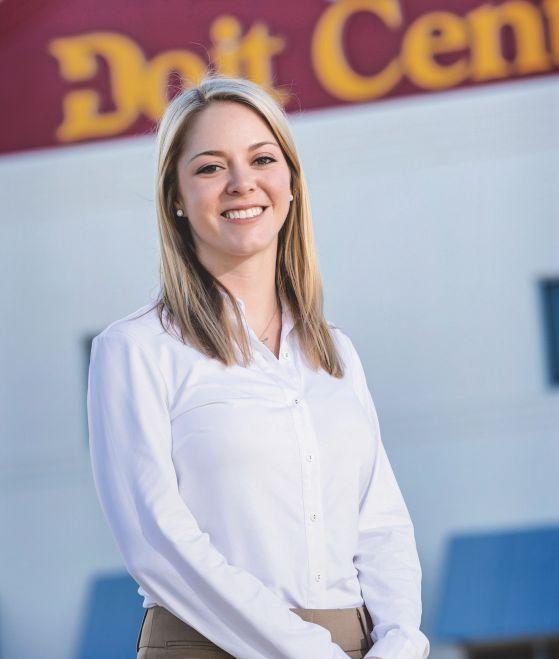
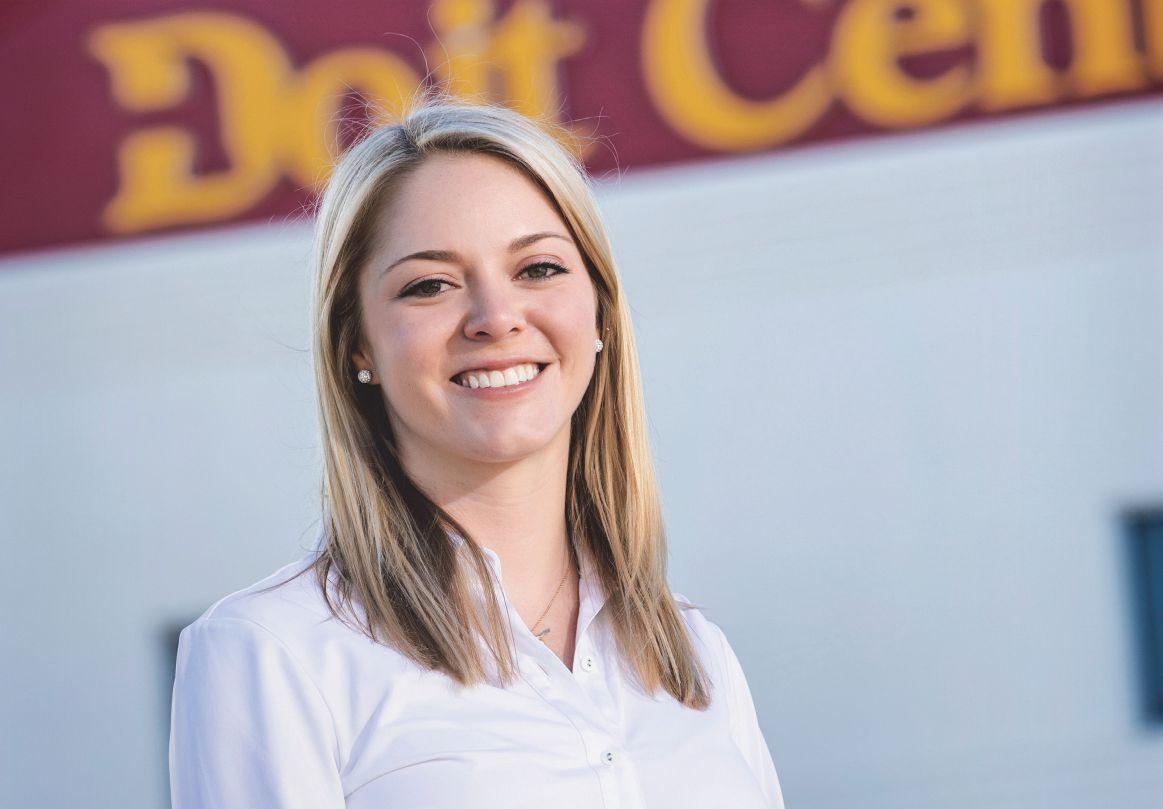
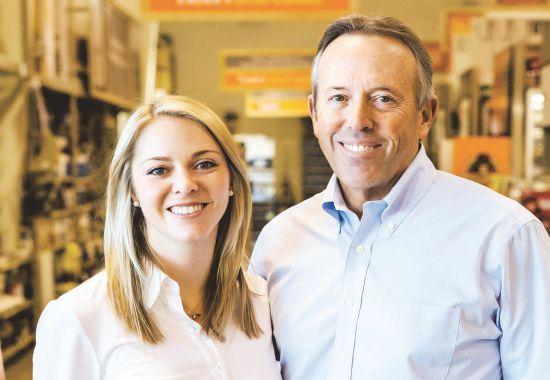
Meg Taylor is making her mark as communications manager for Taylor’s Do it Centers and Pleasants Hardware.
By Chris Jensen









When you are a fourth-generation family member working in a 91-year-old family business, there is pressure to keep it moving forward but the benefit of a long track record of success to fall back on.
For Meg Taylor, she is focused on “making the best even better.” Yes, the daughter of retired Do it Best Corp. President and CEO Bob Taylor has picked up on the mission of her father’s co-op as she gets comfortable in her new role as communications manager for Taylor’s Do it Centers. She returned to the family business 14 months ago after spending seven years


Meg
Taylor’s Do it Centers Virginia Beach, Va.
in the Washington, D.C. area, picking up skills that are now coming in very handy. She is one of nine family members who work together for a family business that is a regional powerhouse, operating 11 Taylor’s Do it Centers and seven Pleasants Hardware locations from a base in Virginia Beach, Va.
“I grew up around the business, but my dad encouraged my brother (Robie) and I to enjoy other experiences. I was able to attend Do it Best markets and see how he interacted with people,” Meg says. “I came back to the family business to work alongside my 95-year-old grandfather, Dawson Taylor. It was hard to say no to him.”
After graduating with a degree in communications from James Madison University, Meg moved to D.C. and spent three years on the Hill, working as digital media coordinator and then director of new media for the U.S. House of Representatives.
That was followed by a two-year stint as content marketing coordinator at trade publishing firm Hanley Wood, then most recently two years as senior manager for communications and membership at the Wine & Spirits Wholesalers of America. Along the way, she picked up a master’s degree in public relations and corporate communications from Georgetown University.
Those work and school experiences taught Meg the importance of social media and websites, and she has dived headfirst into digital marketing at Taylor’s.
She handles internal and external communications, two company websites, loyalty program, in-store events, communicates with customers, and oversees digital marketing and social media.
A key focus has been to bring two retail brands together since Taylor’s bought Pleasants Hardware two years ago, while

also maintaining the strong local identity they each enjoy. “They are pretty similar companies except for the markets they serve. Pleasants was also family owned and operated and had a lot of employees that had been there a long time,” says Meg. She points out that Pleasants has been in Richmond since 1915, making it 12 years older than Taylor’s.
It was also important to connect the two retail brands from an employee standpoint. “We share best practices and held an amazing managers’ retreat,” she says, adding that Taylor managers have gone to Pleasants to help reset stores.
Meg has put her digital marketing skills to use right away, transforming how Taylor’s Do it Centers and Pleasants Hardware connect with customers. “There is still a place for traditional marketing, but I have been redirecting efforts more tailored to customers who are younger and new homeowners,” she says.
She points out that they want to be the premier hardware store in the markets they serve across generations. “New homeowners are 25 to 35 years old and are into pets and technology, know how to use email and Instagram, look at business reviews before making purchase decisions
and want a credible website,” she says, adding that the majority of purchase decisions are made by women.
Websites are important tools to communicate with customers, which is why the Pleasants website was redesigned this year. Both brands use the Do it Best platform for online shopping. “We’re testing how the Pleasants Hardware website goes before making a huge change to the Taylor’s website. We need to see what’s working and what we can improve,” says Meg.
One of her most rewarding and taxing responsibilities is staying on top of online business reviews. “There are so many channels to communicate with customers. We respond to every review the best we can and let customers know we heard their concerns,” she says.
According to Meg, Facebook is the best social media platform to hit all generations. “Instagram reaches a younger audience, but you have to make a connection with one picture or video or they are lost to you,” she says.
Facebook reaches longtime customers and young homeowners. “We have to tell our story in unique, personal ways on more community-focused platforms—showing people attending events, a friendly resource for homeowner tips, letting people know we’ve been around since 1927,” Meg says. “We’re here now on Facebook and Instagram, but the next generation will do something different. It’s about to change quickly again.”
Another goal is to leverage their Best Rewards loyalty program. “We thank our
best customers with different savings opportunities and send more personalized communications based on their interests,” she says.
Every time a Best Rewards member reaches 250 points they get contacted. They get a monthly newsletter plus a monthly coupon, as well as a birthday coupon mailer and a coupon for Mother’s Day or Father’s Day. “It’s really beneficial to thank customers for repeat visits and we gain valuable information,” Meg says.
They have looked at different ways to reach customers with email marketing and will do more of that in 2019. Search engine optimization is another priority to look into. “We carry a lot of top brands like Big Green Egg and STIHL and we want to make sure we show up at the top of searches,” she says.
Another effort to connect with customers is by holding more in-store, familyfriendly events. “We had Big Green Egg demos in two stores and held our first Ladies Night event this year. North Pole Express was held on December 2 at our Hilltop store with a food drive for the food bank,” Meg says. “I’ve been working with our great marketing manager, Tom Townsend, mapping out community events that fit our needs and expand what we accomplish.”
Meg’s grandfather, Dawson, is a graduate of the Naval Academy who served briefly in World War II and then during the Korean War. It was his idea to get Taylor’s involved in
raising money for Wreaths Across America, a nonprofit group that places wreaths on veterans’ graves for the holidays. Taylor’s raised $12,000 through customer donations and a company match for wreaths being placed on graves at Arlington National Cemetery last year and contributions to date this year have already exceeded that amount.
Party on the Avenues was a special event held this year near Pleasants Hardware’s Westhampton store. “Big Green Egg came in and did more than just put their logo on it. We were talking to customers and getting positive feedback, letting them know we’re focused on serving with great brands,” Meg says.
Meg has seen the statistics. About 12 percent of businesses make it to a third generation. Only 3 percent make it to a fourth generation. She is a proud fourth-generation member of the family along with her brother Robie and three cousins: Doug Taylor, Jody Taylor and Taylor Koch. Her Uncle Joe Taylor is president and CEO of the company, while Uncle Russ Taylor is vice president. Her grandfather is chairman emeritus and her father is chairman of the board.
She says, “I have seen great traditions my dad, grandfather and uncles have established here and we want to keep the traditions going.”
Meg says her father has been an amazing mentor. “He is definitely my toughest and most rewarding critic. I’ve always been proud of him and his servant leadership. From him I learned that the company doesn’t grow from one person,” she says.

Taylor’s Do it Centers raises money to support Wreaths Across America, which places wreaths on veterans’ graves.
While her dad would occasionally mention it would be nice to have Meg join the business, he wanted it to be her decision. “If I had just come out of college and joined the family business, then I wouldn’t have brought as much to the table,” she points out.
The time she has spent with her grandfather has been the most rewarding. “He’s got so many ideas for the stores. I love our talks and sharing what we’re doing,” she says.
Meg is not the first female Taylor to have a prominent role in the company. Her dad’s sister, Buff Taylor Koch, worked in commercial sales before passing away from breast cancer in 1997.
One of the most comforting aspects of Meg’s position is the realization she’s not alone, with so many other family members involved in the business. “I will call one of my cousins and talk to them about their experiences that day,” she says.
Meg’s office is in one of the stores, so she sees the day-to-day activity. “My biggest thing is using your resources. I connect at Do it Best markets with other members, especially women who are in similar roles. It’s important to grow and learn. Our greatest successes often come from our collaboration with others,” she says. ■
Center Hardware
San Francisco, Calif. f.


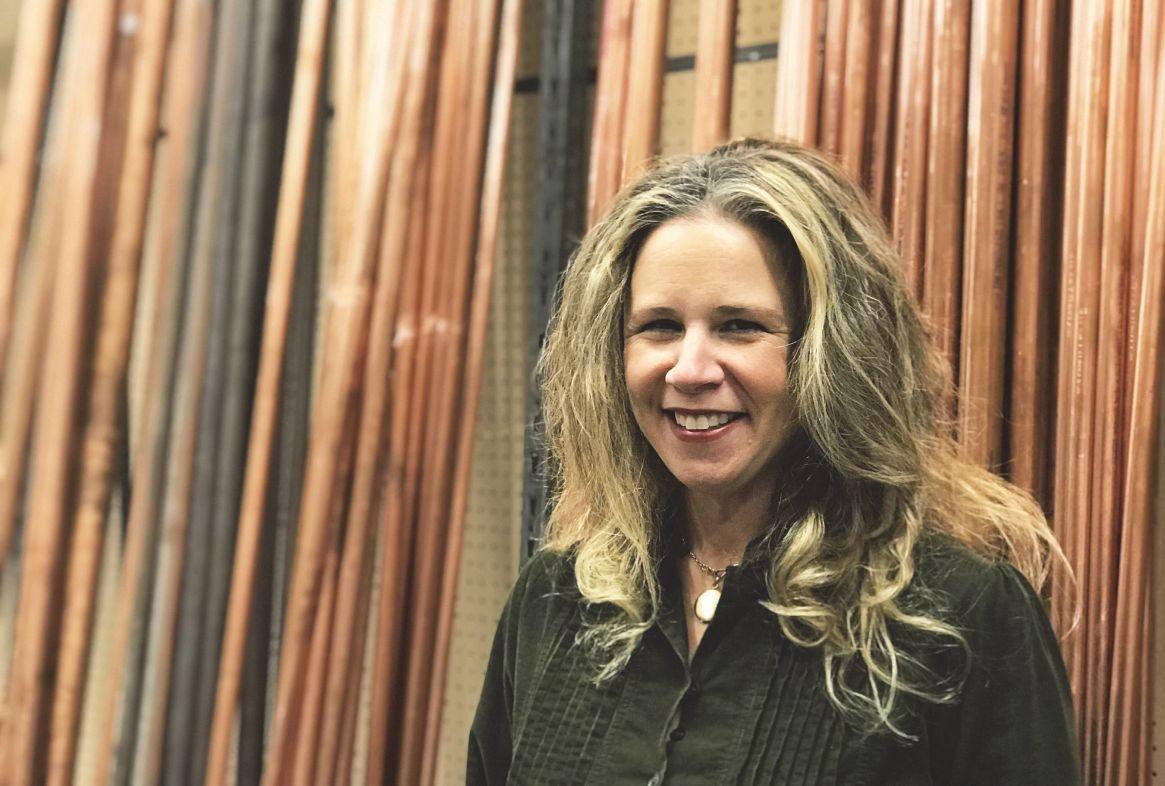


Jamie Gentner wanted to be a veterinarian, but ended up in journalism school when she discovered a passion for news and writing. It wasn’t a great time to land a journalism job in 1998, so she found herself back at the family hardware store, Center Hardware in San Francisco.
“Every formal job I had was in retail—Gap, Kelly-Moore Paint. I found I am a natural fit for a retail environment,” she says.
Center Hardware, a member of Ace Hardware Corp., dates back to 1880. It has survived two major earthquakes and many redevelopment projects in the Bay Area.
By Chris Jensen
Jamie’s grandfather, Ernie, took over Ocean View Hardware after returning from World War II and later ran it with his son, Keith—Jamie’s father.
In 1980, Ocean View Hardware was merged into Center Hardware with Keith buying into the 100-year-old business, which was thriving. He expanded the inventory, moved to a larger location in 1987 and welcomed his daughter into the business a decade later.
Center Hardware specializes in commercial/industrial and B2B sales, serving as a destination for industrial artists, facility engineers, contractors, designers and architects as well as homeowners.
“Many days we are on a scavenger hunt on a customer’s behalf,” Jamie says.
Working with her father has been a blessing, but Jamie admits they are very different. “There are things he’s good at and I’m not. He grew up with parts catalogs and has all this obscure knowledge, which amazes customers,” she explains.
When they found out their lease would not be renewed in 2015, they considered closing. “We were seeing customers and suppliers leave the area or close. It’s so expensive here,” Jamie says.
Customers suggested they consider a location in the Dogpatch neighborhood, but it was a big decision. “It’s obvious there is no one left in town doing what we’re doing. It means something to the community,” Jamie explains.
They took the plunge and began to transform a 1940 concrete building that had been a distribution center for electrical parts for years. It offered more space, more parking and easy access to the freeways.
“We had the gentleman who built our counters by hand at our old store 30 years ago do it again, giving us new versions of our beautiful butcher block runs that are one of our hallmarks,” Jamie says. “We made certain to keep our library ladders for our famous hand tool walls. We wanted all these nods to our past while we looked to the future.”
Center Hardware held a grand opening for the new store on January 27, 2017. About 90 percent of the new store was freehand merchandising designed specifically for San Francisco. This approach enabled
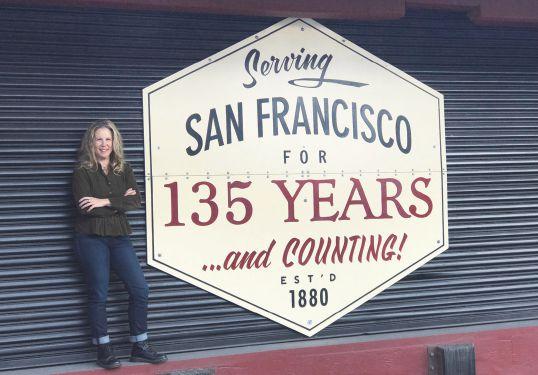
Jamie Gentner is chief operating officer for Center Hardware, which dates back to 1880.
them to fit 80,000 SKUs in a 16,000-squarefoot sales floor, 35 percent more items than they had at the previous store.
It took a little while for customers to find them at the new location, but now customer counts, transaction size and sales are growing daily.
“Independence is our strength. We’re not limited by what’s found in a catalog. We can work with industrial designers and give them what they need—that’s what sets us apart,” says Jamie, who works hard to get out of the store and meet customers where they’re doing work.
She says they get a lot of compliments from female customers about how they are treated by employees. “They appreciate the staff is not condescending and treats them as educated, equal customers. We value them.”
Female customers also appreciate that Center Hardware makes the effort to meet their needs like having gloves in small sizes. “We started carrying a line of women’s work coveralls even though we don’t carry workwear otherwise. Women can try it on in the store and it has the size range, it’s tough and has a back panel that opens for women.
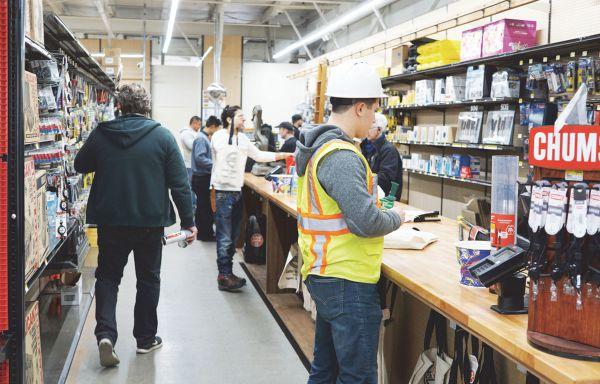



Center Hardware’s new store features a custommade counter that is always full of customers.
We’ve sold a few and gotten compliments for having it,” says Jamie, who was recognized as the 2017 Business Woman of the Year by the San Francisco Chamber of Commerce.
Jamie remembers always being in the store as a kid, working for pay beginning at age 11. “I did that for a long time, but my father always said to find your own path,” she says. “Retail gets a bad rep—it’s not suggested as a viable career path. That’s made it hard to recruit people to work jobs in retail.”
Now that she has spent 20 years working full time in the business, Jamie is proud to be part of her father’s legacy. “I’m proud to say my father, going back 40 years, has always believed in stable work schedules and provided benefits and retirement to staff,” she says. “We have very little turnover with an incredibly strong staff of almost 30 employees who have a great connection to our customer base.”
Along the way she has learned a lot from her dad. “He taught me to bring the focus back to what we are—a hardware store. Keep your eye on the ball. He continually reminds me that customer experience is the most important thing and that you have to keep the wagon full of items,” she says.
The decline in trade school training is a topic that Jamie is passionate about. “Starting with the No Child Left Behind Act, kids were discouraged from getting into trades. Many people are good at different things, and not everyone is right for college,” she explains. “Many of our tradespeople do incredible work with math and engineering, but they are working very hard with impossible hours, commuting far each day and yet are treated with a lot of disrespect.”
Jamie discovered there was only one high school shop class left in San Francisco, so she decided to have a fundraising party. Earlier this year Center Hardware hosted Build the Future, a party for local tradespeople that attracted 150 attendees. She gave away swag bags with giveaways from key vendors; got support from local restaurants, tool distributors, unions and construction firms; and raised nearly $5,000.
“It was an emotional win for the industry. I’m super proud of what we accomplished, helping a Title 1 school and youths who are using tools for the betterment of others. I wish on a national level we could come together as an industry and support the trades,” says Jamie, who plans to hold Build the Future as an annual spring event.
“I would love it if more women got involved in the hardware industry. The industry could benefit from more diversity,” says Jamie. “There are so many rewarding aspects of being a hardware retailer. Everyone is potentially our customer and because of that we’re stronger.” ■


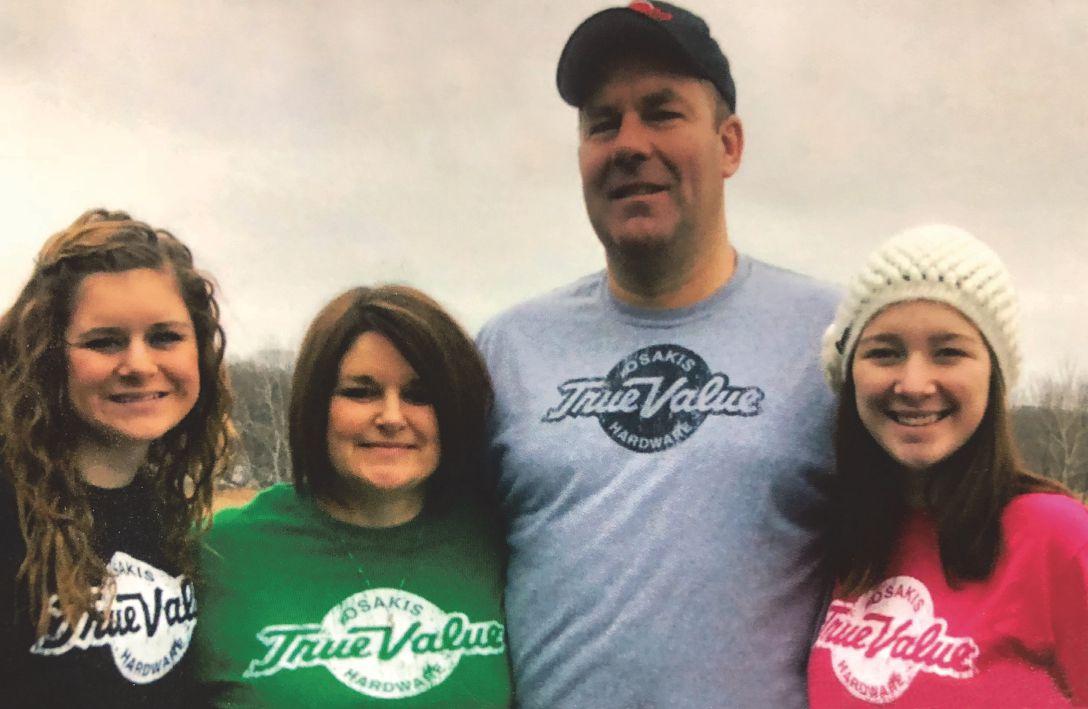
You might call Laura Backes an accidental retailer. It was never her goal or desire to own and operate a hardware store, but that is what she has been doing for the past 21 years.
When she and her husband, Jon Backes, had their first child, Emily, in 1996, it led to the common struggle over daycare and work-life balance. They decided they wanted to raise kids in a small-town environment. Jon asked his father if there were any businesses for sale in nearby Osakis, Minn., which is where they both grew up.
It turns out the hardware store in Osakis was for sale. “We met with the owner and it just seemed right,” Laura recalls. “We just jumped in. I didn’t have any hardware background, but I had watched my dad fix things growing up.”
By Chris Jensen
Osakis True Value Hardware Osakis, Minn.
To Laura, the decision to buy a hardware store was more about raising kids and living in a small town than what it might take to run a business together. They have figured that out along the way.
In March, Osakis True Value Hardware will celebrate 22 years of ownership by Laura and Jon. The 2,500-square-foot sales floor is dialed in to meet the needs of the 1,700 town residents.
“We sell lot of Weber grills. Some customers travel hundreds of miles to buy a Weber grill from us,” says Laura, who adds they also do a fair amount of window and screen repair. “I do a lot of paint
consultation with customers—I have an eye for that.”
Laura has found a good balance running the business with Jon. “He cuts pipe and is an expert on plumbing and electrical and I do paint. We take on our own roles, but also do whatever needs to be done,” she says. “We’re both here 7 a.m. to 6 p.m. six days a week.”
Customer service is the number one priority, according to Laura. “We do everything to make sure customers have a good experience. If they’re having a bad day, we try to turn it around for them,” she says.
Their two daughters, Emily and Jena, helped out when they were little. “They would come in after school. I instilled in them the practice of saying hi to people. We encouraged them to interview at other places and spread their wings,” Laura explains. Jena, the youngest, is a teacher, while Emily is an accountant.
The town features a lake, so they sell a lot to weekend people coming to the cabins and resorts. “One more thing that makes our town unique is we have the central lakes bike trail that runs through town, just one block from our store,” says Laura. “Since its completion we have added to our bike and bike accessories area. We change with the changing needs of our community.”
Jon just retired after 20 years with the volunteer fire department, while Laura was just voted onto the city council. “We both help a lot with the annual fall festival, which takes eight months of planning. We
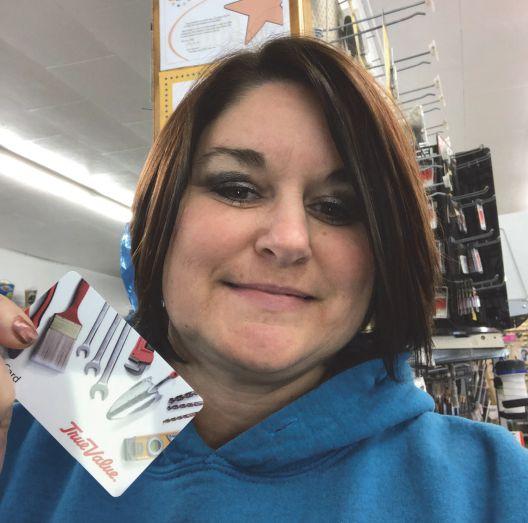


donate paint to the theater program and give many items to silent auctions. We’re happy to give back to the community,”
Laura says.
Laura says the best part of being a hardware retailer is having so many customers come into the store and say they are glad she got elected to the city council and that she’ll do a great job. “You don’t realize how much impact you’re having on people just being nice to them,” she says.
There is a Walmart 12 miles away in each direction and a Menards store 15 miles away, but Laura insists they don’t compete with big boxes. “We offer excellent customer service that they can’t get there. We have elderly customers who are very grateful to have stuff delivered or carried out to their car. That’s a big part of being a community hardware store,” she says.
Although Laura never planned to be a hardware retailer, now she can’t imagine doing a different job. “Without our customers we wouldn’t be here. It’s important to be part of the community, but you get rewarded for that,” she says. ■

By Gary Pittsford

While the changes made in the 2017 Tax Cuts and Jobs Act were intended to help simplify the tax code and provide tax relief to business owners, only the later objective seems to have been met. We encourage you to use this information to speak with your tax accounting professional about how these changes apply to you and how you can best take advantage of these changes.
To begin, we have tried to tackle the most complicated change—the new tax deduction for pass-through entities. All pass-through income is still taxable at each owner’s personal income tax level. There is now a new deduction of up to 20 percent of business income (referred to as Qualified Business Income, QBI). The deduction is referred to as the “Section 199A deduction.”
All owners of S corporations and other pass-through entities have access to this deduction. However, the deduction favors business owners that are not in “professional services” type industries.
For owners with pass-through businesses that can qualify for the new 199A deduction, it is important to review the deduction phase-out limits, the ratio of shareholder wages to total QBI income and other aspects of the new law to maximize deductions.
Owners, partners and stockholders that have a minority ownership and/ or have a lower taxable income may have a much better chance to take advantage of the 20 percent deduction. Because of this, there may be a significant incentive for family-owned businesses. If the owners are selling to the next generation, then dividing up QBI among two or more stockholders could be beneficial.
The deduction for section 199A is outlined as follows: The determination of deductible amounts for each trade or business, is the amount determined under this paragraph with respect to any qualified trade or business is the lesser of—
A. 20% of tax payers qualified business income with respect to the qualified trade or business, or
B. The greater of 50% of the W-2 wages with respect to the qualified trade or business; or the sum of 25% of the W-2 wages with respect to the qualified trade or business plus 2.5% of the unadjusted basis immediately after acquisition of all qualified property.
The deduction not only applies to the income that business owners earn from their passthrough companies, but can also be applied to other specific types of income that a business owner may have interest in including income from cooperative dividends, REITS and publicly traded partnerships.
Our discussion will focus mainly on Qualified Business Income, and how it would apply to non-service small business owners, which includes all retail and wholesale companies, manufacturers and other industries that manufacture or sell products. The following chart outlines the thresholds and how they apply.
Less than $157,000 single/$315,000 married filing jointly.
Between $157,500-$207,500 single/$315,000-$415,000 married filing jointly.
More than $207,500 single/$415,000 married filing jointly.
Generally eligible for the 20% deduction, not subject to W-2 limit.
Generally eligible for the 20% deduction subject to phase-in of W-2 limit.
Generally eligible for the 20% deduction, subject to W-2 limit.
The following are examples to help illustrate the thresholds associated with the new passthrough deduction.
• Bruce is a single business owner and owns 100% of a retail hardware store that is organized as an S corporation. His business income is $190,000 in 2018. He also has $32,000 of itemized deductions, bringing his taxable
income down to $157,000. Since his total taxable income is less than the threshold exclusion that starts at $157,500, he qualifies for the full pass-through income deduction. The deduction is the lesser of 20% of his QBI or 50% of his taxable income, which would be 20% of $157,000 or $31,400.
• Cindy is a single business owner and owns 100% of a retail flooring store that is organized as an S corporation. Her QBI is $400,000 in 2018. The company had $100,000 of W-2 wages paid that year. The business has very few fixed assets. In this case, the deduction is limited to 50% of the W-2 wages or $50,000. If Cindy had owned an accounting firm under the same circumstances, her deduction would have been zero.
Under the old tax law, C corporations had four tax brackets: 15%, 25%, 34% and 35%. The new law for 2018 features a flat 21% rate.
Businesses that generate high income and may have many locations might consider establishing a new C corporation to take advantage of both tax entities and find ways to allocate income to take advantage of the lower tax rate.
C corporations still have many problems. For example, the stockholder’s basis does not increase as you leave profits in the business. If you plan on selling the company and retiring in the next few years you would be subject to a corporate tax on selling the business, as well as personal tax when you distribute the sales proceeds out of the company.
Under the old 2017 law, you were able to carry back a Net Operating Loss (NOL) up to two years. Now under the 2018 tax law you cannot carry back a NOL to a previous tax year. NOL carryforward can be used into future years, indefinitely. When used in future years, the NOL can only be used up to 80% of pre-NOL taxable income.
If you have or anticipate carry over losses, be sure to plan out their use in the future. Be careful to avoid the forfeit of losses if you anticipate selling your business in the future.
Under the old 2017 law you were allowed up to $510K of property and equipment to be expenses (depreciated) in a single year. The new 2018 tax law allows up to $1M of depreciation in a single year. The phaseout of the ability to take the deduction was raised to $2.5M+.
Section 179 Election of Depreciation has been expanded to include certain capital improvements for commercial such as roofing, HVAC, alarm and security.
The new depreciation guidelines are good for a buyer of a new company or someone who is expanding, since you can depreciate more assets at a faster pace.
The old law granted 15-year depreciation for leasehold, retail and restaurant property improvements, plus 39-year depreciation for qualified improvement
property. The new law contains no separate requirement for leasehold improvement property and 15-year depreciation for qualified improvement property (for everything else that isn’t lease or retail). This is good for the buyer of a new store, since you can depreciate more assets at a faster pace.
The old law allowed 50% depreciation on qualified assets and only new property could elect for the bonus depreciation. The new law allows 100% depreciation on qualified business assets, and used property can get the 100% depreciation.
All business interest expense was potentially deductible under the old tax law. Starting in tax year 2018, businesses will be able to deduct business interest expenses if the business has average annual gross receipts of $25 million or less.
Note that the interest limitation applies to net interest expense, which means the business may use its annual interest income, if they have any, to offset their annual interest expense, before they apply the 30% restriction. ■
Gary Pittsford, CFP®, is president and CEO of Castle Wealth Advisors, LLC. Castle specializes in helping families and closely held business owners with valuations, succession planning, estate and income tax analysis and retirement income security. Castle’s senior partners work with clients throughout the country in making logical decisions that help them fulfill their personal and business financial goals. For more information, visit www.Castle3.com, call 1-888-8499559 or e-mail Gary@Castle3.com.

• More than 30 percent of U.S. homes have at least one connected device and that figure is projected to double to over 60 percent by 2021, according to Statista. These connected devices can control lights, home security systems, blinds, appliances and thermostats, with owners being able to remotely monitor and track their home automation systems via phone or laptop.
• Smart light bulb kit contains three bulbs, a bridge and a switch that allows you to sync lights to music and TV. User can voice control by syncing it to Amazon Alexa, Apple HomeKit or Google Home and recall pre-set scenes. It comes with a Smart control and apps to control lights remotely.
• Smart coffee table features a built-in refrigerator drawer, Bluetooth speakers that sync to your music or TV, LED lights and a touch control panel with USB charging ports.
• A Wi-Fi enabled thermostat, which can be adjusted remotely by smartphone, features room sensors that produce a specific temperature for each room based on occupancy and preferred temperature settings.
• Homeowners can find a complete line of wired and wireless home products that control the temperature, lighting, entertainment and
security solutions in their home. A comprehensive home automation system will connect all audio and video inputs and devices to a single remote, managing up to 11,000 devices to cover the entire home.
• Wall-mounted smart toilet features an adjustable night light, a seat that detects users, adjustable settings for water temperature and position of intimate wash nozzle, plus a drying function with adjustable air temperatures.
• Smart water controller can track water consumption, detect micro leaks and automatically shut off the water supply if there is a micro leak detected. The product connects to a smartphone through an app that sends alarms and notifications. ■
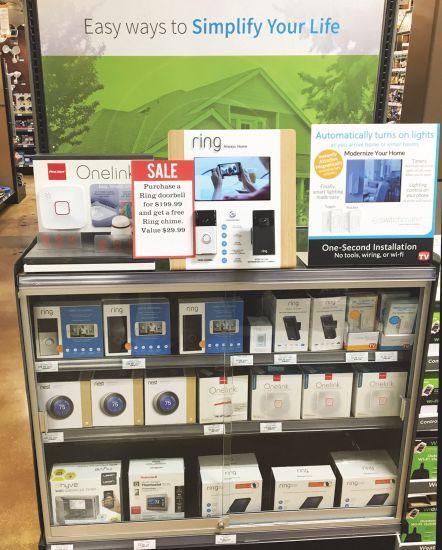
• Battery-powered video doorbell allows you to answer the door from anywhere. Get instant alerts when visitors press your doorbell or trigger the built-in motion sensors.
• Then use the free Ring app to see, hear and speak to guests from your smartphone, tablet or PC.
• Crystal clear 720HD video, custom motion zones and two-way talk with noise cancellation.
• Victor’s Smart-Kill Electronic Product Line features the latest innovation in at-home and mobile app technology, offering users a seamless, No-Touch, No-See™ easy disposal solution to mice and rat problems.
• Incorporating advanced smart circuit technology, this product line has introduced a new wave of remote connectivity, revolutionizing the pest control industry since its introduction in January 2018.
• Once set, users need only download Victor’s Smart-Kill app to monitor traps from anywhere in the world.
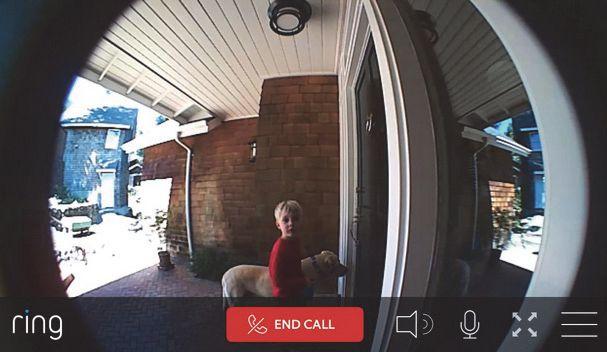
• With infrared night vision and weather-resistant design, you can monitor your home day and night.
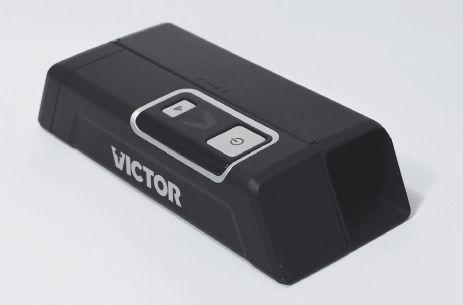
• When a catch is made, homeowners receive a real-time notification directly to their smartphone, eliminating redundant check-ups in hard-to-reach spots.
• With 37 percent of Americans having had a rodent problem in their home in the past year, Victor’s Smart-Kill technology serves growing demand for an effective defense solution. Victor,
www.woodstream.com
• Battery-powered video doorbell allows you to answer the door from anywhere. Get instant alerts when visitors press your doorbell or trigger the built-in motion sensors.
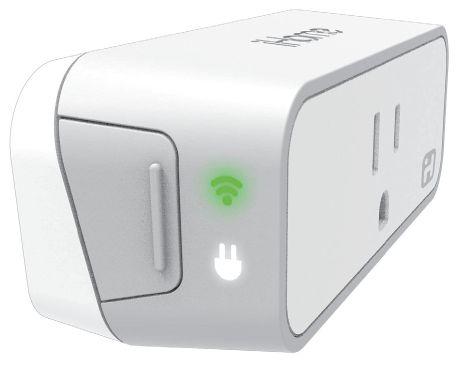
• SmartPlug lets you control any connected device from home or remotely: turn off the heat, turn on a light–it’s all at your fingertips.
• Then use the free Ring app to see, hear and speak to guests from your smartphone, tablet or PC.
• Crystal clear 720HD video, custom motion zones and two-way talk with noise cancellation.
• HomeKit system from Apple makes control of compliant devices simple and standardized. Control plugs with Siri individually or as a group. Works with Nest “Home” and “Away” status to automatically turn SmartPlug on and off.
• Imagine turning off all your lights with one tap, using color to transform your living room into a home cinema, or programming lights to come on while you’re away.
• The Bridge acts as a smart hub, connecting your devices to smart lights. You can add up to 50 Philips Hue lights and accessories to one bridge.
• You can control lights with your voice. Philips Hue works with all the major voice assistants on the market.
• With infrared night vision and weather-resistant design, you can monitor your home day and night. RIng 503-234-4545 www.ring.com
• Also works with SmartThings app, Wink app, Amazon Alexa and any Google Assistant.
• Slim design allows for two SmartPlugs in a single outlet. SDI Technologies 800-288-2792 www.ihomeaudio.com

• Configure your system with the Philips Hue app and discover the fun of creating your own scenes and programs with 700+ Hue apps. Use smart accessories like switches and wireless motion sensors to control your lights in many different ways.
• Rhonda and Nick Ruppert are celebrating the 30th anniversary of Ruppert Ace Hardware in Cresco, Iowa.
• Sunny Merchant and Jivani Amin have opened a new Ace Hardware store in Dallas, Texas.
• Homewood Holdings has acquired Building Supply and Lumber in Sacramento, Calif.
• Menards is opening a new 200,000-square-foot store in Grimes, Iowa, next summer.
• Reno Carson Lumber opened a new lumberyard in East Carson City, Nev.
• Alex and Ashley Ziegenbein have opened Springfield Ace Hardware store in Springfield, Neb.
• Jeff Fafoglia has taken over ownership of Lakeside True Value in Springfield, Ill., from his brother Steve, who retired.
• Kodiak Building Partners has acquired Frontier Building Supply, which operates five lumberyards and a millwork facility in Washington.
• Ed Shenk, owner of Weaver’s Ace Hardware, is opening a third location in Sinking Spring, Pa.
• During Small Business Saturday on November 24, Metzger’s Do it Best Hardware in Los Alamos, N.M., donated 5 percent of the day’s sales to the United Way of Northern New Mexico.
• Johnson Level and Tool named Peter Chatel CEO.
• Lowe’s Cos. has hired Seemantini Godbole as chief information officer.
• Hardware Distribution Warehouses Inc. has appointed Billy Stapleton as the new president, replacing Kenneth Beauvais, who resigned on November 5.
• Rocky’s Ace Hardware has named Eddie Torres as vice president of store operations.
• Do it Best Corp. has promoted Lauren Wilson to merchandise manager for rental, impulse, snacks and store supplies.

• More than 350 distributors and manufacturers attended Distribution America and PRO Group’s annual Executive Planning Conference in Tucson, Ariz., and participated in more than 2,600 one-on-one sessions.
• Ace Hardware Corp. reported third quarter revenues of $1.43 billion, up 6.3% from last year. Net income declined $17.5 million to $36.3 million for the period. Retail revenues from Ace Retail Holdings rose 20.6% to $79.0 million in the third quarter. Ace had a gain of 26 domestic and 49 international stores in the third quarter for a worldwide store count of 5,210.
“Strong new store growth, increased same-store sales and a 35 percent increase in acehardware.com revenues helped us realize a healthy 6.3 percent increase in revenues during the third quarter,” said John Venhuizen, Ace president and CEO. “However, we are not immune to the pain of the tight labor market. Expanded product assortment, higher inventory and increased warehouse employee turnover drove expenses up and profits down for the quarter. I’d like to thank the entire Ace team for their heroic efforts to get products to our retailers that were affected by the devastation of hurricanes Florence and Michael.”
• Quarterfinalists for the 2018 Independent Small Business of the Year Award from Independent We Stand include: A&B Paint Supply Inc., Peru, Ill.; H&H Supply, Marion, Ky.; Indian Trail Hardware, Indian Trail, N.C.; and K&K True Value Hardware, Bettendorf, Iowa. Vote for your favorite at www. independentwestand.org.
• Arrow Building Center, with 16 lumberyards in Minnesota and Wisconsin, has been acquired by Angeles Equity Partners and Clearlake Capital Group through American Construction Source
(ACS). ACS has also acquired Colorado-based Edwards Building Center and Breckenridge Building Center.
• Nova Capital Management has merged its consumer brands, Shur-Line and Bulldog Hardware, with World and Main, LLC’s retail brands.
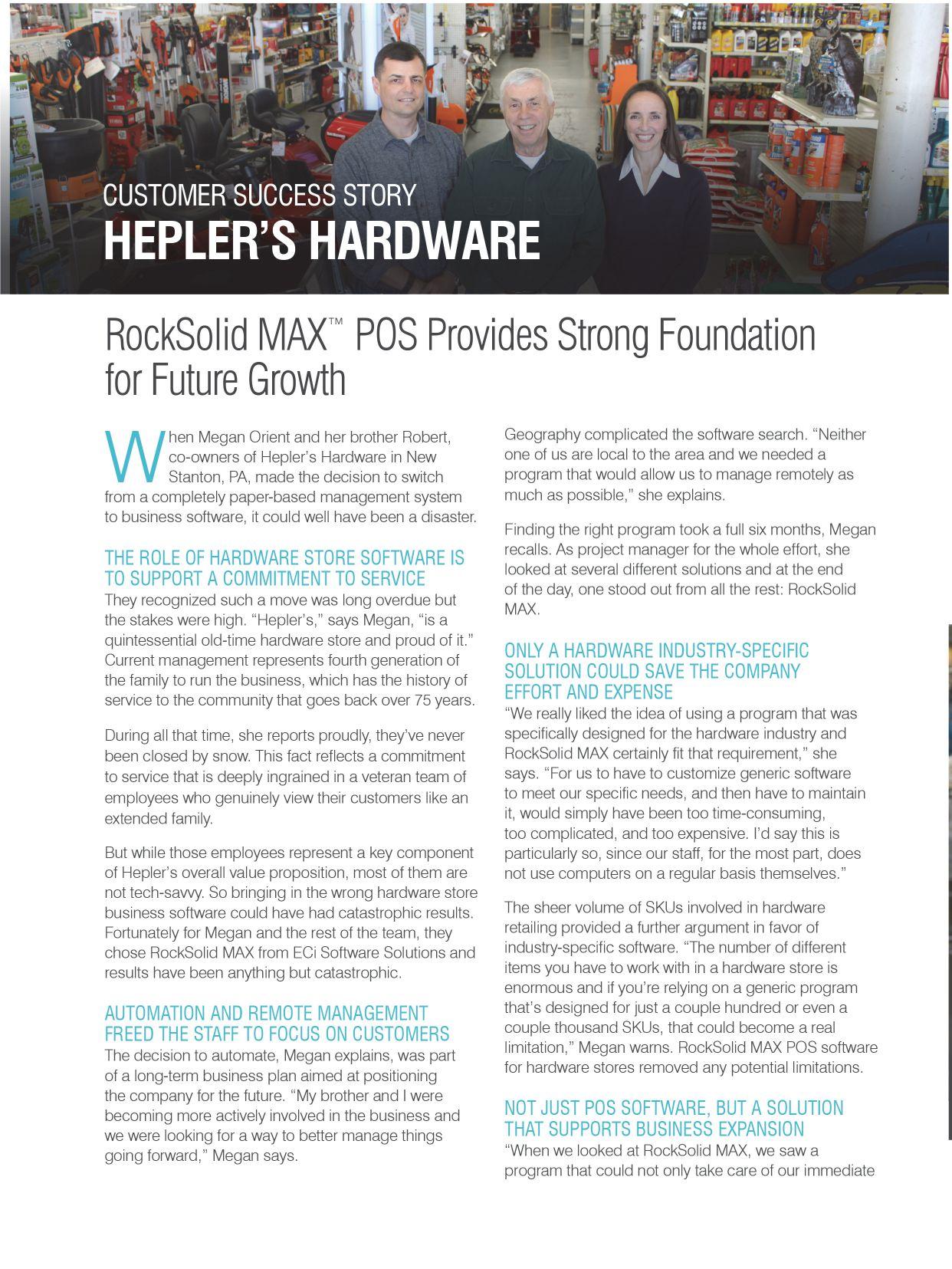
• ECi Software Solutions announced it signed up 31 new stores for its RockSolid MAX™ POS system in October, marking a record sales month for the software and bringing the total location count to more than 400 since it was launched in April 2016. ECi’s entire lumber, building, materials and hardlines group now supports nearly 4,000 businesses globally.
• Fred Munson, founder and longtime owner of Munson’s Building Supplies in Oneonta, N.Y., passed away November 26 at the age of 96. He and his wife Audrey (who predeceased him) established the business in 1964. Fred, who served in the U.S. Army during World War II, is survived by his children Shirley Goble, Steven Munson, Kathleen Munson Winkler and Michael Munson; nine grandchildren, 10 great-grandchildren and two great-great grandchildren.

Emery Jensen Distribution Marketplace
January 31–February 1, Hynes Convention Center, Boston, Mass.
House-Hasson Hardware Winter Dealer Market
January 10-12, Opryland Convention Center, Nashville, Tenn.
United Hardware Spring Buying Market
January 11-13, Minneapolis Convention Center, Minneapolis
Florida Hardware Spring Market
February 8-10, Double Tree Hotel and Convention Center, Orlando, Fla.
HDW Spring Market
February 7-9, Ernest N. Morial Convention Center, New Orleans
International Builders’ Show
February 19-21, Las Vegas Convention Center, Las Vegas, Nev.
LBM Advantage Annual Meeting and Trade Show
February 18-20, Rosen Center & Orlando Convention Center, Orlando
Monroe Hardware Spring Market
February 15-17, Myrtle Beach Convention Center, Myrtle Beach, S.C.
Orgill Spring Market
February 21-23, Orange County Convention Center, Orlando, Fla.
True Value Spring Reunion
February 21-24, Kay Bailey Hutchison Convention Center, Dallas
Ace Hardware Corp. Spring Convention
March 26-28, Orange County Convention Center, Orlando, Fla.
Blish-Mize Spring Market
March 21-23, Overland Park Convention Center, Overland Park, Kan.
Hearth, Patio & Barbecue Expo
March 14-16, Kay Bailey Hutchison Convention Center, Dallas
Home & Housewares Show
March 2-5, McCormick Place, Chicago
PACOA Spring Market
March 2-3, Queens College-Fitzgerald Gymnasium, Flushing, N.Y.
Southern Hardware Company Spring Market
March 27-28, Tunica Road House Casino, Robisonville, Miss.
Wallace Hardware Spring Dealer Market
March 27-29, LeConte Center, Pigeon Forge, Tenn.
For a complete listing of calendar dates, click here.
Attendees came away from this year’s Home Improvement eRetailer Summit in Chicago armed with a bunch of new ideas and strategies for online and omnichannel sales and marketing. The event’s speakers emphasized the importance of using technology to deliver information and products in ways consumers want to receive them.
The third annual eRetailer Summit provided attendees with unique content that combined a broad perspective of retailing’s current trajectory with advice on how home improvement retailers and suppliers can thrive in a market where an ever-expanding number of people take an online-first approach to product information and purchasing, said Sonya Ruff Jarvis, founder of the event, which was held November 7-8.
“Mobile is the new front door,” said Steven Dennis, founder and president of SageBerry Consulting and Forbes contributor, who gave the Summit’s opening keynote and urged his audience to “be remarkable in those ‘I want to go,’ ‘I want to know,’ ‘I want to do,’ and ‘I want to buy’ moments.
Dennis listed eight essentials of remarkable retail: digitally enabled, human centered, harmonized, mobile, personal, connected, memorable and radical.
He noted that e-commerce growth is projected to be 15 percent per year, compared to 2-3 percent annual growth for brick-and-mortar retailers. However,
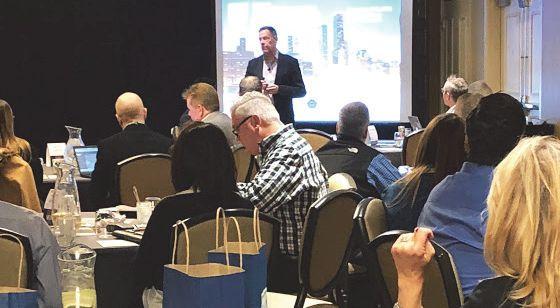
Attendees to the third annual eRetailer Summit in Chicago picked up new strategies for online sales and marketing.
even with the faster pace of e-commerce growth, more than 80 percent of all shopping will still be done in physical stores.
“Amazon is expected to account for 50 percent of all e-commerce sales within a year or two. In the U.S., the company is bigger than the next nine players combined,” Dennis said.
Digital’s impact on physical stores is expanding dramatically, and mobile is close behind, he added, encouraging companies to assess how digital enhances the customer shopping experience.
Since 75 percent of consumers want more human interaction in the future, not less, retailers need to design an empathetic customer journey, Dennis advised.
“Create a consistent brand experience across channels and focused always on the customer. Breaking down internal silos is necessary for integrated channel success. Think about how the physical store serves the relationship and invest in that,” he added.
Speakers shared statistics like these:
• While it still lags other industries, the home improvement sector sold $20 billion in products online last year, a 34 percent increase over 2016. About half of consumers are going first to Amazon before shopping elsewhere online.
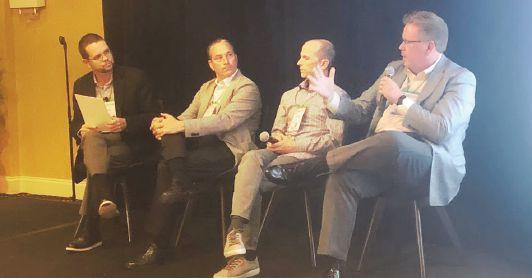
The eRetailer Summit included a panel discussion offering perspective on the e-commerce market.
• 69 percent of smartphone owners use voice search daily or weekly.
• In 2006, only 2.3 percent of sales were online compared to 9 percent today.
• 53 percent of all retail sales in North America are digitally influenced.
“Today, the shopper no longer goes shopping; she is always shopping,” said Jason Goldberg, a fourth-generation retailer and senior vice president of commerce for SapientRazorfish. “She can have a micro-moment of consideration at a virtually unlimited number of touchpoints.”
Goldberg predicted that 40 percent of consumer spending could eventually be for auto-replenishment. He pondered how that dynamic will alter in-store inventory and distribution. “It’s about addressing the last mile,” he said.
This year’s topics included discussions about the complexities of collecting taxes from online sales; choosing the right e-commerce platform; where influencers can play a role in marketing campaigns; the ins and outs of free shipping; and the benefits of bringing together all parties involved in going to
market onto a single platform, where ideas can flourish and where products are available for ordering 24/7.
Attendees also learned that e-commerce’s future is likely to involve augmented and virtual reality, as well as 360-degree imagery, which helps consumers “connect the dots to their needs and have confidence in their purchases,” said Joe Derochowski, executive director and home industry analyst for The NPD Group.
Brian Fricano, founder and CEO of Sustainable Supply, said the landmark South Dakota vs. Wayfair case changed the game to establish economic nexus thresholds in states. Since June 21, 2018, 22 states have adopted economic nexus laws. He added that states have ignored pleas from online retailers about the complexities of online sales tax collection and remittance.
Software often integrates easily into e-commerce and accounting software packages, but usage-based pricing is not always transparent, according to Fricano, who said there are often connector fees, support fees and implementation fees, and that overages can be a killer expense.
An Influencer panel moderated by Deborah Shearer, founder of Table + Dine, shared that influencer marketing drives eight times more online engagement than branded content. Influencers can be found among those already engaged with your products and a 5 percent engagement rate is a good goal when selecting an influencer. ■
To continue to thrive in a competitive market, there must be a constant focus on improvement. At the recent Do it Best market, retail consultant Kevin Graff of Graff Retail (www.graffretail. com) gave a presentation on 21 proven ways to put more money in the register and on your bottom line.
What follows are 15 of Graff’s proven methods. See how many you can start working on today.
1. Goals Drive Performance: Get Everyone Chasing Them—Set and track hourly, daily and weekly goals. Then get to work making sure your teams have an unrelenting focus on achieving them.
2. Conduct Shift Starter Meetings— Spend two to five minutes at the beginning of every shift communicating with your staff.
3. Everyone Must Know More About the Products You Sell—Have a product of the day that you and your staff learn about.
4. Post the Biggest Sales Board Possible—Post a big sales board in the back room and use it to track sales and key sales messages.
5. 52 Weeks in the Year: 52 Contests Needed—Organize weekly contests that drive performance and create friendly competition among your team.
6. Cashiers Are Sales People Too— Select a different impulse item every week for the cashier to suggest to every customer.
7. More Performance Management: No More “Dogs” Allowed—You cannot afford any poor performers. Coach them to be better.
8. Live (or Die) By Your Store Standards—Post your list of 7-10 standards and then talk about them daily.
9. Get Serious About the In-Store Experience—Measure the experience using customer feedback. What makes you better than the competition?
10. Encourage the Rewards Program— The stats are staggering on how much more loyalty card holders spend. Start working on signing up more customers.
11. You Can’t Sell More If You Don’t Know How to Sell—Invest the resources and the time needed to train everyone on how to maximize both the sale and the service.
12. Special Tips: Selling to Contractors— Ask every contractor three things: What’s missing from their list? What’s next to be done on the job? What are your upcoming projects?
13. Challenge Every Expense—If you saved $200/month in expenses that is the same as increasing sales by $48,000.
14. Implement Sales Driving Technology—Digital signage, traffic counters, tablets that record and coach sales performance, cutting-edge customer surveys, mobile checkout and self-checkout can drive sales.
15. Make Work Fun—Make an extra effort to ensure your store is a place where laughter is heard all through the aisles from both staff and customers. ■
$12.9 billion
Amount spent by 108 million shoppers during the November 2017 Small Business Saturday, produced by American Express and the National Federation of Independent Business (NFIB).
80%
Percentage of all consumers who said they would do at least some of their holiday shopping at small, independently owned retailers, according to the NFIB.
38%
Percentage of small business owners who reported job openings in October they could not fill, according to the NFIB.
16%

Percentage of small business owners who reported increasing employment in October, an average of 3.3 workers per company, while 11 percent reported reducing employment, according to the NFIB.
107.4
Record high for NFIB Small Business Optimism Index in October, with a seasonally adjusted 30 percent of owners saying the current period is a good time to expand and a net 5% planning to invest in more inventory.
2,390
Number of stores operated by Lowe’s before it announced it was closing 51 underperforming stores in the U.S. and Canada by February 2019.