




























Connect With Us Website HPRmag.com
WINTER 2020 | VOLUME 2

H6 TECHNOLOGY
A New Era of Connection
The volatility of 2020 retail has shown the importance of investing in tech solutions to keep your home improvement business on the cutting edge and at the top of shoppers’ minds. Discover know Knudson Lumber, an 80-year-old family business in Washington, invested in technology just in time to serve customers safely and securely during the COVID-19 pandemic.
E-commerce sales grew
31.8 %
from Q1 to Q2 2020.
Source: U.S. Census Bureau



H4 NETWORKING Global Opportunities
Darrin Stern, new business development manager for Koelnmesse, discusses the opportunities and safety measures being taken at the 2020 International Hardware Fair in Cologne, Germany.
H12 MARKETING
Win the Winter Holiday sales will look different this year, so understanding new ways customers intend to shop this season can position your business for ongoing success. Get more insight from market research firm CBRE.
H3 Foundations
Know how to read industry signals
H13 Between the Lines
Explore retail trends across 2020
Being able to meet customers’ demands for online sales has never been more important. Learn the five “its” of e-commerce via a special webinar from multiplatform e-commerce agency OneStone. Visit HPRmag.com/online-sales to stream it now.
High Performance Retailing is a collaboration between the North American Hardware and Paint Association and The Farnsworth Group. Both organizations are committed to helping the home improvement industry prosper with relevant, informative and timely data.
Executive Vice President and Executive Editor, NHPA Dan Tratensek, dant@nrha.org
Senior Partner, The Farnsworth Group Jim Robisch, jrobisch@thefarnsworthgroup.com
Market Research Analyst, The Farnsworth Group Amy Theophilus, atheophilus@thefarnsworthgroup.com
Editorial, Design + Production
Managing Editor
Melanie Moul, mmoul@nrha.org
Project Editor
Todd Taber, ttaber@nrha.org
Copy Editors
Kate Klein
Hans Cummings
Director of Communications
Whitney Daulton
Production Manager Nancy Vondersaar
Sponsorship Opportunities
Vice President of Sales and Publisher
Kevin Hohman, khohman@nrha.org 317-275-9430
Midwest Sales Director David Brodowski, dbrodowski@nrha.org 440-520-9551
Southern Region Sales Director Scott Gilcrest, sgilcrest@nrha.org 317-508-7680
Northeast and Northwest Sales Director
Jordan Rice, jriceo@nrha.org 217-806-1641
Canada Sales Director Matt Caruso, mcaruso@nrha.org 224-456-3366
Email jrobisch@thefarnsworthgroup.com
LinkedIn Jim Robisch
It has always amazed me how shopping trends can shift in an instant. It also amazes me how most trends are telegraphed ahead of time. What is troubling is these advance signals—some subtle but some profound— are ignored by those who should know best how trends can benefit their business. They find any excuse they can to dispel the signals even though many of the experts are preaching that the trends are not only real but turn out to be true game changers. Again, high-performance retailers saw the signals in advance.
Years ago, you could not read anything or go anywhere without hearing about Amazon, eBay and other online giants. Then we saw companies like Home Depot, Lowe’s and others investing billions to advance their e-commerce initiatives and better meet the customers’ digital shopping needs.
Then along came the COVID-19 pandemic. The ways people shopped, ate and lived their lives overall changed in a flash. Alongside stay-at-home orders came new opportunities to improve their living space or make major improvements to accommodate working from home, learning at home and seeing their homes and offices in a new light of possibility.
To avoid the risks of the virus, home improvement customers went online to live and to shop. It didn’t matter what products or what generation, e-commerce suddenly gained new relevance and utility.
Customers transferred their online shopping skills across all product categories. Even people who had never before placed an e-commerce order found their mouse hovering above a Buy Now! icon.
But they wanted the same online experience from hardware and home improvement shopping options they had come to expect from online titans. I have always hated the “I told you so” line. However, in this case I’ll make an exception. Not only me, but hundreds of others, had been professing the power of this emerging digital transformation and the need to get on top of it.

High-performance retailers saw what could be done, not just what had to be done.
Again, high-performance retailers picked up the signals and took action. They talked to their customers and found out they wanted to shop for hardware and home improvement projects and have a seamless shopping experience. Those who took action were able to take immediate advantage of this unfortunate situation brought on by the pandemic. More importantly, they are also well positioned for capitalizing on how their customers will continue to shop going forward.
What’s the difference? High-performance retailers saw what could be done—not just

Jim Robisch, Senior Partner, The Farnsworth Group

Darrin Stern is the director of new business development at Koelnmesse Inc., the organization that presents the International Hardware Fair every two years in Cologne, Germany. In his role, Stern connects product manufacturers with key retailers through global-facing home improvement events. For more information on the 2021 International Hardware Fair, visit eisenwarenmesse.com
For nearly a year, home improvement shows have pivoted to online events. These opportunities have posed new ways for retailers to connect, but Darrin Stern of Koelnmesse Inc. says 2021 may be the right time for high-performance retailers to explore new products and opportunities abroad.
What has the organization learned about trade shows in a year when none could be held? 2020 is a year for the history books and I think we’ll all be happy to close the chapter and move forward. The circumstances have pushed Koelnmesse to focus on what’s important at trade shows, and I think COVID-19 has made buyers and exhibitors the importance of face-to-face trade shows. Virtual trade shows have a place, but there’s still nothing like exchanging a handshake or feeling a physical product. It’s irreplaceable. It’s the same reason we go to
ONLINE
Hear It All
To hear the complete interview with Stern on the Taking Care of Business podcast, visit HPRmag.com/pod
“We’re doing all we can to make the 2021 International Hardware Fair safe and valuable.”
—Darrin Stern, Koelnmesse Inc.
brick-and-mortar retailers. We still have a very positive outlook as we come through this moment.
Koelnmesse organizes two events: the International Hardware Fair and garden-focused spoga+gafa. Can you describe the two events? Koelnmesse is a constellation of exhibit fairgrounds in Cologne, Germany. It’s currently an 11-building complex, and the facility is about 2 times the size of the Las Vegas Convention Center. The International Hardware Fair is the leading international trade fair for the hardware and tool product category. Businesses from around the world come to Cologne to discover new products from well-known and completely new manufacturers. The 2020 International Hardware Fair was postponed and will now be held Feb. 21-24.
spoga+gafa is an event focused on the lawn and garden category. It’s the world’s largest garden exhibition and will be held May 30-June 1.
These events are truly what you make of them. If you’re looking to buy new products, you can do that and differentiate your inventory. You can ship less than a pallet back to your store from Europe easily. And most of these companies are not in the U.S., so you can truly find things to set yourself apart at everything from ultra-premium price points to budget options.
Koelnmesse is an internationally known event. What are you seeing in foreign home improvement markets? There’s been a renaissance in caring for our homes this year. We’re seeing the home improvement industry is incredibly resilient, and there’s high demand for new products.
Koelnmesse recently held a press conference highlighting data about German DIY activity. What we’re seeing is that stores that have been able to stay current with available technologies have accelerated their sales. Stores that have e-commerce platforms, in-store pickup and live agents to support customers are doing well the world over.
What measures is the International Hardware Fair taking to ensure visitors are safe? We’re doing everything we can to make the 2021 International Hardware Fair safe and valuable. We’ve developed guidelines called #B-Safe4Business which are posted on our website. Social distancing will be paramount, especially at vendor booths. As time has passed, we’ve seen many international trade shows take place safely. The German government has deemed trade shows and business travel as essential parts of the economy, so they are subject to separate regulations. There is no quarantine required for travelers with a negative COVID-19 test.
Key Facts of the 2021 International Hardware Fair
The 2021 International Hardware Fair is scheduled to take place Feb. 21-Feb. 24
More than 2,000 home improvement product exhibitors will attend.
E-commerce solutions will take center stage, with programs to help retailers make the most of the powerful trend.
AUTHOR Todd Taber Trends Editor ttaber@nrha.org





Check out NHPA’s recent webinar on how to navigate e-commerce strategically during the COVID-19 by visiting HPRmag.com/online-sales

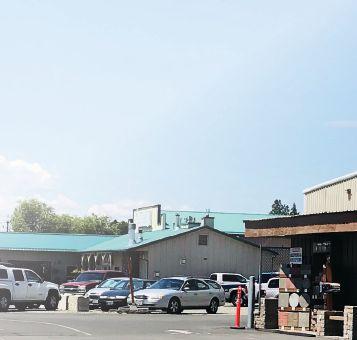
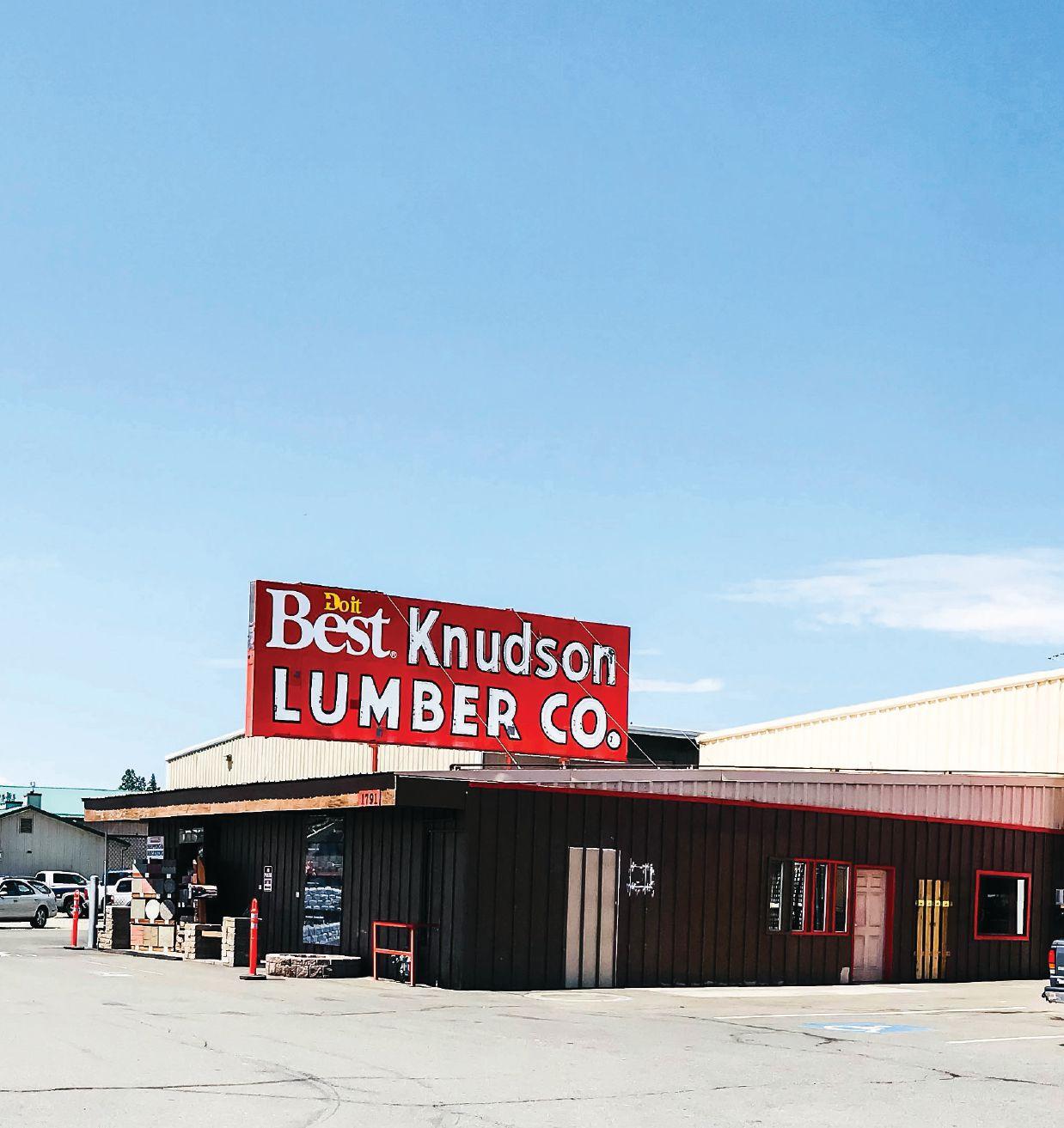
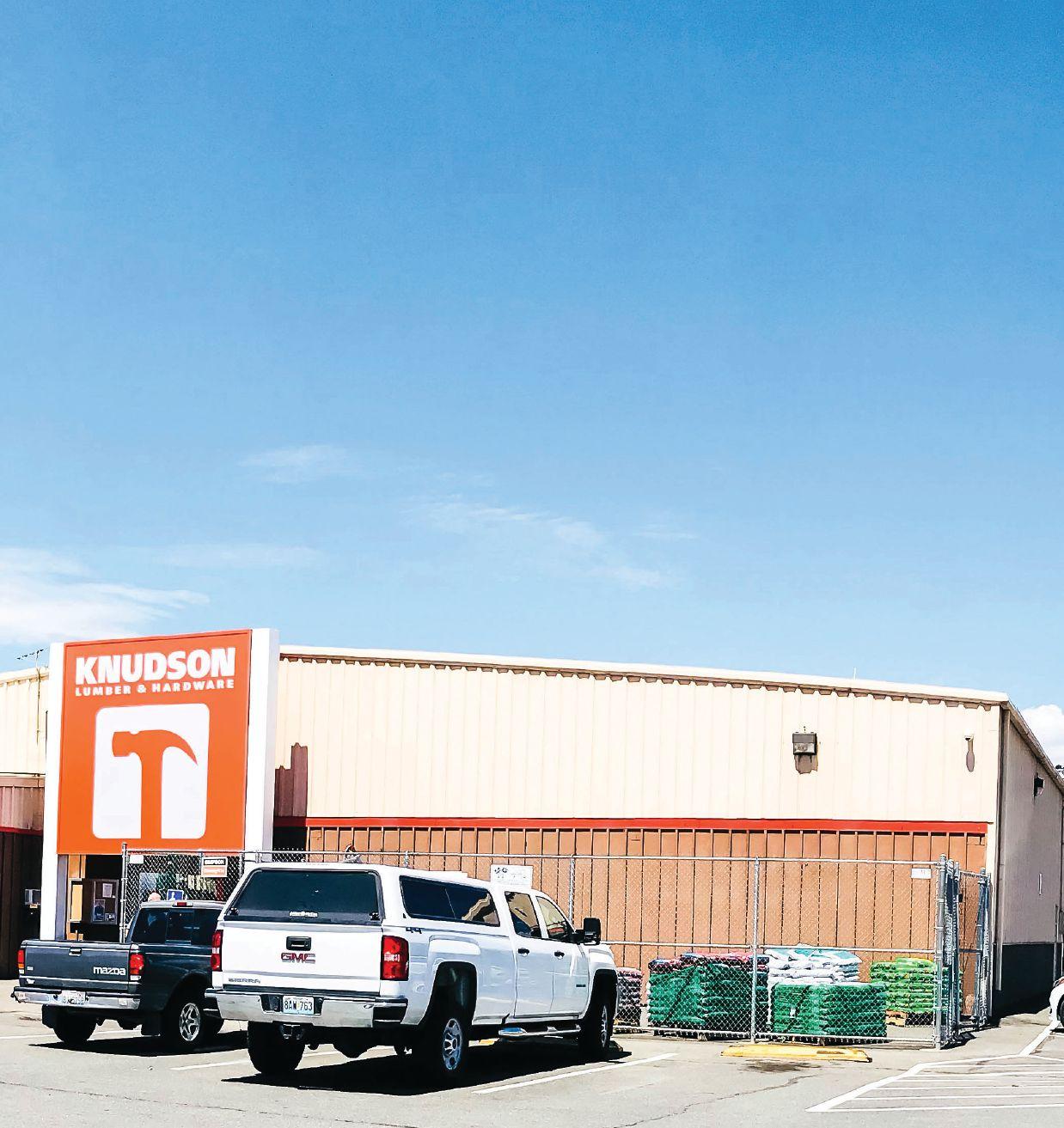
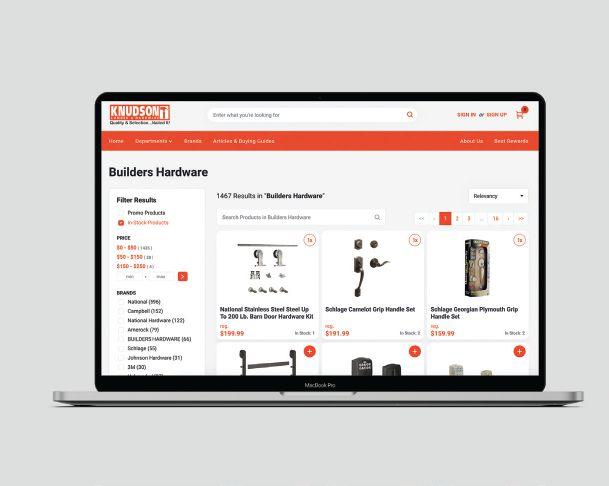
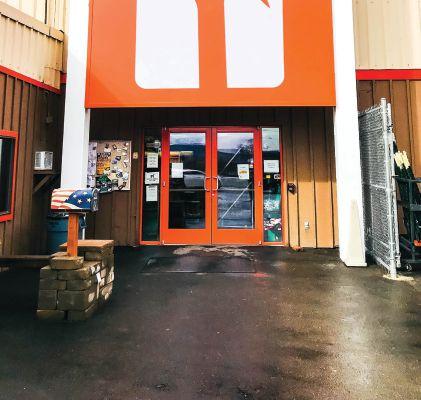
In the early days of March, Cheryl Brown and the Knudson Lumber team in the Kittitas Valley of Washington were busy putting the final touches on a new addition to the 80-year-old family business: an e-commerce site.
Since 1940, Knudson Lumber has found new ways to innovate and grow the company’s presence in the home improvement marketplace. As marketing and advertising manager for the company, Brown knew e-commerce was a crucial step in positioning Knudson Lumber for success in a new generation.
No one on the team could have known that days after the e-commerce site went live on the company’s

website, the COVID-19 pandemic would swiftly upend almost every facet of retail and public life. Amid uncertainty, the team quickly learned their new investment provided a steady stream of sales.
“The timing of the e-commerce site was very fortunate,” Brown says. “We were able to use it in the early days of COVID-19 and it was an enormous help.”
Discover the steps the Knudson Lumber team took to bring thousands of their home improvement retail SKUs online into a clean, easy-to-navigate sales portal. Review key data to ensure high-performance retailers are making the most of e-commerce advantages for 2021 and the years to come.

By the end of 2019, the Knudson Lumber team was thinking seriously about how they could rejuvenate their e-commerce offering and find a new way to connect with customers in a new era of retail.
“It’s easy to see everything is moving online these days,” Brown says. “We knew we wanted to offer products online in a new way.”
She says Knudson Lumber had previously used its co-op’s ship-to-store online sales program, but the team was looking for something they could manage independently and edit quickly to meet their customers’ specific needs.
“Ship-to-store didn’t always reflect our current pricing, and we carry a lot of products from a lot of vendors, that weren’t necessarily available in that system,” Brown says. “I wanted to be able to catalog those products and get them online as well.”
In October, Tractor Supply Co. celebrated 33 consecutive quarters of double-digit e-commerce growth
Source: Q3 2020 financial report
That desire led the team to seek input from a third-party media company which had already created some video content to display on TVs throughout the store. The media company was already familiar with the Knudson brand and was in the process of developing an online
“It’s easy to see everything is moving online these days.”
Cheryl Brown, Knudson Lumber
sales platform and met with Knudson Lumber to discuss a potential collaboration.
“Having your own e-commerce site helps you control what you’re delivering to customers,” Brown says. “Pricing was also a big consideration—when we have sales or special discounts, we have to have that pricing immediately correct.”
Adding an e-commerce site also presented several other new marketing opportunities. Knudson Lumber’s e-commerce site is rich with information and inspiration; alongside thousands of SKUs separated by 13 categories are videos from manufacturers detailing key features of the product a shopper is considering. Customers can not only buy the products they need, they can learn to use them effectively from a single online, local source.
Another element that reinforces the full online experience for customers is a blog and how-to project guide bundled alongside the products. From tips for low-budget kitchen renovations to articles about new pet products, each segment of the e-commerce site markets the others. In each DIY project article, the specific products mentioned in the task are listed for sale via Knudson’s e-commerce site, helping bring online shoppers one click closer to conversion.
For three months, Brown worked with the media company to design and catalog thousands of SKUs category by category. As each product was uploaded to the Knudson Lumber e-commerce site, the company became better positioned to offer customers a new level of shopping customization.
Brown and her team’s decision to pursue e-commerce and enter a new era of retail possibility was timely. In January, a man in Washington was the first in the U.S. to be diagnosed with COVID-19. In February, Gov. Jay Inslee issued a state of emergency in Washington. Soon after, millions of people across the U.S. were sheltering at home, limiting their outside travel and shopping trips.

This summer, Knudson Lumber celebrated its 80th year of serving the Kittitas County region of Washington. Take a look back at the company’s history and discover key moments of innovation.
Carl Knudson began a small grocery store and gas station and eventually adds a lumberyard to meet community needs. STAKING THEIR CLAIM
Carl Knudson adds a hardware store to the lumberyard as well as a mill. He also increases the production capacity of the mill to help construct new properties across the area, including a local high school.
The business’s sawmill burns down, and Carl Knudson uses the opportunity to move his business to a new location, where it remains more than 60 years later. Carl Knudson buys another sawmill and converts it to operate on electricity.
Knudson Lumber brings computers into the business to help streamline operations, including accounting, inventory control and more.
Knudson Lumber is purchased by Bob and Cindy Knudson. The two decide to expand their showfloor to enhance their retail inventory.
The business completes a Do it Best Signature Store redesign to enrich the customer experience. IN-STORE RENOVATIONS
Mere days before COVID-19 changed retail, Knudson Lumber’s e-commerce portal launched.
“It really went from zero to 100,” Brown says. “People caught on really quickly that we had the e-commerce site because we had promoted it in newspaper, on radio, social media and email. People were all about it and glad it was available at just that time.”
Brown says the site was a critical step in continuing to serve customers during the COVID-19 pandemic. Online sales spiked shortly after the website launched.
“I’m so thankful we had this when everything was shut down,” Brown says.
After being deemed an essential business, Knudson Lumber transitioned to curbside service only, deciding to keep customers outside the brick-and-mortar store as the world learned more about the coronavirus and followed social distancing guidelines. During that time, customers called the store to order products, and the staff would run items to customers outside.
As people across Washington found themselves living and working from home, Knudson Lumber and home improvement stores across the continent were popular spots for DIYers.
“The magnitude of people calling and driving up for curbside service was unreal,” Brown says. “We couldn’t sustain the amount of calls that were coming in—we were working hard, but still running around like crazy.”
In Q2 2020, e-commerce sales as a percentage of total retail sales grew nearly 50 percent from the same period in 2019.
Source: Source: U.S. Census Bureau
E-commerce sales cut through the noise. Instead of fielding phone calls and helping connect shoppers with new products, e-commerce orders arrived instantly, in full.





In Q2 2020, e-commerce sales totaled $212 billion, a 31% increase from Q1.
Source: Source: U.S. Census Bureau
A huge portion of the team’s workload was removed from the start, which helped the company establish a reputation for fast transactions on the newly launched online sales platform.
As the team became more familiar with fulfilling e-commerce orders and began to prefer it, Brown and her team began printing flyers with links to the online store to distribute to customers waiting in the long curbside pick-up line. It was a small measure that alleviated congestion and grew online sales simultaneously.
“One of the biggest benefits is that after using the e-commerce site for the first time, customers would use it again,” Brown says.
Brown says e-commerce sales have tapered off since the earliest days of the pandemic, but sales remain strong and new products are












“It’s another way to stay modern and to stay relevant .”
Cheryl Brown, marketing and advertising manager, Knudson Lumber
constantly being added to the platform. Beyond helping Knudson Lumber stay agile in an unprecedented moment for retail, the site will continue to pay dividends for the business in terms of search engine optimization.
“For me, adding an e-commerce site wasn’t just about selling products online, it was more about getting all products online and cataloged, so when someone searches for a certain caulk or a certain ladder, their search results bring them to Knudson Lumber,” she says.
Brown is hard at work on developing a mobile app to accompany the new
e-commerce site. She’s working with the same company that built the e-commerce portal to develop a customer-facing way to interact with shoppers more closely than ever before.
The app will be a central hub for customers, who will be able to browse all existing portions of Knudson Lumber’s website, including its e-commerce portal, blogs and contact information.
“I feel like an app is a great way to push information out to our customers, and the app I’m building also has games where customers can win discounts at the store,” Brown says. “It’s really another way to stay modern and to stay relevant.”
Once customers visit your company’s e-commerce site, be sure you’re pushing them toward a conversion every way you can. Check out these simple tips from marketing company Hubspot for more inspiration.
Take the opportunity to catch customers in the consideration stage of a purchase. Be sure your social media and blog posts include links to the products referenced. Those links will help net online impulse sales.
2. Incorporate SEM
Adding informative product descriptions to your online inventory will differentiate your store in search engines, helping your online visibility rise. Also consider paid search marketing to advertise popular products.
3. Be Persistent Shopping cart abandonment occurs when shoppers place items in their online shopping cart, but never complete the sale. Be sure to research common motivations for shopping cart abandonment. When shopping carts go idle, use your email marketing system to send friendly reminders to customers.
Research firm CBRE recently issued its outlook for the 2020 holiday shopping season. Featuring insight on the U.S. economy, new shopper habits and global insights, the data is a clear guide to the trends home improvement
retailers should be on the lookout for throughout the remainder of the holiday shopping season. Explore the key trends below and learn more about CBRE’s breadth of research by visiting the firm online at cbre.com.
Operators should set their sights on a longer selling season than the traditional five-day window between Thanksgiving in the U.S. and Cyber Monday. Many major retailers closed their stores on Thanksgiving and instituted social distancing, meaning retailers are unlikely to see a swell of shoppers in a concentrated timespan as in years past. Instead, prepare for a steady flow of shoppers through winter.
This winter, retailers can be certain that more customers than ever will be shopping online. CBRE projects 2020 holiday e-commerce sales growth to more than double over 2019. Be sure to use digital advertising and social media outreach throughout the winter sales season to net as many online sales as possible.
Retailers face a tall order this holiday season of keeping staff and shoppers safe while still fostering a memorable in-store experience. According to CBRE, some retailers are adopting an “in-and-out” shopping model where customers enter the store to search for products, but other transactions like payments and returns take place outside to reduce in-store traffic.
Source: 2020 U.S. Retail Holiday Trends Guide, CBRE
Explore how home improvement, hardware, lumberyards and paint stores fared throughout 2020 via a special webinar on Dec. 16. Register now at YourNHPA.org/webinars
Despite uncertainty early in the year, retail sales have remained strong across sectors, including historic sales for home improvement (NAICS 444) and nonstore companies (NAICS 454) like Amazon.
Referencing retail sales for September, National Retail Federation president and CEO Matthew Shay says throughout the COVID-19 pandemic, retailers and consumers alike have adapted to a shifting landscape by embracing new modes of customer contact.
“While it’s been a challenging year for everyone, there’s been an enormous amount of innovation within the retail industry,” Shay says.
Jack Kleinhenz, chief economist for NRF, says retail sales built on summertime momentum and were further improved by declining
unemployment rates and rising savings for many Americans.
“All in all, these numbers and other economic data show the nation’s economy remains on its recovery path,” Kleinhenz says.
“Although sales growth is strong, it will slow through the rest of this year and into next year,” says Gus Faucher, chief economist at PNC Financial. “The slowing will be even larger if Congress does not pass another stimulus bill. Unemployment remains pervasive throughout the U.S. economy.”
As 2020 draws to a close, review how retail sales for home improvement and the economy overall shifted compared to 2019 levels and discover key insights into strong and weak retail sectors heading into 2021.

Compare the percent of change of home improvement sales and U.S. retail sales overall month by month and discover key insights into other retail sectors.
Sales at clothing and accessories stores are down roughly 33% from the first nine months of 2019
Food and drinking establishments have seen sales erode 20% compared to 2019 levels
Sales for nonstore retailers have grown more than 20% compared to this point of 2019
Source: U.S. Census Bureau