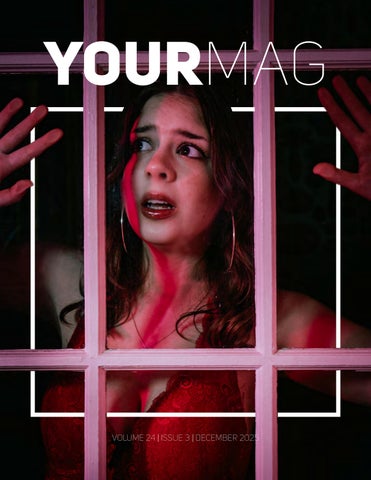
Recognized in Spring 2012, YOURMAG ’s goal is to promote knowledge of the magazine industry by giving students the opportunity to be responsible for all aspects of a monthly lifestyle publication. With an audience of urban college students in mind, members create content across a broad range of topics and mediums, including style, romance, music, pop culture, personal identity, and experiences. YourMag’s overarching aim is to foster a positive, inclusive community of writers, editors, and artists.
volume 24 | issue 3 | DECEMBER 2025
LAUREN MALLETT Managing Editor
Molly dehaven Head Designer
Emilie Dumas Photo Director
emma fisher Asst. Photo Director
sienna Leone Art Director
izzY maher Asst. Art Director
ALexandra Azan YMTV Director
Lucy Latorre Web Editor
Izzie Claudio Editor-in-Chief
Mckenna smith Editorial Director
RYAN WILLIAMS Asst. Editorial Director
Emily Hamnett Head Stylist
isaiah flynn Asst. Head Stylist
Payton Montaina Copy Chief
Anna chalupa Head Proofreader
Emma Bowen Creative Director
JAVIER GOMEZ Asst. Creative Director
Molly peay Romance Editor
Heather Thorn Asst. Romance Editor
KAT BOSKOVIC Style Editor
Isabella Castelo Living Editor
Olivia flanz A&E Editor
ELLA DONOGHUE Asst. Web Editor
Copy editors: kristin barrett, jules telfort, and olivia mazzola
GRAPHIC designERS: izzie claudio, sydney beliveau, tehya tenasco, mckenna smith, elizabeth liatsos, audrey coleman, and Lauren Mallett
Proofreaders: anna chalupa and jules telfort
LettersfromtheEditor
Dear readers,
This is my final note to you as Editor-in-Chief of Your Mag. What a joy it has been to introduce the last six issues to you! It’s always been so special to welcome you to the thoughtful landscapes we create. Every word, every image, is crafted with such care, and I could not be more proud to have been a part of this amazing magazine. To my Your Mag family, I love you so dearly, and I know I’m leaving this publication in the best hands. To future generations of Your Mag collaborators, I can’t wait to see the words and images that are yet to come. With that, welcome to the December issue.
This winter has been a bitter one so far, but we’re still finding the areas of our life that bring us light in a dark time. We’re fighting against an administration that is waging a war against our communities. The wind is biting a little harder than usual. We’re missing the comfort of the sun. Winter forces us to look inward, a little deeper than usual. What is making us angry? What habits do we wish to change? What is changing around us, and is it helpful or hurtful? In this issue, we dream of angels. We tap into our killer instinct. We look at how much brands have infiltrated our personal lives. We’re thirsty for positive change and the comfort of our communities.
As always, every issue is created with YOU in mind. This is YOUR Mag, and I could not be prouder of the work we have put forward this semester. Thank you for everything. <3
With love always, Izzie Claudio
I’m in Love with a MONSTER
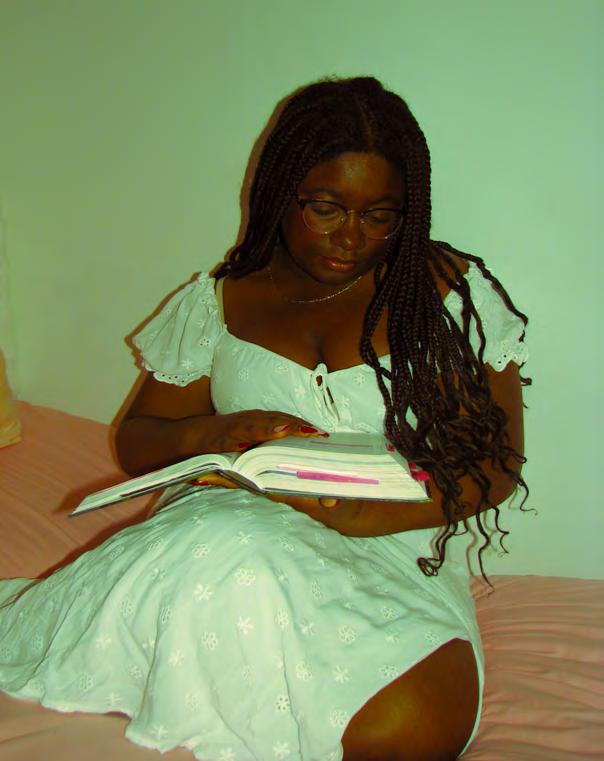
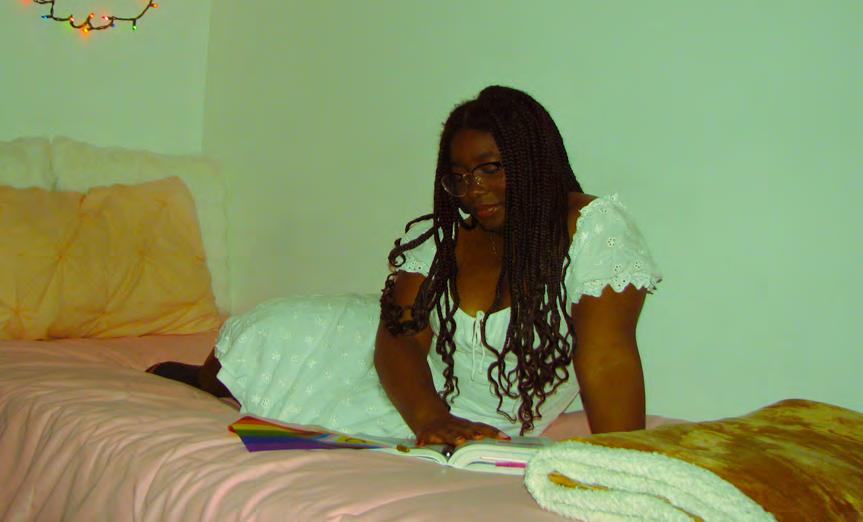
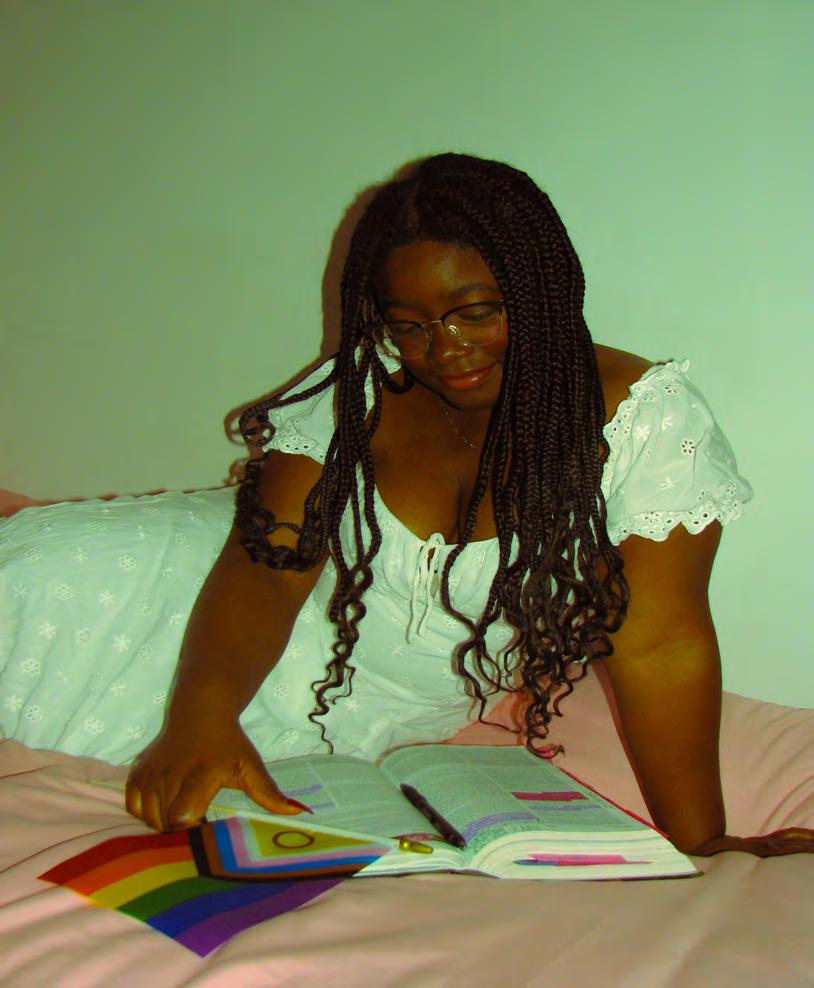
WRITTEN BY JULES TELFORT
Growing up, I described myself as three things: black, female, and Christian. No one ever had to ask if I was straight, because what else would I be? Sexuality in a religious Haitian household is a taboo topic. If you aren’t heterosexual, you’re deemed an abomination living in sin. And there’s no room for discussion on that.
Imagine my surprise when, within three days of arriving at Emerson, I discovered I was less straight than I thought. And I had feelings for the gayest person I knew: one of my roommates, who we’ll call roommate “Blue.”
What do you do when you find out this new revelation about yourself? You tell your friends, of course. I knew no one at Emerson yet, so my trusted confidants were my two roommates. And yes, that included Blue, the one I was crushing on. As a part of the community, roommate Blue and our other roommate, “Red,” were so supportive and encouraging about my coming out. I even trusted Red enough to tell her who gave me my “gay-wakening:” Blue. The days after were spent taking “Are you gay?” quizzes, learning about the different types of lesbians (what is a “femme butch”?), and my roommates sharing their own “gay-wakenings.”
As weeks went by, I became aware of something that had always been right in front of me: they had experience, I didn’t. Both of them had known this part of themselves since they were little, had past partners, and had time to come to terms with their identities. I didn’t. I tried to rectify that by poring over articles, and even a few diagrams, on what being bisexual meant.
When I told my roommates I was reading about what it meant to be a part of the queer community, they started poking fun at me. At first, I was okay with it. Friends joke with each other about that kind of stuff, and maybe it was a little weird that I preferred to do online research rather than talking about it with someone. But the more they joked about it, the more annoyed and self-conscious I became. It went from them joking that I was a “freak” for looking up Cosmopolitan articles about lesbian sex to telling me I should just start watching porn if I was really that curious.
It hurt. It hurt even more because a lot of this was coming from someone I had feelings for, who had initially made me feel safe enough to want to learn about my sexuality.
As the the only one who didn’t know what the hell she was talking about when it came to sex—much less gay sex—I felt alienated among my roommates. It wasn’t the three of us; it was them and it was me.
PHOTOGRAPHED BY EMMA FISHER
Whenever I brought up the topic or made some horrifically ignorant comment on sex, they talked down to me like I was a child. Maybe I didn’t know much, but did they need to be so condescending about it? I found myself feeling dumb and embarrassed about the stupidest things, like saying “clitoris” instead of “clit” or asking what a dental dam was. When I eventually worked up the nerve to (somewhat awkwardly) tell Red how isolated I felt and how difficult it was for me to talk to both of them about my feelings, she initially reassured me. Later, I overheard her saying to a mutual friend that my lack of communication skills probably just came down to my crush on Blue.
After that, I stopped talking about it. I didn’t want my curiosity to be labeled as freakish, weird, or stupid, so I shut myself up. It’s ironic: here I was at a place where I was supposed to be comfortable being myself, yet I had never felt more uncertain about my identity. Less than two months in, my mental health deteriorated. I felt alone, ashamed, and pathetic.
The last straw was when they chastised me for walking out in my pajamas—a simple pink long sleeve and shorts—at night in the Boston Common, but not being able to change in front of Red’s boyfriend. The utter ridiculousness of that statement was enough to make me move out. I chose to do it on a weekend where I knew both of them would be in New York. A few hours after they left, I told them I would be moving out over text. Their response? “We figured.” That was all they had to say as I packed my stuff into Trader Joe’s bags with the help of my friends.
I took everything: my projector, the Halloween lights, the vacuum, the food in the fridge—all of which I’d bought for us. Every single thing that I bought I took, and I didn’t give a damn if they were angry at me.
As my friends helped me unpack in my new dorm just down the hallway, I felt balanced. The anxiety and the emotional wreck my latenight panic attacks left me in couldn’t reach me in my new sanctuary. A week later, I was on a video call with my new therapist—recommended to me by my floor’s Resident Director—and she validated my feelings. I wasn’t asking too much, I wasn’t weird, and I wasn’t a stupid child. Talking to her, I just felt like a kid trying to figure some things out.
Now, almost a month after I moved out, I am forever grateful that I had people in my corner who picked me up when I didn’t want to get off the floor. My friendship with my old roommates didn’t work out, but my relationship with my new friends did. YM
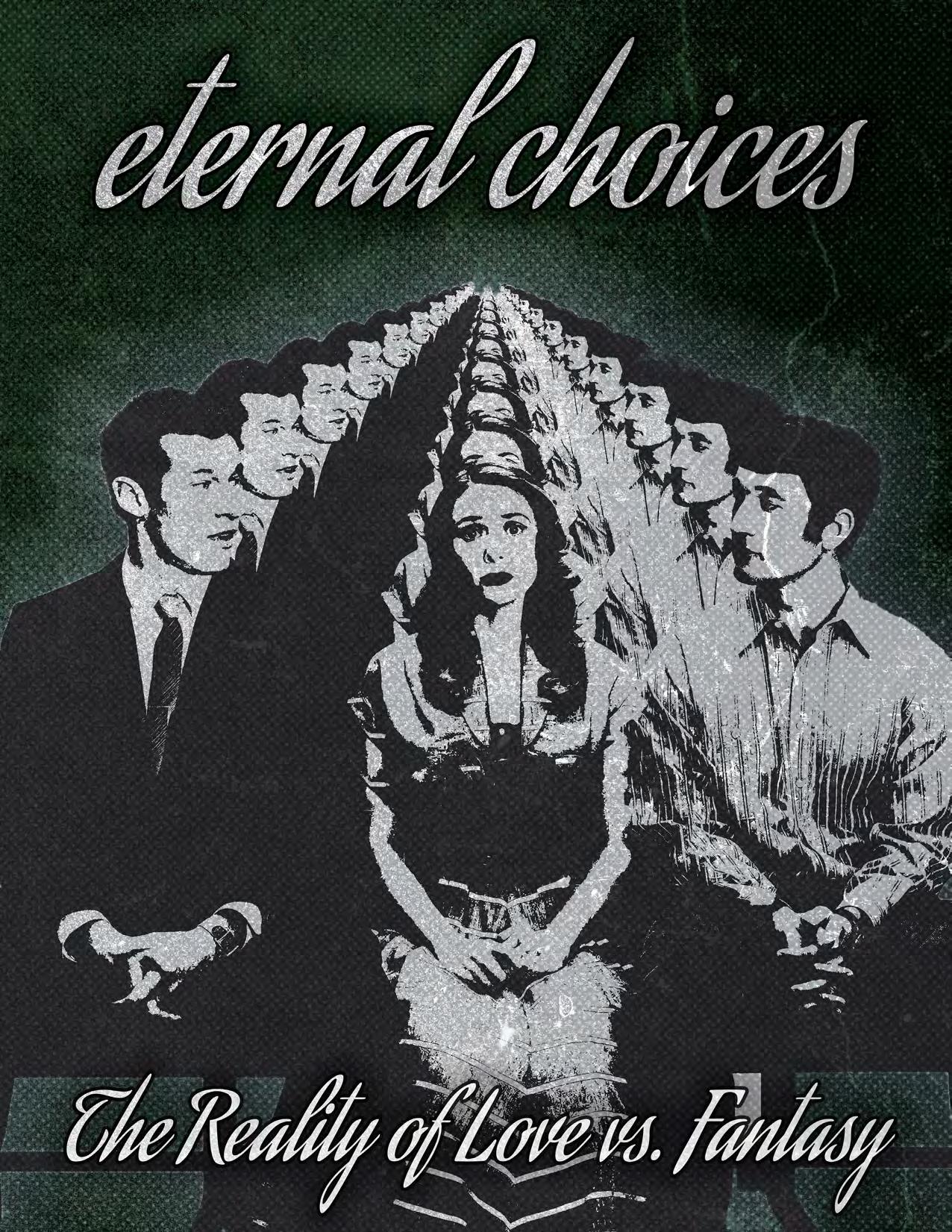
WRITTEN BY SOPHIA HOROWITZ
Two incredible men, both wildly in love with you, standing at the door of your future and asking which one you want to spend eternity with—a true fantasy. But in the real world? Most women are lucky if the man they’re texting responds within 72 hours.
Instead of a romantic showdown between two soulmates, we often get a date at a restaurant we don’t particularly like, listening to a man speak in disjointed stories like a spilled puzzle box. Somewhere between hearing about his fitness routine and vaguely dodging questions about his family, you realize the life you’ve already imagined with him—the brownstone, the Sunday coffee, the hypothetical kids—is not going to happen. You quietly pack up your imaginary drawer and leave before the fantasy overstays its welcome.
That was the mental state I was in as I strolled past a sea of sparkling first dates heading into an advance screening of A24’s new romcom, “Eternity”. Since my teens, I have been the self-proclaimed queen of solo outings, partly because I love a side quest and partly because I was the classic case of “got pretty in college.” My high school dating life was an endless loop of consuming romcoms, imagining my perfect boyfriend, and then going on tragic dates with boys who didn’t match the narrative.
So there I was, clutching a perfectly blended slushie, watching couples file in—because I am, unapologetically, a people-watcher. Was he holding the door? Did he make eye contact while she spoke? Would he mix the slushie correctly? (There is absolutely a proper way.) Would they have a romance fit for the screen? It may seem like a superficial standard or even a hilariously low bar–eye contact shouldn’t feel like an Olympic sport–but I rarely asked myself the more critical question: Am I giving this person a real chance, or am I just comparing him to the figment I’ve crafted in my head?
*Content Warning: the following text contains spoilers to the film*
By the time I settled into my seat with my perfectly blended slushy, the movie began. “Eternity”, starring Elizabeth Olsen, Miles Teller, and Callum Turner, imagines an afterlife where you get one week to decide where you want to spend eternity. Joan (Olsen) must choose between Larry (Teller), the husband she actually built a life with, and Luke (Turner), her first love, who died young and has been waiting decades for her arrival. As a screenwriter, I admired the airtight script; the world snaps into place like vintage Technicolor. What struck me, though, was the film’s emotional geometry. Luke is the gorgeous war hero—the once-in-a-lifetime love cut short. Larry is the man who lived: imperfect, pretzel-obsessed, mostly grumpy, and genuinely bewildered that Joan ever loved him.
To help her choose, she gets a date with each man. And let me tell you, Luke’s date was swoonworthy. When they were both on screen, people cheered. He is that guy. The man we all convinced ourselves we needed when we were 16. And as I watched their date, I flashed back to my own dating days: the awkwardness, the obsessive evaluation of every microbehavior. Is he funny? Is he kind? Is his shirt intentionally wrinkled, or is that a red flag?
But somewhere along the way—and I promise this is not an argument against high standards—keep that bar high, ladies!—I
learned that people meet your needs in ways you don’t always expect. And sometimes, that version ends up being perfect.
Which brings us to Larry.
Joan’s date with Larry is disastrous. He tries so hard, and absolutely none of it works. They argue. They miscommunicate. They cannot get on the same page. Then, they lie in a boat, talking and laughing for hours, effortlessly. That, I learned, is what real love feels like. I didn’t realize my now-long-term boyfriend was a keeper during a cinematic moment. I realized it in the small things: the nights we talked until 4 a.m., the safety to fall asleep mid-conversation accidentally, and the moment he remembered, months after I mentioned it, that I hated getting blood drawn. When I had to get labs done, he gently held my chin so I wouldn’t look at the needle and asked me random questions to distract me because he knew that’s what I needed.
Real love isn’t built on potential. It’s built on presence.
And that’s what Joan discovers. Her relationship with Luke is stunning—the wedding, the passion, the tragedy—but they were never fit to have the shared growth that comes from living a life together. Hospital rooms. Sleepless nights. Mutual sacrifices. The unglamorous, irreplaceable intimacy of daily life. With Larry, she had that. He cared for her not because he was perfect, but because loving her was the greatest gift he had. So as Joan cycles through each possible choice—Luke, Larry, herself, her friends—there is only one person she is willing to risk it all for. Only one eternity she cannot imagine giving up.
And it’s Larry.
My roommates and I debated Joan’s choice later that night, each of us at a different stage of life. They’re still in the stage of building futures off a spark, random makeout sessions, or simply loving time with themselves. I’m in the stage of cherishing the quiet love. Neither side is wrong. Like the movie, it’s about choosing the love that matches who you are right now.
So here’s what I want to tell the women currently dating and the women, like me, navigating the love we found by accident.
Love is a massive, scary risk. There is no safety net, no guarantee. You leap and pray the person you’re falling for not only catches you, but helps you build something stronger.
Keep dating. Truly. I believe deeply in the importance of going out and figuring out what you want, separate from the fictional checklists. But pay attention to what’s in front of you. When someone shows you who they are, don’t fall for who they could be. If he can’t communicate now, he probably never will. If you don’t feel comfortable enough to eat on a first date, that won’t magically change. If he matches the dream but not the moment, he’s not your person.
You deserve a quiet love. The steady love. The love that grows with you.
The Larry kind—present, imperfect, real.
The kind that stays. YM
ART BY LAUREN MALLETT
Feminism Patriarchy is the new
WRITTEN BY MOLLY PEAY
Acouple of weeks ago, my friend and I were in Thinking Cup and she mentioned a new trend: Women in Male Fields. This trend includes satirical videos of women doing, or pretending to do, things men have typically done to women, such as ignoring his text but liking his Instagram story. However, there are some videos that are problematic, like catcalling men. A different and possibly worse example, a TikToker wrote: “While he was in surgery, I asked the doctor if he could add a pea-Nile implant for my pleasure. I’m sure he wouldn’t notice.”
It may be tempting to brush it off and say that women making jokes about sexualizing and objectifying men is harmless fun. After all, statistically, women assault men far less than men assault women (though this does not erase individual harm). So, perhaps, the threat is minimal. Still, I can’t help but question: If we women hate being sexualized, why do we perpetuate the same thing that hurts us?
As Audre Lorde, a Black American feminist and writer, put it: “The master’s tools will never dismantle the master’s house.” Or, for a similar effect, “we cannot disrupt our oppression using the logic that justifies our oppression.” While flipping the script by joking about sexualizing or objectifying men can be satisfying for some, it doesn’t dismantle the underlying power structure or take back the power from those who actually hold it. Not to mention, the underlying goal of feminism is not to flip the script but be rid of the script altogether. Simply flipping the script does not itself achieve gender equality.
When we replicate the harassment, even satirically, we can normalize the harassment as acceptable behavior. I must point out that, yes, humor or satire can also be used as a way to cope or reclaim agency in the face of our oppression and abuse. And although this trend appears to stake these claims, create community with other women, and take back the tools with which women have been so systematically oppressed—sexually and relationally in this specific case—we are actually narrowing our parameters of change.
BY IZZY MAHER
Good satire should hold up the mirror for all of society. It would point out that yes, men would not like to be catcalled because nonconsensual sexualization feels uncomfortable. It would also point out that it is tone deaf to make jokes about sexualizing or objectifying men in the same way men may have to women, especially because no woman or feminist I know likes or can take a sexist joke. It is also imperative to point out that this “satire” is only harming men and gender equality, not the patriarchy, and there is a difference to be made there.
In recent years, the sexualization and objectification of men has become normalized. Part of it occurs because there is an influx of thirst traps which seemingly invite users to sexualize bodies; at the same time, it is important to differentiate between a thirst trap and what is just a carefully curated pose (because social media apps necessitate curated feeds for monetization) exposing parts of their body. Regardless, I have increasingly noticed more women sexualizing men. One such example is when men are fancasted into books, and women seem to forget they are real people. This Women in Male Fields trend really just seems to be symptomatic of this shift in comfortability of sexualizing and objectifying men.
While for some, the act of sexualizing men can feel empowering and community-building in the moment, specifically because it is on social media, reversing roles fails to resist or productively challenge or change anything about power roles.
If we truly want gender equality, we have to think and act outside of the patriarchal parameters. We have to have different types of conversations. No reversals, no sexualization as commentary, no getting even with men by retaliating and treating them in the same way women have been treated. We must resist the age of digital conservatism. Reacting to the patriarchy in the same way the patriarchy treats women is not radical, nor does it liberate us. Instead, it reinscribes the patriarchal frameworks that keep us oppressed and complicit. YM
ART
DIRECTED BY RYAN WILLIAMS
PHOTOGRAPHED BY EMMA FISHER
STYLED BY ISAIAH FLYNN
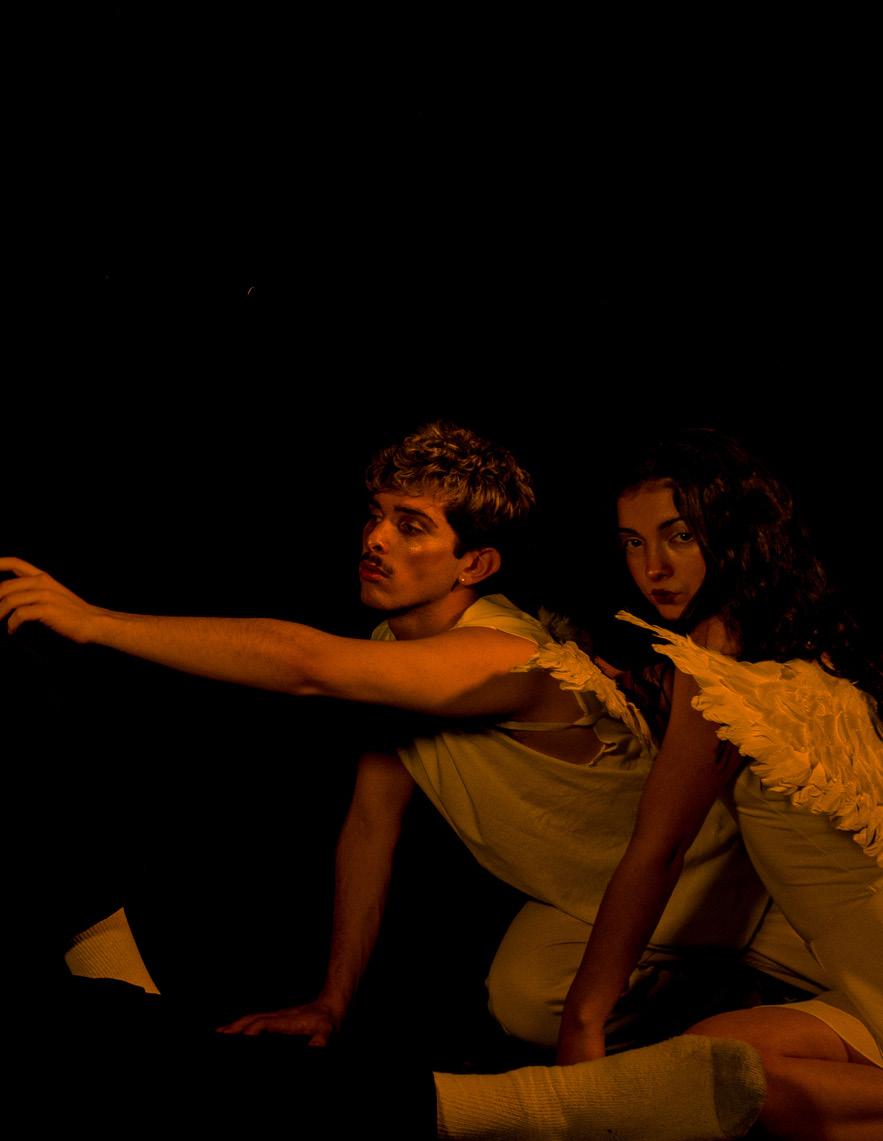
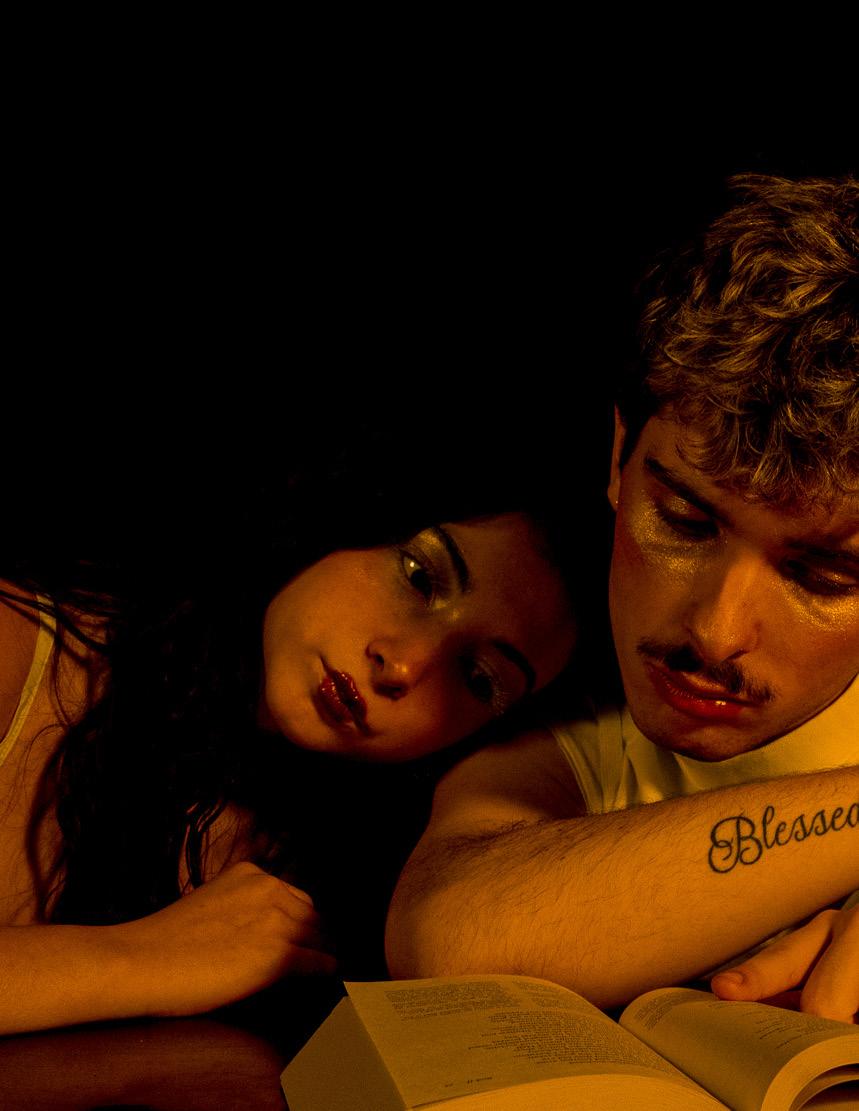
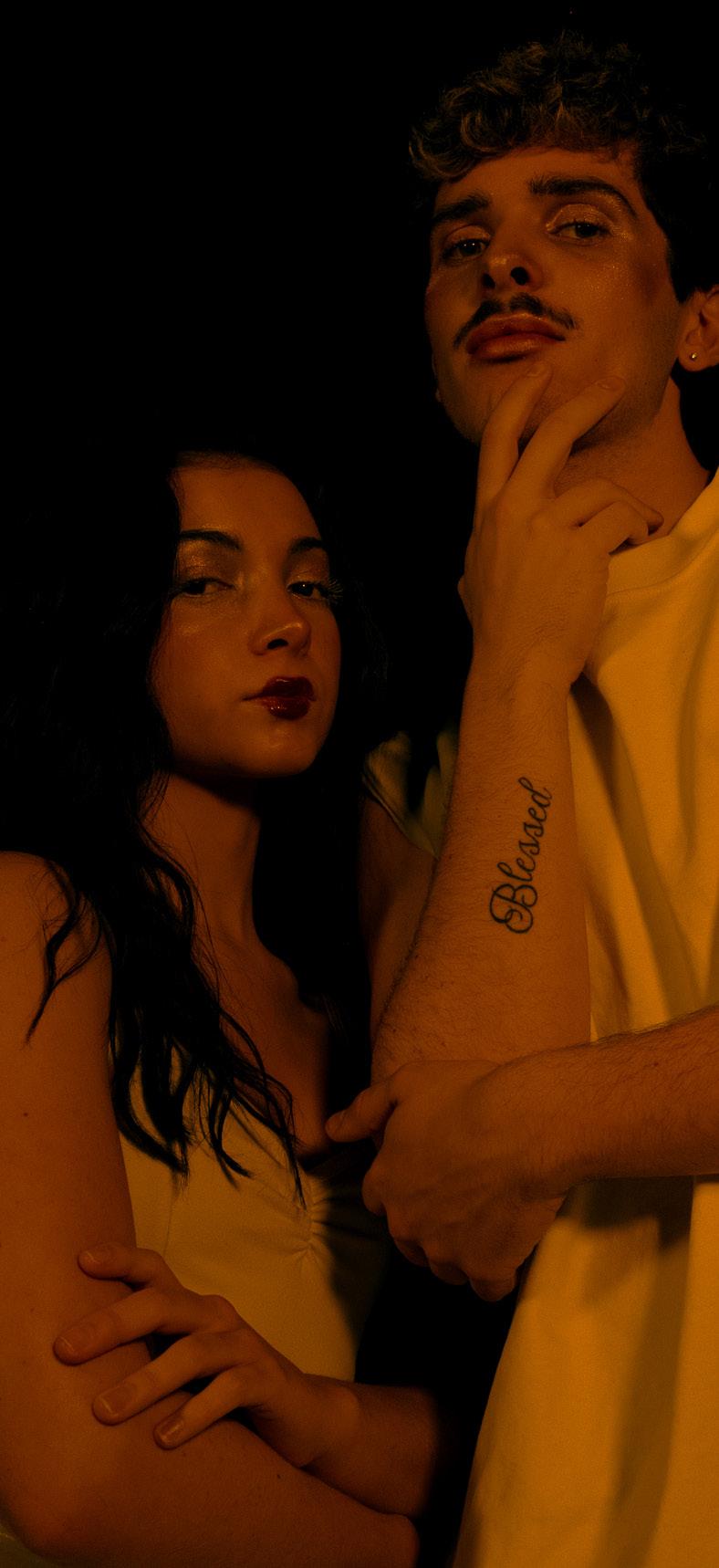
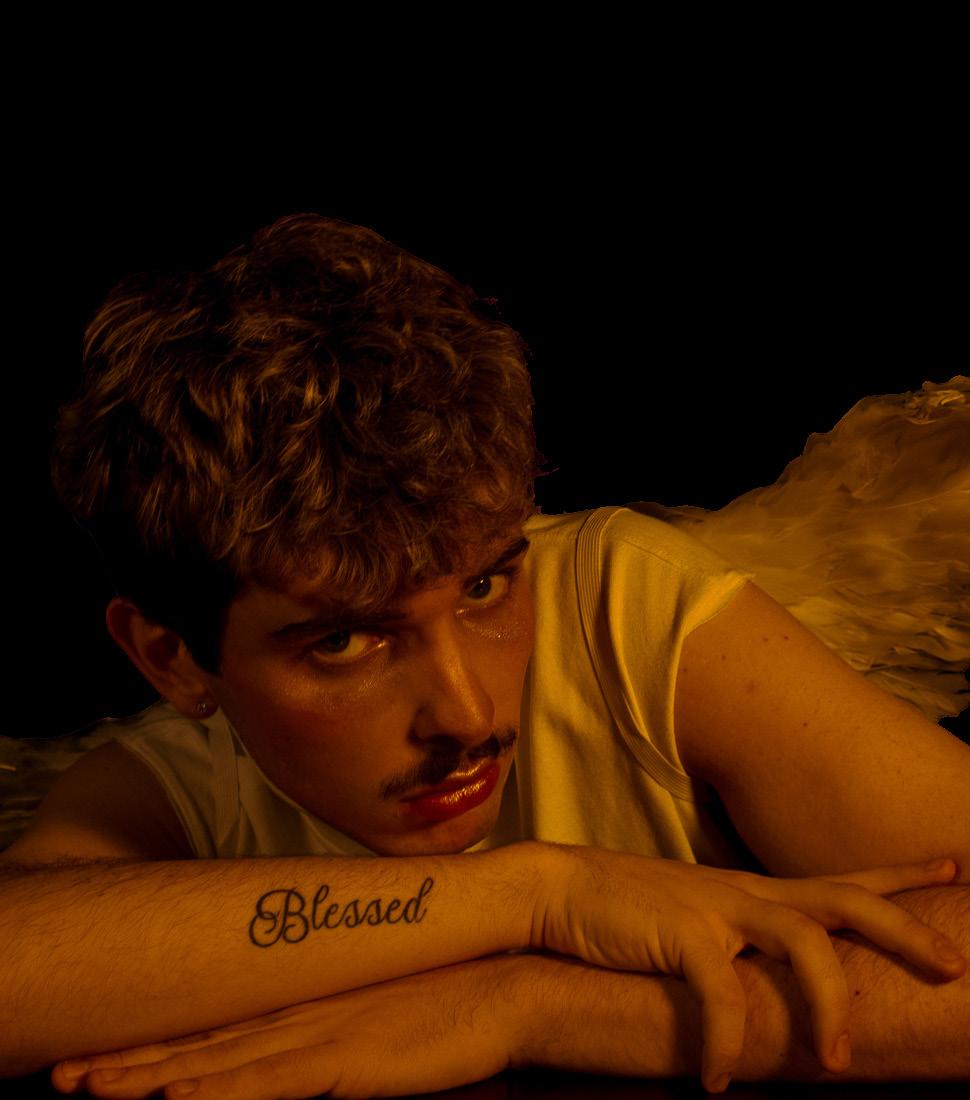
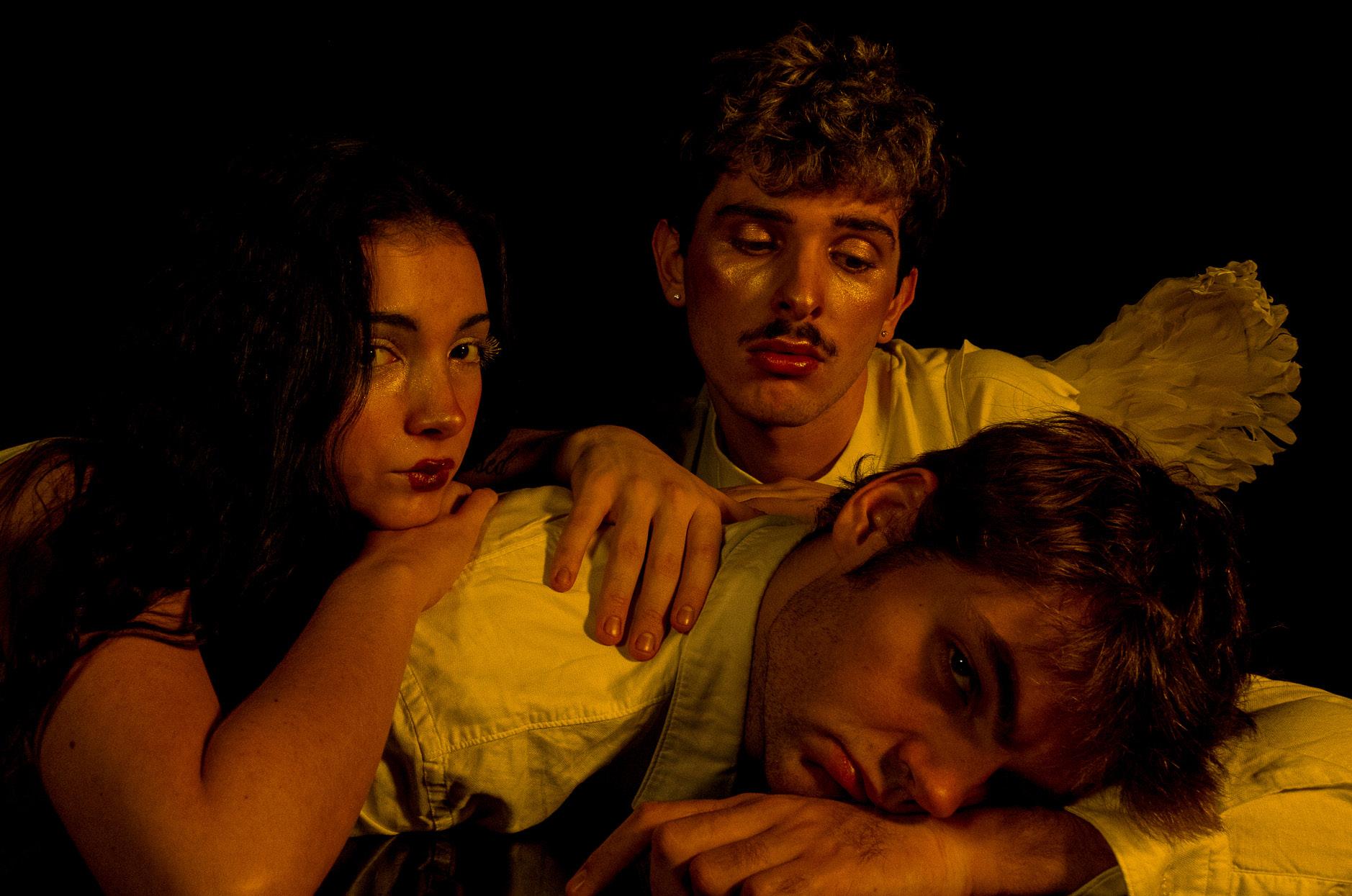
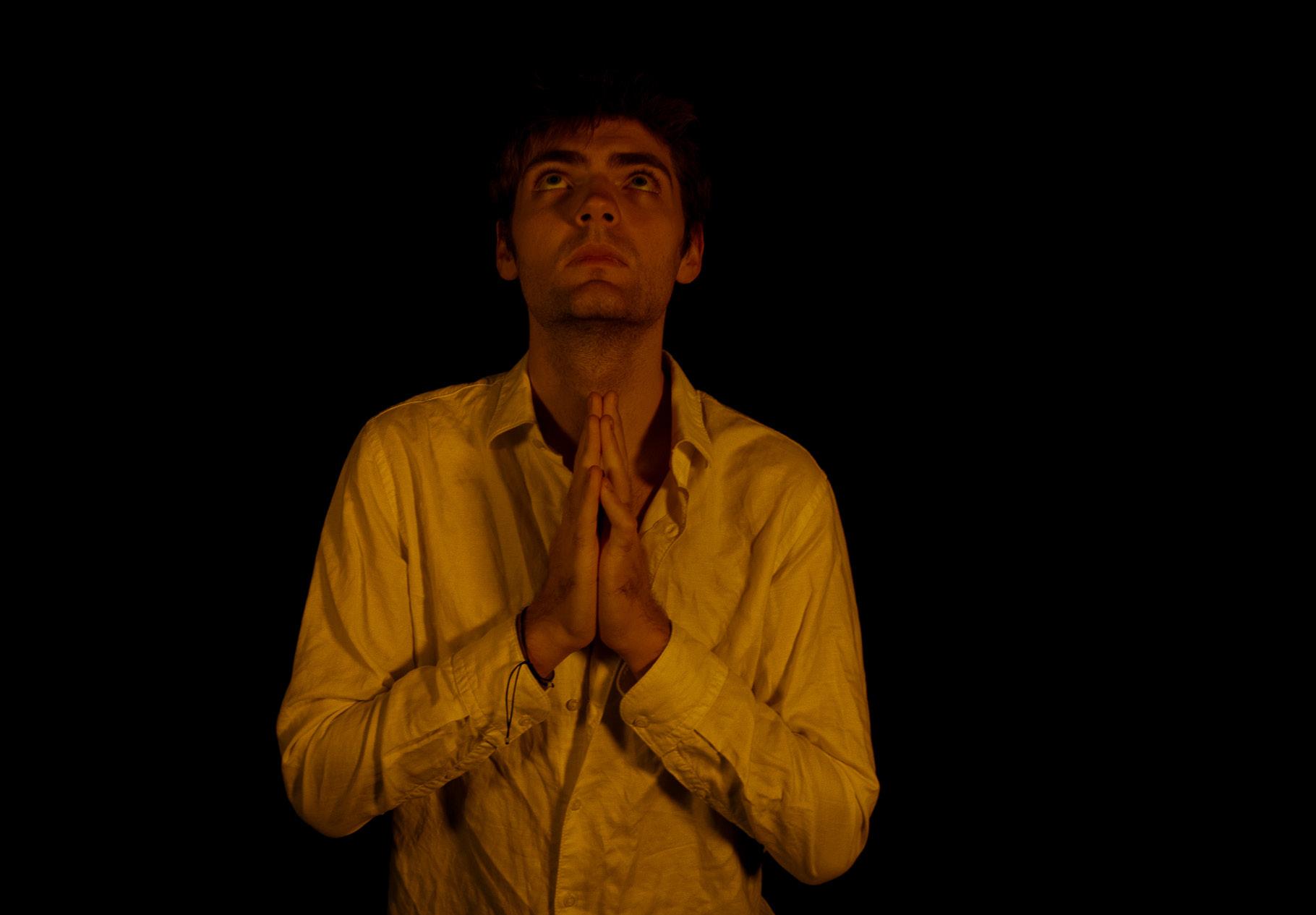
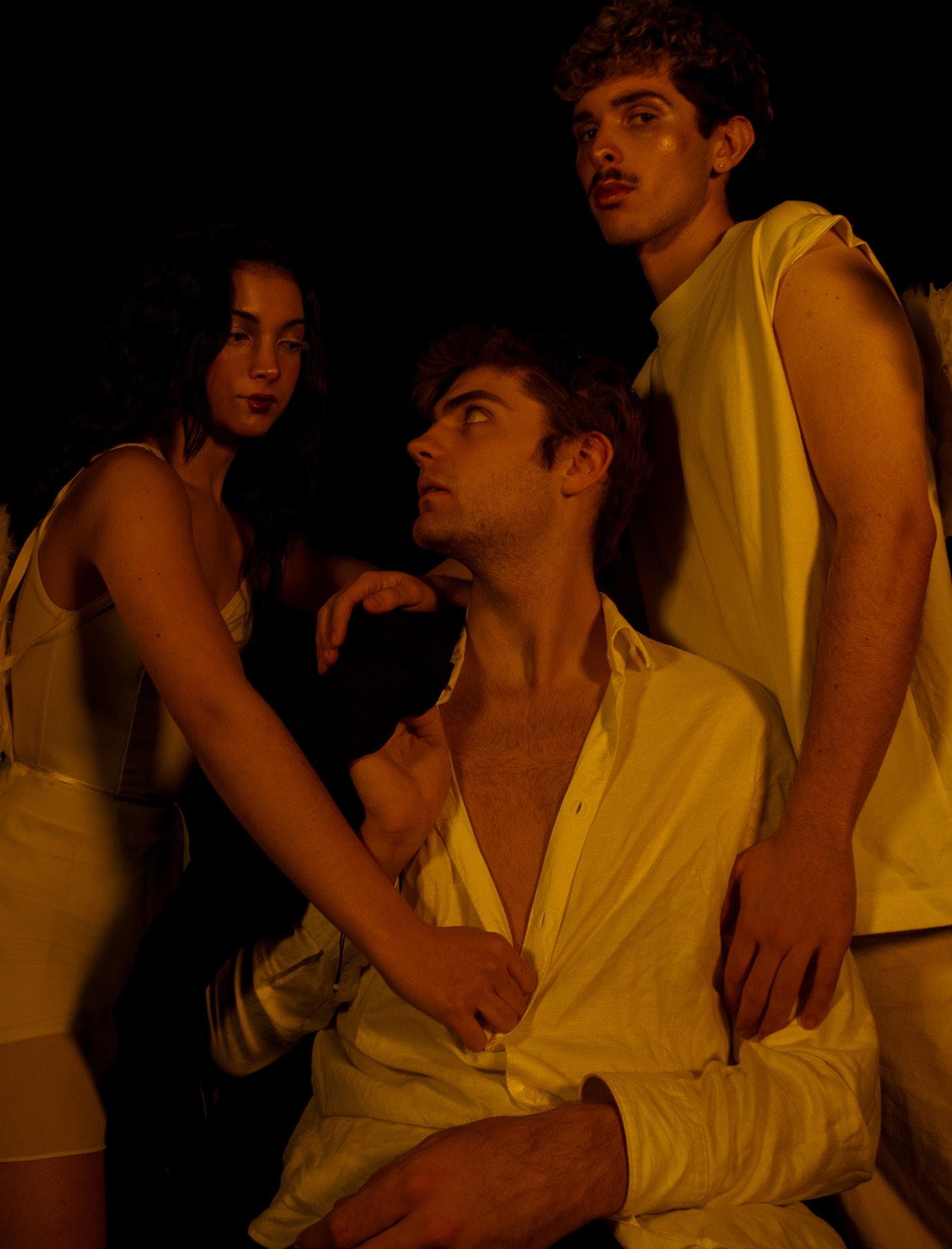
MODELED BY NATHANIEL OAKS, THOMAS ASSAD, AND VALENTINA HURTADO
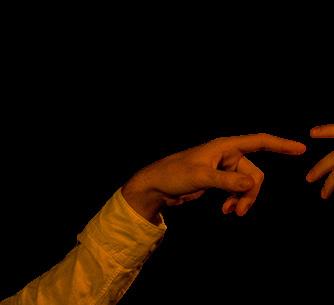
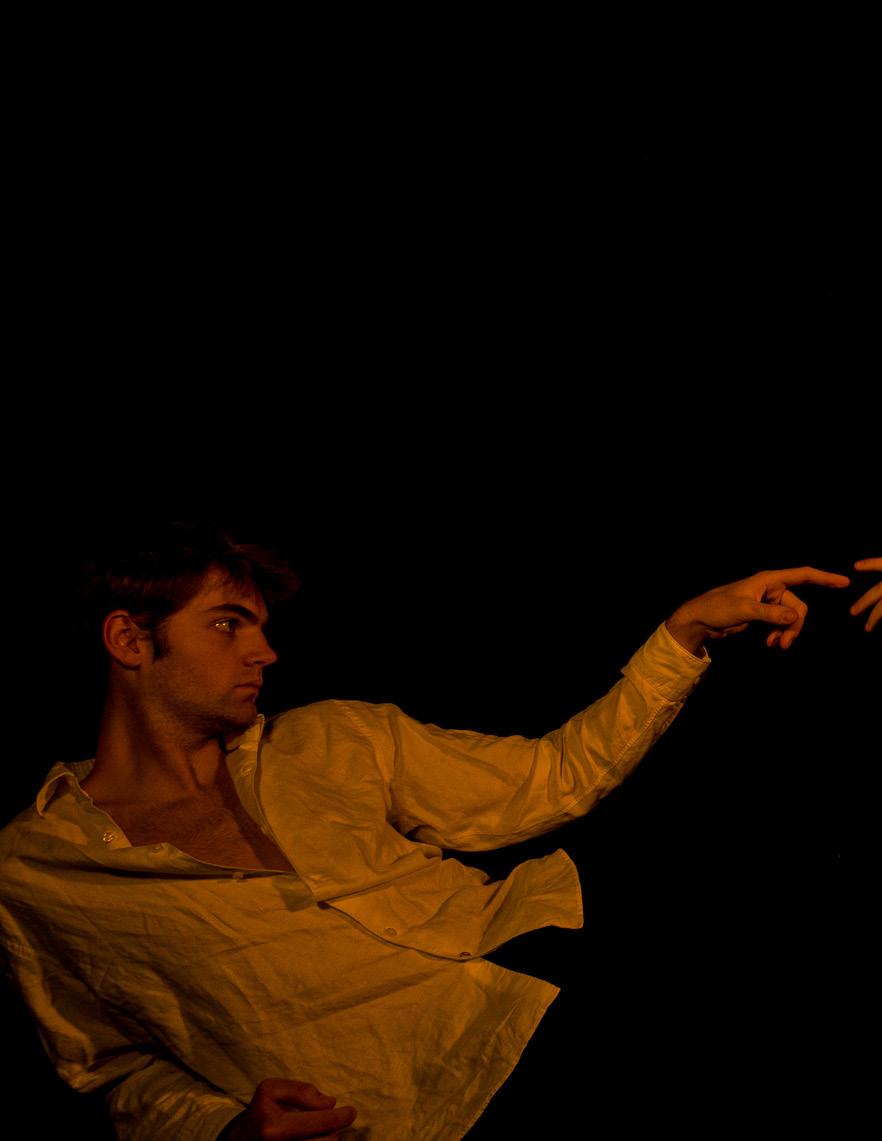
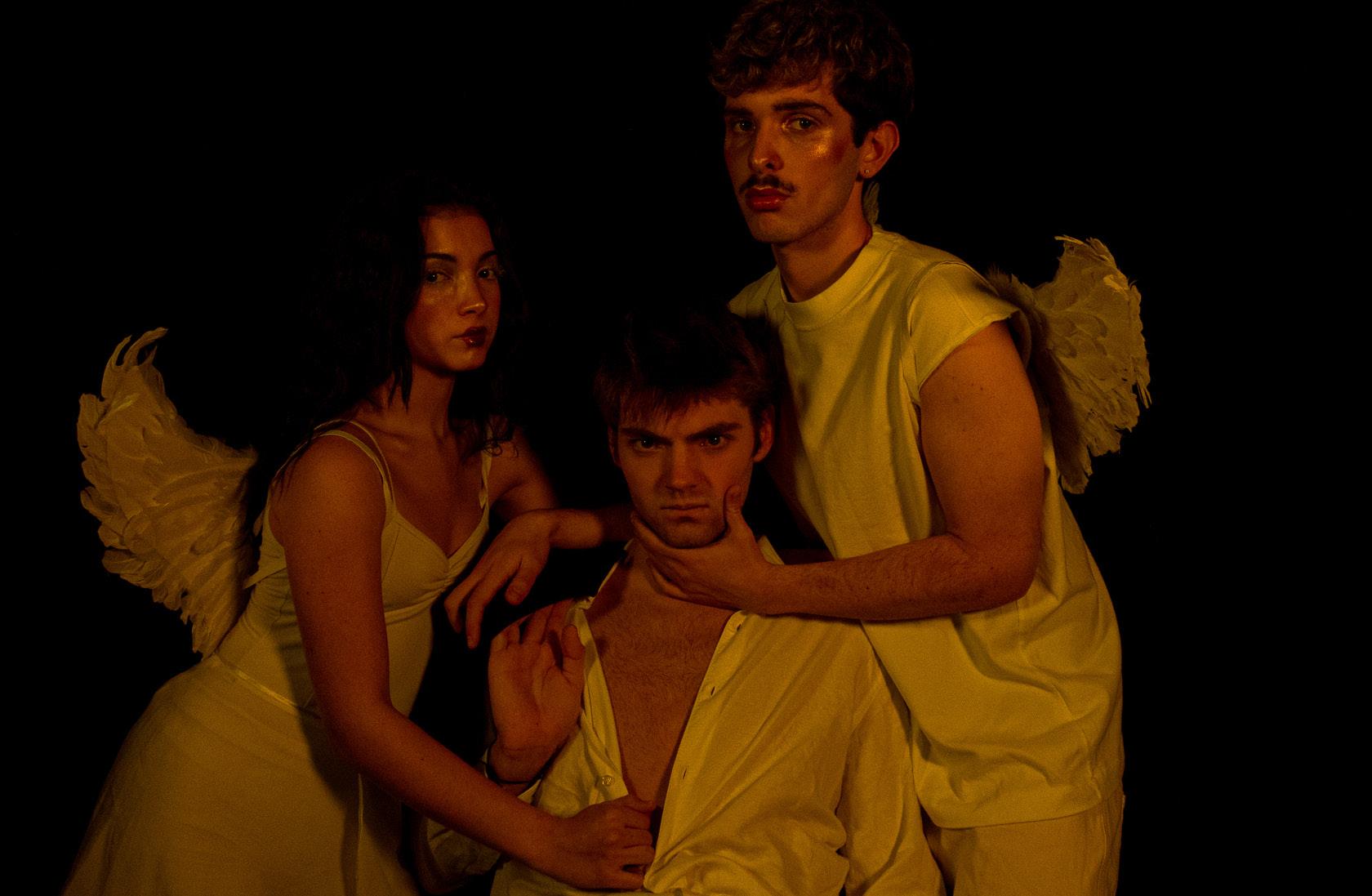
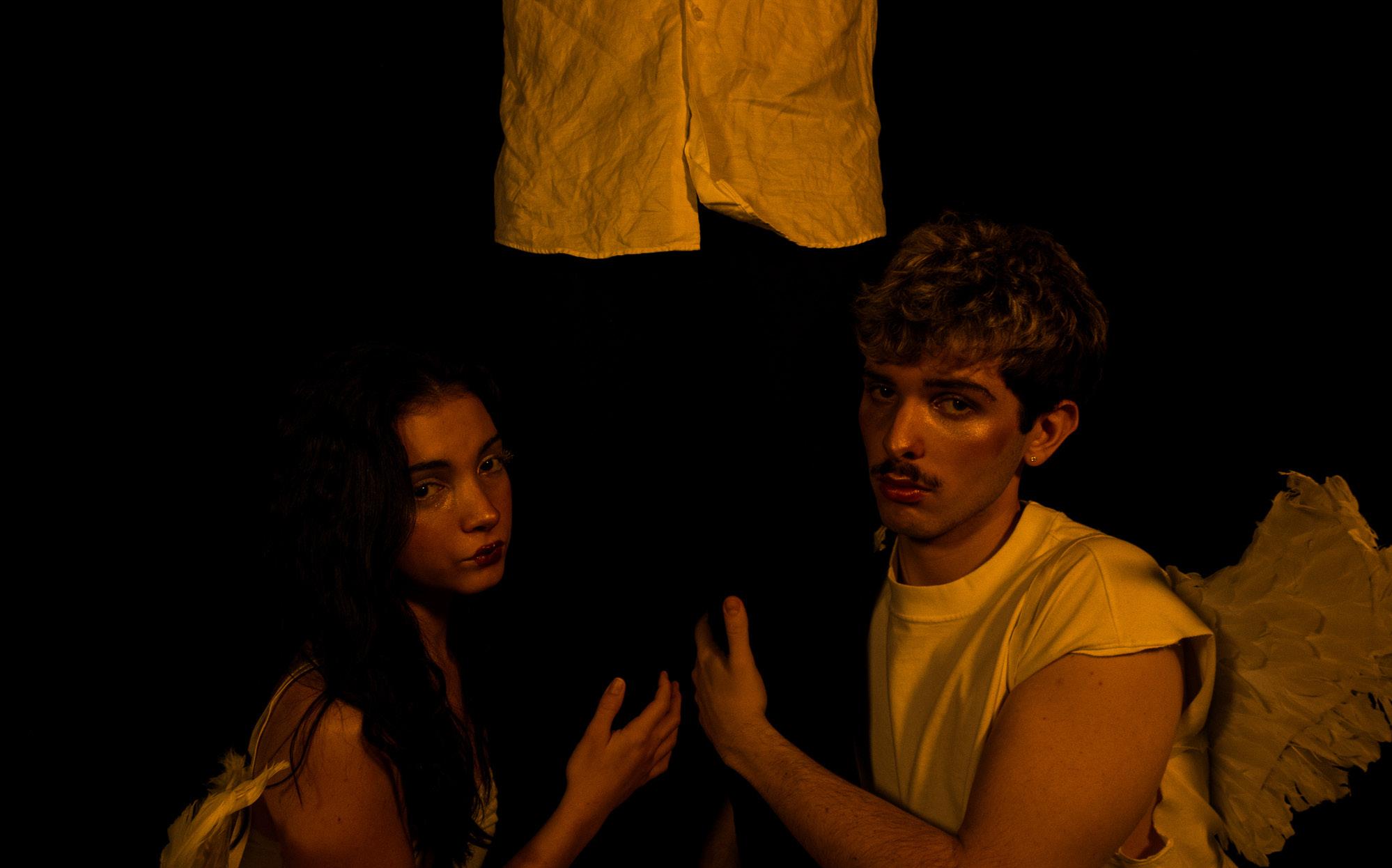
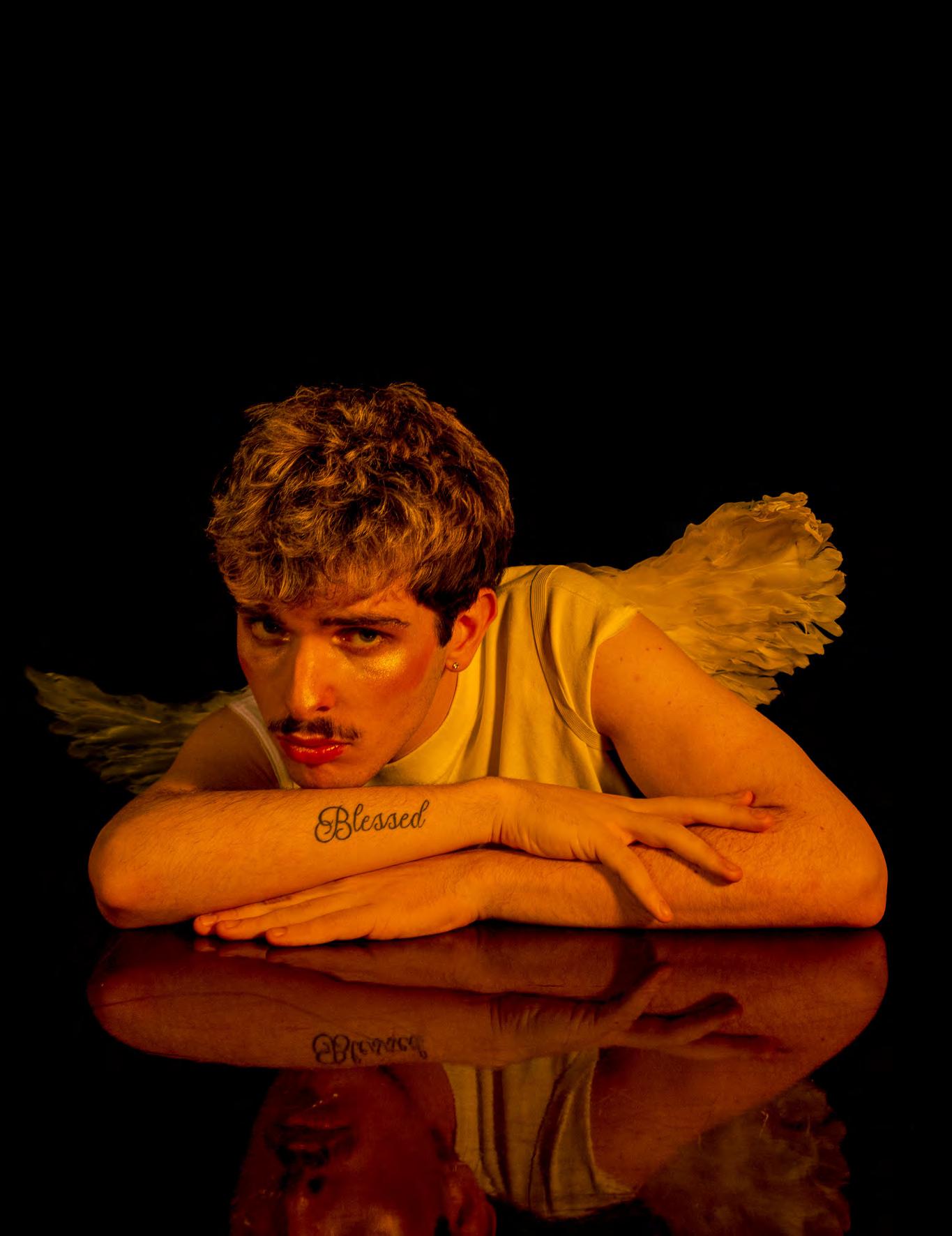
dream of angels i
dream angels
WHEN OUR DEEPEST DESIRES DON’T REPRESENT THE SELF THAT WE WISH TO CONVEY, WE SUPPRESS THEM UNTIL THEY EAT US ALIVE. IN THIS PHOTOSHOOT, WE FIND OUR PROTAGONIST TORMENTED BY HIS DEADLIEST SINS. THESE SINS TAKE FORM AS ANGELS—ONE MALE, ONE FEMALE— DIVINELY LIT AS THEY TAUNT OUR PROTAGONIST WITH HIS MOST PRIVATE CRAVINGS.
The Revolution Will Not Be Merkinized
WRITTEN BY KAT BOSKOVIC
ART BY HELA GIAEVER
In the sweltering months of Summer 2024, between leopard print and Love Island USA watch parties, BRAT remixes and the possibility of a first woman president dangling before us with a beckoning wink, it felt like we were on the brink of something fantastical. With the momentum of Barbie and the reclamation of girlhood and everything pink from the summer before, the honeyed air of June, July, and August carried tantalizing promise…with a sprinkle of pubic hair.
The bush was back, baby—and no, not George W. Bush (thank God). In a long-awaited bush renaissance, there were bushes at the beach, bushes in low-rise jeans, even bushes on main. The bush became a badge of coolness to even be judged by @president_bush_1, a self-proclaimed bush psychic who conducted bush aura readings on celebrities: Hailey Bieber is allegedly as bald as a mole rat, but Selena Gomez has a bush that bewitches every man she has ever dated—hence why Justin Bieber called her twentythree times on his wedding day. Bush.
And then, like how many good things come to an end, Kim Kardashian came to ruin it all.
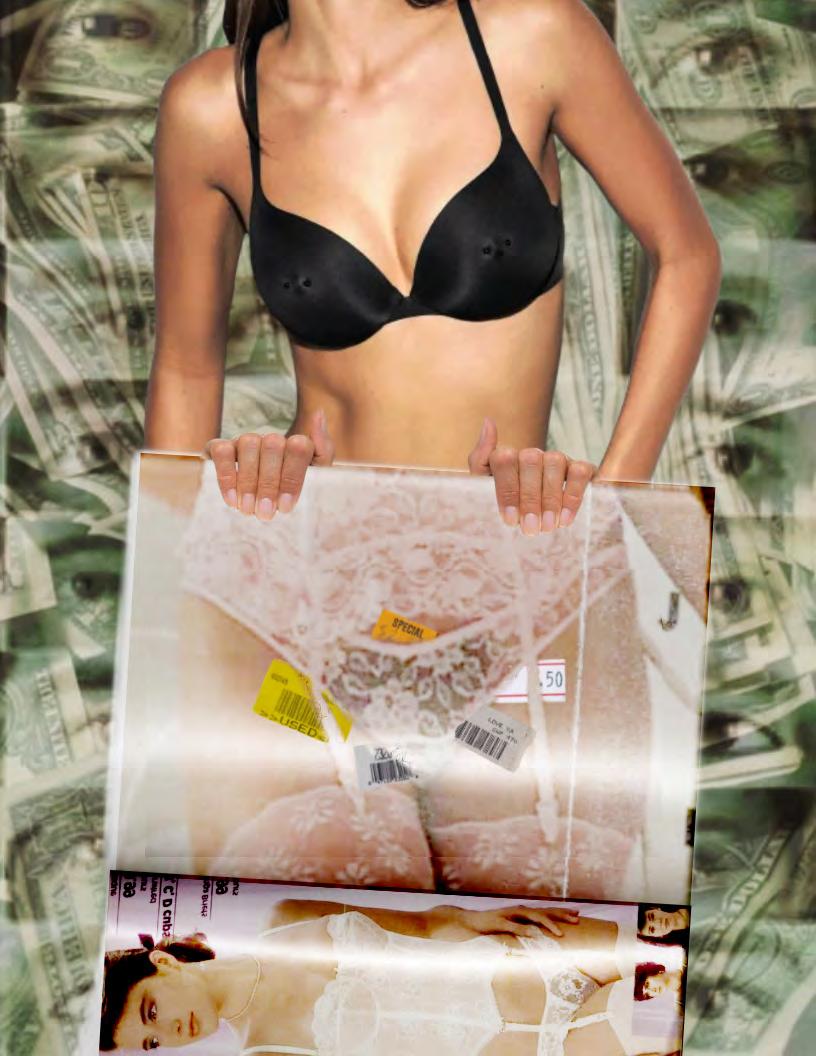
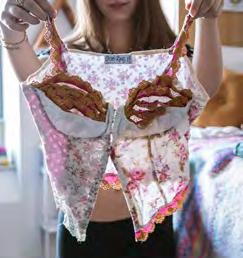
As if commodifying the nipple wasn’t enough, we’ve now lost the bush to SKIMS too. With six different color varieties and a myriad of hair textures, you can now purchase your own bush for only thirty-two dollars.
“Why we love it?” the SKIMS website prompts. “With this iconic new panty, your carpet can be whatever color you want it to be.”
Sure, I could perhaps get behind a line of neon bush panties offered in Psychedelic Pink or Eclectic Emerald or Blitzing Blue to spare vulvas from the dangers of bleach in pursuit of a bioluminescent bush, but these bush panties are only offered in natural shades of blonde, ginger, brunette, and black. So, you can put your bush on in the morning and take it off at the end of the day like any other accessory, and that’s what it can remain as: an accessory. But in its potential as an accessory therein lies its fault too, for no bush owner would wear this to conceal their own bush.
In fact, the very idea of layering an artificial tuft over a living one feels like an uncanny form of self-erasure, as if the real thing—with its texture and unruliness and heat and politics—must be hidden beneath a tidier, brand-approved simulacrum. This is not the ecstatic, sun-warmed, slightly feral fringe that anchored the bush renaissance of summer 2024. This is a corporate bush. A managerial bush. The SKIMS bush isn’t meant for people who already have a bush; it’s meant for people who want the implication of one without the lived political reality.
What SKIMS fails to realize is that the bush has never just been hair. Consider Algeria in the mid-20th century, during the fight for independence. French colonial officers treated pubic hair as evidence: a woman with a bush suggested her husband was still away in the rebellion, whereas a woman suddenly bare announced that he had come home. Hair or no hair became a code of war, surveillance and resistance performed beneath skirts and behind closed doors. Pubic hair was not fashion; it was a battleground.
At the same time, 4,000 miles away, the free love movement in the United States took off and the bush slipped into an entirely different register. It was a pubic manifesto that grew alongside civil rights protests, anti-war marches, second-wave feminism, and a widening refusal to be tidied up for the patriarchy’s viewing pleasure. The bush belonged to the body, and the body belonged to the woman—not the market.
In 2024, with 14,000 women telling The Review of Beauty Substack newsletter that nearly 30% keep a full bush (and only 15% go totally bare), a bush resurrection was in full bloom. Sure, Belgian-founded Parisian fashion house Maison Margiela’s haute couture collection that year paraded merkins under sheer skirts galore, and creative director John Galliano had explained to System magazine that his greatest inspiration was the artist Brassaï’s photography of Parisian sex workers—the commodification of
poverty on the fashion runway, which is nothing new. But with price marks in the thousands, the common masses couldn’t access this commercialized bush anyway—not until Kim Kardashian brought down her trough of slop for us to gobble up for $32 apiece (gobbled up, unfortunately, in 24 hours, because every shade and texture is now out of stock). But these panties fail as functioning undergarments as well; 82 percent of their material content is polyamide, a polymer notorious for its poor breathability and its tendency to hold moisture and odors.
And if smelly panties aren’t enough, smelly, polluting panties sure are because polyamide is manufactured by a petroleum-based production cycle. Congratulations! Now your artificial bush you could have grown yourself— for free—contributes to greenhouse gas emissions!
And that’s the most dystopian part: not the fake pubes themselves, but the logic beneath them. We’ve arrived at a point in late-stage capitalism where the body’s natural functions are no longer simply discouraged or pathologized; they’re repackaged, rebranded, and resold to us at a markup. First, women were convinced to strip themselves bare, and agonize over the multitude of methods to do so. Then, once the beauty industry wrung every possible dollar out of hairlessness, they turned around and sold us the antidote. Here, just for $32, is the very thing your body is already capable of producing with time, hormones, and a little patience.
The Kardashian empire, with its uncanny talent for sniffing out marketable insecurities like a pig sniffs truffles, espied our bush renaissance and sunk its claws into it immediately. “[Women] are feeling nostalgic and want something from a different era,” Kim Kardashian said on SiriusXM One month after the launch, as we’re spending two hours of a generous state’s minimum wage on a petroleum-based imitation of something our bodies already grow naturally, the Kardashians are celebrating their mastermind Kris Jenner’s 70th birthday where she can flaunt her new face to an elite guest list that includes the third and fourth richest men in the country, Mark Zuckerberg and Jeff Bezos. The contrast feels almost satirical: the matriarch of the most famous family in America floating across a marble floor in vintage Givenchy while her daughter sells us crotch toupees.
It’s a performative bush for the algorithmic age: a tuft flattened into content, pre-approved for mass consumption, palatable enough to earn a Vogue headline about “the return of the bush” without alarming a single ad partner. And all of this lands with even more bite when you remember where SKIMS is expanding next, new stores that—oddly enough—have barely even been mentioned in the media: Israel. It’s hard not to notice the uncomfortable echo of a corporation profiting from controlled simulation of freedom while planting its flag in a settler colonial ethno-state where actual human freedom is stripped from Palestinians indigenous to the land. A bush with borders, indeed.
The SKIMS bush is a bush declawed of its historical roots in protest, sexual autonomy, class resistance, queer identity, and feminist refusal. It is the opposite of the Sixties bush, which grew like a soft, defiant banner of the self; the opposite of the Algerian bush, which carried intelligence on its very surface; the opposite of the 2024 full-bush bikini revival, which announced the exhaustion of capitalist management.
So maybe the only real response, one we’ve learned from our rebellious sisters, is to refuse the prefab versions entirely. Let the bush be unruly, uncurated, unsponsored. Let it grow past the borders of what is acceptable in campaign photography. SKIMS has shown us that anything can be packaged, trimmed, and resold as empowerment if we’re not paying attention, so the only worthy liberation is the one we grow ourselves.
In other words: this time, we must seize the means of the bush. YM
Adidas
From Turf To Runway
OLIVIA FLANZ
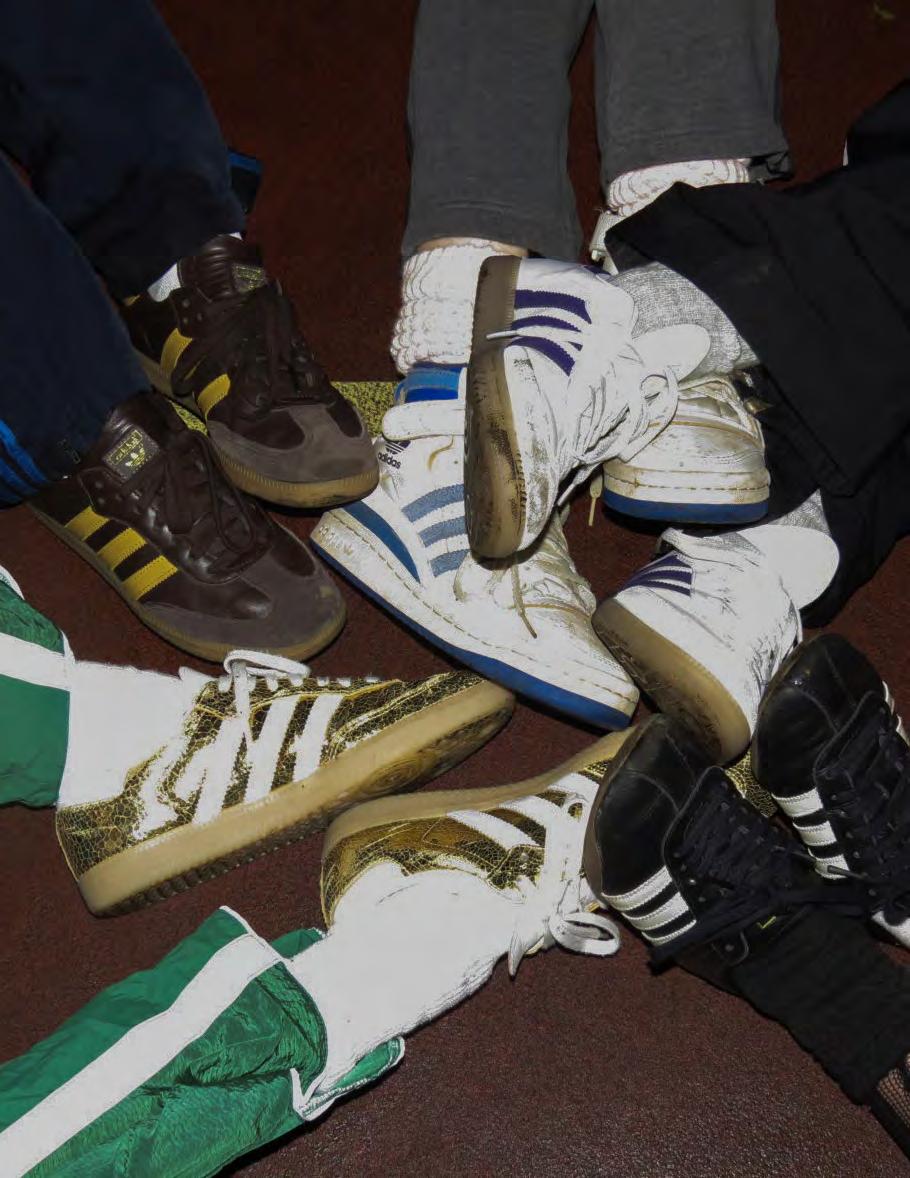
Adidas is everywhere. Take a step outside and you are bound to find someone wearing a pair of Sambas or sweatpants with the classic three stripes running down the side. While the brand has always been in the limelight, it’s much different than it was 10 years ago.
I was first introduced to Adidas when I was playing soccer in elementary school. The adidas shorts that we were all wearing this summer were saved only for game days, and the Sambas that we all know and love today served solely for indoor winter practices so our cleats didn’t damage the turf.
But today, Adidas isn’t exclusively a soccer brand; it’s not even exclusive to those into sports or the gym. Now, Adidas has been embedded into casual wear. The three stripes are no longer just paired with other athletic items, but with sweaters, blouses, button-downs, and even dresses.
It’s become a staple in the “blokette” aesthetic: the trend of combining “traditionally masculine” presenting clothing like jerseys, sneakers, rugby polos, and trainer jackets, with hyperfeminine pieces like bows, mini skirts, and kitten heels. The trend started in 2023 and was a breakaway from the coquette, the romanticized hyperfeminization aesthetic that trended years prior. In 2023, as the Women’s FIFA World Cup unrolled in Australia and New Zealand, soccer jerseys and Sambas skyrocketed into popularity, and their functional fashion created the perfect formula for the blokette style to emerge. Built around multi-use pieces, anyone with basic workout clothes and office pieces could participate. It’s no surprise that if you look up inspiration for blokette outfits on Pinterest, almost half of them have some Adidas branded piece.
Celebrities who function as major style references, model Bella Hadid among them, pushed this type of style to the forefront. There is a photo of her in Paris waving to the paparazzi as she walks out of Le Royal Monceau hotel, wearing a gray plaid skirt, a royal blue rugby quarter zip, golden hoops and rings, and of course, black Adidas Sambas with white socks. And Hadid wasn’t the only one: in 2024, Canadian singer-songwriter Tate McRae began her Think Later Tour during which she partnered with Adidas. Every show, she would sport a tailored Adidas bra top and mini shorts which became the signature look of her tour.
In early 2025, McRae and Adidas dropped the Lightblaze shoe: a lightweight running sneaker designed with mixed overlays of suede, leather, and mesh. The company claimed the sneakers “redefined the boundaries between athletic performance and fashion-forward style,” making a public acknowledgement of the brand’s evolution from a purely athletic brand to a staple in everyday wardrobes.
Not long after the Think Later Tour, McRae dropped, So Close to What, which eventually kicked off her March 2025 Miss Posessive Tour While this tour’s outfits are styled much differently than Think Later, swapping the Adidas sets for animal prints and body suits, many of the outfits referenced her music videos and song lyrics. During “Purple lace bra,” McRaes—shockingly—wears a purple lace bra, but pairs with Adidas track pants to showcase her continuing partnership with the brand. How this outfit is styled on stage shows that blokette aesthetic two years later, with the hyperfeminine components of the purple lace bra and heels juxtaposing the looser silhouette of the Adidas track pants.
More recently this October, Adidas had a strong presence at Shanghai Fashion Week. The “POWER OF THREE” collection, a collaboration between Adidas’s local team at Shanghai’s Creative Center and fashion designer Edison Chen, featured bolder tailoring and textured material that strayed from athletic spandex which pushed the brand past its original label as a sports company. The pieces highlighted just how dynamic Adidas can be, and how individualized its styling has become in its own branding. The brand’s presence in Shanghai additionally underscored its vision for a more global direction—one that continues to prioritize collaboration with creatives around the world.
The Adidas soccer shorts handed down from my sister’s high school soccer uniform I now pair with a light blue blouse and hoops to go to class, but I’ve also paired them with a random T-shirt to go to the gym. Adidas is still a go-to for athletic wear, but today it’s also a go-to for grabbing lunch with friends and going to work or class. Despite its comfortability and unmistakable logo, its pieces still pair easily with more feminine or experimental statement pieces. The brand has sealed itself as a must-have, blurring the lines between sportswear and everyday fashion. YM WRITTEN BY
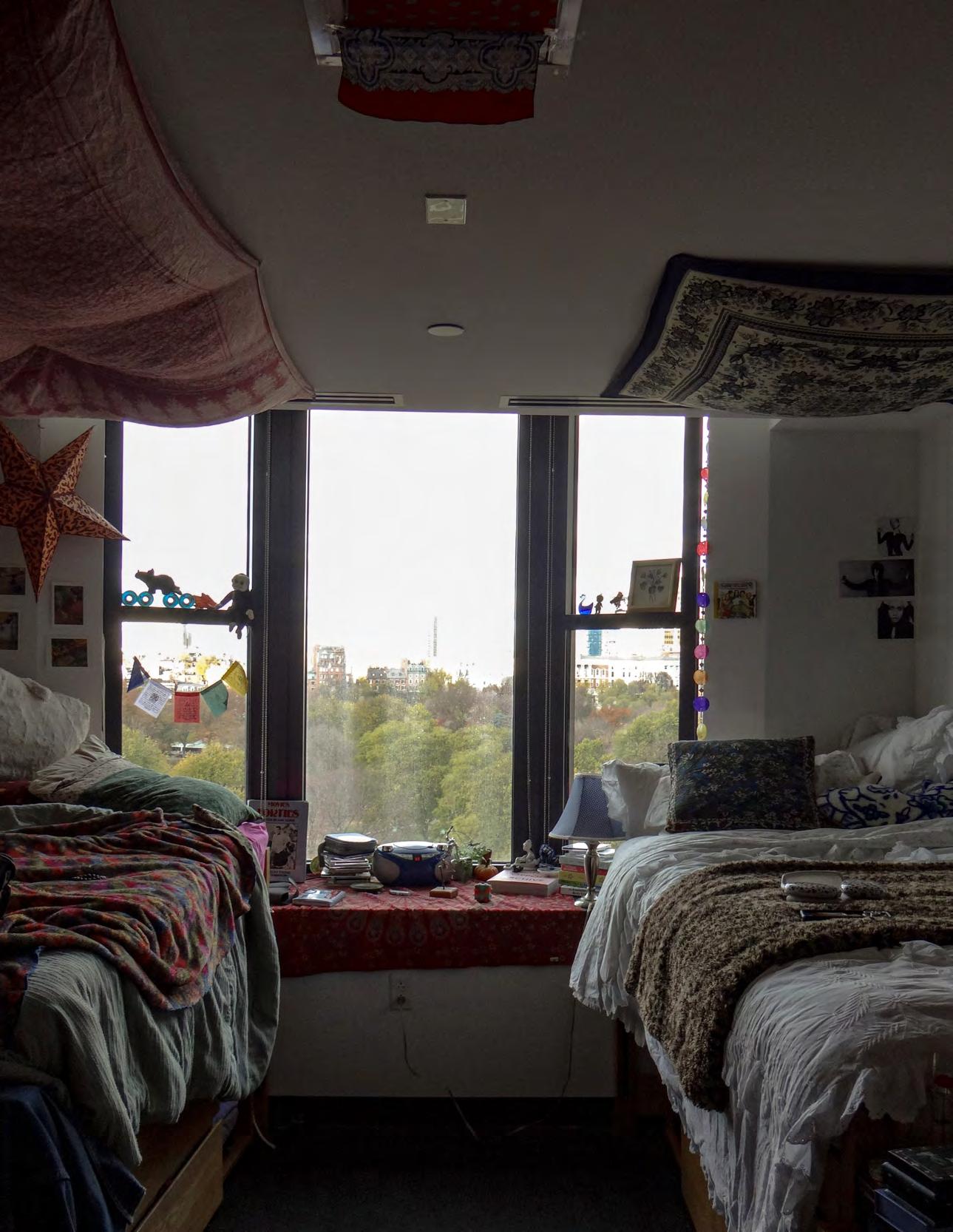
Dorm Suite Home
DWRITTEN BY IZZIE CLAUDIO
orm room essentials,” “Top 10 things you need in your dorm room,” “Dorm room decor ideas.”
These are phrases that are typical to see when another school year rolls around. Online ads push clothing organizers and desktop shelves. Target restocks its “dorm-friendly” plates and bowls. But, amid all of the three-tier carts and command strips, there is a more pressing question at hand: How do I make my dorm room feel like my own?
Dorm living is unique. We live in an environment, often with other people, with only so much wall and floor space to work with. At the beginning of each year, we face blank walls and a not-so-comfortable mattress and take on the challenge of making our allotted rectangle a personal, homey space. Some may tackle this project with a simple Pinterest board. Others take it to an extreme and hire an interior designer (I’m not lying). Some businesses even specialize in dorm rooms, like Essentials with Eden. How much does Eden Bowen Montgomery, the founder and owner, charge? Ten thousand dollars per room.
That’s one route to take with decorating, but whatever route you take, there are always key questions. What goes on the walls? What color should I choose for my comforter? What should I hang on my corkboard that best represents me? For a space that is only lived in for six months, I find it fascinating how something so ephemeral receives incredible attention to detail.
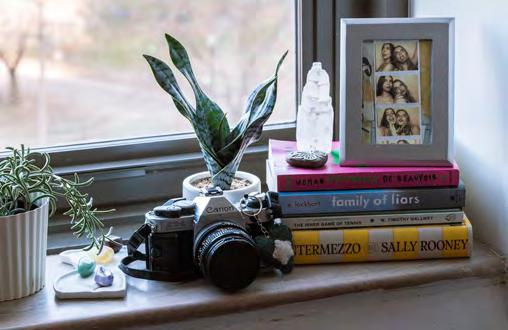
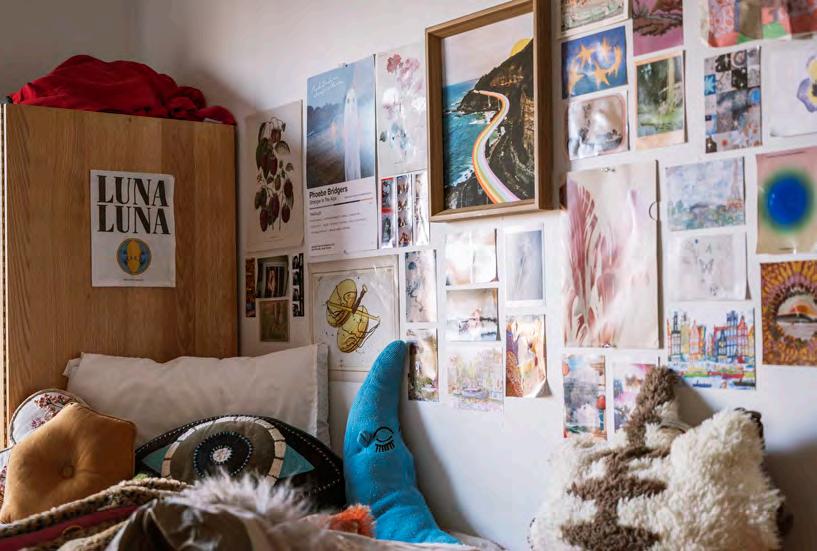
I’m no exception. Every year, I unpack my boxes and meticulously place each decoration in the spot I think it’ll shine best. I reorganize my posters so they follow a flow that feels right for the year ahead. I smile as I hang up photos with friends, and focus intently as I find the best angles for my endless stream of knick-knacks. My corner of the room doesn’t feel like mine until I barely see the walls, and my ambient lighting is ready to go. I need color; I need a perfectly curated maximalism that can easily be put back together after a fun weekend; I need to feel a slice of home with me.
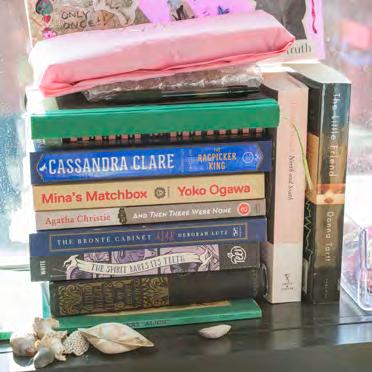
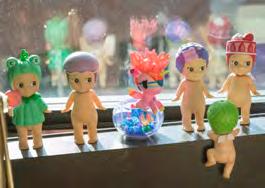
Riley Miles (VMA ‘26), a student and my roommate of four years, says that she decorates her space “to give a sense of familiarity and individuality to an otherwise barren space.” Vines elevate her ceiling and serve as an excellent finishing touch to her bedspace. Her Peach Riot dolls live happily on her desk, a fairy gathering greeting her every morning when she does her makeup. “My
PHOTOGRAPHED BY MARI SILVA
favorite one is Gigi ‘cause she has red hair like me,” she explains with an excited smile.
Emma Bowen (WLP ‘26), another student and suitemate of mine for the past two years, explains, “My room at home is a time capsule of my 5th grade self, so I make my dorm room indicative of who I am now.”
College itself is a time of great change, and decoration can clearly illustrate that growth. The outer visual choices we make are a reflection of the self. We decorate our rooms because it is the space where we are often our most authentic. Bowen’s room has gone through many changes as she’s gathered experiences. Souvenirs from her time abroad are displayed in perfect symmetry on the walls next to her desk, and her new lamp shines over her delicate pillows.
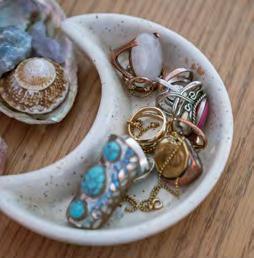
At the end of each year, it’s bittersweet to take down each piece that made our room uniquely ours. That rectangle of space is once again a blank canvas awaiting the next creative mind. This month, I’ll pack my boxes for the last time. The next room that my posters will decorate won’t be the rectangle I’ve grown to love—and honestly yearn for. I’ll never return to those twin beds that became the perfect nests over the years, cradling me to sleep every night. Even though I always struggled to find a place for my bass guitar and dealt with posters falling on me in the middle of the night due to cheap, wall-friendly putty, I’ll miss it all. I’ll miss sitting on my floor every August in the sweltering heat, screwing together the wooden shelf that sat on my desk. I’ll miss carefully unwrapping my jewelry dishes and somehow finding yet another mug as I dig through boxes. I’ll miss waking up in the rectangle, that feeling of calm in a familiar space. I’m sure I’ll find it again, but for now, I put the dorm room to rest and close the door on another chapter in my life. YM
YOUR CLOSET YOUR CLOSET
INTERVIEWED
BY
KAT BOSKOVIC
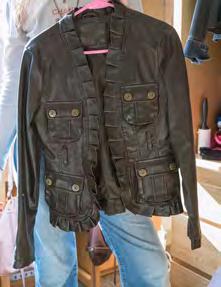
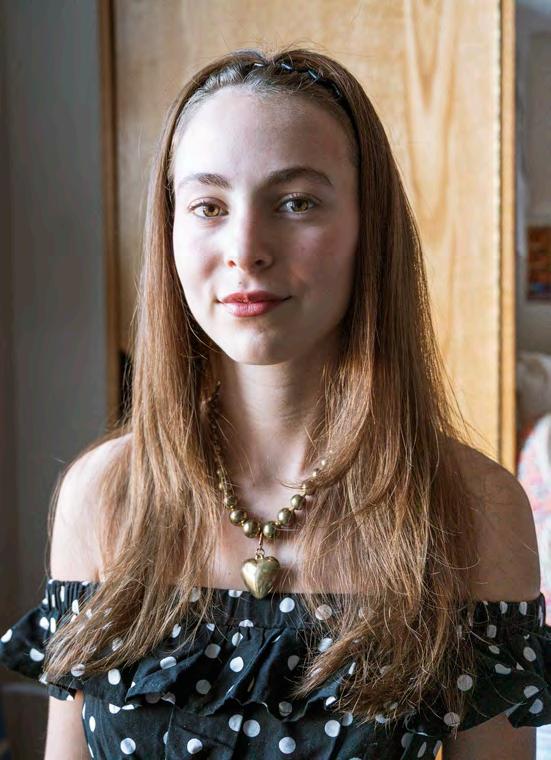
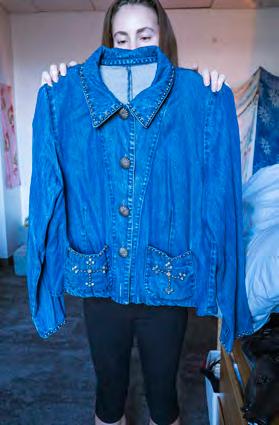
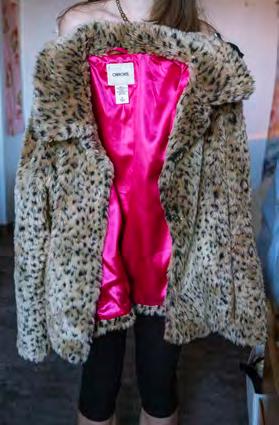
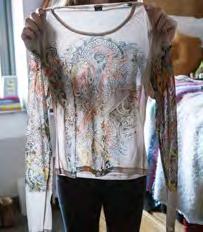
Daphne (she/her)
PHOTOGRAPHED
BY
EMILIE DUMAS
How would you describe your personal style in three words?
Sparkle, vintage, art teacher.
Where do you typically get outfit inspiration from?
I usually turn to my mom, she’s the original style queen in my family.
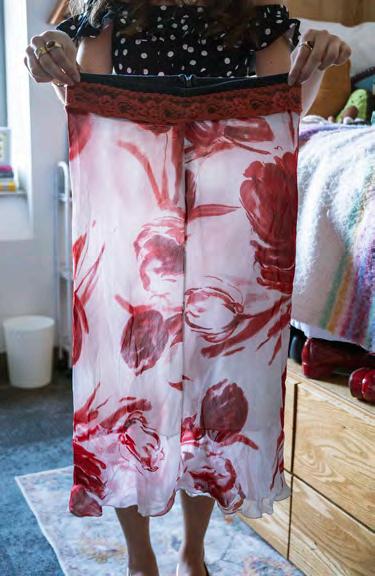
A lot of my clothes are hers from the ‘90s and I love finding new ways to wear what she did. It’s also nice to know what I’m wearing has a story, it makes me feel more inspired.
What song do you think best represents your style?
“Lost in my Bedroom” by Sky Ferreira
Who’s your celebrity style icon?
Devon Lee Carlson.
If you could only shop at one place for the rest of your life, where would it be?
Goodwill, it’s better for the planet and you find so many unexpected pieces.
What are three pieces of your wardrobe you can’t live without?
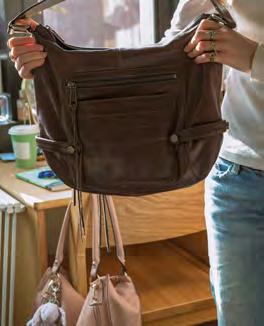
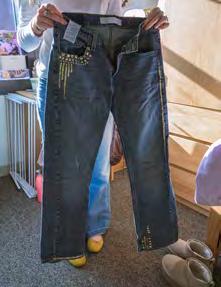
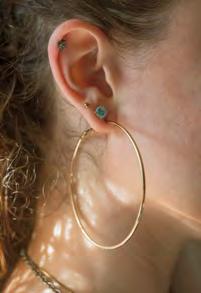
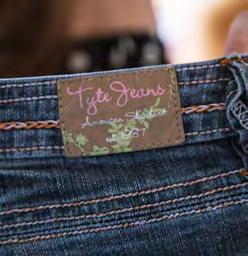
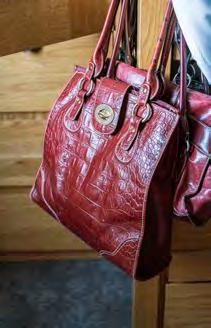
A good pair of bootcut jeans, a statement necklace, and my purse.
If you were a cartoon character, what would your outfit from your closet be?
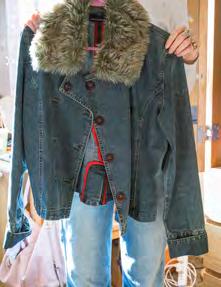
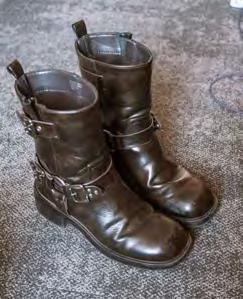
Ralph Lauren knee-length skirt, brown boots, off-the-shoulder white top, crazy gold jewelry, hair tinsel, and a blue fur coat. What’s your biggest fashion splurge?
My Chanel blue light glasses. What’s one thing you would tell your younger self about fashion?
Don’t be afraid to wear everything all at once.
Is there anything else you would like us to know?
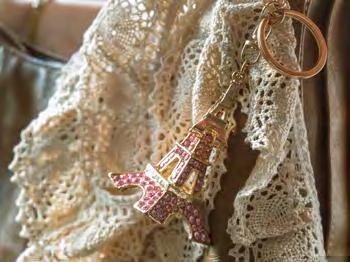
My favorite thing is accessories, it can really make or break an outfit.
YOUR CLOSET YOUR CLOSET
INTERVIEWED BY KAT BOSKOVIC
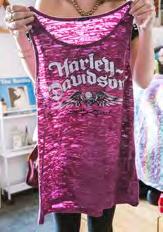
Luna (she/her)
How would you describe your personal style in three words?
Dynamic, Versatile, and Colorful. Where do you typically get outfit inspiration from?
Pinterest, Pinterest, & more Pinterest! Also, just going into the thrift and envisioning the pieces I pick out with a certain outfit in my mind always does the trick.
What song do you think best represents your style?
“Chosen” by Blood Orange and Caroline Polachek.
Who’s your celebrity style icon?
Addison Rae and Eva Meloche, always. If you could only shop at one place for the rest of your life, where would it be?
My mom’s closet in the late ‘90s and early 2000s. What are three pieces of your wardrobe you can’t live without?
PHOTOGRAPHED BY EMILIE DUMAS
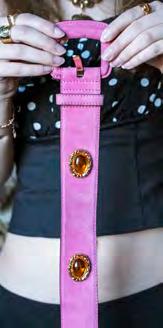
My flats, my polka dots, & my slip dresses. If you were a cartoon character, what would your outfit from your closet be?
I have so many ideas! Probably a pair of my lowwaisted darkwashed jeans, one of my (many) black tops, a colorful pair of flats, and some chunky sunglasses. This is my go-to outfit in real life as well, so it seemed only fitting.
What’s your biggest fashion splurge?
Honestly, I probably spend the most money at flea markets. Everything is so unique, and in my opinion, that’s worth it.
What’s one thing you would tell your younger self about fashion?
Keep your Justice tops!
BYSTANDER EFFECT
DIRECTED BY IZZIE CLAUDIO
PHOTOGRAPHED BY COOPER RICH
MODELED BY LOLA GRILLO, LIBERTY ICE, JANE FLAD, AND RILEY MILES
BYSTANDER EFFECT
THE BYSTANDER EFFECT IS A PSYCHOLOGICAL THEORY STATING THAT INDIVIDUALS ARE LESS LIKELY TO HELP SOMEONE IN DISTRESS WHEN THERE ARE OTHER PEOPLE PRESENT. WE SEE VIOLENCE ON OUR SCREENS EVERY DAY, AND WE ARE QUICKLY BECOMING DESENSITIZED. “BYSTANDER EFFECT” ASKS: WHEN WILL WE STOP BEING INTERNET BYSTANDERS AND CONTRIBUTE TO A CHANGE; WHEN WILL WE ACT?
THE LOST LOVE OF SALSA
EXPLORING THE DESIRE TO DANCE IN LATIN SPACES
PHOTOGRAPHED BY ALEXANDRA AZAN WRITTEN BY ALEXANDRA AZAN
Every Thursday, the same texts roll in:
“Where are we going this weekend?”
“Should we Tam on Thursday?”
“Let’s go to the bar!”
And every Thursday, I have the same thought pulsing through my head like a beat I’m dying to follow: I. Just. Want. To. Dance.
Growing up, I was surrounded by dancing. Most obviously, at weddings, proms, and Christmas dinners. But also, in all the quiet, ordinary corners of life. My parents would put on their college-day favorites and show me their early ‘90s moves. Before going to bed, my father would play one last song, grasping me in his arms as we swayed to “Love Is a Battlefield.” When I cooked palomilla with my abuela, I put on Spanish songs. She knew every word. The steak sizzled on the stove while she grabbed my waist, and we danced, laughing in the heat and the smell of delicious food.
These moments are now memories that beat in the back of my mind while I sit on a barstool, watching cliques of people talking at the bar. No one is joined together, and no one is dancing. On the occasion that someone does come up to me or a friend, it’s normally to pass by. For the most part, everyone keeps to themselves. I twist in my seat searching for another conversation topic for my group, worrying about how the overhead bar lights are making me look. I dream about a night where instead the rhythm does the talking, and the night flows steadily along with the music.
I am not the only one who dreams of this. Dancing is integral to the lifeline of many Latinos. It’s part of our culture and necessary to maintain a connection to our identities.
Sophia Da Silva, a South Florida native, cites the same feelings. “There’s a different kind of unity and sense of community that comes with dancing to the music from the countries we call a second home,” she says. For her, dancing isn’t an activity, “it’s integral to our identities.” But she finds Boston’s Latin music and dance community “hidden and difficult to find,” with most spaces being “expensive, closing too early, or 21 and older.”
Similarly, Sophia Garcia from South Texas explains how dancing isn’t just something her community does, “it’s a generational thing.” For her, these nights out are part of a long-standing tradition “passed along like a family heirloom.” In Boston, though, the rhythm feels off. As she puts it, “the motivation for going out is what genuinely sets it apart.” In bar culture, the night revolves around talking, sitting, and being seen; in dance culture, the night revolves around moving. Both have positives and negatives, and often depend on what a person might be in the mood for. For many Latinos, the scarcity of those spaces means we don’t have a choice.
It’s not just Latinas in Boston who feel that ache for a true dance floor. Elisa Baena, a Miami native, started her own movement, Salsa Z, with the goal of bringing salsa back to Gen Z. According to Miami New Times, after seeing a resurgence in salsa interest following Bad Bunny’s DeBÍ TiRAR MáS FOToS, Baena decided to create a space where young people felt welcomed to dance with strangers without judgment or pressure. Her events begin with a lesson for beginners, then open into hours of salsa music spun from vinyl, layered with live percussion. Sometimes there’s a disco twist; sometimes a full Latin band takes the stage. People of all ages show up—from hijos to abuelos—all dancing together in a shared rhythm that feels like what life might have been like for us before displacement, before distance.
Since moving to Boston in 2023, I’ve been searching for a place that reminds me of home–not just geographically, but emotionally. I’m not only looking for good music and a crowded dance floor, but a place where warmth lives in the air. By the sweat on everyone’s skin, the press of bodies moving together, and in the easy way strangers become partners for a song or two. Here, every time I step into the Boston chill it feels like a reminder of how far I am from that feeling. I visited a few places that left me feeling empty and desperate. I kept searching until, two years later, I finally found a taste of true salsa in Boston, and it felt like discovering a new heartbeat.
Over the Halloween weekend, I visited Cosmica and Spy Bar to check out their salsa night and reggaeton DJ. I was amazed at what I saw, startled by how quickly the room pulled something loose and warm out of me. The upstairs bar, Cosmica, was playing salsa vinyls with live percussion! The floor was packed with older adults and 21-year-olds dancing to the music, moving in harmony. I grabbed my friend’s arms, teaching her some basic steps, and we were off. We laughed and tried to keep up with the pros who were furiously dancing, moving like lightning across the floor. There were no awkward gaps, no cliques, or divisions across the floor. No stiff circles of people pretending not to look at each other or trying to make it obvious that they are looking at each other. Just a small wooden floor overflowing with smiling people, radiating the kind of heat that comes from shared friction. I remember shouting over the music that it felt like I was at a cousin’s wedding. The air was hot, the beats were endless, and for the first time since being in Boston, I felt that familiar sense of home—where dancing is a language and everyone speaks it.
My next goal?
To find more of these hidden spaces. To drag my friends along. To help lead more of my generation into rooms where the rhythm is shared, the dance floor becomes a family, and for a few hours, the world feels warm again. YM
On Secrets, Scrolling, and Scary Truths I Have So Much to Say:
WRITTEN BY HEATHER THORN
Ihave never not had an opinion on something. For as long as I can remember, I’ve always felt like I actually feel more than other people: heartbreak, more deeply; boredom, more fully; my takes red-hot and blistering. I have no way to prove this except through my words, somehow translating the messiness of the human experience into something remarkable: introspections, inner emotions, and internal dialogue steeping on the page until it’s soaked. It is a privilege to be a writer tasked with the seemingly impossible feat of transforming the racing mind into something worth reading.
I don’t consider myself a private person. I’m more than willing to splurge my secrets, sharp perspectives, and brutal honesty, as well as my romantic musings and everyday life: the moments easy to miss if not for the pen ready to scribble incoherent thoughts and the halfformed ideas waiting to be shared. Writing is an art of an outlet, an act of vulnerability and stationary escape moving through the realms of brain, heart, and time at once—and all on the same page.
I have so much to say, and I want to say all of it. I want to squeeze myself dry and seize all opportunities to get my work out there. The digital age we currently live in means infinite chances of self-expression at our fingertips, only a few keys or clicks away from being readily available to anyone who’s interested and online.
We have never been more accessible to each other. The concept of secrets is losing its appeal in lieu of oversharing across the wide interweb, making it easy to overlook the obstacle of vulnerability accompanied by personal writing. As the line between authors’ published work and the internet blurs, it’s difficult to see where one ends and the other begins when both are available for anyone scrolling.
The very allure of writing is being known for one’s words and requires first and foremost the acceptance of exposure: knowing anyone can read the work I pour myself into, and writing it anyway.
ART BY MERADITH CUNNALLY
Suddenly my dating experiences, hard lessons, and personal struggles I’ve overcome (or those I’m still trying to) aren’t mine anymore— they belong to the outside world now, the black hole of the internet, patiently awaiting curious confidants looking to consume new content.
Mindlessly scrolling is the new time-killer, meaning everyone can find anyone as the internet continues to merge into real life, bending the boundaries that used to distinguish these two planes. Where do we draw the line between our private lives and cyber ties? When the excitement of being published eventually fades, creeping in is the scary truth of digital footprint. All of my life is in one place on the internet, making it easier than ever for people to access my writing and come to terms with it through their own perspective. It’s a beautiful honor to have my work shared for people’s pleasure, but at the same time I can’t help wincing at the very real thought of strangers knowing so much about me: my insecurities, dating fails, confessions and reflections.
To be a writer in the digital age is to sign oneself up to be digested. Although the idea of exposure is ever-daunting, that’s exactly what’s exciting about writing: opening people’s eyes to my outlooks, hindsights, and reminiscences of trivial experiences that have changed and shaped my worldview.
Self-censorship isn’t an option when the heart of writing beats in truth-telling, ruminating, and the ultimate desire of expression. While the emergence of online presence poses initial intimidation when presented to subjective eyes of readers and the fingertips of strangers, it also means the possibility of discovery is greater than it’s ever been before. My writing being accumulated and accessible on the internet is ultimately more of a blessing than a curse. There’s nothing to fear about my digital footprint; I want people to see how I traveled to the place I will end up. YM
The Boob Circle
WRITTEN BY LUCY LATORRE
ART BY IZZY MAHER
We’re doing the Boob Circle.”
The news would be passed around in whispers, head nods, and gestures. Even if we were expected on stage in 30 minutes, this simple command stopped any and all last-minute wig fixes or dress zipping. We would gather in the girl’s dressing room in as perfect of a circle as we could make, readying ourselves for our tradition.
“ of the girls next to you, one to your right and the other to your left. Then, those girls adjoining you put one of their hands on each of your boobs. This cycle continued until every girl in the room was connected by breast. From there, the senior girls would begin a prayer for a dry stage. Let there be no bodily fluids of any kind on the stage tonight. No piss, shit, cum, blood, or milk. And remember, whenever the boys fuck up, we can fix it! We’d chant the words in perfect unison, releasing our hands, hoping that our tradition pleased whoever it was we were praying to.
Theater people are often convinced that if they don’t follow a complex series of steps before a show, something will go horribly wrong. The girls in my high school drama club more than subscribed to the theory. Behind the scenes of our small-budget musicals and halfbaked plays was a deep, deep sense of superstition.
Our ritual went as follows: You placed your hands on the boobs
Along with our ritualistic chanting and breast-touching, my drama club was famous for its gossip. I remember hearing stories about high schoolers when I was still in middle school. So and so got cut from such and such! Gossip became half of the fun of drama club, so once I hit high school I was ready to dive right in. I got my wish in junior
year, when I became wrapped up in a multi-layered web of intense theatrical drama. It surrounded a boy, as some of the best high school dramas do. The Boy had only recently become attractive after finally figuring out how to turn his general air of greasiness into something halfway sexy. One January night at a choir rehearsal, he took off his sweatshirt. Underneath, a tight grey t-shirt gripped his torso, his newlybulky arms shining in a post-gym glow. Two senior girls tied for loudest gasps: Chloe and Anna, the two main stars of the drama club, and therefore mortal enemies. To make matters worse, they were set to play Donna and Sophie in our production of Mamma Mia
Anna was a stoner. She was incredibly talented, sure, but we all knew she was high at rehearsals even if our teacher didn’t. Still, she was so cool that her carefree nature didn’t matter. Any possible critique of her unpreparedness melted away the moment she started talking to you. She was cool outside of the club, too. She went to parties and hung out with jocks and cheerleaders. That was a huge feat for a drama club member. Chloe, on the other hand, was as goody-twoshoes as they came. She felt motherly, with big doe eyes and a voice like Snow White. When I think of her, I picture her stroking the hair of someone breaking down in tears. That, or making someone who wronged her break down in tears. Steadfast and passionate, Chloe took charge wherever she could, whether it was the stage or the classroom. One dominated with her bright personality, the other with her cunning mind. The only things they had in common were that they were both blonde sopranos which in our little theater world effectively made them the same person.
Once the rumors of Chloe and Anna’s attraction to The Boy hit drama club, it seemed to split us down the middle, with various allegiances to either girl popping up left and right. I found myself in Chloe’s inner circle. Our teacher called them “The Witches,” which was great news for me, a wayward Macbeth begging for guidance. A cross between their daughter and their protégé, I was taken under their wing and soon spent my nights driving around town with them, finding empty public restrooms to sing in. The acoustics were always the best in public restrooms.
Being around those girls furthered my love for gossip. With them, everything was rumors. Spreading them, hearing them, loving them. On the opposing team, Anna had an upper hand. She had been seeing The Boy, even kissing him, the first step to a move that could solidify her place in the competition. This simply wouldn’t do. In retaliation, we constantly plotted how to get The Boy to end up with Chloe, finding every outlet to put them in the same place at the same time. As much as we were dedicated to putting on a production of Mamma Mia, we were twice as dedicated to making sure Chloe came out on top.
Our work paid off shortly before the show opened, and despite his budding fling with Anna, The Boy found his way to Chloe. Every time she revealed a bright red hickey, we felt a maddening rush of satisfaction as if it was our own. The Boy seemed to have completely abandoned Anna. On opening night, he showed up with a bouquet of flowers. We were set to perform our show outside because of Covid restrictions, so our dressing room was a series of tents. I remember seeing him through the tent’s sorry excuse for a window. He was warped by the plastic, but the bouquet gripped tight in his hands was unmistakable. Everything my friends and I had fought for was falling into place. Chloe won, and everyone was going to find out.
When I saw the flowers, I didn’t feel a rush of relief that Chloe had ended up with The Boy. I felt a rush of excitement to watch everything fall apart for Anna. She must’ve seen them, or at least heard about it second hand. She must have cried somewhere, surrounded by her ever-thinning group of allies. I wish I knew for sure what happened after she realized she had lost for good, but I was numb to anything that even resembled empathy towards her. So lost in the maze of boys and drama and hickeys, I forgot Anna was a girl, too. My obsession with gossip robbed me of a friendship with her.
I think Chloe was robbed of one, as well. But I don’t blame her for it. Her and Anna had been at odds since Anna scored slightly higher at the 5th grade talent show. As they matured, their ranges mirrored each other until they were almost identical. Every solo was an assumed race between the two of them. Sure, others popped up and took roles here and there, but they knew they were no Chloe or Anna. Maybe their fight for The Boy was a fight for something bigger. To be a woman in theater, you must out-perform everyone around you until you are the last woman standing. This idea of being mean and backstabbing other women becomes part of the game. If you’re talented enough, you’re allowed to be a bitch because you’ve fought the hardest to get there. So, you get the roles. You win the boys. You end up on top. There can’t be any other blonde sopranos beside you. But that’s just the culture, right?
But that was never the culture for any of the boys. They had no need to ruthlessly compete with one another. They had the ability to be the “best boy” by doing the absolute bare minimum. Boys were so few and far between that there seemed to be unlimited roles for them. Sometimes, my teacher would pull a random boy from the hallway and convince him to be one of the leads. For boys, mediocrity is all that is necessary. Girls have to make an impression in elementary school to even be considered in high school, purely because it is next to impossible to stand out in the oversaturated casting pool. Then, once college comes around, the pool grows exponentially, and standing out feels impossible. You’re at every audition shoulder to shoulder with hundreds of blonde sopranos. You become a look, a talent, a caricature. The entire cycle starts over again. But that’s just the culture.
I want to talk to the girl who invented the Boob Circle. I’m convinced she knows something I don’t, which pains me as someone who is, despite all of these harrowing realizations, still a bit of a gossip. Did she have her own Chloe and Anna? Was she able to see through the catfights? When she stripped it all back, was she shocked to see the pain and suffering boiling underneath, or did she know the whole time? Maybe, if I guess right, she’ll let me in on her secret.
I think the Boob Circle was meant to be nothing but a moment between women. A solemn moment for a deep, connected breath. When we all held boobs, it didn’t matter who was mad at who. Nothing existed but the bodies around us. We were finally focused on a common goal, removed from whatever was going on outside of the circle. I think, at its core, the Boob Circle is an acknowledgement, a way to finally see each other as humans, not competition. We unite in a cry for solidarity, chanting at the top of our lungs. For those next three hours, nothing else mattered but each other.
That night, our Sophie and Donna put on a near-perfect performance. No bodily fluids were anywhere on the stage. Whenever the boys fuck up, we can fix it. YM
KILLER INSTINCT
INSPIRED BY THE CULT-CLASSIC SCREAM AND ‘80S SLASHER AESTHETICS, “KILLER INSTINCT” EXPLORES THE INTOXICATING PULL OF DANGER, OBSESSION, AND PERFORMANCE. SET IN A STYLIZED NIGHTMARE, THE SHOOT REIMAGINES THE “FINAL GIRL” AND HER PREDATOR AS TWO SIDES OF THE SAME ADDICTION: THE CRAVING TO BE SEEN, DESIRED, AND FEARED.
DIRECTED BY MCKENNA SMITH
PHOTOGRAPHED BY MCKENNA SMITH
STYLED BY EMILY HAMNETT
MODELED BY LOUISE BERKE AND WILLIAM PERINO
INSTINCT
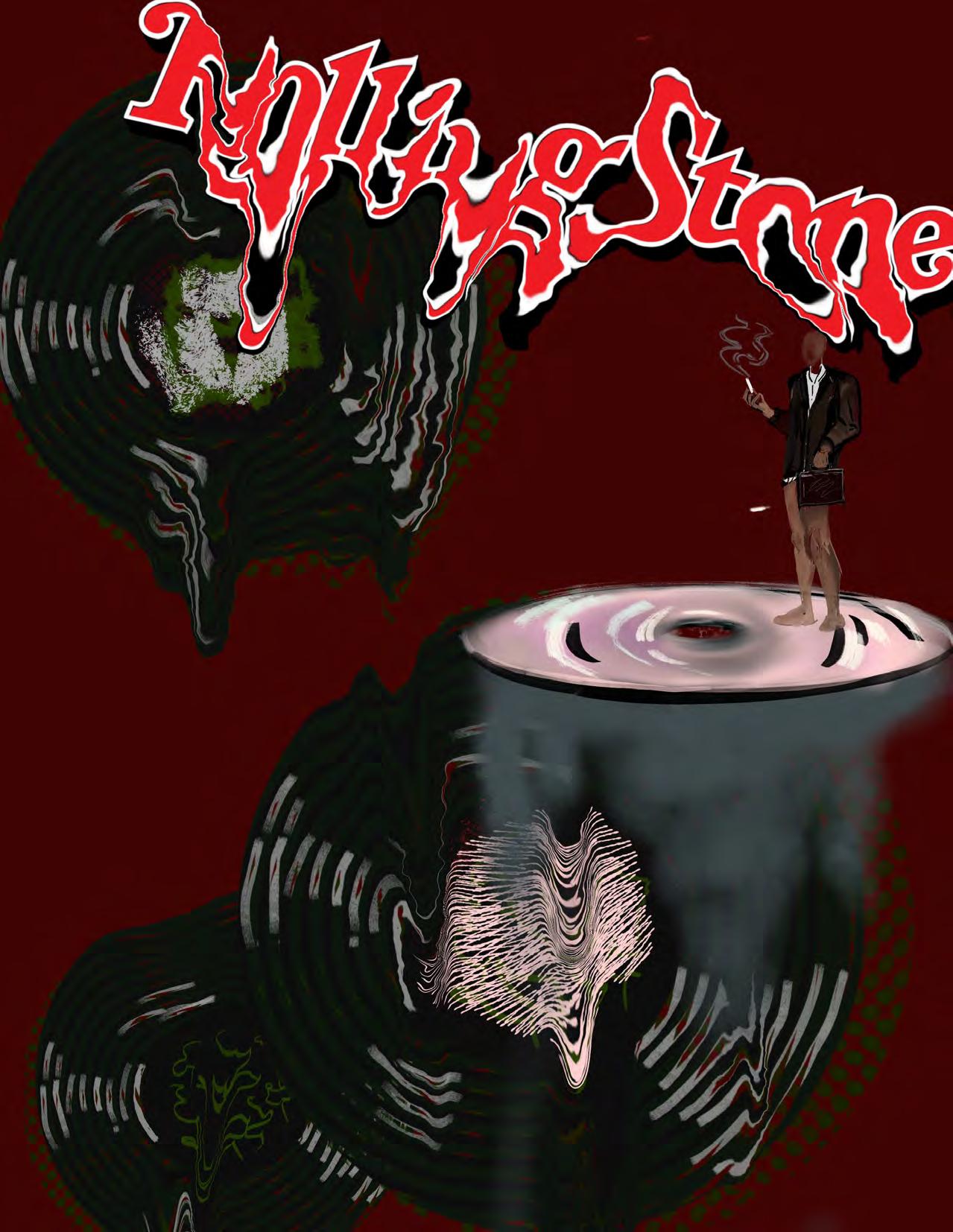
Death of Music Journalism
WRITTEN BY ALYSSA CLARK
As a society, we have lost the art of true music journalism. Big statement, I know, but I stand by it. Now we can sit here and discuss interviewers who are successful and known for their work, but successful doesn’t equal high-quality. As someone who consumes hours of music interviews, music videos, and articles about my favorite artists, I feel fairly confident in my ability to judge music journalism at this time. A notable interview for me is David Bowie’s with Playboy in 1976. While I am not a fan of everything said by the interviewer, I do find Bowie’s responses to the quick-witted questions riveting. The interviewer says, “Let’s go back to disco music. You say it’s a dirge, yet you had the biggest disco hit of last year in ‘Fame’ and you scored again this year with ‘Golden Years.’ How do you explain that?” Bowie responds “I love disco. It’s a lovely escapist’s way out. I quite like it…I’ll do anything until I fail. And when I succeed, I quit, too.” This level of candidness is something I long for in interviews and wish to see more of.
I have noticed that over time, it seems that when musicians are being interviewed—whether it be more professional or laid back— here isn’t much pushback on their work. This isn’t to say every musician needs to have their work critiqued or ridiculed, but shouldn’t we exchange differing opinions on interpretations or learn more about the artist as a person and as musician.
Recently, I watched the Call Her Daddy interview with Chappell Roan. While I am aware that the host, Alex Cooper, isn’t a music journalist, her questions and responses seemed to lack true depth and curiosity. Roan is a figure known for her appreciation of drag culture through her outfits and references, as well as a queer woman who grew up in the Midwest, an area that can be unaccepting at times. This representation in music is important for young adults struggling with their identity. Roan is also consistently in the spotlight for moments like when she called out a paparazzi at the 2024 VMAs who told her to “shut the f**k up”, with her replying, “Don’t. Not me, b***h!” Situations like these, I find interesting to dive into, especially the conversation about the lack of privacy given to artists from the paparazzi. Cooper rather asks more broad questions, which, while they do shed light on Roan’s feelings as someone creating art, they simply need more context and perceptiveness.
At one point, Cooper brings up Roan’s stage name and her given name, Kayleigh, asking, “How do you decide when you have people call you Chappell versus Kayleigh?”A simple, yet overdone question that most fans likely know the answer to. Instead, this could have been an opportunity to better understand the importance of the two identities and what initially made Roan decide on this. There is also a moment that went viral on social media where Roan discusses her struggle to balance her career with other vital parts of life, like being politically aware. This was a time when I was looking for more pushback from
ART BY IZZY MAHER
Cooper, as Roan’s response left viewers feeling upset by her statement since it came off as tone-deaf. It is important to understand not only the art but the artist, something that could’ve been done differently within this interview.
This issue doesn’t rely on just the fact of questions lacking depth; they also often lean toward praising or agreeing with the artist. I find that art is meant to be questioned, interpreted differently, and understood in various ways. I don’t seem to see this in popular media as often as I would like. Zane Lowe is known for his many interviews with musicians and his insightful questions. While I do enjoy his interviews for how curated and tailored they are to understanding the artist and their art, at times, I wonder if it can be slightly harmful if there is no pushback. I am not saying Lowe himself is the issue, but this type of journalism can be the problem when exploring art. I came across this idea when watching his interview with Taylor Swift regarding her new album, The Life of a Showgirl. As a fan of Swift, I was slightly disappointed not to see more productive conversations with her in terms of certain lyrics from the album. For example, in her song “CANCELLED!”, she says, “Good thing I like my friends cancelled (Cancelled) / I like ‘em cloaked in Gucci and in scandal (Yeah)”. Specifically in current times, the song leaves a bad taste in many fans’ mouths, this being a chance for interviewers like Lowe to explore. If we don’t have a balance of critiques and appreciation, how can artists improve their work and grow?
Moving forward, Pitchfork, an online music magazine, has become known for its critical reviews of musicians’ albums. Most recently, Pitchfork reviewed Halsey’s newest album, The Greatest Impersonator. Many fans were left outraged, leaving comments telling the writer to “count their days,” while others found reviews like this important. While I do find that the review was a bit harsh, we must allow critics to do what they do best: criticize. Also, it was claimed that Pitchfork simply doesn’t like Halsey or her work, yet they have rated her previous albums highly. This is where I find issues in the current culture surrounding music journalism: since people find criticism to be an attack on art or character, rather than simply being a review.
There are ways to improve music journalism and get to a point where critiques are welcomed and understood. I believe a new standard could be set for those interviewing musicians as well as improving culture for the artists to recognize this shift. A balance can be created between critiquing a musician’s art and breaking down their work, ensuring that art is respected but reflection is present. Through increased understanding on both sides, it allows for the celebration of art while still producing pushback when necessary. Interviewers can not only have better awareness of the musician and their work, but also know the times where more inquisitive questions are appropriate. YM
THE UNFORTUNATE DEATH OF
BY ELLA MORDARSKI
The graveyard of teen magazines has gained yet another headstone. In early November, publisher Condé Nast announced that Teen Vogue would be folded into Vogue proper, resulting in a nearly 70% reduction of the title’s staff. Current Editorin-Chief Versha Sharma will be leaving the company, and Chloe Malle, Vogue’s new head of editorial content, will now also oversee Teen Vogue. Essentially, this means all Vogue-related content will be housed under the same Vogue.com umbrella moving forward.
In a world where many people pushed aside the ideas of our youth population, framing them as nothing more than hormonal idiocy, Teen Vogue saw them as everyone should: the future. Hardly any teen magazines remain today, and Teen Vogue was one of the last few to be producing consistent, high-quality content that took teens seriously. While it wasn’t the first, Teen Vogue was part of a dynasty of adolescent magazines that helped to shape generations.
In 1944, editor Helen Valentine was working as promotion director for Mademoiselle, a popular women’s fashion and lifestyle magazine, when she was approached by publisher Walter Annenberg with an opportunity. Annenberg was looking for someone to revamp his film magazine Stardom, and was directed by many in the industry that Valentine was the one to do it. However, when they met, Valentine proposed a different title altogether, specially dedicated to teenage girls.
Valentine believed teens were an underrepresented demographic who had just as much, or even more influence, than adults. Teens had allowance money to spend, opinions on politics, relationship troubles, and ambitions for their future. At the time, teenage girls were already actively engaged in magazines like Vogue and Harper’s Bazaar, discovering the magazines by way of their mothers. While these publications did have “junior sections” that focused on fashion for the younger generations, other topics like hosting and motherhood were exclusively for mature readers.
Annenberg agreed to hear the pitch and took a chance on Valentine’s concept. A few months later, Seventeen magazine was born. The first issue began with a letter from Valentine herself titled “SEVENTEEN Says Hello,” where she spoke directly to the audience with a modern vigor and zest that immediately set a clear tone for the magazine. In the letter, Valentine promoted a call to action of sorts, expressing her interest in teen girls’ opinions, whether that be positive or negative, giving a voice to the forgotten age group. “Seventeen is your magazine…it is interested only in you—and in everything that concerns, excites, annoys, pleases or perplexes you…you’re going to have to run the show—so the sooner you start thinking about it, the better,” wrote Valentine.
Within a year of Seventeen’s first issue, it accrued a circulation of almost a million loyal readers and became a marketing empire. Many credit the magazine as the first to highlight the teenage consumer market as a category of its own. In the wake of Seventeen’s monumental success, other publishers began developing teen-centered magazines as well. Entering the 2000s, teen magazines hit their peak. As society advanced, so did the magazine topics, adding segments about sex, reproductive healthcare, and politics fully encapsulating the “modern teen.”
Teen Vogue arrived at the party later than the rest of its competitors.
The first issue was published in early 2003 with Editor-in-Chief Amy Astley at the helm, with guidance from Vogue’s head of editorial content Anna Wintour. Astley’s vision for the magazine revolved around something that Vogue already did best: fashion, beauty, and style, through the lens of a teenage girl. “A lot of other teen magazines are focused on relationships, boys, sex, and embarrassing moments. That is not our equity,” remarked Astley at the time of Teen Vogue’s launch.
The editorial vision of Teen Vogue shifted a bit in 2016, as Elaine Welteroth was named editor-in-chief mere weeks before the presidential election. The shocking poll results provoked outrage and worry from many young people in America, something that Welteroth felt had to be covered by the popular teen magazine. That December, Teen Vogue published an article titled “Donald Trump Is Gaslighting America,” in which author Lauren Duca compares the rhetoric the newly elected president used during this campaign to that of an abusive relationship where one person psychologically manipulates the other into questioning their own sanity.
This unsuspecting article would become the catalyst to a newfound mission at Teen Vogue: “amplifying the voice of young people on the issues they care about the most,” whether that be abortion access or homecoming dress options—the two don’t have to be mutually exclusive. Since then, Teen Vogue has continued to publish smart and insightful articles that cover foremost topics through a youth-centered lens. From in-depth reporting and numerous sharp op-ed articles, to insightful profiles with change-makers like Vivian Jenna Wilson—a feature that “garnered 1.95 million minutes of engagement,” making it one of the magazine’s most popular to date.
As it was announced that Teen Vogue would be folded into Vogue proper, the sheer number of impacted staff and specific editorial changes made by Condé Nast weren’t brought to light until the following day. The magazine had essentially been dismantled for some of its parts. The editor-in-chief was gone. Teen Vogue’s politics section was nonexistent. The art team had been slashed. Layoffs included all but one woman of color and the only trans staffer.
Staff members wanted answers as to why their colleagues were let go, and what the award-winning Teen Vogue publication would become as this business move progressed into next steps. As journalists do, they gathered outside of Condé Nast’s VP of Labor Relations office, asking questions and offering an opportunity to talk. However, they were walked back to their desks and subsequently fired for their actions. Something that the Condé Nast union says “are a flagrant breach of the Just Cause Terms of our contract and an unprecedented violation of their federally protected rights as union members to participate in collective action.”
According to Vogue, the magazine’s new editorial vision will focus on “career development” and “cultural leadership”—whatever that exactly means. However, this most recent loss to teen journalism cuts deep and comes at a time when young people desperately need it. They provided an accessible space for teens to seek out an understanding on topics impacting them the most. You see, Teen Vogue and other publications were never just entertainment, these publications were power.
YM
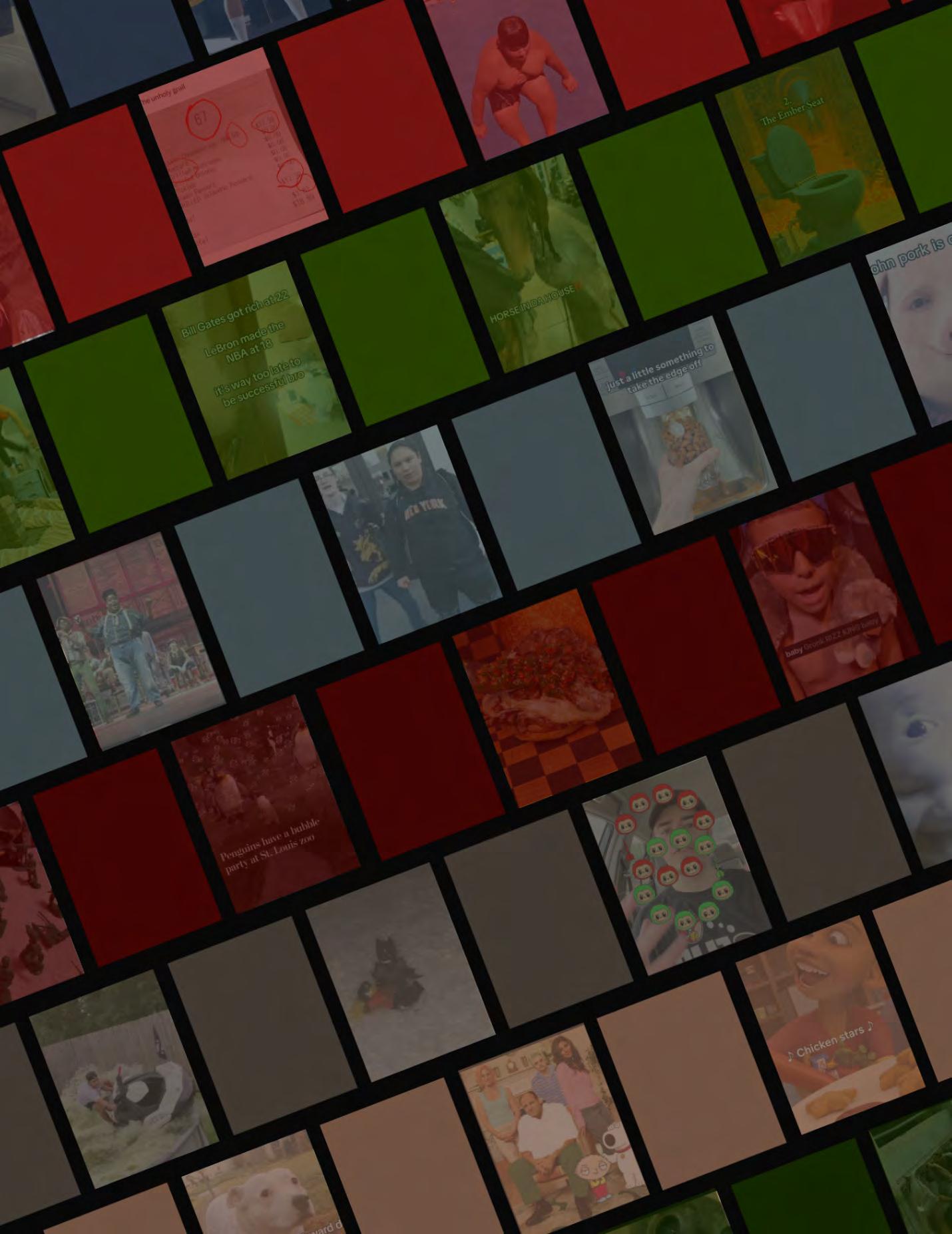
Reeling in my social media addiction
WRITTEN BY ISABELLA CASTELO
Iknew I had a problem when I was convulsing on the bathroom floor, hunched over, holding my stomach in pain.
I had rewatched a video of a chubby kid trying to do a backflip at least 20 times. Something about him flinging himself backwards just killed me, and as I laughed alone, the video looped over and over again next to me, sending me deeper into my fit of laughter. Suddenly, I caught myself, shut off my phone, and sat up. My cat stared at me— judgy.
How long ago did I say I was going to shower? How long have I been lying on this floor?
An hour and a half, that’s how long.
I had no idea. I was entranced by “Orange Cat Core” videos, and car crash scenes, and how to knit colorwork tutorials, and ads for new boots, and recipes for “Italian Penicillin,” and Coraline analysis videos, and—
It’s not that the time flew by or slowed down; it just felt like no time passed at all. I had entered some kind of warped reality that changed every 5-10 seconds based on my interest level. As time went on, my eyes and head started to hurt more, but I was stuck on the tile, as if there was some kind of magnetic field pulling me deeper into the black hole of reels.
I’ve tried everything to squash my short-form social media addiction. I deleted TikTok a year ago to “be more present,” and three days later, I went to Instagram to get my fix. I’ve tried setting screen time limits and even apps that lock social media apps and spoon-feed it to me in five-minute increments. But when my time is up, I find easy ways to bypass my self-inflicted securities, like putting in the password to override the time limits or going to my computer so I can keep my “screen streak” on my phone and not feel bad about myself.
I can feel this very real addiction stripping away who I am. My creativity is at an all-time low. I love to write, but rarely do it when I’m
not forced, and I have fewer and fewer ideas for personal essays and pitches. I grew up an eager learner and now when I see an academic article longer than five pages I roll my eyes.
I miss who I was when I was able to balance my social media use with real hobbies. I resisted the lure of overuse for so long, somehow making it until college with my brain still mostly intact. Now it just feels like mush, a pool of matter waiting to be mopped up by a 10-second clip of an awkward neurodivergent dog.
I know that trying to quit cold turkey or weaning off doesn’t work—I’ve tried it. I am attached to social media as a way to suppress boredom and critical thinking, but also as a way to communicate with my friends and family. One of my biggest reasons for not deleting Instagram is the fear of not being able to send or answer reels. I always used to think that my social media addiction only had an impact on my attention span and ability to be comfortable in silence, but it has infiltrated the way I communicate to the point I believe my relationships would not be as strong without it.
No part of my life is free from the grips of my social media addiction and I need to take steps to reclaim the parts of me I’ve given up to this addiction. I want to start engaging with social media in healthier ways instead of punishing myself for being human or giving up and sinking deep into a hole of screen time. Instead of spending hours on reels, I could allow myself a 20-minute YouTube video essay—I used to love those. Or I could commit to watching more movies and engaging TV series. I can’t say that either of those things work, but acknowledging my issue and its reach seems to be an important start.
I used to have things I loved to do, and I want to love them again. My poison is reels, but if you’ve made it this far I bet you can name yours too. If it’s TikTok, YouTube Shorts, Instagram Reels, or even The Pinterest videos section—it’s all the same, and it’s all taking away a part of us, even if that part is just our time. YM
ART BY LUCY LATORRE
PO SON
PICK YOUR PICK YOUR PO SON
Ultraviolence - Lana Del Rey
Writer In The Dark - Lorde
Harry’s House/Centerpiece - Joni Mitchell
party 4 u - Charli xcx
Track 10 - Charli xcx
obsessed - Olivia Rodrigo
Never Tear Us Apart - INXS
Have A Baby (With Me) - Daniel Caesar
Romeo And Juliet - Indigo Girls
Savior Complex - Phoebe Bridgers
Cool About It - boygenius
Roseblood - Mazzy Star
Vanished - Crystal Castles
Lemon Glow - Beach House
Be My Angel - Mazzy Star
Rosemary - Deftones
Cherry-coloured Funk - Cocteau Twins
Serpentskirt - Cocteau Twins
Dark Beach - Pastel Ghost
w/o u - GEMS
I Wanna Be Your Dog – The Stooges
Cigarettes out the Window - TV Girl
Loving Machine - TV Girl
Char - Crystal Castles
Chevron - BETWEEN FRIENDS
envy - Brothel in Belize
With You – Teather
Dark Red - Steve Lacy
Devil’s Advocate – The Neighbourhood
Tainted Love - Soft Cell
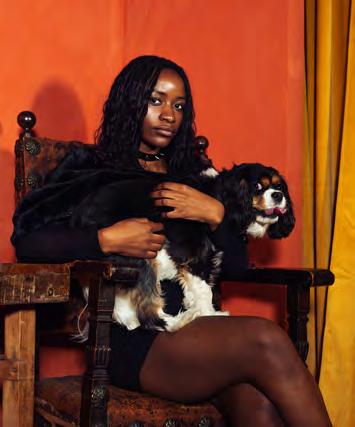
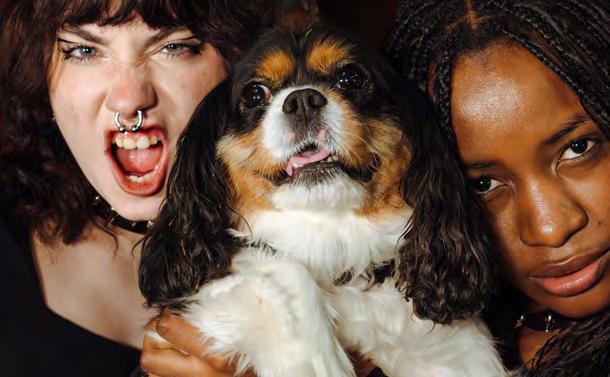
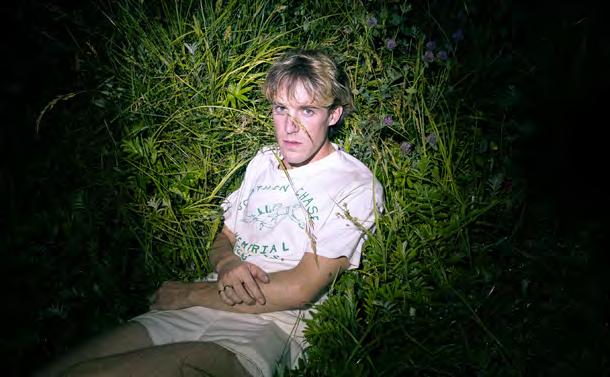
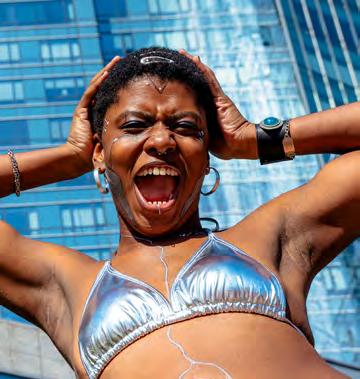
ARTIST STATEMENT LILLI DRESCHER
DESCRIBE YOUR WORK IN ONE SENTENCE.
Through all of my work, I strive to tell a story, so I often describe my photography as narrative.
WHAT IS YOUR HISTORY WITH PHOTOGRAPHY?
I became a photographer when I got cut from the cheer team my junior year of high school. I had been a cheerleader for nine years, and it was all I wanted to do. My goal in life was to become a professional cheerleader. Early into my sophomore year, though, I hit a growth spurt and suddenly lost all of my tumbling ability. Every skill I had spent years perfecting was suddenly gone. For this reason, I was cut from the team, and any sense of direction I had for my future quickly fell apart. With the loss of one passion, though, came the birth of a new one. My sophomore year, I had started working on the school yearbook, and was chosen to be the yearbook’s co-editor for my junior year. I spent all of my newly-acquired free time taking photos, editing, and crafting spreads for the book. I totally fell in love with photography and graphic design. After about two years of taking sports photos, I pivoted to more creative, editorial work: taking self portraits with a $20 tripod and forcing my siblings to model. At this point, I knew that photography was what I wanted to spend the rest of my life doing. I am now in my junior year at Emerson, pursuing a BFA in photography. I continue to work in editorial photography, specializing in portraiture.
WHAT IS YOUR FAVORITE PHOTOGRAPHY MEDIUM?
Recently I’ve fallen in love with medium format photography. I am currently in Betsy Schneider’s Digital Photography class, where we have learned all about color photography: digital and film. Working with the Mamiya 7II camera for that class has been something I’ve thoroughly enjoyed, and I love how tactile the format is.
WHO INSPIRES YOUR WORK?
There are many ways I could answer this question: my family inspires me, the people around me inspire me, and other artists inspire me every day. But there are two people I have to mention when talking about my inspirations.
One of those people is Sasha Phyars-Burgess. She was my photography teacher when I went to an arts camp in Vermont in 2022, and she opened my eyes to a world of portraiture I didn’t know existed. There was a day at camp where she spent seven hours talking about different photographers throughout history, and I remember not being able to look away from her presentation. The way she analyzed photography as an art was so eloquent, and she was able to make so many things just click for me. She taught me that photography has to be personal. Sasha has since been rewarded with a Guggenheim Fellowship for her work.
The second person I must mention is Jonah Hodari. Jonah was someone I met through EM Magazine, and immediately, he made me feel so welcomed at the school. I didn’t feel like an inexperienced freshman in a room full of upperclassmen at EM: I felt like my work mattered, and every semester, Jonah encouraged me to challenge myself to create work the way I wanted to. He always made me feel wanted at EM. It is an honor to even know a photographer as wonderfully talented as him, and his work is absolutely breathtaking. W
WHAT DOES PHOTOGRAPHY MEAN TO YOU?o
u?Photography means EVERYTHING to me! I don’t know another way to describe it. Photography combines life and art, the day-to-day with the extraordinary. When photographed with intention and passion, the most “boring” street corner or blade of grass can be turned into a beautiful, thoughtprovoking frame. Photography allows me to turn my thoughts and emotions into an image I can touch and hold in my hands. Photography makes me feel seen and heard in ways no human could.
CAN YOU DESCRIBE YOUR CREATIVE PROCESS?
When coming up with a photoshoot, I really draw on the emotions I am feeling at the time. I often turn my thoughts into narratives, or stories, to create a photo. If shooting an idea that’s pitched to me, I will find a personal tie to the project: something to attach me emotionally to the work. I find that my work comes out best when I feel tied to it in that way. My next step is to go to Pinterest, or research photographers with different styles and ideas. Finding visual inspiration for my work helps me to envision the piece I am about to create. After these steps is shooting and editing, where I often work closely with a director if I am working on someone else’s concept. My creative process relies a lot on my intuition and the knowledge I have learned about photography: a majority of my work is decisive, thought-out, and curated to present a specific way.
WHAT IS YOUR FAVORITE PROJECT YOU’VE CREATED?
My favorite project out right now is “I AM A CYBORG”, a project I shot for INDEX Magazine in the fall of 2024. However, I have another photoshoot coming out this winter with INDEX that I am beyond excited for the world to see. It includes themes of trans joy, resistance, and liberation, and I feel a deep personal\connection to the piece. It is a concept that I am beyond honored to have worked on!
WHAT ADVICE WOULD YOU GIVE TO NEW AND UPCOMING PHOTOGRAPHERS?
My advice for new photographers is to give yourself grace. Although it sounds cheesy, photography takes practice. It took me a long time until I was actually able to curate a piece and feel proud to call it mine. There have been so many projects in the past that I have shot with the intention of sharing with the world, but have ended up scrapping. It just takes practice. And even today I wouldn’t say I have a distinct “style” in my work—that’s something I’m still working on. But every photo I take tells me I am getting closer to that. One day, I want people to be able to look at one of my photos and know that I took it without looking at credits or a nameplate. That, though, is something that takes practice. Give yourself time and grace as you are learning things about yourself and about photography, because the two are interlinked.
WHERE DO YOU SEE YOURSELF IN 10 YEARS?
I hope to work professionally in editorial photography one day. I would love to work for specific artists or performers to create work that is tailored to their brand. I would also really love to take behind the scenes photos on professional sets one day, as being on film sets is also something I really enjoy. As long as I am taking photos, though, I really feel open to the future. Wherever this art takes me is somewhere I want to be!
WHERE CAN READERS FIND MORE OF YOUR WORK?
I post all of my work on Instagram, @lillitakeslotsofpictures!