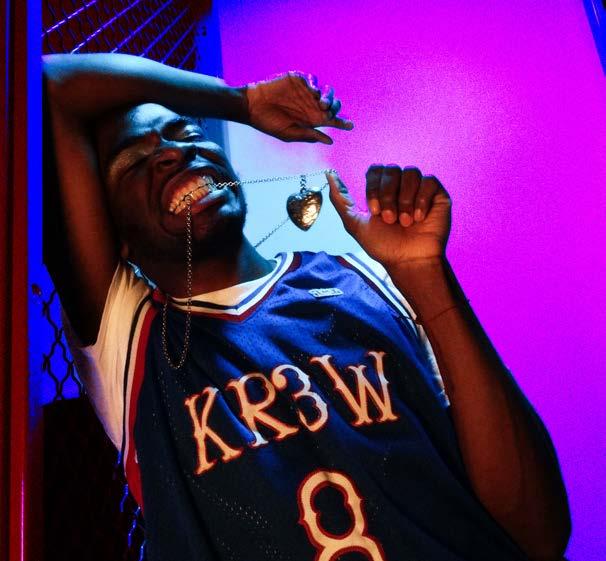
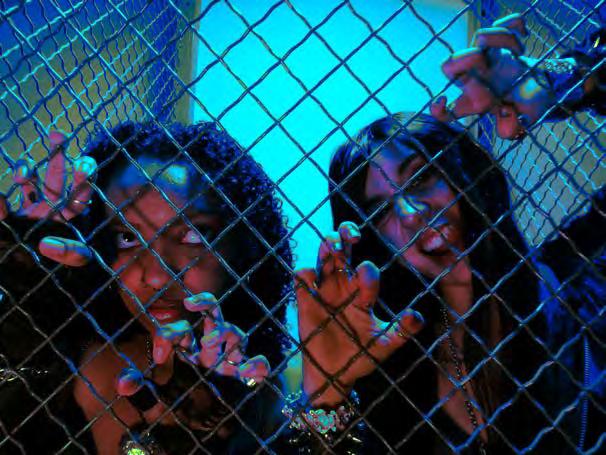
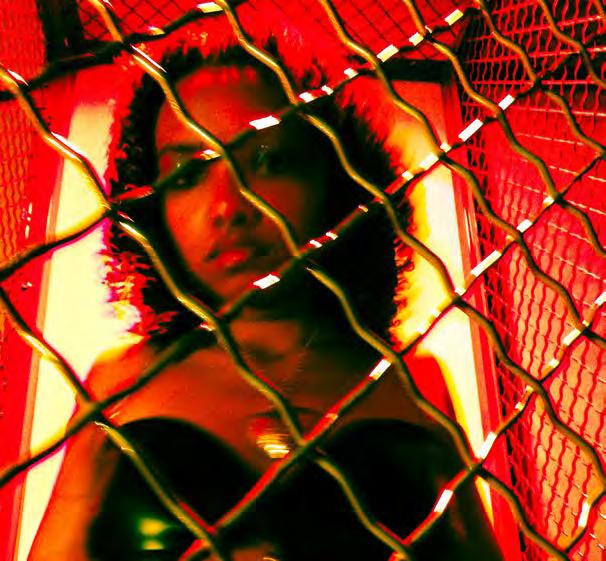
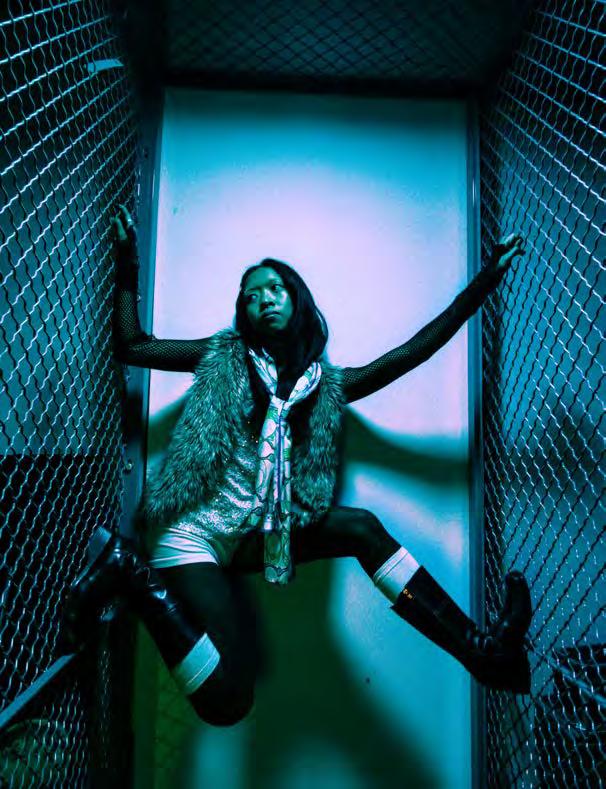
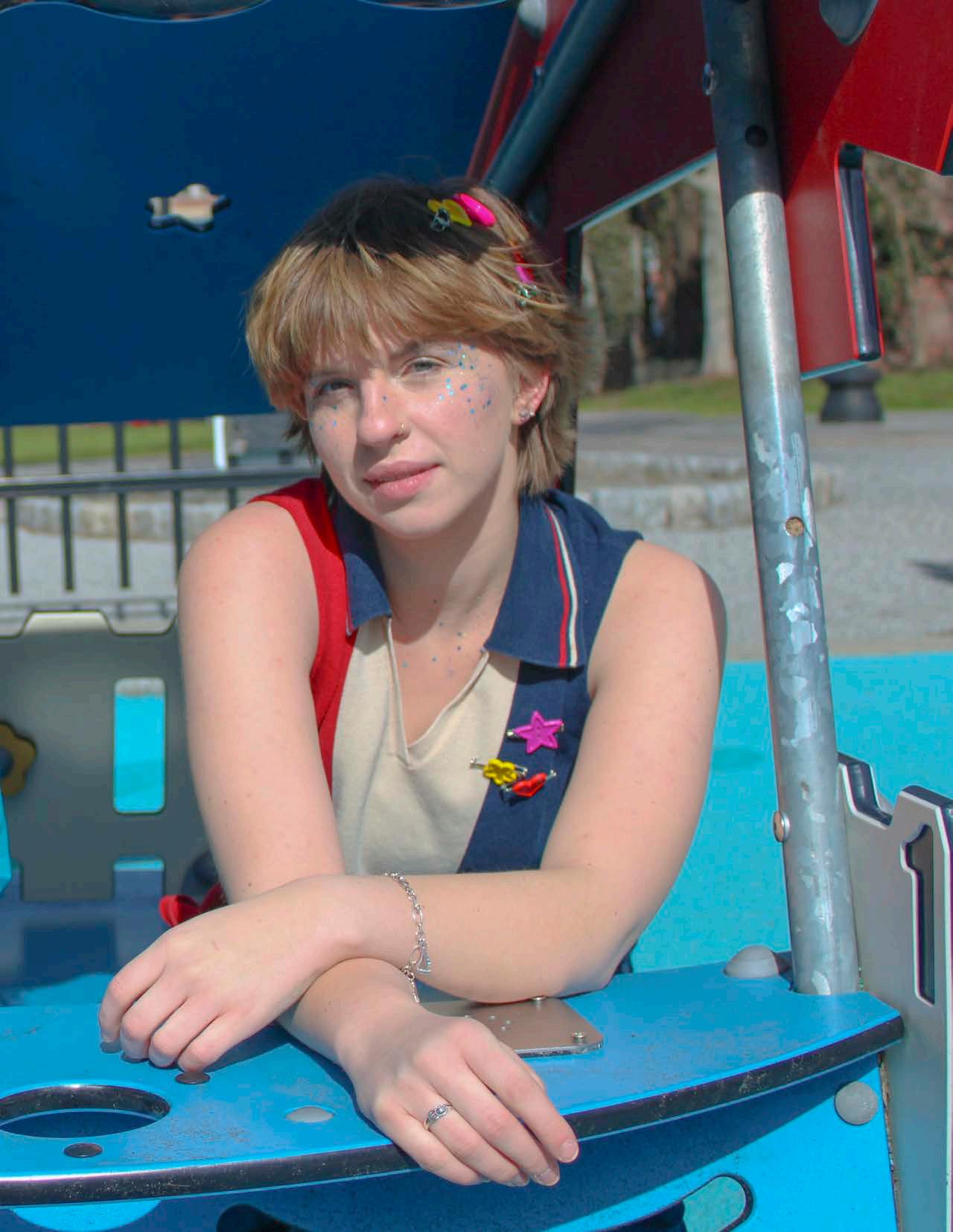
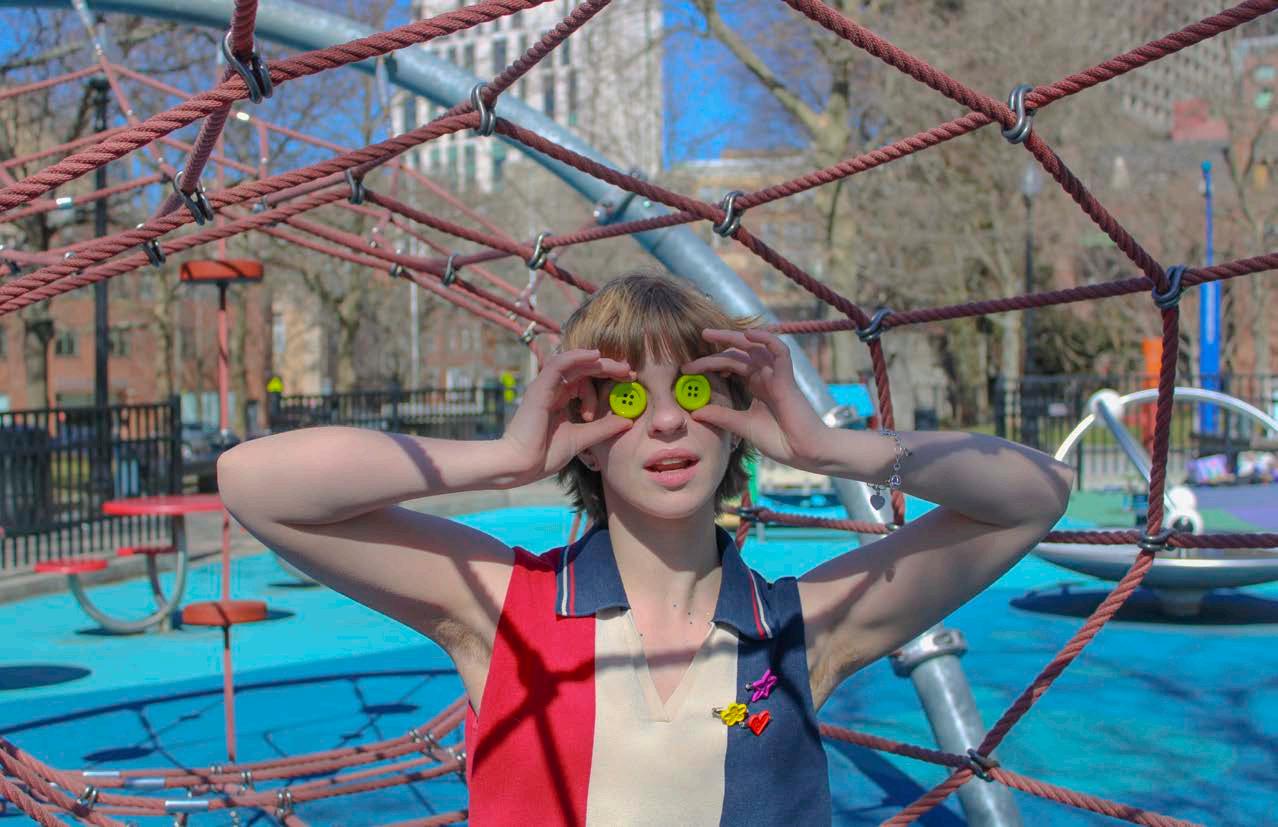
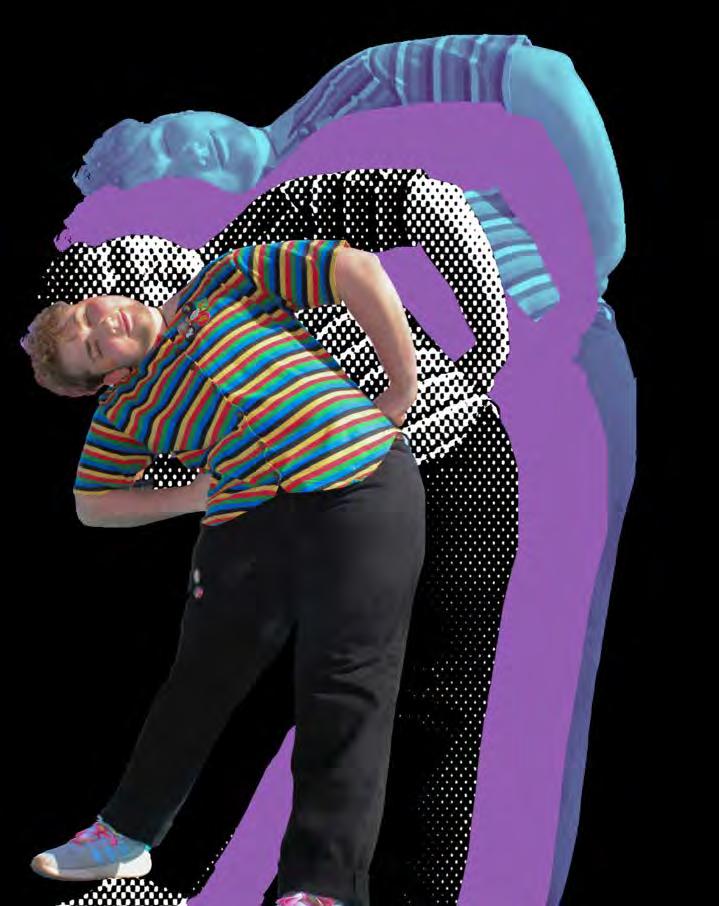
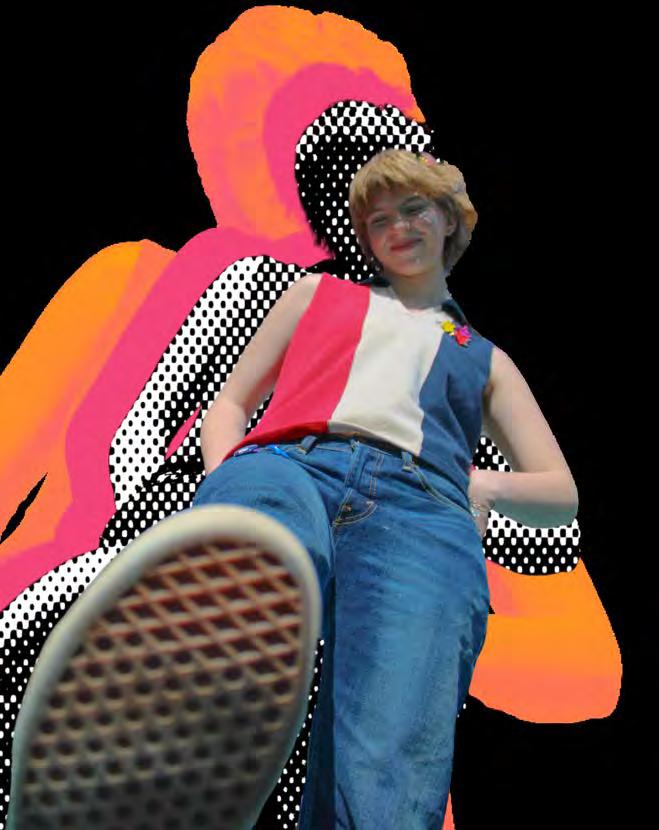
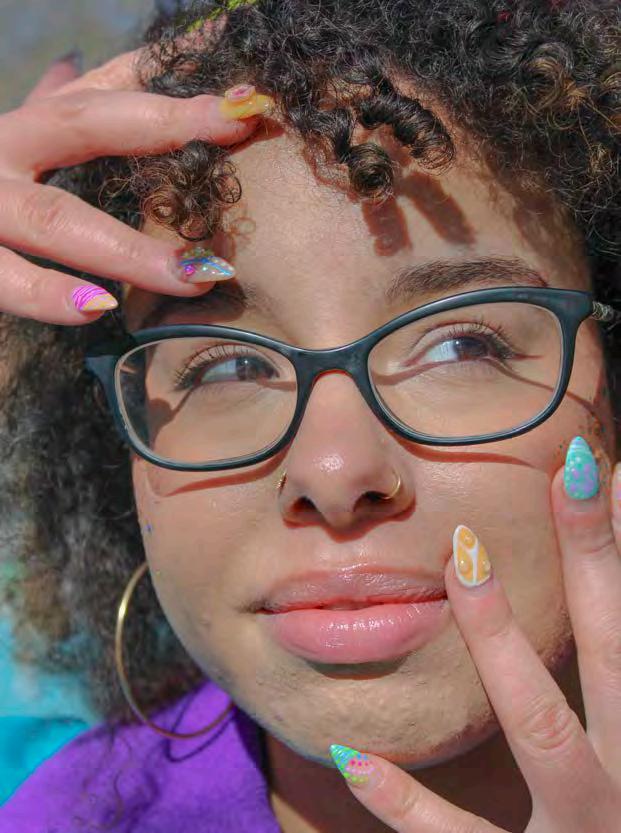
Recognized in Spring 2012, YOURMAG ’s goal is to promote knowledge of the magazine industry by giving students the opportunity to be responsible for all aspects of a monthly lifestyle publication. With an audience of urban college students in mind, members create content across a broad range of topics and mediums, including style, romance, music, pop culture, personal identity, and experiences. YourMag’s overarching aim is to foster a positive, inclusive community of writers, editors, and artists.
volume 23 | issue 2 | april 2025
HAILEY KROLL
Co-Managing Editor
Siena Yocum
Creative Director
Emilie Dumas Photo Director
REBECCA CALVAR Co-Art Director
Sienna Leone Co-Art Director
SOPHIE HARTSTEIN Copy Chief
PAYTON MONTAINA Asst. Copy Chief
Anna chalupa Head Proofreader
VIVIAN NGUYEN Social Media Director
Izzie Claudio Editor-in-Chief
LAUREN MALLETT Co-Head Designer
MOLLY DEHAVEN Co-Head Designer
Emma Bowen Co-Editorial Director
Natália Oprzadek-Vodilková Co-Editorial Director
Mckenna Smith Asst. Editorial Director
ANNA BACAL PETERSON Head Stylist
Emily Hamnett Asst. Head Stylist
Lucy Latorre Co-Web Editor
GRAY GAILEY Co-Web Editor
Lily Brown Co-Managing Editor
SOFÍA ATTAWAY-JIMÉNEZ Community Chair
VARA GIANNAKOPOULOS Romance Editor
Molly Peay Asst. Romance Editor
ELLA MORDARSKI Style Editor
Kat Boskovic Asst. Style Editor
ISABELLA CASTELO Living Editor
Olivia Flanz A&E Editor
SASHA GAYKO YMTV Director
Copy editors: Madison Lucchesi, Anna Chalupa, Kai Etringer, Lauren Mallett
Proofreaders: Natália Oprzadek-Vodilková, Bella Nordman, Ella Posey, Izzie Claudio, Madison Lucchesi
The Gift of Forgiveness From High School Hallways to College Classrooms
Curate it for Me, Daddy
Where are all the Lesbian Bars? Ask YM: Truth or Dare
Fae Run Wild The Fisherman Takeover I would like to thank... Laced in Confidence YourCloset
Floating Between now and Tomorrow IUD and Me the coolest hands around
Letter to the Editor: Please Don’t be Mean
The Way of A Disillusioned Girl YourParents
Rage on
Where's Our Woodstock?
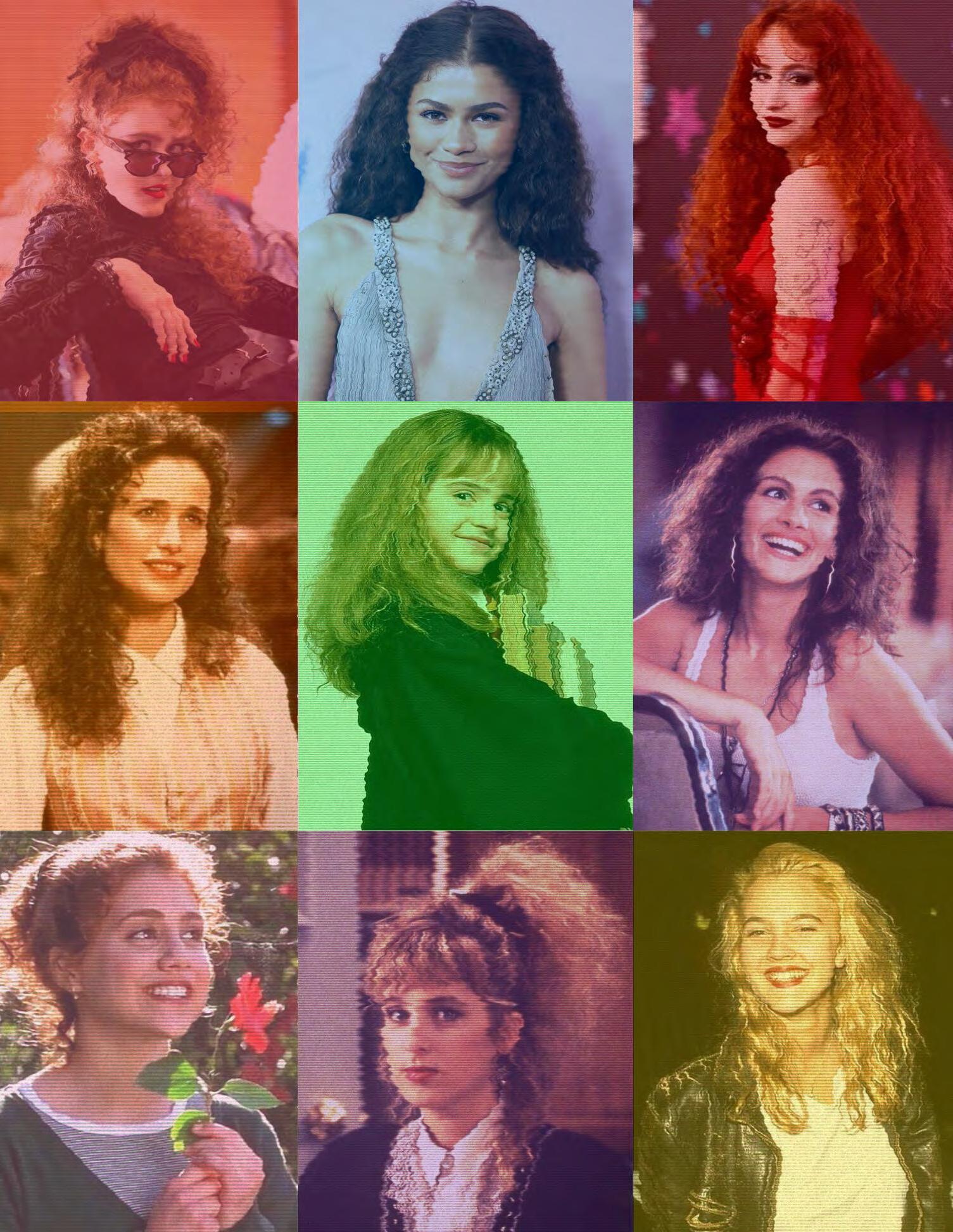
Bigger Can Be Better: Learning to Embrace the Frizz
LettersfromtheEditors
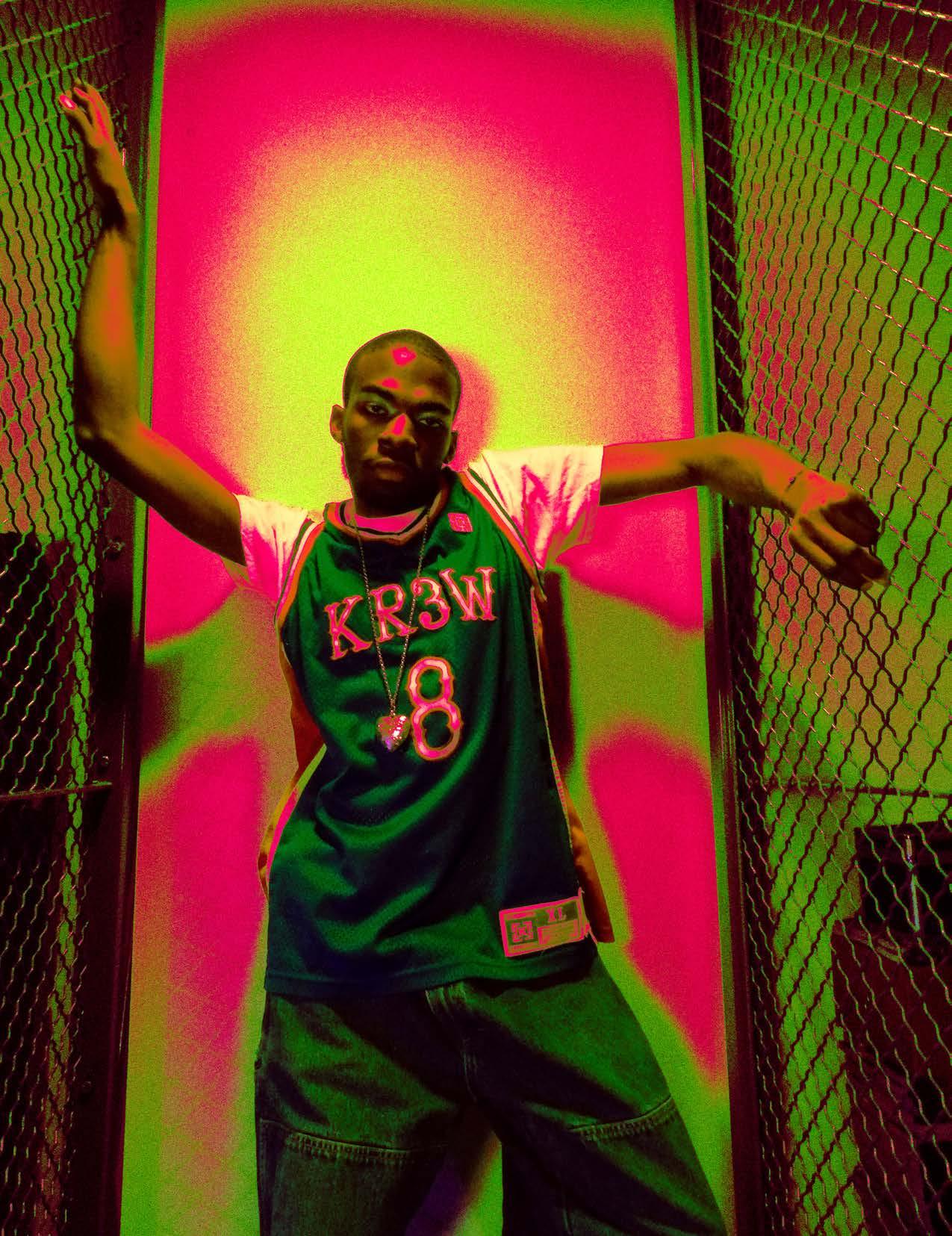
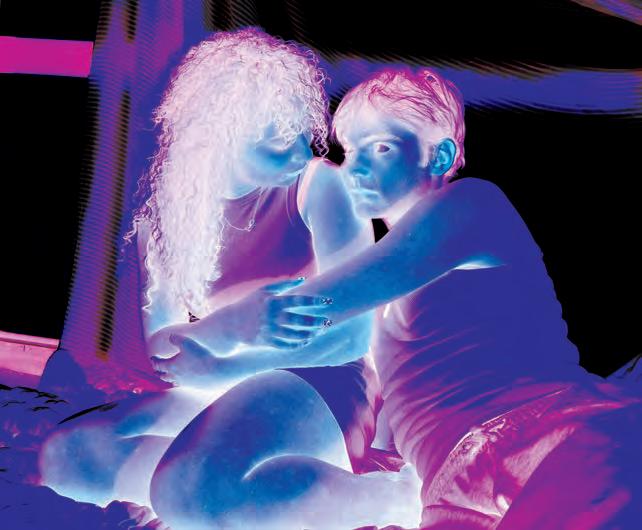
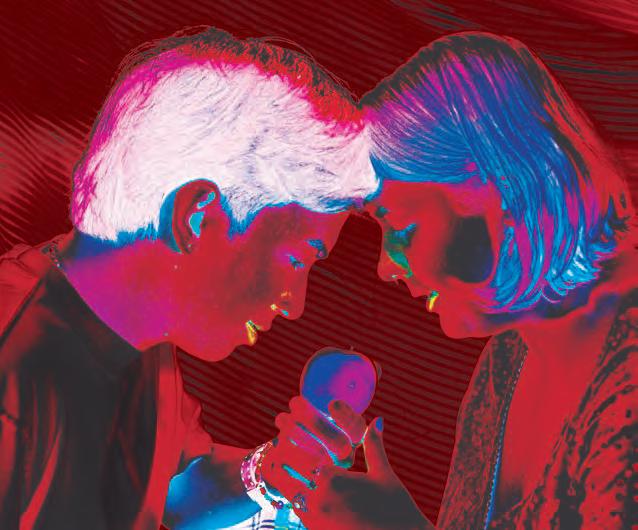
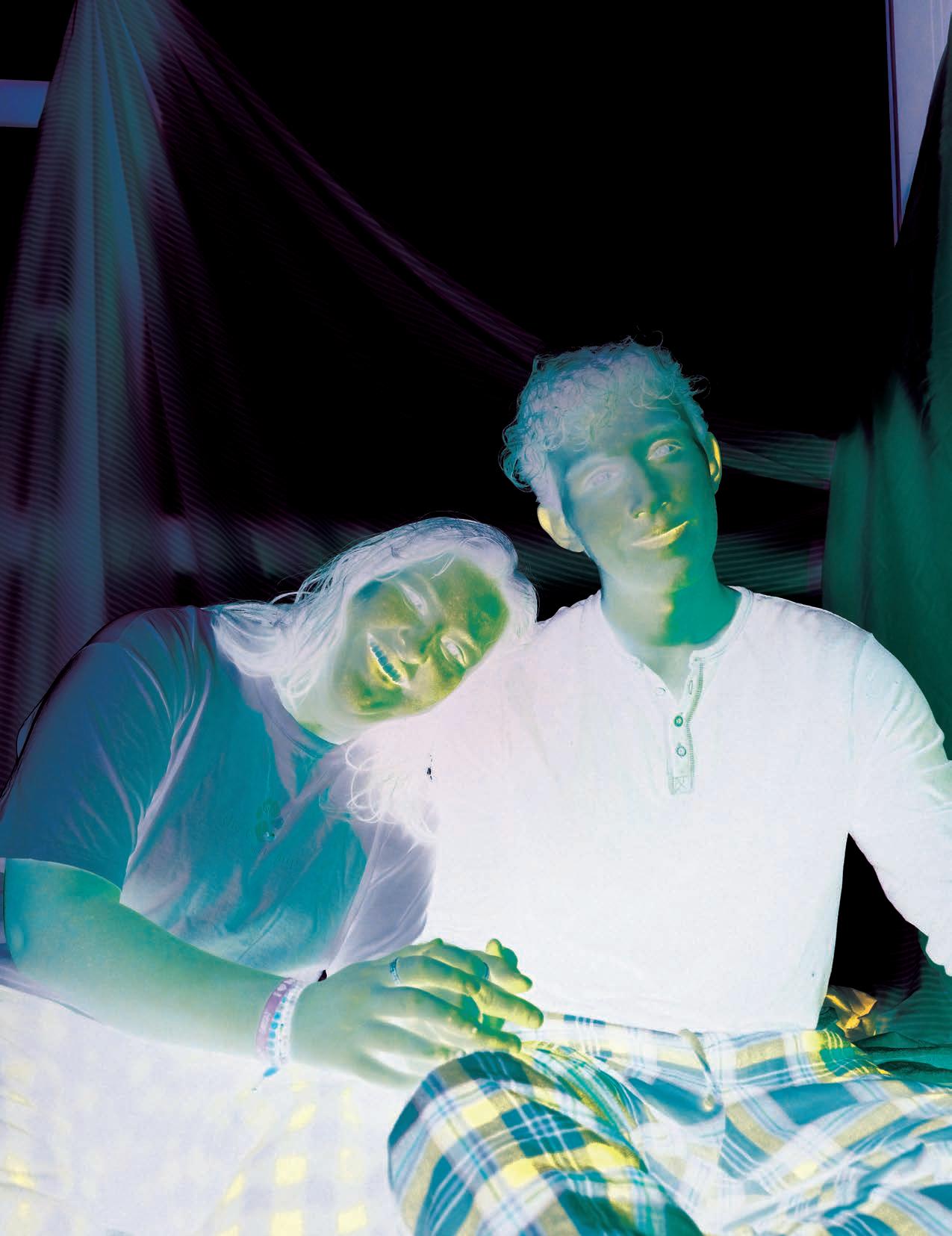
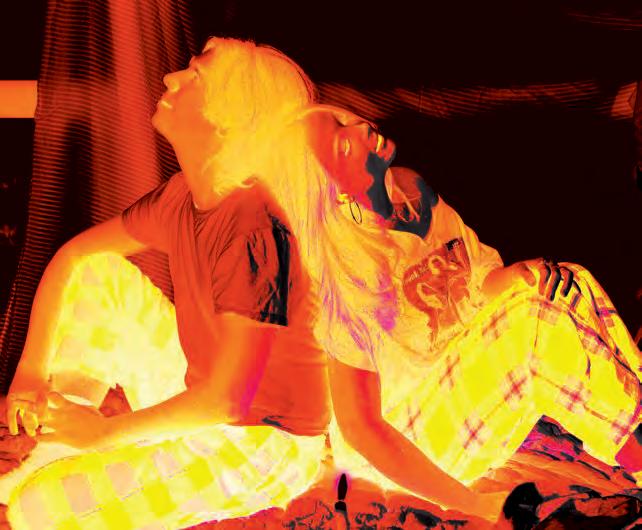
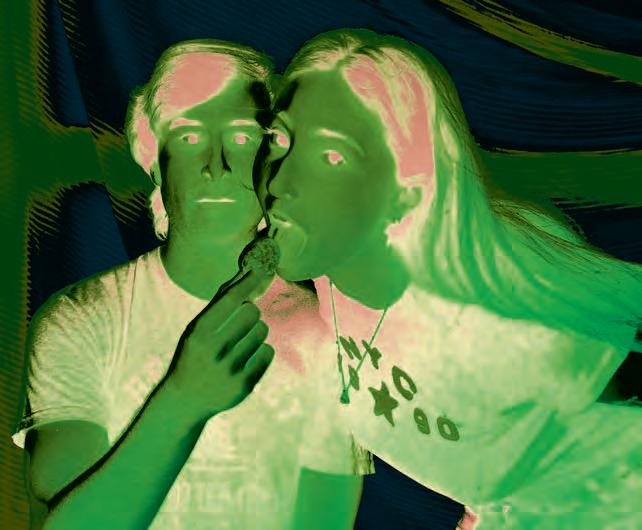
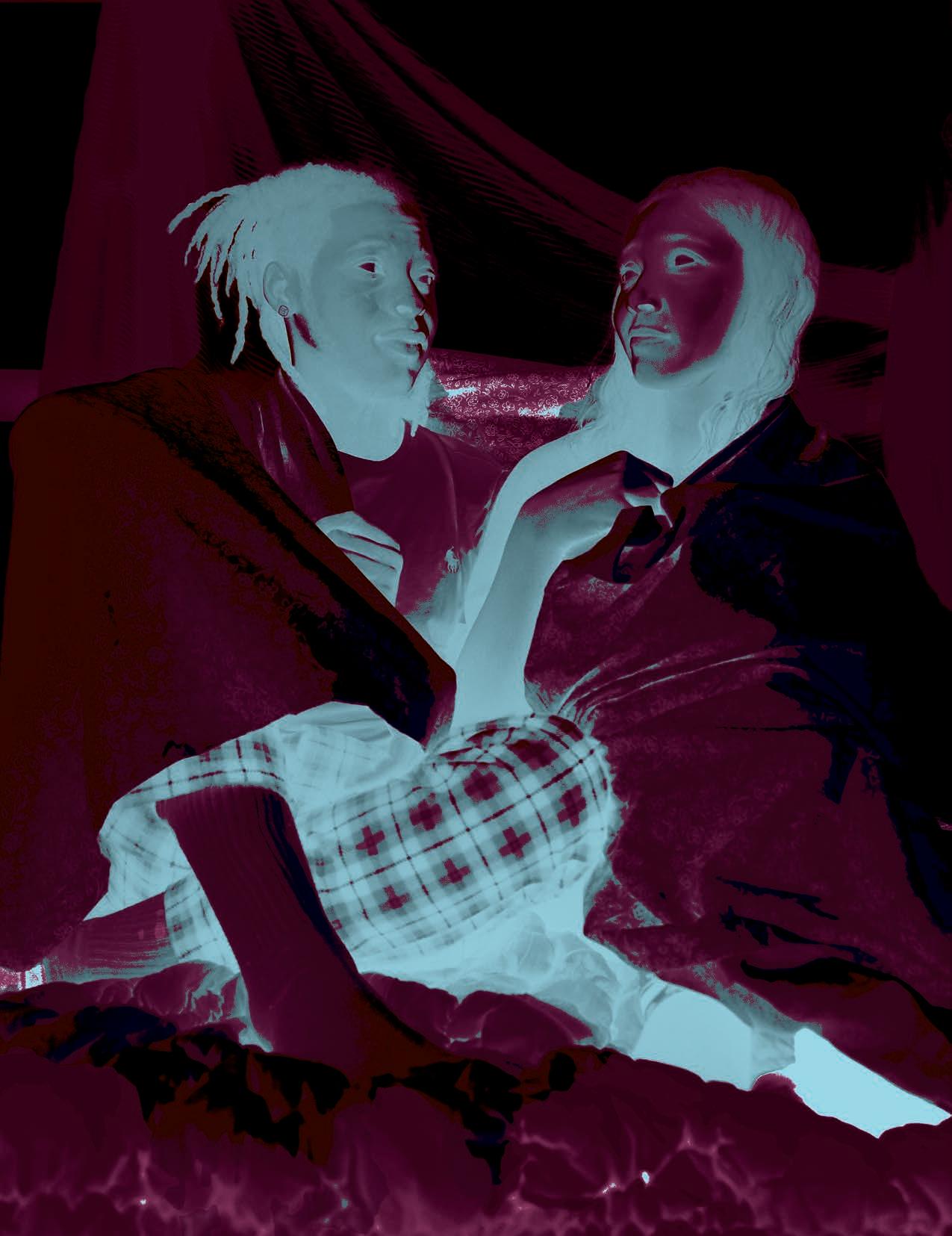
If you know me, you know I love to add a pop of color to everything—my outfits, my bags, my school supplies, and honestly, anywhere I can sneak it in. So, it only feels right to dedicate this entire YourMag issue to that same bold, spunky, and eclectic energy. Think inverted color schemes, neon palettes, and just the right amount of paint splatter—kinda brat, if you ask me. Print has always held a special place in my heart because, let’s be real, who doesn’t love flipping through a glossy, physical copy of their own work? And this edition? She’s that girl. A little chaotic, a little extra, and absolutely impossible to ignore. So here’s to making a statement, standing out, and making your inner art kid proud.
It’s time to bring out the bold! Life is about standing out and speaking your mind, and this spring’s print issue is oozing with passion. We question why there’s a lack of queer spaces, why we feel the need to curate our sexual escapades, why there’s an aesthetic for everything. We celebrate the beautiful freedom of wearing lingerie and letting our frizzy curls live loose. We go on literary journeys and embrace insecurities; we live, we love, we express. With a stellar collection of written pieces and photo spreads that will leave you gagging, this print issue is an unapologetic expression of the most authentic parts of ourselves. Humanity is incredible because it’s colorful, whether with the clothes we wear or the words we share.
Be bold and live loud!!
Love always, Izzie Claudio
Hi, readers!
This month, we’ve tapped into the most creatively vibrant parts of ourselves, calling upon our inner child and challenging one another to find joy through art. It feels symbolic to transition from the sepia tones of March to the bright, rainbow hues we’re conjuring for April. As I prepare to say farewell to the last print issue of YourMagazine that I’ll ever be a part of, I want to remind you that even the smallest seeds you plant, with care and dedication, can blossom into the most beautiful flowers. YM, you have been the most luscious plant in my garden during these twenty-two years of my life.
I am forever grateful to this incredible team. Thank you, thank you, thank you.
With all my love, Hailey Kroll
Best, Lily Brown
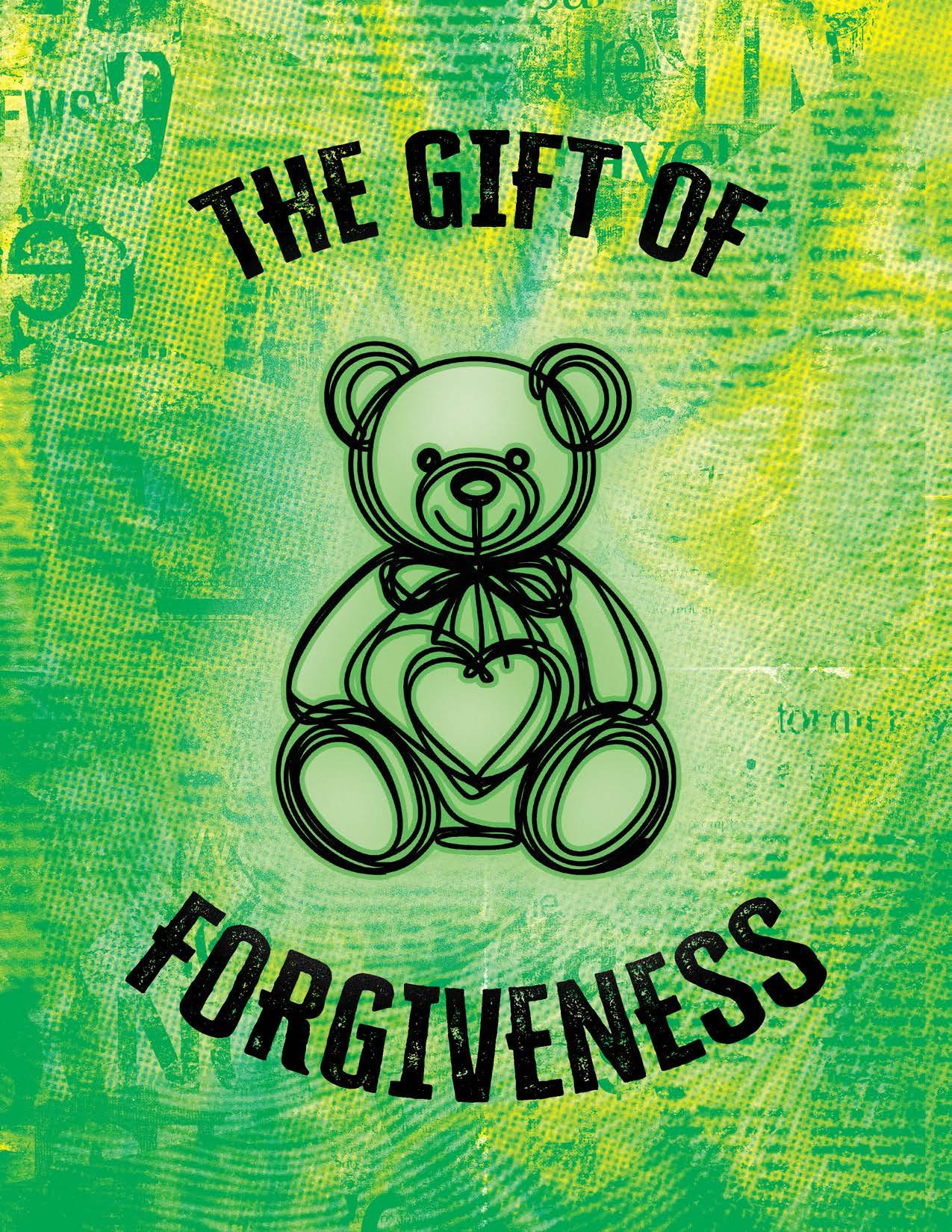
Of all the paths we go down in life, the most difficult is the high road. Someone wise once said, “Your oldest friends are the ones you’ve forgiven the most.” I’ve been mulling it over ever since, wondering how much power people truly have to forgive when human error holds us back.
I yearn to learn the world’s secrets, uncovering every mystery to discover human truths. Whether you’re an optimist or pessimist, most of us have, at some point, pondered the question of soulmates—either self-assured they exist or confidently curious and comfortable with the unknown.
Is there a such thing as a “soulmate,” whether platonically or romantically? A person out there who’s your perfect missing piece, someone you’ll never clash with? Someone to grow in sync with, without disagreement? Or are arguments and butting heads bound to happen, becoming the deciding factors of growth at the hands of forgiveness?
Long-term relationships, whether with your best friend from high school or a romantic partner, require the ability to move forward in a positive direction despite difficulties faced, such as annoying arguments, catty conflicts, or dragging disagreements that boil your blood. Forgiveness, though at times challenging, is essential for maintaining healthy and flourishing relationships to continue growing.
While most of us would like to live in a world where we never argue with our best friend, butt heads with a parent, or quarrel with a sibling, the hard truth is: life isn’t that easy. Confronting unresolved issues is an unavoidable and healthy part of life; it allows one the opportunity to smooth ruffled feathers before it’s too late. Without an acknowledgment of problems or contentions, relationships are left to fester in unsaid qualms and secret resentments that open the gates to bitterness and distance.
The gift of forgiveness—whether forgiving a friend, yourself, or the world for its flaws—is the most powerful tool anyone can possess. Forgiveness allows us to move past hurt,
Talking through issues within a relationship lets us move past them, rebuild trust, and ultimately create a stronger bond due to the release of negativity or stubborn grudges that would otherwise hinder a relationship’s healthy progression. Forgiveness is infinitely valuable due to the opportunity it gives us to move forward in a partnership by understanding human error.
Ups and downs are inevitable. In relationships, being disappointed or hurt by the other person is often unavoidable. That’s the truth of what it means to be human: We’re often hurt the most by those we love. We must decide what makes someone worth forgiving; forgiveness is not equivalent to overlooking the hurtful actions of others. Instead, it is recognizing that oftentimes the errors people make are unintentional. Forgiveness must be approached with compassion and a willingness to understand a perspective different from yours. It is the choice to grow with someone or without them.
Outgrowing relationships is also an inevitable part of life, because we are constantly growing. Constant growth means constant change, and with that comes the never-ending process of learning who we are, as well as those around us. Our constant evolution means it is normal to disagree with the people we love because it impacts how we interact, communicate, and connect.
Although we would like to prevent conflicts, fights, and awkward breakups, our only power is how we respond and react to each other. No one is perfect. Making mistakes is part of the human experience; we have the power to forgive those we love by understanding this. Seeking to confront and discuss unresolved relationship issues allows us to move forward, ultimately forging long-lasting bonds that strengthen over time.
Just like you, everyone you see, know, and love is also experiencing life for the first time. Remember graciousness in times of dispute. Forgiveness is the gift that keeps on giving: An act of kindness that can bring peace to both the forgiver and the forgiven. Releasing anger, spite, and resentment might just be the most rewarding thing you’ll do.
FROM HIGH SCHOOL HALLWAYS TO COLLEGE CLASSROOMS
WRITTEN BY VICTORIA HOFFMANN
Our relationship started when we were seventeen and eighteen, graduating high school. Now we are turning twenty-two and twenty-three, graduating college. One can only imagine the changes we’ve experienced in arguably some of our most formative years.
I met my boyfriend four years ago thanks to my best friend Connor. He kept saying, “You two are like the same person,” building up our crushes until we finally met at his house before a party. Of course, Connor blew it by suggesting he should ask out another girl. I even awkwardly offered to wingman.
At the party, I nudged my soon-to-be boyfriend towards this girl, but I didn’t see him again until I was about to leave. After a few hours, we bumped into each other. Seeing him alone, I asked about the girl, and to my surprise it hadn’t worked out.
“Yeah, she wasn’t interested, and neither was I. I am kind of interested in someone else anyway,” he said. My ears perked up, and I gave a small smile as he continued, “Why are you leaving so soon?”
“The party is pretty lame. Lexi and I are leaving in about 15 minutes,” I replied. I remember feeling butterflies and a familiar heat rushing to my face.
When talking about how we met months down the line, he said that seeing me blush gave him the cue to say the one sentence that started our relationship: “Can I make those 15 minutes worthwhile?”
He grabbed my hand and walked me to the kitchen, then to the couch, where we’d stay all night talking about the movie 50 First Dates, soccer, family, and how it was a crime we had never spoken before that night.
Just weeks before we threw our high school graduation caps into the air, we started dating. We had little to no idea where our relationship would go, only that we liked each other and had three months to enjoy it. However, June quickly turned to July, and July to August. Before I knew it, we were sitting in our hometown park, faced with the fact that we would be long-distance in a matter of days. Neither of us planned to go to college in a relationship.
Inevitably, we liked each other too much, so we agreed to do it. A week later, I packed my mom’s car and headed to Millersville University in Lancaster, PA, and my boyfriend packed his dad’s truck and shipped to Boston. Then ensued late-night Facetime calls, more hard conversations, debating our decision, and a few sprinkled visits. While a laid-back relationship with few expectations sounds easy, it’s anything but. We were a new couple, seven hours apart, navigating college life just three months in. Balancing our new schools, friends, and classes while maintaining our relationship was challenging.
We frequently checked in on how our relationship fit into our lives. Some days were great, filled with hours on FaceTime, while others brought homesickness, doubt, and missing each other nearly
ART BY REBECCA CALVAR
too much. Our honesty was key to getting through this chapter; even when I felt scared, I learned to communicate my feelings. Open communication and honesty (especially when it sucked) built the foundation for our relationship.
Our long-distance journey ended shortly after one semester. My old university dropped my majors within two weeks, leaving me scrambling in front of the Common App. I always dreamed of living in Boston, independent of where I went to college. However, I was left defending my decision; I pleaded to my boyfriend and family that I was not moving for him. For others, it’s okay to move for your partner, just personally not after five months. This was when I started to learn to listen to myself. When it came to something I knew I wanted, I needed to block out the noise. I committed to Emerson in November of 2021.
My first semester in Boston was everything. It completely transformed me and our relationship. I cherished every moment. We got lost in our new city, met new friends, and embraced new experiences. When it came to our relationship, Boston felt like a playground for two kids from a small town. Our sophomore year followed a similar pattern. We tried to see each other every day, but it became clear that our lives were becoming too intertwined.
As all things do, our relationship changed—our junior year was that turning point. I felt stuck in old patterns while my boyfriend was eager to make new friends and bond with his roommates. I was also living alone for the first time, and it forced me to confront my independence; I realized I wasn’t as self-sufficient as I thought. After lots of conversations, starting therapy, and journaling, I knew I needed to reconnect with myself. There is a good balance between being on your own, being with your partner, and spending time with friends.
My boyfriend didn’t end up getting his internship in Boston that spring, and we ended up long-distance again. It was sad, but I used that time to focus on myself. I strengthened my bonds with friends and became comfortable in my own company. I began doing things solo: walks, coffee dates, parties, and even dining out alone. It was empowering to be my own friend.
Our second round of long-distance was easier because we were both growing individually while maintaining our connection. Long-term relationships allow you to witness each other’s growth, highlighting the importance of developing your life alongside your partner’s. It’s true: you need your own life to share a life, the two don’t always overlap.
As I write this, we’re both getting ready for an apartment tour in Boston. The excitement is overwhelming! This is where we’ve decided to start our life together. I feel incredibly lucky. Every lesson and hard conversation proved to be worth it, and our journey together has been nothing short of amazing. From high school hand-holding to sharing mornings before work, we have truly grown up together. YM
Curate It For Me,Daddy
WRITTEN BY GAVIN MILLER
The seemingly straightforward title of “songs i wanna get fucked to” is more layered than one may expect. Trinna, the playlist’s creator, says in the description that the playlist has a “‘please be gentle when you’re ripping me apart’ kinda vibe.” At 13 hours and 34 minutes, the playlist’s bold length challenges the selectivity of its creator. However, I trust Trinna’s judgment on every pick; each one feels delicately curated.
What is strange isn’t the playlist itself, but the sheer amount of followers it has garnered. Spotify is not an app often defined by followers and playlist saves, but Trinna’s playlist has amassed 141,615 saves.
Though, “songs i wanna get fucked to” is far from the only playlist to garner mass success in the realm of public, curated sex playlists. There’s the popular (but rather plain) “Bedroom Playlist 2025 ��,” the sensual “Dirty Bedroom Songs,” and Spotify’s very own steamy playlist “Silk Sheets.” At the time of writing, “Silk Sheets” has 2,415,108 saves. With only 100 songs, Spotify’s playlist appears brief when compared to Trinna’s broad musical explorations.
This all may sound like a needless exploration into something benign. After all, sex is personal, and if one doesn’t let someone else directly curate their music, won’t curated algorithms remain? If someone wants to shuffle their own playlists, algorithms work to sustain the listeners’ previously established tastes, while reasserting tunes matching playlist titles (Wong). Even if “songs i wanna get fucked to” is shuffled, 141,615 listeners may be indulging in sex curated not just by Trinna, but by Spotify.
The solution to corporations’ creeping dictatorship into the bedroom is seeing sex, romance, and life, as play. Play theory posits that play—an action unfolding “spontaneously (but not randomly)”— is pleasurable because anticipation is disrupted by a surprise discovery within the act (Eberle 229-230, Markowitz). Play theorists’ term for the ambiguous goal of any activity in play—“peak performance”— isn’t known, nor imagined (223). Peak performance is continuously discovered, leading to endless angles to approach the potential pleasures of play. Though, these different angles do not necessitate that sex must shock, nor be completely random. What they instead point toward is a startling reality: That curation, the fantasy of sex resigned to a saved, premade playlist, has become an overbearing leash for normalizing consumerism in intimate corners of one’s world. The corporate drive for users to share sex playlists stands as another clear marker of overcuration in private circles of play.
If play must begin with a “purposeless” act—something done for the sole purpose of doing it, that doesn’t mean a romantic gesture or shared romantic activity can’t have a direct recipient (Eberle 215). Instead, it directs that, for personal pleasure’s sake, the goal of any gesture should be the act in and of itself. There should be no expected outcome. By overplanning, curating, and crafting one’s gestures, an expected outcome is generated, which limits the initial pleasure of surprise when the action is eventually taken. If I want to give someone flowers, I go, get flowers, and think of my loved one as I perform the journey. However, going to get flowers because I believe giving flowers is the expectation of a boyfriend, limits both me and my girlfriend’s pleasure upon receiving the flowers. My expectation of her reaction—
PHOTOGRAPHED BY
OLIVIA FLANZ
built through consuming online content of many women receiving gifts—disrupts the “thread of delight” when performing the action itself (231).
When one has sex to a premade sex playlist, the pleasure of the fantasized sex when creating the playlist limits future discovery. This limitation happens for the same reason mass pornography consumption alters sex: The pleasurable anticipation of later sex interrupt the potential for spontaneous playfulness during the act. No one is really there. Instead, two fantasized objects are reflecting their past desires in one another to a soundtrack created with the present moment in mind.
The sex one could have, the romance one deserves, the relationships one should pursue; each can be found online, curated for consumers. Though, what the online consumer innocently observes is not true; it is a fantasy that can never be actualized. The consumer is always set up to be let down, because online surfing, while playful, is simulated. Real play includes a crucial act of “discovery,” arising from the aforementioned “continuous thread of delight during play” (231). The unnecessary boundaries—advertising, capital, data retention, reliability—of a masstested algorithm limit discovery. Both the sex playlist and the landfill of online content, created to manufacture sensuality when necessary, numb the potential for genuine surprise.
The machine expands beyond sex and romance. The curated sex playlist, the curated feed, the curated work life, the curated book recommendation, the curated home design: These all allow other sources (algorithms, content creators, etc.) to pick rules for one so that they may be continuously surprised by the fantasy of their potential performance. It never comes. Once the action is taken, one is obedient to the imagined result, not their whims.
There are levels to the sway of corporations one allows in their life. It peaks with a brand-sponsored sex playlist. A less curated (but curated nonetheless) option would be to create one’s own playlist. Still, those streams are being used to recommend similar songs to your account, and build other’s sex playlists through recommendations (Wong). One’s own sex playlist is an amalgamation of Spotify’s perceived perfect sex playlist, based on countless prior examples. True spontaneity in romance becomes a seemingly impossible feat under digitized dictators.
But there are steps to take against their reign. One always has the potential to limit the content they consume and interact with. In limiting curation and expectations while experimenting when possible, the world ground for play (and pleasure) multiplies.
No one’s lifestyle should be dictated; everyone should be reminded of how free they can be. One never knows the limits of pleasure until they surpass it, and that passage is achieved through the most pleasurable possible form of spontaneity: play.
You log on to your curated feed where Instagram suggests the New York Times for your center-left American viewpoint, but you like it because their yearly book recommendations strike your fancy, especially the curated list by the fifth author, whose taste is selected by the Times for its mass appeal, and so you save the post containing the article in one of your many Instagram lists that you never return to, all the while imagining the sex you’ll have with your lover tonight—the sex that matches all the content that you watch—to the beautiful tune of “songs i want to get fucked to.” Finally, maximum pleasure. YM
where are lesbian bars? all the
WRITTEN BY OLIVIA FLANZ
Itruly didn’t know what to expect going to a queer bar for the first time. In my head, I looked forward to not having to play the “Are they into women?” game—having to analyze a person’s outfit, hair, body language, or seeing if they would make eye contact with me from across the room, before approaching that someone I’m interested in.
While I was abroad last semester, I was more than excited to discover Vela when I was in Copenhagen—the last remaining lesbian bar in the city. When I walked in, I was surprised to find a fair amount of people at the bar were men. At that moment, I decided to give the men in the bar the benefit of the doubt, as they could be friends with someone here, or possibly queer themselves. As I grabbed a drink and sat down at one of the high top tables, it didn’t take long, nor the need to know any Danish to get the vibe that neither of those things applied to these men. While I still had a fun night, on my walk home I couldn’t get out of my head the irony that sapphic women did not make up the majority of people at a lesbian bar.
PHOTOGRAPHED BY OLIVIA FLANZ
main concern is that when I am finally 21, the queer spaces in Boston’s nightlife will be the same as abroad. For the sake of this article, I tried to find a number of LGBTQ+ spaces in Boston, ending in me resorting to the help of Reddit and reading what one user wrote: “It’s not that Boston is straight, it’s that our [queer] social scene sucks overall.” So, I still have no clue how many spaces exist but we’re definitely not working with a lot.
Of course, Boston is not solely to blame, as this is a nationwide issue as well. When it comes to lesbian bars and clubs, less than 40 exist throughout the United States, compared to the 200 bars and clubs that existed in the 1980s. So where did they go? Why did they close?
There isn’t one answer. The process of gentrification of neighborhoods has priced out local queer bars in the past years. In 2012, dating apps became mainstream, making it possible to meet other queer people outside specified bars and clubs. Then, the world went into a pandemic, causing hundreds of these bars and clubs to close. By the end of the pandemic, ⅓ of them were forced to close for good.
Copenhagen wasn’t my only experience being disappointed trying to find queer nightlife in Europe. In Amsterdam, a group of us headed to Club Nyx, described as an open-minded queer club that welcomes everyone. Unfortunately “everyone” included 40-year-old men coming up to you and staring. This didn’t deter me or my friends as we danced the night away, but as I reflect on that night I wished girls, queer and straight, didn’t have to avoid looking even slightly in the direction of some old guy to evade being approached (Like please, take a hint).
Being 20 and back in America, as we all know, nightlife in general has been severely restricted. (But thank god I am still able to be drafted into the army, get married, and own a gun.) My
Hope is not lost, though. In fact, many have said we are slowly but surely entering a “lesbian bar renaissance.” In 2020, the Lesbian Bar Project was launched by filmmakers Elina Street and Erica Rose, in order to preserve the remaining lesbian bars in the United States. The project fundraised, created a documentary, and made a database to raise awareness of these spaces. There are signs that the tide is turning in. Even if the numbers are low for queer nightlife in Boston, last year the city gained its first lesbian bar in decades: Dani’s Queer Bar. While I still have a bit before I can actually experience American queer nightlife, I have faith that these spaces are going in the right direction.YM
ASK YM: Truth or Dare
Truth or dare questions to ask in your relationship, curated by our Romance Editor and Assistant Romance Editor.
NOTE FROM THE EDITORS:
With Spring upon us, the Earth offers us an opportunity to appreciate the beauty all around us and even start new adventures, including in our relationships—romantic or otherwise. The age-old game of Truth or Dare offers us a fun outlet in which to reflect, grow, and heal. In asking our partners and crushes these questions, we can foster more intimate connections.
Remember, the more we stay curious, the more our relationships can grow.
With love, Vara Giannakopoulos and Molly Peay
PHOTOGRAPHED BY LAUREN MALLETT
Truths Dares
What is your favorite memory of us? Use your cheesiest pickup line on me.
What is your go-to song that reminds you of us?
What is our love story in three words?
What is a fantasy you have that you’ve never told me?
What movie scene would you want us to recreate?
What characters would you want us to role-play?
What irrational fear do you have (about our relationship) that you’ve never told me?
Read a paragraph of a Wattpad romance in your *sexiest* voice.
Serenade me with a song that reminds you of me.
Recreate our first kiss exactly as you remember it.
Slow dance with me to our favorite song.
Write a poem about me in 5 minutes and read it aloud.
Blindfold yourself and try to guess what part of my body you are touching.
FAE RU
PHOTOGRAPHED BY JOHN
BY
BY
BY
DIRECTED BY ABIGAIL TANGONAN AND JOHN NICKOLAUS
NICKOLAUS
STYLED
ABIGAIL TANGONAN AND JOHN NICKOLAUS
MAKEUP
JOHN NICKOLAUS AND SKYLAR D’AMORE
MODELED
GRACIE ROSENBERG, JAZMYN MASON, AND MICK CASEY
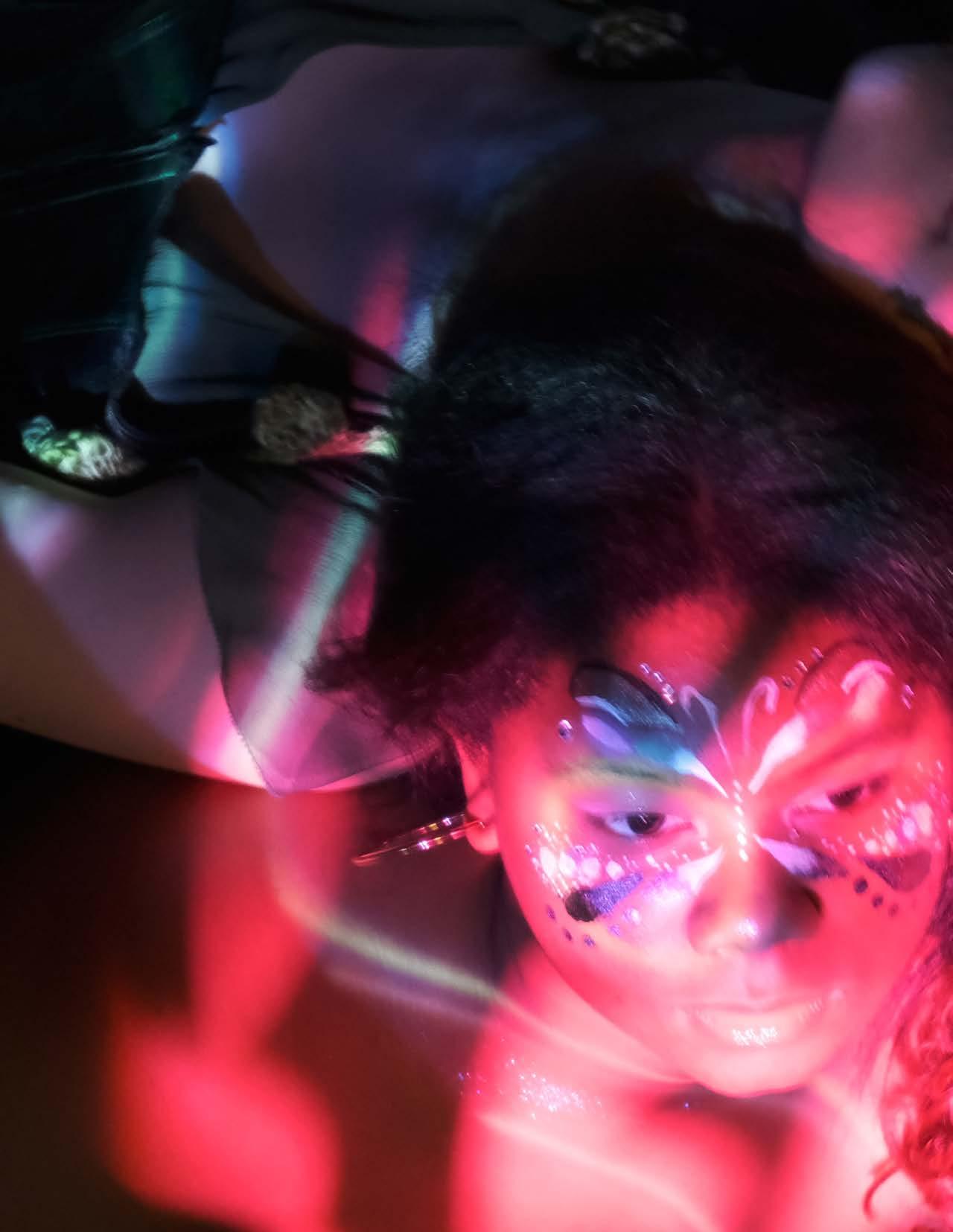
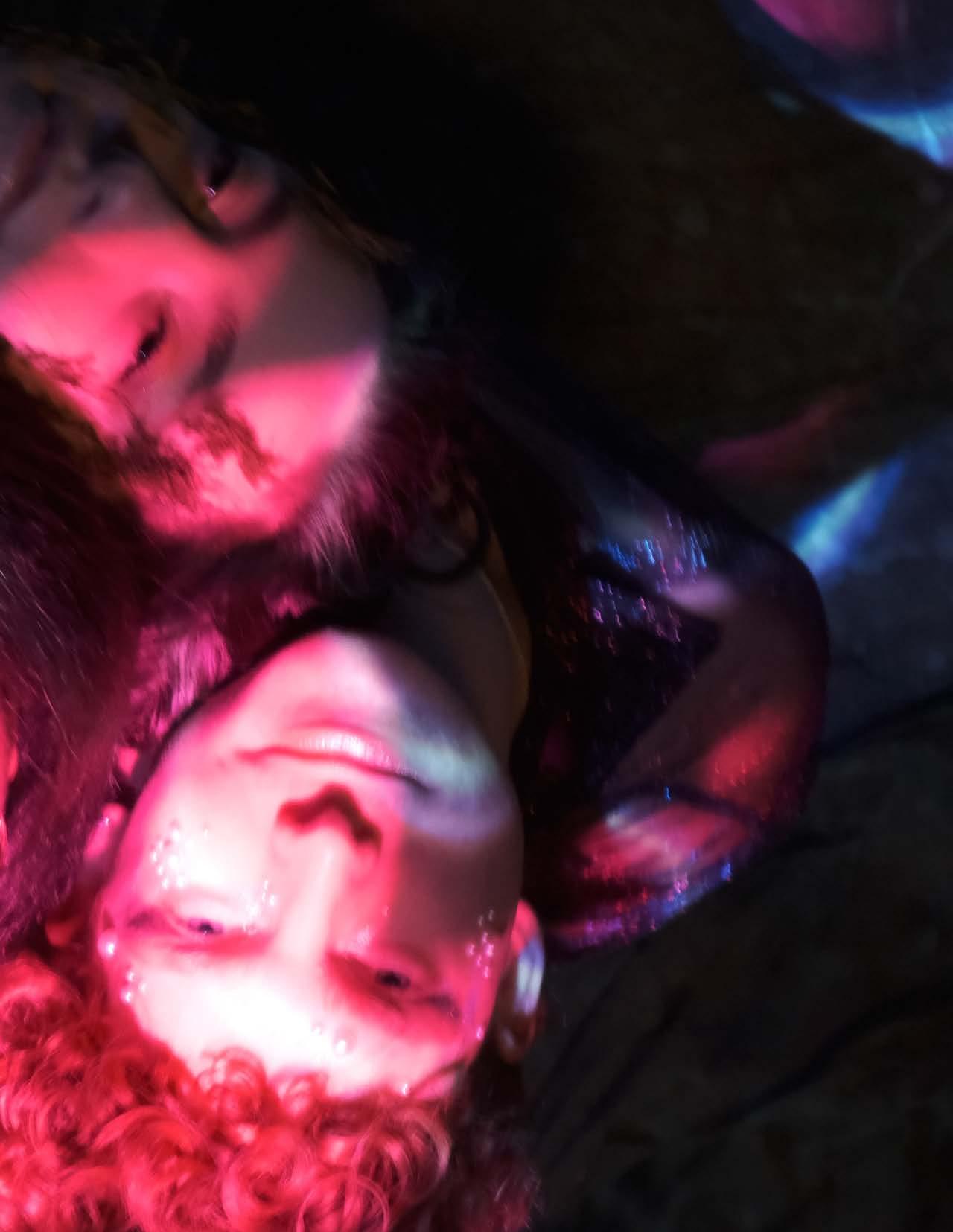
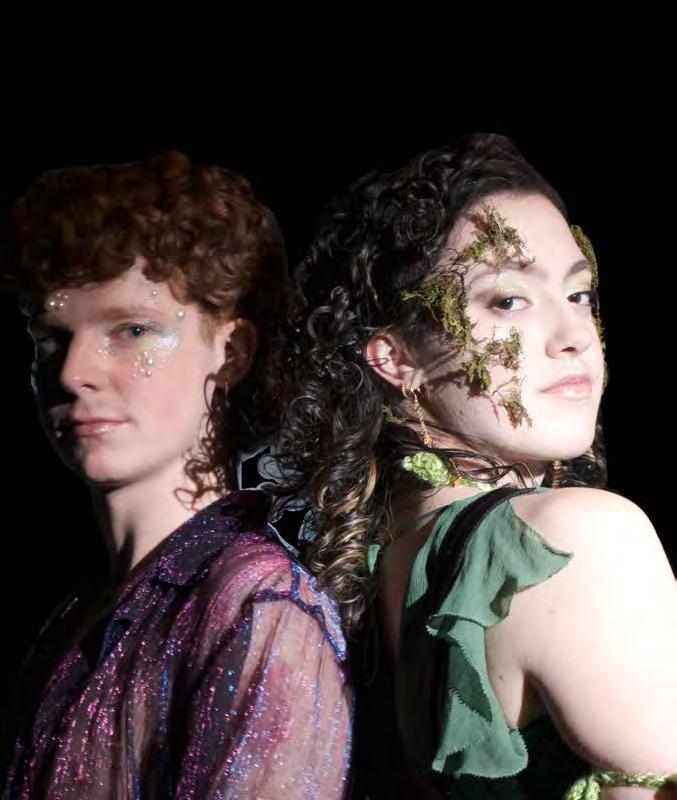
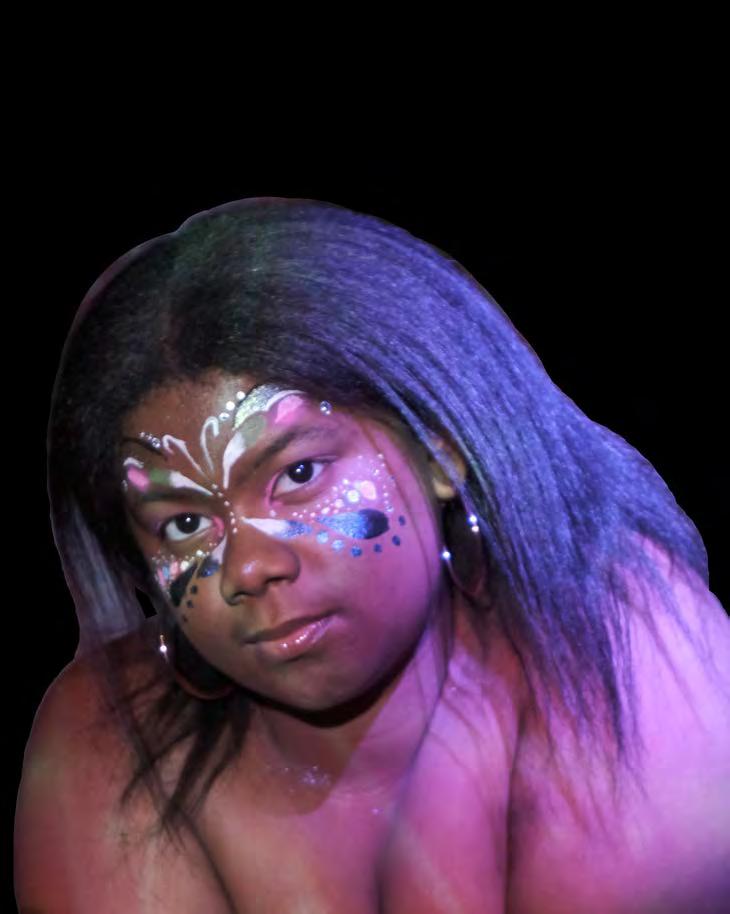
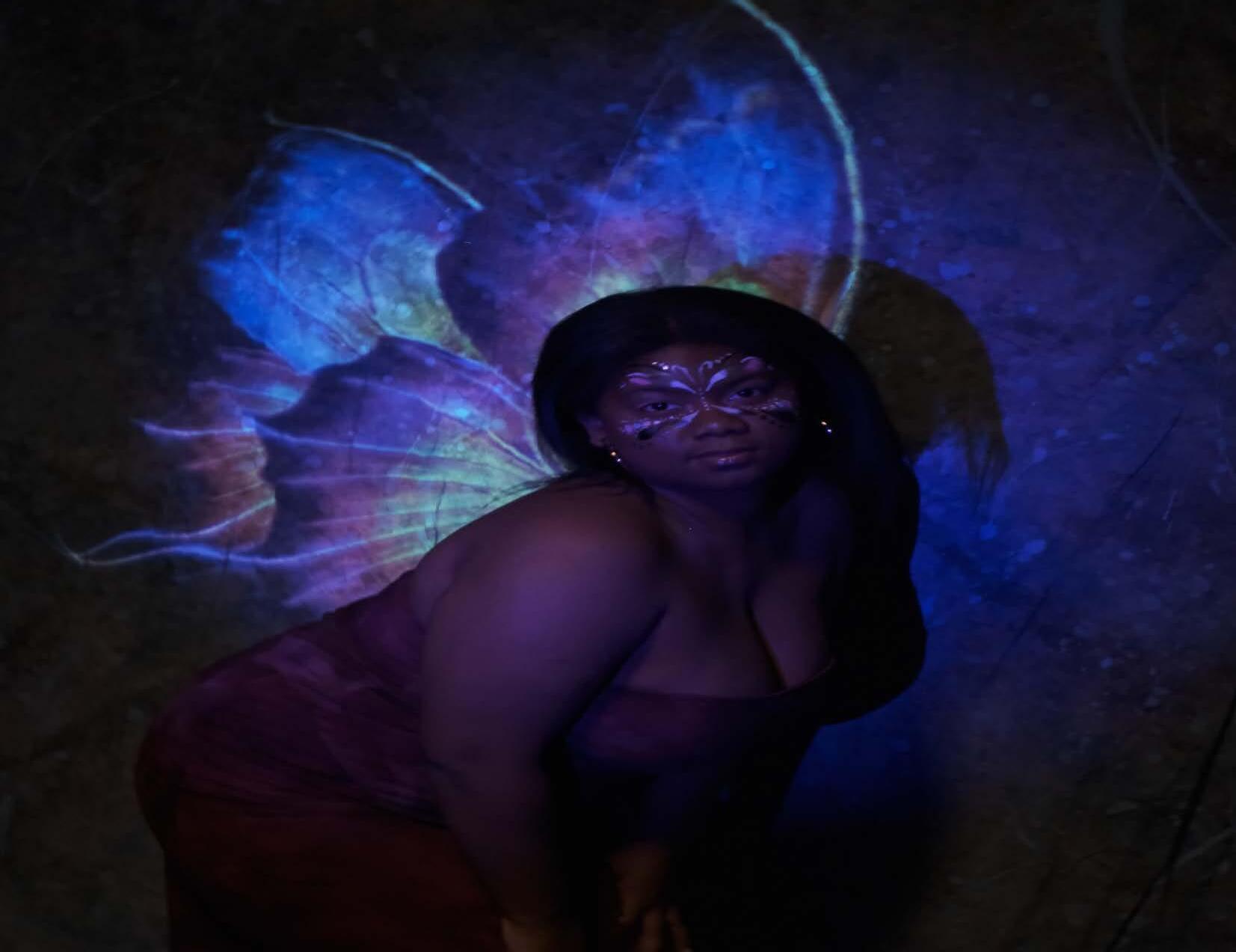
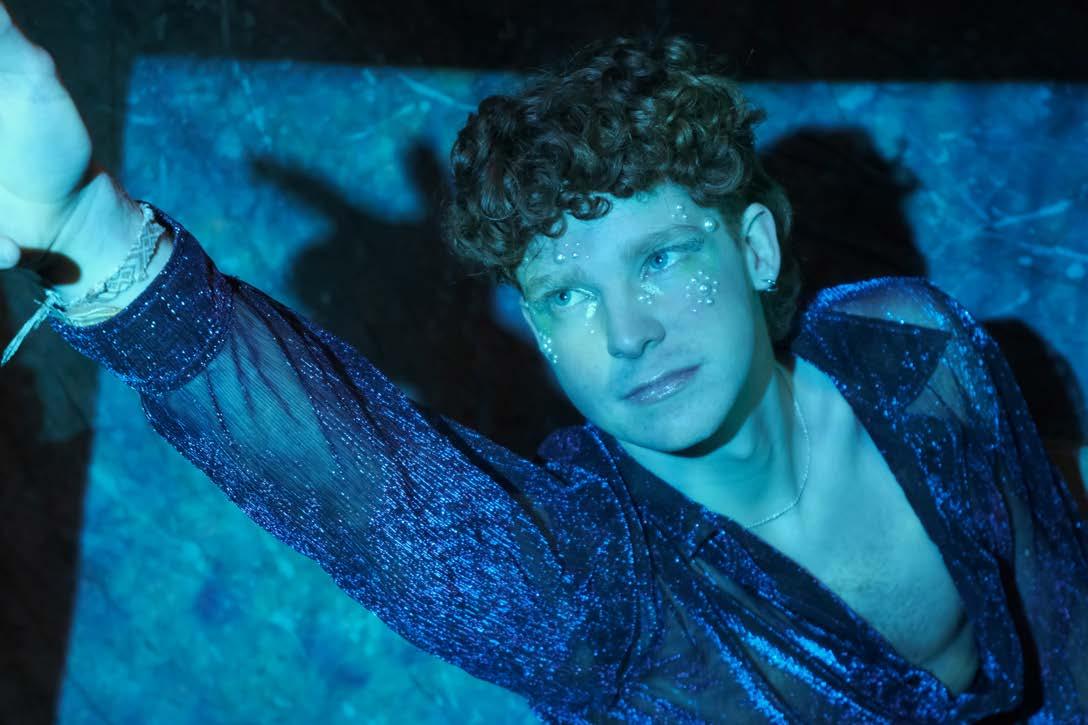
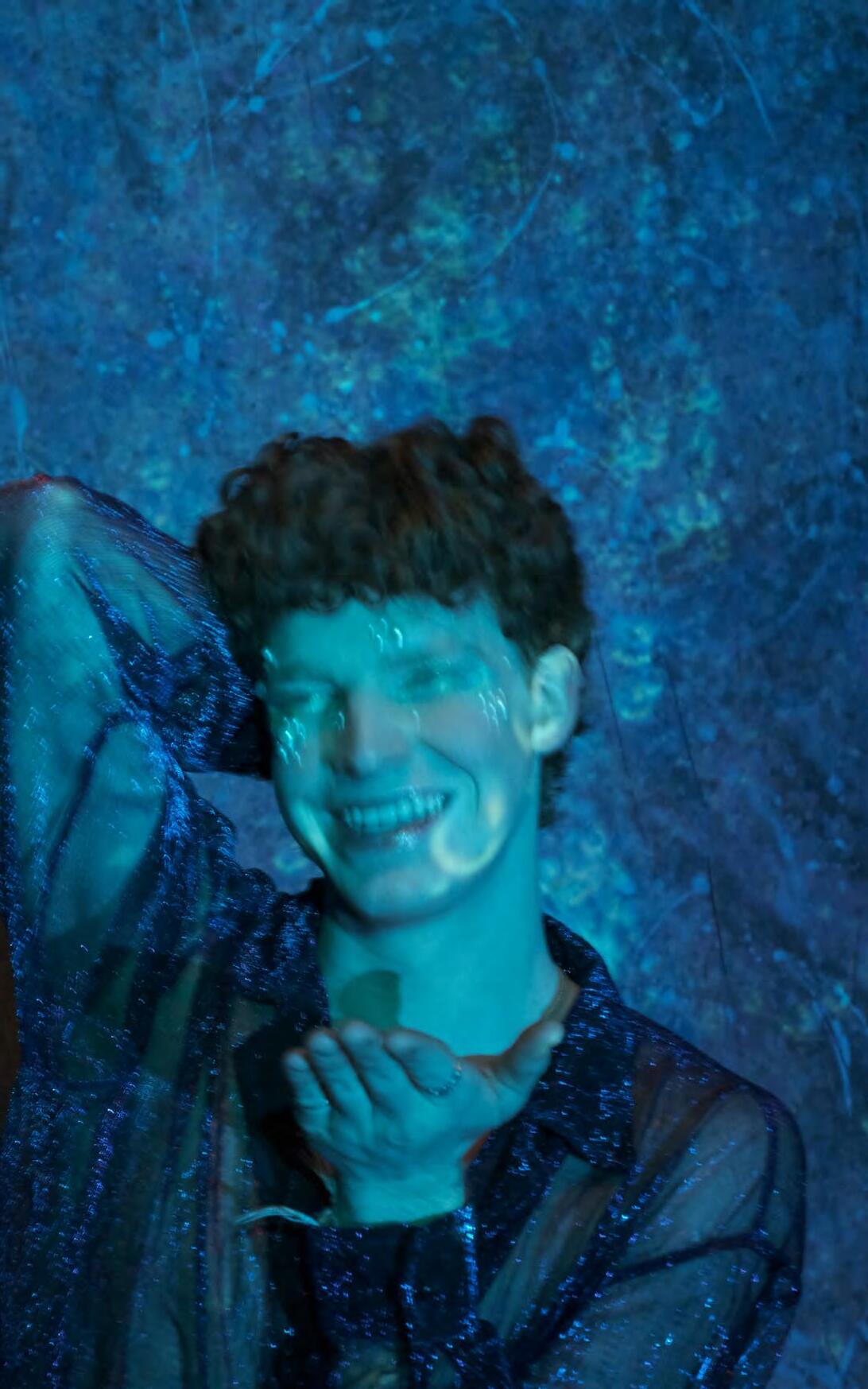
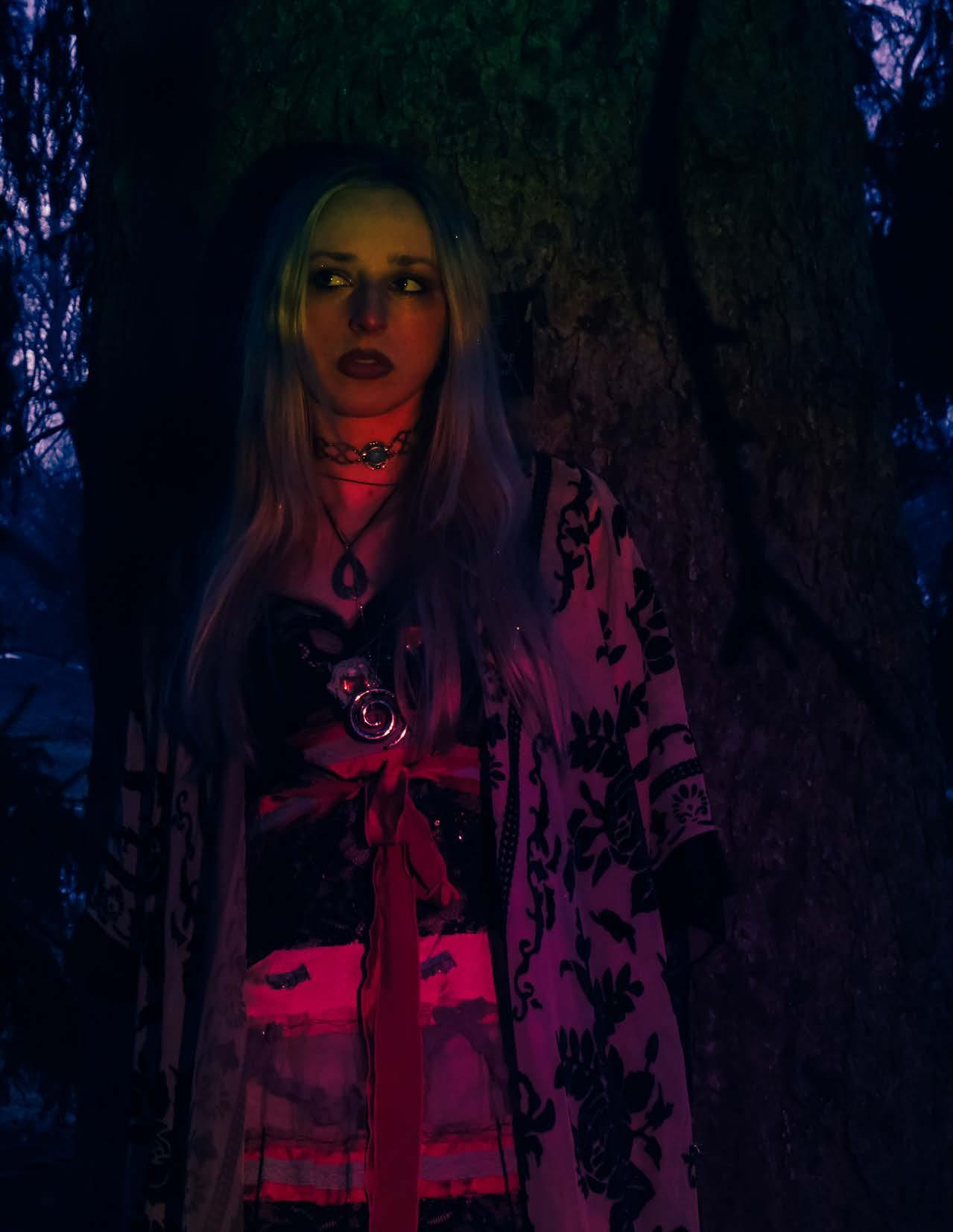
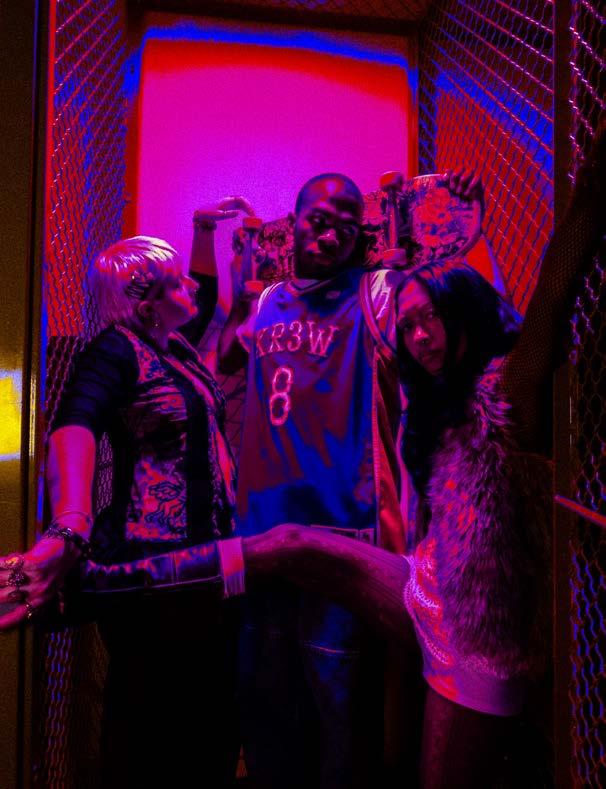
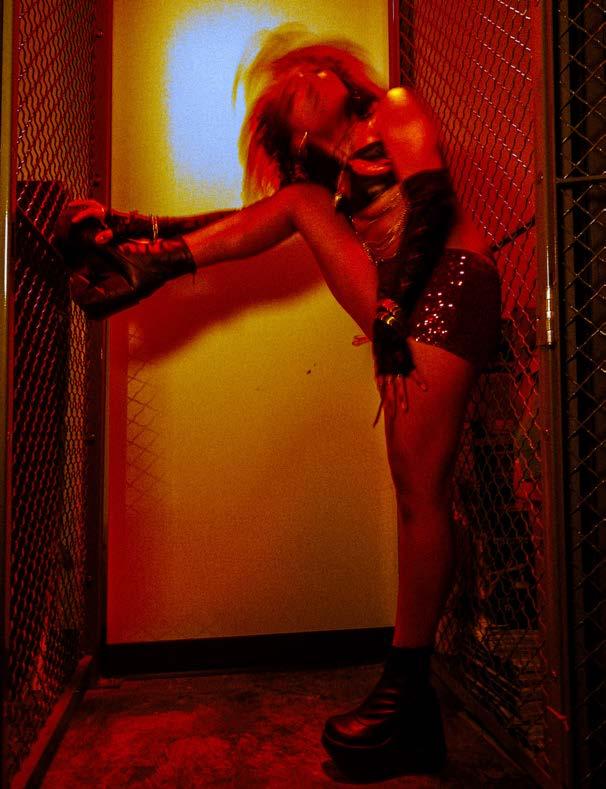
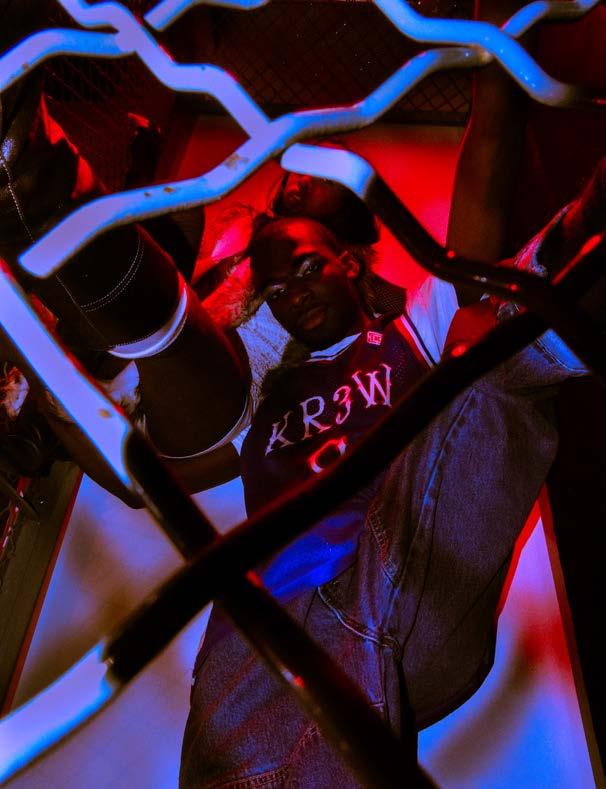
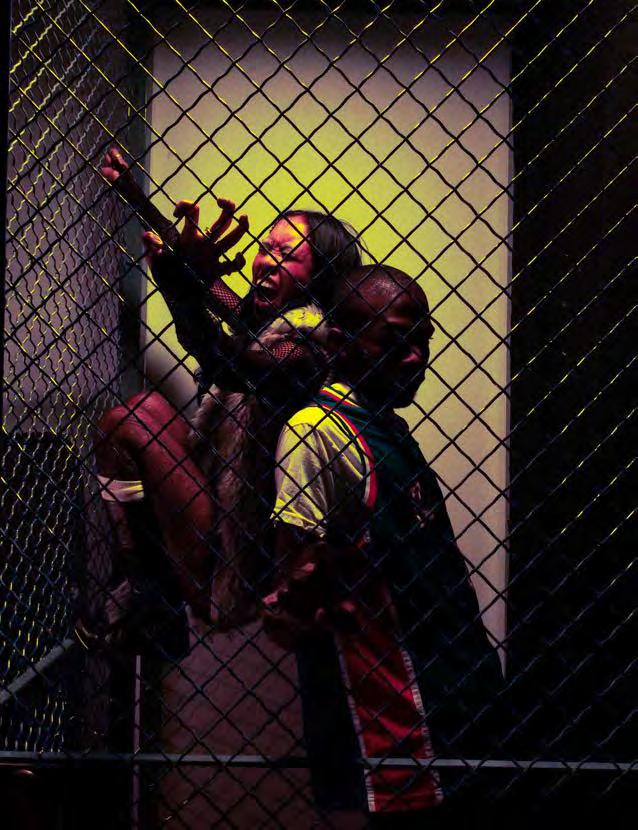
“FAE RUN WILD” REIMAGINES FAE CREATURES IN THE VIBRANT ENERGY OF A NEON-LIT NIGHTCLUB. IT CAPTURES THE PERFECT FUSION OF OTHERWORLDLY CHARM AND MODERN NIGHTLIFE, CREATING A STRIKING VISUAL CELEBRATION OF FANTASY AND FUN.
With the rise of social media and the trends that follow it, aestheticization has become a foundational piece to these apps. I have realized that almost every time I go on popular apps like TikTok or Instagram, I see a video of a new trend to follow. A girl can only take so much fashion advice in a world full of overpriced clothing. It seems to stem from these apps where fashion trends can often be seen and observed by users. In the past few years, I have noticed that there is a need among users to aestheticize fashion. We can see this in the rise of “coastal cowboy” or “cottagecore” during this time. Low-rise jeans and the Y2K aesthetic has once again become popular, constantly cycling through. I don’t find this to be something that is harmful on the surface, but it makes me question why this occurs, especially when it comes to how far it spreads. This is just another factor in microtrends and it is important to wonder if this can be an issue in the future.
After 2020 passed, I remember seeing so many SHEIN tags in the thrift store because people had tossed their clothes away once it didn’t fit a mold. Not only is this damaging for our environment, it is a display of how these trends tend to never last. Even I took part in the style of that year with sweater vests and rolled up mom jeans.
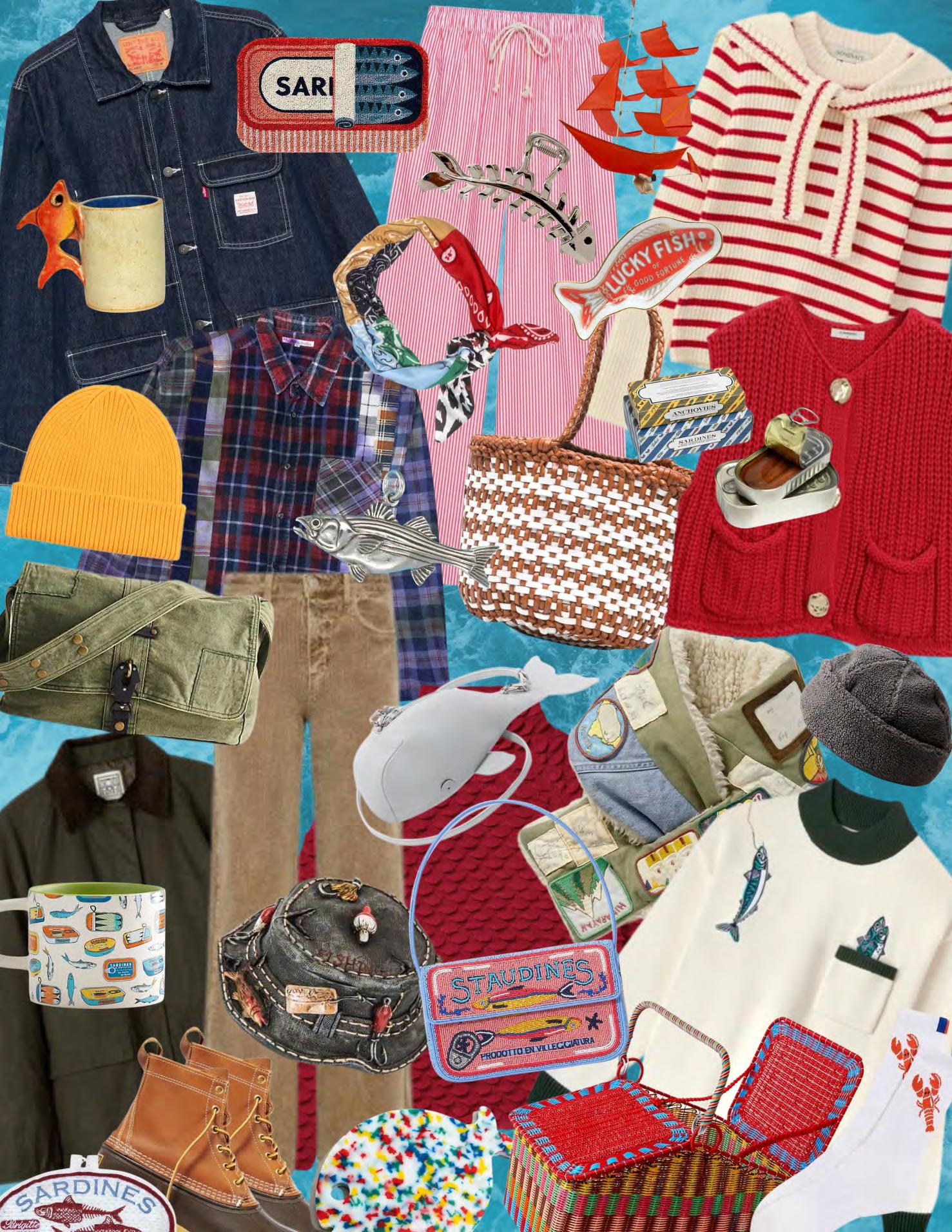
While there are SO many aesthetics to choose from, I want to focus on the fisherman aesthetic. In ways, this is an extension of the “coastal grandma” trend, which calls for cable-knit sweaters and nautical-inspired clothing items. The fisherman trend differs from coastal grandma in the way that it is supposed to be more rugged and less “picture-perfect.” It is meant to emphasize everyday pieces and essentials that can be worn when going boating or simply doing common activities, specifically on the coast. In my opinion, this aesthetic rose to popularity because it seemed more attainable for those who couldn’t afford to drop money on “coastal grandma” clothing items.
When following these aesthetics, people want to capture the feeling that these styles come with. With cottagecore, people were often talking about wanting to live in a cottage—it was a more feminine take on living in the forest. Now, with the fisherman aesthetic, there is a general feeling that it brings to people when visiting which is what this style strives for.
I personally find it odd that social media tends to choose certain lifestyles and make an aesthetic out of it. It differs from making a singular piece of clothing popular, like leg warmers in the 1980s or Juicy Couture tracksuits in the early 2000s. Instead, people are
ART BY LAUREN MALLETT
taking ways that people live and creating an aesthetic or style from it. Fashion is meant to be experimented with and explored, but to what extent should this be done?
The fisherman aesthetic has been on the rise this past year after coastal cowgirl had its moment in the fashion trend cycle. Many women were seen taking part in the coastal cowgirl aesthetic with white maxi skirts and cowgirl boots, now passing along its popularity to the fisherman aesthetic. Users on TikTok and Instagram have made various videos regarding how to fit into this style and where to get these items. Even a quick search on Pinterest will result in a number of pins to help inspire people with this aesthetic. It has even inspired some users to post their own videos of showing what they truly wear to fish, that often being a run-down tee and athletic shorts. I found these videos to be funny because I don’t exactly understand why people aestheticize something that was never “appealing” to the general public to begin with. It begs the question of how true to the name this style is, and what actually inspired it. I also wonder why people feel the need to aestheticize these often unglamorous lifestyles.
When looking at past and current “lifestyle” trends, I find that people often find the labeling of styles comforting, and falls in line with what they deem cute or wearable at the time. Even I have taken part in this—when you work within a current trend, it brings a sense of belonging for people. I don’t believe that people actually think being a fisherman or cowgirl is something to be romanticized, but that is often the effect of these aesthetics. The creation of the fisherman aesthetic is simply a way to bring together articles of clothing, like the sweaters and overalls, into one style.
Now, I am not saying trends are the root of all evil and are ruining our society, but there are better ways to go about it. I think it is important that trends emphasize sustainability and are accessible, like a capsule wardrobe—clothing items that are interchangeable across all seasons and time. Not everyone can go out to buy new or even used items every time the internet decides a different style is “in” at the time. Frankly, it can become exhausting. If we are able to get to this point of style, it can become more positive. Truthfully, I don’t mind coastal grandma and the fisherman aesthetic, because while they differ in ways, they build off each other. I believe that this is something we should do more for the sake of microtrends looming over our heads every so often. YM
I WOULD LIKE TO THANK...
WRITTEN BY ELLA MORDARSKI
ART BY REBECCA CALVAR AND ELLA MORDARSKI
When Robert Downey Jr. won the Oscar for actor in a supporting role at the 96th Academy Awards he had a lot of people to thank.
“I'd like to thank my terrible childhood… and the Academy, in that order. I'd like to thank my veterinarian—I meant wife—Susan Downey, over there…back to my publicist… and my agent Philip Raskind is here, and Andrew Dunlap, my den mother Joy Fehily, thank you very much.”
Wife. Publicist. Agent. All the usual subjects. Towards the end however, Downey thanked a key component of almost all celebrity teams that is not recognized nearly enough.
“I want to thank my stylist in case no one else does. Thanks, Erica [Cloud], thank you very much.”
In Hollywood, the most influential players are rarely the talent. I’m not saying actors aren’t good at their job. For the most part many, like Downey, are actually tremendously talented at it. But the hard truth is, the general population doesn't care exclusively about their skills. Instead, they tend to gravitate towards the person's overall appearance, which is carefully curated by the celebrity’s team. More specifically, their stylist
Hiring a stylist is a rite of passage for those trying to make it in Hollywood. Today almost all celebrities, A-list to C-list, have a stylist—a person on their team who dresses them for high profile events like award shows or press tours. For some celebrities the “I’ve made it” moment is getting recognized in the morning coffee line, for others it's never having to go shopping for themselves again.
Celebrity styling is a hard job, combining two notoriously soulcrushing industries: fashion and entertainment. Sourcing pieces, working closely with high-end designers, and keeping famous clients happy are not for the faint of heart. It’s not the traditional nine-to-five and as a mainly freelance profession, it's a competitive industry to break into.
Like the actors they dress, each stylist is unique, and possesses their own technique that makes them perfect for a job. Some stylists are known for their love of vintage archival, others like to incorporate funky silhouettes or textures, and there are those who thrive off of a good theme. However all stylists share the same universal goal: make the client look fucking fabulous
Since the early days of Hollywood, fashion has always been just as important as an actor's performance. During the golden age of cinema, major movie studios held all the power in showbiz. It was common for talent to come from humble beginnings and sign exclusive contracts with one major studio. However, before they could become major movie stars, they would need a studio makeover to help maintain Hollywood's glamorous image.
Studio heads enlisted the help of theatrical costumers to outfit talent with lavish original designs unique to each person. Clothes became an extension of their fame, and with that so did their costumer. When actress Grace Kelly was married to the Prince of Monaco in 1956, her iconic wedding dress was designed by none other than her MGM costumer, Helen Rose. In many ways, studio costume designers were the original stylists.
The studio system began to fall apart in the late 1940s when the U.S.
Supreme Court ruled that the major studios’ control over production, distribution, and exhibition comprised a monopoly and ordered studios to divest their theater chains. By the 1960s, studios lost total power, independent production companies began to pop up, and television became increasingly popular. With the end of the studio system, also came the end of studio costume designers dressing talent for events.
For the next few decades, celebrities flew solo dressing themselves for events, often wearing clothes straight from their own closet or hitting up a local thrift store for a cheap silk slip dress. While some of the homemade looks displayed effortless style, others were just plain bad. During this time, stylists primarily worked for fashion magazines like Vogue, dressing models for cover shoots and major editorial spreads.
The 1990 Academy Awards was the breakthrough year for red carpet style. Dubbed the “Armani Awards” by Women's Wear Daily, Italian designer Giorgio Armani dressed nearly everyone walking the red carpet that night. Not only did the couture styles make celebrities look good, it made Armani look good too, with his sales soaring as a result. Designers began to realize red carpets were a great place for brand promotion.
In 1994, Joan Rivers started covering red carpets for E!, giving unsolicited and often harsh opinions on celebrity outfits. Viewers loved her candid (and horribly rude) comments on celebrities' looks. Today, she would most definitely be canceled for her problematic remarks, but in the 90’s they were pure entertainment. Over time, other outlets joined in on the bashing, including a legion of viewers at home. Celebrities began hiring stylists to protect their fashion—and personal—image. Publicists began preparing clients to answer Rivers' famous question: “Who are you wearing?”
In the early-to-mid 2000s, stylists became permanent parts of the Entertainment Industry and red carpet culture hit its peak. With this came fashion's toughest critic of all: Tabloids. Magazines, paparazzi, blogs, and social media allowed people sitting at home the opportunity to comment instantly on a red carpet look. Magazines like Teen Vogue and Cosmopolitan began including ruthless content pitting celebrities’ outfits (almost always women) against each other.
The once casual and carefree red carpet slowly became a culturedefining runway filled with thousands of news outlets. Some of the most iconic fashion trends of the last thirty years have originated on a red carpet. Remember when every dress suddenly had a slit on the side? Well, you can blame Angela Jolie's 2012 Oscar dress—a black Versace gown with a sexy thigh-high slit—for that one.
In the past thirty years, the stylist position has increasingly become more aware and recognized by the public. What was once known by only fashion and entertainment insiders is now common knowledge on TikTok. Some stylists like Jamie Mizrahi and Law Roach even have their own loyal fans.
So, how did Robert Downey Jr.’s stylist respond to his thank you?
“So nice, he did it twice! Two words. They mean a lot and go a long way. What a wild ride. And a truly unbelievable & unexpected (in my case) ending! Thank you, Robert, for the thank you, and it goes out to every one of my colleagues and friends who should all feel seen.” YM
Laced in Confidence
WRITTEN BY LILY BROWN
PHOTOGRAPHED BY ELIANA VEGA
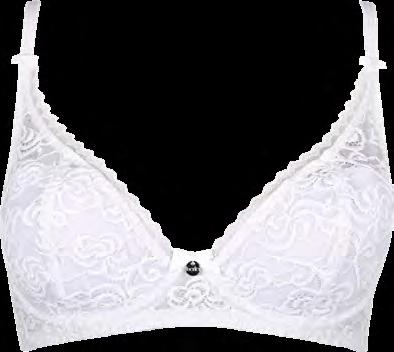
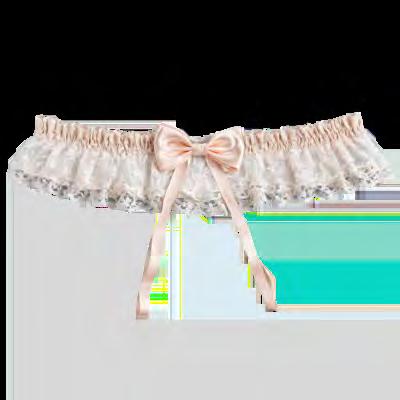
As stated in the definition above, lingerie is primarily a category of women’s clothing. It includes undergarments, some sleepwear, maybe even a lightweight robe. The choice of the word is often motivated by an intention to imply that the garments are alluring, fashionable, or both. What really matters though is the word intimate
Lingerie is about more than just style; it’s about a feeling. Intimate doesn’t mean for someone else’s eyes—it’s about what it makes you feel like. You’re wearing that lace because it’s a secret little moment between you and yourself.
One might say lingerie and intimate are synonymous. Plus, it’s true that lingerie is often seen as a symbol of sexiness. But it’s also quiet confidence. You don’t need to be loud to be powerful. When you slip into something soft and delicate, it’s like the world slows down. You’re suddenly untouchable, that’s the magic.
Noun: Women’s intimate apparel
boudoir to rock a killer lingerie look; in fact, the world is your runway. Whether you’re snapping selfies in a cute satin set for that effortlessly chic vibe, or strutting around in a mesh bodysuit for an impromptu TikTok, lingerie can easily double as outerwear if you know how to work it.
Lingerie is about confidence. You know that feeling when you slip on that one set and suddenly feel like you could conquer the world?
Like you’re channeling your inner queen. And no, it’s not solely for impressing someone else (although, you totally still can). It’s for you, because when you feel good in it, that energy radiates. Lingerie is your secret weapon, a subtle but powerful move that’s all yours. Want to feel like you can take on the world while sipping your iced coffee in class? Once you put on your favorite lace thong under those sweatpants, boom—you’re unstoppable.
Lingerie also opens doors for exploration. Maybe it’s time to try something new: a color, fun fabric, or even an entirely different vibe. Silk is seductive; however, don’t overlook the power of mesh or velvet. One moment you’re wrapped in a cozy hoodie. Underneath, a smooth satin slip dress makes you feel ready for a romantic dinner—or maybe a late-night snack run, depending on the mood.
It’s all about mixing comfort with style. We’re talking silky camis, corset tops, lace bralettes, or vintage slip dresses that make you feel like you just walked out of a 90s music video. High-rise jeans? Sure, they’re cute, but imagine them paired with a lace-up bodysuit underneath. If you’re feeling extra, throw on some chunky boots to complete the look. Major main character energy. And don’t forget the festival moment. If you haven’t seen someone rocking a rhinestone-encrusted bralette with low-rise cargos while tossing their hair to the beat, are you even
At the end of the day, it’s not about the brand name or the price tag (though we all love a good sale). So, the next time you reach for that oversized sweater or those sweatpants, think about how your lingerie underneath can give you a personal little boost. Don’t be afraid to show a little skin, or flash a cheeky smile at the mirror. After all, the most attractive thing you can wear is your own confidence. And that lace, satin, or anything else, those are just the cherry on top. YM
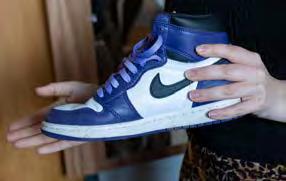
YOUR CLOSET YOUR CLOSET
INTERVIEWED BY ELLA
MORDARSKI
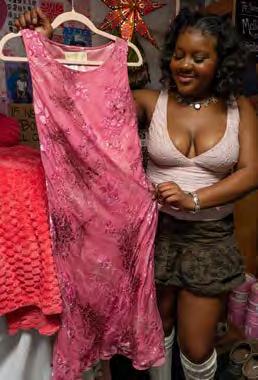
Averie (she/her)
BY
PHOTOGRAPHED
EMILIE DUMAS
How would you describe your personal style in three words?
Cohesive, comfortable, glamour.
Where do you typically get outfit inspiration from? However I’m feeling that day. It usually depends on my plans for the day, whether I have dance (and how much time in between because if there’s none, then I’ll wear cool sweatpants and a matching top that I can dance in). Also kinda depends on if I want to look more feminine or cooler and masculine.
If you could only shop at one place for the rest of your life, where would it be?
Goodwill.
What song would you use to narrate your style?
Drew Barrymore - SZA.
Three favorite accessories to add to an outfit?
Good makeup, good hair, earrings
Is there anything else you would like us to know?
My style is a mix of unique and basic. It depends on the day, what I’ve got going on, and if I want to feel bold or not.
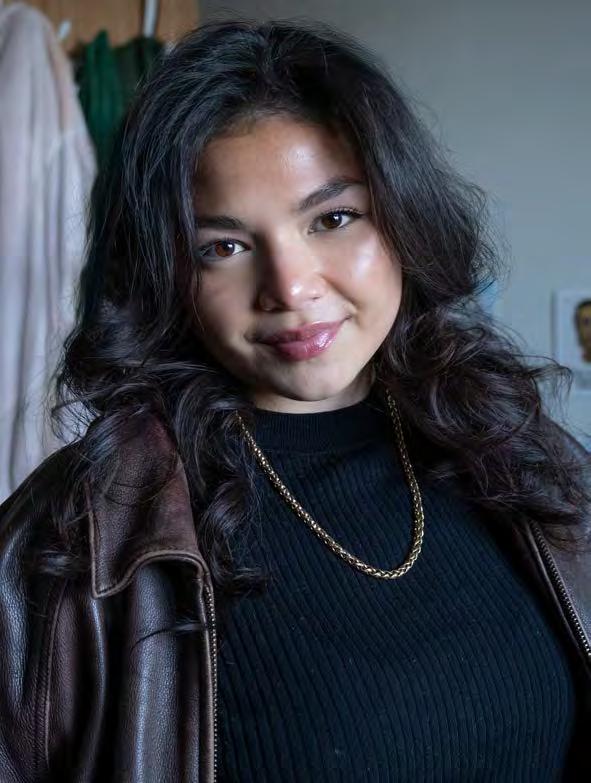
YOUR CLOSET
INTERVIEWED
BY
ELLA MORDARSKI
(she/her) YOUR CLOSET
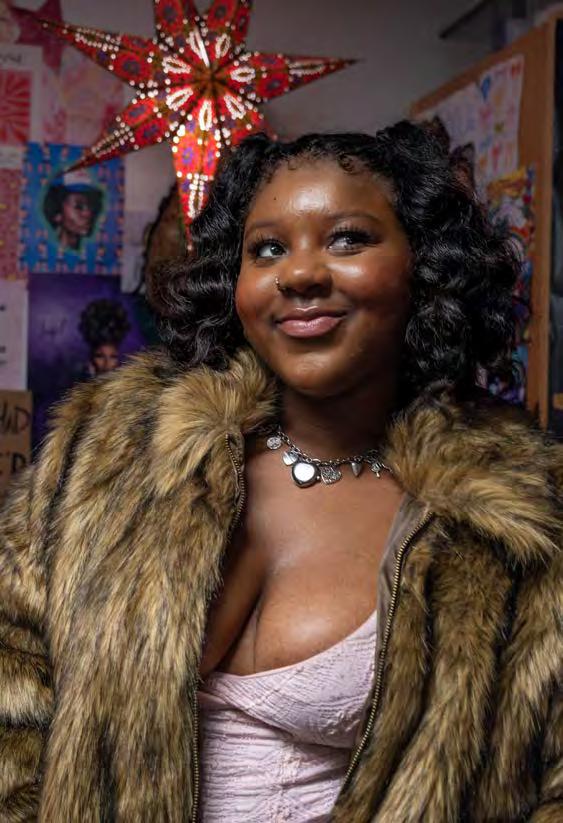
Lauren
If you could only shop at one place for the rest of your life, where would it be?
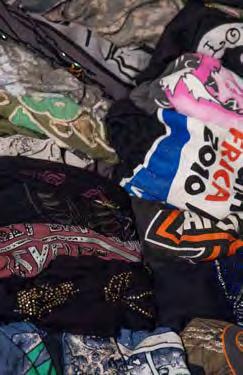
Rumors Thrift boutique in my hometown! I feel like the whole boutique really encapsulates my entire style.
Celebrity/style icon?
My celebrity style icon is definitely Doechii. I mean, COME. ON.
What movie character's wardrobe do you identify most with?
Lizzy McGuire if she was an eccentric black girl. What are three pieces in your wardrobe you can't live without?
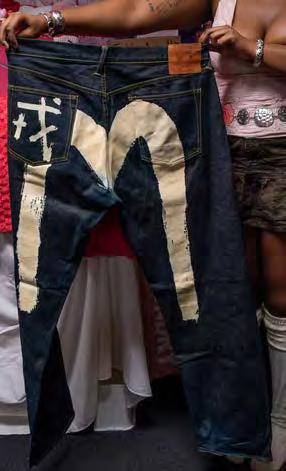
I can’t live without my Evisu jeans, my True Religion jeans, and my Miss Me Jeans. Did I mention I love jeans???
Are you team fold, hang, or both? Why?
I’m definitely team both. Whatever makes my life easier.
PHOTOGRAPHED
BY
EMILIE DUMAS
DIRECTED BY MCKENNA SMITH
PHOTOGRAPHED BY MCKENNA SMITH
STYLED BY ANNA BACAL PETERSON AND EMILY HAMNETT
MODELED BY EMILY MARTINEZ, BERNADETTE NELSON, AND JULIANNE SERAFINI
FLOATING BETWEEN NOW
AND TOMORROW
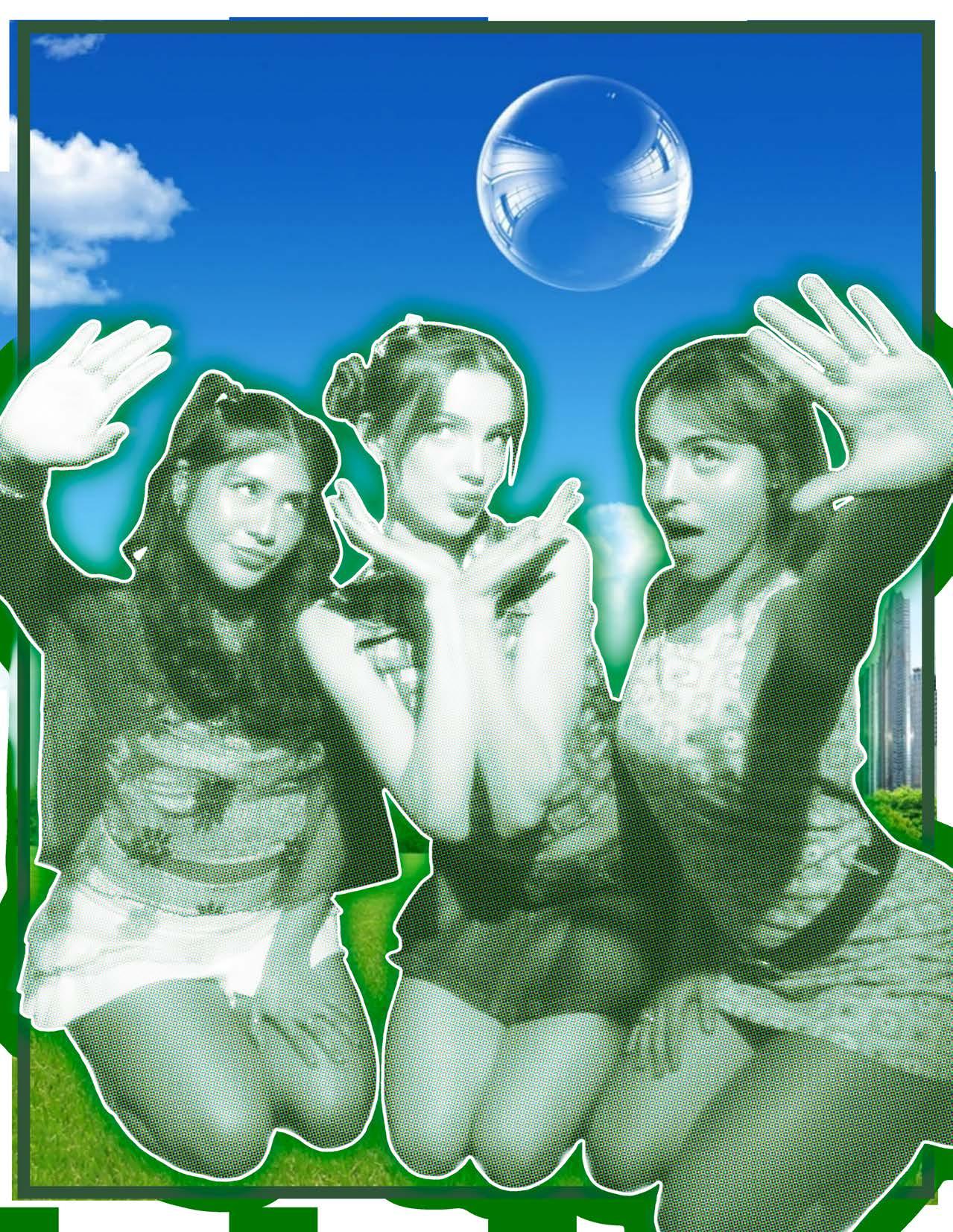
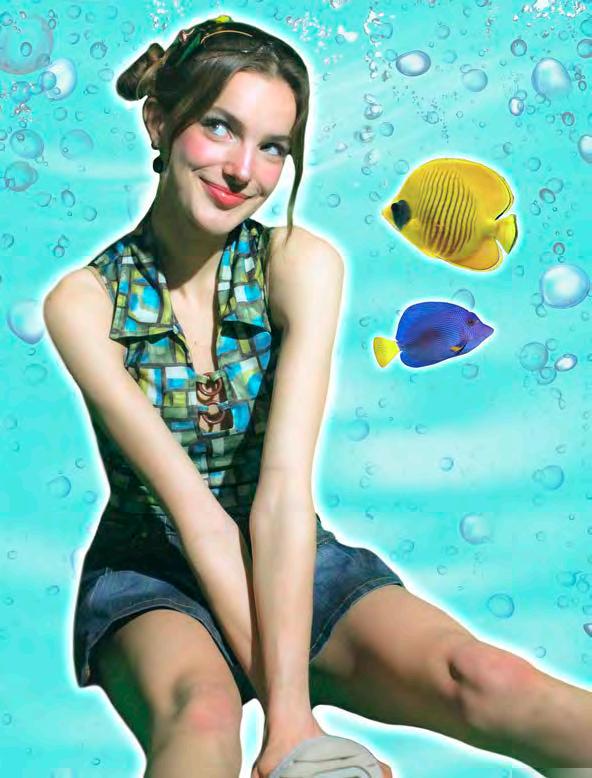
“FLOATING BETWEEN NOW AND TOMORROW” SYMBOLIZES THE PROMISED WORLD OF GLOSSY WATER AND POLISHED, CRISP AIR. LIGHT BENDS LIKE A DREAM, AS BUBBLES DRIFT AND HUES GLOW. THERE’S A FEELING HERE, SOMEWHERE BETWEEN THE FUTURE AND A MEMORY—THE EARLY 2000S UTOPIA WE ONCE BELIEVED IN, BOTTLED LIKE A RAINDROP, WAITING TO BE TOUCHED.
IUD and ME
TW: BRIEF mention of body issues
“IUD SIS. Stay in school, ’cause it’s the best.” — Peaches
WRITTEN BY LUCY LATORRE
It started with a bra. A big, huge bra. I’m the prime candidate for breast reduction surgery: back issues, self-diagnosed body dysmorphia, and a pair of tits that bust out of every ageappropriate top. From the day they started growing I planned to get them cut off, but I knew it had to be after I started birth control, just in case the hormones took my Gs to Es. I didn’t want just any birth control, I wanted the PERFECT birth control. At first I considered pills, but they would speed up my metabolism too much for my anti-anxiety medication to be fully effective. The implant made me want to flay myself, and I wasn’t close enough to my doctor for the shots. Enter the wonderful T of trimester-preventing, the epic cross of contraception, the thing with the string when your ovaries ring: the IUD. It was perfect, like a beacon of light, a holy cross to rival the crucifix.
On May 19, 2023, I took 1.00 mg of Xanax, the strongest Tylenol I could find, and as much confidence as I could muster, and walked into the gynecologist’s office. Was I absolutely terrified? Yes. Was it going to hurt? Most definitely. But the pain and the fear represented my old life. My fertile 19-year-old self needed a uterus jab, and she was going to get it if it was the last thing she did. So, pantsless, my feet in the air, free bleeding on the paper-lined chair, I took a breath and settled in.
I spent the night before watching videos of EXACTLY what would happen: the speculum, the cervical numbing shot, the uterus measurement, and finally the pinch of the IUD settling into its new home. I took it all in strides, barely even squeezing the nurse’s hand. My ego higher than ever, I journeyed home, crawled in bed, put on Shark Tale, and took an epic Xanax nap. All was well.
For the next three weeks, I was unstoppable. Despite dull cramps and occasional bleeding, I couldn’t even look at a baby without reminding it I had its Kryptonite wedged inside of me. Then, I got my first IUD period. Mid-afternoon on June 14, debilitating cramps overtook my lower half. I was doubling over in pain from what felt like waves of fire, like my stomach had a mind of its own. After hobbling to the bathroom, I did the doctorprescribed IUD check, sticking my finger as far up I could and feeling for the strings. And I felt strings, all right, only this time they were lower than they were before.
After my initial insertion, I had a pre-scheduled follow up meeting about three weeks later. This was supposed to be my moment to prove that my IUD and I were the absolute best of friends. Instead, I recounted my cramps to the doctor. She dove in
BY LIBERTY ICE
to feel the strings for herself and revealed my IUD had “dislodged” and moved lower than it should be. We set up an ultrasound appointment to double check, and, a bit too casually, called it a day. The next week, I journey three towns away for my ultrasound. Filled with water, I was prepared for an abdominal ultrasound, only to be welcomed into a vaginal one. I tried my hardest not to wince as the doctor stuck me with what was basically a medical dildo. Squinting, I tried to read the ultrasound, praying that I would end up with a different interpretation, but there was no way to spin it: my IUD was falling out.
I called my therapist in tears. Why me? I’d made the courageous decision to get an IUD, then the IUD made the courageous decision to dislodge and force its way out of me. I was promised 3+ years of pregnancy prevention, but the only thing my IUD prevented was any sense of vaginal privacy. It was supposed to be the perfect solution setting me on a path to breast reduction! Still, I couldn’t leave it inside of me, so I took my pills and journeyed one final time to the gynecologist, bracing myself for what supposedly hurt more than insertion: removal. Biting my lip, I took deep breaths as the doctor went in, shutting my eyes so hard that I barely noticed when she popped back up seconds later with a loose, goopy IUD in her hand. Around 9:30 a.m. on June 23, I welcomed my IUD back into the world. It was sitting in my vaginal canal, she explained, and if I left it for another day or two, it probably would’ve fallen right out of me.
Knowing there was nothing I could do, I spent the next year completely IUD free, willing to play with fire rather than possibly experience contractions again. Then election season rolled around. A few weeks ago, over a year after my horrific journey, I called my mom with a crazy idea: an IUD do-over. I always figured that, on the off chance I miscalculated my cycle and got pregnant, I would be able to get an abortion. That’s becoming less and less of a possibility now as access to abortion and birth control is at risk. So I must make my choice: Get another IUD and risk it falling out again, or possibly prepare for parenthood. Frankly, I’d rather take the pain while I still have the right to do so. What hurt most about my IUD wasn’t the brutal contractions or the sheer betrayal, it was that my lofty idea of what birth control should be was shattered. Birth control isn’t easy. It can be inconvenient and ineffective. But it’s what we got, so I’ve shaken its hand and welcomed it back into my circle while I still can. If the government wants my IUD, they can come and rip it out of me. It wouldn’t be the first time. YM
ART
The Coolest Hands Around C A
The butterfly-shaped organ in my neck has got it all wrong. That’s what the doctor told me—that my butterfly flew in the wrong direction, did a few too many spins, and got stuck in a high up bough. In theory, I like my butterfly for her rebellion. In practice, I feel differently.
The first thing you learn about the thyroid is that it’s butterfly shaped. The second is that it’s responsible for practically everything in your body. I have Hashimoto’s disease, which is an autoimmune disorder—a butterfly on a rebellious flight. Every metaphorical wing flap can result in rashes sprouting or my face puffing, but most of the disease is invisible to everybody but me.
My favorite offender? Being freezing cold all the time.
I have hypothyroidism caused by Hashimoto’s, meaning that my butterfly is “underperforming.” She’s me during a 4th grade math test, and I feel for her despite the hell she puts me through. My parents joke that I’m cold blooded. Touch my hands—go on, I dare you. You’ll agree once you do. It wasn’t until recently that I understood my ice pop hands were my butterfly’s doing.
I’m sure this is what Elsa from Frozen feels like. Like her, I sit with gloves on as I do homework, eat dinner, and watch movies. Although, my coldness cannot freeze anyone’s heart, which is a plus.
That’s not to say no superpowers come with having cold hands. Exhibit A: After my mother says I’m “being dramatic” for wanting to turn the heat up, I sneak up behind her and place my hands on the back of her neck. She yelps and slaps my hands away, exclaiming “Ugh Ella!” But that’s the sound of triumph, brought on by cold, hard evidence! She begrudgingly says I can put the heat up one degree. Point, Ella!
My family members are the ones who deal with my excessive showers or when I sneakily turn up the thermostat. I’ve been blamed for many water and electric bills over the years, but how do you explain
WRITTEN BY ELLA MASTROIANNI PHOTOGRAPHED BY EMILIE DUMAS
how cold you are when everyone disagrees? I feel ridiculous. After all the blankets, including the heated blankets bought just for me, what else can I say?
My cold hands have even caused arguments about heating with my roommates. I want to say “I’m sorry, I’m trying,” and “Can’t you see I wore two layers of pants today?” But any rebuttal feels pathetic. I want to be able to shut up and deal with it, so mostly I do.
People say, “you can only take off so many layers when you’re warm, but you can use endless layers when you’re cold.” However, it’s not always practical, and it’s too simplistic. If I have on three sweaters, two pairs of pants, fuzzy socks and slippers, and I’m still cold, what do I do? I like the argument, but living with Hashimoto’s makes it less straightforward. It makes everything that should be straightforward, less so.
Cold hands shroud everything with anxiety. I’m trying to be kinder to myself and not ask questions like “Who wants to hold a cold hand?” and “Will it get worse when I’m older?” Questions like these make me feel isolated. Having Hashimoto’s creates a separation between me and others. My questions that are meant to be silly aren’t entirely jokes. I fear that people who get close to me will be bothered, because I’ve listened to complaints for years. I feel silly talking about what I need, especially when it’s an inconvenience to other people. The only way I can be understood is if I do a Freaky Friday body swap. I can’t do that, but I can try talking more openly about what I struggle with day-to-day.
My butterfly will always be fluttering around, and at this point, it’d freak me out if my hands were suddenly warm. I will always live with this disease, and it makes some things difficult, but I’m lucky that I got diagnosed early (and at all). While I’m scared of rejection or being misunderstood because of my chronic illness, I have to believe that someone will care to listen and not brush me off.
I can take a page out of my butterfly’s book—be rebellious, by talking about this and trying to embrace her. My disease is less invisible now because I’m sharing, so why keep hating the butterfly in my neck for the way she is? Why be cold to myself? I know my hands have already got me covered for that. YM
Letter to the editor: Please Don’t be mean Letter to the editor: Please Don’t be mean Letter to the editor: Please Don’t be mean
WRITTEN BY ISABELLA CASTELO
Ihope this letter finds you well. I know I’m not supposed to respond to your “reply all” rejection emails, but your tip-toed letter meant a lot to me. If you must know, you’re my first. I was too shy to mention that in my 200-character bio I sent on Submittable, but it’s true. You’re my first rejection—a literary deflowering of sorts. I’m not expecting a response, you probably run through rejection virgins like me every day; I just wanted to reach out to show you what your rejection means to me:
The first time I read an essay out loud I almost cried. In 5th grade, my entire English class was forced to submit to a local Elks Lodge writing competition with the prompt, “If you could have lunch with anyone, dead or alive, who would it be?” My answer was Jesus; not because I was particularly Godly, but because I thought it was funny. I worked hard on the essay and considered it a masterpiece. I felt I found my voice. So, when my teacher asked who wanted to read their essay aloud, my arm shot up before my mind could second-guess the quality of my work.
My confidence quickly faded. I stumbled over my words and sped through my funniest jokes. My delivery was all wrong. My classmates stared at me silently as my teacher thanked me for my slapdash reading. The Elks Lodge liked my piece just as much as you liked my pitch—I didn’t win anything from the Elks Lodge.
Ten years later, in a college workshop class, I was again forced to read personal essays in front of my peers. After a decade—and two years of a writing degree under my belt—I thought it’d be easier to own my work. However, as I started to read, I felt the tears well behind my eyes. My teeth chattered with each new paragraph and my cheeks got redder every sentence. I thought the essay was good, just as I thought my Elks Lodge piece was, but when other people had to make that judgment my stomach flipped and my heart raced.
Despite going to school to write, I didn’t consider myself a writer until I was forced to call myself one—over and over again. That same workshop teacher made us go in a circle and announce, “My name is ____, and I am a writer.” A simple affirmation, but if Isabella Castelo was a writer, then what the hell was my name? I couldn’t claim the title because if I wasn’t the best writer, then I wasn’t a writer at all. I didn’t eat, sleep, breathe, write—so I wasn’t a writer at all.
You could smell this doubt in my writing; it reeked of self-loathing and shame. I was timid, pleading for forgiveness with every fourth word. I wanted to be a great writer, but not enough to work at it the way I thought I needed to. I thought I had to write a page when I woke
PHOTOGRAPHED BY EMILIE DUMAS
up and three before I went to sleep. I thought I had to fill a notebook every month with profound accounts of my youth that someone would find posthumously and publish. I thought I had to analyze the techniques of all the greats. I thought I had to do all this and more before my work could be considered valuable. Then I thought I was too lazy to be a writer.
With time and forceful repetition, I grew more comfortable with reading aloud. I even flirted with the idea of pitching my essays to magazines like yours. I was all talk, no pitch—baby steps. But I liked the conversation that came with reading aloud. It never went as I imagined it would when I was shaking at my desk in 5th grade or as my hands stuck to my pants with sweat in a college workshop. No one threw crumpled notes with hateful words scribbled on them at me as I hung my head in shame. No one told me to give up my hopes of being a writer and try trade school instead—I have always wanted to be a masseuse, though. Instead, we sat in a circle and talked about imagery and feelings and how I could “put more of myself in the piece.” All things I should have considered more before I sent my essay to you. Maybe then I wouldn’t be writing this at all.
These conversations not only improved the pieces they addressed, but also gave me the confidence to feel like all of my writing was worth something—at least during the two hours I was stuck under the fluorescent bulbs of that college classroom. Talking about my writing is what made me feel like a writer. It wasn’t filling a notebook per month, or getting published in a magazine, or actually finishing my Goodreads reading goal. It was telling other writers, whom I admire, how I felt about my writing and hearing whatever they felt too—good or bad.
So, this is why I appreciate your “...we wanted you to know that our readers considered your essay closely.” Whether that’s true or not, I know tons of girls are throwing themselves at your email inbox daily. Getting rejected is a whole new part of the process for me. You’re my first, and most definitely not my last—hate to break it to you. You’ll be hearing from me again, and maybe I’ll have more success next time, but if not, the 10 minutes you take to skim my “flash non-fiction prose” is an honor in itself. If I’m worth 10 minutes now, maybe next time I’ll be worth 12—what more could a girl want?
With love,
I am Isabella Castelo, and I am a writer.
P.S. If you made it this far and liked it, I’d love to be considered for your “Craft” blog. Thank you. YM
PHOTOGRAPHED BY ZAHARA TRENT WRITTEN BY MAYA KLAUS
Imet Jack Kerouac and Dean Moriarty last summer. It was my third week of being a bank teller in Waukesha, Wisconsin. First Federal Bank of Wisconsin was my mighty employer and I their ever-faithful employee.
Each new workday began with the rising sun. I caught glimpses of it on my drive to work and when I worked the drive-thru I welcomed it in its entirety. Otherwise, I looked out no windows the rest of my workday. I tapped the keys of a gray keyboard. I ate plain yogurt on my 30-minute lunches in the dull break room. I yawned from boredom.
When I started reading the words of Jack Kerouac between customers—so fairly often, as mobile banking exists, and the only people coming in to see your lonesome bank tellers are dying off—I developed a rather persistent itch.
I finished On the Road by Jack Kerouac quickly, thinking I’d rid myself of itchiness. I didn’t. The road—and all that Kerouac made it out to be—stayed with me. I got the idea that my faith could find a purpose out on the open road. Jack's madness followed Dean out to San Francisco, back east, and down to Mexico. You get it now, don’t you? Faith without work(s) is dead. With one’s life so sullen, like the life of one stuck in a bank teller booth, one follows the mad out to wide open pastures; the seclusion offers them the prize of time. Time allows for faith to be defined.
"It is a profound illuminating mystery all in itself, when a person realizes his ability to go deep into his own being, to see himself from the inside, to delight in self-knowledge, and to be moved even to tears over his own fallen and spoilt will, (The Way of the Pilgrim)."
Through his stories, Jack gave me an answer to my persistent itch: a pilgrimage. Jack will have the road. And for me? Well, David Soaud, a customer at the bank and a perfectly mad man from West Virginia who came out to the Midwest to work long days doing laborious blue-collar work and whom I met during my first read of Kerouac’s seminal work, gave me the answer: A journey to his grave.
First, I found out when and how he died. The old man died on Oct. 21st, 1969, of an enormous abdominal hemorrhage caused by his heavy drinking. His Wikipedia noted he was from Lowell, Massachusetts, and was buried there in Edson Cemetery. One year left at school in Boston, and all I am sure about is the itch under my skin, not a steady job, or a promising income. I’m inching closer to the beginning of Jack Kerouac, the man born on March 12th, 1922. I am on my way now to meet him once again. I’m taking the commuter rail. I am bringing a friend, a beer for Jack and I to share, and a hope for Jack’s grave to charm me with seclusion.
March 1: I walked from the Lowell train station, off of Thorndike Street, to Edson Cemetery. After having ridden on a shuttle bus from Boston to Anderson/Woburn, and then hopping on the train to Lowell, the walk was about an hour. I trudged along rather hurriedly to warm my body up. The wind blows strong in the East this time of year. The winds blew gloom and a chance of rain over my head. Knowing the sooner I got to his grave the sooner I could crack open one of the three beers I carried, clanging along with me in my backpack, made the chance of rain no longer matter as I’d be feeling warm for a different reason. Anyways, it didn’t rain. Fate didn't have it that way; fate brought the sun out as I searched for his grave. Kismet. Fate left a bottle opener atop his grave for me too.
Standing in front of his grave, sipping my beer, I reread the words “The Road is Life,” inscribed in his headstone. A grave where madness came to rest, on a random plot of soil, surrounded by what felt like miles of graves. Left behind on his grave you’ll find a pair of traveled-in Converse, so many pens and pencils, beer bottles, photos and letters addressed to the old man. Many rocks from fellow pilgrims were placed on top of the grave. As a man who was everywhere but home, it makes it a bit difficult to say you could feel his spirit there, lingering, so I’m not going to say I did. Yet, you feel the presence of so many others because of the life, or the grave goods, left behind.
On the walk back, after downing two Sierra Nevada Pale Ales—a sessionable choice, I have heard—my gut told me to buy my first ever scratch-off. I entered a shop, plastered with signs stating they sold it all: alcohol, party decor, cigarettes and a doggy daycare service. I asked the woman behind the counter for a $5 scratch-off. Crossed the street over to a Dunkin’, I bought a small black coffee, paid, and right after I was handed the steaming cup, the lights turned off. Matter of fact, everything turns off on this block, 15 minutes down from Kerouac’s grave. I know because I won big on this scratch-off, $20 and went back over to cash it with no luck. The system was down.
You gotta go out and trust the gut. We all got one in ourselves. Like Jack, you find yourself out on the road constantly, like me, you venture out to Lowell, spend time with some man whose words you have read fondly, and win $20. What gets me down is I was stuck in a bank, busy counting money—so much money that if I took it all,` I would have been saved. However, a journey to Jack’s grave and twenty bucks gave me a teensy taste of what the road may provide me. I have faith in the road. I cemented faith as I pilgrimaged to the grave of a drunkard who defined an entire generation decades before me.
I left a note with him: I hope to write a book so good, it defines an entire generation like you did, Jack Kerouac. He wrote for the disillusioned. He was comfortable in letting chance drive his works, as he let the road inspire him. I, a disillusioned girl, hope to walk my own way too. YM
THE WAY OF A D I
S I L L U S I O N E D GIRL
YOURPARENTS
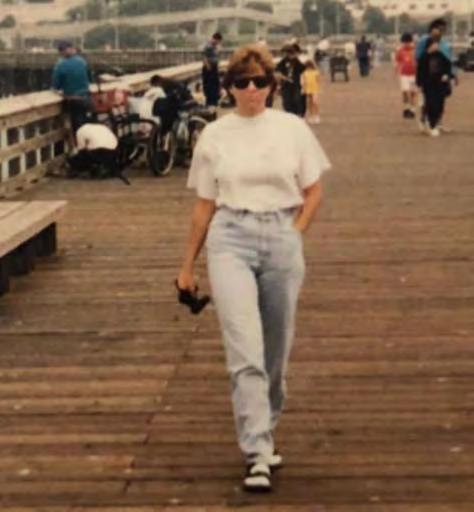
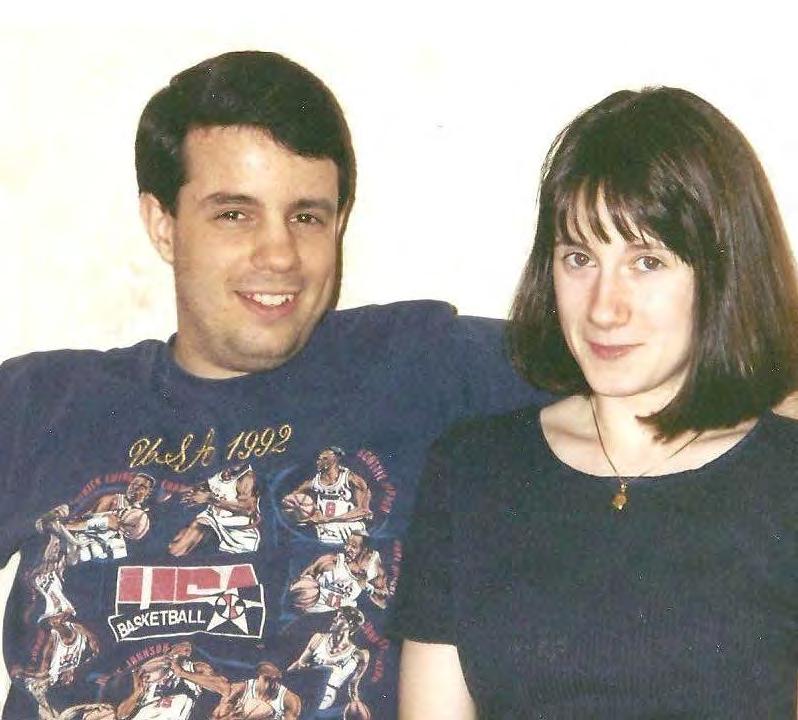
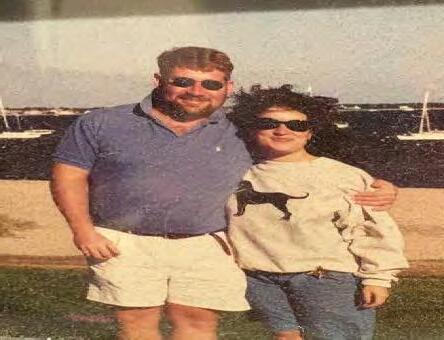
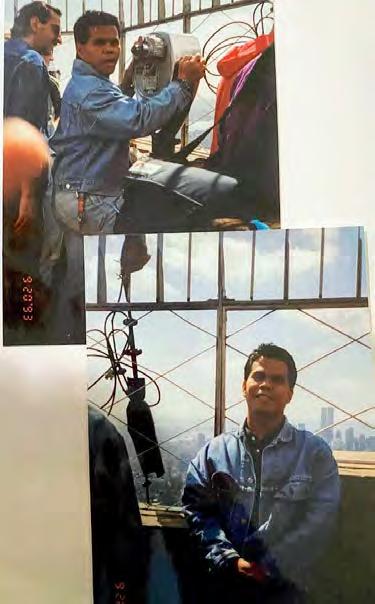
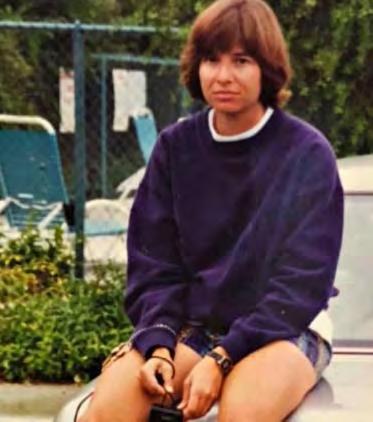
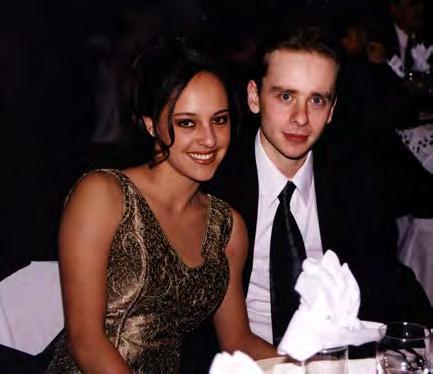
A nostalgic glimpse into the past, we captured snapshots of the people we know and love most. Explore the personalities and stories behind those who raised us. These are Your Parents.
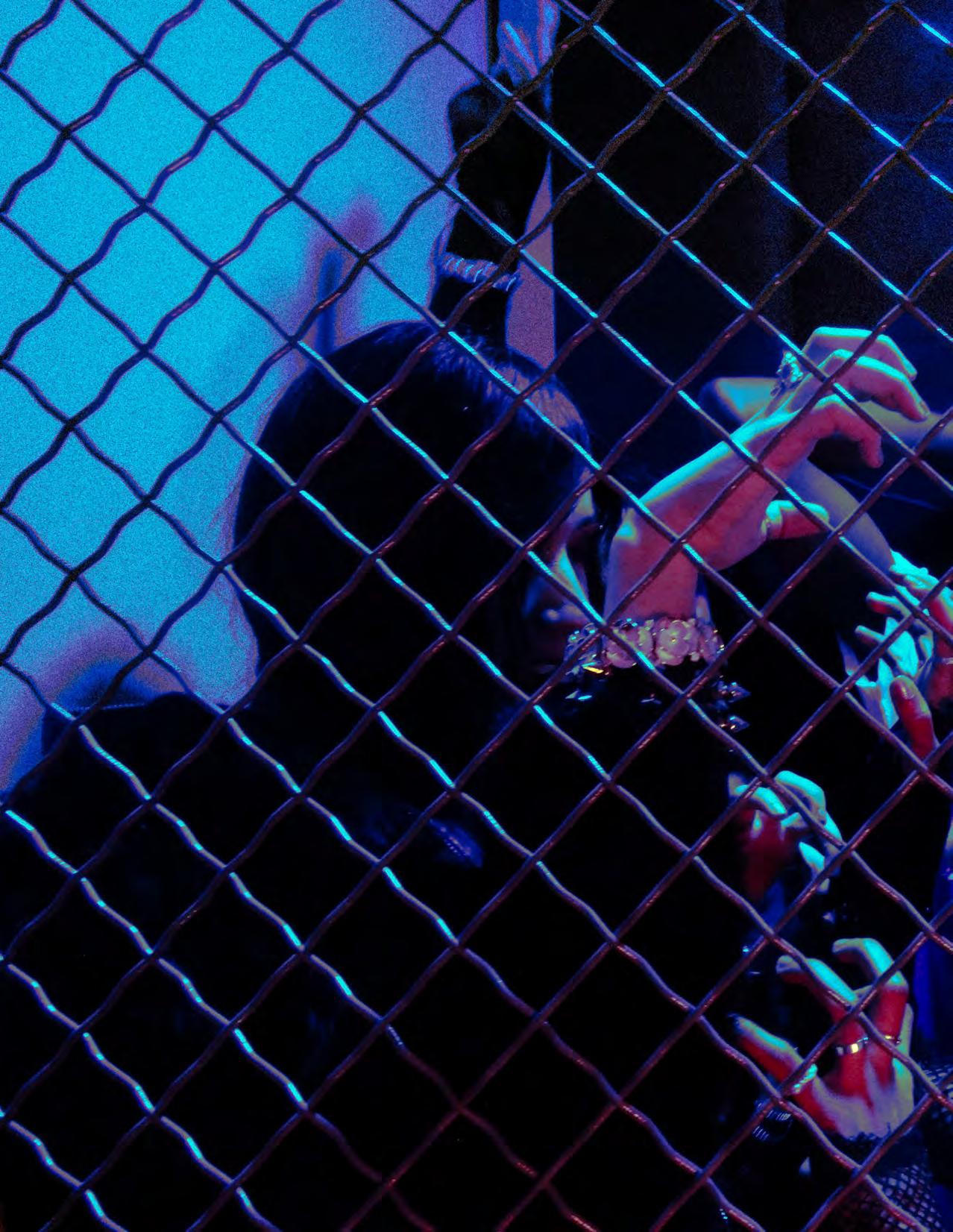
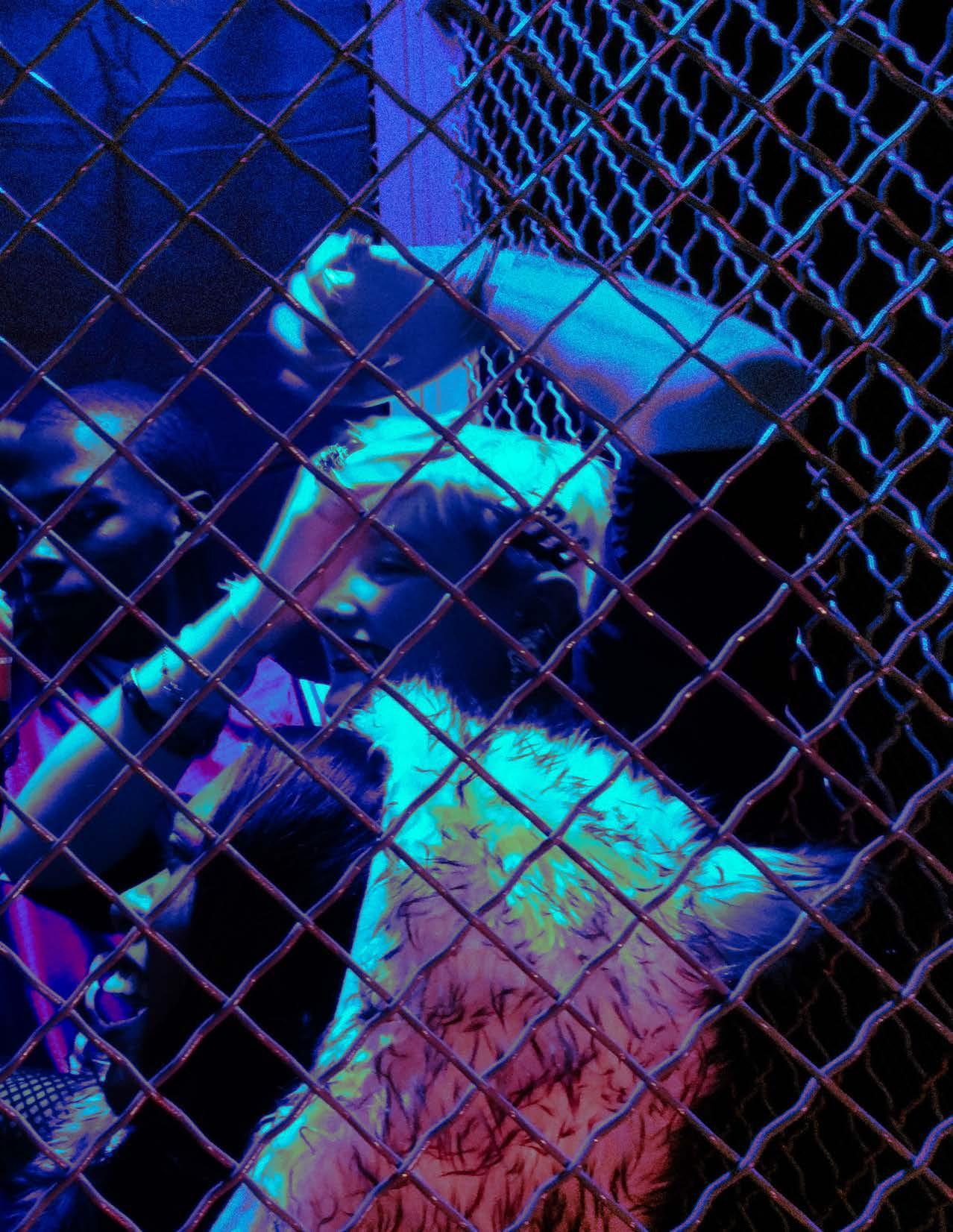
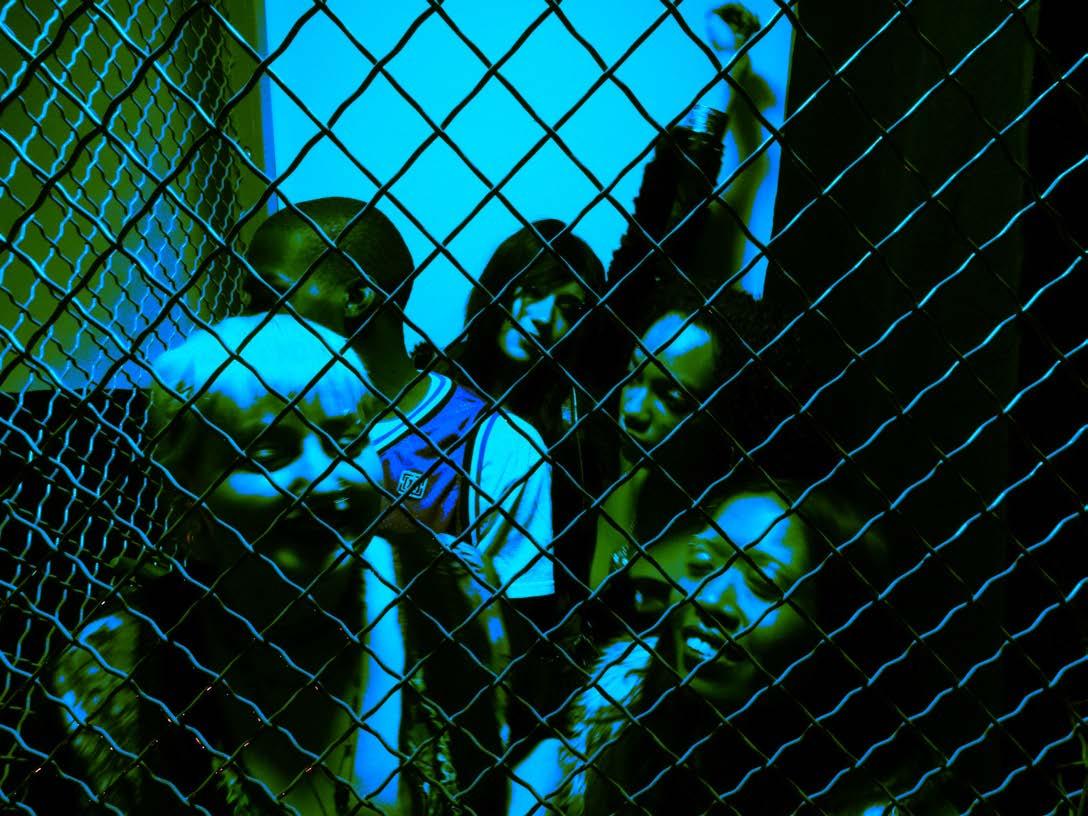
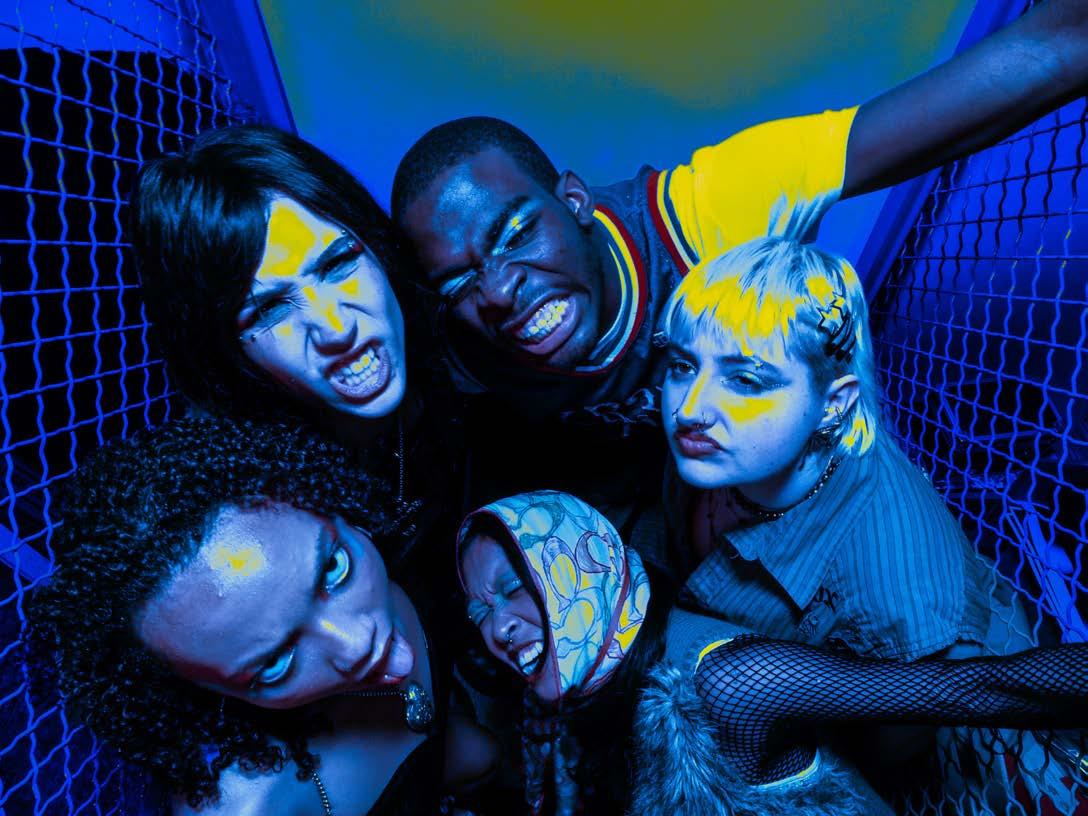
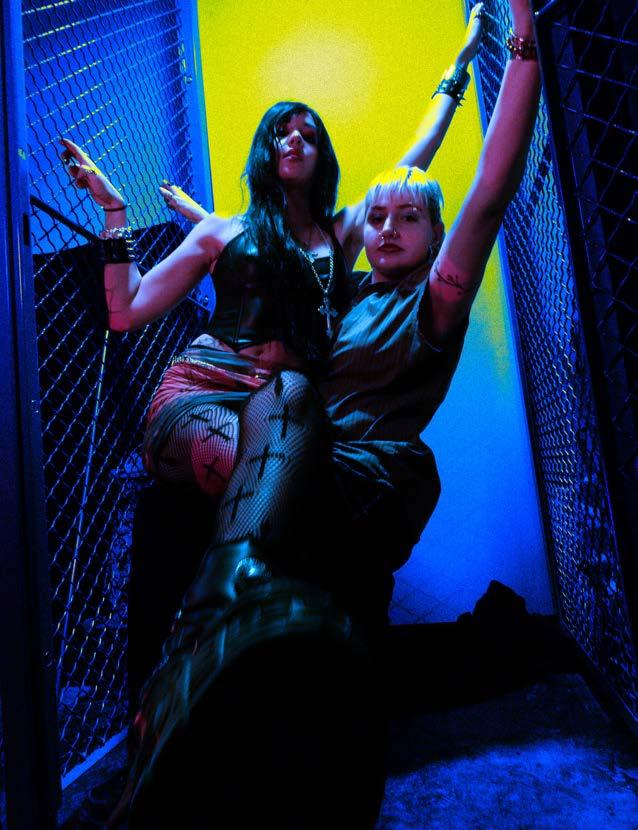
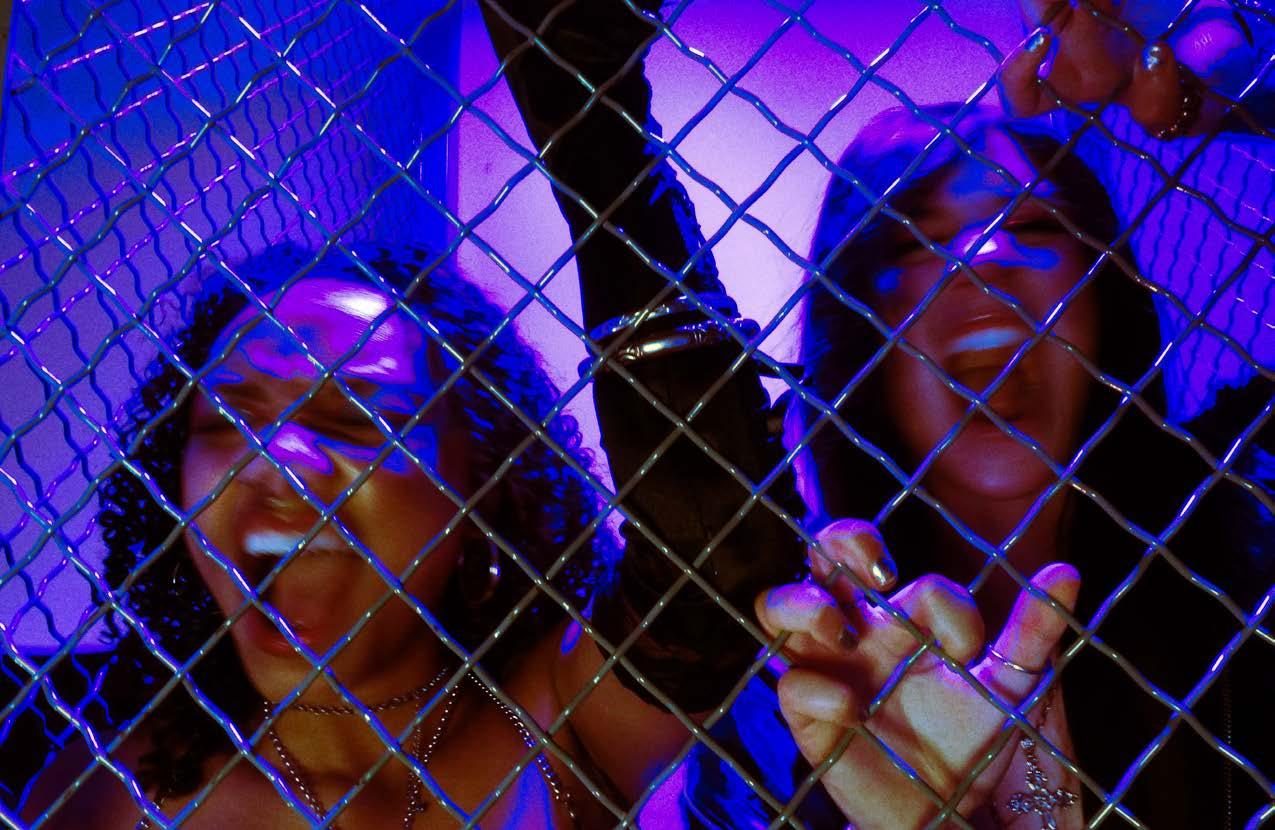
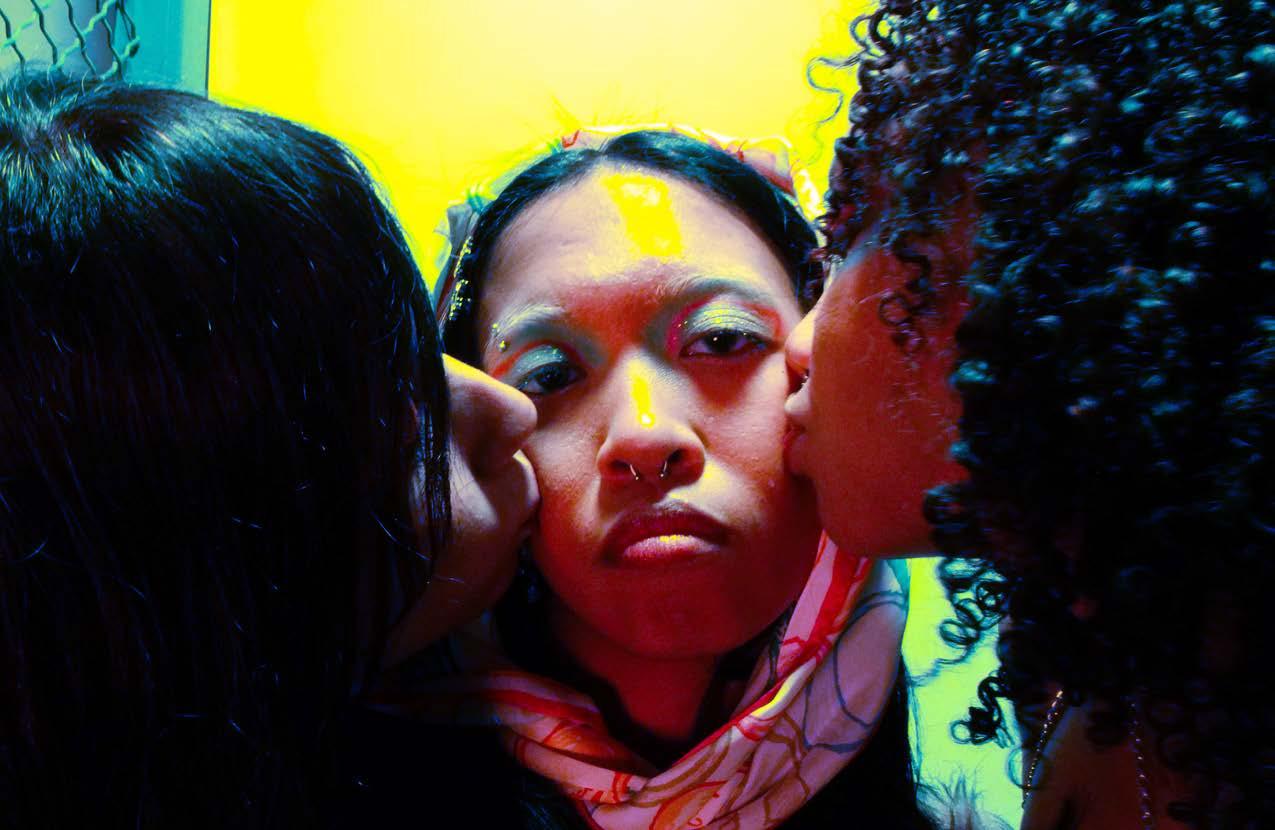
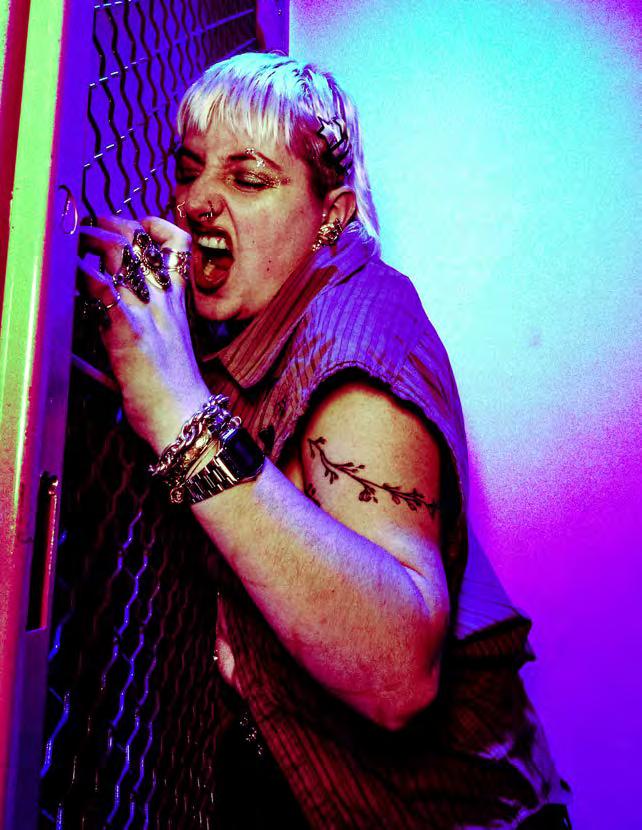
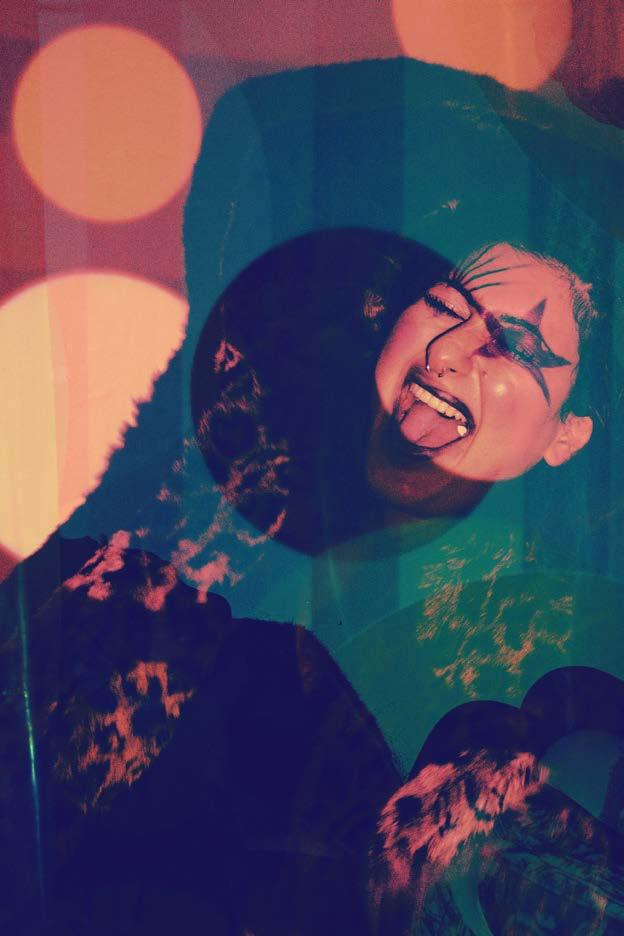
IN TRYING TIMES, THE YOUTH IS UNIFIED BY A MIX OF PRESSURE, CHAOS, PASSION, AND RAGE. WE WANT TO BLOW OFF STEAM, BE WITH OUR PEOPLE, EXPRESS OURSELVES—AND TO THE RAVES, BASEMENTS, AND CLUBS WE GO.
IN QUEER SPACES, AN UNAPOLOGETIC COMMUNITY IS A FORM OF PROTEST, AN ACT OF RESISTANCE. YOU COULD CALL IT RAGING THE FUCK ON.
where’s our
Woodstock?
WRITTEN BY KAT BOSKOVIC
PHOTOGRAPHED BY ALEXA LUNNEY
Ihate to break it to you, but your most beloved actors, musicians, and comedians have likely all done hard drugs. Netflix even recorded it.
In the mixed-reviewed documentary Have A Good Trip: Adventures in Psychedelics, celebrities recount their wildest psychedelic experiences— some profound, but most ridiculous. Carrie Fisher was photographed nude by paparazzi. Sarah Silverman groped the face of a homeless man. Sting was indoctrinated into a Mexican desert peyote cult. The documentary paints psychedelics as chaotic, mind-altering, and deeply tied to self-exploration—whether that leads to spiritual enlightenment or just an embarrassing headline. What it fails to mention is the deeply political potential of acid.
Initially legal in the Swinging Sixties, psychedelics rose in popularity for the obvious reasons: mystical discovery, ego death, and a deeper connection to the threads of the universe. But these drugs also played a significant role in the counterculture of the Cold War, postnuclear family era. The United States’ involvement in Vietnam was escalating, the Red Scare persisted, The Feminine Mystique was published, and both Martin Luther King and Malcom X were assassinated. This led to great civil unrest, particularly among younger generations as universities became hotbeds for activism. The psychedelic movement became inherently political, for it encouraged free thought and rejection of mainstream values. Harvard University psychologists even promoted hallucinogens as a medium to expand consciousness and pushed the idea of “turn on, tune in, drop out,” that became the rallying cry of the psychedelic movement—to open your mind, connect with the natural world, and escape rigid western institutions. The Supreme Court unanimously voted for the strike-down of anti-interracial marriage laws across all states. Contraception became federally legal for married couples. Educational discrimination and employment discrimination were both banned. Racial discrimination became prohibited in voting booths. The hippies of the sixties, through mind-altering mushrooms, LSD, and peyote, had taken great strides towards progressivity in our country.
Chef and author Anthony Bourdain, when interviewed for Have A Good Trip, explained his frustration that he had been too young to embrace the psychedelic movement he had observed in newspapers and on television as a preteen. “I had read about them in Life Magazine when I was nine and ten years old, and that looked really good,” he explained with disappointment. “People are jumping out windows. It must be interesting.”
And, as far as media portrayal is concerned, it was interesting. Headlines screamed in bold print that a teenager had jumped off of a rooftop in an attempt to fly, a man had stabbed his friend while hallucinating, and a woman on LSD convinced herself she could converse with animals, but these sensationalist articles that mystified the masses, including young Bourdain himself, only reduced the broader sentiment of 1960s counterculture to mere youthful chaos or rebellion. Psychedelics, when viewed through a solely recreational lens, are stripped of their deeper sociopolitical context, and we lose the pivotal role these drugs played in challenging established norms through movements of civil-rights advocacy and environmental consciousness. Despite their controversial reputation, these mind-altering substances were, for many, integral to a period of introspection and activism that reshaped societal ideals, even if we rarely give the era the credit it deserves in driving forward profound sociopolitical change. And that is precisely the problem: As we see a modern resurgence of hallucinogens,
we are met with our very own ignorance of their political potential. To anyone with a sliver of empathy, the current American political scene is abysmal. Three years ago, women witnessed their right to bodily autonomy stripped away by the Supreme Court. Every day, undocumented immigrants by the hundreds are either rounded up into modern-day concentration camps or deported altogether. The Department of Education eliminated Diversity, Equity, and Inclusion initiatives. What’s more, the United States has pulled out of the Paris Climate Accord, our president posted an AI-generated video planning to gentrify a genocided Gaza into a string of beachside resorts, and the Head of Government Efficiency even performed the Nazi salute after his speech at the presidential inauguration. In an era of psychedelic revival, we need the counterculture of the Swinging Sixties more than ever.
Except today, psychedelics have become a mere escape. There is no fathomable reason for Sting to fly out to a remote desert in Mexico and douse himself in deer’s blood on a brutal hike up a mountain high on peyote if not for escapism, nor is there a fathomable reason for Carrie Fisher to film herself nude, tripping on acid at a beach in the Seychelles, if not for escapism. Psychedelics may be making a comeback, but they’re wearing a suit and tie; instead of hippies advocating for ego death, we have Silicon Valley executives microdosing for peak performance. Instead of students tripping in protests, we have ketamine therapy clinics promising to “biohack” your depression. The revolution is being repackaged, stripped of its anti-establishment roots, and sold back to us as a mental health tool, a self-improvement strategy, or worse—a workplace performance enhancer.
Today, psychedelics are all about turning off, tuning out, and keeping up. The resurgence of LSD and mescaline and psilocybin isn’t about rejecting the rat race, but squeezing out more productivity from the rats racing. Need to stay focused? Try microdosing! Can’t handle burnout? Ketamine therapy! Last year, online tech company networking site Built In even published an article titled “Five Reasons to Consider Microdosing at Work,” going on to argue that “microdosing psychedelics offers a unique opportunity to enhance cognitive function, particularly in areas related to creativity and problem solving.” In season three of Riverdale, a writer’s block-plagued Jughead takes mushrooms and chains himself to his desk to finish his manuscript, so impressionable twelve-year-old me, never seen without her pen and notebook, became obsessed with the idea of taking psychedelics and chaining myself in front of my keyboard for the purpose of productivity. Instead of being marketed as a means to “see the world differently,” they are marketed as a method to “unlock your potential.” With this commodification, psychedelics are weaponized to ensure we don’t crash under the weight of hustle culture, rather than rejecting the hustle in favor of progress.
There’s no denying that psychedelics hold monumental potential for healing and self-discovery. But when the same drugs that fueled antiestablishment movements are now being pitched as a performanceenhancing supplement, does the consumer or the corporation benefit? Psychedelics don’t contain an inherently revolutionary chemical element, something between carbon and boron on the periodic table; their revolutionary potential lies within those who use them. The oversaturated graphics and immature humor of Have A Good Trip argue that the real trip isn’t just about what you take, but where it takes you. But where can the trip take us? YM
Bigger Can Be Better: Learning to Embrace the Frizz
WRITTEN BY SOPHIE HARTSTEIN
“Hair. Is. EVERYTHING.” — Fleabag, season 2 episode 5
Ididn't know my hair was curly until I was seventeen years old. Growing up, my mother did my hair the way she did hers: wash, brush, air dry. That worked well enough, until I started to go through puberty and my hair texture demanded its time in the spotlight.
My curls come from my Jewish father’s side of the family. However, I never had a way of knowing this because the women in his family kept their hair straight. For all I knew, I was the only person on Earth cursed with big, puffy hair. Turning on the TV only made the situation worse: My hair was the “before.” The Hermione Granger; the Mia Thermopolis.
I went years thinking I had “bad” hair. Some sort of divine punishment, surely. All of my friends had smooth hair, soft to the touch where mine poofed out and demanded attention. I used all the same products they did, so why didn’t I have the same results? This destroyed my confidence as a young adult; I found myself unable to feel truly comfortable with how I looked.
Enter: the flat iron
In the sixth grade, my dad’s girlfriend at the time bought me one and taught me how to tame my unmanageable hair the way she had for decades. I thanked her and straightened my hair nearly every day, well into high school. I heat-damaged my hair for years, but it was the best I had ever felt about my appearance.
Quarantine was a time of self-reflection for many. Spending all that time inside, coupled with the emergence of TikTok and little else to do, made me finally realize that I had curly hair. I bought the classic bright yellow Marc Jacobs curl cream, a diffuser attachment for my unused blow dryer, and followed a TikTok video to diffuse my hair for the first time. Remarkably, I didn’t hate the results!
There was also little consequence to trying new things when no one was going to see you in real life. The transition to curly hair is a brutal one—there is a reason many opt for “the big chop,” I was just too attached to my length to give in to that necessity. But quarantine created the perfect environment for working through the awkward phase of hair that just looked unbrushed and tangled, when really there were curls underneath, begging to breathe. By the time the world opened
back up again, my hair was a lot better looking, and a whole lot curlier. Teachers asked me if my hair was real; parents of friends demanded to know if I had gotten a perm—and didn’t believe me when I said the answer was no.
I look back on images of myself with sleek, heat-damaged hair and feel sad for her. I can't really blame her, though—she had no one to identify with.
Today, I am so glad young girls are getting to grow up with a variety of hair-related role models, but I can't help but feel a pang of jealousy. Chappell Roan climbed my Spotify stats earlier than most, but still only reached me in late 2020, around the time I was starting to understand my hair anyway. The idea of a generation of girls who look like me growing up with her at the forefront of popular culture makes me emotional, to say the least.
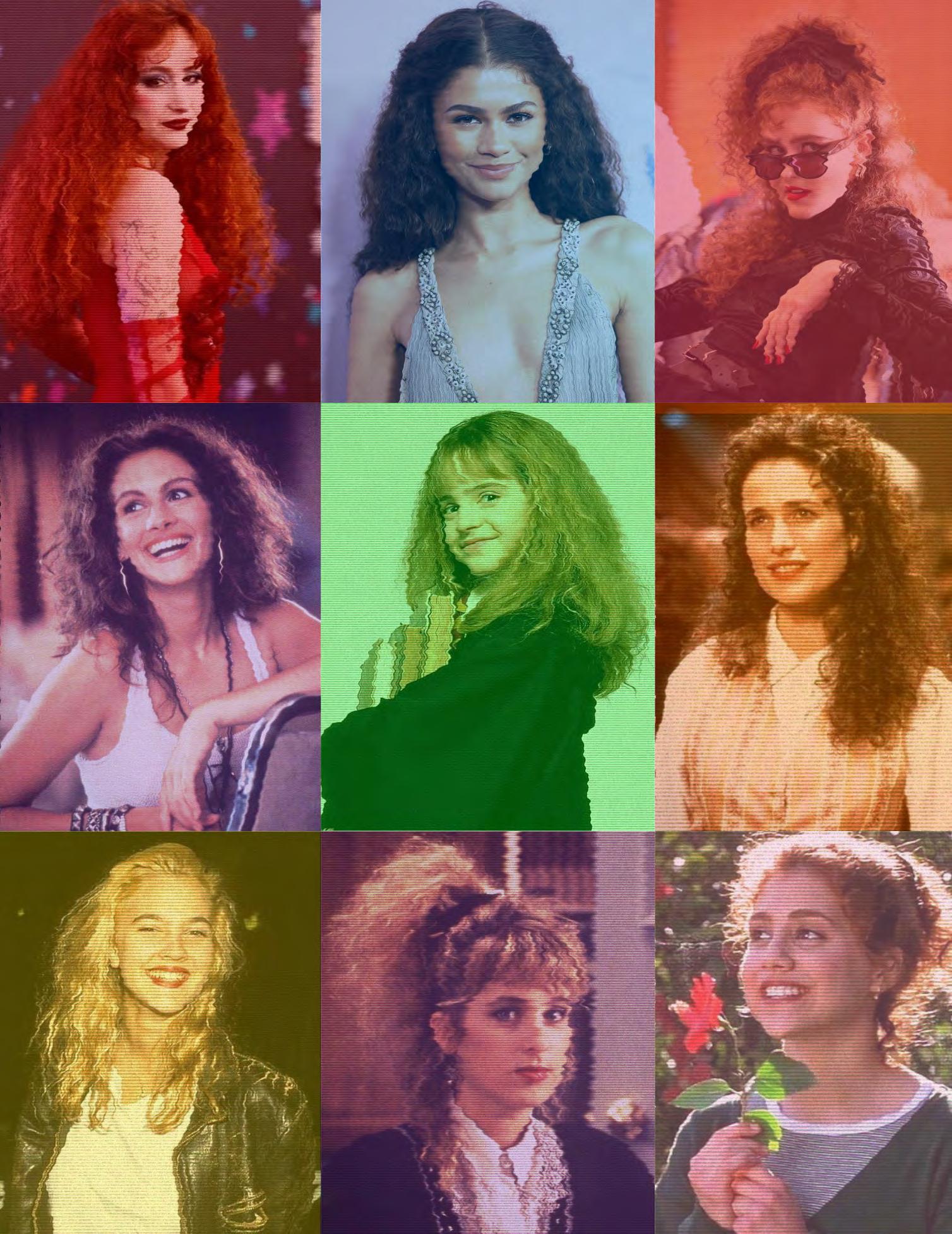
More and better hair representation is still helping me today, even at 22. After seeing Lisa Frankenstein for the first time, I went home and brushed out my curls with my fingers, considering for the first time that the frizz I try so desperately to weigh down with product could be a good thing.
My first watchthrough of Twin Peaks affected me similarly (and occurred on a similar timeline). Lucy, the sheriff’s secretary, wears her hair big and proud atop her head, often in an asymmetrical updo. She quickly became my favorite character and I found myself, like her, beginning to wear my hair higher and higher on my head.
It’s not just women embracing their curls that we need, it’s women embracing the frizz. Sophie from Mamma Mia! isn’t enough, I need Magenta from Rocky Horror. We’re long overdue for a mainstream comeback of the voluminous, brushed-out curls that defined ’80s movies and TV—and as a curly-haired viewer, I am more than ready for it.
Today I wouldn’t dream of flat ironing my hair regularly. Because I care too much about my hair to risk heat damage again, but even more so because I want to be the representation I didn’t have growing up. At that age, regularly seeing people with hair like mine walking down the street would have done me a world of good. If I can be that for even one girl with puffy, unruly hair, then it’s all worth it. YM
ART BY HAILEY KROLL
FAME PARADOX
WRITTEN BY JACK SILVER ART BY SIENNA LEONE
You’re the next best thing. The biggest and brightest.
The world leers its ugly, piercing eyes towards you and for a moment, however brief, the stage is yours. You may land the trick, or fall flat on your face, or perhaps stand frozen in the headlights—but, no matter what happens, your moment will pass. Then the world is onto its next unfortunate fad. And you are the old forgotten thing. And no one is anyone.
Social media was the promise of a new frontier for creatives. A Wild, Wild West where you could wake up as the sheriff in a town somehow big enough for everyone. There is no question that social media has drastically increased the average person’s chances of widespread popularity, but what is yet to be seen is if this lottery system is as beneficial as it appears on the surface. After all, fame has never been easy to handle, and with trends becoming more and more disposable, it’s only grown harder to turn a fleeting spotlight into a sustainable career.
Pop culture as we know it has changed dramatically with the rise of technology. Celebrities like Elvis Presley, Marlon Brando, and Marilyn Monroe were able to amass millions of fans who worshipped them like deities. Hate or love them— everyone knew them. Now, this paradigm certainly came with drawbacks: harassment, invasions of privacy, and violence, to name a few. Yet, none of these downsides have disappeared in the modern landscape. In fact, social media has only given more people a platform to attack anyone who dares to venture into the spotlight. The artist today lacks many of the guarantees that once came with fame, and still deals with the consequences.
Online, every aspect of your life is dissected: your body, your family, your relationships, your past, and your future. While this level of scrutiny is almost impossible to avoid with stardom, the vicious, anonymous nature of social media has undoubtedly magnified this behavior.
In the modern age, fame is far more fractured than ever before. An influencer can experience their whole career within a single day. Celebrities on social media are, more often than not, people who arrive at the right moment doing the right trend. But when they reach their millions of potential adoring fans, they are either not prepared for the harsh realities of fame, or they lack the talent and good fortune required to last beyond that initial wave of attention.
So where does that leave you? You can go for the lottery and, if it goes your way, you can blow your winnings in a week’s time. Or you can go a different route—one that avoids the cesspool of trends and artificial connections. You don’t have to abandon social media entirely, but you can instead promote yourself from the ground up. Build a fanbase slowly. It may seem impossible to devote so much time to this when there are far quicker possibilities (especially when art, music, writing, and countless other disciplines have become increasingly difficult to pursue without considerable resources and financial freedom), yet it is truly the best path to take. Look beyond the algorithm, stay authentic, and stay focused. To grow a fanbase is to trust in yourself rather than your image. An image is fleeting, and always disappointing when the world discovers the human behind it. YM
Get DownDownDown with S AND R
WRITTEN
BY
HAILEY KROLL
Last month, I got to experience one of my favorite moments in college to date. Not only did I attend a quintessential house show in a Boston basement, but I had the opportunity to work alongside S AND R to prepare for and plan the event, design the liner notes for their newest EP, and make what I hope to be lifelong friendships with the members.
Within just two months, my girlfriend Jessica Linden and I took the band’s vision for their EP launch party and ran. The party was complete with balloons— inspired by the first track in the EP, “Party Balloon"—party favors with handmade gifts, (non-alcoholic) Jell-O shots, a DJ set by V V N and Lilith, and, of course, a performance by S AND R.
Saxon Kennedy and Reeve Pope, the hearts behind S AND R, have been working on this EP since their start at Berklee College of Music.
DOWNDOWNDOWN is a full circle, “we’re doing it” moment for them, which they started in their very first semester and released in their very last.
DOWNDOWNDOWN is a genrebending, experimental, five-song EP inspired by a friendship gone wrong. Exploring themes of interpersonal naiveté and blissful ignorance in the first two tracks, “Party Balloon” and “Taste of the Crown,” listeners get a false sense of wholesome connection between two friends. From there, we hear the downfall of the falsities, symbolized through the bursting of that party balloon, showcasing reality quickly setting in. Woven into the story are two characters: bubbles and BRUTUS, who act as the two sides of Kennedy’s conscience, serving as defense mechanisms.
PHOTOS SUBMITTED BY
KAYLYNN LAGUARDIA
takes the reins, playing a protective role for Kennedy, even arguing with bubbles when she attempts to forgive those who did them wrong.
The friend that bubbles and BRUTUS are arguing over is officially named in the third track, “CAESAR,” which introduces the main conflict. Despite their vital connection to the story, we never hear directly from CAESAR. We only hear about them through gossip by the other characters. In the track we hear Kennedy asking, “Are you really CAESAR?” before BRUTUS steps in, with dismissive lines such as, “Get the fuck ’way from me, go to therapy.”
As the drummer of S AND R, Pope’s involvement is represented through the driving backbeat. The drums drop out at the end of the track when Pope gets caught up in the conflict. Understanding that he cannot fight Kennedy’s battles for them, the elimination of drums symbolizes the falling out.
In the absence of Pope, Kennedy begins to realize they are part of the problem. Everything they were holding in begins to spill out, including CAESAR’s secrets. We see this unfolding in the fourth track, “SAVIOR.” With lyrics reading, “I got your hospital bill, I’m no savior,” and “I was the traitor,” their guilty conscience takes over. As the conflict reaches a climax, the drums re-emerge halfway through the second chorus with the line, “Weigh me down, down, down, down, down, down.”
bubbles is the life of the party, her extremely social and hyper personality is perfect for first impressions. However, her insecurities often take over, making her clingy and oftentimes overbearing. In this role, she finds herself playing devil’s advocate for those who hurt her to maintain connections. She is most represented by “Party Balloon,” but tends to pop up throughout the EP with shorter lines and background vocals. BRUTUS, on the other hand, is hard-headed, easily angered, and very standoffish. As the main character of the EP, BRUTUS often
With DOWNDOWNDOWN as the title of the EP, this signals a defining moment. Pope stabilizes, acting as a grounding and supportive identity. The conflict resolution occurs in “Out Of The Haze,” circling back to the celebration in “Party Balloon.” This time, however, all has been revealed. Praying “for the sun,” Kennedy takes ownership of the event: “It’s my party now, I’m gonna celebrate,” hoping they’re finally in the clear. At the release party, S AND R relished in deserved celebration, with attendees singing along, even calling them back for an encore. Difficult friendship turned creative endeavor, the labor of love that is DOWNDOWNDOWN inspires connection through evocative lyricism and instrumental depth, fostering a community that uplifts a continuation of their storytelling. YM
which early 2000s movie are you?
1
What’s your idea of a perfect weekend?
A) Having a mall day and night out with friends.
B) A movie marathon.
C) Getting outside with friends.
D) Throwing or attending a fun party.
2
Choose a hobby
A) Nail art
B) Playing an instrument
C) Anything outdoors
D) Scrapbooking/ crafting
3What’s your favorite color?
A) Pink
B) Green
C) Blue
D) Red
4
What’s your favorite season?
A) Fall
B) Spring
C) Summer
D) Winter
ART SUBMITTED BY TANVI DEMBLA
Choose a podcast genre
A) True Crime
B) Relationship Advice
C) Travel
D) Pop Culture
6
Dream area to live?
A) New England
B) Somewhere on the West Coast
C) Anywhere by the ocean
D) Somewhere in a city
What’s your favorite type of music?
A) Pop
B) Alternative or rock
C) Chill, laid-back tunes
D) Anything upbeat
results
mostly a’s mostly B’s
mostly C’s mostly D’s
LEGALLY BLONDE:
You love all things fun, but you know when to LOCKIN. Your attention to detail is what makes you stand out whether it’s at a party or on a test.
10 THINGS I HATE ABOUT YOU:
You are a bit of a homebody, which allows you to tune in on your talents and feel in touch with yourself. You tend to get lost in your own world. This is not to say you mind a side quest…the right people will bring out an adventurous side of you.
BLUE CRUSH:
You are a go-with-the-flow kind of person. You are down for any plans, and when you don’t have plans… well… you make them. Staying inside gives you FOMO so you are always looking for a way to get outside. Sometimes you lose sight of your own goals, but you always find your way back.
MEAN GIRLS:
You love romanticizing your life and where you are. You feed off of other people’s energy, which can easily affect your emotions for the better or for the worse. How you are feeling fuels your creative process and projects.
INSPIRED BY HENRY SELICK’S CORALINE , “BUTTONS” PLAYS WITH THEMES OF BEING PUSHED INTO ENTRAPMENT OF THE SELF. THE EDITORIAL EXPLORES WHAT IT MEANS TO BE FORCED INTO THE GENDER BINARY, COMING TO TERMS WITH REALITY, AND ULTIMATELY EMBRACING IDENTITY. BUTTONS ARE USED AS VARIOUS ACCESSORIES TO SHOWCASE THE MOMENT ONE BREAKS FREE OF THOSE EXPECTATIONS, ON A JOURNEY TO ACCEPTANCE AND THE EUPHORIA THAT AWAITS.
DIRECTED BY HAILEY KROLL
PHOTOGRAPHED BY HAILEY KROLL
MAKEUP BY HAILEY KROLL AND MEREDITH HILL
STYLED BY HAILEY KROLL AND EMILY HAMNETT
MODELED BY LIAM BENNETT, MEREDITH HILL, AND ELISE GUZMAN
BUTT NSB
360 Charli xcx
OMG Suki Waterhouse
Let me go OH OH Tove Lo, SG Lewis
What’s The Time Where You Are? Troye Sivan
THE DINER Billie Eilish
Bon Bon Fcukers
Echolalia Yves Tumor
Dsco Sweet Trip
ROCKMAN Mk.gee
Pro Freak Smino, Doechii, Fatman Scoop
EPANO STO TRAPEZI Marina Satti
Guess Charli xcx, Billie Eilish through the late night Travis Scott
It Won’t Always Be Like This Inhaler Sticky Tyler, The Creator,
GloRilla, Sexyy Red, Lil Wayne
Abracadabra Lady Gaga
Faucet Failure Ski Mask The Slump God
NUEVAYoL Bad Bunny
Born Slippy (Nuxx) Underworld
(It Goes Like) Nanana Peggy Gou
Dákiti Bad Bunny, JHAYCO
Hollywood Fever The Crashtones
Sheibe Lady Gaga
I Love It Icona Pop, Charli xcx
F*ck The Pain Away Peaches
ARTIST STATEMENT Izzy Maher she/her
What inspires you?
My inspirations come from my senses and emotions. What I see, hear, and feel resonates with me to create. Emotions are stirring inside that I need to release. It is much easier to doodle and let out my thoughts than to journal. When you have so much awareness about how you feel, what you feel, emotionally and physically, it all becomes so overwhelming. An outlet to express that is how I stay afloat. It's like how a composer becomes inspired to make a song after significant experiences or emotional turmoil, or maybe after a state of meditation breeds clarity of mind. That's how I find I become inspired.
Describe your work in one sentence. Textures and mixed media.
Who are some of your favorite creators/artists?
One of my favorite creators is Hayao Miyazaki. I love his work of simple character design and so much detail on landscapes and his collaborations with Joe Hisaishi to bring beautiful scenes and sounds to the screen. Everything they do is like one big sensory escape. I'm very inspired by Salvadore Dali, Antoni Gaudi, and Monet's works. I'm so grateful to be studying in Spain right now; I am blessed with the beauty of life here and the ability to see incredible art daily. It fills me with joy. One of my friends, @ Ameroseart, is also my favorite creator. Everything they make is fantastic, and I learn so much from them!
Why cartoons?
A good cartoon or animation can give you so much more than you realize on the surface. These writers must be specific with their language to describe a scene to collaborate and make an animator's job easier. The score and sound track alongside beautiful animation could make me cry, to think someone sat down and made all of that with their hands and another person watched it and created a full composition for it makes me emotional. The effort put into them deserves so much more respect; it makes me sad that people consider it not on the same level as films or TV shows because they are considered "for kids." After all, so many people put their blood, sweat, and tears into giving us that media.
How and when did you get into digital illustration?
One day senior year of high school, I sat down and started drawing cartoon characters on sticky notes and put them all over my walls. The algorithms started showing me digital art, how a person could mimic different media forms all on one platform, and I was fascinated. I started using digital platforms solely because they were inexpensive. I could practice sketching, mimicking oils and pastels, making stencils, etc. It was so much fun. I just messed around in my free time to relax, and it would turn into hours of drawing.
What is it like to be Instagram/ TikTok famous?
I am not either of these things, I don't operate a lot on social media, or at least I didn't because I highly value my privacy, and creating was a very personal thing for me, but I have slowly started sharing work and my photography as well on my Instagram and have considered making an account to share my work with the world. I also just started an art club in Valencia because I'm inspired and excited about being around many talented, creative musicians. I wanted to create a community space for people to express themselves through other art forms.
What advice would you give other/new creators?
Putting a label on yourself is the worst thing you can do for yourself and your work. Some are perfectly fine with it, but if you choose to present yourself to the world as a digital illustrator, a filmmaker, a musician, or a writer, you've put yourself in a box. It becomes so much harder to create when you exist in that box. Rules appear, and your creative spirit becomes hindered. Strip yourself off the labels and exist solely as yourself. The labels are only there because the world uses them to attempt to understand, but they don't need to understand, nor do you. Your best work will come when you accept how lost and confused you are because the human experience is just one attempt to make sense of things. Stop doing that and start being curious, start feeling, utilize all your senses, and trust in the universe. An abundance of creativity and greatness will eventually come because it's inside you and all of us.
Where do you see yourself in 10 years?
I have no clue, and I don't care to know. I hope I am still creating and moving around and that I am learning new art forms, but I see no point in trying to make predictions about where I might be in such a long time because I can't even do that for a year from now. Life is better when you stop looking at the future all the time.
What is your favorite illustration you've made? What makes it special to you?
My favorite piece of work is just some fish. I spent a weekend alone in Boston. My best friend went home for the weekend, and I had been really struggling with my physical health for almost a full year at this point, and I was overall struggling a lot. Needing to quiet my mind, I treated myself to a day at the aquarium. I was there for hours, observing everything I could, primarily focusing on textures. I went home and experimented with pastels for the first time; it's still one of my favorite works.
Where can readers see more of your work?
Right now I don't have much up but I will soon have accounts to follow with my work. For now you can find me on instagram @ izzy.maherr and I will be updating there where you can find my work and prints I will be selling soon!
CLOCKING OUT! YOURMAG SENIORS
DIRECTED BY EMMA BOWEN
PHOTOGRAPHED BY EMMA BOWEN
MODELED BY HAILEY KROLL, LILY BROWN, ANNA BACAL PETERSON, VARA GIANNAKOPOULOS, NATÁLIA OPRZADEK-VODILKOVÁ, SOPHIE HARTSTEIN, REBECCA CALVAR,
This feels so incredibly surreal. I was just walking around the Emerson gym, attending my first-ever Org Fair, wasn’t I? I remember it so vividly, as though it was yesterday. Coming to Emerson, I thought I had everything figured out. With writing as my first love, I was going to be a journalist. However, in that moment, I realized how many options I truly had, all laid out in front of me! The big question: Which publication do I pick? As a quite timid freshman with so much passion, I took a deep breath and began to venture around the myriad of booths. The first time I laid my eyes on YourMagazine was eerily similar to the tried and true slow-motion movie moment in a rom-com. It’s true, YourMag and I had a meet-cute. In actuality, I don’t know if it was the cute girl running the booth or the possibility of expanding my creative potential that drew me in (probably both), but from that moment on it’s been YourMagazine and I against the world.
The Leadership Team at the time decided to take a chance on that first-semester freshman version of myself, hiring me as an Assistant Head Designer, forever altering the course of my college career. I became Head Designer soon after, reveling in the highs and lows that come with designing an entire fully student-led publication for two whole years. Now, filled with so much gratitude, I am signing off from the role of Managing Editor. Joining this magazine was the catalyst for so many wonderful opportunities: I fell in love with graphic design, I changed my major to WLP with a publishing concentration, it was the reason I stayed at Emerson when times got tough, and it connected me with so many like-minded and incredibly talented peers. This being my last print issue feels way too soon, but the twenty-four issues of YourMagazine in me, supported my art, and worked alongside me, thank you from the bottom of my heart.
With an immense amount of love, Hailey Kroll <3
You know, I often kid around about how YourMagazine has always been my baby. From the moment I saw the magazine at the Org Fair my freshman year, I knew I wanted to give it a little tender loving care. It started off with some style writing. Then I tried out some editorial photography. The more I pitched, the more my creative eye caught the attention of leadership, and soon, I found myself in the Creative Director role. And now as Managing Editor, it truly feels like being a mother to something I’m so passionate about — a love for the entertainment, lifestyle, and wellness industries. It’s a little corny, I know. However, here we are, four years later, and my “baby” has grown into something bigger than I ever imagined. Like any proud parent, I’ve watched it stumble, evolve, and flourish—sometimes with tears (mine), sometimes with triumphs (also mine, LOL). But it’s also about our incredible team of creatives, writers, and editors that made every issue a masterpiece. It’s about our moments of sheer panic that turned into proud victories. Most importantly, it’s about our stories we’ve told—bold, witty, and unapologetically Emerson. So, as I pass the metaphorical baby bottle (or, more accurately, the editorial baton), I leave with nothing but gratitude and a slightly dramatic tear in my eye. Thank you to my incredible team, both past and present, family, and friends for always supporting me through it all. always be your biggest fan, cheering you on from the sidelines, proud of everything you become.
XOXO, Lily Brown
Sweet YourMagazine,
What a brief little love affair we’ve had! All these years at Emerson, and I only took a chance at being part of this amazing team in my last semester. What a bittersweet way to say goodbye to my college years—but gosh, I am glad to have been with YourMag for any time at all.
I can’t thank this team enough for taking a chance on me and letting me leave my mark on the Community Chair position. This role—and this team—have reminded me of the love, time, and dedication it takes to create something so beautiful. YM has taught me so much in so little time, and I can’t wait for a lifetime more of waiting to see what each new issue brings. Best of luck & lots of love to the future of YM leadership, staff, and readers—don’t forget to miss me!
I’ve had such a great time being a part of YourMag the last few semesters! Everybody is so kind and welcoming, and it’s been so lovely getting to meet so many people. It’s been so amazing to be a part of an org that has the same creative values and ideals as I do. I’m so excited to see how YourMag grows in the years to come! Thank you to the YourMag family, I’ll always be a part of this community.
Viv
I joined YourMagazine as a staff copyeditor the first semester of my sophomore year, as part of my mass applications to any on-campus publication that would take me. I had just, after the first meeting of my Copyediting class, discovered my love of copyediting, and wanted as many opportunities to expand my skills as possible. For the next year and a half, I was not very involved in the magazine at all. I would sign up to edit every semester, and was grateful for the opportunity to read some fascinating pieces, but Rachel Tarby, the Copy Chief at the time, was my sole point of contact at YourMag—and we only “spoke” once a month over email, when I would volunteer my editing services. During the second semester of my junior year, Rachel announced that she was hiring an assistant to take over for her when she graduated at the end of that semester. I applied, thinking, since I had only been with YM for a couple of semesters, there’s no way I’d get it. I (clearly) got it. From my first E-Board meeting, my relationship with YourMag shifted. I always thought YourMag was a super cool publication that published super cool work, but I never really saw myself as a part of the team—I was “just” a copyeditor, after all. But from the moment I joined, everyone on E-Board was such a positive presence, and I truly looked forward to our meeting every week.
I am so proud to have been a part of this wonderful publication for as long as I have. Thank you to everyone on E-Board, especially my lovely assistant Payton who is taking over for me next semester. I can’t wait to see what you all do in future issues. I love you,
Love, Sophie
I joined YourMag my second semester Sophomore year after listening to my dear friend, who was Editor-In-Chief at the time, talk about how much fun it was. Once I saw the open position of Stylist, I jumped at the opportunity, as it was something I always dreamed of trying out. I was a little nervous at first, as my friend went abroad and I had no friends going in. That changed fast. Everyone was so welcoming and outgoing, I was excited to spend my Wednesday nights in the P-row basement. Over the past 3 years, It’s been a joy to watch how YourMag has changed and grown throughout each semester. Though we have changed roles, meeting rooms, layouts and members, what hasn’t changed is my passion and love for this community. Working at first as the Assistant Head-Stylist to a Co-Head Stylist and then to the Head Stylist has been such a pleasure and one of the most rewarding things I’ve done throughout my four years. I’ve made so many new and lifelong friends and got to experience so many new places on each shoot—the woods, rooftops, and bookstores. I am definitely a much more creative person because of my time spent in this magazine, it has inspired me to branch out of my comfort zone. I will miss spending every week with the best people!
Freshman year, one of my friends became the Living Editor of YourMagazine and would occasionally share glimpses of her experience with the magazine. All I remember is how much fun it sounded. She later became the EIC and recruited my other good friend, Anna, who became a Head Stylist. Suddenly, I had two friends sharing in the delight of YourMag without me. The choice seemed clear: join YM or die. While that's a bit dramatic, in some less-than-proud ways, I genuinely felt those were my only options.
I made slow but deliberate moves to join YM from there. I started doing makeup for shoots and even modeled a few times. It wasn't until the fall semester of junior year that I submitted my actual written work. I made my YourMag debut with a piece about my experience with abstinence—a very personal topic to share, especially considering all the people I'd gone on awkward dates with throughout my time at Emerson. I felt safe enough to be that vulnerable because of the wonderful community I knew YM to be. From then on, I wrote for every issue until I became an editor. Being the Romance Editor has been such a dream. I love every aspect of the process—the beautiful ‘ding’ of an email notification with a new pitch, the actual pitch meetings, waiting for the drafts to roll in, giving feedback, reading the final products, and most importantly, seeing them in the magazine. It’s incredibly lame and corny to admit, but I’m going to miss everyone dearly. P.S. I’m sorry for not continuing “Rom in the Com”; I have tremendous amounts of social anxiety on this campus. Too many opps.
Goodbye all,
Vara Giannakopoulos
Where to begin? I’m still trying to wrap my head around being a senior and this being my last semester in Boston. It’s surreal, but guess it’s true that time flies when you’re having fun, creating memories and art that last a lifetime. I remember when I signed up for my first photo assignment with YourMag—I was so nervous before the shoot, but once I got started, I felt that incredible rush of creativity, and I knew I wanted to do more. Looking back, working with YourMag has been one of the most rewarding, inspiring experiences I’ve had at Emerson, from starting as a staff photographer and ending as a co-editorial director. Joining YourMag has given me the opportunity to bring my art to life with the support of our ambitious and insanely hardworking team, who impress and motivate me every day. It’s changed me more than I can articulate: I’m more confident, more keen, and I look toward my future with so much excitement (and a beautiful resume). Not just that, but I now have these beautiful connections and friendships, as well as our collaborative art, as a reminder of the power of creating and community. And our community is a powerful one. I will never forget the Popular University we built in the alley, the creative energy, the art, the prayer, the magic in that space of unity. I’ll never forget how the organizations banded together in coalition, some of us still bruised and shaken, to support Student Justice for Palestine, to celebrate our art and fuel our activism in the face of Emerson’s brutal assault on us, and our freedom of speech and protest. Emerson might have collected us for degrees, but our art and voices are what is special. Our art and voices are everything. They are nothing without us. Art is empathy, art is understanding, art is kindness, art is political, art is resistance, art is life. Never stop making it. Never stop fighting for it. Learn your neighbors name, protest radically. That’s an art too.
So thank you, YourMag, for the way you’ve shaped me—stay fresh, stay powerful. I love you and the team. Our stories, our art, our identities, our influence: it matters. This past issue review, I shed a tear and raised my hand to say, “at the risk of sounding corny guys, this is what creating art is all about.” I meant it with my whole heart. <3
Best Natalia
It has been an honor to serve as YourMag’s Art Director for the last three years. This was the first student magazine I have ever worked with and from my time here, I have learned so much about my own artistic expression through the talent and the creatives I will always be indebted and grateful to have worked with. I have nothing but good memories to look back on.
However, I wanted to take this moment to acknowledge the hidden voices behind the art of the magazine. Inclusivity, community and growth are the most valuable aspects of working together as a creative collective. Creativity could not function without them. That being said, if there is anything I would want everyone to take away from this to remember for your own creative endeavors and paths—Keep on creating, look out for one another, and stand up for what you believe in. Wherever you go in life, never lose sense of it. Angela Davis once said: “You have to act as if it were possible to radically transform the world. And you have to do it all the time.” The beauty of creating art relies on the intent and action behind it, the sole reason why we continue to spread it as much as we can. It is the universal language of power and expression.
Your creativity has the ability to influence and to make a significant impact - a real change in this world. Don’t let anyone dictate your own voice. Continue to educate, grow and learn from the world around you, don’t let yourself or others turn a blind eye. Continue to rage against the institutions of oppression and violence, continue to speak up and, please, always create,create,create.
Free all suffering at the hands of hate, violence and oppression. Love will always prevail.