

VOLUME 11 | ISSUE 1 | MARCH 2019
NATALIE GALE Managing Editor
MONIKA DAVIS Editorial Director
CAROLINE BRODERICK Romance Editor
ISABELLE BRAUN A&E Editor
TIANNA LOVERDE YourMagTV Director
RANA SAIFI Talent Manager
NICK BUNZICK Co-Style Director
GINA YORK Co-Style Director
DITI KOHLI Asst. Romance Editor
ANDY CAIRA Asst. Style Edtior
DAYSIA TOLENTINO Editor in Chief
BOBBY NICHOLAS III Co-Head Designer
LILY WALSH Photo Director
DELIA CURTIS Style Editor & Street Style Director
GLORIA PEREZ Co-Web Director
BAILEY BOUCHARD Co-Marketing Coordinator
ADRIANA ALAVI Co-Marketing Coordinator
LINDSAY HOWARD Copy Chief
EMILIE KRONE Asst. Living Editor
ELEANOR HILTY Creative Director
KARINA SANCHEZ Co-Head Designer
TALIA SMITH Living Editor
YELIZAVETA ROGULINA Art Director
LEE ANN JASTILLANA Co-Web Director
ALAN PÉREZ Head Proofreader
HANNA EL-MOHANDESS Asst. Talent Director
EMILY KING Asst. Photo Director
ABIGAIL NOYES Asst. Copy Chief
AMANDA HAMPTON Asst. A&E Editor
COPY EDITORS: THERESA MIELE, KAITLYN HACKETT, CATE HAYES, LIU ESTHER, NATALIE MICHAUD, ANNA MOON, SHAWNA KONIECZNY, MEHER GUPTA, TIVARA TANUDJAJA, ALLISON CARAVELLA, MADELYN MULREANEY, KATIE POWERS
DESIGN: TATIANA GUEL, OLIVIA HEINZE, SELINA HSIAO, SOFIA MURZIN
PROOFREADERS: NATALIE MICHAUD, ESTHER LIU, MADELYN MULREANEY, KATHERINE POWERS, OLIVIA SMITH
STREET STYLE: CAROLINE BRODERICK, CARRIE XU, SONALI ANAND, TAINA MILLSAP, KEREN HE, SOLEIL EASTON, ANDREW TAETS, OLIVIA CIGLIANO, EMILY KING, CAITLYN ONG, RONALD CRIVELLO-KAHIHIKOLO, LIPSKY ZHOU, KATRINA DIZON, MARLENA LERNER

The beginning of every semester brings new voices and, therefore, a new vision for Your Magazine. While acknowledging and appreciating the creative and editorial direction that our predecessors put into this publication, we’ve worked to build upon that legacy and grow as a brand, magazine, and creative outlet. Transition can be an exciting (albeit scary) thing, but each volume we strive to create something different and meaningful.
This spring, as you’ll see, we are trying a few new things. Most noticeably, we’re changing our magazine’s dimensions to a cozy 7’x10’ format. We’ve also added a new feature, “Street Style,” organized by Your Mag Style Editor Delia Curtis, to showcase Emerson’s fashionable student body. As always, we are working to be more inclusive as a publication and bring unique perspectives into these pages.
That being said, personal growth and discovery are common themes in this month’s issue. Diti Kohli questions the idealization of a single “forever” partner in “The Perils of Serial Monogamy,” Madison Goldberg reflects on her biracial identity
in “Between Two Worlds,” and Katrina Dizon ponders what it means to be a young person navigating an economically dismal world in “Quarter Life Crisis.”
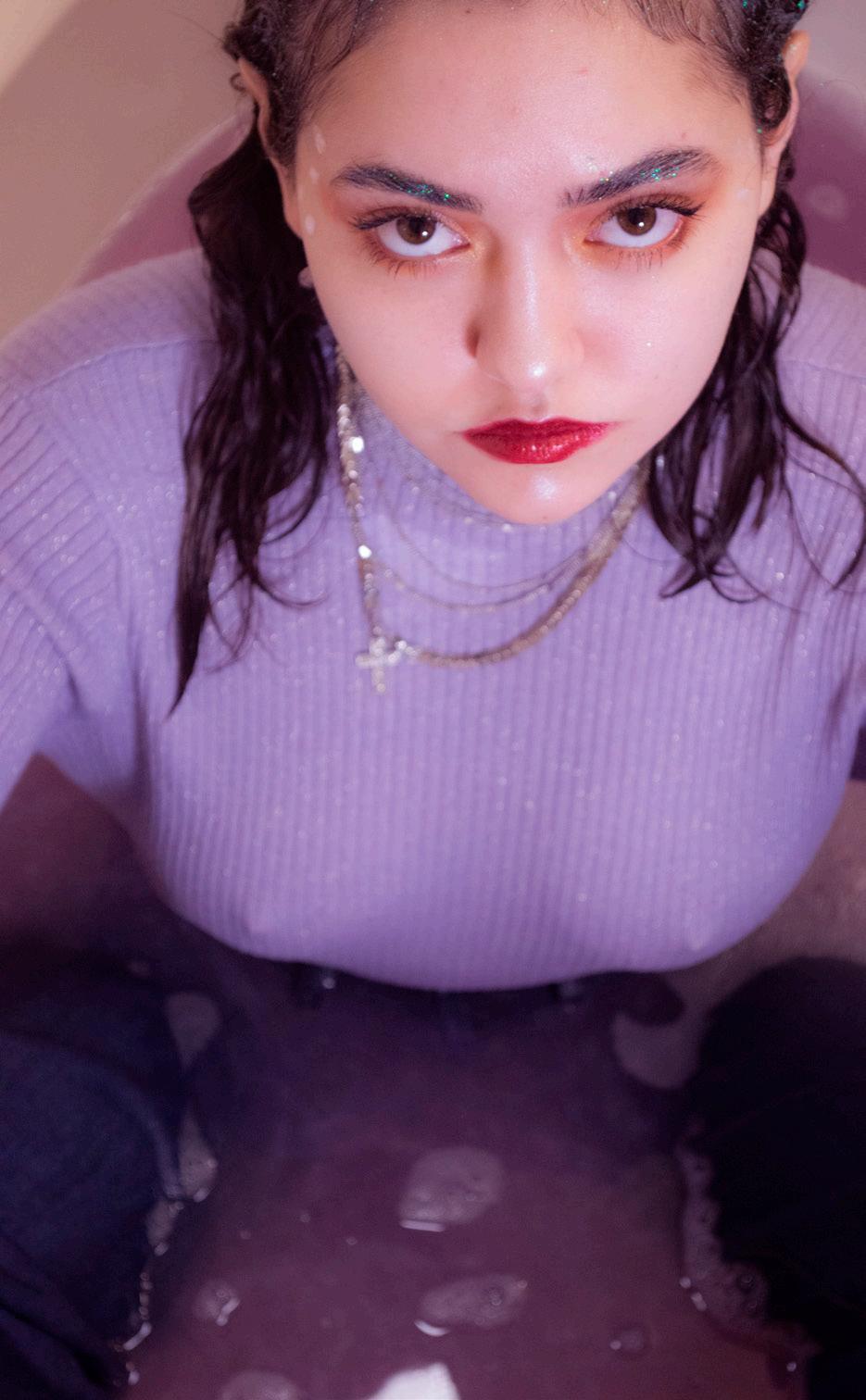
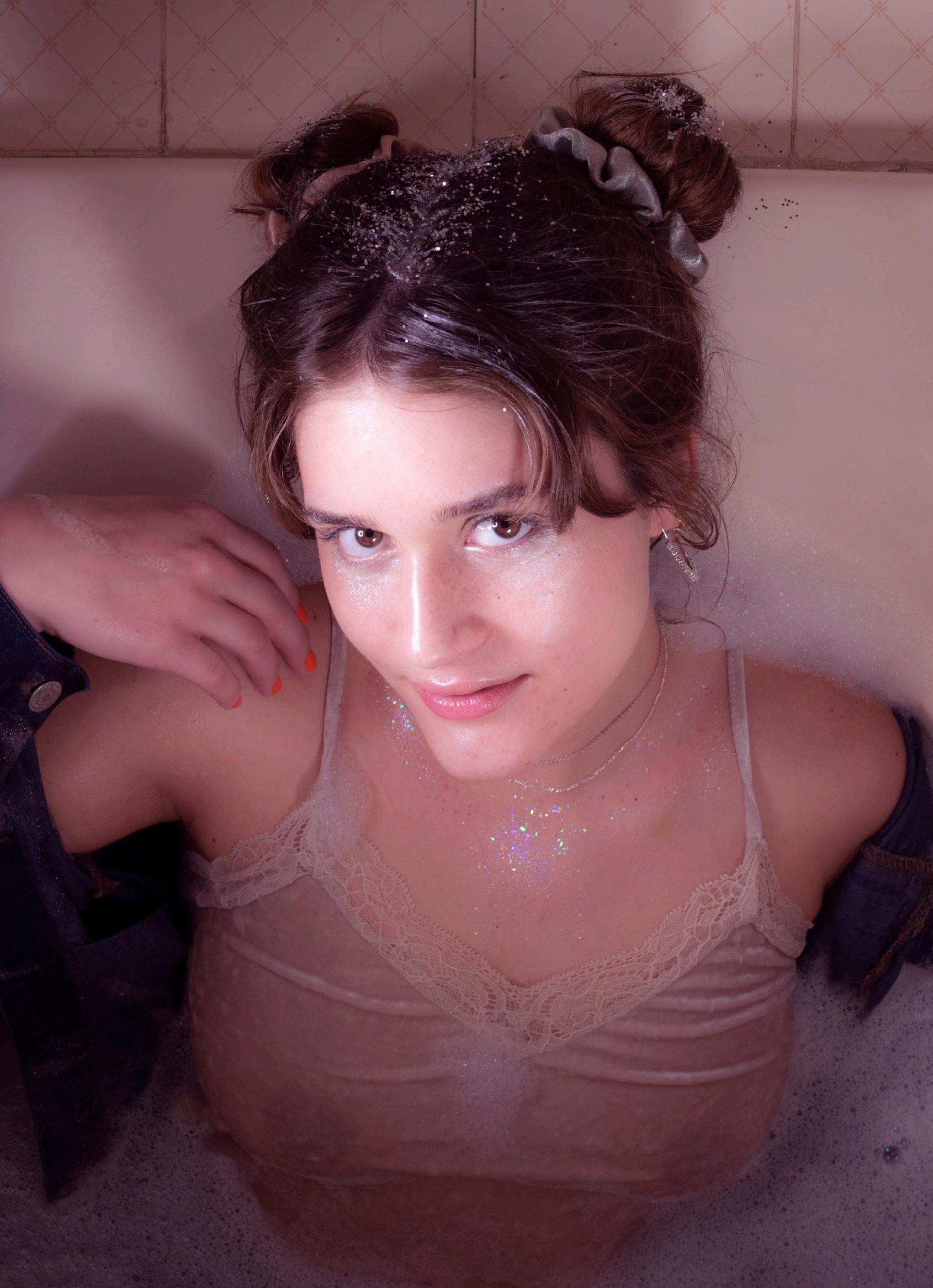
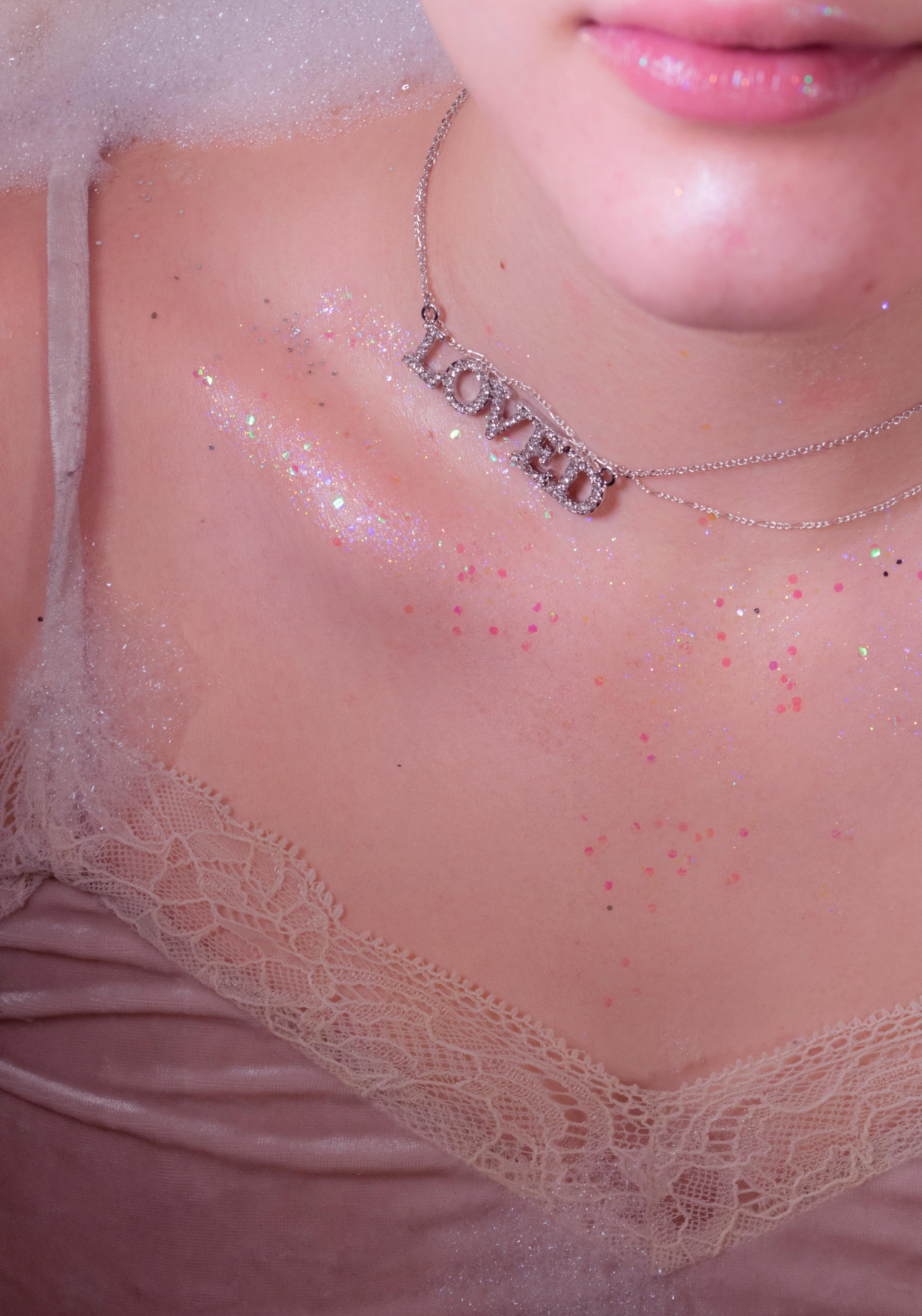
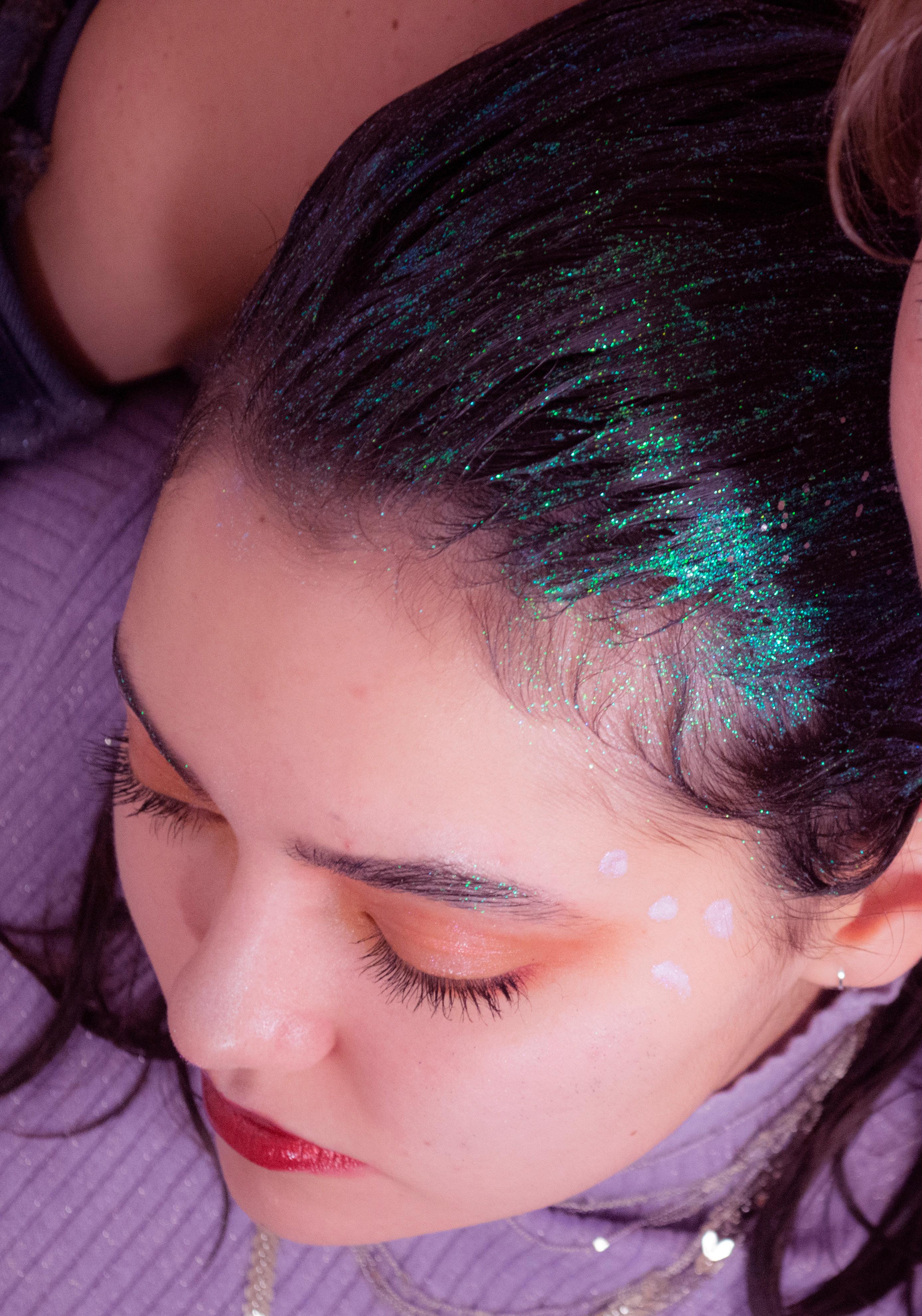
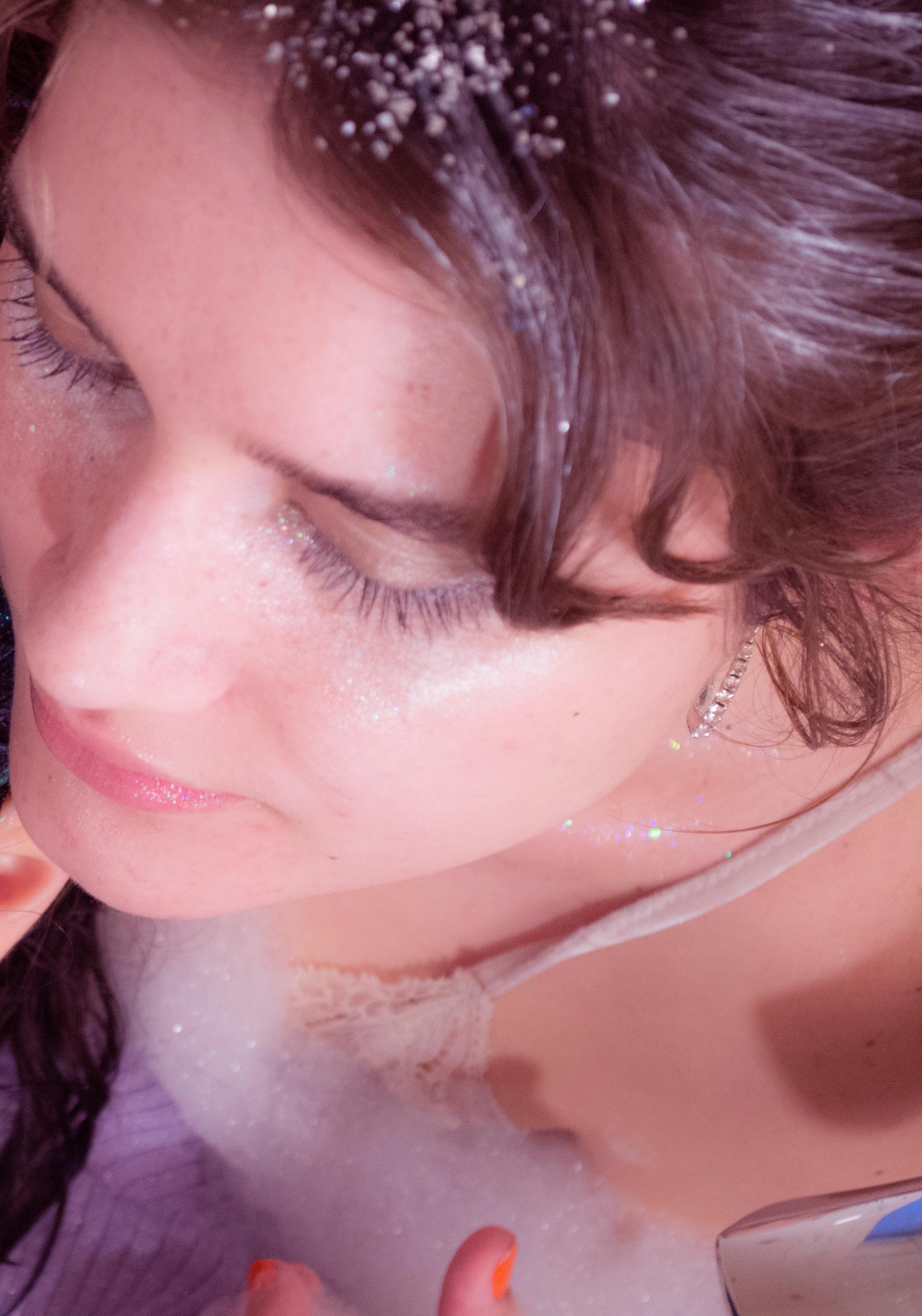
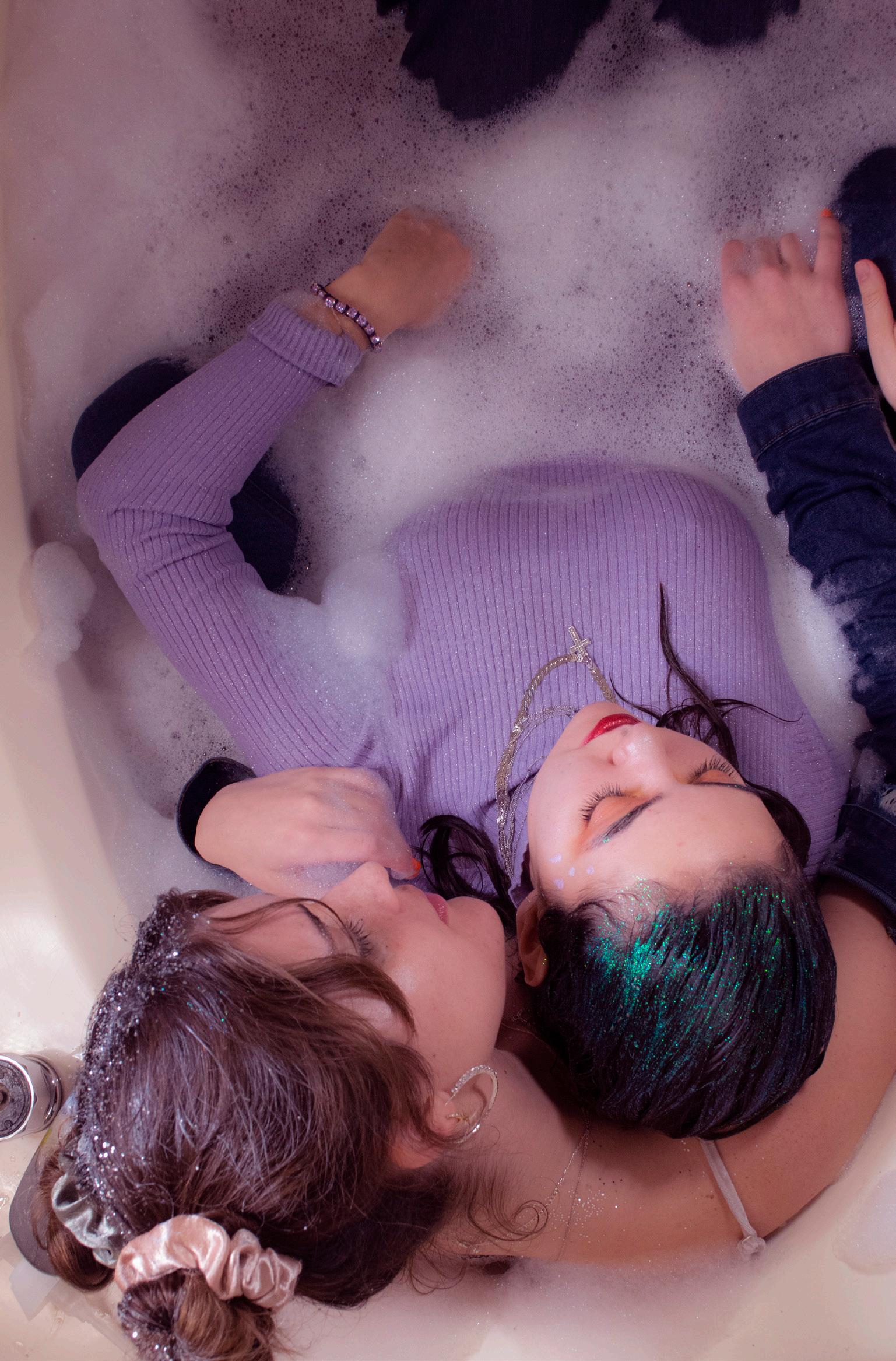
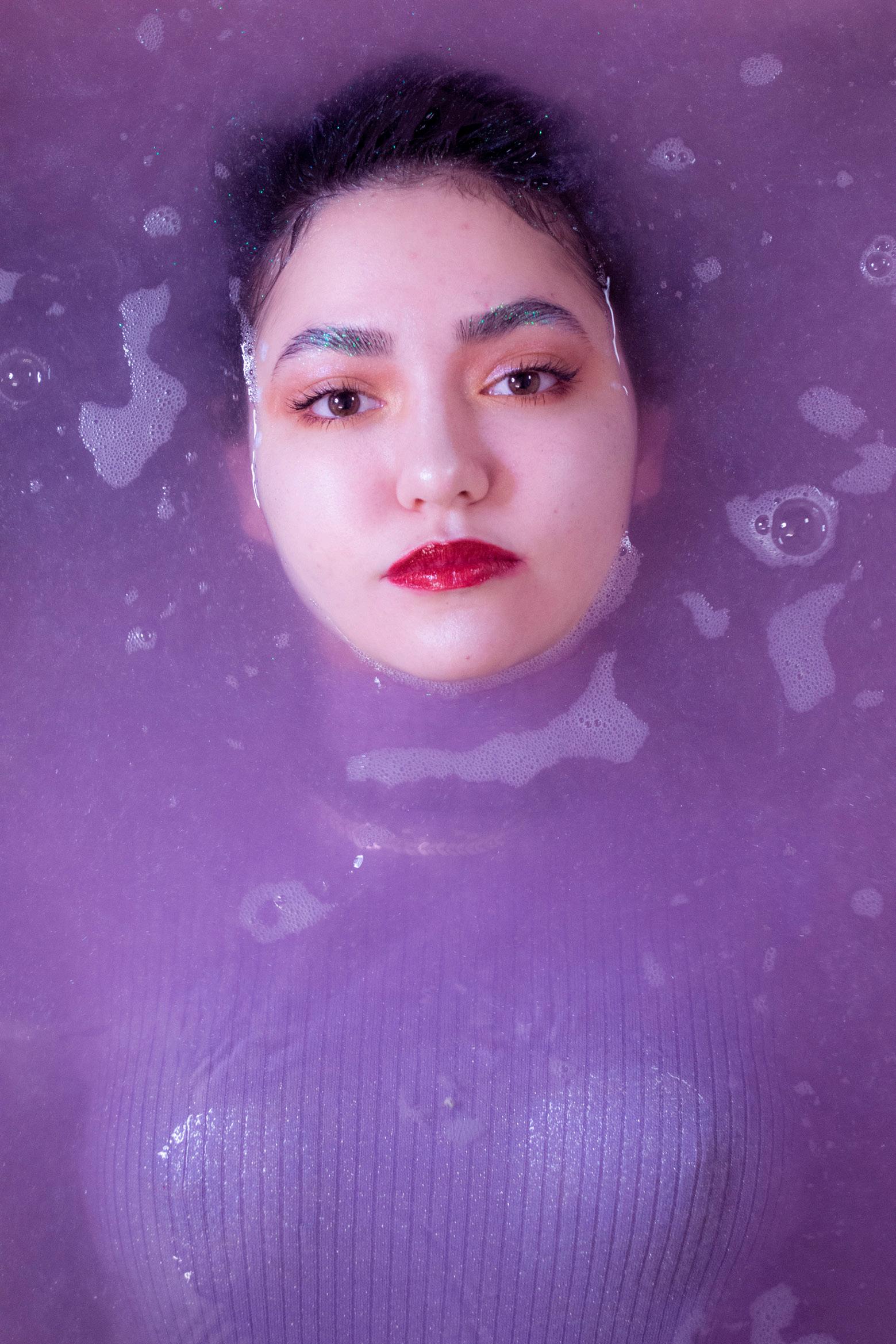
While you’re soaking all of that in, immerse yourself in the glittery waters of our photo editorial “Bath Bombshell,” directed by Eloisa de Farias and photographed by Your Mag Creative Director, Eleanor Hilty.
I hope you enjoy the first issue of Volume 11 and the new changes that come with it. Happy reading.
Best,
Daysia Tolentino
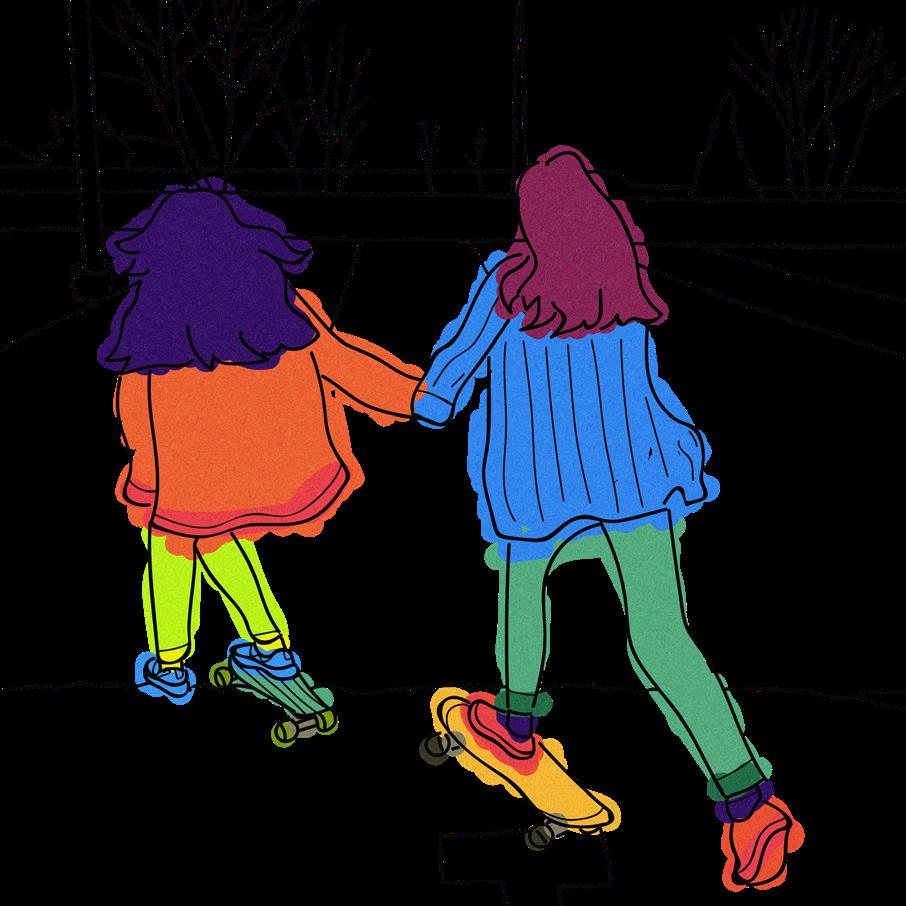
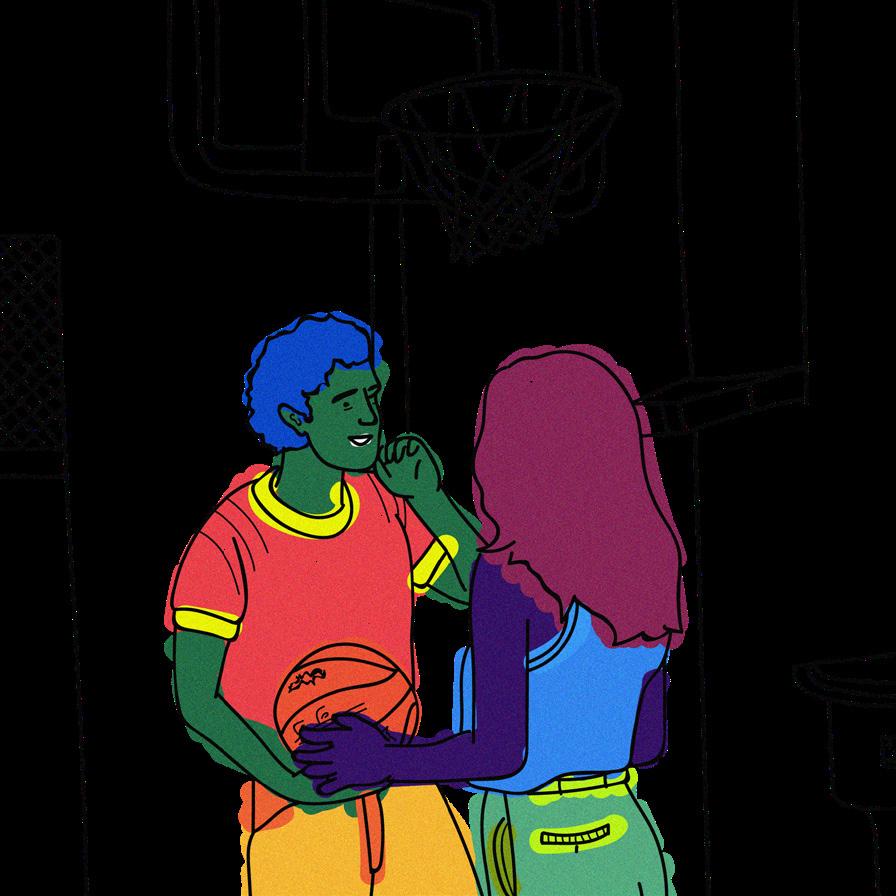
WRITTEN BY DITI KOHLI
ART BY ENNE GOLDSTEIN
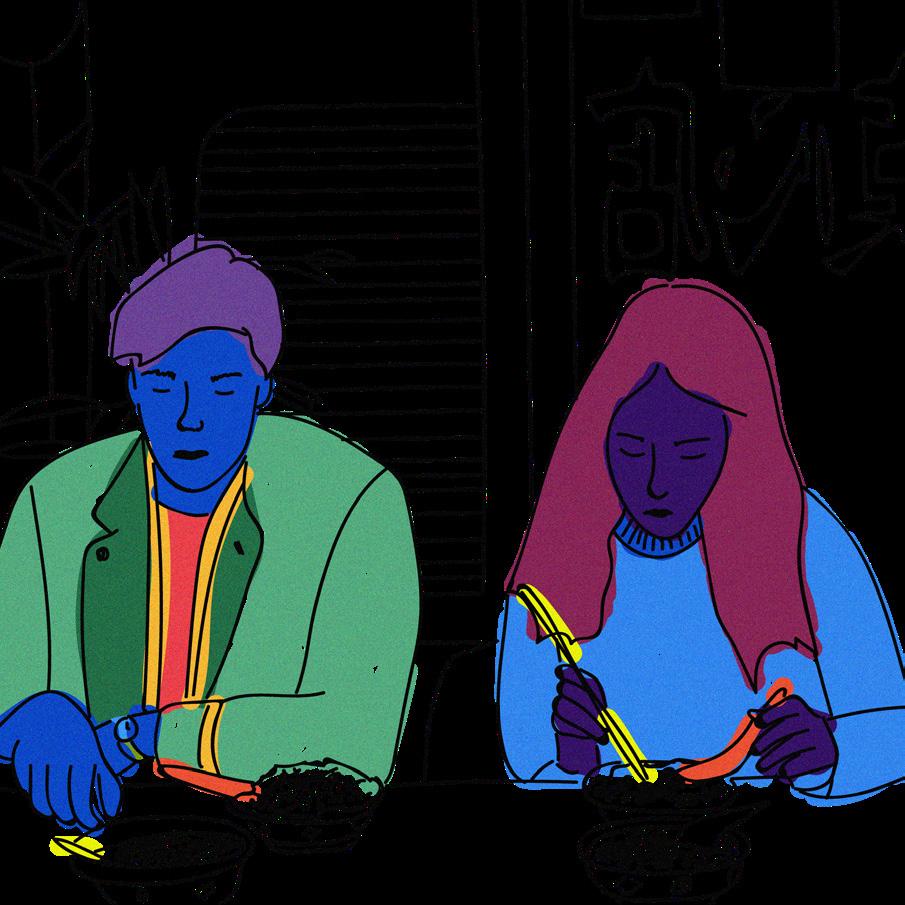
We are leaving the season of coupling-up behind and transitioning to a period of literal and figurative romantic blossoming. Now it’s time to question whether our winter-era mindset of monogamy has left us ready for the potential dates to come.
Monogamy is the practice of pursuing one relationship at a time. For those who loathe the over-glamorized practice of casual dating between relationships, serial monogamy is the answer. In an effort to leave as little time as possible between being in love, serial monogamists find a new “forever” romantic partner the minute they get over the last one.
We stick with monogamy because it’s as far from danger as can be. Humans largely rely on it because of the certainty and security it presents. According to Psychology Today, being in a romantic relationship allows people to devote their resources—such as time, energy, and focus—to other important things. When we don’t have to dedicate hours per day to inventing witty texts to send to our Tinder matches or to going on dates that sadly may amount to nothing, there’s more time to work on ourselves, our skills, our habits, and our passions.
I’m a serial monogamist myself. On the surface, the classification seems romantic and almost noble, where the individual is committed to an endless quest to find “the one.” Though I am lovingly fulfilled in my current relationship, serial monogamy has posed an undeniable threat to my emotional stability and the strength of my romantic connections.
Kayla Randolph, a freshman writing, literature, and publishing major, says long-term relationships can drain a person’s trust in others. “After giving so much of yourself to one person, to all of a sudden not have that anymore, it does mess with your head a little bit. They know all these things about you, and then you’re just not together anymore,” says Randolph.
Serial monogamists rarely give themselves enough time to emotionally recover from the psychological entanglement of ending a long-term relationship. Dr. Wyatt Fisher, a psychologist who spoke to Women’s Health Magazine, says
that “without self-reflection, healing, and growth, most people continue to repeat their pattern in subsequent relationships.” People who don’t mentally remove themselves from past relationships before moving on are likely to make the same mistakes with future partners.
Jumping from relationship to relationship doesn’t allow us to separate specific qualities from a partner. Before planning an elaborate wedding in my head with another partner, I have to take the time to make sure I’m not still hung up on memories from the one before. Our emotional attachment to individuals lingers, and this stops us from being able to determine which characteristics we dislike to begin with. As a result, serial monogamists like me never decipher what they want and need from a significant other.
Freshman writing, literature, and publishing major Audrey Iocca says people can only figure out what they want in a partner when they take time to figure out themselves. “There is a point in life where you need to be able to be by yourself and understand who you are as a person without being in a relationship,” says Iocca.
On top of all that, our dreams of a monogamous haven are not normal in the natural world. According to an article in the New York Times, only 9 percent of mammal species on Earth stay together for more than one breeding season and even fewer bond for life. Though it’s common knowledge that people need social interaction and affection, there’s no natural law that limits us to finding it from only one person.
Dani Jean-Baptiste, a sophomore theatre and performance major, says humans have normalized themselves into a cycle of monogamy, not because they truly want or need it.
“It’s been perpetuated by humans as a civilization for an extended period of time,” says Jean-Baptiste. “We believe we aren’t equipped for polygamy.”
In fact, this unspoken one-person-for-a-lifetime restriction has sometimes been used as a tool of gendered oppression. Society expects women of “marrying age” to be serial monogamists and often shame them if they choose to divulge in the pleasures of casual dating. This is one of the reasons serial monogamy is not always a personal choice, but a subconscious act of conformity.
It’s becoming more widely accepted that casual dating and hooking up is truly a feminist power move. An article in the Scientific American series “Feministing Friday” proves that these casual dating strategies lead to finding “the one” more quickly. Individuals are exposed to several options early on, rather than naively believing their early loves are their forever loves. And even more important than that, as a serial monogamist who has never explored the realm of quick dates, cheap dinners, and constant flirting, this lifestyle seems fun and worthy of pursuing, even if just for a little while.
“It’s undeniable that monogamy is not the perfect answer,” says Iocca. “We have to remember it’s not all we have.” YM

WRITTEN BY DITI KOHLI PHOTOGRAPHY BY EMILY KING
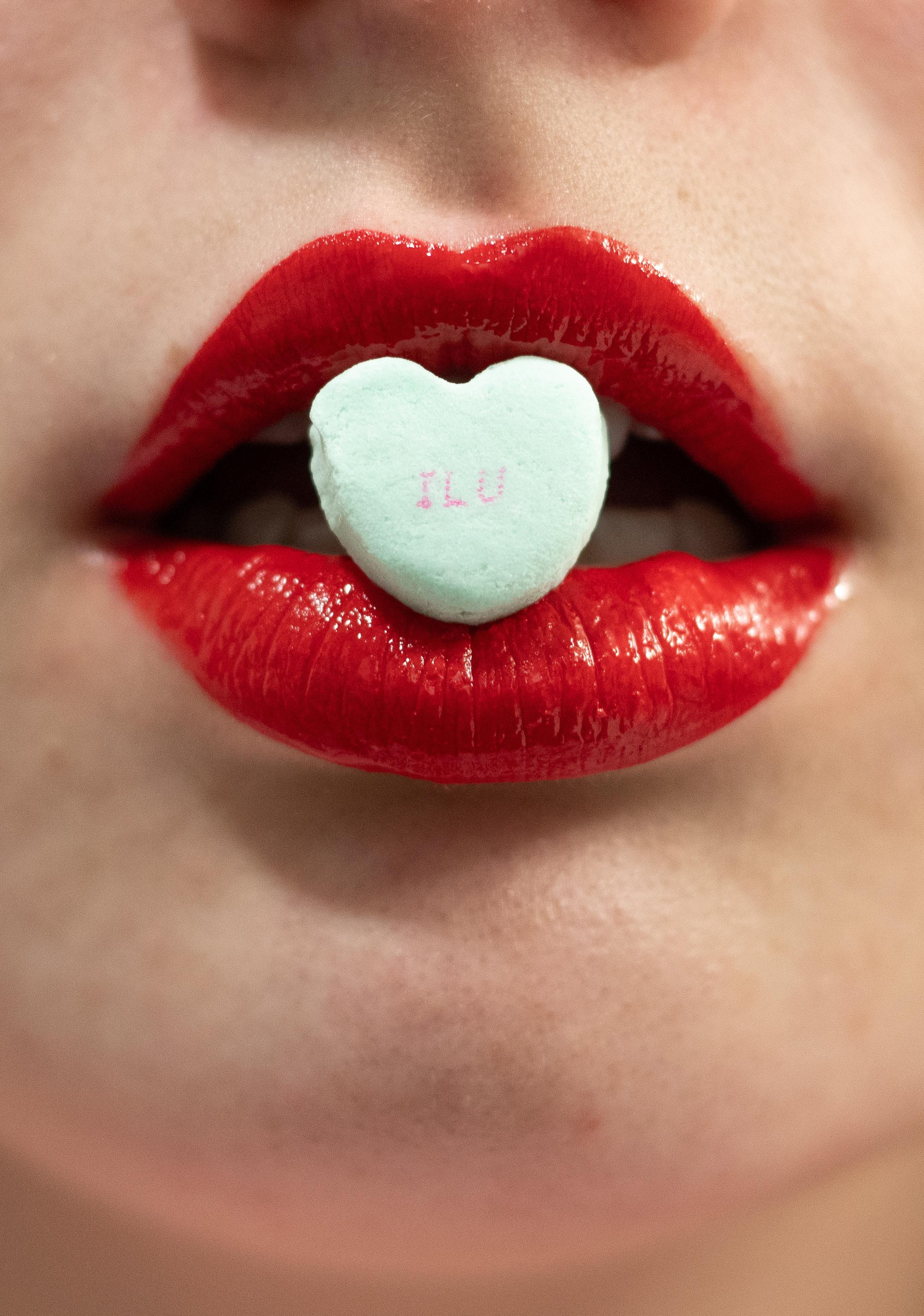
Reuniting and settling down with the person on the receiving end of our first genuine “I love you” is a sweet thought. In the chaos that is one’s often lifelong experience with love, dating, and sometimes marriage, defaulting to the partner who introduced us to all these feelings may seem like a scenario straight out of a dream.
Illicit Encounters, a British dating site, conducted a 1000-person survey that found only 25 percent of people end up with their first love. To me, even that result seems exceedingly high.
So when most of us inevitably move on to other people, we are left with the problem of how to deal with the feelings from our first love that still plague both us, and sadly, our new partners. Talking about previous relationships, including significant ones from early on, is an essential step in establishing a connection with another person. But it can also turn into a divide between you and your new significant other.
Angela Wright, a freshman at Berklee College of Music, said the talk about first loves is inevitable for a couple. “It’s not like you plan on having that conversation,” says Wright. “It just comes up, and you have to tell the person the truth if you want to be taken seriously and show that you care.”
There’s a reason our feelings for first loves dwindle in our memory even after we have moved on. According to an
“It’s not like you plan on having that conversation. It just comes up, and you have to tell the person the truth if you want to be taken seriously and show that you care.”

“I don’t think love is something that necessarily ever leaves you. You learn how to cope and move on, but there’s always going to be those memories.”
- Erik Martinek, 18
article in the Washington Post, our first experiences with a significant other are stamped in our brains because “for many, it happens during adolescence, when hormones are raging, and every life experience feels magnified.”
Maria Sato, a freshman journalism major, said her experience with her first love left her emotionally unstable, hurting her ability to date new people. “For a while, I felt like I could never love anyone else,” says Sato. “And that was a real problem for me, because I didn’t feel anything honestly. I was numb.”
As a newly established adult––only 18 and in my second real relationship—my first experience with romantic love is still fresh in my mind. The relationship lasted through high school but quickly ended after we parted ways to colleges across the country. In the four years we were together, every laugh and every argument was bold. Together, we explored what sex and romance were truly like and came to know how they were supposed to be. My fond memories with my high school boyfriend are similar to how many, if not most, people remember their first love.
When the topic of first loves came up with my current boyfriend, we were sitting in the kitchenette in my Piano Row suite on a late night. He told me about little letters he wrote to a girl he fell for at summer camp and saw occasionally later on—cliché yet true. It was weird hearing someone talk about the feelings they now have for me, while seeing the faint glimmer of past emotions in their eyes. I felt protective even though I knew he now lived over a 1,000 miles away from where they had initially met.
After hearing the story, I almost regretted contributing to the initiation of the conversation about first loves. In an odd way, I thought I was overstepping my boundaries into a confined part of his life he rarely revisited.
Though in the moment it may be nice to briefly relive old relationships, these conversations can hurt a new couple more than help.
Wright said she would avoid mentioning her ex to stave off these feelings of overstepping and emotional confusion. “It was kind of a hard line to balance and tiptoe around. I always found myself steering away from using [my ex’s] name so it didn’t cause drama with the person I was dating now,” says Wright.
I couldn’t blame my boyfriend for being nostalgic and frankly a little upset after retelling his unique story of love and loss. Though there was no reason for me to be, I felt faintly jealous of the new love he had felt for her.
Berklee freshman Erik Martinek summed up the reasoning behind these complicated, enduring emotions. “I don’t think love is something that necessarily ever leaves you. You learn how to cope and move on, but there’s always going to be those memories and that excitement that you always remember.”
But the messy nature of first loves and their impact on our lives should not stop us from sharing these sweetheart stories with our new loves. Our experiences explain who we were and frame who we continue to be, so sharing the effect of this history with our partners can only bring us closer together. YM



“I don’t think about him. Really, I think about myself.”
WRITTEN BY OLIVIA HEINZE
PHOTOGRAPHY BY CARRIE XU, TAINA MILLSAP, &OLIVIA HEINZE
Ihave plenty of my ex-boyfriends’ clothes. A navy reversible Lacoste coat, a vintage striped red knit Ralph Lauren sweater, a big gray T-shirt with the words “PEACE TAKES COURAGE” sprawled across the chest. I wear them all the time.
These articles of clothing don’t have much emotional significance to me and besides, my exes had good taste; they did date me after all. There isn’t a right answer for what one is supposed to do with the clothing left behind by an ex. Some may keep them, even wear them like I do, or return them, even trash them.
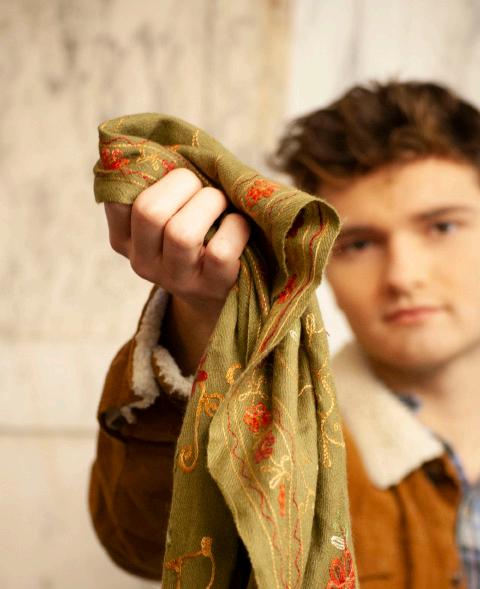
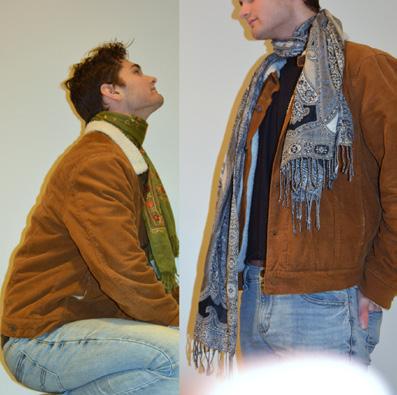
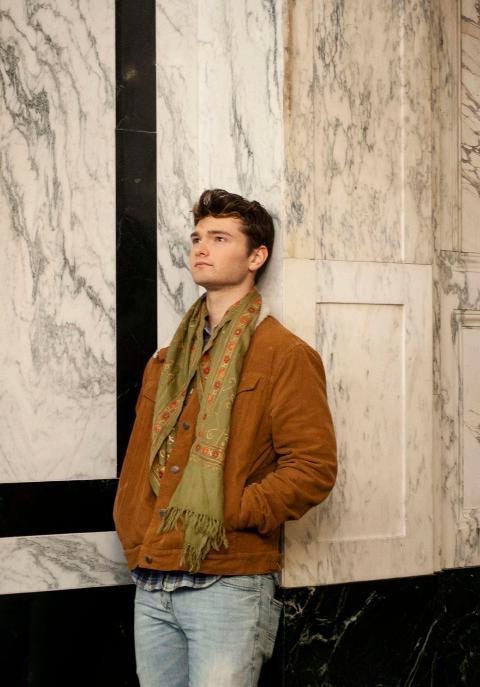
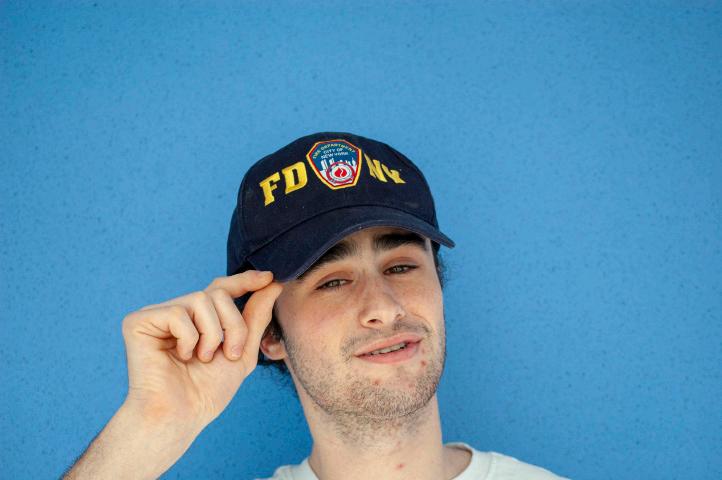
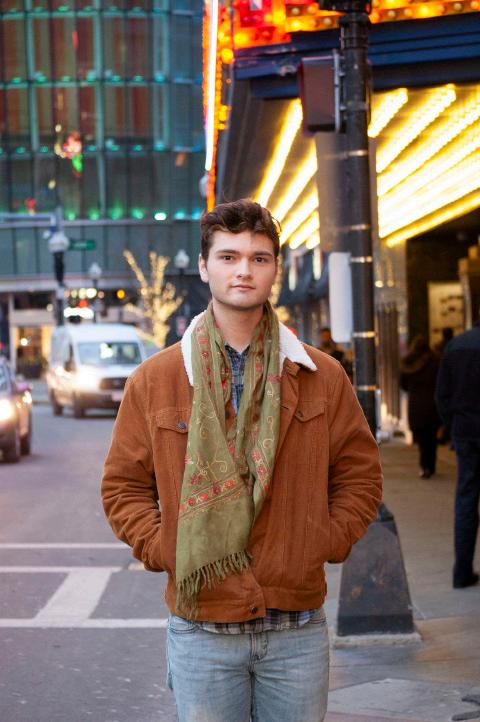
“So, um, this was sort of a complicated relationship,” begins theatre and performance major Jack Miller ‘22. “The reason why the scarf was left in my car is [because the relationship] ended very abruptly. One day he just decided, ‘I need to stop sinning. I need to be a better person in God’s eyes, so I can’t keep on seeing you.’”
This scarf is olive green with ornate, floral embroidery. Miller’s ex was religious, and he had girlfriends throughout high school before and after their relationship. Miller’s relationship lasted about six months, carried out in complete secrecy. When asked if he still wears the scarf, Miller replies, laughing, “Um… when it’s cold?”
It’s essential to get rid of clothing from dysfunctional relationships, according to marriage author and divorce mediator Debra Macleod. Media psychologist and passion coach Dr. Cheryl Foster advises that getting rid of articles of clothing associated with bad memories will prevent psychologically clinging to the past.
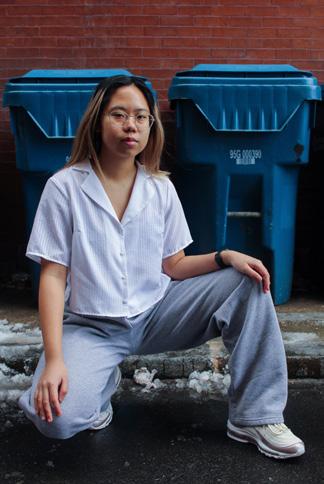
“At the end of the summer, my friend and I broke up—both at the same time—with our now ex-boyfriends,” says visual and media arts major Alyssa Lara ‘22. She was left with a box full of her ex-boyfriend’s clothes, which her friend returned to the ex on Lara’s behalf. Lara gave her friend her ex’s socks and her friend gave Lara her ex’s sweatpants.
“Personally, I knew that I was done with that relationship. I didn’t want to wear them anymore. Plus, I was moving out of my home and going to college,” Lara says. She didn’t want to be reminded of him, of the stories behind any of his clothes. Now
she wears the swapped sweatpants all the time.
“Because they’re not my ex’s clothes, I don’t have an emotional reaction to them,” Lara continues. “It’s funny though, because her ex-boyfriend was actually my ex-boyfriend, too, but like, I dated him when I was in 9th grade, so technically, these are my ex’s sweatpants.”
Egyptian psychologist and author M. Farouk Radwan notes that keeping an ex’s things may show a failure to recover fully from that relationship. However, it’s also possible to recover fully, but want to respect the ex and those memories.
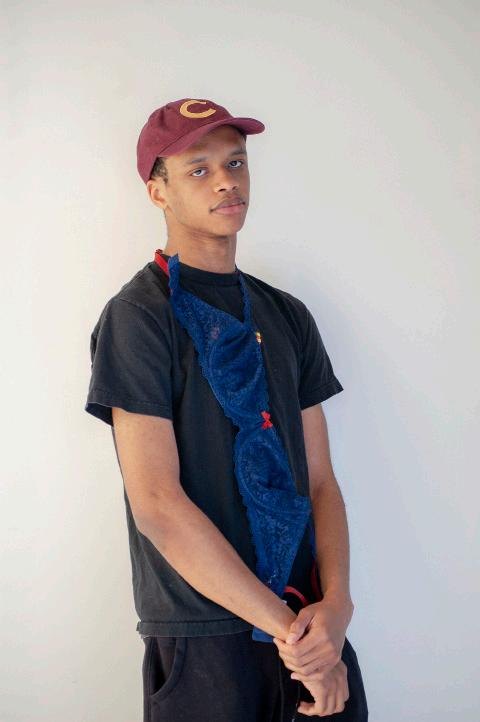
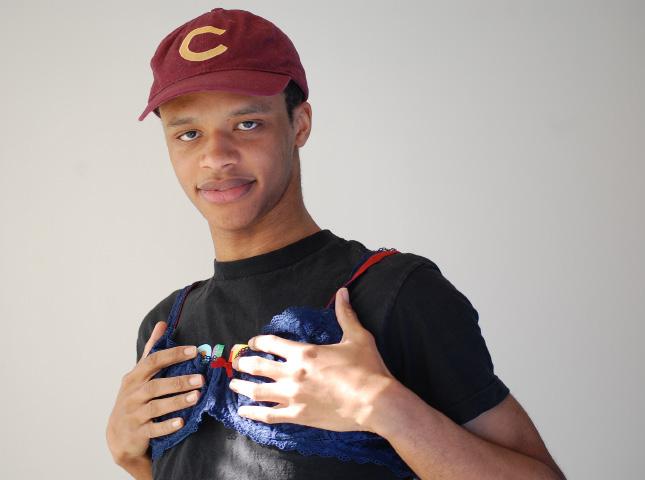
“I worked at a summer camp and it was my first year,” says marketing major Andrew Willoughby ‘22. “So she was there and she was obsessed with me, I had no clue. I gave her one of my shirts and it was this Playstation shirt that was fire hipster material.” In exchange, Willoughby was given one of her bras.
“I don’t really have a need for a bra, surprisingly enough,” Willoughby laughed. “Now it’s just something that I have.”
Journalism major Miles Schuman ‘22 was given a baseball hat from his ex as a gift. “I genuinely forget that she gave it to me because I just like it as a hat. It’s in my rotation of my regular hats now,” Schuman says.
His ex-girlfriend has some of his clothing as well. “Some stuff that I’d like back, too, but if you give it to someone it’s not really cool to ask for it back. Just be cautious of what you give up because you never know, you might be wanting it someday,” Schuman says.
We grow immensely from the relationships we create with others. In caring for another person, you learn to care for yourself, and how to be cared for. We shouldn’t dwell on the past, or get choked up every time we wear their old jacket, but we shouldn’t forget.
I asked Miller if the scarf his ex-boyfriend left behind brings back painful memories. He thought for a minute and said, “It makes me think of that time in my life, which brings back certain emotions that I felt during that time, but I don’t think about him. I don’t think about what he’s doing or where he is. I know so much more now. I’ve grown so much as a person and I’m a different person now than I was during that time. Really, I think about myself.” YM
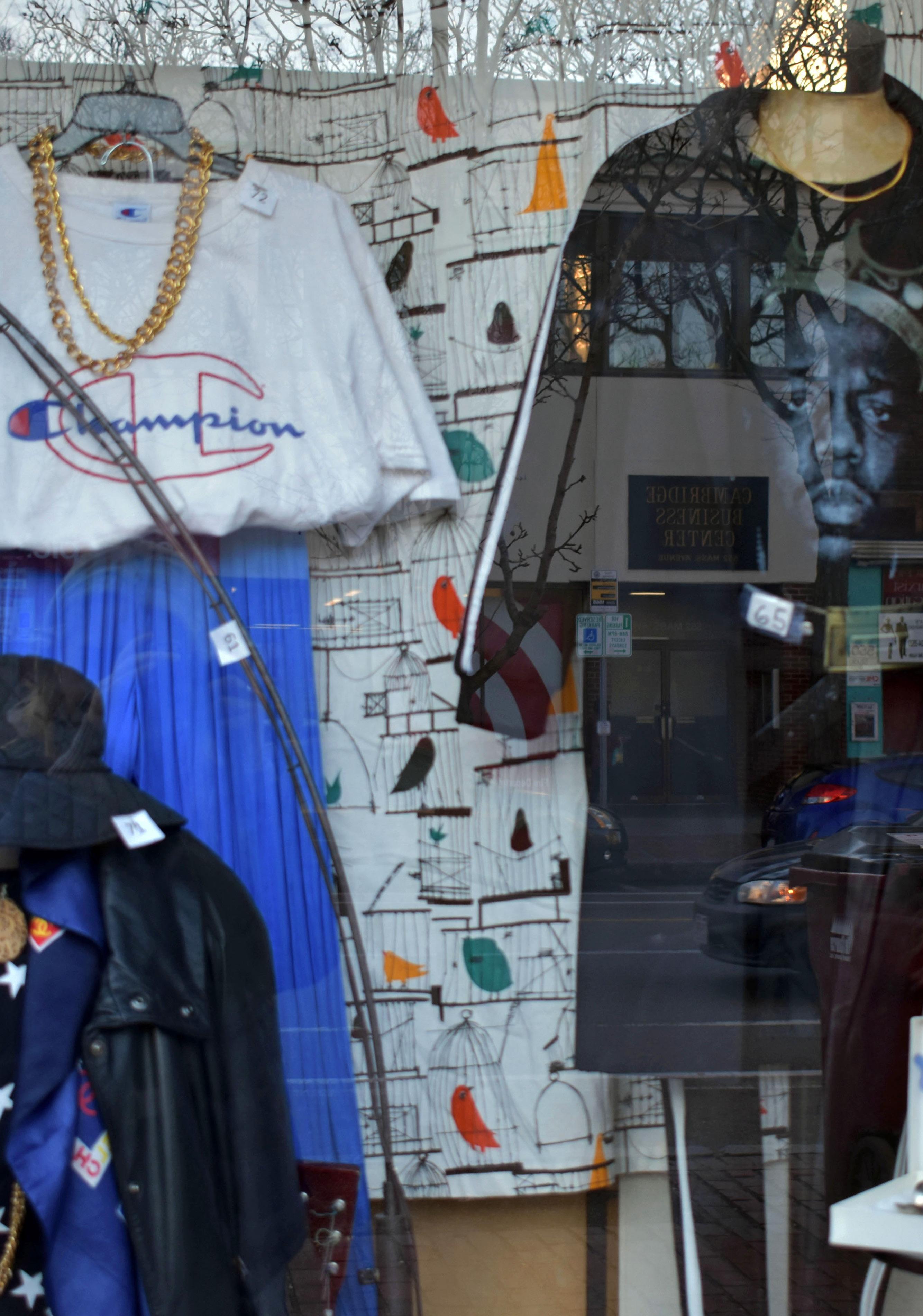
WRITTEN
We all know the stereotype about secondhand clothing stores and their employees: the standoffish, snooty clothing buyers who pick through used clothing and refuse to take any of it. Maybe you’ve even lived that experience, dragging bags of old clothing to your local Plato’s Closet or Buffalo Exchange only to face complete rejection. It’s a frustrating experience, expecting to make a decent amount of cash and ending up with nothing.
As a buyer for Buffalo Exchange, I totally get it. There’s nothing more uncomfortable for us than pushing an Ikea bag’s worth of used clothing back across the counter and telling a customer we couldn’t take anything. But if my job has taught me anything, it’s how to sell clothing secondhand.
If you’re cleaning out your closet and looking to make a couple bucks, selling your old clothing is a great option. Getting rid of those pieces you don’t wear anymore gives you the money and the space to add new clothes to your collection. For anyone looking to clear out their closet and make a little extra cash, these are my top tips for success:
Understand the business
It’s easy to get irritated with a picky clothing buyer when you don’t consider their perspective. As buyers, we are being entrusted with someone else’s money to invest in clothing items that we believe will sell within a set amount of time. For my job, it’s generally about two months, though I can’t speak for other businesses. Many companies require their stores to donate unsold merchandise after a few months, resulting in a direct loss of potential revenue. Buying is based solely on clothing conditions, brands, and trends, and, as easy as it is to take a buyer’s selections (or lack thereof) personally, it isn’t fair to either of you. Remember, it’s not you: it’s the clothes.
If you’re not sure what to bring with you, call the store ahead of time to ask questions. Store employees will know what sorts of things they’re looking for, and more importantly, what they aren’t looking for. You won’t get any information about pricing over the phone, but you may be told that they don’t need more sweaters or anything else from Forever 21.
Be sure to check in before heading out to sell. Company websites are another great source of information and can often be helpful as you finalize your selection when choosing which items to sell. Check to see if the store you plan to go to purchases based on the upcoming season, or if they accept vintage or retro pieces. Websites will also tell you what you need to have with you. Most secondhand stores operate under pawnshop laws and therefore require customers to bring a current government-issued ID.
Before you add an item to your selling pile, ask yourself, “Who would buy this?” If you can’t see anyone wanting it, the store probably won’t want it either. In the wake of the craze inspired by organizing consultant and author Marie Kondo, this is especially important. Secondhand retailers want the clothes that “spark joy” just like you do. They don’t want your old sleep shirts, underwear, or things with stains or holes. Remember to wash clothes before bringing them in and to check them ahead of time for stains or tears.
If you love it, don’t let it go. Buying is completely trendbased, and because fashion is cyclical, trends often come back in style. If a secondhand store doesn’t take something you consider to be cute and in good condition, hold onto it! Maybe they aren’t able to take your bootcut jeans right now, but if bootcuts come back, you’ll have yours ready to sell.
Once you’ve gone through the selling process, you may want to donate some of your leftover clothing. Boston, the location of the original Goodwill, is home to many donation centers and people in need of more affordable clothing. While most secondhand stores do not accept donations, the employees will be able to direct you to the nearest donation center, such as a Goodwill, Urban Renewals, or Boomerangs.
Don’t be afraid to drop by your local secondhand retailer to try your hand at selling. Just like anything else, it’s a process that takes time and practice to master. If you aren’t able to sell your unwanted clothing, donating them can be an equally rewarding option. And though not everyone is entirely successful in this purging process, the simple act of cleaning out and making space can be the catharsis you’ve been craving. YM
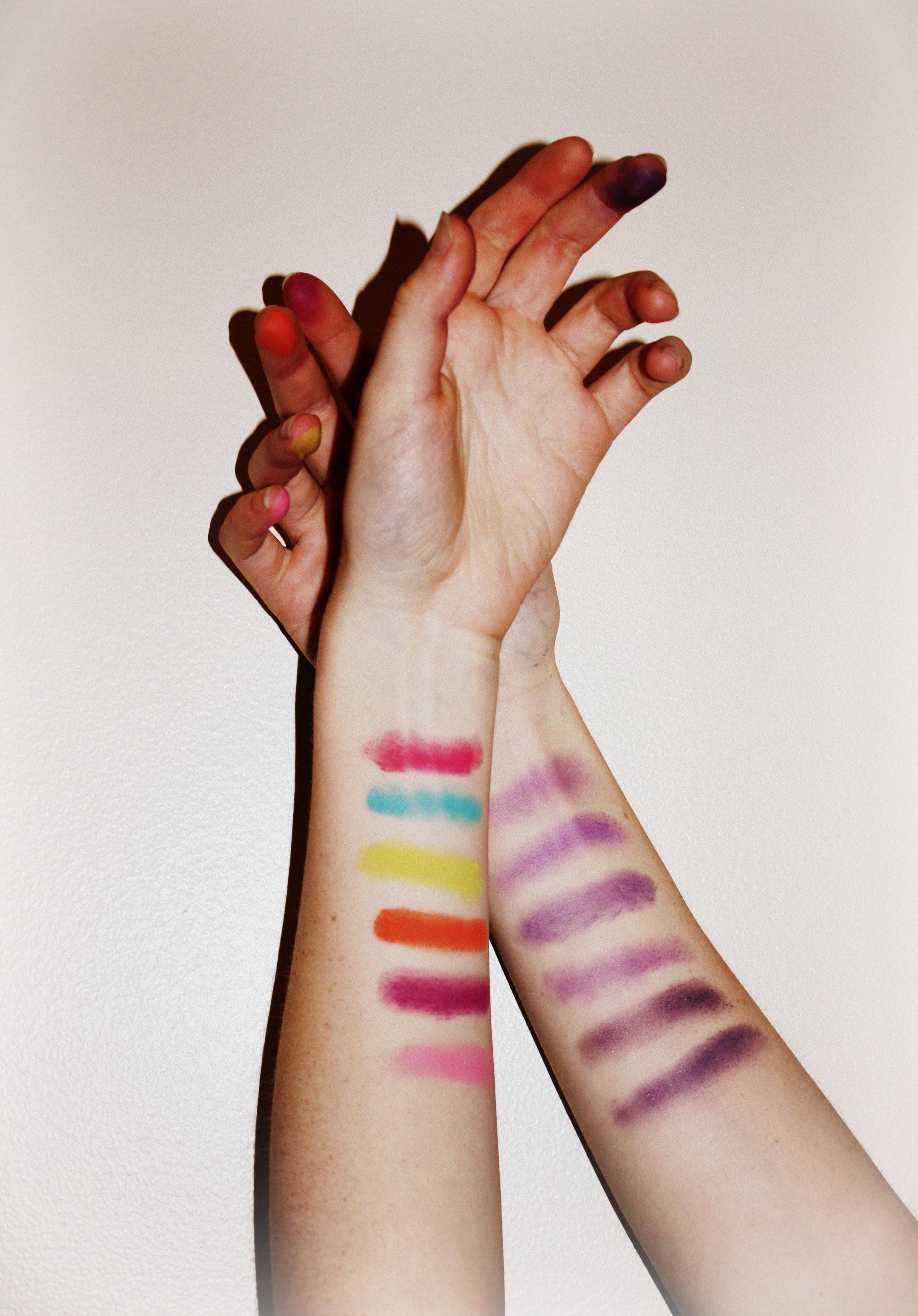
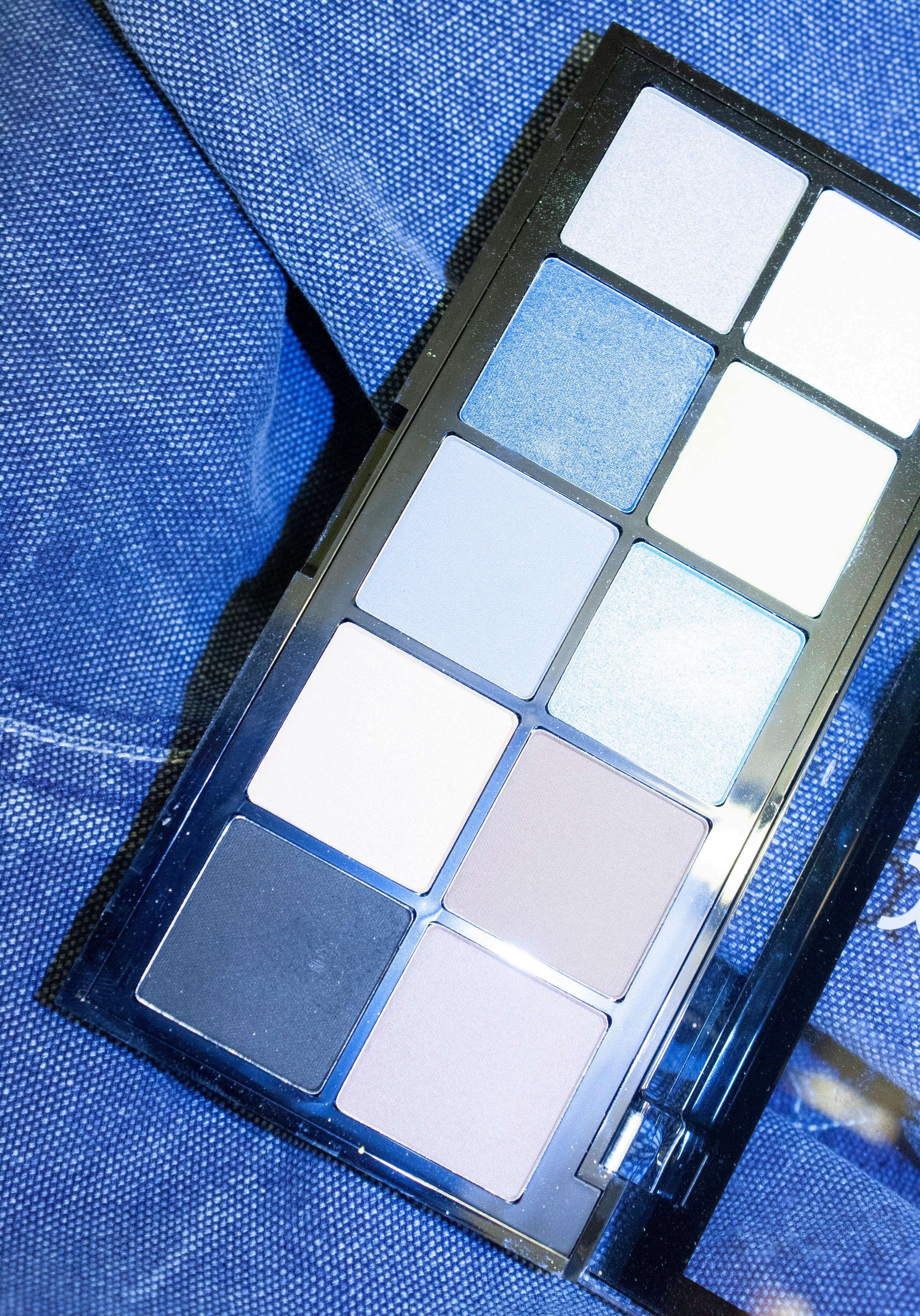
Whether it’s Too Faced, Urban Decay, or Anastasia Beverly Hills, there’s a common phenomena among those who wear makeup to only use a few colors of an eyeshadow or highlight palette. But why do palettes only have a few wearable shades? The rest fall short. The problem, first, starts with quality. Depending on the brand, some colors can be more pigmented than others. When testing it at home, I personally found the Clinique Party Eyes palette is dull at best—my friends were in agreement. The colors don’t transfer well to the lid and all seem to look the same when applied, as opposed to how they appear in the packaging.
Sophomore theatre and performance major Margaret Kaplan-Earle says that “I definitely lean towards brands that are… consistent in their quality all the way through the palette.” She looks for the palette with majority of what she likes; solid, neutral, day-to-day colors. “I understand that some colors are harder to make than others, but at the same time, why wouldn’t you just go for quality all the way through?”
This issue also comes out in the way that colors are paired with each other within a cosmetic company or individual palette. In particular, this poor pairing is evident in the Kourt x Kylie collaboration by Kylie Cosmetics. The Kardashian-Jenner duo announced a partnership with three eyeshadow quads and three liquid lipsticks. When Manny MUA did a Youtube review featuring the collection, he specifically used multiple palettes to complete the look, complaining that they didn’t go together and should have been organized differently. Unfortunately, to create the look, you’d have to buy them all.
“I definitely haven’t found the perfect palette,” sophomore journalism major Julia Christian admits. “I’ve found that most of them have too many neutral shades and then a few shimmer ones. I usually use like three palettes at once.”
But, how many shades of our go-to palette do we actually use? Maybe we’ve used them at some point, just to see how they looked. One may be worn down to the metal
WRITTEN BY LILLIAN COHEN PHOTOGRAPHY BY LILY WALSH
“We get lost in routine. If something works, then it works.
If we like a color or the way a few colors look together, we’re going to do it again.”
underlay while others only have a single stroke shoveled out. We get lost in routine. If something works, then it works. If we like a color or the way a few colors look together, we’re going to do it again. That’s just one way makeup brands make money. We use a few colors to the bone and get a new palette to do the same with, perhaps using an old neglected shade from the former.
While Kapla-Earle says that she hasn’t found the “perfect palette,” she knows what works for her. She uses what she has to get the desired effect. “I wouldn’t say that it’s perfect, but my go-to is Kat Von D Shade and Light… And then I have sparkles that go on top of that.”
A.Stanton admits that eyeshadow is her favorite kind of makeup. She claims to have found the “perfect palette” in Anastasia Beverly Hills’ Soft Glam palette. “It has golds and browns and pinks and oranges...It even has a black,” something she points out that most palettes usually don’t have.
“I find myself using all the colors on that palette, but with most ones, I only use a few that fit my needs. They don’t all fit with my skin tone.”
Representation has long been an issue within the beauty cosmetic industry. Many companies have variety in lighter tones, but forget people of color. Representation has been getting better
in terms of foundation and concealer thanks to brands like Fenty, but they don’t always sell an abundance of eyeshadow in nude variants. They still work, but they give a different look, sometimes not even being visible on the skin and everyone deserves that perfect smokey eye.
In the age of YouTubers and beauty bloggers quickly taking over the internet and social media, it’s easy for companies to overload us on new releases. By industry standards, it’s a smart business decision. More product means more business, considering the growing statistics of cosmetic e-commerce.
A study by Fung Global Retail and Tech found in 2015 that the industry had $6.2 million of its business occur online, according to NBC. The number is estimated to hit $429.8 billion by 2022. Products go on sale and sell out in a matter of minutes. New launches and Instagram promotions mean more money, whether or not new colors are similar to older ones. People crave the rush that comes with the promise of the “perfect palette.”
Does the “perfect palette” really exist? Maybe. We all have our favorites; the ones we use for an everyday look; the ones with our favorite sparkles for going out. But, every person is different. What works for someone, may not for other. Maybe that’s all we can ask of our makeup; to be just as perfectly imperfect as ourselves. YM


WRITTEN BY RIDDHIMA DAVE ART BY JONAH HIGAONNA
European fashion has always controlled the fashion industry in a matter of all measures: from clothes and shoes to leather works. Three of the four main fashion weeks— Milan, Paris, London and New York--are held in Europe. This European dominance, however, is diminishing as more designers from across the world are showcasing their talents. Asia has become a power player globally whose influence has risen to significance only in the last decade. Many Asian designers have become a mainstay in global couture culture. The list includes powerhouses like Alexander Wang (China), Rohit Bal (India), Prabal Gurung (Nepal) and Guo Pei (China), among others. These brands have gained widespread international recognition and are now on par with several European brands in terms of prestige and revenue.
The swell of Asian designers is evident when looking through designers list for the 2019 New York Fashion Week. The shows have plenty of Asian and Asian-descent designers and is a boost from last year. There are about 40 lines of Asian designers on the roll for the event like Naeem Khan, Lanyu, Bhibhu Mohapatra and Indonesian Diversity. Although this trend was previously limited to Asian designers who made their designs to appeal to a western audience, other ethnic designers are also receiving international acclaim. The recent collaboration between shoe giant Louboutin and Indian bridal couture designer Sabyasachi Mukherjee is a testament to this widespread movement. Sabyasachi is famed in the Indian subcontinent for his gorgeous lehengas—a form of Indian skirt and statement jewelry. Ethnic designers have had a history of catering to a smaller national audience but that has changed.
Guo Pei is a Chinese couture designer. She actively incorporated elements of Chinese culture in her collection ‘East Palace.’ According to visual and media freshman Hannah Zhong, an aspiring designer originally from China, Pei’s collection brings Chinese patterns into the clothes.
“Because fashion is a global thing. It is a multi-cultural thing. Everyone from different cultures and backgrounds can design their own fashion pieces and bring their background,” Zhong said.
Several key factors in the industry can be attributed to the influx of these up and coming designers. Trade relations between the East and the West in the last decade and the rapid industrialization of these places have led to an accelerated rate of
globalization. Since this affects culture too, fashion has become more interchangeable within the industries.
Globalization also leads to the intermingling of the entertainment industries. International film festivals like the Cannes Film Festival is a space for fashion designers to showcase their work. Global celebrities like Bingbing Fan and Priyanka Chopra play a role in displaying the work of fashion designers of their native countries, giving their styles broader and more expansive coverage.
Visual media and arts freshman Smruti Tarana Thirunavukkarasu, an international student from Chennai, believes that celebrities like Priyanka Chopra are a worldwide phenomenon. “If she wears Indian designers, they will garner more attention and they will regularly get more exposure. Through Indian celebrities entering Hollywood, there is a lot of scope for Indian designers to get exposure.” Thirunavukkarasu said. “Celebrities photographed in [native designer clothing] will gather more attention for the designers.”
Asian fashion designers have also found a base in celebrities native to the Western World. Celebrities like Michelle Obama, Kate Middleton, Rihanna, and Lady Gaga have worn garments by Prabal Gurung, Naeem Khan and Guo Pei. With more names turning up at the Met Gala, Cannes, and other red-carpet lists, the future only looks brighter for Asian designers. Coupling that with the growing presence of the designers at Fashion Week and a global interest in Lakme and Shanghai Fashion Weeks, it seems plausible to assume that Asian designers are going to increase their influence on the global market.
“I think they definitely will be more influential,” Thirunavukkarasu said. She believes that this is due to the fact the Asian designers are also adapting to the preferences of the western world. “Indo-western is appealing to the [rest] world. If you find the right colors and styles for the global market, it works. I think that is what Indian designers are doing right now.”
Zhong seems to agree with this opinion saying, “Asian designers, when designing for a broader market will change their styles a little, their concept, which would be inspired a little more from the global aspect.” With this exchange of cultural elements, it seems definitive that Asian designers will have more global influence in the future. “Asian power is a piece of art and fashion we need to respect.” YM

WRITTEN BY OLIVIA HEINZE
ART BY ELEANOR HILTY
What makes Insta baddies so bad? Fast fashion is faster than ever, accelerated by online brands and self-made, online models. There’s a lyric in rapper Aminé’s “DR. WHOEVER” that goes: “Look at my generation and think that fashion’s over, I kill my sister if she ever model Fashion Nova.” Certainly there has been a rise in popular culture opposing Insta model culture. Insta baddie style is not only ingenuine, but destructive.
Instagram baddies are gorgeous, with perfectly peaked brows, clear skin, lashes, and curves. They have big eyes, big lips, big asses, big tits, and most of all, big followings. With incredibly symmetrical faces, jawlines, and selfies perfectly lit by the glow of the setting sun, they pose in vacation destinations, with cute, flirty captions topped with hashtags like #poolside and #fitnessaddict.
The hashtag most frequently used by Instagram baddies is #novababe. This comes, of course, from the brand Fashion Nova and the hashtag is used by both current and aspiring #novababes. Fashion Nova was started by Richard Saghian and has grown by 600 percent in 2017 with the help of a network of 3,000 instagram influencers, and has accelerated fashion to ultrafast, putting out 1,000 new styles a week. Some of the most popular internet baddies are sponsored by Fashion Nova and are given paychecks and free clothing to post about the brand. Instagram baddies and influencers are able to make between $250 and $100,000 per sponsored post, depending entirely on their follower count.
Kim Kardashian, with her 127 million followers, earns around $500,000 per sponsored post. Cardi B not only posts about her Fashion Nova line, but she recently dropped a bar about it in her song “She Bad” rapping, “I could buy designer but this Fashion Nova fit.” Cardi B has been partnered with Fashion Nova even before she blew up as a rapper and now makes $20,000 a month to rep the brand. It’s arguably the most popular “Instabrand,” operating almost exclusively online, with the exception of five physical stores in California.
Upon visiting the site, it is obvious that it is made for those who fit (or want to fit) the Insta baddie archetype and body type— the slim thick models and the relatively cheap clothes that are made to take pictures in, maybe wear out once. These clothes are not liveable. Reviews of the brand are mostly negative from consumers, many making sure to mention the poor fabric quality and sizing.
When brands focus on rapidly producing new collections at low costs, they tend to cut environmental corners, increasing water and textile pollution. In addition to this, polyester, which is a fabric frequently used by Fashion Nova, sheds plastic microfibers when washed, which end up in the ocean.
Self-expression is key to style, and fast fashion companies like Fashion Nova take away from individuality, with heavy social media marketing and low prices. Clothing should be made to be worn, not just posted in. YM
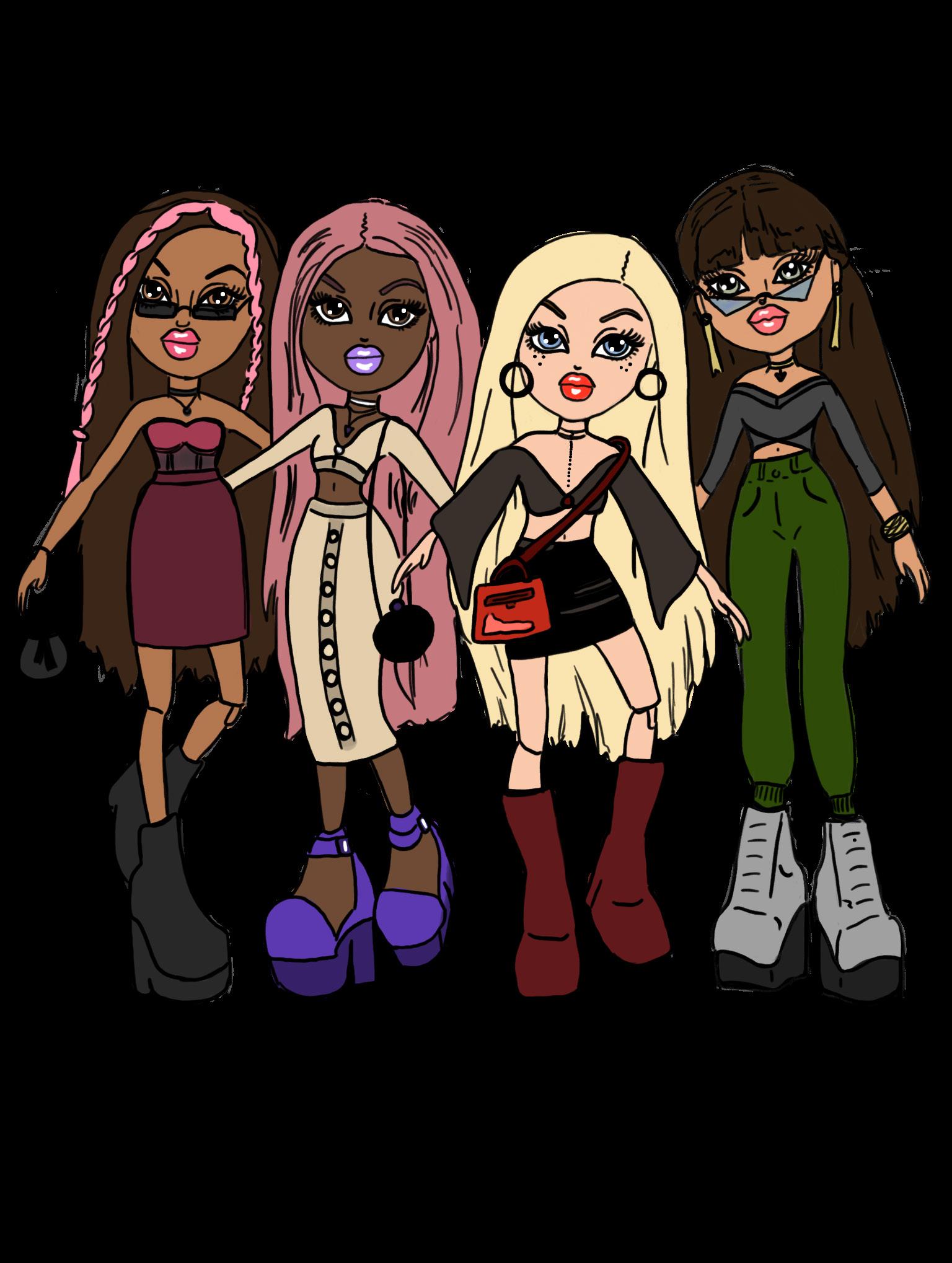
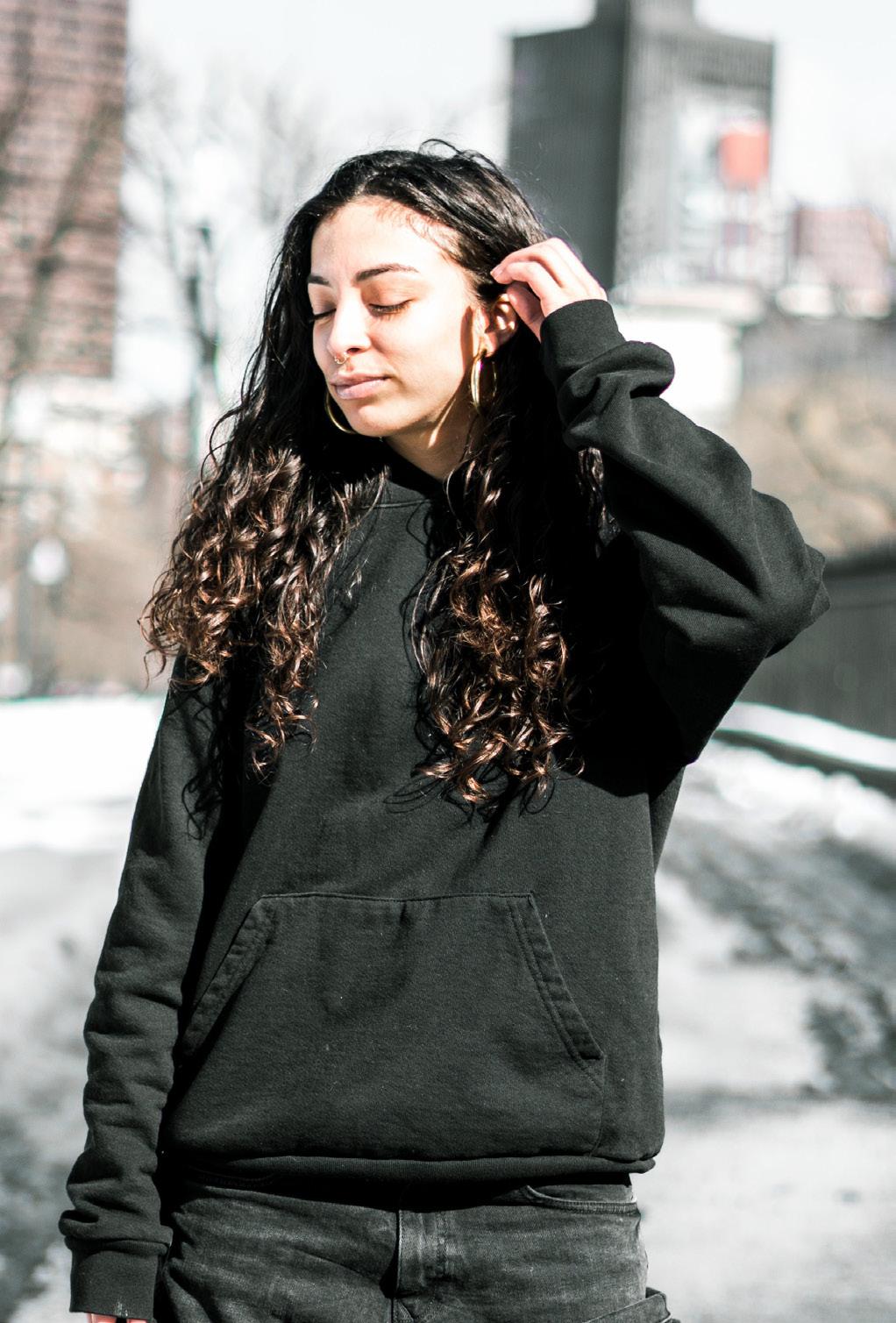
INTERVIEWED BY ANDREW TAETS & SOLEIL EASTON PHOTOGRAPHY BY OLIVIA CIGLIANO & KEREN HE DIRECTED BY DELIA CURTIS

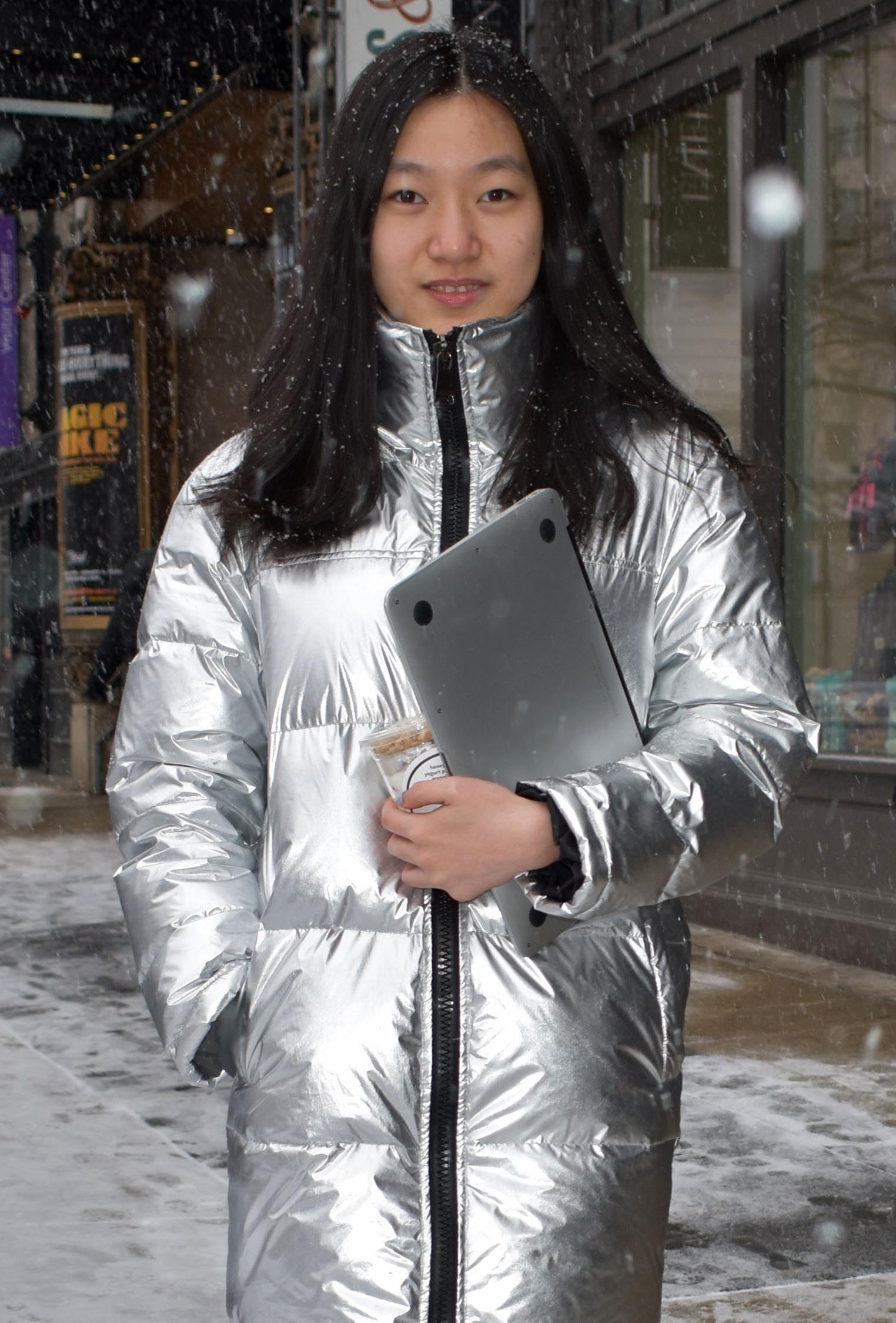
he/him/his | Visual Media Arts Class of 2021
How would you describe your style in three words?
Hand-me-down, found, cheap.
Awesome, and where do you typically get inspiration for your outfits?
The backs of old books are fun, I don’t know, magazines, construction workers.
Any brands that you highly recommend for people?
I have some Tevas that I love, I’m a huge Tevas fan, but I think that’s it.
she/her/hers | Visual Media Arts Class of 2022
Do you have a celebrity style icon who you love?
Um, celebrity? No.
How would you describe your style in three words?
Optimistic, Chinese, and outstanding.
Awesome, I love those words. Are there any brands you can’t live without?
Some of the brands that I like are Cereal and Moschino.
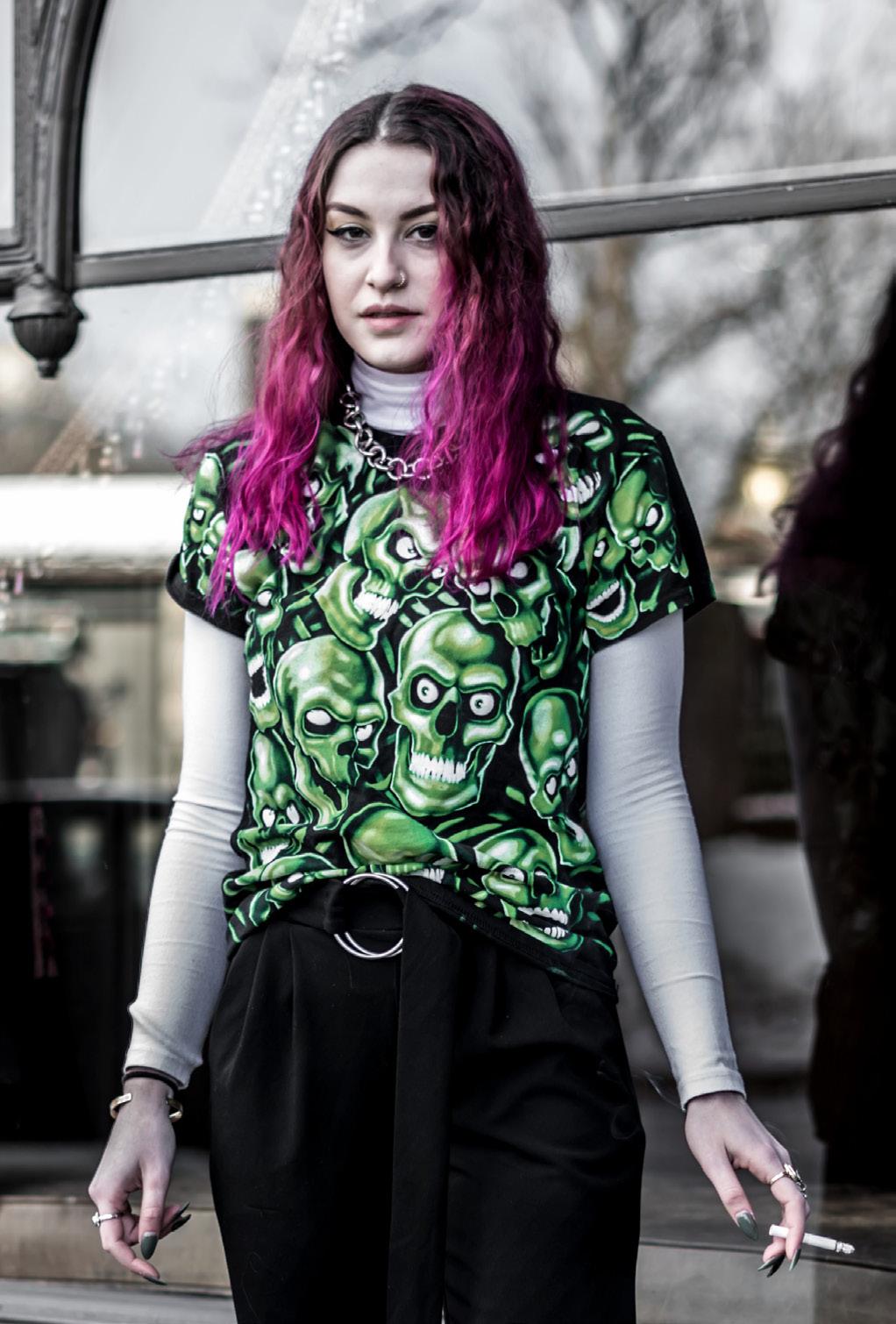
she/her/hers | Writing, Literature, and Publishing Class of 2020
How would you describe your style in three words?
I wear a lot of black, a lot of jewelry, and I have bright pink hair. Who’s your celebrity style icon?
I honestly don’t even know.. I follow a lot of Depop models on instagram. I don’t think I have a favorite. I just save stuff that I like.
Any brands that you highly recommend to people?
For shoes I really like Dolls Kill. The shoes I am wearing right now are Cultomonia and it’s probably my favorite brand. Other than that I just thrift shop.
What’re three pieces of your wardrobe that you can’t live without?
I can’t live without these shoes I’m wearing, for sure, I have a black choker with fake girls and studs that I wear all the time, and these huge silver hoop earrings that I can’t find right now, so I am living without them.
Instagram: @s0wet
she/her/hers | Theatre Education Class of 2020
Who’s your celebrity style icon?
Lemme think about that. I really like how Rico Nasty dresses. I don’t really dress like her but I really like how she dresses.
What are three pieces of your wardrobe that you can’t live without?
I can’t live without my black hoodie, my white Nike Air Maxes, and my sweats.
Tag yourself! What article of clothing would you be if you had to choose?
If I were an article of clothing I would for sure be a pair of Nike Air Maxes.
Instagram: @jeyrie
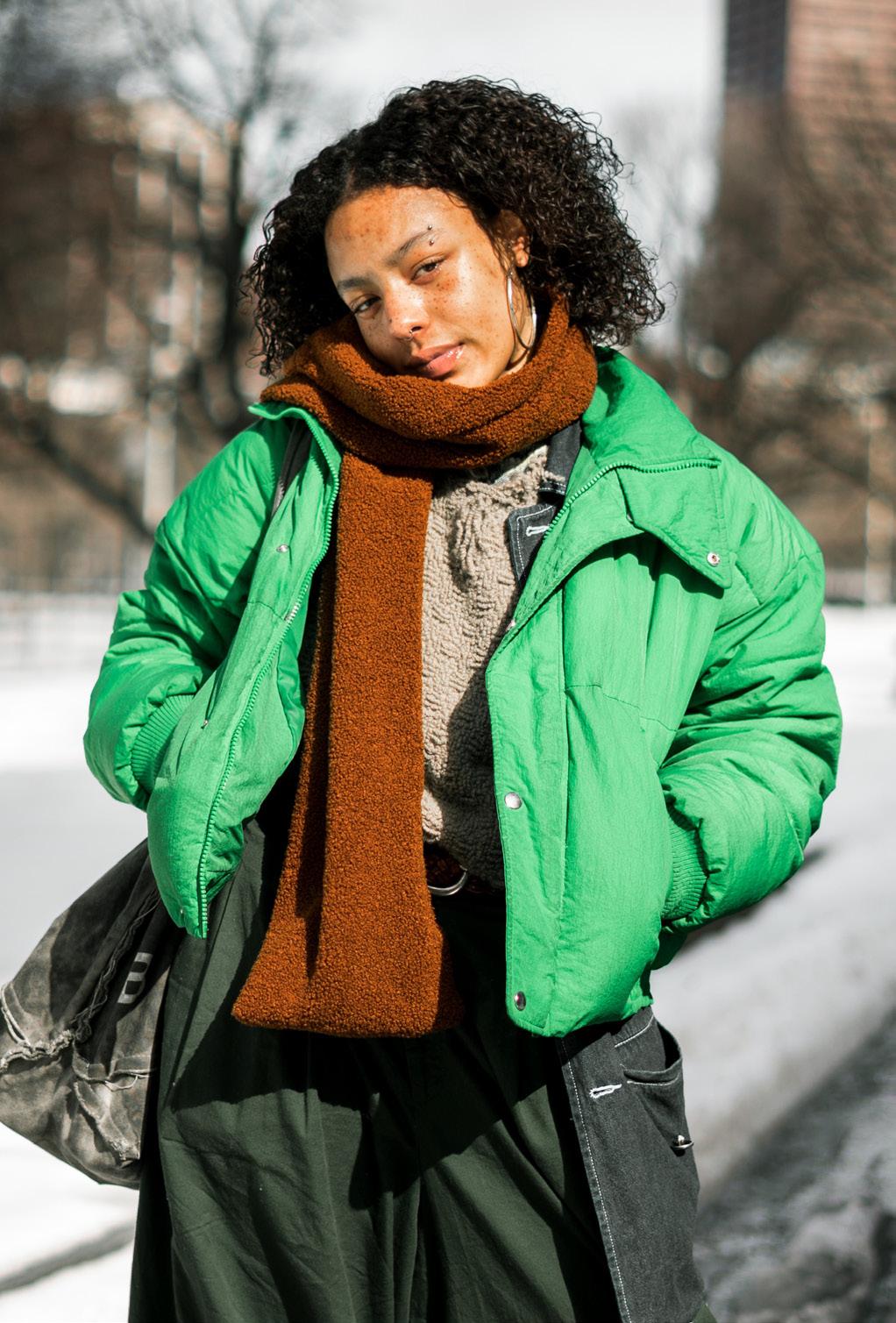

she/her/hers | Theatre and Performance Class of 2020
How would you describe your style in three words? My personal style is innovative, colorful, and ever-changing. Where do you typically get inspiration for your outfits? I get my inspiration from Japan because the looks are so creative and bold.
If you could only shop at one place for the rest of your life, where would it be?
If I could only shop at once place for the rest of my life it would definitely be at Dover Street Market.
Instagram: @naziaperry
she/her/hers | Writing, Literatire, and Publishing Class of 2019
How would you describe your style in three words? Hold on, I got this. Simple but fun. There. That’s three words. Awesome. Any brands that you can’t live without?
Um. Dang. I don’t have any go-to brands really. I try to try new brands. I do a lot of thrift shopping, Buffalo Exchange and Depop shopping because I’m really trying to shift away from fast fashion right now, so currently I’m in an in-between for brands that I really like to use.
And where do you get inspiration for your outfits and accessories?
A lot of instagram and celebrity pages and fashion magazines. I really like looking at magazines for fashion tips. I like looking at what new trends will be because there are so many bold and fun style things that I wouldn’t necessarily wear on the street but give me inspiration for what I could build my style off of.
Instagram: @ninafisher
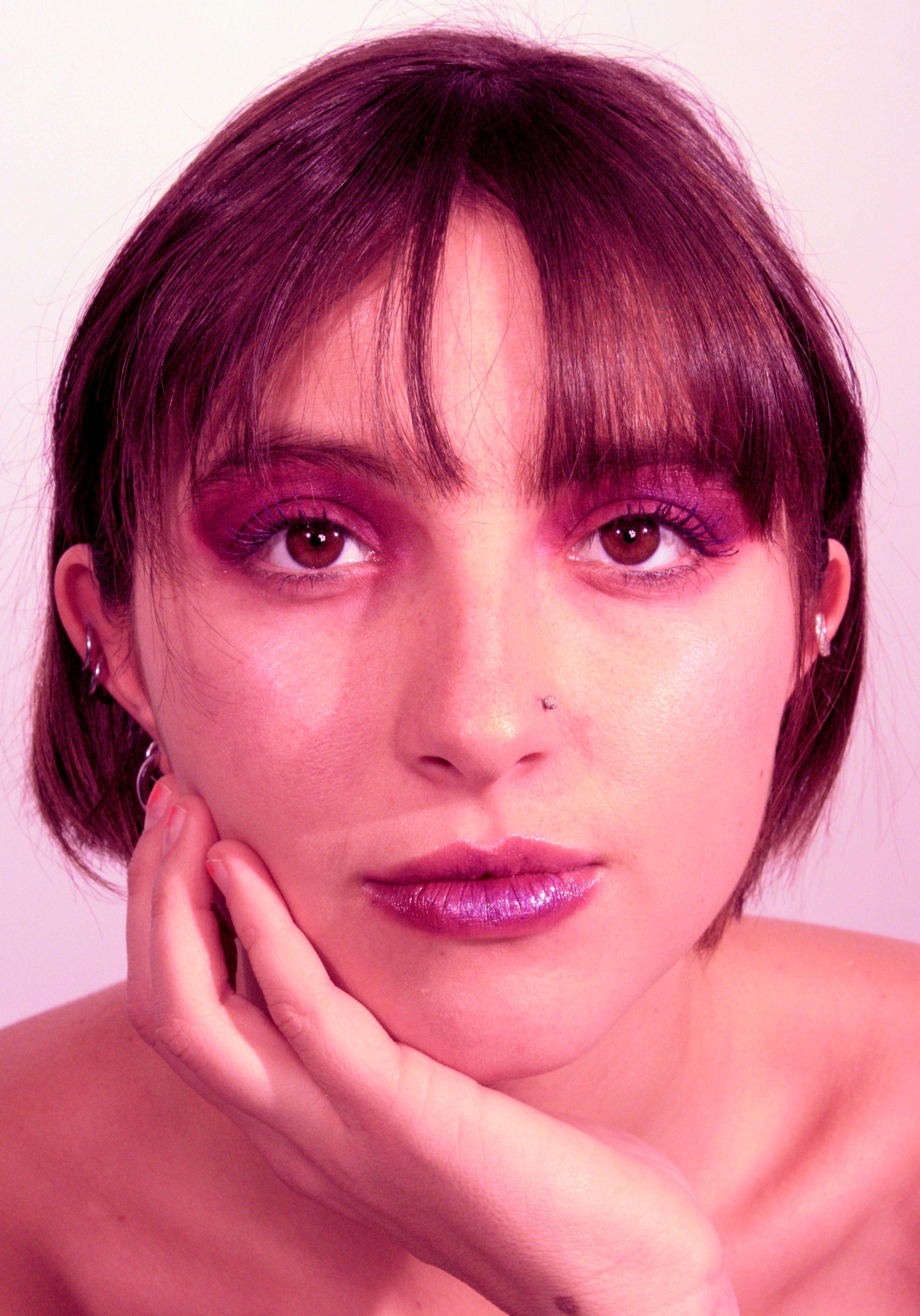
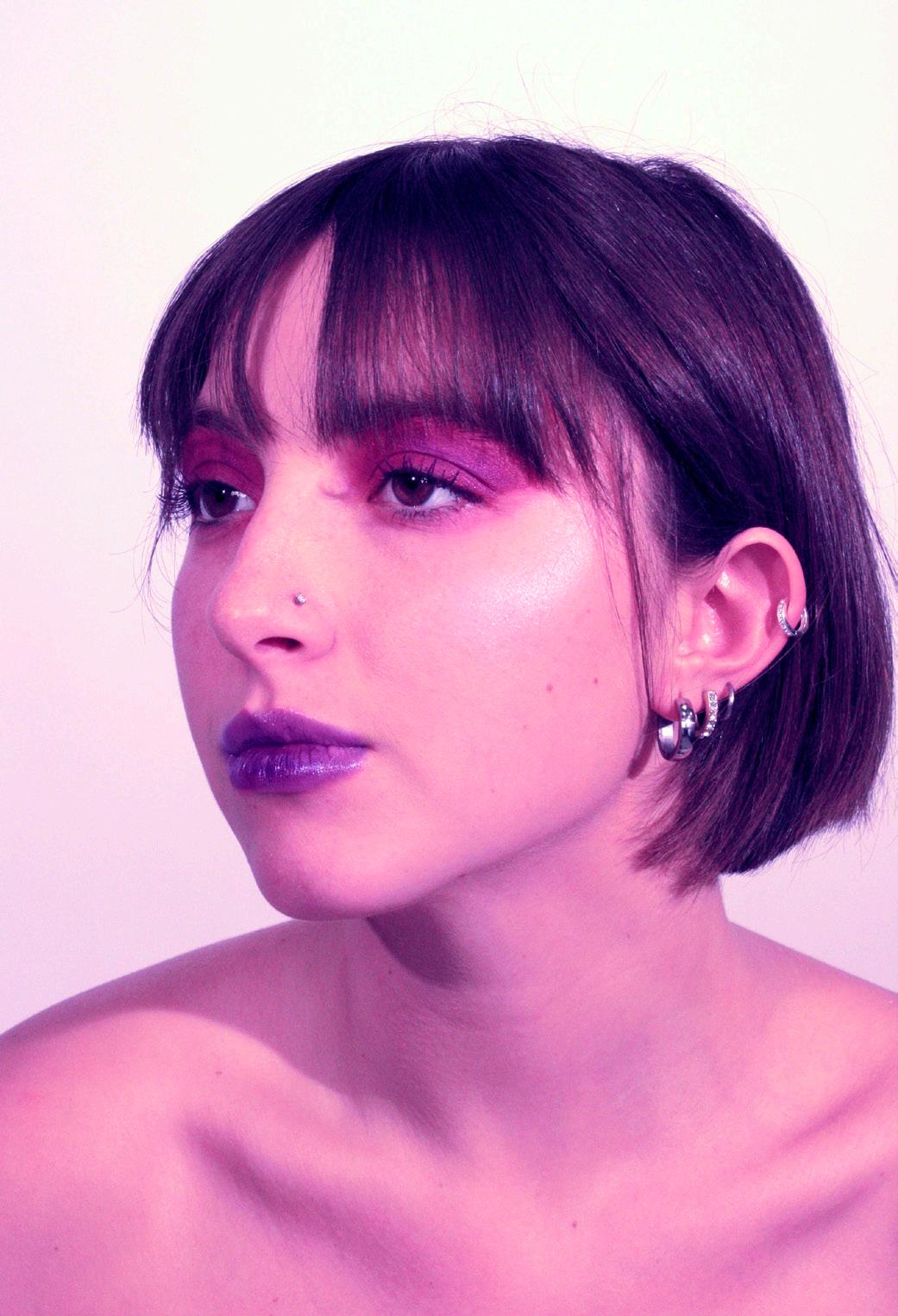
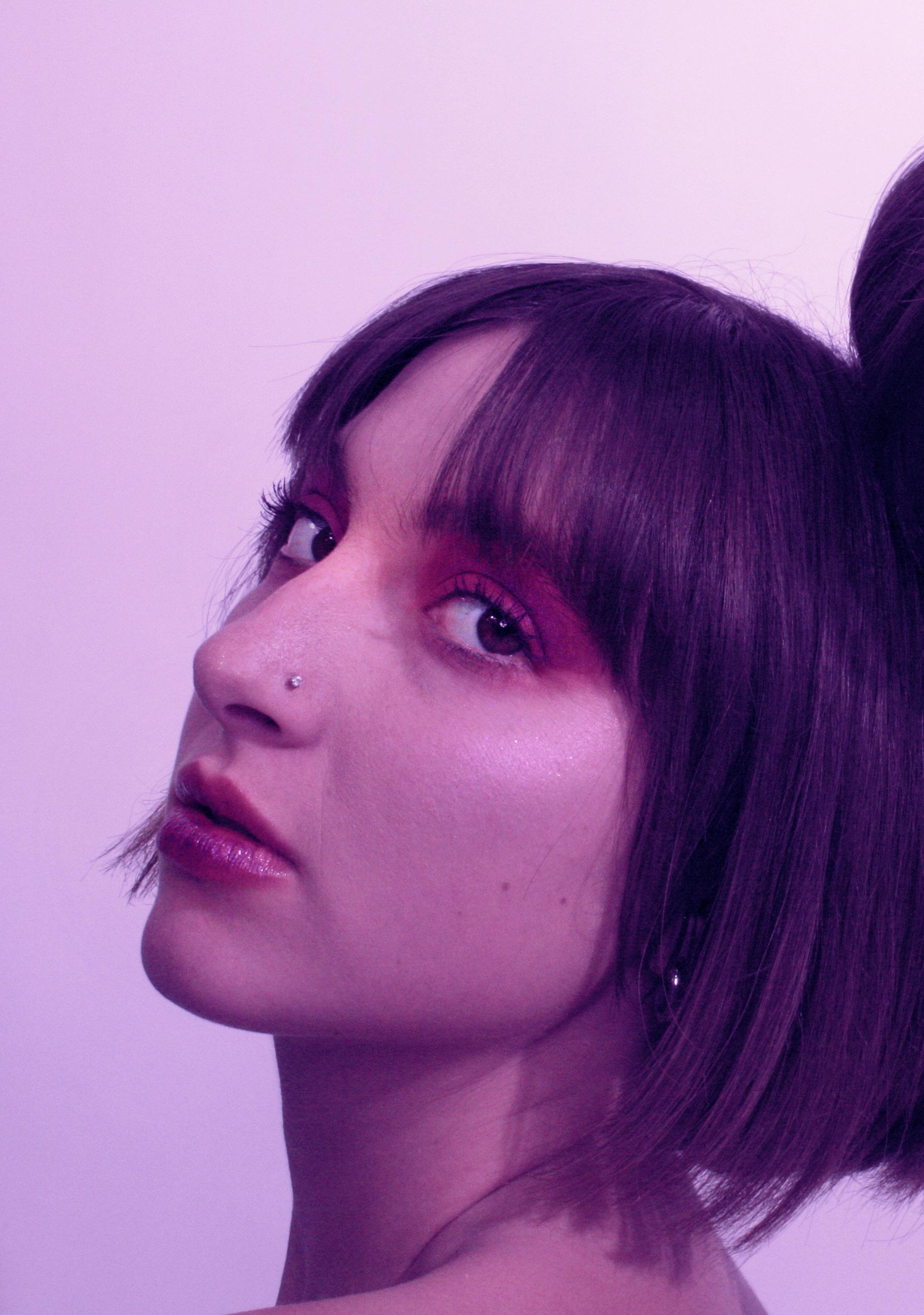
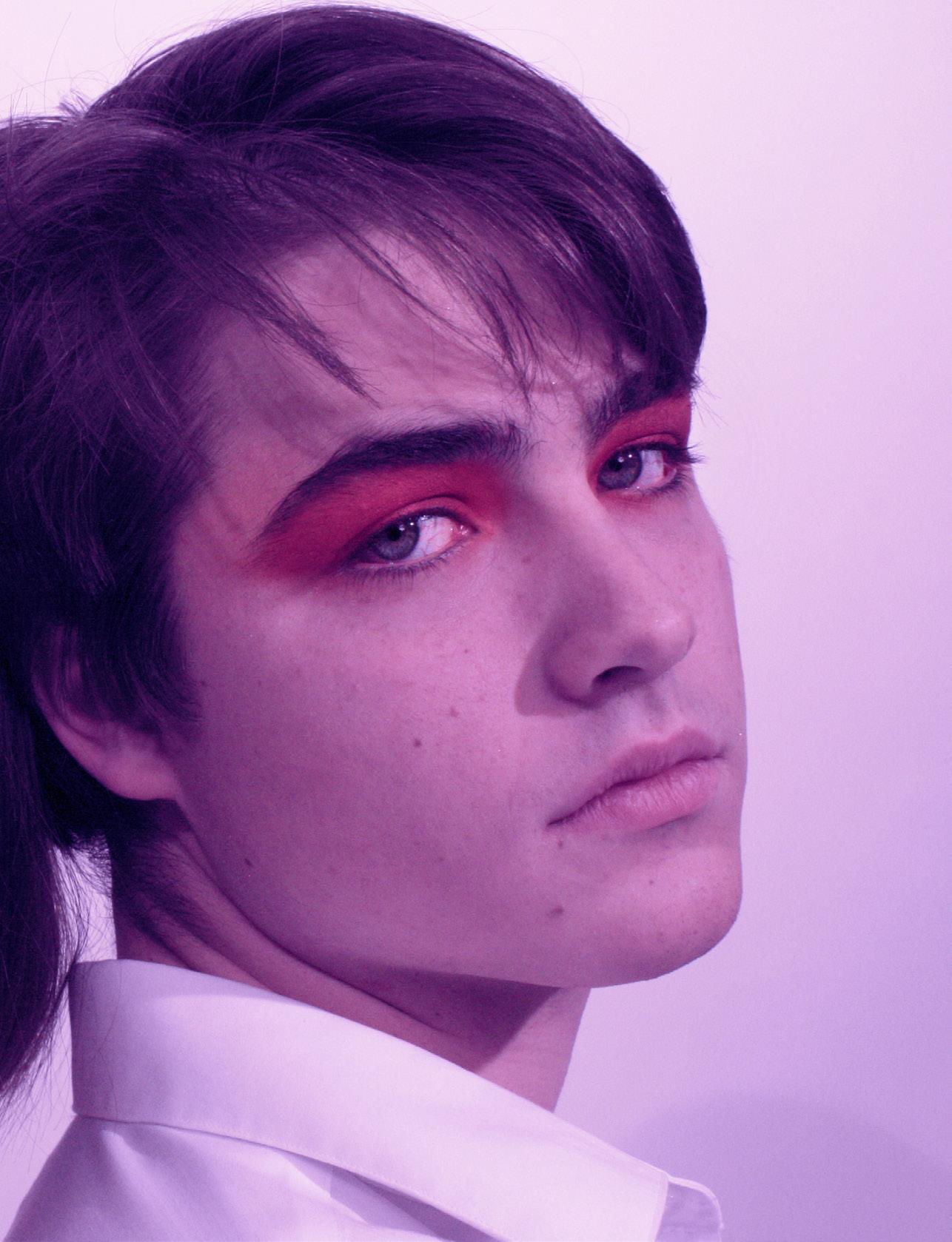
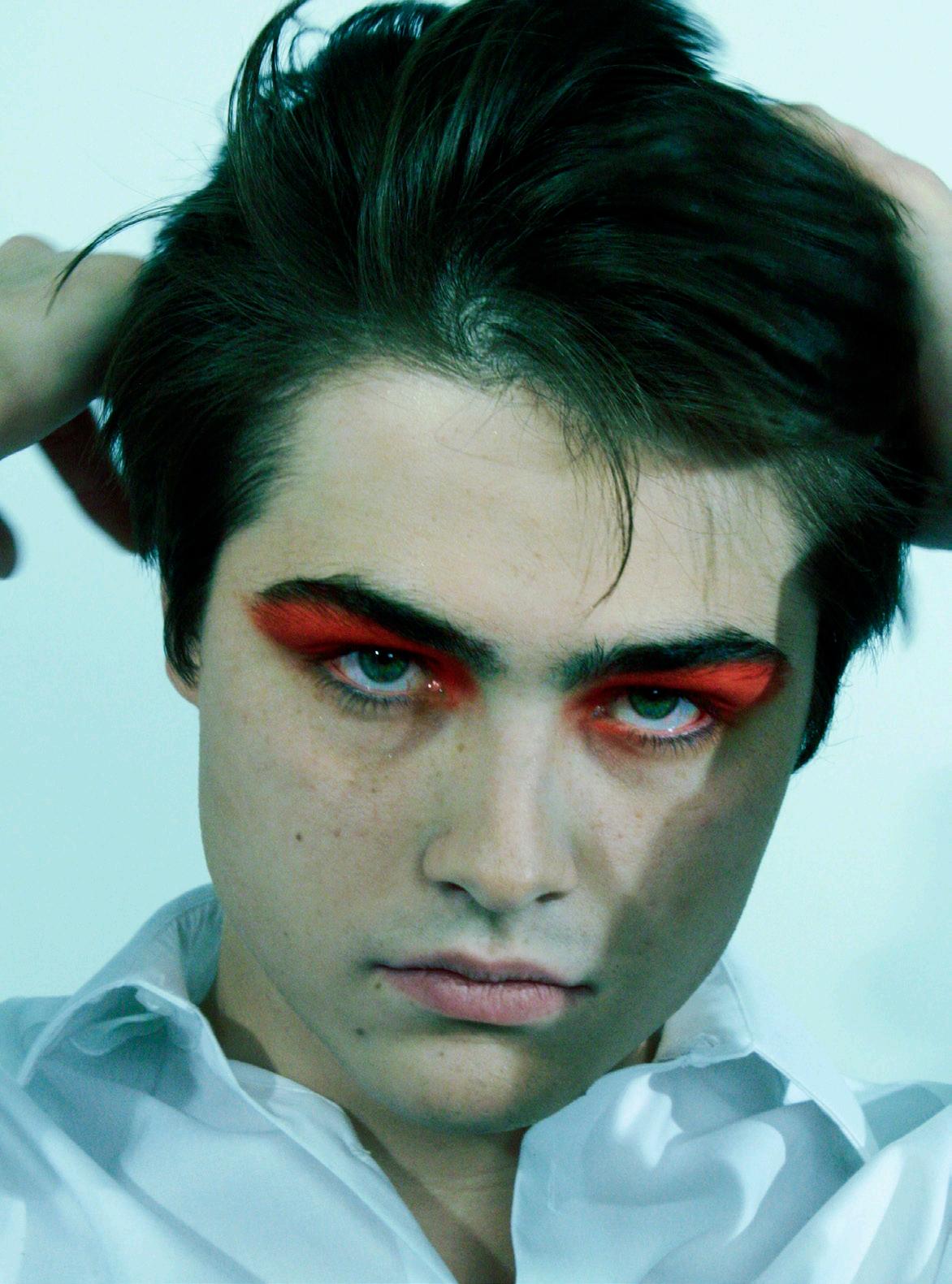
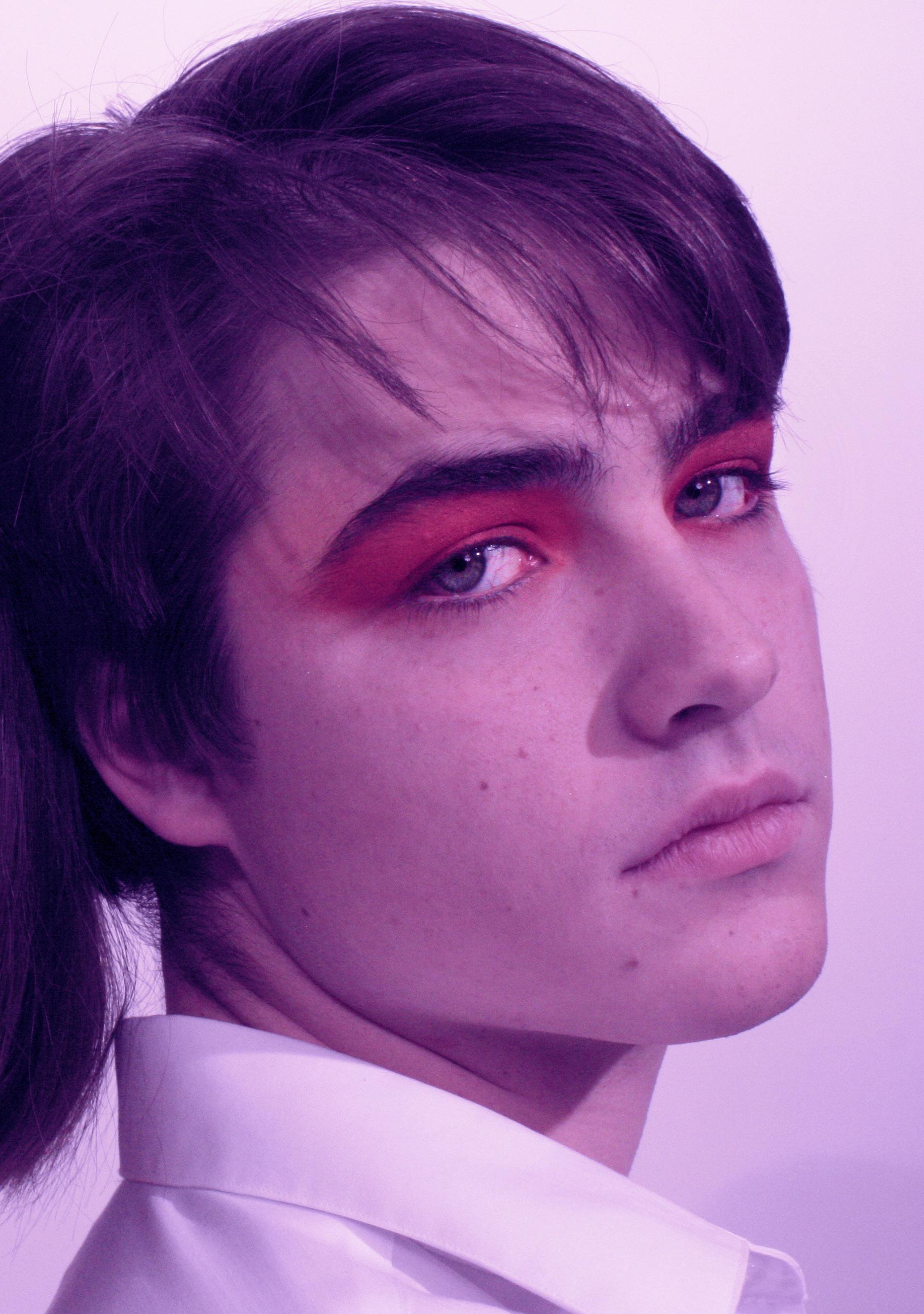
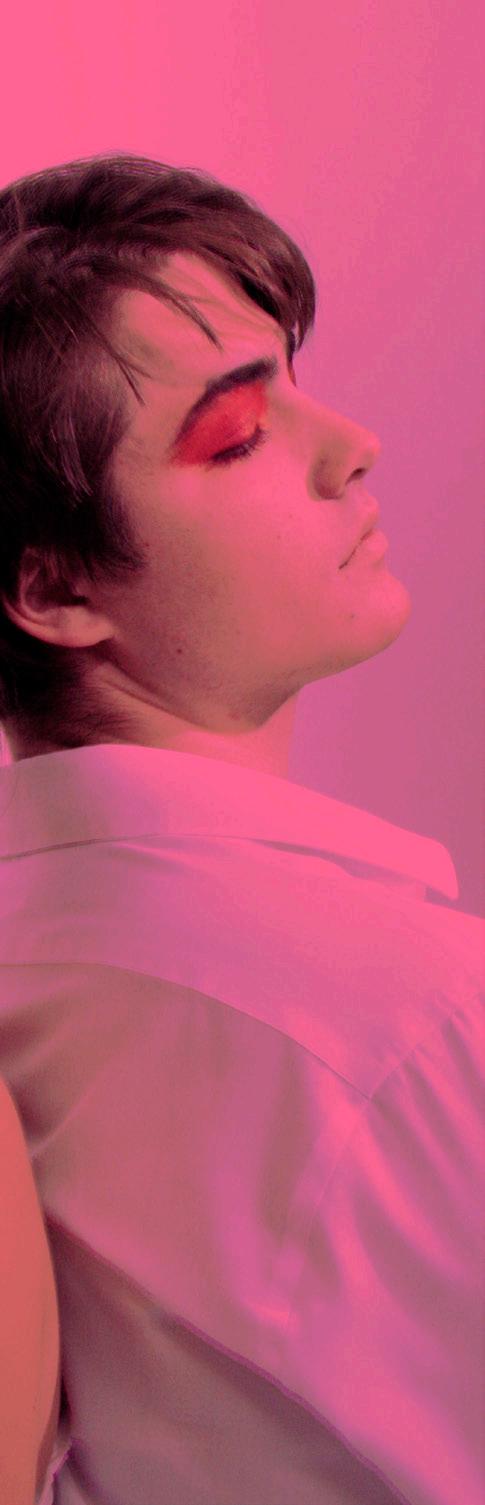
PHOTOGRAPHED AND DIRECTED BY LILLY WALSH
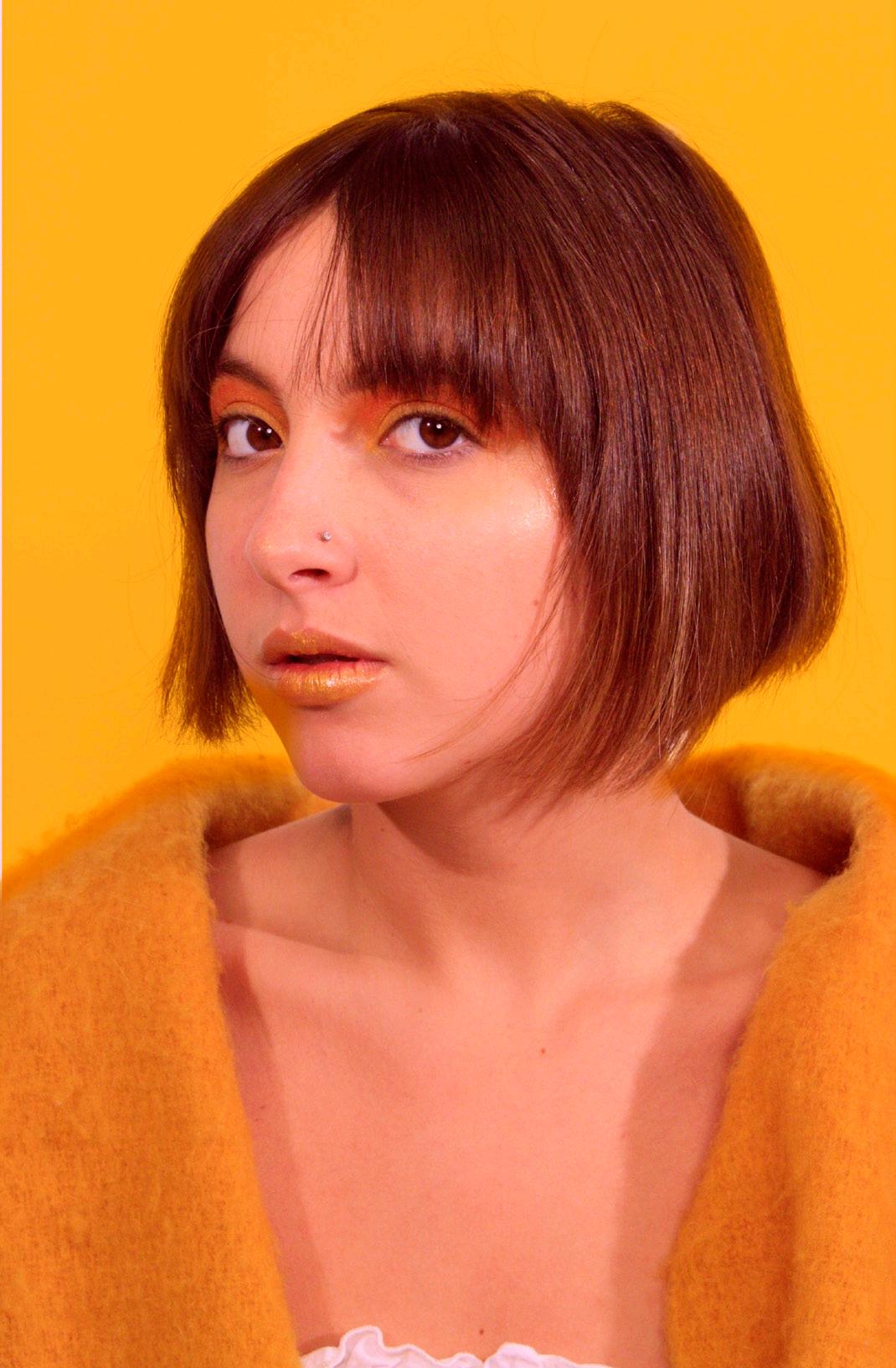
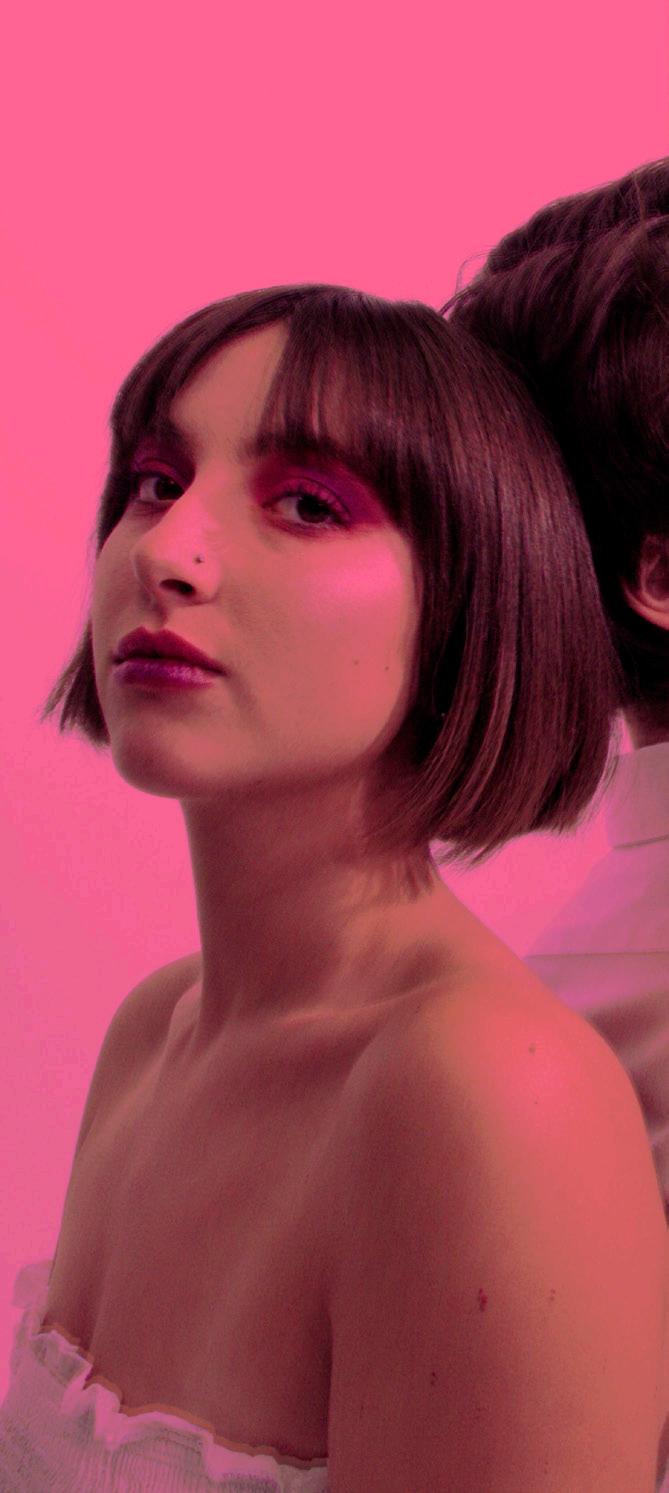
PHOTOGRAPHED AND DIRECTED BY LILLY WALSH
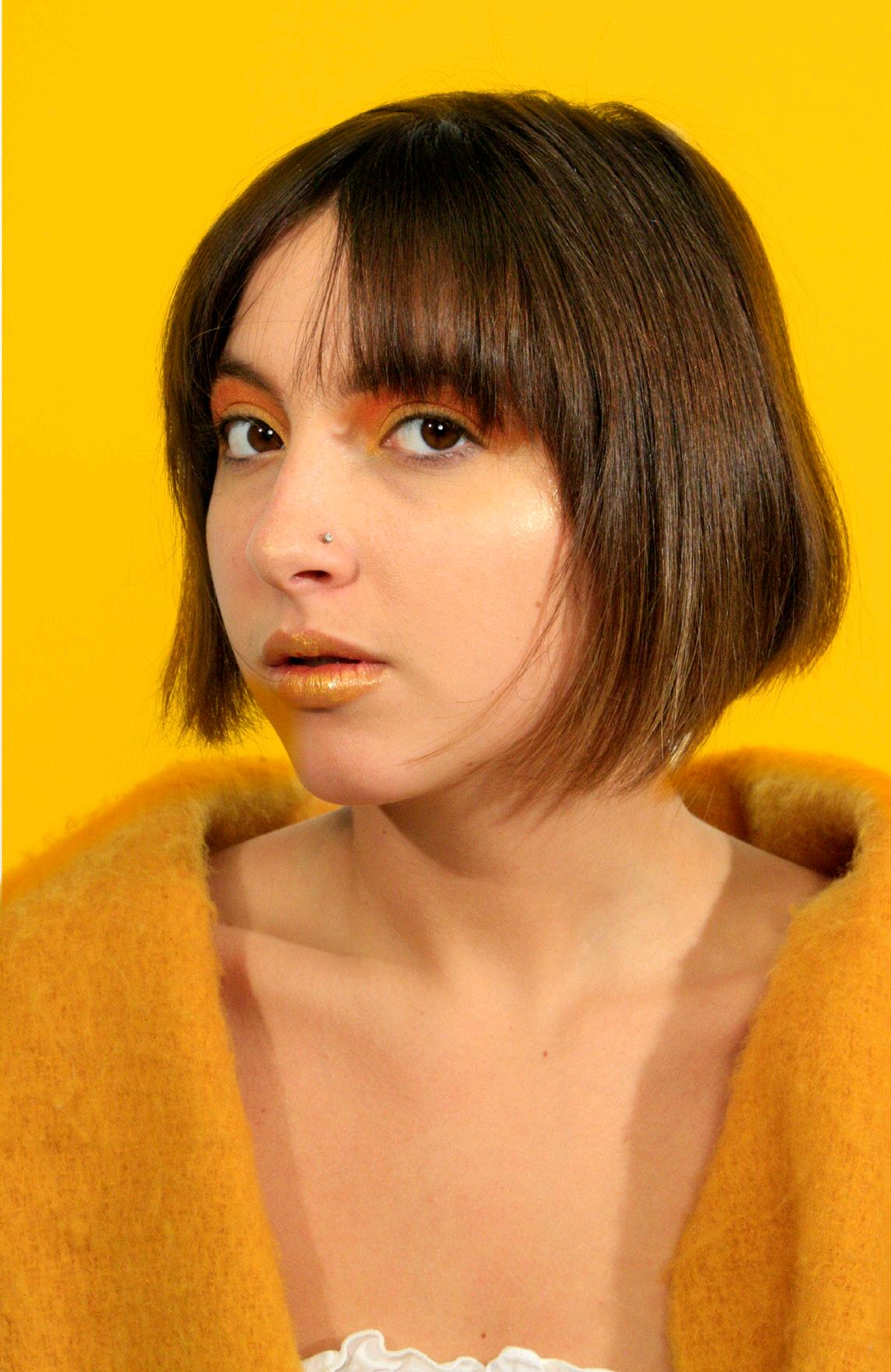
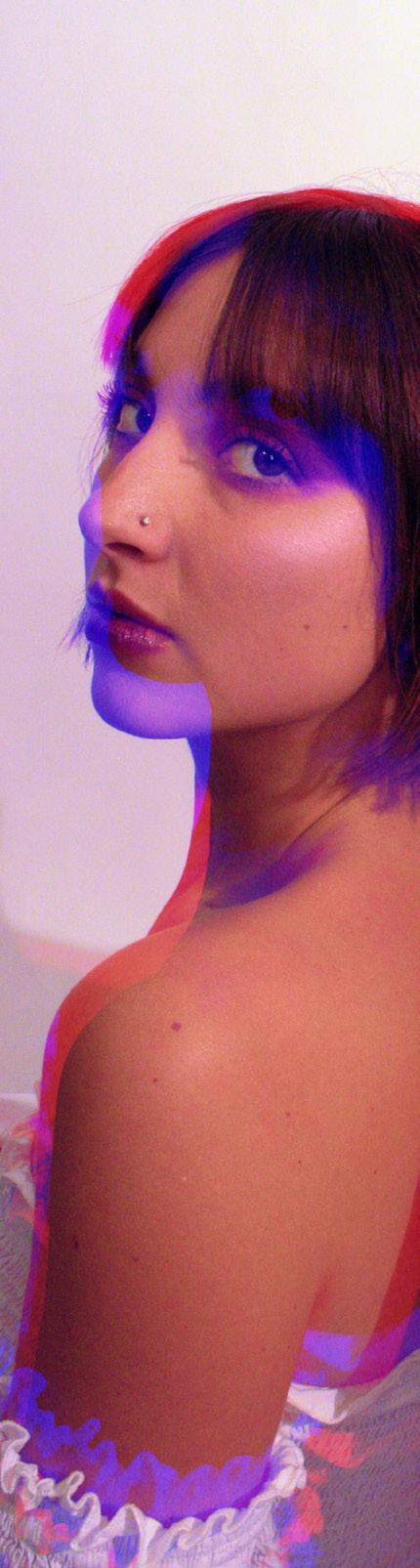
PHOTOGRAPHED AND DIRECTED BY LILY WALSH
ASSISTED BY MONIKA DAVIS
ASSISTED BY MONIKA DAVIS
ASSISTED BY MONIKA DAVIS
MAKEUP BY LAUREN DILLOW
MAKEUP BY LAUREN DILLOW
MAKEUP BY LAUREN DILLOW
STYLED BY GINA YORK
STYLED BY GINA YORK
STYLED BY GINA YORK
TESSA LEIBOWITZ
TESSA LEIBOWITZ
TESSA LEIBOWITZ
EMILY MCMANN
EMILY MCMANN
EMILY MCMANN
MODELED BY VICTORIA ECHEVERRIA
MODELED BY VICTORIA ECHEVERRIA
MODELED BY VICTORIA ECHEVERRIA
JOESPH KEEFE
JOESPH KEEFE
JOESPH KEEFE




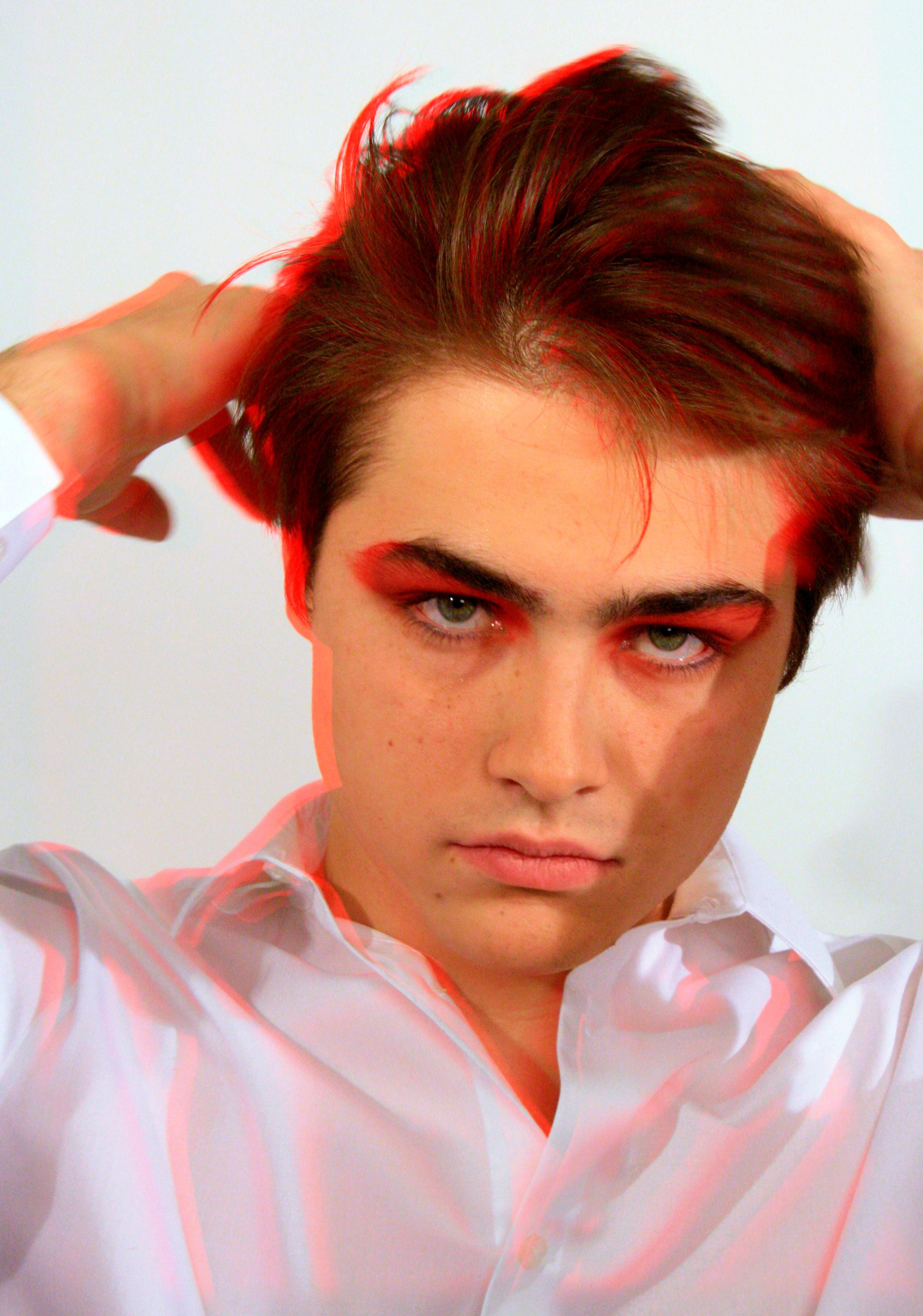



GOLDBERG
“Really? But you’re just so...white.”
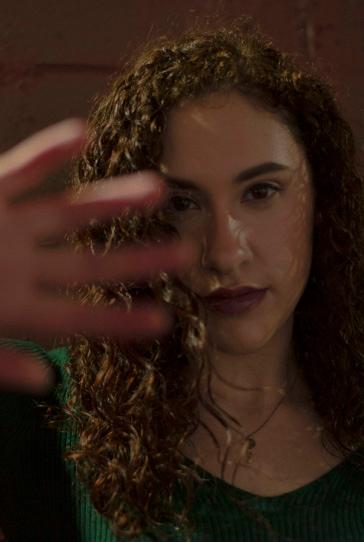
It’s always a surprise when I tell people that I am half Puerto Rican, and most times, I am met with disbelief. My father is white and Jewish, and my mother is Puerto Rican. My pale skin, auburn curly hair, and last name all make me appear to be completely white and Jewish. People are shocked that I was raised Catholic and that I am bilingual.
I vividly remember doing a family tree presentation about my ancestry in the fourth grade. That day on the playground, the other kids from my class were all talking about their ethnicities. At the young age of nine, I began to realize my differences. I heard my classmates speaking of their own backgrounds: Irish, Italian, Polish, Jewish with a European background—all typical of my New Jersey hometown. When I said that not only was I half Catholic and half Jewish but that my Catholic side was Puerto Rican, one girl came up to me and said, “that’s not possible.” That was the first day I recognized that being biracial would be a different experience for me and that not everyone could relate to or understand my identity.
When I was eight years old, there wasn’t even an American Girl doll that looked like me. They were all solidly one thing: white, black, or Asian. Some blond, some brunette, and one redhead. And that was all. I was American—born in Long Island, NY and raised in New Jersey. So why wouldn’t American Girl have a doll that looked like me? I couldn’t grasp the fact that other people did not acknowledge biracial individuals.
I spoke to Emerson freshman Business of Creative Enterprises major Xea Myers, who is half Italian and half Jamaican. She too has felt disregarded and invalidated due to being white passing.
“It was difficult at times. I would go to New York to visit my dad’s side, and his family would make comments like ‘you’re so white, why isn’t your hair curly anymore?’ (I use a keratin treatment because I prefer my hair straight as it is more manageable), and that I had lost my Jamaican accent,” recounted Myers. “My friends from school wouldn’t understand why it took me longer to do my hair in the morning, and why it was so thick, coarse, and curly despite my very fair complexion. People always
tell me that I look like something else. Despite these things, I love being a part of two completely different cultures.”
Throughout my own school years, I was often the only one with curly hair. It was not difficult to spot me in old class photos. When it came to filling out forms for school, I would always check off both “white” and “Hispanic.” When the forms were returned to me, I would sometimes only see a check next to one of those categories. I became a pawn that they used; I was whatever they needed that year for the quota, despite accuracy to my identity. My multiethnic narrative had been covered up.
The two sides of my family are drastically different. At times, I knew that my Jewish relatives might have been disappointed that I didn’t have a bat mitzvah. And at times I knew that my Puerto Rican relatives wished that I had learned Spanish earlier on in life (I did not become fluent until my senior year of high school). And at times in middle and high school, when both sides of my cultures had traditional milestones that I was expected to choose between, I felt torn. I wished that people could just see me—my personality, my interests, and not just my ethnicities and cultures.
But despite what I may wish for, appearances are what people see and judge first. And physical appearances are only part of being biracial. The cultural practices are far more important. Sophomore Marketing major Julianne Stein, who identifies as Asian American with Chinese heritage, was brought up in a mixed Jewish and Asian household.
“I definitely think that my childhood was different from my friends who identify as one race. I have simply been exposed to more different cultures and traditions than them,” said Stein.
Despite the fact that balancing two cultures can be challenging at times, at the end of the day, the two halves of my culture are major parts of my identity. I feel lucky to have experienced many different cultural practices-- a gift that not everyone gets the chance to experience. I get to have Jewish latkes on Hanukkah, and traditional Puerto Rican pastéles on Christmas, followed by my mother’s famous temblequé for dessert. Learning about different cultures, even down to the small details, has allowed me to have a more well-rounded understanding of the world, and more compassion for others. They are a part of my story. I wouldn’t trade them for anything. YM
As college students, especially in Boston, we make little to no money, but still find ourselves having an excessive amount of expenses. A part of those expenses is from resorting to emotional spending due to all of the stressors in our lives. It becomes so easy to say, “I deserve to treat myself,” after a long day of work, classes, or writing a mind-boggling essay.
The phrase “Treat Yo’ Self,” coined by characters Donna Meagle and Tom Haverford on Parks and Recreation, expresses this desire to buy what you would normally talk yourself out of. Even though this iconic term first came about in 2011, it still resonates with viewers, especially college students.
With all of the stressors stemming from college, I find myself spending a little more money on a new sweater from Primark, a useless mud facemask, or even paying that extra $2.09 to add a chocolate chip cookie to my order at Panera. Being a college student in and of itself is exhausting and draining. It seems harmless to let this infamous Parks and Rec phrase out every once in a while—but when does it become too excessive? Spending money is most often used as a coping mechanism and as college students, we seem to have a lot of coping to do.
Zoe Constantinidis, a first-year journalism major, says, “The first semester I found myself spending money on things I don’t necessarily need and I would justify it by saying it’s on sale.”
As an incoming college freshman, experiencing life as an adult and acclimating to the numerous types of demands placed on them can be a truly overwhelming experience. It can also lead to unhealthy amounts of stress. A study from the Anxiety and Depression Association of America found that 80 percent of college students frequently or sometimes experience daily stress. This often causes the “Treat Yo’ Self” mantra to come into full effect.
Last semester, I would find myself reminiscing over what a horrible day I had, then following that thought with something along the lines of, “I should buy this, I deserve it after the day I’ve had.” The day after would then consist of a mini mental breakdown over the amount of money that had been heartbreakingly removed from my bank account. On beat with the constant and vicious “Treat Yo’ Self” cycle, the stress from my draining bank account spiraled these indulgent thoughts.
At what point does this never-ending cycle of stress-buying reach an unhealthy point?
When I first arrived at college and started my work study job, I had the wholesome intentions of putting all of my earnings towards my tuition. That plan ended fairly quickly. What I didn’t bring into account was all of the extra expenses I would have on top of tuition and the days I decided I needed to treat myself a bit. The National Association of College Stores (NACS) estimates that the average college student will spend $655 per year on extra expenses. The College Board puts that number even higher at $1,168 per year. Coming to college is a life changer and you don’t realize how much money you will need to not only stay healthy, but to also thrive in this whirlwind of an environment.
Between work, school, and organizations, I found myself throwing away self-care from my list of priorities. As a replacement, I would aimlessly scroll through Amazon Prime, and with the click of a button, my “self-care” products would arrive in two days time. Being so busy, my methods of stress relief turned from writing in my journal or doing yoga, to buying into capitalism and getting a $15 face mask that I only used twice the whole semester.
Finishing your first ever semester can also be a calling to splurge and treat yourself a bit. Tere’ssa Fleming, a freshman writing, literature, and publishing major, says, “I haven’t found myself spending more money at school compared to when I go home for breaks. I didn’t realize until I came home how much money I spent over break just because I had a good semester and deserved it. It is a tricky balancing act because the self-care industry encourages us to buy everything simply because it is self-care, not because it is necessary. It is really just feeding into the consumerism of our time.”
Although it is nice to “Treat Yo’ Self” every once in a while, we need to make sure that it doesn’t take over and give us an excuse to buy useless material objects whenever we are feeling stressed. While self-care is a positive addition to one’s life, it shouldn’t be overused or focused specifically on buying new things. Overspending in college is a problem that can be fixed by enjoying the people around you. Take some time to breathe and write for yourself. Most importantly, don’t forget to study because we are still college students and there is probably an essay due soon.
YM


WRITTEN BY KATRINA DIZON ART BY SOMARI DAVIS
The term “quarter-life crisis” is nothing new. Dictionary. com defines “quarter-life crisis” as: “a crisis that may be experienced in one’s twenties, involving anxiety over the direction and quality of one’s life.” People often experience this soul-searching transition period in their 20s and early 30s when things don’t turn out as expected, and they feel a little lost. The Friends theme song even includes the line: “Who would’ve thought that life was gonna be this way?” But as millennials are experiencing adulthood, and as Generation Zs approach it, “quarter-life crisis” takes on a more serious, stressful meaning. Today, it is less about “soul-searching” and more about trying to survive a broken economy and coping with the overwhelming presence of social media. It appears that Generation Z will be experiencing the same thing. Nowadays, the “quarter-life crisis” has become synonymous with the young adult burnout and has much higher stakes.
Millennials have been deemed the “Burnout Generation”— and for good reason. Millennials and Generation Zs have been conditioned by previous generations to believe that if they are not struggling, they are doing something wrong. As a result, they pile up obligations, leaving little time for sleeping or eating. This internalized “struggle to succeed” mindset seems to be doing more harm than good. Sarah Hosman, a sociology professor at Emerson College, explained how the competitive nature of the current job market due to economic changes contributes to young adults’ tendencies to overwork themselves.
“There’s an increased expectation for higher education, which means more people are going to universities, which leads to increased competition [in the workforce] to differentiate themselves and make themselves stand out,” Hosman said.
With today’s dismal economy, overwhelming student debt, and the spike in home prices, life for young adults is not as easy as it once was several years ago. Owning a home, getting married, and having kids is no longer the expected, anticipated future for young adults. These are now aspects of a future that is not necessarily unattainable, but certainly unrealistic.
BuzzfeedNews published an essay entitled “How Millennials Became the Burnout Generation” in which they discussed millennials’ constant preoccupation with work and their careers. This causes simple, mundane tasks like voting or sharpening knives to be considered a burden and something to
be avoided. “Adulting,” which many older generations believe is just a term that describes young people’s laziness, is really a term that describes how difficult it is to do everyday errands because of generation burnout.
The author of the article, Anne Helen Petersen, writes “It’s not as if I were slacking in the rest of my life. I was publishing stories, writing two books, making meals, executing a move across the country, planning trips, paying my student loans, exercising on a regular basis. But when it came to the mundane, the medium priority, the stuff that wouldn’t make my job easier or my work better, I avoided it.”
To add, the rise of social media has contributed to this generation burnout. By being presented with idealized versions of people’s lives on social media, we become dissatisfied with our own lives. According to the Anxiety and Depression Association of America, obsessive social media use causes depression, paranoia, loneliness, etc because of the pressure to share things with others as well as the comparison of each other’s lives.
“Social media has an impact on people’s sense of wellbeing and social integration,” Hosman said. “We’re seeing snippets of people’s lives. It’s a very constructed sense of reality that people present.”
We feel as though everyone else’s lives are perfect but our own. Life becomes a competition, a race to see who’s more successful. This sense of FOMO (fear of missing out) and the dissatisfaction of one’s reality leads to young adults questioning if the direction of their lives is going the right way and if life will forever be this stressful.
The quarter-life crisis is not just an episode of Friends anymore. Because of the current state of the economy, being a young adult in America today is as stressful as it has ever been. Millennials have not been prepared for the drastic economic changes because the previous generation expected a better future. Generation Z will have an even more difficult time, as no one knows how to solve these economic issues yet. It can be difficult to be optimistic about the future, as student debt continues to rise, the job market becomes more competitive, and affordable housing becomes less affordable. As young people approach adulthood, however, we must hope that they can do what the previous generations couldn’t, and perhaps the quarter-life crisis will no longer be associated with burning out before your adult life even begins. YM
BY ENNE GOLDSTEIN

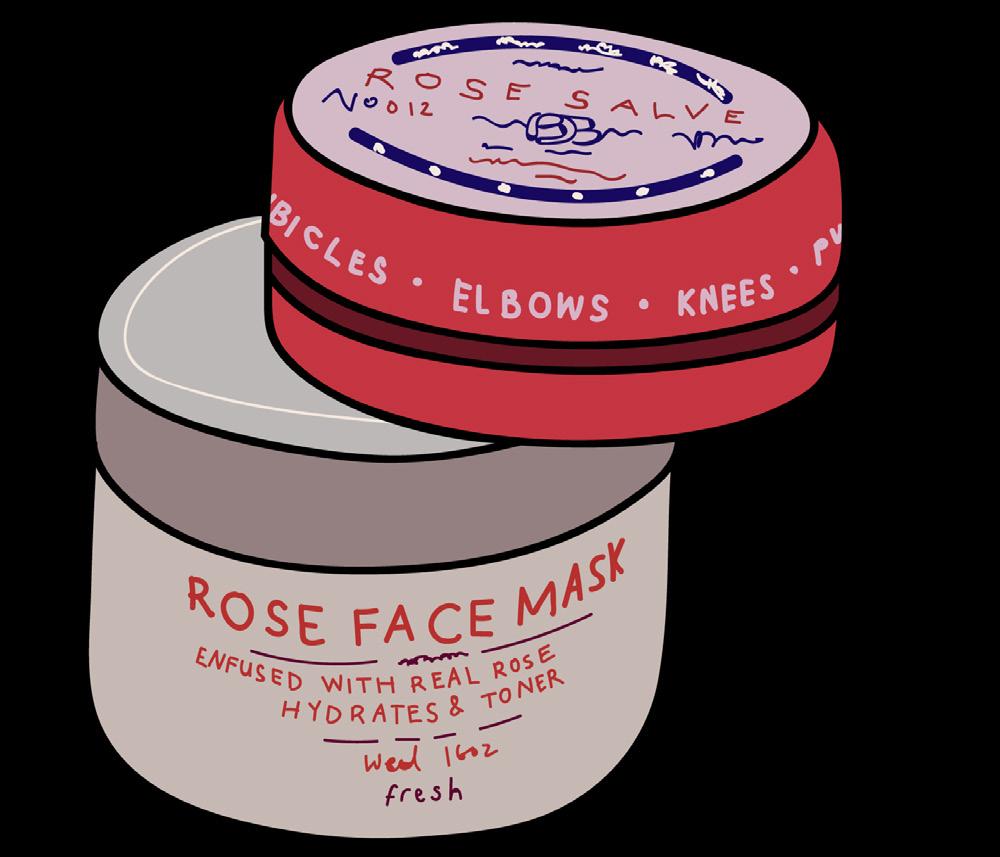
Rose is not only extremely on-brand, but is also extremely hydrating to my dry skin. I bought C.O. Bigelow’s Rose Salve at Bath & Body Works in the seventh grade when $6 was a lot to spend on a cosmetic, and I haven’t looked back since. That little tin got me through puberty, Catholic school, and years of New England winters. I will repurchase until I’m at least 97. Fresh’s Rose Face Mask gets me through the winters too, but at the least the others are over.
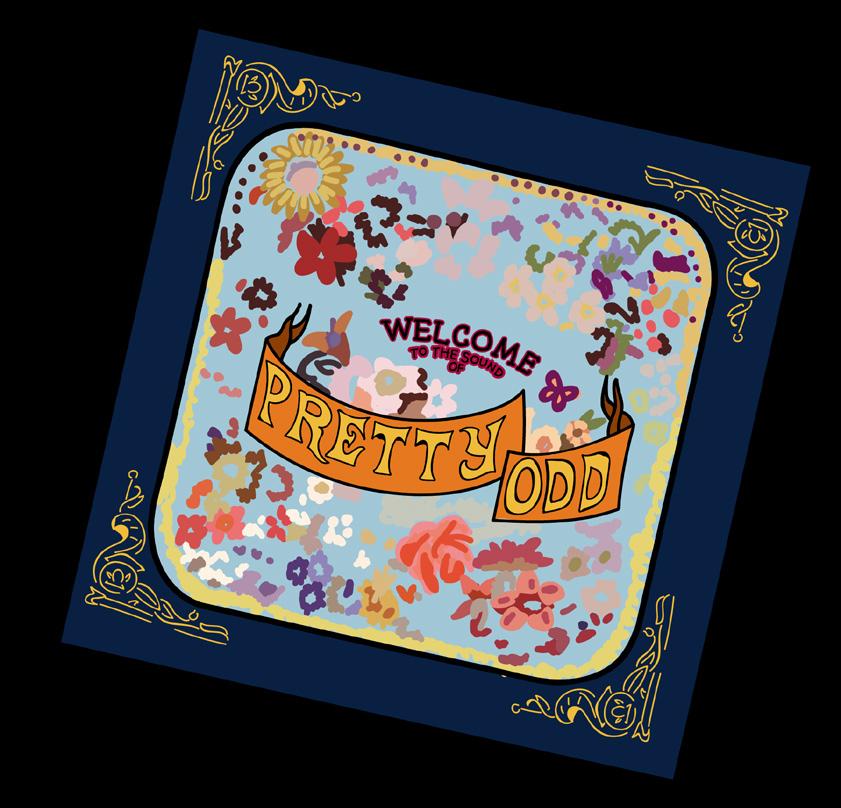
This is the best album ever written. No one can argue me on this. Panic! at the Disco’s psychedelic pop, Beach Boys-esque melodies, and colorful lyrics are so deeply woven into the fabric of my adolescence that I won’t be reasonable about this. Give it a listen if you never have; it feels like a fairy tale. When it was repressed a couple years ago and copies of the vinyl were finally $20 instead of $200, I snagged one at Newbury Comics. No, I don’t have a record player. Yes, it looks cute on my wall.
I picked up this mug at Keukenhof Botanical Garden in Holland in 2017. Keukenhof is the largest flower garden in the world, so, needless to say, I was in heaven. When I saw the Delft Blue mug in the gift shop, I immediately saw it years and years in the future in my future kitchen holding future coffee with future light streaming through the windows. For now, it’s lovely for holding a pour over in my dingy little Boston apartment.
My large burnt-orange scarf, which I got during a trip to Copenhagen, has quickly become one of my favorite accessories in my closet. I wear it any and every day which is below 50 degrees! I can wear it as a long scarf around my neck or I can open it up and wrap it around my shoulders like a shawl—it has totally become a sort of comfort blanket for me!
Anyone who knows me knows I am slightly (obsessively) in love with Jane Austen. Not only was she a female author in an era where that was almost unheard of, but she was a bold and radical critic of her society. Every time I enjoy a hot cup of tea in this mug, I get a happy reminder of the strength, courage, and sass which she embodied, all traits which I hope to emulate.
I never leave my house without a book. Ever. I have enjoyed a life-long love of reading and have come to the point where I don’t feel whole unless I have a book with me. I can always be caught reading, even in just a few moments of free time—during my daily commute on the T, those few minutes of downtime between classes, or my breaks at work. All perfect times to catch up on how my fictional friends are doing.




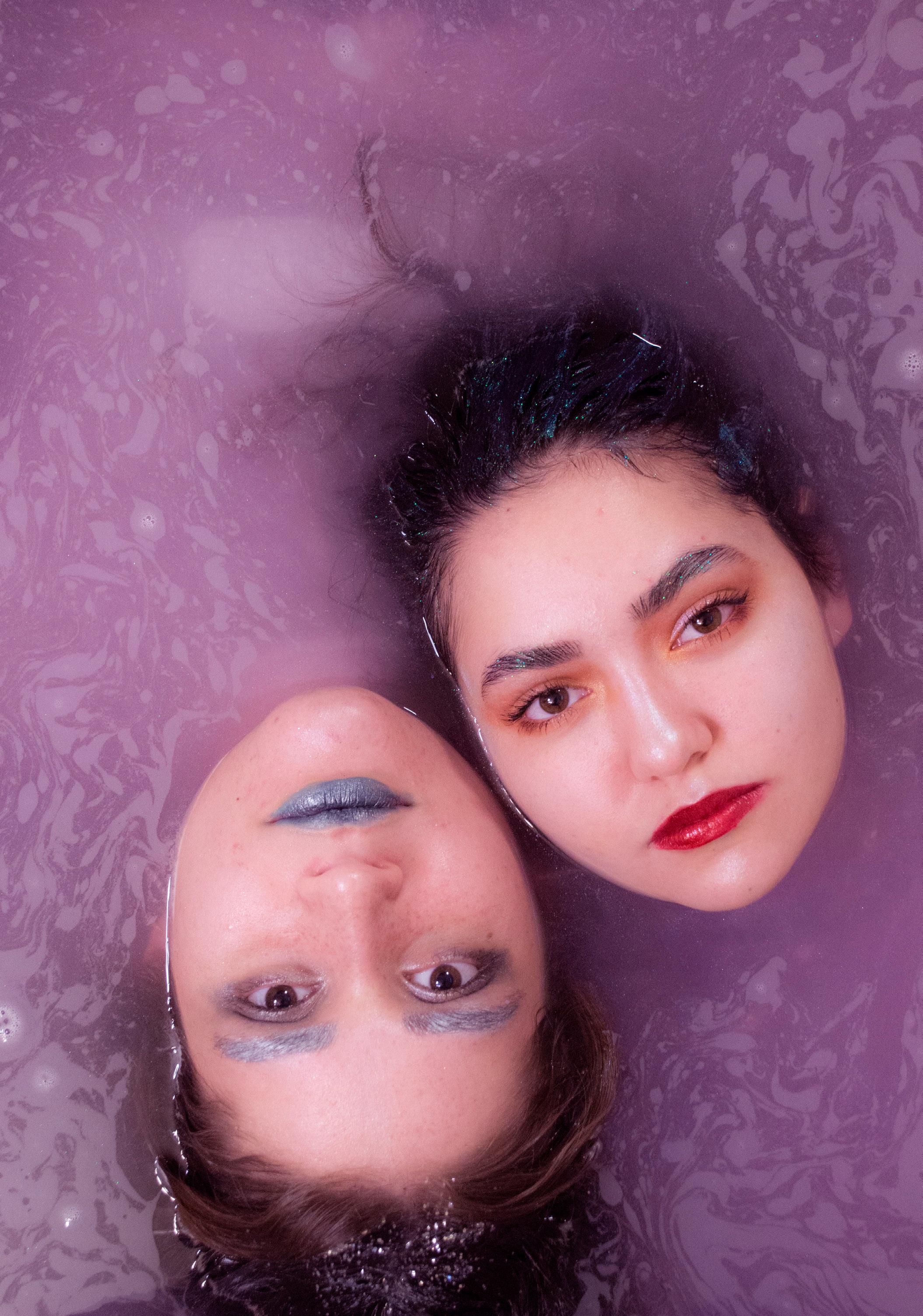
DIRECTED BY
ELOISA DEFARIS
ASSISTED BY MONIKA DAVIS
STYLED BY
TAINA MILLSAP
ELOISA DEFARIS
TIANNA LOVERDE
PHOTOGRAPHED BY ELEANOR HILTY
HAIR AND MAKEUP BY KAITLYN SHOKES
MODELED BY
CLAIRE FARNSWORTH
OLIVIA HEINZE


WRITTEN BY LAURA PHILIPS
PHOTOGRAPHED BY DASHA GERMAN
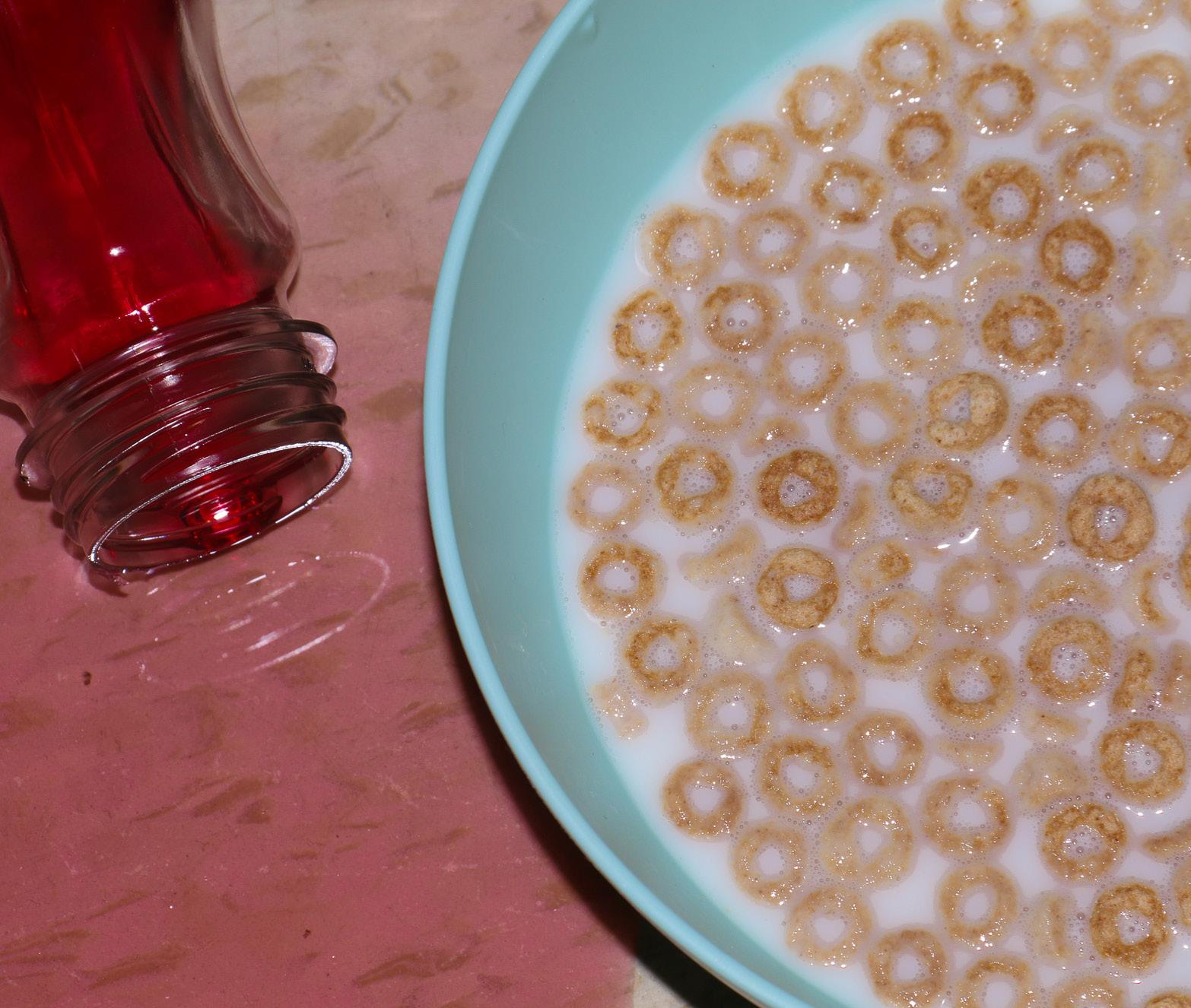
“What have you been up to today?” I texted my friend Julia from home. “Not much, just binging Netflix shows about serial killers honestly,” she replied. It’s an activity I know many of my friends and I could relate to, the obsession with serial killer stories. From movies and TV shows to podcasts, the killer storyline has always been among the public’s favorite genres. There is a certain intrigue with cold cases and the feeling of victory when the villain is caught. But has Hollywood taken this fascination too far with the abundance of serial killer documentaries and biopics being released just in the last year?
The public is currently obsessed with the story of infamous serial killer Ted Bundy. Netflix recently released a short documentary series about him,“Conversations with a killer: The Ted Bundy Tapes,” as well as purchased the streaming rights for the upcoming Ted Bundy biopic film starring Zac Efron, “Extremely Wicked, Shockingly Vile and Evil.” Ted Bundy is a
widely infamous serial killer who committed a series of at least 30, if not more, homicides against young women in the 1970s, and was sentenced to the death in the 1980s.
Previous to watching the Netflix series, all I knew about Ted Bundy was that he was a serial killer in the 70s, known for being handsome and charming. He had been used as a general kind of warning about “stranger danger” especially when it comes to being a young woman being approached by men. The series did a very thorough job of covering the whole story. Through watching the tapes the audience gets inside details of Bundy’s childhood, relationships, murders, victims, psychological issues, and the legal proceedings surrounding his case. It includes interviews with his childhood friends, prosecuting and defense attorneys, police officers, witnesses, and more people involved in his timeline of crime. There is even one of his kidnapping victims, who luckily escaped death, who speaks on the experience in the series. I was really enthralled watching the series, especially by the way that
Bundy himself talked about his crimes as if he was not responsible or wrong. Even knowing that all the events being documented were in the past, and Bundy died in 1989, there was still a real element of fear I had while watching, and was so horrified by each murder they “revealed” in the series.
Emerson freshmen Emma Paluso speaks to what she thinks makes these stories and a series like this so interesting. “They’re real life horror stories, and it’s so hard to wrap your head around the fact that these really screwed up things can happen/are happening in real life, but it’s important to try to learn as much as we can from them.” In a story like Ted Bundy’s, there’s lots of elements that come together to make it work as entertainment. There’s background, a “main character,” a main conflict, action and horror, as well as legal/courtroom proceedings (which SVU and many more shows have proven is an audience pleaser). However, a detailed documentary style is not for everyone, and so movies like Extremely Wicked, Shockingly Vile and Evil, or My Friend Dahmer- a 2017 film exploring another notable serial killer, Jeffrey Dahmer, in his teenage years leading up to his first murder— come to be, providing a more typically cinematic depiction of these stories. Would probably put interview with VMA or psych professor here about what makes these profitable and interesting for filmmakers.
The main question to be considered is: What makes it okay to produce this genre of entertainment? There are certainly boundaries and ethics one must consider in regard to using a true story in which many people died as “inspiration” for what will be consumed as mass media entertainment. A lot can come down to intent as well as execution of the intent. The Netflix series on Bundy was a non-extravagant, detailed, accurate telling of Ted Bundy as
a person and the heinous crimes he committed. It was intended to inform and document a story that comes with important warnings, that younger generations like my own, wouldn’t know today from just being around during the news coverage or trials of Bundy. There was no doubt throughout that Bundy was guilty and cruel. However, The Zac Efron film, which hasn’t even been released yet to public audiences, is currently facing backlash for the trailer being too upbeat and romantic seeming to be a movie showcasing one of the most heinous serial killers of all time. I have also read that reviewers who have already seen the movie say the trailer is misconstruing and the film does its job of making it clear that Ted Bundy was not a favorable person or worthy of forgiveness by the public. There is a dilemma that exists with focusing a film like this so much on Bundy as a charming kind of character, and casting someone like Zac Efron, where it is not wrong of audiences to question how much it will end up romanticizing or glorifying a known serial killer and rapist, whether intended or not. In my conversation with Emma Paluso, she also made a very good point about the direction this genre takes. “My problem with them is they give too much attention to the killers themselves and seeing as most of them have narcissistic personalities this attention would’ve been something they loved. There’s not enough focus on who the victims were other than victims.” I agree, and would say that as easily as society is interested in series like the Ted Bundy Tapes, I Am a Killer, or the films and other forms of media focusing on these shocking and horrendous people/stories, it’s important to recognize that people have died, and families have suffered because of them and by no means can we ever forget that. YM
They’re real life horror stories, and it’s so hard to wrap your head around the fact that these really screwed up things can happen/are happening in real life.
WRITTEN BY MOLLY GOODRICH
ART BY YELIZAVETA ROGULINA

It’s 1963, and “Beatles Hysteria” has taken over the world. In one of the most famous segments displaying this new so-called epidemic, CBS News airs a black and white clip that showcases a large crowd of girls waiting outside in the cold for hours, trying to get one glimpse of the four-person band that had just landed in America. All across the states, news outlets are calling these female fans insane, psychotic, hysterical, and obsessed. It doesn’t matter, of course, that the girls they do bother to interview have a clear passion for music and are eager to have an intellectual conversation about the lyrical content in the Beatles’ songs. No, the only thing the media cares about covering is that a group of girls are going crazy over something, and it happens to be over a group of men.
Cut to the Boston streets of 2004 when the Red Sox won the world series. The rioting and celebrations after the game were so intense and violent that one fan, an Emerson student, ended up dying in the efforts of trying to calm the crowds down.
And yet women are the hysterical ones. Right.
Despite the fact that we have come a long way since the days of Beatles Hysteria, women are still shamed and ridiculed for liking things. And this means anything. From boy bands to pop stars to actors on the big screen, chances are if women has positive feelings towards it, the media will find a way to laugh at them.
Joy Freeman, a freshman at Emerson, recalls both the positive and negative experiences she has had as a fan of the boyband One Direction. “One Direction for me, at least when I was 12, was a form of escapism. It was something my friends and I bonded over. The memories that it gave us created a sense of sisterhood. But the fact that this sisterhood and the innocence of our connection to this band was impeded by the taunts of our male classmates was incredibly disheartening. I felt as though I was chastised for indulging in something that made me happy. I wish that our enthusiasm for music could have been understood as the same thing as the enthusiasm that the boys in my town had for hockey.”
One Direction, all things considered, are a band geared towards females. Their songs are meticulously designed in a way that allows young girls to fantasize about being Harry Styles’ future wife and are definitely marketed for the typical tween to swoon over. But
despite the fact that the band’s whole existence rides on making music for a younger, female audience, that same female audience is mocked and ridiculed. Though more often than not, girls find a connection with a certain artist due to their lyrics hitting partially close to home, it always seems to turn into what the celebrity looks like, especially if they’re male. Because obviously, the only reason girls would show interest in something men would produce is if they’re attracted to them.
So, if girls can’t like anything geared towards girls, can they like what’s made for men? Apparently not.
Meagan Lee, also an Emerson freshman, faced equal amounts of teasing in her younger years for what she liked. And this time, it wasn’t for a boyband. It was for her love of sports. Meagan recalls girls her age calling her weird when she would wear her hockey jersey to school, and that boys would berate her with questions trying to disprove her sports knowledge.
Meagan’s story, unfortunately, isn’t an uncommon one. Far too often, girls are challenged by their male peers when they admit they’re fans of things they’re not “supposed to be fans of.” Instead of acceptance, girls face interrogation, and it makes these male-orientated spaces feel unsafe, as if females are unwelcome.
Girls will get teased for liking things specifically geared towards them, and ridiculed for liking things that aren’t. It’s almost like our society wants us not to like anything at all—or at least, not be vocal about it.
We cannot keep living in the type of world that says women only enjoy something because they’re trying to impress a man, or that they only like a movie because the actor is conventionally attractive. We have to do a better job at encouraging the young girls in our lives to be fans of things unabashedly, to love without caring what their peers may think of them, because passionate, “obsessed” young girls turn into powerful, strong ,young women. YM

Kit Haggard chooses the word “siloed” to describe Boston’s literary world, and that’s a fairly accurate description. Although the city’s literary history is arguably one of the most unique and culturally rich in the nation, it has ended up segregated into various subsections.
Since the Boston Literary District has garnered such a reputation for its rich literary culture, it is incredibly important for this community to be unified. This means giving equal recognition to writers of all colors and all organizations, from a small business level to a corporate level. Haggard, director of the Boston Literary District, believes that her organization, “is doing its best work and reaching its full potential when it is helping to bridge those gaps.”
When I sat down with Haggard and asked her to explain the goal of the organization, she smiled before launching into a passionate discussion about her experience. “One of the coolest things I’ve been able to do is help facilitate programming for other organizations,” says Haggard. “We maintain a calendar that makes it a lot easier for people to find literary events in Boston, because it is difficult for some organizations to expand their reach beyond their pre-existing community.”
In addition to this calendar, the organization keeps a map on their website of 88 important historical literary sites in the city. One such site is Brattle Book Shop—both its address and the following description list: “Established in 1825, the Brattle is one of America’s oldest and largest antiquarian booksellers. It features two floors of general used books, a third floor of rare and antiquarian books, and an outside sale lot.”
When reflecting on the sites, Haggard says, “I think it is really important to think about the history of this area. I hope in my position to make the sites a more critical reflection [and ask] how we can think about that history in a way that honors and respects the writers who were foundational to shaping American literature at the time, but also look
WRITTEN BY ANDREW TAETS
PHOTO BY KENNETH COX
back and say that people were excluded. [We need] to think about those things critically, too.”
And though this oversight does exist, Haggard plans to alleviate that. “I’m thinking about introducing new sites...we really need to display a broader range of voices. There are no Latinx writers in the district, there are no Asian-American or East-Asian writers, and no Native American writers, and I want to begin to work to correct that.”
Although the organization is small, it is making strides to be incredibly active. Coming up, they are offering free writing classes at the Boston Athenaeum, which is especially exciting for the typically membersonly institution. They are also giving regular tours of the Omni Parker House, a place where the Saturday Club met and where Dickens stayed and gave the first public reading of A Christmas Carol—even Malcolm X and Ho Chi Minh briefly worked in the kitchens there.
The Boston Literary District also helped launch the Boston Lit Crawl, which is happening this spring and which Haggard describes as “a night of literary events on Newbury Street and untraditional events in untraditional spaces—things that are kind of interactive.”
After my conversation with Haggard about the organization and all of its upcoming events, I went to take a look at some of the many sites they catalogue, beginning at Beacon Hill. These beautiful streets are home to the original office of Little, Brown and Company and the residences of many famous literary figures, such as William Hickling Prescott, Sarah Wyman Whitman, and Henry James, all of whom played a large part in the literary community of Boston.
I snaked my way through Downtown Crossing, where the shopping has been a source of inspiration for many incredible novelists. Most famously, Edward Bellamy wrote of it in his novel Looking Backward, where it says, “Stores! Stores! Stores! Miles of stores!”
I finished standing before the Jacob Wirth restaurant near Chinatown, a restaurant-bar that Jack Kerouac frequented to write and a place he later honored with a cameo in one of his novels. The building shows its age in every detail down to the worn sign out front where the restaurant name is scrawled into curving wood in a font that looks like it was pulled from a movie set in the ‘50s.
When explaining why Haggard found her work with the Boston Literary District impactful, she says that it was formative to the way she saw Boston because it “helped [her] feel more connected to the literary history.”
Standing in front of the restaurant and staring at a piece of the past still sitting in the pulsing heart of Downtown Boston, I understood just what she meant. YM

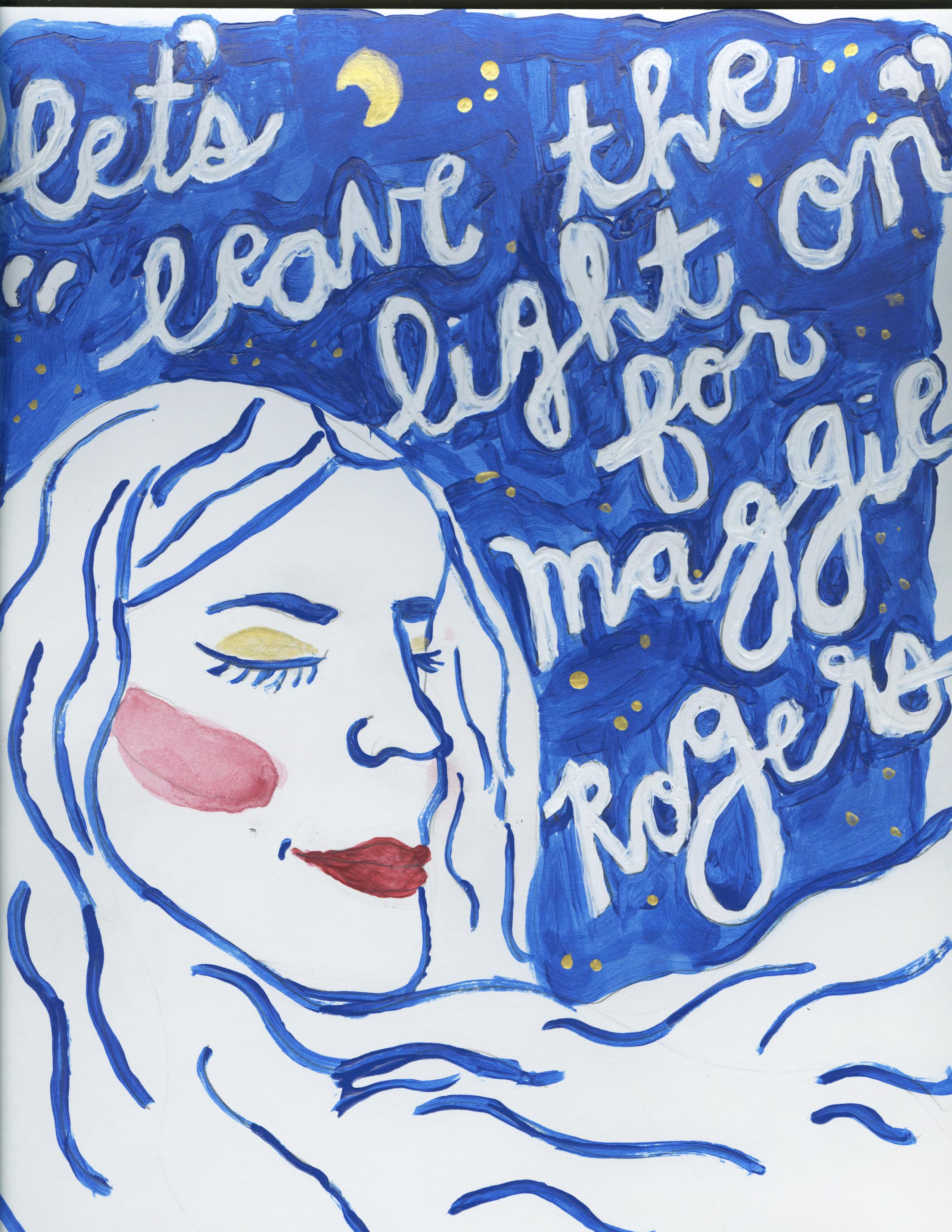
WRITTEN BY TIFFANY CARBON ILLUSTRATED BY OLIVIA KELLIHER
2019 is shaping up to be the year of “pop girls” and Maggie Rogers’s debut album Heard It in A Past Life proves it. Rogers released the album on January 18th, yet it has already cemented its spot as a favorite of listeners.
This isn’t the 24-year-old’s first taste of fame and recognition. The singer showcased “Alaska”—which she claims as the song that changed her life—to Pharrell during a February 2016 masterclass at her alma mater NYU. She left the songwriter and producer in awe of her talent and ability to do her own thing. When the video hit the internet in July of that year, she quickly went viral.
So, what happens when Pharrell, who has been an important voice in the music industry for more than twenty years, blesses your song? Maggie continued writing, recording, and releasing music as the number of people who supported her grew. This eventually led to her first tour in 2016.
On her debut album, she writes a lot about her quick rise to fame following her viral video and the mental and emotional effect it had on her. In “Light On,” she puts the overwhelming feelings of her life, which was so suddenly transformed, in the form of a song. She sings, “Oh, I couldn’t stop it, tried to slow it all down, crying in the bathroom, had to figure it out.” Her evident vulnerability easily allows listeners to become absorbed by her words and voice.
I spoke to Kenny Cox, ‘22, a student at Emerson, who became a fan after listening to the album. When I asked him to give his first impression of the album, he was silent and remained so for quite a while with a smile on his face before finally screaming, “There are simply no words!” With only one listen, he easily fell in love with anything and everything Maggie Rogers. His favorite song on the album is “Say It,” a feel-good song about a crush that surprises you with its bass fueled chorus that perfectly meshes folk and pop with a slight hip hop beat. Kenny regrets not getting into her earlier, saying, “One of my friends had an extra ticket to see her last year and I didn’t go because I had only listened to a couple songs.” He now wishes he could see her live in her upcoming tour, but the sold-out shows heavily prevent that.
The songs on the album vary in tone: some cover the dark times she went through while others are happy in the way that listeners can just enjoy and dance along to. “Fallingwater” is a personal standout on the album. She again sings about the rapid transition she went through in the past two years of
her life, supported by the heavy beating drums reflecting and emulating the sound of crashing waves and water.
Contrasting that is “Burning.” Its blissful lyrics are supported by wistful beats and instruments as she sings about being in love and wanting everyone to know. “The Knife” is another carefree and upbeat song with a genius use of wind chimes and distant echoes “about dancing it all off with your friends,” according to the singer herself.
Listeners see the progress of Rogers’s mental health in “Back In My Body” with the use of her intensely strong and passionate lyrics. She starts the song off with “I was stopped in London when I felt it coming down, crashing all around me with a great triumphant sound.” She uses this line to speak about the panic attack she once suffered during rehearsal while on tour. She exposes herself to listeners, even telling them how she once almost ran away from it all while in Paris. The rest of the song details the battle she suffered against her own mind and her audience can see the effect that becoming a known musician has had on her.
In the last chorus, she sounds exasperated yet determined as she sings, “I found myself when I was going everywhere, this time, I know I’m fighting.” Rogers explained the meaning of the songs as “being able to do the things I love, but do them in the way I love, and in my way, and in my time, giving myself the opportunity to just be me.” Fame isn’t something that many can handle just being quickly thrown into and Rogers doesn’t pretend that she was okay with what was happening to her. There’s a very powerful reason as to why “Back In My Body” is the last song on the album, as her growth not only as an artist but as a person shows throughout the thirteen songs. Regardless of the admiration that Rogers got for this album, top music critics didn’t seem to agree with her fans. Pitchfork rated the album a disappointing 5.9, describing it as “overproduced,” and a review from The Guardian gave the album two out of five stars. However, what critics don’t seem to understand is the way that Rogers’s hauntingly raw voice and lyrics connect with her teen and young adult listeners who share and relate to her struggles.
As Pharrell said, Maggie Rogers is doing her own thing. Heard It in A Past Life is truly unlike anything else I’ve heard before. She takes me back to when I was fifteen, listening to Lorde’s Pure Heroine and crying over the deeply powerful, emotional effect the music had on me. In this album, I’m so easily able to hear Maggie’s personal narrative through her music in a way that stands on its own and I can’t wait to hear more.
YM
Start small when it comes to cleaning out your space. Trying to get everything done all at once can be super overwhelming and end up leaving you feeling disappointed. Set attainable goals: “Today I will clean the bathroom,” or “If I have fifteen minutes, I’ll wash all the dishes.” P.S. Clorox wipes are a lifesaver!
Delia Curtis, Style Editor and Street Style Director
Create a spring cleaning playlist! This will not only turn a chore into a jam sesh, but it can also help you keep track of time. If you want to spend an hour cleaning your room, make the playlist about an hour long. This will help prevent you from falling down a rabbit hole of nostalgia and old knick-knacks... not that that has ever happened to me!
Lindsay Howard, Copy Chief
As you clean your space, put everything you don’t know what to do with into its own box/drawer and deal with it later.
Bobby Nicholas, Co-Head Designer
Use the two minute rule. Set a timer for at least two minutes, or five, or ten, or whatever you have time for and just START. It at least gets you started and usually you feel motivated to keep going, or at the least you’ve gotten something done. Or just pick one section/thing! Whether it’s dishes, your bedside table, having one part of your space cleaner can really make a shift. Also using cleaning as a break from homework for ten minutes gets your body moving and gives your brain a rest!
Bailey Bouchard, Co-Marketing Director
As far as actual cleaning goes, I’m currently obsessed with Mrs. Meyers cleaning supplies (not sponsored content, but…I wish). It’s 98% plant-derived and doesn’t have a ton of chemicals— plus it smells super good! Personally recommend the lemon verbena vinegar gel for those gross AF stains coating your apartment kitchen countertops.
Eleanor Hilty, Creative Director
It’s crazy how beneficial making your bed can be. People often say that a lot of creativity comes from having a peaceful bedroom, so extending that into starting your day on the right foot can only be beneficial. Pull up the covers and fluff the pillows—it just might make your day brighter.
Monika Davis, Editorial Director
Reorganize your dorm/bedroom to make everything look a little brighter. Switch out your winter clothes with your lighter pieces, swap the heavy blankets for simpler breezy fabrics, and use an oil diffuser to bring “springy” smells into your living space. Even adding a few cute succulents and mini green spaces makes a difference and will boost your mindset for the upcoming sunny seasons!
Talia Smith, Living Editor
Everyone has clothes that never see the light of day. Grab your old high school event shirts, that pair of pants you never dared to wear, and that outgrown tube top, then head straight to Goodwill! There are clothing donation boxes all around Boston; you can give back while decluttering.
Caroline Broderick, Romance Editor