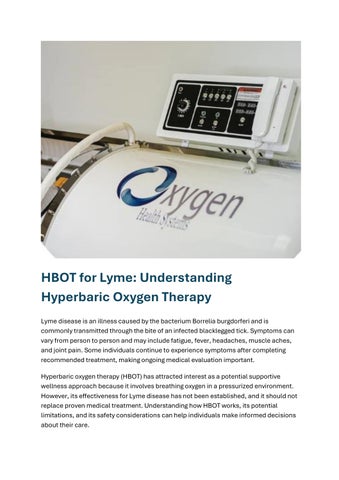
HBOT for Lyme: Understanding Hyperbaric Oxygen Therapy Lyme disease is an illness caused by the bacterium Borrelia burgdorferi and is commonly transmitted through the bite of an infected blacklegged tick. Symptoms can vary from person to person and may include fatigue, fever, headaches, muscle aches, and joint pain. Some individuals continue to experience symptoms after completing recommended treatment, making ongoing medical evaluation important. Hyperbaric oxygen therapy (HBOT) has attracted interest as a potential supportive wellness approach because it involves breathing oxygen in a pressurized environment. However, its effectiveness for Lyme disease has not been established, and it should not replace proven medical treatment. Understanding how HBOT works, its potential limitations, and its safety considerations can help individuals make informed decisions about their care.
What Is Hyperbaric Oxygen Therapy? Hyperbaric oxygen therapy involves breathing oxygen in a specially designed chamber where the air pressure is higher than normal atmospheric pressure. This allows the lungs to absorb more oxygen, increasing the amount of oxygen available in the bloodstream and supporting oxygen delivery to body tissues. HBOT is used in medical settings for certain established conditions, including specific types of difficult-to-heal wounds, decompression sickness, and carbon monoxide poisoning. Its use depends on the condition being treated and appropriate medical guidance. Interest in hbot for lyme is related to the possibility that increased oxygen availability may influence tissue recovery and other biological processes. However, evidence supporting HBOT as a treatment for Lyme disease remains limited, and it is not an established replacement for recommended antibiotic therapy.
Understanding Hyperbaric Oxygen for Lyme Disease Lyme disease can affect different parts of the body, and its symptoms may change over time. Appropriate diagnosis and treatment depend on the individual's symptoms, medical history, and clinical findings. Hyperbaric oxygen for lyme disease has been discussed as a possible complementary approach, but there is insufficient reliable clinical evidence to conclude that it eliminates the bacteria responsible for Lyme disease or consistently improves persistent symptoms.
Oxygen Delivery and Tissue Function Under increased pressure, HBOT allows the body to absorb more oxygen than it would under ordinary atmospheric conditions. Oxygen is essential for many normal cellular processes, including energy production and tissue repair. Although increased oxygen availability has recognized medical applications, it has not been established that these effects provide meaningful clinical benefits for Lyme disease specifically.
Inflammation and Tissue Recovery Inflammation is part of the body's natural response to infection and injury. Researchers have investigated how hyperbaric oxygen may influence inflammatory processes in certain medical conditions. However, the effects of HBOT vary depending on the condition, treatment protocol, and individual circumstances. More high-quality research is needed to determine whether it offers a meaningful benefit for people with Lyme disease.
Immune System Function The immune system helps the body recognize and respond to infections. Oxygen plays an important role in several immune processes, but this does not mean that increasing oxygen levels through HBOT will necessarily strengthen the body's ability to eliminate Lyme bacteria. There is currently insufficient evidence to recommend HBOT as a proven method of eradicating the bacteria responsible for Lyme disease.
Can HBOT Help With Persistent Lyme Disease Symptoms? Some individuals continue to experience fatigue, pain, or other symptoms after completing recommended treatment for Lyme disease. Persistent symptoms require careful medical evaluation because they may have several possible causes. Although hbot for lyme is sometimes explored as a complementary option, scientific evidence has not established that it reliably relieves persistent Lyme disease symptoms. A healthcare professional can help determine whether symptoms indicate ongoing infection, a post-treatment condition, another medical issue, or a combination of factors. Treatment decisions should be based on an appropriate assessment rather than assumptions about the underlying cause. Individuals should avoid delaying recommended medical care or stopping prescribed medication in favor of an unproven therapy.
What to Expect During a Hyperbaric Oxygen Therapy Session For individuals considering HBOT for a medically appropriate indication, understanding the treatment process can help them prepare for a consultation.
Step 1: Medical Assessment Before treatment, a qualified healthcare professional reviews the individual's medical history, current symptoms, medications, and relevant health conditions. This assessment helps determine whether HBOT is appropriate and whether any safety concerns need to be addressed.
Step 2: Review of the Treatment Plan The provider explains the purpose of treatment, the expected procedure, possible risks, and available alternatives. Session duration and treatment frequency depend on the medical indication and the protocol being used.
Step 3: Entering the Chamber During a session, the individual sits or lies inside a hyperbaric chamber while the pressure is gradually increased. Depending on the chamber design and treatment protocol, oxygen may be delivered through the chamber environment or a breathing system.
Step 4: Monitoring During Treatment Pressure changes may cause temporary ear discomfort, similar to the sensation experienced during an airplane flight. Individuals should follow the provider's instructions and report discomfort or unusual symptoms promptly.
Step 5: Completing the Session At the end of treatment, the pressure is gradually returned to normal levels. The provider may give additional instructions based on the individual's response and the treatment plan. A session's duration and the number of sessions required vary by medical indication. There is no established HBOT treatment schedule for Lyme disease because its effectiveness for this purpose has not been demonstrated.
Potential Risks and Safety Considerations Although HBOT is used for certain medical conditions, it is not risk-free. Treatment should be undertaken only after an appropriate medical assessment and with suitable safety procedures. Potential risks include: • • • • • •
Ear or sinus discomfort caused by pressure changes Temporary changes in vision Claustrophobia or anxiety inside the chamber Oxygen toxicity, which can cause serious complications in some circumstances Rare lung-related complications associated with pressure changes Fire hazards if oxygen safety requirements are not followed
Certain medical conditions, including an untreated pneumothorax, can make HBOT unsafe. Other conditions and medications may also affect treatment suitability. Anyone considering hyperbaric oxygen for lyme disease should discuss the potential risks, expected benefits, and uncertainties with a qualified healthcare professional before proceeding.
HBOT and Conventional Lyme Disease Treatment The recommended treatment for Lyme disease generally involves antibiotics selected according to the clinical presentation and applicable medical guidelines. Early diagnosis and appropriate treatment can help reduce the risk of complications. For individuals who continue to experience symptoms after treatment, additional antibiotics are not automatically beneficial. A healthcare professional should reassess the symptoms and consider other possible explanations. HBOT should not be considered a substitute for recommended Lyme disease treatment. There is not enough evidence to establish it as an effective method for treating the infection or preventing long-term complications. A careful approach involves discussing all treatment options with a qualified clinician, reviewing the available evidence, and avoiding therapies that could delay appropriate care.
Making an Informed Decision About HBOT for Lyme Before considering hyperbaric oxygen therapy, individuals should ask several important questions: • • • • • •
What medical condition is the proposed treatment intended to address? Is there reliable clinical evidence supporting its use for my symptoms? What risks might apply to my medical history? Are there established treatments or better-supported alternatives? Who will assess my suitability and monitor my treatment? Could the proposed therapy interfere with my existing care?
These questions can help clarify the purpose of treatment and prevent unrealistic expectations. It is especially important to be cautious of claims that promise to eliminate Lyme bacteria, cure chronic symptoms, or guarantee recovery.
Frequently Asked Questions About HBOT for Lyme What is HBOT for Lyme? HBOT for Lyme refers to the use of hyperbaric oxygen therapy by individuals exploring additional approaches to Lyme disease or persistent symptoms. However, HBOT has not been established as an effective treatment for Lyme disease and should not replace recommended medical care.
How does hyperbaric oxygen therapy work? HBOT involves breathing oxygen in a pressurized chamber. The increased pressure allows more oxygen to dissolve in the blood. This has established applications for certain medical conditions, but its benefits for Lyme disease remain uncertain.
Can HBOT kill the bacteria responsible for Lyme disease? There is insufficient reliable clinical evidence to conclude that HBOT eliminates Borrelia burgdorferi in people with Lyme disease. It should not be relied upon to eradicate the infection.
Can hyperbaric oxygen for Lyme disease reduce fatigue or joint pain? Some individuals seek HBOT while experiencing persistent fatigue, pain, or other symptoms. However, current evidence does not establish that the therapy consistently
improves these symptoms in people with Lyme disease. A healthcare professional can assess possible causes and recommend appropriate management.
How long does an HBOT session last? Session duration depends on the medical indication, chamber type, and prescribed protocol. Some established HBOT treatments last approximately 60 to 120 minutes, but this should not be interpreted as a recommended schedule for Lyme disease.
How many sessions are needed? The number of sessions varies according to the condition being treated. There is no scientifically established number of HBOT sessions for Lyme disease because its effectiveness for this purpose has not been demonstrated.
Is hyperbaric oxygen therapy painful? HBOT is generally not painful, although changes in pressure may cause ear or sinus discomfort. Some individuals may also experience anxiety or claustrophobia inside the chamber. Any significant discomfort should be reported to the treatment provider.
Is HBOT safe for everyone? No. HBOT has potential risks and may be unsuitable for people with certain medical conditions. A qualified healthcare professional should review an individual's medical history and medications before treatment.
Can HBOT replace antibiotics for Lyme disease? No. HBOT is not an established replacement for antibiotics or other recommended medical care for Lyme disease. Individuals should follow their clinician's treatment recommendations and discuss any additional therapy before making changes to their care plan.
Should I consider HBOT if I still have symptoms after Lyme treatment? Persistent symptoms deserve medical reassessment. A healthcare professional can investigate possible causes and discuss evidence-based management options. If HBOT is being considered, its uncertain benefits for Lyme disease and potential risks should be discussed openly.
Conclusion Hyperbaric oxygen therapy increases the amount of oxygen available to the body under controlled pressure and has recognized uses for certain medical conditions. However, its role in Lyme disease remains uncertain, and current evidence does not establish it as a proven way to eliminate Lyme bacteria or reliably relieve persistent symptoms. Individuals researching hyperbaric oxygen for lyme disease should prioritize an accurate diagnosis, recommended medical treatment, and professional guidance. Understanding the available evidence, weighing potential risks, and maintaining communication with a qualified healthcare professional can support safer and more informed decisions about managing Lyme disease.