














EDITOR
Suzanne Westbury YourAutismMag@nas.org.uk
CONTRIBUTORS
Helen Wilson, Grace Liu, Neil Aldridge
PHOTOGRAPHERS
Alex Heron, Callum Cormie
HEAD OFFICE
National Autistic Society Weston House 42 Curtain Road London EC2A 3NH autism.org.uk
SUPPORTER CARE TEAM 0808 800 1050 membership@nas.org.uk
ADVERTISING
James Pembroke Media Tel: 020 3859 7100 oliver.willison@jamespembroke media.co.uk
SUBSCRIPTIONS
Only available to members of the National Autistic Society. To join, visit autism.org.uk
DESIGN AND PRODUCTION






CPL One
01223 378000 cplone.co.uk
1 Cambridge Technopark, Newmarket Road, Cambridge CB5 8PB
Warners Midlands 01778 391000
National Autistic Society is a charity registered in England and Wales (269425) and in Scotland (SC039427) and a company limited by guarantee, registered in England (No.1205298), registered office Weston House, 42 Curtain Road, London, EC2A 3NH
© Your Autism magazine Summer Vol 59, No 2 National Autistic Society ISSN 2055-0413
The views expressed in Your Autism and any enclosures or advertisements are not necessarily those of the National Autistic Society. In the interest of providing readers with the widest range of information, we may include details of some of the many approaches to autism. However, this does not imply our charity’s endorsement of any particular approach or product. The inclusion of a website does not necessarily imply that our charity endorses or supports the group or individuals running the website, nor does the absence of a website imply that our charity does not endorse or support the group or individual running the website. Summer 2025













What’s new A round-up of the latest news
Join our fight
Our new campaign against benefit cuts
My diagnosis
Joe reflects on being diagnosed in his 40s
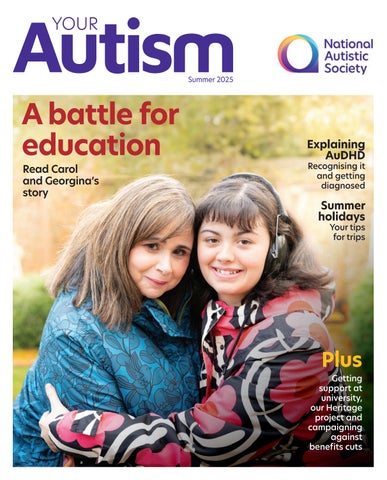
Fighting for Georgina A battle for education
Understanding AuDHD What support is available?
In our Words
Introducing our new archive
Happy holidays
Two readers share how they make holidays work for them





Growing up autistic and gay Grace tells her story
The journey continues Our insights on safe and comfortable travel
Readers to the rescue
Practical advice on coping with the death of a parent
How to...
...tailor the Duke of Edinburgh’s Award scheme
University challenges
Accessing support for autistic students
Notebook
Things to read, do and see
Nice to meet you... Kiran and Ibraheem
“By 2030, 250,000 people, including 50,000 children, will be pushed into poverty”
Our round-up of the latest news and views
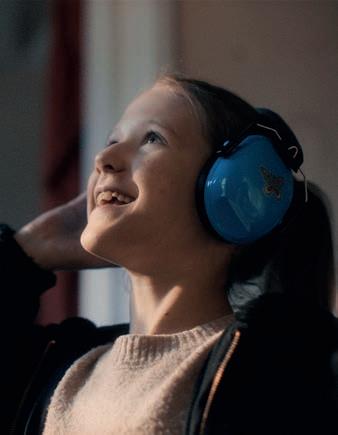
More than a million people have seen our powerful public awareness film, with overwhelmingly positive feedback. Starring Chris and his daughter Penny, who are both autistic, it shows the small things that have made their lives better and Chris’ hopes for the future for his daughter.
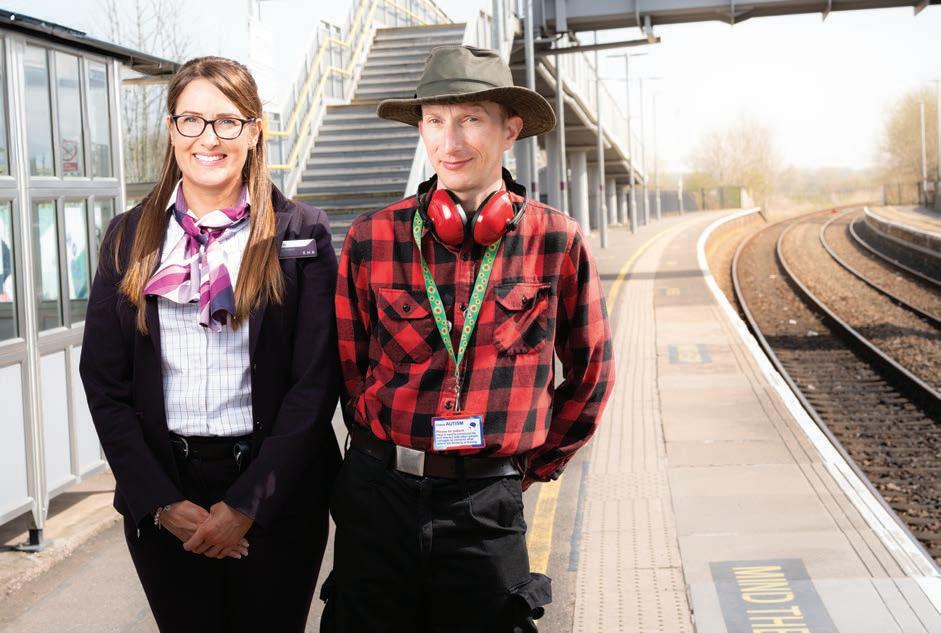
The campaign aims to improve understanding of autism and highlight ways the public can show up for autistic people by making small changes to meet their needs. Our adverts, in shopping centres and on bus stops and
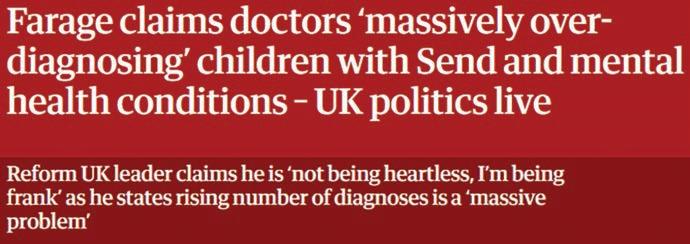
Recently, we’ve seen a swathe of horrible and inaccurate stories about autism emanating from politicians who should know better. As the UK’s leading autism charity, we have robustly challenged these in the media. When US Health Secretary Robert F Kennedy claimed his
department would determine the cause of autism by September, we said: “Autistic people aren’t fodder for a cheap fake news publicity stunt. We’re stunned by the callous and anti-science way autistic people are talked about by Trump and RFK Jr.” We also responded to comments
billboards, show real-life examples of how people have shown up for autistic people.
People can also share how they will show up for autistic people on our pledge wall. We now have more than 700 pledges, including people learning about autism, creating inclusive spaces or simply being a friend. Every pledge helps build a future where autistic people feel valued, supported and understood. Please keep sharing our film and adverts on social media.
You can also add your pledge at autism.org.uk/pledge
about SEND and diagnosis by Reform UK leader Nigel Farage MP, stating: “Children with SEND and disabled adults, including autistic people, are not victims who are being ‘over-diagnosed’. They are people who face huge delays and long fights to get the most basic support across every aspect of their lives, including diagnosis, education, health and social care. Spreading misinformation only perpetuates stigma and makes life harder. We’re calling on all politicians to drop the political points scoring and stand up for their autistic constituents.”
Use our What is autism? resources to challenge misinformation: autism.org.uk/what-is-autism
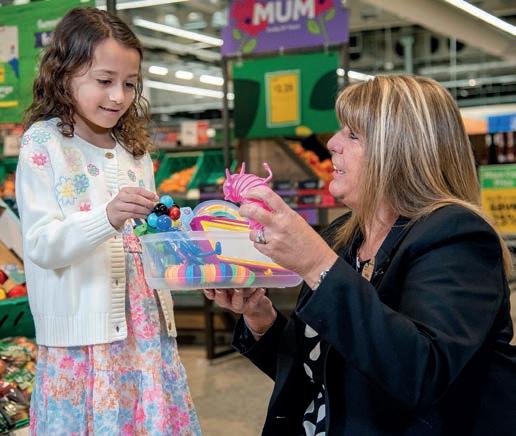
You can now ask to use a Sensory Support Box while shopping in Morrisons. This is thanks to a collaboration between our charity and the Morrisons Foundation.
The boxes include a range of items such as fidget balls, spinners and squish mats that can help with calmness and focus. They are available by asking at the customer service desk.
Joseph Clark-Bland, Community Manager at Morrisons, said: “It’s a priority for us to ensure all Morrisons customers feel welcomed and understood, and we’re proud to be leading the way in creating a more inclusive shopping environment for autistic people, their families and all neurodivergent people across the UK.”
Peter Watt, Managing Director of National Programmes at our charity, added: “Supermarkets are a key part of our lives, but for many autistic customers, they can be a loud, bright and crowded environment, which can be overwhelming. It’s fantastic to see Morrisons taking the time to understand and create a more welcoming space for autistic people and their families.”
Morrisons also runs ‘Quieter Hours’ every Monday to Thursday between 2pm–3pm.
Read more at bit.ly/SensorySupportBoxes
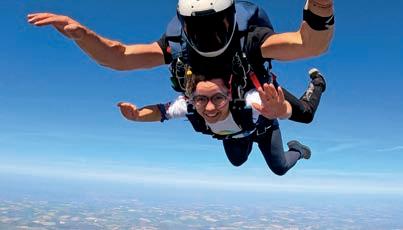
… to everyone who fundraised and increased autism awareness during World Autism Acceptance Month. You raised an incredible £415,000 to help us continue our work to create a society that works for autistic people and their families.
The second series of the National Autistic Society Scotland’s podcast, Spectrum Sessions, is out now on YouTube and Spotify. Hosted by Heather Carson, our Media and Communications Officer, the podcast aims to platform unfiltered autistic voices by providing a space for autistic people to share their stories. This season features Ashley Storrie, Tom Urie, Judith LanglandsScott, Sean Logan, Andy Smith and Lorraine Gillies.
Our Know yourself series is aimed at autistic teenagers. We have recently added two new topics: Understanding others and Moving forward. You can find the short films and pdf guides at autism.org.uk/ knowyourself
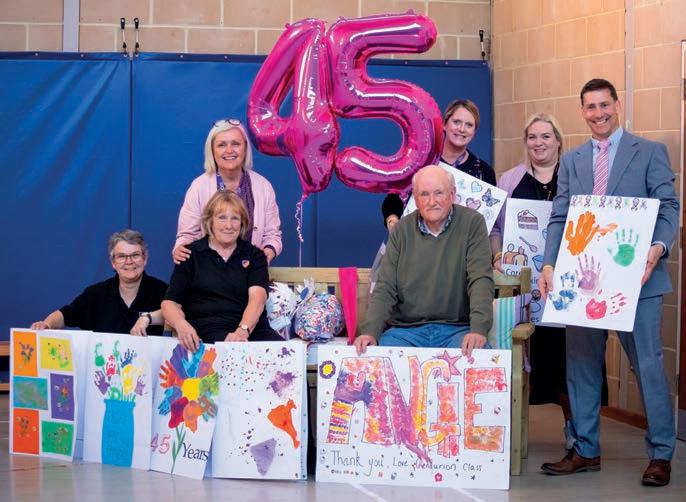
In April, we said a fond farewell to Angela Beasley after an incredible 45 years of service at the National Autistic Society. Angie, a Learning Support Assistant, joined the team at our Radlett Lodge School just five years after it opened its doors in 1974. Since then, she has helped hundreds of children learn all kinds of skills, from cooking and baking in the kitchen to growing produce in the school garden and allotment.
On her final day, the school threw Angie a surprise assembly, where pupils and colleagues presented her with cards and gifts, including a new bench for her own garden. Despite looking forward to spending more time in her garden, she admits that it may not be so easy adjusting to the peace and quiet: “I think I’ll just miss the buzz and the activity of the school because it’s very lively.”
Find out more about our four schools at autism.org.uk/our-schools

Our charity is a member of Autism-Europe, an international association whose main objective is to advance the rights of autistic people across Europe.
Autism-Europe is collecting testimonies and artwork from the autism community as part of its Not invisible campaign.
Not invisible seeks to highlight the often-overlooked needs of autistic people. By sharing stories, Autism-Europe aims to show the challenges and discrimination you face, and call for a more inclusive society.
You can take part by recording a short video, sending in
photographs or artwork, recording a message or writing a blog or article. Find out more and read some of the stories already shared at not-invisible.org




We outline what the proposed benefits changes mean for autistic people –and how we can campaign against them together
The UK Government announced more than £5bn in cuts to disability benefits in its green paper Pathways to work: Reforming benefits and support to get Britain working. The proposed cuts are potentially incredibly harmful to autistic people who rely on disability benefits.
For many, these benefits cover the additional costs of being disabled, regardless of someone’s ability to work, and are a vital source of income for those who cannot work.
Many autistic people have already contacted us about these changes and are understandably very scared.
We have been campaigning to fight these reforms on multiple fronts – consulting MPs, contacting journalists, coordinating with other charities and working to include as many autistic people as possible in the Government’s open consultation, which closes on 30 June 2025.
As members, we want to make sure you are aware of the changes, what we think the impact is likely to be for autistic people and what you can still do ahead of any parliamentary vote on the changes.
PIP eligibility is currently scored by a total of eight points combined across the categories for the Basic Rate and 12 points across the categories for the Enhanced Rate.
The Government’s changes mean that, as well as meeting this minimum number of points,
at least one of your answers in one of the categories must be worth four points or more.
If a person’s disability affects them in multiple areas of daily living in ways that score two or three points, they will no longer be eligible for PIP once these changes are implemented.
The Government has also said that the assessment process for PIP will be reviewed. It is proposing to get rid of the Work Capability Assessment (WCA) and replace it with the new PIP assessment from 2028. This will mean fewer duplicate appointments for people undergoing WCA and PIP assessments.
Those assessed as having limited capacity for work-related activity (LCWRA) will be eligible to claim an element of Universal Credit called UC-Health. This will be the same amount as the current LCWRA payment –£97/week in 2024/25. However, it will drop to £47/week for new claimants in 2026/27.
The Government has guaranteed that no-one who has LCWRA before April 2026, and who remains LCWRA following reassessment, will see their UC-health entitlement changed: they will continue to receive the £97 allowance rate.
The Government has additionally proposed that the UC-Health entitlement will not be available to young people below the age of 22. If this proposal goes through, young people who may previously have
“For autistic people who can and want to work, there are multiple barriers to employment that Government reforms are yet to address”
been assessed as LCWRA at age 18 (in some cases, 16 or 17) would not be able to access the UC-Health payment until they are 22.
If you receive benefits such as Universal Credit or UC-Health, you will be able to trial work without risking losing your benefits. If you try to work and need to stop within six months, you will be able to go back to your normal payments without needing to reapply or be reassessed.
The impact of these changes
Mel Merritt, Head of Policy and Campaigns at the National Autistic Society, publicly shared our charity’s concerns: “Even on the Government’s own maths, the impact of these cuts on disabled people will be huge, with one in five households with a disabled person ending up worse off by an average
of £1,720. By 2030, 250,000 people, including 50,000 children, will be pushed into poverty.
“For autistic people who can and want to work, there are multiple barriers to employment that Government reforms are yet to address in detail. While the Government is consulting on some of the welfare proposals, the most damaging proposals – including changes to PIP eligibility and cuts in the amount of disability benefit that claimants can receive – are not being consulted on. This is deeply concerning.
“We are calling on the Government to remove barriers that prevent autistic people who want to work from working, while making sure those who can’t work aren’t penalised.”
How to join the campaign
We are fighting to make sure that the Government listens to the views of autistic people and their families on these cuts, sharing autistic people’s stories and the adverse impact of these proposals.
Read the latest information on this campaign and how you can get involved at autism.org.uk/protect-our-benefits
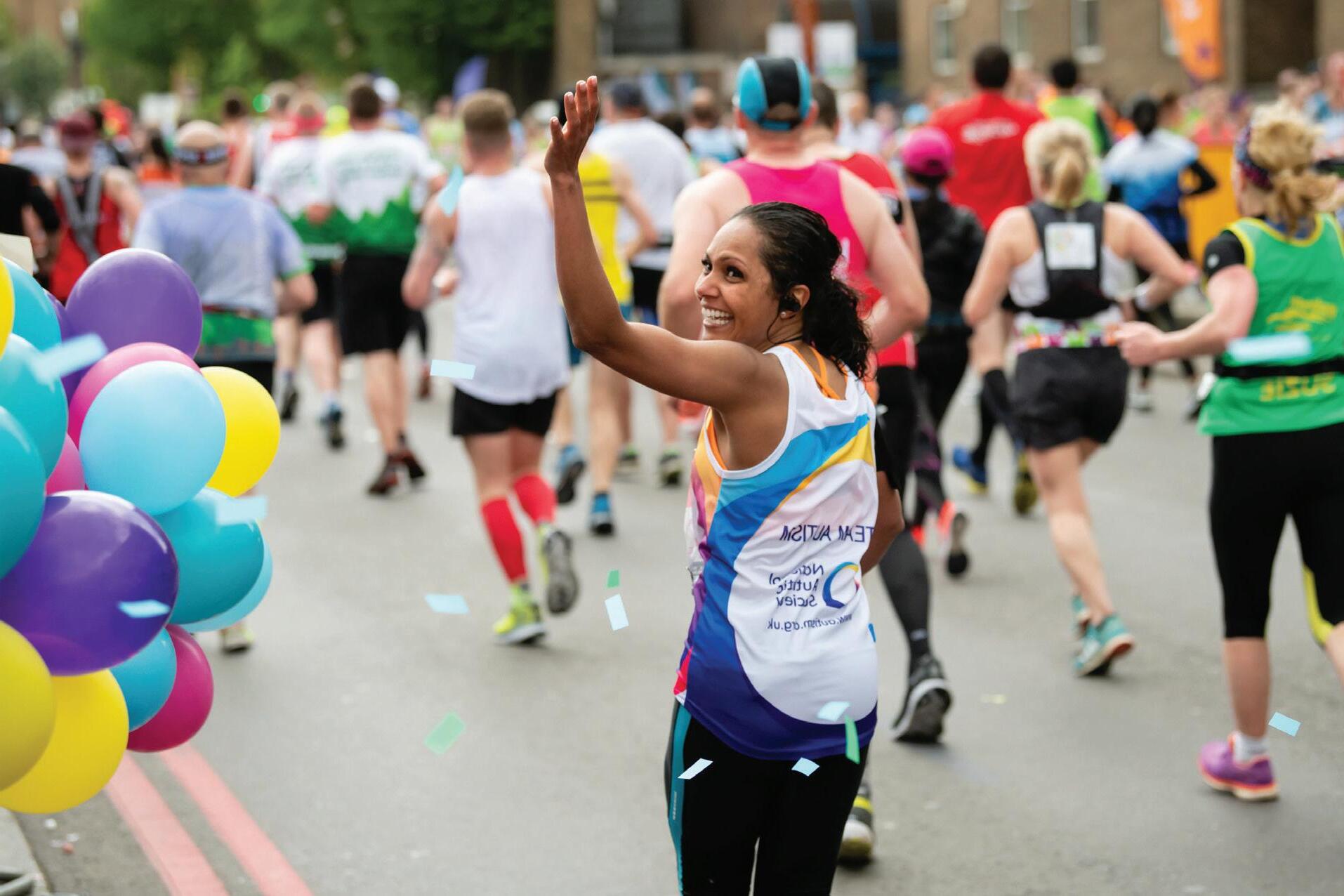
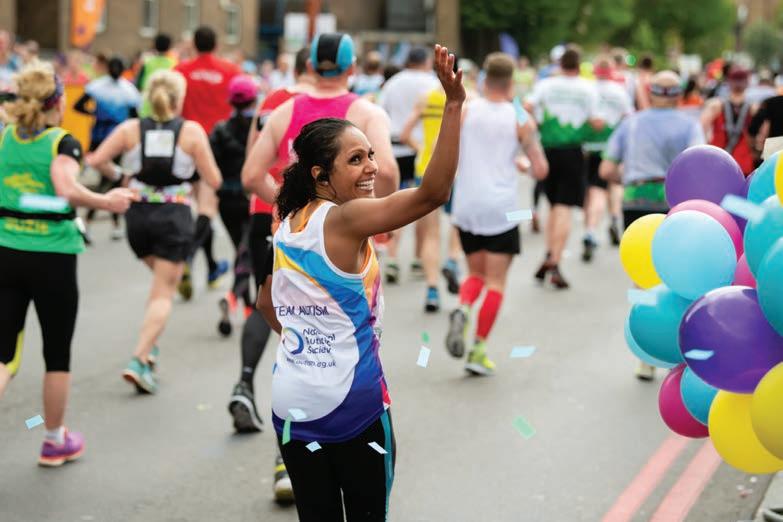
Great North Run – 7 September 2025
JoinTeamAutism onthe streetsthrough Newcastleto South Shields onthis atmospheric, fun-filled marathon.
Royal Parks – 12 October 2025
Take part inthe greenest half marathon London hasto offer,takingyouthroughthe magnificent gardens of fourRoyal Parks.
“I enjoyed every aspect ofthe race and support fromthe NationalAutistic Society.” 2022 runner
Secureyour spot onthe start line and help us race towards a brighter future for autistic people:
a delightful relief”
Joe reflects on being diagnosed as autistic in his 40s
Throughout my teenage years, I was frighteningly shy, introspective, reserved, quiet as a mouse and almost impossible to talk to. In other words, I was terrified of my own shadow. Communication with other kids was almost non-existent, and I had no friendships of any description.
Friends and family assumed I would come out of my shell eventually. But it just didn’t happen. I can still see my lovely dad standing outside the local Jewish youth club, pleading with me to go in so I could play table tennis and football with kids my own age.
I eventually joined an organisation called B’nai Brith, which was gloriously welcoming and included me in all its activities. I began to feel more confident and even started writing for the group’s magazine. And yet, there was an inherent fear and trepidation about chatting to the others. But I persevered and now have a wonderfully loving, supportive wife, family, children, and now grandchildren.
Years after we met, my wife realised there was something different about me. Not only were social gatherings a major difficulty for me, but I was behaving erratically. I still felt isolated and bewildered, still struggling to come to terms with my almost non-vocal, taciturn nature.
For years, I’d fallen back on the same routine every Saturday evening. At dinner time, I would insist on making myself a cheese sandwich. What started as a habit became a tiresome necessity. Then there were the summer holidays, which had to be taken at a certain time in August. My wife simply couldn’t
understand my thought patterns or the reasons for being so predictable.
So, in 2009, we made an appointment with a clinic, and the rest is history. I was diagnosed autistic, and the news came as a delightful relief. No longer did I have to wonder why these routines, which were becoming very oppressive, were having such a stressful and debilitating impact on my life. I knew what was happening. I had a diagnosis of autism, and now I could concentrate on creating coping mechanisms for every eventuality.
Whereas before, I had no idea why I’d failed so miserably at job interviews, now I knew why. At every interview, I would look at the floor, ceiling, filing cabinets, furniture, potted plants and completely avoid the interviewer. There was no eye contact, and that was vitally important. So now the penny had dropped. Autism had given me a very real insight into why I was behaving in the way I was.
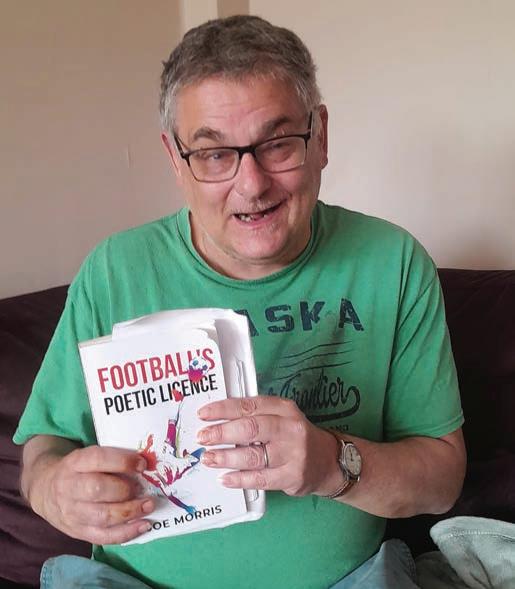
I could now understand my autism and try to explain it to friends. I felt so much better, and everything was much clearer to me. Admittedly, I wish somebody had told me as a kid that I am autistic, but better late than never, as they say. Visit our diagnosis hub at autism.org.uk/ advice-and-guidance/topics/diagnosis Joe’s books, Football’s poetic licence and No Joe Bloggs, are available on Amazon.
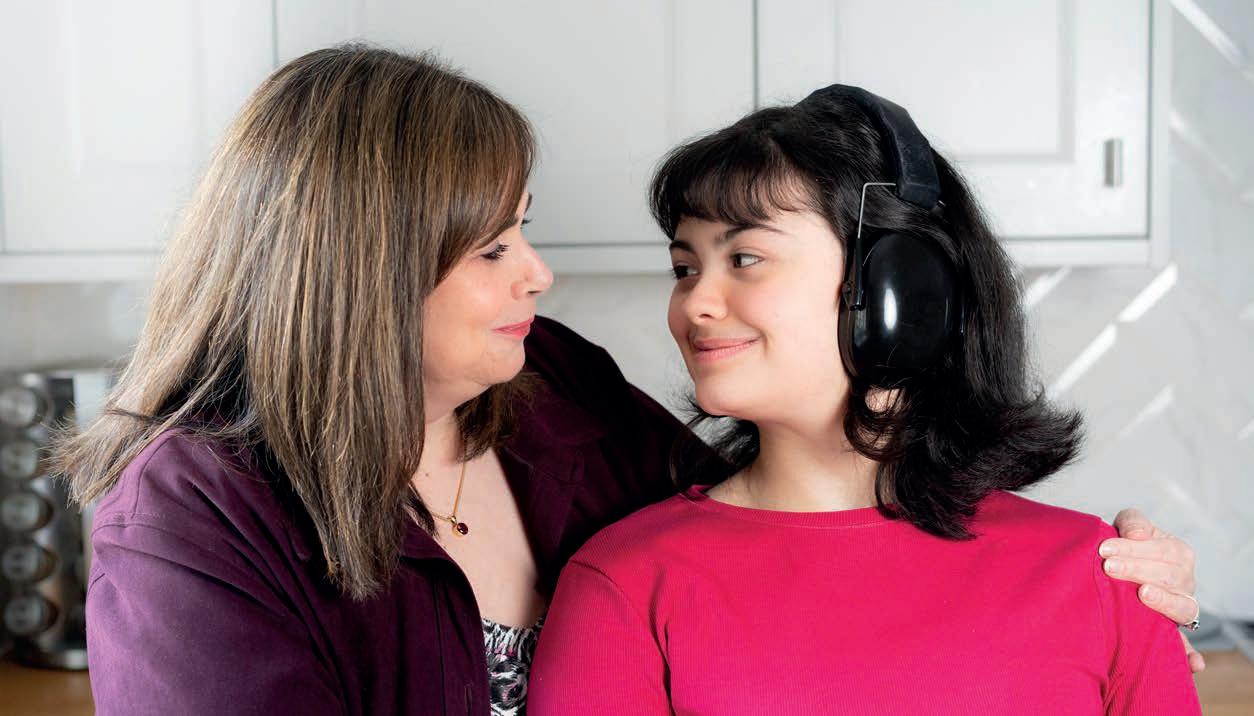
Carol describes her battle to get the right education for her daughter
Georgina was a really easy baby. We were delighted to be new parents, especially as we waited a long time to have Georgina because of focusing on my career as a headteacher. Sadly, Georgina became ill as a toddler after catching a virus. It crashed her immune system; she couldn’t fight off normal colds. Worried about having an ill child, and frustrated at the medical system that had no answers, I had to give up my headship. I felt a bit lost and overwhelmed at this time – this wasn’t the journey I thought we’d be on.
Georgina got a diagnosis of autism aged four, after we expressed our concerns about
her communication and social interaction. She had met many of her developmental milestones, though, and was a happy child. The paediatrician said it was difficult assessing her because she did not neatly meet all of the autism criteria and had a very spiky profile. She settled on a diagnosis of ‘atypical autism’* and spoke about Georgina being ‘different from the different’. At this point, I knew getting support for her would be challenging and I prepared myself for the fight. I hadn’t anticipated quite how much I was going to have to fight, or how exhausted and demoralised I would become.
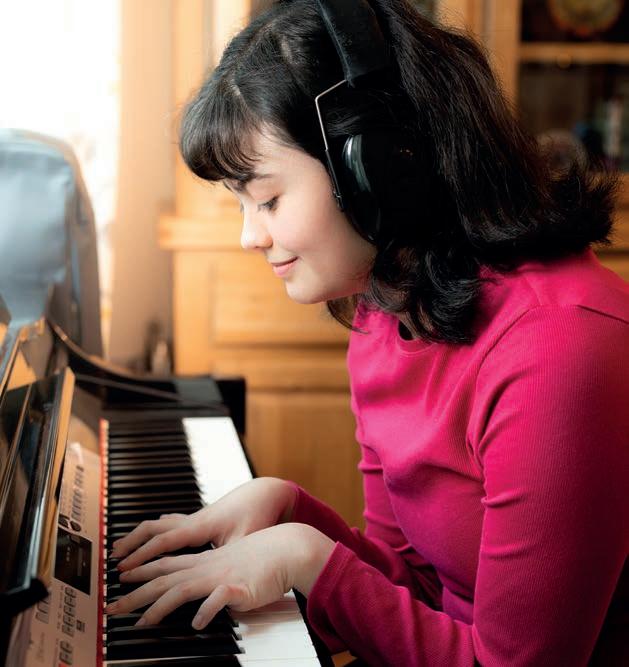
The early school years were mainly positive, but Georgina struggled with the demands of more formal education. Her preferred learning style was self-determined exploration, and she had taught herself to read and play the piano before she started school. After Key Stage 1, Georgina was forced to move schools on two separate occasions. This was because of schools stating that they couldn’t meet her needs, despite the huge amount of funding they were being given to accommodate them.
The endless meetings to try to help teachers understand her better were frustrating beyond words. I couldn’t understand why teachers weren’t prepared to do the basic things that would help my child.
Moving schools forced change – the one thing Georgina couldn’t cope with. Friendships were lost, and the play dates and invitations stopped coming. This was heartbreaking as a parent − I felt I had failed her. We became more isolated than we could ever have imagined. I relied heavily on my parents for support and the few good friends I had, but I found myself withdrawing from everything, as it felt safer to do so.
After an in-depth sensory assessment, we decided to move Georgina to a specialist school with a sensory integration suite. We had high hopes, as it had a very good reputation, but were soon disappointed that it wasn’t the elixir we thought it would be. Georgina started to refuse to go to school. I was dismayed when the headteacher said in passing that Georgina was really ‘defiant’, when I knew she was actually highly anxious. That comment made me realise this school wasn’t inclusive and, as a specialist provision, they didn’t think they had to be.
I felt as if they were trying to gaslight me and question my parenting skills, but I was an experienced teacher with a good understanding of autism as well as my daughter’s particular needs. I could see that they were failing my child and others, and I wasn’t prepared to accept that. I tried to help by offering my support and suggested that they might find the National Autistic Society website and materials really useful, but they were not prepared to listen.
What saddened me the most was the realisation that it wasn’t about meeting the children’s needs – it was about making the children conform to their way of doing things. By chance, we found out that the main reason Georgina didn’t want to go to school was because she was being attacked by another child whose needs were also not being met. At breaking point, Georgina voted with her feet by refusing to attend the school. When she
said, “Sorry mum, I just can’t”, the penny dropped for me. It wasn’t that she didn’t want to go; she just couldn’t physically do it.
I was so angry that the headteacher who had called my child ‘defiant’ had failed to protect her. On top of that, the school refused to help reintegrate Georgina back to school and took three weeks to even meet us to discuss this issue. Georgina was now a different child − riddled with anxiety, no longer happy and smiley. I began to see things more from my child’s perspective; she wasn’t safe, she wasn’t understood and she wasn’t even wanted. I was determined she was never going back there.
“I felt like they were trying to gaslight me and question my parenting skills”
I reflected on what the paediatrician had said on diagnosis, that Georgina is ‘different from the different’. Schools are not well equipped to deal with kids
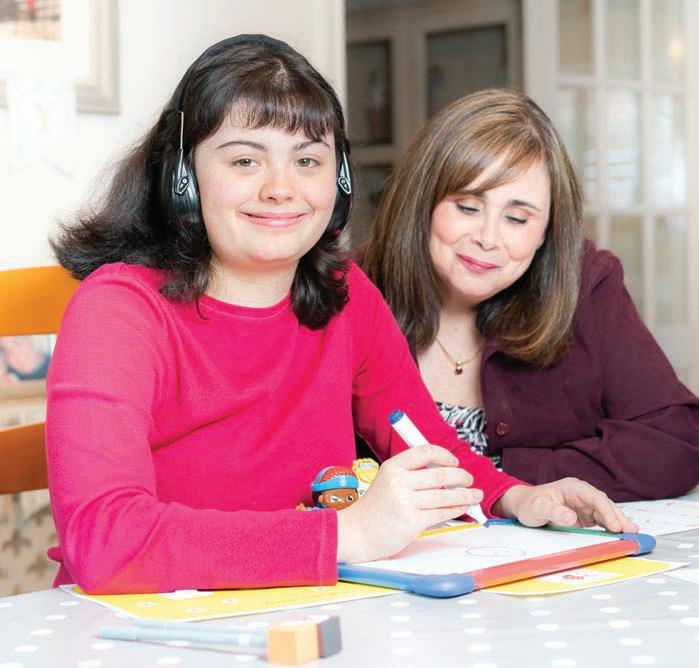
Six years on, we are in a better place with education
like her. She was what some now call an ’inbetweener’, not suited to either the mainstream or specialist school setting. It was clear that her poor educational experiences had now impacted her so much that no formal setting was ever going to be suitable for her.
“I was so annoyed at society; it seemed that our child’s education just didn’t matter”
Georgina then spent 18 months without any official education. It was fortunate that I had permanently left my teaching job so I could give her some tuition.
I was so annoyed at society; it seemed that our child’s education just didn’t matter. The specialist school wouldn’t provide any work to be completed at home, and the local authority (LA) kept ignoring our calls and emails. We sought advice from the National Autistic Society at this point and knew we had to get legal representation.
We complained to the Head of Children’s Services and the Local Government Ombudsman, and issued a pre-judicial letter. The LA then began to take us seriously. We received a long letter outlining the failures of
the school and LA, with apologies for these. This led to a meeting with the LA’s Head of SEND, who listened to our concerns. After the meeting, they agreed to a package of learning in the home, including tutors and private occupational therapy sessions.
Six years on, we are in a better place, with education delivered by myself and a personal budget. However, it is a continual fight to get Georgina’s needs met. The lack of available services is still the biggest issue. I have been like a dog with a bone, never giving up and saying “no” at every point to things that are not appropriate for my child. It has been tiring and emotional, and has come at great cost to my career. This is nothing in comparison to the impact on Georgina: the social isolation, lack of friendships and the impact on her wellbeing.
We are constantly playing catch-up, but I believe in her and know that being autistic is central to who she is. This process has shown me that, with the right sort of education and support, autistic children can learn and thrive. Sadly, it has also shown how catastrophic the opposite can be.
* Atypical autism (also called pervasive developmental disorder-not otherwise specified) was previously diagnosed when people displayed some traits of autism but not enough to fit a diagnosis. It is no longer used in the diagnostic manuals.
The National Autistic Society supported me when I desperately needed it and that’s why I’m leaving the charity a gift in my will. I have seen so many parents with children struggling in the school system. I always refer them to the National Autistic Society website to access support. Society has come a long way, but there is still so much good to be done to further improve the lives of autistic people. The National Autistic Society has a huge role to play in that and I wanted to make a small contribution to help it happen.
Find out more at autism.org.uk/legacy
For more information, please email legacyteam@nas.org.uk or call 0808 800 1050
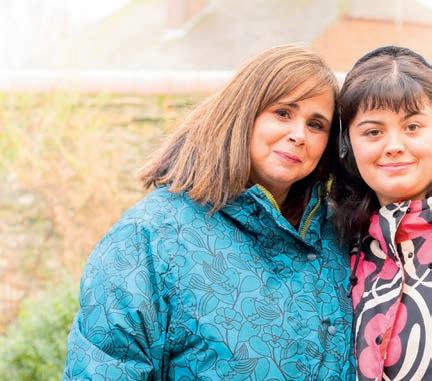




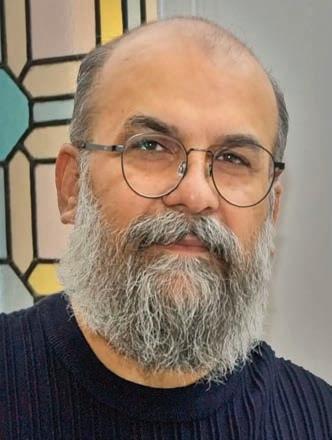
Dr Khurram Sadiq, Neurodevelopmental Psychiatrist and author of Explaining AuDHD, explores what AuDHD is – and the support available
Have you ever met someone who is full of ideas, bursting with energy and yet overwhelmed by the smallest change in routine? Or someone who zones out midconversation, but can hyperfocus on a single interest for hours? Maybe that someone is you. If so, you’re not alone − and you might just be AuDHD.
AuDHD is the term now widely used to describe people who are both autistic and have ADHD. It’s a
catchy word, but what it describes is far from simple. For years, these two conditions were treated as separate and even mutually exclusive. But lived experience − and now growing research − tells us otherwise.
I first spoke publicly about AuDHD on a TEDx stage. My talk was titled ‘When order and anarchy live together’ − a phrase that perfectly sums up the beautiful and often exhausting inner world of someone who is both autistic and has ADHD. It was inspired by my late father, whose life was a tapestry of brilliant contradictions.
Long before I had the language for it, I saw in him the signs of what we now call AuDHD: structured but scattered; passionate but withdrawn; creative yet rigid. That talk lit a fire under something I’d been feeling for years in clinic, in research and in my own reflections − it was time we explained AuDHD properly.
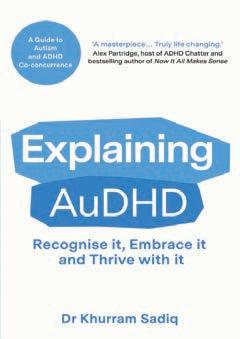
That’s why I wrote Explaining AuDHD − one of the first books aimed at demystifying this diagnosis of AuDHD. It’s written not for professionals, but for the many individuals, parents, partners and educators trying to make sense of
the chaos and beauty that comes with this dual wiring.
At its core, AuDHD is the overlap of autism and ADHD. But this isn’t just a case of ticking boxes on both checklists. It’s more like blending two powerful energies − order and anarchy − into one nervous system. Autism often brings traits such as routine-seeking, sensory sensitivity and a deep focus on specific interests. ADHD, on the other hand, tends to bring restlessness, impulsivity, distractibility and a thirst for novelty. When these two come together, it’s not simply double the traits − it’s a whole new way of experiencing the world.
Imagine craving structure, but constantly sabotaging your own plans. Needing quiet, but forgetting your headphones. Being honest to a fault, yet blurting things out without thinking. Wanting to connect deeply, but missing social cues or zoning out. That’s what many AuDHD individuals describe. It’s not brokenness − it’s a brain that works differently. The world just hasn’t caught up yet.
This matters because too many people with AuDHD are being misdiagnosed, misunderstood or missed entirely. Many receive an ADHD diagnosis in childhood, but their social or sensory differences are ignored. Others are diagnosed as autistic later in life, after
struggling silently for decades with emotional dysregulation or executive dysfunction − classic ADHD features. And some never get a diagnosis at all, blamed instead for being ‘difficult’, ‘too much’ or ‘not trying hard enough’.
Recognising AuDHD is about more than labels − it’s about access to the right support, therapies, accommodations and, most importantly, self-understanding.
The different presentations of AuDHD
In my private practice, where I regularly assess individuals for co-occurring autism and ADHD, I’ve come to recognise three distinct patterns in how these conditions
show up together. These aren’t formal subtypes, but clinical observations, shaped by working with hundreds of individuals and listening closely to their experiences.
1 AuDHD with predominant autism
In this presentation, autistic traits are more prominent and shape the person’s daily life. ADHD features are present, but often overshadowed or masked by the structure and rigidity commonly associated with autism. As a result, the ADHD may go unnoticed unless specifically sought out.
2 AuDHD with predominant ADHD
Here, ADHD characteristics − such as
impulsivity, restlessness and executive dysfunction − take centre stage. The underlying autistic traits may be subtler or camouflaged by the social energy and distractibility of ADHD. In many cases, autism is only recognised later, often after years of ADHD-focused support.
AuDHD with variable expression
This is perhaps the most complex and dynamic type. Individuals may find that, at times, their autistic traits are more apparent − such as sensory sensitivities or need for routine − while at other times, ADHD traits such as hyperactivity or inattention take the lead. It can feel like a constant internal tug-of-war between structure and spontaneity.
I’ve only been able to recognise these patterns because I specialise in both autism and ADHD across the lifespan. I often tell my trainees that unless you are skilled in identifying both conditions, you’re likely to miss at least one − without even realising it. These overlapping presentations demand a depth of understanding in each domain, not just for accurate diagnosis, but to ensure the person receives truly tailored support.
What support is available?
The NHS does now recognise co-occurring autism and ADHD, though navigating the system can still feel like a maze. There are hardly any places where a joint diagnosis is offered. Some people start by seeking help for their anxiety or burnout, only to discover the underlying neurodivergence that’s been there all along. In many areas, you can now request an assessment that considers both conditions but assessed separately.
“It’s not brokenness − it’s a brain that works differently”
That said, services still need to catch up. We need more joined-up pathways, better-informed clinicians and greater awareness in schools, workplaces and families. Because untreated ADHD or unrecognised AuDHD can lead to serious challenges: relationship breakdowns, academic struggles, burnout, self-harm, addiction or worse.
You may have heard of the ‘double empathy problem’ − the idea that autistic people aren’t deficient in empathy, but experience a two-way misunderstanding with non-autistic people. In AuDHD, this problem can be amplified. The impulsivity of ADHD might lead someone to overshare or interrupt, while the autism side struggles with how others receive it. The world sees
contradiction. But to the AuDHD brain, it’s all part of one story.
Here’s the good news: AuDHD isn’t a curse. It’s a difference. I’ve seen AuDHDers thrive as entrepreneurs, artists, engineers, carers, activists. Their minds don’t follow the straight path − and that’s exactly why they’re needed in this world.
If you see yourself in these words, know this: you’re not lazy, broken or alone. You are wired differently − and you deserve a world that honours that difference.
Let’s build a future where the complexity of neurodivergence is met not with confusion or criticism, but with curiosity, compassion and celebration.
Dr Khurram Sadiq is a Consultant Neurodevelopmental Psychiatrist, Clinical Lead of the Adult ADHD service at Oxleas NHS Foundation Trust and the author of Explaining AuDHD. He has delivered six TEDx talks and has spoken at UNESCO and the UN on the power of neurodivergent minds.
We have three copies of Explaining AuDHD to give away to members. For a chance to win, email your name and postal address to YourAutismMag@ nas.org.uk by 17 August, putting ‘AuDHD’ in the subject line. The winners will be announced in the next issue.
Every quarter, you will be invited to attend an all-new, exclusive webinar as part of your membership package. The next few webinars will take place in August, November and February. Each webinar will last 45 minutes to an hour and will give you an in-depth look at autism-related issues and services that make a difference.
Where to look out for your invitation:
• your email inbox
• our quarterly Members’ News email
• the National Autistic Society Members’ Facebook group.
If you have any questions, or would like to suggest a future webinar topic, then we would love to hear from you! Please email us at membership@nas.org.uk for more information. We look forward to seeing you at our next webinar!
The National Autistic Society is a charity registered in England and Wales (269425) and in Scotland (SC039427)
Christine Flintoft-Smith introduces our new online archive, In our Words, showcasing the rich history of our charity
The National Autistic Society, established in 1962, has a long history. As the first autismspecific charity, we have tirelessly advocated, pioneered and evolved alongside the growing understanding of autism.
In May, we celebrated the culmination of a two-year project to gather, curate and archive the charity’s rich history. This was marked by the launch of an online archive, now accessible to everyone through our website. The project was made possible by the generous support of The National Lottery Heritage Fund.
This project was not merely an effort to catalogue the National Autistic Society’s history; it was an opportunity to create a hub of historical information that reflects the evolution of thinking and support strategies around autism. By building an archive of information and personal reflections, we aim
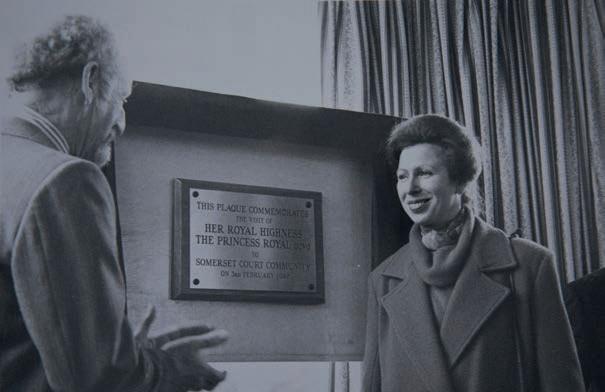
to inspire others to reflect on their own experiences, whether through lived experience or professional involvement. Our vision was to foster a sense of community and shared history for everyone connected to autism.
To ensure the archive was driven by autistic perspectives, we established a project team of people with lived experience and longstanding professional links to autism. We formed a steering group and a volunteer pool, coordinated by a project officer who was also autistic. This inclusive approach ensured that the key moments in our charity’s history were thoughtfully featured.
With additional support from On the Record, an oral history specialist not-for-profit organisation, and the London Archives, our project team received training in essential skills, such as interview techniques, transcribing, digital editing and cataloguing. Many team members plan to continue using these skills in various roles beyond the project, ensuring the legacy of this initiative lives on.
To create a foundation to learn from, we recognised the importance of addressing and archiving perspectives that are now outdated. This was essential to acknowledge the cultural challenges for so many autistic people in the past and showcase the remarkable progress in understanding and support since the charity’s inception.
The archive is enriched with numerous oral history interviews with key figures in the charity’s history. These personal reflections capture the life experiences of autistic individuals and their families, as well as the pivotal moments of the charity through the memories of professionals.
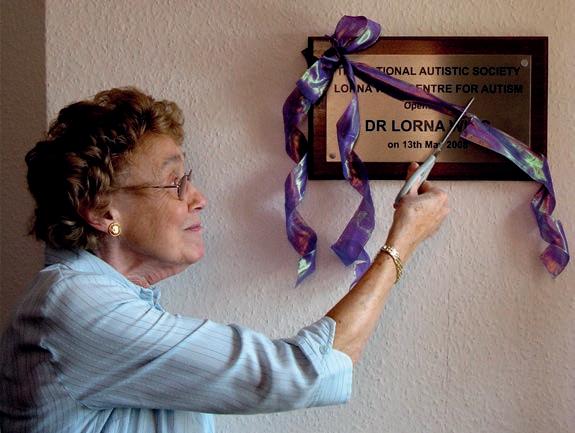
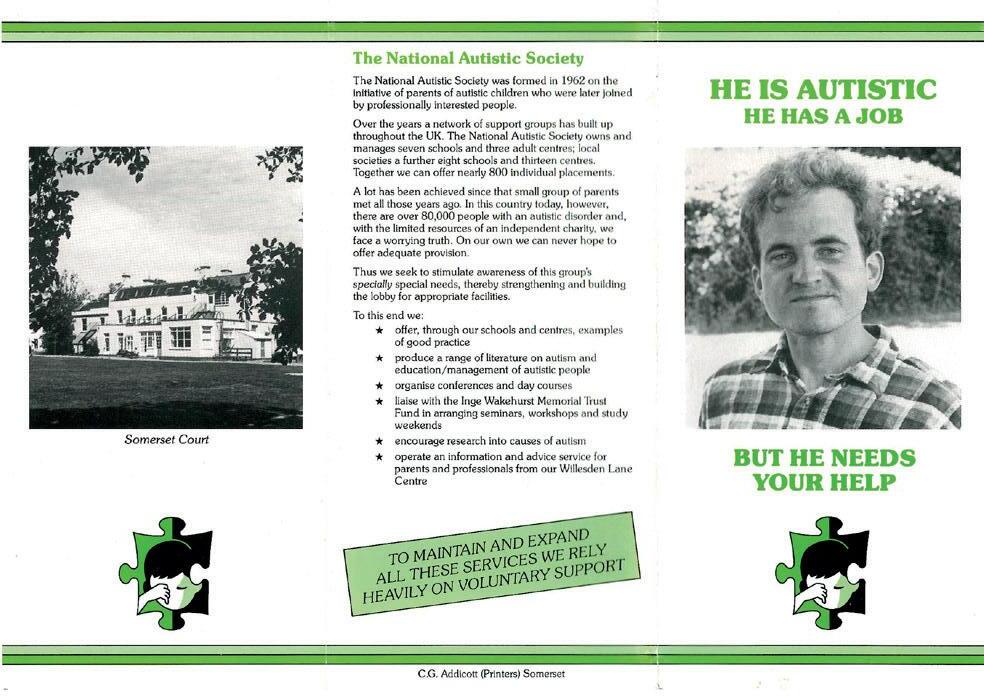
We are incredibly fortunate to have interviews from the original founders of the National Autistic Society and their family members, including Michael Baron, Miles Allison and James Tomlinson. They share the motivations behind establishing the charity and recount the unconventional methods used to raise funds to open the first school and adult residential home.
You can now visit our archive at autism.org. uk/in-our-words
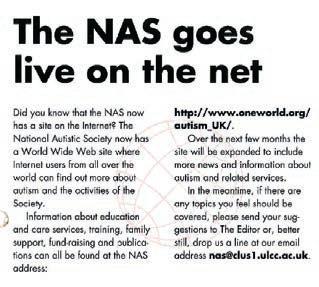
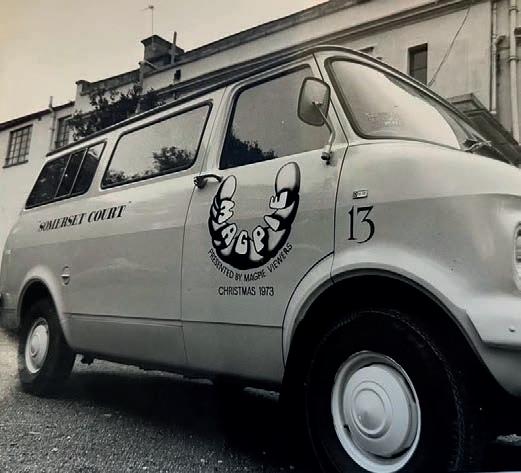
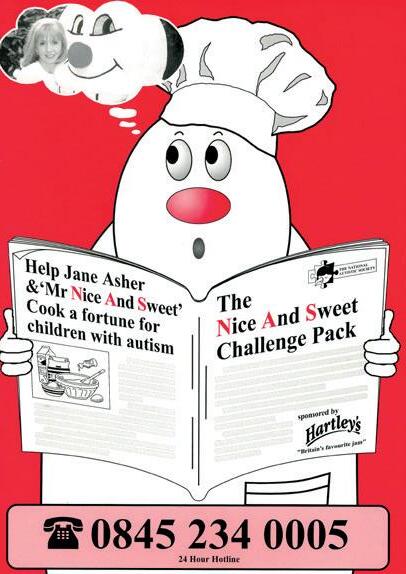
Dive into our interactive timelines and explore a catalogue of more than 1,500 items. Experience the past through original photos, correspondence and reports on early schools and adult support. Listen to the heartfelt stories of those who lived it themselves.
Enhancing the archive, we also offer a compelling four-part film and a podcast series. These delve into specific areas for autistic people and their families, including campaigning and the importance of autistic voices, family support, diagnosis and more.
Embark on this inspiring journey today, and be part of our shared history.
When you have visited our archive, tell us what you think. Please take a few minutes to give feedback at smartsurvey.co.uk/s/ myfeedback
The National Lottery Heritage Fund (heritagefund.org.uk) is the largest funder for the UK’s heritage. Using money raised by National Lottery players, we support projects that connect people and communities to heritage. Our vision is for heritage to be valued, cared for and sustained for everyone, now and in the future. From historic buildings, our industrial legacy and the natural environment, to collections, traditions, stories and more, Heritage can be anything from the past that people value and want to pass on to future generations. We believe in the power of heritage to ignite the imagination, offer joy and inspiration, and to build pride in place and connection to the past.
Claire and Paddy, and Emily Katy, share how they do holidays
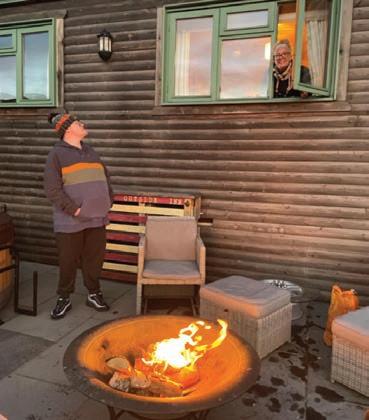
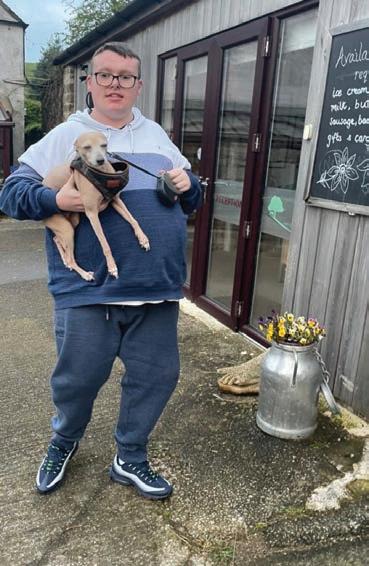
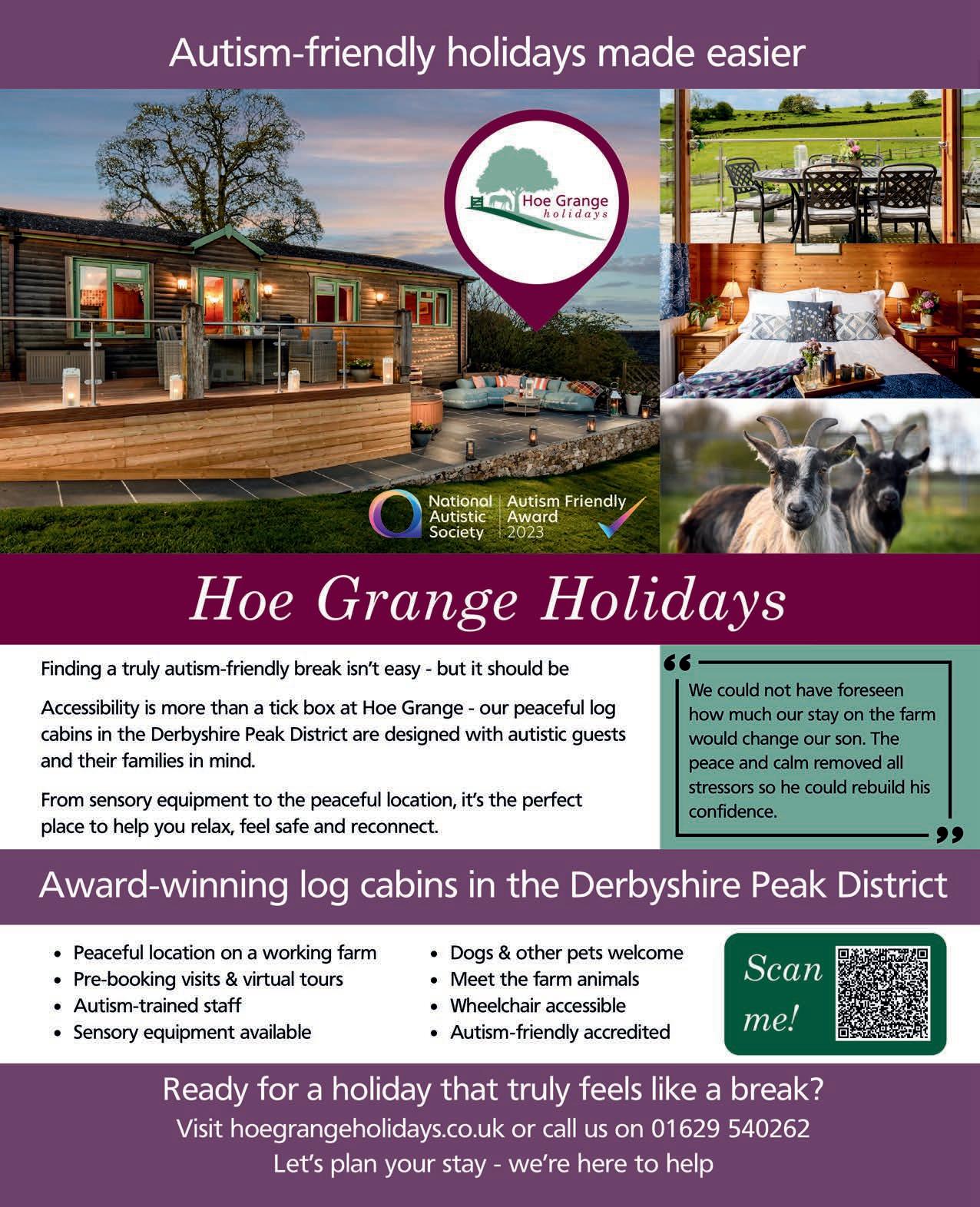
Since April 2023, Claire and her son Paddy have enjoyed six holidays with Hoe Grange Holidays. Nestled in the hills of the Derbyshire Peak District, the company offers accessible self-catering accommodation on a working farm.
For Claire and Paddy, Hoe Grange is a sanctuary. “The reason we return is the friendly team and outstanding accommodation, which provides everything that we have at home – but it’s set in a beautiful, calm environment,” Claire explains. “This is key to us as parents and carers of disabled individuals, for
time out and respite breaks.
“Hoe Grange gives Paddy the space he needs. He loves looking out of the window and seeing the animals, and having a walk around the farm.” Owner David regularly shows Paddy the farm machinery and his vintage car, and Paddy enjoys collecting old cow ear tags.

“As a parent/carer, the peace and calm we get is priceless,” Claire shares. “One of Paddy’s conditions is bipolar and we have booked into Hoe Grange when he is suffering with this, so we can help him to mentally reset in a calm setting. Hoe Grange feels very safe to Paddy, his carers and myself.”
Our top tips:
1. Look at photos of the destination before you go, so you know what to expect.
2. Prepare a timetable in advance, including breaks to recharge you.
3. Bring your safe foods with you, or research nearby restaurants that serve your favourite foods.
4. Bring something that gives you joy and comfort, like a favourite mobile game or fidget toy.

Hoe Grange Holidays prioritises accessibility, recently winning gold in the Accessible and Inclusive Tourism category at the VisitEngland Awards for Excellence. It also holds our charity’s Autism Friendly Award (autism.org.uk/autismfriendly-award). For more information, visit: hoegrangeholidays.co.uk
Emily Katy’s coping strategies
Travelling and holidays can be fun, but they can be more challenging when you are autistic.
I
find the number of steps in the process of travelling difficult, combined with the uncertainty of what to expect and sensory sensitivities. I hate the noise on planes, trains and buses, the beeping through airport security and being patted down if you’re stopped.
Then on holiday, my body struggles to regulate temperature, resulting in goosebumps in 35-degree heat and rashes when getting in and out of the pool. And I love seeing the sea, but the feeling of wet sand is unbearable!
Individuals will develop their own coping strategies with time, but here are some of my tips:
Visually prepare with photos and information You can do this in lots of different ways – and get creative! When I went to Valencia, I created a
travel journal with key information, photos of attractions and the accommodation, a schedule for the travel days and a map of the local area. Visual prep can help you know what to expect and reduce anxiety.
Wear a sunflower lanyard This shows that an individual has a hidden disability and may need additional time, understanding or help. These are well-recognised in UK airports (and even some abroad – I was very impressed with Malaga airport in Spain) and on some airlines. You can ask for special assistance, too.
Attach an Autism Alert Card to this lanyard, or keep it in your wallet This is a card you can show to tell someone that you are autistic. It may include a list of bullet points of specific challenges and an emergency contact number. This could be useful if you get very overwhelmed or anxious and may need support in public. You can download an Autism Alert Card at autism.org.uk/alert-card
“Never feel bad for asking places in advance for adjustments”
Sensory aids Noise-cancelling headphones or earplugs are a necessity. I take tangles and other fidget toys with me. And I make sure I have a comfy jumper to use as a blanket, no matter how warm it is!
Easy distractions What kinds of activities help you when you are anxious? I always grab a Picture Arrowwords book at the airport. I take my iPad with pre-downloaded comfort shows, and I use apps to colour and draw. I have music and a book. You could even take small portable games.



Try different types of suncream
The feeling of suncream can be horrible, but they don’t all feel the same. I prefer spray to lotion, and there are even mists that don’t feel like normal suncream and you don’t have to rub them in.
Pack your own food Make sandwiches or something you like in advance and take these on the flight. I struggle with plane food. I always take my own food in my travel bag, and you can even pack familiar dry food in your main suitcase (such as pasta or cereal).
Ask in advance Never feel bad for asking places in advance for adjustments. For example, you can email some restaurants to ask for seating in a quieter area. You can ask travel tour guides for specific adjustments. And ask the autistic community for recommendations.
Read more from Emily Katy at authenticallyemily.uk and on Instagram @ItsEmilyKaty. Her bestselling book, Girl unmasked: How uncovering my autism saved my life, is available now.
Find more holiday tips at autism.org.uk/holidays
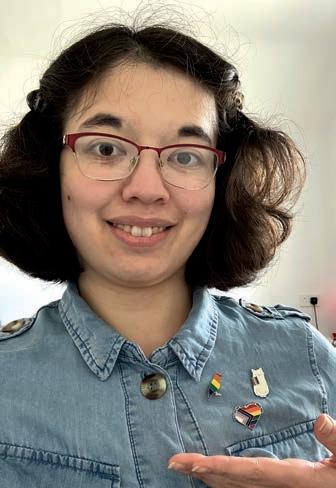
This Pride Month, Grace writes about being autistic and LGBTQ+
Coming to terms with being different has been a lifelong process for me. It started with being autistic and half Taiwanese, and dealing with awkward assumptions from a very young age – something I wrote about for Your Autism back in 2020. But one thing I’ve only started talking about more recently is the overlap between my autism and being a lesbian.
Dating and flirting rely a lot on unspoken rules, social cues and expectations, which makes them tricky to navigate for any autistic person. Being LGBTQ+ as well as autistic puts you at a further disadvantage. At secondary school, dating advice was always about how to get a boyfriend, how to tell if a boy likes you, and so on. Nothing about recognising, accepting and disclosing your sexuality if you’re not straight, and nothing about dating other girls. As a teenager, I was already out of my depth with anxiety, low confidence and loneliness. I had internalised the message that I would always struggle with everything more than my peers, and, because of that, I learned to hate being different. When I realised my crushes on girls
were not just a phase, I couldn’t accept that I was different in yet another way.
In my mid-teens, I got involved in church social activities, where I made friends who helped me accept my autism. However, it proved to be a double-edged
sword when I realised some of my Christian friends were strongly anti-gay. People would rant about “the gay lifestyle” or gay people “enforcing their agenda”. Some said we shouldn’t be accepting LGBTQ+ people at all, without even considering a gay person might be listening. Yet, because I was desperate to belong, I kept quiet.
In recent years, I have come out to some very accepting friends and family members, and I know I am very lucky. However, struggling with shame for so long has had a lasting impact on my confidence in tapping into the dating world, and I regret shying away from it for so long just to fit in. One thing I will say is that knowing what it’s like to be different is partly what motivates me to be a better ally to other marginalised people. Navigating a world not built for people who are like you can be exhausting and even scary, but there will always be people who want to make it a better place.
Grace is our charity’s Direct Marketing Officer. Read more in her book Approaching autistic adulthood: The road less travelled and her blog at unwrittengrace.wordpress.com
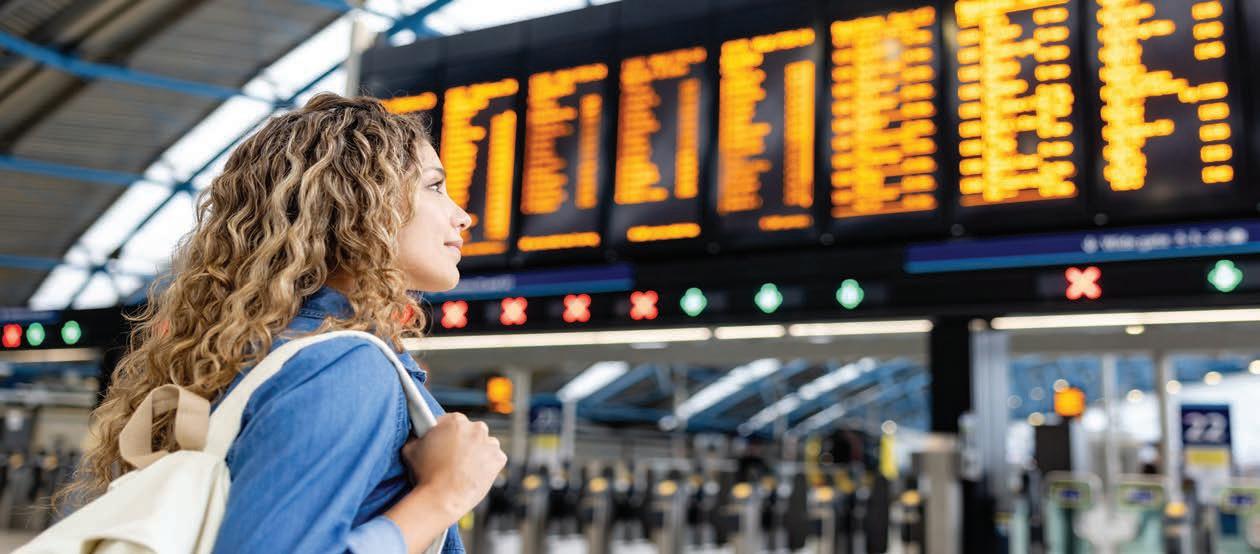
In our spring issue, we shared some findings from our Empowering Autistic Travel project, highlighting barriers to travel and their impact. In this article, we share insights about safe, comfortable travel for autistic passengers
Survey and interview insight: July-August 2024
Last summer, 3,375 people responded to our main survey about barriers to travel and potential solutions. We asked autistic people and their supporters what would be of benefit when travelling – for example, what could help with crowding, feeling anxious or unsafe, sensory discomfort or feeling misunderstood by others? These questions allowed people to write open responses without prompts, resulting in qualitative data that described people’s experiences. When interviewed, autistic people and parents/carers discussed what they thought might make a difference to their travel challenges.
We analysed all the data to draw out common themes. Across survey responses and interview discussions,
we repeatedly heard about the same issues and areas for improvement, which fell into five clear themes:
● travel support
● accessible information
● sensory adaptations
● autism understanding
● reducing uncertainty.
Transport professionals’ insight: October 2024January 2025
In October 2024, we held focus groups and workshops with 22 transport professionals. These included travel trainers, accessibility leads representing a number of rail and bus operators, researchers, a council planner and ground staff. In these sessions, we heard about the appetite for change and some key examples of good practice, but we also heard about limitations to
improvements, such as restricted budgets and competing priorities. In the workshops, the themed solutions were presented and discussed in relation to their suitability, feasibility and acceptability. These discussions helped us to refine our recommendations.
“It feels tough to teach young people coping mechanisms rather than them getting the service they deserve from public transport”
Travel trainer, England
Our recommendations
The recommendations, some of which are highlighted below, contained no major surprises, but the crucial part was the process of capturing so much insight. So many people’s experiences, by different modes of information gathering, were listened to and summarised into some simple, but evidence-based, suggestions.
Autistic people told us they would like travel support to be:
● easy to arrange
● available at travel facilities, such as train and bus stations, and onboard vehicles
● facilitated by clearly identifiable, dedicated professionals.
Autistic people told us it would help greatly if they had accessible information and if:
● travel information could be presented in accessible formats, including easy-read information
● ticket-buying processes and ticket selection were simplified and accessible
● they had access to planning checklists and resources.
Autistic people told us sensory adaptations would make a difference, including:
● quiet/safe spaces, alongside public awareness information to explain their purpose
● quiet train carriages to consider wider sensory overwhelm (lighting, textures)
● making stations or waiting areas less visually and audibly overwhelming
● ensuring vehicles are well maintained and regularly cleaned
● individual seating on transport or a better way of maintaining
“I think definitely part of the training should be to listen to stories and experiences of those who are autistic and disabled, so they can see us more as people and humanise us by putting a face to these stories”
Autistic woman, aged 18
personal space while seated
● being able to take a break in a journey on the same ticket
● transport/infrastructure design involving input from autistic people.
Autistic people told us that, if the public and transport staff had better autism understanding, they might accept differences and show empathy during difficult journeys. Many people we talked to also wanted transport staff to:
● receive autism training
● receive case studies/real stories and work with autistic people to better understand the travel experiences autistic users face
● access autism-friendly award or accreditation schemes for their teams and locations.
Autistic people told us that transport providers could reduce uncertainty by:
● communicating changes/ cancellations clearly and with as much notice as possible
● considering consistency across operations and spaces
● implementing and supporting travel training schemes for autistic people
● making virtual walk-throughs more widely available and better advertised.
You can read our full report or research overview at autism.org.uk/ empowering-autistic-travel
We are working with transport agencies to share this advice, and we encourage you to share it with others, including your local transport providers, and tell us what you think. You might spot other #EmpowerAutisticTravel resources being added to our website, too. If you have any questions or comments, you can email our Social Researcher at anna.taylor@nas.org.uk
Thanks to the Motability Foundation for its generous funding and support: see motabilityfoundation.org.uk
“There are some really, really lovely people who I’ve come across on my journeys, and they give me hope and faith... It really does make the world of difference to people like me. It absolutely makes my day when somebody is kind”
Autistic woman, aged 19



“I
think of my day as having a battery. So if I’m having meetings, that’s going to take a lot of my battery. If I’m speaking or watching Netflix, that will take very little and help recharge that battery.”
Learn more about understanding yourself, energy accounting, exploring your identity and setting yourself up for success.
We will be releasing two new videos and downloadable guides on other topics soon, so keep a lookout!
The National Autistic Society is a charity registered in England and Wales (269425) and in Scotland (SC039427)
When you buy one of our Gifts That Do Good e-cards for a loved one, your donation will help support 700,000 autistic people across the UK and their families. From providing vital autism information and advice to struggling families, to valuable social connections for lonely autistic adults, you could make a difference today.
How it works:
2. Add the recipient and sender details.


1. Visit our online shop at shop.autism.org.uk and choose a card design.
3. Add your personal message and choose a date and time for delivery.
4. Your loved one will receive the card by email.
Your donation will help remove the barriers that thousands of autistic people and their families face every year. Buy your loved one a Gift That Does Good, and help create a society that works for autistic people.
The
and in Scotland (SC039427)
Do you have an issue our readers can help with? Get in touch and benefit from the experience of your fellow members
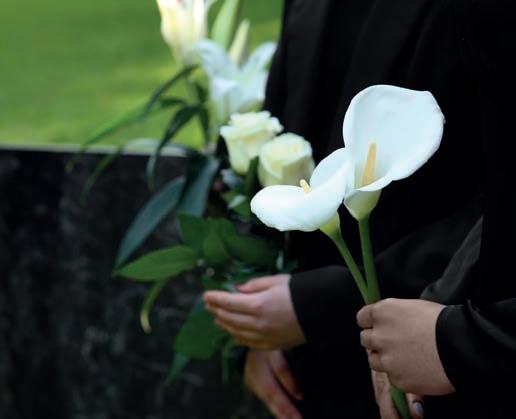
QMy autistic daughter is in her 40s. She works and has her own home. When we die, she will have to cope with our deaths, funeral, finances and house sale on her own. What could we set up now to help her?
Anon
AI am in the same position as your daughter, and my biggest suggestion is: please talk to her about all this. She will have many difficult decisions to make at a time she is least able to make them. I can see you want to set her up to succeed, and having a plan is the best way for an autistic person to succeed. Having these conversations with my parents has left me feeling confident that I will be able to cope when the time comes − not that it will be easy.
Post your problems or answers on Facebook at the National Autistic Society members’ group or email YourAutismMag@nas.org.uk
For extensive information and guidance about autism, visit our website: autism.org.uk
the time comes. The specifics may change, but it will give her some idea, and she will know where to look for reliable information when needed. Also, encourage her to build a small network of friends or maintain relationships with her extended family. That way, she is more likely to have people to turn to for practical and emotional support when needed.
Laura
You can set up a pre-paid funeral plan with an undertaker, but also let your daughter know what sort of things you would like for your funeral, such as whether you want to be buried or cremated and what music you would like. Make a list of information such as your bank, utility suppliers, memberships and any investments. Ensure she knows where the list is and how to access and update it as needed. Keep your will up to date, and make sure she knows where it is. Encourage her to look up information about what to do when someone dies and how to execute a will, so that it’s not all new to her when
AI’m autistic and work in the legal profession. I suggest nominating a professional executor to assist your daughter, maybe with a letter of wishes explaining the situation, which would be kept with your will. This would take some of the pressure off your daughter, but allow her to remain involved. (She could renounce being an executor or reserve power, depending on her confidence in the process at the time.)
Craig
My 12-year-old son is becoming stressed with getting dressed. He particularly struggles with socks and nightwear and will take them on and off, saying they make him feel itchy. He gets so stressed and angry, then upset. I’m trying to get help via CAMHS, but how can I help him in the meantime? Anon
Send us your advice for a chance to win an autism-related book of your choice.
Did you know you can make adjustments to the Duke of Edinburgh’s Award if you’re autistic?
We set out what you can do, while teenagers Daphne and ATS explain what worked for them
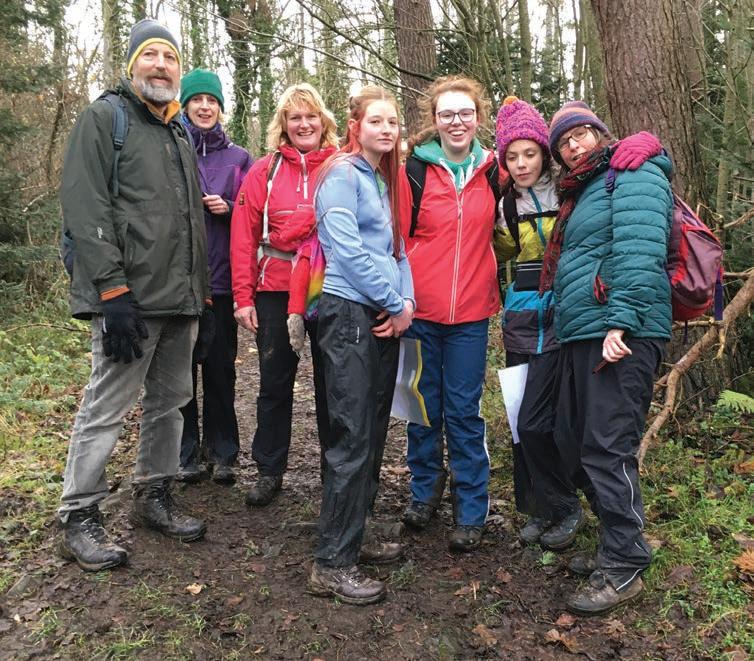
Our North Northumberland Branch recently ran a DofE scheme to find out which adjustments worked best for autistic teenagers (including ATS and Daphne). Our new DofE autism toolkit captures this insight, with resources designed to make the scheme a rewarding and accessible adventure for all. The toolkit will be available at autism.org.uk from July.
The journey to achieve the Duke of Edinburgh’s Award (DofE) is a chance to develop skills, build resilience and enjoy an adventure. For autistic participants, this journey can be both enriching and challenging.
Here are some adjustments you can ask for:
It’s perfectly fine to plan shorter distance walks for your DofE expeditions and focus on what feels manageable and enjoyable for you. You have to spend at least 50% of your time journeying, but the rest can be spent looking into a team goal of your choice. Your practice and training walks will help to work out your average walking speed with your rucksacks and allow you to plan an achievable expedition.
You don’t have to carry a very heavy rucksack. During your training expeditions, you will work out what weight suits you best. Leaders can transport the heavier pieces of equipment directly to the campsite.
Having the support of a parent or carer with you at night or during the expedition can often make the experience more comfortable for you.
Regular practice walks will help develop friendships and build confidence ahead of your qualifying expedition. This way, you won’t be completing your qualifying expedition with participants who are unfamiliar to you.
You can choose to cook separately from your group if you prefer.
There are lots of accommodation options available for DofE; it’s not just tents. When planning your expedition, you can choose campsites with nicer facilities, such as toilets and showers. You can also sleep inside or even return home, if that’s what you and your leader decide is appropriate for you.
Alternative navigation
Instead of route cards, you could plan your route using photographs at different grid references or by annotating a map. There are lots of alternative navigation methods you can use.
Clothing
Consider your sensory needs when choosing your clothing. Use your practice expeditions to figure out what clothing works best for you.
Comfort items
If it helps, bring comfort items from home.
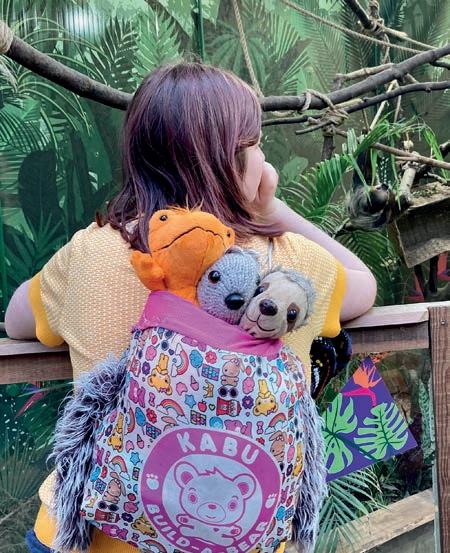
Volunteering: litter picking
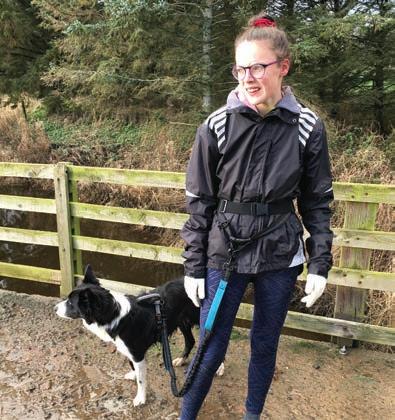
Physical: dog running
Skill: knitting a sensory blanket
What worked for me:
● practice walks helped me get to know the group
● litter picking kept us together as a group
● doing my skill at home was comfortable, having an end product as a goal
● running at home, as I live rurally and love my dogs, so running with them encouraged me
● sleeping in a tent with my mother
● only carrying a daysack, as I sleep with weighted blankets
● finding photographs showing the route, as I find reading and writing hard
● walking as a group, even though parents were there
● camping, but I had a hangar with loos, showers and a kitchen.
Volunteering: litter picking/beach cleaning with other members of group
Physical: dance
Skill: sewing and crochet
What worked for me:
● including my parents
● being able to take Dave, my support toy sloth
● help with carrying – I didn’t need to carry camping stuff
● staying in a hostel
● volunteering together
● lots of practice walks with others
● cooking by myself on expedition
● doing what I was interested in for each section
● making the walks manageable.
Nazefa Begum, Autism Help Advisor at our charity, explains what support is available for autistic university students and how to access it
For autistic young people, transitioning to university can be a daunting process. The journey from school or college into higher education often involves significant adjustments, and it’s important for students to know what support they can request to ensure their needs are met. This article explores the support autistic young people may be able to access while studying at university, how they can request and fund the support, and what to do when issues arise.
For students in England, Scotland and Wales, the Equality Act 2010 ensures that disabled individuals,
including autistic people, have the right to reasonable adjustments in various areas of life, including higher education. In Northern Ireland, the Disability Discrimination Act 1995 requires similar adjustments to be made.
Disability is a ‘protected characteristic’ in UK law. This means autistic people have legal protections against discrimination. The law means that universities need to remove barriers that may disadvantage disabled individuals, including during the admissions process, in coursework and throughout their studies.
Although not every autistic person will require adjustments, it is important to know what is available. These adjustments vary depending on individual needs and can help ensure that students are not disadvantaged in their academic and social experiences.

routine, while others may want to live independently.
“Adjustments can help ensure that autistic students are not disadvantaged”
Choosing the right university is a critical decision. Factors such as the type of support available, course offerings and location must all be considered. Some students may prefer to stay at home and study locally to maintain a sense of
It’s essential to enquire about the support services available at each institution, including staff training, access to assistive technologies and the environment for studying. The disability service at each university should be able to provide detailed information about the types of support it offers, including dedicated support staff, assistive technology and resources for managing the challenges that come with university life.
For guidance on the support available at different universities, you can refer to the UCAS disabled
students page at ucas.com/ applying/applying-university/ students-individual-needs/ disabled-students It offers useful insights on what to expect from disability services. Additionally, individual university websites will have more specific information on their support offerings, and teams can be contacted directly with specific questions about the help they provide.
When applying to university, students are often required to submit a personal statement, along with an application form. Some autistic


students can find this process challenging, but support is available. Many schools and universities offer guidance for students in preparing personal statements and filling out application forms. The UCAS website gives information for writing personal statements at ucas.com/applying/ applying-to-university/writingpersonal-statement/how-writepersonal-statement
Some autistic students may feel uneasy or uncertain about whether to disclose their autism diagnosis during the application process. Choosing whether to disclose a diagnosis is a personal decision and is not mandatory, but doing so can
“University websites will have specific information on their support offerings”
help ensure that appropriate support and reasonable adjustments are in place during the interview process or once a student is accepted at a university. If a student decides not to disclose, they are still entitled to request reasonable adjustments later if needed.
Once an offer for an interview is made, students can prepare by reflecting on their strengths, skills and experiences relevant to the course. This preparation can ease anxiety and help the student understand their suitability for the course. In addition to preparing answers, students should feel comfortable requesting reasonable adjustments for the interview, such as a more structured interview format or additional time to respond to questions to accommodate their specific needs. These adjustments can be requested before the interview by contacting the university directly.
It is important to be prepared as early as possible and ensure funding for support at university is in place for the start of the academic term. Disabled Students’ Allowance (DSA) is funding that is available to autistic
students to help with the costs of assistive technology, specialist support, additional travel and other disability-related support.
The DSA assessment, which is typically conducted before university, identifies the specific help a student needs and provides funding accordingly. A needs assessment can be carried out in person or remotely. Following the assessment, recommendations will be made, and the student will be given a letter explaining the support to which they are entitled. Payment will usually be made directly to the suppliers, depending on the support awarded, although some allowances may go directly to students.
For further information or to apply for DSA, please visit the relevant website based on where you live:
● For England, visit gov.uk/disabledstudents-allowance-dsa
● For Scotland, visit saas.gov.uk/ guides/disabled-studentsallowance
● For Northern Ireland, visit studentfinanceni.co.uk and search for ‘DSA’
● For Wales, visit studentfinancewales.co.uk/ disabled-students-allowanceguide
In addition to the personal support provided through DSA, autistic students can request reasonable adjustments. These can include:
● alternative formats for information (for example, written, audio or video)
● additional time for coursework and exams
● specialised study skills support
● a scribe or prompter for exams
“The DSA assessment identifies the specific help a student needs and provides funding”


● quiet spaces for studying or exams
● staff autism-awareness training
● noise-cancelling headphones
● flexible working or studying hours
● a mentor/buddy.
These are just a few examples of reasonable adjustments that may be offered by universities, depending on the student’s needs and circumstances. These accommodations help students engage fully in their academic activities without changing the nature of the assessment or course requirements. It is crucial for students to contact their university’s disability support services to discuss their needs.
Students who are concerned about discrimination, bullying or lack of support during their time at university
should try to address these issues as soon as possible. Initially, it is important to discuss concerns directly with university staff and, if needed, escalate the matter through formal complaint procedures. Each university will have such a procedure, which can usually be found on its website. If a student has tried to resolve the issue with the university, but is still unhappy with the outcome or how it was handled, they can escalate the complaint. This should be done through the Ombudsman relevant to their local area.
For more information on starting university and getting support, visit autism.org.uk/ advice-and-guidance/topics/ transitions
LVS Oxford, in the village of Begbroke, is an award-winning independent day-school for young people aged 11-16 with a diagnosis of autism
LVS Oxford, in the village of Begbroke, is an award-winning independent day-school for young people aged 11-16 with a diagnosis of autism. The school’s patron is HM The King.
With a structured educational environment, and an approach that focuses on developing young people’s independence and confidence, the school gives students the skills needed for academic success, employment and dealing with everyday life. The school is passionate about providing a positive and nurturing learning environment.
Each applicant is thoroughly assessed to ensure the school is a suitable fit for their age, ability, aptitude, and special educational needs. The school also considers whether their placement aligns with maintaining a high standard of education for all existing students.
The core aims of LVS Oxford are to support and develop communication and interaction skills, nurture curiosity and build lifelong learning identities so that students leave school as confident and independent young people, ready for a world of possibilities. The specialist curriculum is underpinned by three main areas for development: learning, growing and achieving.
The school provides functional skills in maths and English, along with a diverse selection of GCSEs, ASDAN, and BTEC qualifications. It also offers extensive work experience opportunities with local employers, equipping students with the skills and confidence to transition seamlessly into mainstream colleges or the workforce. In a vibrant and stimulating learning environment, students develop a well-rounded mix of academic and vocational skills, preparing them for future success.
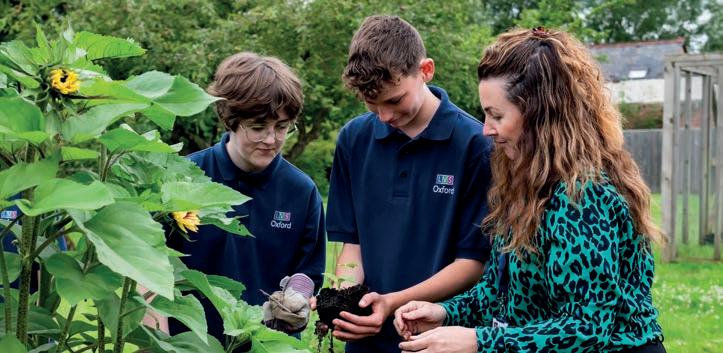
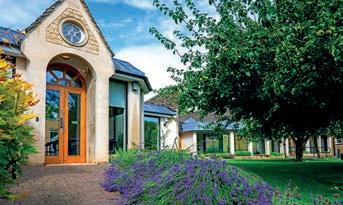
The school’s expansive grounds and tranquil rural setting serve as powerful catalysts for experiential learning, providing students with a direct, hands-on connection to their studies. Holistic education is a key pillar of the Lower School curriculum at LVS Oxford, designed to ignite curiosity and foster critical thinking skills.
Through site-based projects, students explore environmental science, examining the effects of global warming and engaging with the natural world. They are encouraged to take their learning outdoors, participating in environmental projects that analyse local ecosystems and horticulture programmes. By tracing the journey from plant to plate, students gain a deeper understanding of the
interconnectedness of agriculture and sustainability. Cross-curricular projects enrich their learning, allowing them to apply and expand their knowledge in a meaningful and engaging way.
In the Upper School, students gain hands-on experience through work placements and educational visits. This real-world learning helps develop adaptability, resilience, and essential life skills, preparing them for future academic and career pathways.
LVS Oxford students don’t just learn; they actively engage with their surroundings and develop vital skills for life. By instilling effective communication, critical thinking, and curiosity-driven learning, the school empowers students to become confident, independent people ready to conquer an evolving world. Please visit the website for more information. www.lvs-oxford.org.uk

Everything you need to read, do or see
STREAMING ON: Prime Video and Apple TV
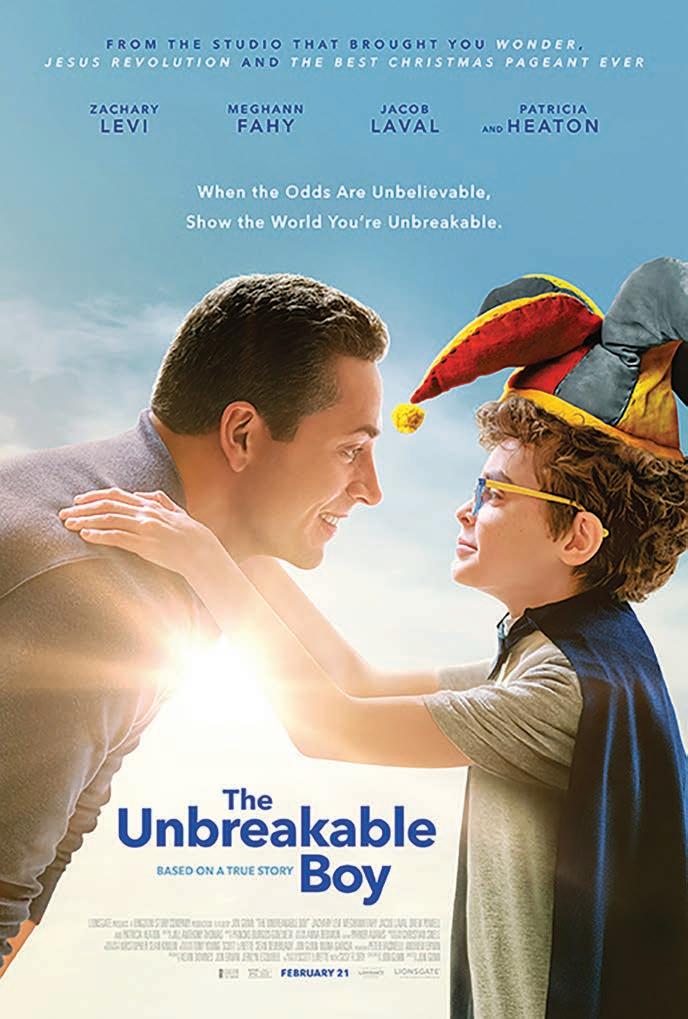
VERDICT: A genuinely, if not at times eminently watchable, mainstream family comedy-drama from the USA that doesn’t make autistic people run for cover (at least not entirely)? Praise be!
The Unbreakable Boy is a film that bends over the trap of an autistic person as saviour or inspiration but doesn’t entirely break, just like its characters. Autistic Austin (Jacob Laval) is a playful and interesting stereotype-breaking narrator who tells the life story of his wonderfully geeky family that includes his dad, Scott, played by an almost Shazam!-free Zachary Levi. As a result, this strongly acted family comedy-drama has something of the television series The A Word about it. Unlike that series, though, it leans heavily towards sentimentality and has some cringeworthy scenes. As a result, it can be hit and miss at times, as all of the family battle through their own personal issues. However, there are clever touches, including the use of perspective, and some heart-rending moments. While some things are unoriginal –such as blue imagery to symbolise an autistic character – it deserves praise for its message: ‘We inspire each other.’
Leo Capella,
Training
Consultant (Employment Specialist)
at the National Autistic Society
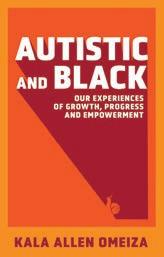
AUTHOR: Kala Allen Omeiza
PUBLISHER: Jessica Kingsley Publishers
PRICE: £16.99
VERDICT: A powerful collection of stories to break the woefully one-dimensional stereotypes about being autistic and Black
Many people will be familiar with the statistics about Black autistic people that show:
● Black children are often diagnosed later than their white peers.
● Schools are more likely to label Black autistic children as having behavioural issues, and they receive harsher punishment as a result.
● Fewer Black parents will seek support from doctors and, when they do, their child’s challenges
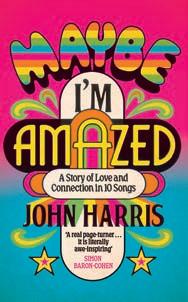
a story of
AUTHOR: John Harris
PUBLISHER: John Murray Press
PRICE: £16.99 (ebook: £9.99)
VERDICT: Uplifting celebration of autism and the power of music
Music writer turned campaigning journalist John Harris’ book is an illuminating and moving memoir about his relationship with music, and with his son James, who was diagnosed autistic at three and is now 18 years old.
Music has shaped and deeply enhanced their lives – and it’s become a very particular type of language for the family and James. With each chapter themed around a song, it’s fascinating to read how James immerses himself in music and the joy he gets from it. In particular, John explores how the Beatles’ music so powerfully connects with James (and mentions John Lennon and Paul McCartney’s visit to the National Autistic Society’s Sybil Elgar School in the 1960s).
This is also a passionately argued book for a better understanding of autism and each other in society.
are more often dismissed or misdiagnosed. It is one thing to know the facts, but it is a different thing to understand the reality.
This book follows the stories of Black autistic people and their families around the world to understand their experiences and the intersectional challenges of navigating the world as a minority within a minority: autistic and Black. As Maria, one of the contributors in the book, said: “Black families and Black people are getting harmed, hurt and left behind.”
I would recommend this book to any professional with a connection to autism. For Black autistic people, I hope they see their own lives reflected here and take comfort in the stories that showcase all the good that happens, even when progress feels like a snail’s pace.
Helen Wilson, Copywriter, National Autistic Society
John is honest about the fear and panic he and his wife felt after James’ diagnosis, especially with no speech therapy or anything else on offer that could help James before he started school. “There were no answers to the question ‘What should we do?’” he writes. Like so many families, they had to arrange everything themselves and battle for support in the classroom. Other parents will also identify with John’s fears for the future and concerns about finding the right care and support for James.
Filled with compassion, insights and humour, this is essential reading for parents and music fans.
Suzanne Westbury, Editor, Your Autism
We have a copy of Maybe I’m amazed to give away to a member. For a chance to win, please email your name and postal address to YourAutismMag@nas.org.uk by 17 August, putting ‘Amazed’ in the subject line. The winner of last edition’s giveaway, for a copy of Women and girls on the autism spectrum is Kit Pace. The winner of The autism spectrum guide to sexuality and relationships is Caroline Halsey. Congratulations!
GP and mum Kiran writes about how people have – and haven’t – shown up for her son, Ibraheem, and what the NHS can do to improve autism understanding
We got the official diagnosis for Ibraheem when he was four. Before that, we had involved the speech and language therapy team via the NHS and had known he was autistic since he was three.
There were a number of things Ibraheem did that prompted me to seek a diagnosis: he
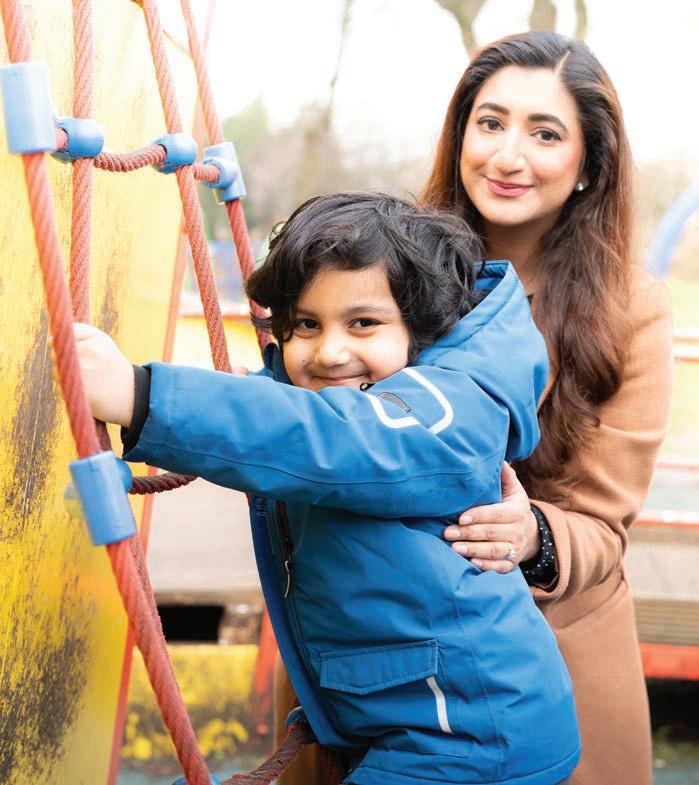
constantly walked on tip-toes, would not respond to his name and avoided eye contact. He also had no words by the age of two. He was an extremely picky eater and would gag at the sight of foods such as rice.
As a GP, in all honesty, before I found out Ibraheem was autistic, I only knew the basics about autism. We get taught a checklist for a referral process for autism, and that’s about it. I had no idea of the vast number of other signs, social and personal issues, barriers to getting help, and so on.
I was particularly struggling when Ibraheem started nursery. He would not eat, socialise or listen to the staff and would often run off. His nursery did not have the knowledge or resources to support him at the time.
I sought help from the National Autistic Society about what support he and the nursery could get. They directed me to courses the staff could go on, as well as telling me about getting an educational psychologist involved early on. With this, and the support from NHS speech therapists, we were able to turn things around at nursery. The staff are wonderful with him, and he has made so much progress.
It’s difficult as a parent and even as a doctor. We do not know all the resources that are needed and are out there. It’s organisations like this charity that really help parents get the assistance they need.
Helping more people show up for autistic people
I think encouraging parents of autistic children to talk to NHS staff would be a massive help and increase people’s understanding. GPs need to increase their understanding of how autism impacts the individual. They need to be able to recognise the different presentations and profiles of autistic people. This would lead to earlier diagnosis referrals, and dietitian and speech therapy referrals from the outset. If GPs could advocate for greater provision in school by writing letters on behalf of their younger patients, this would unlock vital support for families.
There have been some great examples of people showing up for us. We did a soft play party at Wild Adventure Soft Play in Glasgow. The staff said they could offer Ibraheem’s favourite foods and turn off the music. They changed the timings for the food coming, as he was a bit distressed.
However, there have been times when other people have not been so understanding.
One of the hardest things to accept is social exclusion. A number of times, I have seen party invites in all the other kids’ baskets at nursery and not Ibraheem’s, and it just breaks your heart.
Another example was Ibraheem’s experience in a drama class. He loves to sing and dance, and I thought this would really help his speech and social interaction.
The teacher made me sit in the hallway for the first class, despite me advising that Ibraheem may need me. He kept getting visibly upset. Ibraheem stims verbally to self-soothe. Each time he made a noise, the teacher would tell him off and ask him to be quiet. He had difficulty following instructions, but I knew he would do well with one-on-one guidance. The teacher then called me in halfway through. I guided him, and he had fun with all the drama exercises the kids were doing. At the end, the teacher pointed to her head and said:
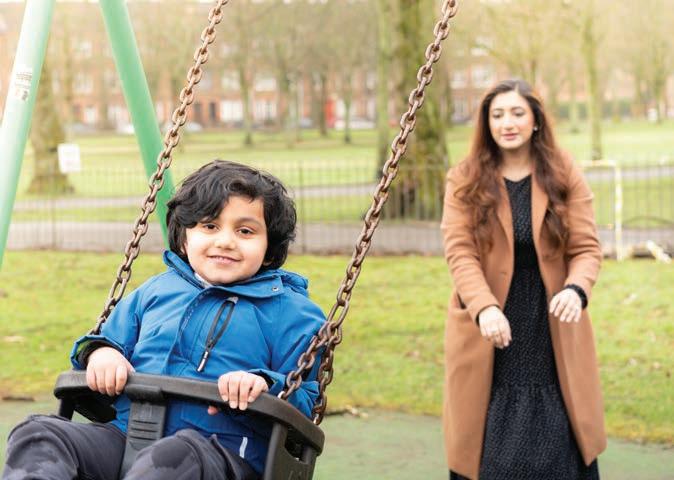

“One of the hardest things to accept is social exclusion”
“Ibraheem lacks that understanding, and I do not think he is ready for this class.” I felt crushed for him and knew that this class was not ‘inclusive’ as advertised, and perhaps he was better off in ASN (additional support needs) classes, which, of course, there is a lack of.
I would like to see more inclusivity for children with special needs. I would like more ASN-friendly events and sessions, but also more provisions in non-ASN events. I want parents to teach their children about autism, people’s differences and how to make sure all children feel involved. I would like people to be less judgemental towards autistic children.
Acceptance means celebrating the differences of the autistic community by valuing and respecting them. It means inclusion for autistic individuals and providing them with equal opportunities, care and affection. It means making sure every autistic child has access to provisions in schools, and adults at work, to help them grow and reach their potential.
Visit our campaign pledge wall to see more examples of how people are showing up for autistic people and add your pledge at autism.org.uk/pledge