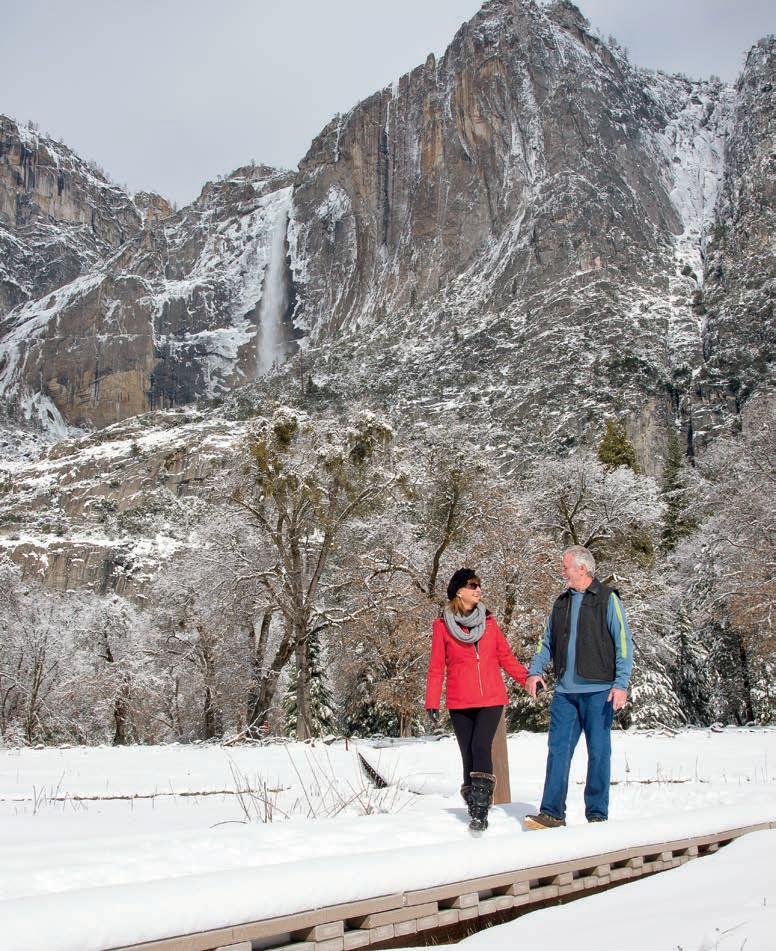
Expert Insights on Wildlife in Yosemite’s Sequoia Forests
Q&A with the Mariposa Grove Project’s Lead Restoration Ecologist
YOSEMITE CONSERVANCY COUNCIL MEMBERS
CHAIR
Bob Bennitt*
VICE CHAIR
Dana Dornsife*
COUNCIL
Hollis & Matt Adams*
Jeanne & Michael Adams
Gretchen Augustyn
Susan & Bill Baribault
Suzy & Bob Bennitt*
David Bowman & Gloria Miller
Tori & Bob Brant
Marilyn & Allan Brown
Steve & Diane Ciesinski*
Hal Cranston* & Vicki Baker
Carol & Manny Diaz
Leslie & John Dorman*
Dave* & Dana Dornsife*
Lisa & Craig Elliott
Jewell & Bob Engstrom
Kathy Fairbanks
Sandra & Bernard Fischbach
Cynthia & Bill Floyd*
Jim Freedman & Karine Joret
Susan & Don Fuhrer*
Bonnie Gregory
Rusty Gregory*
Karen & Steve Hanson
Laura Hattendorf & Andy Kau
Chuck & Christy Holloway
Christina Hurn & Richard Tassone
PRESIDENT & CEO
Frank Dean*
VICE PRESIDENT, CFO & COO
Jerry Edelbrock
Jennifer & Gregory Johnson
Jean Lane
Walt Lemmermann*
Melody & Bob Lind
Sam & Cindy Livermore
Anahita & Jim Lovelace
Mark Marion & Sheila Grether-Marion
Patsy & Tim Marshall
Kirsten & Dan Miks
Robyn & Joe Miller
Janet Napolitano
Dick Otter & Judy Wilbur
Sharon & Philip Pillsbury*
Bill Reller
Pam & Rod Rempt
Frankie & Skip Rhodes*
Liz Robbins
Dave Rossetti & Jan Avent*
Lisa & Greg Stanger*
Jennifer & Russ Stanton*
Ann & George Sundby
Clifford J. Walker*
Wally Wallner* & Jill Appenzeller
Jack Walston & Sue Estes
YOSEMITE NATIONAL PARK
Acting Superintendent Chip Jenkins
*Indicates Board of Trustees
OUR MISSION
Yosemite Conservancy inspires people to support projects and programs that preserve Yosemite and enrich the visitor experience.
PRESIDENT’S NOTE
Restoring a Forest Masterpiece
nside this issue, you’ll find updates on welltraveled bear cubs, plans for the park’s newly acquired Ackerson Meadow and several stories about the largest preservation project we have ever undertaken with the National Park Service: the restoration of the Mariposa Grove of Giant Sequoias.
I often marvel that President Lincoln and the U.S. Congress acted in 1864 to protect Mariposa Grove and Yosemite Valley, marking the first time in our nation’s history that land was designated for protection and public use. Consider the context for that historic legislation: the Civil War, a deeply divisive era. As my colleague Rolf Diamante, at the George Wright Society, suggests, Lincoln’s move to preserve public lands during that tumultuous time aligned with his focus on improving the future for our nation and its citizens, through emancipation, the transcontinental railroad, land-grant colleges, and more.
More than 150 years after the Yosemite Grant Act, national parks, and Yosemite in particular, can still unite us as stewards of places such as Mariposa Grove. Our parks have a way of bringing out the best in us, of establishing common ground and mutual support for their preservation.
During the past century and a half, countless people — including famous figures such as Teddy Roosevelt and Ansel Adams — have found inspiration in Mariposa Grove. The giant trees that John Muir called “Nature’s forest masterpiece” have endured for millennia. Like any masterpiece, the sequoias and their habitat need to be carefully preserved, protected and, occasionally, restored. By supporting this project, you have helped write another historic chapter for the grove.
I hope you enjoy this latest issue of Yosemite Conservancy magazine. Thank you for making a difference in Mariposa Grove and throughout Yosemite!
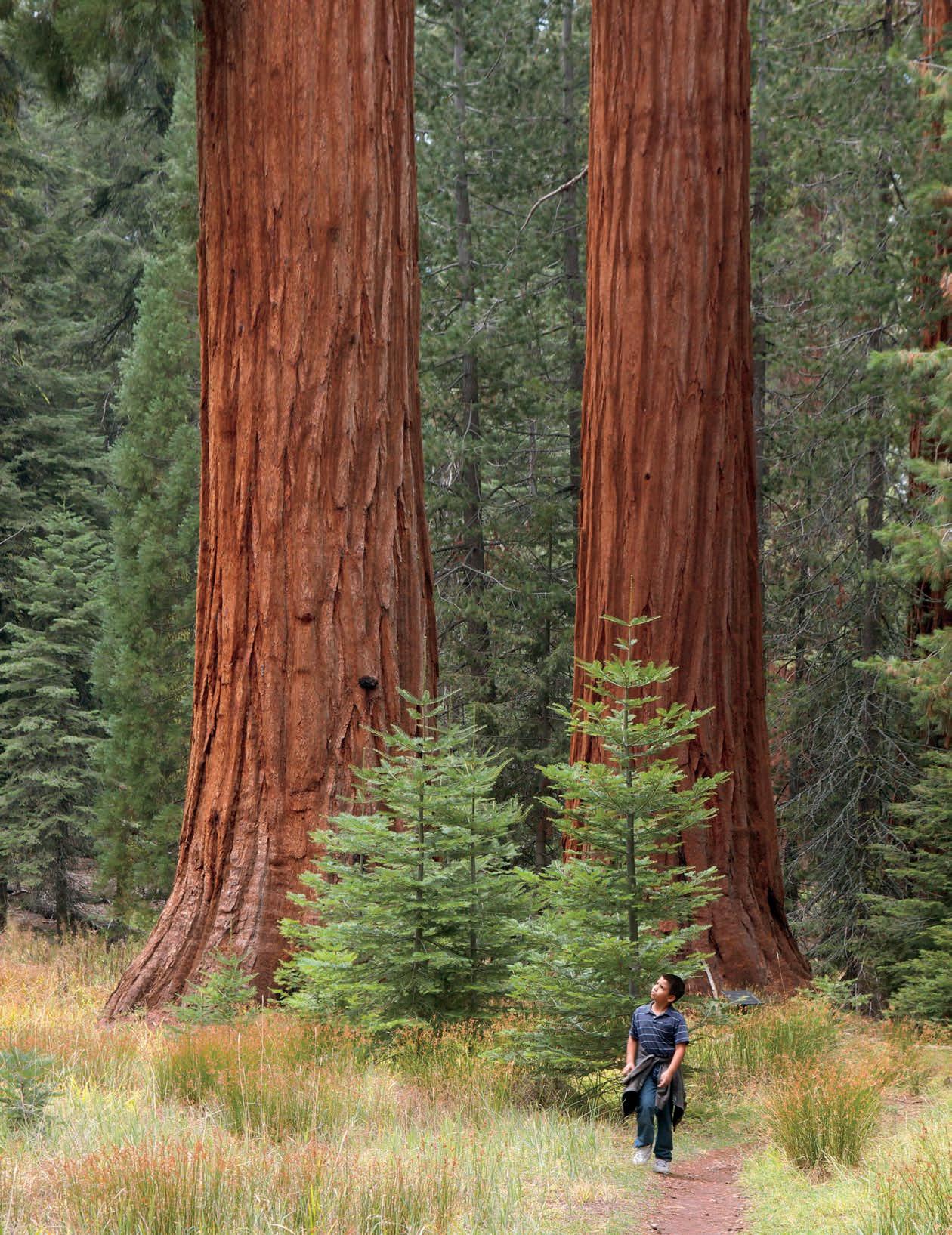
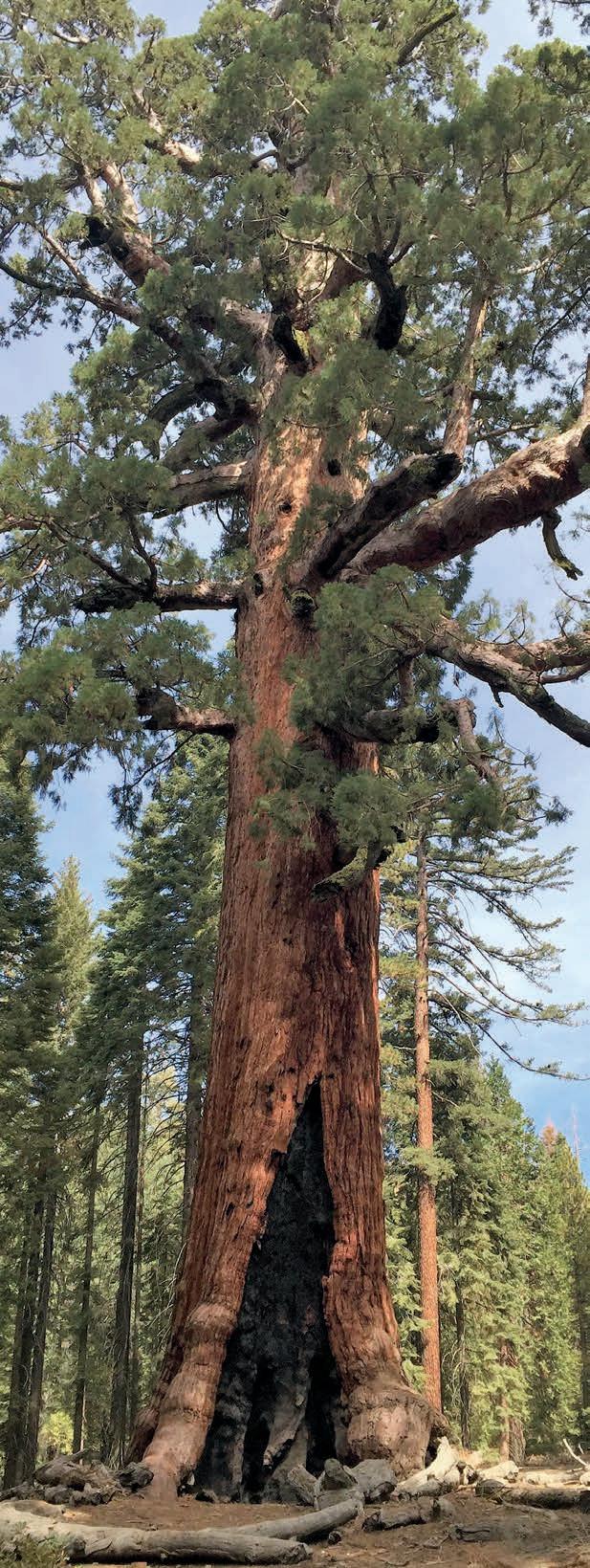
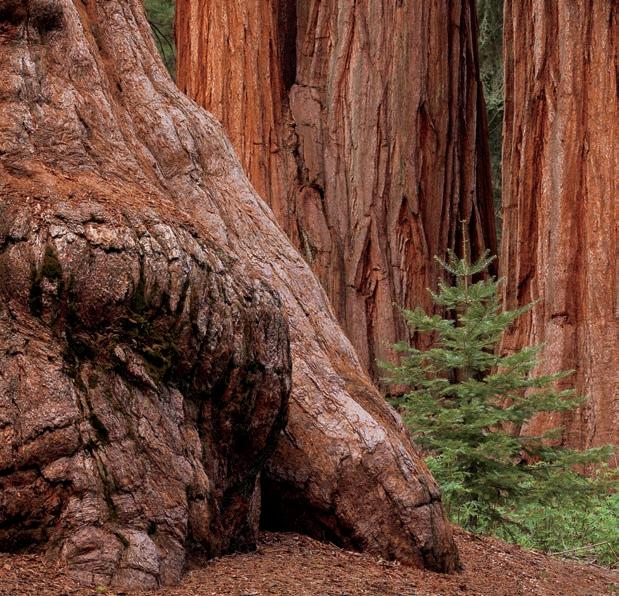
COVER PHOTO The Mariposa Grove of Giant Sequoias is thriving, thanks to the donor-funded project to restore habitat and tranquility in Yosemite’s treasured natural “cathedral.”
Witness the wonder of newly restored Mariposa Grove, from rebounding habitat to a transformed visitor experience.
08 NEW LIFE IN AN ANCIENT GROVE
Curious what lies below Mariposa Grove’s stately sequoia canopy? Read on for a closer look at its intricate ecosystem.
10 MARIPOSA GROVE: THEN AND NOW
Side-by-side historical and present day photos of Mariposa Grove reveal the timeless majesty of its sequoias.
12 EXPER T INSIGHTS
Naturalist Ranger Lisa Murphy shares how Mariposa Grove’s revitalized habitat provides sanctuary for Yosemite wildlife.
14 Q&A WITH A YOSEMITE INSIDER
Restoration Ecologist Sue Beatty shares a behind-the-scenes look at what it took to restore nature’s balance in Mariposa Grove.
16 GRANT UPDATES
Learn about the rescue and return of orphaned bear cubs back to Yosemite, and study biodiversity in newly protected meadow habitat.
20 PROGRAM UPDATES
Adventure among giants through guided experiences in Yosemite’s sequoia groves.
22 ANNU AL REPORT EXCERPT
See the impact of your gifts in Yosemite.
28 THANKING OUR DONORS
You helped make the restoration of Mariposa Grove possible.
30 READER PHOTOS
Yosemite Conservancy supporters share their special Yosemite memories.
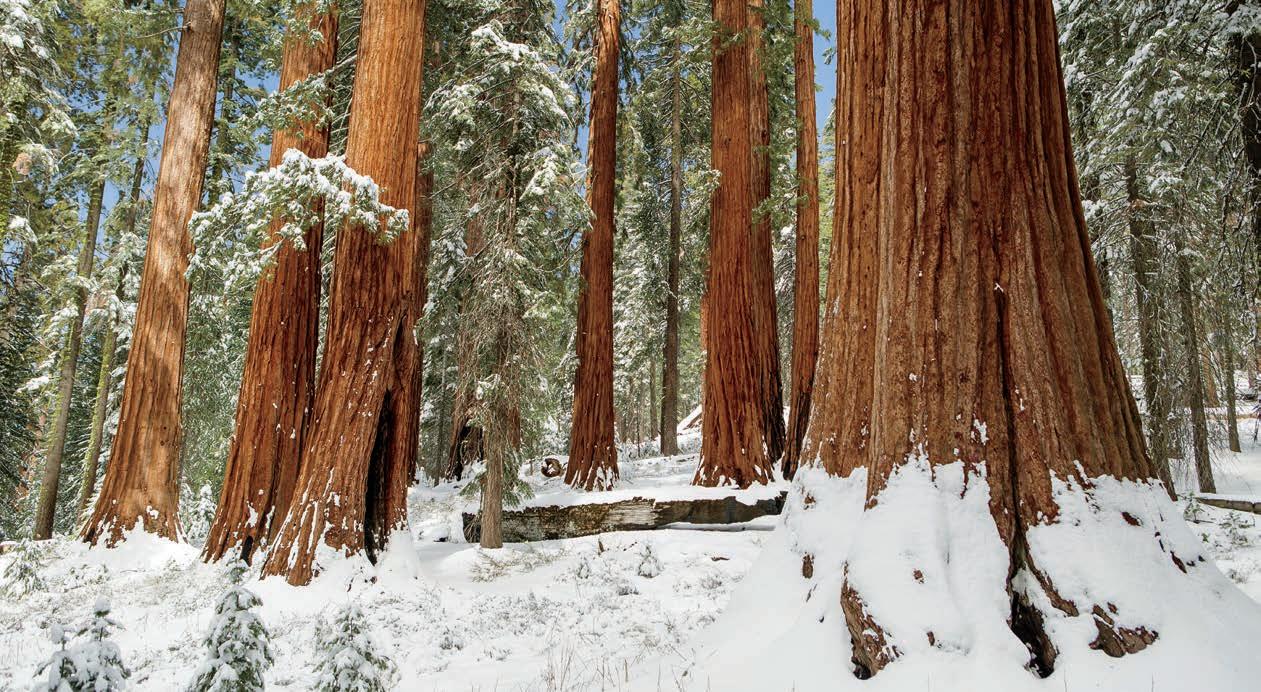
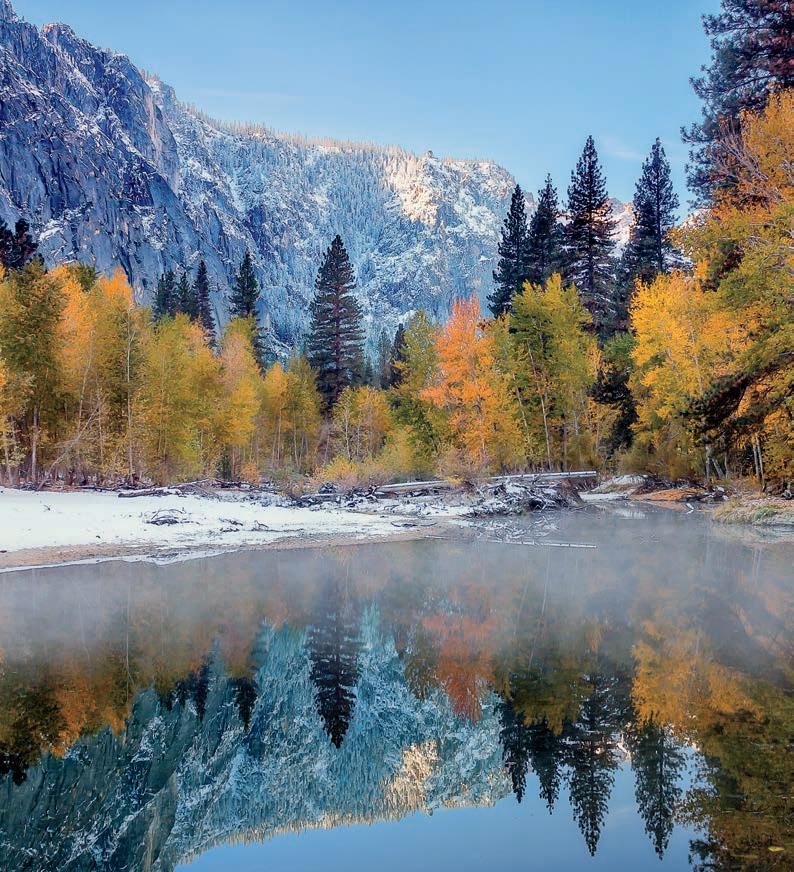
ABOVE Snow is a crucial water source for the giant sequoias in Mariposa Grove, where habitat and trail work has helped restore hydrologic balance.
Masterpiece A FOREST
RESTORING GRANDEUR AND BALANCE IN MARIPOSA GROVE
“The greatest wonder is that we can see these trees and not wonder more.”
onder. Nearly 140 years after Ralph Waldo Emerson used that word to describe his experience in Mariposa Grove, Yosemite’s largest giant sequoia forest, it remains an apt term for these grand trees, which grow naturally only in California’s western Sierra Nevada.
In recent decades, roads and other development began to sap Mariposa Grove’s awe-inspiring feel and threaten the sequoias’ long-term health. Now, thanks to your generous support, an ambitious project to restore the grove has transformed it back into a setting alive with natural wonder at every turn.
On your next visit to Mariposa Grove, start at the new Welcome Plaza near the park’s South Entrance. Look for the cross section of a fallen sequoia, and trace the rings back to the tree’s first year: 1149. From there, take a short shuttle ride to the grove’s tranquil gateway, and notice the green splash of plants growing in what was, until recently, a parking area.
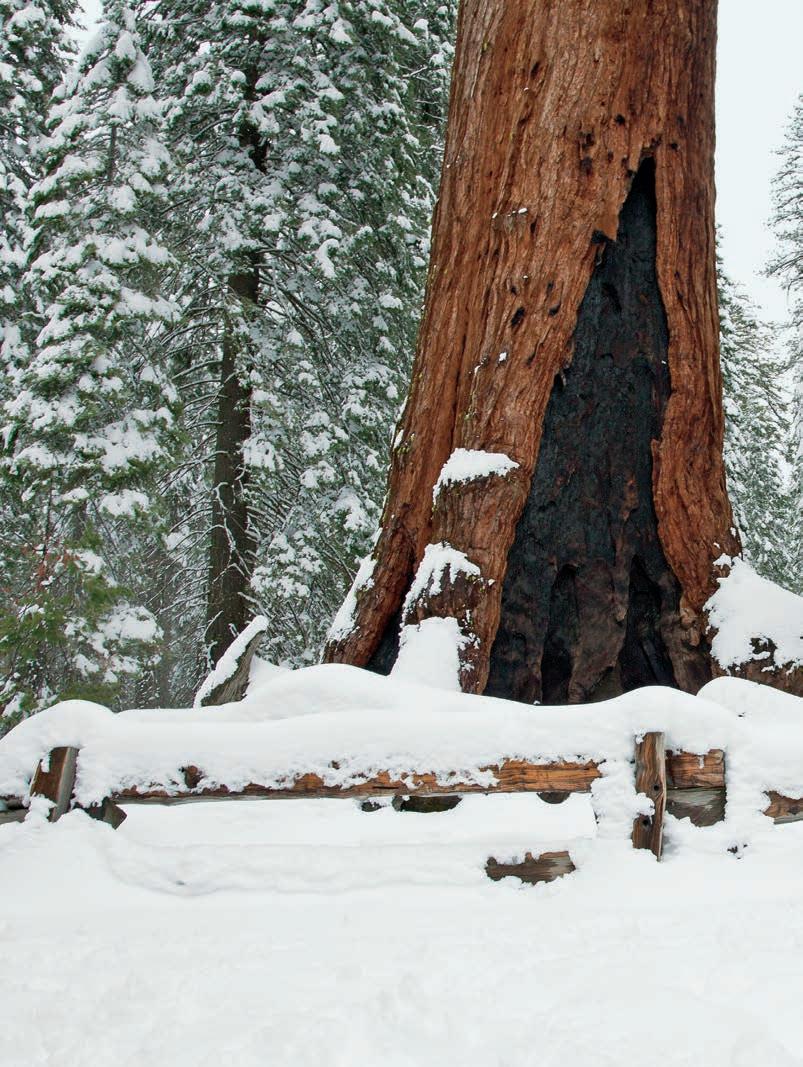
As you follow the grove’s naturally surfaced trails, cross wooden boardwalks over sensitive wetland, and learn from educational signs, look up. Observe the gnarled, 209-foot-tall Grizzly Giant, which, at an estimated 1,800 years old, is middle-aged in sequoia terms, and follow the accessible trail to its famous neighbor,
LEFT Giant sequoia groves are inescapably awe-inspiring. Generations ago, Mariposa Grove helped spark the national parks idea; thanks to the recent restoration, the grove’s flourishing mosaic of sequoia seedlings, towering trees, wetlands and wildlife will instill a deep appreciation for the natural world in all who visit.
the California Tunnel Tree. Search for birds and squirrels navigating the world above, and soak in the sounds, smells and sights of an ancient forest bursting with life.
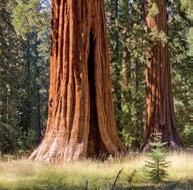
Wonder at the size and tenacity of the sequoias — the most massive living trees on Earth. They can stretch nearly 300 feet up from the ground, with trunk circumferences surpassing 100 feet. Over centuries, the nearly 500 mature trees in Mariposa Grove have inched upward and outward, weathering fires, droughts and storms.
That size and resilience has long inspired curiosity and awe. In 1864, Abraham Lincoln signed the Yosemite Grant Act, setting Mariposa Grove aside as one of nation’s first protected landscapes. Fifty years later, Theodore Roosevelt compared the grove to a “great solemn cathedral.” John Muir called sequoias “the greatest of all living things.”
Those wonder-filled words and ideas from more than a century ago haven’t faded; neither have the trees that inspired them. In the decades following Lincoln’s legislation, however, a focus on boosting tourism in the grove resulted in paved roads and other infrastructure that disrupted natural habitat and put the sequoias’ future in question.
On June 30, 2014, the 150th anniversary of the Yosemite Grant Act, the Conservancy joined the National Park
LEFT A new accessible path invites people of all abilities to experience the enormity of the famous Grizzly Giant, estimated to be 1,800 years old.
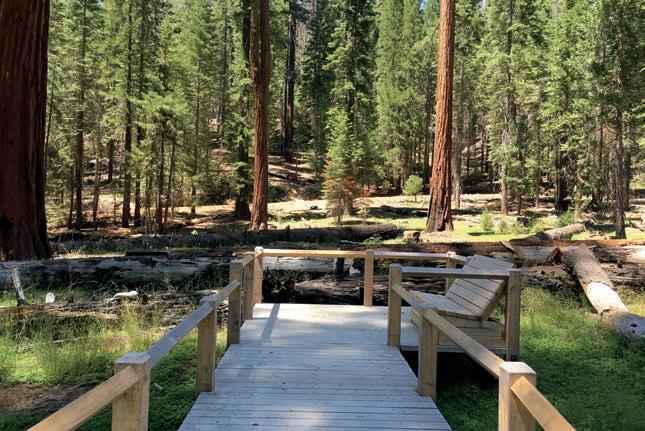
ABOVE At the end of one of the new boardwalks, you’ll find this special tranquility area. As you pause to immerse in the grove’s sounds and sights, notice the wetland habitat regenerating below.
Service to break ground on a major collaborative effort: the multiyear restoration of Mariposa Grove. Your generous support provided more than $20 million for the project, which aimed to reverse damaging impacts and ensure future generations will be able to experience the wonder of gazing up at Yosemite’s sequoias.
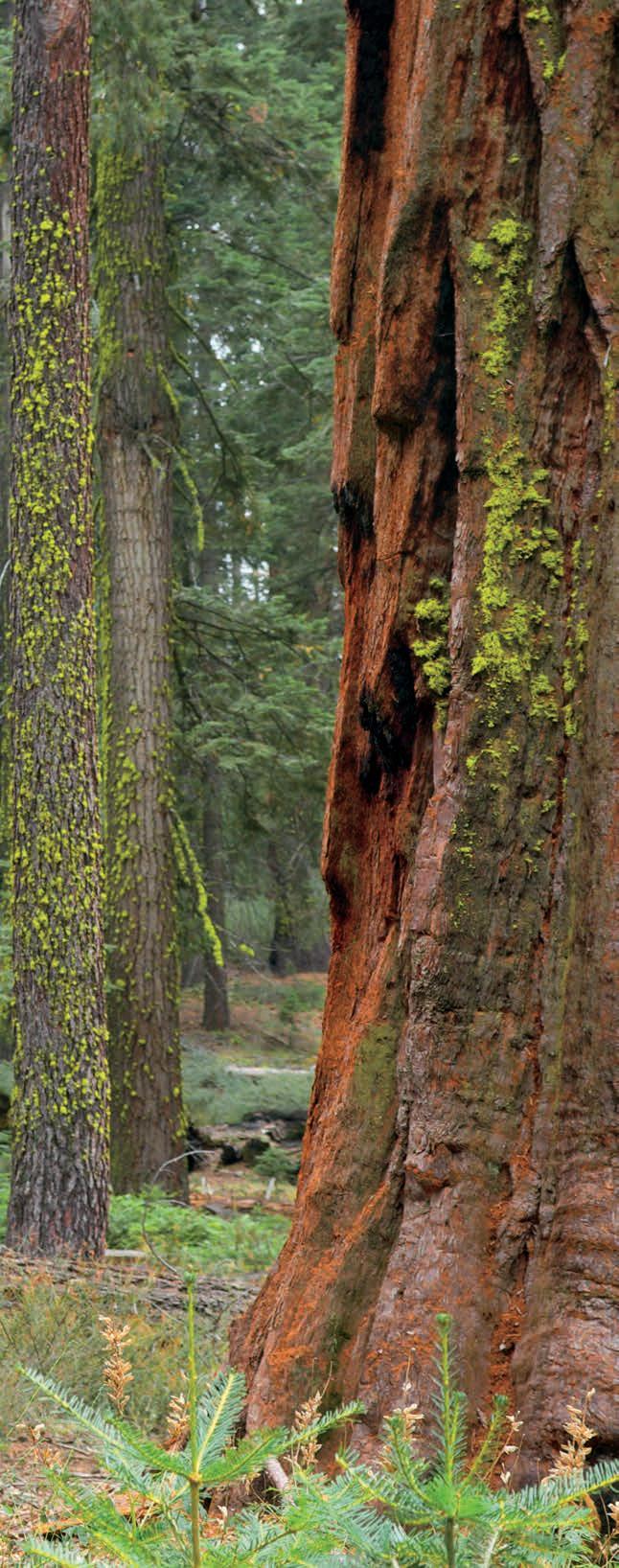
After years of careful work, of removing asphalt, building new boardwalks and trails, and restoring hydrology, ecological balance is returning in the grove. You’ll see it in new plant growth and in fresh fire scars on red-brown trunks. Until relatively recently, fires, a vital part of the sequoia ecosystem, were suppressed in the grove and throughout the park. As part of the restoration, crews integrated controlled burns to help release seeds from sequoia cones and create space for new giants.
As you work your way through the grove, imagine how many others have gazed up in wonder — from the tribes that lived in balance with the trees for millennia, to the youthprogram participants who have helped with the recent habitat and trail restoration. Then, consider its future: As plants repopulate once-paved areas, as people move among the trees on pathways that protect roots, as fires help tiny sequoia seeds germinate, Mariposa Grove will continue to shift, regaining balance in a vibrant, ancient section of the Sierra landscape.
As a Yosemite supporter, you are part of that future. The next time you visit, look up with wonder — at the trees, at the rebounding habitat and at the transformation you helped make possible.
Learn more about the effort to restore Mariposa Grove at yosemiteconservancy.org/restoring-mariposa-grove
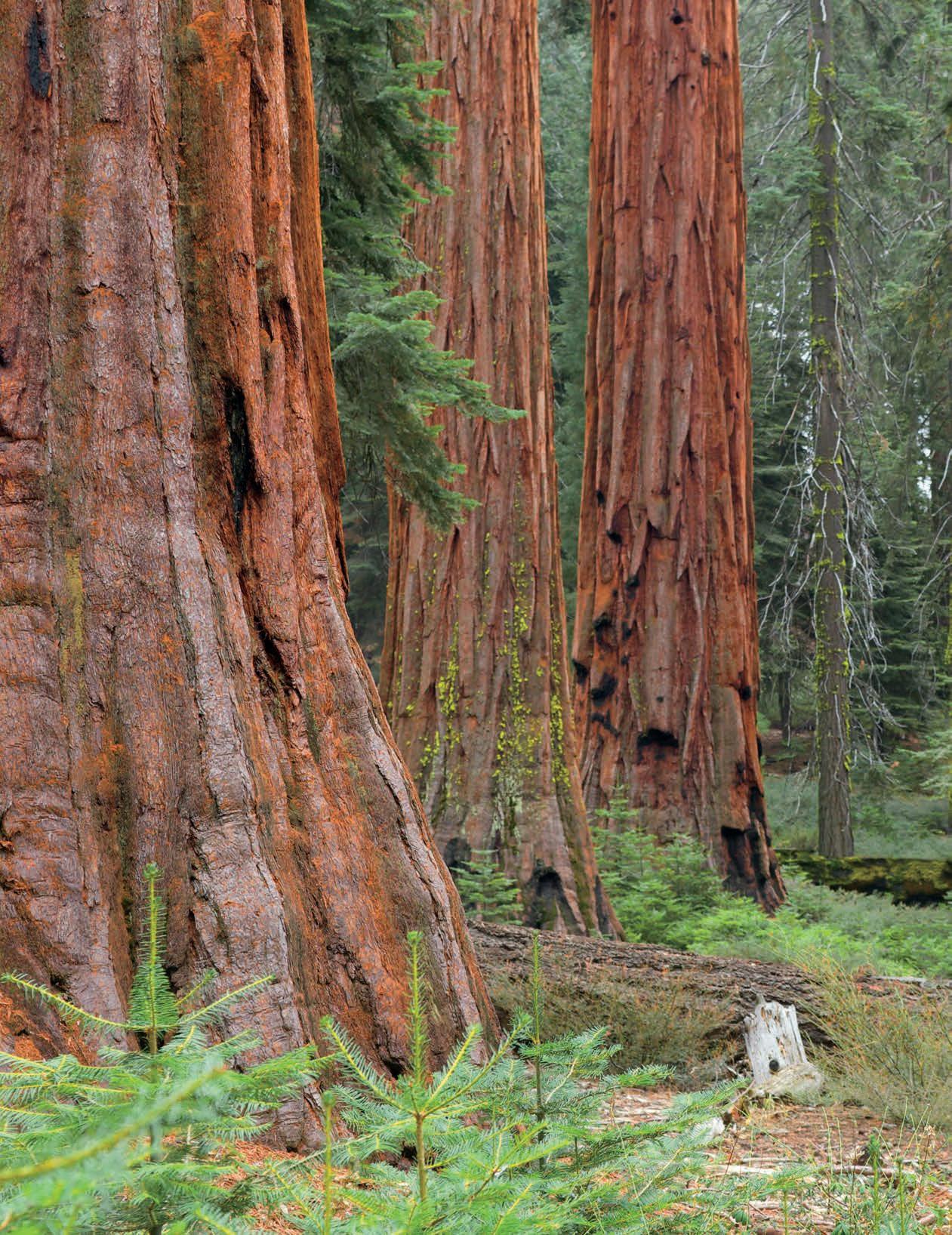
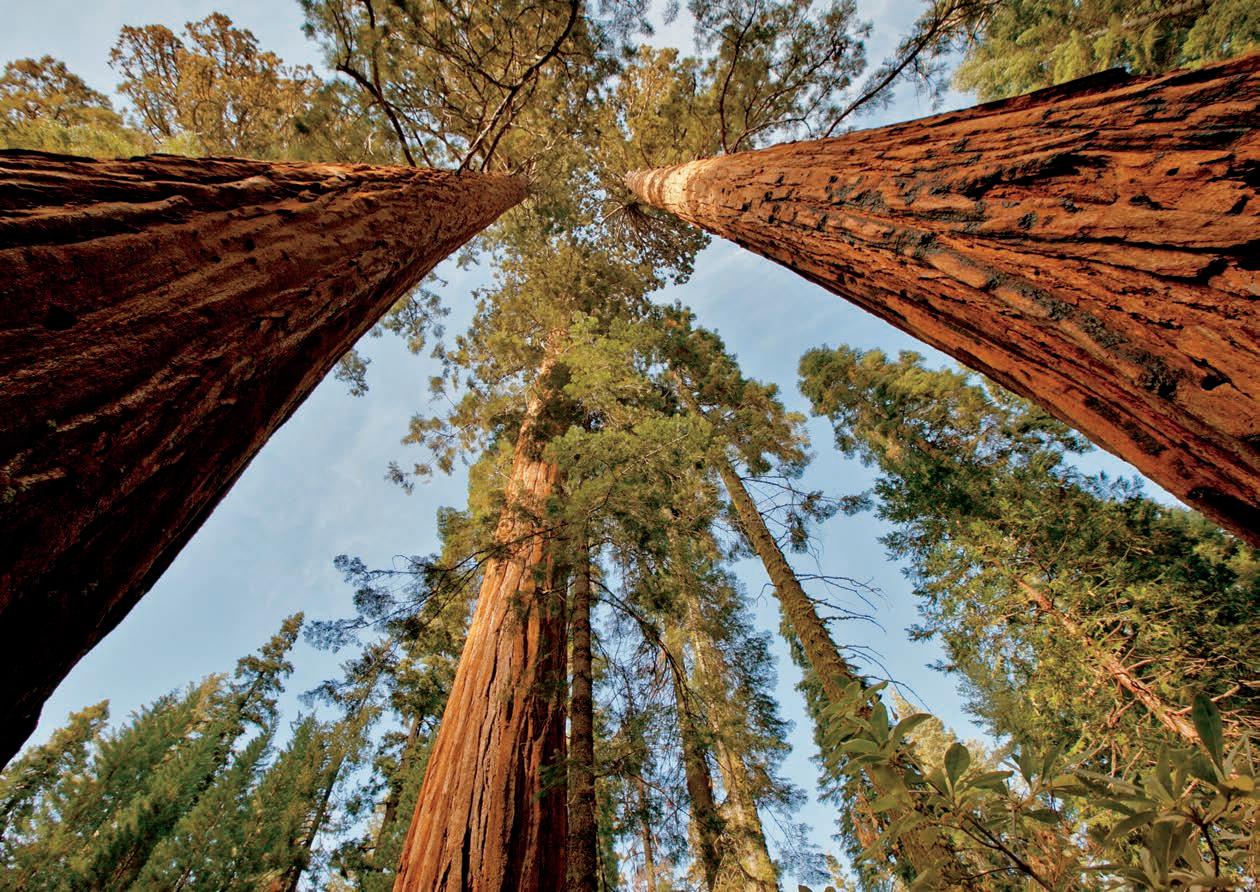
ABOVE Mariposa Grove’s giant sequoias stretch hundreds of feet from root to crown. Thanks to your support, these stately trees can grow and thrive in a natural setting that reflects the wonder they inspire.
NEW LIFE IN AN
Ancient Grove
Transforming a sequoia ecosystem in Yosemite
n a sequoia grove, it’s easy to spend most of your time looking up, craning to see the tops of the giant trees. While the canopies are impressive, to understand the trees’ strength, you must look down.
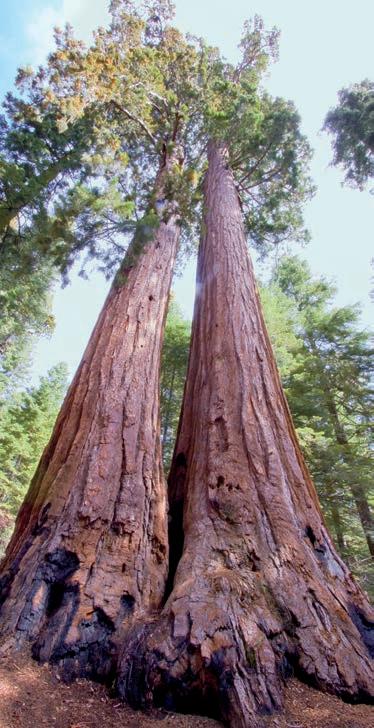
A few feet below the surface of the soil, shallow, delicate roots stretch out in a web, drawing in nutrients and hundreds of gallons of water each day, as the slowly melting Sierra snowpack hydrates the soil. Gazing downward, you might notice pairs of sequoias
joined together at the base. Those “couples” form when their roots fuse together underground.
You’ll also see leaves and bark strewn on the forest floor. This seemingly mundane carpeting feeds microorganisms that transform plant litter into nutrients for the grove’s floral and faunal residents. Look for green shoots pushing up through the saturated soil, many of them sprouting thanks to the squirrels, birds and other animals that spread seeds throughout the grove. See if you can spot
the tracks of larger animals, such as fishers, foxes and deer, who fill key ecological roles as some of the more than 70 species of birds and mammals that make their homes among the sequoias.
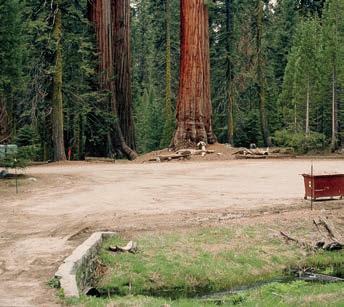
Until recently, a glance downward in Mariposa Grove included patches of pavement and heavily trampled trails crisscrossing the ecosystem. You’d have seen drains diverting water from roots and heard the hum of vehicles eclipsing the songs of nuthatches and brown creepers that work their way up and down trunks searching for insects.
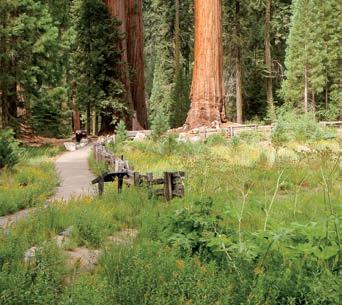
With your support, restoration crews and volunteers worked hard to restore the Mariposa Grove ecosystem. They created sustainable trails and drainage systems to help water flow freely through the soil, and they collected seeds from native plants to revegetate once-paved areas. They worked gently around the ancient trees, using a “knife” of compressed air to find sequoia roots before digging. They followed a careful plan but still found surprises, as when they unexpectedly uncovered a stream uniting two sections of wetland that had been bisected by a road.
Sue Beatty, Yosemite National Park’s lead restoration ecologist on the Mariposa Grove project, shares: “This project has made the grove more resilient by protecting soils from erosion and trampling, removing asphalt from the tops of roots, and restoring natural hydrology. Giant sequoias, rare and native only to the west side of the Sierra Nevada in California, rely on melting snowpack. Hopefully, the trees will be in better shape to resist impacts of climate change, such as shifting precipitation patterns, and will continue to grow for hundreds of years to come.”
New giants in Mariposa Grove are already pushing up toward the sun, their spindly roots reaching through freshly aerated soil. When you stroll along the new boardwalks, listen for the murmur of revitalized streams, and imagine the seedlings slowly expanding, inch by inch, ring by ring. It takes special conditions — ample sunlight, water and healthy soil — for a young sequoia to grow into a thousand-year-old titan. Reversing the impacts of years of tourist activity cannot fully steel the sequoias against every change to come, but it will make them more resilient, as climate shifts. Thanks to you, many more of those seedlings will have a fighting chance.
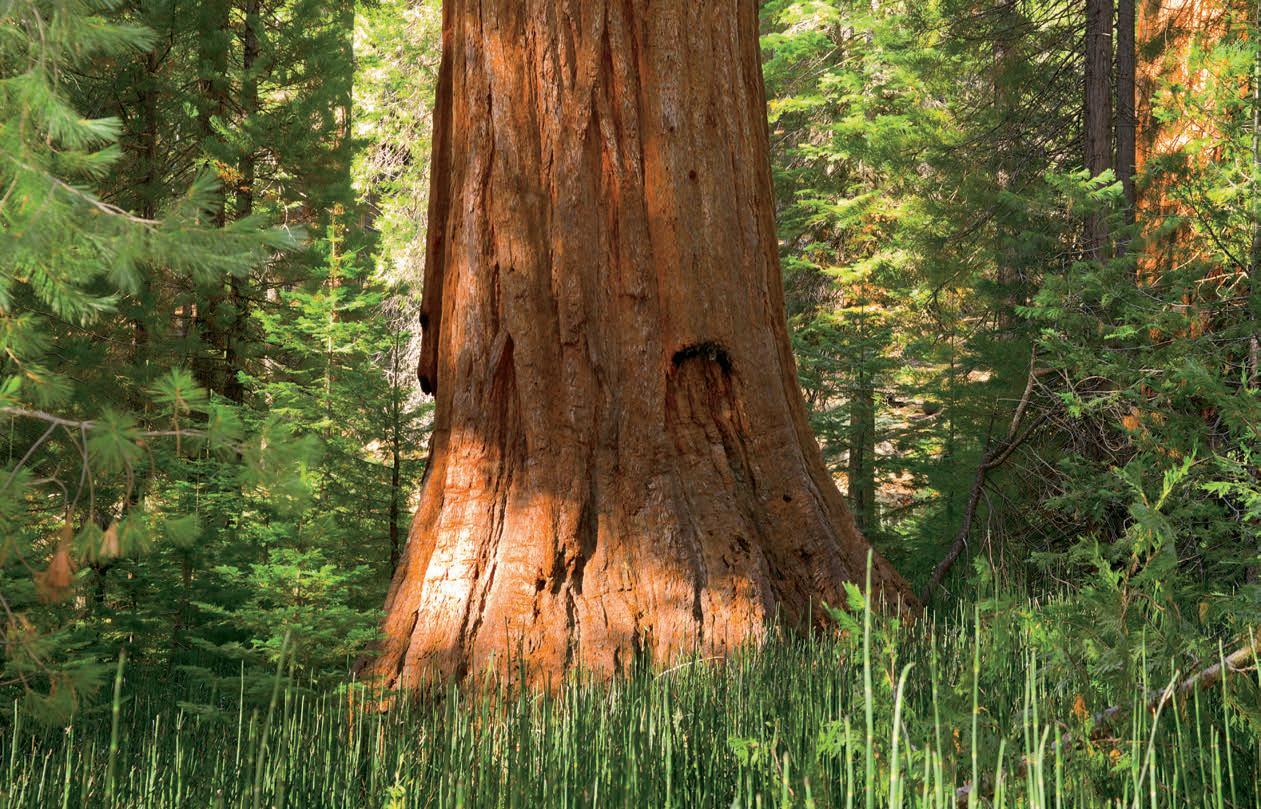
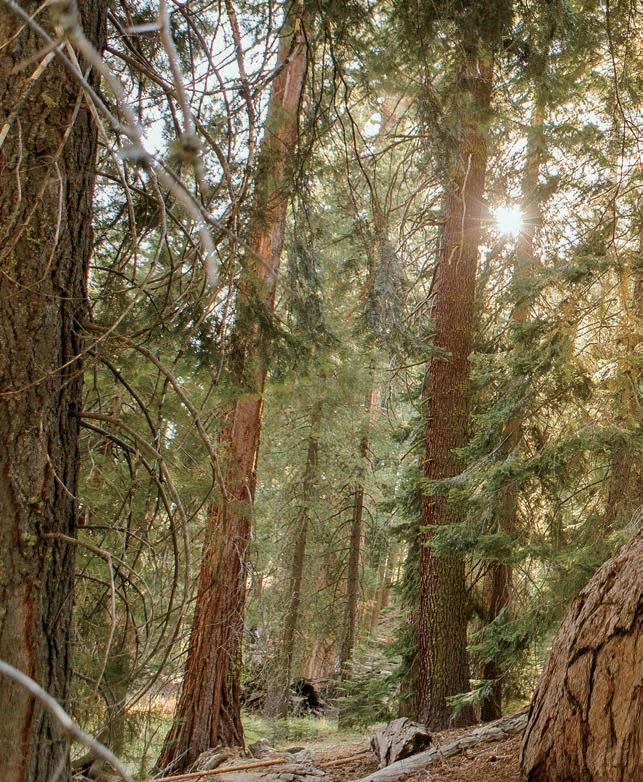
OPPOSITE Giant sequoias are just one element of the Mariposa Grove ecosystem, an intricate web of water-loving plants and animals made more resilient through the recent restoration.
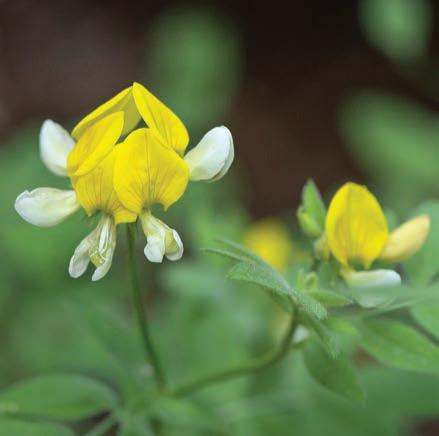
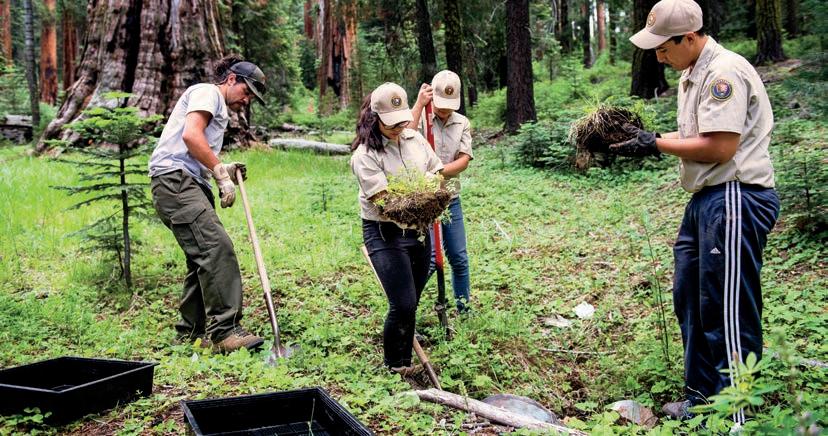
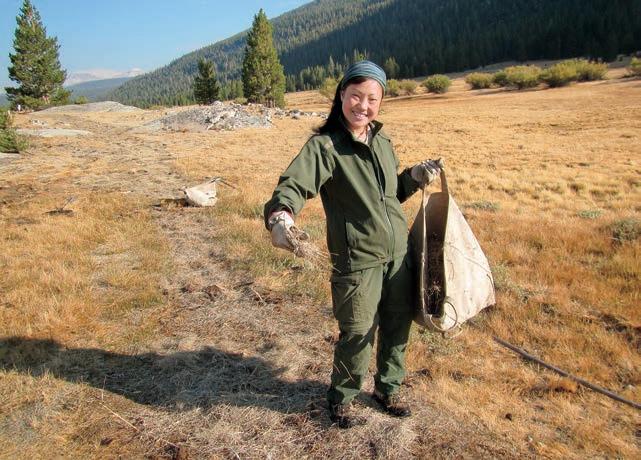
BOTTOM LEFT Plants that thrive in wetland areas, such as streambank trefoil, benefit from ecological restoration in the grove. BOTTOM RIGHT In 2015, young stewards from the donorsupported WildLink program gathered native vegetation in the grove; later, crews used those plants to restore habitat among the sequoias.
IN SEQUOIA NATIONAL PARK
Several years ago, Yosemite’s Branch Chief, Vegetation and Ecological Restoration, Athena Demetry, worked on a similar restoration in Sequoia National Park’s Giant Forest, where, as in Mariposa Grove, roads and other infrastructure had fragmented the landscape. “One of the earliest outcomes of that project,” she says, “was the recovery of the forest’s wetlands, which, in turn, fueled rapid plant growth. Within a few years, sequoia seedlings began sprouting up in the former parking area.”
Mariposa Grove: Then & Now
ariposa Grove’s giant sequoias have long stood as sentinels of the Sierra. As they grew, American Indians walked among cinnamon trunks gathering plants. The sequoias stood strong through the 1800s, as tunnels were carved into trees, and towered over Theodore Roosevelt and John Muir’s infamous 1903 camping trip. As tourism soared in the coming years, fire suppression left seed cones sealed, and roads choked roots. Today, those roots reach through soil, brimming with new life, thanks to restored water flow and controlled burns.
Amid all that change, a constant emerges: the indisputable majesty of the sequoias.
Everlasting Beauty
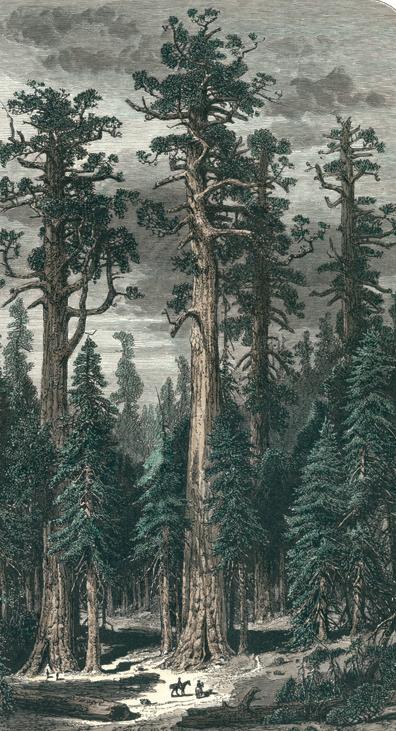
THEN Artist James Smillie captured Mariposa Grove’s grandeur in this 1872 engraving; 142 years later, his work appeared in a Yosemite Museum exhibit celebrating the sesquicentennial of the Yosemite Grant Act.
NOW Many of the humandwarfing trees that caught Smillie’s attention are still stretching up from their shallow roots. Restoring the grove helps ensure they’ll stand strong for generations to come.
Bringing Back Balance
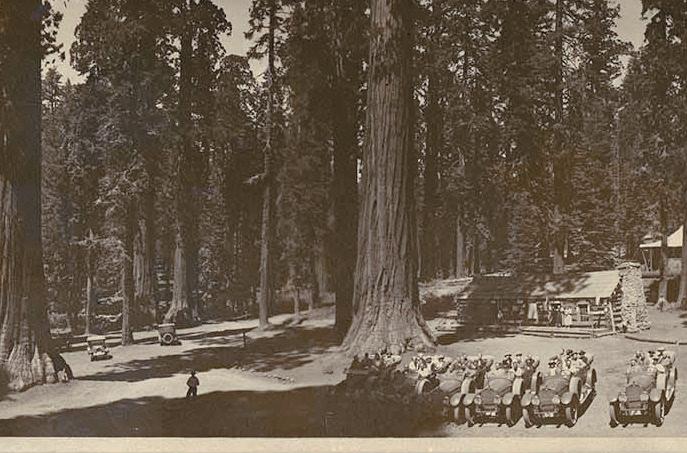
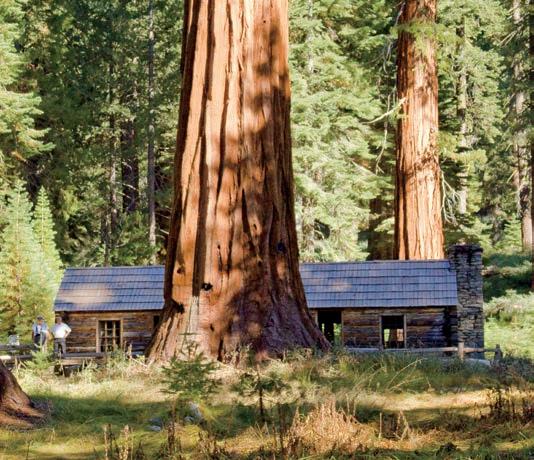
THEN Increasing interest in Mariposa Grove brought an influx of vehicle traffic — and, before long, paved roads. Here, early autos line up at the site of Galen Clark’s cabin.
NOW Tree-friendly trails, newly restored habitat and improved hydrology thanks to asphalt removal are returning natural balance to the grove — thanks to you.
Tunneled Trees
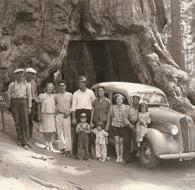
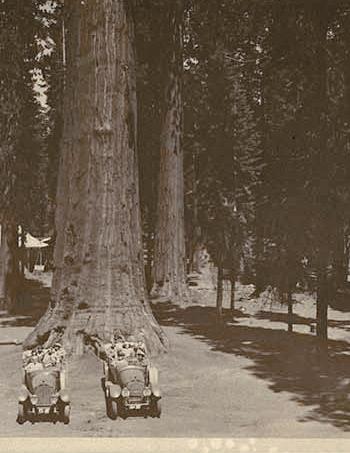
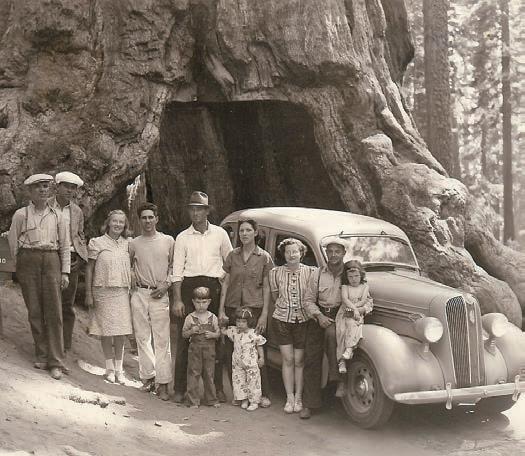
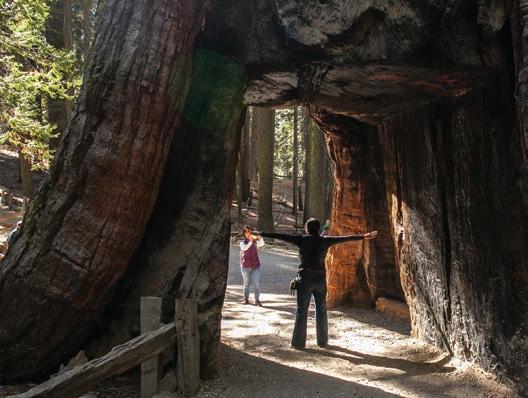
THEN By the 1930s, automobiles had replaced horse-drawn coaches as the transportation of choice in the park, and families flocked to Mariposa Grove to drive through the Wawona Tunnel Tree.
NOW The 2,000-year-old Wawona tree fell in 1969, but the grove’s other carved-out sequoia, the California Tunnel Tree, still stands and — thanks to you — is now reachable via an accessible trail.
Greeting the Giant
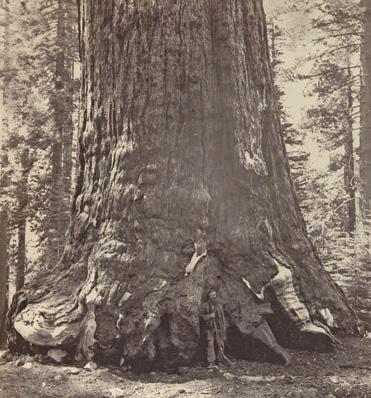
THEN Galen Clark, the first state-appointed guardian of the lands protected under the Yosemite Grant Art, poses at the base of the Grizzly Giant in Mariposa Grove, circa 1865.
NOW The fire-scarred Grizzly Giant remains a popular modern-day destination for grove visitors (including our staff). Thanks to your support, a new trail makes the legendary tree accessible to all.
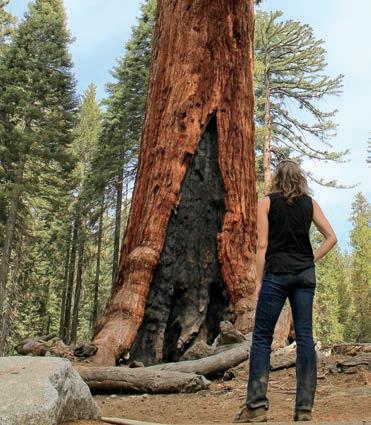
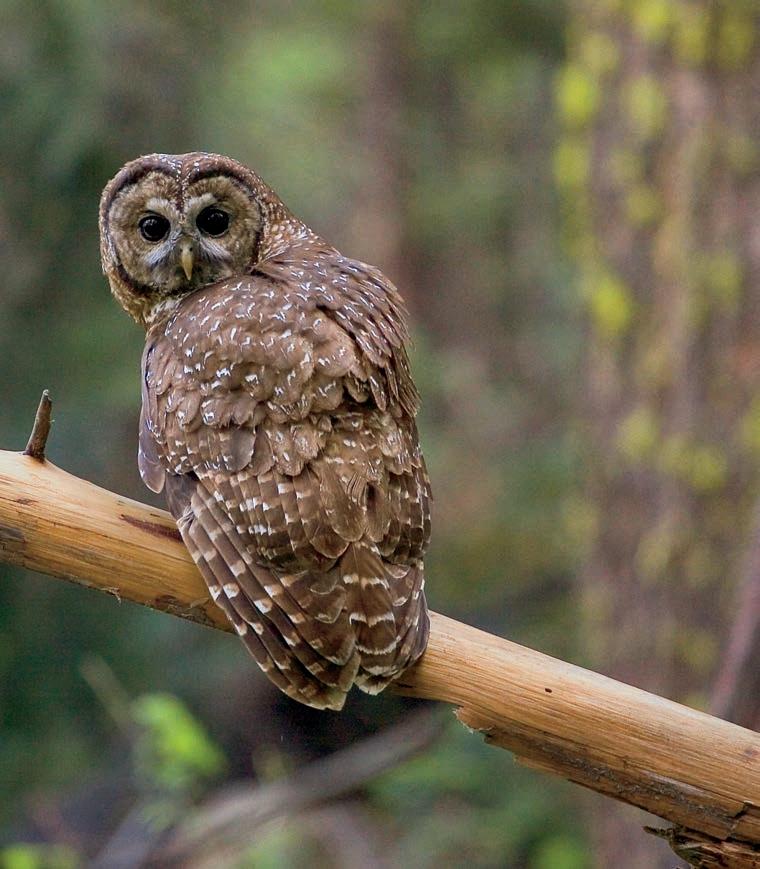
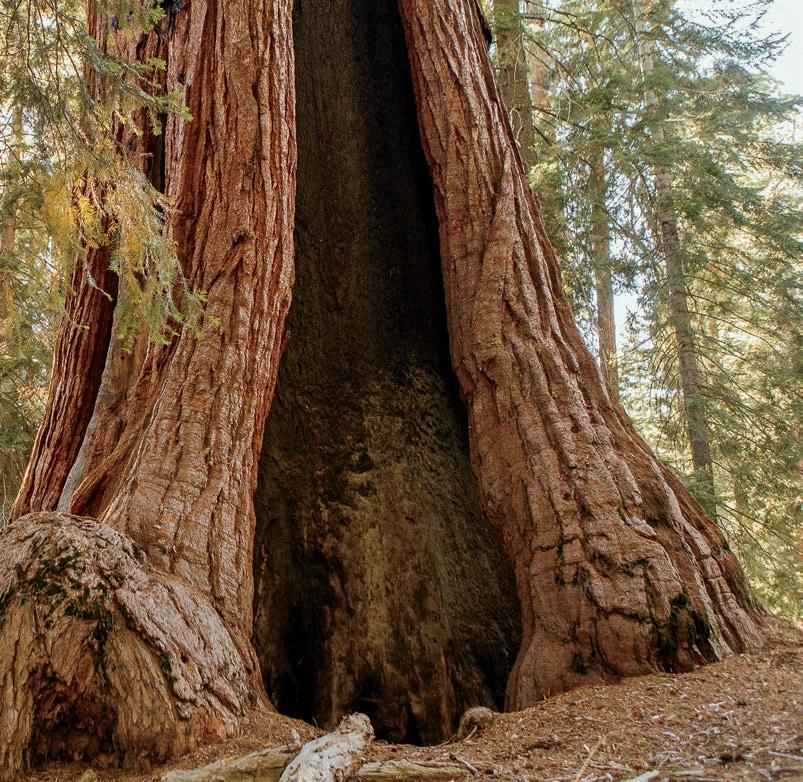
LEFT Mariposa Grove provides important habitat for the California spotted owl, a state Species of Special Concern that relies on old-growth forests. MIDDLE Hollows in large trees and standing dead snags can provide shelter for cavity-dependent species.
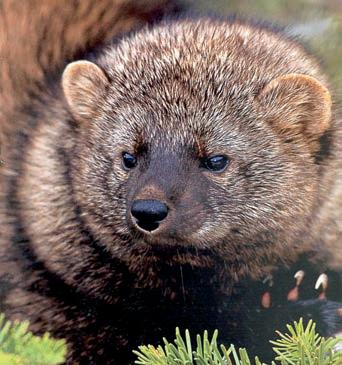
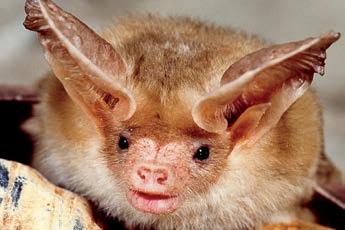
OPPOSITE: TOP RIGHT The grove serves as a crucial haven for the Pacific fisher, a tree-dwelling mammal whose population in the southern Sierra Nevada had dwindled to fewer than 300. MIDDLE RIGHT At dusk, you might see bats swooping among the sequoias, using echolocation to navigate the grove and hunt for insects.
MARIPOSA’S REVITALIZED GROVE
PROVIDING SANCTUARY FOR YOSEMITE WILDLIFE
BY LISA MURPHY, NATURALIST RANGER AT YOSEMITE NATIONAL PARK
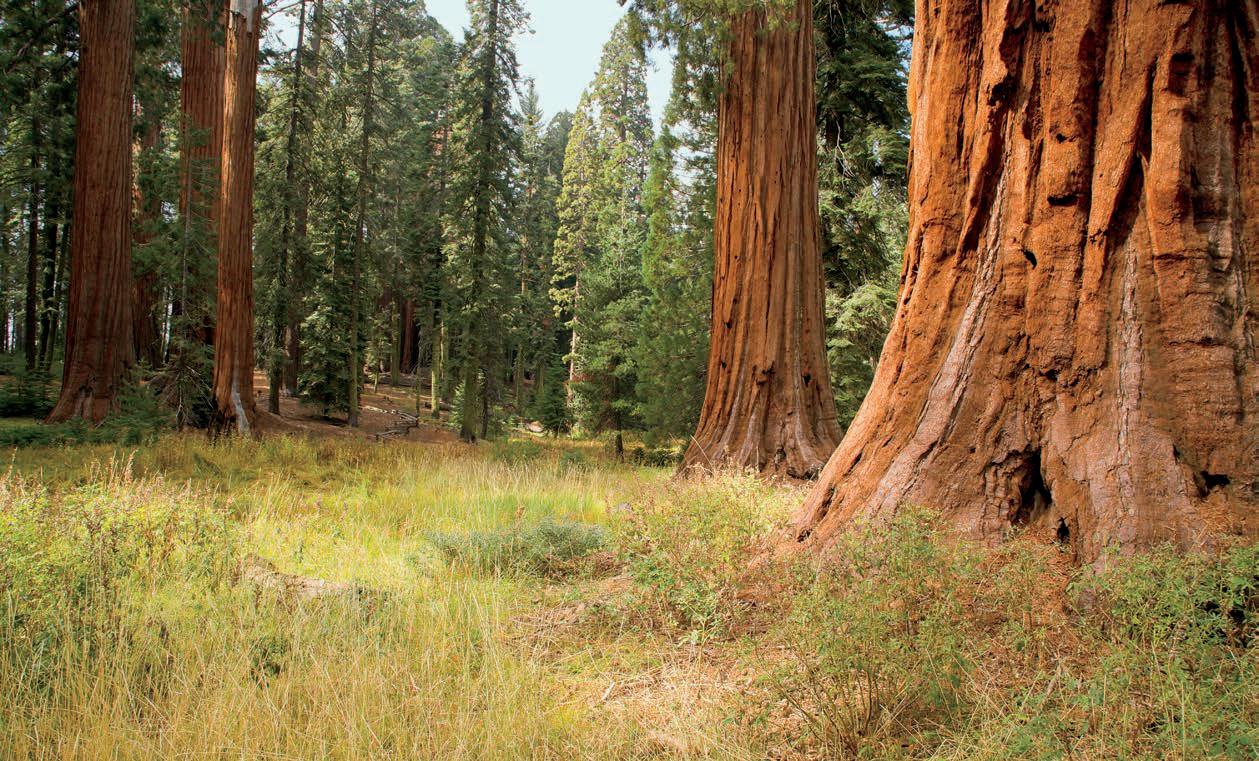
n Yosemite’s Mariposa Grove of Giant Sequoias, a single gaze upward through the mystical towers of rust-colored bark and feathery green foliage is enough to inspire a desire to preserve this majestic place. However, the ancient, enormous trees are only one component of the grove’s complex ecosystem.
Seventy-eight vertebrate species, including amphibians, birds, reptiles and mammals, are known to inhabit Mariposa Grove. The recent donor-funded restoration in the grove will benefit not only the iconic giant sequoias, but also the many animals that find refuge in and among the trees.
During the restoration, great care was taken to protect habitat for cavity-dependent animals that rely on shelter provided by hollows in large trees and standing dead snags. Pacific fishers use hollows for resting and denning. Spotted owls nest in the cavities. Of the 17 bat species that live in Yosemite, 13 have been found roosting or foraging in sequoia groves. For bats, the high-reaching cavities offer protection
from predators and, possibly, a place to hibernate in winter with consistent temperatures, thanks to the sequoias’ insulating mass.
While tree cavities provide essential habitat overhead, the grove’s new raised boardwalks are protecting ecosystems underfoot, in the riparian areas where land and water meet. The boardwalks will help restore natural hydrology, allowing aquatic invertebrates to flourish. These water-dwelling creatures nourish animals such as bats, frogs and songbirds, which, in turn, may become food for myriad other species, including spotted owls, peregrine falcons and Pacific fishers.
Alongside these important efforts to protect and restore the landscape in Mariposa Grove, many animals are also benefiting from a shift in the soundscape. For years, the noise from a generator and traffic dominated the lower grove, creating mechanical sounds and vibrations that can negatively affect animals such as owls and bats, which rely on their acute auditory senses to find and capture prey. Pallid bats, for example, can locate food by listening for the movement of insects, picking up sounds inaudible to human ears. Now, with the generator removed, the parking lot significantly reduced and paved roads converted, natural sounds will once again prevail among the sequoias.
When you visit Mariposa Grove, remember this old-growth forest is home to many species. Enjoy the majesty of the grove by staying on the beautifully crafted trail system and respecting the mystical giants — and the creatures that dwell within and among them.
LISA MURPHY
Naturalist Ranger & Interpretive Supervisor of the Mather District of Yosemite
During Murphy’s first year as an interpretive ranger for Yosemite National Park in 2000, she had the opportunity to volunteer with the Pierson/Rainey bat study in the giant sequoia groves. She helped collect guano samples from the burn scars of the Merced grove. Throughout the past decade, she has become intimately connected with the ecosystems of the Tuolumne and Merced sequoia groves, seeing them through the many Yosemite Conservancy volunteer projects, the Rim Fire and the drought. She is amazed by the delicate balance and diversity of life these groves support.
PHOTOS: (OPPOSITE)
“Giant Sequoias are the largest (in total volume) living organisms on earth!”
— SUE BEATTY
Restoration Ecologist at Yosemite National Park
Q&A
WITH A YOSEMITE INSIDER
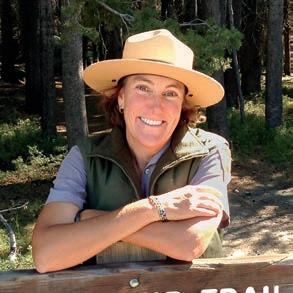
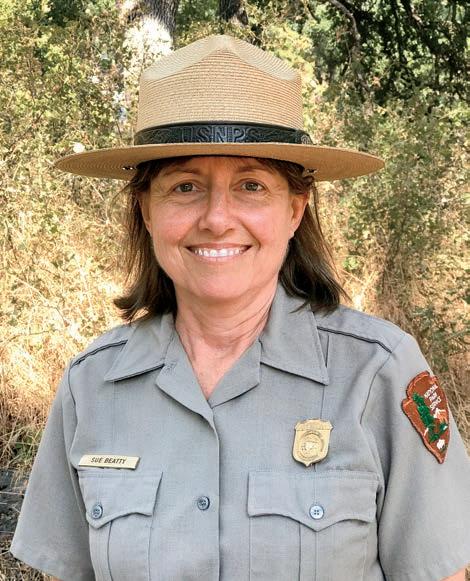
ue Beatty traces her love for the outdoors to her childhood family vacations, which brought her to a different national park each year. She nurtured her passion for public lands and ecology while studying parks and recreation, completing an inspiring internship with the Student Conservation Association, and working toward her graduate degree in natural-resources management. As a restoration ecologist in Yosemite, where she began working in 1980, Beatty is deeply dedicated to restoring balance to natural landscapes.
Q :: What do you love about working as a restoration ecologist in Yosemite?
A :: I love being able to identify a damaged ecosystem and make it better. It’s thrilling to restore natural hydrology to a meadow by removing ditches that were draining it, or removing asphalt from sequoia groves. The best part is looking at the results when we are done, knowing the visitor would not be able to tell pavement used to be there, because all they see is a beautiful wetland or a beautiful sequoia grove.
Q :: Why are giant sequoias important to the balance of Yosemite’s ecosystem?
A :: Giant Sequoias are the largest (in total volume) living
organisms on earth! They are rare and native only to the west side of the Sierra Nevada in California. They are an amazing species, due to their great size of over 30 feet in diameter and their longevity of living up to 2,000 years. These old-growth forests provide habitat for a variety of rare wildlife.
Q
:: Tell us about your work with the Mariposa Grove restoration project. What were the most significant results of this effort?
A
:: Most importantly, this project removed roads and a parking lot from giant sequoia habitat, as well as roadside ditches that inadvertently moved precious water away from sequoia trees. It also added accessible trails through the grove where none had been before. By removing a parking lot, gift store and tram tours from the grove, we have transformed the visitor journey to a beautiful and peaceful experience, allowing people to sense the full wonder of these trees.
Q :: What have you learned about Mariposa Grove through Conservancy-funded research?
A :: The Conservancy-funded assessment of Mariposa Grove became the foundation for the restoration plan. For the first time, a complete inventory was conducted of giant sequoias among all age classes, totaling an estimated population of 5,803 individuals of all sizes (seedlings, saplings, juveniles and adults). We learned 81 percent of juvenile sequoias and 68 percent of saplings were growing within 100 feet of wetlands.
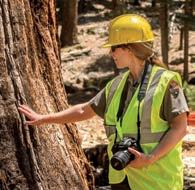
In her nearly 40 years in Yosemite, ecologist Sue Beatty has helped restore and protect habitat throughout the park, including in Mariposa Grove.
Q :: How have Conservancy donors helped protect and preserve Mariposa Grove?
A :: The restoration of Mariposa Grove would not have happened without Yosemite Conservancy. Donor support from beginning to end helped facilitate everything from initial data collection, to design development and construction, enabling the park to implement the very best plan to restore giant sequoia habitat and improve the visitor experience, including the addition of accessible trails for visitors with disabilities. Thanks to your support, this legacy project will enhance the natural and cultural resources for future generations.
“The Conservancy-funded assessment of Mariposa Grove became the foundation for the restoration plan.”
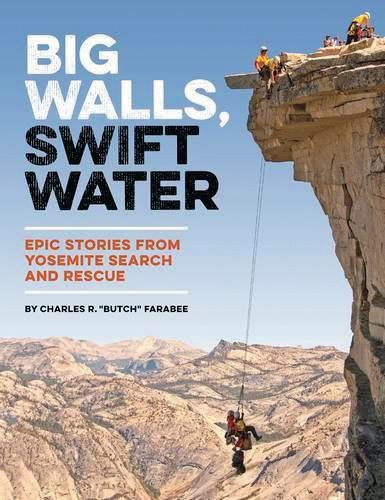
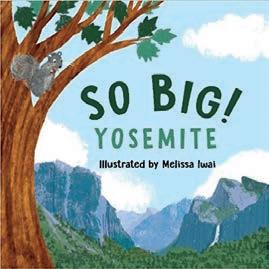
Share your love for Yosemite this holiday season with a gift from the Yosemite Conservancy bookstore. Every purchase helps us preserve and protect Yosemite for generations to come. Conservancy donors receive a 15% discount with code HOLIDAY2017*
*Code valid through Jan. 31, 2018; online purchases only. Shop now at yosemiteconservancy.org/shop Give the Gift of Yosemite
As a central player in the Mariposa Grove restoration, Beatty helped bring natural ecological balance back to the sequoias’ habitat, giving new giants the chance to germinate and grow.
RESCUED AND RETURNED
s Yosemite’s hundreds of black bears roam the park, their natural patterns and instincts sometimes collide with human activity. Too often, those meetings end badly for the bears. Last July, three fivemonth-old cubs were orphaned when a car hit their mother on Tioga Road. She was one of nine bears killed by vehicles in the park in 2016.
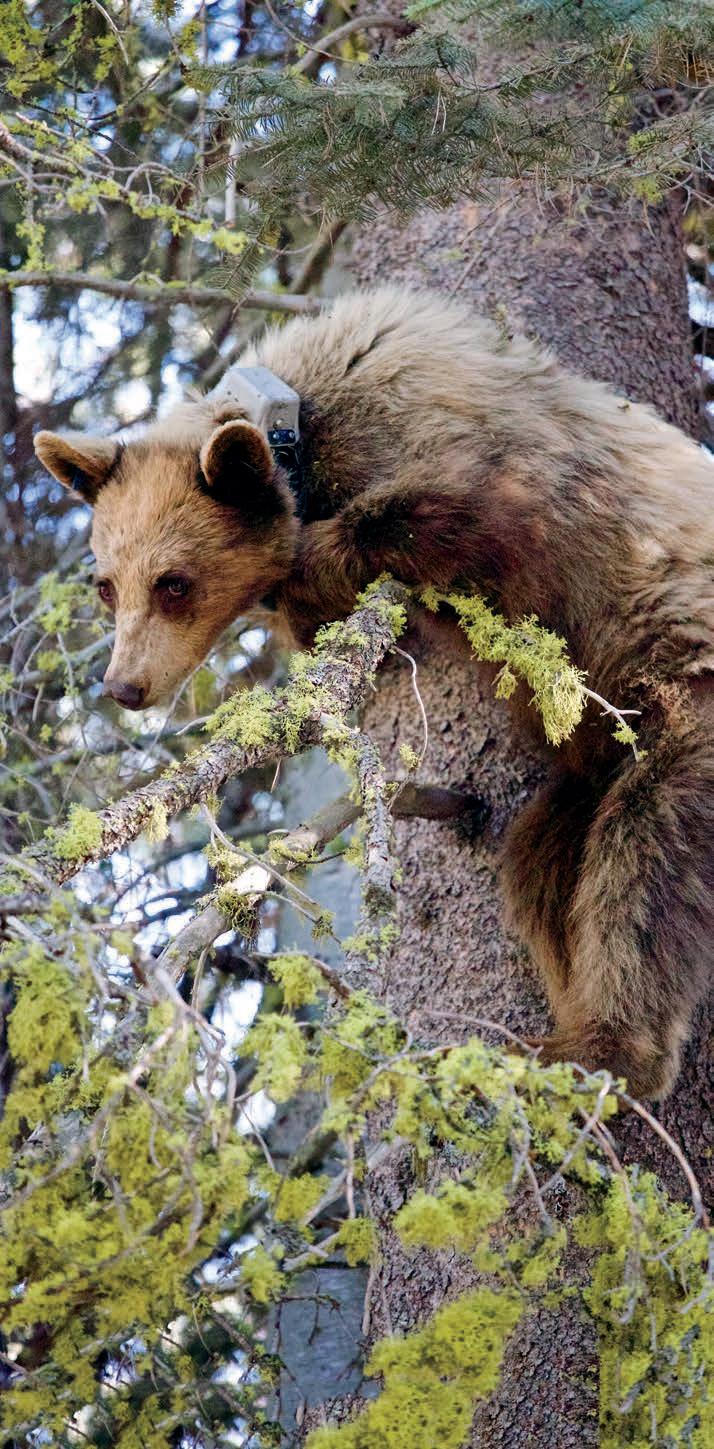
Recognizing the cubs would struggle to survive alone, biologists brought them to a wildliferehabilitation center at Lake Tahoe. The trio stayed there with minimal human contact for the next six months. Cubs from Yosemite had been sent to such centers before, but this trio’s story stands out. For the first time, biologists would be able to monitor the bears once they returned to the park, thanks to Conservancy donor–funded GPS collars.
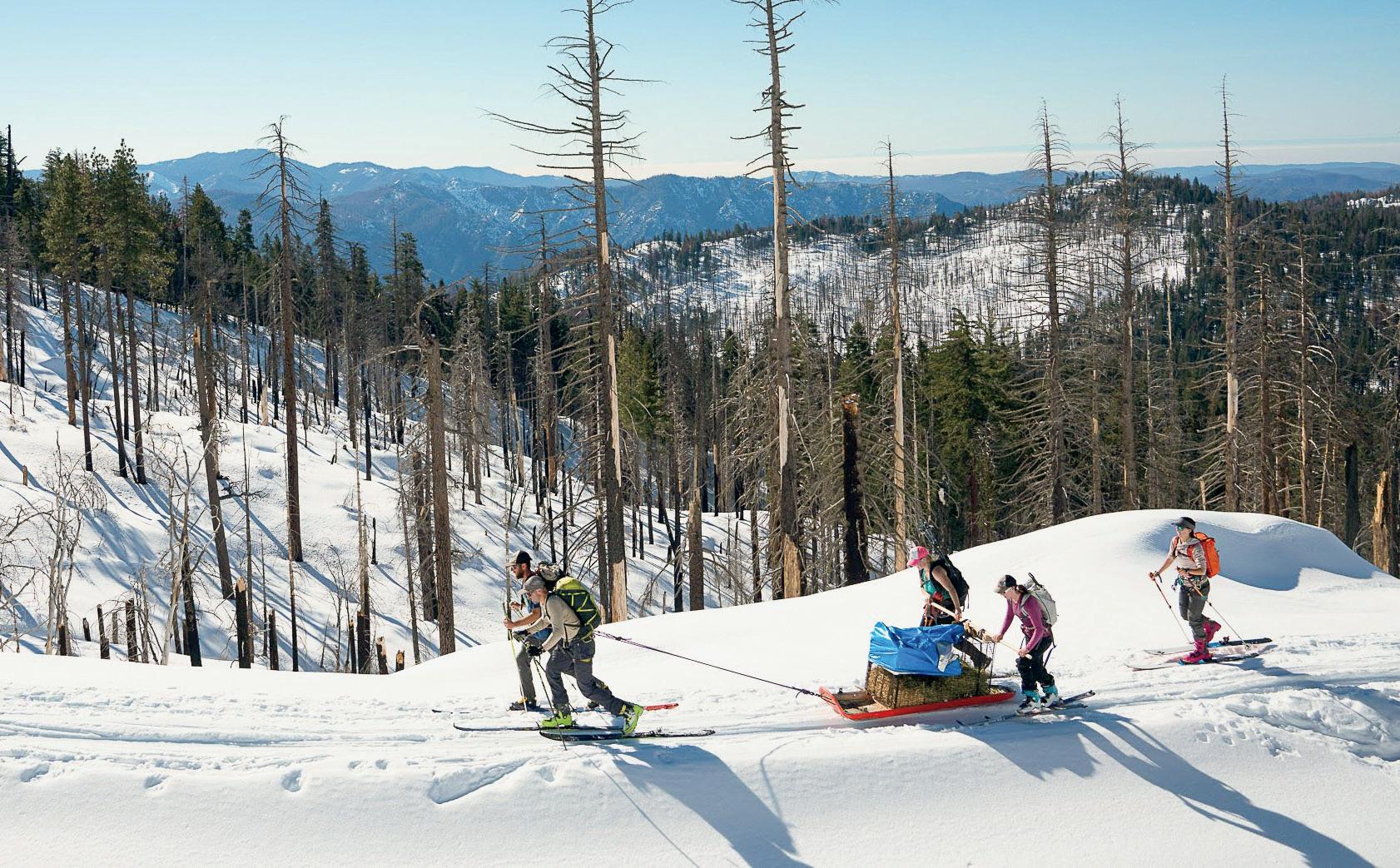
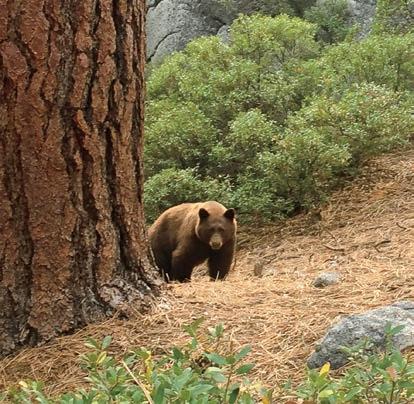
In late January, Yosemite-based staff and volunteers skied the newly collared, hibernating Bears, used to ranging freely through meadows and forests, rarely slow down when they reach a road crossing, making them vulnerable to speeding cars. This yearling bear was one of three orphaned by a vehicle collision on Tioga Road in July 2016.
BRINGING A TRIO OF ORPHANED BEARS
BACK TO YOSEMITE
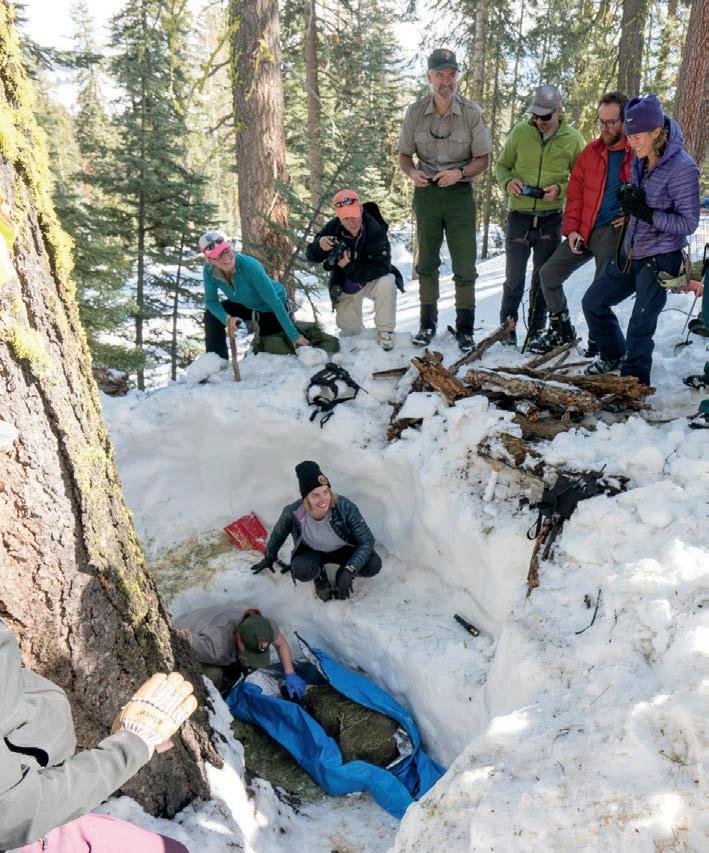
bears into the backcountry and nestled them into a den below a tree. While the trio dozed beneath the snow, the bear team put finishing touches on Keep Bears Wild, a new donor-supported website.
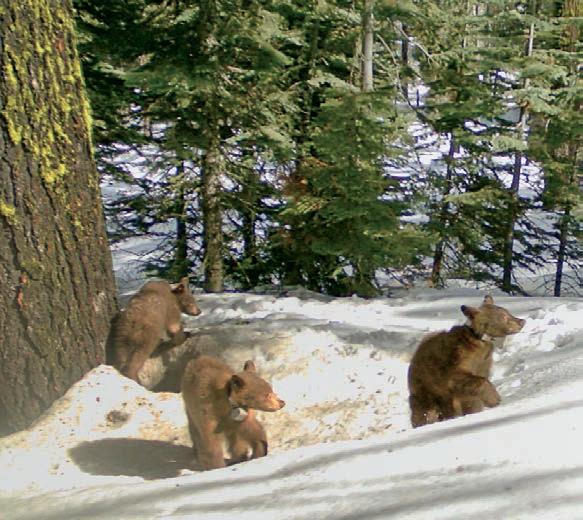
On March 4, 2017, exactly nine months after their mother’s death, the bears, now yearlings, emerged. GPS data traces their next few months. After sticking together for a few weeks, the bears began to separate. By early June, shortly before the pre-programmed collars dropped off, they had established their own ranges, carving out color-coded perimeters on the bear team’s map.
Thanks to a collaborative effort and your support,
On a clear day in early 2017, a group of 30 National Park Service and Conservancy staff and volunteers silently skied the three bears to a den tree in Yosemite.
Remote cameras captured the cubs’ first foray out of their den in early March, as they explored their snow-quilted habitat.
KEEP BEARS WILD
What can we do to live in better balance with bears? Thanks to your support, the Yosemite bear team created a go-to resource: KeepBearsWild.org. The website includes a map of vehicle–bear collisions, and offers plenty of tips for protecting wildlife in Yosemite and beyond.
KEY TAKEAWAYS
Store food (and all scented items) in bear-proof food lockers or canisters.
Drive slowly and alertly on all park roads.
Keep your distance (at least 50 yards) if you see a bear in the wild.
Scare bears off if you see them in campgrounds or other developed areas.
Report sightings to a ranger (or call the Yosemite Save-aBear hotline: 209-372-0322).
the siblings are back in their native habitat. Like any yearlings, they’re learning to navigate the park and forage for food, as they prepare for their second winter, facing greater challenges, because they did not get to learn the landscape at their mother’s side.
As the yearlings explore and grow, we can all help ease their journey by working to live in balance with bears. Simple steps, such as storing food, driving slowly and keeping a safe distance from wildlife, can help ensure the trio’s story, and the stories of hundreds of other bears in Yosemite, can continue to unfold.
Learn more about efforts to keep bears wild at yosemiteconservancy.org/keep-bear-cubs-safe
National Park Service and Conservancy staff and volunteers gathered around the den tree where orphan bears were returned to their natural habitat in Yosemite.
MEADOW SCIENCE
STUDYING BIODIVERSITY IN A NEWLY PROTECTED PLACE
hat’s so special about meadows? These spongy patches of lush vegetation cover just 3 percent of Yosemite’s total area, but they support an enormous array of plant and animal species.
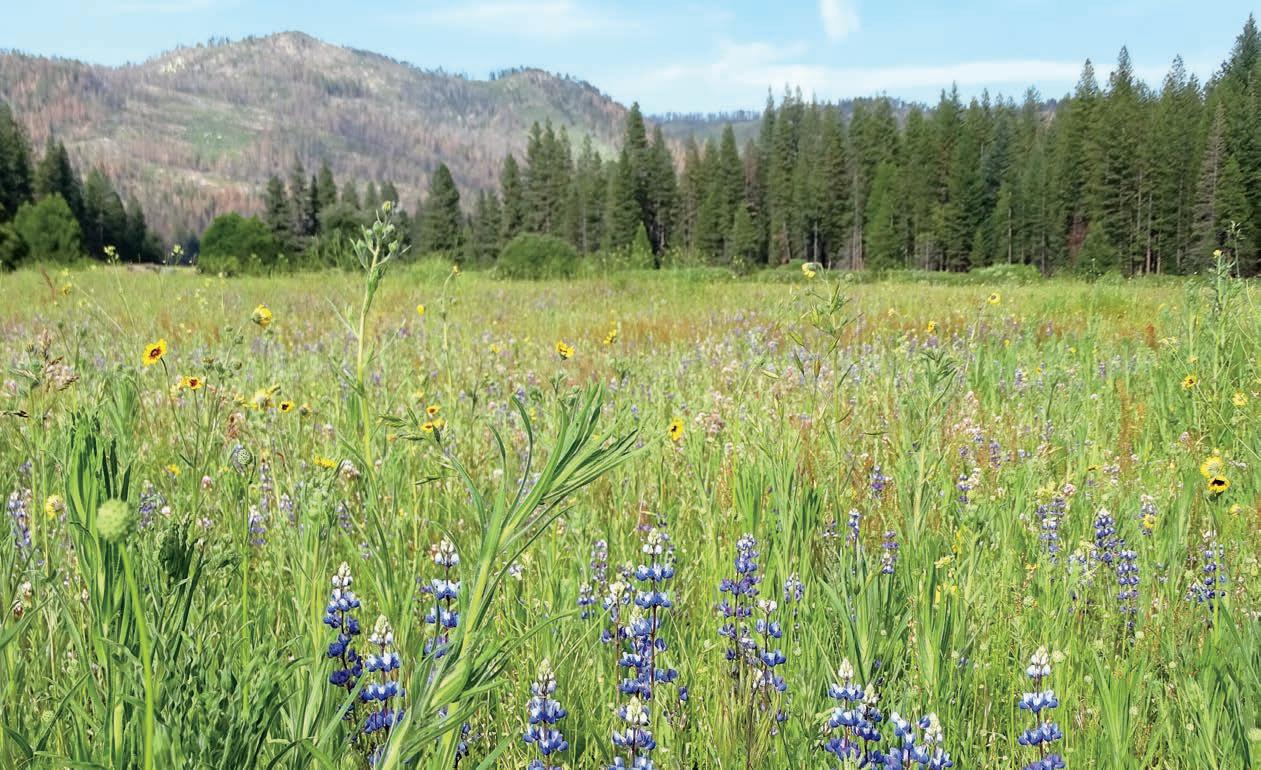
In September 2016, with your support, Yosemite added Ackerson Meadow to its protected landscape. Researchers are eager to learn more about the flora and fauna that live in this once privately owned 400-acre meadow. They have been using in-person surveys and remote cameras to identify meadow-dwelling plants, including invasive species, as well as many mammals, birds, amphibians and reptiles that rely on the wetland habitat. By documenting the meadow’s biodiversity, scientists are collecting valuable information to guide future research and restoration projects in this newly protected place.
You can help preserve Ackerson Meadow, too: If you visit, remember to “Leave No Trace” by staying on trails and taking nothing but pictures.
Scientific surveys have documented an enormous array of life in newly protected Ackerson Meadow, including at least 37 acres of rare plants.
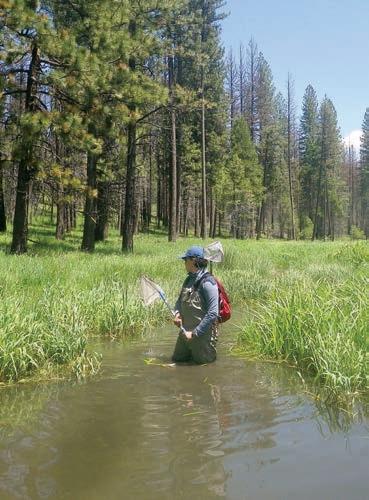
Researchers waded into the water in Ackerson Meadow to collect environmental DNA, a key tool for detecting aquatic species such as the California red-legged frog.
ADVENTURES AMONG GIANTS
GUIDED EXPERIENCES IN YOSEMITE’S SEQUOIA GROVES
nter a sequoia grove, and almost immediately, you’ll sense the immensity of the trees and the intricacy of the ecosystem. Explore alongside a naturalist guide — someone to give deep insight into the grove’s ecology and history — and the moment grows even richer.
Through our Custom Adventures, you can enjoy a personalized, naturalist-led journey in Yosemite’s three sequoia groves in any season. In spring, you’ll see the bright splash of white dogwood against dark sequoia trunks. In summer, the groves offer shady havens far from more heavily visited areas in the park. In winter, they’re intensely peaceful, perfect for snowshoeing.
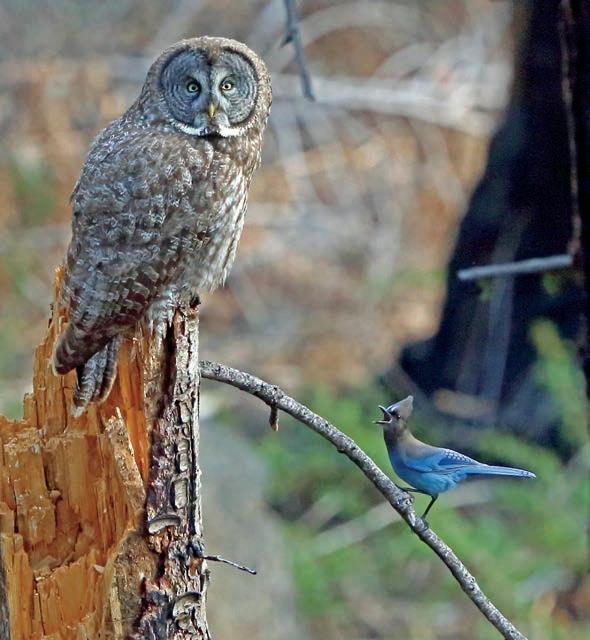
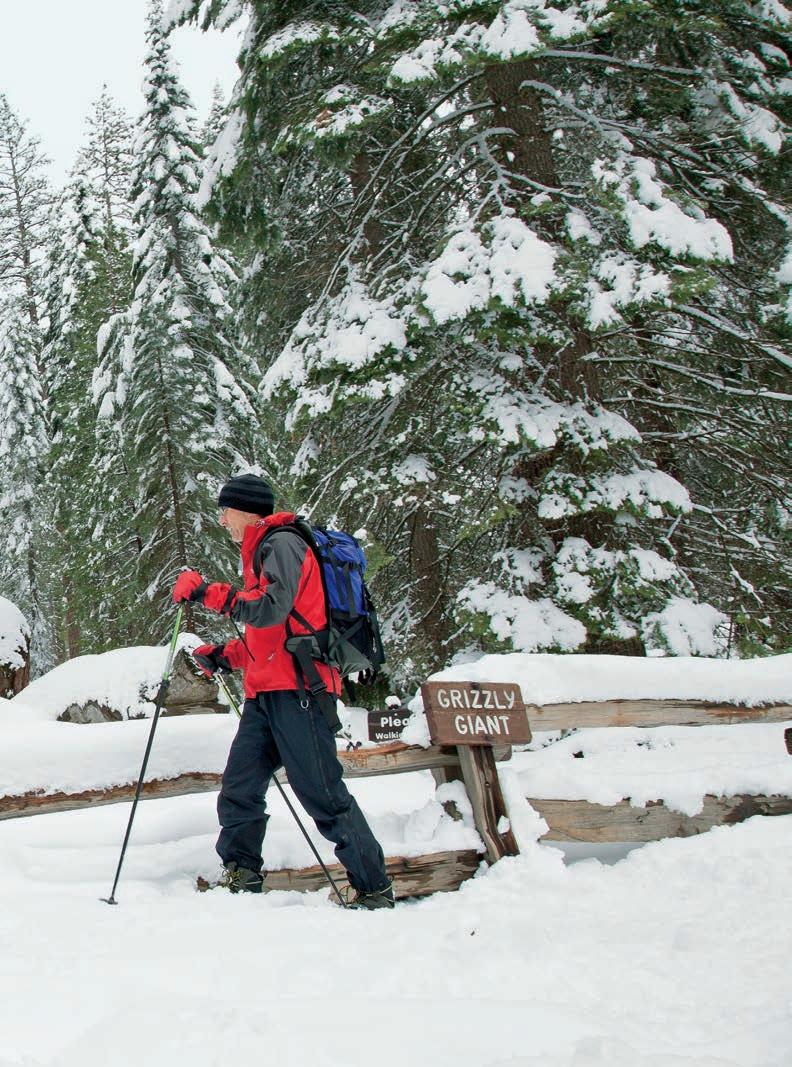
LEFT Yosemite Conservancy guides can help you listen and look for animals that live in sequoia groves, from rare owls to common jays RIGHT When winter snow buries the trails, strap on some snowshoes to experience the grandeur of Yosemite’s sequoia groves in the park’s quietest season.
As you explore with a naturalist, you’ll cross boardwalks over wetlands, or glide softly over snow, while learning about the vital watershed that allows sequoias to grow in this part of the world. You might explore the stories behind “tunnel trees” and historic cabins, or venture to the scenic overlook above Mariposa Grove. Your personal guide can point out signs of resident wildlife, inviting you to listen for songbirds and woodpeckers, look for paw prints or, in winter, search for hints of the subnivean animals that live under the snow.
Whether you go one-on-one with a guide or bring a group, a custom trip means exploring the sequoias at your pace. No matter what season you choose, pack your curiosity, and prepare for a memorable journey.
Ready to find your adventure? Visit yosemiteconservancy.org/custom-adventures
IF YOU GO
Merced Grove
TREES
32 mature sequoias
TRAILS
3 miles (round-trip) from trailhead near Crane Flat TO DO
Find the ranger cabin that once served as a summer retreat for park superintendents.
Tuolumne Grove
TREES
24 mature sequoias
TRAILS
2.5 miles (round-trip) from trailhead near Crane Flat TO DO
Crawl through a hollow fallen sequoia (or take pictures at the edge, if you’re not a fan of small, dark spaces).
Mariposa Grove
TREES
500 mature sequoias
TRAILS
2 miles – Washburn Trail (from the south entrance to Mariposa Grove)
1/4 mile (round trip) – Big Trees loop TO DO
Take in the views from the tranquility boardwalk, pass through the California Tunnel Tree, or picnic at Wawona Point.
To create your Custom Adventure for this winter or any season, contact adventures@yosemiteconservancy.org
2016 Annual Report
CHAIR & PRESIDENT’S NOTE
Dear Friend of Yosemite
s an organization, we’ve learned a lot during more than nine decades of partnership with Yosemite. One constant stands out: People such as you, who are willing to donate personal resources to help protect natural ones, play a crucial part in preserving our park. We’re grateful for your support in 2016, which funded 34 new grants and was a key part of more than $18 million in total aid to Yosemite.
Thanks to you, opportunities to reflect on and celebrate Yosemite abounded in 2016 — starting on day one. On Jan. 1, we helped kick off the National Park Service’s 100th year by joining a Rose Parade equestrian unit honoring the role horses and mules play in our parks.
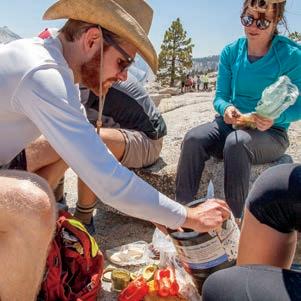
Warmer weather brought our theater and art programs, which served more than 12,000 visitors in 2016, and a diverse crop of projects, including sequoia and songbird research, trail and habitat restoration, and a special exhibit for the Yosemite Museum’s 90th anniversary. Meanwhile, our naturalists helped visitors connect with the park through backpacking trips and day hikes; overall, our Outdoor Adventures team coordinated 290 expert-led outings last year.
As the year drew to a close, temperatures waned, but your impact did not. Thanks to your gifts, 400-acre Ackerson Meadow became Yosemite’s newest protected habitat; local students discovered their nearby national park; and crews made major strides in Mariposa Grove, where a new trail system and regenerated habitat are rejuvenating the ancient forest that helped inspire the national park idea.
As we look forward to many more decades of working to preserve Yosemite, we reflect with gratitude on all your support has made possible. Thank you for making a difference in your park!
Philip L. Pillsbury Jr., Chair Frank Dean, President
Your Gifts at Work
HIGHLIGHTS
ore than 42,000 donors contributed to our mission in 2016 — and each made a meaningful difference in Yosemite. Your gifts funded trail and habitat restoration, fueled fieldwork to study and protect rare species, expanded access to historic collections, and much more. You also helped us offer 645 unique opportunities for people to enrich their Yosemite experience through theater shows, art workshops and expert-led adventures.
While rerouting poorly drained sections of the iconic John Muir Trail in Lyell Canyon, restoration crews built 1,320 feet of new trail on dry, durable ground and restored 94,560 square feet of meadow habitat.
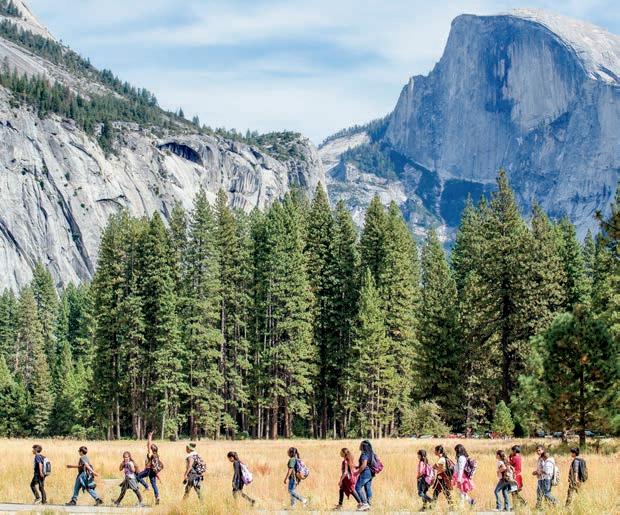
The nine Youth in Yosemite Programs you supported in 2016 helped more than 25,000 young people connect with the park.
Biologists working to restore amphibian and reptile species released 10 western pond turtles and 2,000 California red-legged frog tadpoles in Yosemite Valley, and introduced endangered Sierra Nevada yellowlegged frogs to two high country lakes.
By renting out 10,500 bear-proof canisters for food storage, our Wilderness team provided visitors with an easy-to-use tool that helps protect Yosemite animals. Rental fees support wildlife management and other projects.
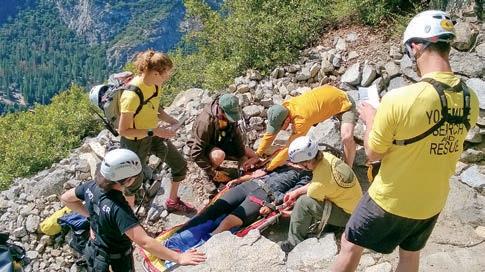
Safety-focused grants funded two new tent cabins to house Search and Rescue (SAR) volunteers, who help with 200–300 missions annually, and supported the Preventive SAR program, which completed a record 37,000 visitor contacts in 2016.
FINANCIAL STATEMENTS
Statement of Financial Position
As of Dec. 31, 2016
$20,470,682
GIFTS THAT DO GOOD
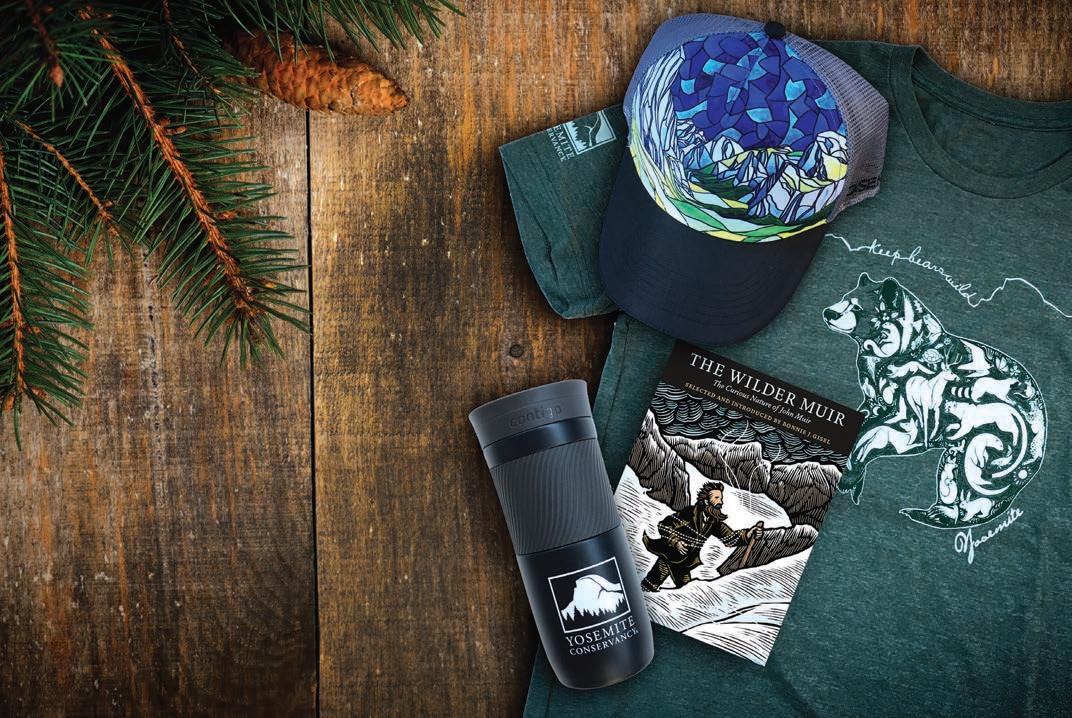
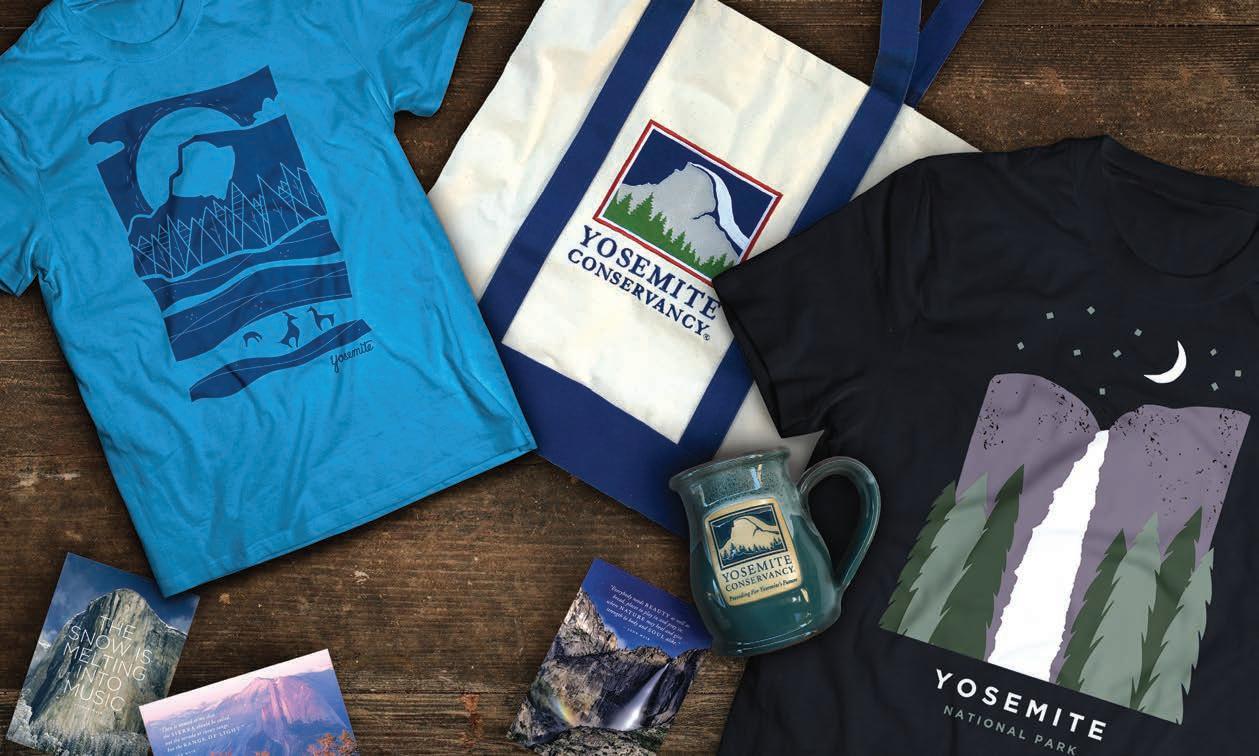
rom postcards and books, to accessories and apparel, the Yosemite Conservancy store — located online and in 10 retail locations in visitor centers throughout the park — is the best place to purchase a souvenir by which to remember your visit. For the Conservancy, it’s also a valuable place to inspire stewardship for Yosemite.
While purchases made through our store have always benefitted the park, in 2016, we took this a step further by moving design and production processes of many products in-house to produce unique, one-of-a-kind retail items visitors can’t find anywhere else. “We want to tell the story of our mission more visibly in the products we are selling,” shares Adonia Ripple, director of Yosemite operations. And our commitment to conservation doesn’t stop there.
By removing the need for third-party vendors, a larger portion of proceeds from retail purchases is now directly routed to help fund trail restoration, habitat preservation, youth programs and enhanced visitor services throughout Yosemite.
Whether you’re looking for the perfect holiday gifts for your Yosemite-loving friends or family members, or you simply want to treat yourself to that cool new T-shirt, hat or souvenir patch, feel pride that your purchase gives back — more than ever before — to protect the park you love.
Shop now at yosemiteconservancystore.com
HOW YOUR YOSEMITE SOUVENIR HELPS
Spring Gathering 2018
A Yosemite celebration for the entire family!
March 23–26, 2018
There is no better place to celebrate the splendor of spring than in Yosemite Valley, surrounded by blooming dogwoods, rushing falls and donors who share your passion for the park. Bring the entire family for a full schedule of guided walks and presentations by Yosemite experts, engaging activities, a picnic lunch and a special closing reception.
For John Muir Heritage Society donors, the fun continues with the Saturday evening reception and dinner at The Majestic Yosemite Hotel and additional Sunday activities.
Registration will be open at the end of January. For more information, please contact Kelda McKinney at kmckinney@yosemiteconservancy.org or 415-434-8446 x329.
Picnic Lunch
John Muir Heritage Society Dinner
Photography Walks
Park Ranger–Guided Tours
Naturalist Hikes Family Activities
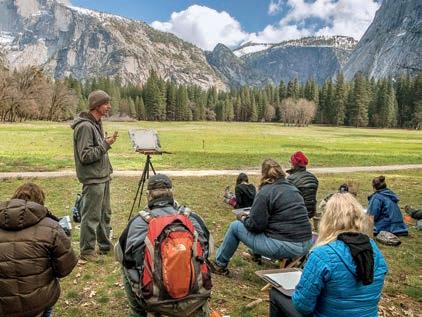
Plein Air Art Classes
Thank You, Donors
osemite Conservancy gratefully acknowledges the individual donors, foundations, businesses and volunteers who supported the restoration of Mariposa Grove with gifts of $2,500 and more. In partnership with the National Park Service, your contributions totaling $20 million have made possible this ambitious, multiyear effort to return grandeur and balance to one of the world’s most iconic ecosystems. Thanks to our generous donors, we’re proud to preserve giant sequoias, restore sensitive wetland, protect wildlife and enrich the visitor experience in Mariposa Grove — today and for future generations.
$1,000,000 & More
S. D. Bechtel, Jr. Foundation
Dana & David Dornsife
Mark Pigott Family
Wayne & Gladys Valley Foundation
Nancy P. Weston
$500,000–$999,999
Gretchen Augustyn & Family
Marilyn & Allan Brown
Cynthia & Bill Floyd and the Floyd Family Foundation
The Fuhrer Family
Gregory D. & Jennifer Walston Johnson
Morgan Family Foundation
Save the Redwoods League
$250,000–$499,999
Bell-Carter Foods, Inc.
John & Leslie Dorman
Peter F. Hilf
JL Foundation
Bill & Jean Lane
MacDonald Family Foundation
Clifford James Walker
$100,000– $249,999
Anonymous (2)
Beth & Steve Bangert
Capital Group Companies Charitable Foundation
James A. Frank and the Raintree Foundation
Mel & Geri Hoven Foundation
The Dirk & Charlene Kabcenell Foundation
Mericos Foundation
Jack & Sheri Overall
Allen & Marilyn Puckett
William Reller
Dave Rossetti & Jan Avent
Jean & Barry Schuyler
Ned & Carol Spieker
Jeanne & Leonard Ware
$50,000–$99,999
Eloise C. Goodhew Barnett
The Bear Gulch Foundation
Stephen & Frances Butler
The Robert Comstock Family
James J. & Sue Femino
Lynn & Jim Gibbons
Mr. & Mrs. John Goldman
Paul & Heather Haaga
Herrick Corporation
Skip & Frankie Rhodes
Rossi Family Foundation
Len Shustek & Donna Dubinsky
Flora L. Thornton Foundation
Tortuga Foundation
Walter Wallner Jr. & Jill Appenzeller
Jim & Terry Witte
Dana & Dave Dornsife HONORARY CAMPAIGN CO-CHAIRS
Marilyn & Allan Brown CAMPAIGN CO-CHAIRS
$25,000–$49,999
Bob & Suzy Bennitt
Robert & Victoria Brant
Brayton Wilbur Foundation
Ralph Britton Jr.
Steve & Gayle Brugler
Diane & Steve Ciesinski
Kevin G. Clifford
Harold D. Cranston
The Diaz Family
The Diskant Family
Bill & Nancy Doolittle
Dorrance Family Foundation
Walli Finch
Lucille Glassman
Christy & Chuck Holloway
Cecelia Hurwich
Bob & Sue Johnson Family
The Landreth Family
Walter Lemmermann
Jon & Lillian Lovelace
Mark Marion & Sheila Grether-Marion
Sara Miller McCune
Henry & Nanette Nevins
Sharon & Philip L. Pillsbury
Jim & Emily Scheinman
Seaver Institute
Greg & Lisa Stanger
Ann & George Sundby
Peter & Virginia Van Kuran
Bill, Alan, Jack & Don Weeden
$5,000–$9,999
Hollis & Matthew Adams
David & Chet Barclay
Robert & Margaret Beck
Donald Miller Campbell
Chevron
Mary B. Cranston
Frank & Diane Dean
Dominic & Margaret DeCristofaro
Dan & Rae Emmett
Kathy Fairbanks
Ted Goldstein & Jessica Bernhardt
Rusty Gregory
Ben & Ruth Hammett
The Hanson Family
E. Alan Holroyde
Tim & Patsy Marshall
Kirsten & Dan Miks
Paul & Antje Newhagen Foundation
Andy & Maria Pecota
Tod & Cathy Spieker
Jennifer & Russ Stanton
Malcolm Swift
Anne & Michael Towbes
Ward & Polly Wolff
The Wollenberg Foundation
$2,500–$4,999
Lynda & Scott Adelson
Jeff & Deborah Augustyn
Bill & Betsie Berrien
Tom & Jenn Bevan
Kim & Tom Coull
Stephen & Megan Drake
Jerry Edelbrock & Jeri Howland
The Fenton Family
Charitable Fund
D. Frankforth & J. Lyerla
Bob & Margie Harrington
Dale E. Harris & Michelle Petrofes
Patti Johns Eisenberg
Linda & Kent Kaiser
Claire & Eugene Kopp
Robert & Melody Lind
Samuel & Cynthia Livermore
Gloria Miller & David Bowman
Don & Patricia Neubacher
Marcia & Larry Osterink, in memory of John
Mr. & Mrs. Stephen P. Robeck
Toby & Sally Rosenblatt
Josephine Shuman
Joanne & Peter Slusser: Redwood Foundation
Kit Thomas & Kirk Salanga
Michael Tollefson & Patricia Megason
Maggie & Justin Toner
Susan & Bill Urick
$10,000–$24,999
Anonymous (2)
Susan & William H. Baribault
Nancy & Joachim Bechtle
Paul & Ann Schuyler Brenner
Anne M. Brown & Family
President & Mrs. George W. Bush
Beth & Richard DeAtley
Gary & Katherine Dei Rossi
Lisa & Craig Elliott
Jim, Kenna & Celeste Fenton
Sandra & Bernard Fischbach
James B. Freedman & Karine Joret
Debra J. Holcomb & Dale P. Ashlock
Johnson & Johnson Family of Companies
Franklin & Cathie Johnson
Tom & Barbara Mazzetti
Michael Osborne Design
Hutton Parker Foundation
Ira A. Roschelle MD Family Foundation
Elizabeth Ross
The SahanDaywi Foundation
San Francisco Foundation
James & Kay Stiles
Bud & Nancy Wakeland
Jack H. Walston & Susan M. Estes
Jennifer & Greg Johnson
CAMPAIGN CO-CHAIRS
were captured by
fans like you.
always looking for
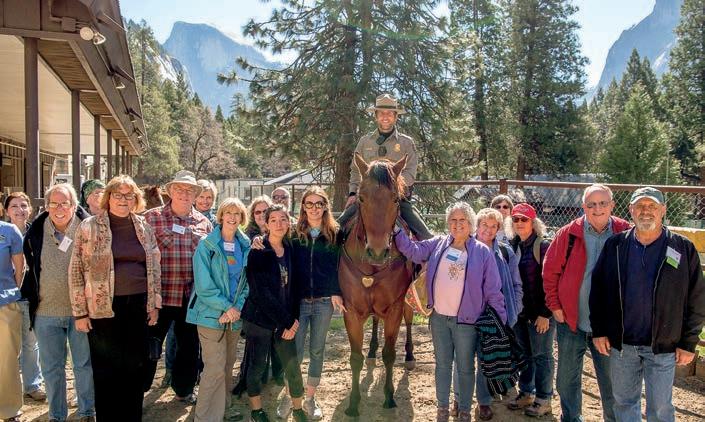
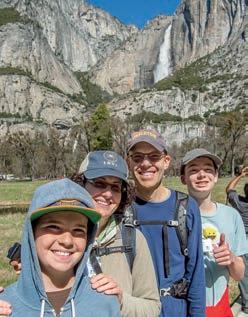
to feature in our social media, enewsletter and magazine — and we’d love to see your shots! Share your favorites with us on Flickr, Facebook and Instagram, or email them to community@yosemiteconservancy.org.
YOSEMITE CONSERVANCY
Magazine of Yosemite Conservancy, published twice a year.
EDITORIAL DIRECTOR
Jennifer Miller
ASSISTANT EDITOR
Alexa Ward
CONTRIBUTING WRITERS
Frank Dean Gretchen Roecker
Lisa Murphy Alexa Ward
DESIGN PRINT PRODUCTION
Eric Ball Design TradeMark Graphics, Inc.
STAFF :: San Francisco
Frank Dean, President & CEO
Jerry Edelbrock, Vice President, CFO & COO
Caitlin Allard, Major Gifts Officer – Northen California
Kim Coull, Development Director
Alison Dombroski, Campaign & Development Projects Manager
Edin Draper-Beard, Executive Affairs Manager
Laura Garland, Senior Accountant
Kevin Gay, Finance Director
Debra Holcomb, Planned Giving & Data Services Director
Sara Jones, Institutional Giving Officer
Pongphat Kimpol, Data Services Assistant
Holly Kuehn, Development & Donor Services Assistant
Isabelle Luebbers, Annual Giving Director
Kelda McKinney, Events Manager
Jennifer Miller, Marketing & Communications Director
Eryn Roberts, Data Services Coordinator
Gretchen Roecker, Communications & Social Media Manager
Alexa Ward, Communications & Website Manager
STAFF :: Yosemite
Adonia Ripple, Director of Yosemite Operations
Kristen Anderson, Art Center Coordinator
Greg Archer, Valley Sales Supervisor
Nicole Brocchini, Museum Store Supervisor
Kylie Chappell, Outdoor Programs Manager
Pete Devine, Resident Naturalist
Teresa Ellis, Sales Information Assistant
Schuyler Greenleaf, Projects Director
Suzy Hasty, Volunteer Program Manager
Cory Jacobs, Inventory Coordinator
Ryan Kelly, Projects Coordinator
Olotumi Laizer, Valley Complex Supervisor
Katie Manion, Retail Operations Manager
Cassie May, Outreach & Wholesale Coordinator
Simon McIntosh, Volunteer Coordinator
Mark Scrimenti, Lead Wilderness Reservation Assistant
Shelly Stephens, Inventory Manager
Laurie Stowe, Wilderness Programs Manager
STAFF :: Pasadena
Patti Johns Eisenberg, Major Gifts Officer –Southern California
THERE ARE MANY WAYS you and your organization can support the meaningful work of Yosemite Conservancy. We look forward to exploring these philanthropic opportunities with you.
CONTACT US
Visit yosemiteconservancy.org
Email info@yosemiteconservancy.org
Phone 415-434-1782
INDIVIDUAL GIVING
Development Director Kim Coull kcoull@yosemiteconservancy.org 415-434-8446 x324
Once you fall in love with Yosemite, your connection to the park never fades. By remembering Yosemite in your estate plan, you can ensure future visitors will have the chance to create their own lasting memories of the park. When you make a gift to Yosemite Conservancy through your will, trust or retirement plan, you’ll be joining the Legacy Society, a group of thoughtful donors whose planned gifts help preserve this treasured place for generations to come.
To learn how you can leave your legacy to Yosemite, contact Debra Holcomb at dholcomb@yosemiteconservancy.org or 415-434-8446 x319.