Renewed Efforts in the Fight Against Invasive Plants
Restoring Upper Cathedral Meadow
Youth Learn About Nature Through Photography
Expert Insights Into the Yosemite Toad
Michael
Gretchen
Susan
Meg
Suzy &
Marilyn
Marilyn & Don R. Conlan
Hal Cranston*
Leslie & John Dorman*
Dave & Dana Dornsife*
Lisa & Craig Elliott
Kathy Fairbanks*
Cynthia & Bill Floyd*
Jim Freedman
Don & Susan Fuhrer
Bonnie & Rusty Gregory*
Chuck & Christy Holloway*
Suzanne & Dan Jensen*
Jennifer & Gregory
Johnson*
Jean Lane
Walt Lemmermann*
Bob & Melody Lind
Sam & Cindy Livermore
Anahita & Jim Lovelace
Lillian Lovelace
Carolyn & Bill Lowman
Dick Otter
Sharon & Phil Pillsbury*
Bill Reller
Frankie & Skip Rhodes*
Angie Rios & Samuel Norman
Liz & Royal Robbins
Lennie & Mike Roberts
Dave Rossetti & Jan Avent*
Marjorie & Jay Rossi
Linda & Steve Sanchez*
Lisa & Greg Stanger*
Jennifer & Russ Stanton
Ann & George Sundby*
Clifford J. Walker*
Wally Wallner & Jill Appenzeller
Jack Walston
Phyllis Weber* & Art
Baggett
Polly & Ward Wolff*
Providing for Yosemite’s future is our passion. We inspire people to support projects and programs that preserve and protect Yosemite National Park’s resources and enrich the visitor experience.
National Park, where I spent many years enjoying its beauty — from watching the seasons change in the Valley, to observing wildlife in the meadows to gazing up at the majestic big trees in Mariposa Grove. It amazes and humbles me to recognize the interconnections of these diverse environments.
Many of you probably have experienced similar awe-inspiring moments of wonder at the beauty of Yosemite’s natural landscapes. That’s why we are devoting this issue to highlighting Yosemite’s habitats and their incredible value, both to the plants and animals they nurture and also to us, as park visitors and supporters. Read about the latest efforts to remove invasive plants and how a high country meadow restoration is providing better habitat while improving your hiking experience. In Expert Insights, aquatic ecologist Heather McKenny tells you why Yosemite toads are vital to the park’s ecosystem — and what’s being done to protect them. Don’t miss updates on the highly anticipated restoration of Tenaya Lake’s East Beach, experiencing the high country through art workshops and exciting trail repair news.
Also in this issue, we’re sharing highlights from our electronic 2011 annual report. Read about how your donations make a difference.
Thanks to your dedication as donors, these efforts ensure Yosemite’s habitats remain timeless and beautiful resources. Thank you for your support.
See you in the park, Mike Tollefson, President
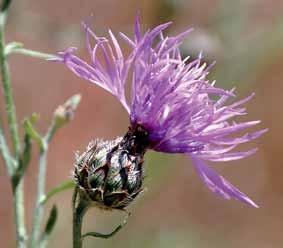
Park scientists are using new technology to identify non-native plants in order to develop a park-wide prevention and treatment plan.
RESTORING HIGH COUNTRY HABITAT
A restoration project in Upper Cathedral Meadow in Yosemite’s high country provides better habitat while improving your hiking experience. 08 PARKS IN FOCUS: YOUTH DISCOVER YOSEMITE THROUGH PHOTOGRAPHY
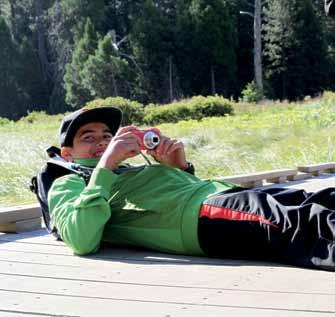
Middle-school youth from the San Francisco Bay Area focus on nature through photography.
10 EXPERT INSIGHTS
Aquatic biologist Heather McKenny discusses the declining populations of Yosemite toad and what’s being done to protect them.
12 Q&A WITH A YOSEMITE INSIDER Valley District Ranger Jack Hoeflich answers questions about search and rescue and offers tips for staying safe in Yosemite.
14 PROJECT UPDATES Restoration efforts at Tenaya Lake’s East Beach, 2012 trail repair activities and monitoring changes in the park’s glaciers.
19 PROGRAM UPDATES
Find your inspiration by taking a high country art workshop or attending an arts and science forum at Parsons Memorial Lodge next summer.
30 READER PHOTOS Yosemite Conservancy supporters share their special Yosemite memories.
“Himalayan blackberry has displaced more than 100 acres of native vegetation in meadow and riparian areas with high plant and animal diversity.”
— GARRETT DICKMAN
Biologist,
National Park Service
STOPPING THE SPREAD
irdsongs, majestic waterfalls, granite monoliths and diverse wildflowers: These features are part of the spectacular natural ecosystems that make Yosemite National Park so special and memorable. Many people come to the park to experience the landscapes for which Yosemite is famous. Unfortunately, the visitor experience can be greatly compromised when weeds outnumber wildflowers.
Highly aggressive invasive plants, such as yellow star thistle, Himalayan blackberry, cheat grass and velvet grass, threaten native vegetation, alter food supply for wildlife, increase fire potential and reduce recreational quality.
“Himalayan blackberry has displaced more than 100 acres of native vegetation in meadow and riparian areas with high plant and animal diversity,” according to Garrett Dickman, a biologist for the National Park Service in Yosemite. “Yellow star thistle has displaced many native plants, reduced the food supply for wild animals, and the sharp spines stop hikers from even walking through it.”
Invasive plants are not a new issue, as many species have been in the park for decades. People intentionally planted some species for landscaping, such as foxglove, bachelor buttons and black locust. Yellow star thistle likely arrived by accident on contaminated material such as hay or gravel. Cheat grass sticks to clothing, car tires and animal fur, while Himalayan blackberry was planted for food. In the past three years alone, park biologists have discovered more than 30 new non-native species, and all of them arrived in Yosemite by accident.
To combat the spreading problem, Yosemite Conservancy is working with the National Park Service to fund a multiyear comprehensive invasive-plant survey throughout the park. “This project will give us a picture across the landscape of which invasive plants are in the park and where they are located,” Dickman explains. “We will use this information to reprioritize locations and species for treatment.”
The data collected from the survey will be used to create computer models and will form the basis for an effective prevention, early-detection and rapid-response program for invasive-plant management in Yosemite. Park biologists have already made enormous strides and are vigilantly guarding Yosemite Valley from aggressive species moving farther up the Merced River corridor.
Technology is playing an important role in this project. A smartphone app developed earlier this year allows users to
document invasive plants by taking a picture and a GPS point, and providing some basic but critical information about the plant. This app is available for free at CalFlora: calflora.org/phone. Thanks to technological innovations, you don’t have to be a park botanist to help survey invasive plants. Along with park scientists, volunteers are encouraged to go hiking and capture valuable data about non-native species throughout Yosemite’s vast terrain.
“We cannot do this project without the help of volunteers,” Dickman says. “The park is too big for a handful of botanists to survey, so we are asking for help from volunteers to survey and treat invasive plants.”
In 2011, hundreds of volunteer weed warriors surveyed about 280 acres of Yosemite Valley and manually removed invasive plants such as bull thistle. In 2012, volunteers incorporated the use of the smartphone app in survey efforts. This year, a group of Yosemite Conservancy work week volunteers also treated several acres of bull thistle and surveyed dozens of acres of prime habitat in Yosemite Valley for invasive plants.
Visitors can help prevent the introduction of non-native species by making sure shoes, cars and camping gear are clean before arriving in the park. Any burrs or seeds stuck to gear can accidentally hitchhike to Yosemite and spread from there. Guarding against invasive plants doesn’t stop at the park’s boundaries. You can also help your local communities by landscaping with native plants and by not planting species known to be invasive. By working together and staying informed, we can ensure Yosemite’s natural habitats thrive for generations to come.
RESTORING HIGH COUNTRY HABITAT
almness and serenity: Being near a tranquil meadow bordered by the granite domes and alpine lakes of Yosemite National Park is enough to evoke these feelings. Meadows instill a deep connection with the natural world, but these are not just beautiful places — meadows are also flourishing natural ecosystems that support Yosemite’s plants and animals.
“Meadows are the most biologically diverse and productive habitats in the Sierra Nevada,” says Sue Beatty, restoration ecologist for the National Park Service in Yosemite. “They play an important role by capturing snowmelt in the deep soils and slowly releasing nutrient-rich water into the streams and rivers throughout the summer.”
Meadows are also vital habitat to a variety of wildlife, especially numerous species of birds and bats that depend on meadows for food, breeding and preparation for migration. The Yosemite toad, which is endemic to the Sierra Nevada, is one of many amphibian species that depends on seasonally flooded meadow habitat for breeding.
“Meadows are the most biologically diverse and productive habitats in the Sierra.”
—
SUE BEATTY Restoration Ecologist
In Yosemite’s high country, popular hiking trails have evolved into large trail networks that intersect meadows, causing disruptions in water flow. Recognizing the significance of meadows to the park’s entire ecosystem, Yosemite Conservancy and the National Park Service are working together to restore these special places.
In 2010, Yosemite Conservancy began funding a threeyear restoration project to return natural processes to Upper
Cathedral Meadow, a wet meadow along the popular John Muir Trail and High Sierra Camp loop. Hikers and pack stock were constantly side-stepping the main path to avoid pools of water and, in the process, unintentionally creating new parallel trails. As many as 10 parallel trails, some up to 14 inches deep, crossed through sections of the meadow, acting as ditches and changing the natural water flow.
Work completed during the past three summers includes rerouting the trail out of the meadow and into the adjoining upland forest. Crews removed ditches, restored topography and replanted salvaged vegetation to facilitate the return to natural conditions. The visitor experience, which was being affected by the former route, is now greatly improved.
“Visitors and pack stock will no longer need to traverse
through the deep ruts, trying to keep out of the mud,” Beatty says. “This project is a win-win situation for both the visitor and the meadow ecosystem.”
Last year, more than 195 linear feet of rutted trail was restored, including an area containing as many as 10 parallel ruts, the highest number on the project. The restoration crew lived near the project site, resulting in numerous opportunities to answer questions from park visitors and teach youth groups about wilderness restoration.
Visitors have an important role in helping the restoration succeed. Hikers should stay on the formal trail to give meadow plants the time needed to grow, flower and produce seeds during the short growing season. “Staying on the trail will allow these plants the best chance for success,” Beatty notes.
ABOVE The John Muir Trail in Upper Cathedral Meadow acted as a ditch, disrupting water flow.
reroute the trail and replant salvaged plants.
Parks in
Focus
For young people who have never experienced the natural world through a camera lens, this program allows them to sharpen their focus on their futures. Through photography, underserved middle-school youth from the San Francisco Bay Area spend five days observing nature and learning about environmental conservation. Parks in Focus is more than just photography — it’s about introducing young people to a new way of seeing the world. While in Yosemite, these kids also work on a park–service project. By actively connecting with the park, they develop a lifelong stewardship ethic. Your continued support means more students will have this life-changing opportunity to learn a new skill and become future park stewards.
Youth Discover Yosemite Through Photography
FROM LEFT TO RIGHT A student poses with a pine cone during restoration activities in Mariposa Grove. A big tree from a unique perspective, taken by Monica, age 12. The students experiment with their digital cameras. A vision of Half Dome at sunset, taken by Isaac, age 11. Martin sets up for a low angle shot. A deer in its natural habitat, taken by Shontelle, age 14. A student receives hands-on photography lessons.
Focus is more than just photography — it’s about introducing young people to a new way of seeing the world.
SAVING THE YOSEMITE TOAD
HEALTHY ECOSYSTEMS DEPEND ON HEALTHY TOADS
BY HEATHER McKENNY, AQUATIC ECOLOGIST
itting quietly in the warm springtime sun in one of Yosemite’s picturesque meadows, you may be fortunate enough to experience the rare joy of hearing the Yosemite toad’s musical call. Hearing the toad’s chorus was once a common pleasure for spring visitors to the High Sierra. Sadly, Yosemite’s meadows are much quieter today due to substantial population declines.
The Yosemite toad, found only in the Sierra Nevada, was a historically abundant species occurring primarily in highelevation wet meadows higher than 6,400 feet in elevation. Scientists estimate we have lost between 47 percent and 79 percent of our Yosemite toad population due to factors such as disease, habitat loss and degradation, climate change and air pollution. Because of the decline, the U.S. Fish and Wildlife Service considers the species a candidate for listing under the Endangered Species Act.
The decline of the Yosemite toad is likely affecting the health of high-elevation aquatic ecosystems. It has also reduced the chances park visitors will be able to experience a natural landscape with a full complement of native biodiversity.
The Conservancy is funding a three-year project to conduct the first-ever park-wide survey for Yosemite toads. The park hopes to document as many toad populations as possible and to assess how different stressors may be affecting the toads’ distribution. Between 2010 and 2012, scientists surveyed 1,032 meadows and found toads in 126. As part of the survey, information is collected on whether toads are found in the meadows, as well as information about the habitat and any signs of human use.
This information is being used to develop a conservation plan for restoring and protecting the Yosemite toad. The plan will include identifying meadows for habitat restoration and making science-based decisions about managing threats.
This project is also providing unique educational opportunities to students (ages 13–17) from Seven Hills School in Walnut Creek, Calif., who participate in a week-long summer science program in Yosemite. They work alongside park biologists learning wilderness survival skills and help survey for Yosemite toads, Sierra Nevada yellow-legged frogs, and other amphibians and reptiles. They are even helping find populations of Yosemite toads that have not been documented previously. The experience has been life-changing for many of the students and has helped them appreciate the importance of conservation.
Saving the Yosemite toad from extinction is crucial for restoring a healthy ecosystem in Yosemite’s high country and for ensuring future generations of park visitors can experience the joy of hearing the toad’s tuneful call ringing across mountain meadows in the spring.
Read more about the Yosemite toad project on our website at yosemiteconservancy.org/magazine
McKENNY is an aquatic ecologist at Yosemite National Park, where she has been overseeing the Aquatic Ecology Program since 2008. She graduated from the University of Vermont with a B.S. in biology and an M.S. in forestry. Saving the Yosemite toad and the Sierra Nevada yellowlegged frog from extinction is the most important part of her job. She hopes that one day these formerly abundant species will be restored throughout Yosemite National Park and the Sierra Nevada.
YOSEMITE CONSERVANCY has provided a three-year grant to fund a survey of the Yosemite toad and its high-elevation meadow habitat. Data collected will help park scientists determine the current status and distribution of the species, as well as factors associated with species decline, such as climate change and visitor-use activities. The goal of the project is the development and implementation of a more informed conservation plan to protect and preserve this unique species.
HEATHER
LEFT A female Yosemite toad in its natural high-elevation aquatic habitat.
ABOVE Students from Seven Hills School in Walnut Creek, Calif. survey a high-elevation meadow in Lyell Canyon for Yosemite toads and other amphibians.
“The park ranger has historically been a ‘jack-ofall-trades’ profession.”
— JACK HOEFLICH Valley District Ranger
Q&A
Park ranger Jack Hoeflich was drawn to Yosemite National Park while working as a computer engineer in Silicon Valley. The allure of rock climbing inspired him to leave his desk job to pursue his passions in Yosemite. Hoeflich moved from a volunteer to a search and rescue team member and, finally, a park ranger. Today, he is part of the Protection Division responsible for visitor and resource protection, including search and rescue operations.
Q :: What brought you to Yosemite?
A
:: I grew up in rural Illinois and first visited Yosemite in 1988. I started rock climbing and was drawn to the sport by the combined mental and physical challenge and the amazing terrain I could explore. In 1999, I took a leave of absence from my job and spent the summer volunteering in Yosemite. I never made it back to my old career. Over time, I became a search and rescue team member, and in 2003, I was offered a permanent job as a park ranger.
My love for climbing, my desire to live and work in such an amazing place, and my interest in protecting Yosemite [brought me here].
WITH A YOSEMITE INSIDER
Q :: What are your typical duties as Valley district ranger?
A :: As the Valley district ranger, I’m responsible for visitor and resource protection in Yosemite Valley, including search and rescue, emergency medical services and law enforcement. I manage a permanent staff of 15, a seasonal staff of 28, and numerous volunteers and interns.
The major duties vary by season and can involve a search and rescue incident or fatality, or a natural disaster — flood, rockfall, wind event, wildfire. In a typical summer, it is not uncommon to be called out several times per week for a technical rescue or a backcountry medical emergency.
Q :: The Protection Division must be ready to deal with all types of emergencies. How does your team train and prepare for such a wide variety of situations?
A :: The park ranger historically has been a “jack-of-alltrades” profession. Rangers spend an incredible number of hours training in many disciplines. Much of their skill, fitness and area orientation is developed while exploring the park on their personal time.
We are successful in Yosemite because the magnificence of the park attracts outstanding rangers. Motivation comes from the National Park Service mission and from the privilege of being able to live here and enjoy the park as a home.
“My love for climbing, my desire to live and work in such an amazing place, and my interest in protecting Yosemite [brought me here].”
— JACK HOEFLICH Valley District Ranger
Q :: What is the best advice you can give someone about staying safe in Yosemite?
A :: My advice to visitors is to understand your limits, respect the resource, and don’t underestimate the force of gravity and moving water.
YOSEMITE CONSERVANCY has given grants throughout the years to Yosemite National Park for a variety of search and rescue projects. For example, the Conservancy funded the construction of a helicopter-simulator rappel tower in Crane Flat to provide a better and safer training environment for search and rescue personnel. Additionally, the Conservancy has funded an upgrade of the search and rescue supply cache in Wawona to improve efficient deployment of gear in an emergency situation.
Give Gifts Inspired by Yosemite.
Give gifts that will inspire the kids on your list to get outdoors. Explore our selection of young reader nature guides, Junior Ranger gear and more!
Purchases made at the Yosemite Conservancy store support our work in the park and help ensure its preservation for generations to come.
ABOVE Ranger Jack Hoeflich repairing cables on Half Dome.
ABOVE A search and rescue team is briefed near El Capitan. LEFT A rescuer and patient are lifted toward the summit of Half Dome.
RESTORING YOSEMITE’S TRAILS
f you have hiked up the heartpumping Four Mile Trail, strolled to Lower Yosemite Fall or trekked the popular Lembert Dome Trail, you have experienced the results of your donor dollars at work in the park. The trail network is critical to ensuring visitors have access to Yosemite’s many wonders. With your support, the Conservancy can continue to provide funding to Yosemite National Park to keep these trails in excellent condition.
2012 was another busy year for trail crews, including several youth crews, who repaired stone steps, built bridges and eradicated social trails throughout the park. Yosemite Conservancy recognizes the importance of trails in protecting natural resources while providing visitors with memorable hiking experiences. That’s why we, together with the National Park Service, work hard to make sure these trails endure.
ABOVE A Yosemite National Park trail crew member fits a series of rocks into place on the new trail to the East Beach at Tenaya Lake. LEFT A Youth Conservation Corps (YCC) crew member breaks rock on the Lembert Dome Trail in Tuolumne Meadows. RIGHT California Conservation Corps (CCC) youth crew members Nick and Andrew move rock into place on the Upper Yosemite Falls Trail.
ABOVE A team of volunteers from Tuolumne Climber Coffee builds a clearly marked trail near the “Lord Caffeine” climbing route in Olmsted Canyon near Olmsted Point.
ABOVE Youth Conservation Corps (YCC) crew members pause for a photo while hauling rocks on the trail between Sentinel Dome and Taft Point.
RESTORING EAST BEACH AT TENAYA LAKE
POLISHING THE JEWEL OF THE HIGH COUNTRY
ut a visit to Tenaya Lake on your 2013 summer calendar, and look forward to enjoying the results of a highly anticipated restoration project at the popular East Beach area. Work crews spent last summer completing a two-year restoration project to enhance the visitor experience while protecting wetlands.
“Thanks to the unwavering support of our donors, lakeshore habitat at one of Yosemite’s most popular summer destinations is protected, while providing visitors with a better place to connect to nature and family,” says Mike Tollefson, president of Yosemite Conservancy.
National Park Service trail crews rerouted the beach-access trail to a drier upland area and built elevated boardwalks and bridges to avoid areas of sensitive wetland habitat. The handicapped-accessible trail now includes interpretive
signage to educate visitors about the restoration and natural ecology of the area, while a new communal picnic table will better accommodate large family gatherings.
To encourage a healthy ecosystem to take root, restoration crews replanted native willows and sedges along the old trail. These plants will help reduce lakeshore erosion and keep natural processes intact.
Yosemite Conservancy has provided $1.7 million during the past two years to improve visitor enjoyment while ensuring Tenaya Lake’s natural integrity will endure for generations. Thanks to your support, this jewel of the high country is shining more brightly than ever.
Yosemite Conservancy has provided $1.7 million during the past two years … ensuring Tenaya Lake’s natural integrity.
LEFT The restoration at Tenaya Lake’s
East Beach area protects habitat while enhancing the visitor experience at this popular and beautiful location.
MELTING GLACIERS
PARK SCIENTISTS MEASURE GLACIERS
ohn Muir’s legacy is strong — even at the highest reaches of Yosemite National Park. His many accomplishments include the 1872 introduction of measuring the McClure Glacier to evaluate its speed and size. Today, scientists are attempting to reproduce Muir’s research in order to compare current glacier ranges with historical dimensions.
The Conservancy is funding a three-year study of the Lyell and McClure glaciers — the largest in Yosemite — to understand the climate patterns causing the retreat of these valuable resources. Park scientists have been documenting the size and velocity of the glaciers, as well as the amount of water being delivered to the upper Tuolumne River. Field data will be used to build computer models to predict glacial behavior in response to future climate scenarios.
When this study concludes in December 2012, scientists will have a better understanding of how Yosemite’s glaciers are affecting valuable water resources.
ART WORKSHOPS
“Painting outdoors makes you part of the place. You can’t make this up in the studio.”
—
CHARLES
WALDMAN
Veteran Artist & Workshop Instructor
In the early morning on the bank of the Tuolumne River, a group of artists have joined to interpret a tranquil and serene scene. The group mindfully slows down and absorbs the elements one by one to avoid being overwhelmed, as the interplays among land, water and wildlife create an ever-present symphony. Their ears perk up as they hear sounds previously unheard; their eyes absorb infinite shades of blue, gold, green and more along the riverbank. Each artist makes a soft shushing sound across the canvas with his or her brush, then pauses to marvel at the vault of precious gems that sparkle beneath the surface of the river or listen to the krauk of an ardent Clark’s Nutcracker dancing in the trees above.
“Painting inspires you to really see the depth in the trees, water and granite. You really need to focus not only your eyes, but also your thoughts,” says Catherine Cummings, a workshop participant. For Cummings and the other art students, slowing down and using all their senses is the first lesson.
TOP McClure Glacier is one of Yosemite’s few remaining “living” glaciers. MIDDLE Park scientists drill a velocity stake into Lyell Glacier to measure how fast it is moving. BOTTOM A researcher inspects the meteorological station installed between Lyell and McClure glaciers.
LEFT Artist Charles Waldman at his easel preparing to instruct plein air participants in Tuolumne Meadows.
“Painting inspires you to really see the depth in the trees, water and granite. You really need to focus not only your eyes, but also your thoughts.”
— CATHERINE CUMMINGS
Workshop Participant
“Painting outdoors makes you part of the place. You can’t make this up in the studio,” explains Charles Waldman, a veteran artist who has been leading Conservancy workshops for more than a decade. “Nothing you can imagine will come close to what you can discover being outdoors.” Waldman teaches a plein air workshop to artists of all skill levels. His workshop is just one of the many ways Yosemite Conservancy is engaging visitors in the high country through the arts.
In addition to painting workshops, Yosemite Conservancy also supports the Parsons Memorial Lodge Summer Series, a forum that features many notable scientists, authors, musicians and poets. The series takes place each summer at the historic Parsons Memorial Lodge in Tuolumne Meadows. Yosemite’s inspiring high country is the perfect setting for the series, where arts and science communities come together to share their discoveries.
“We hear nothing so clearly as what comes out of silence.”
—
DAVID JAMES DUNCAN Author
Get Outdoors with Yosemite Conservancy OUTDOOR ADVENTURES
Yosemite has so much to offer yearround, and we want to share it with you. Join Yosemite Conservancy expert naturalists on a snowshoeing adventure to explore Mariposa Grove or join a photography expedition to improve your skills and experience breath-taking scenery.
UPCOMING 2013 OUTDOOR ADVENTURES
JANUARY 12
Mariposa Grove Snowshoe Trek
JANUARY 17–20
Winter Landscape Photography
FEBRUARY 9
Trek to the Edge: Dewey Point Snowshoe 1
FEBRUARY 22–23
Photographing the “Firefall”
MARCH 9
Sequoias & Snowshoes: Explore Mariposa Grove in Winter
MARCH 16
“We hear nothing so clearly as what comes out of silence,” says David James Duncan, an author whose presentation, The Wild Without and the Wild Within, was among several presentations at Parsons Lodge, where offerings explored subjects from species extinction to yoga and meditation.
The subjects vary, but the common thread is that by learning to slow down and connect with our natural places whether through writing, meditation, or art — we are really making discoveries that connect us with ourselves.
As Waldman reminds his students: “The point is not just to make a painting; it is to engage in this dialog with our world … to live life. This is a path of discovery.”
Looking for inspiration? Join us for a painting or photography workshop to hone your artistic skills. Winter photography workshops are available now on our website at yosemiteconservancy.org/adventures
Trek to the Edge: Dewey Point Snowshoe 2 MARCH 22
Secrets of the West Valley
MARCH 24
Spring Canyon Flowers
APRIL 5–6
Leave No Trace Trainer
APRIL 13
A Saunter with John Muir
MAY 16–19
Spring Light Photography
MAY 25
Photographing the “Moonbow” 1
MAY 31–JUNE 2
Yosemite’s Birds of Prey
BOTTOM LEFT An example of a finishd plein air painting. LEFT
2011 Annual Report
A Special Message From the Chair & President Your Support Makes an Impact
When we reflect back on the past year, we are delighted and humbled by the commitment of our donors, volunteers and park partners to help provide for the future of Yosemite National Park. From habitat restoration, to trail repairs, to providing opportunities for deeper connections with the park, the Conservancy’s support serves as a visible reminder of passionate efforts to preserve and protect Yosemite. In this report, we are thrilled to share our successes — none of which would be possible without the profound dedication of people such as you.
2011 was a busy and exciting year for projects and programs in the park, especially our two signature projects: Youth in Yosemite and restoring the East Beach at Tenaya Lake. Youth of all ages participated in programs designed to build park stewardship, self-confidence and leadership skills.
We have broken ground on the restoration of Tenaya Lake’s East Beach, setting the foundation for new ecologically friendly trails and the replanting of native willows along the shoreline and in the surrounding wetlands.
These accomplishments would not be possible without your commitment:
• $9.3 million in support provided to Yosemite for projects and programs
• More than 42,000 supporters
• 55 miles of trail and 40 acres of meadow restored throughout the park
• More than 27,000 young people participated in Conservancy-funded youth programs that encourage future park stewardship
• 56 park-enhancement projects funded, ranging from trail and habitat restoration to cultural resource protection and enhanced visitor services
We thank you for your unwavering support in protecting Yosemite today and for future generations.
See you in the park,
John Dorman, Chair Mike Tollefson, President
f you’ve visited Yosemite, you’ve experienced the difference our support makes. From the installation of bear-proof food lockers in Valley campgrounds, to the restoration of miles of trail in the high country, the work we support to preserve and protect Yosemite’s natural wonders and enrich the visitor experience is everywhere.
Art and theater programs, Outdoor Adventures, bookstores, volunteers and wilderness-support services provide visitors with more opportunities to connect with Yosemite on a deeper level.
Our Work is Everywhere Our Support is Everywhere
In 2011, we funded 56 projects throughout the park, including restoration of 55 miles of trail and 40 acres of meadow. From Yosemite Valley to Wawona to the high country, our support is making a big difference in restoring natural ecosystems, protecting wildlife and improving the visitor experience.
Think about your most recent visit: Did you stay in a Valley campground or go to a performance at Yosemite Theater? Then you benefitted from a Conservancy project or program.
FINANCIAL STATEMENTS
Rock of Ages: Perfect Setting for Family Album
ach year since 1983, Don Allegri’s family has traveled to Yosemite, where they take a special photo on the same rock. The photos document Don’s two sons, Joseph and Justin, growing from infants to young men, reminding the family of their multigenerational connection to Yosemite.
Don has passed along his passion for Yosemite to his sons, just as his mother did while he was growing up. For Don, there is something timeless about Yosemite that flows from one generation to the next.
As a Friend of Yosemite Conservancy, Don plays his part in preserving the park. He says that whether on a hiking trail with his sons or enjoying the view from Glacier Point, he knows his support is behind the restoration of these trails and viewing areas.
“These trails are our access to some of the most beautiful views on Earth. I want my grandchildren to share these places, too.”
ABOVE
Yosemite: Where Honeymoons Last Forever
John and Carolyn Landgrebe spent their honeymoon in a snow-covered Yosemite cabin. In 2011, they joined their family at The Ahwahnee to celebrate their 50th wedding anniversary. The event was commemorated with their own custom T-shirt, which read, “Yosemite: Where honeymoons last forever.”
John purchased a section of the cable that was used on Half Dome from 1934–1984 to celebrate his hike to the top. “Being able to sit on the edge of the visor, looking down several thousand feet to Mirror Lake below was truly spectacular … That piece of cable occupies a special place in our home,” he says.
John and Carolyn find something amazing in each visit to Yosemite, whether it is a physical challenge or something new learned from a campfire interpretive program.
Do You Have What it Takes?
Volunteer!
ur volunteers are passionate supporters of Yosemite who give generously of their time and skills. Work crews stay for one week in Wawona, Yosemite Valley or Tuolumne Meadows, completing projects ranging from campground renewal to habitat restoration. Visitorinformation volunteer opportunities are also available for supporters who want to share their knowledge and love of Yosemite with visitors.
If you have a passion for the park and a desire to serve, then you have what it takes to be a Yosemite Conservancy volunteer.
Learn more about volunteering at yosemiteconservancy.org
Campsites Renewed With Help From Yosemite Conservancy Volunteers
While on vacation from his job as an architect, Paul Gan of Union City, Calif., has volunteered for two years to help make Yosemite an even better place.
WHAT INSPIRED YOU TO BECOME A CONSERVANCY VOLUNTEER?
A few years ago, my wife, Liz, and I met park ranger Shelton Johnson, and I was inspired by his love and passion for the national parks. It’s important to me to protect and conserve Yosemite, as well as to give back to the park that has given me so many wonderful memories.
WHAT DO YOU LIKE BEST ABOUT BEING A CONSERVANCY VOLUNTEER?
I enjoy the experience of working and living alongside other passionate volunteers. During one week volunteering, I learned more from my peers about Yosemite than I ever had before in my 40 years of visiting the park.
WHAT TYPES OF PROJECTS DID YOU WORK ON THIS PAST SUMMER?
Our team refurbished fire rings and campsite benches at North Pines, Upper Pines and Lower Pines campgrounds.
Thank you to Paul Gan and all the work-crew volunteers for your dedication to Yosemite National Park!
ABOVE Conservancy volunteers work together to replace benches on campground picnic tables.
— DON ALLEGRI
Yosemite Conservancy Donor & Volunteer
YOSEMITE THROUGH YOUR LENS
YOSEMITE
Magazine of Yosemite Conservancy, published twice a year.
EDITORIAL DIRECTOR
Jennifer Miller
CONTRIBUTING WRITERS
Heather
It’s Easy to Connect With Yosemite Conservancy
CONTACT US
STAFF :: San Francisco Office
Darlene Bellucci, Associate Director of Planned & Major Gifts
Kim Coull, Development Director
Edin Draper-Beard, Executive Affairs Manager
Jerry Edelbrock, Vice President & COO
Patrick Heryford, Institutional Giving Officer
Debra Holcomb, Associate Director Annual Giving & Development Operations
David Jaeger, Donor Relations & Development
Projects Manager
Sara Jones, Data Entry Assistant
Holly Kuehn, Development & Donor Services Asst.
Jennifer Miller, Marketing & Communications Director
Yosemite Conservancy 101 Montgomery Street, Suite 1700 San Francisco, CA 94104 800-469-7275 or 415-434-1782 Fax: 415-434-0745 info@yosemiteconservancy.org
STAY CONNECTED
Learn how your gifts have supported Yosemite. Visit our website and sign up to receive our monthly e-newsletter.
Visit yosemiteconservancy.org
WAYS TO SUPPORT
Friends of Yosemite
Protecting the beauty and wonder of Yosemite for future generations. Visit yosemiteconservancy.org/ friends-yosemite
Sequoia Society
Making a monthly donation is an easy way to make a lasting difference. Visit yosemiteconservancy.org/ sequoia-society
John Muir Heritage Society Investing in Yosemite’s future with generous gifts of $1,000 or more annually.
Make a significant contribution to protect and preserve Yosemite. We want to thank you for your gift. Please contact Darlene Bellucci at 800-469-7275 x 318 or dbellucci@yosemiteconservancy.org to notify us of your gift.
Joseph Le Conte Legacy Society
Leave a lasting legacy to Yosemite. For more information about making a legacy gift, contact Darlene Bellucci at 800-469-7275 x 318 or dbellucci@yosemiteconservancy.org.
Gifts in Honor
Inspirational gifts that help provide for Yosemite’s future.
Visit yosemiteconservancy.org/giftshonor or for more information, call 800-469-7275, or email us at info@yosemiteconservancy.org.
Gifts in Memory
Recognize a loved one with a special gift that protects and preserves Yosemite.
Visit yosemiteconservancy.org/giftsmemory or for more information, call 800-469-7275, or email us at info@yosemiteconservancy.org.
VOLUNTEER OPPORTUNITIES
Greet park visitors, restore meadows or repair trails.
Visit yosemiteconservancy.org/ volunteer, or call 209-379-2317
Visit Yosemite Conservancy on Facebook or Flickr and share any photos of a special place you like in Yosemite.