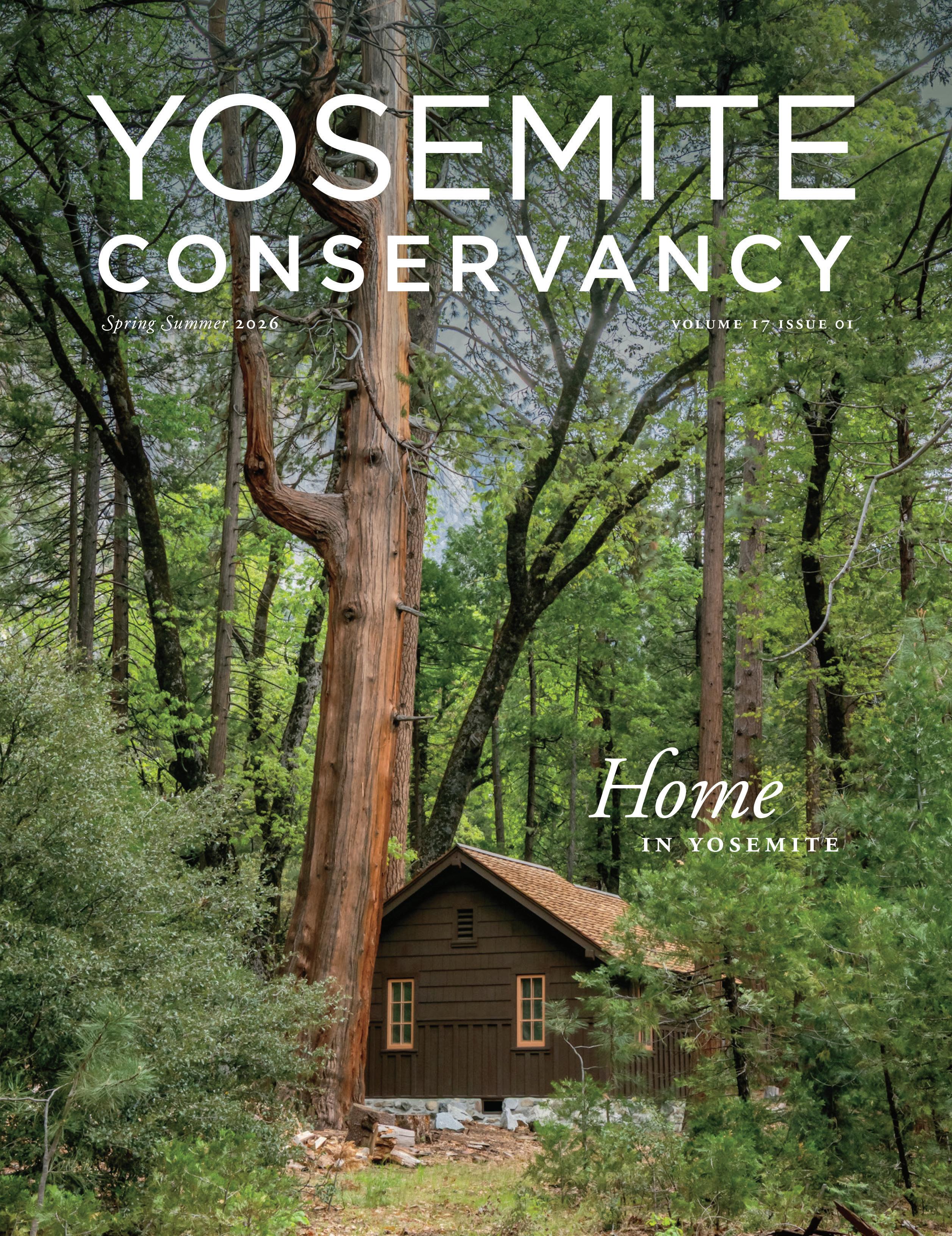
YOSEMITE is one of the most visited, most photographed, and most celebrated places on Earth. But before it was any of those things, it was — and has always been — a home.
It’s home to the birds and bats that fill the skies above, and to towering sequoias and all the creatures that depend on them. These plants and animals don’t just visit Yosemite; they live here and need this place to survive.
It’s home, in the deepest sense of the word, to the Native peoples who live in and care for this land, as they have for thousands of years. Their presence, their knowledge, and their continued connection to this place are part of what makes Yosemite what it is.
It’s home to the people who dedicate their careers to this park: rangers, naturalists, scientists, volunteers, Conservancy staff, and others. That’s why the shortage of affordable housing in and around Yosemite isn’t just a practical challenge; it’s a stewardship challenge. When the people who care for this place can’t live near it, everyone feels the impact.
And Yosemite is home, in a sense, to the visitors — millions of people from all around the world — who come to the park to mark milestones, find stillness, and reconnect. That kind of bond is something worth protecting.
The stories in this issue reflect all these connections. They remind us that Yosemite isn’t just a destination — it’s a living place, a home. And if we think of it as that — a home that belongs to all of us and to the generations who will come after us — then how we treat it starts to feel personal.
With gratitude,
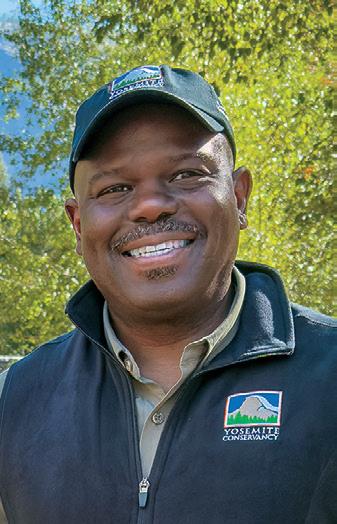
Cassius M. Cash PRESIDENT & CEO
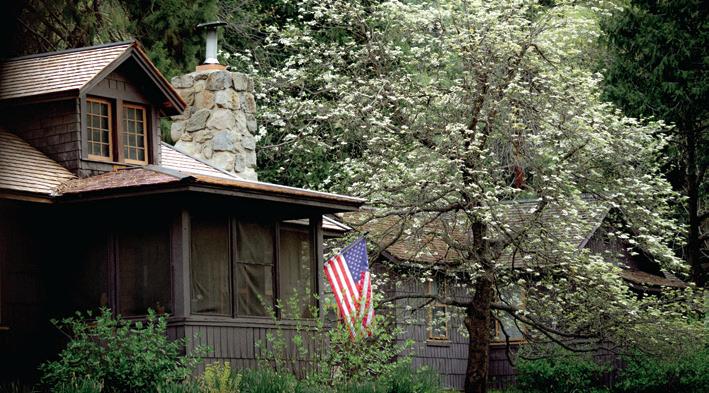
50+ years after the last Tribal village in Yosemite was intentionally destroyed, the Southern Sierra Miwuk Nation reclaims a piece of home with the return of the village’s last remaining cabin. PAGE 16
The Yosemite Museum celebrates a century of historical preservation and visitor connections. PAGE 20
Working in Yosemite is a dream for many, but the hidden challenge of housing and the cost of living in the region pose big risks to the future of staffing in the park. PAGE 4
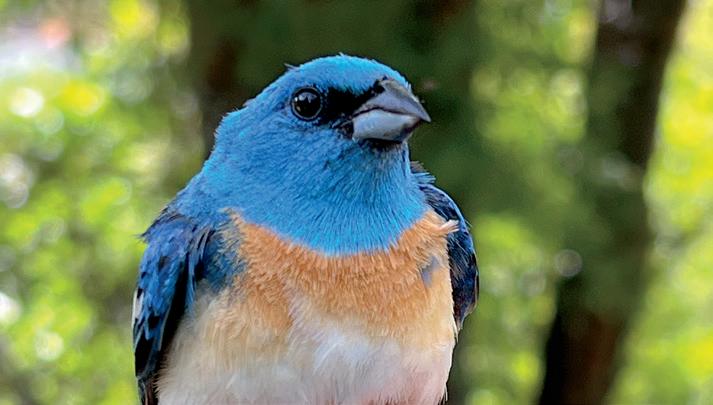
A world of winged creatures lives in the skies above Yosemite; some are permanent residents, while others are seasonal, migratory visitors. PAGE 12
In a park shaped by millions of visitors each year, seemingly small choices can leave lasting impacts on the landscape. PAGE 22
Friends of Yosemite share their stories inspired by a lifetime of connection to the park. PAGE 25
Yosemite Conservancy naturalist Dick Ewart has devoted himself to Yosemite for over half a century as a park ranger, volunteer, Search and Rescue responder, and more. PAGE 26
Trees are someone’s home! Discover the wonderful world of wildlife living in the world’s largest trees: giant sequoias.
PAGE 28
Park fans share their photos of Yosemite.
PAGE 30
OUR MISSION Yosemite Conservancy inspires people to support projects and programs that preserve Yosemite and enrich the visitor experience for all.
The hidden challenge shaping the park’s future
BY KIMIKO MARTINEZ
has always inspired a certain kind of devotion.
People travel across the world to stand beneath El Capitan or watch sunlight move across Half Dome. For the millions who visit each year, the park offers a rare kind of awe; it’s a place where towering granite, ancient sequoias, and rushing rivers feel almost timeless.
For those who work here, that sense of wonder often becomes something deeper: a commitment to protecting one of the most iconic landscapes on Earth.
But living in Yosemite has never been simple.
“The first thing — and it’s the thing that draws all of us here — is the beauty and the fairy tale aspect of it all,” says Cory Goehring, Yosemite Conservancy’s senior naturalist and outdoor programs manager, who has spent 18 years working in the park. “But the reality is that it comes with massive challenges.”
Among the biggest of those challenges — and one most visitors never see — is housing. In and around Yosemite National Park, a severe shortage of local, affordable, and safe housing for park employees and their families is making the dream of living and working in Yosemite nearly impossible.
“This is an existential issue for the
park,” says Yosemite National Park Superintendent Ray McPadden. “If you can’t house them, you can’t hire them. That’s the reality.”
For those who choose to build a life near Yosemite, the rewards are substantial: daily life in one of the world’s most remarkable places, a community where neighbors are emergency contacts, and children run loose at evening gatherings while parents linger over food and music.
“We all have this shared passion for place,” Goehring says. “But we also have the same shared struggle, and it doesn’t work without community.”
But that sense of community is built on an unstable foundation.
Housing near Yosemite is scarce, expensive, and for many employees, simply out of reach. Much of the
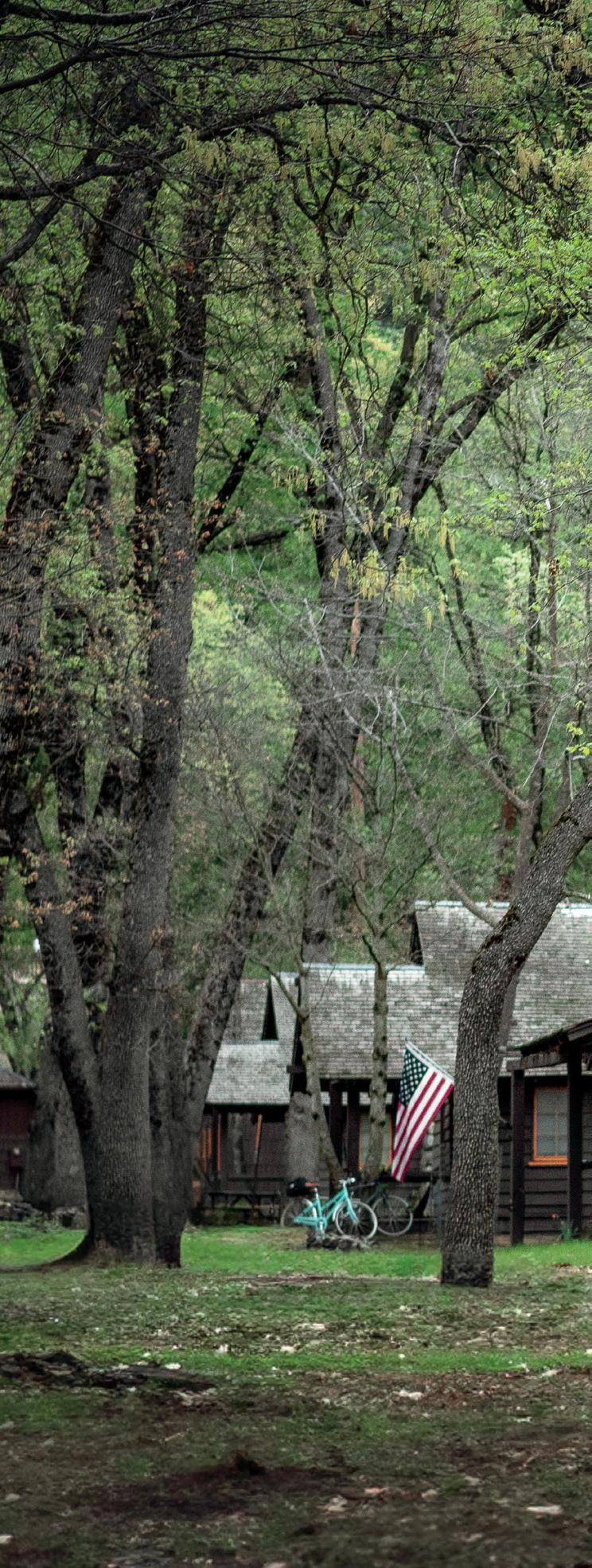
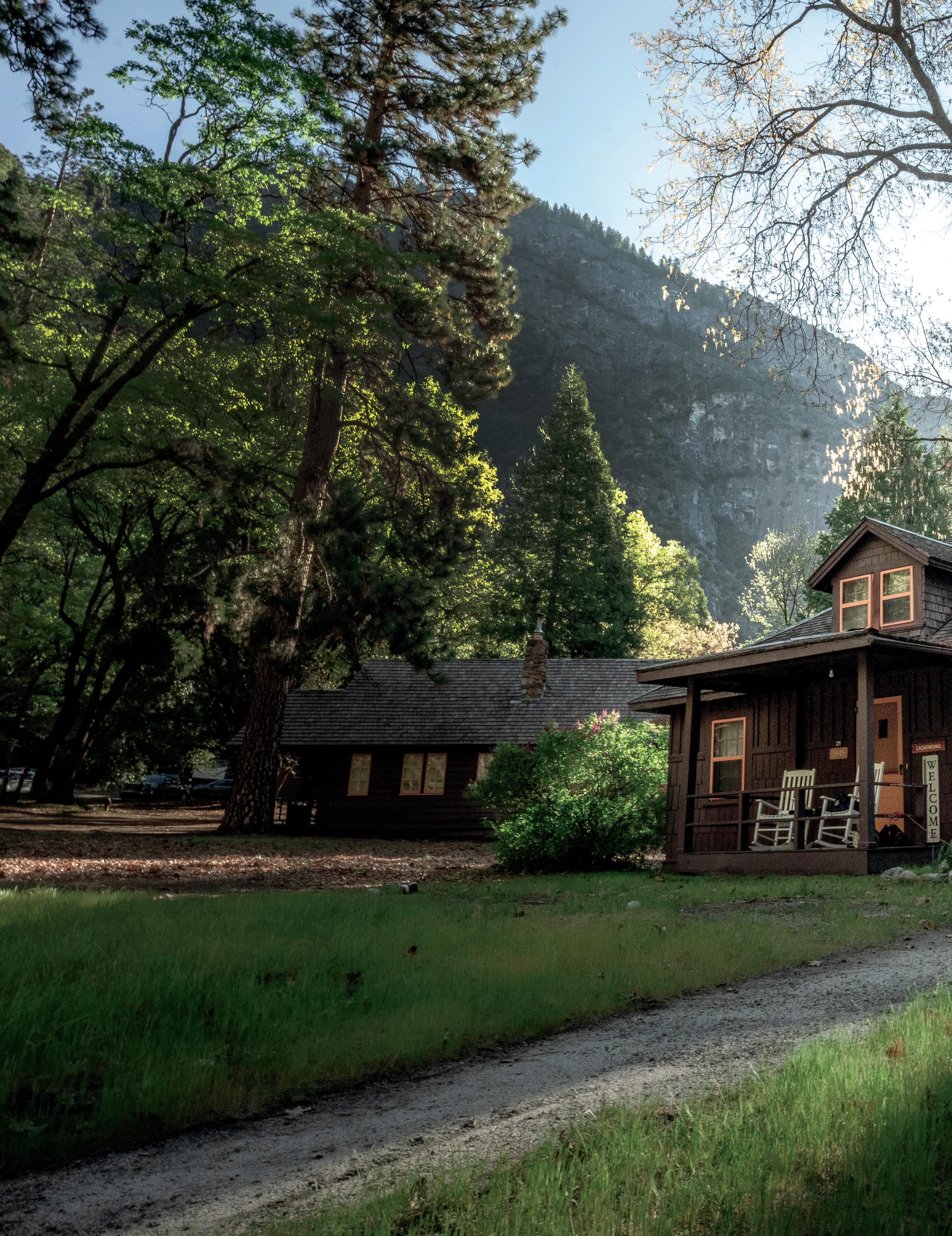
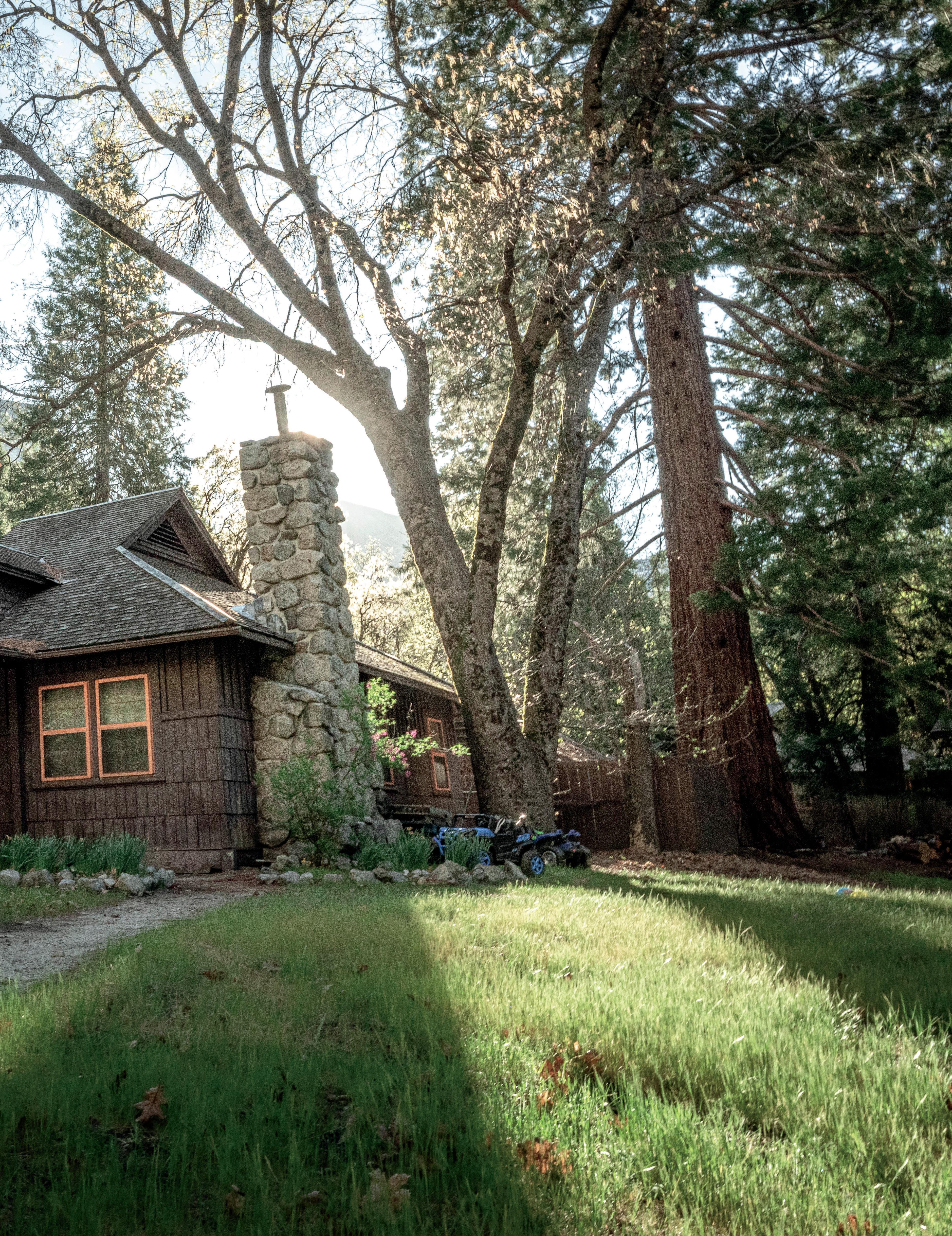
SINGLE-FAMILY HOMES nestled in Yosemite Valley. Many of the homes visitors see in the Valley are designated for Yosemite Hospitality employees.
National Park Service housing (some pictured above) is mostly limited to seasonal employees and first responders.
“The closer you get to Yosemite, the further it pushes you away.”
Cory Goehring SENIOR NATURALIST
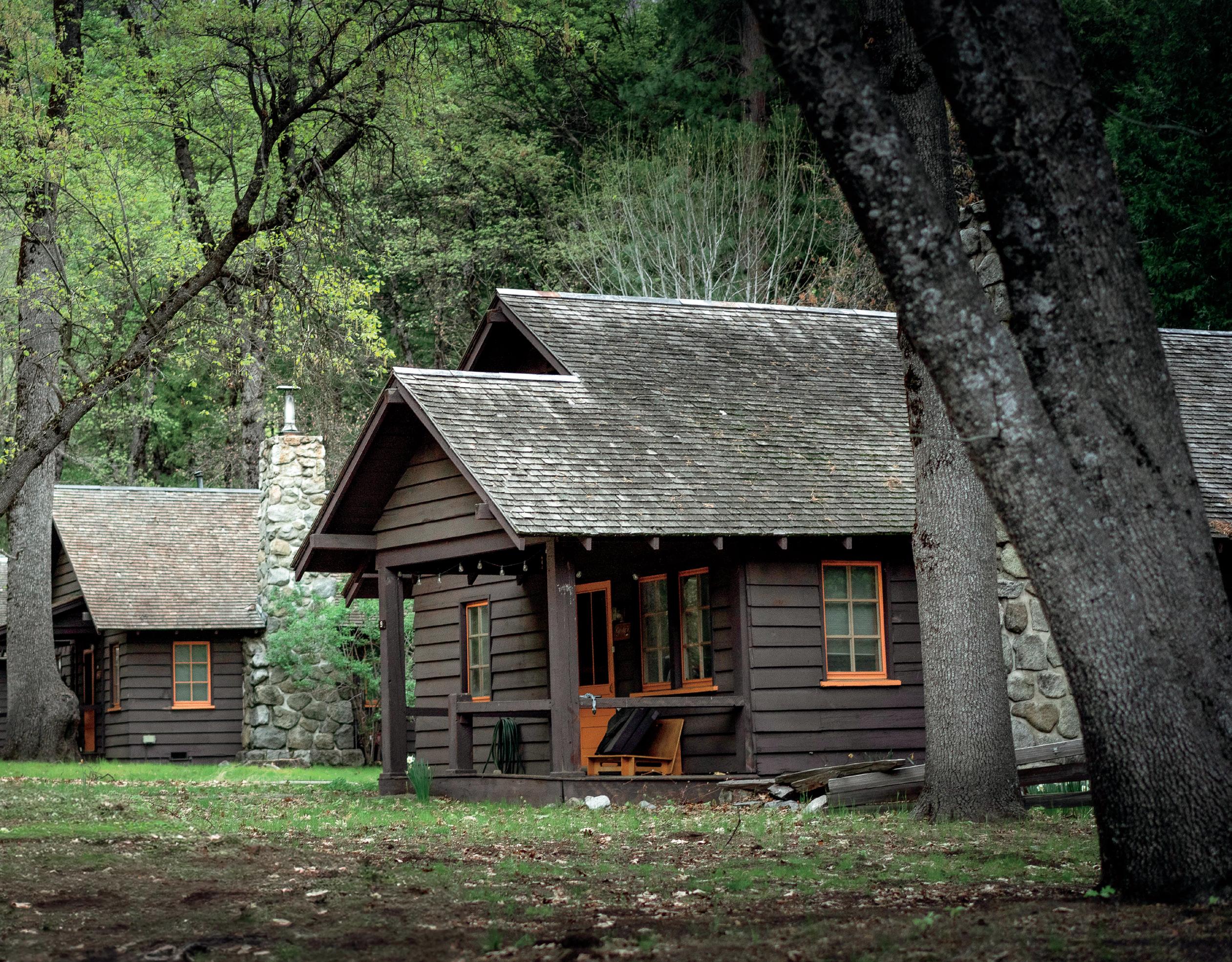
housing visitors see in Yosemite Valley is dedicated to Yosemite Hospitality, the park’s concessionaire. The limited National Park Service (NPS) housing that does exist is often designated for required occupants like first responders or seasonal employees — meaning that, for some staff, a career advancement or changing positions can result in moving out of park housing entirely.
“With a lot of jobs [in Yosemite], when you get a career advancement, it doesn’t come with housing, so, with that career advancement comes all these sacrifices,” Goehring says. “The closer you get to Yosemite, the further it pushes you away.”
Goehring remembers spending two and a half years living in Mariposa after he and his family were displaced from their long-term housing in Foresta, a small community within park boundaries. The drive back
and forth — on winding, steep roads and in unforgiving summer traffic — could easily consume three or more hours a day. To avoid the summer rush on days when he and his wife had to be in the Valley early for work, they often opted to camp or crash with a friend who had housing inside the park.
He’s not alone in that experience.
Options narrow quickly for those without park housing: a long commute, a shared room, a van parked in the back of a friend’s driveway, or living in trailers, sheds, or other temporary structures. Mariposa County’s own housing study documented new NPS staff accepting positions and then quietly living in their vehicles in undisclosed locations — or quitting without notice when no housing materialized.
“They live in their cars and temporary structures like
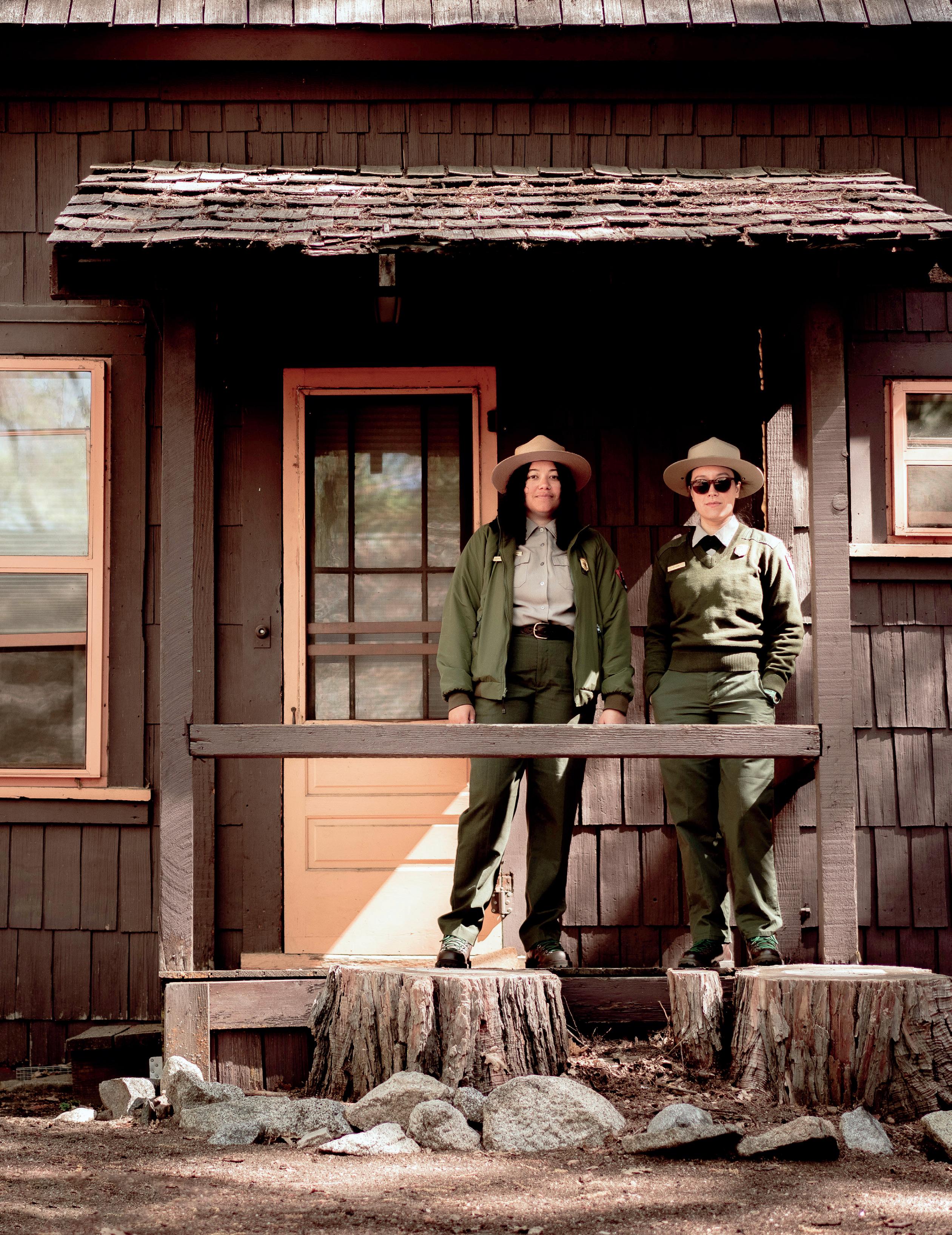
EMPLOYEE HOUSING
Tuff Sheds, and they shower at the gym,” says Mariposa County Supervisor Jennifer Kiser.
For those who do find a way to stay, the housing challenge is only the beginning. The park’s remote location adds its own set of pressures. Because the park sits deep in the Sierra Nevada and far from the services many modern individuals and families rely on, living here often means long drives along narrow mountain roads simply to handle daily life: groceries, a doctor’s visit, a school pickup.
“The closest amenities are 45 minutes away in Mariposa ... and Mariposa is even a remote town,” Goehring says. “Really, it’s an hour-and-a-half drive to Merced for the normal day-to-day things.”
Cell service remains spotty in many areas, and internet, whether it’s DSL or Starlink, can be unreliable.
The area’s only childcare facility serving park staff — supported in part by Yosemite Conservancy — runs Monday through Thursday, closes early when weather or illness strikes, and operates not in Yosemite Valley, but 30 minutes outside the park in El Portal.
The park’s remoteness can also translate to tourismdriven prices for staff.
Gas at El Portal can run $1 to $2 per gallon more than in nearby gateway communities. For employees already stretched by housing costs, that commute — essential for anyone living outside the park — compounds quickly.
“It’s like living inside Disneyland. The prices are all wild for the amenities offered,” Goehring says. “Along with housing, it’s the main reason we can’t attract people to work here. It’s a beautiful paradise, but the people that build a life here have to make sacrifices.”
The housing shortage extends throughout the Yosemite region, and it’s been getting worse.
Ben Goger, a former NPS employee who’s now a senior planner for Mariposa County, has spent years mapping exactly how the housing market unraveled. Home sale prices in Mariposa County have jumped by nearly $200,000 in the past decade. Average rents have climbed to roughly $2,000 a month.
That may seem affordable for Californians living in
major metropolises. But for many park employees, that number is simply out of reach.
About 130 of the 400 permanent NPS positions in Yosemite earn under $50,000 annually. That means under standard affordability guidelines, an employee at that salary can reasonably afford about $1,250 a month in rent.
“That’s (more than) $700 extra that people are paying every month for housing,” Goger says.
Add in the rising cost of groceries, fuel for the hourplus commute, and other necessities, and the costs to live and work in the Yosemite region can quickly become overwhelming.
It’s a pattern McPadden has watched compound over time: “We’ve always been held back by our housing shortages. The forces driving it have simply grown stronger.”
The problem, Goger is quick to note, extends beyond the park.
Most visitors assume Yosemite’s workforce lives where they work: in the Valley, steps from the famous meadows and granite walls. The reality is very different.
The National Park Service (NPS) has a deficit of 300 housing units in Yosemite. Much of the housing visitors see in Yosemite Valley is dedicated to Yosemite Hospitality, the park’s concessionaire. Only a small fraction of permanent NPS staff actually live in Yosemite Valley.
“It’s predominantly law enforcement, emergency services, mechanics, and some, but not all, senior leadership,” says Yosemite Superintendent Ray McPadden. “It’s a fairly small number of people who actually live in Yosemite Valley. Just your core — the people who are really keeping the critical systems running.”
Everyone else navigates the same private housing market, competing for scarce rentals in El Portal, which is limited to park employees only, or out in Midpines, Mariposa, or even Merced, commuting one to two hours each way.
“It’s not just National Park Service employees,” he says. “It’s everybody who’s doing community-service functions right now struggling with the cost of housing.”
Kiser frames it plainly: “When teachers, nurses, deputies, social workers, and county staff can’t find a rental, we don’t just lose employees, we lose service capacity.”
Two forces have turbocharged the region’s housing crisis in recent years. The first is the explosion of short-term rentals (STRs), such as Airbnb and VRBO. In Mariposa County, active STRs grew from roughly 243 properties in 2010 to more than 900 by 2024, now accounting for nearly 9% of the county’s entire housing stock. The ripple effect on long-term rentals has been severe.
“It has completely changed the market around Yosemite National Park,” McPadden says.
The second force is fire insurance — or the near-impossibility of getting it. Even where housing is available in the private market, many employees simply cannot afford insurance coverage at a price that makes buying a home viable.
“The financial risk to the individual person — especially one at these pay grades,” McPadden says, “it just can’t be done.”
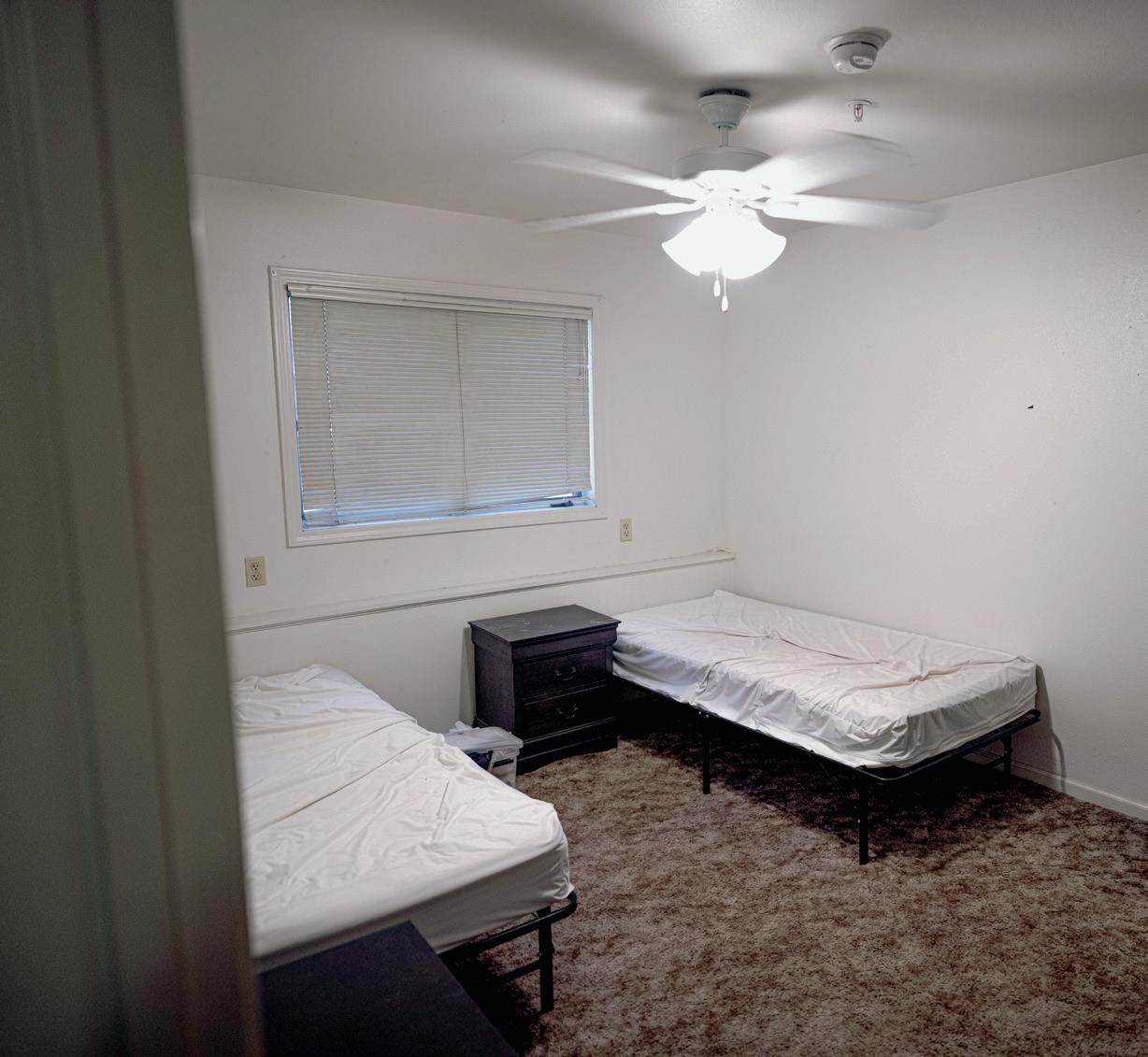
Inside the park, the housing that does exist is often aging, and repairs, retrofits, and remodels are severely underfunded. Some units are more than a century old and prone to losing power for days at a time during storms. Some employees have to walk in the dark from restrooms or shower facilities back to tent units. Others live in trailers up to 40-plus years old — a legacy of a decades-old attempt to address housing shortages.
According to McPadden, the NPS’s annual construction budget for the entire national park system is about $150 million and hasn’t changed in years. With inflation, that budget is quickly eaten up by the NPS’s most pressing issues and emergency repairs nationwide. There’s nothing left for fixing aging units or building new housing in places such as Yosemite.
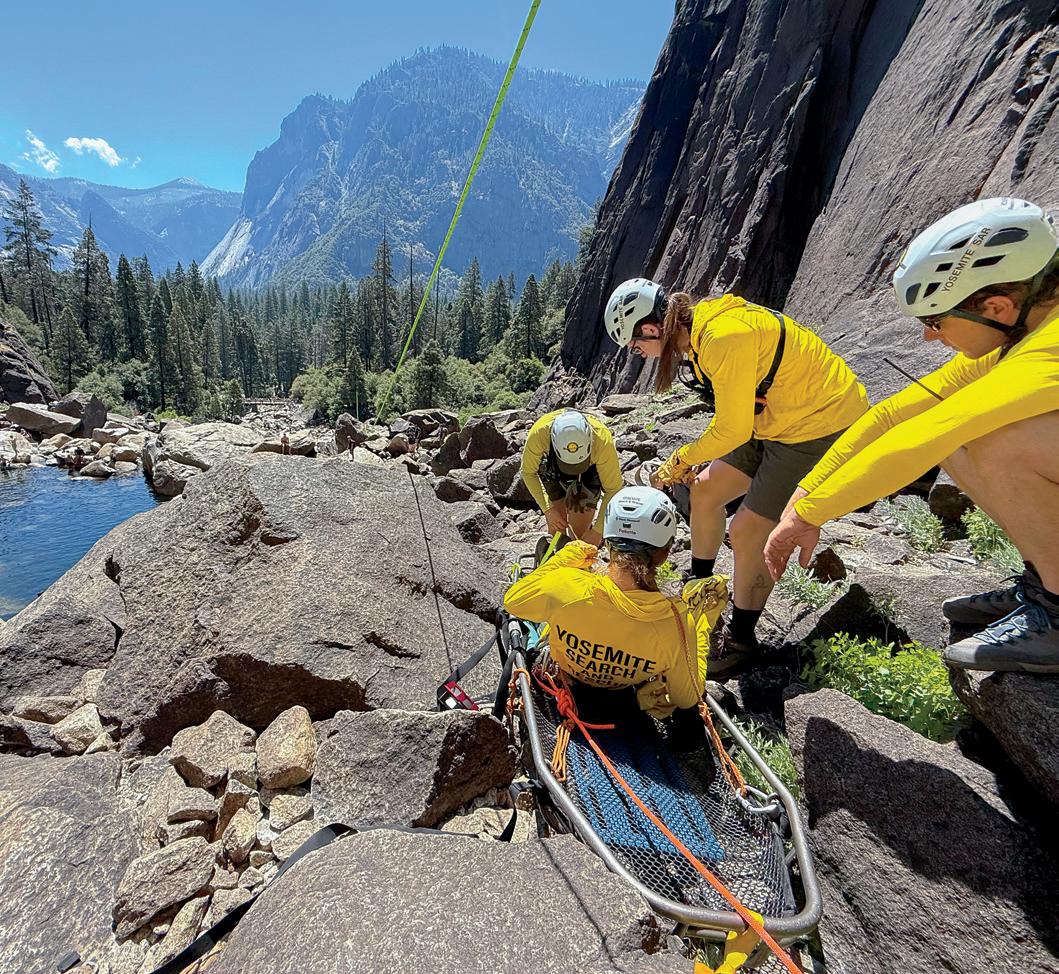
For visitors, McPadden says those consequences are not abstract. For example, without enough housing to recruit and retain snowplow drivers, Tioga Road and Glacier Point open later or not at all. Without high-voltage electricians, vital infrastructure would go unmaintained.
“Our critical systems can fail,” McPadden says. “We end up closing areas, not being able to open areas, or opening them very late.”
300 bed deficit for Yosemite NPS staff, per a 2023 housing study by the National Park Foundation.
$390,000 median home price in Mariposa County today, up nearly $200,000 in a decade.
$2,000/month average rent in the region, while $1,250/month is what an employee making around $50,000/year can afford under standard guidelines.
243 900+ growth in active short-term vacation rentals in Mariposa County since 2010.
300+ homes lost in Mariposa County to wildfire and extreme weather since 2017.
When asked what it would take to fix the housing inside the park — new units, renovated ones, the whole picture — McPadden doesn’t hesitate: “It’s mainly money.”
Solutions exist, but none of them are simple or cheap. Goger and Kiser point to a suite of county-level tools already in motion: accessory dwelling units, new limiteddensity rural building standards that restrict short-term rental conversion, and a multi-partner workforce housing project — now in development in Mariposa — designed specifically to address the “missing middle” of workers who earn too much for subsidized housing but too little to compete in the private market.
Critically, Kiser says, the community is ready for it. “People are not asking for urban density; that’s not what we’re looking for here,” she says. “But targeted housing where it fits near services, with infrastructure, deed-restricted where possible — that’s 100% the political appetite.”
McPadden acknowledges the enormity and complexity of the issue.
“The issue is on steroids here around Yosemite National Park,” he says, “by virtue of the interest in the park itself and the ability of people to use properties for short-term rentals, and to make significant money that way.”
But he’s cautiously optimistic that momentum is building. For Yosemite Conservancy, the work is already underway. Over the past decade, the organization has
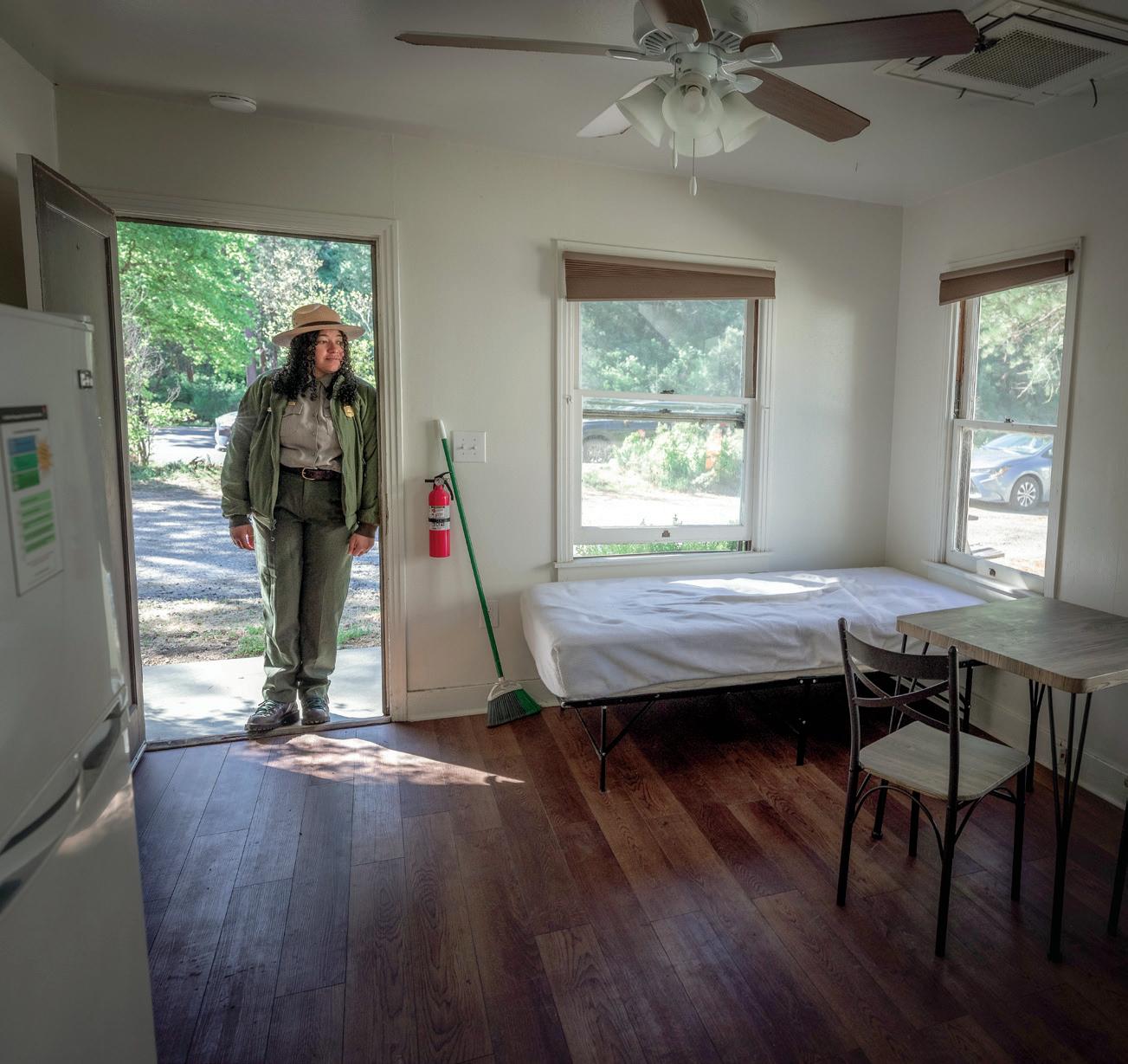
grown from zero to 25 beds of employee housing in El Portal. In doing so, it has built something harder to quantify than beds or square footage: the ability to retain institutional knowledge and expertise that keep the park running well year after year.
“With the ability to offer someone not only a position but a stable place to live, we’ve been able to retain people with a deep understanding of the park,” says Adonia Ripple, the Conservancy’s chief of Yosemite Operations. “That continuity is foundational.”
Late in the day, when the crowds thin and the valley quiets, it’s easy to remember why so many people stay.
Granite walls glow pink in the fading light. The Merced River moves slowly past the meadows. Somewhere nearby, a naturalist prepares for tomorrow’s program, a ranger finishes a shift, a scientist checks field notes before dark, and a park custodian completes their rounds.
For those who work here, Yosemite is more than a place to visit.
It’s home — if they can find a place to live.
BY LAUREN HAUPTMAN
hey fly. One by day, and one by night. They fly. But the birds and bats that make their homes in Yosemite have much more in common than just taking flight.
While bats are mammals, and birds are, well, birds, both comprise communities of diverse species. Some bats and birds migrate, and some are fulltime residents of the park. Both traverse the airspace above us, and both find hospitable living spots in Yosemite that always welcome them home.
More than 75% of the diverse bird species studied in Yosemite nest in and close to meadows, which are generally rich in resources. Moist conditions are a key aspect of meadows, creating the perfect habitat for insects that become food for birds. Add in the willows that grow in damp habitats, and songbirds have cover under which they can build their nests and feel protected from predators.
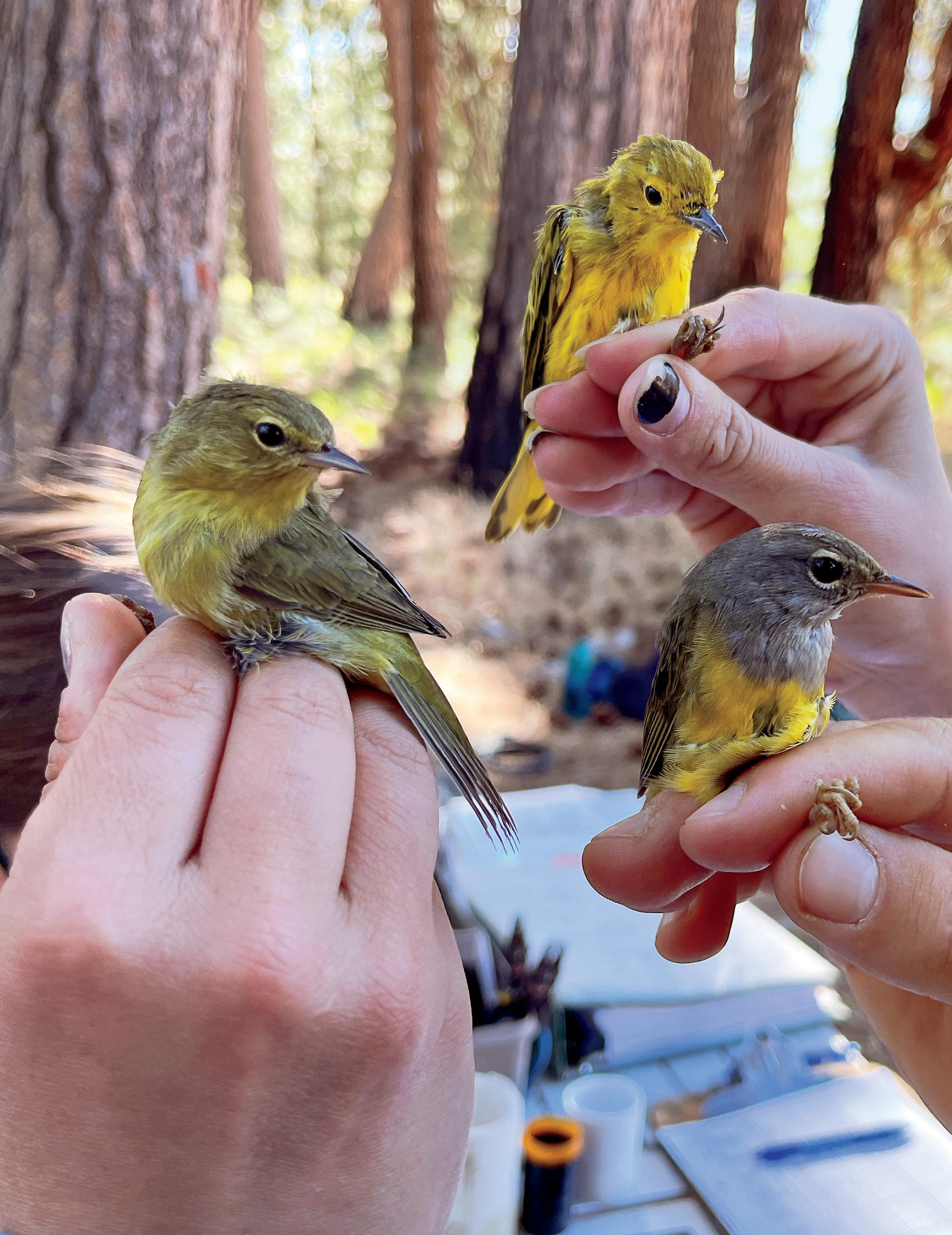
As most of us were taught at an early age, many birds fly south for the winter, though it’s not always a direct flight. For example, thanks to a Conservancyfunded project, we know Black-headed grosbeaks leave their breeding ground in Yosemite heading south, but they make a stopover to enjoy monsoon season in northern Mexico before continuing on to winter near the equator. When they make their way back north to Yosemite the following year, they find the same nesting areas they left behind. It’s a common behavior called “site fidelity.”
“It’s actually quite extraordinary,” says Sarah Stock, Yosemite’s terrestrial wildlife ecologist. “Some birds exhibit very strong site fidelity. We’ve observed this firsthand through our songbird-banding program. By placing our nets in the same locations year after year, we consistently recapture the same individuals in the same spots, which really highlights how faithful these birds are to their chosen sites.”
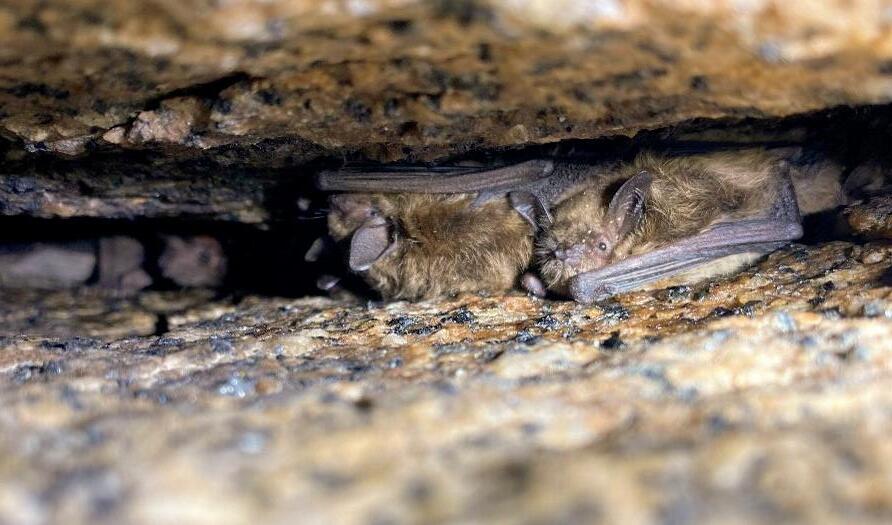
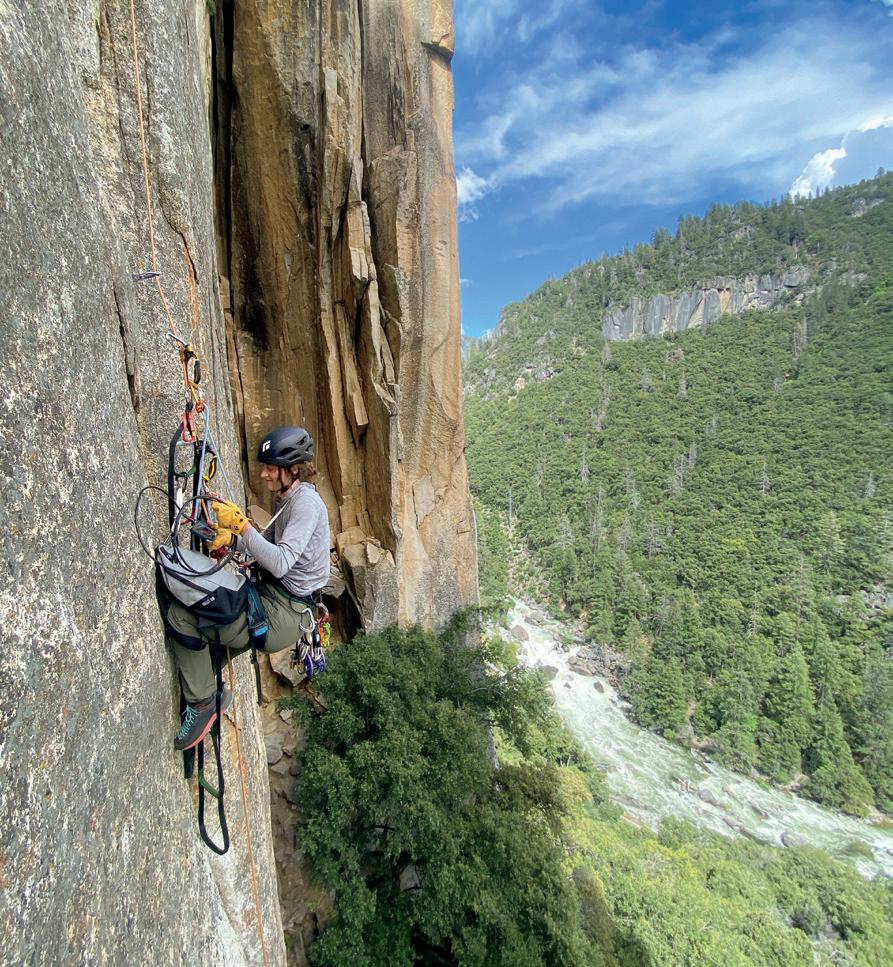
TOP: Bats nestle in the cracks and crevices of Yosemite’s cliff sides — protected from freezing temperatures, wind, and predators.
BOTTOM: NPS biologist
Funded by Conservancy donors for more than 35 years, Yosemite’s songbird-banding program is the longest-standing MAPS (Monitoring Avian Productivity and Survivorship) effort in North America. As part of the MAPS program, a small crew of ornithologists contributes valuable songbird knowledge by opening fine mesh nets over meadow areas to capture, identify, band, and then release thousands of songbirds each summer.
In addition to highlighting the importance of preserving bird habitat, this long-term dataset is also valuable for understanding the impacts of a changing climate, such as habitat loss and alterations caused by drought and fire, and how bird populations respond to those changes over time.
“It’s remarkable to think about their journey over the winter since they were last in Yosemite,” Stock says. “These birds face countless challenges during their migration, whether it’s feral cats or windows they had to avoid, and shopping malls, parking lots, vehicles ... all sorts of challenges. Yet, despite all that, they return to the exact same home here in the park.”
Like birds, bats fly, feed on insects, and make their homes in Yosemite. Many bat species are also migratory, and Yosemite’s researchers helped install a Motus tower at Glacier Point to join an international network of researchers studying migratory patterns. Motus towers provide data to researchers around the globe on a variety of micro-tagged species, from birds and bats to insects.
Contrary to many children’s books that illustrate bats hanging from
“We monitor their roosts and study the environmental conditions that make a roost suitable ... so we can better protect the places they call home.”
Sarah Stock YOSEMITE’S TERRESTRIAL WILDLIFE ECOLOGIST
random cliff sides — where they likely would either freeze or be knocked off — bats cozy up into cracks and crevices that make them feel protected. Their roost sites tend to be deep, where temperature and humidity are stable. Safe at home when resources are scarce, they can put themselves in a physiological state of torpor, which is a temporary reduction in body temperature and metabolism. Some bat species winter in Yosemite in hibernacula, which are roosts where they feel safe enough to hibernate for longer periods of time.
Given the deep and remote locations of many bat roosts, finding them is quite difficult. The Conservancy-funded Big Wall Bats program uses coordinated efforts of technicians, transmitters, and extremely skilled climbers to understand how Yosemite’s 17 native species of bats utilize Yosemite National Park. This work is especially important, as bats throughout North America face threats such as white-nose syndrome, a fungal disease that has caused widespread declines.
“We monitor their roosts and study the environmental conditions that make a roost suitable for them,” Stock says. “This helps us gather baseline information about their roost sites so we can better protect the places they call home.”
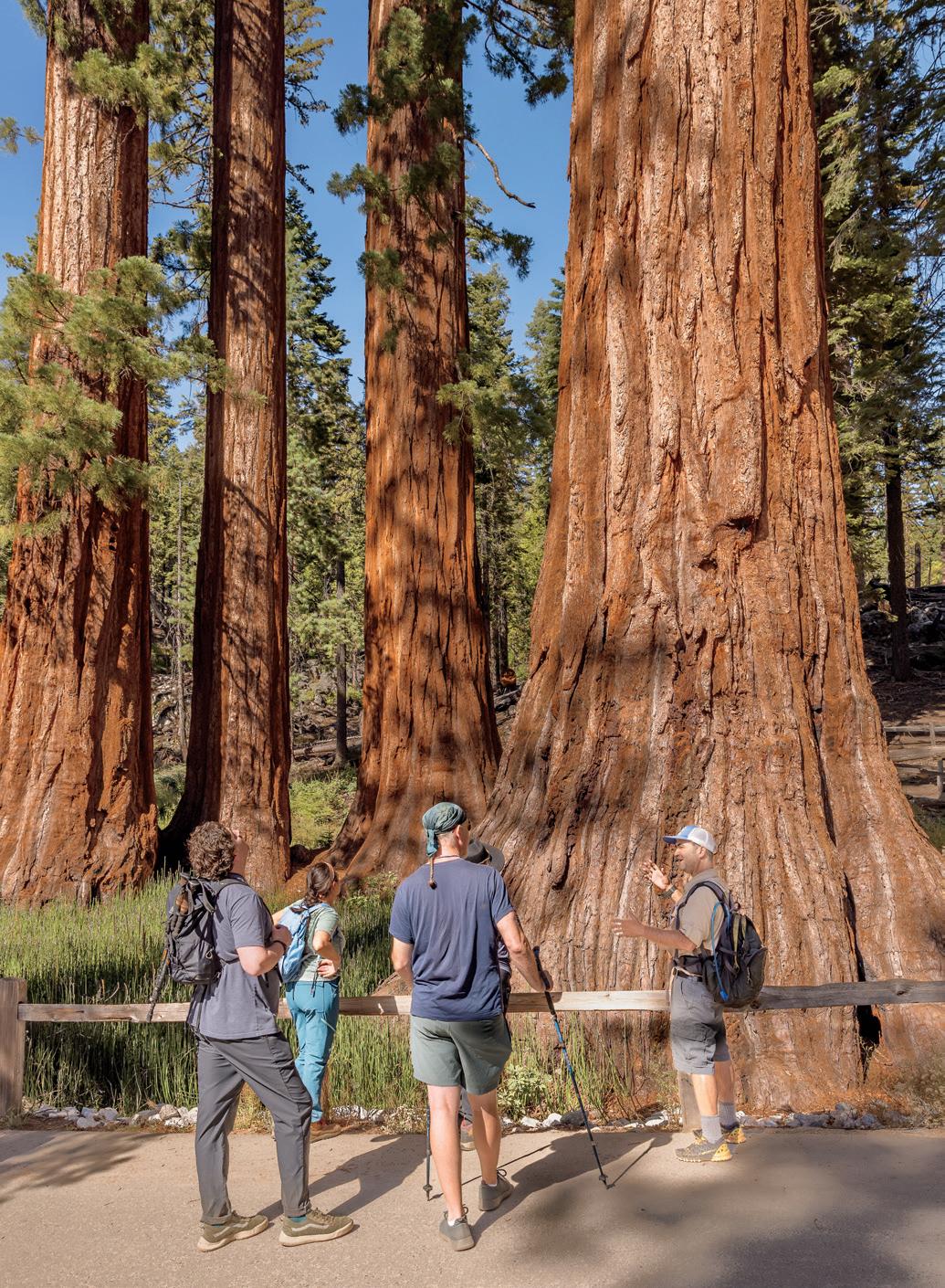
Every Outdoor Adventure and Art Program you join supports the park you love. From stargazing programs and guided hikes to watercolor workshops, see Yosemite through fresh eyes with guided experiences that spark curiosity, deepen your love for the park, and help preserve it for future generations. Plan your next unforgettable Yosemite adventure with us!

50+ years after the last Tribal village in Yosemite was intentionally destroyed, the Southern Sierra Miwuk Nation reclaims a piece of home with the return of the village’s last remaining cabin
BY ZOE DUERKSEN-SALM
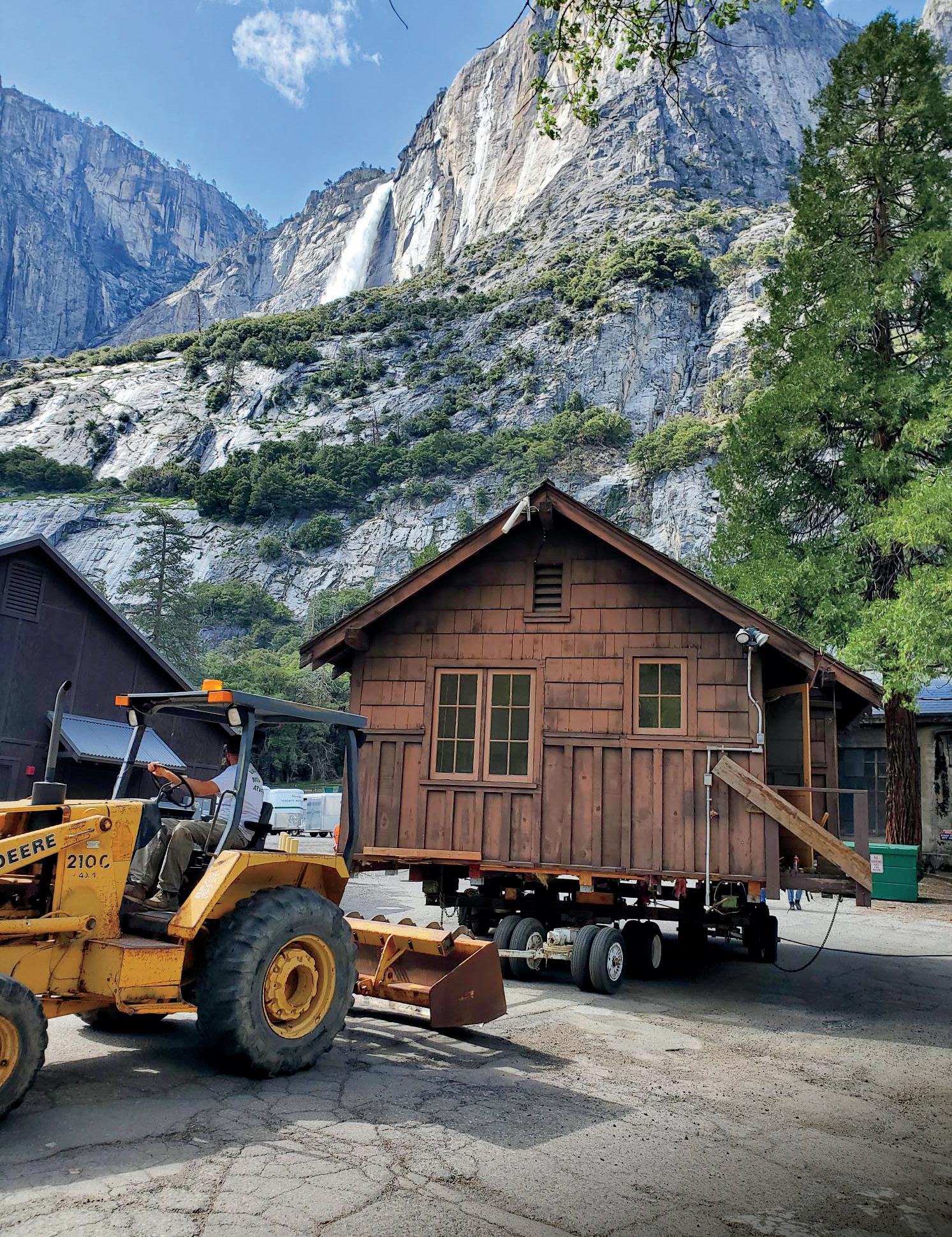
n a crisp May morning in 2023, a wooden cabin makes its way slowly through Yosemite Valley, perched atop a tractor trailer. Its windows are weathered by time, and its floorboards slant from prior relocations. But the cabin never left the Valley and was never forgotten by the people who once called it home.
Just west of what is now Camp 4, the cabin is carefully placed on a foundation that has long awaited the return — not only of the cabin, but of its people.
For thousands of years, Native people have lived in and cared for the land now known as Yosemite National Park. They’ve raised children, built homes, harvested food, managed landscapes, and held ceremonies.
In time, however, that relationship was forcefully disrupted by the arrival of settlers: gold-seekers, ranchers, state-sponsored militia, explorers, tourism prospectors, and others.
“Tribes across California’s desirable landscapes were decimated by approximately 90% through massacre, relocation, disease, and resource starving,” says Echo Davenport, supervisory archeologist and Tribal liaison at Yosemite National Park.
The designation of Yosemite National Park intensified and formalized these waves of displacement. In 1906, the U.S. Army seized the village of Koom-i-ne to make way for park headquarters in Yosemite Valley. Displaced park and concessioner employees of Native descent established a village — now known as the “Old Village” — with their families in the current location of the Yosemite Medical Clinic, adjacent to Ahwahnee Way.
Less than three decades later, the people were displaced again following the construction of the Ahwahnee Hotel, this time to the “New Village” built on the ancestral site of Wahhoga.
Fifteen wood cabins were built by the National Park Service (NPS) here in Wahhoga. Families of park employees of various Tribal descent, predominantly Miwuk and Mono-Paiute, lived at the New Village but were required to pay rent. Still, the people remained deeply connected to their traditions and culture. They held ceremonies. They stewarded the land. They raised families. They lived in community for more than 30 years.
In the 1960s, however, a growing tourism industry led to the re-envisioning of land use in Yosemite Valley and
the NPS decision to expel Native residents from Wahhoga altogether. For reasons still not fully explained, Wahhoga’s wood cabins were burned down in a fire-training exercise with belongings inside. With no other option, families were forced to leave.
“There are people alive today who were there in 1969 and saw their family’s homes burned to the ground,” Davenport says.
Only one of those structures was spared — the Wilson Cabin — and was relocated within the Valley for government purposes.
Provoked by the burning of Wahhoga, Les James and Jay Johnson of the Southern Sierra Miwuk Nation formed the American Indian Council of Mariposa County in 1972 to give a collective voice to their people.
“Everyone has their own stories, but to have one powerful voice, that’s what has sustained us,” says Sandra Chapman, chairwoman of the Southern Sierra Miwuk Nation. “Our elders stood before the park service and asked for the last cabin back, for the last village of Wahhoga to be given back to us.”
While Yosemite cycled through a dozen superintendents over the next five decades — Chapman herself has worked with seven — Tribal leadership remained consistent.
“The Tribes have always been here and have remained resilient and committed,” Davenport says. “It is because of this continuous presence that the vision of stewardship, education, and healing in Wahhoga has persisted and is finally coming to fruition.”
Slowly but surely, the vision came to life. The plan for an Indian Cultural Center at Wahhoga was included in the 1980 Yosemite General Management Plan. Ground was broken in 2009. The Wahhoga Committee was established in 2010 to uphold cultural and spiritual practices at the ancestral site. A cooperative agreement was signed in 2018, granting the American Indian Council of Mariposa County authority to oversee the ongoing operations and maintenance at Wahhoga. Construction of the ceremonial roundhouse was finalized in early 2023, marking the return of ceremony to Wahhoga.
And on that spring morning in 2023, the Wilson Cabin came home.
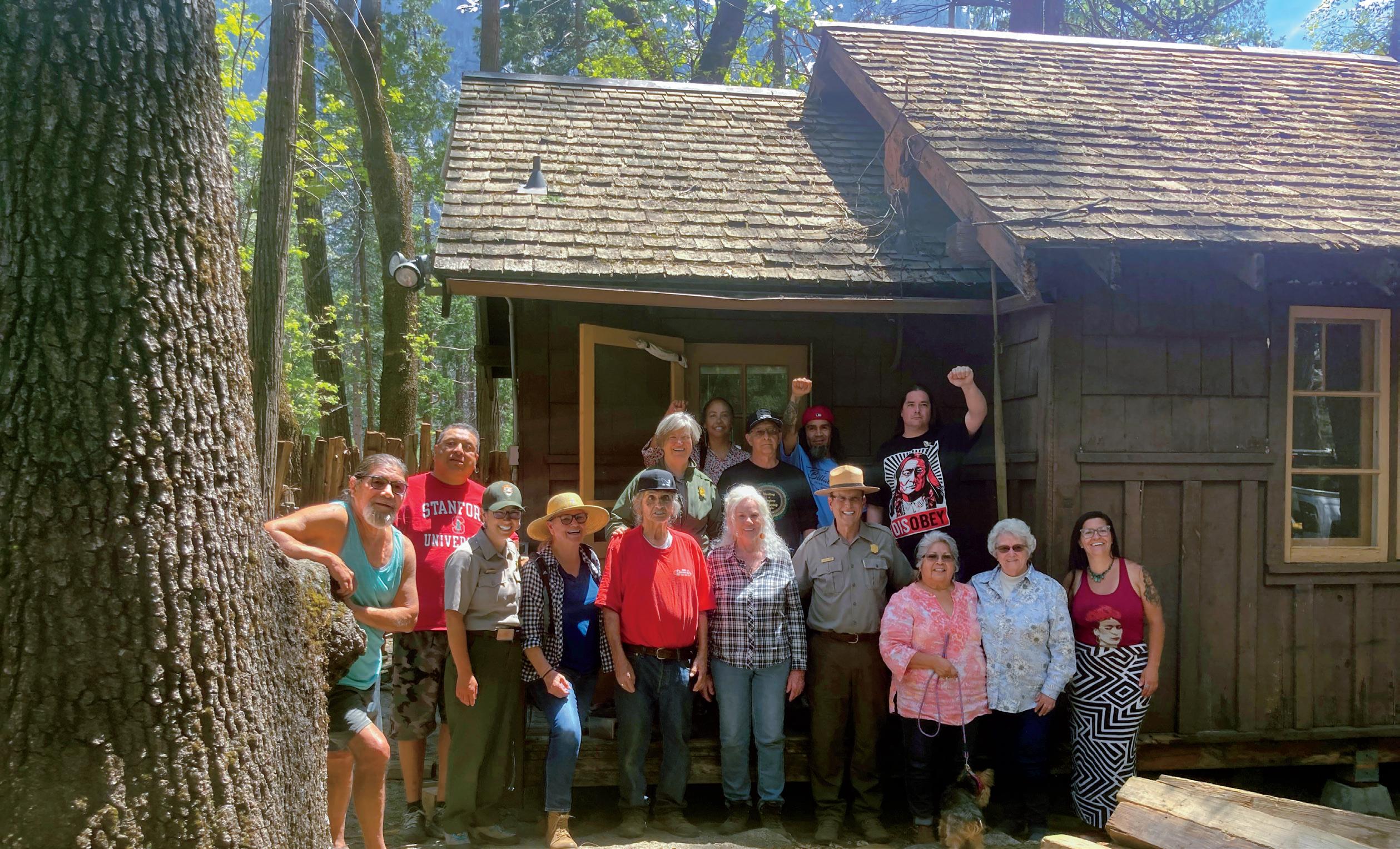
“To know that the cabin’s return could happen in my lifetime — and in the lifetime of some of our elders — it was like a dream,” Chapman says.
That dream did not happen overnight. It took decades of advocacy, the persistence of the Wahhoga Committee, and collaboration with park leadership. For years, elders Johnson and James worked diligently with park superintendents to champion the return of Wahhoga. Johnson and James did not live to see roundhouse completed, the Wilson Cabin returned, or the still-awaited federal recognition of the Southern Sierra Miwuk Nation, but their influence is felt today in every corner of Wahhoga and in continued relationships between Tribal leaders and the NPS.
Chapman notes that one of the many things James and Johnson taught her was, while the trauma of her people should never be forgotten, those in the NPS responsible for past harms are not the same people working for the park today.
“We can’t keep dwelling on the bad history,” Chapman says. “There is good history there, too. We got our Wilson Cabin back. We built our roundhouse. We have ceremonies there now. We must work together with the park service, instead of working against each other.”
Collaboration was front and center in the Wilson Cabin’s restoration following its return. In 2025, the park’s Historic Preservation Team performed a full rehabilitation of the building, funded by Conservancy donors. They stabilized the foundation, added a stone skirt, rebuilt the roof, repaired windows, fabricated screens, repaired exterior siding, and rebuilt the welcoming front porch — all while preserving as much original material as possible and ensuring historical accuracy.
“The cabin holds the family’s history of walking on those floors and touching those walls; you don’t want to replace that,” says Kevin Brothers, Historic Preservation Team lead. “Our goal is to revitalize buildings as close to what they were at the time of construction.”
In harmony with the Wahhoga Committee’s vision of education and stewardship, two Tribal interns were hired to assist in the restoration: Joseph Long and Shawnya Peterson.
“It felt so accomplishing to be a part of it,” says Long, who is also the fourth great-nephew of Alice Wilson, one of the cabin’s original residents. “It felt like helping out your grandma. Even working there, I could feel the energy
of my people just hanging out with me.”
Today, the Wilson Cabin stands quietly in Wahhoga, so seamlessly settled into place that you might think it never left. But it holds the history of removal, fire, relocation, and return within its walls. The cabin has endured displacement, repurposing, and decades of waiting. So, too, have the Native peoples of Yosemite.
For the Southern Sierra Miwuk Nation, the village provides something that has been absent for decades: a sustained, year-round presence in Yosemite Valley. It offers space for ceremony, language revitalization, youth education, and welcoming people from all Tribes to benefit from this spiritual place that holds deep significance to Native people.
The Wilson Cabin’s return is not the end of the story; it is one step toward embracing Wahhoga as a place of remembrance, renewal, and the enduring vibrance of Tribal culture. The village and its people stand not untouched by history but strengthened by survival. Still here. Wahhoga finally returned.
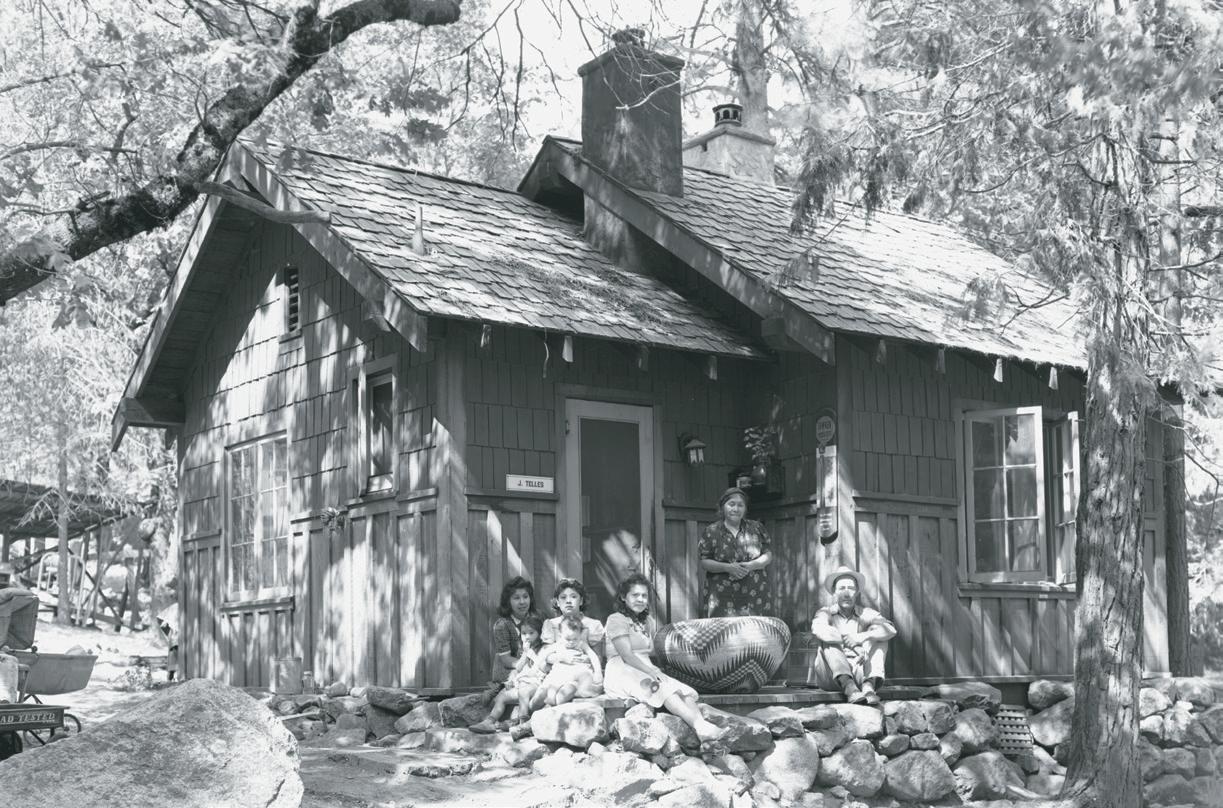
THE TELLES FAMILY in front of their home in the New Village before it was burned down.
The cabin is built in the same style as the Wilson Cabin, and the NPS Historic Preservation Crew used these photos to ensure historical accuracy during restoration. PHOTO: © COURTESY OF NPS.
Learn more about the history and future of Wahhoga in the recently published Wahhoga Village Then and Now.

The Yosemite Museum, the first structure built as a museum in the entire national park system, celebrates a century of historical preservation and visitor connections
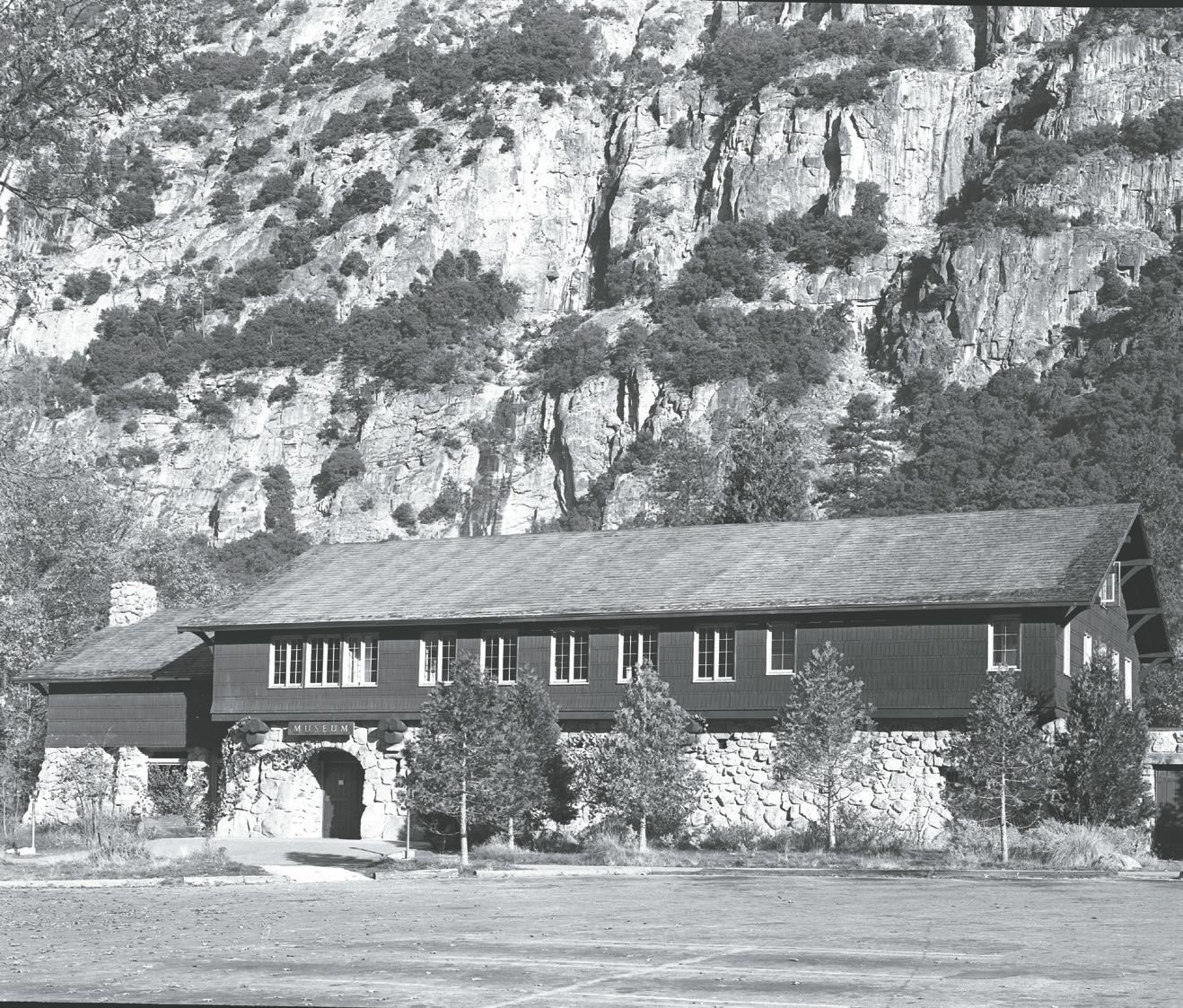
uilt as part of a grand vision with a noble purpose, the Yosemite Museum’s mission is more relevant than ever: to conserve Yosemite’s history and inspire Yosemite’s future.
In the 1920s, a large donation of Native basketry convinced park officials of the need for a new museum building to house and protect their growing collection of historical objects. And so, the Yosemite Museum Association — now Yosemite Conservancy — was established in 1923 as the first nonprofit cooperating partner in the National Park Service to build the Yosemite Museum with funds from the Laura Spelman Rockefeller Memorial.
The Association not only built the museum and opened it to the public in 1926, but also developed the concept of nonprofit stewardship on federal
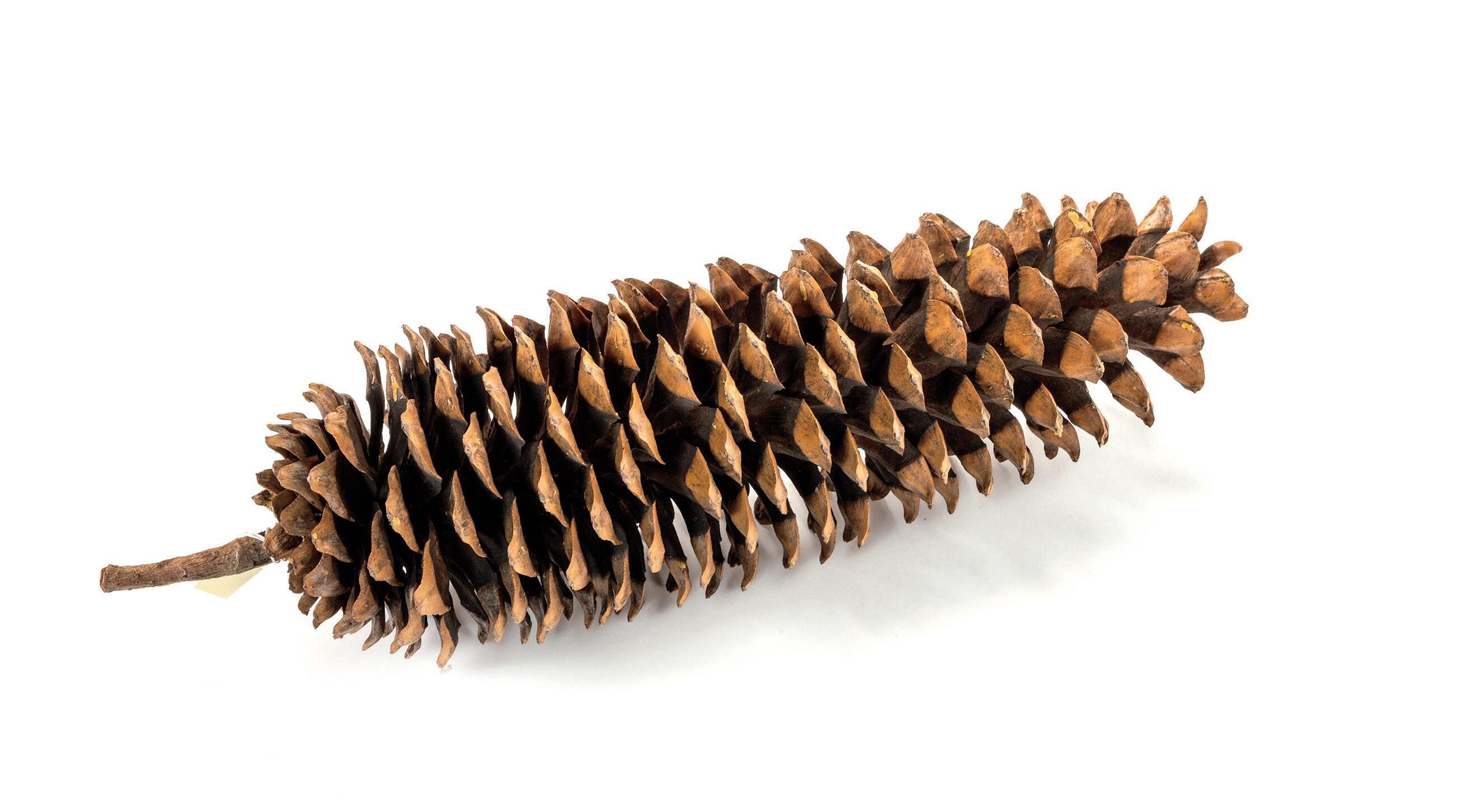
This award-winning cone holds the Guinness World Record for its length of 22.9” (58.2 cm). This specimen was collected illegally in 2000 — collecting specimens in the park without a permit is illegal — but was returned promptly to become part of the Museum’s collection.
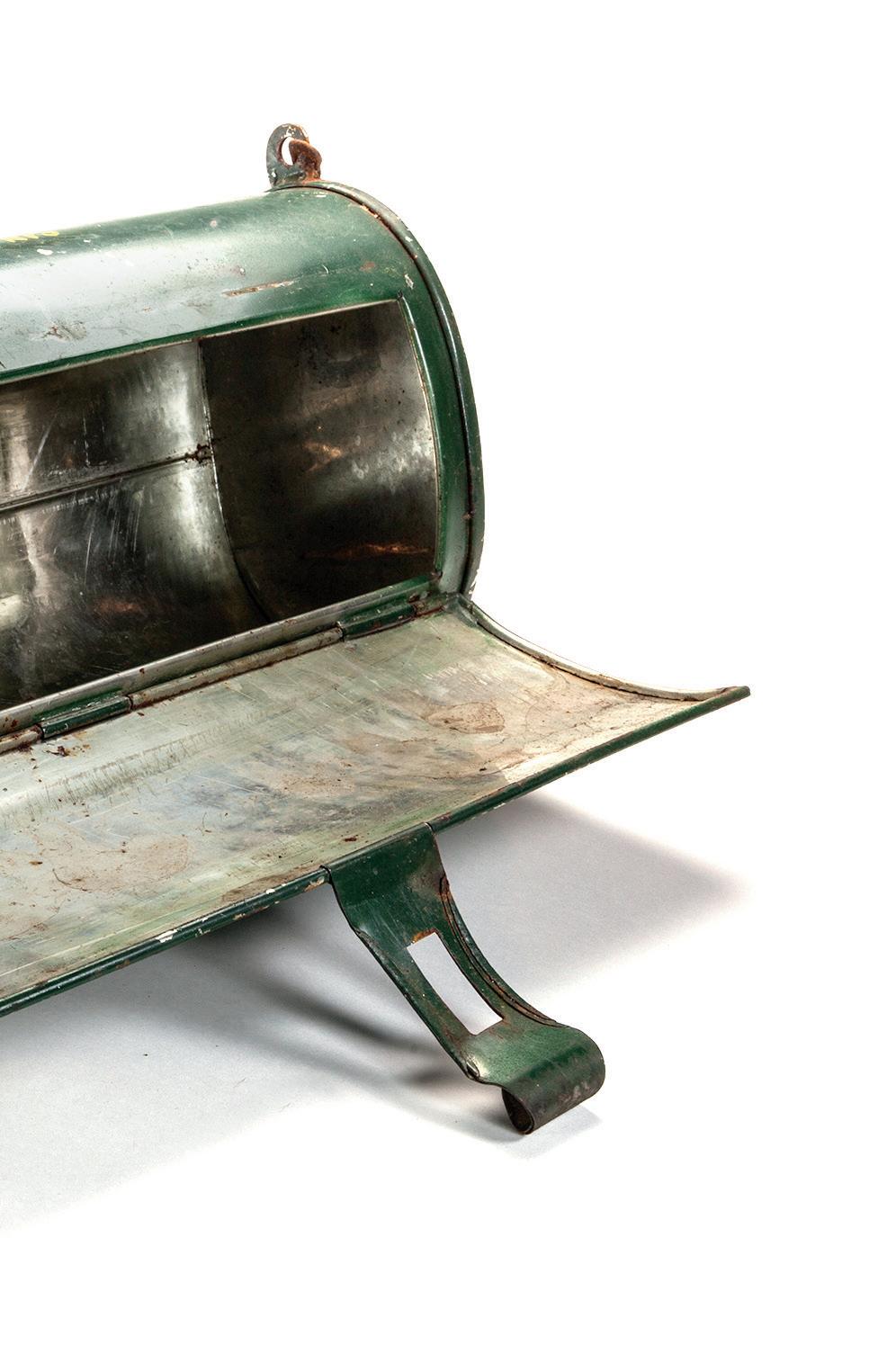
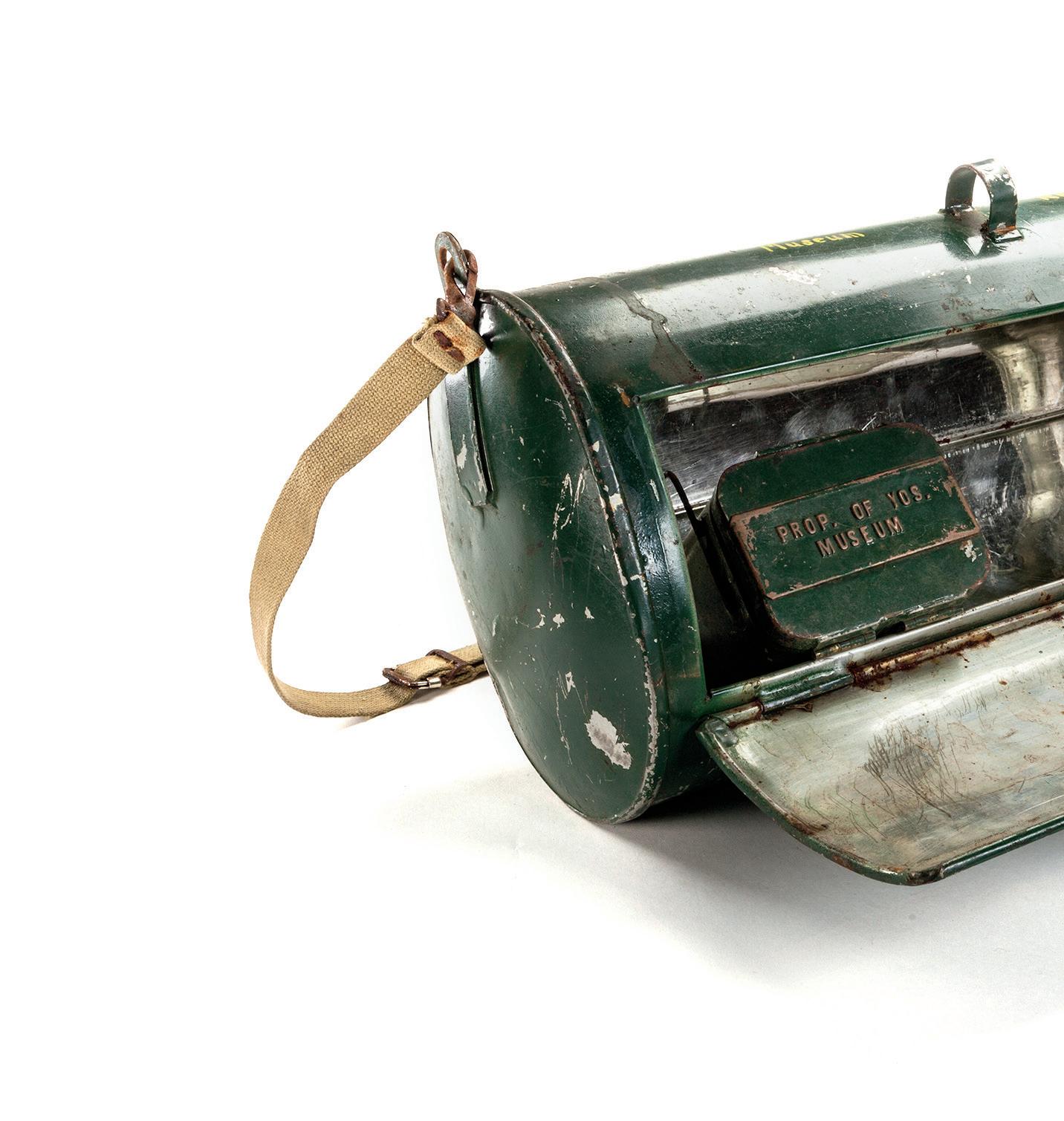
This canister was used by Yosemite Field School participants to collect specimens. Specimens collected by Field School students in these cannisters form the foundation of the museum’s natural history collection today.
lands, and has served as a model for park associations nationwide.
“What began with early Yosemite leaders collecting objects to help people connect more deeply and learn about the park has become a respected and impressive collection of our country’s revered natural and historical resources,” says Laura Bender, Yosemite National Park’s museum curator.
Bender and her team are responsible for the conservation and care of more than 5 million objects in the museum’s collection, including masterpieces of Native basketry, famous landscape paintings and photography, and specimens of Yosemite’s endemic flora and fauna.
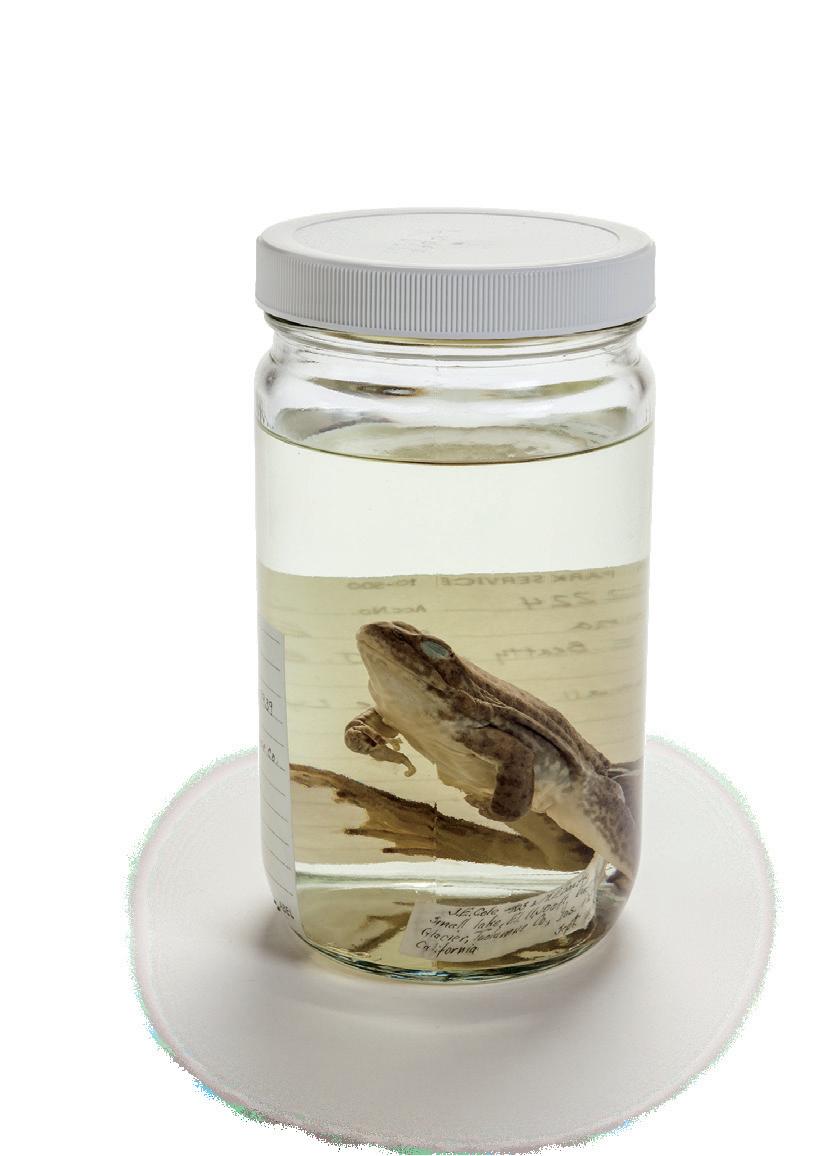
These objects can be portkeys to earlier times, helping us understand the perspectives of those who came before us.
Artifacts left behind by Chinese laborers from Wawona show what immigrants carried into the mountains to help them feel at home. Utility baskets, such as burden and cooking baskets, teach us about the cultural practices of local Tribes. A length of string with a note from Galen Clark about the circumference of the Grizzly Giant connects us to early park leaders.
For some visitors, the museum safeguards family heirlooms.
“I’ve seen people brought to tears seeing their family’s history in the museum’s collection, from the brother and sister reliving their great-grandfather’s 1896 bicycle trip to Yosemite Valley by looking at his signature in one of the hotel’s registers, to the mom showing her little boy the buckskin dress on display in the Indian Cultural Exhibit, saying, ‘That was your relative’s dress,’” Bender says.
With the support of Conservancy donors, the Yosemite Museum is celebrating its centennial this year with an exhibit called “A Century of Heritage.” It will be on view in 2026, with details available on the NPS website.
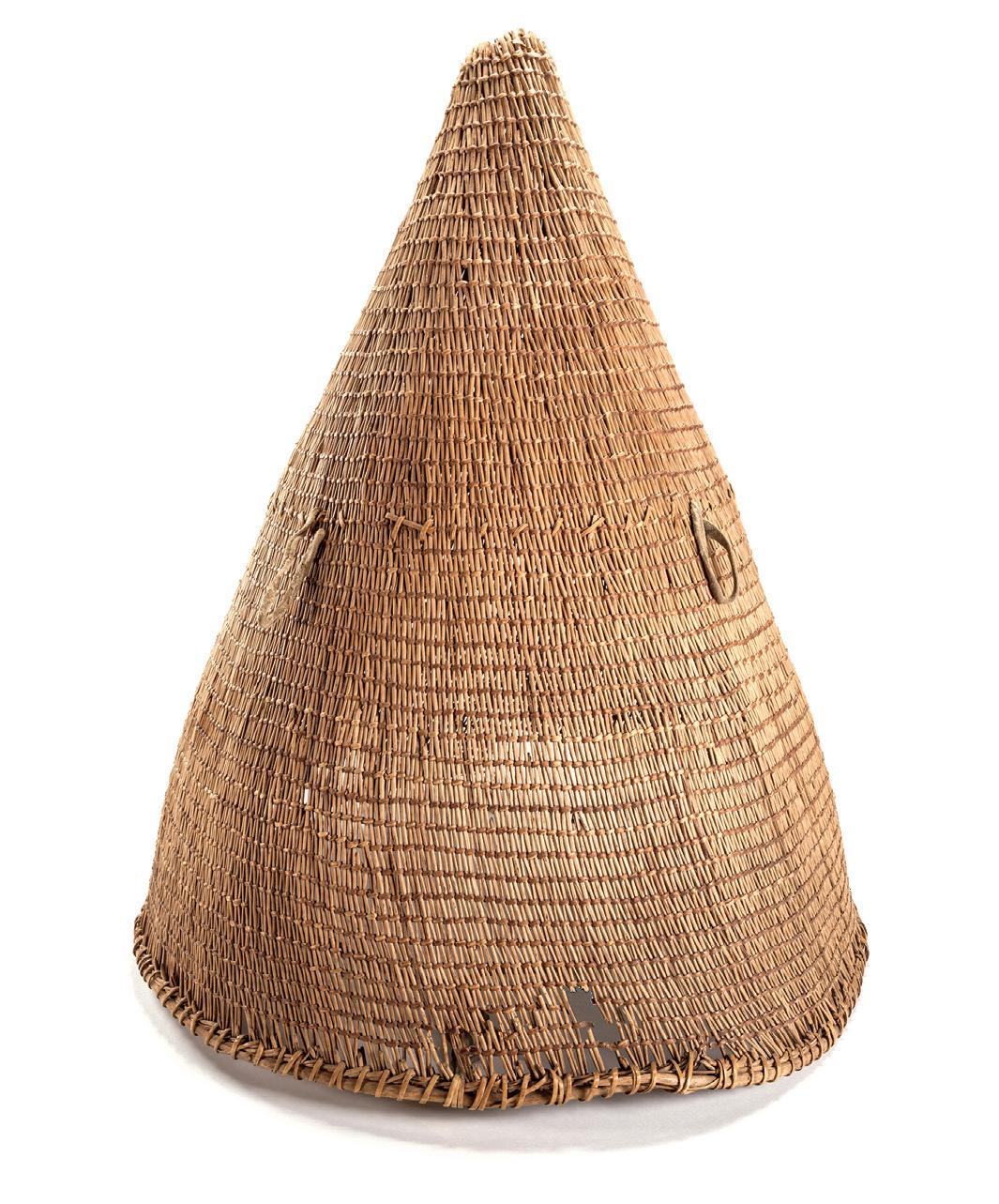
Visitors to the exhibit will learn about the museum’s past, present, and future through a wide range of objects from the museum’s collections. This includes the first object ever cataloged in any museum in the NPS: a basket referred to as YOSE 1 (pictured left), its catalog number. They’ll find prominent art pieces, such as Albert Bierstadt’s 1864 painting, “Night at Valley View,” as well as everyday objects, such as soaproot brushes made by the park’s affiliated Tribal members. Museum staff are also planning a few surprises, incorporating unexpected items that aren’t usually on display.
Together, all these pieces tell a story of Yosemite and reflect the museum’s lasting impact on how people understand and connect to this place.
Learn more about the museum in the Stewardship Walk Series — free for donors! goyose.org/stewardship-series
In a park shaped by millions of visitors each year, seemingly small choices can leave lasting impacts on the landscape
BY ZOE DUERKSEN-SALM
t’s morning in Yosemite Valley. Tent zippers hum open, campfires waft scents of breakfast through the trees, footsteps press into sandy soil along well-worn trails, and engines idle as drivers circle for parking.
Years of visitation have shaped this park, and the land has learned how to adapt when mistakes inevitably happen.
A camper leaves breakfast unattended, and a bear learns that campsites mean calories. A driver pulls into an undesignated turnout and accidentally flattens roadside habitat beneath their tires. A hiker steps off trail into a meadow for a photo, and a faint path begins to form.
Each moment feels minor, but multiplied by millions, these visitation patterns reshape the park in ways that can last for decades.
To combat the cumulative impact of visitation, Conservancy donors fund more than 50 projects each year: work to restore trampled habitat, monitoring efforts to manage human-conditioned species, and trail maintenance to repair eroded landscapes.
These aren’t abstract conservation initiatives; they are direct responses to visitor use.
“We want people to come, to explore, to build memories here in Yosemite,” says Cassius M. Cash, Yosemite Conservancy president & CEO. “And in a season of record visitation and no entrance reservations, we also hope visitors show up with care and respect.”
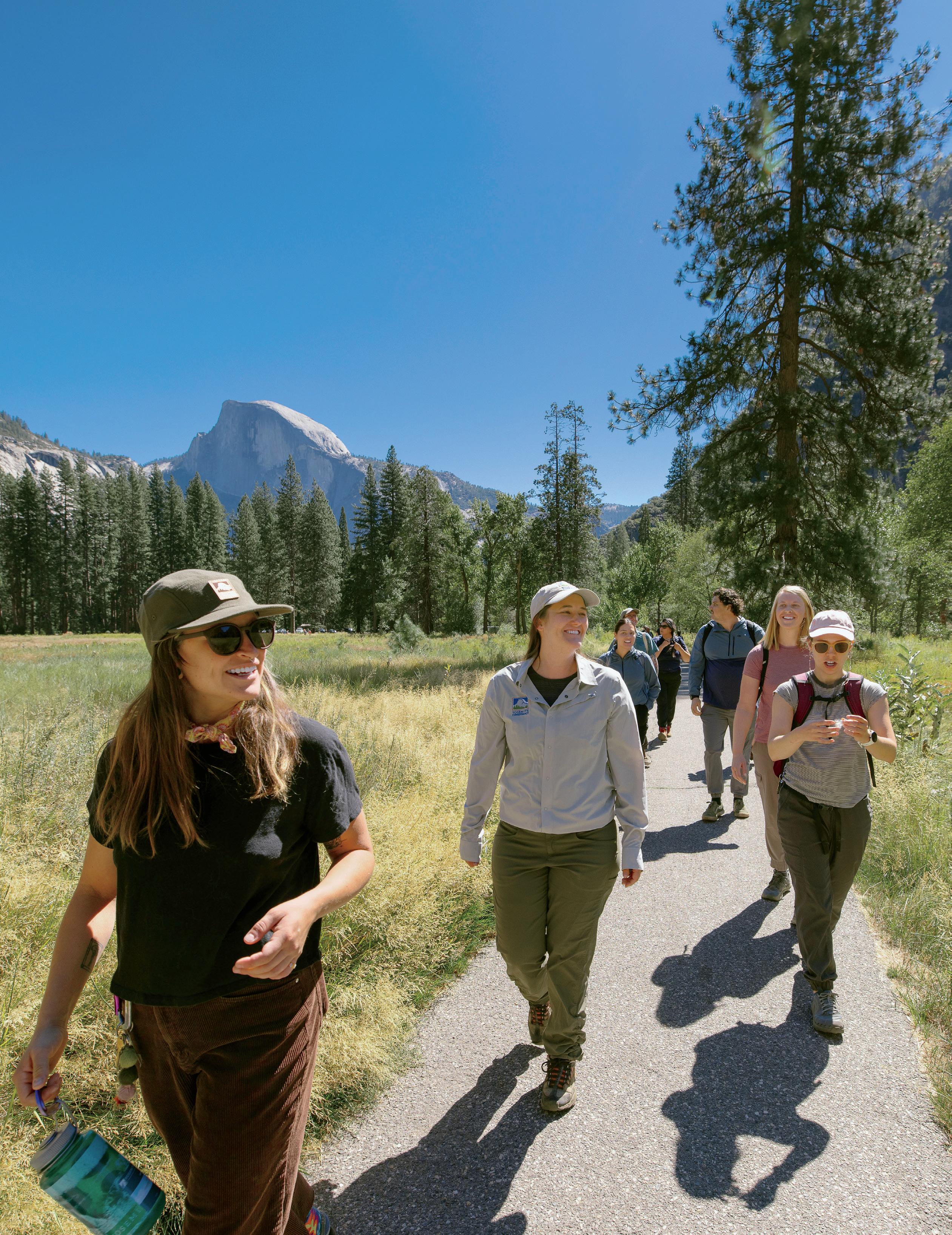
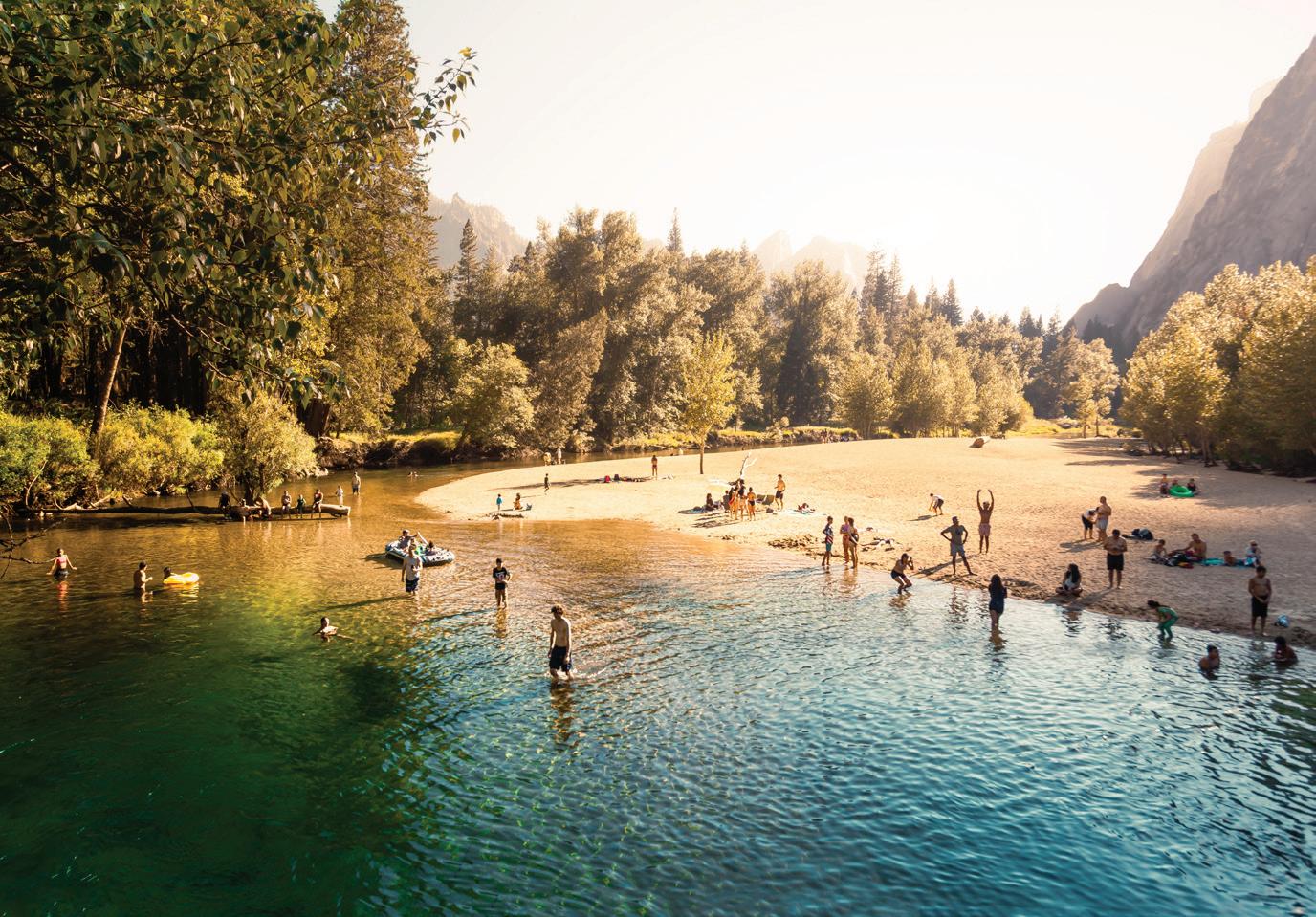
Many visitors describe Yosemite as a home away from home, a place they return to mark milestones, introduce children to towering cliffs, or find steadiness in familiar trails. If we think of the park as a home — temporary for many, permanent for others — our choices shift.
We close the bear box the way we lock our front door.
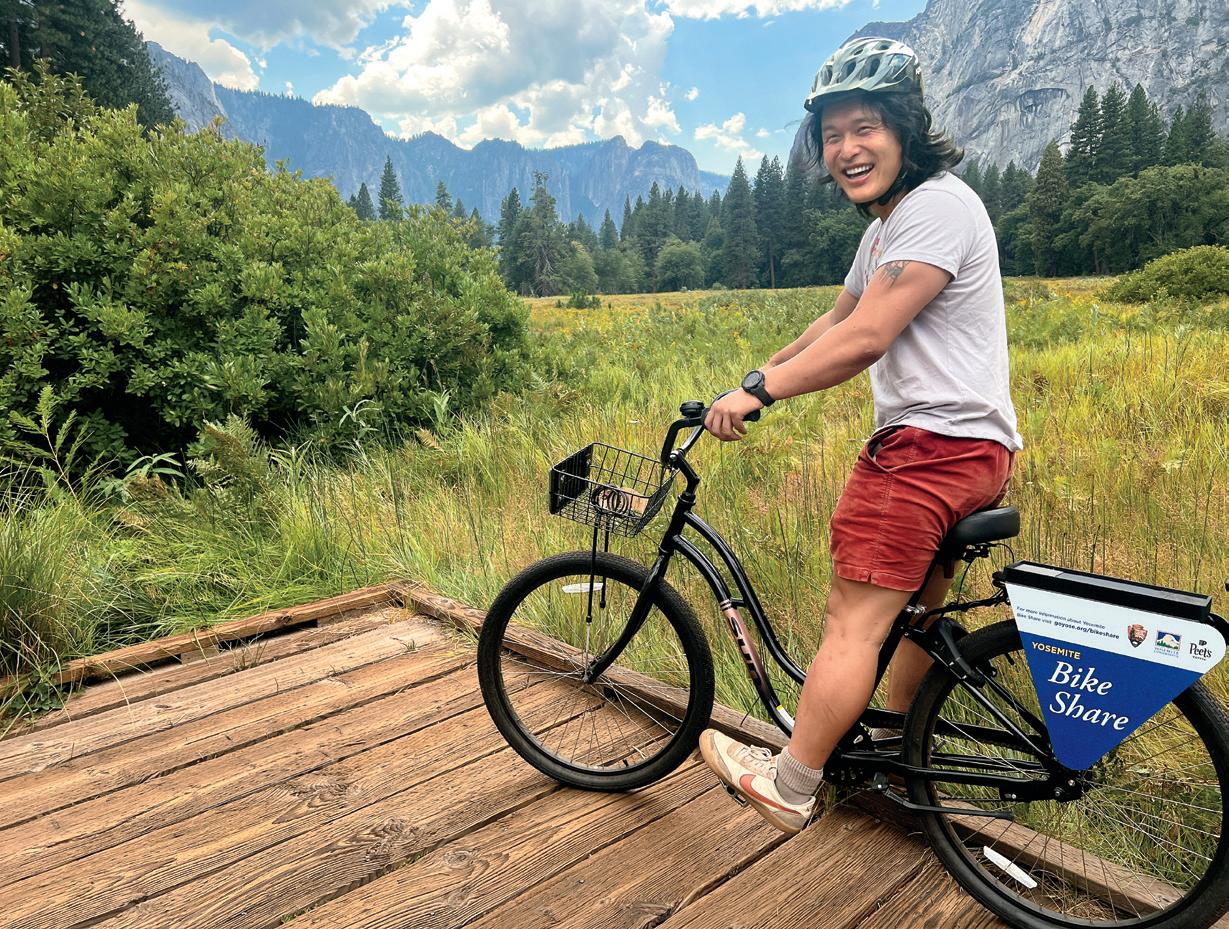
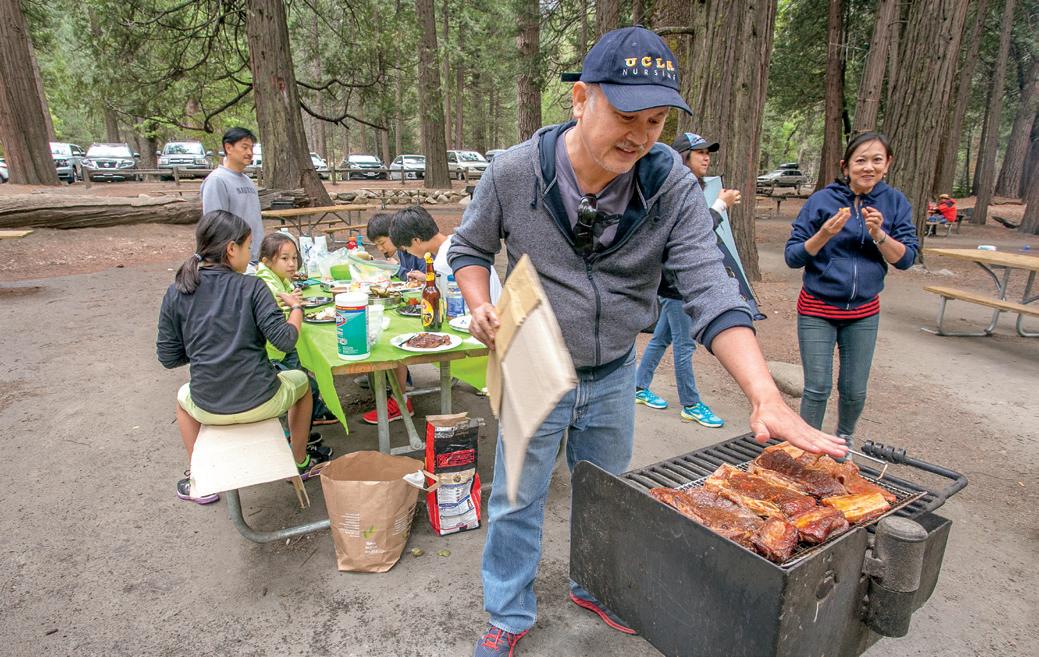
We tread lightly on trails the way we step in a loved one’s garden.
We slow down on park roads the way we drive on our own street.
We practice patience and move with care, because we plan to come back and hope others will, too.
“Protecting Yosemite takes all of us,” Cash says. “Together, we can ensure this park remains healthy and inspiring for generations to come.”
Yosemite is not indestructible, and this summer — especially without entrance reservations to ease peak pressure — your choices have an impact. Yosemite Valley will wake again tomorrow, shaped in part by how we move through it today.
Scan the code to learn how to reduce your footprint on Yosemite!

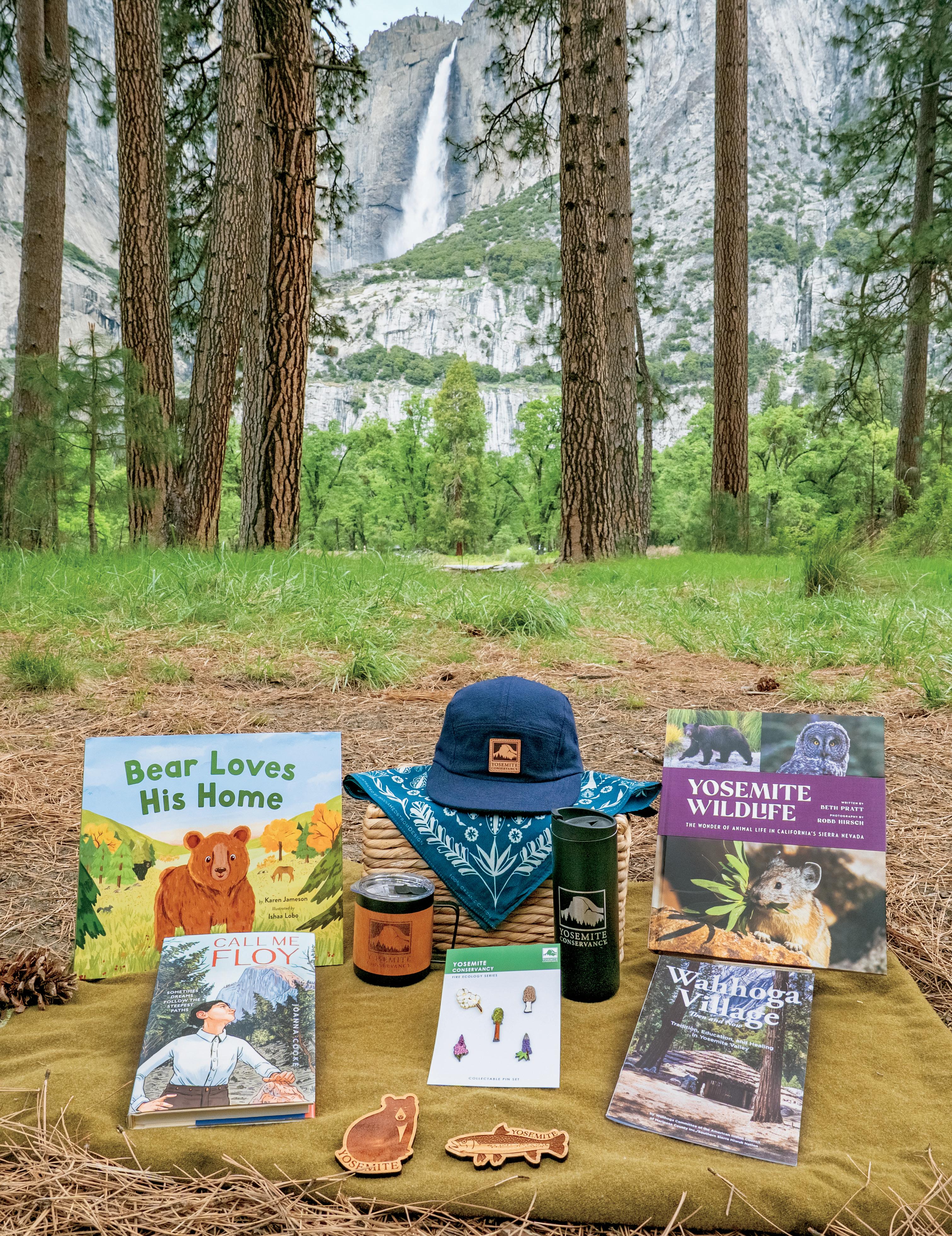
CELEBRATE the wildlife and stories of Yosemite with gifts that bring a touch of the park’s natural beauty into your home.
Scan here to view these items and more!

Bear Loves His Home
Come along with Bear in this adorable picture book, as he roams his wilderness home, doing all the things a wild bear should. $18.99
Call Me Floy
Join Florence "Floy" Hutchings in this coming-of-age novel about returning home to Yosemite and discovering who you’re meant to be. $17.99
Camp Mug
Wood-wrapped stainless steel Kleen Kanteen coffee mug that plants two trees with every purchase $43.00
Wooden Bear & Fish Magnets
Wood magnet featuring artwork from Yosemite Now, made by a small family-owned business. $7.99
Organic
Camp Cap
Organic cotton brushed-twill cap featuring signature Tencel embroidery. $37.99
Fire Ecology Pin Pack
A collection of pins that celebrate the remarkable story of rebirth and species’ resilience that occurs after a fire sweeps through the forest. $25.00
Yosemite Valley Bandana
Organic cotton bandana with artwork by Hannah Hedstrom, former Yosemite park ranger. $19.99
Flip Traveler 16 oz. stainless steel tumbler with double-wall vacuum insulation and leakproof lid that keeps drinks hot or cold for hours. $40.00
Yosemite Wildlife
Written by Beth Pratt with photography by Robb Hirsch, this 456-page volume showcases 150+ species, 300+ stunning images, rewilding success stories, and more. $60.00
Wahhoga Village, Then and Now
This brief volume tells of the peoples’ unbroken connection to their homeland, relating a history of injustice and injury, but also resiliency and resolve. $5.00
Conservancy donors share stories of why they are inspired to give back to the park they love
Subscribe to our donor emails for future story requests, Conservancy events, and park insights!

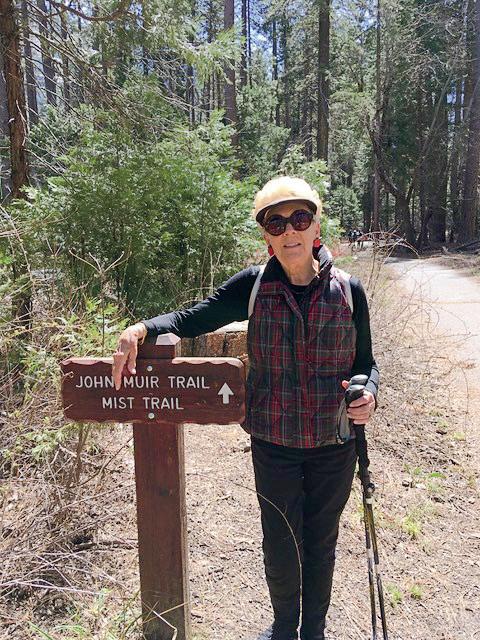
“My family first came to Yosemite in 1900 on a horse and covered wagon when my grandmother, Mary Ellen Reed, was only 19. A photo her brother took shows her crawling out on the rock at Glacier Point; on the back, she wrote, ‘As far as I can go, scared.’ Following in her footsteps, I also crawled out on that rock at 19, and then stayed to live and work in Yosemite.
“I started during a summer in college (1967) as a Camp Curry maid. I made 68 beds a day and spent my days off backpacking. Over the next few summers, I worked as a cafeteria worker and a hostess at various park locations, including the Ahwahnee. After college, I moved to the park and ran the Badger Pass Burger Stand before moving on to work at the Wawona Golf Shop. After 5+ unforgettable years in Yosemite, I moved home to teach, but Yosemite is still in my blood, and I return as much as possible.”
—LYNN HART PERATA Friend of Yosemite
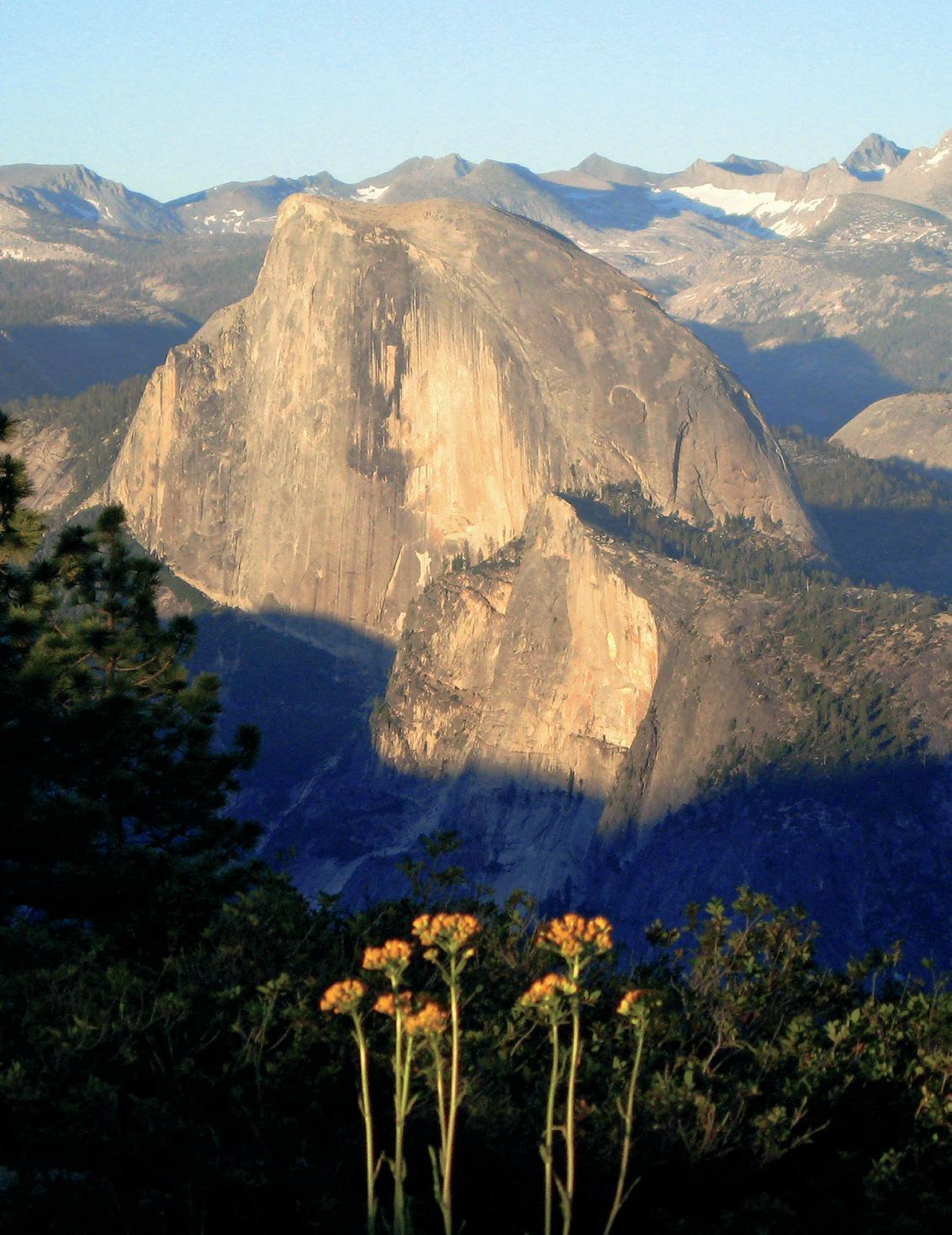
“I spent my first summer in Yosemite when I was three months old. There is a biological phenomenon among nidifugous birds called ‘filial imprinting.’ When the chick first emerges from the egg, its brain is ‘imprinted’ by the first forms it sees, usually the mother hen. It is believed these visual images are etched or hardwired into the formative chick brain forever. They are the landmarks of primordial relationship; they are the navigational basis for migration; they define ‘home.’ Though I was born in a hospital in Merced, I believe I was ‘hatched’ my first summer in Yosemite. There I am home.”
—RICK FLINDERS Sequoia Society member
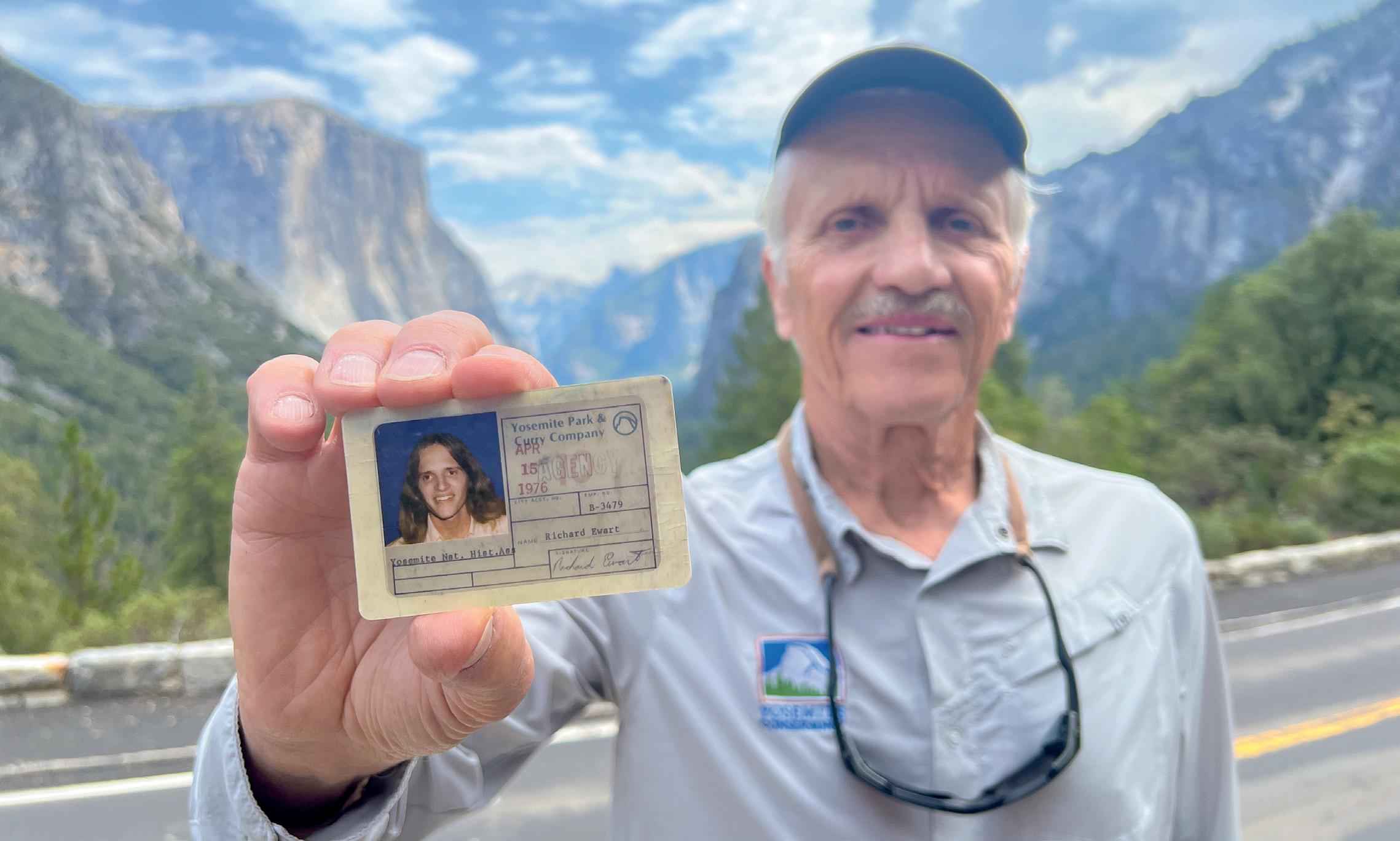
DICK EWART holds up his 1976 Curry Company ID card, grateful for a half-century of living and working in Yosemite.
PHOTO: © YOSEMITE CONSERVANCY.

Join Ewart and other amazing Conservancy naturalists on an outdoor program, and don’t forget to use your donor discount!
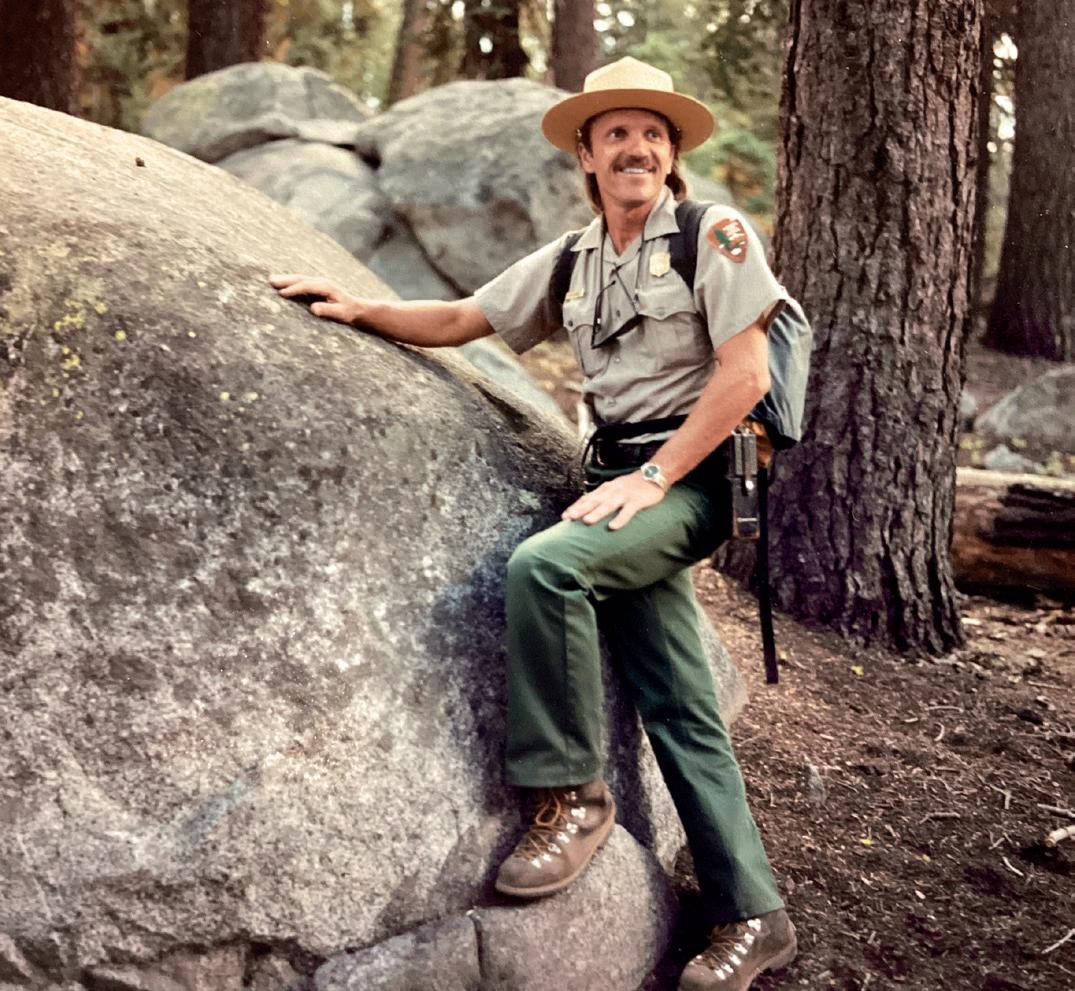
DICK EWART drove into Yosemite Valley for the first time in September 1975 — 51 years ago — and was instantly captivated. Curious to learn more, he joined a ranger walk. After two hours of stories and discovery, he left with one thought: “I want that ranger’s job.”
Almost immediately, he began volunteering with the Yosemite Natural History Association — now Yosemite Conservancy — leading visitor programs and learning the craft of interpretation. His passion and experience quickly led to a ranger role with the National Park Service, where he stayed for 41 years as a full-time ranger, naturalist, search-andrescue responder, and more.
Today, he continues to share his enthusiasm for Yosemite through the Conservancy’s naturalist programs, inspiring visitors the same way that first ranger walk inspired him more than half a century ago.
If I had to explain my job to a stranger, I’d say …
As a Conservancy naturalist, I get to share my love and knowledge of Yosemite with park visitors. In turn, I hope they’ll fall in love with Yosemite and continue to preserve and protect it for future generations. Naturalist programs focus on all aspects of natural history and include everything from a two-hour nature walk to a multiday backpacking trip.
Colleagues come to me for …
Questions about what the park was like in the ’70s and how it has changed in the past 50 years. Stories about the “old” rangers I worked with and learned from. Specific questions about my favorite trails, lakes, and peaks in the park’s backcountry to explore and climb. And … how to fix a mechanical problem with their car!
People are surprised to learn that …
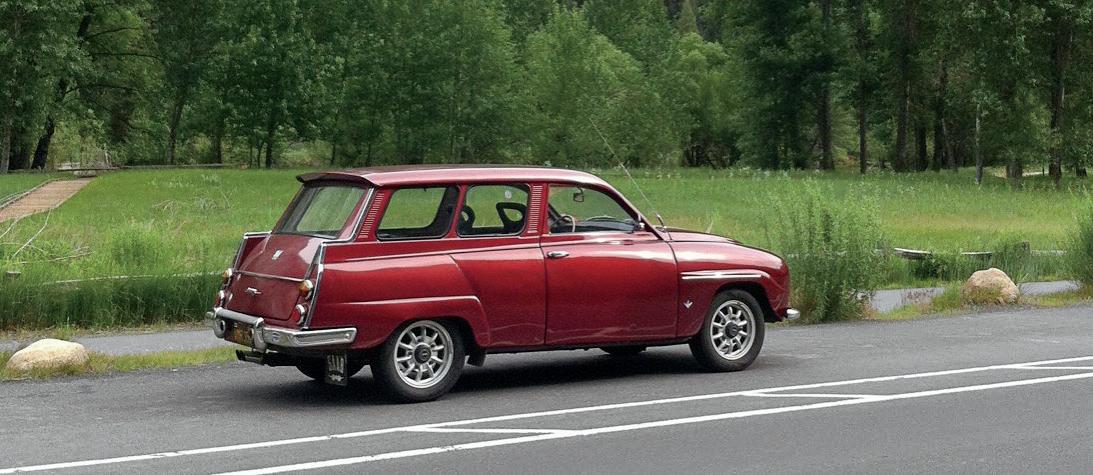
My favorite hobby is working on classic cars! Growing up in the ’50s and ’60s was an ideal time to fall in love with automobiles. Boy, do I miss chrome! I’m a pretty good mechanic, and I’ve enjoyed helping my fellow employees repair their cars over the years. The car I’ve owned the longest — 55+ years — is a 1967 Saab station wagon with 450,000+ miles and still running strong.
My favorite part about my job is …
The reward of seeing people wanting to learn more about Yosemite every day. As my mentor, Dr. Carl Sharsmith (a seasonal ranger for 60+ years), once said, “The more you know, the more you see!” Anyone can instantly see the beauty of Yosemite, but hopefully, after one of my naturalist programs, they will have a greater understanding and appreciation of that view.
I spend my days …
Presenting Conservancy naturalist programs, but for 41 of the past 51 years, I was also a full-time NPS ranger. I lived at Glacier Point for 26 summers, and I often had to respond to late-night calls for everything from lost hikers to downed trees, illegal campfires, and
bears breaking into cars. Being responsible for all that happened in my area was so rewarding and exciting.
I’m inspired by …
The unsurpassed beauty of Yosemite. Even after 51 years, I’m still in awe every time I enter the park. Not just the Valley, but also the sequoias, the high country peaks, meadows, and granite domes. I gained so much inspiration from rangers before me — Sharsmith, Ferdinand Castillo, Nic Fiore, and Bob Fry — and my inspiration continues knowing the Conservancy promotes the preservation of my favorite place, Yosemite National Park.
Learn more about Ewart at goyose.org/dick-ewart.
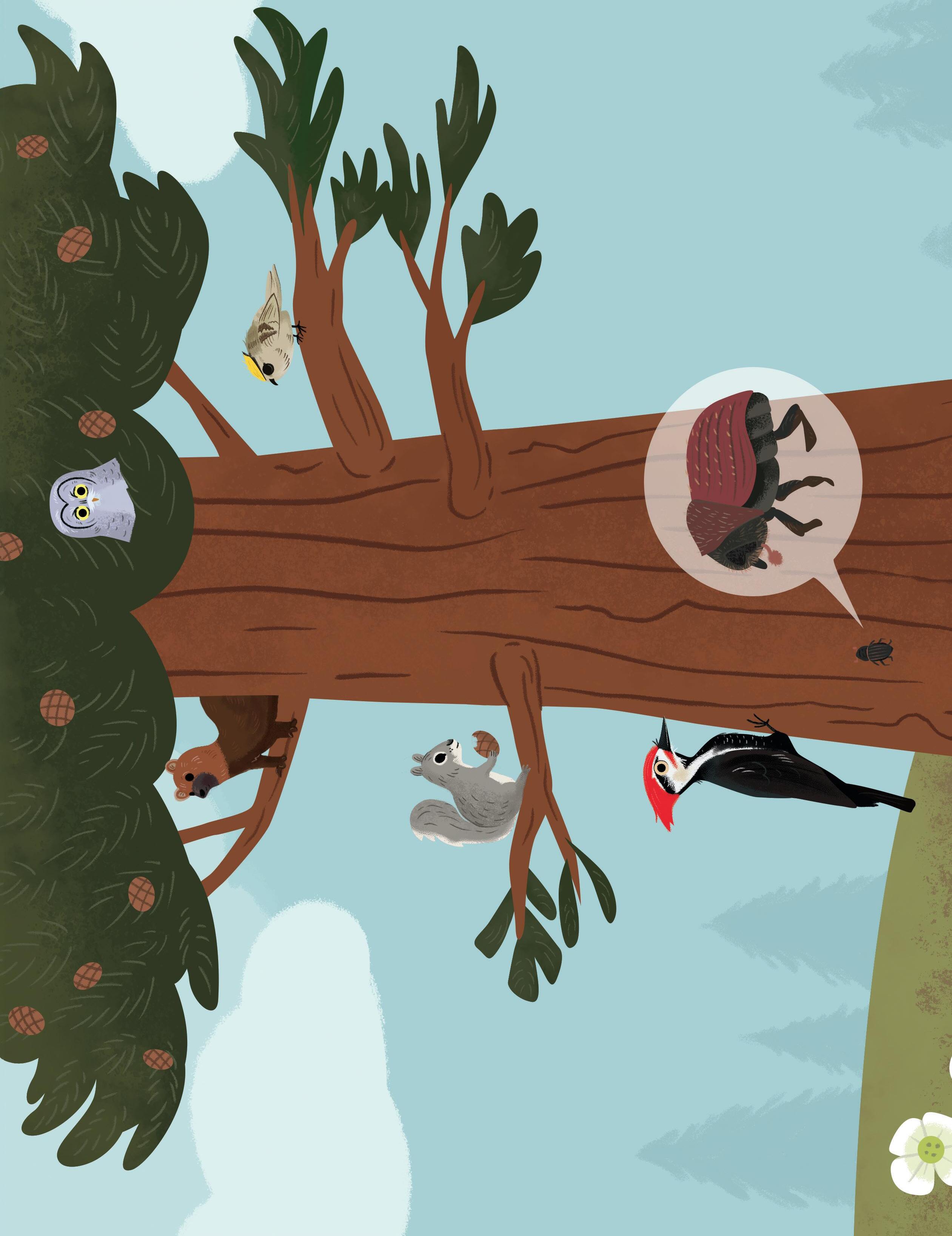
These biologists are collecting data on how many species they can observe. You can help by finding all the wildlife and plants from the ground to the sky. Circle what you find from the list below and help complete their report!
Mountain dogwood • Scouring rush
Western cedar bark beetle • Mule deer
Sierra Nevada ensatina
Pacific fisher • Snow plant
• Wood strawberry • Golden-crowned kinglet
Mountain lion
Great gray owl
Pileated woodpecker
Douglas squirrel (chickaree)
Black bear
Did you know that Yosemite has its own high-rise homes? Towering trees, including giant sequoias, provide food, shade, and habitat for many species in the park. From the ground floor to the canopy level, there’s plenty of life to observe.
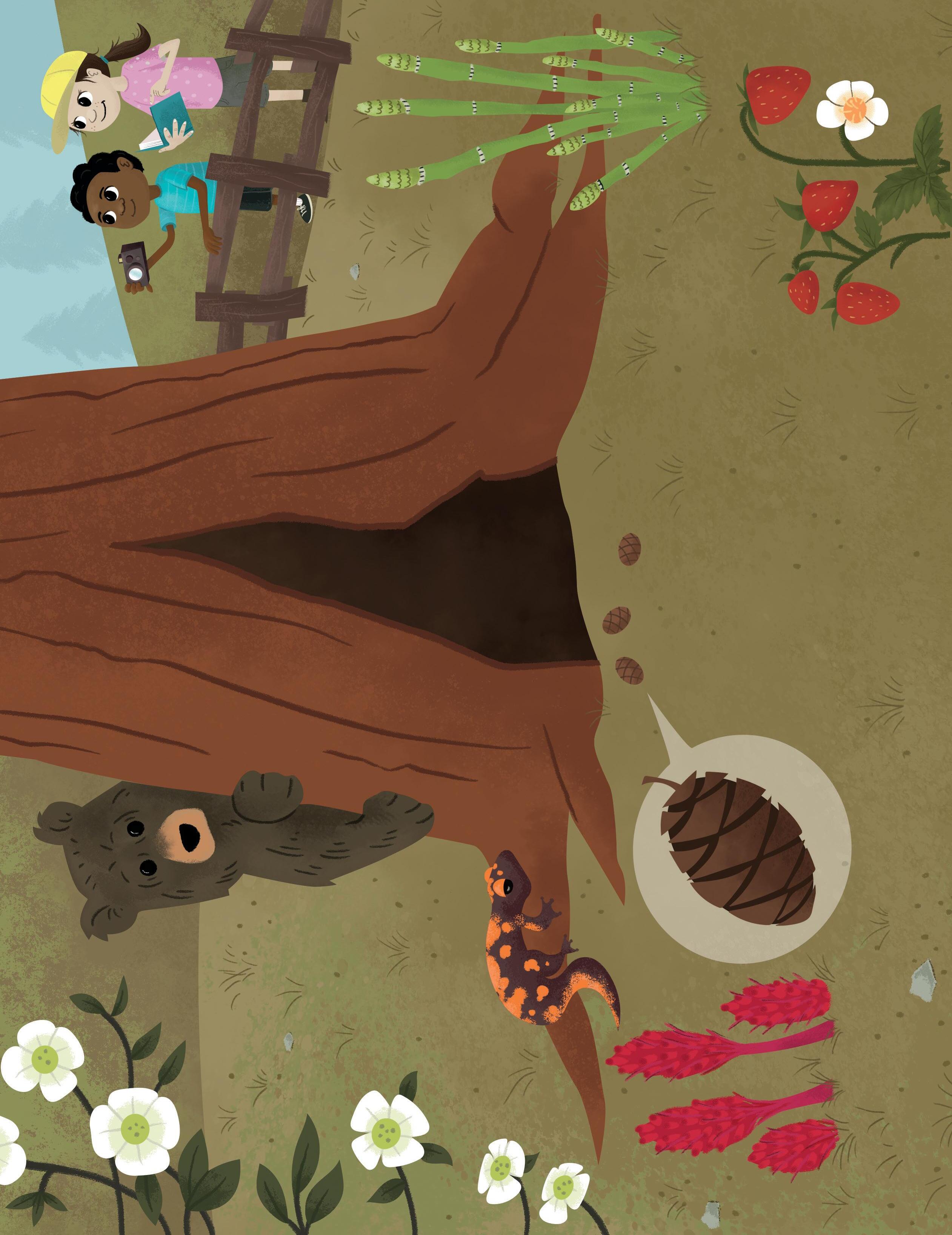
Mature giant sequoias create about 1,500 cones a year! Each egg-sized cone holds about 200 seeds. While finding cones is cool, it’s important to leave them in their habitat.
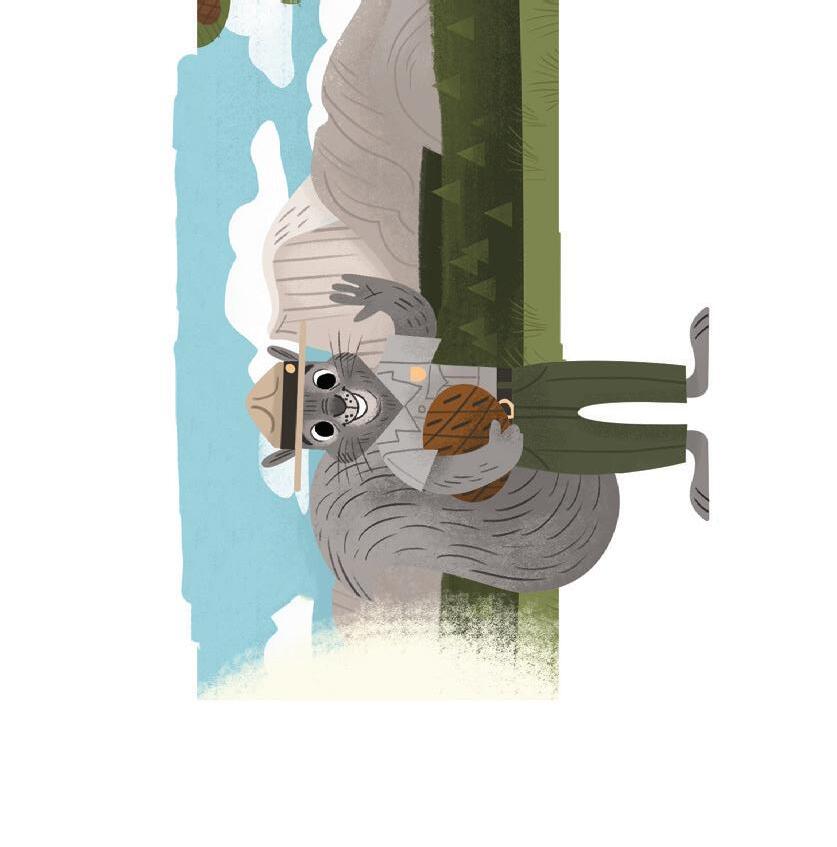
The seeds inside the cones could germinate into the next generation of sequoias or, more likely, be a tasty snack for one of the many animals that live in and around the trees. Think of all the happy chickarees — a type of squirrel — every time you leave a cone alone!
Park fans share their photos of Yosemite
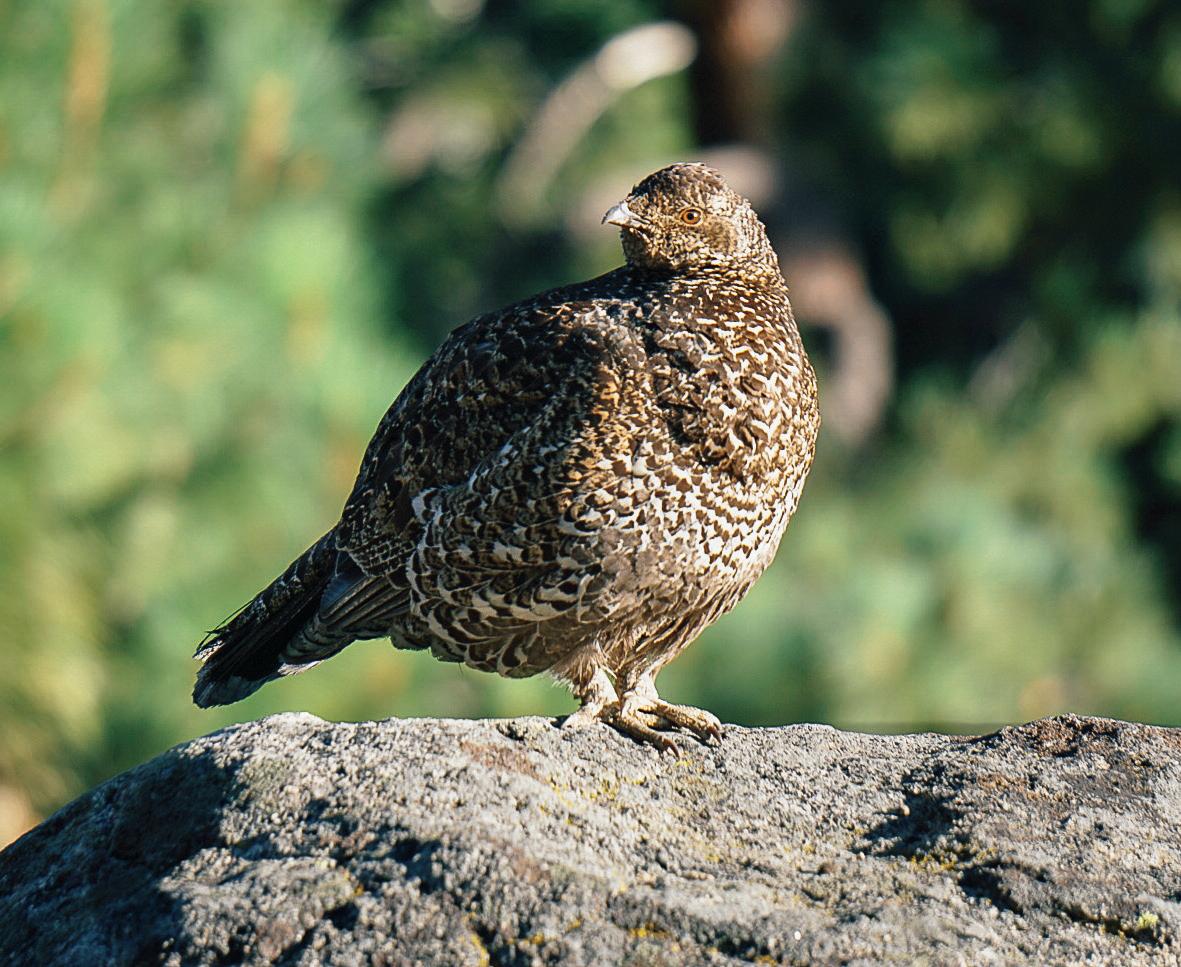
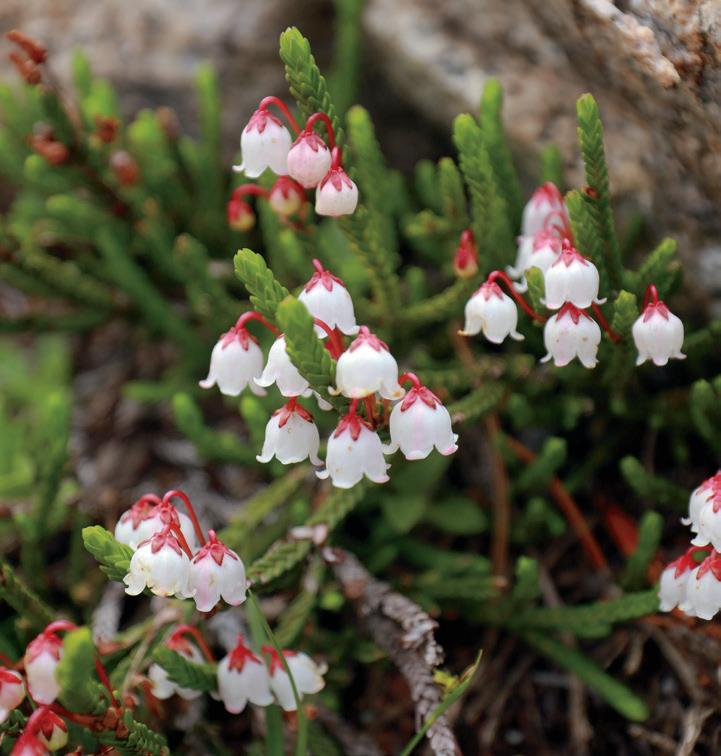
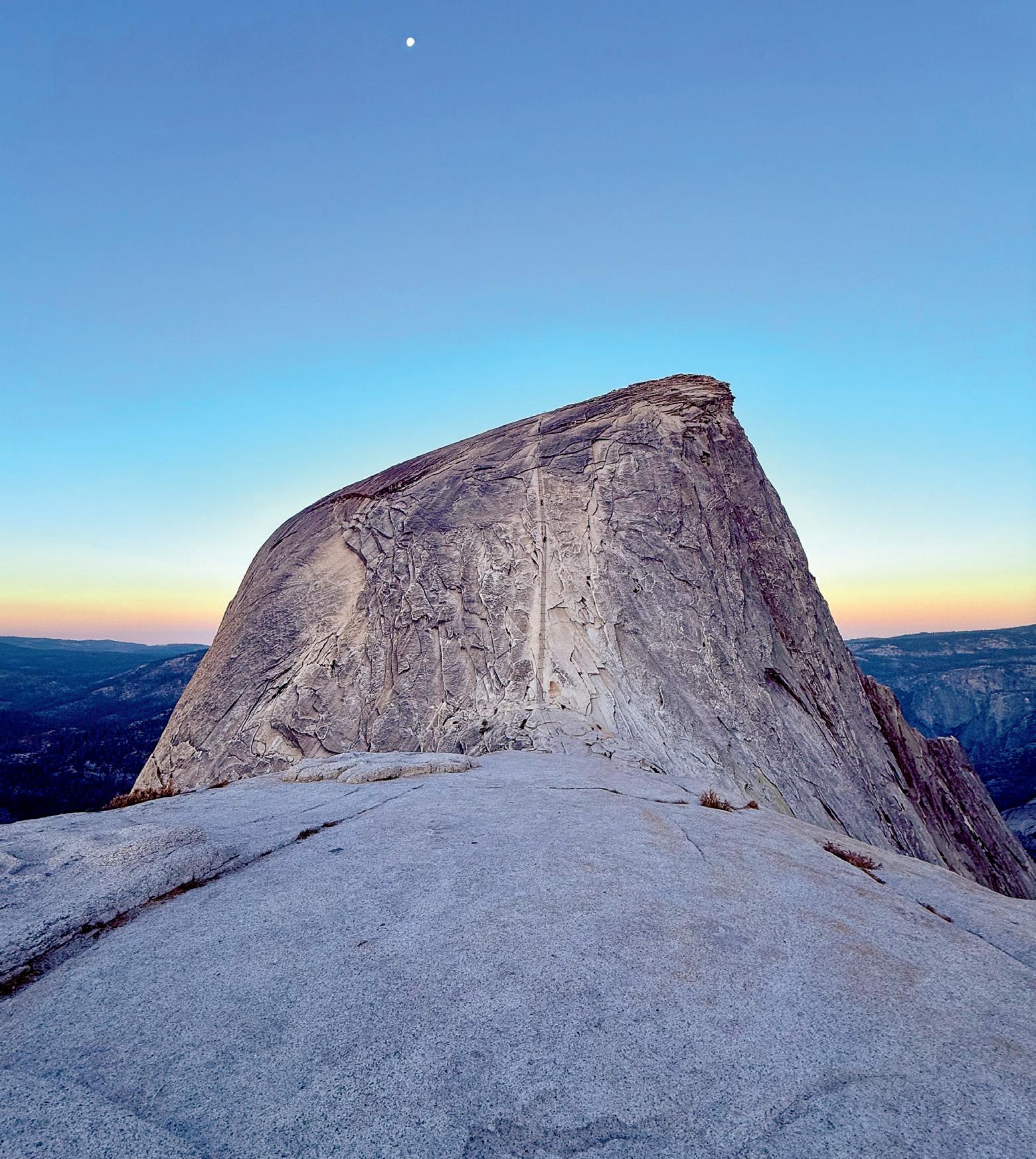
Thanks for sharing your shots, Yosemite fans! To see more photos of the park and stay in the loop with park news, follow @yosemiteconservancy on social media and sign up for our newsletters. Scan the QR code for links.

YOSEMITE CONSERVANCY COUNCIL MEMBERS
CHAIR
Jewell Engstrom*
VICE CHAIR & SECRETARY
Robyn Miller*
TREASURER
Ryan Myers*
PRESIDENT & CEO
Cassius M. Cash*
COUNCIL
Hollis & Matt* Adams
Matthew Adams
Sarah Adams
Susanah Aguilera & Bob Kiesling
Blerina Aliaj & Alain Rodriguez*
Gretchen Augustyn
Craig Beacock
David & Amelia Cameron
Jessica* & Darwin Chen
Diane & Steve* Ciesinski
Kira & Craig* Cooper
Hal Cranston & Vicki Baker*
John & Meredith Cranston
Carol DeVol & Katy Fox
Carol* & Manny Diaz
Leslie & John Dorman
Dana & Dave Dornsife
Jewell* & Bob Engstrom
Kathy Fairbanks*
Bill & Cynthia Floyd
Bonnie Gregory
Rusty Gregory
Dave & Tracy Hansen
Eliza Hart
Laura Hattendorf & Andy Kau
Christina Hurn
Mitsu Iwasaki
Erin & Jeffrey* Lager
John & Elizabeth Leonard
Deane & Jill Malott
Patsy & Tim Marshall
Kirsten & Dan Miks
Robyn* & Joe Miller
Tia & Frazier Miller
Kate & Ryan* Myers
Nancy & Phil Naecker
Daniel Paramés
Sharon & Phil Pillsbury
Gisele & Lawson* Rankin
Skip Rhodes
Dave Rossetti* & Jan Avent
Greg Stanger
Pranav Sudesh
Ann* & George Sundby
Clifford J. Walker
Wally Wallner & Jill Appenzeller
Ryan & Susan Wiley
Scott Witter*
*Indicates Board of Trustees
There are many ways you and your organization can support the meaningful work of Yosemite Conservancy. We look forward to exploring these philanthropic opportunities with you.
REGIONAL PHILANTHROPY DIRECTOR, NORTHERN CALIFORNIA & NATIONAL
Caitlin Allard callard@yosemite.org 415-989-2848
LEADERSHIP GIVING OFFICER, NORTHERN CALIFORNIA
Lindsay Dahlgren ldahlgren@yosemite.org 415-523-4768
REGIONAL PHILANTHROPY DIRECTOR, SOUTHERN CALIFORNIA
Julia Hejl jhejl@yosemite.org 323-217-4780
PLANNED GIVING & BEQUESTS Catelyn Spencer cspencer@yosemite.org 415-891-1039
VISIT
yosemite.org
EMAIL info@yosemite.org
YOSEMITE CONSERVANCY
ANNUAL, HONOR, & MEMORIAL GIVING Isabelle Luebbers iluebbers@yosemite.org 415-891-2216
MONTHLY GIVING Cailan Ackerman sequoia@yosemite.org 415-966-5252
GIFTS OF STOCK Eryn Roberts stock@yosemite.org 415-891-1383
FOUNDATIONS & CORPORATIONS Laurie Peterson lpeterson@yosemite.org 415-906-1016
Yosemite Conservancy 101 Montgomery Street, Suite 2450 San Francisco, CA 94104
Magazine of Yosemite Conservancy, published twice a year.
MANAGING EDITOR
Zoe Duerksen-Salm
PRODUCTION MANAGER
Josh Byrd
DESIGN
Eric Ball Design
JUNIOR RANGER ILLUSTRATOR
Mathew Held
Spring Summer 2026
Volume 17 Issue 01 ©2026
Federal Tax Identification No. 94-3058041
LEADERSHIP
PHONE
415-434-1782
Cassius M. Cash, President & CEO
Kevin Gay, Chief Financial Officer
Marion Ingersoll, Chief Development Officer
Kimiko Martinez, Chief Marketing & Communications Officer
Adonia Ripple, Chief of Yosemite Operations
Schuyler Greenleaf, Chief of Projects
For a full list of staff, visit yosemite.org/staff.
For a full list of our 2026 grants, visit yosemite.org/impact.
Yosemite Conservancy
101 Montgomery Street, Suite 2450
San Francisco, CA 94104
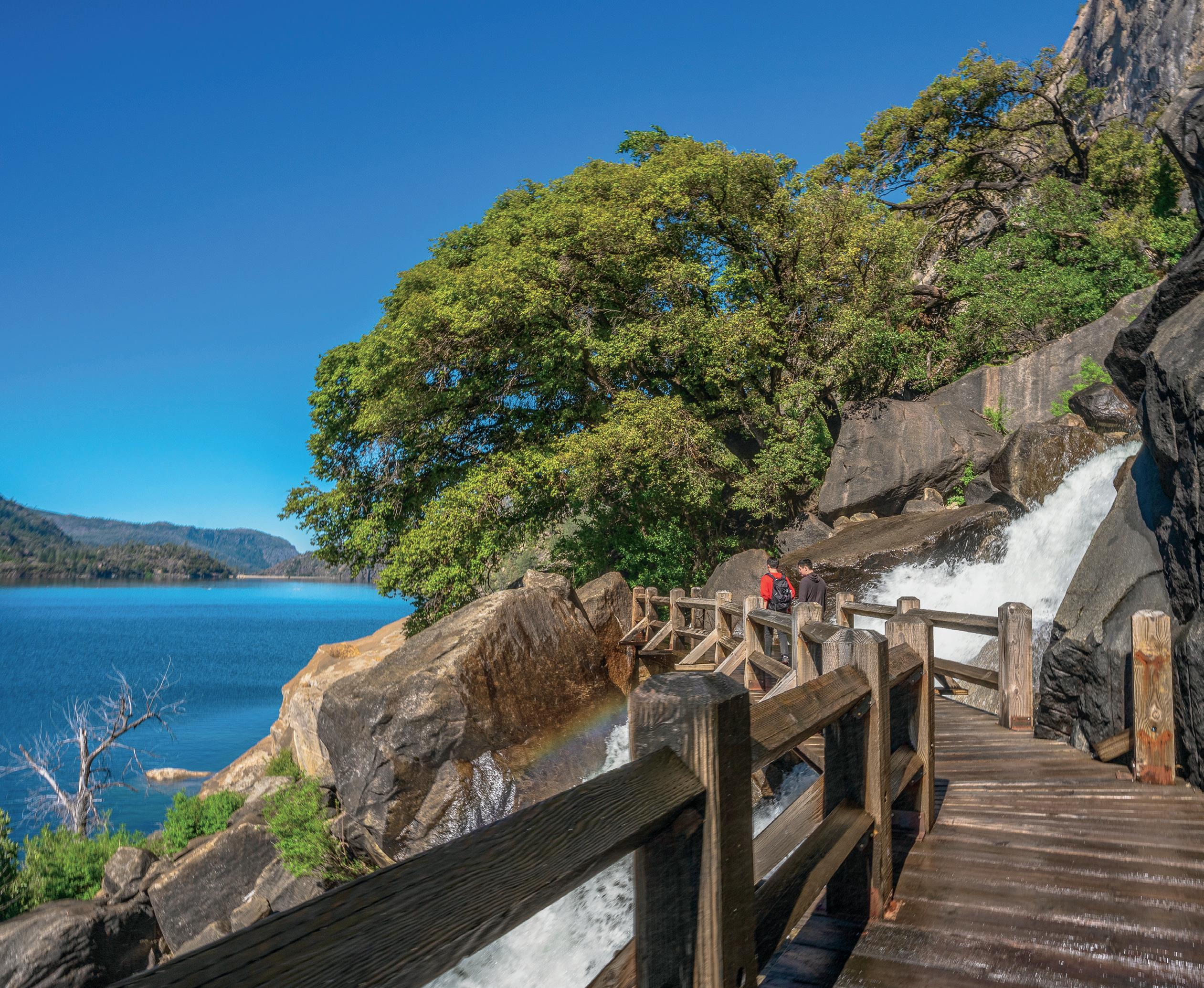
WHETHER YOUR FAMILY has visited Yosemite for generations or you’re still planning your first visit, you can create a gift that will protect the park for generations to come.
When you include Yosemite Conservancy in your will or trust or as a beneficiary of your retirement account, your gift becomes part of the Legacy Fund, which makes meaningful work possible and sustains programs that will benefit visitors well into the future. It is a wonderful way to commemorate your special memories in Yosemite National Park, while also ensuring future generations will have the chance to feel at home in Yosemite.
To learn more about a legacy gift for Yosemite, please contact Catelyn Spencer at cspencer@yosemite.org or 415.891.1039.
yosemite.org/legacy