YORK R O S E ‘24
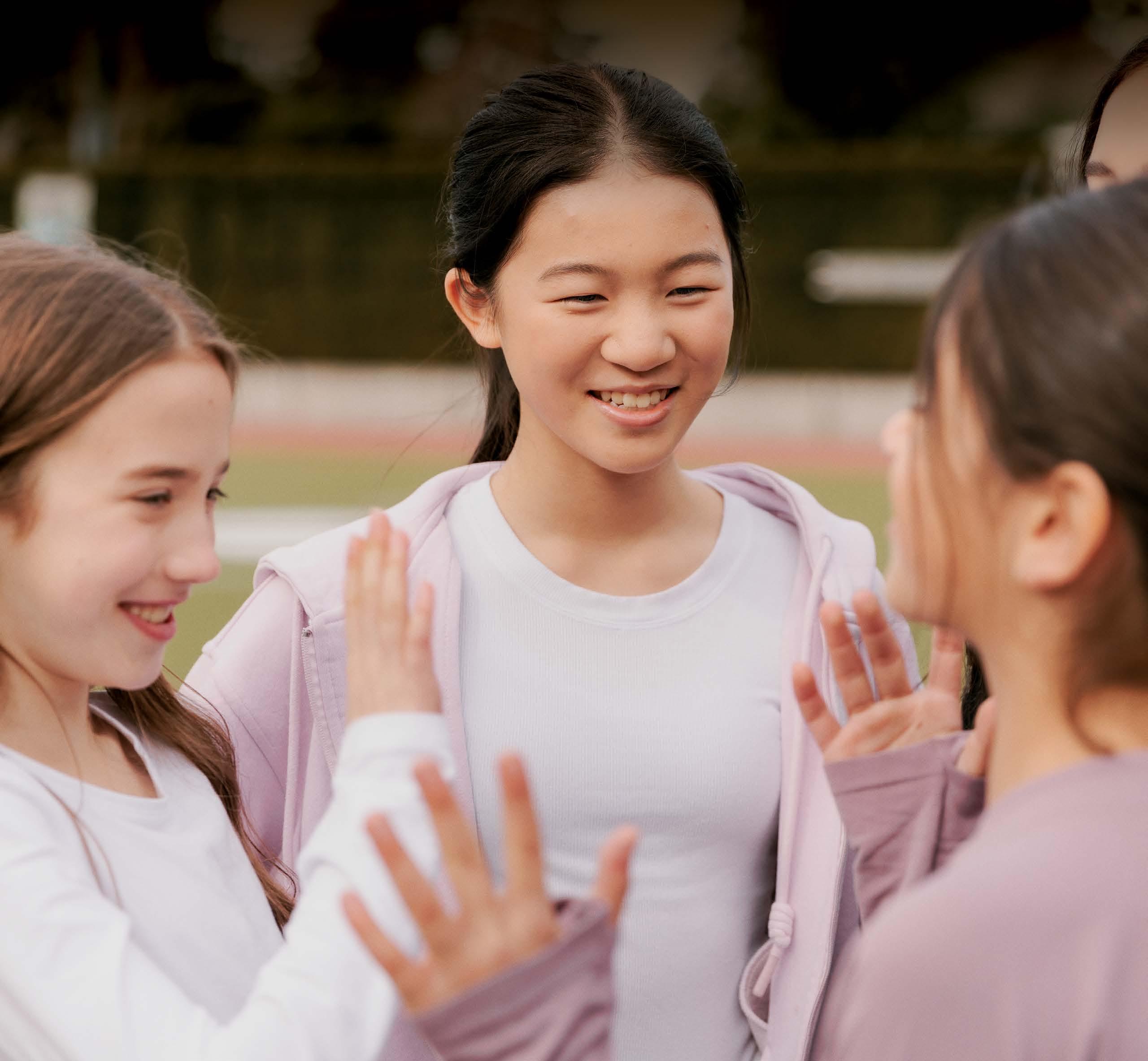
Reimagine the Future. Then Transform It.
April 2024
See our new plan to redefine education at spark.yorkhouse.ca
future that doesn't exist. Yet.
Imagine a
TABLE OF CONTENTS
2 A Message from the Head of School
4 New Vision, Mission and Values
5 Strategic Plan Framework: The Big Three
6 What Does Learning Look Like Now? The Future of Learning is Here
10 Teen Mental Wellness: The Kids Are Alright… Right?
13 Women in Leadership: Leading with Passion
15 The Future is Ours (But Not For Ourselves Alone)
20 Rethinking the Traditional Classroom in the AI Era
22 The Gift of Health and Connection: The New Virginia Moore Mackay Dining Centre
24 A Lifelong Commitment to Giving Back: The Chung/Munk Family Legacy
28 Scholar Spotlight: From York House to Google, Fiona Lang '17
31 2023 Founders' Day, Alum Day and Golden Alum Luncheon
34 Alum Special Achiever 2023: Q&A with Dr. Sarah Brayne '03
38 Young Innovators, Big Impact: Grade 6 ADST Projects
41 Indira Fair, Grade 10: Discovering Oneself and the World Through Volunteering
44 Not For Ourselves Alone: Noa Cohen '21 Building Dreams in Bali
46 Around York House
51 Annual Giving Family Feature: Fiona & Alex Weed, Sherman and Hermes Lam '00
52 My Journey in Mathematics: Nina Li, Grade 12
54 Building Community Through Parents' Association Events
56 Alum Visits and Reunion Spotlights
58 Remembering
YHS Contributors
Kelly Walker Schobel, Director of Communications & Marketing
Karm Khunguray, Communications & Marketing Manager
Monica Cheng, Brand & Communications Manager
Kailey Clark , Communications & Marketing Intern
Nik Williams-Walshe, Executive Director of Advancement
Ita Kane-Wilson, Associate Director, Alum Relations
Jacquelyn Dittrich, Annual Giving & Donor Relations Manager
Tom Collins, Junior School Science Teacher
Meredith McInnis, Social Studies Department Head & Teacher
Nina Li, Grade 12 Student
Community Contributors
Kate Chandler, Writer chandlercommunications.ca
Lucy Hyslop, Writer lucykatehyslop.com
Adrienne Matei, Writer adriennematei.com
Katie Nanton, Writer, katienanton.com
Joy Pecknold, Writer joypecknold.com
Cindy Sheldan, Designer swca.ca
Rachel Pick , Photographer rachelpick.ca
Randall Van Gerwen, Designer vangerwen.ca
Michelle Diamond, Photographer diamondedgephotography.com
A Message from the Head of School
Imagine a Future That Doesn't Exist. Yet.
In March we launched Spark—the new strategic vision of York House School.
The name says it all. The substance of this roadmap to a stronger future for our students was born from a spark of imagination that launched a two-year exploration, not to answer the question, ‘what should we do?’, but rather, ‘what is possible?’
We started by removing the boundaries that could limit conversation, and challenged ourselves to reimagine from the ground up, education more broadly, and York House School specifically. Our community dreamed big and took the discussion to the outer limits of imagination. Then, we went to work digging into emerging theories, researching the future of work, consulting with experts in education and across professional fields, examining our resources, and finally, chiselling our ideas down to a concrete yet aspirational plan that will be transformational for our students.
If you’ve not had the chance to see our plan and launch video, I invite you to go to spark.yorkhouse.c a to see it for yourself.
2
We have a long way to go to see this work through, but with the passion and expertise of our faculty, staff, leadership and Board of Governors, along with the ongoing participation of a committed community of parents, guardians, alums and students, we will continue to hone, refine and perfect a strategy that invites thoughtful evolution.
Spark is the theme of this edition of the York Rose Magazine and gives you a chance to dig a bit deeper into the plan’s themes. One such theme is that of bringing the classroom into the world and the world into the classroom. We’ve therefore invited five Feature Writers from outside YHS to explore the topics of the future of learning
(Kate Chandler), AI in the classroom (Adrienne Matei), women in leadership (Lucy Hyslop), life and career preparation (Katie Nanton) and teen mental wellness (Joy Pecknold). You’ll also see the voices of our alums, students, teachers and staff throughout this edition—Tom Collins, Meredith McInnis and Nina Li among them.
I look forward to our entire community working together to see the Spark plan become reality and I hope the articles in this edition of The York Rose paint a picture of the vision we aim to achieve.
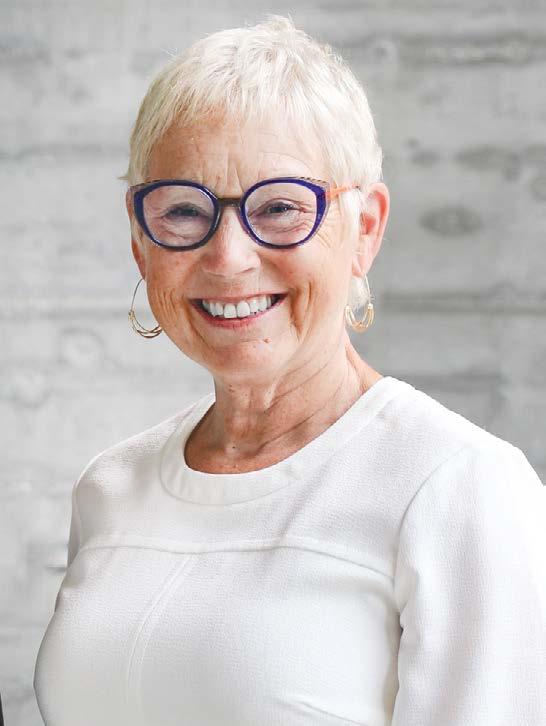
Deryn Lavell, Head of School
3
Seeing t he world as it is, a nd imag ining what it cou ld be, York House School aspires to create a t ra nsfor mat iona l ex per ience for st udent s who a re empowered to reshape t he f ut ure.
VA LU ES
Excellence
An outs tanding academic program, highly skilled facult y and leadership, and an innovative learning environment empower a life-changing experience for s tudents
Diversity
YHS honours the individualit y and uniqueness of each s tudent and all who par ticipate in our communit y Treating each other with dignit y, fairness, and kindness, building a learning environment that reflec ts the world, and advancing our ques t to fur ther diversif y our communit y, deeply enrich our academic program
Adventure
The freedom to be creative, embrace new ideas, and hone critical thinking skills are the corners tones of innovation . We make space for s tudents to explore their passions and approach problem-solving with imagination
Impact
YHS s tudents share a mindset that places the bet terment of others, our communities and our planet as a top priorit y. Recognizing our privilege, we embrace the responsibilit y to be leaders of change
To create a n env ironment t hat elevates t he mind, celebrates uniqueness, inspires creat iv it y, a nd encourages discour se.
Community
YHS has built a s trong communit y that is meaningfully connec ted to the world beyond It is an environment that engenders kinship with one another creating lifelong relationships We ac tively seek connec tions with the diverse communit y beyond our doors tep that s trengthen learning, build charac ter and fos ter empathy.
Sustainability
YHS promotes sus tainabilit y and environmental s tewardship Students, facult y, s taf f, and our communit y honour the land and take ac tion to protec t our planet
4
V I SI O N
MISSION
Strategic Plan Framework: THE BIG
1Human Capital and Unconventional Expertise
• Cultivate an outstanding faculty and staff for premium ‘bench strength’.
• Harness subject matter experts as part of the learning experience.
• Mobilize a highly skilled energetic and professional leadership team.
• Diversify voices and experiences to provoke deeper conversations about complex questions that broaden students’ perspectives.
2 Transformational Program
PURSUE EXCELLENCE Academics
• Redefine ‘academics’ to include creativity as the engine that drives excellence.
• Maintain or exceed traditional academic standards.
Constant improvement = constant learning & growth
• Invest in enhanced and innovative professional development opportunities.
• Develop metrics to measure progress/program needs and evolve as required.
Post-secondary preparation with a culture that encourages individual choice
• Maintain high academic standards to ensure university options while opening doors to explore individual passions and potential.
FUNCTIONAL LEARNING
• Beyond the classroom and into the world.
• Bring the world into the classroom.
• Enriched academics alongside everyday skills.
ASYMMETRICAL APPROACHES TO TEACHING & LEARNING
• Champion a mindset that pursues teaching and learning methods that go beyond ‘standard’ and challenge us to be unorthodox if it enhances the experience for students.
3 Dynamic Future
BRICKS, MORTAR AND TECH
• Reimagine learning spaces within the campus.
• Reimagine learning spaces beyond the campus.
• Unleash the power of technology for learning using innovation, adaptability and flexibility.
PROGRAM SUPPORT
• Secure a strong financial foundation.
• Seek innovation in partnerships and alternative sources of revenue.
• Sustainable leadership model.
FINANCIAL SUSTAINABILITY
• Substantially increase endowment to support ongoing operations of the school and broaden student base.
IMAGE AND IDENTITY
• Solidify brand identity and raise YHS' profile to support all revenue-based objectives and program goals of partnerships and collaborations with other organizations.
• Update public perceptions to align with YHS reality and vision.
5
WHAT DOES LEARNING LOOK LIKE NOW?
The Future of Learning IS HERE.
6
That the future is uncertain is a certainty. What does this mean for today’s students? As York House School embarks on an ambitious new strategic plan, what will the future of learning look like? And what will girls need to thrive?
BY KATE CHANDLER
Our World Has Changed
There is no denying that the pandemic impacted people’s lives and the lives of school-aged children and families perhaps more than most. Parents were tasked with supporting their kids and the shift to online learning, often while working remotely themselves. Mental wellness bore the brunt. Students receiving virtual or hybrid instruction experienced higher rates of depression, anxiety, and chronic health conditions1
The silver living? People are adaptable. A 2022 Ipsos analysis laid out key themes2 that had emerged since 2020, including
1. People proved flexible
2. Mental health is as important as physical health
Despite the challenges, the pandemic built resilience and flexed people’s capacity for change. Staying nimble in the face of future uncertainty will be essential in preparing students to flourish in tomorrow’s world.
The Shape of Learning
“The shape of learning almost has no shape because it's not defined anymore. It is something that's continuously evolving,” says Genny Lee, YHS Director of Senior School. “In the past, you could say teaching in schools looked like this: they sat at a desk, they listened, teachers taught, they took evaluations. There was a defined structure. Now, there are so many different ways students are learning through online, experiential learning, micro credentialism. We blurred the lines.”
Mental health also emerged as perhaps more essential to learning than was previously appreciated. While independent schools have always understood the consequence of nurturing student well-being, many, YHS included, have taken more intentional steps to embed this across the educational journey and within students’ development and understanding of their own identity.
“ I think schools have two responsibilities. To prepare their students to be future-ready for what's to come, and also to cultivate a strong, positive sense of self,” says Lee.
“And that includes who they are as an individual, whether it's their gender, whether it's their race and ethnicity, whether it's their academic ability.”
Dr. Indira Samarasekera, former president of the University of Alberta, co-author of Nerve: Lessons on Leadership from Two Women Who Went First, and YHS Board Vice Chair, underscores the importance of developing this sense of identity, “Education that helps with inner discovery is going to be crucial.”
YHS’ approach to social-emotional learning and teaching to the whole child has broadened learning from a single dimension to what it means for students to build a positive sense of self. When students are thinking about basketball, for example, they are also learning about body positivity. All of the aspects that make them who they are.
1 Verlenden JV, Pampati S, Rasberry CN, Liddon N, Hertz M, Kilmer G, Viox MH, Lee S, Cramer NK, Barrios LC, Ethier KA. Association of Children's Mode of School Instruction with Child and Parent Experiences and Well-Being During the COVID-19 Pandemic - COVID Experiences Survey, United States, October 8-November 13, 2020. MMWR Morb Mortal Wkly Rep. 2021 Mar 19;70(11):369-376. doi: 10.15585/mmwr.mm7011a1. PMID: 33735164; PMCID: PMC7976614.
2 https://www.ipsos.com/en-ca/knowledge/society/ten-key-themes-covid-times-so-far
3 https://www.infobip.com/blog/are-you-ready-for-generation-alpha
7
The New Drivers of Change
The seismic changes Artificial Intelligence (AI) is already bringing about are one of the most significant forces driving the future of learning. While it’s not clear what this will look like in the fullness of time, AI certainly means the coming workforce will have to be able to operate comfortably in a new landscape.
Enter Generation Alpha. The oldest of whom are now fourteen. This generation has interacted with technology since birth. They are the most digitally adept (with many able to operate a tablet before they were four3) the world has seen.
Following the examples of their Millennial (and now Gen Z) parents, today’s students are also socially aware. They are advocates for social justice, climate change, and mental wellness, ready to develop and use their voices to impact change.
This blend of digital literacy and activism emphasizes the importance of empowering students to approach information with the ability to ask critical questions. As Head of School Deryn Lavell says, “AI is not the way of the future; it’s already here. It’s our job to help our students be discerning in how they use it.”
To do so, students must cultivate intellectual integrity, according to Dr. Martha Piper, former president of UBC and co-author of Nerve: Lessons on Leadership from Two Women Who Went First. Students must be able to take in information, whether it's social media, the Internet, read a book, or listen to a speaker, and discern truth from untruth.
“How do you determine what is a fact and what is a falsehood? That's what a good education will prepare you for,” says Dr. Piper.
What Does Learning Look Like Now? Academic Excellence Remains the North Star
Being ready for a competitive world demands excellence, a core value at YHS. However, the future of learning demands more.
"The schools and the learning environments that are going to thrive are those that somehow balance emotional wellbeing with academic excellence", says Dr. Piper.
Dr. Samarasekera adds, “Critical thinking, communication, and creativity writ large are going to be the skills. So how does learning focus on enhancing those capabilities, which is very much the next piece once you identify who you are and what makes you human and what you bring to the table.”
Learning must equip students to become great independent thinkers. “To engage in debate, dialogue, and ethical discourse,” says Deputy Head of School Kara McDonald, “involves deeper learning and a shift from students as passive recipients to active producers of knowledge.”
Students must be readied to come up with creative, innovative ideas that computers cannot. Education cannot just be about acquiring knowledge but building on that knowledge and developing skills that prepare students to solve tomorrow’s problems.
Says Dr. Piper, “Creativity is seeing something. It can be a historical situation, geography, psychology, or math. Seeing something and being able to look beyond it and think about what it might lead to, or what it might inform, or what might be different about it as it moves forward. Instead of just accepting the status quo as the end product, being able to say what is this leading to, and how can we shape it differently?”
At YHS, creativity is part of empowering students to be “really critical thinkers and to actually engage with realworld topics that are happening right now,” says Lee.
“As schools, we can’t afford to have learning limited to within four walls and relying on teacher expertise,” says Lavell. “As education continues to reflect our understanding about how students learn, who they are as learners, and offers opportunities well beyond the classroom, it’s our responsibility to instill in students the agency they need to thrive in a complex, unknowable world.”
8
Embracing Metamorphosis: From Learning and Assessment to University Admissions
As learning evolves, so does how academic excellence is defined and assessed. Students who may not solve a problem with the precise methodology prescribed in a classroom are now being celebrated for making connections and problem-solving in their own way. “We’re recognizing that as perhaps even more powerful learning. It's creativity, it's innovation. It's broadening the scope of academic excellence, and that includes things that we may traditionally have not defined as rigorous,” says Lee.
YHS University and Admissions Counsellors Kim Tulloch and Máebh Carragher see firsthand how significant this shift is when it comes to the university admissions process. “The questions that they're [students] being asked aren't about engineering specifically or commerce specifically, but about who they are and how they problem solve, and how they think about working with others, and what do they value.”
“We’re not just preparing them for university,” Tulloch says, “We're preparing them to be adults in the world, and these skills and values are really important for their socialemotional wellbeing as well as their success.”
Whether on the field hockey pitch, in drama class, thinking deeply about philosophy, or coming up with new song lyrics to describe a math concept, learning and how learning is assessed looks different.
According to Lee, assessment is “not just about the final product. It's a process.”
“As you walk around the school, you’ll still see direct instruction. But you’ll also see students in discussion and collaborating across subject areas. Being able to have courageous conversations, building understanding, and making meaning,” says Lavell.
These skills may also give students an edge when applying to top universities.
“Admissions people are doing their best to try to find students that they think will bring to the classroom a diversity of experience, a diversity of thinking, a diversity of frameworks, and have the intellectual capacity to keep up with their classmates,” says MJ Knoll-Finn, Senior Vice President for Global Enrollment Management and Student Success at NYU.
For students (and parents) looking ahead to undergraduate applications, it’s also an important reminder that students are not defined by their university acceptance. “Defining themselves as excellent or not excellent by whether or not they get into an institution means that we all failed that student in some way and not that that student failed us,” Knoll-Finn says. “It doesn't mean that a student is not excellent and is not going to be successful.”
Not For Ourselves Alone
Learning might look different, but the qualities of York House students, alums, and the broader community remain rooted in Not For Ourselves Alone
“Not For Ourselves Alone is going to be increasingly of greater importance,” says Dr. Samarasekera. “Studies that people are increasingly doing identify purpose as being one of the ways in which individuals find deep meaning in life. And if you don't have a purpose and it's all about you all the time, how can I acquire more money, more prestige, more power, more fame? Then you wake up with maybe all those things, but you don't find your life deeply meaningful.”
YHS students and graduates embrace this ethos. “It’s that quality that’s hard to articulate,” says Tulloch. “Somebody who really cares about others, thinks about others as well and is a conscientious, responsible human being. They have a sense of the world. They really are such good, good humans.”
Head of School Deryn Lavell takes inspiration from the YHS alums who are already having a transformational impact around the globe. “They have a spiritedness, a boldness, an intellectual curiosity, and a gutsiness that is uniquely YHS. It’s astounding that we have graduated over 4,000 students with these characteristics since 1932.”
What learning looks like now and into the future will require staying on the leading edge of change rather than being led by change. Precisely what York House plans to do.
9
The Kids Are Alright… RIGHT?
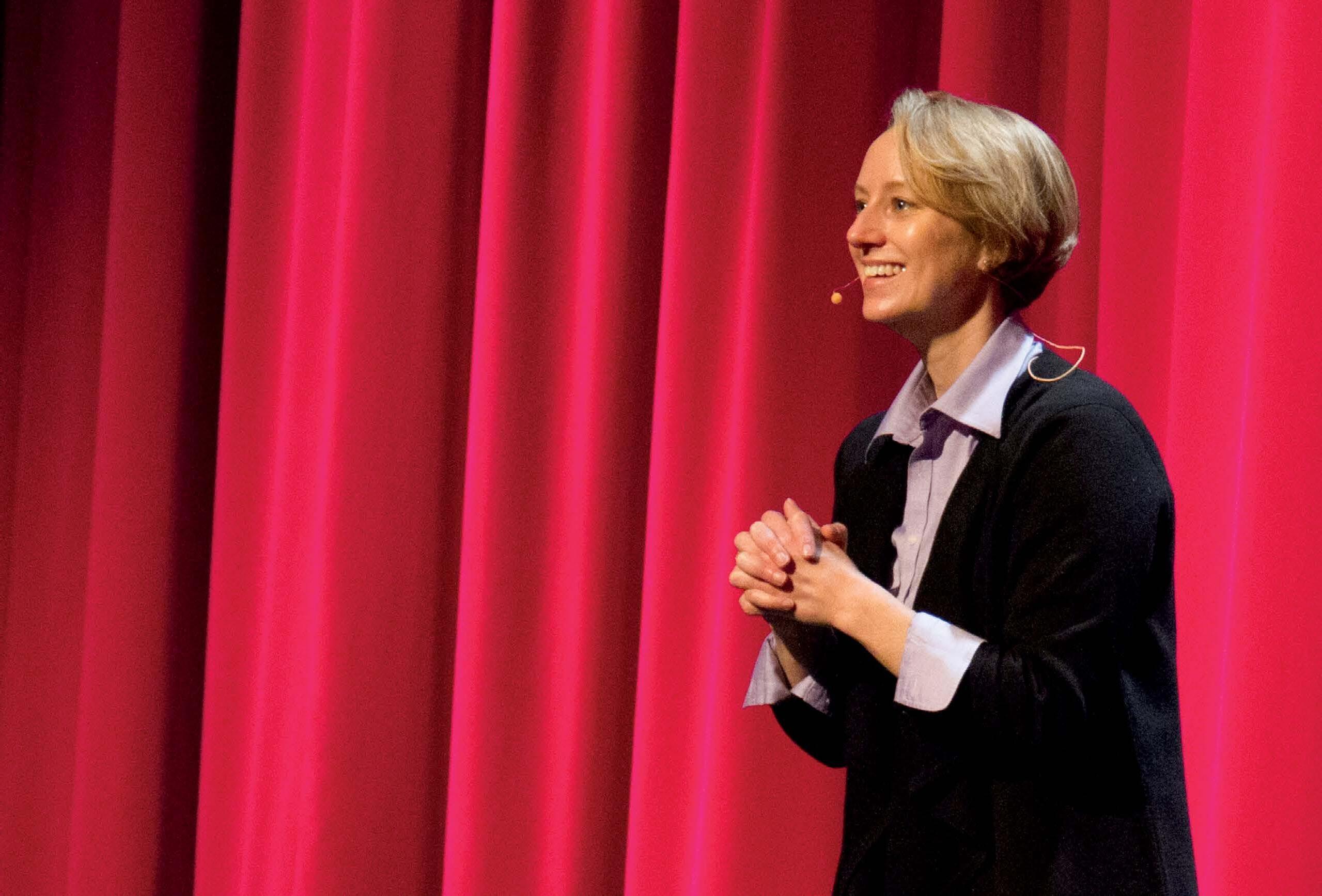
Leading psychologists and York House counsellors weigh in on what today’s teens face and the best ways to support mental health and well-being through the adolescent years.
BY JOY PECKNOLD
“Remember high school?” Psychologist and author Dr. Michael G. Thompson posed the question in a presentation based off his book, The Pressured Child: Helping Your Child Find Success in School and Life, to an auditorium of York House parents and guardians in October of last year. While working on the book, Thompson shadowed children through a school day, including a varsity athlete at Belmont Hill, the private, all-boys middle school in Massachusetts where he is supervising psychologist. Recalling that experience, he says, “I would creep home exhausted, wiped out—I never wanted to go back.”
Google searching how hard it is to be a teenager produces a very scientific explanation from the abstract of a Development Psychobiology article titled “The Storm and Stress of Adolescence.” It reads: “Adolescence has been considered, almost by definition, a period of heightened stress due to the many changes experienced concomitantly, including physical maturation, drive for independence, increased salience of social and peer interactions, and brain development.” Add to that the over six hours a day spent absorbing knowledge, across language, science, math, social studies, and more.
10
TEEN MENTAL WELLNESS
Psychologist and author Dr. Lisa Damour presented to students, parents, and guardians at YHS in November 2017. In January 2024, she facilitated a Head's Book Club discussion on her book The Emotional Lives of Teenagers.
But is it more difficult than it used to be? Psychologist and author of New York Times bestseller The Emotional Lives of Teenagers Dr. Lisa Damour does. “I actually think it is harder now to be and to raise a teenager than it was a generation ago,” she says. “Teenagers today deal with a lot more input and are expected to produce a lot more output. They swim in a digital environment that has them taking in information and connecting with peers all day, and sometimes all night. Then we ask, especially in schools like [York House], far more of them than we used to ask teenagers. In many ways, we're helping them reach new heights, yet at the same time, I think today's parents say quite readily that much less was asked of us in high school, and the college admissions expectations were much lower.”
Teens, in addition to adolescence’s typical challenges, now contend with social media and higher academic pressure. To help them navigate these storms and stresses, their emotional health is key, and the experts suggest some surprisingly simple remedies to bolster that. The first is sleep, close to nine hours of it. “Every human being knows that when you’re sleep deprived, you're more anxious, more vigilant, and [therefore] more vulnerable,” says
Dr. Thompson. “If you have kids who are up doing homework then social media, going to bed at 2 a.m. and getting up at 6 a.m. to come to school, they're likely to be pretty jittery and anxious.”
The second recommendation is time for play or restoration, which Dr. Damour says looks different for everybody. It could be socializing with friends, watching TV, spending time in nature, doing art—whatever it is, it should be a part of their weekly routine. She likens it to strength training. “We know that if you're lifting heavy weights at the gym, that stress is healthy and important, it’s how you gain capacity. We also know that to prevent injury, it has to be paired with periods of recovery,” she says. “It's the two together. Pushing beyond what's comfortable and then having adequate rest actually contributes to growth over time.”
It’s
also essential that no guilt is associated with resting, and Dr. Damour notes that girls in particular are more likely to feel bad about taking downtime or “me-time.”
11
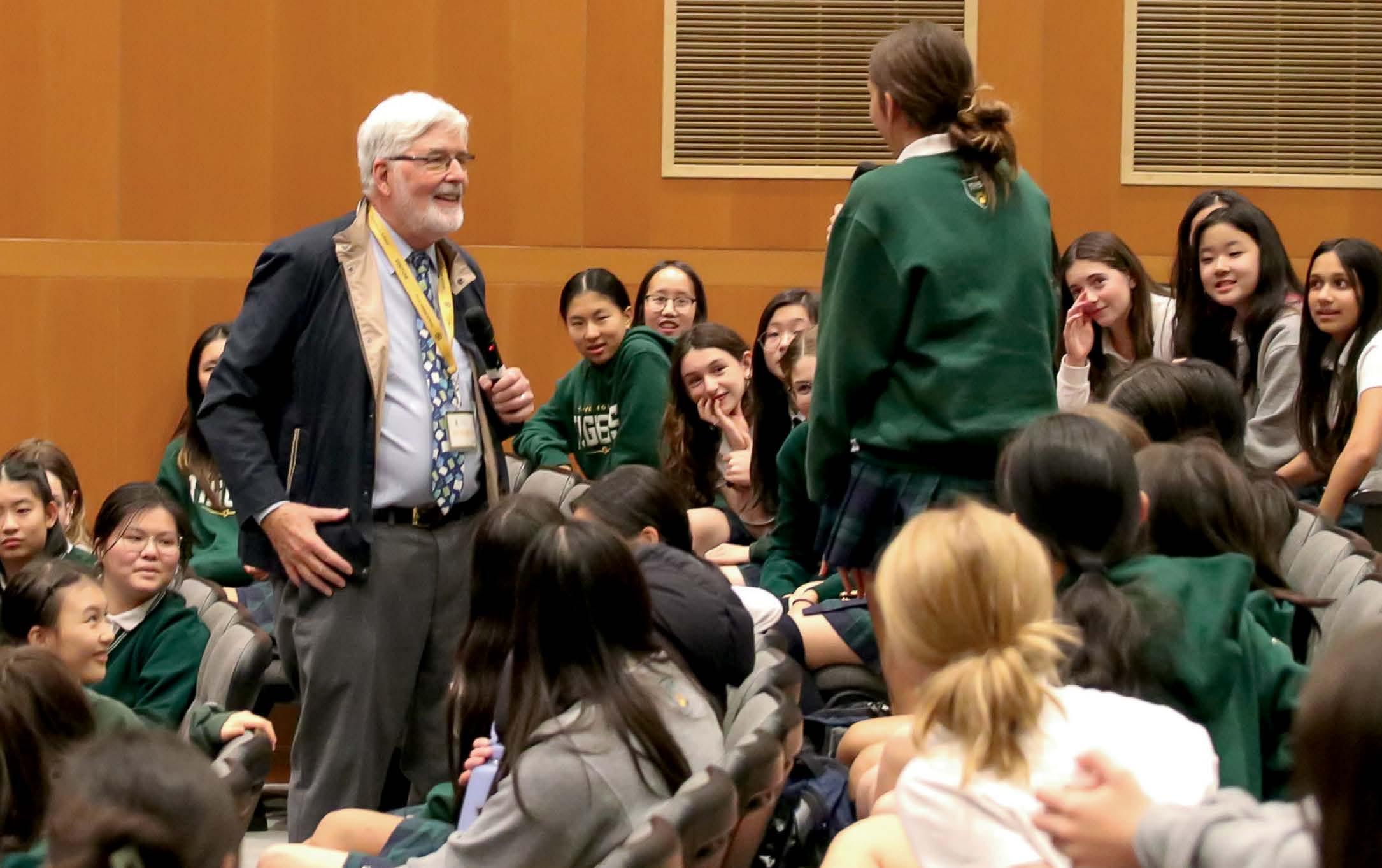
Psychologist and author Dr. Michael Thompson visited YHS in October 2023 to speak with students, parents, guardians, faculty, and staff on understanding and managing the "hopes and fears" of children and parents.
As that training analogy nods to, the other aspect of building strength and resiliency is dealing with stress. Using the example of sleep-away camp, which is the topic of his most recent book Homesick and Happy, Dr. Thompson says, “The vast majority of kids rise to the challenge because their parents aren’t there and they actually want to do it on their own—I’ll add that to my list of anti-anxiety things: surmounting a developmentally appropriate challenge [like that] makes you less anxious,” he continues.
Dr. Damour points out that feeling and facing difficult emotions is also important, and unavoidable. “What really matters is how we handle negative emotions, not preventing them—they cannot be prevented. This is true for everybody,” she says. “This all gets a lot more anxiety provoking for parents, because teenage emotions are very powerful [and] they change or shift very quickly. Especially with teenagers, we need to remember that mental health is about having feelings that fit the context, even if those are negative, and having effective ways to cope with those feelings.”
In moments of emotional overwhelm or dysregulation, Dr. Damour suggests caregivers provide a steadying presence. “We can reassure teenagers, that the situation is not as bad as it feels, and make it clear that we are not frightened of their negative emotions, and they don't need to be frightened of those feelings either.”
York House students are learning emotional regulation skills at school too. Senior School Counsellor Monica Beck, a Registered Clinical Counsellor, says counsellors address it across the grades in different ways, drawing from researchsupported therapies to help students develop emotional literacy, from naming their emotions to finding healthy selfcare strategies for coping with them, such as sleep or exercise.
In addition to being available for one-on-ones with students, counsellors are also invited into classrooms to teach on these topics. Junior School Counsellor Susan Sobieski notes that this sometimes happens because a teacher notices issues arising, such as friendship tensions, and requests a lesson on conflict resolution or Zones of Regulation, a social-emotional learning curriculum for self-regulation.
At the Senior School level, Beck and her colleague, Counsellor, Ruth Andrews also address social media, helping students recognize its potential impacts on their emotions and self-esteem; how what they reveal online is used to push more targeted content, which can
exacerbate their vulnerabilities; and how to establish their own boundaries around its use. This kind of personal technology also distracts from learning and real-life connecting, so York House introduced a phone policy in September 2023 which requires Grade 8 and 9 students to leave their phones in their lockers and Grade 10, 11 and 12 students to have them turned off and put away while classes are in session.
Smartphones, emotions, stress, lack of rest—these aren’t just adolescent issues, they’re adult ones too. To help adults navigate their anxieties around their teenagers’ lives, Dr. Thompson and Dr. Damour, who also happen to be parents themselves, have some parting reassurances.
“Not everybody reaches their full potential in high school,” says Dr. Thompson. Recalling how his own parents felt he wasn’t living up to his potential as a young person, he says that now, as a 76-year-old author of 10 books, the first of which he wrote at 50, he feels he finally is.
"Trust your child’s journey,” Dr. Thompson says. “They’ll figure it out. Children are capable.”
With an eye towards the future too, Dr. Damour highlights that there is little correlation between happiness and professional or financial success. “What is correlated with wellbeing at midlife is having good relationships, doing work you find meaningful and being good at that work,” she says. “If we reverse engineer that, the adolescent precursors of those three things, it's actually conscientiousness, being honest and upright.”
Helping develop the life skills that foster those character traits is a York House value too. “We've tried to be quite intentional about the wellbeing programming that we've developed beyond the academic program,” says York House’s Assistant Director of Senior School Katrina O’Connor. “It's very important that students have an opportunity to grow in their understanding of themselves. These years are such an intense period of identity formation for young people, and providing a context in which young women are able to grow into their unique identities is very important. And it does feed into that notion of wellbeing and the confidence that comes from that.”
12
WOMEN IN LEADERSHIP
Leading with Passion: Inspiring Stories of York House Alums at the Helm
They may have carved different trajectories to reach the zenith of their careers, but one thread strongly unites three York House School alums: A DEEP PASSION .
 BY LUCY HYSLOP
“To really love what you’re doing is such a highlight of being a leader,” enthuses Tara Christie ‘92, who became President and CEO of Banyan Gold in 2016 following a gold-mining career across the Yukon as well as in Tanzania, Nunavut and Ontario. “It’s so personally rewarding and I love the challenge. There’s such satisfaction in asking the questions and figuring it all out.”
It’s a sentiment echoed by Shauna Harper ‘92, the Kelowna-based CEO of WeBC, which boosts female entrepreneurs province-wide through training, peer support, advice and business loans among other such help. “There’s a real high in being able to lead and nurture a team,” explains Harper, who has curated the vision at the federally-funded not-for-profit for two years. “It’s wonderful to feel the momentum of people wanting to do well.”
For Vicky Lopez ‘96, Head of Partnerships, Strategic Communications at The Scottish Government, which she joined in 2017, nothing quite beats being in a position to shift thinking. Working with policy teams, communications colleagues and communities from their base in Edinburgh, U.K., she opines, “Beyond passion, there is no better motivator in a career than having the power to change things for the better. Every day brings a different challenge and a new opportunity to highlight the needs of individuals to better tailor our outputs to benefit everyone in Scotland.”
She has worked hard “to provide a voice for marginalized communities” especially advocating for inclusive communications and creating explainer films and translated/ accessible culturally relevant content during the pandemic. This has just earned Lopez a Member of the Most Excellent Order (MBE) of the British Empire medal from King Charles.
There’s no doubt, they insist, that an all-girls education propelled them. It’s the foundation that “helped to see the power of when women gather,” according to Harper, who harvested her own entrepreneurial spirit by manufacturing and selling inspirational magnets from Vancouver worldwide, including to notable clients such as The Walt Disney Company. Harper also went on to establish a marketing and communications company in Prince George.
The CEO evokes the school motto (Not For Ourselves Alone) while talking about the importance of its support. “Whether it was from borrowing someone else’s belief in me until I found it in myself or celebrating the big and small wins,” continues Harper, who studied Sociology at Western University in London, Ontario. “It’s the value of interconnectedness; that when you nurture one woman’s voice, it’s exponential in how it ripples into the community.”
Despite Christie also working in a male-dominated industry (she is still often the only female CEO at mining industry meetings), she believes school fostered her ability to be confident in any setting as well as soar academically. At the University of British Columbia, she earned both Bachelor’s and Master’s degrees in Geological Engineering—a department where women were also underrepresented at the time.
“It’s not for everyone, but having all girls [at York House] means you don’t have to deal with other dynamics in the classroom–worrying about how you look or whatever— which was important for me,” she adds. “It helped me to focus on studying. I came out of school very independent—I knew who I was and I knew I didn’t need to follow a crowd.”
School similarly molded Lopez’s desire for success. She first
13
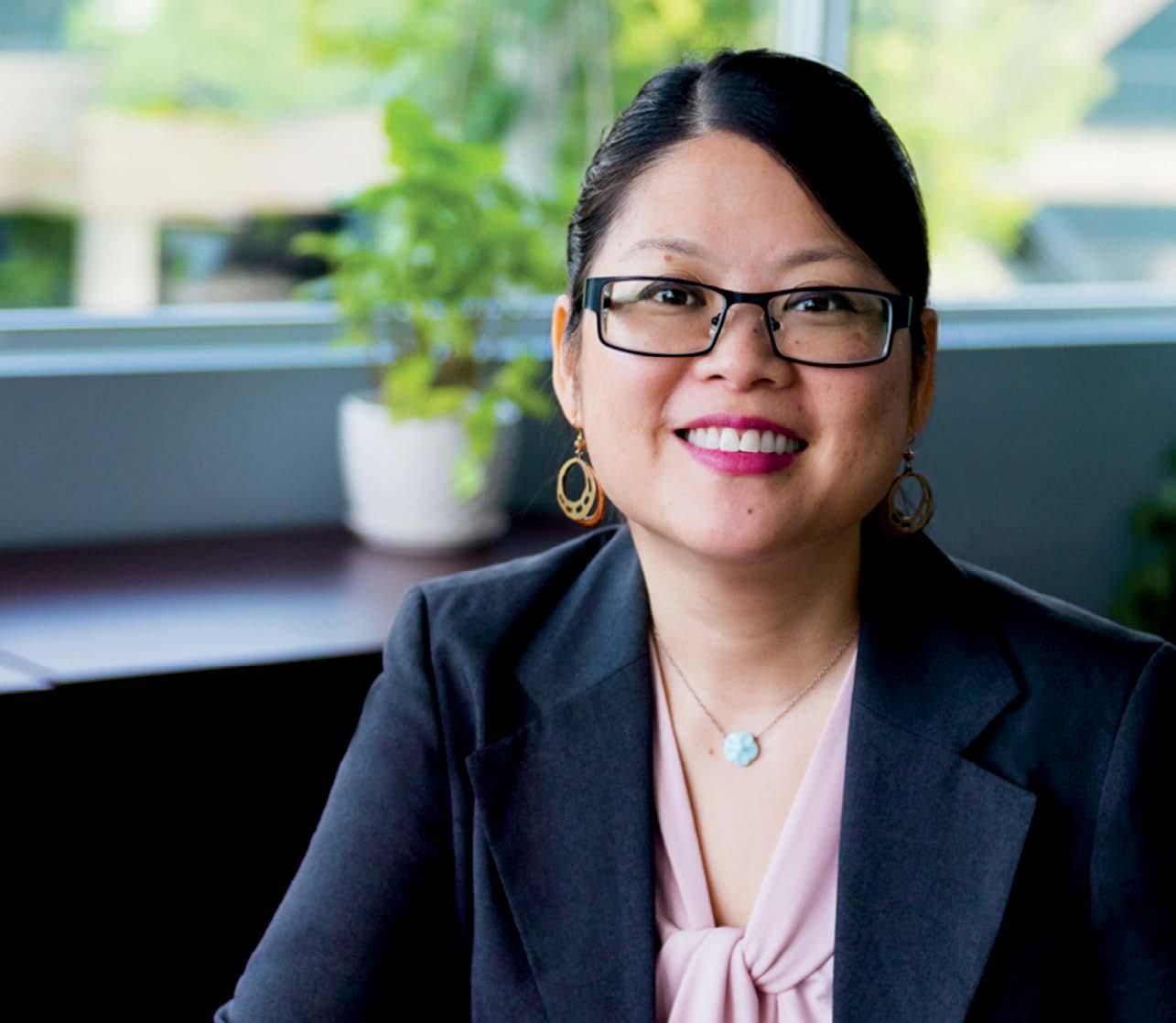
Tara Christie ‘92
wanted to become an astronaut, which teachers encouraged her to feel was an achievable goal. She eventually swapped a year studying Physics and Astronomy at the University of Victoria for a Bachelor in Commerce (Marketing and Advertising) at Queen’s University in Kingston. York House “helped me establish my sense of self without boundaries, and the confidence I gained from being a part of such a closeknit community was invaluable to my sense of ambition.”
Of course, as in life, the highs of being a leader invariably come with the odd lows. Dealing with onerous tasks is obviously par for the course. “You need to make some difficult decisions as a leader,” adds Lopez. “Given resources are finite, it’s not possible to do everything on my wishlist, but I do my best to understand as much as I can in any situation.”
Along with the autonomy enjoyed at the top of a company, it also means the buck often stops with them. Put simply, “it’s not all roses,” Christie continues. “You wear everything as CEO. If we are at fault as a company, I can’t just blame my managers.”
Banyan Gold is successfully working on Canada’s newest and rapidly growing district with its 6.2 million gold ounce AurMac Project in the Yukon. However, Christie notes a few years earlier the company suffered some technical challenges (of which she was unaware). “After all, geology is not a foregone conclusion,” she states. “You try your best but sometimes you are going to fail. Which is why learning resilience as soon as possible in life is super important.”
As well as resilience, Lopez believes being able to lead effectively “takes courage and the ability to learn from experience—both of these were very much ingrained in my York House education.”
All these burdens of leadership are seen by them as opportunities for growth as they shape the world. “My mantra is Billie Jean King’s ‘pressure is a privilege,’ which I remind myself of to get through some of the ‘harder moments’ of leadership,” Harper explains.
Mastering the ability to connect with colleagues and stakeholders in order to work through these leadership troublespots and bounce back is vital.
“My communications skills go straight back to York House,” Christie says.
“How you work on a project, how you collaborate, who’s in charge, making sure everybody does their part and picking the right people there’s leading, but also getting the right team to lead.”
And empowering that team to take action, Lopez chimes in. “I always embrace opportunities to train others,” she says, adding it ensures they may be able to help out in any situation when she cannot.
Harper concurs: “There’s room for more than one person to be at the front of an organization. So much of leadership is holding it together and I practised that at York House.” Smaller classrooms in particular, she suggests, made it easier for individual voices to be heard as well as showing that little teams “can do incredible things” together.
School lessons, it appears, now writ large in the trio’s stellar working lives.
14
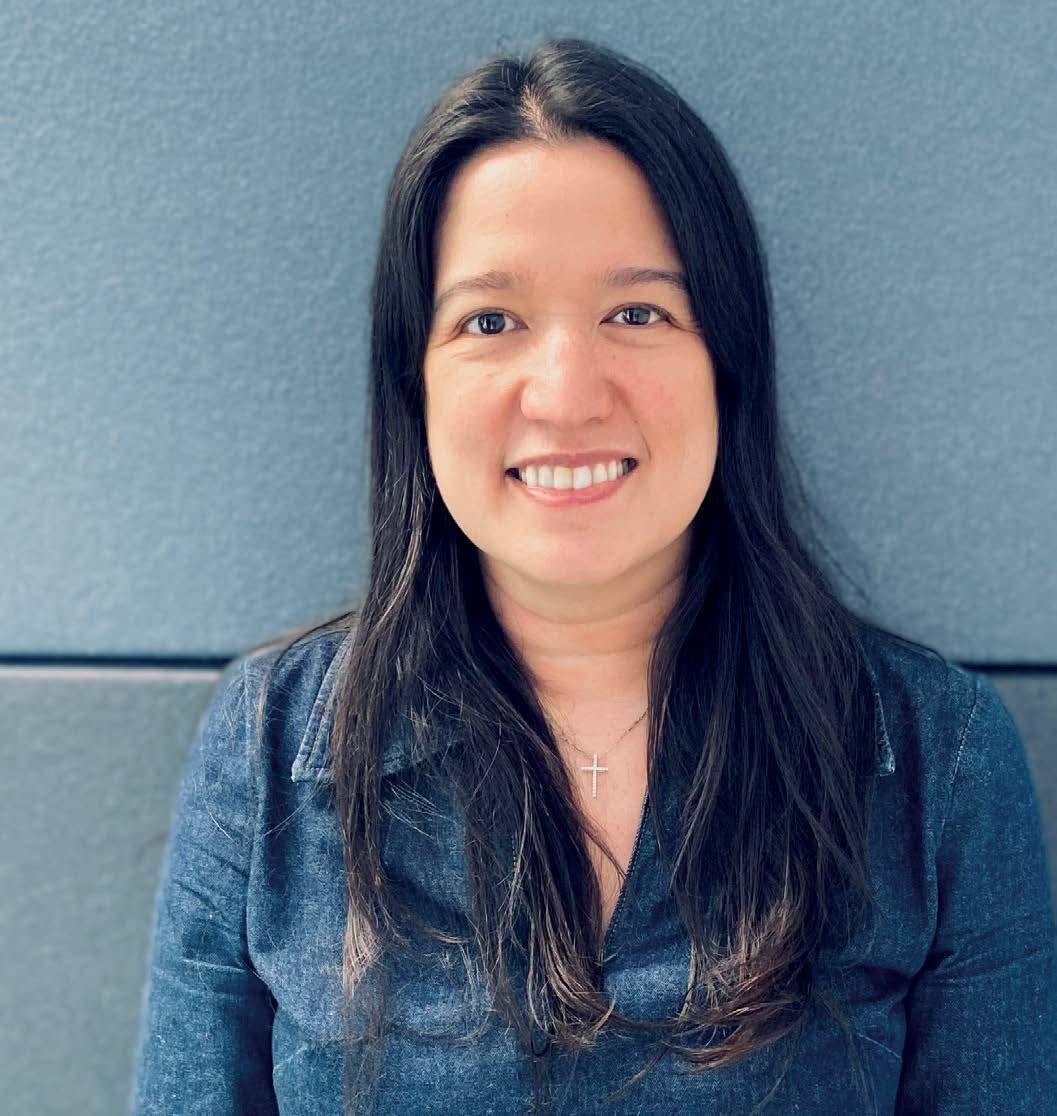
Shauna Harper ‘92
Vicky Lopez ‘96
Diverse Perspectives and Comfor t Among Dif ferences Academic Excellence and Creativity
Self-Awareness and Self-Care
Empowered Voices and Kindness and Empathy
Abilit y to Navigate Uncer taint y
Connection
with the
Real World Confidence and Resilience
Fulfillment and Joy from Learning
The Future is Ours (But Not For Ourselves Alone)
BY KATIE NANTON
Nine YHS alums, teachers, and students share their views on how the school uniquely prepares students to navigate an everchanging world.
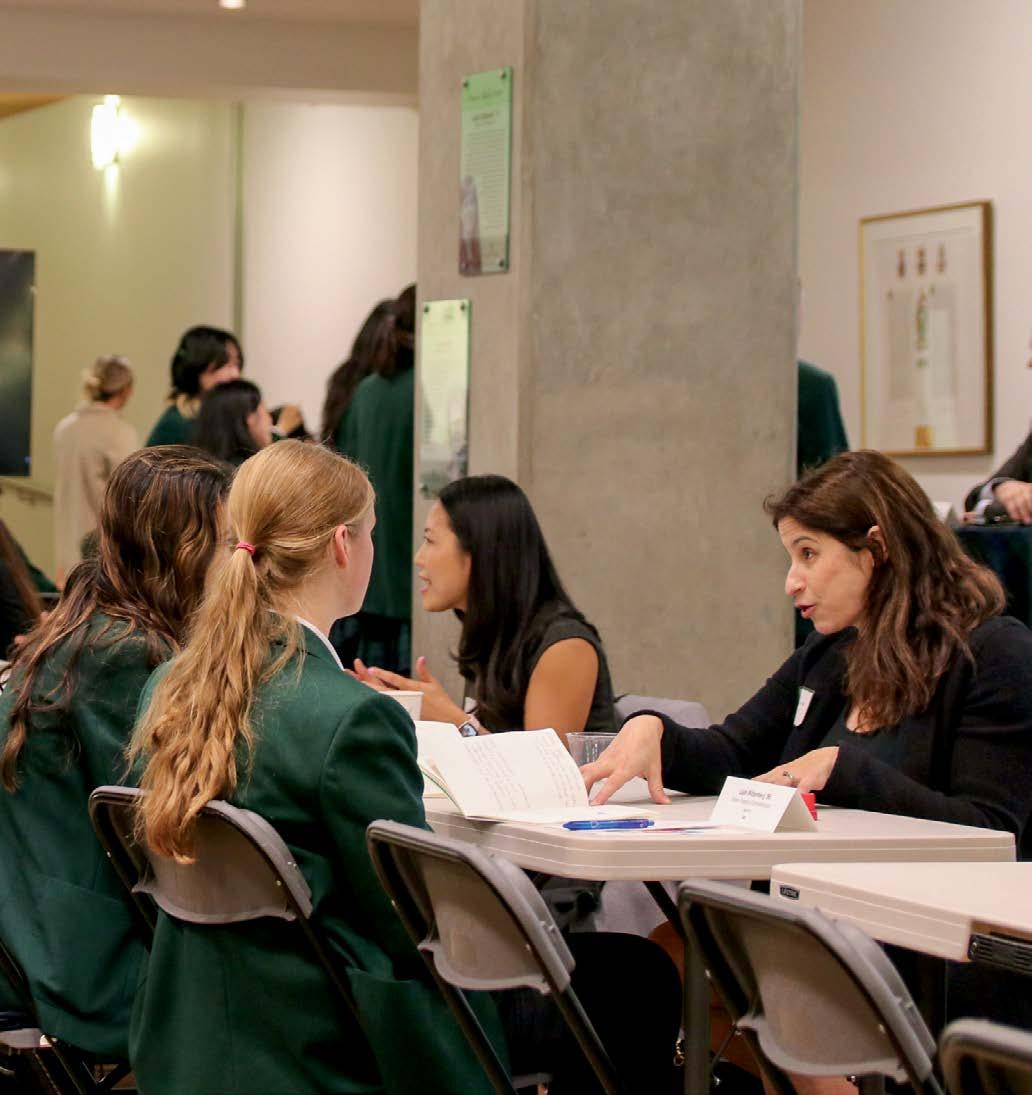
Imagine a room filled with 45 industry professionals spanning a range of careers. They sit huddled with small groups of students, speed-networking. At the five-minute mark, a buzzer goes— ding!—and everybody rotates. At the end of the session, each cohort of 2–3 students has met 10 different career professionals, honing their interview skills and gleaning future-career inspiration along the way. This past year at York House, Jaclyn Murray, York House School’s Capstone and Career & Life Connections Coordinator, organized just that event for Grade 11 students to meet with York House alum and parents and learn about their respective jobs.
15
CREATING FUTURE-READY STUDENTS
“ I had so many people banging down my door, wanting to participate,” says Murray, who knows a thing or two about sending futureready students out into the world.
Her work prepares Grade 8/9 students with critical adaptive skills before focusing on careers with Grades 10 to 12; she uses tools along the way like SparkPath Challenge Cards, which zoom out on traditional ways of looking at job titles as a means of choosing a career path. Instead, it looks at angles such as what problems or challenges in the world students engage with in their work.
Recently, Murray employed the Japanese concept of ikigai to help students connect with their “why.” Similar to a Venn diagram, it explores the overlap between four separate quadrants: what a student loves, what they're good at, what the world needs, and what they could be paid for. “When those four elements are in balance,” says Murray, “you can achieve that sense of purpose; you’re fulfilled.”
Her other area of focus, the Capstone program, is a learning opportunity for students to explore, grow, and share a project that has deep personal meaning/interest for them. “No two Capstone classes have ever looked the same in terms of my teaching and delivery,” she says. “Our students change, and you have to be responsive to their needs as well as what's going on in the world.”
Building Confidence: A Sense of Self
After graduating as Head Girl in 2023, Isabella Demianczuk felt well-equipped for first year at University of Toronto’s prestigious Rotman Commerce business school. Confidence, for her, was a key takeaway from her time at YHS. Demianczuk points to one particular challenge— participating in a unique speaking opportunity provided by the school, YHS Talks, at the end of Grade 10—as lifechanging to her self-empowerment. Demianczuk recalls nervously “shaking like no tomorrow” for the first five minutes of her speech. Eventually, however, her jokes got laughs and she relaxed; by the end, it all was smooth sailing. Throughout her Grade 12 year, Demianczuk’s fear of public speaking wore off and a calm resilience took its place. “[By graduation], it just became very natural to go up and talk.”
Involved in many sports and adoring of the school’s outdoor activities, Demianczuk also praises the school’s focus on diversification of activities to find work-life
balance. ”YHS has a couple of really important pillars, academics being one of them, but it also encourages students to join athletics; to volunteer and to be engaged in community; and to get involved in student government,” she says. “By emphasizing all four aspects, there definitely was a sense that it was important to learn just beyond the classroom.”
Building Agency: Cultivating Empowered Voices
Hands-on learning, both at school and off-campus, is Lizzie Gregory’s specialty. As Coordinator of Community & Experiential Learning, she spends her time getting students to engage with real-life issues and figure out their place within the world. “When they leave for university, I want them to know that their viewpoint matters,” says Gregory. “Everyone should have a place around the table.”
One way that she sees empowered students develop is through The Duke of Edinburgh Program, where they pursue a volunteer opportunity, a skill, and a physical sport for three to six months. “What’s brilliant is that they have to do it once a week, every week. They have to show that they can turn up,” says Gregory, exercising time prioritization and staying true to commitments are critical life skills. In Career Life Education, the Grade 10s are also tasked with resume-writing, which lays a firm foundation for selfreflection. “I’ve had so many students come up to me and
16
Grade 11 students met with York House parents and alums during a speed-networking panel.
proudly say, ‘Miss Gregory, I got a summer job and I used my resume.’ It’s empowering for them to have a document which shows all of their strengths, goals, and everything they're working towards; they can really own it.”
Gregory also taps into students’ curiosity about the job market by exposing them to a wide array of professions. One recent initiative had students volunteering with Food Runners, a program that rescues food that would have otherwise gone to waste and distributes it to organizations that feed community members in need. What started as a career familiarization excursion turned out to be a learning opportunity for students to be in the Downtown Eastside in an appropriate way, building a reciprocal relationship. The experience proved so impactful, it was rolled out to the whole school. Today, groups of 20 volunteer with Food Runners weekly, cultivating future community leaders, global citizens, and empathetic humans capable of meeting people where they are.
Building Empathy: Community Leadership
For Isabel MacDonald ‘21, now a neuroscience student at McGill University, York House not only fully prepared her
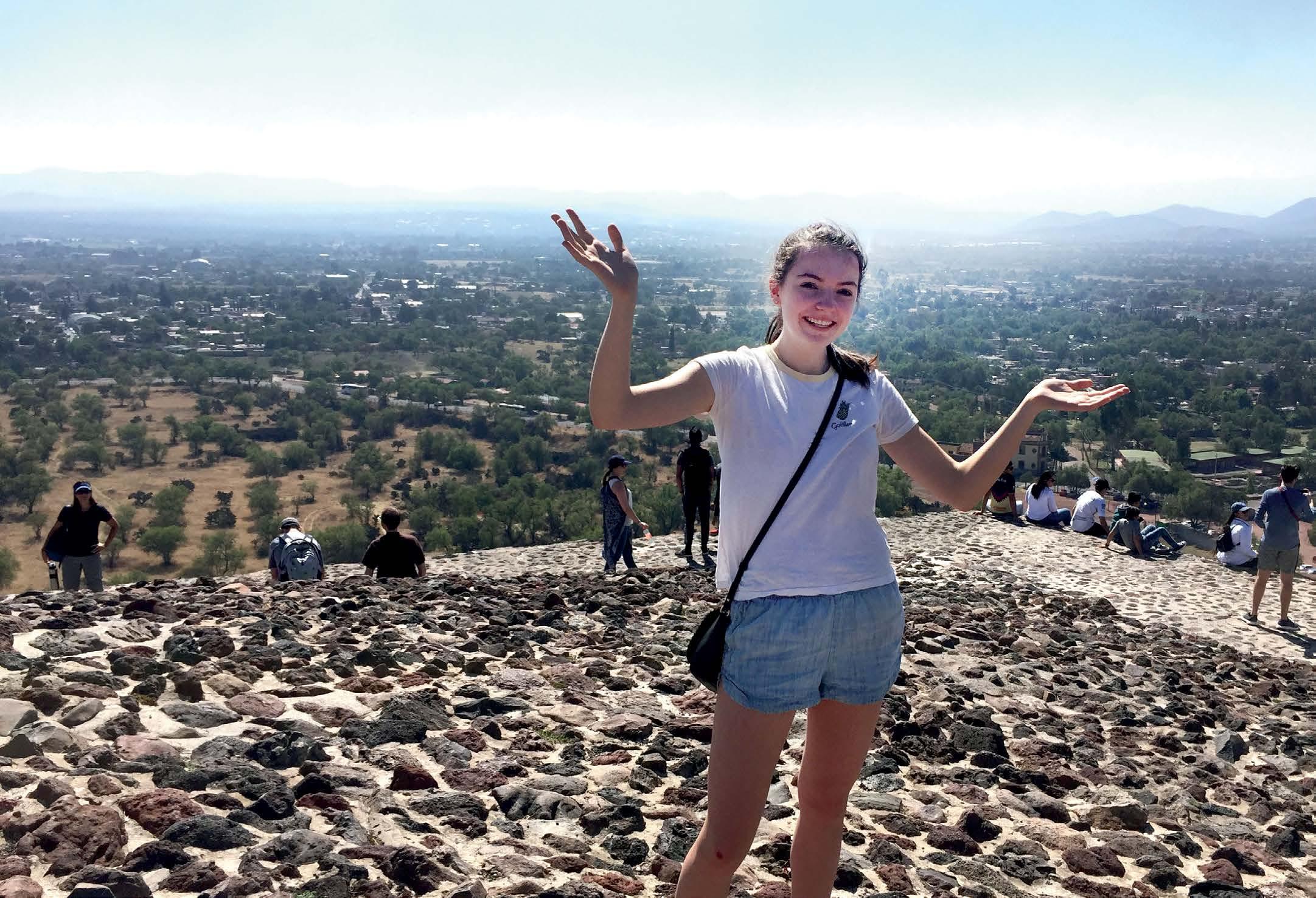
for the academic rigours of a science program at a worldclass university, but it provided her with “crucial” exposure to service-learning. “Our motto, Not For Ourselves Alone will always play a big role in my life,” says MacDonald. Always encouraged to volunteer, she did so at seniors’ homes from Grades 3 through 12 (and continues to volunteer in Montreal at a drop-in centre). Her McGill research focuses on neurocognitive aging and involves talking to older individuals of diverse backgrounds. “I get to connect with them and learn their stories,” she says, crediting empathy, fostered throughout her YHS years, as a critical skill for her work.
Further to academics, MacDonald reflects on a Grade 9 exchange to Cuernavaca, Mexico—“an incredible experience that gave me a sense of what it might be like to go to university and live away from home.” She also talks about one very rewarding yet rain-soaked kayaking trip through the Broken Group Islands with the GO! Program. GO! is a specialized Grade 10 course which cultivates outdoor survival skills while bonding along the way. “I remember making fires on the beach in the rain and being challenged to use only one match—it really built my resilience.” Despite the rainstorm, she recalls how her group pulled together, still eager to learn how to safely capsize, tie tarps, and cook all the meals they’d planned for.
17
Isabel MacDonald ‘21 on a Grade 9 exchange in Cuernavaca, Mexico.
Building Resilience: Eye-Opening Experiences
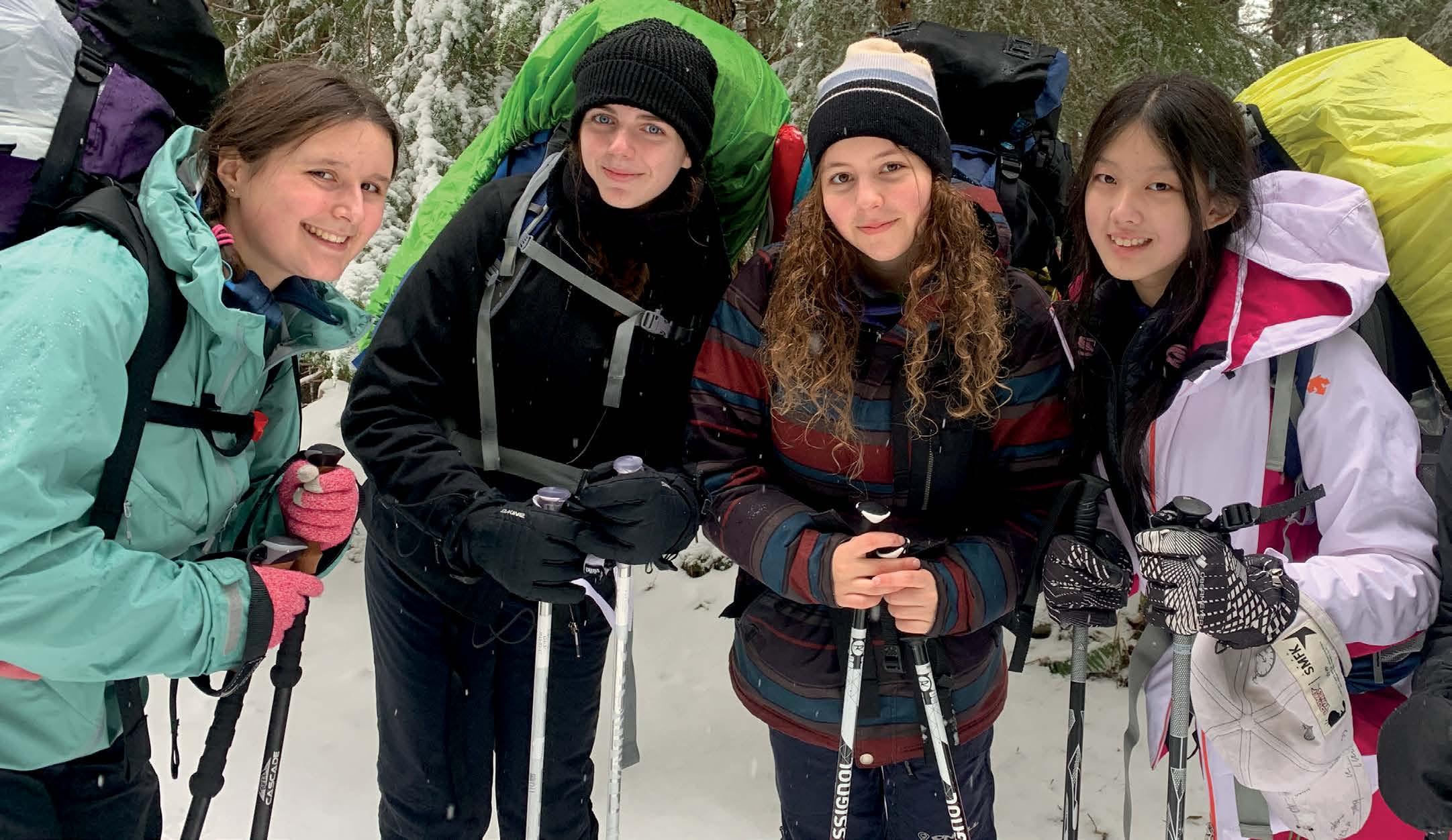
Current YHS student Siena Boxer ‘25 echoes that sentiment, crediting the GO! Program with showing her she could do anything—from rugged camping trips and hiking the challenging Chief in Squamish, to snowshoeing up a mountain and surfing in Tofino.
“ I was genuinely surprised by what you can accomplish when leaving your comfort zone," said Boxer.
Boxer learned about sustainability, activism, and the impact her generation can have on it all. “I was able to see how beautiful this world is in its raw state, which motivated me to do whatever in my power to keep it that way,” says Boxer. "It reinforced the importance of the world being your classroom."
Outdoor Education Coordinator and a GO! Program Instructor, Katrina Brennan, shares how life-after-highschool can benefit from exposure to the outdoors. “Students build their skills and competence in the outdoors by engaging in Wilderness First Aid training, Wilderness
Survival Training, and Avalanche Safety Training, and they’re empowered to feel confident in themselves and their skills.” These courses whisk students deep into the ecosystems of BC, teaching them about leave-no-trace principles, indigenous plants, and the positive impact the outdoors can have on stress management and mind-body wellness.
In one unique case, Brennan recalls a student who was hearing impaired and wore cochlear implants, which was an extra obstacle for her on excursions. “It was incredible to watch her persevere and accomplish great things, growing so much over the course of those six days,” says Brennan. “It changed her as a person and built a confidence that she did not have before.”
Building Curiosity: Real-World Debates & Reframing the Classroom
The world beyond the classroom is a multifaceted place, especially in this age of misinformation and social media; to be future-proof is to harness critical thinking skills that help one process the world. Meredith McInnis, Social Studies Department Head and Senior School Teacher, loves to watch her students develop agency and curiosity in those areas, building a toolbox to detect the world around them.
18
Siena Boxer ‘25 (second from left) and Grade 10 students in the 2022-23 GO! program.
“We're very much engaged in contemporary issues— the big debates in our time,” says McInnis. The high school curriculum deals with students’ ability to gather and assess reliable information, ask questions, look for gaps in arguments, then be able to build an evidencebased position. Some creative ways these play out are philosophical debates, mock law trials, and crisis press conferences. “The ability to take an issue, digest it, and engage with somebody else on it—these are lifelong skills and habits that people use in their professions,” says McInnis, adding: “I often have parents say to me, ‘Thanks for making my kid interesting to talk to.’”
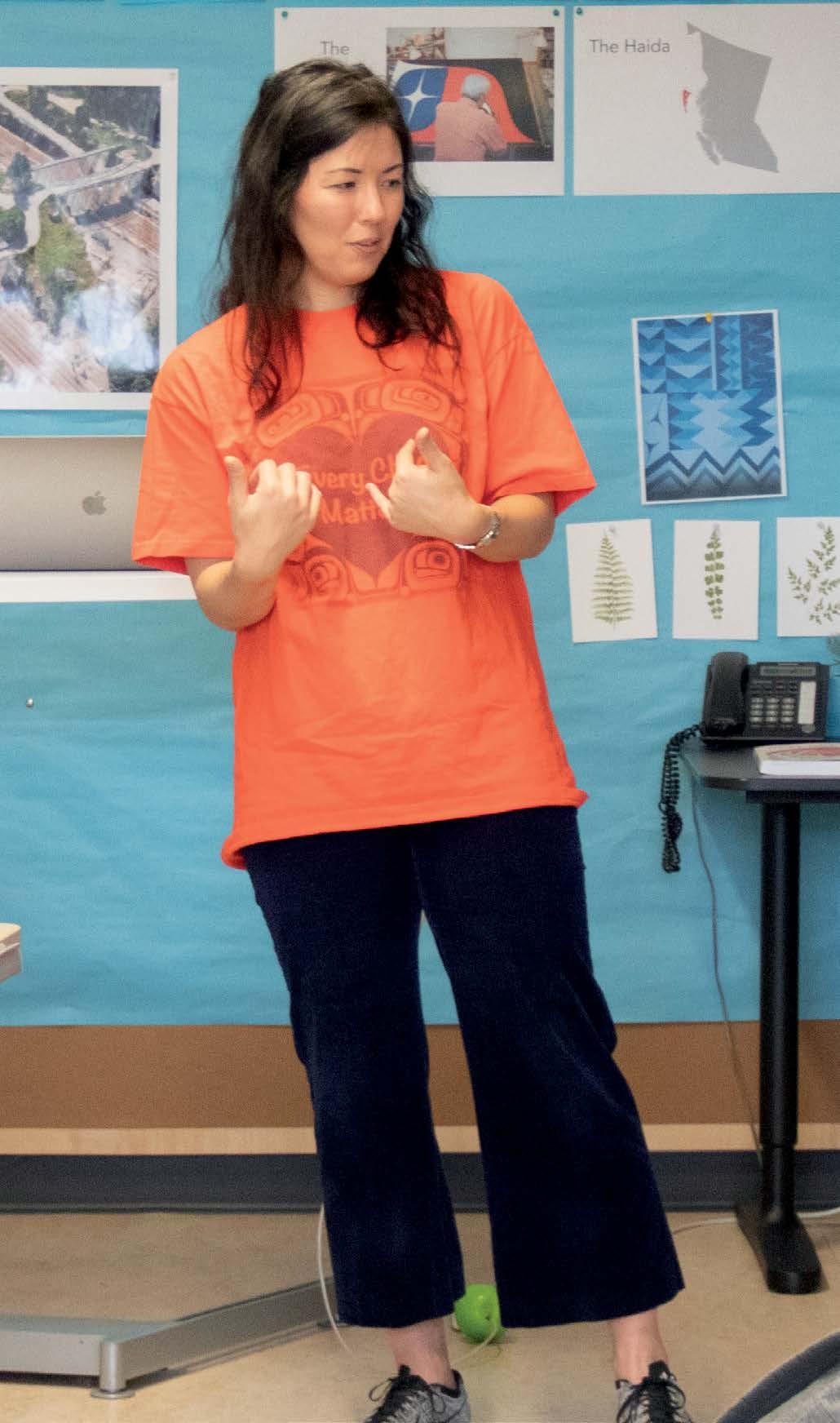
Small class sizes also give the opportunity for students and teachers to really create strong bonds. “I learn so much from my students. And I think again, back to those First Peoples principles; it is definitely a reciprocal relationship.” Those indigenous principles show up in many YHS classes, including BC First Peoples 12. Here, McInnis stresses that it’s not just learning about indigenous topics but about
learning through unique principles. “You have to actually reframe the classroom to centre the relationships that are at the core of First Peoples principles.” This could entail looking at students from a strength-based approach, or thinking about how learning takes patience in time. “For me, as someone who's been teaching now for 12 years, that goal has really invigorated my teaching practice.”
In line with that idea, Math Teacher Maire Duffy can think of many examples of reframing teaching. For one, her classrooms are set up not in traditional rows but in groups, with whiteboards around the room for students to show their work. This encourages peer collaboration and discussion, breaking down roadblocks for students who feel challenged. As for “real-life math skills” like financial literacy, Duffy shows the tax breakdown of a paycheque, thereby giving students a firm grasp on understanding their future finances.
Building Creativity: Academics Meets Ingenuity
One thread running through YHS curriculum is creativity— and sometimes unorthodox teaching methods—no matter the subject. Genny Lee, Director of the Senior School, shares how the school is redefining academics to include it as a success-driving agent. “When students are able to create, they are utilizing higher-order thinking skills that move them to new levels of understanding.” In science, for example, “You might see this as students taking simple science safety rules and creating their own comical memes to convey an important lesson.”
Just a few months ago Lee saw a lesson that blended math, social studies, and history, taking students physically out of the classroom too. “A teacher used a long spool of string to convey the timeline of Indigenous peoples habitation on Turtle Island. It started from the third floor and travelled down the staircase with tiny flags denoting key events prior to the arrival of the first settlers.” It was a poignant lesson on how long Indigenous peoples have cared for this land, and one that students won’t soon forget.
Encouraging courageous and innovative thinking creates future-proofed students who learn beyond the traditional confines of education and, ultimately, challenge the status quo. One thing is for certain: for York House students, the future is bright.
19
Social Studies Department Head & Teacher Meredith McInnis.
Rethinking the Traditional Classroom IN THE AI ERA
BY ADRIENNE MATEI

In November 2022, language-processing artificial intelligence (AI) chatbot
ChatGPT landed abruptly in the educational environment. Suddenly, an easilyaccessible AI tool was responding to all manner of requests, from writing computer code and formulating scientific hypotheses, to analyzing Chaucer and drafting debate arguments based on historical fact.
Initially, this technology struck many as daunting; could it erode academic integrity, denude the value of degrees, and harken the end of an educational era?
A more measured outlook has since superseded these fears. Generative AI has transformative implications for both students and educators. Yet the nature of these changes can be optimistic and exciting when we consider them opportunities to prepare for a dynamic future—one in which today’s students will themselves be technology’s creators, curators, and critics.
A Forward-Thinking Approach
“I think we need to lean into the idea of exploring AI with a sense of anticipation and hope,” says Nathan Still, Director of Technology and Innovation at York House School.
In Still’s computer programming class, Senior School students are co-creators of machine-learning systems, crafting the datasets that neural networks process in order to respond accurately to user prompts; developing an appreciation for how and why AI “hallucinates,” or
fabricates false information, and noticing how systemic biases can manifest in data without careful attention. They develop AI that scans factors contributing to carbon emissions and analyzes the funding discrepancies between various nonprofit organizations. They approach technology altruistically and embed their work with “strong convictions around empathy and equity,” says Still.
AI and Preparing for Future Careers
Students are learning the values of the responsible use of technology. Simultaneously, they’re preparing to join a workforce into which AI is already deeply integrated.
“Most jobs are already employing AI somehow,” says Kirsten Sutton, a technology executive of 30 years and a YHS alum of ‘83. Jobs in software, research, and engineering come to mind, but today, AI’s impact reaches beyond them into countless professions, like real estate, finance, and even physical therapy. “I know a woman who is a physical therapist by training, and she works in video games because she understands body movement and helps them to build more
20
realistic characters,” she says. "You don’t need to be a coding whiz, only to be a curious and observant tech adopter," says Sutton, who pursued her undergraduate degree in creative writing. “Anybody can be involved in tech.”
Keeping AI Use Ethical and Responsible
The question of how generative AI may affect academic integrity is an interesting one. It’s imperative students learn to think critically, to problem-solve, construct their own logical arguments, and develop perspectives on complex issues. At worst, AI can encourage intellectual laziness, “doing the work” for students seeking a shortcut.
However, teachers experimenting with the uses and limitations of chatbots have learned to see their output as starting points for the human iterative process. For her grade 8 ethics class, YHS teacher and alum, Dr. Alex Lesk asked ChatGPT to draft examples of ethical dilemmas, only to discover not all of its responses qualified as such. Lesk realized, “Oh, this is even better,” she says. “Students could actually identify why something wasn’t a dilemma,” and explain the nuances therein, honing their critical thinking in the process. In fact, the blandness, inaccuracy, and cliche characteristic of many chatbot responses make them better foils against which students can sharpen their insights and probe for deeper meaning. “It teaches them not to be afraid of these tools—that they’ve got more creative ideas than the hivemind,” says Lesk. AI also pushes teachers to “up their game,” Lesk adds, noting that her own focus has shifted away from homework toward in-class assignments where showing one’s process and evolution of thought is paramount—an approach far removed from the ancient standard of memorization and regurgitation. The point is, instead of assigning work that AI could easily generate, educators are reassessing what they’re really asking students to do.
AI is ultimately a tool—one that’s widely-used, accessible, and has many applications for assisting students. Using AI to help brainstorm essay ideas, explain tricky concepts, or take dictation isn’t so different from using spellcheck or a calculator. What’s important is students and teachers alike are transparent and intentional with its use, and understand its limitations. “I think if you keep it away from students, it becomes the forbidden fruit,” says Kate Anthony, YHS Education Technology Coordinator. With parent permission and appropriate guidance, it’s useful to let students explore AI for themselves. Says Anthony, “We're going to be living with this for the rest of our lives, so let's play around with it, and let's figure out how to do this properly together.”
TIPS FOR PARENTS AND GUARDIANS
1. EDUCATING YOURSELF ON AI
"Artificial Intelligence" can be a slippery term; specifically, in the context of written response generators like ChatGPT and Google Bard, it denotes "large language models"—programs that analyze vast amounts of data and learn to predict sequences of words and concepts to accurately respond to user prompts. Take time to familiarize yourself with these programs by reading media coverage from trusted sources, and experimenting with them firsthand. “The students who are really successful with their use of technology most often have very engaged parents who come alongside them in that process,” says Nathan Still, YHS Director of Technology and Innovation.
2. SAFE AND RESPONSIBLE AI USE
ChatGPT, and similar programs, are not intended for use by those under 13, and parental oversight is encouraged for users aged 13-18. When guiding your children in their online activities, it's essential to emphasize the importance of not disclosing personal or private details about themselves, their home, or people they know. To better understand the risks associated with sharing personal information, Still recommends having your child thoroughly read AI software privacy terms and policies prior to using the programs. “It can be earth-shattering for students to really dig in and realize how their data is being used,” he says.
3. SETTING BOUNDARIES WITH AI
Set clear boundaries with your children regarding what is okay to use AI for—such as brainstorming ideas, checking grammar, or facilitating a mock pop-quiz on a subject—and what isn’t, like having ChatGPT do your homework and passing it off as your own. This conscious decision-making can help students learn to use AI as a tool, not a complete solution, and encourages the kind of critical thinking that leads to a richer learning process.
21
THE GIFT OF HEALTH & CONNECTION
The New Virginia Moore Mackay Dining Centre Enhances Student Wellbeing
BY KELLY WALKER SCHOBEL
“It was a no brainer,” says Sophia Mackay, recalling her and her husband Mike being asked to support the upgrade of the new Dining Centre last year. “The Caf is such a central hub of activity at YHS,” she continues. “It’s where students enjoy a meal, take a break from their classwork, and where they can connect and have organic, fun conversations that sometimes only happen when you are breaking bread together over a meal.”
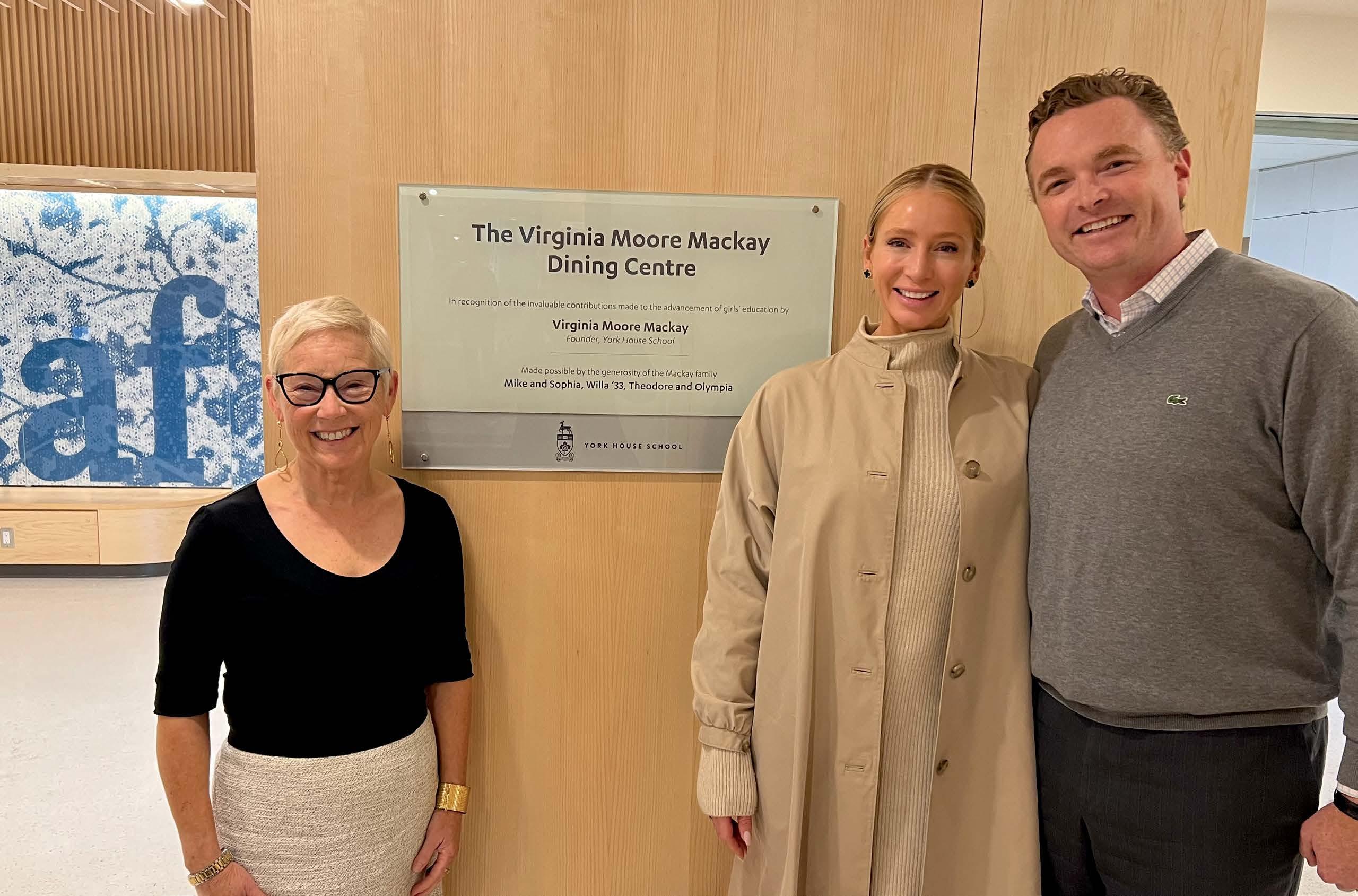
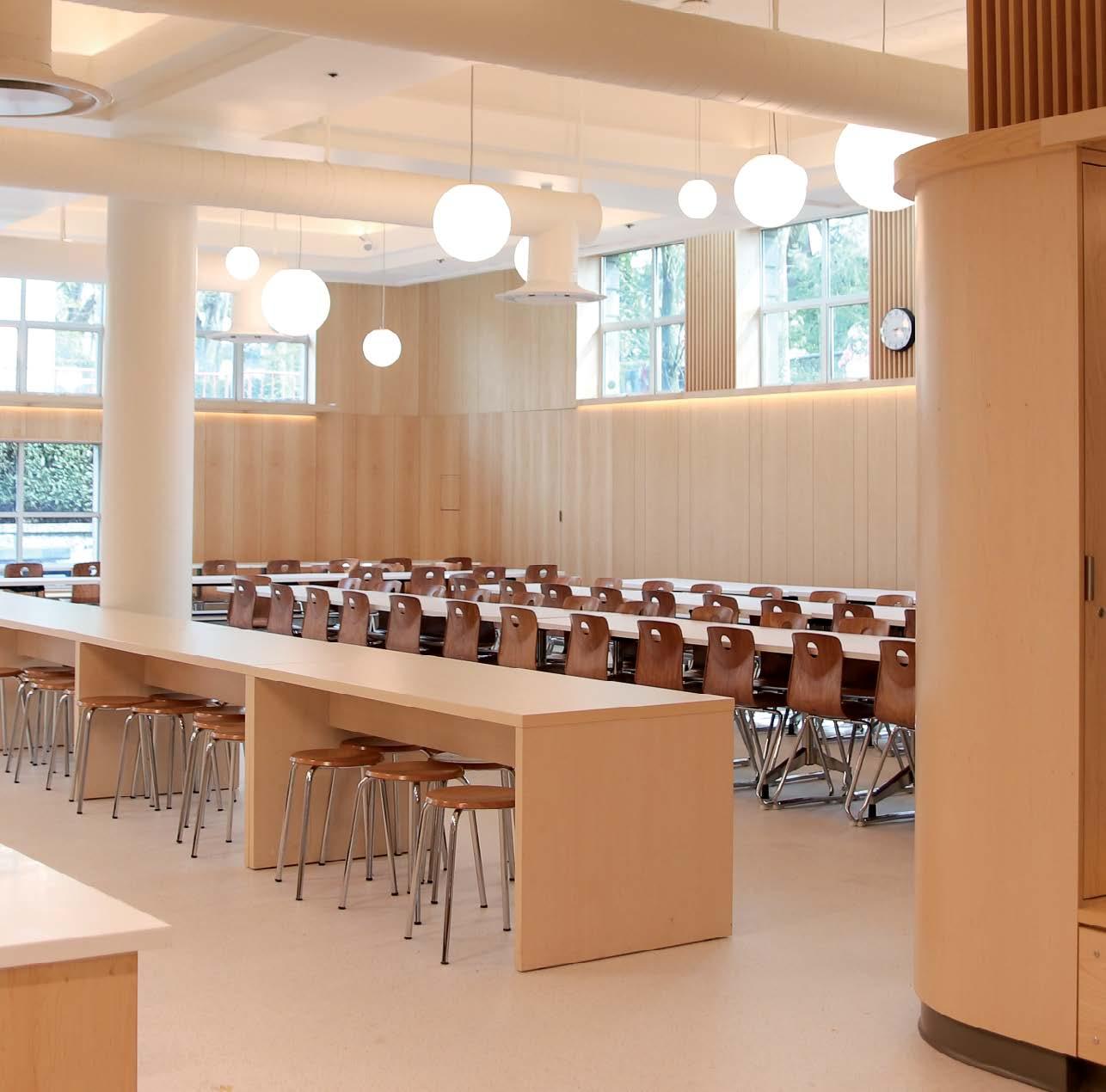
The newly named Virginia Moore Mackay Dining Centre— affectionately known by Yorkies as “The Caf”—underwent a significant renovation and upgrade last summer. The layout, furnishings, fixtures, lighting and decor were modernized to enhance meal times and our students’
experience connecting over food. Mike and Sophia Mackay are parents of Willa Mackay ‘33 and active members of the York House community. “Childhood development and nutrition are of particular interest to me and Sophia, and so the opportunity to give to York House is gratifying—a school that is doing so much for the development of young girls and women in our city,” says Mike.
In addition to their significant gift to support the revitalization of The Caf, the Mackay Family was joined by a number of YHS parents, guardians, and alums who made contributions to support the project through the fund-aneed appeal at the most recent York Rose Ball.
As CEO of Strand, one of Mike’s core beliefs is a conviction rooted in his faith that, “For unto whomsoever much is
22 DONOR PROFILE
Head of School, Deryn Lavell, with Sophia and Mike Mackay in the new Caf named after Mike’s great aunt.
given, of him shall much be required.” Mike’s great aunt, Virginia Moore Mackay is one of the seven female founders of York House School. As a school leader, artist and teacher, Virginia inspired students and the Sunday School children she taught. “We were good friends and must have had a lot of faith in the future,” said Virginia in the early days when she was asked about the school’s founding. A simple statement yet one that still resonates with who York House is today—a connected community of people who believe they can shape the future.
“Whenever you’re giving back through projects like this, at the root of it is an optimism and a hope for a better tomorrow that is healthy and prosperous for our kids,” Mike says. “My aunt’s words are simple but powerful when you think about what they really mean.”
As a Registered Dietitian, Sophia knows how important the dining environment is to a child's eating behaviours and overall development. “Studies show that when young people eat more of their lunch, they learn better, have fewer behavioural problems in the classroom and they feel more connected to their peers and the school in general,” she says. “Supporting girls to have a healthy relationship with food is so critical.”
“Studies show that when young people eat more of their lunch, they learn better, have fewer behavioural problems in the classroom and they feel more connected to their peers and the school in general,” says Sophia.
When Sophia and Mike asked their daughter Willa what she thought of the new Caf, she exclaimed, “It’s just like Starbucks!” The new Caf’s natural light, warm wood features and family-style seating are intentional, working together to create a space for students to not only eat but also gather, share stories, and build belonging. “During the pandemic students everywhere had to sit by themselves at lunch,” says Sophia. “The long harvest tables and the warm beautiful environment that brings everyone together to connect are a really important thing for me to be involved in and support.”
Both Mike and Sophia believe that giving back through support of this project is part of a bigger picture. “There is such a strong culture of giving and service at York House,” says Mike. “Anything we can do to help support that culture of philanthropy and continue the school’s fostering of that makes it easy for us to give our time and treasure.”
23
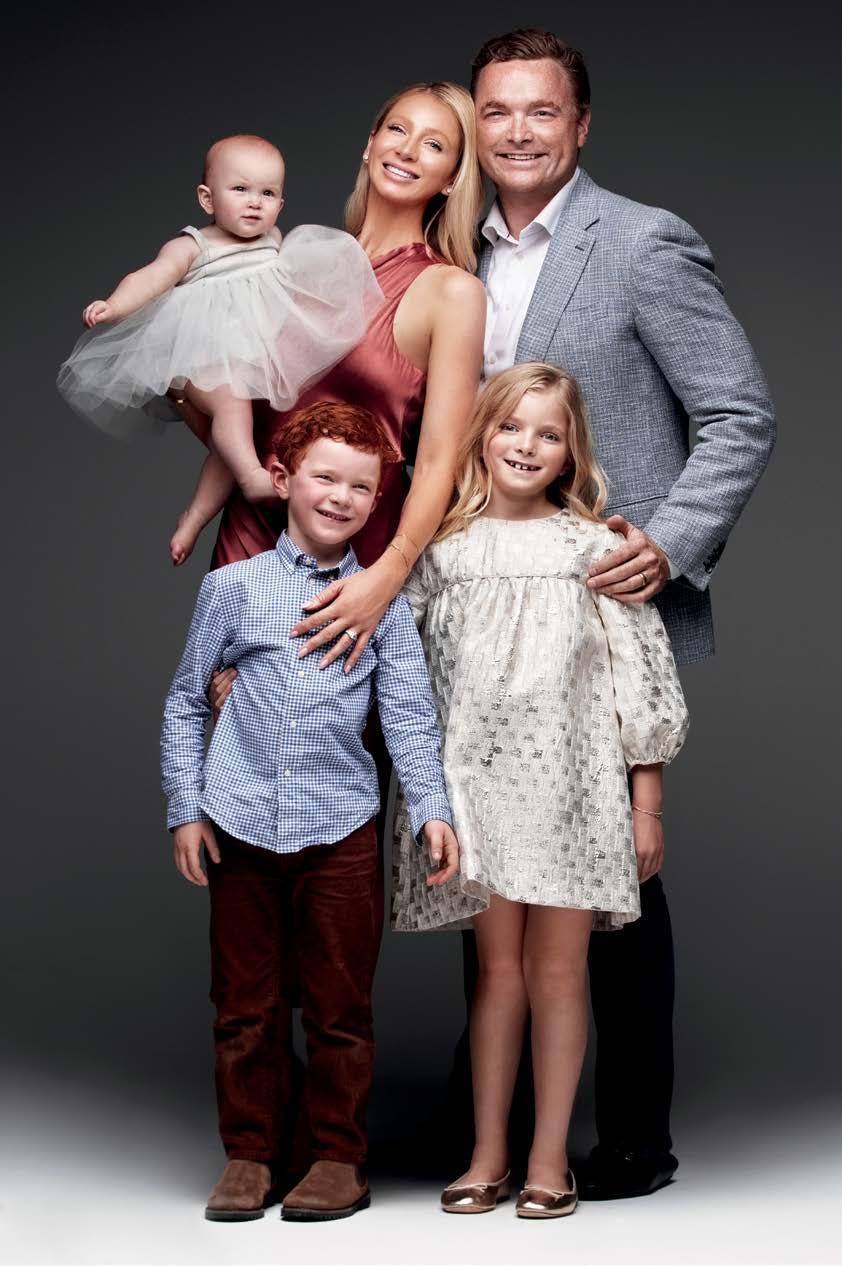
A revitalized Caf opened its doors to students in September with warm and welcoming features Clockwise: Sophia, Mike, Willa ‘33, Theodore and Olympia Mackay
Q&A WITH DR. MARIA CHUNG, FORMER YHS BOARD CHAIR
A Lifelong Commitment to Giving Back: THE
CHUNG/MUNK FAMILY LEGACY
24
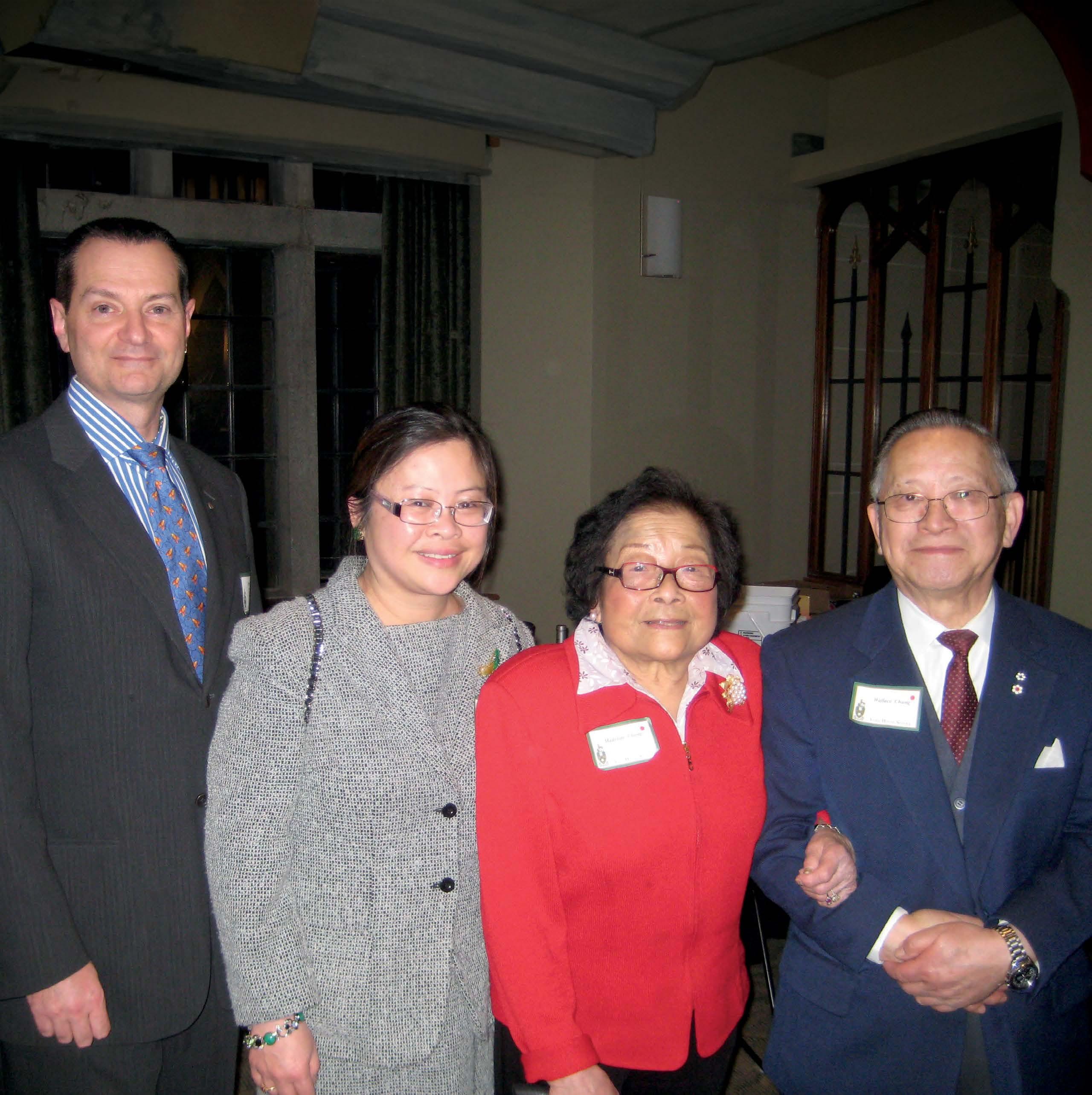
The Chung/Munk family, February 2010
Dr. Maria Chung, Former YHS Board Chair and parent to Yorkies Charlotte ‘07, Eleanor ‘09, and Sophie ‘13, along with her family, established the Ursula Bell Partial Scholarship in 2000 in honour of Miss Bell, past Principal of the Junior School. We connected with Dr. Chung to reflect on her family’s legacy at York House.
BY ITA KANE-WILSON
Q: WHEN AND WHY DID YOU DECIDE AS A FAMILY TO CREATE THE URSULA BELL PARTIAL SCHOLARSHIP?
A: Both my parents were very grateful for the opportunities they had in life despite multiple barriers. They realized that their success was a result of not only their own efforts but the help they received from others. They in turn wanted to help others have an opportunity to succeed, and a good education provides a path forward. When my father was a high school student, he realized that he wanted to become a doctor. His older brother had died at the age of ten from Tetanus, now a vaccine-preventable illness, but
in those days there was no such protection and no cure. He was very impressed by the care his brother received, even though it was ultimately unsuccessful in saving his life. However, there was a problem in that Canadian-born Chinese were still not considered citizens and were not allowed to become doctors or other professionals. His high school science teacher told him not to be discouraged, and to pursue his dream. He told my dad that when he was ready to enter medical school, Canadian universities would be open to Chinese Canadians, and he was right. Dad was always very grateful for that teacher and how he influenced his life's trajectory.
My parents were also very grateful for the excellent education provided by York House School for their four granddaughters and were impressed by the motto Not For Ourselves Alone believing that it encouraged the girls to pay attention to the needs of those around them. They were also very grateful to Miss Ursula Bell who was Principal of the Junior School while our girls were students, and for the wonderful introduction she gave me personally to formal education when I attended Crofton House School as a Grade 1 student.
Q: WHILE YOUR GIRLS WERE AT YORK HOUSE, YOUR FAMILY VOLUNTEERED RELENTLESSLY. WHAT WAS THAT EXPERIENCE LIKE?
A: Our parents strongly believed in giving back to the community not just through making donations of funds but also time. As a family, we appreciated the welcoming atmosphere at the school which encouraged family participation as a way to meet other parents, feel part of the community and help out at the same time. I have been a Phone-a-thon volunteer, a member of the Advancement
25
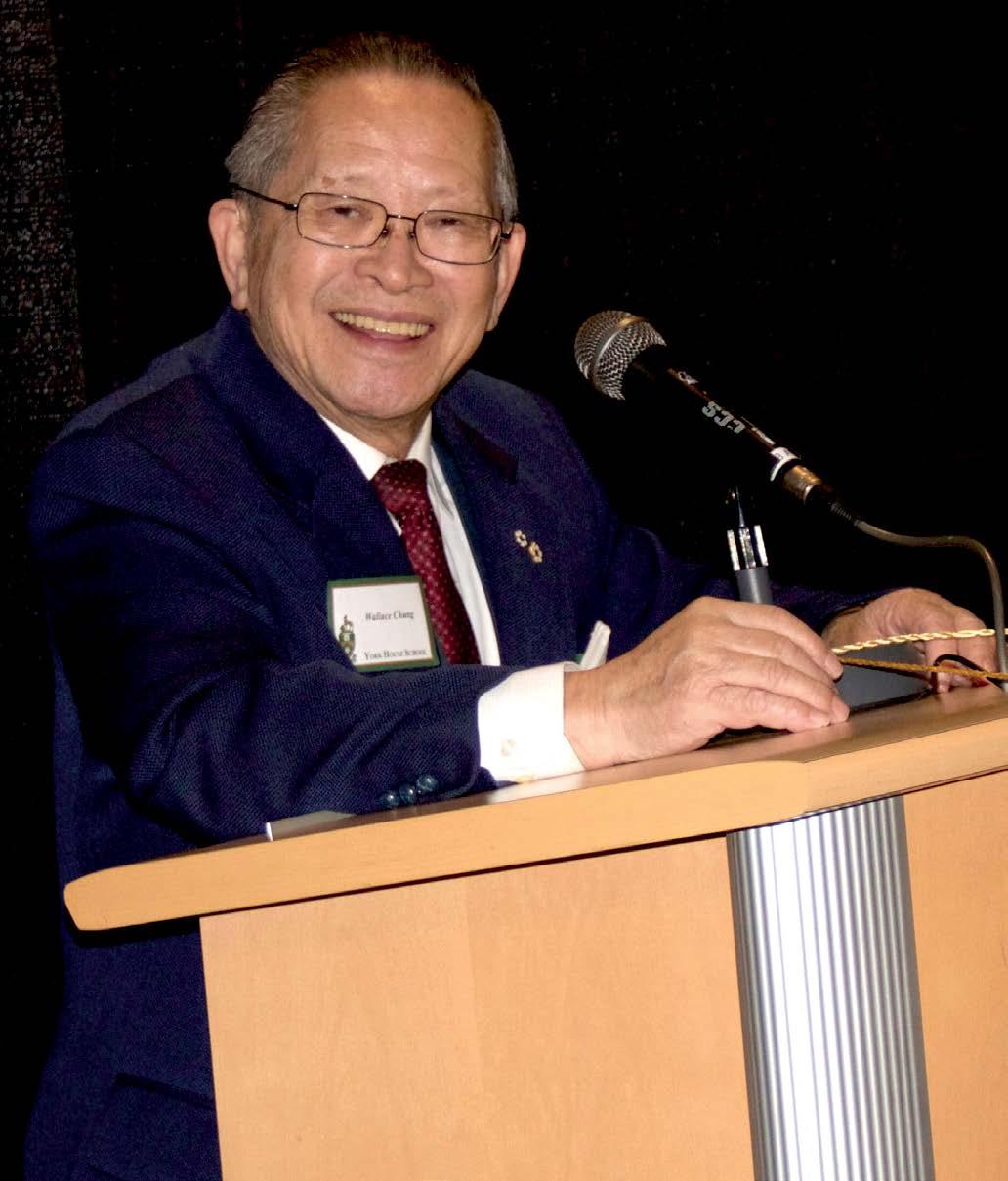
Dr. Wallace Chung speaking at an event showcasing the Chung Collection at UBC in 2015. The Wallace B. Chung and Madeline H. Chung Collection housed in the Irving Barber Learning Centre at UBC contains more than 25,000 rare and unique items on the exploration of the Pacific Northwest, the Chinese experience in North America and British Columbia, and the Canadian Pacific Railway Company including its trans-Pacific and coastwise shipping lines.
Creating a Legacy for York House
Many people, after they have provided for their loved ones in their will, also wish to leave a gift to a non-profit organization close to their hearts, one they cherish and have supported throughout their lifetime. Please take a moment to consider York House in your future plans and include the school in your will.
LEGACY GIFTS AT YORK HOUSE ARE DEDICATED TO SCHOLARSHIPS AND FINANCIAL AID TO PROVIDE THE GIFT OF A YORK HOUSE EDUCATION AND ENABLE FUTURE GENERATIONS OF YOUNG WOMEN, WHO OTHERWISE WOULD NOT HAVE THE OPPORTUNITY, TO ATTEND THE SCHOOL.
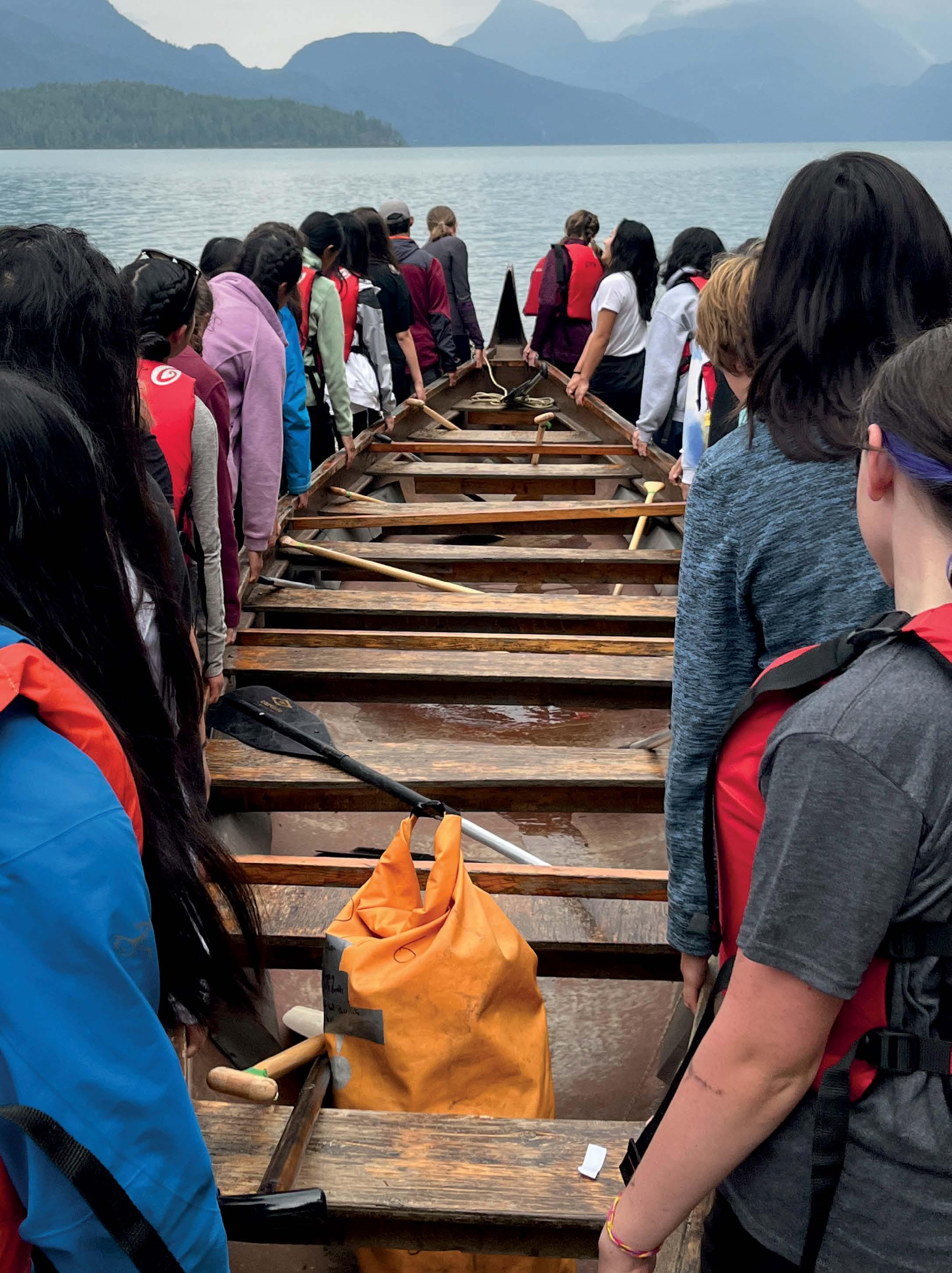

26
Learn more about Planned Giving at yorkhouse.ca/legacy For more information about legacy giving at York House, please contact Ita Kane-Wilson, Associate Director, Alum Relations, at 604-730-2409 or ikane-wilson@yorkhouse.ca.
Committee, the Governance Committee, and of course the Chair of the Board of Governors.
Q: MARIA, DESCRIBE YOUR TIME AS CHAIR OF THE BOARD.
A: It feels like it was just yesterday, but of course, it was over ten years ago now! The support from the other Board members and the YHS community, both staff and family members, was incredibly cohesive and we were determined to make a York House educational experience the best it could be for the students. We looked at various markers including the percentage of families who donated or spent time volunteering. The amounts didn't matter as much as the participation. Among the major goals were finishing the Senior School rebuild, and improving relationships with the neighbours by having a standing Board committee.
Q: HOW DO YOU THINK YORK HOUSE PREPARED YOUR DAUGHTERS FOR POST-SECONDARY EDUCATION?
A: We found that YHS provided an education that encouraged students to be the best they could be and equip them with the tools they needed to succeed in their chosen career. Our three girls, Charlotte ‘07, Eleanor ‘09 and Sophie ‘13 had different strengths, interests and areas where they struggled, but they always got the support they needed. The smaller class sizes allowed the teachers to know them well and help them succeed.
Q: YOUR FAMILY ALSO CREATED THE DR. MADELINE HUANG CHUNG FUND FOR EXCELLENCE IN MUSIC. DOES MUSIC PLAY A BIG PART IN YOUR LIVES AND WHY WAS THE FUND CREATED?
A: Our girls had a great time in the music program. Music Teacher Spencer Bach provided an excellent wellrounded music education which was both challenging and fun. My mother and her mother loved music and both valued a music education as it gives students a lifelong skill that can bring joy long after formal schooling was done.
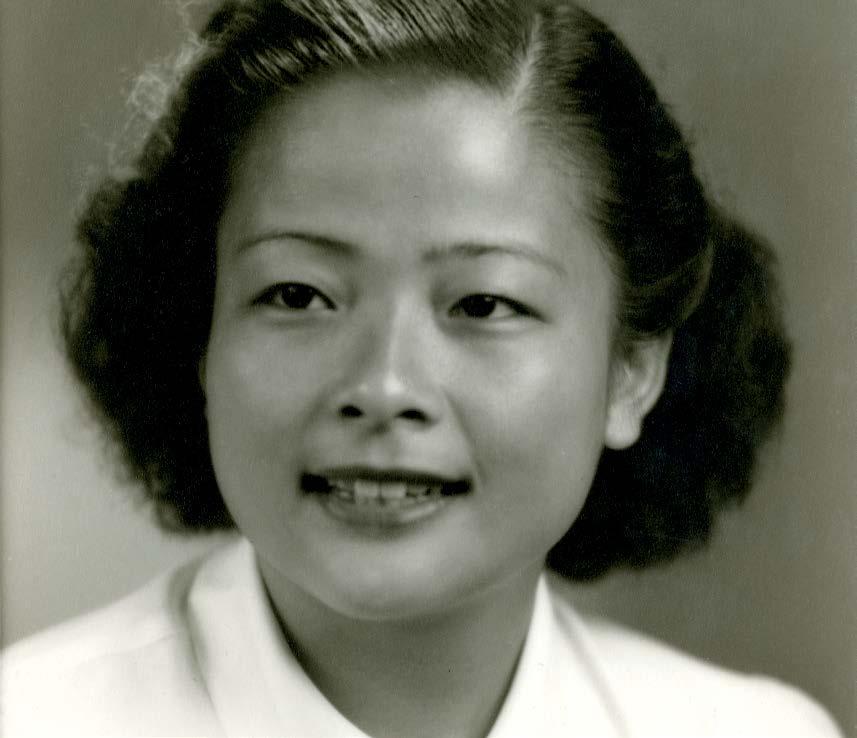
WHO WAS DR. MADELINE HUANG CHUNG?
Dr. Madeline Chung was BC’s first female obstetrician of Chinese descent and one of the first women in BC to specialize in that field. Over a span of almost 40 years, she delivered more than 7,200 babies in Vancouver. Many alum and current parents in our community know, or are related to, or among the many contributing citizens— lawyers, professors, teachers, community advocates, businesspeople and politicians—that affectionately think of themselves as being “Chung babies.”
Chung was born in Shanghai, but as war intensified, her father, who strongly believed in educating girls, sent her to school at True Light School for Girls in Hong Kong. Chung attended True Light until the Japanese took over the British territory in 1941 when she was forced to flee and take care of her family. Later, Chung graduated from the Yale University-affiliated medical school in China’s Hunan province and moved to North America, working at hospitals near Seattle, Victoria and Montreal before finishing her specialty training at the Mayo Clinic.
Chung was not a student at York House, but in an inspired move, York House awarded her a high school diploma in 2007. Despite Chung’s distinguished career and many provincial and national honours, she never had proof of graduating from high school because those years coincided with the chaos of war as Japan invaded Shanghai and later took over Hong Kong.
When Chung’s eldest granddaughter, Charlotte graduated from York House, Head of School, Gail Ruddy and Chair of the Board, Murray Sinclair, presented both of them with YHS diplomas, making Chung an honorary graduate and alum.
27
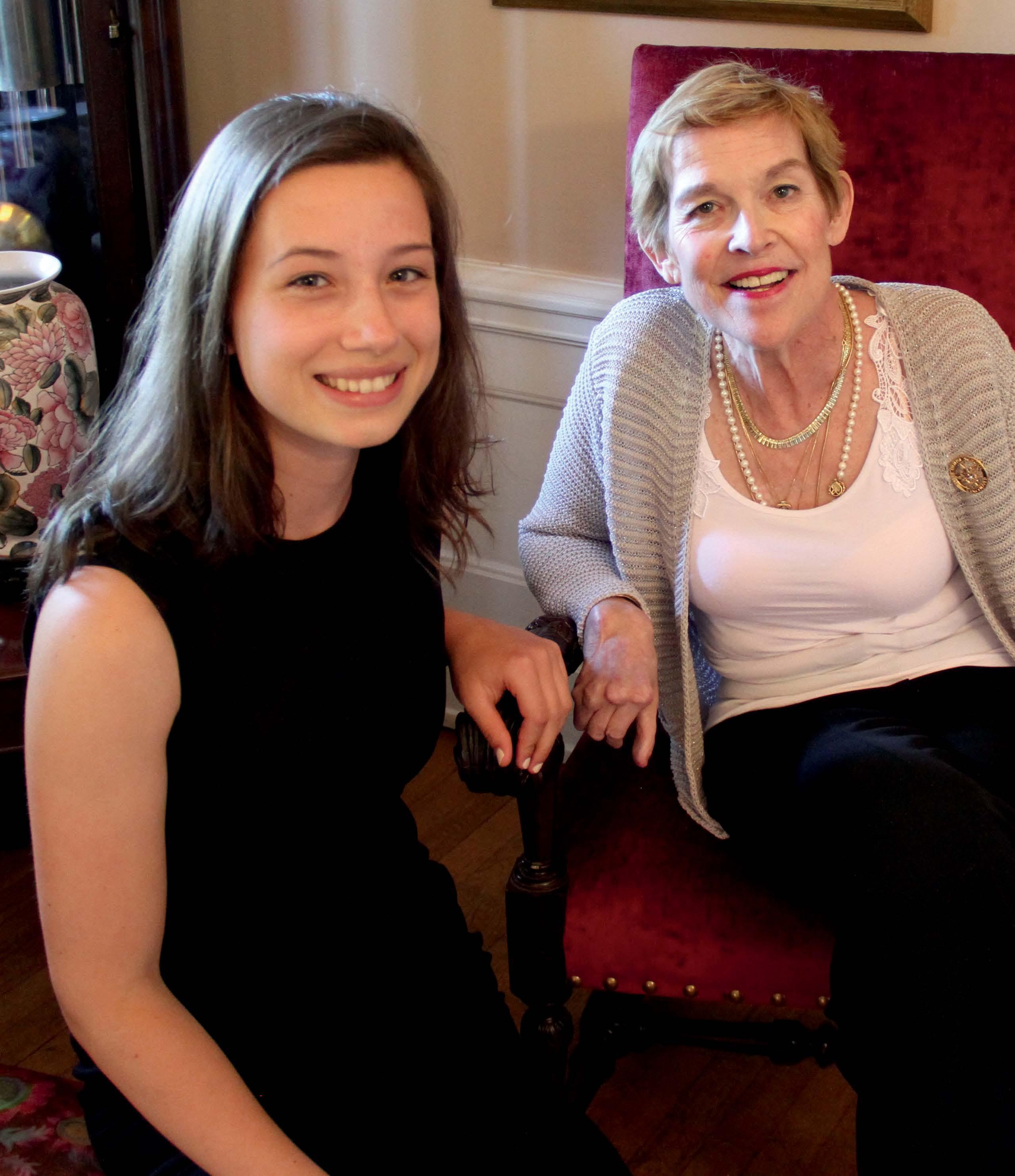
CHUNG/MUNK SCHOLAR SPOTLIGHT
Fiona Lang '17
28
Fiona Lang ‘17 at the 2017 Hycroft Afternoon Tea with Sherry (Robson) Taylor ‘73, Past President of the Alum Association.

FROM YORK HOUSE TO GOOGLE
BY KAILEY CLARK
From a young age, Fiona Lang ‘17 knew she wanted to attend a high-ranking independent school and set her mind to it.
"I worked hard in grades 6 and 7 to do well academically because I knew if I wanted to go to a private school I needed to have the credentials." She set her eyes on York House due to the school's prestigious reputation but felt there was little possibility of attending due to the tuition costs.
She first learned about the Ursula Bell Scholarship while browsing the York House School website and decided to apply. This partial scholarship was established by the Chung/Munk Family to support an incoming Grade 8 student. After Lang toured the school, she felt an indescribable connection and a strong sense she would thrive at York House. When finding out she was awarded the scholarship in 2012, she was elated, "I could not believe it, it felt so surreal!"
During her five years at York House, Lang was actively involved in school life. "Whatever I wanted to learn and do, there was a way for me to do it." She joined band and choir and participated in a sport every term. "I was exposed to so many opportunities that I would not have gotten anywhere else."
In Grade 11, she developed a keen interest in computer science and wanted to take AP Computer Science to explore the subject further. “Despite only two students being interested, they ran the class!" This showed her how much YHS allows students to truly pursue their interests.
After graduating from York House in 2017 as valedictorian, Lang continued her studies at the University of British Columbia and completed her bachelor's degree in engineering with a focus in engineering physics. “I felt I had an advantage over other students in postsecondary due to the opportunities and education I received at York House.” Her biggest takeaway was the teachers' ability to make her think critically about what she was learning
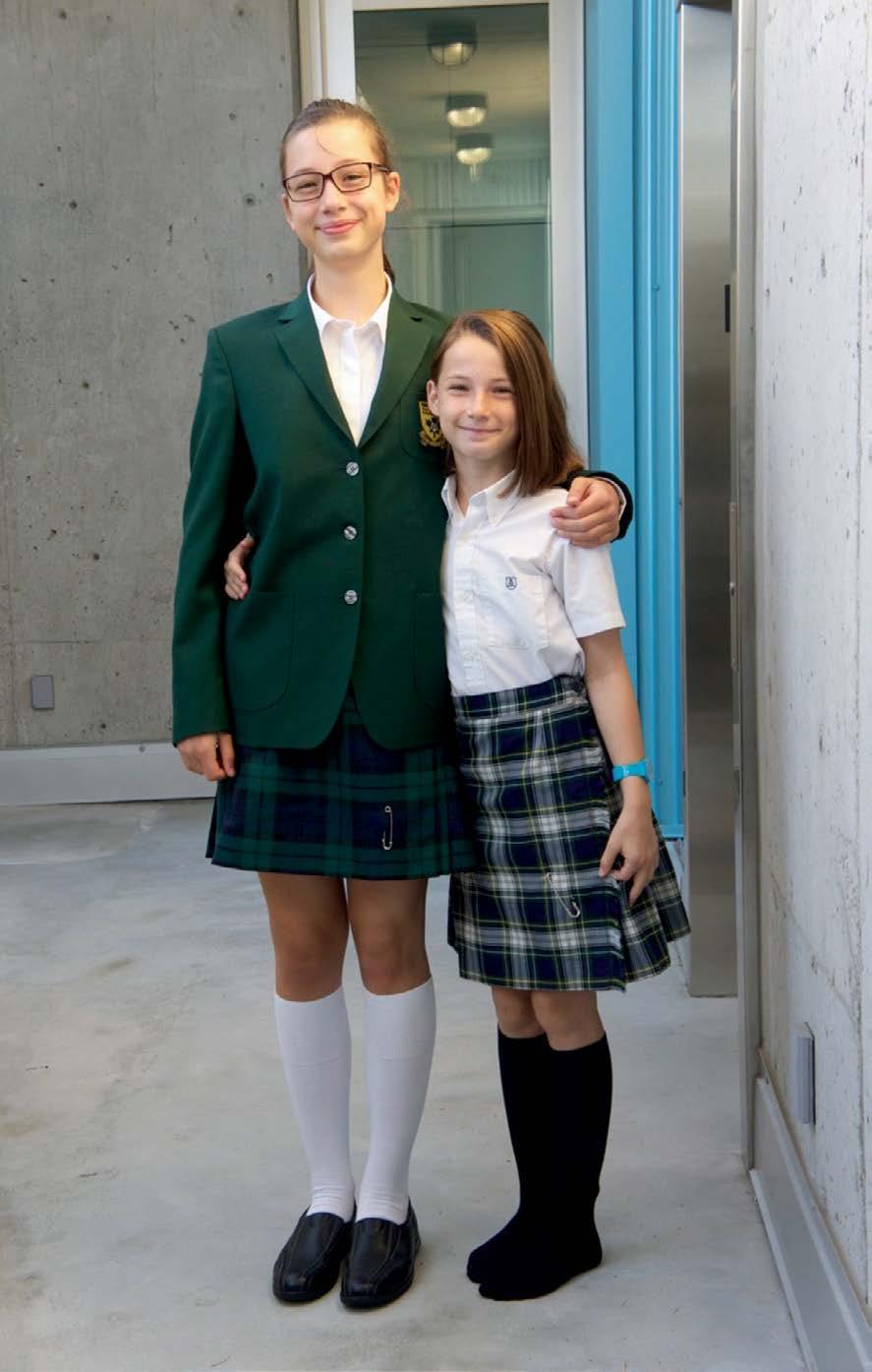
29
Fiona on her first day of Grade 8 with sister Olivia Lang '20
“ I learned to understand problems rather than memorizing ways to solve them.”
This is a skill that she took with her through university and more recently her job at Google.
Lang graduated from UBC in 2022 and embarked on her journey at Google in Mountain View, California as a software developer. In her first year she dedicated her efforts to enhancing TensorFlow, a machine learning library initially developed by Google in 2015 for internal research and production. This widely utilized technology serves various purposes, including data automation, model tracking, performance monitoring and model retraining.
She enjoys living in the Bay Area and working at Google.
“The workplaces are truly amazing. I think I got particularly lucky, I am in a brand new building that is very well designed, well decorated, spacious, and has a great work environment. There is easy access to virtual meeting
rooms, plenty of couches and collaborative spaces, free snack kitchens, and an outdoor courtyard area.”
Lang remains connected to York House through various alum events. She has attended Yorkies in STEM, UBC alum lunches, the San Francisco chapter event and most recently, the five-year class reunion. She has also visited YHS to speak to students about engineering. “Only a few girls from my year went into engineering, so I feel very motivated to try to support and encourage other girls who are engineering-inclined but may not know exactly what the field is, what the career options for it look like, or may not have the confidence to pursue it.”
From AP computer science studies at York House to her role at Google, Lang is now focused on advancing one of the world's leading machine learning libraries. She credits the Chung/Munk family for the opportunity to attend York House and expresses gratitude to YHS for instilling in her the confidence and skills to pursue her aspirations.
YHS FINANCIAL AID OPPORTUNITIES

York House School is on a path to building a more inclusive and equitable community in which diverse perspectives collide to spark innovation. The financial aid program opens doors for qualified students, empowering them to embark on a transformative learning journey with us.
The York House School Foundation proudly offers financial aid through named scholarships, bursaries,
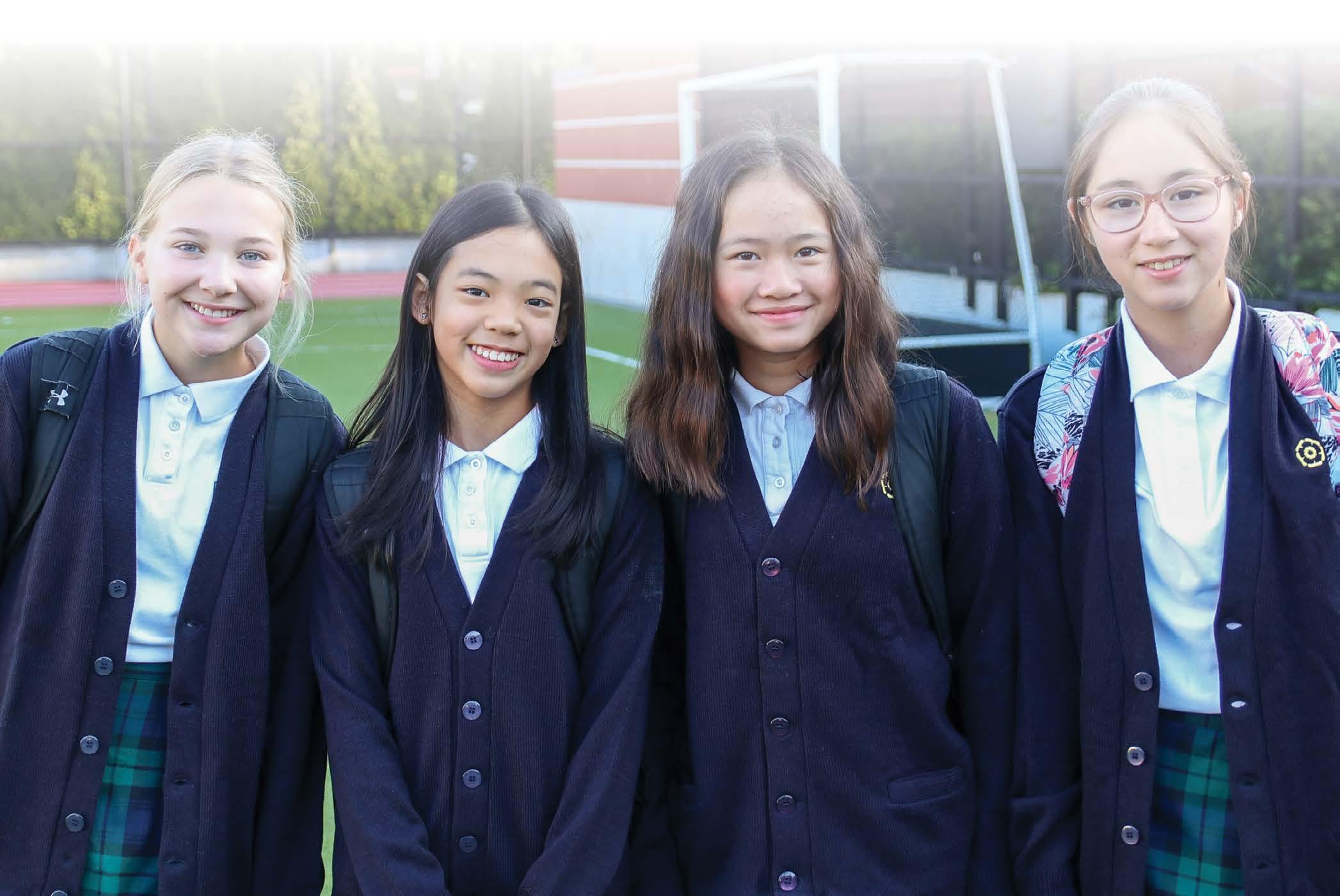
and program assistance to new students who demonstrate excellence in academics, co-curricular programs, citizenship, and whose families demonstrate financial need.
For more information including the next application deadline, please visit yorkhouse.ca/financialaid
30
FOUNDERS' DAY 2023
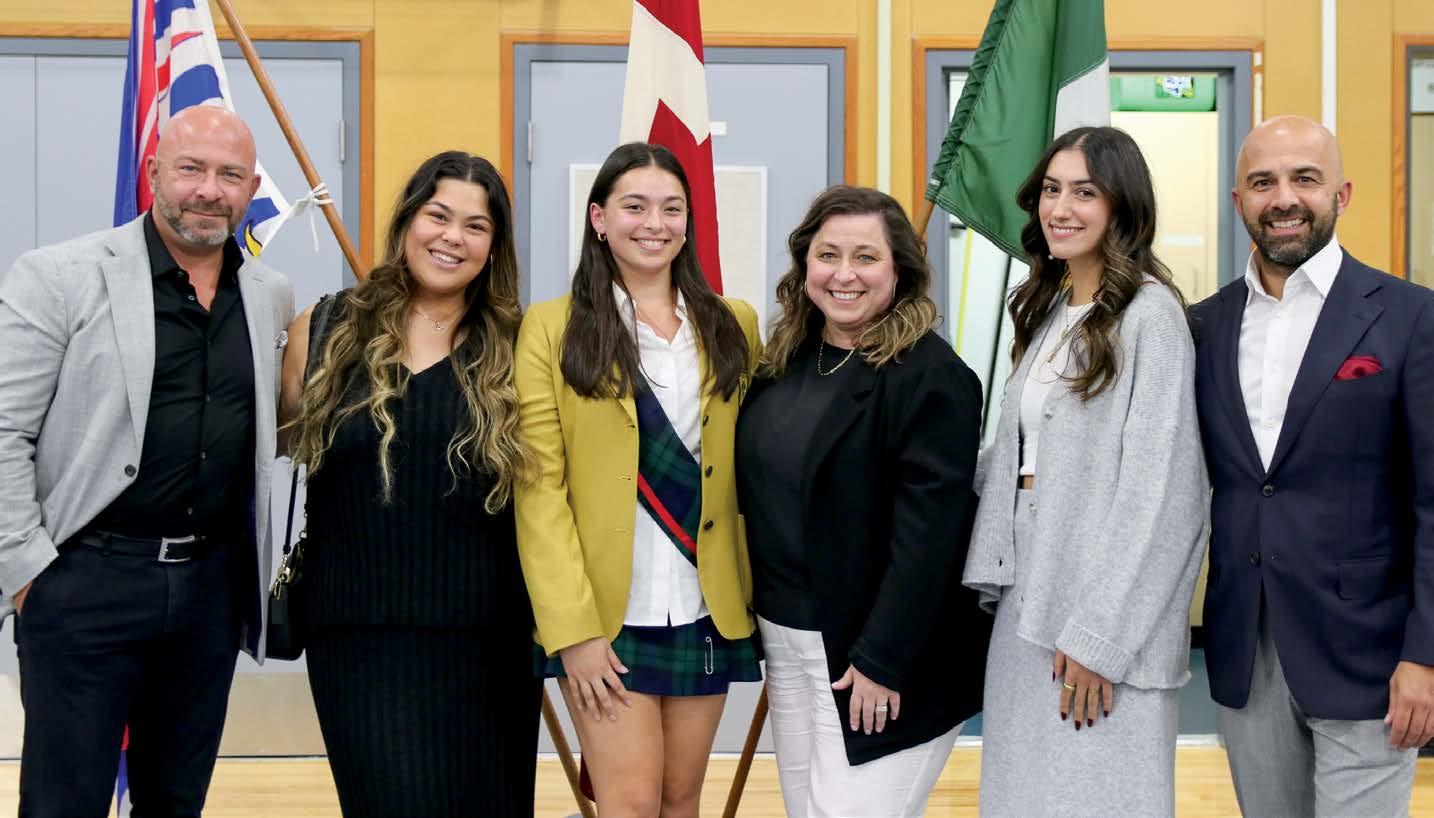
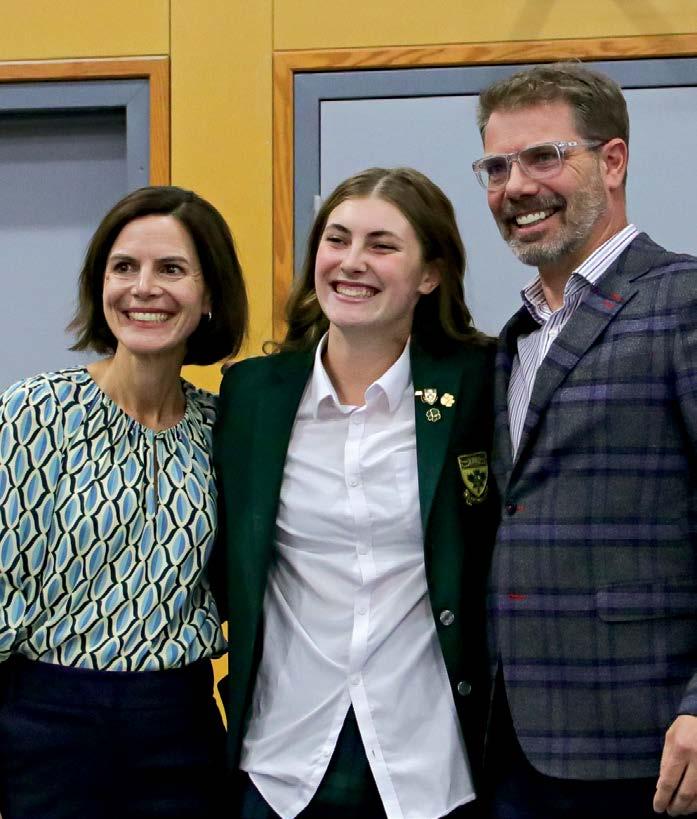
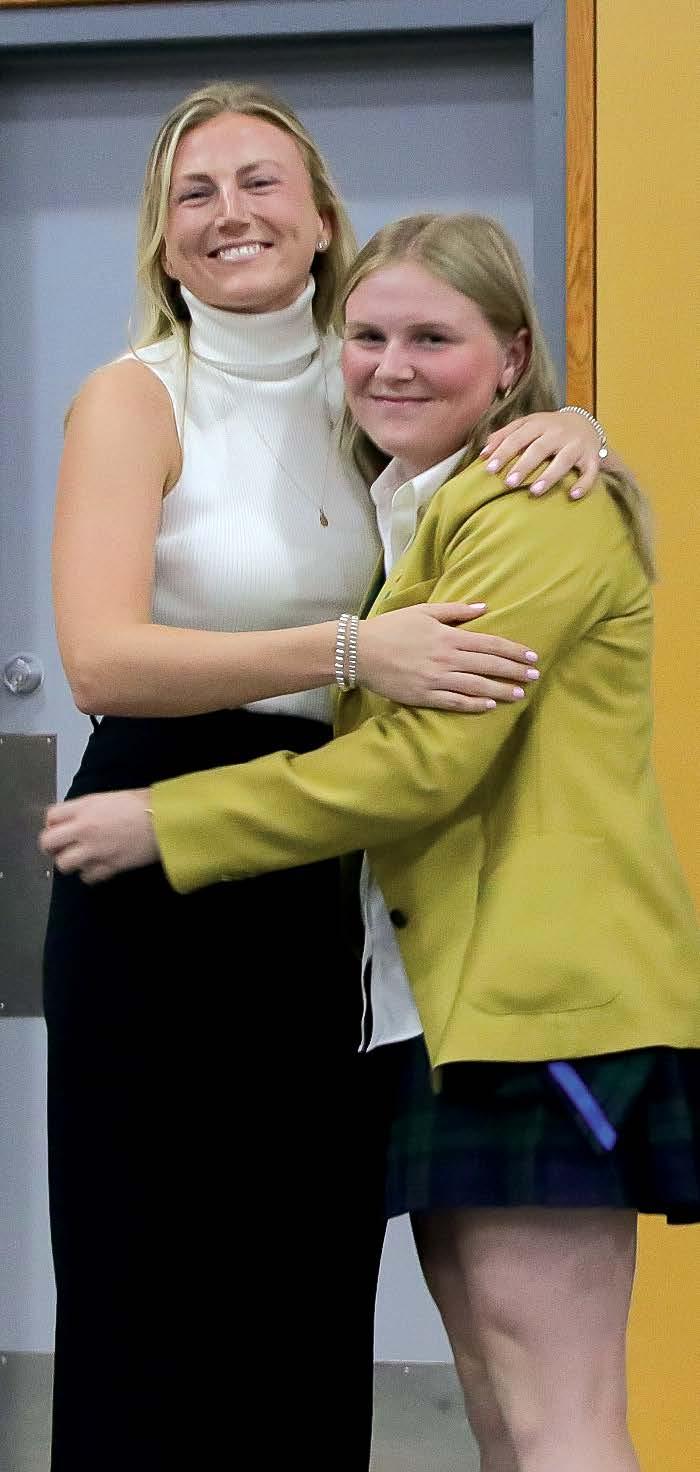
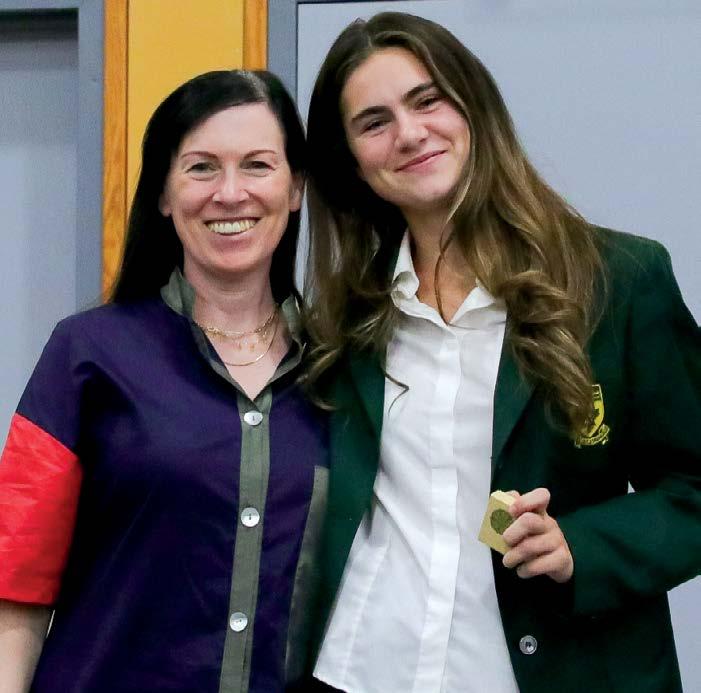
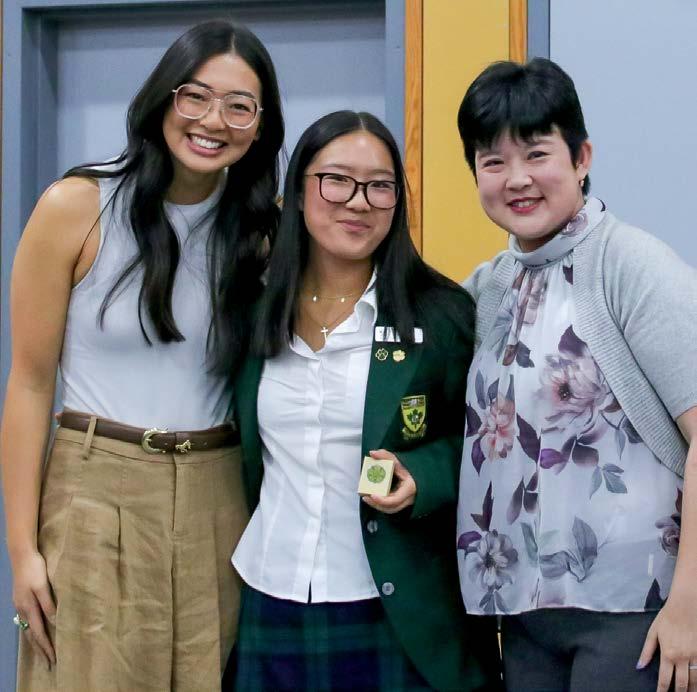
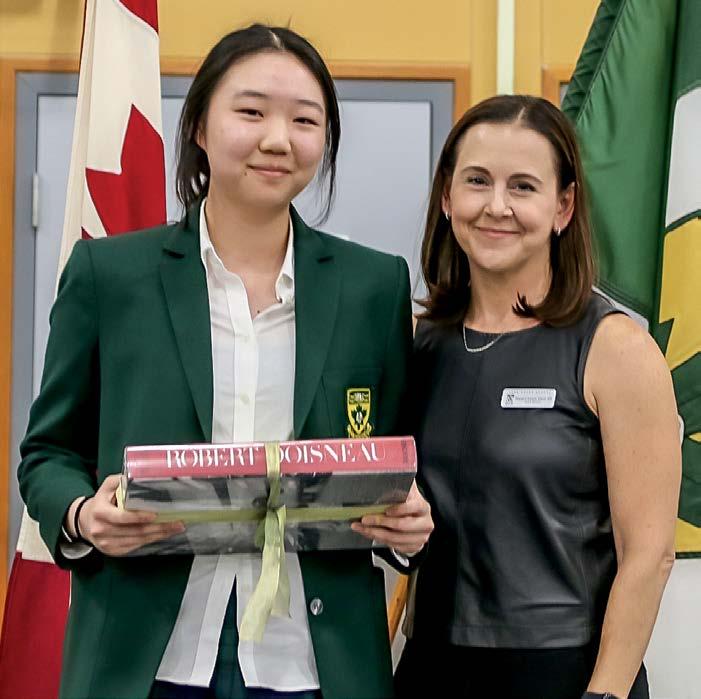
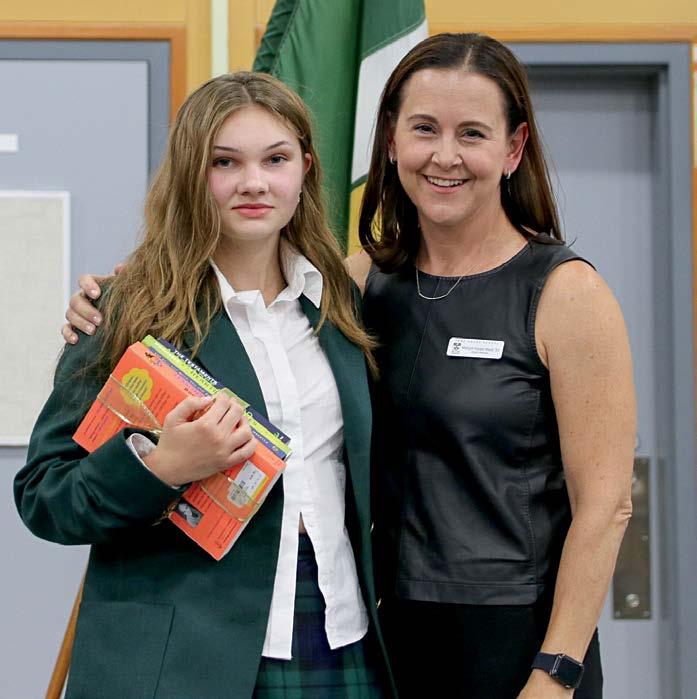
Founders’ Day is an annual school celebration in which we honour the seven women who founded York House School. The weekend is full of events, including a Founders’ Day Assembly (pictured below) where we welcome Grade 12 students to the YHS Alum Association with the official YHS Alum pin.
31
Alex Tsakumis ‘93, Athena Rulli ‘21, Isabella Rulli ‘24, Roula Tsakumis ‘91, Gabriella Sipsas ‘18, Angelo Tsakumis ’94
Kathy Wardle ‘93 with Madeleine Wardle ‘24 and Alex Wardle ‘91
Jenna Thompson ‘17 with Olivia Goodwyn ‘24
Maggie Yang ‘24 with President of the YHS Foundation, Margot Keate West ‘93
Fiona Duncan ‘91 with her niece Avery Duncan ‘24
Ella Swetlishoff ‘24 with President of the YHS Foundation, Margot Keate West ‘93
Talya Wong '15, Erin Wong ‘24 and Audrey Hui ‘97
ALUM DAY 2023
While York House's doors are always open to alums, Alum Day is an annual opportunity for all Yorkies to come together to connect, learn what's new at YHS, and celebrate the spirit of York House.
32
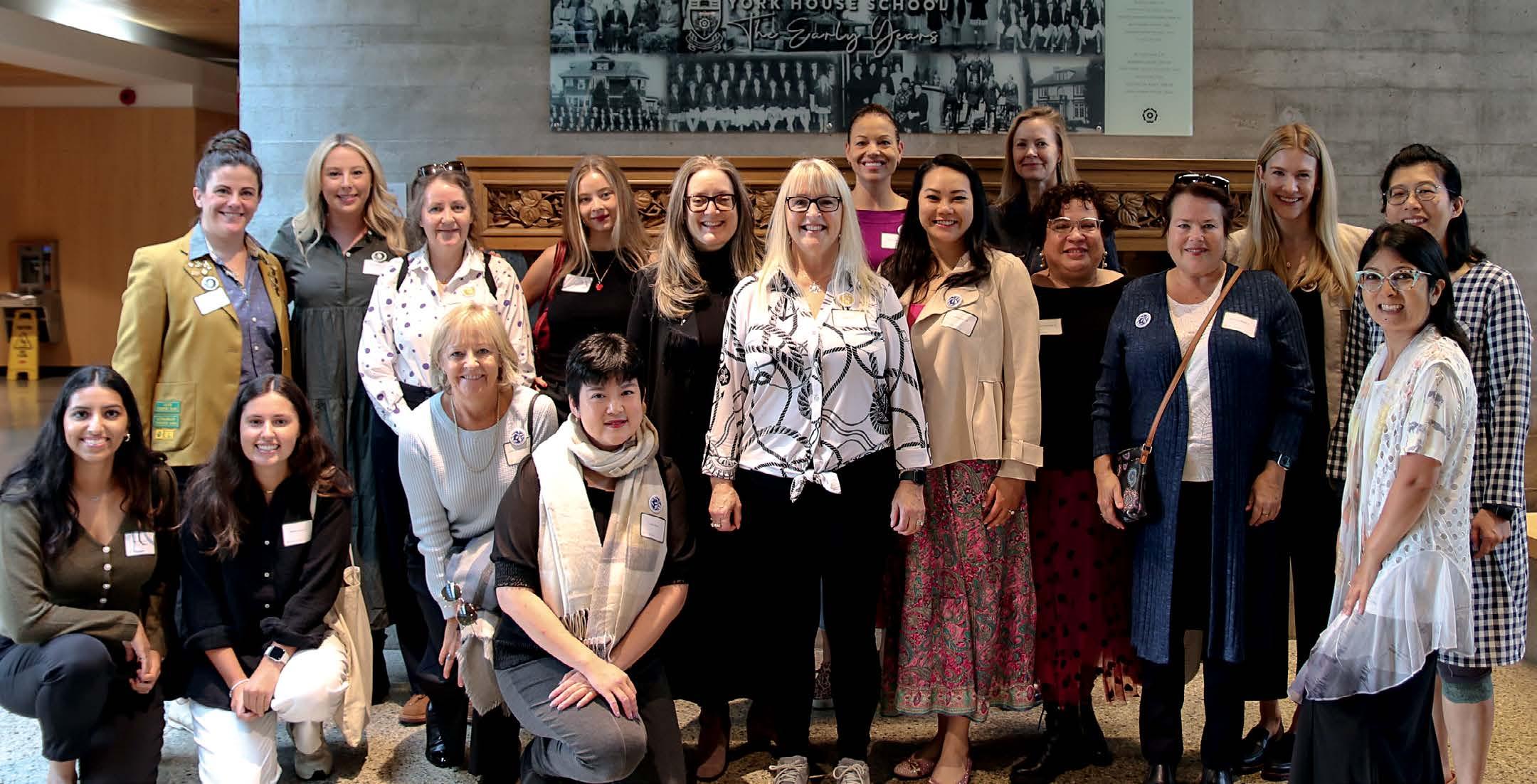
Alums gathered together for Alum Day on September 23, 2023
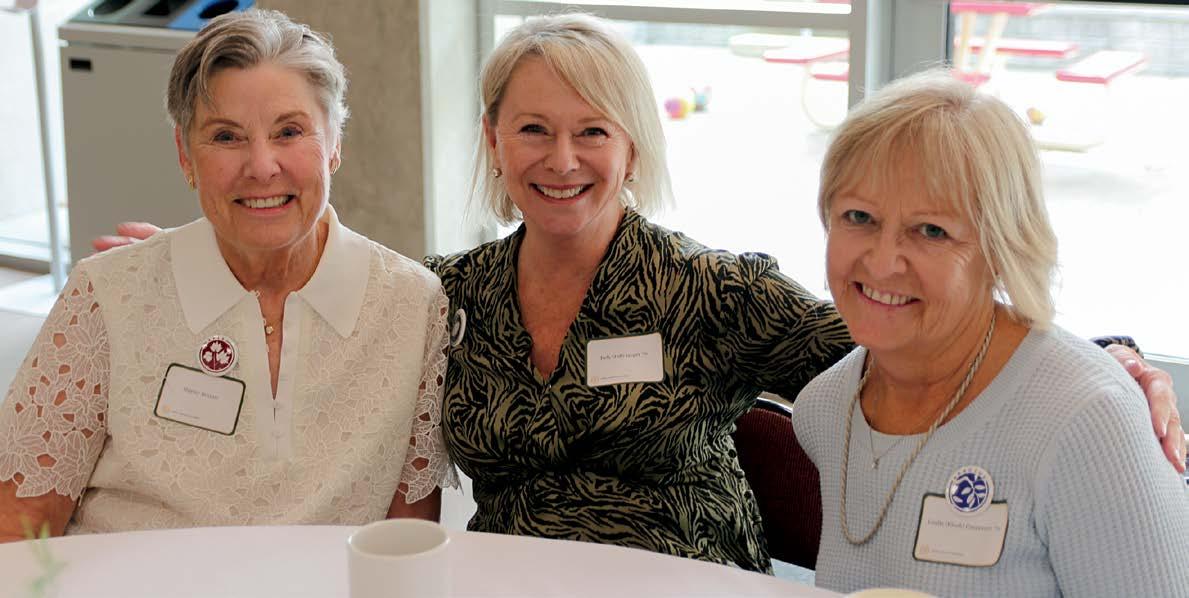
Shirley (Stark) Brayne ‘67, Judy (Hill) Jaeger ‘76 and Leslie (Block) Carpenter ‘76
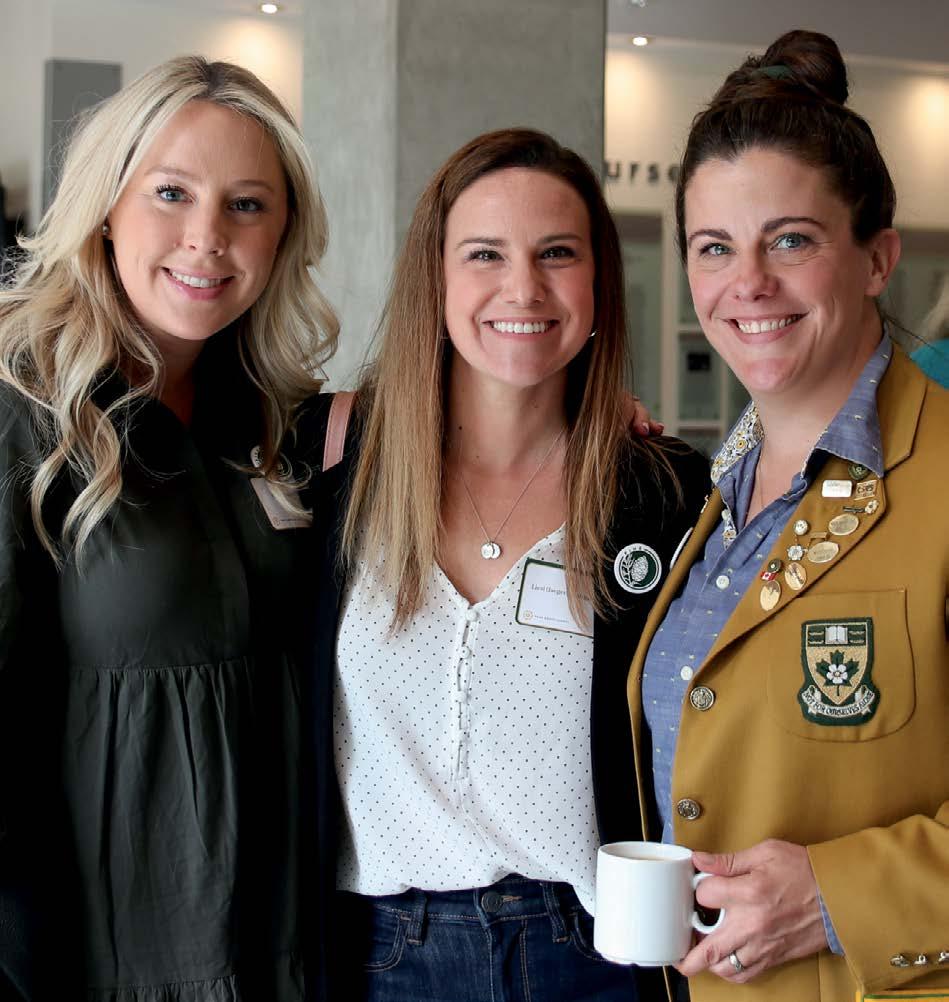
2023 Alum Special Achiever Sarah Brayne ‘03 with Liesl Graham ‘02 and Devon Taylor ‘02
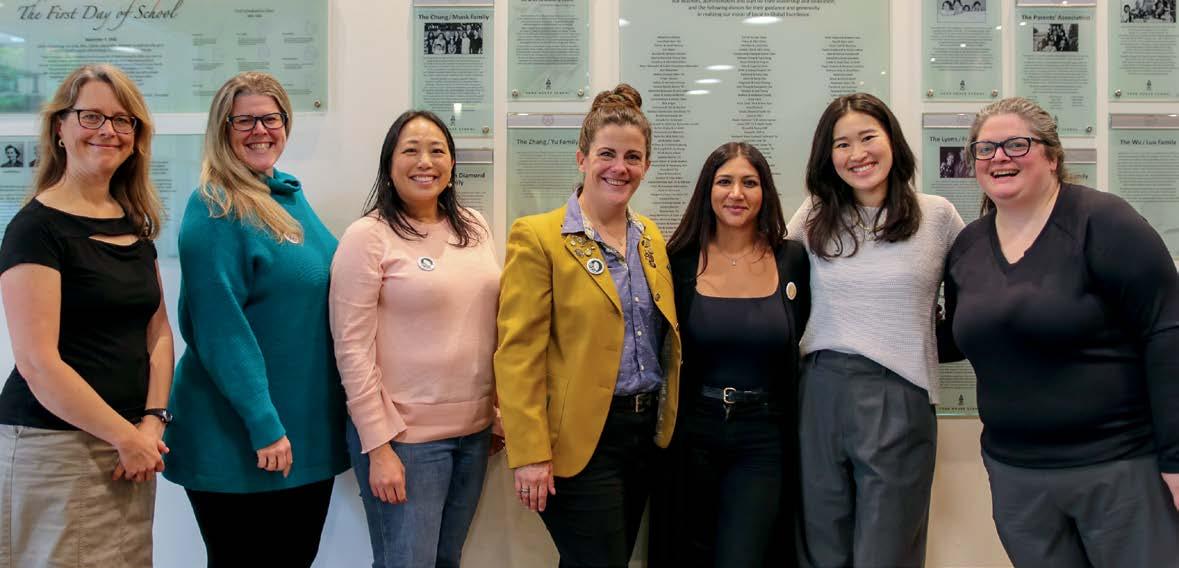
Right: Alum Association Executive members: Monica (Boytinck) Bell ‘89, Courtney (Smith) Cousineau ‘99, Connie Chan ‘95, Devon Taylor ‘02, Ishita (Kalia) Hayer ‘98, Andrea Cheng ‘13 and Jocelyn McGowan ‘99
GOLDEN ALUM LUNCHEON
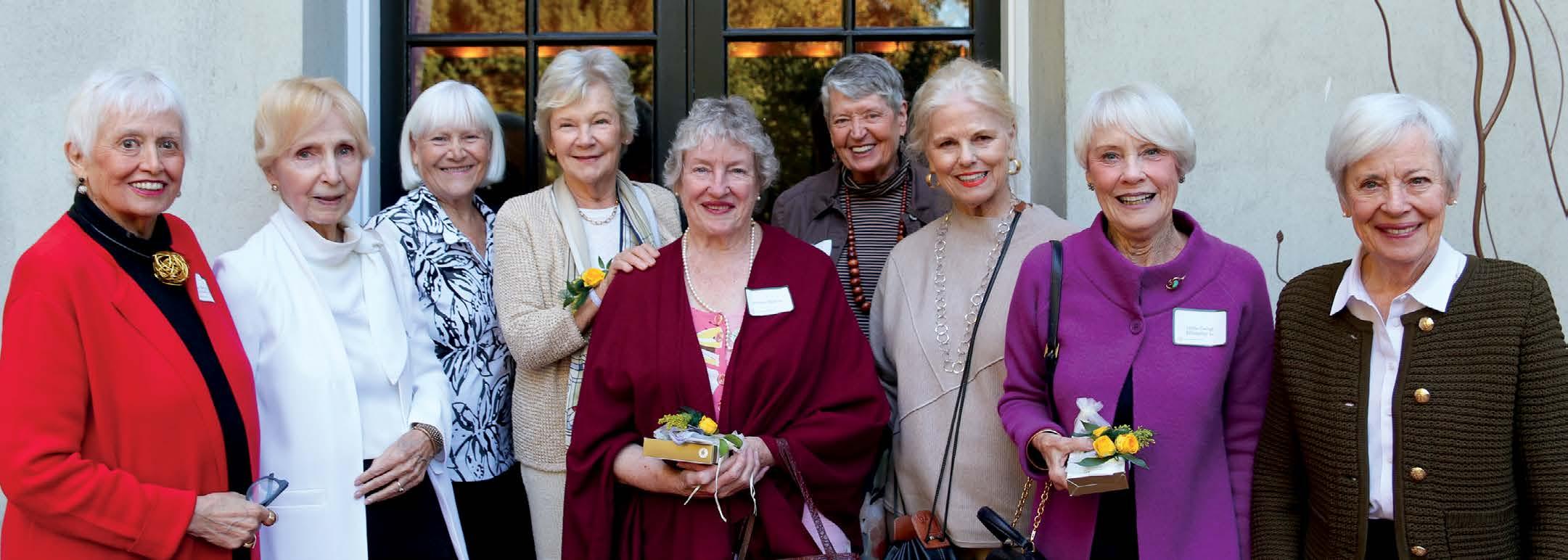
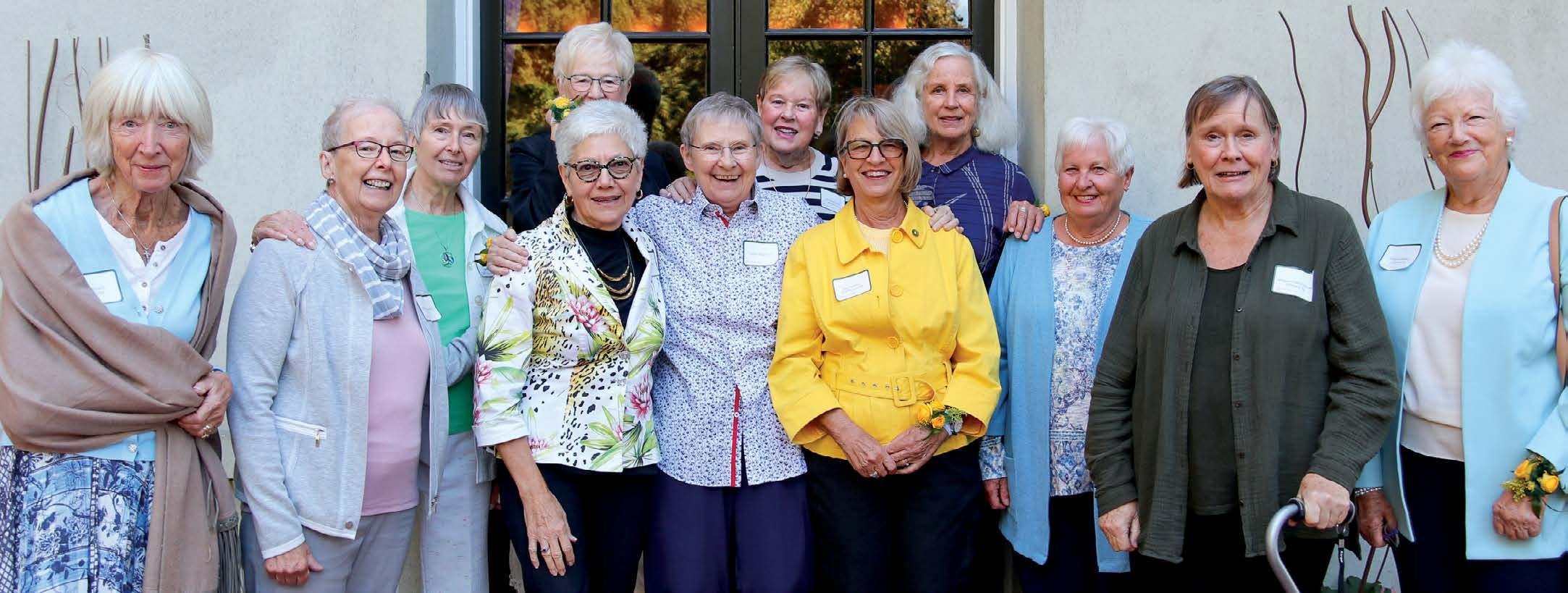
Every year we invite alums who graduated from York House 50 years ago or more to come together to celebrate one another at a special luncheon held
33
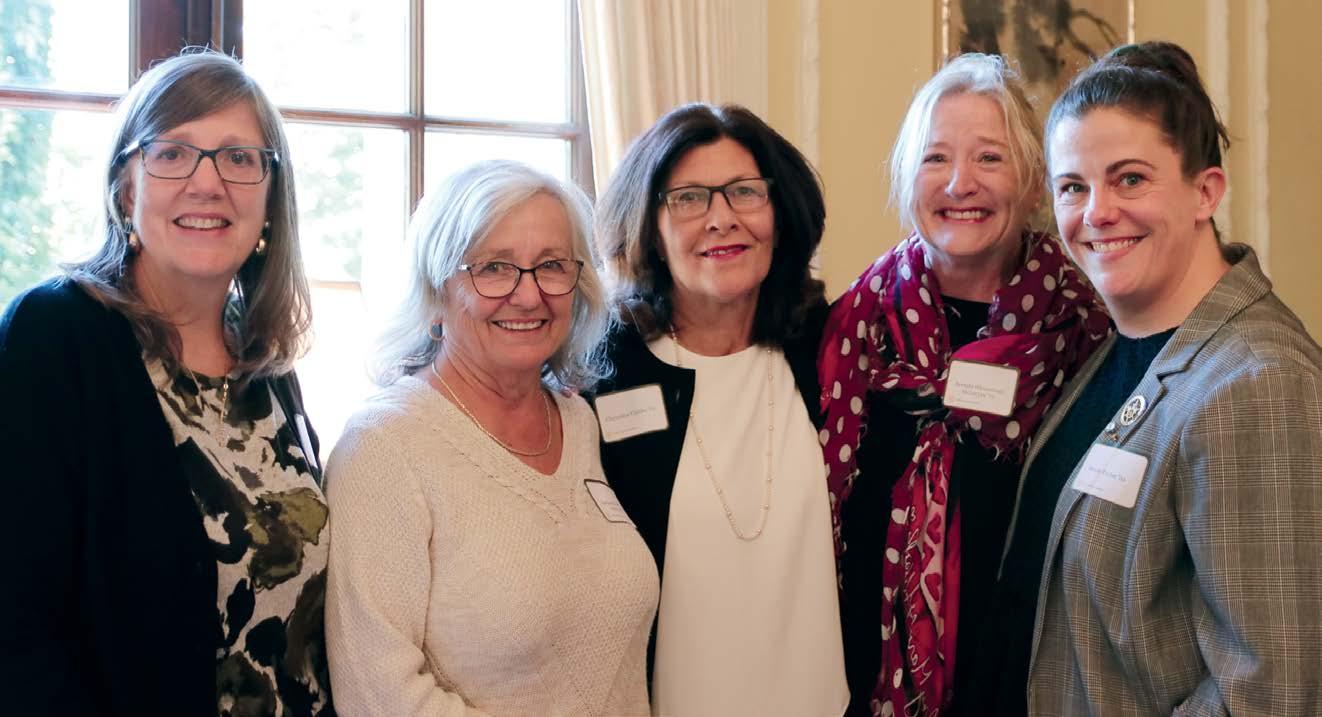
Class of 1973 alums with Devon Taylor ‘02
Class of 1963 celebrating their 60th class reunion
Class of 1961 at the Golden Luncheon
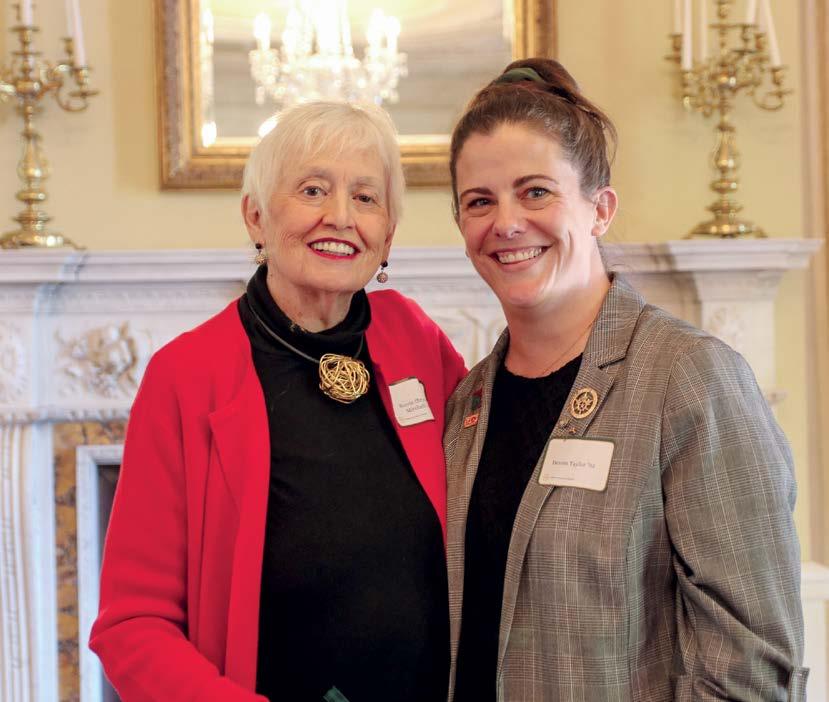
Stevie (Bryson) Mitchell ‘61 with Devon Taylor ‘02
at Hycroft Manor.
Q&A with the 2023 Alum Special Achiever Dr. Sarah Brayne '03
WITH MEREDITH MCINNIS , SOCIAL STUDIES DEPARTMENT HEAD AND SENIOR SCHOOL TEACHER
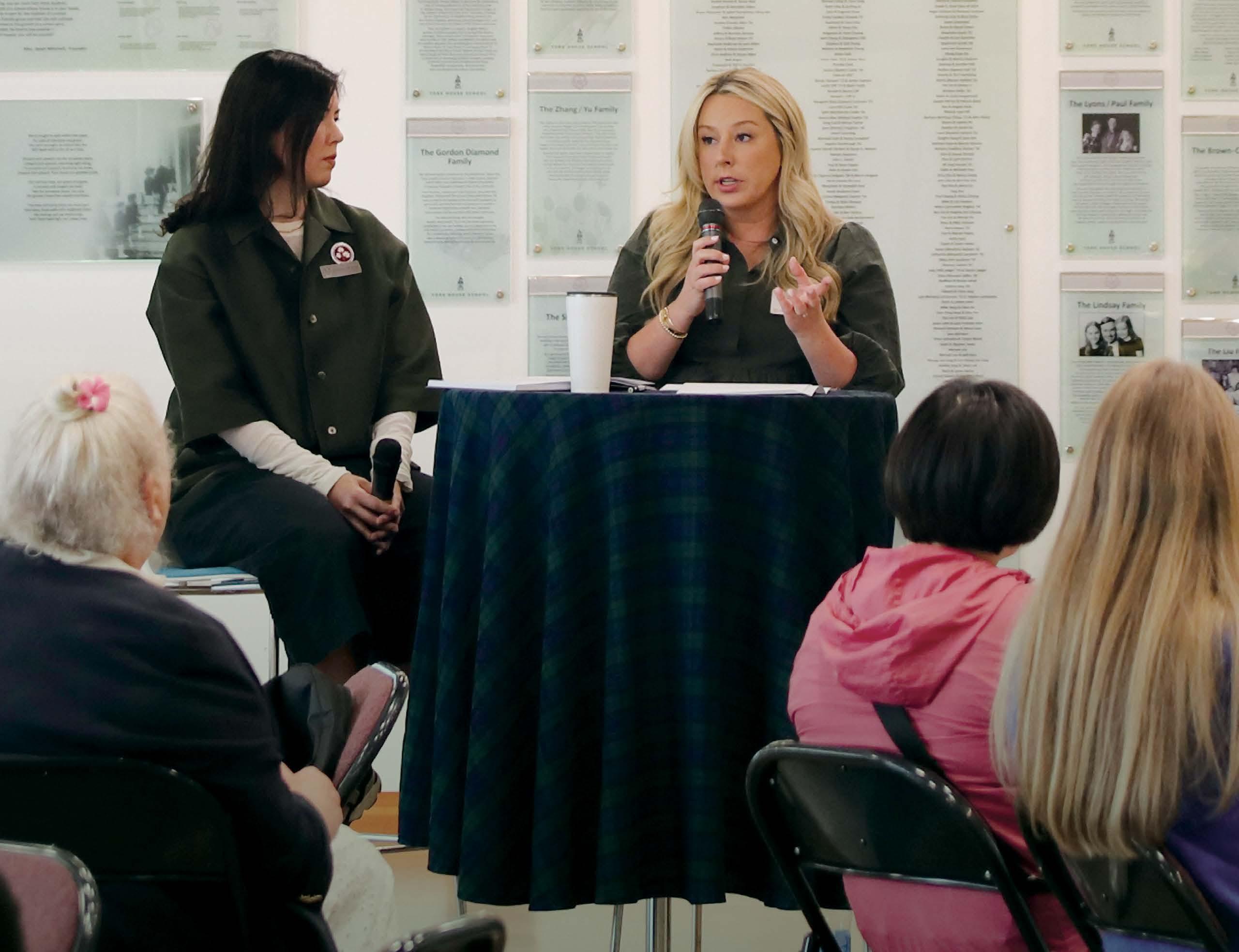
We were very excited to welcome Dr. Sarah Brayne ‘03 , back to York House to receive the 2023 Alum Special Achiever Award on Alum Day.
Social Studies Department Head and Teacher Meredith
McInnis facilitated an insightful conversation with her around her research into big data, surveillance and policing, and her work with the Texas Prison Education Initiative. Her award-winning book, Predict and Surveil: Data, Discretion and the Future of Policing (Oxford University Press, 2021), is an in-depth account of the use of big data in one of the most technologically advanced police departments in the world, the Los Angeles Police Department.
In the book, she examines how the police use digital surveillance and predictive algorithms in their daily operations, with a particular focus on the implications of their use for social inequalities. As we revisit the illuminating exchange between Dr. Brayne and Ms. McInnis, we invite you to delve into the compelling insights shared during this Alum Day conversation.
34
Teacher Meredith Mcinnis in conversation with Dr. Sarah Brayne '03 at Alum Day 2023
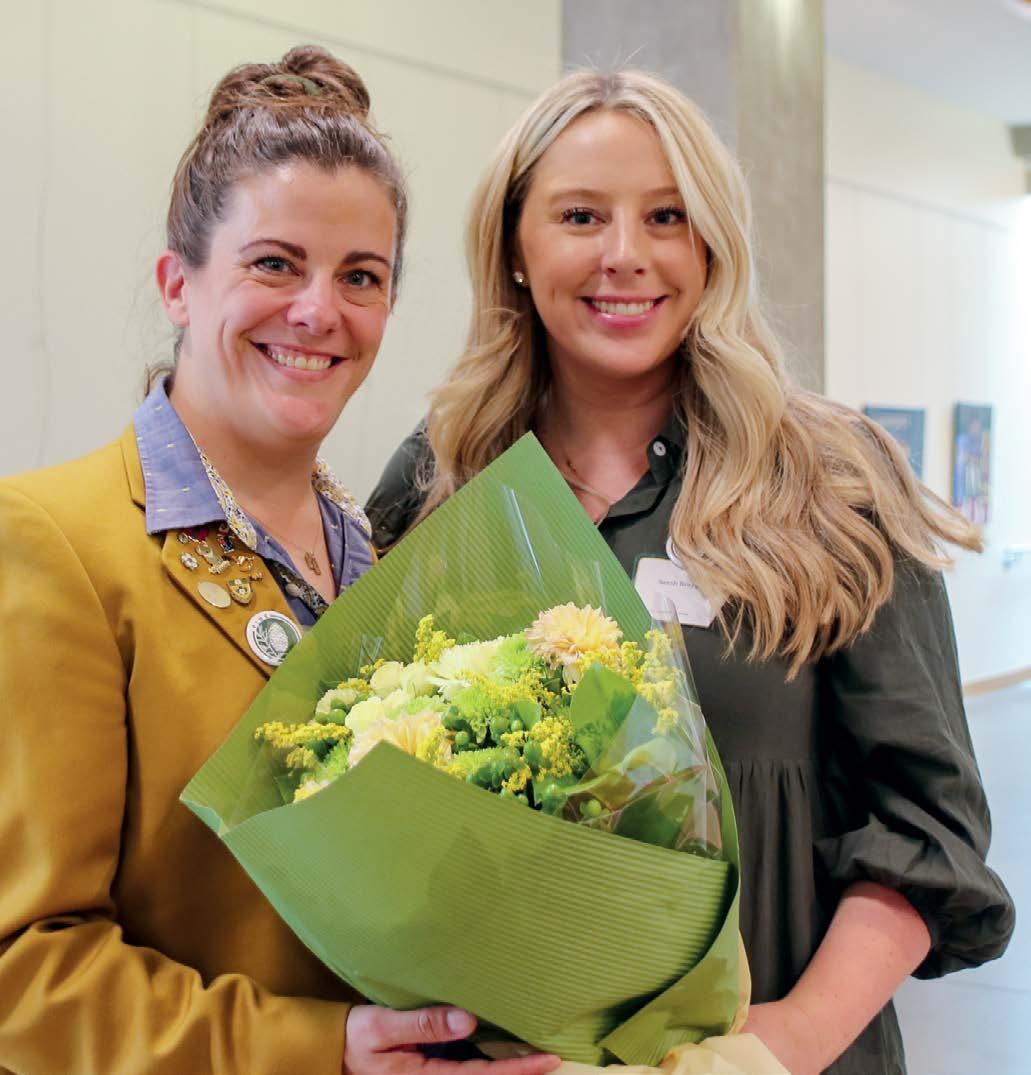
Q: WHAT DO YOU THINK THE HIGH SCHOOL VERSION OF YOURSELF WOULD MAKE OF YOU NOW?
A: I have always loved school. In my mind, going to high school involved two of my favourite activities: learning new things while spending time with friends. So, I think the high school version of myself would be happy that I found a job in which I can effectively stay in school forever! More seriously, social studies was my favourite subject in school, but it was a subject that I did not think there were any viable careers in. It was wonderful to realize that there are rewarding and fascinating career paths related to my interests that the high school version of me did not even know existed.
Q: WHAT ROLE DID YORK HOUSE HAVE IN YOUR JOURNEY TO BECOMING A SCHOLAR AND PROFESSOR AT THE UNIVERSITY OF TEXAS AND STANFORD UNIVERSITY?
A: York House made me feel that being an academic was not something to be ashamed of. The learning environment encouraged me to raise my hand, speak up, ask questions, think critically, and interrogate taken-forgranted assumptions. I also think the richness and variety of offerings at York House helped students find where they can thrive. Not everyone is good at everything, and
that’s great. Different people having different affinities, skills and interests make for a rich and complex society. A place like York House, where there are not only high-quality academic offerings but also fine arts and athletics helped me gain exposure to different paths.
I also believe there are social features of York House which shaped my journey. One of the sociological concepts I teach my university students about is the idea of social capital. Social capital refers to two things—who you know and the resources those network ties make available to you.
" York House provides students access to social networks of people who are doing incredible things. Want to be a lawyer? We have a Supreme Court Justice alum. Interested in becoming a clothing designer? We have those among our ranks too. Want to work in medicine or business or research? There are scores of alums who you can connect with."
That said, I think it is also important to recognize that such social networks also tend to reproduce privilege and inequality. Research demonstrates that we tend to hire people who look like us, have resumes like us, and act like us. In other words, we tend to reproduce ourselves. I think it is crucial to operate not only within but beyond our networks to work directly with people and groups that are often excluded from elite networks.
Q: AFTER YORK HOUSE, YOU ATTENDED UBC, THEN PRINCETON UNIVERSITY. YOU THEN LANDED AS A POSTDOCTORAL FELLOW AT MICROSOFT RESEARCH LAB IN CAMBRIDGE, MASSACHUSETTS. YOU NOW WORK AT THE UNIVERSITY OF TEXAS, AND WILL BE AN ASSOCIATE PROFESSOR AT STANFORD UNIVERSITY IN SEPTEMBER. WHAT IS YOUR EXPERIENCE LIKE OF BEING A CANADIAN RESEARCHING THE AMERICAN CRIMINAL JUSTICE SYSTEM?
A: Being a Canadian living in and researching the United States is interesting because the countries are simultaneously very similar and yet so different. Being Canadian has given me somewhat of an outsider advantage because it allows me to challenge some assumptions about the status quo in the United States. For example, policy tends to be path-dependent—current
35
Devon Taylor '02, President of the Alum Association with Dr. Sarah Brayne '03, 2023 YHS Alum Special Achiever
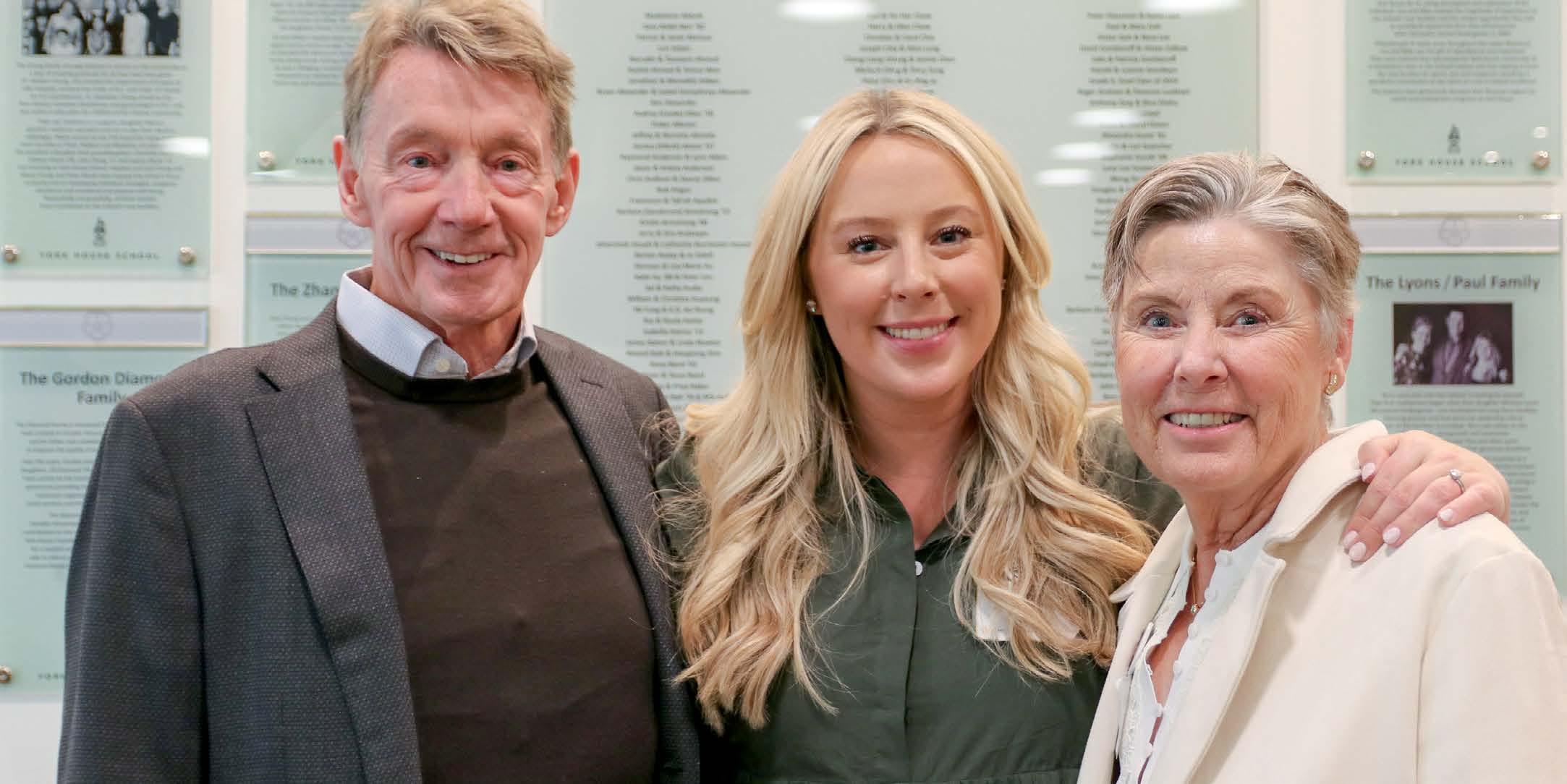
policies largely reflect the policies that came before them. There is a powerful tautological logic that if a policy exists, it must be functional, and if it is functional, it is inevitable. However, that orientation stymies change and progress. Bringing an outsider perspective and analyzing not only how the US has historically dealt with social problems but how other countries address them differently helps me to question the status quo and imagine policy alternatives and research questions that are more outside the box.
Q: YOUR RESEARCH HAS EXAMINED THE WAYS THAT LAW ENFORCEMENT’S USE OF TECHNOLOGY AND BIG DATA HAS PROFOUND IMPLICATIONS FOR CITIZENS. CAN YOU EXPLAIN WHAT IS MEANT BY “BIG DATA,” AND HOW ARE POLICE DEPARTMENTS USING THIS DATA?
A: The most common definition of big data is the “three Vs”—volume, velocity, and variety. Big data represents large amounts of information (volume), high-frequency observations and fast data processing (velocity), and comes from a wide range of institutional sensors and involves merging previously separate data sources (variety). In more colloquial terms, “big data” roughly means large amounts of data that are crunched by computers with large computing capacity, and analyzed to find associations people might not otherwise find.
In the digital age, police departments routinely use big data to deploy resources in patrol, identify suspects, conduct investigations, and predict who is more likely to commit crimes and where they are more likely to occur.
Q: WHY IS IT SO CRUCIAL FOR SCHOLARS TO BE EXAMINING THIS PHENOMENON?
A: Big data, predictive algorithms, and AI are being taken up not only in policing but in fields as far-reaching as finance, insurance, medicine, and education. In all these contexts, there is a powerful myth that if something involves data analytics, then it is objective and unbiased. This is not true. Take algorithms for example. Algorithms involve inputting a bunch of training data, and then following a step-by-step process (like a recipe) to produce some kind of data output. In predictive policing algorithms that predict where and when crime is more likely to occur in the future, the training data is historical crime data. However, these data are not perfect mirror reflections of true crime rates: certain crimes are more likely to make it into official crime statistics than others (e.g., whereas almost 100% of motor vehicle thefts are reported to police, less than 30% of sexual assaults are); certain people and groups are more likely to report crimes to the police; and the police spend more time patrolling certain neighbourhoods than others, and are therefore more likely to detect crime there.
36
Dr. Sarah Brayne '03 with her parents, Robin and Shirley (Stark) Brayne '67
This means that crime data is biased in all kinds of invisible ways. When that training data is biased, the algorithm will project these biases into the future, while appearing objective. With complex computational practices, historical biases and inequalities can easily become “techwashed” under a veneer of objectivity.
Q: ONE OF YOUR GREAT GIFTS IS YOUR ABILITY TO MAKE SOPHISTICATED CONCEPTS UNDERSTANDABLE TO THOSE OUTSIDE OF AN EXPERT AUDIENCE. WHAT DO YOU WISH THAT THE GENERAL PUBLIC WAS MORE SAVVY TO, IN THE CONTEXT OF SURVEILLANCE AND BIG DATA COLLECTION?
A: The hidden biases in the data are one thing, but also I hope to disabuse people of the common misconception that if you have nothing to hide, you have nothing to fear, or, if you are not committing crimes, then what the police—or employers or health care professionals for that matter—are doing with big data is not relevant to you. However, the legitimacy of using a series of data points to reconstruct a digital double and infer an individual’s intentions and behaviours—whether incriminating or exculpatory—relies on the assumption of an infallible system in which actors enter all data without bias, error, or prejudice. This is an assumption which is simply not born out in reality.
Q: WE’RE CURIOUS TO HEAR ABOUT THE TRAJECTORY OF YOUR CURRENT RESEARCH. WHAT IS CAPTIVATING YOUR ATTENTION RIGHT NOW?
A: I have a few different projects on the go right now. One is following some of my big data policing research into the courts. In that project, I am using qualitative data to analyze how social media data is leveraged as evidence in criminal trials. In another project, I am using statistical methods to examine the role of mass incarceration in explaining wide racial disparities in life expectancy.
Q: CAN YOU TELL US ABOUT YOUR WORK IN CREATING THE TEXAS PRISON EDUCATION INITIATIVE? WHAT WAS THE GENESIS OF THIS IDEA? HOW DOES HAVING ACCESS TO THESE COURSES IMPACT YOUR INCARCERATED STUDENTS?
A: While I was obtaining my PhD in Sociology and Social Policy at Princeton University, I was researching the criminal legal system. Motivated by stark disparities in the system, I began volunteer teaching college classes in New Jersey
state prisons. When I moved to the University of Texas at Austin to start my faculty position, I was eager to continue teaching in prisons. Unfortunately, I soon learned that there was no university-wide prison education program at UT.
This absence was particularly striking, as Texas has more people in prison than any other state (and more than three times as many people as are incarcerated in all of Canada). Access to education behind bars is associated with improved economic and re-entry outcomes, which benefit not only incarcerated individuals, but their families, communities, and broader society. Therefore, in 2017, I co-founded the Texas Prison Education Initiative (TPEI). TPEI’s mission is simple but transformative: provide free credit-bearing college classes to incarcerated people in Texas. I partnered with two graduate students to co-teach our first class to five incarcerated students in one facility in the fall of 2018. Since then, TPEI has expanded rapidly. We have now taught more than 500 students across multiple prisons in more than 40 creditbearing classes including Sociology, Physics, Mathematics, Precalculus, English, Rhetoric and Writing, Philosophy, and Urban Studies, as well as College Preparatory Math and College Preparatory Writing. We have approximately 100 faculty, postdoctoral, graduate and undergraduate student volunteers from colleges and schools across the university.
Last year, the Mellon Foundation awarded TPEI a $500,000 award to fund a partnership between TPEI and the Teresa Lozano Long Institute of Latin American Studies titled Pido la Palabra, which enabled us to begin offering Spanishlanguage literature classes.
" Something particularly meaningful for me, as a mother, is working with our students in the women’s prison. More than half of them are mothers, and many feel that they are failing in that role while in prison."
An important part of TPEI involves cultivating our students’ identities as scholars. I have witnessed our students express pride in the work that they are doing and say they feel they are investing in their children’s future. They proudly share things with me like, “Now I can help my daughter with her math homework,” or, “I mailed my son an essay I wrote.” By increasing educational opportunities in prisons, I hope to improve on one of the key issues underpinning behind mass incarceration in the first place—structural barriers to educational access.
37
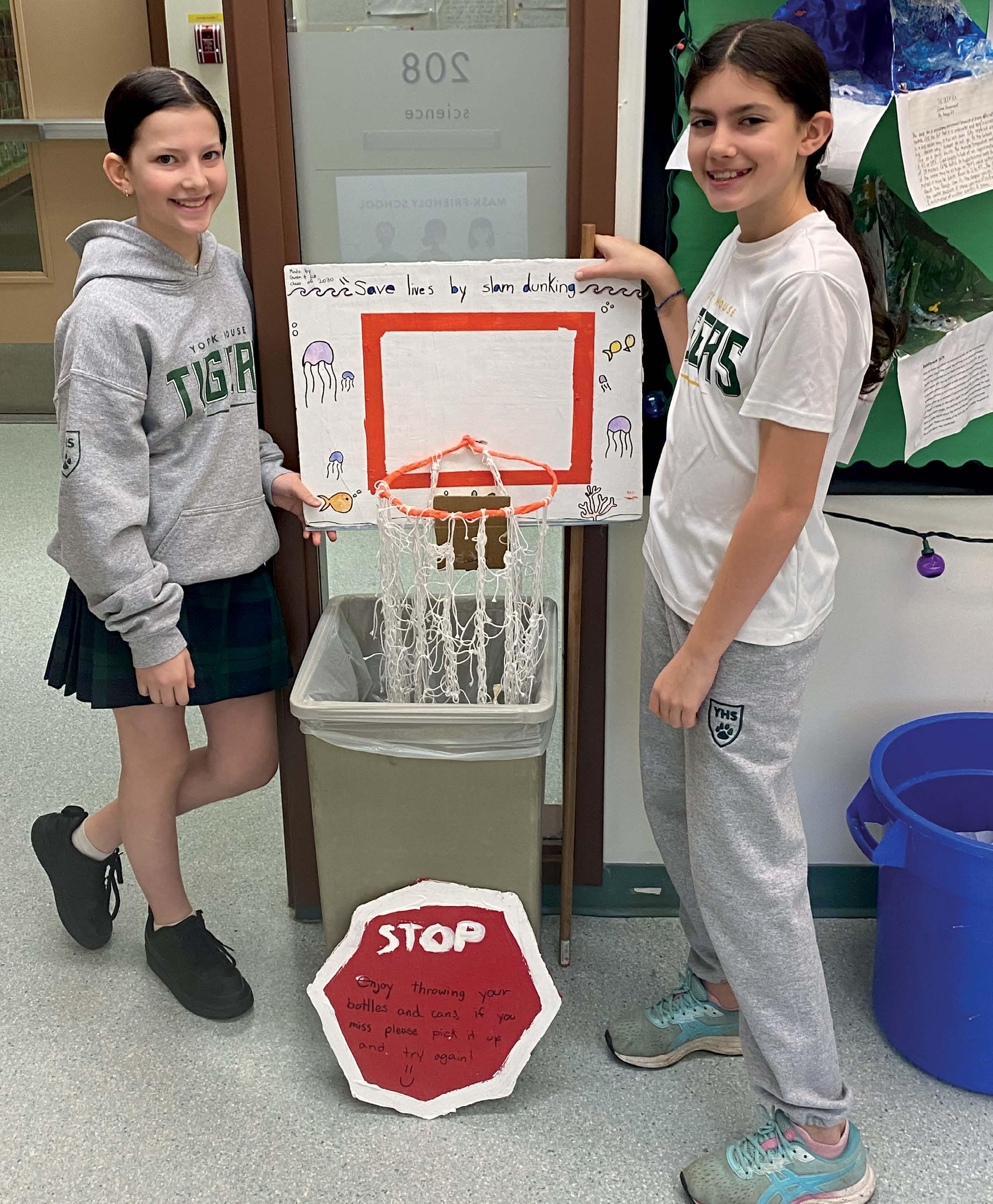
Young
Innovators.
BIG IMPACT.
BY TOM COLLINS, JUNIOR SCHOOL SCIENCE TEACHER
38
Grade 6 students, Gwen and Liz, gamifying waste with an interactive basketball hoop.
Grade 6 ADST Projects on Sustainability and Responsibility
In a recent exploration of creativity and responsibility, the Grade 6 students immersed themselves in a transformative Applied Design, Skills, and Technologies (ADST) project.
Themed around sustainability and guided by the United Nations Sustainable Development Goals (SDGs), our young innovators undertook a variety of projects designed to address environmental concerns and create a positive impact on both their school and the broader community.
The students began by getting to know the grounds of the schools a little better. They connected with the land through some Forest School activities designed to help them stop, take a moment, and reflect upon their relationship with the land. These included using their sense of smell to explore the plants, stopping and creating a sound map of the area to listen to the land, and looking for shapes and colours. This led to some meaningful expressions of connectedness as they carefully considered how they acknowledged the land on which they learn, grow, and play.
BIRD FEEDERS FOR LOCAL WILDLIFE SUPPORT:
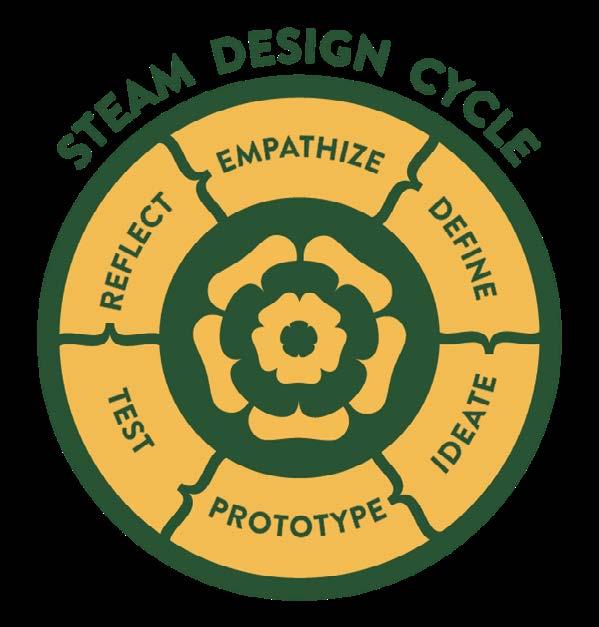
Applying the empathize phase, another group sought to understand the needs of local wildlife. Defining the issue of diminishing habitats, they ideated and prototyped bird feeders which involved using vegetable shortening and bird seed crafted from recycled materials. They developed a way to help Grade 1 students make some feeders of their own and then hung them around the school. This helped ensure the project aligned with their initial goals of supporting local biodiversity.
EDUCATIONAL AIDS FOR QUALITY EDUCATION:
After digging deeper into the SDGs the students focussed on one they would work together on. They selected to work in small groups, or individually, and started to follow the YHS Design Cycle.
The following projects were the result.
GAMIFYING WASTE WITH INTERACTIVE BASKETBALL HOOP:
The team focusing on waste management empathized with the challenge of promoting responsible disposal habits. Defining the issues at hand, they ideated and prototyped an interactive basketball hoop. The goal was to aim trash at a switch above the hoop, which activated a buzzer. Testing its impact on waste disposal habits prompted reflection on how to make the gamification aspect even more compelling and effective in future projects.
For the project focusing on educational aids, empathizing with gathered data was crucial. Through a questionnaire about what Yorkies loved about learning, gaps were identified and then solutions were ideated. Students worked with teachers to find out what kind of aid they could use in a classroom setting allowed for valuable insights, fostering reflection on how to continually improve the integration of quality educational resources.
JIGSAW PUZZLE FOR CLIMATE CHANGE AWARENESS:
In their exploration of climate change, students empathized with the need for tangible awareness. Defining the challenge, they ideated and prototyped a visually striking jigsaw puzzle. Using the scroll saw was a highlight of the prototyping process, as they were able to bring their puzzle to life, whilst practicing using the saw, and demonstrating a keen awareness of how to work safely.
39
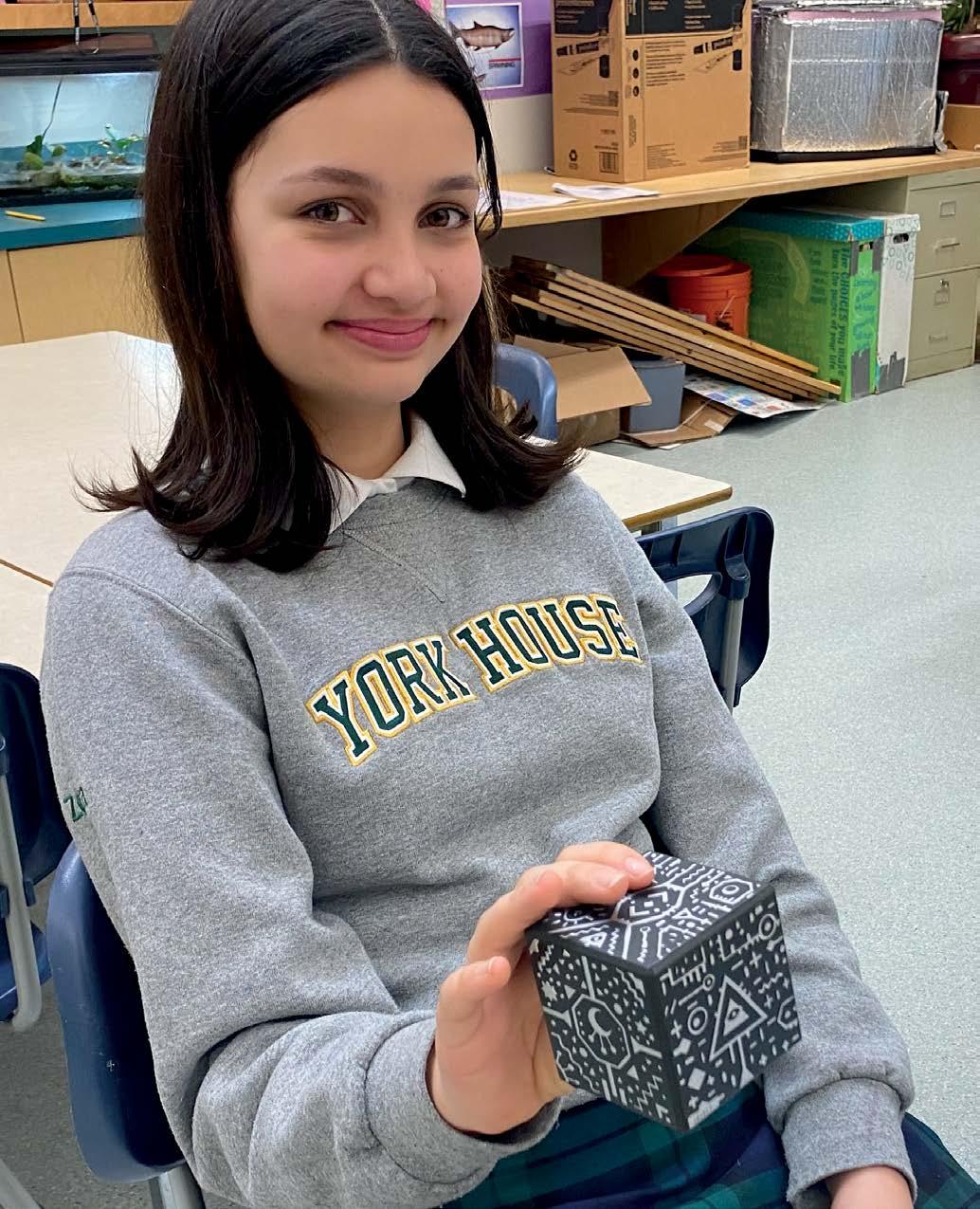
AR IMMERSIVE EXPERIENCE ON CLIMATE CHANGE:
Applying the YHS Design Cycle, the group used augmented reality (AR) and began by empathizing with the need for engaging and immersive learning experiences. Defining the parameters of their project, they ideated and prototyped an AR experience on climate change, using a Merge Cube and CoSpace software. Through testing and reflection, they fine-tuned the experience to effectively convey the message they were eager to share.
OCEAN PLASTIC CLEANUP EXPLORATION:
Applying the YHS Design Cycle, the group explored ocean plastic pollution and began by empathizing with the severity of the global issue. Defining actionable solutions, they ideated and prototyped proposals for effective plastic cleanup. Testing the feasibility of their solutions prompted reflection on the most practical and impactful ways to contribute to the fight against plastic pollution. Their prototype used a model rover that was sympathetic to ocean life, and an interactive remote control.
FOOD WASTE TRACKING FOR THE CAFETERIA
Guided by the YHS Design Cycle, students began by empathizing with the issue of food waste in the cafeteria.
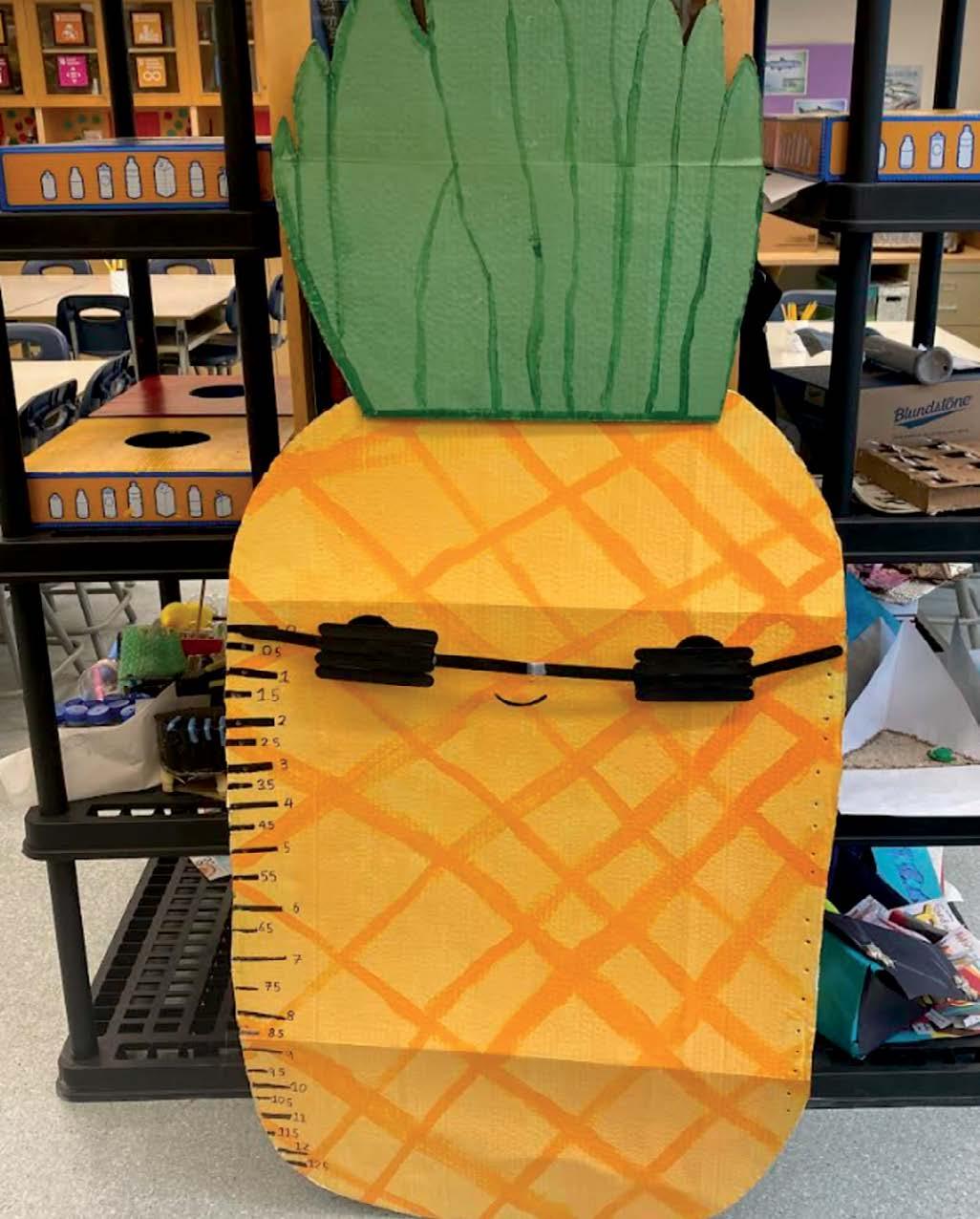
They delved into understanding the patterns and challenges, defining the problem at its core. Through ideation and prototyping, they developed a food waste tracking system featuring a large cardboard pineapple, with a simple scale to record the number of bags of waste food the cafeteria would generate in a day. As the number increased, the sunglasses would slip down the pineapple’s face, giving it an appearance of disappointment. Testing the build allowed for refinement, and the group were able to present their idea to Grace Yang, Assistant Director of the Junior School.
These Grade 6 ADST projects transcend mere academic endeavours; they represent a collective commitment to instilling the values of the United Nations Sustainable Development Goals in the hearts and minds of our future leaders. By integrating the YHS Design Cycle, these initiatives not only showcase innovative solutions but also build in students a structured approach to problemsolving that they can carry forward as they continue to make a positive impact on the world. Through innovation, creativity, and a deep sense of responsibility, these students have proven that even the smallest actions can contribute to a more sustainable and harmonious future for all.
40
Zoya and other students in this group ideated and prototyped an AR experience on climate change, using a Merge Cube and CoSpace software.
A food waste tracking system for the cafeteria.
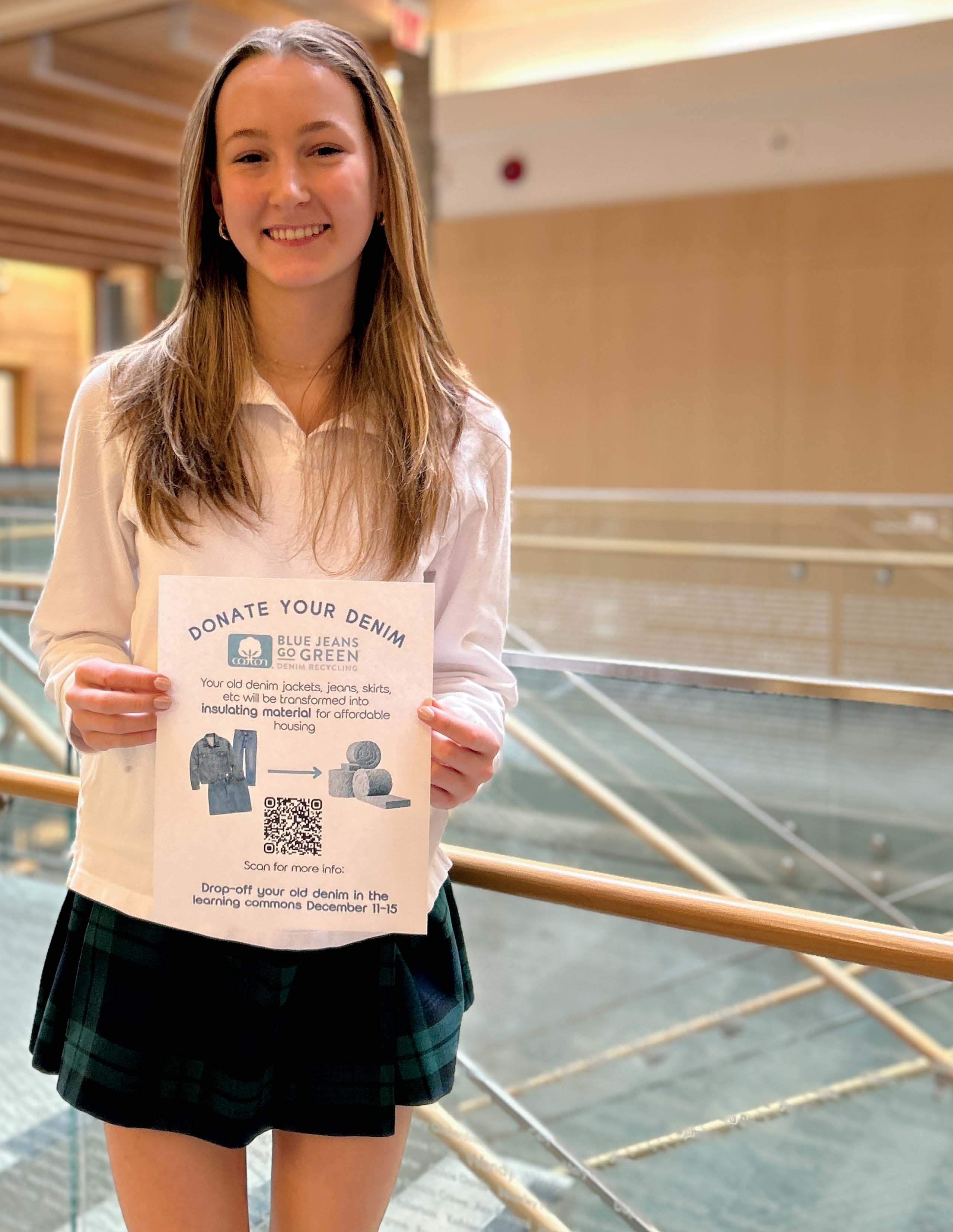
NOT FOR OURSELVES ALONE: STUDENT FEATURE
Indira
Fair, Grade 10:
DISCOVERING ONESELF AND THE WORLD THROUGH VOLUNTEERING
BY MONICA CHENG
Back in December, Grade 10 student Indira Fair initiated a denim drive at the Senior School in hopes to raise awareness of textile recycling and the individual impact in combating climate change.
Behind this admirable endeavour lies a rewarding journey of education, dialogue, and self-discovery, demonstrating how a high school student can align passion with learning both inside and beyond the classroom.
Indira's journey began with the discovery of the Climate Leaders Fellowship during a service trip to Hawaii. The Climate Leaders Fellowship is a leadership development program for students aged 14-18 interested in climate change and environmental sustainability, and is provided by a collaboration between the Stanford University Deliberative Democracy Lab, the Rustic Pathways Foundation and Rustic Pathways.
Through the fellowship’s online meetings, Indira connected with peers and mentors worldwide. These interactions provided her with a unique opportunity to comprehend and compare environmental and climate change concerns that are affecting different parts of the world. Delving into her research, Indira identified fast fashion and carbon emissions as the most prevailing environmental issues in Vancouver. Motivated by her findings and fellowship
41
Indira Fair, Grade 10
peers, she decided to transform her insights into action, collaborating with bluejeansgogreen.org to launch a denim drive at York House School. Throughout December, students and their families were encouraged to bring old denim to school for recycling into insulation materials for buildings and packaging.
Admittedly, Indira didn’t expect nor did she collect a large quantity of donations in her first volunteer initiative at school. However, she gained valuable experience in the process including researching and identifying a suitable community group to collaborate with and planning the logistics for launching a volunteer initiative at school.
“My biggest takeaway through hosting the denim drive is that I learned a lot of new skills, such as marketing and collaborating with others. As for the denim drive, besides collecting donations, I also hoped to raise awareness of textile waste in Vancouver. We tend to be the target of fast fashion; it’s important to understand how our daily practices affect the environment,” Indira explained.
For Indira, volunteering is more than a checklist of tasks; it’s a process of building connections and self-discovery. She gets to engage with a group of like-minded youth from
CONNECT YHS
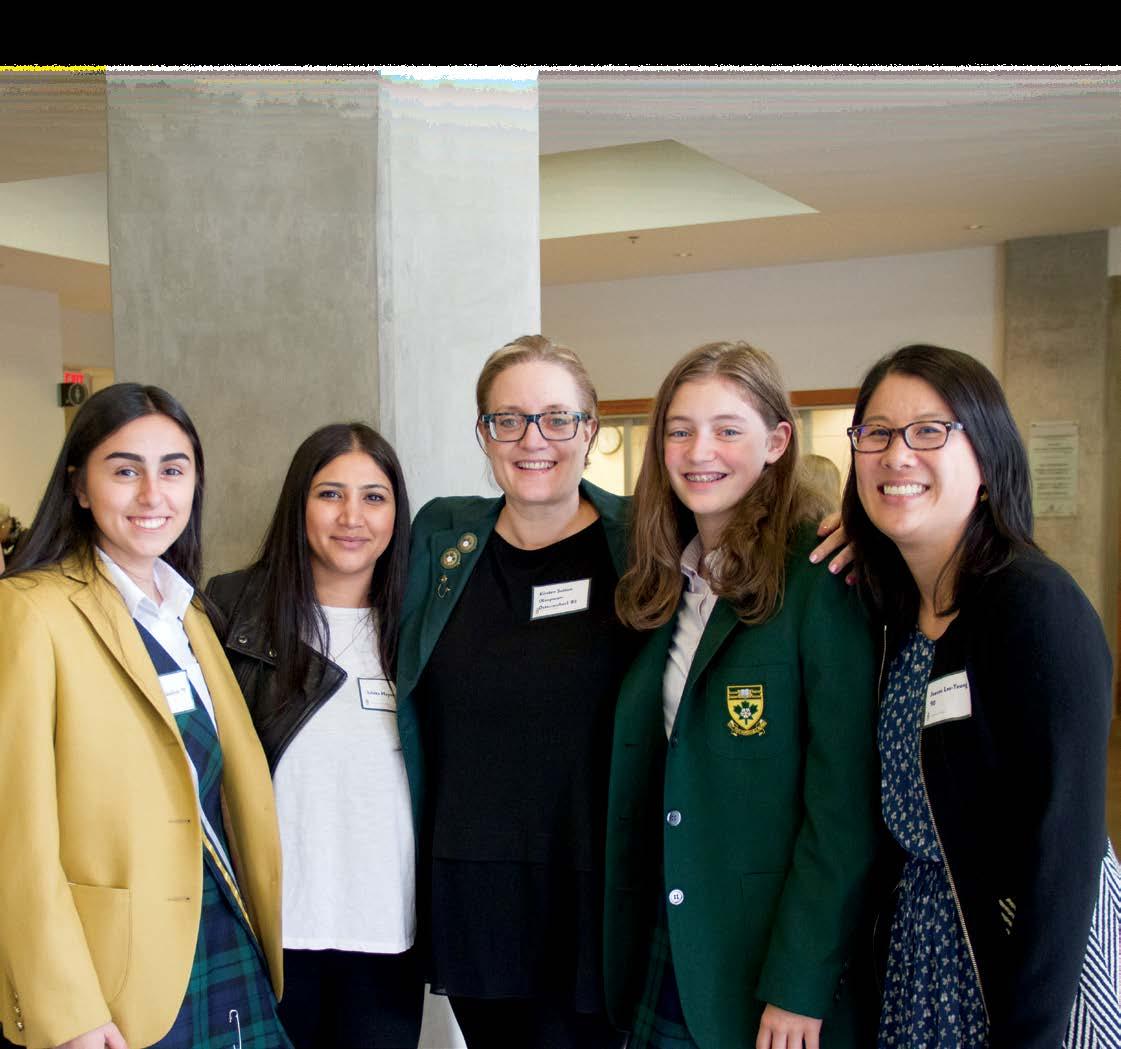
around the world who resonate with a meaningful cause in addressing environmental and climate change issues. It is an opportunity to go beyond school, receive guidance, have a dialogue with others, build leadership skills, and take ownership of her learning. She was empowered to pursue research on topics that were important to her and share that knowledge with her school community. This experience also paved the way for her to explore potential careers in environmental studies and global relations in the future.
In reflection of her volunteer experience so far, Indira emphasized, “People often think their individual impact is not good enough [to solve the big problems], but one change can inspire others into a bigger movement. I got positive feedback and brought a new level of interest [in the fast fashion problem] at school through this denim drive.”
“This fellowship is a good opportunity— it’s a rewarding way to get volunteering hours and it offers a flexible schedule and a steady amount of volunteering. It taught me a lot about self-accountability to put in the work.”
Taking her experience with the denim drive, Indira is looking ahead eagerly in planning her next volunteering initiative at York House.
YHS CONNECT supports and strengthens our worldwide alum network by providing incredible networking opportunities for all our Yorkies. It also engages and connects current York House students with our school mentorship program.
Featuring:
• JOB BOARDS
• ALUM UPDATES
• ARTICLES
• PHOTOS
• ALUM DIRECTORY
• YHS MENTORSHIP PROGRAM
• ALUM EVENTS AND REUNIONS
Alums can join YHS Connect by registering on the yhsconnect.ca website. Complete your personal profile, upload your photo, and start immediately connecting with Yorkies around the world. YHSCONNECT.CA
42
43 Imagine a future that doesn't exist. Yet. See our new plan to redefine education at spark.yorkhouse.ca
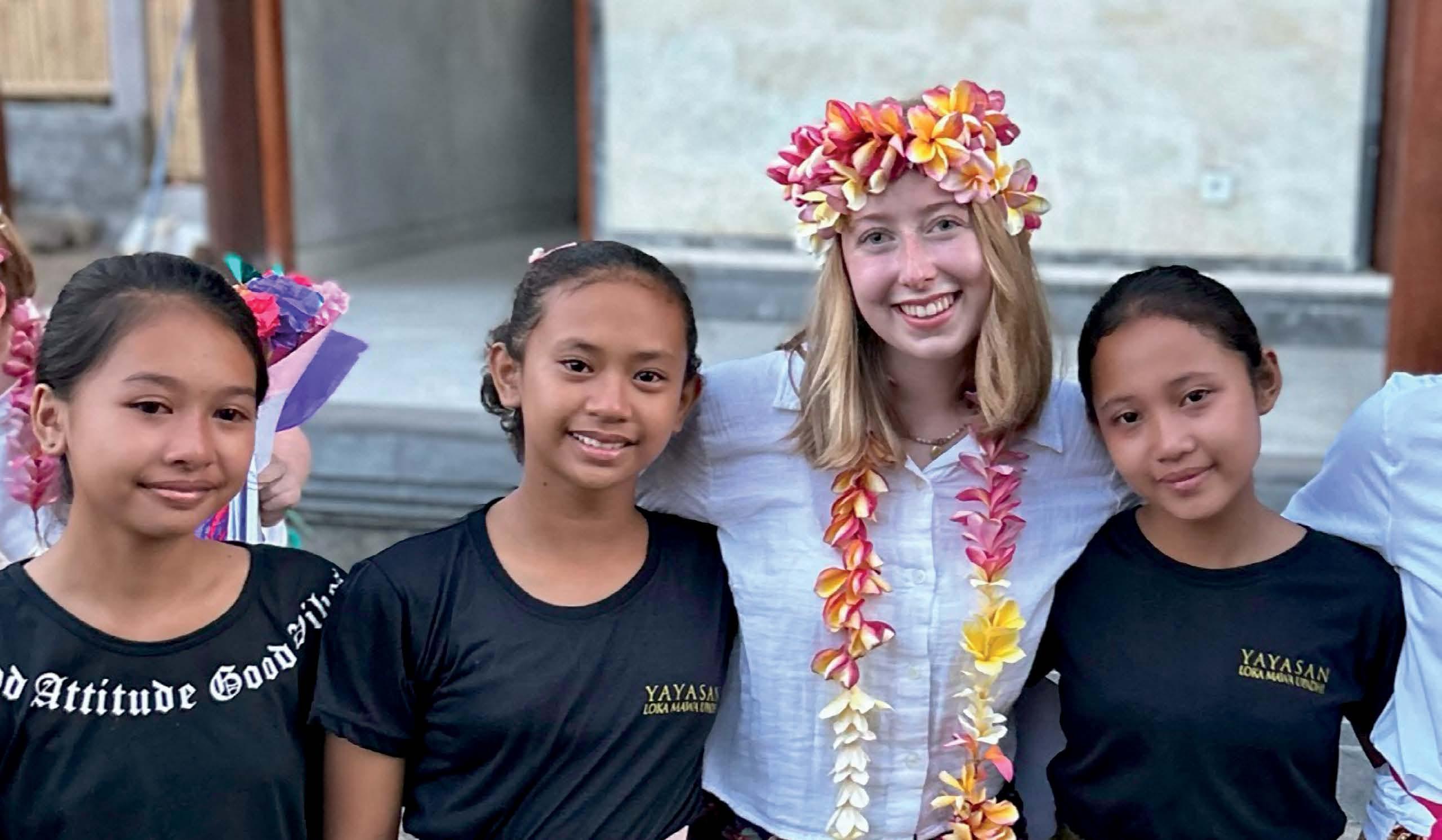
NOA COHEN '21: BUILDING DREAMS IN BALI
A Journey with the Suwandi Foundation
BY KARM KHUNGURAY
Noa Cohen ‘21 was inspired to give back during her first semester at Loyola Marymount University (LMU). She was intrigued by the Bali Club because of its lively and welcoming presence on campus. “They were working towards combating a daunting issue but approached it with optimism and a sense of community,” she explains. The Bali Club (Building, Advancing and Loving Indonesia) was started by two students at the university, who are also founders of the Suwandi Foundation, an education non-profit in Bali, Indonesia.
At LMU, Cohen began hosting fundraising events on campus to raise money to build a new learning centre for children in Bali and then began reaching out to other college campuses to do more outreach fundraising. She is now a member of the executive board and co-president of the LMU club chapter of the Suwandi Foundation. “It’s awesome that the Foundation was started by two girls in college,” says Cohen. “I appreciate working with people who understand the transformative power of education in shaping one's life.”
For Cohen, the Suwandi Foundation is just not about raising funds. It is also about empowering people. “There’s not just
a lack of opportunities for these children, but also a lack of knowledge about what education can lead to, especially in the rural communities that we work with,” she says. “We work alongside local leaders to help show these kids that education is something that can take them further in life and help them achieve what they didn’t think was possible—and make those things feel more tangible.”
According to the Suwandi Foundation, the Karangasem region in Bali faces education challenges, with over 50% of students below minimum competency levels and the highest poverty rates on the island. Financial constraints
44
NOT FOR OURSELVES ALONE
Noa ’s last day in Bali, wearing a garland made by the children.
prevent many teenagers, particularly girls, from pursuing university education.
In the summer of 2023, Cohen was part of the inaugural group of educators at the Suwandi Foundation's newly opened centre in Bali. She spent two weeks at the learning centre, living and working with the local community. Alongside another volunteer and a local teacher, she taught English to a class of 10-12-year-olds.
“It was such a surreal experience to invest time and effort over the past year in building the school and then witness it firsthand with the kids utilizing it.”
While at York House, Cohen saw how important it was to explore her passions and interests. Before becoming involved in the Suwandi Foundation, she knew little about teaching or fundraising, yet she knew she was passionate about the cause and liked the people she was working with. “It was York House that gave me the drive and belief that I could do whatever I set my mind to.”
Cohen’s affinity for community service was fostered by her mother, Lisa. Together, they often dedicated Saturdays to preparing meals for families with sick kids at BC Children’s
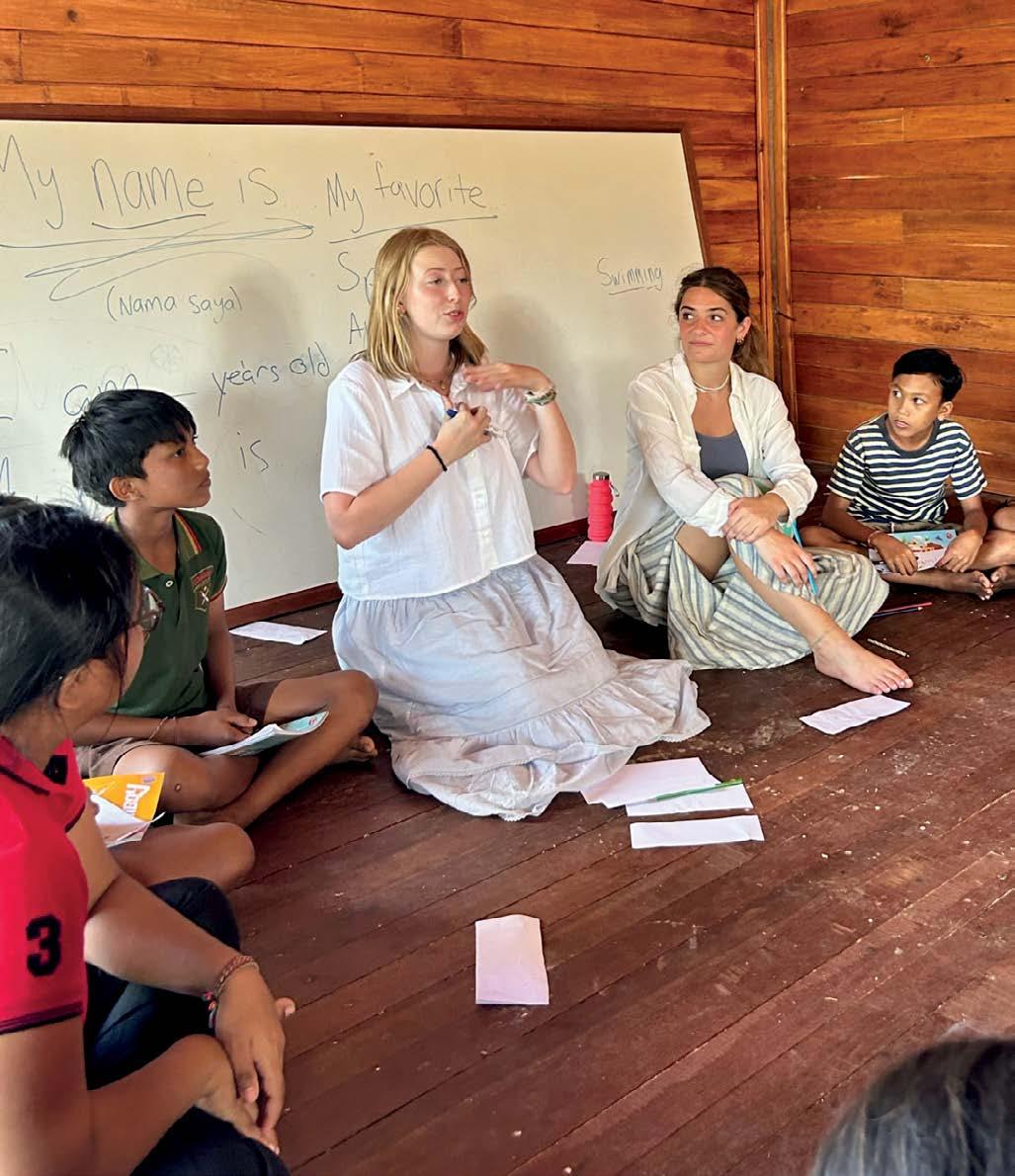
Hospital. “It showed me that it doesn’t need to be a big organization; even small efforts count. My advice to Yorkies: if you're passionate, you can find your own little ways to make a difference in the world around you. It isn't just about securing internships; active participation complements your education, helping you uncover your passions. If you truly care about something, you’ll find time for it.”
At YHS, Cohen was the student director for drama productions Midsummer Jersey, The Addams Family and The Curious Incident of the Dog in the Night-Time. Now, she is in her third year pursuing film and television production at Loyola Marymount University in Los Angeles. She is currently working on her junior thesis, a narrative short film about two paintings in a museum that realize they can come to life, featuring art from local markets in Bali. Her future goals include writing for television and film, and becoming a director.
She also plans to continue her partnership with the Suwandi Foundation, with a goal to hold one fundraiser per semester to pay local teachers’ salaries, build more classrooms and hopefully a computer lab. “I one hundred percent want to go back to Bali—those kids are so kind and deserving. I want to help them grow and help grow the school as well.”
Learn more about the Suwandi Foundation at suwandifoundation.org.
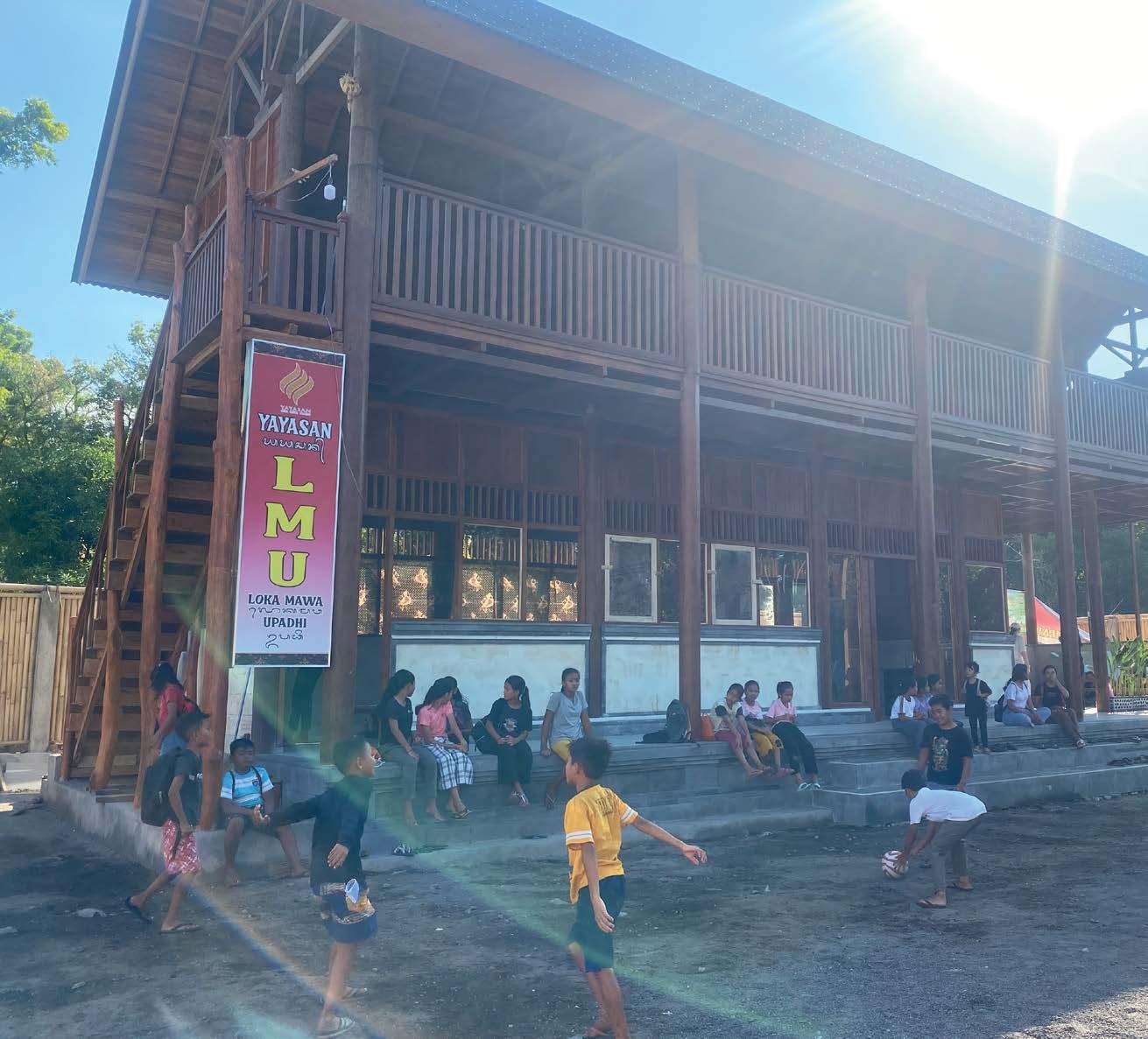
45
(L) Noa and her co-teacher Skyler during their first lesson with the children, before they had desks in the classroom. (R) The newly opened centre in Bali.
AROUND YORK HOUSE 2023-24
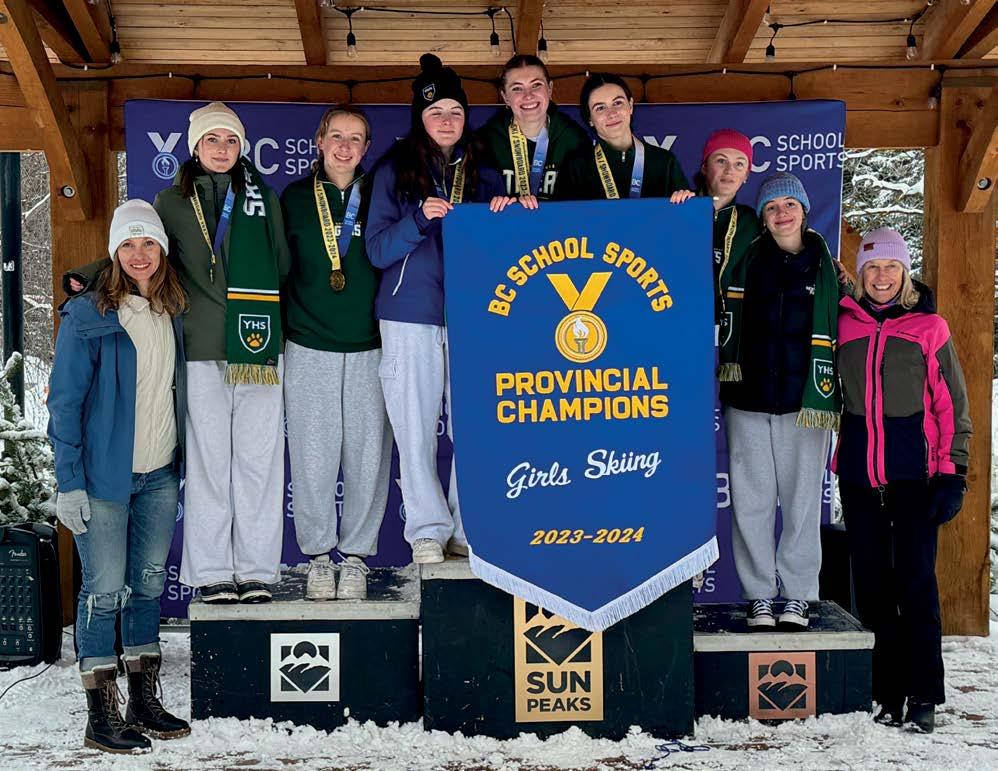
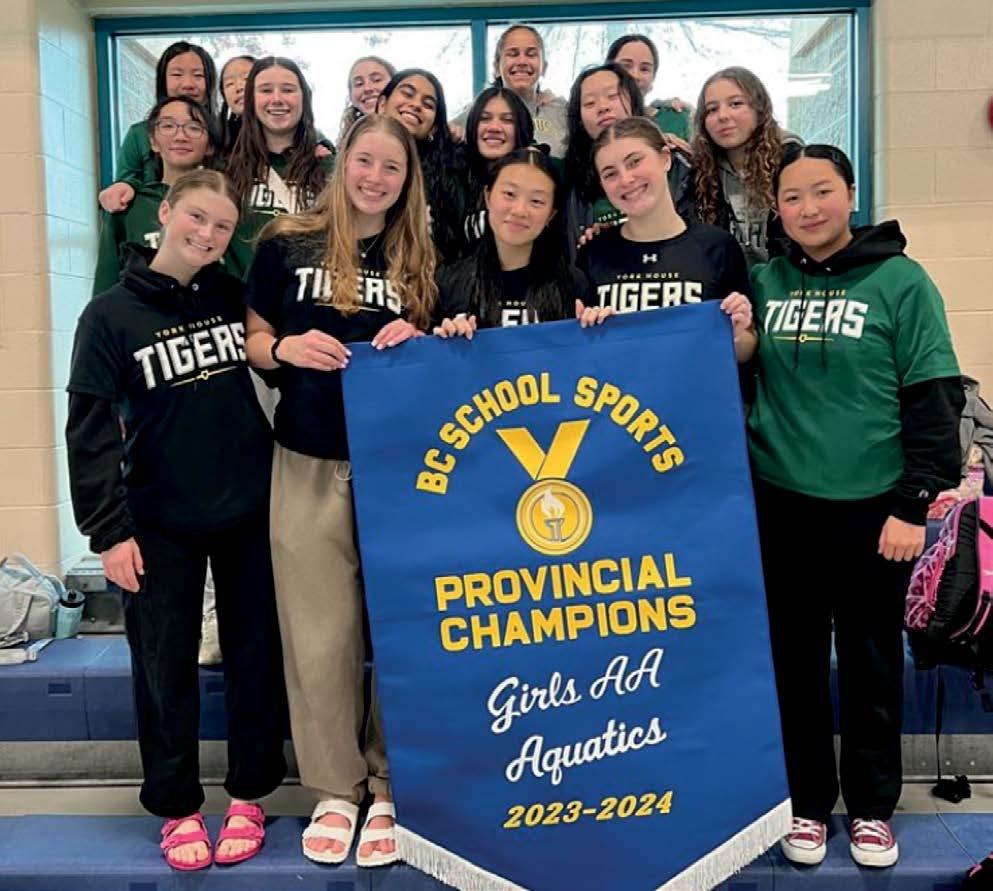
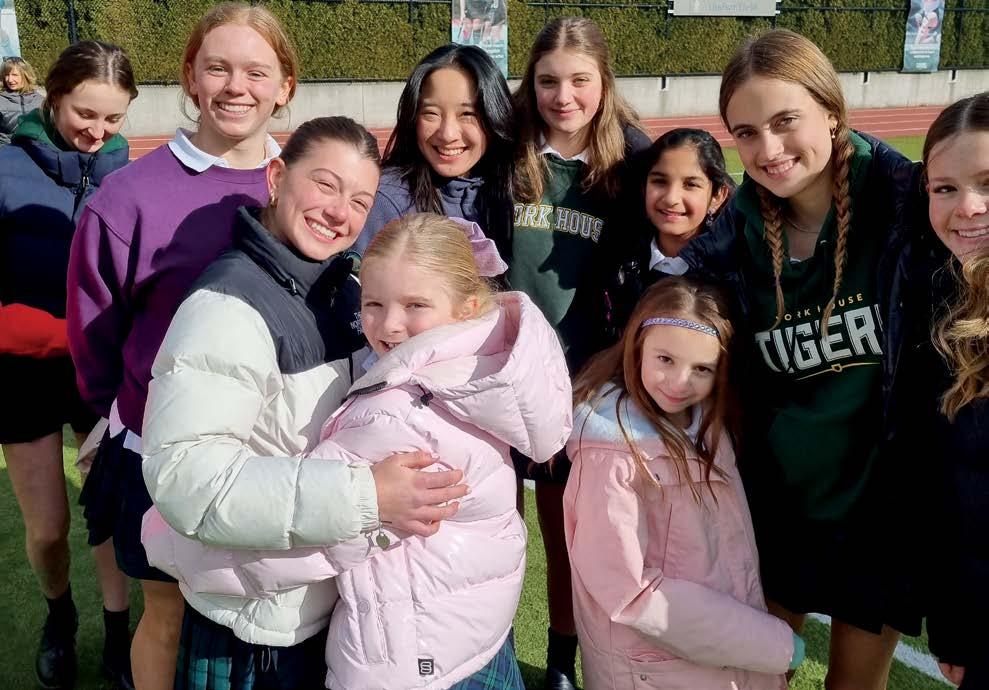
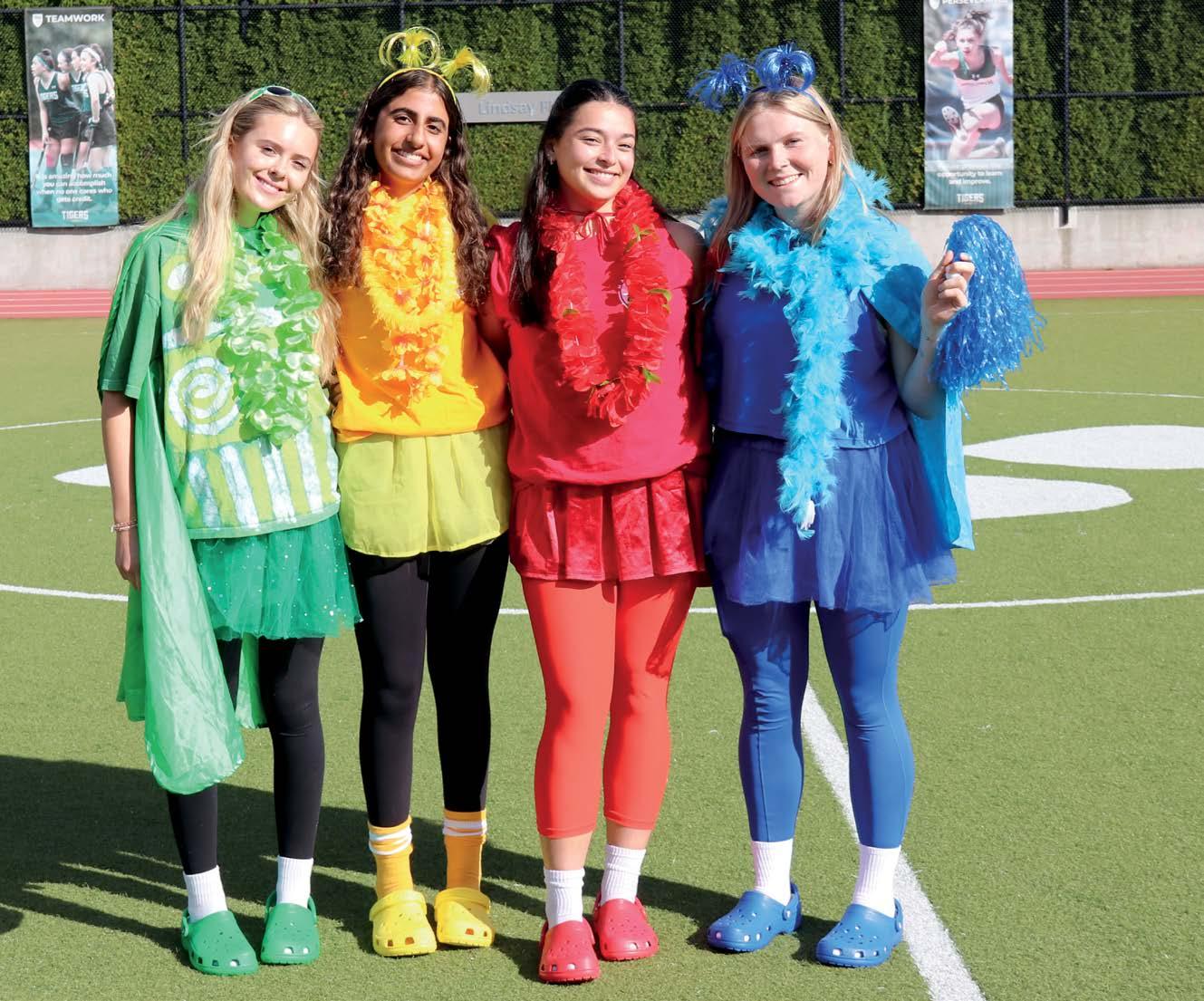
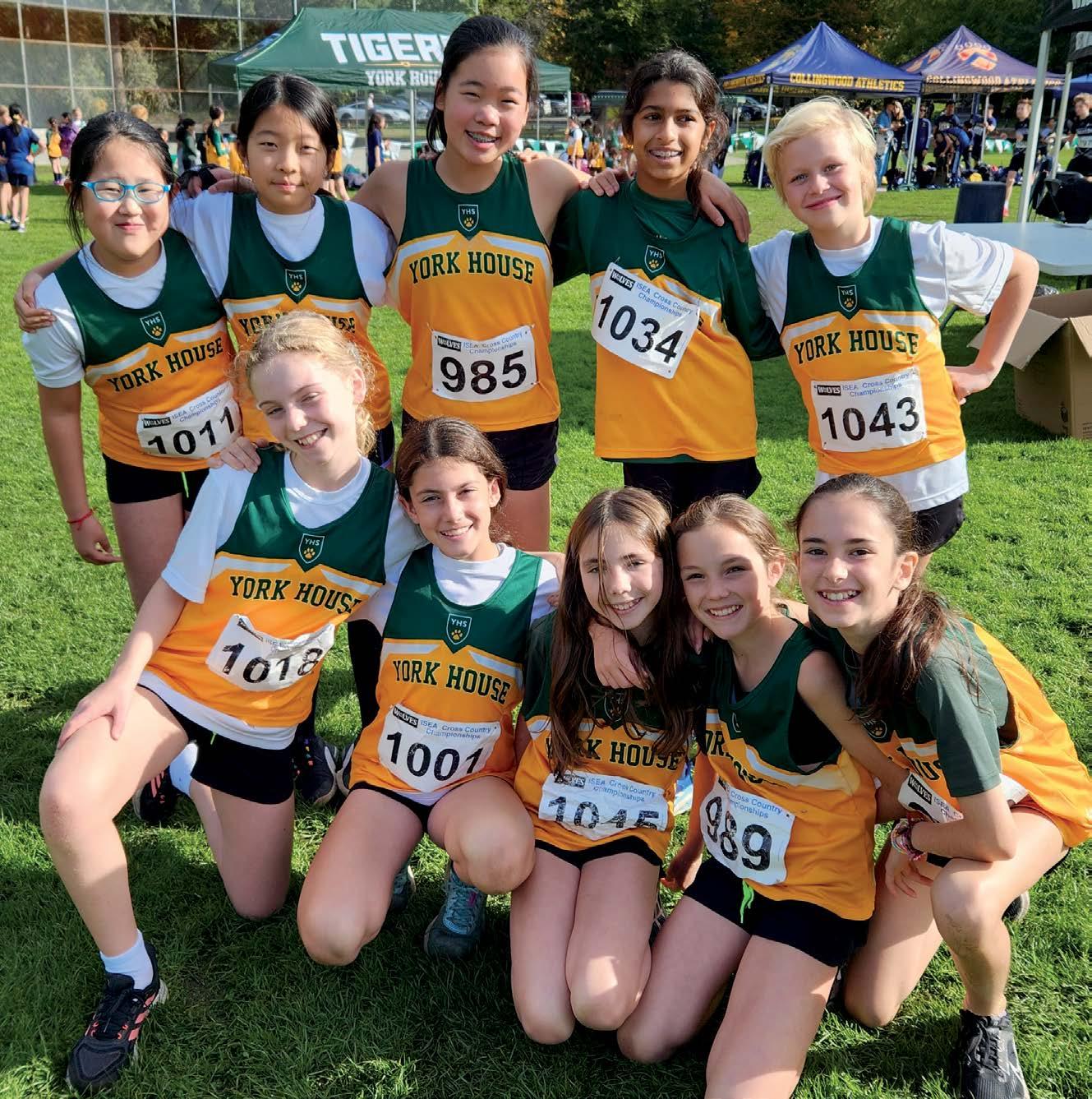
46
Ski Team wins BC Championships and Zone Championships
Swim Team wins BC Championships and Zone Championships
Grade 6 Running Cross Country
2023-24 House Captains at Fun-a-Rama
International Women’s Day Walk, March 2024
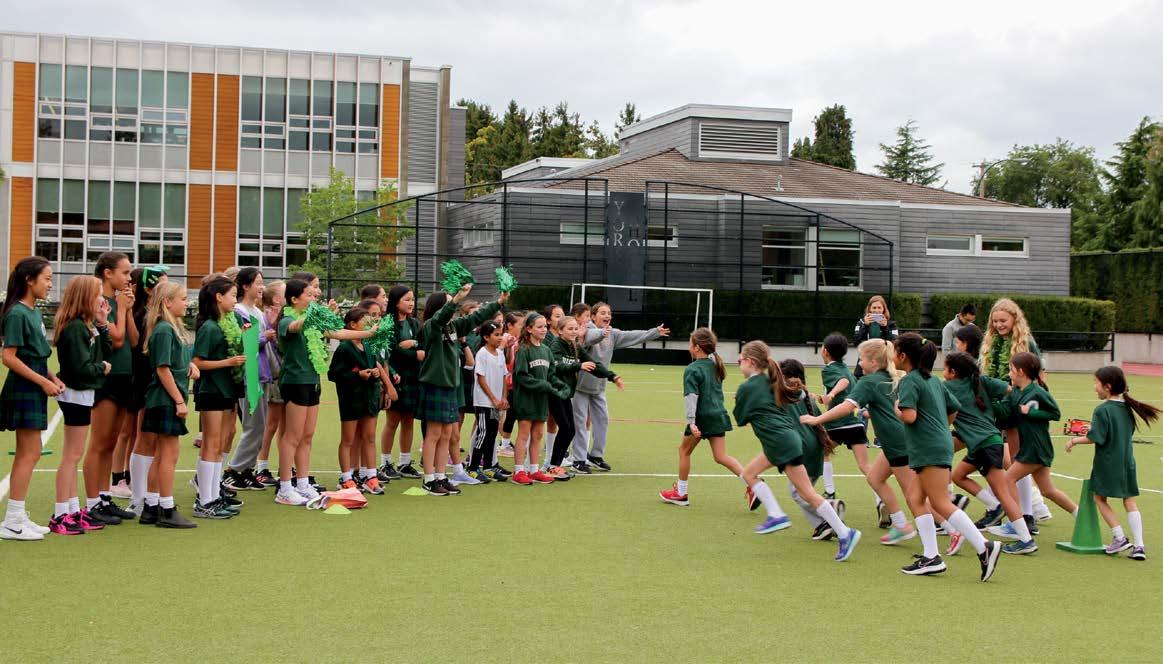
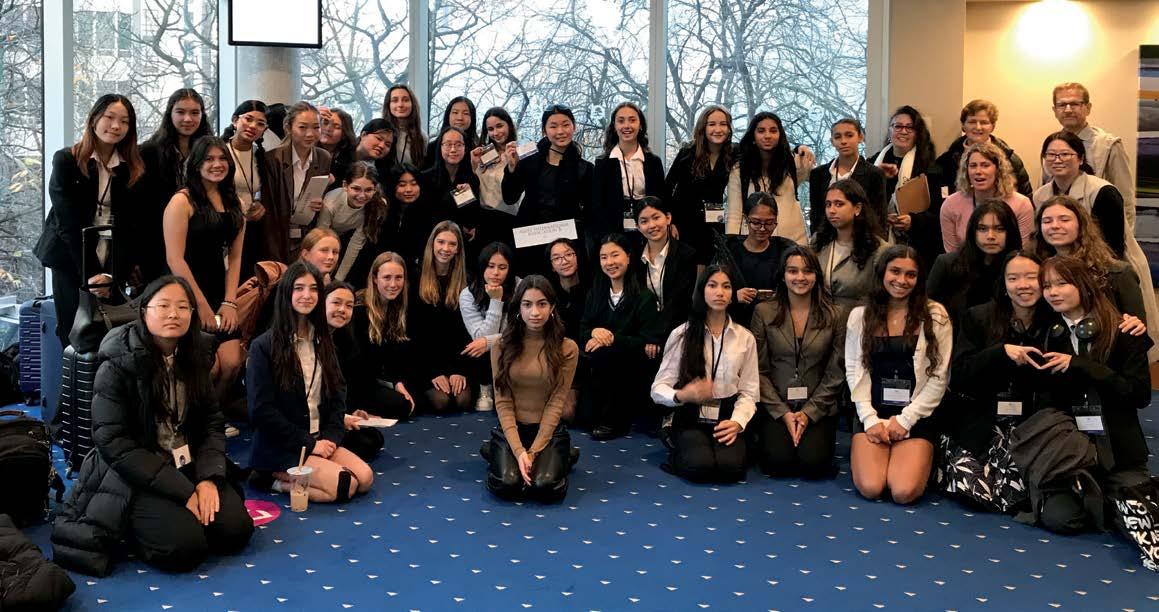
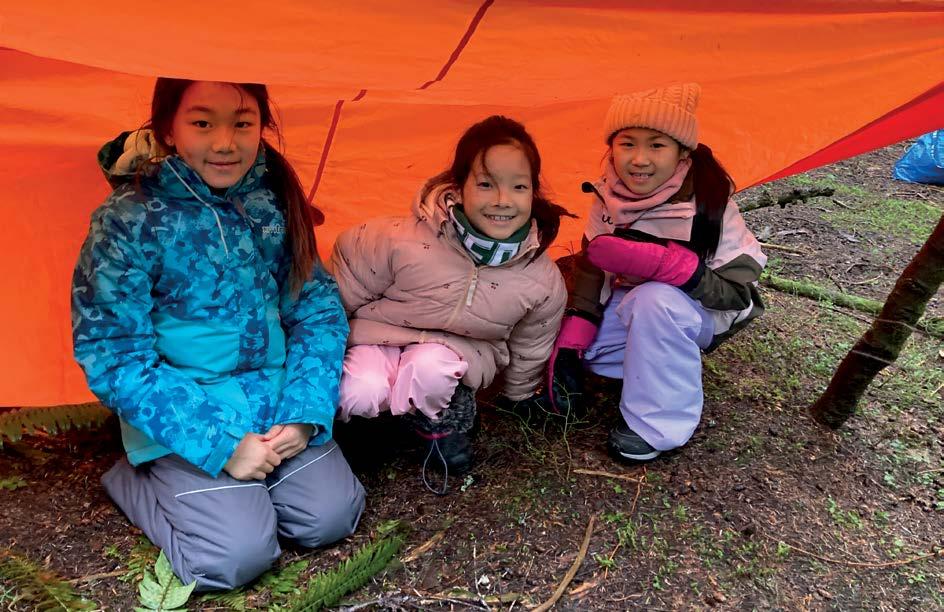
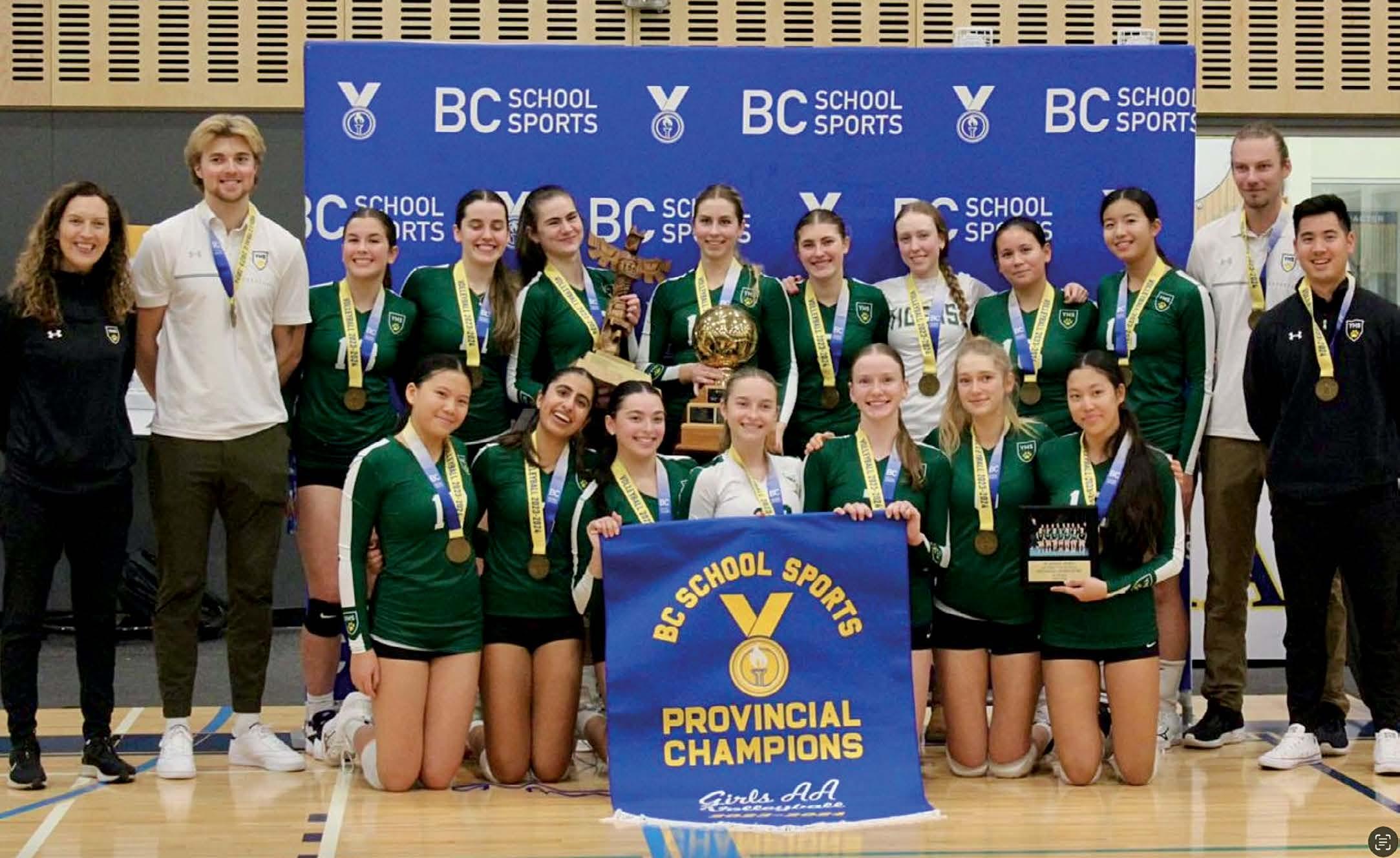
47
Junior School Terry Fox Run, September 2023
Grade 3 House Induction Ceremony
Senior Volleyball wins BC Championships
Canadian High School Model United Nations, December 2023
Grade 3 Snow Day
AROUND YORK HOUSE 2023-24
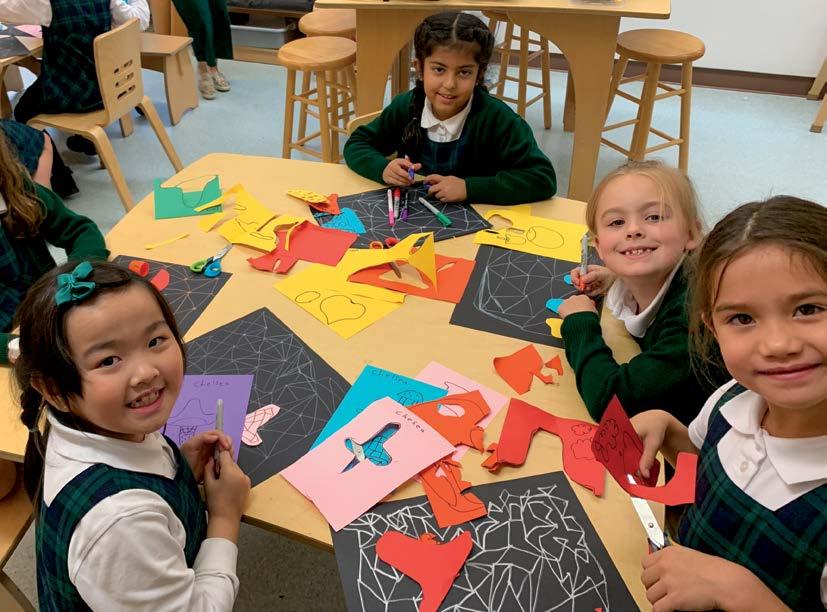
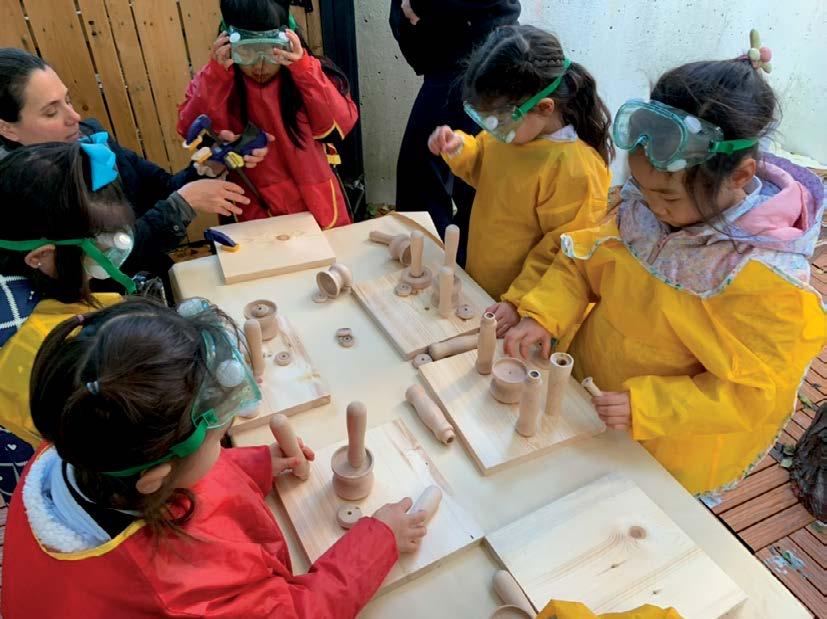
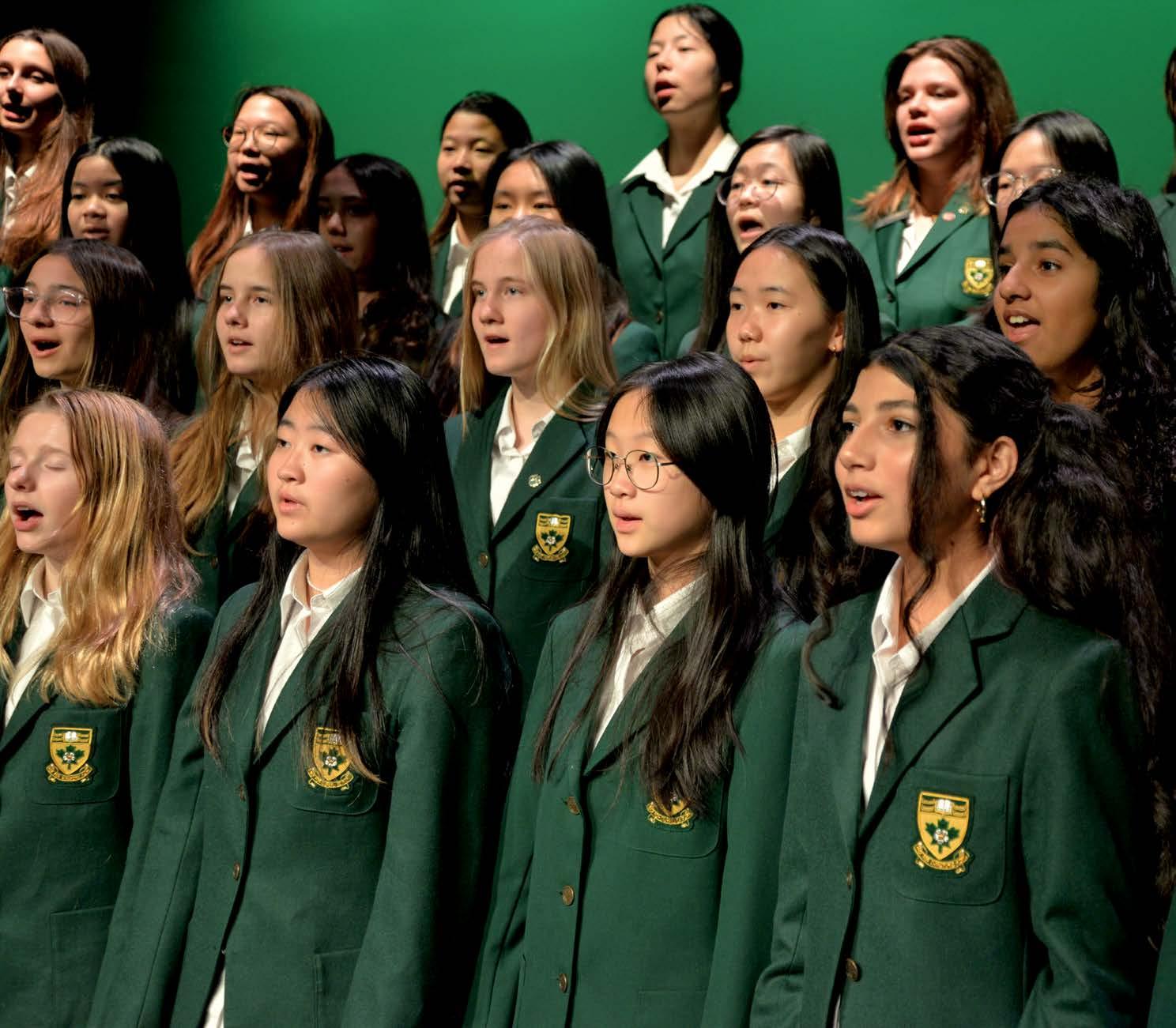
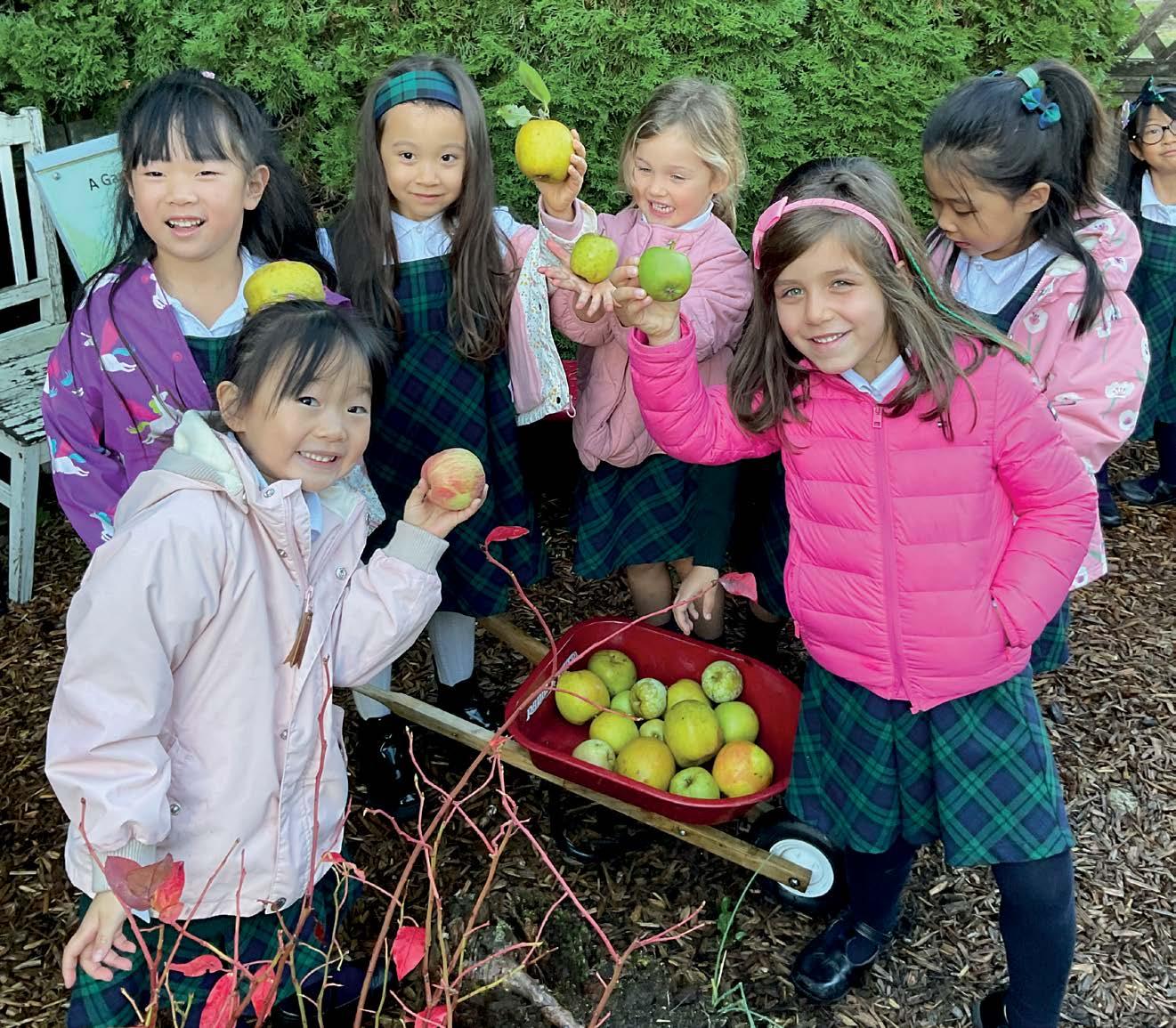
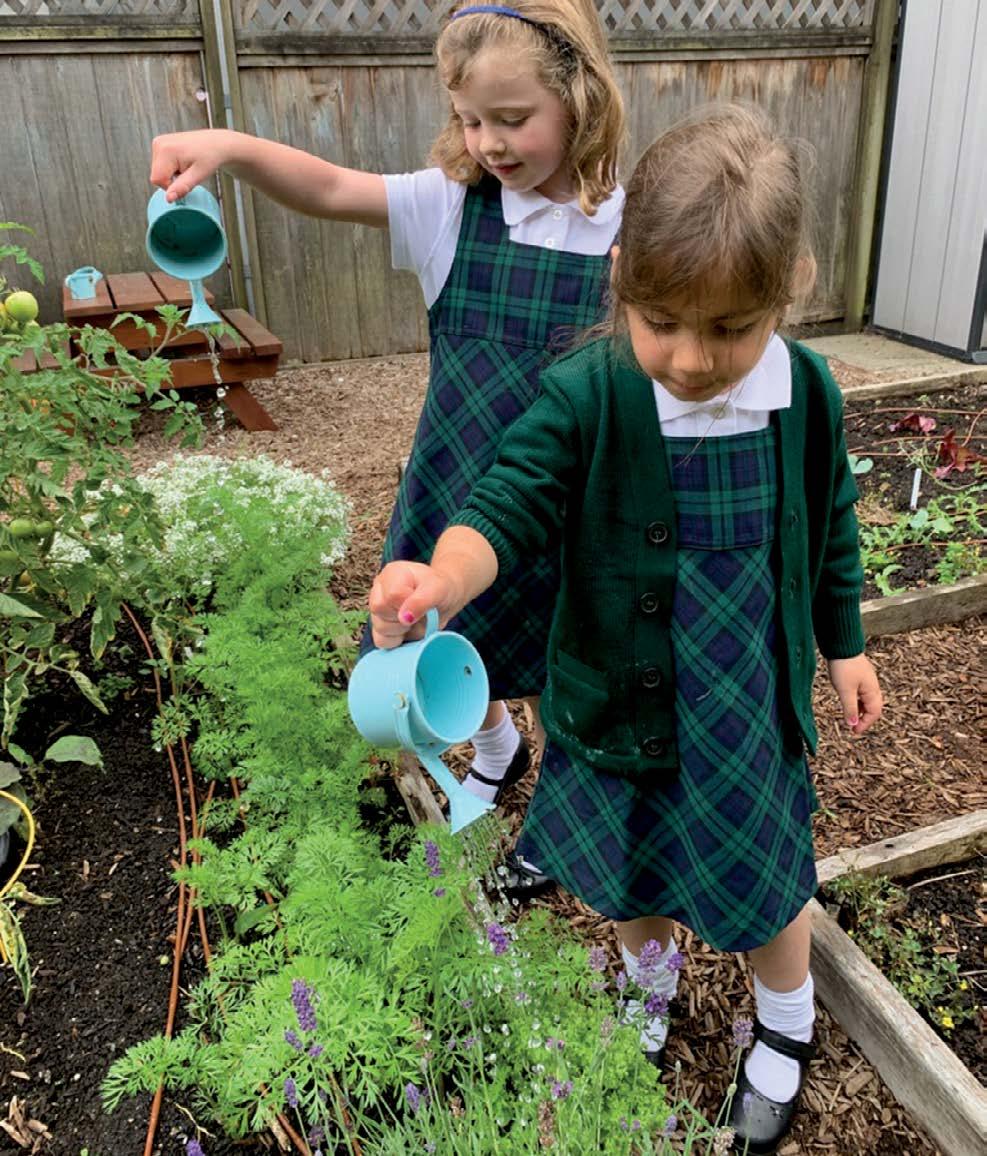
48
SK Students Gardening at the Little School
STEAM at Little School
Senior School Choir
SK Apple Picking at the Little School
Grade 2 Arts and Crafts
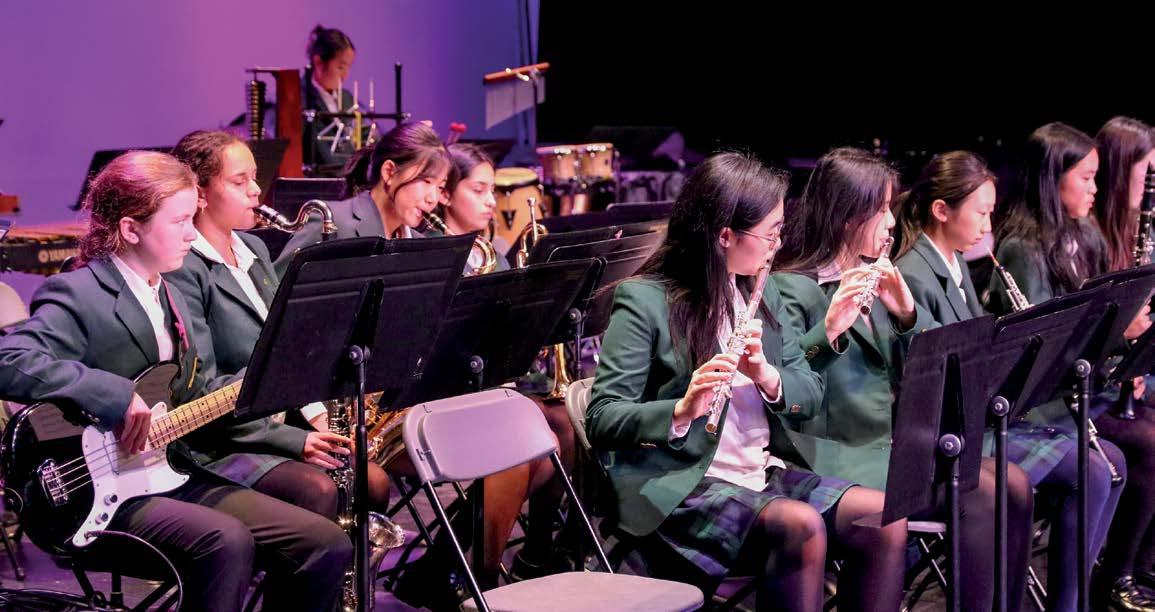
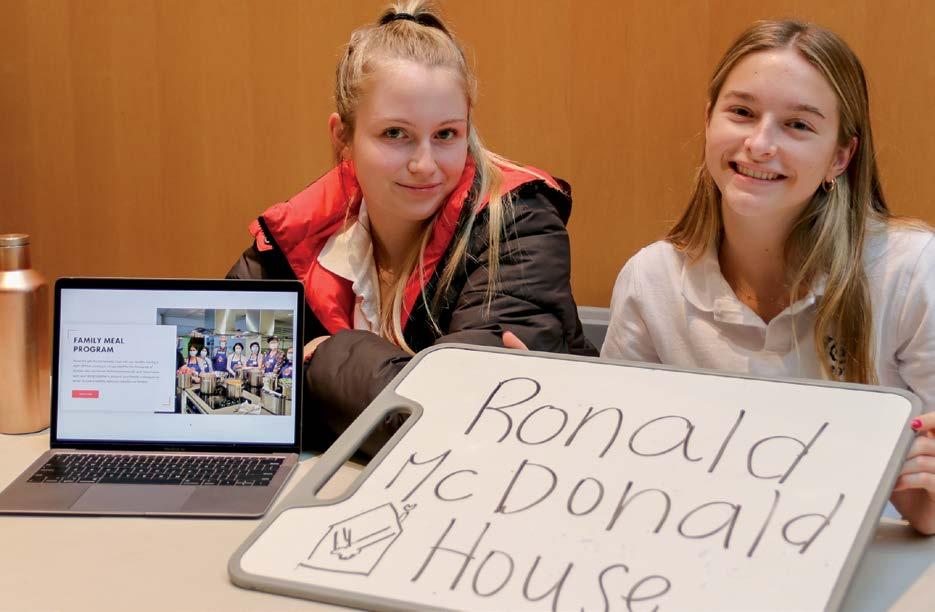
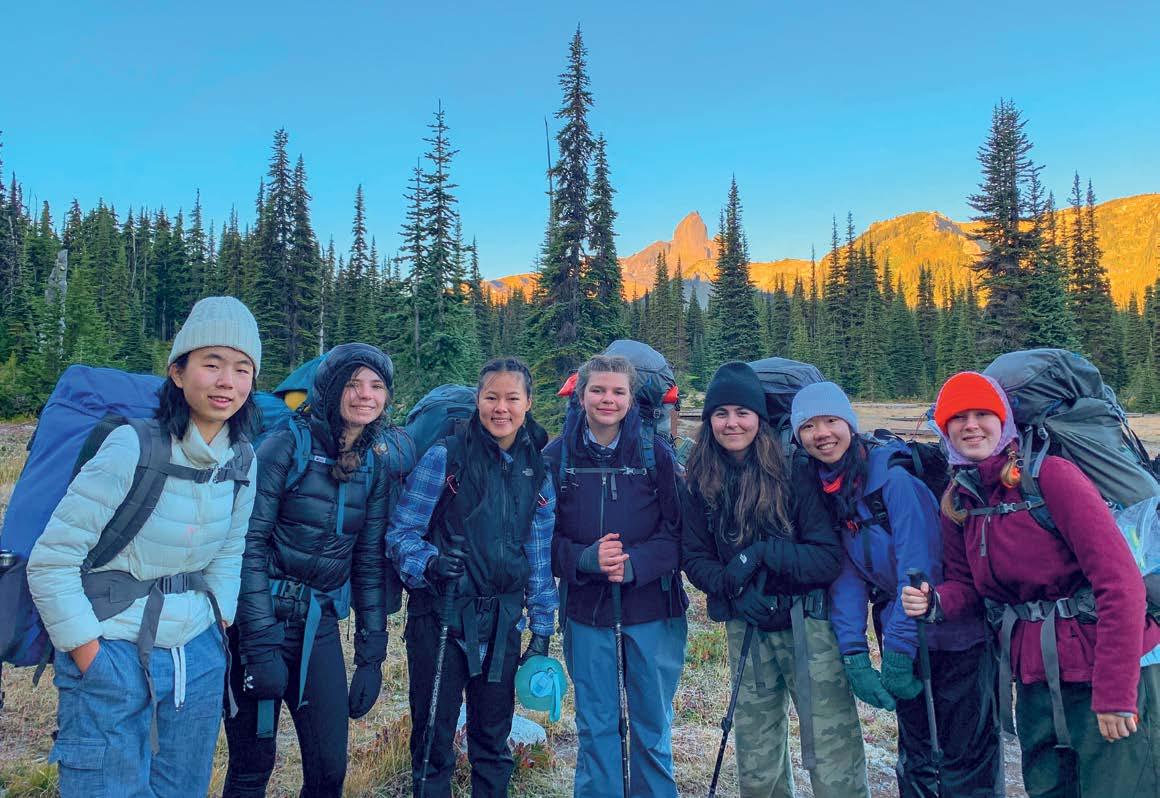
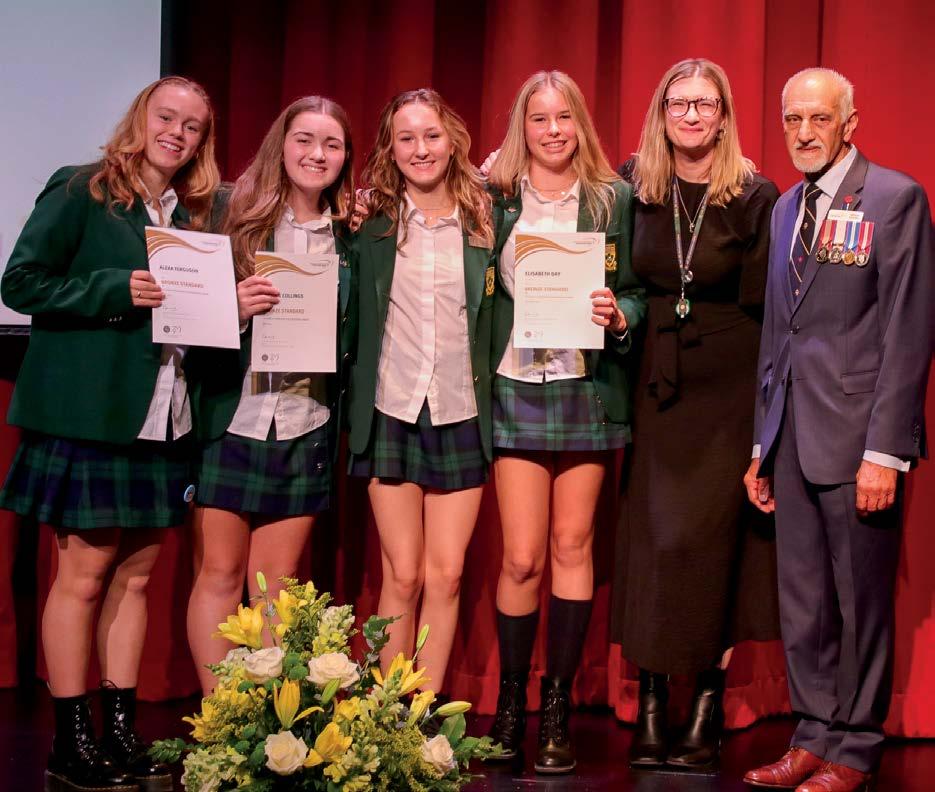
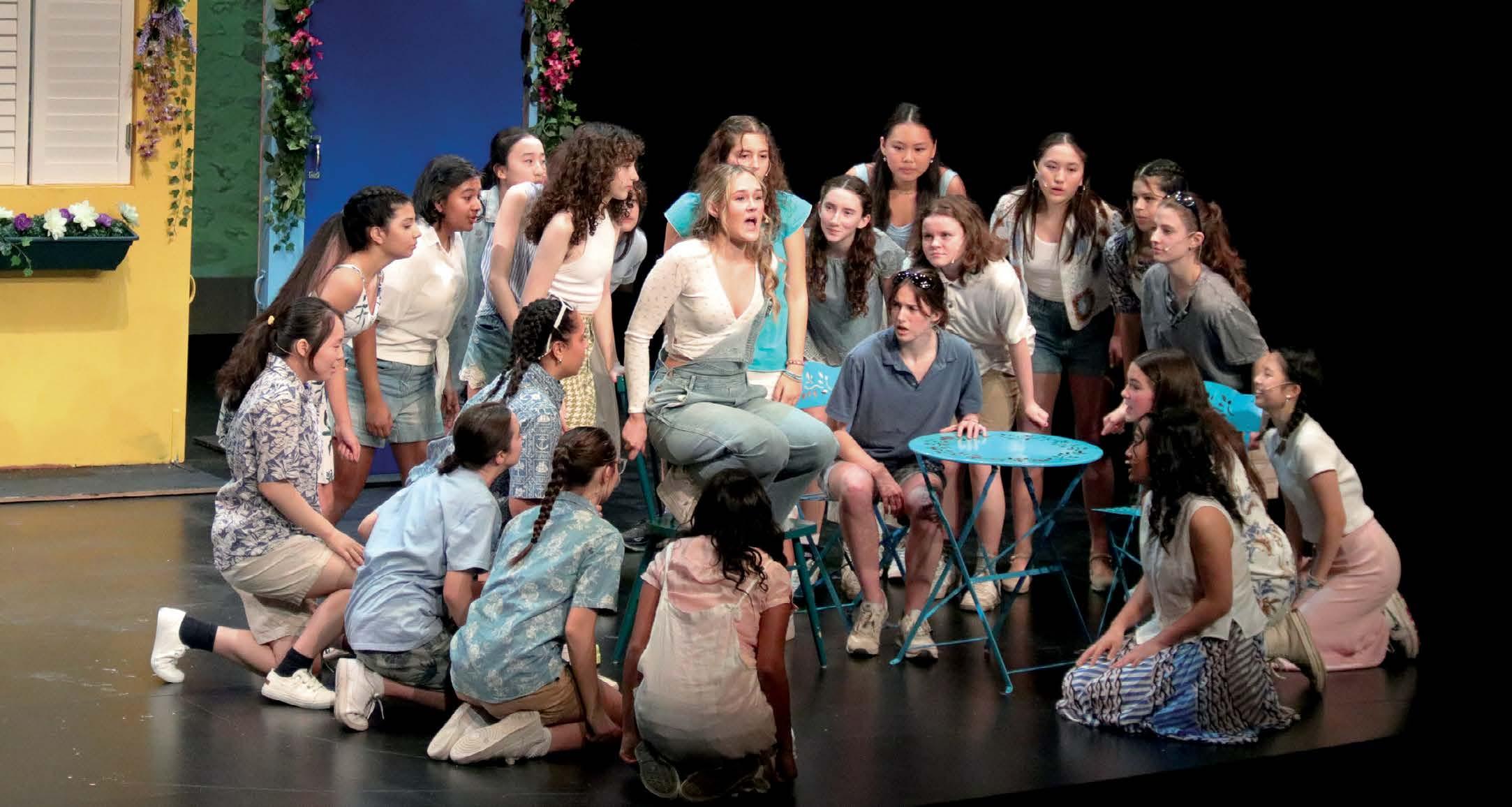
49
Mamma Mia! Senior School Musical, March 2024
Fall 2023 Band Concert Senior School Volunteer Fest, December 2023
Grade 10 Garibaldi Outdoor Education Trip Duke of Edinburgh Award Celebration Evening, October 2023
YHS Day of Giving THURSDAY, MAY 23, 2024
SAVE THE DATE AS OUR SCHOOL COMMUNITY WILL JOIN TOGETHER FOR THE YHS DAY OF GIVING IN SUPPORT OF THE ANNUAL GIVING CAMPAIGN ON THURSDAY, MAY 23.
Your inspiring generosity and participation in the Annual Giving Campaign is truly appreciated and positively impacts our students each and every day. Gifts provide support for important resources, equipment, programs, financial aid and scholarships that elevate the learning experience and environment for all our Yorkies.
We thank you for believing in our shared school motto, Not For Ourselves Alone.
Donations can be made any time online at yorkhouse.ca/donate or by mailing a cheque made payable to York House School to:
Advancement & Alum Relations
York House School
4176 Alexandra St, Vancouver, BC, V6J 2V6
Your contribution will not only impact Yorkies today, but for generations to come. Thank you for imagining the possibilities at York House School.
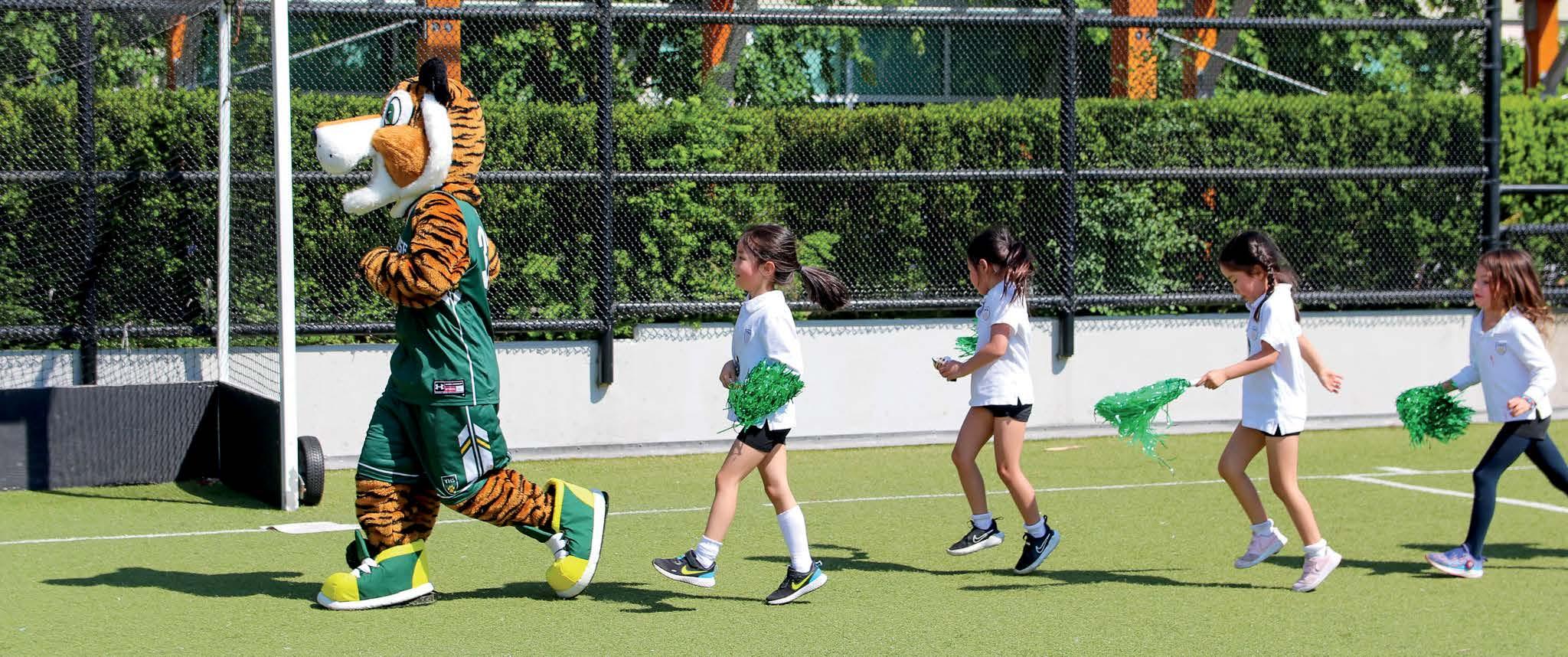

50
DONATE ONLINE
Annual Giving FAMILY FEATURE

FIONA AND ALEX WEED
Six years ago, we moved from Los Angeles, CA to Vancouver, BC. We were immediately struck with the sense of peace and community here. It was a stark difference from LA, where it feels like "everyone for themselves." Finding York House cemented our love for this country, and why we chose to stay here.
The Annual Giving Campaign embodies York House’s core value of, Not For Ourselves Alone. When we come together as a community, we turn these words into action. We are demonstrating to our children the importance of working as a group to enrich our school and the sense of pride that effort brings. Hopefully, this will translate into an understanding of their own impact on our world and the joy it brings to improve our society.
This campaign matters so much to us because we didn’t grow up with the means to attend a school like York House. Initially, we were concerned that sending our daughter to a private school might surround her with a narrow collection of perspectives, but York House hosts a wide range of talented individuals with opportunities to receive an inspiring and innovative education. This ensures that we’re surrounded by a broader group of people, strengthening our empathy and opening our hearts and minds to varied viewpoints and experiences; something desperately needed in the world right now. This is why we choose to volunteer on the Annual Giving Committee at York House, and help support Yorkies not just today, but for many generations to come.
Education is the best gift that one can give to a child. York House is not just the school we always dreamed of for our daughter, but the enriched environment we wish we’d had growing up. We want to do everything we can to support the school so that it continues to be a dynamic
and progressive school for our daughter. A place she can grow up to be her true self, empowered with the confidence and pride to pursue her dreams.
SHERMAN AND HERMES LAM ‘00
Enrolling my twin daughters in my alma mater, York House School, is a heartfelt choice driven by the transformative experiences I had there. This renowned institution not only provides an excellent academic foundation but also fosters values and a sense of community that have shaped my life positively.
Our family is dedicated to contributing to the Annual Giving Campaign, firmly believing in the transformative power of education. By actively participating in fundraising efforts and volunteering our time, we aim to enrich learning experiences and foster a sense of community. Annual Giving is one tangible way that demonstrates our commitment, reflecting a deep belief in the lasting impact education has on shaping the character and future success of young minds. The enduring traditions and strong alum network creates a lasting connection, providing a sense of belonging and mentorship opportunities for my daughters.
With a history of academic excellence, YHS offers a rigorous and innovative curriculum and a supportive environment that I believe will empower my daughters to excel. Beyond the classroom, diverse co-curricular activities and a strong athletics program contribute to holistic development, teaching valuable life skills and fostering teamwork.
By participating in the Annual Giving Campaign, I am confident that my daughters will continue to receive an education that not only prepares them academically but also molds them into well-rounded individuals ready to face the future with confidence and integrity.
51
Fiona and Alex Weed
Hermes Lam ‘00 with husband, Sherman and twins Hailey and Evelyne at Tokyo Disneyland
MY JOURNEY IN MATHEMATICS
Nina Li, Grade 12
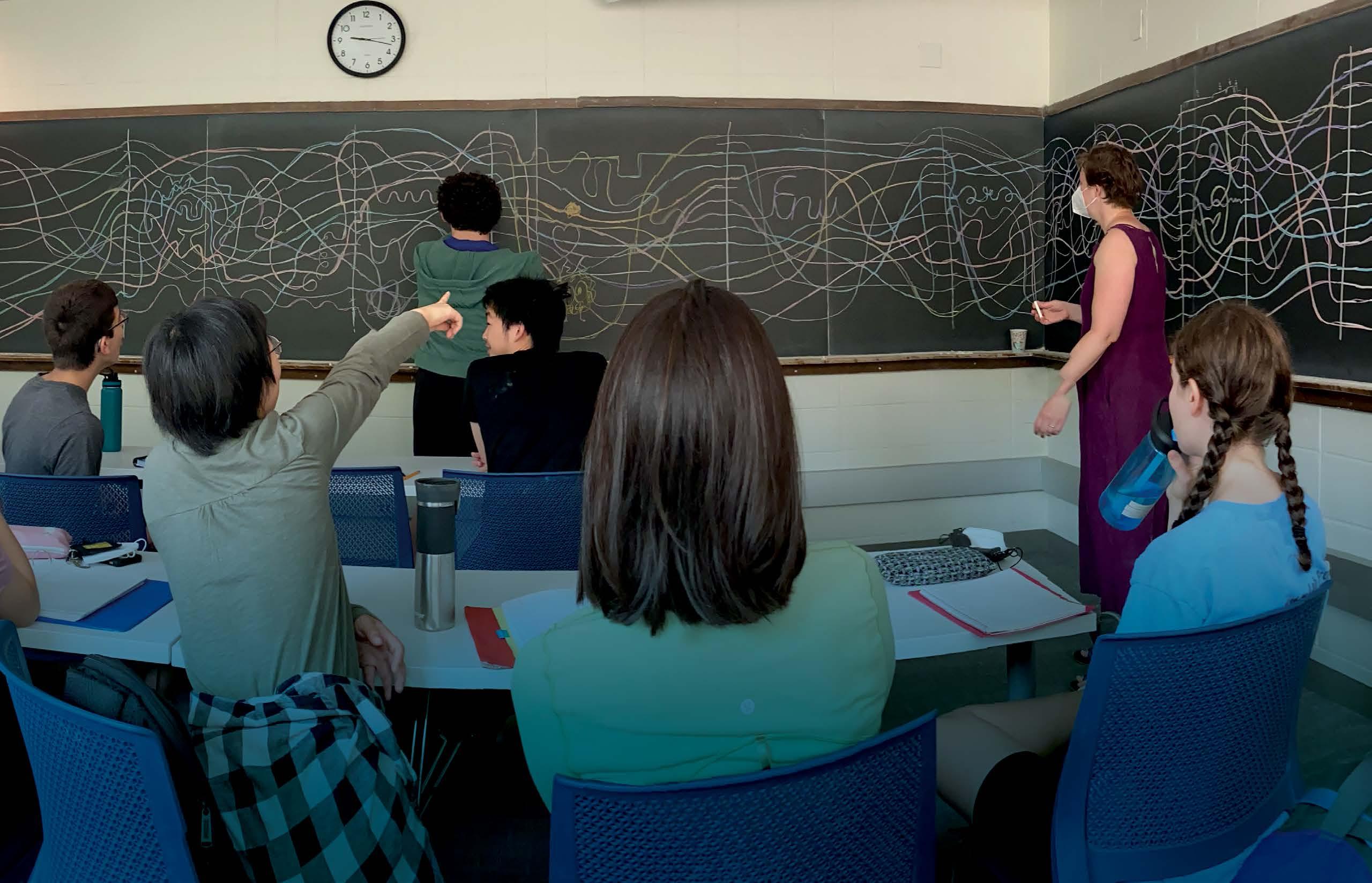 BY NINA LI
Grade 12 student Nina Li's passion for math, nurtured at York House, unfolds in an exploration of her transformative journey through mathematical inquiry, academic pursuits, and the interdisciplinary nature of STEAM (science, technology, engineering, arts and math) education. Nina reflects on the impact of her experiences and sets her sights on a future where mathematical skills converge with societal challenges.
My enduring journey with math and STEAM at York House School commenced in the sixth grade, guided by the enthusiastic Ms. Comeau. She introduced captivating math games and puzzles, transforming my perception of math into something more profound than mere numbers and equations. This led me to explore math further and try for math honours in the eighth grade. Under the mentorship of educators like Ms. Black, Ms. Kerr, and Ms. Chang, my mathematical understanding deepened, laying the foundation for my academic pursuits. My passion for math and STEM was stoked
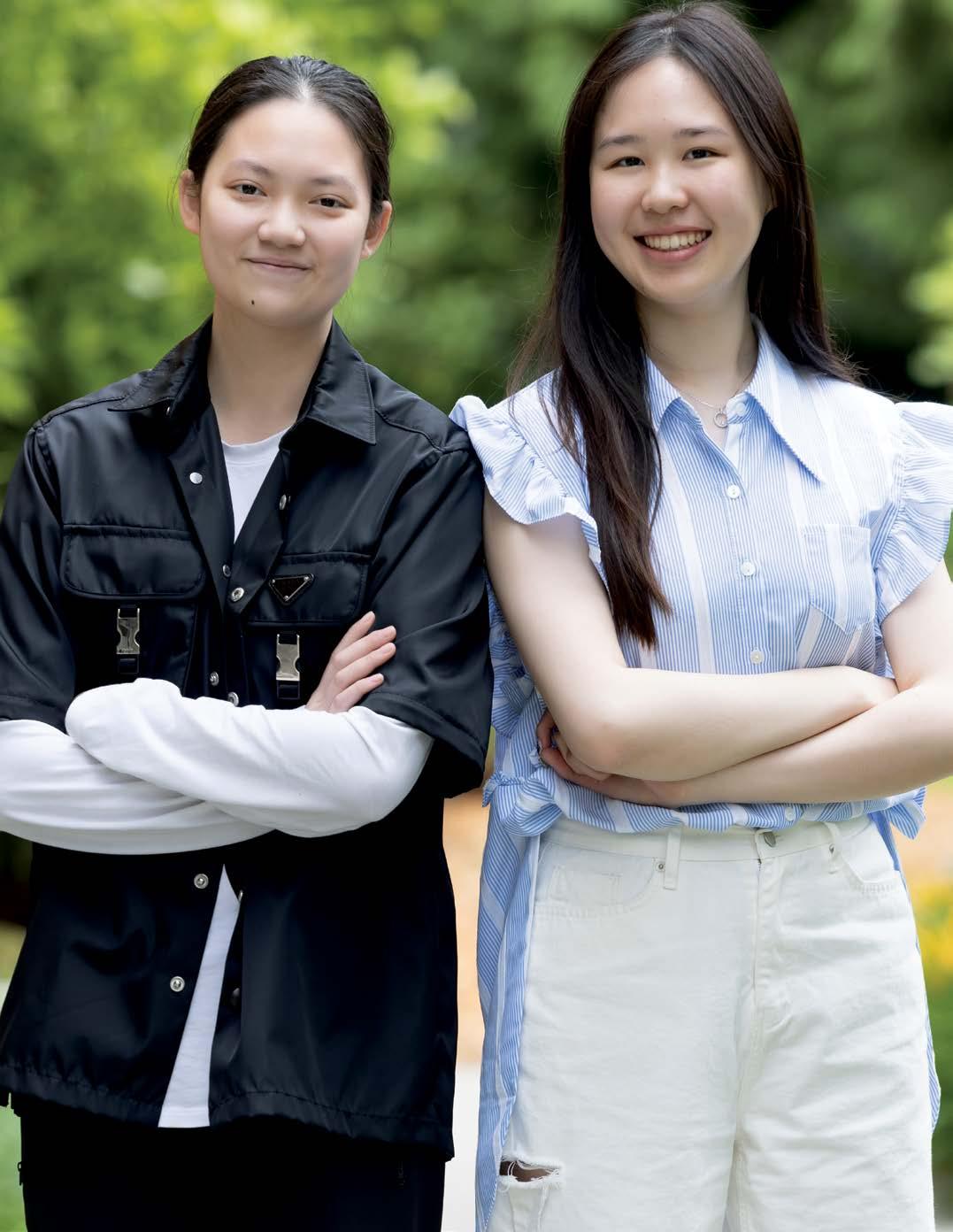
52
Nina’s first MathILy class - delving into math concepts like bijection, injective function, and surjective functions while deciphering note-takers using lines.
FIRST PERSON
Grade 12s Jasmine (left) and Nina (right) gearing up for the Youth Datathon at York House School. Jasmine designed the website for the Datathon as part of her Capstone Project.
by the symbolic thud of Newton's apple, a reminder of the profound influence of mathematical inquiry on scientific breakthroughs. As I advanced to the eleventh grade, I embraced the responsibility of being the Math Head, organizing events such as Pi Week to share my passion with the school community.
Beyond the confines of traditional classrooms, I actively sought additional classes, dedicating twelve hours weekly to prepare for challenging math contests like AMC 8, 10, 12 (American Mathematics Competition) and Gauss. At MIT (Massachusetts Institute of Technology), participating in the AMC competition fueled my competitive spirit and led to an invitation to The Math Prize for Girls competition at MIT. This experience provided an avenue to challenge myself and delve into advanced mathematical concepts. Participating in these contests not only honed my mathematical prowess but also instilled in me a sense of perseverance and resilience in the face of complex challenges.
Enrolling in the MathILy Summer Program at Bryn Mawr College in Pennsylvania was a pivotal decision that exposed me to advanced math concepts, reinforcing the idea that "math is in everything."
This transformative experience broadened my appreciation for interdisciplinary math. The program fueled my curiosity, particularly in combinatorics and Discrete Math. Collaborative problem-solving sessions forged unexpected connections
between math and my hobbies, such as origami, inspired by mathematician Sarah Hart's book, Once Upon a Prime. The active learning approach at MathILy, with its emphasis on collaboration and analytical discourse, resonated with my learning style. It pushed me out of my comfort zone, introducing challenging concepts like bijectivity functions. The "Week of Chaos" (many short classes with topics suggested by students and instructors) intensified my engagement, especially in origametry, revealing the link between my love for origami and complex molecular structures like carbon nanotubes. MathILy solidified my passion for math by intertwining it with my interests, offering a unique exploration of new frontiers.
My commitment to math education and its practical applications found expression in my Capstone project, organizing the first-ever hybrid Canadian Youth Datathon at York House School aimed to immerse high school students in the dynamic world of data science. The project was a testament to my desire to create a unique space for learning, collaboration, and friendly competition while promoting STEM education and inclusivity.
Looking ahead, my post-secondary plans include a double concentration in Applied Mathematics and Sociology. This academic pursuit aligns with my vision of utilizing mathematical methods to address societal challenges, particularly in the field of education. My experiences, such as developing an AI-supported Python learning tool for children with learning difficulties, have fueled my commitment to contribute to pedagogical reform and advocate for inclusive systems.
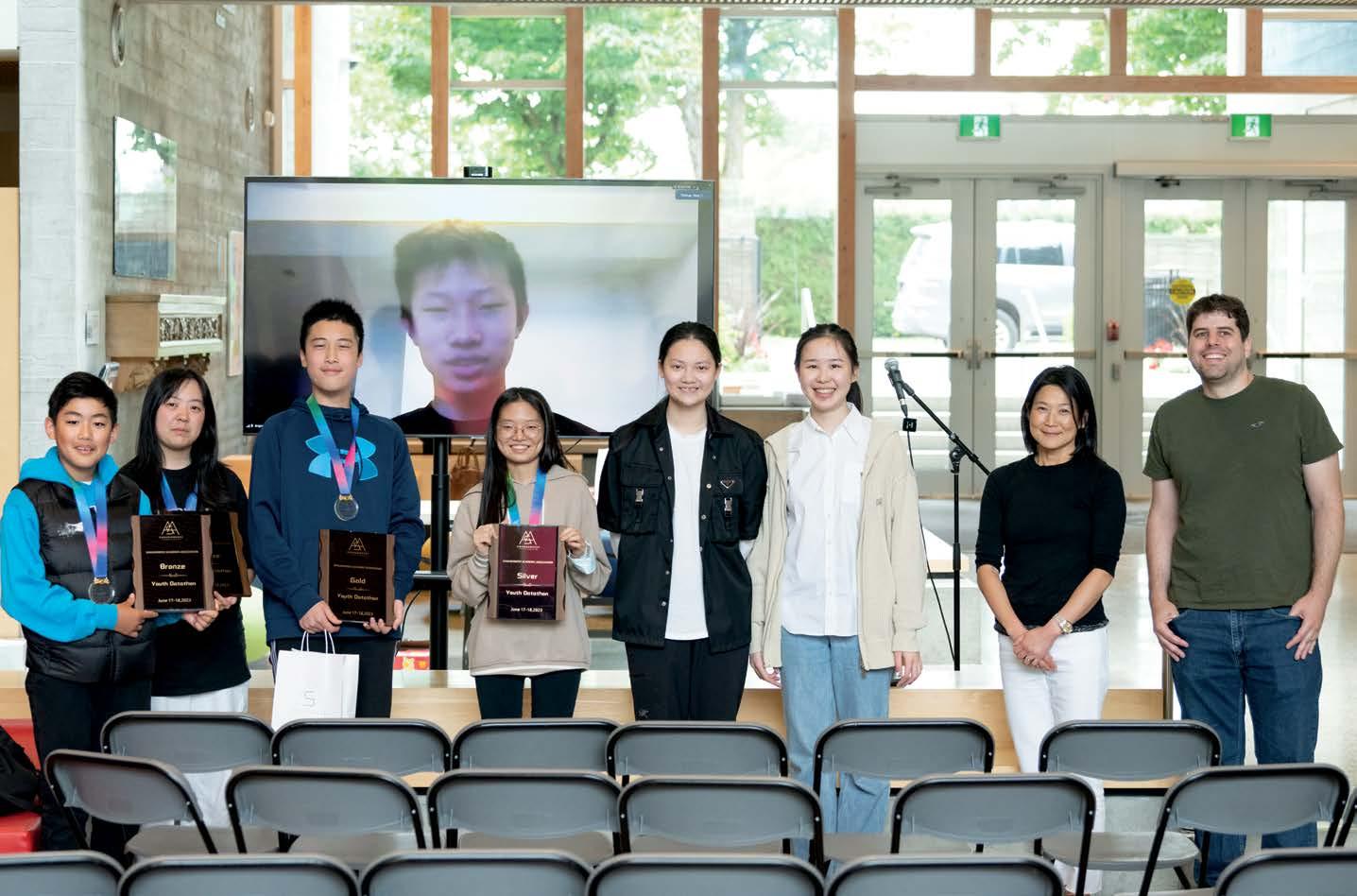
In aspiring to become a quantitative sociologist, I aim to leverage my math skills, including mathematical modeling and quantitative methods, to affect positive change in society. The support and diverse courses provided by York House School have played a pivotal role in preparing me for university and the future. The guidance from counselors, teachers, and staff, coupled with the inspiring stories of successful YHS graduates, instills in me the confidence to navigate the challenges that lie ahead with a sense of purpose and determination.
53
A snapshot of winners and judges at the offline Youth Datathon (L-R): Andrew Dong, Alice Jiang (YHS Grade 11 student), Ray Zhang, Bright Ye, Joyce Huang (YHS Grade 12 student), Jasmine Huang (YHS Grade 12 student), Nina Li (YHS Grade 12 student), YHS teacher Marianne Chang, alongside Rodolfo Lourenzutti, co-director of UBC's Masters of Data Science program.
BUILDING COMMUNITY THROUGH PARENTS' ASSOCIATION EVENTS
The Parents' Association holds events throughout the year to build community between parents, guardians and students and raise much-needed funds for the YHS Tiger Scholarship.

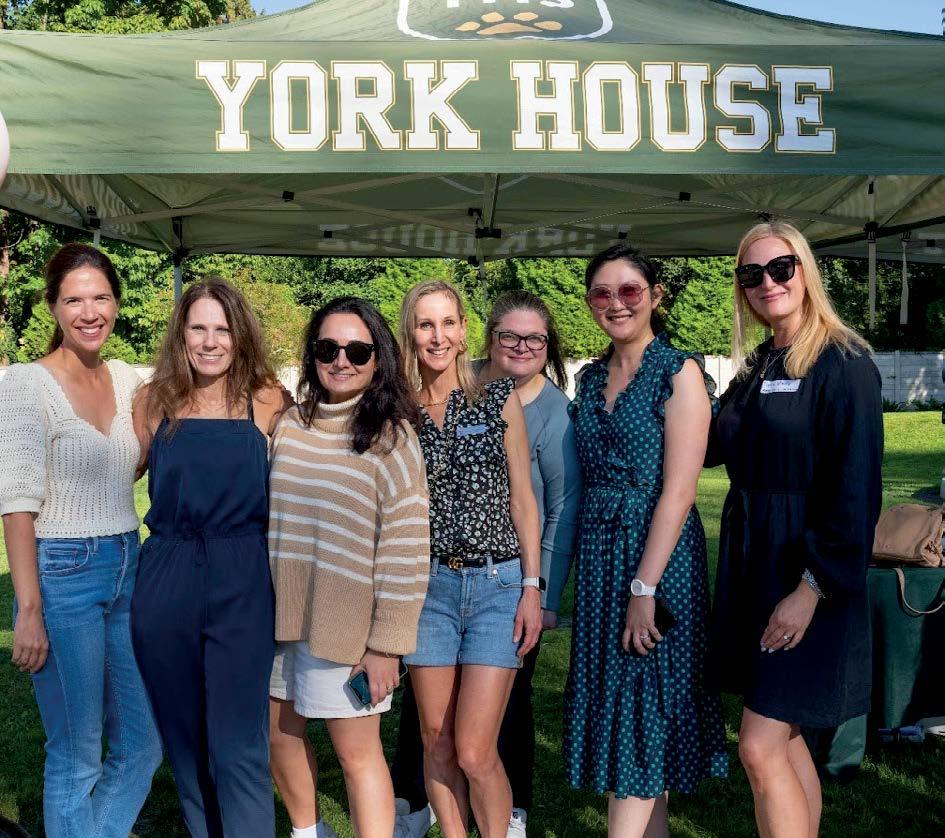

(L-R) Nicole Audy, Lyn
54
Murali Chandrashekaran and Pete MacDougall oversee the grill at the 2023 Welcome Back BBQ
Parents' Association Executive and Class Parent Liaisons (L-R): Lindsay Biggar, Lyn Metcalfe Friesen, Arezou Marzara ‘99, Jenny Kusumoto, Jocelyn McGowan ‘99, Helen Shen and Julie Steele
Students of all ages gleefully purchase items from the Holiday Market booths for their friends and family (above)
(L-R) Carolyn Atkinson, Yuki Pan and Karin HersSchaffner hosted a Holiday Market booth with gifts that give back to the community (right)
Celia Wang serving up food for all
Marlene Burrows and Bobo Bao at the popular stuffie booth (above)
Metcalfe Friesen, Rekha Dave and Jennifer Sirounis
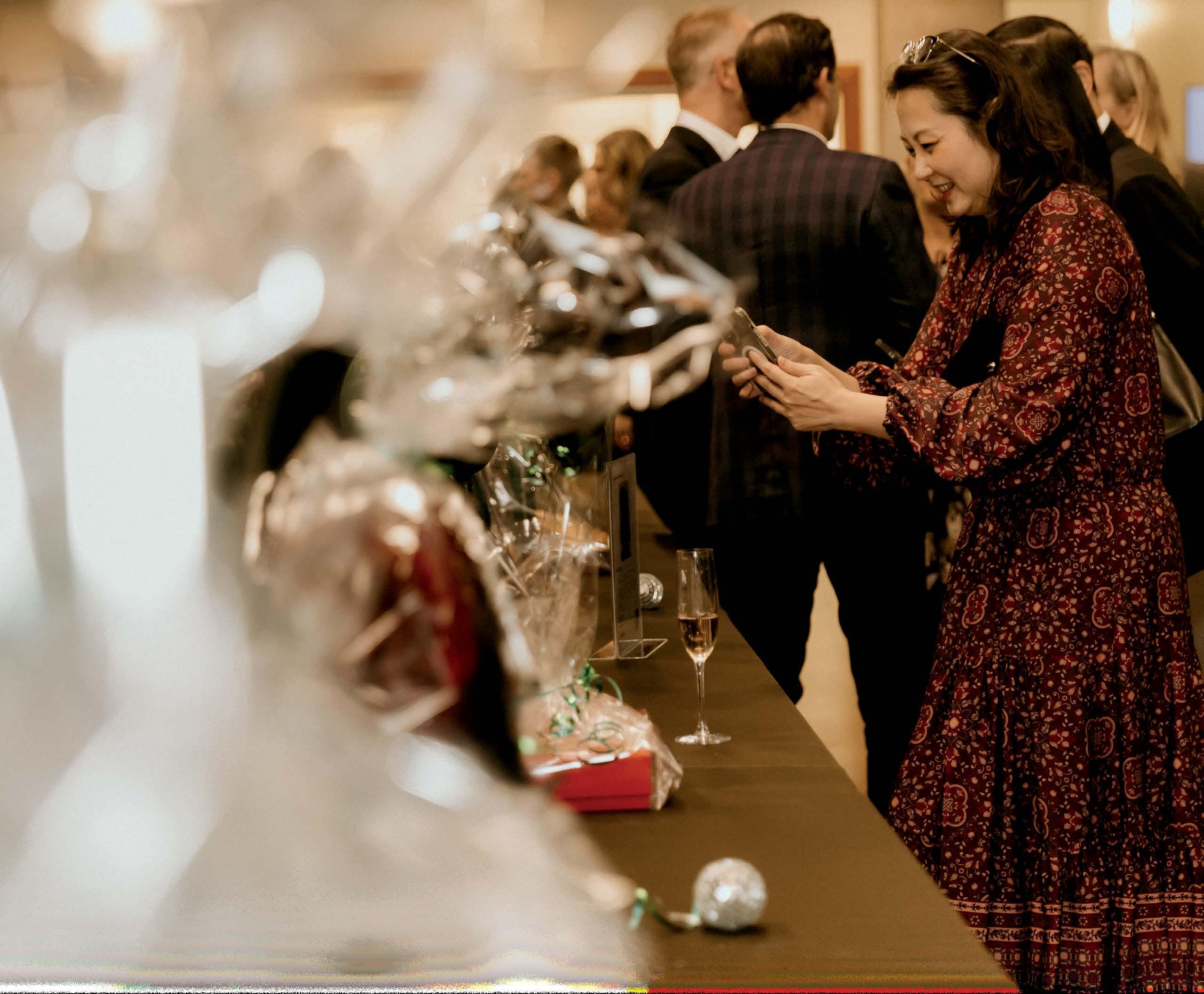

Bid Night Committee members (L-R): Fanny Tsang, Asha Hayer, Ishita Hayer '98, Harv Phandal-Dhanda, Michelle Hallaran and Dr. Behnaz Alijani.
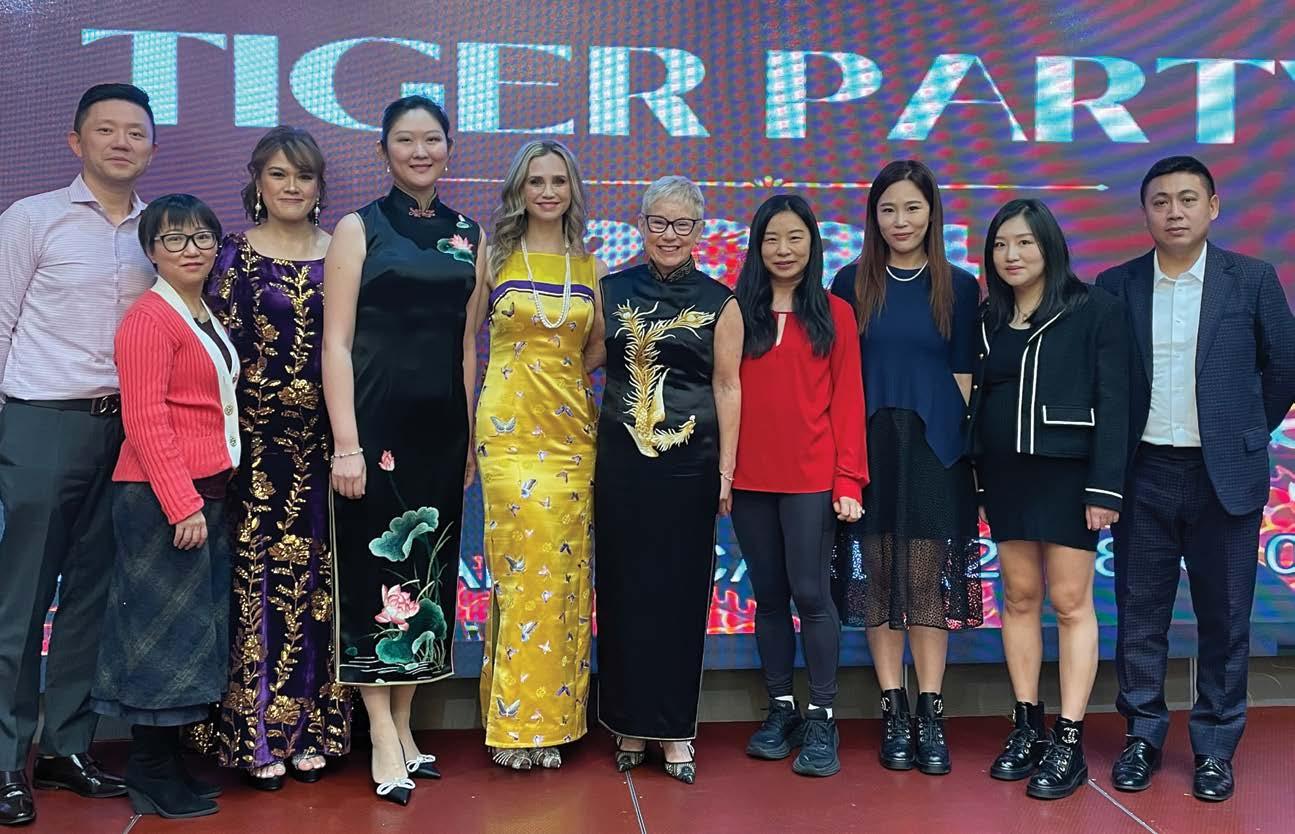
On February 22, 2024, our community celebrated the Lunar New Year at the annual Tiger Party held at the Fortune Terrace Restaurant. Funds raised at the event support the Parents' Association Tiger Scholarship. Tiger Party Team (L-R): David Zhou, Olivia Tan, Monica Li, Helen Shen, Fiona Weed, Deryn Lavell, Monica Zhou, Ling Sun, Vera Gong and Jason Yang.
55
Harv Phandal-Dhanda and Dhar Dhanda enjoying Bid Night
Our Bid Night MC was Jonathan McDonald, former YHS parent and board member
(L-R) Alex Weed, Dr. Alex Seal and Kam Athwal enjoy Bid Night
ALUM VISITS AND REUNIONS
October 2023 (above)
Toronto Happy Hour reception, January 2024 (right)
Toronto grads joined for lunch, January 2024 (below)
56
Yorkies at UBC attended a lunch in
Alums gathered in Victoria for dinner in November 2023
Yorkies in London, Ontario Dinner November 2023 (left)
Yorkies in London, UK gathering, February 2024 (below)
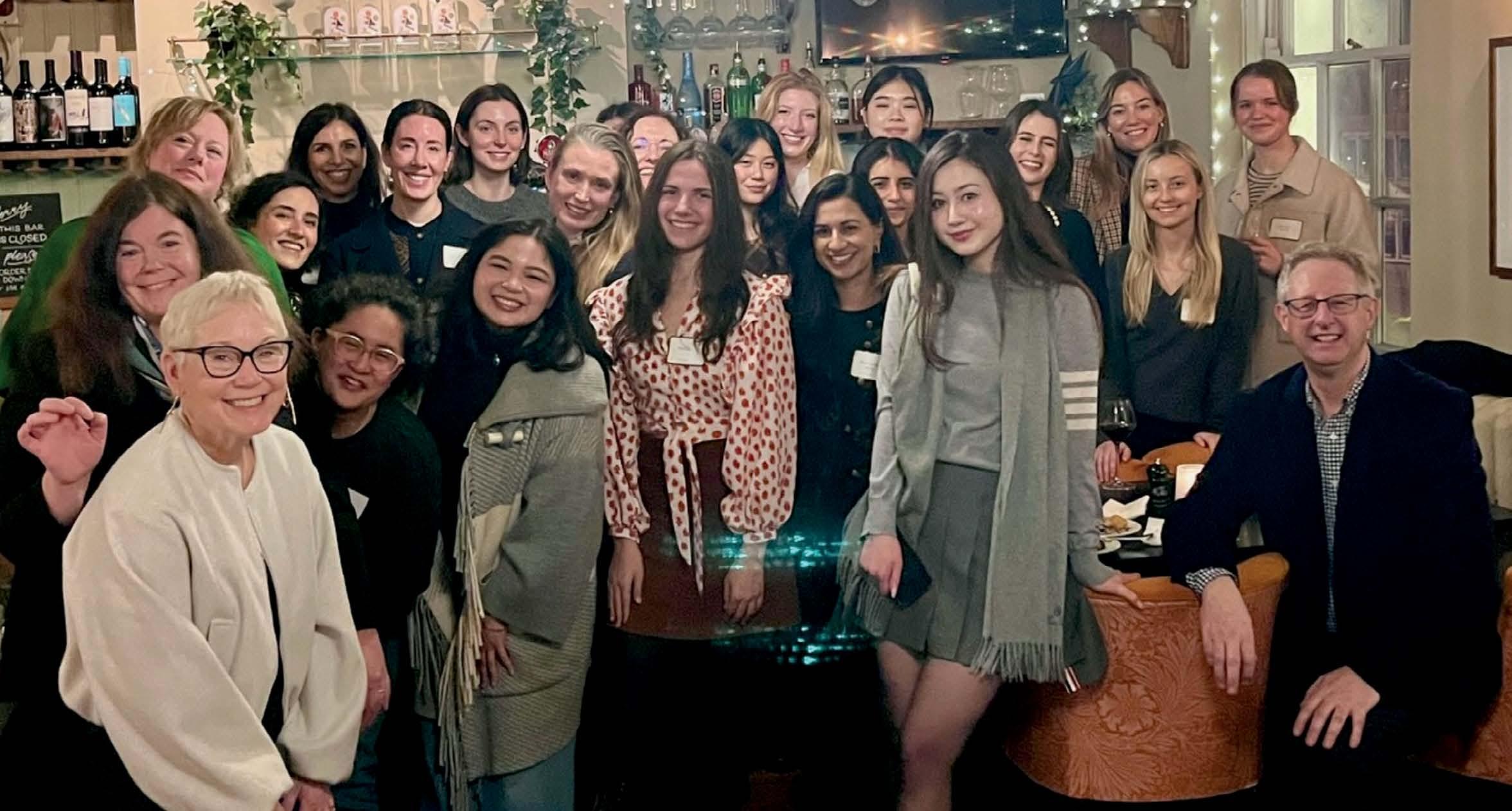
57
Montreal grads joined for brunch, January 2024
Yorkies in Montreal Dinner, January 2024
Remembering
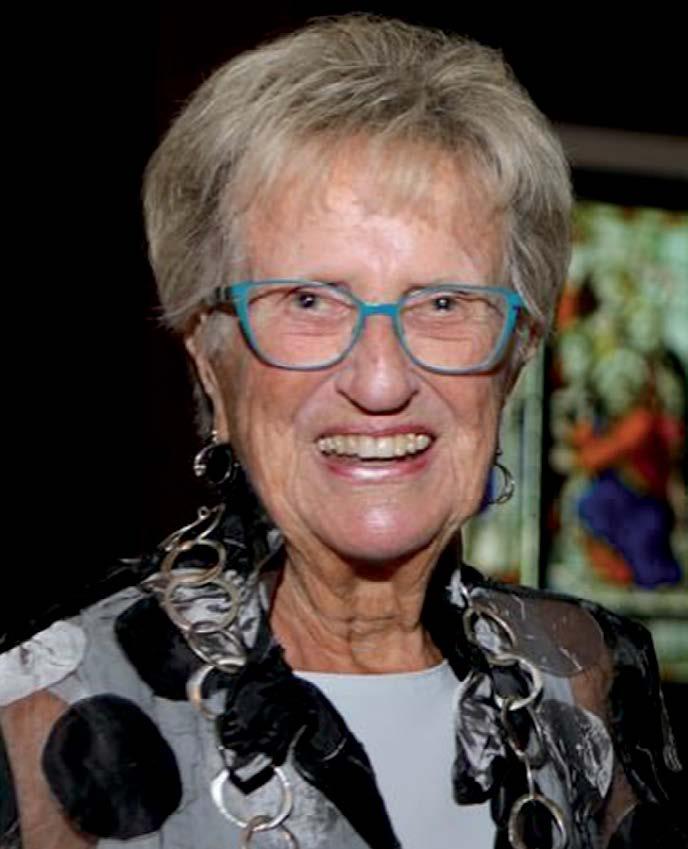
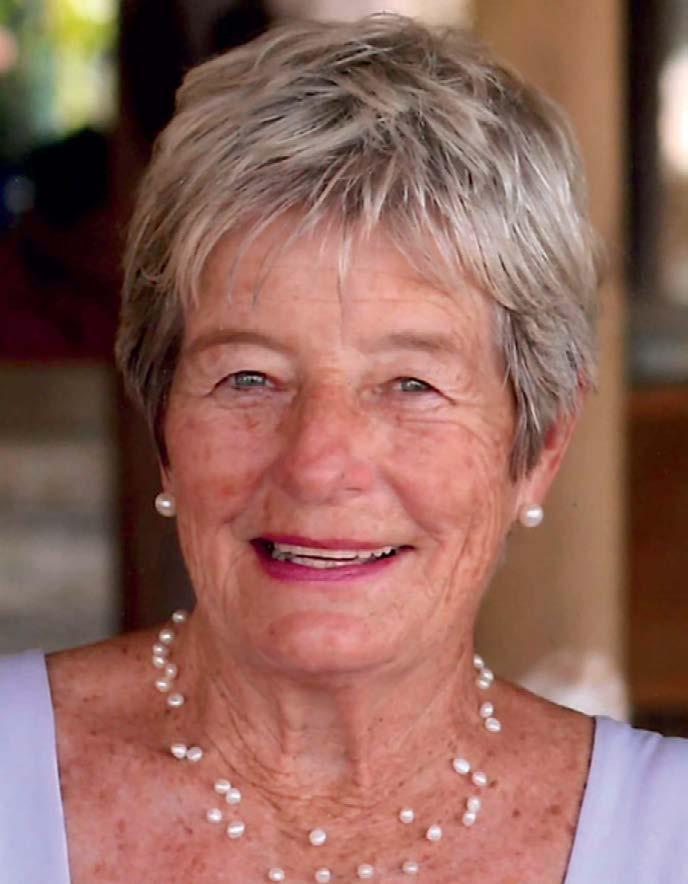
ELSPETH (KER) HELMCKEN ’46
Elspeth Gail Helmcken died peacefully at home on November 6, 2023, with family by her side. She is survived by her husband James (after 71 years of marriage), their children Gail Helmcken (Terry Morrison), Douglas Helmcken (Tannis), Lisa Lockerby (Dave), and Amanda Helmcken (Peter Pillman); grandchildren Spencer (Anna), Christopher (Kristen), Will (Genie), James (Kailey), Anna (Andrew), and Sarah; and great-grandchildren Hayden, Riley, Henry and Sophie. Predeceased by her brother David Nation Ker. Elspeth attended Norfolk House School, the Banff Mountain School, and York House School. She completed her final year of school at Branksome Hall in Toronto. Even with a busy family life she found time to be active in her community and volunteered for the Museum of Anthropology, Friends of the Garden (FOGS), the Garden Club of Vancouver, St Mary's Church Chancel Guild and Music in the Morning.
MARY-ANNE (JOHNSTONE) STOWE ’ 51
Mary-Anne Hope Stowe was an extraordinary woman who lived life to the fullest and gave so much of herself to her family and friends. She passed away after a brief illness on July 18th, 2023 one month shy of her 90th birthday. She was predeceased by her husband David, who died September 7, 2009. She leaves behind their children Lesley (Geoffrey Scott), Craig (Nadia Ladisernia) and Marianne (Kyle Balagno), her brother Bruce Johnstone, and grand-children Mackenzie, Alexa, Sebastian, Douglas and Gillian, along with many nieces and nephews.
Born in Vancouver on August 23, 1933, Mary-Anne graduated from York House School and UBC Nursing. She worked as a nurse in the OR at Vancouver General Hospital. Then, for two decades, she worked in the special products distribution center at the BC Children's Hospital. She was a committed volunteer for the Junior League, the Family Christmas Ball, the auxiliary to the BC Women's Hospital + Health Centre. She also served on the board of the BC Sports Hall of Fame.
58
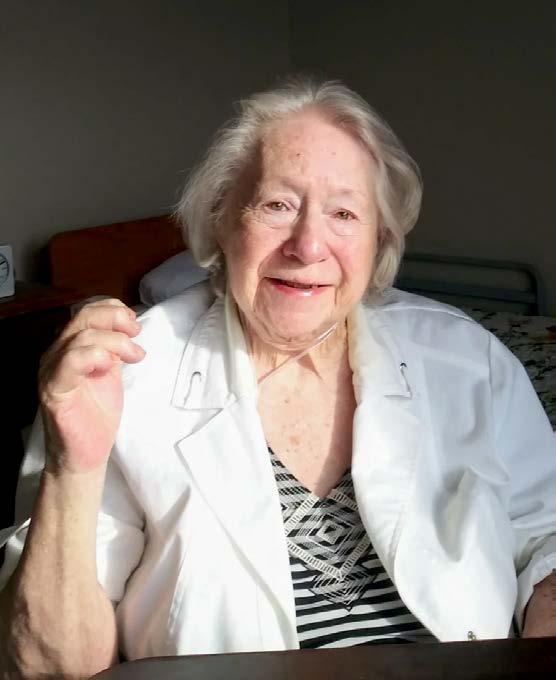
SYBIL (MACKENZIE) COOKE ’ 50
Sybil Cooke passed away peacefully on October 16th, 2023 in Vancouver, BC. Sybil attended high school at York House and subsequently completed secretarial training. In 1953, Sybil married Gordon Jones and together they traveled and enjoyed adventures in various countries including India, Kenya and Malaysia. After living in Edmonton, Alberta for more than a decade, the couple moved to the West Coast, following Gordon’s retirement. In Victoria, Sybil worked at the Kensington Retirement Residence for a number of years.
Following the death of her first husband, Gordon Jones, Sybil met and married Bruce Cooke in 1994. During her second marriage, Sybil again traveled extensively and enjoyed living in Kelowna (with Bruce’s family), Duncan, and Victoria, BC. Following Bruce’s death, Sybil moved to Vancouver to be closer to her daughter, Kathy and other family members. She will be fondly remembered by her daughter, her granddaughter, Saguna, her cousin, Christine, and other family members and friends.
ELIZABETH (LOCKE) MORIN ’ 39
Elizabeth (Locke) Morin died peacefully, on May 12, 2023, in Vancouver, at the age of 102. She was predeceased by her husband, Dr. Gaston Morin; by her brother, Hon. Charles C. Locke of Vancouver; and her nephew, Hugh Macaulay. She is survived by ten nieces and nephews, and many great-nieces and great-nephews. Elizabeth was born in Winnipeg in 1921. The family moved to Vancouver in the late 1920s, where she attended York House School and then St. Michael's Boarding School for Girls in Vernon. Elizabeth was a gifted artist, and after high school she attended Vancouver School of Decorative and Applied Arts before attending UBC. Elizabeth obtained her master's degree in social work from McGill, and then pursued further studies at Yale University. Elizabeth had a strong calling to help people, and she enjoyed her career working for the Ottawa Children's Aid Society, at the Ottawa Family Service Centre, and at the Ottawa General Hospital psychiatric department. And, as the executive director of the Ottawa branch of the Canadian Mental Health Association, she found scope for her interest in developing new programs.
59
ALICE (LOCKE) MACAULAY ’46
Alice (Locke) Macauley died on January 7, 2024. She is survived by her husband, James A. Macaulay, QC; and their children, Mary, Anne '80, Thomas and Sarah '89; grandchildren, Lachlan, Georgia, Luca and Oscar; and many beloved nieces and nephews. She was predeceased by her son, Hugh Macaulay; and by her brother, Hon. Charles C. Locke; and sister, Elizabeth Morin '39. Alice attended York House School, and then UBC for her first year of university. The family moved to Ottawa in the late 1940s, and Alice transferred to McGill where she completed a general arts degree. She then attended Katherine Gibbs College in Boston, and returned to work as a secretary in Montreal, and then in Ottawa. She spoke most fondly of her years working for Dr. Norman McKenzie, the head of the National Research Council in Ottawa. While at McGill, Alice formed many friendships. Among her new friends was fellow Ottawa girl, Mary Macaulay, sister of James, who Alice would marry in 1958. After their marriage, Alice and James moved to Vancouver where James was working as a young lawyer, and son, Hugh, was born in 1959, the first of five children. During her married life, Alice was an engaged volunteer in many organizations, including the Community Arts Council of Vancouver. She was an early supporter and member of the board of directors of VanDusen Botanical Garden and of Roedde House Museum.
STEPHANIE (SOUTHAM) CARLSON ‘62
Stephanie (Southam) Carlson, 2008 YHS Alum Special Achiever, died quietly and peacefully in her home in Qualicum Beach, BC. She was surrounded by the love of her daughters and dear friends, who are all so grateful to have spent time with her before she left. She is survived by her ‘darling girlies’ Vanessa, Jessie (Ben Yardley), Nancy (Will Jones) and her adored grandchildren; Lily Watters, Lucy ‘28, Lila ‘32, and Townes Yardley; Cooper and Woodrow Jones, as well as her partner of several happy decades, Doug Gordon. She is mourned by her countless friends and extended family members, especially her dear sister Louie ‘61. Stephanie was born to Jean and Gordon Southam on February 12th, 1945. The third of seven children, she grew up in a large and happy home surrounded by invaluable antiques, an enviable art collection, countless cocktail parties and black-tie dinners. The happiest times in her youth were spent at the barn, where she excelled as an accomplished equestrian, winning so many trophies and ribbons that she needed a separate stall to store them all.
60
Imagine a future that doesn't exist. Yet. See our new plan to redefine education at spark.yorkhouse.ca
4176 Alexandra Street Vancouver, BC V6J 2V6 yorkhouse.ca
instagram.com/yorkhousevan
facebook.com/yorkhouseschool
Empowering York House Students to Reshape the Future See our new plan to redefine education at spark.yorkhouse.ca
linkedin.com/school/york-house-school