YOGA
For o er years, Hot Yo a You in Roc ille Centre, NY has been a place where transformation happens from the inside out. Since , the studio has welcomed e eryone from first-time yo is to seasoned practitioners, fosterin a community that continues to e ol e with time


Con eniently located just two bloc s from the Lon Island Railroad station, only aminute ride into Penn Station, NYC, with a bus stop at the corner and just minutes from JFK International Airport, the studio is easily accessible to students from all o er.
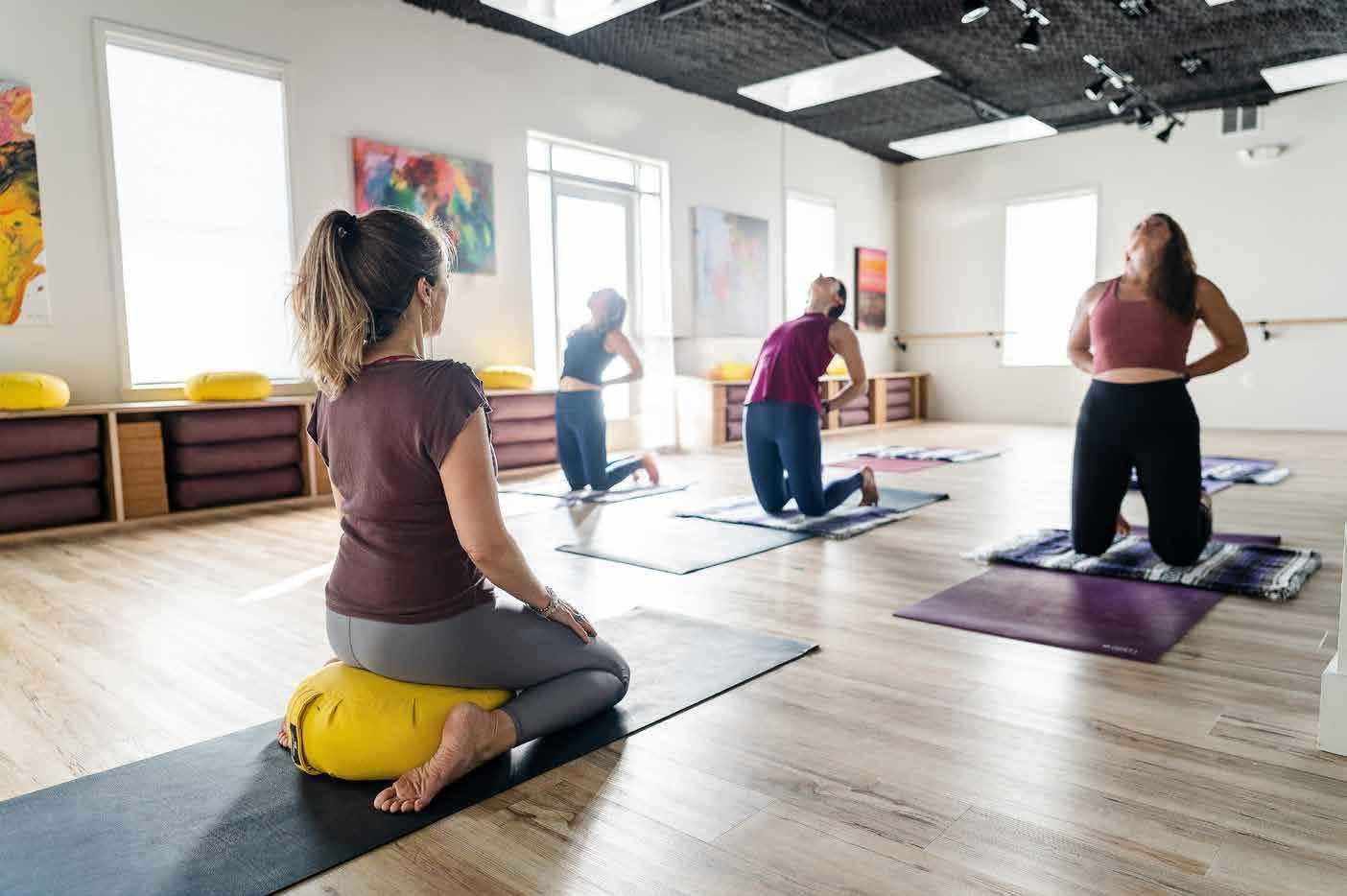
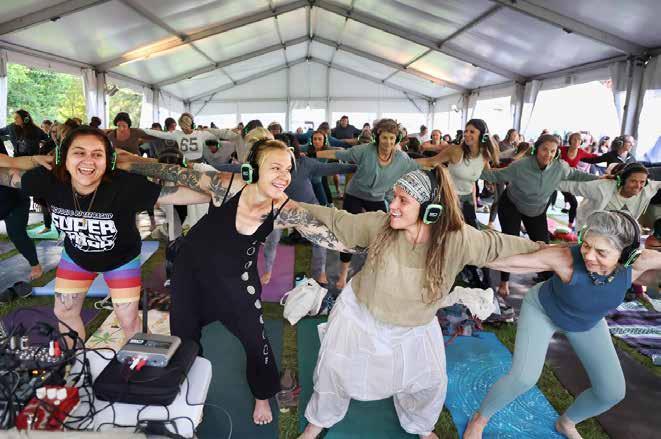
With two practice spaces in one location, a large heated st dio and a smaller second room, Hot Yoga Yo is one of the largest hot yoga st dios on Long Island Offering o er classes each week, the sched le incl des Hot 26 & 2 (formerly known as Bikram Yoga), Heated Vinyasa, Yin Yoga, Yoga Sc lpt, So nd Meditation, Inferno Hot Pilates, Mat Pilates, Hot Pilates Le el 2, Yogalates, and more.
Many of today’s instr ctors began as st dents in the work-st dy program, checking in clients at the desk while deepening their practice e ent ally becoming teachers in yoga
Visit BikramYogaRVC.com or scan the QR code to explore the sched le, o erin s, and more
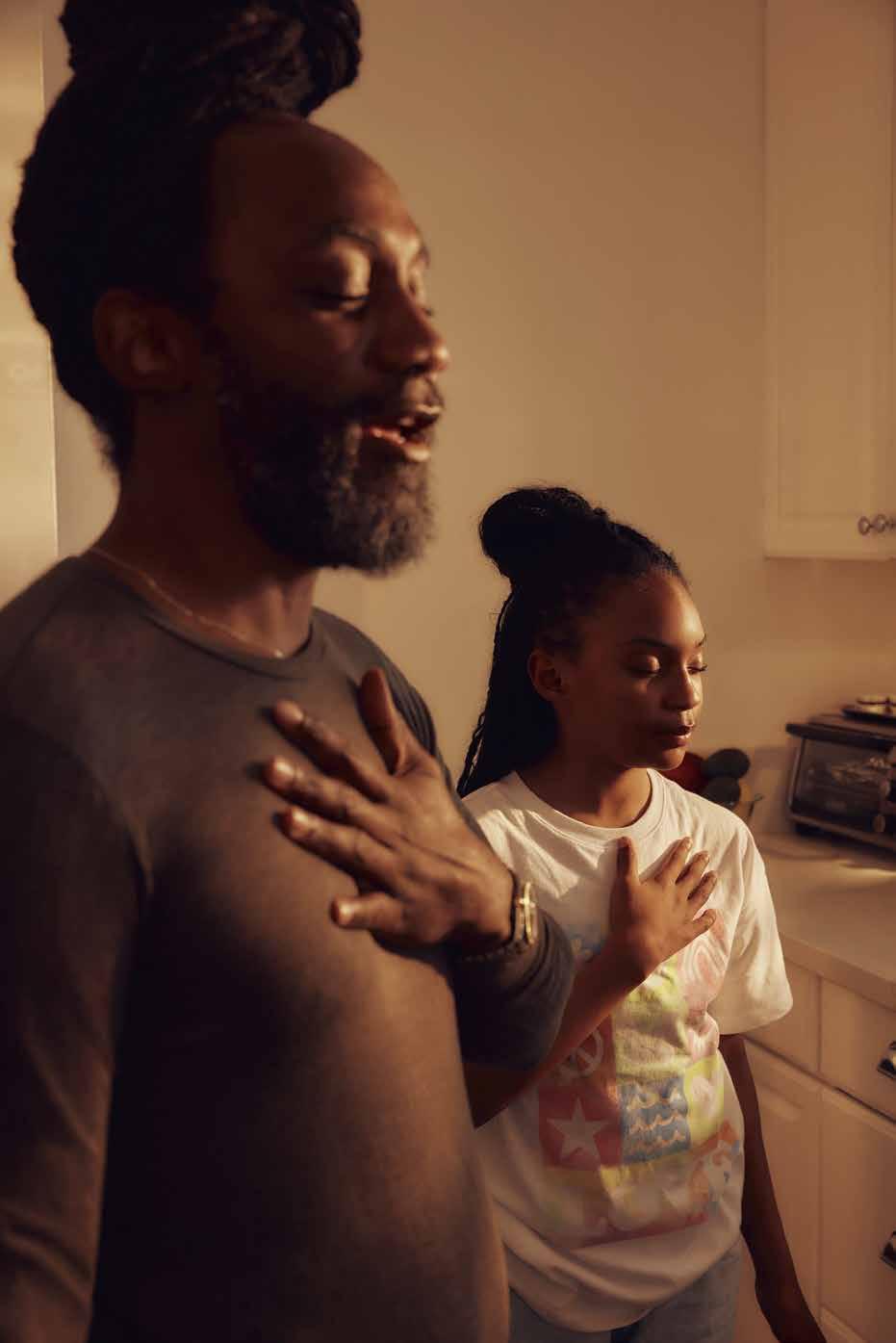
Current owner Karina Blackstone first walked the doors as a student decades ago She maintained steady practice for years and even practiced the morning before giving birth to her daughter. Today, that same daughter, Lily Blackstone, teaches at the studio, leading Inferno Hot Pilates, mat Pilates, and Yoga Sculpt. Though Karina has only owned the studio for the past four years, it’s a fullcircle journey that still ama es her and one that speaks to the heart of what community really means Some of the very students who practiced alongside Karina during her pregnancy now take classes taught by Lily That’s something truly rare and deeply special
In , Hot Yoga You e panded its offerings beyond Long Island, launching its first international retreat in El

SPECIAL GUEST EDITOR MC YOGI
FOUNDER & EDITOR IN CHIEF
Iana Velez
FEATURE EDITOR
Stephanie Jade Wong
SPECIAL GUEST EDITOR
Faith Hunter
SPECIAL GUEST EDITOR
Natalia Tabilo
BEAUTY & WELLNESS EDITOR
LouLou Piscatore
SPECIAL GUEST EDITOR
Jivana Heyman
SPECIAL GUEST EDITOR
Tejal Patel
REGIONAL DIRECTOR
Melissa Honkanen
PARTNERSHIPS DIRECTOR
Ethel Kambourian
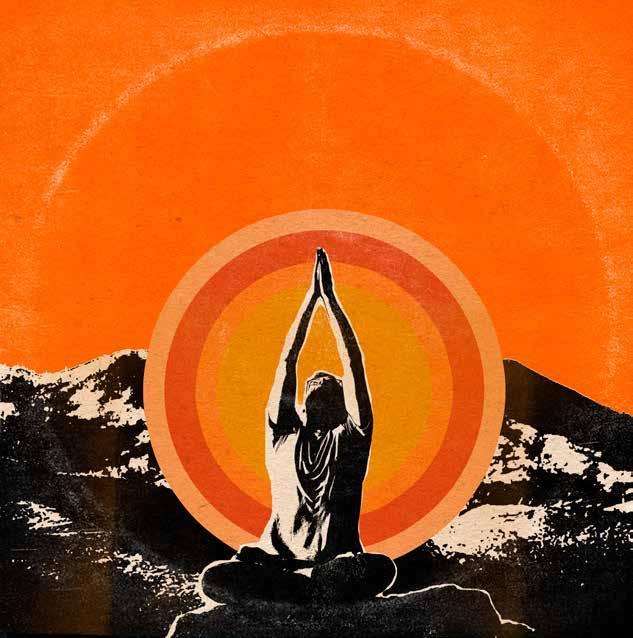
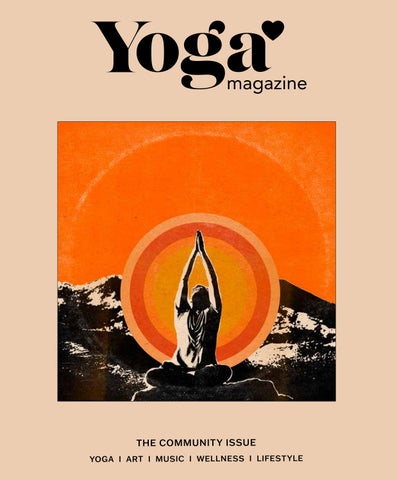
On Our Cover: Artwork by MC YOGI Usage, reproduction, or altering of artwork is not permitted without permission from the artist.
FOLLOW US yogalovemagazine.com @yogalove_magazine
CONNECT WITH US info@yogalovemagazine.com
05. THE COMMUNITY

4. PARTNER DIRECTORY
Where to find your free copy of Yoga Love Magazine
14. GUEST EDITORS
MC YOGI, Jivana Heyman, Natalia Tabilo, Tejal Patel and Faith Hunter join us as Guest Editors
42 50 56 35 14
35. COMMUNITY SPOTLIGHT: MIAMI
Kate Durand founder of YO BK spotlights her favorite Miami based teachers
40. DHARMA MITTRA INTERVIEW
Joneil Adriano interviews the legendary Sri Dharma Mittra
42. COMMUNITY SPOTLIGHT: LOS ANGELES
Natalie Valle Honaker, founder of Latinas Who Meditate spotlights her favorite LA yogis
48. BRYAN KEST INTERVIEW
Lauren Cap interviews Bryan Kest
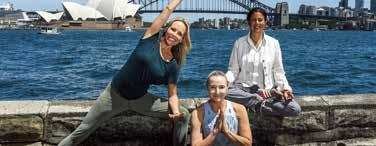
50. COMMUNITY SPOTLIGHT: SYDNEY
Janie Larmour founder of Yoga Day Festival spotlights her favorite local yogis
56. COMMUNITY SPOTLIGHT: MARYLAND
Megan Twining founder of Sonder yoga studio spotlights her favorite local yogis
66. YOU GOOD?
Interview with Etienne Maurice, founder of WalkGood in LA
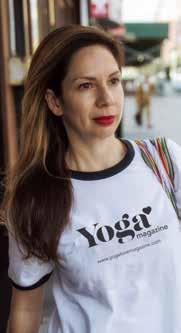
Welcome to our fifth print issue of Yoga Love Magazine! The theme of this issue is Community and for this issue we did something we’ve never done before: invited some of our favorite people from our community to join as special guest editors. Each guest editor was given their own section to share their story or celebrate the people and stories in their community. These guest editors helped shape the vision, look and content of this issue.
Our first guest editor MC YOGI, shares a personal essay accompanied by his own original collage artwork as well as the beautiful art featured on our cover. Faith Hunter’s poetry and meditations invite us to observe the transitions in our lives. Tejal Patel joins us with an inspiring autobiographical essay on the power of activism and community. Jivana Heyman guides us on the importance of our sanghas, and celebrates his community with us. In her groundbreaking piece spotlighting inspiring teachers in her community, Natalia Tabilo shares her piece in both English and translated into Spanish.
We are so grateful to these amazing people, our team, and every single studio partner, small business owner, festival founder, and you. This is the bedrock of our Yoga Love Magazine community. We thank you, and we love you.
Iana Velez
IANA VELEZ FOUNDER & EDITOR IN CHIEF
BLESSINGS BALANCE
BREATH YOGA
3961 E ast Chandler Blvd. Suite 111, PMB #183 Phoenix, AZ 85048 blessingsbalancebreathyoga.com
California
MOUNT MADONNA CENTER
445 Summit Rd. Watsonville, CA 95076 mountmadonna.org
YOGA ROOM TAHOE
475 North Lake Blvd. Suite 251 Tahoe City, CA 96145 yogaroomtahoe.com
KEY WEST YOGA SANCTUARY
612 Fleming St. Key West, FL 33040 keywestyogasanctuary.com
THE YOGA HOUSE BRANDON 505 Eichenfeld Drive Suite 106 Brandon, FL 33511 TheYogaHouseBrandon.com
YO BK
2335 N. Miami Ave. Miami, FL 33127 yo-bk.com
THE YOGA HIVE
Toco Hills Shopping Plaza 2867-C North Druid Hills Rd. NE Atlanta, GA 30329 theyogahiveatlanta.com
SEWALL HOUSE
1027 Crystal Rd. PO Box 254
Island Falls, ME 04747 sewallhouse.com
SONDER STUDIOS
2025 Chaneyville Rd. Owings, MD 20736 sonderstudios.us
DHARAMSALA TC 869 Robinwood Ct. Traverse City, MI 49686 dharamsalatc.com
DHARAMSALA TC 319 Front St. Traverse City, MI 49686 dharamsalatc.com
NOTICE WELLNESS
25360 Smiley Rd. Nisswa, MN 56468 noticewellness.com
HONEST YOGA
3900 Vinewood Lane N. Suite 21 Plymouth, MN 55441 thehonestyoga.com
SHANTI YOGA CENTER
2820 2nd St. S. Suite 150 St. Cloud, MN 56301 shantiyoga.center
MOUNTAIN KULA YOGA
3358 White Mountain Hwy. North Conway, NH 03860 mountainkulayoga.com
UNITY HOT YOGA
15 Ermer Rd., Unit 104 Salem, NH 03079 unityhotyogallc.com
LEELA FLOW STUDIO
400 38th St. Suite #405 Union City, NJ 07087 leelaflowstudio.com
SOL SPIRIT YOGA & WELLNESS
523 Palisade Ave. Jersey City, NJ 07307 solspiritstudios.com
AURAFITNESS 1337 Gusdorf Rd. Suite S Taos, NM 87571 aurafitnesstaos.com
ABSOLUTE YOGA STUDIO
1 Guilles Lane Woodbury, NY 11797 absoluteyogastudio.com
BROOKLYN YOGA PROJECT
185 Sackett St. Brooklyn, NY 11231 brooklynyogaproject.com
FORM + FLOW
27-05 41st Ave. Com - 3 Long Island City, NY 11101 formandflow.co
FORM + FLOW 5 - 18 46th Ave. Long Island City, NY 11101 formandflow.co
HOT YOGA
ROCKAWAY BEACH
181 Beach 116th St. Fl. 2 Rockaway Park, NY 11694 hotyogarockawaybeach.com
HOT YOGA 4 YOU
ROCKVILLE CENTRE 274 Merrick Rd. Fl. 2 Rockville Centre, NY 11570 bikramyogarvc.com
KARMA KIDS YOGA Headquarters: 16 Madison Square West 12th Fl. New York, NY 10010 karmakidsyoga.com
LIVING YOGA
108-01 Queens Blvd. Suite 201 Forest Hills, NY 11375 mylivingyoga.com
NOIR YOGA
109 Ralph Ave. Brooklyn, NY 11221 noiryogabk.com
•OFFER•WHAT•YOU
CAN• YOGA• 2744 Broadway Studio South New York, NY 10025 @offerwhatyoucanyoga
SALTARA HEALING 17 River St. Suite 9 Warwick, NY 10990 saltarahealing.com
YO BK - Greenpoint
607 Manhattan Ave. Brooklyn, NY 11222 yo-bk.com
YO BK - Williamsburg
20 Broadway #108 Brooklyn, NY 11249 yo-bk.com
YOGA AGORA
33-02 Broadway Astoria, NY 11106 yogaagora.com
YOGA IN THE ADIRONDACKS 2 Coulter Rd. Bakers Mills, NY 12811 yogaintheadirondacks.com
YOGA FARM ITHACA 129 West Falls St. Ithaca, NY 14852 yogafarm.us
YOGA MANDALI
454 Broadway Fl. 2 Saratoga Springs, NY 12866 yogamandali.com
BREATHING ROOM COLLECTIVE
5291 NE Elam Young Parkway #130 Hillsboro, OR 97124 breathingroomcollective.com
THE LOVELY LITTLE LOTUS 664 Yorkshire Drive Breinigsville, PA 18031 lovelylittlelotus.com
SŌL YOGA COLLECTIVE 412 Oshkosh Street Suite 3 Rapid City, SD 57701 solyogacollective.com
Virginia
UTTARA YOGA STUDIO
401 Highland Ave. SE Roanoke, VA 24013 uttarayogastudio.com
Wisconsin
YOGA ON THE LAKE 725B Woodlake Rd. Kohler, WI 53044 yogaonthelake.com
Sedona Yoga Festival sedonayogafestival.com Kentucky Yoga Festival kyyogafest.com Berkshire Yoga Festival berkshireyogafestival.com
Day of Yoga Hoboken idoy-hoboken.com Kula Yoga Fest kulayogafest.com
State Yoga Festival freestateofmindsupyoga.com
Covers
In New York City where the price of yoga classes can soar up to $50, Max Kennedy is making sure that anyone and everyone has access to yoga by offering pay what you can yoga classes. You can find Max teaching twice a week in a studio space he rents on the Upper West Side.
Share your yoga journey with us.
As a lifelong New Yorker, it wasn’t until I was well into my 30s that I was first introduced to this practice. Someone I adored, adored me enough to go out on a limb and invited me to take a class alongside them. And voila, that was that! I was hooked!
When I decided to take the plunge and do a teacher training in the summer of 2018, I had no intention of actually teaching. Like many, my sole intention in enrolling in a training was to deepen my practice, nothing more. But at some point I discovered that in order to receive my certification, I was required to teach at least one 60 minute class.
The moment I learned that I could use my voice, that people could listen with their hearts and minds, I was imbued with an undeniable sense of clarity and commitment. Rather instantaneously it became clear to me, I’d commit myself to opening as many doors for people to make their way through, by way of their own self-directed evolution.
I knew right then and there, this is what I will always do. That *this* is all I would ever want to do. To create some semblance of beauty, to endeavor to end some semblance of suffering and to help people help themselves. I haven’t looked back since.
What inspired you to offer “Pay What You Can” yoga?
Prior to the pandemic, I exclusively taught at a donation-based studio. In 2020 this studio had to shutter all its locations overnight which was a source of immediate devastation for countless people. There was a huge void that was created when this pay-what-you-can model of practice vanished.
“It’s my hope that the future of yoga has inclusivity and accessibility at its nucleus. It’s my hope to be amongst those who help normalize these tenets. That in no uncertain terms, access to wellness modalities must be viewed as being a right — not as a luxury.”
Once again, clarity and commitment entered the equation. I knew I had to do everything I could to once again foster community — to provide access to a practice that didn’t hinge on one’s financial means. To do it the right way. That is how •Offer•What•You•Can•Yoga• came to be.
What is your hope for the future of yoga?
The impetus for launching •Offer•What•You•Can•Yoga• was to simply provide possibility. For people to know it’s possible to have a practice no matter their experience, their age, or their income. That having a fulfilling practice isn’t predicated on their body type, nor their physical abilities — but rather the contents of their heart.
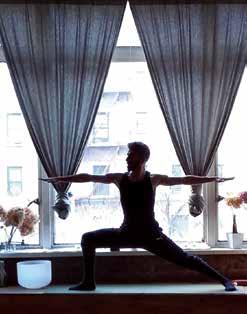
It’s my hope that the future of yoga has inclusivity and accessibility at its nucleus. It’s my hope to be amongst those who help normalize these tenets. That in no uncertain terms, access to wellness modalities must be viewed as being a right — not as a luxury.
While I’ll always champion yoga’s prowess in being a healing, discovery, growth, and acceptance practice — I know full well, it might not be for everyone and that’s okay. But, everyone must have the right to explore what their own holistic wellness can feel like. It’s my unyielding intention to contribute to this reimagined approach. I have every reason to believe that we, together, can usher in this shift in perspective.
Check out Max’s teaching schedule and learn more: @OFFERWHATYOUCANYOGA
J U N E 1 1 - 1 4 , 2 0 2 6
J I M I N Y P E A K R E S O R T







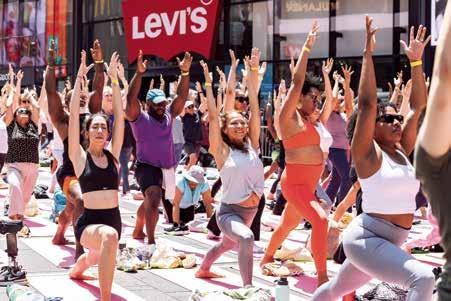
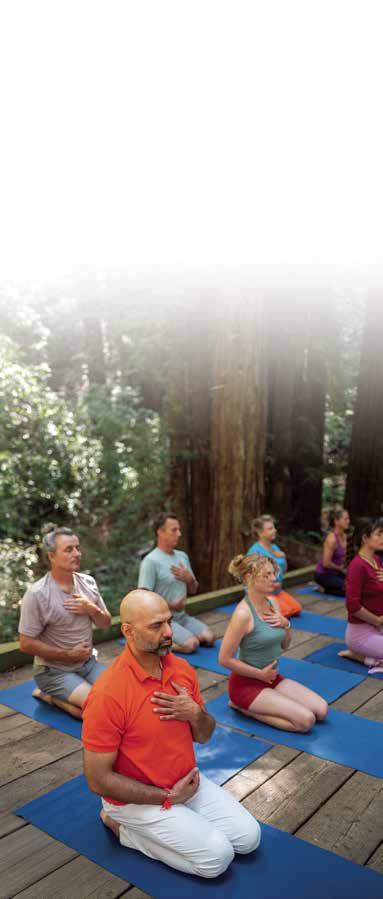
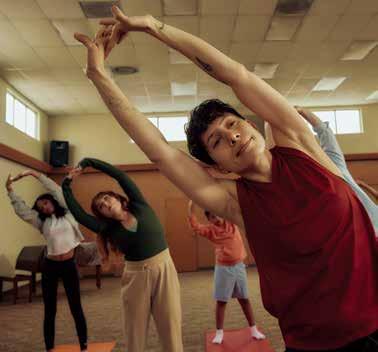
“Introducing yoga to the communities I work with is like an introduction to the Self. The hardships of life make us forget to embrace the body, breath, and mind. Yoga brings back self-awareness and self-love.”
-Sandy Boutros
Age is often measured in years, but in the yoga community, we measure it in impact. Just as a practitioner’s understanding deepens, these past 27 years has given us clarity into a single truth - yoga is for everyone. At Yoga Alliance, our mission is rooted in service: to support the yoga community in advancing high-quality, accessible, and equitable yoga. We believe meaningful change happens when we listen deeply and collaborate with those who are already doing the work on the ground.
Across the globe, yoga professionals are partnering with their communities to create spaces of healing, resilience, and connection. Through providing funding, resources, and ongoing support, Yoga Alliance works alongside teachers and organizations expanding access to yoga in schools, shelters, hospitals, refugee camps, rural areas, and other underserved spaces.
The stories below reflect the many ways yoga becomes more than a practice; it becomes a pathway to empowerment, belonging, and collective well-being.
Based in Beirut, Lebanon, Sandy Boutros is a yoga teacher and founder of Koun, an NGO committed to expanding access to yoga in underserved communities. Her initial curiosity about yoga emerged through her interest in psychology and philosophy, particularly the spiritual dimensions explored by Carl Jung.
After experiencing the transformative power of yoga on retreat, Sandy returned home with a renewed sense of purpose. She observed that yoga in Lebanon was often concentrated in affluent communities, leaving many without access. In response, she began volunteering in refugee camps and migrant centers, offering trauma-informed classes to individuals navigating displacement and economic hardship.
Through Koun, she partners with local organizations to provide sustainable programming in shelters and community centers. For her students, yoga becomes a way to reconnect with the body, regulate stress, and rebuild a sense of agency.
“Yoga gave me a calling—to develop myself through the capacity of yoga to serve in a multitude of ways in the world.”
-Sowmya Ayyar
Sowmya Ayyar is the Founder-Director of Prafull Oorja Charitable Foundation, a Bangalore-based NGO dedicated to training yoga therapists to serve vulnerable populations. With a background in social work, she witnessed firsthand the toll of trauma and systemic inequity and the profound potential of yoga as a tool for both individual and collective healing.
Introduced to yoga through her mother and great-grandmothers, Sowmya later returned to the practice during her own healing journey. Restorative yoga became a refuge, eventually leading her to pursue teacher training and therapeutic applications. Through Prafull Oorja, yoga reaches children with special needs, incarcerated individuals, and women in rural communities. Programs support motor skill development, trauma recovery, and self-agency. Across each setting, yoga is offered not as a luxury, but as a practical tool for dignity, stability, and empowerment.
For Sowmya, the heart of the work is unity. By equipping communities with accessible therapeutic tools, she nurtures environments where compassion and resilience can take root.
“Yoga has given me a greater awareness of myself, the cultivation of mindfulness, and inner harmony.”
-Brirkellia Álvarez Franquiz
Brirkellia Álvarez Franquiz is a lawyer and Hatha Vinyasa teacher (RYT 200), and the founder of Todos En Yoga in Caracas, Venezuela. Her journey began at a community event, where she was struck by the calm focus and grounded presence of the practitioners around her.
Growing up amid economic hardship, Brirkellia felt called to social justice work early in life. She has collaborated with international organizations advocating for human rights and views yoga as a complementary tool for resilience and empowerment.
Through Todos En Yoga, she brings accessible classes to communities navigating economic instability and chronic stress. Participants report reduced anxiety, relief from physical pain, and a strengthened sense of solidarity. What began as a physical practice has evolved into a network of support: neighbors connecting with neighbors, building empathy, and shared strength through yoga.
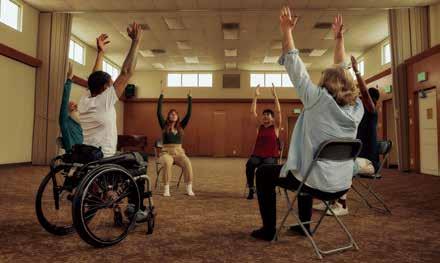
These stories are just a glimpse at the teachers and organizations working every day to make yoga more accessible, inclusive, and responsive to community needs. At Yoga Alliance, we remain committed to listening, learning, and collaborating with practitioners around the world who are using yoga as a force for connection and care. When yoga is rooted in community, it becomes more than individual transformation; it becomes collective impact.
To learn more about how yoga professionals worldwide are fostering healing and resilience, visit yogaalliance.org/love.

MC YOGI // @mcyogi
With nearly 30 years of experience, MC YOGI has taught across the globe. His albums have been streamed by millions and serve as a vibrant soundtrack to the spiritual path. He blends his music, mysticism, and movement into a unique, poetic, and playful approach to yoga.
For this groundbreaking issue, we invited some of our favorite people in our community to join us as special guest editors. The invitation: share in your section anything that inspires you, be creative, and celebrate community. Meet our Community issue guest editors here.
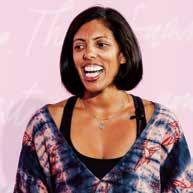
TEJAL PATEL // @tejalyoga
Tejal (she/they) is a first-generation Indian American yoga teacher, writer, podcaster, and community organizer. Tejal’s aim is to educate and empower individuals and groups around the world to practice yoga holistically and through a social justice equity lens.
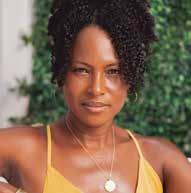
FAITH HUNTER // @spirituallyfly
Faith is a global spiritual wellness leader, author, and creator of the Spiritually Fly™ method, a soulful fusion of embodiment, meditation, breathwork, and nervous system healing. Through her books, app, retreats, and poetic Substack hōlnes, Faith helps people heal, embody their worth, and rise.
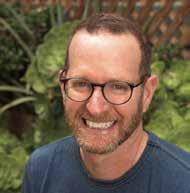
JIVANA HEYMAN // @jivanaheyman
Jivana, C-IAYT, E-RYT500, is teacher, author, and the founder and director of Accessible Yoga, an organization dedicated to increasing access to the yoga teachings and supporting yoga teachers.
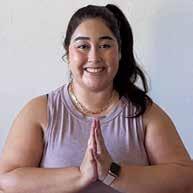
NATALIA TABILO // @yogaforallbodies
Natalia is the founder of Yoga for All Bodies™ a certified accessible yoga teacher, and a Chronic Pain and Wellness Coach. After navigating life with pain and health challenges, she turned her healing journey into a mission: making yoga, movement, and wellness truly accessible for every body.

When I first started practicing yoga at 17, my life was a mess. I was struggling with depression, trauma, addiction, and confusion. I felt lost — without purpose or direction — uncomfortable in my own body and mind. I was insecure and selfcritical, my body was stiff, and anger and stress were my constant companions.
Then came Hatha Yoga. Thanks to my dad, who was my first teacher, I found a practice that began to realign my mind and my life. Yoga gave me the structure and stability I desperately needed — it grounded me in my body, quieted my mind, and introduced me to deeper states of natural bliss.
Now, nearly 30 years later, my practice has matured. The ongoing process of alignment feels more effortless, more subtle. It’s no longer driven by personal willpower but guided from within. I’ve learned that simple, repeatable practices — like shifting my focus toward gratitude, lengthening my exhale, relaxing my body, and letting go of control — help me reconnect with a deeper current I call the River of Grace. This sacred stream is always flowing, infinitely accessible, and constantly renewing.
When I was younger, I believed that the harder I practiced, the greater the results. That intensity served me for a time, deepening my commitment — but I eventually realized that my own effort was unsustainable. I needed to surrender to something larger, something more luminous and enduring. Meditation revealed that surrendering to a higher power is the master key to remaining relaxed, receptive, and open to this vast ocean of Grace.
Grace isn’t something we earn. It’s a natural, divine force — like a river that’s always flowing if we allow ourselves to receive it.
Yoga first taught me to draw my senses inward into the present moment, but my mind would still wander. Through meditation and prayer, I discovered that the awareness within never changes. It is still, quiet, ancient, innocent, wise, all-loving, and awake. It does not judge or condemn — it simply is. The more I practiced resting in this sacred awareness — without my ego pushing, pulling, or trying to escape — the more I began to see myself with compassion.
ISN’T SOMETHING WE EARN. IT’S A NATURAL, DIVINE FORCE — LIKE A RIVER THAT’S ALWAYS FLOWING IF WE ALLOW OURSELVES TO RECEIVE IT.
That’s when yoga became truly alive for me. I realized that when we rest in Spirit, Spirit does the rest. This universal presence of pure, loving attention is radiant, blissful, and infinitely kind. It is always here. As the great saint Paramahamsa Ramakrishna said, “The winds of grace are always blowing, but you have to raise the sail.”
This loving awareness — the light shining through our eyes — is like that gentle wind, always blowing. To catch it, we must simply relax, open, and receive. Once we raise the sail, the wind will carry us exactly where we need to be.
Over the years, I’ve learned that while effort is important — especially at the beginning — it’s incomplete without surrender. Every inhale needs an exhale. The true treasure of yoga reveals itself when we open, relax, and surrender to Grace. In one of my songs, “Treasure in the Center,” I wrote:
“There’s a treasure in the center, A treasure in the center, A treasure in the center that’s too deep to measure, It can never be destroyed, it can never be severed, And it shines forever.”
Grace is that treasure — the radiant jewel at the heart of our being. It emanates from within as pure, unconditional, divine love, shining equally in all directions like the sun. When we soften our grip, slow our breath, and shift into gratitude, the clouds of the mind part and Grace shines through. That’s why great saints like Ramana Maharshi, Neem Karoli Baba, and Anandamayi Ma seem to beam love and peace through their eyes — the clouds are gone, and only Grace remains.
All the practices of yoga — asana, pranayama, mantra, pilgrimage, ritual — are beautiful tools, but they all point to one essential truth: to relax, open, and rest in Spirit so that Grace can flow through us.
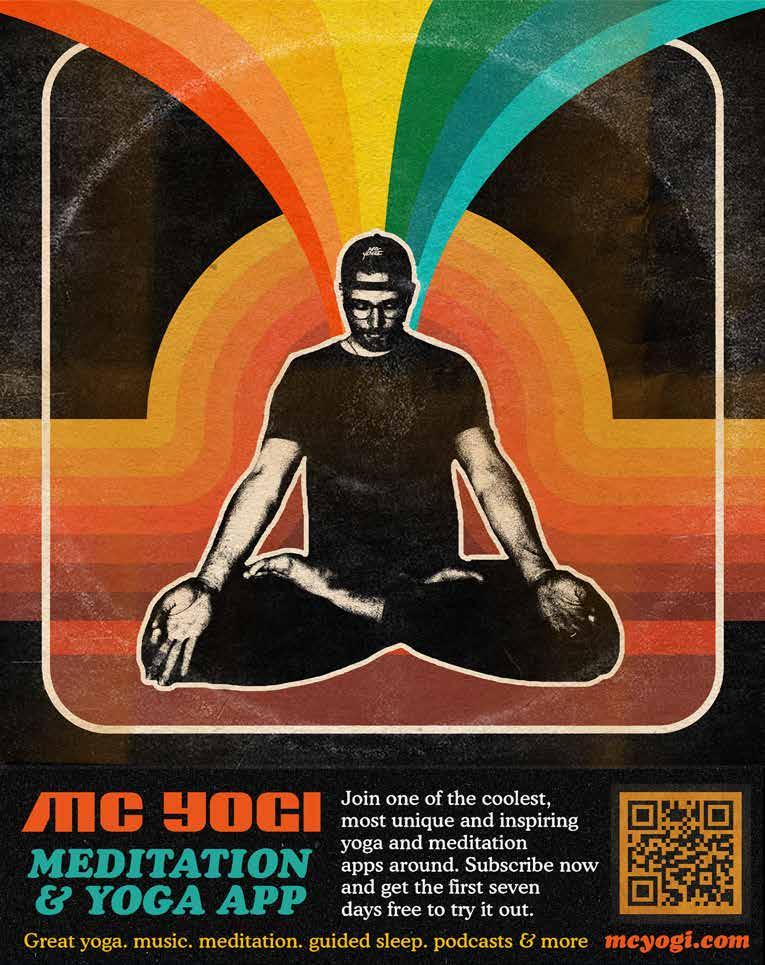
After nearly three decades of practice and learning from incredible teachers, I’ve gathered everything I’ve learned into one resource: the MC YOGI Meditation & Yoga App. The app includes guided meditations, short yoga practices, weekly prayer podcasts, my full music library, lyrics, and a growing collection of deep sleep audios.
Because the more we relax, the more we remember. And the more we remember, the more we relax. Over time, this simple rhythm becomes a living prayer — a natural flow back into the River of Grace.
Learn more: mcyogi.com


People often ask me how I became “so involved” in yoga activism, as if there was a particular moment when I put on a superhero cape and declared myself responsible for the state of the industry. The truth is much simpler and much more personal: activism has always been in my blood. Yoga, too.
My earliest memories of practice weren’t in studios or on screens. I found the practice in the living room of my childhood home, flipping through a devotional magazine and then sitting in sukhasana, attempting to drift into meditation. I would concentrate on a picture from the magazine of a small figure floating in a black, starry ether, and suddenly I wasn’t quite myself anymore. My body felt enormous, then tiny, then untethered from the world altogether. There was an energetic shift, and a deep, profound connection to the spiritual. It was at times disorienting, fascinating, calming, and outof-body. It kept me coming back to explore.
Looking back, these sensations were less about transcendence and more about possibility. Meditation created space inside me, space to feel, to reflect, to sense myself without the noise. Meditation offered me a place of stillness and surrender, concepts that became foundational to how I work, live, and relate to the world. Even as a child, I understood that when we spend time inwardly, we shift how we express ourselves and commune with others outwardly.
The most foundational lessons I’ve ever received about community came from this inner knowing through meditation and from my own family. My grandfather, Chunilal Ranchhodbhai Patel, lived with us until he died when I was six. Nearly fully deaf and exclusively speaking Gujarati, I remember him as a steady, grounding presence in the home. Only later did I learn that my grandfather was a freedom fighter in the Indian Independence Movement. In the 1940s, he resigned from his job to join the struggle alongside Gandhiji. His boss ripped up the resignation letter and said, “Take as much time as you need.” That story has echoed across generations in my family: when values call, you go.
When injustice calls, you show up. When community needs you, you stand with them.
My father, Rajanikant C. Patel, carried that same flame of service. He was a karma yogi long before I ever heard the phrase, someone who gave without attachment, built community with the utmost generosity, and showed up for anyone who needed him. When he passed away in December 2024, the grief cracked something open, and I began to understand the depth of what he left me: a blueprint for community care, a zest for life, and a calm wisdom distilled into the simplest guidance. When I was struggling years ago, he said, “Tejal, all you can do is be patient, be prepared.”
“The most foundational lessons I’ve ever received about community came from this inner knowing through meditation and from my own family.”
By the time I was in school and college, I had taken up the mantle of my ancestors and was actively engaging with social justice initiatives and dreaming up and creating spaces for belonging. Activism felt instinctive and inherited. I joined the high school student government, and in college I took leadership positions with people of the global majority and Asian American, Native Hawai’ian and Pacific Islander racial ethnic student groups, led our Multicultural Greek Council, and used my voice and position to petition for those less resourced. I didn’t yet have the vocabulary of decolonization or intersectionality, but the labels didn’t matter; the fight for equality was the focus.
While growing up, I also sought out yoga spaces that connected me to the inner experience I had of meditation as a child and of learning Hindu and yogic philosophy and scripture at home and at the temple. I felt confused when I entered mainstream yoga spaces as a young adult. Yoga studios didn’t look like my living room or temple experience. And they definitely didn’t look or feel like my ancestors’ stories. They felt...off. Removed. Performative. I
rarely saw South Asian teachers. I rarely heard about history or lineage. I very often felt isolated, as if yoga belonged to someone else entirely.
Ironically, the more I immersed myself in yoga, the more that dissonance grew. After my corporate finance job transferred me to New York, a few things happened at once. I spent time working and growing more disconnected to my roots in activism, my body, and my spirit. In 2012, I enrolled in a yoga teacher training and entered with optimism and an eagerness to grow spiritually and emotionally.
During my Yoga Teacher Training, I learned technique and sequencing, sure. I made lifelong friendships I call on to this day. But where were the stories? Politics? The cultural context? The ways yoga has always been braided with collective liberation? The South Asian representation?
That absence is why I eventually founded Tejal Yoga, a South Asian teacher-led community rooted in social justice, rest, and belonging. It’s why I co-created the Yoga Is Dead podcast, to name out loud what so many of us had been whispering: that capitalism, whiteness, and appropriation were suffocating the very practices meant to free us. And it’s why I built the abcdyogi village, a storytelling platform for South Asians reclaiming yoga on our own terms.
However, before all those programs took shape, I left my finance job, traveled to nine countries, spent 10 weeks in India on a six-week religious pilgrimage with my parents, a month-long ashram stay, and additional yoga training in Kerala.
My journey of teaching yoga full-time started in 2015, and was born out of the frustration that in order to survive white supremacy culture and late-stage capitalism, we need to hide parts of ourselves. I was tired of working nonstop for corporate initiatives that didn’t impact the world in any meaningful way. I was done leaving my passion for social
justice and equality at home in order to work another day at the office. I needed to start showing up as a whole person in all areas of my life.
Yet when I started teaching yoga, I continued to be faced with division through abuse of power and privilege, racism, othering, spiritual bypassing, and a number of other issues. It was disorienting to be subjected to the same concerns from corporate culture again in the yoga industry.
In 2015, I was told by a white woman studio owner that what I learned about yoga in India and from my upbringing was wrong. This cultural erasure is also evident in many yoga programs that prohibit chanting “Om” or speaking in Sanskrit. Then there’s the cultural appropriation that shows up in shady labor practices incorrectly labeled as karma or seva practices that studios use to avoid paying fair wages to yoga teachers.
By 2018, I knew I had to name what I was experiencing, not only to honor my own commitment to showing up whole in this work, but because if I had been harmed by practices and
people within the yoga industry, others were likely being harmed too. I wanted people to know that mainstream yoga culture wasn’t the only option, and that there were real, accessible alternatives rooted in authenticity, equity, and care. Speaking truth to power in yoga opened unexpected doors: in 2021, a barista in Royal Oak, MI and a yoga teacher in Menorca, Spain recognized me from my Yoga is Dead podcast and thanked me for naming the hard truths about how yoga is neo-colonized in dominantculture spaces.
As someone who believes deeply in rich, culturally rooted yoga practices, it’s been an honor to continue the work of building awareness of authentic and holistic practices. About a year after my move to Los Angeles, I was invited to consult on several yoga-focused film projects. I hope this work continues to grow and spark conversations, shape representation, and help move yoga toward a more sustainable and liberated future.
continued on next page
Each of my yoga projects was born from this deep drive for community and justice, and over the years, each has reshaped me and the community of yoga practitioners around me as I moved from the east to the west coast. But nothing affirmed the power of collective action more than what happened in 2025.
Through a partnership between Tejal Yoga and Yogis for Palestine, and the work of over 170 yoga teachers in more than 35 countries, we created a global action and enlisted community to raise over $24,000 for humanitarian aid to Gaza. I knew yoga could be a tool for justice, but witnessing our global network activate so quickly, so fiercely, so lovingly, that was groundbreaking.
One studio owner wrote to me afterward and said: “Now, on the other side of this event, I am filled with joy and gratitude…Without question, it was the most beautiful and most important event I've ever run in my studio. Organizing it stretched me, moved me, humbled me. We are not alone. We are so powerful all together.” That is community activism: not just mobilizing money, but transforming the people who mobilize. We do this kind of community work regularly, and you’re invited to learn about it online at tejalyoga.com.
This also reminded me how activism is braided with our personal lives in ways we often cannot predict. While planning The Activist Sanctuary, a program I launched because our community was exhausted, grieving, and stretching their hearts beyond capacity, life took a sharp turn. My older sister was diagnosed with stage 1 breast cancer.
Suddenly, my days were threaded with the surreal emotional fog that comes with watching someone you love endure something unthinkable. I relocated to New York to be with her for her double mastectomy and recovery. And while she’s doing well now, the journey rocked me, her, and our family. It made working harder. It made focusing harder. It made being a “public yoga person” (nano influencer, y’all, let’s be clear) almost impossible. And yet… the Sanctuary mattered even more.
Because I wasn’t the only one carrying heaviness. Our community was grieving genocide, environmental collapse, political violence, and personal heartbreaks of every kind. We were collectively overwhelmed. We needed a space to breathe, to rest, to mobilize without burning out.
“Community activism isn’t just about showing up for the world. It’s about showing up for the people who make that work possible, including ourselves.”
But here’s the thing: I didn’t bulldoze through my grief to serve the community. I slowed down. I recalibrated. I asked my team how to move with integrity, not urgency. Because urgency for urgency’s sake is not yoga. It is white supremacy culture masquerading as productivity.
In that pause, I remembered why I do this work: Not because I love every task (I absolutely do not). Not because running a small business is glamorous (it absolutely is not).
But because community care is a lifeline to justice, to one another, and to ourselves.
Community activism isn’t just about showing up for the world. It’s about showing up for the people who make that work possible, including ourselves.
That is the story beneath everything I’ve built: Tejal Yoga, abcdyogi, Yoga Is Dead, my workshops and programs focused on Collective Liberation, and now The Activist Sanctuary. All of these projects are reminders that activism is not separate from personal practice. We transform the world by transforming how we relate to one another: through storytelling, through shared grief, through collective action, through rest, through belonging. And so I want to offer you this:
Your practice is activism. Your community is activism. Your healing is activism. Your willingness to stay human in an inhumane world is activism.
Wherever your yoga journey takes you, I hope you find spaces, whether in my community or another, where you feel held, rooted, and reminded that you are not doing this alone. None of us are. We are so powerful all together.
Learn more: tejalyoga.com

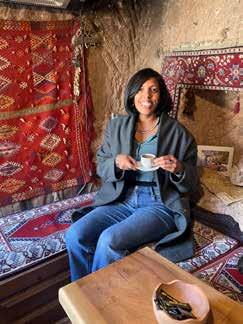

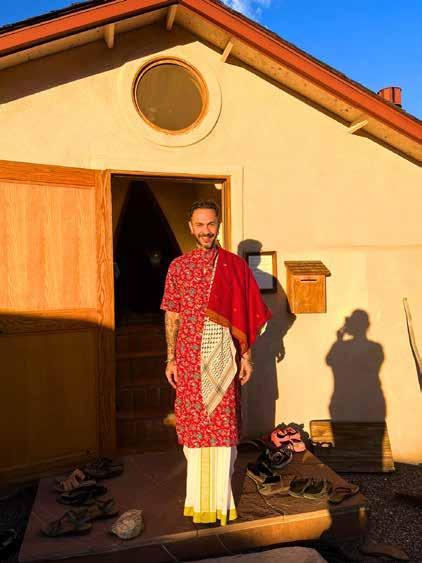
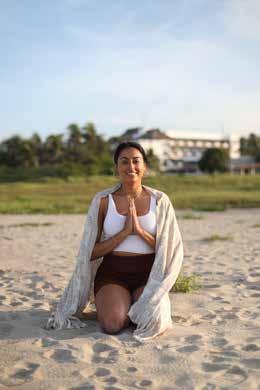
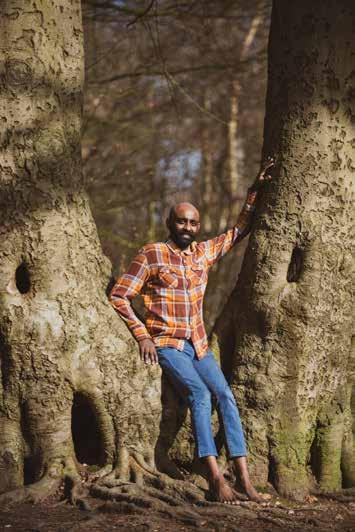




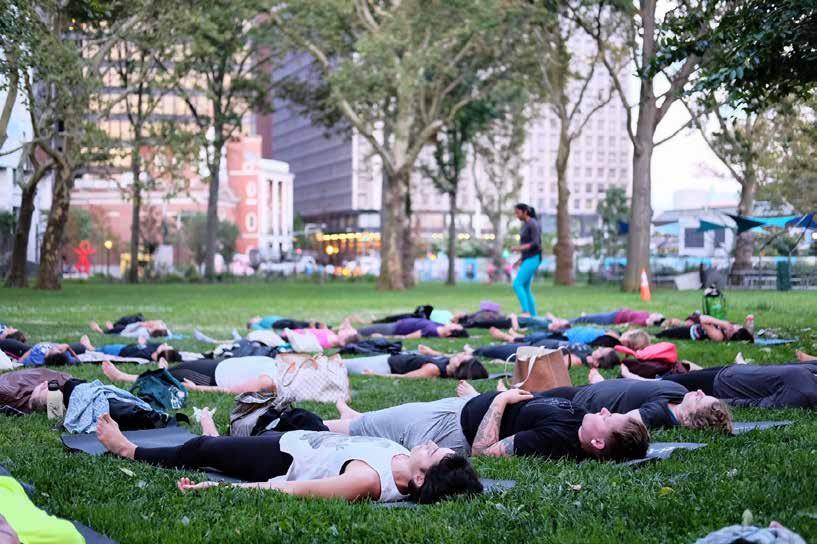
These days, many yoga classes can feel transactional and impersonal. Practitioners rush in to claim their favorite spot, practice without acknowledging anyone else in the room, and within seconds of coming out of savasana, dart toward the door — after all, who wants to get caught up in a crowd? However, yoga can offer so much more connection than that, and I often wonder if this is the missing piece of our practice.
I remember one time I was teaching at a local studio and one of my regular students, Carol, wasn’t in attendance. The other students remarked that it was unusual not to see her there, and they asked me where she was. I said I didn’t know, and that as her teacher, it wouldn’t be appropriate for me to reach out. So at that moment, one of the other students pulled out her phone and called Carol to ask her why she wasn’t in class today. It was amazing that she had Carol’s number and that she cared enough to call her. It struck me how much sangha, spiritual community, can enrich our lives and expand the benefits of our practice beyond asana.
In this moment, when the world feels particularly chaotic, community is more important than ever. Those of us with marginalized identities are literally relying on it. But what does community really mean? Is it enough to like someone’s social media post, or to say hello to them in a yoga class? How can we explore the fullness of sangha? How can we build or support a sangha?
As a teacher, it can be challenging to cultivate sangha for our students, and it can be even harder to find a supportive community of peers for ourselves. This may be the result of teaching yoga within the confines of capitalism, which encourages us to compete with each other, and that it’s every “man” for themselves. It takes a strong commitment to supporting other teachers to overcome this constant focus on individuality. In fact, an effective practice can help to keep the ego in check and naturally guide us to focus on building community rather than constantly toot our own horn.
In many ways, community-building is an outcome of humility because it shifts power from the individual teacher to the group. It’s an acknowledgment of the healing power of the collective and the recognition that a yoga community is more than its lead teacher or teachers. The community itself is key. It reminds me of monk and peace activist Thich Nhat Hanh’s famous saying, “The next Buddha will be a sangha.” 1
Building community can feel like an uphill battle because of the focus on individualism that contemporary practice seems to amplify. For example, the image of a lone yogi sitting in meditation in a cave is more mythology than reality. Community is itself a yoga practice because it’s about learning to see yourself in others — which can be hard to do.
This idea of transcending our individualism is a thread woven throughout the history of yoga. You can find it in the wisdom of the Bhagavad Gita, where Krishna explains the ultimate goal of our practice as seeing yourself in others. “As your mind becomes harmonized through yoga practices, you begin to see the Atman [spirit] in all beings and all beings in your Self; you see the same Self everywhere and in everything.” 2
You can also see this theme in one of our oldest scriptures, the Chandogya Upanishad, which is about 2,800 years old. "The Self is one, though it appears to be many. Those who meditate upon the Self and realize the Self go beyond decay and death, beyond separateness and sorrow. They see the Self in everyone and obtain all things.” 3
These reflections demonstrate the longstanding focus on compassion and empathy found in the yoga tradition. We have a long history of ashram life and service, which is where community shines. But these communities are harder to come by these days. You can also see this emphasis in the three jewels of Buddhism: Buddha (the teacher), Dharma (the teachings), and Sangha (the community).
A supportive community is an essential element of an effective and long-term practice. For example, sangha can be a container for your suffering. When you need support, your friends will be there to lean on, and sharing your suffering can make it more bearable. Just as you might call a friend when
you’re feeling down, being available to answer the call when someone needs to talk is a great service you can offer to your yoga friends.
Practicing in community amplifies the benefits of your practice and can renew your commitment. Sangha is an inspiration, and can keep you coming back to practice when you lose interest or when your commitment wanes. Getting a call from a friend asking why you didn’t come to class, or just saying hello, can remind you of the power of sangha and the power of your practice. Your yoga friends can also inspire you to keep practicing when you see their commitment to come to class even when they struggle with life’s challenges.
Sangha can be a mirror to reflect some of the more challenging aspects of yourself that you would rather ignore. Sitting alone, you might be able to find peace, but the real challenge is taking that peace into the world and treating others as you want to be treated. In this way, sangha holds you accountable. A supportive, spiritual community will hold you to the highest standards and (with compassion) let you know when you slip. You can make excuses for yourself, but it’s much harder to do in a community where people actually see you.
Sangha also amplifies your spiritual practice. Community allows your practice to expand like ripples in the water into ever-widening circles. When you see yourself in others, you can’t help but love them and care for them, and in turn, they pass that love on. Practicing yoga in a group can be a transformative experience that keeps you focused and takes you deep. There’s magic that happens in group spiritual practice, a shared goal, a feeling of camaraderie, or some unknown quality that can be hard to pinpoint. I know that my most powerful meditation experiences have happened in group practice, and I can use all the help I can get!
Ironically, to facilitate the inward journey of the yoga path, we need outer support, support in the form of a loving community. Sangha is helpful in inspiring practice as well as keeping us on the path when we’re struggling. This can be a lot simpler than it sounds. It can be a group of students who become yoga friends, brought together by a welcoming teacher. Or a few yoga teachers who get together on occasion to talk about how they’re doing and how their teaching and practicing is going.
While we all benefit from community, Accessible Yoga classes offer a space that welcomes students who are particularly isolated, which can be unhealthy mentally and physically. That’s why creating opportunities for community-building is not only a nice idea, but a very effective technique for supporting students.
If you’re a yoga teacher, you may want to consider ways to support connection and community amongst your students.
This can include:
• Asking students to introduce themselves at the beginning of class or leading a quick icebreaker.
• Learning your regular students’ names.
• Creating space before or after class for conversation.
• Encouraging students to support each other. They can connect and form friendships outside of class in a way that may not be appropriate for you as the teacher.
• Thinking of activities for the students to do together, such as forming a book group or creating a fundraiser for a cause they are interested in supporting.
continued on page 74
The Accessible Yoga Community is a grassroots network of yoga teachers all over the world. This diverse group is committed to sharing yoga with everyone. Here are a few of our dedicated community members and their quotes on the following page.


ANJALI RAO Author of Yoga As Embodied Resistance
“Although most of us in the contemporary world may not have the focus of gaining salvation as people who practiced yoga did in bygone times, most of us are seeking to reduce dukkha, our suffering, in some way. We long to be happy, to be healthy, to gain clarity of purpose and meaning in our everyday lives. We long to belong.”
TAMIKA CASTON-MILLER Founder of Ashe Yoga Collective
“Ultimately, community is about belonging. When people truly belong, they do so as they are. Accessibility is rooted in belonging because it requires the community to open the door for one another to come in as they are. I don’t believe that inaccessibility aligns with true community, as folks would have to adhere to a preconceived standard.
That’s not a community — that’s a cult.”
BECKY ATEN Yoga Facilitator, Neurodiversity Advocate
“Community is a place where no one has to work for entry, acceptance, or belonging. There’s no physical, moral, or spiritual high ground to climb. Just existing is reason enough to be offered a soft place to land, connect, and have support needs met without fuss. An accessible community feels like a gift, the way it might feel to find an inviting carpet of moss just off-trail when you're feeling weary and ready to be cared for on a long hike. It's not a final destination, but the outcome of a collective practice of building bridges and co-creating belonging, with plenty of grace for the messy parts. It's unity in diversity in action.”
TRISTAN KATZ Yoga teacher, marketing strategist, & DEI facilitator
“Accessibility means attuning to the realities of people living in bodies — real, complex, ever-changing. And community, to me, is the practice of co-creating spaces rooted in care and belonging. These two are inseparable. We’re not having the same lived experiences. In an inequitable world, access isn’t optional — it’s essential if we’re serious about building true community and cultivating belonging.”
RODRIGO SOUZA Adaptive & Accessible Yoga Teacher
“For folks with disabilities, the intersection of accessibility and community in yoga is where real magic happens. It's a lively space that celebrates inclusivity and turns individual stories into collective strength. Here, barriers drop away, making room for everyone — no matter their abilities — to tap into the healing power of yoga. Accessibility isn’t just about adapting for physical changes; it’s a commitment to honouring every unique experience. When we embrace accessible practices, we break down obstacles and celebrate each person's journey. This is our call to action: let’s push for true inclusivity, knowing that a strong community is built upon access for all. When everyone can practice yoga, we create a vibe that empowers, uplifts, and inspires — crafting a community filled with compassion, love, and strength.”
ILLUSTRATION: MIRIAM CASTILLO
I’m Natalia Tabilo, an accessible yoga teacher, wellness and pain coach, and the founder of the Yoga for All Bodies™ practice. I’ve spent years teaching students with chronic pain, disabilities, and chronic conditions, and I’ve seen how yoga transforms lives when people are given agency and choice. My own body, with its pain and unpredictability, led me to a practice rooted in gentleness and variations. Over time, I realized that offering accessible yoga wasn’t the whole mission. The most meaningful way to create change is by training teachers. That’s why much of my work now focuses on helping teachers understand inclusion, trauma-informed support, and how to teach yoga that honors every body.
Yoga has always had the potential to bring people together, but only when we move beyond the narrow image of who it’s “supposed” to be for. When we release the assumptions around flexibility, thinness, or physical ability, we return to what yoga has always been: a practice for every shape, size, age, and capability. It’s a practice of breath, presence, curiosity, and choice.
Accessibility isn’t about simplifying yoga or offering a “modification” when someone “can’t do something.” It’s about giving people real agency. It’s a way of teaching where the student leads, the space is collaborative, and the teacher is there to serve, not perform. When someone feels safe enough to make a small choice on the mat — leaving a shape early, switching to a variation, using the wall or a chair, or following a movement their body is asking for — that choice becomes practice for life. Those tiny decisions teach people to trust themselves and honor their needs. That’s powerful. That’s living their yoga.
This becomes even more meaningful online. For people living with chronic pain, disabilities, unpredictable bodies, or those who have felt excluded from traditional studios, virtual spaces can be lifelines. They offer community and connection without the pressure of performing or the barriers
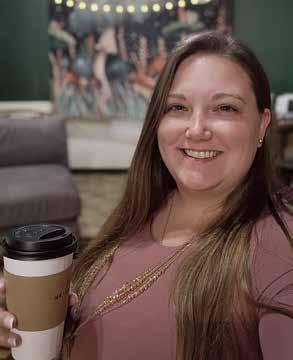
@JenniferGreenYoga Celebrating Bodies of All Sizes
Jennifer Green teaches accessible, heart-centered yoga for beginners and people in larger bodies. Her work is rooted in her own experience. “I walked into studios that didn’t feel made for bodies like mine,” she said. “I loved yoga, but I didn’t always feel welcome. I wanted to create the space I wish I had found sooner.”
Her classes emphasize comfort, variation, and being seen. “Variations, variations, variations,” she said. “And props always within reach. We focus on how poses feel, not how they look,” she explained.
The comments that touch her most are simple but meaningful: I finally felt comfortable. I was nervous, but you made me feel welcome. These moments confirm her mission. “Belonging means feeling safe enough to be your whole self,” she said with warmth.
Her message to anyone who believes yoga isn’t for them because of size or appearance: “Your worthiness to practice has nothing to do with your body. There is no ‘yoga body.’ There are only bodies doing yoga,” she affirmed.
continued on page 73
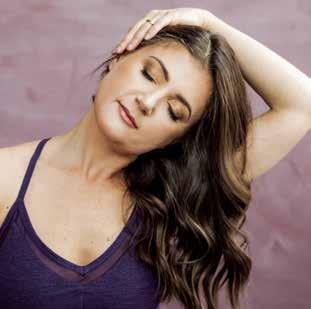
@YogaMigraine
Yoga for Migraine and the Power of Feeling Seen
Adriane Dellorco, a yoga and health coach based in Boise, ID teaches almost entirely online and sup-
ports people living with migraine and headache disorders. Her work grew from her own pain. She started practicing yoga at 13 and loved intense vinyasa classes, but everything shifted when she was diagnosed with migraine in her mid-20s. “I thought migraine meant I couldn’t practice yoga anymore,” she shared. “When I searched for ‘yoga for migraine,’ there was so little available. With so many people suffering, the need for migraine-friendly yoga is huge,” she reflected.
She created the approach she wished existed — gentle, supportive, and non-triggering. Her online programs and Facebook group connect students who often feel isolated or guilty for canceling plans. “We can be so hard on ourselves. Yoga helps deepen self-compassion so we can cope with migraine without blaming ourselves,” Adriane explains.
Her classes center on choice and safety. She checks in with students before each session and offers variations for both high- and low-symptom days. “I celebrate my students for making the practice their own and for simply showing up,” she said.
The changes she witnesses are profound. “I have students who went from 15 migraine days a month down to five. One student could barely practice for 10 minutes without triggering symptoms. Now she practices for an hour,” she added with a smile.
For Adriane, community means being valued and understood. “My clients cheer each other on and say, 'That happens to me too.’ They learn from me, but just as much from one another,” she reflected.
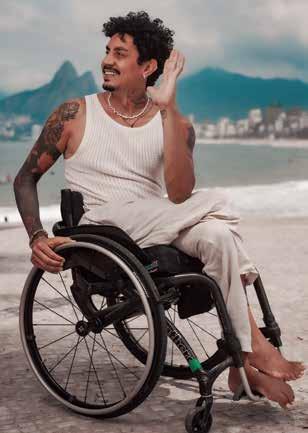
@allihopayoga and @lhe_tenho_amor
Adaptive Yoga and the Power of Representation
Rodrigo Souza, founder of Allihopa Yoga, is an adaptive and accessible yoga teacher who works with students living with disabilities and trauma. After a fall left him paralyzed from the chest down, he rebuilt his connection to his body through yoga and now mentors teachers worldwide. “Disabled folks need yoga the most, but have the least access. I felt compelled to promote inclusion through my representation,” he explained. His virtual studio, Allihopa Yoga, and his project in Brazil, Lhe Tenho Amor, support students and train teachers to serve with compassion, creativity, and skill. His classes focus on dignity, autonomy, and belonging.
“Community is essential for nurturing embodied belonging. It’s about feeling seen, supported, and empowered,” he said.
Many of his students share that yoga helped them feel safe in their bodies again after trauma or sudden changes in mobility. “Each person is special, valuable, wise, and deserves to be celebrated in their own unique way,” he added. His message to anyone who uses a mobility aid or feels yoga isn’t for them: “Yoga is your practice too. It’s about cultivating a gentle, loving connection with the present moment, not stressing over contortionist postures.”
Soy Natalia Tabilo, fundadora de Yoga for All Bodies™, profesora de yoga accesible y coach en bienestar y dolor. Llevo años enseñando a personas con dolor crónico, discapacidades y condiciones de salud que cambian día a día, y he visto cómo el yoga transforma vidas cuando hay autonomía, elección y una bienvenida real. Mi propio cuerpo, con su dolor y su imprevisibilidad, me llevó a una práctica basada en la suavidad y las variaciones. Con el tiempo entendí que ofrecer yoga accesible no era toda la misión. Para generar un cambio profundo, es clave formar a más profesores. Mi trabajo hoy se centra en ayudarles a entender inclusión, acompañamiento informado en trauma y cómo enseñar yoga que honre y celebre todos los cuerpos.
El yoga siempre ha tenido el potencial de unir a las personas, pero solo cuando dejamos atrás la idea limitada de quién “debería” practicarlo. Al soltar los supuestos sobre flexibilidad, delgadez o capacidad física, volvemos a lo esencial: una práctica para todos los tamaños, edades y capacidades. Una práctica de respiración, presencia, curiosidad y elección.
Para mí, la accesibilidad no significa simplificar el yoga ni dar una “modificación” cuando alguien “no puede hacer algo.” Es entregar verdadera agencia. Es enseñar desde un lugar donde la persona toma decisiones, el espacio es colaborativo y la o el maestro está al servicio, no en modo de espectáculo. Cuando alguien se siente lo bastante seguro para tomar una decisión pequeña—salir antes de una postura, cambiar a una variación, usar la pared o una silla, o seguir un movimiento que el cuerpo pide—esa decisión se convierte en práctica para la vida. Esas acciones enseñan a confiar en sí mismas y honrar sus necesidades. Eso es poderoso. Eso es vivir su yoga.
Esto se potencia aún más online. Para quienes viven con dolor crónico, discapacidades, cuerpos impredecibles o para quienes nunca se sintieron bienvenidos en un estudio tradicional, los espacios virtuales pueden ser un salvavidas. Ofrecen comunidad y conexión sin la presión de “rendir” ni las barreras de un espacio físico. Permiten descansar
continúa en la página 73
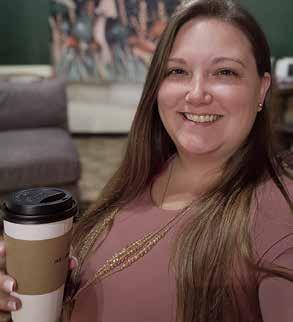
Jennifer Green
@JenniferGreenYoga Celebrando Cuerpos de Todos los Tamaños
Jennifer Green enseña yoga accesible y centrado en el corazón para principiantes y personas en cuerpos más grandes. Su trabajo nace de su propia historia.
“Entré a estudios que no estaban hechos para cuerpos como el mío,” contó. “Amaba el yoga, pero no siempre me sentí bienvenida. Quise crear el espacio que me habría gustado encontrar antes.”
Sus clases enfatizan comodidad, variaciones y sentirse visto. “Variaciones, variaciones, variaciones,” dijo. “Y los props siempre a mano. Nos enfocamos en cómo se siente la postura, no en cómo se ve,” explicó.
Los comentarios que más la conmueven son simples pero profundos: Por fin me sentí cómoda. Estaba nerviosa, pero me hiciste sentir bienvenida. Esos momentos confirman su misión. “Pertenecer es sentirse lo bastante segura para ser quien eres,” dijo con calidez.
Su mensaje para quienes creen que el yoga no es para ellos por su tamaño o apariencia: “Tu derecho a practicar no depende de tu cuerpo. No existe un ‘cuerpo de yoga’. Solo existen cuerpos haciendo yoga,” afirmó.
Adriane Dellorco
@YogaMigraine
Yoga para Migraña y el Poder de Sentirse Visto
Adriane Dellorco, profesora de yoga y coach de salud radicada en Boise, USA, enseña casi todo online y apoya a personas que viven con migraña y
trastornos de dolor de cabeza. Su trabajo nació de su propia experiencia. Empezó a practicar yoga a los trece años y amaba las clases intensas de vinyasa, pero todo cambió cuando le diagnosticaron migraña a mediados de sus veintes.
“Pensé que la migraña significaba que no podía practicar yoga nunca más,” compartió. “Busqué yoga para migraña y había tan poco disponible. Con tanta gente sufriéndola, la necesidad es enorme,” reflexionó.
Creó el enfoque que ella misma necesitaba: suave, cuidadoso y no gatillante. Sus programas online y su grupo de Facebook hoy conectan a estudiantes que suelen sentirse aislados o culpables por cancelar planes. “Somos muy duras con nosotras mismas. El yoga ayuda a cultivar autocompasión para sobrellevar la migraña sin culpas,” explica Adriane. Sus clases se centran en la elección y la seguridad. Conversa con sus alumnos antes de cada sesión y ofrece variaciones para días de síntomas altos o bajos. “Celebro que hagan la práctica suya y por simplemente llegar,” comentó.
Los cambios que ve son profundos. “He tenido estudiantes que pasaron de 15 días de migraña al mes a cinco. Una apenas podía practicar diez minutos sin desencadenar síntomas. Ahora practica una hora,” añadió con una sonrisa. Para Adriane, comunidad es sentirse valorado y entendido. “Mis clientes se animan entre sí y dicen: a mí también me pasa. Aprenden de mí, pero igual de la experiencia de los demás,” señaló.
@allihopayoga and @lhe_tenho_amor Yoga Adaptado y el Poder de la Representación
Rodrigo Souza, es profe de yoga adaptado y accesible que trabaja con personas que viven con discapacidades y trauma. Después de una caída que lo dejó paralizado desde el pecho hacia abajo, reconstruyó su relación con el cuerpo a través del yoga y hoy acompaña a profes de todo el mundo. “Las personas con discapacidad son quienes más necesitan yoga, pero quienes menos acceso tienen. Sentí la necesidad de promover inclusión desde mi representación,” comentó.
Su estudio virtual, Allihopa Yoga, y su proyecto en Brasil, Lhe Tenho Amor, apoyan a estudiantes y forman a maestros para enseñar con compasión, creatividad y habilidad. Sus clases se enfocan en dignidad, autonomía y pertenencia. “La comunidad es clave para cultivar una pertenencia. Es sentirse visto, apoyado y empoderado,” asegura con confianza. Muchos de sus estudiantes cuentan que el yoga les ayudó a sentirse seguros en sus cuerpos después de trauma o cambios bruscos de movilidad. “Cada persona es especial, valiosa, sabia y merece ser celebrada en su propia manera,” agregó.
Su mensaje para quienes usan ayudas de movilidad o creen que el yoga no es para ellos: “El yoga también es tuyo. Se trata de cultivar una conexión amorosa con el presente, no de obsesionarse con posturas contorsionistas,” afirmó.
The Soft Season of Becoming Transitions have a way of arriving before we feel ready. They slip into the cracks of our days, whispering that something is shifting, turning, or asking us to release or reimagine. In 2025, transitions became my companion. One morning while gazing at the Mississippi River from my New Orleans home, I decided this place was no longer my haven. Nola was a place that held both my healing and my unraveling after leaving a relationship two years prior. But now the river and my ancestors were speaking a different message. I listened closely, quietly, and my intuition guided me toward what was next.
Over the course of a few months, I found myself learning to live inside the in-between, the tender space where nothing is quite formed but everything is quietly becoming. That space has always been sacred for me. It is where breath steadies my spirit, where movement softens the edges of fear, and where stillness reminds me that I belong to something bigger than my circumstances. Transition is rarely comfortable, yet it is always honest. What I love most is that it asks us to pay attention to our soul’s calling and to trust what we cannot see.
As I write this article while the breeze of the Caribbean Sea hits my face, I’m recalling being frustrated by the physical discomfort I felt after my first year in Nola. During year two, my inner landscape was shifting, and I was shedding versions of myself that had served their purpose. I was learning to stop forcing clarity and instead allow understanding to rise in its own time. And in the moments when I felt unanchored, I remembered I have my wellbeing practices, family, friends, and my ancestor walking beside me.
This feature is an offering from that liminal space. A gathering of voices, reflections, and grounding practices to support you through your own seasons of becoming. Whether you are releasing, beginning, pausing, or transforming, may these words remind you that transition is not a rupture. It is a tender turning toward yourself.
Collective Voices: The Art of Transition
Transition is not a solitary experience. It lives within the collective heartbeat of our communities, our lineages, and our shared stories. When women speak honestly about change, it softens us, breaks us open, or brings us home to ourselves. We hear echoes of our own journeys, we feel less alone in the complexity of our being, and we remember that transformation has never been meant to happen in isolation.
For this feature, I also invited three women Nadine McNeil, Erica Garcia Abergel and Omisade BurneyScott whose wisdom and lived experience continue to shape our healing spaces. Their reflections capture the courage, clarity, and spiritual truth that arise when we surrender to the movement of life. Their stories remind us that change is not a disruption, but a rhythm, a teacher, and a guide.
Embodied Wisdom: Practices for Navigating Change
Transitions do not only unfold in our minds or our circumstances. They unfold in the body first. They show up as tension, restlessness, tenderness, or a subtle shift in breath. Throughout my lifetime, my embodied and spiritual practices have shifted multiple times. During difficult moments or the heaviest transitions, I often find myself circling back to the basics, or even refining a foundational practice to align with my current place in life. What I realized during this transition is that softness and ease are my safe zones and my birthright.
These practices are invitations to return to yourself with softness, compassion, and presence. Each one is designed to hold you gently as you move through the unknown.
continued on page 34
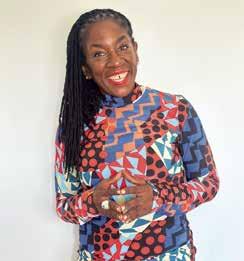
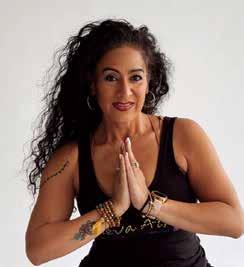
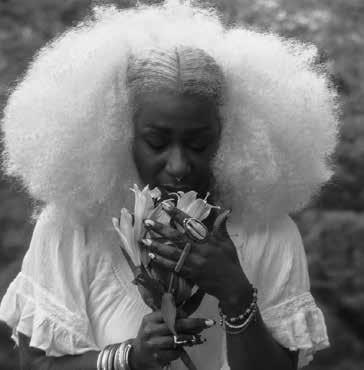
Wellness Facilitator
Your life can change at any moment; you just have to be there. The real work of navigating transitions lies in the being: the courage to stay present, steady, and awake as life rearranges itself around you. Change becomes most painful when we tug at the past or try to rush the future. Presence is the bridge that keeps us from yo-yoing between what was and what is not yet formed.
When we root into breath, we root into body. When we root into body, we root into our practice. And through practice, we root into service, the deeper why that
continued on page 79
Author, and Bilingual Yoga, Mindfulness & Wellness Educator
So many live their lives tethered to the noise of society, chasing expectations that were never theirs to begin with. But I’ve come to love the art of shedding. My growth is no longer measured by what I accomplish outwardly, in the old titles from my old resume, but by the depth of my willingness to let old identities, stories, and fears fall away. I no longer apologize for who I am, how I’ve evolved, or for expressing my needs.
Transitions, for me, are not moments to be feared, but invitations to awaken. As I move through my mid-50s, I no longer see change as something happening to me
continued on page 79
Founder/Chief Menopause Steward: The Black Girl’s Guide to Surviving Menopause
Transitions are the sacred teachers that remind us life is a continuum, not a collection of isolated moments. In The Black Girl’s Guide to Surviving Menopause, we hold transition as both medicine and map, a reminder that every ending, whether of a body, identity, or season, carries within it the seeds of a beginning.
My journey as a death doula began with the transition of my mother when I was 31 and continues to this day. Each encounter with transition has been a teacher, showing me that death and change are not ruptures but returns. They call us to honor what is leaving while making space for what is becoming.
continued on page 79
Grounding Breath: A Soft Return to Yourself
Find a comfortable seat or rest on your back. Place one hand over your heart
Place your other hand on your belly. Close your eyes
Or gaze lightly at a point in front of you.
Inhale through your nose for a count of four.
Exhale through your mouth for six.
With every breath, imagine your body settling. Imagine the exhale clearing space around your heart, loosening the grip of fear or uncertainty.
This simple rhythm communicates safety. It also allows your mind and nervous system to soften toward clarity rather than brace against change. Doing a grounding breath always anchors my inner landscape, soothes my soul when I’m overwhelmed, and after 2-5 minutes, it ushers me back into a steadier place of ease.
Intuitive Movement: Let Your Body Lead the Way
Turn on your favorite music.
Listen first and take a few deep breaths. Begin to move your body organically (standing or seated).
You can start with slow circles in your hips or gentle rolls through your shoulders. Let your spine sway.
Let your joints melt.
Let your breath guide your pace.
This is not about technique or form. This is all about letting your body speak the truth. Transitions often awaken old emotions, memories, or energetic imprints, and movement helps these layers shift. As you follow sensation, not expectation, your body becomes a divine compass revealing what you need to release and what you are ready to receive. This kind of movement is always my medicine, and a quiet prayer as I commune with my soul and ancestors.
Ritual of Renewal:
Honoring What Is Leaving and What Is Becoming Rituals invite us to witness ourselves in the moment of change, and they serve as the quiet altars where your inner and outer worlds meet.
Try lighting a candle in a quiet space. Place a hand over your heart
Whisper this 3-7 times:
“I release what no longer holds truth and step gently into the life that is calling me.”
Let the words settle for 1-5 minutes Pause and breathe.
Journal your feelings and thoughts on what chapter is closing for you, what truth is rising in your life, and what part of yourself is ready to be lived more fully.
I love this simple ritual, but feel free to create your own. I find that when I do gentle, deliberate rituals, they remind me I am more than my circumstances, more than the noise of my mind, and more than the pace of my life. Rituals help me slow down long enough to feel the truth beneath the surface, and they become bridges between what is leaving and what is becoming.
When the season turns and the familiar no longer holds you the same may you trust the quiet pull guiding you inward.
In the subtle unraveling there is a wisdom that gathers beneath your ribs a knowing that lights its own path in the dark. Let the weight you’ve carried soften its hold. Let what is rising reveal itself without demand. There is nothing to chase, nothing to prove.
This space between your no-longer and your not-yet is a sanctuary. A place where your spirit recalibrates and your heart learns to speak a new truth. Here you are shaped by grace. Here you are met by your own becoming. Let this turning be gentle.
Let your body exhale
You are not breaking.
You are crossing a sacred threshold.
Transitions arrive in every shape and form. They call us to listen, to soften, to release, and to trust the quiet wisdom rising within us. They invite us to rediscover pieces of ourselves we forgot we were allowed to hold, and they ask us to move with grace while welcoming the unknown.
My hope is that this feature becomes a companion for your own season of becoming, and that it reminds you that every shift has purpose, every ending carries a seed, and every beginning holds your name gently in its hands.
Learn more: faithhunter.com
INTRO: KATE DURAND
PHOTOS: JUAN CARLOS ARIANO
As a city, Miami does it all – from sunny beaches to glittery late nights and serious real-estate development, it buzzes with excitement and near-constant change. I first lived in Miami over a decade ago, and it's become unrecognizable since then, with luxury high-rises popping up and people flocking from around the world to live there year-round.
Everything you’ve heard about Miami is correct: lavish displays of wealth and a serious focus on aesthetics, but this is just one layer of a truly layered city. Miami’s people mirror the warmth of its climate. My business partner and I opened YO BK, a yoga studio and an all-day cafe, Novela, under one roof. Rather than being squeezed out of a small lobby space after class, our students regularly stay for hours in large groups, drinking coffee and chatting. Miamians are hard workers, and they take the time to relax and grow friendships. Exercise, including yoga, is seen by many as non-negotiable.
If you move to Miami, learn Spanish! The first language of many opens friendliness and kindness not offered in English. Over two thirds of my staff are native Spanish speakers, switching effortlessly between English and Spanish while teaching and chatting. They have built a true community with their students at YO BK and beyond – generously sharing their expertise on yoga and their friendship in a way I haven’t seen outside Miami.
For this curation, I chose Johan Blanco, Patricia Pinto, and Virginia Alvarez (all native Venezuelans!) because they embody the community building that is so important at our Miami location. Each of them has taught for over a decade, and are experts in multiple modalities across yoga and Pilates. These teachers not only challenge their students, but they embody the core of yoga: self-study, open-mindedness, and compassion.
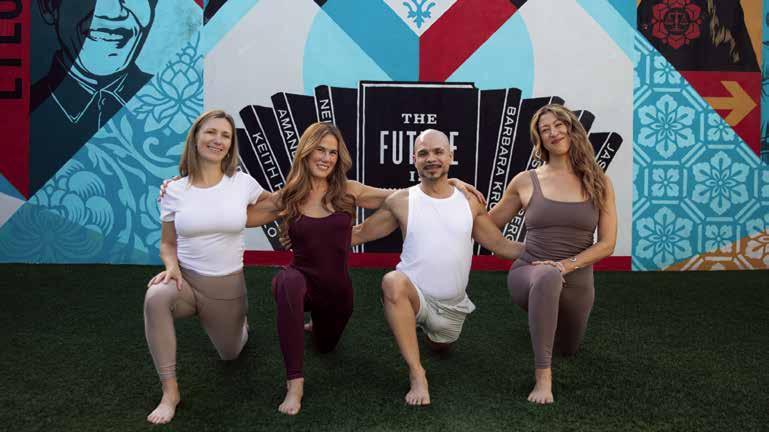
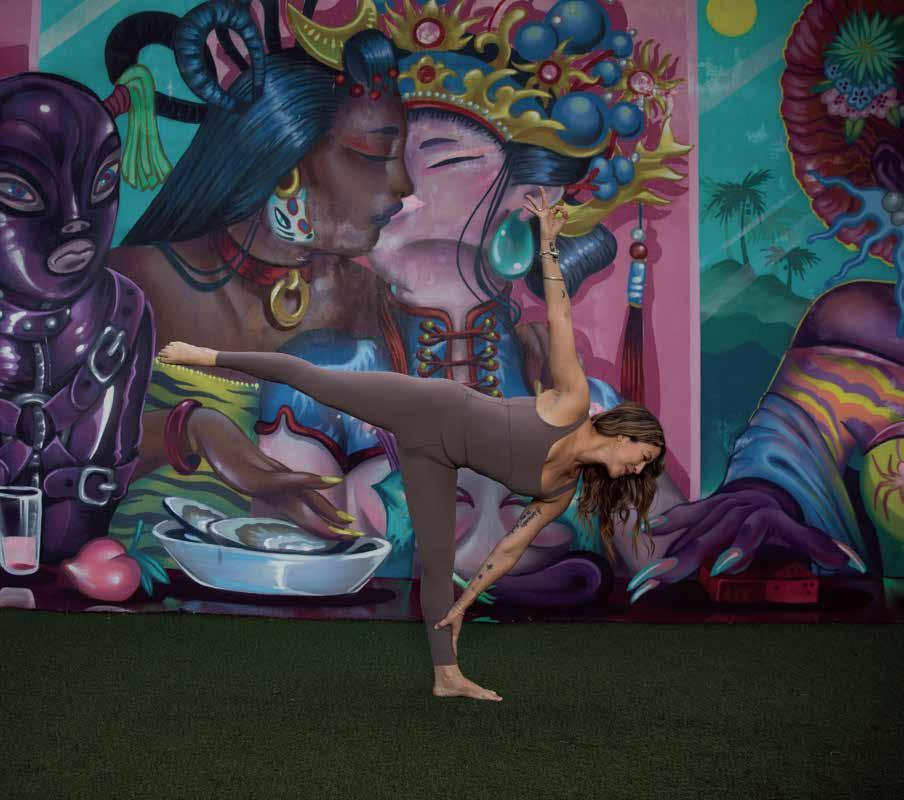
“Community is the quiet strength that carries us through change. In yoga, we remember that we never practice alone — each class and experience links us to others. When we find a space where we feel seen and supported, our practice deepens, and so does our sense of belonging. I’m forever grateful for my yoga community.”
Patricia Pinto @thenycyogini
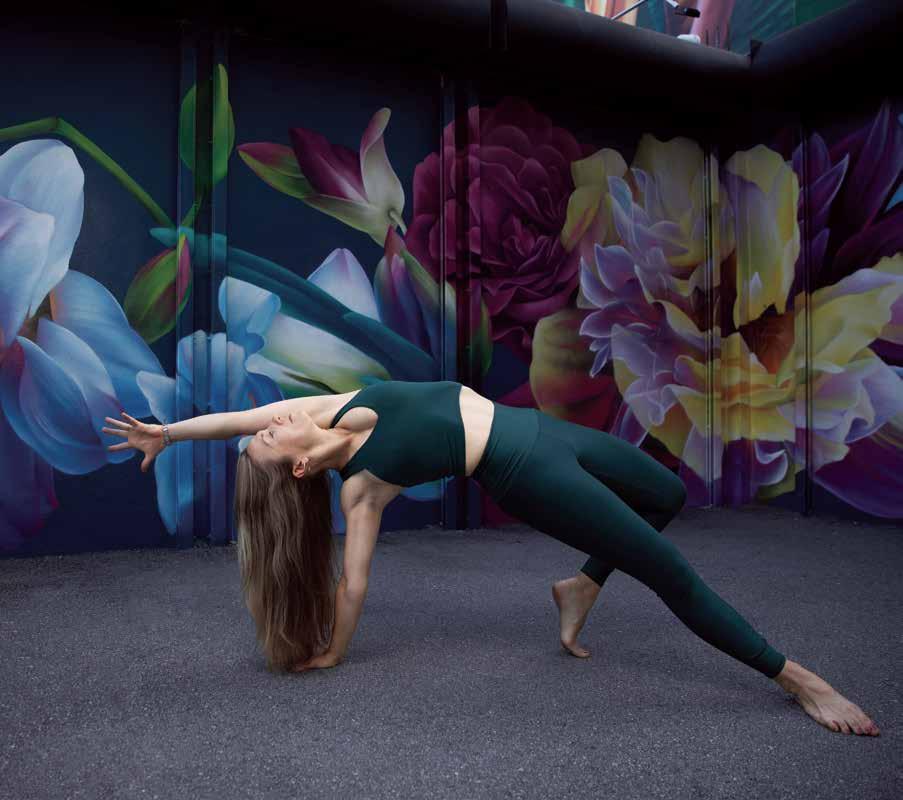
“Yoga studios are about so much more than movement and fitness – they provide physical spaces where students can be in community while honing their individual practice. For many, yoga is the only true “practice” in their lives – a place where they can cry, laugh, fall, and get back up. Unlike sports, there is no winner or loser in yoga – we’re all here to cheer each other on.”
Kate Durand @kixdavies
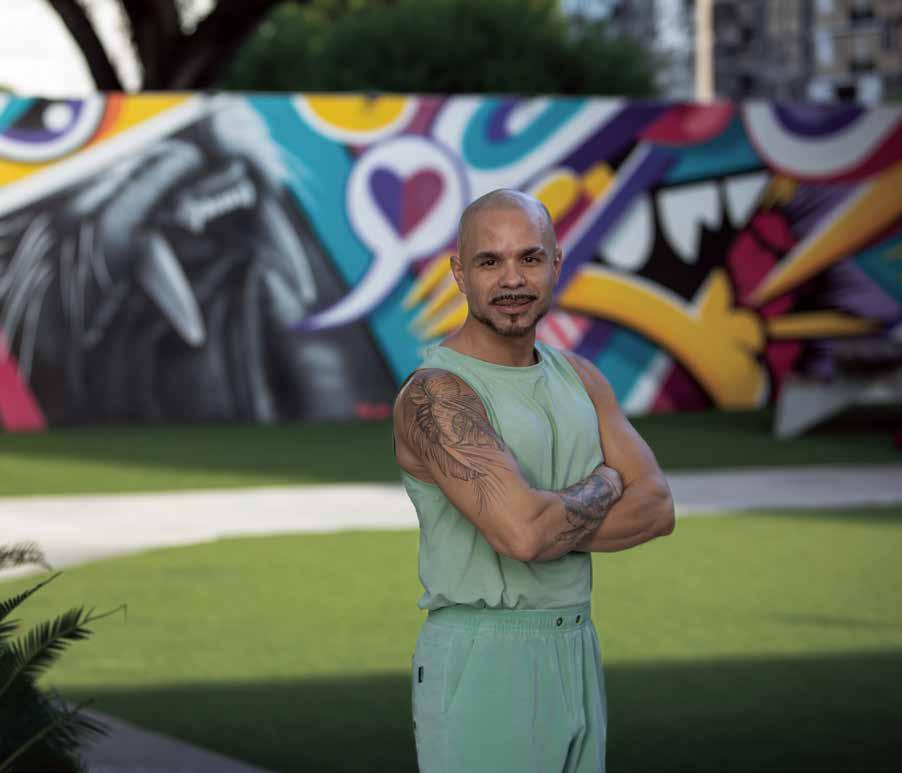
“Yoga has taught me that true strength doesn’t come from perfect poses, but from mutual support. Community is the space where we share, inspire, and grow together, reminding us that every breath and every movement feels deeper when experienced together.”
Johan Blanco @arqui_yogi
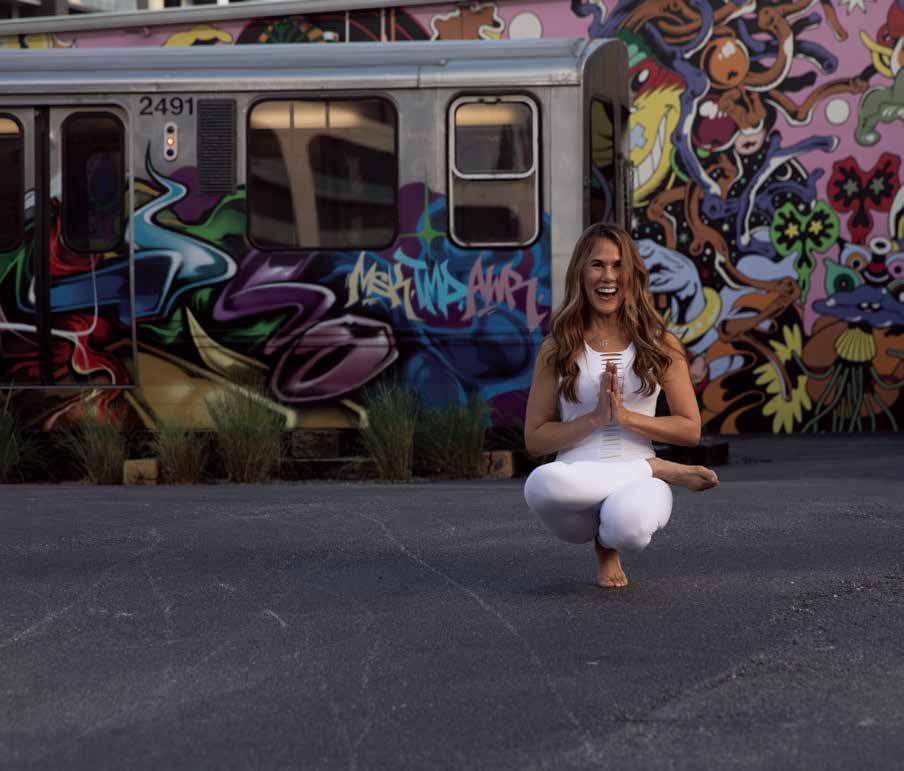
“Yoga grows deeper when we practice together. Community lifts us on days we’re strong and carries us on days we’re not. Your presence matters more than perfection. To this community: thank you for showing up. Together, we create the space where transformation becomes possible.”
Virginia Alvarez @Virgivenezuela
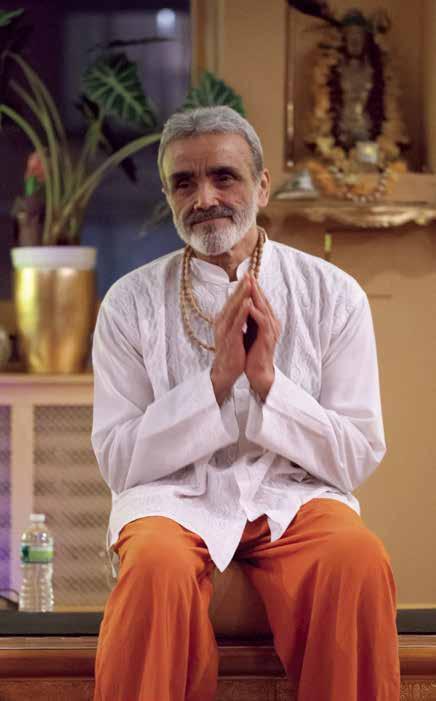
formative experiences and offers timeless guidance for anyone called to create a space for yoga and community today.
When you first met Yogi Gupta, how did you know he was going to be your guru?
I felt that he was the right guru, especially after our first meeting. Just like when you're trying to find a spouse, right? Sometimes at first sight, you feel – that's it!
You did not speak English at the time, right?
No, I knew one or two sentences, “I am hungry. I need money. Thank you.”
How difficult was it to communicate with him?
My younger brother had to do the translation. I bought a little book about Moby Dick. It's a book to teach people how to improve their English. So I started copying and memorizing, little by little. Trying to listen to the TV and to the radio. And gradually, I started getting better.
BY: JONEIL ADRIANO
PHOTO: JEFFREY VOCK
For nearly 15 years, I’ve had the great blessing of studying with Sri Dharma Mittra, whose humility, humor, and unwavering devotion have profoundly shaped my understanding of yoga. Long before yoga became a global phenomenon, Dharma-ji left his home in Brazil with few possessions and only a rudimentary grasp of English. After arriving in New York City, he felt a deep inner call to study with Sri Swami Kailashananda, also known as Yogi Gupta, who became his guru.
From those early, austere, and lonely years in the ashram, he went on to establish one of New York City's first yoga centers, eventually becoming a world-renowned yoga teacher. Now in his late 80s, and with more than half a century of teaching, Dharma-ji’s path has been one of discipline, service, and compassion. In this intimate conversation, he reflects on his
My goal first was to learn English enough to conduct a class. You see, for many years, my English was just enough to conduct a hatha yoga class and a pranayama class, but I could not read the scriptures or explain the Bhagavad Gita. So I did more silent meditation. If the student asked me any question that I could not answer, I said to him, “Why don't you talk to my guru?” But it was extremely difficult if you cannot communicate. I’m still having lots of problems with English! In order to share knowledge, you have to speak well to give the right knowledge. I am still working on it.
How long was it before you taught your first yoga class under Yogi Gupta?
That was about three years, in 1967. I went to teach my first class in a health club and my English was just enough to conduct the class. But I didn’t succeed much. When you don't speak well, they don't understand. They fire you.
How long did you live in the ashram with Yogi Gupta?
I lived in the ashram, maybe 11 or 10 years. The main ashram was located on 56th Street, close to Lexington Ave [in New York City]. It was an old brownstone building that was close to being demolished. Then we decided to rent and fix the building. I was the handyman and we moved into this ashram. We have maybe 5-10 disciples giving classes.
What were some of the most important things you learned?
First, what struck me was to learn how to cope with loneliness and pain when you don't have anything outside anymore. No money, no family, not what you want to eat, no cigarettes, no alcohol. You understand? No movies, no friends. Since I could not speak English, I had no friends, no communication.
When we were in the ashram, I learned about my level of ignorance. I learned how stupid I was, how ignorant, and how
I lacked self-control. I realized we have to purify the mind in order to feel, not in peace, but to feel ready to concentrate on knowledge. To follow some of these instructions, you need discipline. I learned how to get healthy. Also — the most important — I learned how to gradually cope with obstacles. When you feel depressed, when you feel temptations. So you learn how to cope with them. I had difficulties going through it, but I knew how to go through it with faith.
I also learned that the action of compassion is to see yourself in others, and see the discomfort there. The same technique I used to place myself in the guru and try to force myself to feel what he's feeling. You learn to place yourself in others for different purposes. So that's part of compassion, empathy.
How did he tell you that you were ready to start your own yoga school? Actually, he didn't tell me when I was ready. I was the one who told him I had enough of hearing his lectures for 10 years!
My younger brother was also there, so when he left, I was in total darkness. My brother later opened a little yoga center, teaching at a hotel. I said, “Why am I not doing the same? I don't need anything here anymore.” So I left the ashram. Before I left, I asked the guru. He said, “That’s fine. Do your best. If you need help, use the phone.”
I didn't have any money. I met one of my students and he said, “Why don't you go downtown? I have a loft there, 3,000 square feet. Why don't you go there? You can fix it and start teaching.” Then I received a call from a student. This lady, she lives near Central Park, she sent me some money to pay for a private class. I remember it was $200. It was exactly what I needed! I fixed the place and in one week, I had a full class.
A full class? In one week? Yeah, $1 or $1.50 classes. But at that time, everything was not too expensive.
It was almost like God was watching you and giving you what you needed to start your yoga center. Oh, yes, little by little. I remember in one year, I had $1,350. That was enough to rent another place on 29th Street. One of my students’ husband owns a little building on 29th Street and Seventh Avenue. The second floor is empty, he said he can rent that to me for $230. So I bought a neon sign to put in the window, and after a few days, I had a full class.
You used to make the neon signs, too? Yeah, I went downtown to a school where you learn how to bend them. You burn your hand, though!
can order from Juice Press. So you can make students succeed much easier. You can find any scripture on the internet overnight. So students change, we change, and the techniques to share the divine knowledge change.
With all of the changes, how do you still honor tradition and the lineage?
Tradition, I understand, but lineage, what means lineage? Like my guru, I don't know which lineage. I don't care what lineage. I never even understand this word. It doesn't make no difference to me. But tradition, my tradition is just a tradition, but that tradition keeps moving. Tradition has to keep updat-
“When we were in the ashram, I learned about my level of ignorance. I learned how stupid I was, how ignorant, and how I lacked self-control. I realized we have to purify the mind in order to feel, not in peace, but to feel ready to concentrate on knowledge.”
What are some of the differences between the students you had then versus the students you have now? Remember, everything evolves. Today, technology – cell phones, internet – is a very strong distraction. The students change a little bit, they are not that reverent and obedient anymore because there are so many choices.
A good teacher adjusts the yoga according to the lifestyle of today. If I ran a class here the way it should be, the way I learned in a traditional way, this room would be empty. Today, people are more active, they are restless. So we have to adjust the poses according to their conditions.
Today, it’s also a blessing because we have the internet. You can have your vegan diet online. If you’re lazy, you
ing. Not the essence. Everything needs some updates.
If somebody came to you and said, “I want to start a yoga center,” what is your advice to them?
Sit quietly. No distractions, no cell phone, no food, no watching TV. Then see where you want your yoga center, the location. It has to be comfortable. It has to be soft.
Remember, if you rent a place in a building today, you have different laws. You have to have access for [disabled people] to go up. And get ready for the first day, the second, even a week, you won't have much business. That's why I have three months [saved up] already. If I don't have any money for three months, I still can pay all the bills.
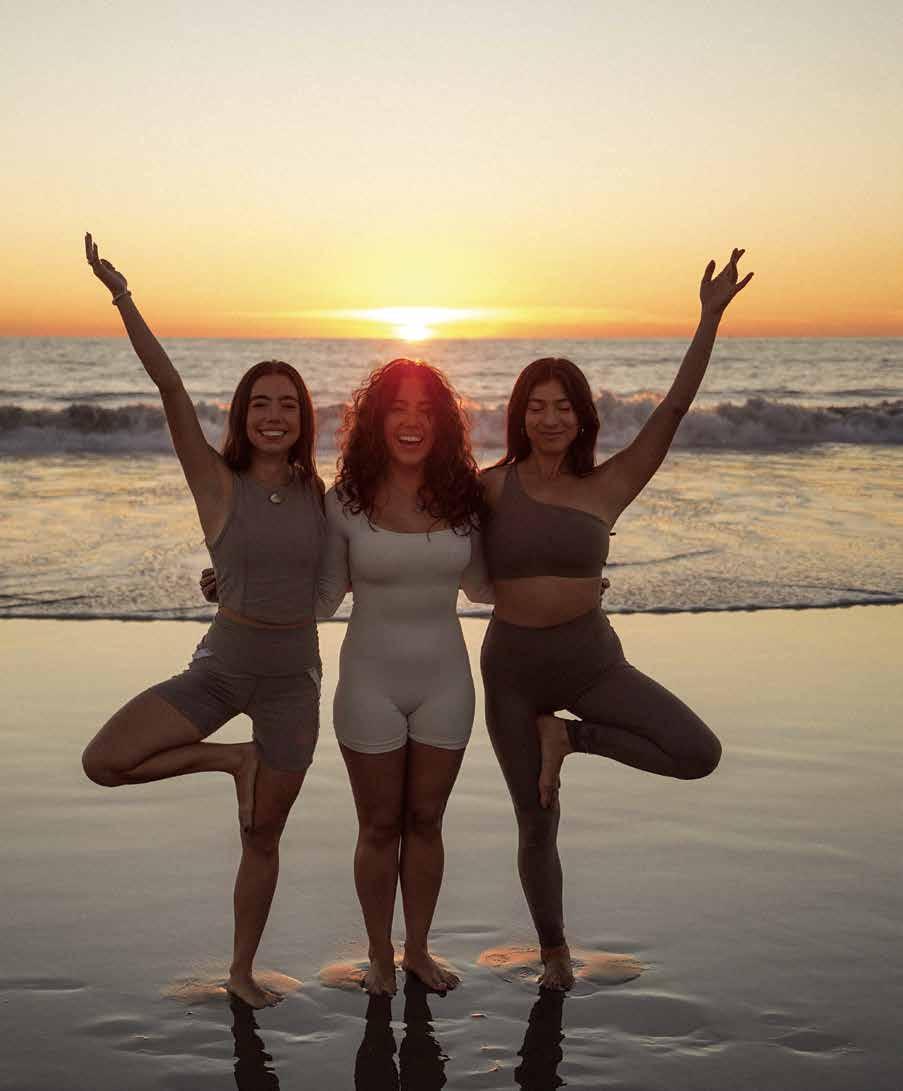
INTRO: NATALIE VALLE HONAKER
PHOTOS: JUANA CASTELLANOS
Los Angeles feels like a vortex. Surrounded by nature and nestled between the ocean and the mountains, the city holds the full spectrum of the human experience. At its highest vibration, Los Angeles is alive with art, creativity, inspiration, and a shared desire for well-being. It offers space for like-minded individuals to find one another, collaborate, and create something meaningful. This has been my experience since arriving in this remarkable city over a decade ago.
Living in Los Angeles deepened my relationship with yoga, meditation, and nature, while the people I encountered along the way profoundly shaped my personal and professional growth. Last year, I founded Latinas Who Meditate, a community created for women-identifying Latinés interested in wellness, mental health, and personal development. Being held in the community expanded my life in ways I could never have imagined.
It is for this reason that I chose Joselyn and Maria Jose as teachers to spotlight. They have emerged as leaders within Latinas Who Meditate, bringing their unique wisdom, lived experience, and energy into the ever-growing community and helping to shape its continued evolution.
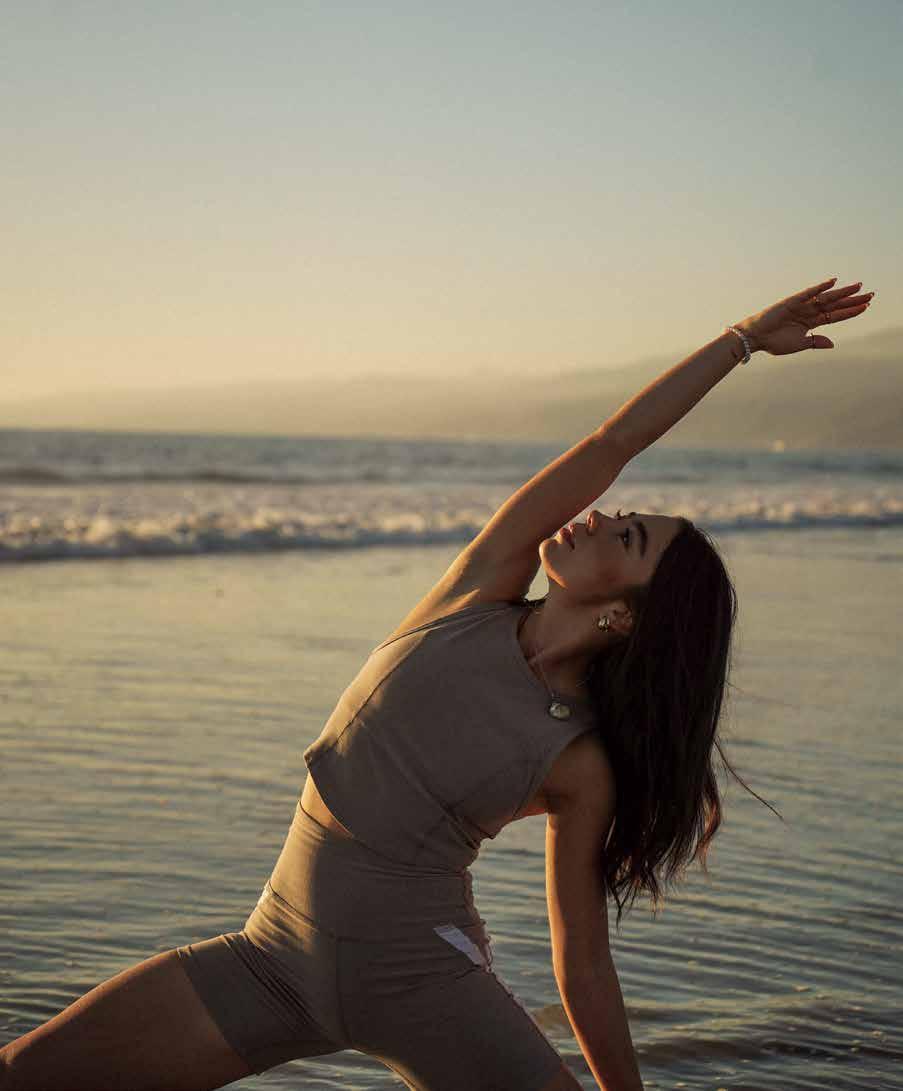
“We need community because we don’t grow in isolation. We heal, expand, integrate, and transform through the relationships that support us.”
MJ Fernandez Avila @mariajosef08
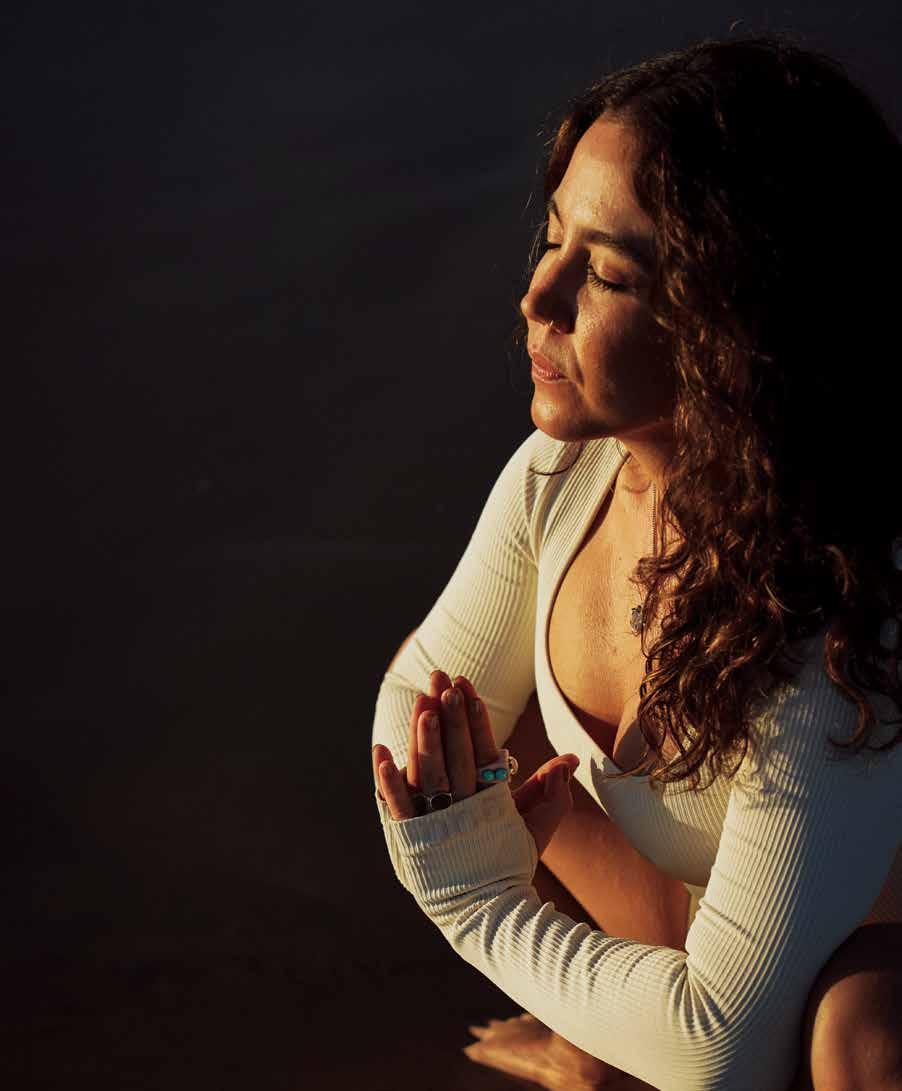
“Community is the ground that holds me and allows me to grow. It’s the chosen family I’ve built far from home — the souls I walk this life with. The net that teaches me and mirrors parts of myself. Creating and nurturing community is an expression of my purpose.”
Joselyn Fernandez Avila @joselynfernandezavila
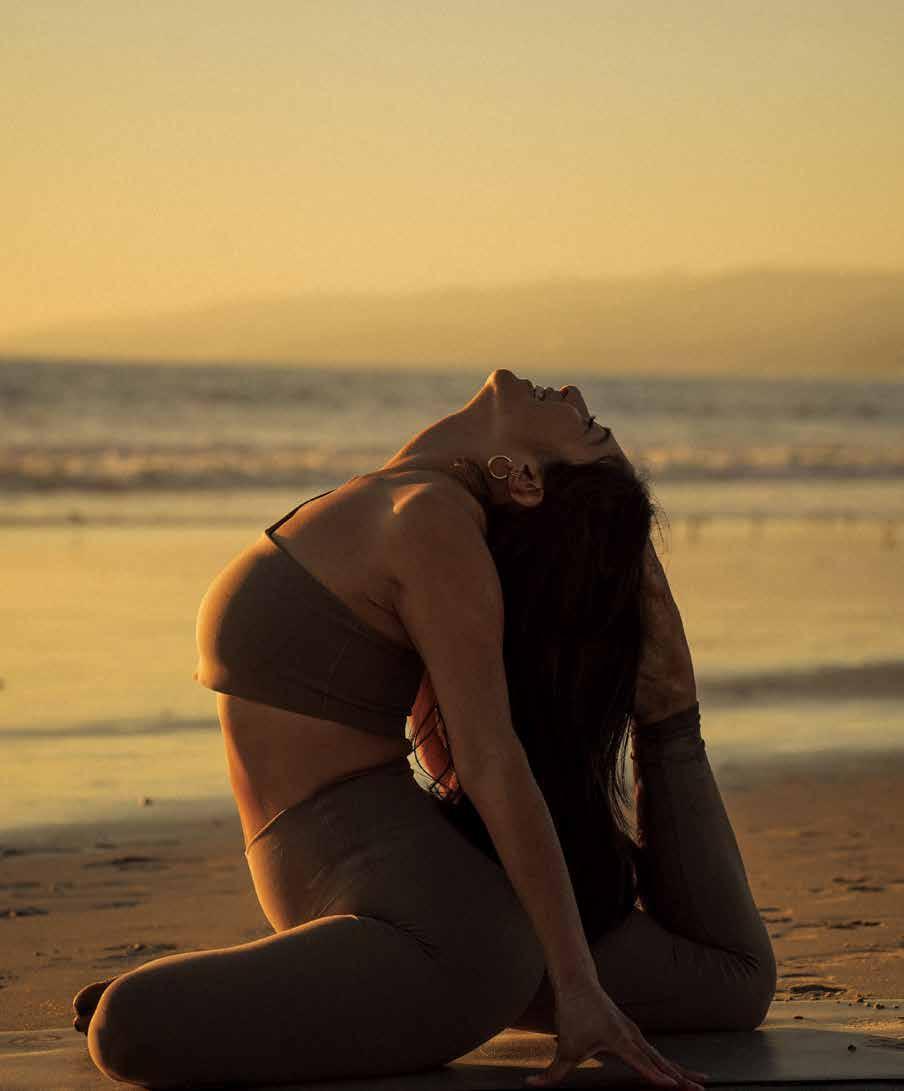
"If mental illness happens in isolation, healing happens in community."
Natalie Valle Honaker @natalievictoriavalle
If you could write a letter to your younger self what would it say? We asked Ava Taylor, founder of YAMA Talent and Impact Marketing & Regenerative Community Manager at Kripalu Center to write a letter she shares here.
Dearest Ava,
It is deep winter here and I find myself fascinated by what thrives in difficult environments. How nature, by sheer will and ingenuity finds a way—to persevere, to sustain, to germinate, to create beauty. I marvel at the determined evergreen and delight as a beautiful little bird sings on a snowy branch hiding buds already filled with the magic of spring.
You were born here near the winter solstice, when day is short and night is long—this season makes me think of you. This season of darkness, scarcity, longing and solitude. A season for sturdiness and stillness as leaves freeze where summer’s river flowed, and I am warmed by the fire of my imagination.
Daddy was right, you were always destined for greatness.
You may have had more winters than most— different homes and different schools most years, kitchen shelves often bare and mismatched, waiting at the door for someone who wasn’t coming home, but oh how it will serve you, Child!
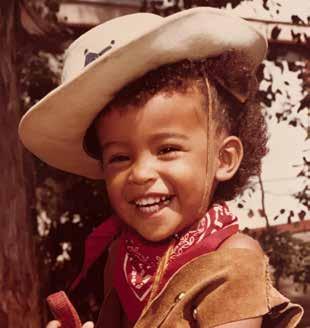
“You will be resilient—almost fearless and totally capable of realizing your dreams for you know that there is always a way.”
In the darkness you will imagine great dreams. The scarcity will become eternal gratitude and make-something-out-ofnothingness— the longing will allow you to desire, seek and find relationships with the most beautiful. Instability will make you brave and give perspective on what matters most, while solitude will build an engine that can push through despite all odds.
You will be resilient—almost fearless and totally capable of realizing your dreams for you know that there is always a way. Though you never complained, you will come to see that your winters, and Daddy’s confidence were what made you great.
And one day in winter, you will return to the fireside to daydream and rest, and realize that the beautiful little bird singing on the snowy branch is you.
Love, Me
BY: LAUREN CAP
When I heard that this issue of Yoga Love Magazine was centered around community, the first person I thought of was Bryan Kest, the original creator of power yoga. He’s owned thriving studios in L.A. for over 30 years and led retreats, workshops, and classes across the globe. His authenticity and commitment to sharing the true essence of yoga have brought people together from all corners of the world. Somehow, he can guide you through a physically intense three-hour class, and you’ll swear it flew by. Bryan’s passion for teaching and his role in bringing power yoga to L.A. sparked a movement, and decades later, he’s still showing up with the same wisdom and humor that made his early classes unforgettable. His mission has always been to make yoga accessible to everyone, and I’m truly grateful for the chance to have this conversation with him.
When you think back on your early days of teaching, what do you remember most vividly?
When I started this, I felt like we were really in the bee's hive. It was everything, it was like the center of the yogic universe, and we all knew we were onto something special. We’d have 180 people per class, three classes a day, and lines down the street. At one point, L.A. had over a thousand yoga studios. It was an explosion of yoga, and it was
a really awesome time. The energy that we cultivated there is what spread to the world. Students of mine went to Germany and opened the International Yoga Conference there, which started spreading it throughout Europe. That was an amazing time.
Yoga has taken you around the world. Is there a place or moment that stands out as especially meaningful for you? There was a point where I was teaching in 90 cities a year, on six different continents. There's something special about each and every place. One thing that stands out is the retreats, because I got to handpick the locations, whether it was Peru, Mexico, Japan, Hawaii, or Greece.
In your book, Autobiography of an American Yogi, you share how yoga helped you face and release harmful mental habits. How did those personal shifts affect the way you connected with others? And how do you see the same process unfolding for students in yoga? The process unfolded with students the same way it unfolded with me. As these qualities develop, they start taking hold in your attitude, demeanor, communication, and interaction. They affected how I connected with others in a positive and benevolent way. When you become less reactive, you give a little bit more time and space to develop perspective, and that allows you to respond differently.
You're not necessarily responding out of emotion, you're responding from insight and wisdom. It also helps you give people the benefit of the doubt as opposed to immediately jumping to a negative conclusion.
Initially, I had a lot of anger, a lot of insecurities, and a lot of fears, and those would dominate my interactions. The whole idea of yoga is to create awareness. You start becoming aware of how you are, so you can start noticing things that are harming you.
When you're able to notice those things, then you're able to start feeding those things less mental energy and unconscious loyalty. Whenever you stop feeding something, it starves and dies. This is a universal law.
As you start noticing you are angry or fearful, or your insecurities, you have an opportunity to pull your mind away from rolling in those tendencies. The more you can pull your mind away, the less your mind rolls in those tendencies. I like to call it “killing the enemy.” But the enemy is not out there, the enemy is in your head.
The objective of yoga is awareness. That's what enlightenment means, and enlighten means to create light. The reason you create light is because you
“At one point, L.A. had over a thousand yoga studios. It was an explosion of yoga, and it was a really awesome time. The energy that we cultivated there is what spread to the world.”
can't see in the dark. The whole idea of awareness is to see because you can't stop doing the shit that's hurting you if you don't see that you're doing it. That's the whole path of yoga.
That allows you, if your desire is there, to create way more benevolence. That's the objective, right? I mean, everybody's basically complaining about the lack of benevolence. If it's in global warming, or it's in politics, or it's in the socioeconomic structure of communities. But what they don't realize is that everything they're complaining about exists within them, and it can't change out there if it doesn't change within you. That's the objective of yoga. That's probably what Gandhi meant when he said, “Be the change you wish to see in the world.”
When you throw zingers in class, whether it's an F-bomb or you say something funny, I've heard you say it's getting people to be less reactive, so you challenge them. Is that on purpose? I could hide all the stuff that annoys people, but I figured if you're reacting in a yoga class, then you're for sure going to react with your children, at work, and all that stuff. This is a safe place to practice being less reactive and more accepting. That's what this is about; it's about health. The health comes from how you respond to your environment, because there's nothing that hurts you more than stress.
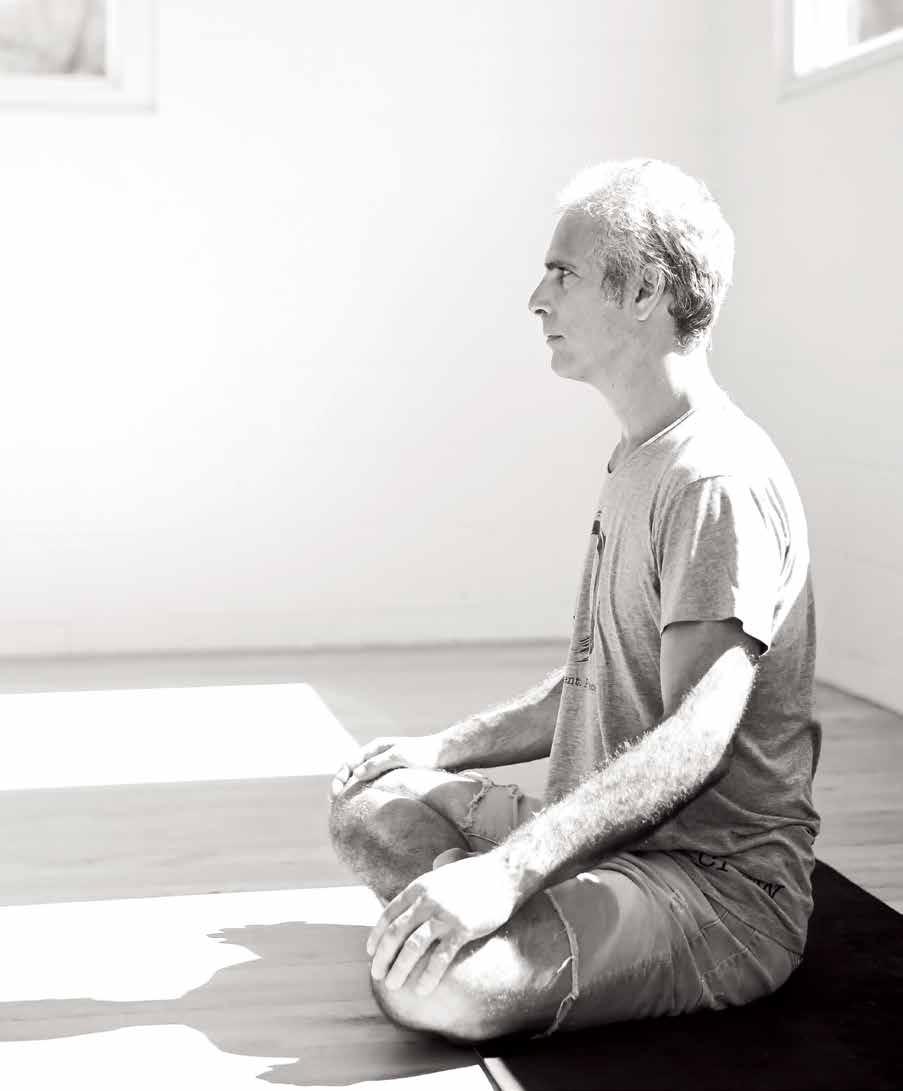
continued on page 72
INTRO: JANIE LARMOUR
Sydney is definitely one of the most beautiful cities I’ve ever seen, and I feel incredibly fortunate to have been born here and to call it home. My yoga journey has taken me across Australia, the USA, Asia, New Zealand, the UK, and Europe. I even lived in New York City in the ’90s while studying acting and working for John Leguizamo as his one-person show Freak moved from Off-Broadway to Broadway.
No matter how many times I travel, every time I return to Sydney and glance out the airplane window to see the Opera House, the Harbour Bridge, and our stunning coastline lined with golden sandy beaches and rugged sandstone clifftops, I am reminded of how lucky I am to belong here. In 2023, after 15 years of teaching at yoga festivals, expos, and conferences all over the world, I founded Yoga Day Sydney, a festival created to teach, inspire, and strengthen our yoga community. It was through this festival that I met Siddhi Shakti and Kaja Troa, who bring their own unique offerings to the event.
Siddhi is an inspired chant and mantra meditation leader, sacred musician, and sound and energy healer. Through sacred sound, she guides people toward deeper connection with the Self through her courses, group, and private sessions. Kaja teaches corporate classes in the city and beachside sessions at Bondi and Tamarama. Her playful, fun, and rejuvenating classes include hatha yoga, power flow, yin yoga, and sound healing. I teach a Japanese style of yoga called Zen Ki Yoga, rooted in Oriental Medicine, the meridians, the Five Elements, shiatsu, macrobiotics, modern exercise science — and plenty of common sense.
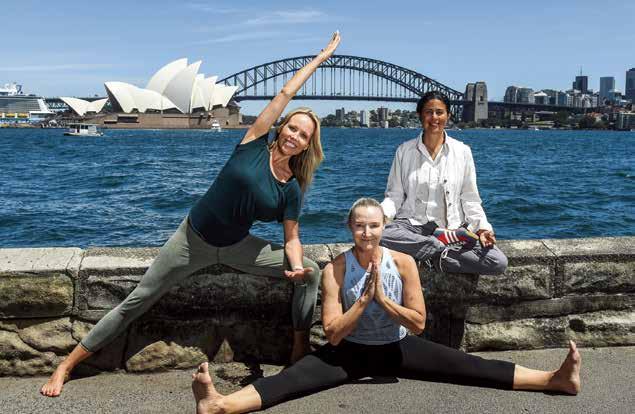
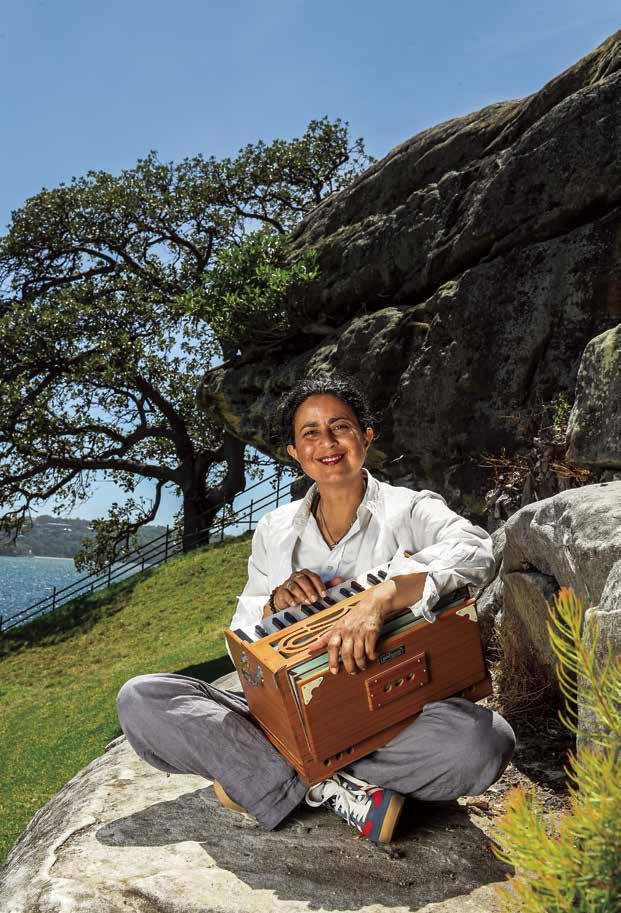
“In community, sound yoga and mantra becomes a field of shared resonance. Our voices co-regulate, uplift, and dissolve boundaries, inviting us into deeper union with ourselves and each other. The collective vibration strengthens wellbeing, healing, and connection; it promotes joy, and is a source of attuned personal medicine. It’s transformational when we come together in the heart of the sound.”
Siddhi Shakti @siddhi.shakti
“In my 26 years of teaching, I cherish the many communities I’ve been and continue to be part of, especially the lasting friendships that have grown out of them — from my former studio and corporate classes to my online classes and teacher trainings, overseas festivals and the Sydney festival I founded.”
Janie Larmour @zenkiyoga
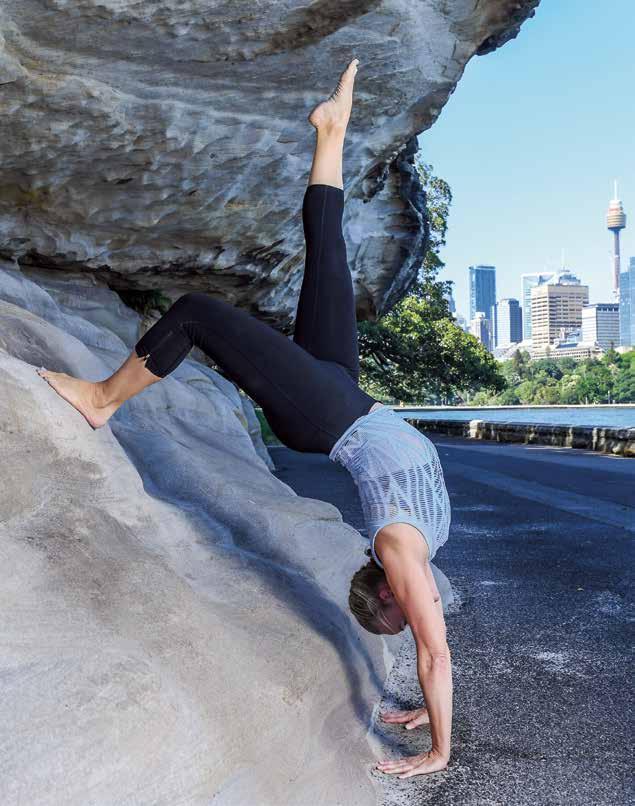
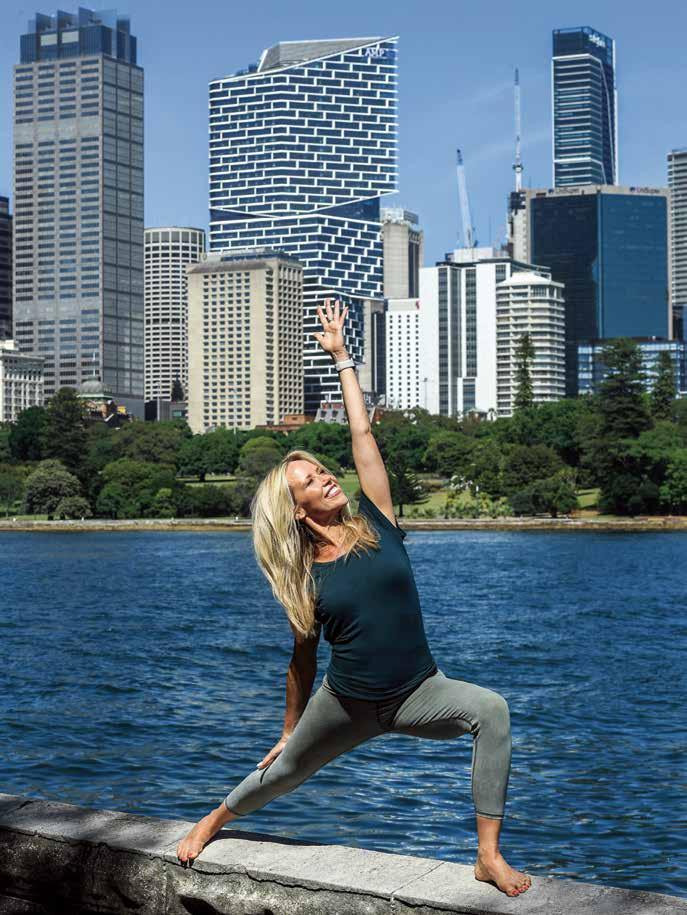
“Community anchors my yoga practice, fostering connection, belonging, and healing. Sydney’s unique blend of city and coastline inspires my work, from CBD boardrooms to ocean shores. Through Tama Yoga, I create accessible, inclusive spaces that honor individuality and nurture wellness. We rise by lifting others.”
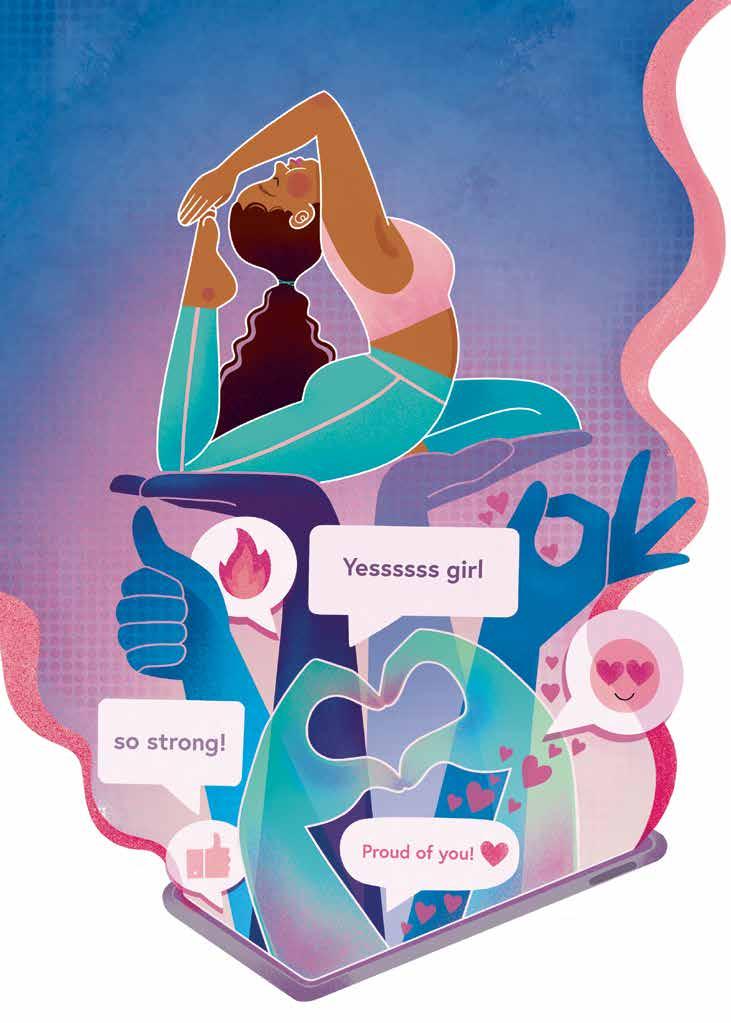

BY: FRANCES HUNT
ILLUSTRATION: LAUREN REBBECK
About 13 years ago, I met my first online friend through a company called Stella & Dot. I had just signed up to sell jewelry, not realizing that beyond necklaces and #stelladotstyle, I was stepping into something much bigger: connection. Instagram was still new(ish), and what began with a few likes and supportive comments turned into late-night chats about life, business, and adulting. From there, I made friends with women in various states. Somewhere between product posts and pep talks, real friendships formed— ones that have lasted far longer than the jewelry line itself.
Long after Stella & Dot, many of us are still friends today, even though most of us have never met in person. We keep up with one another’s lives through Instagram and Facebook, celebrating birthdays, milestones, and successes. Six of us still share a text thread, checking in regularly as if no time has passed.
A few years later, Facebook brought another kind of connection. My high school classmates began following one another, and before long, a reunion was organized. We laughed over old stories and simply enjoyed seeing each other in person after so many years. After the reunion, we continued to hang out for a couple of years, and though life eventually got busy again, we still find ways to keep up with one another via Facebook. Those small comments, emojis, and shared memories still mean something.
Over time, my world expanded across platforms and passions: wellness, entrepreneurship, digital marketing, and content
creation. What tied them all together wasn’t an algorithm; it was people. The communities that grew from those first clicks and conversations have shaped my career, deepened my sense of purpose, and reminded me that community can exist anywhere hearts are open.
My Digital Village
When I started sharing my wellness and fitness journey online, I didn’t realize I was quietly building a digital village. Women from all over, many of them Gen X like me, began following along. We bonded over morning workouts, perimenopause struggles, and the constant balancing act of trying to stay well as we age. What started as simple accountability posts and fun tags became two-way conversations, ways to inspire one another, stay consistent, and, most importantly, feel less alone in the struggle to stay in shape.
That sense of connection deepened during the pandemic when I joined online workout classes via Zoom. Each morning at 6 a.m., a group of us showed up, often sleepy, sometimes energized, but always together. We began following one another on Instagram, cheering each other on through posts and messages. Five years later, many of us still keep in touch online.
I even joined a step class on Zoom taught by an instructor I discovered on social media. Two years later, I took a class in person and met several women from that same online community face-to-face. I had posted some of those early workouts online, and other women began commenting and connecting through them. Many of us still follow and support one another’s journeys today. It’s proof that even digital sweat sessions can spark lasting friendships.
I know one thing for sure: some of the most consistent support in my life now comes from people I’ve never met in person: I feel their energy, their encouragement, their presence.
Friendship in the Feed
Some people believe friendships can only be formed in person. They don’t believe in making online friends. But I’ve learned that authenticity isn’t about proximity; it’s about presence.
When someone messages me after a post and says, “I needed this today,” I feel the connection deeply, the same way I do when I leave a heartfelt comment on someone else’s page. I’ve built relationships with women who check in during busy seasons, celebrate my small wins, and remind me to keep showing up. My latest group has been women I’ve met through TikTok LIVE, where conversations about fitness, motivation, and freedom often turn into late-night laughter. We’ve had online painting sessions, cooking sessions, and our WhatsApp group is our daily check-in.
continued on page 78
INTRO AND METTA: MEGAN TWINING
PHOTOS: MICHELLE GUILLERMIN
Maryland wraps itself around Washington D.C. in a unique puzzle-piece shape of a state that is known for saltwater coasts, ever-shifting river banks, and farmland vistas. The backdrop for showcasing Maryland Yoga is my historic neighborhood Calvert County, which is framed by the Patuxent River on the west and the Chesapeake Bay on the east.
Today, Marylanders gather with friends and family along shores and at farm stands dotting the fertile ground. A meaningful aspect of my sādhanā is simply observing the way local residents connect and acknowledge the steep history of my state, and our predecessors in the meditation on the next page.
In this feature, I am joined by two other teachers who also serve through Yoga right here at home and through wider nets internationally. Savitha Enner practices Karma Yoga (the yoga of dutiful action) by cooking traditional Indian recipes online and at her local supper club. Allie Lehnhardt leads students along the path of Rāja Yoga (the yoga of union) through asana and meditation classes. As for me, Megan Twining, I bow to the paths of Jñāna and Bhakti Yoga (the yogas of inquiry and devotion) for bolstering and balancing my ability to steward a close-knit network of more than a dozen teachers and several hundred students.
Thank you to Swann Farms and private residents of Scientists Cliffs for allowing us to use their beloved property. From Maryland to wherever you are, may all beings know belonging.
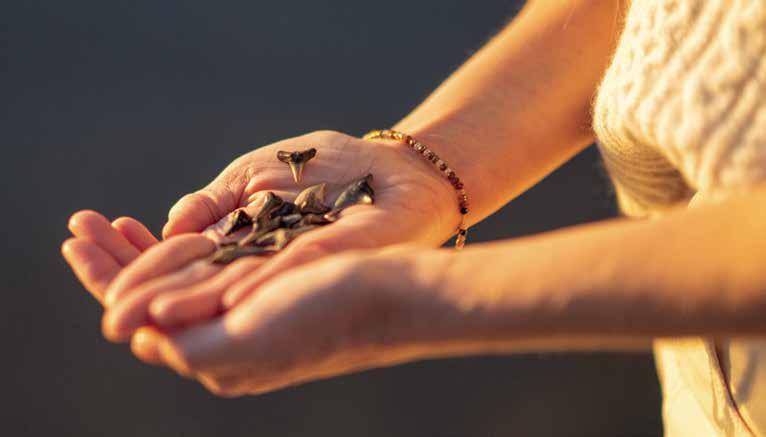
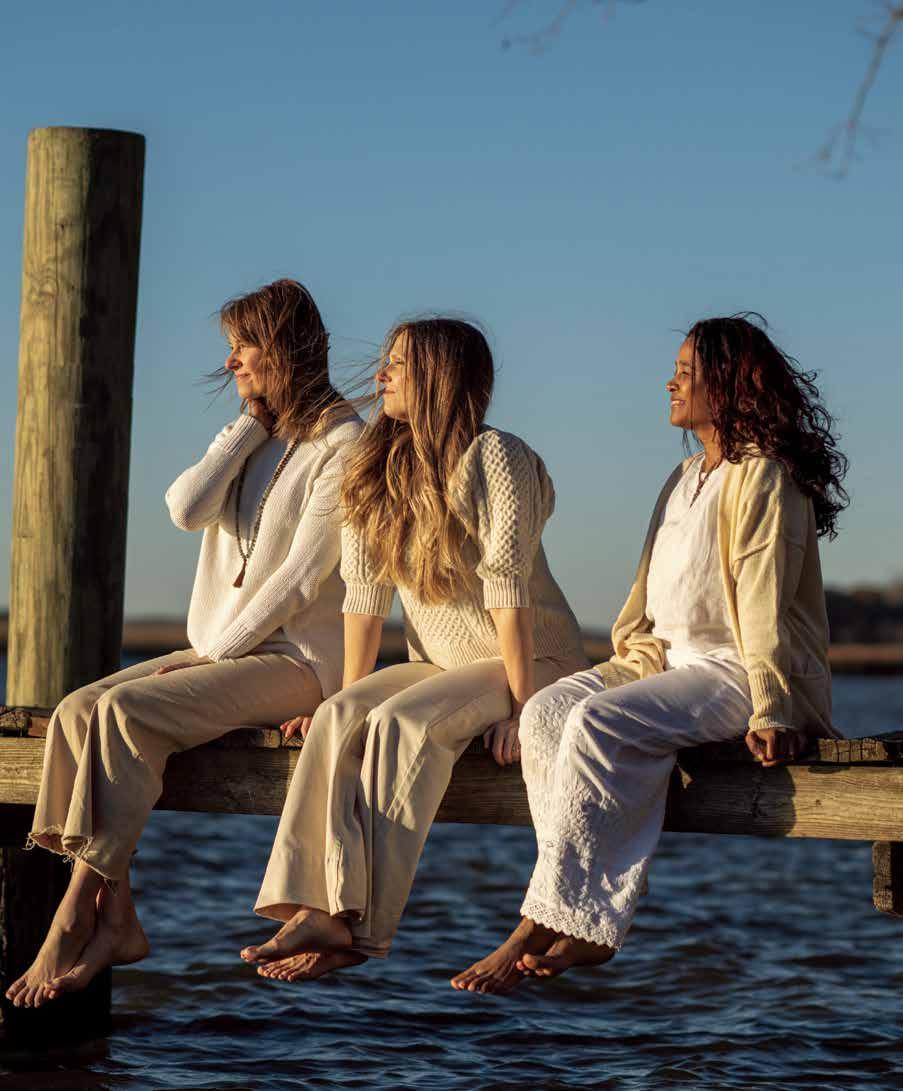
MARYLAND METTA
May our delight in 20-million-year-old treasures, patiently released by the cliffs themselves, be unexpected reminders of the beauty of impermanence.
May our watery play and seasonal harvests acknowledge and honor the eternal spirit of the original Indigenous peoples of the land and waterways upon which we live.
May our gathering for good in barns once used for gain, hold space for the wounds of slavery and may Maryland’s Resolution of Apology hold steady hope.
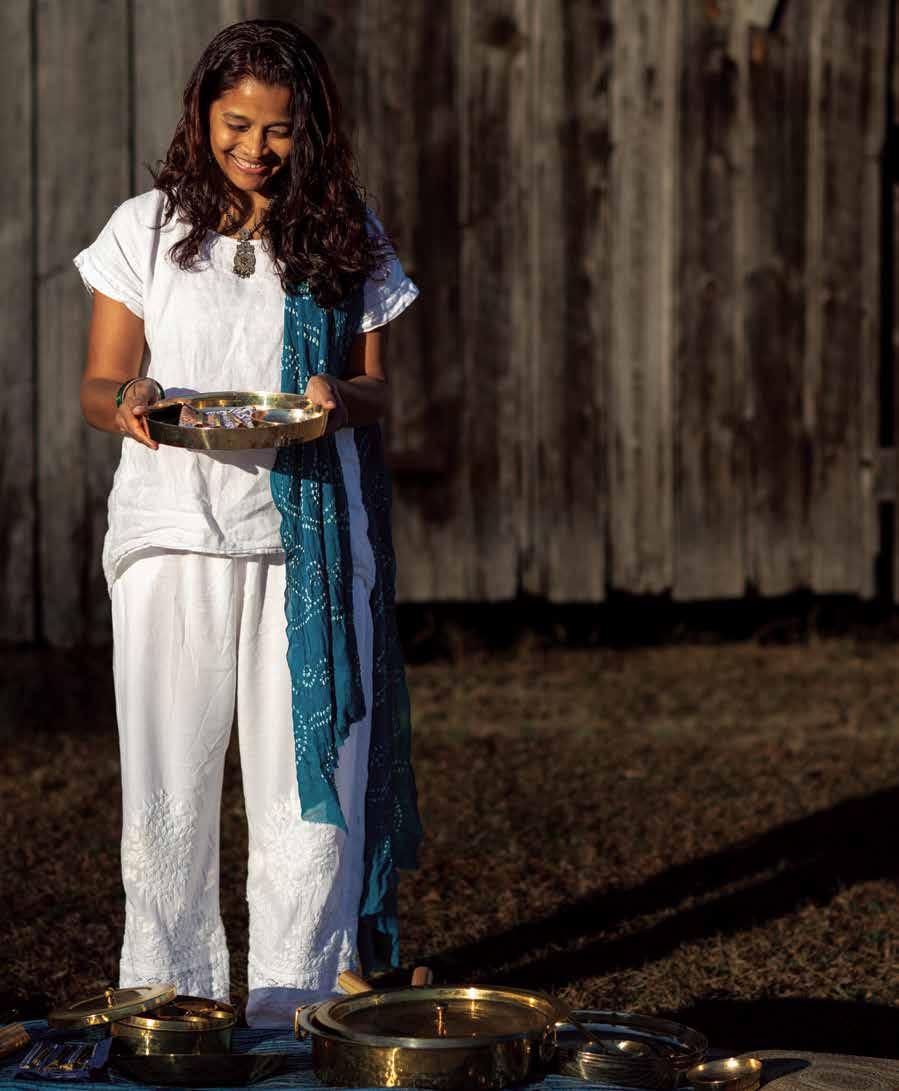
“Svadhyaya (Self-study) is where we meet ourselves in solitude. Sat Sangha (community) is where we lean on each other to deepen our practice. Together, we create an engaging, honest, and loving collective consciousness.”
Savitha Enner @cooklikeayogi
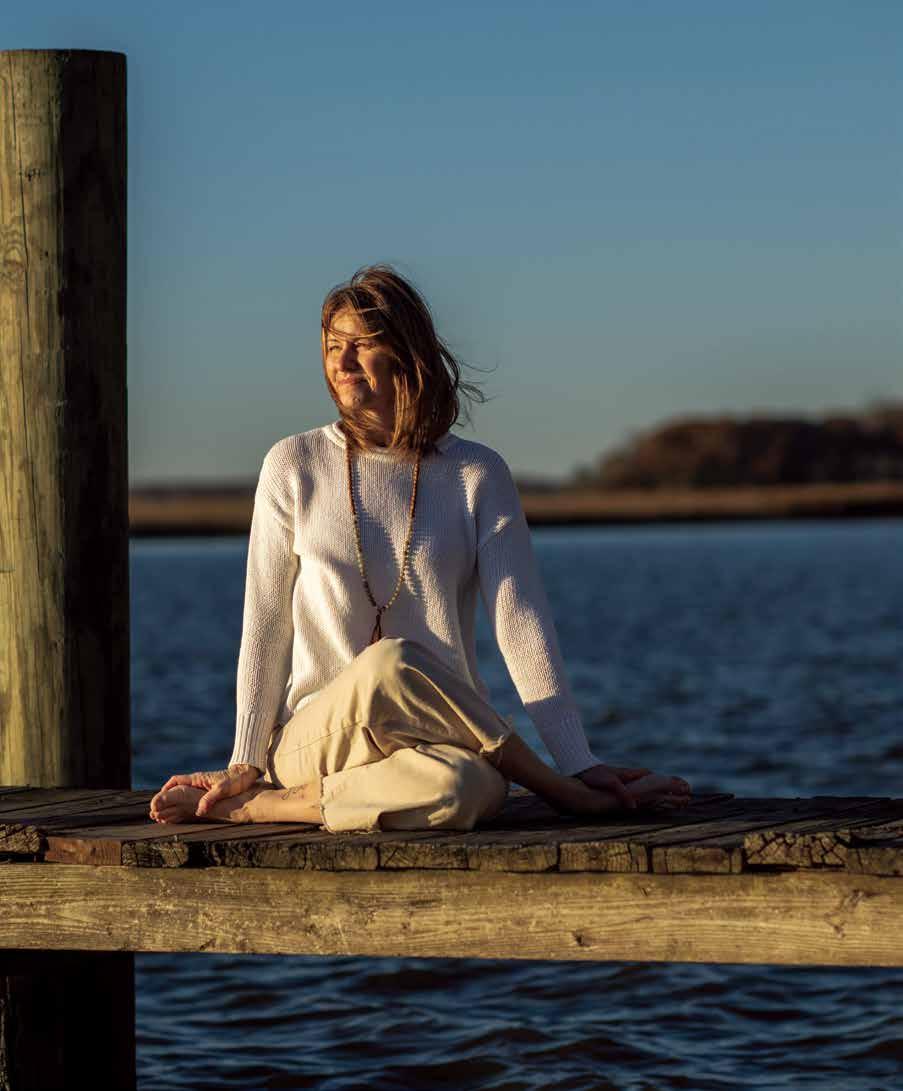
“Community is the quiet thread that binds hearts together, where trust awakens, and courage and empathy are met with compassion. By lifting one another, we strengthen the collective and nurture harmony. Within these bonds, we discover purpose, belonging, and the enduring truth: we are always stronger together.”
“Everyone creates somehow. It may be through art, and it may be the creation of gentle communication, or dedicated caregiving. What a joy to witness and be witnessed in what we each create. It is bolstering to know one another. This is how good gets loose out into the world. This is community.”
Megan Twining @megan.twining
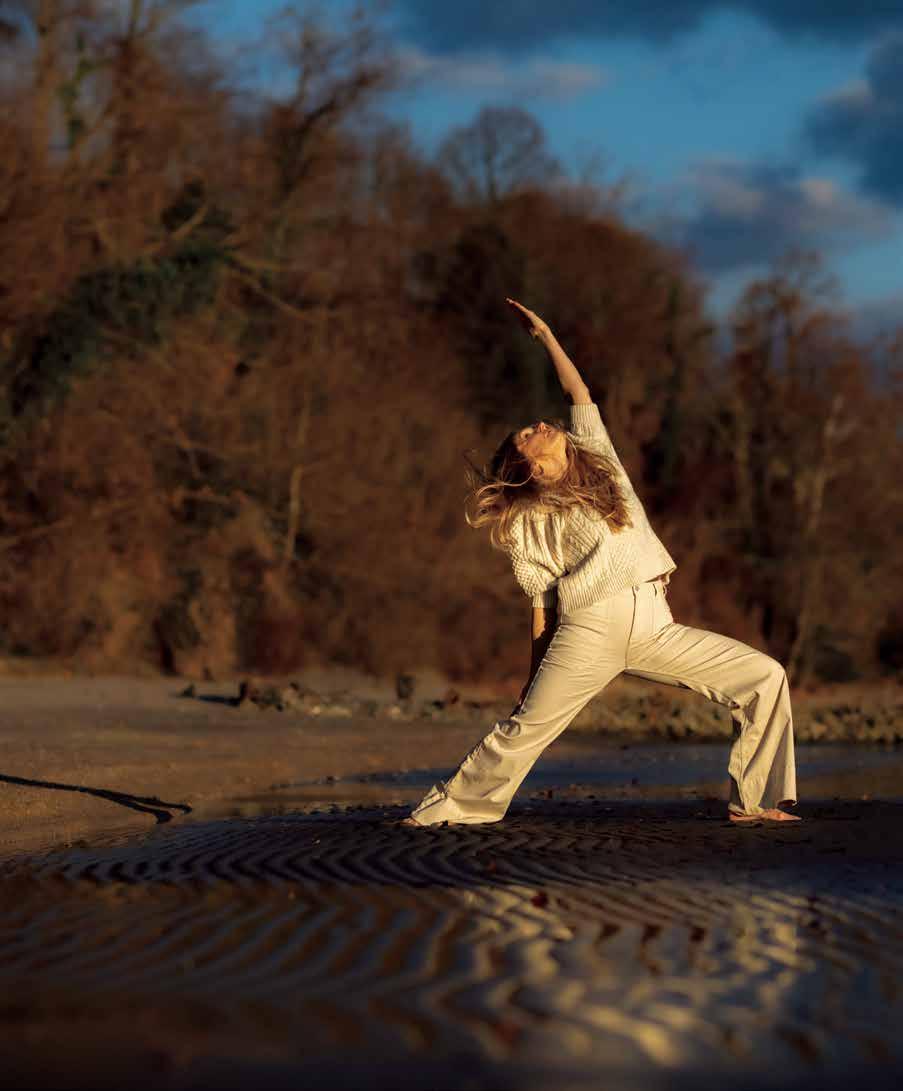
BY: DR. LOULOU PISCATORE
Pursuing health goals can be a solitary practice. Diet, exercise, rest, sleep — making healthy choices can often be about removing yourself from social situations instead of engaging in them. But what if one of the most important things you can do for your health involves interaction instead of isolation? Eating right, exercising, and getting quality rest are important, but there is another factor just as important for longevity and wellbeing. Community. A growing body of scientific evidence suggests that strong social connections and an active community life are not just nice-to-haves — they are a biological necessity, with an impact on mortality risk comparable to smoking, obesity, and hypertension.
For decades, the health conversation has focused primarily on the individual body: the food we put into it, the forces we exert upon it. But science is now catching up to what our hearts have always known. Social connection is a cornerstone of health, with effects that rival the benefits of a good diet and regular exercise. Humans are fundamentally social creatures. We evolved in tribes and communities, and our biology is hardwired to thrive in connection and suffer in isolation.
The research supporting this is staggering. A landmark 2010 meta-analysis, which reviewed data from over 308,000 individuals, found that strong social relationships increase odds of survival
by 50%. To put that in perspective, the study concluded that the presence of strong, supportive relationships in your life is as statistically significant for longevity as quitting smoking, and has a
of people’s relationships was the single biggest predictor of long-term health and happiness — more than cholesterol levels or wealth. Robert Waldinger, the study's director, famously concluded, "Good relationships keep us happier and healthier. Period."(3)
“SOCIAL CONNECTION IS A CORNERSTONE OF HEALTH, WITH EFFECTS THAT RIVAL THE BENEFITS OF A GOOD DIET AND REGULAR EXERCISE.”
The consequences of loneliness, on the other hand, are stark. Chronic loneliness has been linked to a 26% increased risk of premature mortality(4) , putting it on par with risks like smoking and obesity. It’s associated with higher levels of inflammation, a weakened immune system, and an increased risk of heart disease and dementia. The mechanisms behind this are both psychological and physiological. Loneliness and social isolation trigger chronic stress, activating our body’s fight-orflight response. This leads to elevated levels of cortisol, a hormone that when consistently high, increases inflammation, weakens the immune system, and raises the risk of heart disease, diabetes, and cognitive decline. Conversely, positive social interactions release a cascade of feel-good hormones like oxytocin and dopamine, which lower stress, improve mood, and even bolster cardiovascular health.
greater impact than well-known risk factors like obesity and physical inactivity.(1)
The benefits extend deep into our cardiovascular and mental health. The famous Framingham Heart Study, which has followed generations of residents from a Massachusetts town, found that people who reported being lonely had higher rates of heart disease.(2) Our hearts literally ache for connection. The Harvard Study of Adult Development, one of the longest-running studies on adult life, found that the quality
Long before modern science could measure oxytocin and cortisol, ancient traditions understood the profound need for community. In the yoga world, this concept is beautifully encapsulated in the principle of Sangha. Sangha is a Sanskrit word that literally translates to "community," "association," or "company." It refers to the community of practitioners who walk the path together, offering support, encouragement, and shared energy. While on the yoga mat, your practice can be deeply personal, off the mat, it is the Sangha that holds you, inspires you, and reminds you that you are not alone in your struggles or your growth. Your Sangha might be your weekly yoga class, a book club, a running group, or a handful of friends
continued on page 77

BY: TASHYA KNIGHT
PHOTOS: HILLARY LYNN PHOTOGRAPHY
In November 2024, Boston area based Angela Gentile posted a video online in which she vented her frustrations about being single and childfree. It received so many responses and positive comments that it led her to create The Single and Childfree Network in January 2025. Angela leads a community of like-minded women who all want to be seen, heard, valued, and respected for the choices they make in staying single and childfree. She also hosts the podcast The Empowered Millennials, where she encourages others to live a life they love.
Even though I identify as Gen X, I couldn’t help but wonder if I just stumbled upon a community I didn’t even know I was looking for. Here, Angela explains her ideas about community and how to grow it in the future.
How did you know that this was the community you wanted to create?
You have to speak from what you’re experiencing. There’s an estimate of more than eight billion people in the world, you can’t be the only one who feels how you feel, right? I built a community for single and childfree women by accident. This was not something that I woke up to and I was like, “This is my calling.” I was in a therapy session, and my therapist was being really toxic and not listening when I said, “Being a single and childfree woman is hard. I’m alone. I’m tired. I’m doing everything. I just want to hug. I just want help.”
So naturally, the millennial in me picked up my phone to record a video, and I just went on a rant, “This is so hard. I’m doing this by myself. I would like a partner because that would help me cut my rent and my expenses in half.” Then I’m like, “Well, wait a second. If I had a partner, where would all of his stuff go? We could get a two-bedroom apartment, and that’s only $500 more than my one-bedroom apartment, so I would still be saving money in a two-bedroom apartment living with somebody else, and I’d be saving probably about $1,000 a month…” Do you hear the BS?
So that was the video that people were like “Oh, my god, girl, preach! Me too, me too,” and it had hundreds of thousands of views.
How does the community work?
Comments started to come in that said, “We need a group, we need a space for us.” So at first, I created a Google form and spreadsheet where participants would share what they’d be willing to do. Like driving people to a colonoscopy appointment, watering plants while you’re gone, or just someone to hang out with. Because who’s helping you if you’re by yourself, right? There were about a thousand women on this spreadsheet, and now it’s a private, paid membership group. The only personal information that people put on there is their social media, and that’s how you would connect with people. Within the private group, I vet people.
There’s different tiers of membership, because I really do want to be mindful of the “single, child-free tax” that we pay just by existing by ourselves. You can be part of it at a lower nominal fee, for the price of a nice coffee a month, because I do want it to be accessible, and I do want people to be in the group. We’re from all over the country, and we just need a place to connect.
When did you know that having children or being married wasn’t for you? I had an awareness of social structure, patriarchy, emotional labor, white supremacy, and all of that, but I might not have had the vocabulary and vernacular to identify what it was. I grew up in a small town where intersectional feminism was not something I was learning in high school, and I just thought I would eventually change my mind, right? Like, “Oh, you just haven’t met the right person. You’re young, you have time.” Now, I’m in my mid-forties and in perimenopause, so even if that is something that I wanted, I don’t know how possible it would be.
I spent a lot of time in my childbearing years unpacking my childhood trauma,
“WOMEN LIKE ME WHO HAVE DECIDED WHOLEHEARTEDLY TO BE SINGLE AND CHILDFREE HAVE SPENT DECADES HAVING THIS CONVERSATION WITH THEMSELVES. THIS IS A VERY INTENTIONAL, COMMITTED, AUTHENTIC, POWERFUL, AND HONEST CHOICE. THIS ISN’T SOMETHING THAT I’M QUESTIONING.”
and I started to realize that I don’t think anything that I’ve been told to want is actually mine. So my journey was rooted in redefining the lineage for the women in my family and energetically moving forward. I don’t think my journey was to be a mother. What I do now is nurture community and nurture independence.
Women like me who have decided wholeheartedly to be single and childfree have spent decades having this conversation with themselves. This is a very intentional, committed, authentic, powerful, and honest choice. This isn’t something that I’m questioning.
What do you do to keep your community growing?
I grow the community on social media and with my podcast, The Empowered Millennials. The things that I’m saying are very universal experiences in this childfree, single lifestyle that so many people are like, “Oh, my god, me too.” What I connect with and identify with is this common thread of being invalidated and being dismissed and having to do life alone, because those are things that I feel really deeply, and are painful. My biggest challenge in my life is not having community. It’s being left behind and ditched by friends who have chosen partnership and kids. And that’s hard.
I want it to be really clear what people are getting when they come here and
what they’re going to be responsible for. That’s key to building community, because it can’t be a free-for-all. It can’t be a bunch of individuals expecting to take. A community is communal. Community means we’re all here trying to work toward the same common goal, which is to feel seen, heard, supported, and validated.
Imagine if we created reciprocal relationships with people who understand, support, and champion your life choices. I want to create environments where women feel valued and valuable. Of course, I would love for this to grow, but it’s a lot of work, and it requires a lot of self-reflection, assessment, and therapy, because nothing will challenge you and bring out some patterns like this.
You’re leading a group of women who haven’t had that support, camaraderie, and understanding about their choices and who they are. You’re validating them.
I think a lot of women come into groups guarded because we’re not used to being supported. Society has created cultural milestones and celebrations for women around a woman’s loss of identity. We only celebrate when a woman becomes “something” to someone else, where she becomes a role in someone
continued on page 76
BY: TARA MARIE HOXHA
ILLUSTRATION: LAUREN REBBECK
When you set out to create a healing space, it’s easy to focus on the physical: the design, the décor, the details. But the true architecture of any sanctuary begins long before walls are built. It begins with intention. With a deep understanding that community is not just part of the experience; it is the experience. A healing space isn’t defined by what it looks like, but by how it makes people feel. The goal is always the same: to create a place where others can breathe, soften, and remember who they are.
When my partner and I first dreamed of Saltara Healing in Warwick, NY, we knew we didn’t want to create just another yoga studio. We envisioned a sanctuary for mind, body, and spirit — a space for restoration, connection, and remembrance of who we truly are. Here are some things we learned about building community in healing spaces.
Every meaningful space begins with a clear intention. Before anything else, ask yourself, “What do I want people to feel when they enter this space?” Your answer becomes the guiding thread that weaves through everything that follows. The design, the energy, the way you communicate, even the way you greet people at the door. When your vision is rooted in genuine care and service, the right community begins to gather naturally around it. Energy recognizes authenticity.
Healing begins with safety. A truly restorative space should calm the body before the mind even realizes it. So much of what helps people feel at ease lies in subtle details; lighting that soothes rather than stimulates, scents that invite grounding, music that matches the rhythm of a slower breath. Incorporate natural textures, gentle sounds, and uncluttered organization. In yogic philosophy, this mindful attention is called saucha: purity and clarity in both form and energy. When your environment communicates care, people feel it on a cellular level.
continued on page 75
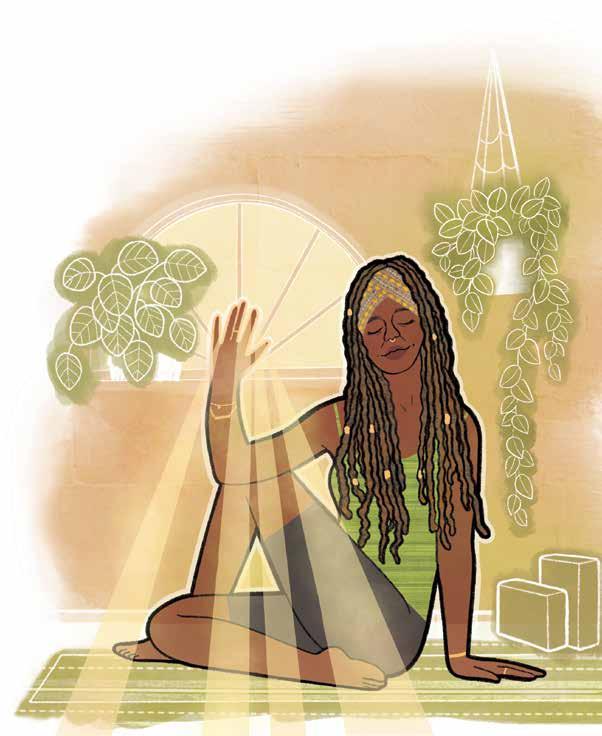
BY: MELISSA HONKANEN
PHOTOS: MELISSA TENEKEDES
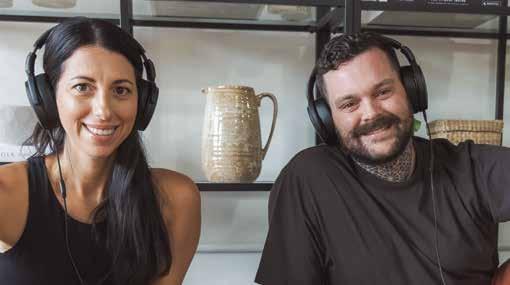
Editors note: This piece includes mention of suicide and addiction.
When you meet Giana Gambino and Bradshaw Wish, co-founders of the online C.A.Y.A Yoga School and cohosts of the popular podcast The Funny Thing About Yoga, it’s immediately clear that their story isn’t just about yoga. Their friendship, business partnership, and shared vulnerability have created a ripple effect far beyond their studio walls that’s not just about poses or perfection, it’s about human connection. Learn more about how powerful alchemy happens when transformation meets community.
How would you describe the transformation of your partnership over the years?
Bradshaw: The biggest shift has been learning to trust each other professionally and to share equal stakes in our business. Giana has always been the backbone. She’s the one doing all the admin, all the behind-the-scenes work. I had to step back and really
see her for all that she’s worth. That changed everything.
Giana: It’s true. This year especially, it finally feels like we’re meeting each other as a team. We’ve had to learn to communicate, to be transparent when we’re frustrated, and to trust that the other person will show up. Every disagreement brings us closer because we do the work to repair. That’s what makes it a partnership and a community.
That authenticity really comes through in your teaching and podcast. How do you bring community and humor into yoga spaces that can sometimes feel so serious?
Bradshaw: We want to be teachers who are real, who laugh, who make you feel like you’re sitting with a friend, but who are also educators serious about our craft. Both can exist together. Joy and humor are part of healing.
Giana: Transformation can be painful. My therapist once told me that when a caterpillar becomes a butterfly, it’s
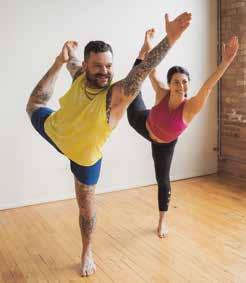
excruciating, and it feels like death. That really stuck with me. Transformation can hurt, but when you do it in community and when someone sees you, it becomes more bearable, even beautiful.
How has vulnerability strengthened your connection with each other and with your students?
Bradshaw: After my dad died of suicide, I was drinking heavily and not doing well mentally. When I finally stopped the cycle of addiction and got honest about where I wanted to be, it changed my life. It’s scary to do the work, but honesty creates connection. I think our students feel it, and they know we’re real people, not gurus.
Giana: We both experienced a lot of loss, and it’s made us more compassionate. People warn you not to work with friends, but for us, it deepened the friendship. It made us closer, not just as business partners, but as people who understand what it means to hold space for others.
continued on page 77
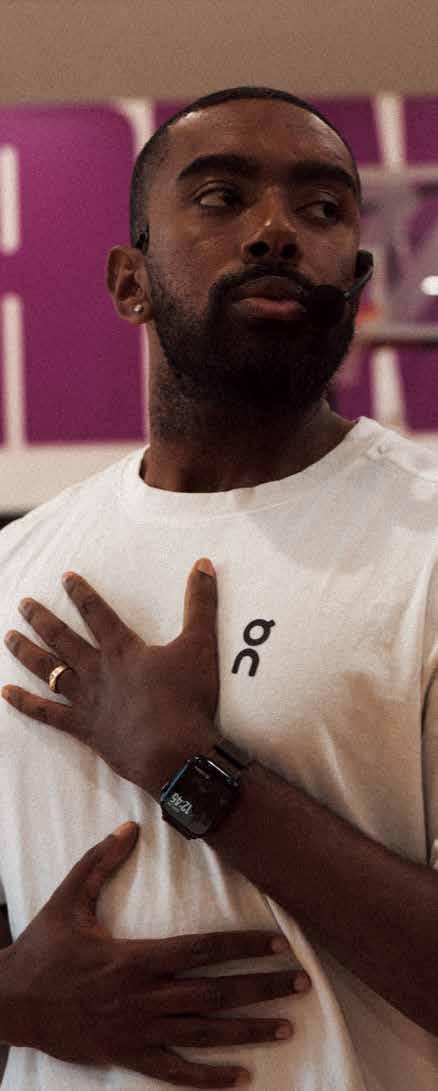
BY: IANA VELEZ
PHOTOS: KAVI PESHAWARIA
Founded by Etienne Maurice, WalkGood LA is a family-led community wellness organization that was formed in Los Angeles in June 2020 during the Black Lives Matter movement. “What began as a few minutes of breathwork and yoga meditation before we protested against police brutality, turned into a safe space for the community to heal in hard times.” In six years they have grown from hosting classes at a local park to building The WalkGood Yard, a multipurpose creative wellness studio, hosting everything from yoga and fitness classes to creative workshops, community events, live performances, film screenings and more. Learn more about Etienne and his wellness journey here.
Can you share how your wellness journey began?
For a long time, I didn’t believe wellness was something meant for me. Growing up, I didn’t see many people who looked like me practicing yoga, and while I had heard about the benefits of meditation and mindfulness, it always felt out of reach. It wasn’t until I was forced to confront my own mental health after surviving gun violence that wellness became a necessity, not a luxury.
In 2013, I was shot twice in my leg and faced the very real possibility that I might never walk again. After months of at-home physical therapy, I slowly began rebuilding the muscles that had been severely damaged. I became deeply committed to strengthening my physical body, but none of that would have been possible without my faith. My faith sustained my mental health, and that foundation gave me the strength to show up for myself every day.
Going to the gym became non-negotiable, and running became my outlet. I joined a run club in Philadelphia, and running gave me space to clear my mind and process everything I had been through. At the time, I didn’t recognize it as meditation, but looking back, running was how I found clarity, grounded myself, and reconnected with my body.
It wasn’t until I started WalkGood that I intentionally began integrating the practices that supported my own healing into
a community setting. What once helped me survive eventually became something I felt called to share with others.
You started a Black men’s healing circle that meets regularly. What inspired this?
I started YouGood? our men’s healing circle, about two years into WalkGood. Early on, I noticed that most of the people attending our programs were women, and I wanted to create a space specifically for Black men to engage wellness in a way that felt safe, intentional, and honest.
YouGood? was my way of inviting brothers into practices that might take them out of their comfort zone through sound baths, yoga, journaling, and small group conversations where men could actually talk about what they were feeling and writing. I had just received my yoga certification at the time, and I felt there was something different I could offer from my lived experience.
The response has been powerful. Men continue to show up, open up, and realize they are not alone. It’s become a space rooted in vulnerability, accountability, and healing.
You created WalkGood LA during the Black Lives Matter movement in 2020 as an act of protest using joy as resistance. What does joy as resistance mean to you?
Wellness is often perceived as a luxury, not a birthright. WalkGood was born during a moment when joy felt inaccessible for so many of us. We were living through a global pandemic, collective grief, and the continued killing of Black and Brown people at alarming rates. Our bodies were responding with anxiety, fear, anger, and exhaustion.
What we witnessed in real time through our programs in the park was people finding joy in the middle of chaos. That is revolutionary. Mindfulness is a resilient act. Choosing to show up for yourself and find joy in the midst of societal
“FOR COMMUNITIES THAT HAVE BEEN OPPRESSED FOR GENERATIONS, JOY BECOMES RESISTANCE. IT IS ABOUT RECLAIMING OUR RIGHT TO REST, HEAL, AND BE WHOLE. THAT IS THE WORK WALKGOOD IS COMMITTED TO.”
pain goes against what the world often expects of us.
For communities that have been oppressed for generations, joy becomes resistance. It is about reclaiming our right to rest, heal, and be whole. That is the work WalkGood is committed to.
Did you envision WalkGood LA evolving the way it has?
When we first started WalkGood, I was very focused on the present. We watched our first program, BreatheGood, grow every single week, while participation in street protests slowly declined. People were tired, but they were still searching for healing.
We realized that while folks may have stepped away from the streets, they were willing to show up for yoga in the park. That space became our foundation. The park allowed us to shift our
approach to social justice by creating accessible public spaces where people could care for themselves.
By eliminating cost, we removed barriers to entry. That foundation eventually led to The WalkGood Yard, our creative wellness studio, where we now offer mindfulness, movement, and artistic programming. WalkGood continues to evolve, and I believe as you grow, your dreams have to grow with you.
What does the future of WalkGood LA look like to you?
The future of WalkGood LA is rooted in accessibility. While our tiered membership model at The WalkGood Yard has helped us sustain as a non-profit, our goal is to continue expanding donation based offerings.
continued on page 73
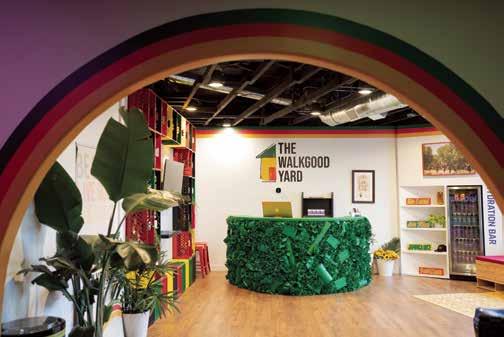
BY: TASHYA KNIGHT
On December 31, 2024, I sat down to write my goals for the upcoming year. While I had some very specific ones as well as a word for the year to guide me, I found myself listing three different types of communities I wanted to cultivate for myself in 2025. These were related to my interests and areas where I wanted to grow.
I have been looking for my community since I was a teenager. I didn’t have a stable home life nor did I have a stable friend life either. Instead, I have spent years looking for a place to belong, looking for those I can relate to who share my interests. This isn’t all that uncommon, as many of us search out our community. Some find it in sororities, fraternities, college friends, coworkers, or those with the same values, language, and shared histories as us.
In fact, community is steeped in history. The word community is rooted in the Latin word, “communitas,” meaning fellowship or shared responsibility. And that’s what many ancient societies were built on: the cooperation and mutual support for collective well-being of all members. This, at first, involved the hunting, farming, and protection needed to survive. As these societies developed, they created frameworks that included cultural, religious, and economic structures. This became their life. These were their people.
Each community had its own set of values, rituals, music, stories, and ways to connect that fostered a sense of belonging. In ancient
society, one would travel with their community, roaming from place to place searching for food and shelter as a means of survival. This fostered more feelings of togetherness, as everyone was needed in order to survive.
But as society began to change and communities became more adept at farming and growing food, they didn’t need to move around as much. So instead, they formed villages, towns, and cities. These communities were governed by new structures of class and occupation in addition to religion. Neighborhoods were sometimes divided based on a person’s trade or profession, which of course, eventually developed into professional organizations and labor unions. As the industrial revolution took over, we saw groups formed around shared interests such as sports clubs and artistic circles, which paved the way to understanding that communities can be formed around shared interests, no matter geographical locations. In fact, that didn’t matter at all, as the true emphasis of communities has always been about human connection and cooperation.
In modern society, we might not think we need communities for our survival because we are not being attacked by mountain lions and bears. However, communities in their basic sense are still needed and wanted. We see examples of this in sports with fans coming together to cheer on their teams, local sports leagues, book clubs, theatre groups, comic book conventions, game nights, dinner parties, online communities, and the list goes on. Plus, it really does take a village to help those in need find food, shelter, and child care. Most of all, we seek out these communities for our mental health and to find a sense of belonging.
“We are not meant to be an isolated society, which is evident in the history of how our communities were formed. Communities bring us together to teach us and save us.”
While at church recently, someone shared the message, “When we are in community, someone holds up a mirror so we can see our true self.” We join these communities so that we can find our true selves, or love ourselves more, or be loved for who we are. This is what makes us whole, helps us grow, helps us survive, and keeps us alive. We are not meant to be an isolated society, which is evident in the history of how our communities were formed. Communities bring us together to teach us and save us.
The first chapter in Michelle Cassandra Johnson’s book, We Heal Together: Rituals and Practices for Building Community and Connection is called, “We
continued on page 74
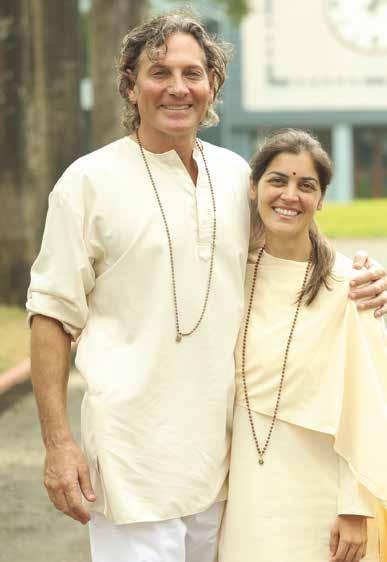
BY: RINA JAKUBOWICZ
PHOTO OF: ERIC PASKEL AND RINA JAKUBOWICZ
I spent 14 years searching for a teacher and a place I could call my “yoga home.” After what felt like an eternal search, I finally found my way to the Vedanta Academy in 2014, thanks to Eric Paskel. The Vedanta Academy is a world resource for study and research of Vedanta that the academy defines as “...the culmination of knowledge...the ancient Indian philosophy which answers the fundamental questions of life.” Most people arrive at the academy searching for something — clarity, purpose, peace, or simply a way to understand life beyond the repetitive cycle of the hamster wheel of our lives. Part of me was tempted to give it all up, and move to the academy full-time.
What drives someone to devote their lives to this rigorous path? Four students living full-time at the academy—ranging from a few months in to over 20 years—helped deepen my understanding, and their stories shared here surprised me. None of them had a dramatic crisis or esoteric epiphany. What brought them there was simple, clean logic and a sincere hunger for truth. They had found a philosophy that didn’t demand belief or ritual — just effort and honesty. This, I could get behind.
Irina shared that she had been rifling through Vedanta books since she was 14, intuitively drawn to something deeper than ordinary living. When she finally visited the academy, she knew instantly: this is it. For another student, Vishal, the journey began with success that felt strangely empty. By 24, with two university degrees and a solid career, happiness still felt fleeting. “The times I felt complete,” he says, “were when I worked without obsessing about results.” That realization sparked a bold decision: step away from everything familiar. Without ever visiting, he committed to the three-year course.
Gaurav, discovered Vedanta at 19 through a study group. Against conventional logic — and his father’s wishes — he dropped out of engineering school and never looked back. Twenty-six years later, he’s still there. And Anushka simply followed family members to the academy and stayed because the philosophy answered the questions she couldn’t shake: “What is life really for? Where did we come from? Where are we going?”
These four students all knew that any external success was not going to help them grow from within. They sought the academy to help them develop their intellect, the equipment that governs the noise within so that the truth can be heard, seen, and lived by.
4:00- 4:20 am: Wake up
First hour: Self-study in your room
Morning: Group yoga, workout (gym, pickleball, basketball, etc) and vegan/vegetarian breakfast, video lectures of Swami Parthasarathy
Midday: Karma service (arts, technology, marketing, kitchen, etc.)vegan/ vegetarian lunch
Afternoon: work projects, physical activity, nap time
Evening: Group discussion, bhajans/chants and vegan/vegetarian dinner
9:30-10 pm: Lights out
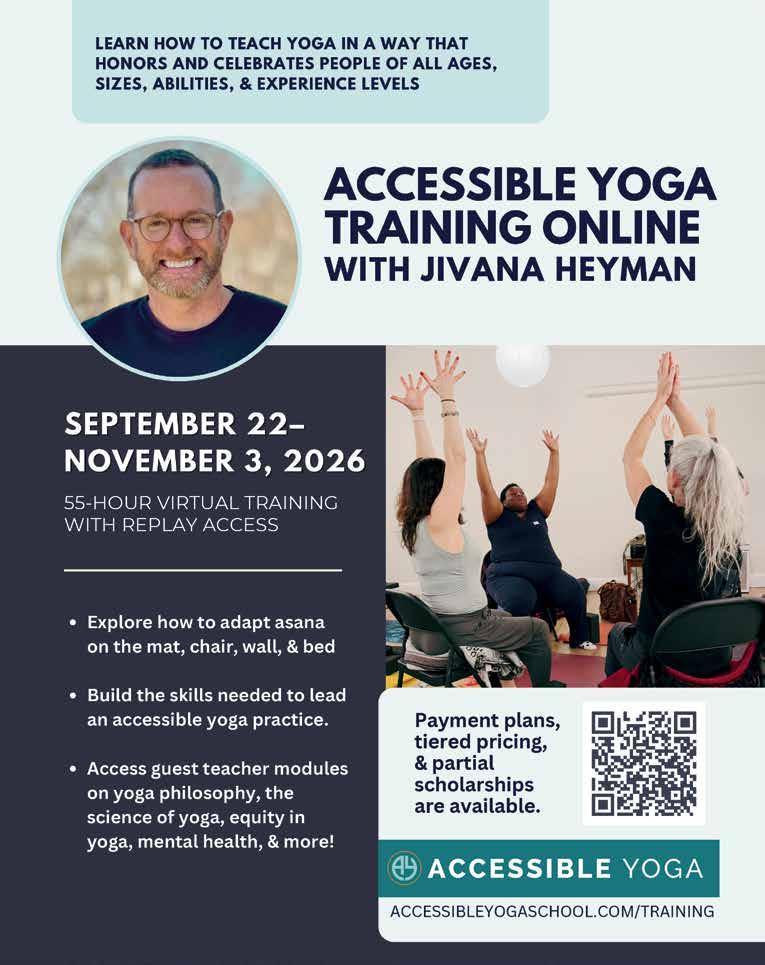
BY: JENNIFER MOHAMED, ESQ.
When I was a new yoga teacher, I dreamed of leading retreats and helping people transform their lives. Now, 15 years later, I’ve been fortunate enough to lead many successful retreats, but in my law practice for yoga professionals, I see so many gifted teachers focus only on the beautiful practices they’ll share, while leaving their legal protection to chance. Don’t let that be you! Follow my top tips to ensure your next retreat is a success, free from legal headaches.
1.
Your regular class waiver won’t cut it for a retreat. Your first line of protection is a professional Participation Agreement that addresses the unique risks of both travel and yoga. This document must include a release of liability for negligence, disclaimers for the acts of third-party vendors or other participants, clear conduct requirements, including your right to dismiss a disruptive guest and requirements to disclose illness or injuries. Think of the Participation Agreement as your legal shield for the experience itself. Crucially, have every participant sign this agreement before they pay or attend to ensure it is legally effective.
A robust T&C agreement must explicitly detail the total cost, payment schedules, what is included (e.g., specific meals, lodging, excursions), and what is excluded (e.g., airfare, travel insurance, visas). It must also contain a well-defined cancellation and refund policy, outlining the consequences for both participant and host cancellations, and dispute resolution clauses. This document is your roadmap for the business relationship, preventing misunderstandings and providing a clear resolution path should issues arise.
To be fully protected, you need more than one policy. Secure General Liability insurance for accidents like slip-and-falls at the venue and Professional Liability coverage for claims related to your teaching. A cyber policy is also a best practice to cover your website, online forms, and data breaches. This is especially important if you are collecting sensitive personal information like driver’s license or passport details and credit card numbers. Ensure your policies will follow you abroad, and strongly advise – or better yet, require - your participants to obtain their own travel insurance.
4.
Operating as a sole proprietor leaves your personal assets—like your home and savings—exposed to business debts and lawsuits. Forming a legal entity, such as an LLC or corporation, creates a crucial liability shield separating your business from your personal finances and establishes you as a legitimate business. However, this shield is not absolute. You must treat the company as a truly separate entity by keeping finances distinct and observing corporate formalities. If you don't, a court could “pierce the corporate veil,” leaving you personally liable after all.
5. MARKET MINDFULLY AND PLAN DILIGENTLY
Your marketing is your first promise to participants. Market your retreat with accuracy and avoid exaggerated claims; this manages expectations and strengthens your waiver's enforceability. As you promote your retreat, you are also building a brand. Protect it by getting written permission before using participant photos and consider trademarking your brand name as your reputation grows. Finally, diligent operational planning is essential. Carefully vet all your vendors and activities, and be prepared for emergencies. This foresight, in addition to visioning a successful retreat, protects your business and ensures a smoother, safer experience for everyone.
Ultimately, this proactive legal groundwork allows you to lead with confidence, creating a safe, successful, and truly transformative experience for all – yourself included!
Disclaimer: The Law Office of Jennifer Mohamed LLC d/b/a Jen the Yoga Lawyer is a law firm licensed to practice law in New Jersey and New York. The information provided herein is for informational purposes only, is not legal advice, and does not create an attorney-client relationship. Learn more: jentheyogalawyer.com
Bryan Kest continued from page 49
How has your understanding of yoga shaped your view of community and connection?
It's really hard to be a spark in the middle of the ocean. You keep getting put out. When a community comes together to support each other, it's like a bunch of sparks come together, and then you get a flame.
Community is a very powerful tool, and my definition of community is people of like mind coming together to support each other in a certain mentality. That's what a yoga class ultimately is. Otherwise, you don't need to go to a class; you can do it on your own, especially these days with online yoga. But there's something really special about in-person classes; we can really affect people in a positive way because of the support that we received from the class.
How do you balance the commercialization of yoga with its deeper communal and spiritual roots?
For 30 years, I had three yoga studios. We didn't charge money for those classes and did everything on a donation basis. That was basically me not buying into commercialism.
I didn't want your financial situation to ever be a factor in your yoga practice. I didn't want you to have one damn excuse why you couldn't come to class. I had a donation box, and I just figured, if I'm supposed to do this, then the universe will provide. There'll be enough money in the box to pay my rent and support me. That was my mentality, and it really did work for 30 years.
How do you deal with self-doubt and inner criticism as a human being, but also as someone who teaches yoga?
You have to be aware. You remind yourself that all the challenges in your life are opportunities to become stronger, and wiser, and more creative, and insightful, so these challenges aren't bad, and you fear them less those challenges.
“I could hide all the stuff that annoys people, but I figured if you're reacting in a yoga class, then you're for sure going to react with your children, at work, and all that stuff. This is a safe place to practice being less reactive and more accepting.”
You may even understand that your self-doubt is there as an opportunity to overcome it. You start recognizing that self-doubt is really not a comfortable place, and maybe that discomfort can be the impetus to draw the mind to a benevolent place because you certainly don't want to be rolling in this.
What does the future of yoga look like to you?
I have no idea. Yoga was definitely the biggest fitness trend for at least 20 solid years, but it has plateaued in the last 10 years. Right now you can see it splitting in two different directions, and studios are now thinking about survival: How can I bring in more students? And how can I survive? There's not enough people coming in just for these power yoga classes and vinyasa classes anymore. Now you have things like yoga and pilates, yoga and weights, and yoga that is moving more towards fitness.
Even if you go to a class that's yoga and pilates, or yoga and weights, that little bit of “yoga” that exists in those classes
can have a really positive effect on people. You might spark some interest in yoga in people and maybe they'll start looking deeper for other types of yoga. Maybe “fitness yoga” needs to exist as a starting point for people to come to a more authentic yoga class. I started in the Ashtanga world, and I was attracted to it because of how physical and vigorous it was. It appealed to my ego because it was highly athletic. I don't know if I would have gotten into yoga if I didn't have that starting point.
We all need different starting points. Maybe sitting in a lotus position and “Oming” isn't for everybody. It's probably not for most people, at least initially. I like to sit in lotus and Om now, but I know it took me a while to appreciate that.
Once the walls came down and I opened up to all the different healing modalities, something that yoga actually cracked me open to, then I was open. I understand that it's valuable even if it's not something that I'm attracted to.
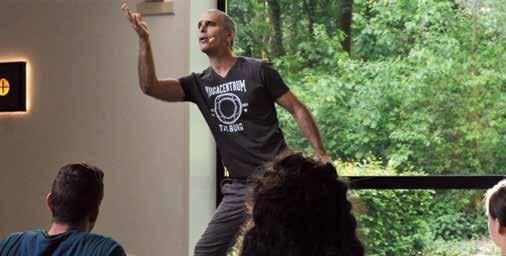
I definitely wouldn't judge and criticize it just because it's something I'm not attracted to. Who the fuck am I? I'm just one person that has a history that's manipulated by that history. Someone else is being manipulated by their history that I have no clue about. So how can I judge it?
“You are the epicenter of your reality. If you want more benevolence, you want to see it, you want to experience it, you want to have it, then you need to cultivate it. That's what the yoga practice is about.”
If someone has practiced yoga even just once, what would you want them to remember about how their practice can help build a kinder, more connected world?
That would probably bring us back to, “Be the change that you wish to see in the world,” as Gandhi said it most appropriately. The kindness and gentleness emanates from you. Like attracts like. You draw to you, that of which you are. You are the epicenter of your reality. If you want more benevolence, you want to see it, you want to experience it, you want to have it, then you need to cultivate it. That's what the yoga practice is about. That's what you'll get if you come to one class, and that one class happens to be mine.
You Good? continued from page 67 Natalia continued from page 28
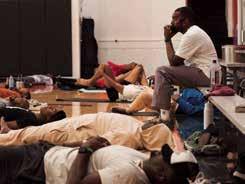
Wellness should be accessible to everyone, regardless of income, and we’re committed to building systems that make that possible while remaining sustainable.
For someone who wants to start something similar in their community, what is your best advice?
My advice is simple: just start. The more time you spend thinking about starting, the less time you have to bring your vision to life.
Put a plan together, but allow it to evolve as you build. The system will reveal itself as long as you stay committed to solving the problem you’re trying to address.
Why is community important to you?
Community is important to me because it saved my life. I would not be here if it weren’t for the people who poured into me, cared for me, and challenged me to grow. My family taught me the value of community, and I recognize that not everyone has access to that kind of support.
Because of that, we infuse those values into every WalkGood program, from RunGood to BreatheGood to FilmGood and beyond. Even the name WalkGood comes from my grandmother, who would say it every time I left her presence. That alone reflects how deeply personal this community is to me and why it matters so much.
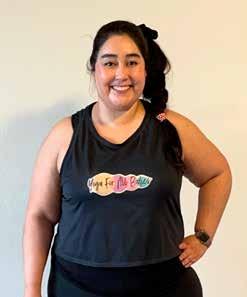
of a physical room. They let people rest or move in ways that feel safe for their nervous system.
I spoke with three teachers who embody this spirit of accessibility and belonging for this feature. Their stories here show how yoga is evolving and how community thrives across screens and time zones.
Learn more: yogaforallbodies.com and @YogaforAllBodies
Learn more: poweryoga.com
Learn more: walkgoodla.org
o moverse de maneras que se sienten seguras para su sistema nervioso.
Conversé con tres profesores que encarnan este espíritu de accesibilidad y pertenencia. Sus historias muestran cómo el yoga está cambiando y cómo la comunidad florece a través de pantallas y husos horarios distintos.
Conoce más en: yogaforallbodies.com y @YogaforAllBodies
Why? continued from page 68
looking for my yoga community, I know I have found a wonderful writing community here at Yoga Love Magazine!
“Our communities might also change as we change, as we age, as we grow. We then embrace new spaces or new people, and this only makes our lives richer and fuller.”
Heal in Community” because that is the true gift of a community. It helps its members heal. This was evident during the pandemic as we still found ways to connect with our people even in isolation. Our basic instinct is to reach out to others when we are hurt. We are looking for comfort and validation, after all, we all know that others just want to be seen and heard. We want to be recognized and understood.
But we don’t want this from just anyone, we search for this from those who have been through similar trauma, shared grief, common interests, those who speak our language, share our values, and sometimes our cultures. We search for places we know we belong or are instantly welcomed.
In my book community, we are reading wellness/trauma books everyone is interested in, discussing ways to grow, discussing our therapists, and offering a form of group therapy ourselves. We’ve built trust, acceptance, and a safe space to be vulnerable. We listen to understand one another. We know who our people are. I have also found a spiritual community that shares my values and beliefs, a place I feel welcomed, a place I welcome others in return. While I am still
In my search for community over the years, I have found myself in ones where I didn’t quite fit in or belong. However, I would still change myself in ways to make it work or convince myself that this was the right place. Finding a community isn’t always easy, but we don’t want to stay where we don’t belong, we don’t want to stay in the wrong community. Sometimes we might not recognize this at first, and it can feel like the right place, but eventually it will feel off, and we need to trust our intuition and move on. If a group asks us to change and be less than who we are, that’s not our community. Our community embraces all pieces of ourselves, encouraging us to shine as we are. Our communities might also change as we change, as we age, as we grow. We then embrace new spaces or new people, and this only makes our lives richer and fuller.
The biggest question we have to ask ourselves is, “How do we find or build this community of ours?” Well, that takes time. However, in this society of busyness and finding hacks for our lives, this isn’t always what we want to hear. But trust me, if that is how you approach it, the payoff is well worth the wait.
Getting to know yourself gives you the chance to find exactly where you belong. And once you know where you belong, you can serve out your purpose of being exactly who you are meant to be; sharing your gifts and responsibilities with the rest of the world community.
Jivana continued from page 25
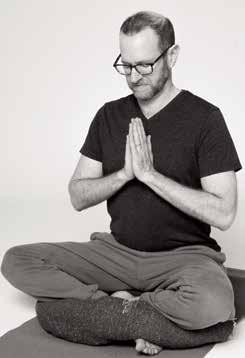
The importance of community in yoga really can’t be overestimated. When we come together in peace and care, we become living examples of the essence of yoga — union. We remember that yoga makes us compassionate and empathetic, and in turn, that encourages us to see ourselves in others. To put it simply: When I turn within, I find you there.
Learn more: accessibleyogaschool.com
1 Plum Village App Team, “A short guide to joining or starting a sangha,” Plum Village, March 1, 2022, plumvillage.app
2 Swami Satchidananda, The Living Gita: The Complete Bhagavad Gita & Commentary. Henry Holt Co. New York, 1998. Sloka 6.29
3 The Upanishads, Eknath Easwaran, Nilgiri Press, Tomales, California, 2007. Chandogya Upanishad 7:26:2, p. 141
Dharma Mittra continued from page 41
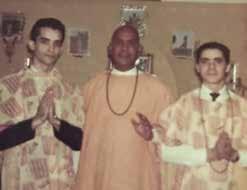
Is there anything else you want to share?
The first thing you have to do with the students: get them in good health. Force them to improve their compassion, because that leads to the rest. You get more enthusiasm to ask, “Who am I? What's next?” When a student comes to you, pay attention. Your communication is very important.
Remember, we are not pure enough, we have not achieved anything yet. We're just sharing what we have here. I’m still learning so many things every day. So keep sharing, but don't share too much. Keep your secrets. Share only for those who are ready. Because if you start opening too much, giving, you're losing your energy and you’ll be empty. Every year, you may notice you are at a different level. You may notice your students are at different levels. So as you grow, you attract the crowd of people with you.
Last thing — very important: Tell them not to forget to pay.
Building From the Heart Out continued from page 64
“In a world that often feels disconnected and overstimulated, creating a space rooted in love is a quiet act of revolution. Healing does not happen in isolation; it happens through co-regulation, through presence, through the shared field of compassion that arises when people gather with intention.”
No healing space comes alive until community enters it. A founder can design the environment, but the energy is shaped by the people who fill it with their laughter, tears, and stories. When you nurture relationships built on trust, consistency, and compassion, a studio or practice evolves from a place of service into a true sanctuary. Every shared breath, every conversation, every return visit becomes part of the invisible web of belonging that holds everyone within it.
Communities thrive where values align. Before inviting others in, clarify your core principles; is it love, empathy, professionalism, respect? Communicate them through action. The energy you bring to your work sets the tone for everything that follows. When your behavior models integrity and compassion, you naturally attract people who mirror those same qualities. Resonance is magnetic; authenticity always calls in alignment.
While metrics and numbers have their place, the true measure of a healing space is found in moments of connection. It’s in the gentle exhale at the end of class, the gratitude shared between teacher and student, the laughter that fills the room between classes. Community isn’t static, it’s a living, breathing relationship. When we hold space for others, we are also held in return. This reciprocity is what sustains a practice and keeps the collective energy thriving.
In a world that often feels disconnected and overstimulated, creating a space rooted in love is a quiet act of revolution. Healing does not happen in isolation; it happens through co-regulation, through presence, through the shared field of compassion that arises when people gather with intention. The true foundation of any healing space rests in satya, or truth; staying aligned with your original intention, your values, and your heart’s wisdom, even as the space evolves. From there, the art of Ishvara Pranidhana, or surrender, reminds us to trust the organic unfolding of what wishes to grow through us.
When love and truth are the foundation, everything that grows from them becomes a reflection of that frequency; a ripple of coherence that extends far beyond the walls themselves. The most successful healing spaces are not simply beautiful. They are felt. They hum with coherence, resonance, and authenticity. They are living testaments to the truth that love, above all else, heals.
Learn more: dharmayogacenter.com
Learn more: saltarahealing.com
Childfree continued from page 63
else’s life, such as getting married or becoming a mother. We don’t celebrate a woman’s accomplishments as they relate to herself. We do not celebrate her becoming a doctor, or that she got out of debt. Where’s that celebration?
What steps do you take to ensure the safety of your community?
It’s always having clear guidelines of what it is, and what it’s not. It’s important to say: “This is what we stand for, here’s our values, and here’s how we roll.” If you really want community, here are the steps that you need to take to be vulnerable to make it happen. I do my best to vet and make sure that everyone is single and childfree. It’s not okay to go and hijack spaces where there is a sense of community around a shared value set and life experience. I do try to put those safeguards in place, but we’re dealing with systemic entitlement that often gives people recourse to do whatever they want, and to demand.
Single and childfree women feel this a lot because we have always been “othered” and nothing is meant for us. Because it happens all the time. Saturday night, game night with your friends? Oh, it’s just couples. That’s not for me? Okay. So it happens on the micro level in our daily lives all the time.
Why is community important?
The human experience is to feel connected to one another. That’s in our biology and in our DNA. As cognitive beings, we want to feel seen, heard, and validated. It’s what this life is about. Even biologically, when we are in a safe space, our cortisol lowers. We can get into our parasympathetic state of rest and digest, and we can just be. We don’t have to perform. We don’t have to protect. We can just be. And when we tap into that “beingness,” we get to fully experience life as we need to, and that’s what happens when you’re in the right place. That’s what happens when you’re in community. You’re not in a fight-or-
flight danger zone. And then there’s all of those low-level vibrational energies that come from it. When you’re in a space that’s safe, you can just exhale and be. It’s magic.
In what ways does your community get to connect? What is it that brings people together in a community?
One of the things that we do every week is co-working for an hour on Zoom to keep each other accountable. Sometimes women are joining the Zoom, and they’re just eating. They’re carving this time out to eat and take care of themselves, or fold laundry. We don’t talk, we’re just here. Cameras are on and everybody’s doing what they need to do. It’s a great way to connect and just feel supported in some of the things that feel overwhelming.
One of the coolest things that we also do, and is the biggest allure for the group, is getting resources so that we have what we need to continue to live a dope life, single and childfree. These things include investment strategies and how we invest in what we need for retirement. How we move through the financial world is different as single and childfree people.
We have workshops designed to give single and child-free women resources to plan, be prepared, strategic, and thrive. We have someone coming in to talk about how to take care of your aging parents, because what if you’re the only child? Where’s your mom going to live in your one-bedroom apartment? Do you have your will? How are you protecting yourself? Who is your power of attorney? Because when you don’t have a built-in partner, who do you ask for all that? So there’s just different conversations that we need to have that are specifically designed for the single and childfree life.
Those are the opportunities that really create community by giving women the tools to be empowered and the space to share what they’re proud of. We do a Saturday “shout out” where people ask what others’ wins for the week were.
Responses could be, “I went to the gym three times,” or “I set a boundary with my sister.” Love that for you. Huge. Your wins are about things that you’re proud of, and if it matters to you, it matters to the group. It matters to us because these are things that we never get to share.
What is the vision you have for your community going into the future?
I’d love to grow larger and do another International Childfree Day celebration in August 2026. I want it to be a weekend-long conference experience. I would also love to do more in-person meetups all over the country and all over the world.
I want to do good work, and I want to provide a good, healthy, safe, supported, validating space for women like me, because I never got it. I want just the knowledge that this community exists. I want more women to be in this group and feel seen, heard, and supported. We make cultural shifts not by fighting, but by existing. If we can loudly and proudly exist and not worry about all the outside noise, we’re resisting by existing. I think that’s beautiful. That women know that there’s a place for them and that they deserve to be here and that they matter. That’s huge.
Learn more: theangelagentile.com

Community Cure continued from page 61
who truly see you. It’s the space where you can be authentic, vulnerable, and supported without judgment. It is the active, conscious practice of building and nurturing your tribe.
So, how do we intentionally cultivate this powerful health resource? It’s about shifting our perspective to see social connection not as a luxury, but as a nonnegotiable part of our wellness routine.
That coffee date with a friend? It’s not taking time away from your health; it is health. Prioritize it with the same importance you would a workout.
Seek out groups centered around your interests. Join a pottery workshop, a run club, a book club, a volunteer organization, or a fitness class where people linger afterwards. The shared interest is the gateway to deeper connection.
A few deep, trusting relationships are far more powerful for your health than hundreds of superficial online acquaintances. Nurture the friendships where you feel you can be your true self.
Be the one who reaches out. Text a friend you haven’t seen. Organize a simple potluck. Vulnerability begets vulnerability, and someone is almost certainly waiting for an invitation to connect.
The implications are clear: if we are serious about our health, we must broaden our definition of "wellness" to include our social lives. Just as we schedule workouts and plan healthy meals, we must proactively nurture our connections. In the pursuit of health, we must stop viewing social time as a luxury — it is a foundational pillar. Nourishing your body with good food and strengthen-
“IT’S ABOUT SHIFTING OUR PERSPECTIVE TO SEE SOCIAL CONNECTION NOT AS A LUXURY, BUT AS A NON-NEGOTIABLE PART OF OUR WELLNESS ROUTINE.”
Together we Transform from page 65
ing it with exercise are essential acts of self-care. So, too, is nourishing your spirit and strengthening your mind through rich, meaningful connection. The science is undeniable: a life lived well together is a life lived longer and healthier.
Learn more: louloulac.com
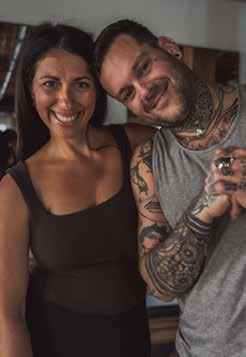
“TRANSFORMATION ISN’T ISOLATION; IT’S UNIVERSAL CONSCIOUSNESS. THAT’S THE HEART OF THE COMMUNITY.”
1 Holt-Lunstad, J., Smith, T. B., & Layton, J. B. (2010). Social Relationships and Mortality Risk: A Meta-analytic Review. PLOS Medicine, *7*(7), e1000316. https://doi. org/10.1371/journal.pmed.1000316
2 Framingham Heart Study. (n.d.). About the Framingham Heart Study. Retrieved [10/31/25], from framinghamheartstudy.org
3 Waldinger, R. J., & Schulz, M. S. (2023). The Good Life: Lessons from the World's Longest Scientific Study of Happiness. Simon & Schuster.
4 Cacioppo, J. T., & Cacioppo, S. (2014). Social Relationships and Health: The Toxic Effects of Perceived Social Isolation. Social and Personality Psychology Compass, 8(2), 58–72. https://doi.org/10.1111/spc3.12087
For those beginning their own transformation journey, what’s one piece of wisdom you’d share?
Giana: Don’t try to be who you used to be, but step into who you’re meant to be. Transformation is about rediscovering yourself, not returning to an old version.
Bradshaw: And remember, you’re not alone. Life is complex, and everyone else feels the same way. Transformation isn’t isolation; it’s universal consciousness. That’s the heart of the community.
Learn more at CAYAYogaSchool.com
My Digital Village continued from page 55 Vedanta continued from page 69
“The first time I met someone I’d only known online, we hugged like old friends. That moment dissolved the invisible line between virtual and real. It reminded me that connection doesn’t depend on where it happens; it depends on how it feels.”
What began as simple curiosity about the app turned into a close-knit group of four of us who now chat outside of TikTok. We inspire and motivate one another, and most importantly, remind each other of the shared goals that brought us together in the first place.
Community online often begins quietly: a comment, a shared story, a DM that simply says “same.” But that’s how friendship begins anywhere, through recognition.
What Makes Social Media Feel Like Community
What turns a collection of followers into a true community is shared purpose. Whether it’s women navigating midlife wellness, creatives chasing new ideas, or entrepreneurs building financial freedom, we gather around a common “why.” I see it every day: women lifting each other up, sharing resources, tagging one another in opportunities. It doesn’t matter if it’s inside a Facebook group, an Instagram comment thread, or a TikTok LIVE. What matters is the energy of support. When we show up for one another without expecting anything in return, that’s community in its truest form.
The first time I met someone I’d only known online, we hugged like old friends. That moment dissolved the invisible line between virtual and real. It reminded me that connection doesn’t depend on where it happens; it depends on how it feels.
Building Connection with Intention Community online doesn’t just happen;
it’s cultivated. I’ve learned to approach social media with intention:
• Show up consistently, even when it’s imperfect.
• Engage authentically, comment with care, not just emojis.
• Celebrate others as much as you share yourself.
• Stay grounded in honesty and kindness.
When I treat my online spaces as extensions of my real-life values — presence, honesty, and kindness — they become meaningful spaces too. They have become spaces I don’t mind logging onto daily.
Heartbeat of Modern Connection
Today, when I look back on the friendships I’ve made, from my first Stella & Dot sisters to the women I met on TikTok, I see how social media has quietly woven a web of connection through every season of my life.
We used to build community around shared places, schools, studios, and neighborhoods. Now we build it around shared stories, goals, and lived experiences. And in every story, there’s a heartbeat of connection reminding us that we’re never as far apart as we think.
Life at the academy may look like a simple schedule on paper, but it’s designed with precision for the development of one’s intellect. There are no weekends. No vacations. And surprisingly, no one misses them.
The challenge isn’t the schedule — it’s the consistency. It is rigorous in nature and takes a certain type of personality, mindset, and willingness to stick with it. “I had to build that slowly,” Vishal admits. But the structure works. The balance of intellectual study, physical discipline, service, and devotional practices creates a lifestyle where the mind becomes clearer, sharper, and less reactive.
“VEDANTA
IS NOT PASSIVE, MYSTICAL, OR RESERVED FOR RETIREES. IT’S A RIGOROUS, LOGICAL STUDY MEANT FOR YOUNG ADULTS WHO WANT CLARITY, PURPOSE, AND A DISCIPLINED INTELLECT.”
Over time, the subtler teachings start to seep in and create a profound effect. Negative emotions don’t disappear, but they lose their power. Instead of spiraling, overthinking or getting overwhelmed, the students analyze them by asking important questions like: What desire wasn’t fulfilled? Where is the expectation? What’s the misunderstanding? Slowly, clarity replaces inner turbulence.
Learn more: @findingswithfrances
Ask them what people misunderstand most about the academy, and the answer is unanimous: It isn’t about renunciation. It’s about understanding life and living it more intelligently. Vedanta is not passive, mystical, or reserved for retirees. It’s a rigorous, logical study meant for young adults who want clarity, purpose, and a disciplined intellect. “The academy won’t tell you what to think,” Vishal says. “It will
Faith Hunter continued from page 33
“AS MUCH AS I HAVE INCREDIBLE RESPECT FOR THE FULL-TIME STUDENTS AT THE ACADEMY, MY OWN LIFE — MARRIAGE, COMMUNITY, WORK, RESPONSIBILITIES — ARE ALSO PART OF MY ‘PRACTICAL SPIRITUAL’ CURRICULUM. ONCE I UNDERSTOOD THAT, EVERYTHING ALIGNED.”
give you questions that change how you live.” And that, more than anything, is what keeps them there — not escape from life, but engagement with it at the highest level.
After all the years of visiting the academy and reflecting, I eventually came to a clear and honest realization: my path is one of deep study within the world and myself. As much as I have incredible respect for the full-time students at the academy, my own life — my marriage, community, work, responsibilities — are also part of my “practical spiritual” curriculum. Once I understood that, everything aligned. I committed fully as a student from wherever I was, returning to the academy whenever possible, completing the three-year e-learning course, and sharing the teachings with anyone genuinely curious and ready to grow.
Balancing study, family, business, and a very human life is not easy. Vedanta has taught me that the spiritual path has nothing to do with where you are physically, it has everything to do with sincerity — consistent effort, disciplined thinking, and the courage to be radically honest with oneself, especially when it’s uncomfortable. For my life, that is the real work.
Learn more: vedantaontheground.org
steadies us through uncertainty. This is how ease and grace reveal themselves, not as bypass, but as alignment. Pain may be inevitable, but suffering, born of resistance, is optional.
If the last five years have taught us anything, it is that change is non-negotiable. Seasons shift. Identities shed. Lives reconfigure. But presence gives us stamina. Presence gives us choice. Whether sitting in meditation or holding a challenging yoga posture, if you can stay, you can grow. And in staying, you discover that what felt like a breaking point was, in truth, a threshold.
Learn more: universalempress.com
but as something unfolding through me. Each season of life feels like an unveiling — a sacred opportunity to lean deeper into my center, into that quiet pulse of truth that never wavers, what is my sacred truth.
I’ve grown comfortable keeping company with myself in the stillness, in those inbetween spaces between who I was and who I am becoming. And while transitions are rarely easy, much like our yoga practice, they are where the essence of life itself reveals its wisdom. In every transition, we are reminded that we are alive: meant to evolve, to take new shape, to breathe, to stay present and resilient, to move with grace as we expand, and to release what no longer serves (people, places, and things).
Transitions are moments of rebirth — sometimes tender, sometimes fierce, but always sacred. I stand now in wonder, open-hearted and curious, ready for whatever unveiling comes next.
Learn more: @ericagarciayogavida
As an initiated Orisa and Egungun (Ancestors) priest in the IFA tradition, I walk a priestly path that helps to make transitions smoother, softer, healthier, sweeter, safer, sacred, and even joyous. This work reminds me that transformation is not a punishment; it is a rhythm. The same breath that ushers in birth also carries us through death, menopause, grief, and rebirth.
The art of transition, for me, is a devotion to impermanence. It is remembering that movement itself is holy and that every ending, seen with clear eyes and open heart, is simply the beginning of a new song.
Learn more: blackgirlsguidetosurvivingmenopause.com