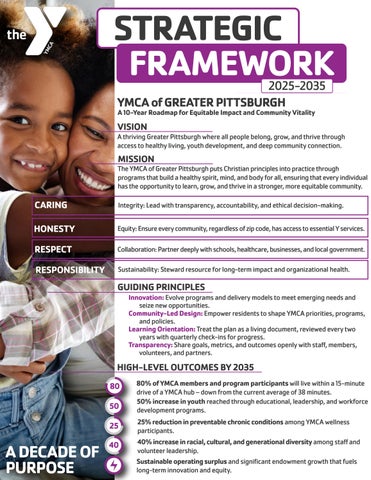
STRATEGIC STRATEGIC FRAMEWORK FRAMEWORK (2025–2035) 2025-2035 YMCA of GREATER PITTSBURGH A 10-Year Roadmap for Equitable Impact and Community Vitality
VISION
A thriving Greater Pittsburgh where all people belong, grow, and thrive through access to healthy living, youth development, and deep community connection.
MISSION
The YMCA of Greater Pittsburgh puts Christian principles into practice through programs that build a healthy spirit, mind, and body for all, ensuring that every individual has the opportunity to learn, grow, and thrive in a stronger, more equitable community.
CARING
Integrity: Lead with transparency, accountability, and ethical decision-making.
HONESTY
Equity: Ensure every community, regardless of zip code, has access to essential Y services.
RESPECT
Collaboration: Partner deeply with schools, healthcare, businesses, and local government.
RESPONSIBILITY
Sustainability: Steward resource for long-term impact and organizational health.
GUIDING PRINCIPLES
Innovation: Evolve programs and delivery models to meet emerging needs and seize new opportunities. Community-Led Design: Empower residents to shape YMCA priorities, programs, and policies. Learning Orientation: Treat the plan as a living document, reviewed every two years with quarterly check-ins for progress. Transparency: Share goals, metrics, and outcomes openly with staff, members, volunteers, and partners.
HIGH-LEVEL OUTCOMES BY 2035 80 50
A DECADE OF PURPOSE
80% of YMCA members and program participants will live within a 15-minute drive of a YMCA hub – down from the current average of 38 minutes. 50% increase in youth reached through educational, leadership, and workforce development programs.
25
25% reduction in preventable chronic conditions among YMCA wellness participants.
40
40% increase in racial, cultural, and generational diversity among staff and volunteer leadership. Sustainable operating surplus and significant endowment growth that fuels long-term innovation and equity.
STRATEGIC PRIORITIES 1
(2025–2035)
Strengthen Community Hubs
Objective: Transform YMCA branches into vibrant hubs that integrate health, housing, food, youth, and workforce development to meet unique community needs. Initiatives: . Redesign underutilized facilities into multi-service centers. . Launch “Y on the Fly” mobile outreach in at least 10 underserved neighborhoods by 2030. . Build a network of integrated services through internal collaboration and external partnerships.
2
Advance Equity & Access
Objective: Eliminate barriers to participation and leadership, ensuring all communities are equitably served and represented. Initiatives: . Expand financial assistance and sliding-scale membership models. . Create career pipelines and mentorship programs for underrepresented staff. . Strengthen volunteer infrastructure to support inclusion and retention across all communities.
3 Reimagine Youth Development Objective: Deliver cradle-to-career pathways that build academic success, life skills, and civic leadership. Initiatives: . Embed academic support with social-emotional learning and mental wellness. . Expand college and career exploration programs in partnership with schools and employers. . Launch youth-led service and advocacy programs to nurture civic leadership.
4 Lead in Regional Health & Wellness Objective: Establish the Y as a regional leader in preventative health, fitness, and community wellness collaboration. Initiatives: . Scale chronic disease prevention and adaptive wellness programs. . Partner with healthcare systems for community-based health interventions. . Partner with community organizations to co-host outdoor wellness events that celebrate health, foster connection, and reflect local needs.
5 Ensure Organizational Resilience Objective: Build the internal capacity, talent, and financial stability needed for long-term impact and innovation. Initiatives: . Modernize data and tech systems to track outcomes and increase efficiency. . Grow the endowment and diversify funding sources across philanthropy, government, and enterprise. . Prioritize staff development, cultural competency, and competitive compensation to attract and retain top talent.