Hello and welcome to issue 53 of YMAC News
• Highlight the 80th anniversary of the Pilbara Strikes
• Provide updates on our on-Country meetings and Calls to Action
• Share our new Strategic Plan 2026-2030.
We also post regular updates on current news and issues affecting native title and Traditional Owners on our website. Visit ymac.org.au to stay up-to-date, or subscribe to email updates by visiting the website, clicking on ‘Media & Publications’ and then ‘Subscribe’ on the pulldown menu. You can also scan this QR code.
We are always on the lookout for interesting and informative news. If you have stories or photos you would like to share, please reach out to us by emailing editor@ymac.org.au
Yamatji Marlpa Aboriginal Corporation respectfully acknowledges the Traditional Owners and custodians throughout Western Australia, and on whose Country we work. We acknowledge and respect their deep connection to their lands and waterways. We honour and pay respect to Elders, and to their ancestors who survived and cared for Country.
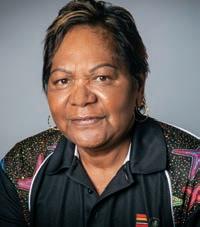
Miss Natalie Parker, Co-Chairperson – Pilbara Region
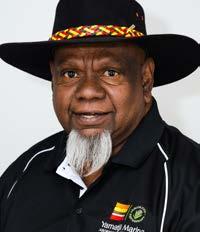
Mr Peter Windie, Co-Chairperson – Yamatji Region
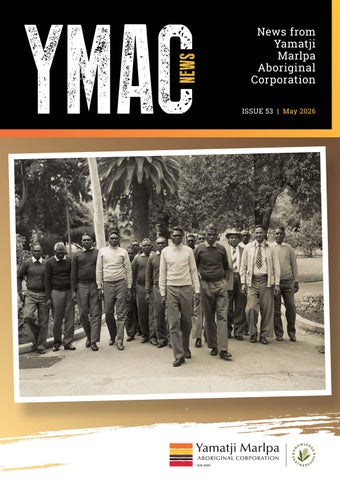
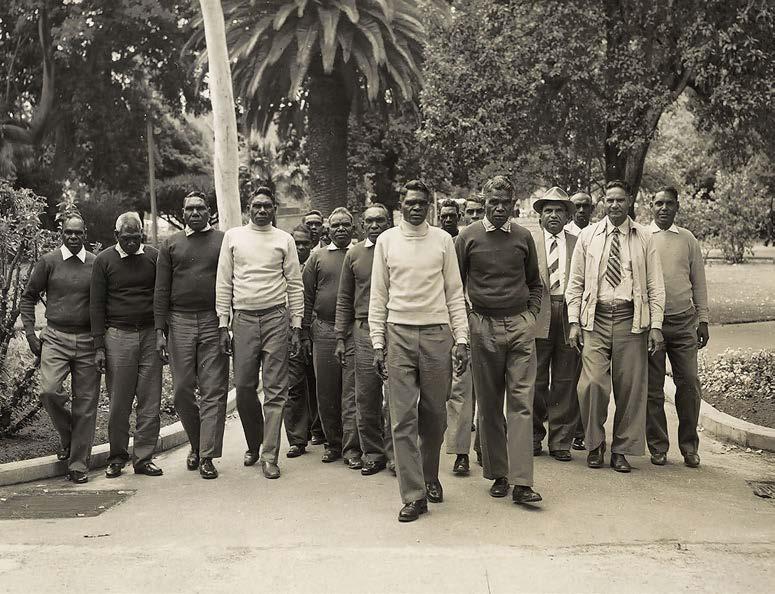
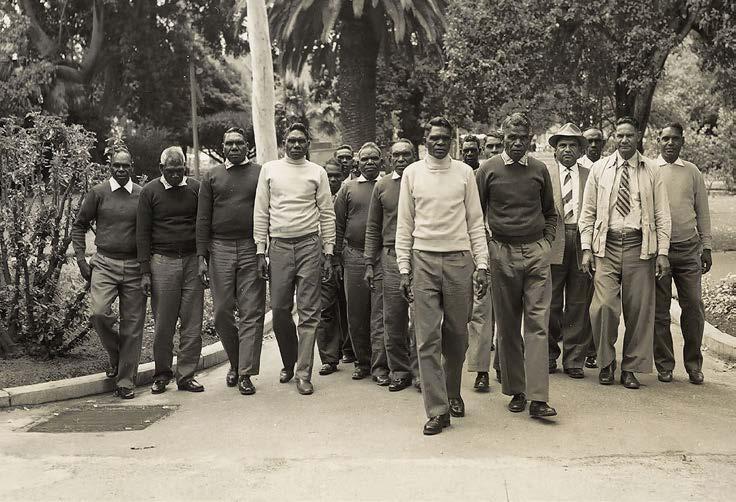
Front cover photo: First Nations witnesses at Supreme Court Gardens on the way to court as they brought libel action against Native Affairs Minister S G Middleton and the ABC on 29 October 1958 (image: supplied by The West Australian)
News from the CEO
Welcome to YMAC News
This edition I am excited to share that YMAC’s new Strategic Plan 2026-2030 is now live. The plan was developed throughout 2025 through an extensive process which included consultation with our Board of Directors, Regional Committees, YMAC members, Prescribed Bodies Corporate, Traditional Owners and YMAC staff. The plan reflects the Board’s vision, with a clear purpose, refreshed values and four key ‘pillars’ providing a roadmap for organisational priorities so we can effectively support both the needs and ambitions of the communities we work with. Learn more on page 14.
Pillar 1: Recognition, Rights and Responsibility of the strategic plan includes our work with native title compensation. As this work grows, YMAC has developed a Compensation Strategy outlining how we will deliver services to compensation claim groups. Among other things, it sets out our approach to delivering compensation services; lays out the critical steps needed to build a strong legal case; and addresses a range of critical considerations – including cultural sensitivities, the individual needs of PBCs, and the role of external experts. A summary of the strategy will be shared once finalised.
YMAC’s busy start to 2026 has included submitting to the Federal Minister for Indigenous Australians for re-recognition as the Native Title Representative Body (NTRB) for our regions, and – anticipating a successful re-recognition outcome – preparing Operational Plan and Budget submissions to National Indigenous Australians Agency (NIAA) for 2026-27 and 2027-28 and 2028-29 budget cycles.
Our new strategic plan’s Pillar 1, along with Pillar 2: Advocacy and Reform, are also guiding our community engagement. In March, I hosted YMAC’s third annual PBC CEO Roundtable, bringing together CEOs and senior staff to discuss operational issues and challenges being experienced by PBCs in managing native title rights and interests. Attendees shared updates and learnings with YMAC and with each other.
The report from the roundtable will inform YMAC service delivery, as well as ongoing advocacy and information sharing.
Engagement continued into April with our 2026 Native Title Forums, focusing on water access, rights and allocations — an increasingly important issue across our regions. Read more on page 16.
In the reform space, delivery of the final reports arising from both the Australian Law Reform Commission’s Review of the Future Acts Regime, (final report), and the State Government’s Native Title and Cultural Heritage Processes Review conducted with the support of the National Native Title Tribunal, were delayed from the original 2025 delivery dates. We await their release and remain hopeful both governments will consider the recommendations and act on meaningful reform to better protect Country and support Traditional Owner decision-making.
Finally, I acknowledge that 1 May marks the 80th anniversary of the Pilbara Strikes. The courage and strength shown by the Aboriginal people of the Pilbara in this historic action continues today, and I am proud to stand with YMAC and the communities we work alongside in the ongoing fight for rights, recognition and justice. Read more on page 12.
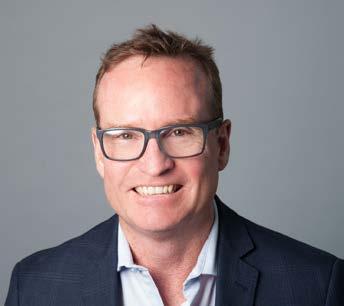
Simon Hawkins, YMAC Chief Executive Officer
YMAC Board and Regional Committees update
YMAC’s Annual Regional Meetings (ARMs) present an opportunity for YMAC members to receive updates on our achievements, discuss current issues, and undertake elections to the Yamatji and Pilbara Regional Committees, and – as per YMAC’s Rule Book, elections for Yamatji region Directors.
YMAC’s Pilbara ARM took place on 14 November 2025 on Kariyarra Country in Port Hedland, and the Yamatji ARM took place on 29 November 2025 on Southern Yamatji Country in Geraldton.
On Thursday, 5 February, a Pilbara Special General Meeting also took place, to address an additional agenda following the 2025 ARM.
Following these meetings, the YMAC Regional Committee and Board of Director representatives are now as follows: Pilbara Regional Committee:
• Ms Natalie Parker – Chairperson Pilbara Regional Committee
YMAC Co-Chairperson – Pilbara Region
• Mrs Eaton – Deputy Chairperson Pilbara Regional Committee
YMAC Deputy Co-Chairperson – Pilbara Region
• Ms Raylene Button also on Board of Directors
• Mr Ivan Smirke also on Board of Directors
• Mr Terry Jaffrey also on Board of Directors
• Ms Diane Stewart also on Board of Directors
• Mr Albert Pianta Pilbara Regional Committee member
• Ms Nora Cooke Pilbara Regional Committee member
Yamatji Regional Committee:
• Mr Peter Windie – Chairperson Yamatji Regional Committee
YMAC Co-Chairperson – Yamatji Region
• Ms Deborah Oakley – Deputy Chairperson Yamatji Regional Committee
YMAC Deputy Co-Chairperson – Yamatji Region
• Mr Richard Oakley also on Board of Directors
• Mr Albert Winder also on Board of Directors
• Ms Cicily Dowden also on Board of Directors
• Ms Sharna Oakley also on Board of Directors
• Mr Barry Dodd Yamatji Regional Committee member
• Mr Revel Oakley Senior Yamatji Regional Committee member
• Mr Ben Roberts Yamatji Regional Committee member
• Ms Louise Oakley Yamatji Regional Committee member
• Ms Gail Bellotti Yamatji Regional Committee member
• Mr Wayne Evans Yamatji Regional Committee member
• Ms Jennifer Green Yamatji Regional Committee member
YMAC gives sincere thanks to outgoing member of the Yamatji Regional Committee Mr Grant Dodd, welcomes new regional committee members Ms Nora Cooke (Pilbara) and Ms Jennifer Green (Yamatji), and acknowledges the contributions and commitments of all committee and board members
Celebrating success: Future of rangers secured on-Country
YMAC is excited by the recent success of both the Nanda Aboriginal Corporation (NAC) and Nganhurra Thanardi Garrbu Aboriginal Corporation (NTGAC) in securing long -term funding under the Commonwealth Indigenous Ranger Program (IRP).
This funding represents a significant milestone for both groups and will provide a strong foundation for the establishment and delivery of the Nanda Ranger Program and of the Baiyungu–Yinnigurrura Ranger Program. The funding will support ranger employment, training, and on - Country land and sea management activities over the coming years, ensuring Traditional Owners are empowered to care for their Country in ways that align with their cultural knowledge, values, and aspirations.
For NAC and NTGAC, the impact of this funding cannot be overstated. Ranger programs are more than employment pathways, they are a means to strengthen cultural connection, maintain knowledge transfer, and support communities to actively manage and protect their Country. This new funding will help to build stable ranger teams, invest in skills and capacity building, and plan long -term works with confidence and certainty.
Supported activities include environmental conservation, cultural site protection, monitoring and managing threatened species, maintaining access to Country, and strengthening partnerships across the region. Importantly, these programs also create opportunities for future generations to engage in meaningful work on Country while keeping culture strong and alive.
YMAC’s Land and Sea Management (LSM) team is proud to work alongside NAC and NTGAC as a service delivery partner, with the team’s role including supporting governance, program establishment, compliance, and operational delivery. These projects provide a strong example of how the LSM team works collaboratively with PBCs to translate funding into real outcomes on-Country, under Traditional Owner leadership.
Through partnership, shared purpose, and respect for cultural authority, these programs demonstrate what can be achieved when Traditional Owners are supported to lead the care and protection of their Country. YMAC congratulates Nanda and NTGAC on this achievement and looks forward to walking alongside them as these important ranger programs grow and flourish.
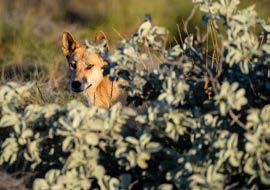
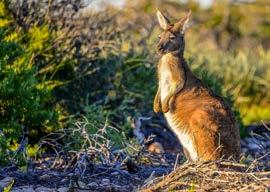
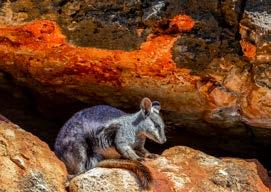
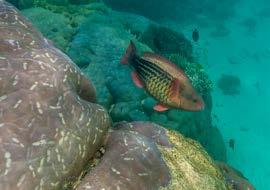
Images taken by José Kalpers on Baiyungu-Yinnigurrura Country.
Wednesday, 29 and Thursday, 30 July 2026
Held on Kariyarra Country at the Yule River Meeting Place, North West Coastal Highway
This year we will:
• Continue progress on the Yule River Call to Action and Solutions Roadmap
• Mark the 80th anniversary of the Pilbara Strike!
Wednesday, 29 July
9.00am - 3.30pm: Day One, Pilbara First Nations Peoples Community Day
Thursday, 30 July
9.00am - 2.30pm: Day Two, Government representatives join the conversation
Alcohol and drug free event Lunch will be provided both days YMAC is unable to pay travel allowance
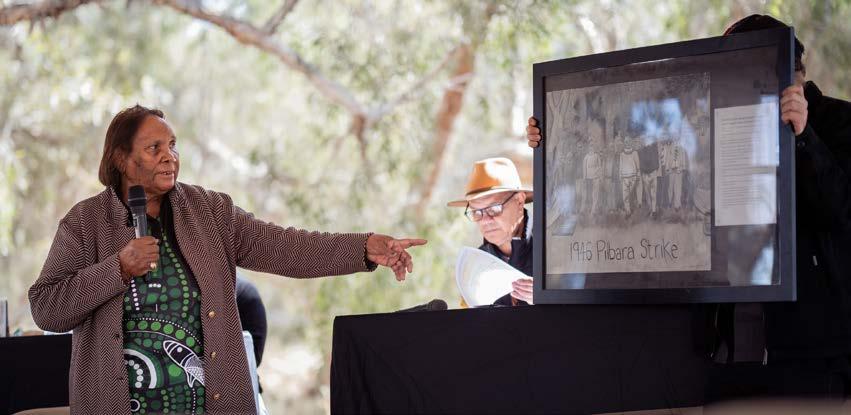

From commitment to action: Building momentum for the 2026 Yule River Bush Meeting
After a successful On-Country Bush Meeting at Yule River in 2025, YMAC has continued providing secretariat support to members of the Yule River Call to Action Working Group (YRWG) as they advocate for actions connected to the Yule River Call to Action and Solutions Roadmap (Yule River CTA), and work to keep government accountable. YMAC’s planning for the 2026 on-Country meeting is also well underway.
In March, Minister for Aboriginal Affairs Hon Don Punch MLA followed through on his commitment made at the 2025 on-Country meeting by delivering both reporting and funding to progress outcomes against the Yule River CTA. The Minister, alongside other senior government officials from Department of the Premier and Cabinet, met with the YRWG at YMAC’s Hedland office to discuss progress and yarn about the issues facing the region.
As part of his commitment, the Minister provided a detailed report against the Yule River CTA. This report will inform the work of the YRWG as preparations continue for this year’s on-Country meeting and will be shared with community members and Aboriginal Community-Controlled Organisations (ACCOs) ahead of the 2026 On-Country Bush Meeting at Yule River.
Invites for the July meeting are currently being prepared, along with the coordination of workshops for government agencies to meet with ACCOs and community members ahead of time, to discuss specific areas of the CTA needing more focus, attention, and consultation.
Connected to this work is the 2025 Yule River Community Priorities, a new document developed for government following the July 2025 meeting. The document captures both emerging issues and longstanding priority concerns that community members clearly identified as needing action at last
year’s event. The priorities document was drafted and developed by members of the YRWG, comprising of Ashley Councillor, Danny Brown, Donny Wilson, Henry Lockyer, Linda Dridi, Mrs Eaton, Raylene Button, Terry Jaffrey and Zoe Little.
The 2026 Yule River Bush Meeting will be held on Wednesday, 29 July and Thursday, 30 July.
Invites for community members, ACCOs and PBCs will be sent out shortly along with stallholder applications.
Day One is open only to First Nations people living in the Pilbara and First Nations organisations. Day Two is open to invited government representatives and senior government officials, who will attend to hear directly from community about discussions held on Day One and to provide updates on the work they are doing to improve outcomes for community across the region. This is followed by an open Q&A session, giving community members the opportunity to ask questions about issues raised or information shared during the meeting. Learn more at ymac.org.au/events/yule-river
Wednesday, 23 and Thursday, 24 September 2026
Held on Southern Yamatji Country at the Bundiyarra Aboriginal Community Aboriginal Corporation, 56 Eastward Rd, Geraldton
Wednesday, 23 September
9.00am - 4.00pm: Day One, First Nations Community Day
Commencing at 6.00pm: Free community evening of culture and entertainment
Thursday, 24 September
8.00am - 9.00am: Community Breakfast
9.00am - 2.00pm: Day Two, Public Day
Alcohol and drug free event Lunch will be provided both days YMAC is unable to pay travel allowance
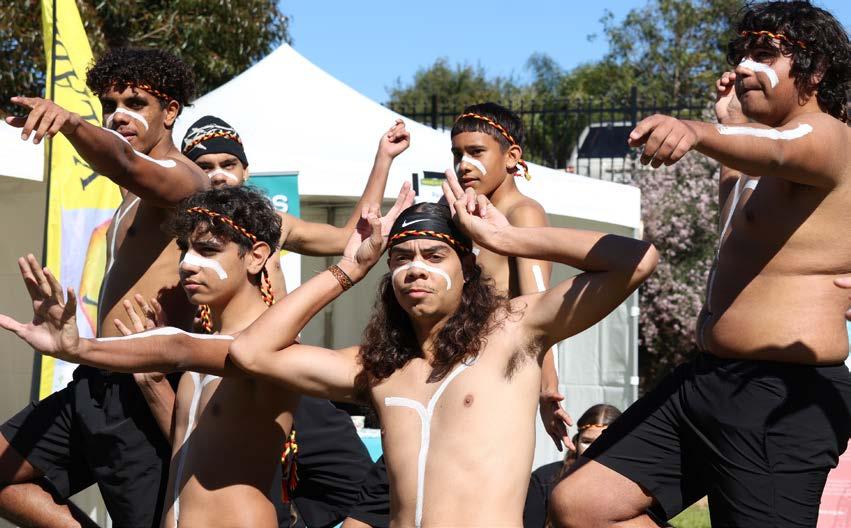
Yamatji On-Country drives action for change
At the end of 2025, YMAC was proud to deliver the 2025 Yamatji On-Country Call to Action (YoC CTA), an updated and expanded version of the community-led Call to Action Statement developed through Yamatji On-Country meetings since 2022.
The YoC CTA covers community-identified issues and solutions across systemic change; racism; housing and accommodation; police and justice; education; employment, training and economic development; and health and wellbeing.
An open invitation to all levels of government to work with First Nations people and our corporations across the regions to deliver much needed outcomes, the 2025 YoC CTA was strengthened by information shared by grassroots community members from Carnarvon, Meekatharra, Mt Magnet and Mullewa at pre-event workshops held by YMAC.
At YoC 2025 Minister for Aboriginal Affairs Hon Don Punch MLA committed funds to the Mid West Aboriginal Organisations Alliance (MAOA) to strengthen their governance and resourcing so they can lead on delivering CTA outcomes. Minister Punch returned to Geraldton in April 2026 to meet with and report back to MAOA on the State government response to the YoC CTA. MAOA’s member organisations accepted the community’s invitation from the 2023 on-Country meeting to help steer actions and lead advocacy to
Who are MAOA?
government on progressing YoC CTA. YMAC is proud to be a MAOA member and, as coordinator of Yamatji On-Country and the YoC CTA, has liaised with MAOA and the Department of Premier and Cabinet to progress the Minister’s funding commitment.
Planning for the 2026 Yamatji On-Country at Bundiyarra Aboriginal Community Aboriginal Corporation on Wednesday, 23 and Thursday, 24 September 2026 is underway.
The 2026 program will again run over two days, strengthening community leadership, collaboration and outcomes. Day One is First Nations, community focussed. Day Two brings together community representatives and government attendees, with community leaders presenting key priorities and Day One outcomes, alongside updates from government.
Yamatji On-Country also includes an evening of cultural celebration and a community dinner after the Day One meeting, and a community breakfast before proceedings begin on Day Two.
Learn more at ymac.org.au/events/yamatji-on-country
MAOA (Mid West Aboriginal Organisations Alliance) is a regional alliance of Aboriginal Community-Controlled Organisations (ACCOs) in the Mid West of Western Australia. It brings together local organisations to strengthen collaboration and provide a unified voice on issues affecting First Nations communities. MAOA members collaborate in advocating to government, coordinate regional priorities, and support community-led action on issues such as housing, health, education, justice, and economic development.
Yamatji On-Country Youth Program: From voices to action
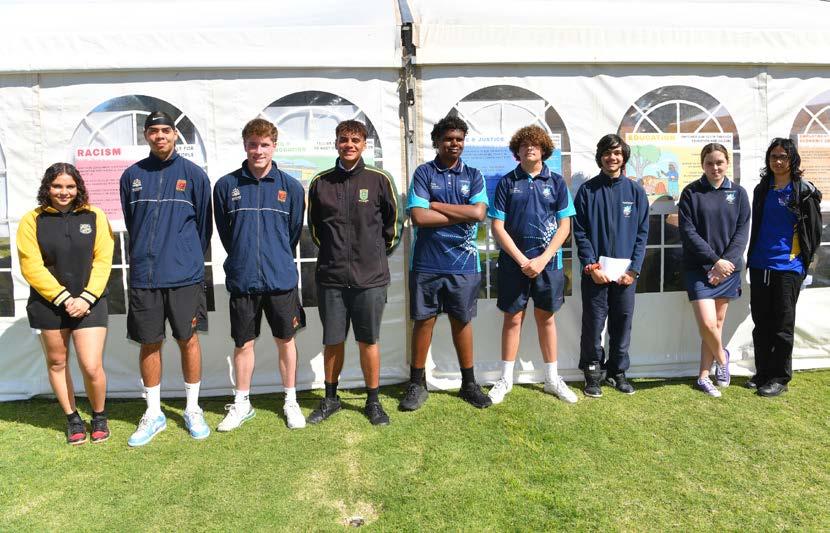
Since YMAC’s first Yamatji On-Country in Carnarvon in 2021, our Yamatji On-Country (YoC) Youth Program has grown significantly. At the 2021 gathering, students mostly observed the discussion on that year’s focus issue – cultural heritage protection. While participation was limited, it laid the foundation for what has become a strong and ever-evolving, youth-led initiative.
In 2022, they took an important step forward, with YMAC’s first pre-event youth workshop. Twelve students from Geraldton Senior High School, Champion Bay Senior High School and Nagle Catholic College came together for two hours, discussing issues affecting them and their peers. These conversations highlighted key concerns, including youth substance abuse, racism, online bullying, home environments and a lack of cultural connection. At the 2022 Yamatji On-Country, the students presented a Youth Statement to both community and the then Minister for Aboriginal Affairs, Hon Tony Buti MLA, marking a powerful moment of young voices being heard.
Building on this momentum, in 2023 YMAC partnered with the Aboriginal Health Council of Western Australia
(AHCWA) to deliver two full-day workshops. These sessions deepened discussions around youth concerns and included activities to creatively express key messages. They then presented these at YoC 2023. Youth-created video resources were shared through QR codes across the event site, and two participants were consequently invited to present at the National Aboriginal Community Controlled Health Organisation (NACCHO) Youth Conference in Perth, speaking about youth leadership and their experiences with the Yamatji On-Country Youth Program.
Following YoC 2023, further workshops helped refine youth messaging developed through the YMAC AHCWA workshops, which AHCWA designers then transformed into posters and social media tiles.
The 2025 Yamatji On-Country youth delegation (image: José Kalpers).
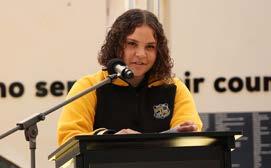
By YoC 2024, our young leaders were ready to focus on solutions. They refined their five key priorities, including a shift from ‘Lack of Culture’ to ‘Reconnection to Culture’. These have since been embedded into the broader Yamatji On-Country Call to Action statement.
In 2025, YMAC was excited to step up in its role as a Native Title Representative Body in supporting the youths’ ‘Reconnection to Culture’ priority. A pre-event workshop was held with students from five schools exploring culture and its connection to Country and native title. This involved presentations from YMAC staff as well as Yamatji Southern Regional Corporation (YSRC) Rangers. From these conversations, the ‘Elders Film Project’ was born – an inspiring, youth-led initiative through which students will interview Elders about their
life experiences, culture, and artwork to pass on to future generations.
Building on this, YMAC staff will also take the stage at this year’s AIATSIS Summit in June, presenting Voices on Yamatji Country: First Nations Leadership, Youth Engagement, and Intergenerational Knowledge for Regional Change. The presentation will highlight how Yamatji-led initiatives are strengthening connections between young people and Elders, supporting the transfer of cultural knowledge, and driving communityled outcomes across the region. It’s an opportunity to share YMAC’s on-Country approach with a national audience and contribute to broader conversations about empowering First Nations leadership and shaping sustainable regional futures.
Yamatji On-Country recognised as 2026 AIATSIS Summit Awards Finalist
Yamatji On-Country is making waves on the national stage!
Delivered by YMAC, the on-Country meeting has been recognised as a finalist in the 2026 AIATSIS Summit Awards, highlighting its strong impact and the outcomes being achieved across the region.
Stay tuned as we await the results and celebrate this exciting recognition as a finalist!
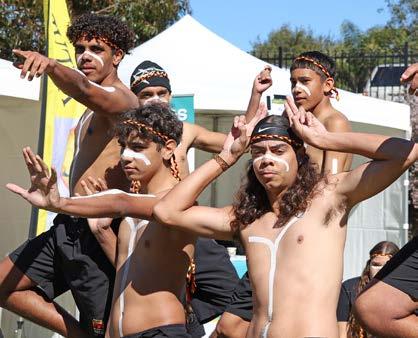
Wirri Bundara Dance Group from Geraldton Senior High School perform at the 2025 Yamatji On-Country (image: José Kalpers).
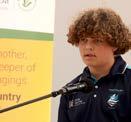
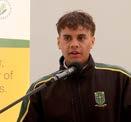
Top L-R: Darcy Mallard form Champion Bay Senior High School, Trevor Farrell from Nagle Catholic College. Below: Thia Garlett from Morawa District High School. (Images by José Kalpers).
Commemorating the Pilbara Strikes – 80 years on
One hundred kilometres east of Nullagine there is a small but significant meeting place known as Skull Springs, sitting on the banks of the Davis River. It is the starting place for one of the most incredible and too often forgotten stories of Australia’s history.
It was there that a six-week meeting involving 24 language groups, 16 interpreters and hundreds of First Nations people from across the Pilbara came together to begin planning for the 1946 Pilbara Strike – one of the longest and most significant industrial actions this country has ever seen.
Responding to the brutal, slavery-like conditions that they had been forced to live under, First Nations stockmen, domestic workers and station hands from across the entire region organised to fight back against the system built on exploitation and control that saw station owners become rich on the backs of their people.
Ahead of the strike, Nyamal man Clancy McKenna and Nyangumarta man Dooley Bin Bin (also known as Winyirin) began the herculean task of travelling to stations across the entire region with handmade calendars, recruiting their fellow countrymen to the cause and coordinating a date where over 800 people would walk off over 20 stations demanding their basic rights.
Bin Bin himself travelled across these stations by foot, rail and bicycle, bringing together his fellow
countrymen with an ingenious calendar system – using pieces of cardboard and biscuit tin labels, he created a countdown system that allowed workers who had been deprived education to track each day until the date the strike would begin.
That date was 1 May 1946 – known internationally as International Workers’ Day, or May Day – a date of significance to workers’ movements across the world.
For the Pilbara, this day was also the start of the mustering and shearing season.
Women played a critical role in this process, with one notable example being Nyangumarta woman Daisy Bindi. Bindi spoke at many meetings ahead of the strike, building support in community whilst also dealing with attention from police who threatened to remove her from the area.
Bindi was not deterred by these threats. Using whatever money she could gather, she hired a truck to ferry 86 workers off Roy Hill Station, building momentum across the region and inspiring others to follow.
Threats, violence and police persecution were common during the strike, with Bin Bin and McKenna imprisoned from the outset. Bin Bin was once chained to his cell for six days, and 32 strikers were arrested and chained by the neck. Rather than breaking them, these acts strengthened their resolve.
Strikers accepted imprisonment as part of the fight, using mass civil disobedience to undermine authorities’ control.
At one point Don McLeod, a non-First Nations unionist and dockworker who had been asked by community to help organise the strikes was arrested and taken to Port Hedland jail. As a result, 200 strikers marched down the main street of Port Hedland and demanded his release – which promptly happened.
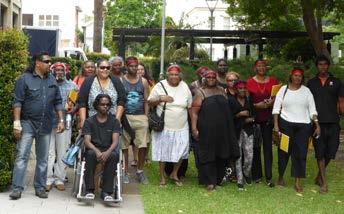
Descendants of those involved in the 1946 Pilbara Strike while at the 2014 presentation of a YMAC-organised petition to State Parliament objecting to proposed changes by the then-Barnett Government to the Aboriginal Heritage Act 1972 (WA). (image: Yamatji Marlpa Aboriginal Corporation)
First Nations witnesses at Supreme Court Gardens on the way to court as they brought libel action against Native Affairs Minister S G Middleton and the ABC on 29 October 1958 (image: supplied by The West Australian).
Whilst the strikes were supported by unions and unionists from across the nation, many strikers were left to fend for themselves. Having walked off the stations completely, many strikers were living in strike camps they had set up throughout the Pilbara.
The pastoralists thought they could simply wait the strikes out, effectively starving the strikers into submission. This did not happen.
Strikers quickly started using their skills to work for a living in their own ways, such as surface mining for tin, hunting for kangaroos for food and skins, and pearl shelling. When strikers were deprived of governmentissued coupons necessary for getting certain items, which station owners controlled, strikers once again walked to the Port Hedland police station, where McKenna and around 80 others demanded permits and ration coupons, which were then distributed to strikers directly.
Ahead of the 1949 shearing season, the strikers secured a major win when two pastoral stations agreed to their demands, and the Seamen’s Union banned wool from non-compliant stations. Although the government promised that the wages and conditions from the two stations would be applied as a standard across the Pilbara, it later reneged after the shearing season,
forcing strikers to negotiate station by station.
While this prolonged the strike, their demands were ultimately achieved, and it ended in late 1949. Many workers chose not to return to the stations following the strike, opting to keep working at their self-sustaining community-led work that they had resorted to during the strike and establishing vibrant communities that many still call home.
Beyond improved wages and conditions, the strike forced non-First Nations station owners to come to the table and negotiate directly, something they had previously refused to do. It challenged the racist and colonial myths about First Nations people, bringing enormous scrutiny to the actions of police and judges in the region.
It also kicked off a movement demanding selfdetermination, land rights, recognition and the rights of Pilbara First Nations people to control their communities and their futures – a fight that descendants of the strikers – and their communities are still fighting to this day.
2026 marks the 80th anniversary of the strike, which continues to resonate throughout the region and the country as an important flashpoint in First Nations history.
To learn more about this important milestone, visit the Pilbara Strike website at https://www.pilbarastrike.org/
YMAC’s 2026-2030 Strategic
YMAC’s Strategic Plan 2026-2030 guides the activities of the corporation across our Yamatji and Marlpa (Pilbara) regions.
It lays out our Board of Directors’ vision – and the areas of focus YMAC commits to – to deliver the best possible services, support and outcomes to our members, Traditional Owners, and PBC and Aboriginal Corporation clients over the next five years.
Country is our mother, our provider and keeper of our cultural belongings. Culture and Country go together. You can’t have one without the other.
Our VISION
Protecting Country, language and culture, we come together as one, united and strong.
Our STRATEGIC PILLARS and PRIORITY FOCUS AREAS
Recognition, Rights & Responsibility
Strengthening native title, cultural authority, and accountability.
1.1 Obtain and advance legal and cultural recognition
1.2 Support the role and authority of PBCs and cultural governance bodies
1.3 Strengthen the defining and exercising of cultural responsibilities
1.4 Uphold and strengthen rights through advocating for accountability and reform
1.5 Expand knowledge and expertise in recognition and rights management
Advocacy & Reform
Influencing systems to be more just, and responsive to First Nations and leadership .
2.1 Strengthen cultural heritage protection and empowerment
2.2 Drive recognition of cultural authority in planning and system reform
2.3 Champion First Nations leadership in national and regional reforms
2.4 Extend and expand land and water rights
2.5 Promote recognition of First Nations-led governance
2.6 Empower communities through challenging structural unfairness and inequity
2.7 Drive public awareness and evidence-based advocacy on First Nations-led land and sea management
2.8 Grow stakeholder knowledge and understanding of native title
Our VALUES describe our principles and desired culture; serving as a behavioural
JUSTICE
RESPECT & UNDERSTANDING
Plan completed and endorsed
YMAC thanks the many members, PBCs, corporations, community members, YMAC staff, funders, and other key stakeholders who contributed to the plan as it was developed throughout 2025.
Our PURPOSE
The full plan is available on our website www.ymac.org.au/about-us/strategic-plan-2026-2030/
Walking together we champion rights, Country, language, and culture; provide education and awareness and create opportunities for a better tomorrow for First Nations peoples.
Sustainability & Resilience
Supporting strong, culturally grounded communities and organisations for generations to come.
3.1 Support First Nations-led sustainable economic development
3.2 Strengthen governance and long-term capacity
3.3 Promote resilience through cultural practice and connection
3.4 Advocate for continued support and capacity-building for land and sea management
3.5 Deliver strategies supporting sustainable development, climate adaptation and environmental protection
Diversification & Growth
Building a future that is innovative, financially sustainable, and driven by First Nations opportunity.
4.1 Develop and scale capacity-building programs for First Nations enterprises
4.2 Support and strengthen commercial partnerships
4.3 Pursue strategic investment in people, property, infrastructure, and technology
4.4 Position YMAC as a regional leader in innovation for Country, language, and culture
4.5 Expand fee-for-service offerings
4.6 Enhance existing services through drawing on our deep knowledge base
behavioural compass for Directors, Regional Committee Members and staff.
2026 YMAC Native Title Forums – Let’s talk about WATER!
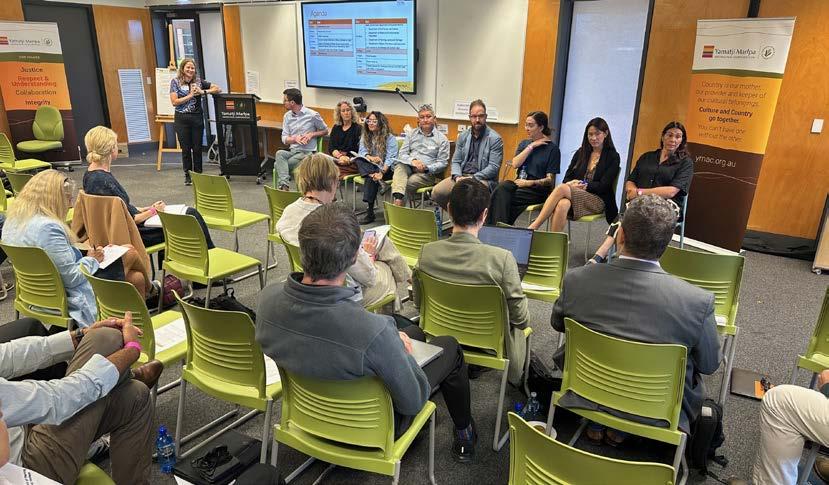
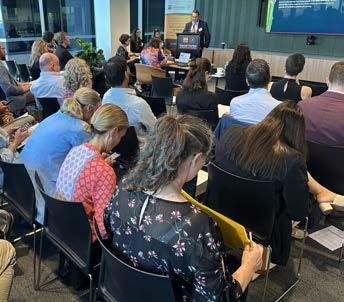
This year’s YMAC Native Title Forums were held throughout April and explored the theme of freshwater rights, access and allocations – a highly complex and important issue for our regions.
Forums were organised in both the Yamatji and Marlpa regions, with an extra forum held this year in Perth which covered both areas.
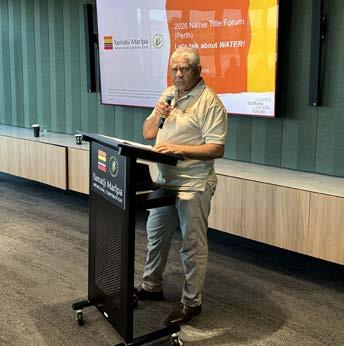
The Perth forum was attended by the WA Minister for Aboriginal Affairs, Water and Climate Resilience Hon Don Punch MLA, who shared an update on water rights across the state, acknowledging the importance of water for communities, ecosystems and Country, as well as economic factors.
The forums also included presentations from:
• National Native Title Council
• Environmental Defenders Office
• Department of Water and Environmental Regulation
• Department of the Premier and Cabinet
• Department of Planning, Lands and Heritage
• Department of Mines, Petroleum and Exploration.
The forums provided opportunity for Traditional Owners as well as directors and staff from Prescribed Bodies Corporate (PBCs) from within our representative regions to discuss this critical issue with each other, and directly with government.
Water was highlighted by those in attendance as a foundational element for First Nations people which holds deep spiritual and cultural significance, as well as providing connection to Country and identity, holding environmental significance, and providing economic opportunity.
In his address, Minister Punch said he understood the changing landscape in water rights cannot be ignored.
“With climate change and the way our state is growing, it cannot be business as usual,” he said.
“We cannot have Country dying because we’ve taken too much ground water. We need to secure our collective future.”
Despite this, the Minister also made it clear the State Government will not be proposing any major amendments to related legislation in the short-term, but that engagement through water planning is a means to improve the way First Nations cultural knowledge is incorporated into processes. Many attendees voiced their concerns in response, arguing the need for urgent and meaningful changes, rather than a gradual approach, to be of any genuine effect.
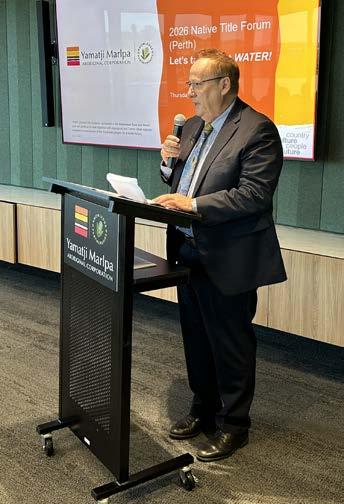
WA Minister for Aboriginal Affairs, Water and Climate Resilience Hon Don Punch MLA, presenting at the Native Title Forum in Perth (image: Tash Gillespie).
Other key concerns arising throughout the forums included:
• The absence of a clear legal framework
• The need for a lead agency model with whole-of-government coordination
• A shift in reform from participation to shared authority
• Systemic exclusion resulting from the underresourcing and capacity of PBCs, limited transparency, and legal complexities
• Climate change and water security pressures.
On a positive note, attendees across the forums also shared their thoughts and suggestions for ways government could improve on the status quo.
Such recommendations proposed:
• Establishing clear leadership and whole-ofgovernment accountability
• Reforming engagement approaches to enable genuine inclusion and participation
• Strengthening transparency and access to information
• Ensuring regulation delivers outcomes, not just compliance
• Preventing the transfer of environmental and legacy risks to Traditional Owners
• Investing in First Nations capacity and capability
• Using existing policy and planning tools to deliver immediate gains.
Left: Elder Nick Abraham conducting a Welcome to Country (image: Tash Gillespie).
Panel of presenters at the Native Title Forum in Geraldton (image: Tash Gillespie).
Protecting water resources
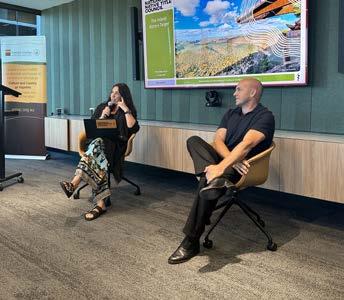
The Environmental Defenders Office (EDO), with YMAC Senior Lawyer Radhika Kayarat, presented to the Native Title Forums on ‘Protecting Water Resources’.
Although the Native Title Act 1993 (Cth) allows rights over water as part of broader native title rights, generally only rights to use water for domestic and personal purposes have been recognised by the courts. The act does not give native title holders a right to negotiate with proponents for water licences that are applied for on their Country.
The relevant processes for consultation and agreementmaking on water fall under multiple pieces of legislation, meaning there is no clear, single way for Traditional Owners to best engage with planning and decisionmaking. While such avenues for protecting water on Country exist, these can be time consuming and challenging to engage with, as well as scientifically complex, rarely achieving substantive outcomes for traditional owners.
As was shared during YMAC’s 2026 Native Title Forums however, Traditional Owners and their representative
organisations can involve themselves in project assessments through public comment periods and various consultation processes. Engagement on water can also be pursued through reporting breaches, requesting information from proponents, native title compensation negotiations with the State, seeking a merits or judicial review of a decision, requesting cultural/economic water allocations, writing to the WA Minister and/or DWER to be briefed about the state of water on your Country, or making a human rights complaint (if human rights have been violated).
Please note, YMAC is also excited to advise that we are currently working with the EDO to produce a new series of user-friendly resources, which will include more information on First Nations water rights. We look forward to sharing these resources with you as they become available.
Environmental Defenders Office Senior Solicitor Ashley Truscott presenting at YMAC’s 2026 Native Title Forum in Perth (image: Tash Gillespie).
National Native Title Council CEO Jamie Lowe and Senior Project Officer Chontarle Bellottie presenting at YMAC’s 2026 Native Title Forum held in Perth (image: Tash Gillespie).

Legislation
Government body responsible Assessment process/es available
Native Title Act 1993 (Cth) WA Department of Mining, Petroleum and Exploration (DMPE)
Native Title Act 1993 (Cth) Department of Water and Environmental Regulation (DWER)
Aboriginal Heritage Act 1972 (WA)
Rights in Water Irrigation Act 1914 (WA)
Environmental Protection Act 1986 (WA)
Environment Protection and Biodiversity Conservation Act 1999 (Cth)
WA Department of Planning, Lands and Heritage (DPLH)
WA Department of Water and Environmental Regulation (DWER)
DWER and Environmental Protection Authority WA (EPAWA)
Australian Department of Climate Change, Environment and Water (DCCEEW)
Section 29 notice for right to negotiate
S 24HA – right to be notified and comment on grant of water rights
Section 18 consent applications
Water licences and permits
WA environmental impact assessment
Federal environmental impact assessment
Potential breaches
Proponent not negotiating in good faith.
State did not notify native title holders or provide opportunity to comment on water licence application.
Disturbing, damaging or destroying an Aboriginal site (whether registered or not) without consent.
Taking water without a licence.
Taking more water than allowed under a licence.
Pollution or harm to WA environment without approval or permit.
Unlawful discharge of waste.
Taking an action that will or is likely to have a significant impact on particular matters (e.g., national heritage areas, threatened species, some water resources).
Breaching a condition of an approval.
Murchison Gorge, Nanda Country (image: José Kalpers).
Establishing an Inland Waters Target under Closing the Gap
As part of YMAC’s 2026 Native Title Forums, the National Native Title Council (NNTC) has been providing attendees with an overview and update on its work towards establishing an Inland Waters Target (Target 15c) within the NationalAgreementonClosingtheGap.
Target 15c focusses on increasing Aboriginal and Torres Strait Islander organisations’ access to, ownership of, and management of inland waters.
This includes improved access to water licences, greater ownership of water entitlements (such as licences, shares, and allocations) that are practical and controlled by First Nations groups, and a strengthened role for First Nations peoples in water governance, including participation in decision-making bodies and water boards.
To develop this target, the NNTC co-chairs the Inland Waters Target Working Group, alongside the Australian Department of Climate Change, Energy, the Environment and Water (DCCEEW). The working group shifted its focus in 2024 – from a single national target, to establishing individual jurisdictional targets to better reflect the diverse legislative and geographical landscapes of each state and territory. As the end-2026 deadline for finalising these jurisdictional targets approaches, the Joint Council is working to embed them into the National Agreement.
For more information, visit the NNTC website (nntc.com.au/our-work), or email Senior Project Officer Chontarle Bellottie (chontarle.bellottie@nntc.com.au).
First Nations Climate Resilience
Project: Have your say on protecting Country from climate change.
Aboriginal people and organisations across Western Australia are invited to have their say on climate change impacts through the WA Aboriginal Climate Adaptation Project, led by the Department of Water and Environmental Regulation (DWER) in partnership with Aboriginal consultancy, Kaala Barna & Nous Group.
Input is being sought to help shape Aboriginal-led climate adaptation priorities and the design of future funding to support community-driven solutions. People can contribute through a short online survey or by attending workshops held across regions and online, which provide opportunities for deeper discussion and shared planning.
Survey and workshop details are available at: https://www.wa.gov.au/organisation/department-of-water-and-environmental-regulation/waaboriginal-climate-adaptation-project-engagement-and-consultation
For more information, email WAACA@KaalaBarna.com.au
Collaboration in action: Strengthening cultural heritage understanding
YMAC was fortunate to receive a grant from the Academy of the Social Sciences in Australia to hold a collaborative professional development workshop for YMAC staff with leading experts in Western Australian heritage.
Mr Ken Hayward, a Noongar man and lecturer in Aboriginal Studies at Edith Cowan University, delivered an Acknowledgement of Country, setting the tone for a day focused on cultural respect, shared learning and the importance of working in partnership with each other for the best outcomes.
Session 1, also led by Ken, explored key cultural considerations, responsibilities and obligations when working with Aboriginal communities. His presentation examined elements of culture including cultural safety, cultural respect, power differentials and the obligations and expectations that Traditional Owners may hold when engaging with researchers and practitioners. The session concluded with an open discussion, in which participants shared experiences relating to their own experiences of prejudice in the community.
Session 2 focused on valuing Aboriginal cultural heritage and understanding the evolving legislative landscape in Western Australia. Archaeologist Dr Jo Thomson led the discussion. Their session highlighted recent changes to heritage legislation and explored opportunities for protecting Aboriginal heritage beyond existing legislative frameworks.
Session 3, led by anthropologist Ms Dirima Cuthbert, explored fieldwork methodologies and ‘culture-first’ practice through sharing a series of field-based examples. The discussion addressed challenging the ethical, personal and professional obligations that can arise during heritage and cultural work.
Session 4 examined the process of moving from field consultations to documentation. Participants worked through case studies demonstrating approaches to recording cultural heritage for the purpose of writing a submission to the Minister for Aboriginal Affairs for inclusion on WA’s list of registered sites.
This session highlighted the importance of collaboration, careful documentation and respectful engagement throughout the heritage recording process.
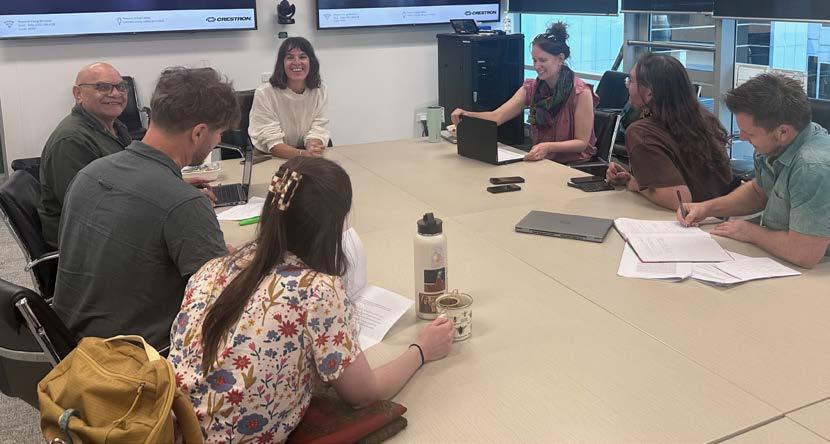
Mr Ken Hayward and Ms Dirima Cuthbert with members of YMAC’s Research, Country and Culture Services team (image: Yamatji Marlpa Aboriginal Corporation).
#CleanUpWittenoom campaign takes next step
Following the release of the powerful film, Yurlu / Country and the #CleanUpWittenoom campaign (as reported in YMAC News, November 2025), Gordon Legal on behalf of Banjima Native Title Aboriginal Corporation (BNTAC) have launched legal proceedings against the State of Western Australia seeking justice for the cultural and environmental devastation caused by the Wittenoom asbestos mine.
The contamination zone on Banjima Country contains over three million tons of asbestos waste; enough to fill the Melbourne Cricket Ground twice over. It is the largest contaminated waste site in the southern hemisphere, and it continues to spread.
BNTAC is seeking orders which require the State of Western Australia to remediate the contaminated areas, including the mines, tailings dumps, Wittenoom floodplain, creeks, rivers, and other parts of the Determination Area where the asbestos waste continues to accumulate.
The Banjima people also seek redress for the devastation wrought over the past 80 years to their people and their Country. Many have died, and many will die from mesothelioma as a result of the inaction of the Government of Western Australia.
In March this year, Banjima Traditional Owners also took their fight to Switzerland, to shine a light on the
campaign to the United Nations Human Rights Council. The event included a screening of Yurlu / Country and a discussion on the injustice Banjima people continue to face.
“We Banjima people belong to one of the most beautiful parts of the world, and our connection to Banjima Country runs deep,” said BNTAC Deputy Chair Johnnell Parker.
“Despite the damage, our Elders have raised us to be strong and resilient. We carry in our hearts their strength as we continue the fight, to heal our Country, to protect it, and to ensure future generations can stand on healthy land and remain connected to who they are.”
Find out more and support the #CleanUpWittenoom campaign at cleanupwittenoom.com. To find out where to watch the award-winning documentary Yurlu / Country or organise a screening, visit yurlucountry.com.
YMAC thanks BNTAC for supplying this article
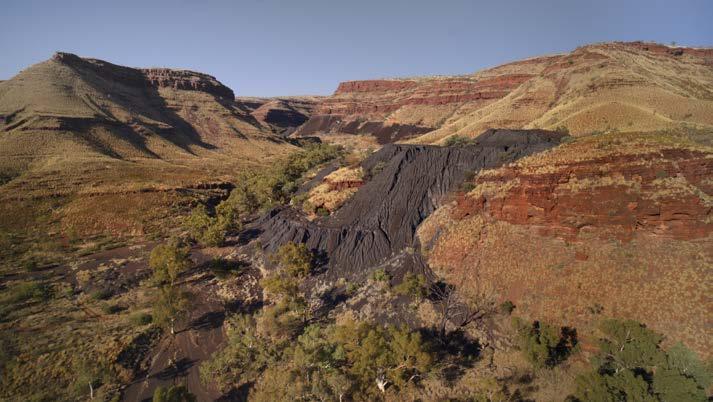
Asbestos contamination on Banjima Country (image: supplied by Illuminate Films).
2026 YMAC All Staff Conference
One of the focus areas identified under YMAC’s Strategic Plan 20262030, Pillar 1: Recognition, rights and responsibility, is to expand knowledge and expertise in recognition and rights management.
YMAC’s annual All Staff Conference provides a great opportunity to achieve this, as we bring staff together from across offices for two days of development and information sharing.
Taking place in February, staff heard from several inspiring presenters from within and outside the corporation, giving everyone much to think about.
The event opened with a captivating Welcome to Country from Whadjuk Noongar Elder Tina Hayden that included a cultural performance from Corroboree for Life, led by Ash Garlett Penfold.
Mr Kevin Smith, President of the National Native Title Tribunal (NNTT), explored the balance between native title and looming technological and moral revolutions, such as the rise of artificial intelligence, irreversible climate change, and the rupture of an international rules-based order in today’s global political environment.
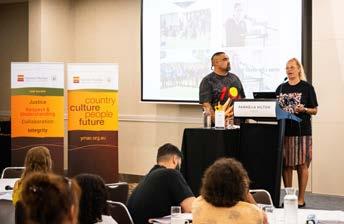
Ms Katie Kiss, Aboriginal and Torres Strait Islander Social Justice Commissioner at the Australian Human Rights Commission, spoke about the need to ‘rebuild the village’ – as an urgent and long-term process of rebuilding what colonisation has torn down in Australia.
Mr Damein Bell, CEO of the First Peoples’ Assembly of Victoria, joined us online to share the First Peoples’ Assembly journey towards Treaty in Victoria.
YMAC’s own Tash Gillespie, Communications Coordinator, and Ken Capewell, Project Officer, delivered an exciting update on their work through the Yamatji On-Country Youth Program, working with young people across the region to build confidence, connection and strong community voices.
This year, YMAC staff were invited to view a screening of the important film Yurlu / Country, the powerful film following Banjima Elder Mr Parker and his fight to protect and heal his ancestral lands after the devastating legacy
of the Wittenoom asbestos mines. Through deep, personal truth telling, YMAC staff learnt more about the strength and resilience of the Banjima community and their ongoing campaign to restore and heal their land through the #CleanUpWittenoom campaign.
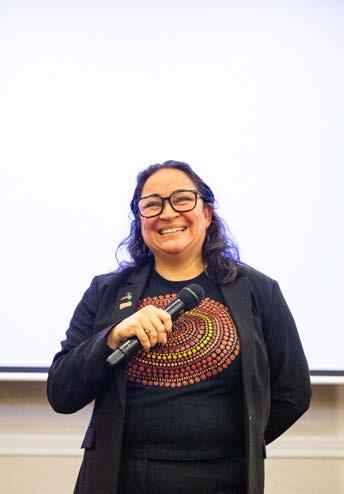
Tash Gillespie and Ken Capewell presenting on the Yamatji On-Country Youth Program (image: Cole Baxter).
Ms Katie Kiss speaking about the need to ‘rebuild the village’ (image: Cole Baxter).
Update from the National Gathering: Toolkit supports community conversations
In September 2025, more than 300 First Nations peoples came together on the Country of the Eastern Kuku Yalanji people in Port Douglas to explore the idea of a national representative body to ensure their needs are heard and acted upon. At The National Gathering, attendees committed to sharing information prepared by the Council of First Nations to their respective communities.
In response, a Roadmap and Phase One Toolkit has been developed as part of the Council of First Nations’ engagement process. These materials are designed to assist delegates in taking discussions back to their communities.
The toolkit is not prescriptive. Instead, it offers flexible guidance that can be adapted to suit local contexts, leadership styles, and community priorities.
The Council intends for Phase One – sharing information on what has been proposed and why – to run from March to April 2026.
According to the materials provided, this phase is about building awareness, having the conversation, and generating ideas. The intention is to ensure everyone has access to clear information and an opportunity to ask questions.
The toolkit contains materials to help host conversations in communities.
These conversations are intended to clearly explain what has been proposed and outline what the process ahead looks like. Following Phase One, the process will move through the next three stages:
Phase Two
Considering governance models (April to August 2026)
Phase Three
Local decision making (August to October 2026)
Phase Four
Preparing for the National Gathering (October 2026 to January 2027)
For further information or access to the resources available to guide community discussion, email hello@thenationalgathering.au
What is the Council of First Nations?
A proposed national body being shaped by Aboriginal and TorresStrait Islander people. It aims to bring together voices from across Australia to speak on key issues and strengthen representation at a national level.
Native bees thrive thanks to ranger innovation
What began as a practical idea during COVID-19 has grown into an exciting biodiversity project on Nyangumarta Country - bringing together rangers, community, and scientists, and even leading to the discovery of new native bee species.
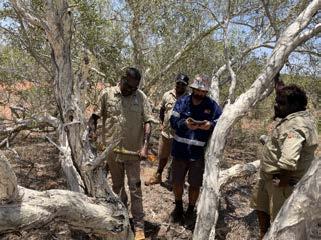
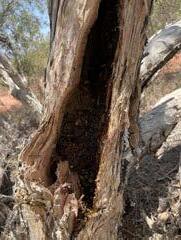
The challenge was clear: traditionally, harvesting native bee hives for walajah (honey) destroys the hive. Rangers wanted a way to harvest the honey while preserving the bees by relocating the brood and queen after harvesting.
Inspired by native bee boxes made by a Broome local, Nyangumarta Rangers collaborated with him to build boxes at their ranger base After harvesting a wild hive, the entire colony could be carefully transferred into a purpose-built box, giving the bees the opportunity to establish a new home on-Country. Over time, rangers could monitor the boxes and support the survival of each colony.
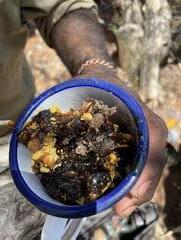
Native bees produce far less honey than European honeybees, but what they lack in quantity they make up for in flavour Native bee honey is known for its rich, delicious taste.
The project quickly became a community effort. Local school aged kids helped paint the bee boxes, which were then placed in the Walyarta Conservation Park (300km south of Broome) where native bees had been found. The initiative caught the attention of the Department of Biodiversity, Conservation and Attractions (DBCA) staff, who saw the potential to learn more about native bee populations in the IPA they jointly managed with Nyangumarta Rangers.
From there, the project developed into a formal survey. Together with the Nyangumarta Rangers, they teamed up with native bee researcher Dr Kit Prendergast to survey Nyangumarta Country bee colonies. Using hand nets, they collected bees from flowering plants at different times of the year to understand species diversity.
The surveys revealed three species previously unrecorded – a reminder of how little is known about native bees in remote areas.
Ranger knowledge of Country was critical throughout, guiding surveys with insights into seasonal changes, flowering plants, and landscapes where bees were active.
The collaboration also created opportunities to share the work more widely. Nyangumarta Rangers presented the project with DBCA at the WA Biodiversity Conference in 2025, demonstrating how an idea that began during COVID-19 has grown into an important biodiversity initiative.
This project showcases ranger innovation and the value of partnerships. From building and painting bee boxes to discovering new species, this project connects community, culture, and science – highlighting how caring for Country benefits both people and the environment.
A bee hive taken from a split Melalueca tree.
Images taken by Jacob Loughridge on Nyangumarta Country. L to R: Nyangumarta Rangers Terrence Yanawana, Zarim Hunter, Phil Docherty, and Waylon Hunter.
A mug of collected honeycomb and honey.
First Nations Clean Energy Advice Grants
Round
One of the First Nations Clean Energy Advice Grants are now open. The grants aim to support a community or group’s building of skills and knowledge, and its access to support, so that informed decisions can be made.
Grants between $5,000 and $80,000 are available for advisory services, or community, group, and/or staff engagement on clean energy projects.
This work could include: developing Community Engagement Protocols and Community Benefit Principles in preparation for negotiating with clean energy proponents; developing a Community Energy Plan and/or a Renewable Energy Strategy;
or contracting commercial, technical, financial and other advice to assist with clean energy planning and development, negotiations, and agreement making.
Applications close at 3pm AWST on Thursday, 3 September 2026.
Find out more on the Business.gov.au website.
Housing class action update
In 2024, Slater and Gordon Lawyers filed a class action on behalf of First Nations tenants living in substandard public housing in remote regions of Western Australia.
It includes First Nations people who held a tenancy agreement with the WA Housing Authority between 1 July 2010 and December 2025 across WA, including in the Pilbara, Mid West, and the Gascoyne.
The case argues the public housing landlord has breached contract law, consumer law, and the Racial Discrimination Act 1975 (Cth), as well as having engaged in unconscionable conduct.
This case has expanded since it was launched to bring claims under the Racial Discrimination Act 1975 (Cth), arguing that housing was provided to First Nations people on different and less-favourable terms than non-First Nations people.
The case has also had two ‘case management hearings’ before a judge, however a trial has not yet been set, and is not likely to happen until 2027.
Affected tenants are invited to sign up to receive updates on the case on the Slater and Gordon Lawyers website at slatergordon.com.au/wahousing.
For enquiries, email wahousingcorps@slatergordon.com.au or call or text Slater and Gordon on 0478 854 532.
Heritage planning reimagined for major projects
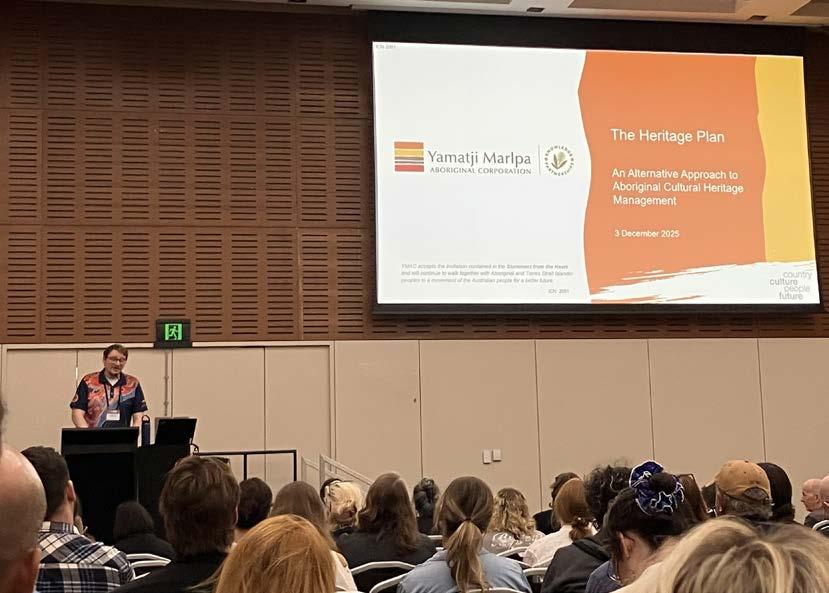
Last year, Connor Sweetwood from YMAC’s Heritage team presented ‘The Heritage Plan: An alternative approach to Indigenous heritage management’ at the Australian Archaeological Association (AAA) annual conference in Fremantle. Connor presented as part of the session titled ‘Embedding Indigenous practise in consulting archaeology’, a session dedicated to discussions of how to better incorporate Indigenous voices and methods of work into the fast paced and complex world of archaeological consultation. Heritage protocols contained within major project agreements are typically based upon principles and procedures which were originally developed to address ad-hoc, small-scale mineral exploration-type activities, which can prove inadequate for the needs of PBCs and Traditional Owners that have sought to work in partnership with proponents developing major infrastructure projects. These agreements are often not flexible or dynamic enough to adapt to the changes and intensive demands required by renewable energy
projects operating within the modern native title and Aboriginal cultural heritage landscape.
Connor’s presentation focused on a concept called the Heritage Plan. Originally designed by the YMAC legal team, the Heritage Plan is a modified framework that helps to streamline the process of archaeological and anthropological consultation with Traditional Owner groups without sacrificing any depth of consultation, and helps provide more efficient free, prior, and informed consent (FPIC) through technical communication of complicated legal matters.
In doing so, YMAC has designed an effective tool for embedding Indigenous voices into the legal agreements that are instrumental in protecting their Country.
The presentation was very well received at the conference, with positive feedback from archaeologists, community members, and proponents working with YMAC’s heritage team, who commended both the concept and the quality of delivery.
Connor Sweetwood presenting at the Australian Archaeological Association conference in Fremantle (image: Yamatji Marlpa Aboriginal Corporation)
Country, Culture, People, Future
About us
YMAC News is produced by Yamatji Marlpa Aboriginal Corporation.
We are an Aboriginal Corporation and the Native Title Representative Body for the Mid West, Murchison, Gascoyne and Pilbara regions of Western Australia.
YMAC Vision 2026-2030:
Protecting Country, language and culture, we come together as one, united and strong.
Our purpose:
Walking together we champion rights, Country, language, and culture; provide education and awareness and create opportunities for a better tomorrow for First Nations peoples.
Freecall: 1800 270 709
Geraldton
144 Flores Road
Webberton WA 6530
PO Box 2119
Geraldton WA 6531
T: 08 9965 6222
Perth
Level 8, 12 The Esplanade Perth WA 6000 PO Box 3072 249 Hay Street East Perth WA 6892
T: 08 9268 7000
Hedland 8 Manganese Street Wedgefield WA 6721 PO Box 2252 South Hedland WA 6722
T: 08 9160 3800
Subscribe: Join YMAC’s mailing list to receive your newsletter direct to your inbox. Go to ymac.org.au and click on ‘Media and Publications’, then ‘Subscribe’ on the pulldown menu. You can also scan the QR code.
This publication is available in alternative formats for people with disability upon request. An online version can be downloaded from ymac.org.au Follow us on LinkedIn at tinyurl.com/ymaclinkedin
Broome Shop 2/24
Clementson Street Broome WA 6725 PO Box 2059 Broome WA 6725