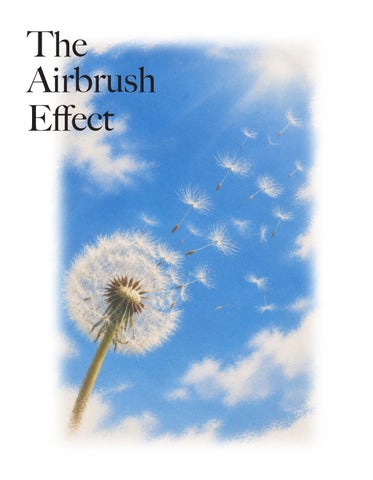
The Airbrush Effect
YESHIVAH OF FLATBUSH
JOEL BRAVERMAN HIGH SCHOOL
Dear Rachel and Jon, Thank you for making the trip to speak with our students at the Yeshivah of Flatbush — especially on October 7th, the anniversary of Hersh’s (a”h) abduction. It takes a particular kind of courage to return, again and again, to the hardest day of your lives so that others might understand what it demands of a person to survive it. All of us at the Yeshivah have been in awe of you and how you have carried the public attention that came with being Hersh’s parents. Through your words, but even more profoundly through your actions and your way of being, you have given the world a window into the pain hostage families endured — and, at the very same time, you have shown, with dignity and grace, the best of what it means to be human and to be Jewish. Our students spent the summer with Rachel’s book, and they came back changed by it. They arrived today already knowing your story in their own words, having sat with your grief and your resolve long before they sat in this room with you. That is no small thing for young people who so often move quickly past difficult things. It is precisely because you have chosen to give so much of your time and energy to young people that your visit matters as much as it does. They are, perhaps more than anyone, the ones who most need to hear what you have to teach — about love that does not flinch, about faith that survives its worst test, and about what it looks like to keep choosing life. May Hersh’s memory always be a blessing, and may his name continue to be a source of strength for the students who now carry a piece of his story with them. With deep gratitude and admiration, Rabbi Joseph Beyda Head of School, Yeshivah of Flatbush Joel Braverman High School
Dear Rachel, We read your words. We listened to your heartbeat through the pages of When We See You Again. We sat with you in the quiet warmth of “The Before.” We stood beside you in the shattering, neon glare of “The After.” As students, as writers, and as part of the global Jewish family, we wanted to give something back. We wanted you to know that your relentless love, your fierce dignity, and your beautiful, messy, map-loving Hersh have left an indelible mark on our souls. We know that Hersh was an entire universe. We know that you carried his light to the ends of the earth when the world chose darkness. This book is our echo. Within these pages, you will find our poems of counting, our modern psalms of resilience, our blackout reflections, and our promises to never forget. We write to honor Hersh’s memory. We write to wrap your pain in our love. With deepest admiration, solidarity, and love, Mica Bloom English Department Chair
The Airbush Effect By Savannah Blake Betesh When you look at a painting, a sculpture, or the wallpaper on your wall, what makes it captivating is often that final airbrush effect. The softening of the edges. The little details that make something ordinary feel extraordinary. Without it, it is just a painting. Just a sculpture. Just a wall. On October 7th, the lives of the Jewish people changed. The lives of the Goldberg-Polin family changed. And yet, through all the unimaginable loss, there was one gift Hersh left behind: a permanent airbrush effect on life itself. Hersh will forever stand above us, gently softening the edges of the world. He will be the reminder to look at the smallest moments differently—to take something so mediocre, so ordinary, and somehow make it extraordinary. Because that is what an artist does. He takes what already exists and gives it something more. He adds the final touch that makes you stop and look again. But the truth is, you never really know what that final touch was. And you never really will. The only person with that answer is the artist himself. And maybe that is the hardest part of losing someone you love. You spend so much time trying to understand what made them who they were. What made their smile different. What made their presence feel different. What was that final airbrush that made them so extraordinary? You will never have the answer. But when you lose someone you love, perhaps the most difficult—and most beautiful—task is to carry their airbrush with you. To give the ordinary moments the softness they once gave you. To add that final touch, even when your hands are shaking. Hersh may no longer be here to airbrush the world for us. So now, we have to do it for him.
The Missing Pasuk By Sylvia Mizrachi I know a story of a sister watching over her brother. She protects him as he’s on his way to lead a nation. The flowing water may embrace him, But her guard embraces him more. I flip the page. Miriam, What else does your bond hold? I try to find out; What did you fight about? What made your brother laugh? How do you feel knowing your brother united a nation? I search for the pasuk to tell me, But it stops. Nothing. I know a story of a father with a beloved son. He stitched him a coat, But he ended up needing to stitch his heart. Waiting, Searching, Speaking. A life defined by denial, Redefined by hope. Yaakov, I scan the pages, Searching for what you loved about your son. His acts, His behavior, Your favorite shared joke. Please, Let there be a pasuk To learn about your lives.
But again, None. I know a story of a mother who fought for her child. She safeguards him, Loves him, Values him, Cries for him. Rachel, Rachel Mevaka Al Baneha. Reduced to grief, You remain connected to your ben. Tell me, What did you do with him when he was little? A lullaby? A walk? His favorite of your cooking? I search the pesukim. Nothing. I know stories of leaders. Myriads of them. A great shofet Battled hatred with nothing but a left arm. A fierce king, A music lover before a nation looked up to him. Ehud, I ask, What were you when you were not saving a nation? David, What was your favorite song before you became a hero?
But one leader sticks out to me more. The story of a young boy with dreams. He prophesied them into reality. Yosef, Tell me what you dreamed of Before? Before you were sold. Imprisoned. I search for the pasuk. But again, Nothing.
I understand now. Yosef. The next generation. A child who would grow up, Leave home, Live his dreams of Before. Live so many pesukim, Enough to answer all the questions. But he can’t.
I almost give up. It must not exist. But suddenly, I find it.
ֵֵאֶּלּ ה ֹּתְּלְ דֹות ַיַ ֲעֲ ֹקֹב … יֹוֵסף ֵ I pause. Is that really it? It seems to be telling me something, But suddenly just Stops. Just a name? A lost continuation.
Rachel. Yaakov. Miriam. You are his continuation. You are the pasuk I have been searching for. His pasuk may have been cut short, But you will tell his Before, And carry, Spread, And love His After for him.
במקום רחוק מפה ,למעלה ,בשמים ה׳ בוכה אף על פי שהילדים נולדים ומשפחות צומחות דמעה נופלת על פני ה׳ הוא בוכה ובוכה על ילדיו שנופלים בארץ הוא מרגיש את הכאב והצער של האבלים ואז בורא העולם בוכה ומילל ומקונן יותר מכולם ,בגלל שהוא בעצמו עד לרצח ,עד למוות ,עד לשנאה אבל בסך הכל ,אלו דמעותיו של האלוקים שנותנות לארץ לפרוח מאת יוסף בלנקי
Birkat Kohanim - To the Afterword by Jon Polin By Joseph Shamayev G-d blesses you and protects you; wrapping the Tallit over a son to keep him safe, where a new world is created, with just a father and son sheltered by the warm cloth, and the father looks down into eyes that look back up, not imagining how it could be any different. G-d shines His face upon you and is gracious to you; looking down, there is no face shining back up. G-d lifts up His face upon you and gives you His peace. Ending the prayer with Shalom, coming from Shalem, meaning whole, proving the blessing covers not only the father standing alone, but also reaches far to bless the missing part of you, your son, to bless the whole you.
HOPE By Shelli Mizrahi Prayed Cried and suffered Parts of us died. Love can fuel I loved and still love him. Every excruciating second, that was love. We screamed “Hope!” “HOPE IS MANDATORY” Everywhere hope exists
Hidden, But There By Jenny Khabih He was left-handed. He loved maps; Not just where a place was, But the specific work of getting there. He had a dry, sarcastic humor, The kind with no meanness in it at all.
The more completely she knew him, The less anyone else could ever be him. Not because she’s forgetting. Because she remembers too well. That’s why the question never really changes. Where’s Waldo?
She knew these things The way you know your own hands. So now, in a crowd, some part of her Is always scanning without meaning to; A jacket the wrong shade of blue, A joke that almost lands right, Then doesn’t.
In the game, he’s always there. Hidden, but there. You just have to look hard enough.
For half a second, Her mind asks, Is that him? Memory answers before hope can. No. Loving him taught her his exact shoulders, His exact walk, The particular, unmistakable shape of his humor. Now that same knowledge works against her, Ruling out every stranger faster than her heart can hope.
With Hersh, The picture is still full of people. He’s just not one of them anymore.
לזכר הירש גולדברג פולין ע״ה הוא היה השראה לעולם ידיד וחבר ֵֵר ַַע מושלם שמר על כל אוהביו (כולם( גדול במעשים טובים וחיזק את החטופים לימד על ה״מדוע״ דאג לאחיו במנהרה בינה יתירה היתה לו ראשו מגיע השמימה גיבור לאומי אמיץ פעל למען הכלל והיה חזק ושרד עד הסוף לב טוב היה לו ,בן ואח אוהב ואהוב ידע לתת אהבה נתן תקוה וחיבה יהי זכרו ברוך רחל וינקלר
This Page By Richard Cayre The other day, while staring at a blank document and moving the title around for no real reason, I typed the word tape. It stopped looking ordinary. Masking tape is usually for boxes, crooked posters, or labeling something before it gets lost. But yours was asked to do more. It had to hold a day, then another day, then another. So I began putting words on this page for you. I did not know what a poem could do here, or what anyone is supposed to offer a mother whose life has been divided into “The Before” and “The After.” Still, I kept adding line after line until I had made this page. You gave us the chance to know Hersh, not only as a face from the news, but as a son who was left-handed, who loved maps, who had particular quirks that belonged only to him. And I gave you a page. You gave us every morning of counting, each new number written on masking tape, each day making the absence heavier. And I gave you a page. You gave us the courage to keep saying his name when a number would have been easier, the honesty to show grief beside love, and the reminder that one life
can never fit inside a headline. And I gave you a page. If we placed your gifts beside mine, the difference would almost be embarrassing: here are the days you carried in public, here is the story of your son, here is the love that refused to let him become only a symbol, and here is my page, with a title at the top and margins I checked twice. I am old enough to know that a small object cannot settle a debt this large. This page cannot return a single moment. It cannot make “The Before” and “The After” fit together again. It cannot make us even. But maybe even is not what you asked from us. Maybe the page only has to remember correctly: the left hand, the maps, the quirks, the name. So I am giving you this page, not because it is equal to what you gave us, but because it can carry Hersh to one more reader, one more classroom, one more day. This page is small. Hersh was not.
Tehillim By Noah Bardavit
When We See You Again By Olga Saideh “Honey it’s bedtime, I love you.” She untucked the blanket and felt a tug in her back as she reached over to get teddy. A soft kiss on his forehead, a trace of chamomile and honey sniffed from his bath. She gave him one last glance and eased the door closed, but always left a hint open for some light within the dark room. Day 1 “I can’t breathe in here.” At the door she stood, as her stomach sank. The blanket pulled over her face, taped at the bottom. Reaching for a breath of air instead of for teddy. While the window reflected light, her life was now full of darkness. Day 10 “Please don’t leave me alone.” Along she went, searching for a hint of light. While all the doors were sealed shut, she found one slightly opened. A hint of light she spotted. A hint of Hersh she began to see again. Day 15 “I know you’re here” The white wall she stared at, like his beautiful white smile steady as he always was. She shouted and thought she’d shatter a window, but like Hersh, the window held strong. As air slowly reentered her body, her determination had become her adrenaline. No need for a cup of morning coffee. Day 50 “Do you hear me?” Through the tunnel my eyes were blinded and the pain ordinary. Through the expected silence, silence never got to know me. Just as the world did not get to know you, nor spend time with you. Now you join the creator and spend time with him.
Day 200 “How much longer...” Will I need to justify your existence? Should I continue to believe? Will I feel your pain? Until I tuck you under your blanket? Day 300 “Will I see you again?” My flame of faith is lit, until a gust of wind slips by. Suddenly my flame flickers, along with my faith. It’s like learning to ride a bike for the first time, To keep my balance and not fall. To keep believing, hoping, praying. Day 330 “Who is it!?” The same knock from 330 days ago returned. So did the fear, agony and disbelief. It was bedtime. But, this time I could not say I love you. I could not leave the door open for light. They closed it.
My Son By Emilie Ilyasov My son Is Not Back
Rachel, I’ve struggled with what to write to you. There are some kinds of pain that words simply cannot reach, and the pain of a mother losing her child is one of them. I keep thinking about the mother in the Gemara whose seven sons were killed for their faith. As her last son was being taken away, she said to him:
“. אתה עקדת מזבח אחד ואני עקדתי שבעה מזבחות: לכו ואמרו לאברהם אביכם,”בניי “My son, go and tell your father Avraham: You bound one son to the altar, and I have bound seven altars.” It is an almost unbearable sentence. A mother speaking out of the deepest possible place of grief. I think of Rachel Imeinu:
“.”רחל מבכה על בניה Rachel crying for her children. For us, that has always been the image of the Jewish mother—the mother whose grief for her child is too great to contain. Watching you over these past years, I have often thought of that Rachel. Not because there is anything to explain or make sense of in such loss, but because your love and your anguish for Hersh have been so deeply, unmistakably maternal. I don’t know what words can possibly say to you. I only know that our tradition has preserved the cries of Jewish mothers for thousands of years—and somehow, those cries have always carried with them the insistence that our children will be remembered and that the Jewish story will continue. There is hope for the future. May we someday know what that hope means. Miriam Wielgus Jewish History Department Chair
“.”ויש תקוה לאחריתך
The Cut That Always Bleeds By Daniel Shemia I’m happy the sun rises, Yet heartbroken it does on mornings he’s gone Sometimes I laugh, that is the part that feels wrong How can I laugh when somewhere in the world a mother Is still waiting to hear a voice she would give her life to hear? How can I complain about exams, About waking up early, About little things I thought were important, When there are families who would do anything To have one more ordinary day? And stillI laugh, eat dinner, go to school, go to sleep And forget that my world can change in a single day. A mother can still love her son, And still wake up without him A heart can carry pain and still make room for hope. We keep living. Not because it doesn’t still hurt, not because we forgot, But because losing somebody means not letting their life become only a tragedy.
לכבוד רייצ׳ל גולדברג-פולין
Toward The Light By Renee Saadia Suffering Patience Tolerance Each grows from the same core. Bear the suffering And do something with it Give meaning to life What is my WHY? Someone ? Survive It’s time to move Toward that direction Sun Flowers Bend themselves toward the Light We humans have this instinct too.
A Table By Esther Cohen A table. A simple piece of furniture, not much different than any other bought from a store. A base with four legs holding it up, each leg long enough, so that the table is at the perfect height. The table holds many things. Once it was ours, it held all our things. It made our home unique, different from everyone else’s. It held many of our memories, from Shabbat dinner to a simple breakfast. The table holds many things. Even when a leg was broken, it still managed to stand tall. It still held onto many things, the memories, the love, and the pieces from the floor, holding them together once more. Even with a broken leg, the table held those three hundred and twenty-eight days,
holding onto every sip of water, every crumb of bread, every page of the book, a distraction from the reality in front, a reality never wanting to be faced. But after awhile, after holding on for so long, the table with a broken leg could no longer hold on. It collapsed on the floor on its last day. And now it is I who must carry what the table once carried the memories, the hardships, the meals, the weight of it all. It was heavy and hard. I don’t know how the table did it all. I was strong, yet my arms were sore. Yet I still held on, because I knew the table would’ve held more.
Now I stand tableless, but with strong arms holding all of this. Every moment, every memory, every little thing. I am now like the table, strong enough to hold everything. Even though it’s not easy, and sometimes it feels as if I might collapse. I will always remember, how long the table did last. All those years, all those days. The table carried everything. And now so will I, because that’s what I must do. Because who will hold it all if it’s not you?
Hope and Memory By Ben Zelenko
ׁשּוָב; ַַח ֵּּדׁש ָיָ ֵֵמינּו ְּכֶּקֶֶדֶ ם ָ ָ ְוְ ָנ, ַַה ִׁׁש ֵיֵבנּו ה׳ ֵֵאֶלֶיָך:
The closing line of Megillat Eicha, a volume of Tanakh that represents our people’s timeless sorrow and mourning, is a profound and unexpected expression of hope. It happens to parallel the structure of Tisha b’Av when, having spent the evening and morning in grief, in the afternoon we rise from the ground, we put on tefillin, and we begin to engage in conversation with others — because we move into faith that God will ultimately redeem us. Even in our sorrow we make room for hope for better days. Hope is also an idea found in the Machzor, which we just read from. The long poem Unetaneh Tokef contains a famous couplet that we scream out at the top of our lungs:
ִ��� ַַמַעַ ִבִיִרִין ֶאֶ ת ֹר ַַֹע ַַהְּגֵּזֵ ָָרִִִִה/ ׁשּוָבה ְּוְתִפִיָּלּ ה ּוְצְ ָָד ָָקה ָ ְּוְת
“But repentance, and prayer, and charity avert the evil of the decree.” These seven words contain the fundamental idea of Judaism that sets it apart from the beliefs of antiquity. They contain the idea that our fate isn’t written in stone like it is in the Greek tragedies epitomized by Oedipus and Laius, where any action taken to try to prevent one’s fate only brings it closer to fruition. Our fate is in our hands. We can repent. We can return. Therefore, in the words of Rabbi Jonathan Sacks, Israel was and remains the supreme culture of hope. Earlier in the Amidah we address God and say ““ — ” ַַאָּתּ ה זֹוֵכֵ רYou remember.” One of our greatest fears as humans is that we will live and die and we will be forgotten. Faith assures us, however, that God does not forget — he remembers us and our good deeds and our impact on the world. He will always remember it, and He will act in our merit. No matter what hurdles and storms we find ourselves in the middle of, that may have us contemplating mortality and worrying we won’t be remembered, things will get better. Because God remembers. Because God instilled in us a beautiful and extraordinary capacity to respond to loss and tragedy in wonderful and constructive ways that change the world for the better. Great things are born of our reaction to pain. It may take a while, and it may not even happen in our lifetime, and it may take more than 2,000 years of exile, but we will gather our strength and create something remarkable; and things will get better. That’s how we celebrate life. That’s how we perpetuate the memory of our departed loved ones and make sure they are never forgotten: we act and create in their merit. We try our best to live up to their legacy and match the immense good that they have done in their own lives. As Bava Batra puts it:
“There are ten strong things in the world: Rock is strong, but iron breaks it. Iron is strong, but fire melts it... ...Sleep is strong, but death stands over it. What is stronger than death? Acts of tzedaka, for it is written [in Mishlei], ‘Tzedaka delivers from death.’ (Bava Batra 10a)” While this can be taken literally (to mean that if one is charitable, God will spare him from death), it can alternatively be understood metaphorically: a person’s life is perpetuated in the positive impact they have on the world. In Unetaneh Tokef also lies the line, ְוְ ַכַ ַַחלֹום ָיָ עּוף,ּפֹוֵר ַַח ֵ ּוְכְ ָָא ָָבק,רּוַח נֹוָׁשֶׁבֶ ת ַ ְ[“ — ּוְכMan is] like a breath of wind, like whirling dust, like a dream that slips away.” We are given incredibly little time. However long a life might seem to us, it remains insignificant compared to the nearly 6,000 years of human history. Therefore the value of a life cannot lie in its length; it must lie in what one was able to accomplish throughout it. What matters is how a person uses their very limited time. To once more quote the great Rabbi Sacks, “There is an act only we can do, and only at this time, and that is our task. The sum of these tasks is the meaning of our life, the purpose of our existence, the story we are called on to write. God’s call is almost inaudible. It speaks in ‘a still, small voice,’ meaning a voice we can only hear if we are listening.” But if we listen closely, and if we hear it correctly, then we will achieve our purpose and be etched into eternity. Then we will certainly be remembered. That’s what ultimately serves as the greatest source of our hope.
Hersh’s Words By Barbara Zirdok You enter the unknown walk in the dark you are not ready but it is not the exit or the end there will be improvement there will be an end this is not the final tunnel there is an end enter with all your might hope whatever comes my way, it won’t stop me I am walking to the end of the tunnel
A Mother’s Love For Her Son By Becky Salem * All numbers below are pages from When We See You Again
“My sweet, gleaming Hersh” (page 24) “A fleeting breeze of comfort” (page 159) “Smart, kind, compassionate, funny, caring, and wise” (page 25) “A gift that only Shabbat could provide” (page 109) “My chest, warm from the inside” (page 238) “Inhaling deeply when I kissed his head” (page 108) “Let us feel your love and light” (page 200) “Mist us with comfort” (page 218) “So many took Hersh to be theirs.” (page 100) “The source of my blessing.” (page 109) “Lucky, special, and deeply beloved.” (page 231) “My love for you will be even greater than it is now.” (page 259) “Hersh was not a holy martyr.” (page 33) “Hersh was not broken.” (page 142) “Hersh was absolutely alive.” (page 60)
Invisible Scars By Valerie R. Tabush My skin has one visible scar. One inch long. My left hand. A knife’s blade, And its sharp, curved ridges Held the wrong way, At just nine years young.
Golden candles, yellow ribbon, Graphic photos, stories retold. Voices cracking Through the microphone. Pain echoing Like opened wounds.
But now I stick my hand into a box Of broken glass. Shards. Shattered, crushed, destroyed. Sharp edges slice me Across every finger, Stabbing into my bones.
After October 7th, 2023, I will carefully take a shard Of your broken, fractured heart. Carrying it as my own. Letting hundreds of scars Blanket my body.
A piece of your heart, In that box, I search for. They’re sharp, I was warned. But tearing through layers of flesh, I’ll carry a shard from afar.
With you, I grieve from afar.
On my shirt is ripped tape. A single digit, times three. A silver metal dog tag Dangling from my neck. And שיר למעלות Drilled in to my prayers.
Arithmetic By Reuven Sash 26 At first, the tape was practical. A mother got tired of calculating the days. So she wrote it on herself. 88 Someone asked, What can we do? Soon, other people were wearing the same number. Grief does not divide. But witnesses can multiply. 201 A face on a screen. For once, the number pointed somewhere. He was still inside it.
328 She stood near Gaza and shouted that she loved him. She thought 328 meant keep going. Later, she learned 328 meant something else. Nothing about the number changed. 332 They buried Hersh. His mother was still wearing the tape. 843
Eventually, there were no more days to count. But 843 cannot tell you that he was left-handed, that he loved maps, that before any of this he was never a number.
The Never Ending Love For Hersh By Celia Aini There was a watch There was a piece of tape
The years that kept going When he couldn’t
The watch counted time The tape counted days
A watch can count Every second
Every tick, Another second
The piece of tape can count Every day
Every mark, Another day suffered He didn’t suffer alone
But neither can count The number of people Waiting, Waiting for Hersh to return home
With every day passing, His family stood waiting, speaking out and praying For his return home
Neither can count How much a family can miss One person, One person who was their whole life
The watch could never repay The time that was lost
The watch kept ticking, The tape kept marking, And the world kept moving
The piece of tape could never repay The days that were stolen Stolen from Rachel, Stolen from Jon, Stolen from Leebie, Stolen from Orly, And stolen from everyone, Everyone who loves Hersh The tape could never repay For the tears shed, The birthdays missed,
But after that dreadful visit, The love did not stop, Because love doesn’t end When the clock does Love does not disappear When the days become years And there was never A number big enough To count the love Waiting for Hersh.
Million Mile Connection By Linda Mishan How do I try to connect to experience To find him here The mother will carry Grief Pain Suffering I carry Hersh in my heart Yet, I know it’s only the Beginning of my million mile journey
When Love Turns to Scorn By Yael Lotwin What happens when love turns to scorn? Does it dissolve like acid, Searing everything with a small caress, Leaving scars where warmth once remained? Does it break apart? Molding itself into something new, A version of yourself that beams with a fluorescent glow, Flickering with bitterness and longing, Something others can admire, While you beg for a taste, and receive nothing. Does it rest in a cavern? Concealed from most passersby, A hollow echo, arid and lifeless, Waiting for someone bold or senseless enough to wander in. Does it sink deep into your soul? Emptiness filling the space where it once was, Burying it just enough to breathe through your collapsed lungs,
Too tired to rise, too hurt to try. Does it remain as a knot in your stomach? Tight, wound up, untouched, Just there. A discomfort you carry like an old, scabby wound. Still, despite it all, The love remains. Buried maybe, but never quite gone. It’s small, shattered, and aching, But it’s still there, still alive, Still, somehow whole enough to remember itself. For love, even fractured and lost, Eventually remembers how to come home.
The Seven Days of Hersh By Albert Eida On the first day there was light, Hersh, always filled with happiness, Laughing with his family, Always surrounded by joy, With a whole life ahead, And a future so bright and untouched. On the second day, there was separation, A division, Hersh was taken from his family, And stripped from his identity, A man filled with life, Suddenly had it all sucked away. On the third day, there was land, Hersh was in a place unknown, With time passing by slowly, The world waiting day by day, Always asking the same question, When will we see him again? On the fourth day, there were stars, In a time of darkness and fear, There was still a little bit of light, He was never forgotten, No matter how far he was, His light still shined through the night.
On the fifth day, there was flight, Hersh’s name moving across the globe, As awareness was raised, His story spoken by strangers, Who had never met him, But still refused to give up hope. On the sixth day, there was humanity, The world came together, all holding on, There were people who knew Hersh, And those who never had the chance, But they all came together, To remember a person who’s more than a name. And on the seventh day, there was rest, After 328 days of waiting, Hersh returned home, Not in the way we hoped for, But finally home, After all the days of counting, There was nothing left to count, Hersh was home and could finally rest.
A Whirlwind of Voices By Adam Bensimon And I awoke again, knowing not whether it was day or night, Exhausted all the same. A memory evades my mind entire, Yet compels me to stay awake. And then I heard them: In the beginning, it was Adir and Benjamin Their stories without conclusion, Begging for a conclusion, but their pleas los to the wind. Carmella, Dalia, Eden, filled with dreams and ambitions, Abundant with thoughts and visions, Forever stolen from us along with them. As I readied myself for work, and marched towards the train, There, from the racketeering of the tracks, I heard: Faiza, Gal, and Hersh, They were not symbols, nor numbers, But people with families and friends, Bearing no difference from anyone else. Ilan, Jakfung, voices silenced before their time, Their words drowned out by the gusts around them, Heard only by those who chose to listen. And as I arrived at my job and settled myself at my desk, a frigid wind pounded me from above The howling of the fan up high spoke to me, saying: Remember Kfir, whose little life ended before it began, Never having known what he would miss.
Lior, Matan, Naji, Orel, Jews, Christians, and Muslims, Lives still lost all the same. And as I walked back from work, Alongside a myriad of others, Our strides yet synchronized, and within I made out: Pessia, Qrenat, Rachel, Shmil, Who’ve disappeared from this world, Yet somehow remain in the hearts of those Who, days before, did not know their names. Tamir, Uriel, Vinees, Wassem, Fathers with orphaned children, Children with mourning fathers, Yazan, Ziv, people lost in a discord of others, Yet remaining forever distinct. When I awoke today, I heard them in every vowel and consonant Every sound and siren, a final echo adrift on the wind. Eventually, that Whirlwind died down, And all the sounds became the same unrecognizable noise. As those from every day before. And awoke again knowing not if it was day or night, Exhausted all the same The memory still evades my mind entire, But I know why I choose to stay awake And then I heard them...
Beyond the Numbers By Sammy Zeitoune 7, for my family 7, what makes us complete I’m always counting something Minutes till class ends Hours till school ends Days till vacation Weeks till graduation None of this really matters Because at the same time, a mother was counting too Day 1, taken from the Nova Festival Day 200, she knew he was alive Day 320, on a stage asking the world to bring her son home Day 329, the waiting ended and the counting stopped 5, they used to be 5, what made them complete When the counting stopped 4 is what they became 4 is what they are without a chance to be 5 again So I keep counting Not minutes, not days But the people who make us complete And the people we carry with us no matter how many remain
We Love By Brielle Kinsburg We humans Grieve and suffer And that is being human. But within the dark We love
What Holds By Mira Mizrachi My first back brace had two straps, and a little pink. My second had three and nothing pretty about it. Still, it held. Sometimes, a tear would gather at the edge of my eye, full of everything I wasn’t ready to let fall. A piece of tape held a number. The number held a day. The day held a soul. The soul held a world. Maybe that’s what tears do, too. They gather what we cannot carry anywhere else. For four years, something wrapped around me, holding what needed to be held. And I learned that being held does not mean being weak. There were hands that tightened the straps, hands that drove me places, hands that made sure I never had to carry it alone.
I could never repay those hands. My brace couldn’t either. It could only hold. The tape could only hold. But maybe that is enough. Because some things are measured in degrees of curvature. Some in days. Some in prayers. And some things cannot be measured at all. So the tear stays. The tape stays. I stay. And maybe this is what we do when there is nothing left to fix. We hold. We hold until holding becomes hope.
A Place For You By Morris Mita Today, dinner is ready at the table Everybody made it to the table Even though it feels lacking. An absence has become a presence We are eating, When we starve for you We laugh and relish, When we should be mourning It’s a strange feeling. To feel guilty for being happy When emitting joy Was all we ever wanted for you We cry when we pray We mourn when we celebrate Because an empty space has more presence Than anything that can fill it Perhaps this is what we learn: To juxtapose joy and sorrow. While leaving room for laughter and tears. Tomorrow we eat again At another full table Only this time We’ll leave a chair for you
Mapping The New World By Lauren Jajati “There is a specific map for which I am searching. I rummage far and wide to find it. As we fall through time, countless trying to break very heavy news down. The truth. Again and again. Over and over. Over and over, over and over. Over and over. No forgetfulness. Loss, loss, loss. So I am forever with the torment of loss, an itchy yearning. But it will be.”
The Reader 328 By Lyla Ashkenazie A book tells the story of sorrow. The author may know its purpose. But the reader? The reader decides what the words will mean to her. A title offers a glimpse into the life of the grieving. The author crumbles, while the reader tries to hold her up. A chapter recalls a dream of the Before. The author remembers, and the reader imagines, trying her hardest to picture a perfect life that can no longer exist. A page tells the story of a lifetime. The author writes, And the reader reads. Line by line, The author becomes less a stranger, and more like a woman who needs a shoulder to cry on. A sentence speaks volumes of a catastrophe. So much death, and anguish, and despair. Never enough words, never enough anything, to explain it. A word carries the weight of an emotion. A mother cries,
And the reader hears. A comma pauses a sentence. And in that pause, is the person who once was, the person who no longer is, and a family that doesn’t know how to live without him. The author tells. The reader listens. The reader finally grasps the gravity of what happened. But she will probably never understand. Living through grief is not the same as reading about it. So perhaps the only thing the reader can do is give her silent nod of acknowledgement. Give her promises that Hersh’s story will not end when the final page turns. That she will remember his name. Remember his happiness. His excitement. His love for reading. His love for music and travelling. The reader will remember it all. And hope, against all hope, that somewhere between the Author’s Note and the Afterword, the author knows that the reader got her message. She heard her. She will not forget. And she will always remember.
הכאב של העוגן דמיין שאתה העוגן זה שקיים בין העולם הזה לבין העולם הבא זה שמרגיש את שניהם— את כובד החיים ואת כובד המתים דמיין שאתה רואה כל בן אדם שעובר דרכך ,זה אחר זה .להרגיש את הרגע שבו החיים עוזבים את עולם הזה ונכנסים לעולם הבא .להרגיש את החושך ,את השבר ,את ההרס של הנשמה דמיין איך זה לברא את העולם הזה ואת השמיים שמעליו ,ליצור כל אדם שאי פעם חי ,כל נשמה, כל משפחה ,כל החיים— רק כדי להרגיש את הכאב של מותם דמיין איך זה להיות זה שנותן חיים ,בידיעה שיום אחד תצטרך לחזות בסופם דמיין לעצמך שאתה העוגן דמיין שאתה ה׳ דרך המתנה הגדולה ביותר של הקדוש ברוך הוא -מתנת החיים -בסופו של דבר הוא נושא את הצער הגדול ביותר של בני אדם וזה הכאב העמוק מכולם הכאב של העוגן מאת חבצלת בטש
The Pain of the Anchor By Savannah Blake Betesh Imagine being the anchor The one who exists between this world and the next The one who feels both—the weight of the living and the dead Imagine physically feeling every body pass through you, one after another. Feeling the moment a life leaves the earth and enters the next. Feeling the darkness, the devastation, the unbearable destruction of a soul Imagine creating this world and the heavens above it, creating every human being who has ever lived, every soul, every family, every life–only to feel the pain of losing them Imagine being the one who gives life, knowing that one day you will have to witness its end Imagine being the anchor Imagine being Hashem Through his greatest gift—life—He ultimately endures its greatest sorrow That is the deepest pain of all The pain of the anchor
Dear Rachel and Jonathan, While reading the book I could hardly control the cascade of thoughts constantly rushing through my consciousness. As I try to capture some of these in words, one of the verses from the perek of Tehilim לדוד השם אורי, that Ashkenazim recite twice daily during the month of Elul comes to mind. King David calls out:... אחת שאלתי מאת השם אותה אבקש While David’s request to reside in the House of the Lord for all his days is certainly a universal aspiration, we as individuals each have our own unique אחת שאלתיmoments. Your powerful prose written with the soul of a poet articulates your most poignant אחת שאלתי. Amid all your pain you manage to draw from your deep faith and declare to one and all that your אחת שאלתיwill be answered and ultimately provided. Your certainty of seeing your holy Hersh again inspires all of us to keep pursuing our own אחת שאלתיprayers. With admiration, Rabbi Dr. David Hertzberg Director of The William S. Levine Family Shoah Institute
A Word of Thanks “Words cannot express how I feel.” People say it all the time. And it’s wrong every time. Of course words can express how you feel; that’s the whole reason they exist. Try a little harder. Dig a little deeper. Find the words. They’re right there. They’re always there. That’s what they’re for. And yet. Sometimes, the words don’t come. It’s not the words’ fault. There are events, situations, experiences so far beyond our ability to comprehend, to process, that even the most diligent hunters among us simply cannot find the words. Maybe it depends on the emotion. Anger is easy. Sorry can be hard to say, but we all know the words. Gratitude isn’t a big challenge. Confusion? Surprise? We’ve got a million words for those. Joy can get difficult at the extremes. The toughest one? Pain. Doctors don’t even ask for words; they ask for a number. “Describe your pain from one to ten,” they tell us, because they know how difficult it can be to put pain into words. “Put your vocabulary away,” they tell us, “we won’t be needing it here.” We so rarely find the words to describe our pain. We reach for metaphors. We grasp at straws. The irony? The best way to process pain is to share it. But how can we share our pain with those who want to help us through it if all we have is a number from one to ten? And then there’s you. Carrying more pain than anybody should ever have to carry. More than most people could bear. And you found the words. A whole book full of them, articulating grief and describing pain in ways more vivid, more complete, more eloquent than I’ve ever heard. And when words did not do your pain justice, you invented new ones to do the job. Hershsickness. The book... It’s a gift to everyone who ever felt pain but couldn’t put it into words. You can’t take away our pain. You shouldn’t have to. But you did something profound for us all: you gave us the words. Lots of books tell an interesting story. Only the very best books articulate aspects of the human condition in ways nobody ever had before. They find the words. Thank you for finding the words for us all. Adam Hofstetter English Department
The Airbrush Effect