
Kaplowitz, Stern to retire at year end
By Yvette Dweck and Baruch Elmann
Editors
Every year brings farewells, but this year feels especially significant. We are saying goodbye to faculty that have dedicated decades, and much of their lives, to the heart of this school. We thought that the best way to bid Ms. Kaplowitz and Coach Stern goodbye was to demonstrate how much they impact students and faculty in Flatbush.
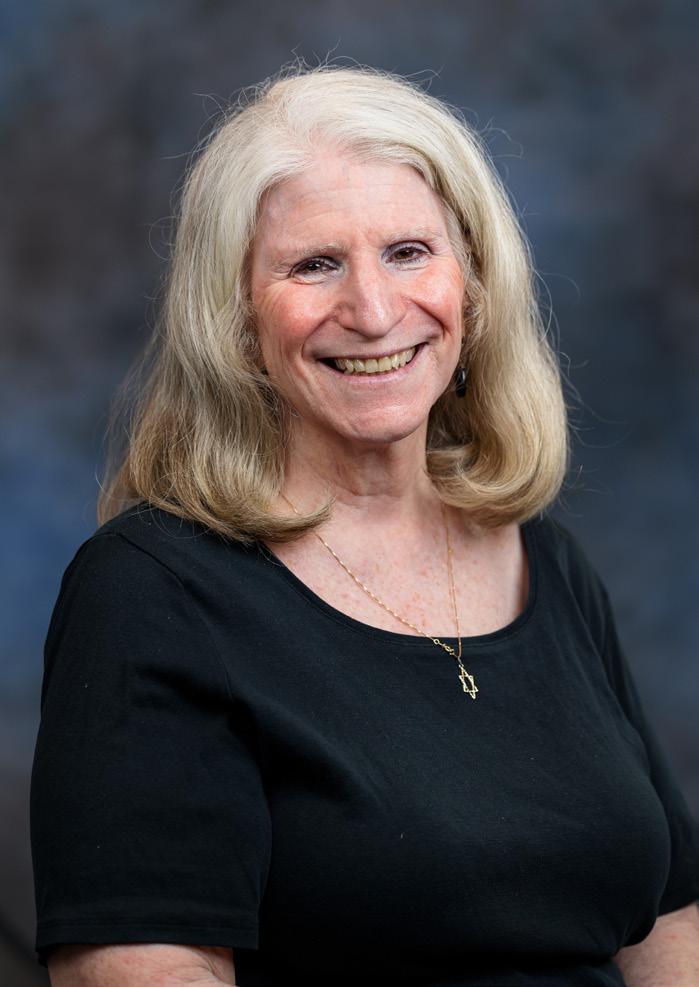
Ms. Kaplowitz has been a cornerstone of the history department since she came to Flatbush in the mid-’80s. Ms. Kaplowitz expressed that one of the many things she will miss is the opportunity “to open the world to young people’s minds. To show them a world that maybe they’re not aware of.” Every day, Ms. Kaplowitz brings perspective and challenges her students.
As Ms. Kaplowitz put it, “I think that’s what I kind of brought to Flatbush. It’s the ability to be a person who’s lived those other lives and expand the horizons of my students.”
One of the things that stand out the most in Ms. Kaplowitz is her care and
focus for each student. She explained that “there have been … instances where I was able to involve myself in students who were having serious … emotional problems or mental health problems. … I hear back from them too. And that’s really important. It’s not just the people who got As, it’s also people like that.”
Here’s what some colleagues and students had to say:
“Ms. Kaplowitz is a powerhouse. She has passion and poise, and she possesses a knowledge of history that has no peer. Being her colleague for 20 years, I have had the privilege of seeing firsthand her love of her subject (whether it be history, law, drama, or political science) and her love for her students. Ms. K really does care—about everything. For Ms. K, it’s not just the big picture: The details mat-
ter; the small things make a difference. In history AND in life. And I think this was the most important lesson that she wanted her students to walk away with: Care about something. Be passionate about what matters. Raise your voice and take action if you want to see change.
Working with Ms. Kaplowitz and being her friend for the past two decades has been one of the greatest privileges of my life.”
— Mr. Engel
“In Drama, I remember vividly how Ms. Kaplowitz helped us explore how to express ourselves creatively. On one assignment she had us pick something to read to the class. She inspired me to choose The Jabberwocky and I remember enjoying reading that even though the words made no sense.”
— Bernie Hafif (HS ’92)
“Ms. Kaplowitz’s classes in AP Government and U.S. History pushed me to think critically and engage with the world in a more thoughtful and informed way. She encouraged me to question different perspectives, stay aware of current events, and understand how what we learn con-
continued on page 3
Student lunches creating mountains of plastic waste
By Oren Hecht
Contributing writer
Anyone who has walked on Avenue J has noticed the full garbage cans and overflowing bags by the curb, whether by sight or smell. What most people don’t think about, however, is where it all comes from.
Every day, hundreds of students stampede to nearby spots like Bagel Hole, Chock Full O’Nuts, or just stay in for Chani’s. With every sandwich wrap, plastic fork, and soda bottle, the waste quickly adds up. But how much disposable plastic do Flatbush students really use each day?
To try to understand the scope of the plastic waste, a survey of 101 students across all four grades asked where students go each day and what kind of materials their meals produce. While 43.8% of students reported getting lunch from a variety of places on Avenue J, 21.9% go to the school café. Smaller groups visit Bagel Hole (14.6%) and Chock Full O’ Nuts (12.5%). A small percentage either abstain or eat from home.
While the source of food varies by
D’var Torah: Page 2
Business: Page 3
Ask Merle: Page 6
student, one habit remains the same: the consumption of single-use packaging. Bagel Hole serves roughly 60% of their food in paper bags, and 40% in plastic bags. Chock sells about 90% of their food in plastic, and both Chani’s and other local establishments use a variety of containers and bags. This suggests that the issue is not tied to a single store, but rather to the broader culture of takeout-based lunches. Access to reusable containers is rare, suggesting that lack of convenience for a rushed student is the source of most trash.
This convenience comes with a cost. Most single-use materials end up in landfills or found all over public spaces. According to the EPA, most plastic takes anywhere from 100 to 1,000 years to decompose. Plastic accounts for 80% of marine debris and ecosystem pollution. You may think that paper waste would not be a major problem, as it can be recycled and is biodegradable, but paper accounts for about 25% of landfill mass. Most students don’t have the time to find a recycling bin between classes.
With so much environmental impact
Fashion: Page 7 18 Under 18: 18 YOF students excelling outside of school Pages 4&5
from just a bag with a bagel in it, one has to wonder how much the school actually uses each day. Using the survey that estimates about 40% of the student body uses plastic bags and materials, and 42% buy paper bags, waste usage can be estimated. A plastic bag contains 6g of material, a fork 4g, and a 16oz soda or Snapple bottle 30g. When multiplied across 40% of our 600 students, the amount becomes significant. On average, the school produces over 112 pounds of plastic waste per lunch period each week, roughly equivalent to the weight of an average 14-year-old. In addition, the use of paper bags results in an estimated 91 cubic feet of paper waste weekly, or around 125 watermelons in volume. One reason this level of waste is often overlooked is that it is largely invisible to students in their daily experience. If each person has just one plastic bag, it’s hard to see the larger impact over their four-year journey. “I’m not thinking about

the environment, I’m just grabbing sushi,” freshman Olivia Royf stated. One plastic bag never feels like the problem. The next question is how to reduce it. A potential way to reduce waste would be to introduce a schoolwide incentive system that rewards recycling plastic and paper. This could also be expanded to include recognition for using reusable packaging, such as bringing reusable water bottles instead of buying disposable ones each day. However, 50% of students surveyed said they would not consider using more eco-conscious materials on a daily basis. “One to four students using paper bags won’t actually affect the school’s net usage,” stated junior Ben Zelenko.
The garbage on Avenue J won’t disappear overnight. A metal bottle, a skipped plastic fork, or a thoughtful choice of restaurant may seem small, but multiplied across hundreds of students over hundreds of days, those decisions matter.
Sports: A beginner’s guide to the World Cup Page 8 In This Issue
Entertainment: The Phoenix interviews Martha Stewart Page 6


A Student Publication of the Yeshivah of Flatbush Joel Braverman High School
AGREE TO DISAGREE
Valedictorian should be chosen by students Valedictorian should not be put to a vote
Valerie R. Tabush Junior Editor
One of the largest annual controversies among the senior grade is the valedictorian system. Until just a few years ago, the school chose the graduating valedictorians and salutatorians in a typical and customary way: through measuring GPA. However, two years ago the school switched over to an improved method that involves teachers and students voting.
Any teacher who has taught the senior grade at any point receives a form where they can nominate up to three senior students who they believe best represent the graduating class, similar to the school’s “Portrait of a Graduate,” as explained by Rabbi Beyda. Administrators narrow that group of approximately 50 nominees down to the top eight who had the most nominations. Those students get honored by administration as finalists, and then without any campaigning, seniors are asked to make a quick vote through a form released during a gradewide assembly.
Many students argue that the award should simply be given to those with the highest GPA; however, according to Rabbi Beyda, “the idea of valedictorian is simply to give a parting speech at graduation and represent the grade; it is not about who has the highest average.” The school implemented this system in search for a system that works for the students’ benefit by giving them a voice. Senior Aimee Hidary agrees, explaining that she believes it is important for the seniors to have a say in their representa-
D’var Torah
The danger of losing respect
By Salomon Dayan Religion Editor

tives. Hidary argues that the voting process is far from a popularity contest, because the seniors “know each candidate on a deeper level than the teachers do, and will therefore choose the candidate who is well-deserving of the award.”
Additionally, senior (and newly elected salutatorian) Jack Abadi believes that by allowing students to have a say, the system “looks beyond GPAs for the outstanding senior who best represents the grade.” Abadi believes that it is important to consider the impact the students have made, their involvement in school activities, their leadership roles, and the overall difference they have made at Flatbush, all of which are taken into consideration by the grade, who ultimately knows the candidates best.
Aside from best knowing the candidates, the student voting process comes with multiple other benefits. Flatbush is a school offering various different AP courses, honors classes, advanced Gemara classes, and accelerated math tracks for students who look to challenge themselves, rather than take the easy way to an A+. Given the difficulty levels of these classes, a student enrolled in many of them may have a slightly lower average than a typical honors student. Without weighted GPAs, the typical honors student taking average classes and with little involvement sometimes a higher GPA. Seniors, on the other hand, are familiar with their classmates’ schedules enough to make an informed vote, taking both academic rigor and extracurricular involvement into consideration.
Students, not GPAs, should determine who speaks for them at graduation.
rah, the time of sefirath ha’omer has taken on a completely new meaning. It’s become a time of mourning for the 24,000 disciples of Ribbi Akiva who died on account of their disrespect toward one another. Many have the custom to refrain from semahot, listening to music, getting haircuts, and shaving.
The Talmud says in tractate Yevamot 62b:
By Olivia Shamah School News Editor
Valedictorian is a reward typically given to the highest-achieving student in a graduating class. It’s an award that people work toward for four years, slaving away for every test, quiz, project, and participation grade ... all for it to come down to a vote.
The voting system effectively changed the purpose of valedictorian, from rewarding the highest-achieving student with representing the grade at graduation to electing a potentially less-deserving student to have that honor. Senior Rosie Eida disagrees with the new system, stating, “This system is unfair to the people who worked so hard for all of high school just for it to come down to a vote.”
This system essentially diminishes the honor of valedictorian to a popularity contest, favoring the more charismatic, personable individuals over the ones with the highest academic averages. It gives a voice to those who already have a voice, not the hardworking and intelligent role models who might not have had the opportunity to share their message with their classmates. Not to mention the fact that all four valedictorians and salutatorians elected with this system so far have been male, despite many girls being on the ballot. This perpetuates the phenomenon in which boys typically vote for boys, and girls typically vote for who they think is best fit for the position. Further, this year’s student ballot included an uneven ratio: five boys and only three girls.
that exists when students see their good friends on the ballot.
Determining the criteria for academic honors often involves a debate between strictly numerical achievements and a more holistic view of a student’s character. The administration sought a creative solution to the fact that the valedictorian does not necessarily embody all core values of the Yeshivah. “The administration thought that the valedictorian is a representation of what we call the ‘Portrait of a Graduate,’ who we determined should best represent the Class of 2026,” explained Rabbi Galpert. The school’s concept of a Portrait of a Graduate is a student who is “committed, ethical, responsible, scholarly, and empowered,” all very fine traits for a student representative, but not necessarily fitting the dictionary definition of a valedictorian, which, according to the Merriam-Webster Dictionary, is “the student usually having the highest rank in a graduating class who delivers the valedictory address at the commencement exercises.”
However, the administration’s view of the word is slightly different, as Rabbi Galpert explained that “the word ‘valedictorian’ does not necessarily mean the highest-achieving student, but the student who gives the valedictory address which is a parting speech. … If you look at other schools and colleges, the valedictorian is the person who gives the parting speech, not the student with the highest GPA.”
In Parashat Emor, God commands Moshe and B’nei Yisrael to bring the omer sacrifice and to count the omer, a 50-day long tally beginning the day after Pesach and culminating in the holiday of shavuot.
The omer was a time of happiness, anticipating the holiday of Shavuot and reaping the first fruits of a yearlong labor in the fields. Nowadays, though we still count the omer as commanded in the to-
The Phoenix Staff
Editors-in-Chief: Yvette Dweck, Emily Tarrab
But what’s the big deal? Not that the tragedy is insignificant, but throughout the centuries of Jewish history, there have been many objectively worse tragedies: pogroms, expulsions, wars, and the Holocaust in which millions—not thousands—of Jews were persecuted, displaced, and even murdered. Why should we mourn for over a month for these 24,000 students and barely acknowledge the Spanish Inquisition, with no set day
Managing Editor and Fashion Editor: Rachael Kopylov
School News Editors: Olivia Shamah, Olivia Shamayeva
Religion Editor: Salomon Dayan
Features Editor: Marcus Mezrahi
World News Editor: Lili Hanan
Entertainment
Editors: Sarah Kezra, Emme Nidam
Fun and Games Editor: Leslie Mishaan
Sports Editor: Elliot Cohen
Business Editor: Baruch Elmann
In a multi-select poll of the senior grade about the reasons behind their votes, 70% of those polled answered that they voted for their candidate based off reputation, 46% said they voted for a close friend, 59% voted based off of academic achievement, and 41% percent attributed their vote to academic standing. Although about 70% said they voted for their candidate because they believed that that person embodied the Portrait of a Graduate, personal relationships clearly play a role in students’ decision of who to vote for. Additionally, on a scale from 1-10, 83% of seniors rated the person that they voted for as a 6 or more in terms of how close in friendship they were, with 46% stating that they consider the person they voted for a close friend. This indicates a bias
of mourning for the hundreds of thousands of Jews forced to leave the religion, flee their homes, or be murdered?
A fair compromise between the administration, who believes the student who speaks at graduation should embody more than just academic excellence, and the student body, who mostly believe that valedictorian should be awarded to the highest achieving student, would be to have two separate speakers at graduation: one elected student representative and one valedictorian decided by weighted GPA. Students could even vote on a graduation speaker while the administration gives the valedictorian address and award to the person with the highest weighted GPA just like other local yeshivot like Magen David, Hillel, and Frisch do. This way, both sides of the equation will be represented: the personable, popular, and charismatic student representative, and the hardworking, intelligent, and well-deserving valedictorian.
According to tradition, these students were disrespectful to one another on the topic of whether or not to join the Bar Kokhba revolt or to mind their own business, learn Torah, and not anger the Romans. The internal strife within the disciples is representative of a larger strife within the Jewish people at that time as a whole. Because of this discord, the Bar Kokhba rebellion failed and the Jews were exiled from Israel. Whether or not this account is historically precontinued on page 3
Photography Editor: Viviane Baghdadi
Junior Editors: Lyla Ashkenazie, Vera Esses, Jenny Khabih, Jaclyn Lazerowitz, Sylvia Mizrahi, Joseph Shamayev, Valerie R. Tabush
Sophomore Editors: Avital Rokhkind, Ben Sutton
Design: Carolina Cohen
Faculty Adviser: Adam Hofstetter
High School Administration
Rabbi Joseph Beyda, Head of School
Ms. Esther Hidary, Associate Principal
Rabbi Yigal Sklarin, Associate Principal
Dr. Michael Atlas, Associate Principal
Rabbi David Galpert Associate Principal

Harari excels in Yale Competition
By Ben Sutton Sophomore Editor
A math competition where each question is more difficult than the last, held at one of the most prestigious colleges in the world. Even being invited to participate in he Yale Math Competition, a national competition among many Jewish schools, is an honor coveted by top math students across the country.
Flatbush student Felix Harari did more than participate: he placed 4th out of all the participants.
Harari really enjoys math and was extremely excited for the opportunity, anticipating that the competition would be “very hard.” Harari, along with 13 other kids from Flatbush, arrived at Yale at around noon. They were informed that there would be three rounds of competition: a solo round and two team rounds.
First is the solo round, where each student’s work is judged individually, and are timed on how many questions they are able to answer within the given time. As soon as a student answers a question wrong, their round is over. Whichever student answers the most questions before elimination is the winner of this round. Next is the team round, which works
a little differently than the first. The team is given all “13 or 14 questions, all logic based” at once, with whoever gets the most questions right winning the round. Last is the final team round, where each team is given three questions at a time and must answer them all correctly before being given the next three. Whichever team answers the most sets of three questions correctly wins the round.
Harari found success in the solo round, where he was among the students who answered the most questions correctly and advanced to the bonus round. Harari answered the fourth-most questions among all the finalists in the bonus round, ultimately taking home 4th place out of 120 participants.
The Flatbush team also performed well and ended up ranked as the 10th best team in the competition. The competition lasted approximately six hours.
Harari said he enjoyed how the whole competition felt like one big community, giving him the opportunity to work with other students and compete against other Jewish schools. Harari is happy that he was able to participate in the competition and hopes that he’s given future opportunities to participate in competitions like this one.
Iran war affects markets
By Baruch Elmann
Business Editor
Stocks have slipped and oil prices have surged as the ongoing war in Iran continues to send uncertainty through global financial markets. While fighting is taking place thousands of miles away in the Middle East, investors and economists say the economic effects are already being felt around the world—including in the U.S. Financial markets tend to react negatively to geopolitical conflict because war creates uncertainty, and uncertainty makes future profits harder to predict. As news of expanding military activity and disruptions in the Middle East spread, the S&P 500 fell roughly 0.8%, the Nasdaq dropped about 1.2%, and oil prices jumped more than 5% in a single trading session, reflecting growing concern about energy supplies and global trade. The brief ceasefire calmed the markets for a few days, but that calm disintegrated as quickly as the ceasefire itself.
Why Oil Matters So Much
The biggest economic impact of the
D’var Torah continued from page 2
cise, the message conveyed by hazal is clear: a society fractured by infighting and lacking mutual respect cannot endure. During sefirat ha’omer, we therefore mourn not only the deaths of Rabbi Akiva’s students, but also the destructive consequences of sinat hinam and division among the Jewish people. The period serves as a reminder that even great Torah scholars can fail when they lose sight of the dignity and humanity of those who disagree with them.
We’re also mourning the continued division among the Jewish people from the time of the exile until today. Even now, nation remains deeply divided over questions of religion, politics, and na-
Kaplowitz, Stern to retire at year end
continued from front page
nects to real-life issues. Because of her, I’ve grown to my fullest potential both as a student and as a person.”
— Emma Rasp (Senior)
“[Ms. Kaplowitz brought] her passion for history and politics [and] her dedication to her students [to YOF]. [Her] contributions to the department [were] on both an intellectual level and collegiate level. She has a vast reservoir of knowledge [and] can converse about politics, history, sports and pop culture. [I will miss] reminiscing about famous people, historical figures, actors and sports figures [and] finishing lines from movies (especially Mel Brooks).”
— Mr. Rothbort
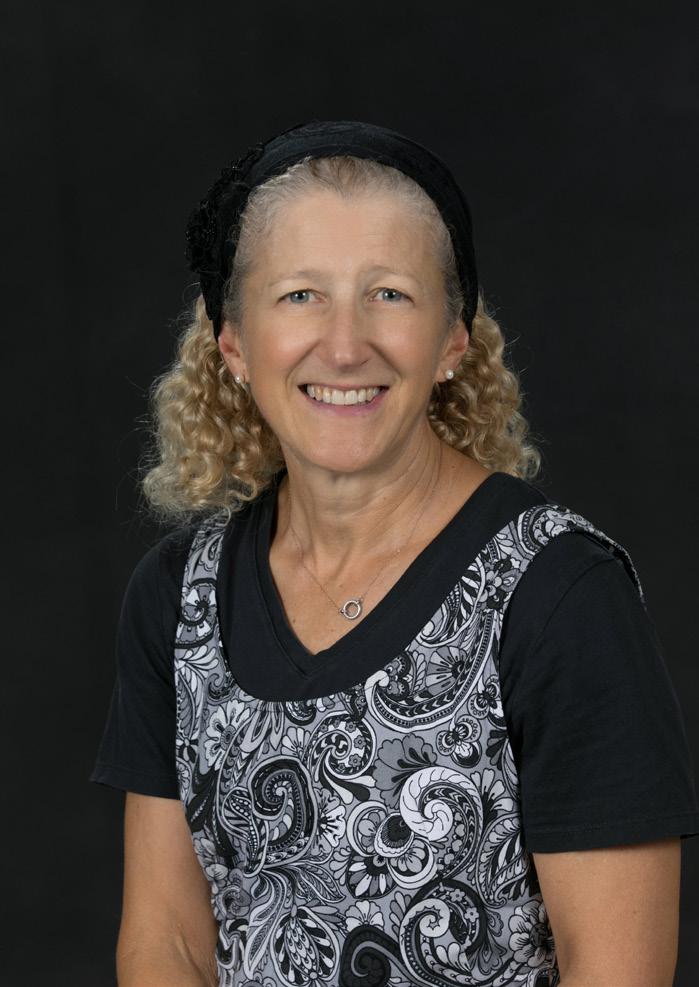
Coach Stern has an absolutely infectious enthusiasm. From the second someone walks into the gym yelling, “What are we doing today?!” to students complaining about wearing gym shirts or needing desperate help figuring out how to play badminton, Coach Stern approaches everyone and everything with careful patience. Whether knitting, sharing real stories with her students, powerwalking on gym walks, or making sure that everyone is wearing sneakers, Coach Stern has cared for every student, and her students feel it.
Here are some thoughts about Coach Stern from students and teachers:
teresting books or podcasts (mostly read and listened to by Coach Stern), knitting, sourdough, recipes and more, which I’m going to miss dearly. I always loved hearing and seeing Coach Stern’s latest crafts project and I even received gorgeous handmade towels that are too nice and pretty to use! I’m going to miss this bonding time that we had that made some of the hardest days lighter and gave us some laughs. I am so grateful and fortunate to have worked alongside Coach Stern for the last 6 years.”
— Coach Chattah
“Coach Stern has always been someone you could count on. No matter how you walked into gym, whether it was annoyed, tired, stressed, or just having a bad day, she always noticed. She’d sit down, ask what was going on, and just genuinely listen. Those simple questions like ‘How are you?’ showed how much she cared and paid attention to each of us. ... I told her I wanted to learn needlepoint or knitting, and she always had the patience to encourage and teach me. Even when she gave me that disappointed look for wearing my Ugg slippers to class and joked that my average would drop to a C, she made it funny and kept us laughing. She was so easy to talk to, and I’m really going to miss her.”
— Rachel Shamolian (Senior)
Iran war centers on oil.
Oil is one of the most important commodities in the global economy because it fuels transportation, manufacturing, shipping, and electricity production. When oil prices rise, businesses pay more to move goods and operate factories, costs that are often passed directly to consumers through higher prices.
A key concern is the Strait of Hormuz, a narrow waterway between Iran and neighboring Gulf states. Roughly 20% of the world’s oil supply passes through this route each day. Any military threat, blockade, or shipping disruption there immediately raises fears of supply shortages.
Brent crude oil—the international benchmark price—climbed toward $100 per barrel, up sharply from pre-conflict levels. Such increases cause higher gasoline prices and rising inflation worldwide.
Supply Chains and Consumer Prices Wars affect much more than oil. They can also disrupt global supply chains—the networks companies use to transport raw materials and finished products across oceans and international borders.
tional responsibility. In Israel, for example, the conflict surrounding the haredi draft reflects a broader tension between those who see Torah study as the nation’s primary protection and those who believe military service must be shared equally by all. Like the disagreements among Rabbi Akiva’s students, these debates often become bitter and disrespectful rather than constructive.
Sefirat ha’omer reminds us that disagreement itself is not the danger; the danger is losing respect for one another in the process. If we hope to preserve the Jewish people and build a stronger future, we must learn how to argue passionately without allowing our differences to destroy our unity.
“When I was in high school, Coach Stern was my PE teacher, so when I interviewed for the PE position, it was calming to know that if I got the job I would be working alongside her. From day one, Coach Stern showed me the ropes. … She was always super organized and efficient. I love our one-on-one time in our cozy locker room office where we can talk about our life, camp, running, in-
When shipping routes become dangerous or insurance costs rise, cargo deliveries slow down. Disruptions can lead to delayed shipments, product shortages, and higher prices. During the global supply-chain crisis following the Covid pandemic, shipping costs surged more than 300%, contributing to U.S. inflation that peaked at 9.1% in 2022, the highest level in four decades.
Prolonged instability in the Middle East could create similar problems, especially for energy, metals, and industrial materials produced in the region.
How Investors Respond
When risk increases, investors often move money into what are known as “safe-haven assets.” These are investments viewed as more stable during crises, such as gold, U.S. Treasury bonds, or large, historically stable companies that sell necessities like food and healthcare products.
Gold prices rose as investors searched for stability, while defense and energy stocks outperformed the broader market. Companies tied directly to economic growth—including technology and transportation firms—saw more volatility as traders evaluated whether higher energy costs could slow business activity.
Recent market declines have remained relatively modest compared with earlier stages of the conflict. Some investors believe the global economy remains strong enough to absorb short-term shocks, especially with steady corporate earnings and resilient consumer spending.
Impact on the Global Economy
The war’s economic shockwave is spreading internationally. Higher fuel costs are already affecting airlines, ship-
“Coach Stern has been missed so much by all the girls in our grade. We really loved the time we had in her class because we enjoyed bonding with her so much; she was someone we could truly connect with. That special bond is exactly why she made such a lasting impact on all of us, and it’s a connection that Flatbush and future students are going to miss.”
— Shelley Safdieh (HS ’24)
ping companies, and manufacturing hubs in Asia and Europe. Some airlines have reduced flights or raised ticket prices due to rising jet-fuel expenses, while factories dependent on petrochemicals derived from oil have reported slowing production. Some shipping companies like UPS have added fuel surcharges onto the cost of their deliveries.
Economists estimate that sustained disruptions to energy flows could reduce global economic growth by a full percentage point if shipping through the Strait of Hormuz remains limited for several months. Slower growth means fewer new jobs, weaker business investment, and lower consumer confidence worldwide.
The United States is somewhat protected because it produces much of its own energy, but American consumers still feel the impact through higher gasoline prices and rising transportation costs.
What Happens Next
The long-term market impact will largely depend on how long the conflict lasts. Financial markets often react sharply at the beginning of wars but stabilize once investors better understand the risks. If tensions ease and oil supplies remain steady, markets could recover quickly. However, a prolonged conflict that damages energy infrastructure or blocks major trade routes could keep oil prices high, increase inflation, and complicate decisions by the Federal Reserve about interest rates.
For now, markets are balancing two competing forces: a still-resilient global economy and a growing geopolitical risk that could reshape energy prices and economic growth.
Yeshivah of Flatbush regularly celebrates the students who excel in the classroom and on our many teams. But many Flatbush students’ most impresive accomplishmnets occur beyond school’s walls. In this special feature we shine a spotlight on 18 Flatbush students who are achieving remarkable things in a variety of fields and activities outside of school.
By Yvete Dweck, Rachel Kopylov, and Emily Tarrab Editors

Ruby Chera, 12th Grade, Chesed
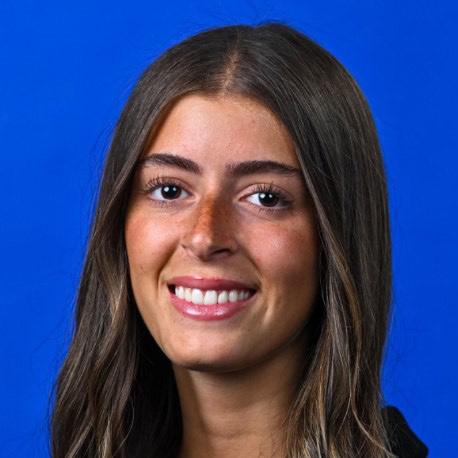
Last summer, when Ruby Chera’s original plans fell through, her parents suggested volunteering at the Special Children’s Center. Chera explained, “My grandfather, Stanley Chera A”H, had always been deeply involved with the organization, so it was something I was familiar with, even though I never imagined I’d be good at working with children with special needs.” Much to her surprise, Chera’s passion for working with children with special needs evolved. She formed a meaningful connection with her camper, Nechama, and many other campers.
Chera took this passion of hers and made it her mission to extend it to her friends and classmates. Together with Rabbi Besser, Chera organized multiple trips to the Special Children’s Center, allowing other students to understand the importance of the center and the work that it does.
Lauren Setton, 12th Grade, Medicine

This year, senior Lauren Setton worked at Maimonides Medical Center as a health scholar. She interned in the emergency department taking vitals, doing EKGs, and running labs. She shadowed providers and participated in weekly lectures from doctors at the medical center. Setton spent hours supporting nurses, doctors, and patients, as well as gaining an incredible hands-on experience in the medical field. Setton explained, “My experience working at Maimonides gave me a look into the real medical world. I had to be present and available whenever a doctor needed me, and always enjoyed helping a patient.” This experience gave Setton a look into the medical field, solidifying her passion for medicine and helping others.
Charlie Levy, 11th Grade, Finance

After joining Leaders in Business in his freshman year, Charlie Levy was inspired to expand the concept of financial literacy to other schools. To bring this passion to life, he founded a program teaching middle school students from underprivileged communities key financial literacy concepts. Levy partnered with Gus and expanded on his mission by adding a financial literacy focus. He has partnered with renowned banks, bringing in professionals to teach. Levy explained that “Fin Lit allows me to expand my love for teaching business classes to a broader range of people who may not have the opportunity to learn.”

Izzy Esses, 12th Grade, Research
This past summer, senior Izzy Esses participated in the NYU Arise program. In this highly selective program, Esses sat through many workshops in
18 18
academic writing, research methodology, and safety before joining a university lab. In his lab, Esses conducted a study of fire department response times and routing networks. His research led to a framework that helps urban planners and policymakers better plan fire station locations, offering a practical model for improving emergency services in cities worldwide. Esses emphasized that “this program was so unique as it allowed me to experience a true college lab, while focusing on studies that are intriguing and thoroughly provoking to me.”
David Yehoshua, 11th Grade, Business
David Yehoshua is a junior who runs a pressure-washing business servicing many customers. What started out as a chore from his dad soon turned into Yehoshua’s successful business. After pressure-washing his backyard for the first time, Yehoshua’s father helped him get another job with a family friend and bought him another pressure washer to speed up the process. “That’s when I realized I officially started a business,” Yehoshua said. After his brother posted a video of him pressure washing his new house, Yehoshua rapidly gained followers and job opportunities, allowing him to expand the business. David hopes to pursue some form of entrepreneurship in the future.
“I’m excited to keep scaling my current services to see how big I can make them, but no matter what, having that business mindset and knowing how to run things on my own is something I plan to take with me into whatever ventures I pursue next.”
Linda Yazdi, 12th Grade, Sports

Senior Linda Yazdi began karate when she was three. Her mom was going to put her in ballet, but Yazdi showed no interest in dance, instead expressing interest in karate. After many years of studying karate, Yazdi earned her black belt. However, that was not the end. Yazdi still does generic exercises to keep herself in shape for karate. She also continues to learn self-defense martial arts, including some Ju Jitsu, and teach classes of younger karate students.
“At first, I started in karate because I thought it was cool,” Yazdi explained. “But I’m still doing it because it’s really calming, a great exercise, just a part of me now.”
Jacqueline and Jack Abadi, 11th and 12th Grade, Business
Jack and Jacqueline Abadi are siblings who started a water bottle company in the summer of 2024, when Jack and Jacqueline had just finished their sophomore and freshman years, respectively. After deciding they wanted to do something interesting that summer, they decided to do research and ultimately landed on the water bottle industry. Wanting to add something new to the market, they launched a company called TK, which produced durable glass water bottles. Jacqueline focused on the more creative aspects of the business while Jack worked on the technical side. With their joint effort, their company sold more than 3,000 water bottles and raised over $33,000 on Kickstarter in only two months.
Bina Khodorkovsky, 11th Grade, Dance
Bina Khodorkovsky has been a serious ballerina since she was four years old. After she fell in love with ballet, her parents signed her up for Brighton Ballet Theater, where she has been training ever since. Khodorkovsky loves the feeling of being on stage, where an audience can watch as she presents a routine she worked many hours on to master. One of her biggest challenges, however, is balancing ballet with religion. Often, her group would have stage rehearsals over Shabbat that she couldn’t attend, and that caused her to never be cast as a lead role in any of their productions. Bina remained determined to earn a lead role despite her Shabbat restrictions, and now has a solo part in her company’s production of The Nutcracker next year.
David Askenazi, 12th Grade, Technology

As an avid lover of all things tech, David Askenazi began teaching himself to code in seventh grade, inspired by gaming. After taking computer science courses at Flatbush during his freshman and sophomore years, his interest deepened, and he turned to YouTube to explore data science and AI modeling. Since then, he has become proficient in multiple programming languages, including Python, C#, C++, Go, and Java. He describes himself as both “inspired by curiosity” and “empowered by logic.”
Askenazi has already taken on a range of ambitious projects. Among them is a smart-AI model capable of receiving and distinguishing words. He also recalls creating a visual representation of an AI system, mapping the connections between its nodes, in a single sitting during a car ride from Rhode Island to Brooklyn! His exploration of coding and AI continues to evolve. He is currently training a GPT-2 model using his own dataset to test its capabilities and push his understanding further.
“Being able to code gives me the ability to be creative and pave the future,” he said. “I’m excited to explore new technologies and contribute to the field of data science at Stevens next year.”
Violet Cohen, 11th Grade, Music
For the past two summers, Violet Cohen worked at a summer camp’s production studio, teaching third through eighth graders how to record and produce music. From this job, she learned that she loves interacting with kids and teaching them about her passions. So this year Cohen has been teaching kids how to play guitar. When one of her students struggled with picking individual strings and playing chords on a traditional guitar, Cohen suggested she try bass—her main instrument. Cohen has been playing instruments since she was 12, but started formally taking lessons and learning music theory in the summer before 10th grade. Violet is excited to give lessons again this coming summer, and is considering pursuing a career as a music teacher.
Eddie Chalom, 12th Grade, Religion
Eddie Chalom began learning chazanut at just seven years old, starting in Allenhurst during the summer. Since then, he has continued developing his skills each summer and winter at Beth Torah. His talent quickly set him apart, eventually leading to a summer job as a chazan in Allenhurst— an experience that ignited his flourishing career and mission in chazanut. One day during minyan, a fellow congregant approached him with a job opportunity at Bnei Yitzchak in Brooklyn for the winter.
Sam Sasson, 12th Grade, Sports
Last summer, Sam Sasson started his own coaching business, Sasson Sports. He focuses on baseball and football, working on necessary skills during group lessons. He started the summer with two weekly sessions, and by the end he had eight weekly sessions. Sasson stated that his immediate goal is to offer training, but that his main mission is to “turn sports into something they look forward to—something that builds inner confidence and complements them.”
Sasson remembers feeling, as a kid, that coaches only focused on the talented kids, so organized sports were dull for those who weren’t as good, and that sports other than basketball are underrepresented and less accessible for kids. To fill this market gap, he created his business and went on to do a lot of marketing through Instagram.
Sasson said that running this business taught him discipline and responsibility. Toward the end of the summer, he opened a new program to train older kids who are incoming high schoolers in various sports so that they are well-prepared to try out for different teams. He plans to continue next summer. “It gave me a lot of purpose to be there for the kids.”
Emma Arje, 11th Grade, Acting and Fashion
Arje has pursued acting since she was a child. She has been cast in three Amazon commercials and a hit Netflix movie, The Life List. Arje has “always loved fashion, dancing, and entertainment,” noting that she has “never given it up since [she] was young.”
Additionally, Arje recently began her own hair accessories business, called Emmaarje.com. She designs hair clips from scratch and works with a factory to bring her designs to life.

Esther Levy, 12th Grade, Medicine
Esther Levy interned at Attain Medspa, a spa that focuses on cosmetic and skincare treatments designed to improve appearance and skin health, in Allenhurst, NJ, this past summer. Levy worked one on one with the operator of this location, Renee Massry, giving Levy an insight into the skincare field. Levy oversaw and shadowed Massry, as well as watching Massry give treatments, and organizing and cleaning treatment rooms. What started as an internship to simply give Levy activities for her resume, turned into a truly insightful experience.
“At first, I looked for an internship that would look impressive to colleges and would boost my resume,” Levy said. “And that’s what this internship was at first. But then it turned into more. It was interesting to have a look into what an aesthetic nurse does, in comparison to a generic nurse. The two actually have extremely different roles and jobs in the medical field.”
Steven Nassar, 11th Grade, Music
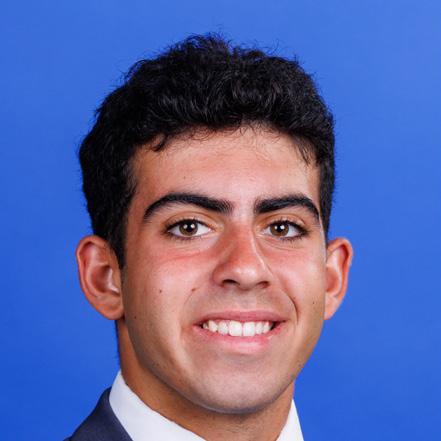
Now Chalom leads the father-son minyan at Bnei Yitzchak each Shabbat. Whether delegating different parts of the service to boys aged eight and up or teaching them traditional tunes, he is deeply invested in guiding the next generation. He emphasizes that chazanut is “becoming a lost art in our community, and one of my main goals is to prevent that from happening.”
His dedication extends beyond tefillah. After minyan each Shabbat, Chalom leads classes for about ten students, teaching pizmonim. On Tuesday nights, he continues his work by teaching them maqam, the traditional Syrian musical scale used in liturgy. “I never had something that was so important to me to show up for,” he reflects. “It was my first big responsibility.”
Chalom aspires to one day serve as the lead chazan of a congregation.
David Yesilevich, 10th Grade, Chess

David Yesilevich has been playing competitive chess since the age of three. After learning to play from his grandmother and seeing his sister compete in many competitions, David became interested in the game, causing his mother to sign him up for a few tournaments. Throughout his younger years, David has been incredibly devoted to chess, ranking highly in numerous tournaments including 35th place in Super-Nationals out of 5,000 people when he was only six years old. He has been in the top 100 of his age group for many years and placed ninth for individual and first for mixed doubles at the NY State Championships in 2024. David is still active at chess, practicing regularly both online and on the school chess team and playing in various tournaments, especially over the summer.
Steven Nassar has been DJing at a professional level since age 13, his favorite style being modern remixes of ’90s music. Having always had a passion for music, Nassar spent a lot of time during his younger years observing and learning from DJs at birthday parties. One day, his mom invested in a beginner DJ set for him and he started learning how to DJ through YouTube videos. “It took so much trial and error, but once I loaded my first song onto the deck I felt so accomplished and I was motivated to get better every day,” Steven commented. After a lot of practice, he now DJs often and gets hired for private events like engagement parties, bar and bat mitzvahs, and house parties.
David Harari, 10th Grade, Finance

One Sunday per month, David Harari and his siblings would have a meeting with their father to learn about the stock market and discuss where to invest their money. From these meetings, Harari became increasingly interested in business and the stock market. As he grew older, his siblings became less interested in stocks, while his passion for it remained, so his parents allowed him to invest a lot more money into the stock market. After successfully investing his Bar Mitzvah money, others began to trust Harari and hired him to manage their stock portfolios as well. David hopes to continue learning more about investing and pursue a career in hedge fund management.
Ben Harari, 11th Grade, Art
Ben Harari is a junior who has been designing album covers for his brother—whose artist name is FLXX—since 2025. After being introduced to Photoshop during his sophomore year graphic design course, Harari continued to teach himself how to use the software. He has loved drawing since fifth grade, so when designing covers he blends both Photoshop and hand drawing.
He tries to add meaning to his work by including personal details in the covers. On his brother’s latest single, the cover features lightning bolts—one of which is the pattern of his father’s heart from when he got surgery. Harari has published two album covers, with another two on the way. He hopes to be able to make covers for other artists in the future, and potentially pursue a career where he can use his art such as animation, architecture, or engineering.
An interview with Martha Stewart: Excellence is never finished
By Sylvia Mizrahi Junior Editor
In Martha Stewart’s childhood home, perfection wasn’t a goal—it was a rule. Every stitch, every hem, every piece of embroidery had to be precise, because anything less was considered sloppy and unacceptable.
Stewart recently sat down for an interview with The Phoenix in which she discussed her life and career. Growing up in an egalitarian household with three brothers and three sisters, Stewart explained, she earned early on that work was not divided by gender, but by expectation. Years before she became synonymous with lifestyle and design, she was already being shaped by a mother who taught that striving for “excellence” wasn’t optional and a father who pushed her to work hard to accomplish her life goals.
For Stewart, success did not come easily. One of her first real-world lessons came at a modeling go-see for a commercial as a teenager. She stood before a group of men, presenting her modeling book (portfolio for models), when she was unexpectedly asked to walk in a bikini “just for fun.” She stormed out. In that moment, she learned a lesson that would follow her into adulthood: especially as a woman, she would
have to define the space she was in. As she later put it, “You make the room your own.”
After building a home at Turkey Hill in Westport, Connecticut, Stewart began a catering business. Through catering for various publishers, her brand began to grow, product by product. Yet even as her influence expanded, Stewart continued to face criticism rooted in gender bias. Early on, her cooking was underestimated by magazines that claimed she knew nothing about cooking, with some criticizing her pastas for having “too little sauce.”
Her response was shaped by her father’s advice. “My father always told me: never, never, never take any of that to heart. Just work around it. And he was right.” Years later, after publishing 103 books, Stewart reflected that the criticism eventually faded “because I do know how to cook and I do know how to bake.”
After establishing her credibility in cooking, Stewart began to expand her catering business into something much larger. What set her apart was not only what she created, but how deliberately she approached every detail. She describes herself as deeply attentive to quality and consistency, focusing on products that are both well-made and accessible. In her own words, Stewart explained, “I do not
like surprises—unless it’s a big diamond ring from a boyfriend.” That insistence on control, along with a touch of personality, became central to how her work evolved, turning individual projects into a unified lifestyle brand.
Stewart’s focus on precision also shaped the way she spoke about her work. This focus on precision became a recurring theme for those around her; her nephew once even counted twenty-two instances of her saying “perfectly perfect.”
This habit reflects something deeper than just a habit of speech: it captured how embedded exactness and refinement had become in both her mindset and her brand identity.
Today, Stewart continues to expand her brand. Her most recent projects include partnering with Hapi Homes, an Israeli company that manufactures prefabricated homes in its factories. She is also working on her own home at Turkey Hill, and is in the process of writing an autobiography, Let Me Entertain You.
Stewart’s favorite pastime is gardening. Growing up gardening with her family, she explained that it has always held a special place in her life and shaped a major part of her identity, due to the reward of watching growth over time. Because of that passion, she is now the Chief Gardening Officer at
Fun & Games
Ask Merle
Dear Merle,
This semester I got my college guidance counselor, and I’m ner vous about my college process next year. Do you have any advice or tips on how to utilize and work with my counselor as best as possible?
— Thoughtful Junior
Thoughtful,

Hi! That’s a very thoughtful question, Thoughtful! I’m glad you asked. I would say that first impressions matter a lot. Coming to meetings on time, making small talk with them, and making a visible effort to get to know your counselor is very important. Make sure you are on top of your meetings and do what they ask throughout the year, and you should be set for the Fall!
Merle
Hi Merle,
What should I do the night before a final to ensure my best performance?
— Nervous
Nervous,
Great question. The number one piece
of advice I have for you, that is ESSENTIAL, is getting the right amount of sleep. DO NOT cram at 1am for a final—that may have worked for regular tests, but finals and Regents exams are different; there’s way more information and way more practice required to get a good score. I would also highly suggest eating a solid breakfast the morning of (eggs and toast is my go-to!), and a morning shower clears my anxieties before walking into that exam room.
Merle
What’s Up Merle, I’m so excited the new SGO has been elected. But I’m wondering, does the SGO do anything?
— Confused Freshman
Confused,
Hi! I can definitely answer this. I have a very close friend who was on the SGO this past year! ;)
I would say SGO’s job is making school a better place for the students. It’s not to change rules the admin makes, or to change how the school has been running for years, because that is extremely hard and simply not realistic (so lower your expectations). SGO, however, can help the students and make the school year more
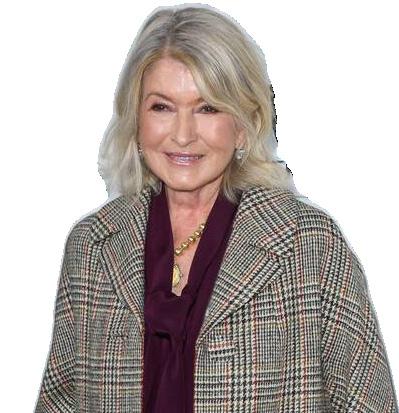
lawncare giant Scotts-Miracle-Gro, where she also helped start a collective of gardeners inviting people to send in their gardening photographs so they can compare their work with others.
As Stewart reflects on the rise and continuity of her brand, she explains that for those aspiring to succeed, there are four key principles: being as unique as possible, being passionate, understanding the level of work required, and making a clear plan. If she could return to her younger self, she says she was “too starry-eyed” and did not anticipate setbacks such as product failures or legal challenges. However, she believes that with hard work and honesty, it is always possible to rebuild.
Martha Stewart’s story is not one of arrival, but of continuous construction. From a childhood shaped by discipline to a career built on precision and reinvention, she has turned control into a defining force of both her work and her identity. Now, motivated by her grandchildren’s modern perspective, Stewart continues to adapt her brand for a new generation. Even after decades in the public eye, she continues to expand, adapt, and rebuild— driven by the same standard that defined her from the beginning: excellence is never finished.
fun in their own way. Little things like the Cholent Competition, buying a pingpong table, ice cream on the first day of school, and even Color War, make coming to school every day a little more exciting. The AP book drive and Electives Fair help students as well. With that being said, good luck to this year’s SGO!
Merle
Hey Merle,
How do I pick the right electives going into my junior year next year?
— Scared Soph
Scared,
Hey! Wow, junior year. In my opinion, this is your first real year of high school! Just kidding. To answer your question, I would say it depends on the type of student you are. By now, you have a feel for the subjects you’re better at, the material you can handle, and your ability to balance your school life with your real life at once. It’s important to stay in touch with your capabilities as a student so you don’t struggle or be unproductive next year. If you weren’t such a great student in the past, don’t take three of the hardest classes just because you can. Take one of the harder classes, maybe two, and remind yourself you will need to work harder next year. And if you’re a hard working
student, do not take the easiest classes so you can have a “fun year”—trust me, you will have a fun year even if you challenge yourself, and by the third week of school, you will feel silly. Good luck!
Merle
Merle,
How do I move from high school onto the next chapter of my life?
— Sad
Sad,

Senior
Awww! I know, Sad, it can be very difficult to graduate. But after four years being in YOF, you’re ready to move on. Just remember this next chapter is very exciting: whether you’re going to Israel, college, working, or have other plans, this is the start of being independent. You’ll have more time to pursue the hobbies you never had time for, and overall just have more time for yourself. Just make sure you make time to see your friends, because that can be tough after high school ends, since everyone has different schedules in different schools. Good luck, you’re going to be incredible in the future. I have full confidence in you! ;)
Signing off,
Merle
Standard of Fabulous
Celebrities drive wedding fashion trends
By Olivia Royf
Contributing Writer
Modest and elegant fashion has officially made its way back into our modern age, rveived by the high-profile weddings of celebrities and influencers. Figures like Olivia Culpo, Sophia Richie Grainge, and Alexandra Saint Muleux Leclerc display this expanding fondness for a revival of high fashion. Even Lauren Sanchez Bezos, who is most often associated with bold fashion choices, wore a wedding dress that incorporated a more simple and modest aesthetic.
Celebrities and influencers play a major role in the fashion industry. By embracing graceful, minimalist looks, they are leading other brides to express themselves through modesty instead of gowns that demand attention.
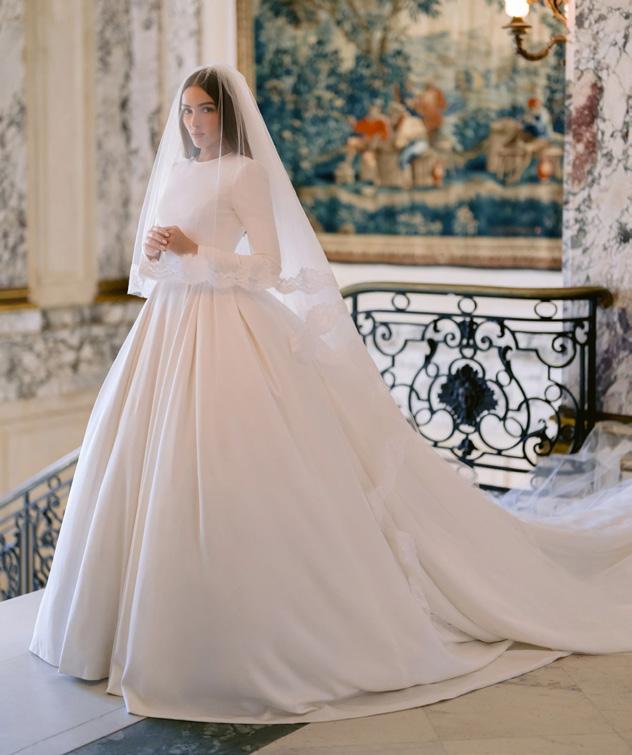
A perfect embodiment of minimalist elegance is Olivia Culpo’s wedding dress. When Culpo married Christian McCaffrey, a star running back for the San Francisco 49ers, she wore a beautiful white long-sleeve gown with a high neckline and a 16-ft lace veil from Dolce & Gabbana. Her dress brought attention to nothing but her charming eyes and smile.
Culpo’s conservative look saw wide-
spread backlash on the internet. Critics believed it was plain and lacked personality. Culpo later explained that she believed a wedding should simply be about the bride and groom’s covenant instead of bringing excessive attention to appearance. Culpo’s intentional nonconformity and the message her gown conveyed were appreciated by many. Her beliefs are unique in this era, and her bravery to go against the status quo inspires other brides to also do something out of the norm.
Mleux Leclerc married Formula 1 driver Charles Leclerc in a modest, minimalistic, and understated elegant dress. She wore a custom Paolo Sebastian gown with an off-theshoulder neckline and long sleeves. Her dress was fitted, with delicate embroidery and a beautiful sweeping train. Leclerc skipped the veil entirely, which exemplified her effortless look. Her dress was sophisticated and the epitome of grace.
someone known for her bold style choices, this modest yet luxurious gown may have been an extremely powerful fashion statement yet.
Together, these four brides each made a powerful statement: they brought back the beauty of elegance. In the times when the fashion industry celebrates excess, these women defied the norm and chose grace and modesty on one of the most important days of their lives. They impacted not just themselves, but gave courage to other women to embrace simplicity. Modest and elegant fashion is back—and these iconic brides are leading the way.
Similarly, high-profile bride Sophia Richie Grainge, who married Atlantic Records CEO Elliot Grainge, embraced the quiet luxury aesthetic. Though her dress was not as conservative as Culpo’s, it was a stunning, elegant piece. Grainge described her custom Chanel dress as “a beautiful lace-embroidered halter gown with a long train.” Even with a top designer label, she was able to show that less is more.
This year, at her courthouse wedding, influencer and art curator Alexandra Saint
Last year, Jeff Bezos and Lauren Sanchez Bezos tied the knot at one of the year’s most high-profile weddings in Venice, Italy. Sanchez Bezos, who is known for controversial fashion moments, surprised us all with her bridal look. Her custom Dolce & Gabbana gown featured an elegant high-necked design with Italian lace, silk chiffon buttons lined down the middle, and a classic tulle veil. She said in an interview with Vogue that her dress is “a departure from what people expect” while adding, “it’s so elegant, it’s timeless.” For

Fashion dominates in The Devil Wears Prada 2
Viviane Baghdadi Photography Editor
“All right everyone! Gird your loins!”
Nearly twenty years after its debut, The Devil Wears Prada returns to the spotlight, with its long-awaited sequel arriving on May 1. The original film didn’t just showcase fashion, it taught viewers why it matters. Its bold use of clothing serves three central purposes: enhancing the story, strengthening characterization, and deepening immersion.
Enhancing the story: Great fashion design and costumes help tell a better story. The clothes characters wear help reflect the state the characters are in, professionally and emotionally. Nowhere is this more evident than Andy Sachs’s transformation. As Andy begins to take her job more seriously, her wardrobe evolves with her. As Andy’s fashion sense solidifies, she starts to favor boots and belted coats, an effective way of showing how the story is advancing and allows the audience to track her growth without the use of words.
At the start of the film, Andy dresses in minimal, neutral, and intentionally unfashionable clothing such as her infamous “cerulean” lumpy blue sweater and clogs. Her appearance reflects her belief that fashion is superficial, she “takes herself too seriously to care about what she puts on her back,” as noted by Miranda Priestly. Once the realization hits that Andy’s ignorance is detrimental to her job performance, she turns to Nigel for advice. Her first significant change includes Chanel boots, with other outfits incorporating Dolce & Gabbana jackets, Jimmy Choo shoes, and Nancy Gonzalez bags. She gains confidence, adapting a glamorous

persona that allows her to dominate the fashion space without letting it consume her identity.
In contrast, Miranda Priestly does need to learn about the fashion industry, she is the fashion industry. Inspired by Anna Wintour, British-American fashion icon who served as Vogue’s editor-in-chief for 37 years, Priestly is the iconic editor-in-chief of Runway magazine who embodies the high-stakes, influential nature of the fashion industry. She represents the far-reaching impact fashion has on everyone, down to tiny everyday choices. Her wardrobe is consistent, filled with fur coats, perfectly tailored suits, and her signature sunglasses, embodying the intimidation she has over the industry. While Andy’s style evolves, Priestley’s remains the same, illustrating that the true influence in fashion is not in following trends, but in establishing a signature identity.
Helping with characterization: Everyone’s fashion sense is built on their inner desires and sense of self as they try to express themselves. This is the same for fictional characters, where the costumes are supposed to reflect everything from the
characters’ beliefs to their mental states. The lack of style and plain costuming can have an effect, as seen when Miranda Priestly is seen disheveled, without makeup and in a robe, in just one scene, creating a more emotional meaning after seeing her in high-end luxury brands at all times.
Improving immersion: The way a character is clothed in a film can help make or break the viewer’s immersion in the continuity. People shouldn’t be wearing fur thick coats in a desert, nor be in thin fabrics in the winter; the believability of a film depends on whether its visual world feels authentic.
Likewise, audiences envision fashion magazine employees to be dressed glamorously. The film highlights this when a Runway employee quickly changes from a pair of ugly but comfortable shoes to stylish stilettos, emphasizing the constant negotiation between comfort and image, an unspoken rule of the industry.
Since 2006, fashion has changed significantly with less rigid hierarchy and more social media influences. In the sequel, the fashion is expected to reflect
this shift. Bold colors and modern cuts should be expected, while references to the original film will make appearances, with Chanel boots and cerulean.
Costume designer Patricia Fields explained the thought process behind the production of costumes, emphasizing the importance of timelessness. “I think timelessness is a very important factor in whatever I do. That’s what makes a classic,” she said. “It’s obvious what’s timeless and what is not timeless, but you need time to find that answer.”
On the DWP2 World Tour, Anne Hathaway is dressed in leather thigh-high boots, a homage to the leather Chanel boots Andy wears in the first film. Erin Walsh, Hathaway’s stylist, described what Andy’s costumes look like in the sequel: “We also wanted to look at how Annie’s character has evolved 20 years later. Taking things to a new place and time through the colors, proportions, and textures.”
“You look at all the major houses that have these new [designers] leading them, there’s this idea of leaning into joy, and clothes that make you feel like the supernova version of yourself. It’s going to be joyful, irreverent, empowering, confident—and strong,” Walsh said.
Special colors make appearances in the film as a nod to the first one, such as Cerulean blue. Andy’s professional journalist wardrobe peaks through on the red carpet, with “clever takes on suiting, both masculine and feminine,” says Walsh.
As a sequel to an iconic film, The Devil Wears Prada 2 has a unique task: to stay true to the fashion of the 2006 movie while modernizing to fit into today’s society and change the industry once again.
Culpo wore Dolce & Gabbana
Saint Mleux chose elegant embroidery
By Joseph Shamayev Junior Editor
FIFA’s 2026 World Cup, the world’s biggest sporting event, will be held across North America this summer, with the championship game being played just 20 miles from Brooklyn. The World Cup is held every four years as countries battle to be the soccer world champion. This year features 48 teams instead of the traditional 32, and games will be held across three countries (the U.S., Canada, and Mexico) for the first time ever.
The first stage of the tournament is called the Group Stage. The 48 countries that qualified to be in the tournament are split into 12 groups of 4. Each team plays against the other three teams in their group, and are awarded three points for every win, one for every draw, and none for a loss. The top two teams from each group advance to the next stage. Of the 12 teams in third place in their groups, 8 of the best performing in the group stage also advance.
The next stage is the newly added Round of 32, whereas in previous World Cups, teams went directly from the group
stage to the Round of 16. Each team plays a single game: either they win and advance, or lose and go home. The same format continues through the Round of 16, Quarter-Finals, Semi-Finals, and eventually, the Final.
MetLife Stadium, home to the New York Giants and the New York Jets, will be hosting eight World Cup matches this year. The biggest game of the tournament, the World Cup Final, will be held there on July 19. MetLife will also be hosting a Round of 16 match and Round of 32 match. The remaining five matches held at MetLife are group stage games, including Brazil vs. Morocco, France vs. Senegal, Norway vs. Senegal, Ecuador vs. Germany, and Panama vs. England. For us New Yorkers, the World Cup has never been closer, especially as the last two tournaments were in Qatar and Russia.
Some of the top contending teams are Spain, Argentina, France, Brazil, England. The United States qualified automatically as a host. Since the 2022 World Cup, the U.S. team has improved, and it is one of the youngest teams competing, giving them lots of potential to go far in the tournament. Christian Pulisic, the

U.S. team’s captain and biggest star, will be someone to look out for this summer. The U.S. hasn’t advanced past the Round of 16 since 2002, but this year playing in front of their home crowd has raised expectations on how far the U.S. will go. Most believe this is the country’s best shot in decades at making a deep run.
Soccer icons Lionel Messi and Cristiano Ronaldo are returning for what is likely their final World Cup. Both players are considered old for the sport, with Ronaldo at 41 years old and Messi at 38. Messi led Argentina to the 2022 World Cup championship, and this time the team might carry
Sportsman Spotlight: Norman Saada excels on the tennis court Your guide to this summer ’s World Cup
By Avital Rokhkind Sophomore Editor
Basketball tournaments and championships constantly dominate the attention of school audiences. But tucked away from the spotlight, the boys’ tennis team broke through last season, capturing the school’s first championship in years, under the leadership of Captain Norman Saada.
Saada, a senior and three-year captain of the Flatbush tennis team, reached his peak in recognition last season by winning the championship and receiving the title of Most Valuable Player on the high school team. In addition, Saada holds a 9.4 Universal Tennis Rating (UTR), an achievement which places him among a skill category of “Exceptional Competitors.”

full warmups, a few laps around a tennis court, or placing belongings in the same exact spot every match. Saada’s pregame routine consists of filling up his Australian Open water bottle from the dispenser in his fridge and before he leaves, and listening to “Isaka” on the way to matches.
“During the match, when I sit down for a break, I place my racket on my left side, pick up my water bottle, flip it once in the air, and then take a small sip,” explained Saada.
Saada lost the point by hitting the ball into the net. The interaction ended with Sabalenka giving Saada her racket.
Unbelievably, the story continues with Osaka calling Saada over and inviting him to play. He played a few more shots, most of which he unfortunately missed due to Osaka’s powerful serves. As a part of an agreement with Osaka, Saada did several push-ups, to which the audience exploded into a final round of applause for him. Saada remembers, “after it was all over Sabalenka gave me a hug and I walked off the court in complete shock. It’s a moment I’ll remember for the rest of my life.”
him to a second title. This might be Ronaldo’s last chance to secure one World Cup win, having never won the tournament. The next generation of stars to watch are Kylian Mbappe for France, Jude Bellingham for England, and Erling Haaland for Norway. There are also many young and rising stars, such as Lamine Yamal, who is currently 18 years old and started the sport professionally at just 15. Whether you are a soccer fan or not, this summer’s World Cup will be a special one. With the Final and many other games nearby at MetLife Stadium, there has never been a better time to follow along.
In the championship matches that secured Flatbush’s victory last season, Saada dominated in the first singles position, defeating his opponents with scores of 10-1, 10-2, and 10-4. The team as a whole followed suit, consistently overpowering their opponents with overall team scores of 4-1 or 5-0.
Saada believes that a key to those victories is his pregame routine. For a tennis player, pregame routines could include
This past December, Saada even got to play a few points against the top-ranked female tennis player in the world, Aryna Sabalenka, and No. 15 in the world, Naomi Osaka, at the Garden Cup at Madison Square Garden. The moment quickly gained attention online, with a video of the experience going viral and receiving over 9.1 million views and 217,000 likes.
Saada recounts shouting to Sabalanka from the stands to ask if he could play a point for her, and to his surprise, she not only heard him but invited him onto the court. He recalls a feeling of surrealism as he walked on; he looked up at the bright lights and hit a serve that reached an incredible speed of 105 mph. He and Sabalenka rallied and, after a few forehands,
While moments like these stand out in his memory, Saada says his favorite part of tennis comes from a different place entirely, and that is being captain of the Flatbush team and having the opportunity to lead and mentor the younger players. Although having the others look up to him as their guide is something he appreciates, being captain means carrying the heavy pressure of knowing that often, victory for the whole team ultimately depends on him.
Saada’s passion for tennis started at the age of 10 after growing up around his father and older brother constantly playing. He used to beg his father to let him hit around, but was repeatedly told he was too young. This response only fueled Saada’s motivation to play more, eventually beginning lessons when he was 10, and finally starting to play competitively about four years ago. When he came to Yeshiva Prep, Saada
was motivated to join the Flatbush team with a committed goal of them winning the Men’s Championship, which had not happened before. Saada adds, “I really love playing, and I took up on that opportunity and we became champions in 2025. And I got to fulfill my dreams.”
Saada dreams of becoming a D1 athlete in college or even a professional player. He is currently focusing on his goal of becoming one of the top players in the community. But regardless of which goals come to fruition, Saada expresses his commitment to tennis, saying that he will 100% continue to play in the future, and most likely for life, hoping to teach his kids the many skills that he has acquired.

Saada serves against Osaka
Pulisic provides veteran leadership to a mostly young USA team