
Students regularly use faculty bathrooms
By Sylvia Mizrahi and Valerie R. Tabush Junior Editors
For many years, there has been a clear boundary between the bathrooms students can use and those reserved for faculty. The faculty bathrooms most familiar to students are the ones outside the auditorium and, more recently, those on the third floor of the old building. But many students use these bathrooms regularly despite clear signs posted on each door. To test just how known—and used—these bathrooms are, The Phoenix put a paper survey in these four faculty restrooms to determine just how many students disregard the faculty-only rule.
On the first day, we posted a sign in the third-floor women’s faculty bathroom asking students to add a check if they used the bathroom. Barely one period into the day, seven students had already marked the sign. Phoenix reporters checked that same bathroom multiple times throughout the day, and determined that the peak time for students to be there was from Mincha to the end of the day, with a total of 19 girls using the bathroom in the last two periods of school. Overall, 42 checks were marked by students in the third floor women’s faculty bathroom on that day.
On the second day, the same sign in the same bathroom garnered 45 total checks. The consistency of these two days indicates that these results are accurate,
and that students were committed to the survey. However, day three is where the tide turned.
On day three, The Phoenix hung up four signs: the women’s and men’s bathroom on the third floor, along with signs in both the women’s and men’s faculty bathrooms outside of the auditorium. Results were significantly higher, and many of the checks were written in identical handwriting, indicating that the results might not be accurate. For instance, in the third floor women’s bathroom, 67 checks were marked off. Coincidence? The sign was also decorated with “six sevens” and hearts. It seemed that the students did not take the signs seriously any longer. Furthermore, in the men’s bathroom on the third floor, the entire sign was ripped off.
Moving downstairs, in the men’s faculty bathroom outside the auditorium, the third day held a total of 43 checks. However, each of those 43 followed a pattern of being written in only four distinct handwritings.
Lastly, the sign in the women’s bathroom by the auditorium received 116 check marks in just over a day, with Mincha being the most commonly noted time. These results appear to be more accurate, given that Mincha is the most convenient time to use the bathroom, and this bathroom is located in one of the most central locations throughout the school. Students even filled out additional numbers once previous spots ran out.

An analysis of these results indicated that the boys use the faculty bathrooms less than the girls. Nonetheless, in both cases, students have been found to disregard the signs telling them to stay out. Senior Chloe Kamagi explained, “I use it basically every day and have only gotten caught once or twice.”
Many teachers are unhappy. “It’s important for faculty to have a designated bathroom, as it’s a private space and helps maintain healthy boundaries,”said Ms. Erdos. “It can be uncomfortable when students use it.”
Additionally, somebody was irritated enough at the paper survey in the third floor women’s room to express their negative sentiment in the form of messages on our signs that said “LEAVE” and “GET OUT.”
Ultimately, these findings suggest that what is officially prohibited has become an everyday norm.
Many students violate phone policy undetected
By Lyla Ashkenazie Junior Editor
Many students still use their phones during school hours or to buy lunch without getting caught, despite the consequences of disregarding the phone policy, according to an anonymous Phoenix survey completed by 127 students.
To help students focus in their classes without distractions, the administration introduced a phone policy at the beginning of the year, which requires all phones to be shut off and put into assigned phone lockers at the beginning of the day. According to the policy, f any phone seen
during school hours will be confiscated and must be picked up by a parent. Phones also cannot be taken out to buy lunch in school.
Of the nine freshmen who responded to the survey, two said they were caught using their phones to buy lunch without facing consequences. One said they keep their phone with them for the rest of the day, and two admitted to using their phones during school hours without getting caught. All nine said they put their phones in the lockers at the start of each day.
“Freshman are pretty good about phones,” according to Freshman Grade

Dean Ms. Levavi, who only had to take away one phone this year.
Of the 24 sophomores who responded, one said they do not put their phone away in the morning, nine use their phones to buy lunch without getting caught, and eight use their phones during school hours undetected. Sophomore Grade Dean Ms. Chattah confirmed that two sophomores have gotten their phones confiscated.
For sophomore Norma Grunsfeld, the policy is irritating, as she can no longer text anyone or check her phone in school. She also said she has seen many sopho-
Witness Theater to pivot as fewer survivors remain
By Lizette Husney Contributing Writer
Ms. Shatzkes had been informed by the Selfhelp organization that next year will be the final year of Witness Theater in its current format.
Since its inception at Yeshivah of Flatbush, Witness Theater has been a collaboration between our school and Selfhelp Community Services, a social services agency that serves elderly clients in the tri-state area and, among them, the largest population of Holocaust survivors outside of Israel. Because of the dwindling survivor generation, Selfhelp has determined that next year will be the final year of this collaboration.
While this news is emotional after 14 years of dedication, Ms. Shatzkes explained, “I had always known the program would have an expiration date, and unfortunately, it’s now approaching.”
For Ms. Shatzkes, the facilitator of Witness Theater, this means that the program will have to pivot. While finding funds and continuing the program in a different format is an option, it is a solution that does not address the reality that, after 15 years of producing this beloved program, there are almost no survivors left who can participate in Witness Theater.
The first Witness Theater program took place at the Yeshivah of Flatbush in 2012. The program originated in Israel over a decade ago and was created by drama therapist Irit Dagan, daughter of two Holocaust survivors. As a child, Dagan avoided hearing her parents’ Holocaust stories because she could not bear to learn about the traumatic experience they endured. However, as she grew older, she realized her parents were aging, and that one day they would pass away and their stories would be buried with them. Dagan understood that although it would be difficult, she needed to find a way to hear their harrowing stories.
Dagan came up with a creative solution to make the process easier for both the program participants and the survivors themselves: Witness Theater. This program allowed survivors to share their stories in a group format with young


A Student Publication of the Yeshivah of Flatbush Joel Braverman High School • 1609
Students frequently use the third-floor bathrooms
Two Avenue J bagel spots divided by gender
By Francine Massry
Contributing Writer
The divide between the girls and boys of Flatbush is ever-prominent in the bagel spots they frequent and avoid at lunchtime, Kosher Bagel Hole and Chock Full O’ Nuts. Since faculty, students, and even restaurant owners can remember, Chock has been for girls, and Bagel Hole has been for boys. We finally have an explanation as to why.
In an interview with student regulars from both restaurants, we discovered a pattern in the students’ conscious reasonings for why they stick to one restaurant over the other. Hannah Camarda, a regular of Chock, believes that “it’s the other gender’s territory. It would be weird if a boy went into Chock or vice-versa.”
Asked if he would walk into Chock with no other incentive than a bagel, Reuven Tobias, a regular of Bagel Hole, replied “Definitely not, that’s terrifying.” It seems like both genders are scared of breaching the others’ unofficial territory. A social experiment we ran shows that their fears may not be unfounded.
During lunch time, we sent one girl, junior Violet Cohen, and one boy, sophomore David Vidal, into Bagel Hole and Chock, respectively, to see how student customers would react.
Vidal had few complaints other than that “it felt weird being in such a girl-only atmosphere,” and remarked that he might even come again now that he knows that his fears of being treated like an outcast were baseless.

Cohen’s experience, though, was a much more hostile. Seconds after walking through the door of Bagel Hole, she was greeted with screams of, “Don’t let her order! Do not let her order!” “You don’t deserve to be in Bagel Hole! Go back to Chock Full O’ Nuts!” There were also many vulgar, sexist, and graphic insults, and even barking.
Reflecting on how the environments unintentionally promote a gendered divide between customers, Cohen said that “Bagel Hole has a huge open space, so as a girl I felt very exposed” and that “after experiencing Bagel Hole’s hostile environment, I like that Chock is girls only; [it] makes it much more appealing.”
An unnamed employee of 15 years at Bagel Hole confessed cluelessness as to the meaning of the phenomenon. “It has nothing to do with us. We never said that they [girls] shouldn’t come, but they just walk past,” he said, pointing at groups of girls visible from the store window as they
walked past. His confusion was especially justified, seeing as “maybe 2, 3 years ago it was 50-50, the ratio of girl/boy customers that came here.”
An employee of Chock shared his frustration, saying that “only 1, 2 boys a week come in [to Chock],” and was even under the impression that an administrative policy dictating that students had to eat in separate restaurants was responsible for the difference in customer gender. “It’s no problem for us,” he said. “If they want to come over here it’s not [a] problem.” However, he noted that this is how it has always been; that there was no sudden shift in the gender of Chock customers like there was in Bagel Hole.
So what could possibly explain the sudden subconscious segregation that apparently occurred in Bagel Hole?
Former Chock regular Frieda Cohen, a senior, shared a theory: “I think that it happened like this: girls and boys used to go to both places, but then Chock offered
Faculty Freshman: Ms. Avigdor
By Marcus Mezrahi Features Editor
For many students, calculus is something to survive. For Ms. Deena Avigdor, it was the beginning of everything.
As a freshman at the University of California, Los Angeles, Ms. Avigdor took calculus for the first time. “Riemann sums and integrals grabbed my attention,” she recalls.
Teaching, however, was never part of her original plan. She entered UCLA as a pre-med student, fully intending to pursue medicine. During her time there, her former high school principal contacted her and asked if she would be willing to substitute-teach calculus and geometry classes. She agreed, expecting it to be temporary. Instead, she spent three years in the classroom and discovered a passion she had not anticipated. She changed her major to mathematics and has never regretted that decision.
Ms. Avigdor grew up in Boston, Pittsburgh, Chicago, and Los Angeles. “Mov-
ing around so much taught me how to adapt to everything from different climates to different cultures,” she said. As a child, she loved learning and enjoyed every subject, explaining that “each subject gave me a different way to think about and interact with the world.”
After recently retiring from the New York City public school system, Ms. Avigdor was searching for an opportunity to teach locally in a Jewish high school setting. “I was attracted to Yeshivah of Flatbush because of its reputation for academic excellence and for student involvement in extracurricular activities and in the community,” she shared.
In her College Calculus and Algebra II classes, Ms. Avigdor focuses on more than procedures and correct answers. She hopes to instill a genuine love of problem solving, resilience in the face of difficulty, and a sense of responsibility for one’s own learning. She encourages students to collaborate thoughtfully and to persevere when concepts do not immediately make sense. Most importantly, however, Ms.
Avigdor hopes to instill in her students the value of perseverance, quoting the Gemara in Megillah 6b:
“If a person says to you, ‘I have labored and not found success,’ do not believe him. Similarly, if he says, ‘I have not labored but nevertheless have found success,’ do not believe him. If, however, he says, ‘I have labored and I have found success,’ believe him.”
Over the years, Ms. Avigdor has noticed patterns in how students approach math. Many rush into problems without carefully analyzing what is being asked. Others review material passively instead of sitting down with pencil and paper to actively work through it, leading to students sometimes blanking out on a test. In her classroom, she teaches students to slow down, read the problem carefully, and take charge of the problem instead of reacting to it.
drinks like iced coffees, iced teas, and hot teas, and girls started to go there more and not boys ’cause they only drink Snapple.”
Cohen understands that the phenomenon can be explained by convenience: “There’s no point in going to Chock for a drink and Bagel Hole for a bagel, just go to Chock.”
Other students who wish to remain anonymous agree that Chock offering more options and seating areas gives girls incentive to go there instead of Bagel Hole. Our social experiment, though, proves that there is more than just drink options encouraging the female population of Flatbush to stick to just the one bagel spot. Real social risk comes with entering Bagel Hole, and that risk is one that girls who “walk past” Bagel Hole are acutely aware of.
This phenomenon can be explained by a psychological behavior called herding, or herd mentality, a tendency of people’s behavior to conform to that of the group that they belong to, in this case girls going to Chock and avoiding Bagel Hole because they know that that is what their friends and peers do. This can even go so far as to make girls feel expected to avoid Bagel Hole in favor of Chock, and instill in them a fear of being shunned or even bullied by boys if they dared to enter Bagel Hole. This fear is only amplified by its obvious accuracy, confirmed by our social experiment. Despite no administrative policy keeping it in place, psychology pushes the lunchtime divide to be not just a pattern, but a social norm.
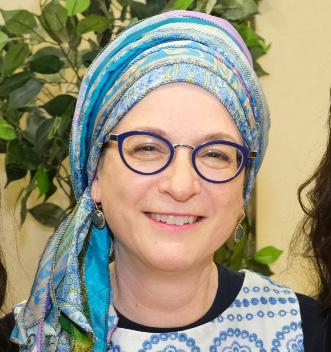
Outside of school, Ms. Avigdor enjoys reading novels and Judaica, taking photographs with her Fuji camera and tripod, creating photobooks, walking, and traveling, especially road trips with her husband. She also participates in the OU’s Torat Imecha Nach Yomi program and recently began her third cycle of learning one perek a day.
Although this is her first year at Flatbush, Ms. Avigdor brings decades of experience and a steady belief in her students’ potential and hopes to make a change in her students’ perspectives on the wonders of the math world.
Editors-in-Chief: Yvette Dweck, Emily Tarrab
Managing Editor and Fashion Editor: Rachael Kopylov
School News Editors: Olivia Shamah, Olivia Shamayeva
Religion Editor: Salomon Dayan
Features Editor: Marcus Mezrahi
World News Editor: Lili Hanan
Entertainment Editors: Sarah Kezra, Emme Nidam
Fun and Games Editor: Leslie Mishaan
Sports Editor: Elliot Cohen
Business Editor: Baruch Elmann
Photography Editor: Viviane Baghdadi
Junior Editors: Lyla Ashkenazie, Vera Esses, Jenny Khabih, Jaclyn Lazerowitz, Sylvia Mizrahi, Joseph Shamayev, Valerie R. Tabush
Sophomore Editors: Avital Rokhkind, Ben Sutton
Design: Carolina Cohen
Faculty Adviser: Adam Hofstetter
High School Administration
Rabbi Joseph Beyda, Head of School
Ms. Esther Hidary, Associate Principal
Rabbi Yigal Sklarin, Associate Principal
Dr. Michael Atlas, Associate Principal
Rabbi David Galpert, Associate Principal

The Phoenix Staff
Record number of seniors apply for Israel gap year programs Junior Mincha not working, students say
By Ruby Chera Contributing Writer
The largest number of students from the senior grade in a decade have decided to apply to schools in Israel for a gap year. A total of 106 seniors applied, which is just short of two-thirds of the grade. That number includes 56 boys and 50 girls, which is almost 20 more girls than last year. Those numbers could still grow, as some students traditionally don’t even decide to apply until the spring, Rabbi Beyda said.
Despite safety concerns due to the current situation in Israel, many of our students said that they feel their connection to the land has deepened since October 7, explaining that now is the most crucial time to be in Israel.
For many seniors, the idea of going to Israel for the year had been one that was on their minds for years, but for some, this idea has only come about since the start of the war. Caroline Cohen, who has applied to Midreshet Torat Chessed, explained, “The atrocities that took place on October 7 made me realize how lucky we truly are to have a Jewish homeland and that we should do everything we can to give back to our people in our country.”
Not only did students find the start of the war to be influential on their decision, many students who had been on Chesed Mission said that it opened their eyes to new responsibilities as Jews. Katie Waingort, who has applied to Mireshet Eshel, has expressed that she “left Chesed Mission with a new found desire to not only spend more time in Israel, but to give to the communities I was exposed to on that trip.”
Once the students determined their intentions, the logistics came into play. Application processes for yeshivot typically begin at the start of the school year; students are required to fill out personal information, gather recommendation letters, and write an essay explaining why they want to take a gap year in Israel. The deadline for the girls’ applications was
due in late November; the boys found themselves with more time to complete their applications, as their deadline was January 11. Many students said the application process proved challenging due to the large number of appealing programs to choose from.
According to Ms. Miriam Wielgus, head of girls Israel guidance, “The most difficult part of the application process had been deciding which schools to apply to.” Ms. Wielgus explained that many girls had been drawn to schools such as Midreshet Eshel, because it’s a Sephardic yeshivah as well as the reputation that Eshel has created for itself. Another popular girls’ school is Midreset Torat Chessed, as it is very chesed-oriented.
In terms of post-Israel gap year effects, Ms. Wielgus describes the girls who come back from a year in Israel as “more mature and independent, with a stronger love for learning Torah as well as a deeper connection to Israel than ever before.” Ms. Wielgus also noted “how much girls have broadened their horizons and made lasting friendships with girls around the world.”
Aaron Romano, who applied to multiple yeshivot in Israel including Yeshivat Torat Shraga and Yeshivat Reishit, outlined that these yeshivot “provide a Sephardic style of learning,” which wasn’t always the case for the yeshivot in Israel, as most are Ashkenaz. As the majority of Yeshivah of Flatbush students come from Sephardic backgrounds and have grown up learning Torah in that style, many of them are drawn to the style of learning that they are familiar with.
As final decisions are still pending, the increase in numbers of applicants for a gap year in Israel highlights a renewed enthusiasm for meaningful post-high school experiences. The students noted and were deeply appreciative of the support and consistent mentoring from the faculty as well as the steady encouragement they received as they prepare for their future beyond high school.
Witness Theater prepares to pivot as fewer survivors remain
Continued from page 1
listeners who would ultimately create a piece of theater; the survivors were not just speaking about their experiences but actively seeing them from a distance—revived and reenacted—a process that made sharing their stories more manageable and meaningful. Dagan pursued her idea and ran the program, while her husband directed the play, making it a family effort.
In 2011, Selfhelp wanted to bring Witness Theater to the United States. They embraced the idea but struggled to find a drama therapist to run the program. They reached out to New York University, which houses a master’s program in Drama Therapy, and NYU referred Selfhelp to Ms. Shatzkes.
At the time, Ms. Shatzkes had been running the Yom HaShoah programming at Yeshivah of Flatbush, which previously consisted of a mix of speakers, artwork, and poetry. When Witness Theater was
By Norman Didia Contributing Writer
Juniors are struggling to focus during Mincha in the school auditorium, creating a noisy and chaotic environment. Students and rabbis say the issue is not just behavior, but a deeper problem with energy, structure, and students’ connection to God.
The auditorium is the Mincha location for all junior boys and girls, along with sophomore girls. For many juniors, it is the loudest seven minutes of the school day. Students arrive energized, talking and moving around. This makes it difficult to settle into prayer.
Rabbi Galpert said the timing makes it hard for students to calm down. “They’re coming straight from class and excited to see friends,” he said. He acknowledged that the noise at the beginning is not meant to be disrespectful. Once the Amidah begins, most students pray seriously, and the main challenge is getting everyone settled at the start.
Students agree that energy plays a major role. Junior Lorenzo Hasson said he feels “riled up” coming into Mincha. Junior Oren Billik said Mincha often feels more like social time than prayer. Junior Michael Souleiman said most disruptions start before Mincha and continue during prayers through jokes, yelling, or certain Nakdishach tunes. All three students admit to being part of the many “troublemakers” whose energy can set off a domino effect, where one person starts being disruptive and others quickly join in.
Beyond energy, many students say the deeper issue is a lack of connection. Several said they do not fully understand the prayers they are saying, which makes Mincha feel forced. Billik said it can feel like students are being controlled instead of encouraged to pray to God. Souleiman said it is unrealistic to expect a large group of friends to suddenly focus without inspiration. Other students said assigned seating and punishments make Mincha feel controlled rather than meaningful.
Rabbi Galpert said the issue is a mix of behavior, structure, and connection. He noted that Shacharit is usually calmer because its structure helps students ease into prayer. He added that the school does not want to make Mincha stricter, because forcing prayer can take away its meaning.
Even with structure, student experiences suggest that connection to God is the most important missing piece of the puzzle.
Some students point to classes like SICHA as an example of what helps build that connection. SICHA is discussion-based and focuses on students’ personal relationships with God. Rabbi Gitler, who teaches the class, helps students move from a fear-based view of God to a love-based view by connecting religious ideas to real life (SAFE topics like drinking, drugs, relationships, etc.). Students say this makes Judaism feel more meaningful and easier to understand.
Rabbi Churba said students connect to Judaism at different levels. Some are very involved, while others are still building that connection. He said students often struggle when they do not understand the prayers or see how prayer is relevant to their lives. He added that the school encourages growth through extracurricular learning, which he oversees, outside the classroom, including learning before school, during lunch, after school, and at night.
Rabbi Churba also pointed to student-led programs as successful examples of how students can grow closer to God with the help of school. One is the optional phone-tagging initiative, which students created with guidance from the rabbi. The program blocks inappropriate content and helps students focus on their values, giving them control over their choices. Students involved felt proud because they helped create it themselves, which made their engagement with Hashem feel more meaningful.
Another example is AP Mincha, where students pray in a smaller group and go slower, with full repetition of the Amidah, and focus on understanding the words. This approach lets students experience prayer actively, helping them connect more deeply with the meaning of the prayers and their relationship with God.
School rabbis encourage students to take advantage of these opportunities, including extracurricular learning, SICHA discussions, phone-tagging, and AP Mincha. They say these options help students take ownership of their religious growth, strengthen their connection to Hashem, and make prayer more meaningful.
presented to her, she accepted the idea without hesitation and began what would soon become a core part of the Yeshivah of Flatbush.
As the program grew and evolved, Ms. Shatzkes adapted both her role and the structure of Witness Theater to better meet the needs of the student and the survivors. The program’s first year began with 10 survivors and 13 students who Ms. Shatzkes knew personally and invited to participate (among them were Ms. Shatzkes’s sister and most of her friends).
Ms. Shatzkes ran the weekly meetings in which the stories were shared, and wrote the material for the show, while a separate director handled the theater production. After year one, the model shifted and Ms. Shatzkes became both the session facilitator/playwright and the director.
This year, only four survivors are participating, and the number of students
is capped at 16, though Ms. Shatzkes receives more than triple that number of applicants each year. Additionally, the structure of the program has evolved. Instead of survivors sharing their stories directly during weekly sessions, students first listen to their stories in small groups, ask questions, and clarify details to ensure accuracy. The students then present the survivors’ stories to the larger group. Each survivor is then assigned four students to study their stories in depth, verify accuracy, and provide support when needed. These changes have made the story-sharing aspect of the program more efficient, accurate, and supportive for the aging survivors.
Despite the increasing limitations, Ms. Shatzkes is determined to continue the program in some form. While it will be significantly different, there will still be a theater production centered on Holo-
caust stories. Ms. Shatzkes shares that the biggest consideration currently is having children of survivors speak on behalf of their parents and share their parents’ story. While the new structured program might take time to evolve, Ms. Shatzkes believes, “We must work extra hard to preserve the stories from the Holocaust; it is even more important once the survivors are gone. … When the eye witnesses are no longer alive to share and educate through their experiences, it becomes our responsibility to do so and to protect our Jewish history and identity.”
Reflecting on the impact of Witness Theater, Ms. Shatzkes stated, “The most meaningful part of my work in this program was watching both survivor participants’ and student participants’ trajectories in life change. … Even survivors who were in their nineties found new perspectives on life.”
Iceland declares ocean current a national security threat
By Lili Hanan World News Editor
When most countries talk about national security, they mean military threats or political conflict. Last week, Iceland said something very different: the government officially warned that the possible collapse of a major Atlantic Ocean current is now a national security risk.
The current, called the Atlantic Meridional Overturning Circulation, helps regulate temperatures across Europe and the North Atlantic. It works like a giant conveyor belt, moving warm water north and cold water south. Scientists have been warning for years that climate change could weaken it. Iceland is one of the first countries to frame that risk not just as an environmental issue, but as a direct threat to its national stability.
If this current slows dramatically or collapses, the consequences could be extreme. Northern Europe could experience sharp temperature drops, weather patterns could shift unpredictably, and fisheries—which are central to Iceland’s economy—could be disrupted. Infrastructure, food systems, and energy supplies would
all face new pressures. For a small island nation that depends heavily on the ocean, this is not theoretical.
What makes this moment significant is the shift in language. Climate change is no longer being discussed only in terms of sustainability or future generations. It is being placed in the same category as military defense and economic security. This signals a larger global trend: governments are starting to treat environmental instability as something that can destabilize borders, economies, and political systems.
Iceland’s decision adds urgency to an ongoing scientific debate about how close the world may be to major climate tipping points. While researchers continue to study timelines and probabilities, one thing is clear: some governments are no longer waiting for certainty before acting.
The bigger question is whether other countries will follow Iceland’s lead. If climate systems are officially considered security threats, it could change how nations prioritize funding, alliances, and international agreements. What once sounded like distant environmental theory is now entering the core of political strategy.
Many students violate phone policy undetected
Continued from page 1
mores with their phones during lunch and class.
Of the 57 juniors who responded, three said they do not put their phones in the lockers, including one who admitted to putting something else in their locker to keep their phone with them. Eighteen admitted to using their phones to buy lunch without being caught, while three have been caught and had their phones confiscated. Five juniors said they don’t put their phones back in their slots after lunch, and 12 use their phones during school hours without getting caught. Two juniors have been caught with their phones but did not face consequences.
Ms. Benzakein, Junior Grade Dean, said about 10-15 juniors have gotten in trouble for having their phones out in
school.
“Phones became more of an issue more recently. Sometimes students leave it in the coat room, or they put it in a slot nearby, so I’ll go after students for a missing phone, but it’s easily rectifiable,” she said.
An anonymous junior told The Phoenix that they use their phone to buy lunch in school, and that the administration doesn’t really care.
Of the 37 seniors who responded, two said they do not put their phones in the lockers in the morning, and one admitted to using a decoy phone. Twenty-two seniors admitted to using their phones to buy lunch without getting caught; four of those seniors said they don’t put their phones back after lunch, and another three put them back occasionally. Eleven
D’var Torah: Built to move
By Reuven Tobias Contributing Writer
Parashat Terumah begins a series of perashiyot that will describe the building of the ןָכְָּשְִׁמִּ Whether the ןָכְָּשְִׁמִּ was built before or after Het Haegel is a debate among the rabbis; however, what’s really interesting is the attention to detail and structure of each vessel.
If you’re familiar with the designs of the kelim in the ןָכְָּשְִׁמִּ you’ll notice how many of them are made with poles on the edges, known as Badim, to transfer them from one place to another. However, although this design is made to physically transfer the ןָכְָּשְִׁמִּ, many believe a deeper message lies in these designs.
The entire ןָכְָּשְִׁמִּ was designed to be temporary. The nation was constantly on the move, so the ןָכְָּשְִׁמִּ was made to be moved around constantly. As a nation, we are constantly on the move. Throughout our history we have always been moving. We’ve been exiled, threatened and killed. But there was always one thing that was designed to travel with us: our Jewish values. From day one, Matan Torah, we learned this truth. The Torah wasn’t received anywhere significant. It was not given to
confessed to using their phones during school hours without being caught, while three were caught, including one who did not face consequences.
Dr. Atlas, Associate Principal of Student Life and senior grade principal, said he has had to confiscate 22 phones from seniors so far.
“Sometimes I use it [my phone] and the faculty see and just don’t do anything,” one senior said. Another added that she no longer trusts the phone slots, because she discovered that “someone had moved my phone from its pocket with my name to their own … to avoid trouble.”
Administrators recorded that 58 different seniors have not put their phones

the Jewish nation as they entered Israel—or as they left Egypt—it was given in the middle of nowhere. Out in the middle of the desert. This location was not a mistake: it was to show the Jewish people that their values would apply everywhere. Our light would and will shine no matter where we are.
In Parashat Nitzavim, Moshe tells the nation before his death,
Jewish values are not something found only in the holiest place on earth. We don’t need to be in Israel to practice our religion. We carry our Jewish values, like the
, on our shoulders, knowing that, no matter where we are, our beliefs will travel with us.
Therefore, the design of the vessels in the
, are not simply for convenience. They are not only to make it easier to travel with he ןָכְָּשְִׁמִּ; the designs represent something larger. They represent that no matter where we are exiled or who tries to kick us out, we will persevere. Because no matter where we go, our Torah values come with us. The design of the ןָכְָּשְִׁמִּ reminds us that Judaism isn’t a destination we reach, but a sanctuary we carry within us through every wilderness we cross.
in the lockers in the morning, resulting in 138 violations. Two of these students committed six violations each, and 28 others had three or more.
Teachers, however, have not been seeing a lot of phones. “One time a kid came to extra time with a phone and Ms. Terzi took it away, but that’s really the only time I’ve seen a phone all year,” said English teacher, Mrs. Cohen.
Freshman Michael Bensimon shared that because he has seen “people using phones during the school day and putting fake phones in the box,” the policy should be changed or updated so the students actually follow the rules.
US firm aims to resurrect extinct species
By Joseph Shamayev Junior Editor
Colossal Biosciences, a U.S.-based biotechnology company, is working on bringing back traits of extinct animals using gene-editing technology. So far, the company has only been able to modify living animals to show certain traits of extinct species. Fully recreating extinct animals remains a goal for the future of the company.
Scientists start the process by first finding a living animal that is closely related to the extinct animal they want to recreate; for example, an Asian elephant is a close relative of the extinct woolly mammoth. They then study the DNA of the extinct species from fossils or preserved frozen remains. Scientists figure out what genes are responsible for certain traits. Next, they compare the genes of the extinct species to its close relatives and notice what genes need to be changed. Using CRISPR, a
gene editing tool, scientists can easily cut out, add, or even change the DNA in the cells of the animal. Finally, the edited DNA can be used to develop embryos, which grow into animals that have some of the traits of their extinct relatives.
Scientists at Colossal Biosciences have made major progress in modifying living animals to have certain features of extinct animals. They have been working on adding traits found in the woolly mammoth, like extra layers of fat and thick fur, to its close relatives. Additionally, scientists made 20 gene edits to modern gray wolf DNA with efforts to bring back traits of the extinct dire wolf. These traits include making the gray wolves larger in size, with much stronger and sharper teeth. Scientists are also progressing in replicating dodo bird genes onto its closest relative, the pigeon. Colossal has proven to be able to edit the genes of living animals to be more like extinct animals,
but they still haven’t been able to fully recreate extinct animals.

The work at Colossal Biosciences could have many beneficial impacts. The addition of various traits from extinct animals could help endangered species survive. An example of this is modifying endangered elephants to withstand the cold by giving them thick fur and multiple layers of fat, keeping them warm like woolly mammoths and helping them survive extremely cold weather.
Also, bringing back certain features of animals could help maintain balance in ecosystems. Making gray wolves bigger and stronger like dire wolves helps the gray wolves hunt prey better and help ecosystems thrive.
Another impact of the experiments done at Colossal Biosciences is that it helps scientists with future research. It pushes new gene-editing methods forward, which can have various benefits
for future research and discoveries. The experiments also show what is technically possible in modern biology.
Critics believe that bringing back ancient species would disrupt ecosystems rather than balance them. There is also a lot of scientific doubt that fully recreating extinct species is possible, and the work may have to be limited to only recreating certain traits of the species. Ethical questions have also been raised regarding whether humans should intervene with nature.
`Colossal Biosciences is genetically modifying Asian elephants to have fur like wooly mammoths
Entertainment
Wuthering Heights film inspires book sales, controversy A24 succeeds differently
By Avital Rokhkind Sophomore Editor
Director Emerald Fennell’s reimagining of Wuthering Heights, starring Margot Robbie and Jacob Elordi, premiered on February 13, adapting Emily Brontë’s 19th-century novel amid intense anticipation and controversy.
The film stars Robbie as Catherine Earnshaw and Elordi as Heathcliff. Since its announcement, Fennell’s interpretation has sparked controversy and anticipation, from its casting to its costumes. It also has sparked renewed interest in the original novel.
Jess Harisson, publishing director for Penguin Classics, remarked, “I can’t remember the last time a film adaptation generated this much excitement for the book,” adding that, “Wuthering Heights stands apart in being so wild and unhinged—an extreme book for extreme times.” That enthusiasm has led to a dramatic increase in book sales of Wuthering Heights, as audiences wait for the highly anticipated film adaptation, with purchases of the book rising by 132% following the release of the teaser trailer last September. Between the trailer’s release and the end of the year, Penguin sold 28,257 copies in the UK, compared with 12,134 during the same period in 2024. Courtney Howard, who viewed an early screening, wrote that it was, “intoxicating, hypnotic, and bewitching, and expertly captures the breathtaking ache and essence of desire.”
However, the anticipation for the film’s premiere is not without controversy and heavy backlash, specifically from readers of the novel, who claim the film is not an accurate representation of the original story. Much of the criticism surrounds the casting choices, with one reader com-
menting, “my biggest gripe is that the characters’ appearances matter a lot to the plot and themes of the novel,” and the cast does not match the character’s descriptions in the book. While Heathcliff’s origins have long been debated, readers generally agree that Heathcliff is not white, and many think he is of Romani heritage, which Elordi does not reflect. Critics have also voiced concern over the choice of casting Margot Robbie, as she is 35 and plays a character who is 19.
Another major topic of skepticism is the differences between the plot and dialogue of the film and those of the novel. The novel provides little comfort and is a story marked by emotional and physical violence, with limited affection. One film critic described the film as “ghastly, as if the movie is trying to be overly grotesque and raunchy for shock value,” arguing that this approach is classic to Emerald Fennell and one of the reasons she dislikes her as a screenwriter.
Critics express that the tone of the film, based on the trailer, is very different from the novel. One line in the trailer reads, “inspired by the greatest love story,” “which only confirmed to those familiar with the book that major changes had been made to the story,” stated pop culture writer Adrienne Tyler in her review. Tyler added that Wuthering Heights is “facing allegations of romanticizing a toxic relationship and omitting the darkest but very important parts of the novel, which alter the message and essence of the novel.”
In addition, the movie title is displayed in quotation marks, which conveys the idea that the film represents Fennell’s own interpretation of the novel. The film has come to feel less like an adaptation and more like a reimagining of the novel. Theories suggest that the events of

the film are happening inside Catherine’s mind, which would explain the romantic emphasis of the movie, which is largely absent from the original. Her loneliness may be driving her to include herself in a romantic narrative with Heathcliff, while her reality is entirely different. This interpretation would explain the title’s quotation marks, as the audience is seeing Catherine’s imagined world rather than reality.
One thing any period film does, however, is get fashion fanatics excited over the costumes. With more than 45 and 50 costumes created for Cathy alone, the film’s wardrobe has emerged as one of the film’s most anticipated elements Radhika Seth, film and culture editor at British Vogue, wrote that she “can’t remember the last time a film’s costumes generated as much buzz or discourse as the extraordinary creations crafted by two times Oscar winner Jaccqueline Durran for Emerald Fennell’s Wuthering Heights.” Taking inspiration from Georgian and Victorian dress as well as classical paintings, the costumes are a blend between historical outfits and contemporary fashion. Several looks have sparked particular excitement, including the German Milkmaid-style dress, a striking red latex gown, the wedding night look, and accessories such as a large array of vintage Chanel jewelry.
Regardless of whether the film is a true reflection of the novel, it is surely having its moment.
Adolescence launches Owen Cooper into spotlight
By Sarah Kezra Entertainment Editor
Not many kids can say they’ve won an Emmy, a Golden Globe, and a Critic’s Choice award, but at just 15 years old, Owen Cooper turned that dream into a reality. The young Liverpool teen rose to fame in 2025, after starring in the Netflix mini-series, Adolescence, in his debut role of Jamie Miller, a 13-year-old murder suspect.
Adolescence is the four-episode story of Jamie Cooper, a 13-year-old, accused of stabbing a girl in his class named Katie. The series follows a different scenario in each episode, bringing the crime together as a whole, but even more importantly, each portraying one or multiple different aspects of the challenges of adolescence. Themes like bullying, parent relationships, schooling in the modern age, and teenage friendship and loyalty are explored throughout the mini-series, through the lenses of Jamie, his family, the
detectives on his case, and his classmates. The show captures the true cruelty and danger involved in teenage murder cases, while shedding light on the innocence of youth despite their mistakes.
The concept for the show stems from an extremely dark reality. After a continuous issue involving teenage boys murdering their female peers in the U.K., Stephen Graham, the acclaimed actor and father to teens himself, was inspired to create a television series centered around the topic, in hopes of spreading awareness. Along with playwright Jack Throne, Graham turned this idea into a serious project to be directed by British director, producer, and actor, Philip Barantini.
Barantini’s work is not ordinary; he is known for shooting his works in what’s known as a one-shot, meaning he has any film or any episode shot in one continuous take. Each of the four hour long episodes in Adolescence were filmed in one take, with one camera, and zero room for editing. Cooper explained in an interview
with BBC’s The One Show that at the very end of a take for one of the episodes, an irreversible mistake was made by a costar of his, and the entire episode needed to be refilmed. It’s no wonder Cooper was awarded so many accolades for his performance, as it must not be easy to act flawlessly for an hour straight, with no breaks, especially in his first major role. He also described in his interview that actors often do make slight mistakes, which leaves a need for improvisation—a tough skill for actors of all ages, let alone a 14-year-old.
Cooper is the youngest male to ever win a Primetime Emmy award in an acting category, making history in the television industry. It’s incredible to see a young kid with a dream beat out men who have been acting for years in just his debut role. He went on to win a Golden Globe, and a Critics’ Choice Television Award, proving the start of his career to be even more impressive than what was originally expected.
By Ben Sutton Sophomore Editor
When people think of movie studios, Disney, Warner Bros., Paramount, and Sony are often the first to come to mind. A new studio has emerged recently called A24, an American independent entertainment studio known for supporting artist-driven films that don’t fit the typical types of films shown in theaters. Instead of focusing on franchises, sequels, and remakes like the big studios, A24 focuses on original screenplays and adaptations of small books and plays.
So what has A24 brought to the scene this year? In December, Marty Supreme starring Timothée Chalamet was released, a film that follows a fiercely driven young ping-pong player obsessed with winning and recognition. The movie began with a limited opening shown on just six screens across New York and Los Angeles, yet still grossed $875,000 over that weekend, the best per-theater average of the year. It then grossed around $27 million over the fourday Christmas holiday frame. It became the studio’s highest grossing movie ever, earning $147 million worldwide, and is nominated for the Best Picture Oscar.
No one anticipated such success for a lower-budget movie. So what did A24 do differently? For one, instead of focusing on the traditional big studio marketing playbook of advertising through tons of TV commercials and ads in magazines, A24 advertises much more heavily on social media. They also relied heavily on viral memes, quotes, and scenes being clipped and shared on Instagram, X, and TikTok.
The marketing campaign for the movie started off with an 18-minute spoof Zoom call, framed as a “leaked” marketing meeting between Chalamet and the other “A24 reps.” Chalamet shared absurd ideas like painting the Statue of Liberty in “Marty Supreme orange” and making it rain pingpong balls from an orange blimp in the sky, all while keeping a straight face. The video was an immediate hit, gaining millions of viewers without paid marketing support. Before long, a giant blimp with the words “Marty Supreme, Dream Big” took to the sky, floating over Los Angeles and other US cities.
The movie even dipped its feet into fashion, releasing retro Marty Supreme track jackets, which were worn by big celebrities including Tom Brady and Kendall Jenner. With the film still going strong, A24 transformed a niche sports film into a cultural movement.
A24 does not plan to slow down anytime soon, promising seven movies set to release in 2026, including three in the next month alone. They will dive into other genres, including the dark comedy How to Make a Killing, starring Glen Powell, and a romance with Zendaya and Robert Patterson, The Drama
A24 is proving how thinking outside of the box and breaking the mold can be successful. The studio chose to be different and to take a creative risk; sometimes the most unorthodox ideas make for the most memorable theatre experience.
A look at Trump’s new Federal Reserve chair
By Salomon Dayan Religion Editor
President Donald Trump nominated Kevin Warsh to succeed Jerome Powell as the next chair of the Federal Reserve on January 30.
The Federal Reserve is the US’s central bank, responsible for setting monetary policy and regulating financial institutions. It has traditionally operated independently from the President in order to promote long-term economic stability without direct political pressure. The Fed also sets and adjusts interest rates, influencing inflation and job growth.
Over the past few months, President Trump has repeatedly urged the Fed to lower interest rates, which currently sit at 3.50%–3.75%. After Powell refused, the President called for his resignation, explored grounds for removing him, and had the Department of Justice launch an investigation into Powell over the scope of the central bank’s renovations. In August, he also attempted to dismiss Fed governor Lisa Cook, alleging she had falsified a
mortgage application.
Powell’s term as chair is set to expire in May, when Warsh is expected to take over pending approval from the Senate, where Republicans hold a 53–47 majority.
As the likely new Fed chair, who is Kevin Warsh and what will his economic policies look like?

Warsh was born in 1970 and grew up in upstate New York before studying for a bachelor’s degree in public policy at Stanford and a law degree from Harvard. From 1995 to 2002, Warsh worked for Morgan Stanley in New York City, rising to executive director in the company’s mergers and acquisitions department. From 2002 to 2006, Warsh was Special Assistant to the President for Economic Policy, and Executive Secretary of the National Economic Council, for President George W. Bush. His primary areas of responsibility included domestic finance, banking and securities regulatory policy, and consum-
Ask Merle
Merle,
How do I become color war general for my grade?
—Competitive Sophomore
Hi, Competitive!
There is no exact formula to becoming color war general. Generals are determined by faculty, the student government, and your reputation as a student. I would say to make sure you’re an involved and friendly student, and eager to win!
Merle
Merle, Is dressing up for Purim childish or cool?
—Nervous Freshman
Hey!
er protection.
In 2006, Bush nominated Warsh to join the Federal Reserve as a governor. At 35, Warsh was the youngest person to join the Fed in the central bank’s history.
Following the 2008 recession, Warsh was hawkish on inflation and argued against the Fed’s purchase of treasury bonds aimed at lowering rates. In recent months, he changed his tune to be more in line with the Trump administration, supporting tariffs and favoring rate cuts.
Warsh’s nomination showed a less drastic change than expected. Warsh will likely prove more independent than other potential choices. He isn’t expected to be a Trump “yes man,” and his traditionally hawkish stance on inflation restored a degree of confidence in the dollar based on his nomination. Upon his nomination, gold prices fell 10% while silver plummeted a whopping 30%. It was the worst single day decline in over four decades.
Fun & Games
whole weeks. I would say watching good movies under a cozy blanket with friends is always a good time. Reading a book, drawing, or cooking are also relaxing activities to do alone. Hopefully the snow will melt soon, and we can enjoy our time outside again.
Merle
Merle,
What should I do if I feel excluded from my friends?
—Sad Junior
Hey Sad,

I think it is cool to dress up for Purim, especially dressing up with your friends. Dressing up never gets old, and it makes the holiday more fun and memorable. Also, anything is “cool” if you believe it’s cool and do it with confidence. So buy (or make) your best costume, and wear it proudly.
Merle
Merle,
What are some ways I can enjoy my time in this frigid weather?
—Chilly Senior
What’s up, Chilly!
It is freezing outside, and lucky for us the snow still hasn’t melted after two
Don’t worry. I would say to communicate how you feel first because they may not realize your feelings are being hurt. Then, if they’re your real friends, they will start being more friendly. If they continue to hurt your feelings, they weren’t good friends to begin with. Unfortunately, this happens a lot during high school. Good luck!
Merle
Merle,
What’s some advice for seminar?
—Curious Freshmen
Hi!
First of all, seminar is easily one of the best Yeshivah of Flatbush experiences. My number one piece of advice is to branch out, and keep an open mind. On seminar you have the opportunity to meet new people in your grade, and you should take advantage by having conversations with new people. They can be your new best friends!
Merle
These commodities are seen as safe assets which generally retain their value through inflation, so a drop in price relative to the dollar indicates a decreased perceived risk of inflation under Warsh’s leadership.
Ultimately, Warsh’s nomination marks a pivotal moment for the Federal Reserve, coming amid heightened political pressure and debate over the institution’s independence. Although President Trump has publicly pushed for more aggressive rate cuts, Warsh’s background in finance, public service, and prior experience as a Fed governor suggests a policymaker shaped by both market discipline and institutional knowledge. His historically hawkish stance on inflation, alongside recent signals of policy flexibility, indicates that he may seek to balance economic growth with price stability while maintaining credibility with investors.
If confirmed, Warsh’s leadership will not only influence interest rate decisions but also serve as a test of whether the Fed can preserve its independence in an increasingly politicized economic climate.
Phoenix Crossword Puzzle
By Albert Shamah Contributing Writer

Standard of Fabulous
Naomi Osaka: Stylish or disrespectful? Saudi Arabia building Riyadh fashion district
By Yvette Dweck Editor-in-Chief
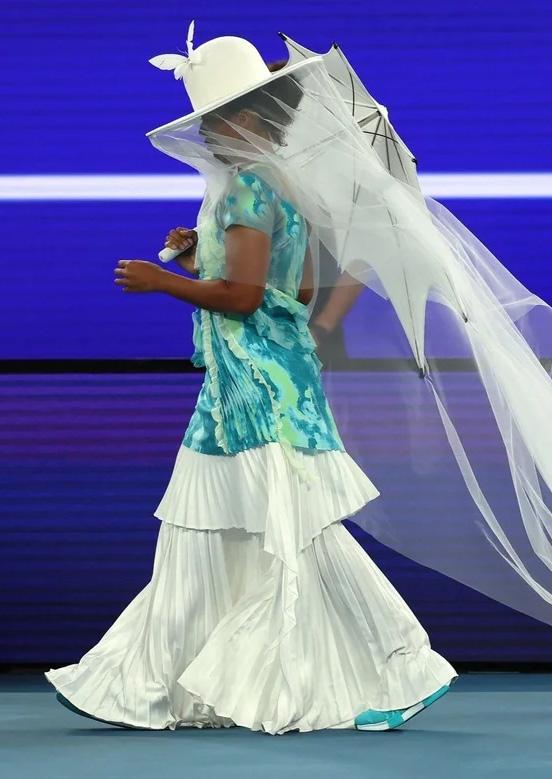
In her opening match at the Australian Open on January 20, 2026, Naomi Osaka walked out in a custom, eye-catching outfit. Osaka wore a huge white hat covered in butterflies and a long veil to match the pleated white skirt and loose pants she wore under the green and blue ruffled Nike dress she was actually playing in. She carried an avant-garde pleated umbrella as she walked confidently onto the court, making it clear that her 2024 first-round exit was a distant memory.
Inspired by a butterfly that landed on Osaka’s face in the 2021 Australian Open, designer Robert Wun began incorporating delicate butterflies into his designs. Osaka’s outfit was a collaboration between Wun and Nike, as they took inspiration from the beauty and elegance of jellyfish, an animal that Osaka’s daughter, Shai, loves.

elegance of tennis. Jamie Murray, former doubles No. 1, spoke on BBC 5 Live Sport and mocked the theatrics of Osaka’s entrance, comparing her look to “Mary Poppins” and questioning why she would choose such a distracting spectacle for a first-round match. Borris Becker, six-time Grand Slam champion, called out the contradiction of Osaka seeking privacy while simultaneously inviting public scrutiny with such a high-profile “runway” outfit.
Many tennis fans, players, and former stars slammed Osaka’s dramatic entrance as a distraction, with a handful even calling the look “cheap” and a “disrespectful” break from tradition.
By Bracha Ezagui Contributing Writer
The Saudi Fashion Committee has recently collaborated with Four Directions Real Estate Development Company to build a fashion district in Riyadh, likely near the King Saud University, expected to be completed in 2028. The fashion district will incorporate elite fashion venues, design and production studios, brand incubators, and hospitality spaces.
pand the Saudi fashion industry.
The new district will also serve to further solidify Riyadh’s reputation as a global and cultural hub for the growing fashion industry. Riyadh is a rapidly expanding urban city with approximately 70% of its residents under the age of 35, making the demand for luxury goods extremely high.

After losing the first round of the 2024 Australian Open to Caroline Garcia, Osaka was determined to make a strong comeback in 2025. She then beat Garcia in the first round of the 2025 Australian Open, giving her confidence and security coming into 2026. Osaka beat Antonia Ruzic in the first round of the 2026 Australian Open but not by a wide margin. Many were upset at Osaka’s overconfidence going into the first round of the Open, arguing that if she wore an outfit like that, she obviously assumed she would win. Fox Sports analysts noted that the move “nearly backfired,” while Sports Illustrated highlighted the inherent risk of such a theatrical entrance—especially as Osaka only narrowly escaped with a win.
Most of the criticism over Osaka’s outfit came in the second round of the Open. Osaka faced Romanian veteran Sorana Cîrstea, and from the start of the match, tensions were high. Cîrstea grew frustrated with Osaka yelling, “Come on!” to herself between points. The match ended with Osaka winning and a cold handshake between the two players. Then in their postgame press conferences two continually insulted each other. With this tension, the topic of Osaka’s theatrics and tennis etiquette, specifically centered around her outfit, began to come out. Many started saying Osaka is ruining the integrity and
Despite the backlash, many fans were moved by the outfit’s connection to Osaka’s daughter and by her confidence in bringing fashion back to tennis. Fans loved how the outfit connected to Osaka’s culture, believing that the silhouette of the skirt and pants resembled a South Asian sharara, and appreciated the connection to her 2021 Australian Open win. Wun and Nike were praised for making the outfit about Osaka herself, and not the brand she was wearing.
Women’s World No. 1, Aryna Sablenka loved Osaka’s choice and said, “That’s really beautiful about fashion that you can express yourself in any way. It’s a pretty free world. There is no judgment. ... That was a perfect fit of her personality, her culture, and a lot of things. That was pretty cool.”
Whether fans liked the outfit or not, it spoke louder than her play, as she withdrew from the tournament after the second round due to an injury.
This project is in support of “Vision 2030,” a Saudi attempt to steer away from the oil industry and diversify its economy, society, and culture. The Saudi Fashion Commission is strategically appealing to the growing fashion industry, expected to reach $36.8 billion to $42 billion worldwide by 2028, and using it to draw global appeal to Riyadh. This project also aims to attract investors and partnerships to ex-
Burak Cakmak, CEO of the Fashion Commission, commented that the fashion district will be “an integrated ecosystem that supports the fashion value chain, opens new opportunities for creativity and investment, and reinforces Riyadh’s position as a global hub for the creative economy.”
The new fashion district is integrated into the Saudi 100 Brands program, an initiative developed to support Saudi fashion brands. The new district offers a physical location for the 100 Brands initiative, consisting of workspaces, showrooms, venues, etc.
Buying vintage clothing comes back in style
By Olivia Azaria Contributing Writer
Vintage and secondhand shopping has become a huge trend, especially with teens and young adults. Instead of just buying new clothes from name-brand stores, people are thrifting, and using resale apps in order to have unique pieces.
Secondhand shopping is popular because it’s stylish, different, and cheaper. It also helps people stand out. When everyone shops at the same fast-fashion stores, people usually end up matching with the same outfits. People start to want their own unique style, and one way to do that is combing through secondhand stores to find unique, vintage, and stylish pieces that not many people have.
Another reason for thrifting is the low
price. Secondhand clothes are usually much cheaper than new ones from namebrand stores, yet secondhand clothes are still in good condition and more sustainable than new clothes. In thrift shops or reseller apps, you can find cool jackets, shirts, jeans, accessories, etc, for less money than what it would cost if you had bought it in a mall. Thrifting is a convenient way to have stylish and sustainable clothes without spending more than they can afford.
So, how would someone secondhand shop? The answer is convenient and simple. Local thrift stores, flea markets, and garage sales are where you could shop secondhand. An online alternative is to use apps like Depop and Poshmark to find secondhand clothes online.

Osaka's controversial entrance
World Baseball Classic is a home run for baseball Israeli bobsled team delights and inspires
By Elliot Cohen Sports Editor
Bottom of the ninth, with two outs. Ohtani has thrown a gem thus far, and looks to close out the championship game right here, right now.
Up 3-2, with the tying run at the plate, the pressure truly sets in. 60.5 feet away, however, stands his opposition, and likely the only person in the world facing more pressure than he is in that moment. One of the greatest players of all time, Mike Trout, stands stout, as he has for the past decade, in the righty batter’s box. This likely being the last chance for him to win anything significant, he digs in for one final swing.

set back slightly by the injury to Corbin Caroll, their young, five-tool outfielder, team USA looks to boost forward, and win it all. USA is, as usual, the team to watch in this tournament.
Can Israel Bring a Spark?
This atmosphere, a packed stadium, people from around the world watching, uniting with their countries to cheer on their hometown heroes, is only felt once every three years, during the World Baseball Classic. Three years ago, that legendary at-bat occurred, with Ohtani taking home the championship for team Japan. This March, so many more opportunities for greatness present themselves.
USA’s Redeem Team
Team USA, disappointed in its final attempt at victory in 2023, is back with vengeance. Newly appointed captain Aaron Judge seeks his first championship in his first tournament, while Team USA hits the reset button on their team. In a way, this is quite similar to the US’s Redeem Team in Olympic Basketball in 2008. In an off year, when not sending their best guys, they were bounced by a hungrier team. Now, with a completely revamped team, in large part due to a stellar pitching staff headlined by Tarik Skubal and Paul Skenes, they look to win it all. Although
Sportsman Spotlight:
No, Israel will not win the WBC. However, they will certainly be an exciting team to watch. Led by veteran (and former Yankee and Met) Harrison Bader, as well as Baltimore Orioles pitcher Dean Kremer (unsure of his relation to Rabbi Kramer) the Israeli team can shock a few people in their run. Their pool is quite difficult, with tough opponents like the Dominican Republic and Venezuela, but Israel has the potential to rattle off a couple of wins and excite Jews worldwide. All should tune in for what is sure to be an exciting showing for Jewish Baseball.
What’s Up With Puerto Rico?
The usually stellar Puerto Rico squad is being tainted by … insurance? Many MLB teams are wary of risking sending their players to play for the WBC, as they are at a high risk for injury just before the season is set to begin. They fear taking on player’s contracts through injury without compensation. For example, Carlos Correa has been restricted because the Astros don’t want to risk an injury. The Mets had the same concerns about Francisco Lindor, but he sustained a stress fracture in his hand last week, making a WBC appearance impossible.
Frieda Cohen is all heart
By Vera Esses Junior Editor
Frieda Cohen, a member of the girls basketball team one of the captains of the girls softball team, has loved softball ever since she was eight years old. She discovered her devotion for softball in third grade, which has only gotten stronger as she got older, whether playing with her family, in summer leagues, or watching it on TV. Since freshman year, Cohen has played a significant role on the team, and continues to do her best to make her team stronger and contribute to the team’s overall success.
One of Cohen’s most cherished memories is playing softball with her dad after school. They would hit and play catch in her basement for hours every day, helping her improve and building her love for the game. They also went to baseball games
together, which made their bond even stronger and gave her great memories of the sport.
Cohen taps her bat on the plate while at bat, a ritual she shares with her dad. She continues the ritual today because it helps her focus and it brings back memories of learning and playing softball with her dad.
Cohen plays first base. The position “keeps me engaged and focused all game, and there is almost nonstop movement throughout the whole game. Being so involved in every defensive play makes the game exciting and rewarding for me.”
One of her favorite things about the team is that it includes students across all grades, al-
By Emily Tarrab Editor-in-Chief
Israel’s first-ever Olym pic bobsled team, led by Adam “A.J.” Edelman, the first Orthodox Jewish Olym pian, is making history by competing in the 2026 Milano Cortina Winter Olympics.
The team has been dubbed “Shul Runnings” after the 1993 film “Cool Runnings” the Jamaican bobsled team, both unlikely contenders due to the hot climates of their home countries. There are five members: Ward Fawarsy, the first Druze athlete to represent Israel and a rugby fanatic; Uri Zisman, a former pole vaulter; Omer Katz, a former sprinter whose career was cut short by injury; and Menachem Chen, an Israeli discus and shot put champion.

to join the team. “Many of the people on the team, when I reached out to them, thought it was a scam at first,” Edelman
The New York Times
Edelman’s journey on the ice began in 2013, when he was invited to play ice hockey for Israel’s national team after four years on MIT’s ice hockey team. He turned down the offer, but in 2014 he began training in skeleton, seeking to make a greater impact for Israel in international winter sports. He was repeatedly told that he would never make it to the Olympics.
This is the first year Israel has qualified a bobsled team for the Winter Olympics, after missing the cut in Beijing 2022 for their two-man bobsled team by a mere 0.1 seconds. The team has the potential to make history and secure Israel’s first medal in any Winter Olympics event.
While their participation warrants pride and celebration, they also have been subjected to harsh realities, such as being booed at the opening ceremony by thousands, facing calls for a boycott, and having their Olympic Village apartment broken into while at practice, where a thief stole thousands of dollars’ worth of personal belongings and even the team’s passports.
The current “Shul Runnings” team was assembled after October 7, 2023, when most of the original members were called up to serve in the reserves. Edelman, a headstrong captain, cold-called his four current teammates via Instagram DMs
lowing athletes of different ages to grow together. She also always loves to meet new people and create relationships with others, especially during games when the opposing players get to first base, showing her sportsmanship and positive attitude. Cohen’s positivity has always had an effect on others. Former Coach Robyn Chattah said, “Her positive attitude sets the tone for the entire team. She encourages her teammates, inspires her teammates, and approaches every challenge with a smile.”
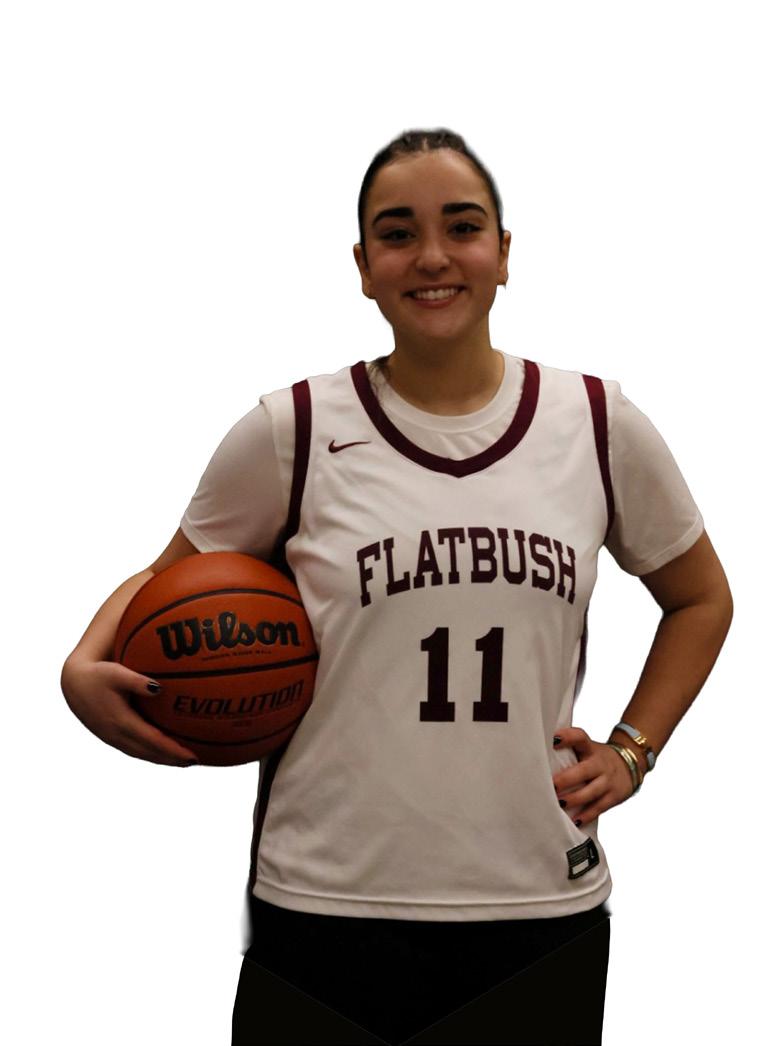
Playing on both the softball and basketball teams has caused Cohen to face challenges and learn lessons. Cohen said that “softball often conflicted with spring basketball training, which made my schedule very difficult for freshman, sophomore, and junior year.” However, having such a busy schedule taught her time management. She shared that one challenge about softball that
He made Aliyah in 2016 and continued training largely on his own, relying on YouTube videos because he could not afford a coach. In 2018, he achieved his goal of reaching Olympic skeleton. By 2020, he was pursuing an MBA at Yale University and chose to pivot to competitive bobsledding after classes were put on hold due to the pandemic. He recruited a team from scratch and scrambled to find funding prior to the 2022 Olympics, for which the team failed to qualify.
This year, after receiving an invitation to the 2026 Games, Israel’s own Olympic committee was hesitant to accept due to a lack of funding. Edelman, long aware of the financial challenges facing Israeli sports and Jewish institutions, took matters into his own hands. He cofounded the nonprofit Advancing Jewish Athletes with Jared Firestone, who is currently representing Israel in skeleton in Italy.
The team’s last-place finish did not dim their excitement. Edelman said told the Jewish Telegraphic Agency that winning was “never a goal” and that the Games were “the stepping stone to get to the goal, which was to fundamentally redefine, or change, how our community, both the Israeli and the Jewish one, views investment into and the role of sport.”
people don’t usually see is “practicing and playing in the dark and freezing cold,” along with constant game cancellations and shifting schedules due to the weather.
Cohen has worked hard to succeed academically while continually developing her softball skills. She earned the Coach’s Award in her junior year, an honor that recognizes overall effort, commitment, sportsmanship, and dedication. For her senior year, she was named team captain, reflecting her leadership both on and off the field. She consistently puts in extra effort, practicing with the team and also independently, and her hard work and positivity have made a lasting impact on everyone around her.
She describes herself as captain and as a teammate in three words—dedicated, uplifting, and competitive, which her teammates would agree with.
Cohen would love to continue playing softball in the future, and said that the sport is something that she cannot live without. Despite this, she also acknowledges that it might not be an accessible option for her, so she hopes to join a community league after high school.