Solar Power for Camping: A Beginner's Guide to Staying Powered Outdoors Camping has changed considerably over the years.
Getting away from modern life no longer necessarily means leaving every piece of technology behind. Today, campers may carry smartphones for navigation, cameras for capturing landscapes, GPS devices for exploring trails, LED lights for the evening, and portable refrigerators for keeping food fresh. The challenge is simple: how do you keep those devices powered when there is no mains electricity nearby? For many outdoor enthusiasts, solar power offers a practical answer. With the right combination of a portable solar panel and a compatible power station, campers can generate, store, and use electricity while spending time away from traditional power sources.
For beginners, however, solar camping can seem confusing. What size panel do you need? How much power does a campsite actually use? And will solar panels still work when the sun isn't shining directly? Let's break it down.
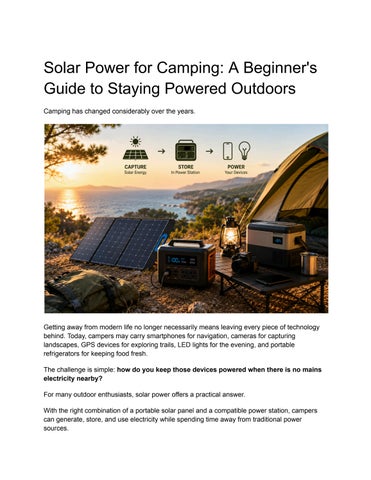
What Is Solar Power for Camping? A basic camping solar setup usually consists of two main components: Solar panel: Captures energy from sunlight and converts it into electrical power. Portable power station: Stores that energy in a battery so you can use it later. During daylight hours, the solar panel can recharge the power station. The stored electricity can then be used to run or charge compatible devices. This is particularly useful when you're camping away from electrical hookups. Instead of relying entirely on mains electricity or a fuel-powered generator, you can use energy from the sun to maintain your essential power supply.
Why Is Solar Power Useful for Campers? The biggest advantage is independence. If you're staying at a remote campsite, travelling through the Greek countryside, or spending several days outdoors, access to electricity may be limited. Solar charging can help provide power for useful equipment such as: ● ● ● ● ● ● ●
Smartphones Cameras GPS devices LED lights Portable refrigerators Tablets Small compatible camping appliances
The exact devices you can operate depend on the capacity and output of your power station. Solar power can also be quiet. Unlike conventional fuel generators, a solar panel doesn't create engine noise while charging. For people who enjoy peaceful outdoor environments, that's an important benefit.
Understanding Watts and Watt-Hours Two terms you'll encounter frequently when choosing portable power equipment are watts (W) and watt-hours (Wh). They describe different things. Watts measure power. They help indicate how much electricity a device needs at a particular moment. Watt-hours measure energy capacity. They indicate approximately how much energy a battery can store and provide over time. For example, a device that uses 50 watts continuously for two hours would consume approximately 100 watt-hours. This doesn't mean every real-world setup will deliver exactly that result. Efficiency losses, battery management, temperature, and other factors can affect actual performance. Still, understanding the basic relationship makes it easier to compare your equipment needs with the capacity of a portable power station.
How Much Power Do You Actually Need? The best place to start isn't with the biggest battery you can find. Start by calculating what you actually use. Make a simple list of your essential devices and estimate how often you'll use each one. For example: Phone: occasional charging LED light: several hours in the evening Camera: battery charging as required GPS: intermittent use Portable refrigerator: potentially continuous operation The more electricity you need, the larger your battery and charging system may need to be. A solo camper carrying only a phone and small lights will have very different requirements from a family running a portable refrigerator, multiple lights, cameras, and several electronic devices.
Solar Panels Don't Work Like a Wall Socket
One important thing beginners should understand is that solar charging isn't constant. The amount of electricity a panel produces depends on conditions such as: ● ● ● ● ● ● ● ●
Available sunlight Panel size Panel orientation Cloud cover Shade Temperature Cable and system efficiency Compatibility between the panel and power station
A panel rated at a particular wattage doesn't necessarily produce that exact amount throughout the day. Maximum output generally requires favourable conditions. This is why it's better to think of solar charging as an energy source that varies throughout the day rather than an unlimited outdoor electricity supply.
Greece Can Be Well Suited to Solar Camping For campers exploring Greece, solar power can be particularly interesting because many parts of the country experience long periods of strong sunshine during the warmer months. Coastal camping, island trips, road adventures, and countryside stays can all provide opportunities to place portable panels where they receive useful sunlight. However, don't assume that every campsite will provide perfect solar conditions. Trees, cliffs, buildings, clouds, and changing sun angles can reduce charging performance. Before setting up your equipment, look for an area with suitable exposure while keeping the equipment secure and protected.
Panel Placement Matters Where you place your solar panel can make a noticeable difference. Try to position it where it receives unobstructed sunlight for as much of the useful charging period as possible. Avoid unnecessary shade from:
● ● ● ● ●
Trees Vehicles Tents Buildings Large equipment
As the sun moves across the sky, the ideal position can change. If your equipment supports it, adjusting the panel's orientation during the day may improve overall energy collection. Always follow the manufacturer's instructions for positioning and handling the panel.
Portable Power Stations Add Flexibility A solar panel produces electricity when sunlight is available. But what happens after sunset? That's where a portable power station becomes useful. Instead of needing to use electricity at the exact moment your solar panel is generating it, you can store energy in the battery during the day and use that stored energy later. This creates a simple cycle: Sunlight → Solar Panel → Power Station → Devices During the day, solar energy can recharge the battery. At night, the stored energy can provide power for suitable devices. This can make a solar setup much more practical for overnight camping.
Don't Forget Energy Efficiency Generating more electricity isn't the only solution. Reducing unnecessary consumption can be just as important. Simple habits include: ● ● ● ●
Turning lights off when they're not needed Using efficient LED lighting Charging devices only when necessary Using power-saving modes
● Avoiding unnecessary standby consumption ● Keeping refrigerator settings appropriate for the conditions Think of your campsite's battery as a limited energy budget. The more efficiently you use it, the longer your stored power can last.
Solar Power Isn't a Replacement for Planning Solar equipment can improve your independence, but it shouldn't replace preparation. Before leaving, check: ● ● ● ● ● ● ●
Battery capacity Panel compatibility Cable connections Charging requirements Weather forecast Expected sunlight Device power requirements
Charge the power station before your trip rather than assuming the solar panel will immediately provide everything you need. If you're travelling somewhere remote, consider how you'll manage if several cloudy days reduce solar charging. A backup plan is always sensible.
Protect Your Equipment Outdoors Camping environments can expose electronic equipment to dust, sand, moisture, heat, and accidental impacts. Keep your power station and cables protected from rain and excessive moisture unless the equipment is specifically designed for those conditions. Avoid leaving electronic equipment sitting in direct sunlight for unnecessarily long periods. At coastal campsites, pay particular attention to salt air and sand. Keep connectors clean and protect equipment when it's not being used. Always follow the manufacturer's storage, operating, charging, and temperature guidelines.
Solar Camping Can Be More Sustainable Solar energy is a renewable source of electricity, which makes it attractive to campers interested in reducing their reliance on fuel-powered generators. There is another advantage: solar charging can be quiet. For campers who visit peaceful natural environments, reducing engine noise can help preserve the atmosphere that makes outdoor adventures enjoyable in the first place. Sustainability doesn't stop with solar power, though. Responsible camping also means reducing waste, reusing equipment, respecting wildlife, following local regulations, and leaving natural areas clean.
Start With Your Actual Camping Style You don't need an elaborate solar setup to begin. If your typical trip involves a phone, camera, and a few lights, a relatively simple system may be enough. If you regularly spend several days off-grid and use a portable refrigerator or multiple electronic devices, you may benefit from a larger-capacity power station and a more capable solar charging setup. The important thing is to match the equipment to your real needs. Bigger isn't automatically better if you're carrying equipment you rarely use.
Final Thoughts Solar power can make camping more flexible without taking away the simplicity of outdoor life. A portable solar panel can collect energy from the sun, while a compatible power station can store that energy for later use. Together, they can help campers keep essential devices operating when traditional electricity isn't available. For beginners, the most important step is understanding your actual energy requirements. Consider what you need to power, how frequently you'll use it, how much sunlight your destination is likely to provide, and what backup options you'll have. For outdoor enthusiasts exploring Greece and the wider Mediterranean region, solar power can be a particularly useful addition to a well-planned camping setup.
At Yellystone Outdoors, we believe technology is most useful when it helps people spend more time enjoying the outdoors. Portable power and solar charging aren't about bringing every convenience of home into the wilderness. They're about having practical access to essential energy while maintaining the freedom to explore. The sun is already there.
☀️🏕️
With the right equipment and a little planning, you can make better use of it on your next adventure.