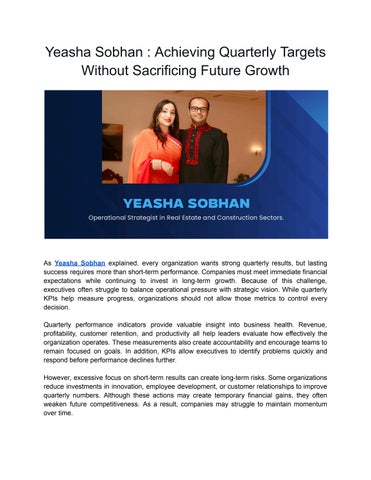
Yeasha Sobhan : Achieving Quarterly Targets Without Sacrificing Future Growth

As Yeasha Sobhan explained, every organization wants strong quarterly results, but lasting success requires more than short-term performance. Companies must meet immediate financial expectations while continuing to invest in long-term growth Because of this challenge, executives often struggle to balance operational pressure with strategic vision While quarterly KPIs help measure progress, organizations should not allow those metrics to control every decision
Quarterly performance indicators provide valuable insight into business health. Revenue, profitability, customer retention, and productivity all help leaders evaluate how effectively the organization operates. These measurements also create accountability and encourage teams to remain focused on goals. In addition, KPIs allow executives to identify problems quickly and respond before performance declines further
However, excessive focus on short-term results can create long-term risks Some organizations reduce investments in innovation, employee development, or customer relationships to improve quarterly numbers. Although these actions may create temporary financial gains, they often weaken future competitiveness As a result, companies may struggle to maintain momentum over time
Strong leaders understand that long-term vision provides direction and stability A clear vision helps organizations make thoughtful decisions even during uncertain conditions. It also keeps teams aligned around a larger purpose instead of reacting only to immediate pressure Employees often perform more effectively when they understand how current work contributes to future success.
Communication plays a critical role in balancing short-term goals with long-term strategy. Executives should explain how quarterly targets support broader organizational objectives When employees understand this connection, they make decisions with greater consistency and focus.
At the same time, organizations must remain patient with strategic investments Building customer trust, strengthening company culture, and developing future leaders often require years of consistent effort These initiatives may not produce immediate financial returns, yet they create lasting value that supports long-term growth.
Adaptability also strengthens organizational success Markets evolve rapidly, and businesses must respond to changing customer expectations and industry trends. However, flexibility should support strategic vision rather than replace it Companies that adapt while maintaining clear direction often remain more competitive during uncertain periods
Discipline becomes especially important when organizations face financial pressure Leaders may feel tempted to make reactive decisions that improve short-term numbers but damage future stability. Strong executives evaluate both immediate outcomes and long-term consequences before taking action
Balanced leadership requires careful planning and consistent execution Organizations that focus only on future goals may ignore operational problems, while companies that focus only on quarterly performance may lose strategic direction. Sustainable success comes from managing both priorities together
Businesses that achieve this balance often create stronger cultures, better customer relationships, and more resilient operations They remain competitive because leadership understands that long-term growth depends on disciplined short-term performance. When executives balance vision with measurable execution, organizations build a foundation for continued success in a constantly changing business environment