


The Whitney and Betty MacMillan Center for International & Area Studies at Yale University



by Mara Lavitt
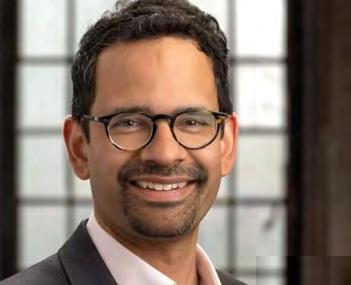
Welcome to the 2025 MacMillan Center Impact Report.
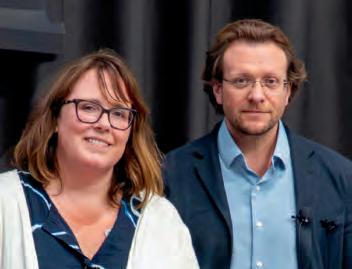
I assumed the role of the Henry R. Luce Director of the Whitney and Betty MacMillan Center for International & Area Studies in March 2025. The distinctive role the MacMillan Center plays in Yale’s intellectual life was part of what drew me to Yale, so having the opportunity to shape its next steps is an honor. I am pleased to share the outcomes of another vibrant and eventful year at the Center.
MacMillan’s contribution to Yale and to the world is shaped by building lasting partnerships, supporting research that is grounded in context, and emphasizing regional depth as a path to broader global understanding. The Center supports the pioneering research of Yale faculty across disciplines, creates opportunities to make international travel a core part of student learning, and hosts hundreds of visitors from around the world who enrich Yale’s intellectual life with their insights and expertise.
MacMillan is well placed to lead difficult conversations with nuance and care. New initiatives like our recently launched Regional Futures Lab bring MacMillan’s area expertise to bear on major global issues like climate change, migration, and governance.
As you read this year’s report, I hope the power of MacMillan’s scholarship and community shines through. At its heart, MacMillan is a place where global knowledge is shaped through collaboration, and shared in service of a more informed and inclusive world.
With warm regards,

Sunil Amrith
Henry R. Luce Director
This year’s report is organized by the three central goals guiding MacMillan’s 2025–2030 strategic plan: Connect, Research, and Lead. These priorities are more than organizational pillars—they reflect how we engage with the world:

Foster community and partnerships on campus, in our community, with peer institutions, and around the world.
Support the generation and dissemination of knowledge to enhance understanding of the world and in the world.


Leverage our intellectual and programmatic contributions to inform a more inclusive and flourishing world.


Photo by Michelle Foley
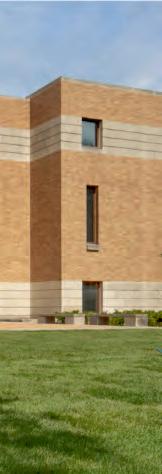
Visiting faculty, fellows, postdoctoral candidates, and postgraduates play a vital role in enriching MacMillan’s intellectual community. While on campus, they teach, learn, research, write, mentor, and participate in colloquia and seminars.


BOOK AND WRITING AWARDS

FELLOWSHIPS

Sunil Amrith (MacMillan) —
2025 Dayton Peace Prize for Nonfiction, 2025 Toynbee Prize, and the British Academy Book Prize 2025
Paola Bertucci (ESC) — 2025 Paul Bunge Prize
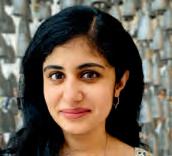
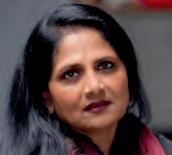
Marlène Daut (CLAIS) — 2025 Haiti Book Prize
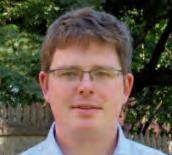
Samuel Hodgkin (ESC, CMES, Translation Initiative) —
2025 ASEEES Prize Winner
Daniel Mattingly (CEAS) —
2025 American Journal of Political Science Best Article Award
Molly Brunson (ESC, REEES) — 2025 Guggenheim Fellow
Leslie Gross-Wyrtzen (CAS, CMES) — 2025 ACLS Fellowship
Stephanie Newell (CAS) — 2025 British Academy Fellowship
Milan Slovik (ESC, Leitner) —
2025 Andrew Carnegie Fellowship
Priyasha Mukhopadhyay (SASC) —
2025 Samuel and Ronnie Heyman Prize
Priyamvada Natarajan (SASC) —
2025 Dannie Heineman Prize for Astrophysics; 2025 Su rage Science Award; and Carnegie Corporation Great Immigrant
Cormac O’Dea (ESC) —
2025 Yale College Teaching Award
Established in 2004 to honor the distinguished legacy of two former directors, the annual prizes celebrate exceptional books written by current Yale faculty that engage global or transnational issues. Winners receive a $5,000 award and a research appointment at the MacMillan Center.
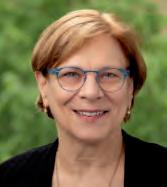
Lauren Benton, Barton M. Briggs Professor of History and Professor of Law, received the Gustav Ranis Prize for They Called It Peace: Worlds of Imperial Violence, a penetrating study of how imperial violence was masked as order and rendered routine across empires.
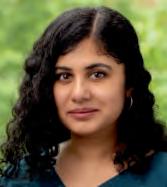
Priyasha Mukhopadhyay, assistant professor of English, was awarded the Gaddis Smith Prize for Required Reading: The Life of Everyday Texts in the British Empire, which reveals how mundane printed materials shaped political imagination and resistance in colonial contexts.
The MacMillan Center operates under the O ce of the Provost and is a resource for all members of the Yale academic community. Our teaching, research, and programming are steered by our faculty-led regional councils and global programs.
Focused on Africa, East Asia, Europe, Latin America and Iberia, the Middle East, South Asia, and Southeast Asia, MacMillan’s regional councils are permanent features of the Center that foster synergy between faculty from various disciplines throughout Yale.
Our Global Programs allow Yale faculty members to lead interdisciplinary exploration on transnational issues of global consequence. Currently numbered at nineteen, these programs are guided by the vision of our faculty members. Nine of the programs are featured in this report.
Seven interrelated themes connect the work of our councils and programs: Humanity, Dignity, Good Governance, Environment, Climate Change, Societal Resilience, and Leadership & Service.
Our values are the guiding principles of the MacMillan Center: Academic Excellence, Disciplinarity, Collaboration & Community, Balance & Capacity, Curiosity & Impact.

Yale was one of the first U.S. universities to incorporate African studies into its mainstream curriculum, establishing the Council on African Studies in 1958. The council’s research and initiatives emphasize the historical and contemporary dynamics between African localities and the rest of the world.
Academic o erings: BA, MA, Grad Certificate, Language Certificate

Established in 1947, the Council on Southeast Asia Studies was the first formal area studies program at Yale and the first in the United States to embark on the study of Southeast Asia in all disciplines. In addition to its programming and fellowships, the Council o ers Indonesian, Filipino, and Vietnamese instruction.
Academic o erings: Language Certificate

For more than a century, Yale scholars have explored the civilizations of the Middle East and North Africa. Today, the Council on Middle East Studies brings together students and faculty to study the past and to consider the region’s most pressing current challenges and opportunities.
Academic o erings: BA, Grad Certificate
For over fifty years Yale’s European Studies Council has advanced understanding of Europe in all its complexity. Its interdisciplinary faculty and students explore Europe’s histories of empire and nationalism and how history, politics, culture, and global interdependence shape the region’s challenges today.
Academic o erings: BA, MA, Grad Certificate


Founded in 1962, the Council on Latin American & Iberian Studies fosters a vibrant multidisciplinary community dedicated to understanding a dynamic and diverse region. With a growing emphasis on the Caribbean, social and environmental justice, and Indigenous languages, the Council is expanding Yale’s leadership and engagement in the region.
Academic o erings: BA, Grad Certificate
Academic exploration and support related to the study of China, Japan, and Korea are at the heart of the Council on East Asian Studies. For more than sixty years, it has promoted education about East Asia both in the Yale curricula and through public events, showcasing topics such as environmental humanities, migration and mobility, digital cultures, and contemporary geopolitics.
Academic o erings: BA, MA
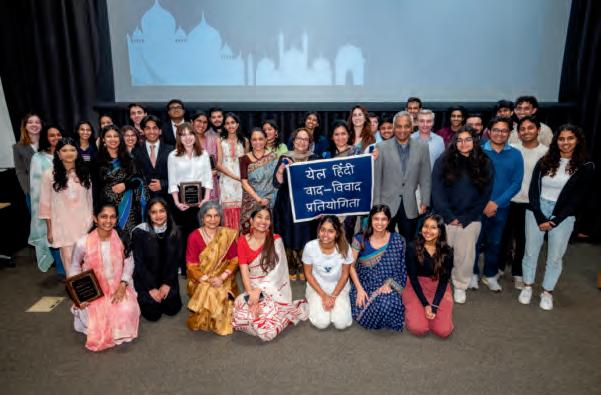
With one of the most comprehensive faculties in South Asian studies in the United States, for nearly twenty-five years the South Asian Studies Council has been connecting the study of the region’s past with its evolving present through teaching, research, and cultural events. It o ers courses in modern and ancient languages, including Sanskrit, Hindi, and Telegu.
Academic o erings: BA, Language Certificates











CLIMATE
Foster community and partnerships on campus, in our community, with peer institutions, and around the world.
This year, the MacMillan Center celebrated twenty years of collaboration with the Fulbright Foreign Language Teaching Assistant (FLTA) Program Sponsored by the U.S. State Department, the program brings emerging language educators to U.S. campuses, enriching instruction and cultural exchange in over thirty-five languages. Since 2005, more than 100 FLTAs have taught at Yale, deepening understanding of languages like Kiswahili, Turkish, Yoruba, Zulu, Indonesian, Vietnamese, Hindi, Portuguese and Russian. “Cultural exchange is not a one-way sharing, but a mutual process of growth,” reflected former FLTA Trang Pham, highlighting the program’s enduring personal and educational impact on both participants and the Yale community.
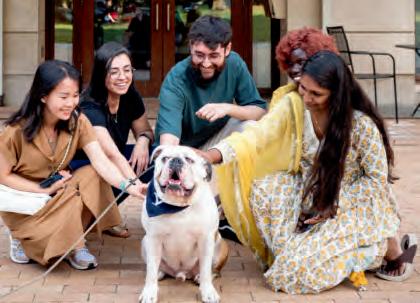
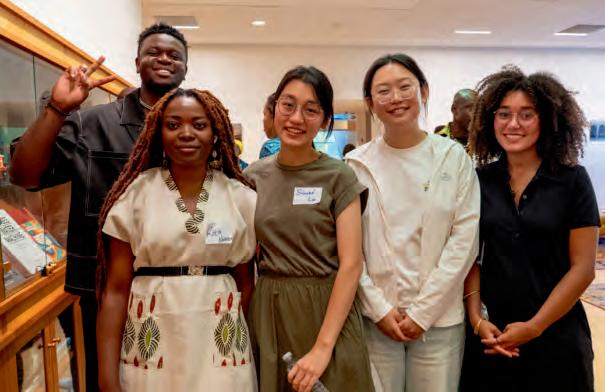
2023–24 FLTAs left to right: Tuyen Thi Nguyen, Mariana Pessoa, Henrique Paiva Soares, Anuoluwapo Maria Ademosu, and Riddhiben Pankhadiwala.
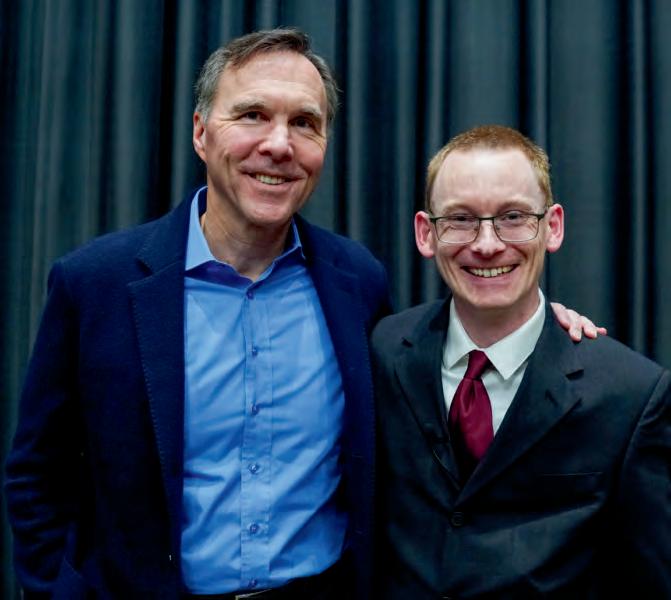
Relations between the United States and Canada have recently become strained. In February, the Committee on Canadian Studies hosted an event examining Canada’s evolving geopolitical role. During his talk that month, former Canadian Finance Minister Bill Morneau stressed the need for dialogue, saying, “There is a path forward for us.” He linked tari s to U.S. fiscal pressures but remained cautiously optimistic about future collaboration and Canada’s potential to strengthen its global influence despite challenges.
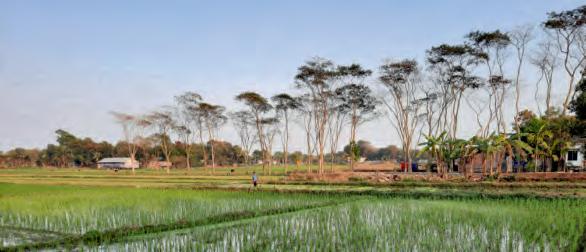
With its focus on advancing innovative, scale-focused solutions to pressing challenges, in 2025 Yale Research Initiative on Innovation & Scale (Y-RISE) deepened its collaboration in Bangladesh with BRAC, a leading international nonprofit with a mission to empower people and communities in situations of poverty, illiteracy, disease, and social injustice. Together with BRAC’s health team, Y-RISE researchers evaluated how to scale mental health interventions within the national healthcare system. In parallel, Y-RISE is leading research on a water entrepreneurship model that could help address drinking water scarcity in coastal regions. Both initiatives reflect a shared commitment to scaling what works for long-term impact.
by
)
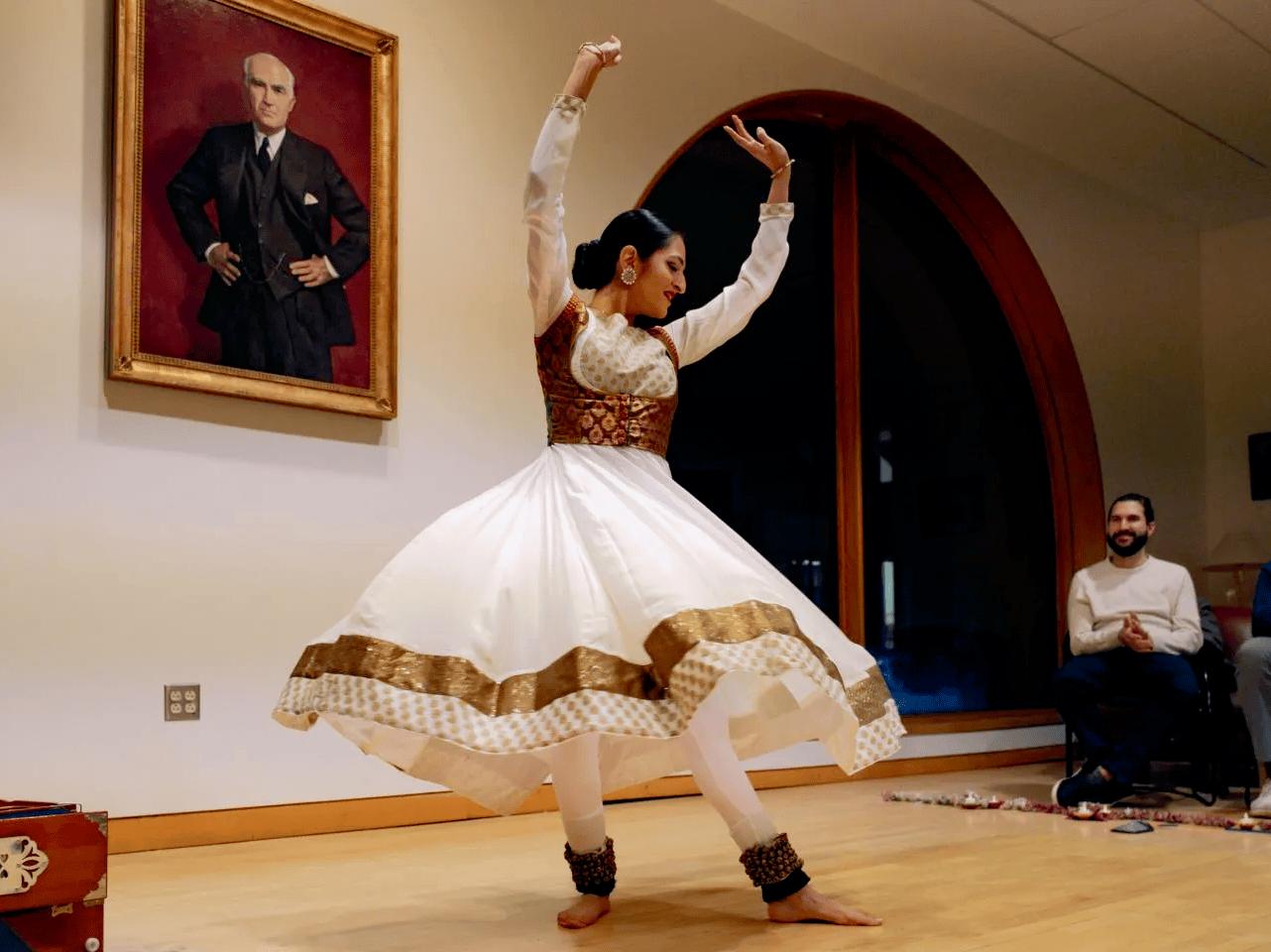
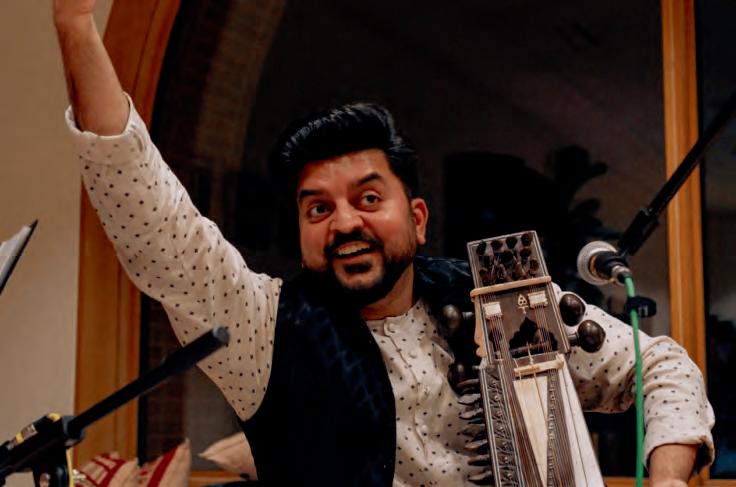
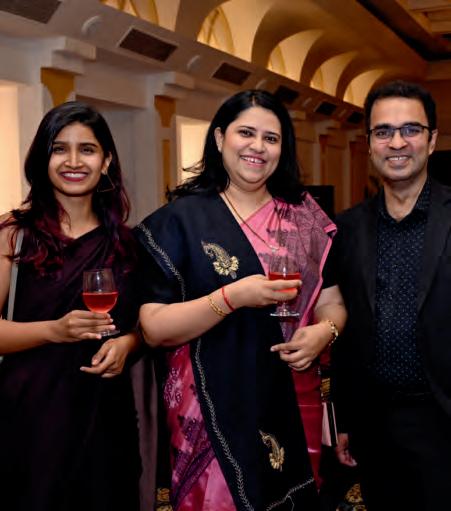
In April, South Asian Studies Council members
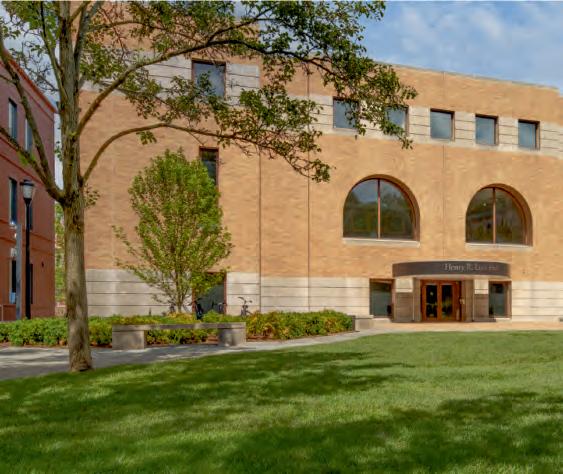
Ameera Nimjee and Suhail Yusuf brought together fellow artists, scholars, and community members for “Mehfil-i-shauqeen,” an evening of Hindustani performance modeled on traditional South Asian mehfils, which are intimate gatherings for the enjoyment of music, dance, and poetry. The event’s interspersion of performances with personal reflections and calls for the audience to join in transformed Luce Hall into a collective space for shared aesthetic experience and discussions on the relationship between tradition and experimentation in cultural practice.
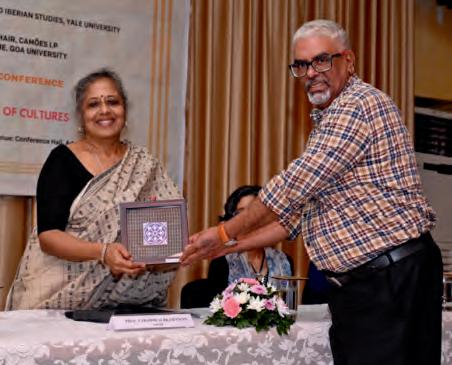
In January, MacMillan’s Council on Latin American & Iberian Studies and South Asian Studies Council hosted a conference in Goa, India, which examined the “Confluence of Cultures” brought about by Portuguese maritime expansion and its cultural legacy in India. The symposium brought together Yale experts, scholars from universities from around the world, and Goan academics and included seminars, a film screening, and a theatrical performance celebrating the unique Goan heritage.
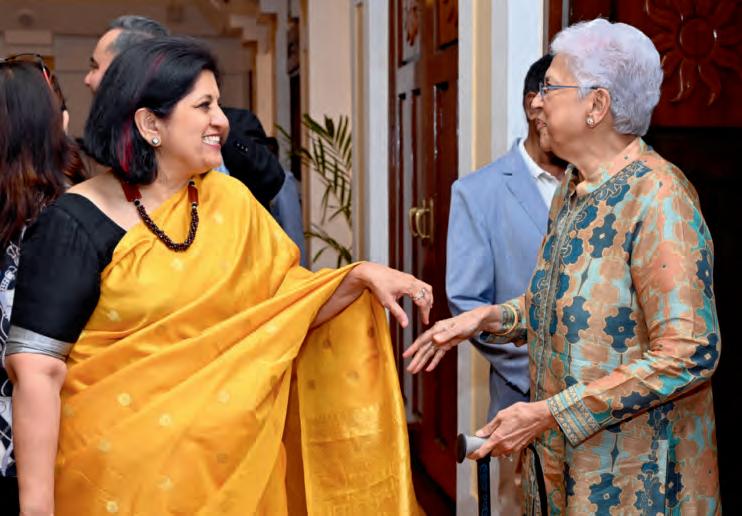
“Confluence of Cultures” gathering
International Fellowship)
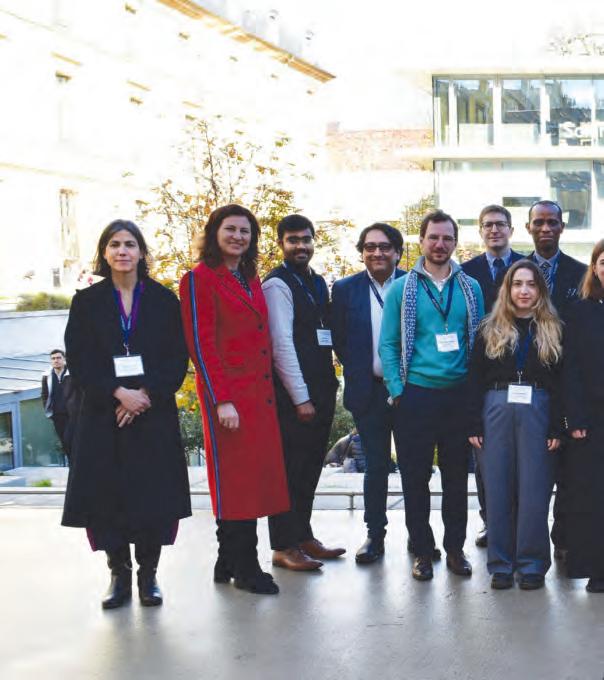
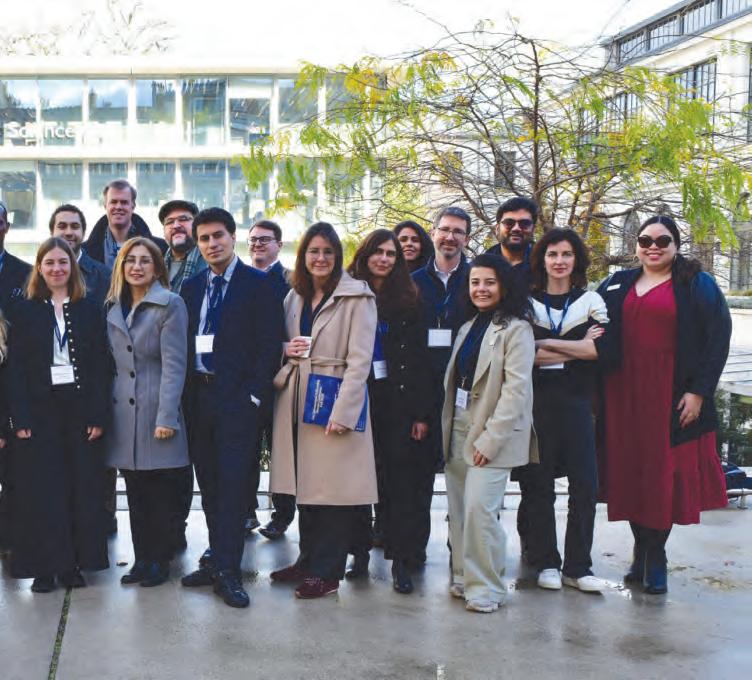
In 2025, the Fox International Fellowship hosted a series of alumni reunions and conferences. Marking the 30th anniversary of the partnership between the Fox International Fellowship at the MacMillan Center and the University of Cambridge, the first gathering took place at Sidney Sussex College in March 2025. The series continued in Paris in November 2025, commemorating the 25th anniversary of the partnership with Sciences Po. The Alumni Conference highlighted the collective impact of Fox alumni across academia, policy, and practice and underscored the value of sustained alumni engagement in advancing the Fellowship’s mission and honoring the international community of over 800 alumni since its inception in 1988.
2025 Fox International Fellowship Alumni Conference & Reunion at Sciences Po
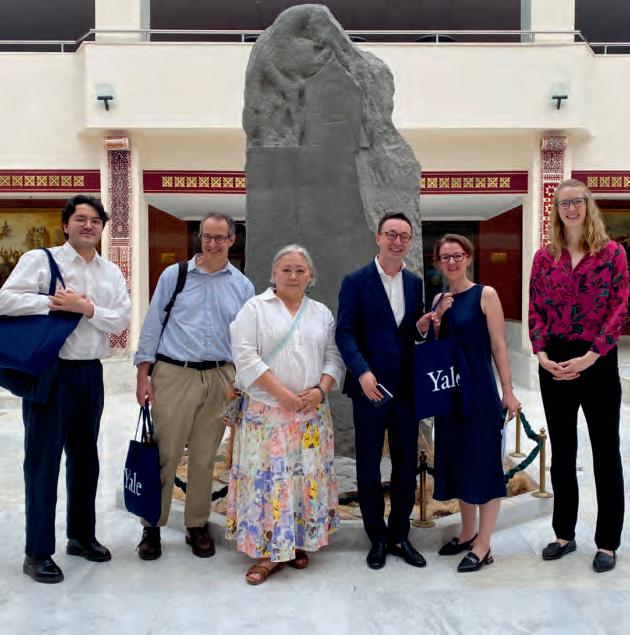
In May a delegation of Yale faculty, graduate students, and staff traveled to Kazakhstan and Uzbekistan to meet with local scholars at universities and cultural institutions. An event at KIMEP University that featured lectures and a panel discussion by both local and Yale scholars was followed by a reception for regional attendees and Yale alumni.
Global ProGrams sPotliGht
Founded in 1998, the Gilder Lehrman Center for the Study of Slavery, Resistance, and Abolition at Yale (GLC) is the world’s first organization wholly devoted to the scholarly and public study of slavery and its legacies. It offers fellowships, public programs, and digital resources to explore slavery’s historical impact and enduring influence. Through partnerships with schools, museums, and communities, the Center bridges scholarship and public understanding. In March 2025, GLC hosted the conference, “Universities and the Histories of Race, Science, and Medicine,” which examined Yale’s role in the American eugenics movement, exploring how racial ideas shaped academic knowledge, public policy, and ongoing resistance to scientific racism’s enduring legacies.
Founded by the late James C. Scott in 1991, the Program in Agrarian Studies at Yale is one of the MacMillan Center’s longest-running Global Programs. Through interdisciplinary initiatives that reimagine how rural life, agriculture, and society are understood across history and regions, Agrarian Studies explores the lived experiences, values, and practices of people in agrarian communities. It offers seminars, colloquia, and support for student fieldwork, while forging intellectual community across Yale and with regional and international partners.
Interdisciplinary scholarship on Canadian culture, history, politics, identity, and influence is at the heart of the Committee on Canadian Studies. Rooted in over three centuries of shared history between the US and Canada, the Committee invites students, faculty, and the public to explore Canadian topics through lectures, research, global travel and study grants, and publications such as the Yale Journal on Canadian Studies With one of the richest collections of Canadian publications, literature, music, and other sound recordings in the United States, the program supports fieldwork, archival research, and conferences, helping to amplify Canadian voices and ideas everywhere.
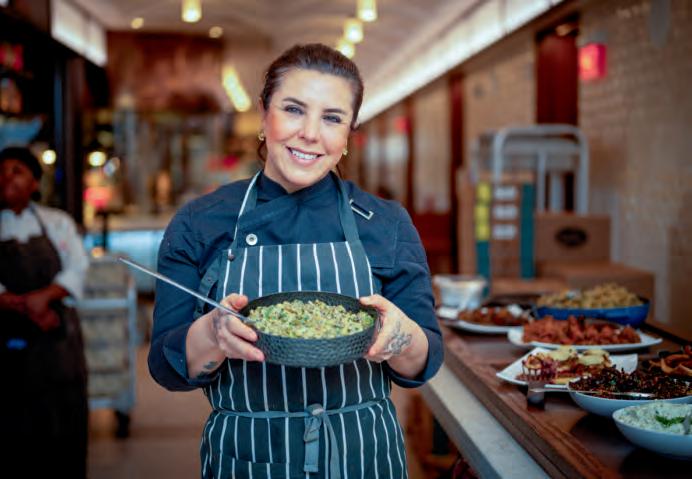
A collaboration between the Yale MacMillan Center, the Yale Schwarzman Center, and Yale Hospitality, Global Table aims to illuminate the connections between sustainability, health, culture, and community. Each semester, a culinary thought-leader comes to campus to offer public remarks and meet with students and faculty. While in residence, they train Hospitality staff to prepare a plant-forward menu that is then featured in Yale Commons for a month after their visit.
This program is part of the Regional Futures Lab—see page 24.
In February, the Council on Middle East Studies brought Chef Ebru Baybara Demir to campus as the second Yale Global Table Fellow. Having received over 20 awards for her culinary successes and social impact, Chef Ebru shared her philosophy that “food is a tool for change,” with audiences. For more than two decades, Demir has championed women’s empowerment, refugee support, and sustainable agriculture in Turkey.


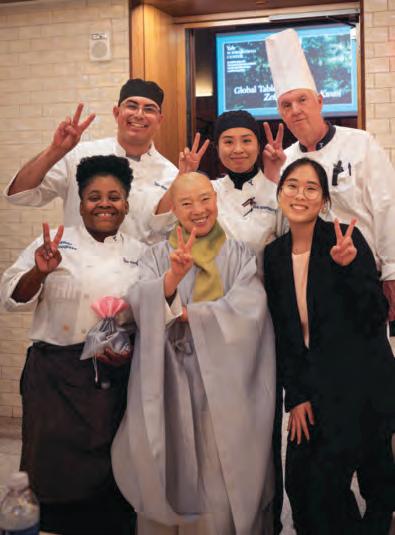
Korean Global Table Fellow Shares the Mindful Art of Temple Cuisine at Yale
Led by the Council on East Asian Studies, Buddhist nun Venerable Chef Jeong Kwan came to campus in October as the third Yale Global Table Fellow. Known internationally for her temple cuisine and featured in Netflix’s Chef’s Table, Chef Jeong Kwan’s visit culminated with a conversation and ceremonial tasting event for 350 people that reflected on food as a form of mindfulness, sustainability, and shared connection.
Each year, the MacMillan Center hosts three distinguished endowed lecture series, offering the Yale community the opportunity to engage directly with global thought-leaders with an array of expertise —from diplomacy and economics to the arts, public health, and climate. These lectures create space for connection, spark new lines of inquiry, and challenge the Yale community to think and lead with a global imagination.
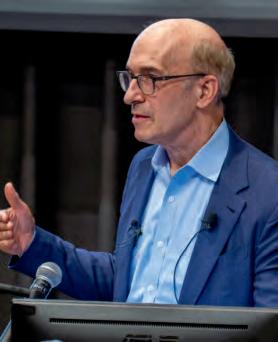
In October, Harvard economist Kenneth Rogoff ’75 delivered the Henry L. Stimson Lecture, discussing his latest book, Our Dollar, Your Problem (Yale University Press, 2025), and the place of the U.S. dollar in the global economy. Established in 1998, the Stimson Lecture showcases the work of diplomats and foreign policy experts.
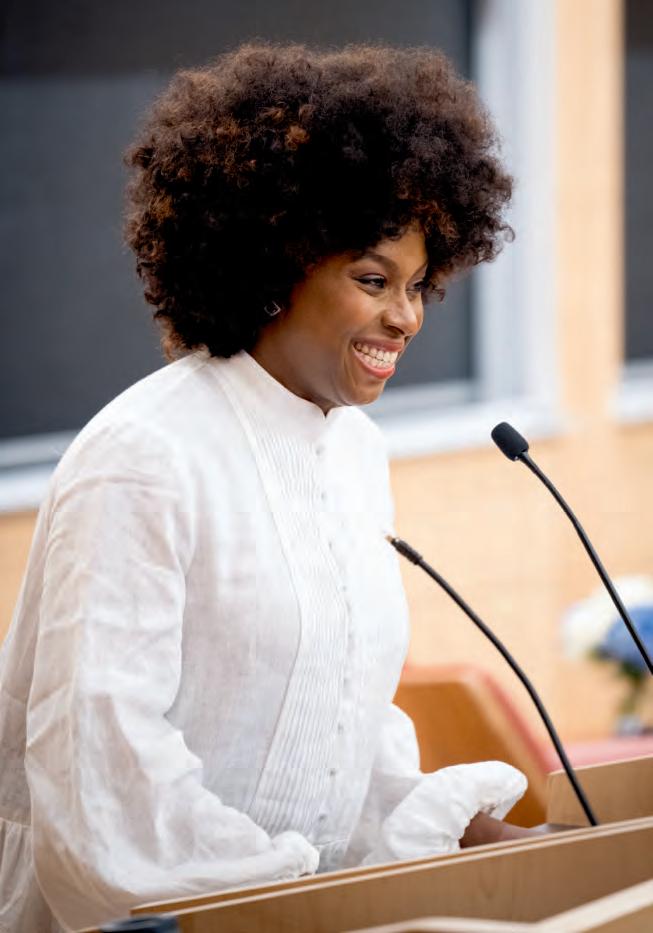
MacMillan brought two speakers to campus in 2025 under the George Herbert Walker, Jr. Lecture series: in January Kyaw Moe Tun, permanent representative of Myanmar to the United Nations spoke on the fight for democracy in Myanmar, and in September British journalist Peter Pomerantsev delivered a lecture on the power of media and misinformation during World War II. Founded in 1988, the Walker Lecture highlights issues of global significance.
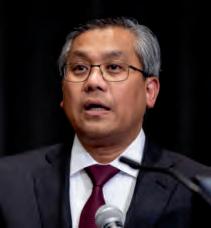
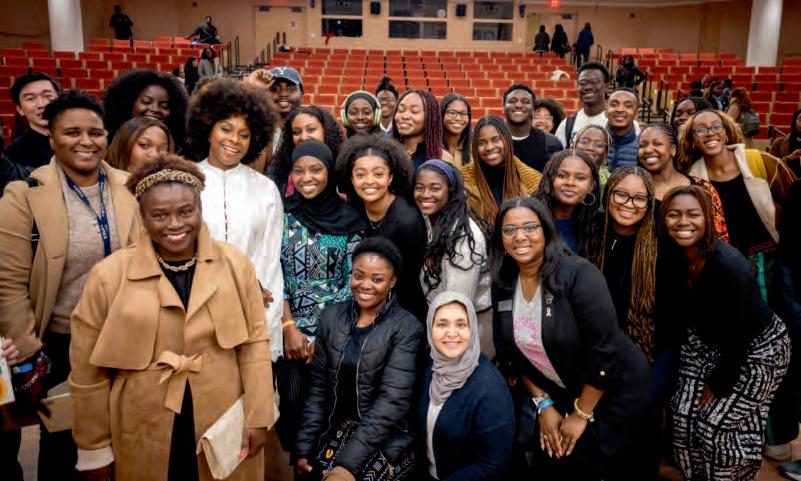
With the support of the Council on African Studies, renowned author and Yale alum Chimamanda Ngozi Adichie ’08 MA AFST visited Yale to speak about the power of storytelling, her creative process, and the childhood experiences that continue to shape her work. Adichie, whose literary work transcends academia, politics, world affairs, and pop culture, was on campus as the 2025 Coca-Cola World Fund Lecture speaker. Launched in 1992, the series supports lectures on topics of international significance by major public figures.
Support the generation and dissemination of knowledge to enhance understanding of the world and in the world.
“The Theater of Sa’dallah Wannous” (Council on Middle East Studies)
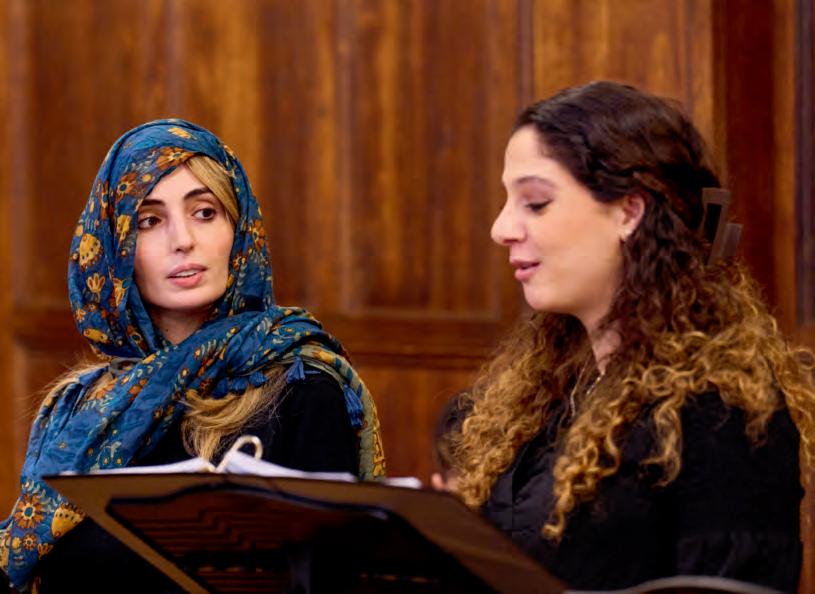
In February, the Council on Middle East Studies brought to life the powerful legacy of Syrian playwright Sa’dallah Wannous through an engaging conference. The event featured dramatic readings of five of Wannous’s key works in English translation. Panels with theater artists, journalists, and scholars from North America and the Arab world explored the political and cultural significance of his plays, underscoring his lasting impact on contemporary political theater.
Each year, the MacMillan Center welcomes visiting scholars and fellows whose work deepens our understanding of global history, culture, and exchange. From postwar reconstruction to Indigenous activism and community resilience, their research and teaching embody MacMillan’s mission to connect ideas across borders.
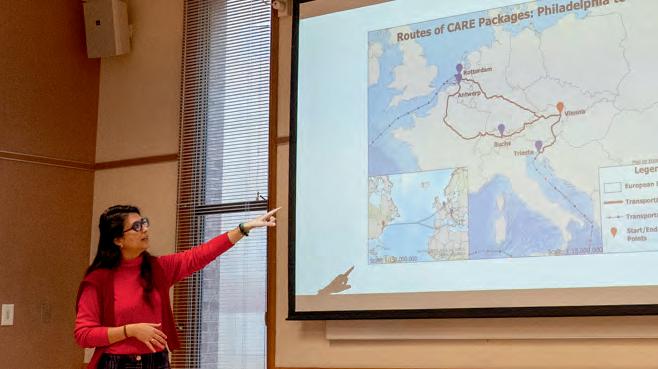
Marina Pérez de Arcos, a Visiting Fellow, explored postwar humanitarian aid in Austria, revealing how U.S. CARE packages filled with food, books, and tools helped rebuild everyday life and reshape international relationships a er World War II.
Lorena Ojeda Dávila, a Fulbright-García Robles Visiting Professor, illuminated Indigenous history and the voices of Purépecha women in Mexico. Through her courses and collaborations, she fostered dialogue rooted in respect, shared learning, and cross-cultural understanding.
Dixita Deka, a postdoctoral associate in the Program in Agrarian Studies, examined women-led farming cooperatives in Northeast India, showing how food sovereignty and cultivation serve as acts of healing, resilience, and community renewal a er conflict.
Phi Nguyen, a postdoctoral fellow and architect within the Council on Southeast Asian Studies, connects architecture, urbanism, and heritage studies to understand how Huê, Vietnam’s historically displaced communities cohabit with local territory and conserve their shared history through everyday life.
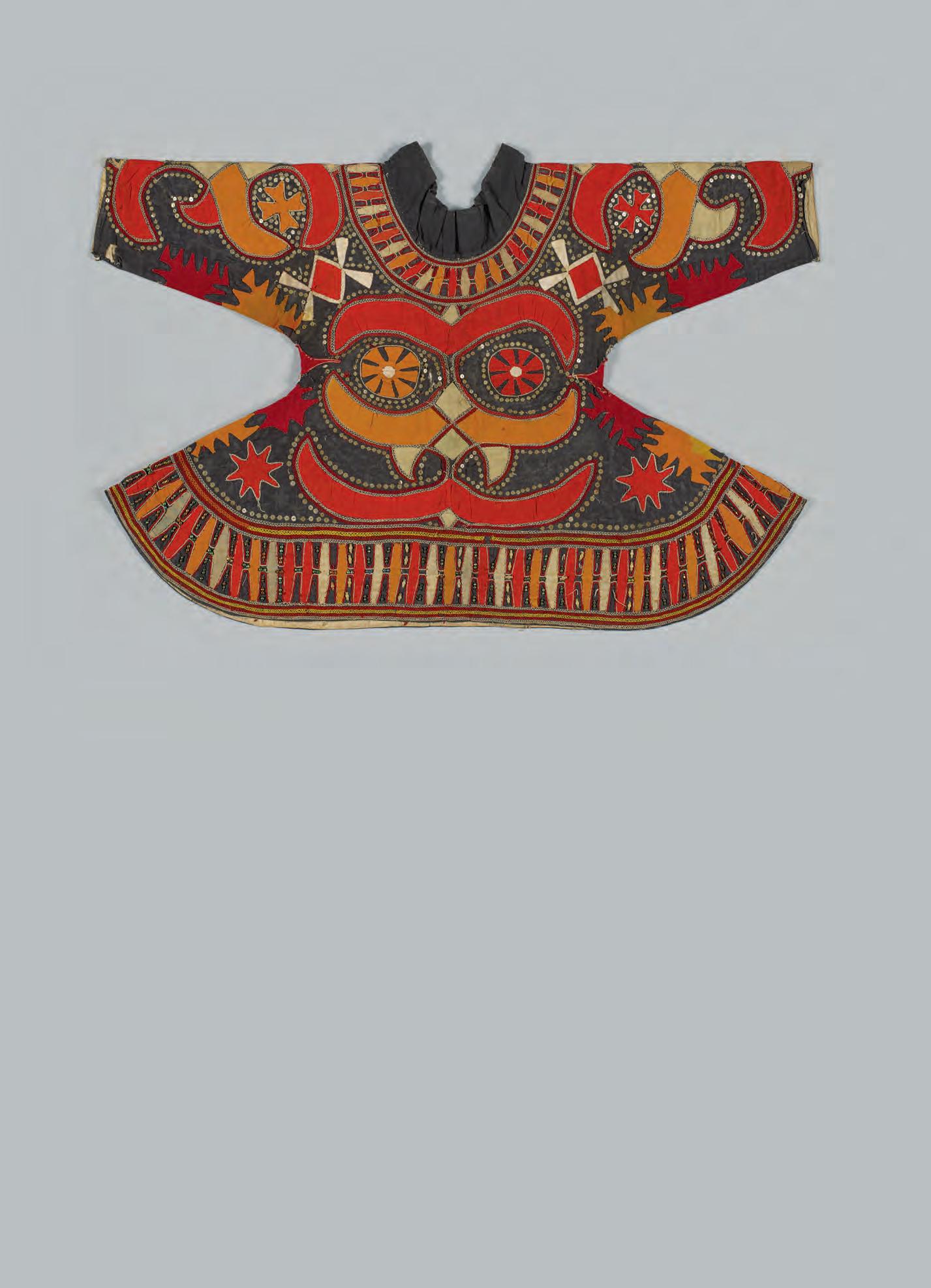
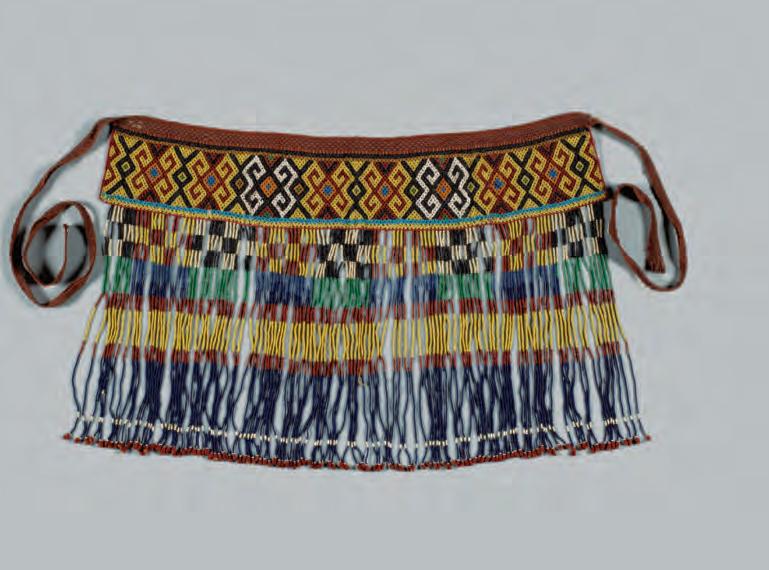
Nusantara: Six Centuries of Indonesian Textiles (Council on Southeast Asia Studies)
Celebrating Indonesia’s vibrant maritime heritage, the Council on Southeast Asia Studies partnered with the Yale University Art Gallery to present “Nusantara: Six Centuries of Indonesian Textiles.” This captivating exhibition showcased over 100 exquisite textiles from the fourteenth to the twentieth century, highlighting iconic techniques like Java’s batik and Sumba’s ikat. Visitors were invited to explore the rich cultural and historical significance woven into these remarkable works of art.
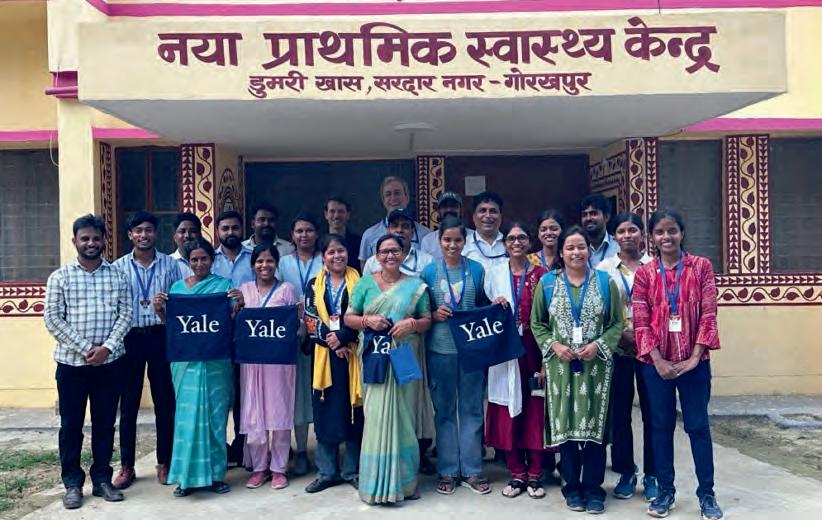
Researchers from the South Asian Studies Council are leading an ambitious initiative to strengthen community health systems in India. In partnership with the government of Uttar Pradesh and the All India Institute of Medical Sciences Gorakhpur, the program titled “Sustaining Equitable Wellness through Advanced Research and Training in Health (SEWARTH)” is building Health and Demographic Surveillance Systems across rural and urban districts in eastern Uttar Pradesh. Engaging more than 60,000 residents, the project brings together local leaders, ASHA health workers, and researchers to develop community-driven solutions.
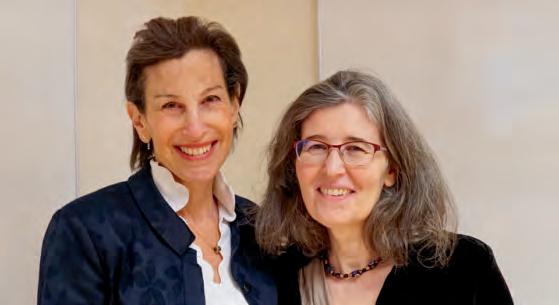
Yale social anthropologist Deborah Heifetz introduced her “Human Needs Map” at a March colloquium hosted by the Council on Middle East Studies Drawing from her ethnographic study of Israeli-Palestinian security cooperation during the Oslo years, Heifetz developed this systems-based model to understand how managing and negotiating needs and emotions play a major role in peace-building. The model identifies four “hungers” love, meaning, power, and survival — that shape our experiences and actions. Heifetz emphasized that a lack of curiosity perpetuates conflict, stating, “What triggers you into a reaction is invariably going to be some wound from either your personal or collective past.”
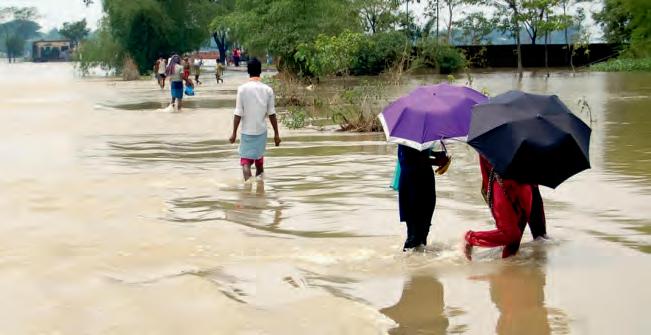
In Bihar, India, where riverine flooding threatens millions, a collaborative project between Inclusion Economics, Google.org, and Tufts University is transforming flood preparedness. By pairing Google’s AI-powered flood forecasting with trained grassroots volunteers, the initiative ensures that timely, accurate alerts reach rural households. Research results show that intervention households are 73% more likely to receive any flood alert, enabling proactive actions that reduce health risks and economic losses. This scalable model demonstrates the power of blending technology with community engagement to build trust in flood early warning systems and protect vulnerable populations.
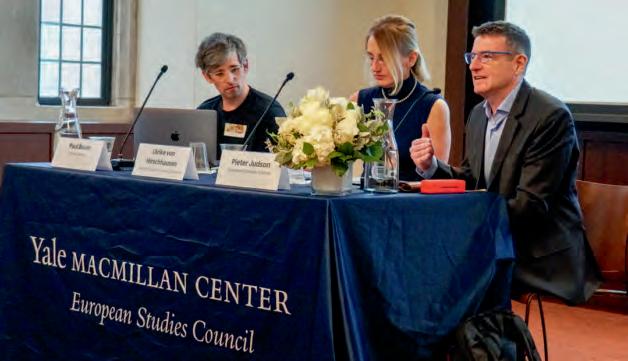
In January, the European Studies Council hosted the “Ghosts of Empire” symposium, a thought-provoking exploration of the lasting legacies of empires such as the Austro-Hungarian, Russian, Ottoman, and American. Organized by the interim ESC chair and the Baltic Studies Program, the event brought together scholars to examine how these empires continue to shape contemporary geopolitics and cultural landscapes through both tangible and intangible traces. Among other topics, the convening examined post-imperial struggles and material remnants of empire in Central Europe, the geopolitics of nature and architecture in twentieth-century Finland, and imperial influence on regional identity. The symposium concluded with an interdisciplinary dialogue on the enduring impact of empires in today’s world.
Genocide
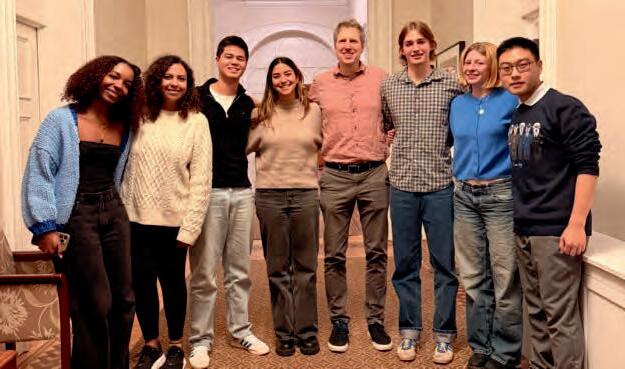
Mass Atrocities in the Digital Era (MADE) is an innovative initiative within Yale’s Genocide Studies Program that investigates how tools like social media and digital IDs are transforming the landscape of mass atrocities. It advances accountability, corporate responsibility, and legal frameworks fit for the digital age. Through interdisciplinary partnerships, stakeholder consultations, and policy-driven research, MADE equips scholars and practitioners to confront emerging threats and protect human dignity in an increasingly connected world.
Global ProGrams sPotliGht
Launched in 1998, Yale’s Genocide Studies Program (GSP) delves into genocide from comparative, policy, and historical angles, hosting seminars, and research on atrocities such as the Holocaust, and the Cambodian, Rwandan, Bosnian, and Indigenous genocides. It supports scholars from afflicted regions, fosters interdisciplinary dialogue, and works to translate scholarship into action so that the study of genocide helps prevent future tragedies.
(YIE), a MacMillan Center–Yale Economic Growth Center collaboration, focuses on promoting inclusive and sustainable economic development through the identification and implementation of evidencebased institutional and policy reforms. YIE brings together local organizations, Yale researchers, and students to combine rigorous, data-informed analysis with active policy engagement, ensuring that research insights drive meaningful change. Ongoing research evaluates policy and institutional reforms aimed at improving gender equality in labor and financial markets, strengthening social protection, addressing climate change and environmental issues, and supporting early childhood initiatives.
Yale Research Initiative on Innovation & Scale (Y-RISE) develops solutions to global development challenges by studying how policy interventions perform when expanded. While evaluation techniques for pilot programs are well established, scaling introduces complexities that are less consistently studied. Y-RISE partners with organizations such as BRAC, a leading international nonprofit empowering communities affected by poverty and social injustice, to study feasibility and complexity of scaling solutions to reduce global poverty.
Conducting field experiments in countries including Bangladesh, Sierra Leone, and Nepal, Y-RISE investigates areas such as climate adaptation, health service delivery, and entrepreneurship training. By examining challenges that emerge during scale-up, Y-RISE seeks to transform successful pilot programs into impactful, large-scale policies.
Leverage our intellectual and programmatic contributions to inform a more inclusive and flourishing world.
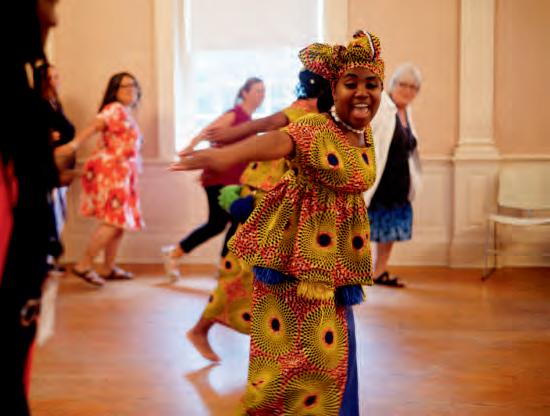
Energy, and Strategy
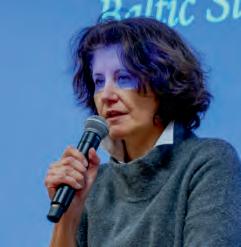
Lithuanian diplomats Audra Plepyté, ambassador to the United States, and Dovydas Špokauskas, consul general in New York, visited campus in February for a fireside chat on regional security, energy independence, and Lithuanian-U.S. ties. Hosted by the European Studies Council’s Baltic Studies Program, the pair discussed breaking reliance on Russian energy, bolstering economic diplomacy, and Lithuania’s growing influence in shaping EU policy and global issues. Špokauskas stressed small but capable tech talent, while Plepyté emphasized the impact of sanctions and the urgent need to protect Baltic borders amid shi ing European security.
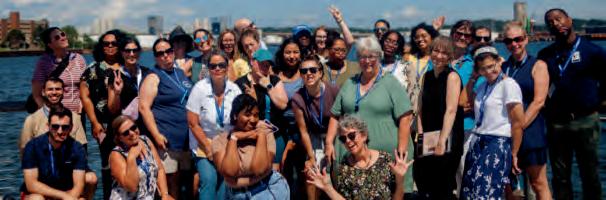
Over a two-week period during the summer, the Gilder Lehrman Center brought together twenty-seven K-12 educators from throughout New England for the inaugural Yale and Slavery Teachers Institute, unveiling the region’s o en-overlooked history of slavery in the North and its international dimensions. Through immersive workshops, site visits, and curriculum development, teachers gained tools to integrate enslaved individuals’ stories into their classrooms. The program empowered educators to thoughtfully explore slavery’s complex portrayals in literature and media, sparking deeper conversations about New England’s role in this enduring legacy.
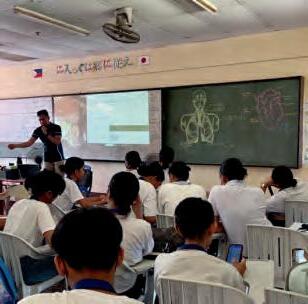
Building on successful programs with the InterAmerican Development Bank in 2021 and 2022, Y-RISE led a dynamic training in September for research and program sta at the Asian Development Bank (ADB) in Manila. The initiative introduced participants to impact evaluation fundamentals and strategies for researching the scaling of development policy interventions. It equipped participants to design projects that rigorously measure causal impacts while addressing scaling challenges. By pairing researchers with ADB program teams, the program fostered collaboration to develop tailored, rigorous research approaches, advancing evidence-based policymaking in global development.
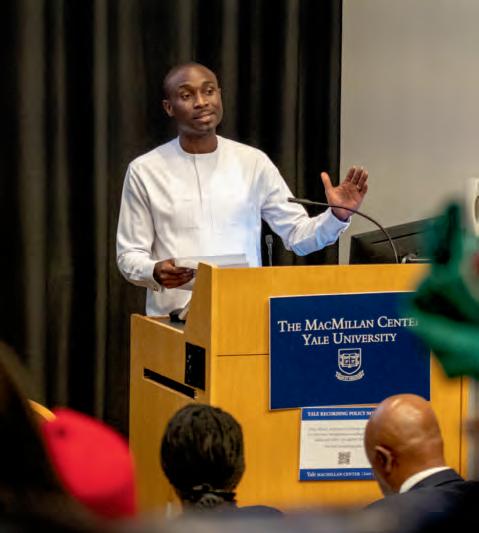
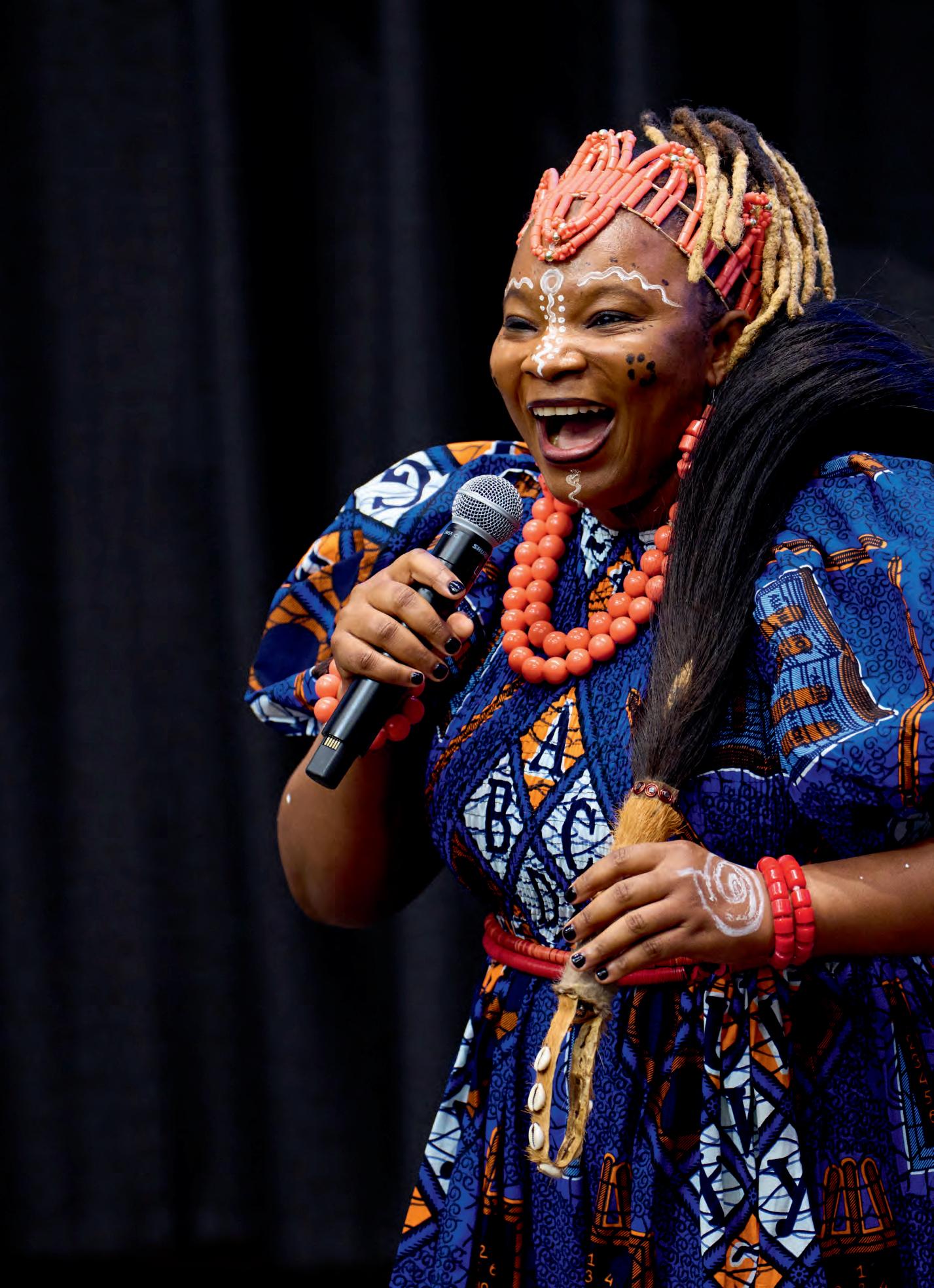
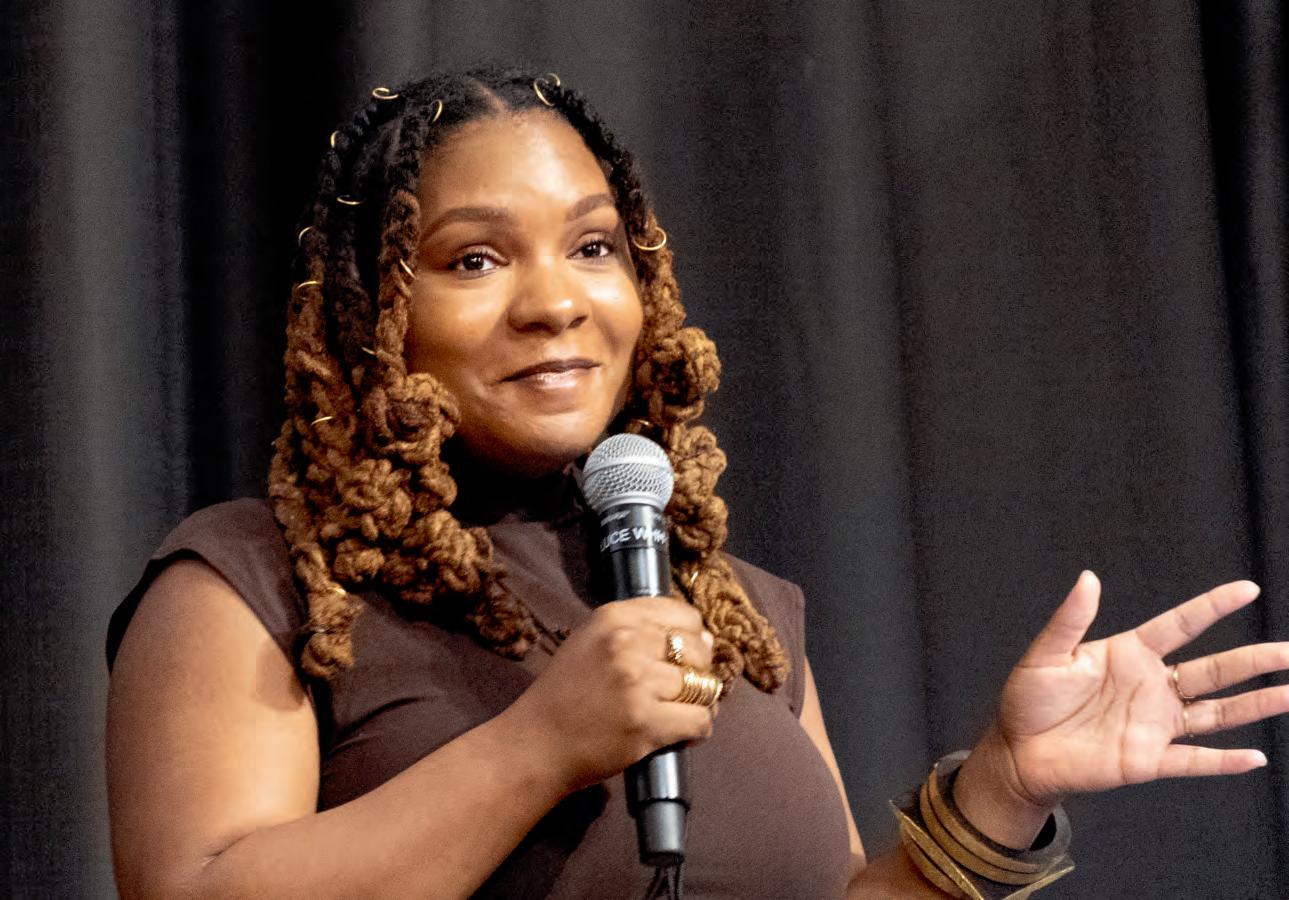
With leaders, scholars, and students, the Council on African Studies organized the Chinua Achebe Leadership in Africa Forum to engage in dialogue around Africa’s governance successes and challenges. Council Chair Cajetan Iheka emphasized, “Africa is the world’s future, so the problem of leadership there is an existential one that a ects all of us.” Honoring Achebe’s legacy, the forum explored democratic leadership, regional cooperation, women’s roles, and youth engagement. Students joined intergenerational discussions shaping Africa’s future, and speakers included Peter Obi, Oby Ezekwesili, and Seleshi Bekele, with former Nigerian President Olusegun Obasanjo delivering a keynote.
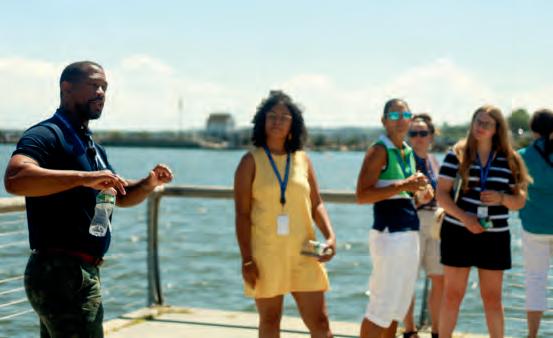
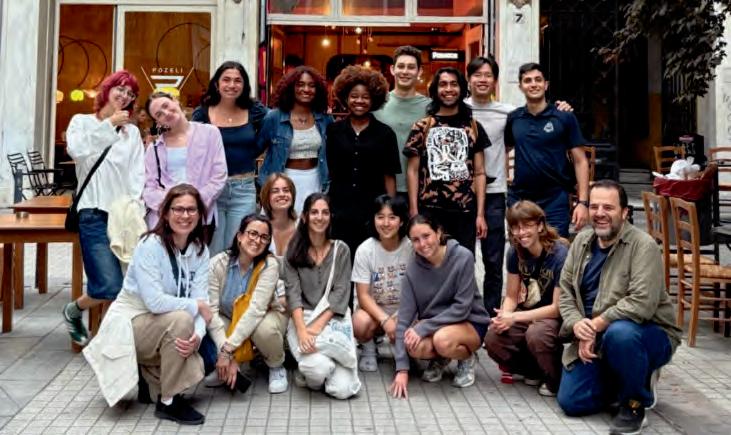
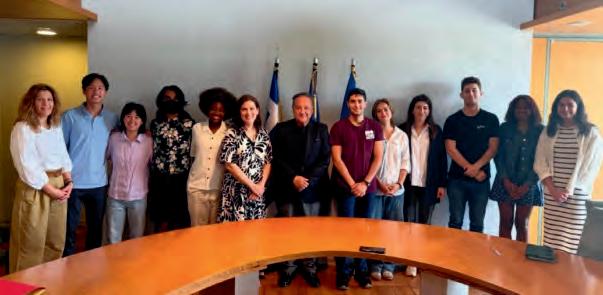
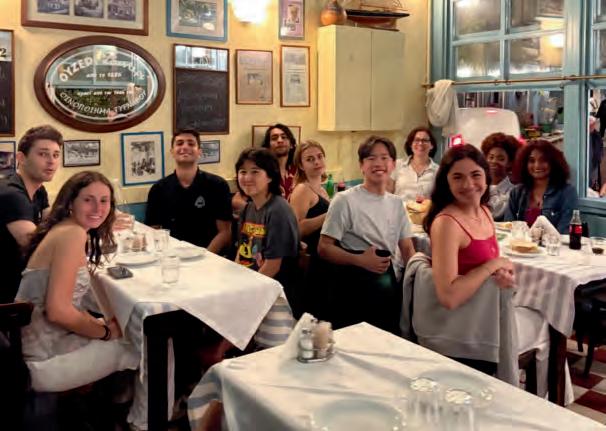
Ten Yale students embarked on a transformative journey in May to Thessaloniki, Greece, for the Hellenic Studies Program’s inaugural Summer Language Intensive Program. Organized in collaboration with Aristotle University, the two-week immersive course offered four hours of daily Modern Greek instruction complemented by cultural excursions and guest lectures. Supported by the Stavros Niarchos Foundation and the Greek Ministry of Foreign Affairs, this program provided students with an unparalleled opportunity to deepen their linguistic skills and cultural understanding in Greece’s vibrant, second-largest city.
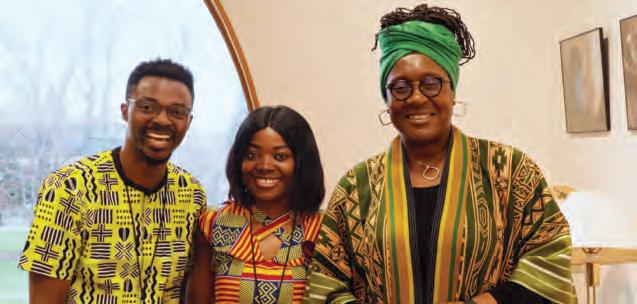
What does Africa’s future look like through the eyes of its next generation? The 2025 Council on African Studies Student Symposium at Yale brought together more than fifty students and faculty to explore this question, showcasing diverse research on topics ranging from urban pollution and healthcare systems to political theology and climate data. This interdisciplinary event provided a platform for students to test ideas, challenge each other, and reimagine Africa’s future communities. Each presentation offered a unique perspective on the evolving landscape of African knowledge, policy, and innovation. The symposium emphasized that Africa is not just a subject of study but the context, conversation, and catalyst for meaningful change.
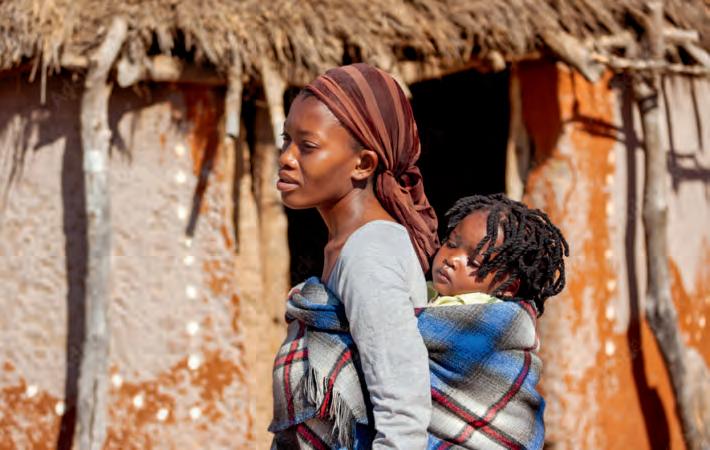
In Kenya’s Tharaka Nithi County, Yale Inclusion Economics is leading a study on how expanded access to public preschool, paired with an enhanced learning curriculum, can support both young children and their mothers. The project introduces a play-based, culturally grounded curriculum for three- and four-year-olds while assessing impacts on children’s outcomes and mothers’ employment, decision-making, and well-being. Conducted as a randomized controlled trial in partnership with the local government, the project is advancing an evidence-based pathway to sustainably promote both child development and women’s empowerment at scale.
Nuclear weapons are once again at the top of the scholarly and policy agenda after being on the sidelines of discourse for decades. The Nuclear Security Program (NSP) aims to better understand and address these increasingly complex and challenging realities. Importantly, it also aims to diversify voices and perspectives on nuclear security. It brings together faculty members, current students, visitors, and recent graduates to campus to reflect on these issues. Initially funded by a generous gift from the Stanton Foundation while at the Jackson School of Global Affairs, the NSP became a Global Program at the MacMillan Center in 2025.
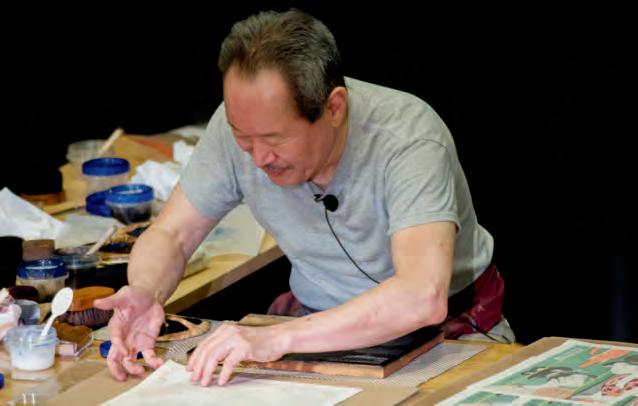
The Collaborations to Study Materiality & Objects (COSMOS) program is a constellation of scholars, practitioners, and students reimagining approaches to materiality and objects across the world. Aimed at demystifying collections and archives of all kinds, this program uses objectbased research to advance new thoughts about the past and transform our visions for the future. This innovative approach entails creative experimentation, historical inquiry, and scientific exploration through hands-on work with the materials that shape our collective global cultural heritage. Founded on a commitment to ethical research and equitable partnerships among institutions and communities, COSMOS fosters dynamic collaboration and networks of practice across the humanities, arts, sciences, and social sciences.
Supported by the John K. Castle Fund, the Program in Global Participatory Research and Ethics debuted in 2025 with the objective of empowering communities in low-resource settings to develop their own ethics training for community researchers. Its mission is to foster inclusive, ethical, and culturally relevant research practices, with a special focus on participatory methodologies. The program aims to amplify community voices and promote sustainable development of ethics training that extends beyond standard institutional training.

The MacMillan Center enables students to undertake a wide array of research abroad.







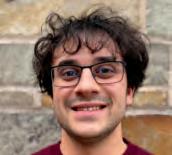

Joshua Amponsah ’25 MA researched land rights and conservation conflicts through a comparative study of Ghana and Kenya, exploring community perspectives, humanwildlife interactions, and the impact of global climate financing.

Mateo Vidali YC ’26, recipient of the Albert Bildner Travel Prize, researched the migration of Q’eqchi’ Maya communities from Guatemala to Belize, exploring how movement and memory shaped Belizean nation-building and identity.

Adriana Purcell MD/PhD, supported by the Latin American and Iberian Studies Travel Award, examined reproductive healthcare in San Juan and travel to the mainland United States, highlighting women’s agency amid unequal access to care.


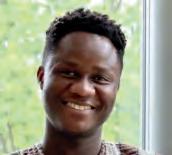

Rita Nwanze ’26 MA, after completing a Swahili language certificate and pilot study in Kenya, is now conducting fieldwork across Ghana, tracing the environmental and social histories of urban waste management.



Amelia Stefanovics YC ’27, recipient of the Keggi-Berzins Fellowship for Baltic Studies, studied the Estonia-Russia border after the 2022 war, analyzing population shifts and border closures to better understand Baltic-Russian relations.





Clarissa Tan YC ’26, recipient of the Libby Rouse Fellowship for Peace, merged global a airs and graphic design in Art as Soft Power: Revitalizing Uzbekistan’s Silk Roads through Cultural Tourism, reimagining Uzbekistan’s tourism campaign to highlight Silk Road heritage and cultural diplomacy.




Alison Lee YC ’27, recipient of the Tristan Perlroth Prize, explores food as a vessel for memory and healing in Healing through Han: Exploring Collective Rejuvenation through Korean Cuisine, tracing war, resilience, and identity through the Korean dish budaejjigae.



Aruna Balasubramanian YC ’26 interned at the Center of the Tokyo Raids and War Damage, translating survivor testimonies and exhibit materials into English and French. Her work advanced the museum’s mission to preserve wartime memory and promote global peace.




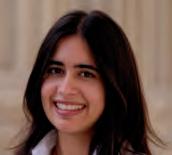

Alice Cochrane ’25 MArch collaborated with architect Rizvi Hassan and Rohingya artisans in Bangladesh to design a portable installation reflecting refugee experiences. Her project explored how participatory design empowers displaced communities.


Courtnie Bui YC ’27 investigated how Vietnamese Americans cultivated a distinctive sense of nationhood, drawing on ethnographic research in Vietnam and Little Saigon to explore questions of culture, belonging, and collective memory.
Sheel Trivedi YC ’26 studied transnational caregiving for Alzheimer’s patients, interviewing Indian healthcare professionals about challenges associated with treating Alzheimer’s patients whose families live abroad and identifying potential methods for improving global health collaboration.


As planetary challenges mount, rising international tensions endanger concerted global-level action. Around the world, innovative regional collaborations are emerging to address the pressures of global challenges. Galvanizing the MacMillan Center’s regional expertise and its international partnerships, the Regional Futures Lab documents, amplifies, visualizes, and publicizes impactful regional approaches to global challenges. Our current Regional Futures efforts include climate futures, humanities & social change, and next generation futures.
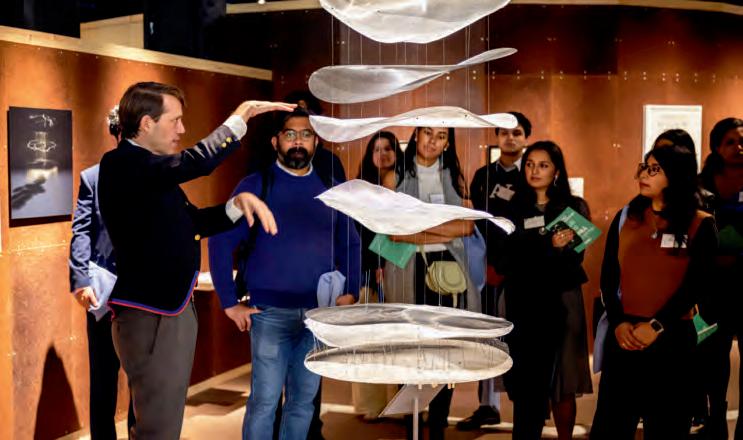
In October 2025, the Center hosted a vibrant two-day series in London. “Water Water Everywhere: insights from South Asia into climate pressures on the Global South” included a guided tour of the Thirst exhibit at the Wellcome Collection followed by remarks by Sunil Amrith, Henry R. Luce Director of the Whitney and Betty MacMillan Center for International & Area Studies, and Anthony Acciavatti, Diana Balmori Associate Professor at Yale School of Architecture.
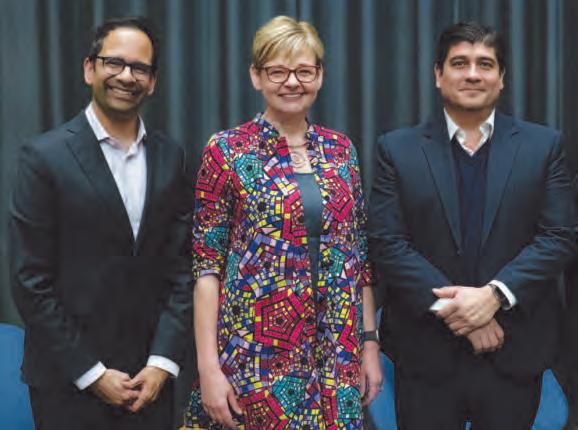
While global climate negotiations are vital for setting shared priorities in mitigating climate change and adapting to its impacts, regional- and local-scale alliances have the potential to inspire proactive solutions in the context of shared history and geography. Starting with a workshop and public event featuring Carlos Alvarado, the former president of Costa Rica, and Yale alumna Maria Ivanova (’99 MEM, ’99 MA, ’06 PhD), director of the Northeastern University School of Public Policy and Urban Affairs, this set of public conversations and workshops are designed to take stock of effective examples and lessons learned from collaborations on climate action.
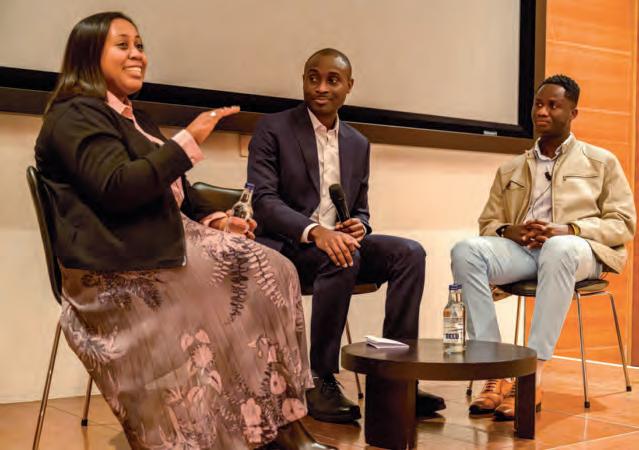
Hosted in collaboration with 1-54, the first and only international fair dedicated to contemporary African art, “Ecological Resilience: an event on balancing people, place, and planet in Africa” started with a VIP tour of the 1-54 show, followed by remarks from Cajetan Iheka, professor of English, and Mae-ling Lokko, assistant professor of architecture along with Joshua Amponsah ’25 MA, Yale Fox Fellow and 2025 alumnus of the Yale African Studies master’s program.
In support of the Center’s work to document, amplify, visualize, and publicize impactful regional approaches to global threats, a multidisciplinary international team of student research assistants is developing a series of explainers, capturing and organizing examples of regional collaboration, and co-creating miniature case studies. Their work will be featured in an online information portal, and is also intended to yield and identify possible partners and network models.
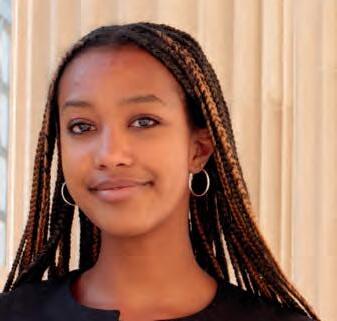

Human rights, refugees
Africa, Middle East
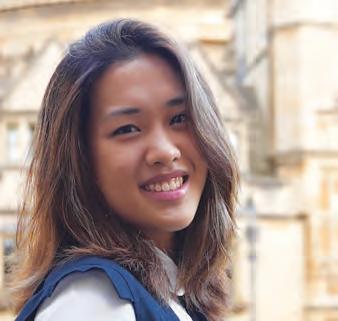

Climate, oceans, communities
Southeast Asia

Governance, institutions
Latin America, global



Conflict, displacement Europe, global
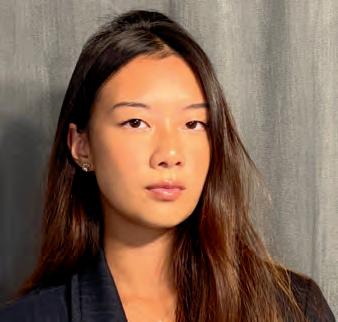

Arts, social change, higher education
Europe, global
Cities, climate
Europe,


South Asia
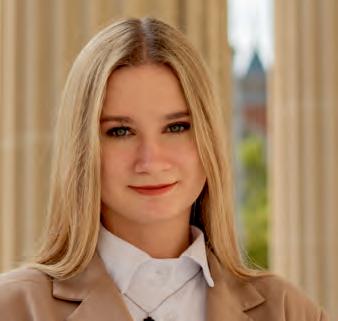


AI, biodiversity, forests
Latin America, Southeast Asia

Peace, conflict, security
Europe, East Asia, MENA

As we reflect on another year of meaningful activity across the MacMillan Center, we look to the future with clarity about our direction and renewed ambition to amplify our impact.
At a time of rapid change, the strength of the MacMillan Center lies in fostering the kind of curiosity that crosses boundaries, unsettles assumptions, and opens new ways of thinking about the world. Across the full spectrum of disciplines, from the humanities and creative arts to policy-relevant social science, the MacMillan Center elevates regional perspectives on the world, nourishes the imagination of more hopeful futures, and nurtures innovation across fields and across geographies.
At the heart of our path forward is a deepening commitment to global partnerships. From universities and research institutes to grassroots organizations and policy networks, our partners help shape our work and challenge us to think differently. These are relationships built on trust, shared purpose, and long-term engagement. They are also essential to the strength and vitality of our collaborative scholarship, student exchanges, and field-based initiatives.
We look forward to the work ahead and to all the new questions, perspectives, and partnerships it will bring.
Director’s Office
Sunil Amrith
Henry R. Luce Director, Whitney and Betty MacMillan Center for International & Area Studies
Melissa Brown
Deputy Director
John Beecher
Director of Finance & Administration
Mark Roland
Senior Director of Global Programs; Program Director, Council on Southeast Asia Studies
Tara Chozet
Director for Outreach & Impact
Kathleen Freis
Director of Development
Julia Adams
Margaret H. Marshall Professor of Sociology; Chair of the European Studies Council (Fall 2025)
David Blight
Sterling Professor of History and African American Studies; Director of the Gilder Lehrman Center for the Study of Slavery, Resistance, and Abolition
Rohit De
Associate Professor of History; Chair of the South Asian Studies Council
Fabian Drixler
Professor of History; Chair of the Council on East Asian Studies (Spring 2025)
Emily Erikson
Professor of Sociology and, by courtesy, School of Management; Joseph C. Fox Academic Director of the Fox International Fellowship
Deanna Ford
Managing Director of Yale Inclusion Economics
Eric Greene
Associate Professor of Religious Studies; Director, Buddhist Studies Initiative; Interim Chair of the Council on East Asian Studies (Spring 2025)
Kasturi Gupta
Program Director of the South Asian Studies Council
Erik Harms
Professor of Anthropology and Southeast Asia Studies; Chair of the Council on Southeast Asia Studies
Cajetan Iheka
Professor of English; Chair of the Council on African Studies
Kenneth David Jackson
Professor of Spanish and Portuguese; Chair of the Council on Latin American & Iberian Studies
Julia Muravnik
Assistant Director for Fellowships, Exchanges, and Fox International Fellowship Program
Ahmed Mushfiq Mobarak
Jerome Kaso. ’54 Professor of Management and Economics; Director of the Yale Research Initiative on Innovation & Scale
Fatima Naqvi
Interim Chair of the European Studies Council
Rohini Pande
Henry J. Heinz II Professor of Economics; Faculty Director of Yale Inclusion Economics
Katherine Rupp
Program Director of the Council on East Asian Studies
Neela Saldanha
Executive Director of Y-RISE
Cristin Siebert
Program Director of the Councils on African and Middle East Studies
Timothy Stumph
Program Director of the Councils on Latin American & Iberian and European Studies
Michelle Zacks
Associate Director of the Gilder Lehrman Center
Travis Zadeh
Professor of Religious Studies; Chair of the Council on Middle East Studies; Director of the Program in Iranian Studies