Are You Feeling Lucky?
Student: Yailer Valerio
This report is submitted in partial fulfillment of the requirements for the
5CCGD013W.2 XR Multimodal Interaction Module at the University of Westminster.
School of Computer Science & Engineering
University of Westminster
1. CW2 Overview
In this coursework, I will analyse and apply the core concepts of XR hardware and software ecosystems. I will demonstrate my understanding of XR user interface principles and justify my selection of appropriate tools and techniques for interactive media development.
1.1 CW2 Application Concept
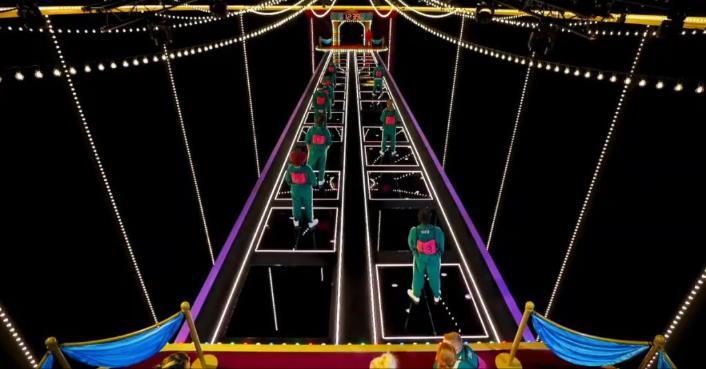
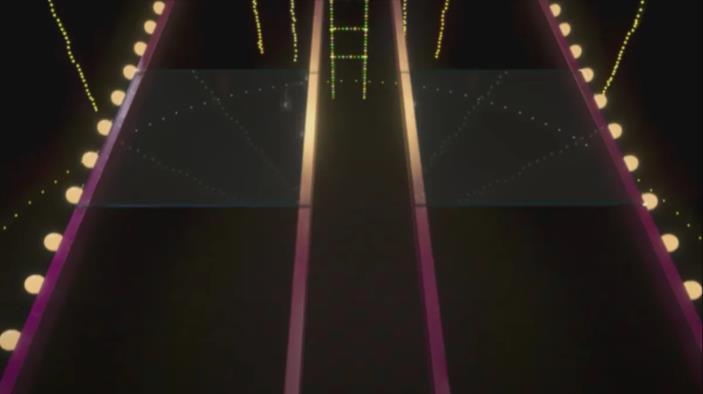
The purpose of this project is to create an arcade-style challenge game like one of the Squid Games challenges, which was the glass bridge, where the participants had to choose the glass, they thought wouldn’t break to get to the other side to beat the challenge. If they were to pick the wrong glass platform, it would break. In this case, the user would lose and restart at the beginning.
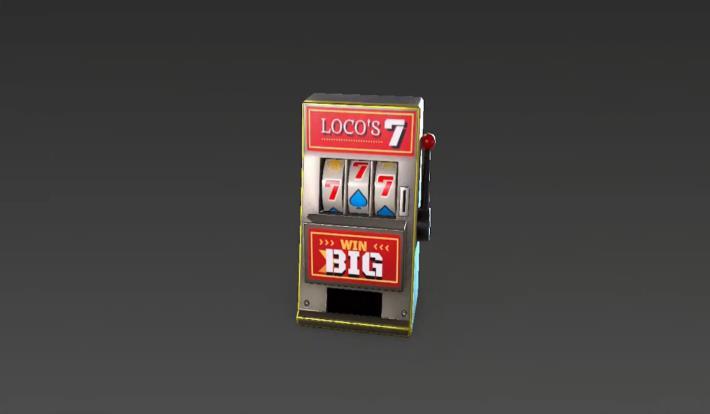
To make this more engaging, I decided to add a slot machine, for which the user will need a coin, which will be displayed as a UI symbol after every round by picking the right glass platform each time and pulling its lever.
The slot machine grants prizes, such as allowing the user to have an extra life in case they pick the wrong glass platform. They will go away after this is used, being able to guess the next glass platform by highlighting it, which will only have one use, being able to have more than one pick, as there will be 3 glass platforms to pick from, with 2 picks, the user will have more chances of moving one. Finally, the user will get a “Better Luck Next Time” text, which means that the user won’t get any value out of that spin.
The user will be able to get all those perks again after every round.
The user will have 3 lives, which they could lose by falling off the platform, making them respawn at the beginning, carrying on with the progress they had. The 3 hearts will be displayed in the top right corner of the screen to give instant feedback to the user.
1.2 User Narrative
This project aims to produce feelings of fear and anxiety before participants make their choice of the glass platform. I plan to achieve this by utilizing highdefinition textures and materials for a more realistic appearance. Also, I will include sound effects, including the sounds of footsteps, slot machines, a laughing sound effect when the user gets nothing out of the slot machine and tense background music.
After a few playthroughs, players will become more used to the game's mechanics. This is when the addictive aspect of trying to see how far they can progress each time begins to take hold. I aim to improve this experience through the randomness of the perks players receive from the slot machines and the glass platforms, ensuring that each playthrough features a different combination.
1.3 Reference Applications
The inspiration for this concept came from the glass bridge challenge in the Netflix show "Squid Game." In that challenge, participants had to choose the correct pane of glass to make it to the end safely. However, in my version, there will be only one player. This means the user won’t have anyone else to help them guess the right glass platform before making their choice.
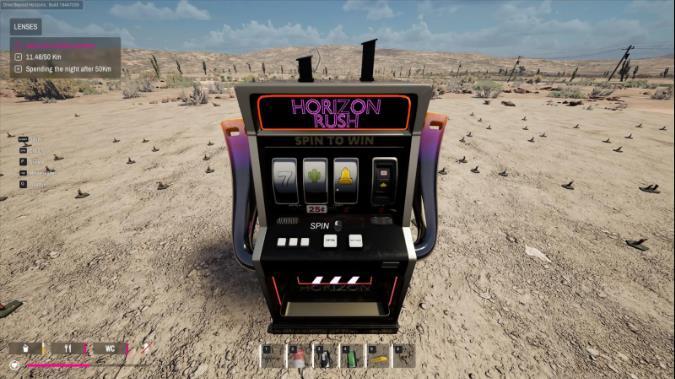
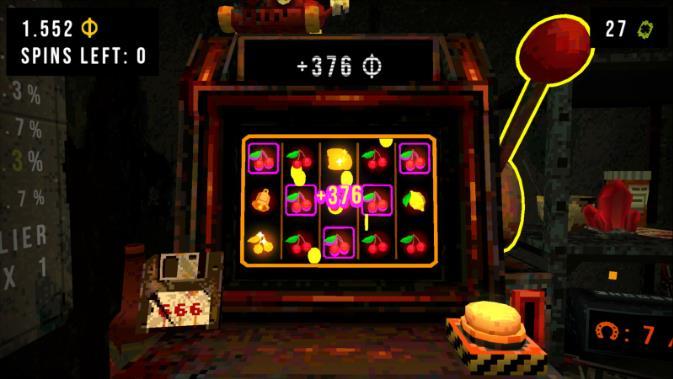
The other feature that makes this project stand out from the rest and gives it it’s replay ability is the slot machines, for this feature I looked at different games like Drive Beyond Horizons where you can find a slot machine in the middle of the dessert where you can potentially earn money with it and a game that makes these machines be the centre of attention which is CloverPit which similar to my idea you gamble your earnings to advance in the game by paying a quota that keeps on going up as you advance in the game.
From those examples, I’ll also be paying close attention to their sound effects and how they function to create a proper feel of a slot machine and give the user a sense of accomplishment when they earn good rewards.
2. Diagrams
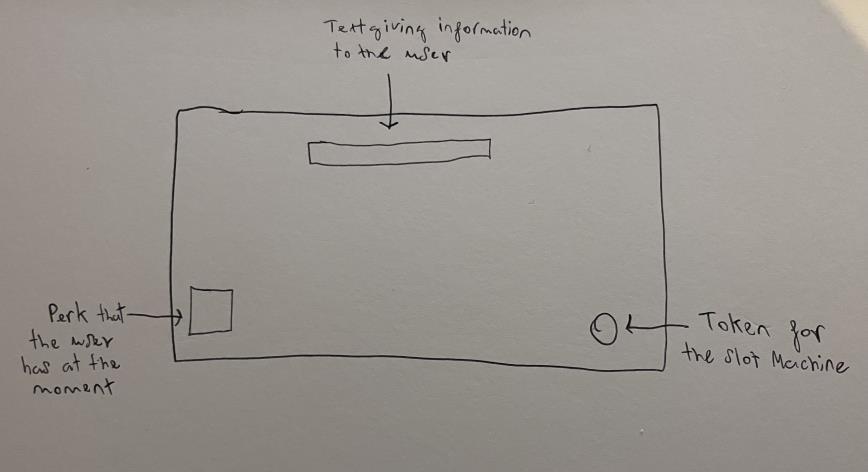
This Wireframe diagram shows how the UI of this game will be minimalistic, as the user won’t be using anything more than the token that they’ll earn, the perks that they’ll use afterwards and any UI text informing the player of what to do in some situations.
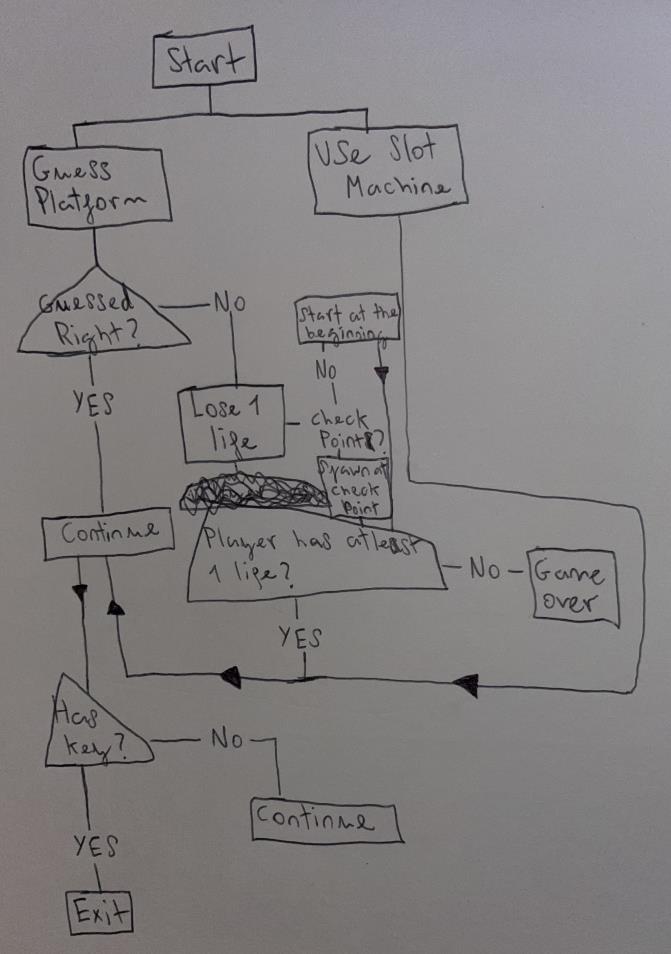
This Flowchart diagram shows the outcome of all the actions in the game which at the start the user will pick form either spending the token they’ll spawn with if not they can get straight into guessing the platform, if they guess the wrong one they’ll fall and lose a life and if the player has less than a life before falling this will end the game if not they continue, with the checkpoint if the player falls they will spawn at the checkpoint if they haven’t gotten to it they’ll spawn at the beginning.