

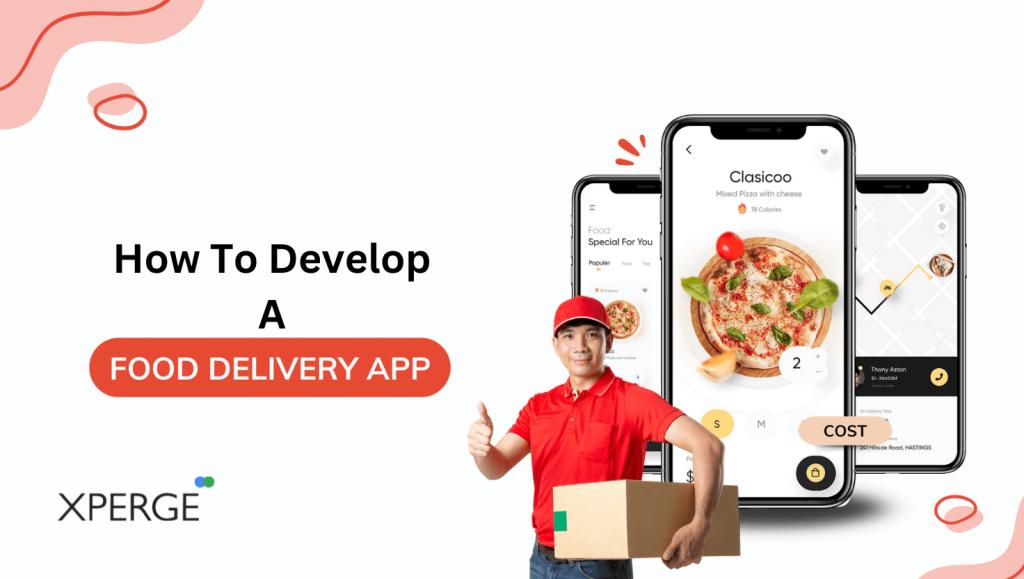
How to Develop a Food Delivery App
Feb 03, 2025 14 min read
Quick Summary:-
Building a food delivery app starts with market research and selecting the right business model (restaurant-to-consumer or aggregator)
Essential features like real-time tracking, secure payments, and push notifications enhance user experience Monetization options include delivery fees, commissions, ads, and partnerships. A strong UI/UX and marketing strategy SEO, social media, influencer collaborations) are key to success Follow these steps to create a scalable and profitable food delivery app
Food delivery apps have revolutionized the way people order and enjoy their meals
The growing demand for convenience has fueled the rise of food delivery startups, making it one of the most profitable industries today. If youʼre looking to develop a food delivery app, this guide will walk you through the step-by-step process of building a successful and scalable food delivery business
Top 5 Key Takeaways
ResearchFirst – Understand market trends, competitors, and customer needs before development
PicktheRightModel – Choose between restaurant-to-consumer or aggregator models based on your goals.
FeaturesDriveEngagement – Real-time tracking, payments, and push notifications enhance user experience
MonetizationisKey – Earn through delivery fees, commissions, ads, and restaurant partnerships. UI/UX & MarketingMatter – A smooth interface and strong digital marketing ensure success
Step 1 Conduct Comprehensive Market Research
Before diving into app development, itʼs crucial to analyze the market trends, target audience, and competitors Market research will help you understand:
Who your competitors are (e g , Uber Eats, DoorDash, Zomato)
What gaps exist in the current food delivery industry
Which audience you want to target (students, working professionals, families, etc )
What pricing model works best based on your location
Gather insights through surveys, online reviews, and competitor analysis to ensure your app meets user expectations
Step 2 Pick a Business Model
Choosing the right business model is essential for long-term success There are two primary food delivery business models:
(a) Restaurant-to-Consumer Delivery
In this model, restaurants manage the entire delivery process, and the app serves as a platform for customers to place orders Popular examples include Dominoʼs Pizza and McDonald's app
Pros: Faster deliveries
Direct customer relationships
Lower commission fees for restaurants
Cons: Limited restaurant choices
Higher operational costs for restaurants
(b) Aggregator Model
The aggregator model connects multiple restaurants with customers through a centralized platform. The platform handles orders and deliveries, charging a commission from restaurants Examples include UberEats, DoorDash, and Zomato
Pros:
More restaurant options for customers
Streamlined operations with third-party delivery fleets
Increased revenue opportunities
Cons: Requires a strong logistics network
Higher initial investment
Step 3 Consider the App Development Cost
The cost of developing a food delivery app depends on multiple factors, including:
App complexity (basic, mid-level, advanced)
Development team (freelancers, in-house, agency)
Platform choice (iOS, Android, Web)
Third-party integrations (payment gateways, Google Maps, analytics)
A basic food delivery app can cost anywhere between $30,000 $50,000, while a feature-rich app with AI-powered recommendations and real-time tracking can exceed $100,000
Step 4 Choose the Essential App Features
Your food delivery app will have four main components:
(a) User App Features
EasyUserRegistration – Sign up via email, phone, or social media
UserProfile – Manage personal details, payment info, and preferences.
Geolocation – Enables restaurant and delivery tracking
Restaurant/DishSearch – Filter options based on cuisine, price, and ratings
PlacinganOrder – Add items to the cart and place an order seamlessly
QuickPayment – Integrate multiple payment gateways (credit card, UPI, wallets).
Real-TimeTracking – Track food delivery in real time
CustomizingOrders – Allow users to add special requests or modifications.
In-AppMessaging – Chat with customer support or the delivery person
RatingandReviews – Provide feedback on food and service
PushNotifications – Notify users about order updates, discounts, and promotions
(b) Restaurant App Features
Dashboard – Manage orders, revenue, and customer data
Registration – Restaurants sign up and list their menu
ContentManagement – Upload images, update menus, and adjust pricing
OrderManagement – View and accept incoming orders
ReceivingPayments – Secure transaction processing.
CustomerSupport – Resolve customer queries efficiently
(
c) Delivery App Features
Registration – Drivers sign up and create a profile
ProfileManagement – Update personal details and availability.
OrderManagement – Accept and deliver orders efficiently
GPSSupport – Navigate through optimized routes.
ContactRestaurant/Customer – Communicate for order updates
(d) Admin Panel Features
AdminDashboard – Monitor real-time app performance
OrderManagement – Track all orders and deliveries.
UserManagement – Handle customer accounts and complaints
RestaurantManagement – Approve and manage restaurant listings
AnalyticsandReports – Generate business insights
DeliveryFleetManagement – Assign delivery tasks efficiently
Step 5 Pick the Revenue Models
Your revenue model determines how your food delivery app will generate profit Here are some monetization strategies:
(a) Delivery Fees for Every Order
Charge users a fixed or distance-based delivery fee for every order
(b) Commission from Restaurants for Each Order
Take a commission 10 30%) from restaurant partners for every order processed through the app
(c) Cost for Advertising
Allow restaurants to pay for premium listings and in-app promotions
(d) Partnering with Restaurants
Collaborate with restaurants for exclusive deals, subscriptions, or loyalty programs
Step 6 Choose the Right App Development Company
When selecting an app development company, consider:
Experience in food delivery app development
Expertise in UI/UX design
Proven track record with case studies
Post-launch support & maintenance
Step 7 Design an Intuitive UI/UX
A user-friendly interface ensures seamless navigation Focus on:
Simple and clean design
Fast-loading screens
Minimalistic checkout process
Attractive food images
Step 8 Integrate Third-Party Services
Enhance the app functionality with third-party integrations like:
Google Maps API for real-time tracking
Payment gateways PayPal, Stripe, Apple Pay)
AI-based recommendations for personalized orders
Step 9 Test the Beta Version
Conduct thorough testing, including:
Functionalitytesting – Ensuring all features work correctly
Performancetesting – App speed and responsiveness
Securitytesting – Data encryption and protection
Userfeedback – Gather insights for improvement
Step 10 Launch the App and Start Marketing
Once the app is ready, launch it on the App Store and Google Play Store Promote the app through:
Social media marketing
Influencer collaborations
Referral programs
Google Ads & SEO
Turn Your Food Delivery App Startup Idea Into Reality with Xperge
Building a successful food delivery app requires the right strategy, features, and marketing efforts By following this step-by-step guide, you can create a profitable and user-friendly food delivery platform
If you need expert assistance in developing your food delivery app, Xperge provides end-to-end solutions, from UI/UX design to custom app development and marketing strategies Get in touch with Xperge today to bring your food delivery startup to life!
Frequently Asked Questions
Q1 Whataretheessentialstepsindevelopingafooddeliveryapp?
The process involves market research, app design, selecting features, choosing a tech stack, development, testing, and deployment Maintenance and updates come after launch
Q2 WhatresearchshouldIconductbeforedevelopingafooddeliveryapp?
Q3 Whatarethemust-havefeaturesinafooddeliveryapp?
Q4 ShouldIchoosenativeorcross-platformappdevelopment?
Q5 HowdoIdesignauser-friendlyfooddeliveryapp?
Q6 Whattechnologystackisrecommendedforafooddeliveryapp?
Q7 Howlongdoesittaketodevelopafooddeliveryapp?
Q8 HowshouldItestafooddeliveryappbeforelaunch?
Q9 HowdoIintegratepaymentgatewaysintoafooddeliveryapp?
Q10 Whatarethepost-launchstepsafterdevelopingtheapp?




Headquarters:
E 195, Phase 8B, Industrial Area, Sector 74, Mohali, Punjab 140308. 911169272599
US Office: 15518 Crossdale Ave, Norwalk, CA 90650
Australia Office: 33 City Road Southbank VIC Australia