THE
ASIA CONNECTS
THE VOICE FOR SMES AND ENTREPRENEURS IN ASIA ISSUE NO. 1
JUL - SEPT 2021
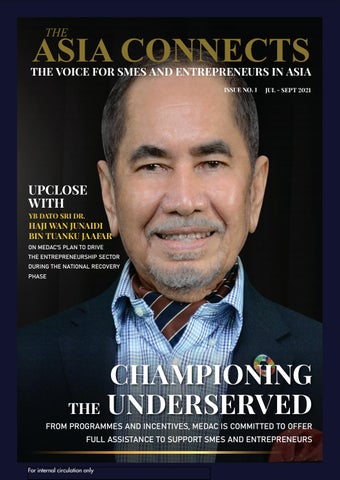
UPCLOSE WITH YB DATO SRI DR.
HAJI WAN JUNAIDI BIN TUANKU JAAFAR ON MEDAC'S PLAN TO DRIVE THE ENTREPRENEURSHIP SECTOR DURING THE NATIONAL RECOVERY PHASE
CHAMPIONING THE UNDERSERVED FROM PROGRAMMES AND INCENTIVES, MEDAC IS COMMITTED TO OFFER FULL ASSISTANCE TO SUPPORT SMES AND ENTREPRENEURS
For internal circulation only
01
Welcome note
03
Riding the wave: Trends SMEs Must be aware of to succeed in the next normal
05
What entrepreneurs should know when raising funds post-covid-19
09
MEDAC to spur the growth of Malaysia’s entrepreneurial ecosystem
13
Resilient leader: Fave under the leadership of Joel Neoh
17
CONTENTS
Rise of social entrepreneurship in Malaysia: Saora Industries advancing Malaysia’s social welfare with safe drinking water and clean energy
23
How Malaysia’s queen of entertainment navigated business ups and downs to become an entrepreneurial star
27
Should businesses consider marketing and public relations during pandemic?
31
SEBA 2021 Awards: Celebrating the nation’s successful entrepreneurs
33
Resilience: How business leaders can bear the odds even in uncertain times
35
What is Islamic Peer-to-Peer (P2P) microfinancing and why it matters more than ever in 2021
WELCOME NOTE
EDITOR’S NOTE
OUR TRIBUTE TO SMES
Asia Connects is a publication created by business leaders for business leaders. We are inspired by the voices of the many SME owners looking to make a difference, while elevating their respective industries. More specifically, we believe in the impact that SMEs can make with their contributions to the economy, society, and employment. No matter how micro, small, or large they are, SMEs represent the main catalysts for economic and social development, contributing to the fundamental goals of any economy.
Dear Reader, It is an absolute pleasure to welcome you to Asia Connects as we make our debut this year. The past year has brought about changes like never before, and of the many businesses making their mark on the global business landscape, SMEs stand out as one of the most important bedrocks of society. With that, we hope to be able to educate entrepreneurs, particularly SME owners, with insights, advice, and experiences from like-minded individuals and business leaders from around Asia.
The origin and intentionality behind our name, Asia Connects, is simple: giving voice to Asia’s SMEs while creating a healthy ecosystem for entrepreneurs. We are grounded in sharing the views, perspectives, and stories of Asia’s business leaders. Our mission is to bring entrepreneurs insightful and engaging commentaries that will inspire them to reach new heights, while also providing perspectives that are thought-provoking, interesting and even, worthy of emulation. As a publication that caters to businesses from all industries, we would like to be as transparent as possible. For this reason, we gladly welcome any comments and critiques you may have as a reader. Letters to the editor are also highly encouraged. I am elated to be furthering the mission of Asia Connects and to hear your stories.
To say that the world will not go round without the existence of SMEs is merely a statement recognising and acknowledging one of the bedrocks of global society. All we need to do is look at their roles, their involvement with society, and their contributions to the economy and to employment. Our daily engagements with SMEs are a vital part of the eco-system that keeps the world going.
Rachel Khiew
SMEs, no matter how micro, small or large their contribution to an economy, play an equally crucial role in the working and growth of large corporations. You simply can’t take SMEs away from the economic system, let alone our daily lives. SMEs are the economic and social foundation of the world. Without SMEs, there will certainly be chaos in our daily routines and the economy of the world will definitely be adversely impacted. We are excited to launch our first issue of Asia Connects as we focus on unraveling the journey of SMEs around Asia and providing them a voice to the industries!
Got a story to share? Contact us Editorial Opportunities: editor@theasiaconnects.com Advertising Opportunities: marketing@theasiaconnects.com
Cheers,
Follow us on
Nitesh Malani, Founder and Chairman of MyPreneurship
Facebook: www.facebook.com/theasiaconnects LinkedIn: www.linkedin.com/company/theasiaconnects/ Twitter: @theasiaconnects
07 01
RIDING THE WAVE: TRENDS SMEs MUST BE AWARE OF TO SUCCEED IN THE NEXT NORMAL 6 key trends to look out for in the next normal The daily protocols put in place to contain the spread of COVID-19 have now become part of our “new normal”. Businesses too have adapted, though many are still struggling. If there is one key lesson this year has taught us – it is that there is no such thing as being too prepared for what is to come. This article will detail 6 key trends that have emerged from the COVID-19 storm and are now carrying us towards the “next normal”. Each is worth carefully studying as they can significantly shape the future business landscape – creating both risks and opportunities.
Trend #1 – A distributed workforce with shifting employee values Work from home (WFH) rapidly shifted from being a privilege available to a small working population, to the default option for most. While there are notable drawbacks to remote working, it is not going away anytime soon. As McKinsey notes, employers must reconfigure their organisations to cater for a distributed workforce. This includes moving towards agile and decentralised structures which enable quicker decision-making – a key advantage in an uncertain environment. It is not just the nature of work that is changing – employees themselves are as well. Research by Accenture espoused the notion of “liquid expectations” – where employees are increasingly judging employers from a more holistic perspective, with a focus on the “employee experience” just as much as the hard numbers. While it is true that current market conditions are slanted toward employers, the best talent will always have their pick of employers. Retaining them is key for a successful business. Trend #2 – A focus not just on profit, but on profit with purpose While an unprofitable business cannot survive for long, COVID-19 has made consumers far more conscious about the kind of impact companies make, both positive and negative. Of course, in current times where many businesses are struggling just to remain afloat, it can be difficult to look beyond the balance sheet and towards “greater good” objectives. In the long term, consumers will gravitate towards companies that can balance profit with purpose. This trend might not be the highest priority now, but businesses would do well to take notice as the economy recovers.
03
Trend #3 – The rise of the “contact free” economy With social distancing now firmly entrenched as part of the “new normal”, the “next normal” will see a continued expansion of what has been dubbed the “Contact Free” Economy. The most obvious application of this is in the growing e-commerce market and the decline of physical cash in lieu of cashless payment methods. The lesson for businesses is that they must figure out ways to serve their customers in a contact-free manner as much as possible. E-commerce is obvious, but not all products and services can be delivered digitally. For those where face-to-face interaction is still required, businesses should give customers the option of contact-free payments. In the near future, this will likely become a necessity. Trend #4 – Changing consumer behaviours (in every aspect) One important facet of this shift is digitalisation. Consumers are – by both necessity and choice – increasingly using digital channels for receiving information, purchasing products, and experiencing the customer journey. This includes both retail and B2B consumers. However, while digitalisation is a common factor, SMEs would need to prioritise significant variations by both age, demographic, and geography. SMEs must be agile to pick up on the trends exhibited by their own customers and adapt. Trend #5 – Accelerated digitalisation widening the gap between winners and losers ASEAN McKinsey described the COVID-19 crisis as sparking a “great acceleration” – the intensification of existing trends. Prior to the pandemic, we were already seeing a gap between the top performing companies and the bottom. McKinsey believes that the speed at which this gap is expanding is only going to grow. A key factor separating the two groups is digital-enabled business models which are resilient and future ready versus outdated legacy business models. Digitalisation was already important before the pandemic.
Trend #6 – Continued assistance from government initiatives The scale of the pandemic means that governments have had to step up and take more direct control of the economy. Whether in Asia, Europe, or America, governments worldwide have enacted massive stimulus programmes, often involving direct cash infusions to affected businesses and citizens.
WHAT ENTREPRENEURS SHOULD KNOW WHEN RAISING FUNDS POST-COVID-19
Due to the global COVID-19 pandemic, investors have become more selective with their investments now more than ever, and for good reasons. Market volatility, combined with the uncertain economic outlook for most industries, has made it more difficult for most startups and businesses to raise funds for sustenance or growth.
Ask “What Would You Like to Invest In?”, as Opposed to “Would You Invest in My Business?” Try to understand the type of investments that have provided them with the best returns previously. What industries do they feel comfortable investing in? What is their risk tolerance? What is their investment mandate? What is their asset under management?
But with the right mindset and approach, startups and businesses will be able to put themselves in the shoes of their investors to secure a much-needed investment in this post-COVID-19 era.
Also consider your own preferred exit strategy with most of your investments. With this heightened level of understanding, adjust your business plans, strategies and returns where possible to match their investment mandates and preferences.
Investors Are Not Your Enemy Entrepreneurs need to put themselves in the shoes of their potential investors to be able to structure a win-win deal that benefits both their businesses and the investor. Additionally, founders and business owners should view investors as strategic partners rather than just a source of funds. Investors are neither interested in taking over your business nor removing you from the company. They want to work with entrepreneurs to realise their returns for the least amount of effort. Being too defensive, especially in times of capital scarcity, will not help. Speak Your Investor’s Language Investors hire professionals to scout for the best investment deals. Oftentimes, these professionals are presented with potential deals on a daily basis and have a set of predetermined systems when evaluating potential investments. Keep in mind that these are not your average business managers, product specialists or marketing gurus. Do not pitch to them as you are pitching to a business owner or entrepreneur.
05
Understanding Your Competition Your biggest competition may not always be another similar startup or idea. Business owners need to understand alternative investments that are out there, especially ones that are picking up momentum. Ask yourself these questions: Will your business provide better returns in the same amount of time versus another hedge fund? Will it be more secure than the bond market, and will it provide the same guarantee as asset backed securities? Timing is Everything If you’re trying to pitch an idea or a technology that the market is not ready for, the investors will most likely be apprehensive. Ideas and proposals need to be what is ‘hot’ or being discussed right now among the investors. If it’s too early, you would be perceived as not yet having a market. If you are too late, the market becomes too competitive. Therefore, it’s crucial to be updated on everything under the sun by reading investment forums, analysing investment trends and other potential industries that investors are eyeing.
Prove that You Are A Good Investment Before investing more money into a business, investors are typically interested in observing how businesses perform — through the progressive management of already-secured funds. By successfully proving the ability to manage the first batch of disbursement from the investor as planned, the next incremental tranche will follow, and the cycle continues. Think of it as being hired by a company for an annual salary package. The total amount of one’s annual salary is paid on a monthly basis with strict protocols on performance and key indicators. They will be under probation for a number of months until the employer agrees to increase the salary and trust that they are keeping to their end of the bargain. The same underlying concept is employed when investors commit to a business investment, especially during a pandemic where everything can be deemed as a risk. Investors Invest In People Investors invest in people who drive the company forward with continuous innovation. Entrepreneurs should be more focused on developing their management skills, expertise, market knowledge, sales pitching and other intrinsic factors as opposed to constantly trying to raise an exuberant amount of capital. In an investment pitch with startups, almost all the weightage is placed on the founders’ capabilities, potential and business acumen. The idea, product and plan become secondary. Think of the pitch as a job interview. If you can’t sell yourself, you won't be able to sell your business.
with with us us 016 - 321 9790
marketing@theasiaconnects.com www.theasiaconnects.com
What comes to mind when you hear the word entrepreneur? To us it is a person who is fearless, tireless, relentless and resilient in the face of adversity. The COVID-19 pandemic that has wrecked industries globally has brought these qualities to the forefront. The challenges and obstacles that have rained on the entrepreneurial landscape have been unprecedented. However, these trying times have proven to be an incredible learning experience for novice and established entrepreneurs alike.
MEDAC TO SPUR THE GROWTH OF MALAYSIA’S ENTREPRENEURIAL ECOSYSTEM
In Malaysia, entrepreneurs have shown tenacity in spades. Rising up, against the odds and despite the pandemic. More than 280,000 new enterprises have mushroomed just last year, far outpacing the number of businesses that have shuttered, at 32,469. For those who have just begun or for those surviving on, adapting their business models to suit these challenging times will be a must. In order to ensure entrepreneurs continue their resilience during this pandemic and beyond, the Ministry of Entrepreneur Development and Cooperatives (MEDAC) has extended a hand of support towards local businesses. In line with the National Entrepreneurship Policy 2030 (NEP 2030), MEDAC has also rolled out a string of initiatives and measures to spur the growth of a holistic and conducive entrepreneurial ecosystem that will champion the nation’s inclusive, competitive and sustainable entrepreneurship development agenda. Early dirigible developments included machine-powered propulsion and rigid frames.
09
Challenges Faced by Malaysian SMEs and How MEDAC Seeks To Address Them “When the COVID-19 pandemic hit, we knew outreach would be paramount. We conducted a series of online surveys, to provide us with a good overview of the predicaments faced by Small and medium-sized enterprises (SMEs). The results have helped us tremendously in planning and implementing more effective measures that have been critical for the survival of affected SMEs,” said the MEDAC Minister Dato’ Sri Dr. Haji Wan Junaidi Tuanku Jaafar. MEDAC’s survey found that: • Micro and informal entrepreneurs were the hardest hit • When the Movement Control Order (MCO3.0) was implemented, 3.15% of businesses permanently closed down their operations, 80% of entrepreneurs were severely hit and many have seen their cash flow decrease by more than 50%. • 50% of Micro SMEs can only survive for three months, if the MCO is prolonged. • Businesses have reduced their number of workers as one of the cost-cutting measures with an overall 48.89% of workers being retrenched. • Entrepreneurs are experiencing a decline in their social & mental wellbeing, where they have developed anxiety, depression includ ing loss of interest in their business. In order to reduce the impact the pandemic has caused businesses, MEDAC has undertaken a number of measures to support business recovery and sustainability. Furthermore, in seeing the importance digitalisation has on businesses during the pandemic, MEDAC is pushing to narrow the digital divide through programmes that will foster digital usage, encourage innovations, increase e-payment adoption and many more advancements. These programmes will serve as an enabler, facilitating, and supporting micro-enterprises to embark on the digital transformation of their businesses.
In terms of healthcare, the Ministry is also mulling over the idea of prioritising COVID-19 vaccinations among entrepreneurs, especially for small hawkers and trades, as they are one of the most critically affected by the pandemic. Collaborating with the National Population and Family Development Board (LPPKN), MEDAC will be providing the necessary support for socially and mentally affected entrepreneurs. This will present affected entrepreneurs a channel to share their problems with the suitable organisation through counselling. In the long run, MEDAC will be looking at improving the regulatory framework or guidelines holistically for home-based businesses, a sector that is viewed as a new high potential economic opportunity. On top of that, a medium and long-term recovery action plan will be put in place, based on the Government’s National Recovery Plan (Phase 2 and Phase 3) , and specific budget allocation under the 12 Malaysia Plan (RMK-12).
Key initiatives that MEDAC has introduced and are currently pursuing in 2021 Moving forward from recovery measures in 2020, MEDAC has devised a new strategy, the Five Es approach. Namely Enculture, Enable, Empower, Energise and Engage for its focus in 2021.
700 Million Moratorium and Targeted Assistance for SMEs In collaboration with the agencies under MEDAC, namely Bank Rakyat, SME Bank, TEKUN Nasional, SME Corp., Perbadanan Nasional Berhad (PERNAS), Cooperatives Commission of Malaysia (SKM) and UDA Holdings, the Ministry will be providing a moratorium of over RM700 million and targeted assistance for SMEs
MEDAC aims to promote better access to financing, digitalisation, grants for entrepreneurs, as well as upskilling and upscaling through training and mentoring opportunities, and other entrepreneurship programmes offered by MEDAC agencies.
“With this moratorium, we aim to benefit a total of 734, 707 borrowers and tenants of agencies, severely affected by the MCO 3.0”, said the MEDAC Minister. By providing these assistance and support, MEDAC hopes that businesses are able to recover and achieve better resilience, preventing further business shutdowns and bankruptcy.
“We will be utilising the special allocation of RM100 million to support MSMEs, especially micro and informal businesses in the non-essential sectors,” explained the MEDAC minister. This allocation will be used for the ‘First to Close and Last to Open’ (FCLO) Programme to benefit entrepreneurs in the sub-services sector. The programme will include advisory services and structured negotiations, coaching and mentoring, training and hand-holding, financing and monitoring.
Finally, the Minster added “My advice to SMEs out there is to reach out to MEDAC via the website (www.medac.gov.my) or My Assist MSME (https://myassist-msme.gov.my/). Take advantage of the available supporting measures from the Government and learn how it can benefit your business. I also encourage businesses to take up digitalisation, and build their resilience, in the face of challenges.”
Furthermore, the Ministry will also be introducing the MEDAC 2021 Strategic Plan, the Malaysian Cooperative Transformation Plan 2021 - 2025 (TransKOM), and implementing new programmes under the Phase 2 of the Entrepreneur and Cooperative Recovery Plan (ECRP).
Through all these measures, MEDAC hopes more businesses will come forward and take up digitalisation as part of their business practice, as it will remain critical in the post-COVID-19 era.
The MEDAC 2021 Strategic Plan is a one year plan, with an agenda of developing the inclusive, sustainable and competitive development of Malaysia’s entrepreneurial ecosystem. As of 31st May 2021, a total of 77 programmes have been implemented, benefitting over 24,580 entrepreneurs. Meanwhile, through TransKOM, the Ministry aims to provide greater benefits to boost the wellbeing of the community, as well as establish a standard for competitiveness and sustainability. In addition to that, MEDAC will also be lending its support to transform the Malaysian Cooperative Institute (IKM) into a higher education institution that specialises in cooperative education and entrepreneurship.
11
A resilient business organisation cannot be built without resilient leaders, and this innate human capacity is an aspect that can be learned and developed by anyone. It is a crucial characteristic that transforms mediocre individuals into high-performing leaders. These resilient leaders are identified by their ability to persevere through difficult times, adapt to challenges and thrive in the end.
RESILIENT LEADER: FAVE UNDER THE LEADERSHIP OF JOEL NEOH
A stunning example of a resilient leader is Joel Neoh, one of Asia’s most recognised and successful young entrepreneurs, and the founder of the fast-growing fintech company, Fave. Founded in 2015, Fave is a smart payment app for the new generation of consumers to connect with their favourite brands. For businesses, Fave’s solutions allow them to accept various digital payments, acquire new customers, retain loyal users, and grow their trade with technology. Empowering offline businesses to grow and digitally connect with their customers like never before, Fave is on a mission to maximise the joy and value consumers encounter via their everyday shopping experience, ultimately, accelerating the offline world’s transition into the digital economy. Over the last six years, Joel has exponentially grown his million-dollar business venture. Today, Fave operates in over 35 cities across Malaysia, Singapore, Indonesia and soon India. With over 40,000 merchants accepting digital payments and offering interest-free installment payments. The platform has about 6,187,000 users and offers more than 21,000 deals, encompassing various categories from food, spa, massage to travel. Overcoming Challenges with Perseverance Despite his current success, Joel’s journey has not always been a bed of roses. He too
13
had to go through a fair share of challenges to transform Fave into the platform it is today. Not one to rest on his laurels, he resiliently persevered through adversities like acquiring support from investors, continuously producing products that are relevant for users and finding the right business mix to come out on top. “The tech entrepreneurship journey is a roller coaster ride, full of ups and downs. In the tech space, only one out of 100 companies succeeds. The reality of it is because tech companies are competing on a larger scale. Since day one, these companies are forced to contend with some competition, either on a global or regional scale,” said Joel. “In addition to that, the tech industry moves very quickly. If you’re not constantly innovating, you may find yourself left behind,” added Joel while reminiscing about the challenges he went through. He believes that although the field is filled with high risks, the rewards reaped make it worthwhile. The second most challenging aspect of the tech entrepreneurship journey, according to the Fave founder, is getting investors onboard. He explains that in every fundraising round, tech entrepreneurs like himself approach about 50 to100 investors, but the rejection rate can be anywhere from 90 to 95%. Joel finds the trick to getting through a tough period like this is to be comfortable and embrace uncertainty. He reveals that when he first started the company back in 2015, his vision evolved around developing a fitness platform - KFit. However, along the way, they ran into some issues and decided to make the hard call and pivot elsewhere to seize bigger opportunities. When growing Fave, a company that Joel
gets inspired by is Virgin Galactic’s motto. He said, “I like the concept behind Virgin Galactic - daring to dream big and to do the impossible, and that is what I am also hoping to achieve”. Key Milestones Over the Years and The Launching of Buy Now Pay Later (BNPL) Fave has reached numerous milestones over the years, in terms of capital raised and growth. For example, the company secured funding from major investors like Sequoia India, Venturra Capital, SIG Asia Investment, and was recently recognised as one of the ”Top 5 Fastest-Growing Mobile Wallets in The World” in the next couple of years. Fave was also recently acquired by Unicorn Pine Labs, the Indian merchant commerce platform, for RM185 million. With this acquisition, the company will be expanding its services across India. “This is a significant milestone for the company as India is growing to be one of the largest consumer markets in the world, and we are very excited to begin the next phase of Fave,” Joel said of the recent development.
Poised for growth, the fintech company also recently unveiled their latest service - Buy Now Pay Later (BNPL). Allowing consumers to pay in instalments, Fave users will now have instant access to interest-free credit.
However, of the future generation of entrepreneurs, he thinks they will be starting from a point that is more altruistic and will be more impact-driven. He notes that this is because the future entrepreneurs are more global and are currently growing in a world that is more connected than ever before. “Due to the vast availability of information and knowledge, they have more of an understanding of what is going around the world and will be looking to start more socially-driven businesses, aiming to make a difference.”
Joel stated that there are two key projections behind the launching of Fave’s latest service, “Firsty, we want to make things a bit more affordable for consumers to purchase, to make everyday shopping even more convenient. Furthermore, using our flexible payment option, we want our users to have more control over their finances.” Accessible via the Fave app, the new feature can be utilised at over 40,000 merchants.
Finally, of the journey he has gone through thus far, he concludes that it is sometimes a bit of a lonely journey, but that it is truly rewarding. The awards and achievements he has received over the years, he says, are a testament that he and his team are on the right track to taking Fave towards new heights.
Digital Payment Gateways and Digital Strategy Malaysia’s digital payment gateway sector is booming and fast developing. Consumers now have numerous digital payment options to choose from to complete their purchase of goods. Of the digital payment sector, Joel is of the opinion that the space is very competitive, crowded, but eventually, there will be a few leaders dominating the market soon. “It is a very fast-growing space, and even global payment gateways have started to localise themselves, catering to each country’s market and the region.” “Any company that wants to grow has to be digitally driven because, in this tech era, we cannot run away from working or adopting digital tools. If not, in the long-term, outdated business models may soon find themselves obsolete,” said Joel regarding his opinion about the rise and need for a digital and data-driven strategy for businesses. Rising Young Entrepreneurs Joel categorises members of the entrepreneurial ecosystem into three aspects - the generation before us, the current generation and future entrepreneurs. Of the previous generation, he says “Rewind
back a few decades ago and you will find the word entrepreneur did not even exist. Those starting a company were called businessmen or businesswomen.” Commenting on the current generation, he finds entrepreneurs to be more idealistic, as many are looking to build a regional company, growing it beyond Malaysia.
15
"I am inspired by business leaders who dare to dream big and to do the impossible. That is what I am hoping to achieve with Fave. I believe that with entrepreneurship being a journey that is a roller coaster ride, full of ups and downs, it is important for business leaders to be resilient by persevering through difficult times and adapting to challenges to ultimately thrive in the end." - Joel
The concept of social entrepreneurship has been around for many years, with organisations like Teach For Malaysia and Extraordinary People Impacting Community (EPIC) founded with the sole purpose of solving social problems and creating a positive impact.
RISE OF SOCIAL ENTREPRENEURSHIP IN MALAYSIA: SAORA INDUSTRIES ADVANCING MALAYSIA’S SOCIAL WELFARE WITH SAFE DRINKING WATER AND CLEAN ENERGY
In recent years, this concept has slowly evolved into a trending business model that produces progressive results. It is a hybrid structure that meshes business with governmental and social organisations, aiming to bring about transformative changes in society. Today, social entrepreneurs stand as agents of change - on a mission to create and sustain benefits that go beyond private value. One such organisation in Malaysia that has been relentlessly creating solutions to eradicate issues encompassing the social and environmental sector is Saora Industries. Bringing Safe Drinking Water and Sustainable Energy Established in August 2014, Saora Industries is a social enterprise that started based on the aspiration to bring safe drinking water and energy to areas that need it the most. Since its founding, the company’s core value has always been about utilising cutting-edge technologies to provide solutions that are both environmentally and economically sustainable. From geographically remote locations to countries stricken by poverty or natural disasters, Saora Industries seeks to create possibilities without borders. Over the years, Saora has introduced two key solutions - solarpowered water filters and modular solar lighting systems.
Installed in rural areas, Saora’s water filters fulfil the need for clean and safe drinking water, eliminating the need to filter and boil raw water. As a result, carbon footprint, expenses to prepare the drinking water beforehand, and treatment for water-borne diseases, have been reduced drastically.
we can work together with government agencies, corporate organisations, NGOs and subject matter experts to maximize the benefits and impacts of each holistic program that we carry out - Solar Lighting, Water, Sanitation and Hygiene, and Empowerment and Socio-economic programs,” said Farzena.
Saora’s modular lighting systems, on the other hand, can be customised to the needs of different households. Reliable, robust and easy to install, these systems are safe, affordable, sustainable and environmentally friendly.
She further added, “ We are super excited by all the support and affirmation we have received from our partners and beneficiaries, and look forward to working with more organisations and individuals, producing more impactful and positive results.”
“No man is an island. Everything is interconnected, affecting one another. Each action against the environment has a rippling effect, and the damage is far more than we can ever imagine. Every aspect of the environment is important, whether we are staying in the urban sprawl of the Klang Valley, on the cool terrains of Cameron Highlands, or in the luscious forests of Sarawak,” says Operating Director of Saora, Ms. Farzena Balan. Early dirigible developments included machine-powered propulsion and rigid frames. Plunging Into Philanthropy With Saora+ Over time, as their operations expanded, Saora realised that it needed to evolve and adapt to the needs of its partners and the current market. There needed to be a separation between the technical, research and development (R&D) and the commercialisation aspects of Saora Industries. To maintain its laser focus and continue developing all areas of the business strategically, Saora Industries decided to create its philanthropic arm, Saora+ in March 2021. As a result, they were able to fortify their strengths and grow the business exponentially. “With the introduction of Saora+, we can
17
Rise of Greener and Sustainable Solutions in Malaysia Green technology has been around for a while but, with the growing awareness about environmental issues, these technologies are finally gaining mainstream adoption and attention. Be it individuals, SM, or bigger corporations, the understanding of the importance of such adoption has always been there. Over the past 5 years, Malaysia has seen an increase in the adoption of greener
solutions. Today, it is more common to see medium and large market players incorporating environmentally friendly practices in their current operations, switching to energy-saving technologies and thus reducing their carbon footprint. Be it for the organisation’s image, product branding, employees interests or a genuine alignment of the corporate culture to save the environment, these organisations must be applauded for their contributions. However, in terms of SMEs and individuals, adopting green technology is a challenge, as it involves bigger investments in terms of time, human resources, and most importantly, the capital. This is because, after the initial adoption, there is still the maintenance of the system, and technological updates to keep abreast of. Building certified eco-friendly structures, switching from conventional electric supply to a solar-powered setup or installing an independent wastewater recycling system require investments, specialists, licenses that are not easily accessible to most individuals and SMEs. Despite these challenges, it is very heartening to see SMEs continue expressing a constant interest in exploring greener solutions.
and philanthropically. We had to decide on taking risks with certain projects and at the same time, continue doing what we do best - solar lighting and WASH-related projects. We had plans to kick off production of local components of our water filtration and solar lighting system, but the untimely movement restriction orders, global delays in logistics and slowing down of the overall economy caused us to pull the brakes. We still have our sights set on it. We are still growing amidst this pandemic, just not exactly the way we had planned it to be,” said Farzena about the struggles brought on by the pandemic. “As we focus on keeping the business on track especially in managing resources, risk tolerance and being resilient, being agile enables the organisation to take the swift necessary actions to adjust to unforeseen challenges brought about by this pandemic,” said Farzena about the advantages of being young players in the industry. Saora Industries managed to streamline its operations, directly reducing their costs, while maintaining the company’s efficiency and productivity.
Striving Through the Pandemic Despite spending most of 2020 under lockdown, Saora managed to complete all the projects that they were commissioned with, completing within the stipulated time frame, achieved through the team’s continuous resilience and perseverance.
Going Green with IoT There appears to be an upward trend in the general demand for smart technologies supporting the renewable energy industry, reducing waste, and efficient use of natural resources. Among the many technologies that have begun gaining traction in the green industry include the Internet of Things (IoT), Artificial Intelligence (AI), smart sensors, and mobile devices. These tools not only enhance an organisation’s efficiency but also provide an endless supply of possibilities for SMEs to adopt greener solutions.
“The pandemic affected everything. As a business, we downshifted our gears in our project implementations, both commercially
In support of Malaysia moving towards a greener future, the government has also announced a string of incentives to sup-
Farzena surmises that although the road toward sustainability is filled with challenges, Malaysia is definitely on its way to becoming a greener nation.
19
port this direction in March of this year and in July, launched the Fourth Industrial Revolution policy 4.0. “These Government led agendas are both timely and complementary to each other, the industry and the Malaysian society at large. In line with this, we are also starting out on a path towards producing opportunities for agile environmentally concerned SMEs, enabling them to kick-start their growth in the Industrial Revolution,” commented Farzena about Saora’s next phase of growth. Aiming to champion affordable and green solutions while boosting the local economy, Saora Industries aim to shift the assembly and production of their components locally. This will provide them quick access to products, and carry out more R&D upgrades, improvements and innovations.
26 VILLAGES
15 INSTITUTIONS
34 PARTNERS
2.6m
344
2.6m
LITRES
HOMES
PROJECTS
WATER DELIVERED
LIGHTED UP
IMPLEMENTED
PER YEAR
As of May 2021
“I am very grateful to have gone through these challenges, as they have made me a stronger person,” she added. Fast forward to today, Dato’ Seri Siti Nurhaliza has scored numerous notable accolades including the 2017 SME and Entrepreneurs Business Awards (SEBA) Female Celebrity Entrepreneur of The Year, The BrandLaureate Tun Dr. Siti Hasmah SME’s Women of the Year, and the Malaysia’s Strongest Brand Award, hosted by Young and Rubicam Malaysia.
In recent years, we have been witnessing a rapid growth of women entering entrepreneurship. Along with this endeavour, female entrepreneurs have also taken up the challenge of breaking multiple glass ceilings, many of which stem from unfavourable business environments, having an inadequate support system, potential gender stereotypes, and social stigmatism, among others. This is evident more so during this ongoing pandemic, that has placed businesses worldwide through a rigorous test.
HOW MALAYSIA’S QUEEN OF ENTERTAINMENT NAVIGATED BUSINESS UPS AND DOWNS TO BECOME AN ENTREPRENEURIAL STAR
For Malaysia’s Queen of Entertainment, the challenges and stigmatism faced are similar in nature. Even for Dato’ Seri Siti Nurhaliza, a personality that is nationally renowned, the challenges faced when starting her first company, Simply Siti, were very real. Overcoming Entrepreneurial Challenges While Building the Foundation of SimplySiti During her many years performing and representing international beauty brands, Siti discovered that the most important aspect of having quality skincare was not the price of the product but rather, the ingredients that went into it. Because of this, she became determined to produce only quality products at reasonable prices. “I was inspired to create SimplySiti, simply because I believe that fashion, art, beauty and music belong in the same sphere. I have always loved make-up, and after representing so many beauty brands, I began to learn more about starting my own label, a brand that represents me, someone with humble beginnings,” she further added.
23
During the first months of her entrepreneurial journey, however, Siti discovered that any number of challenges are bound to surface, regardless of which stage of the business or the industry one is in. The trick, she says, is finding the resilience and right solution to overcome them. “When I started out, the road was never always easy. I received many negative comments and feedback. Many people felt that this brand, SimplySiti, was just a product by Siti Nurhaliza, a popular singer without any knowledge in the cosmetics business. I admit that I am not skilled in this business, but my deep interest in the beauty industry and my curiosity about the technology behind cosmetics and skincare, kept me moving forward,” she said. To overcome those challenges, she tapped into her collective experience and lessons learned from being the face of many prestigious international brands while still in the music industry. After two years of dedicated research and careful consideration, backed by a team of trusted professionals, the SimplySiti label was launched.
Moreover, SimplySiti is growing exponentially and is on par with other international labels popular amongst Malaysians. In line with the unveiling of several new products, the re-launching of their new fragrance, establishing brand presence in Indonesia, the special collaboration with Shoppee, and more, SimplySiti is experiencing tremendous market success. Riding the COVID-19 Pandemic Wave In keeping with the times and to reach targeted consumers effectively, SimplySiti’s promotion of current and newly launched products were aggressively done via social media platforms such as Instagram, the brand’s website and through popular influencers. Thus far, this strategy has proven to be truly effective. To not run the risk of lagging behind, the SimplySiti team discovered that they needed to be sensitive to the current situation and change their marketing strategy and business practices, injecting a great deal of creativity to continue standing out. The team responded to the crisis by creating products that are suitable for the current market situation such as face masks, which the brand launched in April this year. Despite the ongoing pandemic, the beauty mogul aims to move forward, carrying out activities as planned previously. This year, with the imposition of the lockdown to
contain the spread of COVID-19, like many other brands, she aims to reach out to potential customers digitally. To widen the brand’s market segmentation, SimplySiti collaborated with the local cosmetic brand, NRC (NR Cosmetics), through Shoppee, producing great results. Apart from that, she also plans on rebranding SimplySiti to better suit customers and future demand.
This is due to the convergence of beauty and food. Customers are now shifting towards consuming more natural, organic and cleaner foods that promote better health and well-being. Furthermore, in light of a worldwide growing awareness about harmful chemical usage in a majority of cosmetics, many beauty brands are now turning to more food-based ingredients for allure.
“Since the government announced a total lockdown back in March 2020,we experienced a drop in sales in our offline business. This included the sales of our cosmetics and skincare products mainly at Watson and AEON. Nevertheless, we are thankful that our online business like our partnership with Shopee, TV Shopping, the Astro Go Shop website and the SimplySiti website have contributed to 60% of our sales, allowing us to remain resilient during this trial period. I hope what we are facing currently will recover shortly and all of us shall be back on track,” revealed Siti.
Moreover, the demand for halal products has skyrocketed, encompassing the cosmetics industry. Halal certified cosmetics have gained a strong following, even among the non-Muslims, who associate such products with ethical consumerism and stringent quality assurance standards.
Beauty Trends and Going Global Based on personal experiences and observations, Siti also discloses a few beauty trends that she has noticed.
“Women these days are looking for beauty products that help to achieve make-up perfection instantaneously, the instant fix kind. It’s the age-old desire for instant gratification, to have smoother skin and a flawless complexion, without going through the wait. Certain products that have increased in demand are eye care products like concealers, that hide under eye circles.” she explained. As a result of rising awareness and the ongoing pandemic, Siti reveals that consumers are now more environmentally concerned and health conscious. They want to know where their products are coming from and what the ingredients are. “Natural and Organic skincare products have been growing in demand, and are currently of the highest priority. Consumers are looking for products that contain ingredients that are more natural and free from harmful toxic chemicals.” Noting another rising trend in the market, she says,“Edible beauty products are now all the rage. There are tonnes of edible cosmetics in the market, and they are selling like hot-cakes.”
25
“Many mainstream global brands in the cosmetics industry, especially international labels, are not halal certified. Being in a country where the majority of the population are Muslim, aside from adhering to rules, regulations and brand image, I must also ensure that SimplySiti products adhere to the Halal status, to continue earning the trust of my potential customers,” said the 42-year old beauty entrepreneur. SimplySiti is also the first local cosmetic brand to receive the Halal status from the Department of Islamic Development Malaysia (JAKIM) and in South Korea. This sets the brand apart from its competitors, while maintaining its local identity and establishing an international appeal. Aiming to meet the latest trends in the industry without compromising on quality, Siti aims to include more affordable, good quality products like shade and finishings, that are suitable for all skin types and tones. Furthermore, after more than a decade in the market, the Malaysian entrepreneur will be looking to expand her current business platforms and globalise SimplySiti.
“I was inspired to create SimplySiti, simply because I believe that fashion, art, beauty and music belong in the same sphere. But, when I started out, the road was never always easy. I admit that I am not skilled in this business, but my deep interest in the beauty industry and my curiosity about the technology behind cosmetics and skincare, kept me moving forward” --Siti SitiNurhaliza Nurhaliza
So, public relations and marketing are always better together. Streamlining a company’s public relations and marketing strategies to play off each other could amplify content across all channels, optimise opportunities, maintain and also promote brand messaging consistency and increase revenue.
The COVID-19 pandemic affected every single industry, and the businesses that stayed afloat usually had marketing and PR on their side. Many of the lessons we’ve learned the past year have underscored the importance of authenticity, transparency, and being together. Here are some key insights we’ve learned after a year of COVID.
SHOULD BUSINESSES CONSIDER MARKETING AND PUBLIC RELATIONS DURING PANDEMIC?
Public relations and marketing are often mistaken as the same thing and in smaller companies, sometimes one department would do both. Any company, brand or person would benefit from both fields of public relations and marketing especially if they have a product or service to sell. Although these two may seem similar, there are a few differences setting public relations apart from marketing. Before we jump into the differences between public relations and marketing, we need to know what they both are. Marketing is the overall strategy of increasing the public’s awareness of a product, service or an individual. Commonly, advertising and public relations may also be grouped under marketing as well. On the other hand, public relations ensures that a company or person maintains a good reputation in the media. Larger companies would usually have their own in-house PR team or there might be PR personnel in a general marketing team. There are also specialist PR consultancies which are contracted by companies in order to manage their public relations messaging and media communications. PR ensures that their employers or clients are noticed by both traditional and now, digital media. With consumers becoming much smarter when it comes to advertising, positive press coverage is a form of subtle promotion that’s much less ‘in their face’.
27
Although it sounds like PR and marketing are exclusive of each other, they actually work together to successfully conquer the media world. These two departments influence each other in a few ways. If the product or service your company or client was advertising has limited brand awareness, then it’ll be difficult to build a successful brand reputation or relationship with consumers. This could result in a decline in sales. Thus, the PR and marketing department would need to work together to increase brand awareness via press for the product or service (PR) then creating social media ads or performing targeted ads around that press. These days, social media and influencer marketing are jointly managed by both the PR and marketing departments. In addition to brand-building messaging (PR), the marketing department can then work on keyword marketing campaigns or promotions which may be parts of the company’s customer acquisition strategies.
Key takeaways: After a year when we learned the importance of being together and have faced so many challenges with more yet to come, there’s room to be bold and to be human. Customers will notice. Having a robust public relations strategy that works in tandem with marketing efforts ensures that a company’s messaging is well-received by their target audience during and after the pandemic. This in turn, would enable the company to gain and retain customers which increases revenue. Thus, although public relations and marketing may seem to be different entities that make up the communications structure of a company or brand, these two departments are integral in the success of any company.
SEBA 2021 AWARDS CELEBRATING THE NATION’S SUCCESSFUL ENTREPRENEURS The sixth installment of SME and Entrepreneurs Business Awards (SEBA), an annual initiative organised by Yayasan Usahawan Malaysia that aims at recognising Malaysia's most notable companies and entrepreneurs is back again this year and accepting nominations. Beginning with the Early Bird Entries which started on 1st March June until 1st June 2021, the nominations for the Final Entries is open from 1st June 2021 to 15th September 2021, before the Award Gala Night, tentatively set on 22nd October 2021.
SEBA is an impartial, independent and objective business recognition that has uncovered and recognised deserving small-and-medium enterprises (SMEs), Enterprises and Entrepreneurs in Southeast Asia. It aims to provide entrepreneurs with a solid platform for recognition, networking and continuous growth and seeks out exemplary companies and entrepreneurs that excel in their industry in the area of business strategy, growth metrics and best practices. The nominees undergo a strict 8-phase qualifying and verification framework by SEBA’s research committees and Board of Advisors. The award is divided into two segments Entrepreneur Awards and SMEs, Enterprises & Start – Ups Awards. For the Entrepreneur Awards segment, among the key categories are Most Innovative Entrepreneur, Youth/Rising Entrepreneur, Strategic Entrepreneur, and Leading Entrepreneurs. For the SMEs, Enterprises & Start – Ups Awards segment on the other hand, among the key categories are Premium Top 10, Most Innovative, SME Brand Excellence of the Year, and Best SME/Enterprise.
Last year, the awardees were taken on a night full of extravagant senses, and simulations with a one-of-a-kind inflight theme, with Minister for Entrepreneur Development and Cooporatives (MEDAC), YB Dato’ Sri Dr Haji Wan Junaidi bin Tuanku Jaafar in attendance to officiate the event. This year, the theme is SEBA Inspires, in line with the recovery that many economic sectors are starting to show.
The award categories are based on the best merit, depending on accomplishments and track records of the organisation. These are selected by a panel of jury upon a complete audit and review process, involving both qualitative and quantitative benchmarks. With the changing times and the constant drive to adapt and evolve, this year, SEBA is also introducing several new categories. Recognising the new rising segment within the industry, SEBA this year will be introducing the Halal-preneur Award, in order to honour the entrepreneur who has successfully empowered their employee and community in the Halal industry.
31
RESILIENCE: HOW BUSINESS LEADERS CAN BEAR THE ODDS EVEN IN UNCERTAIN TIMES Attributed to Dato’ David Gurupatham, Advocate, Solicitor and Co-founder of Industries United
The past year and a half has proven to be an unusual and unprecedented time for businesses globally. Responding to the COVID-19 crisis has been one of the biggest organisational challenges in our history thus far. Businesses and employees have had to radically adapt to different ways of working, living and sustaining themselves for the long run. While the initial shock of the pandemic has passed in many regions, it still persists in others. Nevertheless, this period of crisis has brought about numerous valuable lessons – starting with leadership, digital adoption, and in quite a few cases, strategic operational restructuring. To achieve mastery in these areas, resilience has proven to be a key component. What is Resilience? By definition, the word means the ability to recover from difficulty quickly and to demonstrate toughness in the face of adversity. The current generation of business owners has never seen adversity caused by a virulent pandemic such as COVID-19. Nevertheless, those who have failed and succeeded in navigating
through this socio-economic meltdown, will have learnt the meaning of the word, resilience. Those that have been through a crisis as challenging as the one we are in now truly understand the definition of the word – resilience. They represent the strongest kind of captain that businesses will need to chart a steady course through violent storms such as a pandemic and global recessions, among others,. I, for one, have been through three economic crises since 1997. Having been through these various challenges, I know that at the end of the day, the law of the jungle applies and success revolves around the survival of the fittest. The same concept applies in our current economic crisis and adaptation to ever-changing hostile environments is required if business owners are aiming to beat the odds. Adapting to Survive For businesses, stagnation is a prolonged period without any growth or development, and it can occur on a macro or micro economic scale in any industry or company. It can be a temporary condition, a sudden shock or part of the long-term structural condition. However, the socio-economic climate is never stagnant and business owners must not make the mistake of allowing their companies to fall into the trap of complacency. Businesses need to be alert and, on the move, taking effective action and bringing about policy changes to reflect the new realities of the environment. I believe that there are no level playing fields. Hence to survive, one needs to change and adapt quickly to the dynamics of the business environment. According to the advocate, there are eight common traits of the resilient entrepreneur, as detailed below:
33
1) Having the Right Mindset Having the right mindset is a key component to developing resilience. A positive mind opens up doors to new possibilities and alternatives. A resilient entrepreneur is one that is able to think strategically and manage difficult personal and market conditions. Performing calmly even when under pressure with admirable self-confidence is what will help the resilient to pull through adversity. 2) Having the Will to Succeed Resilient entrepreneurs have an irrepressible will to succeed. They understand that there is no going back and that they must keep moving forward. Rather than resist change, they welcome it with open arms. Their continuous trajectory forward is never usually done in the comfort zone of their plateau. They are always climbing their mountain in a race to reach the summit. 3) Relentlessly Pursuing their Goals Despite potential obstacles, disadvantages and even environments of toxic negativity, resilient entrepreneurs are relentless in achieving their goal. Despite the many challenges, their goal never wavers. You will usually find resilient entrepreneurs passionately focused on their objectives, generating higher performance, in search for the best and more efficient path forward. 4) Leadership There is no ‘I’ in team. Resilient entrepreneurs are able to lead even in a team of two. Understanding the power of the collective pack, they lead by empowering others. They fully comprehend the concept that with collective strength, their weakness is diminished. A true leader is one that serves the purpose and the team continuously. 5) Embrace The Mistake, Embrace The Learning Resilient people understand that learning from mistakes is a priceless lesson. Entrepreneurs are human beings and mistakes are often inevitable. Learning from mistakes
only makes one stronger, akin to the tears on muscle fibers. It only makes the muscle grow bigger and stronger. Scars of the past and defeats are looked at not in fear but obstacles that have been overcome, as a beacon of hope and confidence. 6) Creativity and Flexibility Entrepreneurs who are resilient are fluid in their approach, they know to expect the unexpected. Major changes are part of life in general, and life likes to throw curve balls in general. However, the resilient entrepreneur does not give in. They are unafraid to innovate, to change and try new strategies. 7) Decisive in Nature Resilient entrepreneurs understand that one can never run away from problems. In times of crisis, one has to make decisions. They are able to weigh the risks and act timely, whilst executing new pathways, ideas and methodology, for the betterment of the business. 8) Reaching the End Goal They know that success, at the end of the day, is all about producing results, reaching the end goal. Resilient entrepreneurs are unwavering in their focus, and likewise they ensure there is clarity in their teams. With an eye on the end-game, even their teams are focused on achieving the goal. For many of us, this pandemic feels like we are being hit by wave after wave of tsunamis in the form of challenges, from every angle. However, as said by the great ancient Chinese philosopher, “In chaos, there is opportunity.” Because of this, there is always light at the end of the tunnel. After that, the question becomes, “Are we resilient enough to stay the course and find the path?” Entrepreneurs, it is time to think, time to act, and time to lead! BE RESILIENT.
an interested party seeking investment opportunities. P2P Financing marries the two and provides a platform where a multitude of Investors may finance one Issuer.
WHAT IS ISLAMIC PEER-TO-PEER (P2P) MICROFINANCING AND WHY IT MATTERS MORE THAN EVER IN 2021 by Tunku Danny Nasaifuddin Mudzaffar Microfinance, also referred to as microcredit, is a form of lending intended to help low-income individuals or micro-enterprises receive financing purely for business purposes. Often, this is the underserved or unbanked community that needs the funds the most. Peer-to-Peer (P2P) Financing, also called P2P Lending or Marketplace Lending in other countries, involves 2 parties: the Issuer (borrower) and the Investor (lender), who are private entities where the former is a business requiring funds and the latter is
Typically, banks require an applicant to undergo a stringent process where up to three years’ worth of credit score and a long approval process are typically needed. However, small businesses and micro-entrepreneurs may not even have been around for that long to build up the required status by banks needed for funding approval. Oftentimes, several months can result in many changes especially for smaller organisations, meaning a long approval period would hinder overall company growth and progress. For micro-enterprises, these issues merely scratch the surface of the problems plaguing the finance industry and its effectiveness when run by banks. While this is the fault of no particular party, there has definitely been a growing need for alternative financing methods such as P2P Financing to ease the burden of banks. To date, there are 11 P2P Financing platforms regulated by the Securities Commission Malaysia (SC) with microLEAP being one of them. These platforms function to provide MSMEs (Micro, Small and Medium Enterprises),startups as well as one-man businesses with the required funds to either stay afloat or expand. Before the pandemic struck, Malaysian businesses were already struggling to keep up with economic conditions making running a business all the more difficult. Enter COVID-19 and people around the world, just like Malaysians, were plunged into uncertainty - a financial nightmare. Social distancing and movement restrictions imposed by the government in an effort to curb the spread of COVID-19 posed a huge threat to the economy, as
35
consumers were forced to stay at home and not spend, resulting in a downward spiral for most businesses unless they had an online presence. While larger entities have been able to cut operation costs and manage assets more efficiently to stay afloat, the same cannot be said for much smaller businesses that rely on day-to-day cash-flow to keep themselves above water. Hence, the importance of alternative funding methods became clearer as not just another method of obtaining financing, but a crucial means of keeping businesses alive. The micro-economy depended heavily on private entities such as microLEAP and other P2P financing platforms to help spur them on amid a global crisis. With P2P financing believed to have surpassed RM 1 billion in value of financing disbursed in 2020, and COVID-19 as a catalyst, 2021 should prove to be no different. In fact, the familiarity of both Issuers and Investors with such platforms should mean greater awareness and in turn, increase the number of transactions. Here is where Islamic P2P micro-financing comes in. It is the very essence of microLEAP and it is our DNA if you will. Based on the Shariah principles of Commodity Murabahah, it allows Issuers to raise Shariah-compliant financing and at the same time allow P2P Investors, when they lend, the ability to invest in Islamic assets. The Issuer of course must not be involved in non-Shariah compliant industries such as alcohol, tobacco & dangerous drugs, pornography, gambling and pork & it’s by-products (full list may be found in microLEAP’s Islamic FAQs). For microLEAP, we have a Shariah Pronouncement proclaimed by our Shariah Advisors and approved by the SC Shariah Advisory Council. Therefore, Investors may invest in our Islamic Investment Notes, safe in the knowledge that their funds are used in a Shariah-compliant manner. Having said that, it is not only Muslims on our platform that invest with us. We have people from
many other communities that believe in microLEAP’s vision, as they believe in ethical and socially responsible investments. The beauty of Islamic finance is that ethical and social principles go hand in hand with Islamic teachings, and this is the core of what I believe in, that Islamic investments are open to all. Islamic P2P microfinancing is all about impact investments. As we allow Issuers to raise financing from as little as RM1,000 to RM50,000 on our platform, a small amount of funds will have a stronger social and economical impact for these small businesses than medium-sized SMEs. The type of micro-enterprises that we have helped to raise working capital financing include an entrepreneur selling halal confectionery from his bedroom in Pahang, a restaurant that sells pisang goreng online and offline in Johor, a food truck driver that sells nasi lemak and kuih muih in Negeri Sembilan, and many other businesses that would generally find it difficult to raise funds from a traditional bank. As we head into the early days of 2021, the work that we do at microLEAP and other Islamic microfinance institutions matter even more. Lockdown and MCOs, though I do see the necessity for it, is detrimental to a business, even more so for the micro-enterprises that we serve. Thus far, the Malaysian government must be commended for their efforts to curb the spread of COVID-19 and along with the vaccine believed to be administered soon in stages, 2021 looks to be a recovery period from an economic standpoint. Through this gradual recovery, many businesses will still need ample support to ensure survivability, much less to expand or grow their business. As 2021 looks to be a recovery period for many individuals and businesses alike, Islamic P2P microfinancing platforms will be crucial to rebuilding Malaysia’s micro-economy.
GLOSSARY DIAGNOSTIC TOOLS FOR RATING SME Competitiveness Rating for Enhancement (SCORE) SCORE aims to provide comprehensive services in assisting the development of SMEs in Malaysia. www.score.gov.my Mr. Muhammad Fareeq Kumar Tel : 03 - 2775 6007 Email : sekretariatscore@smecorp.gov.my BRAND DEVELOPMENT National Mark of Malaysian Brand Applying for a certification scheme that depicts quality, excellence and distinction of products and services of Malaysian companies. www.nationalmark.gov.my Ms. Norhayu binti Razli Tel: 03-27756218 Email: nationalmark@smecorp.gov.my FINANCING GATEWAY Looking for Alternative Financing through ECF or P2P Lending platforms under the approval by Security Commissions (SC) Directly apply on ECF or P2P Operator’s Website https://crowdo.com/ https://eureeca.com/ https://fundnel.com/ https://www.equity.pitchin.my/ https://www.quickash.com/ https://capbay.com/ https://www.microleapasia.com/ RECOGNITION & AWARDS Enterprise 50 (E50) Award The Enterprise 50 (E50) is a prestigious award programme that recognizes the achievements of Malaysia's enterprising small and medium enterprises (SMEs). www.e50.com.my
Tel: 03 2775 6000 SEBA Awards SEBA is an annual recognition programme that has uncovered and recognised deserving small and medium enterprises (SMEs), Enterprises and Entrepreneurs in South East Asia www.seba.asia Ms Rachel Khiew Tel: +6012-321 9790 Email: support@seba.asia CAPACITY BUILDING Business Accelerator Programme (BAP 3.0) Business Accelerator Programme (BAP 3.0) is an integrated assistance programme aimed to enhance the capabilities of small and medium enterprises (SMEs) through business advisory services and financial support. https://oaserver.smecorp.gov.my/Geran/smidec21V2.nsf/filterV9 Tel: 1300-30-6000 Email: urusetia_bap@smecorp.gov.my Micro Connector Programme The Micro Connector Programme is one of SME Corp. Malaysia’s continuous development initiatives for microenterprises and inclusive groups including youth, women, B40 and others communities in the country. www.smecorp.gov.my Email: secretariatmicroconnector@smecorp.gov.my Global SME Masterclass (GSM) Programme The GSM Programme provides a 3-month structured learning opportunity for the Chief Executive Officers (CEOs) and business owners of SMEs. En. Mohd Kamarulzaman Zainuddin Tel: 03-2775 6141 Email: mkamarul@smecorp.gov.my
37
TECHNOLOGY & INNOVATION Women Netpreneur Programme The Women Netpreneur Programme is organised by SME Corp. Malaysia with the objective of ensuring women entrepreneurs are continuously kept in the loop regarding the changing business landscapes that emerge from the new world order Register at https://gorgeousgeeks.net/activities/
Find more about the various programmes and initiatives below: PNS Financing Scheme Program Insentif Usahawan UDA Holdings Berhad Business Scale-Up Programme (Biz-up) Financing to SMEs Program Pembangunan Perniagaan melalui Koperasi Inclusive SME Ecosystem (I-see)
BUMIPUTERA ENTREPRENEURS Bumiputera Enterprise Enhancement Programme (BEEP) A BEEP is a specialised programme aimed to create and develop competitive, resilient and dynamic Bumiputera SMEs through integrated assistance with hand-holding approaches including strengthening SMEs core business, building capacity and capability, increasing productivity and facilitating access to financing. Ms. Tengku Nazatunurdiha Tengku Bidin Tel: 03-27756102 Email : urusetiabeep@smecorp.gov.my
Ministry of Finance (MoF) Find more about the various programmes and initiatives below: Working Capital Guarantee Scheme - Bumiputera(WCGSBumi) Working Capital Guarantee Scheme 2 (WCGS) Working Capital Guarantee Scheme - Start Up Automation & Digital Guarantee Scheme
Tunasan Usahawan Belia Bumiputera Programme (TUBE) The Tunas Usahawan Belia Bumiputera (TUBE) program is a Government initiative to encourage youths to venture into business. https://tube.smecorp.gov.my/ Ms. Aziatul Hasnida Sulaiman Tel: 03-2775 6122 Email: aziatul_hasnida@smecorp.gov.my MINISTRIES & AGENCIES PROGRAMME Ministry of Entrepreneur Development and Cooperatives (MEDAC)
Ministry of International Trade & Industry (MITI) Find more about the various programmes and initiatives below: Skim Peningkatan Produktiviti Enterpris Malaysia Productivity Blueprint (SPPE-MPB) Market Development Grant (MDG) Soft Loan Schemes for Service Sector (SLSSS) Soft Loan for SMEs (SLSME) Industry4WRD Intervention Fund Bank Negara Malaysia (BNM) Ensure eligible SMEs received reasonable cost of financing to start up their business and promote their growth and expansion https://www.bnm.gov.my/
Follow us on:
Facebook: www.facebook.com/theasiaconnects LinkedIn: www.linkedin.com/company/theasiaconnects/ Twitter: @theasiaconnects Contact us:
marketing@theasiaconnects.com
Asia Connects is a project by: