
Company & AI Data Security
What Every Business Needs to Know


AI Is Transforming Business — and Its Risks
AI tools help organizations draft emails, generate reports, analyze data, and automate workflows — improving productivity across teams of all sizes.

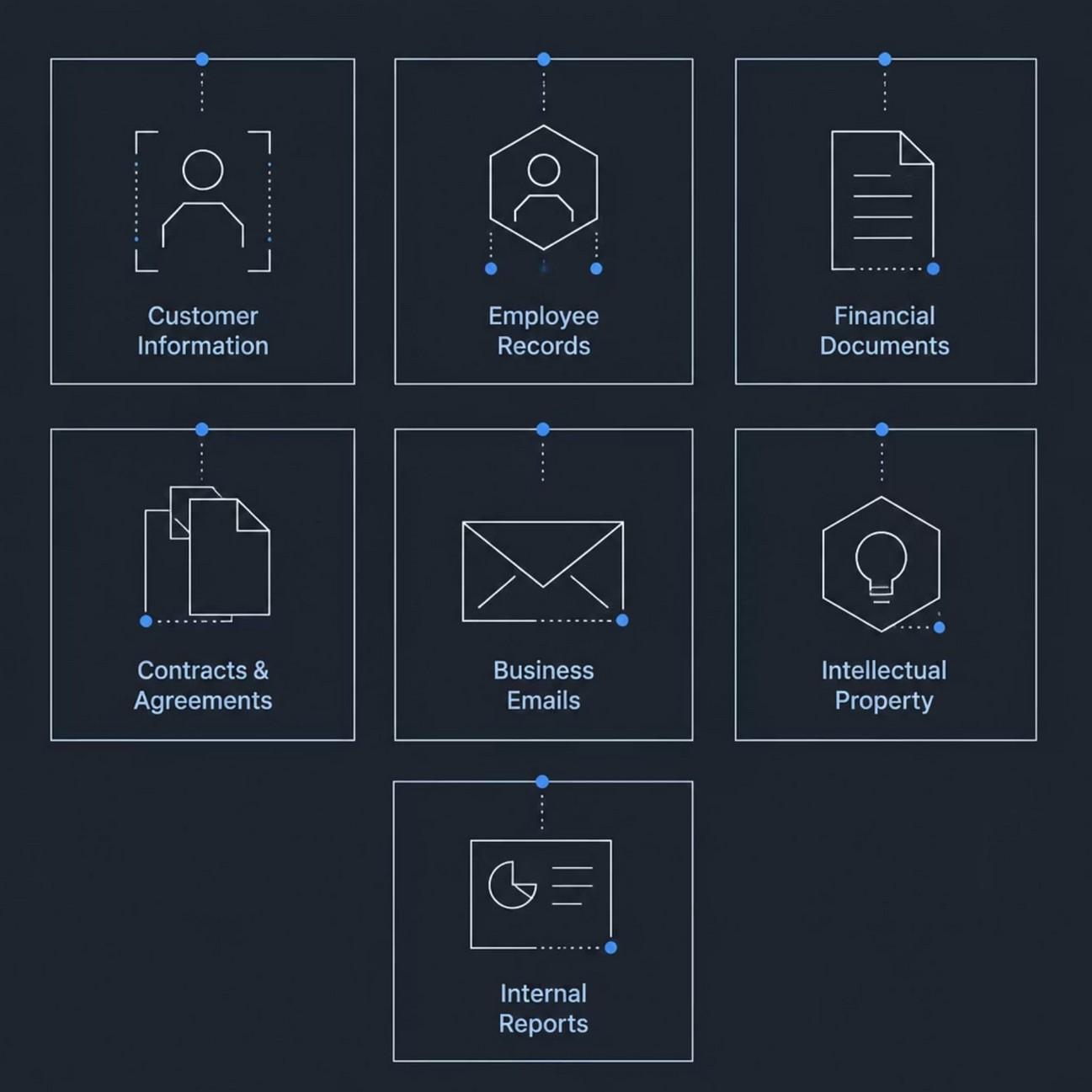
But as AI becomes part of daily operations, employees often share sensitive data with AI tools without realizing the risks — exposing customer records, financial data, contracts, and internal communications.
What Is Company Data Security?
Company data security refers to the policies, technologies, and practices used to protect business information from unauthorized access, misuse, theft, or loss — ensuring data remains secure throughout its lifecycle. A compromised data environment can lead to financial losses, legal penalties, operational disruptions, and damage to customer trust.

Top AI Data Security Risks

1 Data Leakage
Employees uploading confidential data to public AI platforms — customer databases, financial reports, contracts, and product roadmaps.
2 Shadow AI
Unapproved AI tools (chatbots, writing assistants, browser extensions) used without IT visibility, creating security and compliance gaps.
3 AI-Powered Phishing
Cybercriminals use AI to craft convincing emails mimicking executives or vendors — making phishing attacks far harder to detect.
4 Deepfake Threats
AI-generated audio and video impersonates real people to authorize fraud, clone voices, or manipulate employees via fake video calls.
Compliance & Common Mistakes

Regulatory Risks
Sharing sensitive data with AI tools without controls can unknowingly violate data privacy regulations — resulting in fines, legal consequences, and reputational damage.
Common Mistakes to Avoid
• Sharing confidential data with public AI tools
• Using AI applications without IT approval
• Failing to train employees on AI risks
• Ignoring data classification policies
• Weak access controls and no AI governance framework

Best Practices: Policy & Data Classification
Create an AI Usage Policy
Define which AI tools are approved, what data can be shared, and what must remain protected. Clear guidelines create accountability and reduce accidental exposure.
Classify Business Data
Categorize data by sensitivity so employees know what can be shared with AI tools. Common levels: Public →
Internal → Confidential → Restricted
Best
Practices: Access, Encryption & Training

Strengthen Access Controls
Limit access to authorized individuals using MFA, rolebased access control, strong password policies, and regular access reviews.

Encrypt Sensitive Information
Protect data during storage and transmission. Encryption ensures intercepted data cannot be read by unauthorized users.

Train Employees
Regularly
Cover AI security risks, phishing awareness, data handling policies, password security, and responsible AI usage in ongoing training programs.
Why Secure Business Email Matters
Email is the primary communication channel for most organizations — carrying customer data, financial documents, contracts, and strategic discussions daily.
A compromised email account can expose vast amounts of sensitive information and give attackers access to other business systems.

A secure business email solution should offer: encryption, advanced authentication, access controls, audit capabilities, compliance support, and data sovereignty options.

How XgenPlus Protects Your Data
XgenPlus is a secure communication platform designed to help businesses maintain control over their communications while meeting modern security requirements.

Enterprise-Grade Security
Secure email hosting with advanced user controls and encryption
Flexible Deployment
Private cloud and on-premises email deployment options
Data Sovereignty
Multilingual support with data residency and compliance features
AI-Powered Assistance
Built-in AI email tools with security-first design

The Foundation for Responsible AI Adoption
Data security should not be viewed as a barrier to innovation. Instead, it should serve as the foundation for responsible AI adoption.

By
Clear AI Policies
Define governance, ethics, and usage rules
Secure Communications
Protect data in transit and at rest
Employee Training
Build skills for safe AI use and oversight