The faculty and staff of St Francis Xavier High School are proud to offer an academic program that challenges each student to grow intellectually, spiritually, and personally Whether you are planning to pursue a college degree or enter the workforce, our courses are designed to meet you where you are and prepare you for the future you choose
As a school that continues to offer rigorous college-preparatory education, we are committed to providing opportunities for students who seek a challenging academic schedule At the same time, we offer courses designed for students who may not be pursuing a four-year college path but are looking to gain the skills and knowledge to excel in their careers Our curriculum is flexible, and we are proud to support students with diverse goals and aspirations
Our Catholic identity remains foundational at St Francis Xavier High School We are dedicated to helping each student grow in their relationship with God and in their ability to serve others with kindness, integrity, and humility It is this faith that makes Xavier such a wonderful place to learn and commune As you explore this guide, we encourage you to reflect on your passions and goals. Remember, your time at Xavier is not just about preparing for the next step in your education; it is about discovering who you are and who God is calling you to be.
We are excited to accompany you on this journey of growth and discovery, and we look forward to seeing the unique contributions each of you will make to our school community.
Sincerely,
Will Welch Principal
Graduation Requirements
Business & Information Technology
Career & Technical Education
Computer Science
English
Family and Consumer Education
Fine Arts - Music
Fine Arts - Theatre & Communication
Fine Arts - Visual Art
Health/Physical Education
Mathematics
Science
School to Work
Social Studies
Theology
World Languages
Table of Contents
Our Mission
St. Francis Xavier Catholic School System is a Christ-centered community dedicated to the faith formation, academic excellence, community engagement, and individual growth of our students in a safe environment.
Graduation Requirements
Credits for Graduation
To graduate from Xavier High School, a student must fulfill the following requirements:
Students must complete and document 80 hours of Christian Service as well as pass a civics test (required by state law) in order to graduate Students will not participate in the Baccalaureate Mass or Commencement if they have not completed their service hours by the deadline.
● Social Studies: Geography (0.5 credit), World History (1 Credit), US History (1 credit) and Government (0 5 credit)
● Health
● Personal Finance
Planning for College
It is recommended that those planning to attend college take at least two credits of a world language Also, many universities require four credits of math Spend some time researching colleges of interest so your planning can be done with those requirements in mind
Enrollment Guidelines
Freshmen, sophomores, and juniors must carry a minimum of eight credits. Seniors must carry a minimum of six credits (1 5 credits per term) Additional fees may be required for students who register for more than 8 5 credits per year Instructor approval for certain courses may include review of standardized test scores, demonstrated work ethic on the part of the student, previous coursework etc
Freshman Year - 8 Credits
● Health - 0 5 credit (if not taken in middle school)
● Theology 9 - 1 credit
● English 9 or Honors English 9 - 1 credit
● Mathematics - 1 credit
Sophomore Year - 8 Credits
● Theology 10 - 1 credit
● English 10 or Honors English 10 - 1 credit
● Mathematics - 1 credit
● Science - 1 credit
Junior Year - 8 Credits
● Theology 11 - 1 credit
● English 11 or AP Language - 1 credit
● Math - 1 credit
● Science - 1 credit
Senior Year - 6-8 Credits
● Theology 12 - 1 credit
● English 12 or DE English- 1 credit or 1 5 credit
AP Courses
● Science - 1 credit
● Geography/AP Human Geography - 1 credit
● Electives - 2 5-3 credits
● World History or AP World HIstory - 1 credit
● Electives - 3 credits
● US History or AP US History1 credit
● Electives - 3 credits
● Government - 0 5 credit
● Personal Finance - 0 5 credit
● Electives - 3-5 credits
Advanced Placement courses are designed to prepare students for the AP tests each May. By taking the AP test in a subject area and earning the requisite score, a student can earn college credits based on which university the student attends. During the 2025-26 school year, the cost of an AP test was $99 per subject. Prerequisites for AP courses may require instructor approval (i e review of standardized test scores, demonstrated work ethic, and previous coursework )
Dual Enrollment (DE) Courses
Xavier partners with University of Wisconsin-Oshkosh, St Norbert College, and Fox Valley Technical College to offer dual enrollment (college credit) classes directly to Xavier students Students taking these courses are required to pay tuition to the college, but successful completion of the class earns the student a college transcript with full credit for the course Dual enrollment classes at Xavier are taught either by a university professor or by a Xavier teacher employed as an adjunct professor for the purposes of the course. Prerequisites for DE courses may require instructor approval (i.e. review of standardized test scores, demonstrated work ethic, and previous coursework.)
While rates for DE courses are subject to change for the 2026-27 school year, fees for the 2025-26 school year are listed below for reference:
UW-Oshkosh - $110 per college credit (DE Biology, DE Computer Programming, DE French 5, DE German 5, DE Spanish 4 & 5, DE Intro to Sociology)
St Norbert College - $100 per college credit (DE English Literature & Composition)
Fox Valley Technical College - cost varies based on participation
Schedule Changes (Effective with the 2026-27 School Year)
All schedule changes must be completed within 3 days of a term beginning
All schedule change requests must meet one of the following criteria:
● Insufficient number of credits (grades 9-11 total less than 8; grade 12 total less than 6)
● Missing ½ of a full credit course
● Missing a course required for graduation
● Balancing course load
● Incorrect skill level placement
● Student has not met a prerequisite
● Change is initiated by a teacher or administrator
Changes will not be made for the following reasons:
● To move a class to a different block within the same term
● To be with friends
● To be with a preferred teacher
● To add a course that was not originally requested (unless the schedule could not be completed with original courses requested)
All schedule change requests must be made by the student in writing using the Schedule Change Request Forms available in the School Counseling Office. Parent, teacher, and counselor signatures may be required.
Schedule Change Policy Rationale
Our master schedule is carefully constructed based on initial student course requests to ensure balanced class sizes and optimal learning environments. Schedule changes after finalization disrupt this balance, affecting class enrollment numbers that teachers have already prepared for, including ordered materials, classroom setup, and instructional planning Additionally, processing schedule change requests requires significant administrative time and resources that are better allocated to direct educational support To maintain educational quality and operational efficiency, we encourage students to make thoughtful course selections during the initial registration period when changes can be accommodated without impacting the broader school community
Calculator Policy
Math classes may require a scientific or graphing calculator A TI-84 is strongly recommended for Algebra 2 and above and is a requirement for AP Calculus and AP Statistics.
Credit for Courses Taken Outside of Xavier
Xavier students must receive prior administrative approval as well as complete necessary paperwork in order to take a high school course or college credit course that will appear on the Xavier transcript In most cases, approved high school and college courses will be noted on the transcript and credit will be awarded by Xavier but the grade will not be calculated in GPA Approved courses taken for credit remediation will be listed on the transcript and the grade calculated in GPA to replace the previous grade If a student takes a course that has not received prior approval from administration, that course will neither be noted on the transcript nor calculated in the GPA. Such a course will not fulfill a Xavier graduation requirement Exceptions to this policy may be made by administrative decision for extenuating circumstances
Courses are listed by department in the order in which courses are taken Please utilize these worksheets to assure selection of the appropriate courses
Grade 9 Selection Sheet
Grade 10 Selection Sheet
Grade 11 Selection Sheet
Grade 12 Selection Sheet
Business & Information Technology
(Personal Finance is a required course)
Beginning Game Design
Grades 9, 10, 11, 12
½ credit
Through hands-on projects, students will explore the fundamental principles of game development, including storytelling, character design, level creation, and game mechanics. This process will go from original, creative ideas to ‘paper prototype’, stopping short of computer implementation. Whether you’re interested in mobile games, virtual worlds, or interactive storytelling, this course provides the foundation to turn ideas into the beginning of a potential game design.
Introduction to Business
Grades 9, 10, 11, 12
½ credit
Welcome to the world of Business! The Introduction to Business course is designed to introduce the basics of business, the role of business in our society as well as economics, entrepreneurship, management and marketing. This course is a prerequisite to many other XHS Business & Information Technology courses.
Accounting 1
Grades 10, 11, 12
½ credit
The aim of this course is to develop in the student the ability to keep and interpret business records and to develop an interest in, and a foundation for the future study of accounting Students will learn manual and automated accounting systems Accounting enables the student to intelligently handle his/her personal and business financial affairs as a citizen, consumer, owner, manager, and/or investor Accounting is highly recommended for students who will be majoring in business in college
Entrepreneurship
Grades 10, 11, 12
½ credit
In this course, students learn the characteristics of an entrepreneur, how entrepreneurs contribute to the economy, and how to develop an idea, research, organize, start and close a business. This program inspires and prepares students to start an entrepreneurial venture while in high school. Students develop and run a business and learn about the specific roles within a typical business setting: Human Resources, Finance, Marketing, Public Relations, and Production Department.
Marketing 1
Grades 10, 11, 12
½ credit
Prerequisite: Introduction to Business
Marketing is all around us! In this course, students will learn marketing principles, market segmentation, marketing research, and learn the many roles marketing plays in what products are offered, how they are priced, promoted and distributed to consumers
Personal Finance
Grades 10, 11, 12
½ credit
This course is designed to help students develop an understanding of money management techniques, finances, risk and diversity of investments, and educate students to become better consumers and achieve personal lifestyle objectives Topics include: joining the workforce, taxes, checking accounts, savings, credit, investing, insurance and budgeting
Business Management & Leadership
Grades 11, 12
½ credit
Prerequisite: Introduction to Business
Management and leadership are key skills that have a tendency to lead to success in business In this course, students learn and practice teamwork, ethics and social responsibility in a business framework Students also have the opportunity to identify their leadership style in business relationships
Career & Technical Education
Engineering Essentials
Grades 9, 10, 11, 12
1 credit
Students explore the breadth of engineering career opportunities and experiences as they solve engaging and challenging real-world problems like creating a natural relief center system or creating a solution to improve the safety and well-being of local citizens
This course introduces students to the fundamentals of 3D modeling and computer-aided design using industry-standard software (e g , AutoDesk Fusion) Students learn to sketch, model, and refine designs while regularly producing prototypes with 3D printers Emphasis is placed on creativity, problem-solving, and iterative design No prior CAD experience required
Introduction to Engineering Design
Grades 10, 11, 12
1 credit
Prerequisite: Engineering Essentials
Students dig deep into the engineering design process, applying math, science, and engineering standards to hands-on projects like designing a new toy or improving an existing product
Computer Science
Introduction to Computer Programming
Grades 9, 10, 11, 12 ½ credit
Introduction to Computer Programming gives students who are new to programming an opportunity to work in teams to create apps for mobile devices using MIT APP Inventor They will explore the impact of computing in society and build skills in digital citizenship and cybersecurity Beyond learning the fundamentals of programming, students build computational-thinking skills by applying computer science to collaboration tools, modeling and simulation, and data analysis
Dual Enrollment (DE) Computer Programming
Grades 10, 11, 12
1 credit
Prerequisite: Introduction to Computer Programming
In this course, students learn the basics of problem-solving, software design, and programming using an object-oriented language You'll explore techniques like flowcharts, pseudocode, and class diagrams to plan and organize your code Key topics include working with data (arrays and strings), creating efficient algorithms (like searching), and writing programs that use variables, decision-making, loops, and functions You'll also practice debugging to fix errors and improve your programs Students will be responsible for additional college tuition through UW-Oshkosh.
English
(Required courses are English 9 or Honors English 9, English 10 or Honors English 10, English 11 or AP Language and Composition, English 12 or DE English Literature and Composition)
English 9
Grade 9
1 credit
In this course, types of literature will be studied, including poetry, short stories, plays, essays, and a novel The emphasis in writing is on basic sentence and paragraph structure, and using exact and appropriate words. Grammar --parts of speech, phrases and clauses, and sentence structure-- is introduced, practiced and reviewed in conjunction with writing. Students will prepare and deliver an informative speech, and will work toward writing strong paragraphs with well supported and explained ideas. Units in independent reading, vocabulary, and revision of writing are included in this course.
Honors English 9
Grade 9
1 credit
This course focuses on the study of literature, the introduction and reinforcement of grammar concepts, and the development of composition skills In literature, students are introduced to and encouraged to enjoy short stories, poetry, drama, novels, and non-fiction selections to which they can relate Challenging reading from mythology is included The study of the writing process continues with review lessons in parts of speech and parts of the sentence and mini lessons in phrases and clauses In composition, students master the skill of writing a structured 5-paragraph essay through the use of a thesis statement and topic sentences, and deliver an informative speech English usage, punctuation, sentence fluency, logical sequencing, and vocabulary are included in the writing curriculum.
Greek Mythology
Grades 9, 10, 11, 12 ½ credit
This elective course offers students an engaging exploration of ancient Greek myths and their enduring impact on literature, art, and culture Students will study the major deities, legendary heroes, and foundational myths, uncovering themes of heroism, fate, love, and morality that still resonate today Through reading classical texts, analyzing artwork, and discussing interpretations, students will gain a deeper understanding of how these myths shaped ancient Greek society and continue to influence modern storytelling, language, and philosophy
History and the Arts Through Literature
Grades 9, 10, 11, 12
½ credit
Explore the human experience through the lens of history, literature, philosophy, and the arts By analyzing diverse cultural expressions and historical narratives, students will examine how individuals and societies have understood and grappled with universal themes such as identity, morality, conflict, and progress Through the study of classic texts, works of art, and philosophical ideas, students will develop an appreciation for the richness of human thought and creativity The course emphasizes critical thinking, ethical reflection, and the development of communication skills as students engage in discussions, writing assignments, and collaborative projects
Literature through Film
Grades 9, 10, 11, 12
½ credit
This course explores the intersection of literature and film, offering students the opportunity to analyze and interpret movies as both artistic expressions and powerful storytelling tools. Students will study a variety of films, from classic masterpieces to contemporary works, examining their narrative structures, themes, character development, cinematography, and use of symbolism Throughout the course, students will compare films with their literary counterparts, exploring how stories are adapted, interpreted, and reimagined in different mediums The class emphasizes critical thinking and engages students in discussions about the impact of cinema on culture, society, and identity
Speech
Grades 9, 10, 11, 12
½ credit
This elective aims to develop the students' skills for effective communication through speech. Students will gain a better understanding of their speaking strengths and weaknesses through writing and presenting speeches. Besides learning to be more effective speakers and listeners, students will develop skills needed for audiences ranging from one-to-one to large group communication. Students will prepare and deliver a variety of speeches which are designed to develop skills in vocal control, gestures, facial expression and eye contact for live and online audiences. Managing stage fright will also be addressed.
Structured Reading
Grades 9, 10, 11, 12
½ credit
Structured Reading develops the literacy skills of reading, writing, speaking, listening, viewing, and creating through structured study of specific skills and techniques Emphasis is placed on reading comprehension and speed through instruction invocabulary, word relationships and analogies, pre-reading technique, skimming, scanning, note taking, patterns of text organization, main idea, inference, and drawing conclusions. Practice reading for information is included to prepare students for timed, standardized reading tests, such as the PSAT, ACT and SAT. Background literacy is developed through the study of selected Greek mythology / classics and informational readings. Reading skills will be practiced on reading selections that match the current level of student ability as determined by a pre-test the first day of class. A
reader’s journal will be kept of personal reading and there will be a final project on approved books of the student’s choice
English 10
Grade 10
1 credit
This course centers on a survey of drama, short stories, poetry, legend and the novel through the use of reading comprehension, summarizing and note taking, and writing skills The thesis statement and the five-paragraph essay are practiced throughout the year. Oral communication exercises include a variety of speaking experiences such as character monologues, journal sharing, class discussion and presentations. Grammar and sentence structure are reviewed throughout the year. Reading and analysis of literature are incorporated into the course.
Honors English 10
Grade 10
1 credit
Prerequisite: Instructor approval
This course is designed for students who have the aptitude and interest to continue on the advanced track in English Beyond the emphasis (described in English 10) on reading comprehension, summarizing, note taking, writing skills, and a survey of literary genres, this course expects students to read at a faster pace, discuss on a more sophisticated level, and write with a greater depth of analysis Literature selections inside and outside the text are more challenging Oral communication is stressed through class discussion, and presentations. Grammar is reviewed. The five-paragraph essay is practiced throughout the year with the addition of a research component so students may practice proper MLA formatting.
Creative Writing
Grades 10, 11, 12
½ credit
May be taken as a fine arts elective
This course is designed for students who are interested in writing poetry and short fiction and want to gain personal satisfaction from developing their writing skills The instruction in the course will be based on the writing process, but with many interesting additions as well For example, while spending time revising and polishing their work and participating in peer group activities, students will also run “experiments” on their drafts to see how the addition of new literary devices affects the piece Students are expected to practice writing every day, and writing models and practical advice from established writers stimulates, instructs, and reinforces this learning process By the end of the term, most students will have drafted, revised and polished over 20 pages of original poetry and fiction
English 11
Grade 11
1 credit
This course is designed to give the student an understanding and appreciation of literature in the American tradition The students, while studying American history in their junior year, will gain an awareness of the effect of historical events on the literature of the time The course traces the development of American literature from the 1600s to the present With literature as a base, students learn to write according to a process While some grammar and usage skills are reviewed, more emphasis is given to composition skills, including the writer's attention to purpose, audience, tone, organization, details, word choice, and sentence structure. In addition to narrative and literary analysis essays, the student will learn the necessary steps and aspects for writing a major research paper. Students will also prepare for college admission essays and deliver oral presentations.
AP Language and Composition
Grades 11, 12
1 credit
Prerequisites: B or higher in both terms of Honors English 10, or AB or higher in both terms of English 10, minimum GPA of 3 5, and Instructor approval
Students taking this course must possess strong reading comprehension skills as well as the ability to analyze difficult texts and write in a sophisticated manner The AP English Language and Composition curriculum translates to an introductory college-level rhetoric and composition course, which requires students to develop evidence-based analytic and argumentative essays through several stages or drafts Students read and analyze the nonfiction texts, including graphic images as forms of text, from many disciplines and historical periods.Then, after analysis, students evaluate, synthesize, and cite research to support arguments about the texts. Throughout the course, students develop a personal style by making appropriate word and sentence-level choices. Semester 1 focuses on the basics of rhetorical analysis and argument, and semester two puts those concepts into practice.
Dual Enrollment (DE) English Literature and Composition
Grade 12
1 credit/ 4 college credits
Prerequisite: AB or higher in both terms of prior year English, minimum GPA of 3 5, and Instructor approval
This course offers four credits (ENG 150 Introduction to Literary Studies) through St Norbert College The course delves into the ways human beings view their lives through classic pieces of literature in various genres and prisms, such as drama, poetry, novels, essays, and short stories After close reading and discussion of these works, students write thesis driven essays requiring analysis, research, and the application of literary criticism They will also respond to the reading through Socratic seminars, collaborative learning, and several modes of writing such as reflective and synthesis essays, and more creative pieces. Through the variety of activities and assessments, students will be prepared for the rigors of college reading, writing, and discussion. Students who choose to take the course for college credit will be responsible for additional tuition through St. Norbert College.
English 12
Grade 12
1 credit
This college-preparatory English course emphasizes not only the development of critical thinking skills and expository writing skills, but an appreciation and enjoyment of the relevance of classic literature In this survey of British literature, students will read Beowulf, The Canterbury Tales and a Shakespearean play in semester one, and select contemporary works of British literature in semester two Students will also work through one self-selected independent project: a personal development, non-fiction-book-based project in semester 1 Major written pieces include synthesis essays, narrative poems, character profiles and literary analyses. Students will also revisit topics such as punctuation, word choice, active reading, citation, and sentence combining to ensure they are prepared for college.
Family and Consumer Education
Introduction to Foods
Grades 9, 10, 11, 12 ½ credit
This course is a basic introduction to different types of food and learning how to cook, measure, read a recipe, understand cooking terms, and use the proper utensils for food preparation The students will enrich their eating experiences by sharing and trying new recipes, preparing the food, evaluating the product, looking at the seasoning for foods, and budgeting. Students will also work with small appliances using a variety of cooking techniques. The relationship between food, nutrition, time, and planning are worked on in the labs.
Advanced Foods
Grades 10, 11, 12
½ credit
Prerequisite: Introduction to Foods or instructor approval
Take this course to cook irresistible recipes from around the world This course takes the student beyond a general Introduction to Foods Students can learn why different countries cook the foods they do, menu planning, and the chemistry behind cooking and preparing food A unit on canning and freezing foods will also be taught Health and nutrition are also incorporated throughout the course
Fine Arts - Music
(One credit of Fine Arts from any of the areas is required to graduate)
Chamber Music Ensemble*
Grades 9,10,11,12
½ credit
Students in Chamber Music Ensemble are required to be in Xavier Orchestra concurrently
Chamber Music Ensemble meets two mornings a week before school The class will focus on small ensemble playing with each person playing an important role Students often perform for our school masses. Performances include but are not limited to various festivals and Solo and Ensemble Festival.
Concert Band
Grades 9, 10, 11, 12
1 credit
This class is open to any student with prior instrumental training This group works on developing each student's musical ability through performance and analysis Students enrolled in Concert Band will receive small group lessons in approximately six cycles throughout each semester In each lesson we work on a combination of the following: music, assigned scales, rhythms, and etudes A student's year in band has two components - concerts and marching/pep band As part of the grade for class, students are required (pending an excused absence) to attend the following events:
● Marching Band Camp (three days in early August)
● Homecoming, Christmas and Memorial Day Parades
● Homecoming Halftime and Band Night Shows
● All public concert performances
● District Solo and Ensemble Festival
● Pep Band performances (approximately 4 football games and 12 basketball games) (all events are posted on the band calendar which is accessible via the band webpage)
Concert Choir
Grades 9, 10, 11, 12
1 credit
Prerequisite: Audition required
The Concert Choir is the advanced choral ensemble and is limited to 60 voices The Concert Choir focuses on repertoire from many musical eras, as well as from many cultures around the world Healthy and proper vocal techniques, as well as the mastery of a rich and mature choral tone, are stressed during rehearsals and performances This ensemble maintains an active schedule with performances at festivals, liturgical settings, school concerts, and other venues and often works with guest conductors and clinicians
Mandatory Concert Choir performances include:
● Fall Choral Concert (October)
● Christmas Choral Concert (December)
● District Solo & Ensemble Festival (March)
● WSMA Large Group Festival/ Large-Scale Masterworks Concert (March)
● Spring Choral Concert (May)
● Performance trips and vocal festivals at the discretion of the director
Music Theory
Grades 9, 10, 11, 12
½ credit
This course is designed to teach music literacy and to increase students' knowledge of music beyond performance. Students will develop the ability to recognize, understand, describe, and/or notate the basic concepts and processes of music that are heard or presented in a music score. In order to allow students to achieve a well–rounded understanding of musical structure, this course will address the basic elements of music (melody, harmony, rhythm, form, etc.), as well as compositional, analytical, and aural skills. Course concepts will be primarily based in Western music. However, attempts will be made to cross–relate certain musical ideas in order to increase appreciation of all musical traditions This class is suggested for any student interested in learning more about music and is the prerequisite for Advanced Music Theory This course will be especially useful for students who plan to pursue music in a post–secondary environment
Orchestra
Grades 9, 10, 11, 12
1 credit
The group’s main focus will be to build ensemble techniques through performance The repertoire used in the course is drawn from Baroque through 20th Century music. Students meet for approximately six private lessons per term to work on basic technique through scales, etudes and concert music. Students have the opportunity to perform solos and small ensembles at WSMA Festivals as well as a required class performance at this event. As part of the student’s grade for orchestra, students are required to participate in the following events:
● Fall Concert (October)
● Winter concert (February)
● WSMA District Solo & Ensemble Festival (March)
● WSMA State Solo & Ensemble Festival (April)
● Spring Concert (May)
● Performance trips and festivals at the discretion of the director
Soundtrack of Our Lives: An Exploration of Music, Culture, and Creativity
Grades 9, 10, 11, 12
½ credit
Discover the power and impact of music in this engaging and interactive course designed for all students, regardless of musical background “The Soundtrack of Our Lives” invites you to explore how music shapes our world, from the magic of film scores to learning to play the ukulele You’ll dive into a variety of music
genres, including commercial music, classical influences, and popular culture, all while developing a deeper understanding of how music reflects, influences, and enhances society
Survey of Fine Arts
Grades 9, 10, 11, 12
½ credit
This course satisfies part of the student’s Fine Arts requirement
Join us as we explore the performing arts in a new and innovative way Whether you're already a "fine arts kid" or have never taken a fine arts class, you are welcome! In this new course, we will engage in the arts with a goal of creating and finding energy through avenues not explored in other ensembles courses. Topics may include, but are not limited to: bucket drumming, dance, improvisation, painting, and strength through movement.
Advanced Music Theory
Grades 10, 11, 12
½ credit
Prerequisite: Introduction to Music Theory (or Instructor approval)
Offered only during school years of odd graduation years (2028-2029 school year)
This course follows the Advanced Placement Music Theory curricular model and will continue the study of the fundamentals of Western music theory learned in Introduction to Music Theory The course will further the study of part writing, composition analysis, ear training, chords and scales This course will use technology to improve composition skills as well as address specific music theory such as jazz theory This course is a prerequisite for Compositional Techniques.
Composition Techniques
Grades 10, 11, 12
½ credit
Prerequisite: Intro to Music Theory or Advanced Music Theory
Offered only during school years of odd graduation years (2028-2029 school year)
This course will use the skills developed in the previous music theory courses to write various types of music. Through the analysis of great compositions and the evaluation of the techniques used by the composer, the student will then be able to craft their own pieces of music in various styles. Styles may include more traditional methods of composing, as well as using technology to compose The class may be limited in size so that the necessary one-on-one attention needed for this type of course can be maintained
HawkSwing*
Grades 10, 11, 12
½ credit
Prerequisite: Audition required
Students in HawkSwing are required to be in Concert Choir concurrently
HawkSwing is a vocal ensemble of 16-24 students HawkSwing members sing and perform repertoire from the musical theatre, vocal jazz, and pop genres Performances include school concerts, community events, KABOOM, Christmas caroling tour, and Xavier school tour Rehearsals occur before school two mornings each week, with the possibility of extra rehearsals being added closer to performances Auditions for this ensemble occur in the spring of each year and students are expected to be dedicated to the group for the entire academic year
Jazz Ensemble I*
Grades 10, 11, 12
½ credit
Prerequisite: Audition required
Jazz Ensemble I meets two mornings a week before school. The class will focus on the study and performance of the new and classic music for jazz ensemble as well as the theory and practice of improvisation on their instrument Performances include but are not limited to various festivals, the spring guest artist concert and Solo and Ensemble Jazz Ensemble I has regular requests for performance at local churches and community events
Wind Ensemble
Grades 10, 11, 12
1 credit
Prerequisite: Audition required
This group’s primary focus is the performance of advanced pieces of wind band literature. The group works on developing the students’ musical ability through performance and the analysis of the music under study in addition to one or two small projects in music composition/arranging which are related to the characteristics of the music studied in class. Students enrolled in Wind Ensemble will receive small group lessons in approximately six cycles throughout each semester. During each lesson we work on a combination of the following: music, assigned scales, rhythms, and etudes. A student's year in band is categorized into two components - concerts and marching/pep band. As part of the grade for class, students are required (pending an excused absence) to attend the following events:
● Homecoming, Christmas and Memorial Day Parades
● Homecoming Halftime Show and Band Night Shows
● All public concert performances and Pep Band performances
● District Solo and Ensemble Festival (all events are posted on the band calendar which is accessible via the band webpage)
Fine Arts - Theatre & Communication
(One credit of Fine Arts from any of the areas is required to graduate)
Acting Grades 9, 10, 11, 12
½ credit
Offered only during school years of even graduation years (2027-2028 school year)
Study acting for the stage and gain tools for everyday communication Topics include improvisation, pantomime, vocal inflection, body language Students will also learn the history, vocabulary, and styles of theatre that can be valuable in other language arts courses Performance based study will include scene work with small groups and pairs. No experience necessary - this is a place to learn and grow the student’s expressive skills.
Children’s Theatre Production
Grades 9, 10, 11, 12
½ credit
Offered only during school years of odd graduation years (2028-2029 school year)
Become a part of an exciting tradition and put on a show! Students in this class will perform a show for a young audience (PreK - 5th grades) at the end of the term Technicians (lights, sound, crew) and actors may participate Each show is followed by a “talk back” in which our students become the teachers and talk to the audience about the show All students will work on production tasks including set building, lighting, sound, costume construction, and publicity Spend the block rehearsing and performing Some production hours and rehearsals/performances outside of class are required. All experience and ability levels accepted May be taken multiple times for a student to build a repertoire of characters and theatre experience
Introduction to Media and Communications
Grades 9, 10, 11, 12
½ credit
Students will study mass communications with an emphasis on concepts and ethics of producing electronic media in the forms of video and audio projects Skills will be developed in the areas of pre-production planning using storyboards and scripts; production techniques such as interviewing, on-air presence, camera angles etc ; and post-production techniques using both online and computer-based editing software
Students who like hands-on learning will enjoy this class! Help with design, carpentry and prop creation for shows at Xavier. Learn about and work with a variety of tools, paint implements, the fly system, and backstage jobs. The focus of the class will be creative problem solving, critical thinking and teamwork. The
class usually works on the fall musical, Christmas Stars, and other productions as needed Students who demonstrate good judgment, respect and responsibility may be asked to work on a particular show crew or as part of a team handling events and rentals in the theatre 10-15 work/lab hours after school are required for this class - schedule determined at the beginning of the term
Yearbook
Grades 9, 10, 11, 12
½ credit
This course satisfies part of the student’s Fine Arts requirement
Students will use Jostens YearTech Online to create and produce The Xavue, Xavier’s yearbook. This year-long course culminates in a final grade awarded at the end of the fourth term. Students are responsible for developing the yearbook theme, taking photographs, completing page layouts, and presenting the high school experience in a fun and creative way. Each student will design and complete assigned pages by designated due dates. The online graphic design program allows for flexible scheduling, and class meets once a week during extended X. In addition to in-class work, students are expected to complete page assignments outside of class, including gathering information, photographing events, and designing pages
Creative Writing
Grades 10, 11, 12
½ credit
This course satisfies part of the student’s Fine Arts requirement
This course is designed for students who are interested in writing poetry and short fiction and want to gain personal satisfaction from developing their writing skills The instruction in the course will be based on the writing process. Students are expected to practice writing every day, and writing models and practical advice from established writers stimulates, instructs, and reinforces the learning process. By the end of the term, most students will have drafted, revised and polished over 20 pages of original poetry and fiction.
Media Design and Production
Grades 10, 11, 12
½ credit
Prerequisite: Introduction to Media and Communications (or Instructor approval)
Students will build upon skills learned in Introduction to Media to produce a variety of videos for their own portfolio, community groups, and schools Participants will work with FinalCut and AfterEffects digital editing software for mixing and editing The emphasis is on working as a production team and continuing to build individual skills in this class
Fine Arts - Visual
(One credit of Fine Arts from any of the areas is required to graduate)
Art and a Balanced Mind
Grades 9, 10, 11, 12
½ credit
In this course, students will explore how artistic expression and the creative process can enrich mental well-being Through a variety of visual art activities, students will develop techniques while working in a calm and supportive environment Projects include sculpting with clay, free weaving (weaving without a loom), pour painting with a drawing element, painting with coffee and tea, and creating symmetrical designs in paint Students will also engage in reflective journaling and visual exploration
The primary goal of this course is to foster a space where students feel comfortable reflecting inward and expressing themselves through art Emphasis will be placed on the therapeutic aspects of creativity, encouraging mindfulness, problem solving, and respectful collaboration among peers
Arts and Crafts
Grades 9, 10, 11, 12
½ credit
This introductory course is designed for students with no prior art experience. Students will learn fundamental art principles and techniques while exploring a multicultural perspective. Through the study of artistic traditions from North and South America, Africa, Europe, and Asia, students will develop an awareness of diverse cultures and examine the works of artists who convey important messages to the world. By analyzing these works, students will gain insight into how art reflects and shapes cultural values, ideas, and experiences.
Introduction to Art Grades 9, 10, 11, 12
1 credit
This course is designed to introduce students to fundamental principles and theories of art through hands-on exploration and creative experimentation Students will engage in a variety of artistic processes, including studying art history to understand the context and evolution of styles, experimenting with composition and design, practicing perspective, and developing foundational drawing and shading techniques Emphasis will also be placed on color theory, mixing, and application through painting exercises, as well as exploring three-dimensional forms through ceramics, sculpture, and printmaking. Throughout the course, students will be encouraged to experiment with materials, take creative risks, and reflect on their artistic decisions, fostering both technical skill and personal expression. This course is a prerequisite for students intending to pursue upper-level art classes.
Three-Dimensional Design
Grades 10, 11, 12
½ credit
Prerequisite: Introduction to Art (Recommended: Two-Dimensional Design)
Students will explore sculpture in the round, creating free-standing artworks that can be viewed from all angles Through fabricating, carving, and modeling, they will develop both technical skills and conceptual understanding Working with materials such as ceramics, wire, papier-mâché, and cardboard, students will create a variety of sculptural styles This course provides foundational skills and serves as a prerequisite for the Ceramics class It is ideal for those interested in architecture, design, or other spatially-focused fields
Two-Dimensional Design
Grades 10, 11, 12
½ credit
Prerequisite: Introduction to Art
This course guides students in exploring flat-surface art using a variety of media, including graphite pencil, colored pencil, pen and ink, and acrylic painting Building on the design principles introduced in Introduction to Art, students will strengthen their technical skills while expanding their personal resources for creating original, imaginative works of art It is an ideal course for students who want to develop their artistic voice and prepare for advanced study in drawing, painting, or other visual arts disciplines Additionally, the skills gained in this class provide a foundation for careers in fields such as commercial art, illustration, graphic design, and architecture, helping students become more well-rounded creative professionals
Ceramics
Grades 11, 12
½ credit
Prerequisite: Introduction to Art, Three-Dimensional Art
This course introduces students to both wheel-throwing and hand-building techniques in clay. Emphasis is placed on applying the elements of art and principles of design in the creation of original ceramic works. Students will develop skills in soft slab construction, coil building, mold making, and sculptural forming Instruction will include foundational wheel-throwing techniques used to produce cylinders, bowls, and closed forms Students will also experiment with surface design methods such as slip trailing and sgraffito Both functional and sculptural approaches to ceramics will be explored, with attention given to glaze application and decorative finishing techniques
Drawing
Grades 11, 12
½ credit
Prerequisite: Introduction to Art and Two-Dimensional Design (or instructor approval)
In this course, students explore a variety of drawing techniques, including composition, contour drawing, value studies, memory drawing, landscapes, figure work, and portraits. They will study drawings by master
artists from Western art history and create a personal visual resource of original subjects and materials to inspire and guide their own artistic development Through hands-on practice and careful observation, students build both technical skills and creative confidence
Painting
Grades 11, 12
½ credit
Prerequisite: Introduction to Art, Two-Dimensional design
Painting is an intermediate-level course that explores watercolor, acrylic, and oil painting techniques. Students will develop their technical skills and deepen their understanding of each medium while creating original works using references they have gathered or observed firsthand. By studying the works of master artists across different historical periods, students will gain insight into their styles and contributions, understanding their influence on contemporary art and applying these techniques to their own creative work.
Honors Art
Grade 12
1 credit
Prerequisite: Introduction to Art, Two-Dimensional Design or Three-Dimensional Design as well as one upper level course, Drawing, Painting, or Ceramics (or instructor approval)
This course is designed for advanced students who are confident and capable of working independently on a daily basis Students will have the opportunity to explore a focused area of art in greater depth, guided by the teacher Coursework will include developing artist proposals, experimenting with materials and techniques, creating projects that demonstrate growth and progression, and writing artist statements. Each student will compile a Digital Art Portfolio and maintain a sketchbook documenting the creative process. Some art supplies may need to be purchased by the student.
Guided Study
Guided Study
Grades 9, 10, 11, 12 (by placement only)
½ credit
Guided Study is an applied study skills course where students learn and apply practical strategies and techniques to maximize academic achievement while meeting individualized learning needs. Topics covered include: study strategies, test preparation, time management, note-taking, project management, group work dynamics, and social skills necessary for high school success with additional emphasis on how to utilize individualized accommodations to reach the greatest level of personal independence on campus.
Health/Physical Education
Required courses are: 1.5 credits of PE / .5 credits of Health (6 or 8 seasons of Xavier sports may be substituted for 0.5 credit of PE. See details below.)
Health Education
Grade 9
½ credit (may be satisfied by Health taken in middle school)
Health Education focuses on whole-person wellness and provides students with a knowledge base and skill set to make choices and connections that enhance and encourage lifelong personal wellness. In-depth understanding of emotional, mental, social, physical, and spiritual wellness prepares and enables students to positively manage their lives.
Physical Education
Grades 9, 10, 11, 12
½ credit
On their journey to Heaven, Physical Education provides students with the knowledge-base and skill-set to live the longest, happiest, and most productive lives possible
One and a half credits are required for graduation (3 terms) During each term, specific but diverse units will be covered
Considering the strength & conditioning and skills developed during athletic seasons, a student may earn 0 5 credit of Physical Education by participating in letter-issuing sports Beginning with the 2026-27 school year, students entering grades 9-10 must participate in at least eight seasons of letter-issuing sports and students entering grades 11-12 must participate in at least six seasons of letter-issuing sports. The student must be a full participant and finish each season. The student’s participation will be verified by the Athletic Director. The grade given will be a “Pass” with no effect on the student’s GPA.
Strength & Conditioning
Grades 10, 11, 12
½ credit
Prerequisite: At least one term of XHS Physical Education
NOTE: This course may be taken for general elective credit only and does NOT satisfy part of the student’s Physical Education graduation requirement.
Mathematics
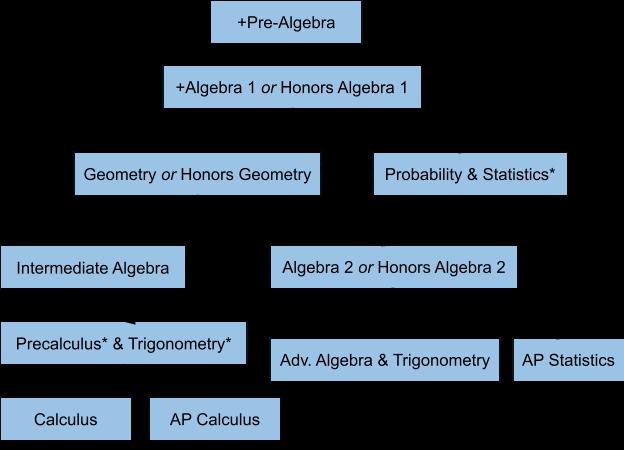
(Required courses are Algebra 1 or Honors Algebra 1, Geometry or Honors Geometry, one additional credit of math. Algebra 2 is highly recommended for those planning on attending college.)
NOTE: Math course descriptions are listed sequentially and not alphabetically by grade.
Pre-Algebra
Grade 9 ½ credit
Prerequisite: Recommendation of middle school math instructor
This course serves as a transition from middle school math to Algebra 1 Emphasis will be on pre-algebra concepts to build a foundation for success in Algebra 1 This course will be taught as a block class during 1st term, so that students who successfully complete this course are expected to move to Algebra 1 during 2nd term
Algebra 1
Grade 9 1 credit
This course contains the standard topics of Algebra 1 such as the structure of real numbers; solving, graphing and analyzing linear equalities and inequalities; and solving, graphing and exploring polynomial equations The course also integrates introductory geometry and statistics/probability
Honors Algebra 1
Grade 9 1 credit
Prerequisite: Recommendation of middle school math instructor
This course contains the algebra and math topics as described for Algebra 1. These topics will be covered in greater depth, with more challenging problems, and a greater emphasis on problem solving than in Algebra 1
Geometry
Grade 10
1 credit
Prerequisite: Algebra 1
This course covers the essential topics in geometry: congruence, similarity, perpendicular and parallel lines, quadrilaterals, right triangle trigonometry, circles, polygons, surface area and volume of three-dimensional solids, and coordinate and transformational geometry. Fundamentals of deductive and inductive logic are presented using algebraic proofs, geometric proofs and real-world problem solving as tools.
Honors Geometry
Grades 9, 10 1 credit
Prerequisite: "AB" or better in Algebra I or "B" or better in Honors Algebra 1 with instructor approval (follow previous math teacher’s recommendation when registering)
This course covers the essential topics in geometry as listed in the course description for Geometry These topics will be covered in greater depth with more challenging problems and a greater emphasis on problem solving
Probability & Statistics
Grades 10, 11, 12 ½ credit
Prerequisite: Algebra 1
This is an introductory course meant for all, not necessarily math-focused students. The course will provide students with a basic understanding of statistics to aid them in being better informed citizens. Learn how to
decide based on probability, how to use averages, how to be a critical consumer of data that is provided by the media, and many other concepts This will be a project based course focusing on real world statistics through research, data collection and analysis Students will learn how to use software such as Excel and/or Google Sheets to do statistical analysis
Intermediate Algebra
Grades 11, 12
1 credit
Prerequisite: Geometry
This course extends the topics learned in Algebra 1 including solving equations and inequalities, graphing and solving linear equations, introductory statistics and graphing and exploring polynomial functions. Uses of mathematics in real world situations will be emphasized. Successful completion of this one-credit course will prepare students to take Algebra 2. Students will need to complete Algebra 2 and Trigonometry to be prepared for college.
Algebra 2
Grades 10, 11, 12
1 credit
Prerequisite: "C" or better in Algebra 1 and Geometry
This course extends the topics of algebra, including analyzing linear equalities and inequalities, exploring various functions (such as quadratic, polynomial, exponential and logarithmic functions), and introducing analytic geometry through the study of conic sections Emphasis will be on the quadratic formula and its application.
Honors Algebra 2
Grades 9, 10, 11, 12
1 credit
Prerequisite: "B" or better in Honors Geometry or "AB" or better in Geometry with instructor approval (follow previous math teacher’s recommendation when registering)
This course covers all of the topics listed in the description for Algebra 2 As an honors course, the topics will be covered in greater depth and with a greater emphasis on problem-solving in order to prepare students for more advanced mathematics
PreCalculus
Grades 10, 11, 12
½ credit
Prerequisite: "AB" or better in Algebra 2 or "B" or better in Honors Algebra 2
This course is designed to be a rigorous course for students preparing to take Calculus or
AP Calculus It will cover in greater detail the topics of advanced algebra, function notation, graphing polynomial functions, rational functions, logarithmic and exponential functions It also introduces the concepts of limits
Trigonometry
Grades 10, 11, 12
½ credit
Prerequisite: "C" or better in Algebra 2
This rigorous course completes the topics of right triangle trigonometry, unit circle trigonometry, radian measure, vectors, and trigonometric identities. Trigonometry will be explored as a tool for solving problems and as a precursor to more advanced mathematics.
Advanced Algebra & Trigonometry
Grades 11, 12
1 credit
Prerequisite: Algebra 2
This course is designed as a fourth-year math course for students who do not want or need a Pre-Calculus or a separate Trigonometry course and are not preparing themselves for Calculus
The first term of this course is designed to review and develop fundamental concepts of mathematics in the areas of algebra, geometry, trigonometry, measurement and data Special emphasis is placed on problem solving, critical thinking and logical reasoning, making connections, and using calculators The second half of the course continues to prepare students for college level algebra Emphasis will also be placed on preparing students for the ACT.
AP Statistics
Grades 11, 12
1 credit
Prerequisite: Completion of Algebra 2
AP Statistics is an introductory, non-calculus blended-based course in statistics The course will introduce students to the major concepts and tools for collecting, analyzing, and drawing conclusions from data Students will be exposed to four broad conceptual themes: analyzing data - looking for patterns and departures; producing data - surveys, observational studies, and experiments; probability and random variables - foundations of inference; and inference - conclusions with confidence. Some colleges do not consider statistics a math credit (e.g. UW-Madison). Please consult your counselor if you have questions.
Calculus
Grades 11, 12
1 credit
Prerequisite: "BC" or better in Precalculus and Trigonometry
This course is to be taken by students who are not interested in or do not meet the requirements for AP Calculus, yet are still interested in preparing for fields in college where calculus may be a requirement This course will not be sufficient to meet the requirements of a college level calculus course but will give excellent background for any student wishing to take such a course Topics include limits, the derivative and some of its applications, and the integral and some of its applications
AP Calculus
Grades 11, 12
1 credit
Prerequisite: "AB" or better in Precalculus and Trigonometry with instructor approval
The course will cover the topics of limits and continuity, the derivative, tangent lines to a curve, applications of the derivative, definite integrals, indefinite integrals, transcendental functions, integration techniques and applications of the integral including area under a curve, the integral as a net change and volumes of solids of revolution.
School to Work
Dual Enrollment (DE) Auto Maintenance and Light Repair (Levels 1-4)
Grades 11, 12
1 ½ credit per semester (4 semesters available in program)
This series of courses is being offered in conjunction with Fox Valley Technical College. Juniors and seniors are eligible to explore their interest in this high-demand industry. Over the course of one or two years, students will take a series of courses and participate in internship experiences Upon completion of all four semesters, students will earn a technical diploma A typical schedule would include half of a day of classes at Xavier and the remainder of the day at FVTC Students must meet with their counselor about this option for details and approval prior to enrollment in the program Students will be responsible for additional tuition through Fox Valley Technical College.
Youth Apprenticeship
Grades 11, 12
1 credit
Prerequisite: In good standing, accepted application through YA
Coordinated through CESA 6 and the Department of Workforce Development, Youth Apprenticeship (YA) is designed to give XHS students an opportunity to work in depth in a career path of their choosing. This course includes release time from XHS, 450 hours of work, and completion of YA program assessments. Students enroll all year and earn 1 credit. Students in grade 12 must be matched with employers prior to the last day of Term 1
Science
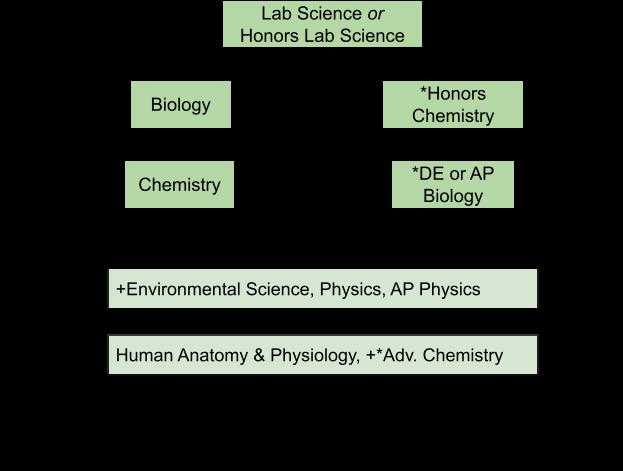
(Required courses are Lab Science Foundations - 1 credit, Biology - 1 credit and Chemistry - 0.5 credits)
Applied Chemistry (by placement only - rotating cycle)
Grades 9, 10, 11, 12 1 credit
This foundational chemistry course introduces students to the principles that govern the composition, structure, and behavior of matter Students will explore key concepts such as atomic structure, chemical bonding, the periodic table, chemical reactions, and the states of matter Through engaging experiments, hands-on activities, and problem-solving exercises, students will develop critical thinking skills and a deeper understanding of the science of Chemistry
Topics include: properties of matter, atomic theory and its history, the periodic table, chemical bonding and molecular structures, chemical reactions, including balancing equations, solutions and solubility. The course emphasizes the scientific method, laboratory safety, and collaboration, preparing students for advanced studies in chemistry and other scientific disciplines. No prior chemistry experience is required.
Applied Life Science (by placement only - rotating 3 year cycle)
Grades 9, 10, 11, 12
1 credit
Applied Life Science is one of three courses in the “Applied Science” series It is only open to students by counselor placement and students in Applied Science typically will not engage with the Lab Science curriculum during their high school career This course focuses on the practical application of biological concepts to everyday life The core curriculum will emphasize laboratory investigation with limited math integration
Applied Physics (by placement only - rotating 3 year cycle)
Grades 9, 10, 11, 12 1 credit
Applied Physics is one of three courses in the “Applied Science” series. It is only open to students by counselor placement and students in Applied Science typically will not engage with the Lab Science curriculum during their high school career This course focuses on the practical application of physical science concepts to everyday life The core curriculum will emphasize laboratory investigation with limited math integration
Honors Laboratory Science Foundations
Grade 9
1 credit
This course is also designed to prepare students for the type of abstract, higher-order, critical thinking skills that are necessary for the rigor of lab courses, but the pace and rigor of this course are for the students that have the desire to advance in higher level science courses offered at Xavier. Students taking this course will need to process and apply the information taught within a shorter period of time. This course is for internally motivated students who have had high success in 8th grade science and have strong math skills.
Laboratory Science Foundations
Grades 9, 10 1 credit
The objective of this course is to prepare students for the type of abstract, higher-order, critical thinking skills that are necessary for the rigor of lab courses This course is activity-centered, stressing laboratory skills and problem solving techniques Course material will include designing science experiments, proper use of a wide range of science equipment, measurement, data collection, data analysis (computational skills), graphing, and writing scientific reports Core concepts from biology, chemistry and physics will be taught through laboratory work to prepare students to be successful in laboratory exercises in future science courses Proper format for lab reports will be taught and used throughout the course The course will close with a competency exam. The exam, course grade, and teacher recommendation will be required for a placement in an honors course for sophomore year.
Biology
Grades 10, 11
1 credit
Prerequisite: Laboratory Science Foundations
This course takes a balanced approach to the areas of cell biology, genetics, evolution, and the anatomy and physiology of protists, plants, and animals Through lab, lecture and discussion, all of the modern biological theories are examined By emphasizing investigation and inquiry, the student will gain a better understanding of the way science works in the real world An emphasis on the ethics involved in each area attempts to improve the overall respect for life and the environment in which the student lives
The AP Physics 1 course has been designed by the College Board as a course equivalent to an algebra-based college-level physics class Problem analysis and active learning are heavily emphasized In many instances the concepts are developed or verified using laboratory experiences The central goal of the class is to develop critical thinking skills, experimental design and analysis of data using graphical and mathematical methods in order to achieve a clear conceptual understanding of the laws of physics and their applications to real-life situations The first half of the course will concentrate on mechanics while the second half will concentrate on waves, sound and electricity
Environmental Science
Grades 10, 11, 12
½ credit
Prerequisite: Lab Science Foundations
Environmental issues affect every part of our lives. This course is an interdisciplinary study of how ecosystems work, how we interact with ecosystems, and how we can deal with the environmental problems we face. The course time will be dedicated to laboratory and field experiences, citizen science projects and provide students with key hands-on learning opportunities. Environmental Science covers the topics of general ecology, water resources, and global climate change Through this course, students will gain an understanding of environmental sustainability and their personal role in the complexity of environmental issues facing society today
Honors Chemistry
Grades 10, 11, 12
1 credit
Prerequisites: Completed or currently enrolled in Honors Geometry or Algebra II, "B" or higher in Laboratory Science Foundations
This is an accelerated course for those who will pursue careers in a science-related field In addition to the topics covered in Chemistry, solution chemistry will be introduced and chemical reactions will be studied in depth
Physics
Grades 10, 11, 12
1 credit
Prerequisite: Lab Science Foundations
This course is intended to provide a thorough understanding of the laws of physics by utilizing a hands-on, minimal mathematics approach. One semester will concentrate on mechanics (motion, forces, and energy), and the other semester will concentrate on waves, sound, light, and optics. Discovery labs will be used to develop critical thinking skills. Projects such as building a mousetrap car, bottle rocket, marble roller coaster, and musical instrument will be used to relate the concepts to real life. Students may enroll in one half of the course if desired. No previous physics knowledge necessary.
Advanced Chemistry
Grades 11, 12
½ credit
Prerequisites: "BC" or better in Honors Chemistry or "A" in Chemistry with a recommendation from a science teacher
This course is a continuation of Honors Chemistry with a greater emphasis on laboratory techniques Content will include a more in-depth investigation into solutions, solubility, titration, reaction kinetics, chemical equilibrium, and Redox equations.
Chemistry
Grades 11, 12
1 credit
Chemistry consists of two half-credit courses The first course focuses on chemical equations and requires less mathematics than the second half, which emphasizes application Students are encouraged to complete both halves in order to be prepared for college chemistry
Dual Enrollment (DE) or AP Biology
Grades 11, 12
1 5 credits / 4 college credits
Prerequisite: Chemistry and minimum 2 75 GPA
This course satisfies the high school biology requirement and offers the opportunity to earn 4 college credits through the UW-Oshkosh CAPP program. It is an accelerated course, completing the equivalent of four terms in a 3-term format. DE or AP Biology will explore the characteristics that all living things share, including biochemistry, cellular organization, cellular energy, heredity, molecular biology, evolution, and ecology. Students may earn credit through the UWO CAPP Program, register and take the AP Biology
exam, or both Students enrolled in this course are expected to read and work from college-level texts and be motivated to read, write, and think through problems independently Students must complete all three terms. If registered for college credit, students are also responsible for additional tuition through UW-Oshkosh, and are subject to enrollment policies through UWO. All students must purchase a textbook, "Biozone AP Biology, 3rd Edition."
Human Anatomy and Physiology A
Grade 11, 12
1 credit
Prerequisite: Biology and instructor approval
Offered only during school years of even graduation years (2027-2028 school year)
This laboratory course is designed to give students knowledge of the fundamentals of human body structure and function related to the reproductive, urinary, respiratory, digestive, immune, and endocrine systems. It will serve as a strong background for students pursuing nursing, physical education, medical technology, and other health-related professions Students will be encouraged to use both intuitive and deductive reasoning to arrive at their conclusions Case studies will be utilized to provide immersive experiences
Human Anatomy and Physiology B
Grade 11, 12
1 credit
Prerequisite: Biology and instructor approval
Offered only during school years of odd graduation years (2028-2029 school year)
This laboratory course is designed to give students knowledge of the fundamentals of human body structure and function related to the nervous system and special senses, as well as the skeletal, muscular, and circulatory systems. It will serve as a strong background for students pursuing nursing, physical education, medical technology, and other health-related professions. Students will be encouraged to use both intuitive and deductive reasoning to arrive at their conclusions. Case studies will be utilized to provide immersive experiences.
Social Studies
(Required courses are Geography or AP Human Geography, World History or AP Modern World History, US History or AP US History, Government or DE Government)
Geography
Grade 9
1 credit
This course provides an exciting exploration of the world’s diverse landscapes, cultures, and environments Through interactive lessons, hands-on activities, and projects, students will learn how geography shapes our world today Students will develop skills in map reading, data analysis, and geographic inquiry while gaining a deeper understanding of global issues and how geography influences politics, economics, and daily life. This course is designed to spark curiosity about the world around us and help students understand the interconnectedness of our global community, beginning with early civilizations including Greeks, Romans, Ancient China, and Egypt through the modern development of world civilizations and geographic boundaries we know today.
AP Human Geography
Grades 9, 10, 11, 12
1 credit
The AP Human Geography course is equivalent to an introductory college-level course in human geography The course introduces students to the systematic study of patterns and processes that have shaped human understanding, use, and alteration of Earth's surface Students employ spatial concepts and landscape analysis to examine socio-economic organization and its environmental consequences They also learn about the methods and tools geographers use in their research and applications
Cultural Diversity
Grades 9, 10, 11, 12
½ credit
This course involves the study of cultural diversity in our community and abroad including prejudice, misperception, stereotypes, and cultural patterns leading toward increased tolerance and multicultural understanding rooted in Catholic Social Teaching Learn about historical and social perspectives and policy on race, ethnicity, gender roles and the ever-changing relationship between marginalized, minority and diverse populations and the overall population in the United States and other countries Units of study will Include but not be limited to the study of Native American, African American, Asian-American, and Latino experiences and culture What is learned in this class is useful for understanding how to communicate in an ever-changing global village
Current Problems, Issues, and Events
Grades 9, 10, 11, 12
½ credit
Current Problems, Issues, and Events is a semester-long course that covers various topics and concerns facing the United States and the rest of the world Students learn to express opposing points of view through student-directed discussion and debate Research and a variety of writing assignments are part of this course, and we will be using technology frequently throughout the class Additionally, students will gain a better understanding of evidence based research using scholarly sources and identifying bias in reporting Students taking this class should be open and receptive to others and their points of view using a critical and analytical approach throughout the course.
Mock Trial
Grades 9, 10, 11, 12
½ credit
Prerequisite: Freshmen must be enrolled in Honors English 9 (or have instructor approval)
Mock Trial is an applied look at the American legal system It is designed to stimulate and to encourage a deeper understanding of legal decisions and practices Students will be provided the opportunity to participate actively in the judicial process Simulations and legal debate will be applied to the mechanics of court procedures and mock trials Taking the roles of prosecution, defense, judge and jury will provide a "hands on" approach to the legal system The purpose of the course is to provide students the opportunity to develop effective communication skills, knowledge of court procedures, and understanding of case law and landmark Supreme Court decisions
Auditions for the competitive Mock Trial Teams held in November are entirely separate from this course.
Wars
Grades 9, 10, 11, 12
½ credit
This course examines the causes, events, and consequences of major wars throughout history, providing students with a deeper understanding of how conflicts have shaped societies, cultures, and global relationships Students will analyze key historical conflicts, including ancient wars, medieval campaigns, and contemporary conflicts Through the study of political, economic, technological, and social factors, students will explore the motivations behind war, the experiences of those involved, and the long-term effects on nations and populations
AP Modern World History
Grade 10
1 credit
Prerequisite: “A” average in Geography and English 9 (or instructor approval) Students must be able to read a college-level textbook
This Advanced Placement offering addresses the same topics as described in the World History course and follows the curriculum designed by the College Board The course will incorporate primary and secondary readings and critical analysis of these documents The content is covered through written assignments and reading Historical reasoning skills are implemented throughout the course
World History
Grade 10
1 credit
This course presents a global view of world history It will trace the post-Renaissance world to modern times The course includes units on Post-Renaissance, Age of Revolutions, World Wars and the Cold War The course will also discuss the role of the Catholic Church throughout events in world history The course content is covered through written assignments, experiential exercises, videos and discussions
Introduction to Developmental Psychology
Grades 10, 11, 12
½ credit
This course is an introductory study of psychological concepts, with a specific focus on the physical, cognitive, and socio-emotional development of humans from prenatal development through death. The course is designed to increase students’ understanding of foundational psychological principles and theories while helping them examine the developmental changes they have already experienced, as well as those they will encounter throughout their lives. By the end of the course, students will be better equipped to care for themselves as they continue to develop and to support and care for others in their personal and social relationships.
Psychology
Grades 10, 11, 12
½ credit
The central focus of this class is to give an introduction to the field of psychology Students will explore various facets of the human mind in search of a greater understanding of themselves and others Some topics included in this course are personality, brain functions, conditioning/learning, abnormal behavior, and gender differences Active participation in class discussions, experiments, team projects, daily reading assignments, and presentations are essential for success in this course.
AP US Government & Politics
Grades 11, 12
1 credit
Prerequisite: 3 25 GPA and ½ credit of US History plus instructor approval
Students will analyze the decision-making structures and processes of the American national government, including the role of political parties and interest groups, and the value preferences within American society which affect the formation of public policy Each branch of the federal government will be analyzed in addition to incorporating current events into weekly discussion
AP Psychology
Grades 11, 12
1 credit
Prerequisite: “AB” or above in World History and either Biology or Honors Chemistry. All seniors are eligible upon instructor approval.
AP Psychology is designed to introduce students to the systematic and scientific study of behavior and mental processes The course will cover a broad range of topics from brain physiology to social behavior The aim of this course is to provide a learning experience equivalent to an introductory college psychology course
AP U.S. History
Grades 11, 12
1 credit
Prerequisite: Instructor approval, “AB” or above in both English and World History
This advanced U.S. History course follows a chronological framework from Colonial America through the Cold War and into modern America. A thematic analysis will be incorporated throughout by studying documents, essays and specialized works of famous historians. The course will employ a well-balanced and challenging collection of materials including the textbook, organized assignments, primary documents and a book of “readings” of individual interpretive articles. Substantial independent research work will be required.
Dual Enrollment (DE) Introduction to Sociology
Grades 11, 12
½ credit / 3 college credits
Introduction to Sociology is a social science course designed to introduce students to the basic concepts of the intercultural discipline of sociology Emphasis is given to the following special areas: culture, socialization, social stratification and the five institutions, including family, politics, economics, religion, and education Examples of other topics include: demography, deviance, technology, environment, social issues, social change, and social organization. Students will be responsible for additional tuition through UW-Oshkosh.
Government
Grades 11, 12
½ credit
Prerequisite: ½ credit of US History
The objective of this class is to offer a survey of the American government as well as prepare students for community, state and federal citizenship Designed to introduce fundamental concepts and stimulate critical thinking, decision-making and experiential-learning applications through debate and discussion, this course will equip students with the communication skills necessary in active citizenship Students will be expected to define viewpoints on historical and present day issues in government
U.S. History
Grade 11, 12
1 credit
This course is a highly integrated program that provides students with a practical approach to U.S. History. Students will sharpen their skills as critical and reflective thinkers The course will expose the students to a variety of teaching strategies including cooperative learning, lecture, film and research The first half of the course examines history from the end of the 19th Century through the Cold War The second half begins with the election of 1960 and ends in the early 2000s
Theology
(Students are required to take a Theology course each year)
Theology 9
Grade 9
1 credit
The purpose of this course is to give students a general knowledge and appreciation of Sacred Scriptures Through the study of the Bible, students will encounter the living Word of God, Jesus Christ They will learn about the Bible, authored by God through inspiration, and the various ways of interpreting the text The course will explore God’s redemptive work in history through the establishment of a covenant with the Chosen People of Israel. Students will examine how God acts through history to repair the damage done by sin and how this work is fulfilled in the person of Jesus Christ. The course will explore the mysteries of the faith such as the Trinity and the Incarnation to come to know Jesus Christ better. In learning about who He is, the students will also learn who He calls them to be. Therefore, the students will have an opportunity to explore their own relationship with God and God’s plan for humanity.
The Spiritual Feature is a practical spiritual supplement to the Theology 9 course. Students will receive teaching in the way of Catholic prayer and the fundamentals of the Catholic spiritual life. Through brief lectures, spiritual readings, and classroom discussion, students will learn how souls enter into and live an ever-deepening relationship with the Most Holy Trinity. The feature includes consistent and significant time in the chapel as a ‘prayer lab’ for personal heart-to-Heart prayer with the Lord. Guest lecturers and opportunities for pilgrimages and missions serve to enrich the instruction in living the Catholic spiritual life
Theology 10
Grade 10
1 credit
The purpose of this course is to help students understand what God has done for us through His Son, Jesus Christ Through this course of study, students will learn that for all eternity, God has planned for us to share eternal happiness with Him, which is made possible through the redemption Christ won for us on the cross Students will also be introduced to what it truly means to be a disciple of Christ and what life as a disciple entails A detailed study of the moral life and its implications for Catholic Christians will be featured in the second half of the course
Theology 11
Grade 11
1 credit
The course will cover a study of the nature and mission of the Church, particularly looking at her origins, purpose, and early history Theology 11 will also cover an introduction to saints, mariology, and vocations Students will also learn how the sacraments offer Catholics privileged encounters with God, and they will learn to go forth into the world as Christ’s hands and feet through a study of Catholic social teaching
Theology 12 Electives
Grade 12
½ credit each
Seniors must pick 2 (Every attempt will be made to give top choices, but choices are not guaranteed )
● Theology 12: Catholic Apologetics
Catholic apologetics is aimed at teaching students how to defend, explain, and justify the beliefs and practices of the Catholic Church, covering topics like the existence of God, the divinity of Christ, and the history and teachings of the Church. Students will engage in classroom debates over doctrinal issues presenting various counter viewpoints to better understand the teachings of the Catholic Church
● Theology 12: Catholic Spiritual Life
Prerequisite: short interview with course teacher to determine student level of commitment. Students explore both the knowledge and the practice of the Catholic spiritual tradition. This course is designed for students who desire to spend more time in reflection, prayer and meditation so as to better know and love the Triune God and grow in their own interior spiritual life. Class activities include both individual and small group faith sharing. The course also aims to build spiritual understandings and habits that students can take with them into life beyond high school
● Theology 12: Church History
We will study the formation of the Catholic Church from before the time of Jesus, to our present day. This course will cover God’s intervention into humanity, the challenges the early Church Fathers and saints encountered, as well as the foundation they built, and the mission God calls us to live out in our daily lives.
● Theology 12: Intro to Christian Philosophy
Students study the philosophical foundations of western thought and a Catholic approach to a rational understanding of reality Students explore questions such as: “Is reality intelligible?,” “Can God’s existence be proved from human experience?,” “Is truth objective?,” “What is the nature of free will?” Students learn about the contributions of major philosophers throughout history with a special emphasis on St Augustine and St Thomas Aquinas. Each topic will also be contrasted with ideologies such as skepticism, nihilism, relativism, Marxism, postmodernism, etc and how they manifest in culture.
● Theology 12: Service Learning
How do Catholic Christians serve the world? How do your service hours influence you as a person and impact your passion to impact society? Do class service projects, learn about Catholic organizations and community service organizations which serve those in need, and reflect on your own service experiences in order to grow as a person and a believer
● Theology 12: World Religions, Ecumenism, and Interreligious Dialogue
This course will cover an introduction to the beliefs and customs of major world religions (i e Christianity, Judaism, Islam, Hinduism, Buddhism, Taoism, Confucianism) and will evaluate each religion with the fullness of truth in the Catholic Church revealed to us by Jesus Then they will learn practical skills in ecumenism and interreligious dialogue
World Languages
French 1
Grades 9, 10, 11, 12
1 credit
French 1 is a beginning French course that uses a communicative approach to develop listening, speaking, reading, and writing skills. Students will learn the vocabulary and language needed to communicate in French on everyday topics including home and family, daily activities, school, shopping, sports, and favorite leisure-time activities. Students will also expand their understanding of culture by studying various aspects of French-speaking countries and regions.
French 2
Grades 9, 10, 11, 12
1 credit
Prerequisite: Minimum of a "C" average in French 1
This second level of French reviews and reinforces the basic skills and builds new vocabulary through dialogues and exercises in reading, speaking, and writing French phonetic elements are stressed for clear and correct pronunciation Grammar continues the coverage of nouns, pronouns, adjectives, adverbs, articles, and verbs The past tense, "passé composé," will be introduced
French 3
Grades 10, 11, 12
1 credit
Prerequisite: A minimum of a "C" average in French 2
In French 3, students will use cultural themes to build new vocabulary by means of activities in speaking, listening, reading and writing Communication skills will be emphasized Grammar presented in French 1 and 2 will be reviewed The imperfect, future, and conditional tenses will be introduced Technology, including the use of language labs via online French news, will be introduced
French 4
Grades 11, 12
1 credit
Prerequisite: Minimum of a "B" average in French 3
The fourth level of French further explores the language, culture, history, and literature of France. It includes a general review of all grammar structures. Specific new grammar includes the forms and uses of the present subjunctive. This course focuses on application of the language through writing, reading, and speaking. Classes are conducted primarily in French.
Dual Enrollment (DE) French 5
Grade 12
1 credit / 5 college credits
Prerequisite: Minimum of a "B" average in French 4 or instructor approval and an overall GPA of 2 75 or consent of the instructor to enroll for college credit
Dual Enrollment French 5 is an Advanced French Grammar course designed to provide a deeper understanding of the what, why and how of French sentence structure as well as a guided review of the grammatical structures that are often difficult for non-native speakers Students will also refine their listening, speaking, reading and writing skills through large and small group discussion, various writing assignments, and the analysis of authentic cultural texts, short stories and other literary works. Class is conducted in French.
Students may choose to earn college credit through UW-Oshkosh (CAPP 204). A grade of “B” or better on the UW-Oshkosh grade scale also earns retroactive credits for previous high school work. Students are responsible for additional tuition through UW-Oshkosh.
German 1
Grades 9, 10, 11, 12
1 credit
This course is designed for students with no previous knowledge of the German language At this level, the students learn the basics of language learning, how to pronounce the language, recognize and use common phrases and understand beginning level vocabulary in its written and spoken form The course will also increase student awareness of the culture, traditions, history, and geography of German speaking countries
German 2
Grades 9, 10, 11, 12
1 credit
Prerequisite: Minimum of a "C" average in German 1
This course will expand upon and reinforce the vocabulary and grammar learned in German 1 Students will read a supplementary reader during the course of the year Students are exposed to more listening and reading skills than in the first level Role playing, where the students write skits based on the unit vocabulary, is used to encourage the students to use the spoken word in real-life situations
German 3
Grades 10, 11, 12
1 credit
Prerequisite: Minimum of a "C" average in German 2
This course will expand upon and reinforce the vocabulary and grammar learned in German 1 and 2. In addition to the text, students will read a supplementary reader during the course of the year. Students are
exposed to more listening and reading skills than in the second level Role playing, where the students write skits based on the unit vocabulary, is used to encourage the students to use the spoken word in real-life situations
German 4
Grades 11, 12
1 credit
Prerequisite: Minimum of a "B" average in German 3
This course is taught entirely in German. Paperback books, German videos, articles from German magazines, and CDs are used to encourage the students to speak only German in the classroom. Some of the themes discussed in the course include teenage problems of peer pressure, teenage love relationships, and other contemporary issues
Dual Enrollment (DE) German 5
Grade 12
1 credit / 5 college credits
Prerequisite: Minimum of a "B" average in German 4 or teacher approval and an overall GPA of 2 75 or consent of the instructor to enroll for college credit
Dual Enrollment German 5 refines the speaking, writing and listening skills learned the previous year This course deals with social issues in German society such as the treatment of foreigners in Germany. The course is held exclusively in German and culminates with the reading and analyzing of the novel Damals war es Friedrich.
Students may choose to earn college credit through UW-Oshkosh (CAPP 204). A grade of “B” or better on the UW-Oshkosh grade scale also earns retroactive credits for previous high school work. Students are responsible for additional college tuition through UW-Oshkosh
Spanish 1
Grades 9, 10, 11, 12
1 credit
Spanish 1 is a course for students with little or no knowledge of Spanish It aims to develop the four basic language skills of listening, speaking, reading, and writing Students will be able to understand and discuss topics related to school, home, family life, daily activities, sports, and forms of entertainment Students will learn to communicate using the present and present progressive tenses, nouns, adjectives, and pronouns. This course is also an introduction to the culture of Spanish-speaking countries.
Spanish 2
Grades 9, 10, 11, 12
1 credit
Prerequisite: Minimum of a "C" average in Spanish 1 or approval by Instructor
Spanish 2 begins with a brief review of the grammar and vocabulary of Spanish 1 and continues with further development of listening, speaking, reading and writing skills Topics included in Spanish 2 are feelings, likes and dislikes, hobbies and pastimes, daily routines and household chores, shopping and telling stories The past tense the preterite and imperfect aspects will be used in writing and in conversation This class is conducted in Spanish and English
Spanish 3
Grades 10, 11, 12
1 credit
Prerequisite: Minimum of a "C" average in Spanish 2
Spanish 3 aims to develop listening, speaking, reading and writing skills beyond the beginning level, to review previously learned grammatical structures, and to increase students’ ability to communicate, especially regarding foods, the outdoors, travel, work and volunteering Specific new grammar learned in the third year includes the future and conditional tenses as well as forms and uses of the present subjunctive Students will express themselves at a more sophisticated level and will read, analyze and discuss simple authentic texts and short cultural readings Class is conducted primarily in Spanish
Spanish 4
Grades 11, 12
1 credit
Prerequisite: Minimum of a "C" average in Spanish 3
Spanish 4 emphasizes conversation, composition, reading and listening comprehension. It includes a systematic review of previously learned Spanish grammar, as well as the introduction of the past subjunctive, the subjunctive in adjective and adverb clauses, and if-clauses. Comparisons are made between Hispanic and North American cultures, specifically in the areas of family, education, sports, customs and traditions, the arts, and social and economic issues Class is conducted primarily in Spanish
Dual Enrollment (DE) Spanish 4
Grade 12
1 credit / 5 college credits
Prerequisite: Minimum of a "B" average in Spanish 3 and an overall GPA of 2 75 or consent of instructor to enroll for college credit
See Spanish 4 for a complete description. Seniors registering for college credit are expected to attain a more in-depth understanding of grammar concepts, which they will use to achieve a higher level of proficiency in understanding, speaking, reading and writing Spanish. This will be achieved through additional assignments. Only the seniors in Spanish 4 may choose to earn college credit through
UW-Oshkosh (CAPP 204) A grade of “B” or better on the UW-Oshkosh grade scale also earns retroactive credits for previous high school work Students are responsible for additional tuition through UW-Oshkosh.
Dual Enrollment (DE) Spanish 5
Grade 12
1 credit / 5 college credits
Prerequisite: Minimum of a "B" average in Spanish 4 or instructor approval and an overall GPA of 2 75 or consent of the instructor to enroll for college credit
Dual Enrollment Spanish 5 is an Advanced Spanish Grammar course designed to provide a deeper understanding of the what, why and how of Spanish sentence structure as well as a guided review of the grammatical structures that are often difficult for non-native speakers. Students will also refine their listening, speaking, reading and writing skills through large and small group discussion, various writing assignments, and the analysis of authentic cultural texts, short stories and other literary works. Class is conducted in Spanish
Students may choose to earn college credit through UW-Oshkosh (CAPP 312) A grade of “B” or better on the UW-Oshkosh grade scale also earns retroactive credits for previous high school work Students are responsible for additional tuition through UW-Oshkosh.