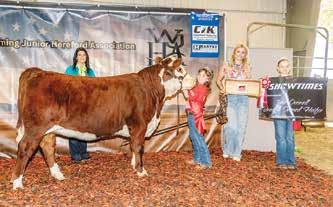
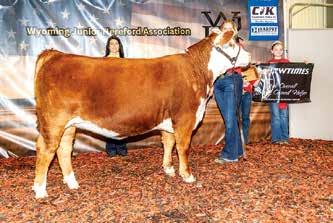
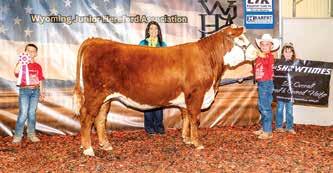
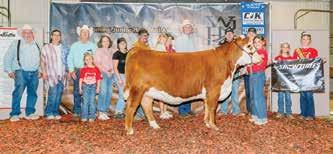
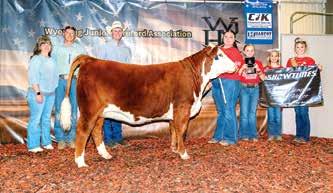
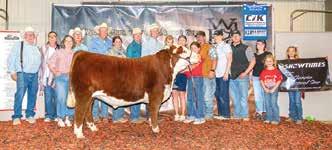
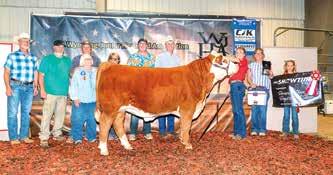
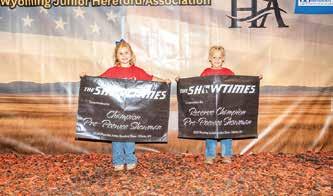
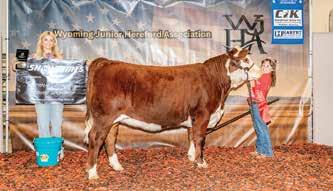
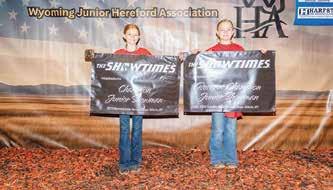
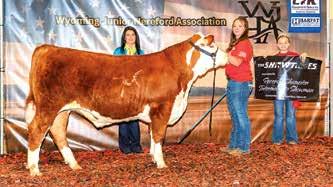
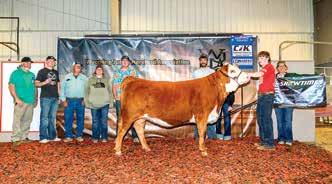
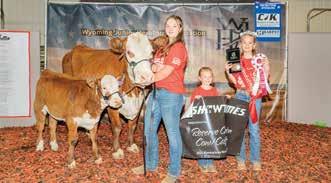
WJHA Field Day winners crowned Pages 6-7
Wyoming basin and water supply outlook released for June Page 8
WAIC Bookmark and Beyond winners highlighted Page 9
Coal industry to receive $700 million investment from Trump administration Page 15
WJHA Field Day winners crowned Pages 6-7
Wyoming basin and water supply outlook released for June Page 8
WAIC Bookmark and Beyond winners highlighted Page 9
Coal industry to receive $700 million investment from Trump administration Page 15
The Wyoming Livestock Board’s (WLSB) Chapter Two, Brucellosis Management and Mitigation; Chapter Eight, Import Rules; Chapter 13, Scrapie Prevention and Management and Chapter 25, Brucellosis Quarantine Mitigation Expense Reimbursement, are open for public comment until July 22. Comments may be submitted to WLSB via e-mail at wlsb-rules@wyo. gov or mailed to WLSB, 1934 Wyott Drive, Cheyenne, WY 82002. For more information or to review the rules in their entirety, visit wlsb.state.wy.us
Arts and Humanities, Trapper Creek will host a roundtable discussion on the impacts of chronic wasting disease in the Wind River and Greater Big Horn basins on June 19 from 11 a.m.-1 p.m. at the Shell Community Hall in Shell. The event costs $20 to attend and will feature lunch catered by the Old Shell Store and discussion led by Tucker Russell, a former University of Wyoming graduate student who studied the disease extensively. For more information or to RSVP, visit ahtc-wy.org, e-mail director@ahtc-wy.org or call 720-238-5194.
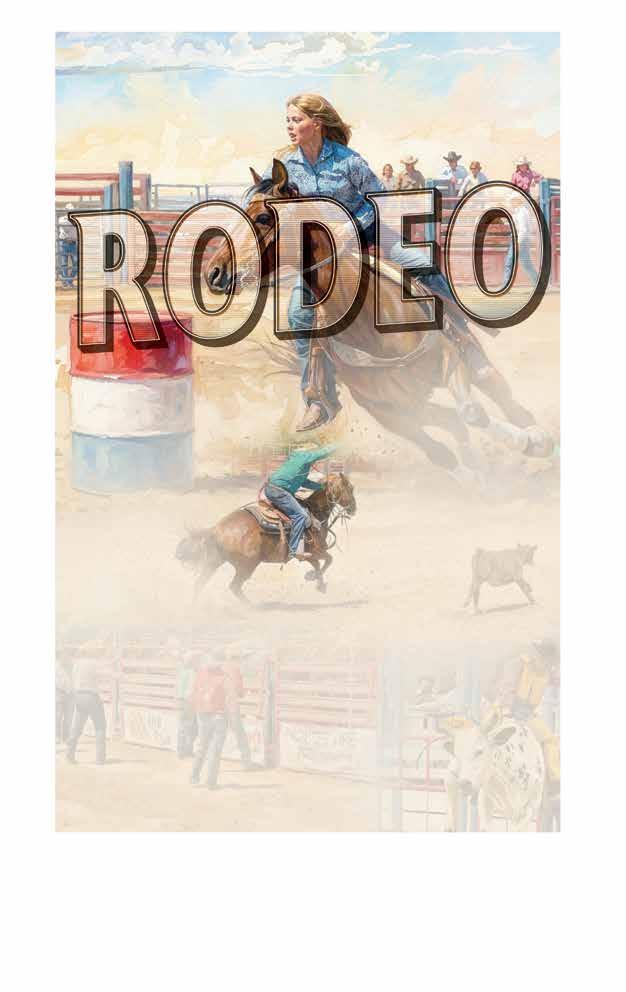
The 98th Annual Rooftop Rodeo will take place July 6-11 in Estes Park, Colo. The jam-packed, multi-day event will kick off at 10 a.m. on July 6 with the Rooftop Rodeo Parade, and evening performances will begin each night at 7 p.m. For more information or to purchase tickets, visit rooftoprodeo.com/
The U.S. Department of Agriculture will host a webinar for meat and poultry processors to learn how they can expand their capacity through the Meat and Poultry Processing Expansion Program (MPPEP). The webinar is open to the public and will take place on June 16 at 12 p.m. For more information or to register, visit zoomgov. com/webinar/register/WN_Tu VrirhfTM6gQEuoCusjNw#/registration
Despite more than a year of heightened surveillance along the Southern Border and continued efforts to keep the New World screwworm (NWS) out, the devastating pest has officially
returned to the U.S.
On June 3, federal officials confirmed the first case of NWS on the northern side of the U.S.-Mexico Border in a three-week-old calf in Zav-
ala County, Texas, marking the first domestic detection in decades.
Since then, additional cases have been confirmed in Texas and New
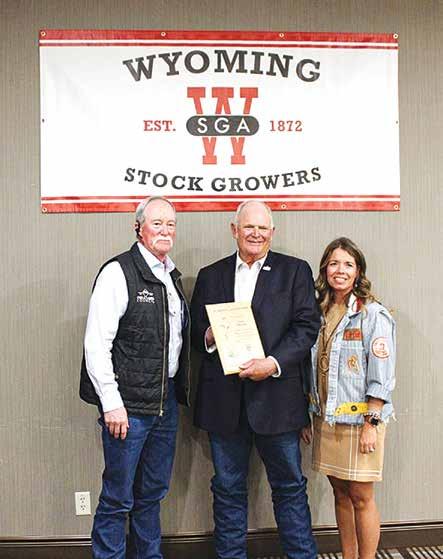
Outstanding individuals recognized for contributions to the cattle industry
During the 2026 Wyoming Stock Growers Association (WSGA) Summer Cattle Industry Convention and Trade Show, held June 3-5 in Cody, several outstanding individuals were honored for their contributions to the cattle industry during an awards luncheon on June 5.
Guardian of the Grasslands
The Guardian of the Grasslands Award is given annually to an individual who has put time and effort into preserving Wyoming’s agricultural industry, and this year, the honor went to Niels Hansen of Rawlins.
Public Lands Council (PLC)
President Tim Canterbury presented Hansen with the award, highlighting his dedication to protecting public lands ranching in an award nomination written by PLC Executive Director Kaitlynn Glover.
“Hansen has a deep understanding of the policy confines of cattle production and what needs to be done to fix the system,” stated Canterbury. “He’s willing to try new things and be on the leading edge of policy experimentation, putting
AWARDS on page 5
Holders of valid water rights from the Green River, Little Snake River and their tributaries within Wyoming’s portion of the Colorado River Basin will be eligible to apply to the recently enacted Voluntary Water Conservation Program Act.
Irrigation, livestock, agricultural, industrial and municipal water rights are some beneficial uses where incentives could help rights holders find ways to use less water and send more water into storage and downstream in the voluntary program.
Background information
Past water conservation pilot projects in the Upper and Lower Colorado River basins, including participating Green River ranchers and farmers, resulted in water “savings” with participating water rights holders compensated by state and federal funds, with incentives of varying amounts paid per acre-foot conserved.
In its 2024 annual report, the Colorado River Water Users Association reported Wyoming and others implemented the voluntary, temporary and compensated System Conservation Pilot Program for several years with plans to continue similar conservation activities.
As an example, in 2023, Wyoming hosted 21 water conservation projects – 19 of them irrigation, one municipal and one industrial – which conserved an estimated 16,000 acre-feet of water.
Wyoming law prohibits mandating water distribution, except for the direst situation, and ongoing drought continues
Producers gather in Cody for annual Wyoming Cattle Industry Convention
From June 3-5, producers from across the Cowboy State gathered in Cody for the Wyoming Stock Growers Association (WSGA) Summer Cattle Industry Convention and Trade Show.
Themed “Restoring Collaborative Resource Management,” the convention centered on providing ranchers and natural resource professionals with tools to navigate a complex landscape and build on common ground and featured committee meetings and comments from several industry stakeholders, as well as an awards presentation.
Day one highlights Convention programming kicked off on June 4 with a welcome address from WSGA President Reg Phillips.
“I want to thank everybody for taking time away from their schedules and turning cattle and sheep out to be here,” Phillips began. Phillips emphasized, in a year where Wyoming is expected to experience extreme drought and fire conditions, working with industry partners such as the
Brody Hinkle of Riverton has been showing livestock through Riverton FFA for the past five years.
The 18-year-old senior at Riverton High School exhibits market and breeding lambs at the Fremont County Fair and the Wyoming State Fair (WSF) every summer, in addition to several regional jackpots.
Brody is also an active livestock judger, which he says has helped him build community and develop an eye for animals which serves him in the show ring and beyond.
Although he did not grow up with animals directly, Brody says his family and some key mentors have been influential in his showing career.
Brody is the youngest of three children and the first to be involved in agriculture and FFA. His parents Jim and Amber Hinkle have supported his journey, and his cousin Mandi Weber taught him the basics of showing livestock.
Other important mentors include fellow
Please see HINKLE on page 16

All the buzz this week is about cattle, beef products and how New World screwworm (NWS) being found in Texas and New Mexico may impact the price of meat, especially beef.
The best answer is it shouldn’t have any effect with the control efforts already in place.
For a number of years, the U.S. Department of Agriculture (USDA) has been aware of the NWS infestation in Central American countries.
These countries have, in a sense, been living with the problem and not doing much to control the fly. USDA has been helping Mexico produce sterile male flies to control the pest, in hopes of stopping the fly from coming into their country. USDA set boundaries in southern Mexico to stop the fly, but has had to keep moving the boundaries north.
The U.S. built a facility in Texas to produce sterile male flies domestically, which opened in May, and the USDA has been scattering sterile flies along the Mexican border for some time now. However, NWS still found its way into the U.S.
The last major outbreak of NWS was in the 1950-60s, but was eventually eradicated from the U.S.
This time around, USDA and livestock producers have many new ways to control NWS. The problem is the fly will lay its eggs in any animal with an open wound, and its larvae will eat flesh in and around the wound. This effects all wildlife, pets and livestock.
Although producers can check livestock for open wounds, wildlife is a tougher issue.
USDA and many others knew the fly entering the U.S. was a possibility. In fact, they expected it to happen last summer. Now there is an all out war along the border and, wherever NWS is found, it will be controlled.
There are many new products out there to assist livestock producers in controlling NWS, while still allowing them to move livestock around.
The outbreak shouldn’t affect the price of meat, especially beef.
For those looking for a high-quality protein source, beef is in high demand.
Last year, beef sales accounted for 56 percent of all retail meat sales dollars and beef’s portion of protein sales represented about 75 cents of every new dollar. Beef counters have been dominating the marketplace and have even managed to collect the biggest portion of new dollars spent.
According to BEEF Magazine, “Between 1980-98, new spending for beef grew by just six dollars a person. Meanwhile, pork and broiler spending grew by $106. During the last five years, beef spending has increased by $181 a person, while pork and broiler spending has combined for only about $100 per capita.”
If one wants to know how this all happened, we need to look no further than our state beef councils and the checkoff which educate consumers, along with beef producers and improved cattle genetics.
With new tender beef cuts and beef’s outstanding flavor, consumers are not wrong in wanting more beef for dinner.

Wyoming Livestock Roundup (USPS # 005-774) is published weekly by Maverick Press, Inc. P.O. Box 850 • Casper, WY 82602 Periodicals postage paid in Casper, WY Fax: 307-472-1781 • E-mail: roundup@wylr.net
DENNIS SUN, Publisher • Cell: 307-262-6132 e-mail: dennis@wylr.net
HANNAH BUGAS, Managing Editor • hannah@wylr.net
OLSON, Classified Sales Manager • 307-685-8213 • denise@wylr.net
ANDREA ZINK, General Manager • andrea@wylr.net CURT COX, Director of Livestock Field Services • 307-630-4604 • curt@wylr.net
CALLI WILLIAMS, Livestock Field Services Rep. • 605-695-1990 • calli@wylr.net
Subscription Rates: 1 year: $60; 2 years: $90; 3 years: $130
Postmaster: Send address changes to: andrea@wylr.net Wyoming Livestock Roundup • P.O. Box 850 • Casper, WY 82602
Farmers and ag retailers operate on razor-thin margins, so even a small, artificial cost increase can have a big impact.
As the Surface Transportation Board (STB) considers the proposed merger of Union Pacific (UP) and Norfolk Southern (NS), the Agricultural Retailers Association (ARA) has serious concerns about how this merger would affect members and the agribusiness sector as a whole.
ARA proudly represents more than 5,000 ag retail locations across the U.S., many of which rely on safe, consistent rail service to operate. Ag retailers supply farmers and ranchers with products and services such as seed, nutrients, crop protection products, feed, equipment, technology and more.
ARA members range in size from small, family-held businesses to large companies and farmer-owned cooperatives with many outlet stores.
Right now, four railroads – including UP and NS – already control 90 percent of freight traffic.
The voices of ARA’s many members agree when rail service is dominated by just a few players, they hold the power to set terms that work for them – not for the shippers and customers who depend on rail to move agricultural commodities, fertilizer, ag chemicals, fuel and other essential supplies.
This imbalance drives up costs and threatens the reliability of the country’s entire supply chain.
After adjusting for inflation, U.S. freight rail rates have risen by more
By Daren Coppock
than 40 percent over the past 20 years –about 70 percent faster than truck rates. Fertilizer shippers have been hit even harder, with rail rates for key inputs like anhydrous ammonia climbing more than 200 percent since the mid-2000s.
At the same time, rail remains essential to the supply chain – a single railcar can carry roughly the equivalent of four truckloads of anhydrous ammonia – leaving many agricultural retailers and farmers with limited alternatives.
Against a backdrop of already high input costs, past rail consolidation has consistently reduced competition, resulting in higher transportation costs and less negotiating leverage for agricultural shippers.
While supporters of this merger promise “efficiency,” we’ve seen this pattern before – costs rise, service suffers and we end up in a worse place than where we started.
Past large rail consolidations have led to service disruptions, reduced competition and higher transportation costs, particularly for captive agricultural shippers. In fact, the service issues following earlier mega-mergers were so severe, federal regulators temporarily paused further consolidation to stabilize the network.
In our industry, we need something that moves a lot of freight, and rail is the way to do it in rural America. Twothirds of the fertilizer used for crop inputs moves by rail, along with fuel and chemical products.
One jumbo hopper car moves as
much as 3.4 trucks and is three times more fuel efficient per ton-mile than other transportation alternatives.
Some ARA members have had the railroad tell them they didn’t feel they were generating enough business and threatened to cut service back to their locations, and when this happens, how will we measure cost when we can’t move goods anymore?
Not being able to move goods isn’t exactly “efficient” either, is it?
ARA believes supporting ag retailers is the first step toward ensuring a safe and plentiful food supply for the entire country, because retailers provide farmers with what they need to operate.
This proposed merger directly threatens our ability to operate and, by extension, impacts U.S. farmers and the food supply for all Americans.
If the STB isn’t hearing alarm bells, they should be, because this is going to be a big problem for all of us.
For those who are still on the fence about this merger, let us ask this – would we be better off with only two airlines, automakers, insurers or bankers? No. STB’s own rules require mergers to “enhance” competition, not merely preserve it. The proposed UP and NS merger fails this test.
ARA wants to see the standard of increased competition because this is what’s best for everyone, not just two rail companies.
Daren Coppock is president and chief executive officer of ARA. This opinion column was originally published by AgriPulse on June 8.
Gov. Mark Gordon is encouraging local community leaders to secure their passes for the 2026 Wyoming Funding Summit before session capacities are filled.
The free, four-day event will take place June 22-25 at the CAM-PLEX in Gillette.
Building on the tangible success of recent regional Wyoming Grant Assistance Program workshops and the growing momentum of the governor’s overarching grant initiative, this year’s summit features an expanded lineup of federal partners and agency representatives ready to work directly with applicants.
Summit attendees will gain vital, hands-on knowledge through interactive panels and professional development seminars.
Days one and two feature beginner-friendly and advanced grant management and writing sessions focused on identifying appropriate funding sources, building competitive proposals and navigating compliance, while days three and four transition to interactive panels and fireside chats with key federal partners and state agency representatives who will match local projects with national funding streams.
Anyone tasked with reducing local tax burdens while improving community infrastructure should attend, and while the summit is free, strict capacity limits are in place for individual interactive seminars.
For more information, visit sbd.wyo.gov/grants/wyoming-funding-summit
The Montana Department of Natural Resources and Conservation (DNRC) Rangeland Resources Program is sponsoring educational events to promote healthy, sustainable rangelands during Rangeland Appreciation Month.
Preparations are currently underway for the Montana Range Tour, set for June 17 in Gold Creek, Mont. The tour will educate ranchers on sustainable rangeland practices and include guest speakers from across Montana, as well as a tour of Thomas Herefords, recipient of the 2025 Leopold Conservation Award.
“We hope to increase awareness and understanding of the importance of rangelands through events highlighting rangelands’ contributions to our state economy and ecology,” said Stacey Barta, DNRC state coordinator for the rangeland resources program. “Rangelands support Montana’s $1.5 billion livestock industry while providing vital wildlife habitat, and the ranchers who manage them are dedicated stewards of the land.”
For more information or to register, visit mtrangelands.org/


On June 10, the Wyoming State Veterinary Laboratory (WSVL) published a post on Facebook reminding horse owners to remain aware of Streptococcus equi, commonly referred to as strangles.
In the post, WSVL notes to date, nine cases of strangles have been detected in the state of Wyoming in 2026, including two in Converse County, one in Carbon County and one in Sweetwater County within the past month, as well as one each in Park County, Campbell County, Weston County, Albany County and Sweetwater County since Jan. 1.
WSVL explains strangles is a highly contagious bacterial disease of the equine upper respiratory tract, in which the bacteria crosses mucous membranes in the nose and mouth to infect lymph nodes. This causes abscesses which can eventually rupture.
The infected lymph nodes become swollen, which can compress the upper respiratory tract – hence the name strangles.
Younger horses often exhibit more clinical signs than older horses, but the prognosis for uncomplicated horses is generally good. WSVL further notes the best strategy to prevent strangles is to minimize exposure risks.
WSVL goes on to state, “Coming soon – a quantitative polymerase chain reaction test for strangles. The bacteriology section is currently validating this assay, and we look forward to offering it soon.”
The University of Wyoming (UW) College of Agriculture, Life Sciences and Natural Resources will host a field day in conjunction with the UW Agricultural Experiment Station at the Sheridan Research and Extension Center in Sheridan on July 1.
This year’s field day will bring together producers, land managers, researchers and community members to celebrate 10 years of management results from the UW Institute for Managing Annual Grasses Invading Natural Ecosystems’ project in northeastern Wyoming and explore practical solutions for dryland hay and alternative forage varieties, alfalfa variety selection and weed control strategies, alfalfa weevil resistance management and native seed source collection and propagation.
The event is free and open to the public. Registration begins at 8:30 a.m., and lunch will be provided.
To RSVP beforehand, e-mail shrec@uwyo.gov.
Wyoming residents, landowners, community leaders and wildfire professionals now have access to Wyld Fire, a new wildfire risk assessment and planning platform developed by the Wyoming Geographic Information Science Center and Tri-State Generation and Transmission.
The platform provides interactive mapping tools and wildfire information designed to support informed decisionmaking and wildfire preparedness across the state.
Wyld Fire offers valuable information from learning more about wildfire risk and checking current fire restrictions to exploring wildfire conditions.
Tools like Wyld Fire help increase awareness, improve planning efforts and support proactive wildfire mitigation across Wyoming.
To explore the platform, visit wyldfire.wygisc.org/
On May 29, the Wyoming Game and Fish Department (WGFD) approved the acquisition of a 370-acre property in Goshen County.
The property is located off of County Road 55 and will be included in the Table Mountain Wildlife Habitat Management Area (WHMA).
The parcel includes 84 acres of associated water rights and will expand and enhance wildlife habitat and allow increased hunting opportunities for the sporting public.
“The acquisition of this property will help enhance the Table Mountain WHMA for public use and continue to be available for agricultural production in the area,” said Sean Bibbey, WGFD services division chief. “It will also provide an opportunity for WGFD to continue critical habitat projects in the area.”
On June 9, Gov. Mark Gordon visited Washington, D.C. to meet with federal officials, western governors and members of Congress to discuss the future of the Colorado River Basin and the long-term management of critical water resources, including Flaming Gorge Reservoir.
“As a headwaters state, Wyoming is committed to bringing real solutions to the table,” Gordon said. “We remain focused on a seven-state approach which recognizes the realities of a prolonged drought while protecting critical tools like Flaming Gorge for future generations. Wyoming is not interested in simply reacting to challenges. We intend to help lead the discussion.”


University of Wyoming (UW) and the U.S. Department of Agriculture’s (USDA) Natural Resources Conservation Services (NRCS) is of utmost importance.
“When we have these issues and this drought, we need to work with our partners,” Phillips said. “They’re a really good resource.”
The morning continued with a series of forums featuring comments from prospective candidates for governor and Wyoming U.S. Senate and House of Representatives seats, followed by annual reports from the Wyoming Stock Growers Land Trust, Wyoming Beef Council, Wyoming CattleWomen, WSGA Young Producers Assembly and WSGA.
To round out the morning programming, Wyoming Small Business Administration (SBA) District Director Amy Lea led a panel discussion on how SBA and USDA are working to cut red tape and reduce regulatory burdens for ranchers.
Committee meetings were held in the afternoon, and the evening concluded with a social banquet featuring live music by Jamie Dimond, a recognition of outgoing WSGA officers and a raffle to support the WSGA AGPAC.
Day two highlights
On June 5, the general session dug deep into the theme of resource management, featuring updates on NRCS and the U.S. Forest Service
(USFS) from NRCS West Region Assistant Chief Hans Hunt and USFS Acting Deputy Associate Chief for Natural Resources Steve Lohr, followed by comments on the farm bill by Fitzhugh Elder, staff director for the Senate Committee on Agriculture, Nutrition and Forestry.
Brian Yablonski, chief executive officer of the Property and Environment Research Center in Bozeman, Mont., also discussed private land and property rights in the next era of conservation.
“In this room sit the people who are going to decide what the next 150 years of conservation looks like in America,” Yablonski shared, emphasizing his belief in the critical role of ranchers when it comes to determining what the next era
of conservation will look like.
National Cattlemen’s Beef Association President Gene Copenhaver also delivered a speech on the state of the cattle industry, and University of Wyoming Ranch Management and Ag Leadership Director Doug Stark shared comments on preparing the next generation of agricultural leaders.
The event continued with WSGA’s annual awards luncheon where individuals were recognized for their contributions to Wyoming’s cattle industry with the Outstanding Range Professional Award, the Guardian of the Grasslands Award, the Environmental Stewardship Award and two scholarships.
U.S. Sen. John Barrasso (R-WY) recognized the recipients of the Clif-
On May 28, U.S. Secretary of Agriculture Brooke Rollins announced the Great American Cotton Plan, a comprehensive U.S. Department of Agriculture (USDA) initiative to strengthen the cotton farm economy, restore domestic textile manufacturing, expand cotton trade opportunities and increase demand for products made with Americangrown cotton.
The plan addresses challenges faced by cotton producers including negative returns driven by rising input costs, trade distortions and increasing competition from synthetic materials
through four key pillars – promoting domestic cotton consumption, providing affordable cotton by increasing domestic demand and production, improving cotton trade and protecting cotton growers from adverse risk.
As part of the plan, USDA will elevate the “Plant Not Plastic” initiative to encourage consumers to purchase products made with natural American cotton fibers rather than synthetic plastic-based alternatives.
“Since 1607, cotton has helped build and sustain rural America. Our farmers grow some of the highestquality cotton in the world, but over
Torrington Livestock Markets PO Box 1097 • Torrington, WY 82240
307.532.3333 Fax: 307.532.2040 www.torringtonlivestock.com
WEDNESDAY, JUNE 17, 2026
the last several years, America’s cotton growers have been crushed by rising costs, unfair foreign competition and a flood of cheap synthetic products,” said Rollins.
“The Trump administration is committed to ensuring American cotton once again becomes the fiber of choice with the Great American Cotton Plan – a bold effort to restore profitability for cotton producers, strengthen rural economies, rebuild domestic textile manufacturing and bring American cotton back into the products families use every day,” Rollins added.
Chuck Petersen 307-575-4015 Lander Nicodemus 307-421-8141
PAIRS
Beck Ranch 35 Blk Cow Pairs, Running Ages, Tagged to Match, Calves at side are 3 weeks old, Shots at Birth: 7-way, Selling due to drought conditions
Don & Karen Simmons 35 Blk/Bwf Cow Pairs, Mx Ages, Not Tagged to Match, Calves have Not Been Worked Duane & Dottie Packard 21 Blk/Bwf Cow Pairs, Mostly 4-7 yr olds (3 hd—8-10 yr old), Tagged to Match, April Born Calves, Calf Shots: Pyramid 5+Presponse SQ, Vision 8 +Spur, Multi-min 90, Synanthic Drench, Cydectin Pour On, Bull Calves were Banded and Given Toxoid Shot, Cows were Poured and Synanthic Drench, Given Bovi-Sheild Gold VL5, Ivermectin Injectable, Calves ¼ Simental, Coming from a Commercial Herd, (Note: 20 hd originated from Mountain Valley Livestock)
Brandon Knutson 12 Red Angus Cow Pairs, 3-5 yr olds, Not Tagged to Match, Calf Shots: Ultrabac 7, Pyramid 5, Calves are Not Branded, Cows were Poured on May 20 Neil Forgey 6 Blk Cow Pairs, ST, Black Calves at side, Calves have had their shots but not branded, Not Exposed back to Bulls
Tom & Michelle Herbst 6 Blk Cow Pairs, 3 yr olds to ST, Tagged to Match, Calves are 10 days to 3 weeks old, High Elevation
Paul Foy 4 Blk Cow Pairs, 3-8 yr olds, Blk Calves at Side, Tagged to Match, Calves have Not Been Worked, May Born Calves
Jeff Ward 5 Blk Cow Pairs, SM-ST BRED COWS
Duane & Dottie Packard 2 Blk Cow, Mx Age, Bred to Blk Angus Bull, CF: Now BREEDING BULLS
George Faris 3 Red Angus Bulls, 3 yr olds, Fertility and Trich Tested 3 weeks ago (All Current paperwork will be in Office), Originated from the K2 Red Angus as Yearling Bulls

FRIDAY, JUNE 19,

Michael Schmitt - Torrington, WY 307-532-1776*** Ty Thompson – Lusk, WY 307-340-0770
Zach Johnson Lingle, WY –307-575-2171***Jeff Ward – Laramie, WY 307-399-9863
Tam Staman – Crawford, NE 308-631-8513***Justin Smith - Lusk, WY 307-340-0724
Hunter Dockery - Lusk, WY 307-340-1202 ***Ben Kukowski - Kaycee, WY 307-217-1472
Garrett Nunn - Laramie, WY 307-460-1649 *** Scott Redden - Burns, Co 970-596-3588
ford P. Hansen and John J. Hines Memorial Scholarships and highlighted some happenings from Washington, D.C.
“President Donald Trump’s heart is absolutely in the right place for Wyoming and for the people who put energy in our homes and food on our tables,” Barrasso shared. “We’re going to continue to work closely with him.”
U.S. Sen. Cynthia Lummis (R-WY) was unable to attend the event in person, but sent her regards via a letter shared by Field Representative Jennifer Fernandez.
Lummis’ comments highlighted the hard work of Wyoming ranchers and the continued fight against federal overreach, including advocating for the recission of the Public Lands Rule and amend-
ments to the Rock Springs Resource Management Plan.
“Our local experts, ranchers and land managers have generations of on-the-ground knowledge no federal bureaucracy can replicate,” Lummis wrote. “It is long past due we return the management back to them.”
Following the awards presentation, the convention concluded with a WSGA board business meeting.
Keep an eye out for more from the 2026 Wyoming Stock Growers Association Summer Cattle Industry Convention and Trade Show in future editions of the Wyoming Livestock Roundup Grace Skavdahl is the editor of the Wyoming Livestock Roundup. Send comments on this article to roundup@wylr.net.
Joe Goggins, a lifelong livestock marketer and rancher, will soon take the helm as president of the Livestock Marketing Association (LMA). He will assume the role during the association’s annual convention in June.

Goggins serves as chief executive officer (CEO) of the Vermilion Ranch Corp. in Billings, Mont. In this role, he oversees Public Auction Yards, Billings Livestock Commission, Western Livestock Auction, Northern Livestock Video Auction, the Vermilion Ranch’s registered Angus herd, Diamond Ring Ranch and other diversified business ventures.
Prior to becoming CEO, he worked alongside his late father Pat Goggins and grew up immersed in the family’s operations.
Along with his wife Linda, Goggins also operates J&L Livestock, a commercial cattle operation focused on breeding and raising Angus females.
He graduated from Montana State University with a degree in animal science before pursuing his passion for auctioneering.
A longtime LMA supporter whose family has deep roots in the organization – his father also served as president –Goggins has been involved in the association for approximately 20 years, previously serving on the board of directors and executive committee. While he’s been engaged in many organizations over the years, LMA has a special place in his heart.
“This board is made up of people who have skin in the game,” Goggins said. “Every day they’re out doing the work, worrying about their producers, their consignors and the whole industry.”
Goggins emphasized the value the association provides to its more than 800 members, which includes auction markets, order buyers and dealers. He highlighted the association’s industry-leading insurance products – particularly critical for livestock facilities – prompt pay reform advocacy, buyer verification services and payment protection insurance.
“I’ve never been prouder to be part of an organization, because LMA sees the big picture – this country needs food security and it only happens if we keep cow/calf producers on the land,” he concluded.
The Wyoming Stock Growers Association’s (WSGA) 2026 Environmental Stewardship Tour will recognize Stoltz Cattle Company LLC on June 25 in Arvada.
The event will include lunch and an awards presentation, followed by a ranch tour, social hour, dinner and live music from Sam Munsick.
Interested individuals should RSVP by June 18. For more information or to RSVP, e-mail anna@ wysga.org or call the WSGA Office at 307-638-3942.
himself and his operation forward as a test case for what is possible through thoughtful engagement and years of hard work.”
Hansen thanked WSGA members for the honor, highlighting his gratitude for the support of his wife Barbara and other WSGA members.
“I appreciate everything from all of you in the room here because you have given me support, information and knowledge to share with other people,” Hansen said. “This is a great community.”
Memorial scholarship recipients
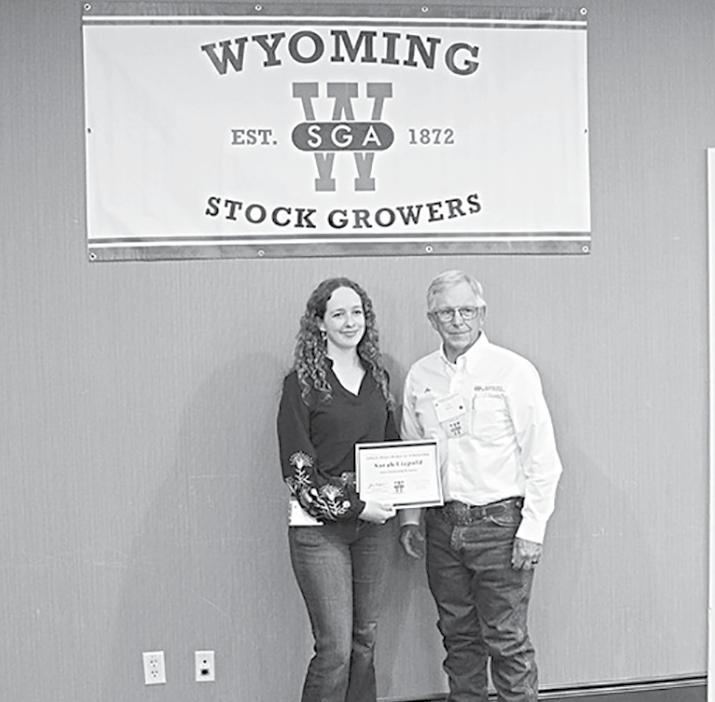
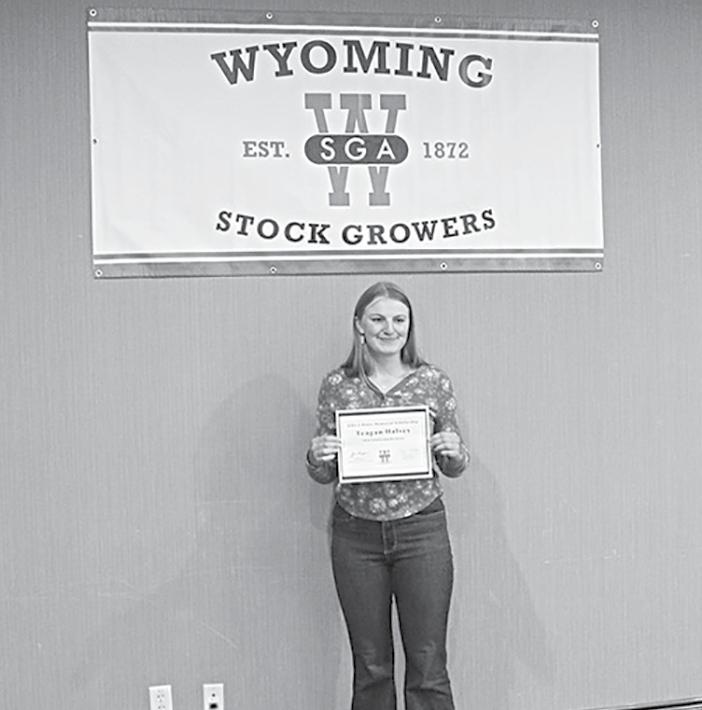
Three University of Wyoming (UW) students received scholarships from WSGA to continue their education and further their careers within the cattle industry.
U.S. Sen. John Barrasso (R-WY) recognized the awardees of the Clifford P. Hansen Memorial Scholarship and the inaugural John J. Hines Memorial Scholarship.
Established through contributions received in memory of the late U.S. Sen. Clifford Hansen, a well-known Teton County rancher, past president of WSGA and former governor of Wyoming, as well as other departed WSGA leaders, the Clifford P. Hansen Memorial Scholarship recognizes outstanding college students pursuing an education in agriculture and/or natural resources.
This year’s recipients
were Teagan Halsey and Tamika Holte.
Halsey is a rising sophomore at UW studying animal science and farm and ranch management, and Holte is a senior at UW studying animal science, agricultural business and rangeland management.
The inaugural John J. Hines Memorial Scholarship was presented to Sarah Liepold, a senior at UW studying agricultural business with a concentration in livestock management.
The scholarship was established in honor of the late Sen. John Hines, a lifelong Campbell County rancher, past president of WSGA and former Wyoming senator renowned for his advocacy of Wyoming agriculture and responsible natural resource management.
Outstanding Range Professionals
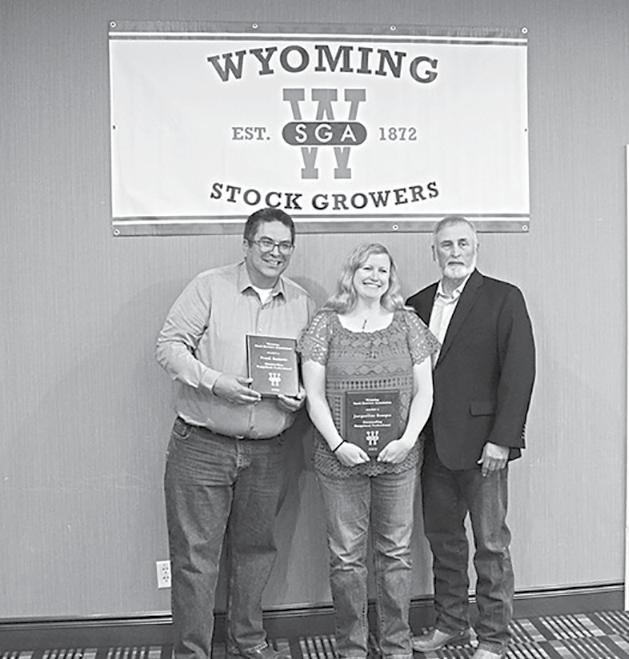
Next, WSGA Past President Mark Eisele presented two recipients with the Outstanding Range Professional Award.
This award recognizes range professionals who have made significant contributions to the livestock industry, particularly those who demonstrate high professional standards and dedication to building strong working relationships with producers.
This year, two members of the U.S. Forest Service Laramie Ranger District –
Rangeland Management Specialist Jacqueline Roaque and District Ranger Frank Romero – were honored.
Environmental Stewardship Award
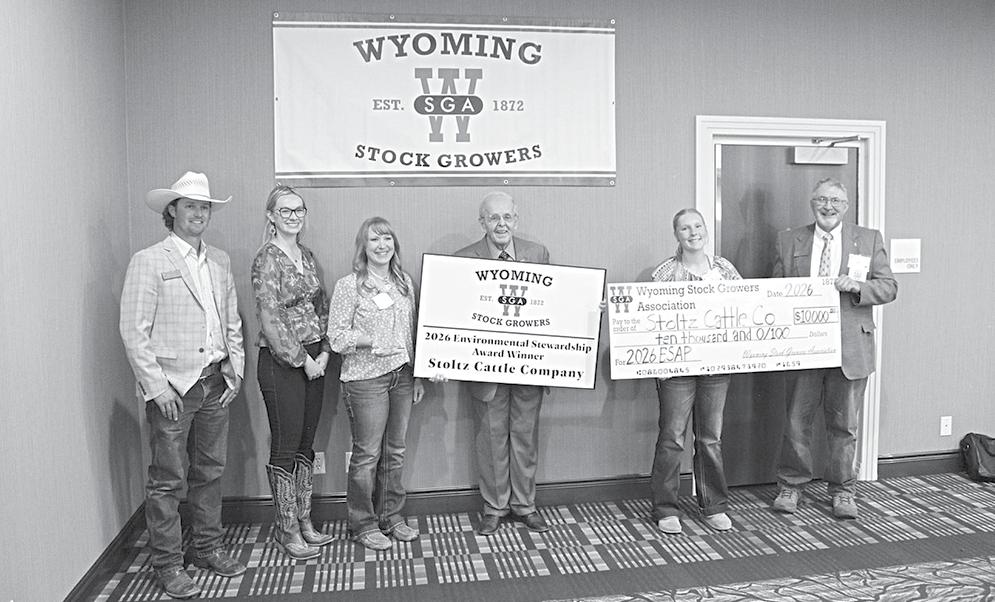
To close out the awards luncheon, WSGA Young Producers Assembly President Nate Kane and UW State Range Management Extension Specialist Nicki Nimlos presented the 2026 Environmental Stewardship Award to Thad and Heidi Stoltz of Stoltz Cattle Company LLC in Arvada.
This award is presented annually by WSGA, in partnership with the Wyoming Department of Agriculture, Audubon Rockies and the Wyoming Game and Fish Department, and recognizes a Wyoming ranch whose natural resource stewardship practices contribute to environmental sustainability while simultaneously enhancing
the operation’s productivity and profitability.
“This award shows the great land stewardship happening across the state,” Nimlos shared, emphasizing the importance of honoring families like the Stoltzes and inspiring the next generation of young people in agriculture.
Nimlos thanked the Stoltzes for their partnership with UW researchers and noted WSGA and the Stoltz family will host a tour of the operation on June 25 in recognition of the award.
Keep an eye out for more from the 2026 Wyoming Stock Growers Association Summer Cattle Industry Convention and Trade Show in future editions of the Wyoming Livestock Roundup Grace Skavdahl is the editor of the Wyoming Livestock Roundup. Send comments on this article to roundup@wylr.net.

The Wyoming Basin and Water Supply Outlook, released on the first day of each month, analyzes snowpack, precipitation, streamflow and reservoir storage across the state of Wyoming.
The report assesses the water supply outlook for the entire state of Wyoming, as well as individual basins including the Snake River, Madison Headwaters, Yellowstone River, Wind River, Big Horn River, Shoshone River, Powder River, Tongue River, Belle Fourche River, Cheyenne River, Upper North Platte River, Lower North Platte River, Laramie River, Sweetwater River, South Platte River, Little Snake River, Upper Green River, Lower Green River and Upper Bear River basins.
On June 1, the U.S. Department of Agriculture’s Natural Resources Conservation Service (NRCS) published the report for June 2026.
Snowpack and precipitation
According to NRCS, snow water equivalent
(SWE) across the state of Wyoming was 26 percent of median as of June 1, compared to 53 percent at the same time last year.
The Yellowstone River Basin reported the highest SWE at 65 percent of median, while the Powder, Belle Fourche, Cheyenne, Sweetwater, Lower North Platte, Laramie and South Platte river basins all posted the lowest SWE at zero percent of median.
Over the past month, areas in Wyoming received varied precipitation, with the Laramie River Basin reporting the highest amount at 141 percent of median and the Madison River Basin reporting the lowest amount at 43 percent of median.
Streamflow yields
From June through September, median streamflow yields across all Wyoming basins – except the Little Snake River, Cheyenne River, Lower Green River and Upper Green River basins – are on track to average 62 percent of median.
Streamflow yields for
these exceptions are expected to respectively average 13, 34, 34 and 54 percent of median for the months of June and July.
Additionally, NRCS estimates median streamflow yields for the Laramie River Basin at 34 percent, the Upper North Platte River Basin at 37 percent, the Lower North Platte River Basin at 39 percent, the Sweetwater River Basin at 42 percent, the Powder River Basin at 56 percent and the Tongue River Basin at 57 percent.
Median streamflow yields for the Snake River Basin, Big Horn River Basin, Wind River Basin, Yellowstone River Basin and Shoshone River Basin are forecast to yield 70, 74, 85, 95 and 98 percent, respectively.
Reservoir storage
For the entire state of Wyoming, NRCS reports average reservoir storage at 78 percent of median, similar to the 80 percent of median reported in June 2025.
Reservoirs in the Laramie River Basin, Upper North Platte River Basin,


Upper Bear River Basin, Cheyenne River Basin, Belle Fourche River Basin and Lower North Platte River Basin reported numbers below median at 33 percent, 52 percent, 60 percent, 70 percent, 78 percent and 86 percent, respectively.
Major individual reservoirs like Pathfinder Reservoir, Seminoe Reservoir, Woodruff Narrows Reservoir, Guernsey Reservoir, Keyhole Reservoir, Stateline Dam Reservoir, Meeks Cabin Dam Reservoir and Glendo Reservoir also posted numbers below median at 51, 54, 59, 64, 70, 76, 80 and 82 percent, respectively.
Reservoirs across the Lower Green River Basin, Wind River Basin and Upper Green River Basin were near median, at 90 percent, 91 percent and 93 percent, respectively.
Individual reservoirs with numbers near median include Flaming Gorge Reservoir and Pilot Butte Reservoir, both at 90 percent of median; Fontenelle Reservoir at 92 percent of median and Boysen Reservoir at 94 percent of median.
Reservoirs in the Snake River Basin were above median at 110 percent, as were the Buffalo Bill Reservoir at 107 percent, Viva Naughton Reservoir at 105





to threaten and worsen shortfalls throughout the Colorado River Basin and its tributaries.
Wyoming cannot mandate broad cuts on senior water rights holders who have beneficial uses for the water. If users do not use their water and send it downstream, however, they risk losing their long-held rights.
Wyoming water conservation projects must be voluntary and state administered.
This foundational policy conflicts with federal calls for mandatory curtailment.
Dry winter
The past winter brought lower than average snowpack and snow water equivalent (SWE) across much of western Wyoming. Warmer than usual weather has quickly thawed respectable snowpacks, swelling streams and creeks with early spring runoff.
On May 18, the U.S. Department of Agriculture Natural Resources Conservation Service’s 23rd snow report for Water Year 202526 reported, “Currently the state’s snowpack telemetry data reads 33 percent of
median, with a basin high of 74 percent and a basin low of three percent. Last year, the state was at 69 percent and at 103 percent in 2024.”
The Upper Green River Basin’s SWE was 79 percent on May 18, 2025, compared to 32 percent on May 18 of this year. The Lower Green River, measured at 67 percent in May 2025, has dropped to 29 percent this year. The Little Snake River, which enjoyed 114 percent SWE on May 18, 2025, is now at 25 percent.
Voluntary Water Conservation Act
The Wyoming Legislature finalized the new Select Water Committee-sponsored legislation, the Voluntary Water Conservation Act Program, which took effect on March 7 during the 2026 budget session.
Introduced as Senate File 84, the bill fleshes out how the state would administer the program in Enrolled Act 62.
The legislation is described as “an act relating to water within Wyoming’s portion of the Colorado
River Basin, establishing a voluntary water conservation program, providing an application and approval process for the program, providing an appeal process, authorizing the storage and release of water conserved under the program, establishing a sunset date, providing legislative findings, requiring a report, requiring rulemaking, authorizing positions, providing an appropriation and providing for an effective date.”
It defines the Colorado River Basin as outlined in the Colorado River Basin Compact of November 1922 among the states of Arizona, California, Colorado, New Mexico, Nevada, Utah and Wyoming for the purpose of reducing domestic or agricultural consumptive use “or helps satisfy Wyoming’s interstate compact obligations through interstate agreements or otherwise.”
The act details which water rights may be applicable, how to apply to the Wyoming State Engineer’s Office (SEO) and how to address potential adverse effects to other water rights holders.
The SEO can refuse any application if the pro-
For more information about the Wyoming State Engineer’s Office Colorado River Voluntary Water Conservation Program, visit seo. wyo.gov/home/colorado-river-voluntary-water-conservationprogram or e-mail Wyoming Deputy State Engineer Jack Morey at jack.morey2@wyo.gov.
posed conservation project “appears to be detrimental to the public interest or to provide for or aid in the interstate marketing of water.”
It specifically addresses diversions, appeals and timing for program participation and places strong focus on water storage at Fontenelle Reservoir and “other reservoirs located within Wyoming’s portion of the Colorado River Basin,” as well as assessing their suitability for the storage of water conserved under the program.
The Wyoming Legislature appropriated $510,000 from the General Fund to fund new positions and implement the SEO program through June 30, 2028.
Public meetings
The SEO has set up three public meetings in Pinedale, Lyman and Baggs to provide more detailed information about the voluntary program.
The meeting in Pinedale will take place on June 17 from 2-5 p.m. at the Sublette County School District Administration Building.
On June 18, the meeting will be held from 9 a.m. to 12 p.m. at the Lyman High School Auditorium in Lyman, and the third meeting will take place on June 22 from 1-4 p.m. at the Valley Community Center in Baggs.
Joy Ufford is a corresponding writer for the Wyoming Livestock Roundup. Send comments on this article to roundup@wylr.net.
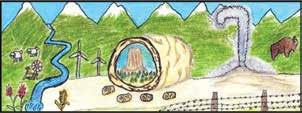
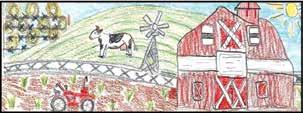
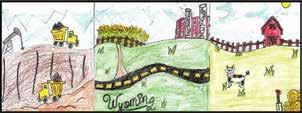
Each year, to showcase their understanding and appreciation of Wyoming’s essential resources, second- through fifth-grade students from across the state create bookmarks illustrating a Wyoming resource message through Wyoming Agriculture in the Classroom’s Bookmark and Beyond Program.
This year, 13 winning designs were printed and distributed throughout the state.
For coming weeks, the Roundup will share photos of the 2026 Bookmark and Beyond finalists.
June 14-20 College National Finals Rodeo, Ford Wyoming Center, Casper. For more information or to purchase tickets, visit cnfr.com
June 15 Wildfire Preparedness, Response and Recovery Webinar Series: Recovery, 12-3 p.m., online. For more information, visit nationalacademies.org/projects/CHPP-BHS-26-P-736
June 16
U.S. Department of Agriculture Meat and Poultry Processing Expansion Program Public Webinar, 12 p.m., online. For more information or to register, visit zoomgov.com/webinar/register/WN_TuVrirhfTM6gQEuoCusjNw#/registration
June 16 Wyoming Beef Council Meeting, 7 p.m., online. For more information, contact Ann Herne at ann.herne@wyo.gov or 307-777-6399.
June 16-20 National Rambouillet Sheep Show and Sale, South Dakota State Fairgrounds, Huron, S.D. For more information, contact Burton Anderson at 605852-2233 or Beau Chapman at 605-430-5811.
June 17 Montana Range Tour, Gold Creek, Mont. For more information or to register, visit mtrangelands.org/
June 17
Wyoming State Engineer’s Office Voluntary Water Conservation Act Public Meeting, 2-5 p.m., Sublette County School District Administration Building, Pinedale. For more information, visit seo.wyo.gov/home/colorado-river-voluntarywater-conservation-program or e-mail Jack Morey at jack.morey2@wyo.gov.
June 17-19 American Lamb Board Targeted Grazing Workshop, Straughn Professional Development Center, Gainesville, Fla. For more information or to register, visit lambboard.com/grazing-workshops
June 18 University of Wyoming Extension Managing Landscapes in Drought Webinar, 6-7 p.m., Zoom. For more information, visit bit.ly/drought-webinar-26
June 18 Wyoming State Engineer’s Office Voluntary Water Conservation Act Public Meeting, 9 a.m.-12 p.m., Lyman High School Auditorium, Lyman. For more information, visit seo.wyo.gov/home/colorado-river-voluntary-water-conservation-program or e-mail Jack Morey at jack.morey2@wyo.gov.
June 19 Chronic Wasting Disease Public Roundtable, 11 a.m.-1 p.m., Shell Community Hall, Shell. For more information or to RSVP, visit ahtc-wy.org, e-mail director@ahtc-wy.org or call 720-238-5194.
June 20 Albany County Ag and Art Tour, Laramie. For more information, visit wyoextension.org/ruralentrepreneurship/albany-county/
June 20-21 World Famous 65th Annual Woodchopper’s Jamboree and Rodeo, Encampment-Riverside Lions Club Arena, Encampment. For more information, visit woodchoppersjamboree.org
June 22 Wyoming State Engineer’s Office Voluntary Water Conservation Act Public Meeting, 1-4 p.m., Valley Community Center, Baggs. For more information, visit seo.wyo.gov/home/colorado-river-voluntary-water-conservation-program or e-mail Jack Morey at jack.morey2@wyo.gov.
June 16-18 Superior Livestock Auction Corn Belt Classic, South Sioux City Marriott Riverfront, South Sioux City, Neb., 800-422-2117, superiorlivestock.com
June 16-20 National Rambouillet Show and Sale, South Dakota State Fair Park, Huron, S.D., rambouilletsheep.org
June 20 48th Annual Wyoming All Breed Gaited Horse Sale, Park County Fairgrounds, Powell, 307-272-3743, 307-431-2109, 307-202-1848
June 25 Northern Livestock Video Early Summer Special, 866-616-5035, northernlivestockvideo.com
June 30 Cattle Country Video High Plains Showcase, University of Wyoming Marian H. Rochelle Gateway Center, Laramie, 888-322-8853, cattlecountryvideo.com
July 6-10 Superior Livestock Auction Week in the Rockies, The Steamboat Grand, Steamboat Springs, Colo., 800-422-2117, superiorlivestock.com
July 13-15 Western Video Market, Silver Legacy Casino Resort, Reno, Nev., 530-3473793, wvmcattle.com
1 Blk Cow, ,1290# $18600 Mead, Mary - Jackson
2 Blk Cows, avg. 1185# $18800
4 Blk Cows, avg. 1405# $18300 Hoyt, Mark - Basin
3 Blk Cows, avg. 1365# $18750
2 Blk Cows, avg. 1383# $18100
1 Blk Cow, 1610# $17500 Schlattman, Dean - Greybull
1 Red Cow, 1240# $18700 Black, Vern - Riverton
1 Red Cow, 1140# $18700 Michael Vigil Farms - Manderson
1 Blk Cow, 1115# $18600
1 Blk Cow, 1655# $17550
2 Blk Cows, avg. 1720# $17450
1 Blk Cow, 1900# $17150
2 Blk Cows, avg. 1908# $16650
1 Blk Cow, 2150# $16100 Baird, Jack - Thermopolis
1 Blk Cow, 1285# $18550
1 Blk Cow, 1435# $18100 Langager, Sam - Thermopolis
1 Blk Cow, 1265# $18550 E Spear LLC - Meeteetse
1 Blk Cow, 1325# $18500
2 Blk Cows, avg. 1408# $18350 Bonita Ranch LLC - Ten Sleep
2 Blk Cows, avg. 1283# $18500 Brown, Matt - Thermopolis
1 CharX Cow, 1280# $18500
3 Blk Cows, avg. 1360# $18400
July 20
$19150
1 Blk Cow, 1220# $18600 Davidson, Peter - Burlington
2 Blk Cows, avg. 1320# $19100 Turnell Cattle Co. - Meeteetse
1 Blk Cow, 1220# $19000 Nicholas, Jacob - Fort Washakie
2 Blk Cows, avg. 1230# $19000 Circle B Cattle - Cokeville
1 Red Cow, 1160# $18900
1 CharX Cow, 1745# $16100 Walker, Eric - Burlington
2 Blk Cows, avg. 1290# $18500 Shenton, Todd - Idaho Falls
1 Blk Cow, 1450# $18450
2 Rd/Blk Cows, avg. 1750# $17350 Six C Ranch - Meeteetse
2 Blk Cows, avg. 1293# $18450 Diamond Tail Ranch LLC - Greybull
1 Blk Cow, 1295# $18100
Harry, Mikala Sun Rhodes - Fort Washakie
1 Blk Cow, 1145# $18000
Hutcheson, Tom - Meeteetse
1 Blk Cow, 1350# $18000 Fabricius, Dale - Burlington
1 Red Cow, 1435# $17700
Breeden, Clinton - Ten Sleep
1 Hrfd Cowm 1355# $17700
Bischoff, Maryanne - Lovell
2 Blk Cows, avg. 1530# $17600
Schultz, Marshal - Otto
1 Blk Cow, 1420# $17600
Bischoff, Dave - Lovell
1 Blk Cow, 1645# $17550
Tucker, Dwayne - Ten Sleep
1 Hrfd Cow, 1350# $17400
Fraley, Christine - Worland
1 Blk Cow, 1845# $17100
Haun, Bill - Worland
1 Blk Cow, 1820# $17100
Brunko, Gary - Burlington
1 Blk Cow, 1780# $17000
Sinn, George - Worland
2 Blk Cows, avg. 1885# $16400
• Upcoming Sales •
June 25 – All Class Cattle, Sheep & Goat
July 9 – All Class Cattle
July 23 – All Class Cattle, Sheep & Goat
Aug. 6 – All Class Cattle
Aug. 20 – All Class Cattle, Sheep & Goat
Northern Livestock Video Auction Summertime Classic, 866-616-5035, northernlivestockvideo.com
July 21 Tri Brothers Equipment Summer Consignment Auction, Torrington, 307575-2427 307-338-8216, tribrothersauctions.com


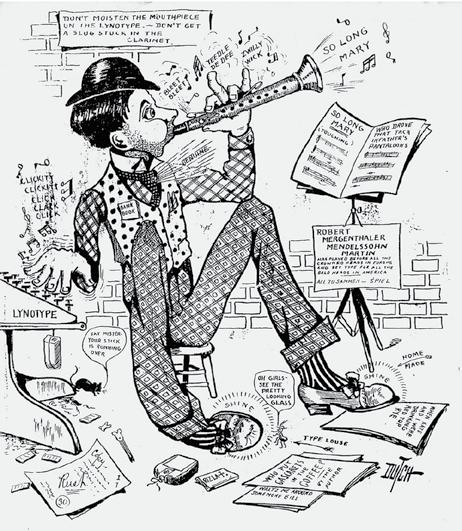
Shortly after Wyoming was settled, newspapers and print shops began to crop up all over the state, which prompted the need for printers to set type and run the presses. Among the most notable folks of the profession were the “tramp printers,” sometimes called “rambling printers” who roamed from town to town keeping the presses printing.
Following is the unedited saga of R.I. Martin, one of those tramp printers.
Learned to set type in 1890 in the Hatchet office in Hot Springs, S.D. No pay for the first six months. Later employed as compositor at the Hot Springs Star and Hot Springs Herald. By 1893, was making wages of three dollars a week.
In 1894, moved to Belle Fourche, S.D. north of the Black Hills. Spent several years there as hand compositor. Also employed at times at Spearfish Mail, Deadwood Pioneer and Lead City Call
Emigrated to Wyoming in 1901. Employed at Big Horn River Pilot in Thermopolis, later at the Thermopolis Record, which was established by Fred Winchester and later sold to Arnold Duhig.
First editorial work at the Thermopolis Record, getting out a couple issues while publisher was confined to pest house with smallpox. In 1902, worked briefly on Casper Derrick, which was a wide margin the prize junk shop of the region.
Then to Greeley, Colo. and employed at the Greeley Tribune as a Simplex – Unitype – operator, also at the Greeley Sun, Weld County Republican, Loveland Reporter and Loveland Register
In June 1903, started on a bicycle headed for the West Coast. Stopped in Cheyenne and worked a few days at the Tribune while awaiting arrival of Teddy Roosevelt, who was to ride horseback from Laramie to Cheyenne.
After seeing Roosevelt and hearing him speak, resumed bike journey west.
At Walcott, detoured to Grand Encampment to see what all of the boom was about. Western trip postponed and several months spent as compositor at the Saratoga Sun and Unitype operator at the Grand
ects was printed.
Encampment Herald
Then moved to Rawlins to take the foreman job at Rawlins Republican, which was changing ownership –George W. Perry to Rawlins Republican Company. Balance of force consisted of a girl typesetter and a Swede boy as janitor and apprentice. Not much foremanizing to do, but plenty as ad man, job man, pressman, etc.
The Republican was then a semi-weekly paper, and besides two issues per week, printed two weekly papers for mining camps in the Encampment region. Also handled the county printing and most anything else that came along. Good job, $18 per week, six 10-hour days.
Roscoe Alcorn and Jack Sheahan were youngsters learning the trade in the old Carbon County Journal office.
In 1905, moved to Centennial to take employment with Van Horn-Miller Syndicate. Big toad in a very small puddle. Editor and publisher of Centennial Post, cashier of Centennial Trust Co. bank, manager of Lumber Company and Townsite Company and some other titles.
Twenty-seven companies in the Syndicate. Easy job except when notice received Van Horn was enroute west with a few Pullman cars loaded with prospective investors. Then a special edition of the Post, with pictures of the many company proj-
The boys up on the hill – Acme mine at Gold Hill – had been sorting rich ore from a narrow vein, and they would start up the little stamp mill and the gold would be rolling out when the eastern prospects arrived. Soon as the visitors left, the boom would be over, and we could all lock up and go fishing.
Then back to Greeley, Colo. to take foremanship of Weld County Republican. When first Linotype –a model eight – came into Greeley, Colo., resigned foreman job to take up Linotype work.
Then returned to Laramie, about a year as foreman at the Laramie Boomerang when under management of Miss Evelyn Corthell, later Mrs. John Hill.
Then back to Thermopolis to take a lease at the Thermopolis Independent, another newspaper which had been started by Fred Winchester. This continued until the Independent was sold to Lin I. Noble.
Then to Montana for Linotype work at the Billings Gazette, Livingston Enterprise, Bozeman Chronicle, Butte Miner and Missoula Sentinel Three years with Livingston Enterprise, then bought the Clyde Park Herald
After three years in operation, sold out and returned to Wyoming to purchase the Saratoga Sun on March 1, 1917.
End of a long trail.
After 25 years of rambling from print shop to print shop in a four-state area, R.I. (Dad) Martin, settled in Saratoga and was associated with the Saratoga Sun for 50 years. He and his son, R.D. (Bob) Martin, were my mentors and sold me the paper and print shop in 1968. But then, that’s for another Postcard.
#1 Pinto Beans Min Dak 28-30/cwt
Source: USDA AMS Livestock, Poultry & Grain Market News, Torrington
National Sheep Summary As of June 5, 2026
Compared to last week Slaughter Lambs traded 7.00 to 15.00 lower and Slaughter Ewes traded softer. All sheep sold per hundred weight (CWT) unless otherwise specified. Slaughter Lambs: Choice and Prime 1-3: San Angelo: 50-60 lbs 339.00; 60-70 lbs 340.00-367.00; 70-80 lbs 330.00-365.00; 80-90 lbs 352.00-363.00.
Billings: No test.
Ft. Collins: 60-70 lbs 300.00; 80-90 lbs 300.00-520.00; 100-110 lbs 310.00-360.00.
Sioux Falls: 70-80 lbs 345.00-355.00; 80-90 lbs 342.50357.50; 90-100 lbs 325.00-355.00; 100-110 lbs 315.00-360.00; 110-120 lbs 345.00-370.00; 120-130 lbs 355.00-360.00; 130140 lbs 360.00-370.00; 140-150 lbs 352.00-374.00. Slaughter Ewes: Good 2-3: San Angelo: 115.00-139.00.
Billings: No test.
Ft. Collins: 140.00-190.00.
Sioux Falls: 115.00-145.00. Feeder Lambs: Medium and Large 1: San Angelo: No test.
Billings: No test.
Sioux Falls: 50-60 lbs 380.00-435.00; 60-70 lbs 375.00-405.00; 70-80 lbs 335.00-365.00.
Ft. Collins: No test. Replacement Ewes: Medium and Large 1-2: San Angelo: No test.
Billings: No test.
Ft. Collins: No test.
South Dakota: No test.
Sioux Falls: No test. Sheep and lamb slaughter under federal inspection for the week to date totaled 32,000 compared to 25,000 last week and 42,221 last year.
Source: USDA AMS LPG Market
Domestic wool trading
San Angelo, Texas National Wool Review As of June 5, 2026
Source: USDA- CO Dept of Ag Market News Service, Greeley, CO
Wyoming Hay Summary
As of June 11, 2026
First released report in several weeks a market trend is not applicable. Demand was good on products that have yet to be mowed and baled. Some prospective buyers continue to call producers trying to contract hay at a reasonable price to the buyer. Most producers are on the fence about contracting a lot of hay this week. Some reports of weevils in the hay fields in the western side of the state. Most of the reporting regions have a few acres on the ground but many will start later in the month. Water irrigation is a main topic as it’s day-to-day on the amount of water that will be available this growing season. Many hay producers are behind in their watering of the hay fields due to issues with various ditches. So, with lack of water, tonnage will probably be a little light on the hay production this year. Unless, good ole Mother Nature decides to produce some rain across the state.
- Good
Source: USDA AMS Livestock, Poultry & Grain Market News Torrington
South Dakota Hay Summary
As of June 5, 2026
Very good demand for all classes and qualities of hay currently. The affects of the drought are on full display in the hay market, as livestock producers scramble to find the hay they need as grass was slow to grow this year. Big rains have come to much of the state, but there are dry pockets that continue to miss the much needed precipitation. Grass growth was hampered by the cold, dry, and then hot weather in April and May. Alfalfa stands are in better shape but tonnage still varies a lot due to the drought conditions. Livestock producers that balked at hay prices a month ago are now willing to give much more as become desperate for hay.
(Corn Stalk)
Source: USDA AMS Livestock, Poultry & Grain Market
Worthing, SD
Montana Hay Summary
As of May 29, 2026
Compared to last report (5-15-26): Hay sold mostly 15.00-20.00 higher in a narrow comparison. Hay supplies across the state are very light and continue to lighten as ranchers buy hay to supplement cattle waiting on grass. Demand is very good as a result. Ranchers are watching the forecast closely with much of western, central, and Northern Montana forecasted to receive from half an inch up to three inches over the weekend. However, conditions across much the state remain dry and some producers are selling cattle as they don’t have enough feed or grass. Pairs and replacement heifers have been the first victims of the drought as ranchers have started marketing these offerings over the last few weeks. New crop contracts have been slow but many ranchers have pushed to ensure they have hay for winter needs. This has pushed hay sharply higher for fall delivery. Demand for buyers looking for high quality horse hay is very good as supplies are extremely light, especially in
central Montana. Some hay traders are buying fall hay contracts in surrounding state to ensure supplies are covered for their customers. Many worry they will not have enough hay to sustain their current customers. Much of this hay is being delivered into Montana for 245.00-265.00 depending on freight. Producers in Northeastern Montana report large swaths of winter kill due the January ice storm. There is a major concern over how much hay will be produced this summer. Many irrigation districts have already announced they will have a very short irrigation season due to low river and stream flows. This, coupled with drought conditions and heavy winter kill will limit the volume of hay produced. According to the drought monitor 76.00% of the state is in Moderate drought or worse, up 16.42% from 2 weeks ago. 40.83% of the state is in an Severe drought or worse, up 8.19% from 2 weeks ago. 10.36% of the state is in Extreme drought or worse, up 4.28% from 2 weeks ago. 0% of the state is in Expectational drought, unchanged from 2 weeks ago. Notably, 87.28% of the state is abnormally dry, up 0.06% from 2 weeks ago. N/A - Hay
CUSTOM HARVESTING SER-
VICES: Wheat, corn, millet, milo and sunflowers. Running Case IH combines with full support equipment. Timely, reliable and competitive rates. For more information, call 2D Harvesting, 970-630-8639, Wray, CO 7/4
NOTICE: Publication in this newspaper does not guarantee the legitimacy of any offer or solicitation. Take reasonable steps to evaluate an offer before you send money or provide personal/financial information to an advertiser. If you have questions or believe you have been the victim of fraud, contact the Wyoming Attorney General’s Office, Consumer Protection Unit, 109 Capitol Building, Cheyenne, WY 82002, 307-777-6397 TFN
Wyoming Sugar Company is now hiring for multiple positions. Please see the current openings and apply at wyomingsugar.com 307-347-3261
ARTS & HUMANITIES TRAPPER CREEK, WY ROUNDTABLE DISCUSSION ON THE IMPACTS OF CHRONIC WASTING DISEASE in the Wind River and Greater Big Horn basins. Join us for a roundtable lunch, catered by the Old Shell Store and discussion with Tucker Russell, who will share his work on chronic wasting disease. Tucker will discuss his research on CWD, focusing on its impacts on mule deer populations in Wyoming, transmission dynamics and the intersection of disease and animal movement. Participants will have the opportunity to ask questions and explore potential solutions for wildlife management in Wyoming. THIS ROUNDTABLE WILL BE HELD AT SHELL COMMUNITY HALL ON JUNE 19 FROM 11 AM TO 1 PM. Event fee $20. For questions and to sign up, call 720-238-5194, e-mail director@ahtc-wy.org or visit www.ahtc-wy.org 6/13
UP IN ARMS, LLC FLEA MARKET AND GUN SHOW July 10-12, Cody, WY at the Cody Recreation Gymnasium. Open to the public. Fri., July 10, 3-7 p.m. Sat., July 11, 9 a.m.-5 p.m. Sun., July 12, 9 a.m.-3 p.m. Giving away a .22 pistol Sunday at 2 p.m., must be present to win, 21 years of age and able to pass background check. Buy, sell, trade. Adults $6, children 12 and under free (when accompanied by an adult). For more information, contact Lisa, 208-420-2295 7/4
Events Help Wanted

Arnold 970-301-3098 for more information.
WIGGINS FEEDYARD, LLC
HIRING FULL-TIME EMPLOY-
EE: Current driver’s license required. Call Sue Wiggins, 308-279-0924, e-mail sswiggins@wigginsfeedyard.com, 10077 U.S. 385, Bridgeport, NE 69336, provide references with phone numbers 7/4
MEATCUTTER WANTED: Valley Foods in Saratoga, WY has an immediate opening for a meatcutter. Experience is preferred but not necessary. Ideal candidate is self-motivated, efficient and customer service minded. Pay DOE. Send resume to valleyfoods9024@ hotmail.com 7/4
RANCH HAND FOR FARM AND RANCH IN NORTHEAST
COLORADO: Seeking an experienced quality ranch hand with a good work ethic and responsible enough to work on their own. The position requires livestock care, helping with calving and branding, moving cows to pasture and cornstalks. There is some farming to prepare fields for planting corn, putting up hay and working on pivot sprinklers. Also putting up electric fences and maintaining all pasture fences. Work pickup and housing with utilities provided. Wages based on knowledge and experience. Send resume, references and work history to bkkramer. kk@gmail.com. Call Kim at 970-520-2513 6/27
RANCH HAND/GROUNDS
KEEPER: Full-time position at a family-owned ranch near Cody, WY and located in the Shoshone National Forest. Position entails lawn care, irrigation, heavy equipment operation, carpentry, equipment maintenance, building maintenance and overall residential and agricultural property maintenance. Experience is welcome but will train the right candidate. The ideal candidate will be reliable; have a strong work ethic; be able to perform individually and with a team; be a self-starter and enjoy working outdoors. Benefits include health, with optional dental and vision; paid-time off and 401(k) with employer matching contribution. For the right candidate housing on property is also available. Salary based upon previous experience. Send resumes to emilyb@colliergroupoffice. com 7/25
LOOKING FOR RANCH ASSISTANT PROPERTY MAN -
AGER: Full-time position for large ranch located in Park County, WY. Responsibilities include: Lawn care, irrigation, agricultural equipment maintenance and general residential, building and property maintenance. Salary range of $45-$60K depending on experience. Living on property is required for employment. House and vehicle will be provided. Property is located 10 minutes from downtown Cody, WY. Position is available for immediate hire. Please send resumes to mgiliati@acpg. com 6/13
FULL-TIME RANCH MANAGER: BISON RANCH, SHERIDAN, WY. We are seeking a dedicated, experienced ranch manager to join our growing bison ranch operation. This is a hands-on role for someone who takes pride in hard work, reliability and caring for land and livestock. Responsibilities: Daily care and management of bison herd. Maintaining fencing, equipment and ranch property. Assisting with feeding, health checks and handling livestock. General ranch maintenance and upkeep. Supporting ongoing growth and operations of the ranch. Requirements: Prior ranching or livestock experience (bison experience preferred but not required). Strong work ethic and reliability. Ability to lift heavy items and perform physical labor daily. Self-motivated and able to work independently. Available to start immediately. Salary starts at $145,000 and up. This is a full-time position with opportunity to grow alongside a rapidly expanding ranch. Apply today if you’re ready to work hard and be part of something being built from the ground up. Call Landon, 205-531-9819 or e-mail sheryl@bisonunion. com 6/13
AGRI-ONE FINANCIAL: Farm/ ranch and all commercial loans. RATES AS LOW AS 5%. We have been helping with all aspects of agricultural, commercial financing and management for years. LET US HELP YOU on a consulting level with management to increase profitability, deal with and fix credit problems and for all your financing needs. WE CARE AND HAVE WORKING PROGRAMS designed for the farmer/rancher and not the banker. Please call Steve, 303-773-3545 or check out our website, www.agrionefinancial.com. I will come to you and get the job done!! 6/13


REGISTERED WYOMING BRAND FOR SALE, lazy RM. RRC, RHH, renews in January 2027, 2 sets of hot irons and 2 sets of electric irons, $3,000. Calls only, 307-899-3737 6/13
TWO AUSSIE/BORDER PUPS: Black tri female, red bi male, excellent workers and companion animals. Will have an off switch for seasonal work, both parents work well, dad heads, mom heads and heels. Both parents are house dogs. House broken to a dog door, $75. Call 801-721-8620. Southwest Wyoming location. To view photos, go to www.wylr. net in the classifieds 6/27
LIVESTOCK GUARDIAN DOGS: PUPS FOR SALE: Great Pyrenees/Akbash/Anatolian/Maremma mix pups. Both parents are on site and guarding livestock. Born Feb. 25. Located east of Chugwater, WY. Priced with the rancher in mind. For further information call Donna, 307262-5699 or Clay, 307-3315762 6/27

WEAVER FAMILY PUPPIES PRODUCERS OF HIGH-QUALITY, WELL-SOCIALIZED AND FAMILY-FRIENDLY BERNEDOODLE PUPPIES.
A designer breed of the Bernese Mountain Dog and Miniature Poodle. The result is a beautiful low shedding, medium sized pet, with lots of affection. We are located in the gorgeous Bitterroot Valley of western Montana.
Call 406-478-9368 or 406-369-8972
Visit www.WeaverFamilyPuppies.com
WANTED RECIP COWS: Must be open!! Two to 6 years old, Red Angus or Angus-based cows. For more information, call Corie Mydland, 406-8555598 (cell), Trans Ova Genetics, Joliet, MT 6/13
TAKING IN COWS ON SHARES STARTING JUNE 1: Long or short term, pairs or June calvers. Would consider a lease purchase. Call 307-202-1428 6/13
SALE * CHRISTENSEN RED ANGUS * SALE: Registered, vaccinated and fertility tested bulls. We have a deep carcass, high ADG packaged with moderate to low birthweights available. Call 406-208-4315 or e-mail criters64@gmail.com 7/4



REGISTERED ANGUS YEARLING AND 2-YEAR-OLD BULLS FOR SALE, visit www.crookedcreekangus. com or call 785-332-6206, St. Francis, KS 8/29
REGISTERED BLACK ANGUS YEARLING AND 2-YEAR-OLD BULLS: For sale private treaty. Performance and fertility tested. Delivery available. REPLACEMENT HEIFERS available. TRANGMOE ANGUS RANCH, Glendive, MT. Call 907-2326093, 406-687-3315 or 406989-3315 6/20
BEST LAST CHANCE SALE!! LYTLE RED ANGUS is offering private treaty bulls from our herd founded on 30+ years of selection for fertility, consistency and efficiency. Highly adaptable, our bulls have proven themselves from Arizona to New York state. Age-advantaged and yearling bulls available. Passed breeding service exams and ready to go!! Visit www.lytleredangus.com or call Zeb, 605-441-7658. To view photos, go to www.wylr.net in the classifieds 6/20
RED ANGUS HIGH-ELEVATION YEARLING BULLS FOR SALE IN NORTHEASTERN UTAH: Out of AI and bull-bred sires. Will be trich and semen tested. $3,500/ head. Bar Lazy TL Ranch, David, 435-828-1320, barlazytlranch@gmail.com 6/13
BULLS FOR SALE: Registered yearling and 2-year-old Black Angus range bulls for sale private treaty. Good selection for heifers and cows. From popular sires and industry leaders. Semen tested and ready to go. CLAY CREEK ANGUS, 307-762-3541, www. claycreek.net 6/27
REGISTERED ANGUS YEARLING BULLS: Breeding soundness, fertility tested and PAP tested. Ready to go to work. Call Paul at TAG Double H Cattle Co., Ten Sleep, WY, 307-690-4225 6/27
SIMANGUS
BULLS FOR SALE BY PRI-
VATE TREATY: Bulls priced for every budget. Bulls have GE EPDs, are homozygous polled, most are homozygous black. Bulls can be inspected at Dilka Cattle, pictures available by request. Bulls sired by BAS Money Maker, Gibbs Essential, Gonsior Batman and CCR Pounder. All bulls guaranteed for first breeding season. Information on the bulls may be requested by email at thedilkas@aol.com or calling 970-396-8791 6/13
3/H SIMMENTAL RANCH, PLAINS, MT OFFERS POWERFUL SIMANGUS BULLS: Yearlings and 18-month-olds sired by top AI genetics. Bred for performance, soundness and longevity, with a strong emphasis on calm disposition. These bulls are built to work and last in real world conditions. Call Alan at 503-931-6815, to find the right fit for your program. To view photos, go to www.wylr. net in the classifieds TFN
HEREFORD BULLS FOR SALE: Sixteen coming 2-yearolds, 13 coming yearlings, 5 older herd bulls. Home raised on forage, never grain. Horned and polled. Average price for 2-yearolds, $3,800 and yearlings, $3,700. Call Rick Rausch, 605380-0784, e-mail rrs@venturecomm.net 6/13
SUMMER PASTURE WANTED FOR YEARLINGS: Seeking summer grass for 2026. For 5001,500 head. Wyoming, Colorado, Nebraska, South Dakota. Prefer long-term potential, competitive rates offered. Call Jon, 831-240-5795 TFN
LOOKING TO LEASE A RANCH FOR APPROXIMATELY 150-200 HEAD OF COWS. Prefer area in Johnson and Sheridan counties. Call 307290-1643 6/20
PARK COUNTY, WY RANCH NEAR CODY, WY IS AVAILABLE FOR A LONG-TERM LEASE: The ranch has over 50,000 acres and supports an irrigated hay base with BOR water rights. Carrying capacity is 700 animal units year-round with hay production. Willing to split the hay ground and grazing. Please e-mail Melanie Giliati at mgiliati@acpg.com for details 6/27
ALFALFA AND GRASS HAY AVAILABLE!! Large scale hay farm with our own trucks for convenient/consistent delivery. Lab tested 125-200+ RFV, large squares 3x4x8 available. Stored inside sheds immediately after baling. No rain. No bale wastage due to weathering!! Call/text Zach’s cell 204-557-0939 or email zach@redriverforage.com. To view photos, go to www.wylr. net in the classifieds 6/13
ALFALFA HAY FOR SALE: 2025 and 2024, various RFV, various protein and various prices. Tested by Dairyland Labs. Call 605-5308089, Miller, S.D. 6/13
400 TONS DURUM STRAW: Round bales, 1,000 lbs., $60/ bale, 780 bales available. Excellent bedding or feed. Call 406765-7172 6/27
MONIDA OATS: $16/cwt. Combine run, great for seed or feed. Will auger into truck, trailer or large totes/ag bags. Located between Powell and Cody, WY. Certified scales on site. Call or text Knopp Farms for details, 307-254-0554 7/18
FEED/GRAIN FOR SALE: Alfalfa, grass and rye/triticale mix hay. Large squares and rounds. Semi loads and delivery only. Call 308882-1498 7/4


ROTO GRIND TUB GRINDER: Good condition. Pulls well behind a pickup for transport, $9,000 OBO. Leave message, I will call you back, 406-5847582 6/27


RANCH HORSES WANTED: Sound, rope broke and gentle. Call 605-347-3403 or 605-4999088 6/13

SILVER STATE INTERNATIONAL RODEO JUNE 29-JULY 6: Winnemucca Events Complex, Winnemucca, NV. $20,000 ADDED money. ALL STAR TEAM: Each state will pick 5 contestants to represent their state. The team with the most points will win $1,500 cash. Prizes include: Cash prizes, saddles for event winners and buckles for 2nd-4th and go round prizes, 1st-3rd. For more information or to register online, visit www.ssir. us, call Kathy, 775-217-2810 or e-mail silverstate10@yahoo. com. Check us out on Facebook 6/20

BOOT UP for the COLLEGE NATIONAL FINALS RODEO with 20% $AVINGS ON BOOTS!! HONDO, BOULET, JUSTIN WORK BOOTS, TWISTED X (boots and shoes) and more!! WE CAN ship!! Shop Moss Saddles, Boots and Tack, 4648 West Yellowstone Highway, Casper, WY; 307-472-1872. Our family serving yours for 50 years!! Check us out on Facebook or our website 6/13
CUSTOM BOOT MAKER: Boot and shoe repair, service nationwide. Shock Boot Repair, 307680-9219, Gillette, WY 6/13
HAY FOR SALE: 2025 grass/ alfalfa, first and second cutting alfalfa, millet, haybet barley and CRP hay. ALSO, 2025 GRINDING HAY available. All in netwrapped round bales. Semi load delivery available. Call for pricing, ask for Klint, 701-2904418, if no answer, send a text or keep trying 6/20
BARLEY STRAW: Certified weed-free small squares, $4/bale. ALSO, 5x6 round bales, $125/ton. GRAIN OATS, wheat and barley, $20/cwt. Greybull, WY area. Call 307-762-3878 or 307-899-4714, leave message 6/13
2012 FORD F650 FLATBED: 6.7L Cummins, Allison automatic. Good condition, 18’ flatbed, Vanair PTO driven air compressor, 161,000 miles. Best offer. Golden, CO. Call Eric at 720-312-9582. To view photos, go to www.wylr. net in the classifieds 6/13
TEMCO FLATBED: Came off of pickup cab and chassis. 8’ width x 8’.6” length, 5th wheel hitch. $1,500. For dimensions, call Rob, Laramie, WY, 303-9213253 6/13
2018 DODGE RAM 3500: 4x4, crew cab, 6.4 Hemi. Gooseneck hitch, 94,000 miles. Covercraft seat covers, WeatherTech floor mats. New transmission. Call Dan, 307-250-2178 6/13

NEW HOLLAND 855 BALER: Has been reconditioned. Always been shedded. TWO INTERNATIONAL MODEL 7100 DRILLS: Purchased new in 1986. Always been shedded. HAVE LIQUID FERTILIZER TANKS WITH SQUEEZE PUMPS, both 14’, has hitch to pull both planters at the same time. Call 303-947-2338 or e-mail slhieb@msn.com 6/27
CASE IH STEIGER 335 TRACTOR: Four wheel drive, serial #Z8F109603, 3,389 hours, CHEAP horsepower, pre DEF, bareback, always shedded, tires 50%, 12 speed transmission, guidance ready, deluxe cab, CLEAN!! $87,500, Chugwater, WY. Call 307-331-0446. To view photos, go to www.wylr.net in the classifieds 6/20

FOR SALE: Alfalfa and alfalfa/grass mix, large rounds with net wrap, several hundred bales, nice hay. 2022 KW T680 day cab semi with PACCAR MX-13 engine, automatic transmission, air ride, air slide 5th wheel, aluminum wheels, 486,100 miles, asking $29,500. New Holland 9’ sickle mower. New Holland 7150 hydroswing, low acres. Rowse 9’ pull type sickle mower. CIH 1100 3 pt. 9’ pull type sickle mower. Hesston/AGCO 5556 large round baler with net wrap and twin tie, 7,400 bales. H&S hay windrow fluffer. H&S 12 wheel finger rake. Ford 7N tractor with wide front and 3 pt. Schulte hydraulic rock picker with 3 bat reel. New Holland 195 manure spreader, 410 bushel with slop gate, double floor chains, tandem axle. Behlen Country livestock working chute with automatic headgate. Apache portable creep feeder. Burns portable loading chute. 2019 John Deere 714A chuckwagon with John Deere tandem running gear. H&S 7+4 24’ chuckwagon with bunk feeding extensions and tandem 14 ton running gear. J&M 350 gravity wagon with 385/65 R22.5 tires and ag topper. 12’ and 14’ HD box scrapers with tilt. All in very nice condition!! Call 605999-5482 7/4
LODGEPOLE OUTDOOR FURNACES, 307-223-2046. Your authorized Central Boiler Dealer. Get your outdoor wood furnace today!! Efficient wood heat. Heat multiple buildings. Invest in your heating, don’t just pay for it!! See us at www.cb.lodgepoleproducts. com !! 6/27
ORIGINAL ROUND BALER BELTING FOR ALL MAKES: Save $100s. Free shipping, www.balerbelts.com. Call Hammond Equipment, 334627-3348 10/24
PRODUCTS, 307-742-6992, SERVING AGRIBUSINESSES SINCE 1975!! Treated posts, corral poles, buck-and-rail, western rail, fence stays, rough-sawn lumber, bedding. SEE US at www.lodgepoleproducts.com and click our “Picking A Fence Post” tab to see why folks choose our posts!! TFN

FOR SALE!!
7/8”, 3 1/2” tubing, 4” drill pipe, 4 1/2”
ing, 5” casing, 7” casing. Rods 3/4”, 7/8” and 1” located in Montana, can ship anywhere. Call Mike, 602-758-4447. To view photos, go to www.wylr.net in the classifieds 11/7
CUSTOM FEEDING AND FINISHING FOR CATTLE AND SHEEP. Cactus Hill Ranch Company, Fort Collins, CO. Contact AJ Nelson, 970-3728273 8/22
FAITHFUL FEEDERS: Heifer development, backgrounding and grass calf prep. Billings, MT. Call Ryan, 406-696-0104 4/10
WEANER PIGS FOR SALE. ALSO, butcher hogs. Located in Powell, WY. For more information, call 307-271-1014 1/16 CERTIFIED
carburetor and fuel pump, $8.000; 1 ,000 GALLON WATER TANK ON FLATBED, fits on a pickup, $1,000; FOR-MOST HYDRAULIC SQUEEZE CHUTE WITH PALPATION CAGE, breast bar,
and
-
Call
or



Mexico, bringing the total number of active cases in the U.S. to six as of June 10, according to the U.S. Department of Agriculture’s (USDA) official NWS website.
These include a second infected calf confirmed about 5.6 miles away from the original detection; two cattle in La Salle County, Texas; a goat in Gillespie County, Texas and a dog in Lea County, N.M.
A destructive parasite
Scientifically known as Cochlimoyia hominivorax, NWS is a parasitic fly whose larvae feed on living flesh.
Unlike other flies whose larvae consume dead or decaying tissue, screwworm larvae burrow into healthy tissue, creating deep wounds which can become life threatening if left untreated.
According to USDA, the pest can affect livestock, pets and wildlife and, in rare cases, even humans, and infestations are commonly found in fresh wounds, new brands, dehorning sites, newborn navels and natural body openings like the nose, ears and genitalia.
Officials emphasize, while NWS is a serious animal health issue, it is not a food safety concern.
“The U.S. food supply remains safe,” USDA reiterates in multiple press releases issued since June 3. “Screwworms do not infest meat, fruits, vegetables or other food products. Any affected animal would be identified during USDA Food Safety and Inspection Service inspection, and no contaminated product would enter commerce.”
Preparing for arrival
While recent detections in the U.S. have prompted an aggressive response, officials note this was not an unexpected development.
In a June 5 USDA press release, USDA Under Secretary for Marketing and Regulatory Programs Dudley Hoskins states, “Many models projected this pest would
reach the U.S. last year, but thanks to USDA’s phenomenal work and our cooperation with state, federal and industry partners, we’ve held it off until now when we are far more prepared to respond. USDA has not wasted any time in this fight, we have defeated NWS before, and we will do it again.”
Over the past year, USDA prepared for the pest by expanding border surveillance efforts, deploying thousands of traps and increasing monitoring of livestock and wildlife populations.
Specifically, a June 9 Farm Progress article written by Policy Editor Joshua Baethge explains USDA deployed more than 8,000 surveillance traps and examined roughly 59,000 fly samples and more than 19,000 wildlife specimens since January 2025.
“In addition, USDA has increased mounted patrols and trapping efforts along the border,” Baethge adds. “Dogs have also been trained to detect flies in companion animals crossing the border.”
Continued efforts underway
Following the first U.S. detection on June 3, USDA and the Texas Animal Health Commission (TAHC) quickly implemented response measures outlined in the USDA NWS Response Playbook, which went online in October 2025.
This includes establishing a 20-kilometer infested zone around confirmed detections; implementing movement controls and quarantines; heightening surveillance efforts; expanding wildlife monitoring; increasing trapping along the border and outside of the dispersal zone and conducting targeted outreach to local producers, veterinarians and communities.
Additionally, a USDA Animal and Plant Health Inspection Service (APHIS)
strike team was immediately deployed to Texas after the first cases were confirmed, and the agency positioned veterinary personnel, entomologists and mobile laboratory facilities in the region to accelerate testing and response efforts.
The department reports, “USDA and TAHC continue to lead an aggressive unified response, with a total of 75 people actively responding on the ground and hundreds of additional people around the country providing laboratory diagnostics, logistics, treatment distribution, air operations, outreach, operational planning and resource support for the response. APHIS and TAHC will continue to surge additional trained personnel as needed to ensure an effective response.”
USDA maintains the sterile insect technique (SIT) is still the most effective tool in combatting NWS.
Through SIT, male screwworm flies are bred, sterilized and released into affected areas. Females mate with sterile males, producing no offspring and causing populations to dwindle over time.
“As part of the established NWS eradication strategy, USDA began releasing sterile flies over the area on June 4. These missions will disperse two million sterile screwworms twice a week to disrupt the pest’s life cycle,” states a June 5 USDA press release. “In addition to aerial releases, USDA is shipping another four million sterile flies per week to Texas. These will be deployed using 24 ground release chambers, strategically placed in and around the detection zone to maximize impact.”
Currently, North America’s only sterile fly production facility is based in Panama and has the capacity to produce 100 million sterile flies per week.
As part of preventative measures taken last year, USDA invested $21 million to increase production at a fruit fly facility in Metapa, Mex-


ico to an additional 60 to 100 million sterile flies per week, which is expected to begin later this month.
USDA also broke ground on a $750 million sterile fly production facility at Moore Air Base in Edinburg, Texas in April. The facility is forecast to be completed by the middle of 2027, and when complete, it is expected to produce another 100 million sterile flies per week.
In addition to SIT, officials say future innovations may further strengthen NWS eradication efforts.
Researchers at the newly opened Knipling-Bushland U.S. Livestock Insects Research Laboratory in Kerrville, Texas are in the process of developing the “NovoFly” system, which would produce only sterile male flies, as the current process produces both males and females.
This could potentially double effective production without increasing facility size, USDA notes.
Industry reaction and impact
In the wake of domestic NWS detections, ag organizations have expressed support for the USDA’s quick response while encouraging the department to engage in continued communication with producers.
The U.S. Cattlemen’s Association (USCA) commended USDA and TAHC for their vigorous preventative efforts leading up to the outbreak.
“Their early activation of personnel in the region; close coordination with state and local partners and continued focus on prevention, early detection and rapid response have bought producers and animal health officials critical time to prepare for a situation just like this,” USCA states.
When it comes to economic impact, industry analysts including Patrick Linnell of CattleFax and Dr. Derrell Peel of Oklahoma State University agree the pest will likely create management
challenges for producers in impacted areas, but they don’t expect to see widespread cattle loss thanks to preparedness efforts and available treatment options.
“The ‘good’ news in all of this is it is not a broader market issue,” Peel says. “NWS will affect relatively few animals and is not something that will affect cattle supply or beef production.”
“Additionally, no major trade impacts are warranted or expected relative to NWS,” Peel continues. “However, the reaction of trade partners is unpredictable. Canada has announced a temporary ban on livestock from Texas, which is seen as a largely symbolic political move as it will affect a very small volume of trade. Although there is significant bilateral cattle trade between Canada and the U.S., very few Texas cattle are typically involved. Canada is well north of the climate boundary for NWS and the threat is minimal.”
Linnell points out movement restrictions are another factor producers should watch closely.
“Federal guidance currently adopts a highly localized approach, calling for a 72-hour hold on infested zones around cases with a 12.4-mile radius,” he explains. “States are encouraged to adopt federal guidelines but may adopt stricter strategies.”
Overall, he says, “It is frankly not clear whether the market impact in the U.S. is positive, negative or neutral. Either way, the safe bet is volatile, especially as the futures complex digests new and evolving information.”
“The immediate market reaction following the confirmation has been positive, aside from an initial sharp flush in the futures complex which lasted literally only two minutes,” he continues. “Fundamentally, NWS should not alter market dynamics from what is known today.”
Both analysts further emphasize NWS is not
expected to significantly affect beef supplies or food safety.
What producers need to know
For producers, animal health officials stress early detection is the most effective defense against NWS and encourage them to inspect livestock daily, especially newborn animals and those with recent wounds.
Officials note fresh navels, brands, dehorning wounds and reproductive tissues should receive special attention.
According to USDA, common signs of NWS include enlarging wounds, draining lesions, maggots or egg masses, unusual animal behavior, signs of discomfort and lesions around body openings.
The department recommends promptly treating all wounds with approved insecticides, maintaining a strong parasite control program and working closely with a local veterinarian on prevention and treatment options.
USDA also reminds producers NWS is a federally reportable foreign animal disease, so anyone suspecting an infestation should immediately contact a veterinarian or state animal health official.
In Wyoming, suspected cases should be reported to the Wyoming Livestock Board at 307-777-7515 during business hours or 307-840-1389 after hours.
Moving forward, officials are confident surveillance and containment efforts will hold strong and that the U.S. has the tools and resilience to eradicate NWS once again.
“Our producers, veterinarians and state officials are among the very best in the U.S. It is critical to stay vigilant and stay informed,” Texas Gov. Greg Abbott tells Drovers in a June 8 article. “We prevented and eradicated this pest before. We can do it again.” Hannah Bugas is the managing editor of the Wyoming Livestock Roundup. Send comments on this article to
On June 4, President Donald Trump announced plans to allocate $700 million to revitalizing the U.S. coal industry during a press conference.
“We’re taking historic action to bring down the price of energy and the cost of living for all Americans with the power of clean, beautiful coal,” Trump said.
In addition, the Environmental Protection Agency (EPA) proposed revisions to a federal implementation plan (FIP) which would remove an Obama-era mandate requiring the closure of Dave Johnston Unit Three in Converse County by the end of 2027.
Bolstering coal
According to a June 6 NBC Washington article, Trump’s announcement invokes the Defense Production Act, a 1950 law which grants presidents broad authority over national security-related industries, and the president says his actions will allow coal plants to invest in upgrades which will extend their operational lives for decades.
In a June 4 Cowboy State Daily article, Claire McFarland reports Trump’s $700 million coal plan includes three key objectives.
First, the plan allocates $425 million to bolster 13 coal plants across the country, which will help mines in Wyoming.
In addition, the plan allocates $75 million to boost construction of a coal export terminal in Oakland, Calif. and will send another $200 million in U.S. Department of Energy grant money to help build two new coal plants in Alaska and West Virginia and to restart a coal plant in Maryland.
White House officials note the announcements are expected to support or create more than 14,000 jobs in coal, construction, rail and maritime industries, according to NBC Washington EPA revisions
In addition to Trump’s announcement, the EPA proposed to revise an Obama-era 2014 Wyoming regional haze FIP which would have forced the closure of the Dave Johnston Unit Three power plant in Converse County.
The plant uses local Wyoming coal, supports hundreds of Wyoming mining and energy jobs and is essential to delivering reliable, affordable energy to families across the state, as noted in a June 4 press release issued by the EPA.
Gov. Mark Gordon was present at the White House during Trump’s announcement and thanked the president for his efforts.
In a June 4 press release issued by the governor’s office, Gordon says keeping Dave Johnston Unit Three online is a positive step for Wyoming workers, Wyoming families and everyone who depends on reliable power.
“As the nation’s leading coal-producing state, Wyoming stands ready to partner with the Trump adminis-
tration, industry leaders and transportation providers to meet growing domestic and international demand,” says the governor.
“The Trump administration recognizes Wyoming has long proven environmental stewardship and energy production can go hand in hand,” Gordon adds. “This proposal reflects a science-driven, sensible approach which relies on real-world data and measurable outcomes rather than predetermined anti-fossil fuel agendas.”
“Keeping Dave Johnston Unit Three available helps preserve reliable baseload power as electricity demand continues to grow, while supporting essential skilled Wyoming workers and communities which have powered America for generations,” Gordon concludes.
Congressional response
Members of Wyoming’s Congressional delegation have applauded Trump’s efforts.
U.S. Sen. John Barrasso (R-WY) was also present during the June 4 announcement. He claims the proposed EPA regulations will reverse years of harmful regulations and restore commonsense to the agency.
“I applaud Trump for restoring commonsense at the EPA,” Barrasso states. “The Dave Johnston Power Plant runs on Wyoming coal – the cleanest coal in the world.”
“Today’s announcement reverses years of harmful regulations and will ensure this vital Wyoming power plant can keep its doors open
and the lights on for families across the Rocky Mountain West,” Barrasso continues. “Wyoming’s energy workers and our coal communities now have the certainty they need to do what they do best – power the country.”
U.S. Sen. Cynthia Lummis (R-WY) also applauded the announcement, calling the decision “exactly the kind of leadership” America needs.
“Today, Trump made clear he is 150 percent committed to fighting for America’s energy workers, and Wyoming couldn’t be prouder to stand with him,” states Lummis in a June 4 press release. “Directing over $700 million toward coalfired electricity and export infrastructure is exactly the leadership our nation needs.”
“The growing demands of artificial intelligence and modern industry require more affordable, reliable electricity which coal delivers,” she continues. “The West Gateway export terminal alone will open critical new pathways for Wyoming coal to reach global markets. Americans cannot afford an energy policy that leaves them in the dark, and with this investment, Trump is making sure they never will.”
U.S. Rep. Harriet Hageman (R-WY) adds, “Through landmark legislation such as the One Big Beautiful Bill Act and bold executive action, America is once again free to produce affordable and reliable energy from our abundant coal reserves, including those found in Wyoming.”
“This is a return to com-

monsense which benefits not only our state, but all Americans, and today’s announcement by the EPA to save the Dave Johnston Unit Three coal plant is another win,” Hageman continues. “As we enter the power intensive summer months, and with our nation’s energy needs ever increasing, we need more Wyoming generated power, not less.”
Grace Skavdahl is the editor of the Wyoming Livestock Roundup. Send comments on this article to roundup@wylr.net.


Riverton native Chase Taylor and Kolby and Micky Burch of Seward, Neb. who have all shared their extensive knowledge of showing and the sheep industry.
“Having a support group offering help and knowledge has always been really useful,” Brody says. “Knowing somebody is around to ask questions and help out all the time is awesome.”
Brody is grateful for the people who have shaped his showing career and takes pride in mentoring the next generation of aspiring showmen.
“The best thing about county fair is seeing all of the younger kids I’ve gotten to work with improving their showmanship and seeing everyone help each other,” Brody says.
“The biggest goal of showing livestock is trying to raise better people, which sometimes gets hidden behind the idea of winning,” he adds. “With the help of good mentors, showing creates one big community and family.”
Selecting for success Brody first decided to get
involved with showing and judging livestock while seeking an alternative to school sports.
“My lack of interest in school-organized sports led me to look for something I could do to still be competitive while learning new skills,” Brody shares. “Showing and judging livestock offered a lot of those qualities I wanted to have.”
Livestock judging has helped Brody sharpen his eye for sheep, and he says the most important factors to consider when selecting a show animal are structural soundness, power and balance.
“Picking out a sheep is
almost like every other kind of livestock,” Brody shares. “I focus on how they’re built, whether they’re structurally correct and if they carry enough power and balance.”
“All of those factors together make a complete animal, which will have a better chance of winning,” he adds.
Making memories Brody’s showing season usually runs from May through December, as he exhibits his lambs at the Fremont County Fair, WSF and a variety of local jackpots.
He always sells one animal at the Fremont County
Fair, which he believes is a great opportunity for local youth to thank the surrounding community and to grow.
“I think the sale is a great opportunity for youth in agriculture to get to know the people around them and make connections, as well as to create a good financial standing,” Brody shares.
His favorite jackpot is the Powder Basin Classic in Gillette, and he says many great memories have been made at WSF.
“My favorite part about state fair is getting to be around my out-of-town friends who I don’t get to see often,” Brody shares. “See-
ing everybody come together and work towards a common goal is super cool.”
During state fair, Brody explains several families from Fremont County set up camp next to one another and take turns cooking meals throughout the week, which he says is a great way to build community and unwind.
“Being able to hang out with everyone for a whole week and not really focus on anything else except showing is great,” Brody says.
Grace Skavdahl is the editor of the Wyoming Livestock Roundup. Send comments on this article to roundup@wylr.net.

by Lee Pitts

WARNING: This is a modern-day fairytale you shouldn’t read to your kids or grandkids because it will give them nightmares. They won’t want to go outside to play or walk to school.
It’s been awhile since anyone has read me a fairytale, but if I recall correctly, this is based on two old classics – “The Three Little Pigs” and “Little Red Riding Hood.”
Once upon a time, a big bad wolf showed up at the door of a Chicago penthouse and knocked on Little Red Riding Hood’s door.
said. “You don’t look at all like the pictures in National Geographic. I thought you were just found out West with all of the hick ranchers. I never dreamed I’d get to come face to face with a real wolf.”
tryside and killing defenseless animals. You poor thing. I’m so glad you didn’t get shot on your way here.”
“So am I,” said the wolf. “The last time I saw this many murderers all in one place was at my family reunion.”
gal immigrants like me from Mexico and Canada,” the wolf said. “It’s freezing out here, and I could use a place to come in out of the cold.”
cies, and I’m fully protected,” replied the wolf.
The high society billionaire heiress looked at her Ring camera and said with great excitement, “Oh, how wonderful, a real wolf showing up at my doorstep. I’m surprised you made it this far because this is the murder capital of the country and there are a lot of hoodlums around here with guns.”
“I came with a pack of other wolves, and we all came disguised as dogs,” the wolf explained.
“My, what big claws you have,” Little Red Riding Hood
“Open up or I’ll tear your house down and eat you,” said the wolf.
“I want you to know I’ve been sending money to the Wolf Conservation Center, Lobos of the Southwest and the American Wolf Foundation for years, but I’ve never actually seen a real wolf up close and personal. It’s so exciting,” she said as she unlocked the five locks on her door. “Come on in. Have you had anything to eat?”
“I had a couple lamb chops and some veal cutlets for breakfast, but I never turn down a free meal,” the wolf replied.
“Well, you’ve come to the right place,” said Miss Riding Hood. “I never did believe all of the propaganda about wolves terrorizing the coun-
“Please do come in and make yourself at home,” Little Red Riding Hood said. “You’re certainly welcome to spend the night.”
After no one heard from Miss Riding Hood for weeks, the cops finally went to her apartment and found a pile of bones and what was later determined to be wolf droppings.
A few months later, the wolf showed up in a suburb of Denver despite nearly getting run over by all of the traffic. He knocked on the door of a tract home.
“I heard you folks here in Colorado really love wolves and are big supporters of bringing in more ille-
Once again, the resident looked through her peephole and said, “My what big teeth you have. Is that blood there on your chinny chin chin? I love wolves, but to be honest, you’re the first one I’ve ever met. I thought you were just like dogs who could share my life and cuddle with me on the couch as I watch ‘The Real Housewives of Beverly Hills.’ You’re not at all what I expected.”
“BURP! Excuse me,” said the wolf. “I got a bad case of indigestion from eating your Llasa Apso in your backyard.”
“You ate my dog?” the lady shrieked. “I’m calling the police, the U.S. Army and the National Guard.”
“It won’t do any good lady. I’m an endangered spe-
“I don’t care. I’m canceling my Friends of the Wolf membership, and if you don’t leave this instant, I’m calling the governor to come and get you,” she said.
The wolf took off and later found himself in ranch country out near Sterling, Colo. where he dined on a calf as the cow was giving birth to it. Then, just for kicks, he ate the hindquarter of the cow and left her to die a slow death. He saw a ranch house nearby and knocked on the door.
“Open up. It’s me and I’ve come to eat you out of business,” said the wolf.
“Well, you’ve pretty near done it,” said the rancher. “But I’m afraid this story doesn’t have a fairytale ending.”
“KABOOM!”
And nobody lived happily ever after.