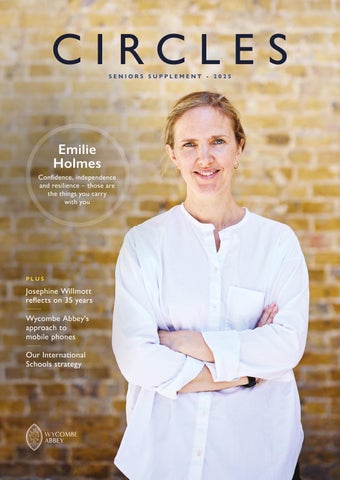
Confidence, independence and resilience – those are the things you carry with you
PLUS
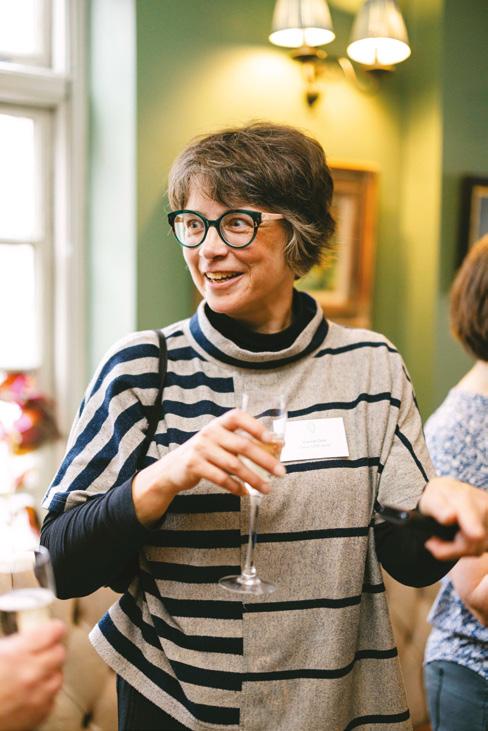
Josephine Willmott reflects on 35 years
Wycombe Abbey's approach to mobile phones
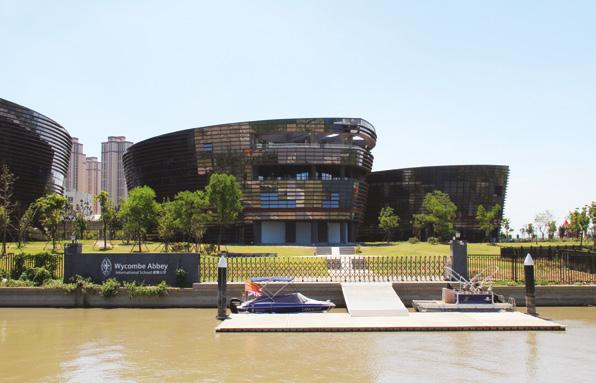
Our International Schools strategy
When I first came to Wycombe Abbey from Godstowe in the 1970s I was already part of the boarding school world. For me, the unrivalled access to knowledge and intellectual rigour was what I loved most, so we were a perfect fit. In those days, girls were educated to understand they were indeed equal to boys in the post-60s society.
Patricia Lancaster, the Headmistress at the time, was passionate about making sure we fulfilled the potential she saw in all of us.
I’m often asked why Wycombe was so pivotal for me. My response is that it gave me confidence in my abilities and beliefs, the passion to defend them and the grace to accept when my arguments were misguided or ill-informed. It also gave us the ability to refocus when we failed. I’m sure many Seniors would say the same thing – what we started out doing was not what we ended up doing or that we reached our goal through an unexpected route. As a young journalist, I was able to indulge my love of history through interviews with notable figures at a fascinating time in the 90s. Hello! wasn’t part of my life plan, but I loved working on this innovative publication before making a move into international healthcare when an opportunity arose.
I saw this sector move as making a difference. Somehow the values of independence, service and determination were ingrained in us quietly but effectively. Wycombe Abbey women have always shown a remarkable ability to adapt to the needs of the time. The world we enter may change, but the skills we take with us – intellectual courage, resilience under pressure, and a global perspective – remain constant.
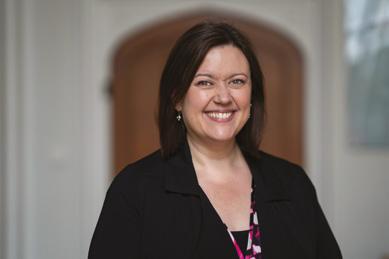
FROM THE GUEST EDITOR, SARAH CARTLEDGE (AIRLIE, 1979)
The relevance of girls’ boarding schools in today’s world
Public service and independent thought One of Wycombe’s strongest legacies is producing women who lead with both authority and empathy. As a High Court judge, Wycombe Abbey council member Dame Juliet May KC sits at the pinnacle of the British legal system, presiding over cases that require absolute clarity of thought and an unshakeable commitment to justice.
Clarissa Ward, CNN’s Chief International Correspondent, has reported from conflict zones in Syria, Afghanistan, and Ukraine, often at extraordinary personal risk. Her calm authority in the midst of chaos is the natural extension of a school culture that encourages girls to find and hold their voice. Similarly, Alice Loxton is using new media to bring history to millions in fresh, accessible ways, breaking down the barriers between academic scholarship and public storytelling.
In a different arena, Florence Nagle spent decades fighting for women to hold a racehorse trainer’s licence, finally succeeding in 1966 by refusing to accept the entrenched sexism of the British horseracing establishment.
International impact
Wycombe Abbey’s reach has never been confined to the UK. In today’s interconnected world, alumnae are increasingly global players. Krizia Li, founder of Vermillion, is reshaping how the world sees Asian creativity by building an international platform for modern Asian luxury design. She has taken the confidence and independence instilled at Wycombe and applied it to cultural heritage, breaking new ground. Also, Dr Anushka Patchava has taken her medical training into the global health tech space. She works at the intersection of AI, policy, and preventative care, challenging traditional models and finding new ways to make healthcare more efficient and accessible.
Why girls’ boarding schools matter now
The pressures facing young women today are different from those my friends and I faced in the 1970s. But the need for environments that encourage confidence, critical thinking and mutual support is greater than ever in a complex and unpredictable world.
Girls’ boarding schools, such as Wycombe Abbey, offer something rare: the space to lead without competing against male expectations, the chance to take intellectual risks, and the support of friendships that last a lifetime. Every leadership role, every academic prize, every sports captaincy is held by a girl, so nothing feels out of reach. As a result, Wycombe Seniors go out into the world with confidence, changing the conversation and finding new horizons.
Welcome
05 We remain true to our mission in a changing world. By Jo Duncan, Headmistress.
06 From the Foundation Office: Protecting the future of Wycombe Abbey.
10 Affinity and Advocacy: updates from the Seniors Consultative Committee.
Seniors
26 All community events: Seniors Day, Seniors Drinks and Carols.
30 Reunions: Classes of 2015 and 1985.
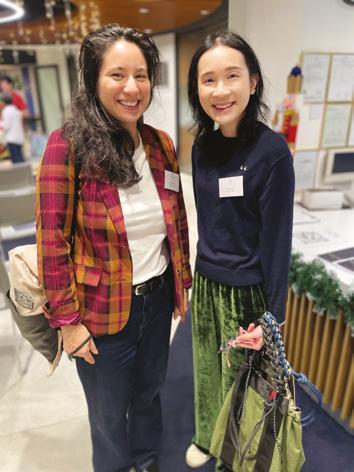
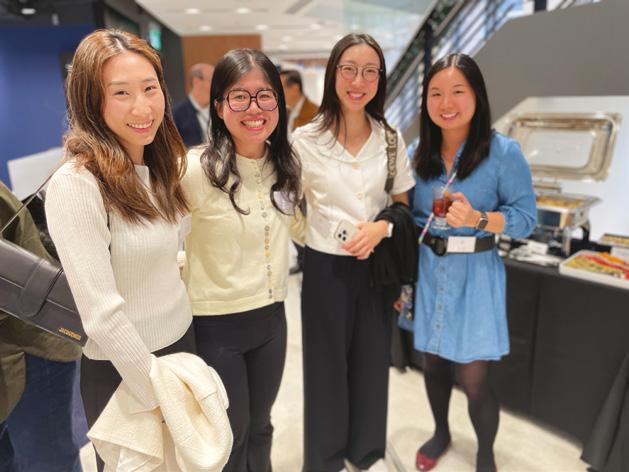
32 International Gatherings: Dubai, Hong Kong and Bangkok.
36 Obituaries: fond memories of departed Seniors.
12 Good & Proper Tea founder Emilie Holmes on challenging the status quo.
16 Words and wisdom from our Guest Editor, Sarah Cartledge, as told to Linda Cai.
18 Josephine Willmott reflects on why boarding must earn its place.
20 Find, follow and cultivate your passions: Betty Makharinsky describes her journey to founding Vache Baroque.
24 Vermillion founder, Krizia Li, reveals how Wycombe gave her the tools for success.
School News
50 The Big Topic: Wycombe Abbey’s approach to mobile phones.
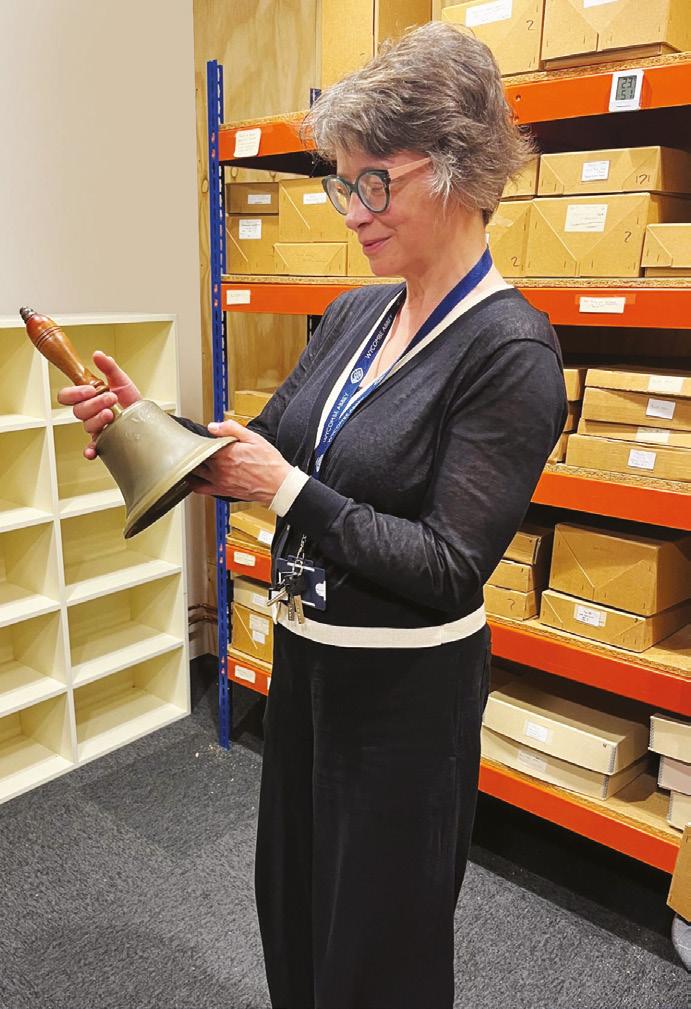
54 Coming full circle: meet our new Archivist, Susannah Davis.
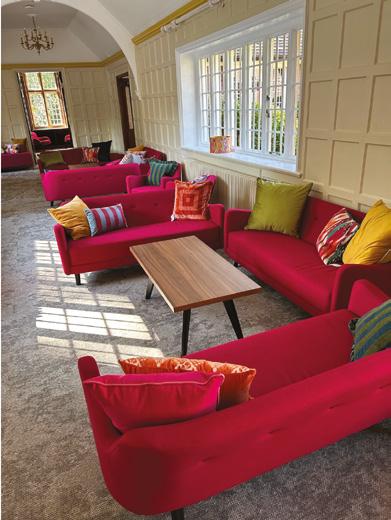
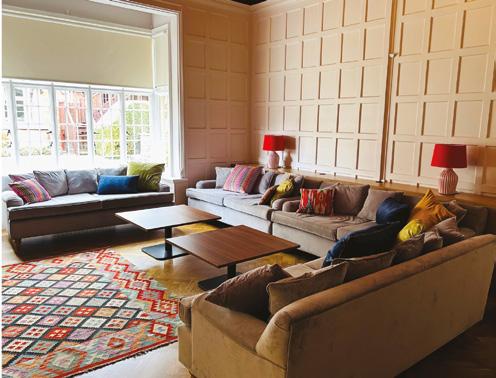
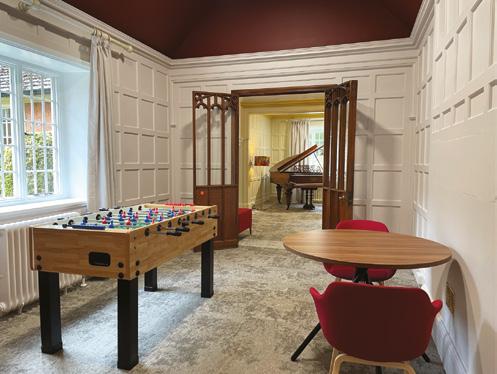
56 Daws Hill Refurbishment: a fresh chapter for the West Wing studies.
57 Inspiration for the future at the Careers Seminar.
58 International Strategy: Nick Woods answers questions on the opening of new Schools around the world.
We remain true to our FROM THE HEADMISTRESS
mission in a changing world
At Wycombe Abbey, we often speak of the strength of our community. Over the past year, that strength has been both evident and deeply felt. Whether at reunions, Dove Day or Seniors Drinks, it has been a joy to reconnect with so many Seniors and to witness the enduring spirit of our Seniors network.
In a year that has brought uncertainty to the independent education sector, Wycombe Abbey continues to flourish. We are fortunate, but we do not take that fortune for granted. Our strength lies not only in our academic excellence, but in the people who shape our School: our exceptional staff, our curious and courageous pupils and our Seniors, whose loyalty and generosity continue to inspire.
Our pupils continue to achieve outstanding academic results, supported by a world class team of staff whose dedication lies at the heart of everything we do. Full boarding is a defining feature of Wycombe Abbey’s success, offering a nurturing environment where girls are known as individuals and supported to develop their independence, resilience and friendships across year groups with our unique vertical boarding structure which was highlighted as a ‘significant strength’ in our recent ISI inspection. As a former Wycombe parent myself, I know first-hand the transformative power of this education, not only in the classroom, but in the friendships, values and confidence it instils.
To ensure we remain true to our mission in a changing world, we have launched a new strategic direction, Wycombe 130. This plan sets out four priorities for the next five years: to strengthen our boarding provision even further, invest in our people and culture, plan responsibly for growth and extend our global impact. These are ambitious goals, but they reflect the unique spirit of Wycombe Abbey that is forward-looking, purposeful and rooted in excellence.
To help realise this vision, we have enhanced our Development Office - now called the Foundation Office - and established the Wycombe Abbey Foundation to guide and grow our philanthropic work. Whilst school fees sustain the core delivery of education, philanthropic investment allows us to go further. It gives us the confidence to plan ambitiously, to respond to emerging needs and to secure the future of Wycombe Abbey for generations to come.
Thank you to all who have given so generously of your time, expertise and support. Your belief in our vision makes all the difference.
With warmest wishes,
Jo Duncan MA (St Andrews), PGCE (Cantab) Headmistress
FROM THE FOUNDATION OFFICE
Protecting the Future of Wycombe Abbey
The Foundation Office (previously Development), brings together our work in philanthropy and alumnae engagement under one team. By uniting the Seniors Office with our fundraising activity, we can take a more connected, mission-led approach that enhances the ways alumnae stay involved with the School, helping Seniors feel supported, informed and part of the Wycombe Abbey community.
The power of community support
Every act of support - whether time, expertise or philanthropy - contributes to the School’s success. Philanthropy is only part of this story; equally important are the conversations, connections and advocacy that celebrate the achievements of our community, share opportunities and champion the next generation of Wycombe Abbey girls.
While School fees sustain the everyday running of the School, it is the continued support of our community that allows Wycombe Abbey to stay ahead in a competitive sector. Donations to the Wycombe Abbey Foundation are vital to support our key priorities:
1. Enhancement of Living and Learning Spaces as part of the Master Plan
2. Securing access through Bursaries
3. Unrestricted giving towards the Wycombe Abbey Endowment Fund Collective generosity connects past, present and future generations of Wycombe Abbey girls, allowing the School to continue offering a worldclass education for years to come.
Philanthropy in action
While School fees sustain the everyday running of the School, it is the continued support of our community that allows Wycombe Abbey to stay ahead in a competitive sector.”
Guildway Appeal
A major fundraising effort to build what is now Clarence
The LAC Appeal Enabled the creation of the Lancaster Arts Centre, including its Theatre and Art Gallery
From bursaries that transform individual lives to buildings that enhance the educational experience for all, the School’s evolution has been shaped time and again by the generosity of its community.
• 1956: Diamond Jubilee Appeal
Funding new science labs, form rooms, changing rooms, a gymnasium and a music block, the appeal sought £250,000, equivalent to over £6 million today, including an
Centenary Appeal
endowment to support scholarships and future projects.
• 1977: Guildway Appeal
A major fundraising effort raised the equivalent of around £320,000 to build what is now Clarence, strengthening the School’s unique Sixth Form experience.
• 1985: The LAC Appeal Enabled the creation of the Lancaster Arts Centre, including its Theatre and Art Gallery.
• 1996: Centenary Appeal
Supported by a £2 million bequest, the appeal raised further funds to build the Music School that continues to inspire pupils today.
• 2004: Davies Sports Centre
A state-of-the-art facility made possible through the generosity of many Wycombe Abbey families.
• 2016: 120th Anniversary Appeal
Raised £6 million to build two new boarding houses, Pitt and Rubens, enhancing the full-boarding experience for future generations.
How you can be involved
We warmly invite all members of our community to be part of this shared endeavour. You can:
• Attend an event or reunion
• Volunteer your time or expertise
• Become a mentor or advocate for current pupils
• Support the School through a gift or legacy
We are deeply grateful to all those who have contributed over the past year whether through legacies, Giving Day, mentoring, volunteering or attending events. Your support has helped make a tangible difference to our community.
Sports Centre
120th Appeal
Raised £6 million to build new boarding houses for Pitt and Rubens
Giving Day
Following a successful 2025 campaign, Giving Day 2026 focuses on Sixth Form renewal and widening opportunity through bursaries.
Giving Day is a dedicated 36-hour fundraising event that brings together Seniors, parents, pupils, staff and friends in support of key School priorities. It is an opportunity for our whole community to come together, celebrate what we value and help advance projects that will strengthen the School for generations to come.
2025
Last year’s Giving Day, which supported enhancements to our libraries, was a tremendous success. Thanks to the generosity of our community, we raised over £150,000 from more than 400 donors. We will deliver a series of physical improvements to our libraries in summer 2026, creating spaces that continue to inspire curiosity and a love of reading.
2026
We plan to transform and expand our Sixth Form spaces, providing a purposeful and welcoming environment for our oldest pupils.”
Funds also supported the addition of workshops and a speaker series for pupils of all year groups. We welcomed award-winning authors Sue Wallman and Radhika Sanghani over Reading Week in November 2025 and are looking forward to visits from spokenword artist Desree and writer Dan Simpson during World Book Day 2026.
Giving Day 2026 will take place on 12–13 March 2026 and turns our attention to two priorities central to the School’s strategic vision: enhancing the Sixth Form experience and broadening access through bursaries. We plan to transform and expand our existing Sixth Form spaces, providing a purposeful and welcoming environment for our oldest pupils. The new hub will be designed to support independent study, collaboration and leadership. This renovation is scheduled for completion in summer 2026.
Alongside this, expanding bursary provision will enable more exceptional young women to benefit from all that Wycombe Abbey offers, enriching the life of the School and strengthening our commitment to opportunity. For more information on this year’s Giving Day, please don’t hesitate to contact Alice Edwards edwardsa@wyombeabbey.com
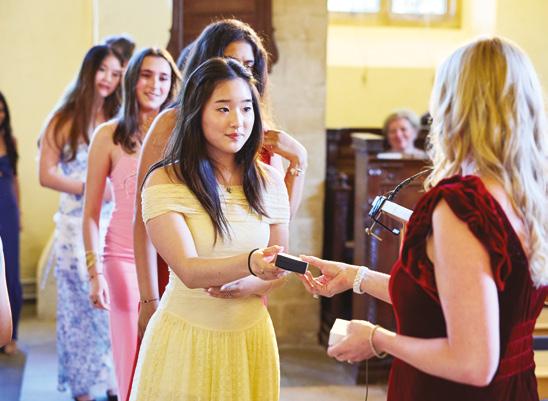
Welcoming the Class of 2025 to the Seniors' Community
FROM THE SCC
Affinity and advocacy
The Seniors Consultative Committee welcomes Candy Lahaise (Williams, Butler, 1994) as its new Chair
'As a current parent and Senior, I am thrilled to support Wycombe Abbey alongside an incredible group of volunteer alumnae who are focused on building a great network of Seniors, says Candy Lahaise (Williams, Butler, 1994).
I am so grateful for the hard work of Fizz Conway, from whom I took over the Chairmanship this summer. Fizz was hugely energetic, organised and committed to building a community based around friendship, philanthropy and fun. I very much hope to continue in this vein, working alongside the Foundation Office and, in particular, our new Assistant Development Director, Kate Thomas (Murrell, Butler, 1999) who is now responsible for the Seniors Office. We look forward to helping drive both affinity and advocacy for the School.
The role of the SCC and new Members
The Seniors Consultative Committee acts as a channel of communication between Seniors and the School. It exists to represent the views of alumnae of all ages around the globe and it can make advisory proposals to the School on any aspect of the Seniors, their operations and activities. SCC members are voluntary ambassadors who meet several times a year to support with activities relating to the following areas:
• Seniors themselves: networking, publications and events
• Current pupils: judging competitions, mentoring and careers events
• Future pupils: support for bursaries and capital plans, as well as advocacy to help drive the admissions pipeline.
I’m thrilled to announce that Alice Evans (Gaskell, Airlie, 1990) and Leonora Buckland (Fitzgibbons, Campbell, 1991) have agreed to join the SCC this year. We continue to work to protect the future of Wycombe Abbey for the next generation of girls – supporting in particular positive communication to aid the admissions pipeline and critical fundraising.
If you are interested in joining the SCC, please do contact the Seniors Office and Kate and I would be delighted to provide further details.
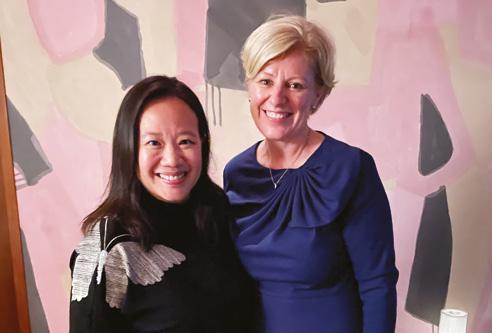
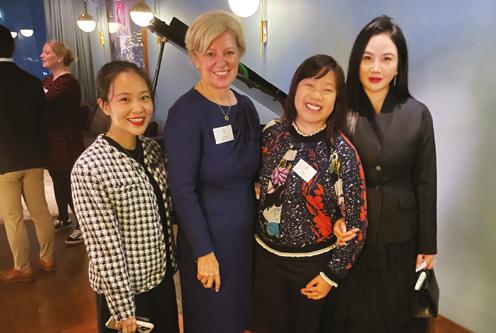
Candy Lahaise with Kate Thomas and Jo Duncan at Seniors Drinks
I feel we can make membership of the Wycombe family a lifetime benefit."
What the SCC say:
I am delighted to be part of the SCC and give back to the School in my own way. Using my editorial experience to help shape this issue of Circles has been a pleasure and enabled a wonderful reconnection with Wycombe and its brilliant alumnae.
Sarah Cartledge (Airlie, 1979)
I am honoured to join the Committee. Wycombe gave me so much and perhaps I have become more aware of this over time. I’d like to help further build the Seniors network in a holistic, locally rooted and public-spirited way, whilst also recognising the domestic and internationally competitive marketplace within which it operates and the stresses on financial sustainability. Girls’ education is an incredibly important, impactful and necessary element of creating an equitable society and I think the bursary component is a big part of that, as well as the worlds and industries that past, present and future girls are shaping.
Leonora Buckland (Campbell, 1991)
I am excited to join the SCC as I feel that there is an opportunity, with the school’s support, to bring together the amazing women and girls who are doing so much in wider society to lead change in different ways. The Founders’ vision for empowering Wycombe women to contribute to the world beyond their homes can draw on more than just the first-class education on offer in the school. Having seen the power of networks in business to support busy women, navigating careers and family responsibilities, I feel we can make membership of the Wycombe family a lifetime benefit which enables women and girls across the generations to reach for the stars.
Alice Evans (Gaskell, Airlie, 1990)
FROM THE SENIORS OFFICE
Our events programme
The Seniors Office exists to facilitate engagement with our community of Wycombe Abbey Seniors. It ensures that alumnae remain connected with the School and each other, while deriving value from being part of an active international network.
Seniors' Connect
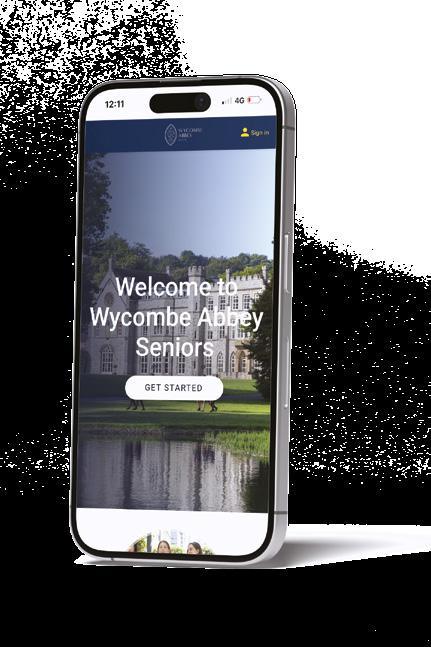
Seniors' Connect is the perfect way to reach out to the Seniors’ community. Anyone registered on this closed portal can message other Seniors to either request or offer support, career guidance and mentoring – or simply to get in touch with other Seniors socially. Use this networking tool to find others in your industry sector and receive updates on School events and news.
Careers
• Find a mentor
• Post a job vacancy
• Search for positions
• Meet other people in your sector
• Support Seniors and pupils as a mentor
Events
• Register for upcoming events
• Share and view photos
Connect
• Search the Seniors’ directory
• Connect and message friends
• See other members in your Circle
• Search groups by country, region, city and university
Visit wycombeabbeyseniors.com to sign up or use the QR code below.
Have you changed your contact details?
Don’t miss out on invitations to key events and news. Please contact seniors@wycombeabbey.com to update your postal and email addresses.
Every year, the Seniors Office hosts ‘all community’ events, year group reunions, international gatherings, sports fixtures and facilitates volunteering for careers events.
Seniors Office Events Programme
All Community Events (2026)
• Seniors Day on Dove Day (20 June)
• Seniors Drinks in London (30 September)
• Seniors Carol Service (6 December)
Class Reunions
• 40 Year Reunion
• 10 Year Reunion
Sports Fixtures
• Annual Lacrosse Match (22 March)
International Gatherings
• UAE (Chapter Head, Laetitia Tregoning)
• Hong Kong (Chapter Head, Krizia Li)
• Thailand (Chapter Head, Anna Wongcha-Um)
CHALLENGING THE STATUS QUO
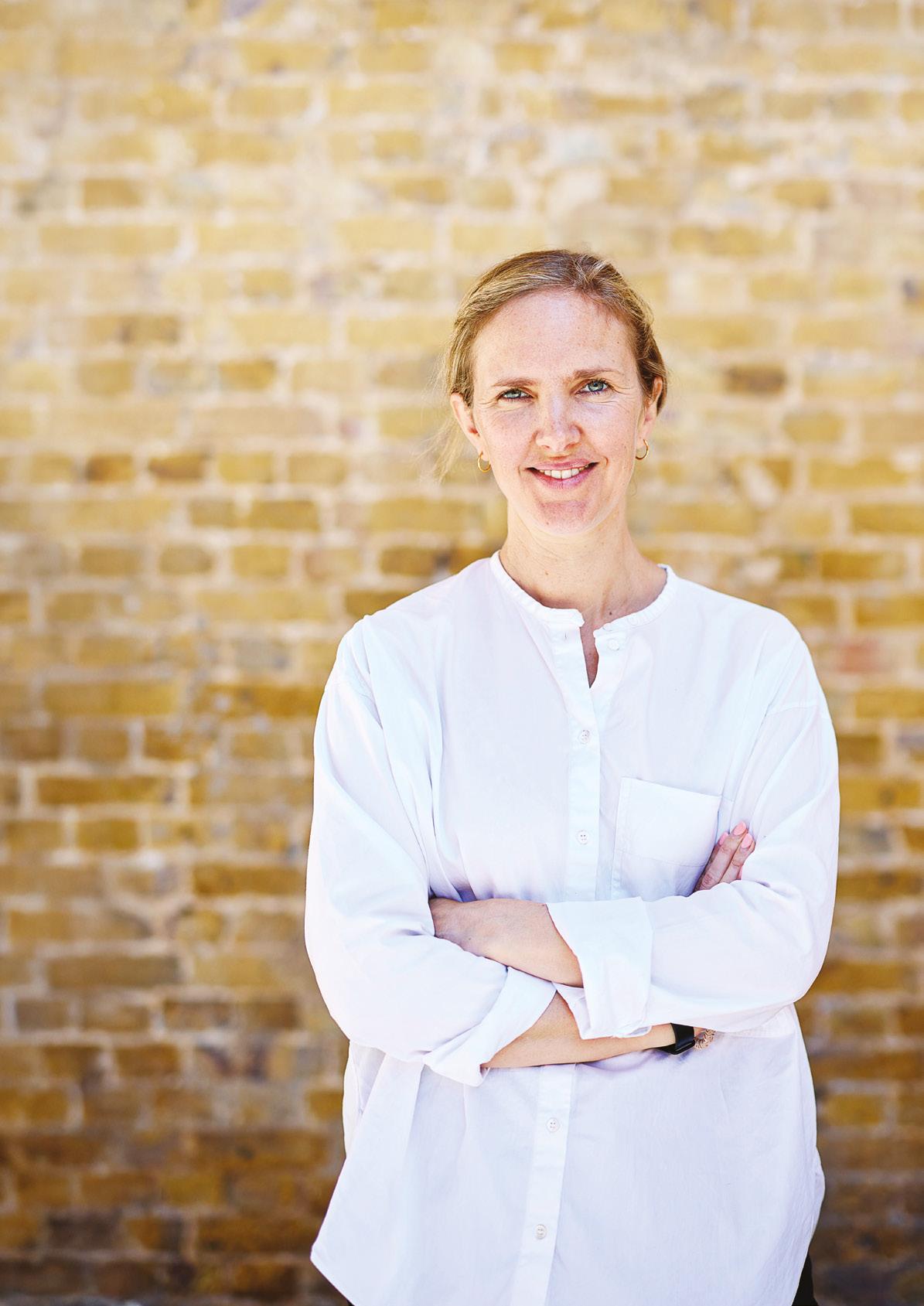
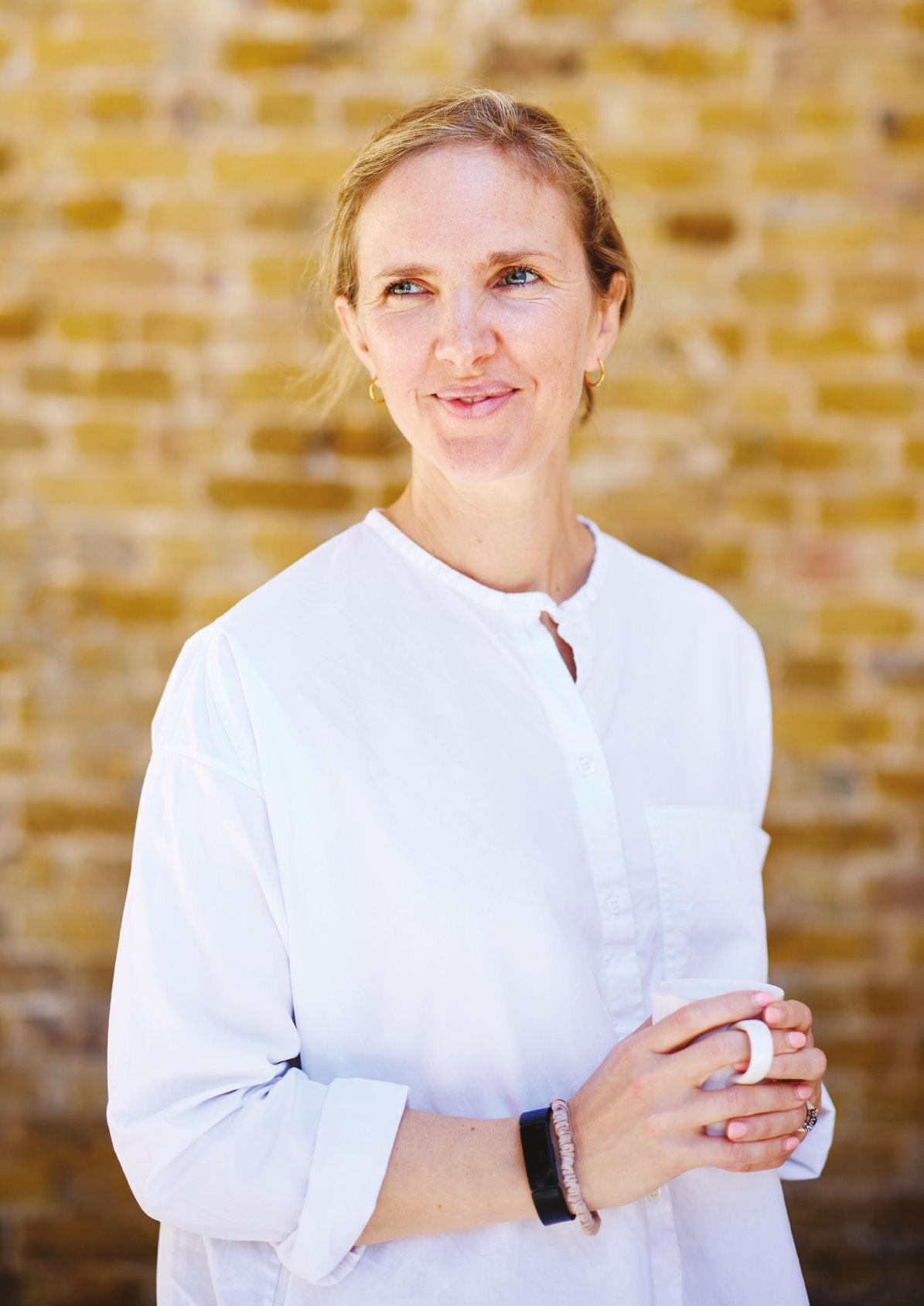
Good & Proper Tea founder Emilie Holmes (Butler, 2002) talked to Sarah Cartledge on how Wycombe Abbey gave her the confidence to succeed
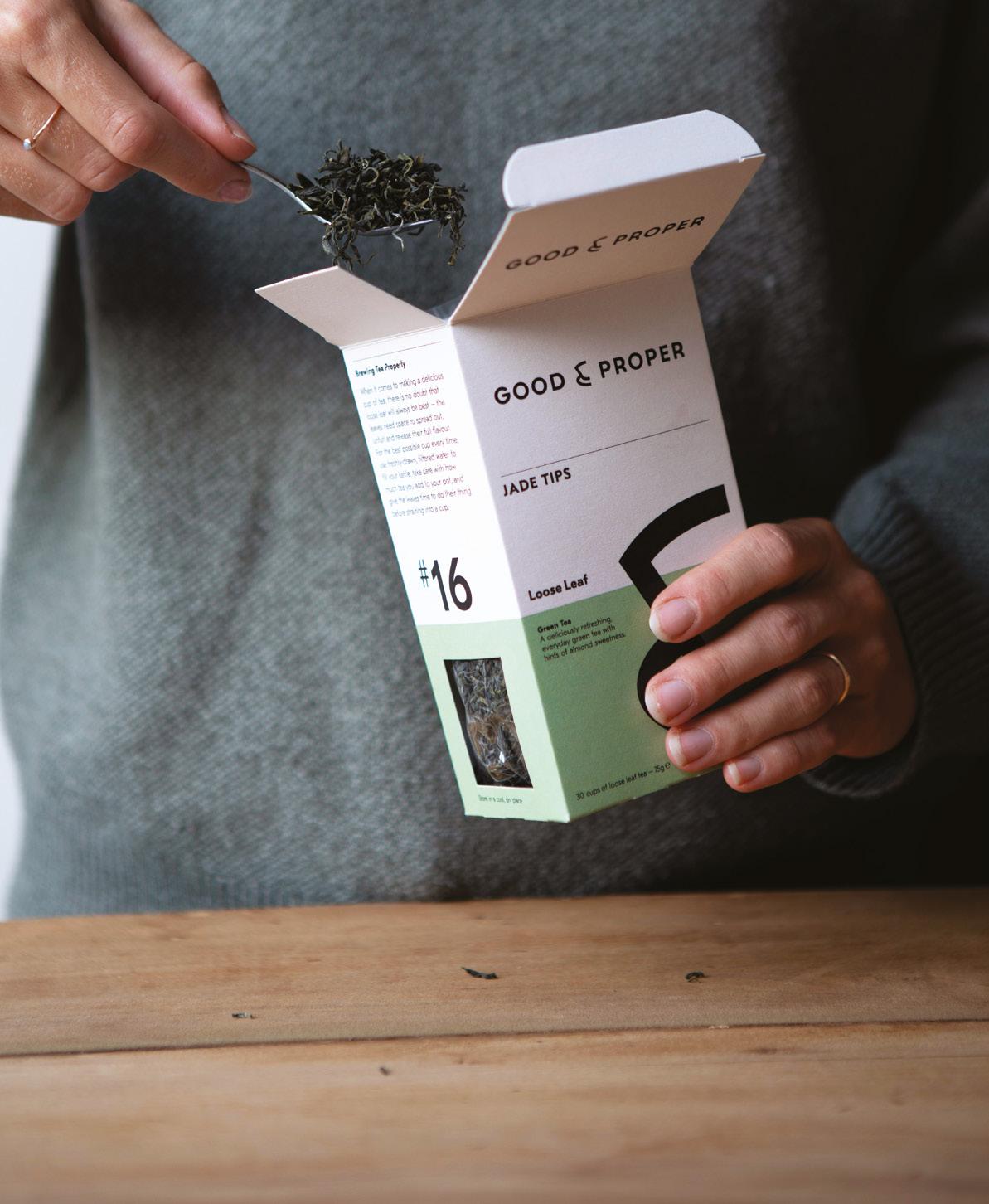
When Emilie Holmes founded Good & Proper Tea, she didn’t just want to sell tea – she wanted to change Britain’s relationship with it.
From being a nation of tea drinkers, we had somehow evolved into coffee drinkers and tea was literally on the back burner. Now her pioneering adventure in a 1974 Citroën van called Watson has grown into a thriving business supplying cafés, hotels and restaurants across the country.
‘It all started with an itch,’ she says. ‘I had lived in India as a child – I grew up with old-fashioned tea drinking rituals so I couldn’t understand why in London we had such poor tea. We’re a tea-loving nation, but we weren’t drinking it properly.’
At the time she was working for an advertising agency, fulfilling her creative side but constantly talking about the tea company she was going to start. ‘I was lucky enough to have some brilliant early bosses who were pushy and encouraging in equal measure and who gave me the skills and the confidence to take the plunge.’
She then spent a year at her kitchen table, tasting tea. ‘That was when the real learning started,’ she says. ‘Tea is complex and culturally nuanced; there is so much more to it than I had realised. And the van was the way I was going to get my idea out there. Street food was having a moment and crowdfunding had just arrived in the UK, so it felt like a nice, lighttouch way to put my idea out there. I got myself a van and joined the street food movement – they were all serving burgers and I was serving tea.’
Watson was fitted out and Emilie brewed looseleaf tea in proper pots, using timers to control the steeping and taking pride in quality and ritual. ‘People had never really seen tea treated that way before. Within a couple of weeks, customers of all walks of life were ordering by origin – Assam, Kenyan, Sri Lankan – and I thought, right, we’re onto something.’
From quirky beginnings, Good & Proper Tea has grown steadily, evolving from the mobile van to two London tea bars and, later, to supplying hospitality venues nationwide. ‘We realised quickly that the real opportunity was in helping cafés and hotels do tea better. People would come in and say, “I’ve got great coffee but terrible tea – can you help me fix that?”’ Partnerships now comprise 80% of the business and the company is a certified B Corp with a reputation for quality, ethics and taste.
‘Running a business – well, starting a business, I should say – is pretty scary and lonely,’ Emilie admits. ‘It’s also slightly mad, which you don’t know in full when you start, but I do think that the confidence
and independence that Wycombe fosters has been invaluable. Boarding teaches you to manage your time, take responsibility, and stand on your own two feet. When you start a business, you realise that’s exactly what’s required. You’re the only one who can really drive it forward.’
Forced independence
Boarding came naturally to Emilie with her parents abroad, and she was the youngest of three siblings. ‘I started boarding at prep school, so I was used to it. As the youngest, I thought it was super cool and I never felt like I was being sent away. From the start you had to find your voice against confident people, which isn’t unlike running a brand – you’ve got to work out how to be heard and how to be different.’
She remembers herself as a curious pupil, always the person asking why. ‘It probably drove my teachers mad, but they encouraged it. That habit of questioning everything has stayed with me and it’s now one of our company values: “never settle, always question”. Just because everyone else is doing it that way doesn’t mean it’s the best way.’
Among the teachers who shaped her was her Butler Housemistress, Miss Morrissey. ‘She was completely bananas,’ Emilie laughs. ‘She did things her own way, and that probably taught me that there isn’t only one way of doing things. She was tough but cosy, and a little dose of eccentricity was helpful as it reminded us there was room to be different.’
Boarding teaches you to manage your time, take responsibility, and stand on your own two feet. When you start a business, you realise that’s exactly what’s required.”
Life at Wycombe was not all books and tradition. ‘I played lacrosse and netball though I was always in my super sporty sister’s shadow, but I loved it. It was competitive in a really healthy way. You’d lose a match, be cross about it, work out why, and go again next week. That’s business training in disguise.’
Emilie studied languages at Bristol University, then began a career in advertising. ‘I liked the structure and the creativity and I think I always wanted to have a boss to learn from before I struck out on my own. I liked being told what I was doing well and what I wasn’t.’ But the entrepreneurial itch never went away. ‘My mum loves to remind me that I once sold stones by the side of the road,’ she laughs. ‘So maybe it was inevitable.’
Making a difference
About Good & Proper
Whether you’re loyal to a breakfast brew or want to experience something new, our mission is to show the world how good tea can be, when it’s done properly. We’re obsessive about quality, carefully sourcing the best tasting teas from around the world, and then giving you everything you need to bring out the best possible flavour in every cup. As a certified B Corp, we’re also committed to using business as a force for good, playing our part in building a sustainable tea industry for the future.
Our range of awardwinning teas is available to order online at goodandpropertea.com, with free delivery on orders over £25.
We are delighted to offer a Wycombe Abbey Seniors discount of 20% with the code WYCOMBEABBEY.
We also provide a comprehensive wholesale service for Hospitality operators, such as hotels, cafes and restaurants, who want to give their customers the best possible tea experience. Please get in touch at wholesale@ goodandpropertea.com to request samples or find out more.
Offer expires at 23:59 on 01.01.27. Cannot be used in conjunction with other offers.
Today, as Good & Proper Tea continues to grow, Emilie remains focused on doing things properly. As well as the company’s B Corp status, which gives more structure around impact, she is also a member of the Ethical Tea Partnership, alongside Sainsbury’s and Typhoo. ‘We’re tiny compared with such huge companies, but we can ask the difficult questions. We can push things that others can’t, and we can ask things like why we aren’t talking about carbon? These companies buy millions of kilos more tea than I do, so if we’re going to move the dial and ensure a sustainable tea industry for the future, then they have got to be the ones to change. The tea industry will only survive by paying more for better tea. The customer gets a much better tasting cup, and the millions of people around the world whose livelihoods depend on producing tea get a better future too.’
Watson still rolls out for festivals each summer.
‘You’d think people only want alcohol,’ Emilie says, ‘but people queue from seven a.m. until three the next morning for a good cup of tea.’ And for those not in festival mood, Emilie’s tea is served everywhere from the All England Club at Wimbledon, to the National Gallery.
Her advice to today’s Wycombe pupils is simple: stay curious. ‘Keep pushing and questioning things,’ she says. ‘You don’t have to start a business to be entrepreneurial – you can be entrepreneurial anywhere. But whatever you do, take that blissful naïvety that you can take on the world, and hang on to it. Confidence, independence and resilience – those are the things you carry with you. You don’t realise it at the time, but they’re everything. Being surrounded by incredible, strong, confident and brilliant women can be scary at times. It was competitive and intimidating in lots of ways, but it gives you a real drive that’s quite unique. It made us feel we needed to fight a little bit and that’s just what life is like.’
That belief has sustained Emilie through the tougher days of entrepreneurship. ‘It’s lonely at times; you have to be your own energy and drive. But that mindset of “we can, we can, we can” really sticks. I never thought being a woman might hold me back; it just wasn’t in my head. Wycombe girls always thought that we can do anything.’
Words and wisdom
Sarah Cartledge (Airlie, 1979) talked to Linda Cai (UVI) about her career in Journalism and how Wycombe gave her the confidence to grab opportunities
Can you give a brief outline of your life after you left Wycombe Abbey?
I read Modern History at St Hilda’s College Oxford. I always wanted to become a journalist, but I had enjoyed my Spanish special subjects in History at Oxford. During my university breaks I had spent time in Salamanca learning Spanish and had travelled widely across Spain, so I signed up for a law degree in Malaga. However, Malaga University refused to recognise my Oxford degree as it was only a 3 year course as opposed to 5 years in Spain. I was allowed to continue my studies (although I was clearly undereducated) but I would not be awarded a degree.
As a result, I returned to the UK where I took a secretarial course – the time-honoured route for women wanting to work in either publishing or journalism. I secured a job with the Books Editor at Woman’s Own reading manuscripts sent by publishers for potential serialisation in the magazine. It was a fascinating time, although short-lived as I found another more exciting job completely by accident with a new magazine, Hola! which we renamed Hello! Hello! became an instant success. It became the must have read of the week, which meant I spent all my time travelling from one interview to another, often in different countries and even different continents. I ended up as a commissioning editor working from the head office in Madrid, overseeing teams of photographers and writers. It’s hard to imagine in today’s world of instant mobile stories that each edition was awaited eagerly by readers from all walks of life.
As the internet changed the face of magazine readerships, I decided to move into business publishing, editing a range of magazines from oil and gas, aviation, polo and finally healthcare where I have worked for the past 10 years, focussing mainly on the Middle East which is at the cutting edge (no pun intended) of healthcare innovations and digitalisation.
What were your passions and interests at Wycombe Abbey and did these link to you wanting to become a journalist?
My life at Wycombe Abbey reflected my interest in world affairs, literature, writing and debate. The most important aspect was the amount of rigorous debate, challenging our ideas and concepts so we formulated them properly and convincingly. I was a member of the Debating Society, which was an informal arrangement – not the highly organised event it can be today. I loved the cut and thrust of debate, the ability to test out ideas in an environment that encouraged ideas. When you debate and win, even if you do not believe in your hypothesis, it gives you confidence to pursue difficult ideas to the end.
How did your Wycombe Abbey education inspire you to achieve your aims?
The most important aspect of a Wycombe education for me was confidence. The English teaching was superlative – we had outstanding teachers who fostered a love of writing and drama in nearly everyone. At the time, the school was top of the league tables, so this also gave us the necessary confidence and ability to face outwards.
What have you enjoyed most about being a writer?
I have absolutely loved writing about some of the fascinating people I was fortunate enough to meet. The role of a features writer is to bring high profile individuals to life, to draw them out and create the person behind the myth. It can also be difficult, as people like to portray a certain image and resent being asked difficult or probing questions. The key is to engage with them so they feel their answers will be treated with respect.
What was the most exciting interview you did with Hello!?
There were so many. I interviewed former President Gorbachev in Edinburgh Castle on his first lecture tour of the UK, Dame Kelly Holmes following her double Olympic win; Queen’s Brian May about his passion for wildlife, the birth of The 1975’s Matt Healy; I travelled to Africa with Martin Clunes to meet the wild baby elephant named after his daughter Emily and I interviewed Sting at home in Highgate, London.
But the most interesting was the Prime Minister of Pakistan, Benazir Bhutto. She was the youngest ever Prime Minister at the time and the first female leader of an Islamic country. I got to know her very well and covered the births of all her children. I was also the last journalist to interview her before she went back to Pakistan knowing the death threats against her. She was an incredibly brave woman and it was a privilege to know her.
Hello! became an instant success. It became the must have read of the week, which meant I spent all my time travelling from one interview to another, often in different countries and even different continents.”
What challenges have you faced in your career?
The arrival of digital and mobile phones changed the make-up of magazine interviews completely. Previously it had been based on personal contacts, reputation and face to face interaction. Suddenly there was a new way to do things, and this created a change, certainly in the world of celebrity journalism. So the lesson was to look completely left of field to find the next challenge.
Your career has spanned print, television, and PR. How have you adapted your skills across such different platforms?
When you know your job really well, it’s easy to find a route through. I worked for GMTV in its early days and it was a very different world from print but just as much fun, despite the early mornings. PR is the other side of the coin, but one where many journalists can operate well. You know who would do the best interview for your client, you know where the pitfalls lie and you also know how to steer a fellow writer towards a good story. I found this when I organised an interview with Jimmy Mulville from the production company Hat Trick who make Have I got News for You. He was diagnosed with throat cancer but agreed to give an interview for Oracle Cancer Trust which was headed up by the surgeon who looked after him. It was a tricky scenario finding the right journalist with the necessary sensitivity and the feature gave the charity a huge new audience, thanks to Jimmy’s generosity in speaking about something so personal.
What advice would you give to you anyone wanting to become a journalist?
Just go for it. Today there are so many routes into journalism. I know of a young man who makes videos about trains - now he’s a travel journalist and much in demand. Keep reading all types of journalism, look at what you enjoy reading and learn how to engage with your audience. And if you want to be a foreign correspondent, get on a plane and go.
If you could go back and give your younger self one piece of advice, what would it be?
Be confident. Don’t think that other people are better than you. Leverage your skill set and always take opportunities because you never know where they can lead.
Sarah Cartledge (Airlie, 1979) with Linda Cai (UVI).
CHALLENGED AND HAPPY
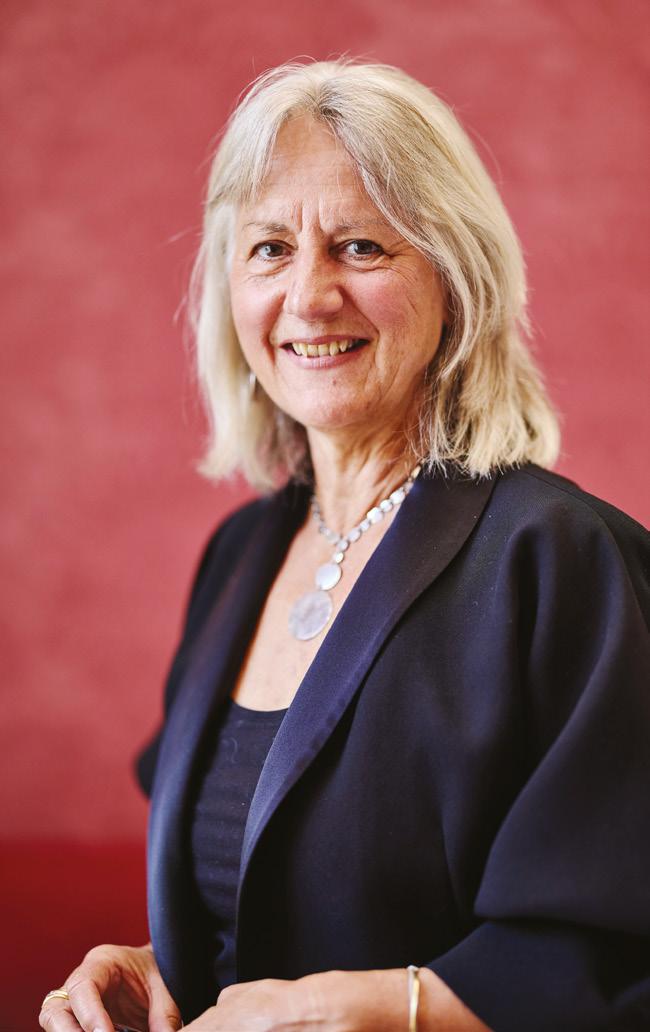
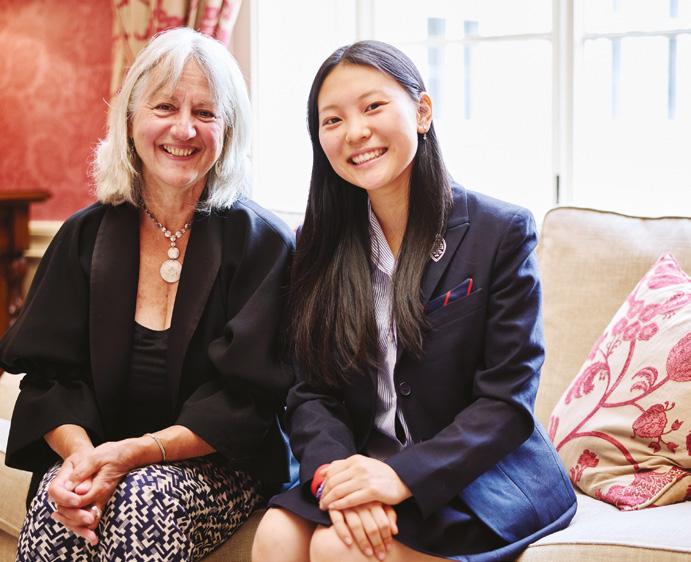
Former Head of English and Wycombe Abbey’s first Director of Studies, Josephine Willmott reflects on her 35 years that shaped a generation – and why boarding must earn its place by delivering real value and community
What inspired you to become a teacher?
Inspiration didn’t come into it. I’d never considered a career but a post-graduate year in Cambridge seemed attractive so I applied for the PGCE course, particularly when my widowed mother made it clear that she could no longer support me. I told her I would get a job in a co-ed state school between Oxford and London and much to my amazement I did – at Henley Grammar.
After three years, I spotted an advert for a teaching post at Wycombe Abbey.
I had barely heard of the school but I applied, and the job offer came via the only telegram I’ve ever received. Later I learnt that my godmother had been a pupil there, and her mother, my great aunt, was one of Miss Dove’s Head Girls.
What is it about Wycombe Abbey that kept you there for 35 years?
I was challenged and happy. I could share my love of English Literature, first awakened by the wonderful poet, U.A. Fanthorpe, who taught me English A level. Teaching Wycombe girls was both intellectually exhilarating and huge fun. Their extraordinary creativity and
intellectual curiosity, their enthusiasms and openness to new ideas made them a joy to engage with, both inside and outside the classroom. I still feel privileged to have known so many of them.
I was also lucky enough to work for and with outstanding Headmistresses, who created a community of staff and pupils where everyone was valued and supported whatever their interests and talents. My colleagues, too, were exceptional. I don’t mean just the pastoral and academic staff, but also the many administrative and support staff who played a vital role in the smooth
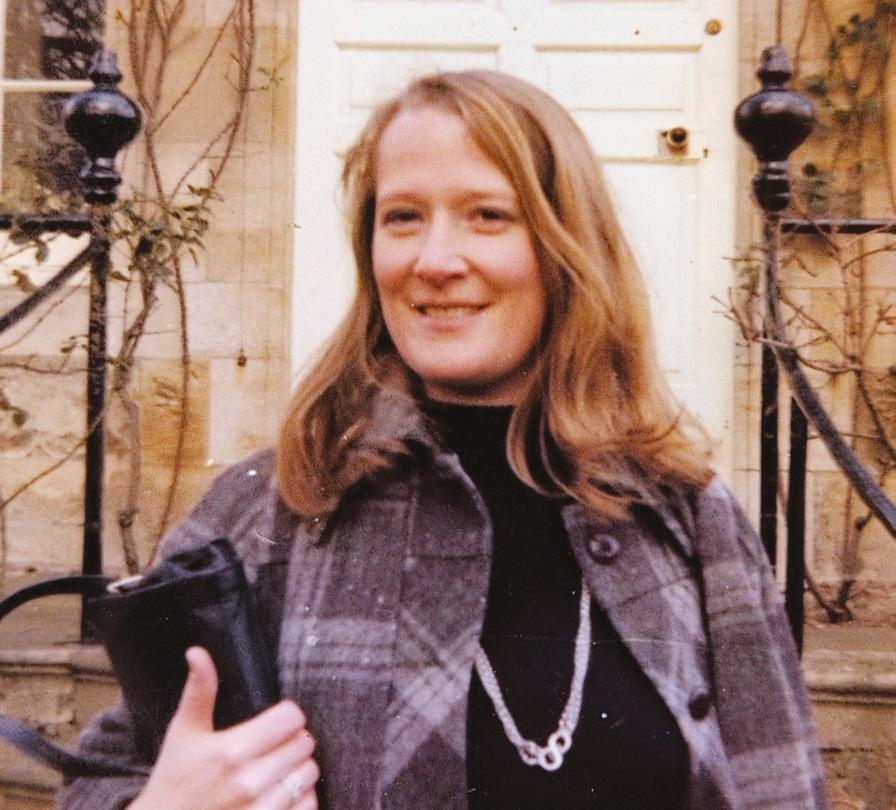
Josephine Willmott in 1976
Living
together teaches you to accommodate others –sometimes to lead, sometimes to follow – and to be selfsufficient. I would be deeply saddened if there were no girls' boarding schools left.”
running of the School, as, of course, did the enlightened Governing Council. What a difference such support can make! No one who experienced the transformation of school meals in the early 1990s could fail to recognise the importance of proactive leadership and amazing catering staff!
Why did your own daughters choose Wycombe Abbey?
I had been teaching there for 25 years when they made their choice. They felt they knew the school though their knowledge was, of course, very partial. As children they had viewed the magnificent grounds as a glorious playground, and both had watched, spellbound, Clarence’s magical production of A Midsummer’s Night’s Dream in 1994.
They also had a close relationship with several of my colleagues. Members of the English and Drama departments were very much part of their young lives, while a happy holiday with Dr Beckett in her glorious home in St Andrews led to an understandable slip of the tongue when my young son asked when we were next to visit St Margaret! And a girls-only school was, for them, an attraction. They’d enjoyed being at a co-ed prep school, but felt a single-sex secondary school might make it easier to focus on work and would certainly increase opportunities in such activities as drama, with no boys to highjack all the male parts. While many thrive in a mixed learning environment, my brief experience of teaching in a co-ed school had made me aware of how boys
tended to dominate in class, and how gender had markedly affected A level subject choices.
The attractions of boarding Boarding made sense for us. Wycombe offered every conceivable extracurricular activity, all provided on site. I was keen for my daughters to learn both the tolerance and the self-sufficiency that living in a close-knit and supportive community engenders, and the deep and enduring friendships that so often result. I wished them to be part of a vibrant and varied community of young women whose talents and drive are making a difference in the world today.
Boarding isn’t right for all children or families but when it fits, it gives security, belonging and ambition. Top state schools are getting superb results but independents offer a lifestyle and a community. Living together teaches you to accommodate others – sometimes to lead, sometimes to follow – and to be self-sufficient. I would be deeply saddened if there were no girls' boarding schools left.
What does life after Wycombe offer you?
The luxury of time to spend with friends and to pursue new interests. I have also seized the opportunity to travel extensively – my son’s Korean wedding and a visit to the school in Japan where my daughter was working were highlights, plus a trip to Bhutan, the country where Gross National Happiness is prioritised over the country’s GDP.
Most important to me, though, is the opportunity to share in my grandchildren’s lives as they grow up. I’m lucky; they all live within easy cycling distance of my Oxford home.
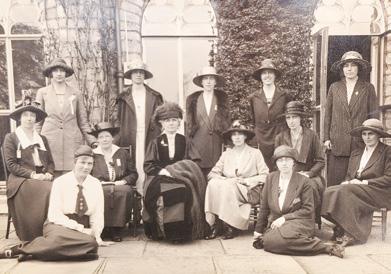
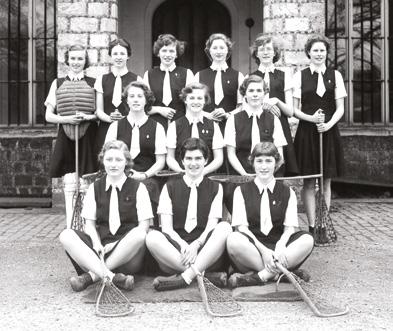
Norah Clougstun (JZW relative, centre row, 5th along) with Miss Dove.
Find, follow and cultivate your passions
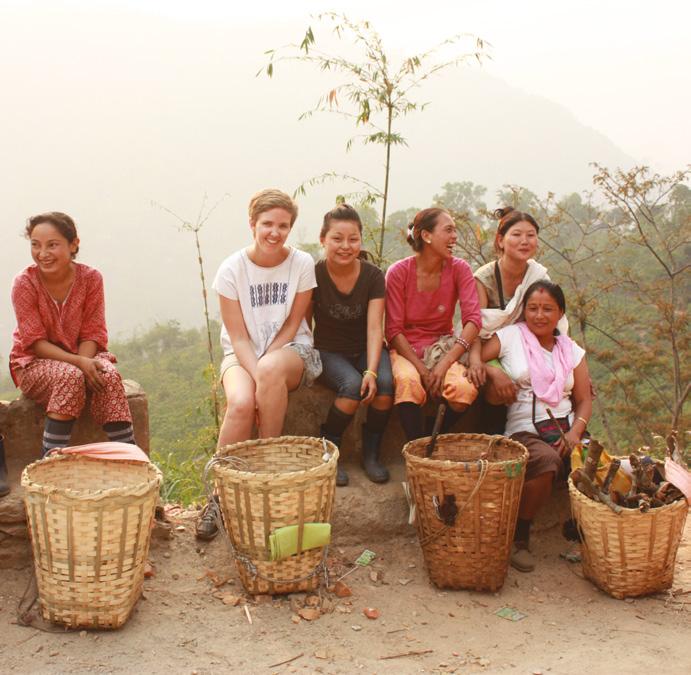
Betty Makharinsky (Airlie, 2012) tells Kate Thomas about her journey to founding Vache Baroque
What motivated you to create this platform?
I have always been motivated by giving back; it sounds cheesy but I do feel incredibly lucky to have received an outstanding music education while studying at Wycombe Abbey, and it has provided me with my life’s passion and purpose. I believe striving for accessibility must go hand in hand with excellence; seeking out this magical combination to create projects which truly resonate with audiences or participants is deeply satisfying. I’m also motivated by my colleagues, who inspire me to up my game and keep refining my craft, both as a singer and producer.
Describe your journey from Wycombe Abbey to founding Vache Baroque.
After leaving school, I read music at Oxford University, Exeter College. I then trained as a singer at Guildhall School of Music and Drama, and subsequently with a teacher in the south of Italy. During my postgrad studies, I began to pick up some freelance work in London; my choral scholarship at St Martin-in-theFields proved to be a great introduction to the world of choirs, and concurrently I was busy auditioning
for, and networking to take part in, fringe opera productions, as well as various concerts as a soloist. Suddenly, the 2020 pandemic came along and put our whole industry on ice. The dates in my diary fell away one by one, and, like most other singers, I was left with a lot of time on my hands. After a few months of practising and tutoring online, my now-husband Jonathan and I decided to grasp the opportunity when some of the restrictions were lifted in the summer of 2020: to go ahead with staging a production of Dido and Aeneas by Henry Purcell. This is one of the most famous operas of the Baroque period. It’s made up of an array of stunning musical numbers and has a dramatic, gripping plot. It was an awesome show! I sang the role of Belinda alongside some really brilliant singers and two streetstyle dancers from BirdGang Ltd. Perhaps because it took place during this strange 2020 window of not very much going on, or perhaps we simply got lucky, we managed to capture the attention of some major newspapers and got some great reviews, as well as selling out two performances. That paved the way for starting an organisation. A few months later we incorporated Vache Baroque as a charity and the rest feels like history!
Wycombe also instilled in me a great deal of confidence. I don’t feel scared to try my hand at something new, even if somewhere down the line I need to ask for help.”
Looking back, how did your time at Wycombe Abbey inform this journey?
Founding a charity (or any enterprise) requires determination and resilience. I certainly feel both these characteristics were nurtured and strengthened in me, as in all my peers at Wycombe. In fact, I would say these are the defining characteristics of a ‘Wycombe girl’. I enjoyed almost all my academic lessons and feel lucky to have had the opportunity to do so many ‘extras’ without ever compromising on Maths or English.
Wycombe also instilled in me a great deal of confidence. I don’t feel scared to try my hand at something new, even if somewhere down the line I need to ask for help. One of the up-shots of creating something from scratch during a pandemic was having a luxurious amount of time available! The cheapest way to build a website or to create a production budget was to just have a go (aided by a YouTube tutorial). I’ve definitely found up-skilling the most stimulating aspect of this process.
Were there particular experiences, teachers, or subjects at Wycombe that sparked your interest in the arts and in a purpose-driven career path? During my time at Wycombe Abbey I was fixated on dance. I spent a great deal of time in the music department too (playing violin and singing), but ballet lessons and advanced dance rehearsals were the major highlights of each week.
I don’t remember feeling any pressure from my teachers to convert my passions for dance or music into professional aspirations and I think this allowed me to develop both of these activities in a relatively stressfree way. Working towards school concerts and dance showcase events was more than exciting enough! I imagined that I would grow up to be a performer of some sort, but I didn’t discover classical singing until after I’d left and started university.
Can you share a story or moment that illustrates the impact Vache Baroque has had on its community or beneficiaries?
For the last 18 months we’ve been adapting our educational work for students at special schools across Buckinghamshire. One teacher told us we were ‘the most impactful visiting group we have ever had in school… the playground and staffroom was full of buzz and chat about the sessions’. In September 2025 we were nominated for an International Opera Award in the Equal Opportunities category for our work
with young people with multi-sensory impairment. We’ve delivered two editions of this project now, in partnership with Bucks Council’s SEND Service. It has been described as ‘groundbreaking’ and ‘a first’ for many of the families and young people we work with. Although we didn’t take home the International Opera Award this year, we were truly proud and honoured to be recognised. As one of the youngest organisations nominated, we’re humbled to see our work celebrated alongside inspiring fellow nominees.
What advice would you give to current Wycombe Abbey pupils or alumnae who are considering purpose-driven career paths?
My advice to Wycombe Abbey pupils is to find, follow, and cultivate your passions, hobbies and interests outside of the classroom. I’m sure the array of extras to choose from at Wycombe is still impressively vast, so everyone should be able to find something they love doing and feel really inspired by. Don’t miss the opportunity to be busy and to throw yourself into this aspect of school life. Anything worth doing (like learning an instrument, or taking part in a play, playing on a sports team, or volunteering in your local community) will be hard at times, so keep going, don’t give up!
My advice to anyone considering working in the charity sector is absolutely go for it! It’s not always plain sailing and it’s certainly less financially rewarding than other career paths. However, it will always be interesting and you’ll feel intrinsically motivated by delivering the charitable mission, especially if you find (or launch) a charity that really chimes with your personal passions, something that you really want to see happening differently in the world.
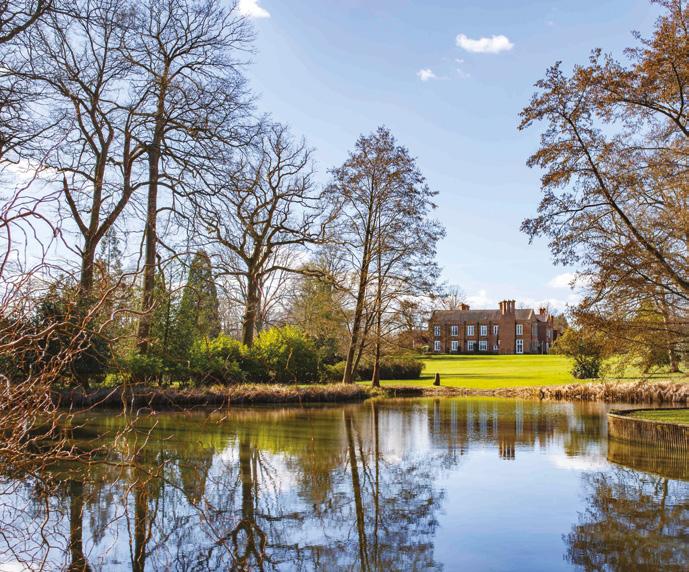
The Vache estate in Buckinghamshire.
About Vache Baroque
Vache Baroque is an award-winning ensemble of musicians on a mission to shake up Baroque music and make it accessible. The musicians create playful, powerful and immersive performances ranging from a full-scale opera festival in the Buckinghamshire countryside to workshops in special schools, touring programmes, professional development residencies, and concert broadcasts for BBC Radio 3.
Vache Baroque is passionate about connecting the widest possible range of people to the power of high-quality,
live classical music. It gives particular focus to creating opportunities for young people and those facing significant barriers to the arts.
The Creative Learning programme is at the heart of the charity’s work encompassing:
• ‘A History of Sound’ a show-workshop for primary schools
• Deafblind Awareness Week workshops
• Craft-music days
• Annual singing children’s summer camp
www.vachebaroque.com
What’s next for Vache Baroque? Are there any upcoming projects or collaborations you’re excited about?
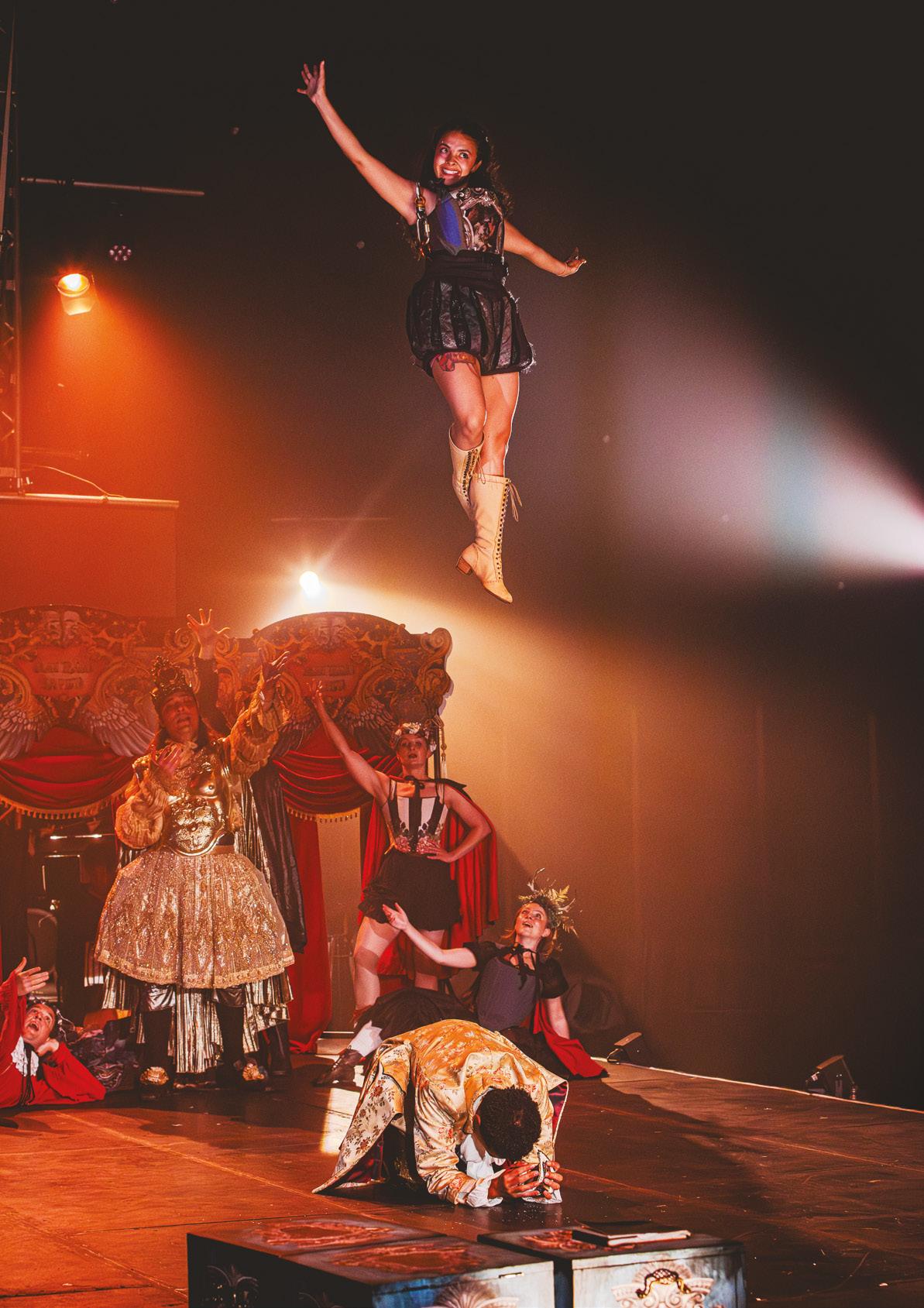
I can’t wait for next summer, when we’ll be creating two ambitious new shows. After a sold-out run of our opera Orphée in July 2025, I’m chuffed that Vache Baroque have been invited to return to Buxton International Festival in July 2026 with La Liberazione di Ruggiero, an opera by Francesca Caccini. This exciting new production marks our continued collaboration with one of the UK’s leading summer festivals, and sees us bring a little-known baroque gem to life in our (signature) fun and accessible way.
These lead smoothly into preparations for our own Summer Festival in the Chilterns, 28 August - 6 September 2026. Join us for an opening concert, a family show, or a jazz night, but definitely don’t miss out on our new production of Shakespeare’s The Tempest, a semi-opera, which we’re creating in collaboration with the multi-award-winning theatre troupe, Out of Chaos.
THINK BIG, BE FEARLESS
Vermillion founder Krizia Li (Pitt, 2002) reveals how life at Wycombe Abbey gave her the tools for success
hink big, be fearless’ sums up much of the teaching at Wycombe Abbey.
For entrepreneur Krizia Li (Pitt, 2002), this concept was key to her success in curating Asian contemporary designers. Although she started her career in audit, banking and consulting, her real dream was to create her own business that pulled together the diverse skills she had acquired across her career.
‘Each of us has been granted one shot on Earth just to create something unique, one chance to change society for the better,’ Krizia says. ‘Banking is a bootcamp that teaches you how businesses work from financing, agile pivots and operational building blocks to partnering with clients up close. Consulting forces you to think about corporate strategy, the competitor landscape, where industry “white spaces” are. Put together, it’s a toolkit for making ideas real.’
While her MBA friends were taking advantage of the startup boom, Krizia was still working for someone else. She realised that she had to decide whether to make the leap or not, but she struggled to find the right outlet for her dream.
The spark came while she was renovating her home in Hong Kong. ‘I could find Ikea on one end, Italian luxury on the other, but where was our continent’s design? Asia has exquisite crafts, serious manufacturing capability, and incredible contemporary designers –from Japan and Korea to Thailand and Indonesia – yet they’re hard to find.’ In 2019 that realisation became Vermillion, the platform she founded to showcase Asia’s extraordinary but fragmented luxury lifestyle scene.
Identifying the problem
Krizia saw that Asian designers struggled with language, finance, and cross-border taxes, as well presenting themselves online. She became frustrated that the generalised Western concept of Asian design is the mass market one, which is far from the truth. ‘Anyone who has travelled here knows that there’s amazing talent and exceptional work – you just can’t access it. I made it my mission to fix a broken value chain.’
She started her company at the most unpromising time, during COVID. ‘Aside from negotiating with craftspeople in their native languages and arranging foreign exchange conversions, there was a huge delay on international shipping – none of it was easy. Waiting three months to ship a sofa is no joke,’ she says. One of the biggest hurdles was convincing buyers
to commit to high-value products they hadn’t actually seen. So she came up with the idea of pop-ups in carefully chosen venues: Tai Ping Carpets, the Hong Kong Jockey Club, MoMA Design Store in Hong Kong, the Raffles Hotel and FIND Design Fair Asia in Singapore. ‘Our brand associations mattered. When professional audiences see and feel the quality, trust follows,’ Krizia reveals. Interior designers lent credibility by co-curating spaces with Vermillion’s brands. Partnerships with companies, such as award-winning architects Hassell and Gensler, and prestigious locations from the Peninsula Hotel’s global network, Bangkok’s bustling financial district to Sydney’s iconic JP Morgan building, enabled her to extend Vermillion’s reach.
The Wycombe Abbey impact Krizia credits much of her fearlessness to the impact of boarding away from home in the sixth form. ‘It gave me a lack of fear – maybe overwhelming selfconfidence,’ she admits. ‘There was this line shared by the speaker at our graduation ceremony about Wycombe Abbey girls being able to do anythingeven direct traffic on the M40. My mum still quotes it. To build something like Vermillion you need that risk-loving mindset.’
‘Vertical boarding meant you lived alongside older girls; respect and standards were built in. You’re taught to earn your stripes – hold the door, give up the seat, watch and learn. That daily exposure to people a step ahead of you becomes mentorship without the formality. You see what excellence looks like up close – whether it’s an under-19 England lacrosse player or the girl nailing Chopin in the music room – and you think, “If she can do it, I can, too… if I put the effort in”. It raises your bar.’
That belief in striving for excellence, and in surrounding yourself with people who stretch you, still drives her today. ‘When your baseline is high, you keep up – and then you find your next gear.’
Industry recognition
Within two years of founding Vermillion, Krizia won Design Anthology’s Industry Ambassador of the Year award for Asia-Pacific, voted for by industry professionals. ‘I was shocked!’ she says. ‘I’m not a designer; I’m a business person who loves design. But I think they recognised the ambition to build a platform big enough to move the industry, not just curate a corner of it. The magic is in the composition – Commerce, Creativity, Culture – our three C’s
working together.’ She is also a member of Tatler Generation T, which each year spotlights around 400–500 young leaders, entrepreneurs and changemakers under 40, drawn from across Asia.
When it comes to design, she doesn’t shy away from bold choices either. ‘I’m a maximalist – Architectural Digest 100 energy,’ she laughs. ‘I love Thai designers: tribal vibes, innovative materials, rich colour, woven textures, animal inspirations.’
‘From an industry perspective, design is like fashion – opinionated, political, full of personalities. There’s always another upstart,’ she continues. ‘You have to maintain quality and edge. Most platforms still chase low-end, high-volume. You see strong single-country marketplaces, but not many pan-Asian plays. The hard part is exactly what we’ve chosen to take on: logistics, currencies, languages. You have to be a little crazy.’
Looking ahead, she is eyeing overseas growth, though tariffs in the US and regulatory quirks in Europe complicate the path. ‘Multiply Asian language complexity by European languages and you see the challenge,’ she laughs. ‘AI will help, but not overnight, so we’ll aim for growth through English-speaking markets and strong trade networks.’
Her advice for anyone wishing to follow in her footsteps is clear. ‘You win with your mind first. Conquer the fear, then the plan follows. Surround yourself with people who raise your game. The only limit is yourself. Think big and challenge yourself at every stage. And remember: the road is long and dark; so choose a meaningful mission that keeps you motivated when obstacles seem insurmountable. Think big – and then commit to the unglamorous grind to match it.’
About Vermillion
Vermillion is Asia’s first ever B2B luxury e-commerce platform that curates desirable brands and products from creators across the region. Collaborating with 300+ brands and 50+ award-winning designers across 12 geographies, we aspire to conserve and
convey Asian heritage, philosophies, and values whilst educating and exciting the global buyer. Our mission is to elevate Asian luxury products into becoming the leading global brands of tomorrow.
vermillionlifestyle.com @vermillion.lifestyle
SENIORS
W Seniors Day 2025
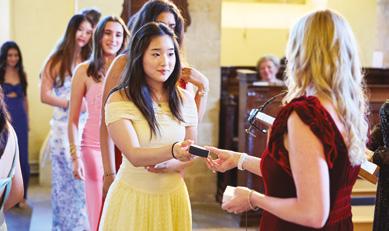
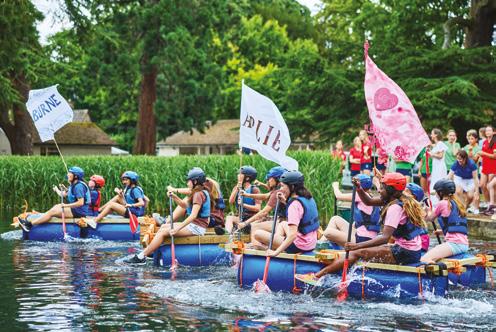
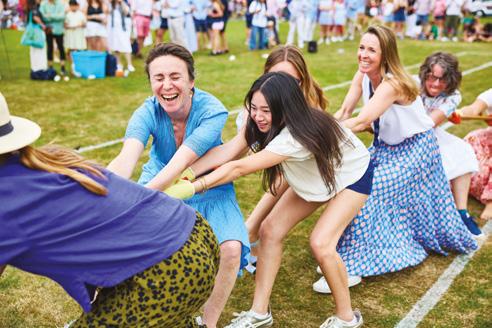
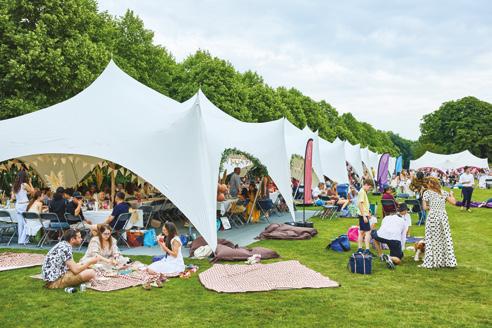
e hosted Seniors Day on the School's Dove Day for the first time on 21 June, which was a glorious, fun-filled celebration. For those who are not familiar, Dove Day is an all-school fete with House marquees, picnics, races, musical performances and more. This year we invited Seniors to bring their children and families for lunch in the Seniors tent to experience Wycombe Abbey in full swing.
Sadly, the Dog Show had to be cancelled due to the heat, but that did not dampen spirits. In fact, quite the opposite, with the House raft races across the lake proving a wet and wild spectacle! Much hilarity and fun was had by all. The feedback has been incredibly positive with the new format inspiring many Seniors to return for the first time since leaving.
The feedback has been incredibly positive with the new format inspiring many Seniors to return for the first time since leaving.”
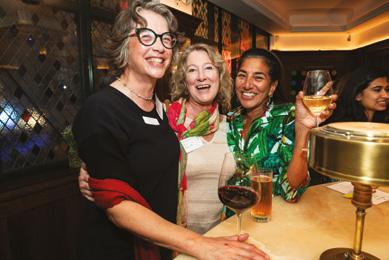
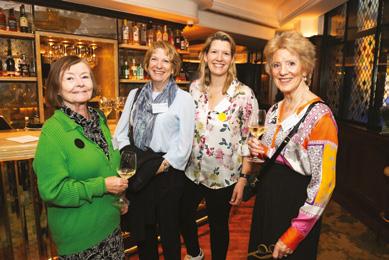
Seniors Drinks
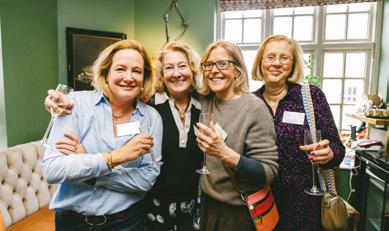
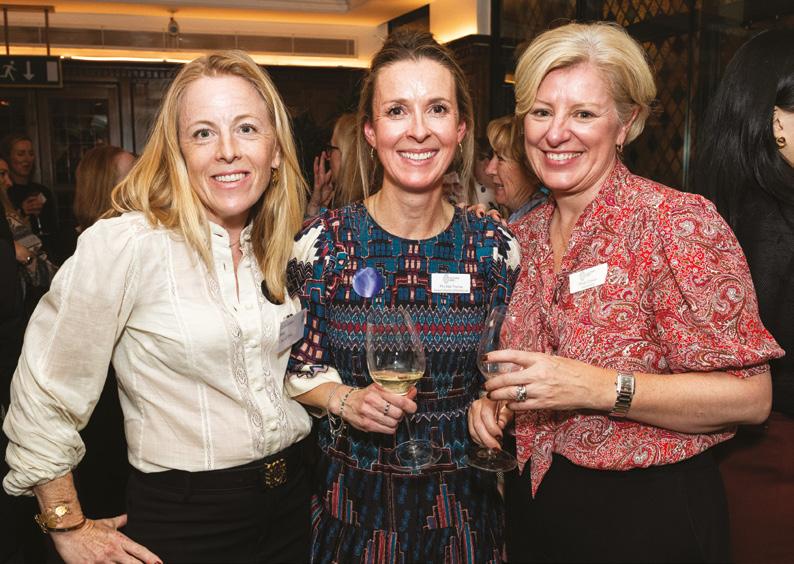
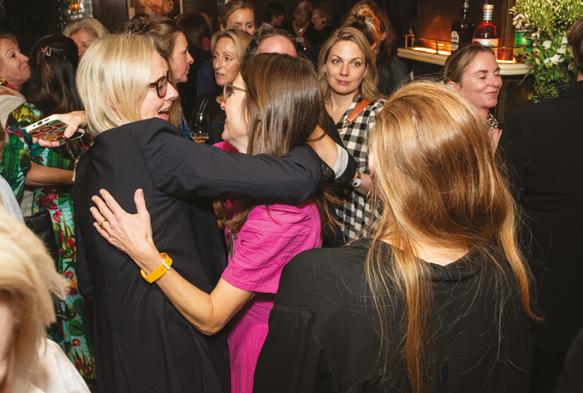
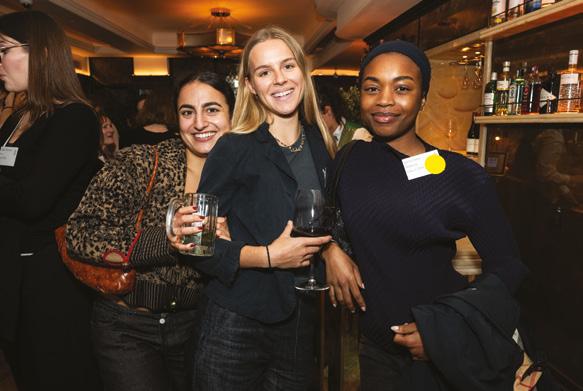
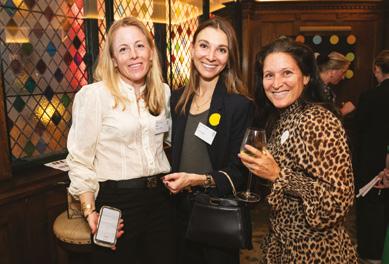
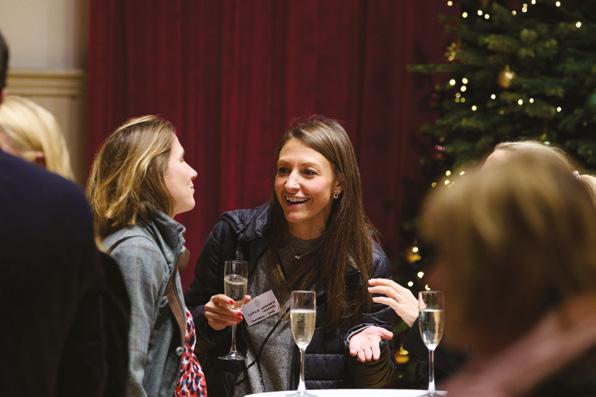
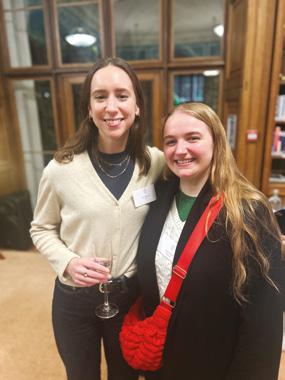
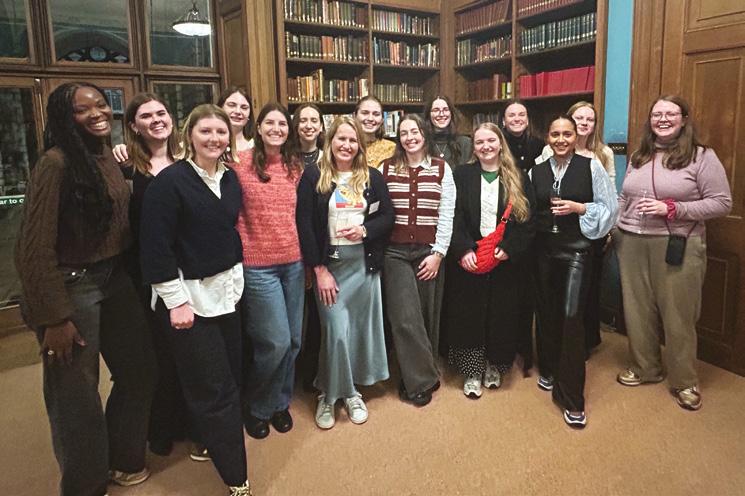
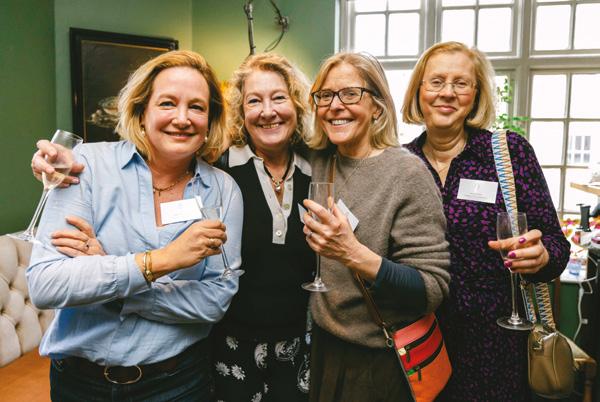
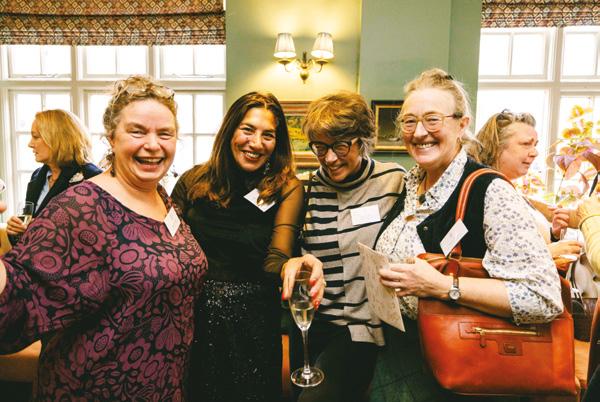
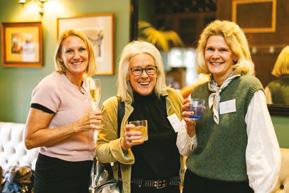
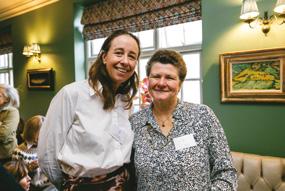
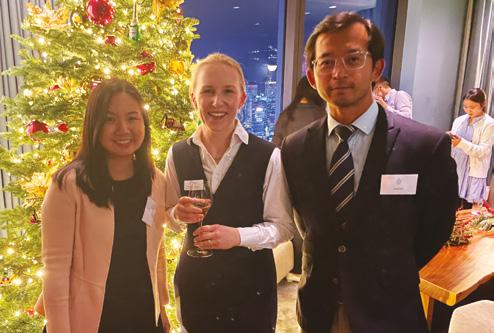
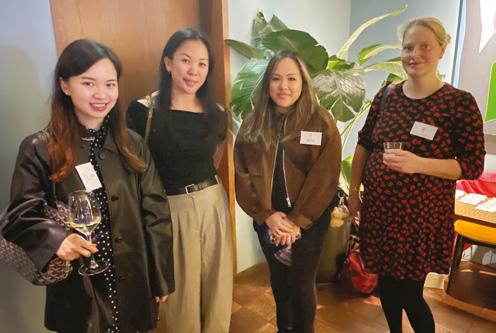
e were thrilled to welcome a vibrant and multigenerational group of Wycombe Abbey alumnae to this year’s Seniors Drinks at The Original Ivy, London. This much anticipated annual event brought together a wonderful crosssection of our community, with attendees ranging from the Class of 1966 right through to our most recent Clarence leavers from 2024.
Throughout the evening, guests enjoyed the opportunity to catch up with familiar faces, reconnect with old friends and forge new connections. The presence of former staff added an extra layer of nostalgia, including the much-loved Liz Landers / Mrs Best (Denlegh-Maxwell, Cloister, 1969).
Responding to alumnae feedback, this year’s event placed greater emphasis on professional networking, with attendees grouped by sector to encourage conversation and collaboration across industries. It was inspiring to witness such a diverse and accomplished group of professionals: 13 lawyers, seven specialists in Banking and Finance, five creatives working in Arts and Design, and five engineers were among those in attendance. The richness of experience was further highlighted by the presence
of Annalise Hagan (Cloister,1996), a marine biologist currently based in Belize, whose career path sparked interest and admiration in equal measure.
Headmistress Jo Duncan addressed the gathering with some recent highlights and updates on life at Wycombe Abbey today, including outstanding exam results and pastoral developments.
The evening also offered a platform for the SCC. The new Chair, Candy Williams, who is also a current Wycombe Abbey parent, introduced the Committee’s work and outlined its vision for strengthening alumnae engagement in the years ahead. Seniors were warmly encouraged to get involved, whether by mentoring, volunteering, or simply staying connected with the Wycombe community.
We are very grateful to everyone who joined us and helped make the evening such a success. Your enthusiasm and support are what make events like this so meaningful. We look forward to another gathering next year, and to continuing to celebrate the extraordinary achievements and connections of our Seniors.
Seniors were thrilled to hear the Choir performing a competition-winning carol entitled Good Festival of Christian Cheer written by the Reverend Barbara Steadman-Allen, a Senior from the class of 1971 who was in Shelburne.”
Seniors Carol Service 2025
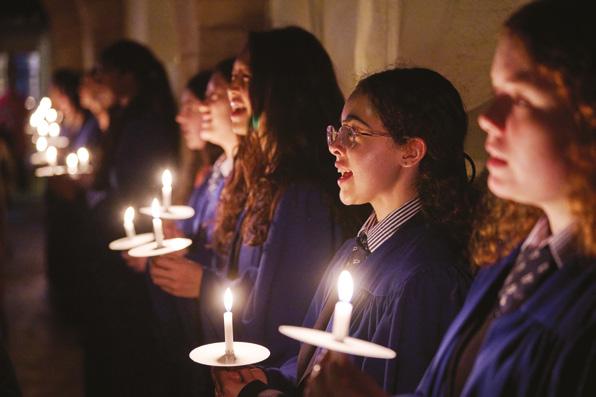
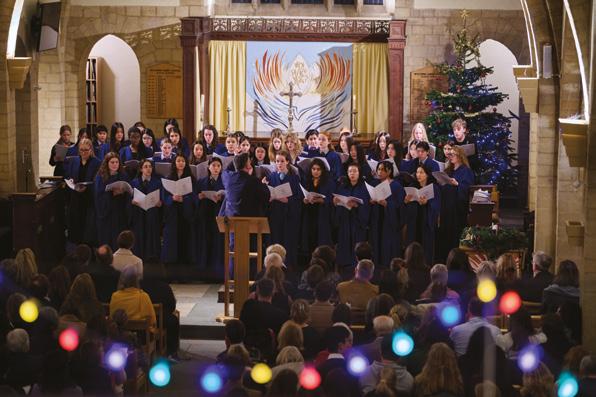
We were delighted to host over seventy Seniors at Wycombe Abbey on Sunday 7 December to gather for the muchloved annual carol service and tea. The Seniors Carol Service is an example of what makes Wycombe so special and it is always a pleasure to see the enjoyment in the faces of those catching up with old friends or seeing teaching staff whom they remember from their time here.
This year’s service was particularly special. Seniors were thrilled to hear the Choir performing a competitionwinning carol entitled Good Festival of Christian Cheer written by the Reverend Barbara Steadman-Allen, a Senior from the class of 1971 who was in Shelburne. Huge thanks to Stefan Reid, Director of Music, for ensuring that the arrangement was sung to perfection by the Choir. It was wonderful that Reverend Barbara was able to come to the service and listen to the performance.
Seniors Carols in Hong Kong
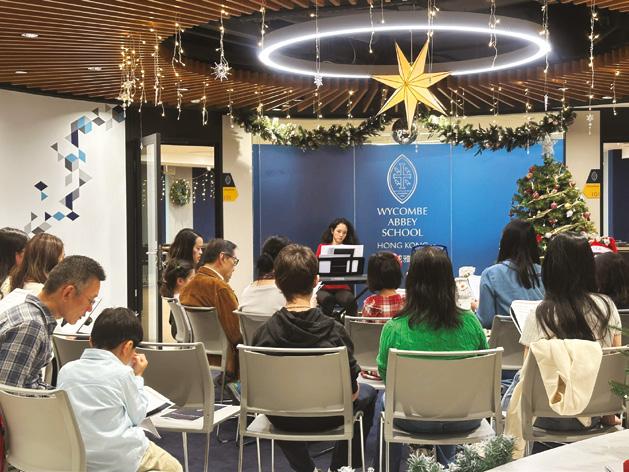
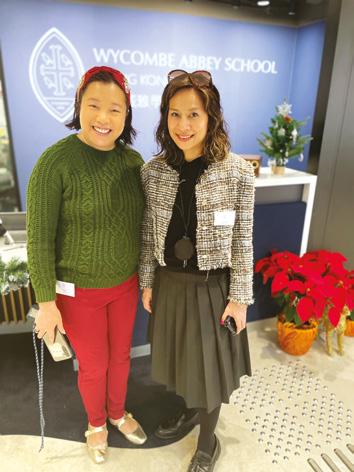
New to the alumnae calendar for 2025 was the first official Seniors Carols in Hong Kong, held on Sunday 7 December at Wycombe Abbey School Hong Kong. Seventeen Seniors and their families joined for a tour of the School, kindly hosted by the Headmaster, Rob Fox. The group then gathered for carols, mulled wine and mince pies with a minute’s silence dedicated to remembering those impacted by the Tai Po fire. We would like to thank everyone for attending and hope to grow this into an annual tradition for Seniors in Hong Kong.
Attendees included Angela Chow (Butler, 2003), Vivian Chow (Rubens, 2012), Ophelia Fung (Rubens, 1992), Stephanie Leung (Wendover, 2017), Krizia Li (Pitt, 2002), Jane Liu (Butler, 1997), Isabelle Mak (Barry, 1996), Denise Mak (Rubens, 1998), Amanda Ngai (Campbell, 2016), Amanda Pang (Rubens, 2006), Talia Scotchbrook (Campbell, 2001), Nicolette Wong (Pitt, 2001), Kelda Yeung (Shelburne, 2018), Flora Yu (Barry, 2004), Charlotte Yu (Pitt, 2018) and Cathy Yuen (Barry, 2011).
The group then gathered for carols, mulled wine and mince pies with a minute’s silence dedicated to remembering those impacted by the Tai Po fire.”
The Seniors were astounded that all girls are now allowed to use the front stairs!”
Class of 2015 10 Year Reunion
M
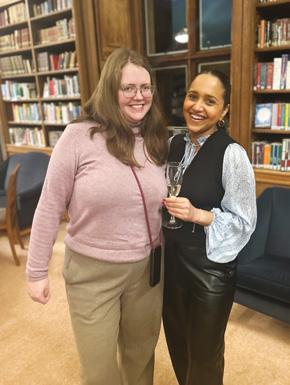
embers of the Class of 2015 requested to host their ten year reunion at Wycombe Abbey in November. The Seniors Office arranged a delicious champagne afternoon tea in Fisher Library and facilitated tours of the School and Houses. Special thanks to Amy Dingemans (Wendover) who helped to coordinate the date and the group. Temitope Okuwoga (Campbell) enjoyed seeing Mrs Nugent, Senior Resident Matron, who was previously Campbell Matron when this year group attended School.
Mrs Nugent kindly led a tour of Airlie and Campbell and showed everyone the updates to the LVI spaces. The Seniors were astounded that all
girls are now allowed to use the front stairs! A separate group who requested a tour of LAC were delighted by a surprise meeting with Mr Ledingham (Head of Wind, Brass and Percussion), while viewing the stunning new atrium in the Goodland Music School.
Attendees: Laura Cameron (Barry), Clio Chatterton (Pitt), Theresa Cripps (Wendover), Amy Dingemans (Wendover), Charlotte Eaton Hart (Rubens), Antonia Gough (Butler), Ambika Handa (Cloister), Ambre Megnin-Aubry (Airlie), Jasmine Nicholson (Shelburne), Miranda Nicholson (Pitt), Temi Okuwoga (Campbell), Henrietta Stanley (Barry), Victoria Taylor (Barry), Emily Vranch (Rubens), Aimee Wickes (Wendover).
The Class of 1985 marked their 40 year reunion in November at The Portman in London.
The afternoon started early with the Butler contingent seeking Dutch courage in the form of Bloody Marys at 11.15am in a nearby establishment. Things went swimmingly from there on!
The School Archivist, Susannah Davis - herself a member of this cohortbrought along treasured photographs and documents from the group’s time at Wycombe Abbey. Archival content included excerpts from the Seniors Roll, sparking wonderful conversations and nostalgic moments.
Jo Duncan, Headmistress, joined the gathering and enjoyed hearing stories of Wycombe Abbey icons such as Miss Beckett, Miss Willmott and Mrs Hornblower.
It was an afternoon full of laughter and meaningful reconnections since many of the group had not seen each other in decades. Reunions such as this can be met with some trepidation but everyone agreed that it was as though no time had passed. We would like thank everyone who made the effort to come along, in particular to Gillian Eastwood (Turner, Butler) who was determined to trace every member of the Class and without whom the event would not have been nearly so successful.
Emma de Waal (Cox, Pitt) said: "As well as meeting old friends, it was fun to look at Susannah Davis’ collection of old photos and to see the extracts from our Seniors Roll entries, citing many things we’ve forgotten we ever did. I fear the chat was too loud to recall the 80s playlist - but that’s surely a mark of success!"
Class of 1985 40 Year Reunion
Attendees: Antonia Adeniji (Thompson-McCausland, Pitt), Johanna Afors (Rubens), Chrissy Andrews (Maclean, Airlie), Anna Carter (Scott, Butler), Sarah Colfer (Cloister), Emma Crane-Robinson (Harding, Pitt), Susannah Davis (Airlie), Emma de Waal (Cox, Pitt), Gillian Eastwood (Turner, Butler). Amanda Edwards (Lee, Barry), Vanessa Elliott (Holland, Shelburne), Caroline Findlay (Pedersen, Cloister), Fiona FitzHerbert (Fitzgerald, Wendover), Lizzie Fryers (Donaldson, Rubens), Katrina Guittat (ten Bos, Airlie), Samantha Hannay (Pitt), Sarah Hobson (Blampied, Pitt), Lucy Jackson (Bourne, Airlie), Caroline Knighton (Beer, Shelburne), Lucinda Lalor (Wells, Shelburne), Poonam Lloyd Williams (Melwani, Pitt), Shauna Longfield (Shelburne), Sarah Marshall (Chetwynd, Butler), Louise Martin (Clatworthy, Butler), Lisa Minoprio (Cloister), Alice Pettifer (Faure Walker, Airlie), Jo Pilkington (Airlie), Bridget Reader (Villar, Airlie), Phillipa Rooney (Chicken, Cloister), Sophie Ruthven-Stuart (Pitt), Charlotte Sankey (Tooth, Shelburne), Katherine Schutte (Stewart-Smith, Airlie), Angela Slater (Skull, Butler), Henrietta Wallace (Garnett, Butler), Hilary Walton (Jennings, Butler), Katherine Hart (Wilson, Airlie), Lucy Trinder (Airlie)
The School Archivist, Susannah Davis - herself a member of this cohort - brought along treasured photographs and documents from the group’s time at Wycombe Abbey.”
Dubai Gathering
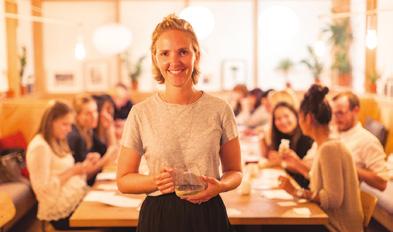
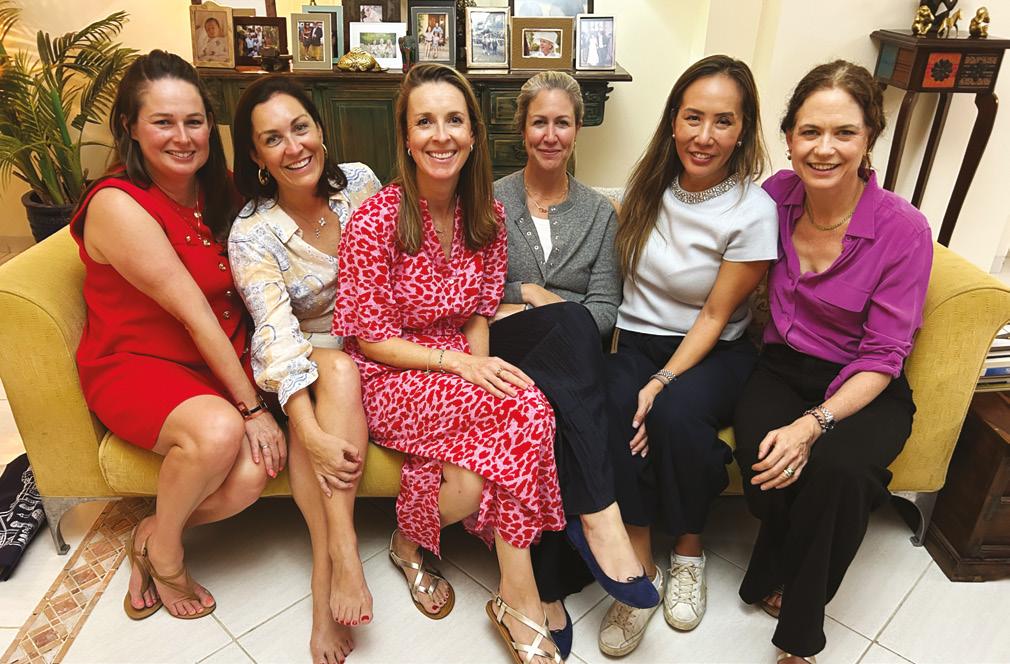
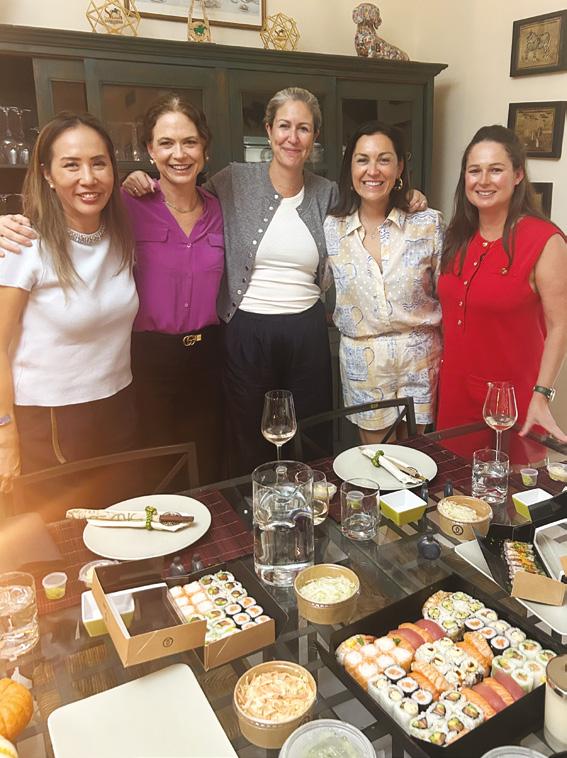
Seniors in Dubai gathered for a wonderful reunion and enjoyed a delicious sushi supper while Kate Thomas from the Seniors Office was visiting the UAE during October. The evening was generously hosted by Laetitia Tregoning (Dennis, Butler, 1995) and attended by Edwina Viel (Khoo, Wendover, 1997), Katherine Palethorpe (Clarke, Wendover, 1999), Abbey Tobin (HenryLyons, Airlie, 1998), and Camilla McMyn (Hay, Rubens, 1993).
It was a fantastic opportunity for Seniors to share local knowledge and contacts in the UAE and to reminisce about their school days.
It was a fantastic opportunity for Seniors to share local knowledge.”
Hong Kong Gathering A
t the end of November, Headmistress Jo Duncan and Alice Edwards from the Foundation Office travelled to Hong Kong to visit the Wycombe Abbey Hong Kong schools and meet with our vibrant network of Seniors and current parents. On Tuesday 2 December, a reception was held at the Carlyle Club, generously hosted by Senior Florence Lawrie (Pitt, 2008). The event brought together members of the Hong Kong community and Jo shared insights into the School’s exciting new strategic direction.
The following evening, members of the 1896 Society gathered for an intimate dinner at Cipriani, where their outstanding commitment to Wycombe Abbey was warmly acknowledged. Their support continues to play a vital role in shaping the future of the School. Wycombe Abbey is fortunate to have a thriving network in Hong Kong and this visit provided a wonderful opportunity to strengthen those connections. The team will return in 2026 to celebrate the School's 130th anniversary, a milestone we are looking forward to sharing with our global community.
The team will return next year to celebrate the School’s 130th anniversary, a milestone we are looking forward to sharing with our global community.”
Moments like these highlight how special the Wycombe community is.”
Bangkok Gathering
Seniors in Bangkok gathered for an informal dinner in November kindly coordinated by Anna WongchaUm, Chapter Head (Airlie, 2011). Attendees included Hallie Tucker (Shelburne, 2011), Ploy Kingchatchaval (Airlie, 2013), Petch Kingchatchaval
(Airlie, 2016) and Tasha Leenabanchong (Cloister, 2021). Chapter Head Anna said, “It was such a warm and relaxed catch-up and lovely to reconnect with the girls. Moments like these highlight how special the Wycombe community is, and I’m looking forward to helping nurture it further.”
Wycombe Abbey Seniors Global Network
Introducing Chapter Heads
We are introducing the term “Chapter Head” to recognise and formalise the role of Seniors overseas who are already generously organising gatherings and reunions. Chapter Heads act as a local point of contact, helping alumnae connect with one another and supporting a strong global community. Many Seniors living abroad tell us that their regional networks are invaluable when settling into a new country. If you are part of an active group of Seniors and would like to take on this new role, we would love to hear from you.
For Seniors who are new to a city and would like to meet others in their area, the Seniors Office is here to help. We can link you with local networks, introduce you to a Chapter Head where one exists, and support informal meet-ups. Expats often report that these connections make a real difference when establishing themselves abroad. If you are interested in helping build your local Seniors community, please do get in touch.
Current Chapter Heads:
Hong Kong: Krizia Li (Pitt, 2002)
Thailand: Anna Wongcha-Um (Airlie, 2011)
UAE: Laetitia Tregoning (Dennis, Butler, 1995)
Dove Bowerman Society Tea
Leaving a gift in your Will to Wycombe Abbey is a deeply personal decision. It’s a way to reflect your values, honour your experiences and help ensure that future generations of pupils benefit from the same opportunities that shaped your own life. Dove Bowerman Society members have generously made this decision and the group comprises Seniors and Parents who intend to leave a gift to the School in their Will.
Celebrating the Dove Bowerman Society
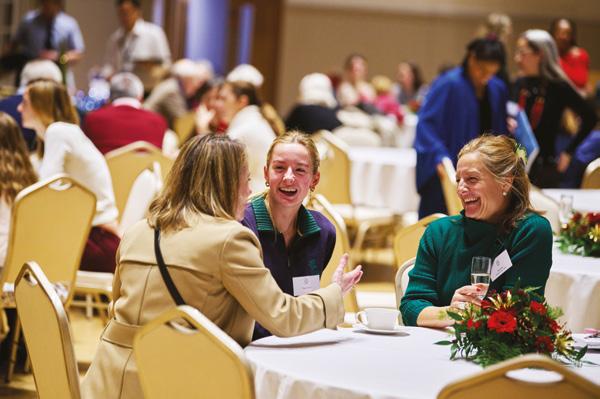
At this year’s Dove Bowerman Society Tea in Chelsea, we were delighted to welcome a group of guests including Seniors and current parents whose decision to leave a gift in their Will reflects a deep and enduring connection to the School.
The afternoon was filled with conversation and reflection. Guests shared stories from their time at Wycombe Abbey and spoke about the values that continue to shape their lives. It was a privilege to hear these memories and to thank our supporters for their generosity and commitment.
Headmistress, Jo Duncan, and Deputy Head (Academic), Emily Boswell, joined us to express their sincere gratitude. Their words highlighted the vital role legacy gifts play in shaping the future of Wycombe Abbey, ensuring that generations of pupils to come can benefit from the same transformative education.
Interested in leaving a gift in your Will?
If Wycombe Abbey holds a special place in your heart, please consider helping to secure its future. Your legacy will ensure that generations of pupils continue to benefit from the inspiration, care and ambition that define a Wycombe Abbey education.
To find out more about legacy giving at Wycombe Abbey, please contact the Wycombe Abbey Foundation Office at edwardsa@wycombeabbey.com
We’d be delighted to speak with you about how your gift can make a lasting difference.
Whether you choose to support bursaries, buildings or a particular area of school life, your legacy will help us continue our mission: to empower bright young women through a world-class education that inspires lifelong curiosity, leadership and resilience.
We were delighted to welcome a group of guests including Seniors and current parents whose decision to leave a gift in their Will reflects a deep and enduring connection to the School.”
OBITUARIES
Sally Coombe
PA to Wycombe Abbey
Headmistresses
27 May 1953 – 31 March 2025
Sally was the PA to four Wycombe Abbey Headmistresses. Appointed by my predecessor, Judy Goodland, she supported me, Cynthia Hall and Rhiannon Wilkinson. On her retirement in 2017 she was made an Honorary Senior on the strength of her length of service and her loyalty to Wycombe.
Sally was a tremendous PA: highly efficient; professional; unflappable and a thoroughly lovely person. She was extremely hardworking and very loyal to Wycombe. She was excellent with parents and students and she was very good with staff too; able to handle even the more prickly characters firmly, but with a deft touch. I consider that she was a real asset to Wycombe.
Sally dealt with her ovarian cancer diagnosis bravely and with her characteristic positive attitude, researching and undertaking various alternative therapies alongside the conventional treatment. The treatment available on the NHS was gruelling and she decided not to continue with second line chemotherapy since it would not change the outcome of the disease. She very sadly died at the end of March. In the words of Emily Boswell, current Deputy Head (Academic) “She knew more Wycombe Abbey secrets than anyone else. More than that, she was the most wonderful person and will be very much missed".
Jackie was born in St Albans, the eldest of three children. During the War her father served as a doctor on HMS Orion and Jackie and her sister Judy were sent to live with separate grandparents. Every Sunday Jackie would cycle alone the 14 mile round trip to visit Judy. One of their favourite memories was how, in order to impress some local boys, Jackie told Judy (aged 4) to jump off the railway bridge they were on. Visiting the scene years later they were appalled to see how high the bridge was. When she was asked why she had jumped Judy Chaplin (Schofield, C87, Barry) replied, “I was a bit reluctant, but my sister told me to, so I did.”
They read Arthur Mee’s Encyclopaedia together and Jackie loved learning poems that she could recite to her grandfather. Aged seven she could recite the whole of Tennyson’s The Lady of Shalott; a feat she could repeat at Christmas 2024…
In later life she was renowned for recommending and exchanging books with friends and family.
Her prodigious memory served her well at Wycombe Abbey and she thrived academically. She loved Wycombe, was an energetic allrounder with a strong personality and a quick wit and became Head of Barry House. She was also prominent in House and School lacrosse and tennis teams, becoming School Captain of both, also playing for Harpenden, East England and West Berkshire. Cicely Taylor (Tomlinson, C82, Barry, 1954) and Ann McQueen (C83, Barry, 1954) recall her on Sundays in Silent Reading being immersed in a book and then suddenly exploding with laughter, or with knitting or embroidery to hand. She and her contemporaries kept in touch quite regularly for the rest of their lives, often joining Cicely Taylor’s walks. (See Cicely’s amusing book Will I Need My Cardigan.)
She eventually went on to Girton College Cambridge to read Law. She was a double Blue at Girton (lacrosse
and tennis) and was one of only five women called to the Bar in 1959, including Salma Sobham – all lifelong friends. Here she met and married Peter Kingsley.
They had four children, Anthony, twins Amanda and Veronica, and Simon. Jackie marked and corrected Bar papers for twenty years (at 37p per paper). In 1969 she moved to Whitchurch-on-Thames and began teaching Latin at the Oratory Prep School where she was also an LTA Tennis coach. From there she worked in various capacities to support her children.
In 1974 at the invitation of Pat Lancaster she returned to Wycombe to be Housemistress of Rubens and Form Mistress of the Upper Thirds. Jackie’s great friend Judy Gomm (C84, 1955) had returned to teach English and encouraged her, later becoming, as Mrs Gracie, Amanda’s godmother until she sadly died in 1981.
Vanessa Francis (C156, Pitt, 1984) remembers when she started in the Upper Third being taught Latin by Mrs Kingsley. ‘She was always smiling, always approachable, always caring. I’ve never forgotten when I asked her a question about Roman life she replied, “That is a great question.” My confidence shot up.’ Whizzing around Wycombe she became friends with her former teachers and new colleagues – Margaret Beckett (C115H), Lynn Berwick (C138H), Jo Willmott (C187H), Ursula Whittaker and Judy Goodland amongst others.
From 1979 to 1996 Jackie was Headmistress of Abbots Hill School, Hemel Hempstead. Her favourite Shelley quote was ‘to hope till hope creates. From its old wreck the thing it contemplates.’ Many girls said they were lucky: Mrs Kingsley transformed their lives, and credit her with their successful careers. Under her leadership Abbots Hill had winning ski and tennis teams and the School was listed in the National Athletics Championships with Olympian Marilyn Okoro.
Jackie also became Governor of several local schools. She worked for many years for Wycombe Abbey’s Dove-Bowerman Trust. Also for the United Whitchurch Trust and the English Speaking Union sent her on a successful tour of the USA. In retirement she was asked to be Head of the Royal School, Haslemere which she loved.
Dame Frances Dove wished to instil a sense of duty, esprit de corps, wide interests and a spirit of service in her pupils; qualities which Jackie demonstrated throughout her life and for which she will be remembered, as well as for her whacky sense of humour. Despite her own ill health (bad knee/hip operations) she regularly took laughter into the lives of her friends Rosemary Hamilton (C83, Barry, 1955) and Sue Farr (C128H, Barry). In her last week she attended church, visited a sick neighbour, read Graham Greene’s The Third Man with her book club, planted out parsley and unravelled knitting. Friends, family, former pupils and staff from all over the world attended her funeral. She was beloved by her four children, including Veronica (C145, 1980), seven grandchildren and three great-grandchildren.
Hers was certainly a life well-lived. Sue Cameron (C100, Barry, 1961) Friend; and other friends and family.
Tessa McCourt
(McCormac, Pitt, 1979)
24 August 1961 – 15 November 2022
Tessa came to Wycombe Abbey in 1977 from a convent school in the Channel Islands. By her own account she had been less than a model pupil, so she was sent to Wycombe in the sixth form to stretch her abilities. An only child, she had been born and raised in the Philippines where her father was working. She was placed in Pitt and I first came across her in my English A-level class. As fellow expats we got on straight away, bonding over adventures in strange sounding places, mine African, hers Asian.
We had great fun in our Oxbridge term, living above the dining room with others including Juliet Bernard, also sadly no longer with us. We spent a lot of time listening to current hits such as The Police’s Roxanne on the radio and partying in our rooms –there wasn’t much supervision luckily. Somehow, we all got into university and Tessa went to Sussex to read law.
From there she worked in the City at Goldman Sachs, where she met her future husband Jan McCourt. She thought she was destined to be a banker’s wife, but Jan had other plans and bought a farm in Rutland where he started to rear rare breeds cattle. Now a hugely successful business, Northfield Farm supplies hundreds of well-known hotels and restaurants and is also based out of Borough Market in London.
Tessa was instrumental in growing the business, swapping designer clothes for aprons and overalls, attending rural fairs and markets with her trusty meat van. At the same time she managed to have three children, Charlotte a successful software designer
and private chef, Leo who runs the farm and my godson Dominic who handles the London side of the company.
Her first granddaughter Lily was born on own her birthday in 2021. Sadly by that time Tessa was already ill with a rare form of lung cancer as a result of living so many years in polluted Manila as a child. She died on 15 November 2022 at just 61 years old, hugely missed by her family and wide circle of friends. Her second granddaughter Poppy was born this year - she would have been such a devoted grandmother to both girls.
Submitted by Sarah Cartledge (Airlie, 1979) on behalf of the McCourt family
Tessa was instrumental in growing the business, swapping designer clothes for aprons and overalls, attending rural fairs and markets with her trusty meat van.”
Daphne Martin, M Ed, Princ. Cert
(Heyring, C87, Barry, 1956)
8 February 1937 – 19 November 2024
Daphne was born in Alexandria in 1937.
The family lived by the waterfront in Port Said where her father ran the English school. Daphne and her mother were evacuated to South Africa during the Second World War, after which Daphne’s mother was keen to get back to Egypt as early as possible. The quickest way home was overland by public buses and ferries, which must have been quite an experience for six year old Daphne. After the war the family moved to Addis Ababa.
Daphne won a scholarship to Wycombe Abbey School and at 13 she was dispatched on the multi-stage flight to London. While at school in England she returned home to Ethiopia every second summer. She finished at Wycombe Abbey as Head Girl and then completed a degree in Physics at Bristol University.
Once equipped with her degree, she returned to Addis Ababa to teach Maths and Physics. As shown in the photo, she had a horse, dog, and monkey (but, initially, no car). Daphne lived in a cottage beside the grounds of the palace of Emperor Haile Selassie. Whiskers the monkey would frequently abscond to the lush palace grounds, where the emperor’s guards became accustomed to Daphne’s appearances at the palace gates to collect her monkey.
Daphne enjoyed exploring Ethiopia and East Africa. On one trip she set off to climb the highest peak in Ethiopia with friends. No one they met in the area – not even the local farmers – was quite sure just where the highest peak was, but the group managed somehow to find it! On safari, in thick forest around the base of Mount Kenya, the group had to track an elephant that had been shot and wounded, a terrifying experience.
Daphne wrote a vivid description of an attempted coup in Addis Ababa which occurred shortly before she moved to Harare (then Salisbury) in Zimbabwe to become head of Maths
and Physics at the polytechnic and begin a research PhD. Somehow, throughout all that adventuring, Daphne also found time for painting, Scottish country dancing and writing poetry.
After marriage to Robert, Daphne regretfully abandoned her career. The couple moved to Malawi, did several safaris to East Africa, climbed in the local mountains both in Malawi and the Ruwenzori range in Uganda. After the birth of their son, Bruce, Daphne and her husband drove the entire length of both Africa and Europe to introduce the new baby to the family in Nigeria, Mallorca, England, and Scotland.
Daphne made three successful ascents of Kilimanjaro. She was active in the wildlife society, the mountaineering club and a Scottish dancing group. She continued to write and paint and for some years taught a correspondence course on the local radio station. A large mural painted by Daphne is still on display in Blantyre, Malawi. She also painted an informative map of the country which remained in print for many years, bearing the censor’s stamp to certify that the map was suitable for display in Malawi.
Daphne visited Mallorca frequently
to visit her parents, on one trip fashioning a small sail to enable her young son to learn to windsurf. She learnt to sail, had many adventures on Lake Malawi and later organised an eight-day ‘sailing marathon’ of the length of Lake Malawi, with participants travelling from as far as South Africa to join the challenge.
In 1989 Daphne moved to Mallorca where she taught Maths and Physics at Bellver International College and eventually became Headteacher.
After retiring in 2003, Daphne remained fully involved in writing, Scottish dancing, and walking with the Costa d’en Blanes Vecinos. She published books about her adventures, novels, and an introduction to Mahjong. Several of her poems were shortlisted for prizes. She made many trips to walk in Europe with her friends from Malawi and Mallorca.
As her health deteriorated, Daphne moved to the Fontsana care home in May 2024, where she received excellent care and many visits from loving friends and family. She will be remembered with gratitude for her wise guidance and sense of adventure and greatly missed by many.
Bruce Martin (son)
Daphne enjoyed exploring Ethiopia and East Africa. On one trip she set off to climb the highest peak in Ethiopia with friends.”
Anne Dudley Smith
Secretary to the Headmistress and Cloister Housemistress 1959-1969
5 December 1925 - 7 February 2025
Anne served as Secretary to the Headmistress, Miss Fisher, at Wycombe Abbey in the early 1960s, becoming Housemistress of Cloister in 1964.
Back in 1925, Anne was born to Arthur and Phyllis Dudley Smith at Holm Leigh preparatory school in Buxton, Derbyshire, where her father was Headmaster. Although Anne was named ‘Angela’, she insisted on ‘Anne’ from an early age. Her only sibling, Timothy (1926-2024), would become Archdeacon of Norwich, and later Bishop of Thetford. His many hymns, including ‘Tell out, my soul, the greatness of the Lord’, are sung all over the world.
Anne gained an Open Entrance Scholarship to Sherborne School for Girls. She had an exceptional aptitude for games and qualified as a teacher of Physical Education at Dartford College in 1946.
Anne’s sporting prowess was increasingly in demand, so after five years of teaching she undertook training in office work so that she could participate in matches at weekends. Anne became School Secretary at Piper’s Corner in Buckinghamshire in 1957, prior to her appointment as Secretary to Miss Fisher. Anne spoke very warmly of her Wycombe years and made several lifelong friends, including Miss Iris Baxter, the school Matron, with whom she bought her first home.
Anne always enjoyed a new challenge: 1969 saw her joining Messrs Fielding, Newson-Smith & Co. in London, where she became a Stockbroker, managing portfolios and investments at a time when there were not many women in this field. From 1980 to 1985 Anne served as PA to Dr Uwe Kitzinger of the Oxford Centre for Management Studies, who became President of Templeton College, University of Oxford.
Anne’s major sporting achievements included playing with the England Lacrosse team from 19471954, the England Hockey team from 1954 – 1957 and playing with the North-west England cricket team.
Anne enjoyed club tennis, still winning Long Crendon village tournaments in her 70s and playing into her 80s. She became a formidable bridge player, driving herself to Chichester bridge evenings as recently as January 2025. Well into her 90s and up until the pandemic, she undertook voluntary clerical duties at St Richard’s Hospital in Chichester in its busy physiotherapy department.
Anne’s church family at Fishbourne and Apuldram made her very welcome; she was a regular worshipper at the 8 o’clock service and a keen volunteer. Anne was a cherished daughter, a loyal sister, a devoted aunt and great aunt, and a kind and faithful godmother. She will be much missed by her family, her neighbours and by her many friends in Chichester and beyond.
Caroline Gill (Niece and Goddaughter) on behalf of the wider Dudley-Smith family
Anne’s major sporting achievements included playing with the England Lacrosse team from 1947-1954, the England Hockey team from 1954 – 1957 and playing with the North-west England cricket team. ”
Amanda Hale
(Sugg, C141, Shelburne, 1979)
24 January 1961 - 3 June 2025
Amanda Carolyn Hale, aged 64, of Prestwood, Great Missenden, passed away peacefully at home on 3rd June 2025, surrounded by love.
Amanda was a true light in the lives of everyone who knew her. She attended Wycombe Abbey School and, in her later years, found her calling as a carer, a role that perfectly reflected her nature. She devoted herself wholeheartedly to looking after others, always putting their needs before her own.
To her family, Amanda was everything. A wonderful mother to Benjamin, Emma and Olivia, and a deeply proud grandmother to Ottilie and Romilie. Her love for her family was boundless and her home was always open, filled with the happy chaos of the dogs she adored.
Amanda was the most selfless and generous soul, beautiful, fun, and endlessly energetic. She had an incredible ability to lift people up, to make them smile and to make them feel cared for. She never stopped giving, loving and doing for others and her kindness left a lasting mark on everyone she met.
Amanda’s family and friends will miss her deeply, but they carry with them her joy, her compassion and her spirit of unconditional love. Her light will continue to shine in the hearts of all who were lucky enough to know her.
Submitted by Pippa Hart (Segrove, C141, Campbell,1979) on behalf of Olivia Hale (daughter)
Jean Brown (Bowyer, C103, Airlie, 1962)
5 July 1944 - 30 January 2025
When Jean arrived at Wycombe Abbey and joined her sister Margaret in Airlie, it quickly became clear that she was exceptionally intelligent and destined for great things. A popular member of her year group, she became Head of House and went on to study medicine at Oxford.
Jean’s professional life was devoted to paediatrics, both in the UK and internationally. Her commitment to global child health was evident throughout her career, particularly in her roles as a clinician, teacher, and mentor across the Middle East, Africa, and Myanmar. Even as a medical student, she worked with Save the Children in Jordan. After qualifying, she specialised in paediatrics, married Vivian Brown in 1970, and had two sons— Matthew (1973) and Oliver (1974).
Jean spent nearly four years working in an American-run hospital for the Saudi Armed Forces in Jeddah, where her husband was seconded to the British Embassy. Upon returning to the UK in 1979, she led a research project at the Brompton Hospital focused on lung function in disabled children, earning a Doctor of Medicine (DM) degree from Oxford.
For over 25 years, Jean served as Consultant Paediatrician at St Peter’s Hospital in Chertsey, Surrey, eventually becoming Head of Department. She played a pivotal role in the Trust’s successful application to become the Regional Centre for Neonatology in 2006 and was deeply committed to developing training programmes for young paediatricians.
Jean was a long-standing supporter of the Royal College of Paediatrics and Child Health (RCPCH) global programme. In their obituary published on 7 February, the RCPCH highlighted her lifelong dedication to supporting Palestinian communities, families and children both in the Occupied Territories and globally. From 2014 to 2017, she supported College programmes in the West Bank and Gaza, including initiatives for children with disabilities. Beginning in 2005, she served as senior tutor for a Child Health Diploma, which later evolved into a Master’s programme for doctors and nurses in the West Bank. Jean was also a leading supporter of Medical Aid for Palestinians, serving as a Trustee for nine years and chairing one of its Boards.
The RCPCH credited Jean with being instrumental in establishing the College’s global partnerships in East Africa. She and her husband undertook voluntary work for two years in Kenya and six months in Uganda. During this time, she played a key role in implementing and popularising the Expanded Emergency Triage, Assessment and Treatment (ETAT+) training model, adapting it for use in other regions, including Myanmar, where she taught on more than a dozen occasions before the military clampdown.
Dr Camilla Kingdon, past President of the RCPCH, reflected: “Jean was an outstanding clinician and brilliant teacher. Her main impact, and the reason we particularly remember her, is her enormous contribution to global child health over many decades.”
Jean died suddenly at Gloucester Hospital following a ruptured aorta on 30 January 2025.
Submitted by Elizabeth Barrs (C102, Airlie, 1962) in conjunction with Vivian Brown (Husband)
Elizabeth ‘Buzz’ Cripwell
(Overton, C83, Barry, 1954)
6 February 1936 - 28 October 2024
Sarah Baker
(Overton, C87, Barry, 1956)
26 October 1938 – 21 September 2024
Buzz Cripwell and Sarah Baker died within a month of each other; two of the three formidable Overton sisters - with Catherine Archer (Overton, C79, Barry, 1952) being the third - who were in Barry post the 2nd World War. They were daughters to Toni Overton (Kathleen Ward).
Buzz was an exceptionally kind aunt who could never say a bad word about anyone. Buzzy both by nature and name, she was highly intelligent, creative and musical. She lived in Herefordshire for most of her life and had five children. Her funeral was teeming with her children’s friends, all who loved her fondly, a reflection of the amazing welcome she gave to everyone. Buzz died following a fall the day after Sarah’s funeral, having spent an active and musical weekend with family.
Buzz Cripwell and Sarah Baker died within a month of each other; two of the three formidable Overton sisters.”
Sarah was a supportive aunt who lived life to the full, so it was a shock when she died suddenly of a heart attack when feeding her horses in the field. She was a teacher, keen singer, skier, hiker and tennis player - but animals were her number one passion. She owned and rode horses all her life alongside a menagerie of dogs, cats, geese and bees. She was a highly regarded and committed Riding for the Disabled volunteer and was very involved in village and community life, with over 400 people attending her funeral. She is survived by her husband Mike and two daughters, Helen Green (Baker, C191, Cloister, 1994) and Hannah Jarvie (Baker, Cloister, C205, 1997).
So sadly it is the end of an era for the OvertonWycombe women.
Mary Briggs (Archer, C156, Barry, 1984)
The Overton sistersCatherine, Sarah and Buzz
Juliet Garmoyle
(Palmer, C153, Airlie, 1983) 21 August 1965 – 18 March 2021
There was something magnetic about Julieteveryone wanted to be her friend. She had huge strength of character hiding behind fragility and beauty. She liked to be Queen Bee and we all buzzed round her as she dared us to do things that she, and we, would later find hilarious – in one case stealing from a sweet cupboard after dark, barefoot, hearts racing madly. She had a fabulous quick wit, a mischievous sense of humour and found pleasure in the silliest of things.
Her favourite weekend would be one full of family and friends, where she would definitely prefer to be in charge of entertainment rather than catering. It often involved fancy dress and party games - laughter and fun surrounded her.
Juliet arrived at Wycombe in the UIV from Godstowe – her family with the Foreign Office in Paris – and was in Airlie. At work, her cursive script, from her time in France, was instantly recognisable. She was quietly intelligent and tenacious. At play, she had a steely
Her kindness shone through when dealing with children. Here she was in her element, discovering how to get the best out of each child she helped.”
determination, whether it was card games or tennis, and she was able to use her left hand to advantage on the court. Later in life she took up cold water swimming, much of it in her beloved North Devon, always leading her group of friends, affectionately referred to as The Petals, into the chilly sea – and she also surfed.
Having studied History of Art at Edinburgh, the arts were an important part of Juliet’s life. She read voraciously and was creative with photo albums and collages. She also had a lifelong passion for France. Whilst still at school she met Hugh – they subsequently studied together at Edinburgh – and they had a son, Oliver, and two daughters, Tara and Harriet, to whom she was devoted.
She studied teacher training and achieved a diploma in Person-centred Therapy. Her kindness shone through when dealing with children. Here she was in her element, discovering
how to get the best out of each child she helped. She spent the majority of her 30-year teaching career as an outstanding SENCO (special educational needs co-ordinator) in various primary schools, often located in challenging catchment areas. She was Head SENCO at Great Bradfords in Braintree and a governor of Great Bardfield primary in Essex, as well as being on the Board of the Knightsbridge School Education Foundation.
Juliet believed the provision of highquality mental health support within schools was key, so the Juliet Garmoyle Fund, partnering with Place2Be, is enabling the roll-out of a pioneering service for the first time in the South West of England.
We miss your charm, mischievous spirit and friendship every day – from all her friends.
Submitted by all her friends (C152 and C153, 1983)
Kat Mason
(Morley-Fletcher, Barry, 2001)
15 June 1983 - 27 April 2025
Kat joined Wycombe in September 1996, a member of Barry House. She quickly established a reputation as a clever, confident pupil, both musical and artistic. She was a fixture in the school choir from the earliest possible age, her powerful voice recognisable from the choir balcony without having to turn around. Fellow choir members were happy to follow her sight-reading lead, often in awe, and to the relief of the choir-master. Kat’s artistic talents were legendary – not many people pleased Mr. Lennon, but she seemed to do so (most of the time). Aside from such excellence, Kat was playful and fun: her smile and optimism were generous and infectious and school days were enlivened by the joy she took in life.
With her confidence and authority, it was clear to many of us that Kat was destined to be Head Girl, a position she duly took up in 2000. That authority, however, was combined with a cheeky and, dare we say, downright naughty streak at times. Those of us lucky enough to share a house with her in Clarence remember the somewhat ludicrous dancing – Shaggy’s ‘It Wasn’t Me’ immediately springs to mind – her wicked sense of humour, a tipple concealed at the back of the wardrobe ‘just in case’ and the occasional illicit outing to the pub.
Kat earned a choral scholarship to study History at Clare College, Cambridge, which she joined after a gap year partly spent working with children in India. She combined her studies with singing with the renowned college choir and mixing with friends old and new. Fellow Wycombe seniors at Cambridge at the time included Oenone Williams (Poole-Wilson, Campbell, 2001), Eliza Gleeson (Coleman, Shelburne, 2001), Emily Fletcher (Clarke, Butler, 2001), Emily Scott (Thompson, Airlie, 2001) and Clare Pan (Chiu, Campbell, 2001).
Kat could have done anything. But what followed surprised none of us: she chose to dedicate her career to those in need, working first for Pilotlight, an organisation dedicated to helping charities achieve their potential, and then for Maytree, a sanctuary for the suicidal. She became Chief Executive, at the ridiculously young age of 39, for Medical Aid Films and then for MediCinema, both organisations aimed at harnessing the power of film for educational and therapeutic purposes. Kat’s last role was a move across the aisle to executive search agency, Saxton Bamfylde, as Head of the Social Impact Practice. Her mission: to find leaders as talented as her for other charitable organisations. No easy task.
Kat’s career was cruelly cut short by a diagnosis of terminal cancer. Through nearly two years of illness, Kat demonstrated those qualities that she always had: warmth, kindness, a concern for others and an outstanding sense of humour. She is survived by her much-loved husband, Conrad, and two young children, Ida and Arthur. We miss her dearly and will do our best to carry her light forwards. Fly high, Kat. Eliza Gleeson (Coleman, Shelburne, 2001) & Oenone Williams (Poole-Wilson, Campbell, 2001)
Kat could have done anything. But what followed surprised none of us: she chose to dedicate her career to those in need.”
Serena Prest
(Baillieu, C153, Pitt, 1983)
20 May 1966 – 6 June 2022
Serena arrived at Wycombe in the UIV from Godstowe and joined Pitt House, as both a music and academic scholar. Gifted at most things to which she turned her hand, she was a year younger than others in her class.
She was something of a prodigy in classical music and was our brilliant school pianist for most of her time at Wycombe. She adored the camaraderie of the piano, magnetically drawing friends around to play duets or sing. Gershwin, Scott Joplin and Chopin were favourites – and she could carry most of the double-handed Arrival of the Queen of Sheba with whoever would give it a try.
Her feet were hardly able to touch the pedals when she first arrived at Wycombe but, at concerts, with her blonde bob swinging and hands flying across the keys, the parents gathered in Big School would sigh at her unforgettable sweetness and ability. Later in life she would play the organ in her local church.
Serena was the best friend one was blessed to have. Kind, generous and loyal, with a giggle ready to spill out, she was always there for you. On exeat weekends, she would scoop up those whose parents were not around, then you were invariably placed on a pony, Thelwell style, to explore the rolling Cotswolds. This warmth and inclusion of others was a theme throughout her life. She would drop anything for a friend in need and always generously
supported their projects and causes.
Serena was also a dazzling mathematician and made A Level maths seem easy. Following Bristol University, she made a career in film production which took her all over the world, fulfilling her zest for life, exploration and adventure – she charmed people from Sighisoara to Ulaanbaatar. As well as music she adored all the arts, particularly ballet, and was a great patron. She was a superb skier and horsewoman, loving the freedom of speed and nature. Brave as a lion, she was always ready to take on the next challenge.
She married Rupert and together they had a daughter, Willa, and two sons, Ivo and Fergus. She typically brought them up to be skilled at the activities she enjoyed, so they could share them as a family. Trying your best was important to Serena. The end result was not what mattered – it was the fact that you had tried your hardest. As a result, her brilliance did not spill over into perfectionism.
Serena tragically had a riding accident and it was, perhaps, the fear that she would never enjoy life again to the fullest which led to the saddest ending. She did everything in her own way –and maybe this was just an example of that. She had lived many lives over in her 56 years.
We miss your warmth, brilliance and laughter every day – from all her friends
Submitted by all her friends (C152 and C153, 1983)
Dame Rosalind Savill
(C113, Shelburne, 1967)
12 May 1951 – 27 December 2024
Sadly, in December 2024 Dame Ros Savill died.
She was always keen to join our reunions. She achieved much in her lifetime overcoming several challenges. To us she was someone who exuded warmth and friendship and did not have airs. We knew she was special, but the obituaries taught us just how special. The following excerpt is taken from the Wallace Collection’s In Memoriam summary of Dame Rosalind’s contributions:
"She was appointed Director of the Wallace Collection in 1992 having joined as a museum assistant in 1974. With great energy and tenacity, she brought vital change to the museum, transforming it from an under-visited and underappreciated institution, into a cultural landmark, made open and relevant to all.
In memory of Dame Rosalind’s profound contribution to the study of French decorative arts, in 2025 the Collection will inaugurate an annual memorial lecture in her name. In the spirit of her passion for sharing her knowledge with the public, each year the Dame Rosalind Savill Memorial Lecture will enable a leading scholar to share new insights into the world of 18th-century French arts and culture."
Elizabeth Breeze (C117, Rubens,1969)
Chai Yan Leung
(C270, Pitt, 2010)
11 September 1991 – 8 April 2025
Chai Yan was one of the funniest people at Wycombe. We loved living with her, although she inhabited her own orbit. She was always so sharp, so clever, and so much fun to be around. She was brilliant at so many things: music – a gifted pianist and harpist –maths, languages, and she had enviable handwriting, which Leaf tried to copy (unsuccessfully). Her appearance in the Upper IV Earlybeds rendition of Wife Swap was truly unforgettable, though perhaps best consigned to legend rather than detail. She shared the general Pitt loathing for sport. She was studious but also disorganised – always forgetting her lab coat – and making Ally and her Clarence housemates laugh.
One of our happiest memories was when she came to stay with Leaf’s family in the countryside with her sister, Chung (C278, Pitt, 2011). The whole family, especially the dogs, loved her visit. She also joined an infamous Pitt Posse trip to Cornwall, where she was shocked to discover it was possible to get sunburnt in England – and that surfing was probably not her life calling.
At Wycombe she was a loyal friend and a total life enhancer. Living together in Clarence, there was never a quiet day: no day would pass without raucous laughter. Her positivity was infectious. She was chaotic in the best way, endlessly supportive, and always there with advice and encouragement.
After school, she was still the same: funny, warm, and full of life. Whenever we encountered her, she arrived in a whirlwind, full of celebrity gossip, laughing exactly as she always had. It felt like no time had passed at all. Her voice notes were entirely unique – we always knew which celebrities she was unimpressed by and how much she celebrated her friends’ achievements. She was generous in supporting charities in Hong Kong, including the SPCA and the Fashion Farm Foundation.
She was exceptionally brave in speaking openly about mental health when few others did, helping people feel less alone. She spoke in an interview about never living with regrets for things she said or did, noting, “Without sounding arrogant or vain, I am so proud of how high-achieving I am in the sense of what I’ve been through emotionally and in my personal life; my journey, my inner strength, my courage.” When asked about her future plans, she said, “Being Chai – which I think speaks for itself already.”
We all remember her huge heart. She loved her family deeply and poured her love into her dogs. She was proud of her Hong Kong roots and always wished her British friends a Happy Chinese New Year; she generously brought over food, including noodles and Milo, to share with us well into our twenties.
We are especially heartbroken for Chung Yan, with whom Chai Yan was so close and of whom she was so proud. Those of us with sisters can only imagine how heartbreaking this loss is.
We’ll remember her as she really was – funny, brilliant, loving, brave, and one of a kind.
With love from her friends and classmates: Arch Hades, Ella Robertson McKay (Pitt, 2010), Yvette Tetteh (Pitt, 2010), Leaf Arbuthnot (Pitt, 2010), Alexandra Wadia-Knowles (Barry, 2010), Chhaya Kapila (Pitt, 2010), bonded by our names from the start, and others.
Chai Yan was one of those rare people who could make any place feel brighter just by being in it. She had a way of turning the ordinary into something special — whether it was surviving five years of maths together (and sometimes getting into trouble for talking too much), watching Gossip Girl every week, taking countless photobooth pictures, or running through the Pitt and Rubens’ corridors laughing until our sides hurt.
Being from Hong Kong, I felt so lucky to have her right next door in Pitt - a piece of home that made school life feel warmer and more familiar. From spending exeats with her and her family, to New Year’s Eve, to lounging
She was chaotic in the best way, endlessly supportive, and always there with advice and encouragement.”
by the pool, to shopping and eating our way through Hong Kong and High Wycombe, every moment with her became a memory worth keeping.
Chai Yan was funny, full of life, and had a warmth that drew people in. She had this effortless way of making everyone feel like they belonged. I’m endlessly grateful to have shared those years with her — she’ll always be remembered with love, laughter, and a smile.
Michelle Van (Rubens, 2010)
Chai Yan didn’t have a bad bone in her. Every memory I have of her is filled with warmth and laughter. She had a gentle, joyful spirit that left an impression on everyone she met.
Over the years, we stayed connected through social media. Even though our interactions were mostly through ‘likes’ on her stories, it always felt like she was there — just a message away. I now realise how much I took that sense of closeness for granted. Now that she’s gone, it’s that silence, that quiet absence, that feels so loud.
Just last February, Michelle, a few other Wycombe girls and I were all together in Dubai for Philippa’s wedding. I had been so looking forward to catching up with Chai Yan, but sadly, we didn’t get the chance because she wasn’t feeling well. I truly regret that missed moment.
Chai Yan was there for many of my
“firsts”: she was the first face I saw when I nervously walked in to take the Wycombe entrance exam, and the first friend I made when we started together in LIV. I still remember the thrill of our first adventure into town, the freedom of stepping out into the world without a chaperone. Those moments, so simple yet so meaningful, will always stay with me.
Krystal Senyah (Rubens, 2010)
Chai Yan was the funniest, most loyal, and most loving friend anyone could ask for — with an unmatched obsession for dogs, cacti, Victoria Beckham and Leonardo DiCaprio. We first met at primary school, continued together at an international school in Hong Kong, and later came to Wycombe Abbey for LIV. We were two peas in a pod. Our friendship reached far beyond Wycombe. When we both went to university in London, we made it a tradition to meet for lunch every Thursday — something we kept up throughout our time there. After returning to Hong Kong, I became godmother to her beloved English bulldog, Speedy. We would spend endless hours talking and texting — a void that no one can ever fill.
One of my happiest memories with Chai Yan was in LIV, when we drew all over our faces with eyeliner on a Sunday, pretending to be pirates and jumping around like bunnies. Our
Rubens housemistress happened to walk in on us mid-makeup, which had us in fits of laughter. That moment captured her perfectly — joyful, carefree, and always ready to turn an ordinary day into something unforgettable.
Chai Yan never took herself seriously, no matter how hard she tried. Just a day before her passing, we were still sending each other hilariously ridiculous memes and reels that had been a daily ritual for nearly a decade. She never spoke unkindly of anyone, never gossiped, and loved her sister Chung Yan and her friends fiercely. When I told her I was pregnant with my son last year, she was even more excited than I was — and was the first to send me a baby hamper the day after he was born.
No words can truly capture how much of an impact Chai Yan has had on my life. Heaven has gained an angel, though far too soon. I will miss her loud, distinct laughter every day — but I will carry her spirit, her humour, and her endless kindness with me always.
Philippa Wong (Rubens, 2010)
Our thoughts and prayers are with Chai Yan’s family, and especially her sister, Chung Yan.
We love you, Chai! Rest peacefully, our beautiful friend.
Love, Your Rubens partners in crime
SCHOOL NEWS
Project dialogues
Emma explores the art of disagreeing well
Here at Wycombe Abbey, we empower pupils to pursue their passions beyond the curriculum.
Budding philosopher Emma (UV) has recently started a new initiative called Project Dialogues where, in its initial stage, she interviews a variety of different people to explore the issue of how to disagree well. Below, Emma shares what inspired her to embark on this exciting project.
‘I was inspired by my passion for philosophy, particularly by the way it encourages us to engage thoughtfully in disagreement. Learning to tackle counterarguments, think critically, and disagree respectfully is so important today. Especially in the online world, it’s increasingly rare to see kindness between people who hold differing beliefs. Disagreement isn’t about asserting your opinion and arguing it relentlessly. It’s about separating the person from the disagreement and being open to the possibility that you might be wrong.
So far, I’ve been privileged to interview so many inspiring people, including Benjamin Friedman, Professor of Political Economy at Harvard University, Stephen Lam, former Chief Secretary of Hong Kong, and Bianca Bustamante, GB3 racer and the first female Formula 1 development driver.
Most recently, I interviewed Olympic diver, Guo Jingjing, though a favourite from earlier on was with Peter Worley, Philosopher in Chief of the Philosophy Foundation.
When it comes to securing interviews, my approach is fairly straightforward, I usually draft an email and send it out to a number of people I’d love to speak with. Sometimes I’m lucky, and one or two respond.
If I could interview anyone (dead or alive), I think I’d have to choose Plato. His Dialogues were the original inspiration for my project. Much of his work is written in dialogue form, which really shows how the exchange of ideas can unfold in real time, with all the nuance and depth that comes from genuine disagreement.
Looking ahead, there are some exciting developments for Dialogues. I’m currently working on a collaboration with The Philosophy Foundation to develop teaching resources and conduct in-depth research on disagreement. I hope to share these resources with schools across the UK and internationally. I’m really looking forward to seeing what the future holds!’
Celebrating innovation
Selin (UVI) takes home the Atherton Award
We are delighted to announce that Selin (UVI) has been crowned this year’s winner of the prestigious Atherton Award. The award celebrates entrepreneurial spirit in young women and includes a £500 prize, along with invaluable mentoring from venture capitalist and entrepreneur Amber Atherton, or a member of her team.
Selin impressed the judging panel with her creation of CaspiStudio, a web design agency tailored to medium-sized businesses in Azerbaijan. Recognising the significant digital divide between Azerbaijan and the UK, Selin’s project stood out for its mission to help businesses enhance their global reach and boost sales through improved digital presence.
Selin is a shining example of how Wycombe Abbey pupils embody our core value of innovation, identifying market gaps and developing impactful, real-world solutions.
Congratulations Selin! We look forward to seeing what the future holds for you and CaspiStudio.
Prestigous social initiative award win
Wycombe Abbey pupil receives the Diana Award for her social initiative Saathi
Upper Sixth pupil Ahana has been honoured with the prestigious Diana Award for going above and beyond in her daily life to create and sustain positive change. The Award is one of the highest accolades a young person can achieve for social action or humanitarian efforts. Ahana received the Award for her social initiative and menstrual underwear brand, Saathi, dedicated to eradicating period poverty worldwide.
Ahana’s journey from authoring a book at nine years old to founding Saathi at 16 years old reflects her unwavering dedication to social impact. Recognising the pervasive issue of period poverty, she developed Saathi to provide reusable period underwear using a sustainable buy-one-give-one model. Since its inception, Saathi has donated over 5,000 units across India, Uganda, and Burkina Faso, improving the lives of over 1,000 girls and reducing reliance on disposable menstrual products. Ahana’s efforts extend beyond donations; she actively educates communities about menstrual health and destigmatises periods through workshops and partnerships while reducing environmental harm with biodegradable packaging.
Ahana said, ‘Winning the Diana Award for my work with Saathi is an honour and testament to its impact in addressing this highly stigmatised issue. Saathi’s mission to provide reusable menstrual underwear through a sustainable buy-one-give-one model has
reached communities in India, Uganda, and Burkina Faso, empowering young girls with dignity, health, and confidence. I would like to thank Wycombe Abbey and the KCS Foundation for their unwavering support throughout this journey.’
Established in memory of Diana, Princess of Wales, the Award is given out by the charity of the same name and has the support of both her sons, HRH The Prince of Wales and Prince Harry, The Duke of Sussex. Diana Award recipients were nominated by adults who know the young people in a professional capacity and want to recognise their efforts to make a positive contribution to society. In 2024, there were over 80 volunteers representing over 30 countries, who came together in panels, read through and marked each nomination against five key criteria: vision, social impact, inspiring others, youth leadership, and social action journey. This year, the Diana Award received over 1700 nominations, making this the most competitive year yet.
Wycombe Abbey is delighted to announce that Ahana has also been named the recipient of the Independent School of the Year Rising Star Award in recognition of her exceptional commitment to social impact, sustainability, and youth empowerment.
Headmistress, Jo Duncan, said, ‘We warmly congratulate Ahana on being recognised for her entrepreneurial spirit and service through these prestigious awards. We are delighted that her hard work and dedication to developing Saathi has been celebrated in this way. As a School, we look forward to seeing what Ahana does next.'
Winning the Diana Award for my work with Saathi is an honour and testament to its impact in addressing this highly stigmatised issue.”
At Wycombe, we’ve taken time to interpret the guidance in a way that best supports our girls’ development and reflects our pastoral priorities.”
Mobile Phones THE BIG TOPIC
Wycombe Abbey’s approach to mobile phone use
As part of our commitment to preparing girls for life beyond school, Wycombe Abbey has taken a thoughtful and balanced approach to mobile phone usage. In this interview, Vicky Fawkes, Deputy Head (Pastoral), shares how the School is leading the way in digital education and wellbeing.
Is there a gold standard for mobile phone use in schools?
There isn’t a definitive gold standard yet. The landscape is constantly evolving. Five or six years ago, we had limited research on how social media affects adolescent brain development. At the same time, there was a growing expectation that pupils should leave school as digital natives, ready for a tech-driven world.
More recently, government guidance has highlighted the negative impact of mobile phones on concentration and mental health, but it remains optional for schools. Institutions like the World Health Organisation are now providing more evidence on how addictive social media can be for young people, whose prefrontal cortex isn’t fully developed until around age 25. This makes them more prone to risky online behaviour.
At Wycombe, we’ve taken time to interpret the guidance in a way that best supports our girls’ development and reflects our pastoral priorities.
How do different schools approach mobile phone policies?
There’s a wide spectrum and different schools take different approaches. Some ban phones entirely. Others use lockable pouches or restrict access to social media with brick phones. At Wycombe, we’ve chosen a more balanced route. We believe in educating girls to use technology responsibly rather than shielding them from it. If we don’t teach them how to use technology safely and wisely, we risk sending them into the world unprepared for the realities of adult life.
What does mobile phone education look like at Wycombe?
It’s embedded in our Wellbeing curriculum, led by staff trained in positive psychology and adolescent development. We cover online safety, digital literacy, identifying misinformation, and understanding the psychological impact of technology.
Initially, there was some eye-rolling from the girls, typical teenage reactions to online safety talks! But we’ve shifted the tone and moved away from a didactic approach. Instead of simply telling the girls what not to do, we foster open, honest conversations.
As a school we would be naïve to think that many of our 11 year olds are not already on social media, so we focus on helping them navigate it safely and responsibly. The girls trust the Wellbeing staff. They see them as non-judgemental and relatable, which makes it easier to talk openly.
That trust is essential. If we shut down the conversation by saying “you shouldn’t be on that,” we lose the chance to guide them. So we meet them where they are and help them make better choices.
Vicky Fawkes, Deputy Head (Pastoral)
What is the current mobile phone policy at Wycombe?
We take a phased approach:
• UIII–UIV: Heavily restricted phone use. The girls from UIII to UIV can have their phones in the mornings and after school for a short, designated period. No usage during the school day.
• LV: Slightly extended evening access, but still no phones during the school day.
• UV: Can bring phones down to school but must keep them away during lessons. Misuse results in a 24-hour confiscation.
• Sixth Form: Allowed to keep phones overnight, with designated areas for use during the day. We believe that this gradual increase in responsibility helps girls learn to manage their devices before they leave school. Alongside this, we talk about healthy sleep habits and the impact of blue light on developing brains. We want them to not only understand the rules, but the reasons behind them.
Why not ban phones altogether?
Because the girls are going to get it wrong when it comes to phones. That’s part of growing up. But we’d rather they make those mistakes here, where we can support them, than out in the world without guidance. There’s clear evidence that having a phone nearby, even if you’re not using it, can be a distraction, so we limit access during academic hours. But we also teach girls how to manage their usage. What we observe is that by the UV when they’re allowed to have phones with them, they are not as interesting to them, so they don’t use them during the school day very much. At night, the Sixth Form aren’t on them late either. They’re often sitting in the common room having a hot chocolate and watching a film.
How do international pupils adapt to this policy?
It varies. In countries like China and the UAE, mobile phone use is more prevalent and culturally embedded. Some girls arrive used to a high-tech lifestyle, including mobile delivery services and constant connectivity. We recognise these differences and work to support them in adjusting to our expectations, especially around personal safety and responsible use in a UK context.
What about the youngest girls in Junior House? Most arrive without having owned a phone. For many, it’s their first experience with a device. However, we do often see a disconnect between parents who have no issues in providing their 11 year old with a smartphone, but then ask us to monitor their usage. Communication is key, especially for first-time boarding families. We allow phone calls home shortly after arrival, which helps ease the transition.
How does modern boarding at Wycombe support this?
Boarding today is much more connected than it used to be. Families are deeply involved in their daughters’ lives, and phone contact is important. Post-COVID, there’s a greater expectation for regular communication. Phones help maintain that connection. Housemistresses manage time zones for international pupils, ensuring they can speak to family at appropriate times.
At night, the Sixth Form aren’t on them late either. They’re sitting in the common room having a hot chocolate and watching a film.”
Can you imagine a world without mobile phones at Wycombe now, and would it make your life easier or harder as a pastoral staff member? When I joined, I remember the phone cupboard in Junior House that the girls had to queue up for. I think that a massive difference in the 12 years I’ve been here is the way in which parents and daughters want to communicate with each other. Do mobile phones make it easier or harder? I think there are arguments for both sides. Junior House phone home within two days of arriving and that’s partly because we’re catering to a different market than we were 12 years ago. Parents want a much greater involvement in their daughter’s journey through Wycombe, whether that’s as a border or as a day pupil.
Without phones, communication would fall entirely on the House staff, which is unsustainable, especially in Junior House with 87 girls. While phones can cause
issues when girls share emotional moments with family, they also allow for immediate reassurance and connection. Staff often follow up with a photo or message to show everything is fine. This regular, direct contact helps build a strong support network around each girl, ensuring she flourishes. It’s not without challenges, but the benefits of shared care and realtime communication outweigh the drawbacks and allow staff to focus on teaching and pastoral care rather than emailing hundreds of parents weekly.
Has the policy evolved over time?
Absolutely. In September 2024, we noticed a decline in interpersonal skills - girls were glued to their phones, and the “buzz” around school was missing. We surveyed parents and pupils. Unsurprisingly, parents wanted stricter rules; pupils preferred the status quo.
We made changes and communicated them directly to the girls, explaining the rationale. Initially, there was resistance, but within six weeks, many girls admitted they appreciated the shift. They noticed the benefits; more conversation, stronger friendships, and better focus.
Do mobile phones affect how girls bond?
Not negatively. In fact, phones can be a bonding tool. Whether it’s sharing TikTok dances or chatting online, girls are still connecting. At Wycombe, the sense of sisterhood remains strong -technology just adds a new dimension to it.
How do you support parents in modelling good digital habits?
I run a “Parenting the Teenager” series; four online talks each year featuring internal and external experts. Last year, Karl Hopwood, a leading voice in online safety, endorsed our approach. This year, our Designated Safeguarding Lead, Sophie Blunt, is leading a session on guiding children through the digital world. Her message is simple: “It takes a village.”
Final thoughts?
If we’re getting it right, mobile phones should enhance, not hinder, the Wycombe Abbey experience. Our goal is for each girl to feel that she has a 360-degree support system around her, helping her become the best version of herself. We’re not just managing devices - we’re nurturing future global leaders.
Coming full circle
Meet our new Archivist, Susannah Davis (Airlie, 1985)
Walking back into Wycombe Abbey this June, exactly forty years after sitting my A Levels, I felt a mixture of awe, delight and the distinct possibility that the school bell might still make me jump. It was exciting and daunting, with a sense of surreal time travel. Everyone here has been so welcoming and patient – it’s sometimes hard to resist warbling on about Life in the Dim and Distant Past.
I joke about being a genuine relic, but I’m also the school’s newest custodian of memory. Since taking on the archivist’s role in June, I’ve settled into my new home among 130 years of school records, an evergrowing inventory, and the kind of treasures only a place like Wycombe can produce.
I’m now over my Pavlovian reaction to the school bell – What’s next? Am I late? What have I forgotten? – and happily absorbed in the records. It’s wonderful to be here at the start of such a huge project.
Relocating the archive
Before I could even begin cataloguing, I had to complete a feat worthy of its own School Challenge question: moving the entire archive from Daws Hill to the top floor of the Abbey. Thanks to heroic efforts by the Estates team and my library colleagues, we crated and moved everything on the two hottest days of the summer term.
Seventy crates later, I’m still unpacking. The contents are delightfully eclectic: Bursary minutes, Council papers, registers, school magazines, photograph albums, uniforms, hand-painted play programmes and, naturally, the old Chapel bell.
It has everything you could think of. My task now is to catalogue it all and help build a digital archive that’s searchable, flexible, informative and fun.
My life in libraries
My fondness for archives began early, though I didn’t recognise it at the time. After leaving Wycombe, I took a year out to teach English in Germany, returning a week after Chernobyl blew up with faintly radioactive hair and a sense that the world had shifted.
Back in England, fate (in the form of fellow Wycombe girl Katie Stewart-Smith) pushed me into my first library job. Katie had decided to go to Florence and asked whether I would take over a job her father had lined up for her. They looked at me and thought, Well, yes, I suppose… one Wycombe Abbey girl is just like another.
The job involved filing towering stacks of brokers’ notes because nothing was digital then; answering telephones I wasn’t sure how to answer (“Who was that?” asked the librarian. “Oh, I don’t know,” I replied. “I didn’t ask.”); and navigating the City just as the Big Bang deregulation hit.
From there, I went to Exeter University to study English, with Anglo-Saxon and Medieval Art thrown in because I loved them. I even wrote a dissertation on William McGonagall - I didn’t take the mickey, I was very fair - typing it on one of the university’s early computers. If you pressed F9, the footnote pinged to the end. It seemed like magic.
After leaving Wycombe, I took a year out to teach English in Germany, returning a week after Chernobyl blew up with faintly radioactive hair and a sense that the world had shifted.”
A brief, ill-fated attempt at an MA in critical theory followed – everyone was either a Marxist or some other sort of ‘-ist’ and it was all dreary and unrelated to literature – so I found myself back in a reference library, running a database and publishing little booklets.
Then came the unexpected turn: a temp job at Conservative Party HQ. They said, “You can say no to this one.” “Is it MI5?” I asked. “No,” they said. “It’s the Tory Party.” So off I went. It turned into a full election contract during the 1997 campaign - absolutely riveting. And then – television.
Studio floors to roman ruins
The leap into documentaries seems, in hindsight, rather perfect. Research, archives, storytelling: everything I enjoy distilled into one career. I worked for London Weekend Television, Oxford Film and Television, and Blakeway Productions, contributing to documentaries on everyone from Edward VII to Queen Victoria, and empires stretching from Egypt to Indonesia.
It was during one filming trip to Tunisia that my Wycombe Latin lessons resurfaced dramatically. The director sent me and Terry Jones – yes, that Terry Jones – off to read a Roman inscription. “You both did Latin,” he said cheerfully. “Off you go.” Somehow, between us, we dredged it up.
I wish I could tell Mrs Hornblower. I was her worst student, the most stupid person she ever taught A Level Latin to. But it was useful! Even my stint in a nursery for rare plants benefited. If you know Latin and you look at the name of a plant, you can find it. Salicifolia means leaves like a willow. It all connects.
My Wycombe training shaped my entire working life. I know exactly how much I can read in an hour – thank you Wycombe! Being able to inhale a huge amount of information and turn it into a one-page summary? Thank you Wycombe! Concision, sources, structure: Miss Beckett. Not waffling: Miss Willmott. Latin: Mrs Hornblower. They set me up.
Coming full circle
Returning to Wycombe feels less like starting a new chapter than completing a beautifully looped one. The happy accident of ending up in Bucks has brought me nearly full circle and back to school, without the pressure of turning in last-minute prep or making a fool of myself on the lacrosse pitch.
My mission now is simple and enormous: to give the school’s memory the home it deserves, and to make sure the next generation can explore it with ease and delight.
Susannah Davis during Oxbridge Term, 1985
Daws Hill refurbishment
A fresh chapter for the West Wing Studies and Wendover Entrance at Daws Hill
As part of our ongoing commitment to enhancing the learning and living environments across the School, significant refurbishment works were completed last summer to the West Wing Studies and the Wendover Entrance at Daws Hill. This was the second phase of the ongoing refurbishment of Daws Hill and follows on from the well-received improvements made to the residential floors the previous year.
The latest phase of work tackled the refurbishment and reorganisation of the Fourth and Fifth Form studies and communal areas surrounding the Daws Hill dining room (although not the dining room itself), including the Long Corridor and entrance to Wendover. These areas, although containing some valuable heritage features, had become tired and overcrowded and were identified as priority spaces requiring modernisation, improved functionality and a more cohesive identity.
The project involved an extensive period of consultation with pupils and House staff. It was clear that pupils valued spaces that felt warm, homely and inviting (distinct from a traditional classroom) and that supported both focused study and quieter moments of reflection. Achieving this while also respecting the Grade II listed fabric of the house became a central theme of the design brief given to our appointed designers, TaskSpace.
Particular care was taken to protect and celebrate original features, ensuring that all enhancements complemented the building’s period architecture.”
The works carried out over the summer included full redecoration, new flooring, a unified furniture scheme, improved lighting, reinstatement of historic connections between rooms, and a complete reconfiguration of the Wendover Entrance and common areas. Particular care was taken to protect and celebrate original features, ensuring that all enhancements complemented the building’s period architecture while providing a fresh and uplifting atmosphere.
The project was delivered to a high standard and the completed studies now offer a warm, contemporary and thoughtfully arranged environment that has been extremely well received by pupils and staff alike.
The next phase of the Daws Hill refurbishment is planned for later this year and will involve the ground floor corridors in the eastern half of the building and the Cloister and Shelburne entrances.
If you would like to visit and see new updates to the School, please get in touch and the Seniors Office can arrange this for you.
It was a hugely enjoyable evening and we would like to thank the speakers involved for giving up their time to support and inspire the girls.”
Careers Seminar: Inspiration for the Future
The annual Careers Seminar in the Autumn term is a key event in the School calendar, helping to equip girls with a deeper understanding of industry sectors and jobs they are interested in pursuing. This year we were privileged to welcome a host of Seniors, parents and local professionals who led inspiring sessions and presentations from a wide variety of professions.
The event, which is compulsory for pupils in the LV-LVI, takes place in the evening and pupils sign up for two different talks after considering our extensive range of speaker biographies.
Prior to the sessions, our speakers and staff hosts enjoyed the opportunity to network over a lovely meal in Big School before being whisked off to classrooms across the School to deliver their sessions.
Groups are kept small (no more than 15 pupils per talk) to encourage the girls to fully participate in discussions and ask plenty of questions.
It was a hugely enjoyable evening and we would like to thank the speakers involved for giving up their time to support and inspire the girls.
How you can help with Careers
Your experiences of life beyond Wycombe Abbey are hugely informative and inspiring to our current pupils. We really value Seniors who can contribute to our careers events throughout the school year, supporting girls to understand and reflect on the options available to them. We’re not just looking for those who have had a ‘typical’ experience; if you’ve faced a challenge, setback or pivot in your career your story could have a real impact on their lives.
We would love to invite Seniors to speak at our events, including the next Careers Seminar in November 2026; Careers Spotlights held each half term which focus on a specific industry sector or pathway, with architecture and design being the topic for May 2026; and to our UVI networking event in January 2027, which offers the opportunity for girls to develop the essential skills needed as they move on to university.
If you are able to give up an evening of your time to return to Wycombe Abbey and share your knowledge and experience, please contact Becky Scott in the Careers Office for further details scottb@wycomeabbey.com
Huge thanks to our Seniors who took part in the Careers Seminar:
Dr Jane Hood (Pitt, 1987)
Dr Olivia Knowles (Butler, 2013)
Chloe Davis (Cloister, 2022)
Alice Jarratt (Butler, 1999)
Anna Winter (2016, Butler)
Sarah Cartledge (Airlie, 1979)
Luli Gibbs (Airlie, 2018)
Olivia Keatley (Cloister, 2017)
Katie Foreman (Shelburne, 2021)
Indira Verdding (Campbell, 2017)
Muse Praditbatuga (Cloister, 2017)
Our international strategy
To give Seniors clear insight into Wycombe Abbey’s international strategy, Kate Thomas from the Seniors Office spoke with Nick Woods, Deputy Head (Strategy and International), to address the questions alumnae most frequently raise
There have been several announcements recently about new Wycombe Abbey schools opening around the world. Please can you explain to Seniors the strategy behind these openings?
We opened our first international school in Changzhou, China in September 2016 as a co-educational boarding school for pupils aged 3-18 and in the subsequent 10 years have opened four other schools in China, Hong Kong and Egypt with new schools announced for Bangkok (2026) and Singapore (2027-28). The development of Wycombe Abbey’s existing and future international schools forms a key part of our Strategic Direction, Wycombe 130. The fourth pillar, ‘Stewardship and Growth’, outlines that we seek to increase the number of Wycombe Abbey campuses overseas and build an interconnected family of Wycombe Abbey schools internationally. There are three main strategic drivers behind our international expansion:
• to reinforce the School’s reputation beyond the UK, in support of our vision to be recognised globally as a world class school;
• to offer opportunities to pupils and staff to conduct exchange visits, collaborate with and learn from our international schools;
• to generate additional sources of income to help fund the School’s bursary and estates strategies, thereby reducing reliance on income from school fees.
Seniors are curious about how closely the international schools are connected to Wycombe Abbey in the UK. Could you explain how they are overseen and supported by Wycombe Abbey UK operationally? Close collaboration exists between Wycombe Abbey, our family of international schools and our operating partners to support the promotion of excellence and the attainment of the highest standard in our schools. The Headmistress and the Chair of Wycombe Abbey International are involved in the appointment of international Heads, and each international school receives at least one visit from members of the Wycombe Abbey International Board and senior staff from Wycombe Abbey annually. Additionally, there are growing links between teaching and non-teaching staff across the family of schools to help share best practice and facilitate alignment in areas such
as safeguarding, SEND and technology, improving outcomes for pupils and staff across all schools. The resources required to support the international schools are funded separately from the international income and are provided above and beyond those required by the School in the UK.
Does Wycombe Abbey benefit financially from opening international schools under its brand name?
Yes! Wycombe Abbey benefits directly from income generated by our international operation. The School’s current strategic priorities are raising the level of support for means-tested bursaries at Wycombe Abbey to 10% of the pupil roll and creating transformational improvements across our magnificent conservation-listed grounds. Over the next decade, we are investing in new, world-class facilities, which will transform our estate for the benefit of every pupil at Wycombe Abbey. The School is not supported by a large endowment and our ambitious plans can only be realised
Wycombe Abbey School Changzhou, China
Wycombe Abbey School Singapore, (2027-2028)
Wycombe Abbey International School, Bangkok (2026)
Nick Woods, Deputy Head (Strategy and International)
Over
the next decade, we are investing in new, world-class facilities, which will transform our estate for the benefit of every pupil at Wycombe Abbey.”
through careful stewardship of our resources, philanthropic support and income received from our international operation.
Wycombe Abbey’s Christian ethos has shaped its culture in important ways and a Wycombe Abbey education fosters the spirit of enquiry and commitment to truth. How are these key aspects expressed and safeguarded in countries with different value systems and where Christianity is not the majority faith?
Wycombe Abbey was founded on the Anglican tradition, and this continues to underpin the School’s ethos, with
Chapel and Christian-values remaining a central part of School life. Since its foundation, the School has evolved to reflect changes in society and we proudly accept pupils from all religious backgrounds and none. In line with one of our core values (Mutual Respect), we seek to understand and embrace differences in people, ideas and experiences, with tolerance and understanding. Transferring this into our international schools is not straightforward, however, our operating partners are chosen carefully to ensure they share and embrace Wycombe Abbey’s ethos and values. There are religious and cultural factors which need to be considered in different global regions, alongside local regulations, which require us to make some adjustments to what we can do in our schools. Despite these constraints, however, the values and quality of a Wycombe Abbey education can be transferred, as we seek to prepare pupils to be future global citizens, fostering open-mindedness, tolerance and inquisitiveness.
Please can you explain the rationale for opening some international Wycombe Abbey Schools as coeducational, and how this decision sits alongside Wycombe Abbey’s long-standing commitment to girls’ education and female leadership?
Wycombe Abbey is proudly an all-girls’ school with a long-standing commitment to providing educational excellence for young women and shaping female leaders of tomorrow. As we look at our existing international schools and those we will open in the future, it is important to appreciate we are not seeking to open schools which are an exact replica of the School founded by Dame Frances Dove. Rather, Wycombe Abbey International aims to open schools which embody the same core values of Trust, Encouragement and Mutual Respect and which, like Wycombe Abbey, strive for excellence. Irrespective of whether our international schools are co-educational or single sex; 11-18 or 3-18; day or boarding, our priority is to share our core values and academic excellence globally.
Set within our stunning 170-acre Buckinghamshire estate, Wycombe Abbey provides the ideal location for a wide range of events, photoshoots and location filming, and has an array of sports facilities are available for hire during the school holidays, including Heated Indoor Swimming Pool, Pitches, Dance Studio and Climbing Wall.