

The Greek capital is a city that has it all; a vibrant cosmopolitan hub with a rich culture, a long history, and a mild climate; one that possesses an unfading allure, attracting tourists from all over the world and promising a memorable stay whether as a short break or a longer trip. Enjoy Athens’ high standard hotel services and facilities, and make the most of the wide range of choices you have as regards recreation, nightlife, shopping and dining. Use the modern metro, tram and railway system to reach most destinations. Walk along the promenade by the foot of the Acropolis, visit the city centre and its traditional neighbourhoods, the museums, the ancient sites and monuments, the theatres and art galleries, but save some of your time for the suburbs as well.
The north suburbs are green and more spacious than other areas; you will find great restaurants, malls, nightclubs and sports facilities. Head south and follow the coastline, along the Athenian Riviera, discover the sunny shores of south Attica, visit historic sights, relax by the seaside, have a refreshing swim or practice your favourite water sport. The list of alternatives you have is a long one. Whether you travel for business or for pleasure, Athens is the perfect choice for mixing these two, any time of the year!
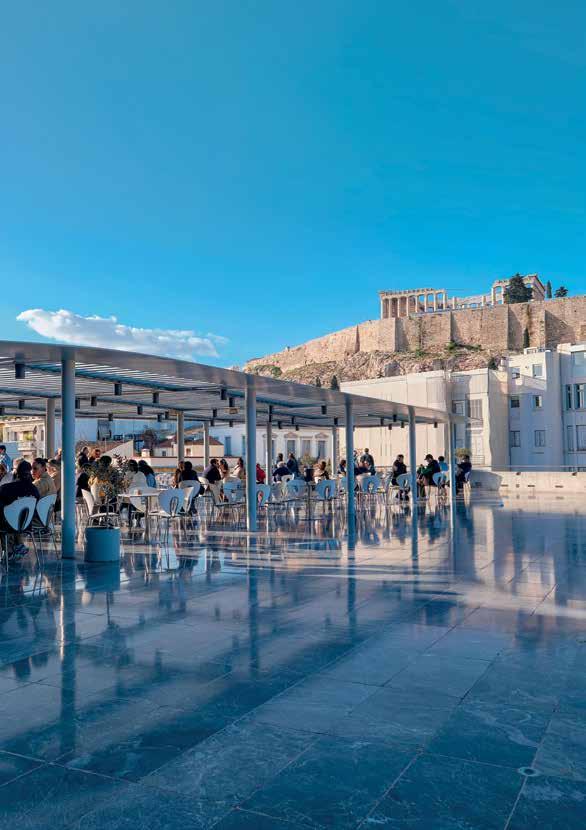
The Acropolis Museum cafe, © Depositphotos.
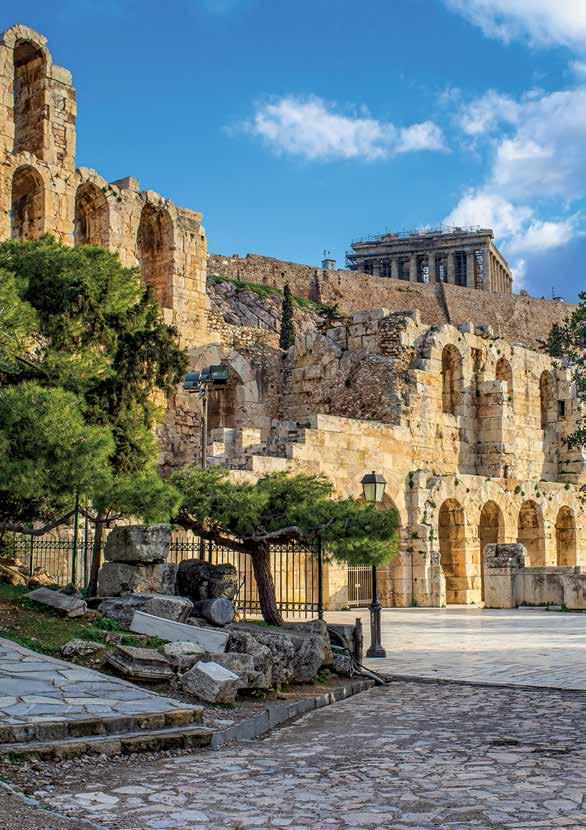
Ancient Athens is one of Europe’s oldest cities, one with a continuous history whose beginnings can be traced some 5,000 years ago. The Greek capital is known as the cradle of democracy. Ancient Athenians have nurtured and advanced science and art and provided the basis for western culture. Take a stroll along Dionyssiou Areopagitou St., and visit the temple of Olympian Zeus (6th c. BC), next to Hadrian’s Arch (131 AD). Follow the 3 km pedestrian route: start with the 5th c. BC ancient theatre of Dionysus; continue along the foot of the Acropolisa world-renowned UNESCO world heritage site; visit the temple of the healer god Asclepius; the 2nd c. BC Stoa of Eumenes; and the 161 AD Odeion of Herodes Atticus (a present-day venue for the yearly Athens Festival).
Climb on the Acropolis Rock and admire the Propylaea, Erechtheion, the temple of Athena Nike, and the Parthenon. The Acropolis Museum stands right opposite the Rock, where 4,000 items from the Acropolis monuments are on display. Continue your walk northwest and you will reach Areopagus, the oldest Court of Law in Athens. Your next stop is Pnyx, the place where Athenian citizens used to hold their democratic assembly. Visit the Ancient Agora, the then centre of political, administrative, commercial and social activity. Finally, head to Kerameikos, the city’s ancient cemetery, and the nearby museum where impressive tomb sculptures are on display. Athens is an open-air museum, so plan your trip ahead and spend your available time wisely.
Odeon of Herodes Atticus, © Depositphotos.
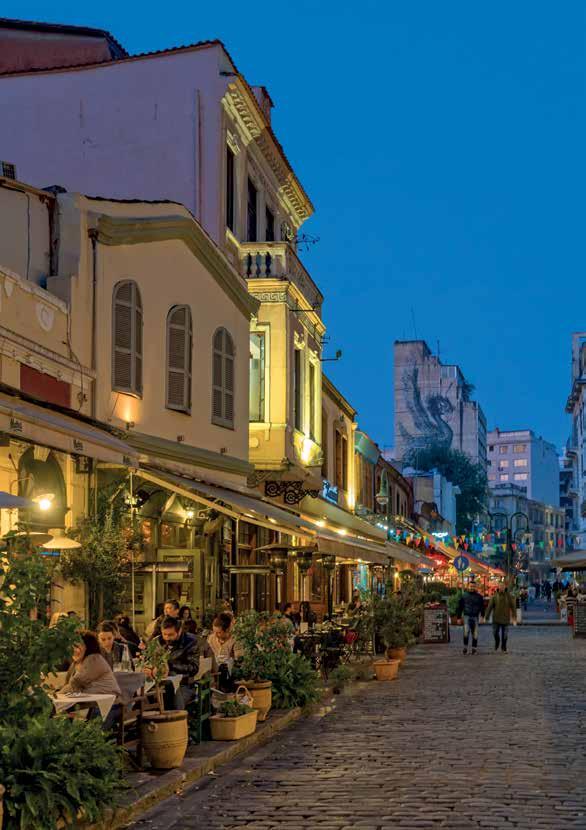
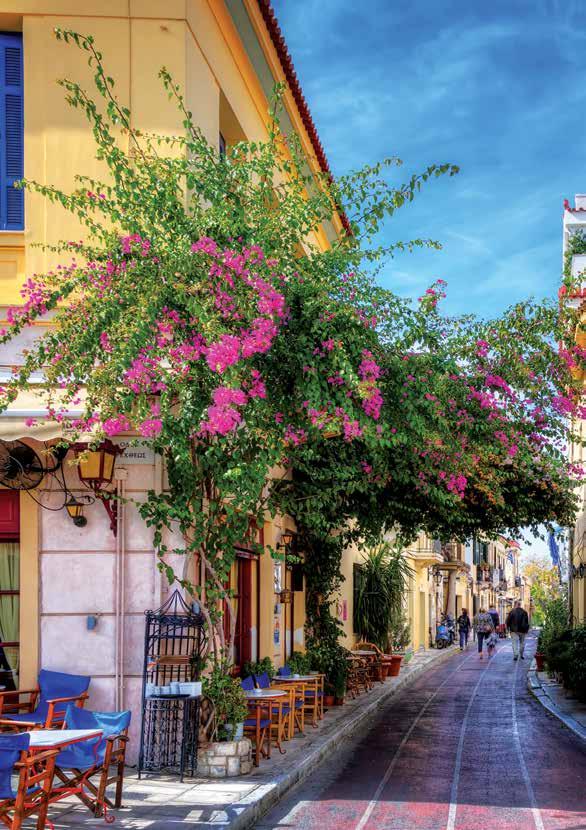
Athens’ historic centre includes neighbourhoods with an ambience of bygone days; next to ancient Greek and Byzantine monuments and churches lie houses dating to the Ottoman Occupation period and impressive 19th c. neoclassical buildings. Visit the famous Plaka district, located right next to the Acropolis; wander in Anafiotika, Plaka’s picture-perfect neighbourhood that carries a marked island ambience in its back streets and houses. Continue your walk towards Monastiraki where there is a lively flea market (on Sundays), and stroll in pedestrianised Pandrosou and Adrianou Sts or head northwest to Psyrri, one of the oldest neighbourhoods in Athens, that is arranged around Iroon Square. Choose one of the local traditional tavernas and enjoy your dinner.
Makrygianni and Koukaki neighbourhoods are two neighbourhoods near the Acropolis, with many neoclassical imposing buildings that combine the traditional Athenian character with trendy cafes and a vibrant nightlife, making them a favourite meeting area for locals and visitors alike. Thissio district lies northwest of the Acropolis area and it, too, brims with culture. Visit the temple of god Hephaestus, the National Observatory of Athens on Nymphon Hill, the Herakleidon Museum, and the 11th c. Agion Asomaton Byzantine Church.
Another district with an atmosphere is Gazi, an area named after the 19th century gas works that provided the city with gaslight up to a century ago. This is where the city’s Technopolis cultural centre is located. Kolonaki is an elegant neighbourhood known for its upscale boutiques, chic cafes, and art galleries, offering a cosmopolitan vibe alongside historical charm. Exarchia, on the other hand, is a hub of counterculture and intellectual life, adorned with colourful street art, lively squares, and bookshops, reflecting the city’s progressive spirit and dynamic energy.
Plaka Neighbourhood, © Shutterstock.
The Greek capital is a modern metropolis; one which can cater for all of its visitors’ needs. Public transport includes the Athens Metro underground railway (Attiko Metro), electric trolley buses, the tram rail system (Athens Tram), the suburban railway (Proastiakos) and a dense city bus network. Board the metro from the Athens International Airport – Eleftherios Venizelos and travel everywhere in the city and all the way to the country’s port, Piraeus, or take express bus lines X93, X95, X96, X97 from and to the airport.
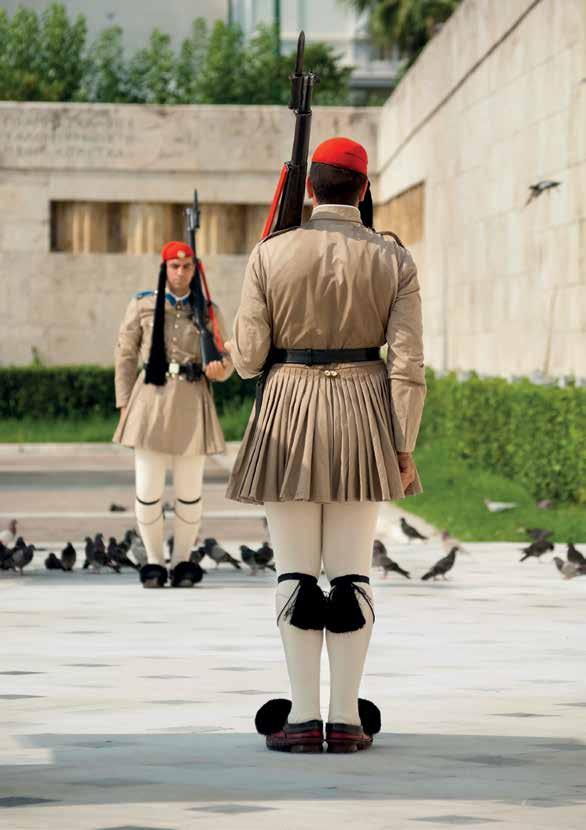
A favourite tourist destination is Syntagma Square, where the Greek Parliament is located with the Tomb of the Unknown Soldier fronting it. Two Evzones - members of the Presidential Guard (a select military corps) – stand on both sides of it, in traditional costume. Every Sunday at 11 a.m., visitors can witness the impressive Changing of the Guard ceremony, a symbolic and highly choreographed ritual. This special weekly event features the full Presidential Guard, dressed in formal attire, marching to the beat of a military band. The precision of their movements, combined with the striking traditional uniforms, creates a memorable spectacle that highlights Greek history and national pride.
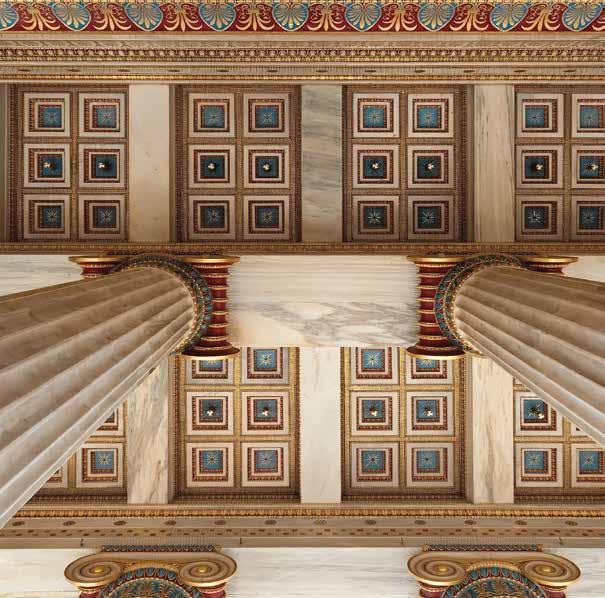
Stroll to the south of the adjacent National Garden, where Zappeion is located - an emblematic 19th c. historic edifice, used today as a venue for official ceremonies and meetings. The horseshoe shaped Panathenaic Stadium – an all-marble Stadium where the first Modern Olympic Games took place – is a nearby must-visit site, too. Take a stroll down Patission St. (from Omonia Square) where the National Technical University and the National Archaeological Museum are located; climb on Lycabettus Hill, a green location, on the top of which you will enjoy a lovely view of the entire city; go shopping in Kolonaki district; and walk along Vasilissis Sofias Avenue which is lined with neoclassical buildings, embassies and museums.
Evzones in front of the Greek Parliament, © Depositphotos.
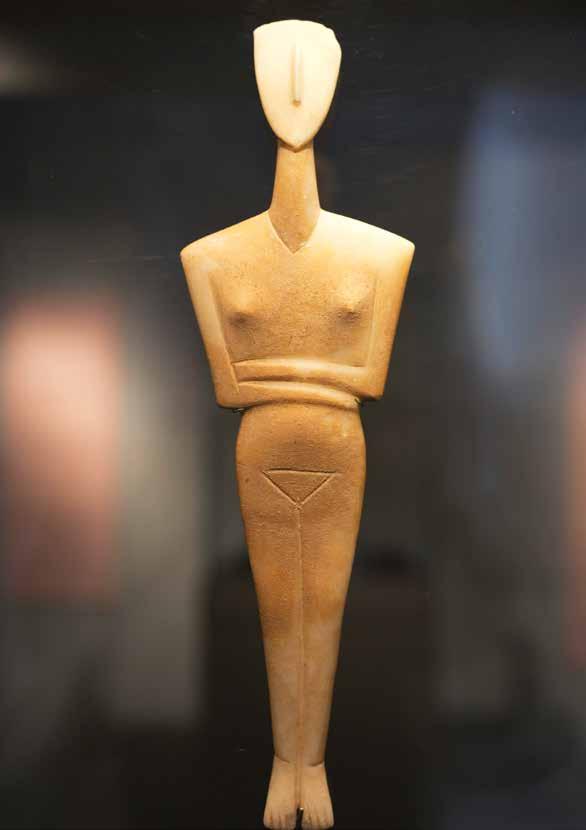
Athens is known across the world as a city steeped in history and art, that will feed your cultural appetite. Start your tour from one of the oldest museums in Athens, the Benaki Museum, near Kolonaki Square, with exhibits that range from prehistoric finds to recent works of art. The Byzantine and Christian Museum places an emphasis on the Byzantine and post Byzantine Period (from the 3rd c. AD onwards). In the nearby Museum of Cycladic Art, you will see items from the period starting in the middle Bronze Age (2nd millennium BC) to the end of Roman times (4th c. AD). If you’re interested in fine arts, visit the Ghika Gallery, on Kriezotou St. in the city centre. Within a short distance you will find the Numismatic Museum, on Panepistimiou St. Its collections include monetary objects and similar items that date as far back as the dawn of history. The National History Museum is located on Kolokotroni Square, and it will offer you some insight into Greece’s long past.
In the picturesque Plaka area, take your children for a visit to the Museum of Greek Children’s Art. In the nearby Acropolis area, apart from the Acropolis Museum, make sure you see the amazing collections in the Ilias Lalaounis Jewellery Museum, the only museum of modern jewellery in Greece. The National Museum of Contemporary Art (ΕΜΣΤ) is a vibrant cultural hub showcasing modern artistic expression, housed in a repurposed industrial building that harmoniously blends history with cutting-edge creativity.
Don’t miss the recently renovated National Gallery, which houses an extensive collection of Greek and European art, spanning many centuries and cultural movements as well as the Basil & Elise Goulandris Foundation, that offers a remarkable collection of late 19th & 20thcentury modern and contemporary masterpieces by artists such as Picasso, Van Gogh, and Monet, alongside works by prominent Greek painters. For music and opera enthusiasts, the Maria Callas Museum pays homage to the legendary soprano, showcasing personal artifacts, costumes, and memorabilia that celebrate her extraordinary career and connection to Athens.
Museum of Cycladic Art, © H. Kakarouhas.
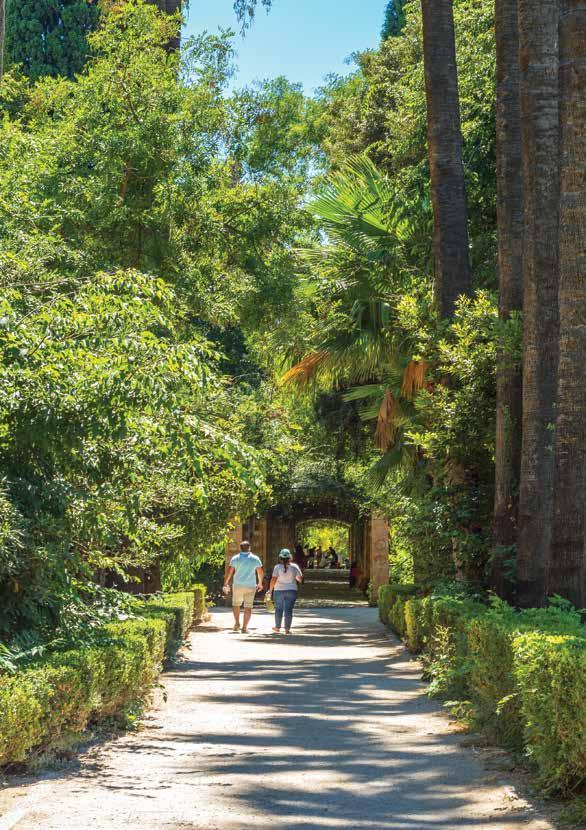
During your stay in the Greek capital, spend some time visiting open air green spaces. Take the family to the National Garden right next to the Parliament building in Syntagma Square, and enjoy the sounds of nature in the heart of the city. Your kids will love the small zoo, and the playground; there is also an archaeological site and a traditional café. Attiko Alsos is an urban forest and the most elevated green area within the city, which affords a fine view of Mt. Hymettus and Athens. You will find an open-air cinema and a theatre (in the summer), two playgrounds, cafés, volleyball, basketball and tennis courts, and a parking lot. At a stone’s throw from the city centre – only 1km away from Omonia Square - you can visit Pedion tou Areos, a green area in the heart of the city and one of the largest public parks in Athens.
Strefi Hill is a pine-covered hill, located in Exarchia district, with a basketball court, a playground and a small theatre. The biggest park in Athens’ metropolitan area is Antonis Tritsis Environmental Awareness Park, at Ilion, covering an area of 120 ha. There are six lakes in the park; follow the path around them, go birdwatching and spend your day learning about rare species of fauna and flora that exist in the area.
The Stavros Niarchos Foundation Cultural Centre (SNFCC) is surrounded by a well-tended green area. This beautifully landscaped park features walking paths, open lawns, and shaded spots perfect for relaxation, alongside a rich variety of Mediterranean flora species. Designed with sustainability in mind, the park hosts cultural events, outdoor performances, and recreational activities, providing a perfect blend of nature and urban life.
The list of green spaces in the Greek capital and suburbs is a long one, so plan ahead and see more!
National Garden, © Shutterstock.
The Greek capital is a city with a vibrant nightlife, one that will offer you memorable experiences. Start with the city centre: you’ll find a variety of restaurants, bars, tavernas, coffee shops, and clubs in Thissio, Monastiraki and Psyrri districts. Enjoy your dinner, listen and dance to live Greek music until the wee hours of the night. Head for Gazi district, an area considered by most Athenians as a hotspot in terms of downtown nightclubbing – have a great time listening to Greek music, lounge, jazz, rock, or pop music; visit Technopolis City of Athens and choose among the events and performances that get staged in the premises. In the vicinity of the Acropolis, go for a stroll in the famous Plaka neighbourhood and feel the area’s special ambience; pick a traditional taverna and savour scrumptious Greek dishes while you listen to bouzouki playing. If you’re looking for a stylish international, ethnic or haute cuisine restaurant close to the centre, then Kolonaki is your must-visit area. The northern and southern suburbs will also offer you a wide variety of similar restaurants to choose from. If you’re a concert fan, you will enjoy an indoor event at Megaron, the Athens Concert Hall
Exarchia’s nightlife is vibrant and eclectic, reflecting its bohemian and alternative spirit, offering cosy bars, underground music venues, and lively squares where locals and visitors gather. From jazz and rock clubs to casual spots with affordable drinks, Exarchia offers a unique and dynamic scene for night owls seeking an authentic Athenian experience.
In the summertime, make a point of viewing an outdoor drama or music performance at the Odeon of Herodes Atticus as part of the Athens and Epidaurus Festival. Don’t miss out on watching a film in open-air cinemas across the city. Athens also hosts an array of music festivals that offer diverse genres and a vibrant atmosphere, such as Release, Ejekt, Rockwave, Plissken and the Summer Nostos Festival, drawing local and international audiences alike.
Pick from the vast array of choices and enjoy Athens’ busy nightlife!
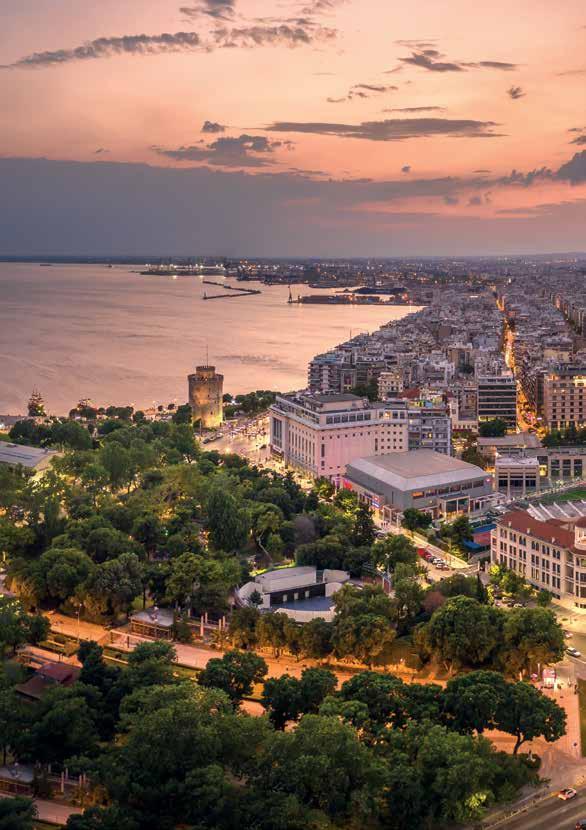
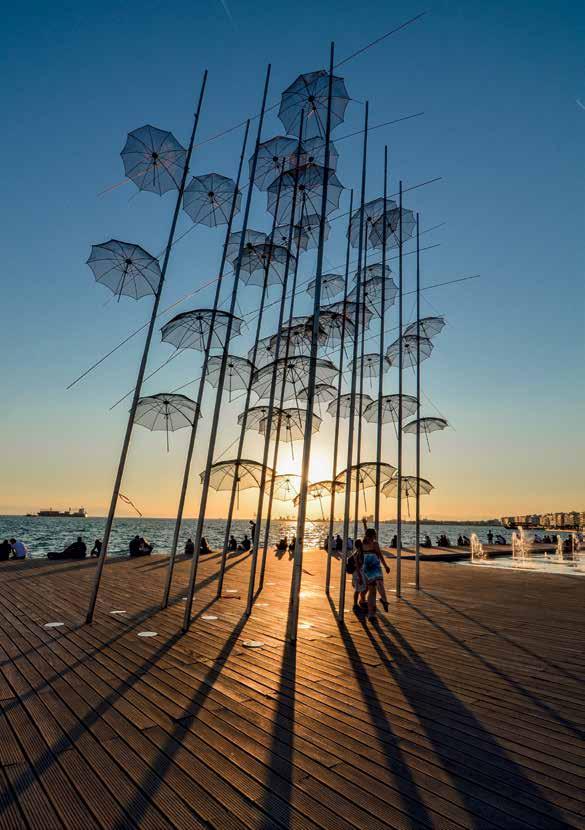
Thessaloniki is a historic port city and a bustling modern metropolis. The capital of Macedonia was established by Cassander, its first king, and named after his wife, the sister of Alexander the Great. The city’s 23 centuries of continuous existence were marked by periods of great prosperity alternated with wartime and occupation. Thessaloniki was the most important city in the Byzantine Empire – second only to Constantinople - and its impressive early Christian and Byzantine monuments have earned it an inscription on UNESCO’s World Heritage Site List. People of various cultures, ethnic origins and religions have settled in Thessaloniki and helped shape its multicultural character. The second largest city in Greece is today a thriving cultural, commercial and educational hub in northern Greece. Thessaloniki has also been an UNESCO City of Gastronomy since 2021 recognized for its rich culinary heritage and vibrant food culture, which reflects the city's diverse history and multicultural influences.
Travel to Thessaloniki on the occasion of major events such as the Thessaloniki International Fair in September, the Thessaloniki International Film Festival in November, and the Thessaloniki Book Fair in May. Enjoy your stroll along Nea Paralia (the seafront area); see the imposing White Tower, and pass by the ‘Umbrellas’ - a famous modern sculpture by G. Zongolopoulos. Visit nearby museums and see monuments that date from the Hellenistic, Roman, Byzantine, and Ottoman times; wander in scenic neighbourhoods such as Ano Poli and Ladadika. Try the delicious local cuisine, relax in picturesque coffee shops and enjoy a night out in the city.
Last but not least, a must-see site is the Venizelou Metro Station, which is part of the city’s newly built underground railway. It houses a remarkable new underground archaeological site, dating to Roman times, exhibited on the exact location it was excavated. Intricate mosaics, remnants of a Roman road, and parts of ancient buildings are on display, offering a fascinating glimpse into the city's rich history.
(previous page) The White Tower of Thessaloniki, © Shutterstock. 'Umbrellas' sculpture, © S. Addimando.
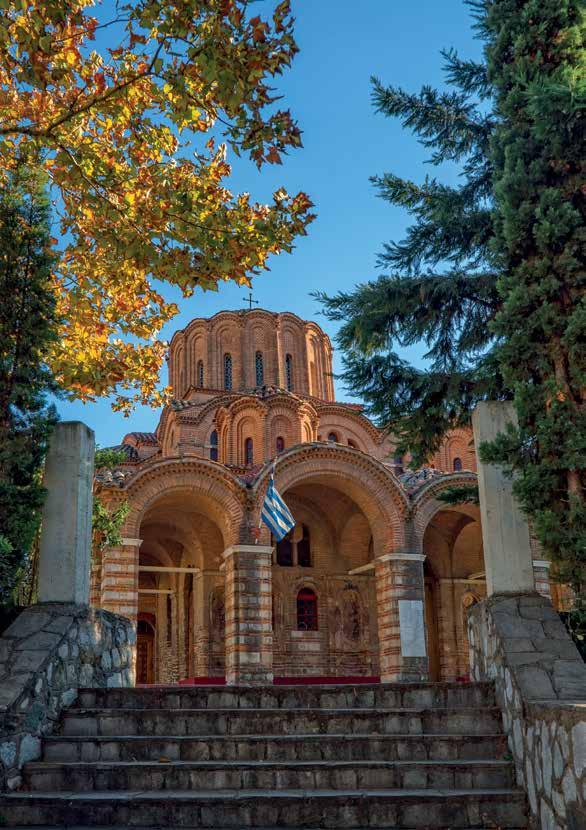
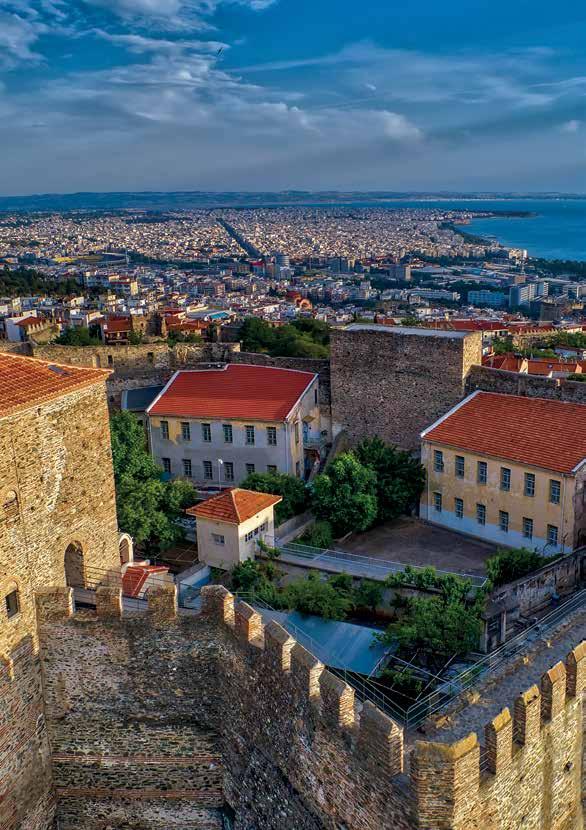
The biggest city in the Greek North is a place with a vibrant atmosphere, rich in history and culture. Choose it as your next cultural city break and enjoy the wealth of its historic sites. Discover Thessaloniki’s Roman, early Christian and Byzantine monuments as you saunter in the city centre. Walk by its 4 km long Walls that date back to its founding days (late 4th – early 3rd c. BC). See the imposing Eptapyrgio fortress located NE at the highest point of the city fortifications. Visit Rotunda (a domed Roman temple converted in the early Christian years into Saint George Church) and marvel at the 5th c. outstanding gold and silver-coloured early Byzantine mosaics. The churches of Saint Demetrius and Saint David (Latomou Monastery) are masterpieces of early Christian art and architecture. Nearby Vlatadon Monastery is an impressive building with Middle and Late Byzantine period mosaics; the location offers an amazing view over Thermaikos Gulf.
Profitis Ilias Church is an impressive and elaborate construction built on Ano Poli in the late Byzantine period. The Holy Twelve Apostles Church is also a Late Byzantine [14th c.] edifice located on Olympou St., near the city’s western Walls. Head downtown and visit the early Christian [5th c.] Panagia Acheiropoietos Church on Agia Sophia St., as well as nearby Saint Sophia Church, a 7th c. domed basilica. Close to the Roman Forum you will find the 11th c. Panagia Chalkeon Church (a.k.a. the Red Church).
Thessaloniki’s list of Byzantine monuments is a long one, so make the most of your time in this open-air UNESCO World Heritage Site.
Saint Demetrius Church, © P. Merakos.
Explore Thessaloniki’s waterfront area, follow the promenade that stretches as far as the eye can see, relax or go jogging with the locals. Stroll along the large walkway by Nikis Avenue and the pedestrianised Aristotelous Square, relax in one of the cafés along the way, enjoy a bicycle ride with the family, and have your meal in a bar or restaurant in Ladadika area. Go shopping in busy streets such as Mitropoleos, Tsimiski, Ermou, Pavlou Mela, Vogatsikou, and Proxenou Koromila
See the antique shop windows in Bit Bazaar square, the hotspot of the city’s thriving student community, close to the Roman Forum Enjoy the scent of exotic spice flavours in shops selling fresh produce inside traditional marketplaces such as Modiano, Kapani (or Vlali), and Vatikioti
Visit the exhibition that takes place inside Thessaloniki’s landmark, the White Tower, and museums such as the Archaeological Museum, the Museum of Byzantine Culture, the Jewish Museum of Thessaloniki, the State Museum of Contemporary Art, the Photography Museum, the Goulandris Natural History Museum, the Cinema Museum, the Folk and Ethnographic Museum, and the Teloglion Foundation of Art, to name but a few. The Roman, Byzantine and Ottoman monuments in the city centre are also well worth visiting. The most famous are the Palace of Galerius (late 3rd c.), the Octagon (a throne and audience hall), Eptapyrgion Fortress in Ano Poli, and Trigoniou Tower located in the eastern city walls.
View from Eptapyrgion Fortress, © Shutterstock.
When the sun sets, the city stays awake and follows the lively rhythm of the night. Enjoy your dinner time in the city centre – visit Ladadika, Evosmos, and Ano Poli areas. Savour local scrumptious dishes in a traditional taverna, ouzeri (type of taverna where ouzo spirit is served with mezedes - tasty fish or meat titbits), or a rebetadiko (a restaurant where live rebetiko music is played).
Enjoy your drink and dance until the wee hours in bars and clubs along Valaoritou St., in the harbour area, in Kalamaria, Toumpa, Kastra and Polichni. Those of you aged 25 and above can visit the Thessaloniki Regency Casino (12km off the city towards Macedonia International Airport). Enjoy a music, theatre or art performance in the Thessaloniki Concert Hall. Choose among the wide variety of events, festivals, exhibitions, concerts and various performances that take place in the Thessaloniki International Fair premises and in other locations such as Mylos multicultural centre.
The Reworks Festival is a major event, focusing on electronic and experimental music, featuring both emerging and established artists from across the globe. This festival, along with many smaller events, contribute to Thessaloniki's dynamic summer atmosphere, celebrating both Greek talent and global sounds.
In the summertime, make a point of boarding one of karavakia (a water bus service) and enjoy the city night views in the cool of the evening. Take your better half for a romantic evening walk by the sea, along Nea Paralia, and watch a film in an open-air cinema under the starlit summer sky. Drink in the amazing evening city view from Ano Poli (Kastra area). Enjoy your nights out in Thessaloniki!
Ladadika, © P. Merakos.