
GULF COAST COMMUNITY SERVICES ASSOCIATION
Head Start/Early Head Start Support Services Monthly Narrative March 2026
LEADERSHIPACTIVITIES:
▪ Child and Adult Care Food Program (CACFP) The February 2026 Child and Adult Care Food Program (CACFP) claim was completed and submitted to the Texas Department of Agriculture (TDA) for reimbursement. In February there were 19 food service days for the month. There were 15 eligible sites and 1,385 eligible children. The number of meals provided: 5,347 breakfasts; 5,420 lunches and 19,833 PM snacks served. Expected reimbursement for the month is $64,728.30. Two of our newest Head Start centers are eligible for CACFP per receipt of the Child Care License, DeAnda & Reynolds.
▪ Program year 2026 Administrative and Center Review of Child and Adult Care Food Program – The Program Year 2026 Administrative and Center Review for the Child and Adult Care Food Program (CACFP) was held with Lead Reviewer, Ms. Kimberly Friedman. She visited Early Head Start, Pasadena Head Start and the Corporate Office. There were no findings Technical Assistance was provided
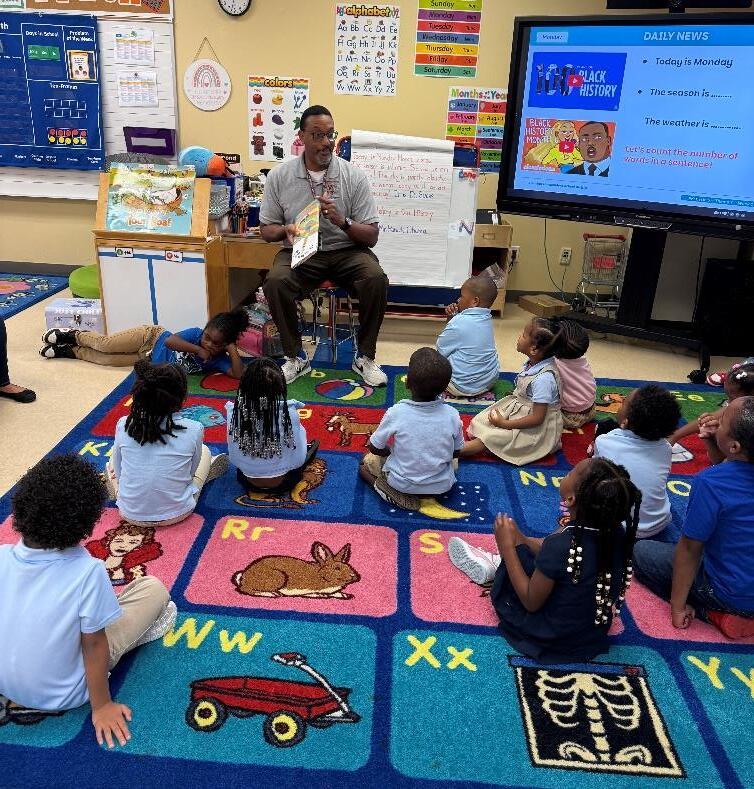
▪ March Story Time – Ms. Kathy L. Johnson, Assistant Director Head Start & Early Head Start - Ms. Kathy L. Johnson, Assistant Director of Head Start and Early Head Start, read to the children and staff, featuring Buckaroo Beau Goes to the Rodeo by Kacy Burke in celebration of the Houston Livestock Show and Rodeo. The story follows Buckaroo Beau as he prepares for and participates in his first rodeo, highlighting themes of preparation, courage, and overcoming fear. The activity supported early literacy development while connecting learning to a culturally relevant community
▪ The GCCSA Team continue to plan for an exciting literacy event for children and their families to be held in May. They also continue to prepare for the upcoming Head Start FA2 review.
▪ Community Engagement and Advisory Participation
The Head Start/Early Head Start Assistant Director serves on the Houston City College Early Childhood Advisory Board and attended the bi-annual meeting this month, supporting ongoing collaboration and alignment with early childhood education initiatives.
CHILD DEVELOPMENT (CD):
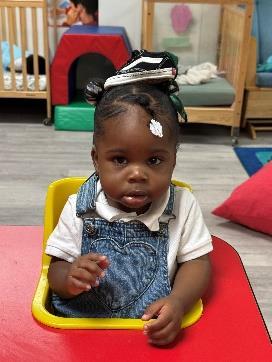

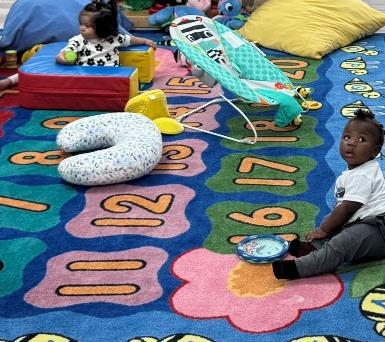
▪ Early Head Start themes taught this month Infants: Teachers implemented the Activity Trackers Card to plan activities according to each child’s individual need in both Infant classrooms. Threes: Theme 7- “On the Go”- Week 1- Places Kids Go- Kids are on the move from sunrise to sunset. They walk, run, dance, and jump. With a bit of practice, they will gallop. hop, and skip. This week the children will learn about the ways their bodies can move. Week 2- “Wheels” - This week the children will continue learning about ways they move but will turn their attention toward things with wheels. We will discuss all the ways wheels help us move and do work. Week 3- Wings- This week the children will explore traveling with wings. We will talk about airplanes, helicopters, and flying animals. We will also try to imagine the view from up high. Week 4- This week the children will explore traveling on water. We will talk about sea life. Toddlers: Theme- 6 “Shapes and Sizes” - Week 2- Squares- This week the children will learn about squares. The focus is on recognition. Even though the teachers and children will count the sides and corners, the children are not expected to know this information. It is simply exposure. Week 3Triangles- This week the children will learn about triangles. Children often learn to recognize them easily because they have a distinct appearance. Week 4- Hearts and Stars- This week the children will learn about hearts and stars.
CHILD DEVELOPMENT (CD):
▪ HISD Collaboration uses the Three Cheers Curriculum, The primary curriculum is Savvas, Three Cheers for Pre-K. Curriculum Theme 7: “On the GO”. Children discovered and explored how they get from here to there. Week 1- “Let’s Go” Week 2 – “Freight Train” Week 3 “The Ugly Truckling” Week 4: “Ready. Steady. Race!”
▪ Raul Yzaguirre Head Start, the March theme presented to children was Theme: Gardening Sub-Themes: How can we plan and care for our garden? What grows in gardens? Who helps gardens grow? How do gardens help people and the environment? How can we harvest our garden?
▪ Stand-Alone Curriculum: Head Start Stand-Alone sites implement the Frogstreet PreK curriculum. March theme was: Theme 7- “Things that Move / Cosas que se mueven”. Sub themes students studied: Week 1: I Move/ Yo me muevo, Week 2: Spring Break, Week 3: Travel/ Viajar, Week 4: Transportation/Transporte.
▪ The Child Development Team actively participated in the activities held for the Dr. Seuss celebration.
▪ The Child Development Team is actively supporting all teachers who on Individual Action Plans by assisting them in completing their goals and providing ongoing guidance and support.
▪ The Child Development Team consistently reviews PIR reports to monitor Home Visits, Parent Conferences, and PED screenings to ensure compliance and timely completion. Currently, the teaching team is working on completing the second home visit.
▪ Child Development Specialists in collaboration with HR conducted virtual interviews and submitted candidate recommendations to hire selected teachers.
▪ The Child Development Manager participated in the Harris County Department of Education Greater Houston Area Head Start meeting.
▪ The Child Development Team went to each classroom to review lesson plans, individualized education activities, and school readiness goals.
▪ The Child Development Team met in person with the newly appointed Early Childhood Specialist (ECS), Ms. Alexandra Gomez. During the meeting, we developed our GCCSA goals and visited both the Richey and Early Head Start centers so she could observe how our centers operate. Ms. Gomez provided valuable feedback and will be offering a training session during the Summer Professional Development Institute (PDI).
▪ The Child Development Manager met with each Center Administrator to review the CLI completion and growth reports.
HEALTH & NUTRITION (H/N):
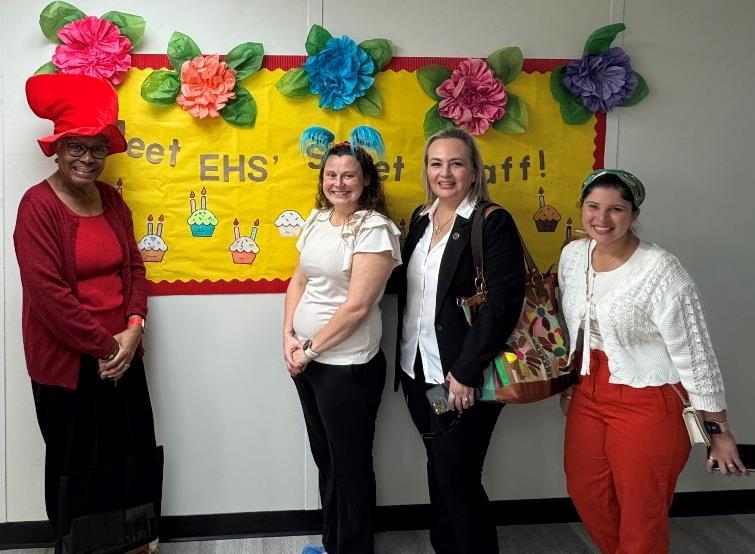
▪ Head Start program requires within 30 calendar days after the child first attends the program, the parent must be consulted to determine whether each child has ongoing sources of continuous, accessible health care and health insurance coverage. Currently the Head Start enrollment number is 1181 and EHS is at full enrolment level of 112
▪ Within 45 calendar days after the child first attends the program a program must either obtain or perform evidencebased vision and hearing screenings.
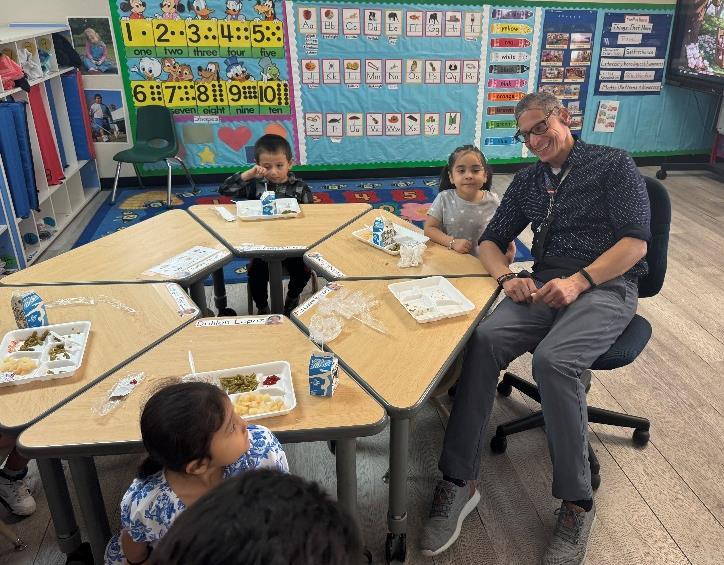
Pictured at EHS are Kathy L. Johnson, Katheleen Trousdale with Alexander Gomez, ECS TTARegion VI and Naiomi Carrero
▪ Within 90 days HS must obtain determinations from health care and oral health care professionals to establish if the child is up to date on a schedule of age-appropriate preventive and primary medical and oral health care. This is based on the well-child visits and dental periodicity schedules as prescribed by the Early and Periodic Screening, Diagnosis, and Treatment (EPSDT) program. EPSDT is a part of the Medicaid agency.
▪ From February to March, health requirement percentages for both Head Start and Early Head Start remained largely stable, with several improvements reflecting continued follow‑up, screenings, and updated documentation. Modest increases, particularly in immunizations, growth assessments, and vision screenings, indicate successful health and nutrition specialist outreach, while minor decreases are primarily due to newly enrolled children with services still in progress.Overall,thedatareflects steadyprogresstowardcompliance,withnormalmonth‑to‑monthfluctuationsdriven by enrollment and timing of documentation. See chart
of Program
▪ In March, GCCSAunderwent an audit by the Texas Department ofAgriculture (TDA), during which CACFP documentation for all stand‑alone centers was thoroughly reviewed to ensure compliance with program requirements. The audit resulted in a 100% compliance rating with no findings but just a few technical assistances, reflecting the GCCSA’s team’s strong recordkeeping practices, adherence to CACFP guidelines, and continued commitment to accountability and program excellence.
▪ The Health Team continues to conduct hearing and vision screenings at Reynolds while continuing folder reviews across all centers to ensure ongoing compliance. Newly submitted required documents were entered into Shine as part of routine data management, and parent notifications were completed for Richey and Early Head Start. Targeted training was also provided to Family Support Specialists at Richey to support accurate and consistent health documentation.
▪ The Health Team implemented a new Release of Information (ROI) process and trained two temporary staff members on proper health documentation within Shine, as well as standardized ROI procedures. In addition, the team facilitated orientations for new employees, actively participated in team and recruitment meetings, and maintained ongoing efforts to ensure audit readiness across all sites.
▪ The Nutrition team continued supporting program sites by monitoring CACFP compliance through site observations, staff training, and technical assistance. Additionally, it contributed to health and wellness efforts by completing height and weight spreadsheets for all centers, assisting new staff with CACFP and Food Handler requirements, and reinforcing proper meal service and documentation practices.
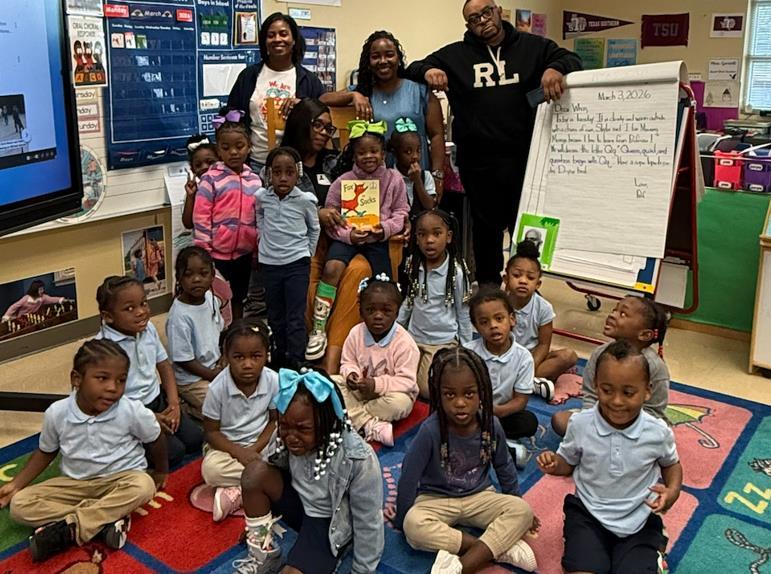
▪ The Nutrition team participated in Dr. Suess reading, during Dr. Suess week. Please see picture to the right!
SPECIALSERVICES (SS):
As of the end of March 2026, a total of 100 children have been identified with a disability, including 92 Head Start children and 8 Early Head Start children, representing 8% of the actual enrollment. This reflects an increase of 24 children from the previous month. Among the children identified with a disability, 72 children (72%) have a Speech Impairment, representing an increase of thirteen children from February while decreasing the overall percentage. Sixteen children (16%) have been identified withAutism, reflecting an increase of seven children Six children (6%) are identified with a Non-Categorical Early Childhood condition, reflecting an increase of two children. Four children (4%) have an Other Health Impairment, reflecting an increase of one child, while one child (1%) is identified with a Deaf-Hearing Impairment, which remains the same as the previous month.
Head Start and Early Head Start require that 10% of the actual enrollment include children with disabilities. Head Start only recognizes children with a disability who are eligible for services under the Individuals with Disabilities EducationAct (IDEA). IDEAis a federal law that ensures free appropriate public education and related services to eligible children with disabilities, and the Local EducationAgency (LEA) holds the authority to evaluate and determine eligibility for children identified with disabilities. Currently, the following campuses have met the 10% requirement based on their actual enrollment: DeAnda Elementary, with 11 children identified with a disability representing 15% of its actual enrollment which is an increase of 2 children from the previous month; Lockhart Elementary, with 5 children identified with disabilities representing 12% of its enrollment which is an increase of 1 child from the previous month; Pasadena Head Start, with 23 children identified with disabilities representing 13% of its actual enrollment which is an increase of 3 children from the previous month; and Patterson Elementary, with 16 children identified with disabilities representing 12% of its actual enrollment which is an increase of 8 children from the previous month.

Identified Children Per Campus
(8%)
(8%)


(2%)


(12%) PASADENA HS-23 (13%)
EHS-2 (6%)
(12%) RAUL YZAGUIRRE-Houston-3 (3%)
STEM-6 (7%)
(5%) RICHEY-4 (6%)
(5%)
(5%)
Please see the “Identified Children Per Campus” chart showing the number and percentage of children with disabilities per campus based on the campus’s current enrollment.
SPECIALSERVICES (SS):
As of the end of March, a total of 145 children are suspected of having a disability, including 142 children in the Head Start program and 3 children in the Early Head Start program, representing approximately 11% of total enrollment. This reflects a decrease of 18 children from the previous month, with 18 fewer children in Head Start This decrease is indicative of children moving through the evaluation process and being formally identified as children with disabilities.As evaluations are completed and eligibility is determined, the number of children in the “suspected” category decreases while the number of children formally identified with a disability increases. Among the children currently suspected of having a disability, 89 (61%) have speech concerns, reflecting a decrease of 15 children from the previous month while continuing to represent the largest category. Twenty-four children (17%) are suspected of havingAutism, representing a decrease of three children. Ten children (7%) have social-emotional concerns, reflecting a slight increase of one child Twenty-one children (13%) present with both a disability and socialemotional concerns, representing a small increase of one child compared to the previous month. The number of children suspected of Dyslexia remains at one child (1%)
Additionally, approximately 44% of the children currently suspected of having a disability are receiving private services, reflecting a slight decrease from the previous month
Please see the “Suspected Children Per Campus” chart showing the number and percentage of children with suspected disabilities based on the campus’s current enrollment.
Suspected Children Per Campus

Bastian- 6 (8%)
EHS- 2 (3%)
Kelso- 6 (11%)
Patterson- 20 (15%)
Richey- 14 (21%)
Thompson- 7 (9%)


Pasadena HS- 19 (10%)
RYSS STEM- 15 (17%)


Codwell- 9 (12%)
DeAnda- 1 (1%)
Lockhart- 4 (8%)
Pasadena EHS- 1 (3%)
Raul Yzaguirre - H- 20 (21%)
Reynolds- 8 (14%)
Rucker- 5 (7%)
Woodson- 8 (11%)
The Special Services Manager has continued to collaborate with the HISD Interventions Department to discuss and review Head Start student referrals, while also working closely with Center Administrators to monitor each campus’s Corrective Action Plan as an added support toward meeting the requirement that at least 10% of enrolled students have an identified disability. Ongoing meetings with Center Administrators have proven beneficial, as we have seen an increase in children being identified and moving through the referral process. Notably and as discussed prior, DeAnda Elementary School, Lockhart Elementary School, Pasadena Head Start and Patterson Elementary have successfully met the 10% requirement.
However, program-wide we were not able to meet the overall 10% requirement for children identified with a disability.As a result, a waiver was completed and submitted to the Office of Head Start.
Multi-Disciplinary Team Meetings: The department assists with monitoring Multi-Disciplinary (MDT) meetings. MDT meetings are held to ensure that children who are enrolled or who have applied are given the opportunity to maximize the benefits of the program. For the month of March 2026, the Special Services Department obtained and attended 0 new MDT and a total of 27 year-to-date (YTD).
GCCSADisabilities and Mental Health Providers Services - (Advance Plus,Angels of Care, Personal Touch, Eaden Counseling, Providential Counseling,ANC-D Psychological Services and Marshall Counseling Services) Mental health providers have continued to offer consistent and reliable support to our campuses through regularly scheduled weekly or biweekly visits. During these visits, providers collaborate closely with campus staff, deliver individual and group-based interventions, and respond to emerging student needs in a timely manner. This ongoing presence has helped ensure continuity of care, strengthened relationships with students and staff, and supported overall socialemotional well-being across campuses.
In addition, disability service providers have maintained uninterrupted delivery of therapy services to eligible students. These providers continue to implement individualized treatment plans, provide required related services, and monitor student progress. Their continued engagement has been critical in supporting student development, minimizing service disruptions, and ensuring the needs of our students are met.Additionally,Angels of Care provided a training for Raul Yzaguirre and RYSS STEM staff titled “Developmental Delays in Early Childhood: Identification, Intervention and Support.” This training helped increase awareness of early developmental concerns, provided guidance on early identification, and offered strategies to support children who may be experiencing developmental delays in the classroom and at home.
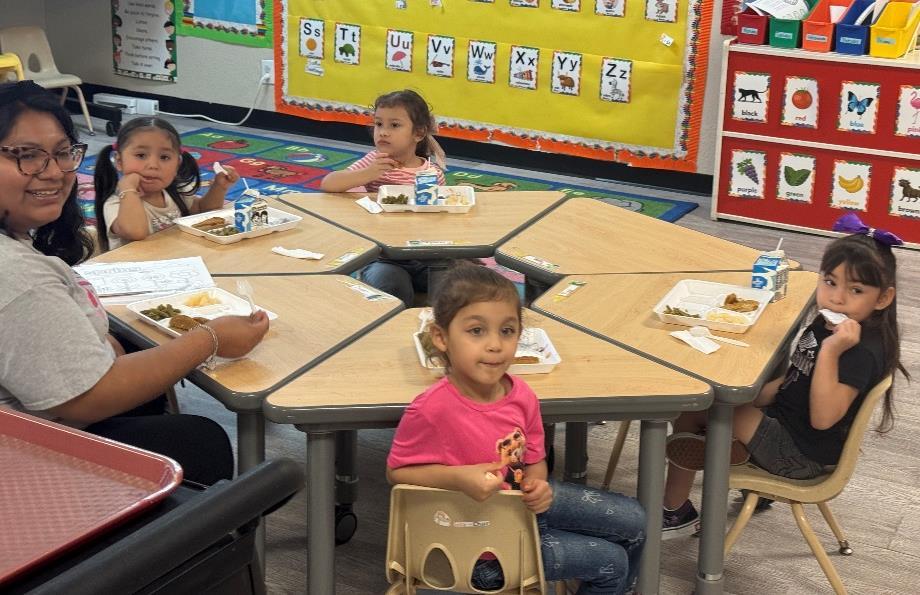
Lastly, the Special Services Specialists continue to visit their assigned campuses weekly to conduct essential follow-ups with children and offer ongoing support to center-based staff. They are instrumental in ensuring that children are properly referred and identified for disability services, and the recent rise in the number of children formally identified with a disability reflects their dedication and hard work.
DEPARTMENTACCOMPLISHMENTS:
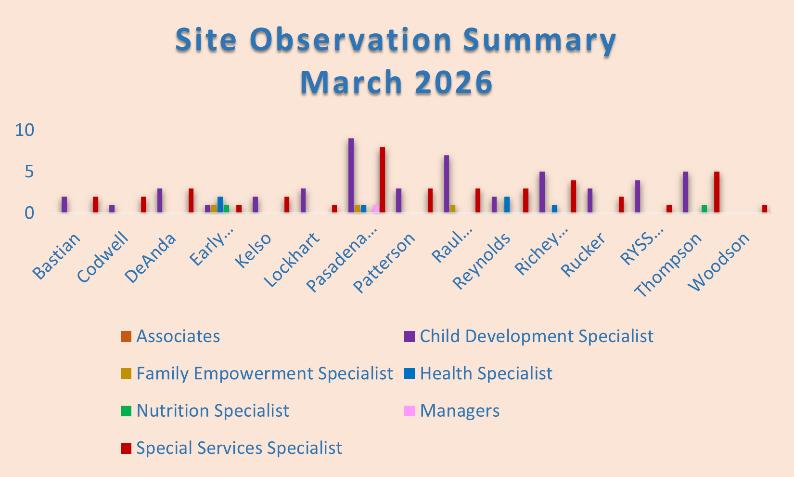
Site Observations: The Site Observation Summary Chart outlines the center visits conducted during March 2026 by the Health & Nutrition Manager; Child Development, Family Empowerment, Health, Nutrition and Special Services Specialists. These visits were carried out across all GCCSA Head Start and Early Head Start Centers to ensure that comprehensive support was provided, addressing the evolving needs of children, families, and staff. Each site observation is an essential component of the agency’s commitment to maintaining high-quality service delivery and fostering continuous improvement.
New Hire Orientation: During March, a total of two (2) new hires joined the organization. There was one (1) Teaching Staff and one (1) Family Services Specialist positions. We warmly welcome our new team members.
CPR/First Aid: During March, twelve (12) staff members attended CPR/First Aid training on March 31st , 2026. Attendees included two (2) Child Development Specialist; one (1) Custodian; four (4) Family Service Specialists and five (05) Teaching staff
Specialists’ Outcomes Meeting: Specialists held their Outcomes Meeting this month to discuss and share accomplishments, address concerns, and seek support as needed. These quarterly meetings provide an opportunity for specialists to exchange information from their respective content areas regarding the children and classrooms they support.
HS/EHS PROFESSIONAL DEVELOPMENT:
▪ Civil Rights training was held this month for Head Start & Early Head Start staff.
▪ The Monthly Cook’s Meeting & Training was held this month for the Cooks &
▪ Nutrition Specialist one-on-one Primero edge cook training
▪ On-boarding was held with new hires that hire date began February 23 – March 06 week with ContentArea Managers
UPCOMINGACTIVITIES/EVENTS/TRAINING HOSTED BY DEPARTMENT:
Dates to Remember:
April 6
April 15
April 20
April 22
May 7
July 27 – 31
Nov. 16 - 20
Nov. 30 -Dec.18
Refresher CLASS Training (Pasadena & Richey Only)
GCCSAStoryTime
InternalAudit/Health & Nutrition Meeting
GCCSAHS/EHS Fatherhood Event
GCCSAFamily Literacy Night
Tentative Dates for PDI
Blackout Period
Blackout Period
UPCOMING CONFERENCES TRAININGS HOSTED OUTSIDE OF GCCSA:
April 1
April 6-8
April 8
April 15
April 21
May 6
Healthy Lunchbox & Head Start Collaboration Meeting
SHINE Data Meeting w/Bethany Lovings
Primero Edge & Head Start Collaboration Meeting
CACFP MegaCon 2026
TDATANS Talk
ERSEASpring Grantee Meeting
SHINE/HS ECE Partnership Meeting
San Jacinto College – Child Development/EducationAdvisory Committee Meeting
SHINE Data Meeting w/Bethany Lovings
REQUIRED TRAININGS:
▪ CDATraining
▪ Civil Rights Training (annual)
▪ CLASS and Teacher Success Rubric
▪ Training for new and returning staff.
▪ ChildAbuse and Neglect Training annually
▪ CPR & FirstAid Training
▪ Coaching and Mentoring Strategies CD Specialists & Teachers
▪ ERSEATraining - required annually.
▪ Food Handlers Certification
▪ MedicationAdministration Training
▪ Orientation for New Employees, Parents & Providers
▪ DevelopmentallyAppropriate Practices, Health and Safety, Teaching and Learning Environment, Curriculum & Assessment
▪ Pedestrian Safety at First Parent Upcoming
▪ Technology in the Classroom Training
▪ HS/EHS Policies and Procedures Training: Practice-Based Coaching, Effective Classroom Management.
▪ CACFP Required Training & Bi- Weekly CACFP & Cook Training Conscience Discipline Training
▪ Disability & Mental Health Training & Social Emotional Development for Children
▪ SIDS/ Shaken Baby training