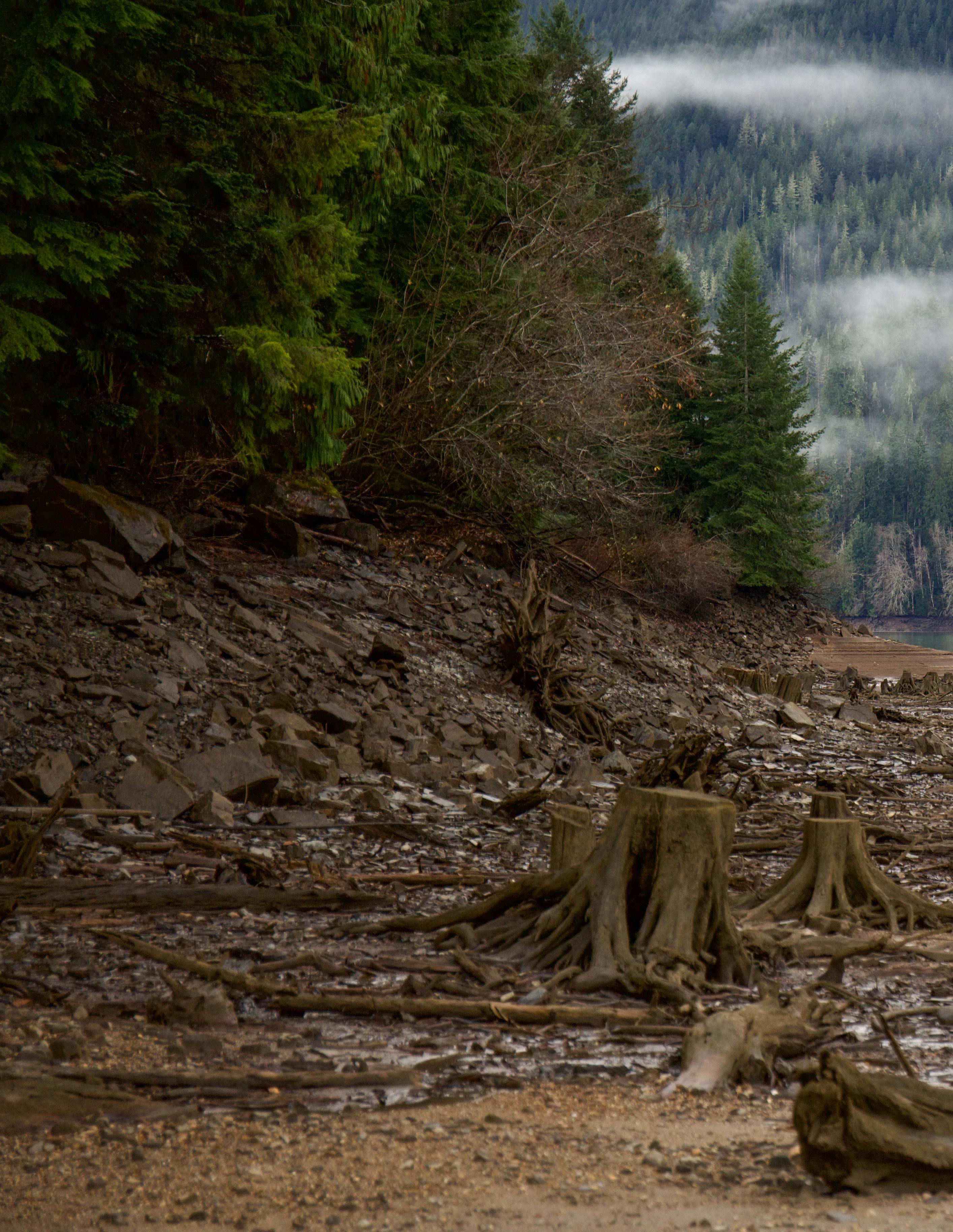
SPRING 2025-WINTER 2026
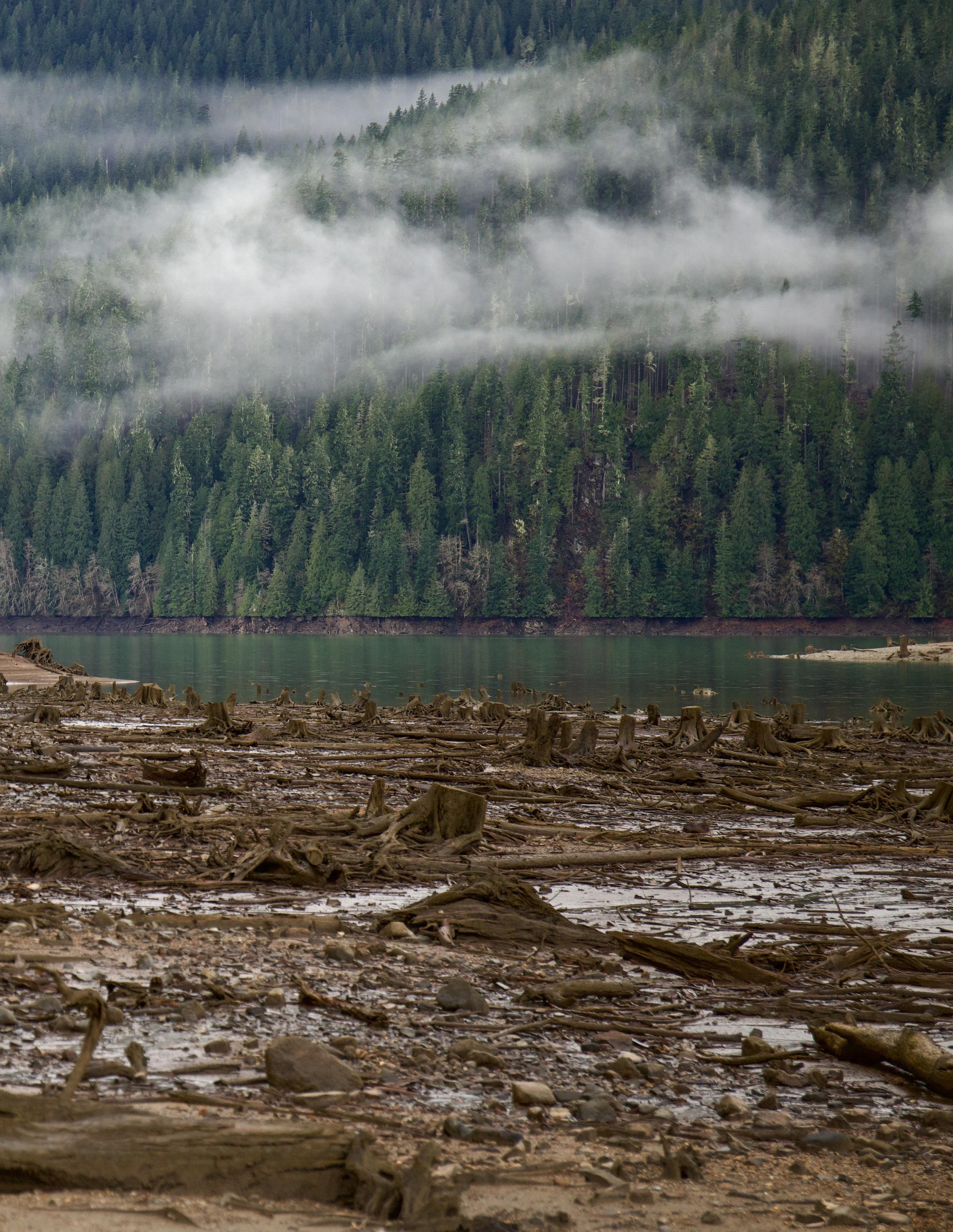
SPRING 2025-WINTER 2026
When people find out that I work for an environmental magazine, most of them assume that I write a lot about nature. And I do, just not always in the way they think.
In this anthology, you will find plenty of stories chronicling endangered species protections, natural disasters and up-andcoming agricultural technology. There is an endless supply of stories that tell the tales of what humans are doing with, for and to nature. What makes these stories stand apart? For me, it’s their understanding that there is no nature without humanity. We cannot discuss the impacts of a flood without understanding that it was humans who settled on a floodplain and shaped the Earth with large-scale farming. We cannot truly understand why we need endangered species protections without understanding how human interactions with those species, in many cases, created the danger in the first place. Because we humans are nature, too.
When we attempt to view nature, and by extension reporting on nature, as different from humans, we fail to get the full picture. As William Cronon said in his 1996 article “The Trouble with Wilderness,” we need to embrace “the full continuum of a natural landscape that is also cultural, in which the city, the suburb, the pastoral and the wild each has its proper place.”
So, yes, I work for a magazine that reports on nature — but nature is much more than the wild and rural. This anthology will present you with ideas that human emotion, cultural practices, recreation and research are all very much stories about nature.
I hope you can put down this anthology and look at both the tree in your yard and the tree in the forest in awe of nature, and understand that awe as nature, too.
Happy reading,
Tori Lehman Fall 2025 -
Spring 2026 Editor-in-Chief

Caution For The Cascade Red Fox
As their population dwindles, scientists search for the culprit
The Bellingham Buzz
Bellingham’s bee populations and the city’s role in protecting them
Losing Lampreys
An ancient fish is on the verge of disappearing from Washington waters
Currently contaminated, this site in Bellingham is soon to be the city’s biggest waterfront park
A top of the line option to control pest birds exists, but local farms can’t justify the cost
Braiding Destruction And Regeneration
A wildland firefighter’s journey from battling fire to welcoming it
Local communities are using new tactics to fight carbon pollution
As the Floods Recede, Community Comes Together
Four years after the devastating 2021 floods, Whatcom County residents rally to recover once again
Seed saving as a key to a more resilient community
A Whale’s Best Friend
Canine contributions to orca recovery
Pikas Put Up A Fight
A cold creature is overheating in the Cascades
The Recycle Center Has Been Reduced and Reused
After more than 50 years, Western’s student-run Recycle Center has changed hands, raising concerns about sustainability on campus
The Sky Is Falling; How Does That Feel?
Climate change is creating a new form of grief Here’s how people are dealing with it
Controversial cullings at Bonneville Dam pit two threatened species against each other
Mount Baker Blues
As winters warm, snow recreation faces a slushy future
Editor-in-Chief
Julia Hawkins
Advisor
Jeff Shaw
Managing Editor
Tori Lehman
Story Editors
Daria Walker
Isaac Becker
Kylie Miller
Tori Lehman
Photo Editor
Avery Robertson
Science Editor
Ewan McLaughlin
Public & Social Media Editor
Omar Sayoud
Writers
Emerson Tubbs
Jeremy Kent
Kaia Olson
Sidra Miller
Stephanie Larsen
Photographers
Gareth Miller
Bailey Nicholson
Dear Reader,
Inconceivable: Adjective “not capable of being imagined or grasped mentally: unbelievable.”
This word became beloved by a classic late 80s film. While it may not be a word in your vocabulary, it perfectly captures the moment we’re in.
We are no longer seeing the climate crisis as a distant threat, but a reality we’ve placed ourselves in much sooner than we hoped. As showcased in this edition, heat waves are becoming more frequent and uncomfortable for us in light of climate change.
Within these pages, you’ll find groups and individuals who are not accepting the answers they were given and are fighting for better ones. The Makah tribe is fighting for their right to whale, while Eba, the whale scat sniffing dog, is fighting to find them in our waters.
This edition doesn’t contain easy answers. But I hope it makes you think, makes you wonder what changes you may be able to make in your day-to-day life. After reading these stories, I hope you can reflect and become a cog in the machine, fighting towards environmental advocacy.
Have Fun Storming The Castle, Julia Hawkins Spring ‘25 Editor-In-Chief
As their population dwindles, scientists search for the culprit
Story by Jeremy Kent
THE PALE LIGHT OF EARLY dawn is only just beginning to light up the cold alpine sky. For a human, this is the prime time to sleep in, but for Snag, this is prime hunting time. His honed senses pick up slight movement: a snowshoe hare. He creeps up, moving through the snow like a ghost with the help of his well-adapted paws. A thick fur coat keeps him warm, and his lightweight frame helps him to stay above the thick snow.
He’s close now, well within pouncing range. His prey has not sensed his presence, and he seizes his chance. It’s a successful hunt. He tastes warm blood as he stalks off into the shelter of the stunted alpine forests. This meal will allow him another day, and in turn, provide his dwindling species another day too.
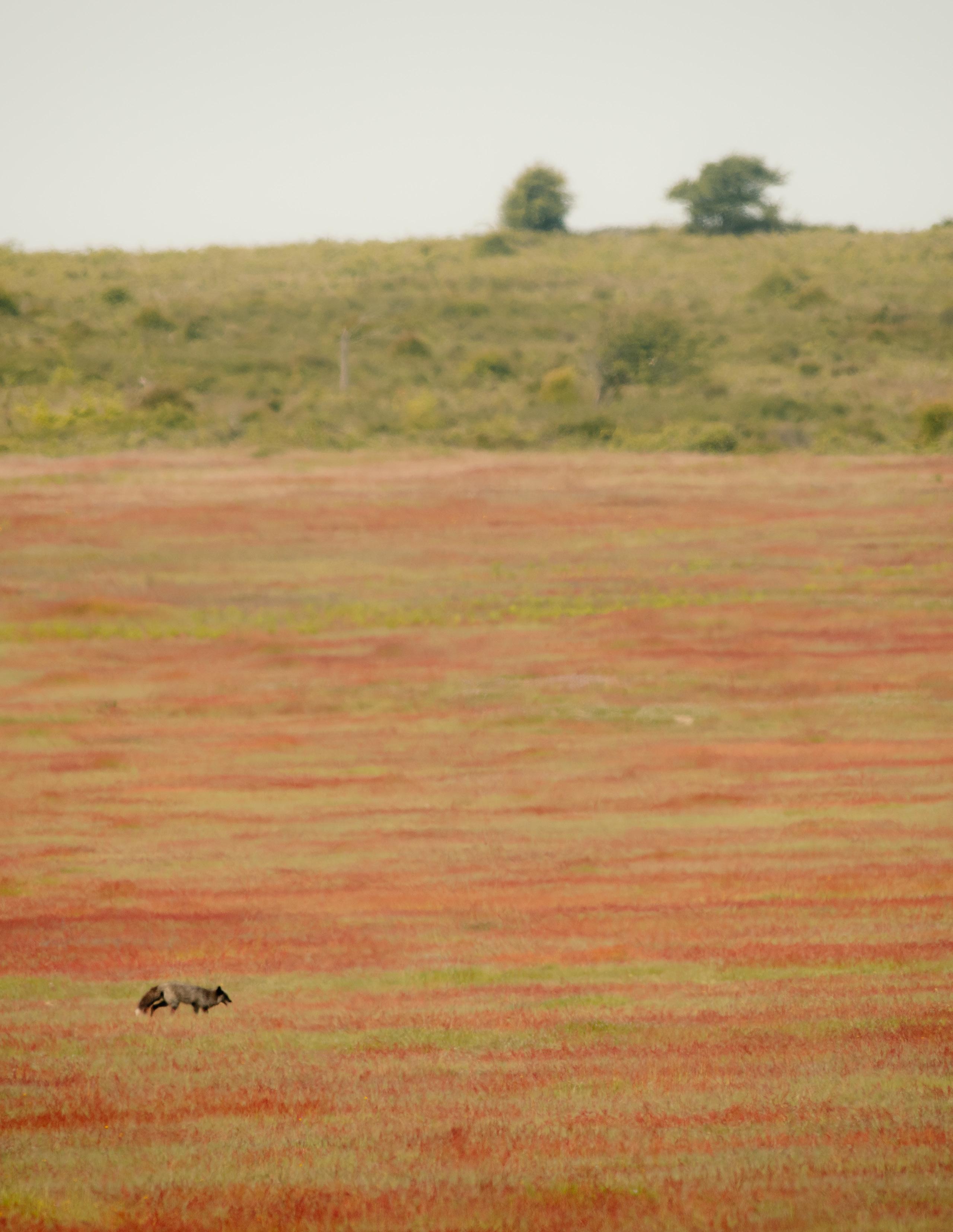
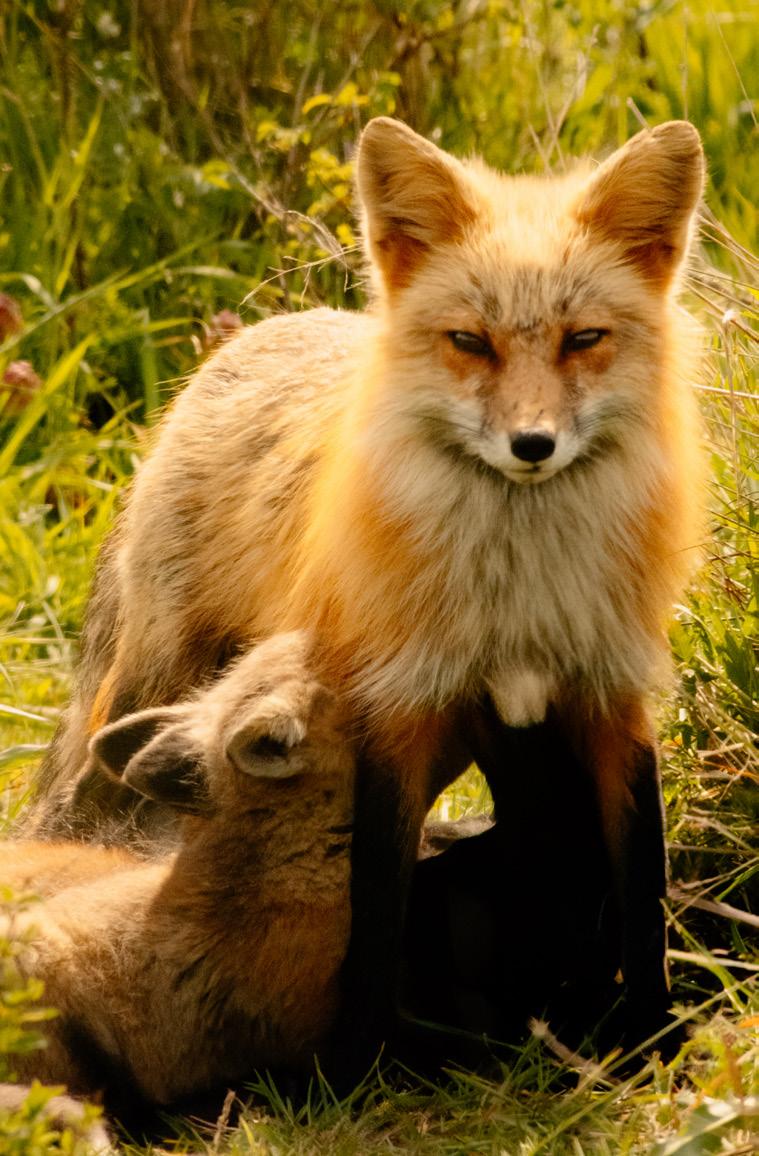
Snag is a Cascade red fox, an alpine species native to the Cascade Mountains. Many generations ago, their range extended from British Columbia down to the southernmost foothills of the mountains, just north of the Columbia River.
Now, very few remain.
If one counted up all of the remaining individuals—Snag included—there may be a few hundred left in the world. Enigmatic and reclusive, very little is known about this endangered species. The Cascade Red Foxes Report says that there are 51 foxes left in the wild. However, Jocelyn Akins, founder of the Carnivore Project, says her research points to upwards of 200 individuals left.
Cascade red foxes are an important keystone species for the alpine environment. The loss of this species could have negative impacts on the ecosystem, though their replacement by other predators — including the nonnative lowland red fox — could offset this imbalance. Unfortunately, further studies must be conducted to confirm these theories.
The Cascade red fox migrated from Asia into North America 300,000 years ago, crossing the Bering land bridge. From there, their ancestors spread across the mountains of the west coast and
the intermountain west, forming into isolated populations of alpine foxes.
Studies from the Washington Department of Fish and Wildlife haven’t established that climate change is the most important factor for the decline in the Cascade red fox population.
“MANY WILDLIFE MANAGERS DIDN’T REALIZE THAT THERE WAS A SPECIAL SPECIES OF FOX THAT LIVED IN THE MOUNTAINS.”
Still, rising temperatures in the Pacific Northwest’s alpine climates have caused reduced snowpack, altered fire regimes and increased outbreaks
of diseases and parasites. Warming from climate change has forced forest cover to move up in elevation across the Cascades, shrinking the mountain prairies this species relies on.
Natalie Furness, a geographic information system specialist at Western Washington University, conducted a mapping project on the Cascade red fox shifting habitat. The results showed how changing tree cover may disrupt hunting patterns.
“[Cascade red foxes] really like those subalpine meadows, but they need space to see and run,” Furness explained.
Despite this, Gregory Green, a senior instructor at Western Washington University, says that Cascade red foxes are resilient, and their prey is too.
“Whether we’re seeing [the effects of climate change] or not depends on the particular species,” Green said. “[Cascade red foxes] are a mouser for the most part ... they’re taking a lot of animals that are still going to be [in] relatively high numbers. Hoary marmots are likely increasing because of warming.”
With uncertainty around the effect of climate change on the population, researchers say we must look to human activity to explain the drastic population decline. Studies have shown that while climate change may not have affected these alpine foxes, the fur trade and predator eradication policies of the early 20th century devastated the local population.
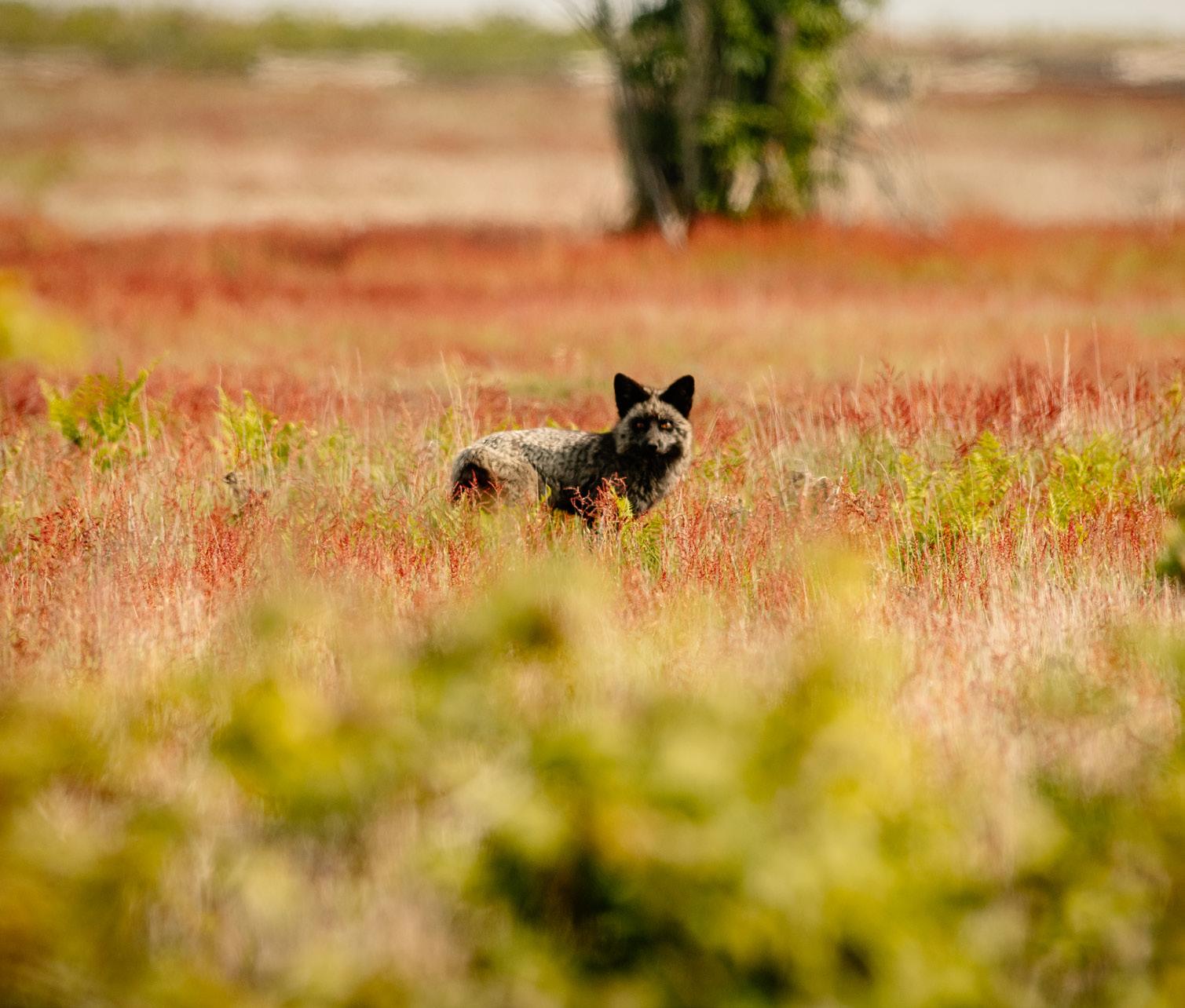
Despite their name, the Cascade red fox sometimes appears more silver in coloration, a hue that trappers found enticing.
“The silver fur was worth a lot of money,” Green said. “The prices went up, so there was a lot of pressure to trap them.”
To protect this unique alpine species, the Washington Department of Fish and Wildlife has listed the Cascade red fox as endangered since 2022. This protection prohibits the trapping or killing of the species.
Organizations like the Cascade Carnivore Project have worked to conduct long-term studies to monitor the Cascade red fox’s populations and
locations to gain a better understanding of the species’ current standing.
Their goals are to figure out what their diet consists of, where they are denning and hunting and how the environment impacts their behaviors. Further outreach and education programs have worked to educate the community and to help change human habits to better protect them.
“Fox habituation is related to human disturbance such as ski areas and roads, and results in some mortality from vehicle collisions,” Akins said. “But many [foxes] ranges are far away from human habitation, and these individuals, and the population as a whole, is likely threatened by larger drivers such as climate change.”
While state regulators have tried to protect the last of the Cascade red foxes, the results have been mixed. For instance, the Carnivore Project’s education and outreach programs are making strides to save the species.
Long-term monitoring programs have also helped biologists and ecologists to track the current population with a modicum of certainty and track where
the last suitable alpine habitat is for these creatures.
On the flip side, the project’s failures are that human intervention is expected to hinder the Cascade red fox, and so wildlife experts believe the best course of action is to take a hands-off approach and hope for the best.
“Some species it’s a habitat issue, some species it’s a harvest issue, and for the carnivores it’s been a harvest issue,” Green said.
Despite the best efforts of state regulators, habitats are still disappearing, threatening the remaining population. Attempts to pin down the exact remaining alpine habitat and the true numbers of the Cascade red fox have failed. Even now, ecologists don’t know enough about these elusive alpine foxes.
“Globally, the red fox has always been a common species,” Akins explained. “Many wildlife managers didn’t realize that there was a special species of fox that lived in the mountains . . . and because they were out of sight, they were out of mind.”

Bellingham’s bee populations and the city’s role in protecting them
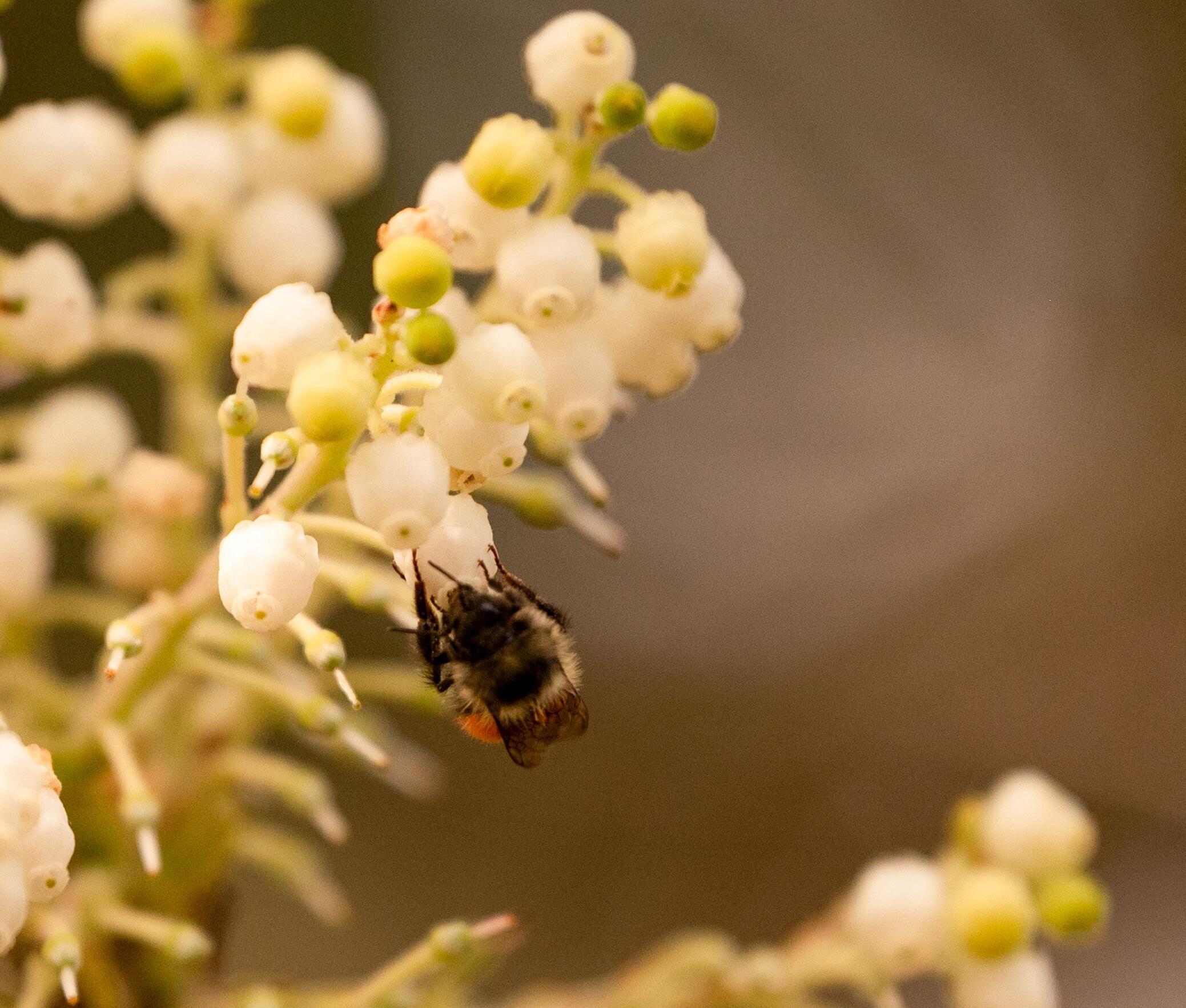
THE VALUE OF BEES is a buzzing topic.
Bumbling from bud to bud, they act as the gods of floral fertility. Without them, the botanical world as we know it would see a dramatic decline, from agriculture to the lilies and lavender of community gardens. With three national parks, 35 state parks and famed flower festivals, Washington state is known for being a leader in agriculture and conservation. Reasonably, the state’s pollinator conservation should thrive as well.
“Pollinator” is a broad title, including wasps, butterflies, moths, flies, small birds and bats, and of course, bees.
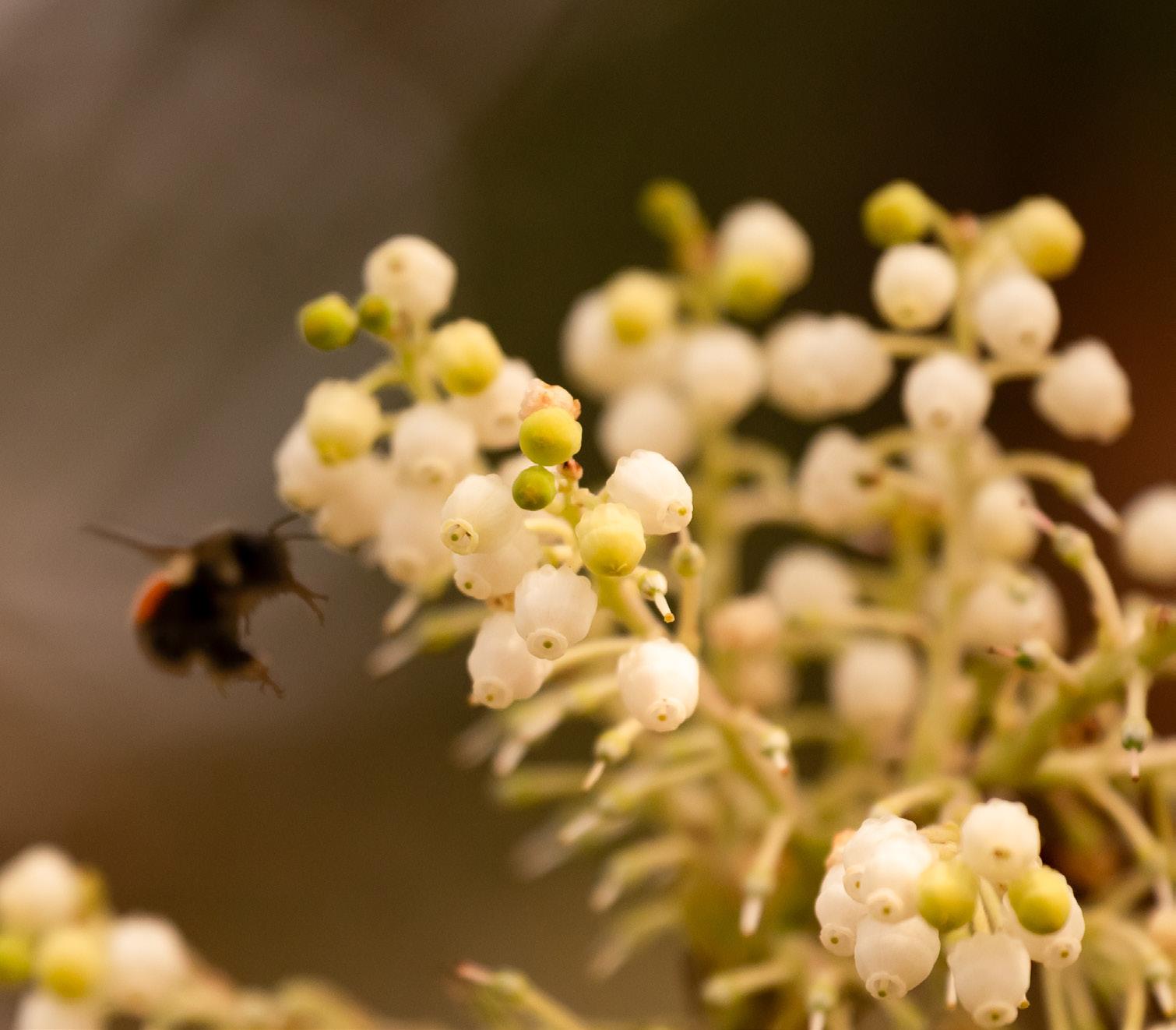
“[Bees] are by far the best pollinators
‘cause their bodies have so many hairs on them…so when they are messing around on the flower… they are accumulating a lot of pollen,” Jim Davis, a local entomologist, said.
For the past five years, the City of Bellingham has been an official member of the celebrated national organization, Bee City USA. The city’s name has been placed alongside 236 other cities, united in agreement to protect bees.
This year was set to be Bellingham’s last among those ranks.
Bee City USA is a nationwide organization founded in 2012 by Phillis
Styles. In 2018, the organization was adopted by the international non-profit Xerces Society, and the movement further escalated. Bee City USA also includes Bee Campus USA, a project centered around college campuses. Western Washington University has been an affiliate since August of 2022.
Totaling the two, the project has 448 affiliates across 47 states and territories in the United States.
In 2020, former Mayor Kelli J. Linville officially designated Bellingham as a Bee City. In doing so, the city created the Bellingham Bee Committee , which works on habitat improvement, pesticide reduction and outreach.
All 448 affiliates submit data to the Xerces Society, which releases annual reports on Bee City’s website. In approximately 10 pages, the subsequent
“THE FUN THING ABOUT NATIVE POLLINATORS IS YOU DON’T NEED TO BUY OR BUILD ANYTHING TO SUPPORT THEM. IF YOU GROW IT, THEY WILL COME.”
year’s data regales the public with tales of community involvement and stats of growth and decline.
“It’s a time for them to reflect on their successes and what they’ve been working on, but it’s also a great way for affiliates to educate each other,” Laura Rost, the national Bee City and Bee Campus coordinator, said.
In shifting climates, bee monitoring and reporting can fall to the wayside. During the COVID-19 pandemic, many cities joined the program, but there were no consequences for not maintaining Bee City obligations until now.
The City of Bellingham has no past reports listed on Xerces Society’s website.
“I just reached out to Bellingham’s Bee City Committee and I didn’t hear back, and they did not report last year,” Rost said.
Being a sanctuary for bees means more than just collecting data.
Commercial honey bee colonies in
Washington are at risk of a 70% dieoff in 2025. The main reasons for this are disease, pesticide usage, and habitat loss.
Karly Kerr, co-founder of Northwest Apiary Services, spoke of her own experience with bee die-offs. In winter 2024, she unexpectedly lost all four of her hives. With the help of her beekeeper network, she reestablished three healthy hives by the end of April.
Kerr believes that the best response to bee decline is to build community knowledge and implant new hives. Due to the diversity of urban gardens and the small size of honey bee hives, cities are full of opportunities.
“We could have a hive in these parks, or on top of those apartment buildings, these are all things that we could do to increase the ‘bee city’, but it’s not actively happening,” Kerr said, gesturing around Boulevard Park.
One of the main problems with keeping bees in city limits, however, is city policy, which restricts hive ownership to one per property.
“[If] there’s only one hive, you can’t medicate the sick hive with a healthy hive…but if you had two…you could be self-sustainable,” Kerr said.
In the face of disease or colony collapse, isolated hives have nowhere to seek aid. More hives mean more diversity and stronger colonies.
Honey bees make vital contributions to pollination efforts. Maintaining a honey bee hive means reaping honey and wax, allowing for a closer relationship between honey bees and their keepers.
These bonds are nearly completely absent towards native bees, despite their vitality in pollination.
“There’s ladybugs, there’s all kinds of smaller insects, but they don’t produce another product,” Kerr said. “I think that’s the issue…[other pollinators] don’t have anything that’s desirable to humans. They are overlooked for that reason.”
While honey bees make vital contributions to pollination efforts, they receive more than their fair share of credit over butterflies, moths, birds, beetles, wasps, flies and especially other kinds of bees.
“THERE’S LADYBUGS, THERE’S ALL KINDS OF SMALLER INSECTS, BUT THEY DON’T PRODUCE ANOTHER PRODUCT.”
And yet, this commercial idol is not even native to North America.
While keeping healthy honey bees can boost pollinator populations, the money, space and maintenance required is not accessible for everyone.
“The fun thing about native pollinators is you don’t need to buy or build anything
to support them. If you grow it, they will come,” Rost said.
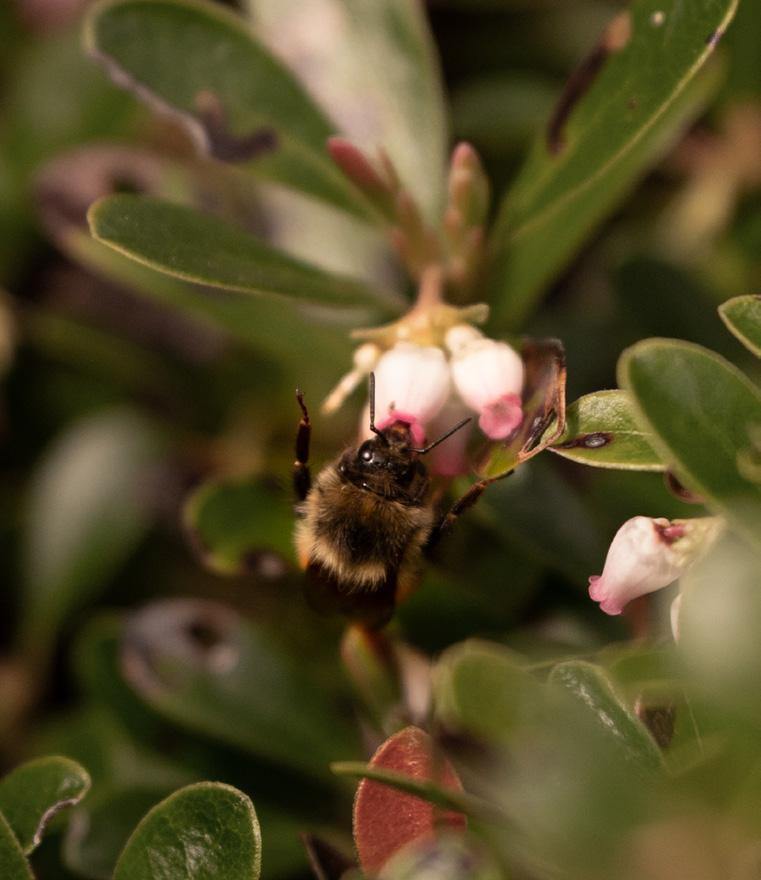
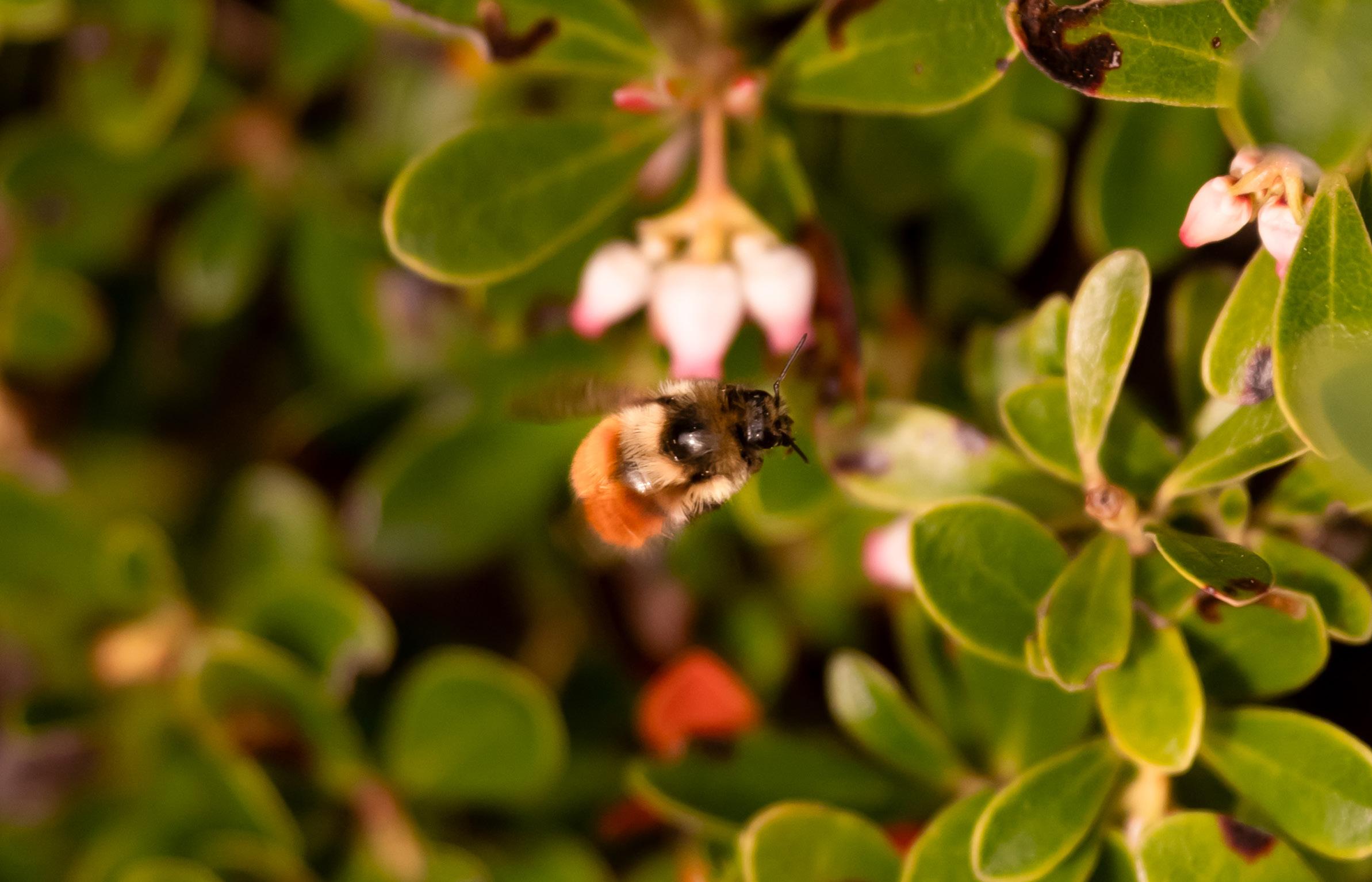
Native bee habitat demands are simple: native flowering plants, pesticide-free forage and nesting sites. Where honey bees share space with hundreds and hundreds of comrades, native bees live the solitary life.
“70 percent of native bees are groundnesting, so they don’t live in a hive… and 90 percent are solitary nesting, individually finding their habitat,” Rost said. “They want bare soil near flowers, they want dead stems, branches and logs, and dead leaves. That’s what you need…it’s way more hands-off than honey bee keeping, and it’s, frankly, way cheaper.”
The City of Bellingham may not have fulfilled its reports; however, according to the people of Bellingham, Bellingham is still a bee city.
In many cases, protecting the bees is a responsibility shouldered by the people. Shuksan Conservancy is a local organization known for its volunteer
“[BEES] ARE BY FAR THE BEST POLLINATORS ‘CAUSE THEIR BODIES HAVE SO MANY HAIRS ON THEM…SO WHEN THEY ARE MESSING AROUND ON THE FLOWER… THEY ARE ACCUMULATING A LOT OF POLLEN.”
research and advocacy. Their research and team has grown over time, turning a routine outing in Heather Meadows into a published research paper in 2024.
The team’s monitoring projects emphasize the important relationship between native bees and native plants.
“If we were to lose our native bee population… that’s gonna seriously impact native plants, which depend on those native bees for pollination,” said Davis.
The Shuksan Conservancy includes Upper Skagit and Nooksack tribe representatives, resulting in close community bonds.
“We are working pretty closely with the Nooksack and Upper Skagit tribes, and their interest is first foods, which are traditional, native foods,” Davis said. “What…has really helped us a lot, is our recognition of the importance of first foods and their recognition of the importance of pollinators to first foods.”
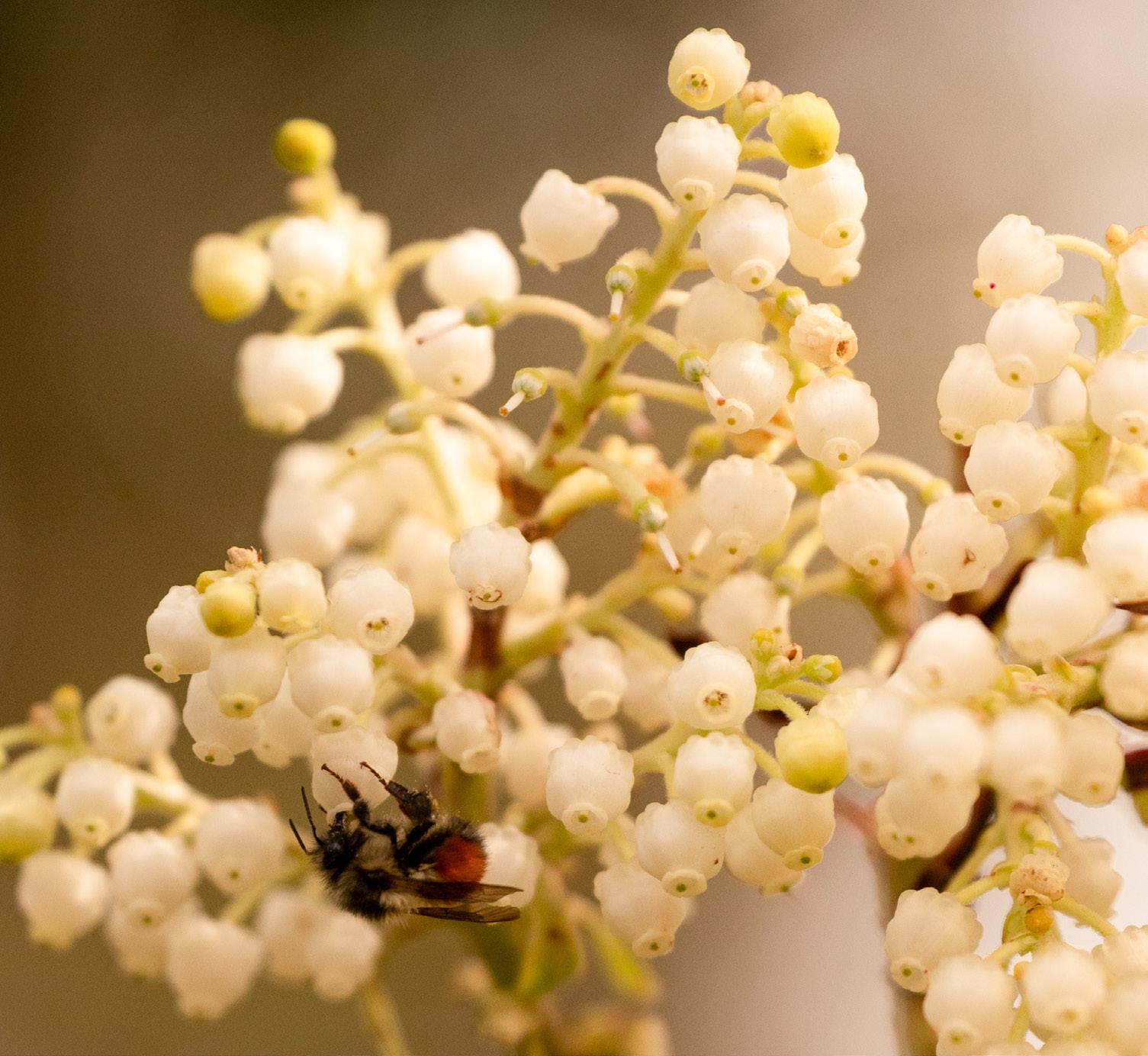
Shuksan Conservancy is just one example of how community involvement and leadership can sow seeds of ecological resilience and build intercultural bonds as sweet as honey.
While community organizers are making great strides, city support can make bee conservation efforts more impactful.
Up until recently, the City of Bellingham was in danger of losing its Bee City certification, but that does not mean it is over for Bellingham’s bees.
As of May, 2025, the committee has expressed interest in ‘catch up’ reporting and restaffing the program to continue its certification.
“The City’s commitment to promoting pollinator habitat is not dependent on our association with Xerces and will continue regardless of our membership in the Bee City program,” Clare Fogelsong, Bee Committee climate policy manager, said in an email. “We understand the ecological significance
of pollinators and will continue our work to protect them.”
Bee populations will fall. But they can also buzz back, with a little help.
There are ways that individuals can directly help, such as investing in native plants, refraining from pesticide usage and volunteering time to further research and education.
“It’s not an emergency house on fire today, but we certainly need to do something now, to reverse the trends of slow decline,” said Davis.
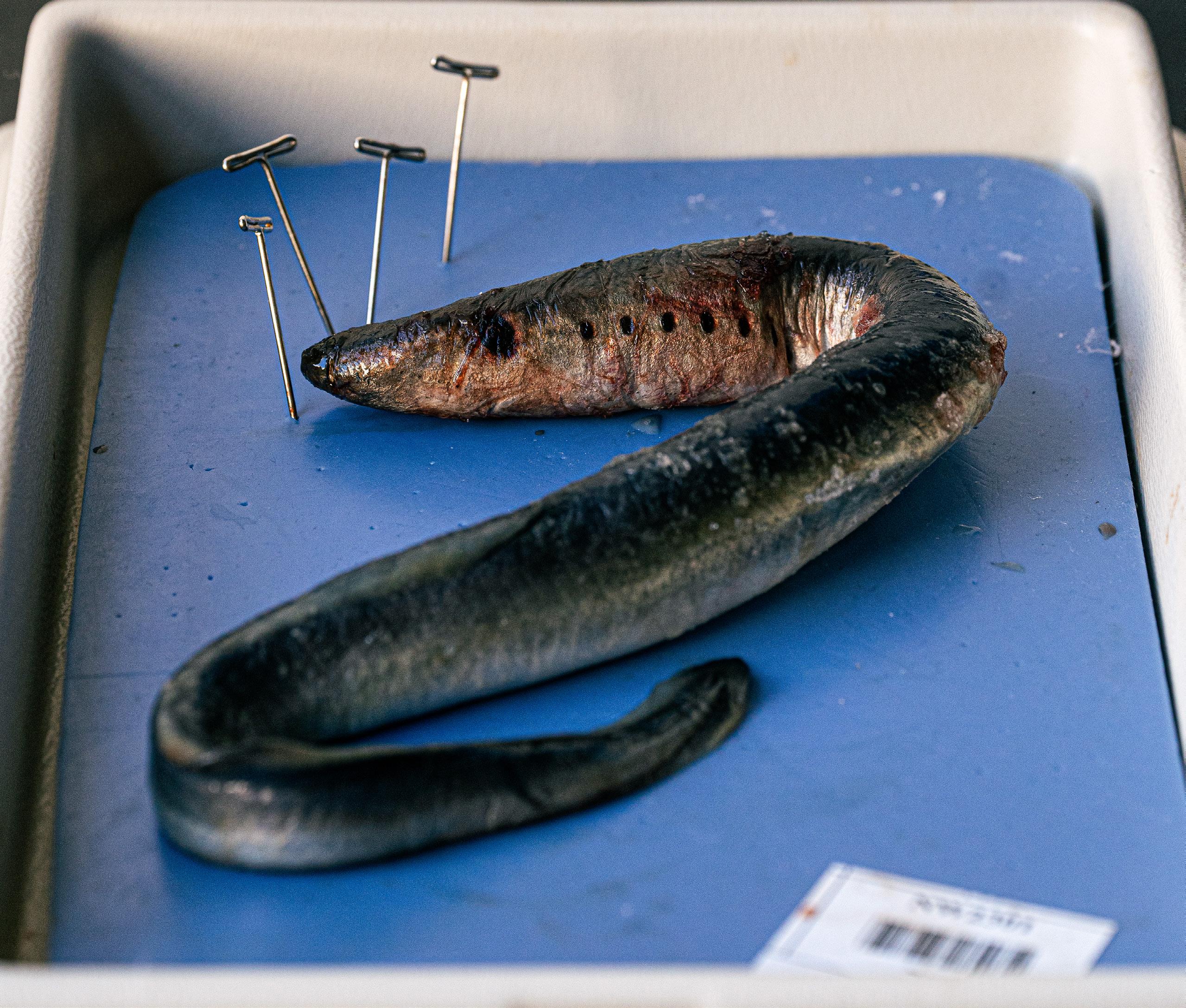
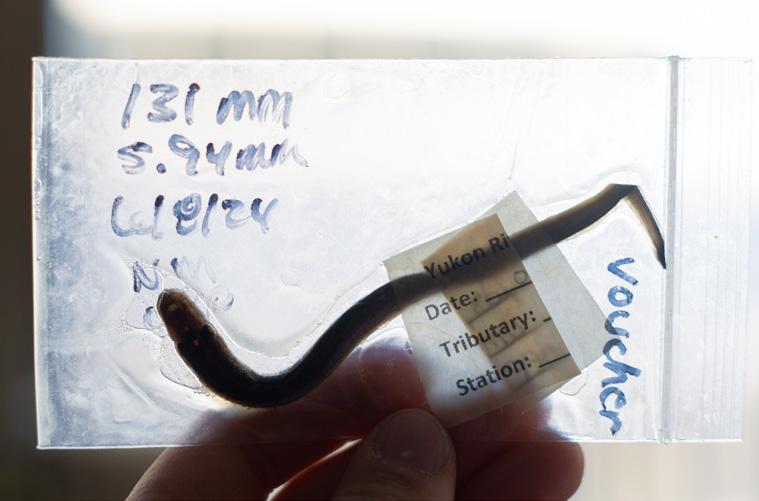
IN THE COLUMBIA RIVER, the lampreys propel themselves through the water, their dark eel-like bodies undulating as they swim. They suction onto the rocks to rest, using their disc-shaped mouth of spiraling hooked teeth to hold on. These fish are prehistoric, around for over 350 million years and pre-date the dinosaurs. Despite being around for so long, their populations in the Pacific Northwest are starting to decline at an alarming rate.
Lamprey often go unnoticed, but these slippery fish play a crucial role in the ecosystem. They are important to many Indigenous nations, especially to the Nez Perce, Umatilla, Warm Springs and Yakama tribes that live
within the Columbia River Basin. Physical barriers, such as dams and contaminated waterways, have led to population decline.
Luckily, there is action being taken to help them rebound.
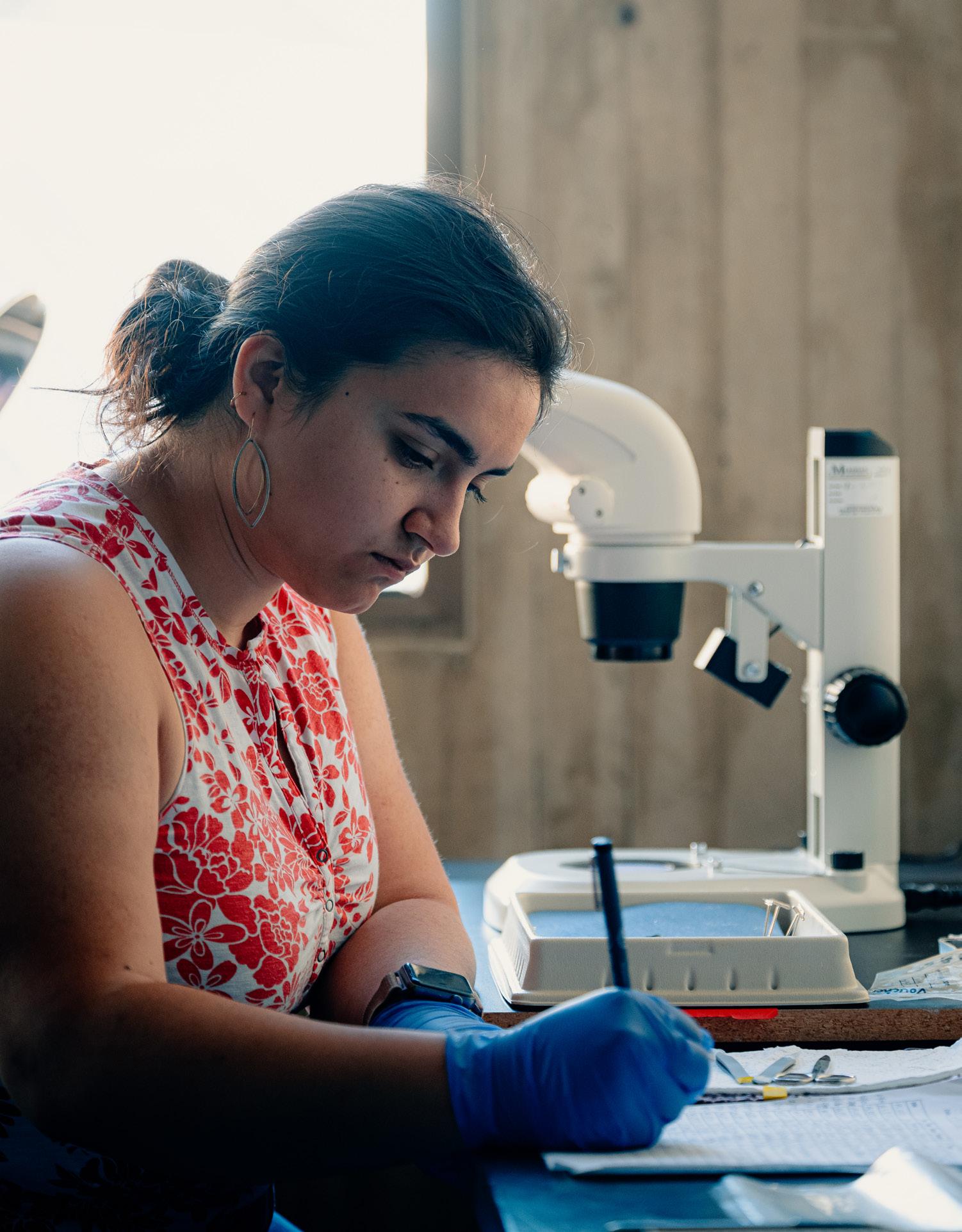
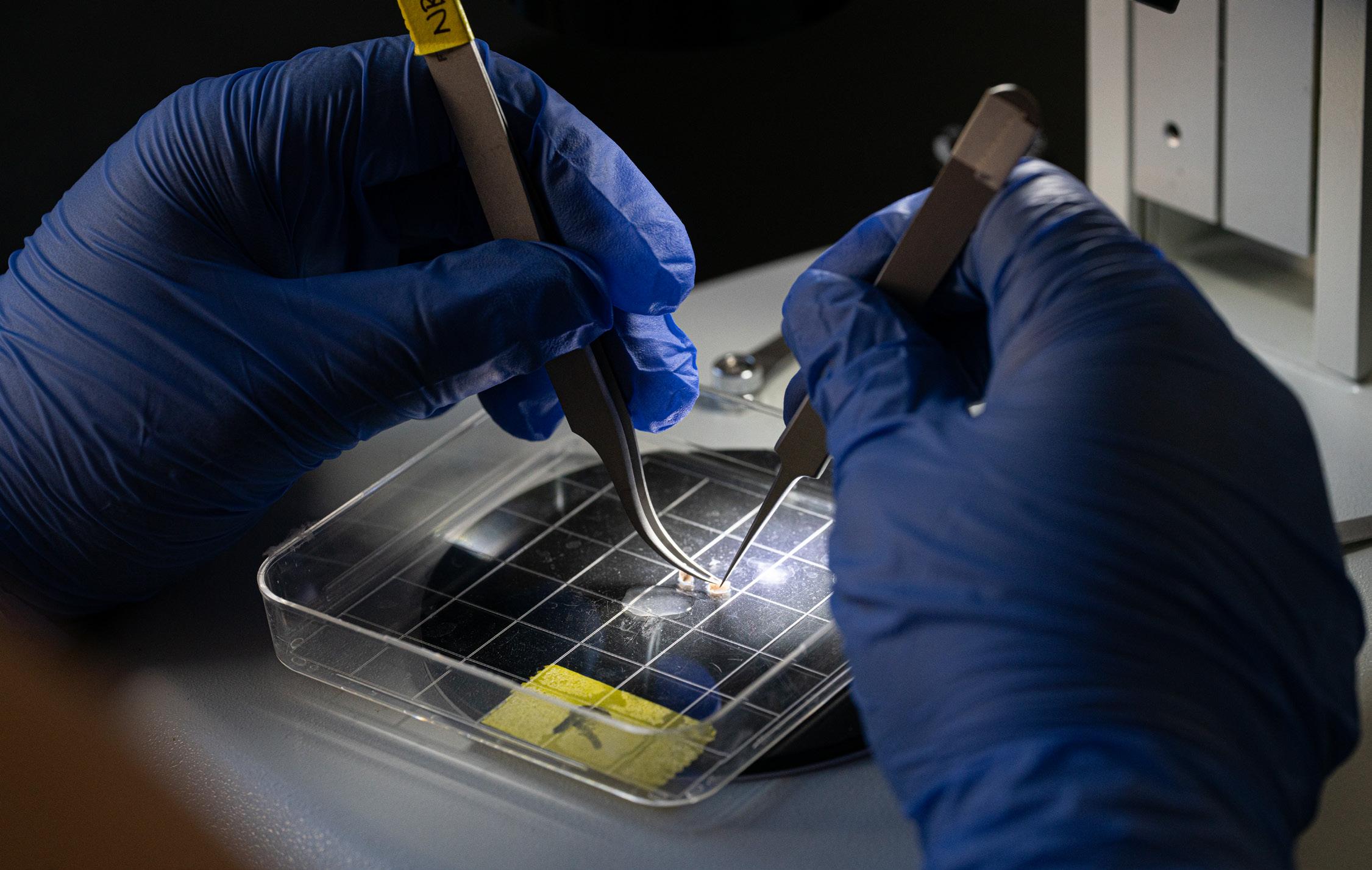
Niamh Balaji, a student at Western Washington University, has been researching lamprey for the past four years. Most of her research has been with arctic lamprey in Canada and Alaska, but she first started her work with Pacific lamprey when she was in college in Walla Walla before transferring to Western. She has helped with conservation as a lab technician in the Columbia River
An ancient fish is on the verge of disappearing from Washington waters
Basin and did artificial propagation to restore the population.
Balaji stresses that lamprey are beneficial for river ecosystems. While salmon often get the spotlight, lamprey play just as large of a role. Both species also provide a food source for the Columbia River Basin tribes.
Despite looking so different, lamprey and salmon go through similar stages of life.
“Just like salmon, they come back to the river and they spawn and they die, and then all of the nutrients that they’re holding onto get released back into the river,” Balaji said.
Also like salmon, lamprey face many of the same threats, the biggest being dams built along the rivers that prevent lamprey and other fish from getting upstream. There are several hydroelectric dams in the Columbia River alone, and each pose a hindrance to lamprey returning to their spawning grounds. In each of the dams, fish ladders have been installed that have helped salmon get past the dams, but these fish ladders do not give passage for lamprey.
“The lampreys’ biology, their morphology, is just different,” Balaji said. “It is very difficult for them to use those fish ladders.”
There is a lot of work going on to get lamprey across the dams. One of the ways that researchers have done this is by trapping lamprey and transporting them over the dams so that they can spawn.
“We suspect that we lose 50% of the population going over each dam. It’s not that they die; it’s that they’re not making it over the dam,” Dave’y Lumley, a lamprey biology with Yakama Nation Fisheries, said.
To mitigate this problem, researchers transport the lampreys in trucks as far as Portland and the Tri-Cities, where they’re released past the dams.
Aside from transporting lampreys, slides have been installed on dams that act as a passageway for them to cross.
Laurie Porter, the lamprey project lead for the Columbia River InterTribal Fish Commission, has been involved in developing these lamprey passage systems.
“[The slides are] how we collect some of our lampreys. They go up the [lamprey passage system] and they have a rest box. In that rest box, we can set it either closed so that we can trap, or we set it open so they can keep going. It makes things so much easier,” Porter said.
The commission has been developing new ideas other than the slides to ensure passage for lampreys across the dams. They’ve developed wetted walls, which are similar to the slides and allow the lamprey to climb up with their mouths while water flows past them.
Another idea for lamprey passage will be implemented at the Bonneville Dam later this year.
And it’s a floating trap, placed at the tail end of the dam.
These short-term solutions have allowed lamprey to get across, but they still do not address the root of the issue —the dams are still blocking their passage upstream.
Removing dams entirely would likely help the lamprey population by removing the barrier, but dam removal is a complex process. It is extremely
expensive, takes a long time and needs political support to happen. These short-term solutions are easier as they are not as extensive as removing an entire dam.
Another major issue that lamprey are facing right now is pollution and contamination in their waterways. Ralph Lampman, a lamprey research biologist with Yakama Nation Fisheries, has been working with lamprey for 13 years in the Yakima River Basin.
“We’re getting a better idea of what [pollutants are] in them, but how that impacts them, we don’t fully understand,” Lampman said.
Mercury and phencyclidine were the most problematic contaminants found. This triggered a consumption advisory in lamprey, meaning that they were no longer safe to eat.
Lamprey are significant to Indigenous peoples in many different ways. According to U.S. Fish and Wildlife
“WE SUSPECT THAT WE LOSE 50% OF THE POPULATION GOING OVER EACH DAM. IT’S NOT THAT THEY DIE; IT’S THAT THEY’RE NOT MAKING IT OVER THE DAM.”
Services, Pacific lamprey are considered a first food, having ties with tribal culture, and are also used at ceremonial tables
and for medicine. Lumley mentioned that lamprey have more nutritional value and caloric density compared to salmon.
“Because populations are so limited, there’s really only one location where tribal members can harvest lamprey in large quantities, and that’s at Willamette Falls,” Alexa Maine, a lamprey biologist through the Confederated Tribes of the Umatilla Indian Reservation, said. “The dream is that someday we will have a tribal harvest on tribal lands.”
Whether swimming with the dinosaurs or taking a taxi, lampreys are persistent and resilient. However, dams and pollutants threaten to end their legacy. They may not be the most attractive, but these fish fill a cultural and ecological niche unlike any other.
“When elders talk about [lamprey], they talk about it as if they are missing a family member and one that they really miss,” Lampman said.
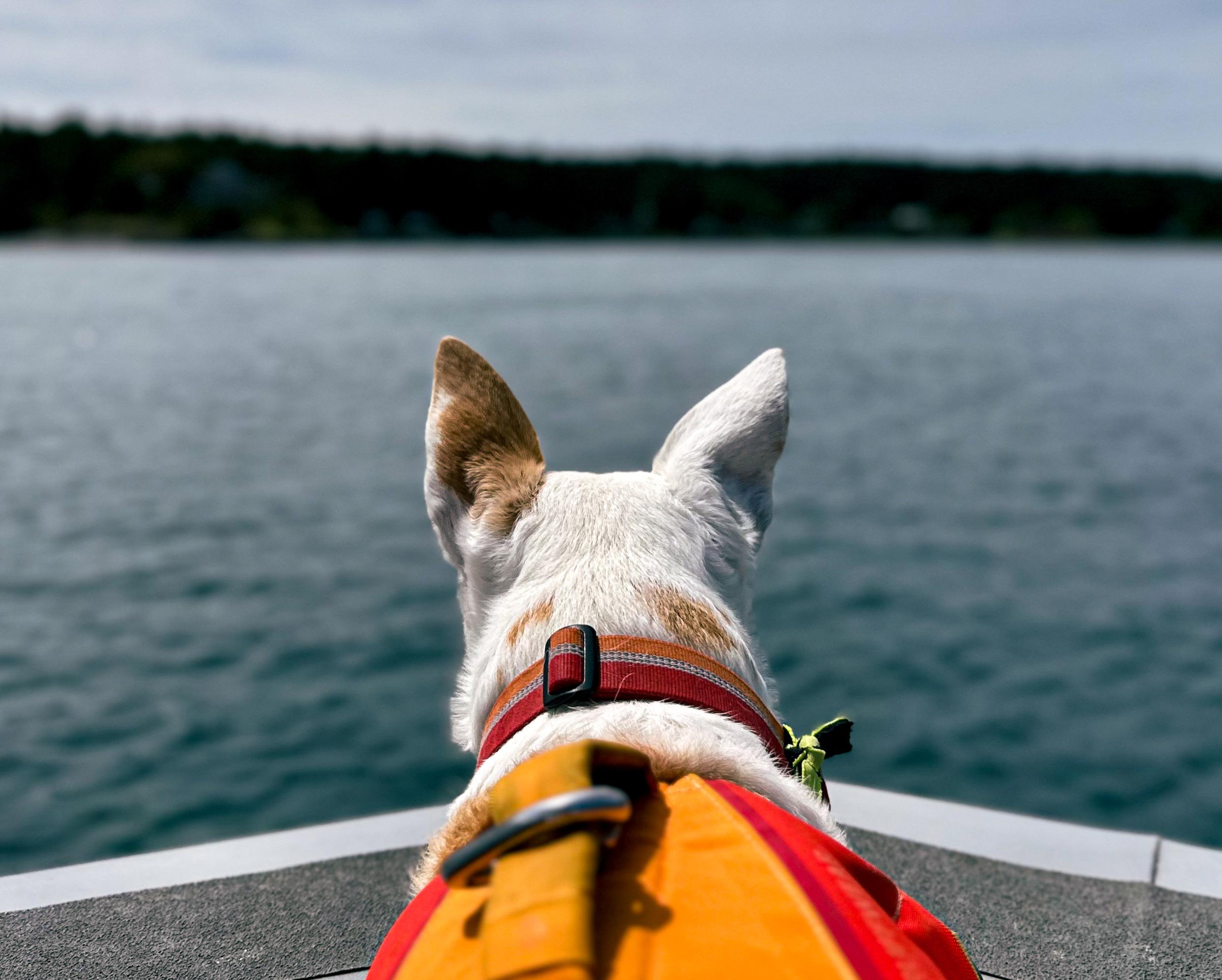
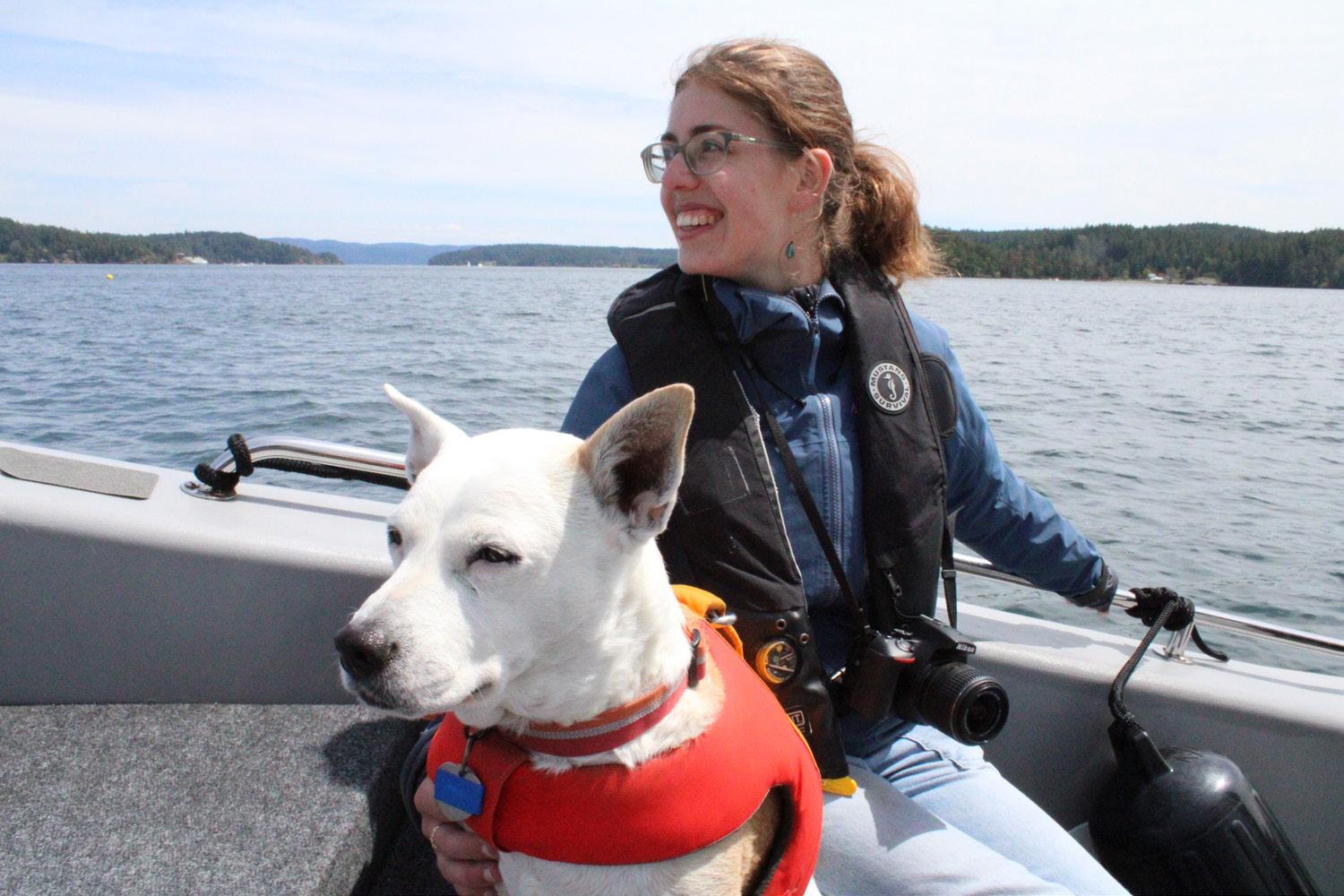
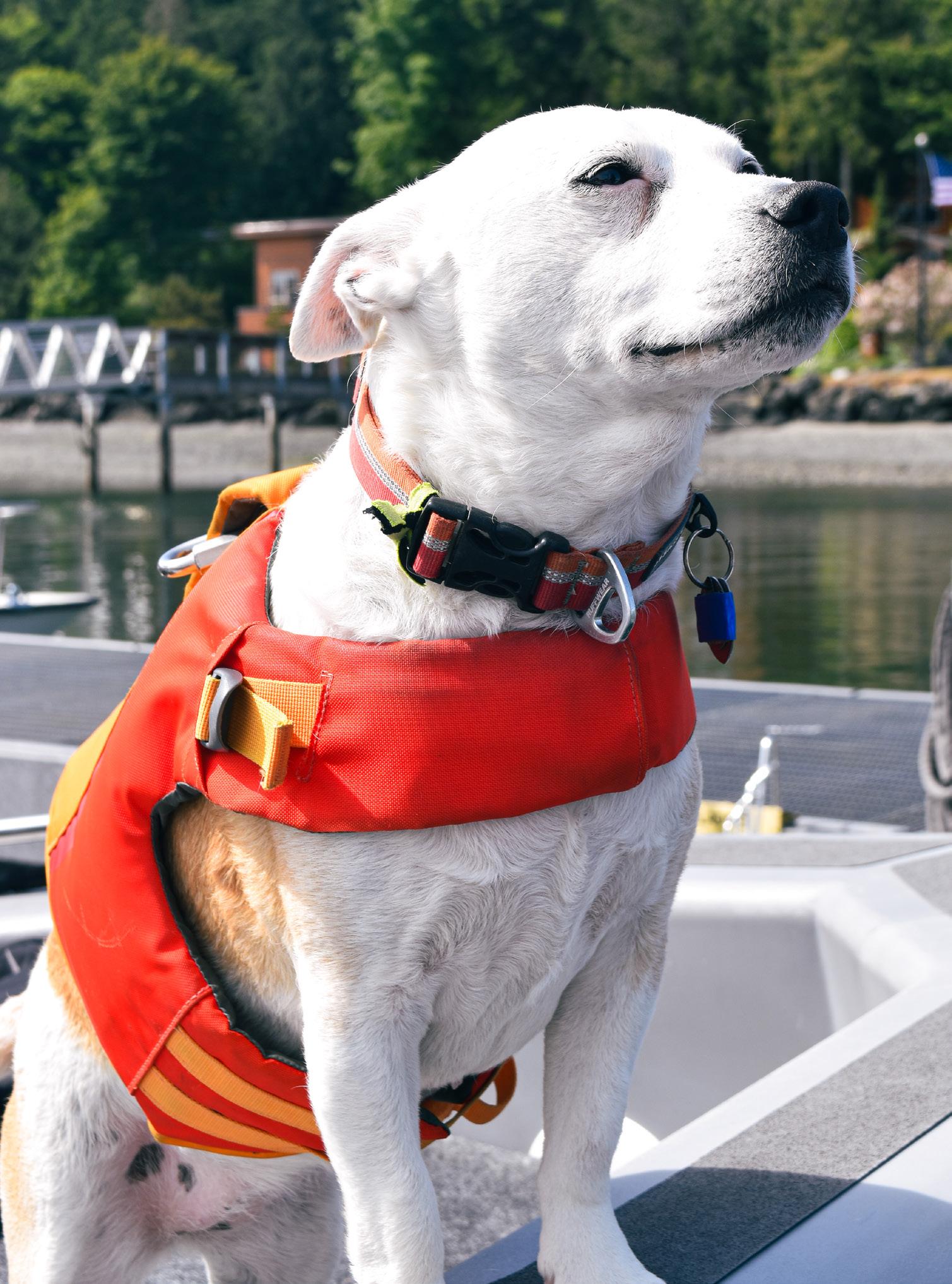
EBA STANDS AT THE BOW of a boat, bundled in a life jacket, her sunglasses shielding her eyes from the glare on the water. A complex web of life lies below the surface, but Eba isn’t distracted by the beautiful turquoise water and rocky shorelines. Her attention is fixed ahead, where a handful of black fins slice through the choppy waves.
She stiffens, nose in the air—she’s caught the scent she’s trained to find: killer whale scat.
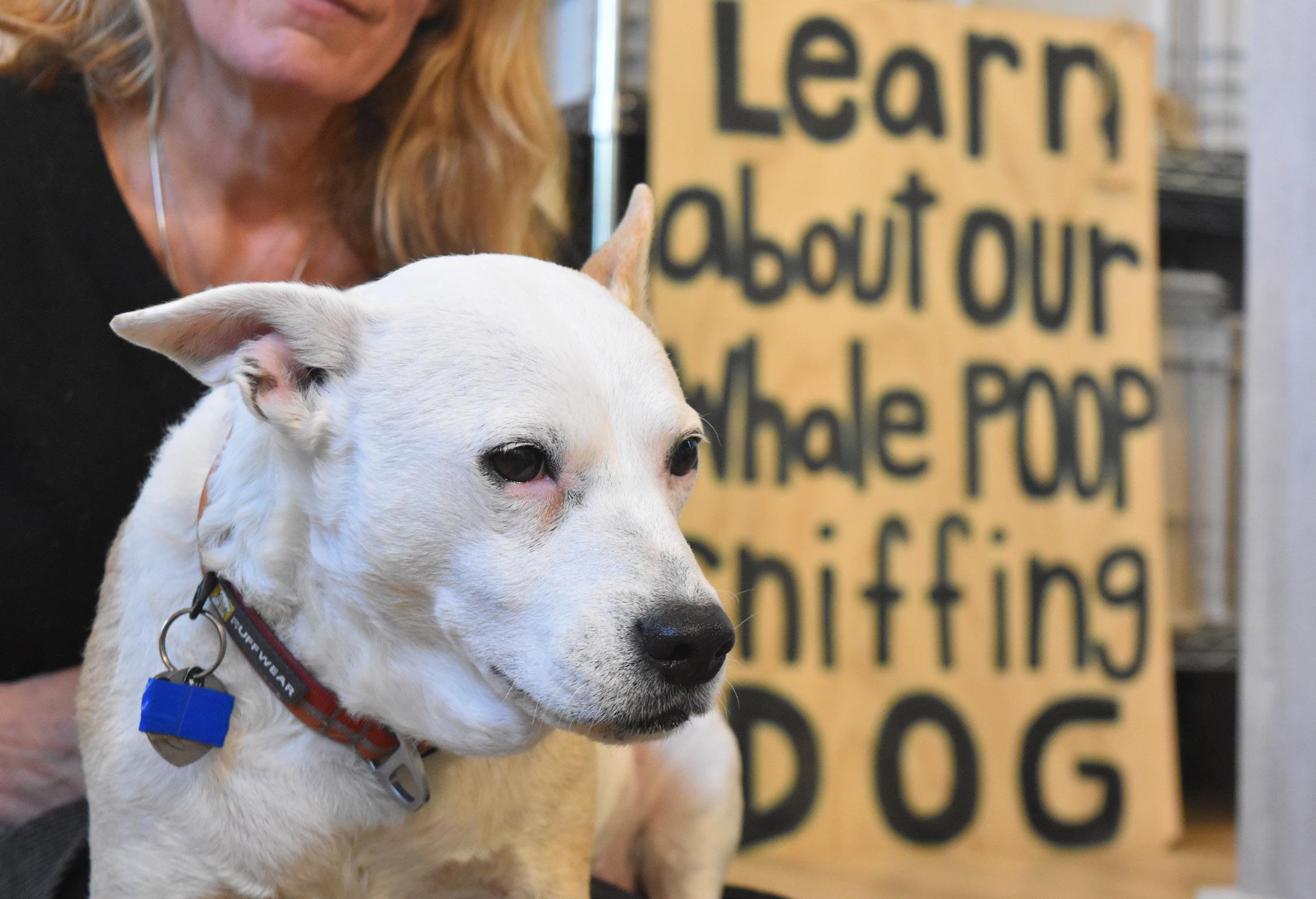
Originally from the streets of Sacramento, ten-year-old Eba is a stocky mutt and the unlikely research partner of Deborah Giles, the leading expert on Southern Resident orcas and the Killer Whale Scientist at SeaDoc Society. The pair works in the San Juan
Islands to save these endangered whales.
Unlike their mammal-eating relatives, Biggs killer whales, Southern Residents feed exclusively on fish, specializing in Chinook salmon. Three distinct pods—J, K, and L—travel along the Pacific Coast from Monterey Bay to Alaska, but mostly reside in the Salish Sea.
Southern Resident populations have declined rapidly in the last century, with only 74 members left. Every individual is known and named, and close monitoring is essential for conservation.
But keeping tabs on an imperiled species is easier said than done, as many research methods can be invasive and dangerous. That’s where scat collection and analysis come in.
“I always think of it as a goldmine of data,” Giles said.
A fecal sample provides similar health metrics to a blood sample. Researchers can identify individuals and the kinds of fish they’ve been eating through DNA analysis of the scat. They’re also able to examine hormonal levels, determine if a whale is pregnant and how advanced her pregnancy is, and even evaluate their exposure to chemicals and microplastics.
Dogs have long been bred as pets and aides, but in the last few decades, scientists have recognized them as potential research collaborators, too.
Giles’ work is one of many projects that uses a combination of human science and dogs’ noses to investigate the
natural world while minimizing impact. Canines have a sophisticated olfactory system, with one study finding that dogs can detect smells between 1,000 and 10,000 times better than humans can.
In 1997, UW biology professor Samuel Wasser founded Conservation Canines, which trains dogs to help investigate environmental problems. The program has expanded, teaching them to identify everything from elephant ivory to banned industrial chemicals.
Regardless of breed, scent detection dogs must have a high play drive. Trainers look for individuals who are motivated by their toy and are persistent in getting it. The training process requires trust and patience between dog and handler, and many companion animals don’t make the cut.
Eba is an exception.
Giles was a boat driver for Wasser’s program when she adopted Eba in 2017. Originally, Giles never considered training her, but after a suggestion from a handler, she began the process. In an almost instant success, Eba found her first scat in 2019 after just two days on the water.
“I never thought Eba would work because she had huge energy, but she
was just this little sausage,” Wasser said. “But we got her on the boat and she was phenomenal.”
She’s good at her job off the water, too.
Eba’s affectionate personality and her “unbridled joy” make her a local celebrity and a compelling ambassador
for orca research. Support for Giles’ work is inspired by the collaboration of human and dog with the same mission—to save a beloved icon.
“It’s connecting with another species on a really significant level,” Janet Alderton, a community member and donor, said.
“THEY AREN’T GIVING UP THEMSELVES. AND SO I DON’T EVER WANT TO GIVE UP TRYING TO HELP THEM RECOVER.”
Wasser transferred the killer whale research program over to Giles and her nonprofit organization, Wild Orca, in 2021. The nonprofit is now merging with SeaDoc Society and collaborates with the San Diego Zoo Wildlife Alliance to analyze samples.
If orcas are in the area, Eba and Giles get on the water immediately. Using her reading glasses as a prop, Giles describes driving the vessel slightly downwind and flanking the pod.
When Eba catches a whiff of scat, she comes to attention at the bow of the
boat, starting to whine and lick her lips as the boat narrows in on the scent. Once they reach the scat, Giles collects and verifies it, and Eba is rewarded with her toy.
Orca poop is ideally the texture of pancake batter, floating on the surface of the water due to high fat content.
But recent samples have changed in the years since Giles began her research. Both quantity and quality are noticeably less—a sign that, as exclusive fish eaters when salmon populations are failing, the whales aren’t getting enough to eat.
“I NEVER THOUGHT EBA WOULD WORK BECAUSE SHE HAD HUGE ENERGY... BUT WE GOT HER ON THE BOAT AND SHE WAS PHENOMENAL.”
Even if Eba can detect the scat sample, the small volume makes it difficult to collect for analysis.
“Our job is so much harder than it used to be,” Giles said.
Faced with a lack of prey, excessive vessel presence, and exposure to toxicants, Southern Residents are struggling. 70 percent of pregnancies are unsuccessful, and calves are at risk even after birth. Mothers’ milk has very high fat content, and if a mother isn’t getting enough to eat, she converts fat stores that may contain toxicants in order to feed her calf.
In her “Tour of Grief,” one mother made international headlines after carrying the body of her baby for 17 days and 1,000 miles.
“The idea that we can just keep moving forward, status quo, is not going to get us to recovery,” Joe Gaydos, wildlife veterinarian and close colleague of Giles, said. “We can do better than we’re doing now. But to do better, we have to do differently.”
These scientists join Indigenous peoples who have demanded change for decades. Current fisheries management practices do not allocate any salmon for orcas, allowing the biggest fish to be harvested before they even get a chance to eat. For the Indigenous peoples who have lived with the Southern Residents
since time immemorial, letting the whales starve is unacceptable.
Jay Julius, a strategist and former chair of the Lummi Nation, has been fishing alongside the orcas since childhood. He reflected on the parallels between the Southern Residents and the Indigenous nations of the Salish Sea, their history and futures intertwining.
“What’s happening to them is happening to us as well, as Lummi people,” Julius said.
Julius collaborated with Giles in a documentary titled Managed to Extinction, that is currently running in film festivals. The video focuses on the urgency of salmon recovery to protect the ecosystems and cultures that depend on them.
“We need all of these things to exist, in order for our existence to carry on,” Julius said.
Tied to Eba’s collar is a scrap of neoprene from a toy that belonged to Sk’aliCh’elh-tenaut, also known as Tokitae, a captive orca at SeaWorld who died before she could be returned to her home waters of the Salish Sea. The talisman is a reminder of how high the stakes are for the Southern Residents.
“We don’t have the luxury of just doing science for science’s sake…we have a responsibility to put our science into the hands of the public and policymakers,” Giles said.
In collaboration with other scientists in the region, Giles is compiling her research into a database. These electronic medical records will help inform conservation decisions about orcas and guide legislation to protect them.
Eba’s contribution is invaluable. Though the future of the Southern Residents is precarious, she and Giles are dedicating their lives to save them from extinction.
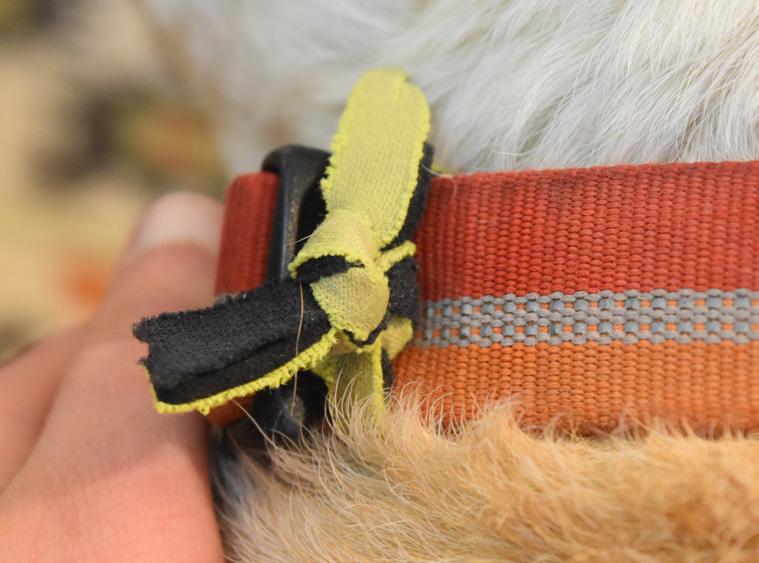
A piece of neoprene from a toy that belonged to Sk’aliCh’elh-tenaut, also known as Tokitae, tied to Eba’s collar.
“They aren’t giving up themselves,” Giles said, her voice cracking with emotion, “and so I don’t ever want to give up trying to help them recover.”
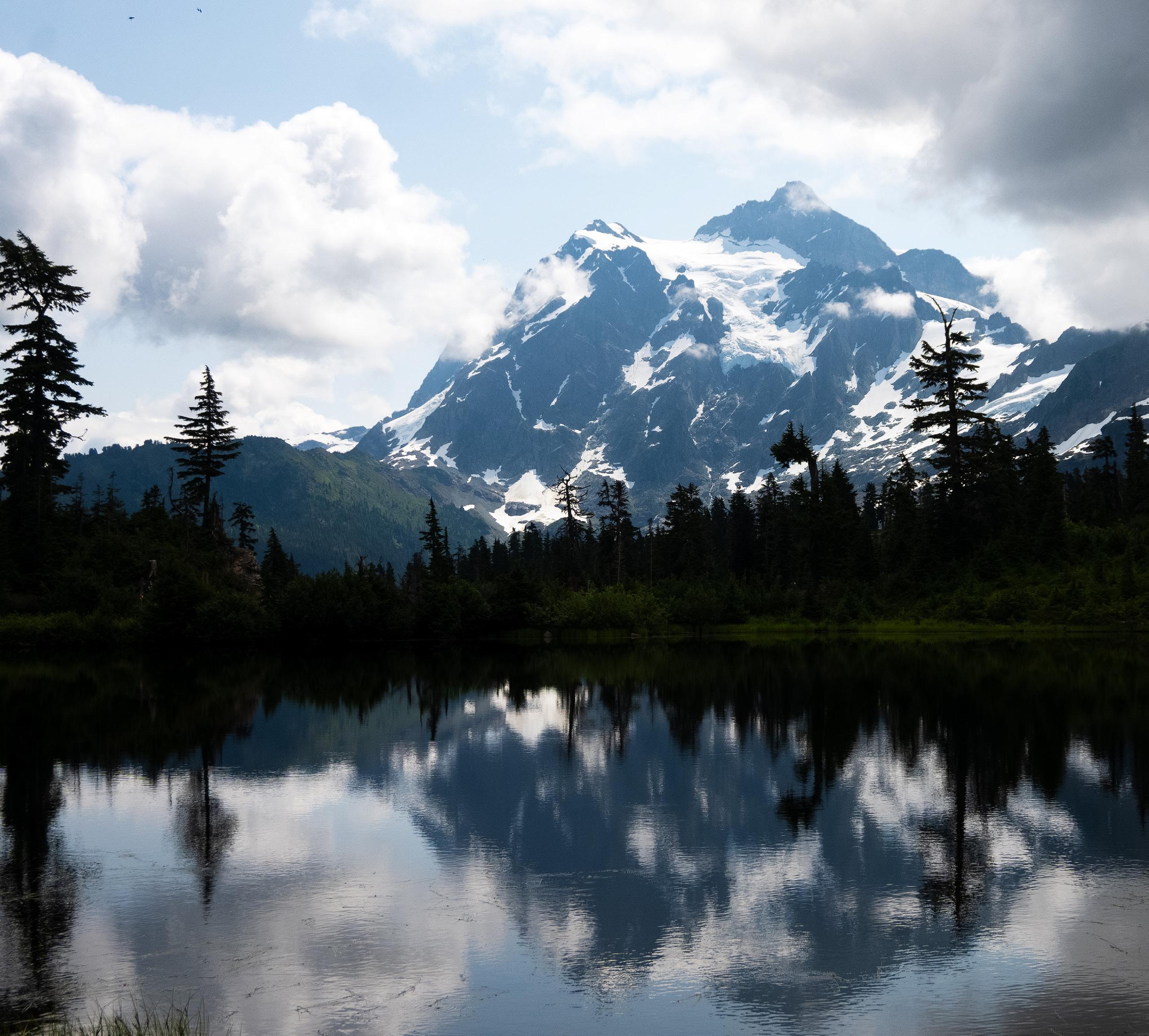
HIGH UP IN THE ROCKY Mountains, an eerie silence has settled. The cheerful yelps of America’s cutest mammal used to ring out across mountain meadows, but their song has become harder to hear.
Travel a thousand miles west and it’s practically a symphony.
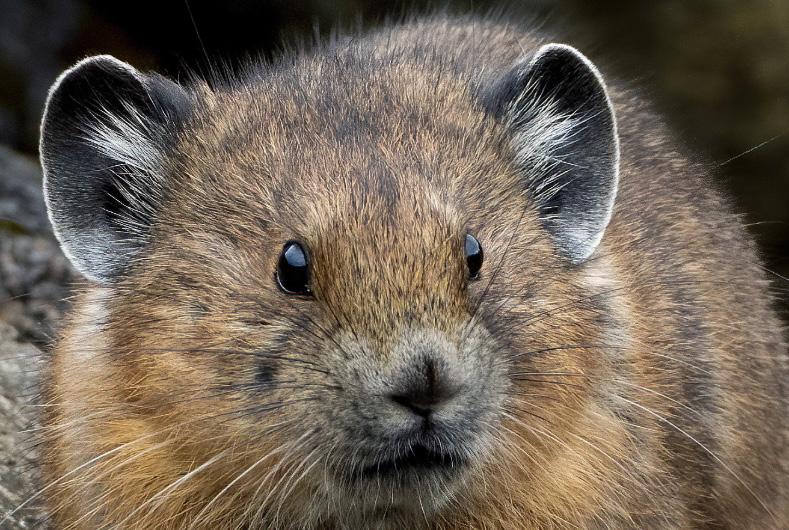
The pikas of Washington’s North Cascades are not hardier, nor smarter, than their Rocky Mountain cousins. Why, then, are Rocky Mountain pikas disappearing, while those in the Cascades seem to be doing fine?
“THEY’RE PLUCKY AND THEY’RE SURVIVORS. THERE WAS ONE WE NICKNAMED MR. CHEEKYPANTS. HE WAS REALLY CHEEKY.”
The secret, said wildlife ecologist Gregory Green, is in the moss.
Pikas thrive in the gravel meadows of the Cascade Mountains, known as talus slopes to biologists and rocks to the rest of us. Since they can’t hibernate, pikas build themselves little forts of grass and wildflowers called haystacks, which they slowly consume throughout the winter. Haystack construction occurs in the summertime, when the alpine is rich and green.
Johanna Varner, a professor of biology and pika expert
University, puts this seasonal cycle into perspective.
“Imagine running back and forth between the grocery store and your house 5,000 times, carrying home four heads of lettuce in your mouth,” Varner said. “That’s how much work these animals have to do.”
However, rising temperatures and precipitation changes are posing serious threats to pika foraging across both the Rockies and Cascades.
“They’re winkin’ out,” Green said.
A reduced snowpack, according to David Frey of the Wildlife Society, could be the smoking gun behind pika population decline across the species’ continental range. Snowpack is traditionally the bread and butter of pika habitat, helping to regulate their temperatures in both hot and cold seasons.
Around a quarter of Cascadian snowpack has been lost since the 1950s, according to a vulnerability assessment by the University of Washington’s Climate Impacts Group.
A warmer climate can cause pikas to freeze to death. Thick snow keeps haystacks at a cozy 32 degrees Fahrenheit. Without their snowy blanket, the creatures are exposed to colder, harsher conditions.
In the summer, reduced moisture in the environment can kill nutritious grasses and flowers, and reduce foraging time as pikas struggle to stay cool. They are a notoriously heat-sensitive species.
“If you were hanging out in Phoenix in the summer, you could only handle walking around for so long before you got really really hot and needed to go cool off,” Varner said. “If you were also having to make those 5,000 trips to the grocery store during the summer, the time you need to cool off is taking time away from that important foraging. So then, during the winter, you might not have enough food to survive.”
A mere handful of hours above 77 degrees Fahrenheit can prove fatal to pikas.
The threats facing pikas are certainly severe. The possibility of death by starvation, cold and heat looms ever larger as the climate crisis progresses.
There’s an unusual hero waiting in the wings.
Moss.
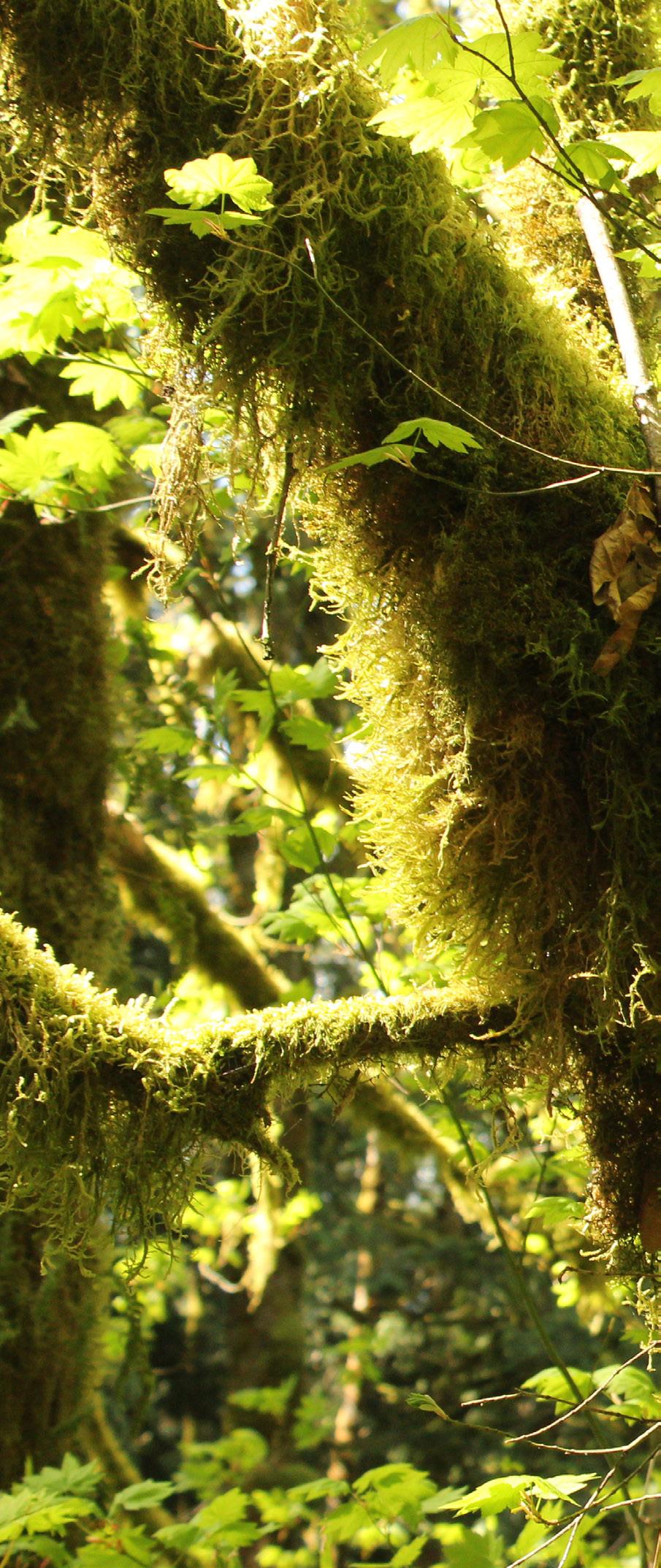
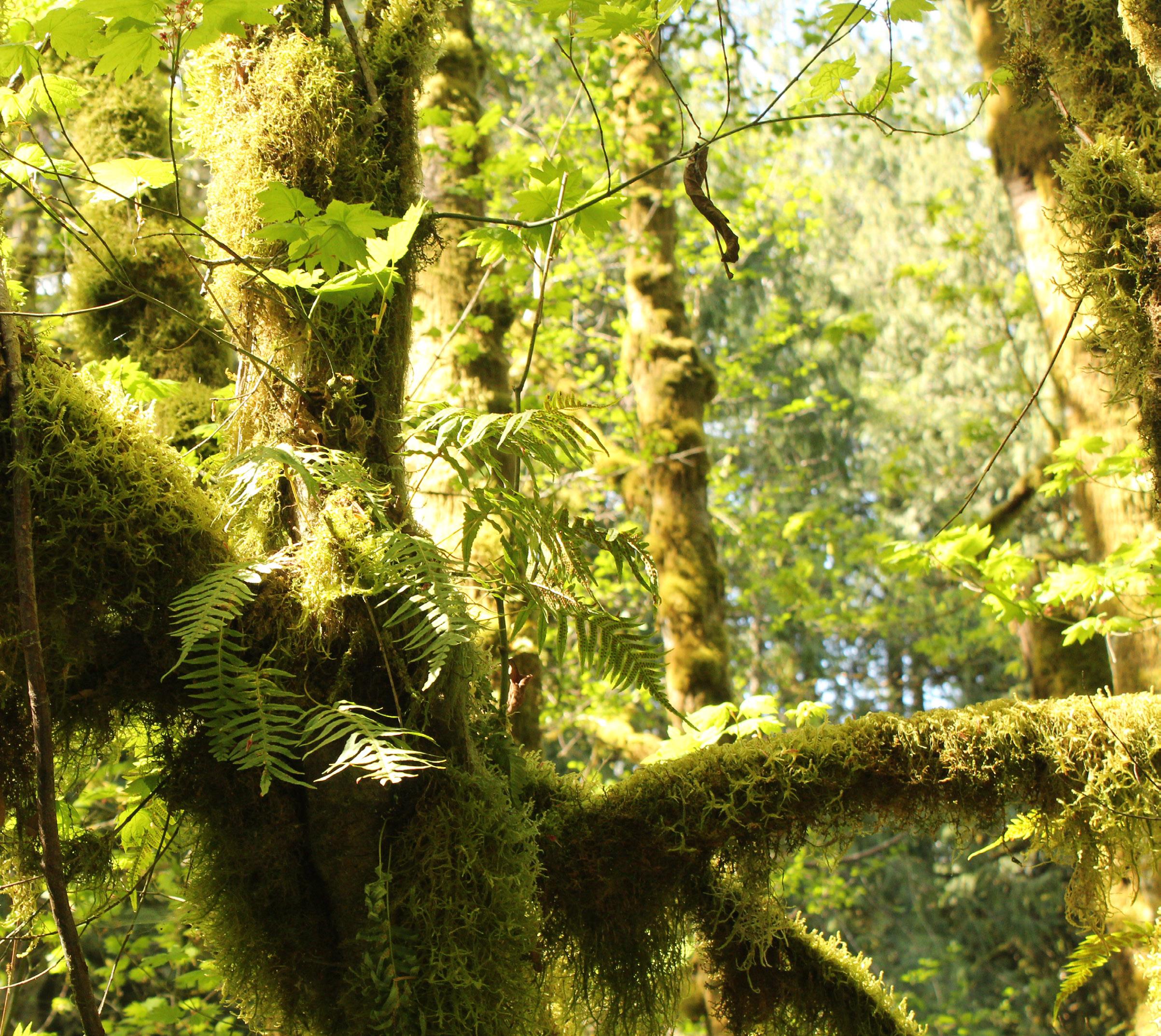
The relentless damp of the low-elevation Cascade mountains provides a habitat unique from any other in the pika range. That unassuming fluff enveloping the rocks, trees and occasionally people
is helping save the lives of local pikas.
In the Pacific Northwest, moss acts as a habitat proxy for snow and provides a year-round food source. The abundant plant can replace traditional haystacks, helping pikas avoid that pesky winterhome-building stress.
Moss also allows foraging pikas to remain in a comfortable temperature range. The pikas can consume what’s directly around them, rather than venturing far into alpine meadows in search of dinner. It’s quite a unique preference. Most mammals eschew moss in favor of more energy-dense food.
“IF YOU WERE HANGING OUT IN PHOENIX IN THE SUMMER, YOU COULD ONLY HANDLE WALKING AROUND FOR SO LONG BEFORE YOU GOT REALLY REALLY HOT AND NEEDED TO GO COOL OFF.”
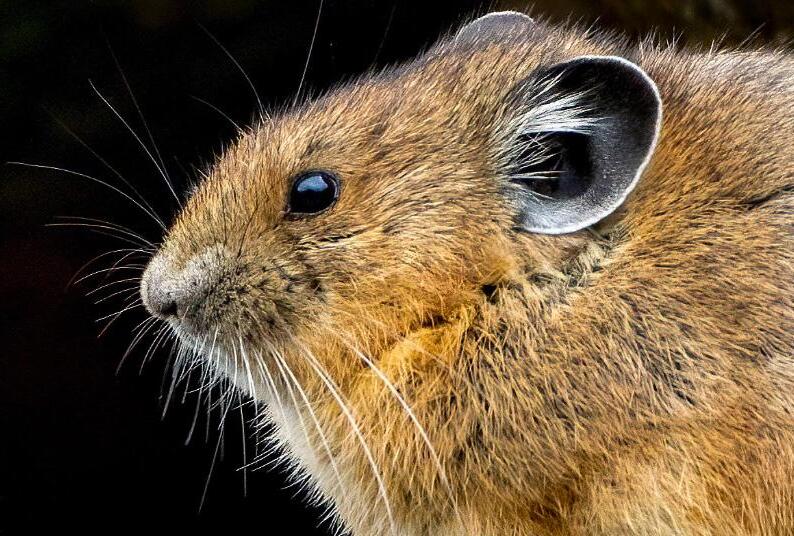
“IMAGINE RUNNING BACK AND FORTH BETWEEN THE GROCERY STORE AND YOUR HOUSE 5,000 TIMES, CARRYING HOME FOUR HEADS OF LETTUCE IN YOUR MOUTH. THAT’S HOW MUCH WORK THESE ANIMALS HAVE TO DO.”
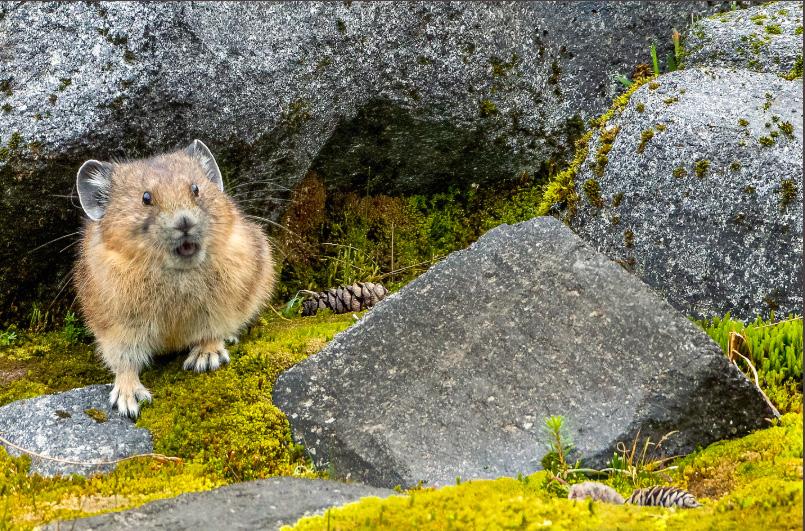
“It’s basically the nutritional equivalent of a cardboard box,” Varner said.
Cascadian pikas, however, appear to be quite the cardboard fiends.
In the biology world, the Cascadian pika’s distinctive adaptation to moss is known as behavioral plasticity. This plasticity means they’ve been able to change their behavior to accommodate shifts in the food supply and snowpack.
Exploring plasticity is an exciting new field for pika-ologists. The creatures may prove to be far more resilient than traditionally given credit.
“They’re plucky and they’re survivors,” Varner said. She spoke of a particularly plucky pika from a recent study. “There was one we nicknamed Mr. Cheekypants. He was really cheeky.”
Despite this purported adaptability and cheery attitude, Cascadian pikas are not quite in the clear. In fact, they love playing hard to get.
Both Varner and Green remarked that very few people, if any, are keeping track of pika populations in northwest Washington. Pikas are small, quick and live in hard-to-access places. If that wasn’t enough, the slashed budgets of the Trump Administration are proving a near insurmountable hurdle. Funding for monitoring projects is practically impossible to come by.
The Washington Department of Fish and Wildlife, Environmental Protection Agency, Washington Department of Natural Resources and Washington State Climate Office all expressed that they were unable, whether from lack of funding or interest, to study pikas in the Cascades.
Kirsten McDade of RE Sources, a prominent Bellingham climate nonprofit, spoke to the importance of an alternative solution: citizen science. Citizen scientists can help to fill in the gaps where professionals are missing, according to McDade.
“They’re on the water, on the ground, so much more pervasively than the scientists are,” McDade said.
While pika monitoring is not quite in RE Source’s wheelhouse, the citizen observation niche is alive with potential. The people of Bellingham are, from what she’s seen, especially excited to be involved. Perhaps all that is needed is a push in the right direction — up to the mountains.
Pikas, as an indicator species, act as canaries in the proverbial coal mine of climate change. Indicator species are typically a sensitive species whose
health reflects conditions of a given ecosystem, and are useful in gauging the severity of local changes in climate.
Climate scientist Andy Bunn explained that pikas are vulnerable to what’s known as the escalator effect. This is a scientific term coined to describe the plight of alpine mammals in times of climate crisis. As animals move up the mountain to stay cool, they run out of habitat.
“The simple idea is that mountains are cones, right, so as you go up there’s less and less area,” Bunn said.
However, the reality of mountain habitat is not so clear cut.
“Mountains are complicated. They’re really wrinkly,” Bunn said.
Pockets of cold habitat can remain at lower elevations despite overall warming trends. Such pockets are
known as refugia, or refuges and they can help keep the little fellas safe.
It’s not much – nooks, crannies, and moss – and yet the Cascadian pikas soldier on.
And come late summer, they’ll emerge from their mossy shelters to start again, building their haystacks, harvesting wildflowers and dreaming of snow.
Editor-in-Chief
Tori
Advisor
Jeff
Managing
Daria
Story
Daria
Josh
Kaia
Photo
Science
Public
Kate
Writers
Brooklyn
Photographers Aidan
Dear Reader,
It is painfully easy to look back and recall only the fond. I often find myself reminiscing on the years prior to now with a sense of longing — for a time where we were not scared of what’s becoming of our climate, when our campus employed our dedicated peers at a center designed to ensure our waste is as eco-friendly as possible and when our national forests were revered, respected and most importantly, funded.
Yet, those fond ideas don’t always stay in the past. Ecological practices dating back to a time immemorial are being reimplemented for the betterment of our forests, shorelines are being restored from the landfills we created to community parks we can enjoy and endangered endemic species are being fought for to extreme lengths.
Our nostalgia for a better time can overwhelm us or it can fuel our ambition for a better future. We hope this issue holds space for both.
Happy


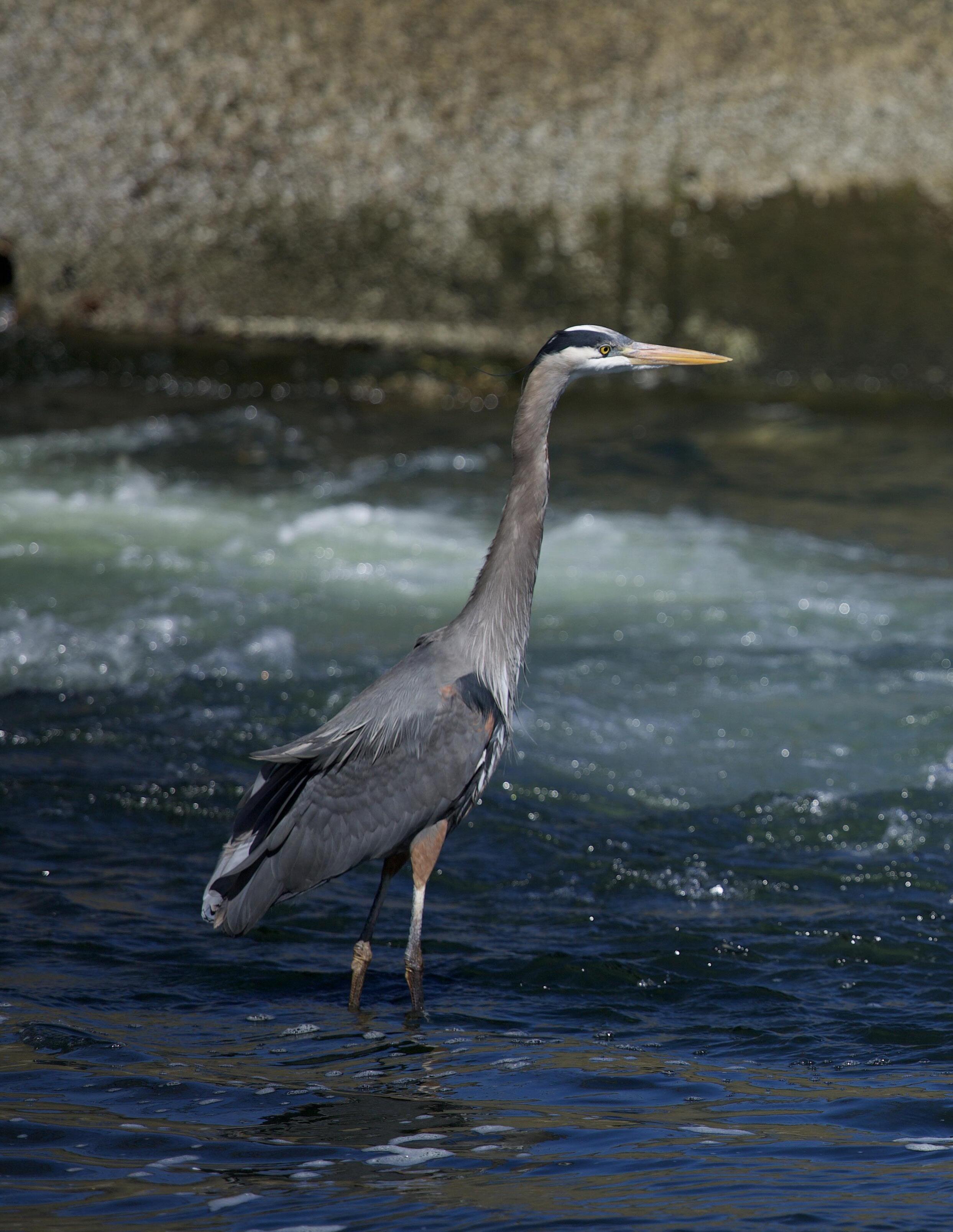
Currently contaminated, this site in Bellingham is soon to be the city’s biggest waterfront park
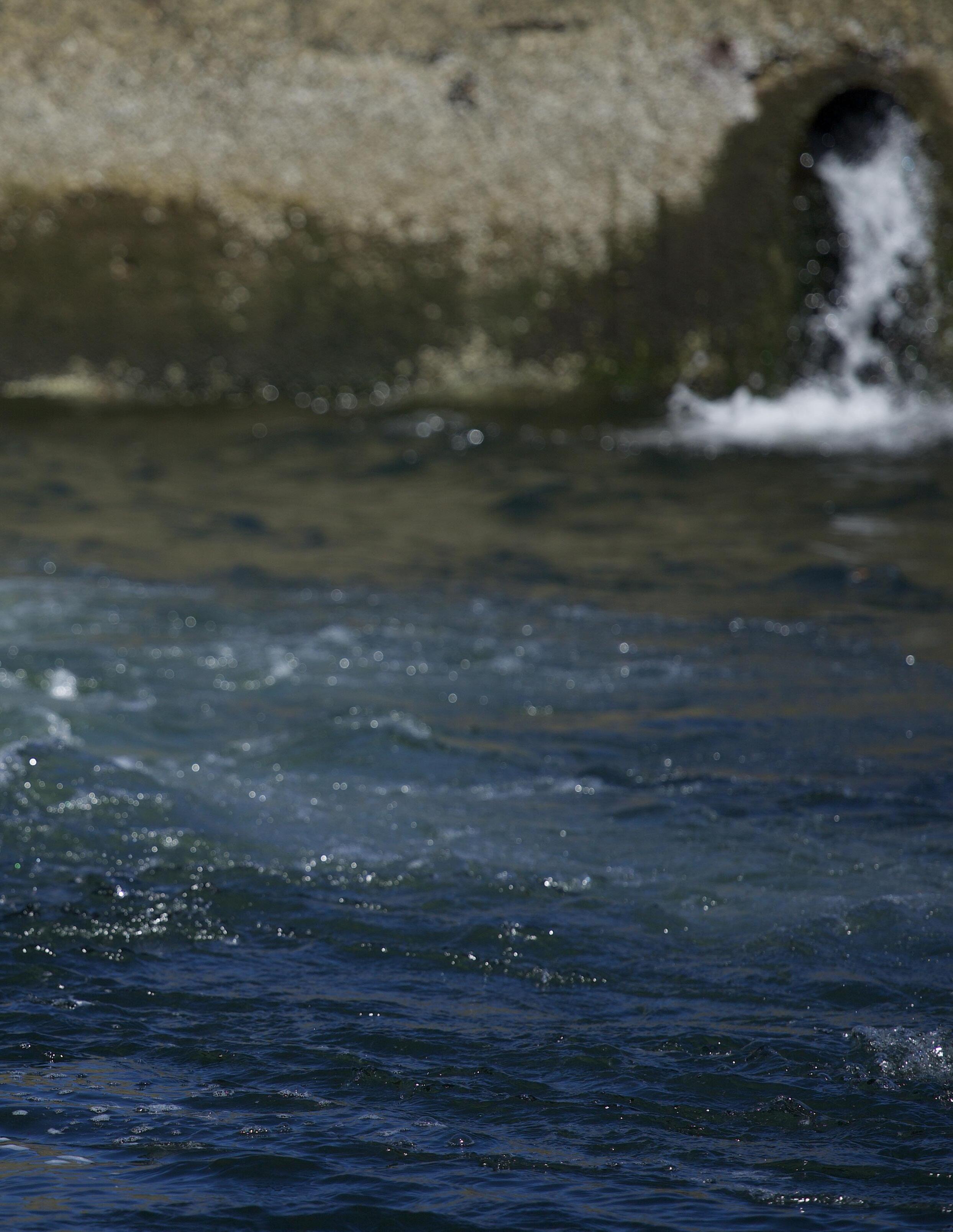
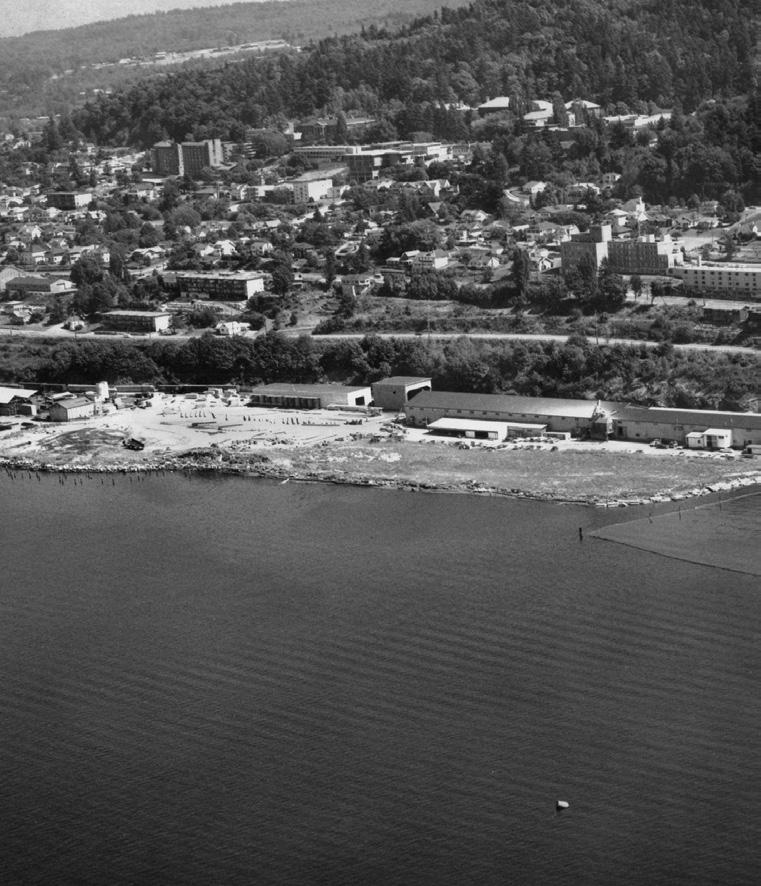
WHEN YOU DRIVE INTO BELLINGHAM via Chuckanut Drive, your first impression of downtown is a welcome mural on the right and unsightly white mounds on the left. In summer, even through the leafy trees, white tarps stand out against the shoreline.
Much of Bellingham’s waterfront has been rehabilitated from its industrial past, but this site remains an outlier — its toxic cleanup has only just begun.
In a few years, when you drive on that same road, one of the first impressions you’ll get is a paradise of outdoor recreation connecting Fairhaven’s iconic Boulevard Park to downtown Bellingham.
At least, that’s the plan.
This site is an environmental cleanup in progress. Known as the RG Haley and Cornwall site, it has a long and storied history of industry, lumber and waste. Now, the site sits dormant with its pollutants tucked below its tarps.
“[The tarps were] only supposed to be there for about five years … It’s been probably 10, 15,” Brian Gouran, the Director of Environmental Planning Services at the Port of Bellingham, said.
Hopefully, they won’t remain much longer. As of September 2025, responsibility for the site’s development has been awarded to IMCO, a construction company headquartered in Ferndale, Washington. Soon, the process will begin to turn this site into Salish Landing Park — Bellingham’s biggest waterfront park yet, at a whopping 17 acres.
The Bloedel Donovan mill was once the star of the show here. After it was closed, mills and factories took its place, churning out wood products to ship around the county. For many years, the company RG Haley International produced crossarms, the beams that fit across the tops of power and phone lines, to the tune of 2,400 per day in 1964.
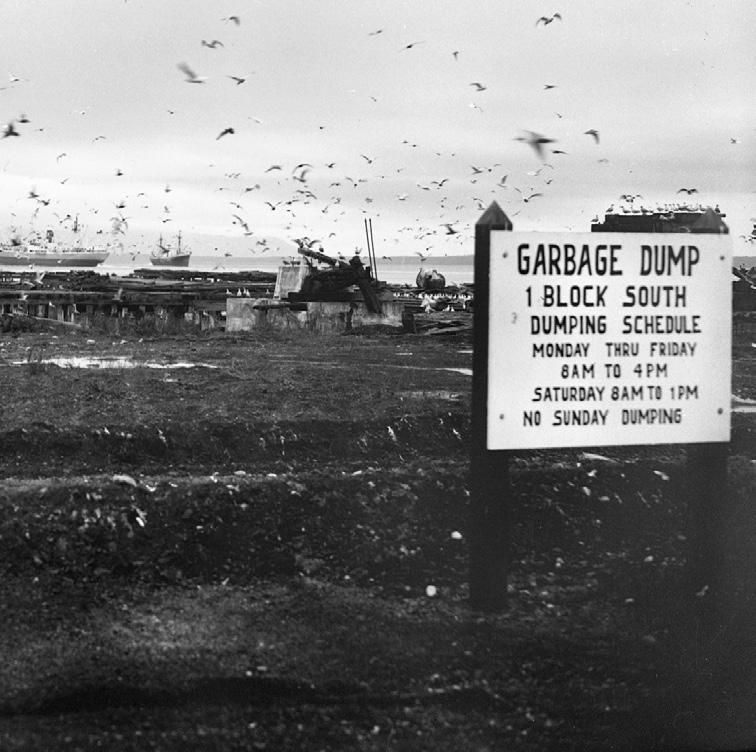
The Cornwall half of the site was the city landfill from 1954 to 1965, replacing tidal flats with municipal, wood and medical waste. Under a layer of soil sits 295,000 cubic yards of trash — enough to stuff roughly 2,500 standard semi truck trailers to the brim.
Though the history is no longer visible to the naked eye, the evidence remains as contamination in the soil, water and air.
“It’s one of the most heavily contaminated sites in Bellingham Bay, so it’s great to see it’s now getting addressed,” Gouran said.
Thorough investigations from the Environmental Protection Agency have revealed 13 different kinds of contaminants to be remediated. These contaminants come from a wide range of sources, from heavy metals like cadmium to persistent organics like PCPs or man-made chemicals like PCBs. PCBs were used in electrical devices like transformers, while PCPs were used for wood preservation.
The effects and danger associated with these compounds are variable, but overexposure can cause negative health effects in all organisms. In humans, some PCBs may cause cancer, as well as immune and endocrine system disruptions, according to the EPA.
Some varieties of chemicals, like PCBs, can linger for a long period of time in the environment and can biomagnify, climbing through the food web to congregate at the top.
“There’s opportunities for organisms to be exposed to [contaminants] for multiple generations, because they don’t go away once they get to the environment,” Ruth Sofield, a toxicology professor at Western Washington University, said.
Some of the chemicals can also be absorbed through contact at the site itself, which is why a thorough cleanup is in order.
“Unfortunately, you can’t necessarily remove all contamination, especially when you have sites that are this massive and complex,” Kristen Forkeutis, the public involvement coordinator for the cleanup, said. “Despite the fact that there is contamination under the future park, it is cleaned up in such a way that it won’t be impacting the public.”
If contaminants can’t be removed outright, the next line of control is to cut
“IT’S ONE OF THE MOST HEAVILY CONTAMINATED SITES IN BELLINGHAM BAY, SO IT’S GREAT TO SEE IT’S NOW
off paths of exposure to the material — locking it in, and us out. The plan for the park is careful about this goal, which is part of why it has taken so long.
“If you can stop the exposure, if humans aren’t going to be exposed to something like pentachlorophenol [PCP], then there’s no risk from it,” Sofield said.
Major actions include capping the landfill permanently, using a multi-layer system to prevent rainwater intrusion and chemical leakage. The shoreline will be improved with gravel, sand and rock to prevent erosion and trash from escaping further. The gravel will bring additional benefits by improving habitat formation with the help of natural recovery processes already observed in the bay.
Those famous tarps are also part of the plan. Under them sits fine sediment from a past waterway dredge, which is being used to prevent water from seeping through the landfill before the major cleanup begins.
An undertaking of such size also takes a lot of funding.
The Washington State Department of Ecology awarded a grant that covers half of the cost for the clean up — funding that RG Haley project site manager Shawntine Lai has yet to see other state ecology departments put forward for similar projects.
“Incentive is really important if you want to have the site cleaned up,” Lai said.
Two popular waterfront parks have similar histories, showing how remediation can be successful on the bay.
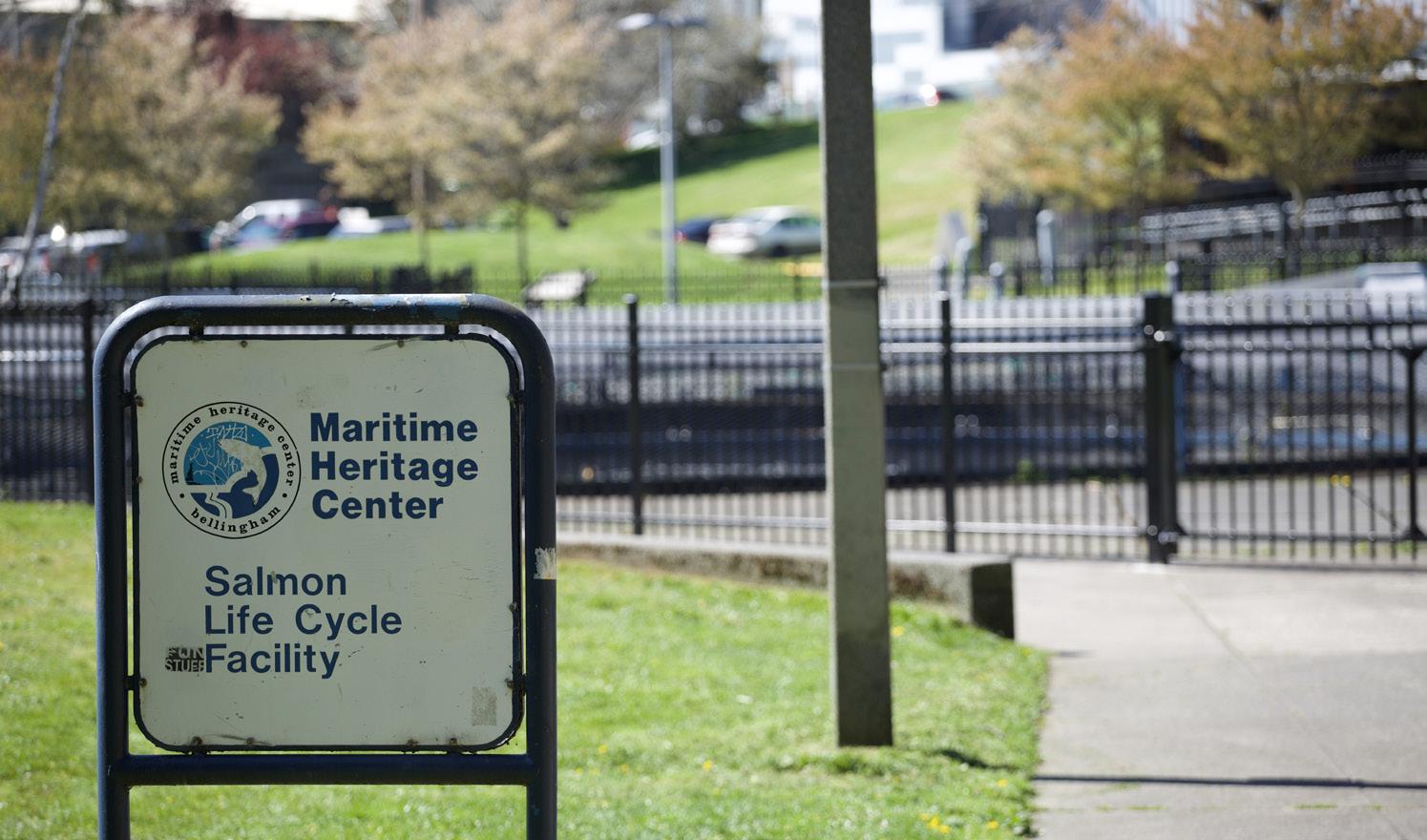
Boulevard Park, which was opened in 1980, is on the site of a manufactured gas plant and a historic mill. Maritime heritage park was a former landfill and the site of Bellingham’s very first sawmill. Most recently, an old pier designed to carry processed cement to barges off-shore has been restored into Little Squalicum Pier.
With each project, the Bellingham waterfront becomes more accessible to the public and cleaner for the environment.
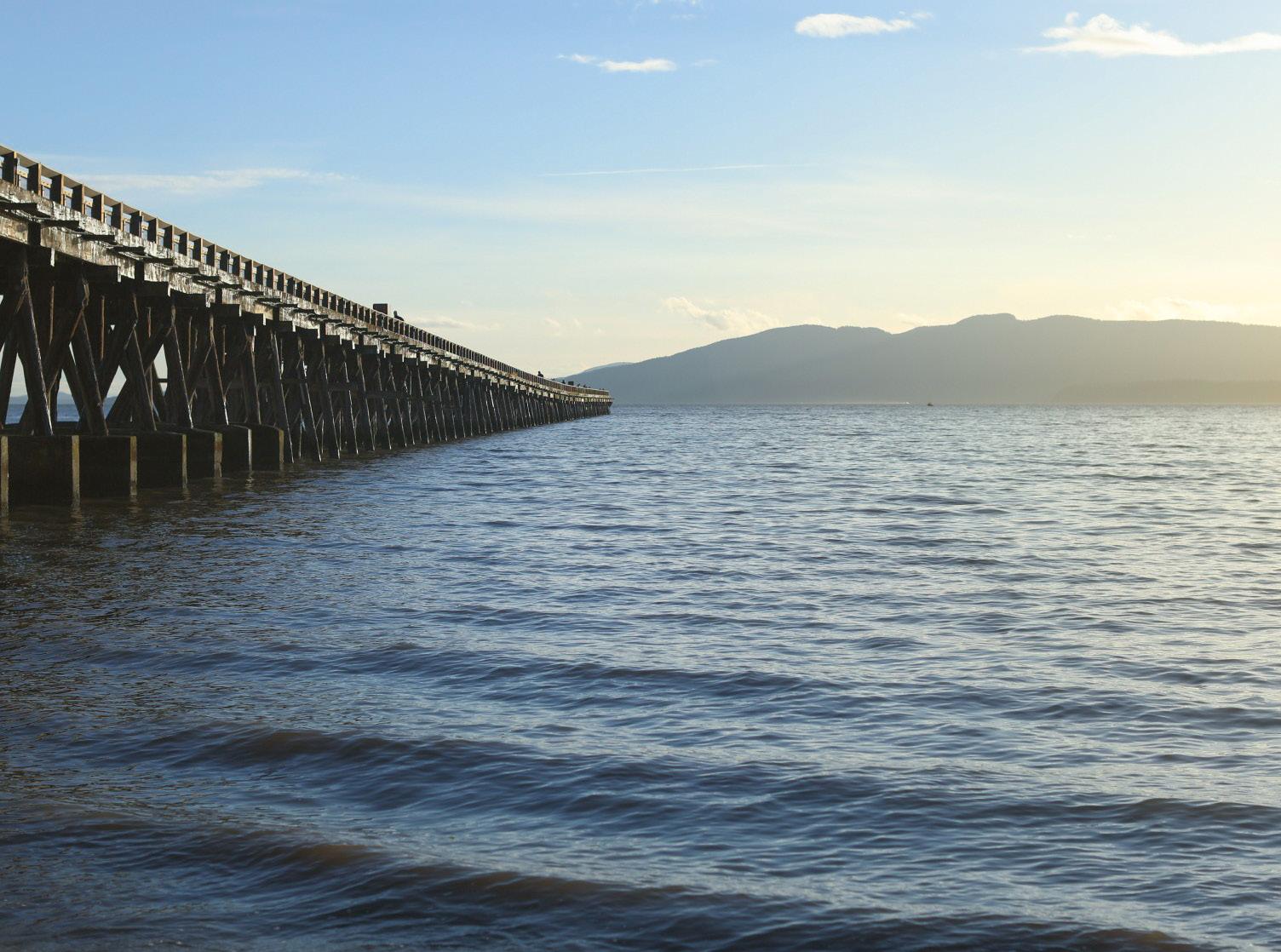
A view of the side of Little Squalicum Pier in Bellingham, Wash. Located within Squalicum Creek Park, it extends 1,248 feet into Bellingham Bay, making it Washington State’s longest public pier. // Photo by Aidan Byrnes
“This is a generational project … not something that’s going to happen overnight,” Gouran said. “There’s a lot of data and information gathering, a lot of planning, a lot of community involvement.”
After such a long wait, the real action in this project is nearly underway. Actual construction, according to Gouran, is set to start at the end of 2025 or early 2026.
Entrance to the Salmon Life Cycle Facility Located at Maritime Heritage Park, which encompasses a portion of Whatcom Creek, an important waterway for salmon. // Photo by Matthew Ackerman
In a few years, the goal is for residents to have another bayside paradise to enjoy, making new opportunities of past pollution. As Gouran puts it, Salish Landing will be the new “jewel of the bay.”

A top of the line option to control pest birds exists, but local farms can’t justify the cost
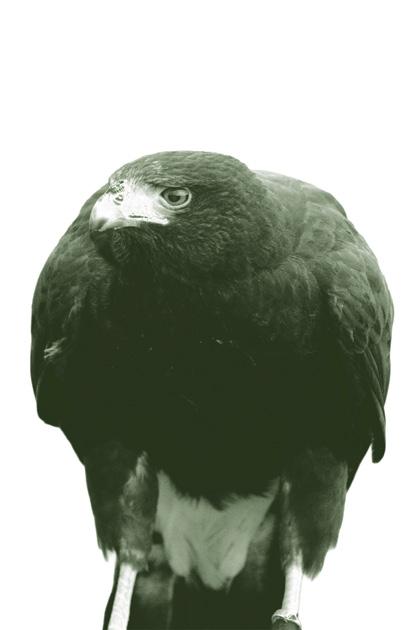
CAITLYN O’NEAL WALKED THROUGH the dusk-lit field. Clouds billowed like cotton balls, enveloping the sky, their edges traced with the gold of the setting sun. A Harris hawk soared overhead, his silhouette reflected by the evening light.
“His name is Beetle,” O’Neal said. “My boyfriend named him after Beetlejuice.”
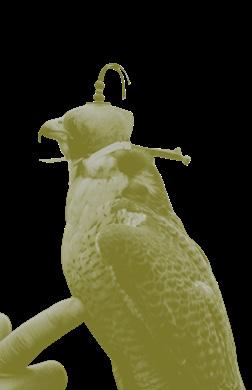
O’Neal is an abatement falconer. She travels the state of Washington, flying her four birds — Beetle, Nora, Casca and Luis — at farms in the summer and urban locations, such as ports, when peak season slows down, working to scare away pest birds.
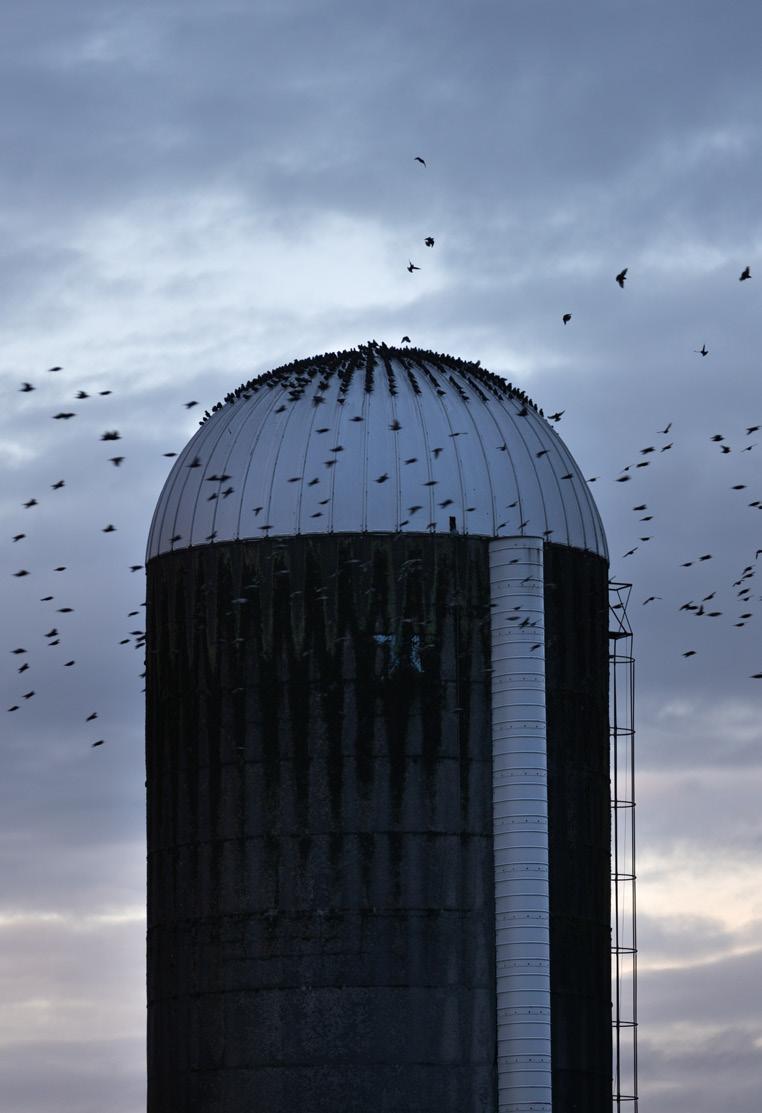
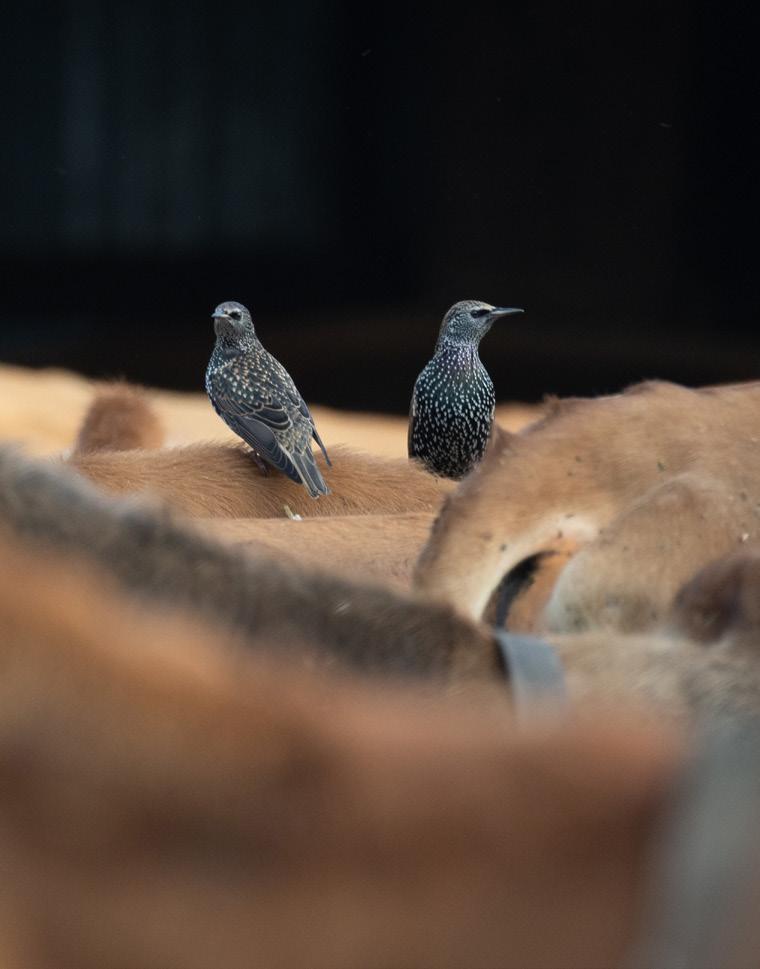
Year-round, these pest birds scavenge through Whatcom and Skagit counties, carrying disease to livestock and turning harvest time into a battle between farmer and flock. Among the most notorious of these birds is the European Starling.
European Starlings were first introduced to Central Park in 1890 by Eugene Schieffelin, an amateur ornithologist, who released 80 birds. In the following years, their population quickly exploded across North America.
Today, an estimated 200 million starlings populate North America., ranging from the mountains of Alaska to northern Mexico.
Karen Steensma, retired owner of Steensma Creamery, has seen their pervasive presence firsthand.
“The cows were lined up at the feed bunk, and the feed was so covered with starlings that the cows had to push the birds out of the way,” Steensma recalled.
During fall and winter, as flocks grow larger and food grows scarcer, birds often seek protection from harsh weather in barns and farms. This crowding of animals creates an environment ideal for diseases such as Johne’s disease, salmonella and E. coli.
Larry Stap, owner of Twin Brooks Creamery, deals with starlings weekly. His 400 Jersey cows contend with thousands of starlings nesting in straw feed or resting on their backs.
“I call it a disaster,” he said.
These birds cost farmers an average of $55 per cow. For Stap, that’s $22,000 in lost earnings.
Starlings take their toll on berry harvests, too. On average, farmers lose one out of every 15 berries to hungry birds. For those who don’t put significant effort into abatement, losses can be much higher.
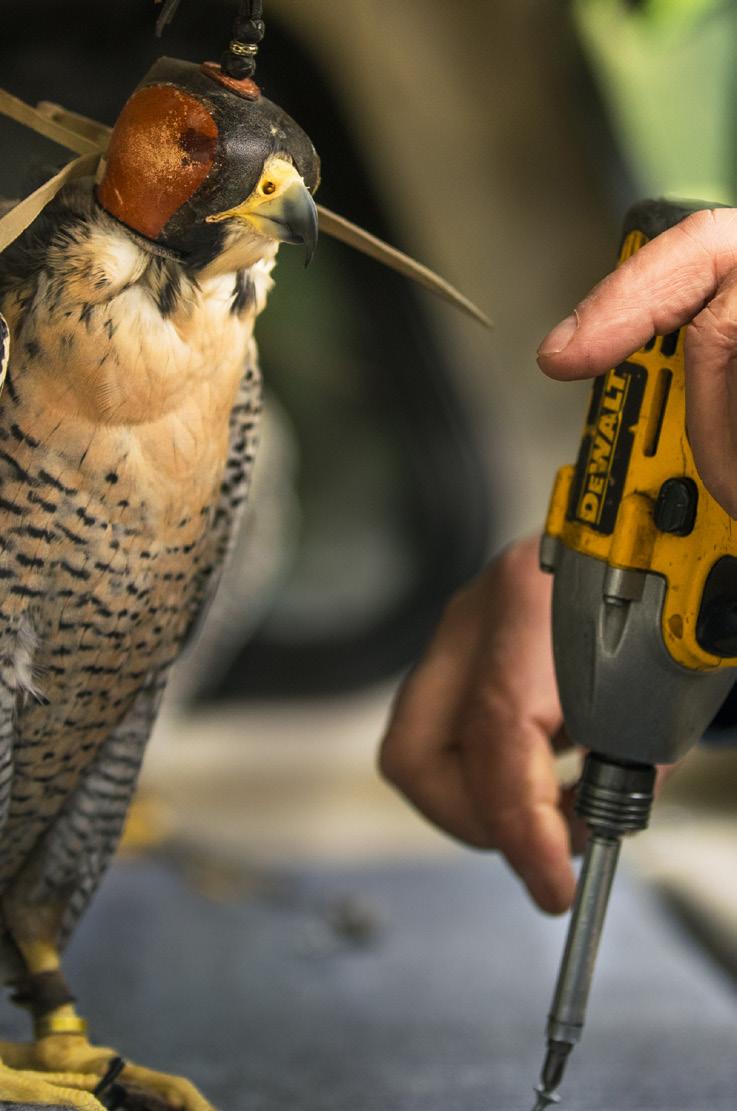
replaces the clip, attaching his peregrine
“[How] they do the most environmental damage, or economic damage, is they poop everywhere,” Ezra Ranz, partial owner of Bow Hill Blueberries, said. “With hand-pick [farms], it’s something that you have an experienced eye overlooking … a machine is indiscriminate.”
For many farms, O’Neal offers a remarkably effective fix: falconry.
Falcons are well-suited for this line of work due to their psychological impact on prey, their innate ability to fly at high speeds and adapt in real time.
Once a starling sees a falcon hunting in the area, it will avoid the location at all costs, Frank Lapsansky, a retired falconer, explained. Non-animal deterrents, however, don’t instill the same fear. Starlings will quickly realize there is no real danger and return.
“[Falcons] use height like a fighter aircraft to gain the position on their prey,” Lapsansky said.
Once they reach such heights and spot their prey, they dive at speeds upwards of 200 mph. This sheer speed and agility can be used to manipulate clouds of starlings like sheep dogs.
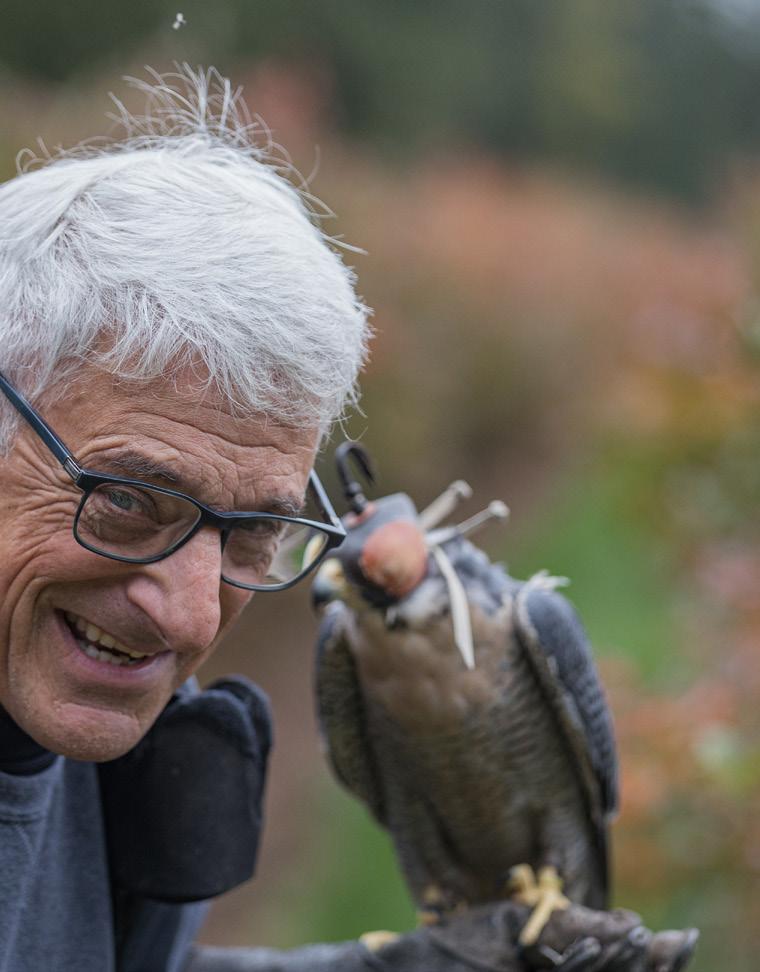
“They do a lot of adjustments mid dive … they don’t have a set path,” O’Neal said. “They’re calculating, up until the last second they hit the [bird’s] head with their foot.”
These factors make falconry one of the best options to control pest birds — but for many farmers, the cost is unrealistic. Falconers typically cost around $300 per day, and effectively keeping pest birds away could take weeks or even months.
“The problem is, smaller growers who don’t have as high a value of a crop can’t justify the economics of hiring the falconer,” Steensma said.
To ward off birds, farmers have come up with their own solutions.
Stap uses his trusty old shotgun, shooting shells into the air and often killing one or two starlings to get his point across: get off my farm.
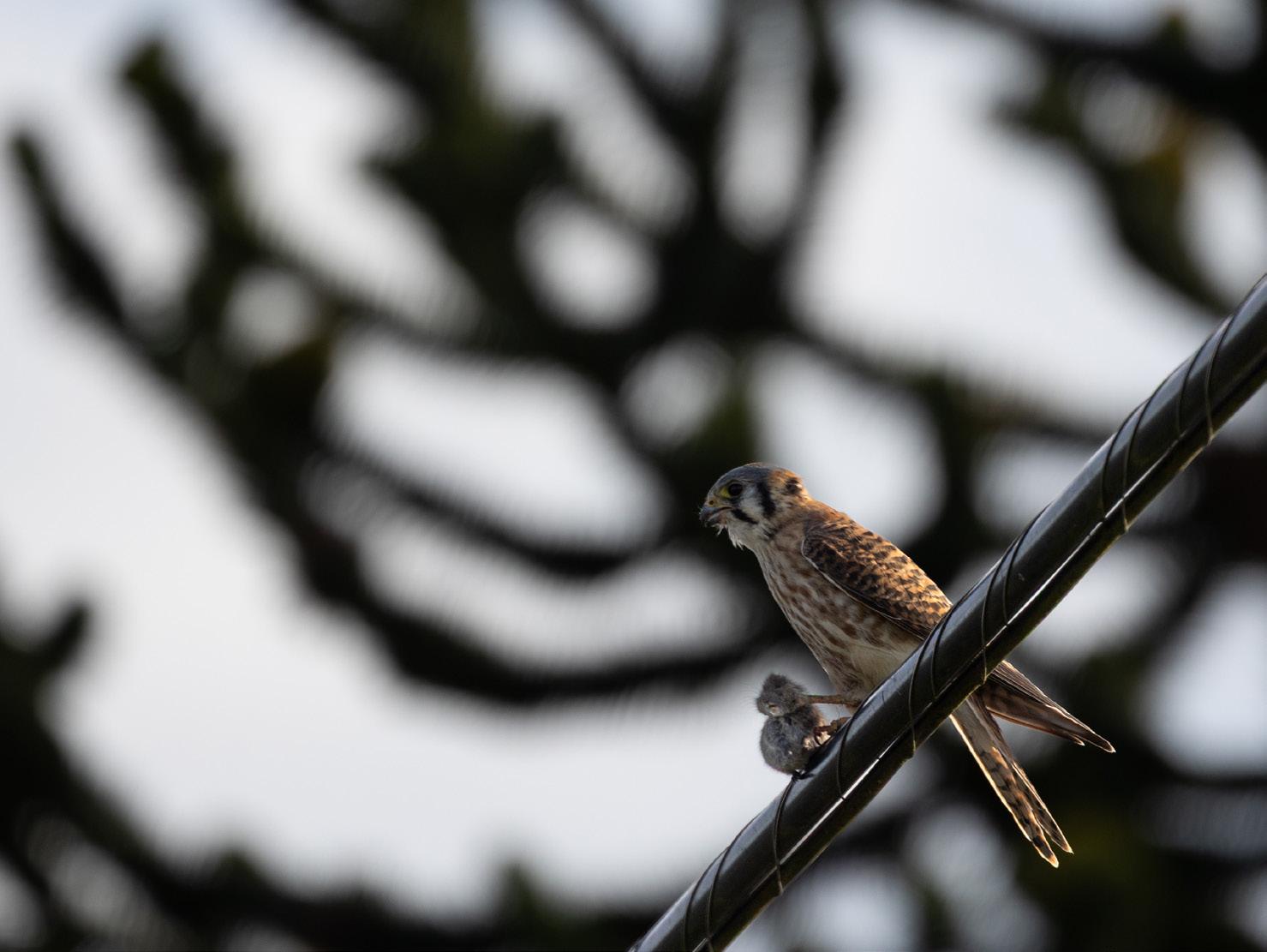
Steensma deploys kestrel nests, reaping the same benefits a falconer would offer. Although this seems like a great solution to the problem, it’s a gamble if and where a kestrel will nest.
Even Lapsansky, a falconer, tries his luck with other methods.
“Every morning, I’d go out with my cup of coffee … I’d either crack the whip or shoot [into the air], and that would clean the field of birds,” Lapsansky said. “But the problem is, once they figure that you’re not going to kill them, they start coming in.”
Falconry may be a great option for largescale farms, but for smaller operations, the price can be too steep. Questions about farm management will continue to be an endless tug-of-war between cost and effectiveness.
“People don’t realize that farms are ecosystems, and we can make them all work together. It’s a juggling act, and it can be tricky,” Steensma said. “It’s a whole big story of how we can work together with the natural world to have the best solutions for some of these conflicts.”
“PEOPLE DON’T REALIZE THAT FARMS ARE ECOSYSTEMS, AND WE CAN MAKE THEM ALL WORK TOGETHER.”

A wildland firefighter’s journey from battling fire to welcoming it
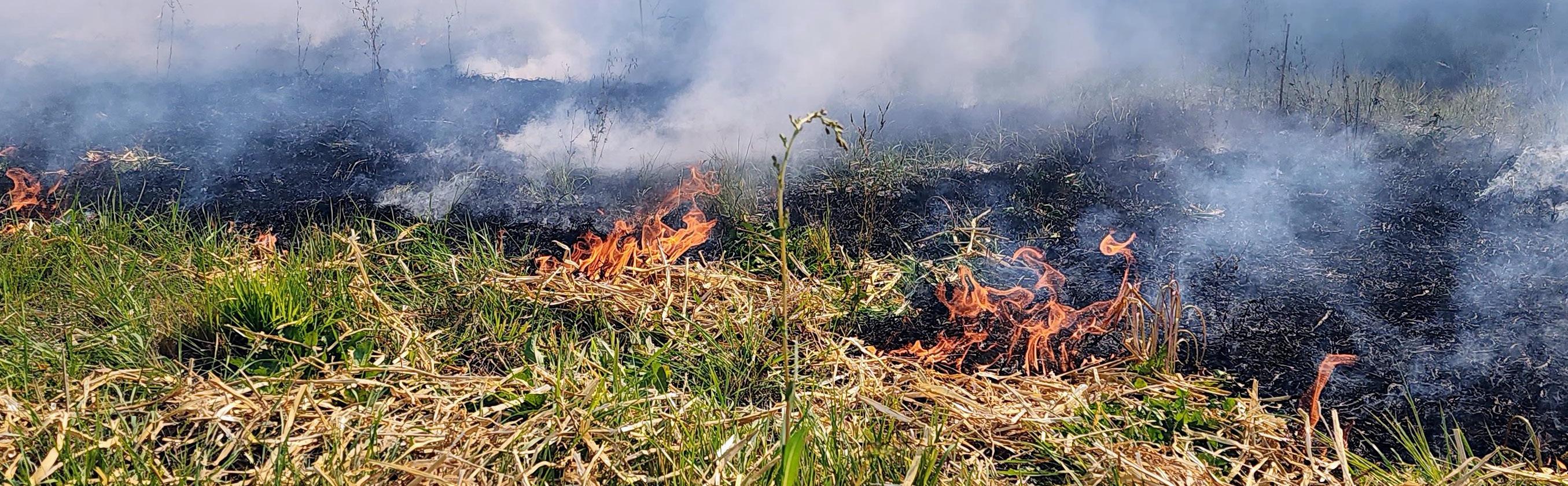
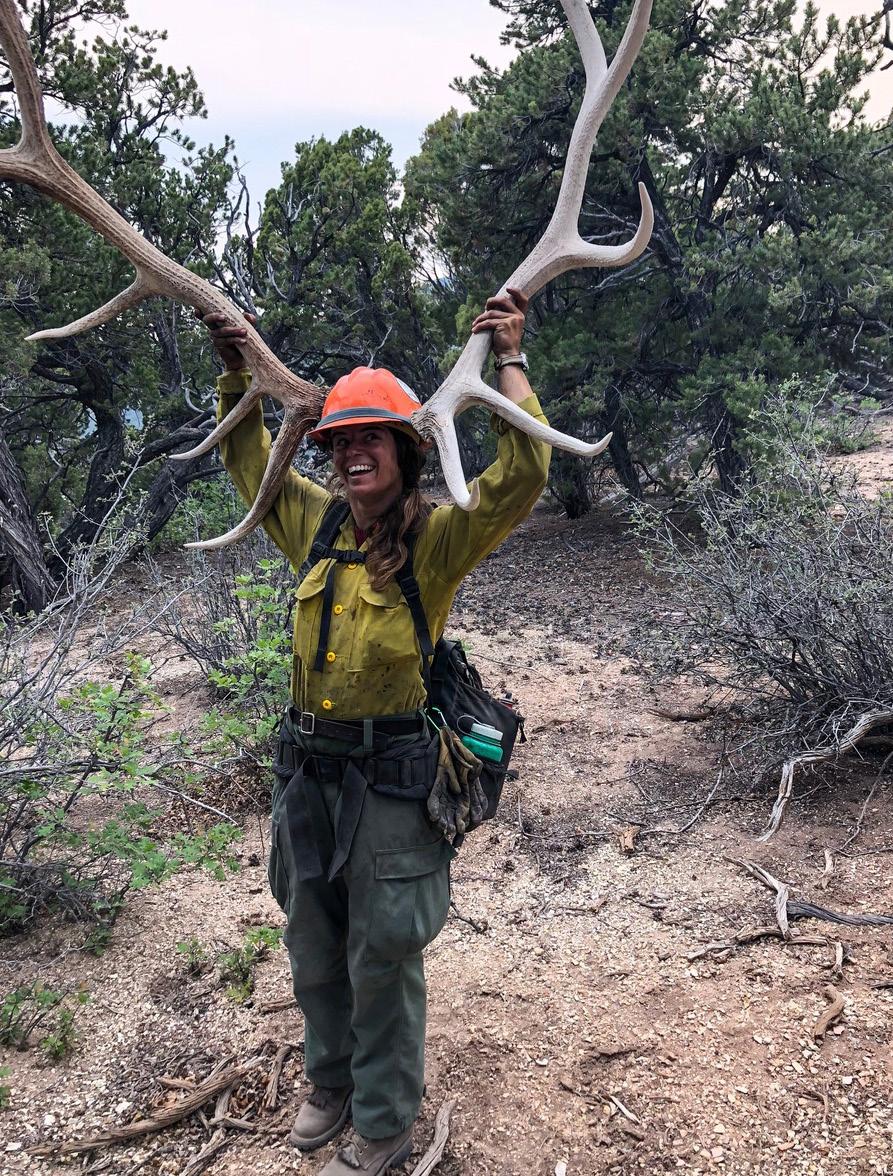
SHE HEARS THE SLOW CRACKLE of ponderosa pines burn, their undergrowth snapping. The fire moves slowly, only a few inches off the ground. She doesn’t feel any wind, and the lack of smoke surprises her. But she knows how dangerous fire, any fire, can be at a moment’s notice.
Fire can also heal. That is, after all, why she’s here.
To Amanda Monthei, a former wildland hotshot firefighter, disturbance often precedes growth.
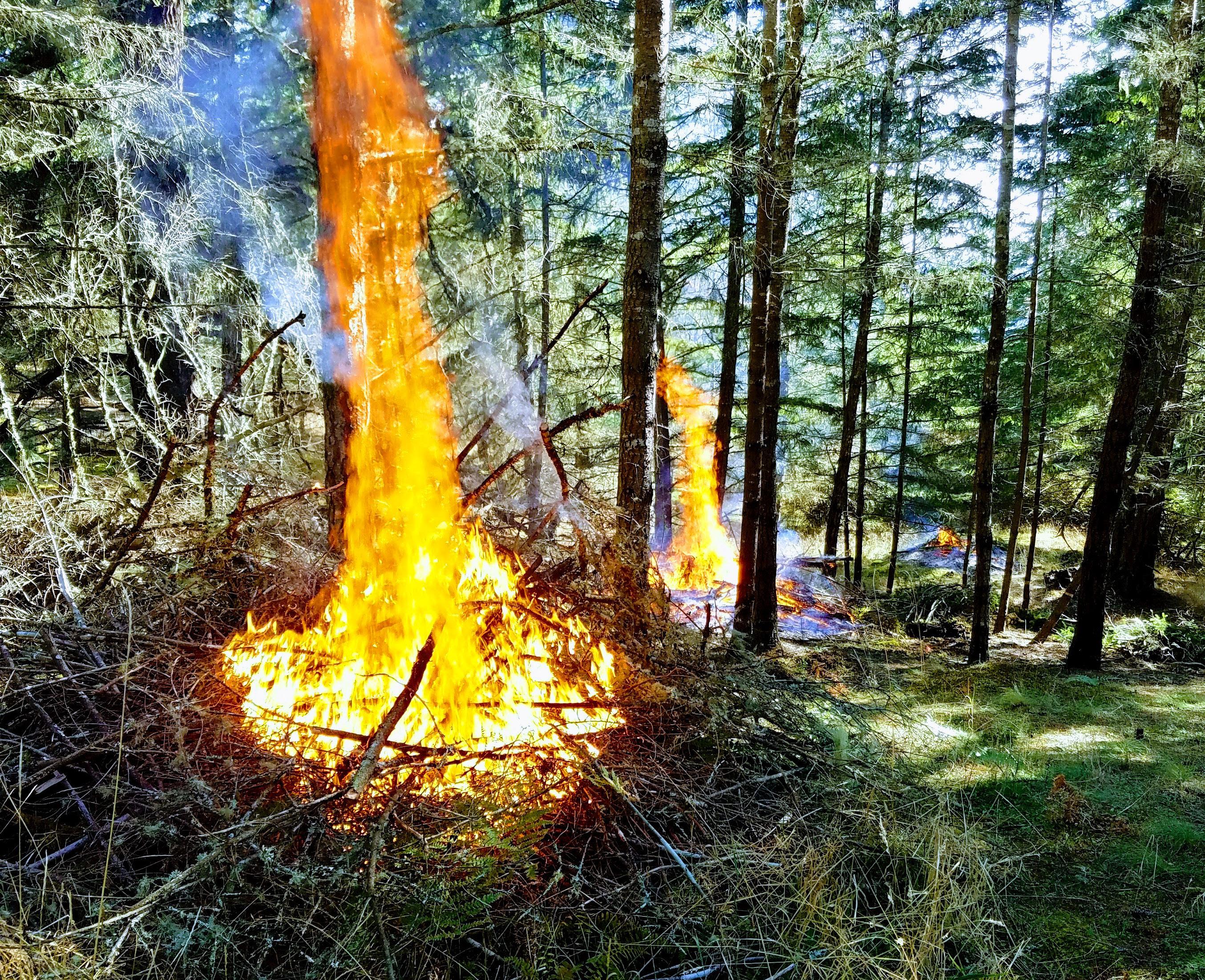
Through a prescribed fire training exchange in southern Washington, Monthei got hands-on education in how using prescribed fire, a planned and controlled burn, can help ecosystems.
“[Fire] can cause disturbance, it can cause destruction. It can be incredibly catastrophic in some cases. But in essence, it’s also this source of renewal… that destruction, what can feel like destruction, is in many cases a necessary ecological process,” Monthei said.
It wasn’t always this way: Fire was once seen as a firm enemy. The U.S. Forest Service developed hotshot crews specifically to fight fires in the “rugged West.” The history of the hotshot crews program paralleled the federal government’s aggressive policy for combating western wildland fire.
Hotshots are highly trained, specialized firefighters that perform some of the most demanding and hazardous tasks in wildland firefighting. They spend more days on the fire line performing
fire suppression activities than any other fire crew.
“I am definitely a hotshot at heart. You’re seeing more fire than anybody else out on the line,” Bre Orcasitas, a wildland firefighter trainer, said. “There are a lot of parallels to the military and wildland fire, especially when you look at hotshot crews.”
Starting in 1910, a devastating fire in the Northern Rockies killed 78 firefighters. In response, Congress doubled the Forest Service’s budget and passed the Weeks Act, which legislated permanent emergency funds to prioritize aggressive wildland fire suppression. Such fire suppression has led to a buildup of fuel for forest fires, increasing the severity of wildfires.
Conversely, by the end of the 1970s, forest ecology research confirmed fire’s beneficial role in maintaining forest ecosystem health. Fire can renew ecosystems, creating new opportunities for growth, such as camas, a plant traditionally used by indigenous tribes in the Pacific Northwest, where burns have increased the productivity of the plant. Indigenous communities and tribes in the Pacific Northwest since time immemorial have burned areas to maintain a landscape. This also clears the buildup of smaller twigs that act as fuel for major wildfires.
In the Upper Chehalis River basin, lowintensity, high-frequency fires were used to create forest openings, maintain prairies and keep plant communities in the early to mid-seral stages, which enhances the diversity and yield of plants. The new National Forest Manual began to
move away from the prior assumption that all fires needed to be put out, although it still mandated an aggressive initial attack on wildfires, reasoning that they threaten ecosystems and human communities.
Finally, the director of the Bureau of Land Management and the forest service chief ordered their respective agencies to produce an interagency report after the deaths of 14 wildland firefighters. They challenged the current fire suppression policy and declared that agencies and the public needed to recognize that not all wildland fires could or should be suppressed.
“Fire has always been a part of the environment,” Orcasitas said. “We’ve toyed with that to the point that now we have a lot of readily explosive fuel.”
For example, when thick underbrush dries out, fires that break out become more intense.
“It’s a human created issue that we’re dealing with, and so putting good fire on the ground is how you clean it up,” Orcasitas said.
With a Nutter Butter in one hand and a jerry can in the other, Monthei hikes the side of a steep avalanche shoot up to a blazing fire. She’s more than halfway through this hitch, on day 10 out of the 14-day work week during the first season of hotshotting. Her crew is working on a heinous fire in the mid alpine of Wyoming in October.
Tonight, as with every night, her crew will sleep in the buggies in order to stay warm, waking up to frozen boots every morning. This is the life of a hotshot.
beach, it can be such an inspiring family scene,” Barr said. “It’s just beautiful, it’s not the picture that we have of fire at all in our American dialog.”
Cultural burns build a bridge to ancestral traditions by honoring the land’s wisdom, creating a harmonious relationship with the natural world. For many tribal nations, fire represents renewal, not just for the land but for the spirit of those who engage in cultural burning.
One October, Barr was using debris pile burns to restore an ancient garden and revive camas.
“We have all the different root foods, the wild onions. It’s funny, calling them wild onions is an ironic term for an indigenous person, when they’re not wild at all,” Barr said. “That’s a cultivated onion; it’s not wild. It’s an Indian onion.”
If you take the gardeners out of the garden, it looks wild. If you take the stewards away from the fires, they look like wildfires.
“I had a really hard time early in the summer because it was hard to acclimatize to working on a hotshot crew. It’s a really intense environment, and then eventually I got the hang of it,” Monthei said.
The Salish Sea and surrounding area is one of the riskiest places of catastrophic burns in the last 150 years because there’s an abundance of accumulated fuels, according to Sam Qol7ánten Barr, executive director and co-founder of Coast Salish Youth. Hotshots like Monthei rely on prescribed burns to combat this, burning accumulated fuel and reducing risk of wildfires.
Some indigenous communities also use cultural burns — a form of controlled burn which includes cultural context and multi-generational indigenous knowledge — rather than prescribed fire, which is a colonial adaptation.
Through relearning indigenous fire methods, ancient fire practices in Washington can return, according to Barr. “The United States has taken a militant approach to managing [fire], but then to see how reintroducing fire can be this family activity with elders and children and traditional food and playing by the
“IT WAS HARD TO ACCLIMATIZE TO WORKING ON A HARDSHOT TEAM CREW. IT’S A REALLY INTENSE ENVIRONMENT.”
Barr’s wife surprised him for his birthday by bringing s’mores along in the field pack.
“Using these debris burn piles, we all cooked s’mores over the fire. It’s just a really funny connection between s’mores. It’s this really sugar-dense modern food, but in this restoration of a traditional garden to revive camas, which is one of the traditional sugardense foods from the pre-contact era,” Barr said.
At these burns there will be holders of plant knowledge who gather tea plants, medicines that grow in the traditional gardens. They will roast onions and blackberry leaf tea mixed with madrona bark brewed over a debris fire.
“It feels like backtracking, trying to get the land back to what it used to be, burning all this debris… As soon as the gardeners were taken out, it’s like any garden,” Barr said. “In a couple of years, it’s going to become overgrown as other plants move in and take over.”
For Coast Salish people to consider a burn to be a cultural burn it needs to include Indigenous people, ceremony and acknowledgement of history. It also has an intergenerational chain or connection.
“There’s a huge gap in that [generational] chain, and that’s what we’re trying to restore. And there’s just a lot that is lost, and we have relearning to do,” Barr said. “When we bring our children here to these spaces, and there’s all these fingerprints of our ancestors, the fingerprints of the gardeners that used to be there, it just fills your heart up to see that a new link was added to that chain when that chain was broken before.” After four seasons, Monthei decided to hang up the Nutter Butters but keep the
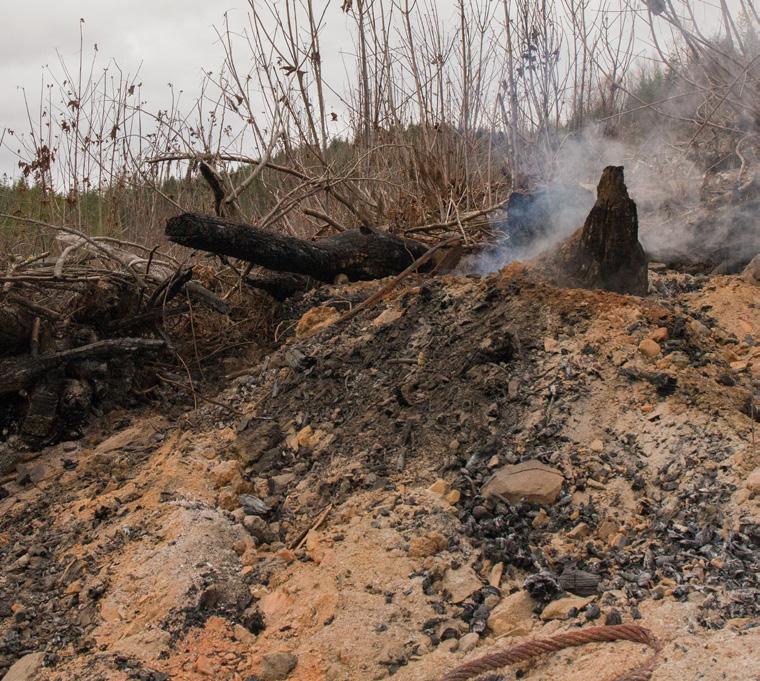
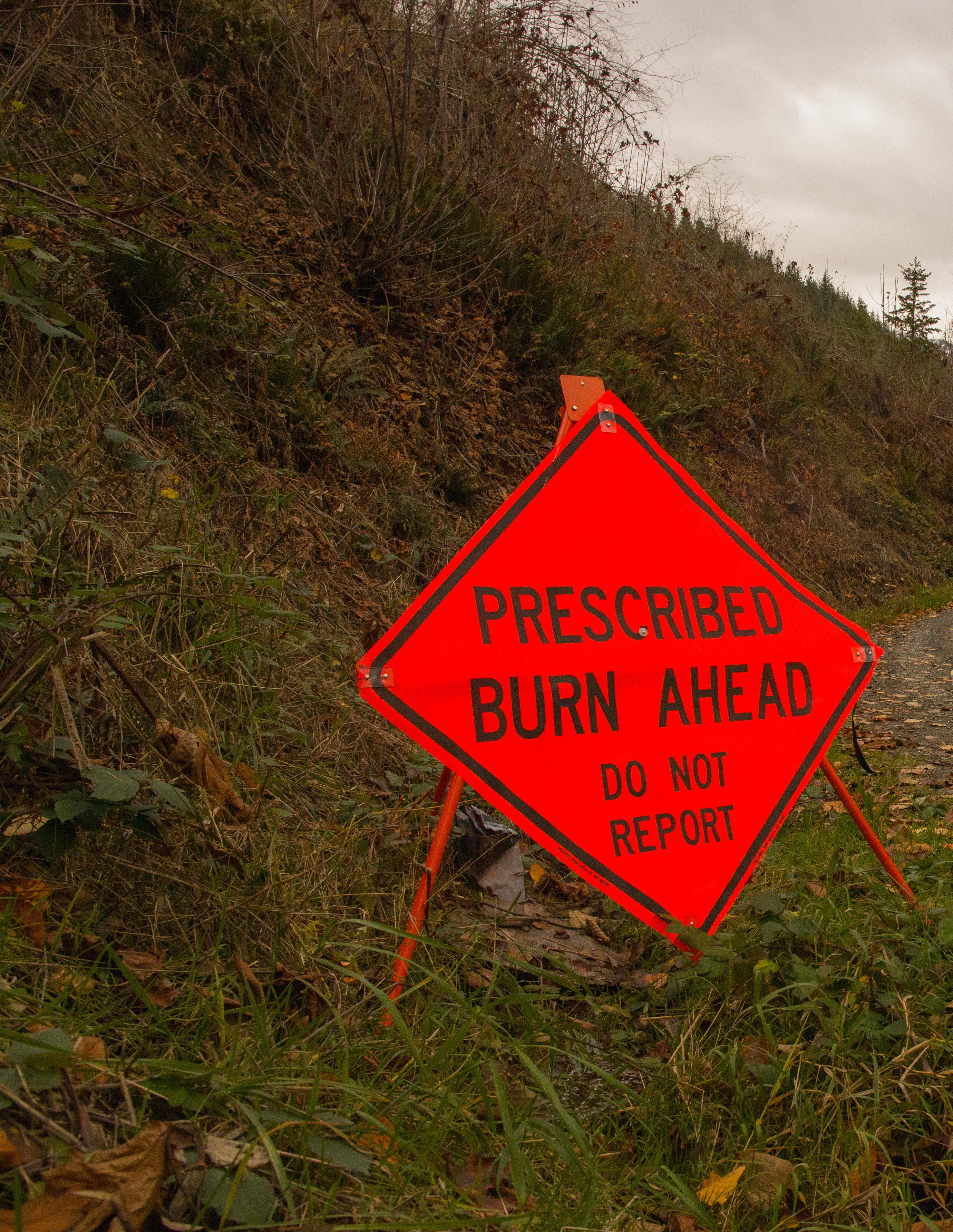
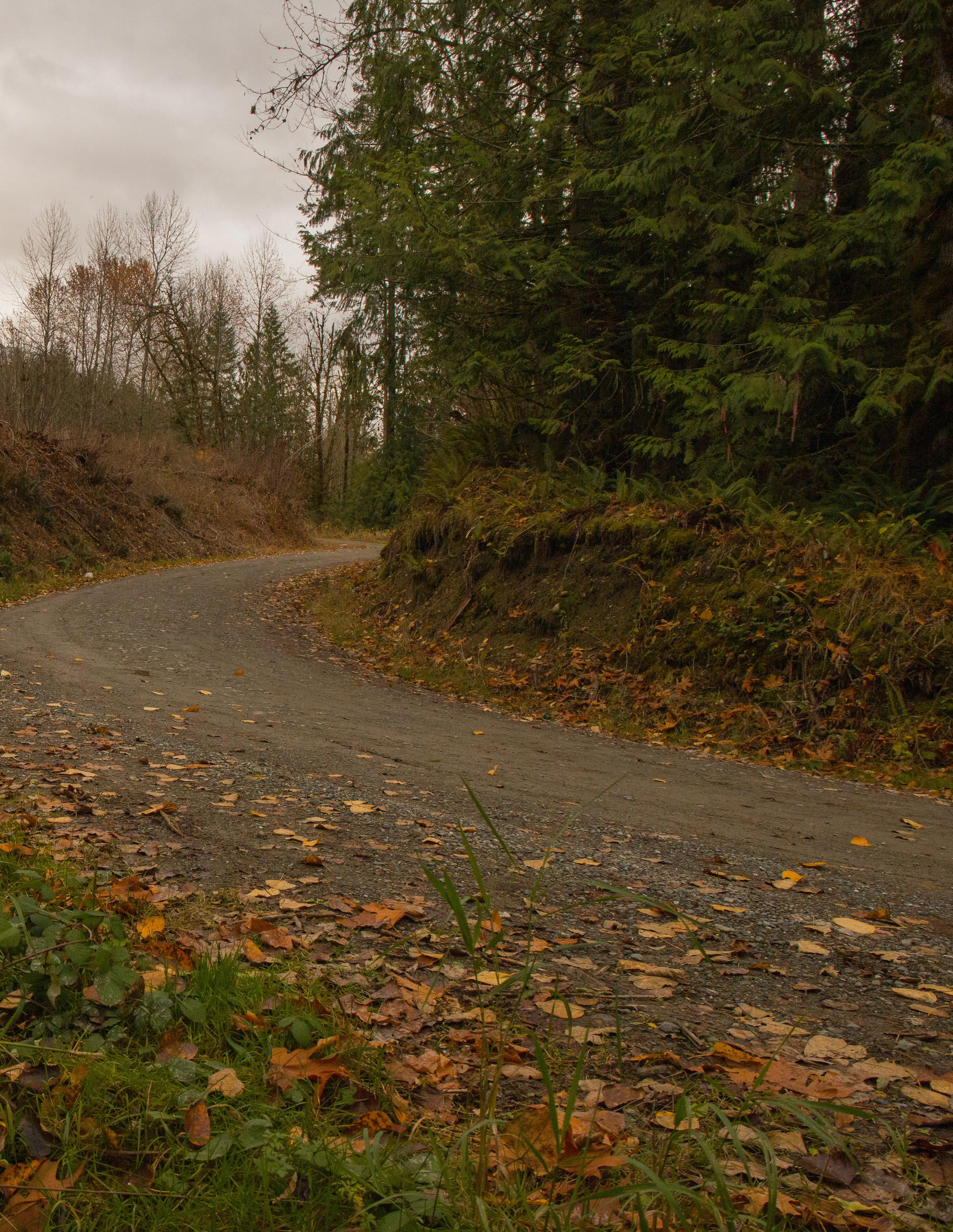
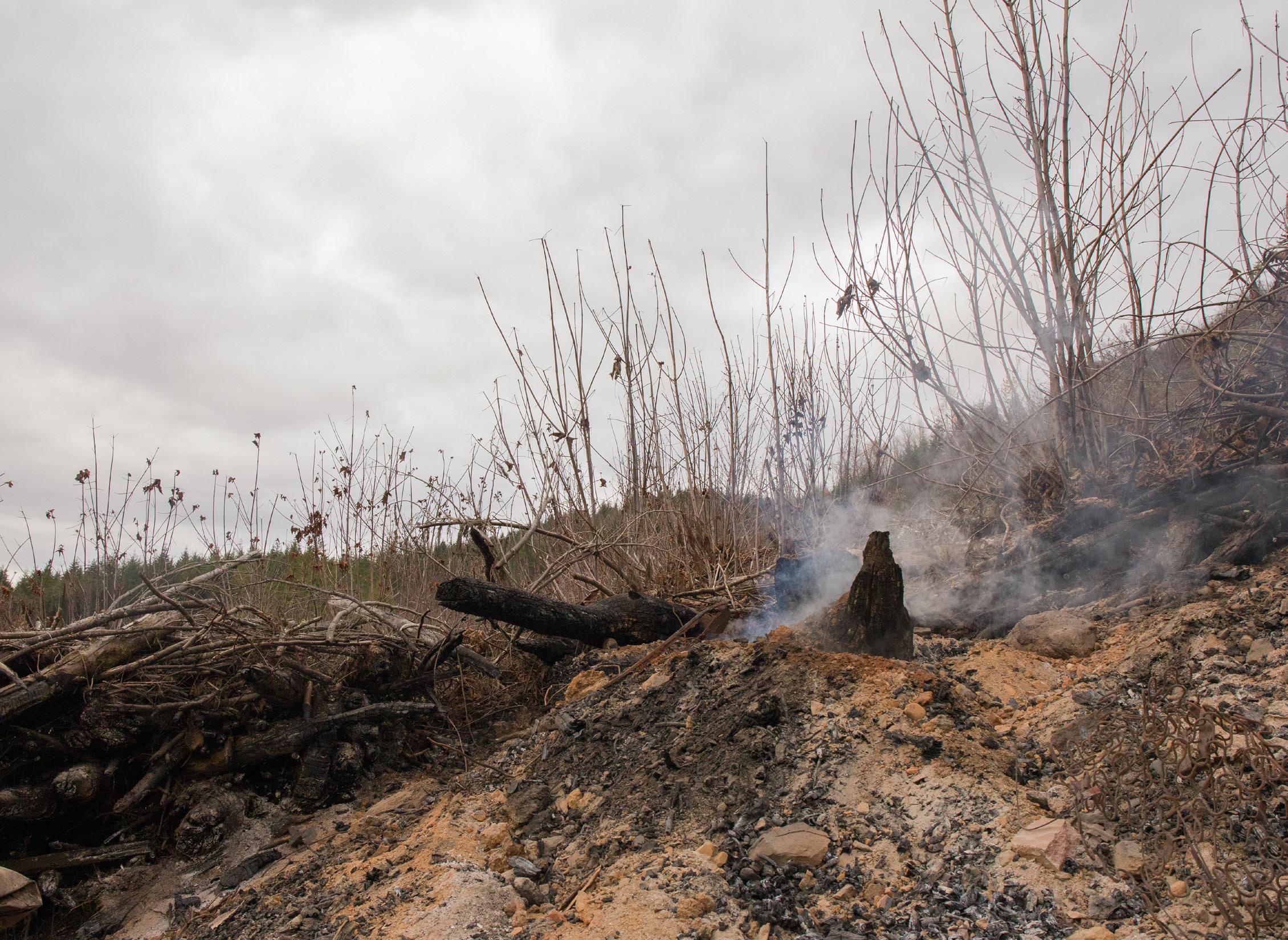
Traveling up a remote forest access road, the remnants of a prescribed burn continue to smolder unsupervised. //
dedication to healthier ecosystems; she is now a grad student at the University of Montana, working as a science communicator and journalist.
“I saw what it was doing to my coworkers, who had been around for 10 to 15 years. They were getting cortisone shots in their knees in order to be able to function all summer,” Monthei said. “Sometimes they would just have to take weeks off in order to heal from a fairly minor injury.”
This led to Monthei’s career in writing about fire; she saw her coworkers having a deep pride in their work despite the mental and physical turmoil that it put people through. By expanding knowledge around fire, she hopes to
make life better for people and the creatures that rely on forests.
“It made me respect and deeply empathize with the folks that do that work in a way that I would have never been able to experience had I not done it.”
She now has a podcast dedicated to spreading knowledge about fire.
“I was getting in pretty deep, and I knew I didn’t want to make a fire career. It has actually become my career in a different way, through communication work,” Monthei said.
At prescribed burns, Monthei feels a sense of community building. It’s not the same as a cultural burn, but it builds connection.
“It’s a totally different mindset on those burns. You’re not in this fight or flight mode that you often are on wildfires, it’s almost a community moment,” Monthei said. “I think that’s what I most value about that experience, and it’s something I find really powerful as far as getting more people engaged in the idea of using wildfire as a stewardship tool and as a community building tool.”


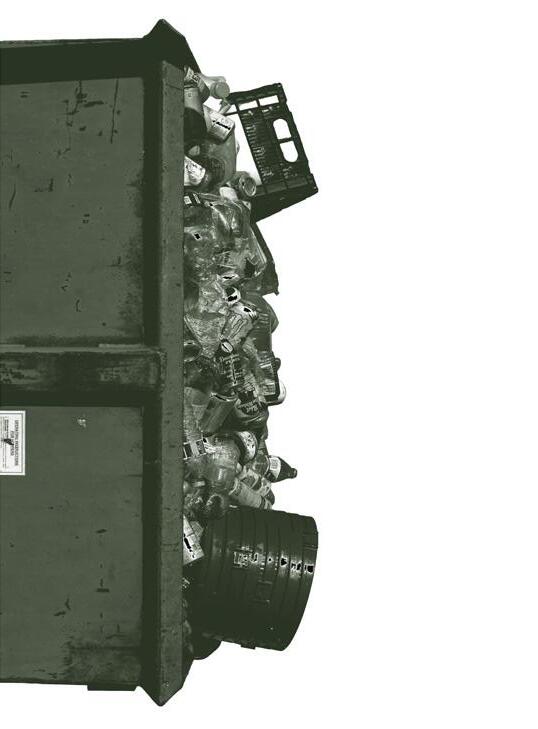
After more than 50 years, Western’s student-run Recycle Center has changed hands, raising concerns about sustainability on campus
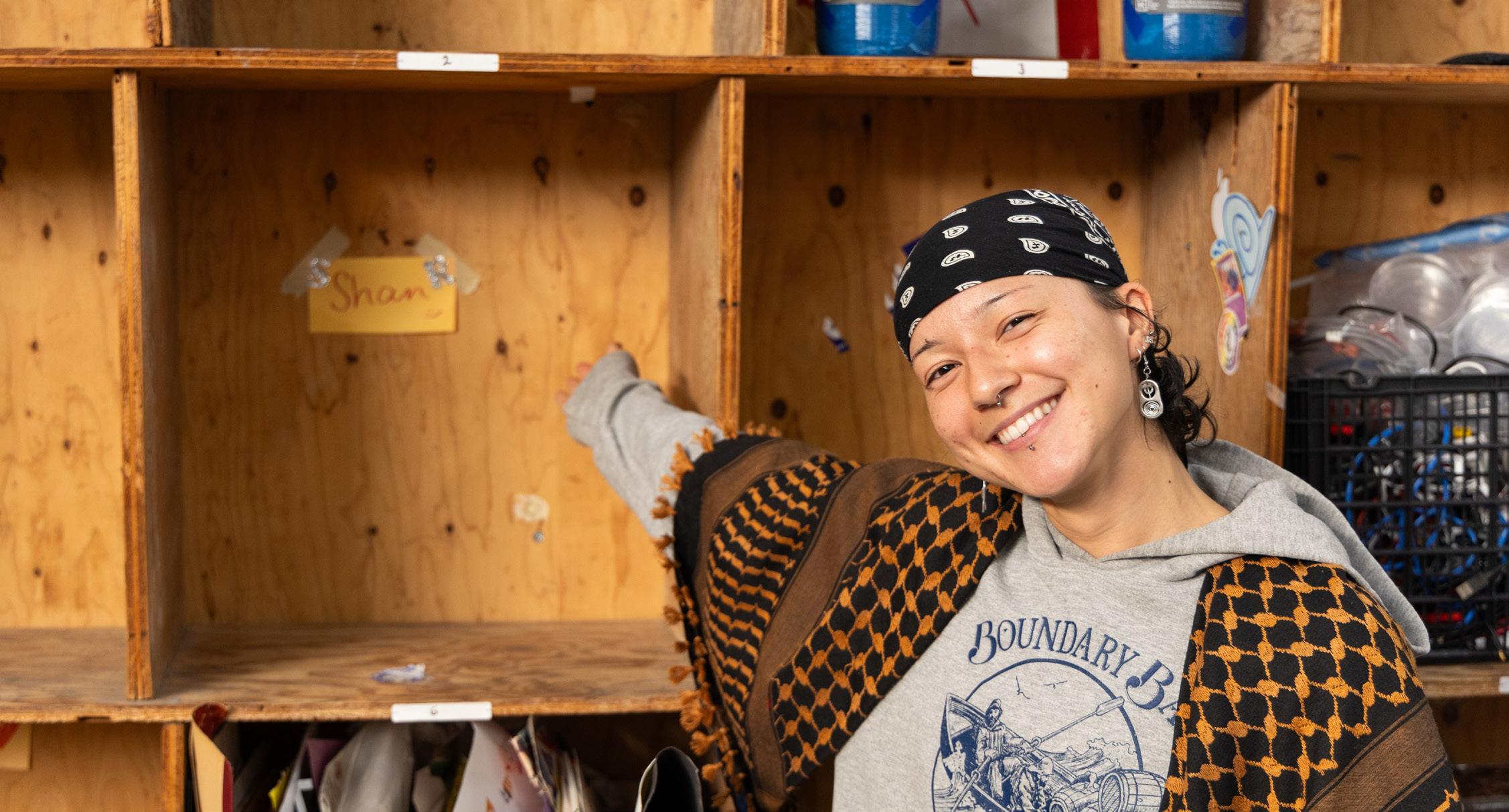
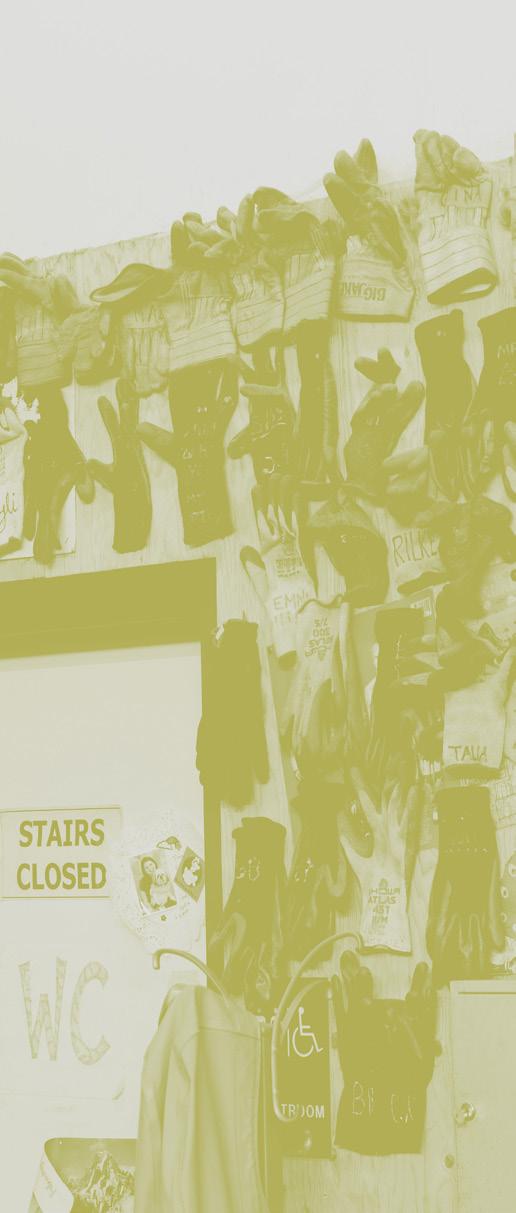
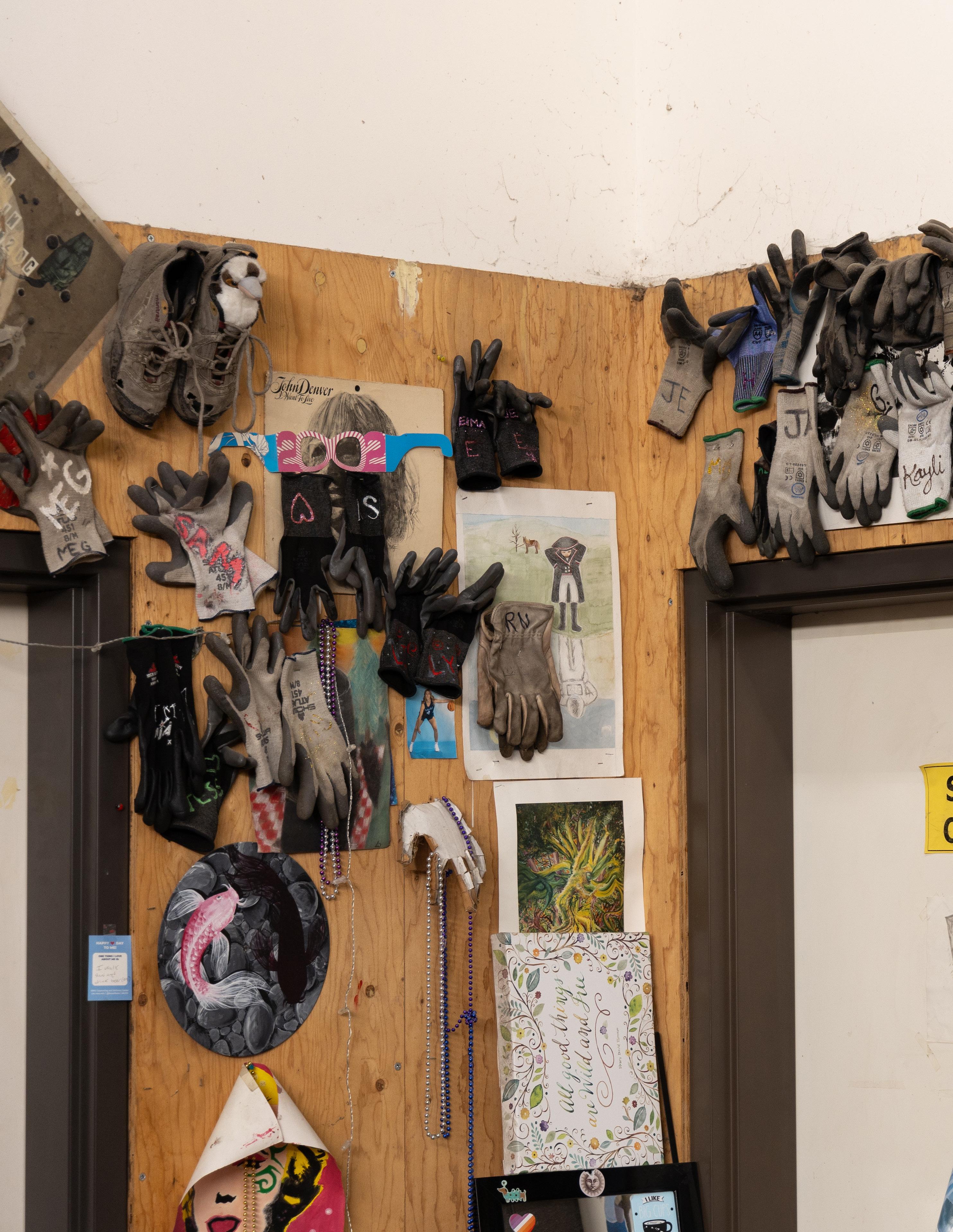
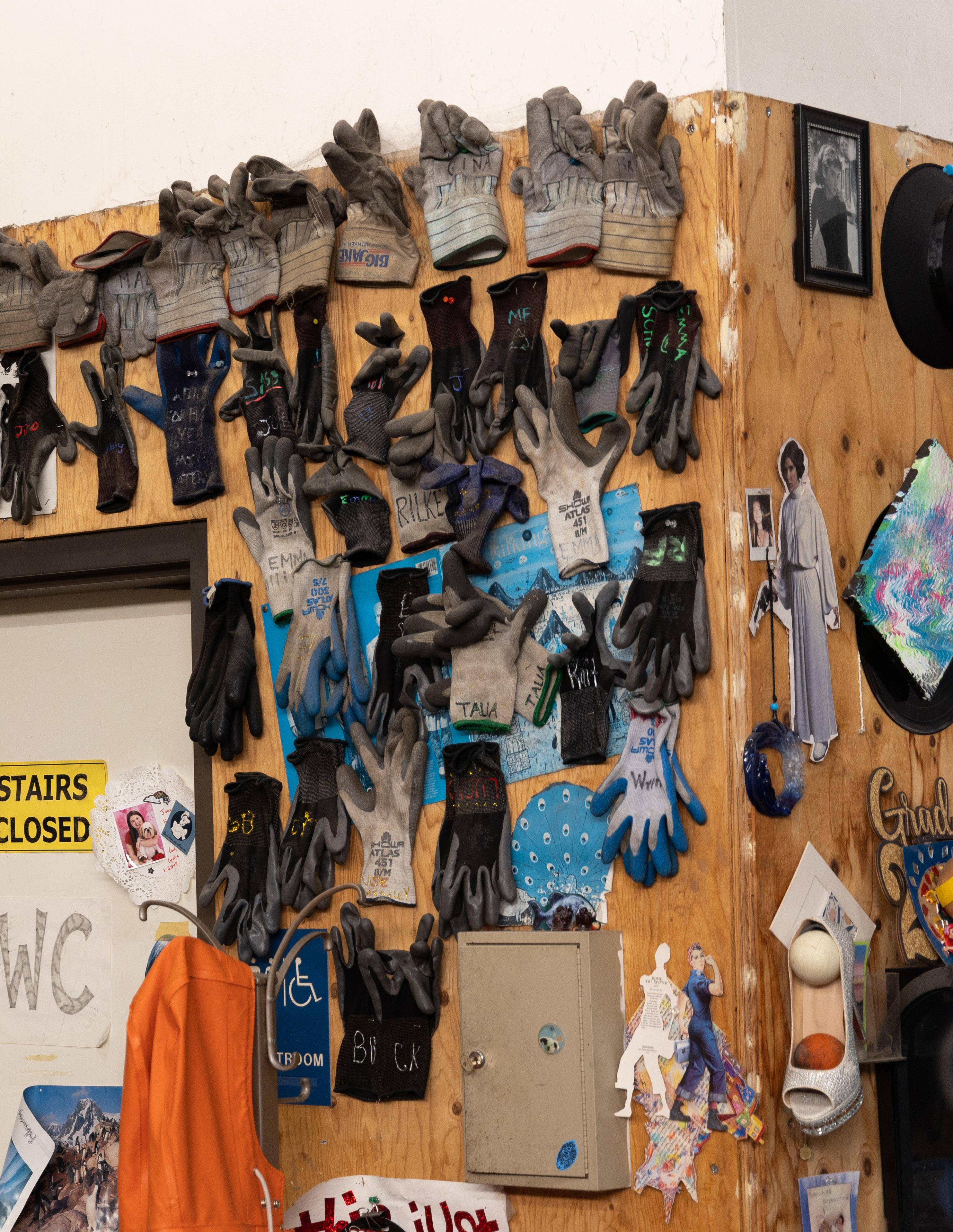
SHAN ROBINSON GAZED OVER THE wall hung with gloves from previous Recycle Center employees. They still needed to hang their own pair. Wearing earrings made of repurposed soda can tabs — a remnant of the center’s past upcycling jewelry events — Robinson flipped through the decades of Recycle Center employee files. Finding theirs, they opened it to find their cover letter and resume from the two years they worked as a laborer and later the education coordinator.
Exploring what had once been their beloved workplace, Robinson felt strange being back. Despite being littered with abandoned student art projects, ancient artifacts of floppy discs, and a vintage vacuum, the warehouse was bare compared to its prime.
Founded over 50 years ago as one of the first student-run recycling programs in the country, Western Washington University’s Recycle Center was suddenly shut down last spring quarter.
Since 1971, the Recycle Center has worked to reduce waste contamination and collect recyclables for redistribution. Now, employees like Robinson are left with just their memories.
“We’re this little corner of the university that is tucked away,” Robinson said.
Last spring quarter, employees at the Recycle Center were concerned about the safety of the department’s vehicles, leading federal regulators to designate over half of them as unsafe to operate. The vehicles were never fixed due to budget restraints, and the Recycle Center couldn’t resume operations.
The Recycle Center’s abrupt halt that left employees without work was a factor in the student union’s choice to strike last spring quarter. Former Recycle Center employees were unhappy with how the university handled the shutdown, saying there was a lack of communication.
“Nobody, especially this boss who shut us down, came and ever talked to us face to face,” Anastasia Bashkatova, a former Recycle Center employee, said.
Although the union came to an agreement with Western’s administration, the Recycle Center has not been reinstated to what it once was.
“We could no longer continue with the operation as it had historically been run. There was really no choice in the matter,”
Wayne Galloway, who heads Western’s Facilities Development & Operations department, and Jeff Aslan, the assistant director of campus utilities, said in an email.
Formerly managed by Western’s Associated Students, oversight of the Recycle Center was transferred to the facilities department within its Waste Operations, where custodial and ground teams work in waste collection. The university now contracts with the private Sanitary Service Company, known locally as SSC, to collect recycling.
While students feel that the Recycle Center is effectively gone, university officials maintain that it is a transition in the organization of the waste program, not a shutdown. Some student employees at the Recycle Center, like Bashkatova, were offered positions at Waste Operations — but some, like Robinson, did not return.
“The Recycle Center has not and will not be closed,” Aslan and Galloway said.
Former employees of the Recycle Center also have concerns about the new operation methods. SSC uses singlestream recycling, which researchers
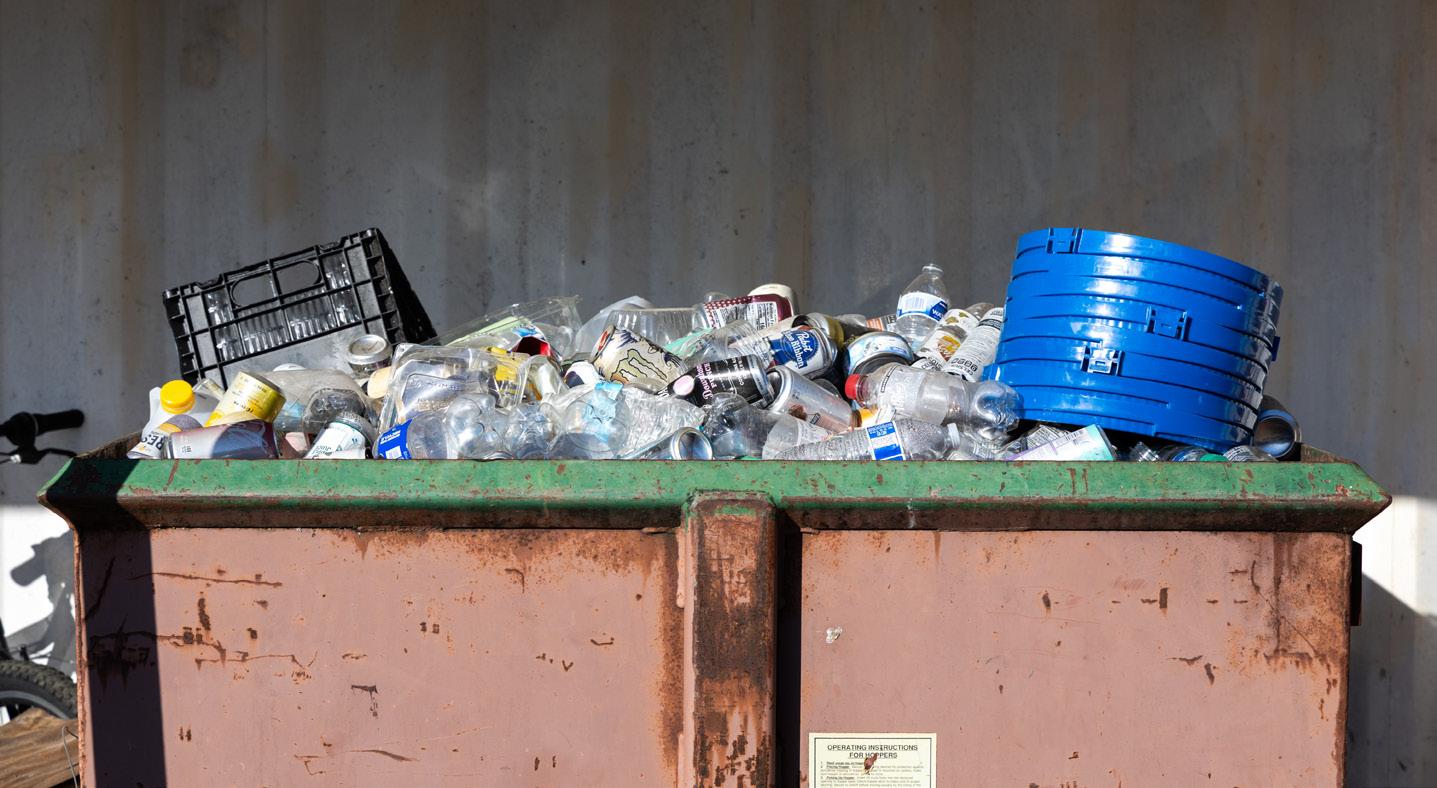
criticize for causing more waste contamination. When an item that is not recyclable or clean is recycled, the entire bin can be contaminated and has to be thrown in the garbage.
Single-stream recycling uses one bin for all recyclables, increasing the likelihood of contamination, while multi-stream recycling sorts items into different bins, reducing contamination risk. While a downside of multi-stream recycling is that it requires more labor, and therefore more costs and transportation, it has a contamination rate of 18%, as opposed to 27% for single-stream.
According to Aslan and Galloway, one of the biggest contributors to contamination on campus is the act of “wishcycling,” where people throw an item into a bin hoping it is recyclable.
In addition to contamination, the transition to SSC has caused more waste overflows.
“It’s just more work for everybody, because campus is gross too,” Grace Ritchie, a former employee of the Recycle Center, said. “Now there’s overflowing trash and recycling. It used to not be overflowing, because we would deal with it.”
deficit, the university has identified areas for budget cuts and made campuswide layoffs.
Aslan and Galloway expect to see significant savings from the new operations.
Bashkatova disagrees.
“BY SHUTTING DOWN THE RECYCLE CENTER, WESTERN HAS COMMUNICATED THAT THEY CARE A LITTLE LESS ABOUT THEIR WASTE.”
“That gets really dangerous, especially as we are in a climate crisis. It’s waybigger than, like, 25 students lost their jobs. It’s like, how do we value what we do with our waste?” Robinson said. “I think by shutting down the Recycle Center, Western has communicated that they care a little less about their waste.”
Although the future of the Recycle Center and Western’s promise for sustainable waste management is uncertain, students still find hope.
“I would like to think that the value of what the Recycle Center was is not gone forever,” Robinson said. “The university, as much as it sucks, sometimes has to bend to the will of their students. It’s just a matter of how strong the will is.”

Financial constraints were a factor in the Recycle Center’s reorganization. Currently facing a $23 million structural
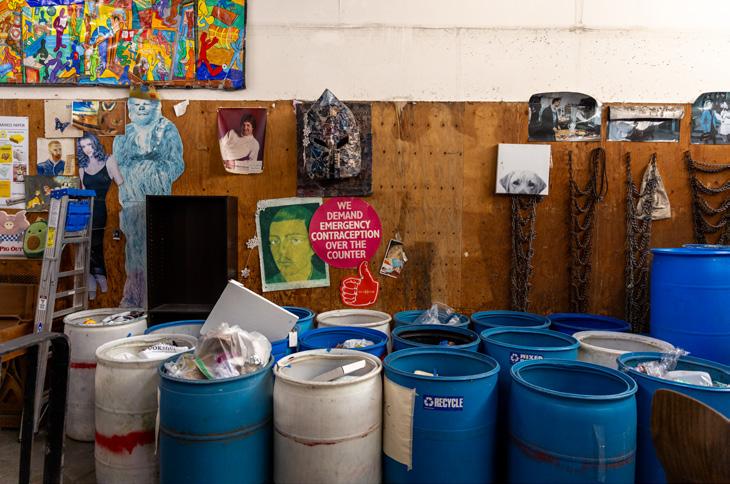
“We are almost certain that SSC has cost WWU a huge amount more than we ever did,” Bashkatova said in a text. “We’re literally recycling our blue barrels right now.”
Robinson argues that the transition to SSC creates a disconnect for students. Without a peer-led hub like the Recycle Center, students are a step removed from their waste and don’t know who is handling their recycling or why sorting matters.
Previous
Climate change is creating a new form of grief. Here’s how people are dealing with it
Ecological restoration capstone students and members of
BEAU JAY RECIEVED A NEW RESPONSE to their survey meant to gauge the emotions experienced by victims of the 2025 Los Angeles fires. Excitedly, they opened the letter, and inside were the torn up remnants of their survey.
Jay is a graduate student at Western Washington University researching the emotions experienced by people with animals who suffered through the Los Angeles fires earlier this year. This letter captures just one response to the disaster out of roughly 300 received.
“We know that disasters impact individuals in extreme ways,” Jay said. “It is a very extreme example of climate change.”
It has been 65 years since the publication and discovery of the Keeling Curve, a groundbreaking climate research concept linking human emissions with carbon concentrations in the atmosphere. As a result of these emissions, the oceans have acidified, glaciers have melted and wildfires have become more frequent, indicating an increasingly unstable environment.
Although countries have come together to remedy these threats, and progress has been made, their efforts have not been enough. Annual global emissions have more than doubled since the Keeling Curve’s discovery, and are continuing to grow. The
Intergovernmental Panel on Climate Change reports disaster on the horizon.
Entire generations have been raised with knowledge of the planet’s worsening health, and many are suffering from it. A 2023 Pew Research Center survey found that 70% of U.S. adults feel sad about what is happening to the Earth, and 53% are anxious about the future.
These emotions reflect a broader phenomenon known as ecological grief, or eco-grief, the human emotional response to ecological loss. The concept has received increasing attention in recent years. Searching Google Scholar for articles containing “ecological grief” before 2018 yields just 149 results; the same search between 2018 to 2025 yields more than 4,600.
Researchers Ashlee Cunsolo and Neville Ellis published a landmark paper on climate grief in the journal Nature during 2018. It paints a roadmap for future research into the subject and proposes three unique ways eco-grief manifests.
The first of these areas is grief associated with physical ecological losses. The people surveyed by Jay would fall into this category, having lost their homes, communities and pets to the January fires. Ecological disasters often lead to this form of grief, though
“THESE PEOPLE ARE SO UPSET WITH POLITICAL INFLUENCE, FIRST RESPONDERS DISASTER MANAGEMENT, THE DEFUNDING OF [THE FEDERAL EMERGENCEY MANAGEMENT AGENCY].”
other environmental issues such as deforestation or the extinction of a species can elicit a similar response.
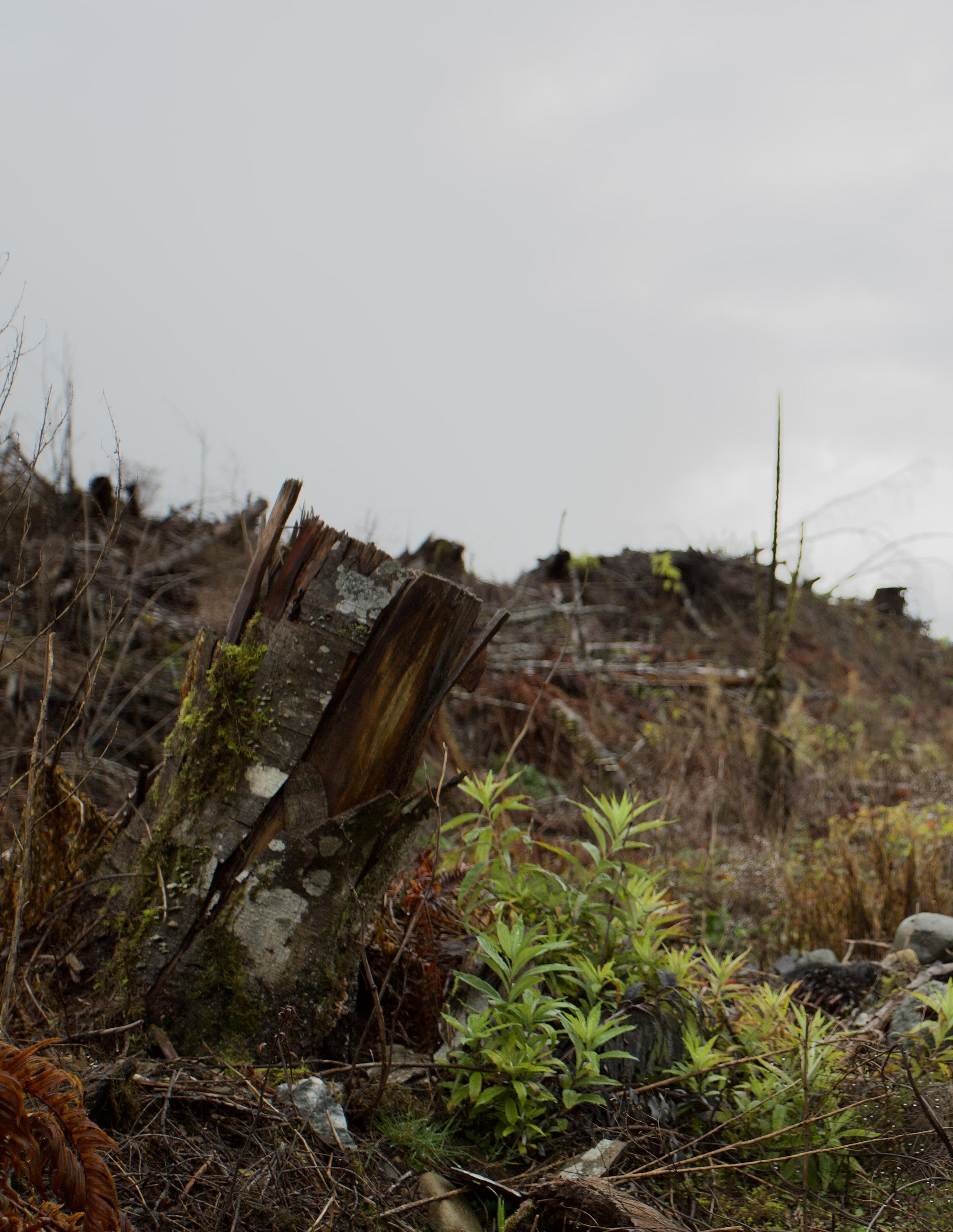
Second is the loss of environmental knowledge. Climatic shifts can dramatically alter environments, often causing the introduction of invasive species or loss of a keystone species. Individuals or communities with close ties to these ecosystems can then lose grasp on their understanding of their environment, and potentially their identity.
Joshua Porter, the director of Western’s Sustainability Pathways program for the Methow Valley, experienced this as he reflected on his time as a longtime resident of the Valley.
The Valley is a fire-adapted ecosystem, so fires have been a fact of life for Porter. Newer fires, however, expand rapidly and without warning, often in a self-perpetuating way, according to Porter. In the last ten years, he has been evacuated by wildfire four times.
“Something in the psyche shifts around the anticipation of fire season,” Porter said.
The third and most abstract form of eco-grief is grief associated with anticipated losses. In its reports, the Intergovernmental Panel on Climate Change clearly spells out the future we are going to face and the present we are set to lose. Given its immeasurability and
news and social media feeds convey feelings of loss at all times, according to Nicole Torres, the advisor to Western’s ecopsychology minor and assistant professor of human studies. Being so exposed to news of loss from all across the world can also lead to compassion fatigue or vicarious trauma, according to Torres.
“I don’t think our nervous systems have the capacity for that constant chronic flow of despair,” Torres said.
This despair is reminiscent of depression, according to Casiano. Feelings like hopelessness, helplessness, disillusionment and disconnection can be depressive symptoms.
Alternatively, ecological loss can trigger what Jay calls an ‘eco-rage.’ This rage can be directed at anything as people often look for something to grab onto, according to Jay.
according to Schnebly. Grief is the process of relearning the world and constructing new meaning. Pouring all of one’s energy into action is bound to cause burnout and could lock someone in a cycle of heightening grief.
77-year-old retired meteorological scientist Ray Kamada has experienced this burnout firsthand, studying atmospheric physics through his professional career, and spending much of his retirement fighting climate misinformation and promoting action. He did not want to ‘waste’ any more of the life he has left and has taken a step back.
“Six months to a year from now, I’m gonna be having a life, something kind of new for me,” Kamada said. Casiano advocates for radical acceptance of what is outside of one’s control, shifting focus onto what can be controlled. According to her, doing so can make the feelings easier to handle.
unpredictability, this form of eco-grief is particularly difficult to manage.
“I think our anxiety deals with the concrete world very well,” Ruby Casiano, a licensed psychiatrist and the assistant director and training coordinator at Western’s Counseling and Wellness Center, said. “That’s what we’re meant to be able to deal with, but our world is a lot more theoretical and amorphous.”
The act of grief itself is also theoretical and amorphous.
“When you talk about grief, it’s still this kind of abstract concept. You don’t really know whether you’re feeling it or not, what that process looks like, and there are different processes that can actually happen,” Risa Aria Schnebly, a doctoral student at Arizona State University researching ecological grief, said.
The ways eco-grief is processed vary as widely as the spectrum of human emotions, though two common responses are despair and rage. Contributing to this despair is the overwhelming access to climate information and news we have as individuals.
The problems instigated by climate change can feel insurmountable when
“These people are so upset with political influence, first responders, disaster management, the defunding of [the Federal Emergency Management Agency],” Jay said of those responding to their survey.
A Pew survey from 2023 shows that 79% of adults in the US feel “frustrated that there is so much political disagreement about climate change.”
Grieving looks different for everyone, and managing eco-grief comes with its own difficulties. The problems can feel too big for a person to feel capable of making meaningful change.
“During COVID I felt a lot of apathy, ‘there’s nothing I can do,’” Jay said. “I lost a lot of hope. I was extremely depressed and at a certain point I was like ‘there’s no point in being sad about this, I just don’t care.’”
Working in the environmental field and starting research on eco-grief has helped give Jay a sense of agency and hope. Porter finds this hope by engaging in action, working with the younger generations and looking to the longer term.
Leaning exclusively into action, however, can be an unstable coping strategy,
For some people, fighting the good fight is the only option. For others, like Kamada, they’ve done their part.
“I think that we’re gonna be too little too late,” Kamada said. “You know, you’re like 50, 60 years younger than me… I don’t wanna be you.”

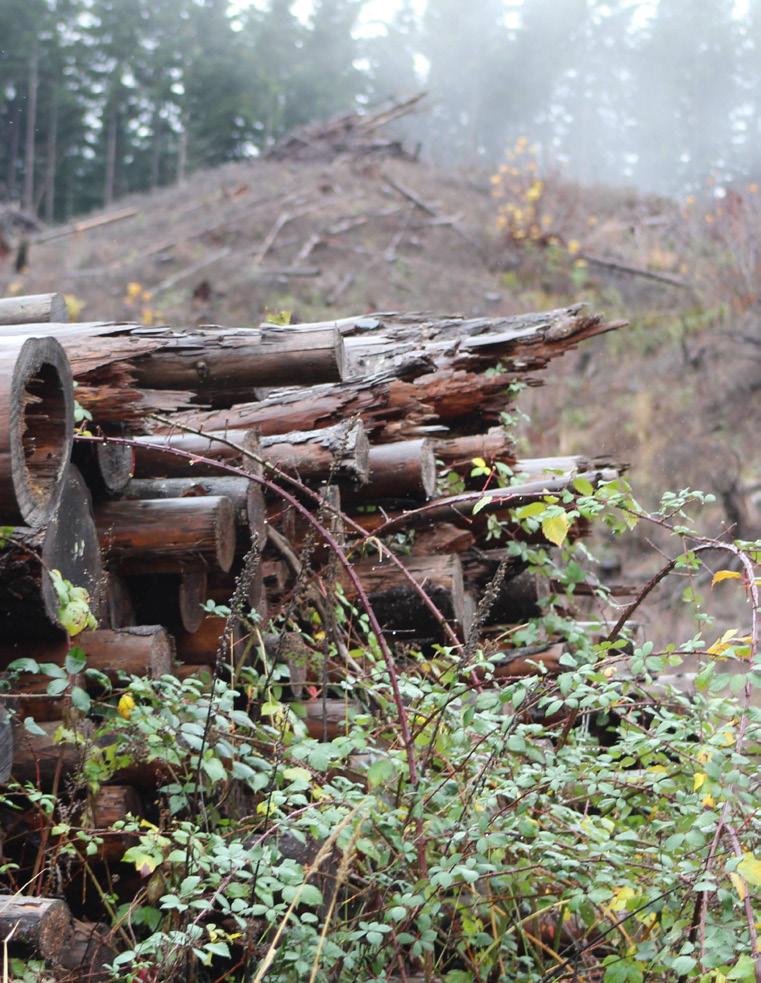
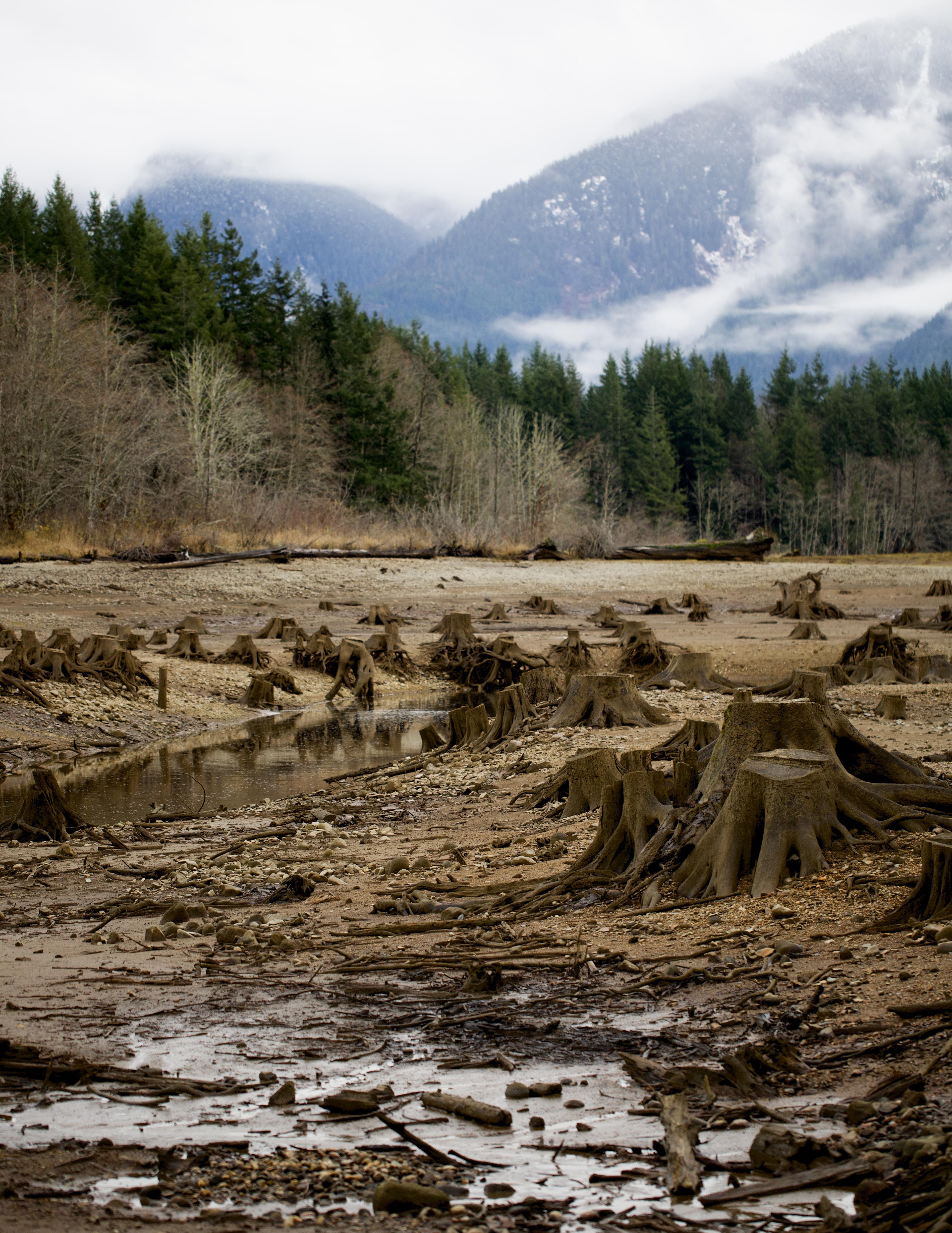
Editor-in-Chief
Tori
Advisor
Jeff
Managing Editor
Josh
Story Editors
Josh Maritz
Josh Mossman
Matthew Ackerman
Photo
Science
Public &
Writers
Photographers
Brooklyn “Bug” Santee
Jordan Brotamonte
Liam Britt
Dear Reader,
When you think of your community, who do you see? Is it your family, maybe some friends, perhaps your neighbors or classmates? How do we decide who is our community, and who is not?
Ultimately, we are all someone’s community. The fellow snowboarders you meet on the lift, the traders at a seed swap, even the legislators debating the best course of action for hungry sea lions. Every decision we make, place we visit, or event we join is a community. None of these exist in a vacuum, and we must make our choices knowing that they ricochet through our community — whether we envision ourselves as a part of it or not.
As you read this issue, I hope you consider what it means to be a part of something. No choice is a perfect one, but we can always evaluate the impacts we have on each other.
Happy Reading,
Tori Lehman
Winter ‘26 Editor-in-Chief
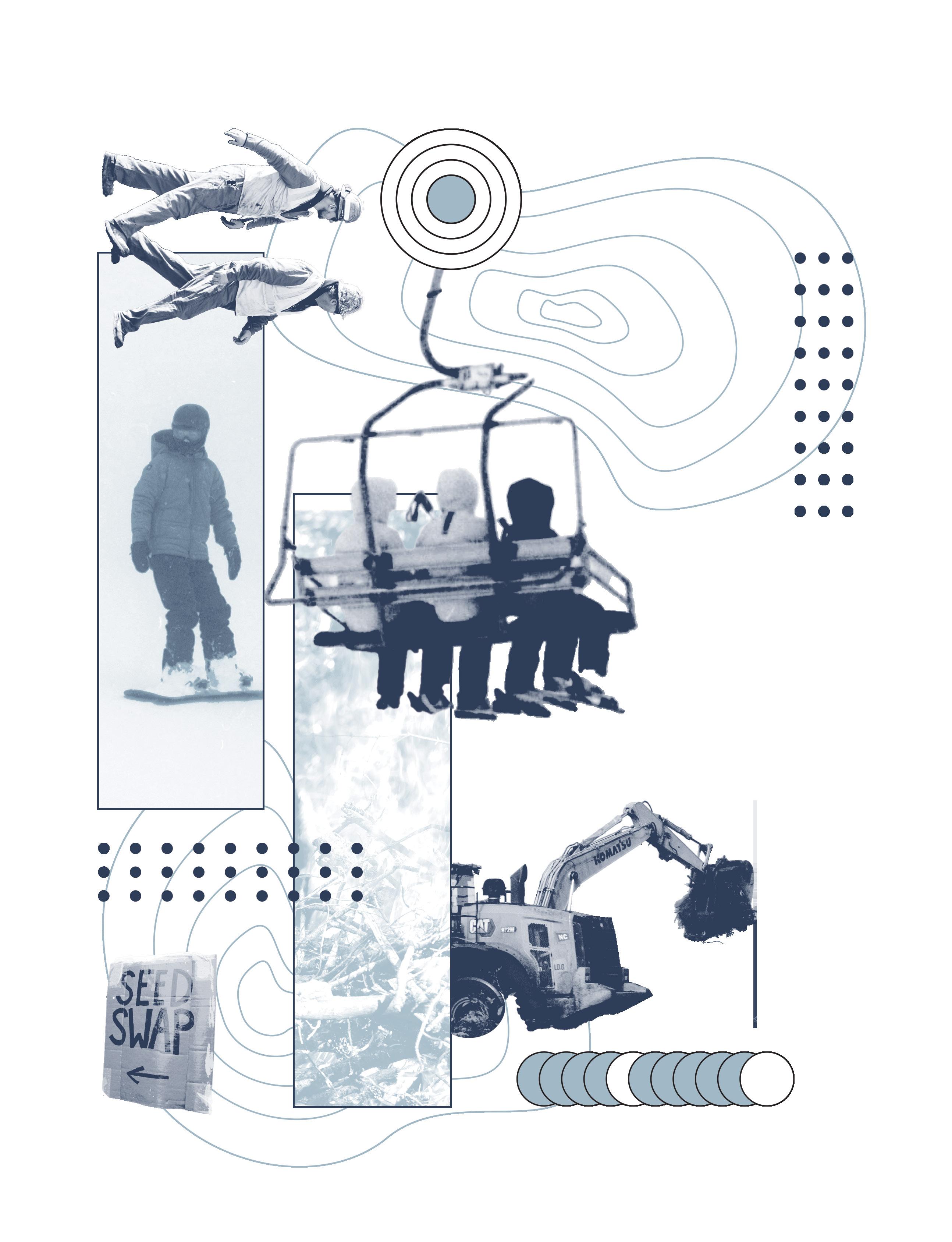
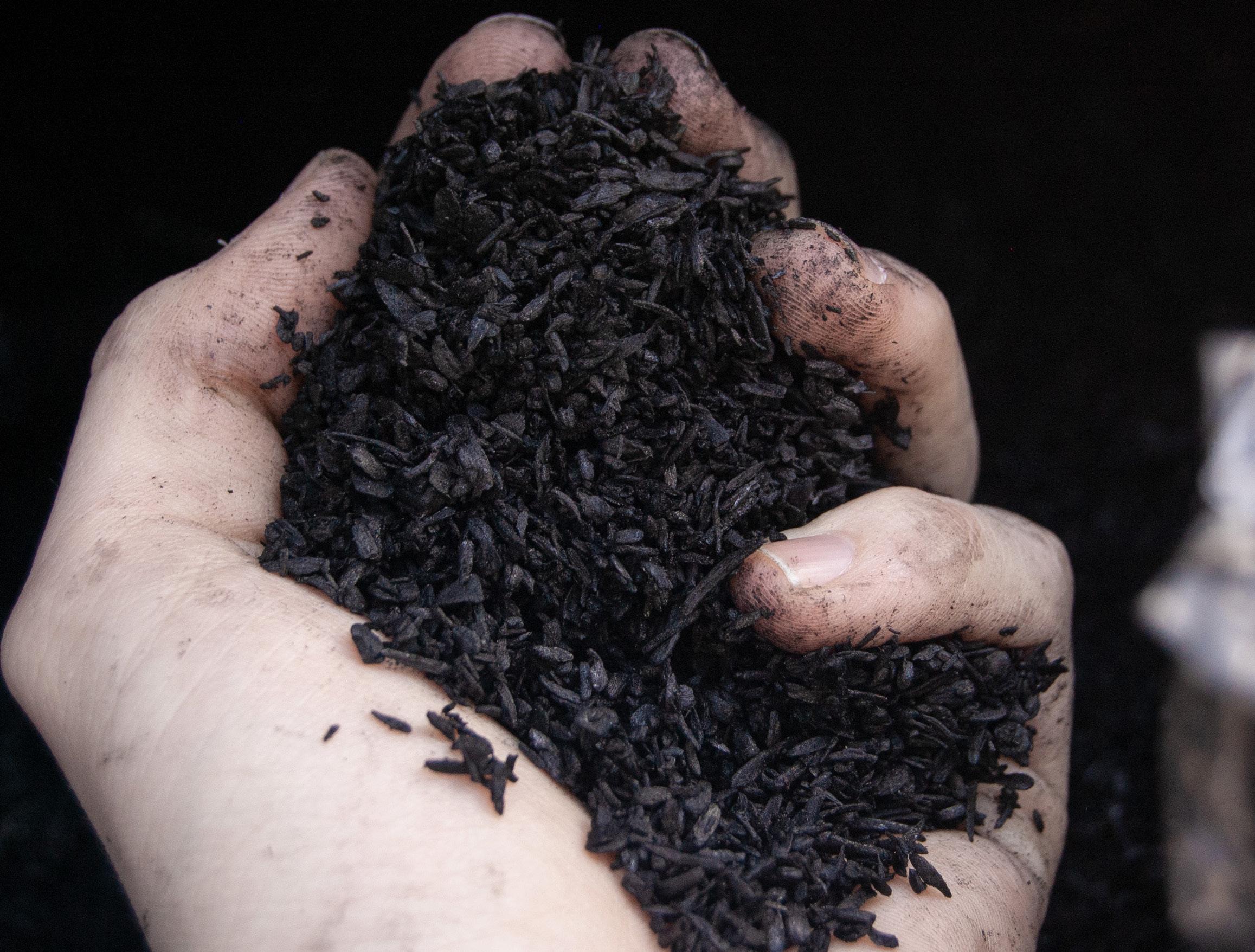
IT’S A CRISP WINTER MORNING on Lopez Island. Fire pours from the top of a rusty kiln, and branches are fed into the blaze like a dissolving game of Jenga. Beneath the flames, a powdery charcoal known as biochar is gathering at the bottom of the kiln.
Jelte Wilde, an arborist and forester, works with biochar through his business, Wilde Steading. With his small crew, he trims and maintains forests throughout the San Juan Islands. They turn the piles of organic debris into biochar, scattering it on the forest floor.
In 2021, Wilde started spreading the powder around his five-acre backyard. Half a decade later, the area is thriving.
“The most noticeable thing was the mycelium diversity,” Wilde said, noting the variety of mushrooms that have started to sprout up in the past five
years. “I have seen white chanterelle on some of the other islands, but never on Lopez.”
Now, they’re in his backyard.
Piles of organic matter are normally left to decompose, releasing harmful greenhouse gases into the environment. But biochar offers a better solution, sequestering carbon before it can be released into the atmosphere.
Biochar is created through pyrolysis, a process that burns organic waste at a high heat and low oxygen inside of a large kiln. As the organic matter breaks down, the flames trap much of the carbon. The condensed carbon acts like a sponge, capturing water, nutrients and microbes, all of which play a huge role in fostering plant growth. After the burn, the kiln is flooded and the biochar is quenched to prevent it from becoming ash.
Local communities are using new tactics to fight carbon pollution
Kulshan Carbon Trust, a nonprofit in Northwest Washington working on climate change solutions, has worked with farms to test out kilns and apply biochar on their crops. Despite high prices, subsidies and grants are keeping it affordable for local businesses.
“We’ve shifted from seeing biochar as a first solution to really our primary solution,” Gabriel Travis, director of operations at Kulshan Carbon Trust, said.
In 2024, the carbon trust partnered with Skagit Soils, a composter in Mount Vernon that produces biocharenhanced soil. Though it’s only a small part of their operation, Tevon Lautenbach, the General Manager of Skagit Soils, wishes he could integrate it into all of his compost.
“If an operation like ours were able to produce biochar on site ... we could put
Max
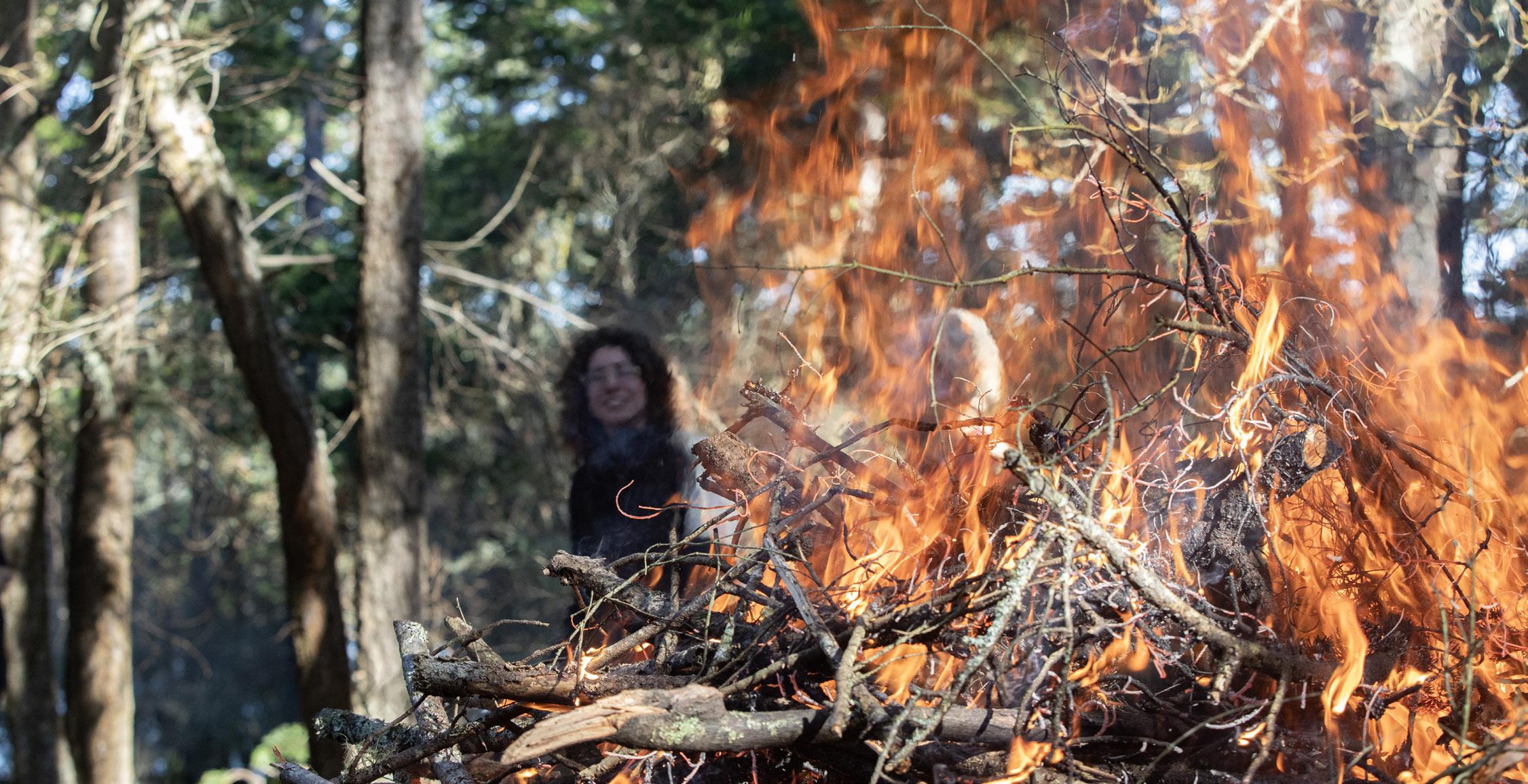
biochar in all of our compost instead of just select batches,” Lautenbach said. “It just creates a way better product.”
Skagit Soils worked with Kulshan Carbon Trust, designing an allaround compost for both residential and commercial farming. Farms that have worked with Skagit Soils’ biochar-enhanced blend have seen a difference in their crops, and are happy to continue using it despite the price tag, according to Lautenbach.
“WE’VE SHIFTED FROM SEEING BIOCHAR AS A FIRST SOLUTION TO REALLY OUR PRIMARY SOLUTION.”
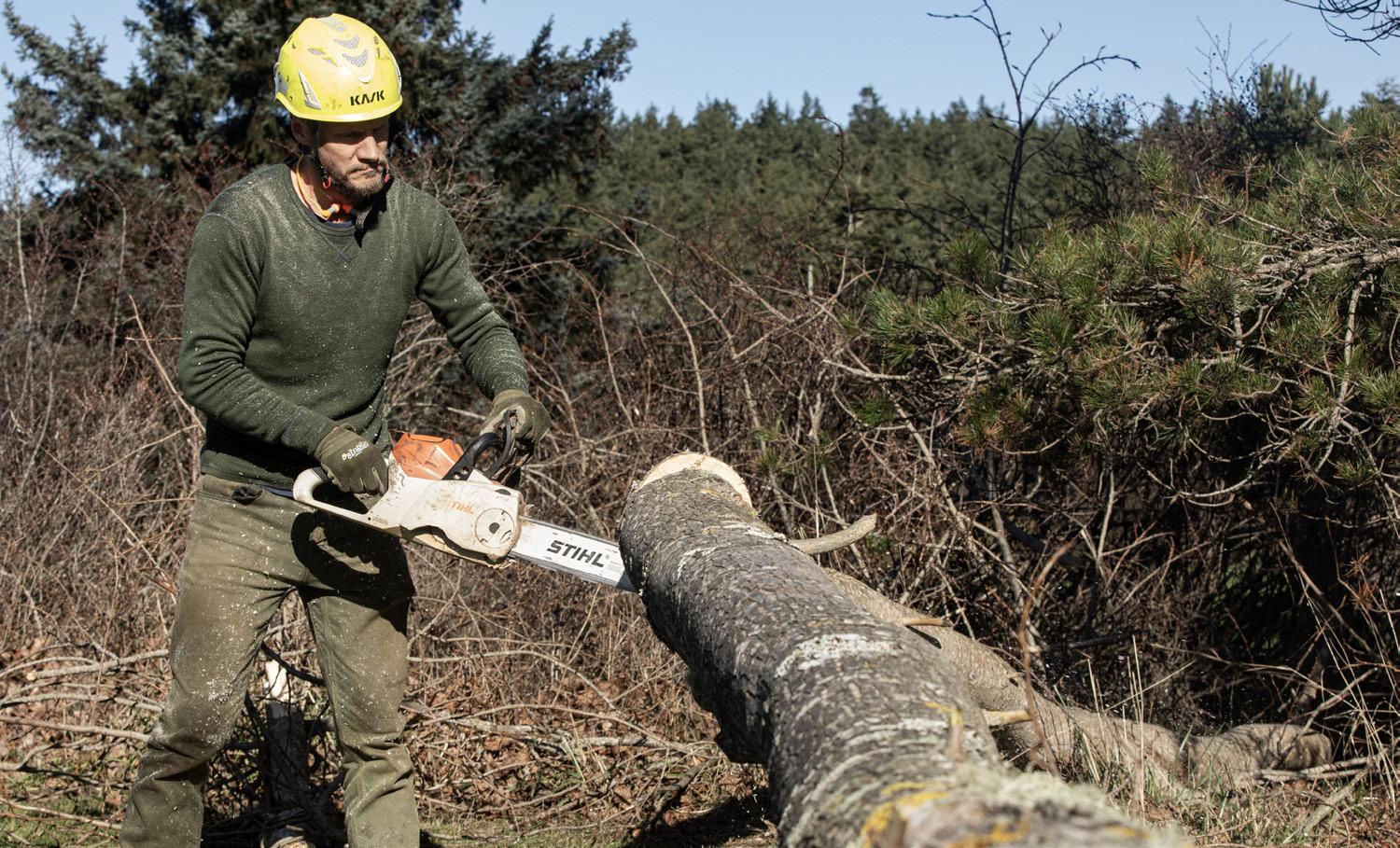
“It’s like a condo for microorganisms,” Lautenbach said.
Many smaller farms are finding inexpensive ways to integrate biochar. East of Eden Farm, a community-based farm north of Bellingham, has been at the forefront of this exploration.
In June of 2025, East of Eden Farm connected with MYNO Carbon, a forprofit organization focused on largescale biochar production. Thanks to a grant from the Department of Commerce, they were able to source the farm 30 yards of biochar. That’s far more than the farm needs, according to Samuel Janis, co-founder of East of Eden Farm.
“As a little guy looking for a few yards, there were plenty of companies looking to sell me biochar, but just not enough of a market,” Janis said. “The fact that I got 30 yards for free is sick, though.”
With such an abundance of biochar, Janis decided to make their excess stock available to anyone in need. It can be difficult to get your hands on inexpensive biochar if you’re not connected to biochar-friendly organizations, but East of Eden Farm made it as easy as stopping by with a bucket and filling up.
Although it’s still being introduced to a wider market, the impact that biochar could have is clear. There’s no reason that farmers shouldn’t use it in soil — it’s easy and environmentally beneficial to produce, and industries are finding innovative ways to incorporate the powdery charcoal.
“It’s reducing the amount of fertilizer that we need to use. It’s reducing the irrigation needs. If we’re starting to see that there’s a lot of supply of biochar, you can start adding it to building materials like concrete and asphalt,”
Travis said. “The net impact is even more significant than just the biochar carbon sequestration itself.”

Birds sit atop rows of compost while a wheel loader passes at Skagit Soils Inc., in Mount Vernon, Wash., on Feb. 19, 2026. Though a popular product, biocharenhanced compost only makes up a small portion of their stock. // Photo by Liam Britt
“THERE’S NO REASON THAT FARMERS SHOULDN’T USE IT IN SOIL — IT’S EASY AND ENVIRONMENTALLY BENEFICIAL TO PRODUCE, AND INDUSTRIES ARE FINDING INNOVATIVE WAYS TO INCORPORATE THE POWDERY CHARCOAL.”
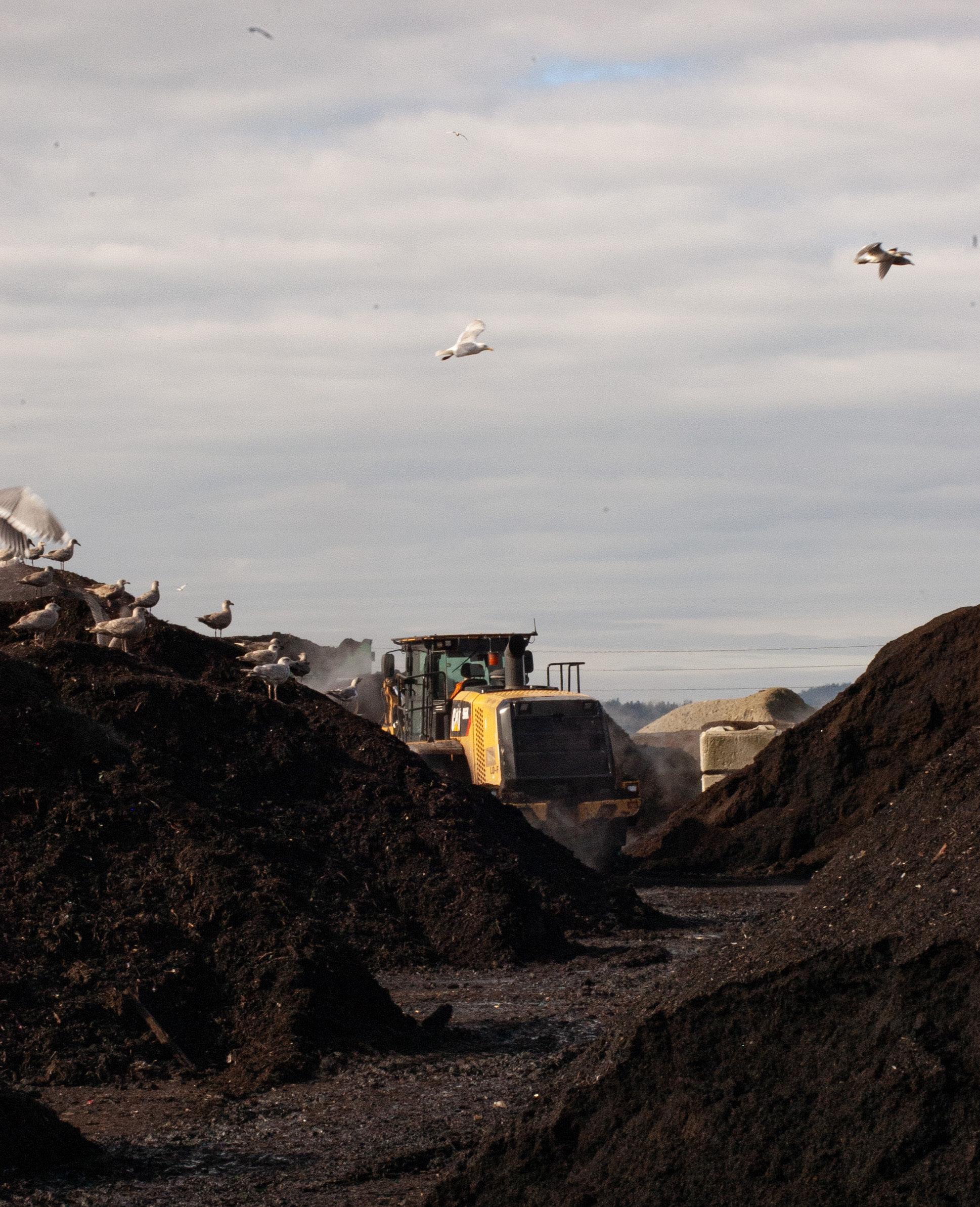
Jelte Wilde leans against the largest of his three flame-cap biochar kilns, posing with his dog, Tesla, at a job site on Lopez Island on Feb., 10, 2026. He’s designed his kilns to be portable, though many kilns require machinery to move from site to site. // Photo by Liam Britt
Four years after the devastating 2021 floods, Whatcom County residents rally to recover once again
Cars pass by a field with lingering flood water along Main Street in Nooksack, Wash., on Feb. 2, 2026. When the flood hit, cars were driving through over a foot of water to evacuate the damage. Many roadways were closed due to infrastructure damage and were not opened until inspections determined whether they were safe to drive on. //
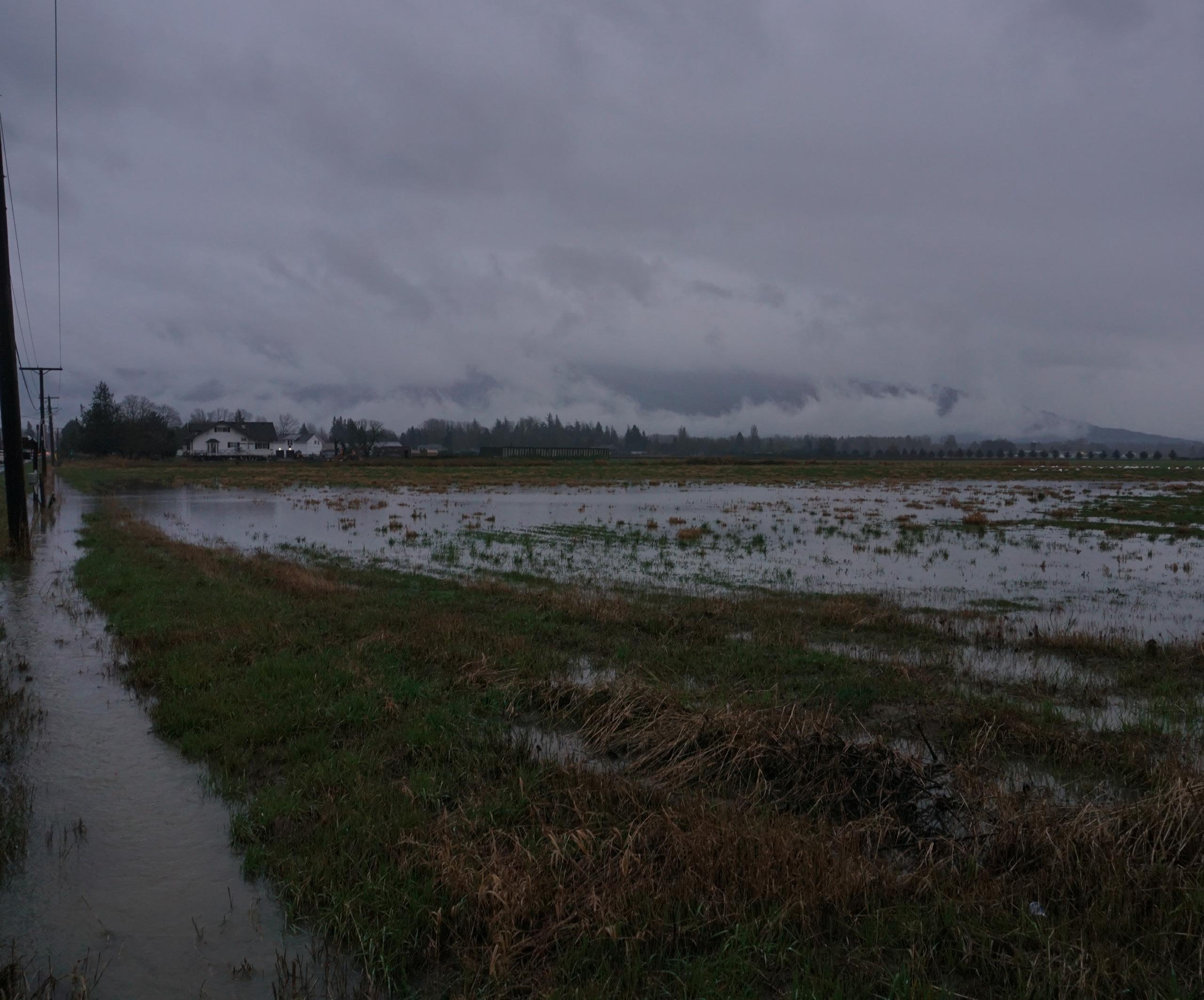
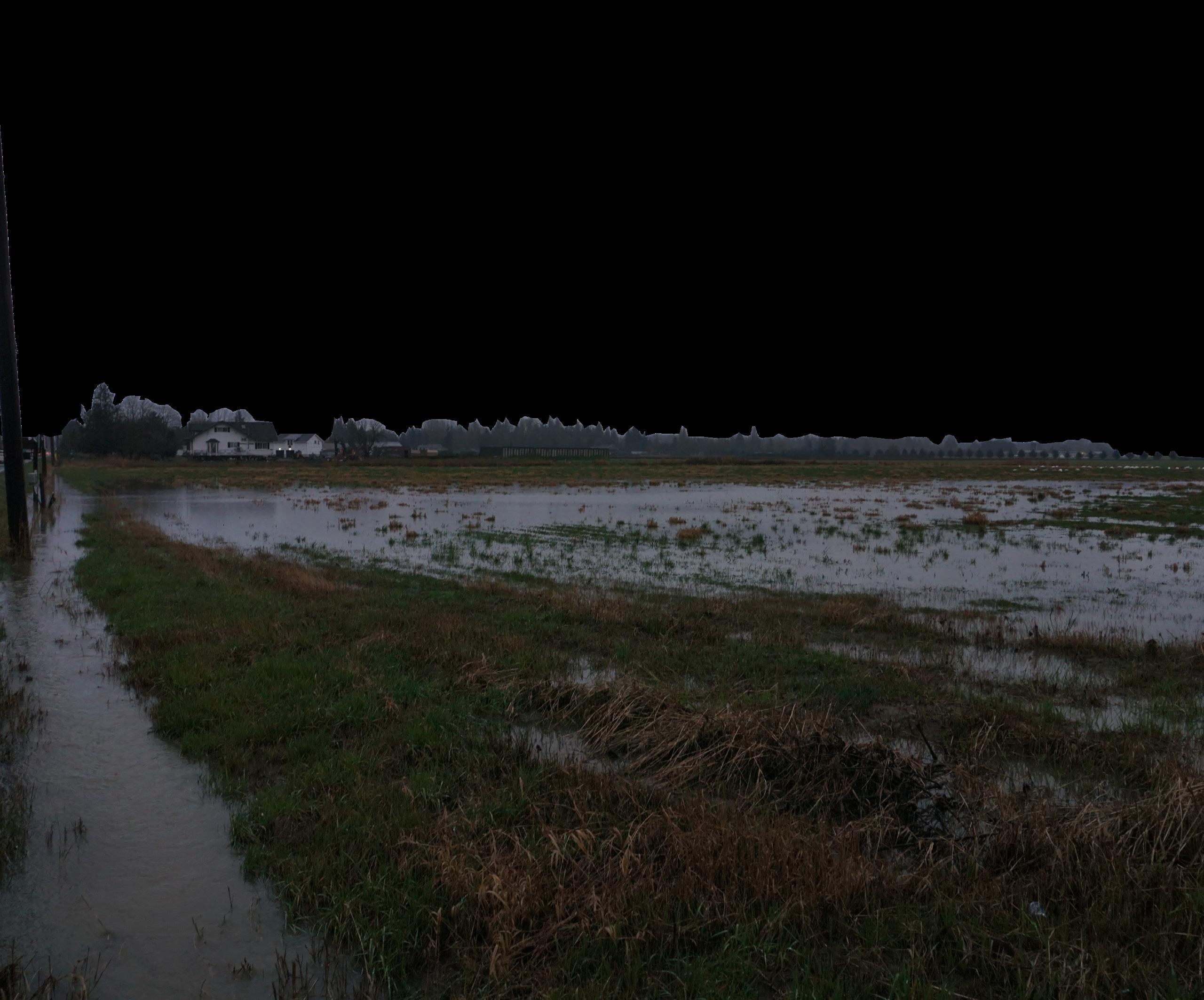
IN DECEMBER 2025, Morgan Conner got off a grueling 12-hour shift when she heard heavy rainfall on the drive from Blaine to Everson. Coming home, she checked the city’s river level gauges hourly.
Five hours later, Conner and her boyfriend awoke to a foot and a half of water almost reaching their porch. They had 20 minutes to evacuate their home.
“We took off, driving through Main Street. At that point, the river was also rushing in,” Conner said.
Once she evacuated to her dad’s house, Conner lay awake, and thoughts of her home being flooded plagued her dreams as she waited to see its condition.
“We got pictures from my neighbors of what the house looks like. It kind of looked like it was in a lake,” Conner said.
Like Conner, many families in Whatcom County were forced to evacuate as their homes and neighborhoods were submerged in floodwaters. Cities like Sumas, Everson and Nooksack were still recovering from the previous catastrophic floods in 2021, of which the physical and emotional damage still lingers today.
Colin Buckley, the principal of Nooksack Valley High School, revealed that during the November 2021 floods, Sumas Elementary lost its entire school building. Thankfully, the district had a new elementary school being built at
the time, so students were distributed amongst other schools until the construction was completed.
However, the recent floods also brought old feelings to the surface, as students faced old wounds that reopened from the disaster. Buckley noticed that if it was raining hard, Sumas Elementary students would have a hard time sleeping through the night. One student in particular fell asleep at school and later confided in the principal about the recent disaster.
“[A student] woke up, came into my office, and he’s just like, ‘Mr. Buckley, did you know that my Nana said that when you’re stressed, you don’t sleep very well?” Buckley recalled. “He’s telling me
about how [his family] lived in Sumas. They had water up to his chest. They had to get out of his house, and they lost all his stuff.”
Rebekah Paci-Green, a Western Washington University assistant professor of Environmental Studies in natural hazards planning and disaster risk reduction, highlighted how the three towns impacted are rural and small town areas of Whatcom County.
“Their vulnerability is heightened, as is that of many communities in rural areas, because there’s often less tax base and less resources to do mitigation projects that would reduce flooding,” Paci-Green said.
Despite the damage caused by the 2025 flood, the Sumas, Nooksack and Everson
communities set recovery efforts in motion with the help of local nonprofit volunteer organizations, such as the Whatcom Long Term Recovery Group.
Founded by the group’s director, Kyle Christensen, who was also mayor of Sumas in 2021, the group was formed initially as a response to the 2021 floods.
“We realized right out of the gates, because we hadn’t had that big of a disaster for many years, that government support is kind of slow coming in,” Christensen said.
“It’s this idea of meeting unmet needs and gap funding and helping people because it takes a lot of time for that government funding to trigger and become available for families.”
The day after the 2025 floods, the group was on the ground coordinating
volunteers and distributing immediate needs to families, such as water, food and blankets.
The volunteer group provided forms and a tracking system for individuals to fill out so that they could best prioritize what their immediate needs were.
“That was [why] the first outreach that was so important, to find out: what families needed help? How do we get back in touch with them? Are they unhoused now? What are their needs?” Christensen explained.
Similarly, the Recycling & Disposal Services in Ferndale collected waste from flood victims for a month free of charge.
William McCarter, manager of the local transfer station, explained that during
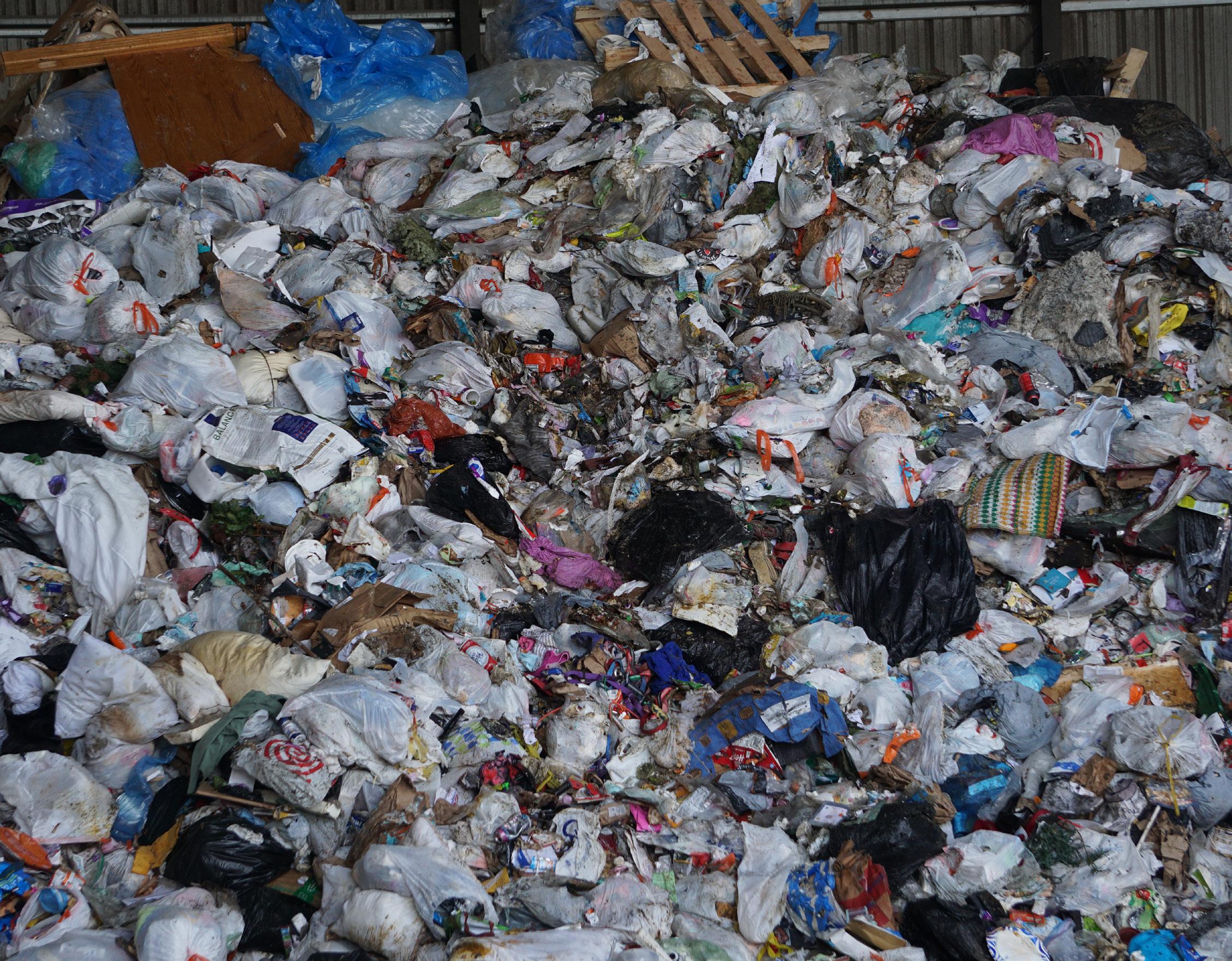
A close-up of flood and trash debris at the Recycling & Disposal Services in Ferndale, Wash., on Feb. 6, 2026. When the flood hit Whatcom County, the RDS site did not have an end date for free disposal, causing individuals to rush to remove debris from their homes quickly. The site experienced a lot of tonnage in the early recovery days until it began to slow down later into the following months. // Photo by Jordan Brotamonte
the days following the heavy rainfall, the waste came in by 40-foot-long dump trucks collecting debris from the areas most impacted by the flooding.
A month after the flood’s passing, the waste disposal site had more than 1200 tons.
“The 1200 [tons] was within the span of a month, but I would say more than half of it came in that first week after the flood,” McCarter said. “Everyone’s just hustling to try and get all that wet debris, mainly drywall insulation, out of their homes right away before the mold sets in.”
While the recovery and immediate response to the floods dwindle, questions arise about the estimated timeline for when the communities will heal and transition back to their original state.
But the recovery process takes time, according to Matt Klein, the deputy director of the Division of Emergency Management for the Whatcom County Sheriff’s Office — even more so as the county is finalizing aid and repairs from the 2021 floods.
and it’s compounded by the fact that we’ve had this happen multiple times in recent memory.”
According to Klein, the Whatcom County Sheriff’s Office closed out state-level grant assistance for home repairs for the 2021 flood on June 30, 2025.
“There are homes in this flood that took damage while people were still repairing their homes from the last flood,” Klein said.
In Klein’s role as deputy director, he encourages members of the public to become more acquainted with the natural hazards in the area. The Whatcom County Sheriff’s Office has an all-hazards approach to public education, and even has its public information officers educate the community on the risks inherent to the county.
Paci-Green suggests a similar approach in helping the community prepare for future flooding.
“So what needs to happen? Participatory planning processes that draw out the goals and values of the community,”
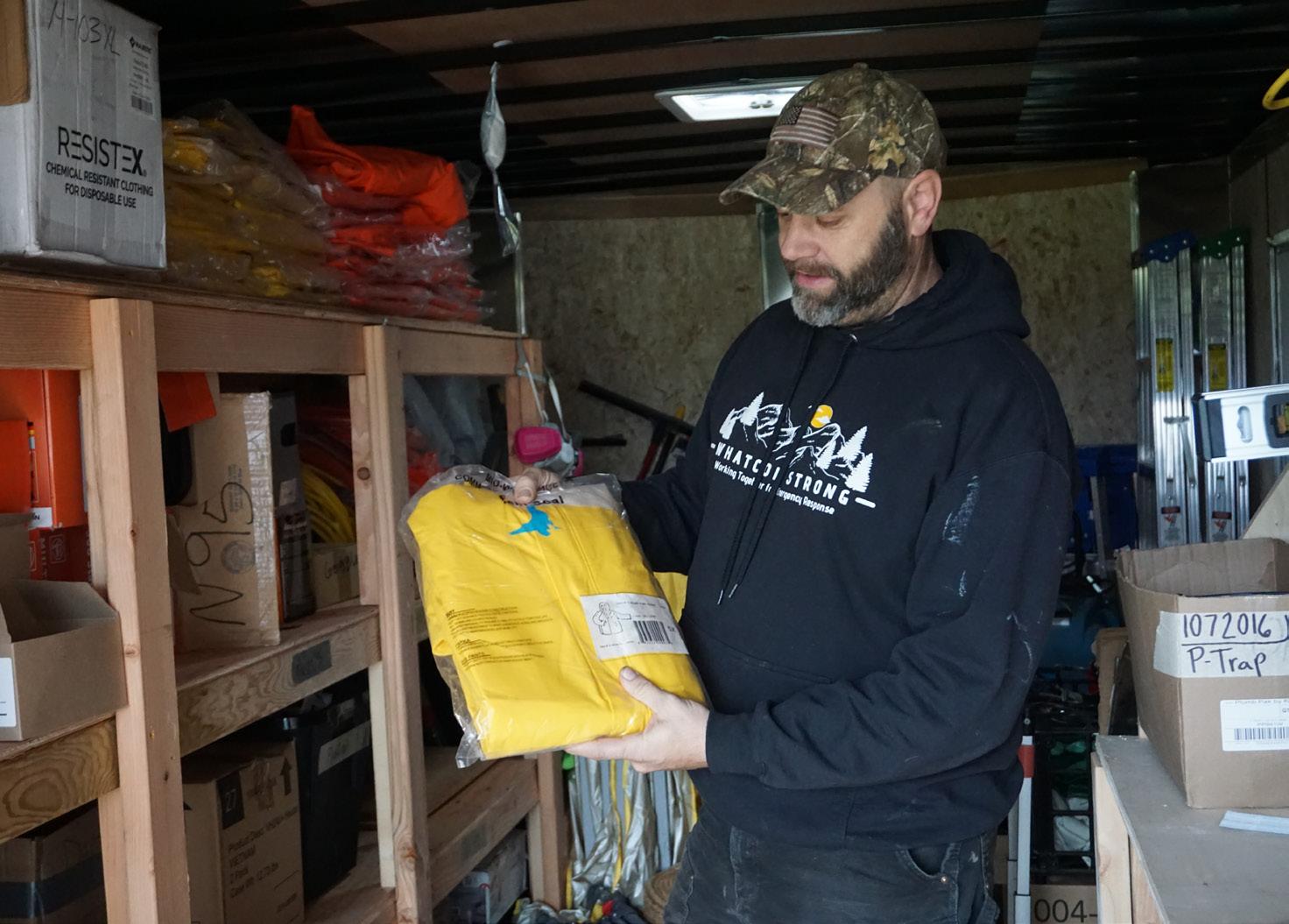
volunteers worn during dispatches to people’s homes
Wash., on Jan. 29, 2026. Volunteers at
“I’ve worked a lot of disasters, and this disaster was significant,” Klein said. “The impact on our community is extensive,
wear these during their dispatches to help remove flood debris and take out sheetrock and flooring to get airflow in the homes so that no longterm mold or mildew issues in the walls or flooring would form from the flood waters.
Paci-Green said. “But also, a really honest conversation about what the floodplain really is and is likely to be in the future.”
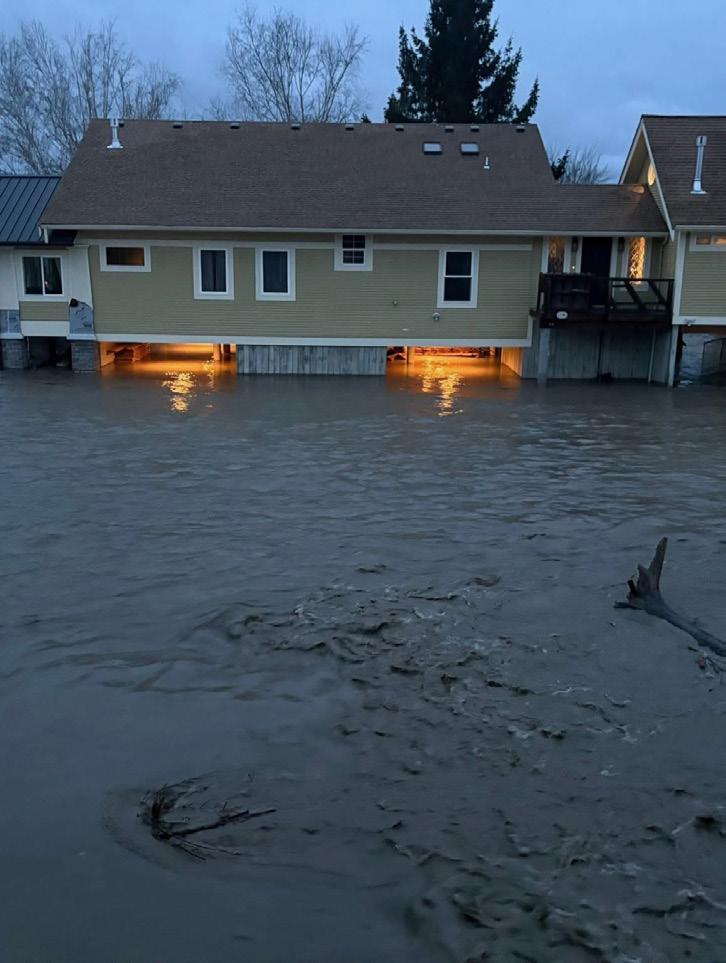
A Nooksack, Wash., home surrounded by floodwater on Dec. 11, 2025, and two months later on Feb. 2, 2026. After the 2021 floods, the homeowners elevated the house 8 feet and had about 2 feet to spare. In the second picture, the home did not receive any damage, but lost property below the home and construction materials that were from rebuilding their home from the 2021 flood. // Top photo courtesy of

While Whatcom County and the cities of Sumas, Everson and Nooksack continue to navigate their recovery, the collective support and effort from residents to help each other when facing the disaster have made the community more united.
“I think our community is resilient when we come together and support each other,” Klein said. “Which is what we saw throughout this recovery process.”
Volunteers at the swap share their seed saving and cultivation knowledge.
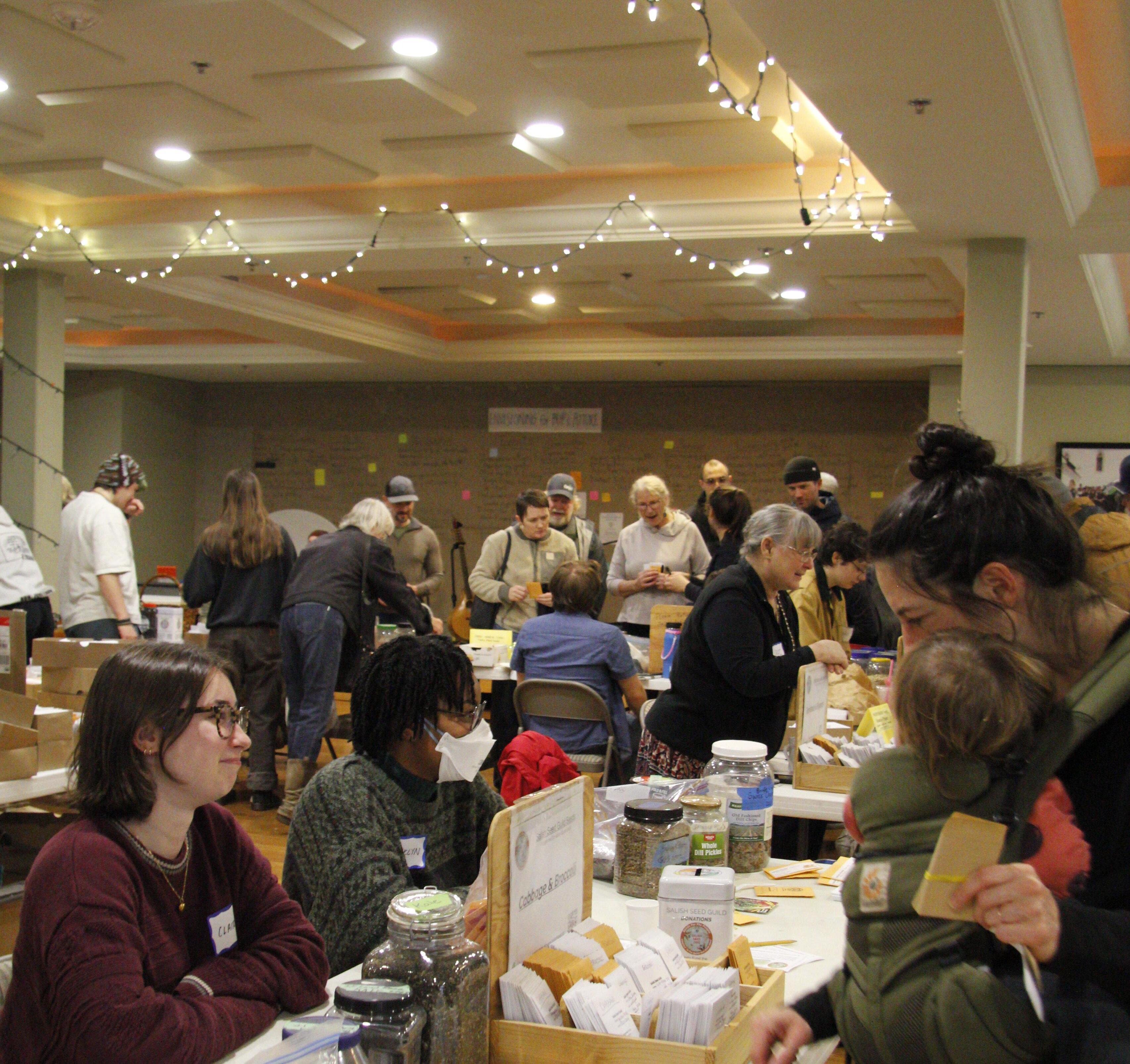
Seed
saving as a key to a more resilient community
IT’S A COLD, WET SATURDAY afternoon, but inside the Bellingham Unitarian Fellowship, it’s cozy and warm. A handwritten sign directs attendees of the annual Salish Seed Swap down the stairs and into the basement. Inside, they find twinkle lights strung across the low ceilings, giving the room a comforting glow. A guitarist on a small raised platform opposite the entrance strums chords as people shed their layers and shake out their damp hair. A table is laden with snacks, bowls of chips and cut fruit. But people aren’t here for the free
salsa or the quaint ambiance — they’re here to swap some seeds.
All around the room, folding tables are piled high with seeds. Some come safely tucked into paper packets, neatly labeled with their name and species; others are housed in repurposed yogurt containers or peanut butter jars with strips of colorful duct tape for labels. Folks wander from table to table, asking questions, sharing gardening tips and debating the best variety of tomato.
Renée Soule, a home gardener, came to the swap armed with tall rubber rain boots and a wicker basket to carry her seed selections. She’s on the hunt for beans, but the deeper reason she keeps coming back — this will be her third year at the swap — is the sense of community.
“It’s one of the places you’ll find resilience,” Soule said. “Seeds are a potent symbol of hope in today’s world.”
Organized by the Salish Seed Guild, the Salish Seed Swap has been happening in the Bellingham community in some capacity since 2009. Year after year, farmers, gardeners, and anyone interested in learning more about seeds can attend to swap, educate and learn. There is a suggested donation of $10 at the door, but no one is turned away for lack of funds.
Brian Kirkvliet co-founded the Salish Seed Guild along with Krista Rome. It is now an official organization, housed under the umbrella of the nonprofit Sustainable Bellingham, but it’s rooted in the idea of a community seed swap.
“People grew out seeds, they saved seeds, they brought them together, and they swapped. So that went along for a little while, but it was the same five to eight people that would bring seeds, and like hundreds of people would show up,” Kerkvliet said. “It wasn’t a seed swap, it was a seed grab.”
To move toward a true swap, Kerkvliet and other guild members started
the Salish Seed Garden at Kerkvliet’s Inspiration Farm about six years ago.
“It was largely kind of a response to COVID, because we realized a lot of seed companies were out of seed, or they were backlogged. They couldn’t ship seed,” Kerkvliet said.
With their new space, the guild could host work parties and educational workshops where people could learn to grow, harvest and process seeds to preserve. More than 150 volunteers showed up throughout the growing season to help plant. Seeds grown at the garden were distributed back into the community through swaps, seed libraries and food banks.
Since the founding of the seed garden, the guild has distributed between 5,000 and 7,000 packets of seed each year, and they’re not planning on slowing down anytime soon. The Salish Seed Guild is just one of hundreds of organizations nationwide working to preserve locally grown, openpollinated seeds.
Seeds local to a specific region are adapted to the soil and climate, making them more resilient. They also provide better food for local pollinators and other wildlife than non-native plants, encouraging biodiversity.
Open-pollinated seeds can be crosspollinated — via pollinators, wind or water — or self-pollinated. They can be collected at the end of the growing period and planted again next year.
“That’s what farmers did forever. You grow some, you eat some of the plants, you save some for seed, and then you plant again the next year,” said Terri Kempton, manager of The Outback Farm and a Western Washington University professor. “But along came hybrid varieties, which are generally sterile.”
Hybrid seeds are a deliberate cross between two parent varieties of the same species. These seeds are enticing to farmers because they produce big yields and uniform, high-quality crops, but the seeds can’t be regrown. Hybrids contain genes from both parent varieties, so there’s no telling what the seed will
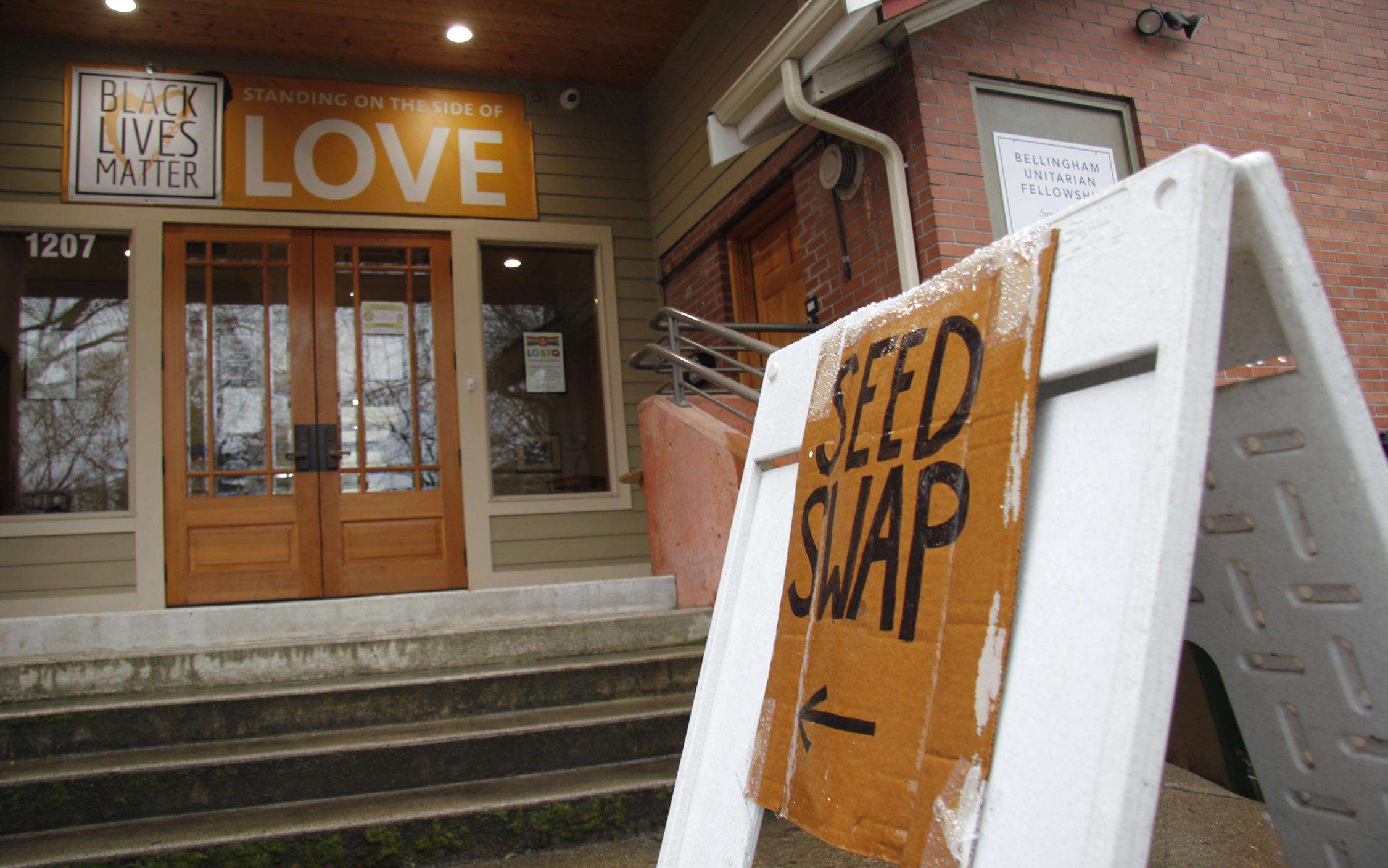
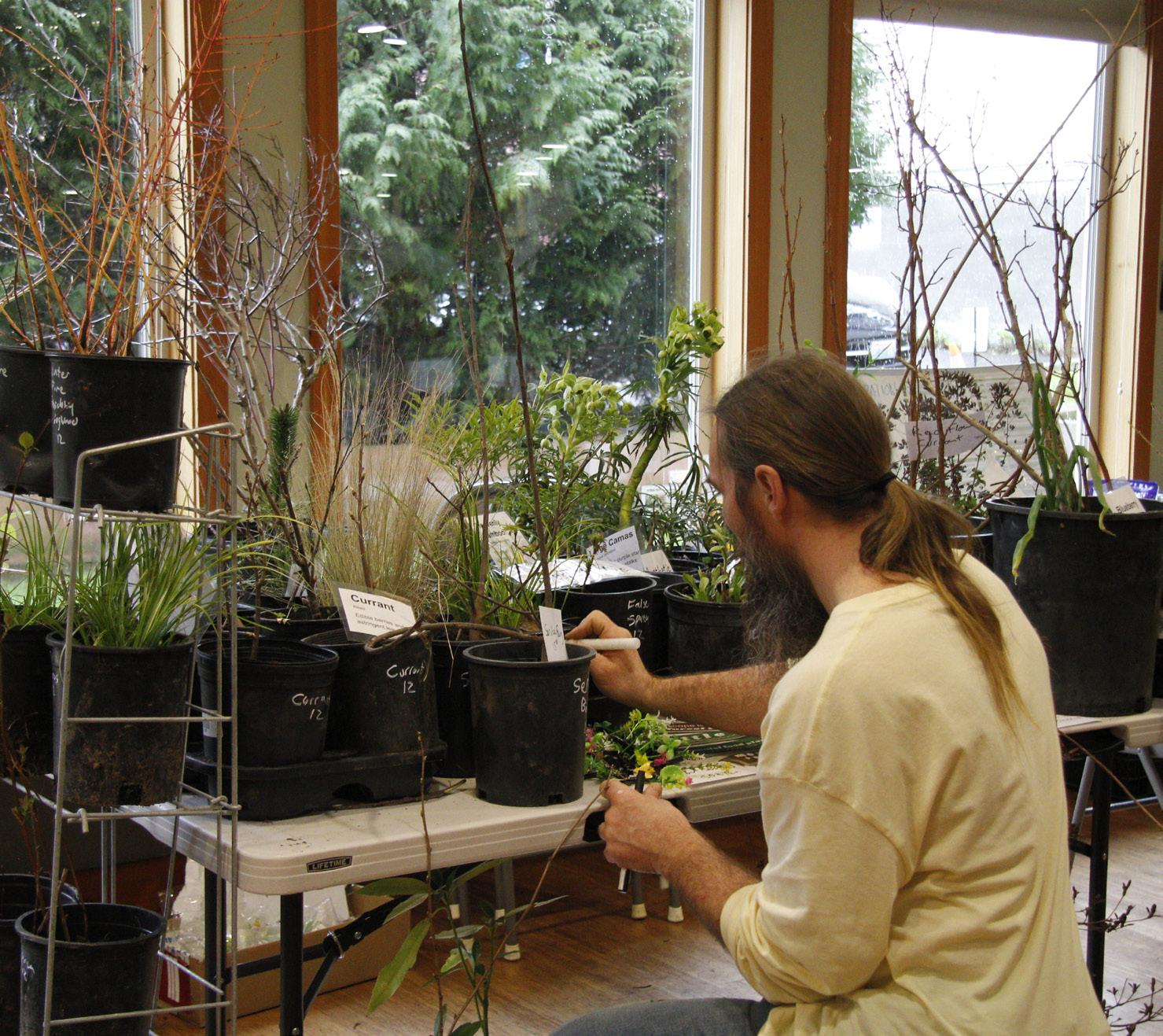
produce, if it grows at all. This means that farmers who plant hybrids have to buy new seeds after every harvest.
“What a clever thing for seed companies who want to sell you seed every year,” Kempton said. “Having the ability to grow and save your own seed year after year after year — that’s a huge, powerful ability.”
Yet another type of altered seed is genetically modified seeds, or GMOs. These are seeds that contain DNA that has been manipulated in a lab.
Compared to hybrid seeds, which replicate natural reproductive processes, GMOs allow scientists to sidestep any natural barriers and combine genes from completely different species. GMO crops are often modified to be resistant to pests or herbicide-tolerant, making them enticing to commercial farmers.
Despite these advantages, GMOs have a devastating impact on biodiversity. In the past 100 years, an estimated 75% of
plant genetic diversity has been lost. In 2024, 186.3 million acres of genetically engineered crops were planted in the United States, covering more than half of all American cropland. The popularity of these herbicide-tolerant seeds has also led to the widespread use of toxic chemicals, which can harm native plants and lead to the emergence of herbicideresistant species.
These agricultural innovations have taken thousands of years of seed control out of the hands of farmers and led to a consolidation of power within the seed industry. Today, just four companies control an estimated 60% of the global seed supply. Seed saving is not just about preserving local food resiliency — every seed saved is part of a larger, global fight against corporate control.
Mike Bollinger is the executive director of the Seed Savers Exchange, a national non-profit organization that has been working to preserve seeds since 1975. Similar to the Salish Seed Guild, the non-
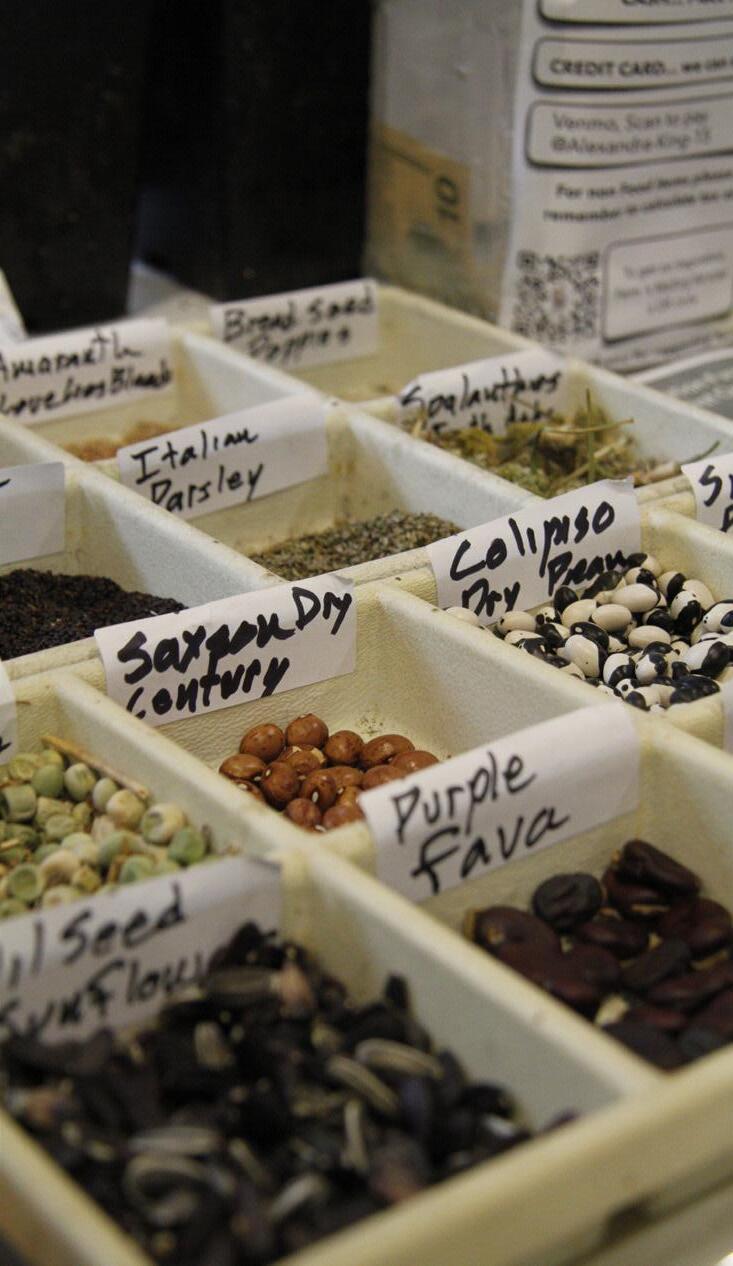
profit started as a member-to-member network of seed exchanges.
“Across the country we see a lot of small seed companies and regional seed initiatives popping up,” Bollinger said. “And I think that there is an incredible amount of community energy in the seed space right now.”
This energy can be felt at cozy community seed swaps. It can be observed in home gardens, in jam jars filled with preserved seed that line the shelves of backyard sheds. It’s on family farms, where farmers are attending workshops to learn how to save their own seed and investing in organic, open-pollinated varieties.
“We evolved to love seeds because they were survival,” Kempton said. “So we still feel that — even if it’s something we don’t know how to vocalize — but there’s something comforting about holding seeds, because we understand that we’re holding the future. Seed really is a miraculous vessel.”
Controversial cullings at Bonneville Dam pit two threatened species against each other
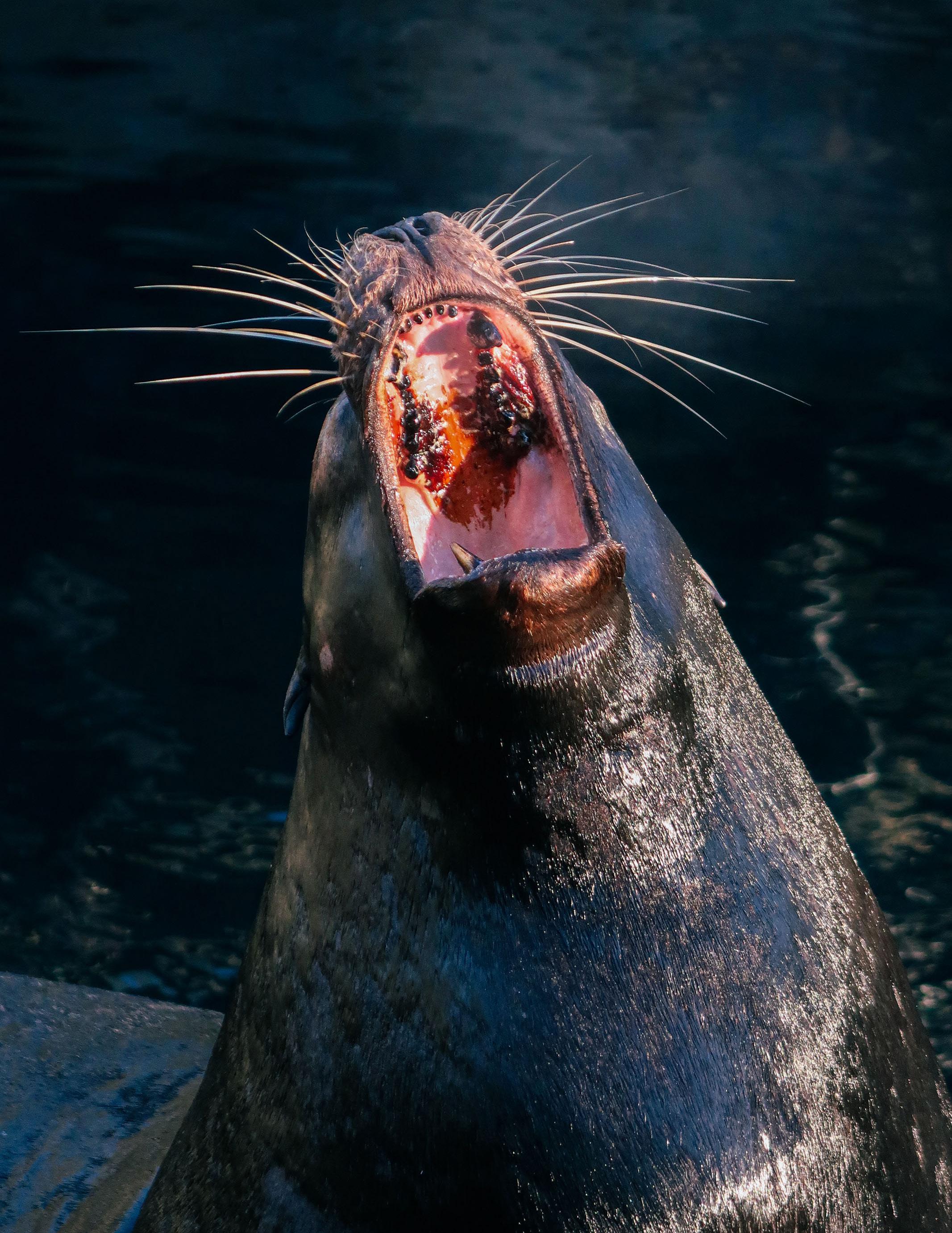
APREDATOR SWIMS IN THE COLD Pacific waters, chasing a small, slippery prey in hopes of a meal. He’s a good hunter, but a single fish against a single predator leads to a winding game of cat and mouse. It is 1972. This predator and other members of his species are dwindling in number, so every catch matters.
Now, in 2026, the fish pile up in a writhing crowd, confined at the base of a towering wall. The predator dives down and simply closes his mouth around his prey, gorging himself with ease.
“They know where to hunt and how to hunt, so they don’t just hunt anymore. They massacre,” Jeff Wilson, Washington state senator for the 19th district, said.
Today is a much better day to be a sea lion. These determined predators swim nearly the distance from Seattle to Vancouver, Canada via the Columbia River to reach this bounty at Bonneville Dam. The returning spring Chinook salmon crowd the base of the dam for days as they search for a way up the fish ladder, providing ample opportunity for a low-effort meal for two recovered species of sea lions.
In the four decades since they began arriving in large numbers at the dam, growing research shows that sea lions have played a significant role in the decline of this local population of salmon.
The Chinook species, in particular, is a valuable fish, both commercially and culturally. Its long journey up the Columbia River in the spring creates a fatty, muscular fish that consumers love for its taste. However, the salmon’s timing leads it straight to the predators’ maw, as its migration corresponds with the foraging season for sea lions.
Regulators amended the protections, granting state agencies and local tribes the ability to lethally remove these problematic individuals. This past August, Congress extended the most recent and flexible culling permit until 2030
The Marine Mammal Protection Act of 1972 created protections, which returned both populations of sea lions to carrying capacity after dipping to vulnerably low numbers.
Increased sea lion predation on salmon has become a growing problem in the Pacific Northwest, prompting
annually in the lower Columbia River, as shown in a six-year study published in the Canadian Journal of Fisheries and Aquatic Sciences.
The U.S. Army Corps of Engineers first started monitoring and gathering data on sea lion predation in 2002 to understand how to approach the growing issue with extremely limited management options.
“The only thing we could do in terms of management — if you call it management — was non-lethal persuasion,” Doug Hatch, deputy manager of the Fishery Science Department of the Columbia Inter-Tribal Fish Commission, said. The commission
is composed of four tribes: Yakama, Nez Perce, Warm Springs and Umatilla.
The tribes’ primary role in managing the sea lions up until 2020 was carrying out non-lethal hazing.
“With non-lethal hazing, you’d use a boat [in] pursuit of animals,” Hatch said. “You’re able to move them downstream, but then as soon as you quit the pursuit, then they just return right back to these same spots.”
The Marine Mammal Protection Act restricts any harassment, capture, or killing of marine mammals, leaving the agencies and tribes with their hands tied.
researchers to keep a close eye on Bonneville Dam.
One factor making the situation complex is that it pits one threatened species against another that has only recently recovered.
“Who do you prioritize and how?” Casey Clark, lead marine mammal researcher for the Washington Department of Fish and Wildlife, said.
The Columbia River is not historically the sea lions’ hunting grounds, with only a few being spotted for the first time at the dam back in the 1980s and numbers rising rapidly to the hundreds within a few decades.
California sea lions, the original visitors to the dam, were the only sea lions allowed to be removed until recent years. Their counterparts, Steller sea lions, were unable to be removed until they were delisted from the Endangered Species Act much later.
Pinnipeds, a name grouping for California sea lions, Steller sea lions and harbor seals, are estimated to be a leading cause of salmon deaths
Research suggests that a social transmission of knowledge is what leads these sea lions to come back year after year, bringing more to the dam’s blood bath. The goal at Bonneville is to remove knowledgeable sea lions in hopes of preventing further occupation.
“The best way to manage is prevention. For example, keeping them in the estuary where there’s a mixed bag of prey items for them,” Michelle Rub, a fisheries biologist with the National Oceanic and Atmospheric Association, said. Offering a wider array of diet for these sea lions helps prevent a single population of fish from facing severe predation.
The agencies acquired their first permit for lethal removals in 2008, and with it came a stringent set of criteria and a small cap for only California sea lions. An individual sea lion had to be observed at the dam at least five times after eating a salmon, then non-lethal measures had to be proven ineffective, before it was branded for removal.
A decade later, a task force revisited this permit, and with 20 years of evidence showing lackluster results from hazing, a section of the Marine Mammal Protection Act was revised, allowing for a new permit that came into effect in 2020.
“The process of accumulating data to inform decisions and form wisdom takes time. It took [more] time than most managers and the general public wanted. It took 20 years for us to understand,” Kyle Tidwell, fish biologist with the U.S. Army Corps of Engineers at Bonneville Dam, said.
The new permit allows agencies and, for the first time, tribes, to lethally remove problematic sea lions found within a range of the dam and lower tributaries, rather than lone individuals. This permit
allows for a maximum of 700 sea lions to be removed.
“That is a maximum; it’s a cap. It’s not a target,” Clark said. “The goal is to save fish, not to remove as many sea lions as possible.”
Within five years of the permit’s revision, NOAA released a report conservatively estimating around 50,000 salmon had been saved.
The permits for lethal removal caused outrage from the very beginning, with the Humane Society of the United States locking Washington, Oregon and Idaho into a multi-year legal battle, delaying removal efforts as states had to keep reapplying for permits.
“They removed a few of them, and then litigation, injunction, litigation ensued, and it derailed the state’s efforts to be able to legally implement their management authority to remove individuals for a couple years,” Tidwell said.
Protests surrounding the lethal removals were prevalent in the early
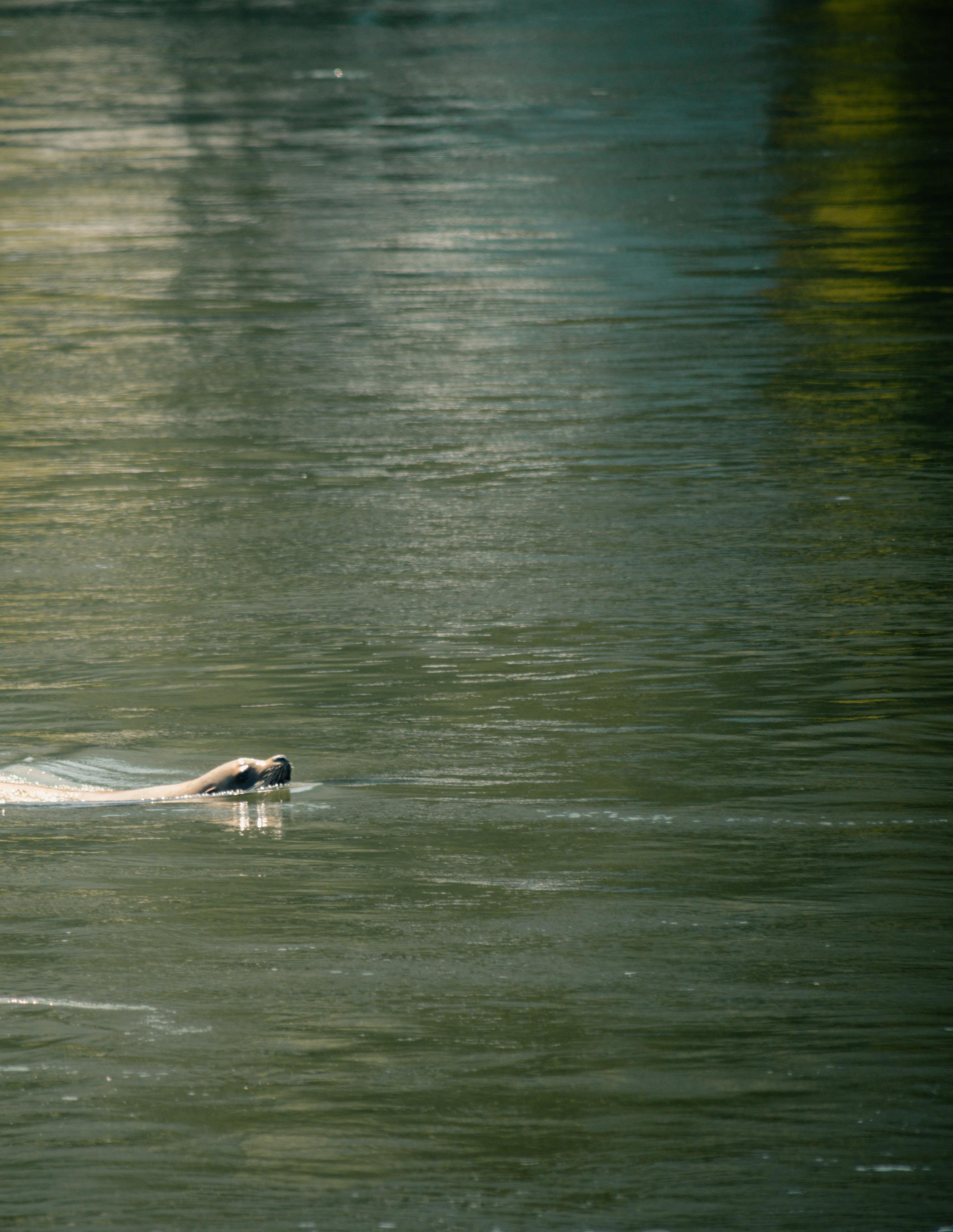
days of the program. Police were on site due to concerns about the safety of the people involved.
Many environmental and conservation groups have spoken out about the cullings at Bonneville, with arguments surrounding the misplacement of blame.
“What is challenging salmon populations is Homo sapiens and no other species,” Ken Bouley, executive director at Turtle Island Restoration Network, said. “It seems, to us, really misdirected.”
In comparison to 17 years ago, when individual cullings first started, and even six years ago, when the criteria were expanded, the overall perception has shifted from public outcry to reluctant acceptance.
“This is a very targeted thing that’s going on, and it’s giving some relief to the salmon,” Hatch said.
Skiers and snowboarders ride a chair lift at the Mt. Baker Ski Area in Deming, Wash., on Feb. 22, 2026. The resort is in the process of installing a new electric motor at the White Salmon base area, which will reduce carbon emissions by 80%. //
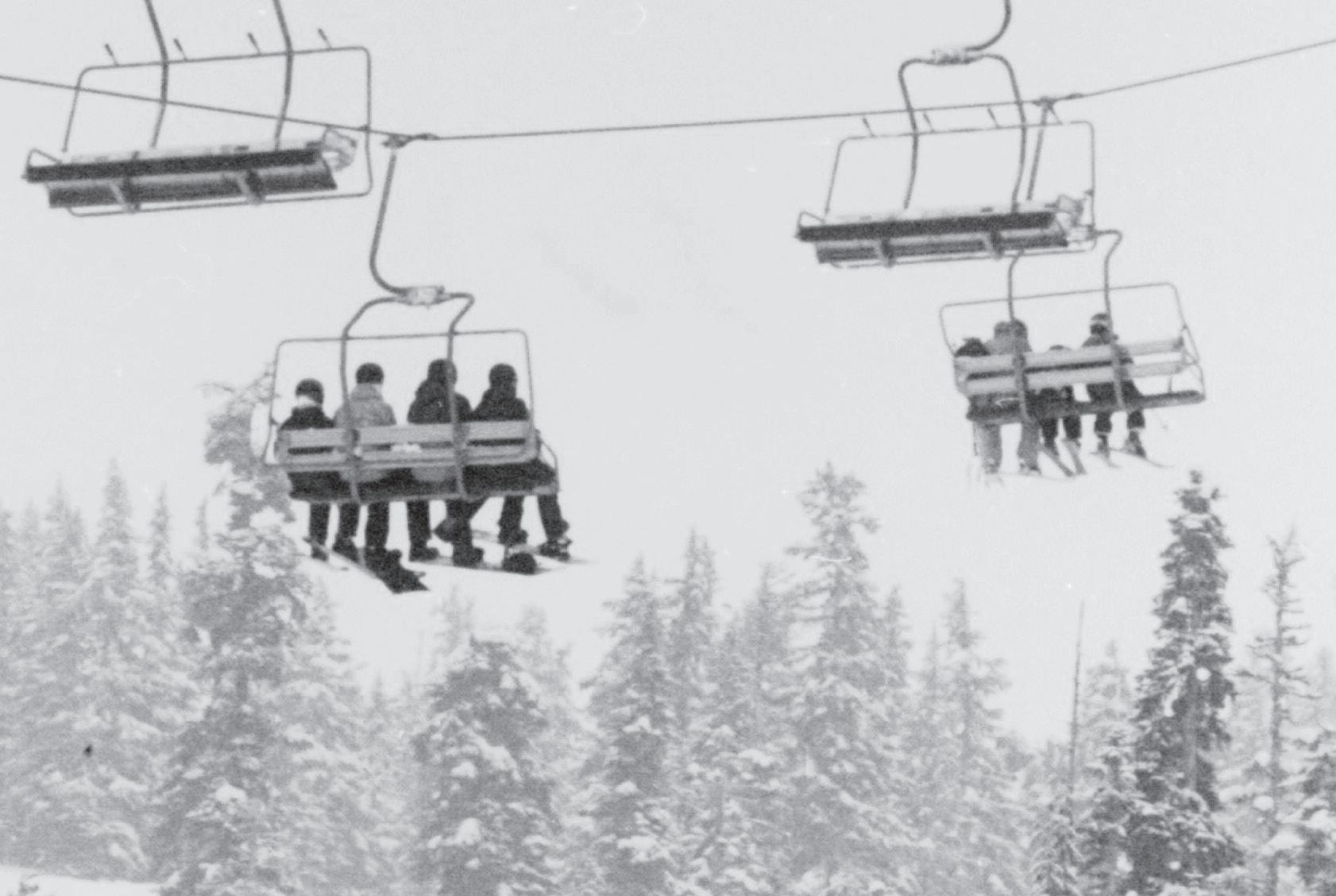
IN A POWDERED GULLY on the slopes of
Mount Baker, basking in the unkempt glow of the mid 1980’s, 16 snowboarders held a race along the snow-packed walls of the natural halfpipe. In a flash of brilliance, Mount Baker’s Legendary Banked Slalom was born, and for almost 40 seasons competitors from all corners of the globe traveled to Northwest Washington to showcase their skills on the iconic, icy chute.
But in 2026, unworkable snow conditions drove the event organizers to cancel the race — the second time in three years that the event has been canceled due to poor snow quality — forcing a multidecade saga of snowboarding history to an abrupt halt.
While the Mount Baker Ski Area opened later than its target date of Thanksgiving, snowstorms in December and early January established a solid base of snow, which helped the resort get back to usual operations and raised hopes that the February race would go off as planned. As winter crept on, however, long stretches of warm,
snowless days began to slowly degrade the snowpack.
Mike Trowbridge, the ski area’s operations manager, explained that these weatherrelated challenges have a direct impact on the company’s ability to do business.
“We’re doing the best we can with what we’ve got,” he said. “A lot of the strategies that we’re doing are just to keep the area open and get operating days.”
According to Trowbridge, exaggerated conditions in the weather have become commonplace in recent years.
“If it’s windy, it’s really windy… If it’s cold, it’s really cold… If it’s snowing — when it comes — it hammers snow, but then we end up with long stretches in between where when it’s dry, it’s dry,” he said. “It seems like our challenging seasons are coming a little bit closer together.”
Mount Baker is not the first ski area to have their season impacted by a lack of snowfall, nor will it be the last. Resorts across the U.S. have felt the frosty chill
of winter slowly warm in recent years, bringing rainfall in place of snowstorms and slush in place of powder. These changes have swept like wildfire across the industry, and more than just business owners have taken notice.
Joe Cowther, a snowboarder from the U.K. who moved west in 2013 to chase high-mountain air and deep powder, said that snow conditions have grown noticeably worse in the Pacific Northwest since.
“When I first came to North America, it tended to be a lot colder winters. Not necessarily crazy powder dumps all the time, but more consistent snow with colder temperatures,” Cowther said. “I’ve seen, in particular in the last five or six years now, a big difference in temperatures and snowpack. It’s nowhere near as consistent as it used to be.”
Cowther’s observations are not without evidence. Since 2010, almost every winter has been charted within the top third warmest in North America’s recorded history.
So far in 2026, many of the Rocky Mountain states have observed a concerning lack of snowfall, and warm temperatures in the Pacific Northwest have caused what little precipitation there has been to fall as rain rather than snow.
Maddi Adams, a sponsored freeride skier and Bellingham native, had originally planned to spend her winter in Jackson Hole, Wyoming, to enjoy its worldclass terrain and compete in nearby ski competitions. Poor snow conditions across the west forced her to pivot.
“All of the competitions that I do in Colorado got canceled,” she said. “And a bunch of others in Tahoe and California have gotten pushed back and canceled because [of] not enough snow or unsafe snow conditions.”
“I’VE SEEN, IN PARTICULAR IN THE LAST FIVE OR SIX YEARS NOW, A BIG DIFFERENCE IN TEMPERATURES AND SNOWPACK. IT’S NOWHERE NEAR AS CONSISTENT AS IT USED TO BE.”
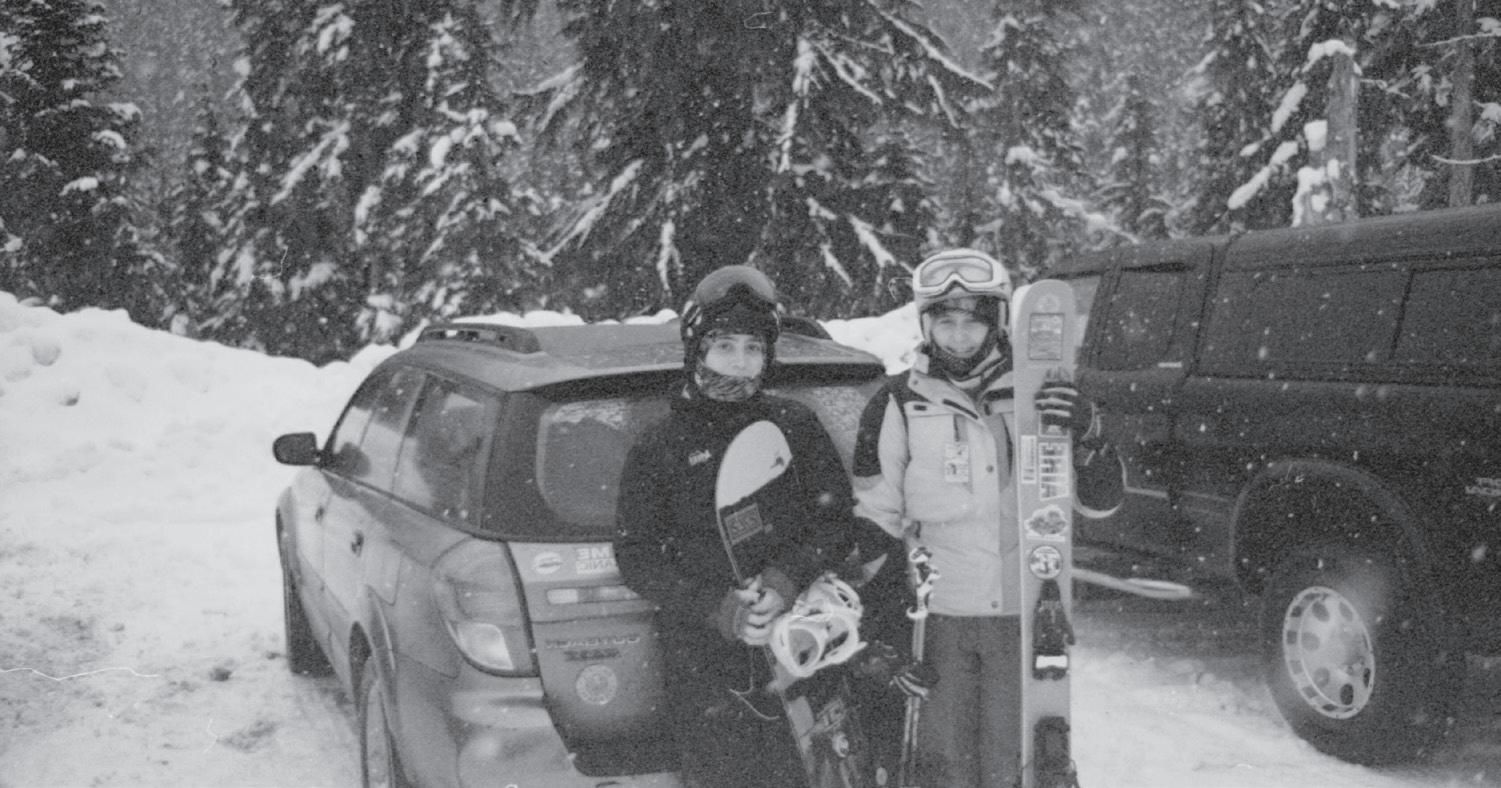
It may be convenient to dismiss these snowfall events as outliers within a normal winter, but it’s important to recognize that extreme weather circumstances such as these have been occurring at increasingly rapid rates.
Many global climate change projections predict that temperatures will continue to rise in accordance with CO2 emissions, which will lead to higher precipitation-tosnowfall ratios, and ultimately less snow.
Karin Bumbaco, the deputy climatologist for Washington State, said that the relatively low peaks of the Cascades make them particularly susceptible to this phenomenon, and increased rainfall has already had a negative effect on the snowpack.
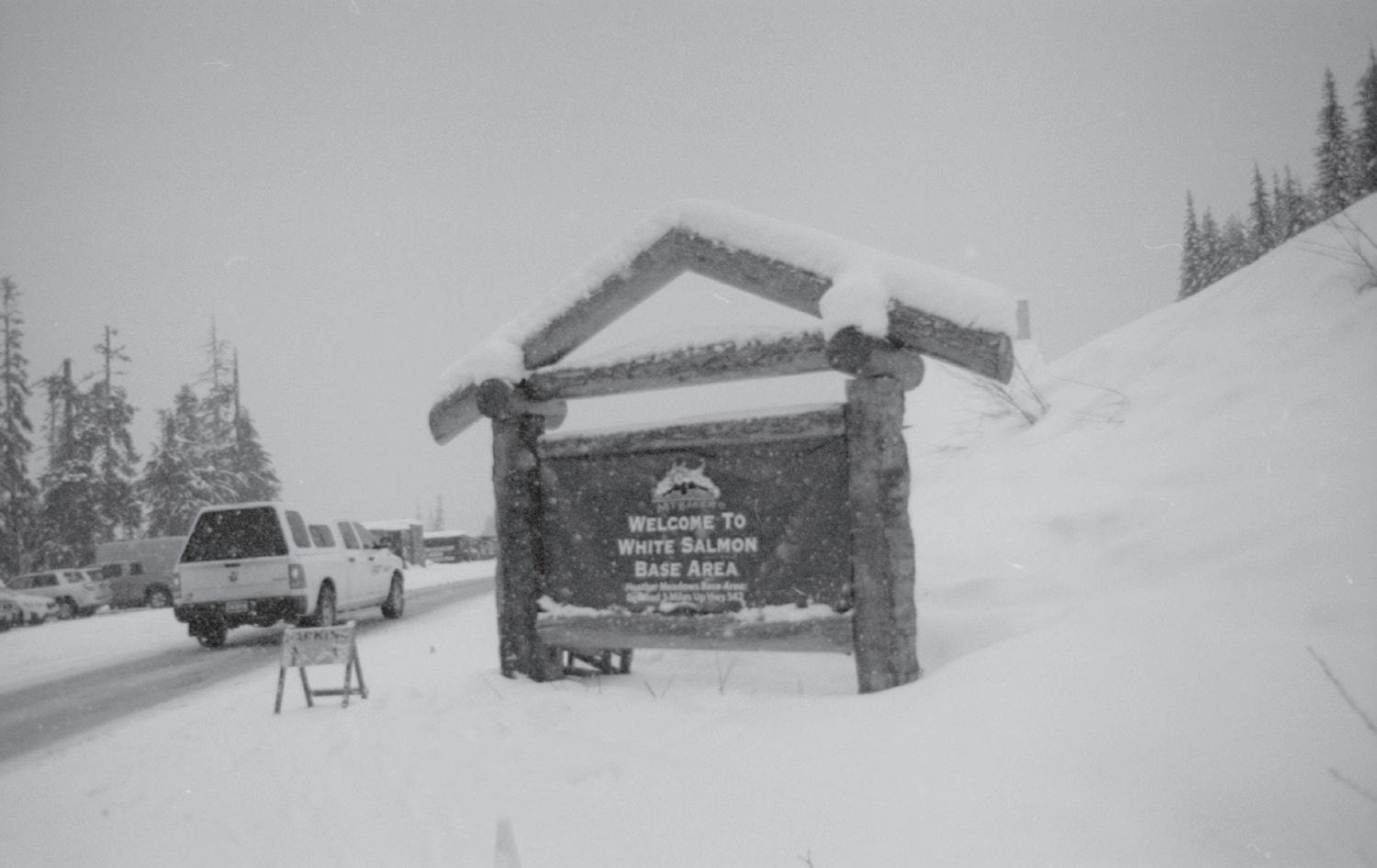
“[At the start of winter] our temperatures were causing our precipitation to fall as rain in the mountains instead of snow, but it is now transitioning to a dry snowpack drought,” she said. “We have not been getting our normal precipitation for all of January and February.”
As of March 3, Washington has reached only 51% of its median snowpack average, meaning our mountains hold just over half the snow they normally would at this time of year. This is the state’s fifth-lowest snowpack in recorded history.
“It’s [been] an issue both in the Cascades locally in Washington State, but also globally,” said Alia Khan, an environmental scientist who works with both Western Washington University and the University of Colorado-Boulder.
According to Khan, the challenges of warming winters stem from more than just increased temperatures or rainfall. Receding snow can expose alpine environments to dust and other darkcolored particles which had previously been buried in the snowpack, disrupting their natural defense against the sun.
“Fresh snow is almost the perfect reflector,” she explained. “When lightabsorbing particles, such as black carbon from the incomplete combustion of fossil fuels… are on the surface of snow or ice, the dark particles absorb more of the incoming solar radiation... causing the snow to melt faster.”
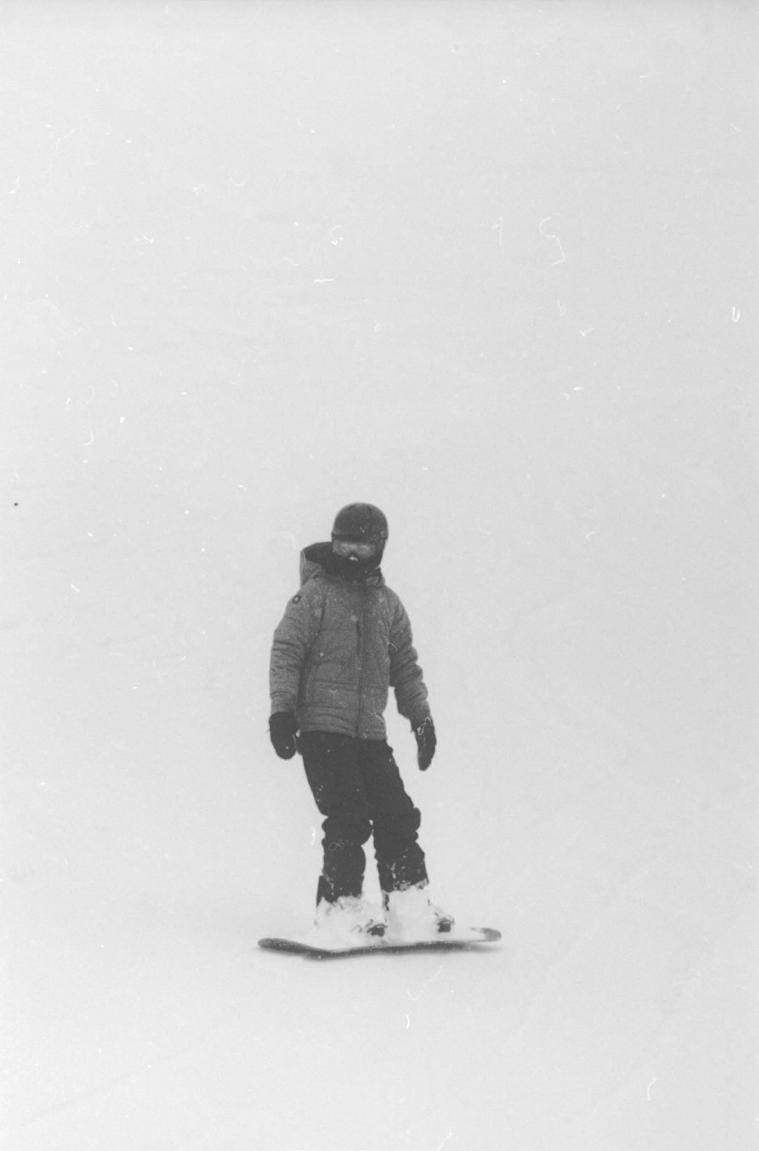
The fast rate at which snowpack has vanished has had broad-reaching impacts on more than just the ski and snowboard industry; almost all recreationists in alpine environments have experienced some kind of disturbance in their typical pastimes.
From their headquarters in Bellingham, the American Alpine Institute has begun reevaluating its approach to guiding trips in mountainous areas across the Cascades, the Rocky Mountains and the world.
“The mountain changes by degrees, where if you were to look at it between one trip and another trip in the same season it doesn’t seem like that big of a change, but if you look at it over a span of five years, the changes are pretty dramatic,” Jason Martin, the executive director of the American Alpine Institute, said. “I’ve adjusted the way I’m operating to a point where it’s hard to even imagine that people used to go the other way.”
Martin began guiding trips for the organization back in 2000, when many of the effects of climate change had yet to have a tangible impact on the alpine world. Since then, he has observed firsthand how rapidly snowpack can vanish.
“The glacial recession is wildly concerning… I’ve been able to see just massive, devastating changes,” Martin said. “There are areas where we used to ice climb on the bottom of the glacier that are just rocks now, crevasses that we used to practice in that are just gone… parts of the mountain [that] have fully melted away.”
These transformations can impact more than just the institute’s ability to do business, they also pose a severe threat to human life.
A lack of snowfall for much of the year can open up many previously impassible or hard-to-access areas to the public. These openings create opportunities for inexperienced people to get themselves into trouble, or for seasoned veterans to find themselves in unsafe conditions.
“There’s a real hazard to exposed ice late in the season,” Martin explained. “Last year… there were two accidents: one on Mount Shuksan, and one on Mount Baker. They were both solo climbers who probably thought that because it was late season they could see the crevasses and walk around them. They got into steep terrain and slipped… in both cases they went into crevasses and were killed.”
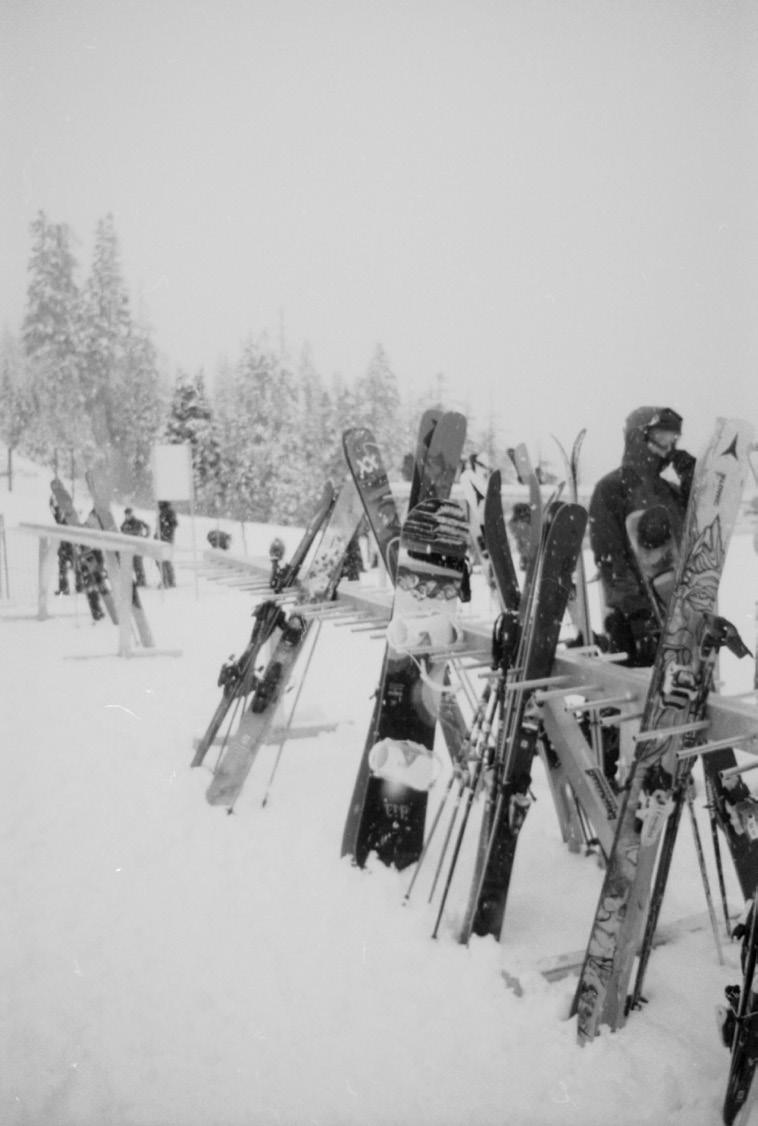
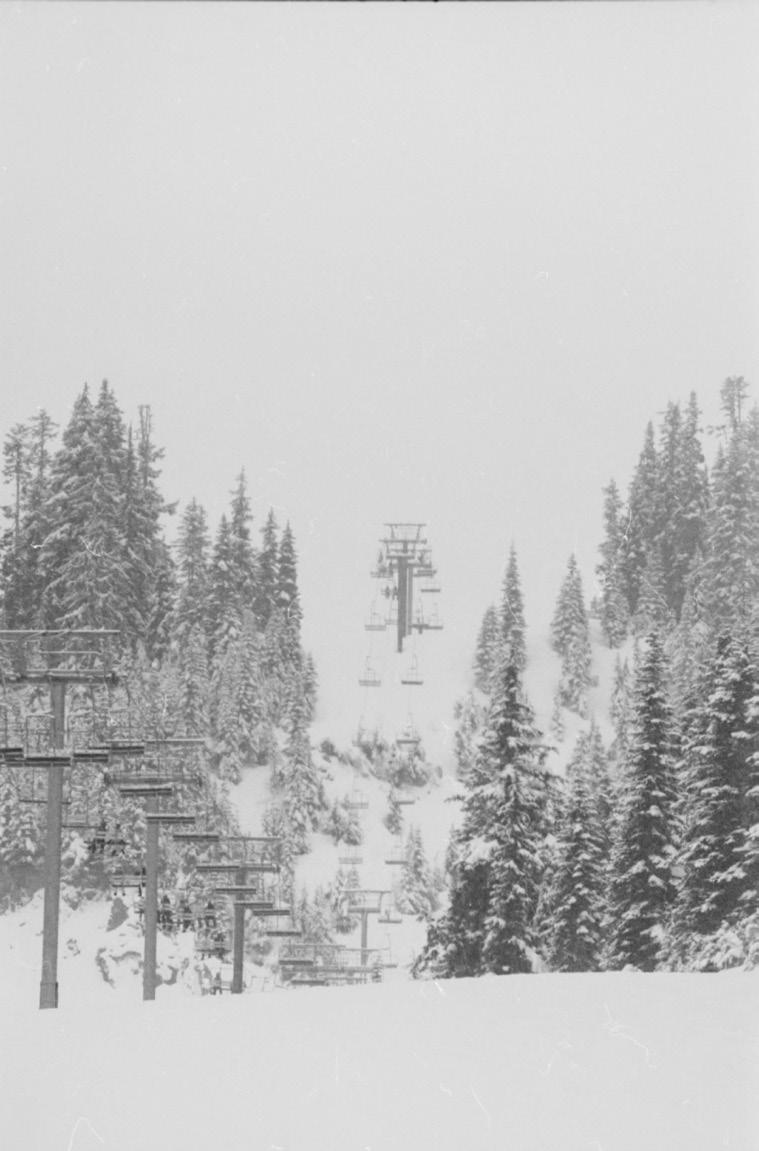
Aside from average winter sports enthusiasts, athletes at the highest levels have also had to adjust their training and competition schedules to accommodate for a dwindling snowpack.
Nick Orfanakis, the manager of the ski team at the University of Utah, spoke candidly about his experiences with navigating environmental changes.
“There’s usually snow somewhere, and at the higher levels of the sport, we’re lucky enough that we can travel to where the snow is, and last minute, change plans,” Orfanakis said.
While top athletes may have access to these opportunities, that sort of flexibility simply isn’t feasible for the average person. The ability to seek out snow has large costs, and travel-related emissions can harm the environment.
“Priority will obviously go to the older, higher-level athletes. It becomes harder at the younger levels, and I think the biggest thing with it is the overall cost of the sport is incredibly high and increasing,” Orfanakis said.
Accessibility has been a known issue in winter sports, and rising costs will only cause exclusivity to worsen. These barriers
disproportionately impact people of color, who have long been marginalized within the alpine community.
With single-day lift tickets selling upwards of $250 during peak season, all but the wealthiest Americans are getting priced out of winter recreation. These large price tags may grow in future years due to the increasing prevalence of warm winters.
According to a 2024 survey from the National Ski Areas Association, people of color make up just 12% of American skiers. Additionally, according to 2024 data from the Federal Reserve, people of color accounted for roughly 17% of the country’s total wealth.
Many ski areas have begun investing in snowmaking technology to offset the difficulties of maintaining natural snow. These devices convert stored water into manufactured snow by spraying a compressed mist through freezing conditions, but can cost several million dollars to install — an
A worker tunes up a pair of skis at the Backcountry Essentials Ski Shop in Bellingham, Wash., on Feb. 18, 2026. On the bottom floor of the shop, Backcountry Essentials offers fullservice in ski and snowboard tune-ups, mounting bindings, skin trim, binding adjustments, calibrations, and more. //
Photo by Jordan Brotamonte
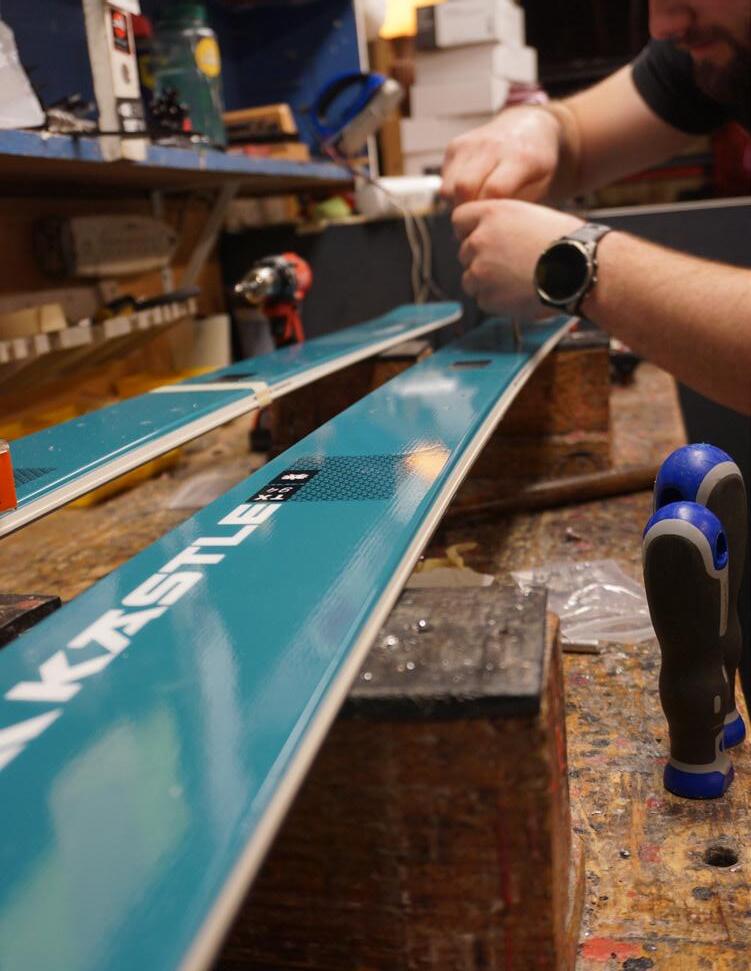
expense that is often paid off through lift prices.
Snowmaking does present a viable solution to lackluster snowfall; however, dry and exceptionally cold conditions must be sustained for several days in order to produce a significant quantity of snow.
“THERE ARE AREAS WHERE WE USED TO ICE CLIMB ON THE BOTTOM OF THE GLACIER THAT ARE JUST ROCKS NOW, CREVASSES THAT WE USED TO PRACTICE IN THAT ARE JUST GONE… PARTS OF THE MOUNTAIN [THAT] HAVE FULLY MELTED AWAY.”
For resorts like Mount Baker, which are located in more humid environments, this technology may not be an option. Trowbridge said that while Mount Baker is considering investing in snowmaking technology, the company is wary of the risks it poses.
“It’s something that we’re looking at, but it’s challenging,” he said. “White Pass just installed a great snowmaking system, they got it well set up … they made a bunch of snow, [then] they got a rain storm, it wiped everything out.”
Jason Martin stands in front of the American Alpine Institute building in Bellingham, Wash., on Feb. 4, 2026. Martin is the co-owner and executive director of the American Alpine Institute, where he oversees a wide array of guides, manages risk assessments, builds risk management plans, and creates the curriculum for the institution. // Photo by Jordan Brotamonte
Regardless of how they might feel about the risks of making snow, Mount Baker may be forced to set their sights on this solution if our winters continue to warm.
Trowbridge and his team have made it clear that maximizing operating days is one of their top priorities, but their clientele might have to learn to recalibrate their expectations.
“[Climate change] is something that we’re still wrapping our heads around like everybody else,” Trowbridge said. “We’re learning in real time what the effects are now, and what it’s going to look like in 5 years, 10 years, 30 years and beyond.”
2 0 2 5
2 0 2 5
WINTER
2 0 2 6
ig: @mathildesignstuff
Mathilde is in her third year at Western and her first year in the Design BFA. She specializes in editorial, typography, and layout design, but is eager to try out every other kind as well. She was born in France and is always looking for more people at Western to speak French with. When she’s not pixel pushing on InDesign, she’s reading sci-fi or psychological thrillers, listening to music, sunbathing, teaching herself classical piano songs, or scrapbooking. She loves seeing live music, traveling, and exploring the beautiful nature Bellingham has to offer.
Lynn is studying visual journalism and has recently been leaning in the direction of videography, photography, and print design. So kind of the whole deal. She’s also minoring in English.
Having been raised in Colorado and Washington Lynn has developed a passion for getting outside and playing around in nature and loves to document and display the stories that take place out there.
When she’s not filming or clicking around on adobe suite, she is usually biking, sailing, baking, or crafting hardcore.

The Planet Online
Website ThePlanetMagazine.net
@ThePlanetMagazine
www.abbymsheets.com ig: @a.bee.does.design
Abby is a generalist who has dipped her toes into a little bit of everything. She finds joy in her practice through learning new techniques and telling authentic stories through design. She also like to tell stories in general - she’s a bit of a gabber.
If you catch her when she’ not working, she’s probably rating a movie on Letterboxd, knitting a sweater, or perusing the internet for horse videos (#ProudHorseGirl).
The Planet Magazine is dedicated to environmental awareness and advocacy through responsible journalism. The Planet Magazine is an entirely studentfunded, written, edited, and published environmental publication out of Western Washington University.
“SINCE THE WORLD IS ROUND THERE IS NO WAY TO WALK AWAY FROM EACH OTHER, FOR EVEN THEN WE ARE COMING BACK TOGETHER”
AMANDA GORMAN