Washburn University
INSIDE:
News

Sports

Arts & Entertainment


Abbie Stuart WASHBURN REVIEW
Many Americans can identify with the morning routine of waking up and having a cup of coffee before going off to work or school.
Washburn psychology graduate Jordan Huzarevich believes there may be a link between caffeine consumption and psychosis-like symptoms among people who do not have schizophrenia or similar illnesses. To ind the answer, he conducted an extensive study in the spring of 2014 as his honor’s thesis.
“When these symptoms—hallucinations, delusions, magical thinking, paranoia and others—are seen among people who don’t actually have schizophrenia, they’re called ‘schizotypy,’” Huzarevich said. “I wanted to know if caffeine was related to these symptoms, and especially if it increased the likelihood of experiencing them.”
When he irst began studying psychology, Huzarevich knew that he wanted to conduct research and said that he had been interested in hallucinations for a while. After Julie Boydston, a psychologist and lecturer in the psychologydepartmentatWashburn,agreed to supervise his research on hallucinations, he began reading about hallucinations, especially auditory hallucinations.
Huzarevich came across an article published in 2009 about the potential relationship between caffeine and auditory hallucinations. Finding the topic unique, he decided that he wanted to focus his research on this topic. Huzarevich then joined a small group of scholars who had conducted research in this ield.
“I speciied a topic and then found as much relevant academic literature about that topic as I could. I read those articles and then wrote a literature review: an analysis of what the literature reported, if there were any trends in the results, what measures were typically used, et cetera.This is a great irst step because it really familiarizes you with the topic; it gives you an idea of what directions you can take the topic in for
your own research as well as how to design that research.”
Once Huzarevich gathered enough information, he designed his study and had it approved by the Institutional Review Board.
The study was divided into two parts: an

online questionnaire people illed out, then an in-person portion for a different group of people. To test his hypothesis that caffeine did increase these symptoms, Huzarevich conducted a two-part study over the fall semester of 2014.
In his questionnaire, Huzarevich asked subjects who consumed caffeine regularly questions such as whether or not they had heard voices speaking their thoughts aloud,
Fun in the Sun: Zach Pruett, undeclared freshman, and Topeka resident Zach Force spent an unseasonably warm January afternoon tossing a Frisbee around with friends on the lawn in front of Memorial Union. Pruett and Force said they would like to see more students join them when weather permits.
heardothers’voices,orseenshapesorforms even when nothing was there.
“I posted my questionnaires on SurveyMonkey and made them available to whomever was interested,” Huzarevich said. “The second study was in-person. I set aside blocks of time that I would be in the lab, and anyone who was interested could drop by to participate.”
Huzarevich would have the participants in the second [part of the] study take either a caffeine tablet equivalent to one cup of coffee, or a sugar pill if they were in the control group, but neither he nor the participants knew which one they were given. Twenty minutes after the subjects ingested the pills, Huzarevich had them listen to three minutes of white noise.
“I told them that a song that I had played for them earlier might be embedded in the white noise and that they should indicate whether or not they heard the song in the noise,” Huzarevich explained. “In fact, the song wasn’t embedded in the noise at all; it was just three minutes of white noise. I wanted to know if taking caffeine increased the likelihood of hallucinating the song in the noise.”
Huzarevich took the data he received from the study and wrote a research article about his indings.
“The irst [part of the] study looked at whether or not caffeine intake was correlated with schizotypy in general, and, more speciically, with the tendencies to hallucinate and indulge in magical thinking,” Huzarevich said. “I analyzed all this data statistically and found that there was indeed a relationship. As caffeine intake increased, so did those schizophrenia-like symptoms. This was just a correlational study, though, so I couldn’t say that caffeine was causing this increase. It could be that a greater experience of those symptoms caused a higher caffeine intake, or it could be that some unknown factor caused an increase in both.”
Huzarevich said that this didn’t surprise him. He had pulled research from two stud-

Wednesday, January 28
Union Daze - Banker in the House
11:00 AM - 1:30 PM
Union Daze - Stop, Shop & Dine
11:00 AM - 1:30 PM
American Business Women’s Association
12:00 PM - 1:00 PM
International Brown Bag Lecture: Russia and America
12:00 PM - 1:00 PM Washburn Student Government Association
6:30 PM - 8:30 PM
Thursday, January 29
Masters at the Mulvane: Ninety Years of Collecting Anxiety Screening Day
9:00 AM - 3:00
Union Daze - Hot Chocolate & Coffee Bar
9:00 AM - 11:00 AM
Union Daze - Make & Take 11:00 AM - 1:00 PM
Union Daze - Lunch & Learn
12:00 PM - 12:45 PM Center for Kansas Studies
Kansas Day Presentation
4:00 PM - 5:00 PM
School of Business Donor Basketball Event
5:30 PM - 9:30 PM
Women’s Basketball vs. University of Nebraska at Kearney
5:30 PM
Men’s Basketball vs. University of Nebraska at Kearney
7:30 PM
Friday, January 30
Last day to enroll without a late fee
Masters at the Mulvane: Ninety Years of Collecting
Saturday, January 31
Masters at the Mulvane: Ninety Years of Collecting Leadership Institute Spring Orientation
8:45 AM - 1:30 PM
Women’s Basketball vs. Fort Hays State University
5:00 PM - 5:00 PM
Men’s Basketball vs. Fort Hays State University
7:00 PM - 7:00 PM
Cassandra White, President of the Washburn Student Government Association, is looking for Washburn students who have an idea of how to improve their campus to pitch their ideas, through an online application, for a chance at seeing their vision come to fruition.
“The Student Initiative Grant is a grant that was set up a couple years ago by Pres. Benedict, during the BenedictCortez administration,” White said. “The grant is set aside for students that normally don’t get to, or don’t know that they can, participate in WSGA and apply for an online grant to do something to improve campus.”
First the student comes up with an idea for a campus improvement project and then does the necessary research. They will then come to the WSGA senate and make a presentation. The fund typically
contains around $12,000 and can be used for one large project or several smaller projects depending on which ideas the senate approves.
Oneofthemostrecentstudentdriven projects that have been implemented by WSGA were the new television screens in the LLC but White pointed out that if students are interested in a lounge area, if they’re interested in refurbishing an ofice space or any other ideas, all they need to do is ill out a form.
Other additional projects included the printers in the lobbies, so students wouldn’t have to walk all the way to the library, and the water bottle reilling stations in the Union. White stressed that even though residential students are the typical applicants, any student can make a recommendation.
To apply for the grant visit WSGA online or call 785-6701169.
On Tuesday, Feb. 17th at 12:30 p.m., free lunch will be provided for those who attend a free fashion show.
This fashion show presents a new side of the fashion world by presenting women of the workforce with ‘Career Ready’ choices. It pushes beyond the norm further by addressing other needs of the workplace such as talks on networking, what should be included on a
cover letter, how to create the perfect resume and teaching interview skills.
This “Career Ready Fashion Show” is presented by Martha Bartlett Piland from MB Piland Advertising and Marketing LLC
To attend one must RSVP to save their seat by Feb. 13th by contacting Charles Morgan at charles.morgan1@washburn. edu.
WJanuary 18
18:05 - Information Report, CheckWelfare. Living Learning Center. ReportTaken: Individual had concern for a friend. Counseling center was contacted. Follow up visit by WUPD at 20:18 indicated all was OK: No other calls to the area.
January 20
16:05 - MotorVehicle Accident. Parking Lot 2. Report taken photo’s taken.

The Ichabods Women’s and Men’s Basketball teams are back and will be battling it out against Nebraska-Kearney on Thursday, Jan. 29 and then Fort Hays State on Saturday, Jan. 31. The Thursday night women’s game begins at 5:30 followed by the men’s at 7:30. The Saturday games are at 5:00 and 7:00, respectfully.
Therewillbemanyadditional attractions like a chance to win $100dollarsduringeverymen’s game during the Great Clips Great Balls of Fun contest as well as a chance to win frozen yogurt during the Orange Leaf Putting challenge. At the women’s games attendees will alsohavethechancetowinsubs for a year during the Goodcents Basketball Skill challenge.
At both halftimes Spintacular will be performing. On Saturday wear Washburn blue and come support our Bods. As always, Washburn students can get in free with their WU ID cards.
he best ofense is self-defense

Martial arts instructor Ronnie Moore shows Brittany Rhodes and Rachel Parker how to kick butt and take names during his self-defense course Moore, a WU grad, has taught Karate for over two decades.

January 20
11:30 - CriminalTrespass: Possession OfAControlled Substance X 2. Possession Of Paraphernalia. Memorial Union. ReportTaken: Referred to municipal court: Referred associateVPfor student affairs.
January 20
16:26 - Information Report, IntrusionAlarm. Garvey FineArts Center. Report Taken:Accidentally set off by maintenance.Alarm cleared and reset.
January 21
19:04 - Information Report, IntrusionAlarm. Garvey Fine Arts Center. ReportTaken: Area was secure: No forced entry found:Alarm cleared and reset.
January 21 20:45Information Report, Fire Alarm. Living Learning Center. ReportTaken: Probable cause burned food: Alarm cleared and reset.
January 21 22:43 Information Report, IntrusionAlarm. Memorial Union. Report Taken:Accidentally set off by employee:Alarm cleared and Reset.
it’s kind of like the Rose Bowl. It’sthegranddaddyofthemall.”
It has been a great year for theWashburn University debate team.
Recently, WU debate sent ive teams to a tournament in Salt Lake City called the Mile High Swing Tournament. It was hostedbytheUniversityofUtah and Texas Tech University.
“We’ve been the number one squad at three of our invitational tournaments,” said Kevin O’Leary, Director of Forensics.
The Mile High is the largest and most competitive regular season invitational of the year, with just under 100 of the top teams across the country in attendance.
At this tournament, WU won the overall sweepstakes and was recognized as the top squad. This paves the way for Washburn to be in the national championships of the National Parliamentary Debate Association Championships and the national Parliamentary Tournament of Excellence. These events, scheduled for March, will be hosted in Kansas City this year.
“That’s the founding organization,” O’Leary said. “To me
College debate differs from high school debate in that the debaters write their own policies. Each round has 20 - 25 minutes of prep time after the debater learns what their topic is. Debaters can use the Internet to look up topics before the round begins, but during the round no Internet access is allowed. Debaters must rely on electronic iles on their computers to ind information. Not only has the Internet made research more eficient, the use of computers has also made getting to the tournaments much less laborious.
pages electronically. A lot of times we don’t need the Internet, but there are times we do need it to update something. Maybe it’s a resolution that we didn’t anticipate at all, we don’t have a back ile on. Then you kind of have to invent the afirmative from whole cloth, right there in 20 minutes.”
“To me it’s kind of like the Rose Bowl. It’s the granddaddy of them all” - Kevin O’Leary
“We used to tug around what seemed like 10 boxes [of iles],” O’Leary said. “You’re looking at maybe tens of thousands of
The rounds are fairly open-ended, with lots of different squads and styles. Some are fast and technical, while some are slower and more persuasive.
“The resolutions can be anything from resolutions of policy on current events to more philosophical factor value based resolutions,” O’Leary said. “You have to be well learned.”
According to O’Leary, some of the toughest rounds are those against South Illinois Universi-
ty of Carbondale.
“They only look to ield two teams total - four people.” O’Leary said, “They are small, but very focused and very dedicated. They have as many graduate students coaching as they do debaters.We are about 50-50 with them.”
While big tournament wins are always something to get excitedabout,O’Learyismostappreciative for the moral support the team receives at home.
“The support here at Washburn for the debate team is phenomenal,” O’Leary said. “That’s from Dr. [Jerry] Farley down.”
The debate team meets every Monday and Wednesday as a squad to work on research and ile preparation. They also use this time to practice by holding mock debates with teammates.
Students interested in joining the debate team can contact O’Leary at kevin.oleary@ washburn.edu for information.
“We are always looking for new talent,” O’Leary said.
Derek Richardson, derek. richardson@washburn.edu, is ajuniormassmediamajor
Continued from page 1...
in 2011 from an Australian scholar, which supported this conclusion. However, Huzarevich was surprised by the results of the second half of the study.
“Unfortunately, the results didn’t match my predictions. Participants who took the caffeine tablets were not more likely than the participants who took the sugar tablets to report hearing the song in the noise,” Huzarevich said.
Boydston, who served as advisor to Huzarevich during the entire process, explained that this may be due to the amount of caffeine present in the tablets.
“That caffeine pill might not have been enough. Other studies, when they’ve talked about doing it, they’ve talked about giving more than a cup of coffee,” Boydston said.
Huzaverich and Boydston are not aware of this exact study having been conducted before.
“That we know of, there’s no published study doing this,” Boydston said about the second part of the study.
“There’s a lot of researchers and a lot of research labs. We can only know what’s been published,” Huzarevich said.
Huzarevich explained that making predictions and designing the study was dificult because he didn’t have very many examples to fall back on. However, the few studies he did have were well-researched and he also had the valuable support of Boydston, Mike Russell, associate professor of psychology, and Jericho Hockett, lecturer of psychology.


Huzarevich hopes to publish his indings from the study in an academic journal.
“We’re hoping to publish it in the journals where he found the research in the irst place,” Boydston said.
Although Huzarevich didn’t ind the results he was expecting, he would like to come back to the study one day.
“I’d like to pursue it further and hope to have the opportunity,” Huzarevich said. “As soon as the second study ended, I was looded with thoughts of how the study could’ve been designed better. With any luck, I’ll be able to do just that, because, in spite of the results of the second study, I’m not totally convinced that caffeine doesn’t increase the likelihood of having psychosis-like experiences.”

Katie Wade WASHBURN REVIEW
Students who spent time in Mabee Library last semester may have noticed some recent changes that occurred over the break. New ofices have been built to maximize student achievement and to accommodate for the growing peer educator program.
Sean Bird, associate dean of university libraries, said that the most recent construction is to expand the peer educator ofices as well as add a prior learning and testing ofice.
“We want to continue to focus on students in the academic world where they meet their struggles and their obstacles,” Bird said.
The recent renovations should accomplish just that as they will offer more space for peer educators to meet with students to provide guidance about classes, professors, navigating campus and strategies for success.
“We’ve already had a space,” Bird said. “But we keep growing out of our spaces because the program is getting larger, which I think is meaningful because it means that the program is successful and we’re provid-

ing more peer educators to help [students] where they are.”
The addition of a prior learning and testing ofice aims to help students by offering placementtestsforareassuchasmath and writing so students can discover which classes are the best it for them to be successful.The ofice will also provide testing that would help students at the end of their Washburn career with credentials and certiication.
The prior learning and testing ofice will be of beneit to not only traditional students, but also adult learners and returning students.
“We recognize that there are some students, typically adult students or returning students, who have some credential or have some learning that we might be able to translate into academic credit,” Bird said.
The information literacy suite is also undergoing modiications to be more interactive so as to stimulate more conversation and collaboration among students through a combination of movable desks, multiple whiteboards and electronic boards.
“We want students who are learning topics that have an information-centric focus to be in the library when they’re learn-
ing those strategies and learning those tips and resources,” Bird said. “We have a large number of physical resources and we have a number of electronic resourcesthatprofessorsarepushing their students to use.”
The renovations of the prior learning and testing ofice and the FYE Peer Educator spaces were inanced with capital funds estimated at about $48,000. Technology elements were paid for through private library funds and the ofice furnishings were reclaimed from another area on campus.
The program hopes to continue reaching students through WU101 and peer educators as well as to increase the number of adult students who see Washburn as a viable alternative.
“I know that some of the buildings over the last six or seven years around campus have been built and modiied withstudentsinmind,andsowe have a population of young people who are right here on campus or are very close to campus,” Bird said. “That’s exciting because it can change what the campus can do.”
Katie Wade, katherine.wade@ washburn.edu, is a sophomore history and mass media major.
the near future. This includes providing an even greater selection of food to choose from.
The Exchange, a student-run food pantry, opened last November in the basement of Henderson and it has since been a success.
Bods Feeding Bods, a student organization whose goal is to make food available to students in need, runs the Exchange and is already seeking to expand.
“I am proud of the hard work that Bods Feeding Bods has put into this effort and I am encouraged by the development of the Food Exchange in addition to other initiatives,” said Chase Sachs, a senior history major who was a founding member of Bods Feeding Bods.
Kelsey Rose, Kathryn Nelson and Sara Escandon were the other three founding members of Bods Feeding Bods.
The Exchange was opened to provide a place where Washburn students could have access to food when in need.
“We currently have over 30 students who have received food from the Food Exchange,” Sachs said. “Given that the Exchange has only been open for a little more than a month, we are pleased with those numbers.”
Bods Feeding Bods looks to further expand the Exchange in
“We will also work to ensure that every person in the Washburn community is aware of the Food Exchange, especially those who do not know where their next meal is coming from,” Sachs said. “The Food Exchange is open to serve you.”
All donations to the Exchange are kept conidential. WSGA donated cans collected from Can Emporia, totaling roughly 2,000 cans. Mabee Library, Christian Challenge, the social work department, the education department and the Washburn Non-Traditional Student Association all contributed to the purchase of shelving for the Food Exchange.
“We have been blessed with donations by many members of the community,” Sachs said.
The Exchange is open Mondays from 3-6 p.m. and Thursdaysfrom9:30a.m.-12:30p.m.
Sachs said this time is designed speciically for the convenience of students. In this way, those who are primarily on campus in the morning are able to come to the pantry as well as those who are on campus in the afternoon.
Yujie Zai, yujie.zai@washburn. edu, is a senior mass media major

supplied by donors on and off campus, is free for Washburn students with a valid WU ID


‘You’re free to say whatever you want, as long as it’s what we want you to say’
Less than a year after Washburn University made national news for infringing uponMabeeLibraryemployees’ First Amendment rights, it has refused those same rights to a student.
Honor Duvall, a starter for the women’s basketball team, was suspended for one game after a physical altercation during a game in Oklahoma.
Duvall sent a letter to The Topeka Capital-Journal, profusely apologizing for her
actions. Not a private letter. One that would be seen by tens of thousandsofpeople,becauseshe wanted the entire community to know how regretful she was of her actions.
She even agreed to conduct an interview with The CapitalJournal – an opportunity to explainherself.Butherchoiceto tell her side, to publicly explain herself and ask for forgiveness, was taken away by Washburn “oficials.”
We, the Executive Staff at
“A little bit. It is cheaper to drive more.”

Trey Lewis, senior computer science
The Washburn Review, irmly believe Honor should exercise her right to free speech and give the interview anyway.
Yes, based on backlash our own reporters have faced from Washburn faculty in the past, thereisaprobablechanceHonor willtoobetargeted,whetheritbe by defaming or insulting emails from faculty and students, or perhaps sanctions imposed at the command of the higher-ups.
But the fact remains: we will only be here for a short time.We
will graduate and move on with our lives. But more and more young minds will continue to populate this campus, and we would just like to know two things. One, that Honor, and every student, is afforded the right to speak her mind. And two, that we fought for, quite frankly, justice, even though it meant standing up when nobody else would.
“he decision on who drives for carpooling and who pays is not a concern anymore.”

Haley Strathman, sophomore nursing

Chelsea Kiltzke, sophomore nursing

Brad VanArsdale, Mechanical Engineer Contractor
By: Derek Richardson
“I go home more. I’m four hours away, so it makes it easier.”
“No.
I’m set in my ways.”
There are many differing perceptions of the Safe Ride program provided by Washburn University. The Washburn Student Government Association funds Safe Ride with money from student activity fees. Because of this, only those currently enrolled at Washburn and attending classes on the main campus are eligible to use the service.
Information about the Safe Rideprogramisnotwell-known to some Washburn students. Manystudentsaren’tevenknow that the program exists or what the guidelines and parameters are for accessing the service.
“I’ve heard of Safe Ride, but not much. I don’t even know the number,” said Danielle Brown, senior mass media major. “It’s a good idea but not well implemented. I’ve never even heard of anyone that’s actually used it.”
Since the program started, faculty has been working to spread the word. Thus far, students have been receptive to idea.
“I heard about it in WU 101.
I think it’s a good thing to have because people in college are going to drink, and I’m glad WU can recognize that,” said Madison Wambsganss, sophomore mass media major. “It’s a good thing to have a service like that to help people. It brings awareness to drunk driving and it’s a way to encourage students to get a taxi instead of driving themselves while intoxicated.”
Safe Ride is a taxi service that will pick up a student and passengers from any Topeka area drinking establishment betweenthehoursof11p.m.and2
a.m. Safe Ride is a free service, but does charge a $5 ‘no show’ fee if a student calls and doesn’t accept the ride.
To use the service, students must provide their Washburn ID number and destination when calling for a pick up. The taxi driver will check the WU ID number when the student enters the cab to make sure that the
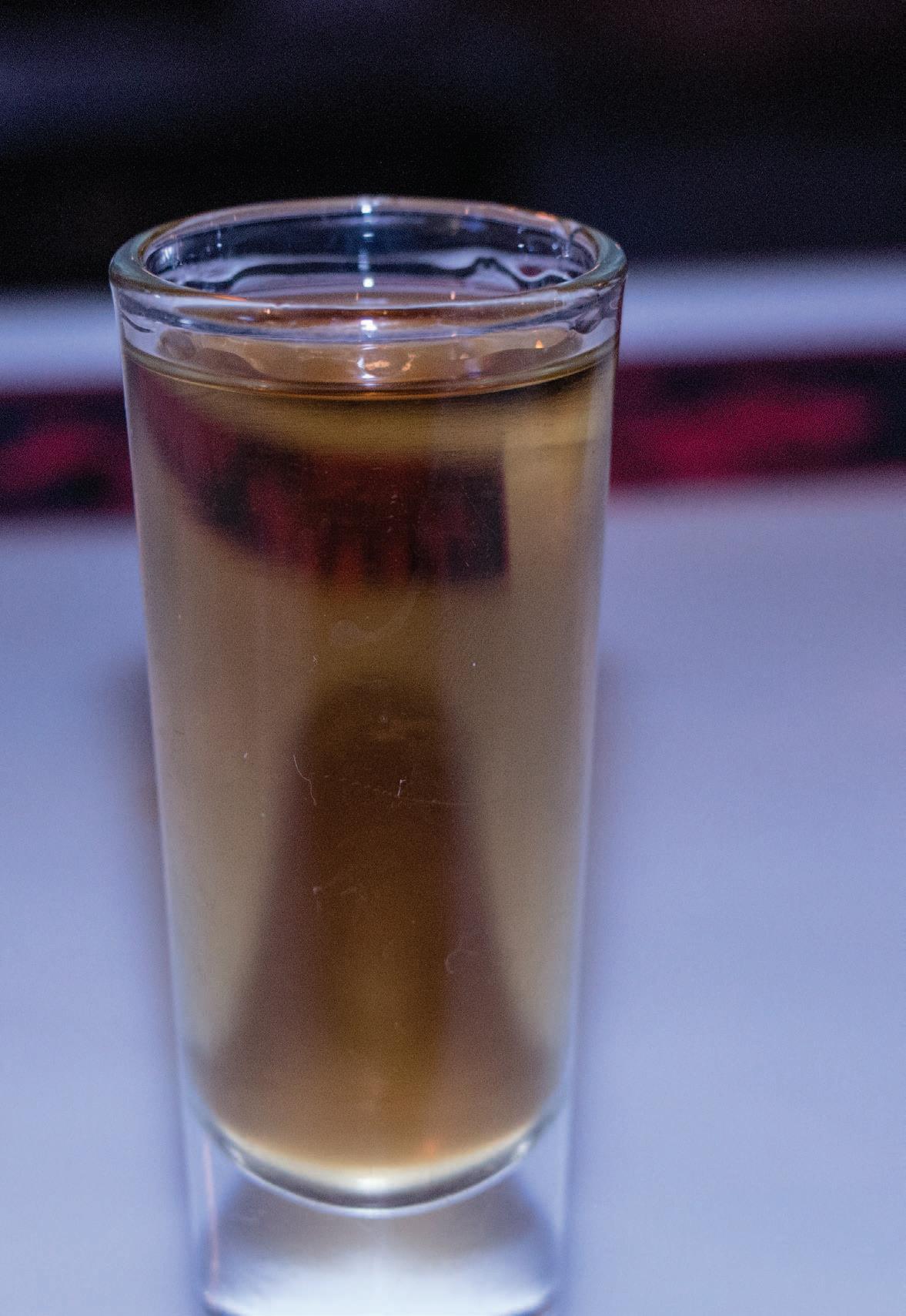
The National Institute on Alcohol Abuse and Alcoholism reports that alcohol use is widespread among college students. The NIAAA reports that 4 out of 5 students between the ages of 18 and 24 consume alcohol regularly with more than half of those students consuming alcohol through “binge drinking.”
student is currently enrolled.
Only one person in the taxi must present a valid Washburn ID. This student may bring any number of passengers with them or up to the amount that the taxi can seat. Safe Ride will not pick up students and other passengers from any residential area, as pick-ups are limited to drinking establishments only. Safe Ride will also not drop students or passengers off at drinking, business, eating establishments after pick up. They will only drop off the passengers at one residential area per taxi. The drivers will not report any instances of underage drinking to Topeka or campus police.
“I have heard about it. I think it’s a good and safe option,” said senior psychology major Hayley Harris. “The hard thing is thatalotofpeopledon’tseemto know about it or if they do know about it, when they are drinking


they don’t think about it. Then if they drove, they don’t want to leave their car at a bar over night.”
As Topeka police continue to increase saturation patrols and sobriety checkpoints to combat drunk driving, and alcohol-related accidents continue to rise, a service like Safe Ride becomes integral to student and community safety.
“WSGA provides this service because we value the safety of our students and community members,” White said. “We know that drunk, buzzed or otherwise impaired driving presents serious dangers to everyone on the road. Hopefully, this program can help prevent students from making life-altering poor decisions.”
Megan Dortch, megan. dortch@washburn.edu, is a senior mass media major


Sources:

“I’ve heard a little bit about Safe Ride. I don’t think it’s being utilized by all students probably because many students are misinformed about how to access the program or because they simply don’t know the program exists.”
-Murray Heikes, junior psychology major

“I don’t know much about Safe Ride. None of my friends use it, but it’s a good resource for people who do choose to use it. I think if people start knowing more about it it may get used more than it is now.”
-Emma Jordan, senior human services major


Grace Foiles Washburn Review
Inmanywayssocietyhasimproved upon the disparity in gender based treatment. Women can vote and wages are legally supposed to be equal, regardless of gender. Strides have been made but clearly there is room for improvement.
One aspect of society that is often overlooked in this regard is athletics.
“I think no matter where you go,” said Brittany Simmerman, assistant athletic director and senior women’s administrator at Washburn, “whether it’sWashburnatthedivisiontwolevel or any big school, if you were to go to Lawrence and go to Kansas University and watch them at the division one level, you’ll see more of a following for men’s athletics especially football and men’s basketball. Those are the sports that bring in the most money, the most fans and typically that’s where, if you’re going to have somebodywhorootsforaschool,thoseare the games they go to.”
Simmerman, who was involved in athletics from a young age noted the way in which things have changed since her childhood.
“I feel like it’s been kind of an interesting progression. I did play three sports when I was younger: basketball, soccer and softball. When I was younger the WNBA was just starting out.
“I think as I’ve grown up you see
women’s athletics more but you’re still not getting the same type of support. It’s just like the World Cup. People have never watched soccer in their lives watch the men’s World Cup, and then we’ve had one of the most successful female teams of the past 15- to- 20 years and people don’t watch.”
The difference in the way people look at women’s athletics and men’s causes many of these problems, Simmerman explained.
“The truth is it is a different game,” she said. “Women play at a different speed.They focus on different things. It doesn’t make the game any better or worse. It’s just something different. People are used to watching men on TV and seeing NBA games where they dunk and they travel all over the place and you’re not going to get that if you come and watch our Washburn girls play. You’re going to get defense and rebounds, and that’s what happens.”
To effect change in this system, Simmerman suggested showing equal support for men’s and women’s athletics at the collegiate level.

PROBLEMS IN THE PACIFIC: The Washburn men’s basketball team is glad to be home after a less-thanideal trip in November to Hawaii. Missed lights, rescheduled games and lost luggage plagued the team over the course of their travels. The Ichabods traveled to Hawaii for the Hawaii-Hilo Thanksgiving Classic. They were defeated by the University of Hawaii at Hilo but won against Northwest Indian College. Their inal match ended in a loss to Brigham Young University - Hawaii.
Emily Kobzar WASHBURN REVIEW
Grace Foiles, grace.foiles@washburn. edu, is an undeclared sophomore.

The Washburn men’s basketball team got much more than it bargained for when it took a late-November trip to Hawaii for a tournament.
The Ichabods had the opportunitytoplaythreegames in the Aloha State. The irst two games were in Hilo for the Hawaii-Hilo Thanksgiving Classic and the inal one on the main island, Laie. But the trip to paradise was anything but that.
“It was like Murphy’s law. Everything that could go wrong, did go wrong,” saidjuniorforwardChristian Ulsaker.
It all began in Dallas when Washburn’s light to the Laie was delayed and the team was forced to stay overnight. As a repercussion of the delayed light from Dallas, the team missed its scheduled light from Laie to Hilo. Unfortunately, once they were able to reach Hilo, the Bods had missed their irst game, which then had to be rescheduled.
Two members of the Washburn team were injured in their irst game against the University of Hawaii at Hilo Vulcans.
After falling to the Vulcans and topping Northwest Indian College, the Ichabods caught their light back to the main island.
The team reached Laie on time and played Brigham Young University - Hawaii. Washburn fell to the BYU-Hawaii Seasiders in a high-scoring match, 80-90.
Despite the ups and downs,theteamandcoaches remained in good spirits and spent some downtime enjoying Hawaii and its beautiful beaches.
“It was a once-in-a-lifeime trip to go to a place like that with 15 of your closest friends,” said senior forward Alex North.
But the troubles weren’t over yet.
Due to a plane malfunction, the team was stranded in the airport until 11 at night, waiting for a light home. When it became evident there would be no plane to take them home, everyone was shuttled back to the hotel and remained there until returning to the airport the next day.
The team was then told someone was being lown in from Los Angeles to ix the plane, but until that person arrived, the team, coaches, trainers and parents were left to wait once again.
To top it all off, everyone’s luggage had already been sent to their light destination.
“The worst part of the airport issues…we were stuck there without any clean clothes,” North remarked.
The trip to Hawaii had started with travel problems and inished with them. Another day and night went by with the plane still out of commission, and no other aircraft were available.
The airline booked lights with Delta for team members whose parents had accompanied them on the trip. Those fortunate players and their families headed home, while the remaining players and coaches were left to wait several more hours.
Then, at last, a light was sent from Los Angeles to pick up the Ichabods.
Upon return to Kansas, the team it in two practices before its game against Southwest Baptist University.
“The jetlag the irst day and getting acclimated to Kansas time was a little dificult, but it wasn’t too bad,” Ulsaker said.
With its fair share of trials and tribulations, the team was still able to add another win to the record, beating Southern Baptist University, 68-56 .
Above all else, the Bods were grateful to experience Hawaii with their teammates and coaches and become a more uniied group of players.
EmilyKobzar,emily.kobzar@ washburn.edu, is a sophomore English major.
Tyler Feist Washburn Review
After defeating Central Oklahoma on Jan. 22, the Washburn men’s basketball team looked to inish out its tour in Oklahoma undefeated with a win over Northeastern State on Saturday, Jan. 24.
The irst ive minutes of the game showed a iery Washburn team.The Bods quickly gained a 17-5 lead over NSU and were scoring with ease. However, the great start by the Ichabods was followed by an agonizing 10 minute scoring drought.
While Washburn struggled shooting, NSU was catching ire and pulled in front 18-17 after a 13-0 run with just under seven minutes left in the irst half.
NSU was scorching hot from behind the 3-point line and after making ive consecutive 3-pointers, the home team led 30-21 with three minutes left in the half.
The teams went to the locker room at halftime with NSU leading 36-26.
Washburn shot the ball well early in the contest, but went ice cold and only scored nine points in the last 15 minutes of the half.
Washburn shot 39 percent from the ield and 44 percent from 3-point range in the irst half.
The Riverhawks shot 52 percent from the ield, made 9 of 15 3-pointers and received tremendous help from their bench in the irst half.
For the irst 10 minutes of the second half, the Ichabods were chipping away at NSU’s 10 point halftime lead.
With eight minutes left in the game, senior guard Kyle Wiggins made a layup and gave Washburn a 51-50 lead. Then the Ichabods’ last lead of the game came after a pair of free throws by Korey Fisher dropped, which made the score 56-55 with
ive and a half minutes left.
NSU responded with back-to-back 3-pointers and led in scoring the rest of the way.
Freshman forward David Salach made a free throw to cut the NSU lead to four with under two minutes to go. But the Riverhawks closed the gameshooting14-14from the free throw line and sealed the victory bwitha score of 80-73.
Alex North led the Ichabods with a double-double that consisted of 21 points and 10 rebounds.
Kyle Wiggins also inished in double digit scoring with 16 points.
Washburn takes on Nebraska-Kearney 7:30 p.m. Thursday at LeeArena.
Martha
Custis Washburn Review
Washburn’s women’s softball season begins Feb. 7 and the team couldn’t be more excited.
“We have a lot of newcomers to the team and it is really exciting,” said Marina Quimby, a junior who pitches and plays irst and third base for the Ichabods. “My biggest hope is that we can utilize our full potential and achieve what we are capable of.”
Quimby said her biggest fear is having bad weather and games being canceled. This is Quimby’s third year on the team and she explained that it can be pretty brutal for the players to practice in the cold of an early Kansas February, with the rainy weather often causing games to be postponed or canceled.
Quimby really hopes that the team can win the MIAAtournament this year.
“Winning would be my greatest goal,” she said.
She also is excited to work with her new teammates.
“I am really looking forward to bonding with my teammates and forming a sisterhood and making friends for life,” Quimby said.

THIRD TIME AROUND: Marina Quimby, who plays pitcher, irst base and third base for the Washburn softball team, talks about her excitement as she is about to start her third season as an Ichabod.
were looking for her, she would probably be out practicing in preparation for the upcoming tournament in Oklahoma on Feb. 7.
Quimby said she is really glad she has been able to play for two years on the team so and she is excited for her third to start.
Tyler Feist, tyler.feist@ washburn.edu, is a freshman business major.
Tyler Feist Washburn Review
Coming off a 55-50 victory over Oklahoma Central on the road, the Washburn women’s basketball faced Northeastern State Jan. 24 in Tahlequah, Okla.
The Northeastern State Riverhawks had lost four straight and suffered back to back 30 point losses coming into the contest. But the Ichabods had to play without their starting center,HonorDuvall,who was suspended.
Washburn got off to a hot start right out of the gate. Senior guard, Casyn Buchman scored the irst ive points for the Ichabods.
The strong start was a result of solid defense and a balanced effort offensively. Seven different players scored in the irst half for Washburn.
With a 21-8 lead with just under eight minutes before halftime, Washburn had a comfortable lead and all the momentum.
But the momentum
shifted over to the Riverhawks after they inished the last seven and a half minutes of the irst half on a 15-4 run. What was once a solid lead byWashburn had shrunk to a mere 2-point advantage, setting the score at halftime 2523.
The Ichabods hit a lot of their shots early on, but inished the irst half shooting 33 percent from the ield and went 1-5 from beyond the arc.
NSU scored just eight points in the irst 12 minutes, but ended up shooting 39 percent from the ield and 30 percent from 3-point range in the irst half.
The Riverhawks gained their irst lead of the game by a score of 32-31 with 14 minutes to go in the second half. For the next six minutes both teams were hitting 3-pointers back and forth. Then NSU climbed to an eight point lead after they went on an 8-0 run to make the score 48-40 with seven minutes remaining.
With a 54-46 lead with
under two minutes to play, NSU looked like they were going to come out on top. But Casyn Buchman put the Ichabods within striking distance after she scored 8 points on three consecutive possessions to make the score 56-54 with eight seconds left.
Washburn was forced to foul and NSU made their free throws to close out the game. NSU won the contest 58-54.
Earlyintheirsthalf,the Ichabods dominated and had a commanding lead of 21-8 ,but then there was a turning point late in the irst half and NSU had the momentum the rest of the game.
Although it was a tough loss, Casyn Buchman had an impressive afternoon and led Washburn in scoring with 20 points. The Ichabods takes on Nebraska-Kearney 5:30 p.m. Thursday at home.
Tyler Feist, tyler.feist@ washburn.edu, is a freshman business major.
She is conident in the team’s outcome for this season with two seniors, Lauren Thimmesch and Kristen Bell, leading the way.
Laughing, Quimby said that if anyone
“I think it’s going to be great,” she said.
Martha Custis, martha.custis@washburn. edu, is a senior English major.


Grace
Foiles
WASHBURN REVIEW
Anew exhibit is on display at the Mulvane Art Gallery: “The Hereditary Estate” by Daniel W. Coburn. Coburn, a photography professor at the University of Kansas, describes his work.
“The Hereditary Estate is a collection of images I’ve made over the past 10 years. I have also included found, amateur photographs that I have collected. In some instances these found photographs have been altered by their original owners, or sometimes I intervene and manipulate the images.
“My family history is haunted by instances of substance abuse, domestic violence, and suicide. I think of this exhibit of photographs as a supplement to the idealized family photo album that I viewed as a young adult.
“As a professor at the University of Kansas, my work and research investigates the family photo album as part of a visual infrastructure that supports the ideology of the American Dream.
“These images are inspired by members of my immediate family, and also the stories and histories that have been relayed to me about my grandparents. ‘The Hereditary Estate’ is a story about my family, but I hope that these characters I
present are accessible to a wide audience. I think of them as icons of a universal human experience. I confront the dark aspects of my family history, and I hope that this confrontation brings us all closer to empathy, forgiveness and catharsis.”
There are many dificulties behind creating an exhibit as Coburn mentioned.
“The photographs I made for ‘The Hereditary Estate’ are all staged to varying degrees. I think of them as performances and collaborations between myself and loved ones. This collaboration allows us to communicate and confront issues that we’ve never talked about before. It’s a positive but sometimes dificult experience.”
Coburn, a 2009 Washburn University graduate, went on to receive his MFA from the University of New Mexico in 2013.
“18 years ago I walked into the Mulvane Museum and I remember seeing drawings by Professor Emeritus Edward Navone, and paintings by Barbara Waterman-Peters who was also teaching at Washburn at that time. I remember the beauty and craft of Professor Navone’s work, and the haunting, dark, imaginative paintings of Waterman-Peters. Those are two qualities I strive to build into my own work. It’s an honor to have
this inaugural exhibition of ‘The Hereditary Estate’ shown at The Mulvane Art Museum. I feel like I have come full circle to some degree and it is exciting.”
On Feb. 11 Coburn will be discussing the series during a brown bag lunch from 11:30 a .m. to 12:30 p.m. and the exhibition will run from Jan. 16 to March 21. He will also be part of a discussion on Feb. 25t at 4 p.m. in the gallery.
Finally, Coburn will be hosting a workshop Jan. 31 from 1-4 p.m. in Room 16 of Garvey.The cost is $35 for members and $40 for non-members. Workshop attendees will create collages using photographs that they provide.
“I feel very fortunate to have studied under the mentorship of great professors in the Art Department,” Coburn said. “As an undergraduate, I was thankful that I was able to study directly with full-time faculty. This is not always the case at a larger university. All of the professors in the art department played a major role in my development as an artist. Marydorsey Wanless had a major inluence on my work that continues today. Other professors, like Thomas Fox Averill in the English department had a major inlu-
Grace Foiles, grace. foiles@washburn.edu, is an undeclared sophomore.
Colleen
Kelly
WASHBURN REVIEW
The Ogallala Road: A Memoir of Love and Reckoning by Julene Bair 3/5
Admittedly, this was my irst time reading a proper memoir, and I’m happy to say that I’m not turned off by the genre. “The Ogallala Road” is a love story at its core: Bair’s love for her family and the environment, and intimate recounts of her past and present romances. That emotion bled into the words warmly with a sympathetic frankness that made it easy to assume her point of view. There was nothing inherently wrongwiththisbook.Itwasactually quite well written. However, I
found myself uninterested for large portions of the story, mainly due to its frustratingly uneven storytelling and pacing. It could not quite decide whether it wanted to predominantly be about Bair’s romance, familial dynamics, or a commentary on modern agriculture and its effect on the environment (which is an issue that deserves much more attention than it gets). There were certain aspects of each of the three, which worked well, but the story’s scope was two decades too broad and left the narrative scattered. The novel could have beneitted greatly from being grounded by a linear timeline and more streamlined as a whole into a singular main focus with rich side stories.
Its strongest components were easily the romance immediately introduced and the conversation opened up about ecological conscientiousness- Bair’s speech on the Ogallala Aquifer in particular. The rest, unfortunately, failed to hold my attention for substantial periods of time and fell lat for me. Ultimately, there is merit to having read this memoir, but it is a niche read, and not one I would readily recommend to everyone.
Colleen Kelly, colleen.kelly@ washburn.edu, is a sophomore English major.


Mark Feuerborn WASHBURN REVIEW
The Mulvane Art Museum is hosting a new exhibit that expresses a very important message.
“Drift and Drag: Relections on Water” presents a gallery of artistic works from multiple artists across many different mediums including sculptures, glass, paintings, photographs, videos and slides on microscopes. Throughout the exhibit there is a shift; natural ocean and river objects such as seashells are
replaced by discarded human waste, like plastic bottles. The theme seems to follow the human involvement with water, boththebeautybehinditandthe destruction of it.
Aside from the gallery’s stunning pieces, there are multiple events that will be hosted throughout the exhibit’s time at the Mulvane, including a reception during Topeka’s First Friday Artwalk on Feb. 6 that includes a dance performance by Ellie Goudie-Averill. A screening of the ilm “The Cherokee Word for Water,” which tells the story of Native Americans in Oklahoma and their struggle for clean running water, will also be hosted on March 6.

RECYCLED BOTTLES INSPIRE: A glass sculpture depicts multiple forms of ocean life. Sculptures of discarded water bottles are hidden throughout the piece.
It is evident the message behind the exhibit is one of environmentalism, as many of the exhibits indicate, but with careful observation one can see why the exhibit’s message directly relates to Kansas. Curator of Collections and Exhibits at the Mulvane Art Museum Julie Myers stressed the importance of the message behind the exhibit.
“I think the takeaway
message from the exhibition is that we really need to be paying attention to what we’re doing with water in Kansas,” Myers said.
Kansashasararelymentioned secret that dates back to the times of the dinosaurs and the concept of the super-continent Pangaea: the OgallalaAquifer.
One of the largest of what are known as underground water sources, the Ogallala Aquifer stretches across eight different states in the Great Plains of the United States. This giant water supply is not ininite, however, and is currently in danger of overuse.
“The OgallalaAquifer is what is known as fossil water, and the biggest abuser [of it] is corn farming, because it uses intense amounts of water for irrigation.
The Ogallala Aquifer reills only very slowly, and so we are emptying it out much faster than it can be replaced. Some people have predicted that in between 25 and 50 years, the Ogallala Aquifer in Kansas will simply be empty,” Myers said.
The possibility of drying out the Ogallala Aquifer could result in a total terrain change in Kansas, and destroy generations of work by farming families.

EXHIBIT EXCITES: One Half the exhibit features an animation of microscopic aquatic life and an interactive piece of an iPad, along with multiple sea life sculptures, an art piece on the loor, and a backlit piece depicting humans in the sand.
“Ultimately there are going to be a lot of farmers in western Kansas that will have to give up their farming, and it will go back to a desert. They really need to go back to what’s called dry land farming, where they depend on rainfall as opposed to irrigation,” Myers said.
“Drift and Drag” has a powerful message that it aims to get across in any way that it can. Even ignoring the message the works convey, the art featured in the exhibit is absolutely breathtaking, and does a phenomenal job of exploring water, the essence of life.
“Drift and Drag” will continue to run until March 14. Other exhibits currently running in the Mulvane Art Museum include “The Hereditary State” by Daniel W. Coburn, which will run until March 21, and “Masters of the Mulvane: NinetyYears of Collection”, which will run until March 14.
Mark Feuerborn, mark. feuerborn@washburn.edu, is a freshmanradiologymajor