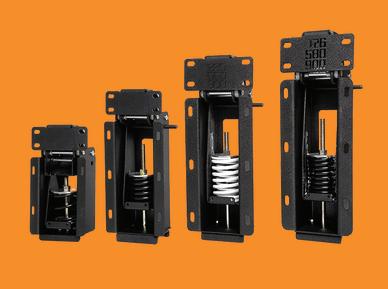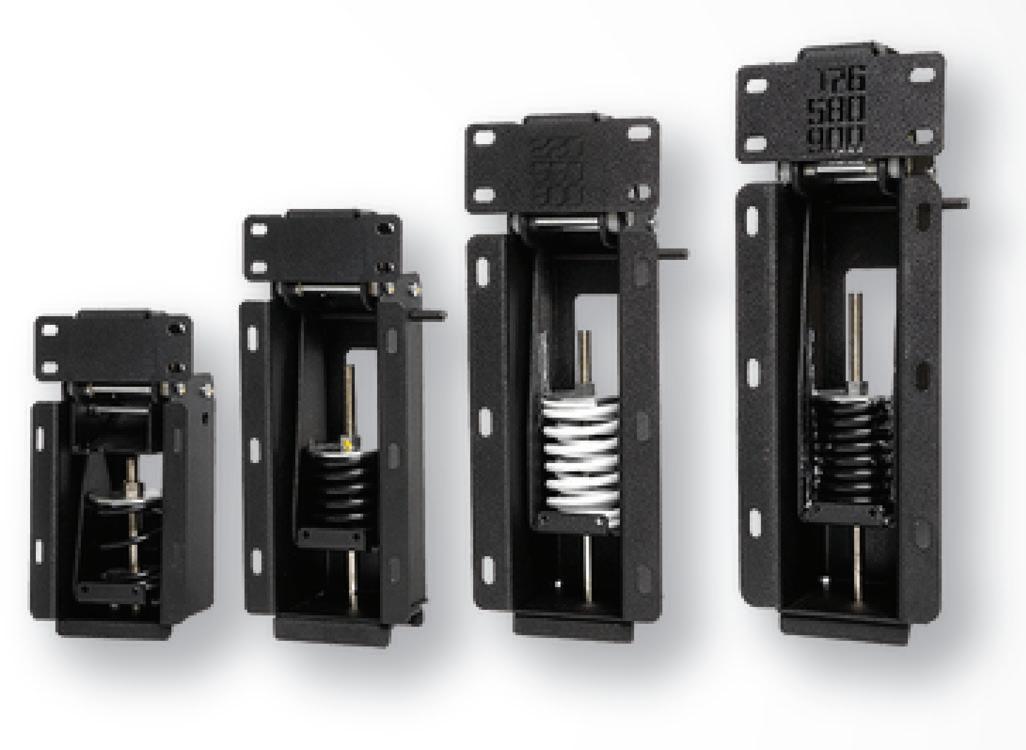






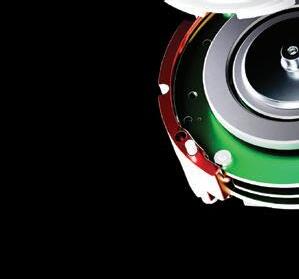
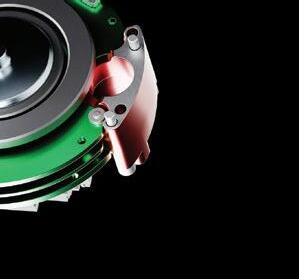
Safety Controller with Safe Motion and Safety Encoder Brake
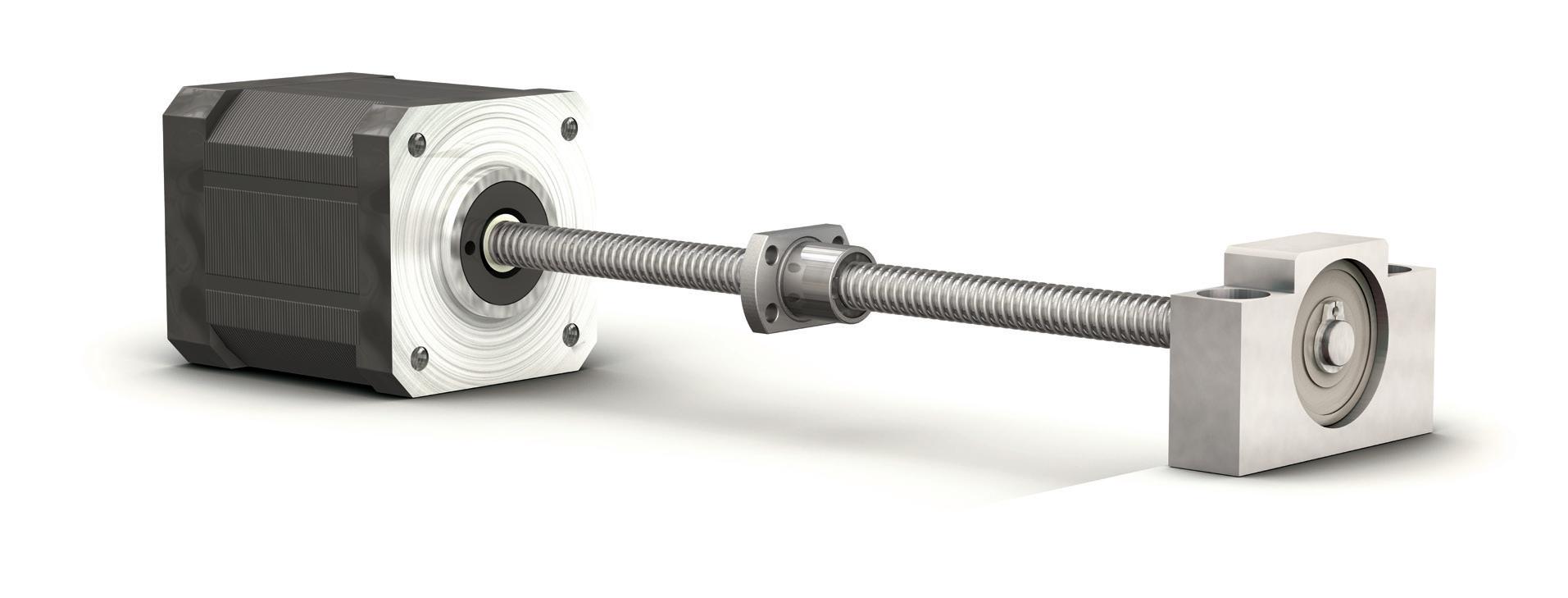
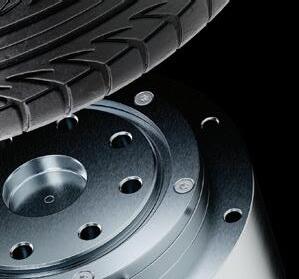
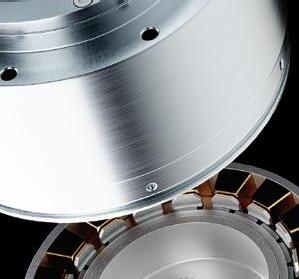
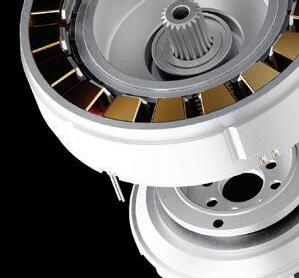
In logistics, Autonomous Mobile Robots (AMRs) are used for tasks such as transporting goods, packing, order picking, and inventory handling. These applications require compact drive systems that can deliver precise positioning and repeatable motion, even in tight spaces and during continuous operation. maxon motors, together with sensors and safety controllers, support reliable and adaptable operation. Because requirements vary, ranging from moving heavy loads to handling smaller items, modular drive systems allow the configuration of motor type, performance, electronics, brakes, and encoders to match your specific application. We build the drive system. You build your vision.
Find out more: www.maxongroup.us
Historically, manufacturing, particularly the automotive industry, has been the biggest early adopter of robotics. This trend has continued, as manufacturers have been some of the first adopters of new technologies such as mobile robots and humanoid robots.
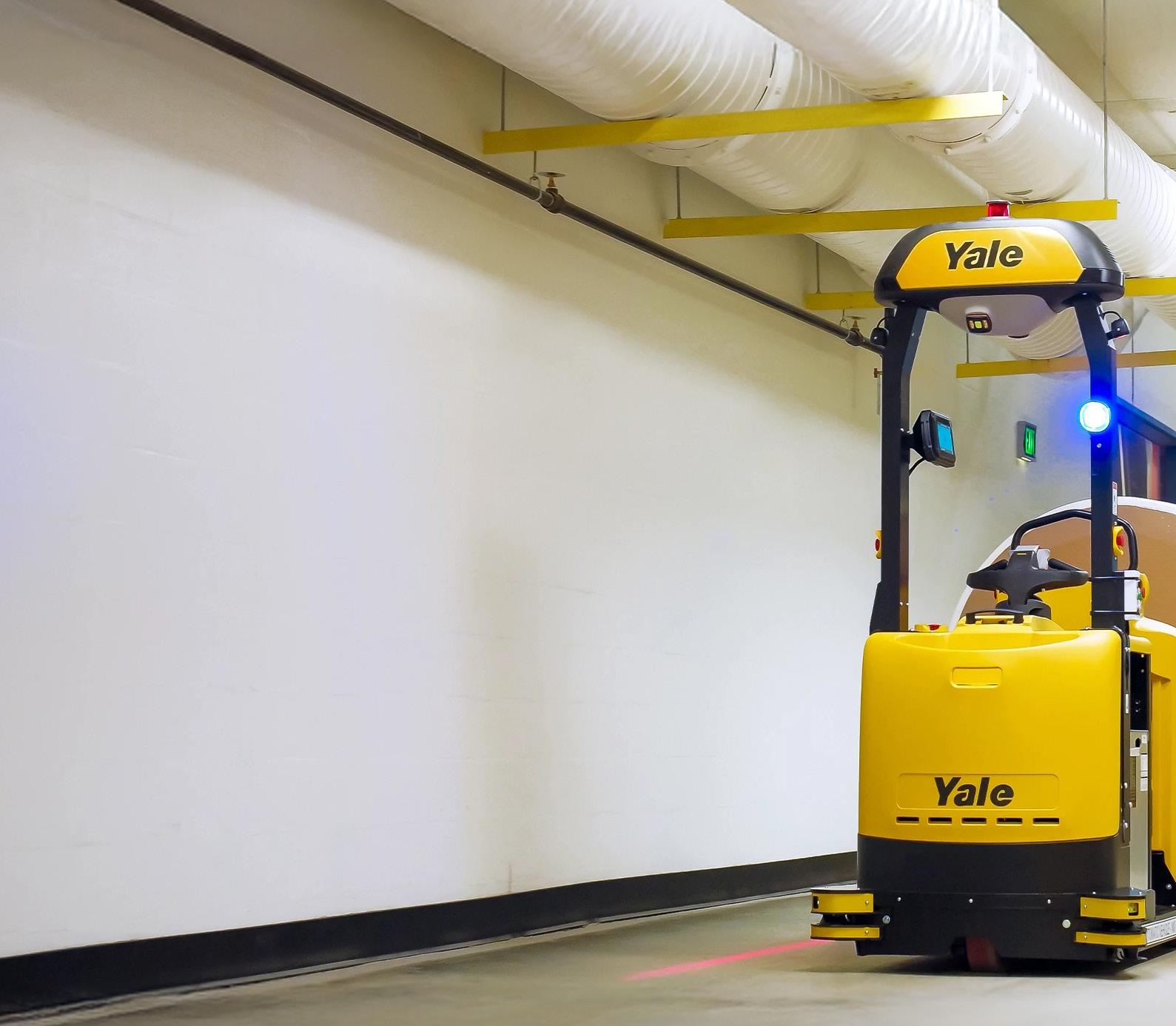
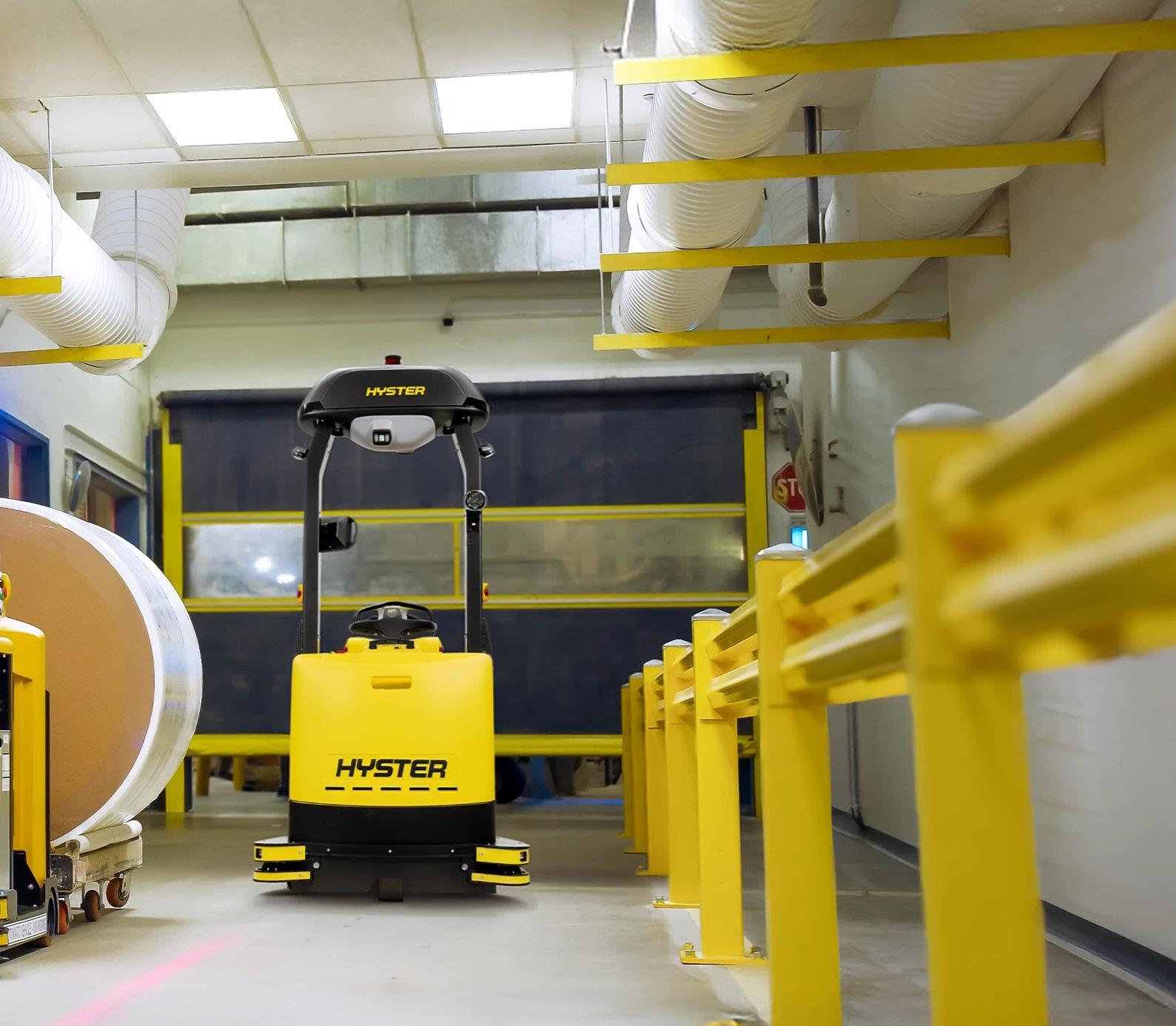
Hyster-Yale Materials Handling Inc. has been serving the manufacturing industry for more than 100 years. Its Hyster division focuses on manufacturing, and Yale serves supply chain and warehousing operations.
Noah Salmonson, a product manager for robotics at the Cleveland, Ohiobased automation provider, shared insights with Automated Warehouse. He
discussed the Hyster unit’s approach to automation, where it is seeing traction for automation, and how it ensures successful deployments.
Labor shortages are driving automation adoption
Around the world, manufacturers are struggling to find enough people to keep up with production. So, they’re turning to automation.
“The No. 1 thing that we hear about time and time again is really just the labor shortage that we see in America and across the world,” Salmonson said. “Businesses are looking for automation to solve some of those issues with labor shortages.”
In addition to filling in labor gaps, he said that automation can bring cost savings and higher efficiency. As more manufacturers also think about reshoring, many want to plan around automation.
“We see a lot of greenfield facilities popping up, and a lot of them are looking for automation,” Salmonson said. These operators are prioritizing getting a return on investment, so they’re starting with automation from the jump.
“You also see more and more customers looking for what we can offer from a reliability standpoint,” he observed. “We’ve been an OEM for over 100 years, and we have a really
Manufacturers may be early adopters of automation, but ease of use remains important. Hyster
large dealer network which I call our superpower. We’re able to service and get parts and do maintenance on vehicles very easily.”
Applications vary by automation type
Particularly in manufacturing, applications for automation vary depending on the vehicle type, Salmonson said.
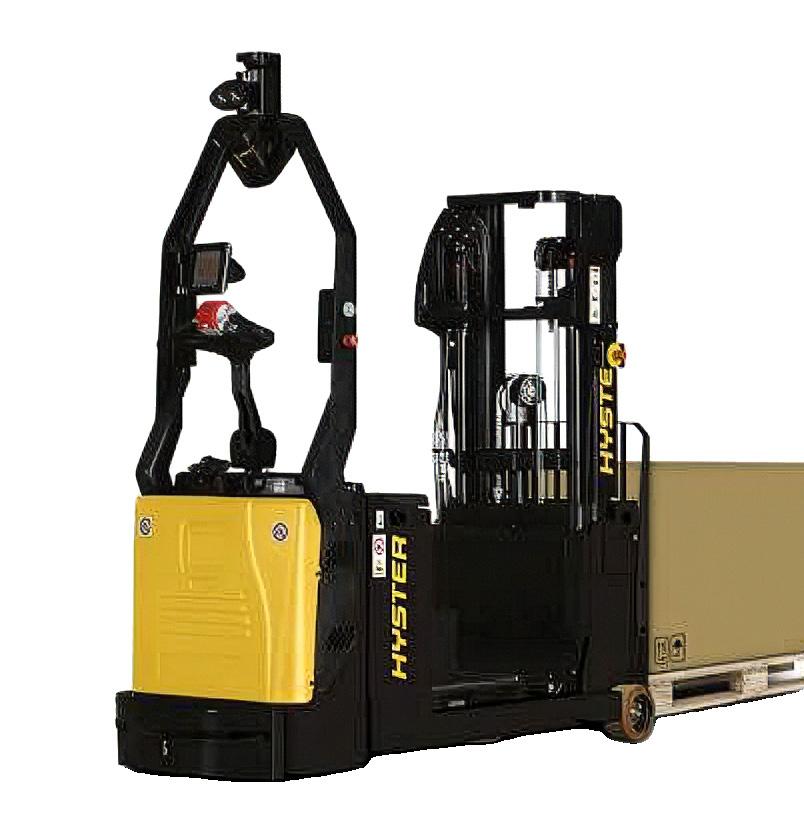
“If you’re working with a tow tractor or a tugger, you can see a lot of kitting applications, sometimes trash runs,” explained Salmonson. “Then when it comes to forked options, you might see removals from an ASRS machine, stretch wrapper, or end-of-line picking from a
conveyor and putting into stage lanes to go to a warehouse.
So far, Hyster has seen a lot of traction in automotive, food and beverage, and furniture.
“If you’re moving product in general, it’s always a good opportunity to take a look back and say, ‘How could I move this differently?’ or, ‘How could I move this with automation,’ and ‘How can this support my operation?’” Salmonson said.
Hyster has focused on making its autonomous vehicles flexible and safe to work with. The company’s navigation system is a key part of this effort.

“We’re using 2D lidar to navigate around a facility, and with lidar, you don’t need specific infrastructure,” Salmonson said. “You’ve probably been familiar with wire-guided [systems] or customers needing to put in reflectors or locators within their facility, you really don’t need that with lidar.”
Lidar isn’t just easier to deploy; it’s also easier to maintain, he noted. With lidar, Hyster’s equipment can better adapt to changes in a facility.
“[The lidar] is reading everything at 8-ft. [2.4 m] height, which is where we put our sensor on the vehicle, and that software actually has a really cool learning ability,” Salmonson said. “So as long as you’re able to keep above 20% of the original points, the software actually learns and adapts to changes within the facility. If you’re making minor racking changes, you don’t even have to remap your entire facility.”
Ease of use is key for successful deployments
Depending on the vehicle type, workers might interact with Hyster’s autonomous vehicles every single day, said Salmonson.
“For instance, the tow tractor or tuggers, a lot of the time, if you’re not using an auto-hitch and unhitch assembly that goes on the back of the vehicle, operators are going to have to
interact and work with that truck on every single route that it’s running,” he said.
To make working with the robots easier, Hyster has developed a drag-and-drop portal for route planning.
“In the past, you would have to hire software developers to program your routes and be able to write code to say where you want things to move from Point A to Point B,” said Salmonson. “We’ve made our system almost as simple as doing tasks in Visio or PowerPoint, where you drag and drop what we would call our waypoints or locators within the facility. To draw paths, you don’t need that typical software developer.”
This portal reduces cost and time needed to make changes within your facility, he asserted.
“Being able to [make changes] on the fly, and sometimes make these changes in less than a day or even a couple of hours, can really improve that cost of ownership and the ability to be flexible










within your facility without feeling like you’re constrained to that initial massive investment that might have been required in the past,” Salmonson said. RR
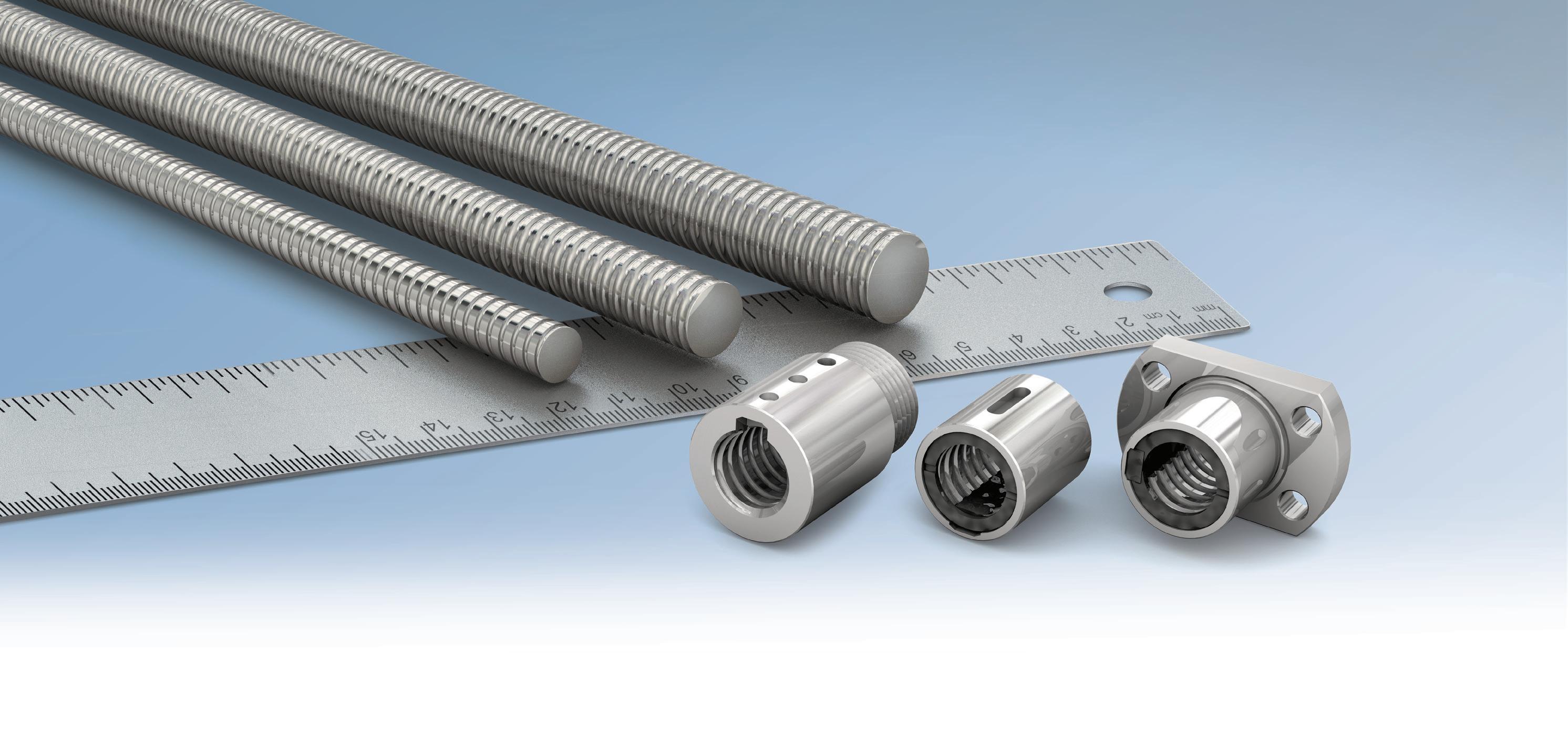
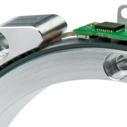
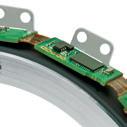
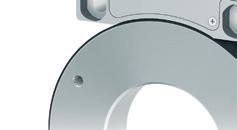
Position, angle and speed measurement Contactless, no wear and maintenance-free High positioning accuracy and mounting tolerances
Linear and rotary solutions













Safety Controller with Safe Motion and Safety Encoder
Safety Controller with Safe Motion and Safety Encoder
We build the drive system. You build your vision.
We build the drive system.
You
build your vision.
In logistics, Autonomous Mobile Robots (AMRs) are used for tasks such as transporting goods, packing, order picking, and inventory handling. These applications require compact drive systems that can deliver precise positioning and repeatable motion, even in tight spaces and during continuous operation. maxon motors, together with sensors and safety controllers, support reliable and adaptable operation. Because requirements vary, ranging from moving heavy loads to handling smaller items, modular drive systems allow the configuration of motor type, performance, electronics, brakes, and encoders to match your specific application. We build the drive system. You build your vision.
In logistics, Autonomous Mobile Robots (AMRs) are used for tasks such as transporting goods, packing, order picking, and inventory handling. These applications require compact drive systems that can deliver precise positioning and repeatable motion, even in tight spaces and during continuous operation. maxon motors, together with sensors and safety controllers, support reliable and adaptable operation. Because requirements vary, ranging from moving heavy loads to handling smaller items, modular drive systems allow the configuration of motor type, performance, electronics, brakes, and encoders to match your specific application. We build the drive system. You build your vision.
Find out more: www.maxongroup.us
Find out more: www.maxongroup.us
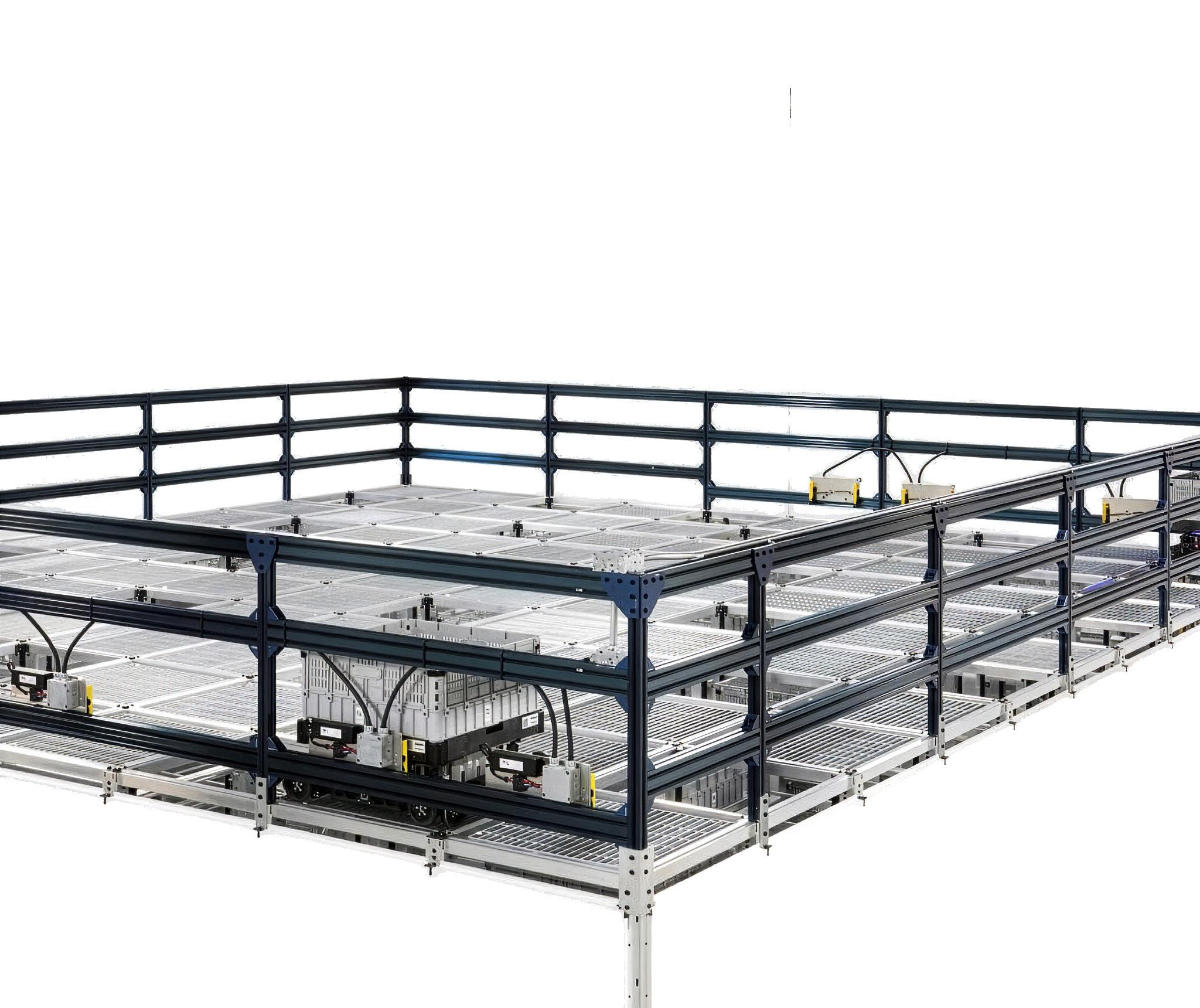
In the past year, Attabotics Inc. has seen a lot of changes. In July 2025, the company laid off most of its staff and filed for bankruptcy. Nearly eight months later, the company announced it had found a new life with LaFayette Systems, material handling automation developer.
Now the company still provides its automated storage and retrieval systems (ASRS) with the backing of a full-solution provider in LaFayette.
Mark Dickinson is the senior vice president and general manager at Lafayette Systems and the former vice president of operations at Attabotics. Dickinson shared insights with Automated Warehouse into the revamped company’s

Attabotics offers a cube-based storage system and proprietary software, which handles sequencing, sortation, and conveyance.
strategy, what he’s seeing in the market, and how the transition has changed Attabotics.
“Attabotics’ technology is available. It’s there,” Dickinson said. “We’re not the same organization that we were before, but the tech is still there.”
What’s driving automation adoption?
Dickinson said Attabotics uses an acronym to describe why companies turn to automation. They’re looking for space, accuracy, labor, and throughput, or SALT.
“Usually, the reason we do a project is at least one, if not more, of those,” Dickinson said.
Space utilization has become a bigger concern as micro-fulfillment centers
(MFCs) have become more popular. With smaller warehouses, every inch of space becomes more important.
“From a space-utilization perspective, it becomes very impactful when you can use the cubic space within the facility to be able to service as much of those products to those customers as possible,” Dickinson said.
Labor is also a major challenge. Dickinson said there are a couple of factors driving labor shortages.
“One is just inflation in the general economy,” he noted. “Two is labor availability, and that’s something that we see a lot, especially as you start to
build more of these smaller distribution centers. More, smaller facilities mean you need more people to run them.”
In addition, when it comes to throughput, automation can greatly increase the number of units per hour an operator can pick. Where an operator could pick up to 150 units per hour, with automation, this can increase to anywhere from 300 units per hour, per person to 1,800 units, said Dickinson.
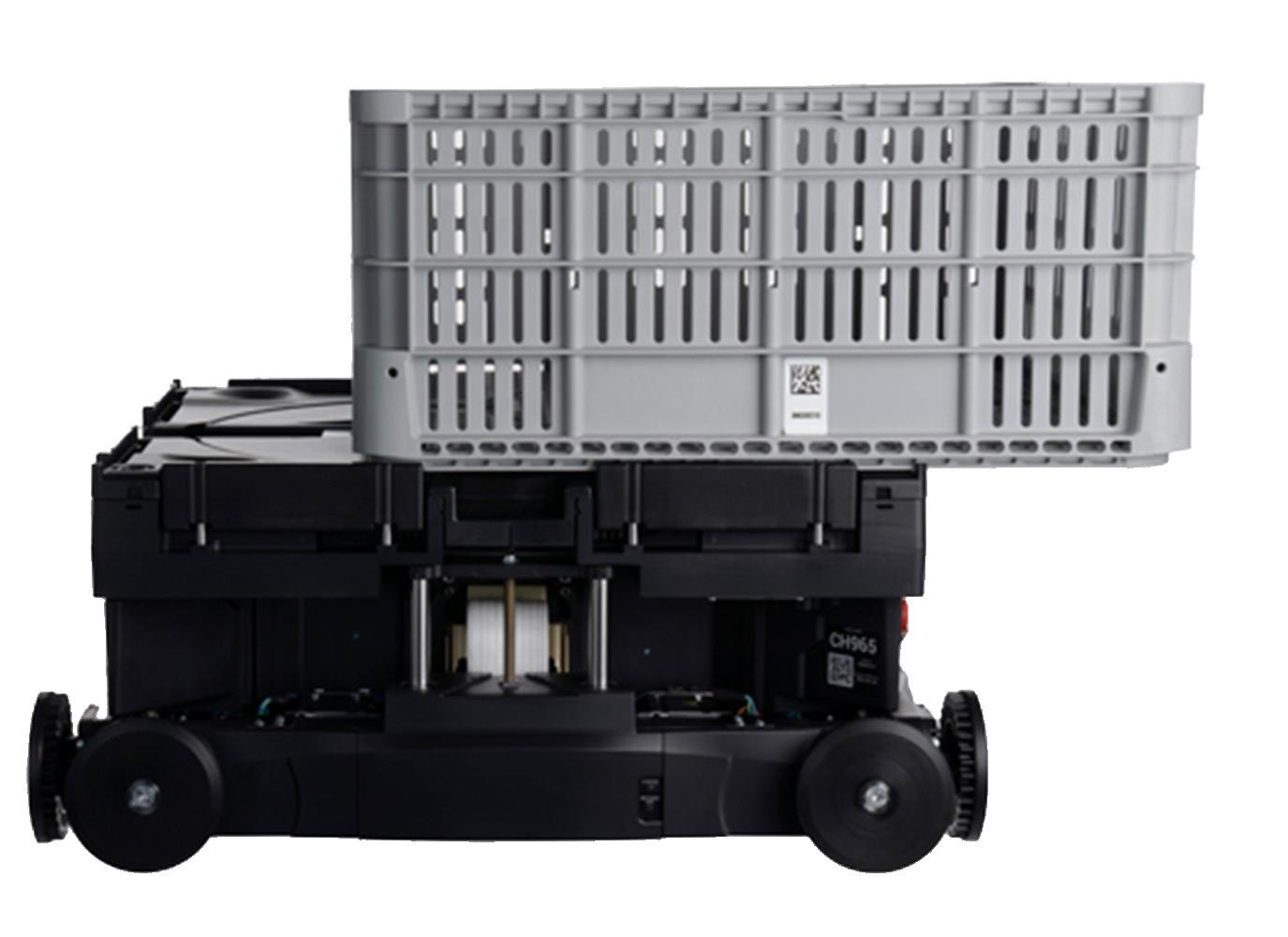
Attabot V5 robot is part of its ASRS for microfulfillment centers and other facilities. Attabotics
“We’re able to really create efficiencies not only around picking, but then also consolidate other functions into that process as a whole, if we get the opportunity to look at the end-to-end kind of operational stream,” he said.
Micro-fulfillment centers ‘never really left’
Many of these drivers center around the rise of micro-fulfillment centers. While they have become a point of debate within the industry, MFCs never really left, said Dickinson.
“Early adopters of automation are looking to put smaller distribution centers
closer to where the people are ordering from,” he said.
However, there are still challenges that come with micro-fulfillment centers.
“One of the things we tend to hear a lot is that they’re calling it quicksand, and it goes towards the system’s implementation,” Dickinson said.
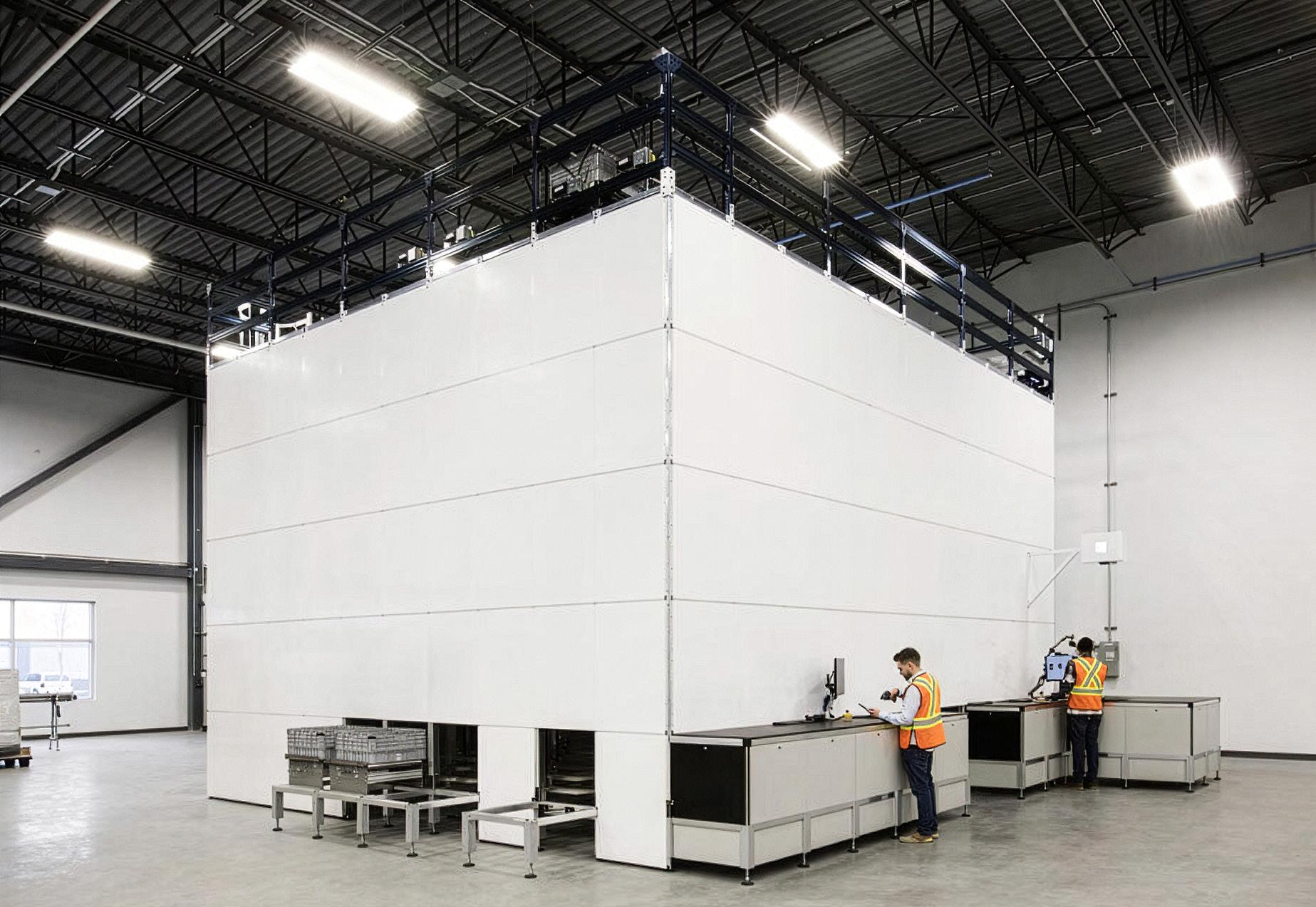
LaFayette has brought Attabotics’ technology forward from bankruptcy. Attabotics
“You have this concept where it was, ‘I just need to put stuff closer to people so that I can get it to them in shorter periods of time and not pay shipping,’ but nobody ever thought through the logistics of that,” he continued.
Working with automation providers who do understand MFCs can help end users to avoid common pitfalls.
“The biggest message I would have there is you have to talk to somebody who understands solutioning and understands the total end-to-end,” Dickinson said. “It starts before we even put stuff in the building.”
“It’s how are we getting orders, how are we aggregating orders, how are we deciding what orders are getting fulfilled?,” he added. “How do we make sure that what’s being ordered is in the right place in the right time, so that we can then perform the operation to get it out?”
In everyday operations, Attabotics’ technology gathers massive amounts of data about orders, operators, and the system as a whole. Dickinson said turning this data into usable information is at the crux of what the industry is trying to figure out when it comes to AI.
“One of the big things that we’re looking at is, these machines have different cycles and different nuances,”
create a proactive message to be sent to the maintenance technicians.”
Attabotics now offers services in addition to automation
Dickinson said. Attabotics is trying to understand what information from the robot matters and how the company can use that information to predict servicing.
Instead of having mechanical systems that call for servicing at regular intervals, Attabotics wants to create intelligent systems that actively diagnose the health of the system. This would help to cut down on unnecessary servicing.
“We create all this telemetry; we’re using it to understand what we need to look at in terms of maintenance,” Dickinson said. “We can, in real time, now see which robots are operating against the tolerance or outside the tolerance and
LaFayette, Dickinson said, encompasses conveyor controls, case handling, unit picking, palletization, and more. This opens new doors for Attabotics.
“As we go through the solution development, if there’s anything specific that we need that’s not off the shelf from an OEM, we can make it,” said Dickinson. “We really provide the customer, effectively, a one-stop shop to be able to provide a solution, and what that means to the customers is a reduction in risk. Instead of the customer having to go buy from a controls company and an ASRS company; all of that comes out of one place now.”
With the acquisition, Attabotics has changed the way it approaches deploying automation.
“One big thing we’ve understood is that we really need to meet the customer where they are. So, instead of the Attabotics technology being the solution, now the Attabotics technology is a portion of the solution,” Dickinson said. “When you look at the order orchestration in the warehouse and the execution of all of this, all the orders inside the facility, Attabotics now supports that rather than attempts to be the be all end all.”
With this change, Attabotics is expanding its relationships with distribution providers and integrators.
“Instead of being a black-box solution, now we’re really looking at the integrators and leveraging their capabilities. From an interface perspective, an integrator is fantastic,” Dickinson said. “They know the end user; they’ve got the relationship; they’re going to do a whole bunch of work inside the building.” RR
Design World Special Report:

Aerospace and defense motion components are the muscles and joints of modern air and space platforms, converting electrical, hydraulic, or pneumatic power into precise mechanical motion for mission-critical functions. This report covers materials influencing aerospace and defense motion systems today.
SALES SALES (CONTINUED)
Ryan Ashdown rashdown@arrowfly.com 216.316.6691
Jami Brownlee jbrownlee@arrowfly.com 224.760.1055
Ashley Burke aburke@arrowfly.com 737.615.8452
Tom Duggan tduggan@arrowfly.com 773.724.1638
Mike Francesconi mfrancesconi@arrowfly.com 630.488.9029
Jack Gillerlain jgillerlain@arrowfly.com 773.909.2718
Adrian Nash anash@arrowfly.com 416-500-6906
Susan Powers spowers@arrowfly.com 708.341.3370
Judy Pinsel jpinsel@arrowfly.com 630.538.2638
Melissa Roberts mroberts@arrowfly.com 440.666.3111
Colton Stefanich cstefanich@arrowfly.com 331.223.2047
LEADERSHIP
Senior VP, Engineering
Amanda Buehner abuehner@arrowfly.com
CEO Matt Logan mlogan@arrowfly.com
CFO Ken Gradman kgradman@arrowfly.com 773.680.5955
DESIGN WORLD does not pass judgment on subjects of controversy nor enter into dispute with or between any individuals or organizations. DESIGN WORLD is also an independent forum for the expression of opinions relevant to industry issues. Letters to the editor and by-lined articles express the views of the author and not necessarily of the publisher or the publication. Every effort is made to provide accurate information; however, publisher assumes no responsibility for accuracy of submitted advertising and editorial information. Non-commissioned articles and news releases cannot be acknowledged. Unsolicited materials cannot be returned nor will this organization assume responsibility for their care.
DESIGN WORLD does not endorse any products, programs or services of advertisers or editorial contributors. Copyright © 2026 by Arrowfly, LLC. No part of this publication may be reproduced in any form or by any means, electronic or mechanical, or by recording, or by any information storage or retrieval system, without written permission from the publisher.
Subscription Rates: Free and controlled circulation to qualified subscribers. Non-qualified persons may subscribe at the following rates: U.S. and possessions: 1 year: $125; 2 years: $200; 3 years: $275; Canadian and foreign, 1 year: $195; only US funds are accepted. Single copies $15 each. Subscriptions are prepaid, and check or money orders only.
Subscriber Services: To order a subscription or change an address visit our website at: www.designworldonline.com
DESIGN WORLD (ISSN 1941-7217) USPS PUBLICATION #25146 is published 11 times per year: January, February, March, April, May, June, August, September, October, November, December by: Arrowfly, LLC; 1111 Superior Ave., Suite 1120, Cleveland, OH 44114. Periodicals postage paid at Cleveland, OH & additional mailing offices.
POSTMASTER: Send address changes to: Design World, 1111 Superior Ave., Suite 1120, Cleveland, OH 44114


By Mark Jones


It was a surprising night for Michigan in April, both warm and clear. With all the lights off, I positioned myself on the patio staring at the sky hoping to enjoy the Lyrid meteor shower. High-country camping during my time in Colorado hooked me on meteor showers. There was no moon and Jupiter was high in the sky and bright. I wasn’t expecting the shows I’d seen above the timberline but thought it still worth a try. I never saw a meteor, but I did see some satellites. I’m now almost 40 years removed from my high-country star gazing. The satellites were a dramatic change. In my time staring at the sky in the mountains, I don’t have a clear memory of seeing anything man-made, save the occasional plane.
I am a chemist by training and have studied the history of chemistry as a hobby. Seeing the satellites caused me to draw parallels to the chemical enterprise. William Perkin started a dye factory in Greenford, England around 1857, only about a year after he inadvertently produced the purple dye, mauveine, while trying to synthesize quinine in a home laboratory. Recognizing the value of a synthetic purple dye ultimately made Perkin a rich man. Many credit Perkin with starting the synthetic chemical industry. He can be credited with unintentional consequences too.
Perkin and other early chemists had no concept of waste management. Water from Perkin’s dye works flowed into the nearest waterway. Water laden with mauveine and other byproducts, both colored and clear, went into the ditches. The River Brent reportedly ran with a distinctly purple hue.
Laws were enacted as early as 1876 to limit discharge of pollutants. It may have been lucky that the unnatural color attracted public ire. The invisible materials in the discharge were far more dangerous. Illness in dye factory workers, particularly bladder cancer, is at the heart of the earliest systematic study to link chemical exposure to disease. The witch’s brew of the dangerous byproducts of dye production was more than just an eyesore.
The chemical industry was on the bleeding edge of questions about protecting the commons. Regulation added cost. Industry didn’t like that. Fouling the river impacted many while a few benefited handsomely. It established a paradigm still followed today. Industry dislikes regulation and society distrusts industry. Chemistry held a unique position among the sciences. Like other sciences, it explains and catalogs the natural world. Chemistry is also creative, allowing creation of things not found in the natural world. It has now been joined by biology, physics, and even
computer science. All are now causing concern. Add companies going into space to the list.
The Kessler Syndrome is a theoretical scenario where the density of space debris in Low Earth Orbit becomes so high that collisions cause a runaway, selfsustaining cascade of further collisions. This chain reaction could render critical orbits unusable for decades, threatening satellite operations, GPS, and space exploration. Back in 2018, the estimate for collisions to begin should satellites in lowearth orbit lose ability to maneuver was 164 days. It is down to 2.5 days today. It is almost a textbook Hardin tragedy.
My observing satellites during my recent star gazing may be analogous to the River Brent running purple. It might be an indication of more serious problems to come. Just as the chemical industry opposed regulations, regulations on satellites are opposed by launch companies. Just as chemists developed technical solutions to counteract problems created by chemists, technical solutions are being proposed by aerospace companies. Several companies are proposing schemes for space junk removal. Just as with the chemical industry, many may be impacted by the actions of a few. DW