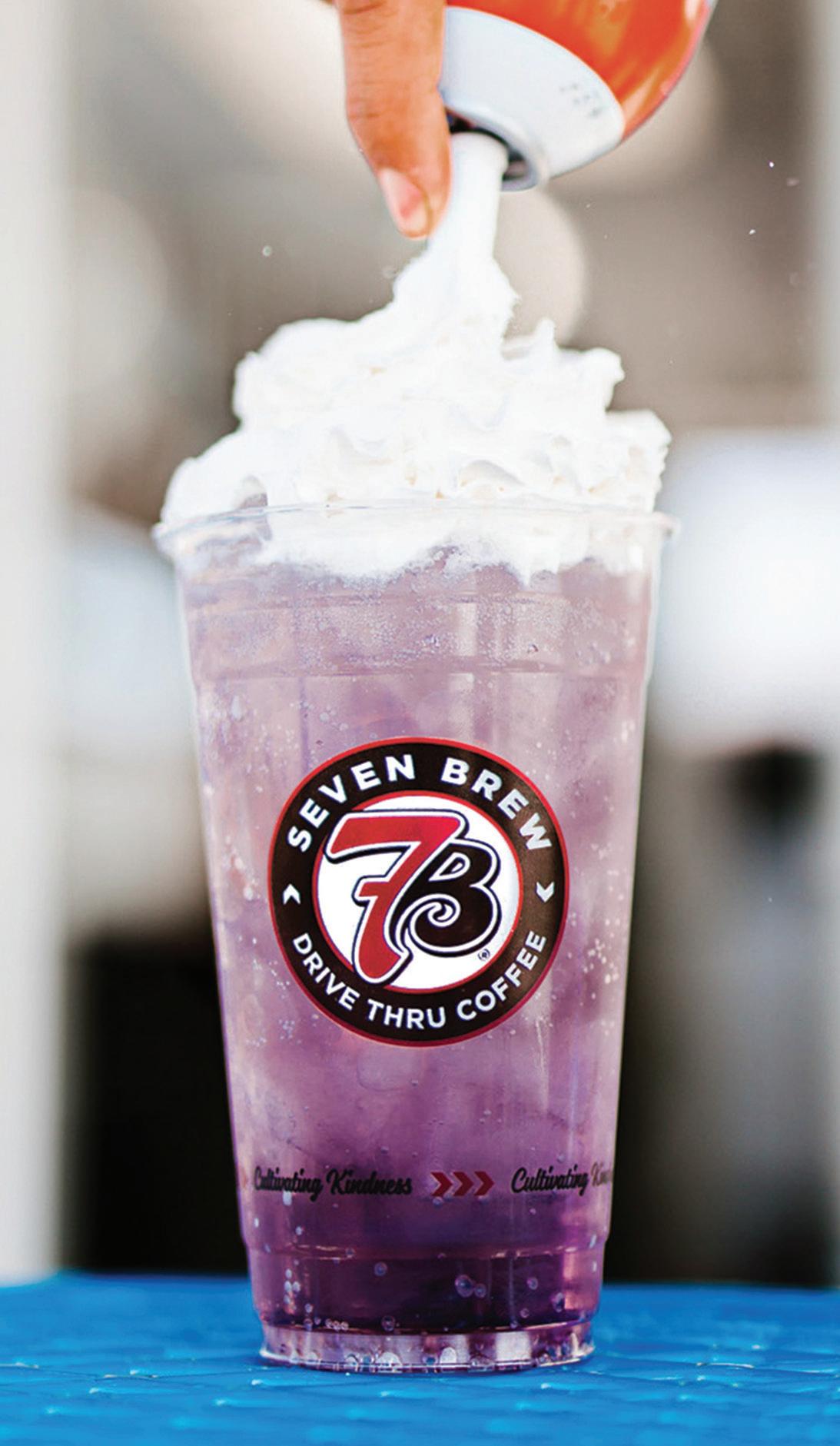
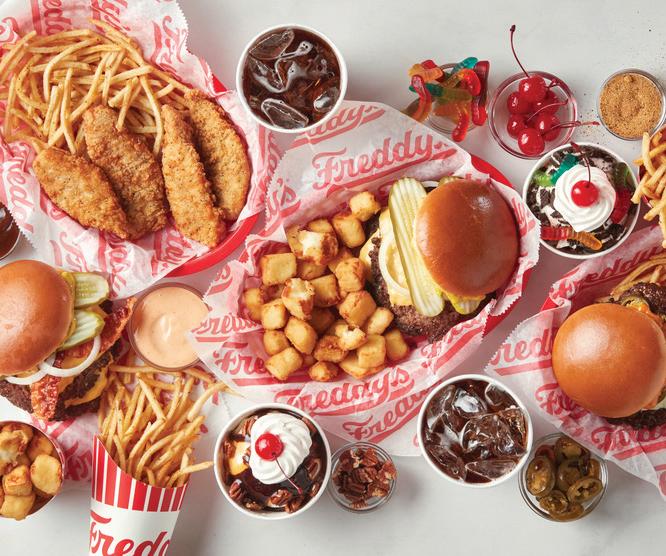
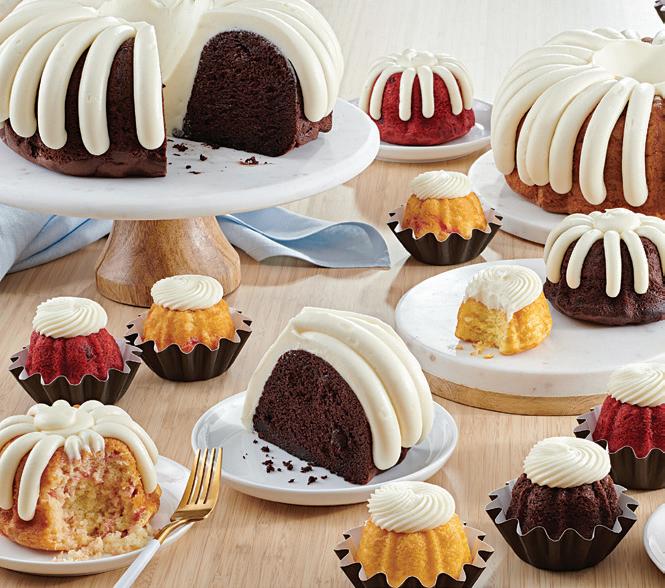
With 460+ locations and a people-first culture that stands out in the QSR category, BIGGBY® COFFEE continues to expand with franchise partners who believe in building something meaningful in their communities.
From a proven operating model to strong training and ongoing support, BIGGBY® COFFEE is built for entrepreneurs ready to grow with a brand that values people just as much as performance.
Now expanding in select markets nationwide.
WHAT’S HAPPENING AT QSR
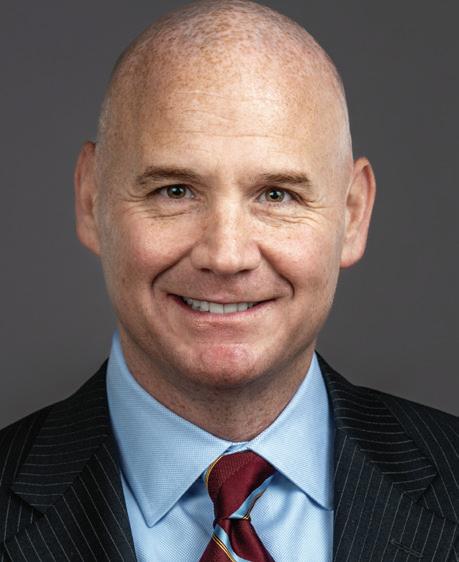
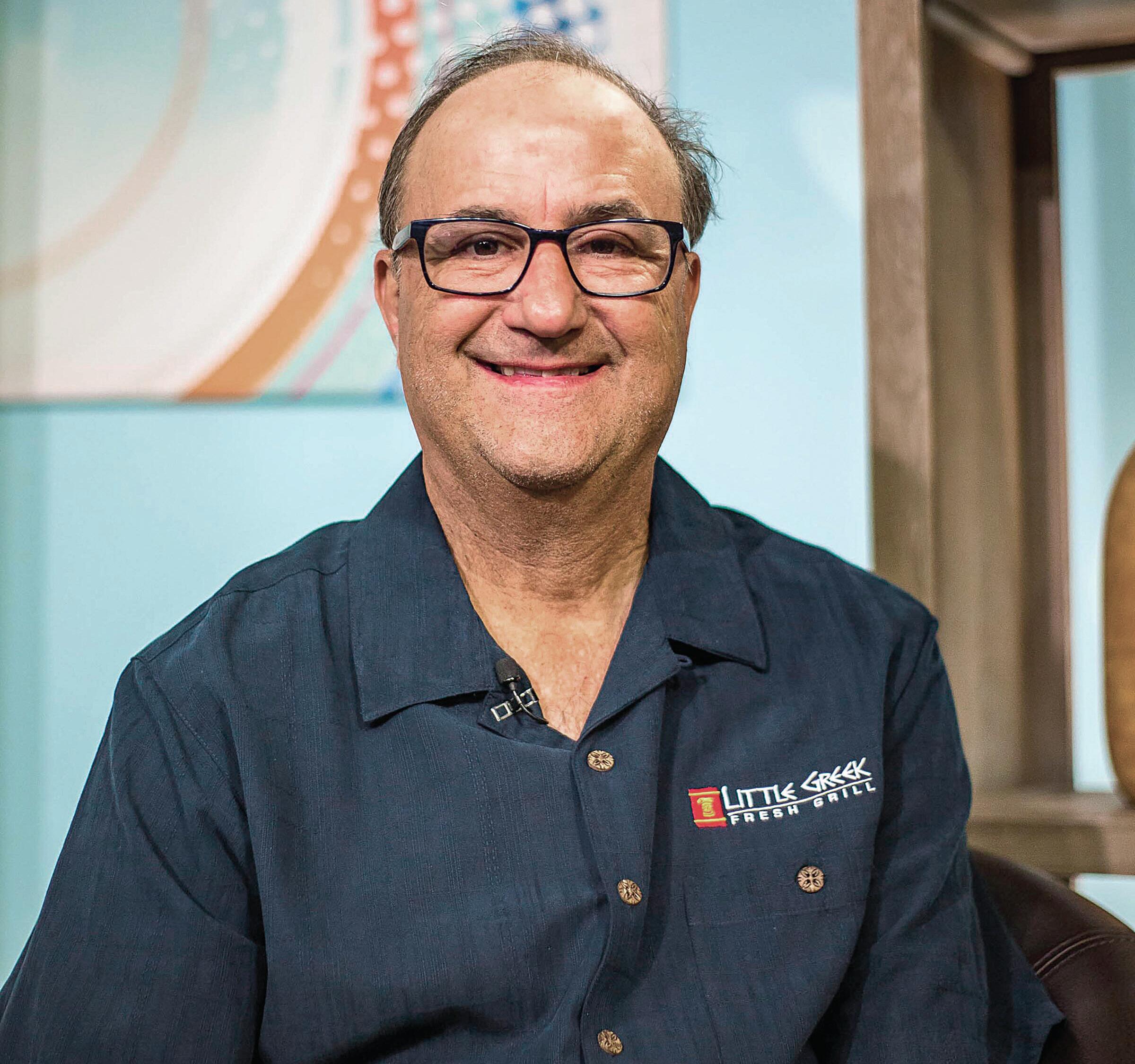
The Great Greek Mediterranean Grill Preps for Lift-Off, with President Bob Andersen
CONVERSATIONS AT QSR+
Restaurant leaders are talking about AI, dirty sodas, GLP-1s, and other pressing issues in our first operator community. Request your invite today to join the discussion. No vendors. No hard sells. All collaboration.
QSR UNCUT: WHERE ENTREPRENEURS SHARE THEIR STORIES
Recently named a Top 3 emerging restaurant chain in the U.S. by Datassential, The Great Greek Mediterranean Grill is fast approaching 100 units and $150 million in systemwide sales. President Bob Andersen joined the podcast to discuss life growing a concept in a red-hot Mediterranean category and what it takes to win on the AI, menu, and franchising fronts.
A Conversation on Franchising, Growth, and the State of Restaurants, with Fransmart CEO Dan Rowe
Dan Rowe, CEO and founder of Fransmart, and 35-plus-year-industry vet, shared his thoughts on what it takes to grow, the state of concept creation, how franchising is evolving, and much more. We explored some of the stories behind CAVA, Five Guys, QDOBA, and what founders and emerging brands should look for before deciding it’s time to expand.
Winning the Value Customer, with Cici’s President Jeff Hetsel
The legacy pizza buffet has posted a strong year despite the odds, leaning into a fresh approach of value-based branding and promotions. From a record-breaking loyalty launch that turned back the clock on pricing, with sales jumping nearly 30 percent in two days, to how Cicis is evolving its voice, Jeff Hestel explained why tapping into your roots and adjusting strategy along the way can lead to gains in a challenging consumer climate.
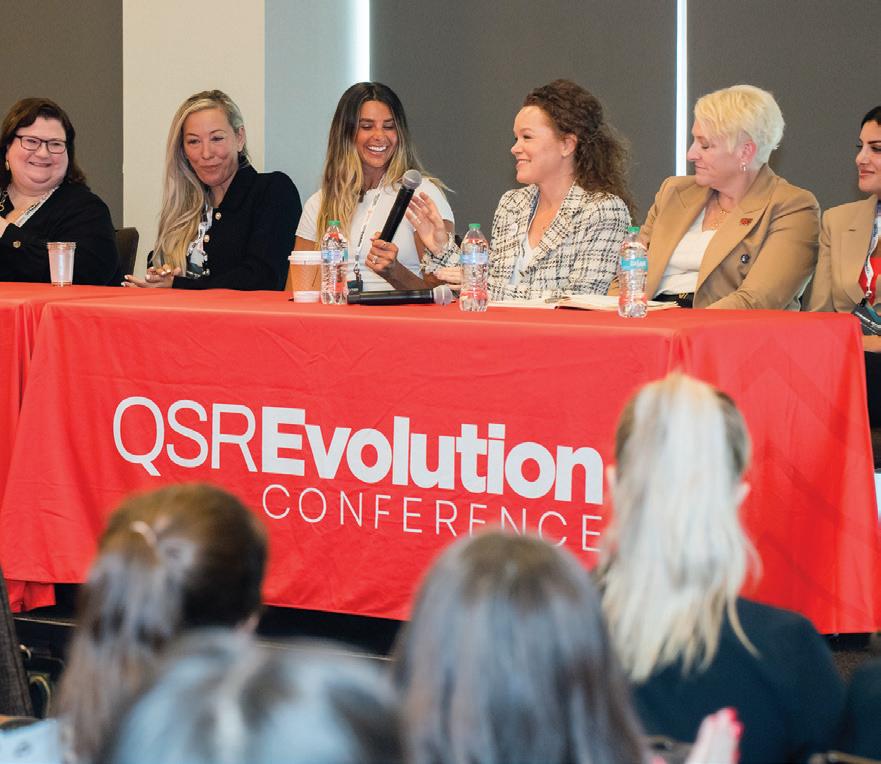
KEYNOTES ANNOUNCED FOR WOMEN IN RESTAURANT LEADERSHIP SUMMIT!
AMY DURINI , chief marketing and strategy officer for Taco Bell International, and NIVERA WALLANI , chief development officer for KFC Global, will serve as the headlining keynotes at WiRL 2027.
The Women in Restaurant Leadership (WiRL) conference returns February 6–9, 2027, at the Grand Hyatt Scottsdale Resort in Scottsdale, Arizona.
Early bird registration is available through August 30, 2026, at $399 for operators of quick-service and full-service restaurants. The rate increases to $599 through January 1, 2027, with late and on-site registration available at $799.
EDITORIAL
VICE PRESIDENT EDITORIALFOOD, RETAIL, & HOSPITALITY
VICE PRESIDENT, CONTENT STUDIO Peggy Carouthers pcarouthers@arrowfly.com
WRITER, CONTENT STUDIO Drew Filipski dfilipski@arrowfly.com
WRITER, CONTENT STUDIO Ya’el McLoud ymcloud@arrowfly.com
ART & PRODUCTION
SENIOR ART DIRECTOR Tory Bartelt tbartelt@arrowfly.com
VP, CREATIVE DIRECTOR Matt Claney mclaney@arrowfly.com
SALES & BUSINESS DEVELOPMENT
SVP, FOOD, RETAIL, HOSPITALITY SALES AND ACCOUNT MANAGEMENT Matt Waddell mwaddell@arrowfly.com 312-961-6840
NATIONAL SALES DIRECTOR Amber Dobsovic adobsovic@arrowfly.com 757-637-8673
NATIONAL SALES MANAGER Guy Norcott gnorcott@arrowfly.com 854-200-5864
NATIONAL SALES MANAGER Tom Boyles tboyles@arrowfly.com 662-607-5249
SALES DIRECTOR Tony Bolla tbolla@arrowfly.com 773-859-1107
SALES DIRECTOR Susan Shepherd sshepherd@arrowfly.com 404-386-1709
CUSTOMER SERVICE REPRESENTATIVE Tracy Willingham twillingham@arrowfly.com 919-945-0704
CUSTOMER SERVICE REPRESENTATIVE Brandy Pinion bpinion@arrowfly.com 216-952-0877
FOUNDER Webb C. Howell
ADMINISTRATION
919-945-0704 / www.qsrmagazine.com/subscribe QSR is provided without charge upon request to individuals residing
AMY DURINI NIVERA WALLANI TACO BELL, KFC
What the QSR 50 Has to Say
THE BIGGEST BRANDS IN AMERICA ARE INNOVATING AS THEY ALWAYS DO.
BCOLEY@ARROWFLY.COM
QSR MAGAZINE
The QSR 50 is here, and it once again shows that the restaurant industry has always been a study in adaptation.
Every year brings a new challenge, a new trend, a new reason to rethink conventional wisdom. Yet as we assembled this year’s QSR 50, one thing became abundantly clear—the brands winning today aren’t necessarily the ones changing the most. They’re the ones changing with purpose.
For much of the past few years, restaurant leaders have been forced to play defense. Inflation surged. Labor costs climbed. Consumers pulled back. Value became the industry’s most important word. Many brands spent that period protecting margins, simplifying menus, and finding ways to navigate uncertainty.
That conversation hasn’t disappeared. If anything, value has become a permanent expectation rather than a temporary strategy. Look across this year’s ranking and you’ll find nearly every major brand— from McDonald’s and Taco Bell to Subway and Panera—working to define what value means in a market where guests are selective about every dollar they spend. The race is no longer about who can offer the lowest price. It’s about who can deliver the strongest combination of affordability, quality, convenience, and relevance. What’s equally striking is how technology has moved from the background to the center of the industry’s growth story.
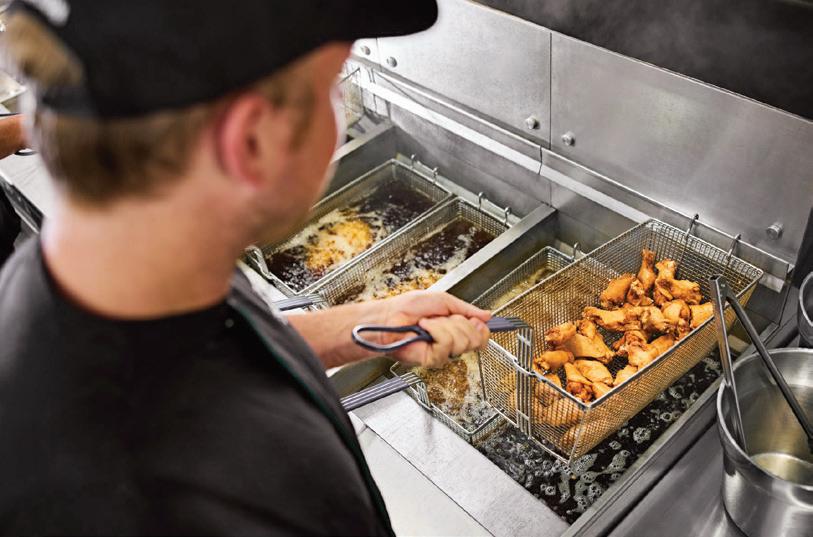
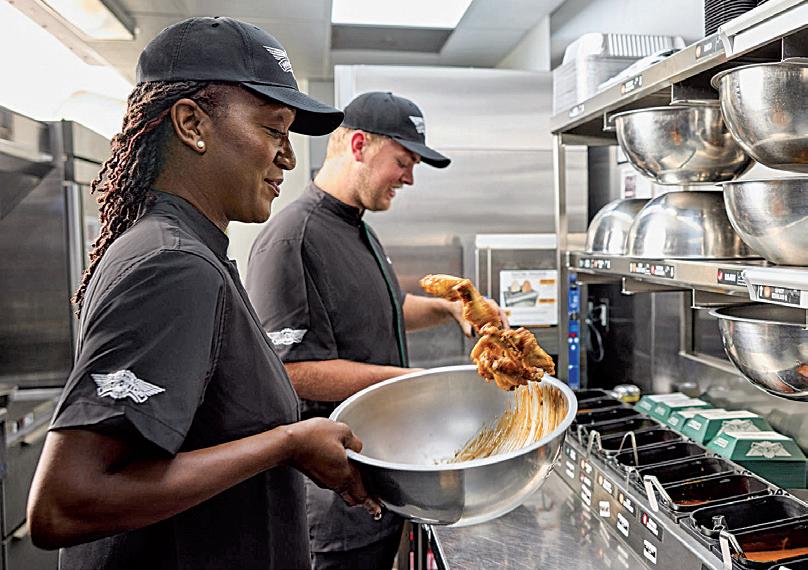
A few years ago, artificial intelligence felt experimental. Today it’s becoming operational. Domino’s is enhancing delivery visibility through AI-powered tools. Chipotle is using AI to accelerate hiring. Wingstop is transforming kitchen operations through its Smart Kitchen platform. Little Caesars launched ordering through ChatGPT.
Brands are also searching for new occa-
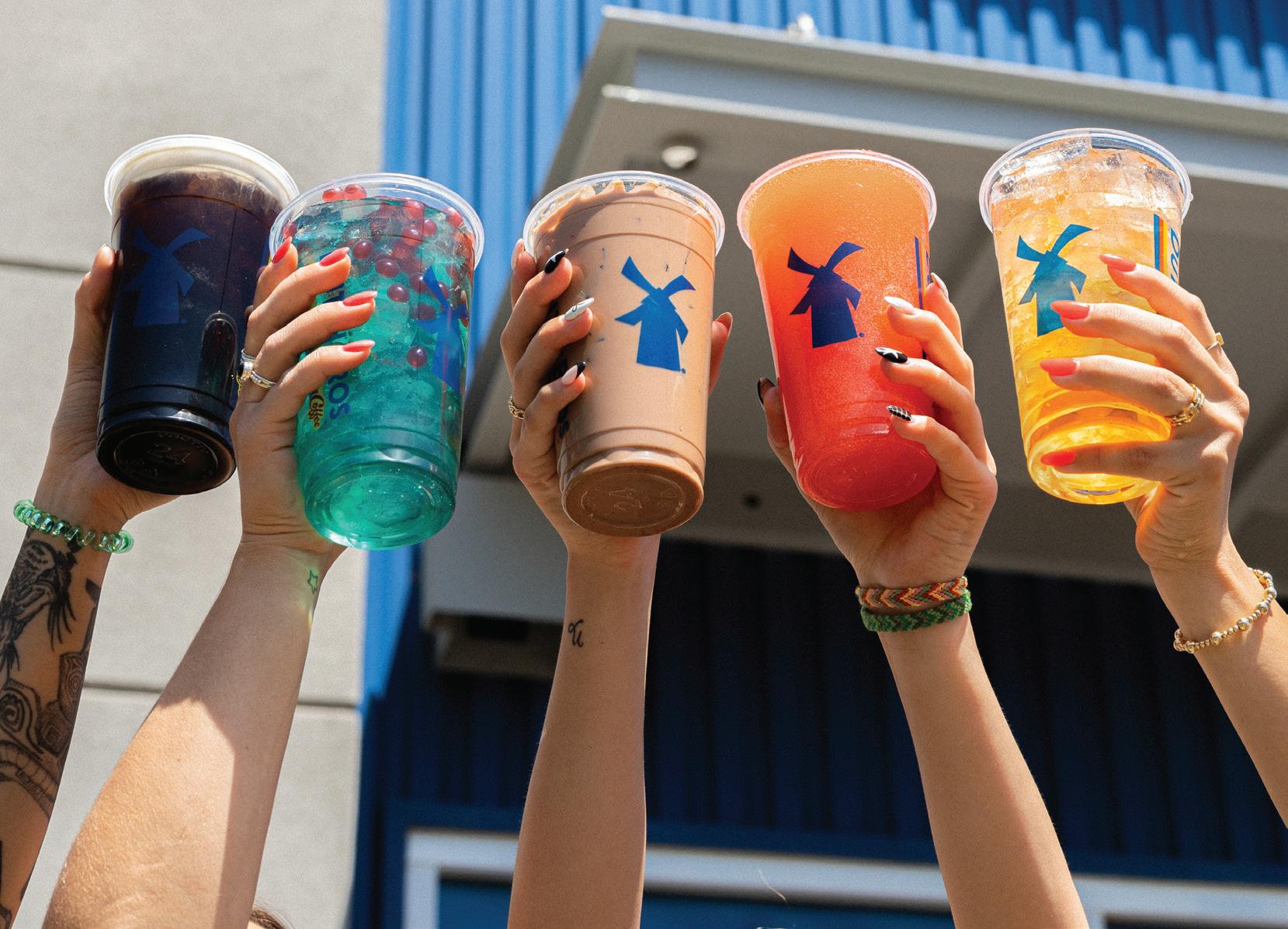
sions and new reasons for guests to visit. Beverage innovation is exploding across the industry. Dunkin’ is pushing deeper into energy drinks and customization. Taco Bell views beverages as a major whitespace opportunity. McDonald’s is investing in crafted drinks. Dutch Bros and 7 Brew continue to prove that beverage-focused concepts can achieve remarkable scale. The traditional definition of a quick-service restaurant is expanding in real time.
Perhaps the most important lesson from this year’s ranking is that scale alone is no longer enough.
Some of the biggest stories in the QSR 50 involve brands revamping their footprints, rebuilding operations, and rethinking their identities. Starbucks is restoring its in-store experience. Burger King is entering a new phase of its turnaround. Wendy’s is restructuring its business around stronger unit economics. Subway continues reshaping a system that once seemed too large to change.
The chains leading this year’s QSR 50 are investing in technology, loyalty, beverages, operations, culture, and development. They’re pursuing scale, but they’re also pursuing connection. In a marketplace filled with choices, they’re creating reasons for customers to return.
And that, more than any single innovation or initiative, may be the defining challenge of modern quick service.
Ben Coley EDITOR
UNIVERSAL
PLUG-AND-PLAY Up and running in minutes.
ENTERPRISE READY Manage 1 or 1,000+ stores from the cloud.
GAMIFIED Gamify performance with real-time leaderboards.
UNMATCHED VALUE Premium enterprise features. Fraction of the cost. Stop losing drive-thru dollars. Find your rhythm of revenue. 800-598-2370 | Sales@RFDriveThru.com
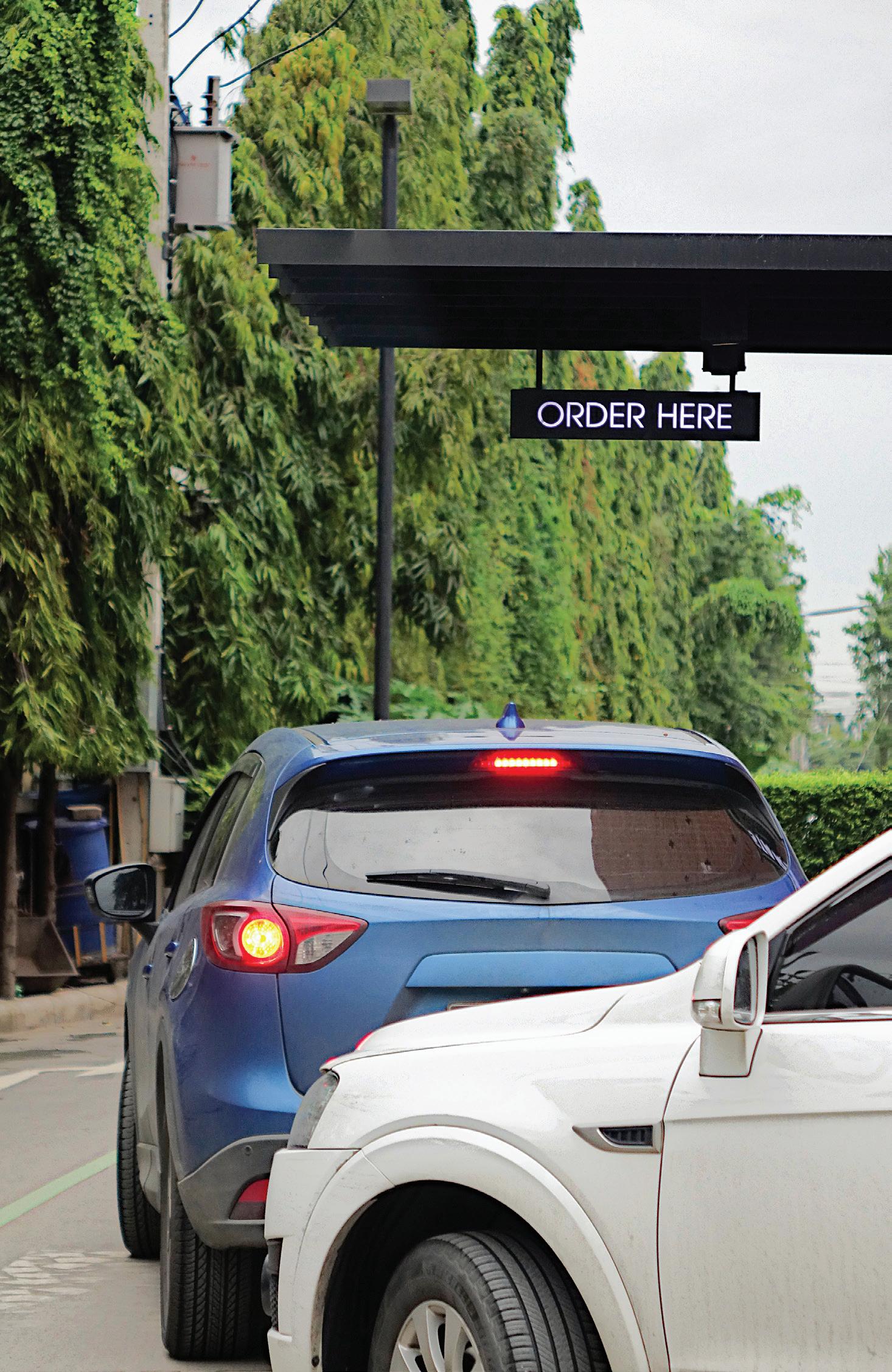
Building Drive-Thru Profitability
Experts from Toast and Restaurant365 give insight every operator needs to hear.
For many quick-service operators, the biggest operational challenge is no longer adopting new technology. It is making disparate systems work together.
That was the focus of a recent QSR magazine webinar sponsored by Toast and Restaurant365, where speakers Pedro Feitosa, principal product manager at Toast, and Eddy Salas, solutions engineer at Restaurant365, explored how restaurants can connect front-of-house operations with real-time financial and labor data to make faster, more informed decisions.
The discussion centered on the growing complexity of restaurant technology. As brands add AI-powered voice ordering, third-party delivery, multiple ordering channels, and digital drive-thru capabilities, many operators are finding themselves managing disconnected platforms that make it difficult to understand true profitability.
The two experts discussed how a unified point-of-sale and drive-thru technology ecosystem can improve operational consistency and reduce friction for employees and guests. They explained how consolidating technology allows operators to better manage order flow, improve accuracy, and create a more seamless guest experience across channels.
They also focused on the back-office implications of that connectivity. They demonstrated how linking POS data with labor, inventory, and accounting systems gives operators realtime visibility into labor costs, food costs, and channellevel profitability instead of waiting until financial statements are finalized weeks later.
OPERATORS MUST THINK CAREFULLY ABOUT THE TECHNOLOGY POWERING THEIR DRIVE-THRU.
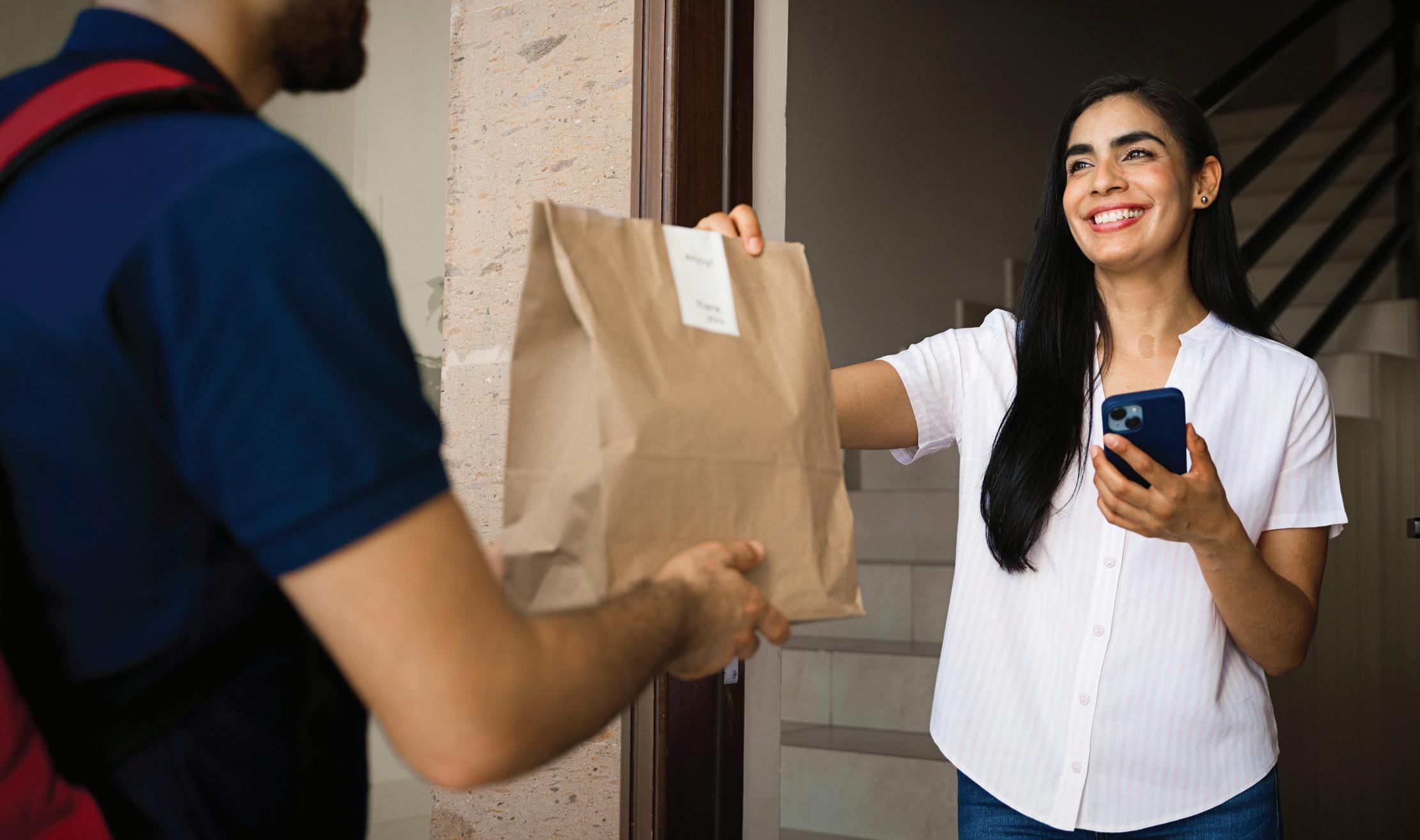
THIRD-PARTY DELIVERY MARKETPLACES
RANK AS THE TOP CHANNEL FOR ACQUIRING NEW GUESTS .
DoorDash’s
2026 Restaurant Industry Trends Report argues that restaurant growth increasingly depends on understanding customers across discovery, ordering, dine-in, and loyalty channels rather than treating each touchpoint separately.
DISCOVERY IS BECOMING MORE COMPLEX
• Consumers discover restaurants through multiple sources, led by friends and family (62 percent), Google search (51 percent), and delivery apps (37 percent).
• More than half of first-time DoorDash orders come from customers browsing rather than searching for a specific restaurant.
• Third-party delivery marketplaces rank as the top channel for acquiring new guests.
• AI is emerging as a discovery tool, with 22 percent of consumers already using platforms like ChatGPT or Gemini to help choose restaurants.
• Restaurant listing platforms account for 41 percent of sources cited by AI tools when recommending dining options.
MENUS AND VISUALS DRIVE CONVERSION
• Sixty percent of consumers say the menu and food offerings influence their decision to book a new restaurant.
• Ninety-three percent have ordered an item because of a detailed menu description
• Fifty-nine percent actively seek allergen or dietary information when ordering food.
• Eighty-seven percent have selected food based on an appealing photo or video
• DoorDash found that adding descriptions to at least half of menu items can increase sales by more than 6 percent , while achieving 50 percent photo coverage can boost sales by 13 percent
MOBILE AND AI ARE RESHAPING GUEST INTERACTIONS
• Eighty-one percent of consumers usually or almost always order delivery on mobile devices.
• Ninety-five percent of DoorDash orders over the past six months were placed on mobile
• Phone calls remain the most common reservation method, used by 64 percent of diners.
• Forty percent of restaurant calls go unanswered, creating missed revenue opportunities.
• Three-quarters of diners are comfortable using AI for reservations, yet only 28 percent of operators currently use AI to manage calls and customer service.
CUSTOMERS NATURALLY MOVE BETWEEN CHANNELS
• Consumers choose dine-in for celebrations and social occasions, but turn to delivery and pickup for convenience and routine meals
• Seventy-four percent of diners later order delivery from restaurants they previously visited in person
• Sixty-two percent of consumers say delivery has led them to later dine at the same restaurant .
• Eighty percent of dine-in visits and 79 percent of delivery orders occur at restaurants customers have already tried
• Cross-channel customers tend to be more valuablebecause they order more frequently and return more often.
87 % RESPONDED THAT DISCOUNTS , CREDITS , OR PERKS INFLUENCE THEIR DECISION TO REORDER .
LOYALTY AND CONNECTED DATA CREATE GROWTH OPPORTUNITIES
• Ninety percent of consumers would participate in a loyalty program that works across both reservations and delivery.
• Eighty-seven percent say discounts, credits, or perks influence their decision to reorder.
• Sixty-six percent engage more often with restaurants where they are loyalty members
• Forty percent of operators use four or five separate systems to run their businesses, creating data and operational challenges.
• Eighty-three percent of operators believe connected systems would improve profitability by creating a more complete view of customer behavior.
How Operators can Leverage the Low-No Drink Trend for Better Profits
Beverages are still a profit center as consumers shift away from sugar and additives.
Research shows that “low
sugar” and “sugar-free” are the most important factors in non-alcoholic beverage ordering.
Consumers are increasingly prioritizing health-conscious choices, and in the quick-service restaurant space, this shift is most visible in the demand for low- and no-sugar beverages. While most quick-service restaurants don’t serve alcohol, the broader low- and no-alcohol movement presents an opportunity for savvy operators eager to break into later dayparts typically dominated by bars or full-service restaurants.
For quick-service restaurant operators, modernizing the beverage menu is about balancing consumer health trends with back-of-house efficiency. Today’s guests are looking for options that feel intentional—80 percent prioritize beverage quality, and 79 percent seek variety when ordering, according to Monin Proprietary Research. The challenge is delivering these "better-for-you" sips without complicating the line or slowing down service.
The immediate opportunity lies in o ering customizations that align with consumers’ health goals. Operators o ering high-quality, reduced-sugar, and no-alcohol options are positioned to maximize
beverage sales while increasing customer loyalty and satisfaction.
To keep menus streamlined, operators should look for flavor solutions that work across multiple applications while addressing the primary driver of health-conscious ordering: sugar content. Monin Proprietary Research shows that when consumers order a non-alcoholic beverage, "low sugar" (55 percent) and "sugar-free" (45 percent) are the most important factors. Integrating solutions like TruFlavour by Monin® allows for an unsweetened, natural flavor layer, while Monin Brilliance Sugar Free Flavored Energy™ adds a functional ca eine boost that 71 percent of consumers are interested in seeing on restaurant menus, according to Monin.
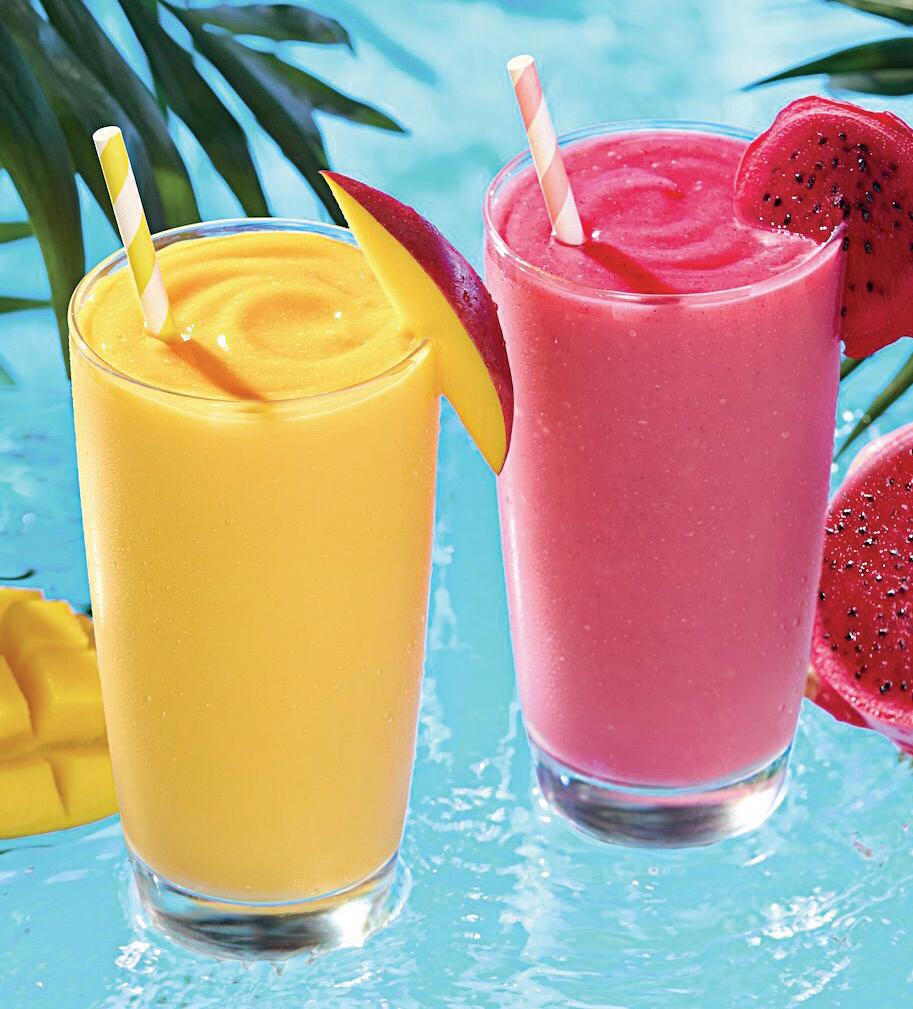
Building a signature beverage program can be more e cient than it sounds. Operators can lead with operationally friendly, non-alcoholic bases like iced tea, lemonade, or cold brew, and layer in trending flavors that resonate with wellness-minded consumers. According to Datassential quick-service restaurant growth data, specific fruit-forward platforms are surging: Mango Lemonade has grown +363 percent, while Refreshers (+135 percent) and Energy Drinks (+115 percent) are energizing the critical mid-afternoon daypart.
The strategy for quick-service restaurant success is safe experimentation—blending familiar favorites with exotic profiles. For example, a Dragon Fruit Energy Refresher leverages the +706 percent growth in dragon fruit flavor (Datassential) while meeting the 36 percent of consumers willing to pay more for an energy boost (Monin Proprietary Research). Similarly, a Spicy Mango Zero Sugar Lemonade taps into the sweet-and-spicy trend (+363 percent mango growth, Datassential) without adding calories or operational complexity.
Often, beverage programs become less lucrative in the afternoon and evening dayparts, but with a surge in interest in natural energy beverages and mocktails, operators have the opportunity to expand high-margin beverage programs later in the day. As demand for popular ca einated beverages like co ee, cold brew, and energy drinks decreases throughout the day, options like mocktails, lemonade, and iced tea increase. Operators can often customize these programs and builds using the same ingredients and flavoring systems as they did in earlier dayparts.
By focusing on these high-growth, low-sugar categories, quickservice restaurant operators can transform their beverage station from a secondary thought into a high-margin destination. Partnering with flavor experts like Monin can provide the market insights and product versatility needed to meet evolving wellness trends while keeping prep minimal and profit margins high.
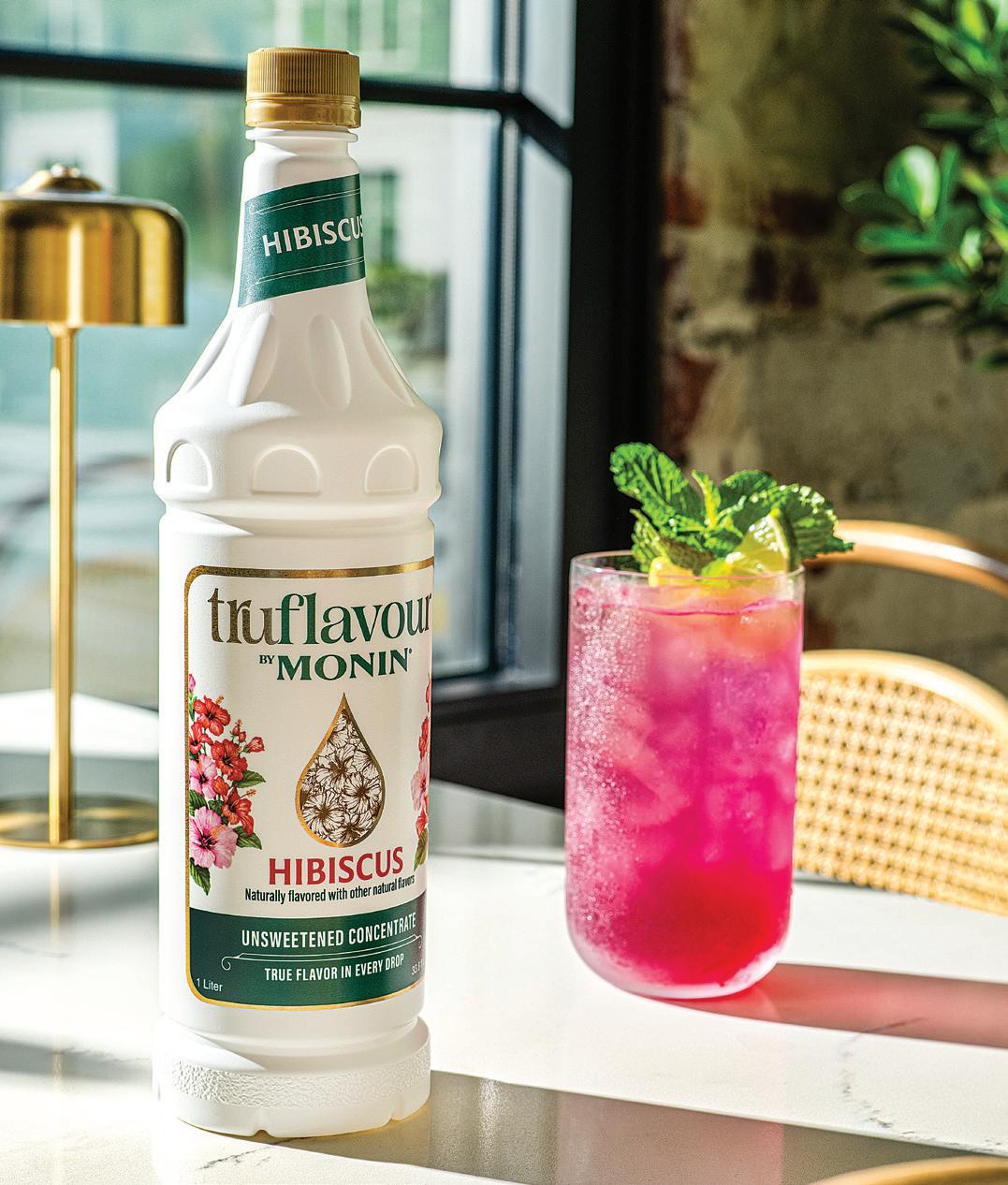
Sip-Worthy Simplicity
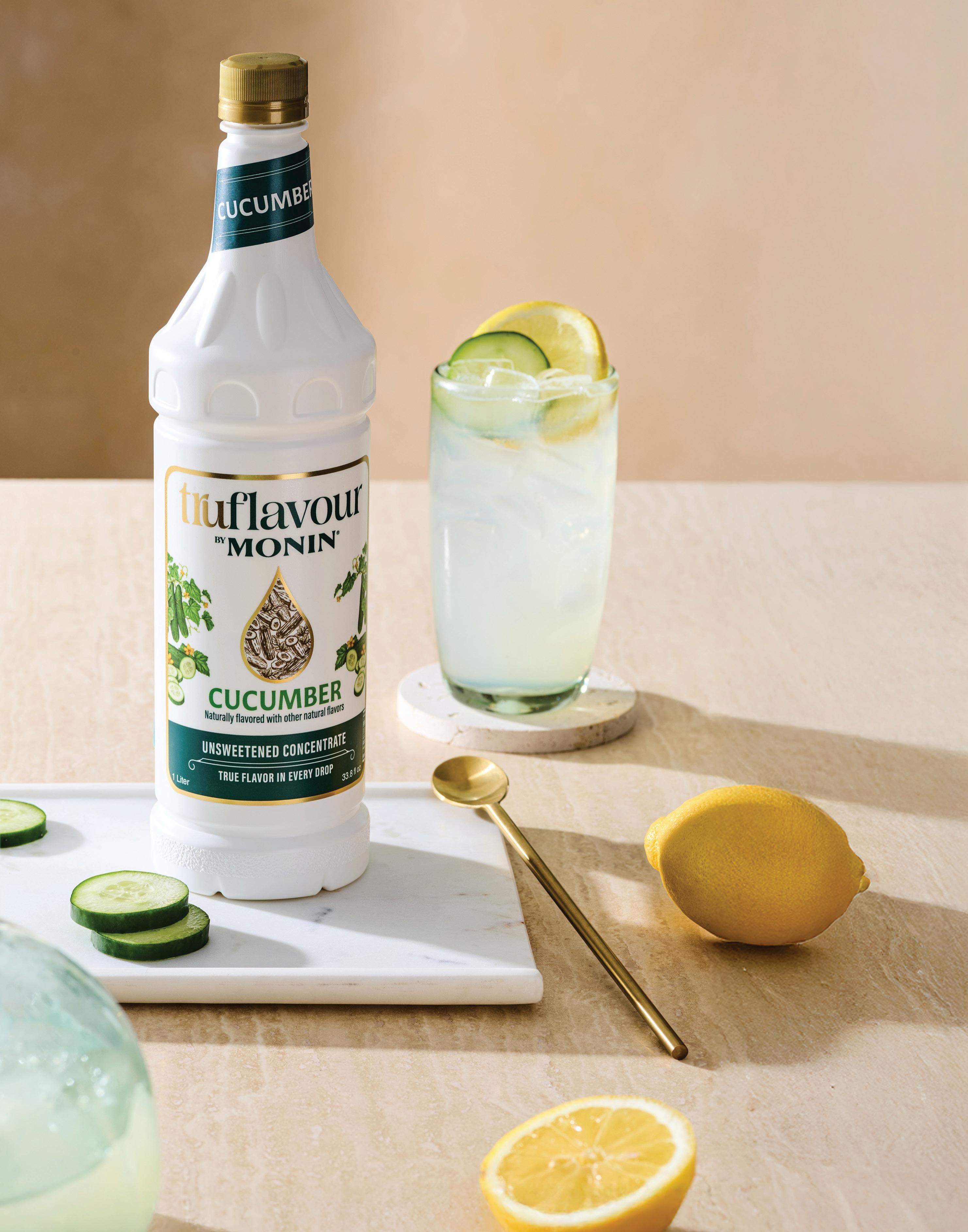
TruFlavour by Monin delivers bold, authentic flavor with no added sugar or sweeteners—perfect for elevating a variety of beverages and culinary creations.
How to make a Cucumber Lemonade
Glass size: 16 oz.
¼ oz. TruFlavour Cucumber by Monin 7 oz. lemonade
Pour ingredients into an ice-filled serving glass in order listed. Transfer into a mixing tin and back into serving glass. Garnish with cucumber slices and a lemon wheel and serve.
fresh ideas
WHAT’S WORKING IN SANDWICHES?
BY SAM DANLEY
In a crowded restaurant landscape, sandwich chains are doubling down on what makes them distinct.
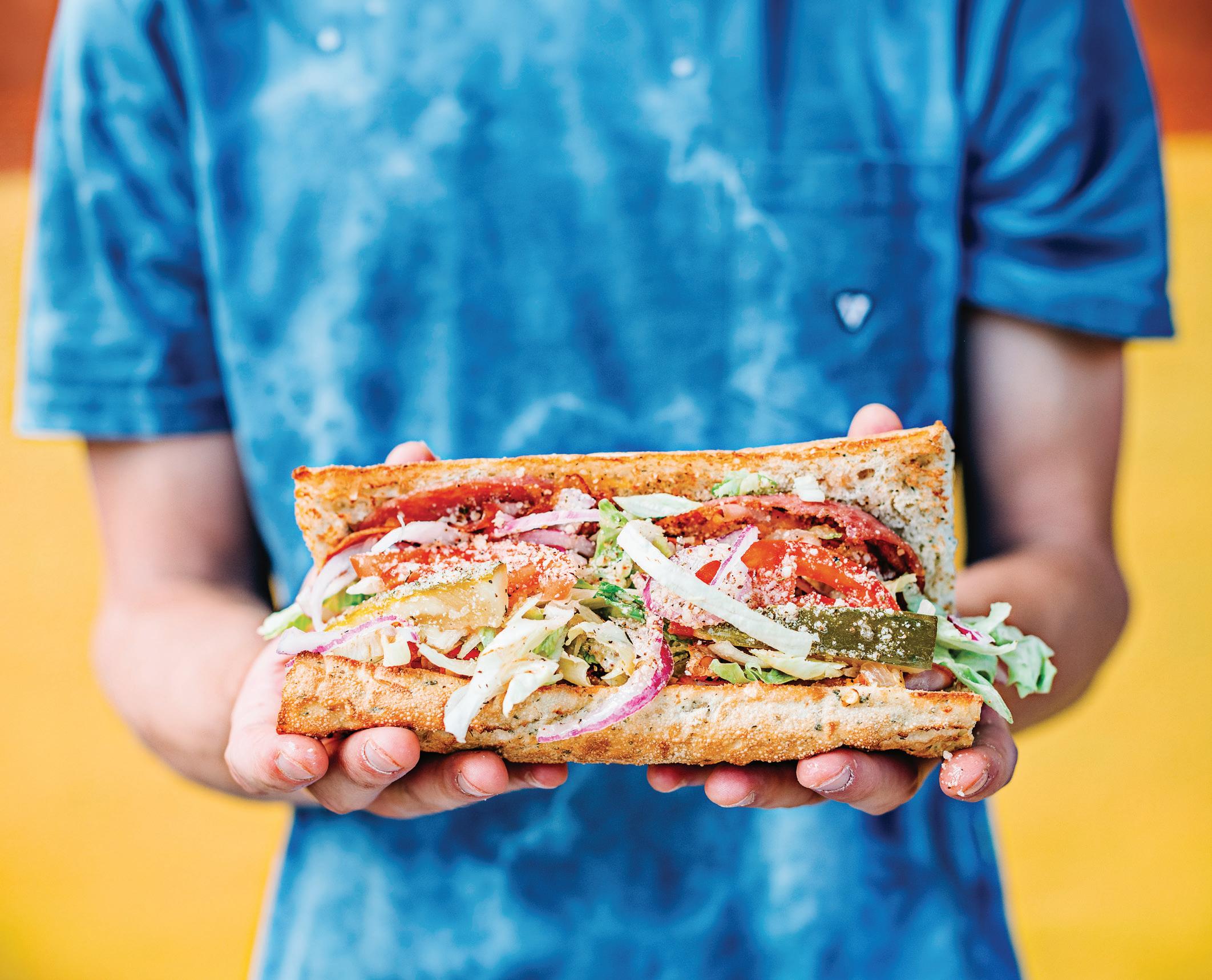
Sandwiches have long been one of quick service’s most versatile menu formats. They can be indulgent or health-focused, highly customizable yet operationally simple, familiar enough to satisfy everyday cravings yet flexible enough to accommodate changing consumer tastes.
But sandwich chains aren’t immune to the pressures facing the industry. Consumers are increasingly selective about where they spend their dining dollars, weighing value, convenience, quality, and overall experience with every purchase. Competition for traffic remains intense, both within the segment and across quick service as a whole.
That means success isn’t simply about serving a good sandwich. It’s about giving guests a compelling reason to choose one
brand over another—and delivering an experience that keeps them coming back. Here’s a look at how three chains are thinking about the category, the consumer, and the opportunities ahead in today’s environment.
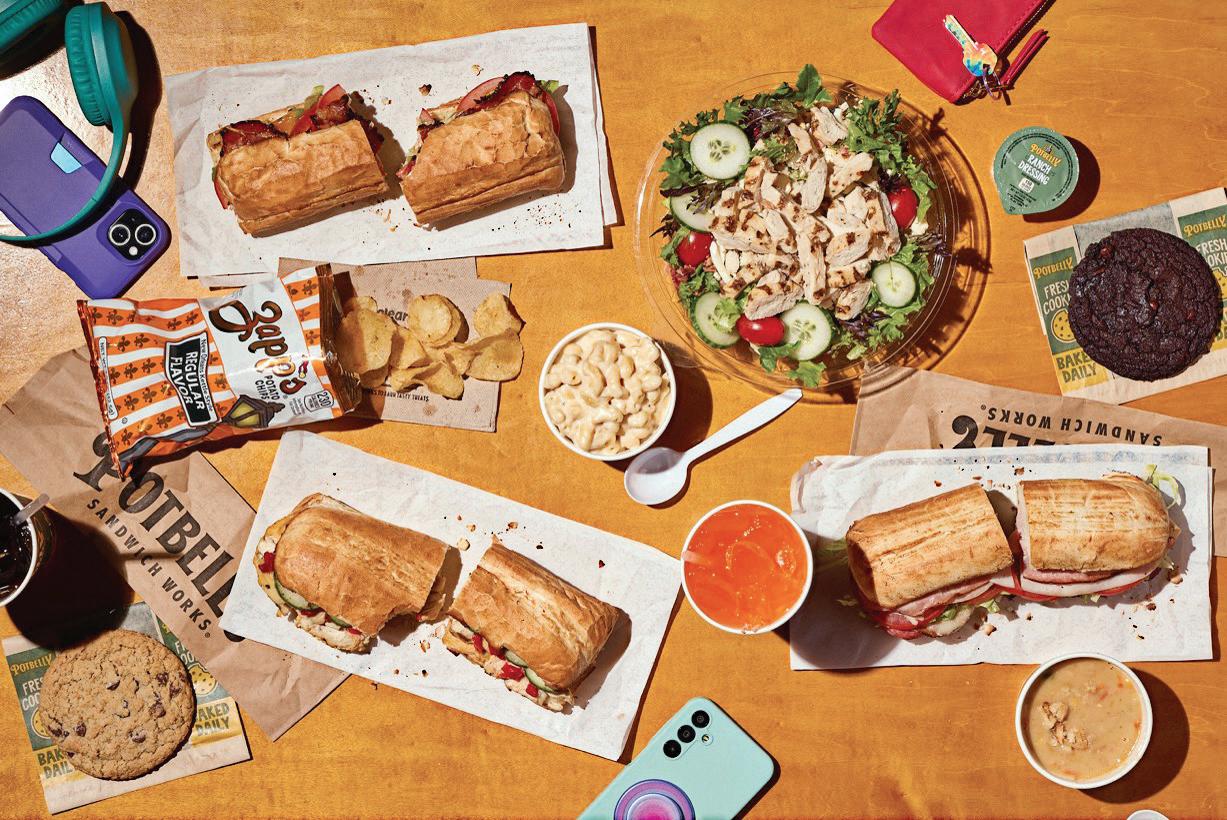
Potbelly
As Potbelly approaches its 500th unit this year and its 50th anniversary next year, the chain is focused on updating the guest experience and the menu and preserving the elements that have helped define the brand for decades.
One of the biggest areas of investment has been its digital ecosystem. Over the past year, Potbelly replatformed its website and mobile app, with a particular emphasis on simplifying the ordering
fresh ideas
process and making better use of customer data.
Through personalization tools and recommendations, CMO David Daniels says Potbelly is working toward a digital experience that feels “like I walked into the shop as a regular and they know my name and they know my order, and they ask me if it’s going to be the usual today or if I want to try something different.”
At the same time, the company has been refreshing restaurants across the system by modernizing layouts and tech without losing the cozy, lived-in feel.
“A lot of that nostalgic millwork—the warm, cozy, welcoming feeling—we’ve been able to hang on to while we righten, freshen up, and modernize the shops for today,” Daniels says.
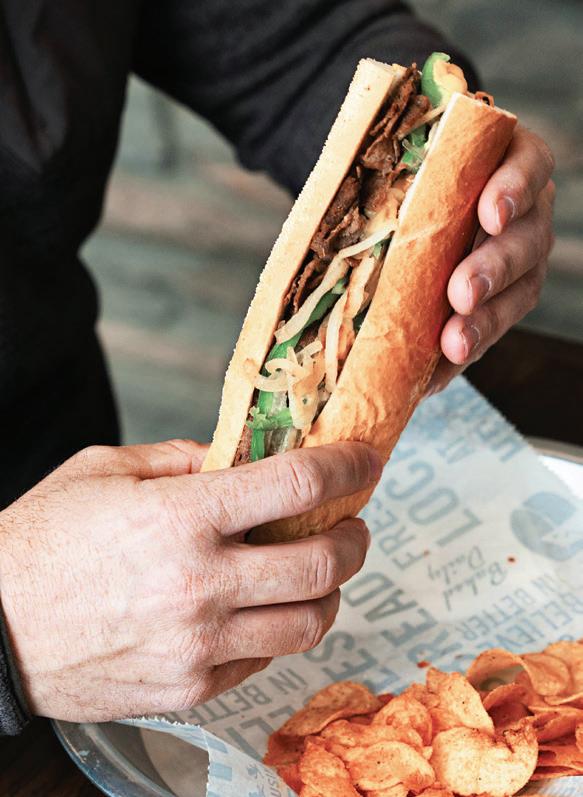
Menu innovation has also been a key focus. Daniels points to the chain’s prime rib steak sandwich launch as one of its most successful recent introductions. Also, a newer wraps platform reflects an effort to open up the menu without straying too far from Potbelly’s identity. Rather than offering traditional cold wraps, the chain serves warm wraps built around the same toasted preparation style that defines its sandwiches.
More broadly, Daniels sees the sandwich category benefiting from trends that have reshaped consumer preferences in recent years, including demand for customization and protein-rich menu options. But he also acknowledges that guests are selective about where they spend their money, placing greater importance on everything from convenience and accuracy to the overall experience.
“The stakes are high, I think, for all brands,” he says. “You’ve got to show up consistently on a daily basis.”
Cheba Hut
Cheba Hut is betting that in an increasingly digital restaurant world, creating a memorable place people actually want to visit still matters.
The brand occupies a somewhat unusual position within the sandwich category, pairing toasted subs with full bars, late-night business, commissioned local artwork, and a personality that leans into culture and community. For Alexander Kayne, senior vice president of marketing, protecting those differentiators is more important than trying to appeal to every possible customer.
“I think there’s so many folks right now that are trying to figure out what the consumer wants, how to meet everybody’s needs, how to please every possible person,” Kayne says. “But if you’re for everybody, there’s a chance you’re for nobody.”
POTBELLY IS WORKING TOWARD MORE PERSONALIZATION FOR LOYAL CUSTOMERS.
That philosophy has informed a number of recent initiatives, including a loyalty app with roughly 450,000 active users and a redesigned website expected to launch later this year. Rather than treating those projects as purely digital upgrades, Kayne says the company has used them as opportunities to clarify what the brand stands for and reinforce the characteristics that resonate most with its core fans.
“We know the occasion that we latch on to,” he says.
“We’re indulgent or maximalist or big flavors. We’re a little bit rebellious, a little bit nostalgic, a lot unexpected.”
That mindset also shows up on the menu. Alongside its core lineup of toasted subs, Cheba Hut has continued to invest in “munchies” offerings such as brownies and garlic cheese bread and maintain a “secret stash” menu of lesserknown sandwiches that rewards loyal customers willing to explore beyond the standard menu board.
Cousins Subs
For Cousins Subs, growth isn’t simply a matter of opening more restaurants. It’s about finding new customers.
The Wisconsin-based chain has just under 100 locations and enjoys strong brand recognition in its home market, but president Jason Westhoff says competition continues to intensify as national brands expand throughout the region. In that environment, the company’s focus is less on unit count and more on growing traffic. Much of that effort centers on broadening the brand’s appeal beyond its traditional audience. Historically, Cousins has marketed to sports fans and middle-aged men, a strategy that proved effective for decades. More recently, however, the company has begun directing a larger share of its marketing toward families, moms, and younger consumers while retaining its connection with longtime guests.
“We’re trying to be very intentional about everything leading to the same goal, and the same goal is to grow traffic,” Westhoff says.
The shift is influencing media strategy and menu development. Cousins is making its first significant investment in YouTube advertising and repositioning former Green Bay Packers star and co-owner Donald Driver as a fitness- and wellness-focused spokesperson rather than solely a football personality.
As the 54-year-old brand approaches its next chapter, leadership is evaluating how best to support future growth.
“Our focus is trying to figure out what the most effective way is to bring capital into the business without compromising who we are as a brand,” Westhoff says.
Sam Danley is the associate editor of QSR. He can be reached at sdanley@ wthwmedia.com.
COUSINS SUBS HAS JUST UNDER 100 STORES.
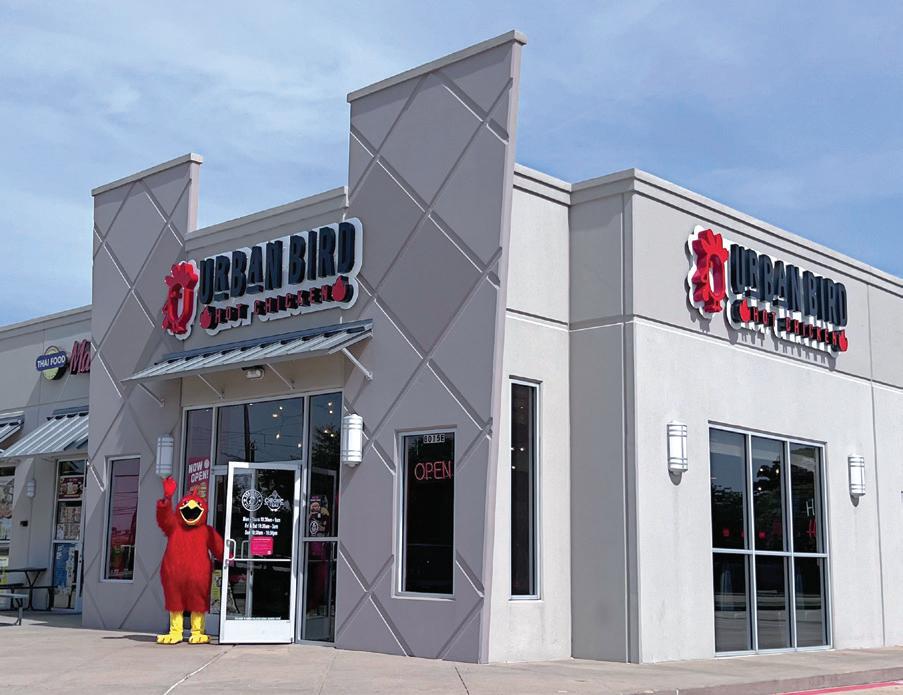
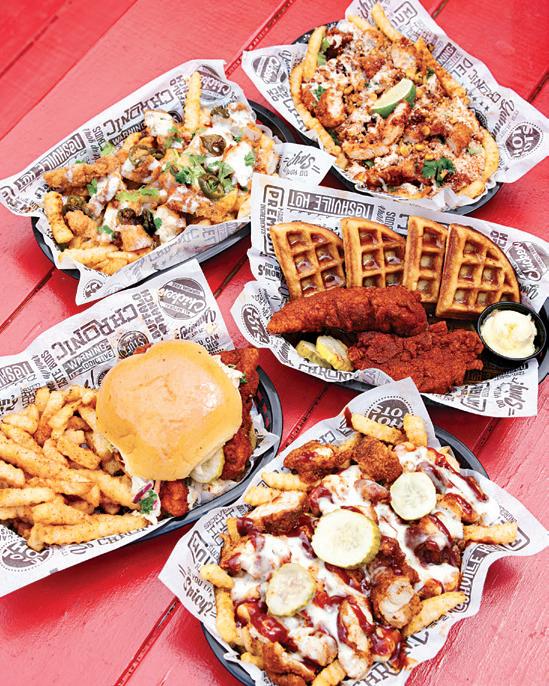
Urban Bird
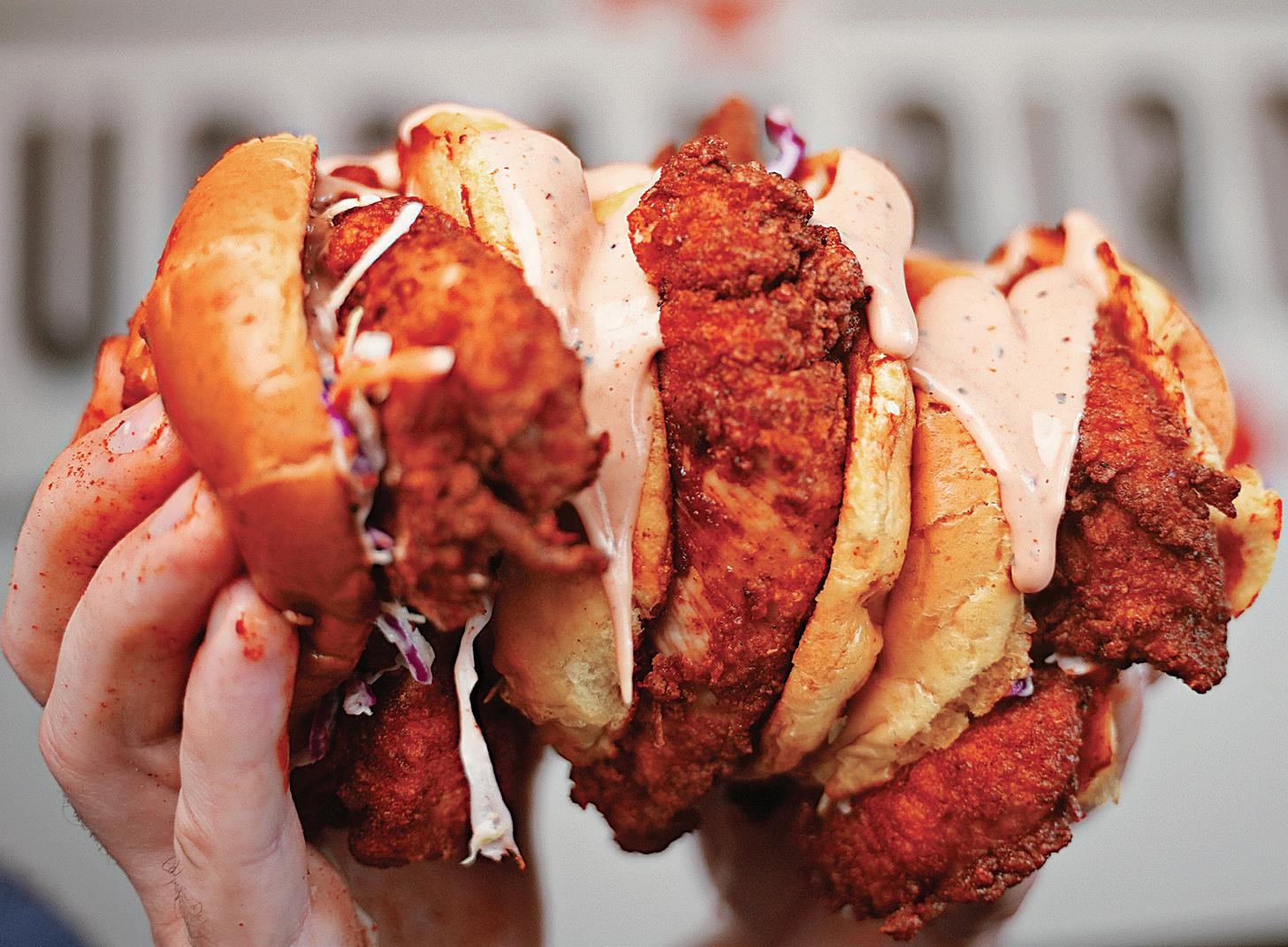
Brandon Gawthorp and Chantel Fiaschetti, partners in life and business, discovered the inspiration for the fast casual during a work trip to Las Vegas, where a hot chicken sandwich sparked a career shift.
/ BY BRITT ENGLER
FOUNDER:
Brandon Gawthorp and Chantel Fiaschetti
HEADQUARTERS: Katy, TX
UNIT COUNT: 23+
YEAR FOUNDED: 2020
ANNUAL SALES: $45 Million
In 2018, Brandon Gawthorp and his wife, Chantel Fiaschetti, were in Las Vegas for a Wingstop convention when they stopped at Bruxie Chicken & Waffles for a quick bite. On the menu was the brand’s hot honey chicken sandwich, available for a limited time. Being lovers of spicy food, the pair decided to give it a try.
“I was like, ‘Oh my God, this is so good,’” Gawthorp says.
Back in Houston, Brandon Gawthorp couldn’t stop thinking about the bold flavor. After all, he hadn’t experienced hot chicken, or even heard of it before that trip to Bruxie. Anywhere that had “hot chicken” listed on the menu, Gawthorp and Fiaschetti found themselves sampling. Whether it was KFC, Buffalo Wild Wings, or similar, the couple couldn’t find a flavor profile that satisfied their taste buds as much as Bruxie. It wasn’t until Gawthorp discovered a small Houston food truck that things started to change. The small business routinely had hour-long lines. He tried its version of hot chicken and found his craving finally satisfied. At the same time, he was watching hot chicken take off in California through concepts like Howlin’ Ray’s and Dave’s Hot Chicken.
URBAN BIRD EARNS $45 MILLION IN ANNUAL SALES.
“I was like, ‘The chicken’s going to be big,’” Gawthorp says. “Everything starts in California, and it works its way over.”
It was a taste for zesty flavors, a longing for a new career path, and the prediction that hot chicken would become a nationwide phenomenon that led the couple to create Urban Bird. Today, the brand has over 23 corporate locations throughout Texas. Years before exploring this concept, Gawthorp and Fiaschetti built their careers as Wingstop franchisees. Fiaschetti’s uncle founded Wingstop, and the couple opened their first store in 2002. The early years were slow. Gawthorp says it took two years for the first eatery to reach $10,000 in weekly sales. From 2002 to
2014, they grew to four. By 2023, business accelerated, and they had grown to 32 Wingstop restaurants across three states.
In January 2020, Gawthorp started working on Urban Bird. He tested the chicken at home until he eventually needed more space to experiment. From there, he moved into the back of one of the couple’s Wingstop units, where he estimates he went through 60 iterations on the chicken batter alone.
“I wanted to come up with something that had a real light, crispy breading, not a lot of sodium,” Gawthorp says. “That was the hardest thing that I’ve ever done.”
Fiaschetti became Gawthorp’s go-to taste tester, often invit-
[CONTINUED ON PAGE 60]
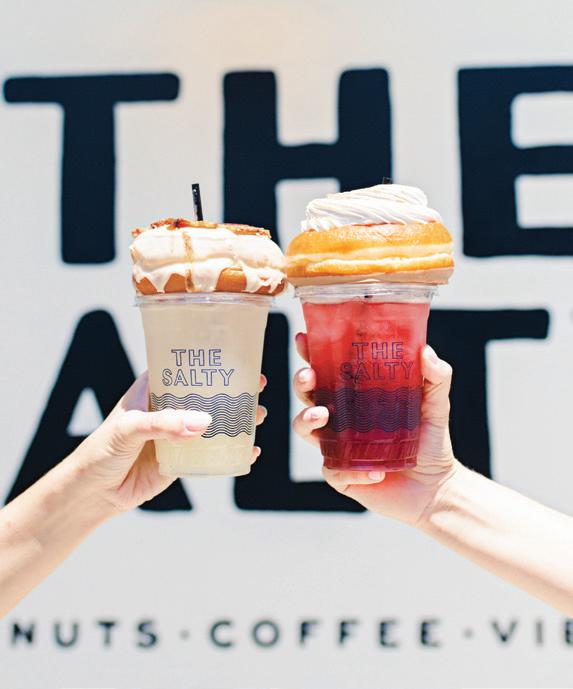
first popped up in a Wynwood parking lot during Art Basel, and the rest is history—today, there are 22 shops (with more under development) across Georgia, Texas, North Carolina, Virginia, Colorado, Tennessee, Washington D.C., and Florida.
The idea was to create a menu of creative craft donuts and coffee in beautiful, communal spaces—whether it’s a pop-up shop like the original location, a standalone shop, or on a university campus. No artificial preservatives, no food coloring, no artificial flavors—just a commitment to take care of the community through food.
As one of the very few Cuban-American female founders building a restaurant concept at this scale—over $21 million in revenue with no playbook, legacy contacts, or safety net—it took Pizarro years to realize that building Salty was deeply rooted in her Hispanic culture.
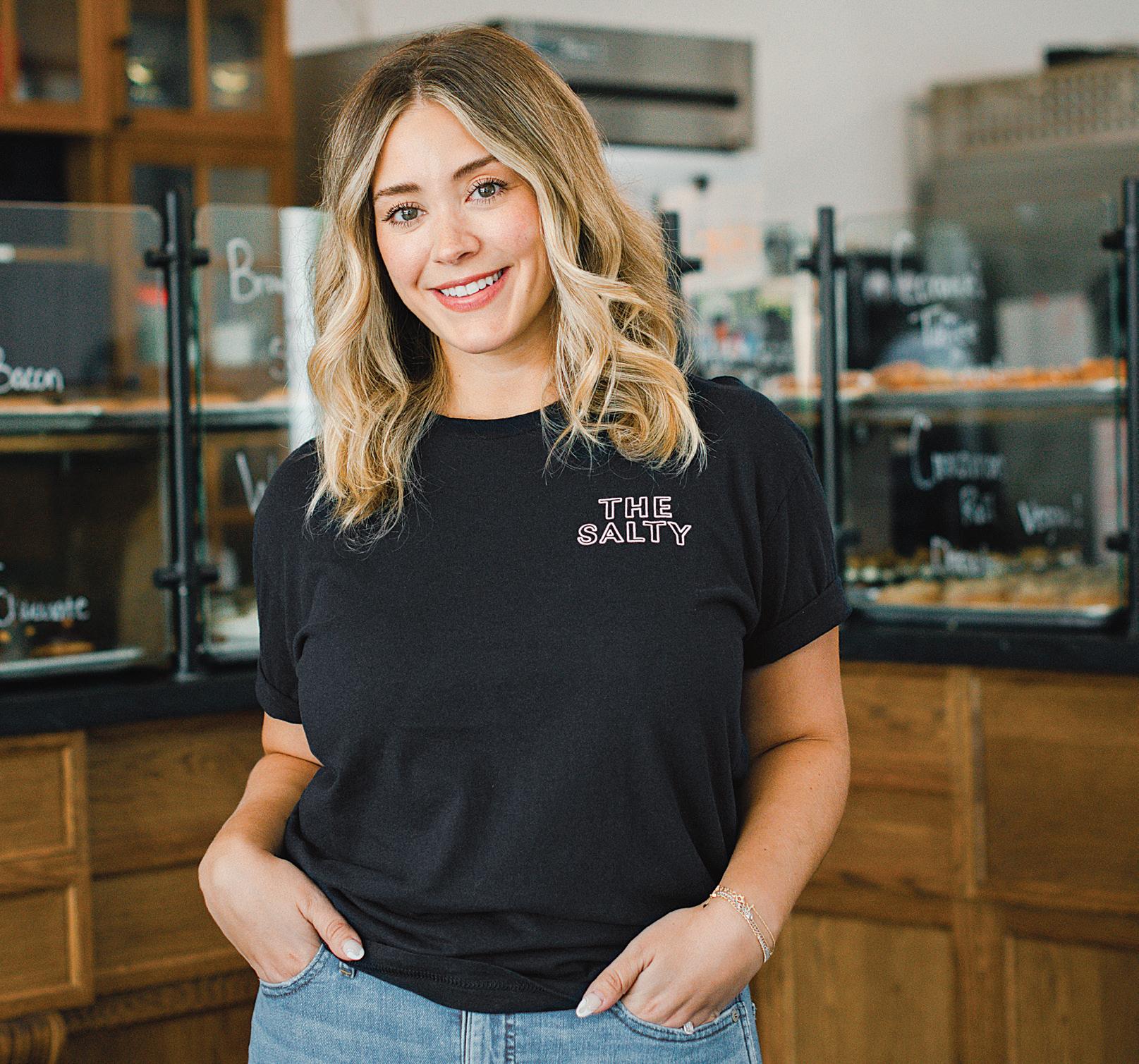
Miami’s Sweet Treat Queen
/ BY SATYNE DONER
Amanda Pizarro and Andy Rodriguez made it a tradition to visit coffee shops, bakeries, and donut shops throughout their college years. They traveled to New York, Chicago, Atlanta, and Portland—where they fell in love with each other (and the concept of artisanal donuts).
During her senior year at the University of Miami, one class project would change everything. Working from a blank canvas, Pizarro designed a donut shop concept that
fused two worlds: the artisanal, niche bakeries they saw in their travels with Miami’s café culture. She aced the project, but the idea wouldn’t leave her.
For months, Pizarro turned the concept over in her mind. Then came the moment she realized: it was time to stop planning and start building. In 2015, Pizarro and Rodriguez maxed out their credit cards to purchase a 1950s vintage camper and lease a commissary kitchen. The Salty Donut
“I grew up with loud, exciting family meals rooted in connection,” Pizarro says. “I’m so obsessed with community, philanthropy, and experience … and I never thought about it at first, but I realized this stems from my deeply rooted Cuban heritage—it’s always a party, we’re always pulling up plastic chairs to sit with one another and celebrate.”
Pizarro’s approach to growth thus far has been careful and intentional. It took three years to open a second brickand-mortar store, and over the years, her detail-oriented manner has allowed her to systematically scale her infrastructure, support her teams, and remain relentlessly devoted to delivering an excellent, chef-driven product.
“We’re going on our 11th year being open, and we’ve seen so much change, even in the way people are enjoying their coffee and coming together, but at the end of the day, our good vibes will always come first,” Pizarro says. “Our community has made us successful. We aren’t just opening donut shops; what we’re really serving is so much more meaningful. It’s experience, community, and discovery.”
Salty’s signature
The Salty Donut founder on resilience, her Cuban-American roots, and baking community into her brand DNA.
THE SALTY DONUT HAS 22 LOCATIONS.
Strong brand identity, proven business model, and growing market presence brand proven business model, and market presence.
Franchisor support reduces friction and accelerates
Franchisor support reduces operational friction and accelerates growth.
Resonates with communities, driving loyalty and long-term revenue stability
Resonates with communities, and revenue stability.
JOIN US FOR THE INDUSTRY’S MOST CONNECTED RESTAURANT EVENT. REGISTER ONLINE TODAY.
SEPTEMBER 8-10, 2026 | HYATT REGENCY • ATLANTA, GEORGIA
AGENDA AT A GLANCE
TUESDAY SEPTEMBER 8, 2026
3:30PM - 4:30PM Pre-Event Innovation Forum
5:40PM - 6:30PM Welcome to Atlanta By Susannah Frost President | Chick-fil-A, Inc.
6:30PM - 8:00PM Welcome Reception: 80s Night for 80 Years
WEDNESDAY SEPTEMBER 9, 2026
12:00PM - 7:00PM Registration & Information Desk
Option 3: QSR: Getting Your First Investment, and Then Getting More
By Jim Balis Partner and Head of Strategic Operations | CapitalSpring, Berry Epley President and Chief Administrative Officer | Nobles Restaurants, LLC, James Nusbaum CEO | Barry Bagels, Michael Schatzberg (Moderator) Co-Founder and Managing Partner | Branded Hospitality Ventures, Darren Spicer CEO | Clutch Coffee, Ryan Weaver Chief Executive Officer | Lee’s Famous Recipe Chicken
Option 4: QSR: CEO to CEO: Round 1: Hot Palette America’s Troy Hooper and OriginalChop Shop’s Jason Morgan
By Troy Hooper CEO | Hot Palette America, Jason Morgan CEO | Original ChopShop
Option 5: QSR: Franchisee Roundtable: A Front Lines Debate
8:00AM - 8:45M Networking Breakfast
8:45 AM - 9:45 AM Opening Keynote By Tom Curtis President | Burger King U.S. and Canada
10:00 AM - 10:45 AM Breakouts Round #1
Option 1: QSR: Keeping Hospitality Human in the Age of AI
By Chris Dull CEO | Freddy’s Frozen Custard & Steakburgers, Michel Falcon CEO and Founder | Brasa Peruvian, Christopher Gumprecht VP of IT | Craveworthy Brands, Geoff Henry President | Gong cha, Jenifer Kern (Moderator) CMO | Qu, Matthew Steele Director of Training and Innovation | Galardi Group
Option 2: QSR: Is Your Restaurant Easy to Work In?
By Donny Bradley Founder and CEO | Lola Beans, Jason E. Brooks (Moderator) Restaurant Coach | HospiVation, Alex Cone VP of Talent Acquisition | Jason, Dan Doulen, CFE Senior Director of Franchise Business Development | Golden Corral, Dave Pelletier Chief Operating Officer | Checkers and Rally’s, Jackie Secor COO | Taco John’s
Option 3: QSR: The Startup Grind: What Nobody Tells You About Opening a Restaurant Brand
By Luke Christian CEO | Surcheros, Joey Cioffi Founder and CEO | Salad House, Kyle Gordon Cofounder and CEO | Dillas Quesadillas, Allie Haskell Vice President of Marketing | NorthStar, Nate Hybl CEO and Founder | gusto!, Jay Scherger Founder and CEO | Jukebox
Option 4: QSR: Fireside Chat
By Kevin Purcer Officer VP, Customer Technology & Insights | Chick-fil-A
Option 5: QSR: The Return of the Franchise Experts Forum
By David Bloom Chief Development & Growth Officer | Capriotti’s and Wing Zone, Graham Chapman (Moderator) Franchise Coach | FranCoach, Van Ingram Chief Development Officer | Jack in the Box, Heather Neary CEO | Taco John’s, Michael Nilevsky Head of Franchising | Yum! Brands, Sam Stanovich SVP of Franchise Leadership | Craveworthy Brands, Kendall Ware Fractional Chief Growth Officer | Smokey Mos BBQ
Option 6: FSR: The New Menu R&D Cycle
By Robin Blanchette Founder & CEO | Norton Creative, Srishti Handa VP, Marketing - Brand and Growth | Dave’s Hot Chicken, Ed Harris Chef/Founder | KnifeNSpoon, Cai Palmiter Head of Marketing | JW Concepts
Option 7: FSR: The Tactical Playbook for Building Emotional Connection
By Elizabeth Brasch EVP of Marketing | Mellow Mushroom, Kathleen Bush CMO | Ford’s Garage, Christine Lorusso Vice President of Digital Marketing | Firebirds Wood Fired Grill, Jonathan Weathington CEO | Shuckin Shack Oyster Bar
11:15AM - 12:00PM Breakouts Round #2
By Graham Chapman (Moderator) Franchise Coach | FranCoach, Imaan Ferdowski Chief Executive Officer | MRCO, Matt Forbush Franchisee | (Auntie Anne’s, Cinnabon, Jamba, Häagen-Dazs), Ryan O’Malley Franchisee | Wendy’s of Bowling Green, Inc., Kajal Patel CEO | Hena Group (Buffalo Wild Wings and Dunkin’ franchisee), Mandy Ristic Franchisee, Operating Partner | OM Group (Dunkin’, BaskinRobbins, QDOBA, Smoothie King, Jimmy John’s, Auntie Anne’s and Cinnabon))
Option 6: FSR: Tech That Lets Hospitality Shine
By John Christen Founder/CEO | Himes Breakfast House, Ahsan Jiva EVP of Strategy and Transformation | Mellow Mushroom, Toni Ronayne Founder/Fractional CEO | The C Society, Lauren Selman VP Operations | IFBTA
Option 7: FSR: CEO to CEO By Mina Haque CEO | Tony Roma, Josh Kern CEO | Snooze, an AM Eatery
12:00PM - 1:30PM Networking Lunch
12:15PM - 1:00PM Sponsor Lunch & Learn
1:30PM - 2:15 PM Breakouts Round #3
Option 1: QSR: The New Customer Journey, with Sonic’s Former CEO and CIO By Clifford Hudson Former CEO | Sonic Corp, Craig Miller Former CIO | Sonic Corp, Joseph Szala (Moderator) Vice President of Digital Experience | 3 Owl
Option 2: QSR: Coaching to Win the ‘Experience Economy’ By Tony Capuano VP of Franchise Operations | Donatos, Paul Miramontes, CHT Manager of Learning and Development | Galardi Group –Wienerschnitzel, Corban Nichols Vice President of Restaurant Excellence | Piada Italian Street Food, Philip Pinkerman Learning, Development & Recruiting Manager | Bristol Farms, Lazy Acres Natural Market, & New Leaf Community Markets, Jessicah Pounds VP of Training and Leadership Development | GoTo Foods, Mary Pillow Thompson (Moderator) Co-founder | Zignyl
Option 3: QSR: The Heart of Business: Cultivating Authentic Customer Connections By Kevin Paul Scott Cofounder | ADDO
Option 4: QSR: Fireside Chat: Mike Freeman, President, Brands, GoToFoods By Michael Freeman EVP, President of Brands | GoTo Foods
Option 5: QSR: Solving the Mystery of Site Selection
By Shawn Caric (Moderator) VP, Franchise Development | Smoothie King, Kelly Gray VP and Co-Owner | Hot Head Burritos, Jake Philpotts VP of Business Development & Franchise Relations | Surcheros, Dannon Shiff Senior Vice President of Real Estate | Dave’s Hot Chicken, Erin Snyder Vice President of Franchise Development | Handel’s Ice Cream, Andrew Thengvall Chief Development Officer & Chief Legal Officer | Freddy’s Frozen Custard & Steakburgers
Option 1: QSR: Do You Really Know Your Guests?
By Stacey Kane CMO | California Tortilla, Eric Knott CEO | Tiki Taco, Jason Levinson VP, Marketing Technology | WOWorks, Ben Linero CMO | Vicky Bakery, Kelly O’Rourke Director of Marketing | FiiZ Drinks, Kevin Planovsky (Moderator) Principal, Account Strategy | Croud Atlanta
Option 2: QSR: Building Teams and Investing in Talent
By Bob Andersen President | The Great Greek Mediterranean Grill, Lauren Cohen (Moderator) CEO and Founder | Cohen Leadership Group, Dana Edwards Manatos Founder and CEO | Milkshake Factory, Jodi Latuszek VP of Legal and Human Resources | BIGGBY COFFEE, Kelly McCutcheon (Moderator) Group Director of Training & Development | Whataburger Restaurants LLC., Amer Wahab President | Kettlemans Bagel
Option 6: FSR: Nostalgia, Comfort, and “The Vibe Shift” By Kimberly Bean VP, Brand Experience | Arby’s, Ray Blanchette CEO | TGI Fridays and Sugarloaf Holdings, Paul Mangiamele Founder/Chairman and CEO | Legendary Restaurant Brands, Liz Seelye (Moderator) Founder | StarryEyed Strategy, Yasaman Stewart Sr. Director of Marketing | BRIX Holdings
Option 7: FSR: Coaching the Next Generation of Leaders
By Jeremy Edmonds EVP of People and Culture | Snooze, an A.M. Eatery , James Frank Manager of Field Training | Dine Brands Global, Autumn Nessibou Director of Operations | Farrelli’s Pizza, Joshua Rossmeisl Founder, Chief Vision Officer | AMP Up1 Hospitality
2:30PM - 3:15PM Closing Keynote #1: 30-Second Leadership: Coaching Your Crew for High Performance By Scott Greenberg Author and Keynote Speaker
3:15PM - 4:00PM Closing Keynote #2: White Castle CEO: Lisa Ingram By Lisa Ingram CEO | White Castle System, Inc.
4:00PM - 5:30PM Around the WiRL-D Happy Hour
Option 4: QSR: CEO to CEO: Round 2: Jennifer Dodd, CEO, Main Squeeze, and Claudia Lezcano, CEO, Fuku By Jennifer Dodd CEO | Main Squeeze Juice Co., Claudia Lezcano CEO | Fuku
Option 5: QSR: The Beverage Phenomenon By Joel Bulger CMO | WOWorks, Jason Ingermanson CEO and Founder | JRI Hospitality, Brandon Knudsen Co-Founder and CEO | Ziggi’s Coffee, Katherine LeBlanc (Moderator) Fractional CMO | Apollo CMO, Susan Taylor President and CEO | Juice it Up!
8:00PM - 10:00PM Late Night Reception/Networking
THURSDAY SEPTEMBER 10, 2026
8:00AM - 8:45AM Networking Breakfast
8:45AM - 9:00AM Intouch Insight Drive-Thru Report Reveal By Sarah Beckett (Moderator) VP Sales and Marketing | Intouch Insight, Laura Livers (Moderator) Chief Revenue Officer | Intouch Insight
9:00AM - 9:45AM Opening Keynote: Shake Shack By Rob Lynch CEO | Shake Shack
10:00AM - 10:45AM Breakouts Round #4
Option 1: QSR: Unveiling the Drive-Thru of the Future
Option 6: FSR: Rethinking FOH Roles for Today’s Guest By Kamal Hakim Senior Business Developer | HCG/Gen USA/ IHOP, Sarah Meriam Shuckin, Rachel Richal VP, Restaurant Experience & Training | Buffalo Wild Wings (Inspire Brands)
Option 7: FSR: Protecting Identity Through Growth By Kristen Hohl EVP, Marketing | SPB Hospitality, John Iannucci CEO | Agave & Stone Hospitality, Betty Kaufman Strategy Director | The Culinary Edge
12:00PM - 1:30PM Networking Lunch
12:15PM - 1:00PM Sponsor Lunch & Learn
By Sarah Beckett (Moderator) VP Sales and Marketing | Intouch Insight, John Brittian Vice President of Information Technology | Biscuitville Fresh Southern, Lawrence Brown CDO | Rita’s Italian Ice & Frozen Custard, Chris Cheek Chief Development Officer | Newk’s Eatery, Laura Livers (Moderator) Chief Revenue Officer | Intouch Insight, Trace Miller Founder & CEO | Konala, Tim Sharpe COO | Oliver’s Real Food
Option 2: QSR: Inside the 2026 Restaurant Labor Market: First Look at Black Box Intelligence Total Rewards Survey By Victor Fernandez Chief Insights Officer | Black Box Intelligence
Option 3: QSR: Marketing Above Your Weight Class By Alice Crowder Chief Marketing Officer, Eleni Gates (Moderator) Founder & Principal | Gates Hospitality Group, Carmela Hughley Vice President of Marketing Strategy & Insight | Rita’s Italian Ice & Frozen Custard, Angela Johnson CMO | Edible Brands, Jessica Serrano CMO | Einstein Bros. Bagels, Marissa Sharpless VP of Marketing | Carvel
Option 4: QSR: Fireside Chat: Krispy Kreme CEO Josh Charlesworth By Josh Charlesworth President & Chief Executive Officer | Krispy Kreme
Option 5: QSR: The Real Price of Value By Mindy Armstrong VP of Menu Innovation | Tropical Smoothie Cafe; NextGen Council Leader, Scott Ball President | FiiZ Drinks, Ed Howie (Moderator), Sunny Ilyas Founder and CEO | Vale Healthy Kitchen, Sara Ozege Loughry Director of Operations & Training | Kettlemans Bagel, Natalie Sharpe CEO | Oliver’s Real Food, Bethany Strong Chief Operating Officer | NAYA
12:00PM - 2:00PM WiRL Workshop + Lunch By Nancy Combs SVP, Growth | Shake Shack, Devon Croom Senior Team Leader, Networking | Chickfil-A Corporate, Somia Farid Silber CEO | Edible Brands, Kelly McCutcheon (Moderator) Group Director of Training & Development | Whataburger Restaurants LLC., Maria Valero Director, International Architecture & Design | Papa Johns
12:15PM - 1:00PM WiRL State of the Union Session 1
1:00PM - 1:15PM Networking Break
1:15PM - 2:00PM WiRL State of the Union Session 2
1:30PM - 2:15PM Breakouts Round #6
Option 1: QSR: Loyalty Reinvented (Value Without Coupons)
By Katherine Barone Sr. Brand Manager, Delivery | KFC U.S., David ‘Rev’ Ciancio (Moderator) Restaurant Owner, Marketing Consultant and CMO | Salad House, Ryan Stein Senior Director of Marketing | gusto!, Julie Wade Fractional CMO | Crazy Pita, Mitch Walden VP of Marketing | Scooter, Luke Watson CEO and Owner | Timber Pizza
Option 2: QSR: The Best Advice I Ever Received (and the Worst)
By Chris Artinian Founder and CEO | Artinian Holdings Inc, Josh Halpern Chief Brand Officer | Craveworthy Brands, Cody Hicks Chief of Staff | gusto!, Lisa Miller (Moderator) President | Lisa W. Miller & Associates, LLC, Chris Thomas Senior Principal team Leader | Chick-fil-A, Inc., Paul Tran Franchise Advisor + Franchisee, Dr. Felicia White Ed.D Director of Operations | Askar Management Group
Option 3: QSR: Staying ‘Fast Casual’ in a QSR World
Option 6: FSR: Beyond Instagram: Designing for Craveability, Camera, and Connection By Tammy K. Billings VP, Business Development | SignalFlare.ai, Ginger FlesherSonnier Founder & CEO | The Ginger Companies, Andrew Glantz Founder/CEO | GiftAMeal, Clayton Krueger Chief Marketing Officer | Farrelli’s Pizza, Erin Levzow Chief Marketing, Growth and Commercial Officer
Option 7: FSR: Retention Starts Before You Hire By Jeremy Edmonds EVP of People and Culture | Snooze, an A.M. Eatery, John Haggai President & CEO | Burtons Grill & Bar, Red Heat American Tavern, Kenneth Knief (Moderator) Managing Director | Hospitality Resource Group
11:15AM - 12:00PM Breakouts Round #5
Option 1: QSR: Driving Real ROI and Transformation Through AI and Automation
By Trish Heusel Vice President of Innovation | Little Caesars Pizza, Carl Orsbourn SVP–Food, Hospitality, Retail | Invisible, Jessa Parette Head of Design | Yum! Brands, Kartik Pillai Director of Data Platform Engineering, Master Data Management, and Data Governance | Yum! Brands, Thibault Roux Chief Digital Officer | Burger King U.S. and Canada, Atul Sood (Moderator) Fractional Chief Business Officer
Option 2: QSR: Why Employees Stay, and Why They Leave By Melissa Doolin-Koehne (Moderator) Founder and Principal | Elevate 4, Steve Felson Senior Vice President, Franchising | Buona Beef and The Original Rainbow Cone, Damian Hanft VP, Human Resources | Taco John’s, Lacey Navarrete Vice President of Human Resources | Scooter’s Coffee, Maryna Shuliakouskaya Franchisee | Aroma Joes, Brian Witte Strategic Operations Advisor
Option 3: QSR: Designing the ‘Worth the Trip’ Experience By Jonathan Bowyer (Moderator) Director of Business Development | C3, Miguel Chilleron Director of AI & Design | Livit, Kim Lewis Chief Marketing Officer | Capriotti’s, Tonya McCoy VP, Marketing | Angry Chickz, Adam Modzel Chief Operating Officer | Einstein Bros. Bagels, Mike Perry Founder & Chief Creative Officer | Tavern Agency
By Jeff Galletly Chairman & CEO | Brooklyn Dumpling Shop, Tricia Houston (Moderator) Vice President of Discovery & Design | KS&R, James O’Reilly Former CEO | Ascent Hospitality, Smokey Bones, Jessica Osborne VP of Marketing | McAlister, Garrett Reed CEO | Layne’s Chicken Fingers, Matthew Walls President, Chief Stores Officer | Edible Brands
Option 4: QSR: Fireside Chat: Papa Johns CMO Jenna Bromberg By Jenna Bromberg CMO | Papa Johns
Option 5: QSR: The Unstoppable Chicken Wars
By Matthew Caric Senior Manager, International Operations Excellence | WingStop, Ryan Hanawalt SVP, U.S. Franchise and Operations Service | Church’s Chicken, Shawn Lalehzarian Cofounder and CEO | The Red Chickz, Mike LaRue VP of Franchise Development | Angry Chickz, Dan Sokolik Vice President | Lee’s Famous Recipe Chicken, Christina Vaughan President and COO | Slim Chickens
Option 6: FSR: Raising the Bar: Innovation, Ops, & What’s Next By Peter Kiley Co-Owner/Brewmaster | Monday Night Brewing, Ian O’Neil Director of Consumer Intelligence | Rubix Foods
Option 7: FSR: The Purpose-Driven Playbook
By Graham Humphreys CEO | The Culinary Edge, Steve Palmer Founder, Managing Partner, and Chief Vision Officer | Indigo Road Hospitality Group, Marita Swift VP of Strategic Growth | The Big Biscuit
2:15PM - 2:30PM Networking Break
2:30PM - 3:30PM Closing Keynote #1: Datassential State of the Industry
3:30PM - 4:00PM Closing Keynote #2: Texas Roadhouse CEO: Jerry Morgan By Jerry Morgan CEO | Texas Roadhouse
4:00PM - 5:30PM Closing Reception
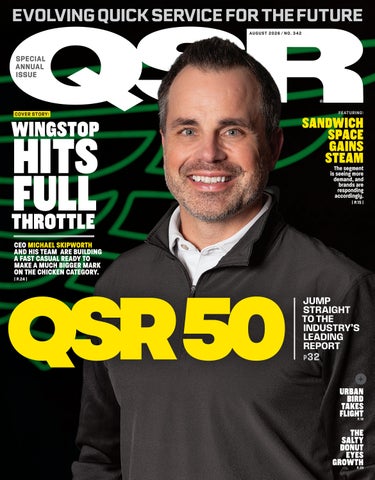
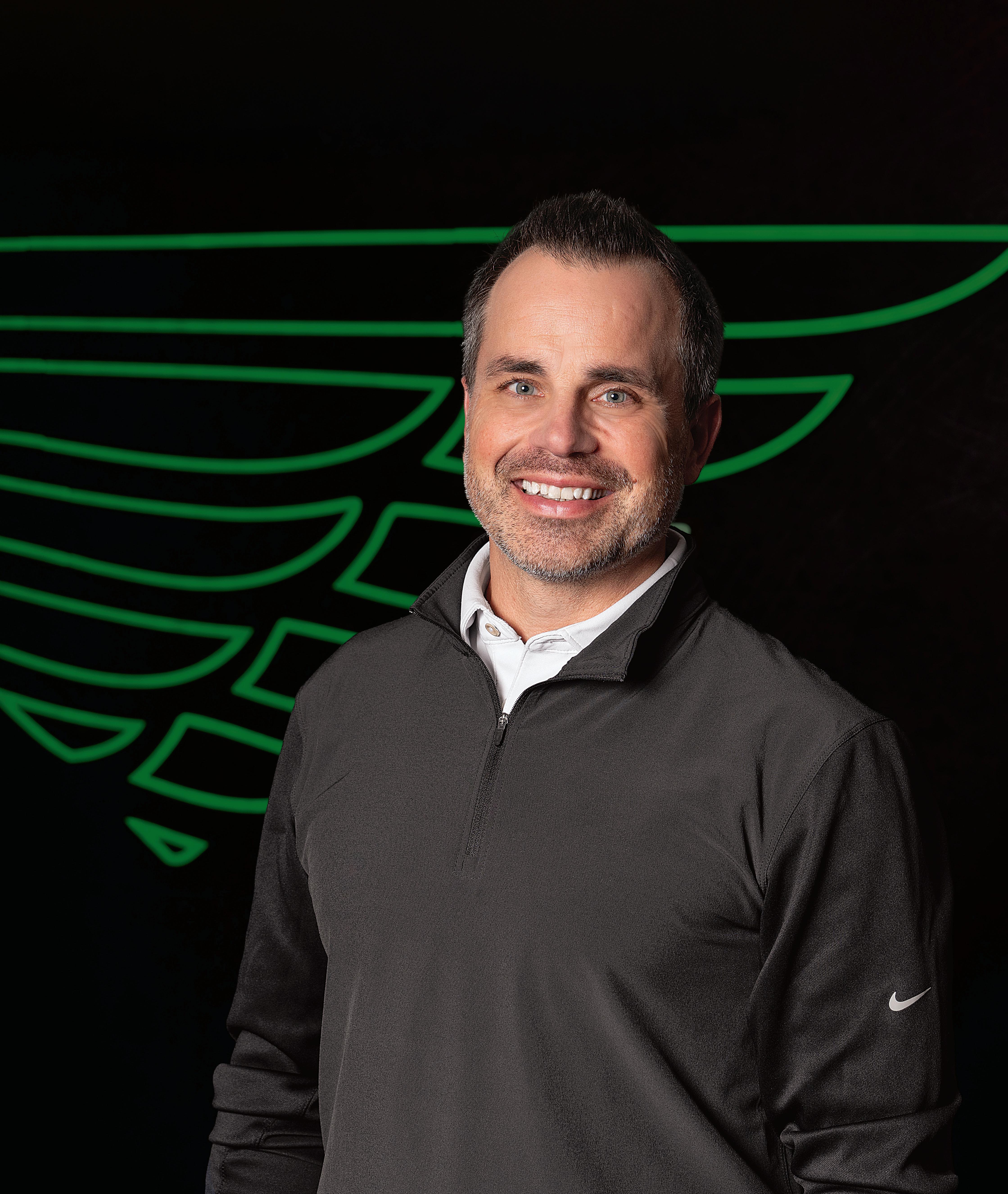
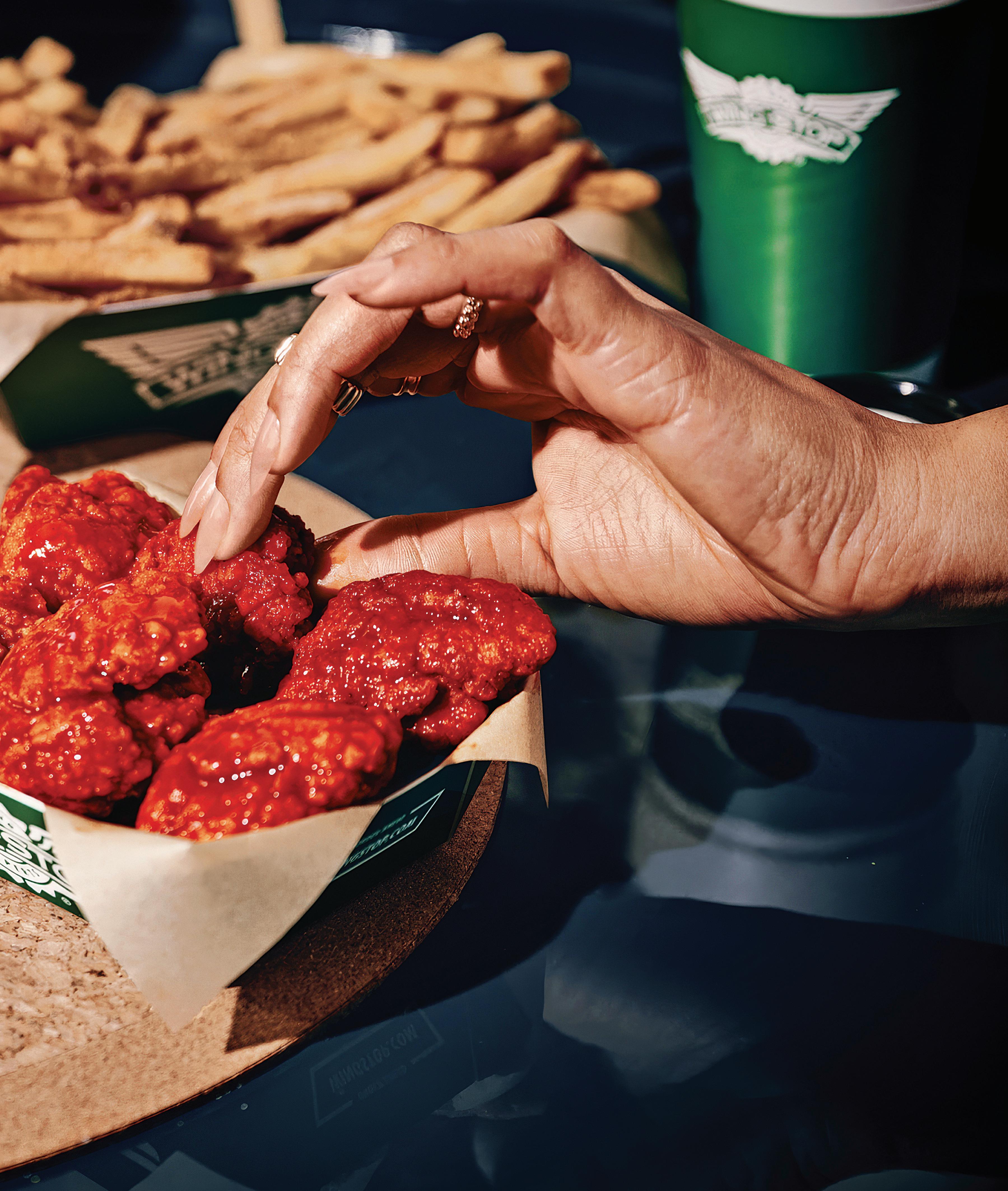
WINGSTOP HAS EXPERIENCED MASSIVE GROWTH SINCE IT WENT PUBLIC IN 2015.
/ BY BEN COLEY
THE NEXT PHASE OF FLAVOR
FLAVOR
How Wingstop is turning a cult following into a mainstream growth machine.
Wingstop has accomplished what many brands pin to their dream boards.
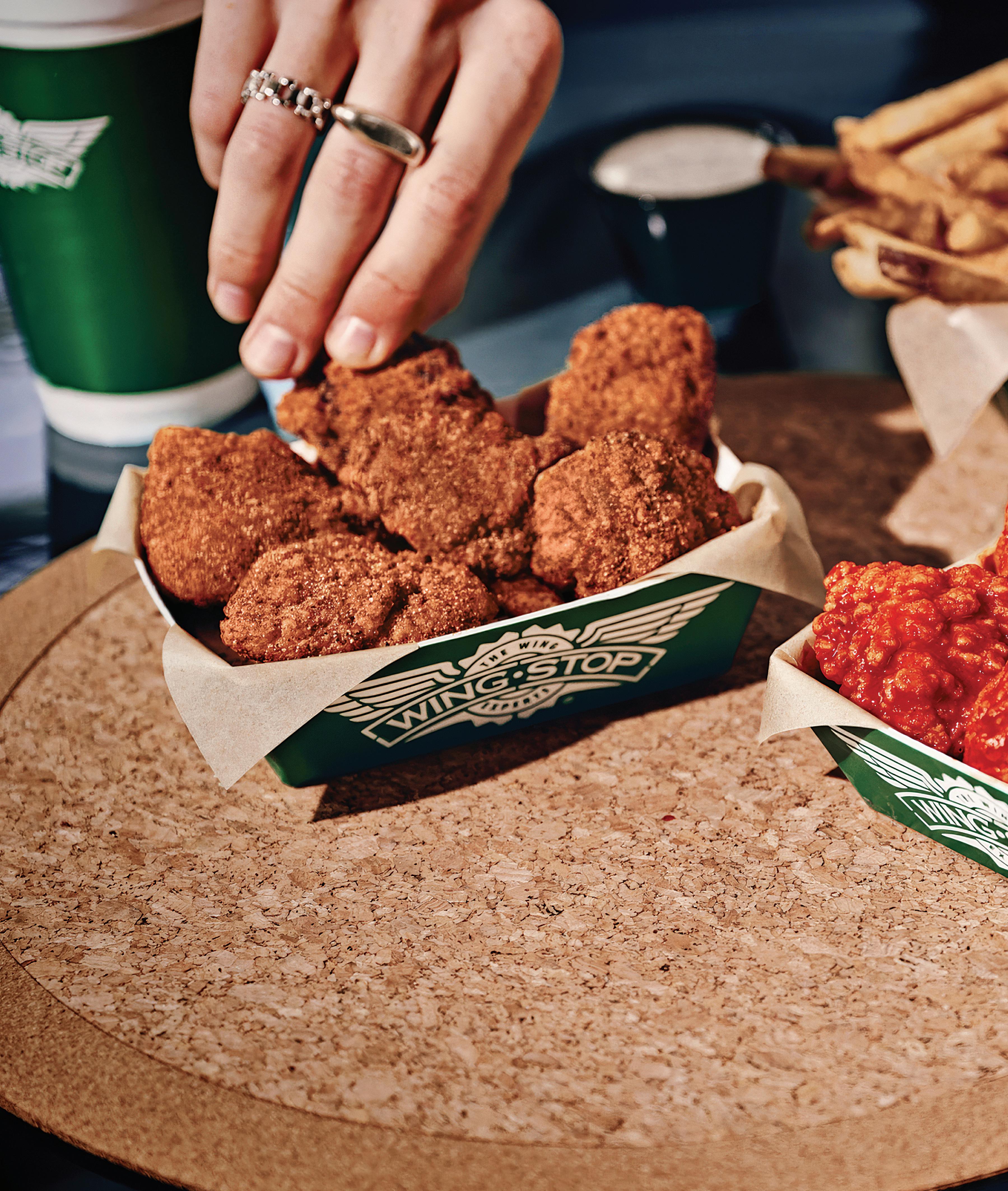
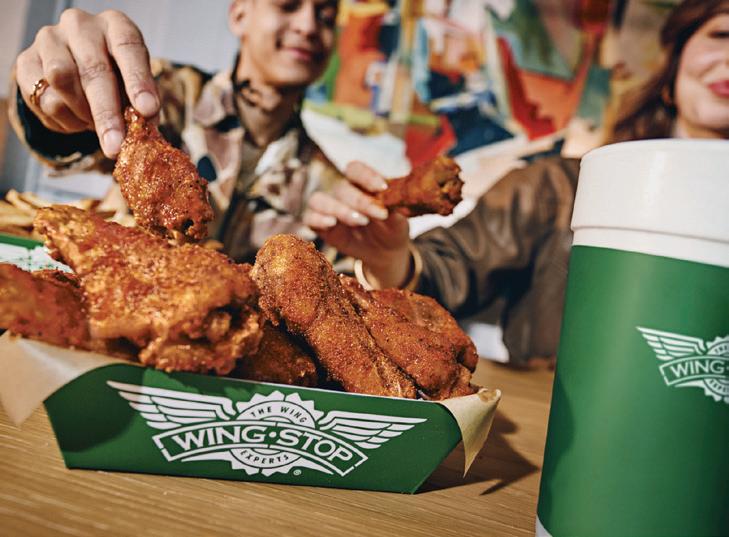
The chicken chain surpassed $5 billion in systemwide sales, crossed 3,000 restaurants globally, and built one of the strongest economic models in quick service. Franchisees continue opening stores at an aggressive pace. Wingstop debuted a net of 382 U.S. stores in 2025, more than any other top-50 quickservice chain in the country.
If that’s not enough to make the industry pay attention, digital sales exceed 70 percent of the business. Average unit volumes hover around $2 million.
Also consider the fact that in Q2 2015, which occurred just after its IPO, the brand stood at 785 restaurants systemwide (714 in the U.S. and 52 internationally) and sales of approximately $203 million.
That’s a level of growth many can’t compare to. The fast casual is among the top five largest chicken chains in the country, in terms of systemwide sales and unit count.
Inside Wingstop, though, leadership still talks like the company is only beginning.
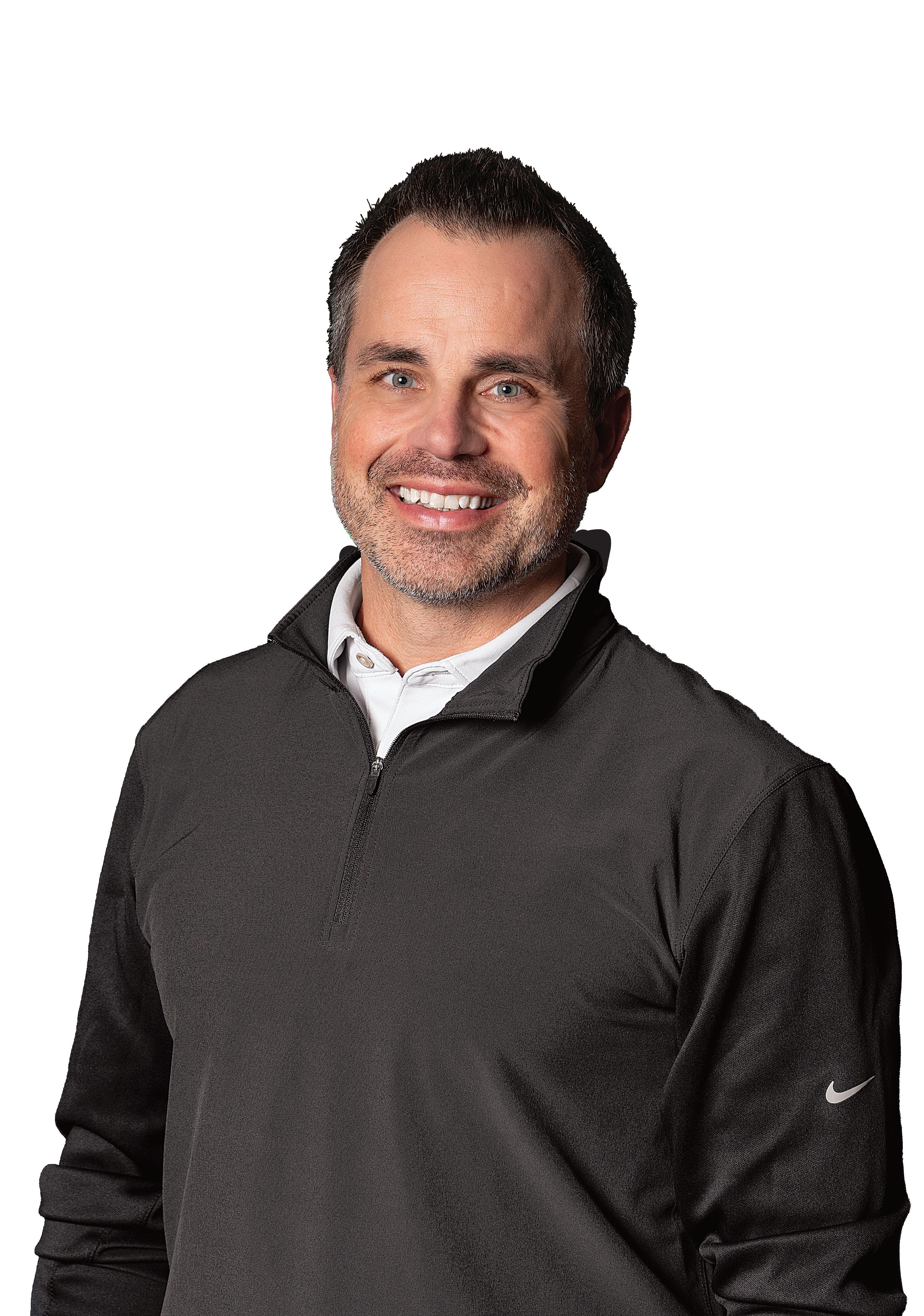
No one may understand this journey more than CEO Michael Skipworth, who joined the company as VP of finance in December 2014, and moved up to CFO and president/COO, before becoming CEO in March 2022.
“I would say even though we’re over $5 billion in system sales and over 3,000 restaurants, the reality is it’s still early innings for us and there’s so much growth in front of us,” he says. “The runway is huge.”
That outlook—including reaching $3 million AUV—shapes nearly every initiative inside Wingstop today. The company continues pouring resources into technology, kitchen automation, loyalty, marketing infrastructure, and development systems as it chases a long-term ambition of becoming a top-10 global restaurant brand.
The first quarter presented friction. Domestic same-store sales declined 8.7 percent amid winter weather disruptions and mounting pressure on lower-income consumers. Severe storms temporarily closed more than 700 restaurants during the quarter. Industry traffic softened across quick service as inflation and economic uncertainty continued weighing on spending habits.
Wingstop lowered its domestic same-store sales outlook to a low single-digit decline after softer-than-expected trends through the early part of the year.
But brand leadership has never sounded rattled. That confidence comes from how dramatically the company’s position has evolved during the past several years.
For much of its history, Wingstop operated more like a cult favorite than a national chain. The brand generated passionate loyalty among younger consumers, sports fans, and heavy flavor seekers, but awareness remained relatively limited compared with larger established competitors.
“Now we’re embarking on this journey in front of us, this next phase of growth, which is to make Wingstop a mainstreamer and bring that quality of flavor to more and more people and win our fair share,” Skipworth says. “... I think the really fun part about it is we’re 98 percent franchise. So the relationships you build with your brand partners in a model like this and see the businesses they build, the value they create for themselves and their families, are some of the funnest parts to watch and be a part of.”
The potential is right in front of Wingstop. Corporate store AUVs are close to $2.5 million and margins are in the mid-20 percent range. In other words, the brand has quantitative evidence of what it is capable of systemwide.
The transition from cult favorite to mainstream brand now sits at the middle of Wingstop’s growth strategy. Executives acknowledge the company still trails many legacy quick-service chains in overall awareness despite its size and unit growth.
Wingstop’s primary customer occasion is off-premises group dining, typically involving multiple adults seeking a premium, indulgent meal. These consumers prioritize flavor variety, made-to-order food, and a seamless experience. However, despite its scale, Wingstop estimates it currently captures only about 2 percent of that market opportunity and sees significant room for growth toward what it considers a 20 percent share.
The chain remains a low frequency visit as well. On average, guests visit three times per quarter. If Wingstop were to get one more trip out of each guest, it would be a “meaningful increase in sales,” according to Skipworth.
“There’s still a lot of work for us
to do, but that’s the exciting opportunity,” the CEO says.
Marketing efforts now focus on bringing new guests into the brand without losing the passionate fan base that helped fuel the chain’s rise through social media and word-of-mouth momentum.
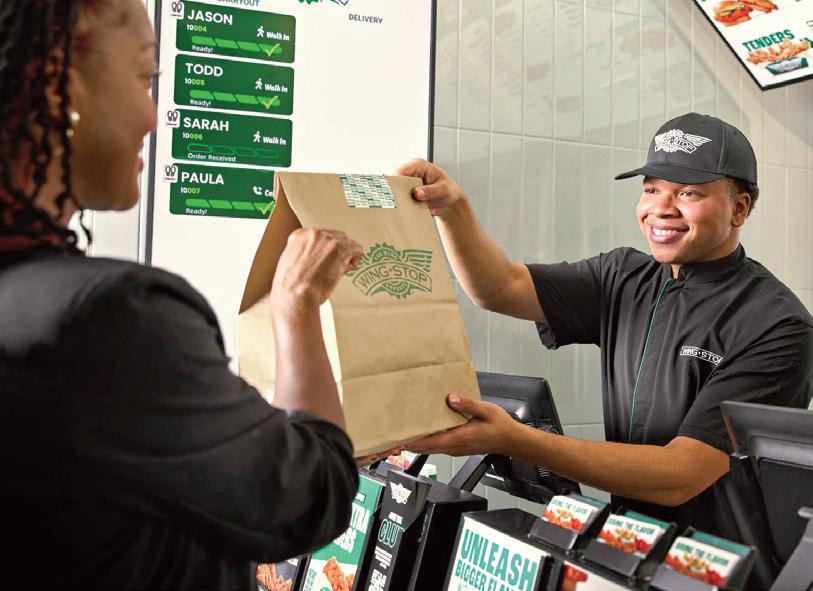
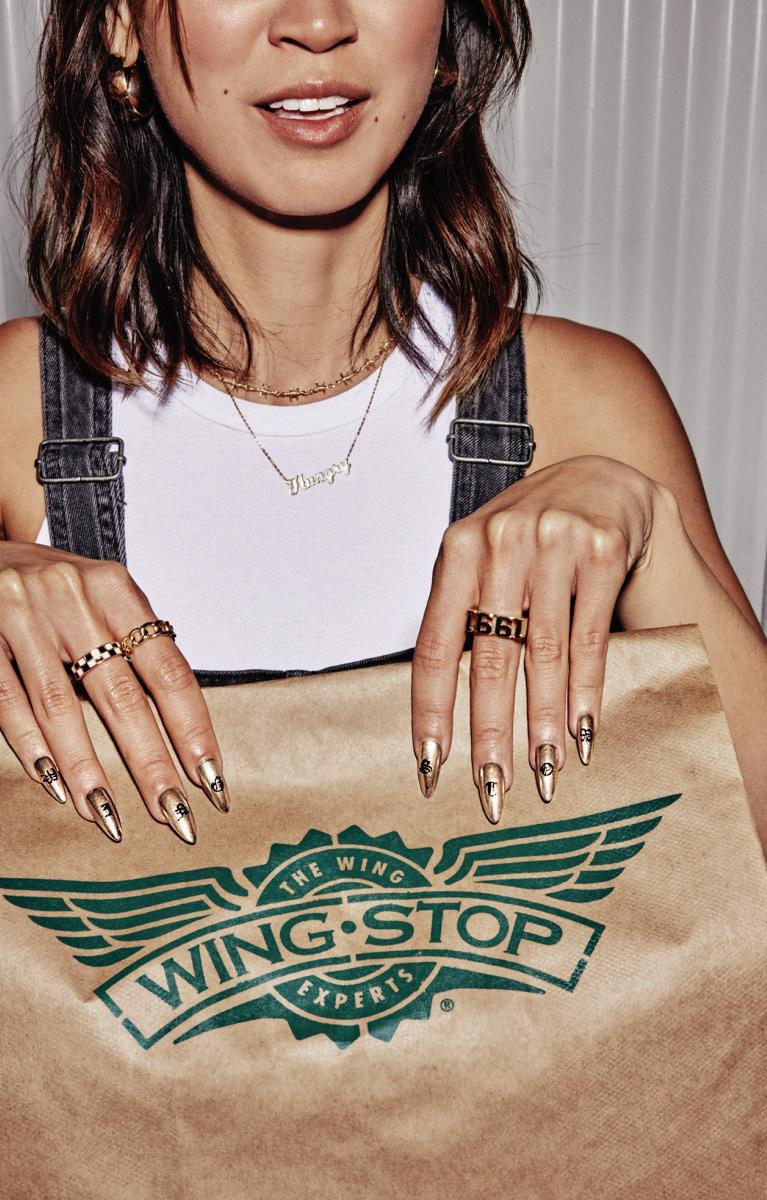
Wingstop’s new “Wingstop Is Here” campaign centers around the recognizable social moment tied to the arrival of the food itself. Roughly 94 percent of sales leave the restaurant through carryout or delivery, turning the brand into something consumers experience largely in homes, offices, watch parties, and gatherings.
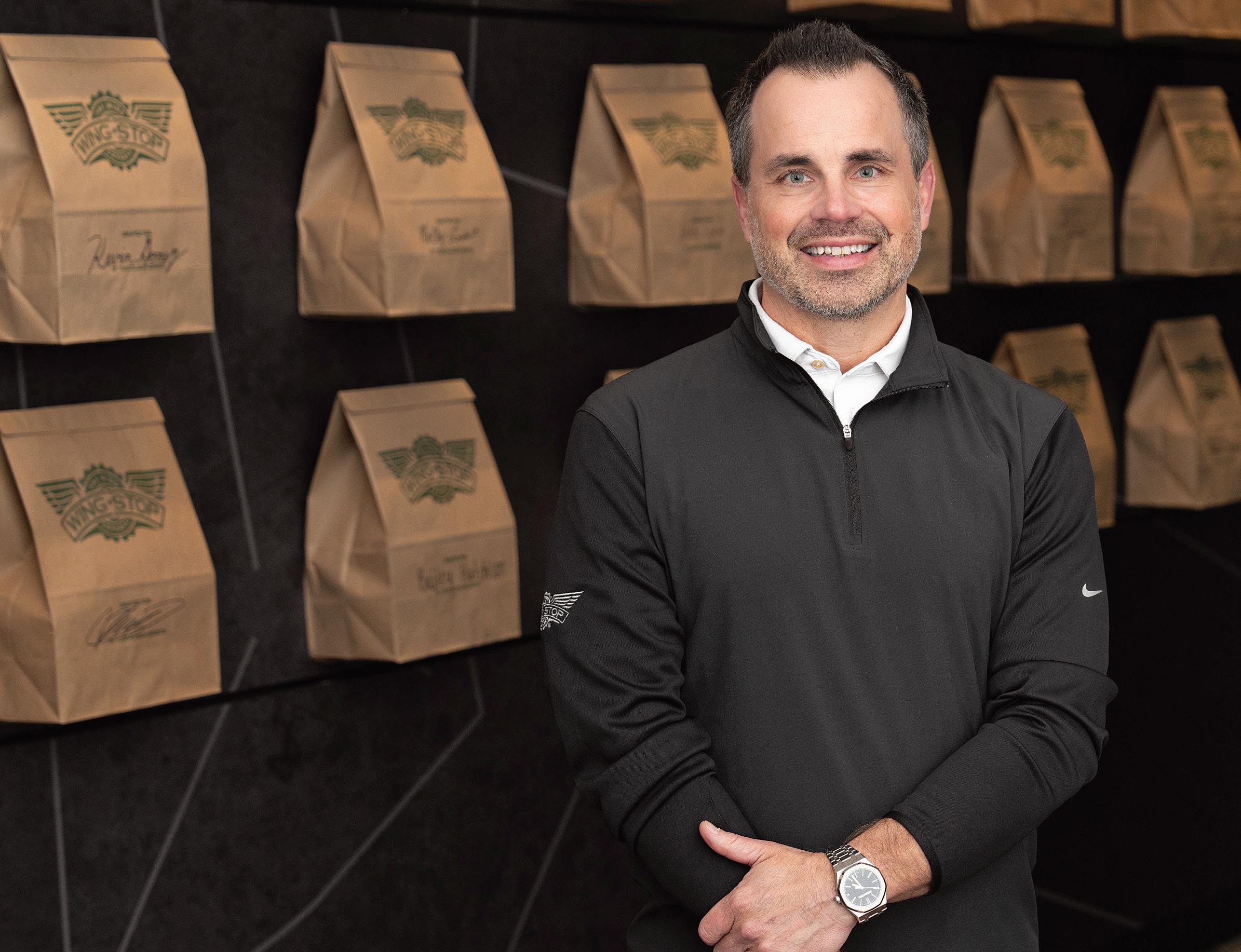
“Our brown bag has become a little bit iconic,” Skipworth says. “It’s that moment where the food shows up and everybody’s like, ‘Wingstop is here.’”
The company wants the brand associated with social energy and shared occasions, not simply wings. Executives frame the campaign as an effort to connect Wingstop with emotional moments and rituals, whether that means a family
dinner, a boxing night between friends, or a group gathering around sports and entertainment.
The company also expanded further into culture-driven marketing activations during the past year. Earlier in 2026, Wingstop partnered with PopUp Bagels on a limited-time Lemon Pepper Schmear that translated one of the chain’s most recognizable flavors into breakfast occasions.
Wingstop also expanded its experiential efforts through “House of Flavor,” an immersive activation built around music, soccer culture, merchandise, food, and live entertainment. After previous runs in Paris and Milan, the event arrived in Dallas and Toronto this summer with DJs, watch parties, tattoos, custom merchandise, and performances from rapper FERG. The company described the activation as another extension of Wingstop’s connection to sports, music, and youth culture.
Additionally, the company leveraged one of its fan obsessions—ranch dressing. On National Ranch Day, Wingstop introduced a limited-edition 32-ounce “Big A$$ Ranch Cup,”
“Our brown bag has become a little bit iconic. “It’s that moment where the food shows up and everybody’s like, ‘Wingstop is here.’”
MICHAEL SKIPWORTH
CEO
CASH— The Secret Ingredient.
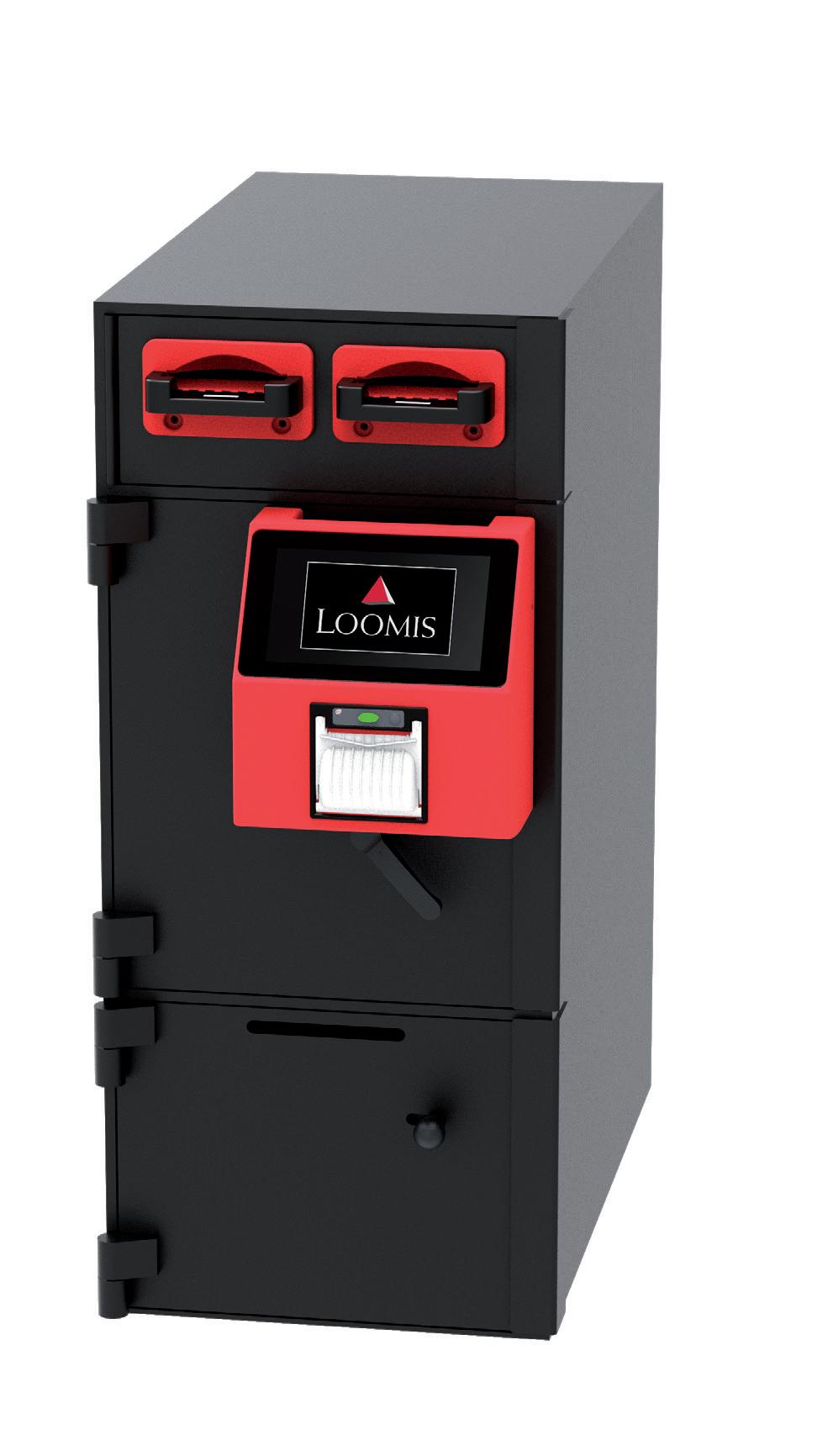
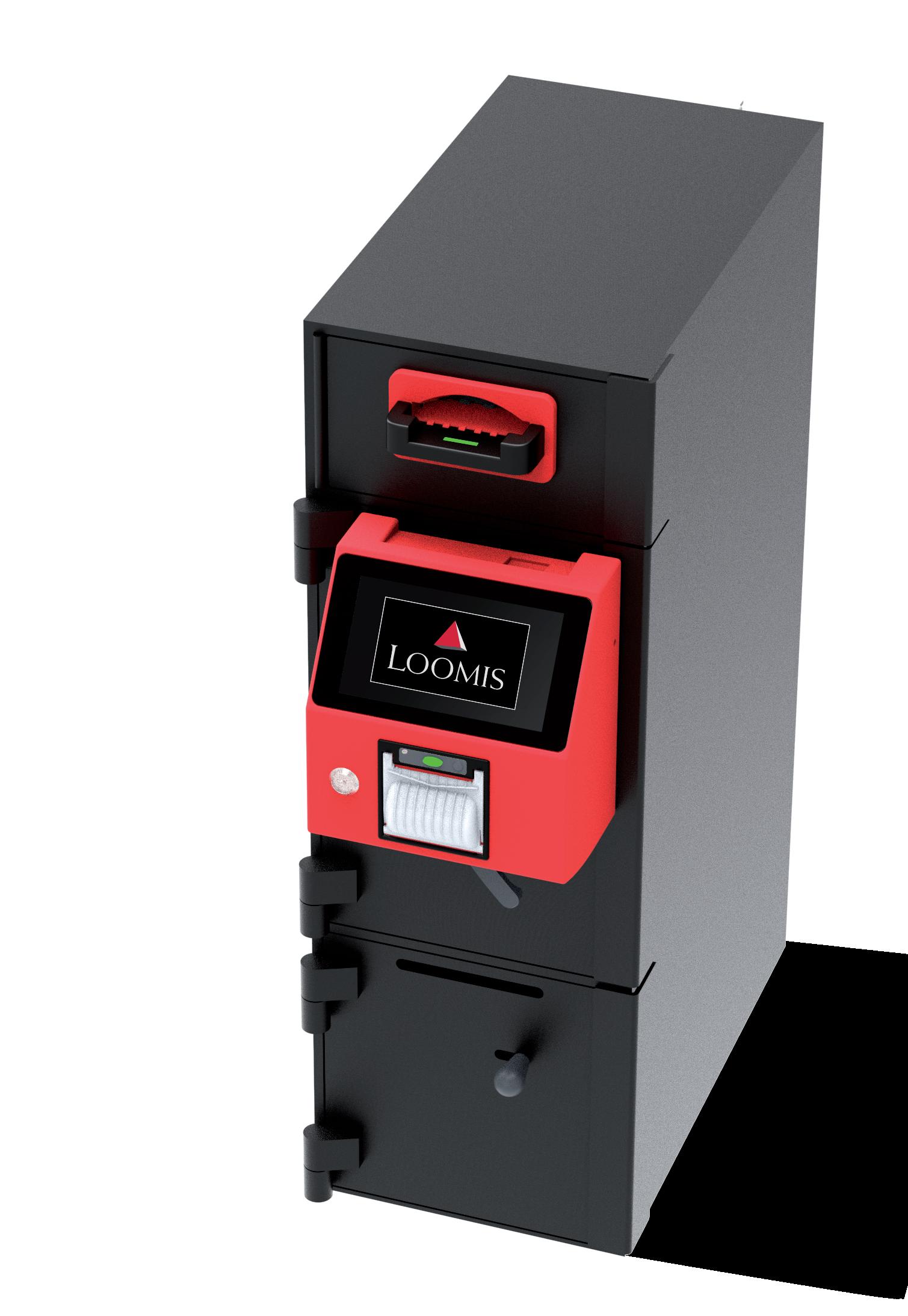
Running a busy restaurant, you know that every detail matters—from nailing lunch rush and customer satisfaction to keeping costs in check. Top brands in the industry face the same challenges, and many have found a smart solution with SafePoint® by Loomis.
They rely on SafePoint® for the accuracy, speed, and reliability needed to handle high volumes of cash without the usual headaches. It’s a smart business decision: less time spent on manual counting, fewer discrepancies at the end of the day, and even faster access to funds. It’s a solution that works for those at the top, and it can work for you too.
How the biggest names in the industry handle their cash. Save
a stainless-steel collectible filled with the chain’s housemade ranch. The oversized cup sold through select locations in Dallas and New York and positioned ranch less like a condiment and more like branded merchandise. The promotion fit neatly into a larger strategy based on fandom behavior, scarcity, and collectibles.
The strategy becomes important as Wingstop works to expand its customer base. Historically, the chain over-indexed toward younger male consumers. Leadership now sees major opportunities among middle-income and higher-income households entering the brand more consistently. Households earning between $50,000 and $100,000 annually represented one of Wingstop’s fastest-growing guest segments during Q1.
Stronger awareness, digital engagement, and convenience are helping the chain enter more dining occasions.
Also, consumer media habits have shifted substantially during the past several years, forcing brands to rethink how they connect with audiences. During the pandemic, Wingstop leaned into sports advertising because live games remained one of the few large-scale shared viewing experiences. Today, audiences spread across streaming platforms, social media, short-form content, and on-demand viewing.
“We evolved our strategy as we saw the consumer’s eyes moving a little bit,” Skipworth says.
Wingstop says its digital infrastructure creates a major advantage in that environment. The company now operates a database exceeding 60 million users and tracks hundreds of behavioral data points that help personalize messaging, advertising placement, and offers.
That infrastructure laid the groundwork for one of Wingstop’s largest launches this year—Club Wingstop. The loyalty platform functions as far more than a traditional points-based rewards system.
Club Wingstop still includes standard loyalty mechanics like points accumulation and rewards redemption, but the company built additional layers around exclusivity and cultural access. Members gain entry to limited-edition merchandise drops, members-only events, exclusive flavor launches, group ordering tools, and one of the first points-sharing systems in restaurant loyalty.
The company partnered with reality television personality Maura Higgins to debut the platform through a “Club in a Box” activation that looked closer to a streetwear collab-
oration than a restaurant promotion. The limited-edition release included branded accessories, a JBL speaker, a Polaroid camera, collectible items, and lifestyle merchandise packaged inside a designer-inspired green bag. Wingstop also tied the loyalty launch to experiences connected to NBA games, House of Flavor, and WWE’s Summerslam.
“It is not an offers platform,” Skipworth says. “It’s not just about points. It is about enhancing that experience and further driving that emotional connection that the brand has with our guests.”
The company spent roughly three years building Club Wingstop internally.
Leadership says Wingstop’s digital scale gave the company a fundamentally different starting point than many brands launching loyalty. Wingstop already processes more than $2.5 billion through its digital ecosystem. That scale pushed leadership toward internal technology development instead of relying heavily on outside providers.
“We often consider ourselves to be more of a technology company than a restaurant company,” Skipworth says.
The emphasis on technology extends to Wingstop’s Smart Kitchen initiative. The platform fundamentally changed how restaurants operate behind the scenes. Kitchen production, ticket routing, order sequencing, labor deployment, and timing systems all shifted through the initiative.
Before Smart Kitchen, average ticket times hovered near 20 minutes. During busy Friday and Saturday dinner periods, wait times could stretch toward 45 minutes or longer.
“The consumers were willing to forgive us for that because the food was that good,” Skipworth says. “But if you’re going to be in more of the consideration set and really transform the brand to be more mainstream, we knew we had to solve the expectations that consumers have around speed.”
Wingstop now targets a consistent 10-minute service window.
The company reported substantial gains during Q1. Restaurants meeting Smart Kitchen benchmarks lifted throughput by roughly 16 percentage points during peak Friday and Saturday dinner periods compared with Q4. Delivery customer satisfaction climbed approximately 17 percentage points during the quarter.
The systemwide implications stretch beyond faster service. Wingstop says Smart Kitchen simplifies staffing, reduces bottlenecks, lowers turnover, and shortens training curves. The platform also creates stronger consistency [
WINGSTOP WANTS TO IMMERSE ITSELF IN EVERYDAY MODERN CULTURE.
JUMP TO THE CHARTS
P 36 QSR 50
P 46 QSR 50 BY SEGMENT
P 58 THE CONTENDERS
The nation’s largest quick-service brands are adapting to a new era of competition.
/ BY QSR STAFF
The brands leading this year’s QSR 50 are succeeding in an environment with cautious consumers, fierce competition, and shifting expectations. Traffic has become harder to earn. Value has become a perma nent strategic pillar rather than a temporary promotion. Technology has evolved from a support function into a primary growth driver. And restaurants are being judged not just by how many locations they open, but by how effectively they create reasons for customers to return.
The result is an industry simultaneously pursuing scale and transformation.
Across the ranking, common themes emerge. Artificial intelligence is moving from experimentation to implementation. Loyalty programs are becoming more sophisticated. Beverage innovation is creating new occasions and higher check averages. Also, many legacy brands are reevaluating portfolios, simplifying operations, and searching for more sustainable paths to profitability.
The 2026 QSR 50 shows an industry that remains remarkably resilient. Even amid economic uncertainty and evolving consumer habits, the nation’s largest restaurant brands continue to adapt, innovate, and invest for the future. The race for relevance has never been more intense.
McDonald’s
McDonald’s has settled into a highly disciplined operating rhythm based value leadership, steady menu news, and consistent execution rather than sweeping change.
The clearest priority is value. Across multiple moves, the company has leaned aggressively into affordability to win back and retain budget-conscious consumers. That’s shown up in expanded low-price menus, sharper combo pricing, and a more structured, all-day value architecture. Leadership has positioned this not just as a promotional lever, but as a core competitive advantage in a pressured consumer environment. The approach is working: U.S. same-store sales rose 3.9 percent in Q1, with McDonald’s gaining share and outperforming many peers.
But the strategy isn’t one-dimensional. McDonald’s has paired value with constant marketing energy and cultural relevance. Campaigns tied to entertainment, digital activations, and app-based engagement have kept the brand visible across demographics, helping turn value into traffic rather than just margin pressure. The company has been
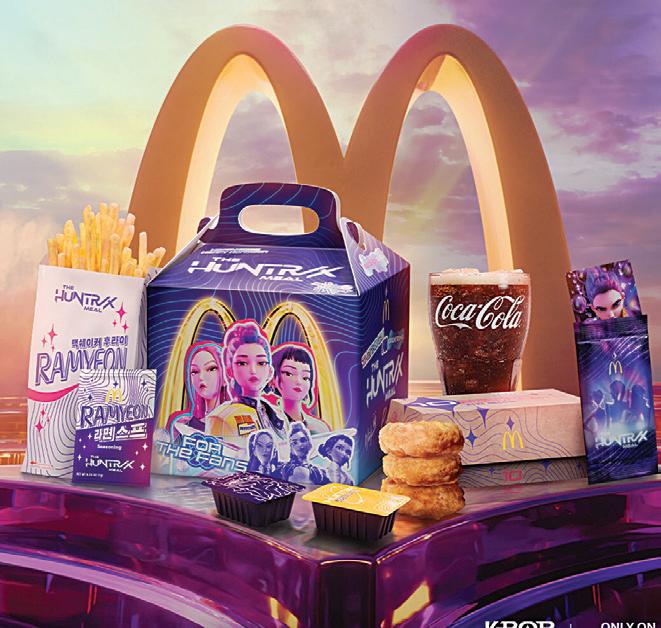
explicit that showing up “in culture” is just as critical as price in today’s landscape. “KPop Demon Hunters” and “Super Mario Galaxy Movie” are two of the most recent examples.
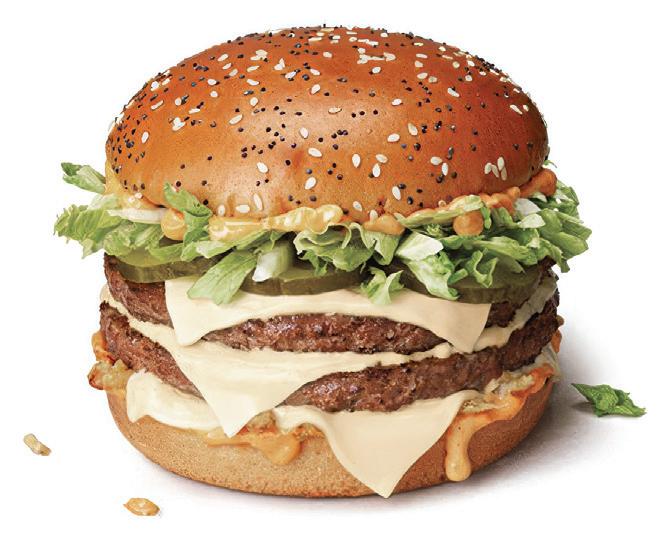
Menu innovation has complemented both. McDonald’s has pushed in two directions at once: premium and familiar. On the higher end, the introduction of the Big Arch burger shows an effort to drive average check and compete more directly in the premium burger tier. At the same time, the company has leaned into nostalgia and accessibility, highlighted by the return of the Snack Wrap, a move geared toward reconnecting with customers and boosting frequency through smaller, craveable options.
Beverages have also emerged as a meaningful growth lever. A new crafted drink lineup signals a bigger ambition to build a more competitive beverage platform—one that can drive incremental visits, particularly among younger consumers, and expand beyond the traditional role of drinks as add-ons.
02
Starbucks
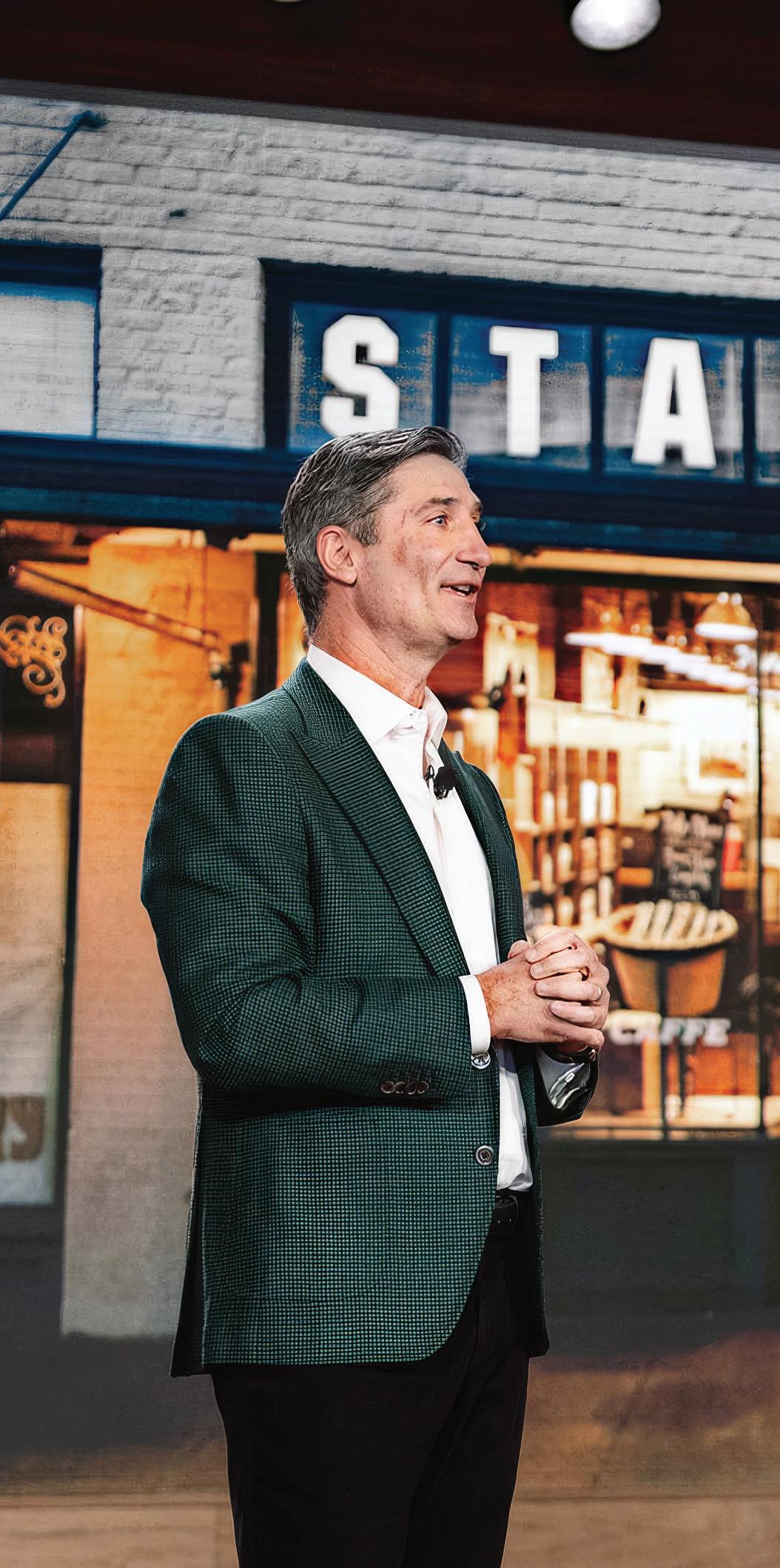
Starbucks is balancing an aggressive longterm growth vision with a major operational reset aimed at restoring traffic, improving store execution, and rebuilding its culture under CEO Brian Niccol. The company has shown early signs of momentum in recent quarters, even as it continued restructuring efforts and major investments across labor, technology, and infrastructure.
Starbucks has reported improving performance in 2026 as turnaround initiatives began translating into stronger guest engagement. In Q2, the company posted increases in transactions and sales, signaling progress after several difficult periods marked by declining traffic. Leadership attributed gains to operational simplification, faster service, and renewed focus on the in-store experience. Starbucks has worked to streamline workflows, reduce friction for employees, and sharpen hospitality standards as part of its broader “Back to Starbucks” strategy.
The company also continued evolving its digital ecosystem. Starbucks introduced a scheduled pickup feature that allows customers to place mobile orders up to 30 minutes in advance, giving guests more flexibility while helping stores manage throughput more
effectively during peak periods. Starbucks simultaneously expanded experimentation with artificial intelligence, including a test of an AI-powered drink discovery tool inside ChatGPT that recommends beverages based on customer preferences and moods.
Internally, Starbucks has undergone notable organizational changes. In less than a year and a half, the coffee giant laid off over 2,000 corporate employees (1,100 in February 2025, 900 in September 2025, and 300 in May). In total, the company anticipates roughly $400 million in restructuring charges. About $120 million of that is related to employee separation packages. Additionally, the company announced plans to shutter regional offices in Atlanta, Dallas, Chicago, and Burbank, California. In addition to its Seattle HQ, the brand will keep offices open in New York, Toronto, and Coral Gables, Florida.
None of the layoffs impacted hourly workers. In fact, the company rolled out a new employee incentive program tied to store performance and operational metrics to better align hourly workers with business recovery goals and improve morale during the transformation.
McDONALD’S OFTEN USES INNOVATION AND CULTURAL PARTNERSHIPS TO REEL IN GUESTS.
BIG ARCH BURGER
KPOP DEMON HUNTERS
WITH
03
Chick-fil-A
The country’s third-highest earning QSR (despite being open just six days a week and with materially fewer locations than the top two) accelerated growth in 2025 as it lifted by a net of 179 franchised and company-run outlets to reach 2,863. That marked a material step-up from 2024’s 132 net openings and the prior year’s 141. Chick-fil-A also closed the calendar with 435 licensed venues.
While it expands, the company continues to dial up category-leading volumes. Its domestic freestanding or drive-thru only comp stores posted median annual sales volumes of $9.087 million and average annual sales volumes of $9.161 million. One location made $20 million.
Chick-fil-A’s systemwide sales leapt to $23.9 billion, which has been a steady climb. The figure was $12.2 billion in 2019 and $21.5 billion in 2023. On the revenue line, Chickfil-A reached consolidated results of $10.3 billion. That was $9 billion in 2024 and $7.8 billion in 2023.
The company, celebrating its 80th anni-
versary this year, exited 2025 with franchised and company-operated restaurants in the U.S., Canada, Puerto Rico, the United Kingdom, and Singapore, with international expansion continuing to ramp up.
04
Taco Bell
Over the past year, Taco Bell has continued one of the strongest runs in the restaurant industry, combining traffic-driving value, menu innovation, beverage expansion, and cultural marketing into a growth engine that consistently outperformed much of QSR. Instead of relying solely on discounting during a pressured consumer environment, Taco Bell leaned into what executives described as a full-funnel strategy, using affordability, craveability, and entertainment-driven brand relevance simultaneously.
The chain has posted a long stretch of positive same-store sales growth within parent company Yum! Brands, with executives citing strong transaction trends and broad-based consumer demand. Taco Bell’s Luxe Value
Menu became a key part of its affordability messaging, helping the brand maintain strong value perception while still emphasizing innovation and premium limited-time offerings.
Leadership stressed that value was working because it was paired with innovation and operational consistency, not because the company was simply chasing discounts.
Innovation remained key. At Taco Bell’s Live Más LIVE event in Los Angeles earlier this year, the company unveiled an extensive 2026 roadmap featuring more than 20 upcoming menu concepts and platform expansions.
Additionally, the brand has pushed deeper into beverages through its Live Más Café concept and specialty drink lineup, viewing beverages as a significant whitespace opportunity capable of driving incremental visits and higher check averages. Taco Bell has also teased expanded chicken innovation, new sauce platforms, dessert offerings, and AIpowered personalization efforts to improve digital engagement and customization.
05
Dunkin’
Dunkin’ is evolving past its traditional coffeeand-doughnuts identity, leaning aggressively into beverages, customization, energy drinks, and seasonal innovation as parent com-
pany Inspire Brands prepared for a potential return to the public markets. Inspire confidentially filed for an IPO earlier this year, with Dunkin’ identified as the fastest-growing concept in its portfolio and one of the company’s most important growth drivers. The chain remained central to Inspire’s expansion strategy, which now spans more than 33,000 restaurants globally.
Menu innovation accelerated significantly throughout 2026 as Dunkin’ pushed deeper
DUNKIN’ REFRESHERS
DUNKIN’
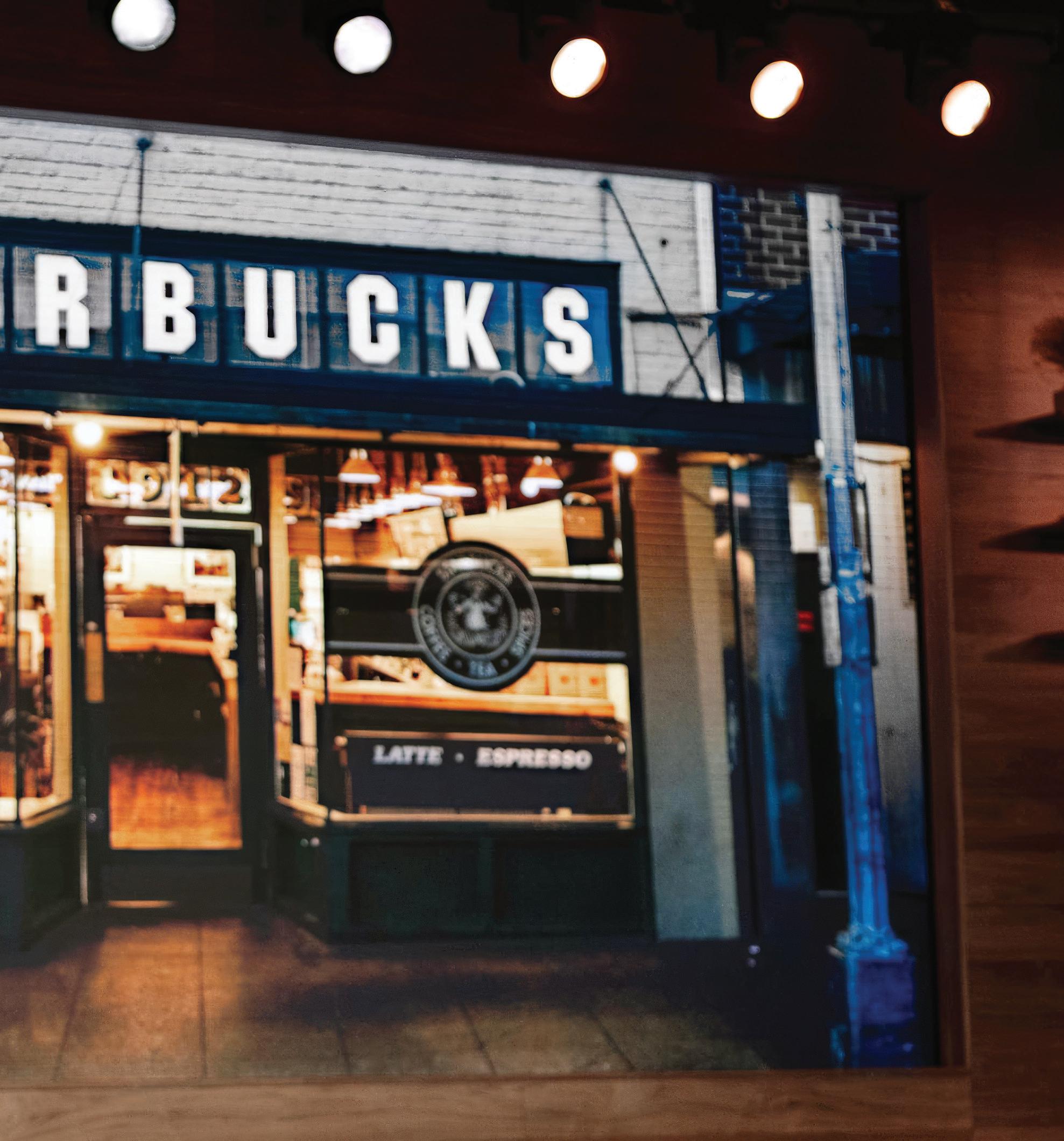
MANY CHANGES ONGOING, STARBUCKS HAS SEEN NOTABLE PROGRESS ON ITS COMEBACK PLAN.
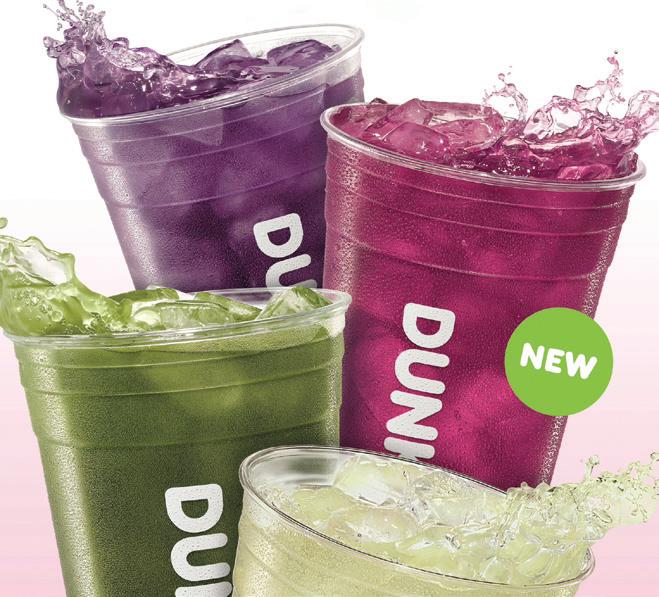
into younger consumer occasions and afternoon beverage consumption. The brand expanded its Dunkin’ Refreshers lineup with new fruit-forward flavors like Black Cherry, Limeade, and Berry Acai while also experimenting with layered and customizable beverages such as Cherry Daydream Refreshers and protein-infused drinks.
Dunkin’ also entered the growing “dirty soda” category with the launch of Dunkin’ Dirty Soda, combining coffee milk, Pepsi, and Sweet Cold Foam in a product designed to bridge soda culture and coffee. The company also rolled out a major collaboration with Oreo across frozen beverages, espresso drinks, and matcha offerings, including the Oreo Cloud Latte and Oreo Coolatta. Dunkin’ additionally reintroduced frozen coffee through its revamped Coffee Chillers platform, which debuted in flavors like Triple Mocha, Caramel Crème, and Oreo.
Dunkin’ finished 2025 with 9,999 U.S. locations and over $13 billion in systemwide sales.
06
Wendy’s
Wendy’s is working through one of the most significant turnaround phases in its recent history, launching a restructuring effort called “Project Fresh” after traffic declines, weak promotions, and mounting franchisee pressure dragged down performance. Leadership repeatedly framed 2026 as a rebuilding year with the company prioritizing AUV growth, operational consistency, and franchisee profitability over pure unit expansion.
The company’s sales challenges were steep. U.S. same-store sales fell 11.3 percent in Q4 and declined another 7.8 percent in Q1, pressured by traffic softness, weather issues, and consumer pullback among lower-income guests. Wendy’s also acknowledged missteps in marketing. Leadership specifically pointed to its “100 Days of Summer” campaign and Takis collaboration as overly complicated and difficult for customers and employees to embrace.
Project Fresh became the company’s answer. The framework centered on four pillars: revitalizing the brand, improving operations, optimizing the restaurant footprint, and reallocating capital toward higher-return investments like technology and marketing. Wendy’s partnered with Greg Creed’s consultancy, Creed UnCo, to conduct a consumer segmentation study that reshaped how the chain thinks about value, messaging, and menu innovation. Research revealed customers increasingly viewed Wendy’s as an “everyday quality upgrade,” particularly in burgers, while also relying on the chain for snack occasions and impulse visits.
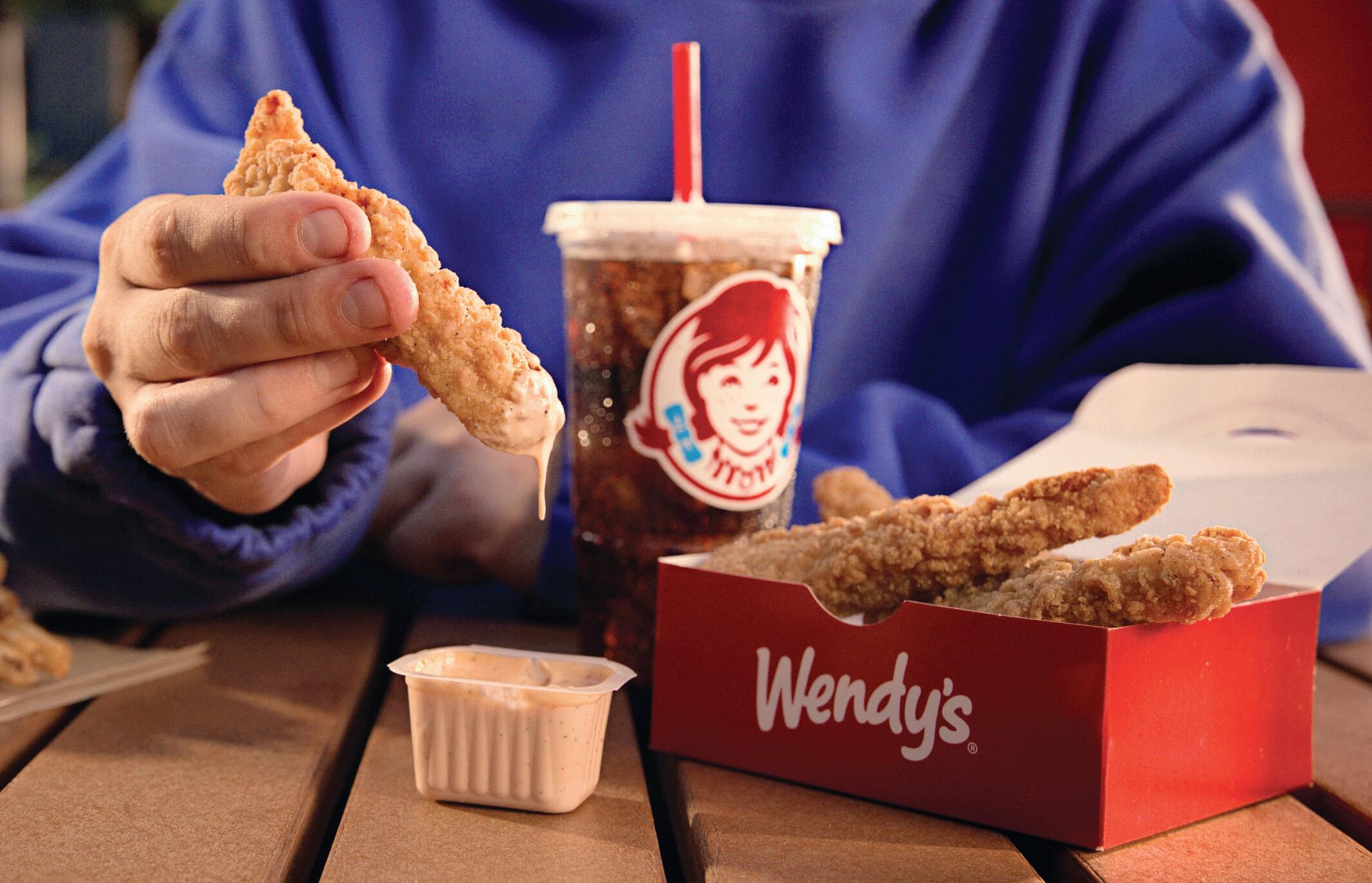
That insight drove several menu and marketing changes. Wendy’s rolled out its permanent Biggie Deals platform with $4, $6, and $8 tiers, designed to cover everything from snack occasions to full meals. The chain also doubled down on chicken and beverages, rolling out chicken tenders with six sauces, introducing a new hot coffee blend, and revamping its spicy chicken sandwich with a new marinade and panko-style breading. Wendy’s admitted it lacked meaningful burger innovation in 2025 and responded with plans for premium hamburger LTOs, including the
Bacon
and the return of the
WENDY’S
Bacon Pub Cheeseburger.
Additionally, Wendy’s is aggressively rationalizing its footprint. The company announced plans to close 5 to 6 percent of its U.S. restaurants—potentially hundreds of units—while redirecting resources toward stronger operators, restaurant upgrades, and technology investments.
07
Chipotle
Chipotle Mexican is in a transitional period after witnessing its first annual negative same-store sales result since the 2016 E. coli crisis. It answered with an aggressive fivepart turnaround framework called “Recipe for Growth.” After fiscal 2025 comps declined 1.7 percent and Q4 same-store sales fell 2.5 percent, leadership spent months reevaluating the business, consumer behavior, and operational structure before rolling out a strategy centered on operations, menu innovation, loyalty, expansion, and talent development.
The strategy showed early traction in Q1 2026. Same-store sales rose 0.5 percent, driven by a 0.6 percent increase in transactions, while the company said it regained momentum with Gen Z and millennial consumers after struggling with younger guests in the prior year. CEO Scott Boatwright noted Chipotle saw engagement improve across every income and age cohort.
Chipotle accelerated deployment of its new high-efficiency kitchen package, which includes a dual-sided plancha, three-pan rice cooker, and high-capacity fryer. The equipment package—which cuts prep time by two to three hours and eliminates prep during peak periods—expanded from 250 restaurants in Q4 to more than 600 units in Q1. Chipotle expects 2,000 restaurants to have the system by the end of 2026 and full deployment by 2027 or early 2028. Restaurants using the package have generated a 2 to 4 percent sales uplift alongside improvements in throughput, food taste scores, and guest satisfaction.
Digital and loyalty initiatives also became increasingly important to Chipotle’s growth strategy. Loyalty mix climbed to 32 percent in Q1, up from 30 percent a year earlier, fueled by programs such as Summer of Extras and Freepotle. The company revamped its rewards platform with gamification, monthly drops, and new perks like free chips and guacamole
for signups. An in-store QR code initiative and employee incentives drove nearly a 25 percent increase in daily enrollments. Meanwhile, digital sales reached $1.2 billion in Q1, representing 38.6 percent of total sales.
Technology investments extended beyond loyalty. Chipotle expanded its AI hiring assistant “Ava Cado,” which reduced hiring timelines from 12 days to four and increased application completion rates from roughly 50 percent to 85 percent. The company also rolled out “Chipotle Kitchen,” a digital makeline display system designed to improve order accuracy and simplify new ingredient launches.
08
Burger King
Burger King’s turnaround has entered a new phase—one where the brand is no longer simply fixing operational cracks behind the scenes, but actively reintroducing itself to consumers with a louder, more confident voice. After several years of investing heavily in operations, remodels, franchisee alignment, and guest experience through its “Reclaim the Flame” strategy, Burger King believes it has finally earned the right to market the brand more aggressively again.
That shift has become especially visible in recent months through campaigns around customer empowerment and the Whopper. Burger King officially retired its longtime
“King” mascot in a new campaign titled “There’s A New King And It’s You,” positioning guests as the focal point of the brand’s future. The campaign reflects a philosophy that has shaped Burger King’s turnaround under U.S. president Tom Curtis: listen closely to customers and build the business around what they value most.
The approach has shown up in multiple ways. Curtis publicly shared his phone number so customers could call or text feedback directly to leadership. Burger King also leaned heavily into guest-driven menu innovation through platforms like “Whopper By You” and the Million Dollar Whopper contest, which generated more than a million submissions from customers.
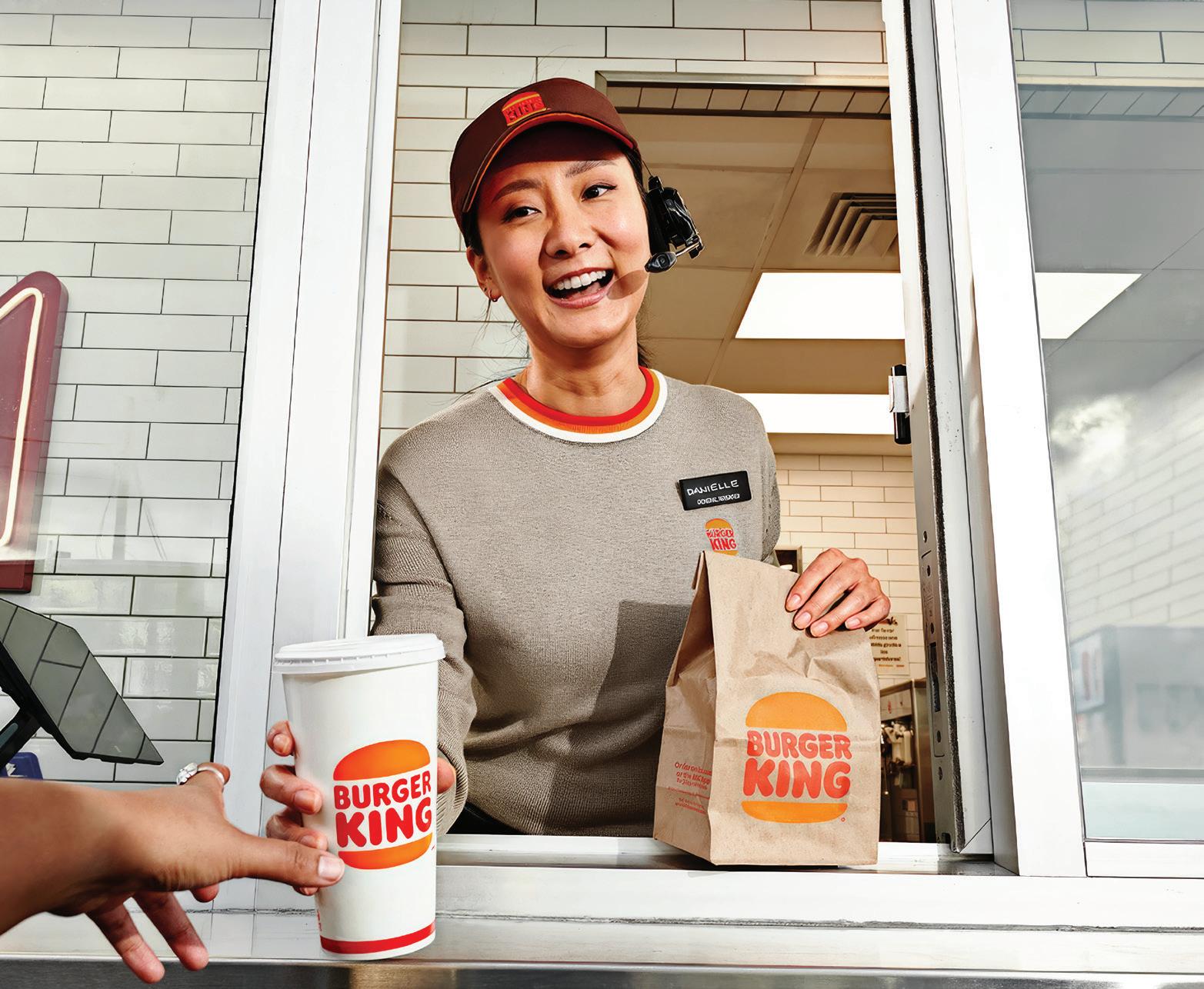
Additionally, Burger King spent years carefully upgrading its signature burger. Instead of dramatically changing the Whopper, the chain focused on elevating surrounding elements after extensive testing and customer feedback. The new Whopper includes a glazed bun, creamier mayonnaise, and upgraded clamshell packaging designed to improve presentation and quality perception without altering the core flame-grilled identity that made the burger iconic.
These marketing and menu initiatives are arriving after substantial operational work. Since launching Reclaim the Flame in 2022, Burger King and franchisees have committed more than $2 billion combined toward restaurant modernization, technology upgrades, marketing, and operational improvements.
The company doubled its field support teams, introduced “Royal Roundtables” for operators and general managers, standardized restaurant tech systems nationwide, and invested heavily in kitchen equipment and remodel incentives.
09
Domino’s
Domino’s is doubling down on technology, value, and brand modernization as it looks to widen the gap between itself and struggling pizza competitors like Papa Johns and Pizza Hut.
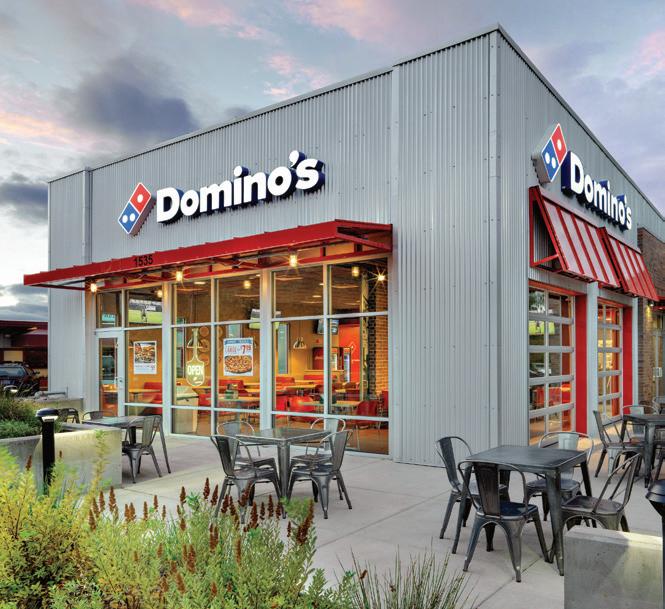
The company unveiled major upgrades to its Pizza Tracker system, including AI-pow-
ered delivery estimates, more detailed order visibility, GPS tracking for drivers, and Apple “Live Activities,” which lets iPhone users follow their order from the lock screen. The enhancements are powered by DomOS, Domino’s proprietary operating platform, and are designed to improve operational efficiency and customer convenience. Domino’s said the tracker has been used on more than 2.5 billion orders since launching in 2008.
The tech investments are part of Domino’s “Hungry for MORE” strategy, a multi-year plan focused on menu innovation, operational improvements, value, and franchisee profitability. Over the past two years, the company has revamped its loyalty program, refreshed its branding for the first time in more than a decade, upgraded its website and app, and leaned more heavily into third-party delivery.
The brand refresh introduced a new “Dommmino’s” jingle featuring musician Shaboozey, updated pizza box designs, a new font called “Domino’s Sans,” and redesigned uniforms and marketing materials. Domino’s framed the move not as a turnaround effort, but as a way to build on years of momentum.
Financially, Domino’s continues to outperform much of the pizza category, even as
the industry faces pressure. Same-store sales increased 3 percent in fiscal 2025, giving the chain its 11th consecutive year of market share growth. Franchise profitability also rose to $166,000 per store.
10
Subway
Subway is undergoing one of the biggest transformations in its history as it balances aggressive international expansion, a shrinking U.S. footprint, leadership turnover, and a renewed focus on value and health-oriented menu innovation.
The sandwich giant closed a net 729 U.S. restaurants in 2025, marking its 10th consecutive year of domestic unit declines. Subway ended the year with 18,773 U.S. locations, down from a peak of more than 27,000 in 2015. Over the past decade, the brand has shuttered more than 8,300 domestic restaurants as it works to rightsize its footprint and improve franchisee economics.
Despite the closures, Subway says operational metrics are improving. The company noted stronger restaurant evaluation scores, higher Google review ratings, accelerating third-party delivery sales, and continued remodel activity through its Fresh Forward redesign initiative.
11 Panda Express
Panda Express hit the growth pedal in 2025 at 105 net units, marking the largest yearover-year development since 2016–2017 (118). And it’s been coming. The brand posted net expansion of 61 in 2023 before hiking to 89 in 2024. Panda Express has essentially doubled its U.S. footprint since 2009, from 1,289 locations to 2,607.
As for 2026, Panda Express expects an even loftier figure, with 10 new franchised openings on the docket alongside 132 company-owned restaurants (gross). Its home state of California (14 corporate stores expected) and Texas (12 company as well as four franchised) are the two largest targets.
The family-owned brand remains predominantly company run (2,423 of the mix). On the licensed side, airports in particular
PANDA EXPRESS HAS DOUBLED ITS FOOTPRINT SINCE 2019.
were a strong-performing element last year at average gross sales north of $4.1 million. One made $10.7 million.
12
Panera
Panera is in the middle of a transformation effort under CEO Paul Carbone, focused on rebuilding guest trust after years of what leadership described as declining quality, shrinking portions, rising prices, and weaker in-store hospitality. The initiative, called “Panera RISE,” is guiding nearly every part of the business, from menu innovation and value offerings to loyalty, operations, and future restaurant development.
One of the clearest signs of that strategy is Panera’s push into value. The chain recently launched a new Mix & Match platform that allows guests to purchase select half sandwiches, half salads, or cups of soup for $4.99 each, with a free side included. Customers can order between two and 10 items in a single transaction. Executives positioned the platform as a way to compete on quality and affordability rather than simply offering the lowest prices. The launch comes as Panera tries to regain transaction momentum and appeal to guests who have become more selective about where they spend money.
The company is also investing heavily in food quality and menu abundance. Carbone acknowledged that previous cost-cutting decisions hurt the guest experience, citing moves like switching salads from 100 percent romaine to a romaine-iceberg blend and reducing ingredient preparation standards. Panera is now reversing many of those decisions by restoring ingredient quality, adding more toppings and components to salads, and introducing new menu items, including revamped bagel sandwiches, beverage innovations, and expanded salad offerings.
Digital and loyalty represents another major change. Panera is testing a new pointsbased MyPanera rewards program across 216 restaurants in markets including Chicago, Dallas, Denver, Seattle, and Wyoming, reaching roughly 4 million loyalty members. The
updated system gives guests more transparency and control over rewards, while a new MyPanera+ tier offers enhanced benefits for top customers and Unlimited Sip Club subscribers.
13
Popeyes
Popeyes is working to stabilize sales and reestablish consistency across the brand. Despite remaining one of the largest chicken chains in the U.S., Popeyes has struggled recently, posting several consecutive quarters of negative same-store sales, including a 6.5 percent decline in Q1. Leadership said the brand has not kept pace operationally as competition in the chicken category intensified from chains like Chick-fil-A, Raising Cane’s, Wingstop, and Zaxby’s.
The turnaround is now being led by Peter Perdue, a longtime RBI executive who previously helped oversee Burger King’s “Reclaim the Flame” operational comeback. RBI leadership believes Popeyes’ issues are less about brand awareness or product quality and more about execution at the restaurant level. Executives continue to argue the chain has some of the best food in the category, but inconsistent service, operational complexity, and unclear value messaging have weakened guest retention.
As a result, Popeyes is simplifying its strategy around three main priorities: improv-
ing operations, refocusing the menu on core products, and rebuilding everyday value. The company has significantly expanded its field operations team, increased restaurant-level coaching, and launched large-scale general manager “experience rallies” across markets to reinforce standards and guest service. Leadership said these efforts are intended to restore consistency around flagship products like bone-in chicken, tenders, and the chicken sandwich.
The menu itself is also being narrowed to reduce operational strain. Executives admitted the chain spent too much time chasing limited-time offers and non-core innovation over the last couple of years, which added complexity without driving lasting loyalty. Popeyes is now basing marketing and product development around its foundational Louisiana-inspired chicken offerings and improving specifications for tenders and reinforcing preparation standards systemwide.
14
Raising Cane’s
Raising Cane’s is pushing toward longterm goals of 1,600 restaurants, $10 billion in annual sales, and $8 million average unit volumes.
One of the brand’s biggest growth moves is its entrance into the U.K. market. Raising
PAUL CARBONE
POPEYES HAS BEEN ON A NEGATIVE SLIDE, BUT A PLAN IS IN PLACE TO TURN AROUND SALES.
Cane’s will open a flagship restaurant in London’s West End in 2026, marking its first step into Europe. Leadership described the store as a high-profile location aimed at tourists and theatergoers in one of the busiest intersections in London. Founder Todd Graves said the company has received more requests to enter the U.K. than any other international market and has spent years scouting locations throughout the region. The chain plans to follow the flagship with additional London restaurants and drive-thru units across the greater market. Executives also said the expansion is expected to create more than 700 jobs within the first year.
Domestically, Raising Cane’s continues to add restaurants across the country while investing in remodels and infrastructure. The brand recently announced openings in markets including Arkansas, California, New York, North Carolina, Maryland, Florida, and Ohio, and renovations in Oklahoma and Kentucky.
15
Wingstop
Wingstop is betting heavily on technology, loyalty, and brand marketing as it moves toward ambitious long-term goals of $3 million average unit volumes and more than 6,000 domestic restaurants. Even after posting some rare same-store sales declines over the past year, leadership continues to frame 2026 as a transformational year for the brand.
A key component is Wingstop’s AI-powered Smart Kitchen platform, which is now fully rolled out across U.S. restaurants. The system replaces paper kitchen tickets with digital touch-screen displays and uses demand forecasting to improve speed, accuracy, and kitchen flow. Executives say the technology has dramatically reduced ticket times, especially during peak Friday and Saturday dinner periods, while also improving delivery speeds and guest satisfaction. During the Super Bowl, historically one of the company’s most operationally challenging days, the Smart Kitchen helped reduce wait times from roughly 40 minutes to 20 and supported record sales and more than 100,000 new customers.
Wingstop believes those operational improvements can unlock more lunch, latenight, and delivery occasions, turning the chain into a more frequent dining choice instead of a once-a-month visit. Leadership
also points to the success of newer menu items like Crispy Chicken Tenders and the Chicken Sandwich, which are helping attract and retain younger and new consumers.
Another major piece is the national rollout of “Club Wingstop,” a revamped loyalty platform designed around personalization, exclusive access, and digital engagement rather than pure discounting.
Wingstop is also investing in cultural relevance through its “Wingstop Is Here” marketing campaign, which aims to evolve the brand from a cult favorite into a mainstream lifestyle brand.
16
Sonic Drive-In
Sonic has retracted by 134 stores across 2023, 2024, and 2025 after this past year’s slimming of 49. Average-unit volumes came in at $1.5 million, which was in line with the prior calendar. The closures in 2025 split between
company stores (25) and franchised (24). It entered 2026 with 3,120 of the latter and 292 directed by corporate.
Inspire is projecting 16 new franchise driveins this year, not inclusive of potential closures. Jumping into the mix, Sonic launched a lineup of Refreshers in March featuring a collection of options made with real fruit and green tea, such as a Mango Peach and Berry Citrus option.
17
Pizza Hut
Pizza Hut is attempting to reinvent itself at one of the most turbulent moments in its modern history.
Pizza Hut recently relaunched Hut Rewards as a next-generation loyalty platform designed around exclusivity, gamification, cultural access, and personalized engagement—not just points accumulation. March Madness became an early showcase for the platform, with member-only Space Jam merchandise drops and interactive digital experiences driving app engagement.
The company is also leaning heavily into brand identity and menu differentiation through its new “Hut Crust” platform. That initiative centers on Pizza Hut’s signature crusts, including an updated Hand-Tossed recipe, supported by a $10 three-topping promotion and marketing campaigns like the paid “Hut Crust
PIZZA HUT HAS HAD A TOUGH TIME CONNECTING WITH GUESTS.
SONIC DRIVE-IN
Connoisseur” role. Leadership believes crust remains one of the few true points of distinction in the pizza category as the brand works to reconnect with consumers.
These efforts come during a difficult stretch operationally. U.S. same-store sales declined 5 percent in fiscal 2025 after a 3 percent drop the year prior. Yum! Brands announced plans to close roughly 250 underperforming domestic restaurants in the first half of 2026 following 375 U.S. closures in 2025. Pizza Hut finished last year with 6,307 domestic locations, continuing a multi-year transition away from legacy dine-in “Red Roof” assets toward delivery- and carryoutfocused formats.
Also, Pizza Hut’s future ownership structure remains uncertain. Yum! Brands revealed in late 2025 that it was exploring strategic alternatives for the chain, including a potential sale. Reuters later reported interest from groups including Sycamore Partners, Apollo, and LongRange Capital. Any transaction would separate Pizza Hut from Yum! Brands for the first time in decades and potentially take the company private for the first time since 1972. Despite U.S. struggles, Pizza Hut still operates nearly 20,000 restaurants globally and remains the second-largest pizza chain in America by unit count behind Domino’s.
18
Dairy Queen
Dairy Queen’s U.S. business got smaller but more productive in 2025. The system lost 97 net units—more than double 2024’s decline— while systemwide sales rose 2.1 percent to $5.01 billion and average unit volumes
climbed 4.5 percent to $1.22 million.
Value has remained a key part of the company’s domestic strategy. CEO Troy Bader said earlier this year that Dairy Queen’s enduring $7 Meal Deal continues to resonate with consumers, giving the brand a compelling affordability message at a time when guests remain highly price sensitive. At the same time, Dairy Queen is working to keep the menu relevant through trend-forward innovation. In January, it introduced a new “swicy” lineup that pairs sweet and spicy flavors through items like FlameThrower Chicken Strip Baskets with soft serve dipping sauce, along with pineapple lemonade beverages featuring Tajín. The move reflects the brand’s effort to tap into growing demand for bold flavors and more distinctive beverage platforms.
Technology is another area of focus. This spring, Dairy Queen said it was expanding its voice AI pilot to select franchisees after early testing in corporate stores showed promising results. That’s part of a broader effort to improve order accuracy and free up labor for other in-store tasks.
Still, the biggest story at Dairy Queen in recent years has been international growth. The brand has continued to expand aggressively in China, where it has introduced some “Blizzards and Burgers” locations after operating as a treats-focused concept there for decades. The company also announced new development deals in Hong Kong, Macau, Taiwan, and Qatar late last year that will add 187 restaurants, reinforcing a global growth strategy tied to its long-term goal of reaching $10 billion in systemwide sales by 2030.
19
KFC
KFC’s U.S. comeback remains a work in progress after shedding 146 stores in 2025. AUVs of $1.329 million were down a bit from $1.336 the prior year. Over the past two calendars, KFC U.S. has retracted stateside by 268 units.
KFC has adjusted value of late, offering a $10 build-your-own bucket in Q1 and then rolling out a fresh construct with $7, $9, and $11 options. Learnings from its Saucy by KFC concept have begun to lead to tenders innovation globally as well, with more to come.
KFC U.S. introduced its Kentucky Fried Comeback last July after Catherine Tan-Gillespie was appointed president. The brand has posted three consecutive quarters of positive same-store sales as 2026 rolls along.
20
Whataburger
Whataburger is leaning into nostalgia, family occasions, and menu innovation as the Texas-born burger chain continues expanding into new markets across the U.S.
One of the company’s biggest recent initiatives is the relaunch of its Kids Whatameal experience, marking the first time in more than 20 years that the brand has paired kids meals with dedicated packaging and collectible prizes. Actress Eva Longoria and her son were featured in the launch campaign, which emphasizes authentic family connections to the brand.
KFC OFFICIALLY INTRODUCED ITS U.S. COMEBACK PLAN IN JULY 2025.
Keep Your High-Performance Kitchens Moving Safely
Managing thousands of locations requires a protective partner that moves as fast as your business. Fragmented supply chains, variable product quality, and cross-contamination risks have no place in high-performance kitchens.
Tronex delivers an unshakeable foundation for national restaurant brands. Through smart manufacturing and optimized logistics, we eliminate procurement friction while providing the advanced barrier protection needed to prevent cross-contamination. Over 40,000 restaurants rely on our award-winning solutions every day to protect their guests, teams, and margins.
Growth and brand identity are also central priorities. Whataburger recently unveiled two new restaurant prototypes, including the return of its classic A-frame design that many longtime fans associate with the chain’s heritage. The updated restaurants are designed to improve operational efficiency and reinforce the emotional connection customers have with the brand. The prototypes will first appear in Texas before expanding into growth markets like North Carolina, Florida, Georgia, and South Carolina.
Additionally, Whataburger continues to push seasonal menu innovation. Recent limited-time offerings have included the Hot Honey Crisp Whatachick’n Sandwich, the return of the Bacon Steakhouse Double and Banana Pudding Shake, and the new Strawberry Hibiscus Whatafresher beverage platform.
21
Arby’s
Arby’s closed a net of 100 restaurants in 2025 after declining by 48 the previous year. AUVs were essentially flat comparatively. The brand has had its signature run of meat-for-
ward activations of late, including a Mother’s Day box that included a choice of entrée, curly fries, mozzarella sticks, a peach cobbler roll, and a drink for $7.99. The originally Meat & 3 value box launched in January. Arby’s also offered BOGO sandwich deals in May and brought back its BBQ lineup in April with new brisket alongside a first-timer Mac Bowl. Other menu highlights included a French Dip Royale sandwich served with a side of au jus and the Chicago-inspired Italian Beef Dip, which landed early in the year.
22
Jersey Mike’s
Jersey Mike’s direction keeps pointing upward.
The sandwich giant confidentially filed draft paperwork with the SEC earlier this year for a possible public offering, signaling the next phase following Blackstone’s reported $8 billion majority acquisition in early 2025. The company has reportedly explored a valuation north of $12 billion.
The brand continues to post some of the strongest growth numbers in quick service. Jersey Mike’s added a net 238 restaurants in 2025, finishing the year with 3,227 locations nationwide, including more than 3,200 franchised units. That followed net growth of 314 stores in 2024 and 288 in 2023. The company had just 1,048 restaurants a decade ago in 2015.
Sales momentum has kept pace. Systemwide sales climbed to $4.2 billion in 2025, up from $3.7 billion the year prior, and averageunit volumes reached roughly $1.36 million. Same-store sales have remained positive for 20 consecutive years.
International growth has emerged as another major priority. Jersey Mike’s entered Canada in 2024 and now operates over 20 restaurants there. The brand also signed a deal to open 400 locations across the U.K. and Ireland, marking its first European expansion.
Long term, the company believes it has room for roughly 8,000 U.S. restaurants.
23
Jack in the Box
entered 2025 on uneven footing and spent much of the year trying to change course. After rising 0.4 percent in Q1, comps progressively got worse throughout the year, with declines accelerating from 4.4 percent in Q2 to 7.4 percent in Q4. Margin pressure followed as lower traffic, commodity and wage inflation, and the aftereffects of prior pricing actions squeezed restaurant-level profitability. The strain carried into 2026 even as the pace of decline started to ease, with samestore sales down 6.7 percent in Q1 and 3.8 percent in Q2.
The company has been in turnaround mode against that backdrop. After CEO Darin
Harris departed in February 2025, CFO Lance Tucker stepped in, first on an interim basis and then permanently. A few months later, the company unveiled its “JACK on Track” turnaround plan centered on closing 150 to 200 underperforming restaurants, paying down at least $300 million in debt, simplifying the business, and shifting further toward an asset-light model.
A key piece of that effort was exiting Del Taco, which Jack had acquired for $585 million in 2022. Management said the deal ran into headwinds almost immediately, including California’s wage law and broader inflation. The company completed the sale to franchisee Yadav Enterprises late last year for about $119 million.
As sales worsened, Jack also tried to address the business more directly. Shannon McKinney returned as chief operating officer in the summer, and the company rolled out “Jack’s Way,” a back-to-basics operating plan focused on value, restaurant execution, and store appearance. Field teams were restructured to spend more time inside restaurants, the system was retrained, and Jack outlined a multi-year reimage initiative expected to touch at least 1,000 locations. It also leaned harder into price-pointed value by lowering combo prices.
Activist investor Sardar Biglari emerged as another pressure point in mid-2025, prompt-
EARLIER THIS YEAR, JACK IN THE BOX NAMED MARK KING INTERIM CEO.
ing the company to adopt a poison pill and setting off a fight that spilled into 2026. Leadership has continued shifting as well, with Tucker exiting earlier this year and board chair Mark King stepping in to replace him as interim CEO.
The company is spending the rest of 2026 leaning into its 75th anniversary marketing calendar, a strategy that kicked off with the return of the Chicken Supreme Munchie Meal at the top of the year. Moving forward, it plans
CULVER’S EARNED
$4.142 MILLION IN AUV LAST YEAR.
to utilize a combination of classic menu favorites and steady product innovation to drive customer trial and regain momentum.
24
Culver’s
Unsurprisingly, 2025 represented another steady growth stretch for Culver’s, which lifted by a net of 44 locations. That took the 1984-founded brand to 1,041 restaurants as 2026 arrived. Culver’s projects 59 new franchised outlets this year as well.
The brand began the year with 990 units and opened 45, meaning just one location closed. It’s grown by 359 stores since 2019 and shuttered four franchised restaurants in 38 years.
Culver’s sales are climbing alongside its unit count. It posted average-unit volumes of $4.142 million, well above 2024’s $3.790 million. And the median ($4.036 million) sailed a prior-year result of $3.693 million.
Going back further, Culver’s AUV in 2023 was $3.489 million. It’s bumped consistently as well—it was $2.435 million in pre-COVID 2019, $2.624 million in 2020, $3.099 million in 2021, and $3.28 million in 2022. The highest sales Culver’s in 2025, at $9.030 million, was also ahead of the previous year’s $8.732 million.
Overall, Culver’s total operating revenues in 2025 soared to $337.7 million, from $298.6 million the prior year. Again, it continues a step-up from 2023, when it was $264 million.
Revenue was $222 million in 2022.
Culver’s 2025 also included the launch of its loyalty program, “Delicious Rewards.”
25
Papa Johns
Papa Johns is navigating one of the most pivotal stretches in its history.
The chain is looking to modernize the brand beyond its traditional pizza identity. In recent months, Papa Johns launched Oven-Toasted Sandwiches, revived Pan Pizza nationally, expanded value offerings, and rolled out AI-powered ordering tools through a partnership with Google Cloud. The company’s new Lou AI assistant, integrated into the mobile app, uses machine learning to recommend personalized orders and simplify the customer journey.
Leadership sees technology and menu innovation as key growth drivers as the chain works to reconnect with consumers. CEO Todd Penegor has repeatedly stressed that value alone will not solve the brand’s challenges. Papa Johns is attempting to combine affordability with premium innovation and stronger digital engagement.
The company’s turnaround comes during a difficult operating environment. North America same-store sales have been consistently negative. Transactions remain pressured, though the chain says loyal guests are still ordering more pizzas per visit. In fiscal 2025, North America comps fell 2 percent and the company lost domestic market share. Average profitability at corporate restaurants also declined from roughly $150,000 per unit to $135,000.
To stabilize margins and improve unit economics, Papa Johns announced plans earlier this year to close 300 North America restaurants across 2026 and 2027. Most are older, lower-volume stores that leadership believes lack a clear path to recovery. The chain is also cutting corporate costs, simplifying operations, and refranchising parts of its company-owned system.
Outside the business itself, Papa Johns has also attracted renewed takeover interest. Reports indicate Irth Capital Management, connected to the Qatari royal family, is moving closer to a deal. Any transaction would take Papa Johns private for the first time since its 1993 IPO.
26
Little Caesars
Little Caesars remains one of the fastest-growing pizza chains in the U.S. The brand finished 2025 with 4,374 restaurants, making it the country’s third-largest pizza chain by unit count behind Domino’s and Pizza Hut. It added about 90 net new units last year, while U.S. systemwide sales rose from $3.5 billion to $3.7 billion and average unit volumes increased from $900,000 to $950,000.
A big part of that momentum is coming from technology. Under global chief information and digital officer Anita Klopfenstein, Little Caesars has continued building a more tech-forward operating model, including AI tools aimed at improving forecasting and store-level execution. This year, the company also became one of the first major restaurant brands to launch an ordering experience directly inside ChatGPT, allowing customers to build customized orders conversationally before being routed into the Little Caesars app for checkout and rewards tracking.
The chain is also experimenting with next-generation delivery. Last summer, Little Caesars partnered with Serve Robotics and Uber Eats to bring autonomous robot delivery to Los Angeles, and it has also tested drone delivery as part of a push to expand off-premises convenience.
27
Zaxbys
Zaxbys entered 2026 with more momentum than at any point in its 35-year history.
The chicken chain surpassed 1,000 restaurants and plans to open more than 60 locations this year, with a long-term target of 100 annual openings. Markets like Las Vegas, Phoenix, Illinois, Maryland, New Jersey, and Pennsylvania represent the latest stage in Zaxbys’ evolution from a Southeastern favorite into a broader national player.
Much of that transformation traces back to CEO Bernard Acoca, who joined the company in 2022 after leadership roles at Starbucks, Yum!
Brands, and El Pollo Loco. Under his “Grow to Win” strategy, Zaxbys has focused on five core areas: lowering costs, improving operations, accelerating digital growth, sharpening brand identity, and reigniting development.
Franchise economics have strengthened significantly. Acoca said profitability has improved roughly 40 percent since 2021, helped by better chicken procurement strategies, simplified operations, and new restaurant prototypes that are 30 to 75 percent less expensive to build than older formats. The company’s Modern Farmhouse design now includes multiple footprints, ranging from full dinein restaurants to drive-thru-only and inline urban models.
Marketing and menu innovation have also become key growth levers. Zaxbys launched its “Who’s Got the Sauce?” campaign featuring actor Omar Epps and continues leaning heavily into its sauce portfolio as a differentiator in the crowded chicken category. Limitedtime products like the Giant Chicken Finger Quesadilla and Lemon Pepper Dry Rub have helped keep traffic and relevance high with younger consumers.
Behind the scenes, the brand has also rebuilt its leadership bench with executives from Arby’s, McDonald’s, Papa Johns, Dollar General, and other major companies. Combined with backing from Goldman Sachs, Zaxbys now sees itself positioned for sustained national expansion as competition across chicken intensifies.
28
Jimmy John’s
Inspire’s sandwich chain jumped 88 units in 2025 after tacking on 45 the previous year. AUVs also climbed from $2.599 million to $2.737 million. The brand has ignited international growth in recent years, too. It
began 2024 by announcing its international debut with franchise deals in North America. Within a year, it had stores in El Salvador, Canada, South Korea, and the UAE. With the latter, it opened four Dubai locations in a day.
This past March, Jimmy John’s promoted Darin Dugan to brand president. He spent the previous six years as CMO and originally joined Inspire through the acquisition of Sonic in late 2018, where he served as VP of national marketing for more than three years. Before, Dugan led marketing and culinary at Applebee’s. After directing the brand for 25 years, James North was appointed Jimmy John’s Global Brand Ambassador.
Additionally, Kate Carpenter was elevated to CMO after two years as VP of integrated marketing. She helped guide the launch of Jimmy John’s toasted sandwich platform and nowfamed Picklewich.
29
In-N-Out Burger
In-N-Out Burger continued to post some of the industry’s strongest unit-level economics in 2025. The chain finished the year with $2.6 billion in U.S. systemwide sales, up from $2.175 billion, while average unit volumes climbed from $5.24 million to $6.03 million— trailing only Chick-fil-A at $7.7 million and Raising Cane’s at $6.58 million, and topping Shake Shack at $4.05 million.
The brand also stayed true to its preference for steady, corporate expansion, opening new stores in existing markets such as California, Colorado, Idaho, and Utah, while also making its debut in Washington.
At the same time, In-N-Out pushed farther east than ever before. The chain opened three restaurants in Tennessee at the end of 2025, marking its furthest move yet from its West Coast home turf, and followed with continued growth in the state this year. Just as important, the company continued building its eastern territory headquarters south of Nashville as part of a $125.5 million investment in Middle Tennessee, positioning the market as a longterm support hub for growth farther east.
30
Five Guys
One of Five Guys’ most notable moves came through an expanded partnership with SoundHound AI. The chain renewed its agreement after AI-powered ordering agents handled more than 1 million customer interactions. The technology, now available to franchisees across hundreds of locations, allows restaurants to answer every incoming phone order, even during peak periods, while reducing interruptions for team members and improving order accuracy.
The chain also tested the boundaries of its concept with a first-of-its-kind flagship on the Las Vegas Strip. The 10,000-square-foot
restaurant at The Venetian Resort introduced several new features for the brand, including a full-service bar offering beer, wine, frozen cocktails, and alcoholic milkshakes, as well as an all-day breakfast menu.
Off-premises and catering emerged as another growth opportunity. Five Guys partnered with ezCater to bring roughly 800 restaurants onto the platform, giving the company access to corporate catering orders nationwide.
31
Dutch Bros
Dutch Bros has evolved from one of the restaurant industry’s fastest-growing emerging brands into a legitimate national beverage powerhouse, and leadership believes the company is still early in its runway.
The drive-thru coffee chain surpassed 1,100 locations in 2026 after opening at least 30 restaurants for 19 consecutive quarters. Dutch Bros ended Q1 with 1,117 stores, up from 1,012 a year earlier, and now operates across 25 states. The company ultimately sees room for 7,000 U.S. units and continues rallying around its “2,029 shops in 2029” target.
Growth has accelerated significantly since Dutch Bros went public in 2021. The brand has
nearly doubled in size over that stretch and today opens roughly one restaurant every other day. Leadership said the strategy is based on thoughtful densification, building market awareness through clustering, and maintaining strong unit volumes even as competition intensifies.
Financially, the momentum remains strong. Q1 same-store sales rose 8.3 percent, traffic increased 5.1 percent, and average-unit volumes reached a record $2.16 million. Fullyear revenue climbed nearly 28 percent in 2025 to $1.64 billion, while adjusted EBITDA jumped 31 percent to $303 million.
CEO Christine Barone, who took over in 2023 after executive stops at Starbucks and True Food Kitchen, has focused heavily on brand awareness, operational consistency, and expanding customer occasions. Dutch Bros now generates roughly 74 percent of transactions through Dutch Rewards, and mobile order-ahead has reached about 15 percent of sales mix.
The company is also broadening beyond beverages. Food rolled out to hundreds of stores in 2025 and has produced attachment rates ahead of expectations. New products like Myst Energy Refreshers are helping Dutch Bros compete more aggressively in the growing energy category, where Rebel drinks already account for roughly a quarter of sales.
32
Hardee’s
Hardee’s closed a net 86 units this past year as it faces ongoing challenges. The brand in April was moving to reclaim and reopen a host of locations formerly operated by bankrupt franchisee ARC Burger, which filed Chapter 7 earlier in the month.
Hardee’s parent company (along with Carl’s Jr.) CKE Restaurants has had three CEOs since 2023 in Ned Lyerly, Max Wetzel, and Joe Guith. Guith assumed the role in March 2025, coming over from Church’s Texas Chicken. He also previously held senior titles at GoTo Foods, McAlister’s Deli, Cinnabon, and The Coca-Cola Company.
More recently, Hardee’s in January returned to NASCAR as the official QSR of the sport. Alongside a multi-year agreement, the brand joined 23XI Racing as a primary partner with Bubba Wallace. Hardee’s has a long history with NASCAR and brand-backed entries picked up 12 Cup Series victories during the 1980s and 1990s. Hardee’s will now activate across key NASCAR events, engage fans through its My Rewards loyalty program, and collaborate with 23XI and Wallace across digital, social, and community driven campaigns.
33
Bojangles
The classic chicken chain opened a net 37 stores in 2025 as it continued to widen its base. Units spanned Nevada, Texas, Florida, Alabama, South Carolina, Tennessee, New Jersey, Missouri, and Mississippi. Bojangles closed the calendar averaging a new restaurant opening every week.
Those openings, the company said, marked a significant milestone in its strategy. It closed the year with 864 total units (588 franchised and 276 corporate). These company-run restaurants allow Bojangles to test, refine, and support operations.
For 2026, the brand had Kansas City on the plan, and said it secured 154 planned locations through San Antonio, Ohio, New Jersey, and Dallas. Additional openings were slated for New York, Nevada, New Jersey, Texas, Florida, Michigan, and Arizona.
Bojangles entered 2026 with AUVs of $2.156 million.
34
Shake Shack
Shake Shack is building toward a larger ambition than simply opening more restaurants. The fast casual is laying the operational, technological, and infrastructure groundwork it believes will support its long-term goal of reaching 1,500 companyoperated restaurants while preserving the premium hospitality experience that defines the brand.
One of the clearest examples came with the unveiling of “Project Catalyst,” a technology initiative designed to modernize Shake Shack’s entire operating ecosystem. The project aims to connect point-of-sale systems, kitchen display technology, loyalty, AI, and data infrastructure into a unified platform that can improve restaurant execution and deepen guest engagement. Leadership views it as a foundational investment in scale.
The company is upgrading POS and kitchen systems through a partnership with Qu and simultaneously building its first formal loyalty program. Historically, Shake Shack operated without a rewards platform, limiting its ability to personalize offers and directly engage with guests. By integrating
loyalty with digital ordering and operational systems, the company hopes to increase frequency and create a more connected customer ecosystem. AI is also becoming a larger part of daily operations, with Shake Shack embedding tools designed to help managers identify bottlenecks, optimize labor, and improve realtime decision-making.
Operational refinement has become central to sustaining that momentum. Shake Shack has overhauled labor deployment, kitchen workflows, supply chain logistics, and restaurant design. CEO Rob Lynch has emphasized that the labor strategy is not about cutting hours, but deploying teams more effectively during peak periods and reducing inefficiencies during slower times. The company rolled out performance scorecards systemwide, helping managers track metrics tied to people, profits, and operations.
35
Tropical Smoothie Cafe
Tropical Smoothie Cafe kept its growth story moving in 2025, with systemwide sales rising to $1.51 billion from $1.42 billion the year before and unit growth essentially matching the prior year’s pace. The chain added 144 restaurants in 2025 after adding 143 in 2024, ending the year with 1,659 locations.
At a time when many restaurant brands are recalibrating development expectations, Tropical Smoothie continued to expand at a
steady clip while also putting more attention on the brand-building and operational pieces needed to support a much larger system.
Moving away from a reliance on local awareness, the company consolidated its national and local media budgets into a single unified fund—estimated at roughly $50 million—to drive higher brand recognition. This was followed by the selection of a new creative agency of record tasked with launching a national platform in 2026. The goal is to move the brand from a fast-growing regional favorite to a household name with a much more visible consumer presence.
Menu innovation also moved beyond the core smoothie business to capture more diverse eating occasions. Bowls have become a permanent cornerstone, bolstered by the introduction of acai and dragon fruit options. The brand also made a concerted effort to capture more morning traffic through proteinpacked breakfast lineups and standardized weekend breakfast hours. The menu work continued into early 2026 with the launch of premium protein smoothies and toasted snack rolls, moves specifically intended to increase attachment rates and drive midday traffic.
36
Crumbl
Crumbl entered a more mature phase of its life cycle in 2025 as the brand’s once-explosive expansion continued to normalize. The dessert chain grew by a net of 42 units— down from gains of 87, 281, and 364 in the prior three years—to finish the period with 1,101 U.S. stores.
Store-level productivity also cooled considerably. Average sales per unit slipped to
$1.14 million in 2025. That’s a nearly 16 percent year-over-year decline from the $1.36 million it reported in 2024.
The brand has continued leaning into the broader positioning that came with dropping “cookies” from its name a few years ago,
expanding beyond the core with a menu strategy that leaves room for cakes, pies,pudding, and other formats alongside its rotating cookie lineup. Its social media engine remains a primary traffic driver, bolstered by a footprint of more than 10 million followers on TikTok and 6.2 million on Instagram who tune in for the brand’s signature Sunday-night flavor drops.
The past year also marked the first for Crumbl after securing backing from private equity firm TSG Consumer Partners. After reports surfaced that the company was exploring a potential $2 billion sale early in 2025, the firm—which invested in Dutch Bros before it went public—acquired a minority stake in the brand last spring.
The leadership structure is now shifting for the next chapter. CEO and cofounder Jason McGowan announced this spring that he, chief brand officer and cofounder Sawyer Hemsley, and chief technology officer Bryce Redd will resign from day-to-day operations. All three will remain on the board, with McGowan serving as chairman, as the brand turns its focus toward deepening its infrastructure.
Meanwhile, the expansion engine is still humming. Crumbl is projecting 99 franchise openings in 2026 and currently reports 206 signed franchise agreements in the works, with California, New York, Florida, and Texas leading the development push 37
Carl’s Jr.
Like Hardee’s, Carl’s Jr.’s unit count declined in 2025, falling by net 40 venues. And it, too,
grappled with a prominent operator filing bankruptcy. In April, a 65-unit franchisee with stores throughout Northern and Southern California declared.
Earlier, Carl’s Jr. opened its first U.K. restaurant in 2025 and more recently launched a campaign in honor of its Western Bacon Chicken Sandwich asking “guests to become flavor sheriffs to help round up the usual flavorless suspects.” Customers could download the app, create an account, and upload a past receipt or photo evidence of a “bland chicken sandwich.” Those who completed their bounty got a free Western Bacon Chicken Sandwich loaded onto their account.
38
QDOBA
QDOBA spent 2025 in expansion mode. The fast-casual Mexican chain opened its 800th restaurant, kept adding franchise commitments through the year, and made clear it sees a much larger runway ahead. By year’s end, the brand said it had more than 650 restaurant commitments in the pipeline, with plans to eclipse 900 locations in 2026, reach 1,000 in 2027, and ultimately push beyond 1,600 units by 2032.
Franchising remained the center of that story. QDOBA continued signing experienced multi-unit operators across markets including New England, Houston, the Midwest, and the Mountain West, with some agreements ranking among the largest in company history. The chain also widened the lens on where it
wants to grow, pointing to nontraditional venues such as airports, universities, and military bases as part of the next phase.
QDOBA entered 2025 after multiple years of positive same-store sales, including 7.7 percent growth in fiscal 2024 following 6.1 percent the year before. At a time when many restaurant companies were still wrestling with traffic pressure and tougher development economics, the chain says those gains give it a stronger backdrop for franchise recruitment.
The expansion push was also backed by fresh capital. Owner Butterfly completed a $527 million continuation fund led by Apollo S3 last summer, giving the company additional resources to keep investing in growth. Since acquiring QDOBA in 2022, Butterfly has reshaped the brand around a franchise-first model, installed a new executive team, and restarted unit development, positioning the chain as a more asset-light growth vehicle.
On the consumer side, QDOBA stayed close to the attributes it believes travel best: bold flavor, customization, and everyday value. The brand continued leaning on its free guac and queso positioning, flame-grilled proteins, and fresh-prep messaging, while using protein-forward LTOs and broader marketing efforts to sharpen awareness beyond its core markets.
39
Firehouse Subs
RBI’s sandwich brand finished 2025 with 1,276 U.S. restaurants, net growth of 47 units year-over-year. It also earned $1.2 billion in U.S. systemwide sales and posted a $960,000 AUV. Franchisee profitability per unit increased to over $100,000, up from $90,000 in 2024.
The growth was Firehouse’s most in more than a decade.
The brand has worked on a lineup of incentives to attract operators and taken steps to improve ROI, such as targeting 1,400–1,500-square-foot spaces compared to previous models north of 2,000. It’s built urban restaurants as small as 800 square feet.
And parallel to the U.S., Canada has become a strong growth vehicle for the brand. It’s lifted from roughly 60 stores in one province to more than 150 across multiple regions in a relative short window.
40
7 Brew
The only thing that could overshadow the year 7 Brew just had is what’s potentially coming next. The drive-thru beverage brand expanded by a net of 281 restaurants in 2025. That after lifting by 141 net in 2024 and 140 in 2023, meaning the run equaled the past wo years combined. But, as noted, this coming calendar promises even bigger things. 7 Brew expects to open about 450 restaurants, which would take it above the 1,000-store mark. That after having just 14 at the start of 2022.
The 2017-founded chain has wasted no time joining the beverage rush. It’s scaled 4,200 over the past three years and appears poised for more.
Additionally, 7 Brew comp restaurants posted about $2.65 million last year on units averaging 510 square feet. And it’s already spread across 38 states.
41
CAVA
CAVA crossed an important threshold in 2025, posting its first full fiscal year above $1 billion in revenue and continuing to grow at a pace that still outstripped much of the res-
taurant industry. The Mediterranean fast casual generated 4 percent same-restaurant sales growth for the year and added 72 net new restaurants, ending 2025 with 439 locations, up 19.6 percent year-over-year.
CEO Brett Schulman said the year marked a transition point for the company, from a newly public brand to a larger-scale growth business, with strong new restaurant performance translating into broader market share gains.
That momentum came in a tougher operating environment than CAVA had faced in recent years. Same-store sales growth slowed as 2025 progressed, moving from 10.8 percent in Q1 to 2.1 percent in Q2, 1.9 percent in Q3, and 0.5 percent in Q4—its softest comp result since going public. Still, the brand remained ahead of many peers, aided in part by its pricing posture. While much of the industry leaned harder into discounting after taking significant price earlier in the inflation cycle, CAVA said it has taken less than half the pricing of many competitors and has underpriced CPI by more than 10 percentage points in recent years. The company’s argument is that everyday value, rather than temporary discounting, is a more durable way to build frequency.
At the same time, CAVA kept investing in the systems behind the growth. In 2025 it completed all scheduled kitchen display system retrofits and opened every new restaurant with the setup in place, ending the year with KDS live in 370 locations. The remaining 69 retrofits are expected to be completed this year. It also finished rolling out TurboChef ovens across the system and made a $10 million investment in automation company Hyphen, with the goal of improving execution on its secondary digital make line rather than replacing the front-of-house service model.
42
El Pollo Loco
El Pollo Loco spent its 50th anniversary last year trying to show it is more than a strong regional brand. With a rebuilt leadership team and a tighter operating plan, 2025 looked like a reset year aimed at setting up broader national growth.
Management has framed the brand around a handful of priorities: owning a stronger position in better-for-you chicken, improving hospitality and operations, pushing harder into digital, strengthening unit economics,
and creating a more credible path to expansion. That agenda touched nearly every part of the system, from marketing and menu strategy to development and restaurant design.
The most visible consumer-facing change was the launch of the “Let’s Get Loco” campaign, which refreshed El Pollo Loco’s branding across advertising, digital channels, kiosks, and in-store touchpoints. The idea was less about changing what the chain is than sharpening how it presents itself—quality fire-grilled chicken, fresh preparation, and affordability, but with more energy and relevance for younger guests.
43
Marco’s Pizza
Marco’s Pizza continued to build on its recent expansion in 2025, widening its development map while adding more infrastructure around the brand. The chain entered New Jersey during the year and signed a development agreement for New Mexico, extending its reach into new domestic markets. It also kept leaning into nontraditional growth through ghost kitchens and other flexible formats, giving franchisees more ways to develop outside the standard box.
Internationally, Marco’s marked milestones in Mexico and Puerto Rico and pointed to continued interest across the Caribbean and Latin America. Supporting that growth, the company added leadership in franchise development, finance, and marketing, while also highlighting supply chain and digital initiatives aimed at improving store-level efficiency and the guest experience.
Those efforts helped support another year of growth. U.S. systemwide sales rose to $1.09 billion in 2025 from $1.05 billion the year before, and the brand increased its domestic footprint to 1,184 restaurants from 1,162. Growth again came entirely from the franchise side, with
franchised units rising from 1,117 to 1,139 while company stores held steady at 45.
Looking ahead, Marco’s is focused on continuing that expansion while tightening execution across the system. The company said it plans to open more than 80 locations in 2026 and is developing an Operations Center of Excellence aimed at improving training, consistency, and performance as the brand scales.
44
Freddy’s
Last September, Freddy’s was acquired for about $700 million by investment firm Rhône Group, changing hands from Thompson Street Capital Partners, which had owned the fast casual since 2021. Under Thompson Street, the brand spent the previous few years focused on growth investments meant
to accelerate unit and AUV expansion while also strengthening the guest and franchisee experience through back-of-house efficiency, consumer digital platforms, menu innovation, and franchisee support.
That operational push remained visible in 2025. Freddy’s continued leaning on its Training & Innovation Center in Wichita, Kansas, as a hub for manager development, operational testing, and technology refinement. The facility has helped the company support training and evaluate tools designed to improve throughput, consistency, and ease of execution in stores. That focus has become more important as Freddy’s mix has shifted more heavily off-premises and as the brand has broadened its real estate approach beyond the traditional box. Nontraditional formats and international growth, including additional development in Canada, gave Freddy’s more ways to widen its footprint.
Freddy’s is now the 14th-largest burger chain in America by U.S. systemwide sales.
The brand generated $1.04 billion in sales in 2025 and posted an AUV of $1.9 million. It finished the year with 580 stores, up 30 from the prior year.
45
McAlister’s
McAlister’s Deli is a decades-old brand, but its development pace still looks like that of a concept building toward national scale. The GoTo Foods chain signed 58 new franchise agreements in 2025, bringing its development pipeline to 265 restaurants through 2032. Heading into 2026, McAlister’s had more than 570 locations across 31 states. The emphasis now is less on entering new states and more on building density in markets where the brand already has traction. Much of that expansion is being driven by multi-unit operators making longer-term commitments.
McAlister’s footprint now reaches across much of the country, with California and the Pacific Northwest still largely untapped. Development activity in 2025 included new multi-unit agreements across Florida, Alabama, and Minneapolis. Key targets now include northwestern Illinois, southern Wisconsin, Minnesota, Cleveland, Toledo, and Detroit in the Midwest; New York, New Jersey, and Pennsylvania in the Northeast; and Salt Lake City and Colorado in the West.
Rather than pushing first into primary urban cores, McAlister’s is taking an outside-in approach, building from secondary and tertiary markets toward larger population centers.
The brand has also kept flexibility in its real estate strategy, with prototypes ranging from roughly 1,500 to more than 3,000 square feet, including end-cap and freestanding formats.
46
Nothing Bundt Cakes
The big news for Nothing Bundt Cakes swung in March when the brand switched hands to private equity firm KKR for more than $2 billion. Roark Capital purchased Nothing Bundt Cakes in 2021 from Levine Leichtman Capital Partners and oversaw a sustained period of development.
The chain opened a net of 236 shops from
2022–2024 and lifted by 119 in 2025. It had about 175 locations when Levine Leichtman took over in 2016 and reached nearly 400 when Roark got involved. It now enters a fresh growth stage with more than 770 restaurants.
47
Dave’s Hot Chicken
Dave’s Hot Chicken continued its meteoric rise in 2025, reaching 400 restaurants worldwide. The milestone came amid a transformative period for the Nashville hot chicken chain, highlighted by Roark Capital’s $1 billion acquisition and a series of leadership appointments aimed at supporting the next phase of growth. Longtime president and COO Jim Bitticks was elevated to CEO, while the company added Brandon Rhoten as chief marketing officer and Joshua Liggins, a former Inspire Brands executive, as vice president of franchise development.
48
Del Taco
Del Taco entered a new chapter in late 2025 after Jack in the Box agreed to sell the brand to franchisee Yadav Enterprises for $115 million, a steep discount to the $585 million
$
$
$
$
$
it paid to acquire the chain in 2022. Executives said Del Taco could still succeed, but that it no longer made sense as part of Jack’s portfolio after unexpected pressures—including inflation and California’s fast-food wage law—hit the business soon after the acquisition.
Del Taco’s U.S. systemwide sales fell to $919 million in 2025 from $957 million the year before, while average unit volumes slipped to $1.6 million from $1.611 million. The chain also contracted by 18 units, ending the year with 576 restaurants, including 444 franchised locations and 132 company stores. That followed several years of refranchising under Jack, which had steadily shifted the system away from company ownership.
The brand officially began operating under Yadav Enterprises in December 2025, while remaining headquartered in Lake Forest, California.
49
Church’s Chicken
Church’s upped its unit count by nine stores in 2025, which signaled a positive inflection that had been in the works for a while. The 74-year-old brand has focused on profitability and refining its store model following the appointment of Roland Gonzalez, a former EVP and COO of Virtual Dining concepts and head of global operations standards and strategy with Burger King parent Restaurant Brands International, to CEO in February 2025. The brand then hired former GoTo Foods leader Bobby Morena as chief development officer that November.
Church’s has developed its digital presence, learned to leverage delivery, and loyalty, and evolved its “Blaze” model to adapt to market opportunities. The result was a turn back toward positive development and future potential with an emphasis on operator profitability. Before 2025’s results, Church’s had retracted by 27, 25, and 72 restaurants in the past three calendars, respectively.
50
Scooter’s Coffee
Much of the story at Scooter’s continues to center on its rapid development pace and the infrastructure required to sustain it. The company spent 2025 adding to its footprint across a growing national map, with nearly all new units operated by franchisees.
To support that larger footprint, Scooter’s continued building out its vertically integrated supply chain. Early in 2025 the company opened a 183,000-squarefoot distribution center in Indianapolis—its largest to date. That facility brought the brand’s total to six distribution centers serving a system that has grown to more than 900 stores across 32 states, providing the necessary logistics for its
ing friends to try her husband’s creations alongside her. Gawthorp would prepare multiple variations and ask each eater to share what they enjoyed most and what needed improvement. After months of trial and error, the team unlocked the secret seasoning blend they use in their recipes today.
“We’re both very passionate about food and the integrity and the quality,” Fiaschetti says.
The company opened with a modest menu of chicken tenders, chicken and waffles, a chicken sandwich, and sides. This small assortment was intentional as Gawthorp did not want a crowded menu with filler items. Urban Bird relies on jumbo chicken tenders, but about a quarter of the product coming in was too small for the main menu builds. Gawthorp needed a way to use those smaller pieces without compromising the value of the core items. The answer was the Urban Fry: a loaded fry dish crafted with crispy fries, white cheddar mac and cheese, Nashville hot seasoning, chopped hot chicken, housemade bird sauce, and pickles. It was meant to be a limited-time special.
“Within a few weeks, it became our No. 1 seller,” Gawthorp says.
The Urban Fry solved a waste problem and quickly became a signature menu item. It also helped define the brand’s online presence because this dish popped on camera, making it a top choice for guests and influencers.
The menu kept expanding through experimentation. During the pandemic, Urban Bird launched a virtual brand called Chronic Fries, featuring new loaded-fry options like barbecue ranch, buffalo hot, and Tijuana street fries. When customers began requesting items from both labels, the brand added more fry options to the Urban Bird menu. Gawthorp also saw that many guests preferred milder options, while the blazing heat dishes were chosen more by foodies or for bragging rights. That insight led the team to add non-hot flavors.
“In the long run, outliving just the hot chicken trend and having more variety on our menu would be cool,” Gawthorp says.
Britt Engler is a staff writer for QSR magazine. She can be reached at brittanyfengler@gmail.com.
from restaurant to restaurant as the system expands geographically.
Those operational upgrades carry growing importance because Wingstop’s development pace continues accelerating. The company added 97 net new restaurants globally during Q1 and still expects 15 to 16 percent unit growth for the full year.
The initiative also supports larger strategic goals around occasion expansion.
Categories like sandwiches and tenders still represent major whitespace opportunities for the brand.
“We’re just scratching the surface on both,” Skipworth says. “As you might expect, the tenders occasion and the sandwich occasion, compared to our wings, are probably a much higher correlation to an expectation around speed. Smart Kitchen, I think, is a huge unlock for us to win more of those occasions and position us to do it in a very differentiated way through 12 different flavors on the sandwich. Same with tenders. I would say as we map out continuing to grow AUVs, over time, I think winning more chicken sandwich occasions and tender occasions are a big part of it.”
The company sees additional opportunities during lunch and delivery occasions, particularly as faster service windows place Wingstop in a stronger competitive position against brands built around convenience and speed.
“Thirty percent of our sales today are delivery, and with Smart Kitchen we now can deliver in under 30 minutes. So you’re showing up in these categories now of ‘fastest near you under 30 minutes.’ Again, just continuing to open up the consideration,” Skipworth says.
Operational upgrades also support franchisee economics and growth aspirations. Wingstop’s development momentum continues to stand out across the restaurant industry, much of which is coming from those already inside the system. More than 95 percent of stores opened in Q1 and throughout 2025 came from existing franchisees reinvesting in the brand.
Leadership attributes that confidence to restaurant-level returns.
Domestic restaurants currently average about $2 million in annual sales against an initial investment near $580,000. The company estimates average payback periods remain below two years. Wingstop’s
average unit volumes have climbed roughly $500,000 since 2023.
By the end of 2025, the company had roughly 2,300 restaurant commitments in its development pipeline. Wingstop also reported 15 percent adjusted EBITDA growth for the year, showcasing the consistency and durability of its asset-light operating model.
“[Franchisees] are confident in the resiliency of the brand,” Skipworth says. “Each and every one of them acknowledge they’re making really good money right now… Their margins are still really strong. They’re continuing to open restaurants. They are always asking for more development.”
The company’s development strategy has also evolved substantially. Wingstop uses detailed market-level mapping tools that identify ideal trade areas, spacing opportunities, and development pacing market by market.
That level of precision helps the company avoid oversaturation and creates more confidence around long-term development opportunities. Many domestic markets can still support significantly more restaurants as awareness continues climbing.
International development remains another major contributor. The company surpassed 500 international restaurants during Q1 and continues entering additional markets across Europe and Asia. The brand cited strong early momentum in Ireland and Thailand and confirmed India is on track to open later this year.
Wingstop has repeatedly stated the brand can eventually surpass 10,000 restaurants globally.
That target once sounded aggressive for a wing-focused concept. Now, the conversation sounds much more operational than aspirational.
For many restaurant chains, surpassing 3,000 restaurants and $5 billion in systemwide sales would represent the peak of the growth story.
At Wingstop, those milestones feel more like the starting point for the next chapter.
“It’s been a rocket ship and a lot of fun,” Skipworth says.
Ben Coley is the editor of QSR. He can be reached at bcoley@wtwhmedia.com.
blue takeout bag has become an immediate symbol of the brand’s culture. Pizarro points to a recent photo of someone walking across the street with one, and with the likes and reposts, the brand’s engagement is up by 300 percent. The most recent grand opening in Georgetown, one of Washington D.C.’s most iconic neighborhoods, has garnered considerable social media attention. Instead of chasing only revenue or growth, Pizarro puts her energy into the things that fill people’s cups, literally and figuratively—mom-and-children meetups, run clubs, and more. Many of her stores have communal tables set up where strangers can sit together. At the Audubon Park location in Orlando, she used the outdoor patio to host a vintage flea market, attracting over 600 people. And there’s no fee for any of these things—Salty provides the space for the community to come together. Naturally, that values-first approach isn’t limited to her own four walls—it shapes every partnership she considers for the brand. The recent F1, Mini USA, and Salty
NATIONWIDE ON-SITE
DRIVE-THRU INSTALLATION
technology installations – from single lanes to multi-unit rollouts.
Ready to upgrade? Contact us today. RFDriveThru.com | 800-598-2370
Sales@RFDriveThru.com
collaboration wasn’t just a trendy logo slap, but rather a thoughtful, story-driven display of partnership. What started with an idea turned into a custom “tire tread” donut, paired with a behind-the-scenes “how it’s made” video and marketing campaign to match.
For Pizarro, partnerships are an extension of her brand values, not just a revenue opportunity. Each collaboration must feel authentic to Salty’s mission—it has to serve the community in some meaningful way, and it has to tell a story that matters. That selectivity is what sets her apart in an industry where brand partnerships often feel transactional and surface-level.
“The best advice I’ve ever received was that it’s much more important what you say no to versus what you say yes to,” Pizarro says. “Especially when we first opened, we were approached left and right for collaborations, but we make sure we’re aligned and protect our brand with the discipline of knowing who we are and what we stand for. We must stay true to that.”
That clarity about who Salty is and what it stands for has been essential to Pizarro’s success as a female founder in an industry that doesn’t always make space for founders who prioritize values over growth.
“There’s been a lot of moments where I’ve felt a little underestimated. If Andy and I are in a room together, and I’m the only woman there, people usually look to him, but I created Salty and the brand, I nurtured it,” Pizarro says. “But I am resilient, and this is rooted in my Cuban heritage. I make sure when it’s my time to speak, I am heard. I am loud, but not in volume; I’m loud with my words and my presence. You’re going to hear my voice, and I am going to be respected and seen.”
For women following the same path as Pizarro—hungry for more, with a desire to serve the community and build something of their own—she urges them to stay extremely resilient and trust their instincts.
“Social media makes ownership look all fun and games, but it’s a tough game out there. If there is a struggle, it probably means you’re doing something right. I wish someone had told me that entrepreneurship isn’t about how successful you are on day one … it’s about the whole journey.”
Nick VOJNOVIC
LITTLE GREEK / CEO
I’ve spent my career helping grow restaurant brands that people know and love. From brands like Applebee’s, Chili’s and Famous Dave’s to my time as President of Beef ‘O’ Brady’s, where we scaled from 30 locations to nearly 300, I’ve been fortunate to work with concepts that really connected with guests. Now, as President of Little Greek Fresh Grill, I get to bring that experience to a brand that already has so much momentum and opportunity behind it.
At Little Greek, we’re focused on serving fresh, made-to-order Mediterranean food inspired by traditional recipes but with a modern American twist. Since we started franchising in 2011, we’ve grown to 50 locations across Florida, Arkansas, Illinois, Kentucky, Ohio and Texas, and about 80% of those restaurants are operated by franchise partners. We’re now doubling down on our franchise efforts. One of the things that makes the brand so appealing is that it’s a streamlined, approachable model with strong unit-level economics and a relatively low ini-
tial investment, typically between $120,000 and $350,000. We’re very focused on supporting owner-operators and giving franchisees the hands-on guidance they need to build longterm success.
What really sets us apart, though, is the food. We put a huge emphasis on quality ingredients, scratch-made recipes and meals prepared fresh to order. Whether it’s our hand-prepared meats or traditional favorites like dolmades (which go through a detailed 17-step process that takes about two and a half hours to make) there’s real care that goes into everything we serve. We want guests to feel like they’re getting authentic Mediterranean flavors, generous portions, and strong value every time they visit.
As we continue to grow, we’re being very intentional about it. We’re focused on finding the right franchise partners and expanding into the right markets so we can build the brand the right way and create long-term success for everyone involved.
What was your First Job? At 12 years old, I washed dishes by hand at the Penn Monroe Bar and Grill in Monroeville Pa. $1.25 per hour cash plus all I could eat!
What’s your favorite menu item at Little Greek? Our homemade Dolmades. Grape leaves hand wrapped around flavorful meat and rice. 17 steps in the recipe.
What’s your favorite cuisine aside from Little Greek? Favorite cuisineSerbian food civap (sausage) with ivar (roasted red pepper puree)
Who inspires you as a leader? Bob Basham (Outback) and Chuck Winship (Beef o Bradys) have great forward-thinking visions and an understanding of customers and team members.
What’s the best piece of advice that other restaurant executives should hear? We work in a great industry and people go out of their way to help each other. Our industry has some wonderful collective groups and it’s important to get involved with different advisory groups, Fast Casual Exec Committee and National Restaurant Leaders.
Most importantly get to your stores and show up for franchisees and talk to customers.
What are some of your interests outside of work? Traveling and creating memories with my kids, grandchildren and friends!
Touchscreen Timing Evolved: Experience the Future
Operate your kitchen with pinpoint precision and boost profits.
The
TT-700 Touchscreen Timer transforms kitchen operations with cutting-edge technology and intuitive design.
• Conquer Peak Hour Chaos: Multi-product timing and clear alerts keep your line running smoothly, even at the busiest times.
• Ensure Food Quality & Safety: Consistent timing and temperature monitoring mean perfect dishes, every time.
• Minimize Waste: Precise control reduces food waste, directly impacting your bottom line.
• Maximize Speed: Intuitive 7” touchscreen with visual programming for fast, accurate operation.
• Real-Time Intelligence: Wireless tracking and instant “Cook More/Prep More” alerts for peak productivity.
Scan the QR code to discover how the TT-700 can revolutionize your kitchen.