
ghirardelli.com/professional
ghirardelli.com/professional
Palmer Digital Group Raises the Canopy for Dual-Concept Fast Casual
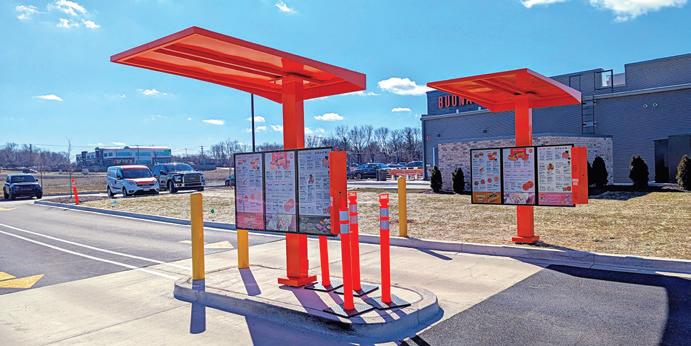
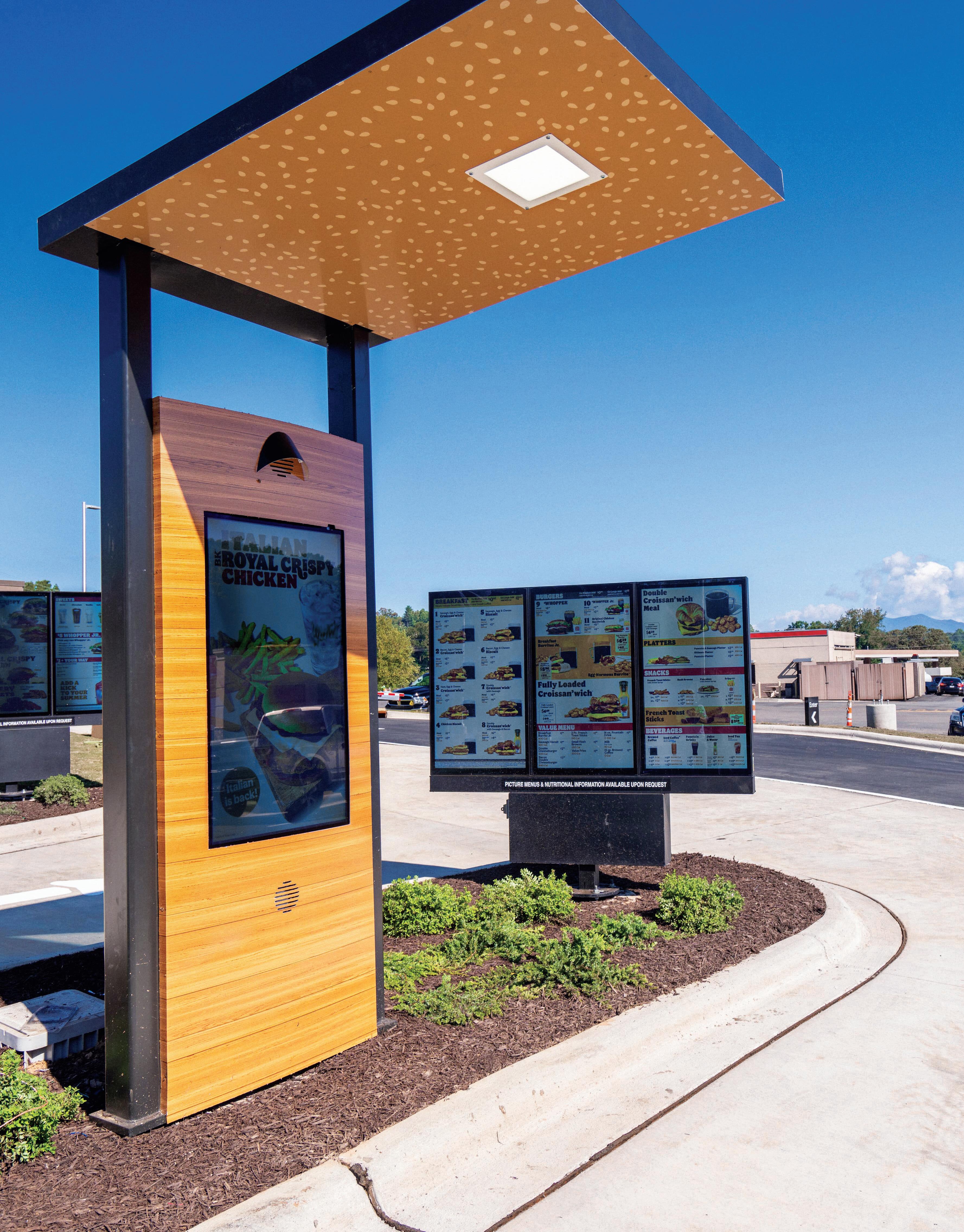
Restaurant Chain First dual-lane drive-thru configuration with outdoor digital menuboard. SPONSORED BY PALMER DIGITAL GROUP
46
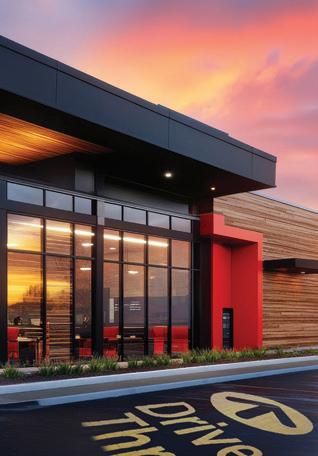
The Silence of a Broken Drive-Thru is the Most Expensive Sound in Business R.F. Technologies, Inc. doesn’t just sell hardware; they sell up-time. SPONSORED BY R.F. TECHNOLOGIES INC.

EDITORIAL
VICE PRESIDENT EDITORIALFOOD, RETAIL, & HOSPITALITY
Danny Klein dklein@wtwhmedia.com
QSR EDITOR
Ben Coley bcoley@wtwhmedia.com
FSR EDITOR Callie Evergreen cevergreen@wtwhmedia.com
ASSOCIATE EDITOR
Sam Danley sdanley@wtwhmedia.com
SENIOR EDITOR, WIRL Satyne Doner sdoner@wthwmedia.com
SENIOR VICE PRESIDENT AUDIENCE GROWTH
Greg Sanders gsanders@wtwhmedia.com
CONTENT STUDIO
VICE PRESIDENT, CONTENT STUDIO Peggy Carouthers pcarouthers@wtwhmedia.com
WRITER, CONTENT STUDIO
Drew Filipski dfilipski@wtwhmedia.com
WRITER, CONTENT STUDIO Ya’el McLoud ymcloud@wtwhmedia.com
WRITER, CONTENT STUDIO
Abby Winterburn awinterburn@wtwhmedia.com
ART & PRODUCTION
SENIOR ART DIRECTOR Tory Bartelt tbartelt@wtwhmedia.com
VP, CREATIVE DIRECTOR Matt Claney mclaney@wtwhmedia.com
SALES & BUSINESS DEVELOPMENT
SVP, FOOD, RETAIL, HOSPITALITY SALES AND ACCOUNT MANAGEMENT Matt Waddell mwaddell@wtwhmedia.com 312-961-6840
NATIONAL SALES DIRECTOR Amber Dobsovic adobsovic@wtwhmedia.com 757-637-8673
NATIONAL SALES MANAGER Guy Norcott gnorcott@wtwhmedia.com 854-200-5864
NATIONAL SALES MANAGER Tom Boyles tboyles@wtwhmedia.com 662-607-5249
CUSTOMER SERVICE REPRESENTATIVE Tracy Willingham twillingham@wtwhmedia.com 919-945-0704
CUSTOMER SERVICE REPRESENTATIVE Brandy Pinion bpinion@wtwhmedia.com 662-234-5481, EXT 127
FOUNDER Webb C. Howell










BCOLEY@WTWHMEDIA.COM
QSR MAGAZINE
The restaurant industry keeps searching for answers to the consumer environment. Are guests healthy or strained? Are they spending or retreating? The reality looks far more fractured than many topline metrics suggest.
Two recent consumer reports paint a picture of a business split across income brackets, generations, and occasions.
Traffic has not collapsed. Restaurant demand still carries momentum. Yet the customer sitting in a drive-thru lane at noon may be approaching value in a completely different way than the guest dining in later that evening.
Upside’s “Income Divide” report found that households above $75,000 in annual income continue to spend more confidently, particularly in restaurants, where self-reported spending rose 33 percent year-over-year. Lower-income households moved in the opposite direction, trimming trips and consolidating purchases across categories, including restaurants, groceries, and fuel.
That divide matters because restaurants built their playbooks around the “average” guest for decades. That customer is disappearing.
One side of the market still trades up selectively. Those consumers care about food quality, convenience, experience, and loyalty rewards. The other side calculates every visit through affordability first.
The gap now shows up across restaurant segments.
Revenue Management Solutions found that only one in three QSR guests reduced visits in Q1, compared with nearly half of full-service diners. Even then, QSR cutbacks rose eight percentage points year-over-year. Consumers have not abandoned restaurants. They have become more deliberate about when, where, and why they spend.
That creates a difficult balancing act for operators.
Discount too aggressively and brands sacrifice margin from guests who likely would have visited anyway. Miss the value equation and lower-income consumers simply stay home. Upside’s research warned that blanket promotions increasingly fail both groups.
Additionally, restaurants face growing pressure from grocery stores, which continue gaining meal occasions. RMS reported that 26 percent of consumers visited grocery stores more often for prepared meals in Q1. Millennials and Gen Z drove much of that shift.
Restaurants still hold advantages grocery cannot easily replicate, like hospitality, social energy, convenience during key dayparts, and emotional connection. Younger consumers especially continue seeking those experiences. Gen Z emerged as the strongest growth cohort for QSR frequency, drive-thru usage, and future dine-in intent.
But younger diners also remain highly selective. Convenience alone no longer guarantees loyalty.
Another challenge sits beneath all of this, and that’s price perception.
For the first time in four consecutive quarters, consumers now believe restaurant prices are rising faster than grocery prices. The data backs them up. Foodaway-from-home inflation reached 3.9 percent year-over-year in early 2026 versus 2.4 percent for groceries.
That perception shift changes the conversation. Restaurants no longer compete only against each other. They compete against the feeling of whether dining out still feels worth it.
Ben Coley EDITOR
These executives share what it takes to rise in a competitive industry.


The restaurant industry’s next generation of leaders is helping redefine what growth looks like in a rapidly changing environment.
That was the focus of QSR’s recent webinar, Lessons from QSR’s Young Leaders to Watch, which featured Erik Roby, vice president of marketing at Teriyaki Madness, and Karissa Threadgill, director of marketing at Original ChopShop. The discussion explored how emerging leaders are approaching technology, workforce challenges, and evolving guest expectations.
A central theme was the growing role of data and digital tools in driving performance. Speakers discussed how brands are using technology not only to improve efficiency, but also to better understand customer behavior, strengthen loyalty, and support franchisees at the local level.
The conversation also touched on talent development and retention. In a competitive labor market, panelists emphasized the importance of creating strong cultures, investing in employees, and providing clear opportunities for growth. Developing people, they noted, remains one of the most effective ways to build long-term brand success.
Another key takeaway centered on the modern guest experience. Consumers increasingly expect convenience, personalization, and seamless interactions across channels. Meeting those expectations requires close coordination between operations, marketing, and technology teams.
Throughout the webinar, speakers stressed that effective leadership today depends on adaptability, collaboration, and a willingness to embrace change— qualities that are becoming increasingly important as restaurant brands navigate the industry’s next chapter.
The 2026 State of Hourly Restaurant Workers Study was commissioned by Instant Financial and conducted by The Center for Generational Kinetics. The report surveyed 750 hourly restaurant workers across the U.S. to better understand the financial pressures, workplace challenges, and retention issues shaping the restaurant labor force in 2026.
• Seventy-five percent of hourly restaurant workers said they are living paycheck to paycheck, while that number rises to 83 percent among non-managerial workers.
• Sixty-one percent of workers reported skipping more than one meal per week in the past month because they could not afford food.
• Ninety-seven percent of hourly workers said they feel stressed about their financial situation to some degree, and 63 percent said they are constantly or frequently stressed.
• Workers reported setting aside an average of $92 from each paycheck for savings, although lower-income workers were able to save significantly less.
97 % OF HOURLY WORKERS FEEL STRESSED ABOUT THEIR FINANCIAL SITUATION TO SOME DEGREE.
MANY HOURLY WORKERS ARE OPERATING IN A CONSTANT STATE OF “FINANCIAL TRIAGE,” FORCED TO CHOOSE WHICH EXPENSES THEY CAN DELAY OR SACRIFICE.
• Fifty-six percent of workers said they would go without something they need until payday if faced with an unexpected expense.
• Fifty-four percent said they have borrowed money from friends or family because they needed cash before payday.
• Seventy-nine percent of workers said they used at least one financial workaround in the past
• Fifty-three percent of hourly restaurant workers said company leadership does not understand what it is like to live paycheck to paycheck.
• Thirty-five percent of workers said company leadership does not genuinely care about their financial health.
• The report found that financial stress is shaping how employees perceive their employers, especially regarding benefits, scheduling, and workplace support.
• Researchers noted that workers who feel misunderstood are less likely to trust that employer benefits are designed around their real needs.
three months because they needed money before payday.
• Workers who relied on payday loans reported paying an average of $117 in fees and interest, making it the costliest borrowing option in the study.
• Many workers reported delaying grocery purchases, healthcare spending, transportation expenses, and bill payments simply to make it through the month.
• Eighty-eight percent of workers said guaranteed minimum hours each week are an important benefit when considering a restaurant job.
• Ninety-six percent of workers agreed that earned wage access would be valuable at their current job.
• Eighty-one percent said on-demand pay would make them feel more in control of their finances, including 92 percent of servers and waitstaff.
• Thirty-four percent of respondents said they do not currently have a traditional bank account, highlighting broader financial accessibility challenges.
• Seventy-seven percent of workers said they would be likely to stay at a job long term if it offered ondemand pay.
• More than half of workers said they would consider leaving their current employer for a similar job that offered earned wage access.
79%OF WORKERS SAID THEY USED AT LEAST ONE FINANCIAL WORKAROUND IN THE PAST THREE MONTHS BECAUSE THEY NEEDED MONEY BEFORE PAYDAY.
• Among tipped workers, 76 percent said receiving instant tips is extremely or very important.
• Eighty-one percent of tipped workers said they would be likely to stay at their current job long term if tips were paid out immediately.
73 %
SAID ON-DEMAND PAYMAKES THEM FEEL LIKE AN EMPLOYER CARES ABOUT THEIR LIVES OUTSIDE OF WORK.




Restaurants are tapping into the power of spice as a shared experience, not just a flavor.
BY SAM DANLEY
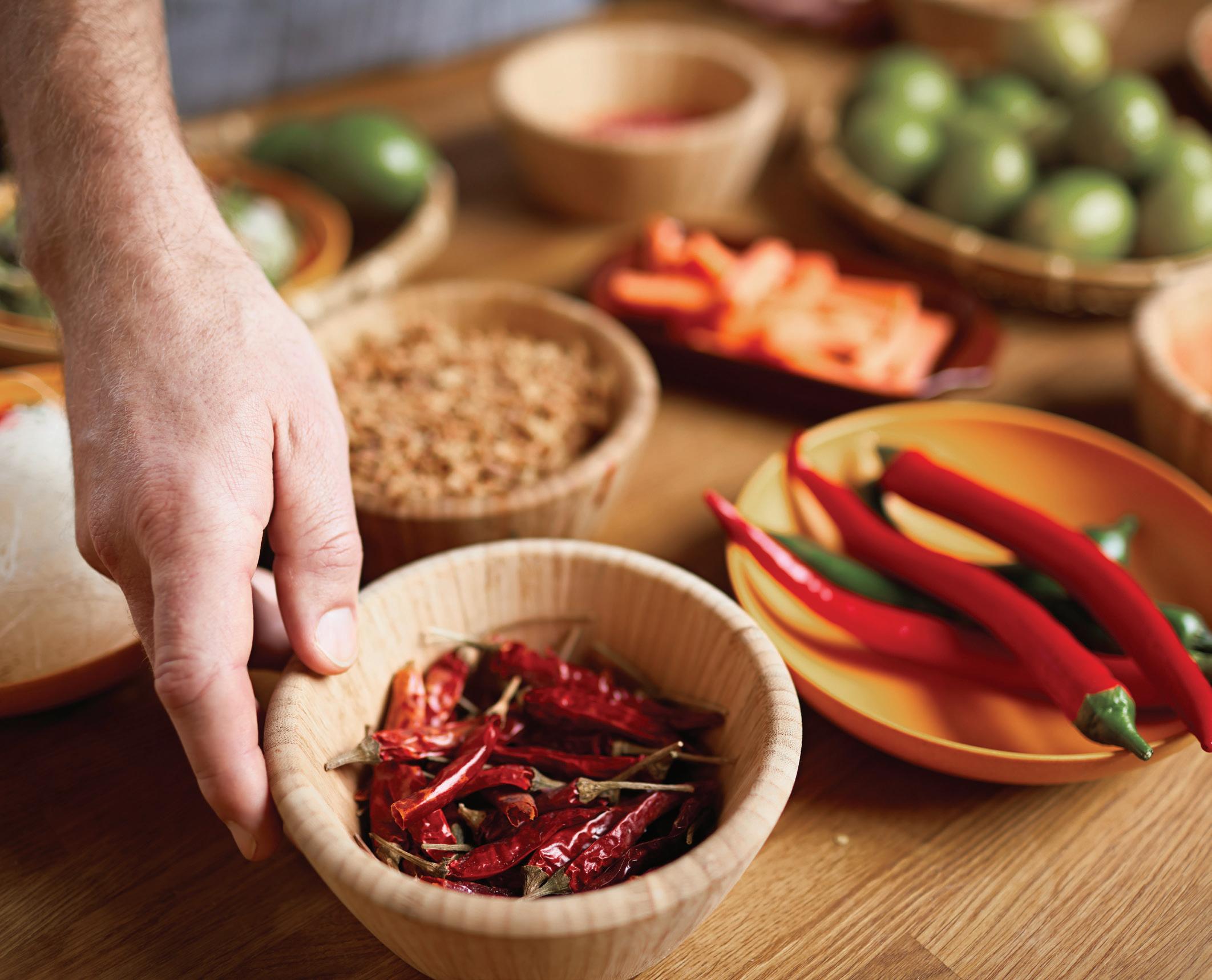
CUSTOMERS LOVE SPICE, AND BRANDS ARE RESPONDING TO THAT DEMAND.
When Patrick Noone joined Slim Chickens as CMO early last year, he noticed that, despite a market obsessed with heat, Slim’s lacked a true spicy platform. He wanted to “get into the spicy game” but “do it in a Slim’s way,” grounded in variety, customization, and sauces.
To get there, Slim’s partnered with vendors and corporate chef Andrew Rugo to develop a proprietary way to cook spice into the breading so it could be consistently applied to tenders or a chicken breast with even coverage and no bottlenecks.
The work happened in Slim’s Fayetteville R&D kitchen and vendor labs, with consumer panels helping calibrate heat and flavor. Internally, Noone set a target that about 80 percent of guests should say the heat is just right, while 10–20 percent say it’s too hot as
proof the product isn’t watered down. Just as important, he didn’t want “empty burn.” Feedback needed to highlight the flavor of the spice blend, too.
The launch hit menus as a promoted LTO in November 2025, but what convinced Slim’s to make it permanent was what happened after promotions ended.
“Everybody in this building was stunned how little the product mix dropped after we stopped promoting it,” Noone says. “It outperformed expectations and became one of our most successful menu additions.”
What sets Slim’s apart, he argues, is flexibility. Guests can add spice to tenders, wraps, salads, or mac bowls and still get something that feels like Slim Chickens first, spicy second.
“We’re not just blowing your head off with heat,” he says. “We’re adding a new flavor dimension.”
He’s not dismissing the importance of the burn, though.
“Spice is one of the few things on a menu that guarantees a physical reaction,” Noone says. “You can see it on people’s faces— laughing, fanning their mouths, breaking into a mild sweat.”
That visceral punch is a big part of why spicy food has taken hold in quick service. It shows up on camera and across the table, turning the menu into something interactive.
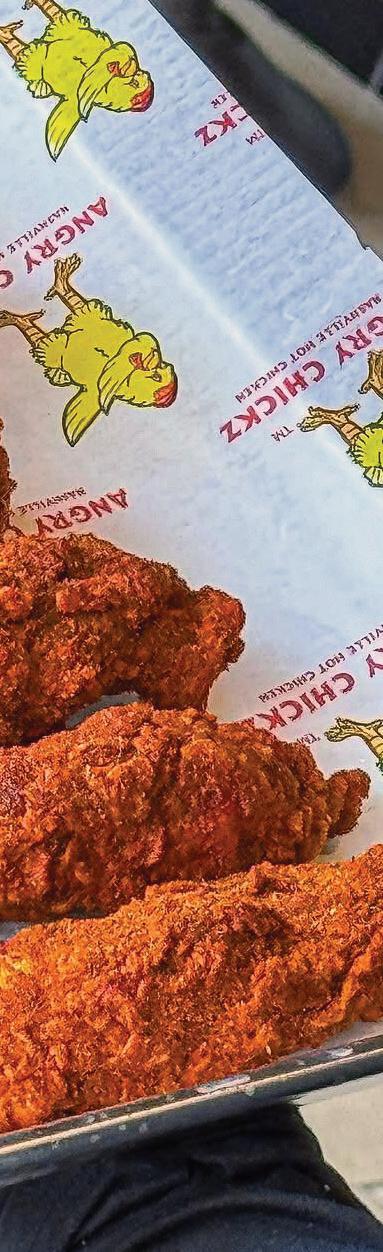
“We see younger guests come in as a group and turn heat levels into a challenge—‘I’ve had this one, can you handle the next?’” says David Mkhitaryan, founder and CEO of Angry Chickz, a California-based fast-casual chain specializing in Nashville hot chicken. “It stops being just a meal and becomes something they do together.”
It took five to six years to open the first 20 Angry Chickz locations, but the brand is now entering a different phase. It plans to open around 20 restaurants this year alone.
Mkhitaryan frames 2026 as a “foundational” year focused on growth and laying groundwork for scale, noting most new locations are corporate-owned. That raises the operational bar while giving his team a firsthand view of how that social dynamic around spicy plays out in grand openings and everyday service.
“Spicy chicken is as much a shared experience as a flavor,” Mkhitaryan says. “In the restaurant, you see people comparing plates, filming reactions, and daring friends to go hotter. The heat gives them something to talk about.”
The landscape is vastly different than eight years ago. Mkhitaryan now views hot chicken as a distinct category rather than a niche, with more brands forcing specialists to sharpen execution. This adds pressure to master the fundamentals, starting with the recipe. Before opening, he spent six months tuning the product, obsessing over spice blends so heat would climb without flavor dropping off. He wanted every level to feel balanced rather than just hotter for its own sake.
“In many places, flavor drops as heat increases,” Mkhitaryan says. “I wanted the opposite—the kick you’re looking for without the flavor disappearing.”
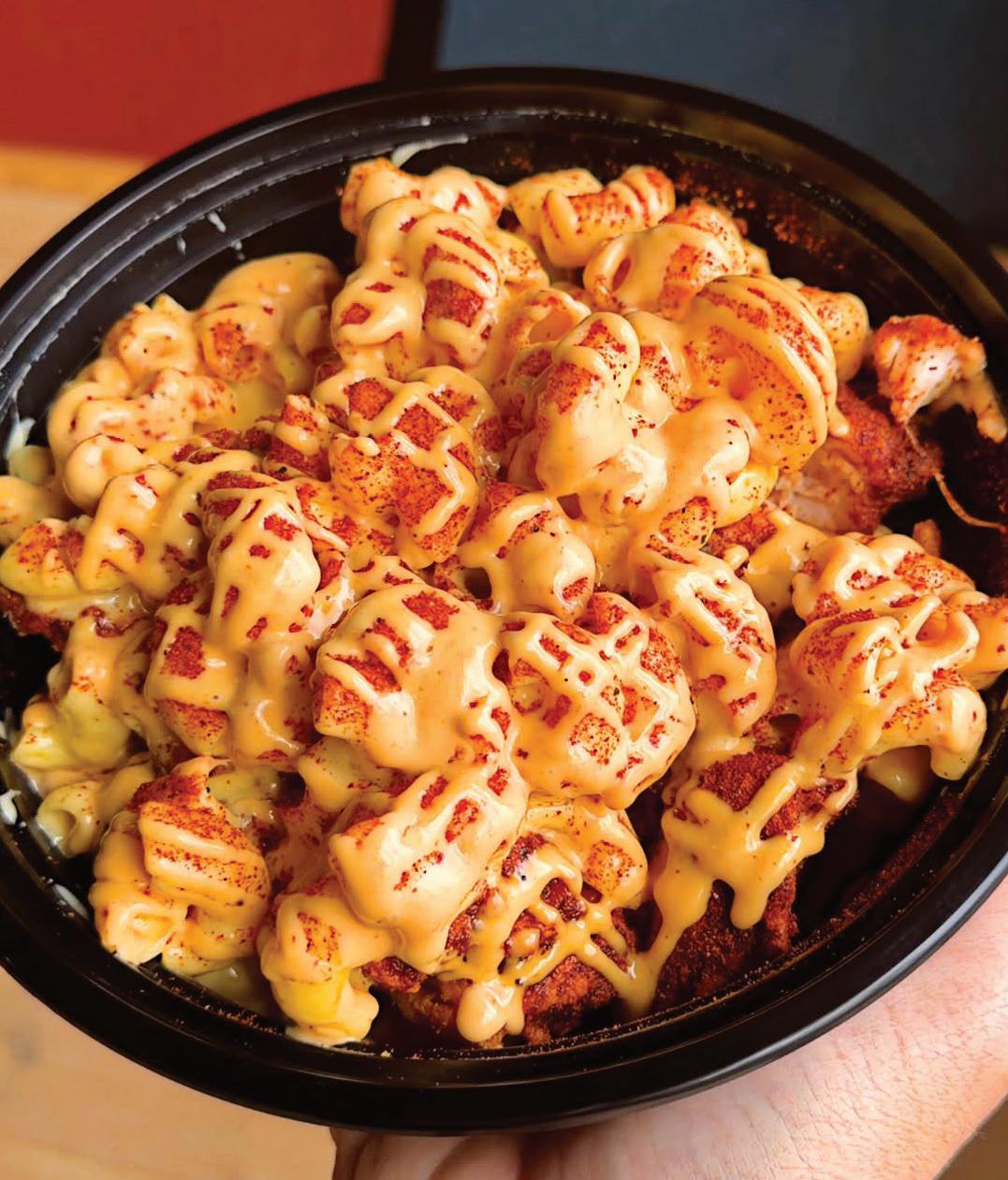
He also noticed the category over-indexed on tenders and sandwiches. To carve out a lane, he leaned into bowls, specifically the Angry Mac Bowl: fries, chopped tenders, mac and cheese, sauce, and seasoning. It is now the brand’s top seller, accounting for half of sales in some locations.
Beyond that, he’s been conservative with menu expansion. The core still revolves around tenders, sliders, and bowls. That choice was shaped by time spent in his family’s restaurant, where a large, sprawling menu convinced him that “do everything” concepts struggle to excel.
If the brand carried 10 main items, he argues, “at least a few would be average.” He deliberately sacrifices breadth for depth. Despite outside pressure to add wings or splashy LTOs, Mkhitaryan “cancels out the noise” to focus on items the brand can execute at a high level daily.
Another California-based fast casual, Crimson Coward, takes a different tack. Founder Ali Hijazi also spent months perfecting his hot chicken recipe, traveling to Nashville, talking with local chefs, and then turning his garage into a
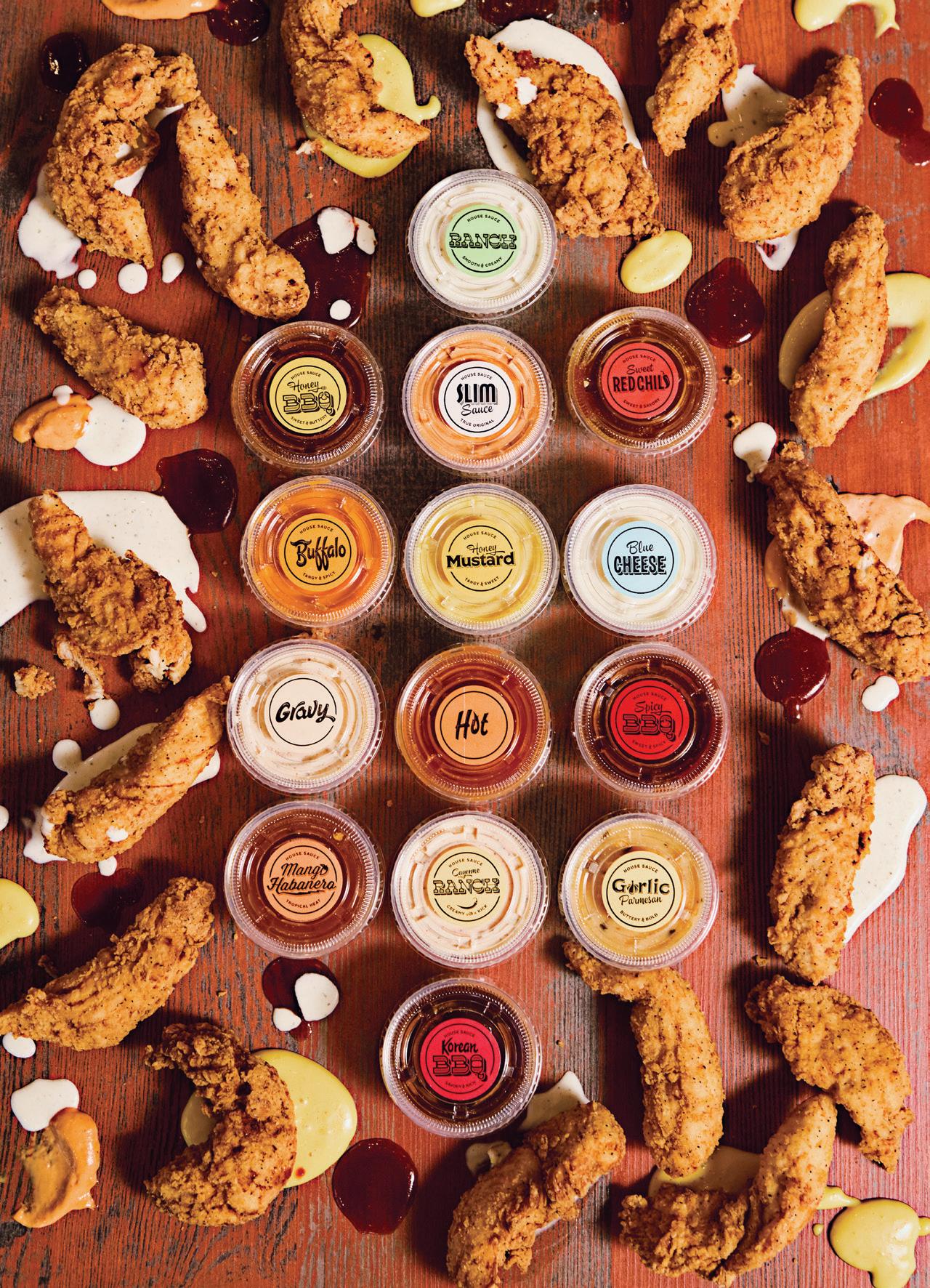
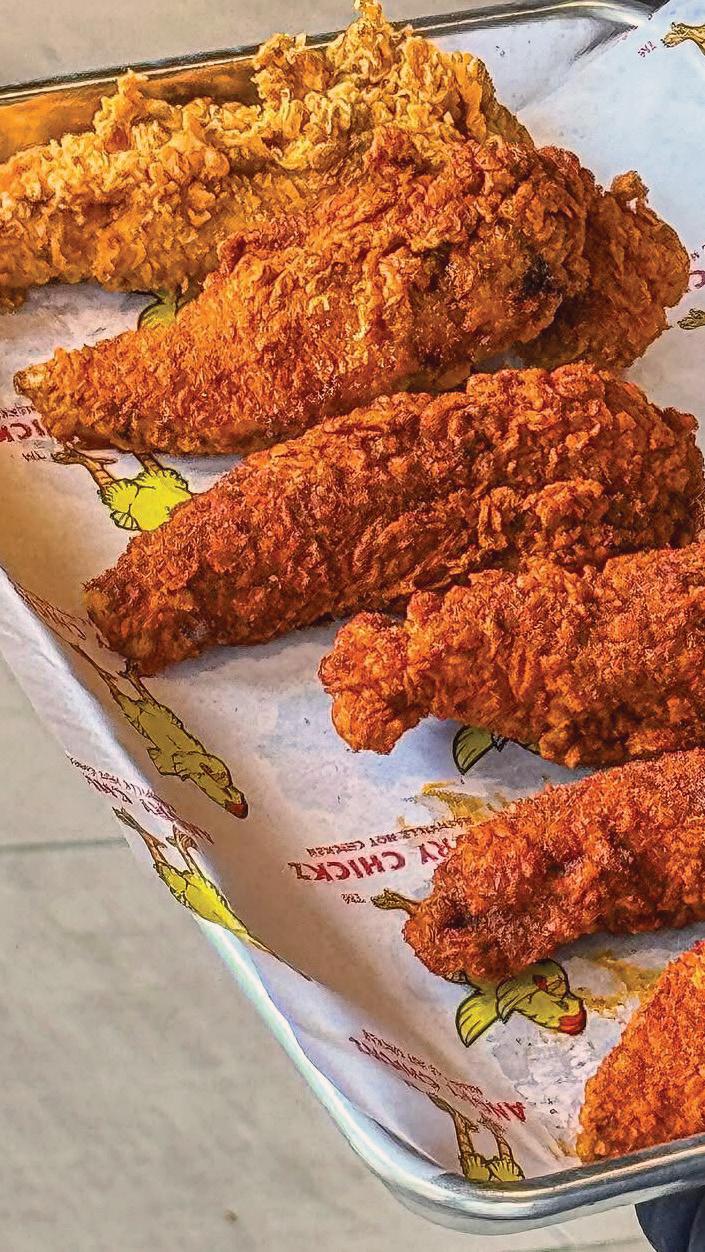
test kitchen where he worked through different oils, cook times, and seasoning approaches until he landed on the flavor and heat profile he wanted.
With that foundation, he’s been a bit more willing than some spicy chicken competitors to venture beyond the core.
Hijazi hammers home scratch prep and the fact that “everything is cooked to order with no pre-cooking or holding on warmers.” That, plus standardized spice blends across all locations, is the backbone of Crimson Coward’s menu architecture. The brand can support a relatively broad set of offerings because they all feed off the same tight, controlled prep system.
That discipline allows for variety without excessive complexity. Most menu items recombine the same core ingredients—chicken, sauces, bread, tortillas, fries, and slaw—into different formats. Tenders become sliders, wraps, burritos, and more. Even additions like a smash burger required minimal new inputs since kitchens already had the supporting ingredients.
The result is a wider-ranging menu—shawarma-style wraps, blooming onions, loaded fries, chicken and waffles, quesadillas, nachos, and wings—built largely from the same base.
The philosophy, he says, is “lots of formats and occasions, minimal incremental complexity.”
That thinking extends to smaller innovations like Crimson Nugs, inspired by watching families cut tenders into smaller pieces for kids. Instead of creating a new product, the team formalized the behavior using existing ingredients.
Crimson Coward is structured around a heat ladder that runs up to “Burn, Baby Burn,” with different peppers at different tiers, including ghost pepper at the top and habanero powder in the hot level. That heat logic applies across formats: whether guests are
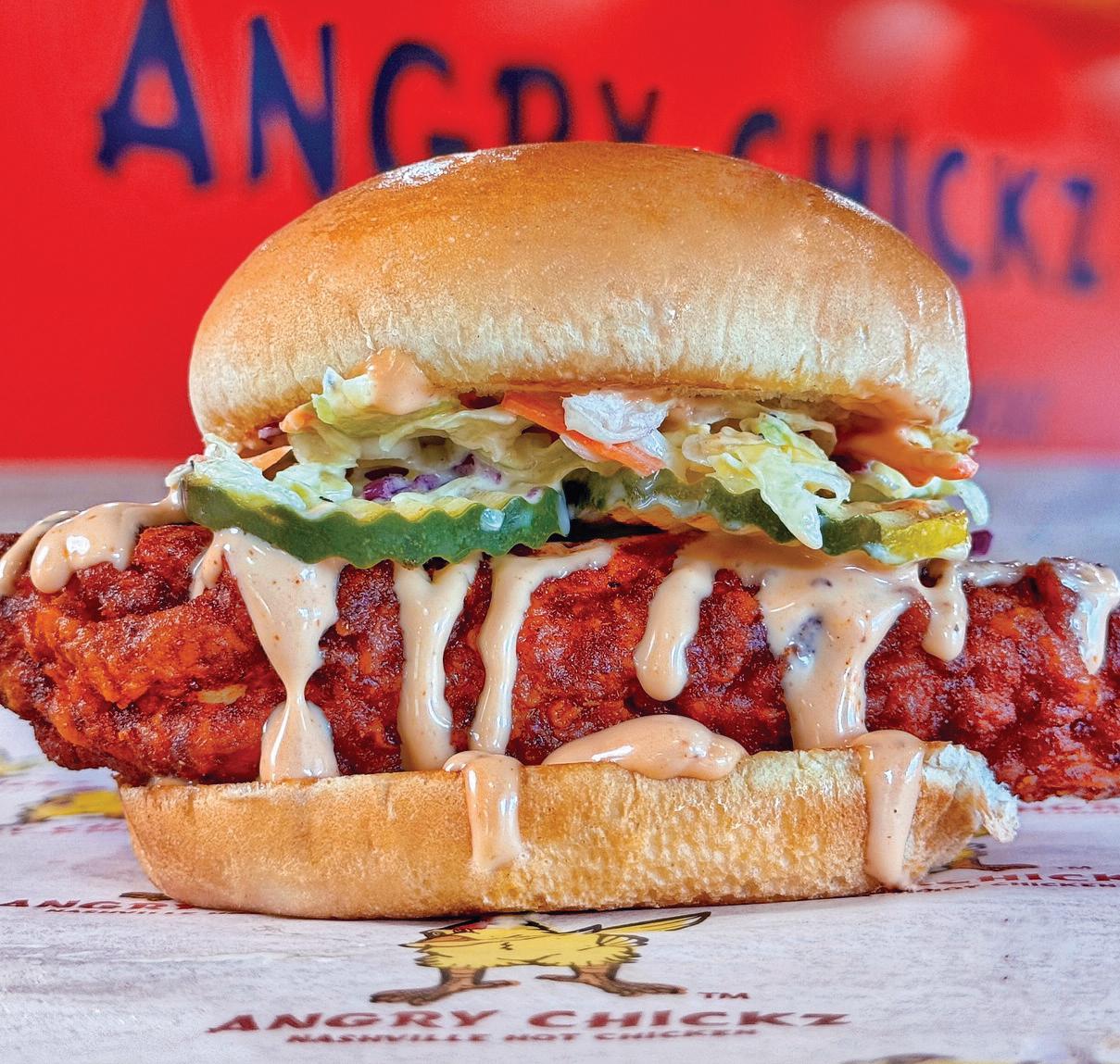
ordering sliders, wraps, burritos, or loaded fries, they can sit wherever they want on the scale.
“We’re very honest when it comes to heat,” Hijazi says. “Our hot is honestly hot, our medium is an honest medium, and our ‘Burn, Baby Burn’ has ghost pepper in it. People know exactly what they’re getting into.”
Crimson Coward doesn’t add items frivolously, he says. New limited-time offers or variations are tested in different parts of the country first; some never make it to a systemwide launch and instead live on as regional or “secret” offerings. The result is a menu that looks broad to guests but is underpinned by a clear filtering process and a reluctance to saddle operators with unmanageable complexity.
That operating model—scratch kitchen, cook-to-order, simple but tightly controlled systems—is built with franchising and multiunit growth in mind. Crimson Coward was founded in 2019 and has grown to 20 open stores with five more in development. The brand’s footprint now spans California, Washington, Texas, Illinois, Virginia, and Maryland, with its first Florida location opening this year and more markets on the horizon.
Looking ahead, Hijazi expects more entrants and more exits in the space and says not everyone will survive the shakeout as the category matures.
“There will be some new players and some old players that leave,” he says. “Fried chicken is not going anywhere, though, and the brands that take care of their product and their operations are the ones that are still going to be here in 10 or 20 years.”
Sam Danley is the associate editor of QSR. He can be reached at sdanley@ wthwmedia.com.
How this global chain is turning a handmade Argentine staple into a craft-casual must-have designed for modern tastes.
/ BY
BRITT ENGLER
FOUNDER: Lorena Cantarovici
HEADQUARTERS: Denver, CO
UNIT COUNT: 5
YEAR FOUNDED: Began in 2010 as a home-based catering business. Its first brick-and-mortar restaurant opened in 2011.
ANNUAL SALES: Not Disclosed
Lorena Cantarovici, founder of Maria Empanada, which operates five units in Colorado, has always thought of empanadas as works of art.
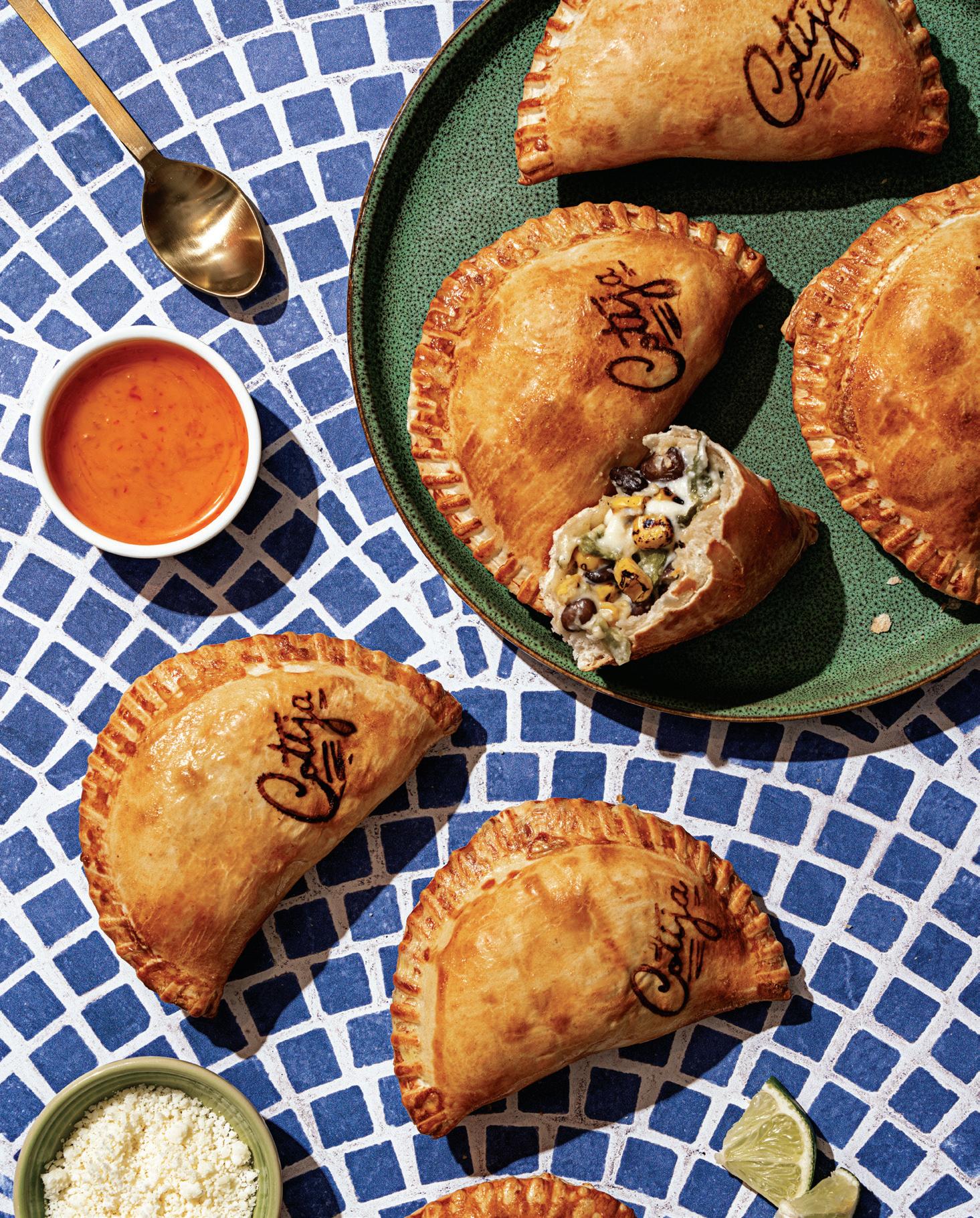
You can see that philosophy in every golden, hand-folded pastry lined up in Maria Empanada’s cases across Denver. Each empanada is finished with a glossy sheen and a small signature in the corner. A practical touch that tells guests what’s inside, but also a subtle reminder that even a quick meal can carry a personal touch. For years, Maria Empanada used individual repulgues, or folded designs, to identify each flavor. Every empanada had its own closure, its own visual language. But as the brand grew, the process became difficult to teach. Training new employees to master more than 20 folds was not sustainable. So the team simplified the closure while preserving the craftsmanship.
They began folding each empanada the same way, then placing the flavor in the bottom corner “like a signature to a painting,” Cantarovici says. The writing is her own hand, transformed into a stamp and dipped in a vegetable solution before being pressed into the dough. It is a small detail, but it captures the tension Cantarovici has spent years navigating: how to grow without sanding away the artistry.
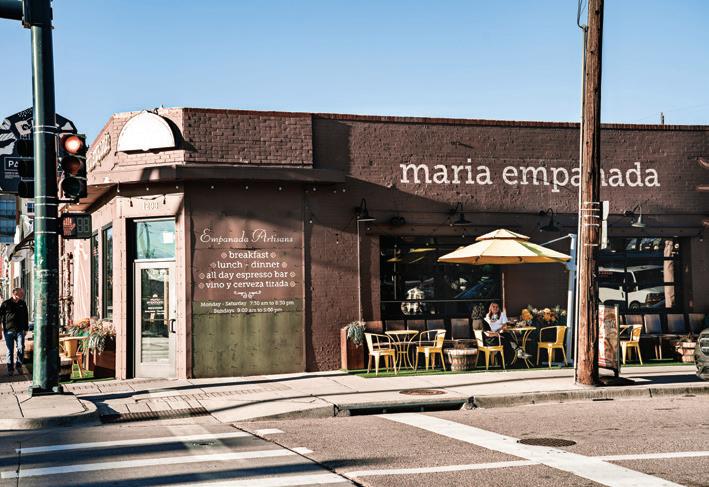
The Denver-based brand now operates five locations, including one at Denver International Airport, and is preparing for a broader push across Colorado and nontraditional venues. But its identity is rooted in a handmade food Cantarovici learned from the women in her family. Dough was made from scratch. Fillings were prepared over several days. Relatives gathered to cook, fold, bake, and eat together. Cantarovici learned from her mother, grandmother, and great-grandmother, long before she knew those lessons would become the foundation of her restaurant brand.
She arrived in the U.S. in 2000 with $300, a backpack, and the hope of building a better life after the economic crisis in Argentina. She had worked in banking, but
in the U.S., she found her way into restaurants. What began as survival became an education. Cantarovici studied the industry the way she had once studied economics, paying attention to the importance of every role, from the greeter at the door to the flow of service. When the 2008 financial crisis hit, she turned to what she knew best. By 2010, she was making empanadas from her Denver home alongside her mother. At first, her mother seasoned by instinct: more salt, more cumin, more oregano. Cantarovici stopped her and asked her to measure. That was when family tradition began turning into a scalable system.
“Fifty percent of those recipes were hers, and the other 50 percent of Maria Empanada recipes were mine,” Cantarovici says.
The early business grew through word of mouth. Argentine friends ordered first, then neighbors, caterers, and so on. The aroma coming from the kitchen became its own form of marketing. Orders grew large enough that Cantarov-


The Jollibee president opens up about spreading joy, building culture, and leading from the heart.
/ BY SATYNE DONER
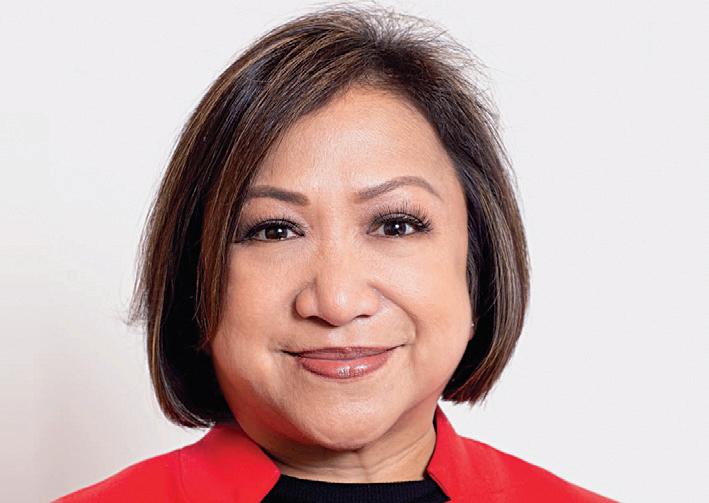
Beth Dela Cruz’s Jollibee journey started in 1986 as a newly graduated shift manager. At the time, there were only about 31 stores throughout the Philippines. It wasn’t functioning like a large company—more like a small family—but there was momentum brewing under the surface.
“The essence of what the brand was at that time continues to live on today,” Cruz says. “There was this early obsession with delivering craveable food and a joyful experience, and that spirit has stayed true even as we grew from a small brand back in the Philippines to having a presence in the global arena.”
In 1991, Cruz left Jollibee briefly before being asked to return and lead various roles for the brand. The door was always
left open for her to grow—and a few years later came the opportunity that would define her career and eventually lead to her appointment as president in 2019.
In 2005, Cruz took an opportunity to help guide Jollibee’s expansion into the United States. For Cruz, it wasn’t so much a turnaround as it was an investigative assessment—figuring out how the brand could gain a foothold in an already saturated market.
“It sparked something in me, and I wanted to challenge the idea that we should pull back,” Cruz says. “I thought, ‘Why can’t we survive in the U.S.?’ At the time, I just wanted to figure out how to make the brand work there.”
While Jollibee stands today as one of the fastest-growing global restaurant brands, its success wasn’t built overnight. The longterm strategy from the onset was to target the Filipino-American diaspora in the U.S. Going immediately after the mainstream market wouldn’t work; the brand had to leverage its emotional connection with its core demographic, creating a reverse category capture by entering first through the Filipino base and then expanding to mix diaspora demand with mainstream traffic.
“It seems like we’ve blown up in a short time, but it’s been decades in the making. We have a cult following in the Philippines because everyone has celebrated a special moment at Jollibee with their families. That emotional equity actually carries through where they have migrated to the U.S.,” Cruz says. “This kind of movement and fanfare is what attracts a broader audience who become curious about the brand.”
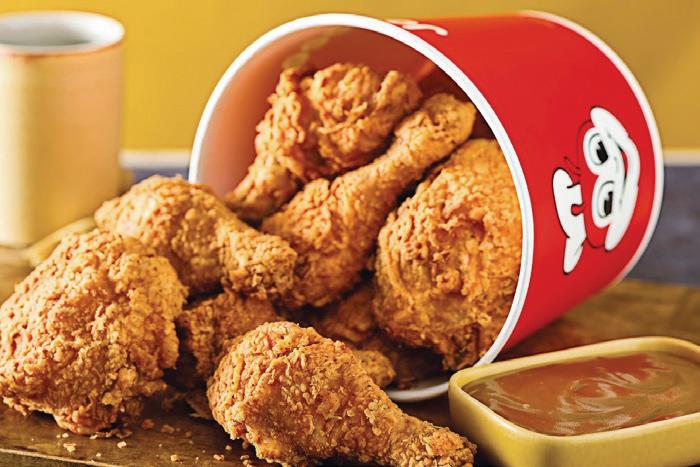
The brand has also leveraged social media to draw in a wider demographic without immediately hitting the mainstream. Micro-influencers and user-generated content have flooded feeds with Jollibee’s signature Chickenjoy. Cruz says they’re challenging the chicken wars because Jollibee isn’t just selling chicken—it’s the overall joyful experience of eating chicken and experiencing happiness through food and service that sticks with customers.
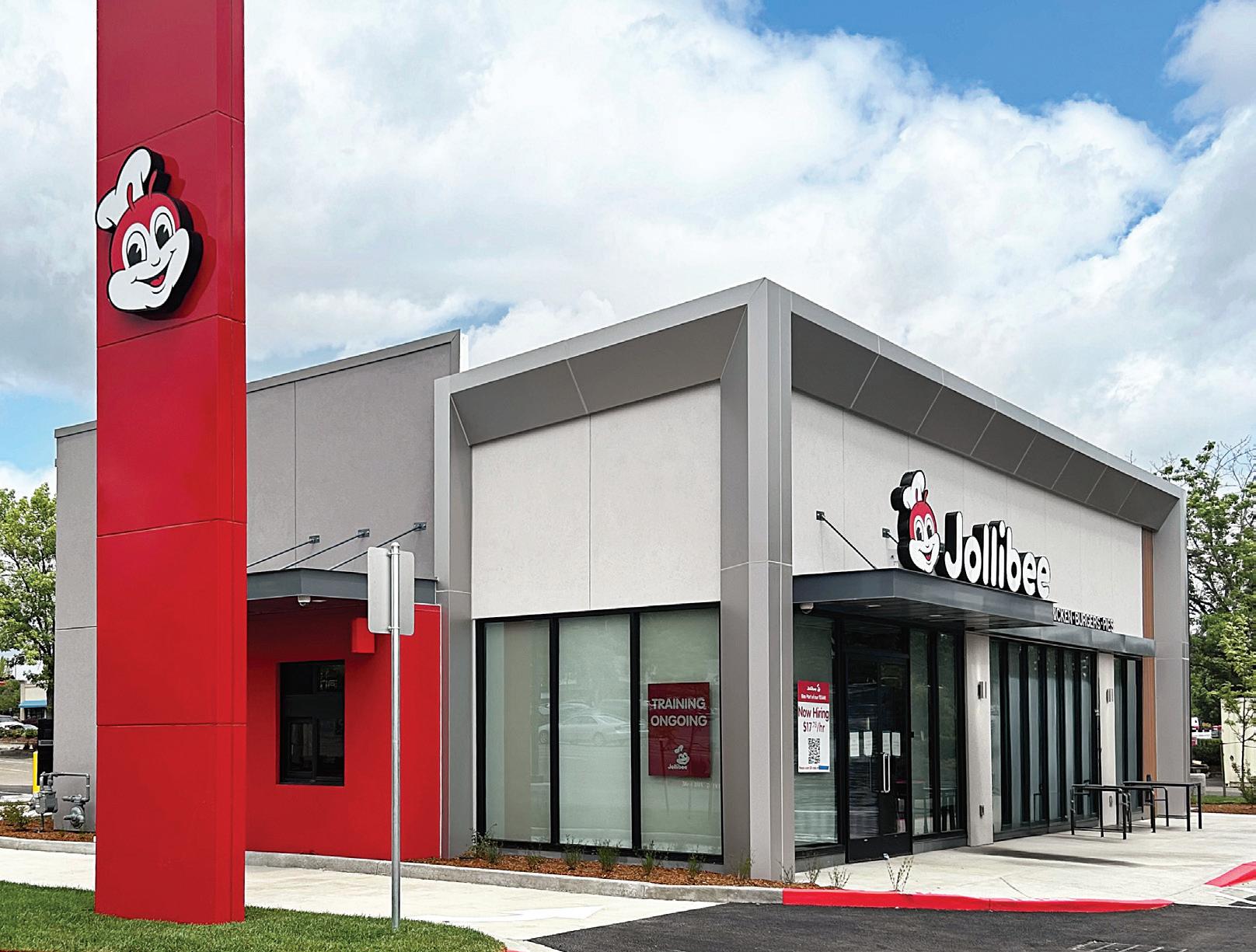
With 109 stores in the U.S., 108 of which are corporate-owned, the brand is now moving into franchising, with Cruz leading the charge. Still, she’s leading with careful precision; the Jollibee identity is so strong that incoming franchise partners will need more than operational execution and financial acumen. Incoming


QSR’s webinar series tackles hot topics in foodservice—and best of all, you can learn from the comfort of your own office. Take a deep dive into our collection today!

JOIN US FOR THE INDUSTRY’S MOST CONNECTED RESTAURANT EVENT. REGISTER ONLINE TODAY.
SEPTEMBER 8-10, 2026 | HYATT REGENCY • ATLANTA, GEORGIA
TUESDAY SEPTEMBER 8, 2026
3:30PM - 4:30PM Pre-Event Innovation Forum
5:40PM - 6:30PM Welcome to Atlanta By Susannah Frost President | Chick-fil-A, Inc.
6:30PM - 8:00PM Welcome Reception: 80s Night for 80 Years
WEDNESDAY SEPTEMBER 9, 2026
Option 3: QSR: Getting Your First Investment, and Then Getting More By Jim Balis Partner and Head of Strategic Operations | CapitalSpring, Berry Epley President and Chief Administrative Officer | Nobles Restaurants, LLC, James Nusbaum CEO | Barry Bagels, Michael Schatzberg (Moderator) Co-Founder and Managing Partner | Branded Hospitality Ventures, Darren Spicer CEO | Clutch Coffee, Ryan Weaver Chief Executive Officer | Lee’s Famous Recipe Chicken
Option 4: QSR: CEO to CEO: Round 1: Hot Palette America’s Troy Hooper and OriginalChop Shop’s Jason Morgan
By Troy Hooper CEO | Hot Palette America, Jason Morgan CEO | Original ChopShop

12:00PM - 7:00PM Registration & Information Desk
8:00AM - 8:45M Networking Breakfast
8:45 AM - 9:45 AM Opening Keynote: Inspire Brands Roundtable
10:00 AM - 10:45 AM Breakouts Round #1
Option 1: QSR: Keeping Hospitality Human in the Age of AI
By Chris Dull CEO | Freddy’s Frozen Custard & Steakburgers, Michel Falcon CEO and Founder | Brasa Peruvian, Christopher Gumprecht VP of IT | Craveworthy Brands, Geoff Henry President | Gong cha, Jenifer Kern (Moderator) CMO | Qu, Matthew Steele Director of Training and Innovation | Galardi Group
Option 2: QSR: Is Your Restaurant Easy to Work In?
By Donny Bradley Founder and CEO | Lola Beans, Jason E. Brooks (Moderator) Restaurant Coach | HospiVation, Alex Cone VP of Talent Acquisition | Jason, Dan Doulen, CFE Senior Director of Franchise Business Development | Golden Corral, Dave Pelletier Chief Operating Officer | Checkers and Rally’s, Jackie Secor COO | Taco John’s
Option 3: QSR: The Startup Grind: What Nobody Tells You About Opening a Restaurant Brand
By Luke Christian CEO | Surcheros, Joey Cioffi Founder and CEO | Salad House, Kyle Gordon Cofounder and CEO | Dillas Quesadillas, Allie Haskell Vice President of Marketing | NorthStar, Nate Hybl CEO and Founder | gusto!, Jay Scherger Founder and CEO | Jukebox
Option 4: QSR: Fireside Chat
Option 5: QSR: The Return of the Franchise Experts Forum
By David Bloom Chief Development & Growth Officer | Capriotti’s and Wing Zone, Graham Chapman (Moderator) Franchise Coach | FranCoach, Van Ingram Chief Development Officer | Jack in the Box, Heather Neary CEO | Taco John’s, Michael Nilevsky Head of Franchising | Yum! Brands, Sam Stanovich SVP of Franchise Leadership | Craveworthy Brands, Kendall Ware Fractional Chief Growth Officer | Smokey Mos BBQ
Option 6: FSR: The New Menu R&D Cycle
By Robin Blanchette Founder & CEO | Norton Creative, Srishti Handa VP, Marketing - Brand and Growth | Dave’s Hot Chicken, Ed Harris Chef/Founder | KnifeNSpoon, Cai Palmiter Head of Marketing | JW Concepts
Option 7: FSR: The Tactical Playbook for Building Emotional Connection
By Elizabeth Brasch EVP of Marketing | Mellow Mushroom, Kathleen Bush CMO | Ford’s Garage, Christine Lorusso Vice President of Digital Marketing | Firebirds Wood Fired Grill, Jonathan Weathington CEO | Shuckin Shack Oyster Bar
11:15AM - 12:00PM Breakouts Round #2
Option 1: QSR: Do You Really Know Your Guests?
By Stacey Kane CMO | California Tortilla, Eric Knott CEO | Tiki Taco, Jason Levinson VP, Marketing Technology | WOWorks, Ben Linero CMO | Vicky Bakery, Kelly O’Rourke Director of Marketing | FiiZ Drinks, Kevin Planovsky (Moderator) Principal, Account Strategy | Croud Atlanta
Option 2: QSR: Building Teams and Investing in Talent
By Bob Andersen President | The Great Greek Mediterranean Grill, Lauren Cohen (Moderator) CEO and Founder | Cohen Leadership Group, Dana Edwards Manatos Founder and CEO | Milkshake Factory, Jodi Latuszek VP of Legal and Human Resources | BIGGBY COFFEE, Kelly McCutcheon (Moderator) Group Director of Training & Development | Whataburger Restaurants LLC., Amer Wahab President | Kettlemans Bagel
Option 5: QSR: Franchisee Roundtable: A Front Lines Debate
By Graham Chapman (Moderator) Franchise Coach | FranCoach, Imaan Ferdowski Chief Executive Officer | MRCO, Matt Forbush Franchisee | (Auntie Anne’s, Cinnabon, Jamba, Häagen-Dazs), Ryan O’Malley Franchisee | Wendy’s of Bowling Green, Inc., Kajal Patel CEO | Hena Group (Buffalo Wild Wings and Dunkin’ franchisee), Mandy Ristic Franchisee, Operating Partner | OM Group (Dunkin’, BaskinRobbins, QDOBA, Smoothie King, Jimmy John’s, Auntie Anne’s and Cinnabon))
Option 6: FSR: Tech That Lets Hospitality Shine
By John Christen Founder/CEO | Himes Breakfast House, Ahsan Jiva EVP of Strategy and Transformation | Mellow Mushroom, Toni Ronayne Founder/Fractional CEO | The C Society, Lauren Selman VP Operations | IFBTA
Option 7: FSR: CEO to CEO By Mina Haque CEO | Tony Roma, Josh Kern CEO | Snooze, an AM Eatery
12:00PM - 1:30PM Networking Lunch
12:15PM - 1:00PM Sponsor Lunch & Learn
1:30PM - 2:15 PM Breakouts Round #3
Option 1: QSR: The New Customer Journey, with Sonic’s Former CEO and CIO By Clifford Hudson Former CEO | Sonic Corp, Craig Miller Former CIO | Sonic Corp, Joseph Szala (Moderator) Vice President of Digital Experience | 3 Owl
Option 2: QSR: Coaching to Win the ‘Experience Economy’ By Tony Capuano VP of Franchise Operations | Donatos, Paul Miramontes, CHT Manager of Learning and Development | Galardi Group –Wienerschnitzel, Corban Nichols Vice President of Restaurant Excellence | Piada Italian Street Food, Philip Pinkerman Learning, Development & Recruiting Manager | Bristol Farms, Lazy Acres Natural Market, & New Leaf Community Markets, Jessicah Pounds VP of Training and Leadership Development | GoTo Foods, Mary Pillow Thompson (Moderator) Co-founder | Zignyl
Option 3: QSR: The Heart of Business: Cultivating Authentic Customer Connections By Kevin Paul Scott Cofounder | ADDO
Option 4: QSR: Fireside Chat: Mike Freeman, President, Brands, GoToFoods By Michael Freeman EVP, President of Brands | GoTo Foods
Option 5: QSR: Solving the Mystery of Site Selection
By Shawn Caric (Moderator) VP, Franchise Development | Smoothie King, Kelly Gray VP and Co-Owner | Hot Head Burritos, Jake Philpotts VP of Business Development & Franchise Relations | Surcheros, Dannon Shiff Senior Vice President of Real Estate | Dave’s Hot Chicken, Erin Snyder Vice President of Franchise Development | Handel’s Ice Cream, Andrew Thengvall Chief Development Officer & Chief Legal Officer | Freddy’s Frozen Custard & Steakburgers
Option 6: FSR: Nostalgia, Comfort, and “The Vibe Shift” By Kimberly Bean VP, Brand Experience | Arby’s, Ray Blanchette CEO | TGI Fridays and Sugarloaf Holdings, Paul Mangiamele Founder/Chairman and CEO | Legendary Restaurant Brands, Liz Seelye (Moderator) Founder | StarryEyed Strategy, Yasaman Stewart Sr. Director of Marketing | BRIX Holdings
Option 7: FSR: Coaching the Next Generation of Leaders
By Jeremy Edmonds EVP of People and Culture | Snooze, an A.M. Eatery , James Frank Manager of Field Training | Dine Brands Global, Autumn Nessibou Director of Operations | Farrelli’s Pizza, Joshua Rossmeisl Founder, Chief Vision Officer | AMP Up1 Hospitality

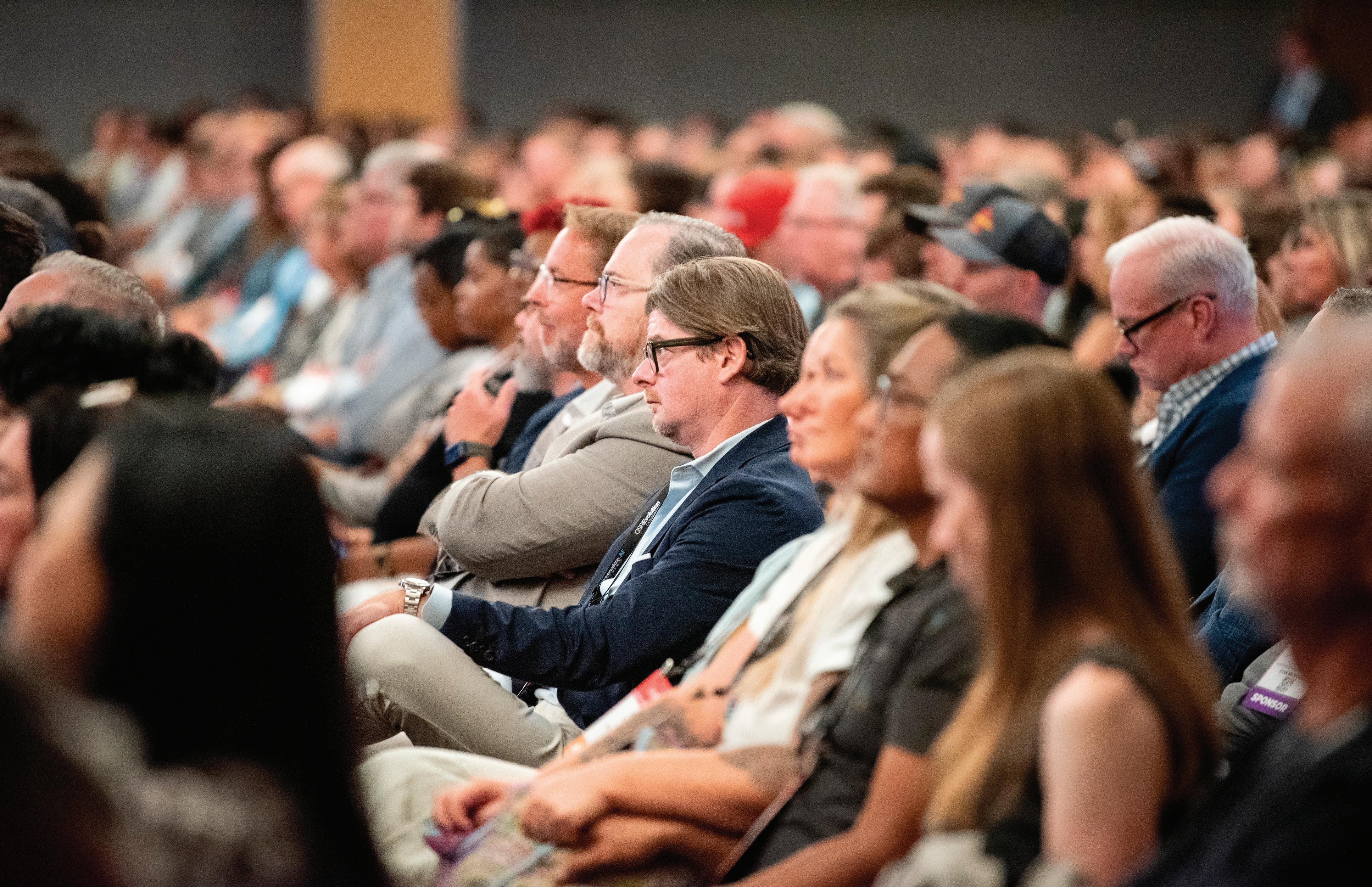
2:30PM - 3:15PM Closing Keynote #1: 30-Second Leadership: Coaching Your Crew for High Performance By Scott Greenberg Author and Keynote Speaker
3:15PM - 4:00PM Closing Keynote #2: White Castle CEO: Lisa Ingram By Lisa Ingram CEO | White Castle System, Inc.
4:00PM - 5:30PM Around the WiRL-D Happy Hour
8:00PM - 10:00PM Late Night Reception/Networking
THURSDAY SEPTEMBER 10, 2026
8:00AM - 8:45AM Networking Breakfast
8:45AM - 9:00AM Intouch Insight Drive-Thru Report Reveal By Sarah Beckett (Moderator) VP Sales and Marketing | Intouch Insight, Laura Livers (Moderator) Chief Revenue Officer | Intouch Insight
9:00AM - 9:45AM Opening Keynote: Shake Shack By Rob Lynch CEO | Shake Shack
10:00AM - 10:45AM Breakouts Round #4
Option 1: QSR: Unveiling the Drive-Thru of the Future
Option 4: QSR: CEO to CEO: Round 2: Jennifer Dodd, CEO, Main Squeeze, and Claudia Lezcano, CEO, Fuku By Jennifer Dodd CEO | Main Squeeze Juice Co., Claudia Lezcano CEO | Fuku
Option 5: QSR: The Beverage Phenomenon By Joel Bulger CMO | WOWorks, Jason Ingermanson CEO and Founder | JRI Hospitality, Brandon Knudsen Co-Founder and CEO | Ziggi’s Coffee, Katherine LeBlanc (Moderator) Fractional CMO | Apollo CMO, Susan Taylor President and CEO | Juice it Up!
Option 6: FSR: Rethinking FOH Roles for Today’s Guest By Kamal Hakim Senior Business Developer | HCG/Gen USA/ IHOP, Sarah Meriam Shuckin, Rachel Richal VP, Restaurant Experience & Training | Buffalo Wild Wings (Inspire Brands)
Option 7: FSR: Protecting Identity Through Growth By Kristen Hohl EVP, Marketing | SPB Hospitality, John Iannucci CEO | Agave & Stone Hospitality, Betty Kaufman Strategy Director | The Culinary Edge
12:00PM - 1:30PM Networking Lunch
12:15PM - 1:00PM Sponsor Lunch & Learn
By Sarah Beckett (Moderator) VP Sales and Marketing | Intouch Insight, John Brittian Vice President of Information Technology | Biscuitville Fresh Southern, Lawrence Brown CDO | Rita’s Italian Ice & Frozen Custard, Chris Cheek Chief Development Officer | Newk’s Eatery, Laura Livers (Moderator) Chief Revenue Officer | Intouch Insight, Trace Miller Founder & CEO | Konala, Tim Sharpe COO | Oliver’s Real Food
Option 2: QSR: Inside the 2026 Restaurant Labor Market: First Look at Black Box Intelligence Total Rewards Survey By Victor Fernandez Chief Insights Officer | Black Box Intelligence
Option 3: QSR: Marketing Above Your Weight Class By Alice Crowder Chief Marketing Officer, Eleni Gates (Moderator) Founder & Principal | Gates Hospitality Group, Carmela Hughley Vice President of Marketing Strategy & Insight | Rita’s Italian Ice & Frozen Custard, Angela Johnson CMO | Edible Brands, Jessica Serrano CMO | Einstein Bros. Bagels, Marissa Sharpless VP of Marketing | Carvel
Option 4: QSR: Fireside Chat: Krispy Kreme CEO Josh Charlesworth By Josh Charlesworth President & Chief Executive Officer | Krispy Kreme
Option 5: QSR: The Real Price of Value By Mindy Armstrong VP of Menu Innovation | Tropical Smoothie Cafe; NextGen Council Leader, Scott Ball President | FiiZ Drinks, Ed Howie (Moderator), Sunny Ilyas Founder and CEO | Vale Healthy Kitchen, Sara Ozege Loughry Director of Operations & Training | Kettlemans Bagel, Natalie Sharpe CEO | Oliver’s Real Food, Bethany Strong Chief Operating Officer | NAYA
Option 6: FSR: Beyond Instagram: Designing for Craveability, Camera, and Connection By Tammy K. Billings VP, Business Development | SignalFlare.ai, Ginger FlesherSonnier Founder & CEO | The Ginger Companies, Andrew Glantz Founder/CEO | GiftAMeal, Clayton Krueger Chief Marketing Officer | Farrelli’s Pizza, Erin Levzow Chief Marketing, Growth and Commercial Officer
Option 7: FSR: Retention Starts Before You Hire By Jeremy Edmonds EVP of People and Culture | Snooze, an A.M. Eatery, John Haggai President & CEO | Burtons Grill & Bar, Red Heat American Tavern, Kenneth Knief (Moderator) Managing Director | Hospitality Resource Group
11:15AM - 12:00PM Breakouts Round #5
Option 1: QSR: Driving Real ROI and Transformation Through AI and Automation
By Trish Heusel Vice President of Innovation | Little Caesars Pizza, Carl Orsbourn SVP–Food, Hospitality, Retail | Invisible, Jessa Parette Head of Design | Yum! Brands, Kartik Pillai Director of Data Platform Engineering, Master Data Management, and Data Governance | Yum! Brands, Thibault Roux Chief Digital Officer | Burger King U.S. and Canada, Atul Sood (Moderator) Fractional Chief Business Officer
Option 2: QSR: Why Employees Stay, and Why They Leave By Melissa Doolin-Koehne (Moderator) Founder and Principal | Elevate 4, Steve Felson Senior Vice President, Franchising | Buona Beef and The Original Rainbow Cone, Damian Hanft VP, Human Resources | Taco John’s, Lacey Navarrete Vice President of Human Resources | Scooter’s Coffee, Maryna Shuliakouskaya Franchisee | Aroma Joes, Brian Witte Strategic Operations Advisor
Option 3: QSR: Designing the ‘Worth the Trip’ Experience By Jonathan Bowyer (Moderator) Director of Business Development | C3, Miguel Chilleron Director of AI & Design | Livit, Kim Lewis Chief Marketing Officer | Capriotti’s, Tonya McCoy VP, Marketing | Angry Chickz, Adam Modzel Chief Operating Officer | Einstein Bros. Bagels, Mike Perry Founder & Chief Creative Officer | Tavern Agency
12:00PM - 2:00PM WiRL Workshop + Lunch By Nancy Combs SVP, Growth | Shake Shack, Devon Croom Senior Team Leader, Networking | Chickfil-A Corporate, Somia Farid Silber CEO | Edible Brands, Kelly McCutcheon (Moderator) Group Director of Training & Development | Whataburger Restaurants LLC., Maria Valero Director, International Architecture & Design | Papa Johns
12:15PM - 1:00PM WiRL State of the Union Session 1
1:00PM - 1:15PM Networking Break
1:15PM - 2:00PM WiRL State of the Union Session 2
1:30PM - 2:15PM Breakouts Round #6
Option 1: QSR: Loyalty Reinvented (Value Without Coupons)
By Katherine Barone Sr. Brand Manager, Delivery | KFC U.S., David ‘Rev’ Ciancio (Moderator) Restaurant Owner, Marketing Consultant and CMO | Salad House, Ryan Stein Senior Director of Marketing | gusto!, Julie Wade Fractional CMO | Crazy Pita, Mitch Walden VP of Marketing | Scooter, Luke Watson CEO and Owner | Timber Pizza
Option 2: QSR: The Best Advice I Ever Received (and the Worst)
By Chris Artinian Founder and CEO | Artinian Holdings Inc, Josh Halpern Chief Brand Officer | Craveworthy Brands, Cody Hicks Chief of Staff | gusto!, Lisa Miller (Moderator) President | Lisa W. Miller & Associates, LLC, Chris Thomas Senior Principal team Leader | Chick-fil-A, Inc., Paul Tran Franchise Advisor + Franchisee, Dr. Felicia White Ed.D Director of Operations | Askar Management Group
Option 3: QSR: Staying ‘Fast Casual’ in a QSR World
By Jeff Galletly Chairman & CEO | Brooklyn Dumpling Shop, Tricia Houston (Moderator) Vice President of Discovery & Design | KS&R, James O’Reilly Former CEO | Ascent Hospitality, Smokey Bones, Jessica Osborne VP of Marketing | McAlister, Garrett Reed CEO | Layne’s Chicken Fingers, Matthew Walls President, Chief Stores Officer | Edible Brands
Option 4: QSR: Fireside Chat: Papa Johns CMO Jenna Bromberg By Jenna Bromberg CMO | Papa Johns
Option 5: QSR: The Unstoppable Chicken Wars
By Matthew Caric Senior Manager, International Operations Excellence | WingStop, Ryan Hanawalt SVP, U.S. Franchise and Operations Service | Church’s Chicken, Shawn Lalehzarian Cofounder and CEO | The Red Chickz, Mike LaRue VP of Franchise Development | Angry Chickz, Dan Sokolik Vice President | Lee’s Famous Recipe Chicken, Christina Vaughan President and COO | Slim Chickens
Option 6: FSR: Raising the Bar: Innovation, Ops, & What’s Next By Peter Kiley Co-Owner/Brewmaster | Monday Night Brewing, Ian O’Neil Director of Consumer Intelligence | Rubix Foods
Option 7: FSR: The Purpose-Driven Playbook
By Graham Humphreys CEO | The Culinary Edge, Steve Palmer Founder, Managing Partner, and Chief Vision Officer | Indigo Road Hospitality Group, Marita Swift VP of Strategic Growth | The Big Biscuit
2:15PM - 2:30PM Networking Break
2:30PM - 3:30PM Closing Keynote #1: Datassential State of the Industry
3:30PM - 4:00PM Closing Keynote #2: Texas Roadhouse CEO: Jerry Morgan By Jerry Morgan CEO | Texas Roadhouse
4:00PM - 5:30PM Closing Reception
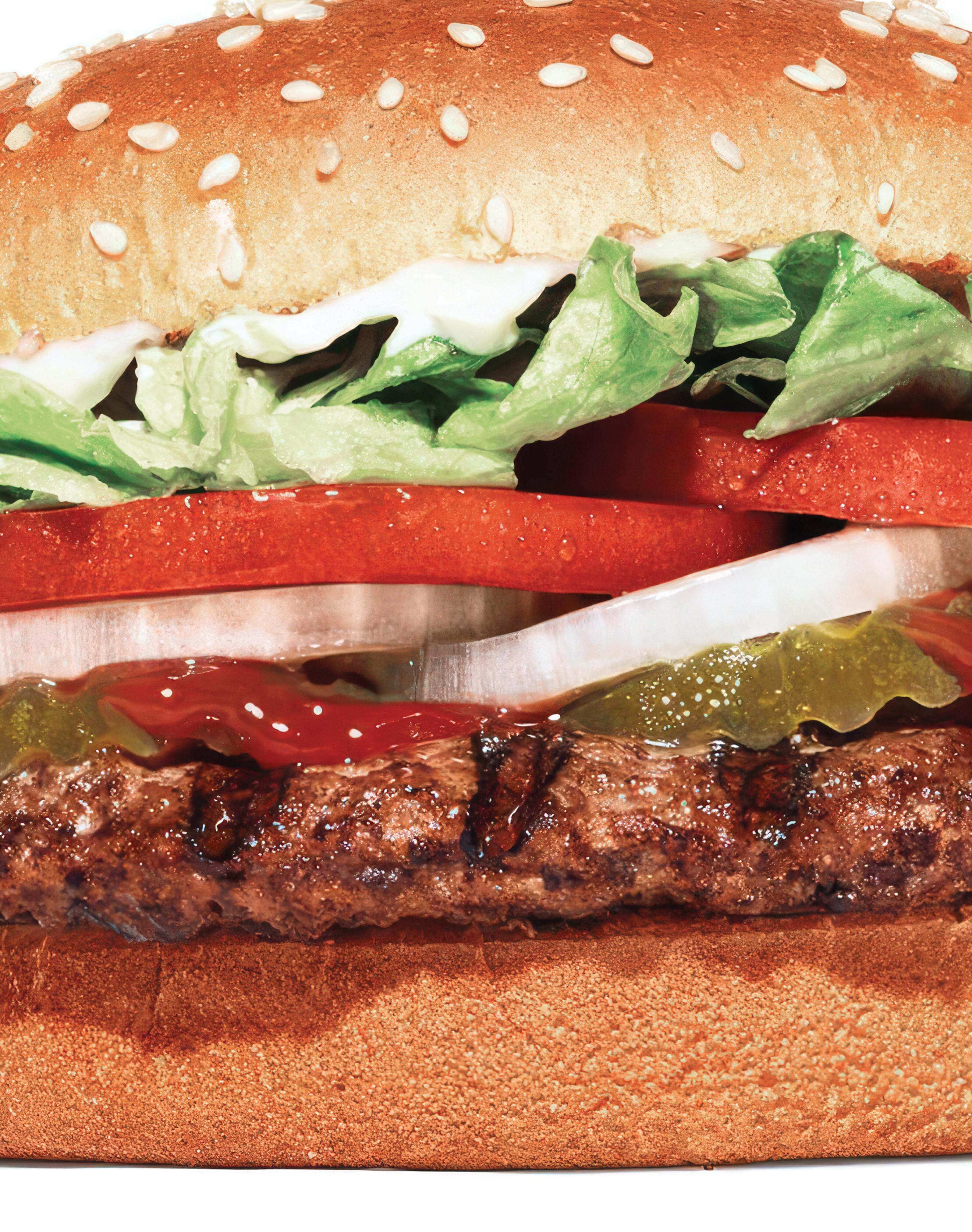
/ BY BEN COLEY
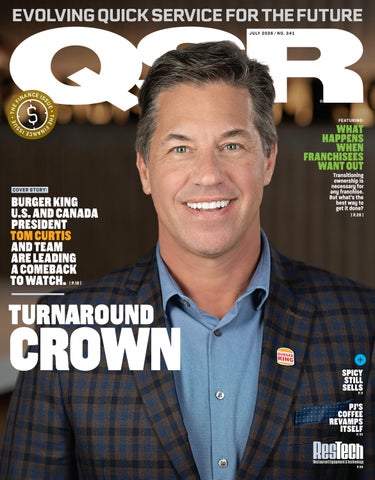
INSIDE BURGER KING’S LONG-TERM PUSH TO REBUILD OPERATIONS, PROFITS, AND GUEST TRUST.
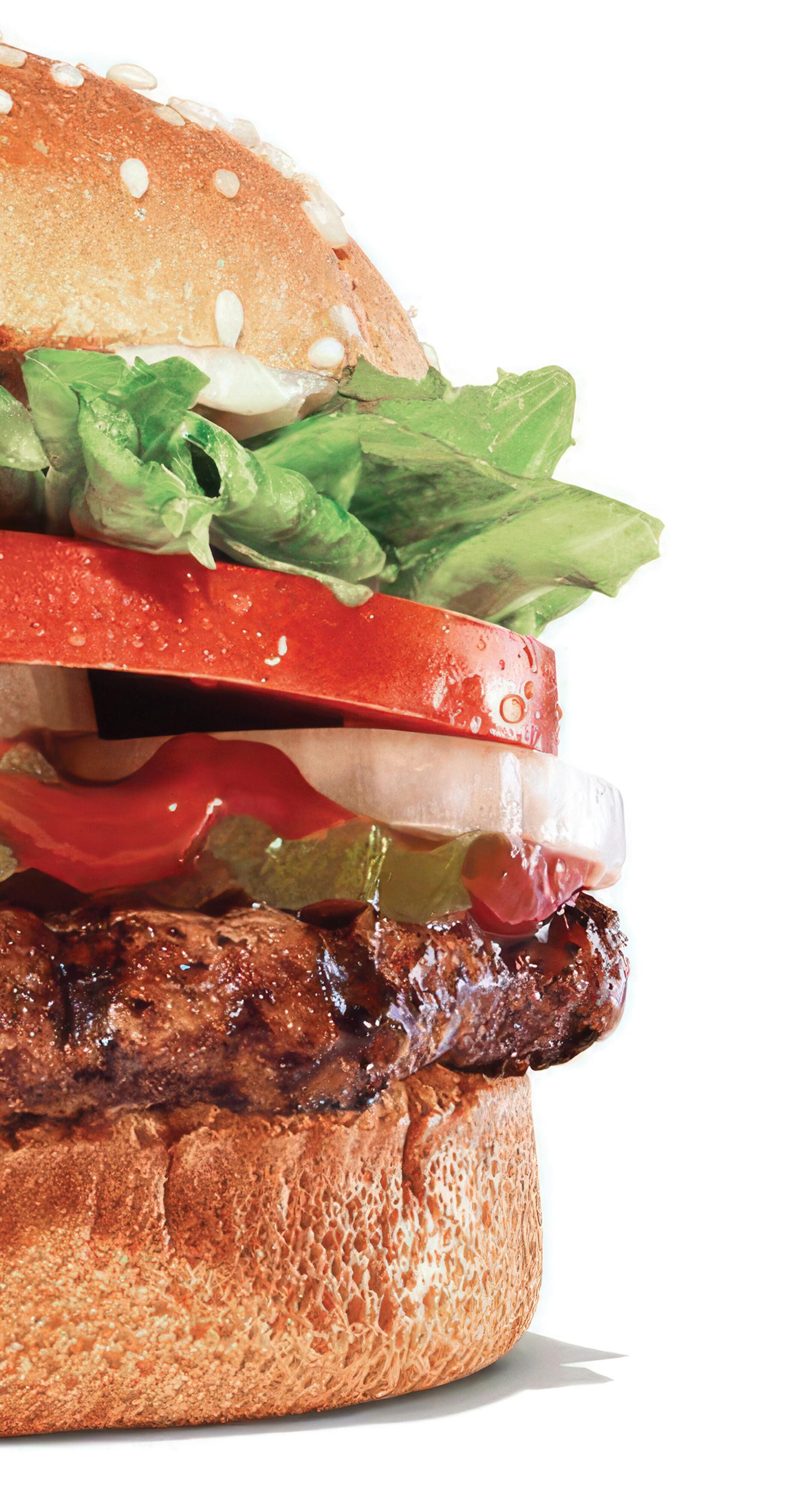
ON APRIL 20, AT 11:43 A.M., RBI CEO Josh Kobza received an email that changed the rest of his day.
It was from a customer named Jim. After watching a recent Burger King commercial, he stopped at a restaurant to try a Whopper, something he hadn’t done in decades. Admittedly, he had given up on the fast-food giant. In this message, Jim explained that he felt the company no longer cared based on what it was presenting to him as a guest. The Whopper was “OK,” he added, but well short of its potential. But with this new commercial, Jim felt Burger King was sincere in its approach, so he decided to give the chain another try.
His verdict? Burger King nailed it. To his pleasant surprise, the brand has “one of the best burgers in the market,” also noting that “the care in which I felt this burger was made floored me.”
Since this visit, Jim has been back a number of times and continues to be satisfied with what he described as well-presented burgers that taste “incredible and delicious.” He was just happy that Burger King was finally delivering on what it had promised.
“This made my day,” Kobza says. “I get these emails reasonably regularly, and I’ll tell you, if there would be one barometer of whether we’re moving in the right direction, whether we’re getting it more right, it’s getting emails like that from your customers.”
What Jim experienced is the result of years of work from RBI and the Burger King leadership team under the Reclaim the Flame turnaround framework. Positioning the Whopper as a premium, desirable experience—instead of discounting the hero burger—was a priority. As was marketing (advertising and digital), restaurant upgrades, operational execution, and franchisee profitability.
Burger King has injected more than $2 billion into making the strategy work. And the results are showing, placing the brand on a trajectory it hasn’t seen in quite some time.
Since 2022, the chain has consistently outperformed the quick-service burger category in same-store sales for four straight years. During that stretch, the brand also climbed from 10th to 6th place in guest experience rankings and significantly expanded its share of modernized restaurants—from 37 percent in 2021 to 58 percent in 2025.
Kobza attributes the results to efforts across the C-suite, franchisees, and store-level teams.
He regularly attends general manager rallies nationwide to outline Burger King’s annual priorities, ensuring operators understand what’s ahead and why it matters. Operational simplicity has been a focus too, so that restaurant teams’ lives become easier. One specific example was the removal of Burger King’s previous iteration of the chicken sandwich. The brand settled on an improved Royal Crispy Chicken Sandwich lineup, with original, spicy, and bacon and Swiss flavors. Additionally, Burger King roughly doubled the size of its field teams to provide enhanced, on-the-ground support to franchisees.
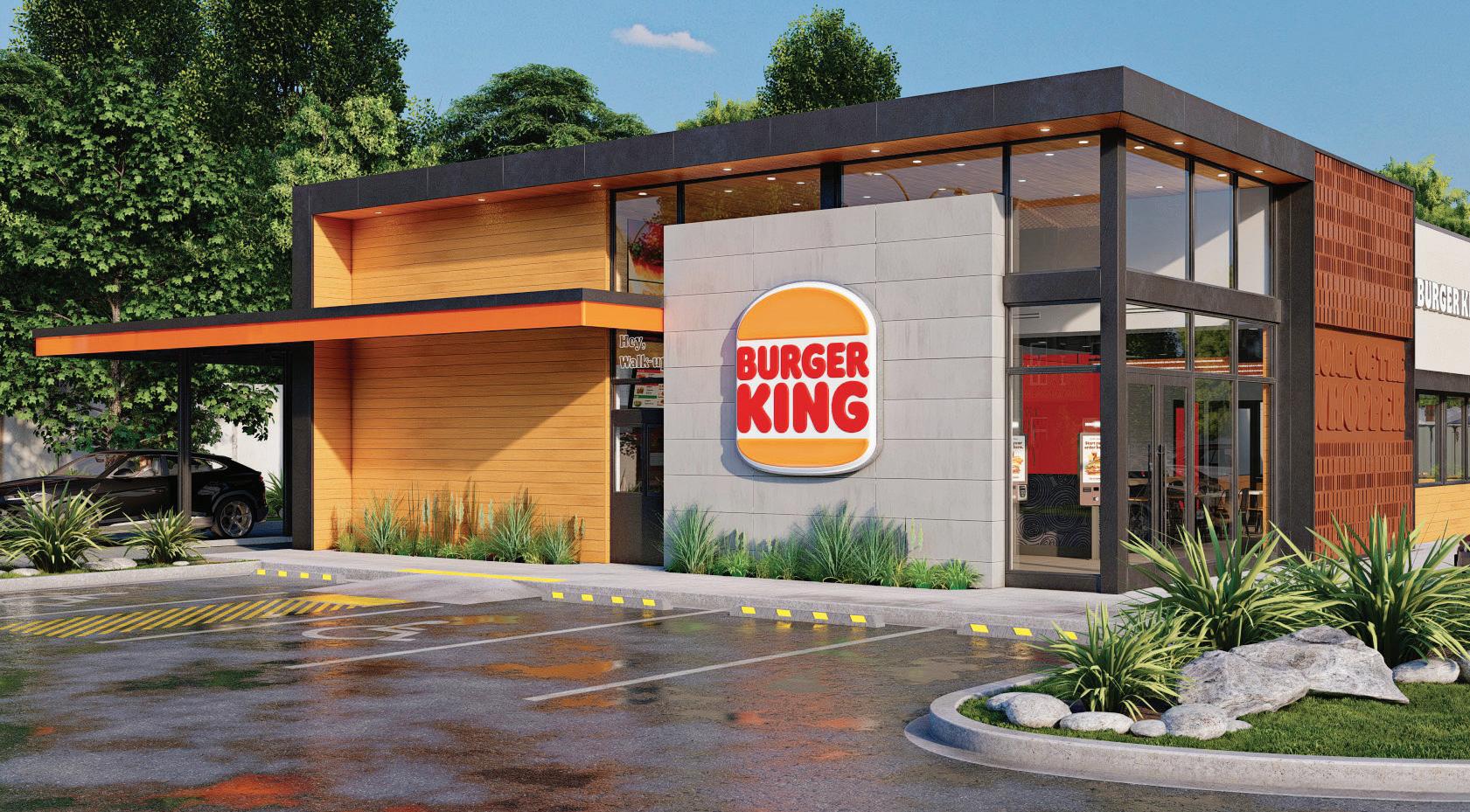
Burger King’s new Sizzle image is a big hit too. Remodeled U.S. restaurants are earning $2.2 million in AUV; for perspective, the system average was $1.66 million in 2025.
“We need to keep making progress,” Kobza says. “I don’t think we’re going to be done in six months, one year, two years. I want it to be a constant evolution of getting better and better and better until we’re the number one player in the burger business. And then we still have to keep getting better. I think that’s going to take a long time. And that’s the beauty of what we’re trying to do.”
Tom Curtis, president of Burger King U.S. and Canada, remembers his parents taking him to Burger King to celebrate special occasions and receiving a crown and Whopper.
“That was the bomb,” he recalls. “That was the ultimate reward for some accomplishment.”
As he got older and had kids of his own, he too took them to Burger King. But because of a string of bad experiences, letdowns, and aging assets, Curtis stopped visiting. He lost his connection with the brand, despite the strong affiliation from his youth.
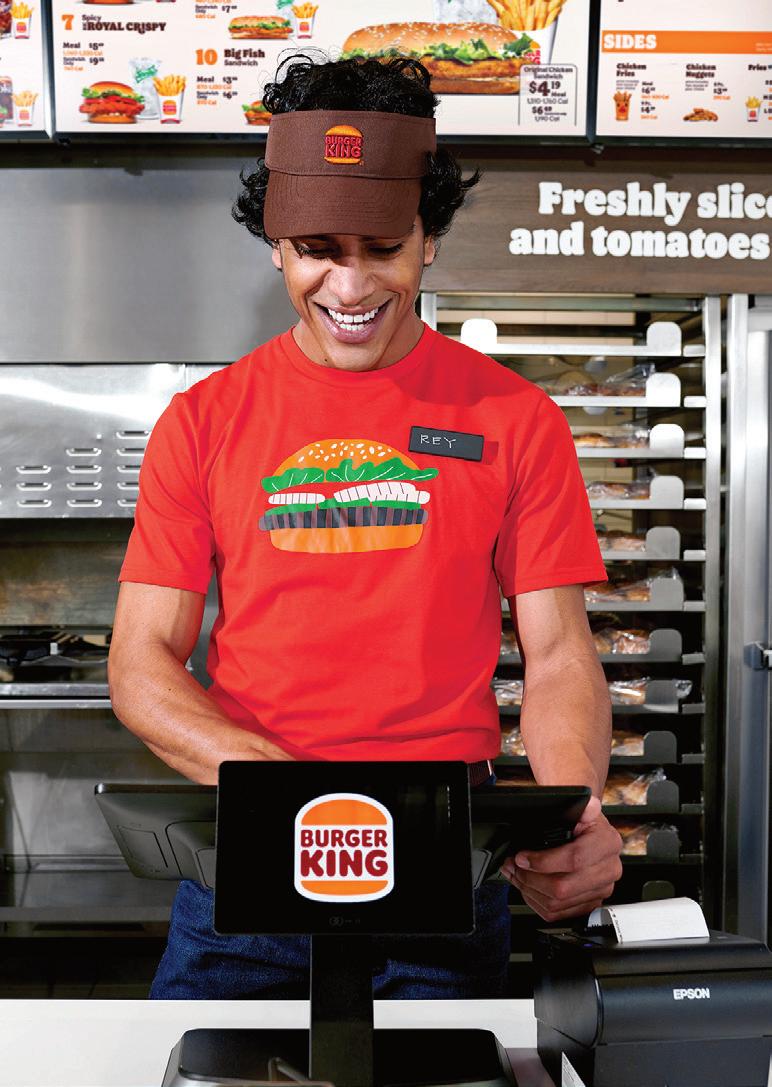
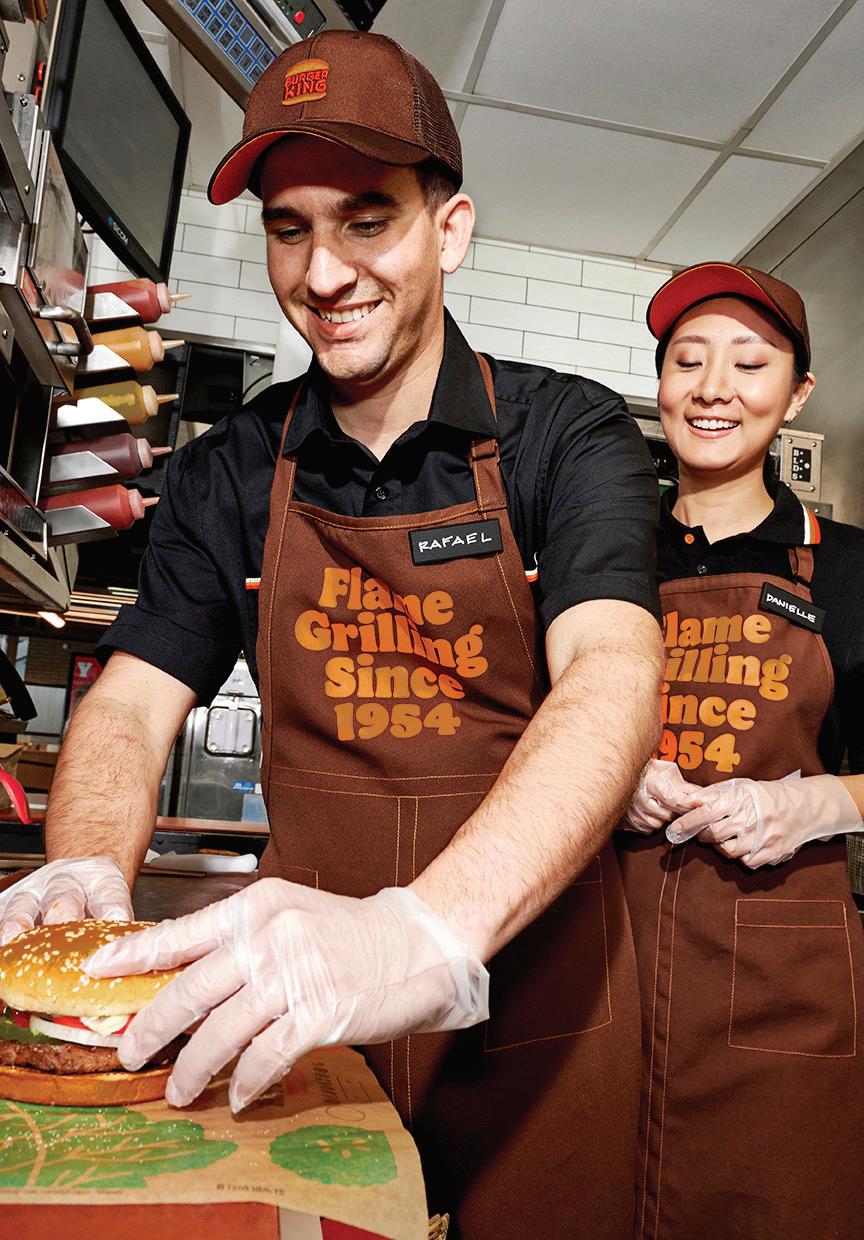
Curtis went on to work in restaurants, most notably 35 years at Domino’s. There, he was part of a turnaround that eventually lifted the chain to No. 1 status in the global pizza segment. At one point, he received a call about leading Burger King’s U.S. business.
The role intrigued him. At Domino’s, becoming No. 1 had already been accomplished. It was now about staying there. Curtis was attracted to the Burger King job because of his love for the journey to the top—and because of the chain’s heritage and nostalgia.
“But like millions and millions of Americans, I had fallen out of love with it,” Curtis says. “And the idea of coming here and helping to do something similar with such an iconic brand as what I had been a part of at Domino’s was part of the appeal and the allure of coming here to Burger King.”
Curtis knew Burger King was his future. What he didn’t understand was how deep the issues were. The brand pres-
ident uses the words “deteriorating” and “decay” to paint the state of restaurants, guest experience, culture, and operations. It took him about six months to really comprehend what he was leading.
He isn’t shy about the process. Initially it was more than he had bargained for.
“I thought that I could come here and make a huge difference in the operational culture and the focus of what we were doing and that would take us to the promised land. That we would build a team and we would just motivate people to treat people nicer and that would reverse the cycle—the vicious cycle that Burger King was in. But I was wrong. The problems were much more deep-rooted and the vicious cycle was much more firmly in place than I gave it credit for,” Curtis says. Curtis joined as COO in April 2021 before leaping to his current role four months later.
In these early days, Curtis built a team who analyzed the severity of the situation. The group learned that operators were pulling back on labor,
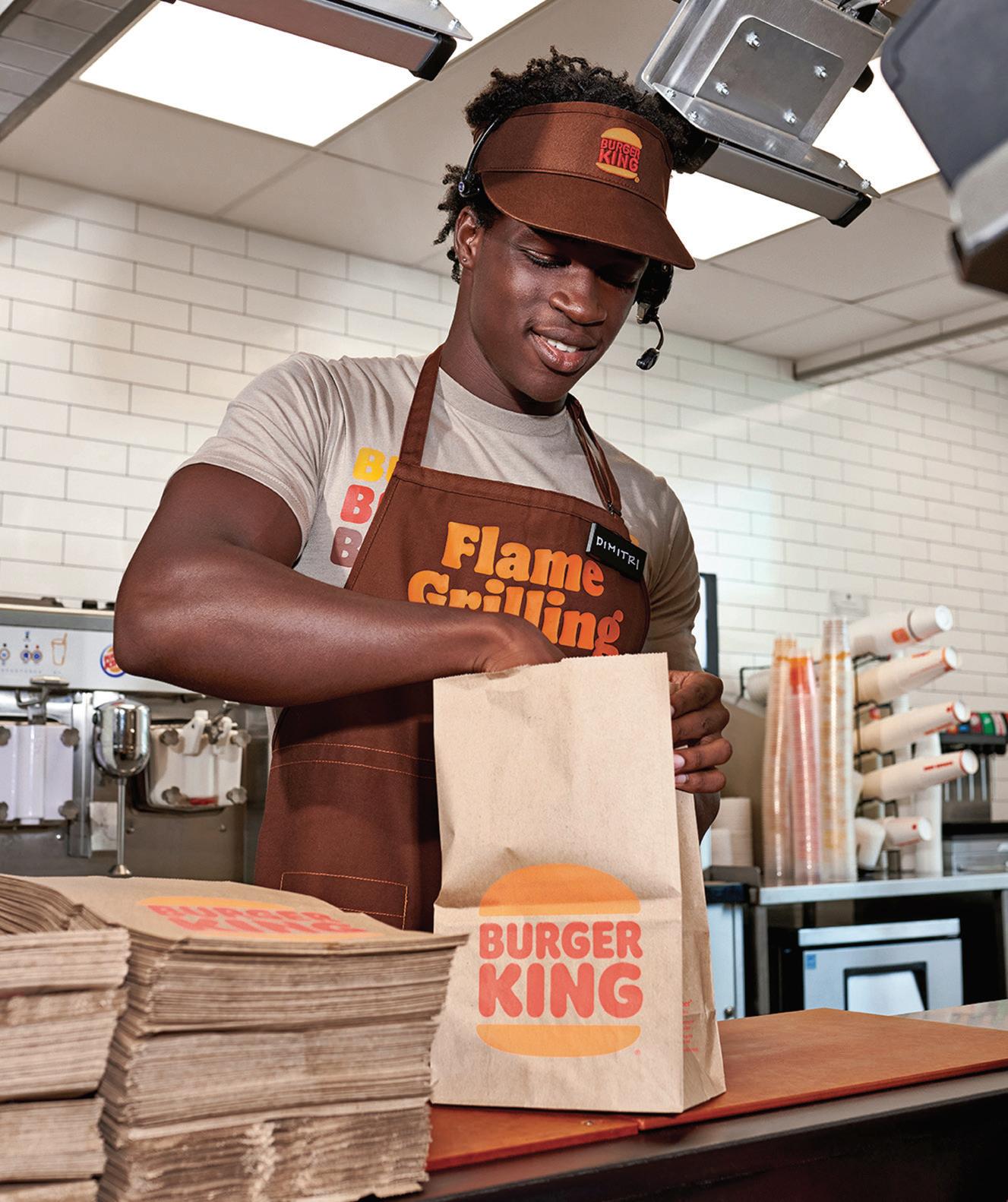
equipment, and remodels, which all made matters worse. But it was because franchisees didn’t have as much money.
Curtis’ group worked with operators on creating a plan that would stop the cycle. To kick matters off, Burger King corporate recognized it needed to invest first. Franchisees were on board with the idea. If investments in marketing, reimaging, digital, and operations proved profitable and a tailwind for restaurant-level cash flow, then they were more than happy to put their own money into the bucket.
“Investing more as time went on was really the key component, if you will, of the plan,” Curtis says. “So it wasn’t necessarily the elements of the plan. The elements of the plan are almost always similar from brand to brand, but the sequencing and the timing of the plan was what was far more important in actually getting the brand to get into a virtuous cycle.”
Burger King first announced its Reclaim the Flame transformation plan on September 9, 2022. The brand allocated $400 million, including $200 million toward remodels, followed by $120 million for advertising, $50 million for restaurant refreshes, and $30 million for digital.
One of the biggest—and most public-facing—steps was releasing a series of commercials, highlighted by a catchy jingle and new tagline, “You Rule.”
It’s not that Burger King wanted to move on from its well-known “Have It Your Way” mantra. The brand has an unbreakable association with those words. However, over time, Curtis says the phrase became “white noise.” Sure, you can utter the tagline and customers will immediately know who you are referring to, but it didn’t change how customers felt about the chain.
To Curtis, “You Rule” reinvigorates the idea that the guest is king and they drive where Burger King heads next.
“‘Have it Your Way’ was something that we said all of those years where we weren’t really letting people have it their way and we weren’t really doing things for our guests like improving our operations and improving our restaurants, so it was an unfulfilled promise,” Curtis says. “And by making that pivot, it modernized the notion and also re-energized us internally and re-energized guests around the idea that at Burger King you get to choose.”
Another major move was the $1 billion acquisition of publicly traded Carrols Restaurant Group, Burger King’s largest franchisee. Before this purchase in 2024, the franchisor worked closely with Carrols’ management team, and Curtis served on the board of directors. The brand struggled to get the franchisee to invest when it also needed to return capital to shareholders as well—a competition for cash.
By acquiring Carrols, Burger King accomplished several things, according to Curtis. First, the chain could take all of the restaurant earnings and pile that back into remodels. Also, it accelerated the remodeling process. Beforehand, Burger King only had a small contingent of corporate locations in Miami and didn’t have the capability to understand how new innovations and products would impact the greater landscape. But with Carrols, which had locations in 23 states, Burger King
had a more diverse and informed view of impact.
Thirdly—and arguably most important for the future—the chain now had a large enough company-owned footprint to properly grow talent.
“If we’re going to have great franchisees and great operators running this business, and this does need to be an operations-led brand, then we have to have a platform. We have to have a place where we can grow talent,” Curtis says. “And now that we have 25,000 employees of our own in all of these company restaurants that we own, those will become the future franchisees of this brand. Those will become the future operators of the restaurants that we own. And we can also share that talent with our franchisees, and those will become people who work on our operations field teams, not people that we have to take from other brands that maybe don’t even sell burgers, but they’ll be people who are born and raised in the Burger King system and they will understand it better than no other.”
Burger King added a $500 million remodel commitment for these Carrols restaurants and an incremental $300 million co-investment in remodels alongside franchisees.
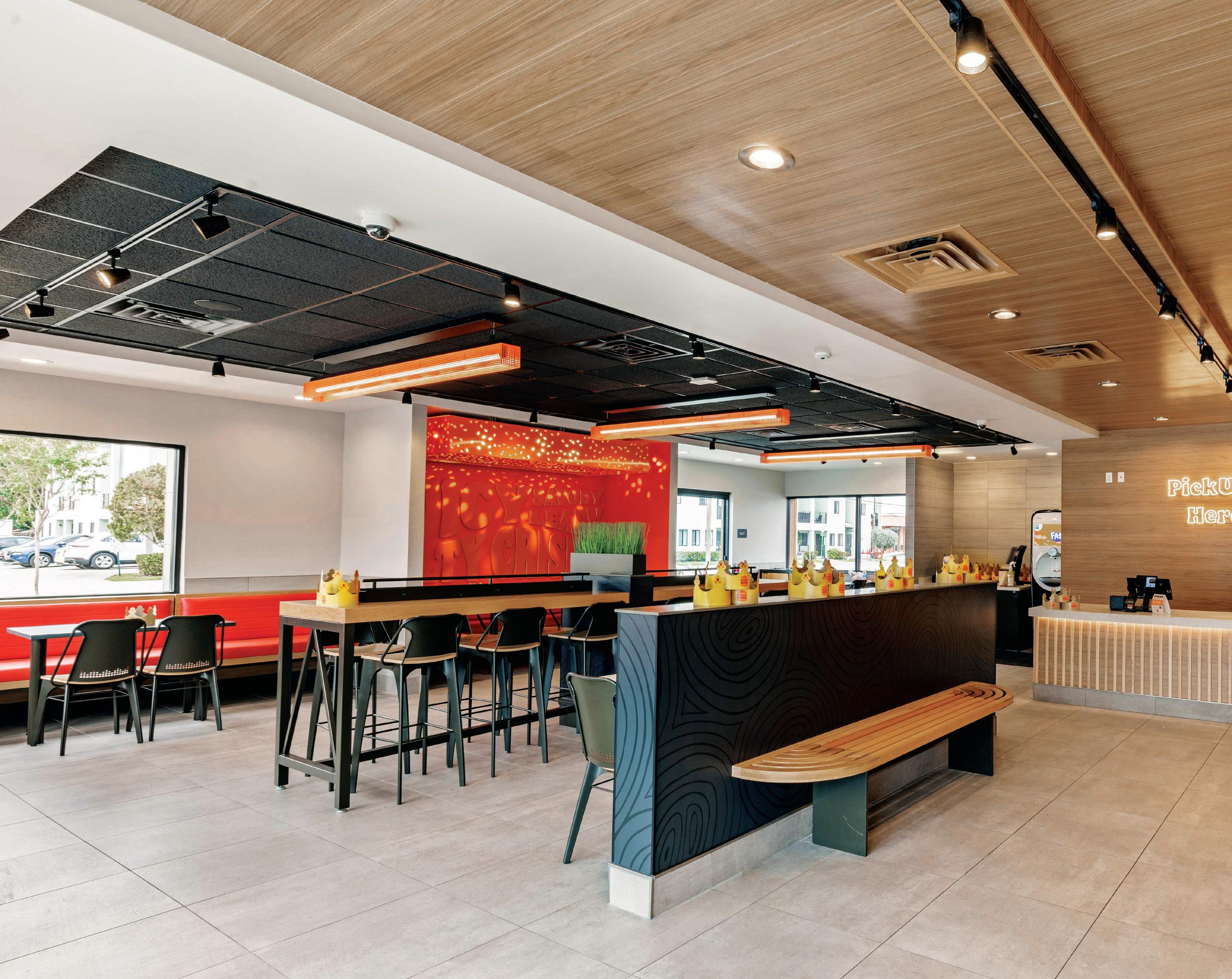
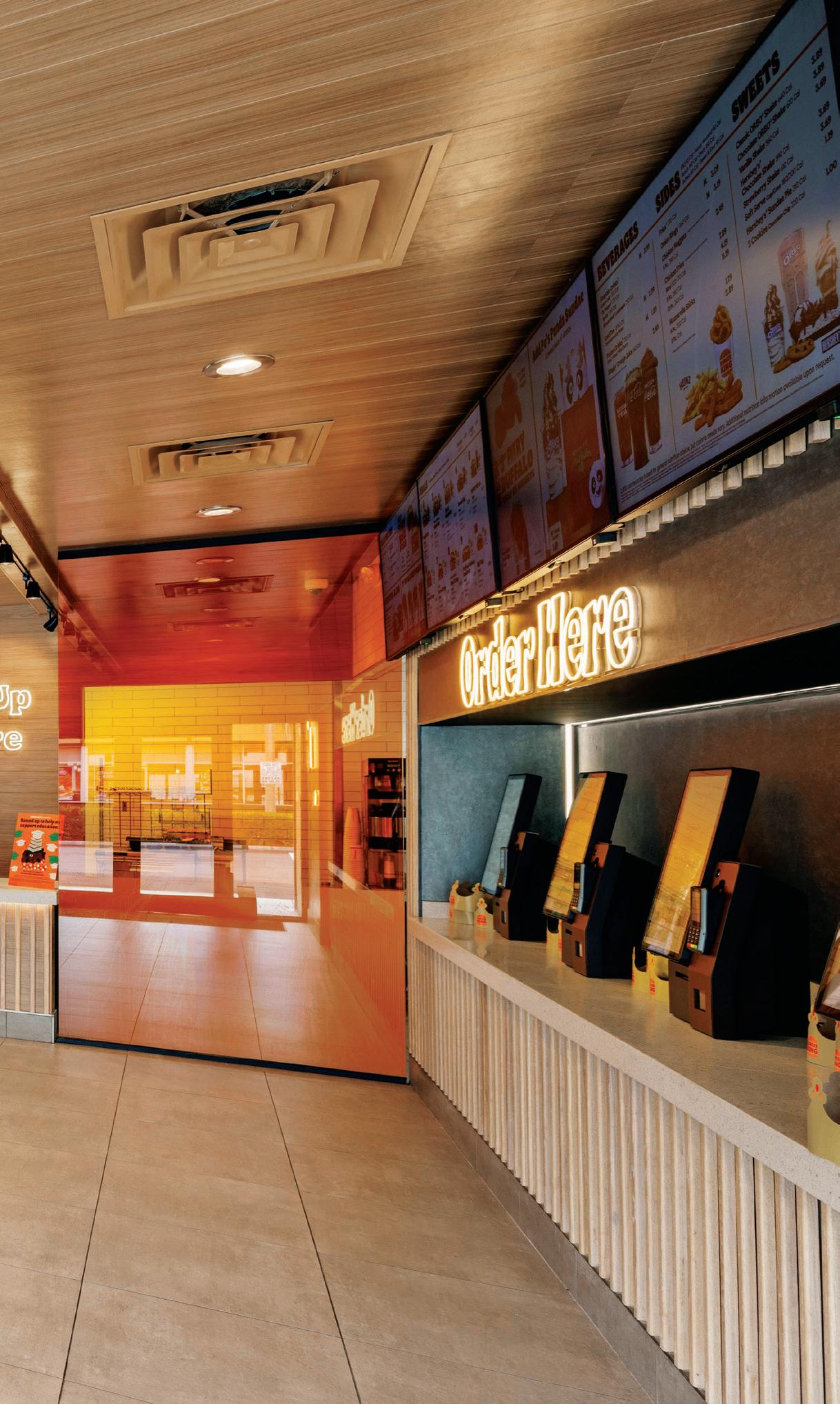
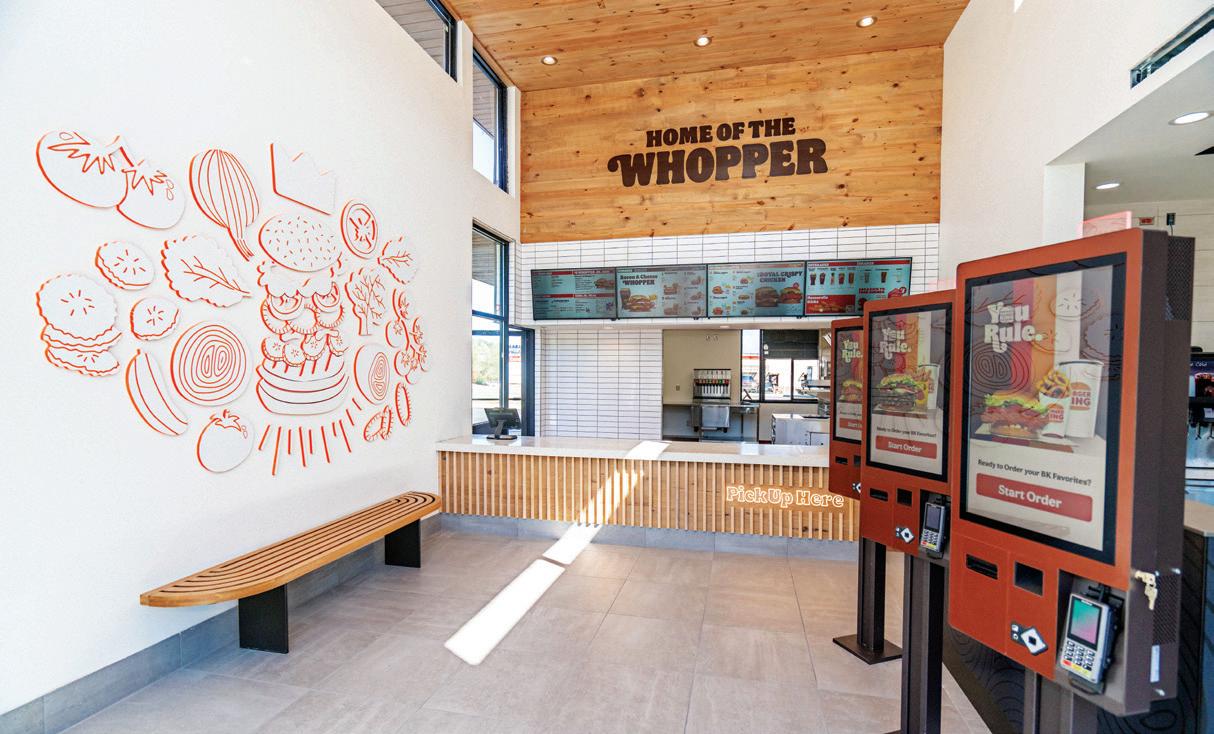
A year before in 2023, Burger King announced its Sizzle prototype, equipped with a modern exterior and tech-forward operations, like kiosk and in-store mobile order and pickup and mobile order and pickup at the drive-thru. Typically, the box cuts about 200 square feet.
Curtis says the Sizzle remodel is not a top-down directive, but the result of years of listening to customers and testing ideas before asking franchisees to invest.
The changes began with direct guest feedback. By bringing customers into existing restaurants and asking what they wanted from a modern Burger King, a clear pattern emerged. People valued digital convenience, but they didn’t want a fully automated experience. Many still preferred the option of interacting with a person. The challenge, then, was to design a space that could serve both preferences seamlessly.
That balance became a hallmark feature of the Sizzle design. The remodel combines digital touchpoints with traditional service, giving guests flexibility in how they order and interact. At the same time, it rethinks the in-restaurant experience. Customers said that when they chose to dine in, they wanted a space that felt more comfortable and social and somewhere they could sit with friends or family. In response, the prototype introduced more intimate seating, including wraparound “King’s booths.”
Corporate-owned locations were remodeled first, allowing the team to improve the design, test performance, and understand the economics before rolling it out.
“When we’ve seen the returns, we’ll support the investment, then we tell the franchisee we’re ready, and this is now our expectation,” Curtis says.
In addition to significant investments in restaurants, Burger King upped its leadership team. Patrick Doyle, the former
Domino’s CEO who led the aforementioned turnaround with Curtis, joined as RBI chairman in the fall of 2022. It was not too long after Reclaim the Flame had started.
Doyle immediately showed his commitment. The executive bought 500,000 shares, equaling $30 million. He handed out that cash because he saw Burger King’s potential.
“People continue to give Burger King tremendous credit for the Whopper,” he says. “And that’s central to it, and that has not changed. And so even though we’ve gone out and elevated the Whopper and made it a little bit better based on feedback, part of what gave me confidence that it was doable was there was still real love around that burger, around the Whopper and how good it is.”
Doyle felt there was real demand from customers for Burger King to succeed. People have been cheering for the chain to get better.
RBI brought on Doyle for his experience at Domino’s, where he successfully balanced a long-term turnaround strategy with the demands of delivering consistent near-term growth as a public company.
His philosophy is that “ultimately, you have to do the right thing for the business.” Doyle’s priority is to communicate clearly with shareholders and instill confidence that the brand can achieve its objectives on a defined timeline.
He emphasizes that this balancing act isn’t just for investors. It’s also for guests. One of the most notable changes he’s seen in the past few decades is that restaurant-consumer relations is no longer a one-way conversation.
“The consumer and their perceptions of the brands have at least as much power in the relationship as the theoretical brand owner does,” Doyle says. “And the takeaway from that is the actual experience has to be great.”
And you can’t shorten the process for getting there.
“At the end of the day, you have to believe that the experience that your guests are having in your restaurants are better today than they were a year ago, that the food is better, that the service and hospitality is better on average, that the restaurants look better on average,” Doyle adds. “And if that’s true, you’re going to be able to communicate that and grow sales, and you can’t just come up with some promotion
that’s going to fix what is a broken underlying reality.”
Improving franchisee profitability is one of Doyle’s longterm goals.
Burger King has triumphed in this area. Average franchisee profitability per store rose from a low of $125,000 to $205,000 in 2023 and 2024. The figure sank to $185,000 in 2025 because of rising beef costs. But, RBI noted that if external factors were removed, operators made more money last year, proving that its turnaround strategies are taking the intended effect.
After Doyle arrived, RBI began publicly reporting franchisee profitability—for Burger King and its sister concepts, Tim Hortons, Firehouse Subs, and Popeyes. He calls it the singlemost important metric for predicting long-term success for a brand and its system.
“Are the returns there? Are the profits there for the franchisees? And if you believe that to be true, and I clearly do, and everybody here clearly does, then why would you not publish that?” Doyle says. “And I continue to be stunned by restaurant systems that don’t do it. If I was an investor, I would demand it. Because it is the best predictor of long-term success. If you’re committed to that and you believe that, then why would you not publish it? And there’s really only one answer, which is that there might be bad news in there, and I don’t want people to know it. It’s like, well, that’s not very transparent. That’s not building trust with your franchisees. It’s not building trust with your investors. You have to do it. So we do it.”
Doyle, RBI, and Burger King also want to refranchise the Carrols restaurants and put them in the hands of smaller operators who can be closer to the day-to-day operations of the business.
Carrols had more than 1,000 locations, and at that scale, Doyle argues it lost many of the advantages of a franchiseerun system. He contends the footprint functioned more like company-owned restaurants, given how dispersed it was and how many units were operated by non-owners.
Despite this, Carrols managed to run stores better than Burger King’s system average. That doesn’t change the fact
that Doyle believes the local owner-operator is the preferred circumstance.
Because Burger King has momentum, he says more restaurateurs are approaching the brand about becoming franchisees, including home-grown employees working at Carrols restaurants.
“The process that we’re working through with these restaurants, as we refranchise them, is to find those great people who want to own and run restaurants, and that’s the magic,” Doyle says. “And look, we’ve got big operators in our system
as well who do a terrific job. And great. We love them also. If you’re able to do that, that’s fantastic. But it’s always going to be a little easier for the person who is smaller and closer to each of their restaurants. You will see that even with larger franchisees, the further the restaurants are away from where the franchisee lives, generally, the less well they perform. And it’s just a truism in the restaurant industry.”
This pursuit also means having direct conversations with other underperforming franchisees as to whether they can carry forward with better standards, need to sell to a more
thing guests could see, feel, and understand.
The most symbolic change was also the simplest. For years, even as the company had moved away from using the King mascot in its advertising, the character still lingered in the public’s perception of the brand.
So the team made a deliberate decision to move on from it, marking a clear break from the past. In its place, they introduced a new idea, which is that the guest is “king.”
“So everything we do now is really about how we action against what our guests are looking for to create that better
“So everything we do now is really about how we action against what our guests are looking for to create that better experience, to create that food that they’re looking for, for us to provide for them and to really elevate everything we do as a brand.”
well-equipped operator, or shutter some units.
In Q2 2022, around the time Reclaim the Flame began, Burger King had 7,058 U.S. restaurants. It finished 2025 with 6,649 locations.
Hundreds of closures have occurred. And more are on the way. Doyle says talks with franchisees always go better when both sides are transparent and honest.
“You sit down over a meal, and you talk through and say, look, I know what you’ve accomplished before, and you’re not accomplishing it now,” Doyle says. “Let’s have an open conversation about it because it feels like if you did it in the past, and you’re not doing it today, we know that you can do it, but you’re choosing not to. And so maybe you’re just not as excited about it anymore, and maybe some of that’s our fault because we went through a rough patch. And if you want to go after it, and you want to lift the experience that your guests are having again, and that’s going to drive results, we are with you to get that done. If you’re not, then probably the best time for you to sell is now. Because if you’re really not, two years from now, your restaurants are probably going to be worse than they are today.”
When CMO Joel Yashinsky entered Burger King in April 2025, he found himself stepping into what felt like a pivotal moment for the brand. In the years before his arrival, teams had been quietly laying the groundwork—remodeling restaurants, refining operations, upgrading technology, and rethinking the guest experience. To him, it was clear that all of that effort had built a new foundation, and the company was on the verge of something bigger.
What was missing, he realized, was a way to bring customers into that story. From a marketing standpoint, the opportunity wasn’t just to advertise, but to elevate the brand by focusing on what matters most in the restaurant business, which is the food and experience. Everything that had been done behind the scenes needed to be translated into some-
experience, to create that food that they’re looking for, for us to provide for them and to really elevate everything we do as a brand,” Yashinsky says.
The CMO adds that the more Burger King listens to customers, the more relevant it will become.
That idea has already started to take form. Campaigns like the Million Dollar Whopper and its evolution into “Whopper by You” invite customers to suggest flavors and ideas, turning the menu into something more collaborative. The same approach is expanding beyond food. The brand is asking guests what kinds of promotions, partnerships, and experiences they actually want to see. The chain is moving away from industry trends like celebrity-driven campaigns and instead putting the spotlight on everyday customers.
For Yashinsky, this isn’t just about collecting user-generated content; it’s about creating a user-influenced brand. Customer input is meant to guide everything—from menu improvements to marketing ideas—building on a sustainable effort within the company to actively listen and respond to feedback.
“Let us know how Burger King can evolve for you that will keep you excited, and again, as a brand that likes to think we’re for everybody, it doesn’t matter what age, what background you have, where you live, rural, urban, suburban, we want to be the brand that provides and caters to the needs of our guests and do that in a really authentic manner,” Yashinsky says. “And if we can communicate and live that way, we’ll certainly, I think, succeed in this effort to really be a brand in the hands of our fans.”
The Whopper has been a key part. Yashinsky frames it as nothing less than the heart of the brand.
He explains that it isn’t just another menu item. Rather, it’s an icon, arguably one of the most recognizable hamburgers in the world, and a core piece of what defines Burger King. Even during periods when the business itself struggled, the Whopper’s reputation never really wavered, he says. Customers still believed in the product; they simply had other reasons for not coming in. That distinction, he notes,
is important. It meant the company didn’t need to reinvent the Whopper. It needed to protect it, invest in it, and remind people why it mattered.
Although Burger King has evolved, the Whopper has remained a constant. Instead of cutting corners, the brand doubled down on that strength by maintaining the size and quality of the burger, but folding in small, but deliberate upgrades to how it’s prepared and presented.
The chain announced in February that it had elevated the Whopper for the first time in nearly 10 years, including a better tasting bun.
“It’s more than a quarter pound of beef. It’s 4.4 ounces,” Yashinsky says. “There’s no shrinkflation going on at Burger King. We’re investing in the Whopper. The franchisees in our restaurants, it costs money to put that Whopper in a box. That’s an investment. It was an investment to put this new glaze on the crown of the bun. That makes it look even better than it did beforehand, and that investment only shows how important the Whopper is from a brand perspective.”
Burger King has also put more of a focus on family dining. Yashinsky says that years ago, the introduction of the King mascot unintentionally alienated a key audience—parents, especially mothers—and the company saw a noticeable decline in its kids and family business. That shows Yashinsky that if the brand truly wants to be for everyone, it has to win back families.
He sees a clear opportunity to do that by creating experiences that resonate with kids and parents. Recent partnerships and promotions have proved this can work. Campaigns tied to popular franchises like “How to Train Your Dragon,” “SpongeBob SquarePants,” “The Addams Family,” and “The Mandalorian & Grogu,” have demonstrated that families will respond when the experience feels thoughtful, fun, and complete.
“It’s all tied together in terms of our investment that we’re trying to make for our guests, so that when they come to Burger King on any given day, we raise their day by a point or two, and that’s who we are as a brand,” Yashinsky says. “We’re just giving kids and families or teenagers, or retirees, whoever it is, everybody who comes to Burger King, they get a great Whopper, they get a great kids meal or a great dessert. Everything we want to do right now is on behalf of them, and that’s what’s exciting about us.”
Curtis says there are millions of people who still love Burger King and want to see it succeed, but many haven’t been coming back.
Through direct outreach and feedback, it became clear that the issue wasn’t a lack of affection. Instead, there were barriers, including frustrations or perceptions that had kept both former and potential customers away. A common theme emerged, and it’s that people felt large brands weren’t really listening to them.
The company made an effort to change that. By opening
up direct lines of communication—including a widely publicized phone number—the team invited customers to share their thoughts. Tens of thousands of calls poured in and have continued well beyond the initial campaign window. The real impact wasn’t just the volume, but what the company did with that feedback, Curtis says.
Listening, he says, only matters if it leads to action.
“The act of listening and really listening with the intent to learn and make change is what’s inspiring people to come back to Burger King, and so we intend to continue with that practice,” Curtis says. “My entire leadership team now listens to calls, responds to guests, reaches back out to stores and says, ‘Nice job,’ or says, ‘Can you fix this?’ And then the guests know that we did that, and so they feel heard. They feel like they’re a part of where this brand is going.”
Kobza says what Burger King has achieved is especially notable given its size and history.
With thousands of locations and decades behind it, turning around the day-to-day consistency of the guest experience is an incredibly difficult task. It’s one that few brands have managed at this scale. Yet, over the past few years, he’s seen the brand move from lagging behind its peers to steadily climbing toward the front of the pack. The improvement shows up not only in internal metrics, but also in third-party data and, just as importantly, in feedback from customers themselves.
Kobza credits much of that progress to the work of the leadership team and their ability to match closely with franchisees. In a system that has experienced its share of ups and downs, building trust hasn’t been easy. But he describes how the company has worked to bring operators together around a shared vision, ensuring they stay in step through both challenges and successes. That collaboration, he says, has been critical to advancing everything from operations to brand image.
One recent example underscores that alignment. An overwhelming majority of franchisees—97 percent—voted to support increased investment in the advertising fund. For Kobza, that level of consensus is rare in a franchise system and signals strong confidence in the company’s direction, particularly in how marketing dollars are being used and the results they’re beginning to generate.
He also acknowledges that some of the most important work ahead is also the most demanding. The company’s large-scale remodel initiative is essential to staying competitive, especially in an industry where customers have plenty of modern, visually appealing options.
While the plan to modernize the vast majority of restaurants by 2028 requires significant time and investment—and has faced some headwinds—it’s a necessary step.
Guests like Jim continue to tell Burger King that the plan is working.
So the brand will keep at it, never relenting.
“I think we’re headed absolutely in the right direction,” Kobza says.























































































































































































































As economic and demographic pressures franchisorsconverge, are learning that a smooth transfer is just as important as a new opening.
/ BY SAM DANLEY
FRANCHISE TRANSFERS HAVE ALWAYS BEEN PART OF THE BUSINESS. What’s different now is the sheer volume and the number of operators hitting an inflection point at the same time. Multiple forces are converging—demographics, economic pressure, and a franchise model that has gotten harder to run—creating what many describe as a rising tide of ownership transitions.
Robin Gagnon, cofounder and CEO of We Sell Restaurants, says one major driver is demographic.
“America is aging,” she says. “We’ve been talking about the ‘silver tsunami’ as a phenomenon for several years now.”
As baby boomers age out of ownership and fewer businesses stay in the family, more franchise units are being sold instead of passed down. For brands with older footprints, that can mean a wave of turnover all at once.
But the demographic wave is colliding with the realities operators have faced over the past several years. Gagnon says some franchisees delayed selling during the pandemic and its aftermath, pushing the decision down the road.
Now, she says, “operators are being squeezed on all sides.”
Robert Bhagwandat, senior director of franchise development at Checkers & Rally’s, also ties the rise in ownership transitions to recent economic cycles. QSR brands saw a boom during and after COVID, he says. Many operators made strong profits, expanded, and took on more risk because business was so good.
“The problem is that many didn’t plan for what would happen when conditions normalized or worsened,” Bhagwandat says. “Now, with inflation, supply chain issues, and tighter margins, some of those expanded businesses are no longer as sustainable.”
Franchising today is also much more complex than it was 20–25 years ago, and it’s no longer as easy for a single-unit owner to run a business and support a family the way it once was, adds Taco John’s CEO Heather Neary.
“In many cases, they’ve been so busy running their day-to-day business that they really haven’t thought about succession planning and what happens when they’re ready to retire,” she says.
Operators and intermediaries close to these deals say the difference between a smooth handoff and a scramble often comes down to how early the conversation starts and whether the brand has built the culture and playbook to start it early.
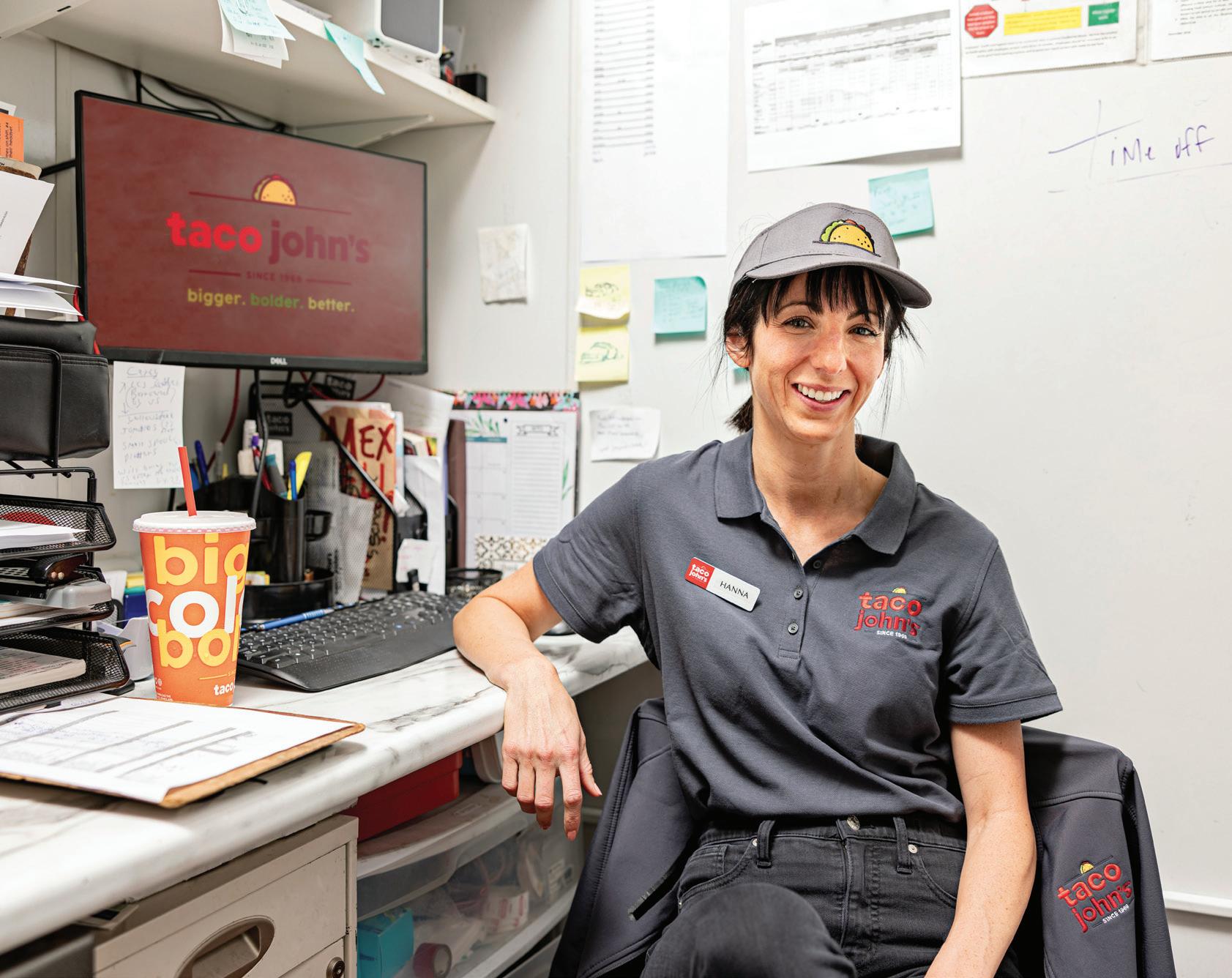
At Taco John’s, Neary says those discussions often surface through day-to-day relationships franchise business consultants have with operators, or through small friction points that lead to bigger questions.
“A lot of our Boomer franchisees aren’t as comfortable with technology,” she says. “So there’ll be a conversation around technology, and then it generally
evolves into, ‘Hey, what does your next chapter look like?’”
When that conversation leads toward an exit, Neary argues the franchisor’s job is to slow down and treat it as more than a transaction.
“Taco John’s is 57 years old this year, and we’ve got a lot of long-standing franchisees that have really made us who we are today,” she says. “So, I think it’s really important as the franchisor that we handle those conversations with dignity.”
That matters, she adds, because when transition talk feels taboo, it tends to arrive late.
“It’s much easier to be proactive about having the conversation than to have a particular medical emergency come up where the franchisee is kind of caught on their back heels,” Neary says, “and then we’re all kind of scrambling.”
“ Taco John’s is 57 years old T his year, and we’ve go T a lo T of long-s Tanding franchisees T haT have really made us who we are T oday ... i T hink i T ’s really impor Tan T as T he franchisor T haT we handle T hose conversaT ions wi T h digni T y.”
That’s why Taco John’s is formalizing a resale assistance program to guide franchisees through the transition process. The goal is to remove confusion and give owners a clear roadmap instead of leaving them to figure it out on their own.
The first hurdle is often expanding what owners believe is possible. Neary says some franchisees assume selling is “all or nothing,” when in reality there are multiple ways to structure an exit. For example, if they own the land, they can sell the business but keep the property and earn rental income. This
can completely change how someone thinks about exiting.
From the brokerage side, Gagnon frames the moment as a system-level responsibility, not an ad hoc courtesy. Part of her work, she says, is to “try to teach brands that exit is not a four letter word.”
In her view, executive teams should be looking ahead for likely turnover—whether driven by underperformance, capital strain, or renewal timing—and resourcing the transfer process accordingly.
“What you absolutely don’t want as a franchisor is for those stores to go dark,” she says. And when an operator raises a hand, she adds, “it needs to be a priority,” even for brands focused on new-store growth.
Not every transfer is the same. One scenario is a successful store where the owner wants to exit, often for personal reasons. These tend to attract strong interest and multiple offers since buyers see them as lower risk.
“The other camp is when you have a store that’s a problem—the operator is not operating well, not making money, or there’s some other issue, and you’re bringing in new ownership to solve the problem,” says David Bloom, chief development and growth officer at Capriotti’s. “Turnaround opportunities are harder to sell, but they can offer big upside if the new operator executes well.”
When diagnosing what went wrong at a problem store and whether it’s worth refranchising, most issues come down to the P&L.
“Is it a broken business, or is it just being run poorly? Because those are two very different things,” Gagnon says. “A lot of times what looks like a struggling business is really just mismanaged costs—food, labor—things that can be corrected.”
The biggest challenge, she stresses, is a bad lease.
“You can’t sell yourself out of a bad lease,” Gagnon says. “You can fix operations. You can fix costs. But if the real estate doesn’t work, that’s a much harder problem to solve.”
Even when costs are repairable, buyers look beyond the current snapshot and ask whether sales can realistically grow. The store may be underperforming today, but the buyer is paying for what they believe it can become.
Transfers are often more complex than people expect. Gagnon warns franchisors and franchisees not to underestimate the complexity, the number of parties involved, or the time required to execute a transfer.
“It’s not as easy as signing a contract, and then they’re in,” she says, because you’re not just satisfying a buyer and a seller. “Externally, you have the franchisor and you have the landlord, too. There are a lot of parties involved in these deals and each has their own process and approvals.”
In practice, a transfer often takes roughly six months— sometimes longer—once you factor in brand approval, landlord consent, financing, and training calendars. If it happens too quickly, Gagnon warns, important details are likely being missed.
Neary points to communication as the connective tissue that determines whether that complexity stays manageable or becomes chaos.
“When you transfer a restaurant, it’s not just transfer from franchisee A to franchisee B,” she says. “It’s also making sure the POS contract has been transferred properly, making sure the banking information is set up properly, making sure the credit card information is set up properly. So, the more communication you have, the more of a clear timeline you have, the better off you are.”
Bloom says all those moving parts make a transfer feel less like an ownership change and more like a “mini grand opening” with a hard cutover date. Transfers require a detailed plan covering training schedules, interim operations, marketing, and vendor transitions.
“When that plan isn’t dialed in,” he says, “there are a lot of things that can go wrong.”
Landlords are another friction point. They have to approve the new tenant, and Gagnon says they “don’t always move with the same speed or with the same priorities as everyone else.”
Strong franchise systems include lease clauses that require landlords to accept approved buyers, she adds, which makes transfers much smoother and “are worth their weight in gold.”
Deferred maintenance can also be a deal-breaker.
“When potential buyers get into the due diligence stage and start looking at the facility itself, if an owner hasn’t been keeping up with repairs and maintenance, that’s where things can start to get a little more controversial,” Bhagwandat says.
A simple issue, like a water heater that isn’t holding temperature, can turn into a standoff over who pays to fix it.
“The seller may say, ‘I’m not dealing with that. I already have my health certificate. That’s for you to repair,’” he says. “But the buyer might say, ‘I can’t get my health certificate because you need to repair this. This isn’t my problem. It’s your problem.’ That’s just one example of where things can really break down.”
Another issue is financial transparency.
“People might manipulate things on a tax return to basically lessen their tax liability,” Bhagwandat says, often by padding expenses not related to the restaurant. “The picture starts to get a little bit muddy in the financials when you’re looking at the P&L versus what the actual tax returns are saying.”
Then you get underwriters trying to dig into that to find out why there is such a big variance.
“You’ve got to be able to walk through that,” he says. “If not, the buyer’s not able to get financing, and then the deal falls apart.”
One of the most important things to remember about a franchise transfer is that it doesn’t just land on a spreadsheet. It lands on a team, too. From a seller’s perspective, staffing can be one of the trickiest parts to navigate, because the incentive is to keep everything stable as long as possible.
“The staff is the lifeblood of the restaurant,” Bhagwandat
says, noting that buyers can get so focused on the upside they see on a P&L that they don’t spend enough time learning who’s actually running the day-to-day. Then the transition hits and it’s “a shock to their system, followed by turnover at the most unfortunate time,” when a new owner is trying to keep the business steady.
That “soft side” is exactly where incoming owners can get into trouble if they treat a transfer like a simple takeover, adds Dan Hawkins, cofounder and CEO of the Human Bean.
“Your store-level teams have been trained and working under a particular culture and coaching style,” he says.
His advice is to resist the urge to reset everything on day one. Instead, Hawkins says new owners should “spend a lot of time just listening and learning, understanding the culture, and making small steps instead of large ones at first.”
That people-first reality also explains why the franchisor’s role has to be both present and careful. Brands can’t be hands-off when it comes to training, standards, and operational support. But they also can’t become dealmakers.
“There is a certain amount of legal liability that these transactions can create,” Bloom says, which is why Capriotti’s doesn’t want to be in the middleman position on pricing and terms.
“We try to stay out of the middle,” he adds, noting that “tortious interference is a real thing.”
Bhagwandat describes the franchisor’s role as “kind of like a matching game in some cases.”
The point is to avoid putting someone into a business who doesn’t understand what the job requires.
owners should “spend a lo T of T ime J us T lis T ening and learning, unders Tanding T he culT ure, and making small s T eps ins T ead of large ones aT firs T.”
“Just because you have the money to buy it doesn’t mean you can run it,” he says.
The franchisor has to ensure the buyer understands what they’re getting into, that the business will be operated properly after the transition, and the brand’s standards and reputation are protected. But they also can’t be overly restrictive and end up blocking good deals.
“It’s got to be a balance of what’s good for the owner, but what’s also good for the brand as well,” Bhagwandat says.
Hawkins says The Human Bean stays out of the details of the sales construct or asset price negotiations and recommends owners get legal help for those transaction details.
Where the brand leans in, he says, is “new franchise agreements, the training and marketing… those things that we’re really good at,” because that’s what sets a new owner up to win post-close.
Zooming out, Bloom views most ownership transitions as positive because new owners bring fresh energy, investment, and focus. New franchisees are usually required to update stores to brand standards and run a “grand reopening” campaign, which helps drive renewed customer interest. Capriotti’s
tracks these transfers similarly to new store openings and often sees strong sales improvements.
In some cases, Capriotti’s requires new buyers, especially multi-unit operators, to commit to opening additional locations, ensuring they are growing the market—not just maintaining existing stores.
Bhagwandat frames it as simple math and planning. He describes a franchise life cycle with top performers who are growing and thriving, a large middle group that is stable, and a bottom group—around 10–20 percent—that will naturally turn over.
“Nothing is forever, so you need to plan for it,” he says, adding that turnover can be a shot of momentum. “You bring in new blood into the system, fresh ideas, and an injection of excitement and energy.”
Hawkins says his system has seen that kind of lift, too— and he doesn’t buy the fear that stores inevitably slip during a handoff. For his team, a transfer is a chance to fix what hasn’t been working and reestablish what the brand is supposed to feel like every day.
In that sense, the ending isn’t really an ending at all.
“This really isn’t a conversation about exits,” Hawkins says. “It’s a conversation about opportunities.”
Sam Danley is the associate editor of QSR. He can be reached at sdanley@ wthwmedia.com.









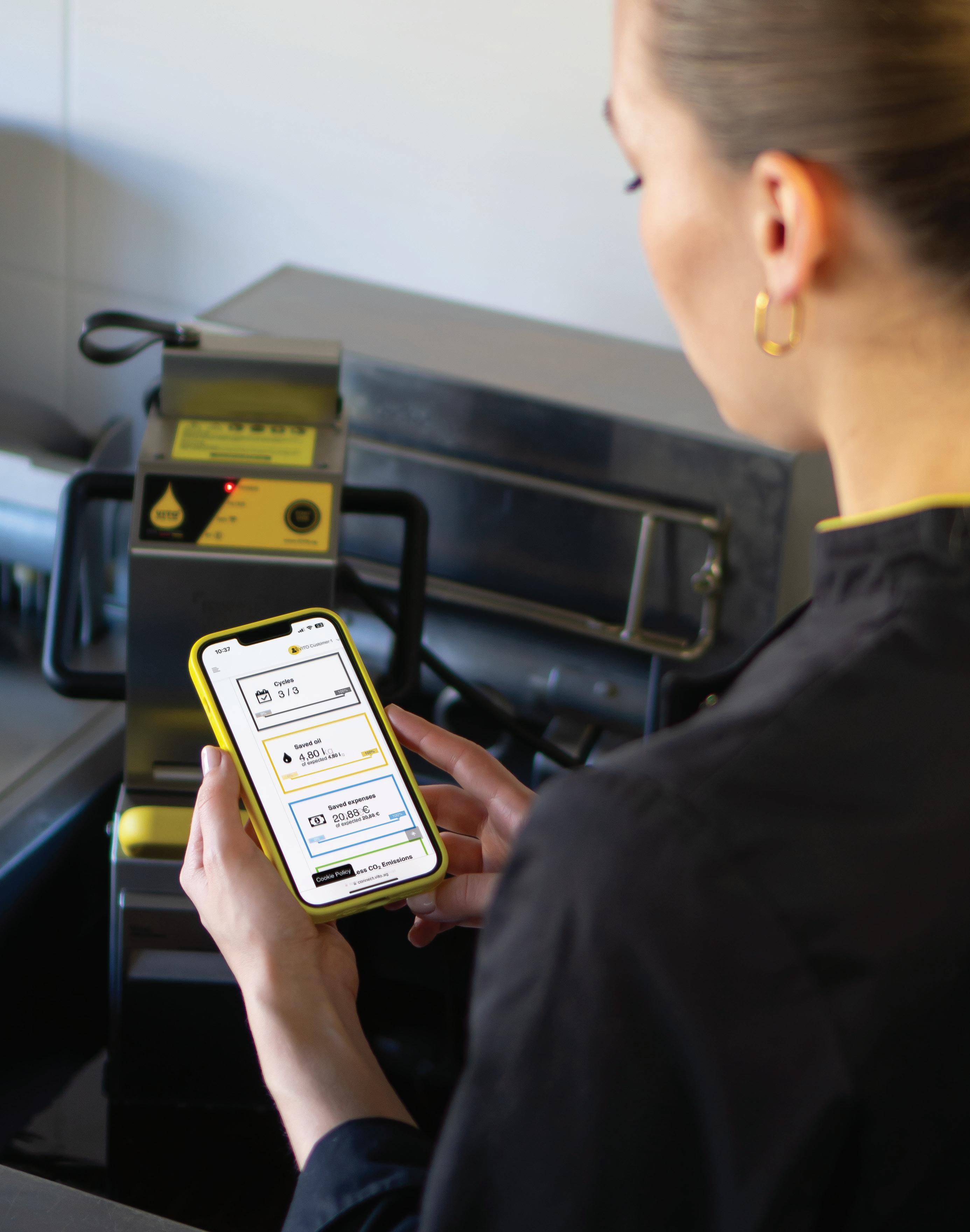

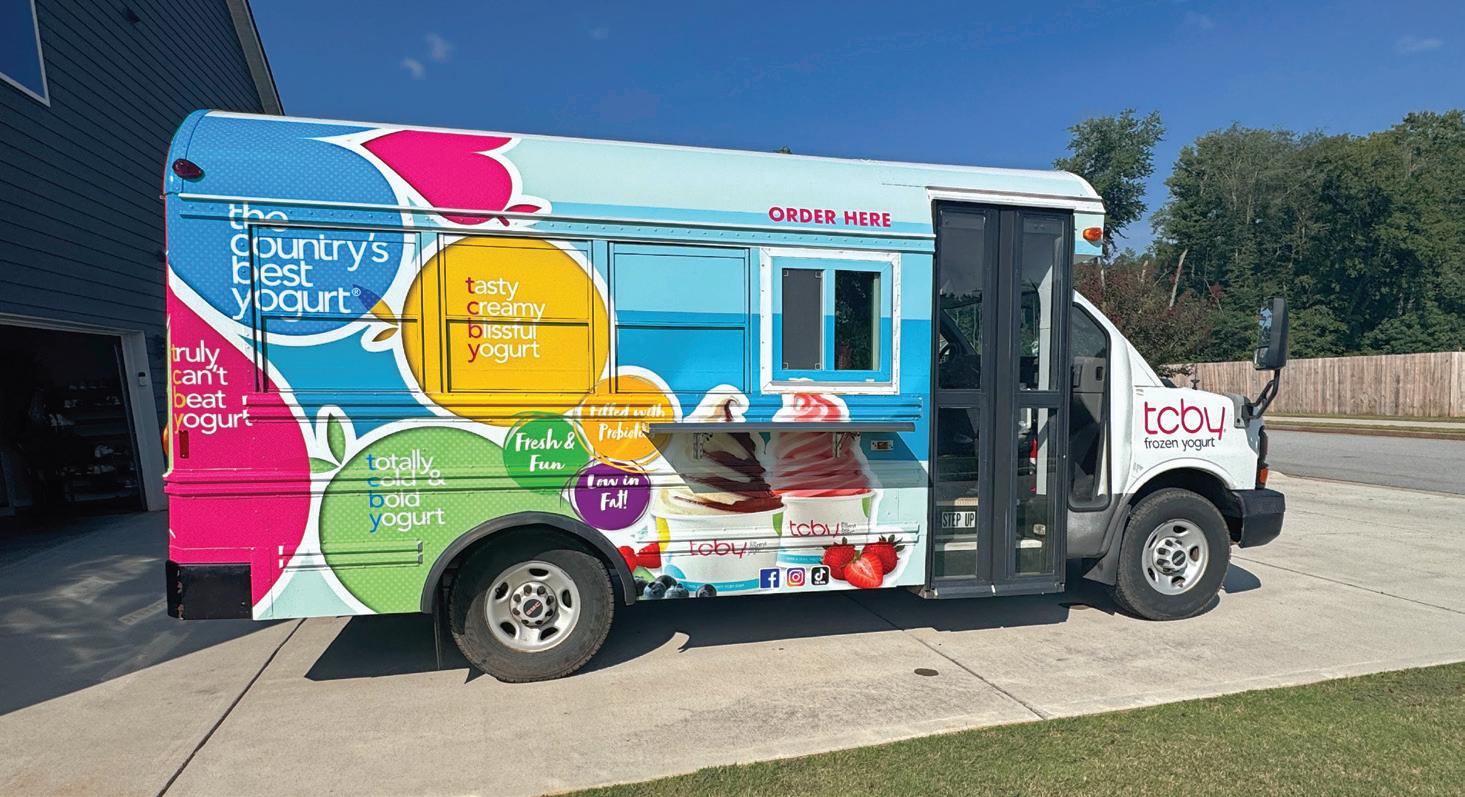
Steve Walsh reintroduces a legacy brand to the Peachtree City community.
/ BY BRITT ENGLER
For Steve Walsh, the next stage of growth for his TCBY story lies in catering. Instead of looking into areas for a second or third unit, Walsh wants to reintroduce the brand to Peachtree City, Georgia.
“Believe it or not, not a lot of people realize TCBY is still around,” Walsh says. “So, we’ve really capitalized on the opportunity to bring TCBY into the community.”
Through mobile catering, school partnerships, festival appearances, and private events, the franchisee uses his store as
the home base for a wider off-premises business.
The location had been part of the community since 2010 and was opened by a former colleague of Walsh’s. He had taken his own kids there when they were younger and knew what the store meant locally. He also had his own childhood memories of TCBY, giving the brand both a personal and professional appeal.
“With my experience with the previous owner and just knowing what this TCBY has meant to the community, it just felt
like a really good fit,” Walsh says.
When he bought the store, catering was already part of the operation. The previous owner had outfitted a 1950s-vintage Chevy truck to add a touch of nostalgia to private events. However, once Walsh took over the store, he expanded on that vision, eventually adding a second catering vehicle, this time in the form of a small bus.
“The goal would be to really market both of these vehicles,” Walsh says. “One is for a private event, maybe a one-to-twohour type of service, and then the other is for more long-term festivals, places where we can expand beyond our local area and participate in more half and full-day type events.”
That distinction matters because dessert catering has to be set up for efficiency based on the environment it’s serving. A school event, corporate gathering, birthday party, and outdoor festival each bring different traffic patterns, staffing needs, product volumes, and service expectations.
The business is also highly seasonal. Catering begins to pick up around late March or April and usually continues through October. May is the busiest month for Walsh’s team because of end-of-schoolyear programs. During that time, Walsh says the business is typically on the road an average of three days a week. Schools are at the center of Walsh’s catering and community strategy. While the store serves a big customer base, the brand’s core demographic is largely kindergarten through eighth grade. The younger guests are especially important because they often drive family visits.
“When the kids come in the store, they are coming in extremely excited,” Walsh says. “They’re bringing mom and dad, they’re bringing their sister, their brothers.”
The store works closely with schools by hosting spirit nights, offering student certificates and teacher appreciation coupons, and supporting other
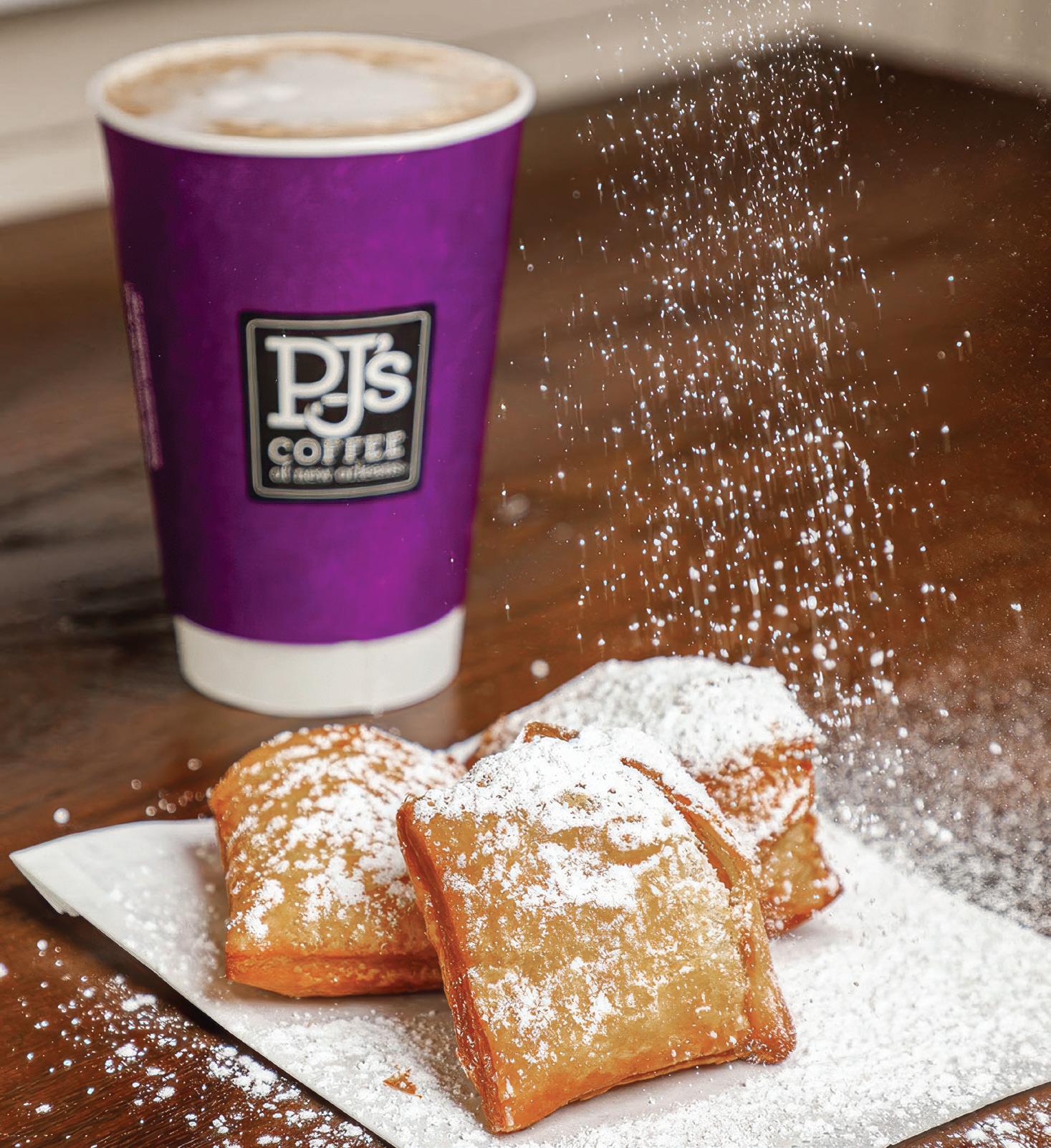
“I wouldn’t say it was a return as much as it was turning the page and leaning further into the spirit of New Orleans,” he says. “Being a brand from New Orleans, a city that is well known for its great hospitality and great food and beverages, why not cling onto that a little more? That is a differentiator that our competitors can’t compete with us on.”
What might sound like a marketing shift was in reality much broader, touching everything from food and beverage to in-store design, training, and operations.
“This is one of the biggest asks that we’ve had of our franchisees in our entire existence,” Mesa says. “It really was a laundry list of various projects that we launched simultaneously under this one banner.”
Before PJ’s could fully lean into New Orleans, it had to clean up its menu. Years of chasing incremental traffic had left the brand with a lineup that he says was “way too robust.”
PJ’s Coffee is betting that New Orleans hospitality is the secret to standing out in a hyper-competitive market.
/ BY SAM DANLEY
When PJ’s Coffee set out to sharpen its brand identity, the goal wasn’t to come up with something new. It was to get clearer about what was already there.
Like many quick-service concepts, the nearly 200-unit chain found itself squeezed from multiple fronts. Construction and build-out expenses were climbing, commodities weren’t getting any cheaper, and the specialty coffee market had become crowded with competitors all claiming some version of the same promise: great coffee.
PJ’s has long leaned on quality as its calling card. Founded in 1978 by Phyllis Jordan—an icon in the specialty coffee world and the first chairwoman of the Specialty Coffee Association—it built its
reputation on sourcing what brand president David Mesa Jr. describes as “the top 1 percent of coffee in the world” and enforcing strict brewing standards.
Over time, though, that story stopped feeling distinctive.
“That’s probably one of the most common [unique selling points] out there,” he says. “Everybody thinks their coffee is the best.”
As leadership took a harder look at what truly made PJ’s different, their attention kept drifting back to something its competitors couldn’t replicate: its New Orleans roots. Mesa says PJ’s always identified as a New Orleans brand, but it was never the main focus. Its Big Easy initiative, rolled out systemwide at the end of last year, was designed to change that.
“We had way too many SKUs and were all over the board,” Mesa says. “We got caught up a little bit in the rat race. When sales start to get a little flat, you start to chase some items. That’s a mistake a lot of brands make. It was putting the burden not only on our distribution and supply chain, but it was also causing lots of waste at the franchisee level.”
In total, PJ’s cut about 65 percent of its food menu. The rationalization extended to the coffee side as well. The company was manufacturing about 30 different flavor profiles of coffee out of its roasting facility before it scaled that back almost in half.
With the clutter cleared, PJ’s began backfilling with offerings that more clearly expressed its New Orleans DNA. On the food side, that meant elevating madeto-order beignets as a year-round staple, along with work underway on items like a boudin kolache and an andouille sausage breakfast sandwich.
On the beverage side, PJ’s introduced its Nola Favorites line to “find a lot of the unique flavor profiles of New Orleans and put them into a hot,
franchisees are quizzed on personal mindset, value alignment, and cultural fit.
“Humility and people-first philosophies don’t conflict with financial metrics, because a strong focus on culture and people is building your foundation toward a more sustainable business and profitability,” Cruz shares. “Leveraging your people and ensuring they are aligned with your values is foundational. They will deliver the results every time.”
She builds on this thought, warning the industry against “squeezing” their teams for short-term gains, stressing the importance of sustainable leadership and ensuring the team truly buys into the brand’s goals. Sustainability, she says, isn’t just about results—it’s the team’s ability to hold strong, even through challenges.
The brand has seen results with this mindset. Its employee engagement scores are at what Cruz calls “world-class” levels, about 4.5 out of 5, with some of the lowest turnover rates in the industry.
Currently, Jollibee has over 1,700 stores


worldwide, and Cruz sees significant room for growth, specifically in North America, which includes Mexico and Canada. She cites strong proof of concept, a global presence, and emotional equity as attractive qualities for potential franchisees.
“Technically, we’re starting off the ground, but the foundation has already been built,” Cruz adds. “So for me, there’s a long runway for building out the brand in North America long-term. We want to grow intentionally, partnering with quality franchisees that will deliver and amplify the vision of spreading joy and bringing brand love to a wider audience.”
Thinking back to her days as a shift manager in 1986, Cruz says her younger self would be surprised to see the level of influence she has now—building the business, shaping the culture, and spearheading the strategy of how the brand moves forward in North America. But those early experiences—opening stores early, closing late at night—set her up for success in ways she never imagined.
“If I look back in time, those were the foundations in terms of teaching me the value of hard work and resilience,” Cruz says. “When we were trying to turn around the business here in the U.S., having that kind of empathy and understanding of how to bring people along the journey was crucial.”
Her advice for women in restaurant leadership climbing their way up from shift leaders to the C-suite? Don’t be afraid to ask for more—and don’t forget your people.
“Take on stretch assignments. Have the courage to grab at opportunities as they present themselves to you, but also as you navigate and take on these bigger roles, make sure that you take your people with you and take good care of them,” Cruz says. “At the end of the day, they’ll take care of the business. But be bold and be unafraid to take on the world, because you never know what the next opportunity will bring your way.”



community efforts. Spirit nights allow schools to promote a specific date and time for families to visit TCBY, with a percentage of sales going back to the school.
“We give it to them at a discounted rate, and they sell it at retail during the school lunch period, which is a way for them to help raise money for the schools,” Walsh says. “It’s been a great program and has really provided a lot of loyalty.”
That is especially useful for a legacy brand like TCBY, which carries recognition across generations. Walsh sees that mix as one of TCBY’s advantages.
“We’re nationally known,” Walsh says. “It is a brand name that has hit the homes of not only the kids that are familiar with it now, but their parents from back in the ’80s and ’90s when TCBY was introduced.”
The catering menu is designed to be manageable in the field while still offering customers choices. In the store, Walsh has six machines, each offering two flavors, giving customers access to as many as 12. For catering, customers can choose from the flavors currently available in the store, or they can ask Walsh’s team to select options based on what tends to perform well. The team also narrows toppings to about six or seven popular options. That helps protect quality and simplify service, especially at outdoor events where certain toppings may not hold up well. That balance between choice and control is part of what makes the set up work. Walsh can offer enough variety for guests without being too difficult for employees to execute.
When building the schedule, events don’t require as many team members.
“The store is obviously where our bread and butter is at,” Walsh says. “Managing the overhead with the catering is pretty simple; it doesn’t require the staffing that the store does.”
Walsh tracks the time and resources needed to put each vehicle in the field, the amount of product sold, gross sales, and expenses. That gives him a way to understand which events are more profitable and how the catering business is performing across the season.
The store has very little turnover, which means training is less about constantly bringing new employees up to speed and more about refreshing the team on upcoming promotions, events, and seasonal needs.
“As we do pick up, I conduct a monthly staff meeting personally with all of the staff,” Walsh says.
That becomes especially important as temperatures rise and traffic increases. Summer brings longer store hours, higher inventory needs, and more pressure on the frozen yogurt machines. Walsh says the team has to manage air conditioning, machine performance, flavor rotation, and product flow to keep service consistent.
“With the temperatures outside averaging 90 degrees, and we have six machines that are continuously working to keep the yogurt frozen and dispensed, which can sometimes overheat,” he says.
The same discipline extends to the values Walsh emphasizes with his staff: customers, teamwork, quality, and accountability. Customers are the priority. Teamwork matters because every part of the operation depends on the whole staff. Quality applies to the product, the service, and the store’s cleanliness. Accountability means employees understand their role in the guest experience.
“We always make sure that all of our staff know that they’re accountable for the service that we provide,” Walsh says. “And they also have the autonomy to make what we do their own so that they take pride in it.”
Walsh also has a direct line into the broader TCBY system. He sits on the brand’s advisory board, which includes 10 high-volume store owners. The group participates in bimonthly calls with TCBY corporate marketing and supply chain leaders.
“We try to provide as much feedback as we can so that corporate has enough knowledge and feedback from what it’s like from us franchises, so that they can better put together the marketing programs that support all the franchises,” Walsh says.
That combination of brand support and local entrepreneurship has helped Walsh generate brand awareness throughout his city. For a frozen yogurt concept with decades of name recognition, that may be the sweetest kind of growth. Familiar to longtime fans, new to the next generation, and mobile enough to meet both where they are.
cold, or frozen beverage,” Mesa says, pointing to flavors like Bananas Foster and King Cake. The brand also elevated Café au Lait—made with chicory imported from France—as a signature, leaning into the classic pairing of “a good café au lait and a beignet.”
If PJ’s wanted to truly double down on its New Orleans identity, the cafés themselves had to tell that story, too. Inside the four walls, that meant rethinking how the brand looks, sounds, and feels so guests get the same sense of place no matter where the store is located on the map.
“This initiative wasn’t just about the menu,” Mesa says. “It was everything from the décor in the store to the uniforms the staff is wearing and the music that’s being played in the cafés.”
Updated design and new uniforms reinforce a consistent look across the system, while music turned out to be one of the small details with outsized impact, he adds. Under the Big Easy banner, PJ’s built a curated playlist of New Orleans–themed tracks to run in its cafés. For Mesa, that piece was personal.
“I was an aspiring musician when I was younger,” he says. “I played the saxophone and played the New Orleans scene for a little while, so it was a lot of fun for me to work with our team putting together that curated song list.”
Early signs suggest the Big Easy bet is paying off. PJ’s completed the full systemwide rollout at the end of last year, and through the first quarter afterward the brand was up by almost 6 percent in same-store sales system-wide, Mesa says. Test cafés across the Southeast saw improvements in traffic and sales during the pilot phase, and franchisees are reporting clearer expectations around both the menu and the in-store experience.
With the Big Easy Initiative in place, Mesa says the focus for 2026 is less about new positioning and more about tightening the engine under the hood, with a priority on unit-level economics.
“Every decision that we’re making moving forward has to answer one of those two questions,” Mesa says. “Does it move the needle on costs, and does it move the needle on revenue?”
ici bought a commercial oven for her house, only to learn she had to choose between powering the oven and keeping the air conditioner. The oven won.
In 2011, Maria Empanada opened its first storefront. The space was small, but it had a large kitchen and served as the brand’s first public home. It taught Cantarovici hard lessons about location, operations, and guest perception. In Argentina, no one needed to be told what an empanada was or when to eat one. In Denver, she had to teach guests how the food was meant to be experienced. That education became part of the brand’s mission.
Cantarovici believes the empanada is perfectly suited to American dining habits. It is portable, clean, kid-friendly, reheatable, customizable, and shareable. It can work as breakfast, lunch, dinner, a snack, a family meal, or a catered office spread. One box can hold beef, chicken, pork, vegetarian, and breakfast options without forcing everyone at the table to choose the same thing.
The brand’s breakthrough came when
Maria Empanada moved to its South Broadway and Louisiana Avenue location in Denver. Cantarovici calls it the brand’s “reborn” location.
The corner space had visibility, natural light, traffic, and a feeling that reminded her of Buenos Aires. It also helped the company attract media attention, awards, and broader recognition. Today, the brand’s next chapter is being shaped by that same mix of craft and practicality.
Maria Empanada uses a centralized commissary to maintain consistency across locations, but the process is designed to preserve the original recipes. The fillings are never blended into a paste. They remain chunky and visible, so guests can see and taste the ingredients. Each empanada is still touched, folded, and finished by hand.
Andrew Osborn, who joined Maria Empanada’s leadership team in October, says that handmade quality is central to what makes the brand feel different in the fast-casual space. He describes the product as having “beautiful imperfections,” from the egg-washed crust to the handmarked flavor signature. For Osborn, the appeal begins before the first bite. Guests walk in and smell the baking dough. They see the case. They notice the golden crust and the slight differences from empanada to empanada. The experience, he says, speaks to the freshness and craft in a way that requires little explanation.
“You start to eat with your eyes,” Osborn says.


Osborn says the top priority is strengthening the concept’s five existing locations. From there, Maria Empanada plans to expand its brick-and-mortar presence in Colorado, with a few more restaurants slated to open in 2027. As the brand grows, Cantarovici is focused on protecting the recipes and the feeling behind them. Maria Empanada’s cultural values include buena onda, or good vibes, as well as love and pride.
Those values show up in how the team approaches hospitality. Cantarovici believes a fast-casual restaurant can still convey warmth and care to its guests. She has ambitions to bring empanadas across the U.S. But the bigger goal is to bring a little more buena onda along with them.
Something the full-service sector has been doing for a long time.
According to Black Box Intelligence, fast casual and quick-service restaurants have seen employee turnover soar from 133 percent in 2019 to 173 percent in 2022. Rising wages have also complicated plans for fully staffing restaurants. With staff in short supply, operators can find themselves redeploying revenue generating team members to handle critical but non-customer-facing tasks like washing wares. “Quick service restaurants are feeling the impact of rising wages,” says Gretchen King, Vice President of RD&E— Global QSR at Ecolab.
Whereas many full-service brands have long since automated warewashing, the quick-service segment has been slower to make that change, which presents several issues for quick-service brands. First, handwashing wares can be inefficient, King says—a warewashing machine uses up to
75 percent less water. Second, there can be inconsistencies when handwashing wares. When employees are rushed, wares may not be properly cleaned. In addition to food safety risks, restaurants could disappoint customers if partially cleaned items like lobby trays make it into the rotation.
Now is the time to make the switch to automate warewashing, King says, touting Ecolab’s KAY QSR Machine Warewashing Program as the perfect solution for quick-service brands. “Ecolab now offers the XL-RW machine tailor made for quick-service restaurants that delivers a valuable combination of speed, strength, and capacity needed to make machine automation a valuable addition to the quick-service back of house,” King says. With an oversized 10-inch higher door opening, the machine fits wares more common in quick service, like lobby trays and sheet pans. Combine that increased capacity with faster throughput from a speedy 60 second cycle time, and you have the right solution for quick-service restaurants.
King and her team leverage Computer Aided Design ( cad ) programs to identify where a machine would work in any restaurant. “That’s an area where we differentiate ourselves,” King says. “We do all the work for restaurant brands in terms of how to retrofit a back-of-house and identify where everything can fit. We want operators to understand that this is possible.”
Ecolab’s full portfolio of machines come with the expertise and support of Ecolab’s national service team, who are experts on the machine itself, as well as the overall warewashing program. The machine, along with the support from Ecolab’s team, help make restaurants more efficient. It is also a morale boost for team members and managers who don’t want to stay late washing wares after an already long day.
“Having peace of mind, that we take care of everything with machine design, high performing products, and a robust service team, is hugely impactful to restaurant operators,” King says. “We understand the industry and how hard it is right now; we believe this solution is incredibly valuable for quick-service restaurants.”
FOOD SAFETY
90% MORE SOIL REMOVED* compared to manual only process*
LABOR SAVINGS
WATER SAVINGS
REPURPOSE 2 HOURS OR MORE labor per day*** vs. traditional dump/fill machine
Designed specifically for QSR applications, the XL has a higher wash chamber, 50% faster cycle time, faster dry time, and delivers productivity and food safety at a lower total cost.
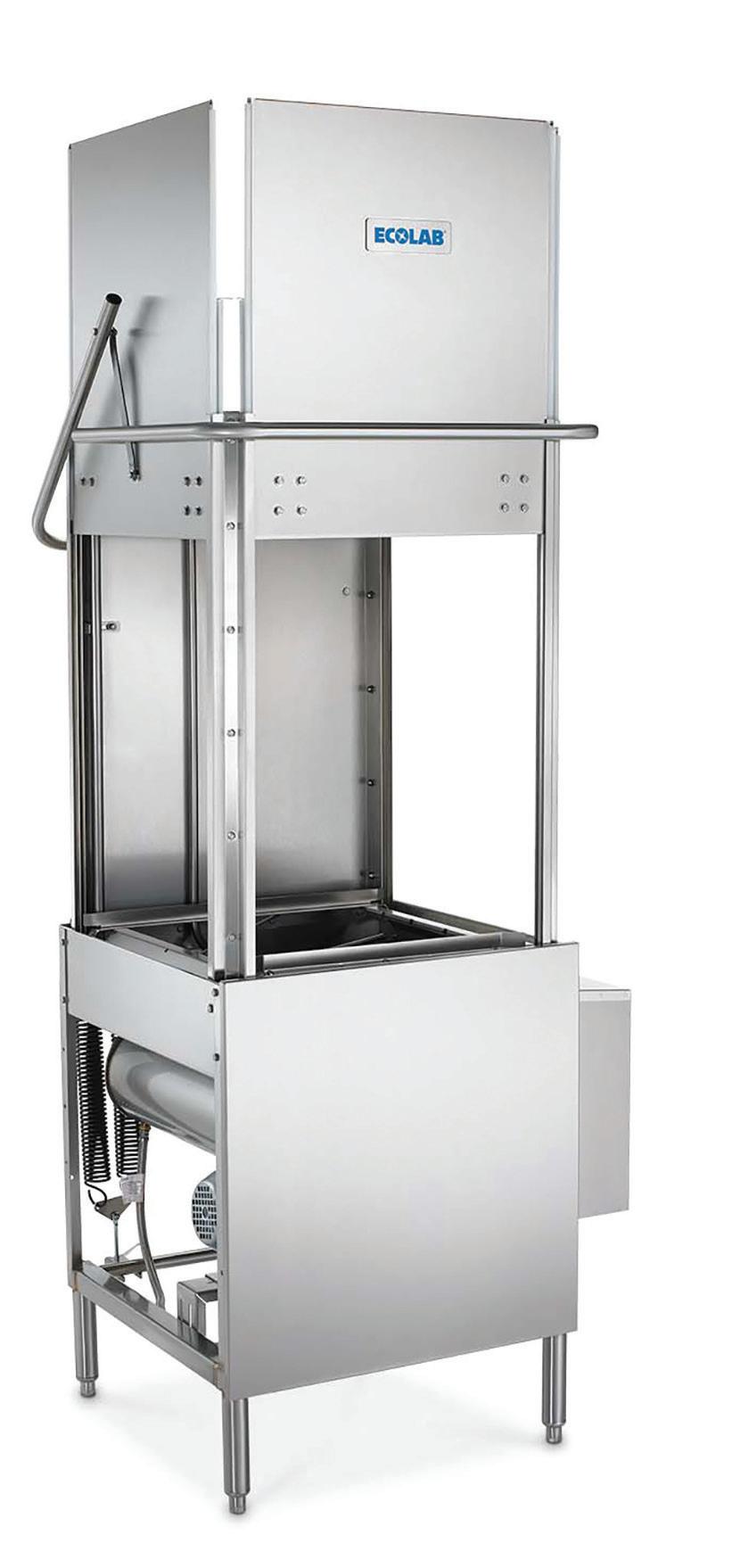
6,400 GALLONS OF WATER SAVED PER YEAR** Standard Height
Why operators are connecting cash management, payments, and reporting into one ecosystem.
SERVICE RESTAURANTS HAVE EMBRACED technology across nearly every aspect of their operations, from mobile ordering and kitchen automation to advanced pointof-sale systems. Yet for many operators, cash management remains surprisingly disconnected.
Cash counting, storage, pickups, change orders, payment processing, and reporting are often managed through separate systems and vendors. The result? Limited visibility and manual work that adds complexity for restaurant teams. QSRs survive within tight margins, which is why they’re turning to tech that can close gaps.
functioning as standalone pieces of equipment, smart safes and cash recyclers can connect to centralized reporting platforms, giving operators greater visibility into cash activity across one location or an entire restaurant network.
A connected approach can also extend beyond the restaurant’s four walls. Cash forecasting tools help operators maintain appropriate cash levels, reducing the risk of having too little cash available for daily operations or too much cash sitting on-site. Combined with armored transportation services for cash pickups and deliveries, forecasting can help create a more efficient cash cycle from the register to the bank.
Modern smart safes and cash recyclers help streamline cash handling at the store level. Smart safes provide secure cash storage while automating deposit verification and creating an electronic record of funds. Cash recyclers take efficiency a step further by automatically dispensing and accepting cash, reducing manual counting and helping ensure employees always have the right amount of change available.
The real value emerges when these technologies work together as part of a larger ecosystem. Rather than
For restaurant operators, visibility is just as important as efficiency. Platforms such as Loomis Direct provide access to reporting and cash management data in a single location, helping operators better understand cash movement, deposits, and activity across their business. When paired with modern POS technology and payment processing solutions such as Loomis Pay, operators can gain a more complete view of both cash and digital payment activity. There’s even technology that can connect your smart safe to existing systems your restaurant already uses. For example, Loomis Edge is a physical device that allows for streamlined communication between systems. What makes a device like this worth it is the simple setup, real-time responsiveness, and adaptability.
Support also plays an important role in keeping operations running smoothly. Because Loomis manufactures its own smart safes and cash recyclers, services its own armored fleet, and provides around-the-clock customer support, operators can work with a single partner across multiple aspects of their cash management program.
As restaurants continue investing in technology, the goal should not simply be adding more tools. The greatest value comes from creating an ecosystem where cash management, payments, reporting, and support work together. Does a more connected payment ecosystem sound like something your operation could benefit from?
Running a busy restaurant, you know that every detail matters—from nailing lunch rush and customer satisfaction to keeping costs in check. Top brands in the industry face the same challenges, and many have found a smart solution with SafePoint® by Loomis.
They rely on SafePoint® for the accuracy, speed, and reliability needed to handle high volumes of cash without the usual headaches. It’s a smart business decision: less time spent on manual counting, fewer discrepancies at the end of the day, and even faster access to funds. It’s a solution that works for those at the top, and it can work for you too.
How the biggest names in the industry handle their cash. Save
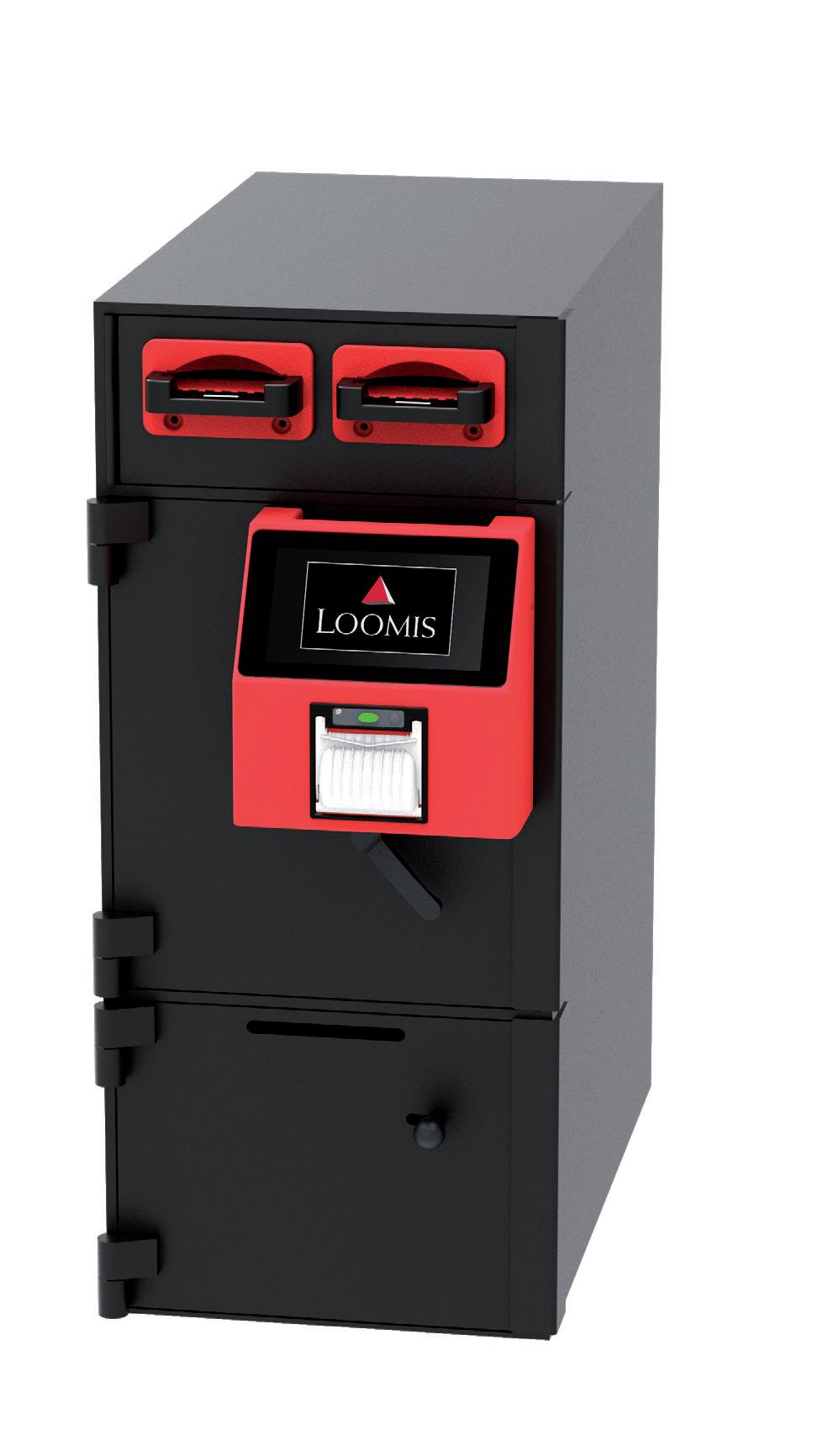
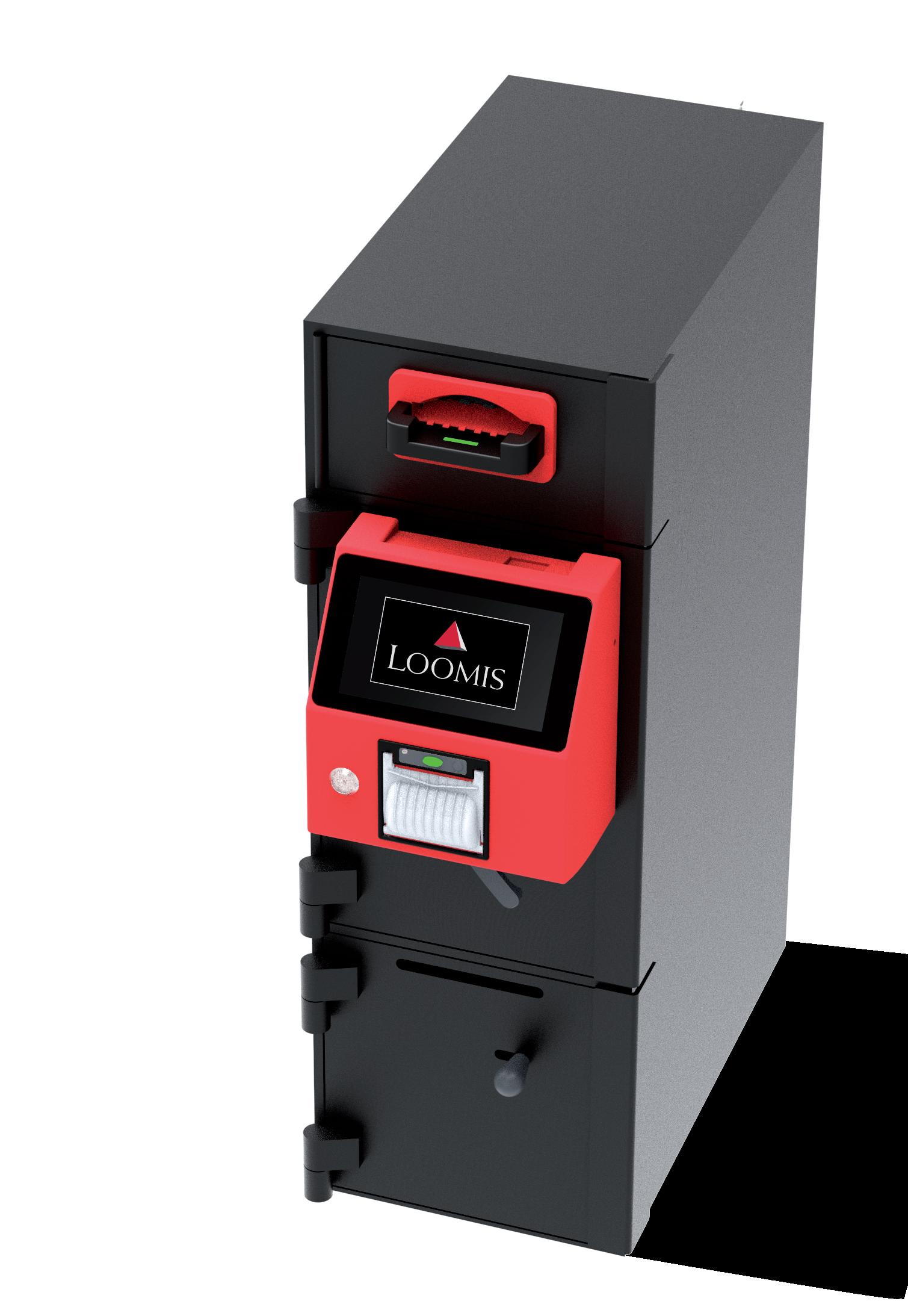

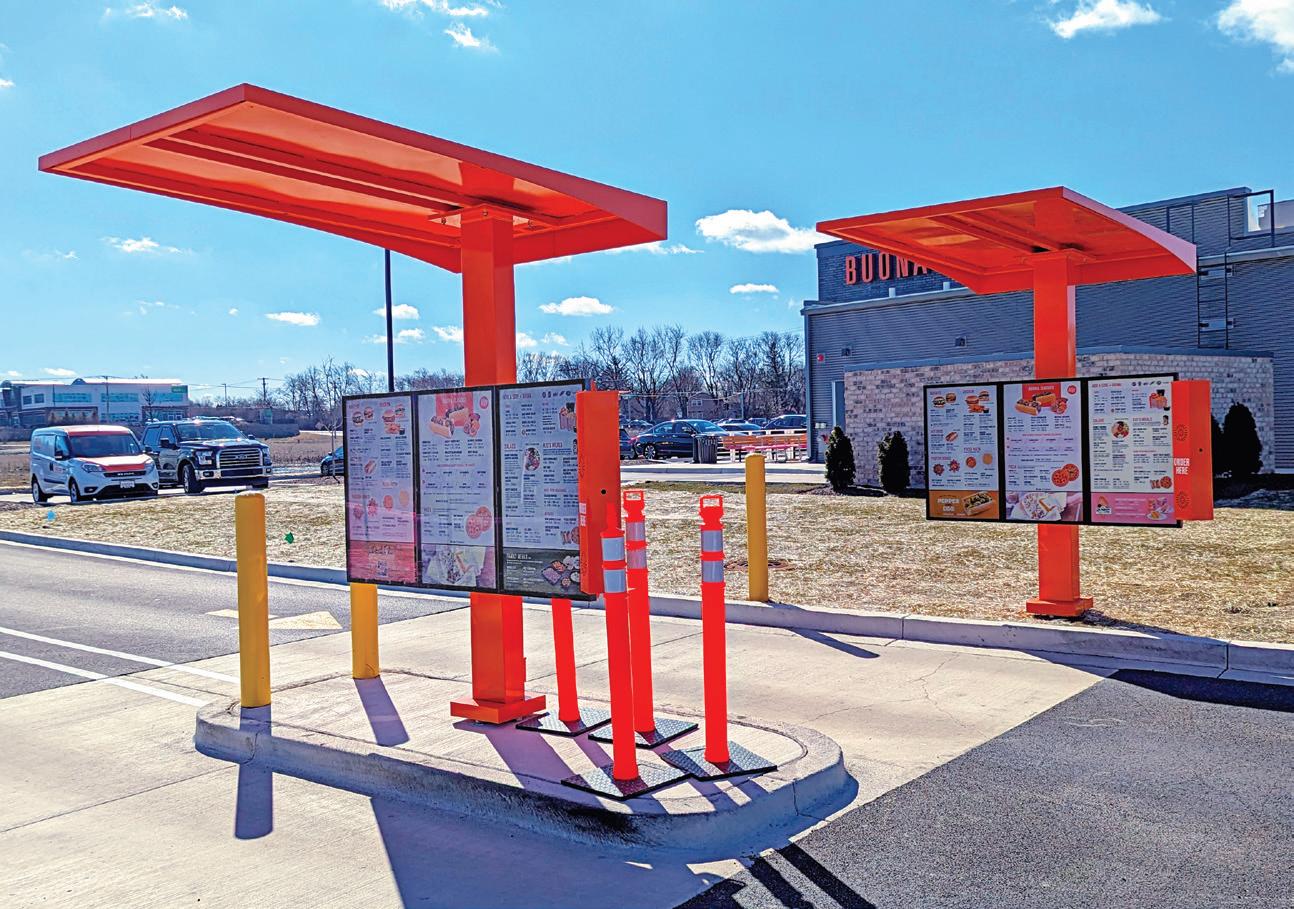
AND INSTALLER of custom indoor and outdoor digital kiosks, display enclosures and drive-thru digital menu boards, continues to win quick-service restaurant modernization projects throughout North America, with especially strong momentum in its hometown region. On the heels of a recent wins announcement with Chicago-area barbeque chain The Patio, Palmer Digital Group announces that Chicago-area fast casual chain Bouna Beef will install its turnkey outdoor digital menu board systems at most locations, beginning with two dual-concept locations with Rainbow Cone.
Founded in 1981, Bouna Beef brings Chicago flavors including its signature Italian beef sandwich to 26 restaurants in surrounding communities. In late 2022, Bouna Beef joined forces with regional institution Rainbow Cone, which in 1926 opened its original Chicago location and today operates 10 stores, including one in Florida. One of these locations, in Valparaiso, Illinois, represents the first Bouna Beef/ Rainbow Cone dual-concept franchise; a second in Orland Park opens in June.
The dual-concept franchise initiative, along with changing consumer habits, inspired Bouna Beef to re-evaluate
their drive-thru operations. The marketing team was equally invested in the idea, given the challenge of updating multiple, differently sized static message boards in a timely manner.
“It’s not easy to replicate signage for limited time offers when some signs are one to three inches shorter than others, and your signs vary between single, double and triple-panel configurations,” says Mark Kearins, IT director for Bouna Beef. “That leaves the marketing team scrambling to create temporary signage for a variety of dimensions, many of which are unique to one site.”
The Bouna Beef team found their answer upon entering Palmer Digital Group’s booth at the 2022 National Restaurant Association Show. The company soon ordered two triplepanel canopy systems for its Valparaiso location—one for each drive-thru lane—and soon after committed to a larger order for Orland Park, which adds single-panel preview boards. PDG will also customize the Orland Park canopy menu board structure with the brand’s enduring pink and purple colors famous to its customers.
Kearins said that while Bouna Beef managed the Valparaiso installation in-house, they are outsourcing the Orland Park installation work to Palmer Digital Group. “They have an installation team with experts that understand the electrical and network infrastructure, so we don’t need to bring in a lift to put the canopy systems in place,” says Kearins. “As we start rolling out menu board systems to other locations, which we intend to do, we won’t really have the bandwidth to carry the load ourselves.”
Kearins expects to use PDG’s QSRDSMB346-CANOPY systems at most locations, which have three integrated 46-inch Samsung displays and offer overhead shade and protection from wet weather as customers place their orders. Preview systems will favor single-panel pedestal designs that can be lifted into place and securely mounted by two technicians. They are also in talks to install indoor digital menu board systems at several locations, along with “marketing TVs” for promotional digital signage inside Rainbow Cone locations. ◗
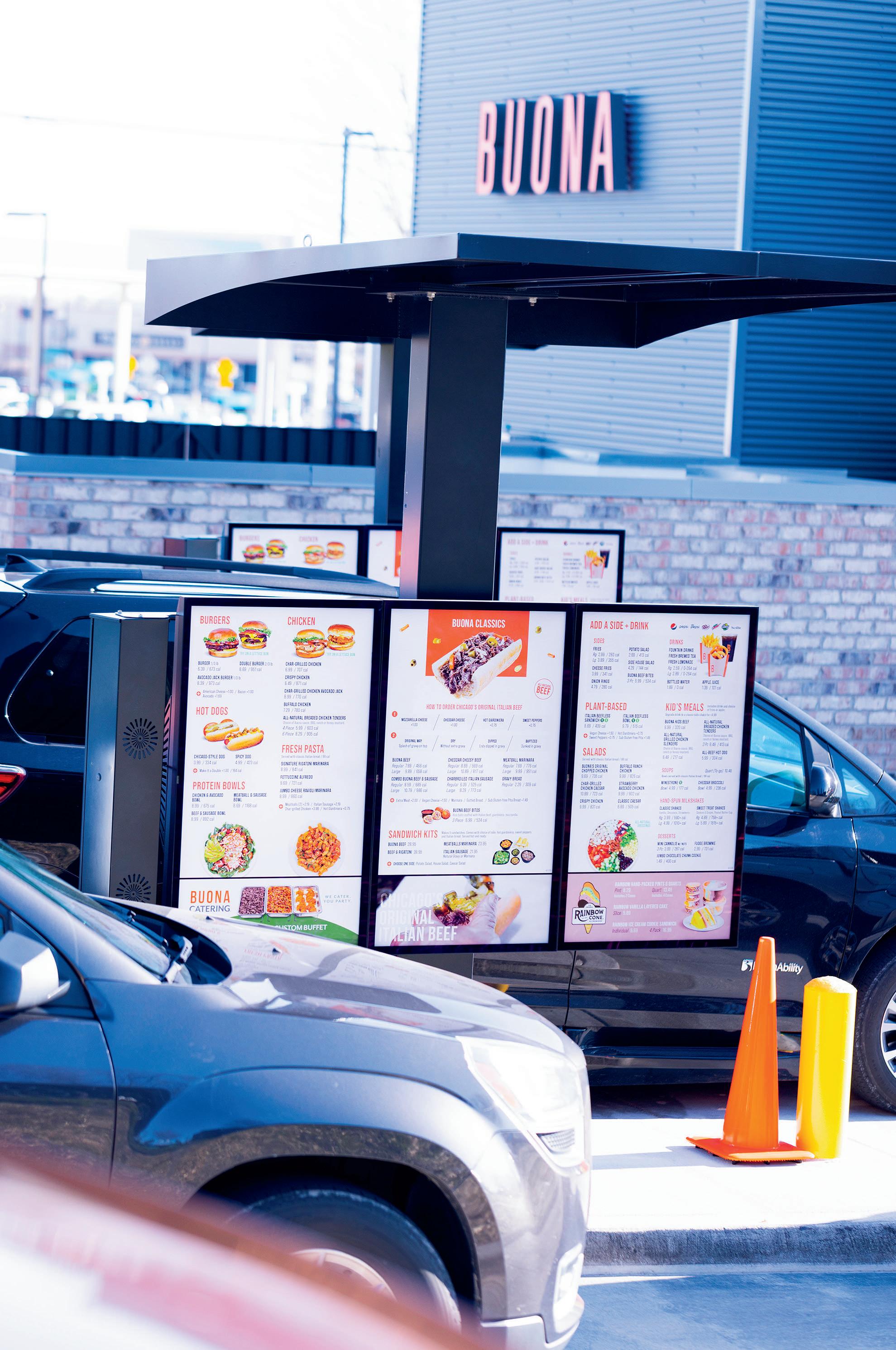

with PDG’s all-in-one, turnkey digital menu board solution
the drivethru isn’t just a lane—it’s an operator’s lifeline. It’s where 70 percent of revenue flows, and when it’s moving, business is thriving. But when a headset crackles into silence or a timer glitches during the lunch rush, that lifeline is severed. Minutes turn into lost cars; lost cars turn into vanished margins. R.F. Technologies, Inc. (RFT) believes a brand’s technology should be invisible—working flawlessly so teams can focus on the customer.
Every operator has been there: a system fails, they call for help, and they’re trapped in a “Press 1 for Support” nightmare. Not with RFT. Skip the automated menus. Real people staff RFT’s 24/7/365 support—technical specialists who know exactly how a drivethru should run. When a lane is down at 11:00 PM on a Saturday, operators do not need an AI chatbot; they need a human being with the technical grit to get employees’ headsets buzzing again.
In a “throwaway” culture, RFT stands apart. Why spend thousands on a new system when your gear just needs a professional touch? We specialize in all brands, restoring headsets from every major manufacturer to factory-spec excellence. RFT’s program is built for quick-service restaurant speed: 24-hour turnaround, free inbound shipping, and a 4-month warranty.
Sometimes, a phone call isn’t enough. That’s where RFT’s nationwide field service comes in. It maintains a massive network of elite technicians ready to deploy to restaurants’ doorsteps. Whether it is a singleunit operator or a thousand-store rollout, RFT provides the tech service necessary to ensure brands’ infrastructure stays seamless.
Stop losing sleep over technical failures. From the first “Welcome to...” to the final hand-off, RFT is the partner protecting the operator’s drive-thru’s lifeline and powering the most profitable lanes in the country. ◗
ZERO MENUS. JUST SOLUTIONS.
No AI chatbots. No automated loops. When your drive-thru goes down late night, you get an immediate line to a live technical expert ready to fix it.
Stop throwing away expensive gear. We restore all major headset brands to factory-spec excellence with a 24-hour turnaround and an industry-leading warranty.
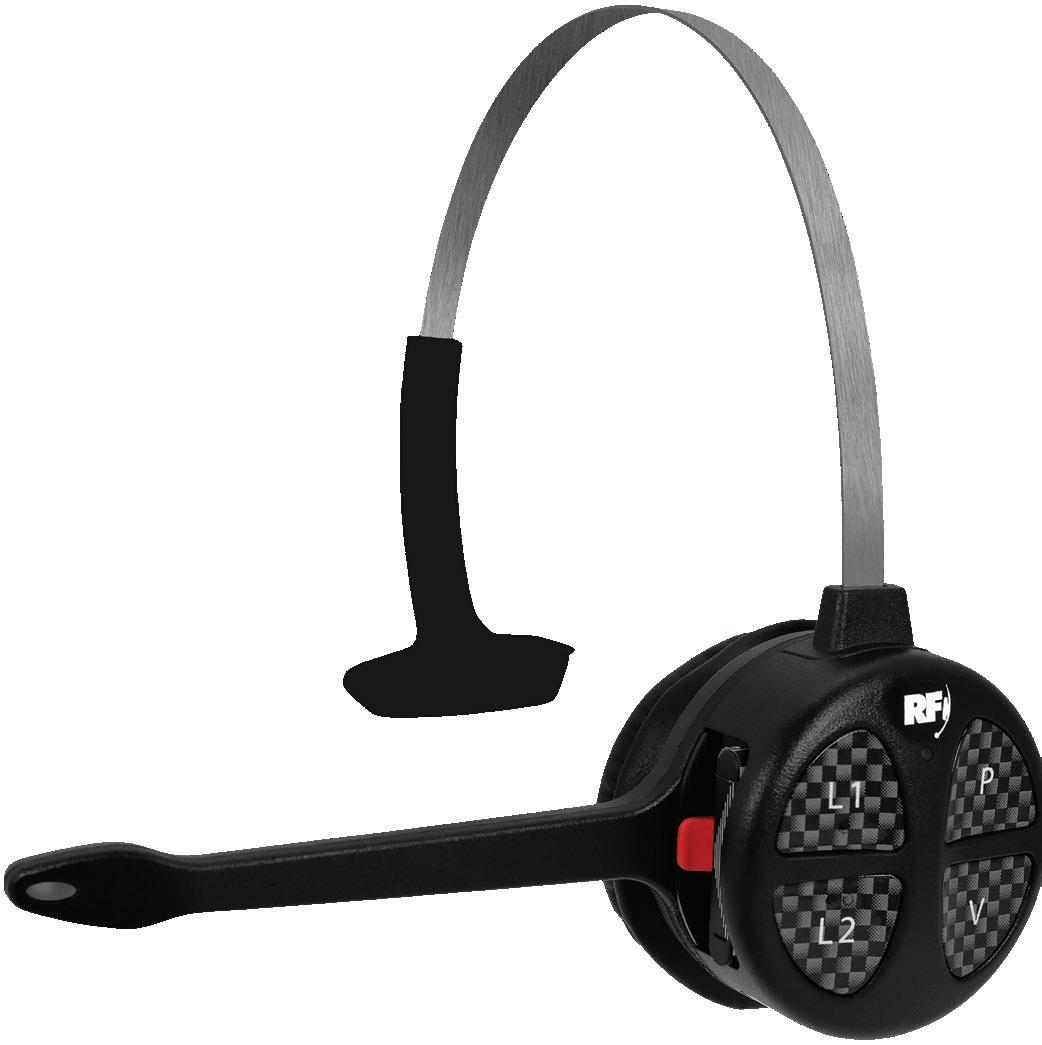
Whether you run a single location or a 1,000-store rollout, our nationwide network of elite technicians puts boots on the ground the moment you need them.

If you had told me years ago, while I was operating my own Port of Subs restaurants, that I would one day serve as President & CEO of the brand, I would have smiled and said ‘Life has a funny way of surprising us.’
Port of Subs is a 54+ year beloved legacy sub sandwich franchise brand with incredible food, richly steeped in community connection and franchisee support, that I now have the honor of leading into national expansion.
Long before I became President & CEO, I was a franchisee. That’s when I truly learned the operational side of the business—training, working alongside team members, serving guests, solving problems, and experiencing firsthand both the challenges and rewards of operating a franchise. Those years continue to shape how I lead today.
What many people don’t know is that before becoming a franchisee, I owned and operated a commercial real estate and development company. Through that work, I gained experience in site selection, financing, development, construc-
tion, and project management. I understood how to build locations and businesses, but becoming a franchisee introduced me to something entirely different—the power of franchising.
As I operated my restaurants, I fell in love with the franchise business model and everything it represents. I saw firsthand how franchising creates opportunity, provides a framework for success, and helps ordinary people achieve extraordinary things.
In 2013, I returned to Port of Subs—this time on the corporate side of the business. Since then, I’ve served in leadership roles spanning franchise development, real estate, operations, and strategic growth. Bringing the perspective of an entrepreneur, developer, franchisee, operator, and now CEO, I understand that every decision made ultimately impacts people, families, and the future they are working to build. Along the way, I’ve made my share of mistakes, and some of my greatest lessons to share have come from those challenges and setbacks.
What was your first job? My first job was at Green Meadow Country Club Golf Course in Helena, Montana, where my dad was the golf professional.
What’s your favorite menu item at Port of Subs? My favorite menu item our #10 sub - Roasted chicken breast on wheatunless our LTO bread pepperoncini/pepper jack bread is in season.
Favorite cuisine beyond Port of Subs? For sure Angel Hair pasta with spicy marinara, chicken breast and lots of special parmigiano cheese on top – and red pepper flakes. A beautiful mixed green salad with red wine vinaigrette, followed by fantastic spumoni.
Who inspires your leadership? I’ve been fortunate to have several influences who have inspired my leadership and journey. The first was my father. He taught me the value of hard work, personal accountability, and believing in yourself before you have all the answers. Throughout my career, I’ve also learned from countless franchisees, business leaders, and team members. Additionally, some of my favorite modern leadership voices are Jim Rohn, Simon Sinek, Darren Hardy and our own Adam Contos. One of the most influential people in my life has been Dave Liniger. As a mentor and friend, he has challenged me to think bigger, lead better, and pursue incredible possibilities.
What’s one piece of advice restaurant executives need to hear? People first. If you want to succeed at the highest levels, create something meaningful and build a great brand, build your people first - your teams and your franchisees.
The
most useful conversations in QSR are happening in small, private threads between operators.

Right now, inside the QSR+ WhatsApp group, operators like you are talking about these Labor Problems (and Solutions):
• An operator scaling past 10 units is getting tactical advice on hiring a #2 to take them to 50+
• There’s an ongoing debate about which training platform actually works at the store level (and why most don’t)
• Multiple operators are breaking down their payroll + scheduling stack because “all-in-one” isn’t living up to the promise
People are trading real referrals for leadership roles—on the spot. No fluff. Just operators helping operators.

If that sounds like a room you should be in: