SENIOR VICE PRESIDENT AUDIENCE GROWTH Greg Sanders gsanders@wtwhmedia.com
CONTENT STUDIO
VICE PRESIDENT, CONTENT STUDIO Peggy Carouthers pcarouthers@wtwhmedia.com
WRITER, CONTENT STUDIO Drew Filipski dfilipski@wtwhmedia.com
WRITER, CONTENT STUDIO Ya’el McLoud ymcloud@wtwhmedia.com
SmartChain
WRITER, CONTENT STUDIO Abby Winterburn awinterburn@wtwhmedia.com
ART & PRODUCTION
SENIOR ART DIRECTOR Tory Bartelt tbartelt@wtwhmedia.com
VP, CREATIVE DIRECTOR / FSR ART DIRECTOR Matt Claney mclaney@wtwhmedia.com
SALES & BUSINESS DEVELOPMENT
SVP, FOOD, RETAIL, HOSPITALITY SALES AND ACCOUNT MANAGEMENT Matt Waddell mwaddell@wtwhmedia.com 312-961-6840 VICE PRESIDENT, BUSINESS DEVELOPMENT Eugene Drezner edrezner@wtwhmedia.com 919-945-0705
NATIONAL SALES DIRECTOR Amber Dobsovic adobsovic@wtwhmedia.com 757-637-8673
NATIONAL SALES MANAGER Guy Norcott gnorcott@wtwhmedia.com 854-200-5864
NATIONAL SALES MANAGER Tom Boyles tboyles@wtwhmedia.com 662-607-5249
CUSTOMER SERVICE REPRESENTATIVE Tracy Willingham twillingham@wtwhmedia.com 919-945-0704
CUSTOMER SERVICE REPRESENTATIVE Brandy Pinion bpinion@wtwhmedia.com 662-234-5481, EXT 127 FOUNDER Webb C. Howell
Power of M&A Moves
As I write this editorial letter, I am also in the thick of sorting our annual QSR 50 report, a list showcasing the top restaurants in the country according to U.S. systemwide sales. That report will be published in August, and trust me, you’ll want to take a look at it.
Anyway, while gathering the data, I couldn’t help but think of the big QSR players—and even the casual-dining ones—and how things have shifted in recent years. It’s proof that change and adaptability is a necessity no matter how much market share you have.
In many cases, big-time restaurant chains have exchanged hands, including Potbelly being acquired by RaceTrac for $566 million, Denny’s being purchased by TriArtisan Capital Advisors, Treville Capital Group, and Yadav Enterprises for $620 million, Del Taco being taken over by Yadav Enterprises for $115 million, and Chuy’s being acquired by Darden Restaurants for $605 million. Papa Johns and Pizza Hut are also close to being taken private.
All of the above are just the publicly traded players. Other concepts like Jersey Mike’s, Subway, Tropical Smoothie Cafe, Dave’s Hot Chicken, and Nothing Bundt Cakes have switched ownership as well.
That’s not just deal-making for the sake of growth. It’s repositioning. It’s brands recognizing that the playbook that worked five or 10 years ago may not hold up in today’s environment. Private equity firms, large operators, and strategic buyers are stepping in not just with capital, but with a mandate to rethink operations, streamline portfolios, and unlock value in ways legacy structures sometimes can’t. In many respects, these deals are less about expansion and more about recalibration and figuring out what a brand should look like for the next decade, not the last one.
At the same time, we’re seeing stress points across the system that show just how challenging the current landscape is. Franchisee bankruptcies, unit closures, and operational disputes are becoming more visible, even among established brands. Rising labor costs, inflationary pressures, shifting consumer expectations, and the ongoing evolution of digital ordering have created a reality where even scale doesn’t guarantee stability. The margin for error is slimmer, and execution matters more than ever.
And yet, the story isn’t one of decline. It’s one of transformation. The brands that continue to climb in the QSR 50 rankings are the ones leaning into change. They’re investing in technology, rethinking store formats, optimizing menus, and, perhaps most importantly, strengthening relationships across the franchise system. What stands out this year as we compile the rankings is not just who’s at the top, but how they’re staying there. Growth looks different now. It’s not always about unit count alone—it’s about efficiency, profitability, and relevance. Some brands are growing through refranchising. Others are doubling down on company ownership. Many are doing both, depending on the market.
As you’ll see when the QSR 50 report publishes, the competitive landscape remains as fierce as ever. But it’s also more fluid. Today’s leaders aren’t standing still, and neither are the challengers behind them. The gap between them is often defined not by size, but by speed. We’ll break it all down in August.
Ben Coley EDITOR
How You Can Reach Investors
The webinar highlights what it takes to stand out and secure
On May 12, QSR hosted a webinar focused on a defining challenge for restaurant brands: getting in front of the right investors—and standing out once you do. As competition for capital intensifies, both emerging and established operators are beiang forced to sharpen how they present their business, articulate their growth strategy, and demonstrate long-term viability.
The session explored how investor expectations have shifted in recent years. Growth remains important, but the conversation has evolved. Today’s investors are placing greater weight on profitability, operational discipline, and the ability to scale without compromising brand integrity. For restaurant leaders, that means aligning every part of the business—from unit economics to team structure—with a clear, believable path forward.
Another key theme centered on storytelling. A strong concept alone is no longer enough to capture attention. Brands must communicate what sets them apart in a concise and compelling way, building a narrative that extends beyond the pitch deck. That includes defining the problem they solve, the customer they serve, and why their model is built to win in a crowded field.
The webinar also addressed common missteps. Many brands struggle to balance ambition with realism, while others fail to clearly connect their growth plans to financial performance. Avoiding those pitfalls can make the difference between gaining traction with investors and getting overlooked.
The discussion featured perspectives from Josh Halpern and Darren Spicer, offering insight into how brands can better position themselves in an increasingly competitive funding environment.
Paytronix’s 2026 Loyalty Report
dives into how restaurants and c-stores are transforming loyalty through data, AI, and experiencedriven engagement.
AI-driven personalization
ENABLES BRANDS TO deliver real-time offers AND RECOMMENDATIONS
The Evolution of Loyalty Programs
• 80 percent of consumers are more likely to purchase from brands that offer personalized experiences, making customization a core expectation.
• However, only about 25 percent of customer experiences are currently perceived as truly personalized, revealing a major gap.
AI, Data, & Technology Infrastructure
• AI-driven personalization enables brands to deliver real-time offers and recommendations, improving conversion and retention rates.
• A unified data layer allows companies to maintain a single customer view across channels, increasing targeting accuracy.
• Omnichannel engagement ensures consistent experiences across mobile, in-store, and digital platforms.
• Predictive analytics can identify at-risk customers and trigger interventions before churn occurs.
• AI adoption has moved from experimental to operational, becoming a standard requirement for competitive brands.
%
Executive Summary & Industry Trends
• The report identifies the fourth visit as the loyalty tipping point, where guest return rates jump to 95 percent, compared to less than 50 percent after a first visit.
• Loyalty-driven customers account for approximately 65 percent of total revenue, underscoring their importance to long-term growth.
• The industry is shifting away from transactional loyalty toward experience-based engagement models that build emotional connection.
• Restaurants and convenience stores are increasingly converging, competing for the same guest occasions and share of wallet.
• AI and automation are now essential tools, enabling brands to scale personalization and improve retention outcomes. AFTER THE Fourth Visit RETURN RATES JUMP TO
• Emotional loyalty significantly increases customer value, with highly engaged guests generating multiple times the revenue of average users.
• Traditional points-based systems are being replaced by dynamic, behavior-driven rewards and experiences.
• Leading programs incorporate gamification, tiers, and non-discount perks to drive deeper engagement and differentiation.
CONSUMERS TREAT restaurants AND convenience stores AS INTERCHANGEABLE
Industry Convergence & Unified Loyalty
• Consumers increasingly treat restaurants and convenience stores as interchangeable, driving cross-category competition.
• Unified loyalty programs allow brands to share customer data, rewards, and engagement strategies across multiple concepts.
• Integrated systems enable single sign-on,
shared rewards, and real-time personalization across brands.
• Companies must balance collaboration with maintaining distinct brand identities and customer experiences.
• This convergence is reshaping the competitive landscape and redefining how brands build and retain loyalty.
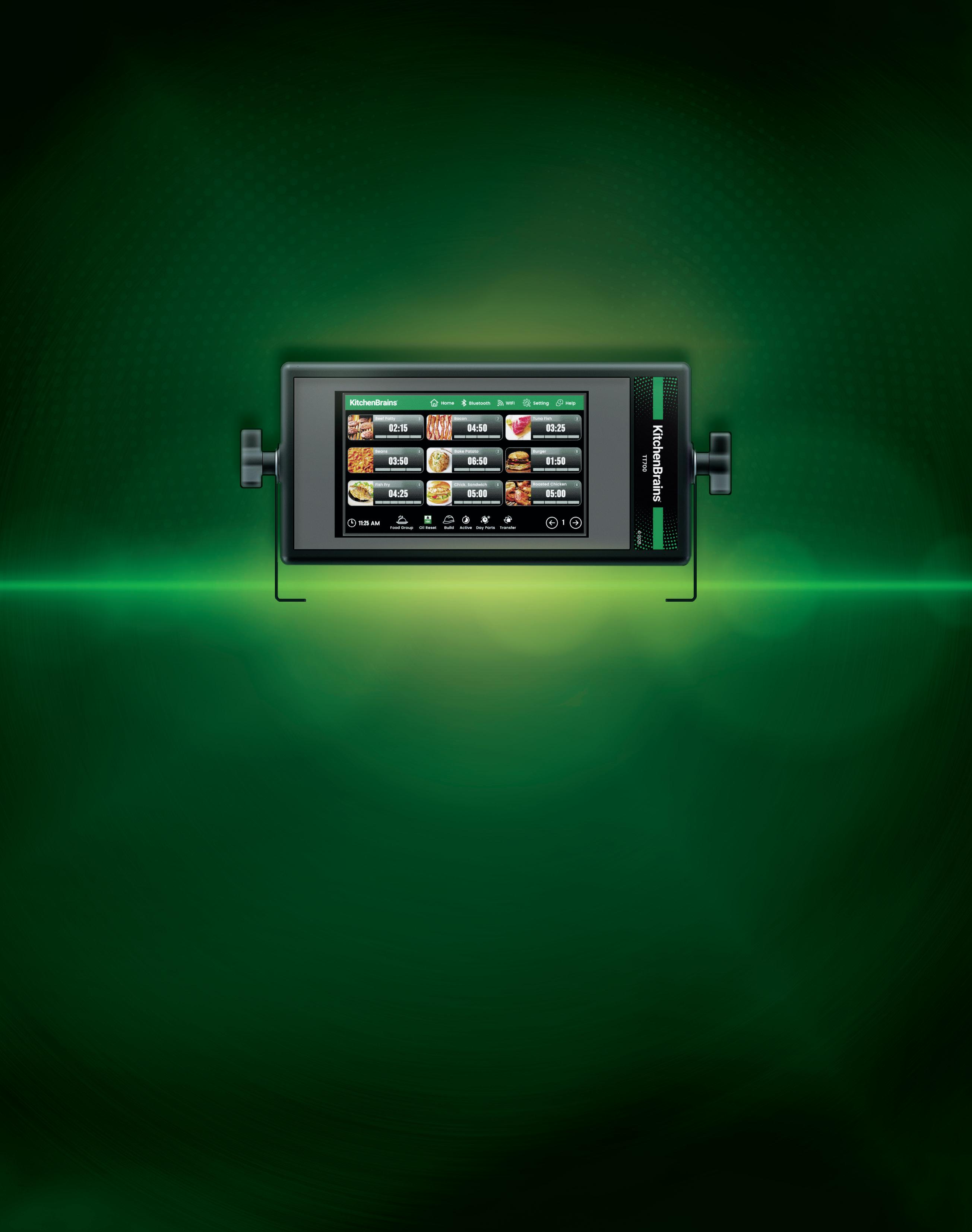
Touchscreen Timing Evolved: Experience the Future
Operate your kitchen with pinpoint precision and boost profits.
The TT-700 Touchscreen Timer transforms kitchen operations with cutting-edge technology and intuitive design.
• Conquer Peak Hour Chaos: Multi-product timing and clear alerts keep your line running smoothly, even at the busiest times.
• Ensure Food Quality & Safety: Consistent timing and temperature monitoring mean perfect dishes, every time.
• Minimize Waste: Precise control reduces food waste, directly impacting your bottom line.
• Maximize Speed: Intuitive 7” touchscreen with visual programming for fast, accurate operation.
• Real-Time Intelligence: Wireless tracking and instant “Cook More/Prep More” alerts for peak productivity.
Scan the QR code to discover how the TT-700 can revolutionize your kitchen.
QUICK REALITY CHECK
The
most useful conversations in QSR are happening in small, private threads between operators.
Right now, inside the QSR+ WhatsApp group, operators like you are talking about these Labor Problems (and Solutions):
• An operator scaling past 10 units is getting tactical advice on hiring a #2 to take them to 50+
• There’s an ongoing debate about which training platform actually works at the store level (and why most don’t)
• Multiple operators are breaking down their payroll + scheduling stack because “all-in-one” isn’t living up to the promise
People are trading real referrals for leadership roles—on the spot. No fluff. Just operators helping operators.
If that sounds like a room you should be in:
fresh ideas
JUNE 2026
BOBBY’S BURGERS TAKES PRIDE IN UNIQUE FLAVOR COMBINATIONS WHEN IT COMES TO LTOS.
GLOBAL FL AVOR, NO GUESSWORK
MENU TRENDS
Chains are layering international influences into familiar formats to drive trial and repeat visits.
BY SAM DANLEY
The menu at Bobby’s Burgers has been getting a global upgrade lately, but not in the way guests might expect.
Rather than introducing entirely new categories or unfamiliar dishes, the concept has been working international flavors into its core format.
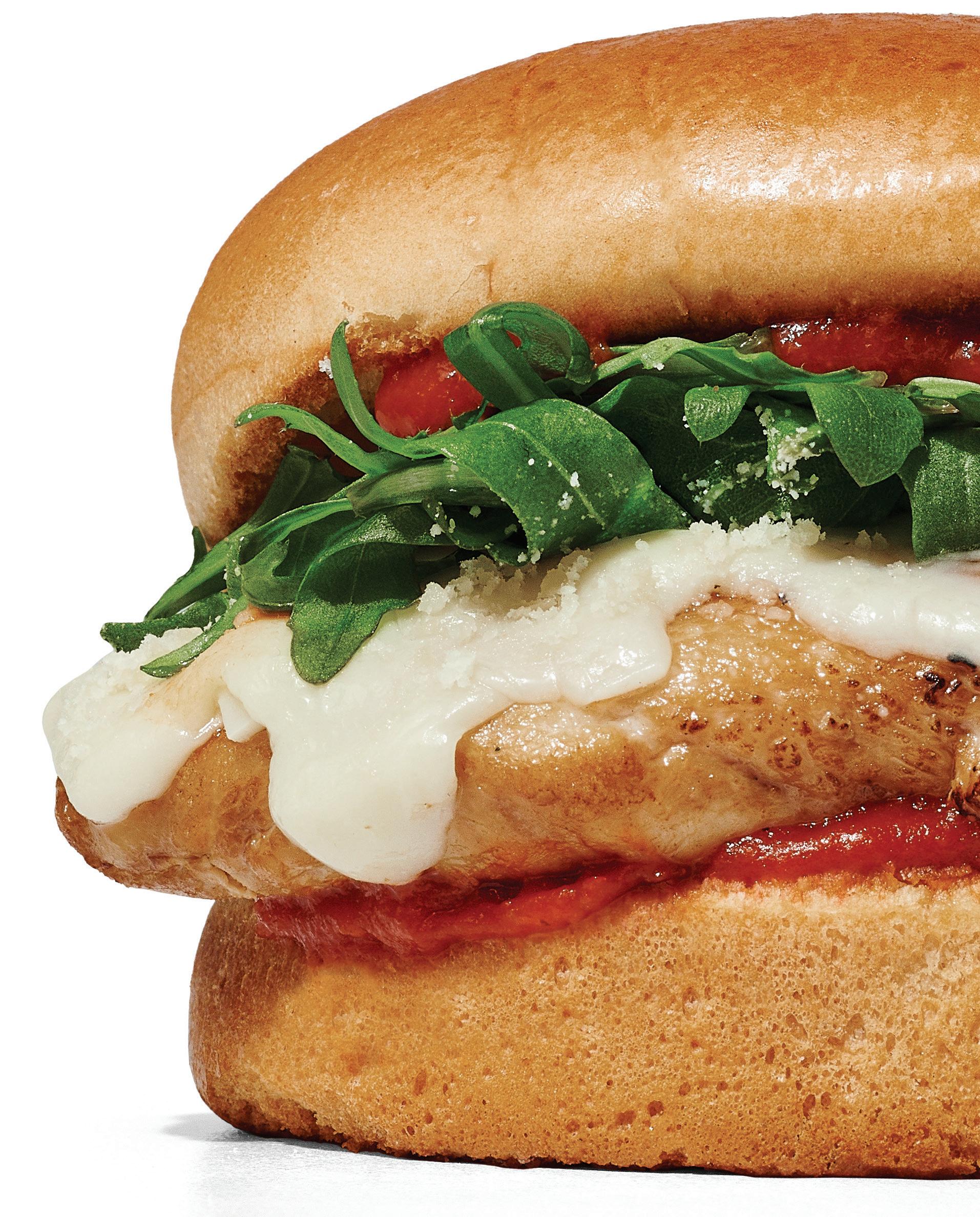
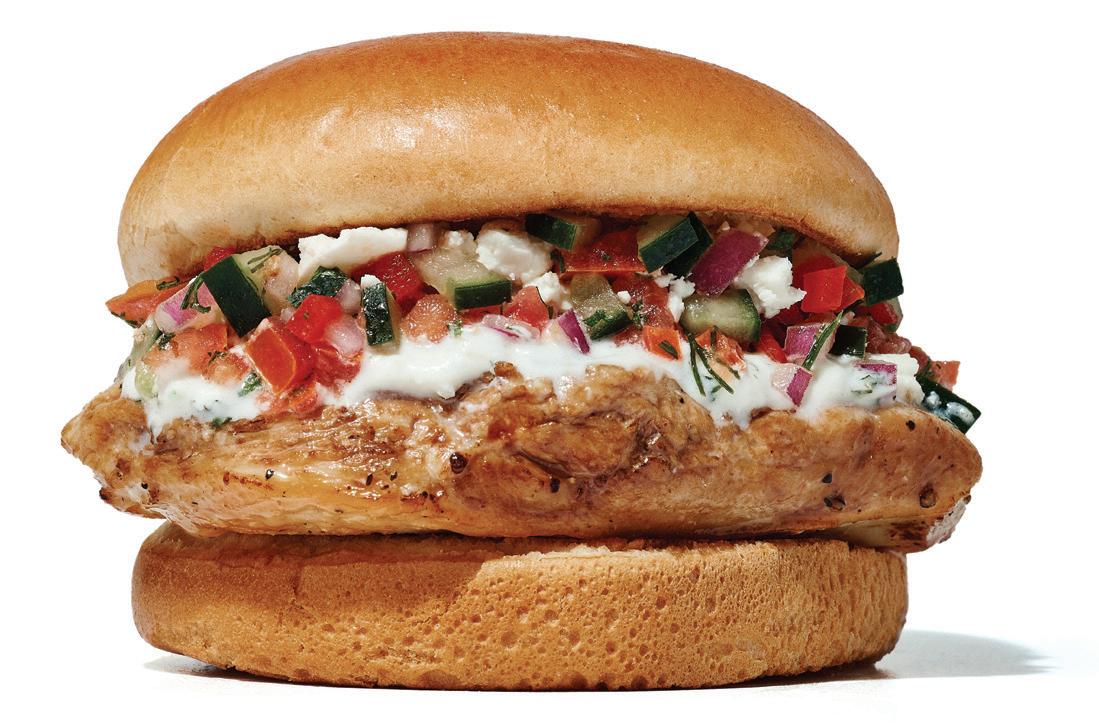
Recent limited-time offerings like the Little Italy and Greektown Burgers draw inspiration from iconic neighborhoods in New York City and Chicago known for their deep-rooted immigrant communities and culinary traditions.
“Bobby’s is a very American concept,” chef Bobby Flay tells QSR magazine, “and I like using some of the recipes to show the international influ-
ence and flavors that make sense on a burger.”
Ensuring those influences make sense goes beyond taste, he adds. As the brand’s sole culinary R&D force, Flay is focused on how each element comes together in the full eating experience.
“I’ve been a burger lover my whole life, so how a burger eats is as important to me as the flavor combinations,” he says.
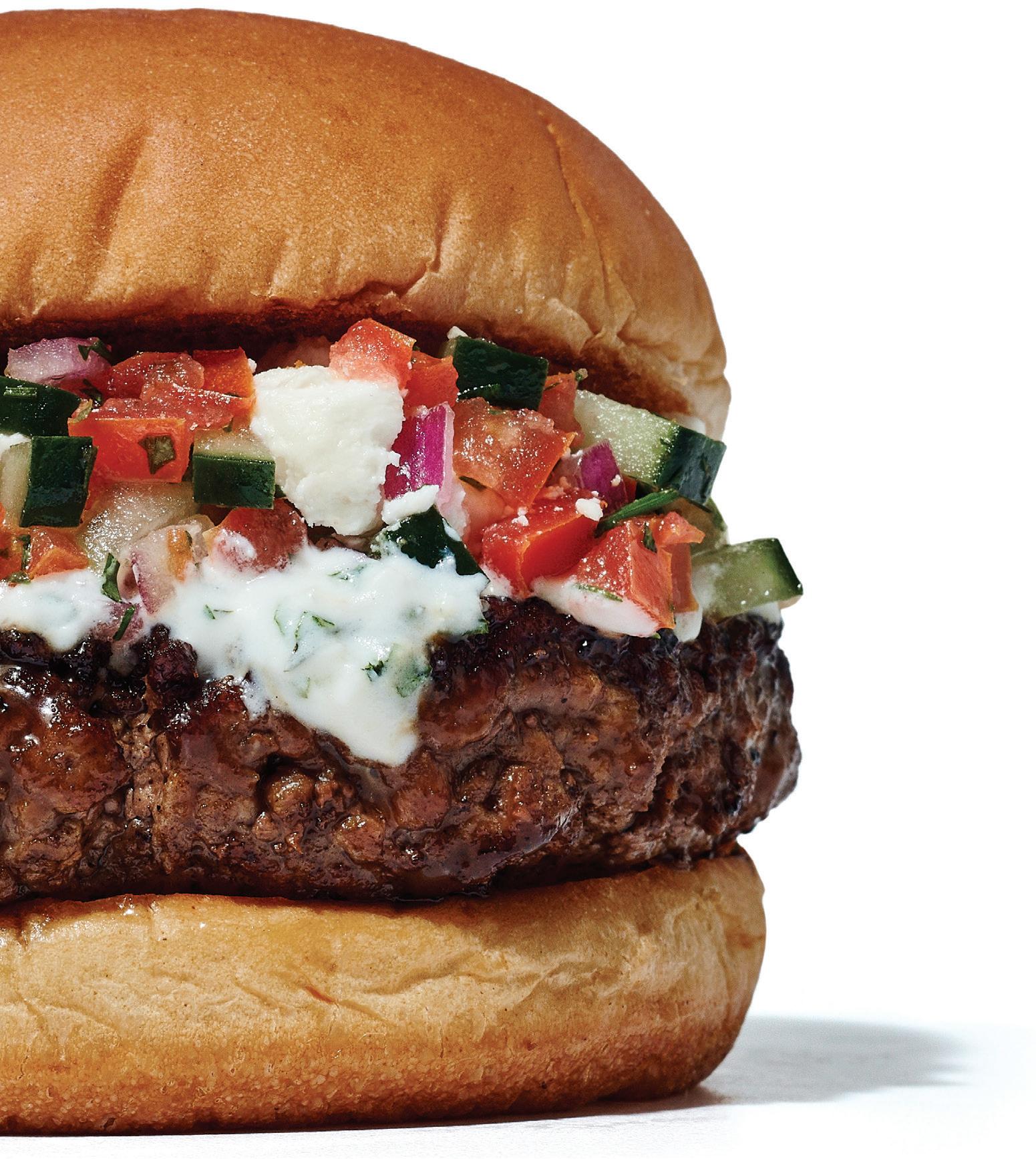
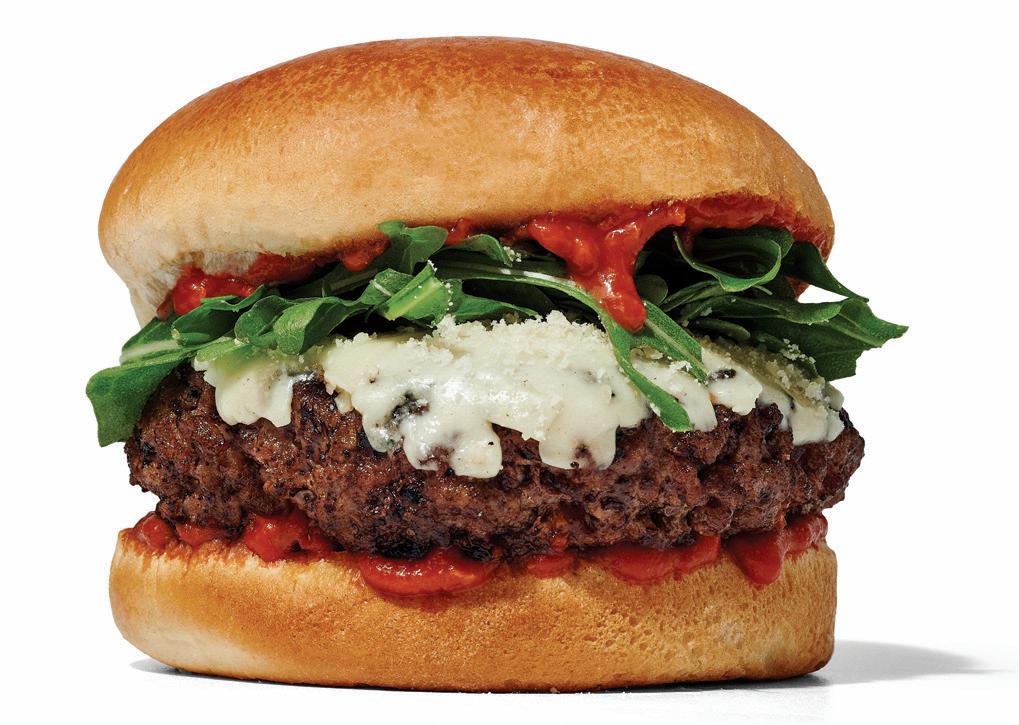
The result is a pair of builds that nod to their namesake neighborhoods while still delivering the structure and balance guests expect. This year’s Little Italy Burger features mozzarella, spicy tomato sauce, parmesan, and arugula. Last year’s Greektown Burger leaned on housemade Greek
fresh ideas
yogurt sauce, crumbled feta, and a fresh tomato-cucumber relish.
The approach is resonating. Flay says guests have been “very supportive of new ideas,” and the strong response to globally inspired builds is encouraging further experimentation. But while global inspiration can come from anywhere, execution remains grounded in a single non-negotiable: quality.
“Ingredients are key,” Flay says. “Global flavor success is based on the quality of the global ingredients. If we don’t have access to the right quality, we scrap the idea and move on to the next.”
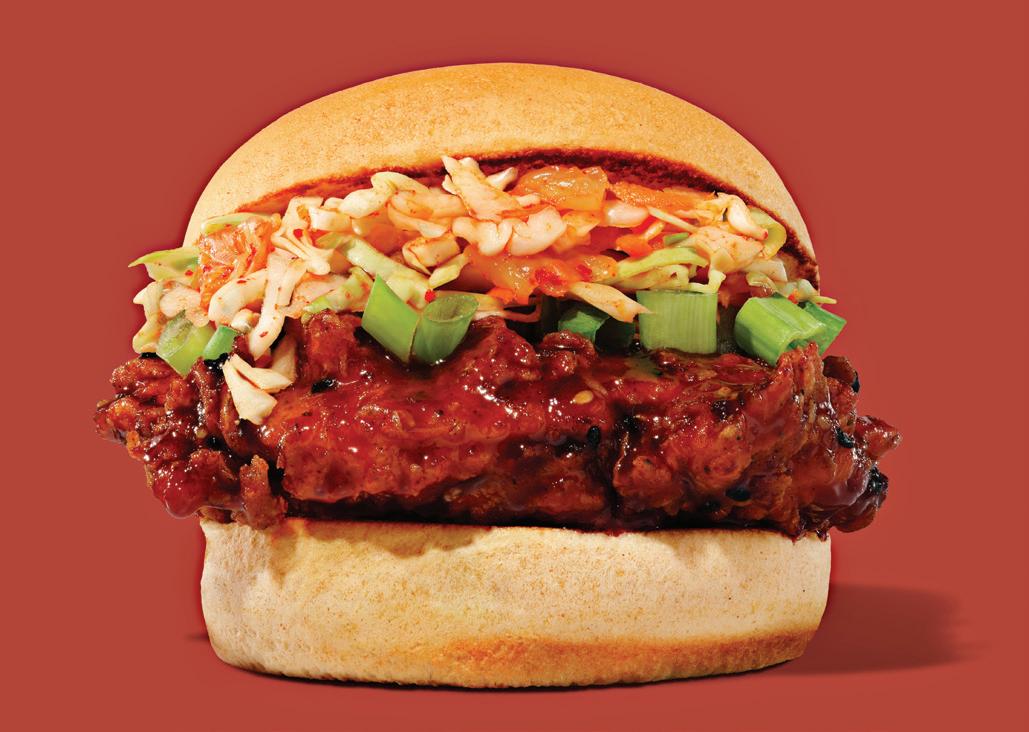
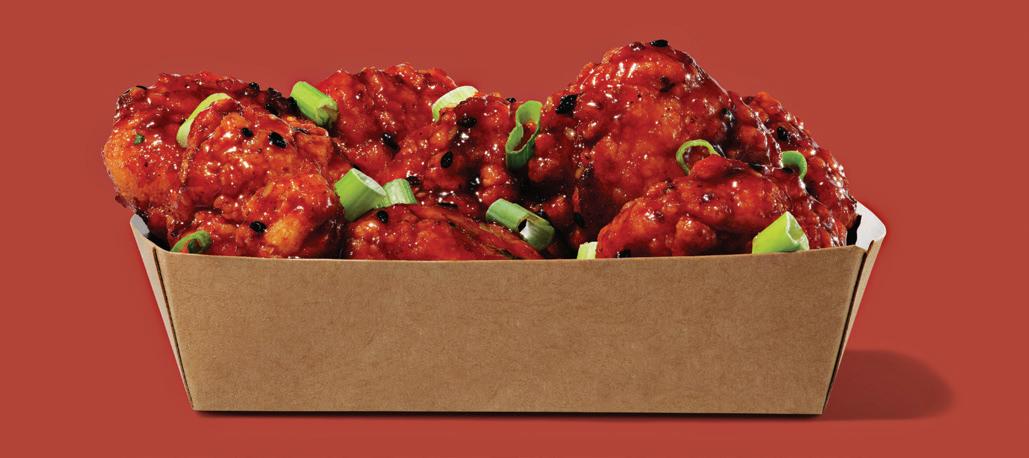
That standard gets harder to maintain at scale, where brands must align culinary ambition with consistency across hundreds of locations. At Shake Shack, that balancing act has turned global inspiration into a repeatable engine for buzzworthy, traffic-driving innovation. The brand’s Korean-inspired menu is built around ingredients like gochujang and kimchi. It returned for a third run as an LTO earlier this year, driven by strong guest demand and repeat purchases.
“Global and globally inspired foods really are not niche anymore,” says Nancy Combs, SVP of growth at Shake Shack. “When they’re done right, we’ve proven that there is definitely guest demand and that the flavors can drive real volume and repeat behavior, not just trial out of the gate.”
The platform traces back nearly a decade, when Shake Shack’s international culinary team spent time in Seoul ahead of the brand’s first location in South Korea. There, they immersed themselves in the city’s fried chicken culture, drawn to the interplay of crunch, heat, sweetness, and acidity, as well as the inherently social, shareable nature of the food.
Those learnings were translated for the U.S. market into a lineup that feels distinctly Shake Shack. The Korean fried chicken sandwich layers a spicy-sweet gochujang glaze with fresh scallions and kimchi slaw, delivering what Combs describes as a “flavor bomb” that still fits within an approachable framework.
That familiarity does the heavy lifting, she notes.
SHAKE SHACK DEBUTED ITS KOREAN MENU NEARLY 10 YEARS AGO.
“Guests are increasingly interested in global flavors, especially when they’re delivered with familiar formats,” Combs says. “When the flavors are well balanced, it kind of feels like comfort food with a twist.”
BOBBY FLAY SAYS GUESTS HAVE POSITIVELY RESPONDED TO NEW VARIETIES AT BOBBY’S BURGERS.
In the fast-paced world of QSR franchising, having a reliable financing partner can make all the difference between opportunity and obstacle. At Linsky Capital, we build long term relationships centered around trust, transparency, and a shared commitment to your success. It's why we have "clients", not "customers”. As a proud family-owned business, we treat every client like part of our family.
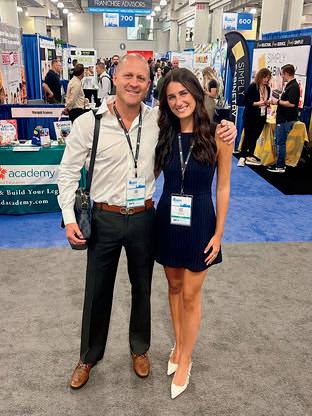
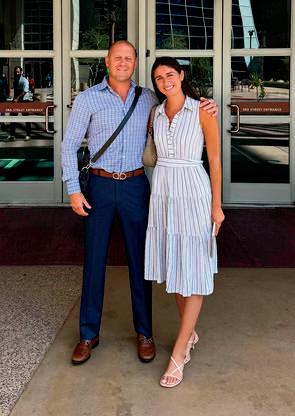
Founded by Ryan Linsky, a veteran of the franchise finance industry with over 28 years of experience, our firm was built on a foundation of integrity, deep industry knowledge, and a genuine understanding of what franchisees need to succeed. A year ago, Ryan’s daughter, Alexa Linsky, officially became a partner, continuing the family tradition of serving clients with the same unmatched dedication. Working side by side as a father-daughter team, Ryan and Alexa bring a distinctive, relationship-driven approach to franchise financing - offering creative, personalized, hands-on support grounded in the values of a family business. We want our clients to genuinely feel supported from start to finish.
Linsky Capital advises on all bankable deals, regardless of loan size, type, or location in the country.
Types of financing include:
• Refinancing
• Remodels
• Equipment purchases
• Recapitalization
• Lines of credit
• Acquisitions
• New-unit development
• Owner-occupied real estate
• Partner buyouts
• Working capital & more!
Our goal is to understand your journey - where you've been, your current position, and where you want to take your business. This insight allows us to bring you to a franchise lender best suited to support your growth. Through our network of over 50 trusted franchise lenders nationwide, Linsky Capital handles all loan negotiations and secures premier financing, so you can stay focused on running your business. Reach out to Alexa or Ryan today for an expert, free initial consultation, and discover the power of a family business who is truly committed to your success. Experience the difference!
fresh ideas
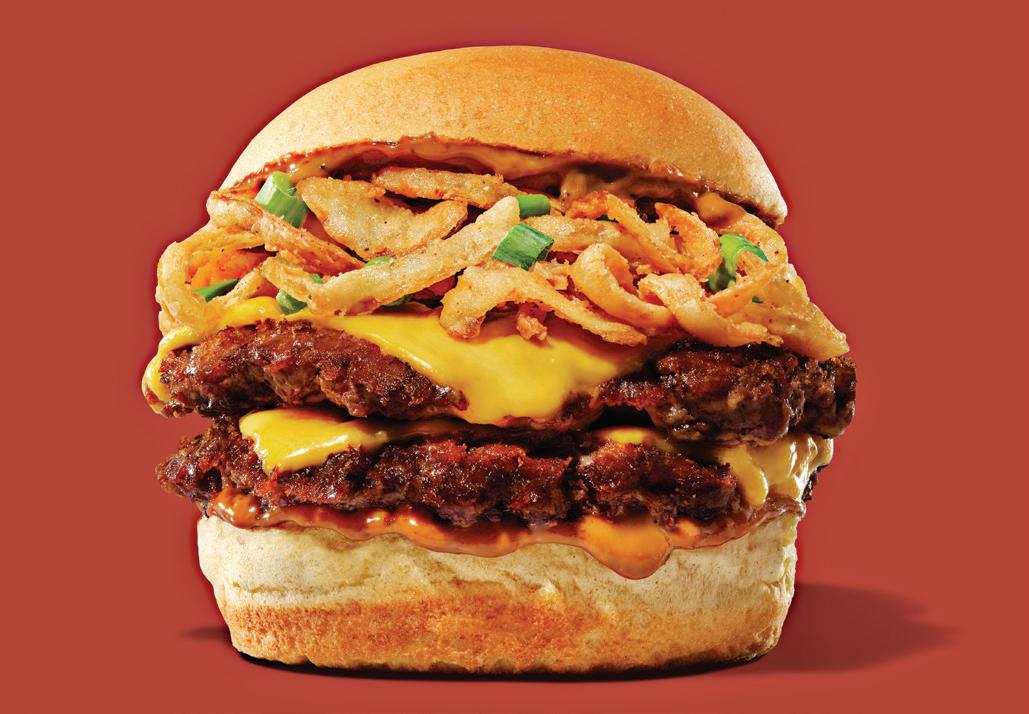
For this year’s run, Shake Shack kept its “heavy hitters”—the Korean fried chicken sandwich and Korean barbecue burger, now branded as K-Shack Fried Chicken and K-Shack BBQ Burger—while also expanding beyond those core items. It introduced K-Shack Fried Chicken Bites, coated in the same sesame gochujang glaze and served with a choice of dipping sauces, marking its first fully sauced bites offering.
Combs says the move opens the door to future sauce-driven innovation, a category increasingly prioritized by younger, flavormotivated consumers. She notes the bites deliver a sweet-and-spicy balance that creates “a more dynamic, sensory eating experience.” That same “swicy” profile has also made its way into desserts, with a limited-time spicy caramel shake.
Sweet heat has become a popular on-ramp for global flavors, giving brands a way to introduce intensity without losing approachability. It’s a strategy that also underpins Rōti Modern Mediterranean’s latest menu innovation.
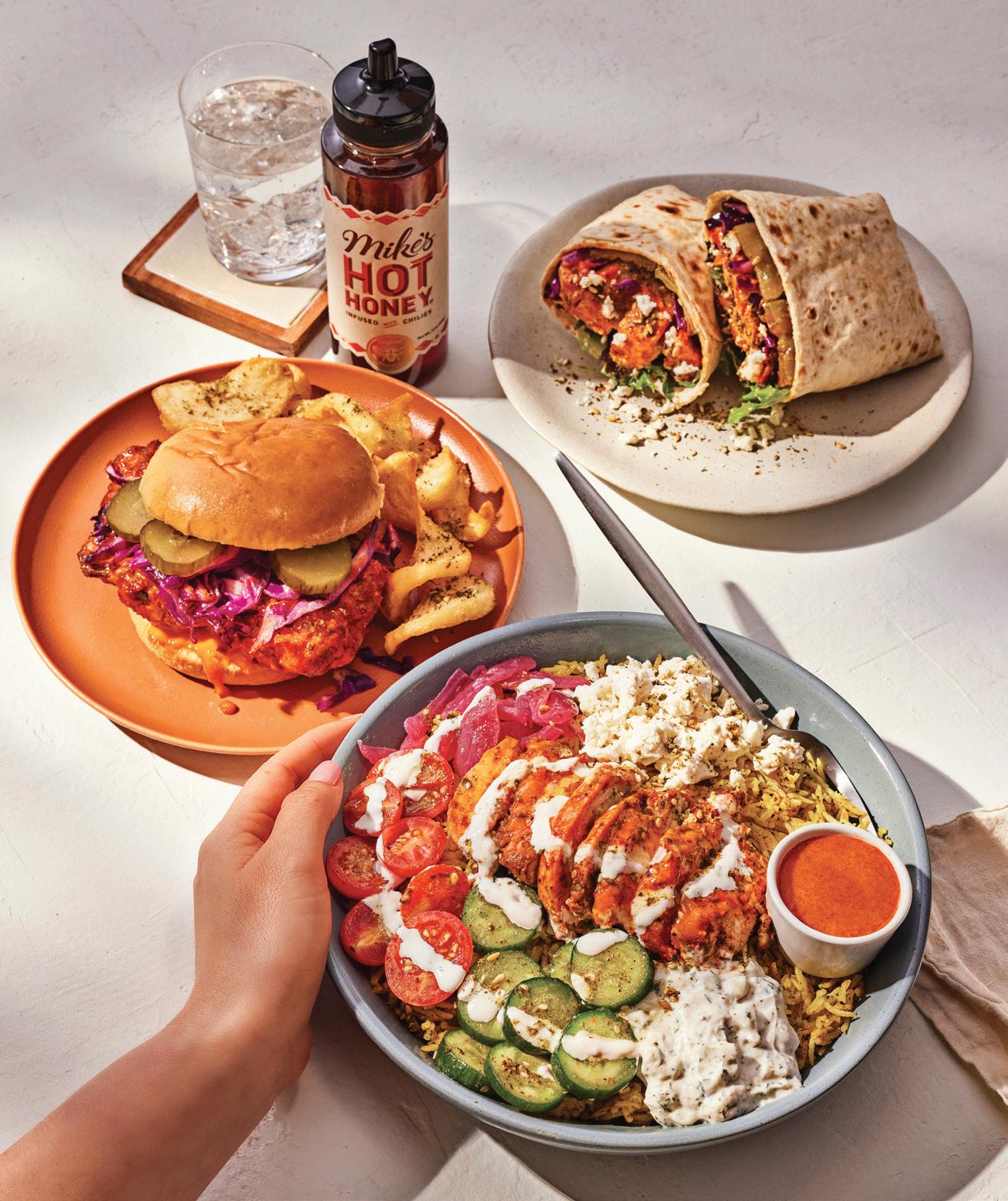
The brand’s Hot Honey Harissa platform, launched this spring, features grilled chicken in a sweet-and-spicy harissa sauce, paired with purple cabbage, pickles, and feta, with the option to add new crispy fries. For Angela Johnson, chief marketing officer at Edible
Brands, Rōti’s parent company, the idea works because it builds on what’s already core to the brand.
“Just because it’s trending and somebody else is doing it doesn’t mean it’s right for Rōti,” she says. “It has to be within our culinary DNA.”
Instead of reworking the menu, Rōti layers new flavors into formats guests already know—bowls, salads, pitas, and wraps—keeping the experience intuitive while still offering something new. And like Shake Shack, the brand used the platform to introduce a new format it hasn’t offered before. In this case, it was a chicken sandwich.
The sandwich was inspired by an internal culinary competition and pairs grilled chicken with hot honey harissa, pickles, cabbage, and a brioche bun. Johnson describes it as a slightly more indulgent entry point that can attract new guests, while the same flavor profile across bowls and wraps gives existing customers a lower-risk way to engage.
Behind the scenes, that kind of innovation is guided by a clear set of guardrails. Johnson points to three key filters for any new product: it must be authentic to the brand, it must drive sales, and it must work operationally.
“If it doesn’t meet that number one thing, it’s not even worth the time and the resources,” she says. “And then from an operations standpoint, if it requires too many new SKUs, it starts to get complicated.”
Looking ahead, operators see global flavors continuing to evolve from trend to expectation. Flay points to several countries as potential targets for future growth on quick-service menus.
“I’m noticing in my travels that impactful cuisines like Indian and Sri Lankan spices are making their way across menus,” he says. “That could certainly be the next big wave.”
To Combs, the rise of global flavors—and especially Korean, Southeast Asian, and Middle Eastern flavors on menu boards—is less a passing fad than the new baseline. She expects these profiles to keep shifting from limited-time curiosities to everyday staples, while cross-category experiments like spicy shakes and globally inspired snacks become more common.
She believes the real battleground will be sauces and condiments, where brands can take big swings with relatively low operational risk. In that world, she argues, success hinges on more than just chasing the next viral flavor:
“I think ultimately, the brands that are going to win are the ones that can make these flavors feel exciting for the guests, but also authentic for the brand, and deliver it consistently,” Combs says.
Sam Danley is the associate editor of QSR. He can be reached at sdanley@ wthwmedia.com.
ROTI DOESN’T CHASE TRENDS WHEN DEVELOPING ITS MENU.
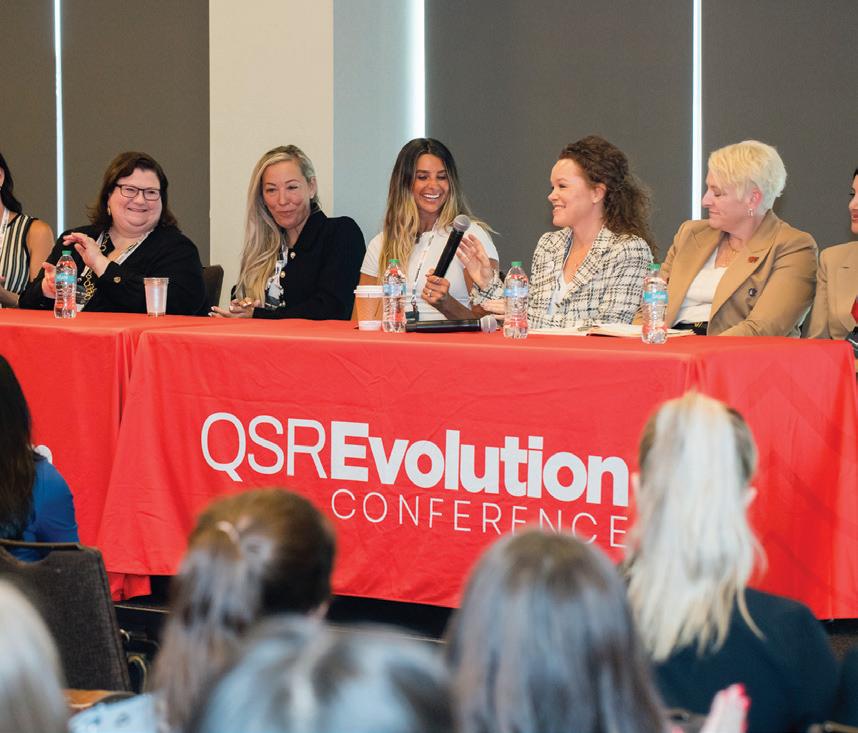
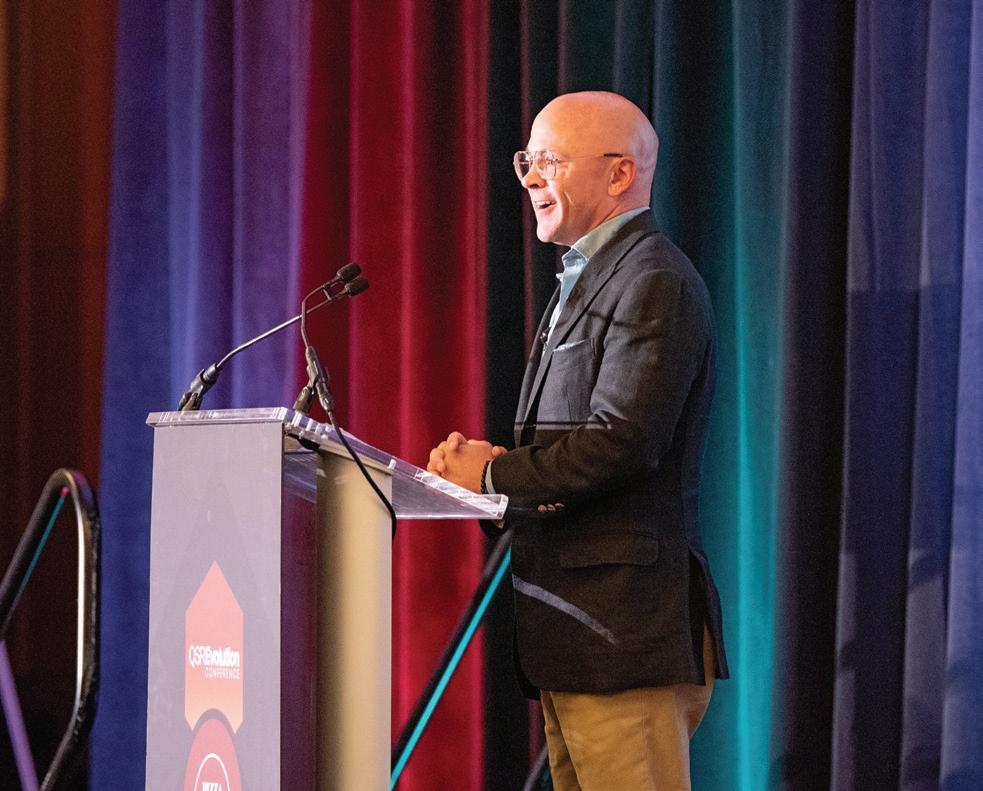
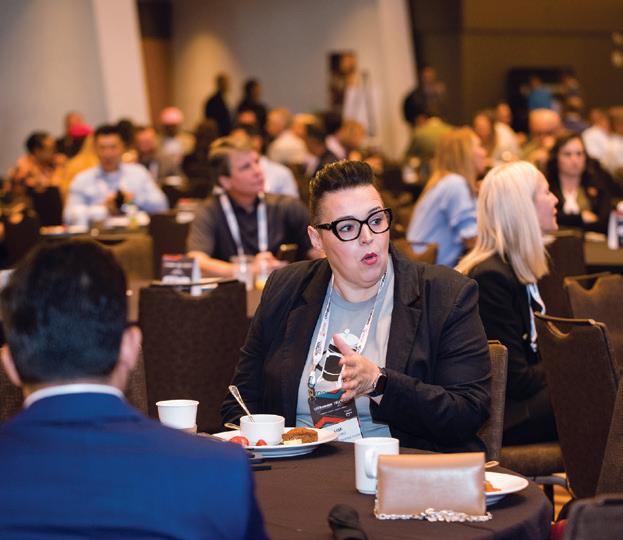
Join us for informative sessions, expert speakers, and networking opportunities. At the QSR Evolution Conference, attendees will hear and share perspectives on running the restaurant of the future. You’ll find a dedicated and high-profile roster of speakers leading discussions on growth, innovation, franchising, labor, technology, and more— all with a focus on ensuring these markets continue to thrive.
Timber Pizza Co.
How a 1967 pickup truck, a craveable hybrid pie, and an obsession with community are driving the brand forward.
/ BY BRITT ENGLER
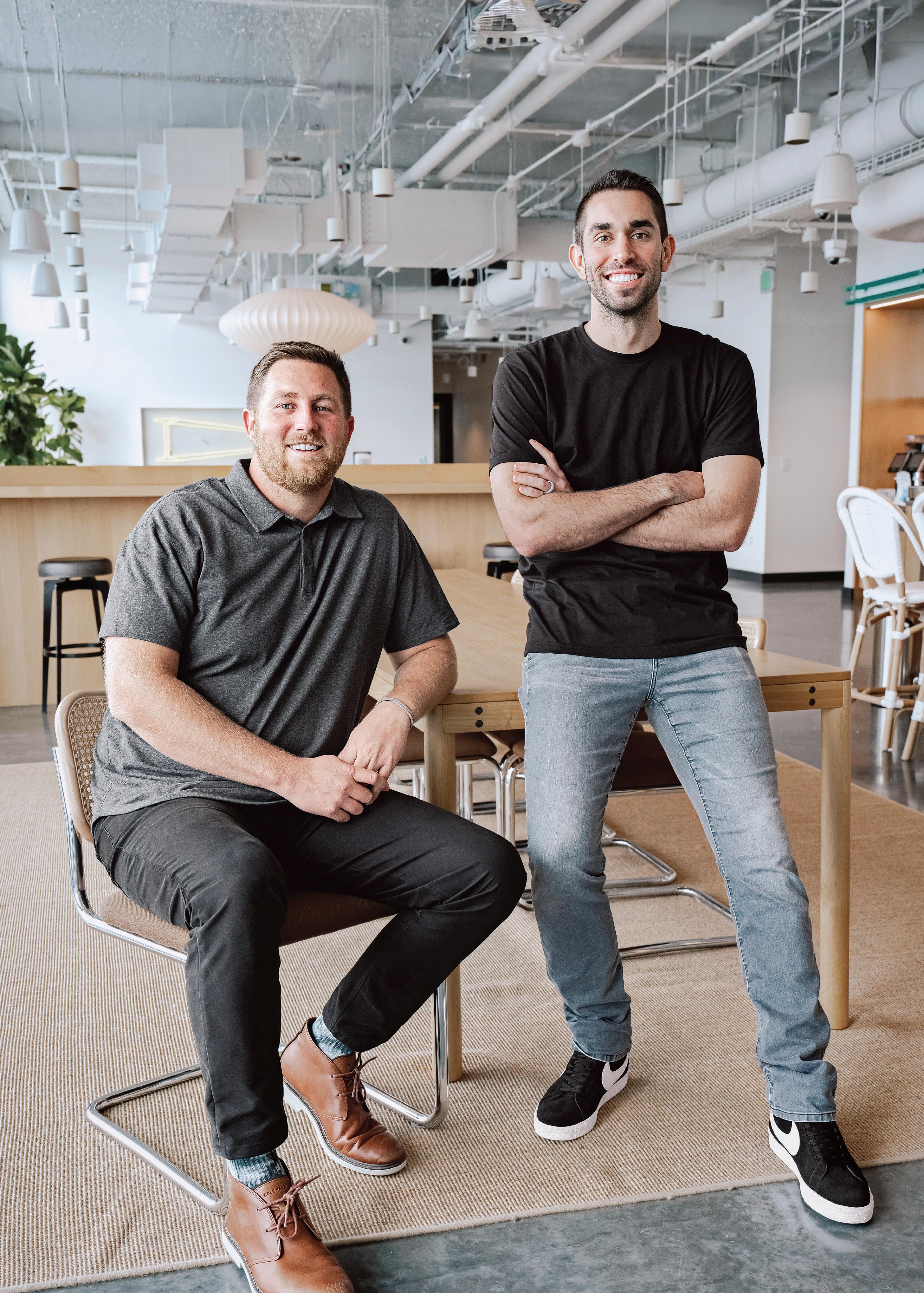
FOUNDERS: Andrew Dana and Chris Brady
HEADQUARTERS: Washington, D.C.
UNIT COUNT: 11
YEAR FOUNDED: 2014
ANNUAL SALES: $11.6 million (2025), $14.5 - $15 million projected for 2026
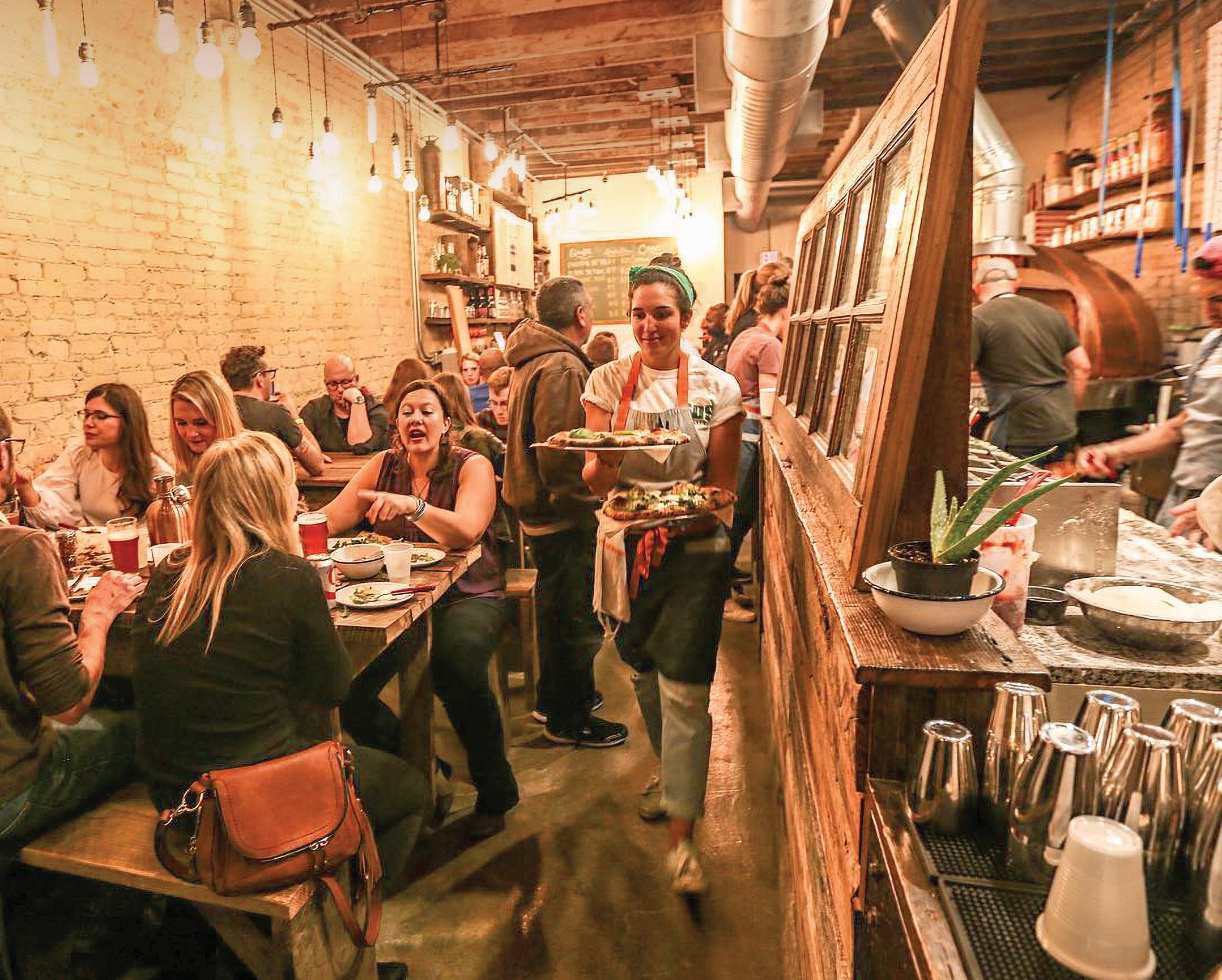
What began as a dream with a baby blue Chevy truck has grown into a multi-location pizza party expanding across the Mid-Atlantic. In their twenties, Chris Brady and Andrew Dana were frustrated by the monotony of corporate life. For Brady, his job in tech sales wasn’t satisfying his entrepreneurial spirit. He wanted to get out of the cubicle and interact with real people. Dana felt similarly, with a specific passion for pizza. Dana even wrote his grad school thesis on opening a pizza place, later using some of those techniques to help shape Timber Pizza Co. into the brand it is today.
While in Charlottesville, Virginia, for a sales trip, Brady came across a caterer who served wood-fired pizzas at weddings. This chance encounter would be the final push he needed to leave the corporate world. He picked up the phone, called Dana, and the vague, long-lunch conversations about leaving corporate America suddenly became the foundation for a real business.
“That was the lightbulb moment in January of 2014, where I was like, we should do this right,” Brady says. “Over the next four months, we bought a ‘67 baby blue Chevy, a wood-fired pizza oven from Colorado, and went out there to kind of a pizza camp
and learned the basics of dough, fire, and trailering in the oven and getting around safely, and just went for it. And sure, four months after that, we were selling pizza around the streets of D.C. and having a great time doing it.”
They weren’t heavily capitalized restaurateurs with a board of directors to answer to; quite simply, they were just a pair of friends chasing the American dream. The pizza itself was born entirely out of a desire to create a pie that they, along with their friends and family, genuinely wanted to eat. They intentionally bypassed the rigid, strict ideology that
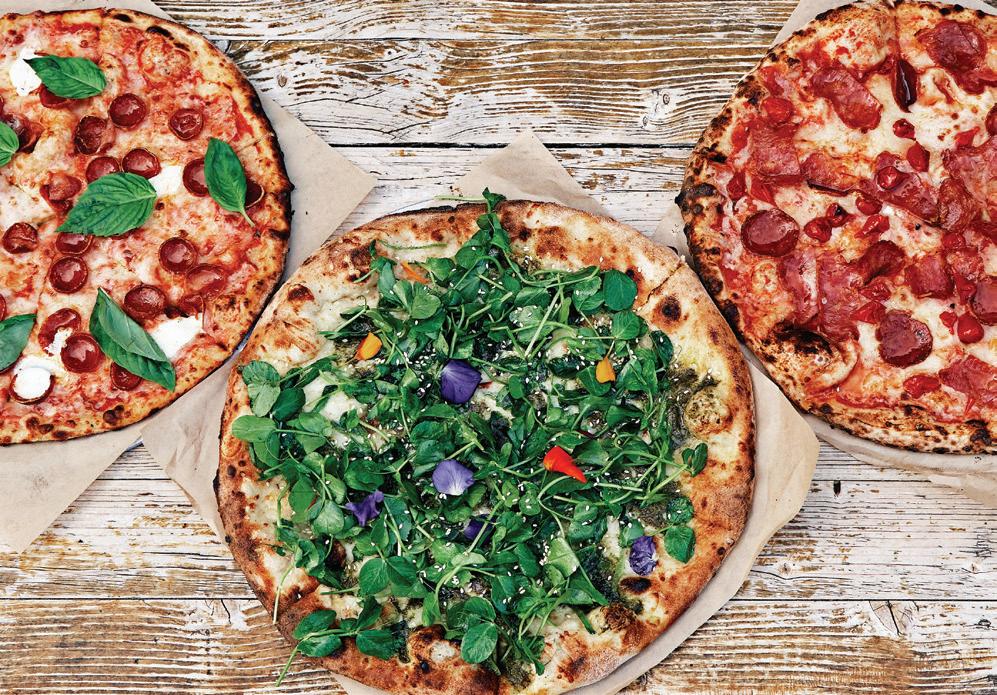
often comes with artisanal pizza-making. Instead, they aspired to build a highly craveable recipe, blending the bite of a classic New York slice with that of Neapolitan wood-fired pizzas.
“We never took ourselves too seriously. We’re not chefs,” Brady says. “We just wanted to have fun, make great pizza, and give people a great experience.”
The business grew, and soon, menu research and development became more purposeful. In the early days, menu development meant brainstorming with fresh finds from the local farmers’ market and serving pizzas to office
CHRIS BRADY
TIMBER PIZZA CO. WAS FOUNDED IN 2014.
Composing Clarity at Scale
Angela Yochem brings structure, rhythm, and intention to Krispy Kreme’s evolving digital transformation strategy.
/ BY SATYNE DONER
AANGELA YOCHEM
BECAME KRISPY
KREME’S GLOBAL
CHIEF TECHNOLOGY AND PERFORMANCE OFFICER IN DECEMBER 2023.
ngela Yochem has spent her career at the intersection of technology and transformation, but what continues to drive her is something more human: the power of innovation to reshape how people experience the world around them.
Across executive roles in healthcare, logistics, and rent-to-own industries, Yochem has built a reputation for translating complex technology into meaningful business outcomes. Time and time again, she has been drawn to how digital advancements can unlock new models, elevate consumer expectations, and deliver sharper, more actionable insights.
The restaurant industry, in particu-
lar, captured her attention—an industry rapidly evolving in its ability to create realtime connectedness and visibility across the guest journey. Yet as innovation accelerates, adoption remains uneven, leaving significant opportunity for leaders who can bridge vision and execution. That’s what made the opportunity at Krispy Kreme so compelling.
In December 2023, Yochem stepped into the role of global chief technology and performance officer, tasked with advancing the brand’s digital and operational capabilities at scale. It was a natural next chapter—one that paired transformation with something a bit more unexpected: joy.
“The restaurant space is super interesting because, despite the headwinds we face and the evolving way in which consumers engage with us, it’s so exciting to be part of an organization that provides moments of joy to people, young and old, all over the world, in a universally loved brand with a spectacular product,” Yochem says. “It’s a once-in-a-lifetime opportunity.”
For Yochem, it is not just about implementing technology—it is about leading through it, helping organizations adapt, ascale, and ultimately show up better for the people they serve. She realized early in her career that she was “more than just a tech person” and sought out executive leadership roles.
“Regardless of industry, the strategies of any organization are reflected in its people, processes, and technology. In a position like mine, it becomes interesting to see not only how the technology is being implemented, but what the improvements and long-term ramifications are that may not be easily seen by anybody else,” Yochem says. “I realized early on that I had a unique seat from which to observe opportunities and risks and started to engage more deeply in the organizations in which I served.”
Her work supports Krispy Kreme’s larger turnaround plan, unveiled last August, which bets on digital growth, capital discipline, and franchise expansion to drive profitability. In 2025, digital sales grew 15 percent year over year, representing 22.5 percent of U.S. retail sales in the fourth quarter, supported by the Krispy Kreme app, website, and third-party delivery partnerships. The brand’s loyalty program now has more than 17 million U.S. members, driving frequency through targeted offers and personalized engagement.
“Historically, we have focused on our digital channels, which are a big part of our business. But we’re also finding it easier than ever to engage through third parties and some internal things that aren’t commercially available yet—we’re building those to address very specific needs for Krispy Kreme,” Yochem says. “There’s movement in the technology space across our organization… we have so many savvy, citizen techies on board.”
But for a brand built
ANGELA YOCHEM
How a 2,100 Location Chain Increased Orders by 50 Percent in One Year
Rethink how a high-demand ingredient shows up in the kitchen.
In a world where kitchens are busier and stretched thin—with labor shortages, high turnover, and rising food costs—even the simplest ingredient can either help or hurt. Cheese, for all its rich flavor and universal appeal, can slow down a line if it’s not easy to handle or portioned consistently.
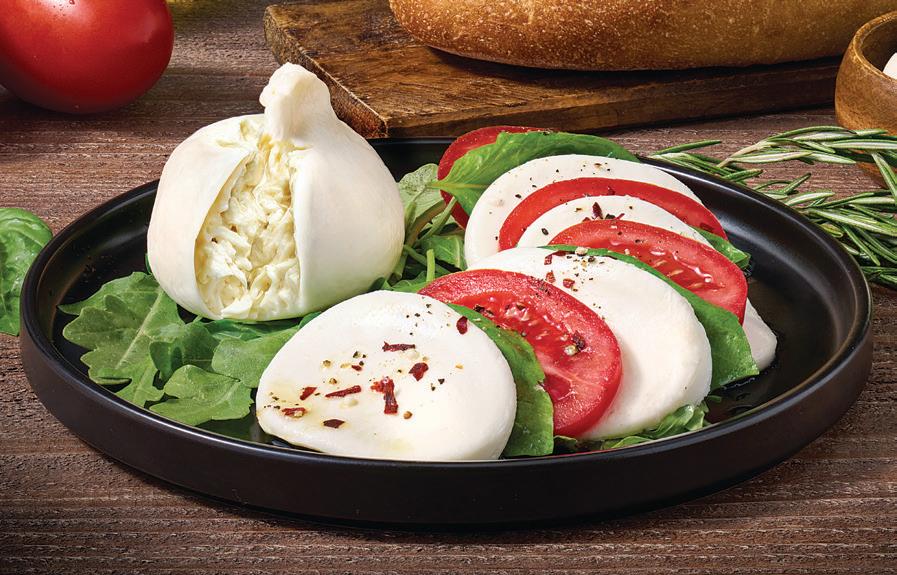
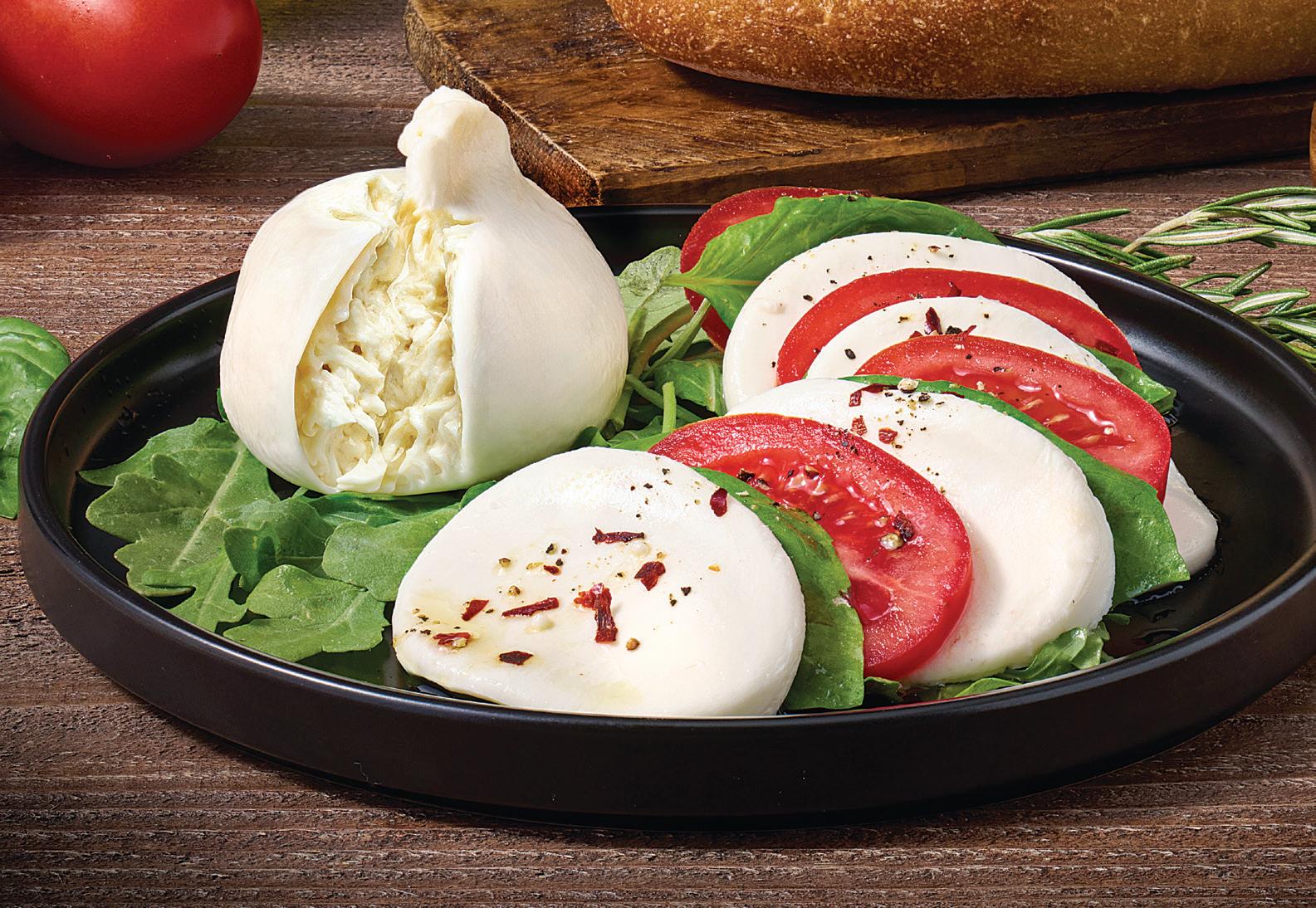
Fresh mozzarella is a good example. The cheese continues to gain traction on pizzas, flatbreads, sandwiches, and other premium items, but it can create challenges in the kitchen when it is not optimized for operations. In many restaurants, staff members are still slicing mozzarella by hand from larger logs, which can slow service, create inconsistent portions, and introduce unnecessary waste.
That challenge created an opportunity for Caputo Cheese when a restaurant chain with more than 2,100 locations needed support for an LTO featuring fresh mozzarella. The brand wanted a product that delivered on taste, melt, nutrition, and portion control, but it also needed a format that could work efficiently across thousands of kitchens. Caputo Cheese partnered with the chain’s research and development team to create custom mozza-
rella slices designed for consistent performance from store to store.
The impact went beyond product quality. By helping the chain standardize portioning and reduce labor tied to back-of-house prep, the cheese program supported smoother execution at scale. The LTO drove a 50 percent increase in orders within the first year, and the mozzarella slices remained on the menu after the promotion ended.
For restaurant operators, the takeaway is clear: product innovation does not always have to mean a new menu platform or major equipment investment. Sometimes it comes from rethinking how a high-demand ingredient shows up in the kitchen. When suppliers can help restaurants reduce prep time, improve consistency, and control waste, they become strategic partners rather than simple vendors. That positioning reflects the broader Caputo Cheese story. The company traces its roots to 1978, when Pasquale Caputo opened a small cheese shop built on Italian tradition and a strong commitment to quality. Over time, that foundation evolved into a national business serving restaurant operators with products that balance craftsmanship and efficiency.
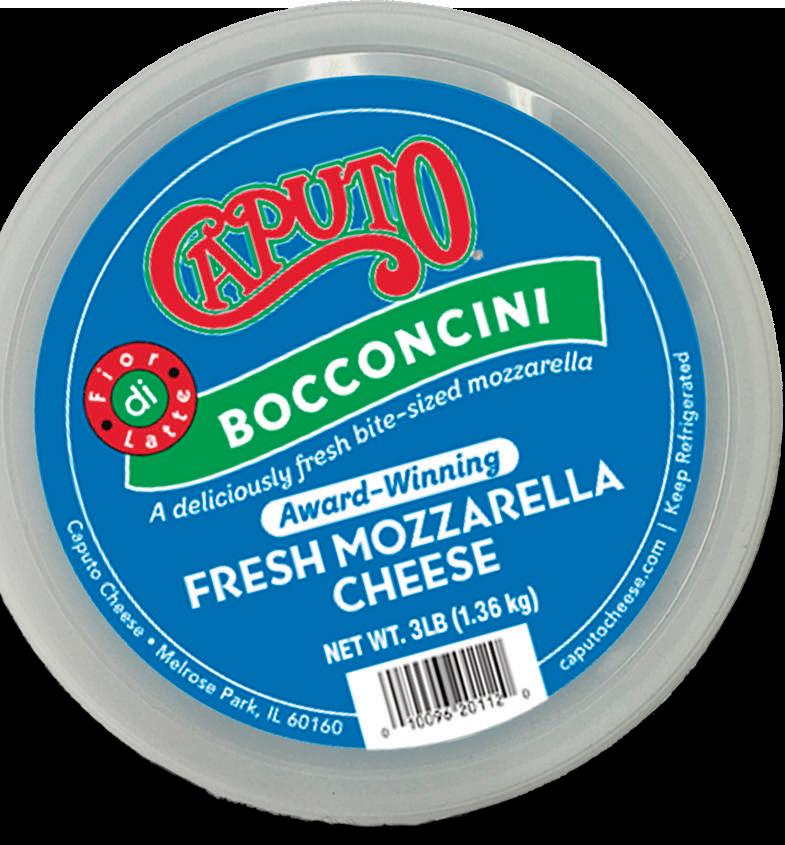
Today, the company offers a wide range of shredded, shaved, and grated hard Italian cheeses, and a full line of Award-Winning Fresh Mozzarella aimed at helping kitchens simplify prep without giving up flavor. It also works with operators on custom solutions, including proprietary blends and cheeses tailored for specific menu applications. The goal is to help restaurants solve operational problems while strengthening guest experiences.
That matters in every segment, from quick service and fast casual to pizza, casual dining, and full service. Operators everywhere are looking for ways to protect margins while still delivering craveable food. Supplier partners that understand both culinary performance and kitchen realities can play an important role in making that happen.
This is not just a story about cheese. It is about smart product design, strong supplier collaboration, and operational simplicity helping restaurants grow sales and execute effectively at scale. ◗
A new generation of operators, innovators, and culture-builders reimagine how quick-service brands grow, connect, and execute.
THIS YEAR’S CLASS OF YOUNG LEADERS TO WATCH shows a QSR industry in the midst of rapid transformation. Restaurants are growing, becoming smarter, and more connected by execution. These rising talents are leading the charge by translating strategy into action and data into crucial decision-making.
What stands out most is their range. From operations and analytics to marketing, franchising, and training, each leader brings a distinct perspective while sharing a common mindset rooted in collaboration, adaptability, and accountability. They are as comfortable navigating complexity as they are rolling up their sleeves alongside frontline teams.
These individuals prioritize people as much as performance, and they embrace technology without losing sight of hospitality. Together, they represent the next generation shaping the future of quick service.
35
AGE: 34
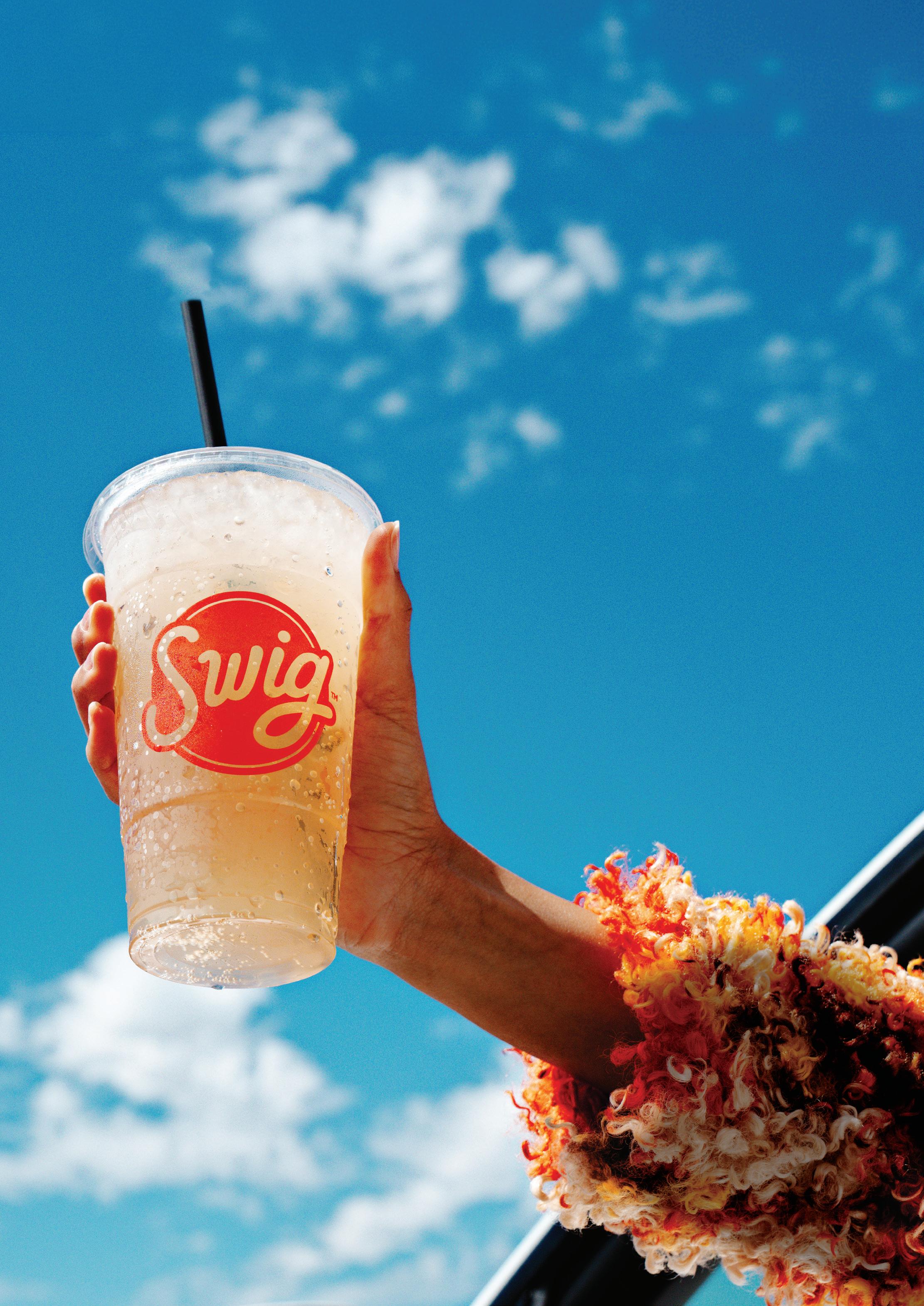
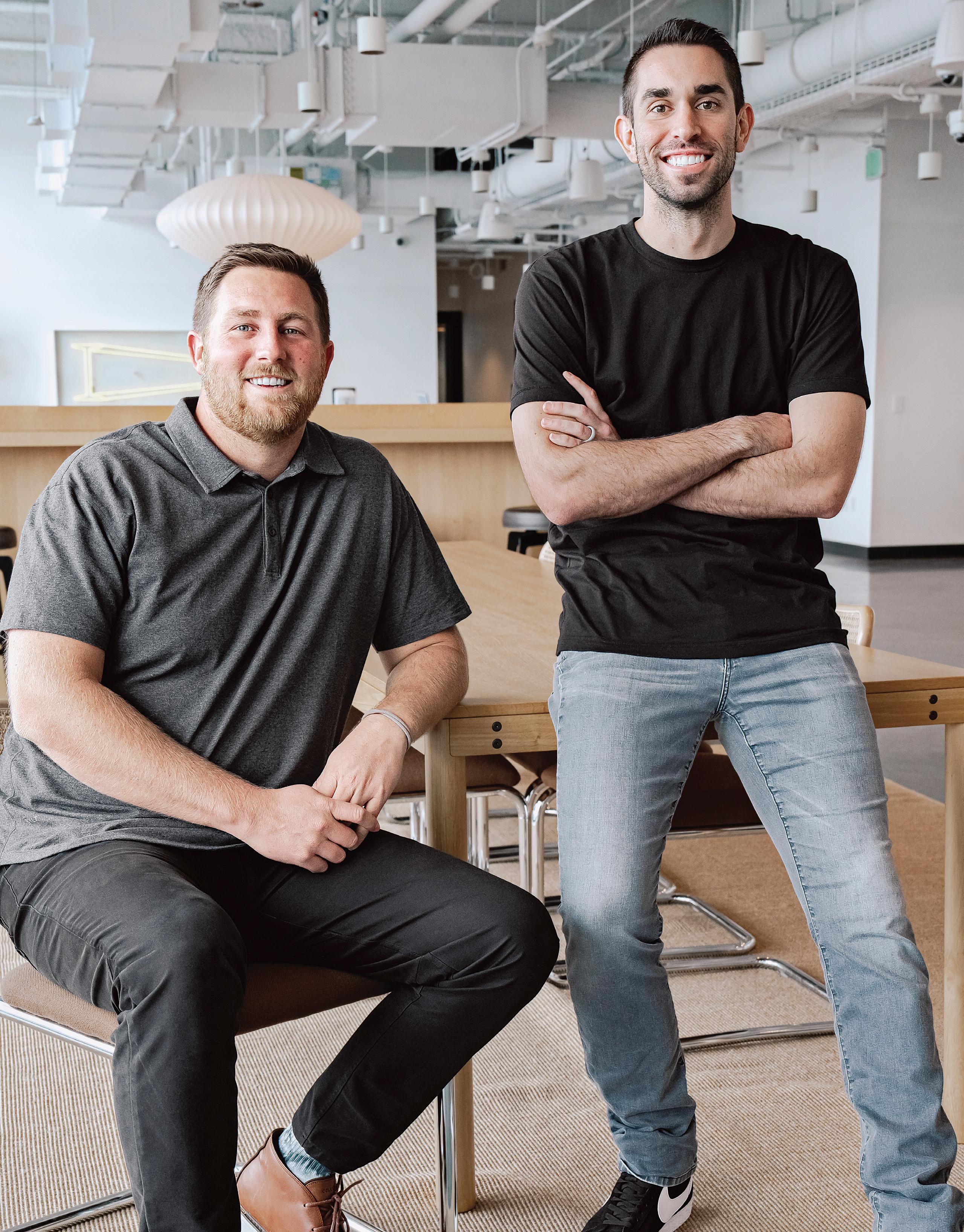
wig COO Chase Wardrop and CMO Dylan Roeder haven’t been apart from each other for too long since they first met each other in second grade in Gilbert, Arizona.
For much of that childhood, they lived in the same neighborhood. They played basketball together in high school and then both went to BYU, where Wardrop studied finance and Roeder business information systems.
“Chase and I have spent more time with each other than anyone else on this planet, more than our wives, more than our kids,” Roeder says. “I have seen his face more than any other person right next to my mother.
That’s how crazy it is. Outside of my mom and dad, it’s Chase who I spent the most time with.”
Wardrop and Roeder also share an entrepreneurial mindset, which set them on the path toward Swig’s C-suite. Before that, it was their own drink concept, The Soda Shop.
INTO
THE BEVERAGE BUSINESS
The journey began when the two were flying home in late 2013. They worked through the familiar feeling of being overwhelmed by school and questioning its purpose, which led them to realize they both had an appetite for starting a business.
So that’s what Wardrop and Roeder set out to do. Every week, they would find an empty classroom on campus and brainstorm any random idea that would come into their head. Admittedly, Roeder says, their aspirations weren’t too big in the beginning, especially since neither had much money. One idea was a vending machine that could hold college student necessities like toothpaste or deodorant and be placed in a dorm. Another was a shaved ice shack in a parking lot, a plan that was met
assured him that he and Roeder were the right fit for a $75,000 Small Business Administration loan. The two went through the entire process, only to discover that they needed to put up a house as collateral.
“And we’re college students, we have no houses,” Wardrop says. “And like, ‘Oh, just get your parents to put it up.’ And both of our parents are like, ‘We’re not putting our house up for collateral.’”
This obstacle occurred about a month and
Four Foods Group acquired Swig, which had 17 units, and merged it with The Soda Shop.
Wardrop and Roeder went from viewing Swig a competitor and archrival to locking arms with founder Nicole Tanner. Wardrop gravitated toward operations while Roeder found himself in the marketing department. Back then, titles were fluid. Wardrop and Roeder wore several hats and divided and conquered. While Wardrop handled beverage innovation and in-store operations, Roeder
“No restaurant, whether it’s beverages, food, or anything, is easy. You have to perform 100 percent of the time. You can provide 10 great experiences and on the 11th you can mess up and then you turn a customer away.”
with cynicism and roadblocks from the City of Gilbert.
Around the same time, Swig—the originator of dirty soda—opened across from BYU’s campus. Wardrop spent hours counting cars in the drive-thru. They also asked employees how much customers typically spent and used what they learned in school to build a pro forma estimating what a store could realistically earn.
Roeder and Wardrop were confident such a concept could work in Arizona where it’s warm year round. Initially, they thought creating their own beverage brand would be easy—it was just pouring drinks after all. If Swig could do it, so could they.
The duo quickly learned otherwise.
“And people management is difficult, but it’s also fast-paced and a ton of fun. So we quickly learned it’s never as easy as it looks, and business is always very, very challenging,” Wardrop says.
With no prior restaurant experience to guide them, Wardrop and Roeder learned on the fly. Their business began in a building that used to be a dry cleaners, with a sliding glass door where they handed out clothes. The two went back and forth with the City of Gilbert, showing them hand-drawn renderings of what they wanted the drive-thru beverage concept to look like.
Roeder and Wardrop did not know what to call the beverage brand when they signed the lease. They still didn’t have much money either.
Wardrop raised $75,000 from friends and got connected with a Wells Fargo banker who
a half before opening. Roeder and Wardrop kept moving forward and worked with the contractor to delay payments.
The Soda Shop officially opened September 2015. The business was met with such fanfare that they were able to float the business without the additional $75,000.
The second shop debuted in July 2016. It was converted from an old auto body shop.
“We just kept plugging away one thing at a time, and we were just so fortunate that the day that we opened, there were people that showed up for us and that made all the difference,” Roeder says. “But it was a grind every step of the way.”
ENTER SWIG
The Soda Shop came across Swig’s radar because of Andrew Smith, the founder of former franchisee entity Four Foods Group and invesment firm Savory Fund.
Smith connected with the two young entrepreneurs through a school program. Wardrop, who served as a teacher assistant for BYU’s entrepreneurship lecture series program, invited Smith to speak to the class. Wardrop connected with Smith’s message so much that he asked him to lunch and the mentorship continued from there.
Smith initially couldn’t invest in The Soda Shop because of non-compete clauses with his other food businesses, but he still advised Wardrop and Roeder. He eventually was able to grab a financial stake in the second store, and the first one soon after.
With Smith involved, Wardrop and Roeder were able to think bigger. At the end of 2017,
created training documents and upgraded technology.
Together, they—along with Tanner— rebranded Swig with a new logo, menu, pricing structure, and training systems.
“It’s kind of a surreal moment to go full circle and be a part of that and have our fingerprints now on what actually was the inspiration behind The Soda Shop,” Roeder says.
Wardrop and Roeder were officially handed the positions of COO and CMO, respectively, when The Larry H. Miller Company bought a majority stake in Swig in 2022.
“We had been friends for so long that communication was easy,” says Wardrop, describing the early years working with Roeder at Swig. “We would also have arguments on best processes and best practice, and then at the end of the day, we’d go play pickleball together. And it was super easy, fluid. We just both were just like, ‘Do you have enough bandwidth? If not, I’ll take this one.’ And we’d just take on projects that we saw needed to be done. And I think the relationship also helped a ton throughout that time where we could lean on each other and neither one of us was afraid or too prideful to ask for help.”
Several years into their tenure at Swig, Roeder and Wardrop still feel like they’re just getting started. The brand is now a little over 150 stores nationwide, and Wardrop says “we’re hitting our stride with the team.”
There was concern about how Swig would perform outside of its core markets, but Wardrop credited Roeder with building awareness and buzz and forming the right partnerships to
help the beverage chain out-punch its weight class in terms of social media traction. In February, the chain’s traffic was 137.9 percent higher than three years prior and up 30.7 percent year-over-year, according to data from Placer.ai.
Now it’s a matter of how quickly Swig can reach new markets and where it can find the right multi-unit franchise partners to grow.
The ultimate goal is to reach over 2,000 stores. And Wardrop and Roeder plan on fulfilling that objective together, like they have since childhood.
“The advantage I think that we had together was there was never a consideration of trust and best interests and ego,” Roeder says. “We were fortunate that it never had to be a conversation because we knew each other since second grade. We know each other.”
| Jessica Clark
SENIOR
MANAGER, OPERATIONS EXCELLENCE
SCOOTER’S COFFEE
AGE: 30
In an industry where execution often determines whether strategy succeeds or stalls, Jessica Clark has emerged as a key connector between vision and reality at Scooter’s Coffee. As senior manager of operations excellence, Clark plays a critical role in translating high-level initiatives into clear, actionable standards that frontline teams can implement consistently across the system.
Clark’s impact lies in her ability to balance big-picture thinking with a focus on operational detail. She approaches growth not as a series of one-off wins, but as the result of repeatable behaviors that drive consistency
Kirstin Millette
CATEGORY MANAGER, MERCHANDISE
CARIBOU COFFEE
AGE: 34
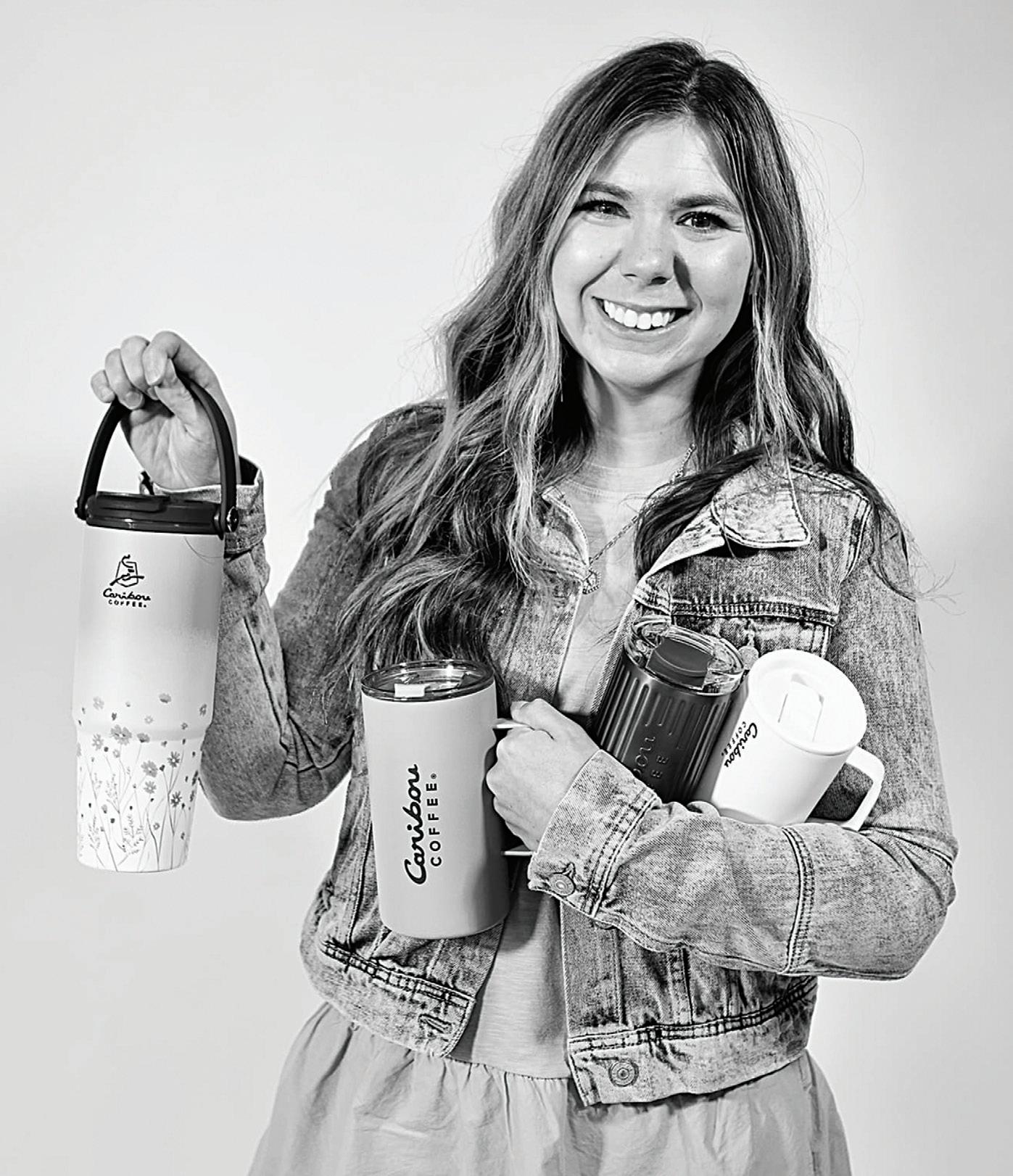
n just over two years at Caribou Coffee, Kirstin Millette has quickly established herself as a key driver within the brand’s commercial function, helping redefine the role merchandising plays in the modern QSR landscape. As category manager of merchandise, Millette oversees a complex mix of product development, supplier partnerships, and launches, while simultaneously elevating merchandising into a more strategic extension of the guest experience.
Millette has demonstrated a strong ability to identify emerging consumer trends and translate them into relevant, brand-aligned offerings. Recognizing the growing cultural importance of pets among Caribou’s customer base, she championed a series of initiatives that extended the brand’s reach beyond traditional coffee occasions. Under her leadership, Caribou introduced items such as Pup Wear reversible bandanas, a holiday ornament, and a dog toy inspired by its Pup Cup offering. These programs drove engagement while reinforcing emotional connections with guests.
She has also led successful collaborations with established lifestyle brands. A limited-edition partnership with BrüMate quickly sold out, while co-branded products with Swig Life tapped into consumer demand for functional, design-forward drinkware. These efforts contributed to more than 20 percent growth in Caribou’s merchandising category, underscoring the impact of thoughtful product strategy.
Along with product innovation, Millette has navigated ongoing industry challenges, including supply chain disruptions and tariff volatility, with adaptability and focus. Colleagues point to her collaborative approach as a defining strength, bringing together cross-functional teams to execute effectively despite external pressures.
at scale. That mindset has helped Scooter’s refine how it delivers on brand standards, ensuring that strategic priorities are not only understood but also executed effectively at the store level.
Equally notable is Clark’s leadership style. She emphasizes alignment and collaboration, working closely with operators and team members to meet them where they are while steadily raising performance expectations. Her approach reflects a deep understanding of frontline realities. She sees that the guest experience is ultimately shaped at the point of service.
Clark is also known internally for fostering a culture of accountability and encouragement. By celebrating progress and building strong relationships across teams, she helps create an environment where operational improvements feel achievable rather than imposed.
|
Kelsey Johnson
MARKETING DIRECTOR
CHECKMATE PIZZA (DOMINO’S FRANCHISEE)
AGE: 30
Kelsey Johnson has worked in food for most of her career, with her primary joy being in the pizza space. As the marketing director for Checkmate Pizza, she leads strategy for a group of 100 Domino’s franchise locations, ensuring the national brand connects with each local community in creative ways. She worked her way up from manager of corporate operations, where she managed 150 employees across seven stores. Through that role, she helped introduce digital technologies that leadership later considered expanding company-wide. In between her time at Domino’s, Johnson took a detour over to Burger King, where she built her business skills as a franchise business partner for more than 400 restaurants. There, she helped over 30 organizations grow by providing clear strategies that franchisees could replicate to optimize operational efficiency, improve the guest experience, and ensure alignment with the brand.
Yao Guo
VICE PRESIDENT OF BUSINESS ANALYTICS
PANERA BREAD
AGE: 33
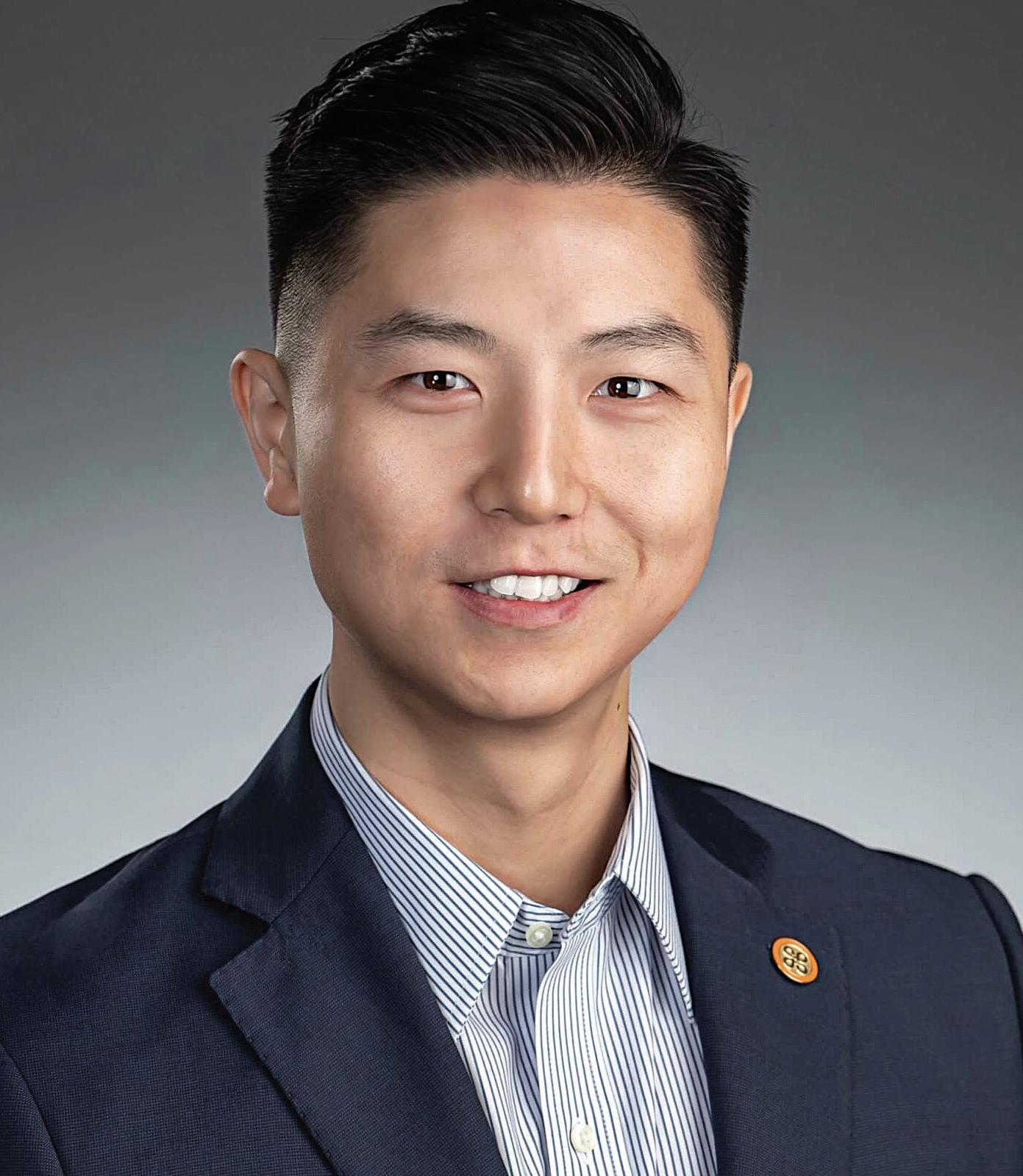
uo has already charted a deep path in hospitality. He spent six years with Popeyes, Burger King, Tim Hortons, and Firehouse Subs parent company Restaurant Brands International across a variety of roles, including business analytics, category management, performance analytics, sales planning, and consumer insights. Guo then clocked time as senior director of global sales and demand planning for startup CPG company Frida before transitioning to Subway.
At the largest unit count restaurant chain in the U.S., Guo was senior director of strategy and analytics and directed global strategy and data programs that drove brand and business performance and franchisee profitability as Subway navigated a multiyear transformation. The job ultimately took him to Panera, where as VP of Business Analytics, he guides enterprise initiatives that support the chain’s brand mission and ongoing RISE transformation, the latter of which Guo says excites him most about what’s ahead, calling it “a bold, enterprise-wide effort to reclaim industry leadership and accelerate growth.”
“I operate at the intersection of data, strategy, and execution, translating analytics into decisions that drive growth, strengthen the brand, and elevate the guest experience across thousands of bakery-cafes and millions of guests,” he says.
And while there’s a lot still to come in the process, he adds he’s most proud thus far of building and leading analytics teams that drive business outcomes.
“Across brands like Burger King, Popeyes, Subway, and now Panera, I’ve focused on turning analytics into a true competitive advantage—elevating it from a reporting function to a strategic growth driver that shapes how companies invest, operate, and win in a highly competitive industry,” he says.
Johnson graduated from Michigan State University and completed Domino’s Senior Leadership Development Program. As a mother of two young boys, she is motivated to create real connections between brands and the families they serve. She was nominated by Alex Jano, vice president of marketing at Bubbakoo’s Burritos, and her colleague at both Burger King and Domino’s. Jano says Johnson has “...a rare ability to bridge franchise operations, brand strategy, and local marketing execution and consistently elevates the performance of the teams and restaurants she supports.”
|
Emily Hopkins
SENIOR MANAGER OF PROCUREMENT OPERATIONS
SCOOTER’S COFFEE
AGE: 35
Emily Hopkins has quickly emerged as a highimpact leader, known for driving results that extend well beyond her formal responsibilities.
Her work has played a central role in advancing cross-functional initiatives that improve operations, strengthen internal alignment, and reinforce a culture of shared ownership across teams.
One of Hopkins’ notable contributions includes leading a packaging change initiative in collaboration with operations and marketing. The project required coordination across
Kate Byrd
multiple departments, balancing efficiency goals with brand standards. Her ability to navigate competing priorities while maintaining focus on execution helped ensure a smooth rollout and measurable operational gains.
More broadly, Hopkins has demonstrated a strong aptitude for identifying process gaps and building scalable solutions. She approaches challenges with an operational lens, developing system enhancements that streamline workflows and reduce team burden. These efforts have not only improved day-to-day efficiency but also contributed to a more sustainable foundation for growth.
Equally important is the way Hopkins leads. She is recognized for her accountability and consistency, setting clear expectations while fostering a collaborative environment. Her approach has helped elevate team morale and strengthen working relationships across functions, making it easier for initiatives to gain traction and succeed.
As organizations across the QSR industry continue to prioritize efficiency and execution, leaders like Hopkins are increasingly critical. Her ability to pair operational disci-
Kate Byrd has quickly become a driving force behind Vicious Biscuit’s franchise expansion, bringing a unique blend of operational expertise and systems-driven thinking to the brand. She joined the company in 2022 with a decade of frontline experience from brands like Chipotle Mexican Grill and Taco Boy. Eager to expand beyond operations, Byrd proactively sought a deeper understanding of the business, transitioning into an office administrator role where she worked closely with leadership on accounting, vendor coordination, and the internal systems supporting the company’s growth.
As Vicious Biscuit entered a new phase of franchising, Byrd again raised her hand—this time to learn the franchise development side of the business. Immersing herself in the full lifecycle, she quickly evolved into a key leader overseeing the company’s franchise pipeline as a franchise liaison. In this role, she has helped build the operational backbone behind the brand’s rapid expansion.
Byrd has served as the architect of several critical systems, including a shared pipeline tracker, structured milestone check-ins, and a nearly 400-step development and opening process that aligns real estate, construction, operations, and marketing teams. She plays a central role in connecting franchise partners at every stage, ensuring clarity, accountability, and readiness from initial signing through grand opening and beyond.
Her impact is both strategic and measurable. Byrd has supported eight successful restaurant openings, with eight more planned this year, while maintaining a 98 percent accuracy rate on opening timelines. She currently oversees a pipeline of 42 signed franchise locations across multiple states, positioning the brand for sustained growth.
Through her operational rigor, clarity of vision, and ability to build scalable systems, Byrd represents the next generation of leaders shaping the future of franchise development.
Owen Kwiecinski
FRANCHISE BUSINESS
CONSULTANT
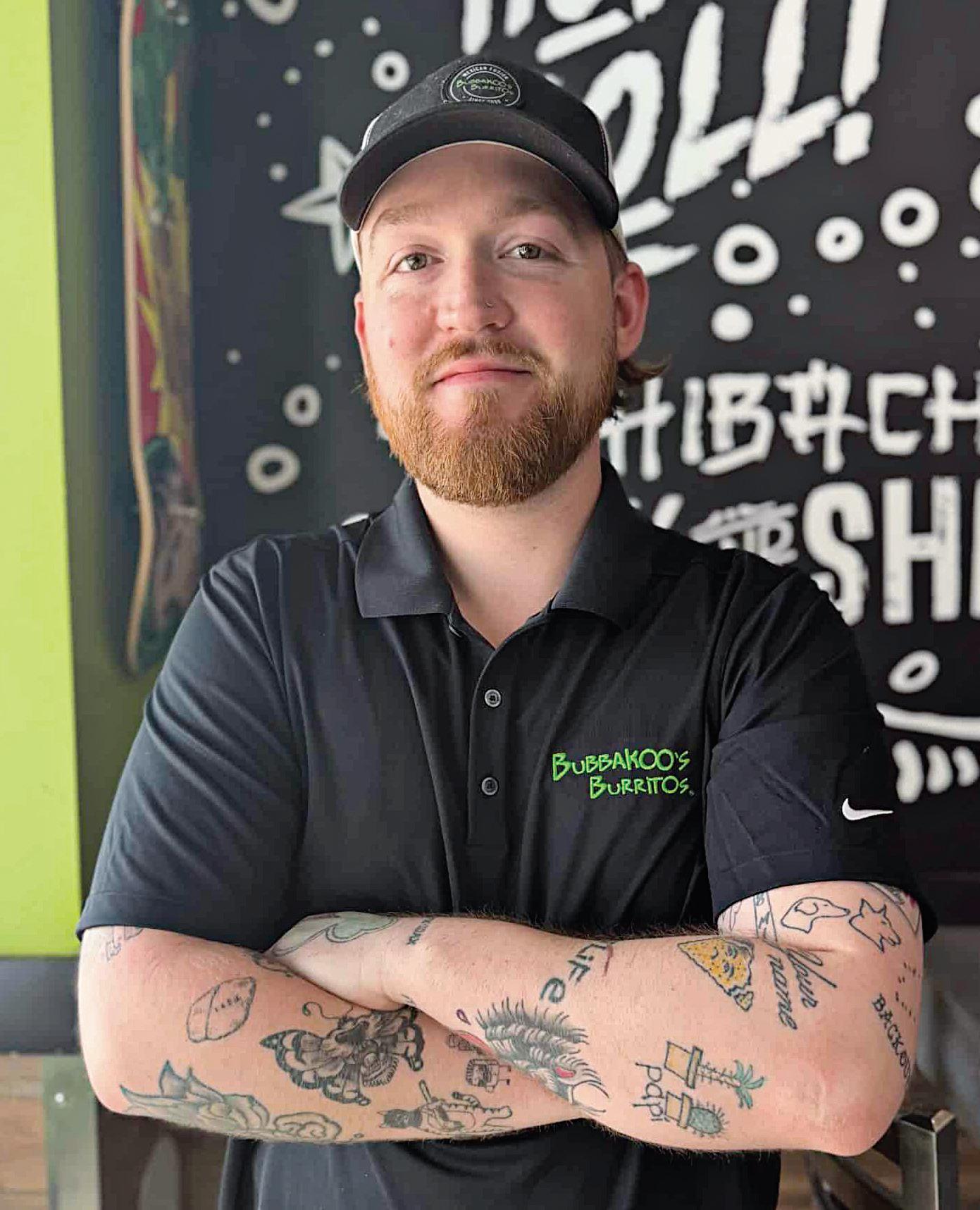
BUBBAKOO’S BURRITOS
AGE: 30
efore joining the Bubbakoo’s Burritos team, Owen Kwiecinski was a laid-back teenager who saw the restaurant as his second home. He was a regular at the founding Bubbakoo’s in Point Pleasant, New Jersey, spending many afternoons there listening to music and hanging out with friends. Owen started asking for a job when he was 15, and finally got hired as a delivery driver at 17. Soon after, he moved into the kitchen and eventually worked every job in the restaurant. He quickly became known for his enthusiasm, practicing rolling a towel inside a tortilla nearly 100 times until he could call himself “the best burrito roller east of the Mississippi.”
Now, as a franchise business consultant for Bubbakoo’s, Kwiecinski uses his handson experience to help partners all over the country. As an NBA fan, Kwiecinski likes to lead with what he calls a “point guard mindset,” inspired by one of his favorite players, Rajon Rondo. For him, helping a teammate succeed is just as important as achieving a goal yourself. This approach shapes his daily work, where he drives growth through energetic community events and social media moments that connect the brand with the neighborhoods it serves.
Kwiecinski’s journey from hanging out at his favorite burrito shop to leading the brand’s future is driven by his belief that the industry runs on grit and humility. He often says that while operations keep things progressing, the restaurant business centers around relating to and understanding people. “Owen represents the next generation of franchise leadership-driven by passion, authenticity, and a commitment to helping others win,” Alex Jano says, vice president of marketing at Bubbakoo’s.
pline with a team-first mindset positions her as a rising talent. She is helping shape Scooter’s performance outcomes and organization in meaningful ways.
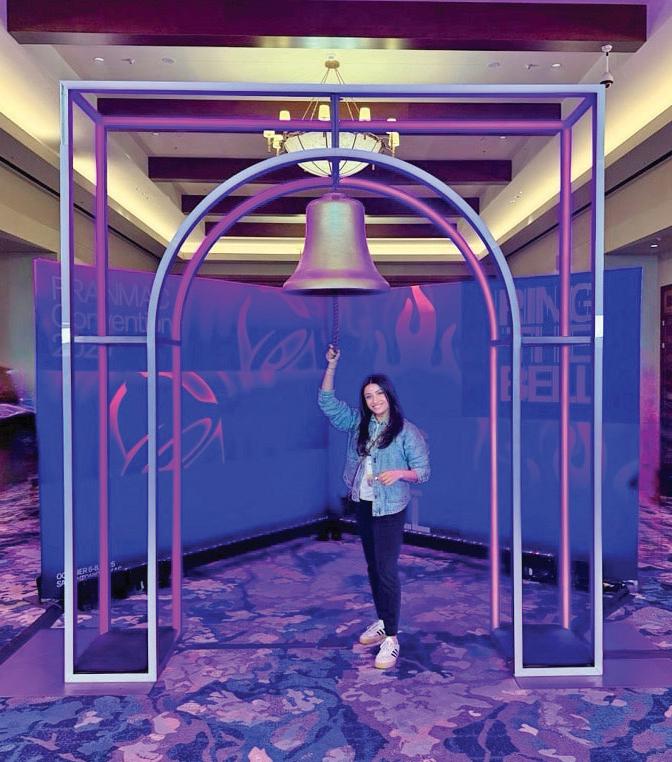
Meera Patel
TACO BELL CANADA AGE: 34
Since first stepping into the director of marketing role in late 2024, Patel helped accelerate same-store sales growth while sharpening Taco Bell’s place in Canadian culture. Her approach, a colleague shared, takes a customer-obsessed lens to connecting buzz with results. One example being her effort to turn Nacho Fries into a year-round staple ahead of other markets. Patel brought franchisees and cross-functional partners together to paint the full picture: operational readiness, profitable execution, team training, menu integration, and national awareness.
Additionally, Patel grew the chain beyond the four walls by launching Taco Bell at Home with Kraft Heinz. She also bolstered its after-hours equity with Encore Hours tied to moments like “Frosh Week” and introduced experiences such as the Roaming Bell Tower “sound-triggered” reward, and carried Live Más LIVE to Canada, which offers superfans an inside look at what’s coming next. Patel led the introduction of a Taco Bell in Newfoundland where, along with her team, they decked out a boat, the “SS Live Más,” to celebrate the debut.
And in a challenging value climate, Patel pushed forward smart pricing and value architecture with the Luxe Value Menu as an
always-on platform while also opening new competitive territory with launches like Crispy Chicken. When Canada brought Luxe Value to life, Taco Bell lined the streets with limos. “Meera is already operating at the level of tomorrow’s industry-defining leaders,” her nomination read, “and the pace of progress we’re seeing under leadership makes that impossible to ignore.”
|
Jayme Smith
LEAD FIELD MARKETING MANAGER
TORCHY’S TACOS AGE: 33
Throughout her career, Jayme Smith has crafted a communication style that translates corporate goals into easy, efficient methods for restaurant operators to implement. As the lead field marketing manager at Torchy’s Tacos, she helps local markets grow by developing strategies informed by sales insights. She builds scalable plans and leads new-restaurant launches, ensuring each location connects with its community through local events and sports partnerships.
Smith learned to manage busy environ-
ments at Burger King, where she was manager of field marketing for the U.S. Central Division. She supported 66 franchise groups with over 1,000 restaurants, managed media budgets, and gave business reviews that helped franchisees boost local traffic. Her work at fast-growing brands like Crumbl Cookies and Jimmy John’s has made her known for linking field operations with marketing. She brings a global perspective, having
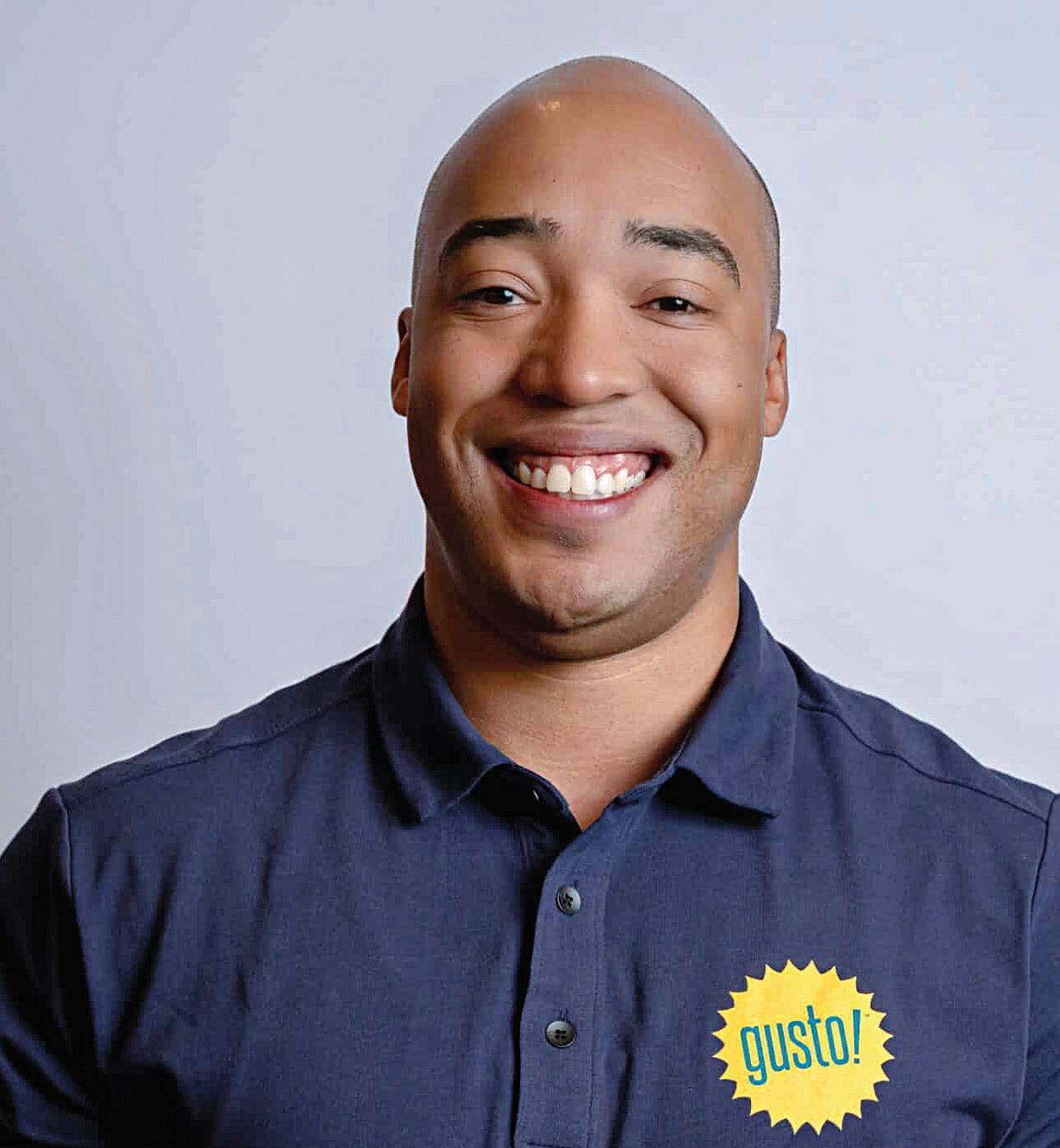
Whitley LaMontagne
DIRECTOR OF TRAINING GUSTO!
AGE: 33
hitley LaMontagne is redefining the training frontier. Over the course of his six-year career at Atlanta-based better-for-you chain gusto!, he has established himself as a forward-thinking leader who balances high-tech precision with high-touch mentorship. Known for his ability to fuse digital innovation with human connection, LaMontagne consistently elevates both operational efficiency and team development.
Digitally fluent and design-savvy, he pushes the boundaries of mobile-first learning through his work with Opus, delivering real-time company updates, checklists, and video-based training directly to team members’ smartphones. Combined with his expertise in tools like Asana, Canva, and Adobe, LaMontagne ensures that training programs are not only operationally seamless but visually engaging and easy to navigate, helping teams absorb information quickly and confidently. These efforts have bridged the gap between the back office and the frontline, making professional development more
studied international business and marketing in Costa Rica and India. This experience, along with her analytical skills, helps her create strategies that are both creative and focused on results. Now a mother, Smith says her personal life strengthens her drive to build brands that connect with families. Alex Jano, vice president of marketing at Bubbakoo’s Burritos and a former colleague from Burger King, nominated Smith for this recognition. “I saw firsthand the impact of her leadership,” Jano says. “She is truly a force to be reckoned with, which is why I’m proud to nominate her.”
Brandon
Etz
REAL ESTATE MANAGER PANERA BREAD AGE: 28
Etz joined Panera in 2024 and fast learned the strength of the brand wasn’t built just inside the café. Rather, it was protected in the leases that defined its long-term economics. That’s the world he’s helped safeguard through more than $420 million in EBITDA and $7 billion in rent savings across 300 leases. Etz’s territory alone supports 500-plus corporate-operated
restaurants throughout the Midwest.
On a small, but mighty team of three, every negotiation Etz leads directly influences profitability, reinvestment capacity, and future growth. “For me, each deal is more than a contract, it’s a unique and strategic opportunity that strengthens our financial foundation and positions Panera Bread for what’s next,” he said.
Etz had built partnerships across six regional vice presidents, more than 60 directors of retail operations, and nine facility managers to evaluate renewals, mitigate risk, and align real estate decisions with opera-
accessible and effective for the modern workforce.
A true servant leader, LaMontagne has been recognized twice as Base Team Member of the Year, a distinction voted on by his peers, demonstrating the depth of his impact across the organization. His influence extends beyond gusto! as well, earning him the MVP award from CHART, a hospitality trainers’ association with over 450 members from more than 300 top restaurant and foodservice companies nationwide.
Described by colleagues as a mentor, listener, and advisor, LaMontagne doesn’t just manage training programs—he builds the people who power them, solidifying his status as one of the most innovative and people-centered leaders in the quick-service industry today.
tional performance. Externally, he negotiates with institutional REITs, private equity landlords, independent owners, and legal counsel nationwide. Etz has developed a reputation for picking up the phone rather than hiding behind email.
Beyond this part of his role, Etz is helping redefine how brands use real estate as a strategic engine. He partners with internal strategists to develop forecasting tools and financial models that give leaders visibility into occupancy exposure and long-term risk. By modernizing how Panera analyzes leases, performance, and reinvestment opportunities, he’s pushing real estate from a reactive, back-office function into a proactive driver of margin expansion.
Additionally, Etz was selected for Panera’s pilot mentorship program, Panera EDGE (Engage. Develop. Grow. Excel). Alongside directors and VPs, he’s serving on the mentoring partners committee to help create and ensure the program enables team members to build meaningful careers.
|
Brandi Adams
FIELD RECRUITING LEAD POTBELLY
AGE: 34
Throughout her career, Adams played a key role in supporting multi-unit operations across Potbelly’s company and franchise stores. She never shies from a complex, fast-moving task where clarity and execution are needed. Adams developed a reputation for earning
opportunities through results and resilience.
What sets her apart, according to her nomination, however, is her ability to translate strategy into systems that operators can actually deploy. Adams’ approach is practical, people-first on the talent side, and rooted in communication and development. Her work, it read, reflects an understanding of the true realities operators face in the field.
Adams is also an advocate for responsible innovation. She champions the use of AI and emerging technologies to improve efficiency, decision-making, and communication while maintaining focus on culture and human connection. Her honest leadership style was also mentioned and ability to navigate diverse perspectives. She’s known for building trust quickly, addressing challenges directly, and creating environments where people feel as supported to grow as they do to perform.
“As the restaurant industry continues to evolve, leaders like Brandi will be essential. Her ability to think system-wide, lead through change, develop talent, and balance innovation with authenticity makes her a standout leader to watch in 2026,” her nomination shared. |
Giuseppe Schepisi
CORPORATE TRAINER
VICIOUS BISCUIT
AGE: 24
Giuseppe Schepisi has quickly emerged as a standout leader at South Carolina–based brunch chain Vicious Biscuit. Since joining the brand in 2021, he advanced rapidly from team lead to assistant manager and, by 2022, was promoted to corporate trainer—a role in which
he has had a measurable impact on training systems, operational consistency, and team culture during a critical phase of the brand’s aggressive nationwide expansion.
Schepisi has been instrumental in shaping the framework for Vicious Biscuit’s new store openings, developing a comprehensive soft opening guide and standardized training resources that ensure every location launches with consistent quality and operational excellence. His work has created scalable, repeatable processes that arrive at a pivotal time for the brand’s growth.
A hands-on leader, Schepisi is regularly on the front lines, supporting grand openings across multiple markets. He collaborates closely with operators and teams to prepare locations for launch, reinforcing standards for hospitality, food quality, and operational execution. He consistently steps into whatever role is needed—coaching managers, mentoring employees, or working alongside teams on the line during high-volume shifts.
His approach drives tangible results. During a recent training assignment in Wilmington, North Carolina, Schepisi helped the team achieve a record-breaking sales day, surpassing the previous store record by more than 25 percent.
Recognized as a culture-builder within Vicious Biscuit, Schepisi demonstrates the leadership, resilience, and influence usually seen later in a restaurant career. By building systems, empowering teams, and fostering accountability, he is not only shaping the standards and culture of today but helping define the operational excellence that will guide the brand’s future. Schepisi stands out as a bright, promising emerging leader in the restaurant industry.
| Matthew Caric INTERNATIONAL OPERATIONS LEAD
WINGSTOP AGE: 31
In less than a decade, Matthew Caric has transitioned from restaurant management to overseeing operational excellence across 17 international markets. A graduate of Penn State’s hospitality program and a recipient of the university’s Emerging Professional Award, Caric has translated his academic foundation into measurable global impact. Today,
he supports Wingstop’s expansion across the Americas, EMEA, and APAC regions, directly guiding over 100 planned international openings as the brand pursues its goal of becoming a top 10 global restaurant chain.
Caric’s success is rooted in his ability to institutionalize performance. Recognizing the need for scalable clarity in a rapidly growing organization, he authored the International Operating Manual and launched the Enterprise Playbook—a strategic framework designed to align cross-functional teams and create regional consistency. He is also developing an international scorecard to benchmark country performance, fostering transparency and accountability across diverse global markets.
Earlier in his career as a franchise business consultant, Caric led the company’s fastest-growing sales region, delivering four consecutive years of double-digit samestore sales growth. More importantly, he drove a significant operational turnaround, increasing guest satisfaction from 71 percent to 92 percent by rebuilding franchisee trust through consistent presence and databacked coaching.
Beyond systems, Caric focuses on the financial health of the network. He has onboarded six new franchisees and supported several others through successful ownership transitions, helping position their businesses for sale at record valuations. By mentoring fellow consultants and developing training systems for new kitchen technologies, Caric ensures that Wingstop’s growth is supported by a disciplined, repeatable infrastructure. His ability to align unit economics with global strategy makes him a foundational builder of the brand’s international future.
Kathryn Chen
CATEGORY LEAD FOR BEVERAGES
TACO BELL
AGE: 34
athryn Chen is helping reshape how Taco Bell thinks about beverages—not as a side to the meal, but as a reason to visit in the first place. As category lead for beverages, she oversees one of the brand’s most ambitious growth bets, with a target of reaching $3 million in average unit volumes by 2030. Her scope spans brand strategy, innovation, franchise impact, and unit economics, placing her at the center of a fast-evolving part of the business.
“My role sits at the intersection of brand strategy, commercial growth, innovation, and franchise success,” Chen says. “I’m not just figuring out what goes in the cup, but how a beverage program changes consumers’ relationship with Taco Bell.”
That thinking has taken shape in Live Más Café, a beverage-focused concept that launched as a single-store pilot in 2024 and quickly scaled to more than 30 locations in 2025. Chen leads an enterprise team responsible for everything from P&L to development and local marketing, building a new operational playbook inside an established global brand.
“Building something new within a legacy brand requires balancing respect for what exists and the conviction to push beyond it,” she says. “Drinks have a uniquely emotional role in people’s lives, and we’re creating a new connection point into a brand already known for innovation and exploration.”
Alongside Live Más Café, Chen also led the national launch of Agua Refrescas— Taco Bell’s first new beverage platform in over a decade—as well as extensions of the iconic Baja Blast line. Earlier in her career, she played a key role in value innovation, helping bring the 2024 Cravings Value Menu and $2 Chicken Burritos to market.
Her leadership style has evolved
alongside her scope. “Early in my career I would get caught up in trying to do everything myself,” she says. “I’ve realized scale doesn’t come from individual output. I’m now focused on setting clear direction, removing barriers, and trusting the team to execute.” That mindset has helped her lead complex, high-growth initiatives while mentoring others across the organization.
For Chen, the appeal of the industry is its immediacy and reach. “There’s nothing like seeing an idea that started in a test kitchen become someone’s new favorite order just months later,” she says.
When it comes to advice for young leaders who want to grow quickly and make an impact in the industry, Chen emphasizes that leadership is a mindset rather than a promotion.
“Don’t wait for a title to start acting like a leader of the project or campaign you’re working on,” she says. She points to her own start as an associate brand manager, where she was responsible for ideating value bundles and treated that specific scope as a platform to drive real impact for the brand. “Being accountable to your scope—however big or small—will take you far,” she says. “And always be curious.”
Chris Noffze
DIRECTOR OF OPERATIONS
GONG CHA AMERICAS AGE: 35
Chris Noffze’s approach to restaurant operations is built on the belief that a franchise system is only as strong as its frontline execution. At Gong cha Americas, Noffze works directly with franchisees through the entire lifecycle of their business—from initial onboarding and store openings to daily operational oversight. His focus is on creating repeatable, scalable foundations that ensure brand consistency while helping operators build profitable, long-term businesses.
What distinguishes Noffze is his ability to bridge the gap between corporate strategy and the realities of store-level management. Having sharpened his operational skills at global brands like Domino’s and Burger King, he brought a deep understanding of high-volume franchise systems to Gong cha. He uses that experience to provide hands-on guidance, helping franchisees navigate the complexities of scaling a brand across the Americas.
Noffze operates with a servant-leadership mindset, grounded in the idea that every corporate function should ultimately serve the teams working behind the counter. By prioritizing empathy for the crews delivering the guest experience, he has been able to cultivate stronger partnerships between the brand and its operators. This perspective has proven vital as Gong cha continues its rapid
Gianna Millares
BRAND MANAGER
CLEAN JUICE (BRIX HOLDINGS) AGE: 35
expansion, requiring a leader who can maintain high standards without losing sight of the human element.
As the brand grows, Noffze remains focused on refining operational systems and mentoring the next generation of operators.
|
Cameron Bersh
DIRECTOR OF DIGITAL EXPERIENCE
DIG INN
AGE: 26
Cameron Bersh spent her first two months at Dig Inn inside the fast-casual restaurants, “digging in” to really learn the operations of the concept before she ever approached the digital side of the business. “That experience taught me that a strategy is only as good as its execution in a busy kitchen; if a digital feature complicates the lunch rush or the guest
t takes a truly talented marketing leader to connect with the younger, health-focused diner in a way that feels authentic rather than promotional—but Gianna Millares has managed to do just that at Clean Juice. As brand manager for the BRIX Holdings concept, Millares—known to colleagues as “Gigi”— has become a driving force behind the brand’s growth and identity at a time when consumers are more intentional than ever about transparency and nutritional goals.
Millares understands the modern guest values and gravitates toward functional nutrition. Her ability to translate menu innovations—like the brand’s recent high-protein performance smoothies packing up to 53 grams of protein and superfood-driven summer beverages—into compelling digital and social campaigns is critical to keeping Clean Juice relevant. Whether she is highlighting the new “Just Juice” category or the expanded gourmet toast menu, her storytelling ensures that the brand’s wellness-focused offerings resonate with a generation of diners who prioritize “better-for-you” options.
Beyond the big-picture vision, Millares brings a rare operational savvy to her role, creating practical tools that empower franchise partners to grow their local businesses. By bridging the gap between national strategy and local execution—including the rollout of a new daily lunch special—she ensures the brand’s mission remains accessible and results-driven across the network. Her work at the intersection of quick service and wellness shows a deep understanding of how purpose-driven branding can move the needle in a crowded marketplace.
experience, it’s not a win, no matter what the data says,” she says.
A graduate of Cornell University’s hospitality program, Bersh’s leadership is rooted in a “boots on the ground” philosophy that began in high school while working at a luxury hotel. When she joined Dig Inn as an operations associate, she became the first corporate employee to graduate from the brand’s restaurant leadership certification course—which she describes as “the most formative part of my early tenure.”
That operational grit fueled her rise to director of digital experience, where Bersh now oversees a high-impact portfolio spanning loyalty, catering sales, and first- and thirdparty digital ecosystems across the system of more than 30+ locations. She has proven that innovation is a pillar of her career, spearheading an industry-first partnership with Wellfound Foods to place Dig into 80+ vending machines and reimagining brand loyalty with high-stakes rewards ranging from 14K gold vegetable necklaces to JetBlue flights.
“Instead of a standard points system, we have invested in an offering that genuinely delights our guests with exclusive drops,” she explains. “Prizes that feel as personal as they do premium.”
Whether she is architecting a $2M+ MarTech stack or transforming a reactive catering department into a proactive growth engine using tools like Clay, Bersh has a gift for distilling disparate data into an actionable melody for both field and corporate teams.
At the same time, she believes digital growth should never come at the expense of the guest experience, and that true, sustainable growth requires what she calls an “ops-first” mindset. “At Dig Inn, we prioritize alignment between our growth strategy and on-the-ground execution by ensuring that our operations team always has a seat at the table,” she says. “We achieve this alignment through a ‘pilot-first’ mentality that includes consistent touchpoints that create space for feedback and rigorous training. By prioritizing this alignment, we ensure every digital inno-
vation or new initiative is one our kitchens are equipped to execute with precision. This synergy allows us to scale our business rapidly without sacrificing the quality or convenience our brand is known for.”
Looking to the near future, what excites her most is the shift from “technology as a tool” to “technology as a teammate.” At 26, she sees the “massive potential for AI-enabled innovation to act as a force multiplier for our teams. Restaurants naturally operate lean, and in a ‘scratch-cooked’ environment like ours, bandwidth is our most precious resource. I’m energized by the challenge of finding those AI-driven ‘capacity unlocks’ and working to automate the high-friction, repetitive tasks to give our team the mental space to focus on what matters: the craft of cooking and the guest.”
“Leading this definition for Dig Inn, and the industry at large, is where I see the most rewarding growth ahead,” she adds.
|
Madelaine Reis
DIRECTOR OF MARKETING
BISCUIT BELLY
AGE: 34
From leading a full overhaul of the brand’s loyalty program to rebuilding its communications strategy from the ground up, Madelaine Reis has been a driving force behind Biscuit Belly’s growth, voice, and identity since joining the team in 2021. At just 34, she has transitioned from simply managing marketing to defining what the Biscuit Belly experience looks like for guests and franchise partners alike. Whether it is the specific language of a social post or the
Erik Roby VICE PRESIDENT OF MARKETING
TERIYAKI
MADNESS
AGE: 35
rik Roby brings a practical, operations-aware approach to marketing at Teriyaki Madness, where he oversees brand strategy, systemwide promotions, local shop marketing, and third-party delivery. Roby focuses on connecting data-driven insights with what actually works at the store level, helping franchisees drive traffic and grow sustainably. His impact on the brand’s momentum and his collaborative leadership style were recently recognized when he was named the company’s 2025 Employee of the Year.
His work is most evident in the complex, cross-functional projects he leads. Roby played a key role in guiding a systemwide pricing analysis, partnering with analytics, finance, and operations to implement updates that balanced profitability with guest expectations. He has also spearheaded the expansion of in-store kiosk technology, helping onboard new locations and tracking performance to better understand guest behavior and operational efficiency before making broader rollout decisions.
Roby has also been instrumental in developing upselling strategies that feel natural within the guest experience. By focusing on team training, behavioral cues, and thoughtful add-ons, his approach has helped increase average check sizes without disrupting the flow of service.
Beyond domestic operations, he contributed to the brand’s international growth by supporting the opening of its first location in El Salvador, which was an important step in extending the brand’s reach beyond the U.S.
high-energy atmosphere of a grand opening, her fingerprints are on every touchpoint that makes the concept recognizable and beloved.
One of Reis’s most impactful contributions is the development of a comprehensive new store opening marketing program built entirely from scratch. This strategic initiative generates genuine community engagement and excitement in new markets before the doors even open—a critical capability for an emerging brand looking to make a powerful first impression in every new city. Her resultsdriven leadership ensures that every message, whether directed toward guests or franchise partners, feels intentional, consistent, and authentically on-brand.
Beyond the metrics, Reis has earned a reputation as a trusted collaborator who masterfully navigates the space between professional strategy and playful creativity. She embodies the brand’s warmth and mischievous spirit, bringing wit and personality to her work without ever losing sight of the underlying business goals.
|
Allison Cocker
SENIOR MANAGER, GLOBAL CUSTOMER ENGAGEMENT
KRISPY KREME
AGE: 34
When Allison Cocker was hired at Krispy Kreme in June 2023 as a senior manager of global customer engagement, she didn’t know at the time how important this move would be not only for her career, but also for the brand itself. At the beginning of her role, her main goal was to relaunch the U.S. Krispy Kreme Rewards program into one that was generous to guests but also strategic for the brand’s bottom line.
Karissa Threadgill
DIRECTOR OF MARKETING
ORIGINAL CHOPSHOP
AGE: 30
arissa Threadgill’s career is a testament to the power of curiosity, adaptability, and following unexpected opportunities. While earning her marketing degree, she worked her way through college at RA Sushi and True Food Kitchen, gaining hands-on experience in restaurant operations and developing an early appreciation for the fast-paced, people-driven nature of the industry. After graduating in 2018, she joined Original ChopShop part-time as a catering and brand coordinator.
“I quickly grew to love the energy of a fast-paced restaurant environment, great food, and the connections and conversations you make with different people every day,” Threadgill says. “Getting to stay in the industry while stepping into sales and marketing for a growing brand was perfect. My journey has come full circle, combining my passion for people, food, and marketing into a career I didn’t see coming.”
That combination of operational understanding, sales acumen, and creative marketing instincts proved to be a powerful differentiator. Threadgill quickly rose through the organization and now serves as director of marketing—a role she considers her proudest achievement.
Her leadership journey hasn’t been without its challenges. Early in her career, Threadgill grappled with moments of doubt, often questioning whether her age or experience level would limit her ability to lead effectively.
“There were moments in the beginning of doubt and feeling underqualified because of my age, but I chose excitement over fear, and I’ve proven that I can rise to the challenge,” she says. “Leading a team that looks to me for mentorship and guidance has been so rewarding. This has only been possible because I had, and still have, mentors who believe in me.”
Today, she leads a lean, high-performing team while managing a marketing budget of less than 0.5 percent of sales— yet consistently delivers outsized impact. Through a disciplined, systems-driven approach, Threadgill and her team have aligned menu innovation, digital engagement, and the in-Shop guest experience to create a cohesive and compelling brand presence. These efforts have fueled repeat visits, increased guest loyalty, and driven organic social sharing.
The results speak for themselves. In 2025, her strategies contributed to record annual brand sales, 17 consecutive accounting periods of positive traffic, more than 45,000 new app downloads, and continued same-store sales growth. Digital transactions now account for up to 55 percent of total orders, with nearly half driven through owned web and app channels—demonstrating her team’s success in building sustainable, direct guest relationships.
At the core of Threadgill’s leadership philosophy is a commitment to authenticity, relationship building, and mentorship. She remains closely connected to restaurant operations, ensuring her strategies are grounded in real-world execution. At the same time, she is deeply invested in developing others, using her platform to encourage emerging leaders to trust their instincts and embrace growth.
“My advice for young leaders is to not let imposter syndrome hold you back,” Threadgill says. “Trust your instincts and remember you have real value to offer, even if you are the youngest in the room. A lot of the learning comes from doing, and if mistakes happen, that just means you’re growing and getting better because of them. Stay positive and be a light— because how you treat others leaves a lasting impact.”
The previous program suffered from disjointed data and a “clunky” user experience, making earning rewards feel more like a chore rather than a perk. Cocker developed and executed the mobile and online ordering redesign following the migration to the Paytronix platform in May 2024. This transition also allowed the brand to provide guests with an easier-to-understand, more efficient ordering experience. At launch, the app secured the #1 spot in the App Store during release week, total membership improved by 22 percent, and offer redemption rates reached 53 percent.
“Krispy Kreme has always been a generous brand,” Cocker says. “We had to differentiate the rewards program through an even more generous program construct and ongoing benefits that are tailored to each member.” By using automated win-back campaigns, visit challenges, and member-exclusive trials for new doughnut releases, she successfully shifted guest behavior. Since the relaunch, member visit frequency has increased by 12 percent, while average ticket size has increased by 18 percent year over year.
This skill in customer lifecycle strategy was shaped by what Cocker calls an “uncomfortable yes” early in her career. While working in social media, she was tasked with leading the development of an inaugural loyalty program, a request that forced her to understand the mechanics of technology and data. That challenge reshaped her career path, leading to a successful six-year tenure at Salata Salad Kitchen before coming over to Krispy Kreme. For aspiring leaders, Cocker says, “Say yes to opportunities that challenge you, even when they feel uncomfortable. Stay curious, keep asking questions, and actively seek out new perspectives and skills.”
At Krispy Kreme, Cocker leads with a “people-first” mindset, ensuring that the “why” behind every update is communicated clearly across all levels of the operation. This collaborative mindset was on full display during an August 2025 acquisition campaign, where her partnership with in-store training leadership encouraged team member participation and led to conversion rates 66 percent above average.
As her career continues, Cocker is studying how future technology can be explored today. She sees AI as a tool to amplify, not replace, human creativity and connection, and believes that the brands that strike that balance will stand out.
Lindy Simmons
BRAND MANAGER
SMALLS SLIDERS
AGE: 28
Lindy Simmons’ journey into the restaurant world began with a deep-seated love for food and storytelling, a passion that began taking shape during an internship with the New York City Wine & Food Festival. Early in her career, Simmons established herself as a forwardthinking voice, speaking as a Gen-Z influencer at the Culinary Institute of America’s Next Gen Food Summit. What started as a creative outlet at the University of Georgia evolved into her personal brand, @lunchwithlind, which now boasts a combined audience of over 30,000 followers across Instagram and TikTok.
Simmons transitioned her digital expertise into high-impact social media roles for iconic Atlanta brands like Fox Bros. BBQ and Taqueria del Sol before moving brand-side to Cinnabon and Carvel. At Cinnabon, she helped orchestrate the viral “Slimabon” wedding campaign, a cultural moment that earned accolades in Adweek and Ad Age and proved the power of timely, social-native marketing.
Now serving as Brand Manager for Smalls Sliders, Simmons is a driving force behind one of the country’s fastest-growing emerging concepts. She leads influencer marketing and social strategy, successfully turning digital buzz into real-world foot traffic. Her innovative approach earned her the 2024 Best Social Media Campaign award from the International Franchise Association for the Smalls Sliders’ King Cake Shake launch. By bridging the gap between creator and marketer, Simmons represents the next generation of industry leaders who understand that authentic community connection and digital culture are the ultimate engines for modern brand growth.
BY CLARIFYING ITS IDENTITY, SMOOTHIE KING
LOOKS TO UNLOCK EXPANSION ACROSS MENU, EXPERIENCE, AND DEVELOPMENT.
FOR MORE THAN 50 YEARS, Smoothie King has built its business on a simple premise—make nutrition taste good.
The brand coined the term “smoothie” in 1973 and spent decades crafting recipes with nutritionists and developing a menu around function as much as flavor. But somewhere along the way, leadership realized that story wasn’t reaching customers.
Even among loyal guests, awareness of what made Smoothie King different had eroded.
“We have an incredibly loyal customer base,” says Gavin Felder, Smoothie King president and CFO. “We have an incredibly high level of frequency with our customers. A lot of them didn’t know the story. They didn’t know that we served the first smoothie, that we invented the word smoothie.”
That disconnect—between what the brand is and what customers perceive— now sits at the center of Smoothie King’s latest evolution. The company isn’t repositioning itself so much as realigning its message, menu, and experience around a core idea it believes has always been true.
TURNING HERITAGE INTO A GROWTH STRATEGY
/ BY BEN COLEY
The goal is straightforward. The chain wants to clarify its role in a category it created and build a more scalable foundation for growth.
RECLAIMING THE NARRATIVE
Smoothie King’s leadership sees its heritage as an underutilized advantage.
The brand introduced smoothies to the market and spent five decades working with dietitians and nutrition experts to build recipes from the ground up. Yet much of that work had been overshadowed by a bigger perception that all smoothies are inherently healthy.
Internally, executives came to view that as both an opportunity and a risk.
“We think this is the perfect time to remind people what we stand for, why we even exist in the first place, and then why we’re the category leaders,” Felder says. “And so, we just think it creates a really natural springboard for our next chapter of growth for the business.”
That thinking helped inspire the brand’s “De-Dupe” initiative (active earlier this year), which invited customers to trade in receipts from competing smoothie purchases. But more broadly, it showcased a shift in how Smoothie King plans to communicate value.
Instead of competing on a general “health halo,” the company is leaning into what it calls a “nutritious halo,” a distinction rooted in how its products are developed.
Consumers, however, don’t always see that nuance.
“What we started hearing from guests was that, wow, you
SMOOTHIE KING INTRODUCED SMOOTHIES TO CUSTOMERS DECADES AGO.
SMOOTHIE KING WANTS CUSTOMERS TO KNOW THAT HEALTHY EATING CAN BE SIMPLE AND INVITING.
SMOOTHIE KING HAS SEVERAL WAYS FOR GUESTS TO FEEL GOOD WHILE EATING, INCLUDING BOWLS.
know what, nutrition feels so overwhelming because there’s so much nutritional information out there. It’s a little bit hard to know who to trust,” says CMO Claudia Schaefer.
Smoothie King’s response is to position itself as that trusted source that has already done the work.
WHY NOW
The timing of the brand evolution is tied to internal momentum and external shifts.
Over the past several years, Smoothie King has experienced steady growth, with more than 1,500 locations in its development pipeline. At the same time, leadership saw a cultural change in how consumers define health.
The old model—based heavily on fitness—no longer captured the full picture.
Research showed that consumers increasingly view wellness as a combination of movement, nutrition, mental health, social connection, and recovery. Sleep, for instance, emerged as one of the most commonly cited indicators of health in consumer studies.
That shift exposed a misalignment inside Smoothie King’s own brand system.
Marketing leaned heavily into high-performance fitness imagery. Store designs felt functional, even sterile. Menus, while robust, could be difficult to navigate.
None of it was wrong individually. But collectively, it didn’t reflect how customers think about wellness today.
“It just felt like not all touchpoints were laddering up to who we want to be as a brand,” Schaefer says.
The solution wasn’t a single change. It required adjustments across nearly every part of the business.
On the marketing side, Smoothie King launched a new campaign, “The Best Kind of Delicious,” meant to highlight taste and nutritional intent. The messaging shifts away from a narrow fitness audience and toward a group of consumers navigating different wellness goals.
At the store level, the company is introducing a warmer, more approachable design.
The updated look incorporates softer color palettes, natural textures, and visual cues tied to ingredients and freshness. The goal is to create an environment that feels less transactional and more aligned with the brand’s emphasis on care.
“It’s a little more stark today,” says chief development officer Chris Bremer. “It doesn’t necessarily give off a warm tone. We want to make sure that we do that.”
The redesign will roll out gradually across new builds and remodels, with a focus on keeping costs manageable for franchisees.
“We wanted to make anything as cost neutral or even slightly reduced compared to what we do today,” Bremer says.
Arguably, the most significant operational change is happening in the kitchen.
For years, Smoothie King’s menu revolved almost entirely around beverages and bowls. While those products drove strong loyalty, they also limited the brand’s ability to capture full meal occasions.
Customers frequently paired smoothies with food purchased elsewhere.
“We heard for years that people love our smoothies, they love our bowls, but they can’t get a full meal at Smoothie King,” Felder says.
That gap led to the development of a new food lineup, including toasts, protein boxes, and, more recently, warm items like flatbreads and chicken bites.
The rollout has been methodical.
SMOOTHIE KING BELIEVES IT HAS THE ULTIMATE EDGE WHEN IT COMES TO NUTRITION.
SMOOTHIE KING WANTS TO CATER TO ANYONE LOOKING FOR A HEALTHY AND ACTIVE LIFESTYLE.
The company began with small-scale tests in Dallas-Fort Worth before expanding to larger groups of stores. Only after refining the menu and operational processes did it move toward a systemwide launch.
Key to that effort is the installation of ovens across the network—equipment Smoothie King is providing at no cost to franchisees.
“We’ve incurred a substantial cost for that because we really believe it’s transformative for the brand,” Bremer says.
The addition of food should increase ticket size, extend dayparts, and reduce leakage to competitors. It also increases the brand’s appeal beyond its traditional use cases.
GROWTH AHEAD
Introducing new equipment and menu items could have added complexity. However, Smoothie King treated it as an opportunity to streamline operations.
The company analyzed store layouts across the system, developed standardized installation plans, and optimized workflows to maintain speed and efficiency.
Importantly, those changes were made without requiring larger footprints or significant additional investment.
That discipline has helped build confidence among franchisees, who were involved throughout the testing and development process.
“It has been unanimously more positive than I would have expected, and that’s been great,” Bremer says. “They have loved the way it looks. They are all on board, obviously with the food component. When you marry that together and just bring them through the journey, I think that’s extremely helpful. And again, it’s with consumer and true data behind it. Again, not our opinion. This is what the guest is telling us.”
As Smoothie King evolves, it is also rethinking how it views competition. The company isn’t strictly focused on other smoothie brands. The chain actually views itself as part of an ecosystem around healthy living. That includes not only traditional beverage competitors, but also quick-service concepts, coffee chains, and emerging better-for-you brands.
“To us, anybody who wants to live a healthy and active lifestyle, we’re there to cater for,” Felder says.
In that context, differentiation becomes less about product category and more about credibility.
Smoothie King believes its long-standing focus on nutrition gives it an edge, but that’s only if it can communicate that effectively.
The company’s long-term ambitions remain tied to expansion.
Felder estimates that more than half of the potential Smoothie King system has yet to be built, with over 1,500 identified trade areas ready for development.
Interest from franchisees is rising as well.
Last year, Smoothie King opened 74 shops and signed 101 franchise agreements spanning 47 unique DMAs across the U.S. The chain also expanded into Utah and Minnesota for the first time and grew its nontraditional foot- [CONTINUED ON PAGE 45]
Korpal Brothers Take Flight with Golden Chick
Building on their family’s legacy as franchisees, these second-generation operators are hatching a modernized plan for multi-unit growth and hospitality.
/ BY BRITT ENGLER
It was 8 p m when the notification came through. A customer had used the digital feedback form printed on the bottom of a Golden Chick receipt to report a missing side of macaroni and cheese. Raj Korpal saw the complaint, picked up his phone, and dialed the number. He verified the customer’s address, bagged the missing side, and
drove it directly to the customer’s home. When the man opened his front door, he was surprised to find the franchise owner standing on his porch, holding his order.
That level of personal service is standard practice for Raj and his brother, Karan Korpal. The siblings currently operate four Golden Chick restaurants across South-
east Texas and recently signed a 13-unit development agreement to aggressively expand the regional chicken chain into the Houston and Huntsville markets. It is a massive undertaking for the young operators, but scaling restaurant concepts runs in the family. They grew up helping their parents build a portfolio of Subway franchises, which now stands at 22 stores.
While they still help with the family’s sandwich business, the brothers have also been busy buying, flipping, and selling apartment complexes over the last three years. A few highly successful years in real estate gave them the capital and clarity to pursue franchising on their own. Karan first ate at Golden Chick while attending the University of Texas in Austin. He realized the chain didn’t have a store in his home area of Southeast Texas and immediately began exploring development opportunities.
Raj, on the other hand, took a slightly different path. He had just graduated from college and was preparing for a career in medicine. He had finished his pre-med requirements and was applying to medical schools, but wasn’t passionate about it. Just before the pandemic, Karan proposed they team up. Raj left his medical plans and joined the restaurant business full-time.
“We’re basically two heads from the same animal,” Raj says. “I mainly handle operations, but if one of us is indisposed, we can take each other’s stuff.”
Compared to the saturation of global fast-food chains, the chicken concept offered something different.
“Golden Chick was a fresh start,” Karan says. “There are only 250 locations, but we can see this becoming a nationwide chain with up to 4,000 locations. We just want to be part of something growing.”
That enthusiasm is precisely what Golden Chick’s corporate leadership is looking for as they push the 57-year-old brand into new territories. Howard Terry, chief marketing officer of Golden Chick, joined the company 10 years ago after working for a major competitor. When he first visited a Golden Chick location, he was taken aback by the quality. Terry searched for the com- [CONTINUED ON PAGE 44]
HOWARD TERRY
pany owner, Mark Parley, and expressed his interest in growing the brand.
“Let’s do something with this,” Terry says. “It’s best in quality and taste, but nobody knows about it.”
Terry sees the Korpals as exactly what Golden Chick needs to compete with larger, better-funded rivals.
“They’re young but mature,” Terry says. “They’re ideal franchisees, great operators who push us respectfully by asking questions and understanding the business. I wish I could clone them and have 500 in our system.”
Golden Chick invited Karan to join the six-member franchisee advisory group when he was just 26. During quarterly meetings, corporate department heads present upcoming marketing campaigns and operational changes, among other topics, and ask the council for its thoughts. Karan quickly realized the franchisor was strongly invested in unit-level economics.
“I realized how franchisee-oriented they were,” Karan says. “They were really pro-
franchisee profitability... being part of that discussion and realizing that they also care about us meant a lot.”
The brothers are applying that corporate support to a carefully mapped real estate strategy. Their new 13-unit deal operates with two different approaches. In Houston, an explosive market with heavy competition and high demand, they negotiated an aggressive four-year timeline to open 10 stores. In Southeast Texas, covering Jefferson and Orange counties, they have agreed to open three stores within the same time window. This agreement allows them to dictate the pace in a slower-growing region where they are currently the sole Golden Chick operator. When scouting sites, Karan focuses on areas where quickservice restaurants have already proven to perform well. Specifically looking to open near high-traffic anchors like H-E-B grocery stores, Chick-fil-A, and McDonald’s.
Transitioning from sandwich shops with simple ovens and toasters to a chicken concept requiring fryers and combi-steamers
presented a steep learning curve. The revenue jump was just as pronounced. While a typical Subway might earn $10,000 weekly, Golden Chick locations often triple that, bringing much higher overhead and staffing needs.
To handle the volume, the Korpals rely on their director of operations, Coach Sam, who has been with them from the start. Sam travels to each new opening, treating restaurant management like a sport. Before opening day, he gathers the team, who often pick a punny team name like Hustling Hens, and delivers a spirited, locker-room-style pep talk.
The coaching strategy motivates the team, and a blend of digital and grassroots marketing excites the community. When the brothers opened Port Arthur, Texas, enthusiasm on local Facebook groups led to heavy traffic. Cars wrapped around the parking lot, stretching a block onto the highway. By week’s end, sales topped $120,000, setting a brand revenue record.
High volume only sustains itself if the
execution is flawless, an issue Terry has tackled himself from the corporate office. Terry recently launched what he calls Mission 4.0, an internal initiative that demands that every store achieve a Google rating of 4.0 or higher. Because the chicken category is inherently complex with multiple sides and high rates of missing items, Terry introduced clear-top packaging so employees and guests could visually confirm order accuracy before the bag leaves the counter. He paired this with a back-of-house marketing campaign that rewards high-performing crews with custom-embroidered, personalized Golden Chick hats. Within a year, the system’s average Google rating climbed from 3.6 to 3.92, with 47 stores surpassing 4.2.
The Korpals match that drive for operational excellence by testing new channels. Golden Chick gave them one of the brand’s only mobile kitchens. Instead of focusing strictly on profit, Karan plans to use the food truck as a billboard, parking it at state fairs and community events, serving a streamlined menu to generate trial and direct traffic to nearby stores.
They are also experimenting with operating hours. At a new Houston store located off I-45 near a college campus, the brothers are implementing a 2 a.m. closing time on Fridays and Saturdays. Karan plans to run the late-evening test for a full six to eight months, giving the local customer base plenty of time to realize the store is open past midnight. It is a calculated risk aimed at reaching a specific demographic that competitors might not be considering.
No matter how large their portfolio grows or how late drive-thrus stay open, Raj and Karan insist on preserving the family-run culture their parents taught them. They still seek advice from their parents when scaling challenges arise. Born and raised in Silsbee, Texas, with headquarters in Beaumont,Texas, they value the importance of local brands in Texas. Growing up eating at Jason’s Deli, another Beaumont original, they aim to build that same generational loyalty.
“Focusing on the growth of Golden Chick is something we’re really passionate about,” Karan says.
on daily rituals and neighborhood touchpoints, scale alone is not the goal—it is relevance.
Even as Krispy Kreme expands its digital ecosystem and global footprint, Yochem is focused on ensuring the technology powering the business does not flatten the experience, but instead enables it to feel more personal, more localized, and more responsive to the communities each shop serves.
That philosophy becomes especially critical as the company leans further into its refranchising strategy.
“We’ve stated publicly that we are intending to refranchise some of our markets…it’s imperative to have local partners who understand the community and cultural preferences in which they are operating, understand the experience most desired by the consumers in that region, and can craft that using their own expertise and local knowledge while holding fast to our standards around quality, process, and brand,” Yochem says.
Balancing global consistency with local expression is not unlike composition—a dynamic Yochem understands intuitively. Before her career in technology, she studied music, an experience that continues to shape how she thinks about structure, variation, and collaboration at scale.
“Music and technology require discipline and rigor, and I see that in my leadership style,” Yochem adds. “Whether it is a musical performance or developing a set of systems, you have to stay focused on the intended output of all the work you put in—and when done well, it creates a beautiful experience for its users.”
At Krispy Kreme, that idea of “intended output” has taken on a broader meaning. For Yochem, it is not just about systems or scale—it is about clarity: clarity in how technology supports the business, clarity in how teams operate, and clarity in how decisions ultimately show up in the guest experience.
In her view, digital transformation is no longer a standalone initiative or a destination to reach. Under Yochem’s leadership, transformation becomes less about change for its own sake and more about alignment between people, process, and purpose.
print, including one at Joint Base Andrews.
Smoothie King predicts it will open more than 90 locations this year. It has franchise incentives in place for Arkansas, Arizona, Colorado, Illinois, Massachusetts, Michigan, Minnesota, New Mexico, Oklahoma, Pennsylvania, Utah, Virginia, and Wisconsin.
“We’re really getting some exciting traction, not only from both the existing people in the system who are wanting to sign up and we’re seeing that as well as new people coming in new markets,” Bremer says. “You can’t ask for anything more than that because they really feel the care and support that we’re putting forth in this plan in a very diligent manner.”
That momentum is supported by a combination of factors such as improved unit economics, a more complete menu, and a clearer brand identity.
Leadership is measuring success across three key dimensions—consumer understanding, same-store sales growth, and new unit development.
“We saw this as a huge opportunity, once we had done that research, and once we saw all the category tailwinds that I just described, to really celebrate what makes us unique and to share that with the world. And so we’re kind of ready to do that, and we think we have the right platform to do that,” Felder says.
Smoothie King’s evolution is not about becoming something new. It’s about making something longstanding more visible and more relevant.
There’s certainly demand for it. Earlier this year, the brand released a Healthy Habits and Smoothie Trends report, a survey of 2,000 U.S. adults that found “getting healthy” has remained a priority over the past decade. Respondents said it was a part of their New Year’s resolutions an average of six out of the last 10 years.
The brand still wants to be known as the originator of smoothies. But it also wants to be seen as modern, differentiated, and aligned with how consumers live today.
“I think they will still see us as the original,” Felder says. “But also the most relevant and differentiated.”
Britt Engler is
workers downtown. Today, Chef Jeremy Waybright of the Charleston team leads a more structured R&D process, testing flavors ahead of quarterly menu updates. While menu development has evolved, the brand’s food offerings remain focused and approachable, with a seasonal rotation of empanadas, salads, pizzas, and desserts.
This subtle balance of structured consistency and localized charm drives Timber’s franchise strategy. Brady calls the framework an “85/15 model,” meaning 85 percent of the restaurant elements remain standardized across locations, while the remaining 15 percent is adapted to fit the local community. In an industry where legacy franchises commonly demand uniformity that can hide a neighborhood’s unique character, Timber actively empowers its people to incorporate community character into its local menu.
“We want 85 percent of Timbers to look, feel, act, and function the same way. And that 15 percent we really want our franchise partners to be able to cultivate for their local market,” Brady says.
ESSENTIAL Digital Menu Boards
In practice, this means the brand actively avoids domestic macro-brews on tap in favor of localized craft beer partnerships at every single location, alongside regional spirits and wines where available. Franchisees are encouraged to partner with local farms and welcome the culinary identity of their region.
The ultimate proof of concept for this hyper-local collaboration was recently executed by Waybright at the Timber Charleston location. Situated just a short walk away from the legendary Lewis Barbecue, the Timber team recently connected with its esteemed neighbors to create a wintertime brisket pizza and brisket empanadas.
It was a natural, highly successful cross-collaboration born purely out of geographical proximity and shared respect, showing how strengthening local operators elevates the menu in a way that feels natural to guests.
This mix of pizza, people, and purpose has given impressive financial results. After earning $11.6 million in sales last year, the company projects $15 million in sales this year. The company now operates nine brickand-mortar units, along with two mobile wood-fired trucks.
Brady says the vision is to not grow just for the sake of growth
The chain’s immediate expansion strategy is highly intentional, focusing strictly on continuing to penetrate the Mid-Atlantic and Southeast regions. Specifically, they are targeting culturally rich, communitydriven markets like Savannah, Georgia; Wilmington, North Carolina; and Greenville, South Carolina. By keeping their geographic outreach relatively focused over the next few years, the corporate team can provide hands-on, face-to-face support while continuing an incredibly simplified supply chain. Expansion into markets further south into Florida and west into Texas is planned as well, but only when the infrastructure and team members are ready.
As Timber transitions into its next phase as an emerging mid-size brand, it remains concentrated on initiatives that serve its people. This summer, the brand is hosting its first franchise conference in its home base of Annapolis, Maryland.
Facilities management
BY DREW FILIPSKI
Why growth depends on moving from reactive repairs to connected, data-driven operations.
uick-service restaurants have reached a point where the physical environment of the kitchen is as critical as the menu itself. In 2026, facilities management must go beyond fixing what breaks towards building the infrastructure that prevents breakage in the first place. This shift represents a move from reactive repair to intentional, data-driven oversight that protects both the bottom line and the guest experience.
This evolution is fundamentally about closing the visibility gap. When enterprise data is unified and locations are connected, the “rearview mirror” management of the past is replaced by real-time control. This allows operators to scale consistency, ensuring that safety protocols, equipment performance, and facility standards are identical whether they are managing one unit or one hundred. With margins under constant pressure, this level of operational maturity is what separates sustainable growth from fragmented chaos.
The leaders featured in this section are redefining what it means to manage a distributed footprint. By integrating digital twins, predictive maintenance, and streamlined vendor networks, they are ensuring that the invisible engine of the restaurant runs with transparency and precision, allowing the front-of-house to focus entirely on the guest.
A powerful restaurant management system designed to streamline back-of-the-house operations.
KitchenIQ™ is a cloud-based software platform that helps foodservice providers streamline operations and improve efficiency by digitizing manual tasks, capturing critical data and providing powerful insights.
SCOTT SALSTRAND
Vice President and General Manager, Commercial Digital
What are the biggest challenges for quick-service restaurants with facilities management today?
A major challenge is managing multiple locations without connected visibility into daily operations, including task execution and temperature monitoring. Data often lives in silos, making it di cult to identify issues early or understand trends before they impact performance.
How are these challenges impacting the industry?
When location data isn’t connected or accessible, operators are forced into reactive decision making. Responding after an incident can lead to downtime, inconsistent execution, and added pressure on already stretched teams.
What will be the biggest challenges and opportunities over the next
10–20 years?
Scaling consistency as operations grow more complex will remain a challenge. The opportunity lies in using digital tools and automation to turn operational data into actionable insights that help teams anticipate issues rather than react to them.
How are operators addressing these challenges e ectively?
Operators are shifting toward digital-first operations management, using connected systems to standardize processes, centralize data, and guide decision making at both the restaurant and enterprise level. Simplicity and usability are critical.
What key tasks are being enhanced through facilities management?
Preventive maintenance, equipment monitoring, compliance checks, and task execution are benefit-
ing from digital enablement. When these processes are automated or guided, managers gain time and confidence.
How have customer expectations changed?
Guests expect fast service, safe food, consistent quality, and clean environments. While they may not see the systems behind it, digital operations management plays a key role in delivering those expectations reliably.
What misconceptions exist about facilities management today?
Facilities management is often seen as purely operational, but it is increasingly a strategic capability that connects safety, e ciency, sustainability, and brand protection through data.
What should operators keep in mind moving forward?
Consistency is the message, and delivering on expectations is key. When restaurants deliver dependable experiences across locations, it signals that operations are under control. Digital systems help ensure standards are met quietly, without drawing attention to the complexity behind them.
STEPHANIE LIN Vice President
What are the biggest challenges for quick-service restaurants with facilities management today?
Many teams lack consistent, up-todate visibility into their locations, making it hard to standardize maintenance, coordinate vendors, and stay ahead of issues across a distributed footprint.
How are these challenges impacting the industry?
These challenges are directly impacting performance. Equipment downtime disrupts service, reactive maintenance increases costs, and inconsistent execution weakens brand standards. Limited visibility at scale makes it harder to control spend or
planning and execution at scale.
What should operators keep in mind moving forward?
Facilities management can represent up to 70 percent of lifetime building costs. Reusing data through digital twins enables teams to access locations remotely, identify issues earlier, and make faster decisions.
cution across maintenance, vendor coordination, and in-store initiatives like merchandising. Digital twins o er remote visibility into each space, enabling accurate measurements for signage and layouts. The result is faster rollouts, fewer errors, and gains in work orders, asset tracking, and compliance.
How should operators communicate that their needs are being met?
Execution is the message, and standardized documentation enables that execution at scale and at speed, whether a customer visits a location in New York or California.
make informed decisions, leading operators to treat facilities management as a more strategic, data-driven function.
What will be the biggest challenges and opportunities over the next 10–20 years?
Speed, coordination, and accuracy will become more critical as expectations for convenience and consistency rise. Operators must protect margins while delivering reliable experiences across locations. At the same time, sustainability and transparency will create opportunities for technologies like digital twins that drive faster decisions and fewer site visits.
How are operators addressing these challenges e ectively?
Operators are adopting Matterport digital twins to manage locations remotely. By reducing site visits and enabling decisions through virtual tours and accurate measurements, they lower overhead and accelerate timelines while improving
What key tasks are being enhanced through facilities management?
Facilities teams are improving exe-
NICHOLAS
BRYANT
Vice President of Sales
What are the biggest challenges for quick-service restaurants with facilities management today?
Facilities management is becoming more complex due to rising energy costs, labor constraints, and the growing number of systems across locations. A key challenge is limited visibility.
Operators often lack a real-time understanding of equipment performance or
ine ciencies, creating reactive environments where teams respond to issues instead of preventing them.
How are these challenges impacting the industry?
Gaps in facilities management lead to increased downtime, higher operating costs, and inconsistent guest experiences. At scale, even small ineciencies can compound quickly, putting pressure on margins and operational consistency.
What will be the biggest challenges and opportunities over the next 10–20 years?
As restaurants adopt more connected technologies, the opportunity lies in creating automated environments that improve decision making. At the same time, operators will need to manage more data, integrations, and higher expectations around performance and sustainability.
How are operators addressing these challenges e ectively?
Operators are taking a more proactive, data-driven approach by prioritizing visibility, standardization, and
accountability. This allows teams to identify trends earlier, respond faster, reduce waste, and control major costs such as energy, fryer oil, and equipment repairs.
What key tasks are being enhanced through facilities management?
Facilities management is improving energy optimization, equipment uptime, food safety, and labor e ciency, driving more consistent and reliable guest experiences.
How have customer expectations changed?
Guests may not see facilities management directly, but they feel its impact through comfort, consistency, and overall brand reliability. Back-of-house performance must align with front-of-house expectations.
What misconceptions exist about facilities management today?
One misconception is that facilities management is purely a cost center.
In reality, when approached strategically, it becomes a driver of e ciency, consistency, and long-term value.
PATRICK LEWIS
Corporate Vice President
JONATHAN HUSER
Senior Manager, Business
Development
and Marketing Communications
What are the biggest challenges for quick-service restaurants with facilities management today?
The biggest challenges are cost pressures driven by rising labor, product, and equipment expenses, along with ongoing tari policies increasing the cost of goods. Rising costs make it harder to maintain facility standards, making strong operational partnerships more critical than ever. Maintaining consistent standards in appearance, functionality, and overall guest experience remains critical. At the same time, these challenges present an opportunity to sharpen best practices and build more agile, partnership-driven supplier relationships.
How are these challenges impacting the industry?
These macroeconomic pressures are a ecting a ordability across the industry. Growth initiatives such as marketing, new menu rollouts, technology investments, and restaurant upgrades now require stricter prioritization and clearer value propositions to support customer retention. As costs rise for both operators and consumers, defining value and quality becomes essential. Reliable partnerships across operations and the supply chain are key to maintaining e ciency and consistency.
What will be the biggest challenges and opportunities over the next 10–20 years?
Navigating the Unknown with Known Reliability
The QSR landscape is shifting. From rising labor and material costs to tightening global supply chains, procuring essential PPE has become increasingly complex. While others react to these pressures with uncertainty, Tronex leans into the flux as your steady hand in the storm.
We understand the stakes. Operational continuity and food safety depend on a supply chain that bends but does not break. By leveraging 37+ years of manufacturing expertise and diversified sourcing, we transform global volatility into a plan for readiness. We speak the truth about market costs because a partnership built on transparency is the only way to navigate a world of constant change.
Thank you for
Future success will hinge on accessibility, speed, and consistency. Operators must deliver seamless ordering as technology evolves, maintain reliable speed of service through automation, and uphold quality in a volatile global supply chain. With more choices available, consumers expect strong value under tighter budgets. At the same time, innovation in menu development and ingredient quality will drive long-term growth and brand loyalty.
Why is partnering with a trusted brand more crucial now than ever?
Given ongoing geopolitical and supply chain challenges, working with experienced, reliable partners is essential. Suppliers with proven expertise and transparent, long-term approaches are best positioned to support operations. Strong partners anticipate disruptions, maintain quality control, and provide clarity around pricing and market conditions. These relationships help operators stay e cient, protect service levels, and maintain customer satisfaction.
VICTOR CARRION
COO
What are the biggest challenges for quick-service restaurants with facilities management today?
Aging equipment, reactive maintenance, and rising costs are putting pressure on operators. Equipment is wearing out while repair and replacement costs increase, even as margins tighten, making it harder to keep up with evolving technology.
How are these challenges impacting the industry?
Unplanned downtime directly impacts both the customer experience and revenue, making reliability a critical concern for operators.
What will be the biggest challenges and opportunities over the next 10–20 years?
The adoption of AI and ordering kiosks presents a major opportunity to reduce labor costs. However, maintaining and optimizing these technologies introduces new challenges around performance and upkeep.
How are operators addressing these challenges e ectively?
Operators are focusing on partnerships with providers who can deploy and maintain new technologies eciently and consistently across locations.
What mistakes do operators make with facilities management?
Vendor fragmentation can disrupt preventative maintenance strategies, driving up costs and reducing predictability across locations.
What key tasks are being enhanced through facilities management?
Facilities management is improving maintenance, space utilization, energy manage ment, and security. Data-driven processes are increasing e ciency, reducing costs, and improving overall performance and
workplace experience.
How have customer expectations changed?
Customers expect technologydriven experiences, shorter wait times, and environments where everything works seamlessly.
What misconceptions exist about facilities management today?
Facilities management is often viewed as basic maintenance, but it is a strategic function that directly impacts operations, cost control, and overall performance.
What should operators keep in mind moving forward?
Field services delivery has undergone a fundamental transformation over the past 15 years. What began as large provider networks and traveling technical teams has evolved into platform-driven talent access, with a new phase defined by real-time documentation, integrated data, and fully documented environments.
Jeff PERERA
My career didn’t begin with a business plan to start a bagel company. In fact, Jeff’s Bagel Run wasn’t the result of years of strategic planning or a carefully mapped entrepreneurial path. It started much more simply, my wife, Danielle, asked me if I could try making bagels at home.
At the time, I had recently been laid off and was figuring out what came next professionally. Like many people in that position, I was open to new ideas but didn’t yet know what direction I would go. Danielle had always loved great bagels, and we struggled to find ones locally that matched the quality we had experienced in other parts of the country. She encouraged me to see if I could make them myself. What began as a small challenge in our kitchen quickly became something I couldn’t stop thinking about. I became fascinated with the process, understanding ingredients, technique, and the small details that separate an average bagel from one that is truly great.
I spent countless hours testing, adjusting, and improving, driven mostly by curiosity and a desire to get it right. Friends and neighbors began asking for bagels, and word spread faster than I expected. What started as a home project gradually turned into something bigger, not because I had set out to build a company, but because the demand was there and the product resonated with people. Danielle and I realized there was an opportunity to bring genuinely fresh, scratch-made bagels to more communities, and Jeff’s Bagel Run was born.
From the beginning, the focus has been simple: make great bagels and serve them fresh throughout the day.
We built the company around a process that mixes, boils, and bakes bagels in-house, ensuring customers experience the product at its best. Over time, we expanded the menu to include house-whipped cream cheeses and a thoughtfully developed coffee program.
What was your first job? The first job I ever got paid for was working with my Dad on his crew. I was 10 or 11 years old and I wanted to go to work with him. So I pulled a shop vac around and tried to stay busy!
What’s your favorite menu item at Jeff’s Bagel Run? Right now it’s our Bacon Swiss bagel of the day. It only comes around once a month. It’s a salted bagel topped with bacon and swiss cheese. I pair it with veggie cream cheese and a Tropical Thunder Redbull infused energy drink from our Jeff’s Jolts collection.
What’s your favorite cuisine aside from what you all offer at Jeff’s Bagel Run?
Breakfast is my favorite meal, but when I have to eat something else I lean heavy into Mexican or Italian.
Who inspires you as a leader? Honestly, my wife. Danielle is my partner in business and life. She a thoughtful people leader with an incredible acumen for operations. Without her, the Bagel Run doesn’t run!
What’s the best piece of advice that other restaurant executives should hear? The fourwall experience and operations of your restaurant is the most critical component to your success. If you are trying to understand your business look there. If you trying to improve your business look there.
What are some of your interests outside of work? I love spending time with my family. We live in Central Florida and are theme park enthusiasts!
COFOUNDER / JEFF’S BAGEL RUN
MORE THAN PRODUCTS, SOLUTIONS
Create experiences that keep customers coming back for more. Innovations that protect food quality, add convenience, and build trust turn guests into loyal regulars. Look for more from your packaging, paper products, cutlery, and more – look for solutions.