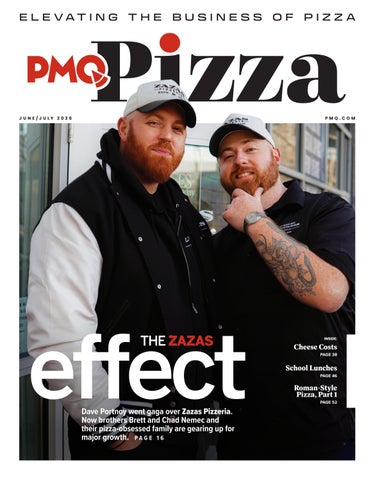
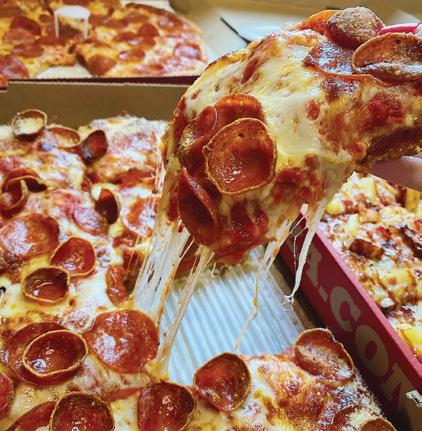
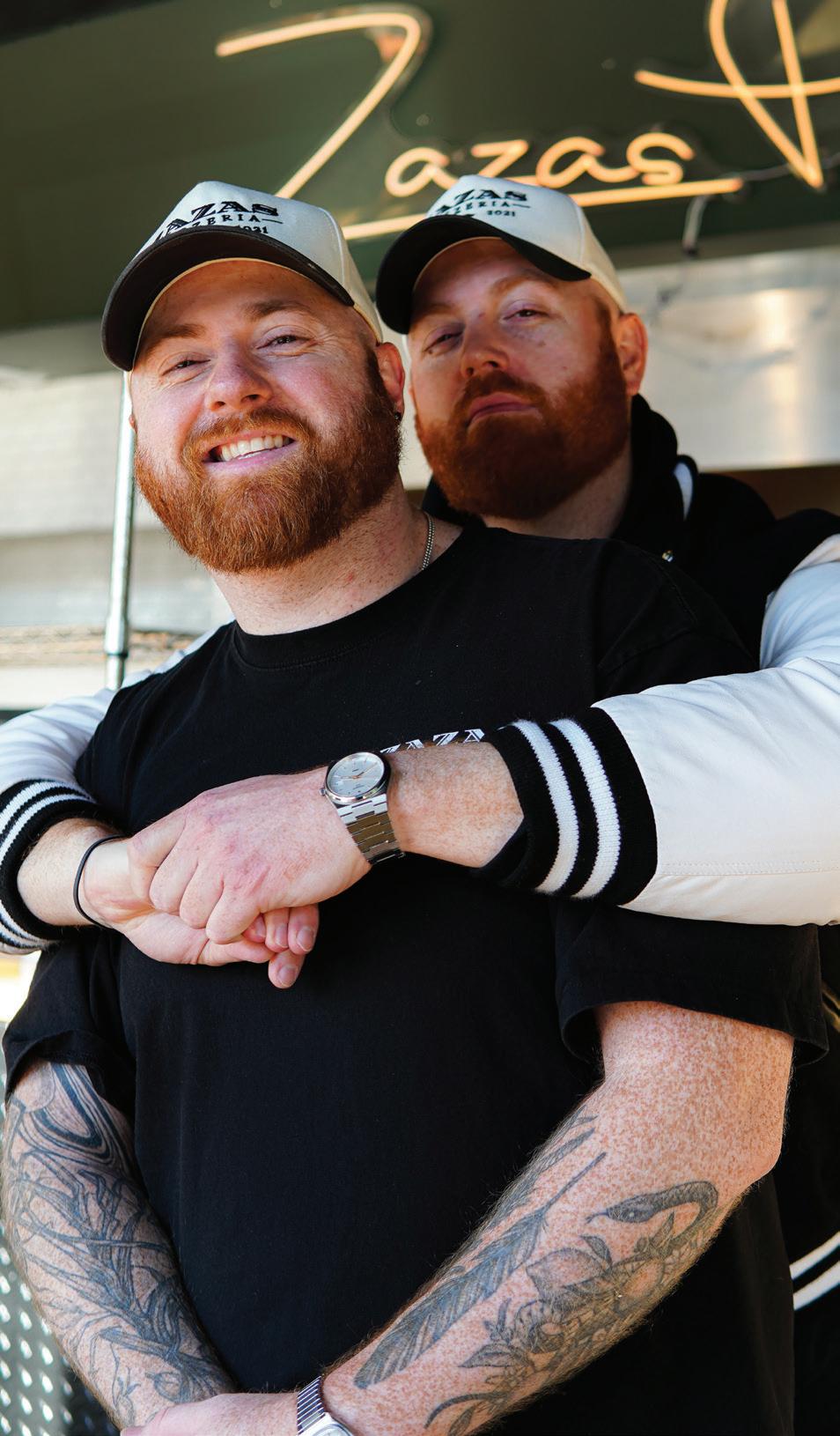
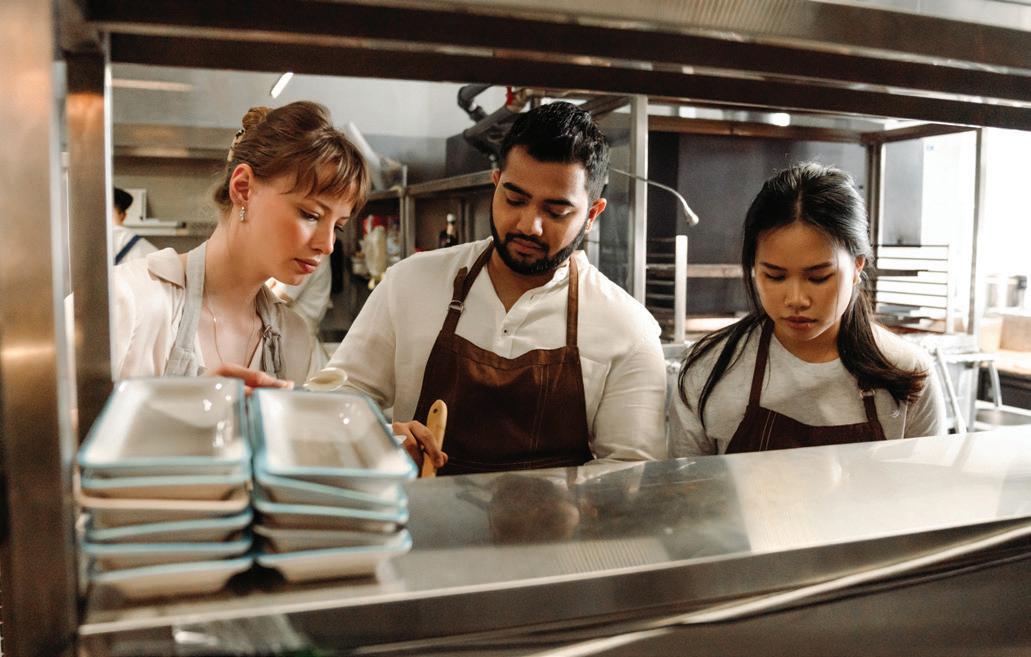
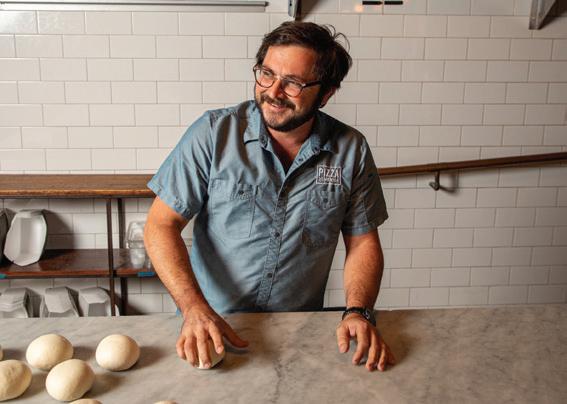
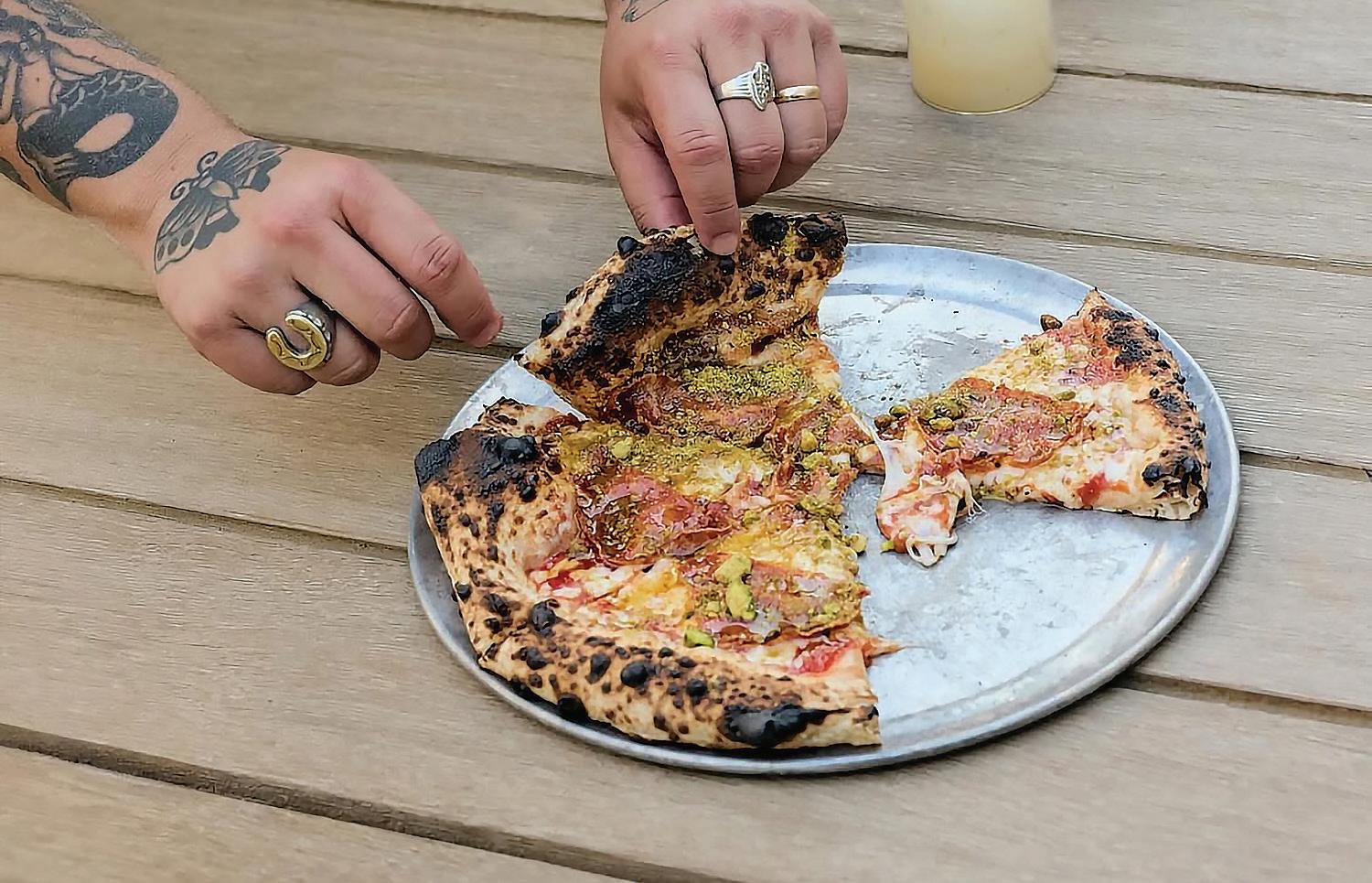
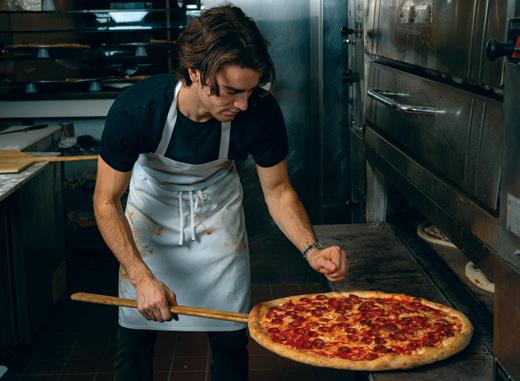
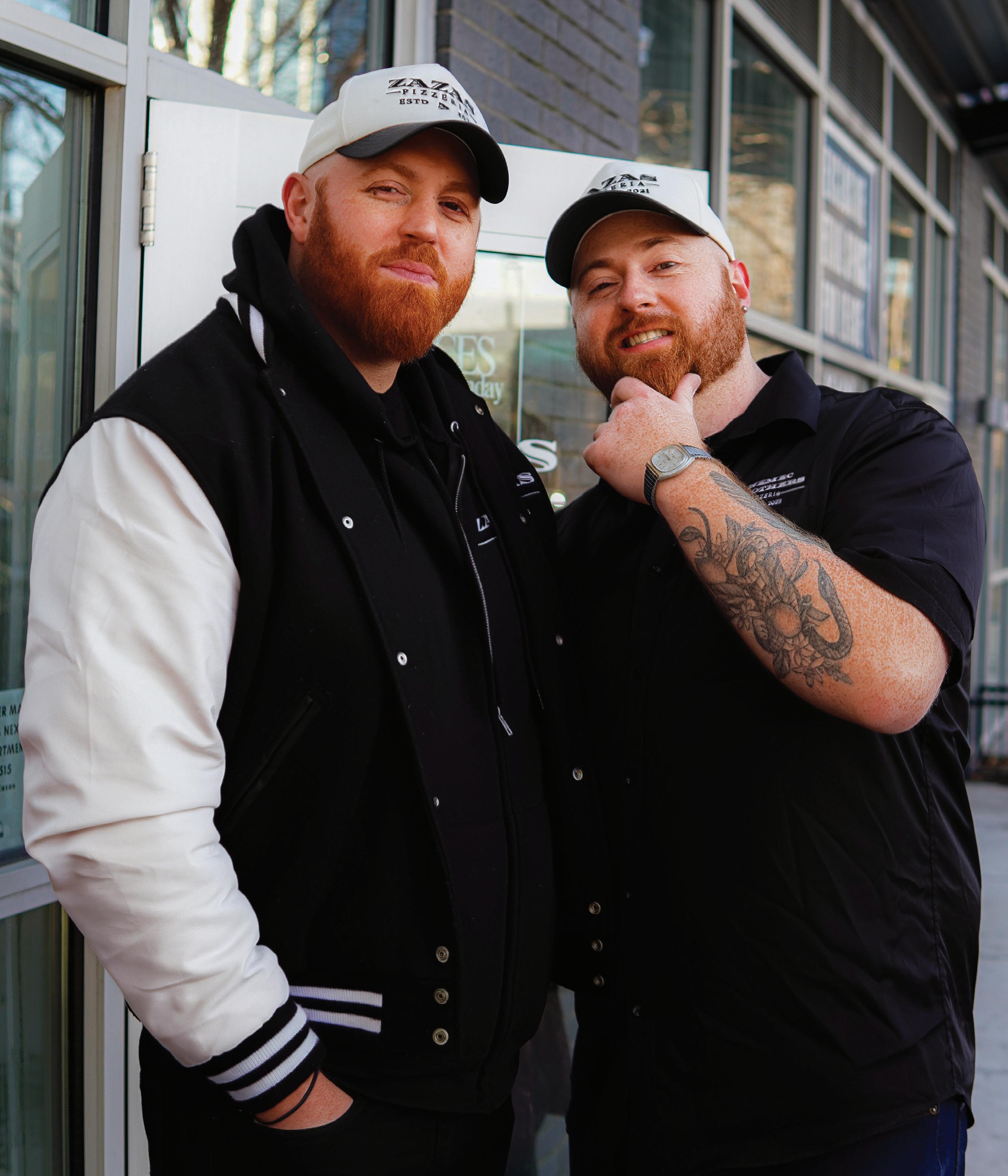
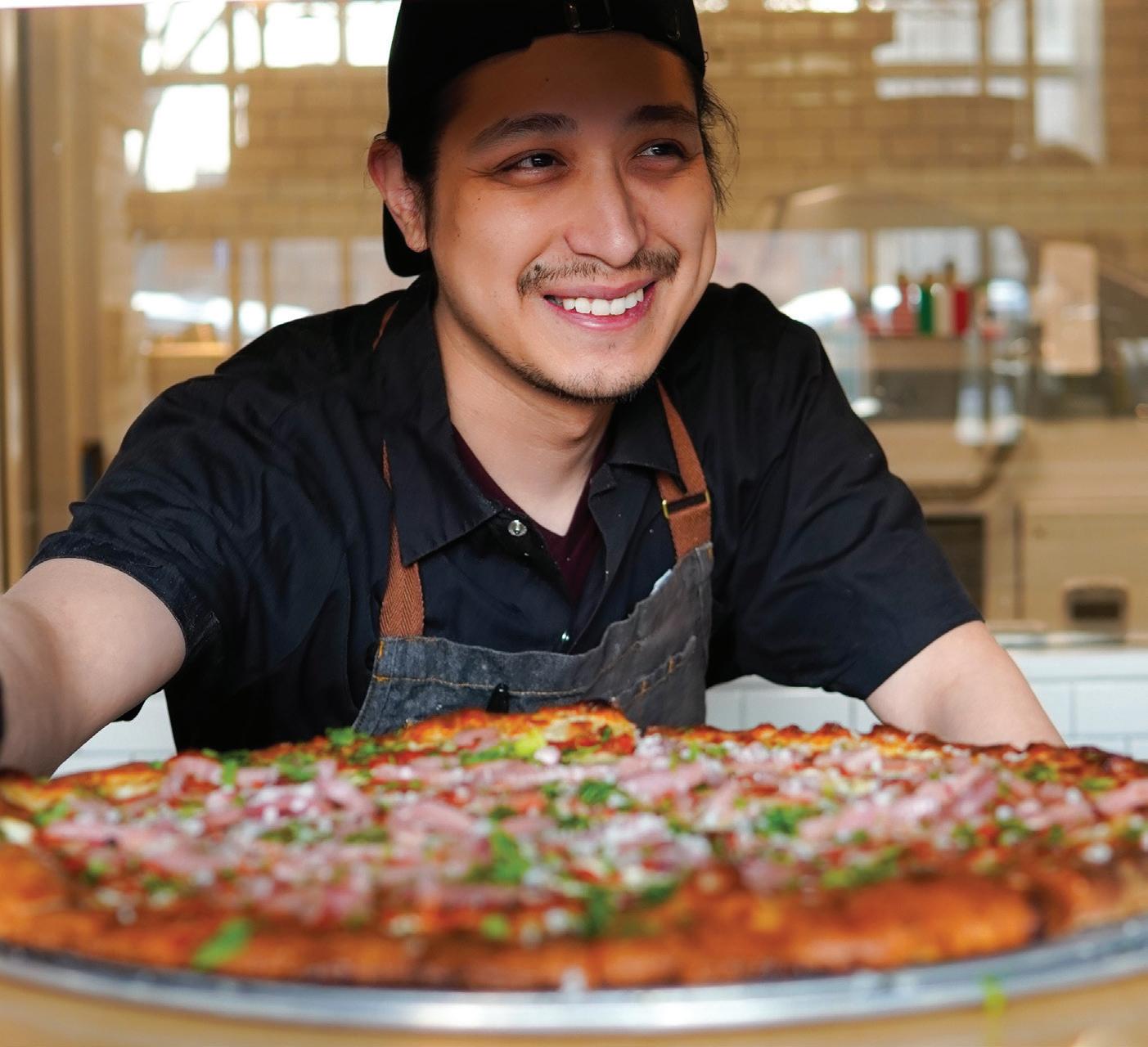
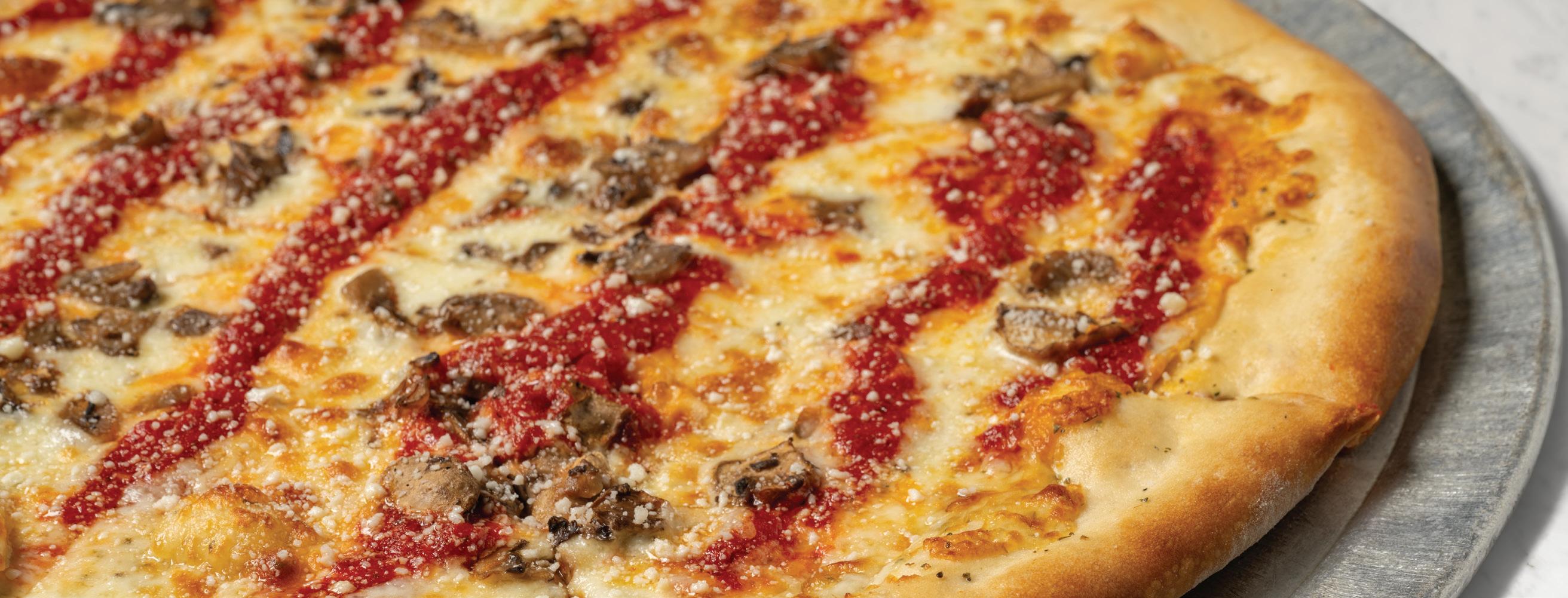
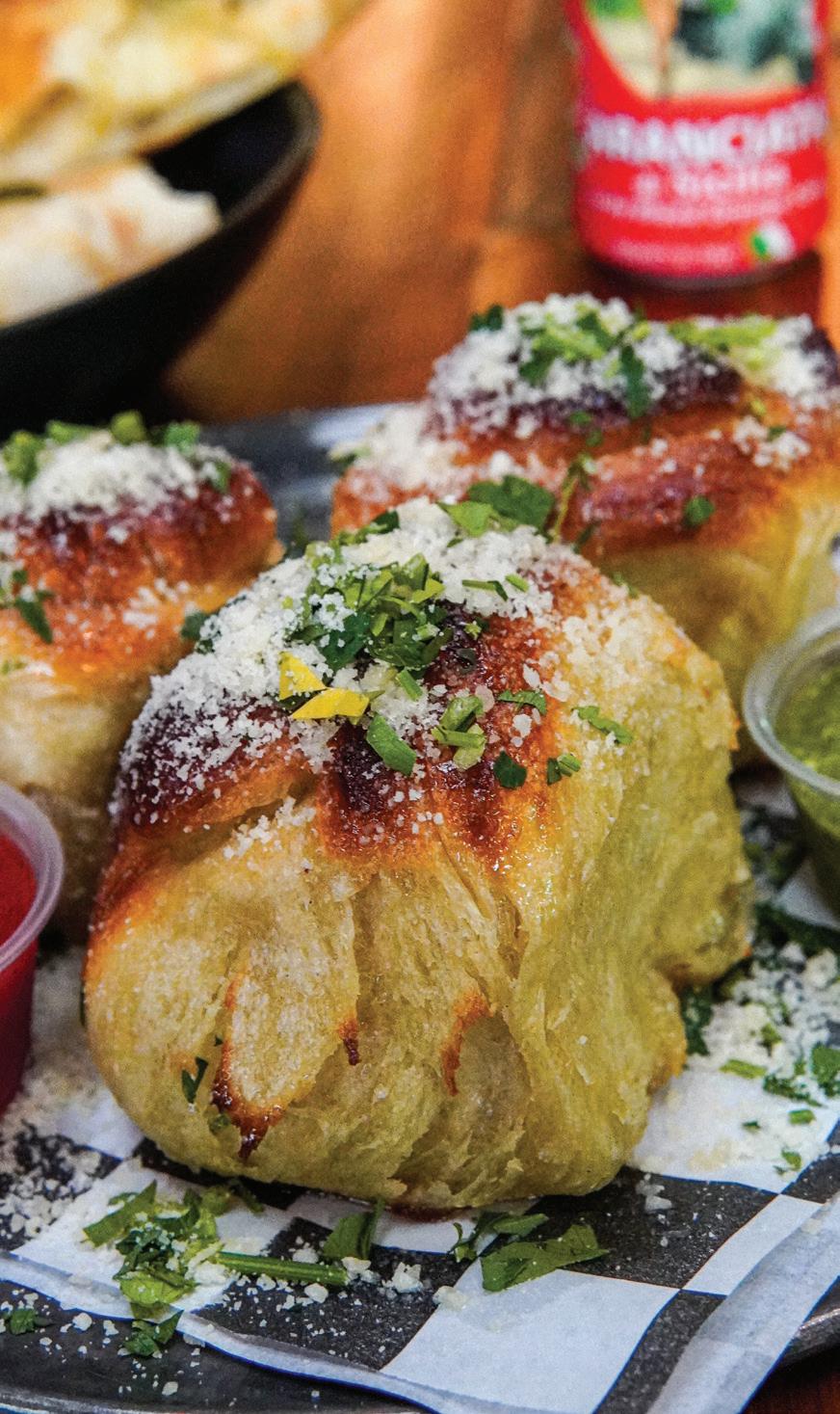
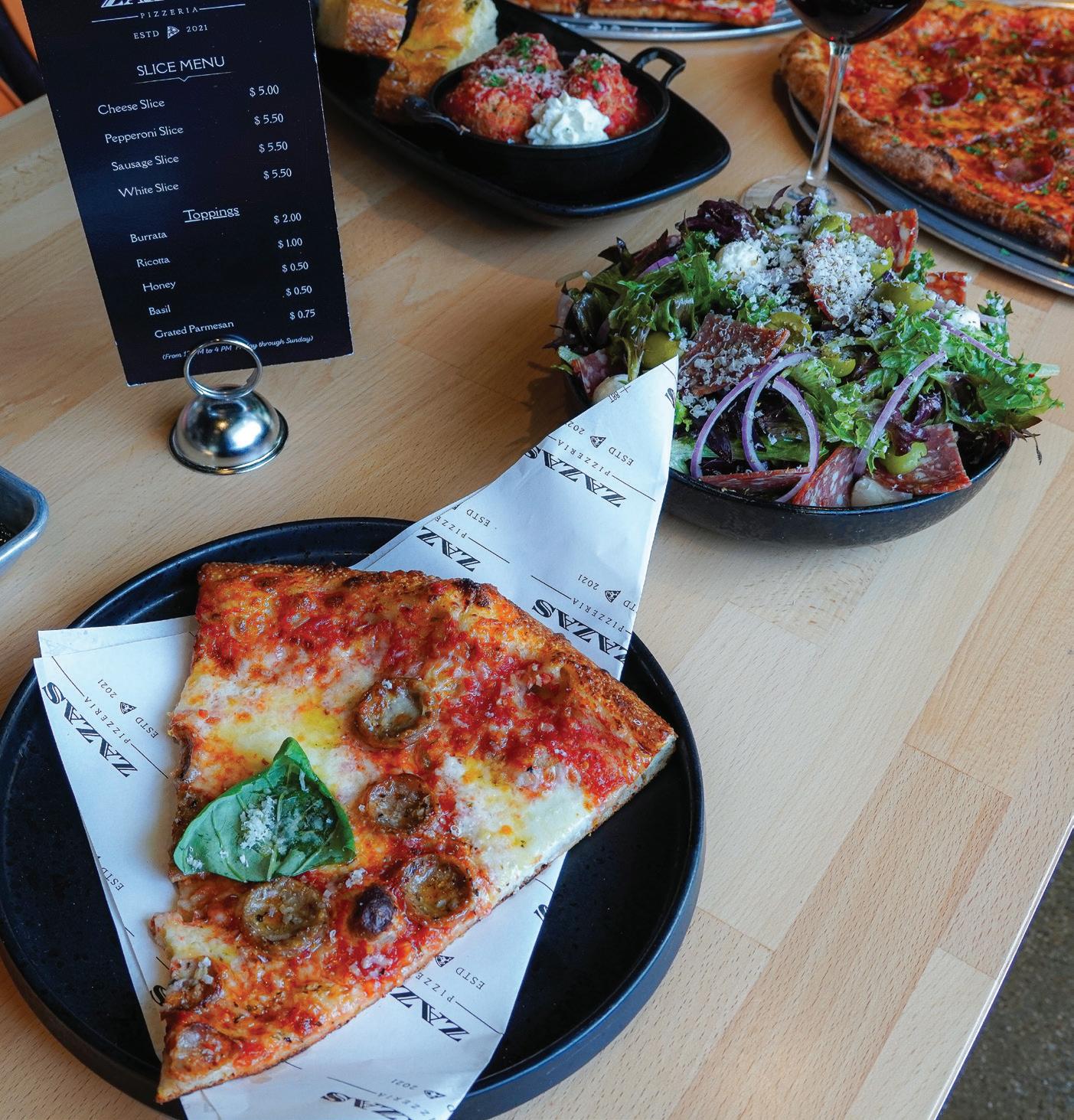
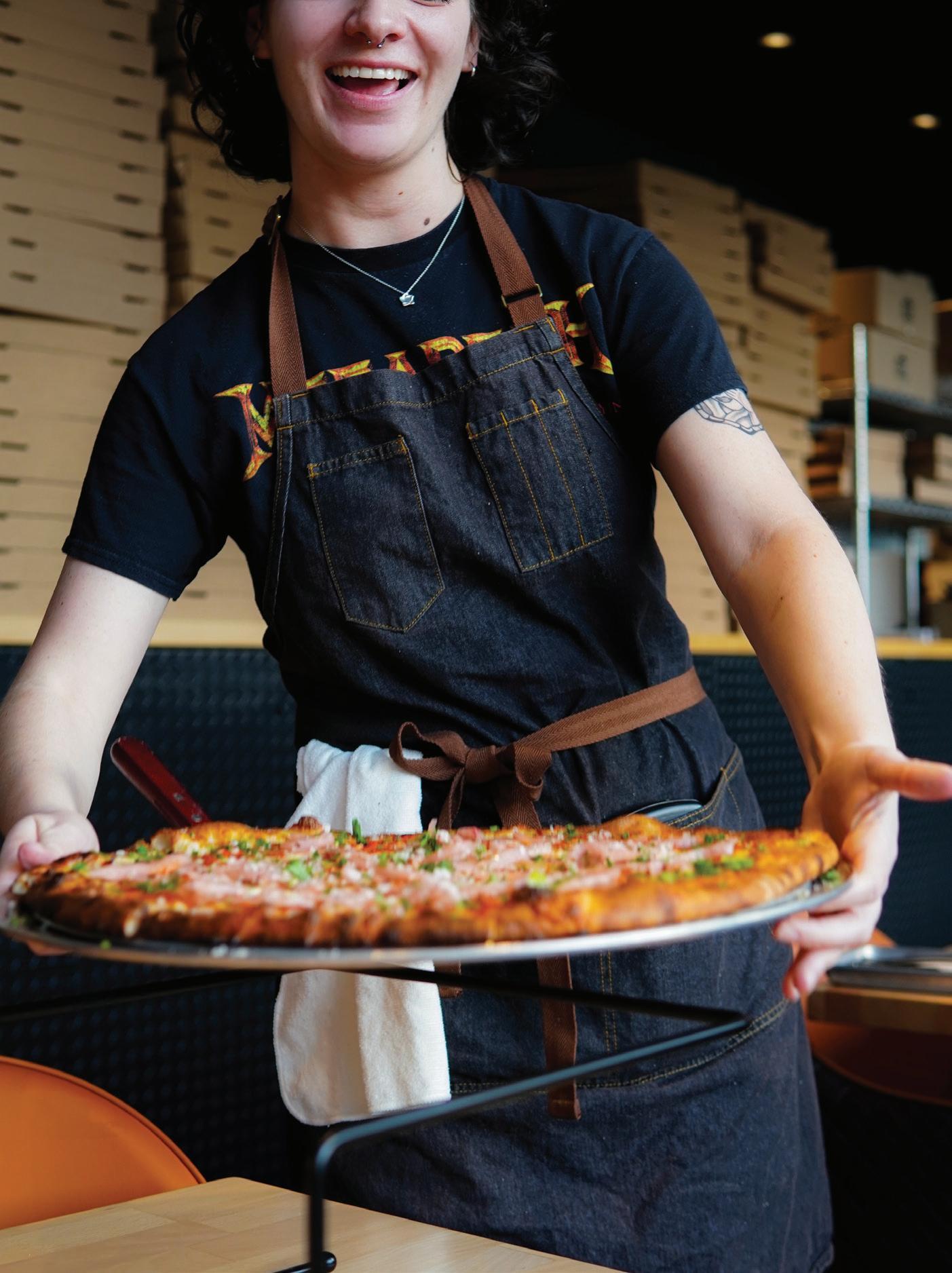
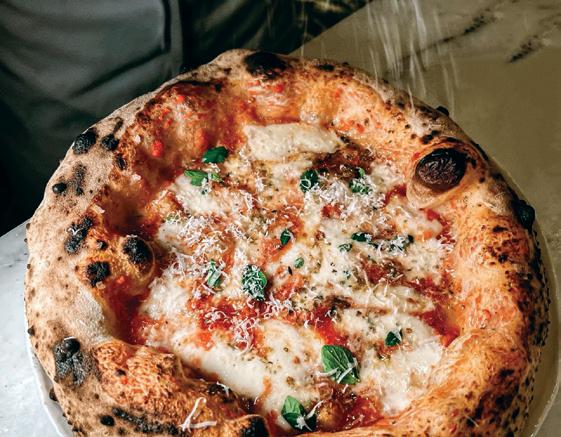
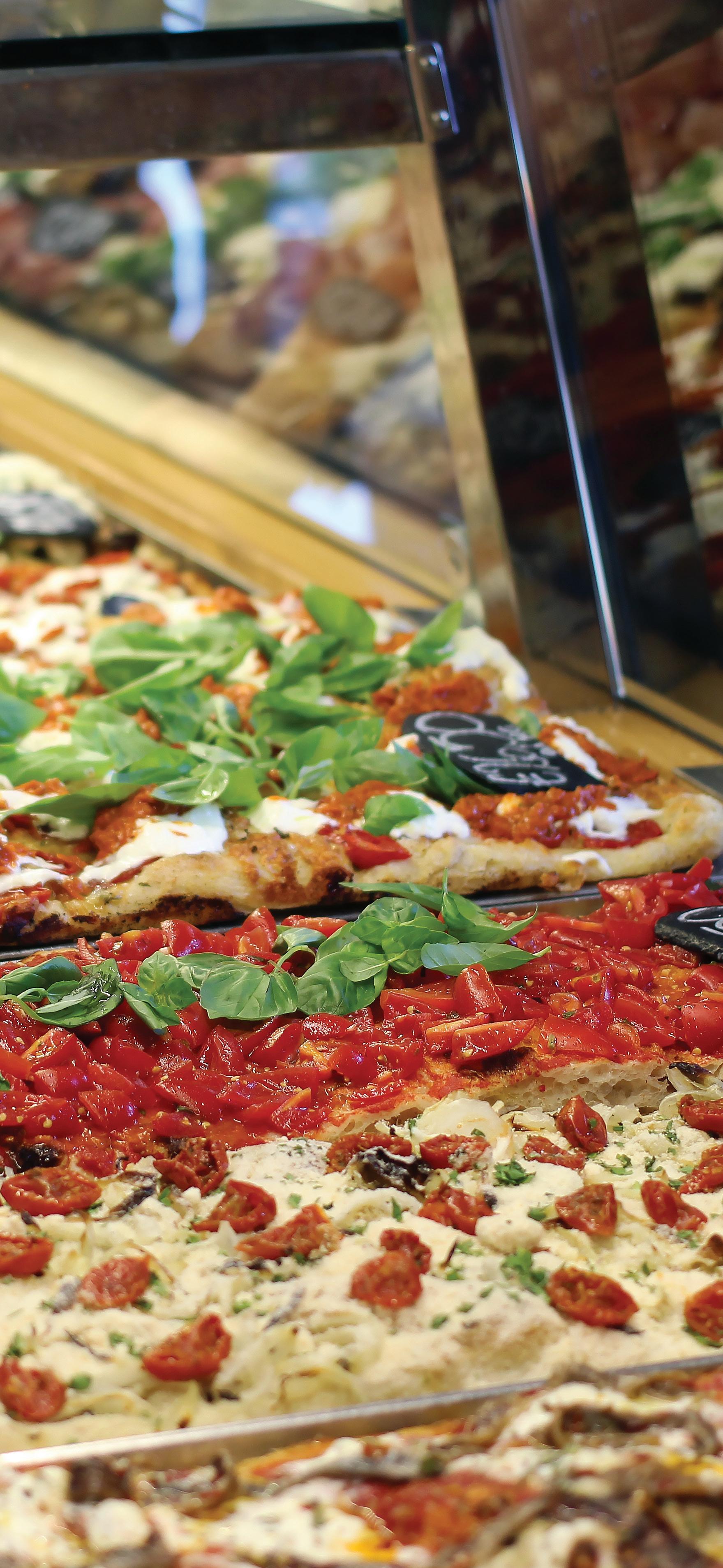
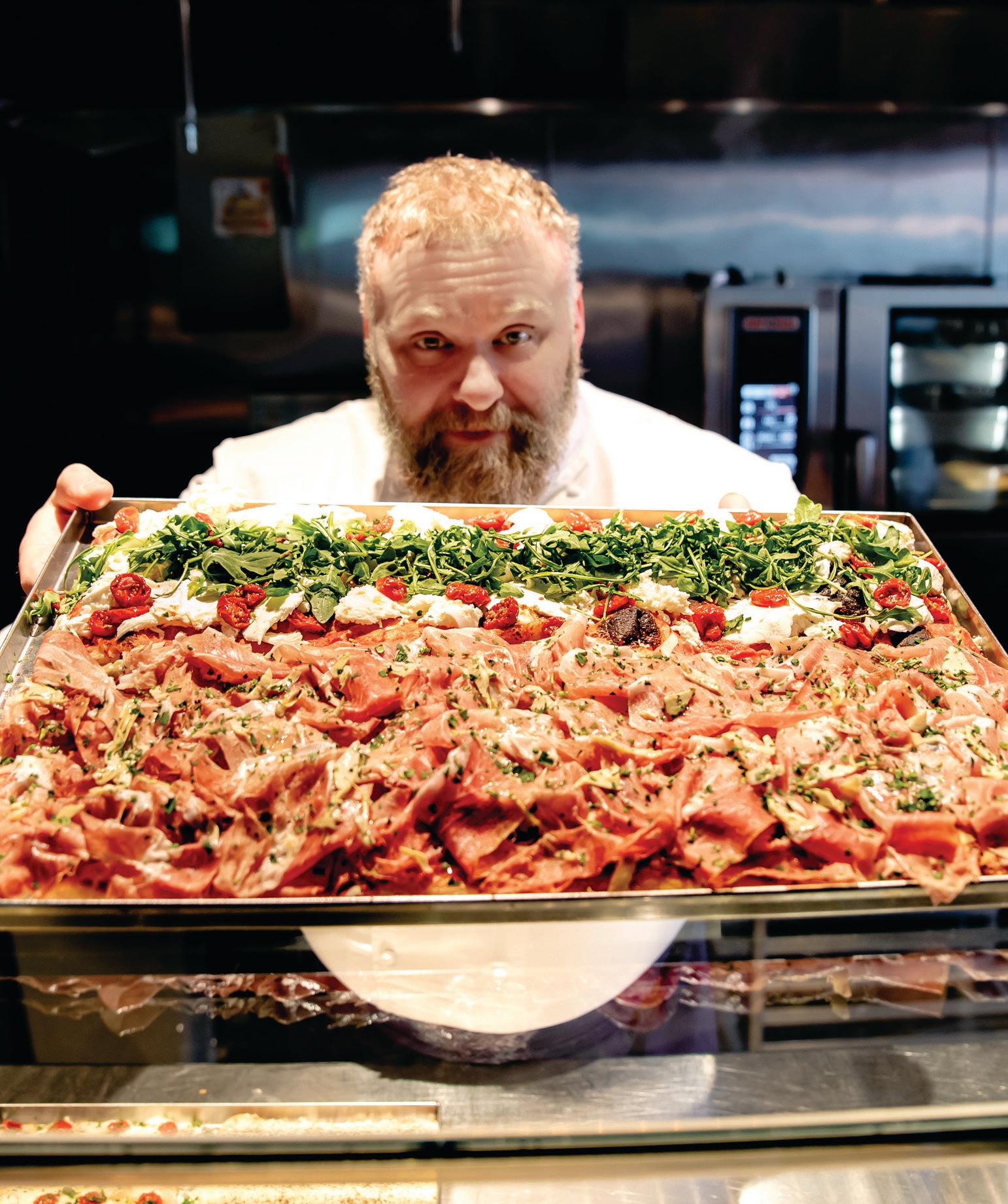
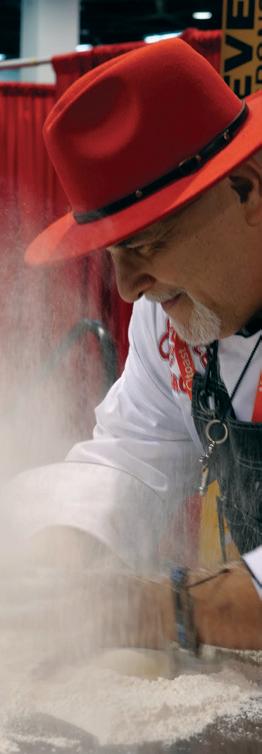
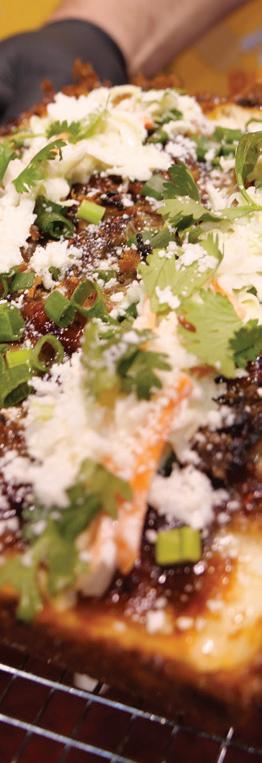
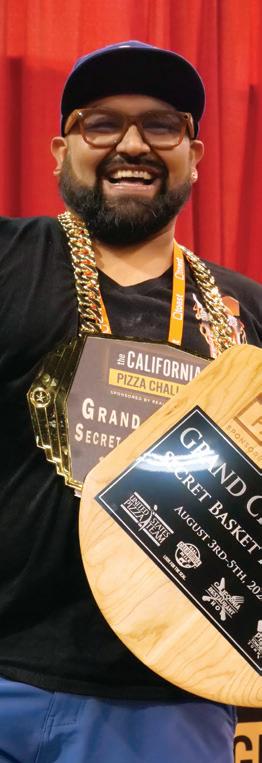
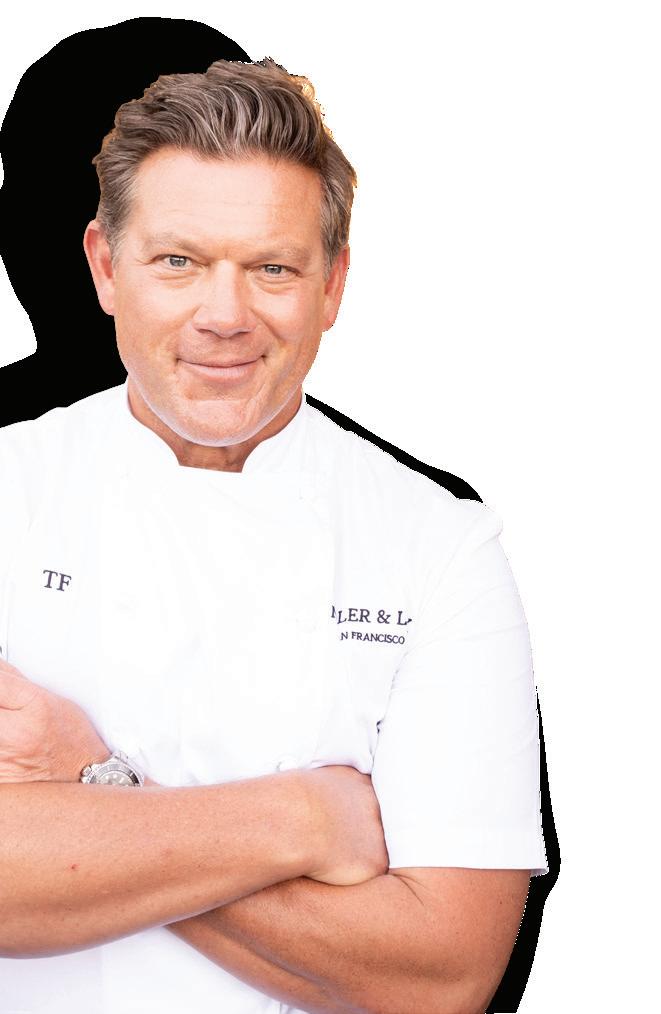
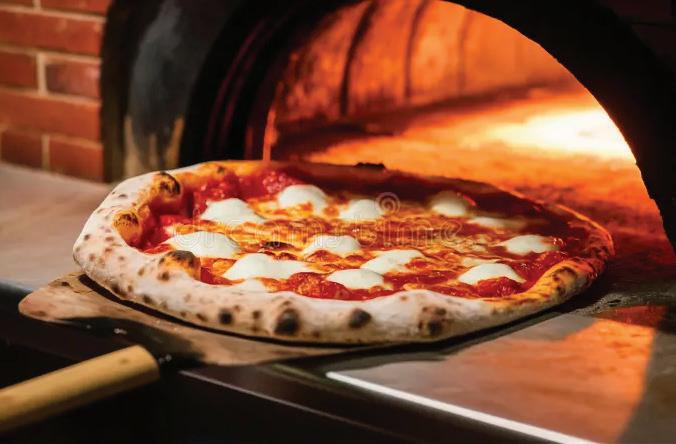
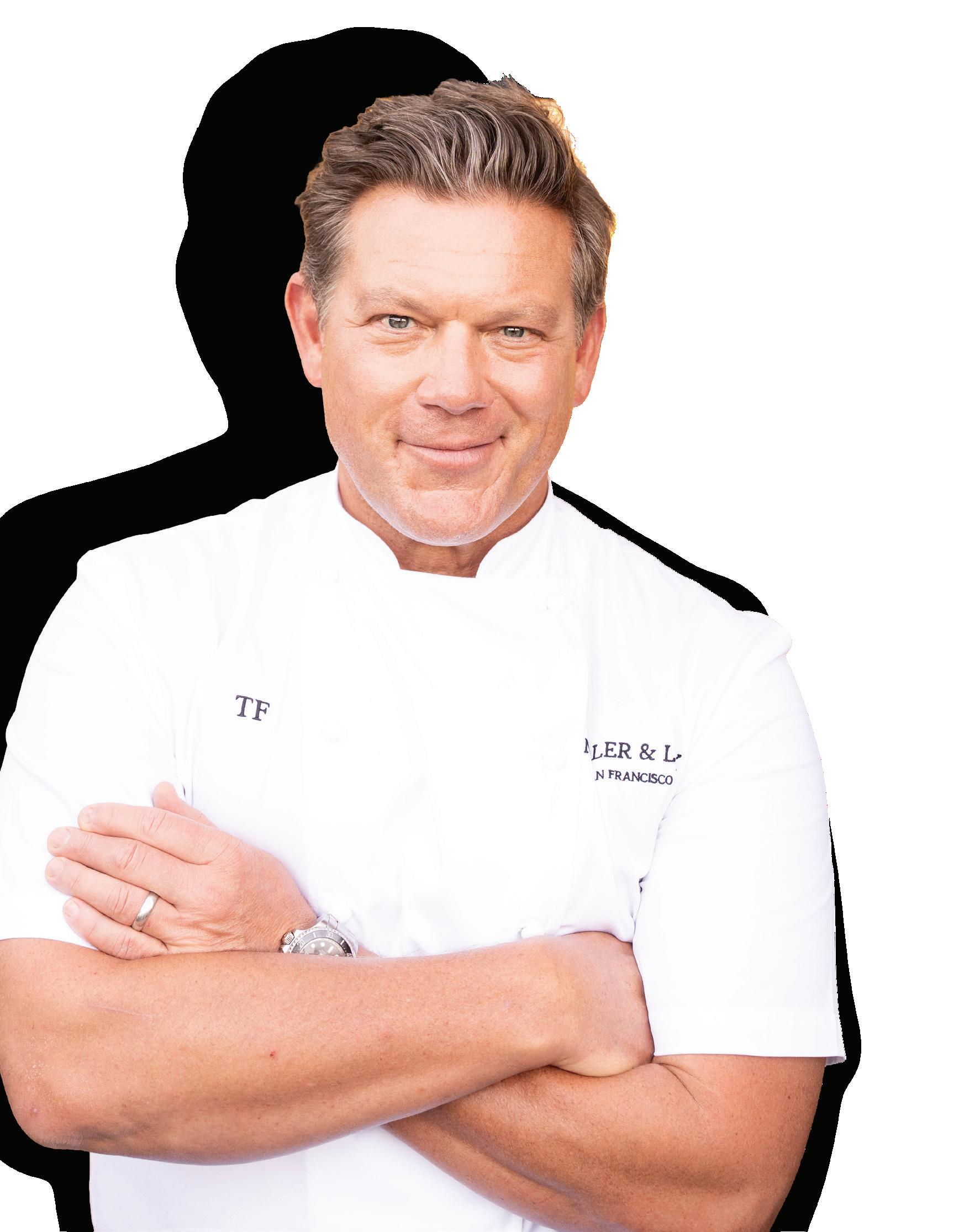
Dave Portnoy went gaga over Zazas Pizzeria. Now brothers Brett and Chad Nemec and their pizza-obsessed family are gearing up for major growth. PAGE 16
A SYSTEMS THINKER
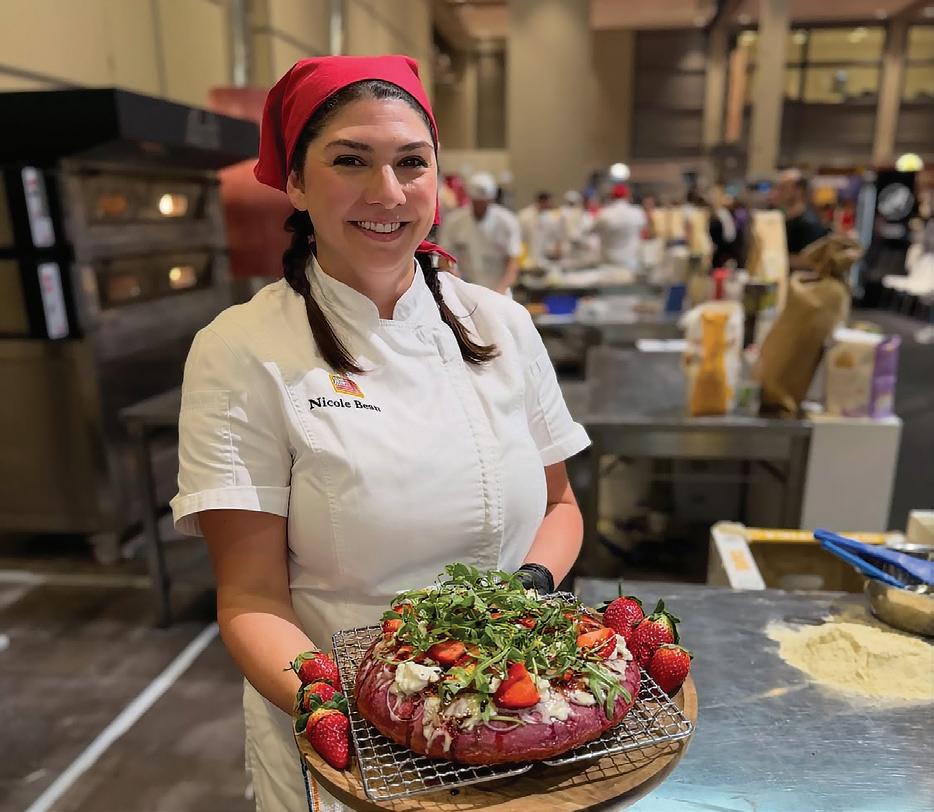
When Nicole Bean walked into her family’s pizzeria, Pizaro’s Pizza, for the first time as an employee, she wasn’t thinking about industry awards, competition trophies or introducing new styles of pizza to Houston. Fresh out of the corporate retail world, she was thinking about surviving her first Friday night shift. “It was really eye-opening,” Bean said on an episode of Peel: A PMQ Pizza Podcast. “I was just kind of wide-eyed….I did not know what I was getting myself into.” That was more than a decade ago. Today, Bean co-owns Pizaro’s with her husband and other family members. She’s an awardwinning—and highly influential—pizzaiola who has competed internationally and helped Pizaro’s become one of the first shops in Houston to serve authentic Neapolitan, New York and Detroit-style pizzas under one roof. An ambassador for Women in Pizza, she’s also a systems thinker who brought SOPs and structure into the family business. And expansion for Pizaro’s Pizza is still on the table if the right opportunity presents itself. “I don’t want [Pizaro’s] to be one of those restaurants that opens too fast and collapses,” she says. “We’re always looking, but we’re looking for the right fit at the right time.”
Listen to Peel: A PMQ Pizza Podcast on Apple, Spotify and SoundCloud.
Scan this code to subscribe or renew your subscription to PMQ! Or visit PMQ.com/subscribe
ELEVATING THE BUSINESS OF PIZZA
WTWH MEDIA, LLC
CEO Matt Logan mlogan@wtwhmedia.com
CONTENT
EDITOR IN CHIEF Rick Hynum rhynum@wtwhmedia.com
ASSOCIATE EDITOR Tracy Morin tmorin@wtwhmedia.com
ASSOCIATE EDITOR/ USPT COORDINATOR Brian Hernandez bhernandez@wtwhmedia.com
VP, EDITORIAL DIRECTOR Danny Klein dklein@wtwhmedia.com
ART & PRODUCTION
ART DIRECTOR Eric Summers esummers@wtwhmedia.com
SENIOR ART DIRECTOR Tory Bartelt tbartelt@wtwhmedia.com
VICE PRESIDENT Peggy Carouthers pcarouthers@wtwhmedia.com
WRITER Drew Filipski dfilipski@wtwhmedia.com
WRITER Ya’el McCloud ymccloud@wtwhmedia.com
WRITER Abby Winterburn awinterburn@wtwhmedia.com
SALES & BUSINESS DEVELOPMENT
SENIOR VICE PRESIDENT, FOOD, RETAIL, HOSPITALITY SALES AND ACCOUNT MANAGEMENT Matt Waddell mwaddell@wtwhmedia.com
NATIONAL SALES MANAGER Tom Boyles tboyles@wtwhmedia.com
VP, BUSINESS DEVELOPMENT Eugene Drezner edrezner@wtwhmedia.com
CUSTOMER SERVICE REPRESENTATIVE
Brandy Pinion bpinion@wtwhmedia.com
CUSTOMER SERVICE REPRESENTATIVE
Tracy Doubts tdoubts@wtwhmedia.com
FOUNDER Steve Green
PMQ PIZZA Issue 5 June/July 2026 (ISSN 1940-2007, Permit #5040) is published monthly in January, March, April, May, June, August, September, October, November and December by WTWH Media, LLC, 1111 Superior Ave #1120, Cleveland, OH 44114-2560.
Periodical postage pricing paid at Cleveland, OH. Additional mailing offices at Bolingbrook, IL.
POSTMASTER: Send address changes to PMQ PIZZA, 1111 Superior Ave #1120, Cleveland, OH 44114-2560.
Opinions expressed by the editors and contributing writers are strictly their own and not necessarily those of the advertisers. All rights reserved. No portion of PMQ PIZZA may be reproduced in whole or part without written consent.
14
Less Is More: Building a High-Volume Pizzeria
Offering something for everyone might seem like a smart idea, but an overstuffed menu can hurt overall profitability. Is it time for a trim?
38 Controlling Cheese Costs
Mark “The Cheese Dude” Todd details why the cheese market swings so wildly and why using blends and even high-end artisan varieties can actually reduce your costs.
46 Power Lunch
If you want to start and maintain a moneymaking school-lunch program—and maybe take it even further—these two operators will tell you how to nail down the process.
52 Fire, Grain & Time: Part One
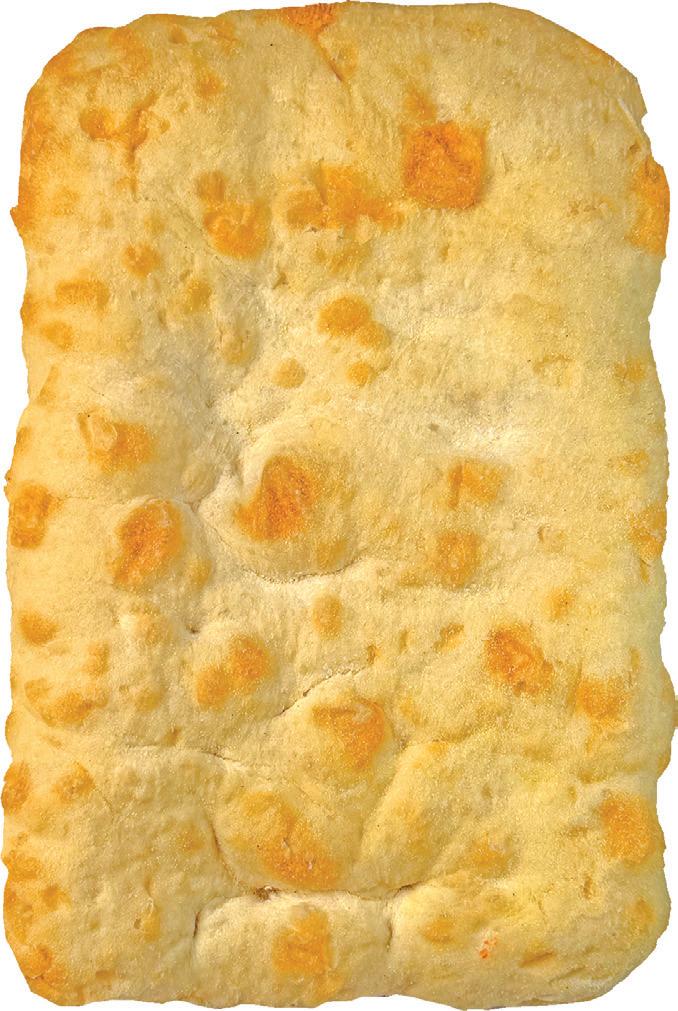
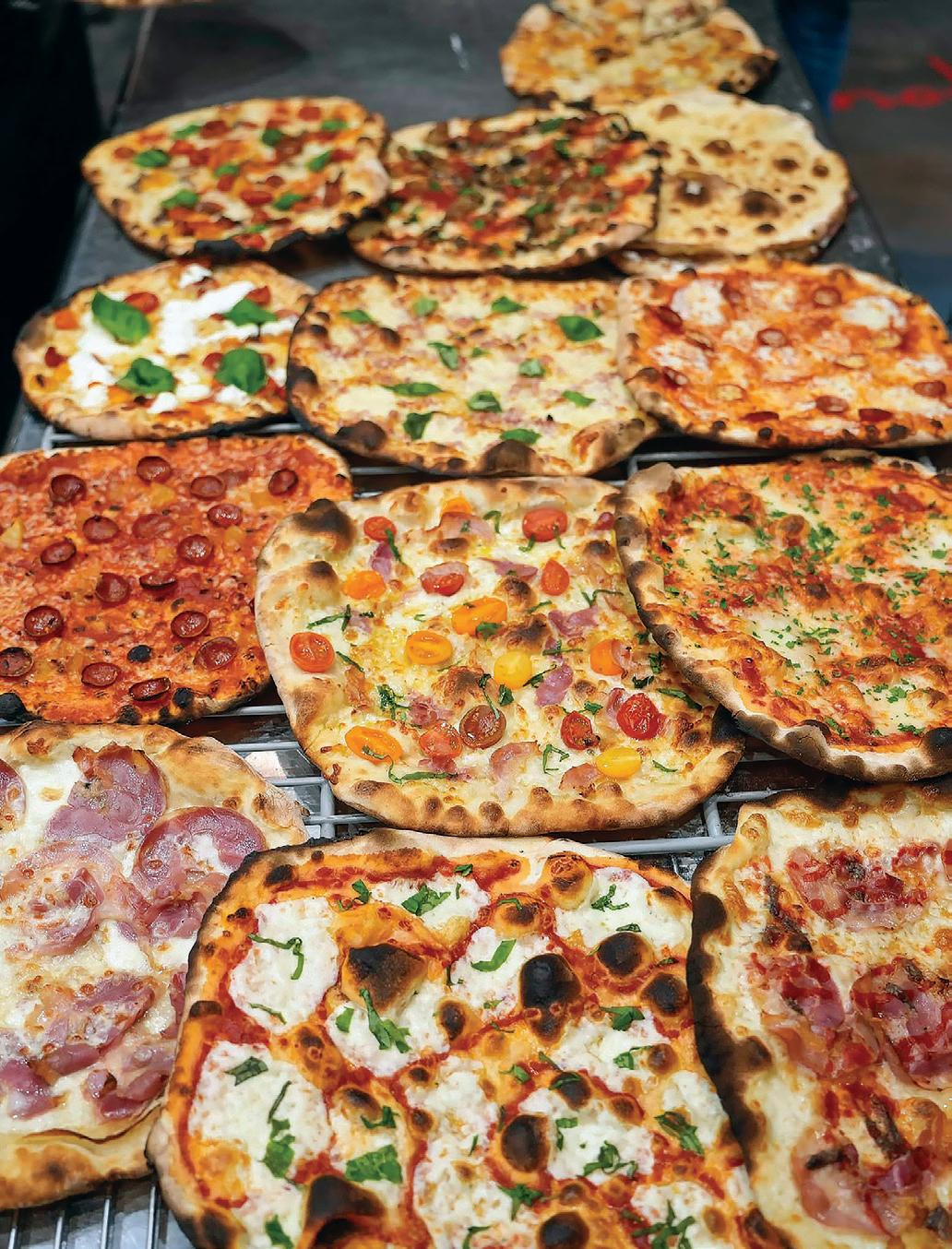
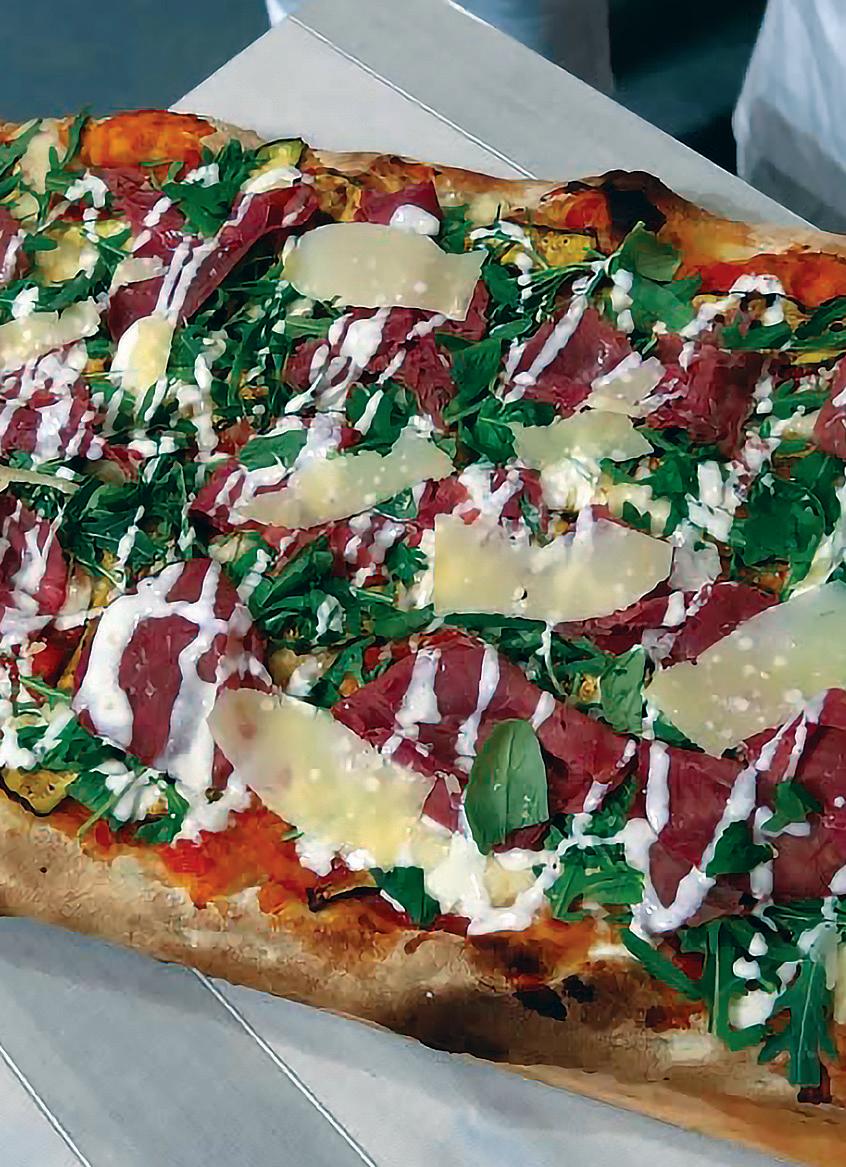
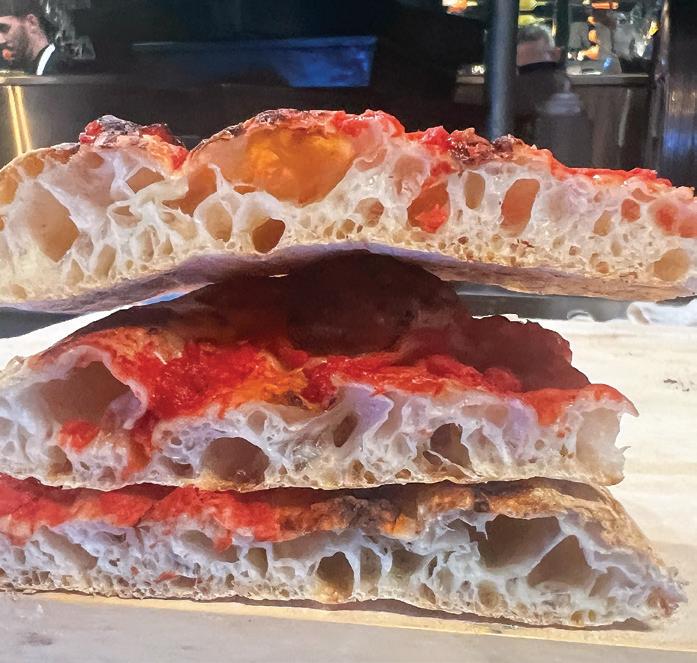
U.S. Pizza Team member Chef Vitangelo Recchia knows Roman-style pizza because he has lived it—and teaches it. Here, he shares the history and science behind this red-hot style.
58 Chain of Command: Women of the USPT
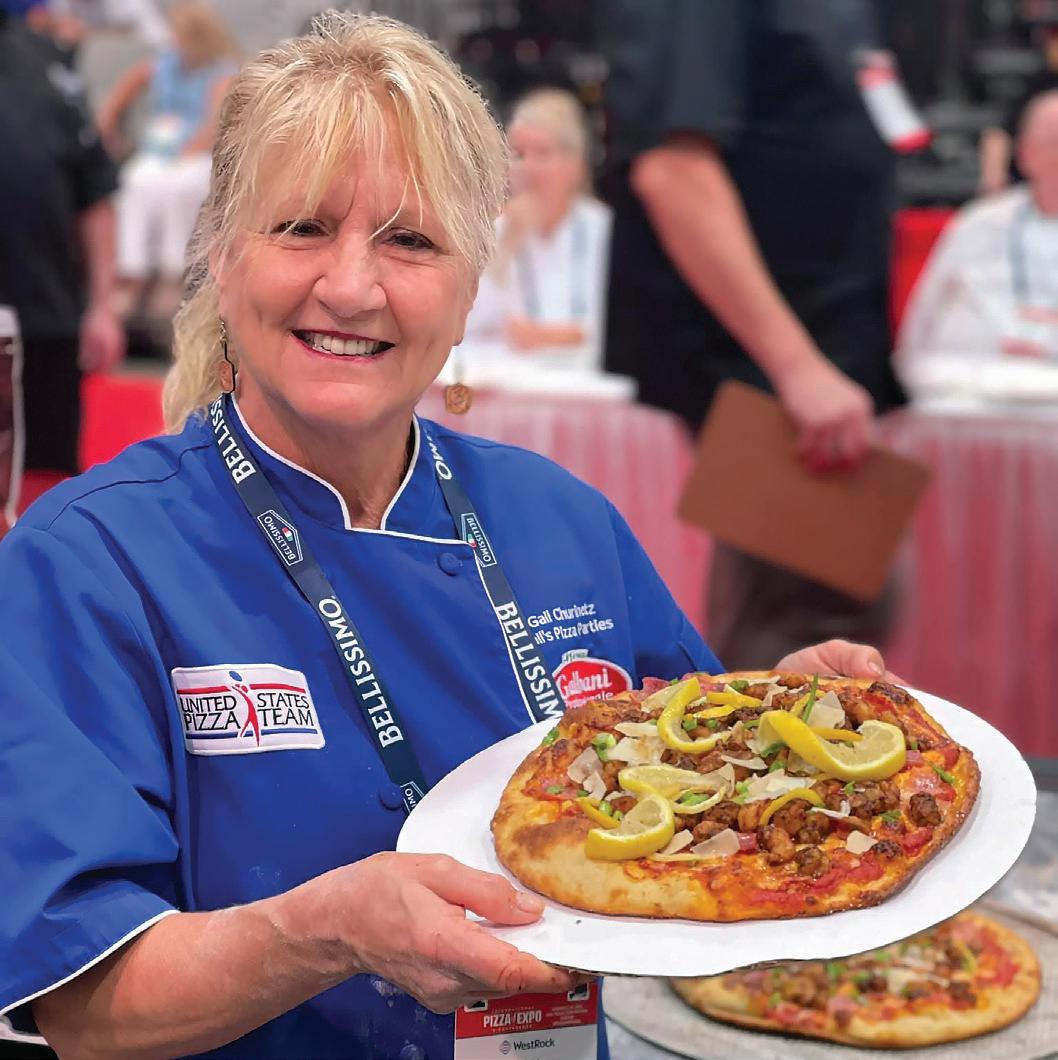
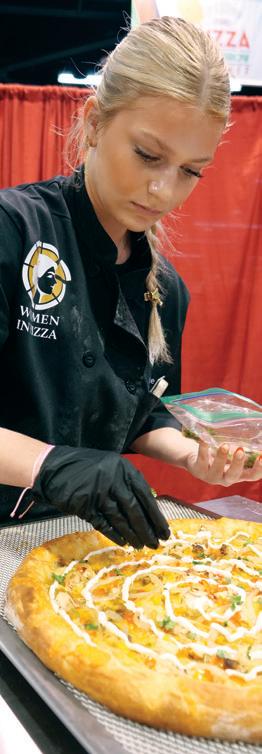
Female members of PMQ’s U.S. Pizza Team have taken command of the kitchen and made themselves part of the conversation in a maledominated industry.
Zazas Effect
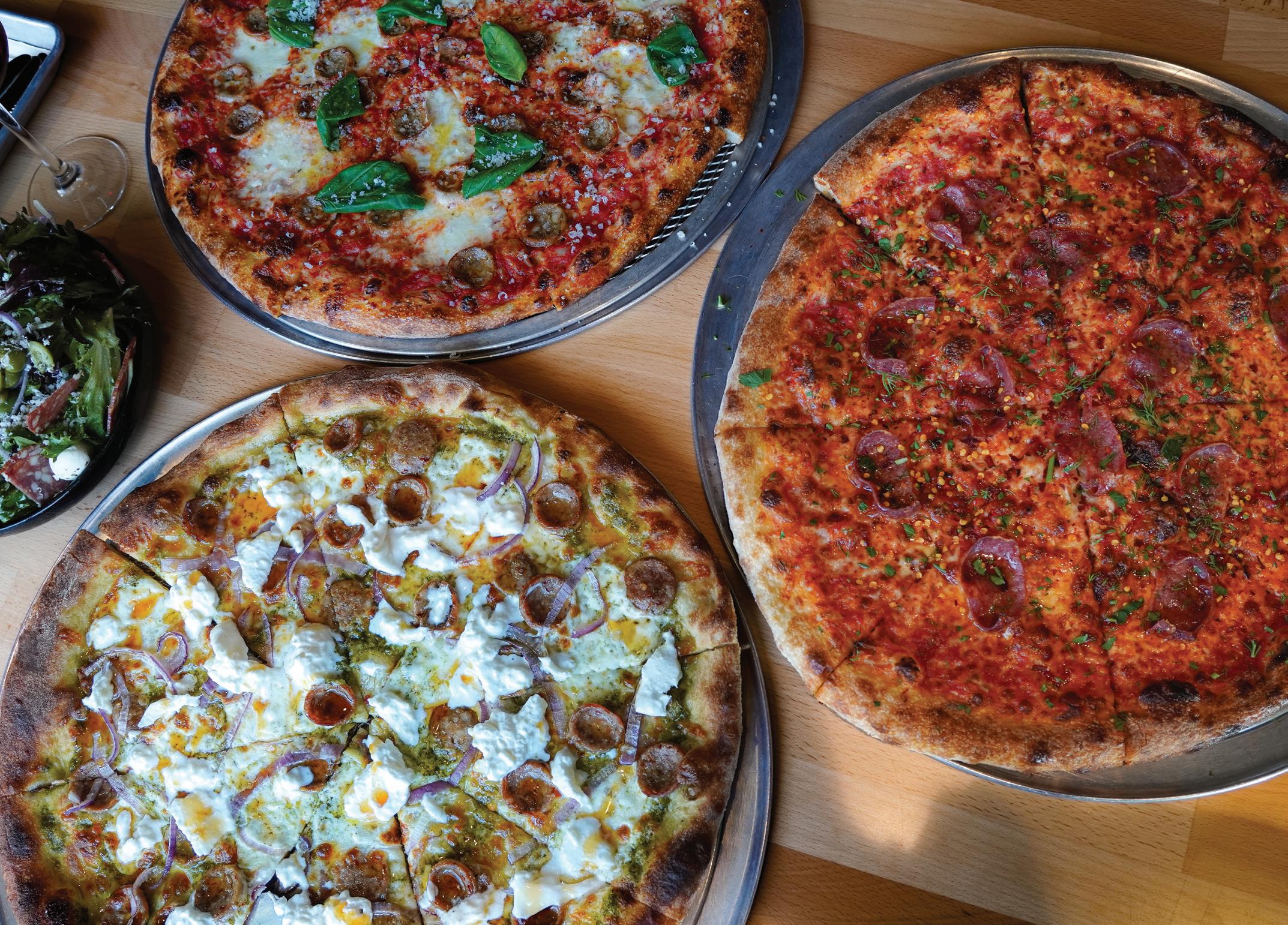
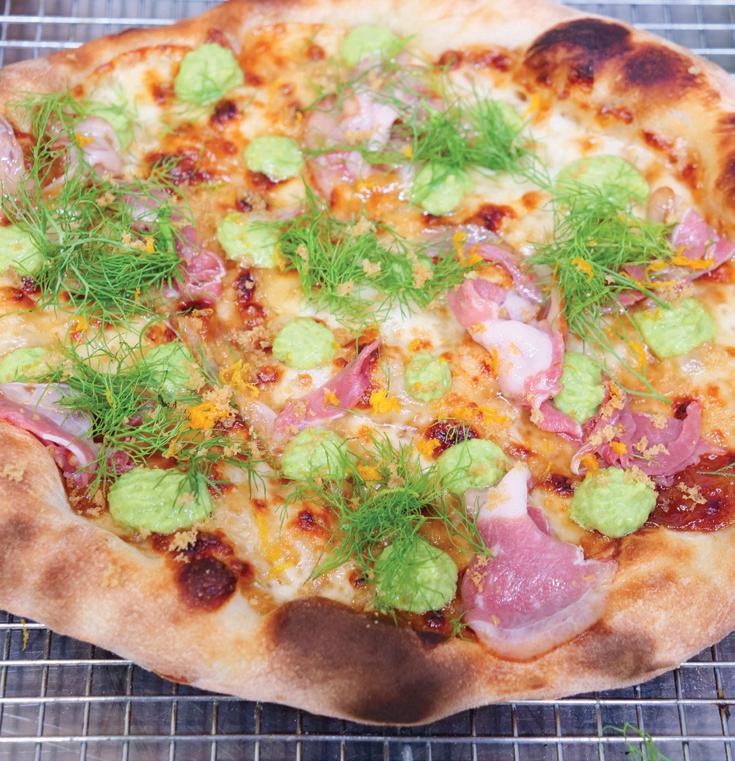
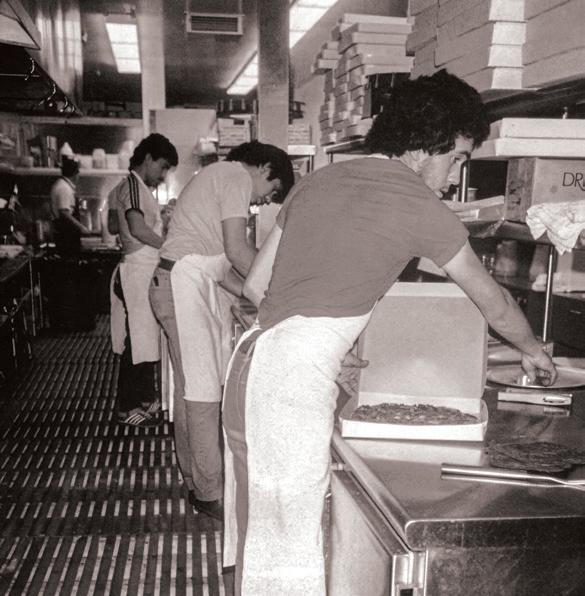
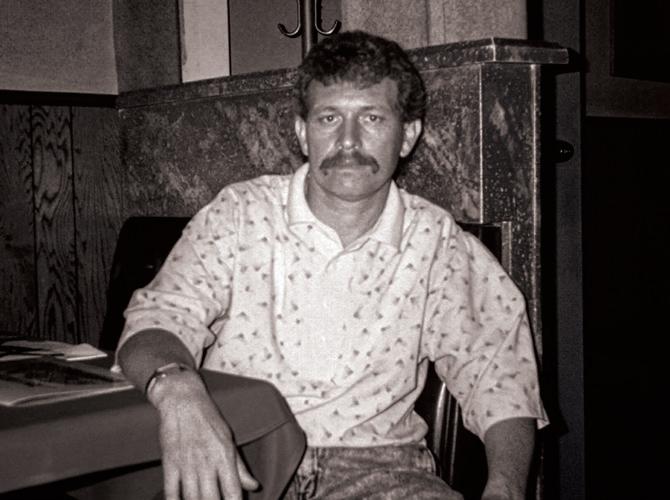
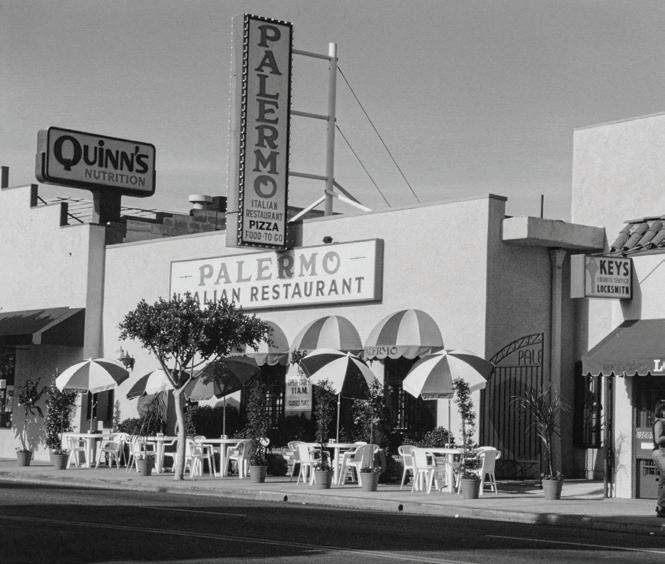
Brett Nemec knew the pizza craft. His brother Chadd knew how to run a business. With Zazas Pizzeria and Nemec Brothers Pizzeria, they joined forces to put Chicago in a New York state of mind.
BY TRACY MORIN
COVER PHOTO BY OLENKA SALVADOR
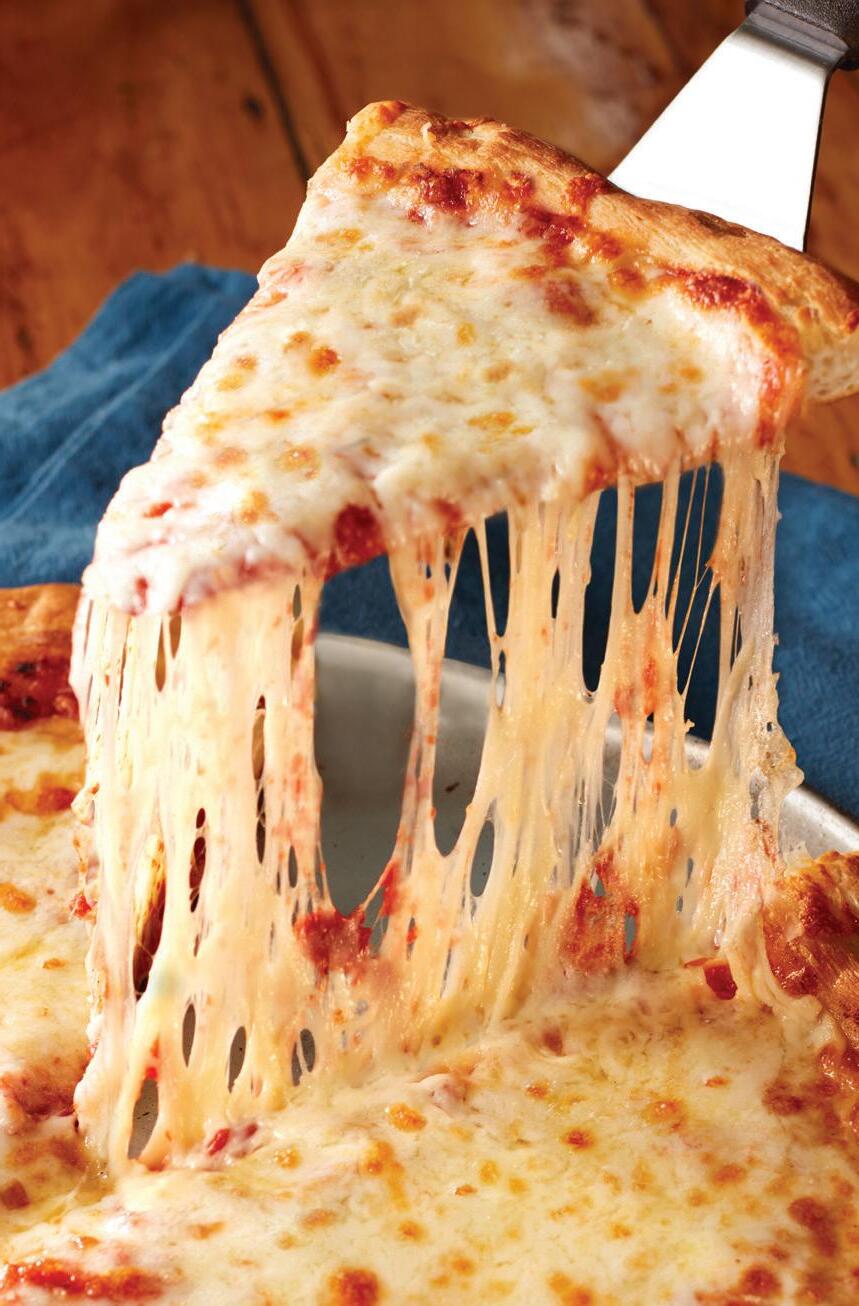
The right cheese takes a pizza from ordinary to unforgettable – and that’s not a stretch. From low-moisture whole milk and part skim blocks to gas-flushed shreds, Bellissimo and Vantaggio mozzarella cheeses melt beautifully, stretch perfectly and deliver the flavor you crave.
• Consistent quality that operators can count on.
• Crafted on Italian tradition.
• A pizzaoiolo’s dream.
Ready to taste the difference? Ask your local Bellissimo distributor about Bellissimo and Vantaggio Pizza Cheeses today, or visit bellissimo.com to learn more.
SHARE YOUR STORY WITH THE PIZZA COMMUNITY
PMQ Pizza’s best pizzeria profiles often come directly from subscribers to our free e-newsletter, Pizza Pulse. So if you want to get your story told, sign up at PMQ.com/Pizza-Pulse to get our attention! Behind every print issue is a growing digital universe, and Pizza Pulse is the gateway. Print can only hold so much, but we can go bigger online: deep-dive profiles, videos, podcasts, social posts, webinars, reader surveys and more. Here’s a look at the latest:
Fix Your Shop’s Biggest Problems— One Week at a Time
Better people, better systems: Tyrell King, a Westshore Pizza franchise owner and host of the Pizza King Podcast, says you can have both if you pick one skill each week, demonstrate it, teach it, and then “coach the moments” during every shift for better execution.
Read at PMQ.com/fix-your-pizzerias-biggest-problems
How NOLA’s Pizza Domenica
Landed in Sports Illustrated
This two-store New Orleans pizzeria is known for sourcing local ingredients for its Cajun-influenced artisanal pies. But when a wacky exhibition baseball team came to town, executive chef Phil Mariano went full-blown “bananas” in the kitchen— and SI took note.
Read it at PMQ.com/pizza-domenica
PMQ.com/pizza-pulse!
Pop-Up Marketing Lessons From Real-World Operators
Erica D’Arcangelo, marketing consultant and host of the A Story About Pizza podcast, asked five mobile-unit pizzaioli to share their smartest ideas and tips for setting your pop-up business apart and creating an experience your customers will remember.
Read it at PMQ.com/pop-up-marketing
Making Waves: Pro Surfer Trades His Board for a Pizza Peel
Want to Get PMQ’s Attention? Try this!
Create a Reel on Instagram, tag @pmqpizzamag and tell us why we should feature your pizzeria.
Mason Lesser, the grandson of a Naples native who owned dozens of pizza shops over the years, thought he was “living the dream” as a surfer dude. But making pizza at Marina’s, a buzzy new pizza shop in Philadelphia’s Fishtown, turned out to be his true calling.
Read it at PMQ.com/marinas-pizza
IP Phone Service
Increase revenue and lower cost
• No Busy Signals
• Call Recording
• Call Queuing / Auto Answering
• Multiple (random) start of call upsell messages
• On hold music/message loops
• Detailed reports—hold times, lost calls etc
• Callerid delivered to POS system
• Auto attendants— ”If you have arrived for curbside pickup press one ”
Cellular Backup Internet
Protect against outages
• When your Internet fails our cellular backup router keeps your phones, credit card processing and web orders all working.
• The backup kicks in automatically in seconds. So quickly you will not even drop calls in progress when your primary Internet goes down!
• The same router can be used to create chain wide virtual private network to connect your locations.
• SD WAN LTE/LTE A (4G/5G) modems.
On the PBX
“Press one to receive a text message with links to our onlne ordering ”.
SMS Marketing
Manage bulk text message marketing from our system to drive increased revenue. As low as $0.01 per message. Group text messaging to communicate with your employees (drivers, bartenders, all staff etc).
SWIMMING WITH SHARKS
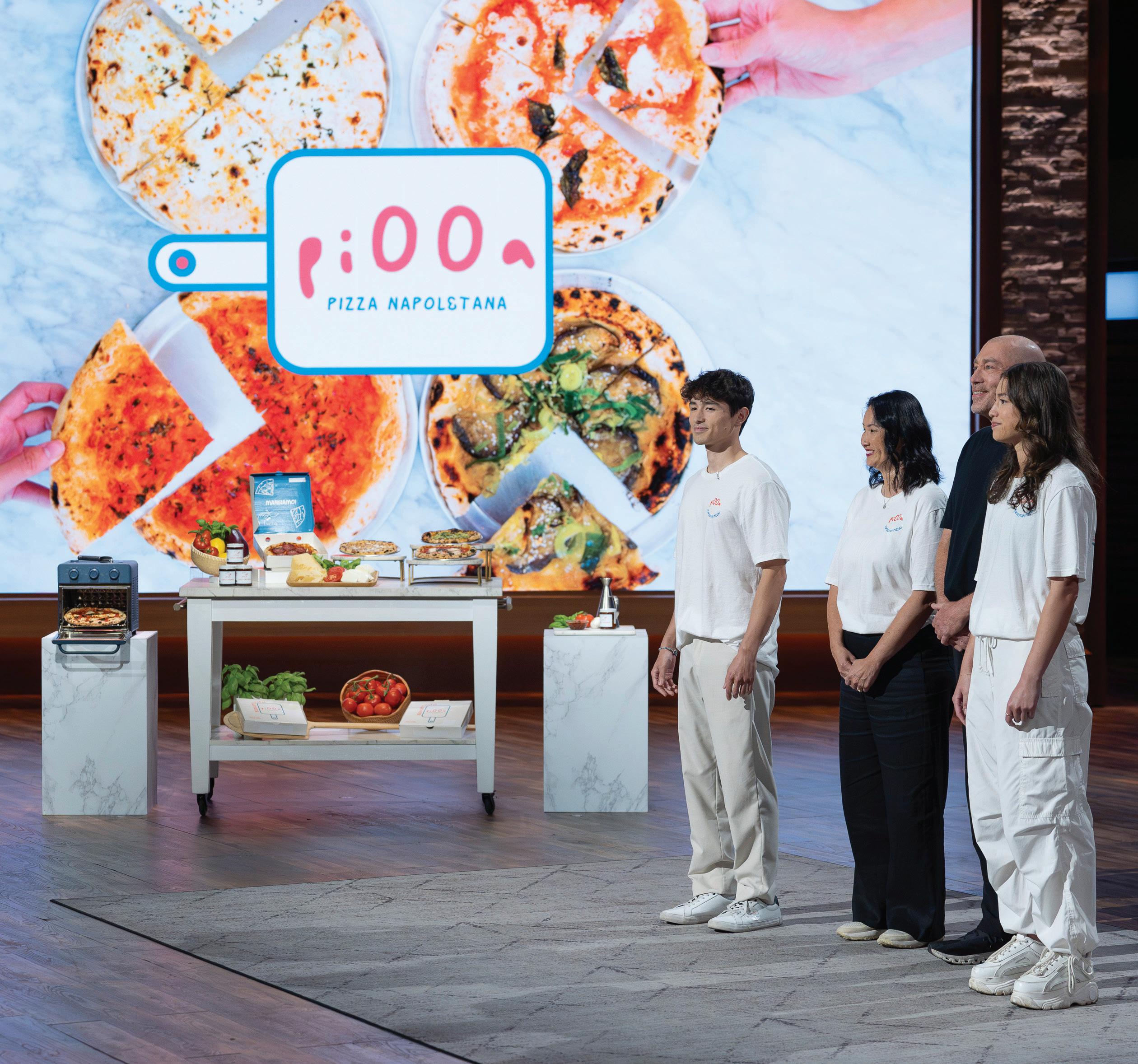
AFTER HIGH SCHOOL, MELODY STEIN applied to culinary school—and was rejected simply because she’s Deaf. No restaurant would hire her, either, assuming a Deaf person would be a liability in the kitchen. Boy, were they wrong. After studying with pizza masters in Italy, Melody founded San Francisco’s acclaimed Mozzeria, staffed entirely by Deaf people. Now she and her family own pi00a, a globally inspired Neapolitan frozen pizza brand that recently landed a $200,000 investment from Lori Greiner on ABC’s Shark Tank. The Steins made their pitch on the season finale, complete with freshly baked pizzas and a heartfelt plea: “The unemployment rate for the
Deaf community is about 55%,” Melody told the investors. Growing pi00a into a nationwide brand and hiring Deaf workers, she said, “is super important for us…because we experience a lot of rejection.” The “sharks” were wowed by the pies—including the Margherita, the Miso Eggplant, the Quattro Formaggi and the Soppressata— and Greiner fell in love with the Stein family as well. “I look at you, and my heart fills up,” she said. “You deserve a deal.” The Steins gave her a 12% share in pi00a, and Greiner promised, “I will help blow you up in the best way imaginable.”
The Stein family (pictured, left to right: son Rylan, Melody and Russ Stein, and daughter Taysia) wowed Shark Tank investors with Neapolitan pizzas while shining a light on the long-overlooked Deaf community in a heartfelt pitch that scored a $200,000 deal for pi00a.
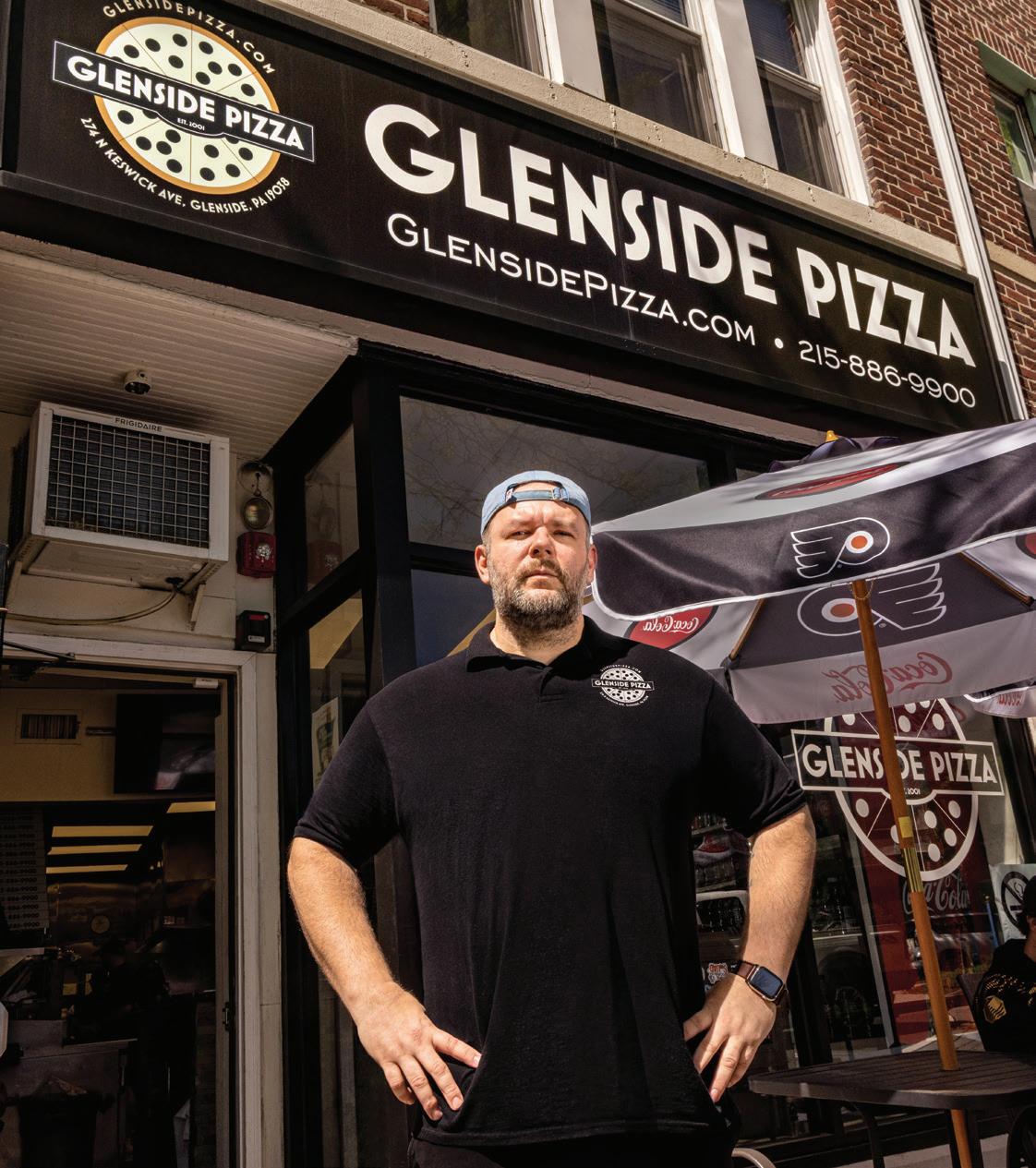
THE MICRO MENU
GLP-1 weight-loss drugs are changing many Americans’ lives, but they’re not so good for the pizza business. Bill Zonios, owner of Glenside Pizza in Glenside, Pennsylvania, keeps GLP-1 users coming back to his Greek-style pan pizza shop even when they’re staying away from pepperoni and sausage. Zonios calls it the Micro Menu, an idea he and his wife, Jamie, cooked up during a slow period at Glenside Pizza. “Ten percent of Americans are taking a GLP-1,” he says. “That’s 10% of my customer base that doesn’t eat half of what they used to. So how do I deal with that?” The Micro Menu features 15 items, such as cheeseburgers, cheesesteak sandwiches and onion rings, in halfsize portions. “It’s actually more profitable,” he says, “because we’re selling 50% of the amount of food, and I’m charging 60% of the price. So I’m making 10% more on the smaller versions.” It’s part of Zonios’ larger strategy to drive business to his DELCO shop while eschewing third-party delivery— which he abhors. “It’s not worth it to raise my prices 30% and make my customers pay more,” he says. “So I’ve made other decisions to adapt.”
IS PIZZA’S FUTURE IN NEW JERSEY?
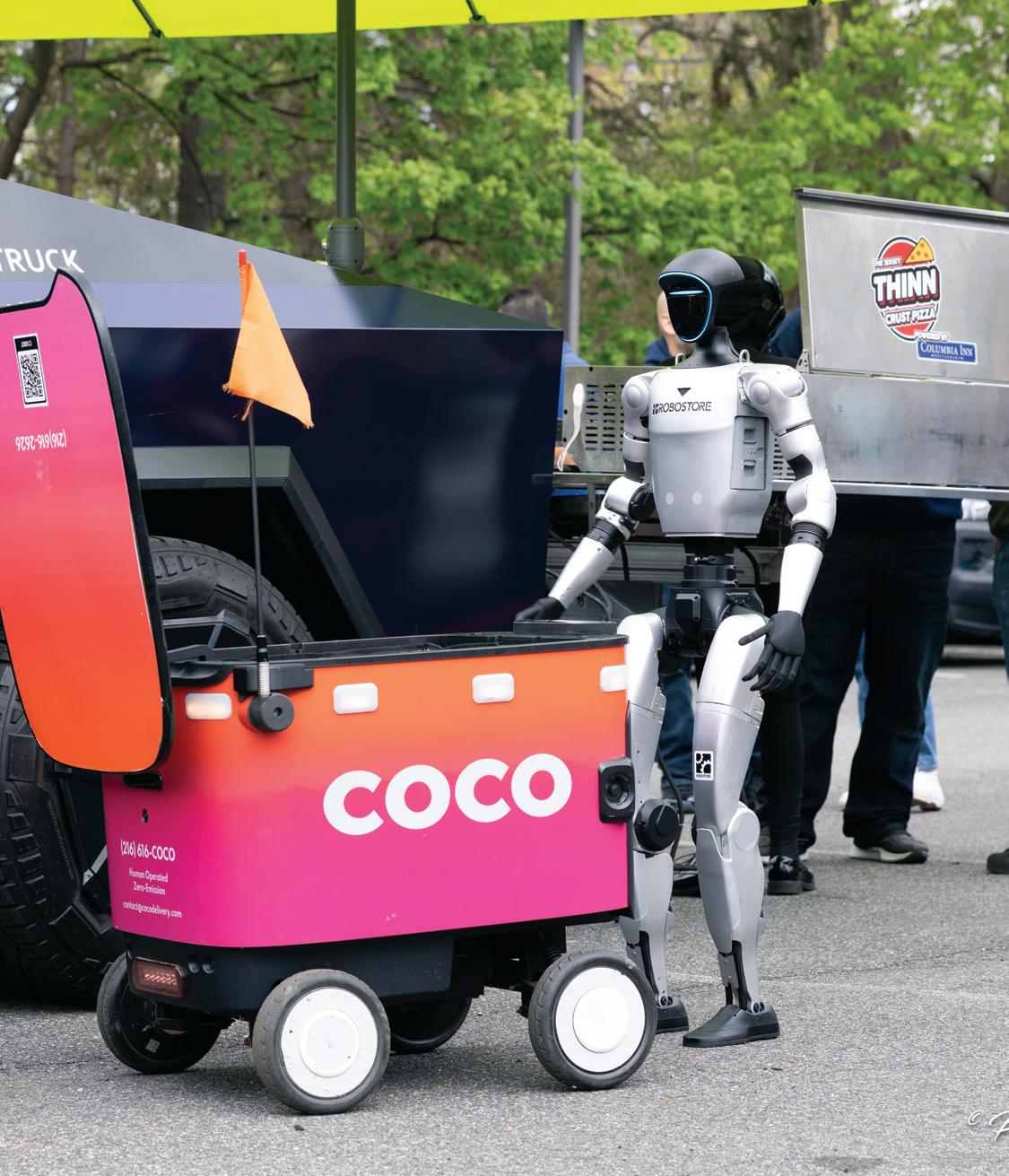
Influencer Anthony Pizzi, founder of the NJ Pizza Alliance, wants to make New Jersey the high-tech pizza capital of the world. He booted up on April 20 with xPizza Day, a first-of-its-kind event at The Columbia Inn in Montville. It showcased humanoid robots, delivery bots, xRobotics’ xPizza Cube, even the Northeast’s first-ever drone pizza delivery—three 8” pies flown by a Dexa drone to the home of pro boxer Vito Mielnicki Jr. More than a dozen pizza technology companies and 300 attendees—both pizzeria owners and consumers— turned up for the event, which drew national coverage from NBC, CBS and Fox News. Pizzi organized xPizza Day in just two months; next year’s event, he said, will be much bigger. “I want people to see that the future of pizza is in New Jersey. If we can get the consumers to support these shops and allow them to adopt these technologies—because they were able to experience it themselves—more shops here are going to adopt it than anywhere else in the country.”
ANTHONY
PIZZI
Robots and humans mingled amiably at the inaugural xPizza Day in Montville, New Jersey.
DELCO shop Glenside Pizza did $2 million in sales last year, even though owner Bill Zonios eschews third-party delivery. Instead, he focuses on SMS and loyalty marketing and special offers like the Micro Menu for GLP-1 users.
LESS IS MORE: BUILDING A HIGH-VOLUME PIZZERIA
Trimming
your menu down
to
your
top-selling
items
can be easy to do. It can also improve operational efficiency and generate higher profit.
BY MICHAEL P. LaMARCA
MOST PIZZERIAS BOAST THAT THEY OFFER “Pizza, Pasta, Subs, Calzones, Salads, Wings and More!”
I would bet your menu consists of most of these items as well. I would also bet that having all these options potentially limits your growth and profitability. I am not saying that having an extensive menu is bad. I’m
just saying less is more, and you may not see that your menu might be holding you back from becoming a highor higher-volume pizzeria.
Think about it this way: The more options you have on your menu, the more your customer will have to think about what they want. This can add time to your order
It’s better to sell one item a million times than selling a million items once!
taking process and jam up your phones on a busy night as customers ask your team questions about the difference between your Italian sub and your club sandwich. Your goal should be to ensure that your customer knows what they want before they order.
When you have a larger, more expansive menu, you will also have to carry a larger inventory—which means more product to manage. This can increase the odds of your product spoiling due to mismanagement or simply sitting in a cooler and reaching its expiration date. This, in turn, could lead to unintended higher food costs.
Another major benefit of a “less is more” mindset: The fewer items you have on your menu, the fewer things you have to teach your staff. Imagine having to teach a new team member how to make a certain number of appetizers, seven to 10 pasta dishes, 15 or more subs, 10 or more entree salads, and 25 or more different pizzas and calzones! Now imagine simply teaching your staff how to make one salad, two or three appetizers, and all of your different types and styles of pizzas.
If you are looking to open more locations, this would be the first step to optimizing potential growth and scalability. As the owner, your daily presence reduces with every location you have, and your operations must be tight to run multiple locations. With tighter
operations should come more or better profitability. Look at McDonald’s, for instance: They serve a hamburger 10 different ways. That keeps operations tight and guarantees quick service to their customers. McDonald’s is not busy because it offers the best hamburger; it’s busy because it offers consistent food across all locations, ordering is easy, and the service is fast.
Reducing your menu down to your top-selling items can be easy to do. Start by running your numbers for each menu category and see what your customers are actually buying. Focus on what sells and sell it every day. Eliminate every low-selling, low-profit menu item in each category. Cut the losers and promote the winners. You decide what your customers should order. You might think that your customers will miss the items you are cutting out, but they will not. They will order something else that’s on your menu.
A smaller menu could mean smaller staff or fewer scheduled hours as well. Having less food to produce will reduce your operations, which makes it easier on your new and current staff. Your pizzeria needs to be the first choice when a customer thinks about ordering a pizza; if they want veal Parmesan, they will need to call someone else. It’s better to sell one item a million times than selling a million items once!
Michael LaMarca is a veteran pizzeria owner/operator and owner/CEO of Master Pizza Franchise Group in Cleveland. To engage with him directly, follow him at @michaelplamarca on Instagram and Facebook.
BY TRACY MORIN PHOTOS BY OLENKA SALVADOR
ZAZAS The ZAZAS
Brett and Chadd Nemec parlayed their complementary skill sets to spin out two wildly successful concepts— Zazas Pizzeria and Nemec Brothers Pizzeria—in Chicago. An early visit by Dave Portnoy didn’t hurt.
COMBINE A PIZZA-OBSESSED FATHER with two sons who grew up to develop, between them, a culinary background and an entrepreneurial drive, and perhaps a pizzeria must be born. At least, that’s how it happened for Brett and Chadd Nemec, co-owners of two booming Chicago brands—Zazas Pizzeria and Nemec Brothers Pizzeria.
But passion and genetics notwithstanding, even they could not have predicted the business’ runaway success. That outcome has been a product of painstaking attention to craft, savvy business acumen— and, yes, a little bit of luck.
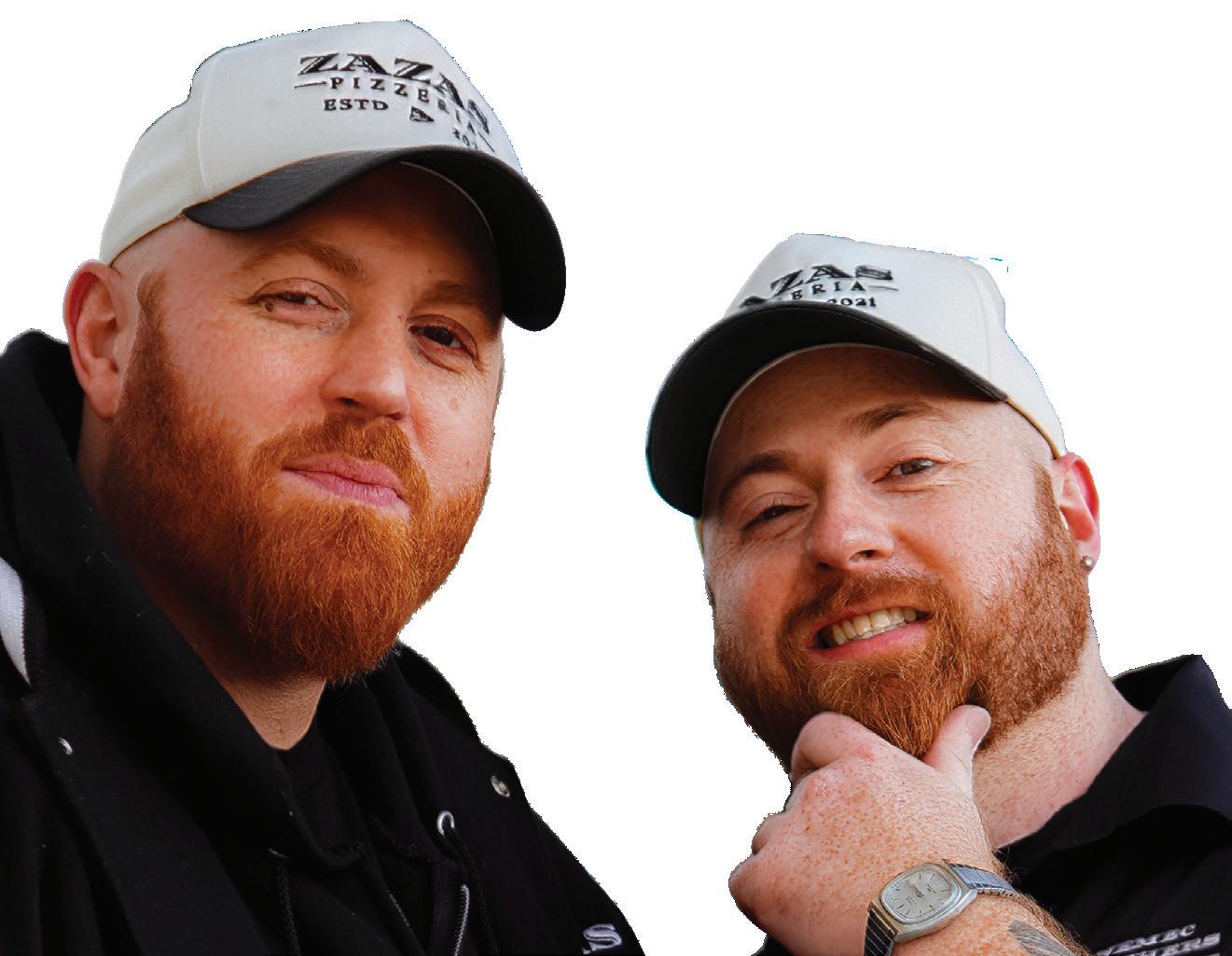
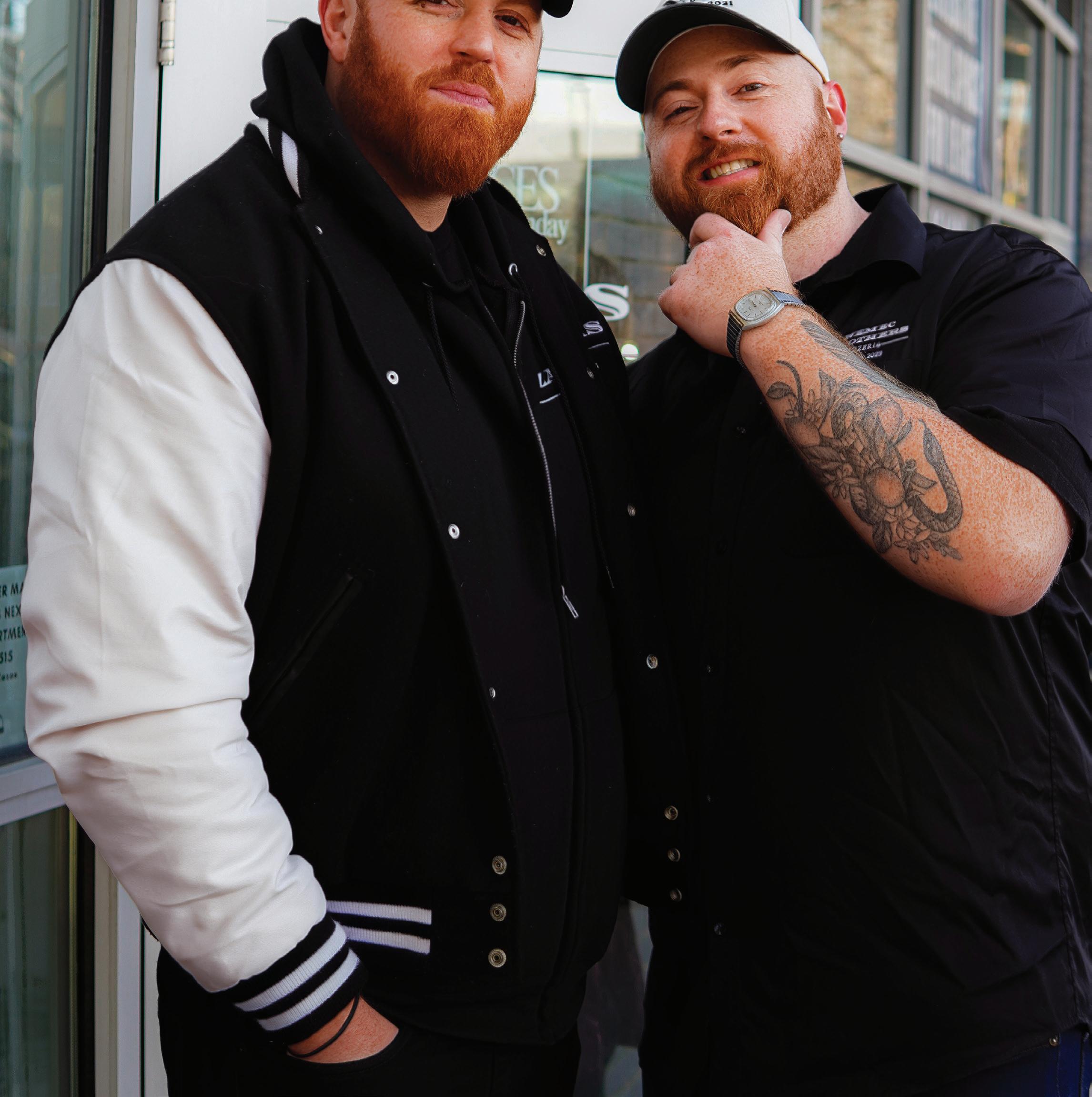
Brothers Chadd and Brett Nemec are setting their sights on long-term success and ambitious growth as they juggle two successful pizzeria brands in the Windy City.
PIZZA OBSESSION GENES
Brett started at the bottom in his restaurant career: as a dishwasher at age 16, working alongside his brother, Chadd. But what started as a temporary job quickly became a calling. “I fell in love with the atmosphere,” Brett remembers. “I worked my way up and became a line cook, and once I discovered my passion for food, I decided to enroll in a culinary program, just to get a little bit more experience under my belt.”
Meanwhile, long before their foray into foodservice, the brothers were steeped in pizza from childhood by their dad, Bob. “He used to have the pizza guy sneaking around the back of the house so he didn’t wake anybody up,” Chadd says with a laugh. “He hid pizza boxes in the garage. It was a pizza addiction. Without him, I don’t know that we’d have such a passion. He’s the biggest pizza lover in the world.”
“He had to be a little sneaky about it, I guess, because it got to a point where it was probably too much— he was ordering it too often,” Brett adds. “It was a pizza obsession.”
When Brett accepted a position at a fine-dining concept and eventually became the head chef, he started developing a dough program to make the menu’s wood-fired pizzas. “Through that process, I fell in love with making dough and making pizza—and pizza has always been my favorite food,” Brett says. “When I started making pizza, when I started learning how to make dough,
it felt like a full-circle moment. It felt like it made sense. At that point, I questioned, ‘Why have I not been doing this the whole time?’
“A lot of people ask you when you’re a chef, ‘What’s your specialty? What’s your favorite thing to make? What are you known for?’” Brett continues. “I never really had a good answer for that question until I learned how to make pizza. Then the answer to that question became apparent. That’s my thing. That’s my niche. That’s what I like doing.”
“A lot of people ask, ‘What’s your specialty? What’s your favorite thing to make? What are you known for?’ I never really had a good answer until I learned how to make pizza.”
Brett Nemec, Zazas/Nemec Brothers
Rather than focusing on local pizza styles, the Nemec brothers decided to master New York-style pies, setting them apart in their Chicagoland home base.
TINKER TIME
Like his father, Brett started to obsess about pizza—making it rather than ordering it. He devoured books and documentaries about the craft, the history of pizza in the United States and different regional pizza styles. While living with Chadd, he started making pizza at home.
There, Brett struck upon a winning upgrade—brushing the crust with olive oil infused with rosemary and garlic, topped with salt to boost flavor. “A lot of people leave their crusts on the table or don’t finish them,” Brett says. “Why not do something to make it a little bit more interesting? The goal was to elevate the crust.”
Eventually, the brothers had to face facts: Their product was good enough to make a business. Chadd already possessed an innate entrepreneurial spirit and ran several of his own (in fact, he still operates a jewelry business). “I’d always found it fine to just work for others or run a restaurant as a head chef but never really had as much interest in running my own spot,” Brett says. “It was really Chadd’s encouragement. The combined personalities made a perfect storm for us opening a business—Chadd wanting to be an entrepreneur, and me on the creative side, with the ability to create recipes. The partnership worked out very organically. We dropped everything and went full-throttle in the pursuit of opening our own pizzeria.”
Despite growing up on Chicago tavern-style and deep dish, the brothers, in their research, experimentation and taste tests, found themselves most drawn to the New York style. They looked for restaurant spaces and found
the perfect spot: small, with a New York vibe. “We wouldn’t have to have a ton of employees, no alcohol, nothing crazy—we could run a slice operation and have a really small menu,” Brett says. “To do something really simplistic with the menu and the restaurant itself was always our plan. We never wanted to have a bunch of different styles of pizza, have a bunch of employees running around, and have a huge operation and huge overhead and huge rents. We always wanted it to be simple and fun: good food, good music, good vibes.”
The brothers tapped family partners for additional support. Their mom, Sue Gambla, covered the public relations side of the business, while stepdad Steve Gambla handled operational and financial matters. Nowadays, the brothers’ partners also pitch in:
Brett’s girlfriend, Olenka, helps with social media and marketing, while Chadd’s girlfriend, Sandra, assists with operations. “[Our parents] jumped in full force, and they’re very proud members of the team,” Brett says. “They’re always wearing Zazas merch and are our biggest cheerleaders. They always have our back and help us run the operations to this day, so they are huge part of the story.”
MAKING A SPLASH ON SOCIAL MEDIA
Before opening the first Zazas, the brothers focused on social media marketing, inviting local influencers to preview the product, which created immediate buzz for the pizzeria. Positive reviews by major Chicago media outlets followed, and Zazas quickly gained traction with a growing customer base. But
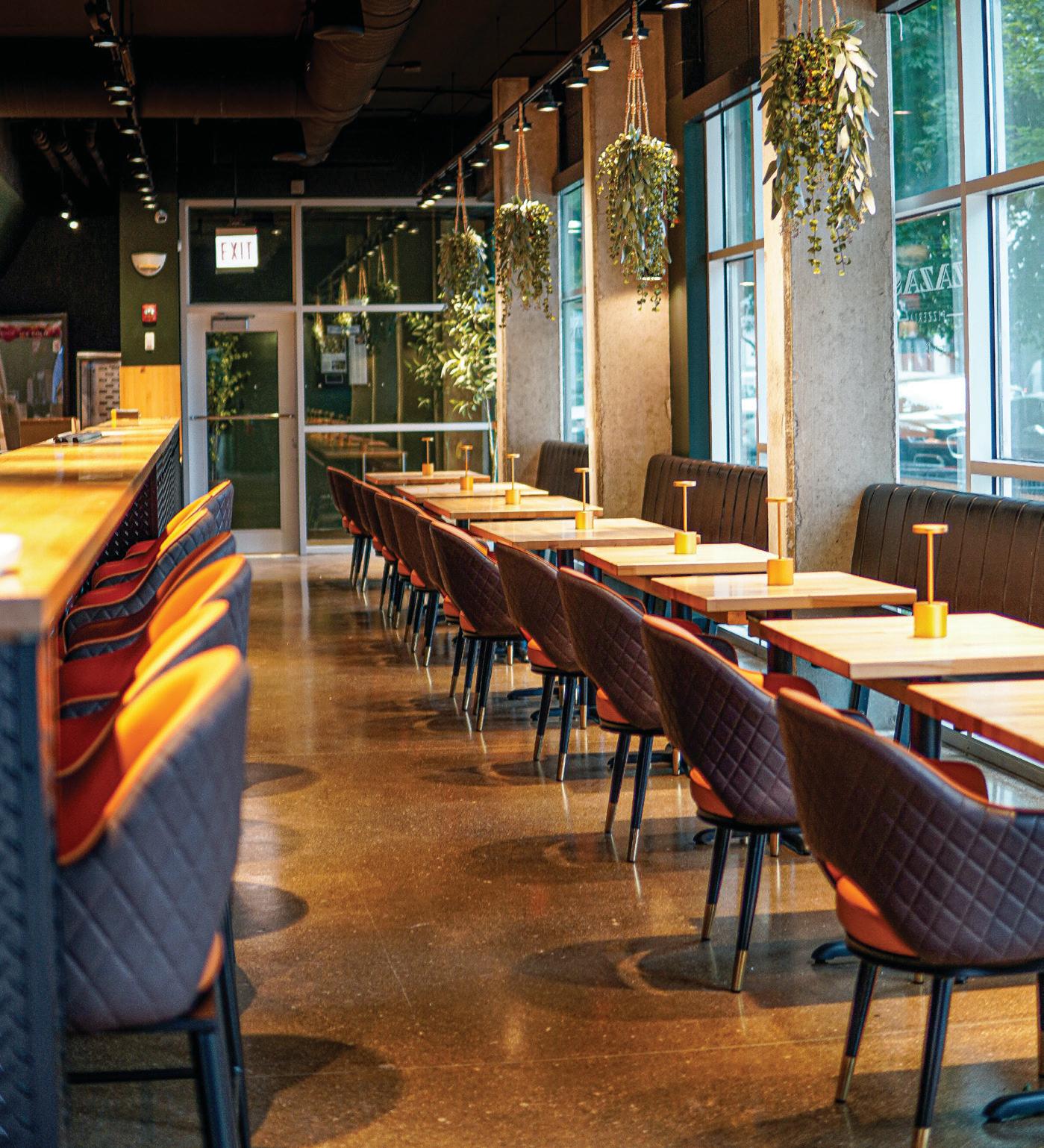
The second Zazas location, in Lincoln Park, offers a full-service dine-in experience, unlike the “New York slice shop” vibe of the original, in Chicago’s Lakeview neighborhood.
“Having people see the people behind the brand is important. It’s been a big driver for us: people feeling like they know who we are and know what the brand is about, as opposed to just being a logo.”
Chadd Nemec, Zazas/Nemec Brothers
a major turning point arrived when Dave Portnoy from Barstool Sports visited and reviewed the pizzeria for his hordes of online followers. Since the video was posted three years ago, it has racked up nearly a million views—and Portnoy gave Zazas an impressive 8.2 rating, declaring it, on camera, his favorite pizza in Chicago.
“The day the review came out, there were lines out the door—and there were lines out the door for weeks, months on end,” Brett says. “Until this day, years later, our sales have been incredibly impacted by that review. On Fridays and Saturdays, the money we were making pretty much tripled after he came in, and it remains the same until today.”
The brothers, however, know not to rest on their social media laurels. They keep the momentum going through frequent social media posts, where Brett often appears. “I think having people see the people behind the brand is important,” Chadd says. “I think that’s been a big driver for us: people feeling like they know who we are and know what the brand is about, as opposed to just being a logo.”
With demand surging, the brothers began expanding. Two years after their original opening, in December 2023, they launched a second concept, Nemec Brothers, in Geneva, Illinois, and another in Glen Ellyn shortly after. In October 2025, a second Zazas location opened, in Chicago’s Lincoln Park
Find
Ispirazione Italiana
What's my Italian Inspiration? It’s choosing ingredients that work as hard as I do. After 10 years of using the leading premium Mozzarella, I took a closer look at my food costs and tested Galbani® Premio. The consistency is outstanding, the reheat is next level, and the butterfat gives me the melt and flavor I’m looking for. And when I saw the price, it sealed the deal.
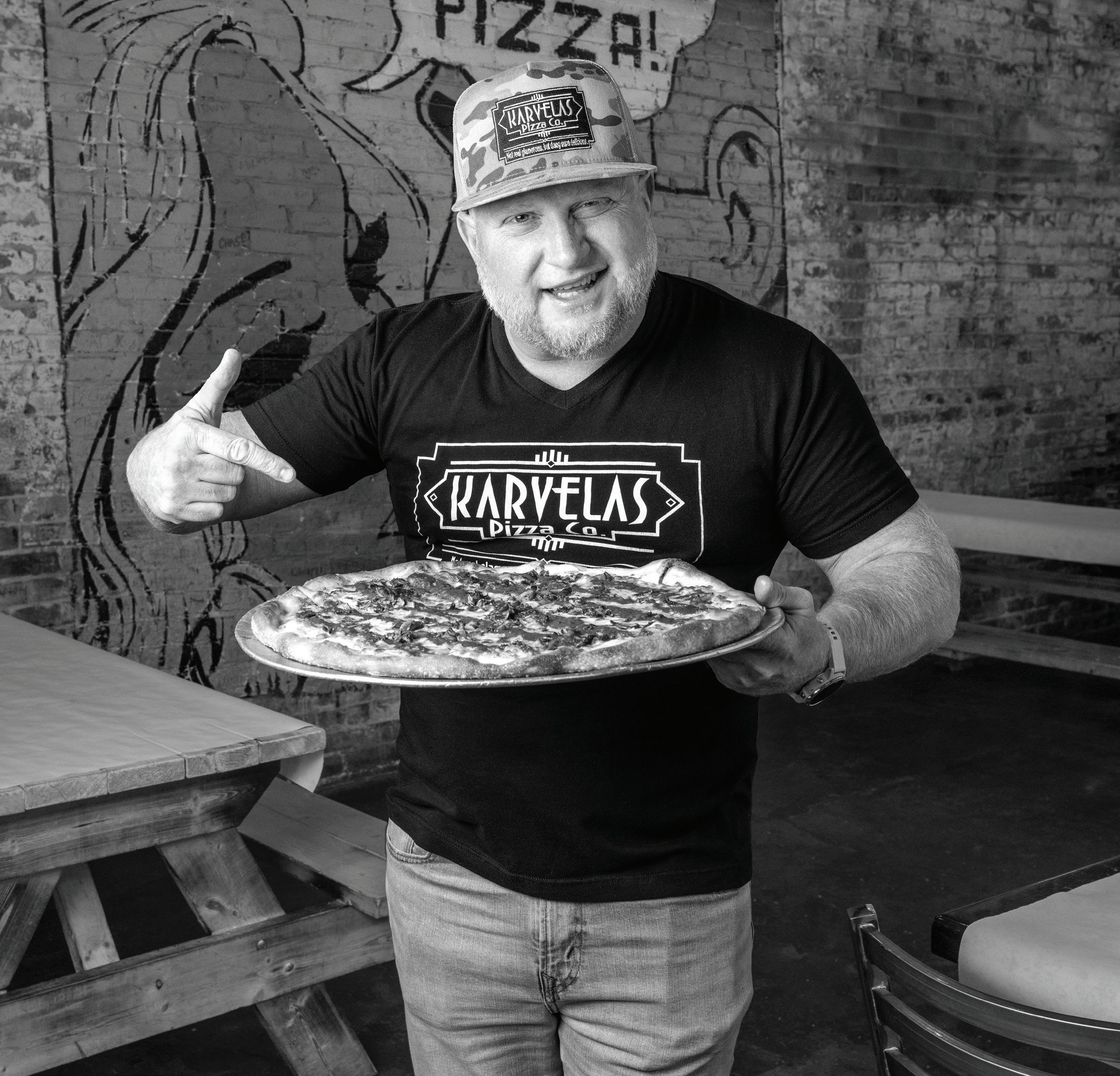
Joey Karvelas, Owner, Karvelas Pizza Co.
Learn more at GalbaniPro.com
neighborhood. Year over year, growth has remained consistent, and the new locations offer expanded services, taking Zazas from humble slice shop to fullservice dine-in with alcohol sales.
As the business has expanded, the brothers’ roles have changed as well, moving from hands-on, nittygritty daily tasks to higher-level operational oversight. They now focus on developing systems and procedures, ensuring consistency across locations and planning for future expansion.
Their future expansion—which for now will focus on Zazas—relies on this operational rigor. Amid fast growth, the brothers have maintained quality through various strategies: strong training programs for pizza makers, detailed written standards, random quality checks through their own unannounced
“The combined personalities made a perfect storm for us opening a business—Chadd wanting to be an entrepreneur, and me on the creative side, with the ability to create recipes.”
Brett Nemec, Zazas/Nemec Brothers
visits (followed by feedback to the in-store team); and a secret shopper program to evaluate the customer experience.
“Really good training is something that we implement at all of the stores, and beyond that, we also have a lot of documentation on what it is that we believe makes a good pizza,” Brett explains. “That means specifying exactly how long the pizzas need to be baked, what they need to look like, even what they need to sound like when you
fold them or bite into them—the eggshell crispiness that we’re looking for on the crust. Those details are part of our training documents that we give to all of our back-of-house staff.”
Now fortified by strong systems, Zazas Pizzeria harbors ambitious expansion plans. The brothers are introducing corporate-level management roles (such as hiring a corporate chef) to streamline their own responsibilities, while building infrastructure to support continued
Based on Dave Portnoy’s past reviews, the Nemec brothers knew he would appreciate their pies’ characteristics—but they had no idea how much of an effect his review would have on their fledgling business.
expansion and exploring franchising opportunities. Their goal: to scale the brand as much as possible while maintaining Zazas’ high quality standards and unique identity.
A GROWING FAMILY
While technical excellence remains a priority, the brothers also focus on growing a winning team. With about 60 employees across their four locations, they seek applicants who are coachable, have positive attitudes and work well within a team. “It’s not always about skill level; sometimes it’s more about the attitude that they bring to the table— people who are able to learn and adapt to what it is that we’re trying to have them do,” Brett says.
For their part, they emphasize building a supportive workplace culture, treating employees like family and creating an environment where people want to stay long-term. The company shows its appreciation and boosts employee engagement through birthday and anniversary recognition, regular communication and encouragement via text and email, and holiday parties and team events where members from different locations can mingle.
The Nemec brothers even allow employees to put their own stamp on stores, such as choosing the music to create a welcoming environment. As a result, they’ve enjoyed unusually low turnover in an industry known for high attrition.
“[We have documentation] specifying exactly how long the pizzas need to be baked, what they need to look like, even what they need to sound like when you fold them or bite into them.”
Brett Nemec, Zazas/Nemec Brothers
Employees have stayed for multiple years, with many original members of staff still on the payroll.
Of course, making employees and customers feel at home is easier when the backbone of the business is actual family—brothers, parents, partners, all pitching in. “It definitely has its pros and cons, but working with family is great, because we all know each other and we’re comfortable with one another, so we can share ideas openly,” Brett says. “And it’s easy for us to get along. For the most part, we’re all in agreement on a lot of things. Working with family can also be tricky, because you have to keep things professional, and sometimes business is business. But, for the most part, we love having a family business—that makes it feel fun. There’s a lot of love across the board, and we’re all proud of each other, so when we’re running the business, it feels like home.”
Tracy Morin is PMQ’s associate editor.
With two brands, four locations and growing, the Nemec Brothers have learned to hire employees based on attitude rather than extensive restaurant experience.
Trending on the Menu
SPONSORED BY BELGIOIOSO CHEESE, INC.
BelGioioso
FrMozzRicotta
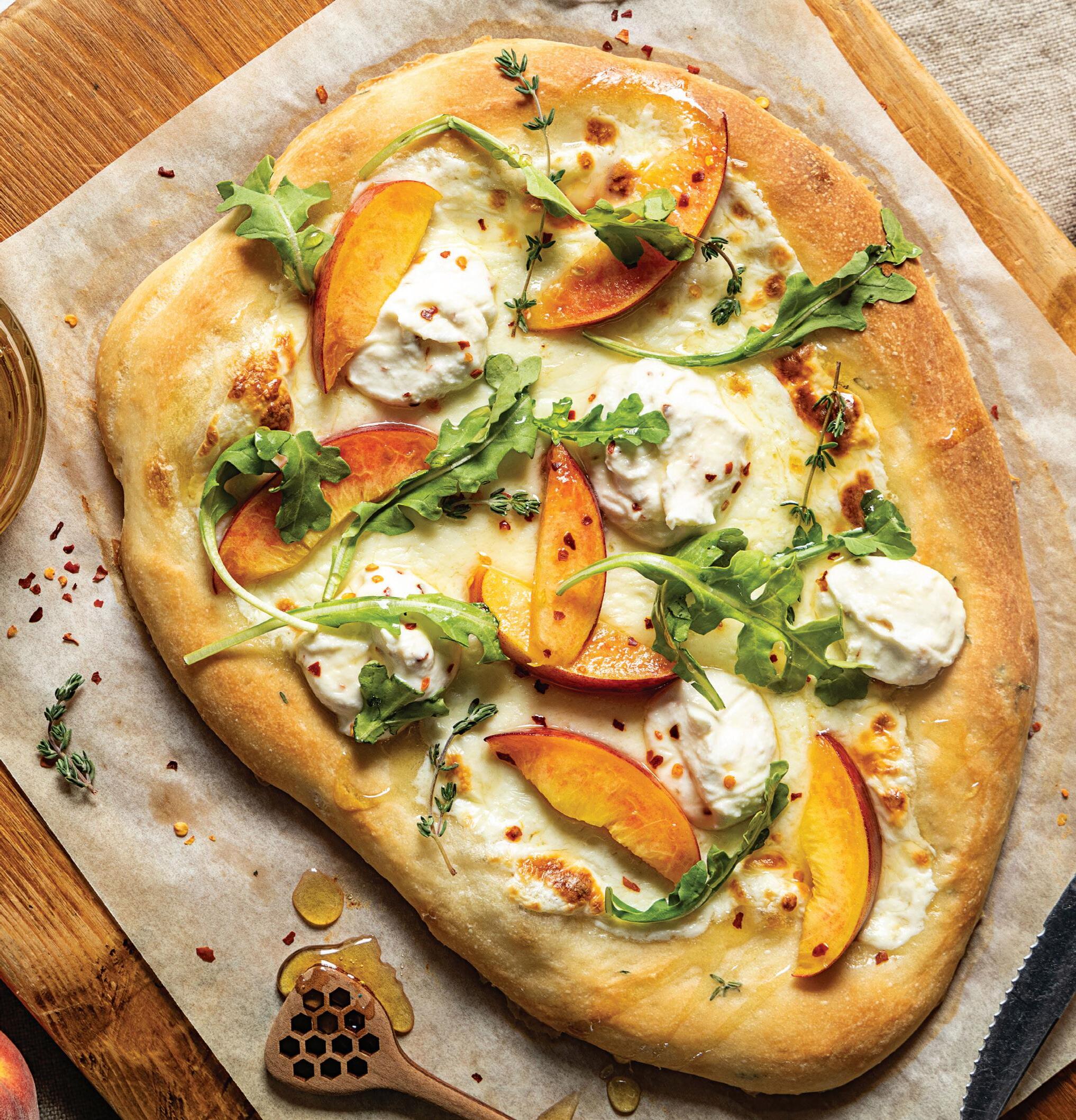
Peach Flatbread
The Next Evolution of Pizza
What is driving the changes consumers clamor for with this classic, menu staple?
Pizza remains one of the strongest high-familiarity, high-affinity menu items, delivering comfort, consistency, and broad appeal across full service and casual dining. Datassential reports pizza appears on 31.5 percent of U.S. menus, with near-universal diner awareness and trial. More than 90 percent of consumers say they love or like pizza.
While menu presence has softened slightly, consumer affinity has continued to strengthen. Pizza sits firmly in the ubiquity stage of Datassential’s menu adoption cycle. Guests understand, trust, and order the dish with confidence, shifting the opportunity for
restaurants away from reinvention toward refinement.
In mature categories, Datassential notes operators succeed by improving execution and reinforcing quality rather than chasing novelty. Datassential shows cheese, pepperoni, and Margherita pizzas still lead menus. These familiar builds remain strong because they are comfortable and predictable. The opportunity lies in elevating how those pizzas are executed rather than changing what they are, and cheese is the key to refinement.
“Pizza is familiar, which means guests notice quality immediately,” says Frank Alfaro, vice president
of foodservice sales at BelGioioso. “Cheese influences flavor, texture, and visual appeal before the first bite. When those elements are dialed in, pizza delivers on guest expectations.”
For many operators, maintaining consistency remains the primary driver of pizza success. Datassential research shows familiar items with reliable execution outperform more experimental builds in high-traffic environments.
“Consistency is critical in a category guests know so well,” says Umberto Marconi, vice president of marketing for Polly O. “When Mozzarella delivers dependable melt and stretch every shift,
BELGIOIOSO
BelGioioso Crescenza
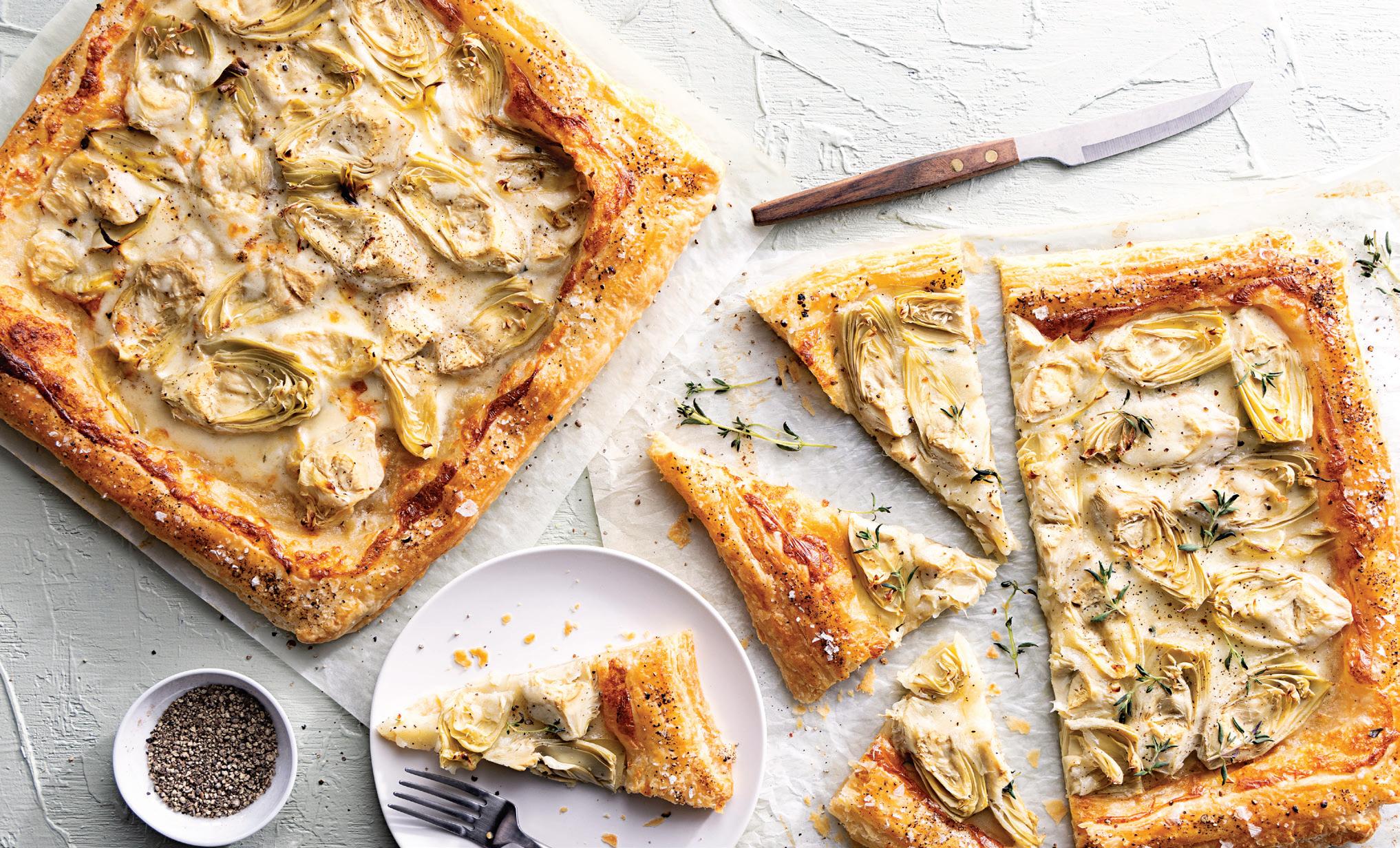
Provolone Artichoke Tart
is the heart of this specialty from Recco, Italy. Two paper-thin sheets of dough and a creamy, gently tangy center come together in a focaccia that’s crisp, delicate, and incredibly smooth.
Find out more about Crescenza!
3.5 lb. Crescenza Block
operators protect speed of service, food cost, and guest satisfaction. That reliability keeps classic pizzas relevant.”
Low-moisture Mozzarella continues to anchor traditional red- and whitesauce pizzas. Its neutral flavor and functional performance make it a foundation across menu types and volumes, while Datassential reports consumers are increasingly willing to pay more for familiar items that include visible upgrades. In pizza, artisan Italian cheeses fill that role.
signal quality. Aged Italian cheeses, such as Parmesan, American Grana, Fontina, Asiago, and Gorgonzola also appear more frequently as accents. These cheeses add depth while aligning with pizza’s Italian heritage and familiar flavor expectations.
“Guests make quality judgments quickly,” Alfaro says. “Cheese is one of the most immediate cues. When it looks intentional, it reinforces the idea that the pizza was made with care.”
Classic tomato sauce continues to dominate pizza menus, with white sauces maintaining a strong presence. These familiar bases allow cheese to remain the focal point.
cue,” Alfaro says. “A post-bake finish changes how guests perceive pizza. It feels more chef driven and more worth the price.”
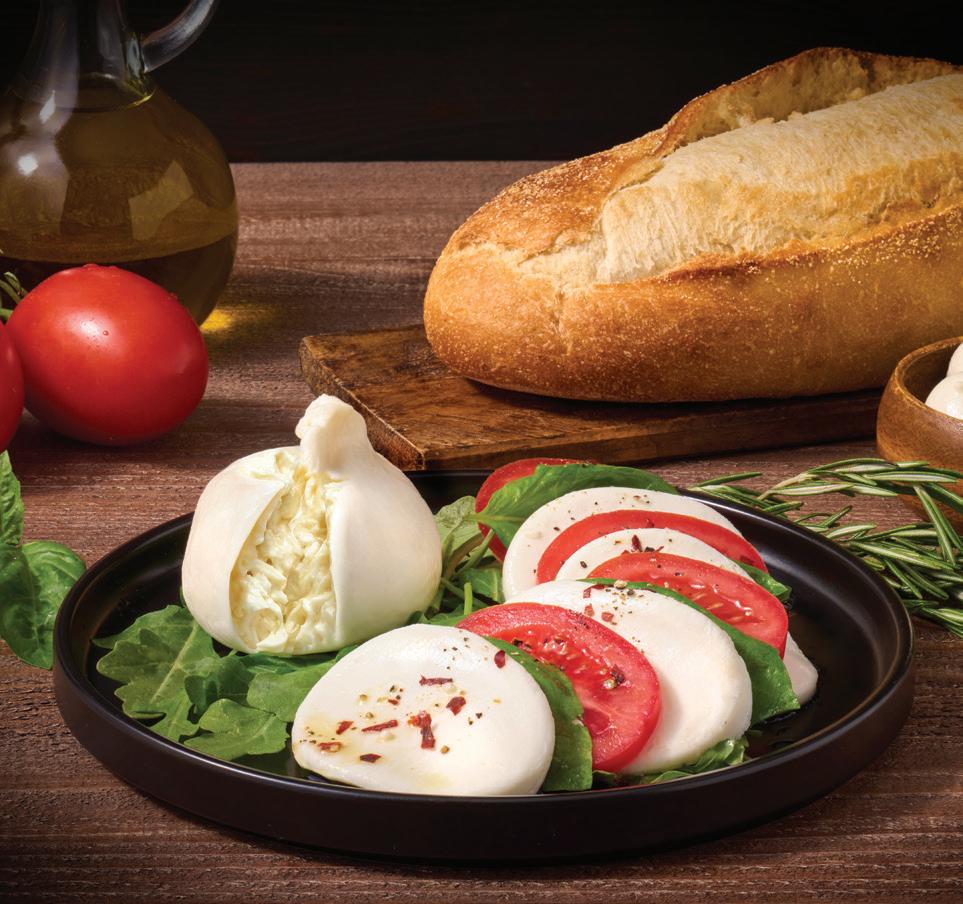
Fresh Mozzarella remains a cornerstone for Margherita- and Neapolitan-inspired pizzas, offering a softer texture and cleaner milk flavor. Burrata and Stracciatella are increasingly used after the bake, creating contrast in temperature and appearance that guests associate with handcrafted preparation.
Datassential notes ingredientforward builds support higher price points in familiar categories. Rather than adding complexity, operators are focusing on fewer ingredients with clearer roles.
Cheese plays a leading role in this strategy. Mozzarella remains the base, while finishing cheeses and aged varieties provide the contrast and visual interest that
“Fresh Mozzarella and burrata pair well with olive oil-based pizzas, pesto, and white sauces because they add richness without overwhelming the build,” Alfaro notes. “Aged Italian cheeses add balance and depth.”
For execution, mozzarella continues to anchor performance. “Mozzarella keeps the pizza cohesive,” Marconi says. “It allows other elements to shine while maintaining the structure guests expect.”
Traditional pizzas benefit from cheeses that reinforce reliability and guest trust. Artisan pizzas benefit from cheeses that create differentiation and support trade-up behavior. Together, these approaches allow operators to meet a wide range of guest expectations within one menu.
As pizza continues to anchor menus, the strategy is clear: Respect familiarity, refine execution, and let cheese do the work.
BELGIOIOSO
(2)
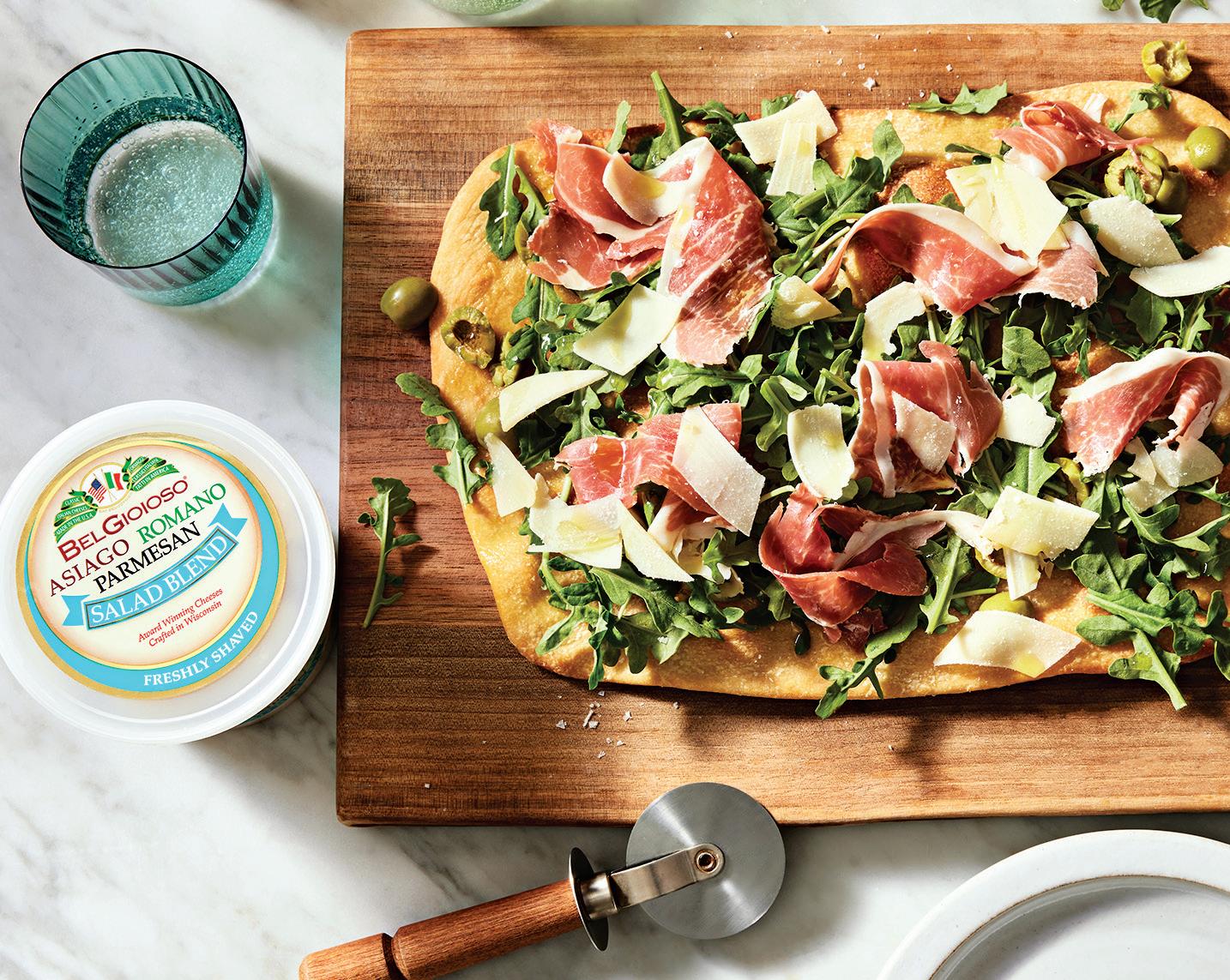
BelGioioso Burrata Filling openface and Shaved Salad Blend Pizza
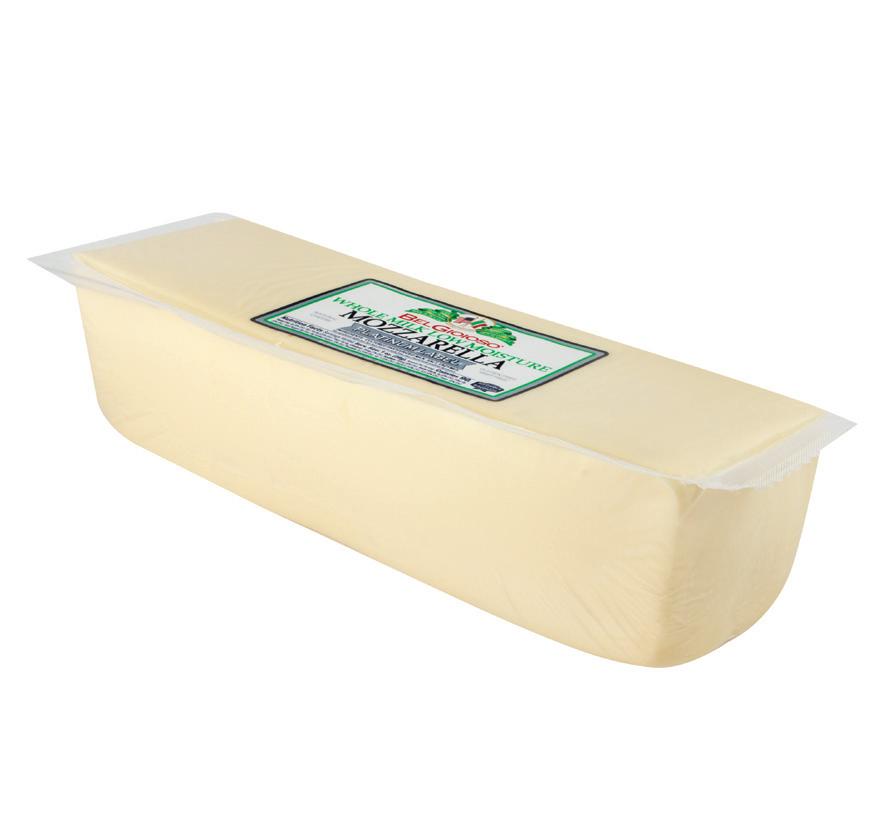
PLATINUM LABEL LOW MOISTURE MOZZARELLA LOAF
Premier cheese crafted for superior performance
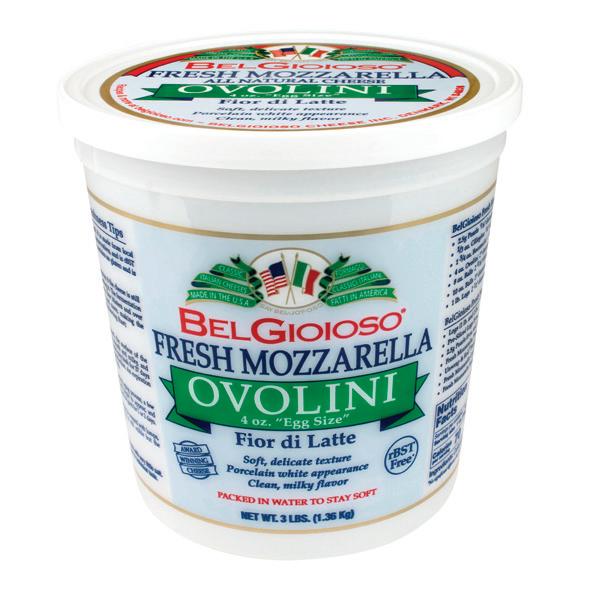
Easily shreds, slices and melts WATER PACK FRESH MOZZARELLA
Made to order for optimum freshness
Traditional clean, milky flavor
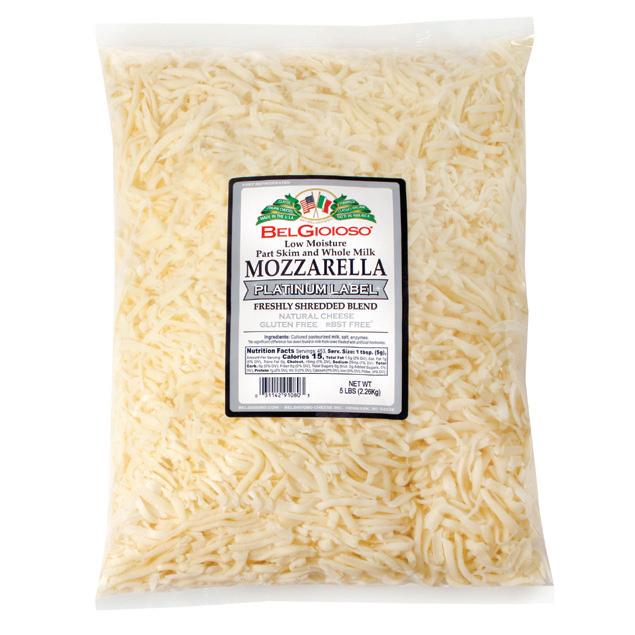
PLATINUM LABEL LOW MOISTURE MOZZARELLA SHREDS
Blend of Part Skim and Whole Milk Mozzarella
Smooth melt and even browning
foodservice@belgioioso.com
877-863-2123
belgioioso.com/Foodservice Discover
Pizza Industry Trends
A FEW KEY INSIGHTS FROM DATASSENTIAL ON THE PIZZA INDUSTRY
• 98% of consumers are aware of Pizza, with greater awareness than 100% of all other items.
• 50% of consumers have had pizza many times, with greater regular consumption than 99% of all other items.
• 94% of consumers who have tried pizza love or like it.
• Gen X remains the leading generation of consumer affinity.
• Among visitors of quickservice and fast-casual restaurants, 93% of customers like or love pizza.
PIZZA INDUSTRY MENU HIGHLIGHTS // COURTESY OF DATASSENTIAL
BJ’s Restaurant & Brewhouse Consider Score: 68
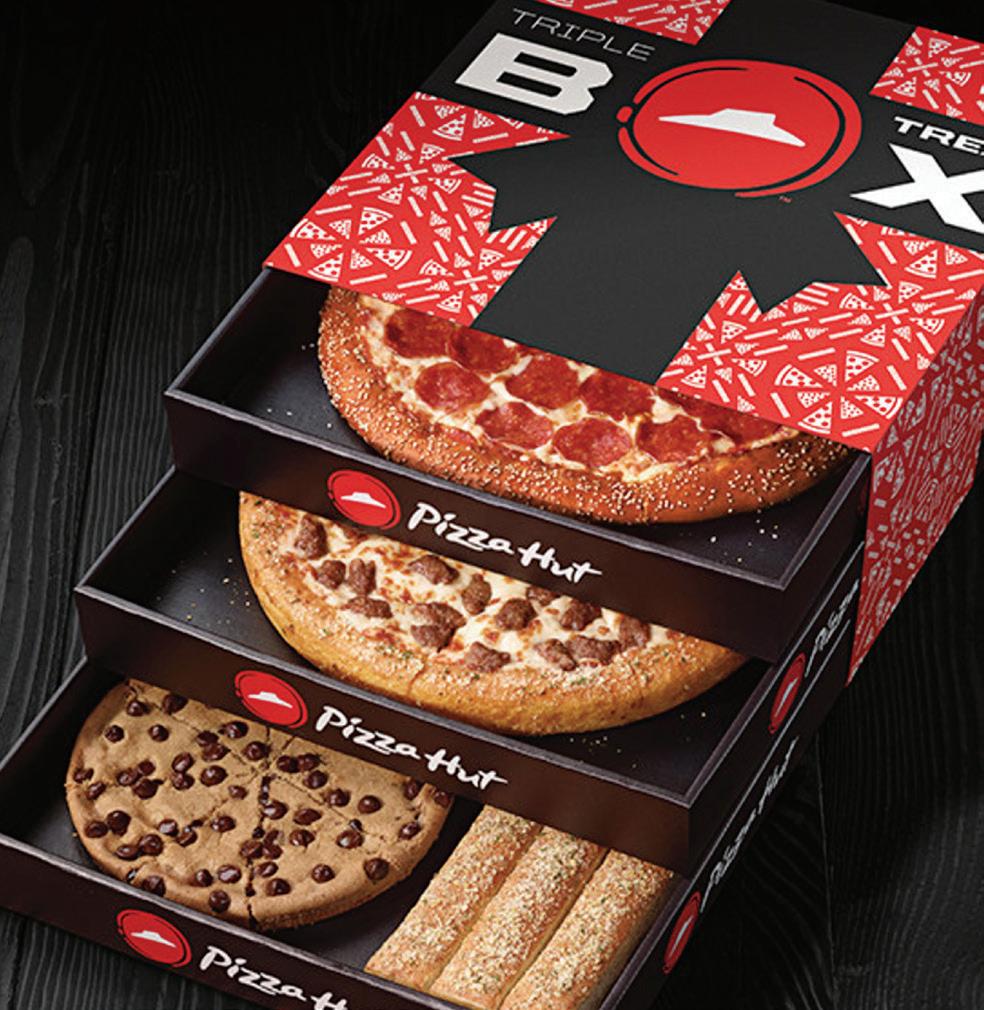
TRIPLE TREAT BOX Features two medium one-topping pizzas, five breadsticks, and 10 cinnamon sticks.
84
Chain: Pizza Hut // Consider Score:
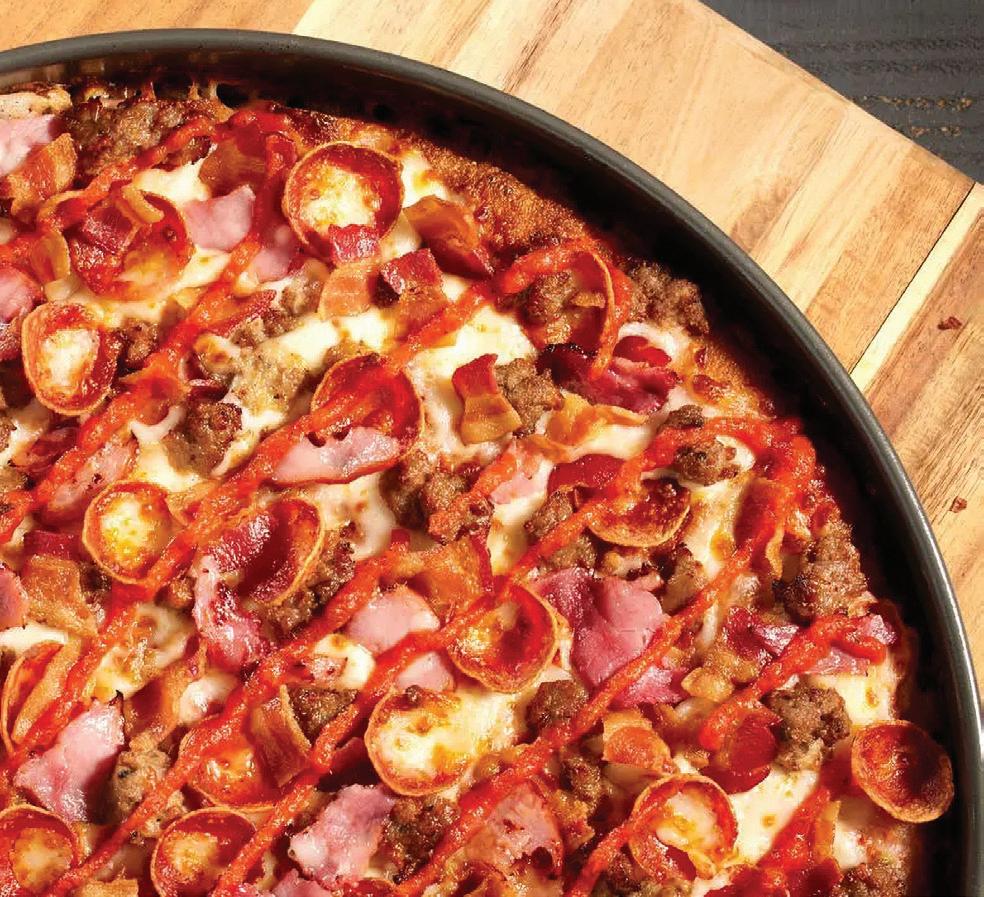
EPIC FIVE MEAT PIZZA Housemade meatballs, cupping pepperoni, smoked ham, Italian sausage, and smoked bacon.
Chain:
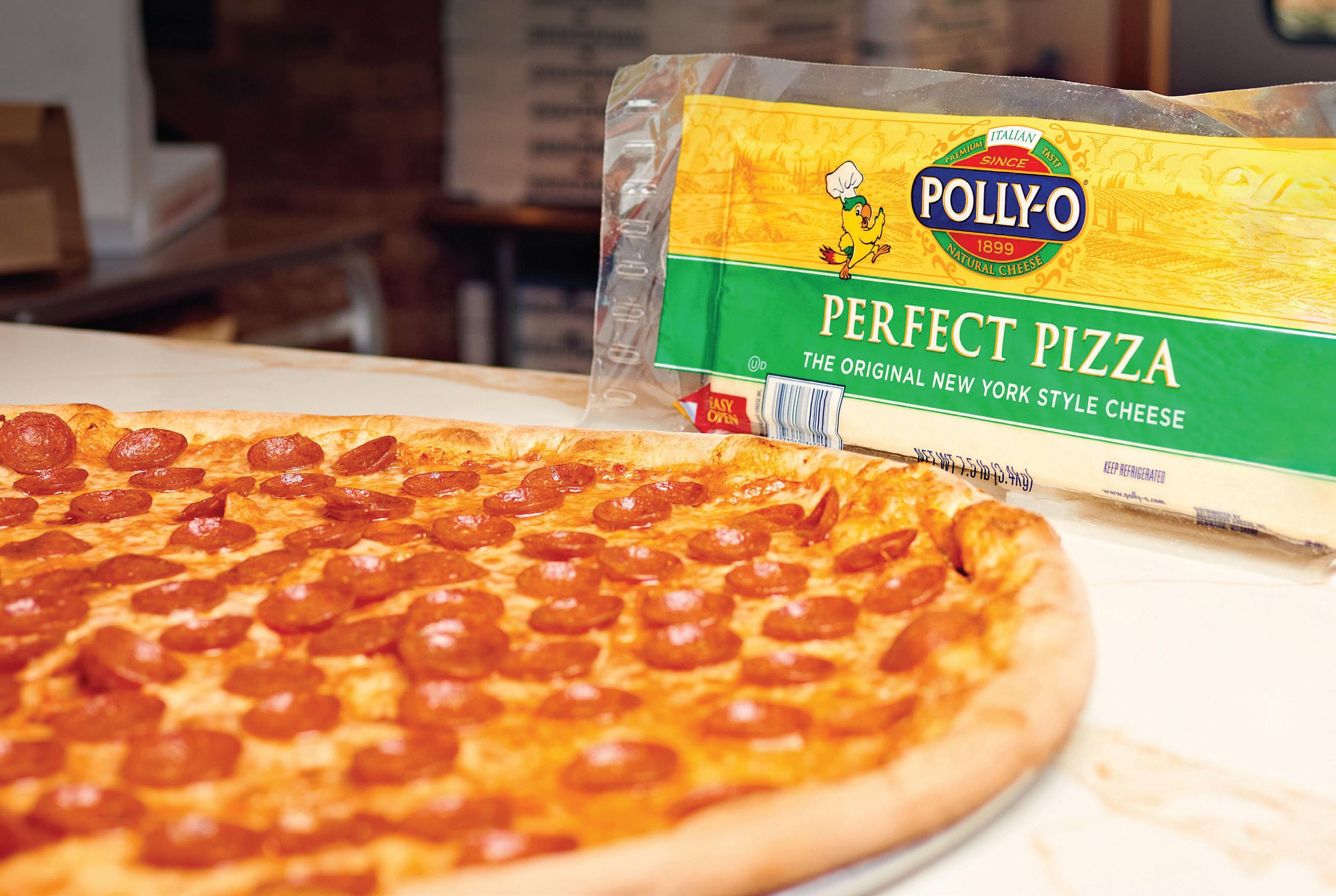
Developed specifically for New York style pizza, our new loaf is the perfect combination of quality and convenience. With a superior melt, stretch and browning, this formula is full of flavor with less residual oil.
email info@polly-o.com to request samples
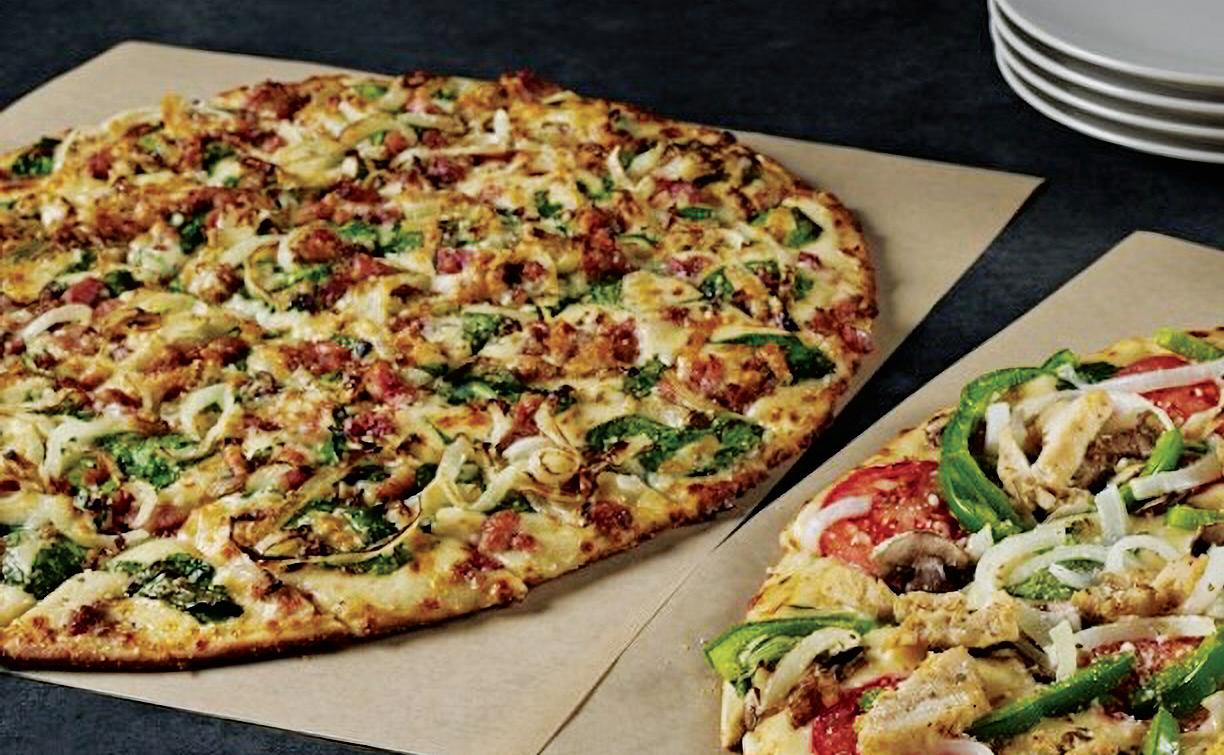
BACON SPINACH PARM PIZZA Baby spinach, hardwood smoked bacon, caramelized onions, smoked Provolone, creamy Parmesan sauce (instead of red sauce), Asiago, and Romano.
Chain: Donatos // Consider Score: 64
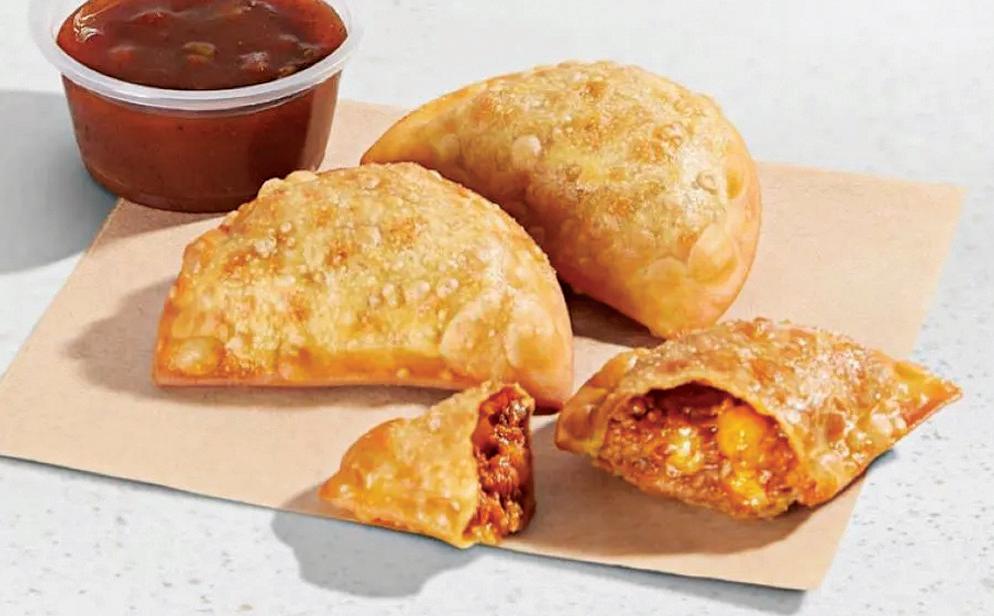
MEXICAN PIZZA EMPANADAS Three bite-sized crispy empanadas filled with seasoned beef, a melty, 3-cheese blend, and a bold & flavorful sauce. Served with Mexican pizza sauce on the side for dipping.
Chain: Taco Bell // Consider Score: 63
MENU ADOPTION CYCLE: PIZZA INGREDIENTS
INCEPTION Trends start here. Found in mostly fine-dining and ethnic independents, inception-stage trends exemplify originality in flavor, preparation, and presentation.
1. Clam
2. Black Truffle 3. Stracciatella 4. Pistachio 5. Creme Fraiche
ADOPTION Found at fast-casual and casual independent restaurants, adoption-stage trends grow their base via lower price points and simpler prep methods. Still differentiated, these trends often feature premium and generally authentic ingredients.
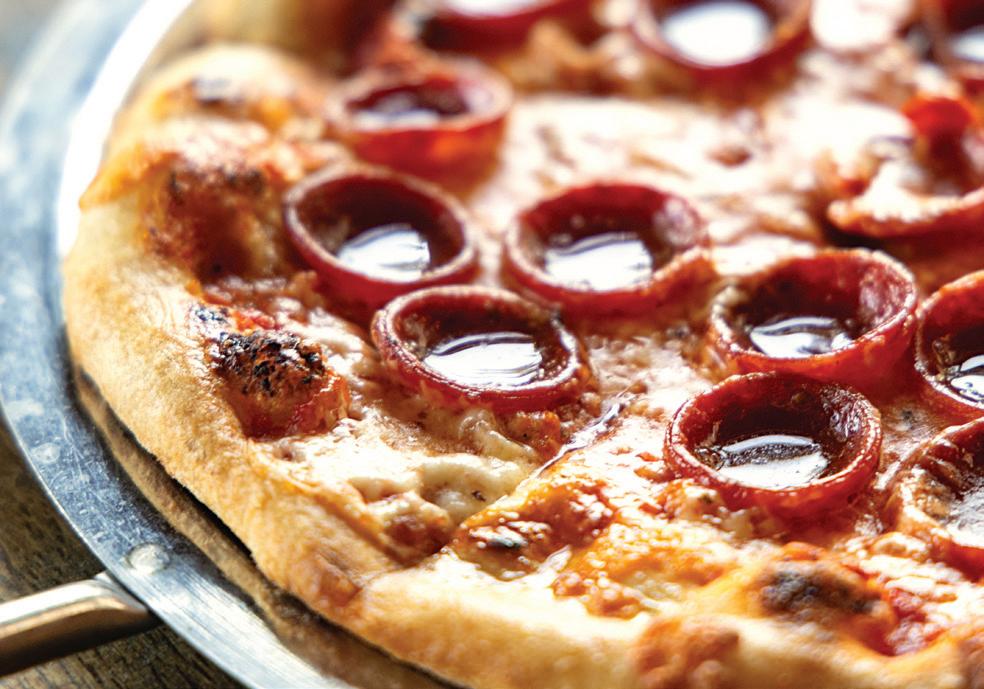
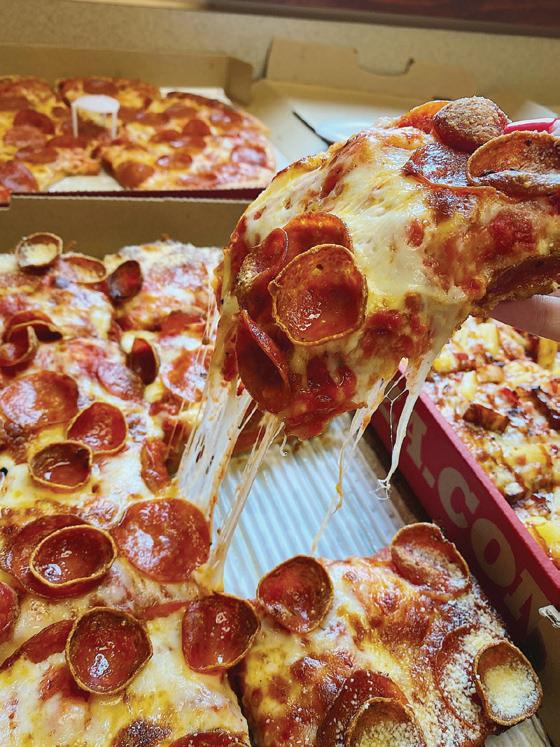
1. Pepperoni Cups
2. Gyro
PROLIFERATION Proliferation-stage trends show up at casual and quick-service restaurants. They are adjusted for mainstream appeal. Often combined with popular applications (burgers, pastas, etc.), these trends have become familiar to many.
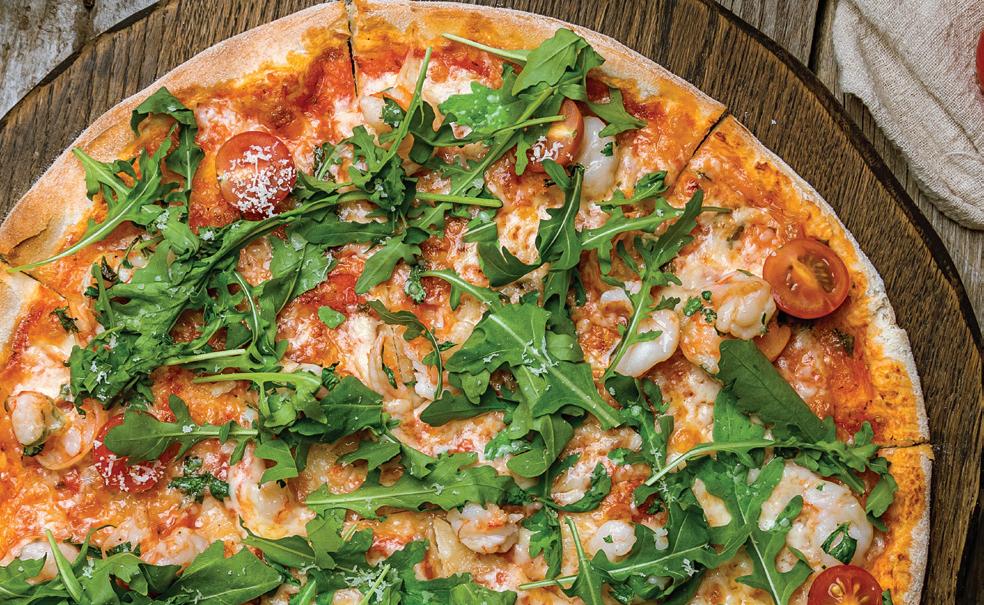
1. Salami 2. Arugula
UBIQUITY Ubiquity-stage trends are found everywhere—these trends have reached maturity and can be found across all sectors of the food industry. Though often diluted by this point, their inception-stage roots are still recognizable.
Chicken 2. Mushroom 3.
5.
4.
3. Sage 4. Fig 5. Sriracha
3. Caramelized Onion 4. Goat Cheese 5. Asiago
Pepperoni Cups
Arugula pizza
1.
Pesto
Ricotta
Red Pepper Flakes
Take the Lead To implement Read to Succeed at your pizzeria for the 2026-27 school year, download our free how-to handbook at PMQ.com/read-to-succeed.
The 1 Million Book Challenge
For the 2026-27 school year, join Big Apple Pizza and PMQ in a promotional campaign that could triple your slow-weeknight sales while transforming your community for the better.
BY RICK HYNUM
PICTURE THE SLOWEST WEEKNIGHT at your pizzeria: servers doomscrolling idly on their phones, back-of-house staff horsing around in the kitchen, maybe three or four customers in the dining room, and the phone hasn’t rung in a solid hour. Sound familiar? Now picture the house packed with moms and dads, coaches and schoolteachers, civic leaders and influencers, and kids, kids and more kids clamoring for your attention. The energy level is off the charts. Your cooks and servers can barely keep up.
Your pizza shop is the place to be.
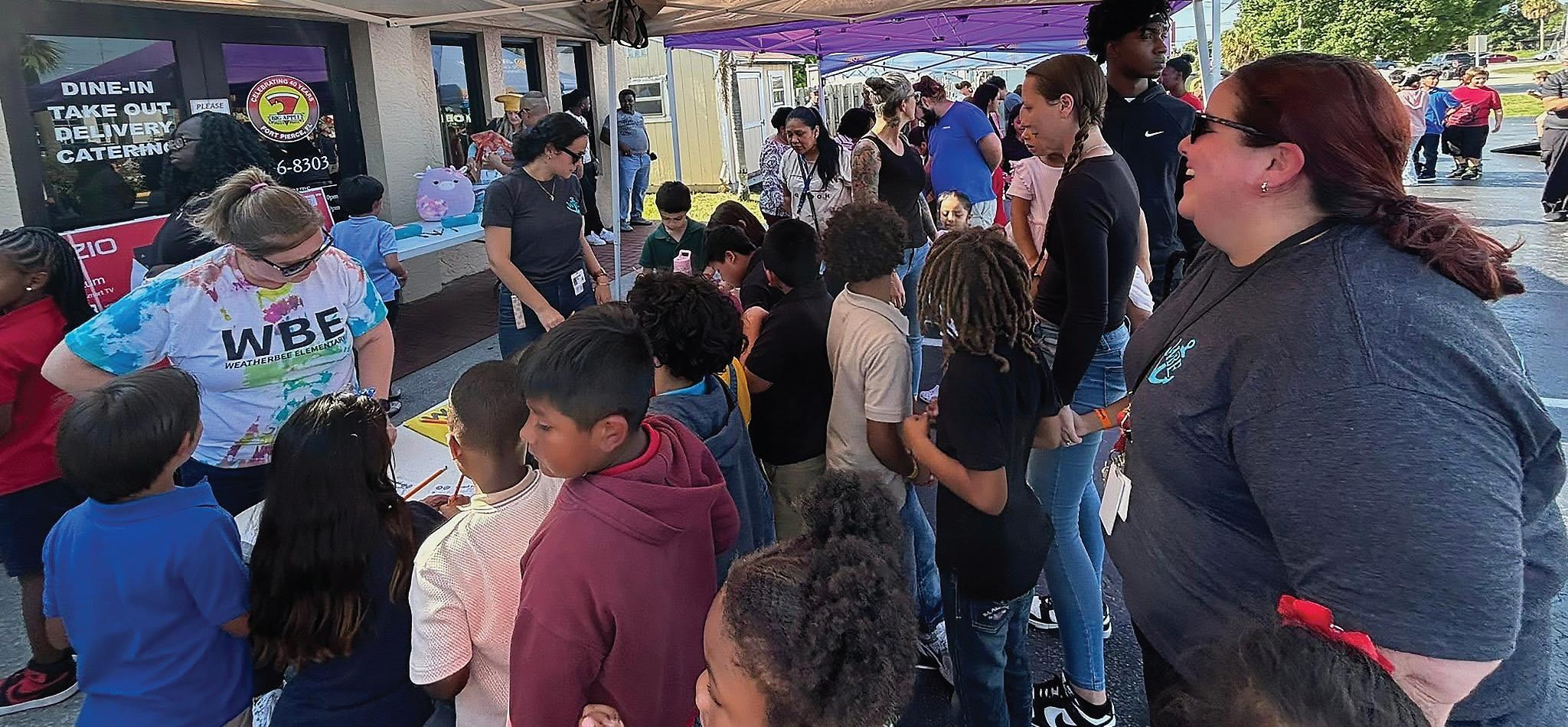
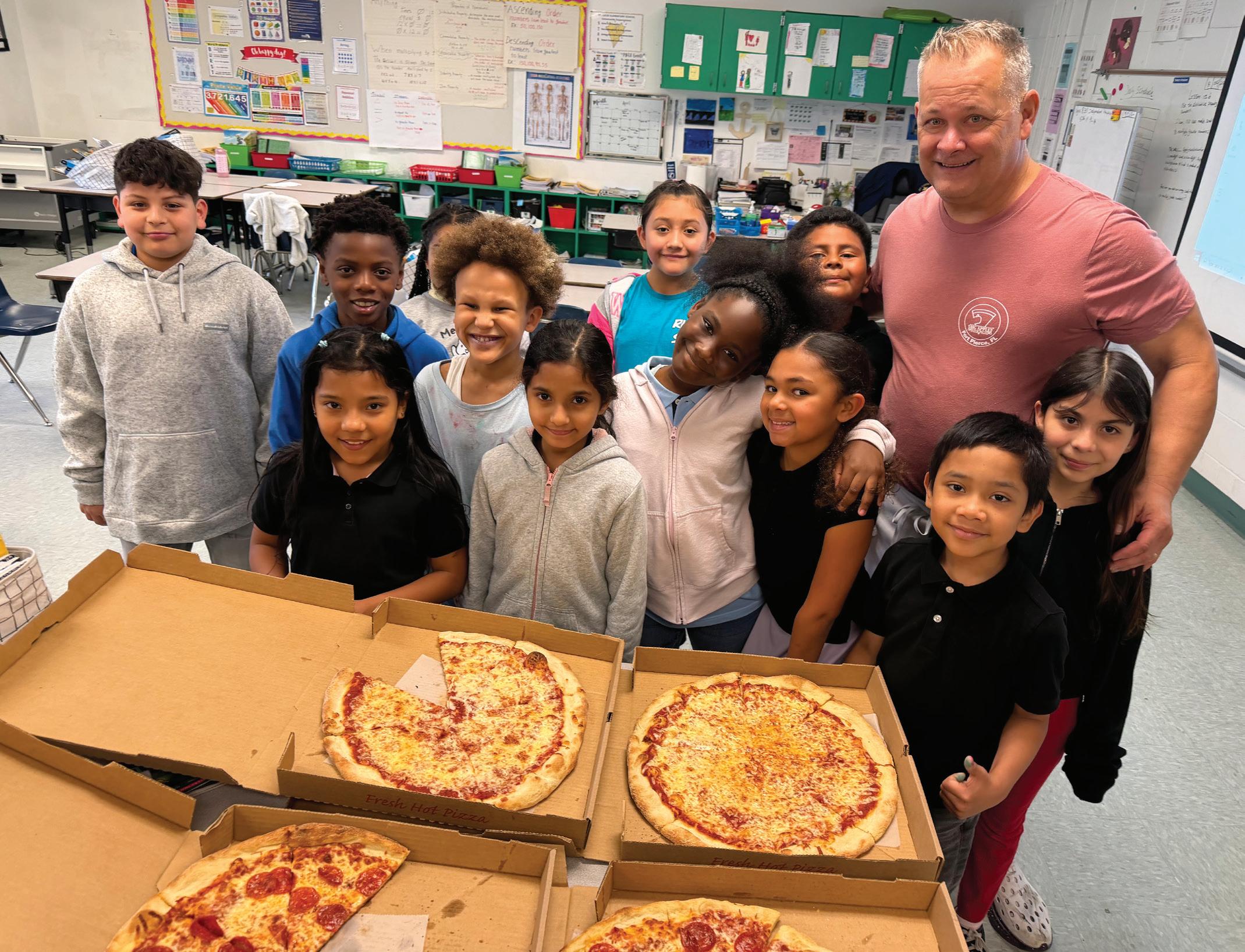
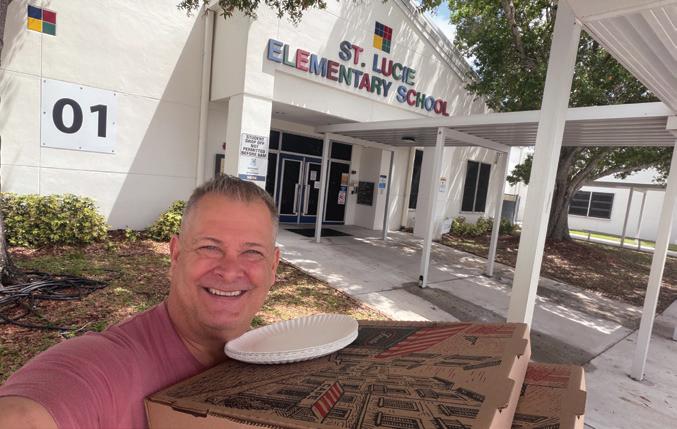
That’s a Wednesday night at Big Apple Pizza during the school year, when owner Scott VanDuzer’s Read to Succeed program is in full swing. The literacy-focused promotion—a partnership between Big Apple and schools in Fort Pierce and Port St. Lucie County, Florida—is an absolute monster for this smalltown shop. And it just keeps getting bigger. About a week before press time, Scott texted me his printed sales report for Wednesday, April 29—more than $6,500 on a night that used to be nothing but crickets. “It was my busiest night that week,” Scott says. “We did more than three and a half times the business of a normal Wednesday.”
A Win-Win-Win
PMQ first spotlighted the Read to Succeed initiative in our November 2025 cover story, but it’s one of those rare marketing ideas that’s so powerful—and so meaningful—it deserves more than one story. From the start, Scott envisioned it as an industry-wide movement. In fact, he wants pizzeria owners nationwide to join together to put 1 million free books into the hands of the children in their communities. And PMQ Pizza is behind him 100%.
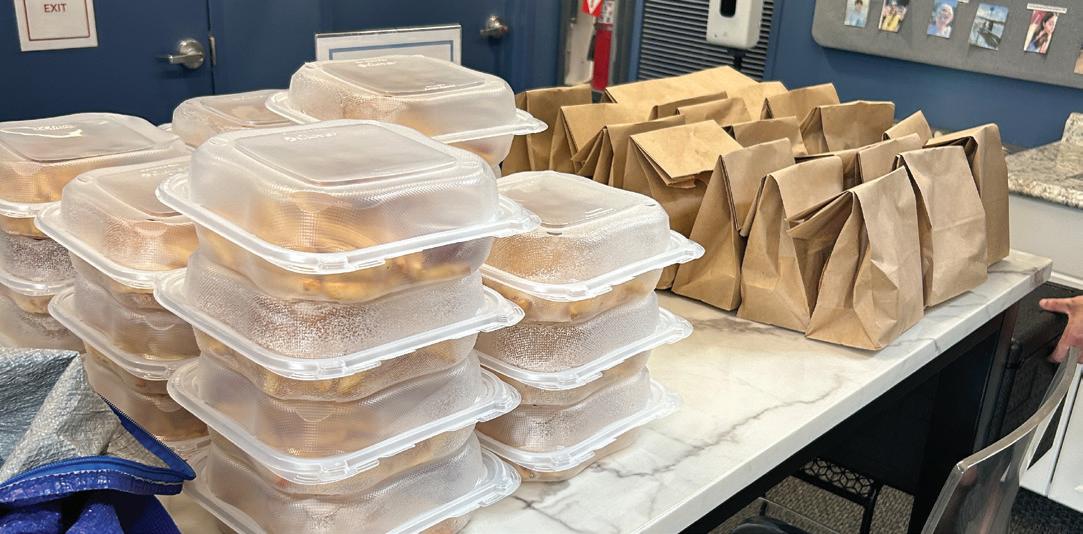
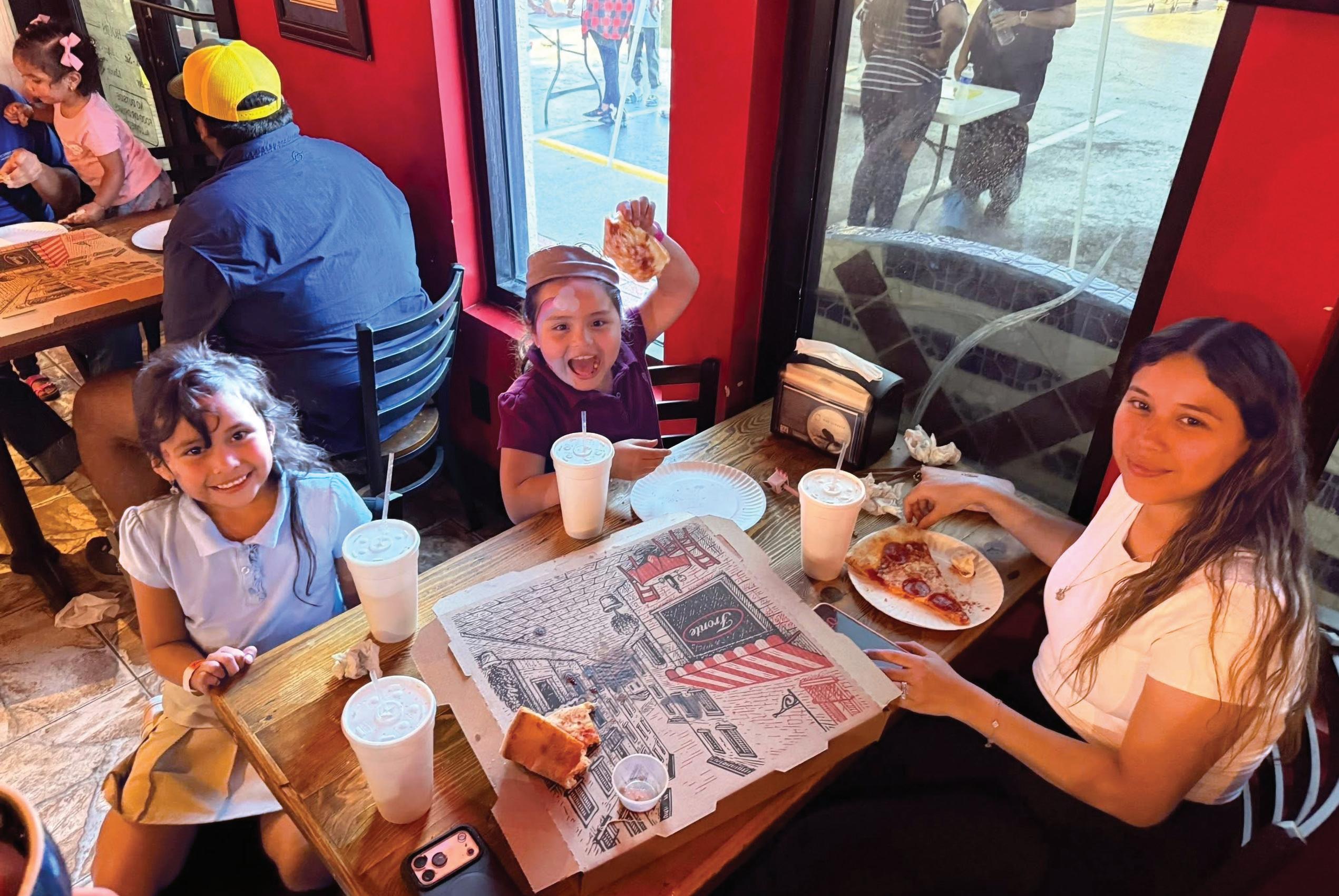
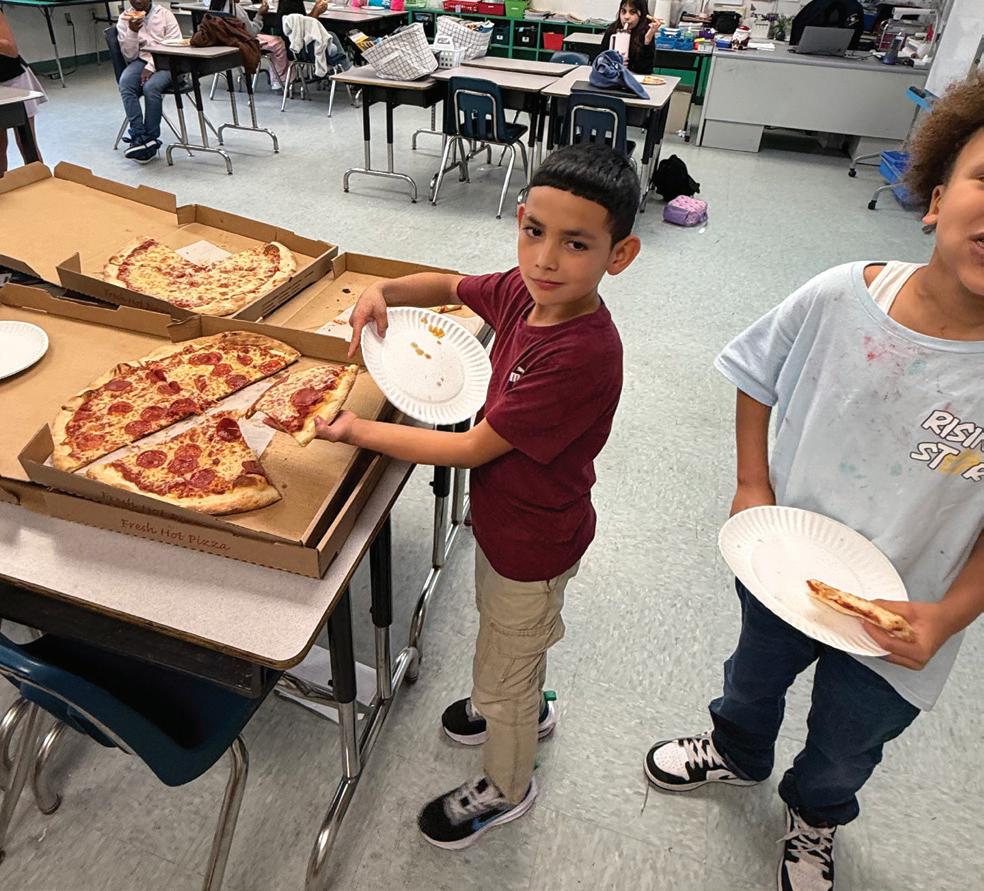
The idea is beautifully simple: On designated Wednesday nights, Big Apple Pizza hosts a Read to Succeed event for a local elementary school. Every child who shows up gets a free slice of pizza, a Pepsi product and an age-appropriate book (or books). The books were donated by Scholastic as well as local and regional nonprofits, and Pepsi donates the beverages. Importantly, the schools handle all the marketing, creating and distributing flyers to every kid and parent, so that doesn’t cost Scott a dime. But, hoo boy, talk about making a difference in your community and driving customer
Exclusive Offer from Scholastic!
Pizzeria owners, their nonprofit partners and other Read to Succeed donors can receive a 77% discount on children’s books from Scholastic: Visit Scholastic.com/pizzeria
loyalty that will endure for years to come!
Read to Succeed nights have blown up into standing-room-only community events. To top it off, Big Apple Pizza gives 50% of the evening’s sales back to the school. It’s a win-win-win, Scott tells me. “I challenge anyone to tell me who it’s not good for,” he says. “It’s good for the pizzeria owner. It’s good for the schools and has helped raised our literacy scores in Port St. Lucie County. And it’s really good for the kids. I’ve done a lot of events in my 43 years in the pizza industry, and this one is a home run.”
“It’s Like Christmas”
Read to Succeed isn’t just a guaranteed winner for independent pizzerias. Franchise operators with a heart for their local communities will reap the same benefits.
“Whether you’re part of a major chain or a mom-and-pop shop, you can use this to make a difference in your community,” Scott says. “Just imagine how much good we could do if the major chains got involved. We’re looking for anyone who wants to help their community, whether they’re with Domino’s, Papa Johns, Marco’s or smaller regional chains. We welcome one and all. If the chains joined in, man, we could reach our 1-million goal in no time. So I challenge them to be a part of
it. If we all work together, imagine what kind of impact we can have.”
Scott has worked tirelessly to put all the pieces in place for a successful Read to Succeed campaign that will work for any pizzeria, anywhere. And Scholastic, a leading publishing, education and media company, shares Scott’s vision. Scholastic is now offering a generous 77% discount on children’s books for pizzerias that host Read to Succeed nights. Operators can buy books at the discount rate or, better yet, your local government, PTA, nonprofit partners, civic organizations and individuals who care about their hometown schools and literacy can purchase and donate them for the events.
Scott and I are calling on every PMQ reader to consider implementing the Read to Succeed program. You can change the lives of countless children while making your shop the hottest ticket in town. As Scott told me, “When the kids come in and find out they can take three, four, five books home, they think it’s like Christmas. It’s really moving! It’s a feel-good program that brings real change, and with that relationship you build with the schools, it will come back to your business tenfold.”
Rick Hynum is PMQ’s editor in chief.
How Custom Mozzarella Drove a 50 Percent Order Increase for a Major Chain
Rethink how a high-demand ingredient shows up in the kitchen.
In a world where kitchens are busier and stretched thin—with labor shortages, high turnover, and rising food costs—even the simplest ingredient can either help or hurt. Cheese, for all its rich flavor and universal appeal, can slow down a line if it’s not easy to handle or portioned consistently.
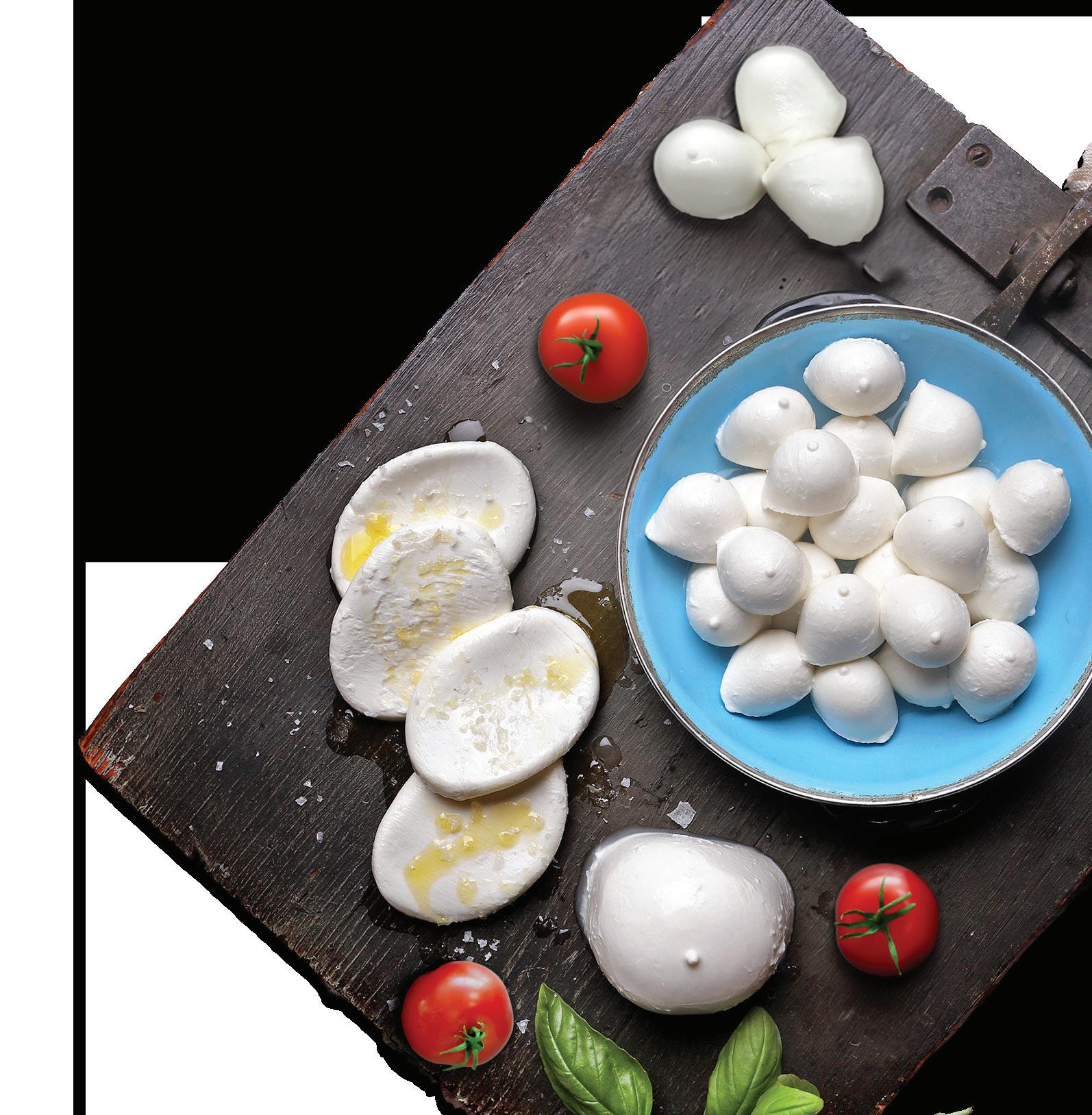
Fresh mozzarella is a good example. The cheese continues to gain traction on pizzas, flatbreads, sandwiches, and other premium items, but it can create challenges in the kitchen when it is not optimized for operations. In many restaurants, staff members are still slicing mozzarella by hand from larger logs, which can slow service, create inconsistent portions, and introduce unnecessary waste.
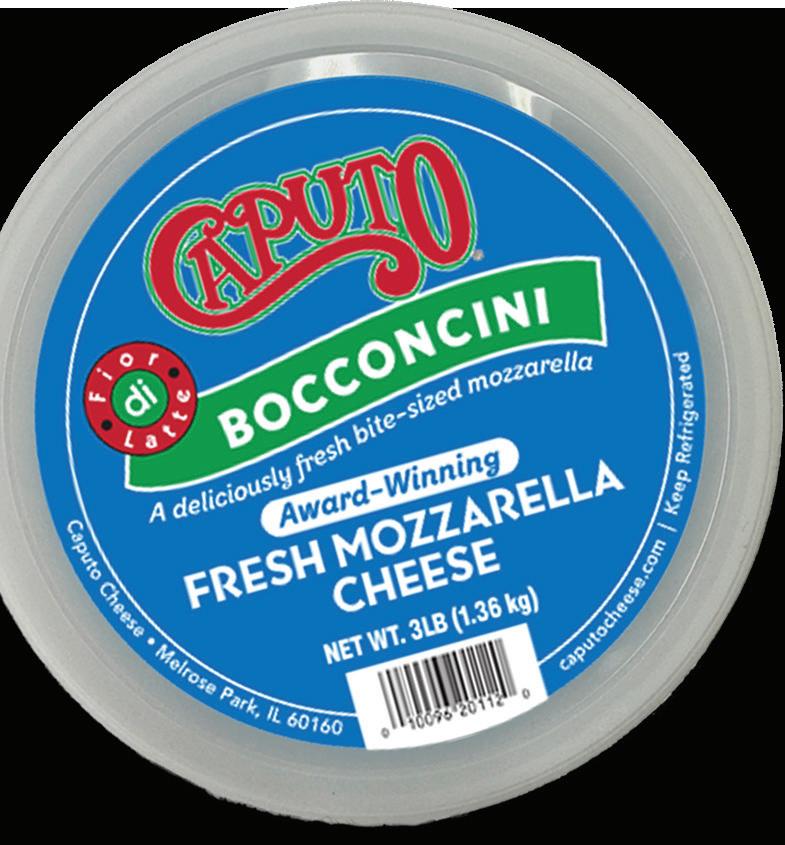
That challenge created an opportunity for Caputo Cheese when a restaurant chain with more than 2,100 locations needed support for an LTO featuring fresh mozzarella. The brand wanted a product that delivered on taste, melt, nutrition, and portion control, but it also needed a format that could work efficiently across thousands of kitchens. Caputo Cheese partnered with the chain’s research and development team to create custom mozzarella slices designed for consistent performance from store to store.
The impact went beyond product quality. By helping the chain standardize portioning and reduce labor tied to backof-house prep, the cheese program supported smoother execution at scale. The LTO drove a 50 percent increase in orders within the first year, and the mozzarella slices remained on the menu after the promotion ended.
For restaurant operators, the takeaway is clear: product innovation does not always have to mean a new menu platform or major equipment investment. Sometimes it comes from rethinking how a high-demand ingredient shows up in the kitchen. When suppliers can help restaurants reduce prep time, improve consistency, and control waste, they become strategic partners rather than simple vendors.
That positioning reflects the broader Caputo Cheese story. The company traces its roots to 1978, when Pasquale Caputo opened a small cheese shop built on Italian tradition and a strong commitment to quality. Over time, that foundation evolved into a national business serving restaurant operators with products that balance craftsmanship and efficiency.
Today, the company offers a wide range of shredded, shaved, and grated hard Italian cheeses, and a full line of Award-Winning Fresh Mozzarella aimed at helping kitchens simplify prep without giving up flavor. It also works with operators on custom solutions, including proprietary blends and cheeses tailored for specific menu applications. The goal is to help restaurants solve operational problems while strengthening the guest experience.
That matters in every segment, from quick service and fast casual to pizza, casual dining, and full service. Operators everywhere are looking for ways to protect margins while still delivering craveable food. Supplier partners that understand both culinary performance and kitchen realities can play an important role in making that happen.
In the end, this is not just a story about cheese. It is a story about how smart product design, strong supplier collaboration, and operational simplicity can help restaurants grow sales and execute more effectively at scale.
For more information on Caputo Cheese solutions, visit caputocheese.com
CONTROLLING CHEESE COSTS
As a bona fide “cheese whiz,” consultant Mark “The Cheese Dude” Todd shares his top tips on controlling costs for one of your most important— and most expensive—ingredients.
BY TRACY MORIN
MARK “THE CHEESE DUDE” TODD, a consultant based in Monte Rio, California, has spent decades accumulating encyclopedic knowledge about cheese—and has traveled the world sharing about it. He’s also a big believer in pizza, even as sectors like fast food flounder. “Pizza is incredibly popular— probably the most universally loved food in America,” Todd says.
“Even during economic downturns, people still order pizza.”
Still, Todd knows that today’s pizzeria operators need methods, including savvy cheese strategies, to maximize their profits and stay competitive. He recently sat down with PMQ to share his best tips and tricks for maximizing this key pizza ingredient to keep costs down in a cutthroat foodservice landscape.
First of all, what factors drive cheese costs?
Mark Todd: The best way to understand where cheese prices are heading is to look at the Chicago Mercantile Exchange and the futures on milk. Broadly speaking, everything has become more expensive, especially with global instability and tariffs affecting supply chains. What really drives dairy pricing is the economics of dairy farming. Imagine a farmer with 1,000 cows. Those cows cost a certain amount of money to maintain—feed, labor, care, facilities. The milk they produce generates income. The difference between those numbers is the farmer’s profit.
If the cost of maintaining the cows equals the income from milk, the farmer is basically giving the milk away. When that happens, farmers start selling off cows. Those cows often end up going into the beef market. The problem is that when milk prices go back up, it takes
about six months to raise and prepare a cow for milk production again. You can’t just turn cows on and off like a faucet. Dairy farmers have to anticipate demand well in advance—kind of like wineries planting grapes today to harvest five years from now.
When farmers misjudge demand, that’s when the market swings wildly. Either there’s too much milk and prices drop dramatically, or there’s a shortage and prices skyrocket. It’s a constant cycle, and nobody really has complete control over it.
There are people who do arbitrage for large dairy companies and try to predict these trends, placing financial bets on where milk prices will go. But even then,
“Cheese is the second most requested additional pizza topping, after pepperoni, so skimping on cheese in a visible way will almost always disappoint customers.”
Mark “The Cheese Dude” Todd
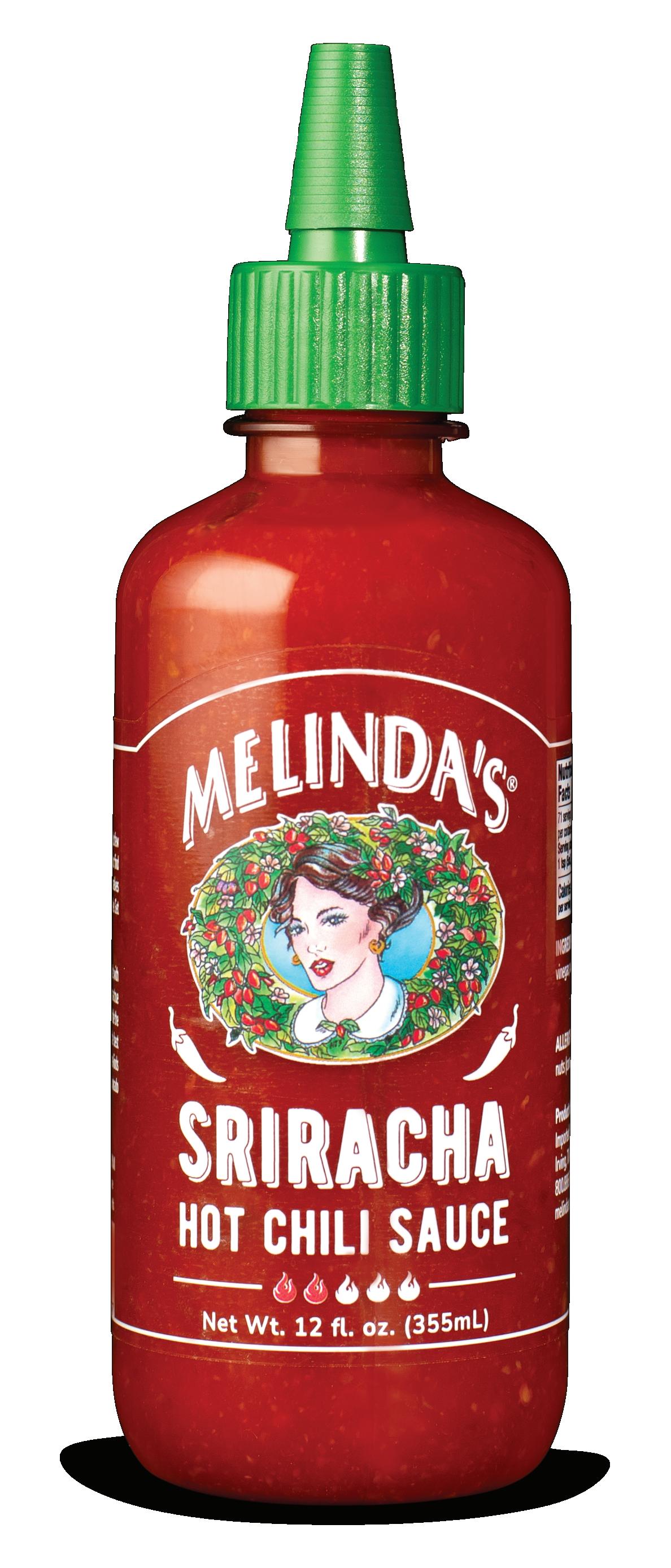
The Clean SRIRACHA
No Compromises
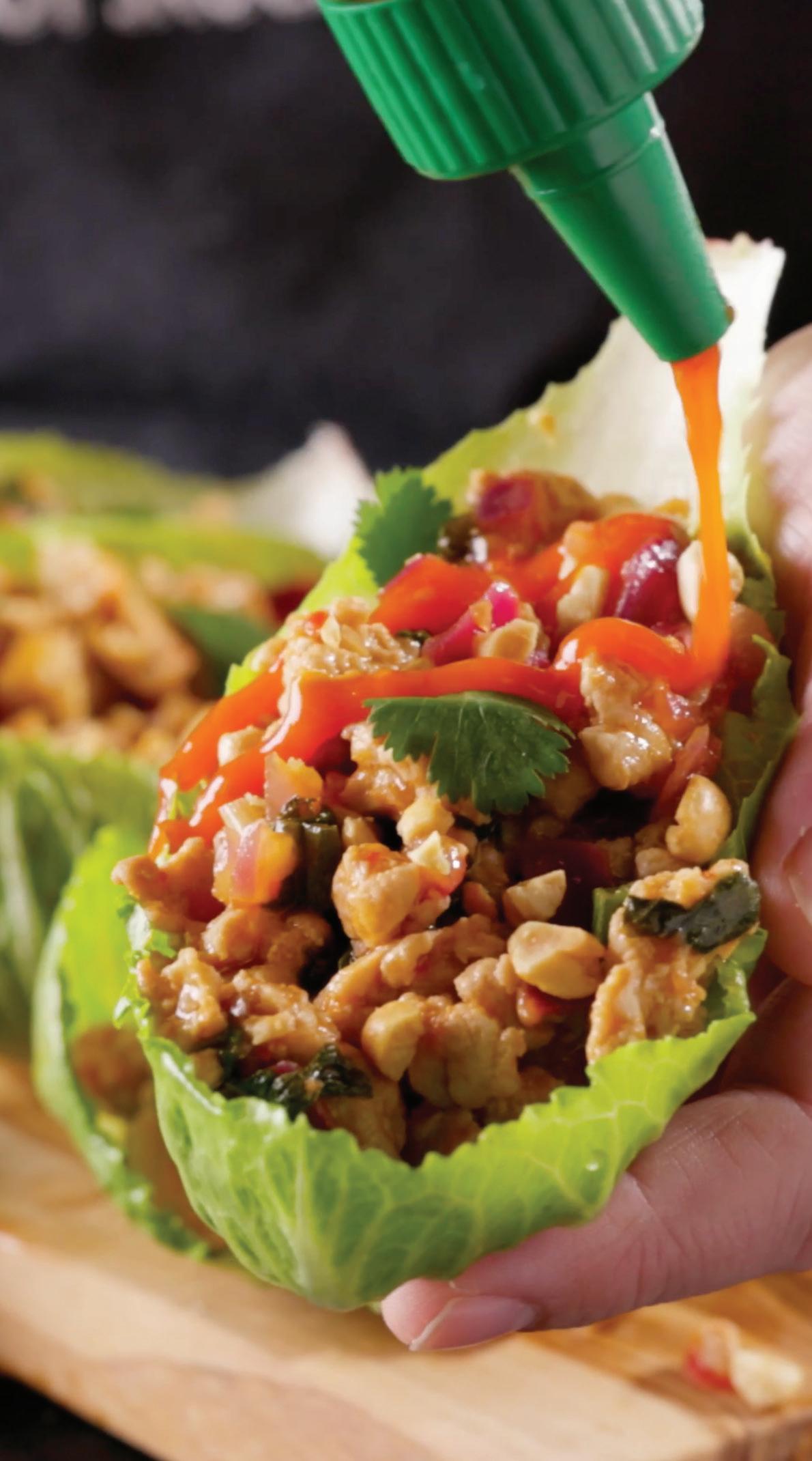
Melinda’s Sriracha brings bold heat and rich flavor into perfect balance. Made with fermented red jalapeños, fresh garlic, and real cane sugar, it delivers smooth, savory umami depth.
Produced by our family run company using clean, simple ingredients with no preservatives, artificial additives or high fructose corn syrup.
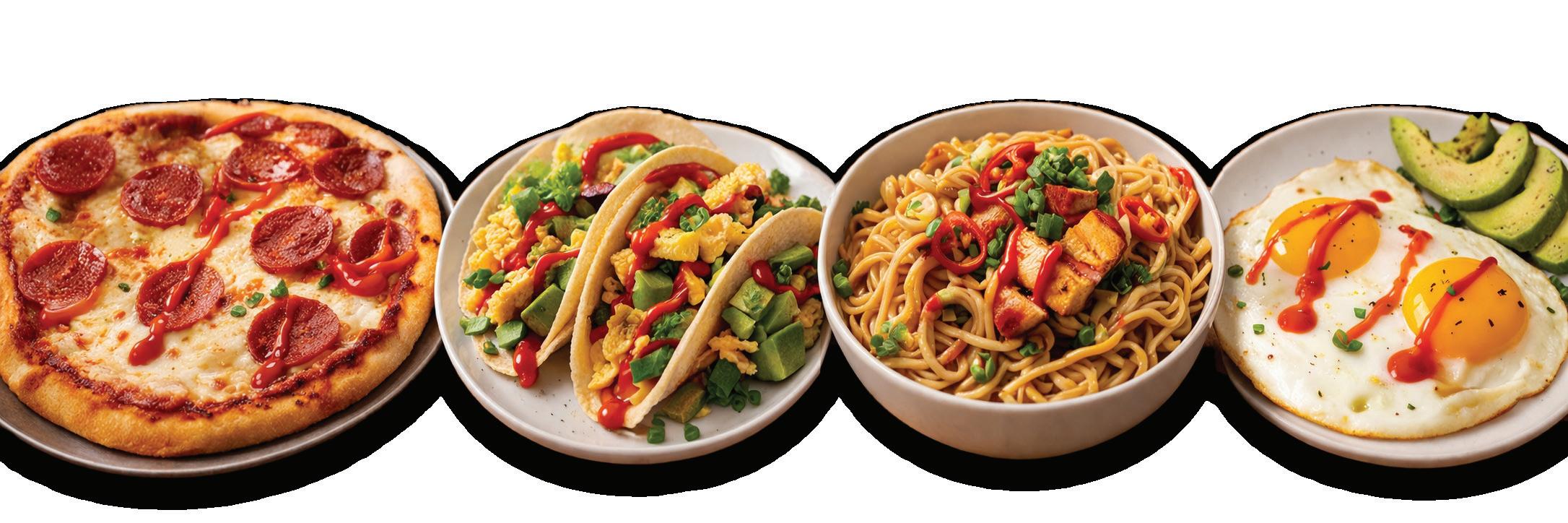
A kitchen staple for phở, noodles, eggs, pizza, and practically everything. 12oz
Crafted for Every Meal
the market often moves unpredictably. External factors like feed costs can force farmers to sell off cows, and internal factors like poor forecasting can create shortages or oversupply. All of that ultimately affects the cost of cheese.
And cheese is one of the biggest expenses for pizzerias. What strategies can operators use to manage those costs?
Todd: Part-skim mozzarella—which was developed by the American dairy industry after World War II—is typically the least expensive cheese used in pizza. It contains less fat, and the dairy industry can sell that fat separately in products like butter. That makes part-skim mozzarella a relatively economical option.
“Dairy farmers have to anticipate demand well in advance….When farmers misjudge demand, that’s when the market swings wildly.”
Mark “The Cheese Dude” Todd
You can also buy cheaper brands of mozzarella, but there’s a catch. The mozzarella market operates on extremely thin margins. If one brand is selling for even a nickel less per pound than another, it often means the quality isn’t comparable.
And if you sacrifice quality to save a few cents, you risk inconsistency in your pizza. That’s one of the fastest ways to lose customers. Switching brands to save money can be dangerous, unless you’re intentionally relaunching or changing your product.
Is using less cheese an option to reduce costs?
Todd: Technically, yes, but it’s risky. Cheese is the second most requested additional pizza topping, after pepperoni,
so skimping on cheese in a visible way will almost always disappoint customers. If customers feel like they’re getting less value, that can damage your reputation. That’s why the better approach is often blending cheeses, rather than simply reducing the amount of cheese.
How can cheese blending help operators balance cost with quality
concerns?
Todd: One simple strategy is to reduce the amount of part-skim mozzarella by about 25%, then add about 10% to 12% of a whole-milk cheese, like whole-milk mozzarella or provolone. Whole-milk cheeses melt and flow more effectively than part-skim mozzarella. Part-skim mozzarella melts, but it doesn’t spread across the pizza as well. That can leave red sauce showing through. Adding a small amount of whole-milk cheese helps cover the pizza visually while still giving customers the cheese pull and texture they expect. You might use slightly less cheese overall and save a few pennies per pizza, but the customer experience remains strong.
What’s a recommended formula for making a cheese blend?
Todd: When I taught cheese blending, I often recommended starting with:
• 15%: a strong melting cheese, like whole-milk mozzarella or Monterey Jack
• 10%: a high-flavor cheese, like Parmesan, blue cheese, aged Gouda or aged cheddar Monterey Jack is a great addition, because it melts extremely well and becomes very gooey. The flavorful cheese gives the pizza a distinctive taste, even though you’re using only a small amount. Even a 10% addition
can dramatically improve flavor. This approach lets you create a pizza that melts beautifully, looks great and has more depth of flavor.
Can operators also incorporate high-end or artisan cheeses while keeping costs reasonable?
Todd: Absolutely. That’s where things can get really interesting. You can use stronger artisan cheeses—things like Gruyère, aged Gouda, Parmesan, blue cheese or even washed-rind “stinky” cheeses—in small amounts. These cheeses are expensive per pound, but because you’re only using them at 10% [of your total blend], the cost increase is minimal—and the flavor payoff can be huge. That’s often where pizzerias create their signature pies. If you already have cheeses in your kitchen for salads— like blue cheese or shredded cheddar—try incorporating small amounts of those into your pizzas to add flavor.
Are there any other ways to reduce cheese costs?
Todd: One idea is to emphasize vegetables more. Vegetables can provide visual coverage and flavor while
reducing the reliance on cheese. But you have to be careful—some vegetables have become quite expensive themselves. The key is finding a balance that still satisfies the customer.
Another option is offering a “light cheese” pizza. Some chains do this already. You can position it as a healthier option with fewer calories. Customers can see it as a better-for-you choice rather than a cost-cutting measure.
Have you seen any operators using “analogue” or imitation cheese as a cheaper option?
Todd: Some very low-cost operations use analogue cheese or blends of analogue and real cheese. But, in my opinion, analogue cheese doesn’t make a good pizza. It melts and flows quickly, then burns almost immediately. It’s similar to using processed cheese slices—it just doesn’t deliver the same quality.
Aside from playing with ingredients, what operational practices help control cheese costs?
Todd: Portion control is absolutely critical. Even some pizza chains still apply cheese by eye, just adding until it looks right. That approach isn’t cost-effective. Operators should have precise recipes and portion measurements for every pizza. You should know exactly how much cheese goes onto each pie. Cooking methods also affect cheese usage. If you cook a pizza longer, more cheese moisture burns off. If you cook it less, the pizza might retain more cheese, but the crust won’t be as crisp. Find the right balance.
Are there any pricing strategies that can help when ingredient costs rise?
Todd: Sometimes the best approach is simply to be transparent with customers. If costs increase significantly, you may need to raise prices. Being honest about that—explaining that you need to stay profitable in order to continue serving customers—can go a long way. If you can’t make money, you can’t stay in business.
Do you have any tips for improving a menu’s profitability overall?
Todd: Menu design is incredibly important, and many independent operators don’t understand how much it matters. Here are three simple strategies to use:
1. Put your most profitable pizza first on the menu. Customers tend to order the first item they see.
2. Hide the prices within the description. If prices are listed in a column on the right side, customers
compare them directly and often choose the cheapest option.
3. Don’t list a plain cheese pizza on the menu. If customers want one, they’ll ask for it. But if it’s listed, many people will default to it—and cheese pizzas often have the lowest margins.
I’ve worked with restaurants where the only change we made was redesigning the menu, and their profits increased within the first month.
What final advice would you share with independent operators on controlling cheese costs?
Todd: Small operational changes can have a big impact. Portion control, smart cheese blending, creative menu design and transparent pricing all add up. Pizza is still one of the most economical foods to produce and one of the most beloved foods in the world. With the right strategy, independent operators can continue to thrive even in challenging markets.
Tracy Morin is PMQ’s associate editor.
Power Lunch Power Lunch
Two operators who have enjoyed massive school-lunch success share the key steps to cashing in on this high-potential pizzeria moneymaker.
BY TRACY MORIN
IF YOU’RE JUST ENTERING THE SCHOOL-SERVICE GAME, you may wonder where—and how—to begin. Don’t let the prospect intimidate you; instead, think small. “Maybe offer a weekly pasta day or pizza day,” suggests Salvatore Reina, owner of Francesca’s Pizza & Pasta, with two locations in Glen Rock, New Jersey. “Keep the menu simple and affordable. Even something like a $5 pasta meal can be a great starting point.”
But what happens when you’re ready to grow further? If you want to launch and maintain a winning schoollunch program (and find out how to expand it far beyond just school lunches), follow these steps from two operators who have nailed the process.
1
Find Your Market.
The first step in school-lunch success: Determine where your services are needed. “Over time, we noticed that many schools in our area no longer have full kitchens or cafeterias,” Reina says. “They rely on thirdparty vendors to prepare and deliver meals daily. We saw an opportunity to help fill that need.”
Scott VanDuzer, owner of Big Apple Pizza in Fort Pierce, Florida, is a 43-year veteran in the pizzeria industry—and has been working the school-lunch market most of that time, serving a dozen schools at his peak. But he now has the most success with preschools, private schools and day cares. “Those smaller schools often don’t have kitchens or facilities where they can make food themselves, so they rely on outsourcing,” he explains. “That’s where you can really do well.”
2
Tailor Your Approach.
For Reina, making connections within the school-lunch market started with his existing relationships in the community. “We’ve always tried to support local schools—whether it’s donating pizza for events, hosting field trips at the shop, or helping with school functions,” he explains. “When we decided to expand the school program, I reached out directly to contacts at schools through emails and texts. I also created a four-page pamphlet explaining the program and built a list of schools within about a 10-mile radius. Then I started reaching out to administrators and decision makers. Now, we’re serving 17 schools on a regular basis.”
“Most pizzerias aren’t busy at 8 a.m., so we could start earlier and use the same kitchen space. the startup costs were minimal.”
Salvatore Reina, Francesca’s Pizza & Pasta
Reina recommends sending emails, making calls or even stopping by in person. VanDuzer agrees that being proactive and reaching out is important. “I’d call and ask to speak with the principal or someone in administration and introduce myself: ‘This is Scott from Big Apple Pizza. I’m curious—who handles your lunch program? Do you do it in-house, or are you open to bidding it out?’” VanDuzer says. “Every school has a pizza day. Every Friday, I make about 200 pies before 11:30 for schools, which is a great way to start the day before the regular lunch rush. But you have to put the work in— knock on doors, make phone calls, and search online for preschools, private schools and day cares in your area.”
VanDuzer also created a simple two-page pamphlet for schools. “You don’t want to overload people with information,” he says. “Just say who you are, how long you’ve been in the community and what you can offer.” However, he adds, operators must be aware of timing. Schools make decisions about vendors months before the school year starts. Reina sends out his proposals to schools as early as April for the following school year. Know the rhythms of your local decision makers.
the best hot honey in the game
When Chowhound ranked 15 hot honeys head-to-head, one bottle “left the table empty.”
When PureWow reviewed the category, Melinda’s “disappeared fastest from the table.”
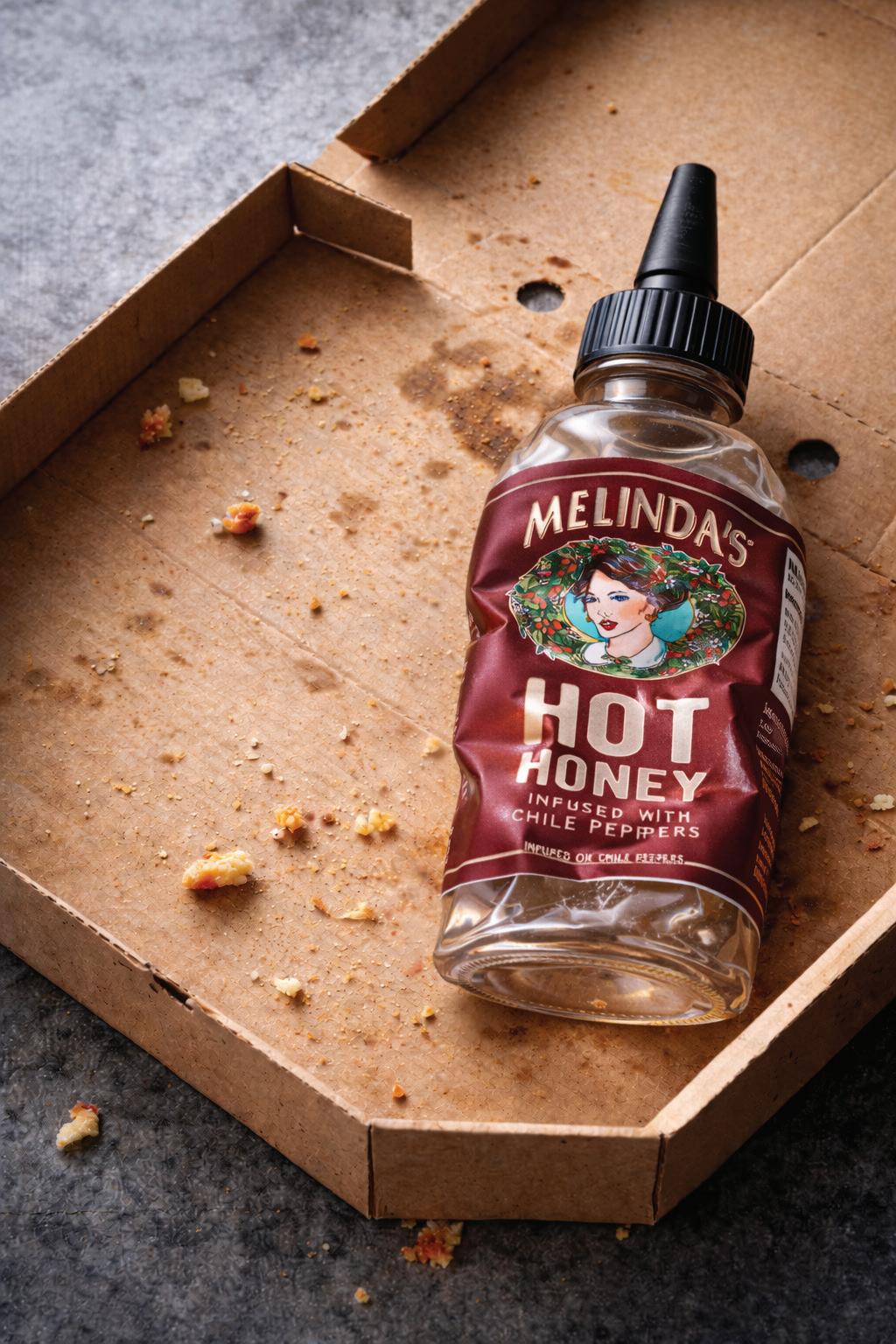
That’s because Melinda’s Hot Honey was built for more than heat, it was built for pizza. Deep Colombian honey flavor, balanced chile heat, and just enough tang to wake up every slice without overpowering it. Sweet, spicy, savory, craveable. The kind of drizzle customers ask for by name.
From artisan pies to national chains, operators are discovering what the critics already did: when flavor is the judge, Melinda’s wins.
“DISAPPEARED FASTEST FROM THE TABLE.” — purewow
“BEST OVERALL HOT HONEY.” — chowhound
“the best hot honey reviewed.” — purewow
15 HOT HONEYS ENTERED. ONE LEFT THE TABLE EMPTY. — chowhound
3
“School runS from august to May—roughly 36 weekS—so you’ll be doing that job for a long time. Make sure you’re happy with the numberS before you agree to it.”
Scott VanDuzer, Big Apple Pizza
Grow With Demand.
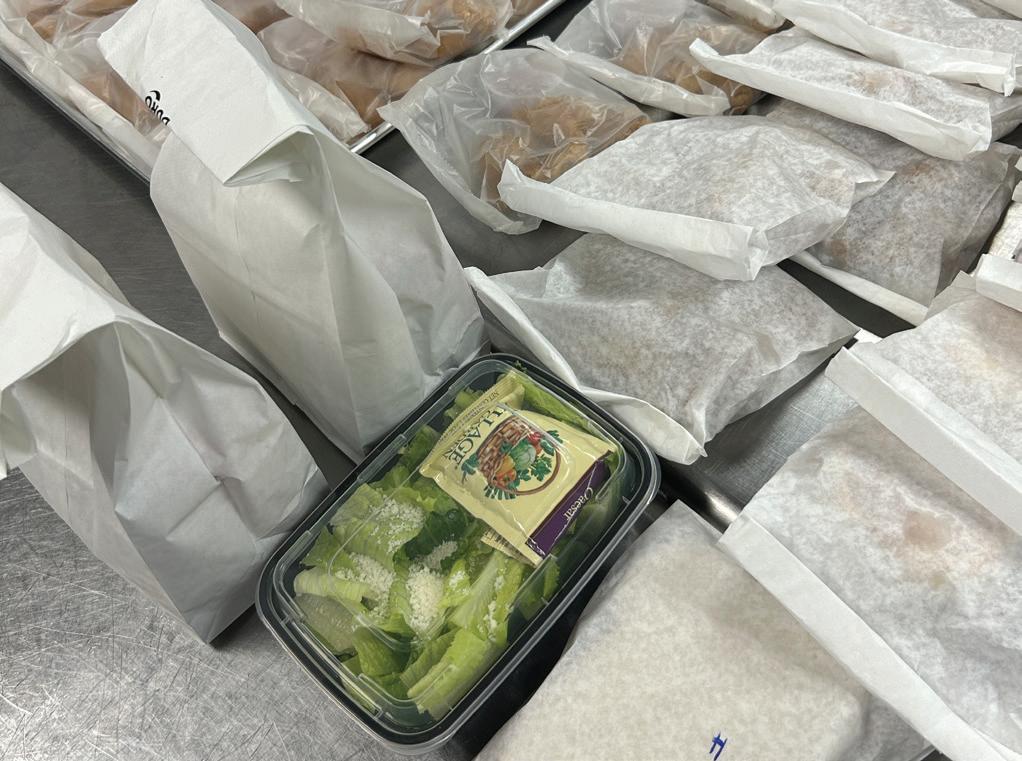
One benefit of school lunches is that you won’t need much to start—and you can grow as demand grows. “In the beginning, we were doing only about 30 to 35 orders per day, so the logistics were pretty simple,” Reina recalls. “Most pizzerias aren’t busy at 8 a.m., so we could start earlier and use the same kitchen space. The startup costs were minimal. We mainly invested in heat boxes to transport the food, and as we added more schools, we just bought more equipment.”
Staffing-wise, Reina first had a couple of employees arrive about 30 to 35 minutes earlier. “As we added more schools, we had to expand the schedule and bring in additional staff,” Reina says. “With 17 schools, the day might start as early as 6 a.m. instead of 10 a.m., but the business volume made it worthwhile.”
Reina also eventually hired drivers and dedicated delivery staff—but, because he already had the vehicles, adjustments were mainly about coordinating routes and timing. Deliveries usually happen mid-morning, around 10 or 10:30 a.m., which doesn’t interfere with peak restaurant hours.
4
Master the Menu.
You’ll also need to think outside the (pizza) box when it comes to school menu creation. “It’s not just pizza,” VanDuzer says. “Schools don’t want the same thing every day, so you have to create menus with options. We’ve made mac and cheese, hot dogs, tacos— things that weren’t even on our regular menu. That means you’re buying extra ingredients that you normally
wouldn’t stock. You also have to plan five different meal options for each week.”
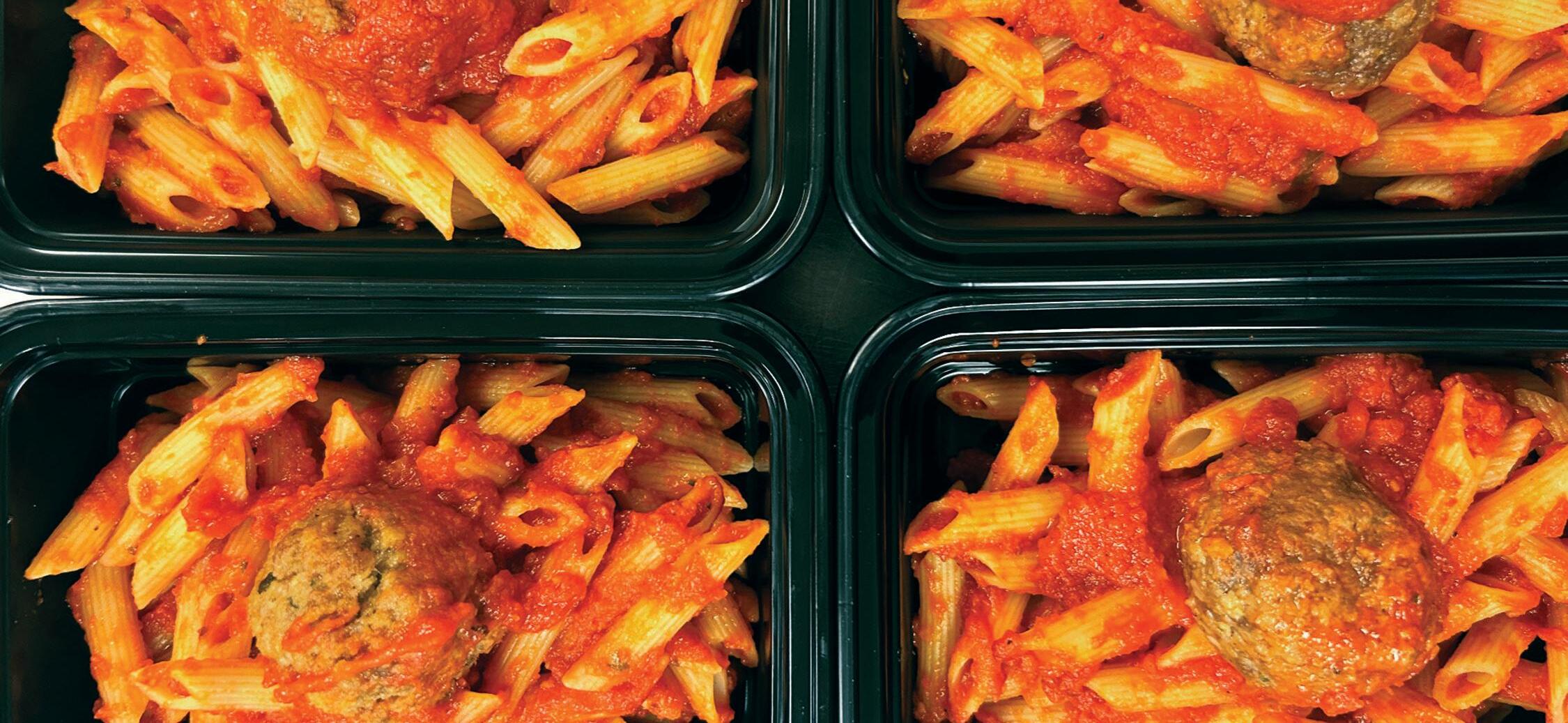
The Francesca’s schoollunch program, branded as Francesca Lunch Box, even has its own website. Its menu, different from the regular pizzeria menu, includes kid-friendly items like hamburgers, teriyaki chicken with rice, grilled cheese and chicken nuggets.
In terms of equipment, maximize the possibilities of what you already own. “I have four Bakers Pride ovens, three fryers and stoves, so I already had the equipment to make a lot of things,” VanDuzer says. “If you’re creative, you can make a lot with what you already have. For example, we made grilled cheese by lowering the temperature on the pizza oven and cooking sheet pans of 20 sandwiches at a time. Sometimes it’s just about using what you have in a smarter way.”
5Strike a Balance.
If you’re a new entrant in the school-lunch game, VanDuzer is careful to warn: Schools can be very price-conscious. Make sure the deal is fair for you. “There’s a fine line between serving a good product and offering a price the schools want,” he says. “Some of them want it for next to nothing, but you have to protect your bottom line and your margins. It can be nice doing extra business during off times, but you have to be careful you’re not basically working for free.
“Schools often want meals for three to five dollars per kid,” VanDuzer continues. “But you have to consider packaging, labor and all of your other costs. A lot of people only think about food costs and forget everything else. And, remember, it’s a long commitment. School runs from August to May—roughly 36 weeks—so you’ll be doing that job for a long time. Make sure you’re happy with the numbers before you agree to it.”
Reina maintains a higher average price (about $8 to $8.50 per meal), but he focuses on value through incorporating fresh food—including fruit, vegetables and high-quality ingredients. “We try to keep costs manageable, and we also factor in delivery costs, transportation and staffing when setting our pricing,” Reina says.
With experience, Reina found ways to improve operations—and profits—over time. “One of our biggest lessons was simplifying the menu,” he says. “At first, we offered too many options—cookies, chips, vegetables, fruit— and it became difficult to track who ordered what.
Now, we streamline the process. Students might choose their main meal, but the sides are standardized. That allows us to produce around 350 to 400 meals per day efficiently. We also constantly improved packaging and delivery—containers, organization and logistics—to make the process smoother. Every day, we’ve got to be learning. Every day, I make something better.”
6Build Awareness.
Don’t let your school lunch program end at school lunches—use them as a vehicle for acquiring more catering orders. “When you’re feeding hundreds of students every day, it has a ripple effect,” Reina says. “Students talk about the food, teachers try it, and families hear about it. We also do community events like DIY pizza nights and fundraisers with PTAs and HSAs (home and school associations). That helps strengthen relationships with schools and families. It’s bigger than just selling to schools. When students enjoy the meals, they tell their parents and families, and those families eventually come to the restaurant. Teachers also become customers. So the program builds long-term relationships within the community.”
“Relationships are everything,” VanDuzer agrees. “When I first started, I’d make the deliveries myself so I could meet the administrators and principals. That’s the key: The lunches are really the entry point. Once you’re there, you can ask about other opportunities. Do they need food for school parties, Christmas events or end-ofterm celebrations? If you build those relationships, they’ll call you for other events throughout the year. Customer service is huge. If you can specialize in that and give people a different experience, you’ll do very well.”
Tracy Morin is PMQ’s associate editor.
ONE
& Fire, Grain Time
In the first installment of a two-part series, a master pizzaiolo delves into the history and science of a style that’s spreading rapidly across the U.S.: Roman style.
BY VITANGELO RECCHIA
Roman pizza didn’t begin with a trend.
∑
IT BEGAN WITH A STONE, A FIRE AND A FLATBREAD. If you want to understand what it truly is, you need to understand where it came from before you can understand where it’s going. I know this because I lived it. In 2006, I studied abroad and lived in Trastevere, Rome—one of the oldest, most authentic neighborhoods in the Eternal City. The vendors, the bakeries, the smell of olive oil and sea salt hitting a hot stone deck at six in the morning—that neighborhood got into my blood and never left. My formal introduction to the craft in America came through Massimiliano Saieva, one of the earliest Roman pizza pioneers in the U.S. Over the last 10 years, I’ve immersed myself completely— studying, producing, competing and teaching.
Today, I make Roman pizza every day at Bella Napoli Pizzeria & Restaurant in Port Charlotte, Florida, and teach it at Pizza University & Culinary Arts Center in Beltsville, Maryland. I serve as culinary coach for PMQ’s U.S. Pizza Team, building the next generation of
American pizza competitors for the international stage. In 2023, I competed at the Campionato Mondiale della Pizza—the World Pizza Championship in Parma, Italy—against more than 700 competitors from 52 countries, finishing on the podium in the teglia category in my first international competition. From 2023 through 2025, I’ve held the title of Top Pizzaiolo USA in teglia.
But, beyond these credentials, everything in this article comes from hands-on experience: the dough, the mixer, the cold room, the electric oven, the competition floor and the classroom. This is not theory. This is practice, documented.
The Four Men Who Made This Tradition Teachable
Before I talk science, I need to name the people who built today’s Romanstyle foundation. Without them, there would be no methodology to learn, no competition circuit to enter and no global market to serve.
Corrado Di Marco: He developed the pinsa Romana concept and the science of the multi-flour blend—wheat, rice and soy—that gave Roman pizza a format lighter and more digestible than anything that came before. His work on flour technology and dough maturation created the scientific foundation the entire industry now builds on. The pinsa, as we know it today, exists because of Di Marco.
Angelo Iezzi: He built the cold fermentation protocol— dough fermenting for 48, 72, 96 hours under cold conditions—that is the direct ancestor of every serious Roman dough made anywhere in the world today. He did it by reversing everything the tradition had been doing. His breakthrough came when a freezer malfunction forced his experimental dough into the refrigerator overnight. It rose slowly and produced exactly the light, open crumb he had been chasing. From that accident came a formula he distilled as follows: “96 hours fermentation, 80% hydration, extra-virgin olive oil, buon appetito.” Every serious Roman pizza operation in the world traces its methodology back to what Iezzi built in that kitchen.
Enrico Famà: Born in Rome, a genuine Romano de Roma, he built the institutional house that Roman pizza lives in. In 1988, he co-founded the first permanent pizza school in the world at Santa Margherita di Caorle, which became the Scuola Italiana Pizzaioli. In 1991, he created the World Pizza Championship, running it as patron through 2010 and placing Roman pizza formats on the global competition stage for the first time. In 2021, he founded the Associazione Pizza Romana, dedicated to promoting and defending Roman pizza worldwide. His Accademia Pizzaioli now operates more than 140 pizza schools globally. His words: “When I entered the world of pizza, Roman pizza was made only in Rome and in Lazio. Now you can eat it all over the world.” That did not happen by accident.
Gabriele Bonci: Bonci showed the world what Roman pizza al taglio looks like at its absolute ceiling. When he opened Pizzarium near Vatican City in 2003, he worked with stone-ground heritage grain flour from Mulino Marino and a 72-hour cold-fermented dough, giving the world a reference point it had never had. His philosophy: procuring high-quality ingredients is as much a part of making pizza as kneading the dough. The recipe was only 10% of the success. Everything else was the handling—
Gabriele Bonci is one of the legends of Roman-style pizza.
the manipolazione. By 2017, he had carried that vision to Chicago. The American conversation about Roman pizza began the moment he crossed that Atlantic. These four men gave us the foundation. What follows is what you build on it.
The Spec Sheet
A Roman pizza dough is not a recipe. It’s a set of specifications, and if you can’t read those specifications, you’re working blind. Every morning at Bella Napoli, every class at Pizza University, every competition I prepare for, starts with the flour. The flour arrives with decisions already made inside it. Your job is to understand those decisions before you touch anything else.
The W-Index—Flour Strength: Measured by the Alveograph di Chopin, the W-index tells you the energy required to rupture a bubble of hydrated dough. It’s the single most important number on the spec sheet. W 180 to 260 is medium flour for standard applications. W 260 to 310 is strong flour—you’re beginning to get serious. W
310 to 400 and above is where serious Roman al taglio and pinsa production lives. When I competed in Parma in 2023, I was working flour in the W 320 to W 360 range. A 96-hour cold fermentation at 80% hydration is not gentle. A flour below W 260 will not survive it. If you do not know your W-index, you are guessing. You cannot afford to guess.
The P/L Ratio—Tenacity to Extensibility: P is resistance to stretching. L is the ability to extend without tearing. The ideal range for Roman pizza sits between 0.4 and 0.6—enough tenacity to hold structure through long fermentation, enough extensibility to stretch thin without the dough fighting you. In other words: Too high, and it snaps back. Too low, and it tears. You cannot learn this from a video. You have to feel it. That’s why the classroom exists.
The Brabender Farinograph—Water Absorption and Dough Stability: While the Alveograph tells you what the flour withstands under pressure, the Farinograph tells you how it behaves during mixing. It measures water absorption, dough development time, stability under mechanical stress, and degree of softening beyond peak. For Roman doughs at 75% to 85% hydration, water absorption is the difference between a dough that develops correctly and one that collapses in the cold room three days later. Development time tells you how long the flour needs to reach peak gluten strength—that’s critical when managing spiral mixer protocols at scale. Stability tells you how forgiving the flour is under extended mixing; low stability punishes you if you push one revolution too far. The softening value tells you how quickly the dough degrades after peak. Together with the Alveograph, the Farinograph gives a complete picture of the flour’s personality, both its strength and its temperament. In Roman pizza production, that temperament is everything.
The Falling Number—Enzymatic Activity. This measures alpha-amylase activity—how aggressively the flour breaks down starches during fermentation. For longfermentation Roman doughs, I want a Falling Number between 280 and 350. Too low, and the dough feels perfect leaving the mixer but falls apart in the cold room days later. The Falling Number tells you what the clock looks like inside your flour.
The Ash Content—Minerality. Tipo 00 flour sits at 0.45% to 0.55% ash. Tipo 1 sits at 0.65% to 0.80%. I work with Tipo 1 (or blends incorporating Tipo 1) at Bella Napoli and in competitions—specifically, Molino Casillo Tipo 1. That higher ash content delivers the nuttiness, depth and complexity that pure Tipo 00 cannot produce. The grain remembers what it was. The ash content is the proof.
VITANGELO RECCHIA
The Absorption Number. The absorption number on the spec sheet is a laboratory baseline. Your actual working hydration is shaped by water temperature, room temperature, mixing method and fermentation protocol. The absorption number tells you where the flour starts. Your process tells you where it ends up.
The Mills and the Grain
Italy does not grow enough wheat to supply its own mills. Understanding the global grain supply chain is part of understanding what’s inside your flour.
Mulino Marino stone-grinds heritage grain, preserving bran, germ and oil in a way modern roller milling cannot replicate. Gabriele Bonci built his entire production around it. Molino Dallagiovanna, founded in 1832 in Piacenza, is the only large Italian mill that still washes wheat in drinking water before milling; it has more than 450 flour types, including dedicated Roman blends, now in the American market.
In my production doughs at Bella Napoli, I use Tipo 1 from Molino Casillo, founded in 1958 in Corato, Puglia, Italy. Molino Iaquone, founded in 1950 in Vicalvi, Lazio, Italy, brings the stone-milling experience of four generations, with R&D focused specifically on Roman pizza formats, and is distributed across 40 countries. Naples’ Mulino Caputo, founded in 1924, is the flour most American pizzaioli encounter first when working with Italian product.
Canadian hard red spring wheat—from Alberta, Saskatchewan and Manitoba—at 13% to 14% protein is the backbone of every strong Italian flour. Without it, the W 320 flour I used in Parma does not exist. American hard red winter wheat provides consistency. Australian wheat provides Falling Number stability critical for long fermentation.
Finally, Ukraine and Russia, historically two of the largest grain suppliers to Italian mills, have been severely disrupted since 2022, which is why American operators felt their flour behaving differently without knowing why. Now you know.
When you understand the full chain, from field to spec sheet to dough, you can solve problems invisible to everyone else.
Vitangelo Recchia is owner of Bella Napoli Pizzeria & Restaurant and a master pizzaiolo and instructor. He is an instructor at Pizza University and Culinary Arts Center and culinary coach for the U.S. Pizza Team. He has been ranked Top Pizzaiolo USA in Teglia at the World Pizza Championship three years in a row.
VITANGELO RECCHIA (3)
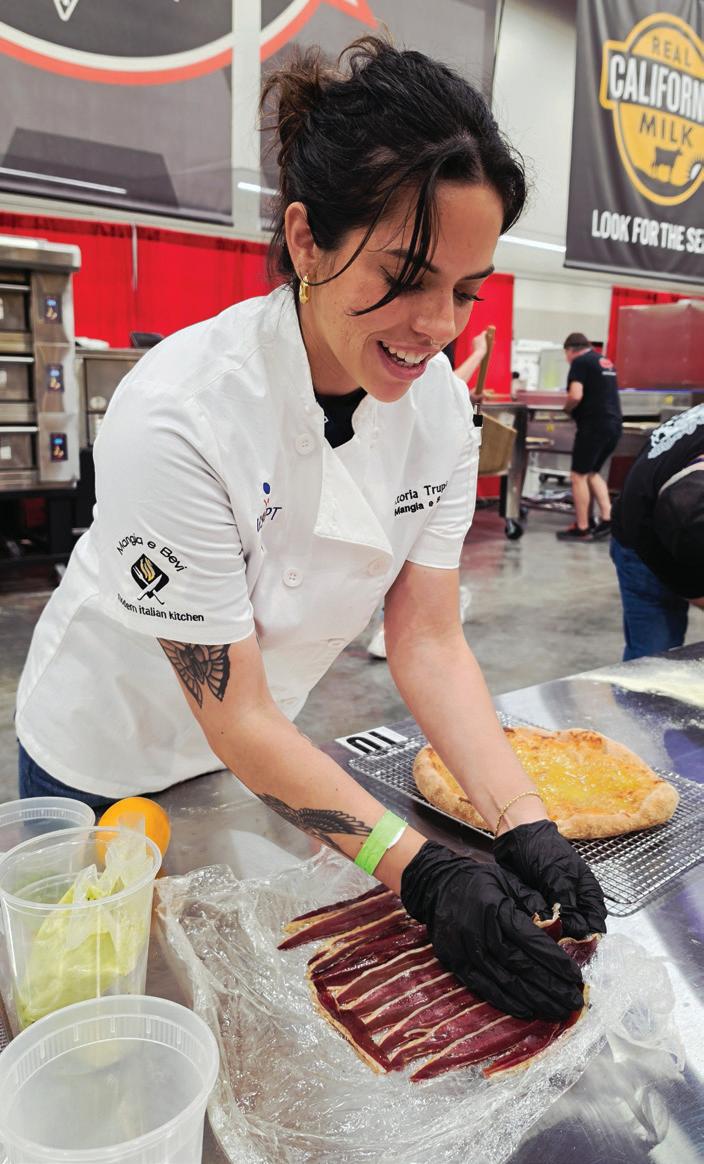
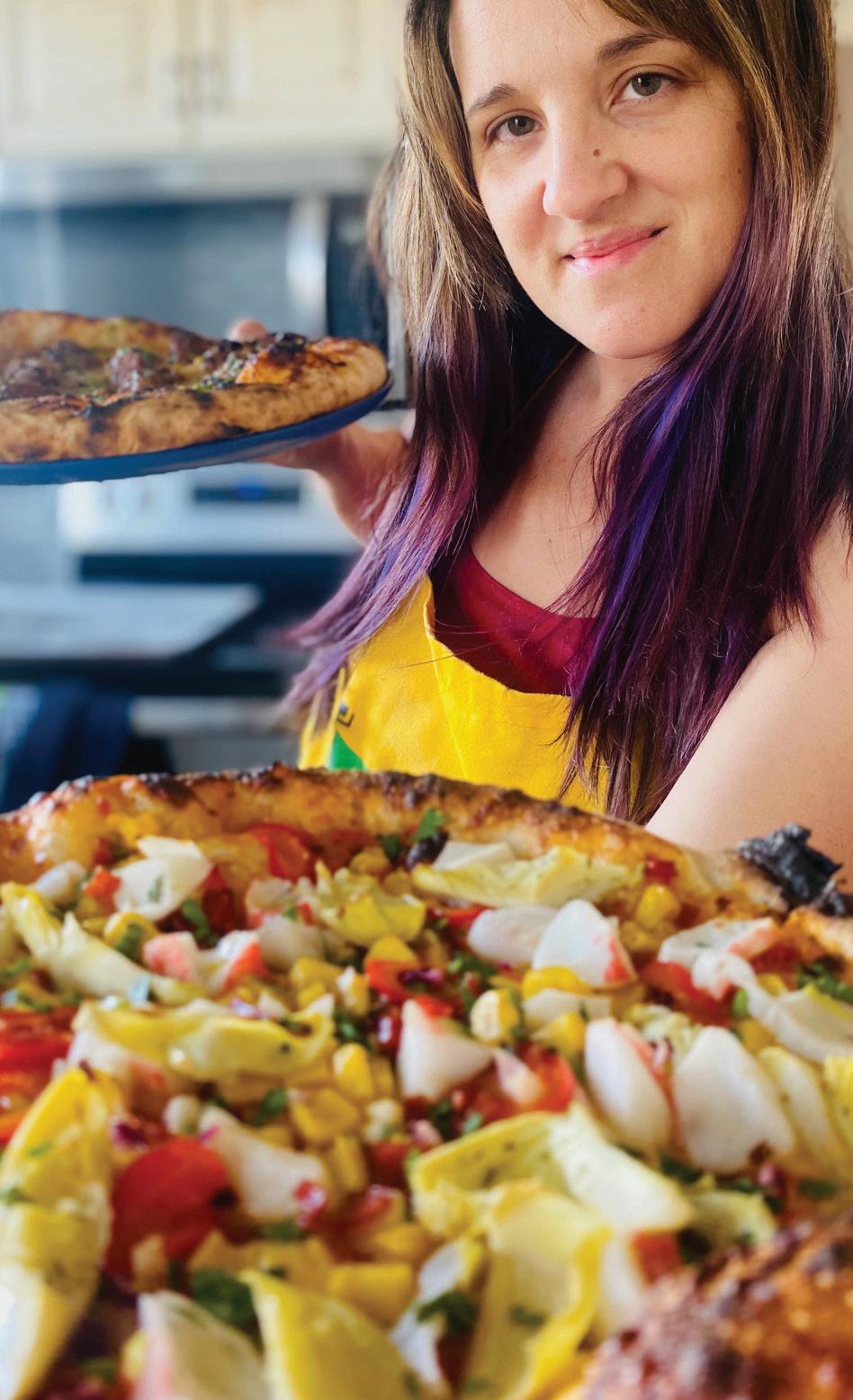
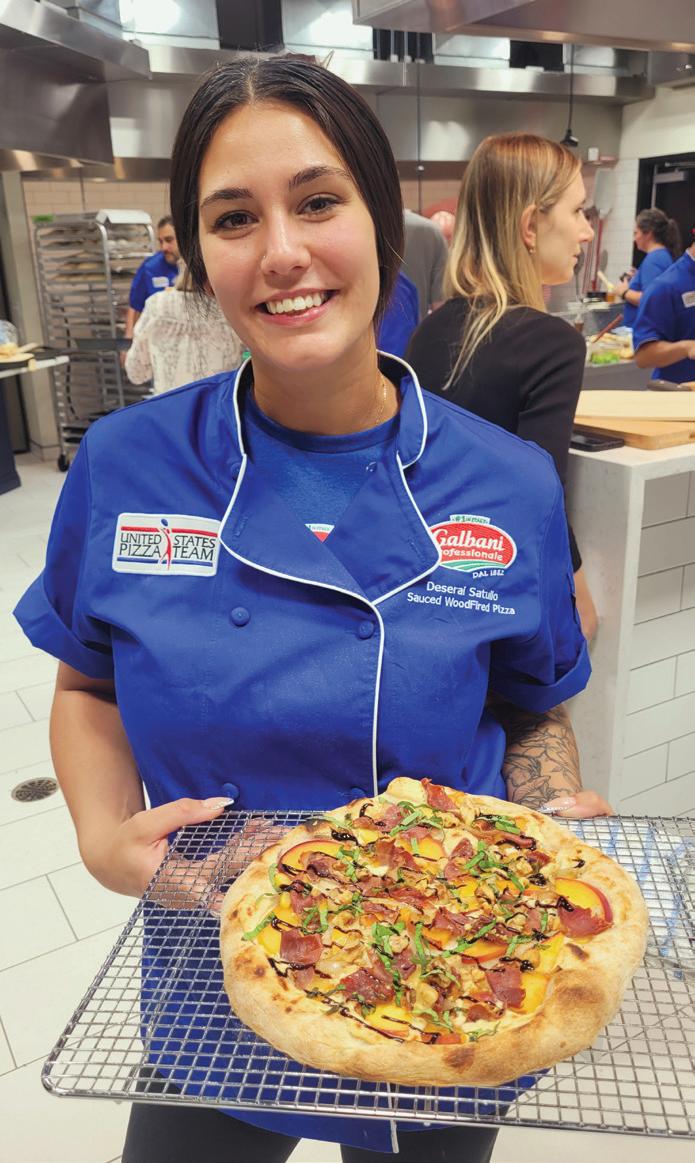
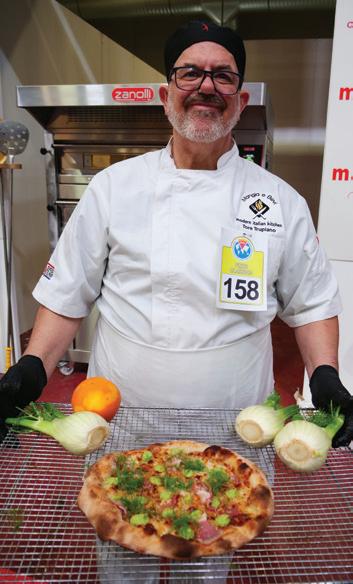
Chain of Command: Women of the USPT
Five female members of the U.S. Pizza Team talk craft, confidence and making themselves impossible to ignore.
BY BRIAN HERNANDEZ
THERE ARE A LOT OF WAYS TO GET INTO PIZZA, and the women helping shape the U.S. Pizza Team (USPT) prove there is no single route. Some came in as entrepreneurs, while others were born into it. For still others, it started as a hobby that became a calling. What connects them all is dedication to the craft, their response to pressure, and their willingness to learn, trust their instincts and keep moving. In an industry that hasn’t always made women feel seen and heard, that matters. These women didn’t wait around for a ceremonial green light; they took command of the kitchen, got out on the floor and made themselves part of the conversation.
Kira Zabrowski, co-owner of Much Ado About Pizza in Pleasanton, California, came to pizza during COVID, when her sourdough baking turned into something bigger. “When I started making pizza, I thought, ‘Wow, this is really great. This could be my next adventure. This could be my next job, my next career,’” she recalls. That adventure became a business and a major life pivot, but it also introduced her to how male-centric the pizza world
could feel. “I didn’t know it was so male-dominant until I went to the Expo in Vegas, and I was like, ‘Oh, there’s a lot of men.’” But she didn’t let that hold her back. Her advice to women entering the business: “Do it. You’re just as good as a man.”
In Memphis, Tennessee, Gail Churinetz built Gail’s Pizza Parties differently, bringing pizza directly into people’s homes for special events and turning each experience into something that’s part craft, part hospitality and part education. “It’s important for them to know my background before I go into their home,” Churinetz says. “There’s a craft to this.”
Churinetz is happy to see women finding one another in the pizza community and refusing to let each other feel isolated. “The women automatically have a bond: Hey, we’re doing this!” she says. “There’s only a handful of us at most events, and if I can help you, I’m here.” That’s not some polished talking point—it’s how you make sure the next woman walking in doesn’t feel like she just got dropped into Top Gun without a call sign. Affirmative, Ghost Rider. The pattern is clear!
Kira Zabrowski, Much Ado About Pizza
Gail Churinetz, Gail’s Pizza Parties
REAL California Pizza Challenge - Sponsored by Real California Milk AUGUST 23–25 | ANAHEIM, CALIFORNIA AT THE CALIFORNIA RESTAURANT SHOW & PIZZA TOMORROW SUMMIT
Think you’ve got what it takes? Then prove it. The Real California Pizza Challenge Sponsored by Real California Milk and the U.S. Pizza Team is bringing serious competition, serious prizes and serious bragging rights to Anaheim.
Compete In:
• Non-Traditional Pizza
• Gluten-Free Pizza
• Pizza in the Pan
• REAL California Three Cheese Challenge
• Largest Dough Stretch
• Fastest Dough Stretch
• Box Folding
• Freestyle Acrobatics
Why Enter?
• Cash prizes
• Hangable swag for your wall
• Honor and bragging rights
• Grand prize trip to Italy to compete at the World Pizza Championship in 2027
Registration is now open, and spots are limited. If you wait, don’t be shocked when somebody else takes your shot.
Vittoria Trupiano grew up in a pizza family—her father owns Mangia e Bevi in Oceanside, California—and has noticed that respect often feels like something you have to earn twice as a pizzaiola. “I felt like I had to prove that I belonged, not just because I was young, but also because I’m a woman,” she says. “Respect looks like being taken seriously for your work, regardless of gender. It means being treated as a professional, having your voice heard, and being judged based on the quality of what you create.” Her best advice to women: “Don’t be afraid to take up space in this industry.”
Meanwhile, Melina Felix of The Pizza Bandit brings a different kind of energy to the group, one rooted in visual creativity, intuition and a clear point of view. “I believe color is an ingredient,” she says. “People eat with their eyes.” She is just as deliberate about how she builds her Littleton, Colorado, brand, taking seriously the advice to “build your audience before you launch your brand or product.” That’s how she generated realworld momentum before The Pizza Bandit was even fully established.
Finally, Deserai Satullo, co-owner of Sauced Wood Fired Pizza & Catering in Fairview Park, Ohio, made her own statement at the Pizza Senza Frontiere—World Pizza Champion Games, held in Rimini, Italy, in January. It was her first international pizza competition, and she placed fourth in the Pizza Fritta category. That finish deserves real attention, especially since she was confronted with a disadvantage from the start. “I did a pizza that had strawberry preserves, arugula, prosciutto,
Brie cheese and a strawberry balsamic, all in a woodfired oven, which I’m very comfortable working with at about 800°. The oven they gave me was at 500°. It is what it is.”
Taken together, these women aren’t telling one neat, polished story, and that’s the point. Zabrowski built a concept-driven pizzeria, pushing past assumptions. Churinetz turned pizza into an intimate, craft-forward experience. Trupiano knows exactly what respect should look like. Felix brings originality and style without sacrificing substance. And Satullo showed that when women get their shot on a big stage, they know how to make it count.
And if women in pizza are more visible now, it’s not because someone finally decided to be inclusive. It’s because pizzaioli like these U.S. Pizza Team members walked in, showed their skills and made themselves impossible to ignore.
Brian Hernandez is PMQ’s associate editor and director of the U.S. Pizza Team.
For more information about the U.S. Pizza Team, its members and sponsors, visit USPizzaTeam.com.
PHOTOS
Vittoria Trupiano, Mangia e Bevi
Melina Felix, The Pizza Bandit
Deserai Satullo, Sauced Wood-Fired Pizza
Nine U.S. Pizza Team competitors took the floor at the 2026 Campionato Mondiale della Pizza in Parma, Italy, and delivered strong finishes, first-time moments and major pride on pizza’s biggest international stage.
U.S. PIZZA TEAM PARMA DELEGATION:
• Tore Trupiano—Best from the USA; 11th in Pizza Senza Glutine; also competed in Pizza Classica, Pizza in Teglia and Pizza a Due
• Damiano Trupiano—Competed in Pizza Classica, Pizza Senza Glutine and Pizza in Teglia
• Vitangelo Recchia—16th in Pizza a Due with Juan Robles; 46th in Pizza Classica
• Juan Robles—REAL California Pizza Challenge champion; 16th in Pizza a Due with Vitangelo Recchia; competed in Italy for the first time
• Alejandro Burgaleta—Galbani Pizza Cup champion; competed in Pizza Classica and Pizza a Due with USPT’s Brian Hernandez
• Mike Pitera—48th in Pizza Classica; 29th in Pizza in Pala; also competed in Pizza in Teglia and Pizza a Due
• Patt Miller—Galbani Cup Acrobatic Champion; competed in Pizza a Due, Pizza Classica, Pizza in Teglia, Largest Stretch and Freestyle
• Rico Lunardi—43rd in Pizza in Teglia; also competed in Pizza Classica and Pizza a Due
• Luca Lunardi—Competed in Pizza Classica and Pizza a Due in his first competition in Italy
For a full list of results and accolades, visit uspizzateam.com/parma-26-wrap-up/
The U.S. Pizza Team’s trip to Parma was supported by platinum sponsor Galbani Professionale US and gold sponsor REAL California Milk, which helped send top U.S. champions to compete on pizza’s biggest international stage. The team also thanks its full family of loyal Gold Plus, Gold and Silver sponsors, along with Sunmix USA, Molina Denti, Le 5 Stagioni and Caputo Flour, for their support throughout the trip.
Rico Lunardi
Tore Trupiano
Mike Pitera
(Clockwise from top left) Employees work the kitchen in the 1980s; Palermo founder Tony Fanara was known for adding hospitable touches to his full-service restaurant; Palermo’s second location has been thriving in Los Angeles since 1982; staff members assemble pizzas in the ’80s.
Palermo Italian Restaurant
Anthony “Tony” Fanara opened Los Angeles’ Palermo Italian Restaurant in 1976 with 18 seats and a dream. But the reality was far from glamorous. “It was a very big struggle for about one year,” he recalls. “One of the waitresses didn’t get paid—she just worked for tips. When I met my wife, she became a waitress, too.”
Eventually, business picked up, and Palermo expanded to 45 seats. When landlord issues forced Fanara to a new location—a former laundromat that, unbeknownst to him, was in a condemned building and would need 18 months of work—he kept the original open until the new one launched in late 1982. “The first two days, everything was free,” Fanara says. “We had 1,200 people come in; the second day, 800 people. From then on, I never looked back. We were really, really busy.”
Fanara has always been a fast learner, adaptable and multitalented: Before Palermo, the Italian immigrant shined shoes, washed dishes, worked in the wine industry and studied electronic engineering. He even ran for California governor in 2022—and he’s turning 80 years old in 2026, still working seven days a week in the restaurant.
There, Fanara puts his own spin on Italian favorites, like the bestselling Pizza Rosa, with fresh tomatoes, Parmesan and feta on a
BY TRACY MORIN
STATE OF CALIFORNIA
STATEOFCALI F ORNIA
soft, light crust. “I have a few dishes that nobody else makes,” he says. “If I don’t know how to cook it, we will never have it on the menu. My personal feeling is, whatever business you go in, you’ve got to know everything. That’s the only way you survive—by doing a lot of things yourself.”
Offering old-school-hospitality touches like free wine for waiting diners (until local regulations forbade it) and free desserts to first-timers, Fanara was able to expand to additional locations, passing them along to relatives. Though none exist today, his son, also named Anthony, helps out at the original, where diners are still greeted with a welcome basket of Pizza Rosa at the table. “I have customers from day one, and the second and third generations come in, too,” Fanara says. “We don’t charge that much for the amount of food we give. Customers even come in and say, ‘Raise your prices!’ But we treat everyone like a friend, not just a customer.”
Tracy Morin is PMQ’s associate editor.
BakeMax BMRCD02
Refrigerated Display Case
Don’t miss the 2026 California Restaurant Show — we are returning to the Anaheim Convention Center. THIS YEAR’S EVENT INCLUDES THE PIZZA TOMORROW SUMMIT PAVILION FOR THE THIRD YEAR.
That means MORE VENDORS, MORE PRODUCT CATEGORIES and MORE EXCITEMENT!
You have 3 DAYS to explore the latest in foodservice, from food to equipment to tech, and everything in between. Plus LIVE CULINARY DEMONSTRATIONS and over 40 hours of FREE SEMINARS — all included with your show admission!
Register now and experience it all!
Anaheim Convention Center // Anaheim, CA Join us for this year's