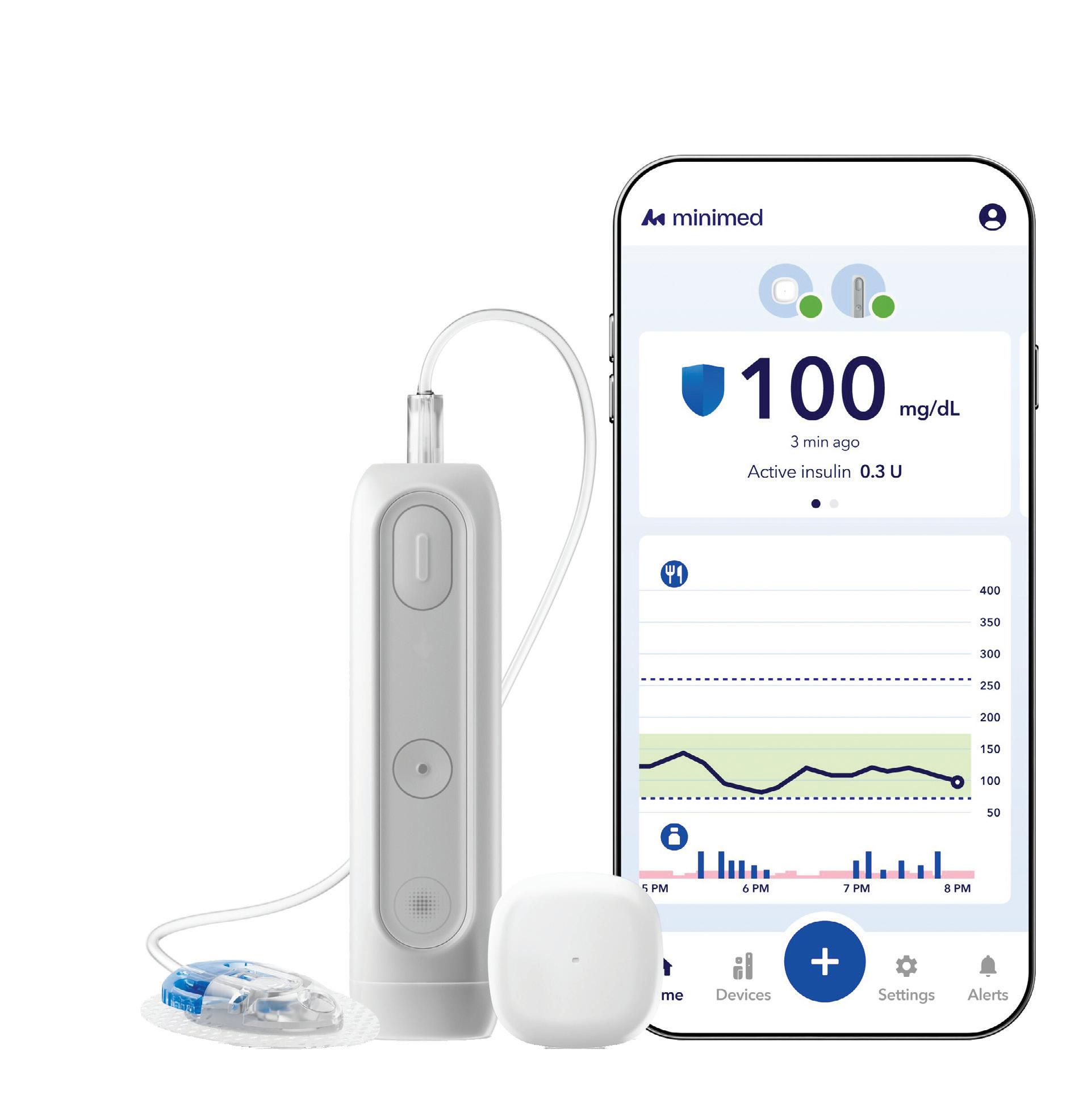
MINIMED FLEXES WITH NEXT-GEN INSULIN PUMP AFTER SPINNING OFF FROM MEDTRONIC
The first year-long CGM implant developer
DEVICE STARTUP TESTS WYSS-LICENSED COATING TECH ON IMPLANTS AND CATHETERS
MINIMED FLEXES WITH NEXT-GEN INSULIN PUMP AFTER SPINNING OFF FROM MEDTRONIC
DEVICE STARTUP TESTS WYSS-LICENSED COATING TECH ON IMPLANTS AND CATHETERS
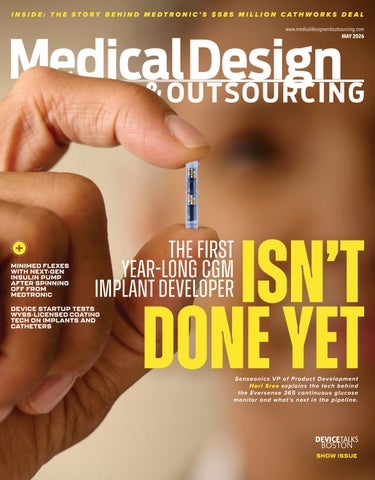
Senseonics VP of Product Development
Hari Sree explains the tech behind the Eversense 365 continuous glucose monitor and what’s next in the pipeline.
Powered by vertically integrated systems, Viant connects design and development, automated manufacturing and assembly, sterilization management, and regulatory expertise to support drug delivery programs end to end. Whether you’re developing a new therapy or scaling an existing platform, we help you scale with speed—without compromising quality.

We’ve come a long way from fingersticks for diabetes patients. Though the diabetes patient population continues to grow, I’ve never been more optimistic about medtech’s ability to take on this global epidemic.
Medical devices have traditionally played a more passive role, allowing diabetes patients and physicians to monitor the condition while medications and lifestyle changes do the heavy lifting.
Even then, those drugs needed syringes, pumps and pens for administration. But now, drug delivery devices and glucose sensors are smarter and smaller, and investigational minimally invasive devices are showing promise for treating obesity and type 2 diabetes.
In this issue of Medical Design & Outsourcing , we’re highlighting those innovative advances in drug delivery and diabetes tech with a focus on the R&D and engineering that make them possible.
Our cover story features the world’s first one-year continuous glucose monitor and what’s next in the pipeline from its developer, Senseonics. “What we have solved is the longterm survival of the glucose sensing platform,” Senseonics VP of Product Development Hari Sree tells Senior Editor Sean Whooley. “What we are

now working toward is getting … rid of one of the three components the user has to deal with.”
Whooley’s also got interviews with leaders at Medtronic spinoff MiniMed and Dutch startup ViCentra on their latest automated insulin delivery systems, along with a look into noninvasive blood glucose monitoring technology developed by MIT researchers.
This issue’s MDO Contributions from experts in our audience include tips on topics such as: CT scan imaging to inspect GLP-1 autoinjectors; packaging for high-volume diabetes devices; lowfriction micropump development; and making sense of the FDA’s new guidance on consumer wearables.
I’ve got a short spotlight on a simple feature for speed and safety in the Endogenex ReCET catheter, one of those investigational devices I mentioned earlier.
And beyond our diabetes and drug delivery coverage, this issue also includes a feature from me on a new coating technology developed at the Wyss Institute at Harvard University that’s now being tested on implants and catheters, plus a feature from Associate Editor Skyler Rivera on the $585 million CathWorks deal Medtronic just closed.
As always, I hope you enjoy this edition of Medical Design & Outsourcing. Thank you for reading and for your work on behalf of the patients we serve.
Jim Hammerand | Managing Editor |
Design & Outsourcing























































































EDITORIAL




HELP US HONOR THE COMPANIES THAT HAVE PROVIDED THE MOST LEADERSHIP IN THE MEDICAL TECHNOLOGY INDUSTRY.




CREATIVE SERVICES
PRODUCTION SERVICES




























Editor in Chief Chris Newmarker cnewmarker@wtwhmedia.com
VP, Creative Director Matthew Claney mclaney@wtwhmedia.com
Customer Service Manager Stephanie Hulett shulett@wtwhmedia.com

Managing Editor Jim Hammerand jhammerand@wtwhmedia.com

























Customer Service Rep Tracy Powers tpowers@wtwhmedia.com











Senior Editor Sean Whooley swhooley@wtwhmedia.com
VP, Marketing Annie Wissner awissner@wtwhmedia.com
Customer Service Rep JoAnn Martin jmartin@wtwhmedia.com






The medical device industry wrapped up another year with more blockbuster mergers grabbing headlines around the world and new, innovative technologies emerging seemingly every day.











Associate Editor Skyler Rivera srivera@wtwhmedia.com









Portfolio Marketing Manager McKenzie Burns mburns@wtwhmedia.com


This level of success wouldn’t be possible without the innovation, ingenuity and determination of the people who drive it: leaders. These individuals and companies are working for the growth of the entire medical device industry.





















The future of medtech will build on the foundation of today’s efforts and Medical Design & Outsourcing would like to acknowledge such achievements.

We think they deserve recognition from you, too. Vote online for one or more of the companies listed through October.




Customer Service Rep Renee Massey-Linston renee@wtwhmedia.com

Editorial DirectorDeviceTalks Tom Salemi tsalemi@wtwhmedia.com
LEADERSHIP TEAM
Customer Service Rep Trinidy Longgood tlonggood@wtwhmedia.com





leadership.medicaldesign andoutsourcing.com

CEO Matt Logan mlogan@wtwhmedia.com
AUDIENCE DEVELOPMENT

Managing EditorDeviceTalks Kayleen Brown kbrown@wtwhmedia.com

SALES

Ryan Ashdown 216.316.6691 rashdown@wtwhmedia.com

Jami Brownlee 224.760.1055 jbrownlee@wtwhmedia.com






SVP, Sales and Strategy Amanda Buehner abuehner@wtwhmedia.com
Director, Audience Growth Rick Ellis rellis@wtwhmedia.com
Mike Francesconi 630.488.9029 mfrancesconi@wtwhmedia.com
Susan Powers 708.341.3370 spowers@wtwhmedia.com
Brian Toole 267.290.2386 btoole@wtwhmedia.com
Amy Vodraska 862.274.1348 avodraska@wtwhmedia.com














888.543.2447







HERE’S WHAT WE SEE:
Fighting diabetes with next-gen sensors and drug delivery devices
DRUG DELIVERY:
Device scan: Look inside an Ozempic drugdelivery pen with an industrial X-ray CT scanner
MINIATURIZATION:
How ViCentra built the smaller, more precise Kaleido insulin patch pump
MIN-VASIVE MEDTECH:
Wings help this device take on type 2 diabetes in the duodenum
PACKAGING:
How to design thermoformed automation trays for highvolume products like CGM sensors and autoinjectors
PRODUCT DEVELOPMENT:
Inside the challenging development of a low-friction micropump
REGULATORY:
FDA’s new guidance on consumer wearables makes the medtech market more complex
RESEARCH:
MIT researchers develop noninvasive blood glucose monitoring
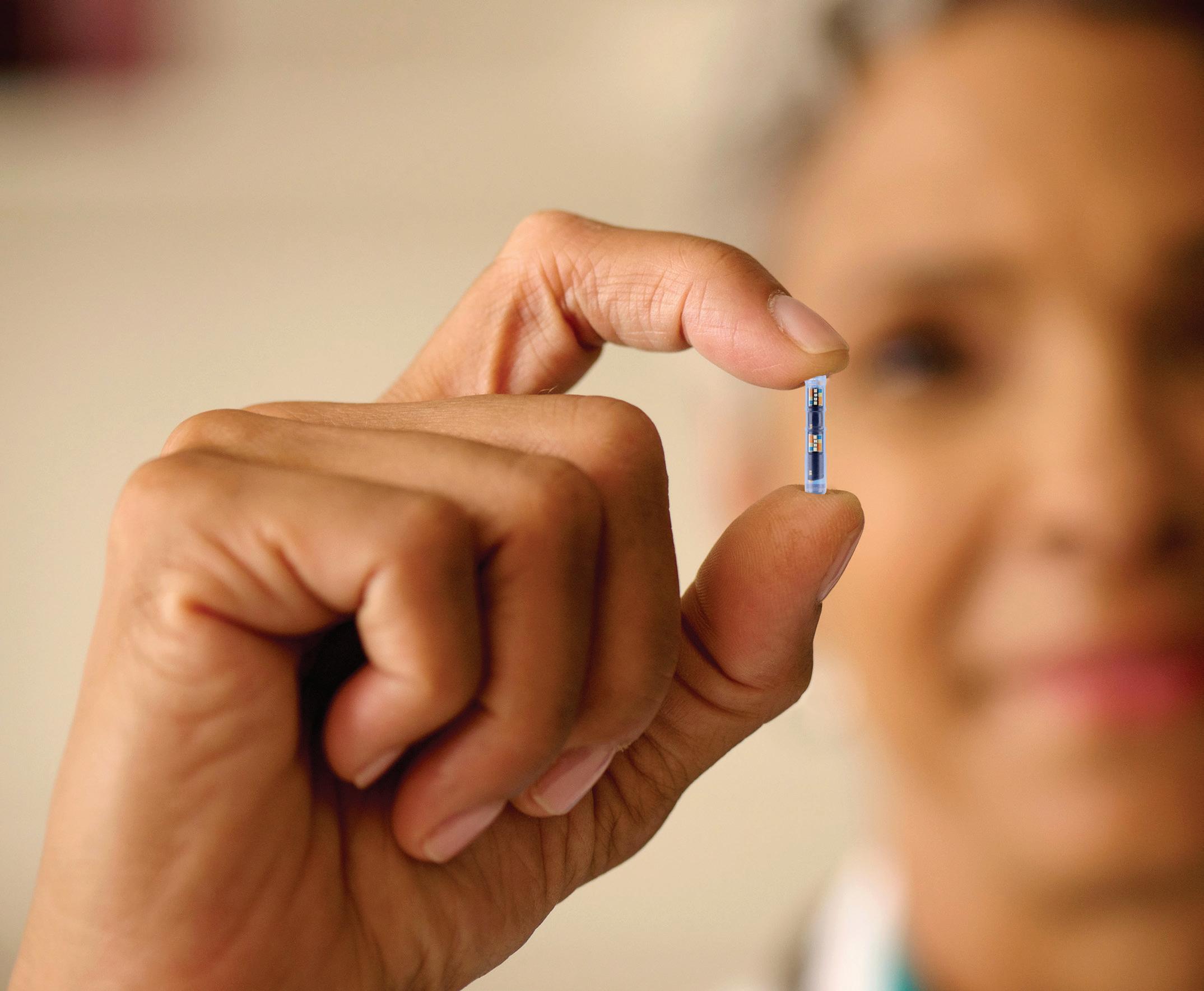
Senseonics VP of Product Development Hari Sree explains the tech behind the Eversense 365 continuous glucose monitor and what’s next in the pipeline.


MiniMed Chief Product and Technology Officer Ali Dianaty explains how the former Medtronic Diabetes unit used patient feedback to develop its latest automated insulin delivery innovation.
CathWorks CEO Ramin Mousavi says his startup “came very close to not existing” before reworking its noninvasive CAD tech.
Tethered liquid perfluorocarbon could reduce infections and blood clots in devices made with PTFE, silicone and polyurethane.

By Alex Hao Lumafield
Device scan: Look inside an Ozempic drug-delivery pen with an industrial X-ray CT scanner
What’s beneath the surface of these GLP-1 autoinjectors that millions of people are using to manage diabetes and obesity?
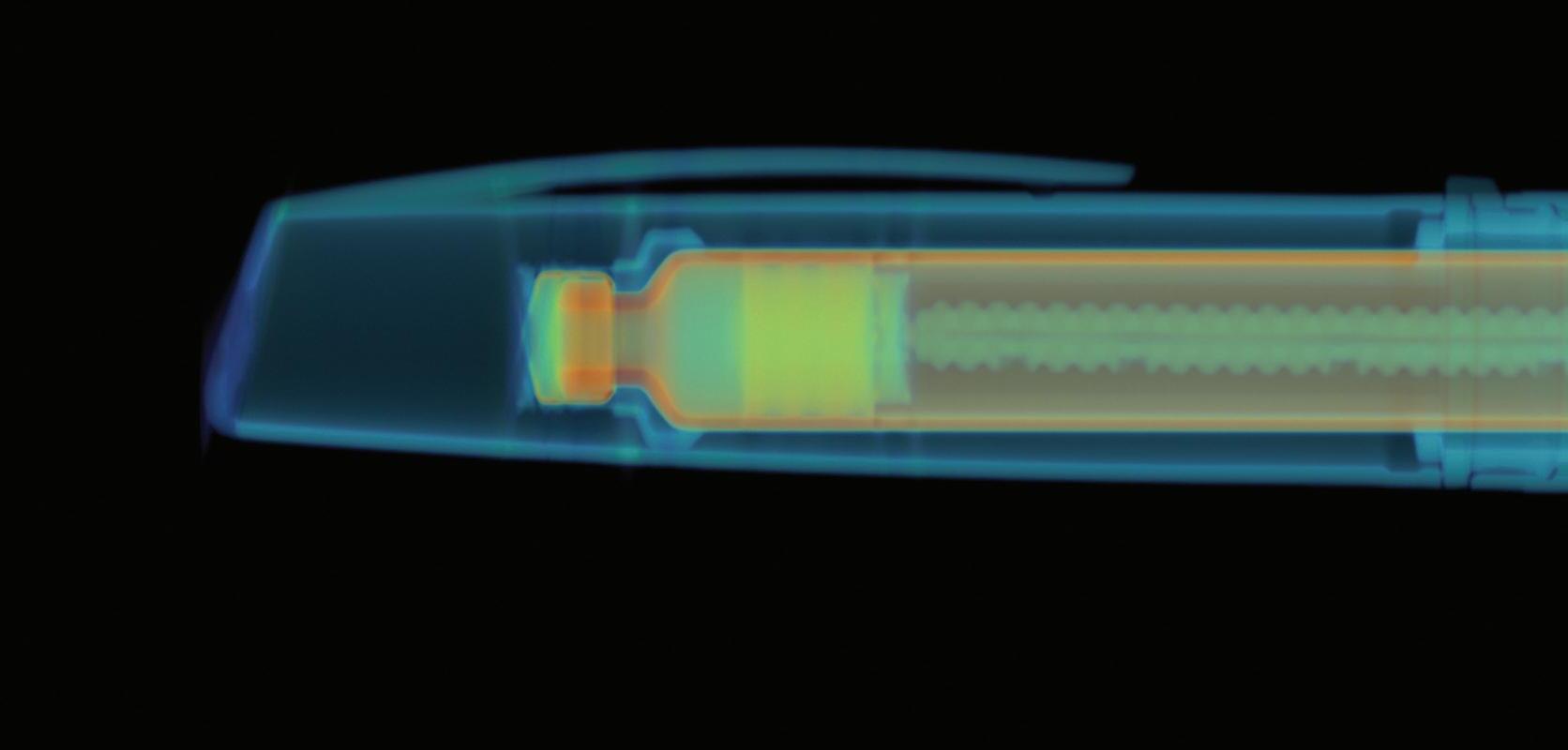
Ozempic and other glucagon-like peptide-1 (GLP-1) drugs have had a transformative effect on the health of millions of diabetes patients. Though pill versions of these drugs have started to hit the market, Ozempic in its original pen packaging remains the iconic form of this medication.
Tens of millions of these complex mechanical assemblies are massproduced annually, and it’s critical that they work correctly.
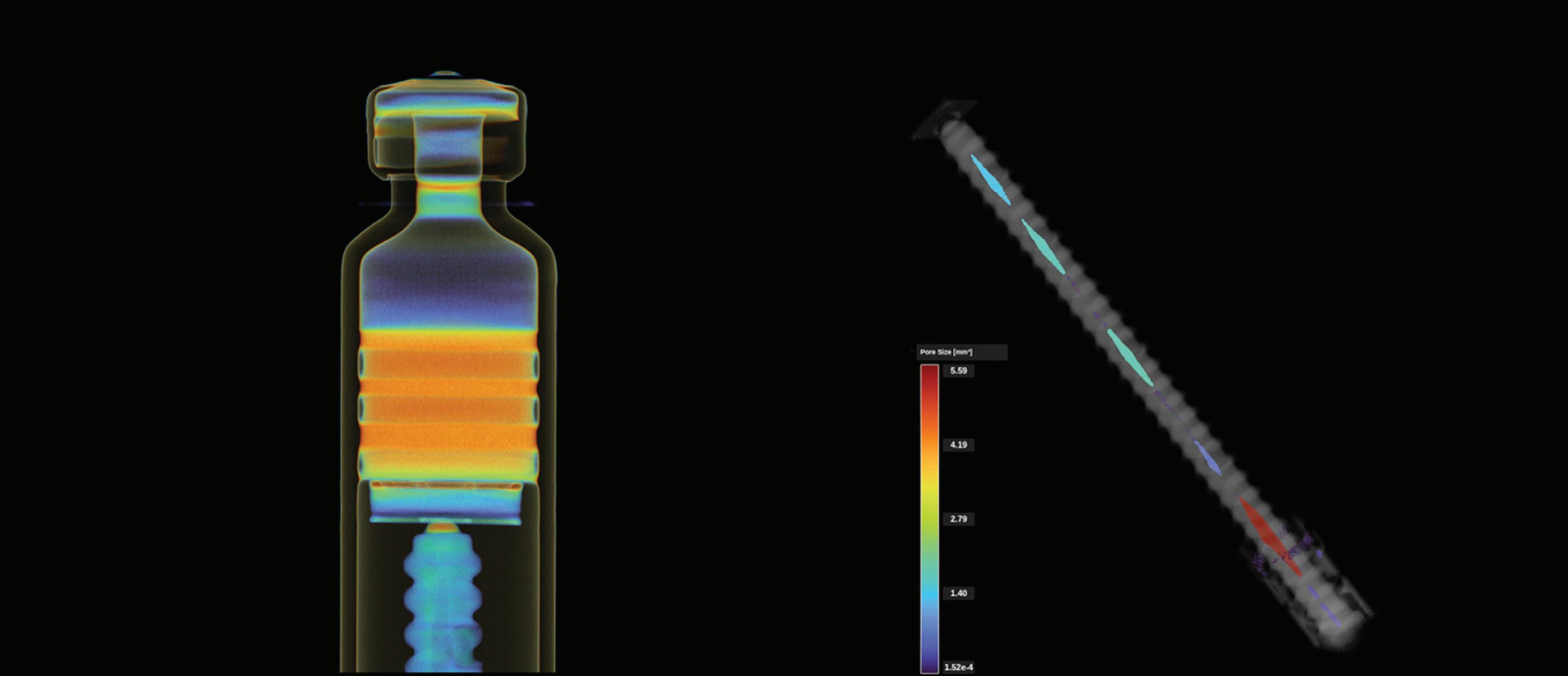
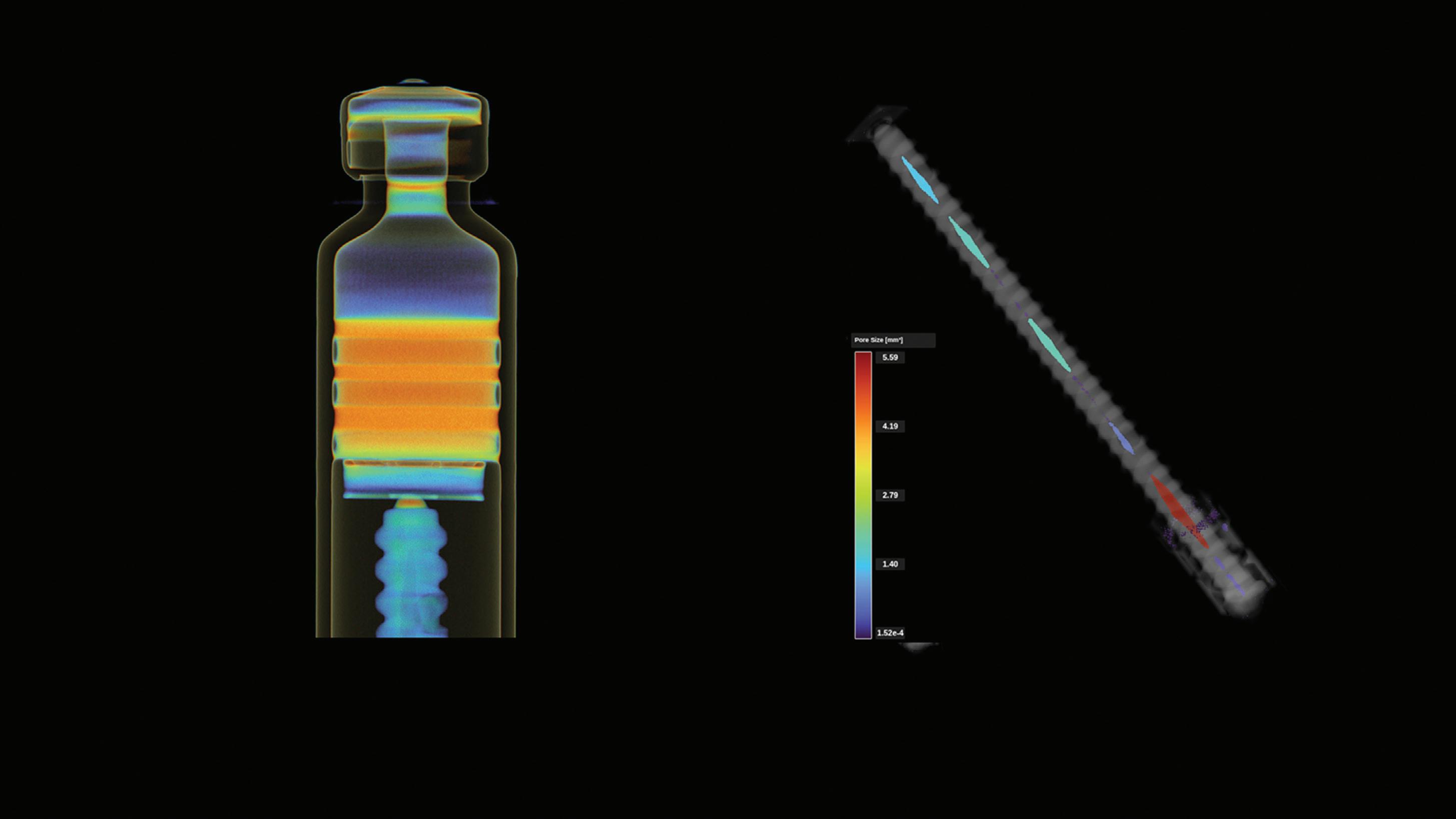
Using Lumafield’s industrial X-ray CT scanner and AI-powered analysis software, we can look beyond the plastic outer housing to appreciate the engineering behind this drug delivery device that so
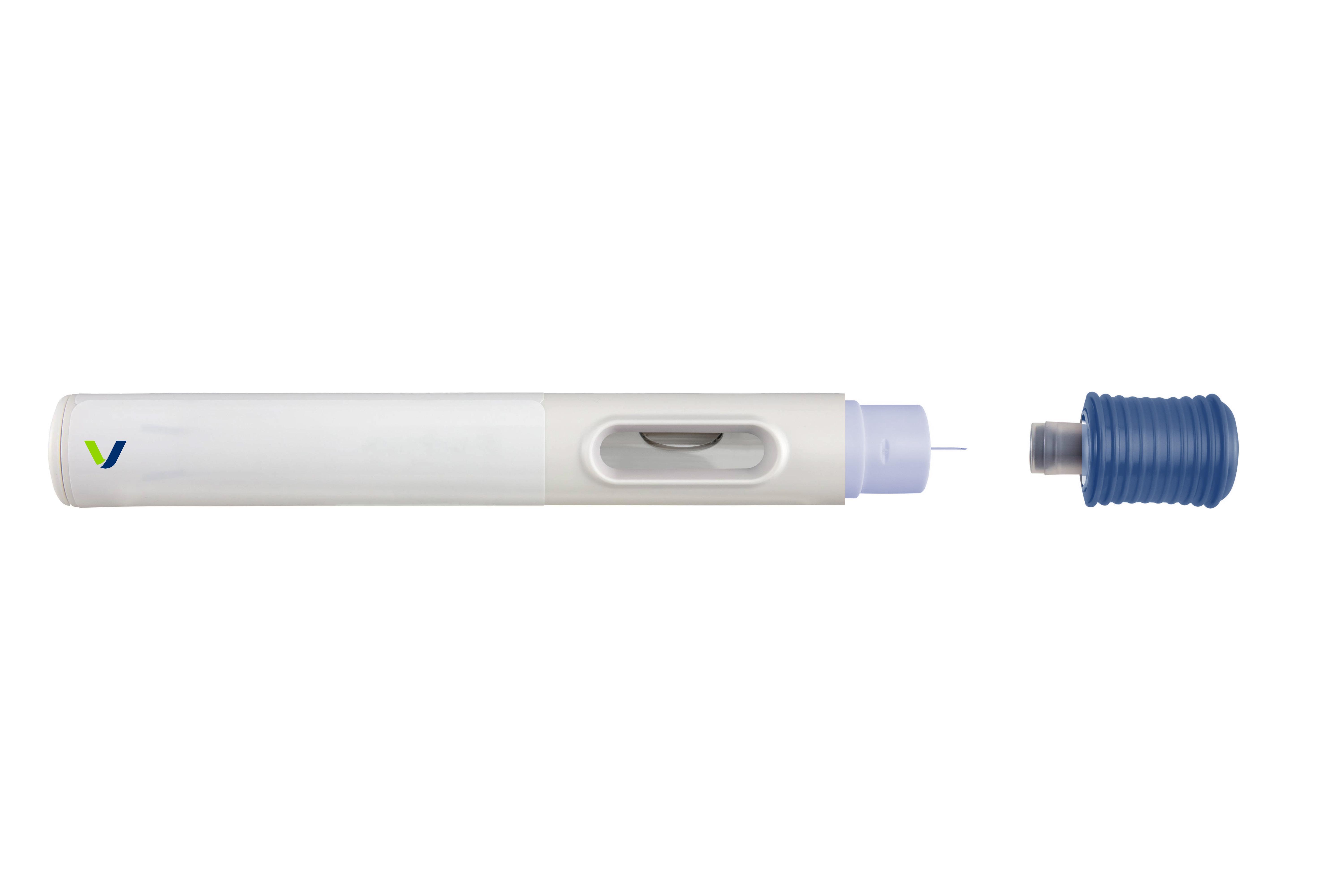
Starting at the left side of the image below, we see the glass cartridge that holds the drug itself. This pen has been used, so the stopper and plunger are at the very top of the lead screw, with just trace amounts of medication left inside.
Within the lead screw, we can identify a rather extensive amount of porosity, particularly towards the bottom where we have a large pore with a volume of 5.59 mm³. Fortunately, this porosity did not seem to compromise the functionality of the pen.
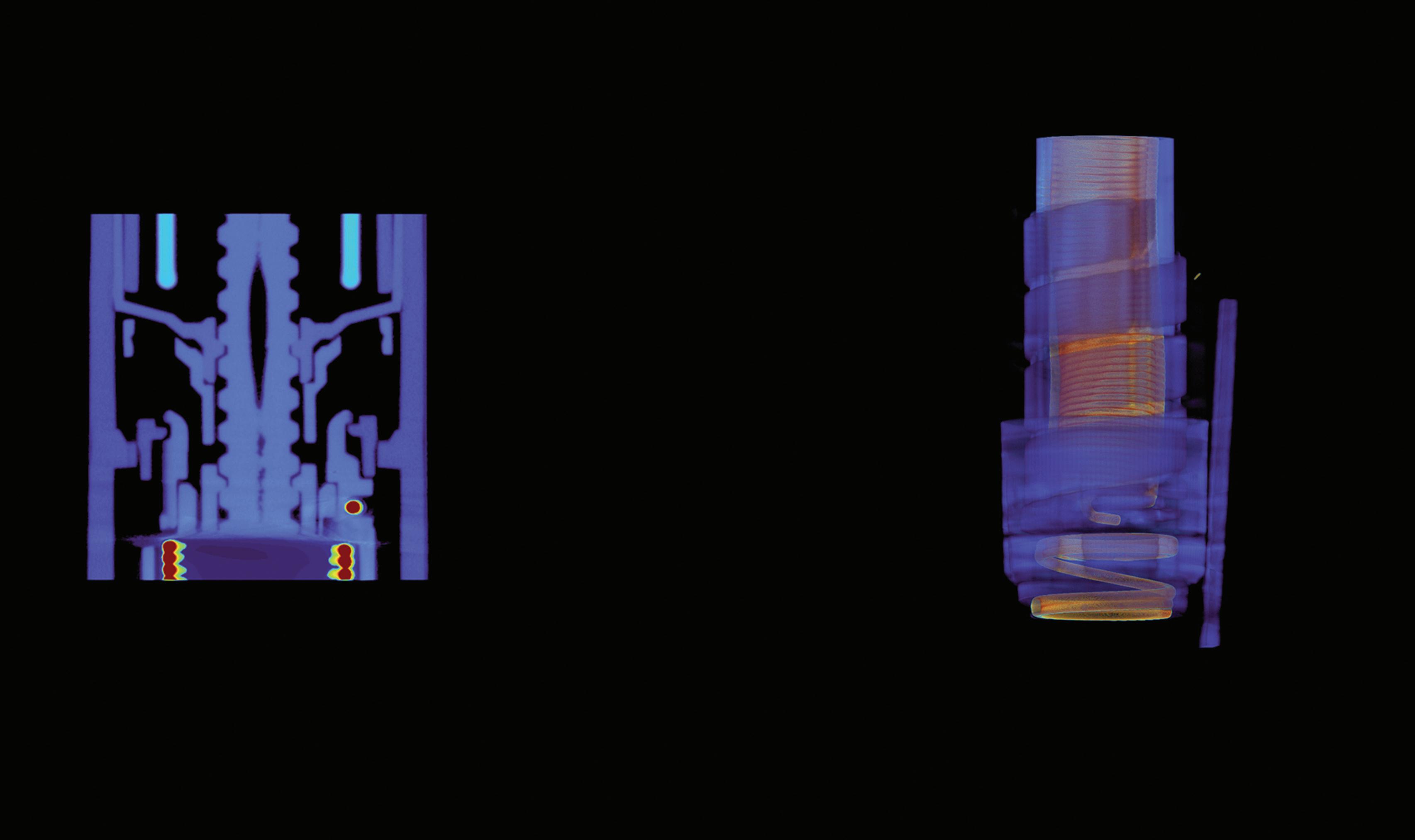
In the center of the pen we find the drug-dosing ratchet mechanism. The engagement of the molded teeth is clear in the cross-section image. Each “click,”
provides one dose increment, and the rotational dialing motion is converted to linear plunger displacement.
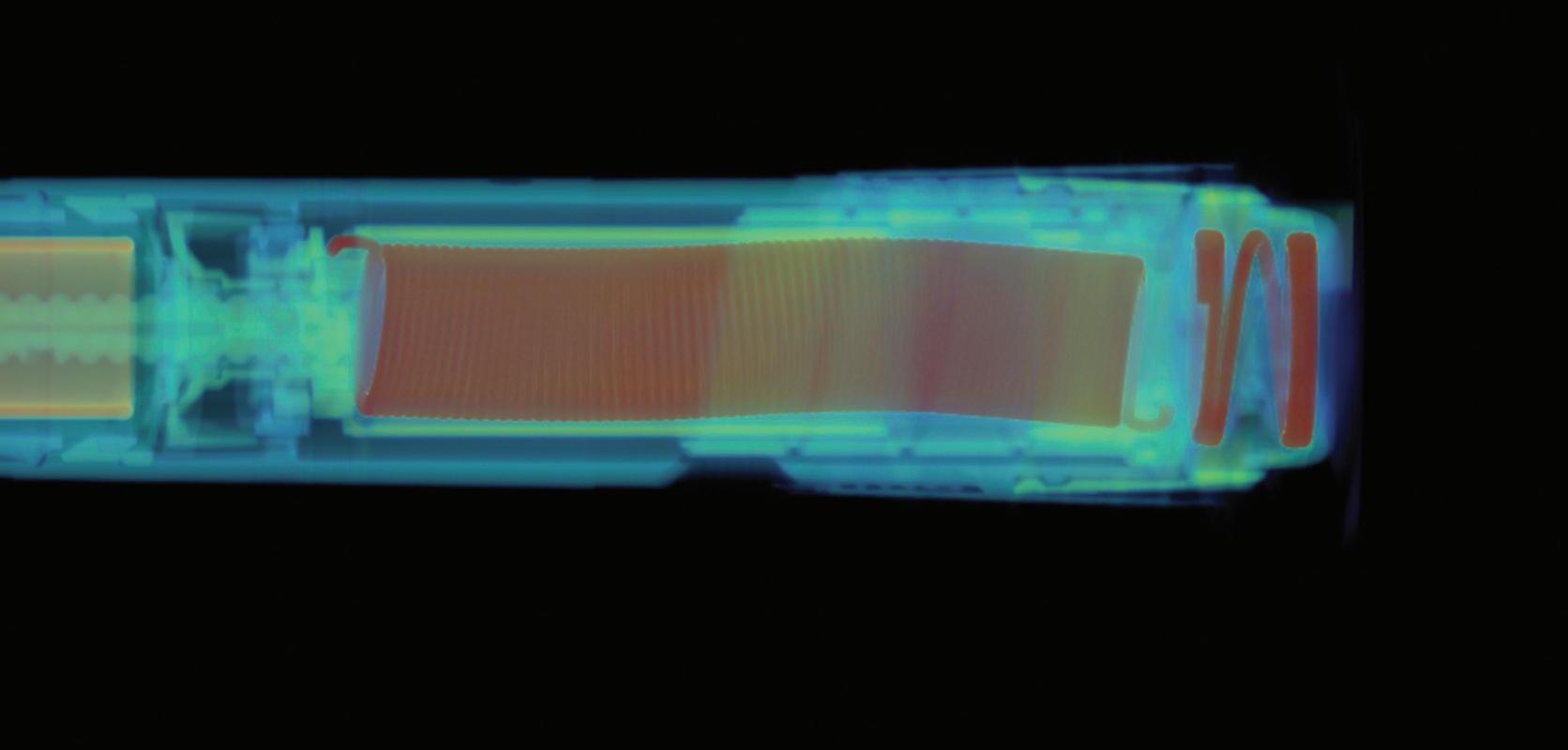
Finally, toward the other end of the pen we have the drive spring and dosecounter window. As the dose is dialed, the spring is compressed and readied to drive the plunger into the stopper to dispense the medication.
Alex Hao is head of product marketing at Lumafield, where she conducts studies and develops resources that help engineers adopt industrial X-ray CT. Hao’s career has spanned product and research roles in advanced technologies including cloud infrastructure, 3D sensing, and additive











AHow ViCentra built the smaller, more precise Kaleido insulin patch pump
We spoke to ViCentra’s new CEO as the device developer raised $98 million in its latest funding round.
utomated insulin delivery developer ViCentra aims to show why its option is unique in a space led by longtime fixtures.
The Dutch medtech company is rolling out its Kaleido automated insulin patch pump in Europe and plans to eventually bring it to the U.S.
Insulet’s Omnipod 5 tubeless patch pump is the leader in that form factor, while MiniMed, Tandem Diabetes Care and Beta Bionics make their own automated pump systems and have patch pump systems on the horizon, too.
Shortly after ViCentra closed an $85 million Series D funding round in
September 2025 (followed by a $13 million extension in January 2026), Medical Design & Outsourcing spoke with ViCentra CEO Tom Arnold about what makes Kaleido different as his company looks to bring it to the hundreds of millions of people with diabetes around the world.
“It’s not like any other pump,” Arnold said. “It’s the smallest, thinnest, lightest, most precise insulin patch pump in its class, and it’s built with premium materials that make it something that patients want to wear, not have to wear.”
Arnold joined ViCentra in February 2025. He has more than 20 years >>
MedTech Demands Smooth-Running Motors for Patient Comfort
MedTech equipment manufacturers demand that their motors not only run flawlessly, but also without being noticed. That’s why you’ll find Bodine Electric motors in CT scanners, mammography systems, blood collection centrifuges, and x-ray patient beds. If a patient’s peace of mind while using your equipment is important, then you need a Bodine.
Learn how a quiet-running Bodine motor made mammography a little less stressful.

of experience in medtech, including about six years in diabetes at Medtronic, where he played a pivotal role in launching the world’s first hybrid closed-loop insulin pump system.
The following has been lightly edited for space and clarity.
MDO: What makes Kaleido unique?
Arnold: “There’s a number of things. The first one is our pumping mechanism. If you look at most of the insulin pumps in this space, they’re syringe-driven pumps. Think of it like any needle or syringe that you would fill to move water around or whatever the case might be. That same concept is built into almost every insulin pump that’s out there. That has two problems. One, syringes aren’t small. They take up a decent amount of space. Two, they have a bit of what’s called a stick-slip functionality to them. Their level of precision in terms of dosing can differ a little bit.
“We’ve designed more of a micro-pumping chamber that utilizes valves. It allows us to be incredibly small — and we can probably get even smaller in our second- and third-generation pumps — but it also allows us to pump at incredible precision, as small as 0.5 microliter doses. It’s that pumping mechanism that makes this a special product.
“There’s other companies talking about blockage detection as well. Right now in the marketplace we have a really unique blockage detection system, which is typically three to four times faster than leading pumps. We haven’t tested it against all of them, but that is a component of this system as well.”
The Kaleido insulin patch pump comes in 10 colors and is controlled with a smartphone app. Image courtesy of ViCentra
And this is a particularly compact system, is that correct?
Arnold: “The Kaleido 2 product weighs 19 g. For comparison, the Medtronic MiniMed 780G — a wonderful device — uses a 24 g AA battery. Our device weighs less than the battery powering the market leader, and it’s 30% smaller than Omnipod 5 and and smaller than the Tandem Mobi and smaller than every other product that has come to market or is about to come to market in quite some time. That matters to patients.
“It’s also the lightest product and has the smallest profile, meaning it’s the thinnest product. When you have to choose to wear something 24/7, size and weight make a big difference, and then look and feel. This looks like a lifestyle product, like a technology product. It does not look like a medical device. For patients that have a chronic condition, a device they actually want to wear versus one that reminds them of their chronic condition is a big deal.
“Finally, I’d be remiss to not talk about the clinical elements. This is the most precise insulin pump on the market and in conjunction with the Diabeloop algorithm, it’s going to deliver really strong clinical outcomes. Then we will have the most wear flexibility of any product on the market. When you put all that together, it will have a very compelling value proposition in the U.S.”

“Patients receive a starter kit that comes with two pumps. These are durable pumps that last four years. Right out of the gate, we have a durable disposable model, which in Europe is very well received because from a sustainability perspective you’re throwing away much less product over time. That also allows you to get a much lower cost-of-goods-sold at scale, which from a business perspective is a big deal for us.
“You get two pumps and get to choose the colors. We have 10 colors today. Our next-generation product will have a few less, but they’re absolutely beautiful colors coming. It then comes with insulin cartridges and infusion sets, and you can choose your length of infusion set. They currently come in two lengths: 2 in.
which allows you to wear the pump pretty much anywhere on the body, and 12 in., which we’ve found can be used a couple of ways. Men often use the infusion on the abdomen and keep the pump in their pants pocket. For women, because the pump is so lightweight — about 20 g — they’ll infuse in the abdomen and stick the pump in their bra without noticing it.
“It is controlled by a handset utilizing the DBLG1 algorithm from Diabeloop, along with the G6 sensor from Dexcom. We just announced CE mark for the next generation of that system. This fall we will pilot the DBLG2 algorithm. This is smartphonecontrolled, so it’s now an app that patients can use on their phones, which is a very big deal in this space. And then it will be integrated with the Dexcom G7 sensor. We feel really good that come spring 2026 we’re going to have one of the most competitive systems in the marketplace in Europe.”
What were the biggest challenges developing this system?
Arnold: “It’s not always appreciated how complex insulin pumps are. You’re designing something that delivers a life-critical drug to be used by normal people in almost any environment you can imagine. When we first got the CE mark at the end of 2015, we identified significant learnings about the technology in the years that followed. The biggest challenge we’ve had is manufacturing, largely manufacturing of the disposables. We acquired technology from a company early on and needed to make quite a few changes to the disposables to improve manufacturability. We ended up taking it in-house to make those changes. Now we’ve optimized that design, optimized the engineering processes and the manufacturing processes so much that we’re prepared to very soon transfer those lines to a contract manufacturing organization to really scale our manufacturing.”


this device take on type 2 diabetes in the
Endogenex designed its minimally invasive ReCET catheter with a simple feature for speed and safety.
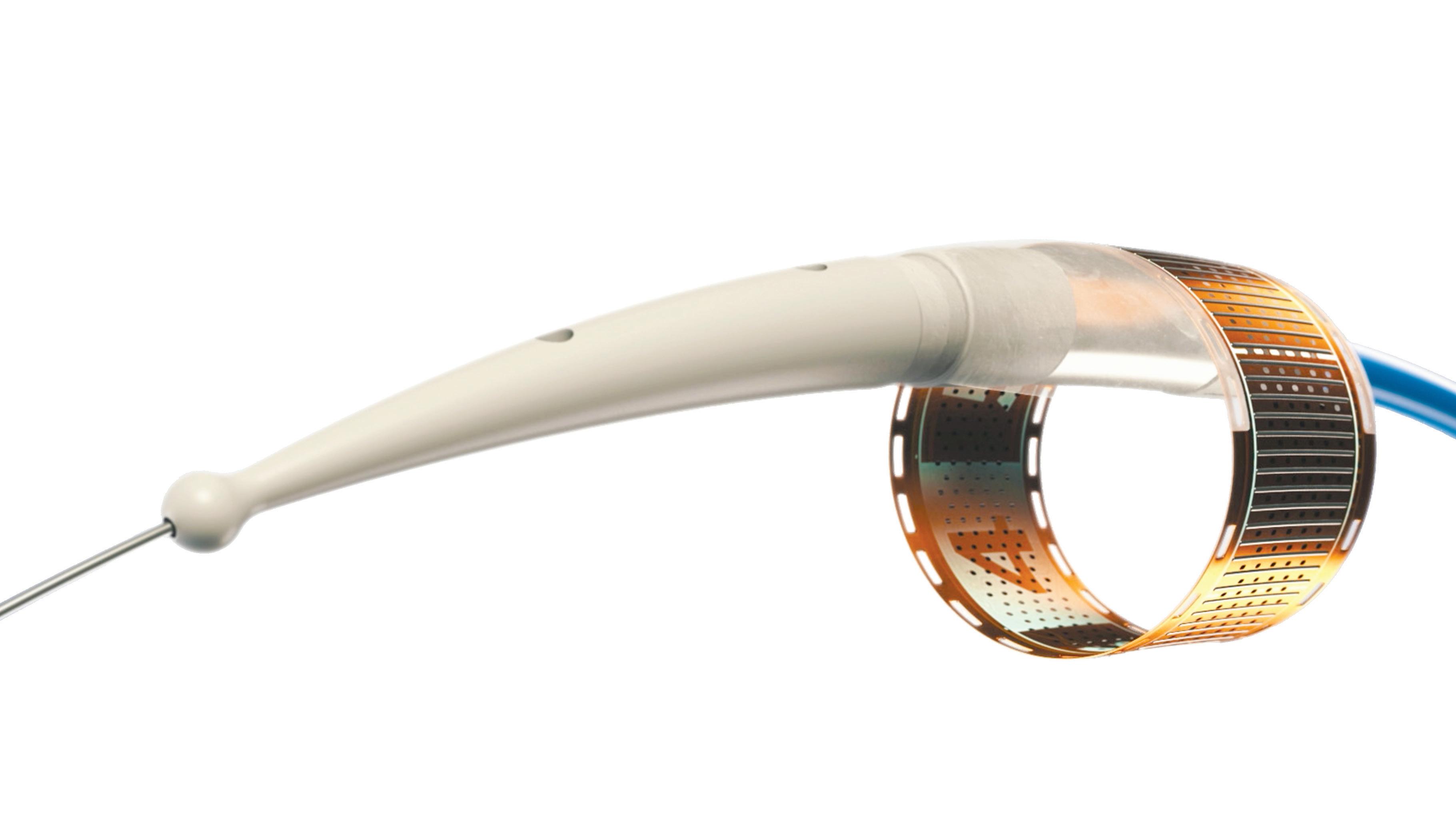

Procedures in the gut are showing promise for treating type 2 diabetes patients, but not without a fight from the duodenum.
That’s where Minneapolis-based Endogenex’s investigational ReCET (Re-Cellularization via Electroporation Therapy) system delivers nonthermal pulsed electric field (PEF) energy to mucosal and submucosal tissue to initiate cell regeneration.
Overcoming that obstinate organ was an early obstacle for the startup, Endogenex CEO Stacey Pugh said in a Medical Design & Outsourcing interview.
“One of the biggest challenges we saw in our feasibility trials was the duodenum is an organ that’s designed to kick you out, and you don’t make it happy when you’re delivering highvoltage electrical pulses over and over again through it,” she said.
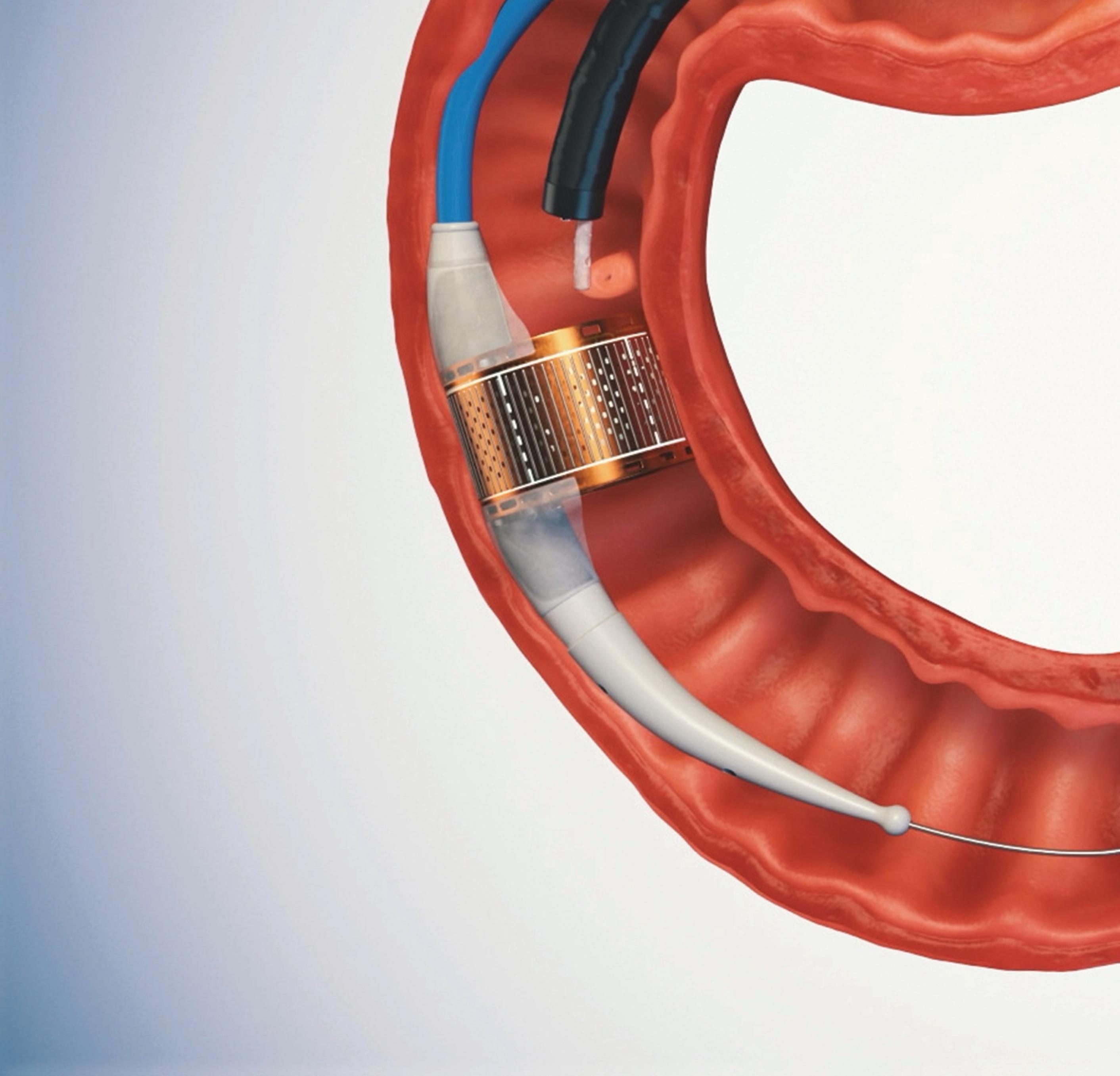
The minimally invasive catheter system has a metallic canister that deploys a flexible circuit against the
duodenum’s thin wall and delivers nanosecond energy pulses (which Pugh notes is not ablative or denervative) before returning into the canister.
“The goal is to create as much optimum wall opposition to that circuit and in adherence to that circuit while you’re delivering these nanosecond pulses,” Pugh said. “It takes us about a minute worth of total energy activation broken into two segments when we’re delivering these pulses, and we really want to hold that tight, consistent and still.”
But the circuit’s flexibility and a lack of clear visibility was causing a problem during the design stage, Pugh said. “When we would bring our circuit back in, we were constantly looking to make sure we weren’t catching tissue.”
Visibility was more of a challenge on the distal end than the proximal end. The team’s solution was to add triangular polyurethane wings that
This illustration of the Endogenex ReCET catheter shows the polyurethane wings on each side of the expandable electronic circuit. Illustration courtesy of Endogenex
“THOSE WINGS, WHEN THEY’RE OUT, KEEP TISSUE AWAY AND IT MAKES THE ACT OF OPENING AND CLOSING AND MOVING SO MUCH MORE SIMPLE.”







trays for high-volume
CGM sensors and autoinjectors
Smooth integration of custom thermoformed work in process (WIP) trays with automation systems requires supply chain collaboration.
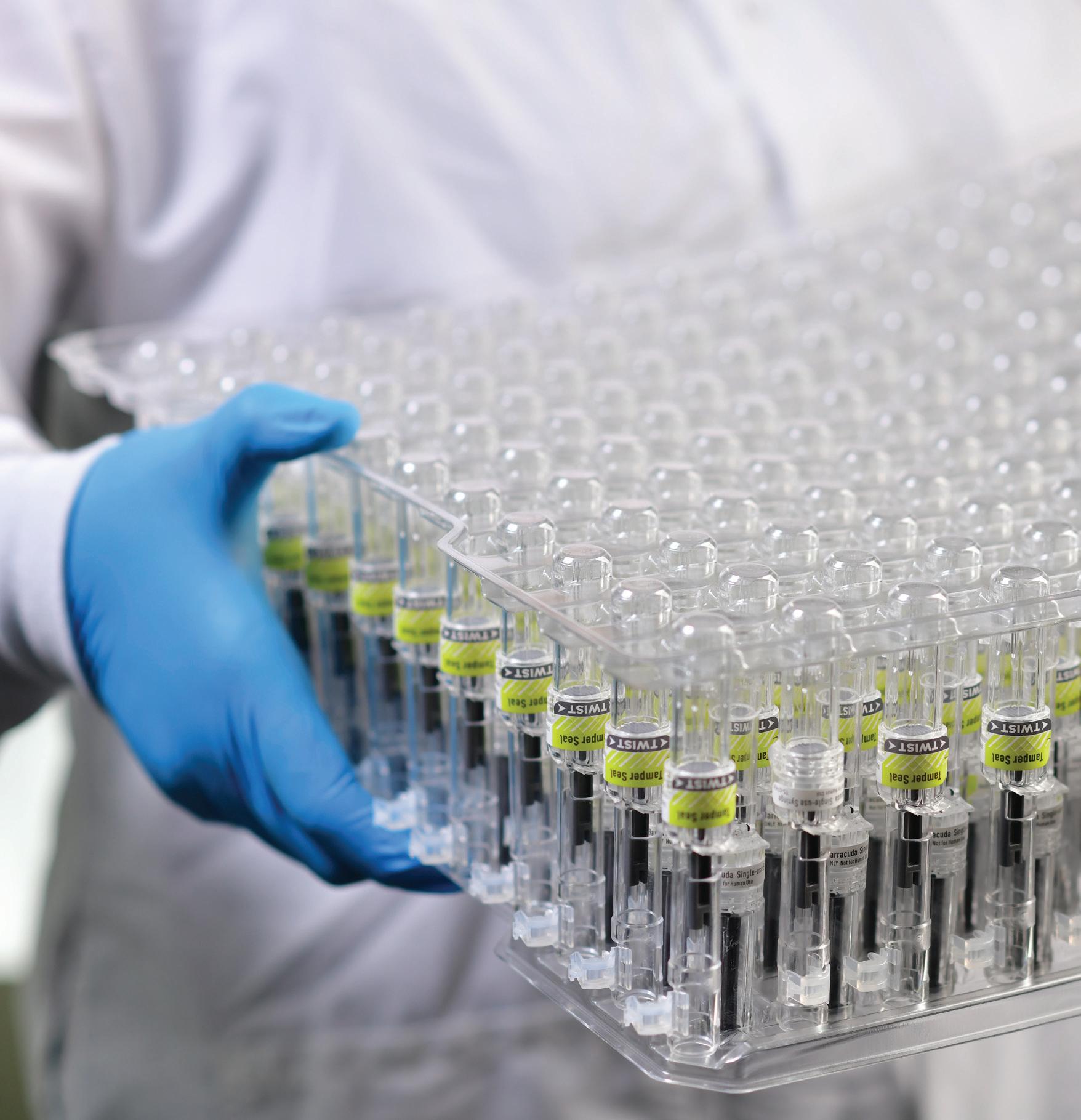

Thermoformed automation trays — also known as work in process (WIP) trays — provide healthcare and pharmaceutical companies with a critical tool during the manufacturing and distribution cycle. These trays are designed to integrate seamlessly into the manufacturer’s automated equipment while protecting sensitive and high-value components. Several considerations inform the custom design of thermoformed automation trays to ensure optimization.
Successful design of thermoformed WIP trays that integrate with an automated manufacturing system begins with orientation and configuration of the product in the tray. While products are oriented either horizontally or vertically, configuration is more complex. Rotating the product in X, Y, or Z direction may affect tray capacity, material options, or product protection features. These changes may also have implications on downstream processes like stacking and cartoning. All potential benefits and disadvantages must be considered.
Automation tray sizing is determined by several factors, such as the number of parts per tray and the pitch between parts. The automated equipment may also dictate an acceptable length and width for trays. Additionally, it’s important to match the pitch of the end-of-arm tooling, such as suction cups or grippers, and maintain dimensional consistency. Pitch width will change if manual finger picks are needed at any point for loading or unloading the trays. WIP tray sizing also depends on the equipment’s maximum capacity to pick components. For example, if a robot picks 10 components simultaneously, the tray would not be designed in rows of 24, but in rows of a multiple of 10.
Properly designed WIP trays provide the required protection for delicate healthcare product components, including clearance from other components, other sections of the tray, and other trays. A tray can be designed with a contour or snap fit cavity. Both feature cavities shaped like the product
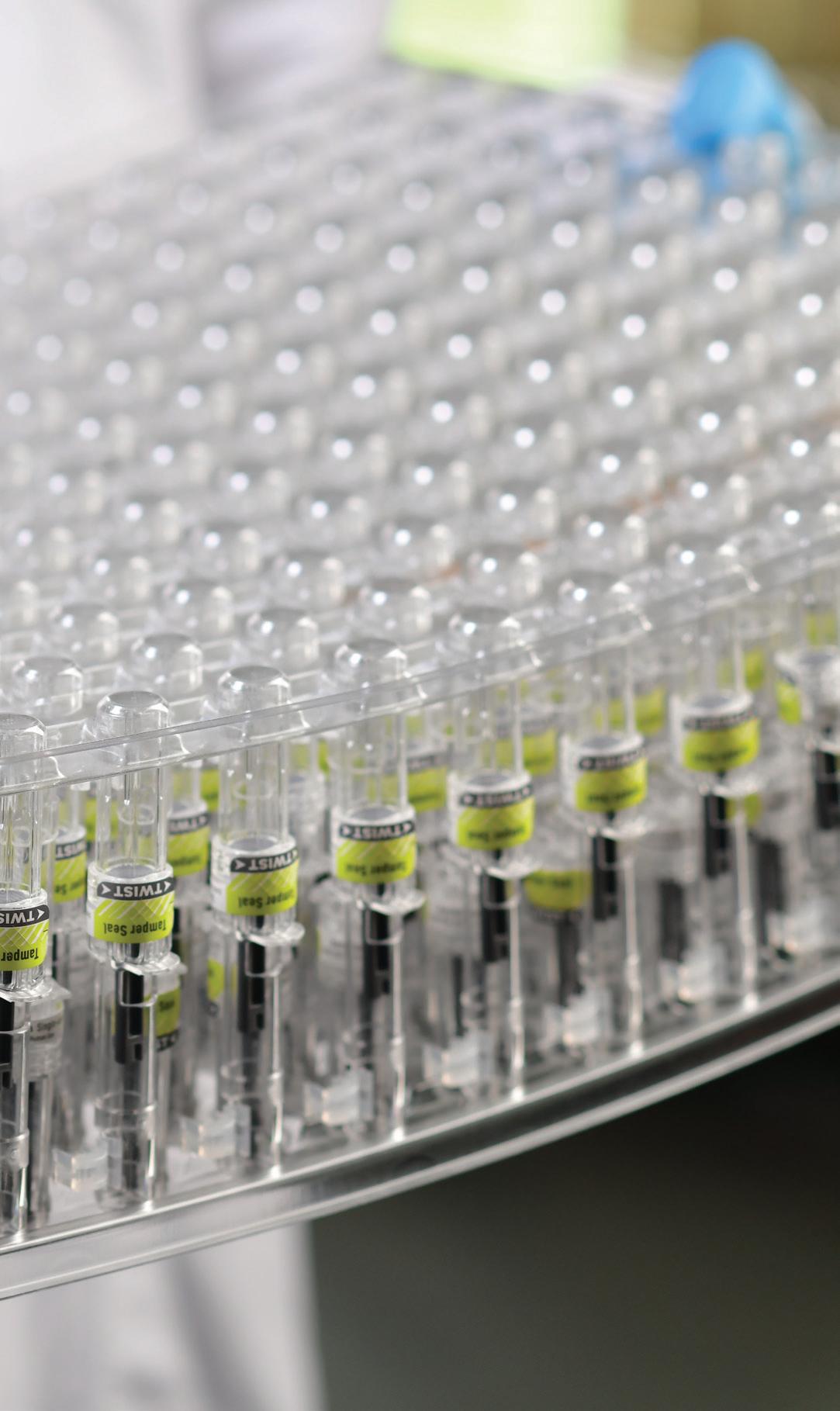
This vertical automation tray firmly holds syringes and stacks with a 180° rotation for increased packing density.
Photo courtesy of Plastic Ingenuity
or components, although snap fit trays include undercuts that firmly hold the product in place. When needed, fitting components to the mold side of the part removes varying material thickness across the tray and provides a more consistent fit.
Maintaining a consistent thermoforming process is also important to the cavity fit. Critical features of the tray will require quality checks throughout the supplier’s production run to ensure the tray will function properly within the automated manufacturing system.
The total stack height of multiple loaded trays is usually determined by carton fit, automation constraints, or weight limits. For instance, automation
“SUCCESSFUL DESIGN OF THERMOFORMED WIP TRAYS THAT INTEGRATE WITH AN AUTOMATED MANUFACTURING SYSTEM BEGINS WITH ORIENTATION AND CONFIGURATION OF THE PRODUCT IN THE TRAY.”
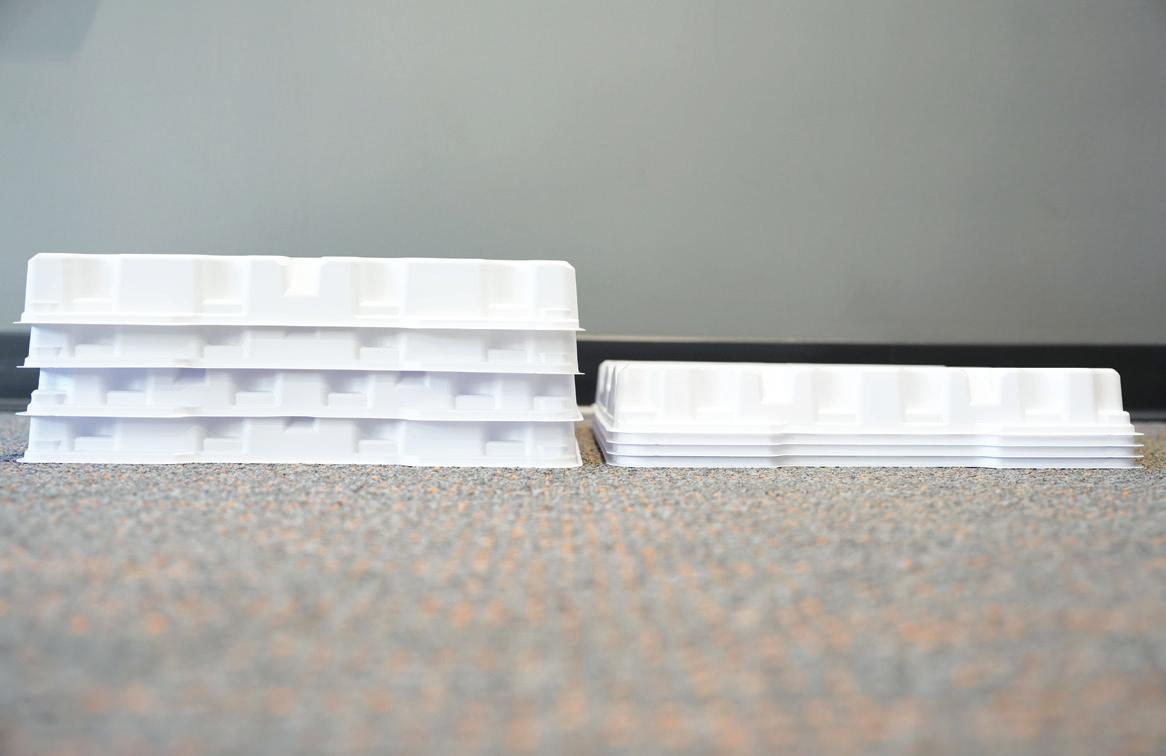
equipment determines whether loaded trays can be rotated 180° for stacking or if trays must be stacked without rotation. Aggressive undercuts are required for trays unable to rotate for stacking, which also increases tool complexity. Snap fit cavity trays generally stack higher due to the snap features. By contrast, contour fit cavity trays typically decrease the stack height for greater packing density and reduced shipping rates. But they also require an empty tray to act as a lid or a secondary flat lid to be created.
Automation trays are repeatedly stacked and unstacked throughout the manufacturing, packing, and shipping stages. Designing trays with a dissimilar corner helps operators easily verify tray orientation within the stack is correct. Another way to optimize by design is to downgauge materials where possible and improve the sustainability of automation trays. Thorough prototype testing will be necessary to confirm the final tray is able to withstand the different forces encountered during manufacturing, packaging and transport.
Some healthcare and pharmaceutical
Note the difference in packing density of trays that incorporate large undercuts compared to a tray design that rotates for stacking.
Photo courtesy of Plastic Ingenuity
products might be manufactured across multiple facilities. In the case of decentralization, it’s essential for thermoform design engineers to understand the different processes required to build the product as well as specifications of the automated system. Depending on the complexity, certain products or production methods may require multiple automation trays.
For smooth integration of custom WIP trays with automation systems, collaboration is required at all stages of the supply chain, including the device manufacturer, automation fabricator, and thermoform supplier. An optimized automation process supports operational efficiencies and improves the customer experience, ultimately supporting long-term business partnerships.
Roger Fager is a design engineer who leads the design and prototype team at Plastic Ingenuity, where he oversees the development of custom thermoformed package designs for the food and medical markets. He works with internal production staff to overcome challenges of the thermoform process and exceed customer expectations.

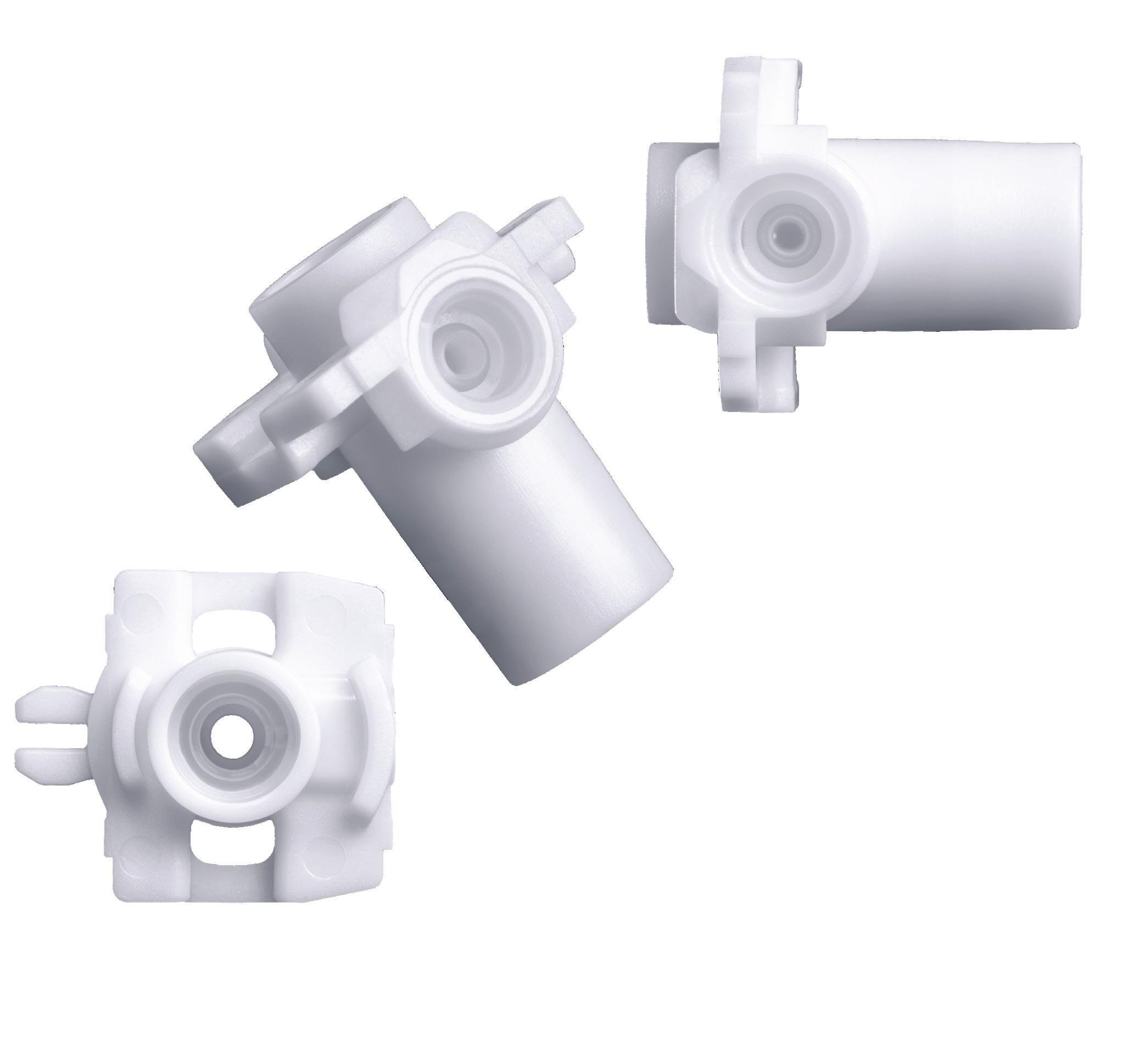
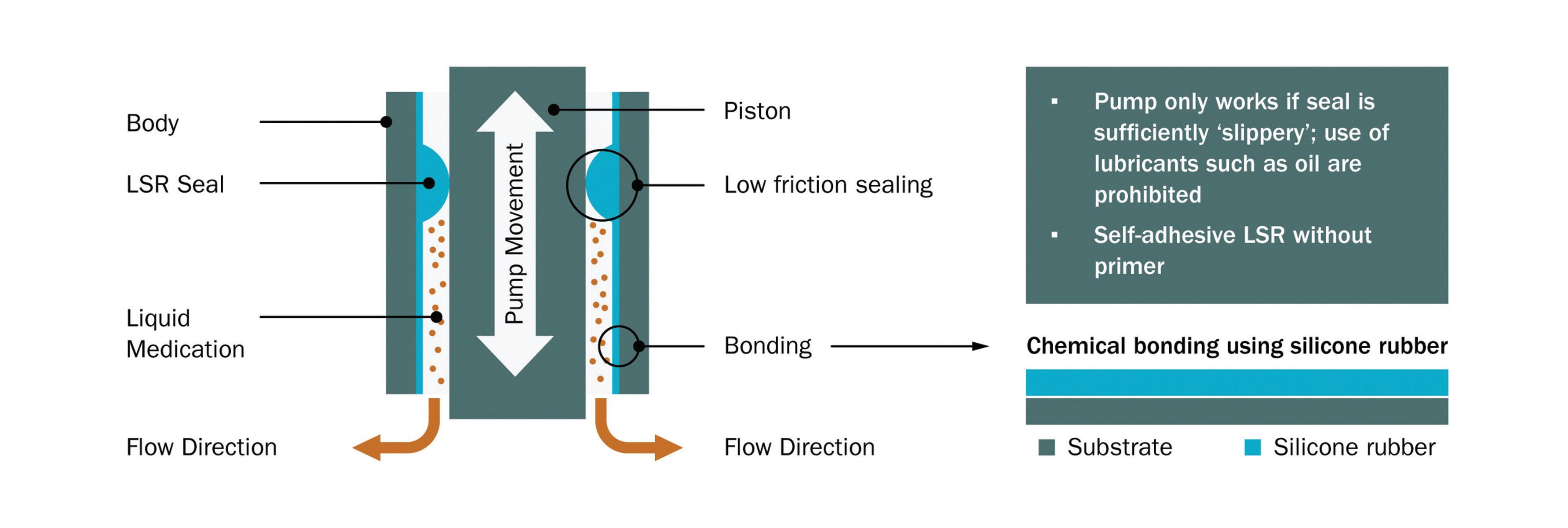
IThis low-friction micropump is designed with a stiff thermoplastic polybutylene terephthalate (PBT) housing bonded to a complex liquid silicone rubber (LSR) seal.
Inside the challenging development of a low-friction micropump
This drug delivery wearable’s micropump needed an engineered solution for both adhesion and slip.
want to take you straight to the heart of a project that challenged not only my team’s technical skills, but the fundamentals of medical device engineering. It’s a classic example of requirements in conflict.
Working with our customer, we developed a microinjection pump no bigger than your fingernail, entirely lubricant-free and with dead-on dosing accuracy. The brief we received asked us to deliver a 15 mm pump for a wearable device capable of dosing between 2 and 10 microliters per shot. It had to be single use for hygiene, cost-effective for the market and — most critically — not use lubricants to avoid contaminating medication. This pump still needed a perfectly sealed interface and ultra-low friction so a very compact drive mechanism could reliably push and pull the plunger.
If you’re in device design, you know the contradiction: You want your seal to stick for containment but move freely to minimize friction. That meant finding a solution with the opposing traits of adhesion and slip within one engineered pairing.
A real-world design for manufacturing lesson
Our first reality check came when we examined the initial customer design from a multicomponent molding perspective. The part looked functional on paper, but not for manufacturing. The shut-off areas (essential in twocomponent molding to control material flow) weren’t designed for the behavior of liquid silicone rubber. LSR, particularly in high-cavity micro applications, will flash if the tool design doesn’t allow for crisp, steel-tosubstrate shut-off.
We collaborated intensively with the customer and reengineered the tool interfaces. This included revising gating strategy and overflow design so the fill could be precisely controlled, and so weld lines would not fall at critical sealing areas. Small tweaks here meant massive impacts at scale.
Engineered materials for both bond and release
No standard material solved both our sealing and sliding needs. Initial runs with off-the-shelf silicone generated
two classic failures. We either had stiction so high it demanded an overpowered, oversized drive mechanism, or seals so weak they threatened system reliability.
This forced us into material exploration with a trusted supplier, seeking a friction-modified, self-adhesive LSR. The chemistry had to create a permanent bond on one side while ensuring the opposite face remained slick. We adopted an LSR material with biocompatibility and performance that checked both the “hold on” and “let go” requirements in one molding step.
This shrinks
The project’s greatest technical test came not from design or material selection but from the physics of postmolding shrinkage. Our pump included a stiff thermoplastic polybutylene terephthalate (PBT) housing bonded
to a complex LSR seal. PBT shrinks less than 1%, while LSR can shrink up to 3%.
We could not rely on simulations to overcome this challenge as even the best software gets lost with complex multicomponent geometries. CT scans revealed the seal had wandered, and with it all chances of passing leak and friction tests. We took CT scan data from the first molded parts, mapped the deformation and dialed corrections into the mold, not to get the perfect geometry, but to get the perfectly deformed geometry that would produce a balanced part.
If you need tight tolerances in a high-precision multi-material part, I recommend budgeting for at least one or two rounds of pre-distorting your tool based on real-world data. This dataled loop was the true enabler for our project, yielding micron-level accuracy in the final assembly. >>

BAYCABLE, with over 20 years of experience partnering with leading semiconductor equipment OEMs, collaborates closely with customers' engineering teams during product development to deliver custom, application-specific interconnect solutions that meet the semiconductor industry's strict copy exact standards and ensure repeatability, reliability, and performance in demanding environments —leveraging our expertise in designing and fabricating high-power, molded power distribution assemblies using BAYCABLE-manufactured cable, from 50 AWG to over an inch in diameter, with tailored material selection and configurations to address flex life, chemical resistance, temperature extremes, and complex integration of power, signal, fiber, tubes, and structural elements.
“WORKING



Why we didn’t solve all this with traditional assembly? In our scenario it was simply impossible. The seal geometry was too intricate for robotic placement at this scale, and the opportunity for cost reduction via part consolidation was too significant.
Integrating seal and housing in one shot delivered multiple advantages: yield improvement of about 15% over an assembly-based process, cost savings of roughly 20% per part, and quality and compliance gains because fewer steps mean fewer risks for contamination and bioburden.
For production, we scaled this design to a fourcavity tool generating four million to five million units annually. We relied on an in-mold transfer process to place the part from the thermoplastic side into the LSR portion of the tool for part handling.
Treat your material, tooling and component design as an inseparable set. In multicomponent micro-molding, the boundaries between these disciplines are gone. Always specify your materials with the process and tool in mind, and tune your tool based on final, in-use geometry, not just simulations.
True engineering happens at the intersection of analysis, adaptation and innovation. More than just molding a part, this project was about engineering a solution, collaborating at every turn and never accepting that impossible ought to be the last word.
Philipp Begert is the manufacturing technology director at Trelleborg Medical Solutions. With over 20 years of experience, he specializes in liquid silicone rubber (LSR) and multi-component injection molding leading global teams in process engineering, tooling design and new product development.

TFDA’s new guidance on consumer wearables makes the medtech market more complex
Success will depend on strategic clarity, not just engineering or regulatory expertise.
he FDA’s recent guidance on wearables has been widely described as a major shift. The changes are really more incremental.
What the FDA has done is clarify (rather than redraw) the boundary between general wellness products and regulated medical devices. Devices intended to diagnose, treat, cure, or manage disease remain fully regulated. Devices positioned purely for general wellness, such as those that track fitness and recovery and monitor lifestyle habits, continue to fall largely outside formal FDA oversight.
The decisive factor remains intended use and claims. A wearable can measure physiological signals like heart rate, oxygen saturation or even glucose, but it becomes a medical device the moment it claims to guide medical decisions. That distinction is not new, and the FDA’s guidance reinforces it rather than relaxing it.
Consumer wearables are becoming more sophisticated, but clinicians are still wary of using them to diagnose, treat, or manage conditions. By explicitly allowing more sensorbased wearables to qualify as general wellness products, the FDA has reduced regulatory ambiguity for consumer technology companies. This gives manufacturers greater confidence to launch devices that monitor increasingly sophisticated physiological data if they stop short of medical claims.
The result will almost certainly be more consumer wearables that look, feel, and sound medical without being regulated as such. Wearables will continue to push upward, offering richer data and health-adjacent insights framed around trends, awareness or lifestyle optimization.
However, this creates a tension around value. If a device cannot >>











claim medical accuracy or clinical utility, what are consumers actually paying for? For many users, the answer may be convenience, design, brand, or perceived insight rather than proven clinical benefit.
For clinicians, the situation is more complicated. In theory, data from consumer wearables could provide useful context or early signals. In practice, most clinicians remain cautious. Wellness devices are typically not validated to medical standards, not tested across complex patient populations, and not designed for use in challenging realworld clinical conditions.
If a patient arrives with data from a consumer wearable, clinicians frequently must repeat the measurement using a regulated medical device before acting on it. That limits the practical utility of wellness data in clinical workflows.
Accuracy and reliability are also concerns. Consumer devices often perform well on healthy users under ideal conditions, but struggle with motion, low perfusion, tremors, poor circulation, or incorrect placement, precisely the scenarios common in older or sicker patients.
As a result, most clinicians see wellness wearables as informational at best: something that may prompt a conversation or further testing, but rarely as a basis for diagnosis or treatment.
For medical device companies, the FDA guidance does not reduce regulatory burden, but it does increase competitive pressure.
Regulated devices must now compete in a market crowded with cheaper, consumer-grade alternatives that appear similar on the surface. This makes differentiation harder and puts pressure on pricing, positioning and value propositions.
To stand out, medical device companies must emphasize what consumer wearables cannot easily replicate: proven accuracy across diverse and high-risk populations; performance under non-ideal conditions; clinical validation and regulatory approval; and integration into clinical workflows and decision-making.
At the same time, many established medtech companies are responding by expanding their portfolios across the wellness–medical continuum, rather than remaining anchored at the fully regulated end of the spectrum. Abbott provides a clear example, with a glucose monitoring portfolio that now includes:
• Lingo, positioned as a wellness glucose monitor,
• Libre Rio, targeted at people with Type 2 diabetes,
• and FreeStyle Libre, a fully medicalgrade continuous glucose monitor (CGM) used in clinical care.
Rather than treating wellness and medical markets as mutually exclusive, they have embraced a segmented approach, offering solutions at multiple levels of regulatory oversight and clinical involvement. This allows them to engage consumers earlier, build familiarity and trust outside traditional clinical settings, and create on-ramps that may later lead to more formal medical care.
Importantly, this strategy is not about diluting medical rigor. Abbott continues to invest heavily in regulated devices, clinical evidence, and provider relationships. The expansion into wellness reflects a recognition that health engagement increasingly begins outside the healthcare system, and that ignoring that reality risks ceding ground to consumer technology companies.
Dexcom and MiniMed are pursuing similar trajectories. Both companies have historically operated squarely within regulated, clinician-driven markets, but are experimenting with ways to reach broader populations, simplify access, and lower friction, whether through over-thecounter pathways, consumer-friendly design, or partnerships that blur the line between clinical and lifestyle use.
In summary
Ultimately, the FDA’s guidance makes the market more complex instead of
making life easier for medical device companies. Success will depend not just on engineering or regulatory expertise, but on strategic clarity: knowing which problems are best solved with wellness tools, which require medical-grade solutions, and how to connect the two without undermining trust.
The risk, of course, is confusion. When a company offers both wellness and medical solutions, it must be exceptionally clear about intended use, limitations, and appropriate contexts. Regulators, clinicians, and patients alike will scrutinize whether these distinctions are maintained in practice, not just in labeling. It is challenging for a consumer to wade through this morass of information.
Perhaps a parallel can be drawn with the pharmaceutical industry. Drugs are designed to treat, prevent, or cure diseases and are regulated by the FDA. Supplements are intended
to supplement the diet and support overall health, not treat specific ailments and hence are treated basically as food and are not regulated in the same fashion as drugs.
Perhaps consumer wearables are the supplements of the medical device world. In that case, the term “caveat emptor” (“let the buyer beware”) is particularly relevant, meaning the buyer alone is responsible for checking the quality and suitability of goods before a purchase.
Bill Betten is director of solutions — medtech at S3 Connected Health, where he utilizes his decades of experience in the medical and life science industry to advance medical device and product development, with an emphasis on connected devices and digital health. Betten previously served in development and executive management roles at several medical device and Fortune 500 companies.

CDMO / CMO Services
Minimally Invasive Device Solutions
Co-development Opportunities Access, Delivery, & Retrieval Systems
Wire & Catheter Based Devices
Contract Manufacturing
Vascular Access Devices
Guidewires, Therapeutic &
Braided & Coiled Catheter Shafts
Class 8 Clean Room


MIT researchers have developed a noninvasive method for measuring blood glucose levels, potentially offering an alternative to fingersticks.

any people with diabetes today use continuous glucose monitors (CGMs) to keep track of their glucose levels. Those devices have a small, minimally invasive interstitial needle inserted into the body when applied and don’t exceed a wear time of 15 days. Some people with diabetes still use the traditional fingerstick method, requiring them to draw blood from their fingers several times per day to check their glucose.
MIT researchers say they found a more comfortable, noninvasive alternative using Raman spectroscopy. This technique reveals the chemical composition of tissues by shining near-infrared or visible light. The team centered its shoebox-sized device around this method to measure blood glucose levels without any needles.
The researchers tested their method on a healthy volunteer and
found the measurements were similar to those obtained by a commercial CGM. While the device evaluated in this study remains too large to work as a wearable sensor, the researchers say they developed a wearable version now under evaluation in a small clinical study.
“For a long time, the fingerstick has been the standard method for measuring blood sugar, but nobody wants to prick their finger every day, multiple times a day. Naturally, many diabetic patients are under-testing their blood glucose levels, which can cause serious complications,” said Jeon Woong Kang, an MIT research scientist and the senior author of the study. “If we can make a noninvasive glucose monitor with high accuracy, then almost everyone with diabetes will benefit from this new technology.”
MIT postdoc Arianna Bresci served as lead author of the study,
which appeared in the journal Analytical Chemistry . Other authors include Peter So, the director of the MIT Laser Biomedical Research Center (LBRC) and an MIT professor of biological engineering and mechanical engineering; and Youngkyu Kim and Miyeon Jue of Apollon Inc., a biotechnology company based in South Korea.
How their noninvasive glucose measuring technology works Despite glucose signals normally being too small to discern from other signals generated by molecules in human tissue, the team found a way to filter out the unwanted signal, shining near-infrared light on the skin at a different angle from which they collect the resulting Raman signal.
The researchers obtained their first measurements using equipment around the size of a desktop printer, and for their latest study created a smaller device by analyzing just three bands in the Raman spectrum, which can typically contain around 1,000 bands. One band comes from glucose, plus two from background measurements. The approach enabled them to reduce the amount and cost of the equipment needed.
“By refraining from acquiring the whole spectrum, which has a lot of redundant information, we go down to three bands selected from about 1,000,” Bresci said. “With this new approach, we can change the components commonly used in Raman-based devices, and save space, time, and cost.”
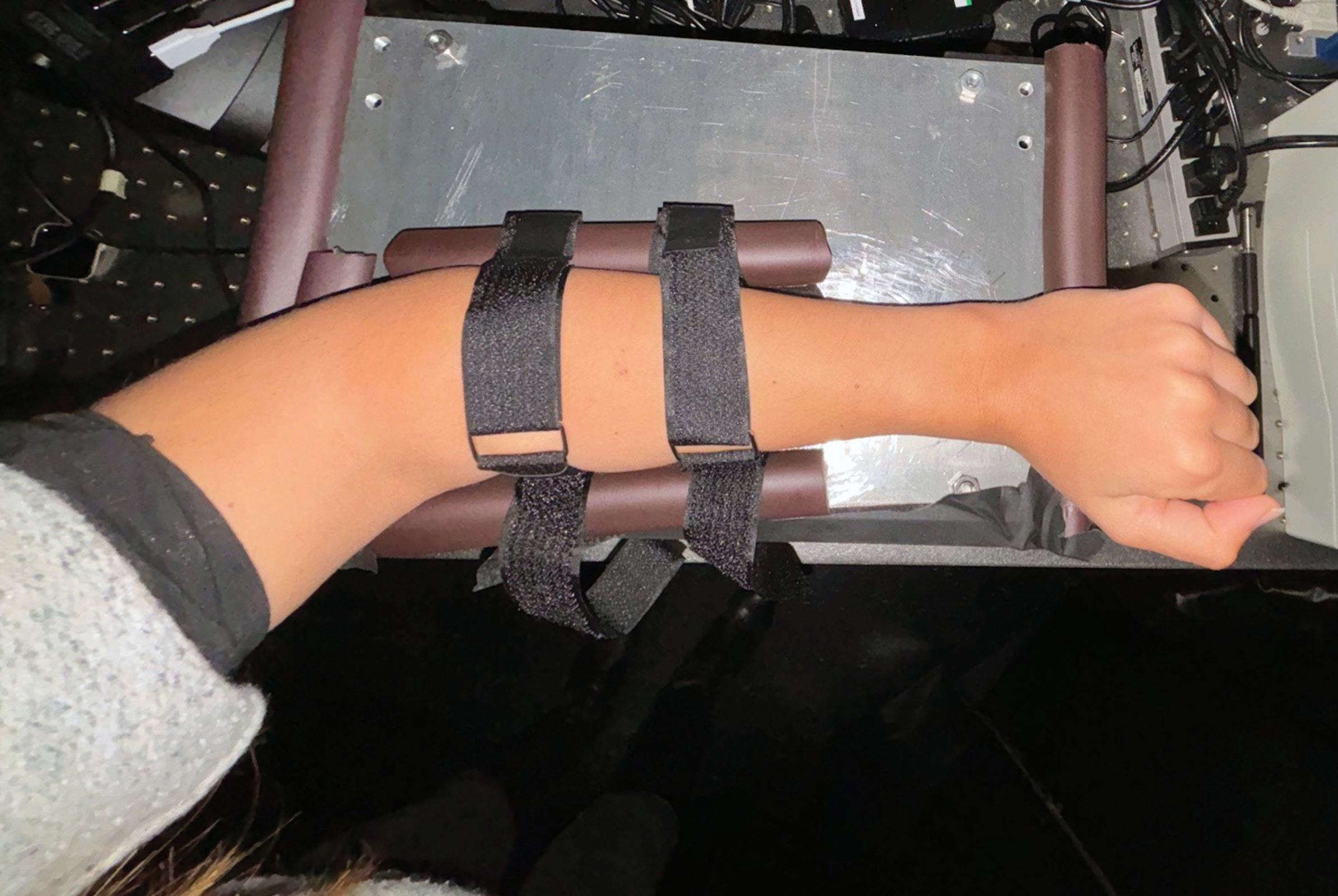
Over a four-hour period, the team rested the arm of their healthy volunteer on top of the device. A nearinfrared beam shone through a small glass window onto the skin to perform the measurement. Each measurement takes a little more than 30 seconds. The researchers took new readings every five minutes.
During the study, the volunteer consumed two 75 g glucose drinks to let the researchers monitor the changes in glucose concentration, observing similar levels of accuracy between their technology and two commercially available CGMs also worn by the subject.
Now, the researchers are testing an even smaller prototype that’s about the size of a cellphone. This year, they plan to run a larger study with a local hospital to include people with diabetes. Ultimately, they hope to minimize the device even further, to about the size of a watch. They also want to ensure the device can obtain accurate readings from people with different skin tones.

“MANY DIABETIC PATIENTS ARE UNDER-TESTING THEIR BLOOD GLUCOSE LEVELS, WHICH CAN CAUSE SERIOUS COMPLICATIONS. IF WE CAN MAKE A NONINVASIVE GLUCOSE MONITOR WITH HIGH ACCURACY, THEN ALMOST EVERYONE WITH DIABETES WILL BENEFIT FROM THIS NEW TECHNOLOGY.”

BY SEAN WHOOLEY SENIOR EDITOR
SENSEONICS BECAME THE FIRST COMPANY to bring a year-long continuous glucose monitor (CGM) to market with the launch of its Eversense 365 implantable system in 2024.
The sensor system is different than existing transcutaneous sensors from Abbott and Dexcom, which use a small needle to measure glucose in the interstitial fluid under a patient’s skin and last as long as 15 days.
HARI SREE EXPLAINS THE TECH BEHIND THE EVERSENSE 365 CONTINUOUS GLUCOSE MONITOR AND WHAT’S NEXT IN THE PIPELINE.
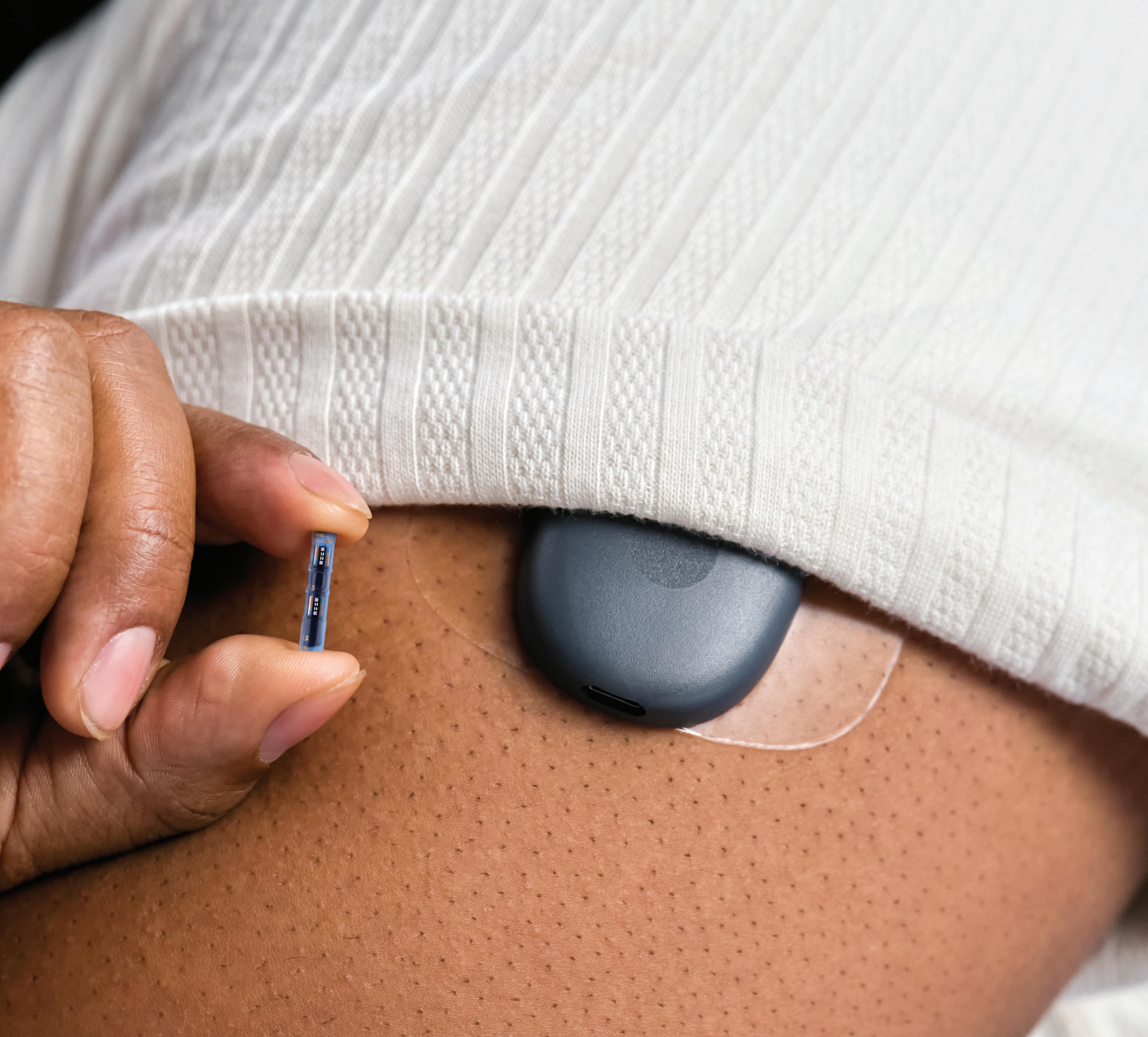
Instead of numerous applications of a CGM like those, the Eversense 365 sensor is fully implanted under a patient’s skin in a single procedure to provide a full year of glucose monitoring and integration with automated insulin delivery systems such as the Sequel Med Tech twiist pump.
“Once the user gets the product, they can use the system as they want to for up to a year,” Senseonics VP of Product Development Hari Sree said in a Medical Design & Outsourcing interview.
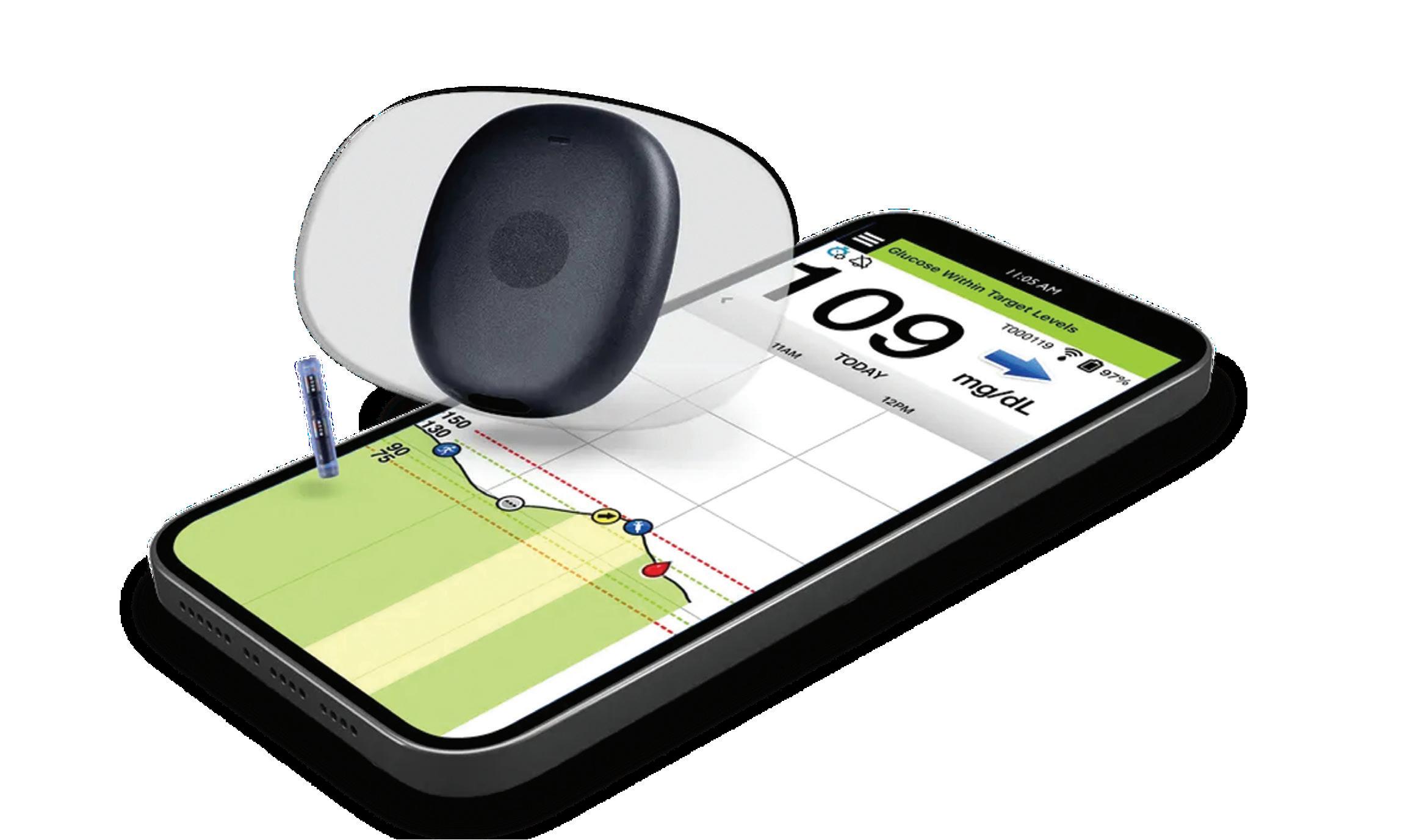
The implant sends continuous glucose sensing data to a transmitter
device attached to the patient’s skin with a silicone adhesive. This transmitter then sends the data to a mobile app, where the patient can evaluate their glucose levels and take action.
“The sensor works by having communication with the transmitter every time it wants to take a reading of the interstitial fluid’s glucose,” said Sree.
The basis for the technology
The company’s 180-day Eversense E3 sensor was the base of the current platform. That sensor — an electronic
The Eversense 365’s external transmitter is adhered to a patient’s upper arm to communicate with the sensor implant. Future generations could eliminate the need for that external transmitter. Image courtesy of Senseonics
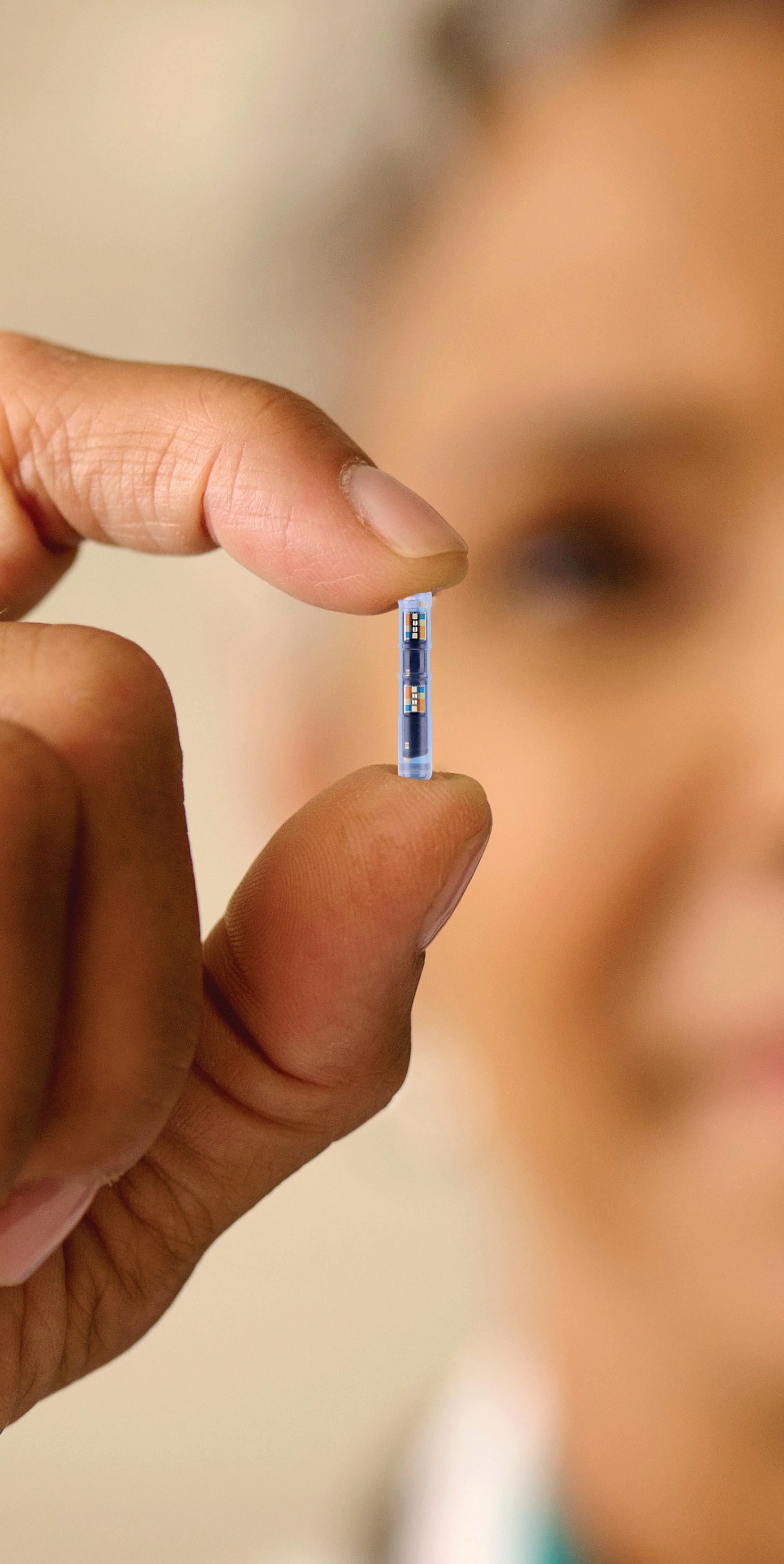
module encased in plastic — has a ferrite substrate that serves as the antenna for communication in the passive device. It also has an application-specific integrated circuit (ASIC) with an LED to detect the response of the transmitted signal.
An indicator hydrogel in the sensor interacts with the interstitial fluid and measures glucose by binding with it.
“It’s essentially measuring the wavelength intensity of light,” Sree said. “The hydrogel is where our real glucose sensing happens, aided by the electronic module.” >>
Sree likened the technology to cell phones, building from devices that required “massive computer” technology decades ago. Senseonics had to “pack a lot more things” into the small sensor, utilizing the ASIC to help the device survive over time.
While the sensor is passive, the outside transmitter that processes the data is recharged daily or every few days.
“The transmitter outside the body does a lot of processing of the data that we collect through the algorithm,” Sree said. “That helps make the sensors small enough. Moving forward, obviously our challenge is to make it even smaller and fit more capabilities in there.”
The Eversense E3 sensor has one hydrogel area, but the Eversense 365 sensor has two. That duplicates the latest version’s sensing capabilities and doubles the system’s lifespan.
The sensor itself is a passive device with no need for power or a battery. The rechargeable transmitter is the active component, using near-field communication to pull glucose data, process it and send it to a mobile app via Bluetooth.
“Our transmitter is unique in many ways,” Sree said. “You can take it off the body and put it back on. Looking at competitive products, which are transcutaneous systems, once you take the sensor off, you know it doesn’t work anymore because the filament that goes into the body is no longer available. … That’s a powerful feature of our transmitter.”
In March, Senseonics said realworld evidence showed strong patient adherence, glucometrics and hypoglycemic outcomes. The new study results included comparable adherence and outcomes between the first and second six-month period, indicating high accuracy and performance from a single sensor implant over an entire year.
“The promise of a year-long CGM has now been demonstrated in the real world,” Senseonics Chief Medical Officer Dr. Francine Kaufman said
while announcing the study. “… The data demonstrate that Eversense 365 can perform exceptionally well and consistently across its entire lifespan, with strong adherence supporting a full year of positive glycemic outcomes with just one sensor.”
Senseonics began with a sensor that lasted a few hours in first-inhuman studies, Sree said. Getting the technology to its current form required significant improvement.
The biggest design hurdle was developing a small device with the chemistry to solve the problem of reactive oxidation in a patient’s body. That oxidation can attack the sensor, preventing the hydrogel from binding with glucose and causing the sensor to fail.
Extending the life of a sensor from a few hours to a full year “has been a huge evolution, developed through the process and methods that we implemented to protect the hydrogel from reactive oxidation,” Sree said. “… It’s really the chemistry and the process technology that’s made the product last that long.”
Senseonics made the sensing technology smaller with microfabrication and microelectronic packaging, enabling successful implantation and duration in the body.
The goal for Eversense 365 was to reach the one-year timeline with once-perweek calibration. Next up is to move away from any on-body components with its planned Gemini and Freedom sensor products.
“What we have solved is the longterm survival of the glucose sensing platform,” Sree said. “What we are now working toward is getting … rid of one of the three components the user has to deal with.”
Senseonics wants to let patients directly communicate with the implant using their phones, eliminating the external transmitter.
Gemini, the first of the two future systems, is a 365-day glucose sensor paired with an implantable battery. It’s designed to deliver glucose measurements every five minutes and is currently in clinical trials.

After Gemini, the plan is to follow up with Freedom, a transmitterless sensor that would connect via Bluetooth instead of near-field technology, directly and actively communicating with the phone to provide glucose measurements.
Sree, whose background is in implantable medical devices in other therapeutic areas, pointed to batterypowered cardiac and neuromodulation implants.
“The challenge has been solved in some ways by other implantable medical technologies,” he said. “We have some unique challenges because of how active and real-time our data is compared to the others.”
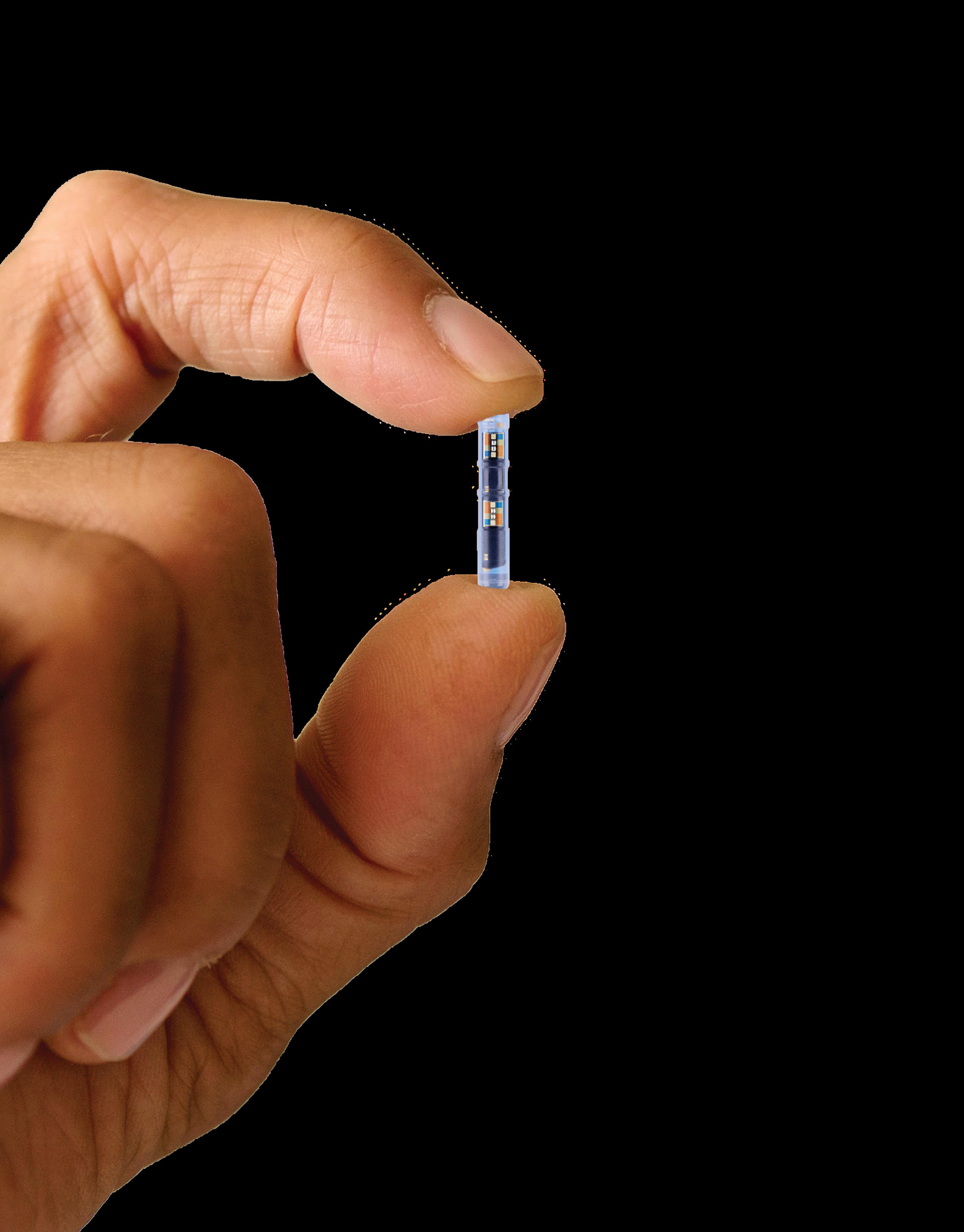
The Senseonics Eversense 365 (pictured is the sensor implant) is the world’s first one-year CGM. The device developer launched the system in 2024 in the U.S., followed by Europe in April 2026. Image courtesy of Senseonics
“What we have solved is the longterm survival of the glucose sensing platform.”

Senseonics VP of Product Development
Hari Sree
For more from this interview, watch the on-demand video at wtwh.me/eversense365.
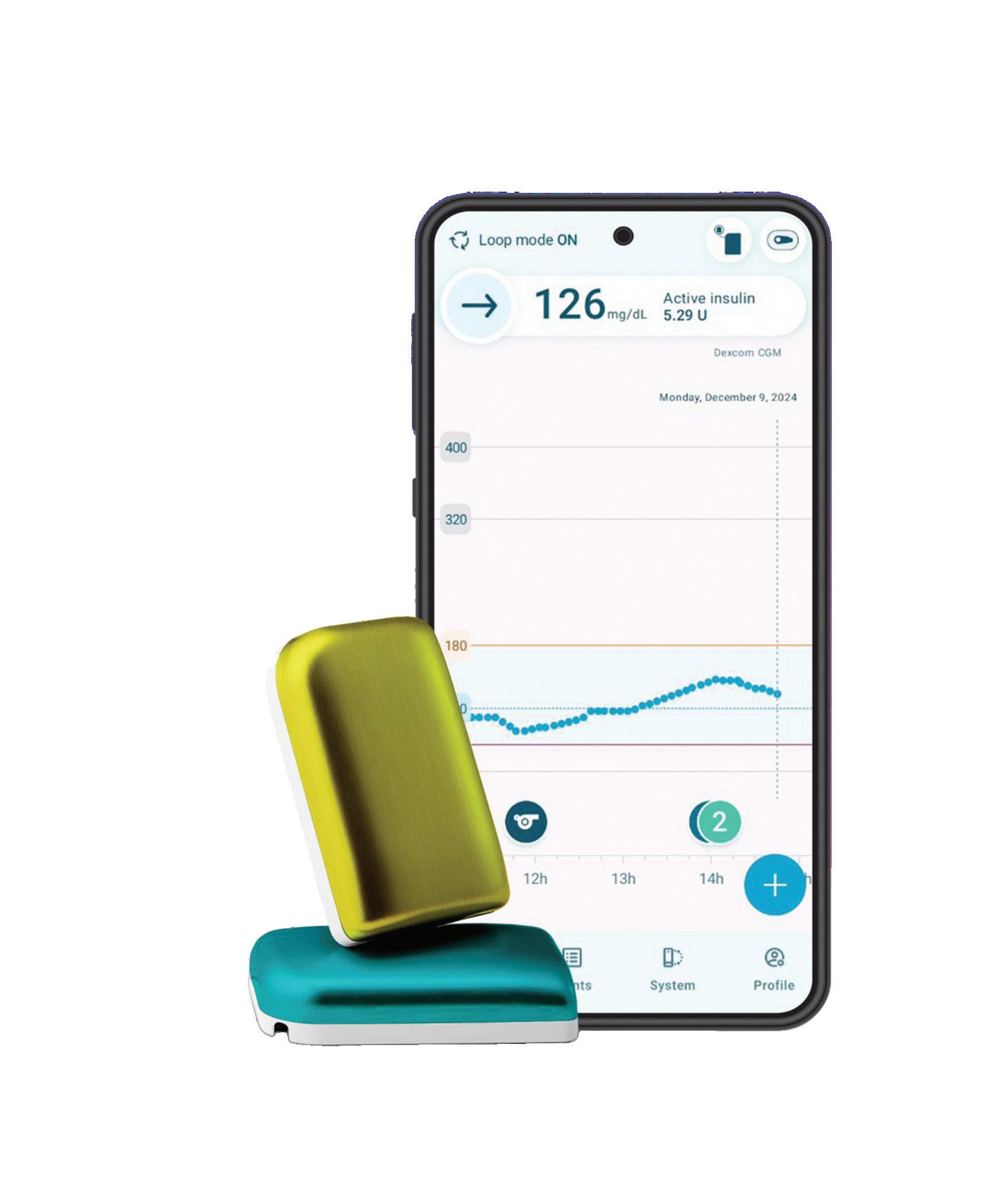
MINIMED CHIEF PRODUCT AND TECHNOLOGY OFFICER ALI
DIANATY EXPLAINS HOW THE FORMER MEDTRONIC DIABETES UNIT USED PATIENT FEEDBACK TO DEVELOP ITS LATEST AUTOMATED INSULIN DELIVERY INNOVATION.
BY SEAN WHOOLEY SENIOR EDITOR
WITHIN TWO WEEKS OF MINIMED’s initial public offering in March, the Medtronic spinoff received FDA clearance for its latest-generation MiniMed Flex automated insulin delivery system.
The smaller, screenless pump system is a major milestone for one of the world’s largest diabetes businesses.
“We have a long history with durable pumps,” MiniMed EVP and Chief Product and Technology Officer Ali Dianaty said in a Medical Design & Outsourcing interview. “We wanted to take the things that we knew were great about [the 700-series pumps] and keep them, then asked our customers the things that they would like to see and then incorporated that as our legacy going forward. That’s basically why Flex is what it is.”
Analysts like what they’re seeing from MiniMed, with BTIG’s Marie Thibault, Alexandra Pang and Sam Eiber describing it as the diabetes technology industry’s only “full-stack” company in a large and underpenetrated market.
“MiniMed’s pipeline is full, with the MiniMed Go smart insulin pen system, the smaller MiniMed Flex tubed pump, and the MiniMed Fit patch pump all expected to be commercialized in the U.S. within the next two years,” they wrote in a note to clients. “Though the diabetes technology segment is highly competitive, we view MiniMed as having a strong product pipeline and the global scale and reach to commercialize effectively.”
Bank of America Research Analyst Travis Steed also has MiniMed as a buy, >>
“We wanted to take the things that we knew were great ... and keep them, then asked our customers the things that they would like to see and then incorporated that as our legacy going forward.”
though he flagged potential downsides, including its continued relationship with Medtronic, which owns about 90% of MiniMed’s stock.
“Risks are heightened competition as other pump companies innovate, pipeline delays, entanglement with [Medtronic] and changes to pricing/ reimbursement,” Steed wrote.
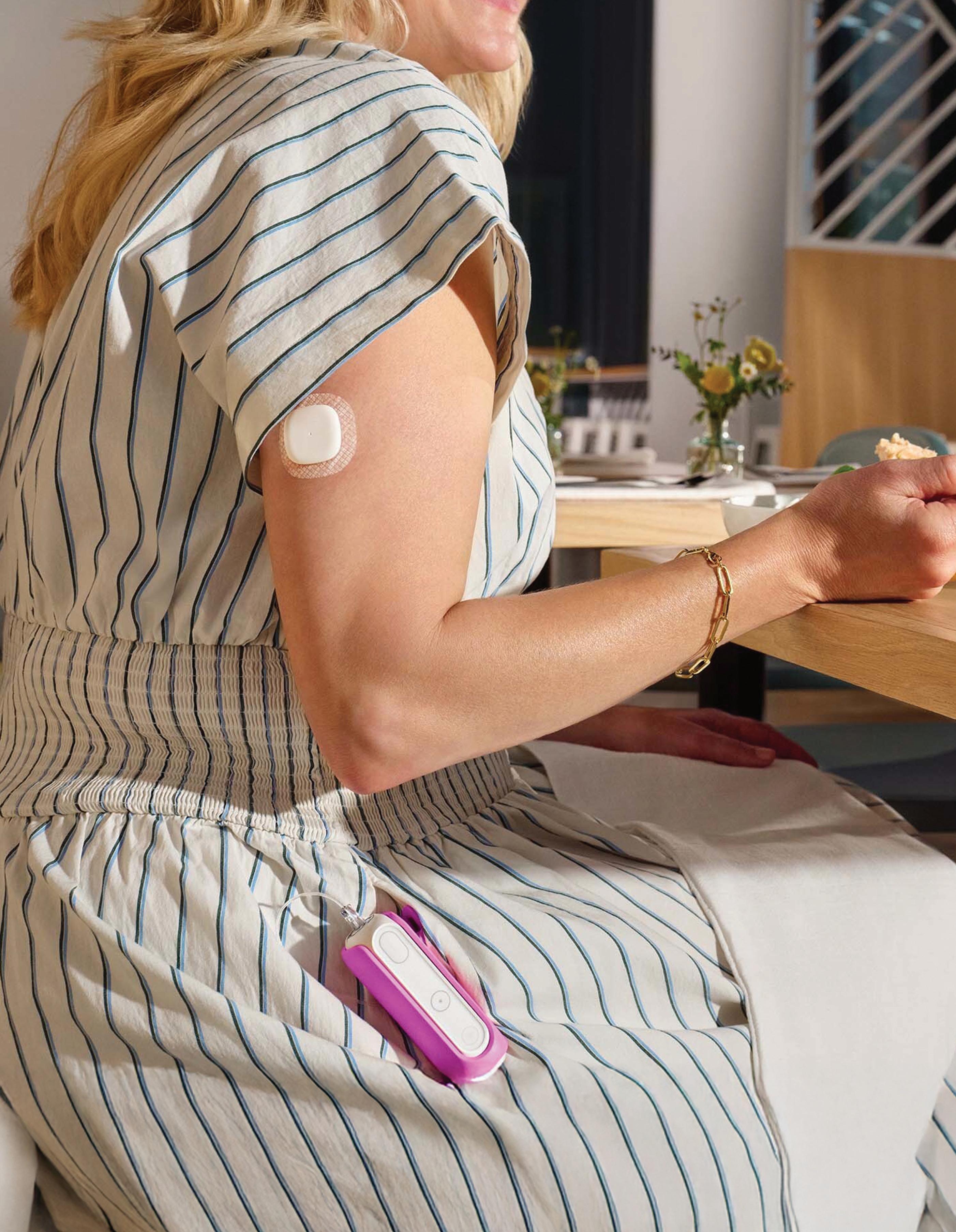
The MiniMed Flex’s FDA clearance covers individuals ages 7 and up with type 1 diabetes and individuals 18 and older with insulin-requiring type 2 diabetes. The pump works with the MiniMed Simplera Sync and Instinct (made by Abbott) sensors.
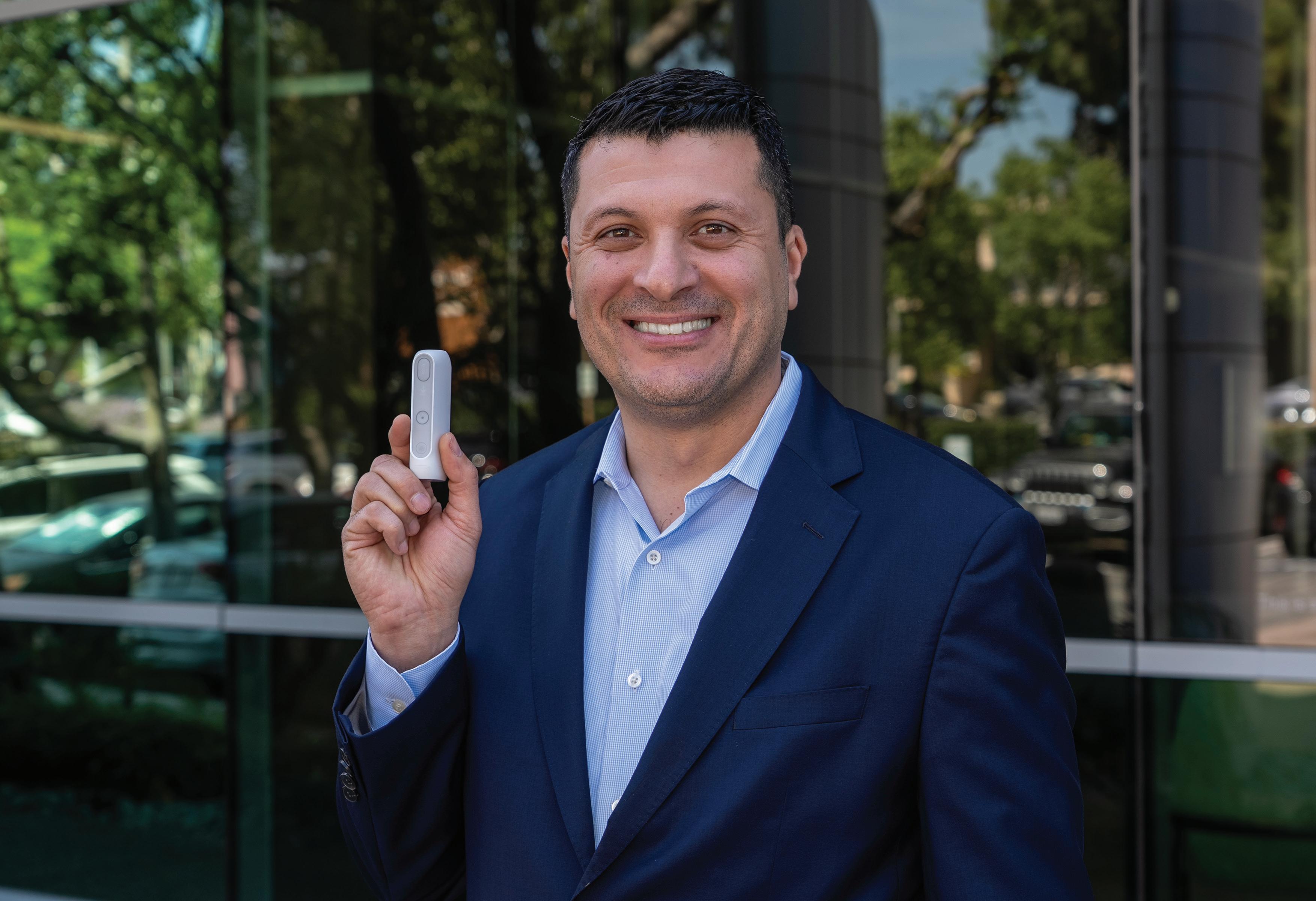
Compared to the previousgeneration MiniMed 780G, the 8-series MiniMed Flex pump is about half as large, allowing for more discrete placement while still using the same reservoirs and infusion sets. The pump comes in at roughly the size of two stacked insulin vials.
Flex is MiniMed’s first screenless design, created in partnership with people living with diabetes. Enabling smartphone control to skip the screen was a big part of the size reduction.
MiniMed’s SmartGuard algorithm with Meal Detection technology powers the pump. Dianaty said the team started out by aiming to make the pump smaller, as that was requested most by users, including MiniMed’s lead
designer, who has type 1 diabetes and wanted a pump that would fit in his pocket or easily clip onto a belt.
MiniMed also wanted to maintain legacy features such as the 300-unit insulin reservoir and a seven-day infusion set, which is matched by seven days of battery life from a full charge, Dianaty said.
Making the pump smaller required “minor tweaks,” Dianaty said. However, the system maintains the full pumping mechanism used by previous pumps, even within a smaller package.
“We wanted the accuracy of the pump — and everything about it in terms of its reliability and how it delivers insulin — to be maintained,” Dianaty said. “… It’s the pumping mechanism and the battery pack sandwiched in there with some electronics. That’s it.”
While MiniMed “can’t make it any smaller” for now because the company wanted to keep the reservoir and pumping the same to help 780G users transition to the new pump, Dianaty says there’s still room to make electronics and batteries slightly smaller one day.
“If we in the future decided to make changes [on the reservoir] and pumping mechanism, we could shrink it down,” Dianaty said. “Then, hopefully at some point we’d have the means of testing the type of insulin inside the reservoir, because we could then make the reservoir even smaller by increasing the concentration of the insulin. But that’s way out there.”
Signals without a screen and switching with speed
Some of MiniMed’s competitors also offer screenless pumps, such as Insulet’s Omnipod patch and Tandem’s Mobi miniature pump. Flex is another option for patients who don’t need a screen while the company works on developing its MiniMed Fit patch pump.
Even without a screen, the MiniMed Flex device has LED components to signal successful insulin delivery with green lights, yellow lights for alerts and red for alarms. The pump also vibrates and makes noise, with different tones pointing to different scenarios for the user.
“We tried to incorporate things that are important to patients and make it so that you can sneak [the pump] away and not have to ever worry about it,” Dianaty said.
The smartphone app design sought to enable patients to transition between modalities, including the company’s MiniMed Go smart insulin pen system for multiple daily injections (MDI). Users can go from pen to pump “very readily,” Dianaty said.
Similarly, clinicians use MiniMed’s CareLink data management system across systems in the same way, regardless of dosing method, mechanism or sensor.
“Making that all work, no one else has done it,” Dianaty said. “We’re going to be the first. At the same time, we are the first to send out both iOS and Android at the same time in a pump setup.”
“All of that was actually the bigger challenge in a lot of ways,” he continued, “to get the ecosystem working the way that we wanted to, to allow people to transition very smoothly, and then make it simple for people to be able to start up and go.”

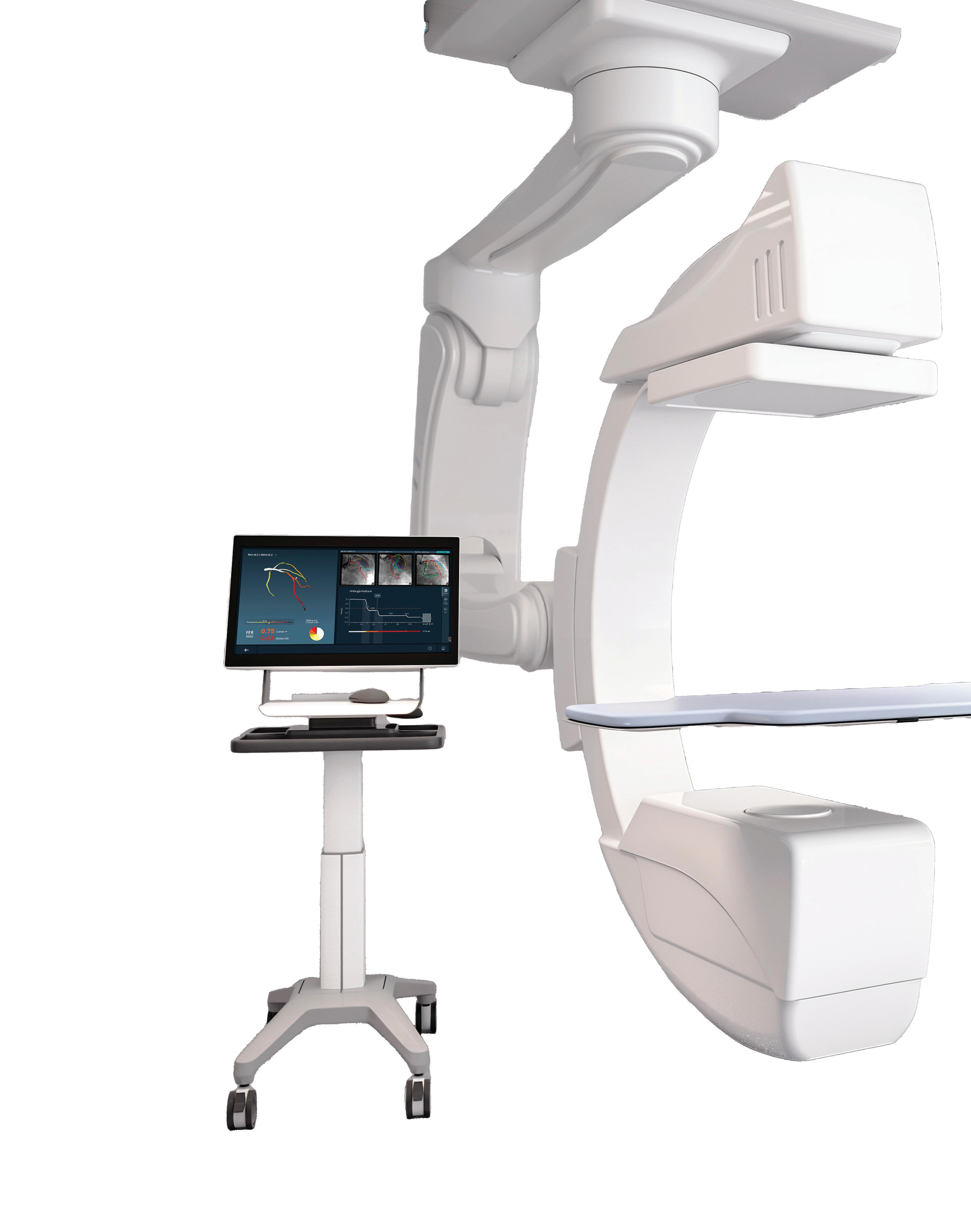
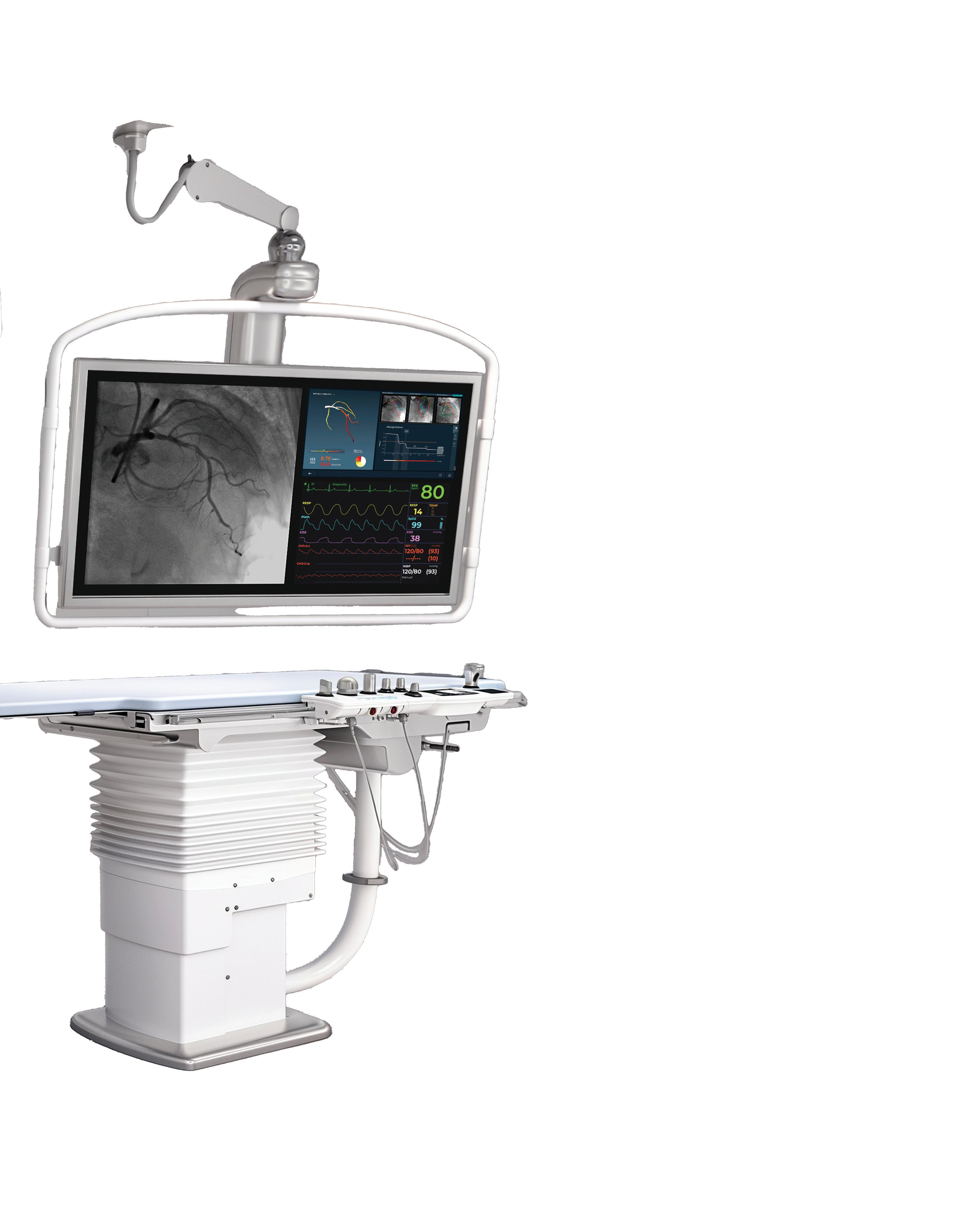
FFRangio offers a noninvasive alternative to the traditional wirebased FFR segment and fits within the current hospital workflow.
BY SKYLER RIVERA ASSOCIATE EDITOR
CATHWORKS CEO RAMIN MOUSAVI SAYS HIS STARTUP “CAME VERY CLOSE TO NOT EXISTING” BEFORE REWORKING ITS NONINVASIVE CAD TECH.
CAN A COMPUTER SOFTWARE take routine angiogram X-rays and evaluate coronary artery disease without invasive pressure wires?
The idea sounded “crazy” to the founders of CathWorks in 2013, but the possibility ignited the startup’s bold mission to transform how heart disease is diagnosed and treated.
Like many startups, CathWorks initially struggled. During the COVID-19 pandemic, the company nearly failed, CathWorks CEO Ramin Mousavi said during an appearance on our DeviceTalks Weekly podcast.
CathWorks survived for 13 years by leaning on strategic partnerships. Medtronic announced plans to acquire the company for up to $585 million in February 2026 and closed the deal in April. >>
CathWorks fast-tracked its path to acquisition by relying on its strategic partnerships during product development.
Medtronic became a minority investor in CathWorks’ technology in 2018 with non-dilutive funding.
Mousavi called it “the best of both worlds.”
“The money invested in CathWorks empowered us to put our heads down and innovate and generate clinical evidence,” he said.
Medtronic now sees the potential for CathWorks to positively disrupt the traditional wire-based FFR segment, according to Medtronic SVP and Coronary & Renal Denervation President Jason Weidman, a key voice in CathWorks’ product development.
Birth of a startup Coronary artery disease (CAD) is a leading cause of death in the United States. When a patient shows suspected CAD symptoms, they may undergo two diagnostic procedures: an angiogram and a fractional flow reserve (FFR) test.
“This acquisition allows Medtronic to transform the cath lab with a technology that provides real-time data, informs individualized treatment approaches and drives new standards of care.”
“This acquisition allows Medtronic to transform the cath lab with a technology that provides real-time data, informs individualized treatment approaches and drives new standards of care,” Weidman said in an announcement of the deal. (He’s set to become CEO of Teleflex in June 2026.)
During an angiogram, contrast dye is injected through a catheter in the femoral artery, illuminating blood flow and helping visualize blockages and narrow arteries on X-ray images. If stenosis is severe or inconclusive, a more invasive procedure to assess
FFR measures the severity of stenosis and potential for ischemia, using sensors on a guidewire to measure blood flow on either side of the blockage. Sometimes, physicians increase blood flow with medication for the most accurate measurements. Wirebased FFR is underutilized because of its invasive nature despite being essential for improving patient outcomes.
CathWorks sought to create an alternative, noninvasive system.
“The unmet need was [to] find an innovative technology solution that can fit within the current workflow, that can be a better alternative, one that was well vetted and clinically evaluated for invasive coronary physiology [assessment].” Mousavi said.
CathWork’s first launch and failure CathWorks’ FFRangio system works as an intraoperative device that uses artificial intelligence (AI) and advanced computational technology to provide a comprehensive physiological assessment of the entire coronary tree based on routine coronary angiograms
The
CathWorks FFRangio system uses AI and advanced computational technology to provide a comprehensive physiological
assessment of the entire coronary tree. Image courtesy of CathWorks
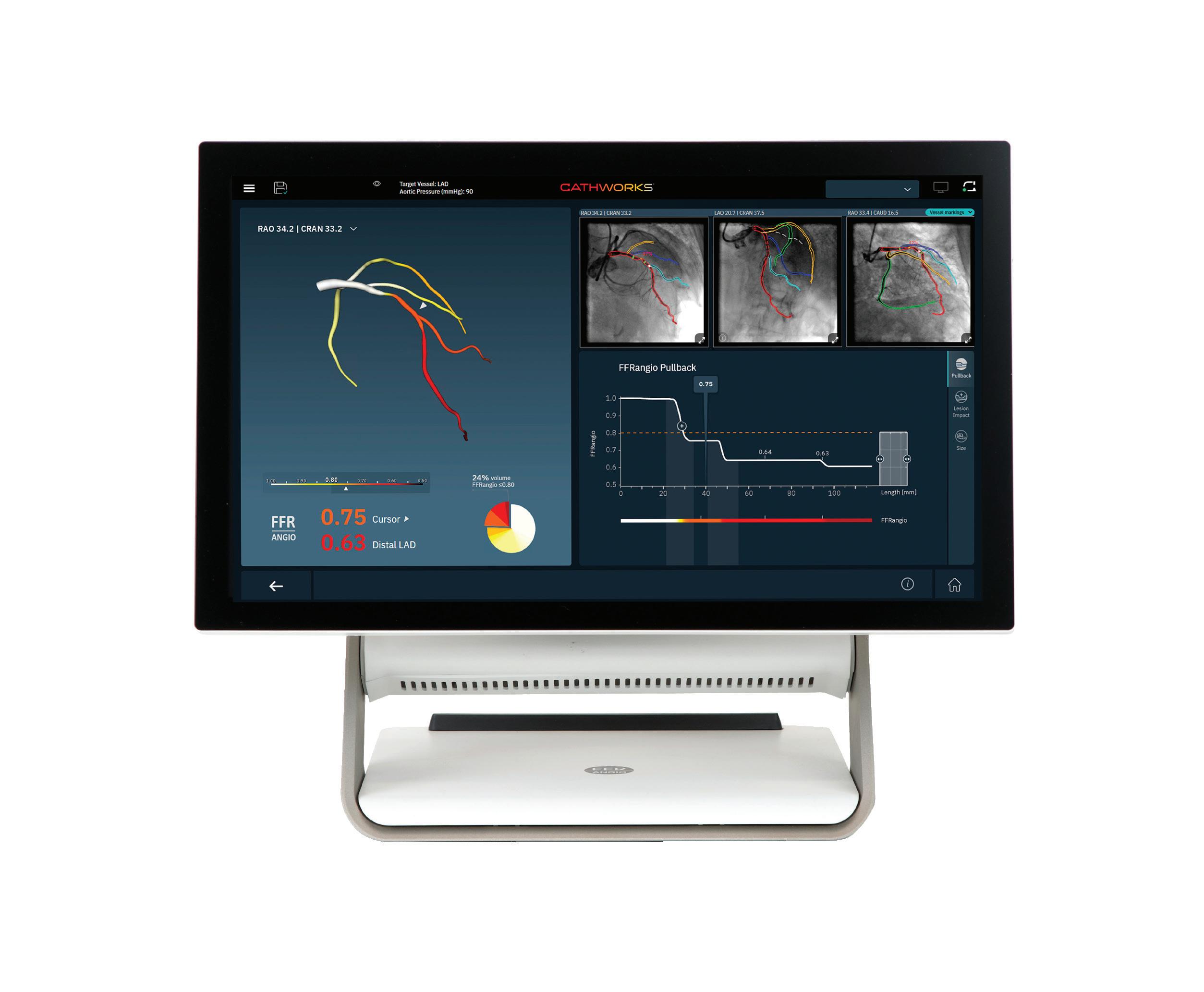
(X-rays) within minutes. But the system wasn’t a quick success.
FFRangio’s first rendition showed high diagnostic accuracy when compared to traditional wire-based FFR when it earned FDA approval in 2018, but it didn’t include any of the advanced technology that creates the coronary assessment in today’s version.
Instead, all arteries were manually selected and hand-drawn (or traced) based on three X-rays to create a full 3-D coronary tree model suitable for diagnosis.
“No way [physicians] were going to spend 22 minutes in the lab letting someone do a Picasso,” Mousavi said. “Like most startups, [we] failed very badly at that launch. … We had to go back to the drawing board.”
Mousavi consulted with Weidman and Medtronic VP Chris Eso with a big question: “How are we going to solve this?”
CathWorks’ technology failed to satisfy customers, and it needed a solution to accelerate its diagnostic process, but even if Mousavi and his team found a quick fix, the COVID-19 pandemic would hinder any chance of a successful product launch.
“The company came very close to not existing,” Mousavi said.
Eso and Weidman were willing to take a risk with the technology that failed, Mousavi said. They gave CathWorks feedback based on their industry experience and sought insights directly from customers.
CathWorks’ partners recommended automating the diagnostic process — specifically, the manual model creation element — using AI and advanced computational science. With that, Mousavi’s engineers embarked on FFRangio’s revision.
Mousavi’s team first began automating the manual 3-D coronary model process by constructing artificial neural networks with X-ray images as data sets.
FFRangio takes three X-ray images and uses a series of neural networks to organize and identify the main vessels and side branches in the artery. Then, it uses a proprietary algorithm

Launch 2.0 and a renewed partnership CathWorks and its partners tested FFRangio’s upgraded system in a limited release to gather customer feedback. From that, Mousavi said the team saw “the improvement that we were all hoping for.”
CathWorks began receiving offers for acquisition following its success, but Mousavi waited to enter another strategic partnership with Medtronic in 2022. The company was still in its early commercial days despite its vast improvement, and he didn’t want the technology to fail after acquisition.

validated by a resistance model to build the 3-D coronary tree model.
After automating the 3-D model process, CathWorks treated the heart as an “electric circuit,” Mousavi said.
“We take all the [heart’s] nodes and calculate how much resistance is in each of the nodes,” Mousavi explained. “Then, we convert that into a visualization of the blockage. … It’s pretty genius, actually.”
Mousavi and his team added more tools for physicians to virtually size patients for interventions and predict the clinical impact if the blockage was treated. FFRangio’s marquee feature simulates a pull-back curve to determine FFR values, helping patients avoid unnecessary percutaneous coronary intervention (PCI).
The revamped system is around 95% automated with some user confirmation, but a comprehensive diagnostic process that once took 22 minutes now takes only two.
“One of the most common things that happens to great technologies when they get acquired by larger companies is that there’s a period of, ‘Oh, there [are] other things wrong with the product, they still have to fix it,’” Mousavi said. “There’s no established process for [that] business model. There’s a lot of disruption. … You lose the people, things fall apart, and the technology never fulfills its true promise because it wasn’t quite ready for the vision that investors had.”
The structure of CathWorks’ 2022 partnership with Medtronic gave Mousavi and his team time to bring the technology to a place where it had an increased opportunity of becoming the next standard of care, he said. They needed more clinical evidence and access to Medtronic’s global network in a co-promotion deal while CathWorks engineers continued to advance its software.
CathWorks has conducted five validation studies with global clinical data and FFRangio has earned regulatory approval in the U.S., Europe and Japan since beginning its partnership with Medtronic. CathWorks presented the results of its largest randomized controlled clinical trial, which enrolled over 1,900 patients across 59 global investigational sites, at the American College of Cardiology meeting in March 2026.
“We’ve done a lot of things that you couldn’t do if you just handed [the technology] to someone else,” Mousavi said. “That’s why we chose Medtronic.”
— DeviceTalks Editorial Director Tom Salemi contributed to this report.

This scanning electron microscope (SEM) image shows how red blood cells coagulate to form a blood clot. Researchers who developed a coating for medical devices that could reduce complications from clots and infections have licensed it to device startup Cerulean Scientific. Image courtesy of the Wyss Institute
COATING TECH
TETHERED LIQUID PERFLUOROCARBON COULD REDUCE INFECTIONS AND BLOOD CLOTS IN DEVICES MADE WITH PTFE, SILICONE AND POLYURETHANE.

BY JIM HAMMERAND MANAGING EDITOR
MEDICAL DEVICE STARTUP CERULEAN SCIENTIFIC is developing implants and catheters that use omniphobic coating technology licensed from the Wyss Institute at Harvard University.
The liquid perfluorocarbon coating works with a wide range of medtech materials, according to the researchers and Cerulean Scientific. The Durham, North Carolinabased startup hopes to launch its own products and help other medtech OEMs take advantage of the technology’s thromboresistant and infection mitigation properties.
Cerulean Scientific CEO Tim Hopper said his company has raised nearly $20 million (mostly grants from the National Institutes of Health and Congressionally Directed Medical Research Programs) and will soon have animal testing results for three different devices and materials: a polyurethane hemodialysis catheter, an expanded polytetrafluoroethylene (ePTFE) peripheral vascular graft and a silicone hydrocephalus catheter.
“We’ve got really good lab results where we can show that nothing sticks to this stuff,” Hopper said in a Medical Design & Outsourcing interview. “But I’ve been in this industry for so long, I know it takes studies in animals to really prove things out.” >>
The chemically inert perfluorocarbon material is already approved by the FDA and has been tested in pigs, keeping arteriovenous (AV) shunts in contact with blood clear of blockages for eight hours without anticoagulant “blood-thinner” drugs like heparin, according to the Wyss Institute, where researchers developed a simple, two-step application process for plastics, glass and metal.
The Wyss Institute researchers call their super-repellent coating tech tethered liquid perfluorocarbon (TLP).
“That TLP technology builds directly on the Wyss Institute’s pioneering slippery liquid-infused porous surface (SLIPS) platform, which mimics the pitcher plant’s omniphobic surface,” Hopper said, “but TLP optimizes it for medical devices by employing a tethered layer compatible with smooth, nonporous substrates common in implants and catheters.”
Hopper expects to share results from his startup’s sheep studies in May 2026 for the polyurethane hemodialysis catheter, followed by the ePTFE peripheral graft in June or July and the silicone hydrocephalus catheter in the fall.
“If we can prove this technology works on silicone, polyurethane and PTFE — which represent 95% of all polymers and things outside of metal that go into the body — we’ve got three paid programs to be able to basically show that this could work in any kind of polymer conduit that’s out there,” Hopper said.
Working with liquid perfluorocarbon coating
The most challenging part of working with the technology is fluorinating the substrate if it’s not already fluorinated, Hopper said.
“Our technology is a liquid perfluorocarbon, and you need a fluorine-to-fluorine attraction to get that Van der Waals attraction of the thin, immobilized liquid that’s on the catheter or graft surface,” he said.
Because PTFE and ePTFE already have a fluorinated substrate, the technology works with those materials “like peanut butter and jelly,” he said.
“It’s literally pour and go,” he said. “You pour it, it soaks into the substrate, it creates a reservoir of our liquid perfluorocarbon, and that liquid perfluorocarbon prevents any kind of
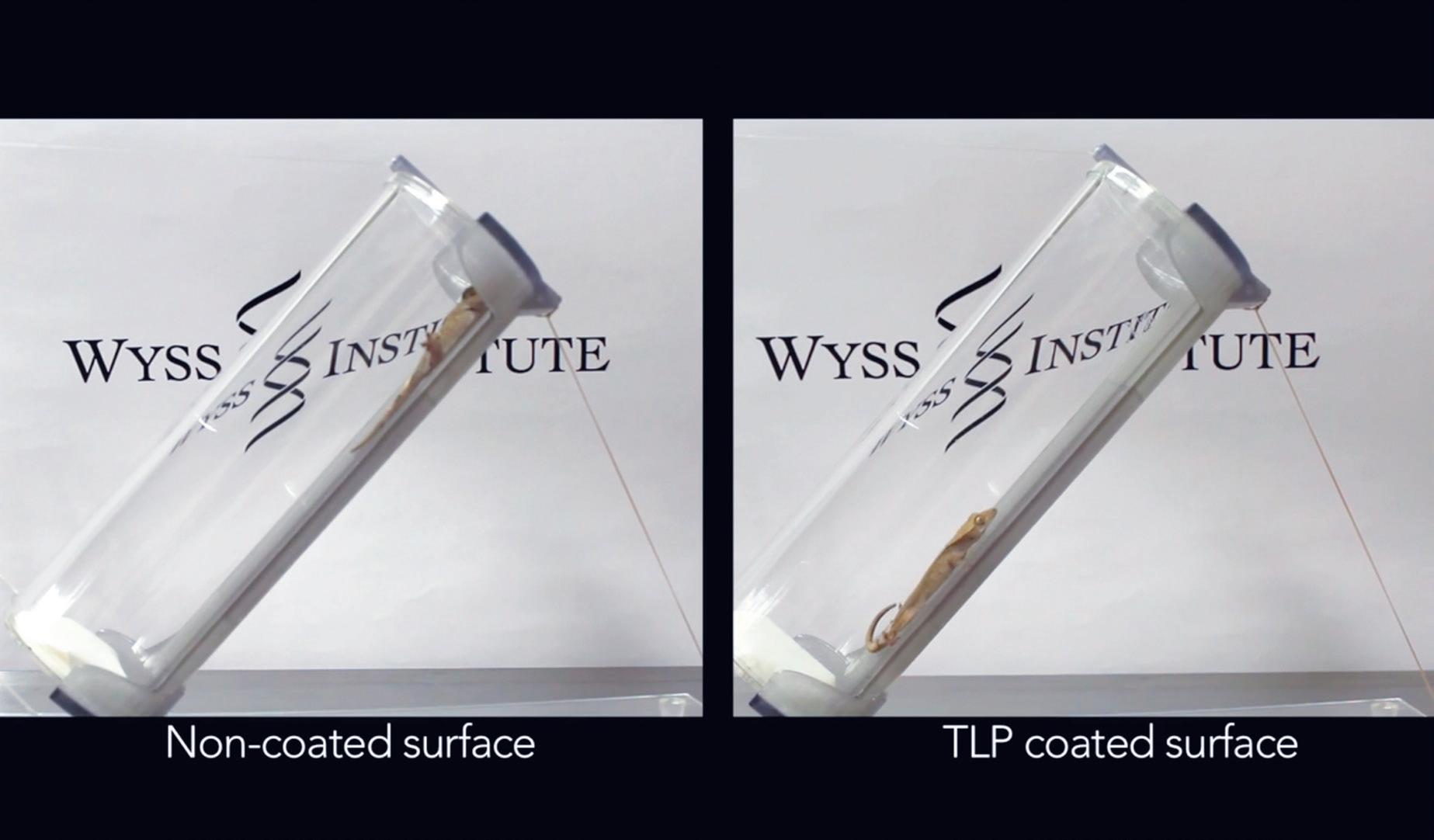
Wyss Institute researchers demonstrated the slipperiness of their TLP coating technology by placing a gecko in a glass tube with their coating (right) and another tube without (left) and tilting the tubes, with the sticky lizard slipping in the TLP tube but not the untreated tube.
Image courtesy of the Wyss Institute
thrombus, any kind of fibrin, any kind of biofilm or anything from coming into contact and attaching to it.”
Silicone and polyurethane need a process called silanization that deposits silanes on the surface to fluorinate it so it accepts the coating, Hopper said.
Cerulean Scientific is focused on these first three materials, but one day might explore working with compounding companies that could mix polyurethane or silicone with a fluorinated insert.
“They make fluorinated silicone tubes in the automotive industry for highend F1 cars, but the cost of doing that in a clean room would be astronomical,” he said. “We just don’t have the volume, [but] I can see that down the road.”
Once the substrate is fluorinated, another challenge is making sure the coating is only active where it’s needed and not active where it’s not needed, like part of an implant where tissue ingrowth is desired.
“We believe there will probably be a need for a multilayer graft, something like the Merit Rhapsody, for instance, where you have ePTFE inside and then more of an outer layer that allows for tissue ingrowth around that particular conduit,” he said.


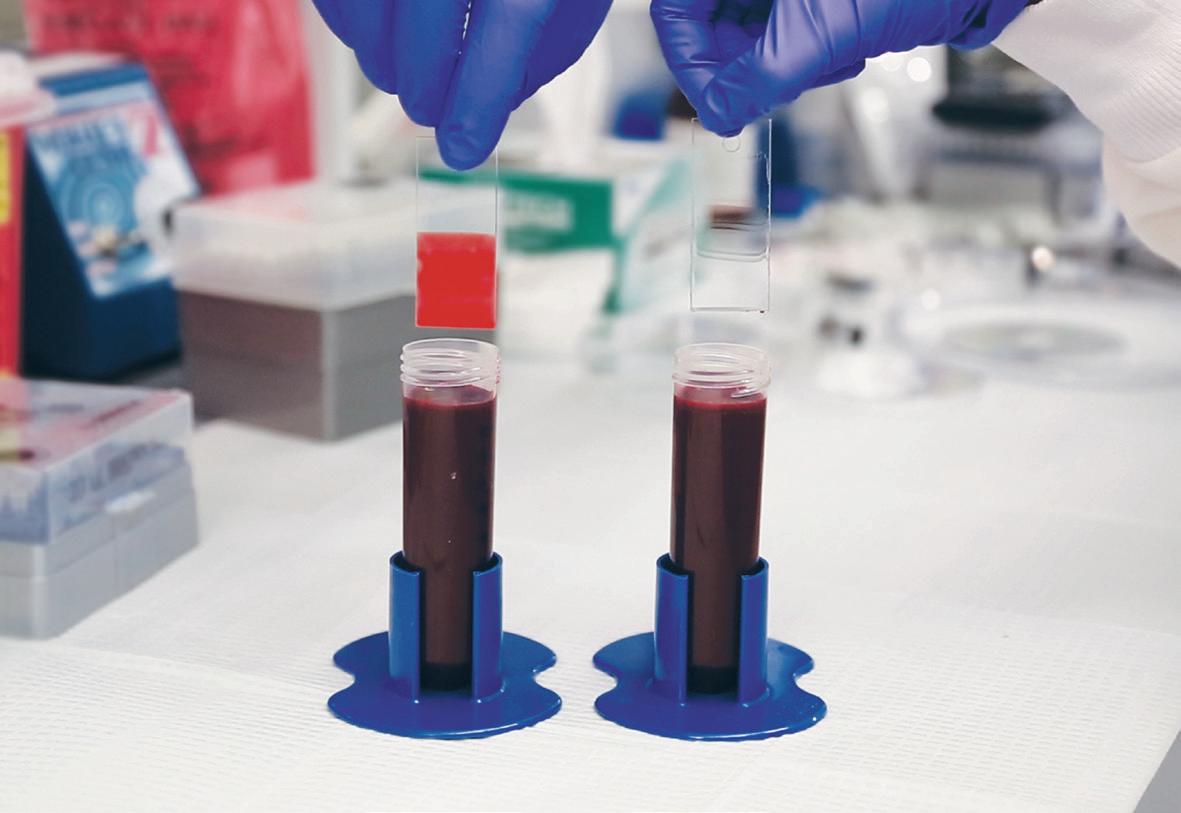
After seeing the Wyss Institute researchers’ pig study, Cerulean Scientific licensed exclusive use of the technology for nearly all medical devices. Two other companies have licensed the technology for their own specific applications, Hopper said: coating the small tubes in cochlear hearing implants to prevent clogs, and coating disposable endoscopic camera lenses for improved visibility.
“Outside of that we have everything else from a medical perspective,” Hopper said, and his company has “already had good conversations with some very large OEMs,” though he declined to name them.
“Some of the programs we’re looking to bring to market on our own,” he said. “But there are other programs that we’re probably going to go to market with a partner on the side with us. … We have a list of about 76 different areas that this technology can be used on. … I look at Cerulean as being an umbrella company that’ll spin out either companies or licensing agreements and lockups with particular companies.”
But first, the startup wants to see whether its products perform better than what’s on the market. The peripheral vascular graft sheep study will compare that coated device to Gore’s Propaten vascular graft, which uses Gore’s CBAS Heparin Surface bonding technology for thromboresistance.
“We’re going to find out if our technology is as good as the marketleading heparin-based graft, and we’ll see what it can do,” Hopper said. “We’re really, really excited about it.”
Harness our leading-edge vacuum technology . . . because lives depend on it.


Your high-value medical parts need special treatment. Solar’s leading-edge vacuum heat treating technology produces clean, bright, consistent results. From annealing to age hardening, rest assured knowing your life-critical parts were vacuum heat treated to your exact specs.
For your prosthetics, guide wires, stents, surgical tools, device and battery cases, hypodermics and hypodermic tubing, brazements for analytical devices...and more, trust Solar Atmospheres to provide you with uncompromising quality.














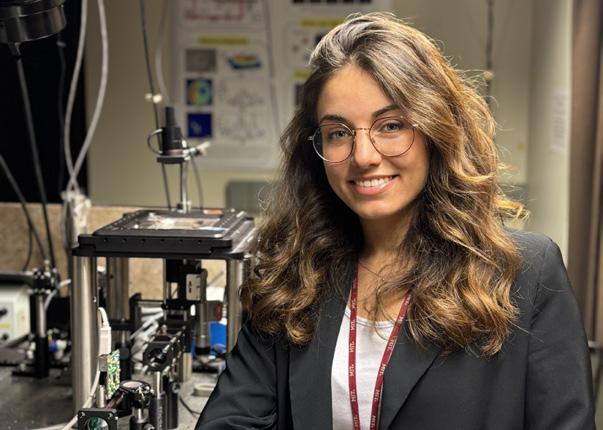
Arianna Bresci, PhD



Joel Goldsmith Ashley McEvoy
Jeon Woong Kang, PhD
Vice President, Product Management Insulet Director, President and CEO Insulet





Postdoctoral Associate MIT Olympus Innovation Ventures



Soheil Ashkani, MD Patrick O’Donnell
Assistant Professor, Orthopaedic Surgery Mass General Research Institute LEM Surgical CEO NanoHive
Bioretec Research Scientist MIT
Sandeep Thakur

Sarah van Hellenberg Hubar-Fisher





Prash Chopra Joshua Gafford Dustin Vaughan
Brian Miller, PhD Bill Peine, PhD
CEO and Co-founder Petal Surgical CTO EndoTheia VP, R&D, Robotics Asensus Surgical
Sovato















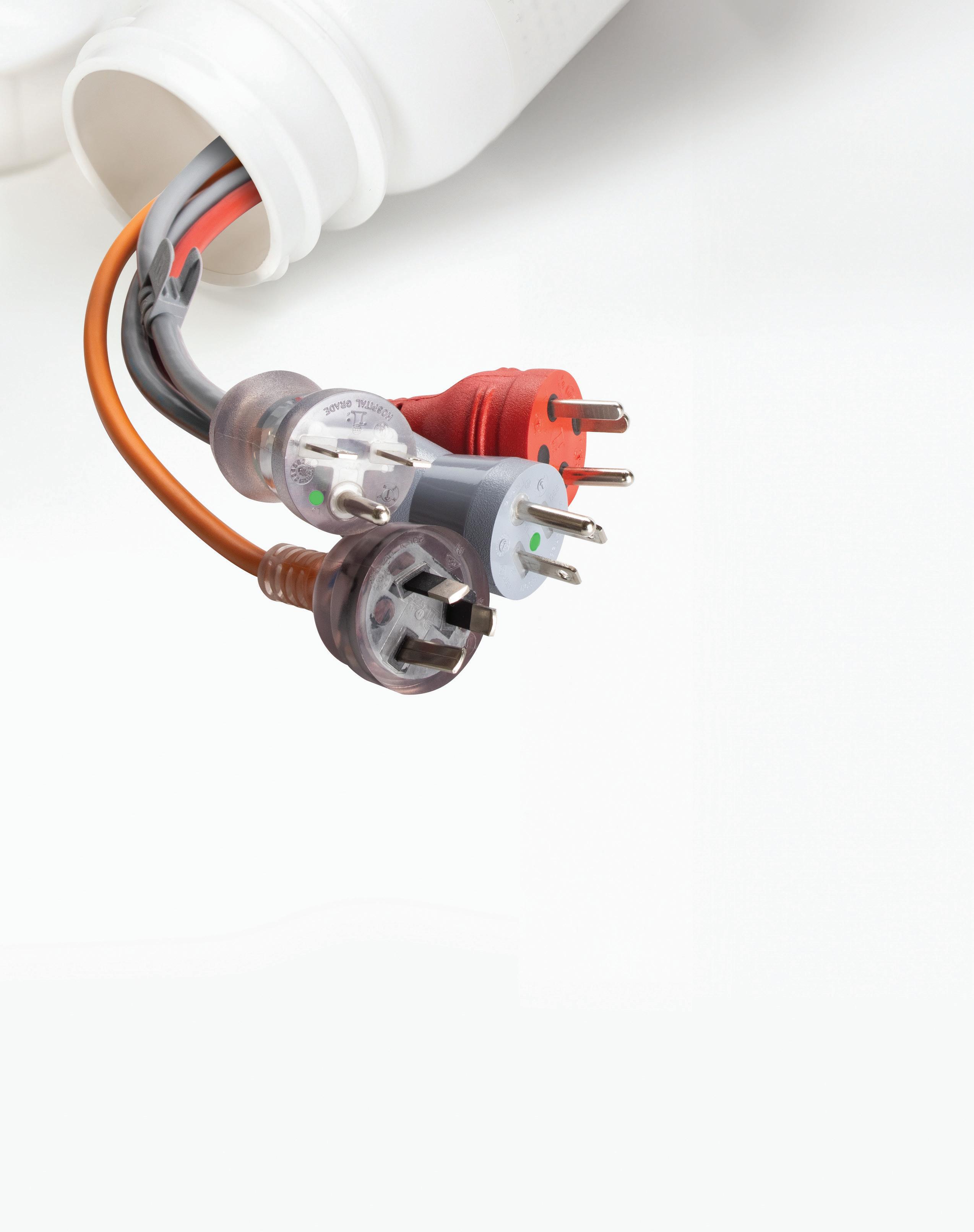
Calculating tariffs on imported medical cords is enough to make anyone dizzy. You shouldn’t have to pay more for them either, especially when the best ones are made right here in America. Interpower tariff-free hospital-grade cords are durable and reliable, and they come with 1-week U.S. lead times. Our North American and international hospital-grade cord sets provide the correct amperages and voltages for medical devices such as portable CT scanners, X-ray machines, surgical robots, or medical offices.
North American and Japanese hospital-grade plugs and receptacles bear the green dot, signifying they have passed the rigorous UL 817 Abrupt Removal Test (UL 817, 18.2.4.1) for hospital-grade cords. All Interpower hospital-grade conductors inside the plug are anchored by a stainless steel ring that ensures electrical continuity when you need AC power in critical medical settings.
Interpower cords and components are manufactured in accordance with its product quality plan: hipot testing, continuity testing, and ground testing with multiple inspections.
• 1-week U.S. manufacturing lead times
• Same-day shipping on stocked products
• No tariffs