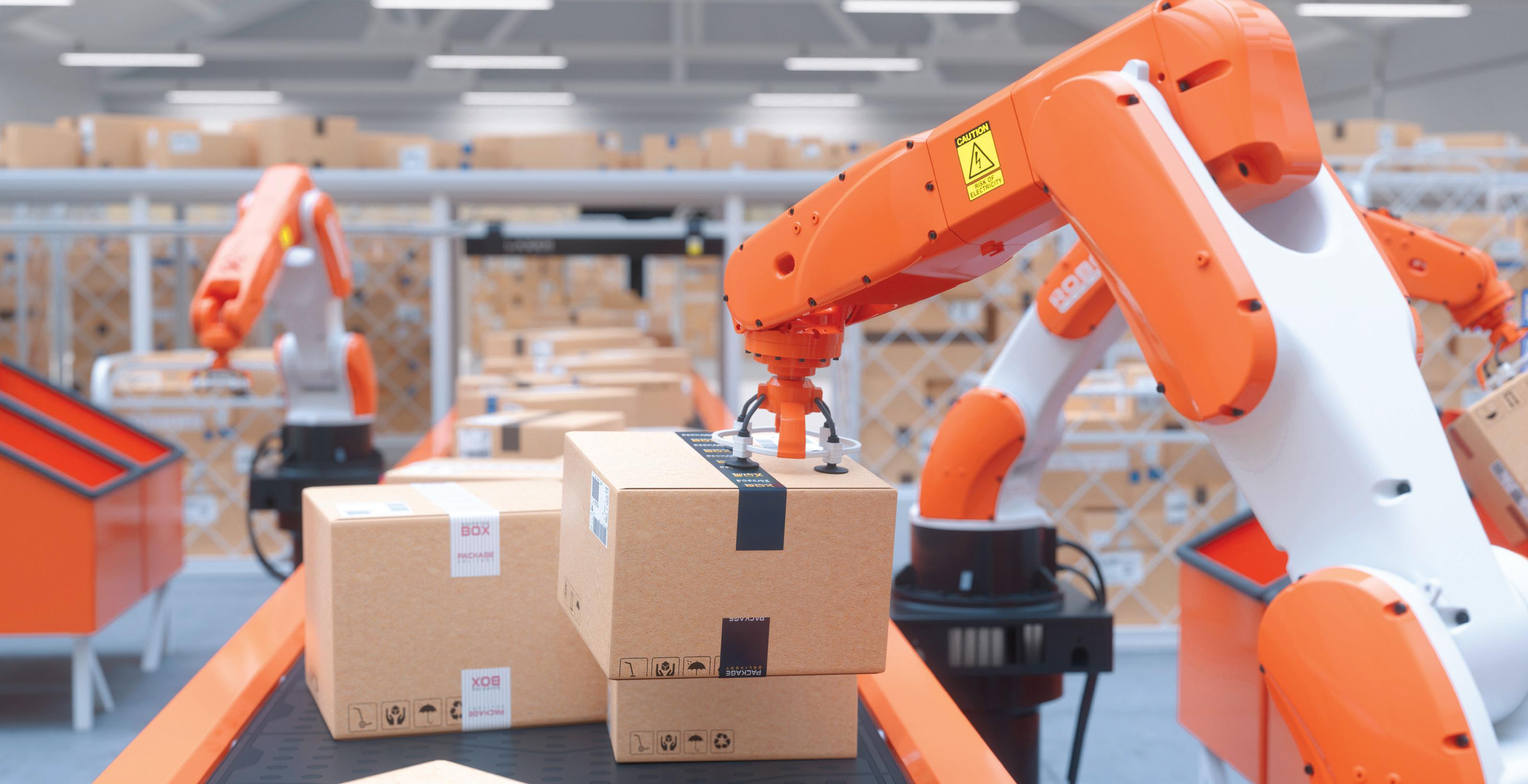
CONVEYOR LAYOUTS THAT SUPPORT AUTOMATION AND FUTURE EXPANSION
HOW DIFFERENT DRIVETRAIN CONFIGURATIONS AFFECT EV RANGE
CONVEYOR LAYOUTS THAT SUPPORT AUTOMATION AND FUTURE EXPANSION
HOW DIFFERENT DRIVETRAIN CONFIGURATIONS AFFECT EV RANGE
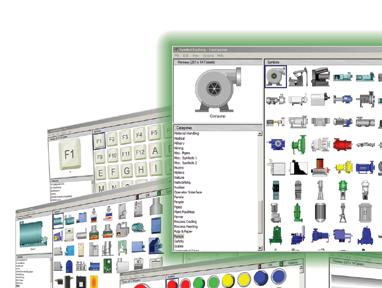
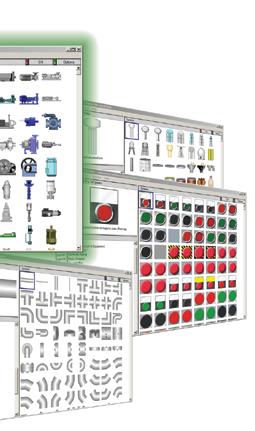
FREE CONFIGURATION SOFTWARE
with thousands of ready-to-use objects
CM5 Series High-performance HMIs
The C-more CM5 HMI series offers low-cost, high-performance HMIs in sizes from 4 inches (only $340.00) to an impressive 22 inches (only $1,999.00). With an amazing 1.6 GHz processor in the larger units (10” and above) and 90 Mbytes of project memory, these HMIs provide better trending, extra data storage, faster communication, improved file types, and 16.7 million screen/object color options.
All CM5 panels have serial and Ethernet ports (dual Ethernet ports on 10” or larger models) that support many of the most popular industry protocols, including EtherNet/IP, MQTT, and Modbus. The included USB ports provide in-an-instant connections for keyboards, barcode scanners, memory storage, etc. and the embedded SD-card slot provides easy project transfers or up to an additional 2TB of data storage (depending on model) for important log files.
Plus, all C-more HMIs come with FREE, powerful, easy-to-use programming software and FREE technical support!
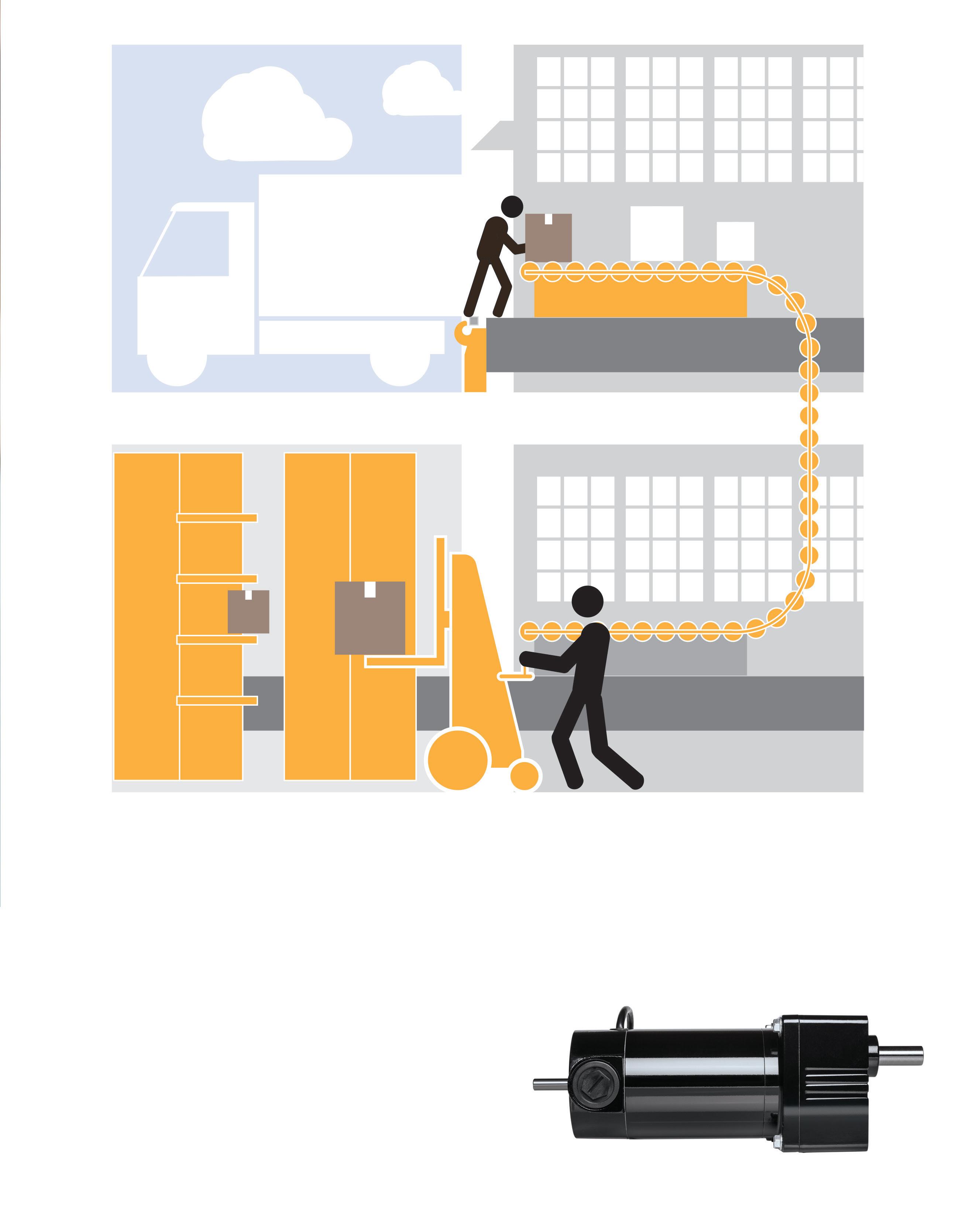
From Dock to Shelf with Bodine
From the truck restraint at the dock to the flexible conveyor for unloading to the mobile lift that carries the load to the high density storage system –we keep today’s automated warehouses moving. Whether paired with simple standalone controls or fully integrated OEM systems, our gearmotors deliver dependable motion to keep warehouse operations efficient, safe, and productive.
Bodine Gearmotor Drives Warehouse Lifter
Learn how our low-voltage gearmotor delivered over 440 lbs of lifting force.
Design lessons from my cat
If you follow me on LinkedIn, you’ve inevitably seen pictures of my cat. I never planned on bringing him into my professional social media feed, but his photobombs boost engagement, so I welcome his antics. (Thanks, buddy.)
To keep up with the times, I treated us to a Litter Robot — an automatic rotating globe that sifts clumps into a drawer below. He used to be afraid of it. Now he activates it on purpose and has figured out exactly when to step back inside mid-cycle to halt the rotation so he can paw unsifted litter into the waste drawer. It is a game, and he has won.
I pondered this while reading a news story from Minebea Intec on automated silo weighing for ferroalloy powder filling — sticky, abrasive metal powder dosed into bulk containers, replacing an error-prone manual process.* The application could not be further from my powder room, yet the underlying problems are similar.
In each case, material behavior dictates design. The ferroalloy powders are heavy, adhesive, prone to clumping, and can generate dust. Anyone who has scooped a litter box understands this (and wants the clumping without the rest). Also, these granular materials do not behave like fluids or larger solids: they can bridge, rathole, stick to walls, and refuse to flow as commanded.
The ferroalloy operators saw dosing fluctuations because the material itself was fighting the process. Their fix was a high-accuracy bending-beam load cell paired with a controller that closes the loop on actual mass delivered. The result is more accurate and efficient dosing, lower costs, and safer operations.
Sources:
• Minebea Intec, When materials determine processes: wtwh.me/minebea
Back in my powder room, the Litter Robot weighs my cat before and after he does his business and measures the waste drawer level to tell me when it’s full. The process trusts measurement over assumption, and without the sensors, we’re left with a tumbler running on guesswork. The sensors also serve as a safety feature to stop rotation so that my cat doesn’t get pinched or hurt. Overall, it saves me time, uses less litter, and mitigates health and safety risks.
Though the design does a great job accommodating the material behavior, I’m not sure if the designers expected my particular cat’s behavior. The device was designed for a cat who enters, exits, and lets the machine work. It was not designed for a cat who learned that re-entering mid-rotation trips the safety interlock, creating a window for mischief. He’s not breaking the machine but leveraging a safety feature for a purpose its designers did not intend.
Unintended use is not necessarily misuse, but it’s a reminder that systems can’t rely on users behaving rationally, reading the manual, or sharing the designer’s mental model. In many cases, robust design assumes that the worstcase user is not inherently malicious, but operating on their own incentives.
In the end, the ferroalloy plant got precise dosing and safer operations out of their automation project. I got a cat who has gamified his litter box — and a reminder that the gap between intended and actual use is where good engineering either pays off or creates new problems. DW
Rachael Pasini
rpasini@wtwhmedia.com
linkedin.com/in/rachaelpasini
TOTAL CONTROL
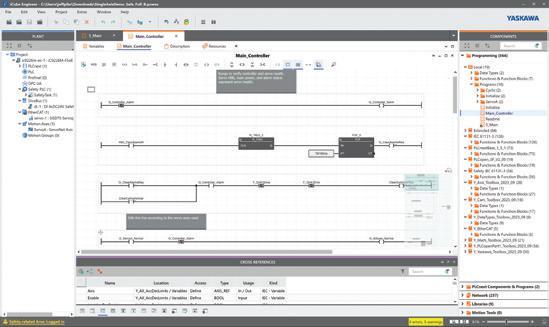
THE iCUBE CONTROL™ AUTOMATION PLATFORM
Yaskawa’s iCube Control™ is your open automation machine control solution, designed for precision, flexibility, and certainty in every operation.
iCube Engineer
Program logic, motion, safety and robotics with IEC 61131-3 or other languages.
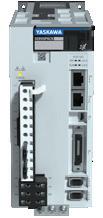
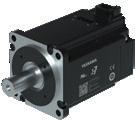
Sigma-X Servo Family
Designed for ultra-fast response, predictive diagnostics, network safety, and smooth performance, with 1, 2, and 3-axis SERVOPACKS.
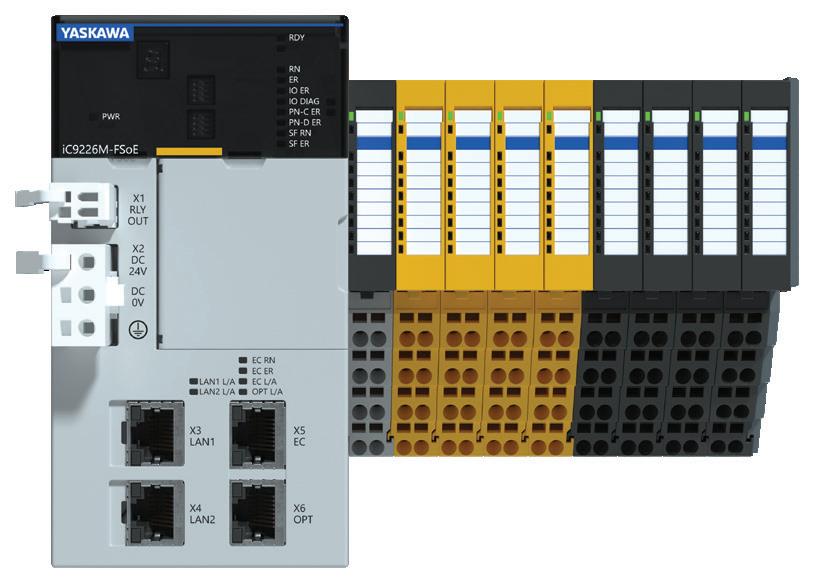
iC9200 Machine Controller The Heart of iCube Control
• EtherCAT machine control and safety master.
• Powered by the Triton multi-core processor.
• Designed by Yaskawa for demanding multi-axis machine control applications.
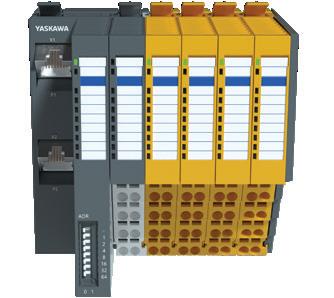
SLIO
Expand and customize your system with flexible, high-speed local and distributed I/O.
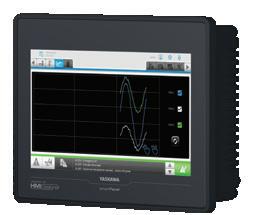
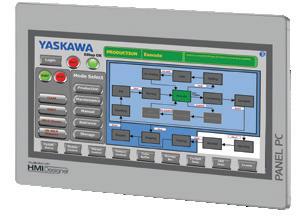
HMI Designer
Design intuitive screens for our Yaskawa HMIs with drag-anddrop functionality and advanced visualization tools.
ADVANCES IN ROBOTIC PICKING AND
Sensing a Trend: Pepperl+Fuchs enables smarter movement across packaging lines
How do different drivetrain configurations affect EV range?
Wings help this device take on
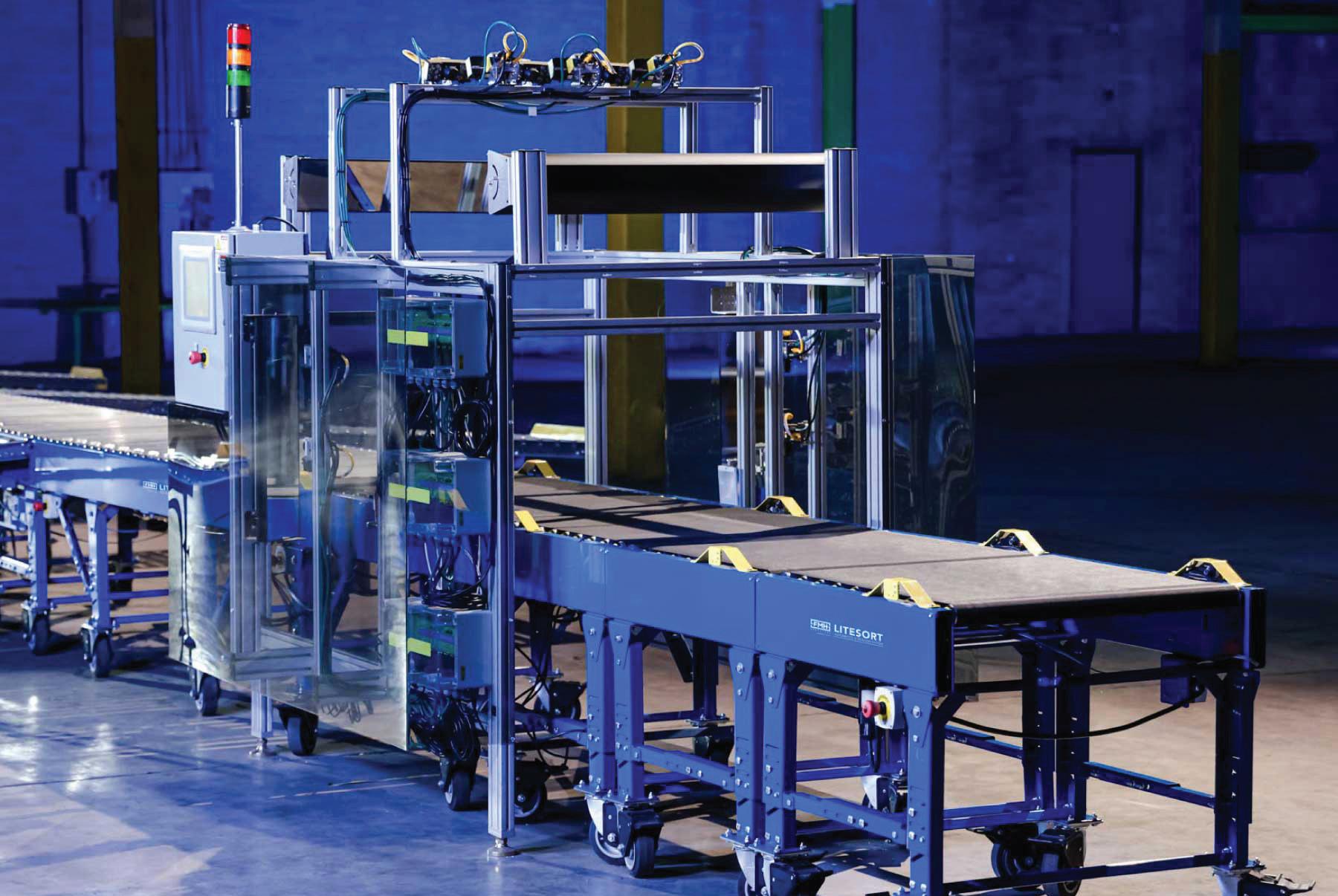
Conveyor layouts that support automation & future expansion
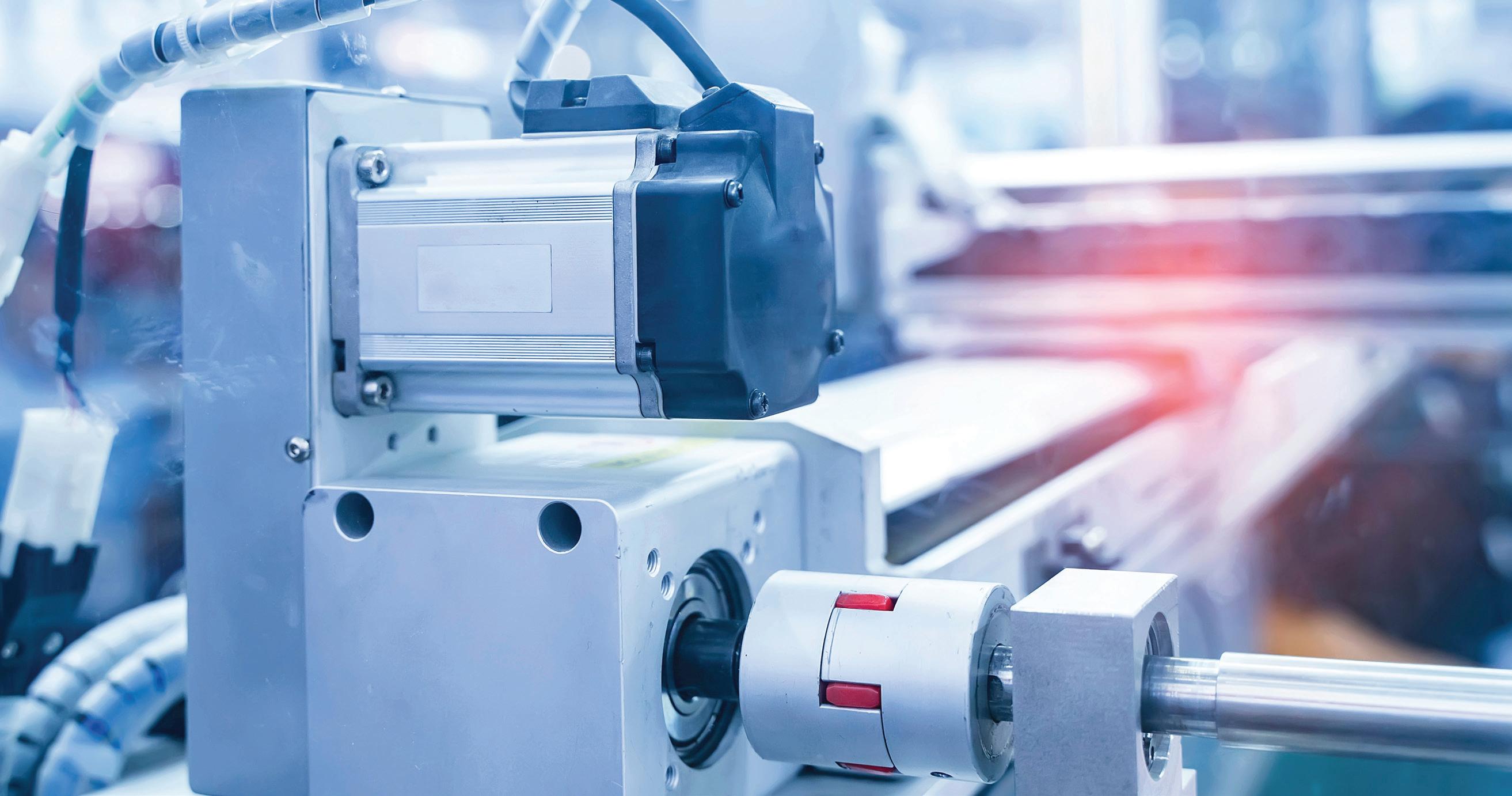
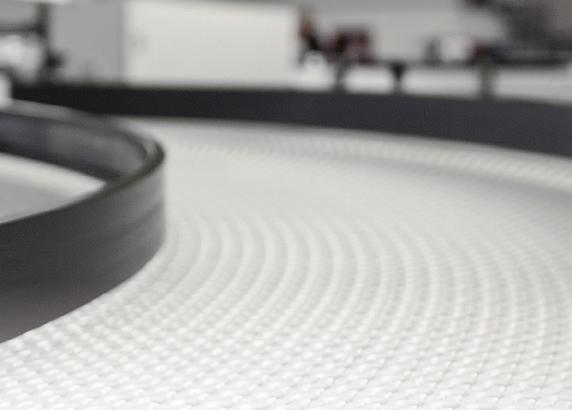
Customizing a conveyor layout to both current and future needs requires adaptability. Modular components, automation technologies, and capacity buffers can ensure a given layout will work for requirements that may change over time.
Friction, flour, and failure
Chris Johnson of SMB Bearings explains how selecting heat-resistant, sealed bearings can ensure flawless performance and improved reliability despite the high temperatures and flour contamination typical of commercial bakery environments.
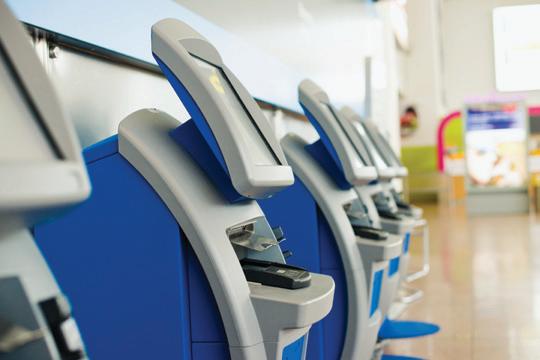
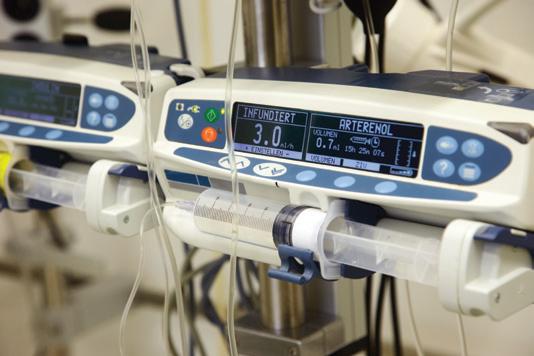
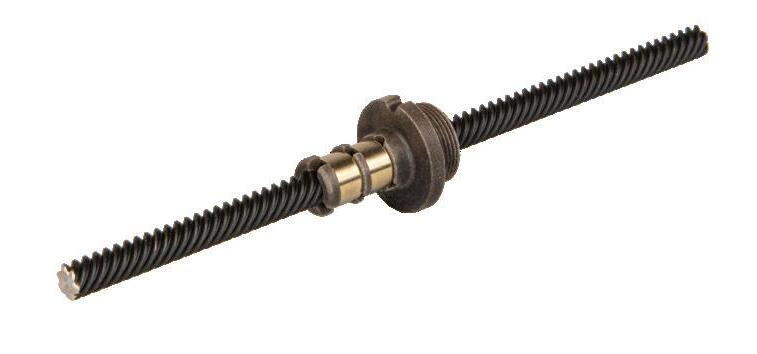
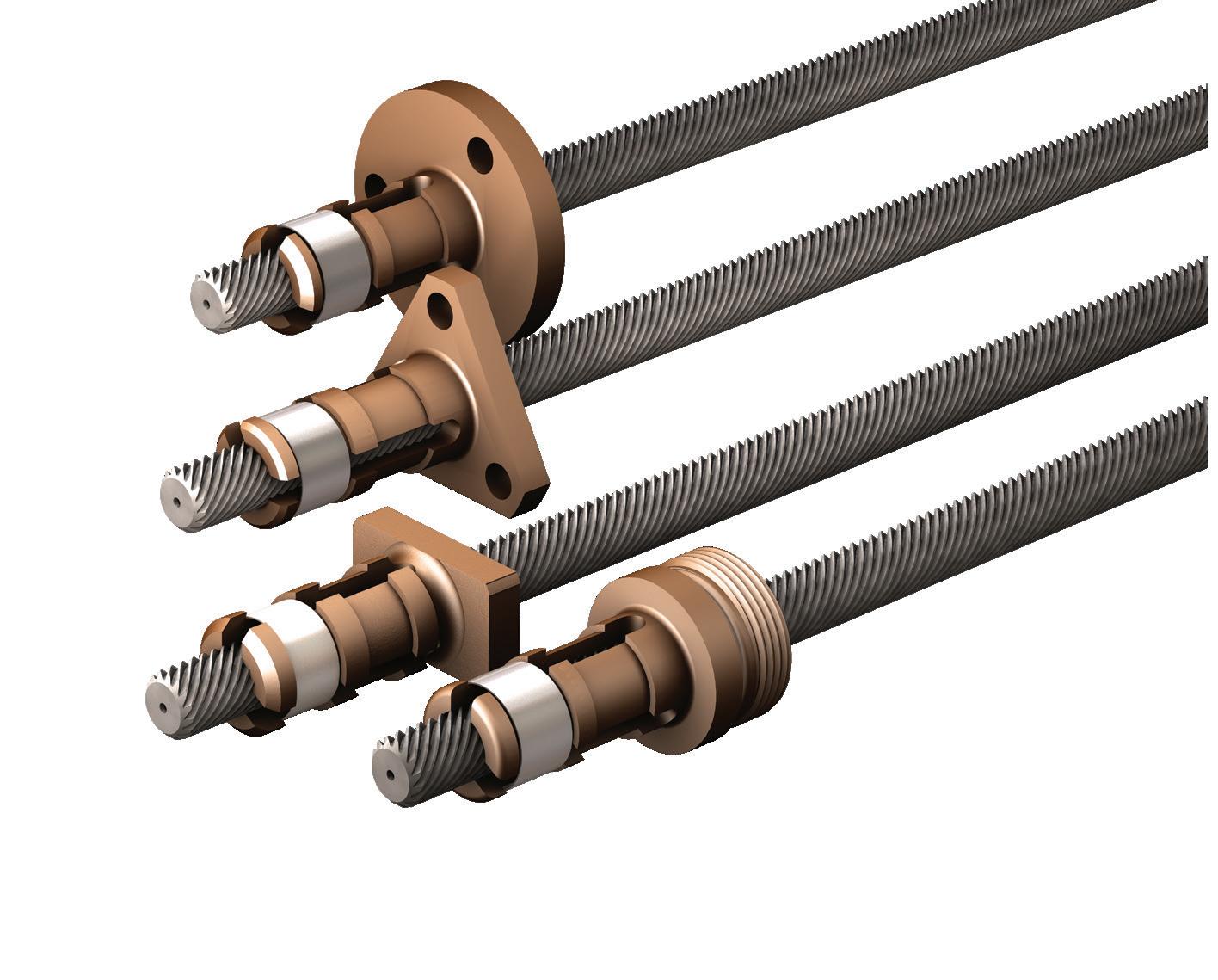
In the third episode of our popular Travel for Engineers series , Design World ’s Editorial Director Paul Heney chats with Lisa Eitel , Executive Editor, a longtime expert on motion control components. Lisa explains some of the linear motion products she regularly encounters while aboard planes, and they even discuss some of the interesting technology you can find in — of all places — vending machines at your friendly neighborhood airport. Plus, check out their tips on how to stay sane on even the longest flights!
EDITORIAL
VP, Editorial Director Paul J. Heney pheney@wtwhmedia.com
Digital Production Specialist Elise Ondak eondak@wtwhmedia.com
WEB DEVELOPMENT
Web Development Manager B. David Miyares
Networked safe torque off arrives for MDR conveyors
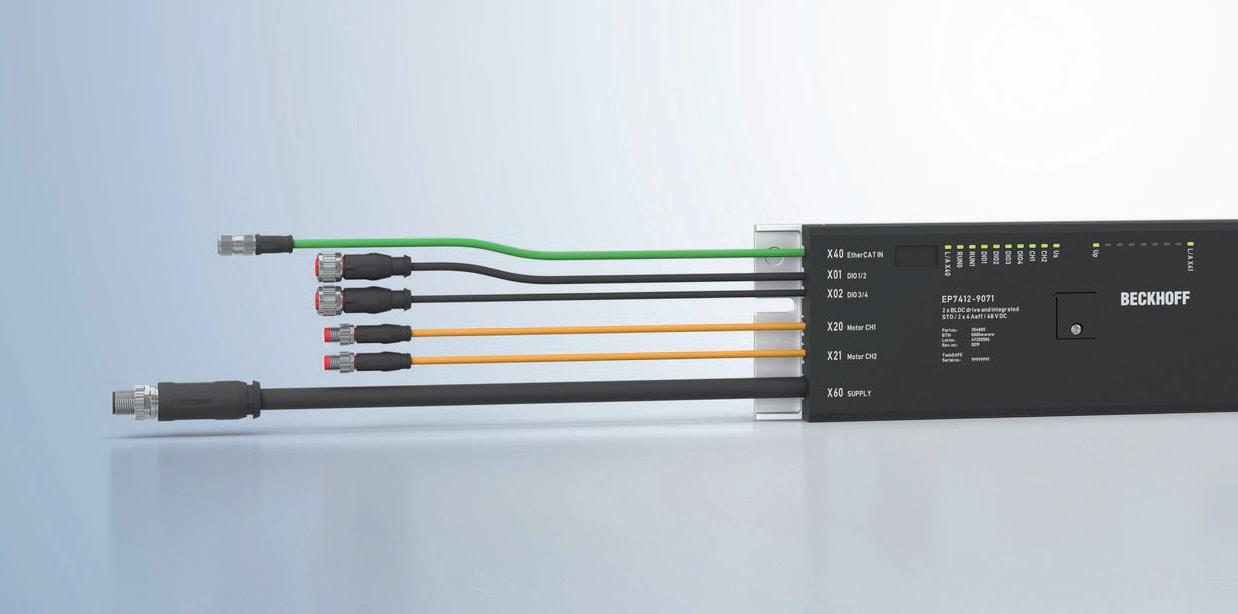
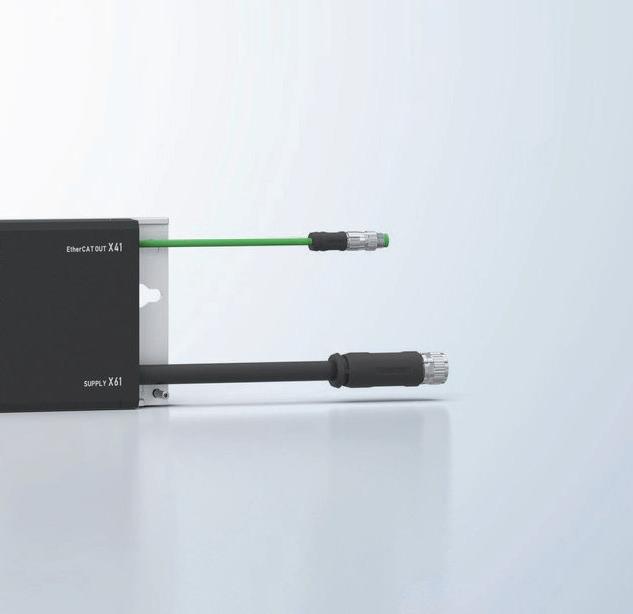
Zone-based motor-driven roller (MDR) conveyors have become a standard workhorse of e-commerce fulfillment and intralogistics, but two constraints continue to dictate how machine builders design them: the limits of traditional fieldbus networks, and the cost and complexity of layering safety functions onto distributed motor control. A new EtherCAT Box from Beckhoff takes aim at both.
The EP741x MDR controllers are IP54-protected, conveyor-mounted EtherCAT I/O modules built on the established EP7402 EtherCAT MDR Controller Box. They provide sensorless control of bldc motors in the 24 to 48 V range and support motorized rollers and flat ”pancake” motors from any manufacturer. That vendor-neutral approach aims to simplify engineering
and reduce spare parts inventories. Running at 48 V allows higher conveyor speeds and longer cable runs without voltage sag. Two channel-count options are offered: the 2-channel EP7412 and a cost-optimized 4-channel EP7414.
Powered MDR conveyors deliver efficiency gains through zone-based operation, but those gains have historically been limited by fieldbus performance. Networking the controllers over EtherCAT enables sub-millisecond update rates and nearly unlimited network size, with no restriction on line topology and no performance penalty on branching.
The fully cascadable IP54-plus housing uses integrated cables with standardized M8 or M12 connectors to help reduce wiring errors and shorten installation time. A reduced installation
depth also allows direct mounting inside conveyor rail profiles, which is useful in space-constrained layouts.
The safety implementation is the more notable departure from convention. According to Beckhoff, the EP741x is the first MDR solution to offer Safe Torque Off (STO) networked via Safety over EtherCAT (FSoE).
Conventional MDR controllers meet emergency-stop requirements by shutting down the module’s entire power supply. The EP741x-9071 takes a different route: it safely disconnects the motor power stage internally without cutting power to the module itself. Because the control electronics’ logic voltage stays up, the system retains visibility of input states, motor data, and safety diagnostics while remaining in a safe state. For maintenance and
uptime, the difference means that engineers see exactly what’s happening in a stopped zone rather than losing diagnostic visibility when it trips.
Networked STO over FSoE also enables a decentralized safety architecture. Users can define individually controlled safety zones within a single EtherCAT network, which increases modularity and eliminates the need for additional safety components or parallel wiring runs. For lower-risk applications, the company offers cost-optimized 2-channel and 4-channel variants without the safety functionality (EP741x-0071).
Taken together, the EP741x packages networked safety, vendor-neutral motor control, and EtherCAT determinism into a single module, addressing the conveyor-system bottlenecks machine builders are being asked to solve on shorter timelines. DW
beckhoff.com
POWER TRANSMISSION RETAINING DEVICES & maintenance & assembly tools
WHITTET-HIGGINS manufactures quality oriented, stocks abundantly and delivers quickly the best quality and largest array of adjustable, heavy thrust bearing, and torque load carrying retaining devices for bearing, power transmission and other industrial assemblies; and specialized tools for their careful assembly.
Visit our website–whittet-higgins.com–to peruse the many possibilities to improve your assemblies. Much technical detail delineated as well as 2D and 3D CAD models for engineering assistance. Call your local or a good distributor.
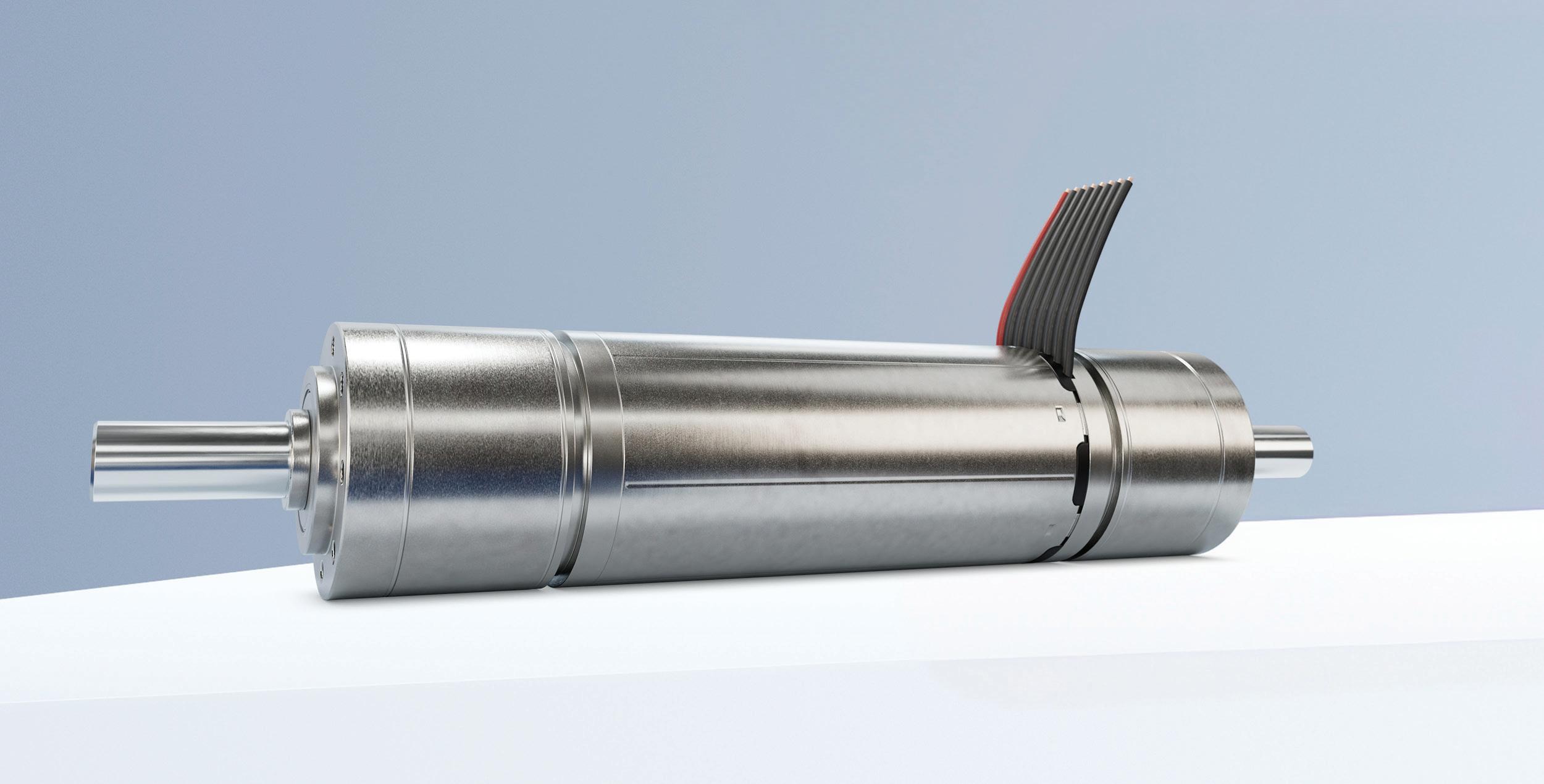
Conveyor belts and the wheel drives of autonomous mobile robots share a common engineering challenge: delivering synchronized, dynamic motion in installation spaces that keep getting tighter. A new drive system from Faulhaber aims to address that constraint by combining two planetary gearheads with a single brushless motor, allowing one drive to produce two synchronous movements.
The DualGear system pairs the company’s BX4 brushless 32 mm motor with two GPT-series metal planetary gearheads — one mounted at each end of the motor. For machine builders, the practical implication is that a single drive and a central control can replace what would otherwise be two separate motors and two control channels. That reduces integration effort, optimizes installation space, and lowers system cost.
The base motor is offered in two lengths, 42 mm and 68 mm, allowing the drive to be sized to performance and packaging requirements. Hall sensors with sine/cosine output signals enable precise rotor position detection for commutation and positioning. Paired with an external motion controller, the system supports accurate positioning while maintaining torque density in a compact form factor. The GPT planetary gearheads are available with up to three stages, giving engineers flexibility to dimension speed and torque ratios for the specific application. Construction uses only welded joints, with no adhesives, which the company frames as supporting reliability and durability. Faulhaber identifies two target applications: conveyor belts and the compact wheel drives of autonomous logistics systems. The company
describes the DualGear as a highperformance and economical solution for intralogistics environments where space is limited, and frames the value of two synchronous outputs from one drive as enabling new approaches to efficient, simple system architectures in the next generation of conveying and intralogistics systems.
For design engineers, the DualGear adds another option when an application calls for two coordinated outputs from a single, compact drive unit. DW
Faulhaber faulhaber.com
Physical AI cuts spacecraft simulation from days to seconds
Northrop Grumman is integrating artificial intelligence across its space systems product lifecycle, and the company says engineering work that once took years now takes hours. The announcement presents AI as a layered capability that the company is rolling out with strategic partners, led by one concrete technical milestone.
That milestone is plume impingement analysis, which requires computationally expensive simulation and governs whether a mission succeeds. Working with Flexcompute and using NVIDIA’s PhysicsNeMo platform, Northrop Grumman developed an AI foundation model that predicts the interaction between a thruster’s exhaust plume and surrounding spacecraft surfaces. According to the company, the model produces accurate results in seconds rather than days, reducing this aspect of product development by a factor of 100.
The plume impingement work is part of a broader strategy — what Han Park, VP of AI integration for Space
Systems at Northrop Grumman, calls “a path towards superintelligence for aerospace,” meaning systems that can assist in development and enhance space operations at speeds beyond human capability.
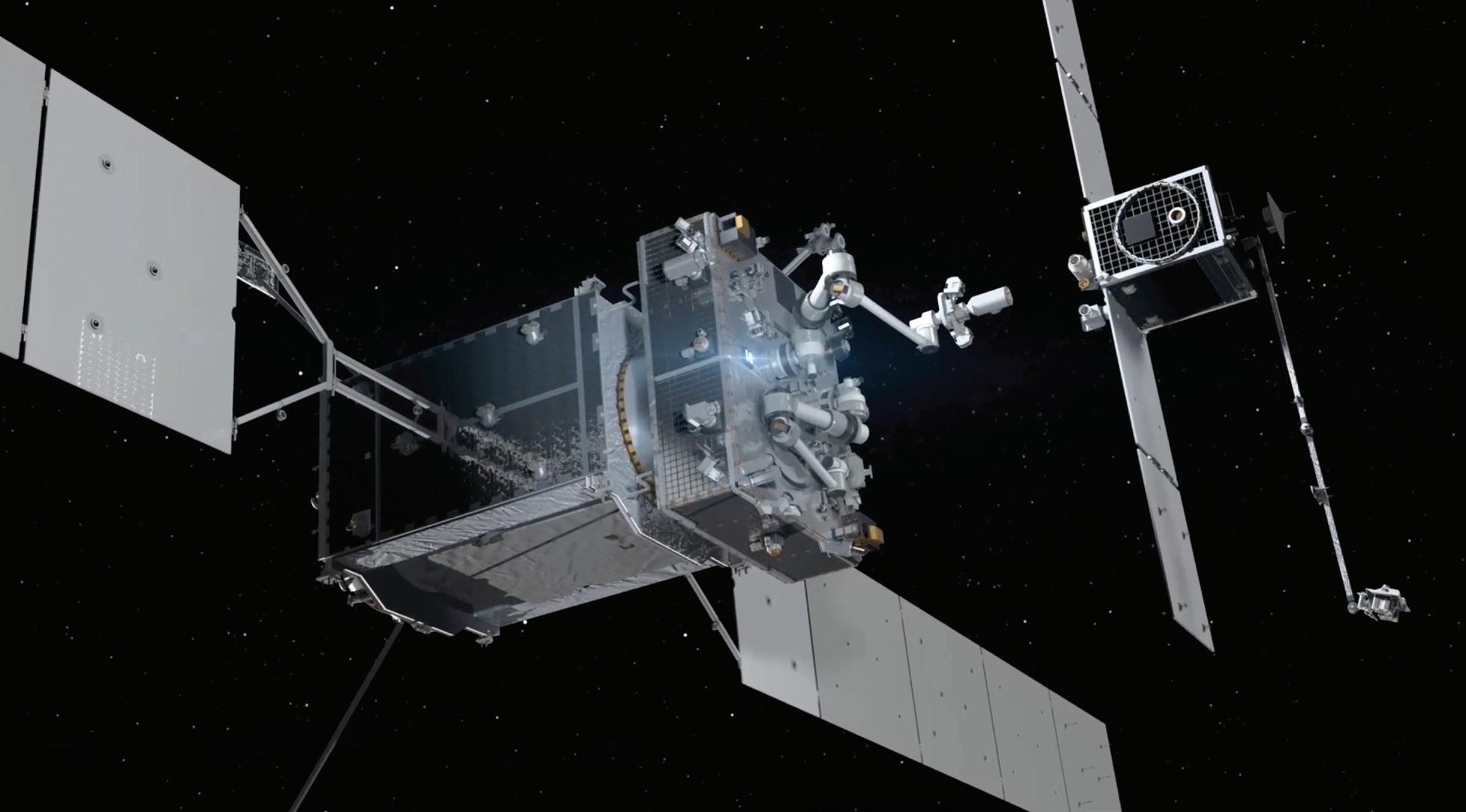
The context for this push is the company’s recent flight history. Over the past five years, the company contributed 7.2 million pounds of thrust to support humanity’s return to the lunar vicinity, delivered its largestever cargo load to the International Space Station, performed the first and only life extension of a commercial satellite via on-orbit servicing, and supported the most powerful space observatory ever built.
The takeaway for engineers is that the company is not treating AI as a point tool, but as a capability threaded through design, analysis, and operations. DW
Northrop Grumman northropgrumman.com
Harwin’s connector products are proven to perform in extreme conditions, with shock, vibration and temperature range rigorously tested. WITH OUR QUALITY, SERVICE, SUPPORT, AND HIGHLY RELIABLE PRODUCTS, YOU CAN DEPEND ON HARWIN.
EDITED BY MIKE SANTORA
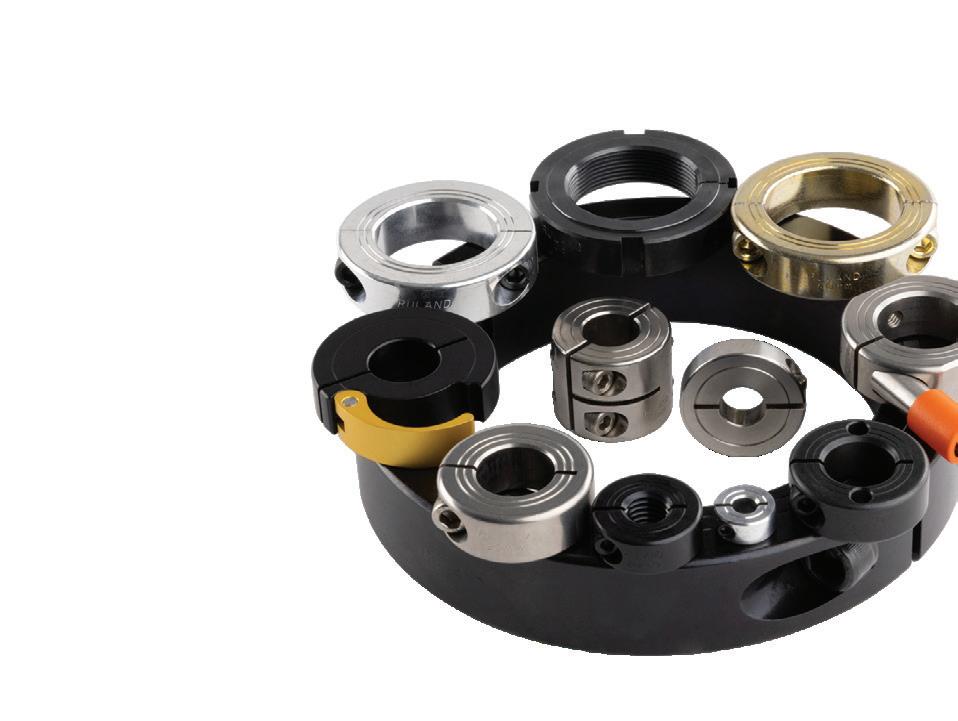
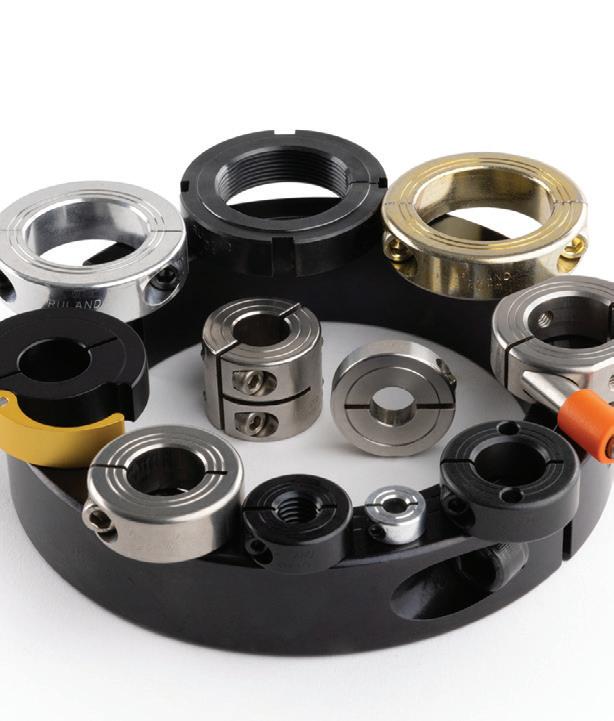
How one small substitution cost a customer more than $30,000
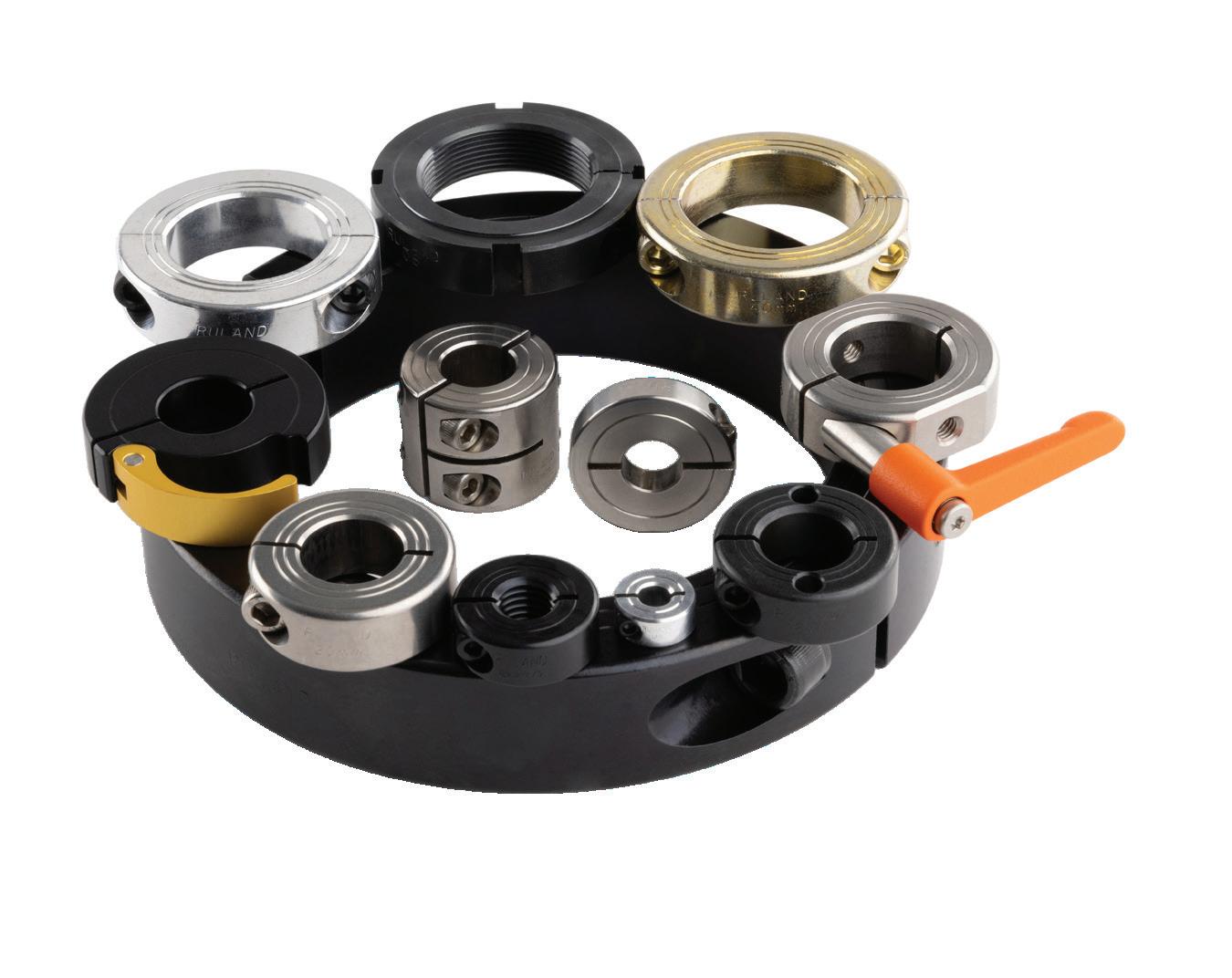
In high-performance automation systems, even the smallest components can carry significant weight. That’s a lesson one U.S.-based OEM learned the hard way when shaft collars — believed to be Ruland parts — began causing failures on packaging machines using linear actuators deployed at customer sites across Asia.
The parts matched the engineering drawing, which still listed Ruland as the source. But when the machines began malfunctioning in the field — drifting out of alignment, requiring emergency servicing, and prompting panic from end users — the OEM turned to Ruland for answers. What they uncovered was a small substitution with major consequences.
A misidentified shaft collar, a real-world failure
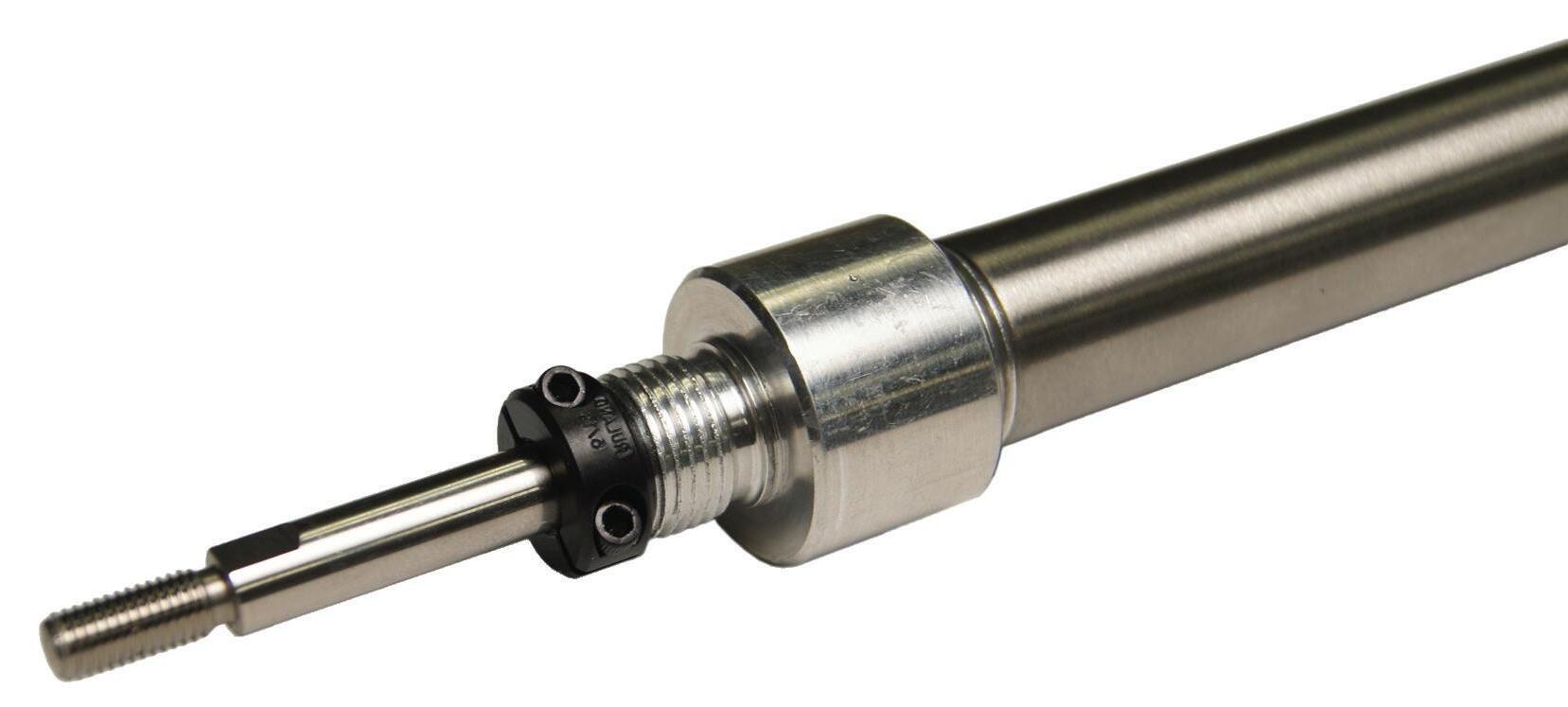
The problem surfaced when shaft collars began “walking” down the shaft during use, causing the actuator’s stroke to overshoot its intended limit. These collars weren’t used as hard stops, but rather as precise axial reference points. The moment the actuator reached the collar, it would reverse — meaning even small shifts in the collar position could throw the system out of spec.
When the OEM reached out to Ruland, the support team immediately noticed something was off: the collars had no bore size or manufacturer stamp. Ruland includes both on every shaft collar it ships, precisely for situations like this — ensuring
Without part markings to confirm their origin, the Ruland team turned to the application details. It was there that the issue became clear.
Diagnosing the problem: The face of the matter
Ruland engineers asked how the collars were being used, and the customer explained their role in referencing the actuator stroke. In that type of setup, the face of the collar must be precisely perpendicular to the bore. Without that, the actuator meets the collar at an angle, creating uneven pressure on the shaft. That slight imbalance can cause the collar to move, or “walk” with each cycle of the actuator. That’s exactly what was happening.
The off-brand collars lacked precision facing — a standard operation on all Ruland collars used in axial applications. Ruland machines the face to within 0.002-in. (0.05 mm) of perpendicularity to the bore and marks the working face with a groove to clearly indicate the correct orientation.
“We precision-face our shaft collars to TIR ≤ 0.05 mm (0.002-in.) for this reason,” said Chris Gumas. “While shaft collars are viewed as commodity-type
components, this is a clear example of why they are not.”
Without that level of precision, the substituted part simply couldn’t perform in a motion-critical role. Over time, as the actuator continued to contact the collar at an angle, it pushed the part out of position, eventually leading to failure.
A $30,000 Mistake
Armed with this insight, the customer conducted lab testing and quickly confirmed Ruland’s analysis. When they reproduced the application using the substituted collars, the failures occurred. When they used genuine Ruland collars, the system performed flawlessly.
Unfortunately, the real damage had already been done.
To identify and address the issue, the OEM had to fly engineers to multiple Asian customer sites on short notice — a scramble that racked up tens of thousands of dollars in travel, labor, and component replacement costs. In total, the event cost the company more than $30,000 in direct expenses, all stemming from a decision to substitute a low-cost part.
The source of the problem was traced back to a distributor who had approached the OEM’s purchasing team with a lower-cost “equivalent” to the Ruland collar. Without engineering review, the buyer approved the substitution. It wasn’t until field failures occurred that the true cost of the decision became apparent.
The buyer was let go. The distributor was blacklisted. And the company updated its internal processes to ensure that engineering must approve any part substitution going forward.
The
value of engineering-grade components
The customer responded quickly and decisively — not just fixing the issue, but reevaluating how they manage component specifications. Ruland is now the exclusive specified supplier for shaft collars at the company, and the engineering team gained a deeper appreciation for the role that highprecision components play in motioncritical systems.
“This story highlights what we believe at Ruland,” said Chris Gumas. “Ruland parts are not cheap, and we know this. The value of a Ruland part is not in our ability to provide the lowest overall cost; it is our ability to provide the most value. In this story, there are three things we do that no one else does: stamp our name and
bore size on the part, precisely control face-to-bore perpendicularity, and include the groove identifying the work surface of the collar. These are not our only differentiators, but in a critical application like this, the Ruland collar does not fail. The cost savings on a shaft collar are trivial compared to the tens of thousands of dollars this customer had to spend to fix the error.”
The case serves as a reminder that component performance isn’t always obvious on the surface. Shaft collars may seem like low-priority hardware, but when used in linear motion systems, precision matters — and cutting corners can be far more expensive than investing in quality upfront.
In mechanical design, every detail matters — even the ones that look simple. Precision facing may sound like a small feature, but in real-world applications, it can mean the difference between system stability and costly failure.
For this OEM, a well-intentioned substitution resulted in a $30,000 mistake. For others, it’s a reminder: when your application depends on precision, make sure your components are built to deliver it. DW
Ruland ruland.com
Interpower country-specific cord sets plug directly into the wall socket while the other end, bearing an IEC 60320 connector, plugs into an Accessory Power Strip’s IEC 60320 inlet. The APS contains multiple IEC 60320 outlets allowing IEC 60320 jumper cords to connect to multiple devices. Popular APS choices are 4–12 Sheet F outlets or a Sheet F and Sheet J combination. No reconfiguration is needed as the cords plug directly into the wall and equipment straight out of the box.
Business Hours: 7 a.m.–5 p.m. CST
EDITED BY MIKE SANTORA
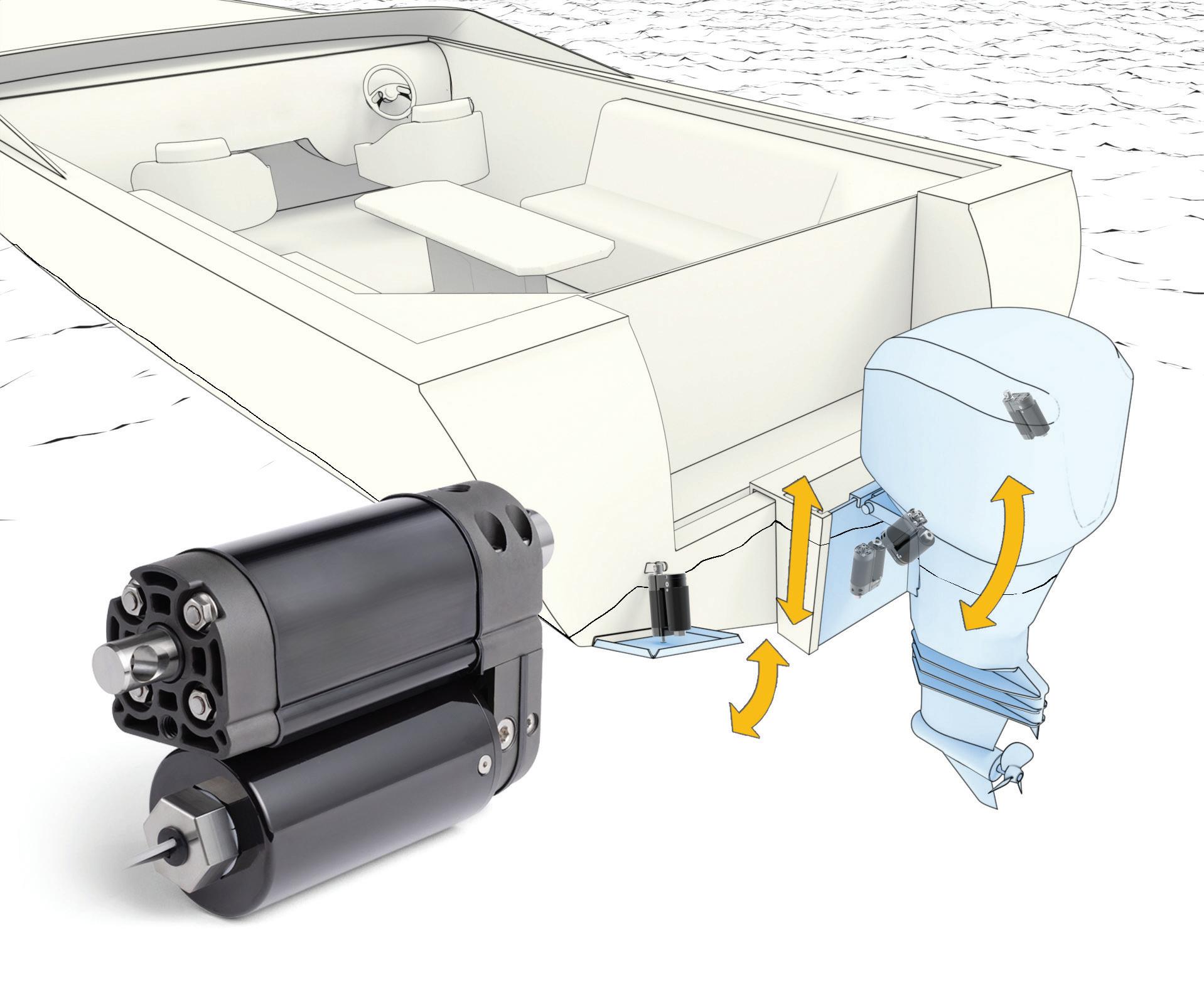
Actuators on board
Whether it is a 16-ft outboard ski boat, a 40-ft fishing boat, a 1,000-ft liner, or most any other motorized watercraft, actuators are likely on board performing critical functions. They are tilting motors, opening hatches, guiding steering, adjusting valves and performing numerous other tasks that contribute to the boat's operation, comfort and aesthetics.
Historically, hydraulic cylinders provided the muscle for marine operations and remain essential for many applications. But, as motion engineering advances, new technologies are delivering cleaner, simpler and more compact electrohydraulic and electromechanical alternatives. Determining which is best for your marine application requires a look at your essential requirements and the actuation technologies available to meet them.
Marine application needs
In addition to the ability to carry a payload, marine actuators need protection from external forces, including water pressure generated as the craft moves ahead, steers or sits still amid waves. They must also be able to survive shock from collisions with objects and avoid corrosion. Marine actuators must also be compact to fit limited space and, increasingly, intelligent enough to support digital transformation strategies.
Resisting water pressure
A useful guide for assessing the water-resistance capabilities of marine applications are the Ingress Protection (IP) ratings published by the International Electrotechnical Commission in IEC 60529. These provide a 2-digit “IP” code that rates
the ability of electrical and electronic devices, including actuators, to resist dust and liquids. (Figure 1) The first digit of the code rates dust ingress, which, while not as important an issue for marine applications, remains relevant for the overall robustness of the craft, so we’ll assume the highest level of dust protection, level 6. An “X” here would signify that the product has not been tested for dust.
The second digit, which rates resistance to liquids on a scale from 0 to 9, is very relevant to marine actuators. It certifies a device's resistance to various forces that may
INGRESS
IP61 Dripping water
be present in marine environments. A trailing “X” is not an official IP code identifier but often denotes a particularly high protection. A “K” indicates that the testing applies to road vehicles as well, which would be relevant for amphibious vehicles.
The IP scale is the most widely used method for rating water ingress. Others include the American Society of Testing and Materials (ASTM), National Electrical Manufacturers Association (NEMA), the International Organization for Standards (ISO), the American Boat and Yacht Council (ABYC), and the US Coast Guard (USCG).
IP62 Dripping water on a tilted device
IP63 Spraying
IP64 Splashes
IP65 Protected against low-pressure water jets from any direction. Limited ingress permitted.
IP66 Protected against ingress and more powerful water jets through a 6.3mm (0.25in) nozzle, while operating
IP66K Water jets through a 6.3mm (0.25in) nozzle with elevated pressure
IP67 Dynamic Immersion up to 1m (3 ft 3 in) for up to 30 minutes, while operating
IP67 Static Immersion up to 1 m (3 ft 3 in) for up to 30 minutes, while powered down
IP68X Dynamic Immersion up to 1 m (3 ft 3 in) for more than 30 minutes while operating, as agreed to by the vendor and user
IP68X Static Typically, immersion up to 1 m (3 ft 3 in) for more than 30 minutes, while powered down. Due to user-defined test parameters, deeper immersions or longer durations may be tested.
IP69K Close-range, high-pressure, high-temperature spraydown; does not include immersion. “K” indicates that it has also been tested for road vehicles.
FIGURE 1. Ingress Protection Codes. The first digit indicates resistance to dust; the second digit indicates water resistance, which is more of an issue in marine applications. Thomson Industries.
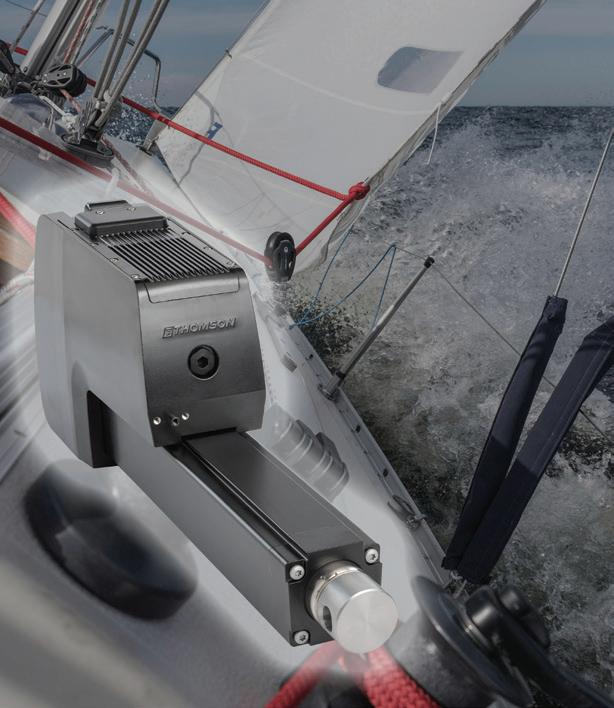
FIGURE 2. This electrohydraulic actuator from Thomson can handle loads of up to 21,350 N (4,800 lbs.), withstand substantial shock loading, and operate underwater. Thomson Industries.
Although IP65 can withstand some water exposure, IP66 may be more suitable for marine applications. The IP level that best suits your application depends mainly on the motion profile, actuator characteristics and whether the unit will operate above or below the waterline. We’ll examine these in more detail in the next section when we evaluate actuator technologies.
Shock loading
Shock loading is another external force that could affect an actuator in a marine environment. It can, for example, result from unexpected contact with a log, rock or mooring. IP ratings do not address shock, which is primarily a mechanical issue. It can be measured by attaching instruments such as accelerometers, strain gauges and pressure transmitters.
Corrosion resistance
Corrosion is an ever-present threat to marine craft, mostly from saltwater
immersion or exposure to salty air, high humidity and splashes. It mainly depends on the materials and coatings used for the actuator housing. Although water ingress can impact corrosion, it is not addressed by IP ratings but instead covered by other standards groups, such as the ASTM. (Corrosion Standards and Wear Standards - Standards Products - Standards & Publications - Products & Services).
Compactness
The space on any water-going vessel is minimal, so the smaller the application unit, the better. Actuators differ in the footprint required to support the hydraulic system and communications as well as the size of the housing itself.
Like most industries, the marine industry is undergoing a significant digital transformation, becoming increasingly sophisticated in gathering and leveraging operational data to
Interpower Accessory Power
Strips (APS) are perfect for multiple IEC 60320 jumper cords for smooth integration. Country-specific cords can be terminated with an IEC 60320 connector such as a C13 or C19 to mate with a C14 or C20 inlet in the APS. Now you can plug IEC 60320 jumper cord sets into the APS to power multiple devices— the jumper cord set contains an IEC 60320 plug connector on one end and an IEC 60320 outlet on the other end. Made in the U.S.A.!
E-mail: info@interpower.com
Business Hours: 7 a.m.–5 p.m. CST Order Online! www.interpower.com
reduce costs, improve efficiency, and comply with safety and environmental standards.
Evaluating actuator technologies
Three actuation technologies address the above needs: hydraulic cylinders, electrohydraulic actuators and electromechanical actuators.
Hydraulic cylinders use the incompressibility of hydraulic fluid to translate rotary motion from a motor into linear motion. They use a centralized motor-driven pump system to push hydraulic fluid to extend and retract the pistons in the cylinders. Supporting this process requires an infrastructure of fluid reservoirs, pumps, hoses, and valves. Hydraulic cylinders are designed for challenging environments. They
can handle high load requirements with a relatively small cylinder and can withstand high shock loads.
Electrohydraulic actuators integrate a self-contained hydraulic actuation unit in the space-efficient form factor of an electric actuator. They also use motorized pumps to deliver hydraulic fluid to the application points but on a much smaller scale.
Electrohydraulic actuators can handle loads of more than 20,000 N (4,497 lbs.) and have substantial shock handling. They can be specified for underwater and high-pressure environments, providing protection comparable to that of hydraulic cylinders. (Figure 2)
ai175146660980_JSXawADPrint Ready.pdf 1 7/2/25 10:30 AM
Electromechanical actuators use ball or lead screws and gearing systems
to convert rotary motion from a motor into the linear motion needed to move a payload. They can handle loads up to 25,000 N (5,620 lbs.) but have limited shock resistance and cannot operate underwater.
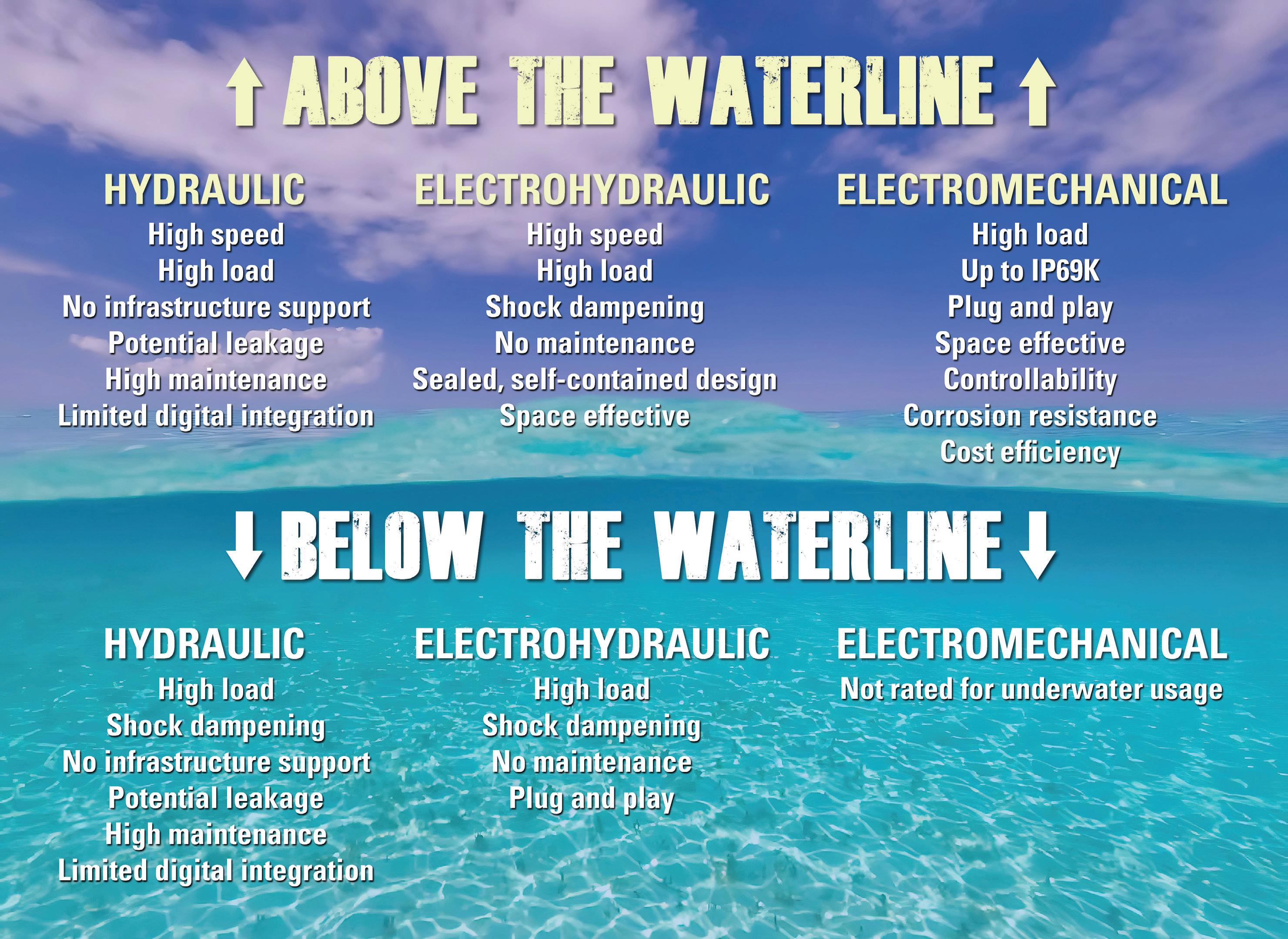
Each type of actuator has different strengths and weaknesses depending on whether it is operating above or below the waterline.
Actuators above the waterline
On deck, in cabins, cabinets or otherwise controlled environments above the waterline, actuators perform numerous functions. They adjust hatches, covers, telecommunication masts, canopies and door locks. They open and close windows, control booms and bilge pumps, and extend boarding
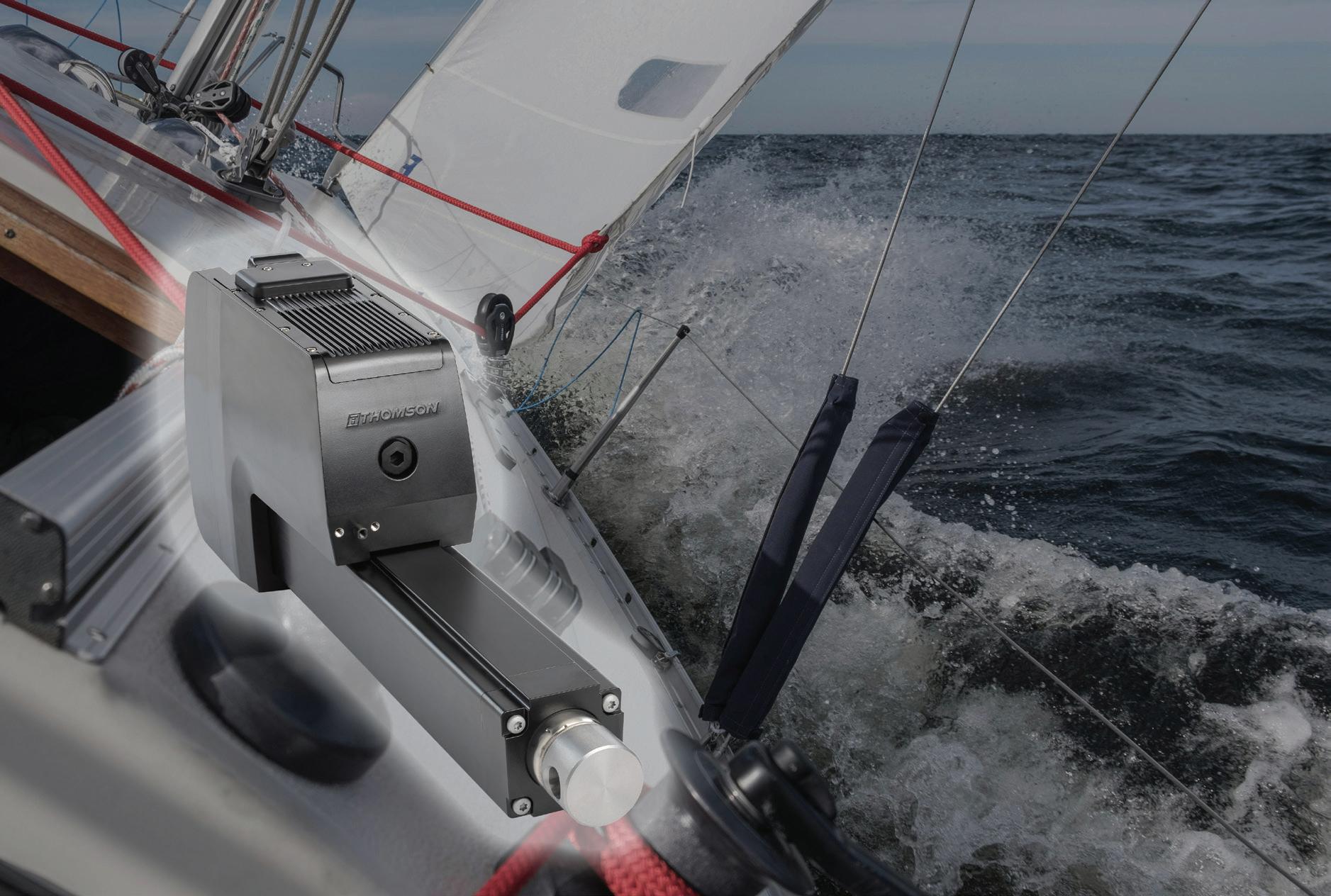
FIGURE 3. When water sprays and splashes find their way aboard a marine vessel, electromechanical linear actuators such as the Thomson Electrak XD are ideal. Thomson Industries.
ramps. Any of this might be subject to water splashes and spray downs, which would require an IP rating of at least IP65 or equivalent. Still, good practice calls for compliance at least one level above the minimum, so designers usually specify at least IP66 or equivalent protection. Technically, hydraulic cylinders, electrohydraulic actuators and electromechanical actuators can be used above the waterline.
Hydraulic cylinders above the waterline
Designers traditionally specify hydraulic cylinder-based actuation systems above the waterline for high load applications. A centralized pump architecture also enables higher speeds. Implementing more capability than you need could also have the drawbacks discussed earlier, including the need for a higher-footprint support infrastructure, potential leakage, maintenance issues, and limited ability to integrate digitally.
Electrohydraulic actuators above the waterline
Electrohydraulic actuators provide high load handling density, especially
when compared to the infrastructure need to support hydraulic cylinders. A Thomson electrohydraulic actuator with a 12-in. stroke length, for example, can handle up to 21,350 N [4,800 lbs.], including resisting water pressure and absorbing shock. Using self-contained pumps instead of gears enables higher speeds.
But as with hydraulic cylinders, electrohydraulics may provide more load handling capability than is needed above the waterline, leaving electromechanical actuators as the most cost-efficient solution there.
Electromechanical actuators above the waterline
Electromechanical actuators such as Thomson Electrak XD are also available with an IP66 rating, which covers sprays and splashes and does not require a support infrastructure. (Figure 3) Plus, their compact plugand-play structure makes it very easy to integrate with other actuators or applications. They need only a few wires to connect to the power supply and a digital communications network, such as a CAN bus.
And if the application calls for heavier load handling,
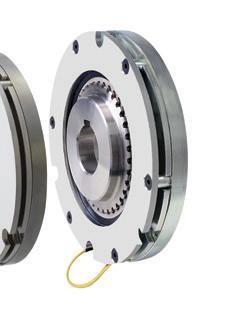
BXR Brakes
•Up to 480 in-lbs static
•Up to a 1.125'' bore
•19 watts or less
• Very thin profile reduces weight & saves space
• Modified–Standard brakes available for special needs
• 1000’s in use world-wide
electromechanical actuators can be designed for loads exceeding 25,000 N (5,620 lbs.) provided there is minimal risk of shock loading and that high speeds are also not required. Speed is limited by the capabilities of the mechanical gearing system that translates motor torque into speed.
Also, if the application will be subject to high-pressure, high-temperature water jets, as might be used in flooding or cleaning, electromechanical actuators are available with IP69K ratings.
Corrosion resistance above the waterline
Corrosion resistance above the waterline is primarily a function of
exposure to spray, splashing and salt air. Electromechanical actuators composed of or coated with brass or zinc would tend to be adequate for most applications above the waterline.
Space efficiency above the waterline
Space will almost always be a premium on a watercraft, and because actuators are likely to be enclosed further in cabins, cabinets and other enclosed spaces, the smaller the unit, the more cost effective it will be. While hydraulic cylinders themselves are very compact, their infrastructure requires a centralized reservoir and pumping station for that fluid, which can take up
FIGURE 4. The position of marine applications plays a significant role in determining which actuation technology is most suitable. Thomson Industries.
valuable space. Both electrohydraulic and electromechanical actuators, on the other hand, take up considerably less space.
Actuators below the waterline
Below the waterline, actuators must resist external forces from the added water pressure, which can also include shock loading. Applications include trim tabs to control the angle of the boat hull in the water, as well as ballast tank valves, mooring hatches or underwater propulsion control.
Actuators with IP ratings of IP67, IP68 or equivalent are essential below the waterline. The exact depth and times that these actuators can be submerged are subject to test protocols established between users and equipment suppliers. A typical test protocol for an IP67 dynamic actuator, for example, might call for proof that it can be submerged in a meter of water for up to 30 minutes, while IP68 dynamic actuators would be tested for even longer submergence.
Actuators rated IP66 static can be used underwater, such as supporting a table or holding a door open, and can be submerged indefinitely if they are not powered. Otherwise, an IP67 or IP68 equivalent rating is required. Only hydraulic cylinders and electrohydraulic actuators can be submerged. Electromechanical actuators cannot be used below the waterline.
Hydraulic cylinders below the waterline
When the application load, including both the payload and external force, exceeds 21,350 N (4,800 lbs.) and there is considerable potential for shock, hydraulic cylinders traditionally deliver the best performance. This would, of course, require all of the trappings discussed earlier, including the infrastructure, messiness and limited digital connectivity.
Electrohydraulic actuators below the waterline
For loads requiring moderate to high load handling, e.g., in the 20,000 to 30,000 N (4,497 to 6,744 lbs.) range, consider using electrohydraulic actuators. They can do most anything a hydraulic cylinder can, including substantial shock handling, don’t require an elaborate support infrastructure and plug easily into a digital network.
Corrosion prevention below the waterline
Applications below the waterline are the most susceptible to corrosion. Although materials such as bronze and zinc help reduce corrosion, the most effective protection comes from a housing composed of 316 stainless steel, which maintains its integrity for many years without coating.
Getting the optimal actuator for your marine application depends heavily on whether it will be used above or below the waterline. Above the waterline, a high-quality electromechanical actuator with an IP66 rating would handle most applications with loads up to 25,000 N (5,620 lbs.), including external forces. Anything above that payload may require a hydraulic cylinder with a full support infrastructure, maintenance requirements and limited interconnectivity, or an electromechanical actuator built from very large components, which is cost-prohibited based on size constraints.
Below the waterline, an electrohydraulic actuator could handle loads of 20,000 N (4,497 lbs.) or more and provide substantial shock protection without needing hydraulic infrastructure, maintenance or connectivity. Regarding corrosion protection, actuator housings made of zinc and brass would be adequate above the waterline,
but 316 stainless steel housings would last the longest beneath the waterline without any coating.
Of course, every application is different, especially when water is involved. It has a way of finding its own unexpected path. Working closely with actuator vendors is critical to ensure you are all on the same page regarding the application's requirements, and using online tools such as Thomson Motioneering Tools helps refine your choices and finalize calculations. Following these procedures will help keep your motion applications shipshape. DW
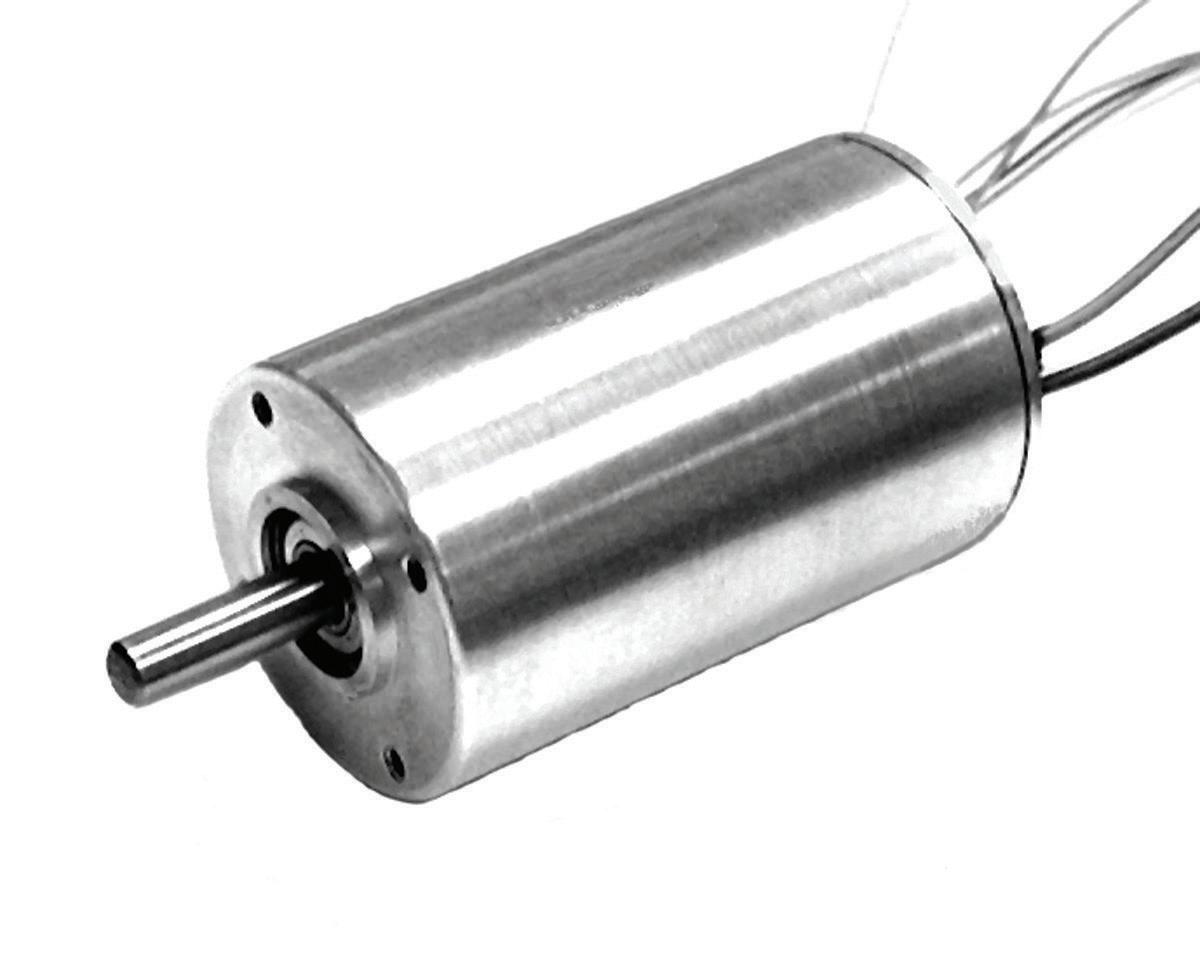
Brushless Motors
Solid or hollow shaft, high performance, housed and frameless, brushless motors and matching drives for demanding applications.
Hall or sensorless motors and drives for surgical tools, aerospace, military, and scientific instrument applications. Custom drive programing and designs available. Motors up to 95% efficient, power up to 1,500 watts.
Highest power density in the industry.
Operating temperatures from -73C to 150C
Slotless and slotted designs. Available with encoders and gearheads and separate or integral electronics.
Quantities 1 to 5,000.
www.koford.com Contact us at mail@koford.com
CHRIS THOMPSON • MATERIAL HANDLING AMERICAS · FMH CONVEYORS
CONVEYOR LAYOUTS
EXPANSION THAT SUPPORT AUTOMATION
& FUTURE
Customizing a conveyor layout to both current and future needs requires adaptability.
Modular components, automation technologies, and capacity buffers can ensure a given layout will work for requirements that may change over time.
Scalable conveyor layouts can be easier to install and configure — and simpler to break down and rearrange as needs change. They can also meet future requirements without burdensome inefficiencies in the present.
The following are best practices for designers and system integrators aiming to engineer conveyor layouts for maximum applicability and efficiency over time.
Analyze current and future needs. A given conveyor system must be able to meet the needs of the current facility without excessive energy consumption, electrical load, or sprawling over the factory floor. A detailed analysis of the functions, advantages, and limitations of each conveyor system can help highlight changes that will be more effective for the design’s future.
Aim for simplicity. The simplicity of a conveyor design can determine ease of use and long-term efficacy. Future capacity is important but doesn’t
necessarily follow with complexity. Some conveyor layouts are unnecessarily complicated, creating problems such as too many bends that increase the risk of bottlenecks, higher installation costs, or increased maintenance and repair needs over the equipment service life. In contrast, simple designs serve as a streamlined pathway for production, sorting, and shipping — helping everything reach its destination with the fewest obstacles.
Use a modular design. Modular conveyor systems tend to be functional, effective, and durable. Using components that fit well together (regardless of their exact arrangement) simplifies the work of customizing a fit for each application without compromising output efficiency. Flexible conveyor systems let warehouse teams accommodate changing requirements with little time or need to add extra parts. They’re also generally easier and faster to install with minimized risk of damage during setup.
Adobe Stock
Designers must ensure their conveyor system can reliably cover the required distances … and operate at the speeds necessary to meet facility demands.
FMH Conveyors
Standardize components. Effort to standardize the components of each conveyor can also help to improve future use. Conveyors come with a range of sizes for belts, rollers, and other subcomponents. Standardizing on certain sizes for a conveyor layout reduces the number of spares a
AWad25printready.pdf 1 10/8/25 9:09 AM
warehouse must stock to maintain maximum uptime. Standardized components can also be cheaper to purchase in bulk and are generally easier to procure. If a system relies on a range of proprietary elements in different brands and custom sizes, they may be difficult or impossible
Material Handling
to integrate into the layout as needs change.
Incorporate sensors. The Internet of Things (IoT) offers significant opportunities for efficiency in manufacturing. One IoT function is the ability to monitor movement and progress in realtime. The integration of IoT sensors into conveyor layouts lets facility administrators see movement at a glance and collect data about routine function. In addition, sensors can help detect early signs of malfunctioning rollers, worn belts, or clogged bends so that workers can quickly resolve the problem. This data can also generate useful insights that help facilities streamline and automate processes for greater efficiency.
Integrate accumulation buffers. Efficient systems should generally
operate more quickly than inefficient systems, but it doesn’t always translate into faster movement of materials or boxes. Accumulation buffers are designed to decouple the upstream and downstream flow of materials. By temporarily holding product between processes, accumulation can absorb short stoppages and prevent disruptions from cascading through the entire line. While it may seem as though slowing down would lower efficiency, it can actually improve overall system performance. By keeping materials moving at a steady pace, a minor bottleneck is easier to resolve and less likely to clog the equipment at a rate that could damage products or materials.
Optimize energy consumption. Future-proofing a conveyor layout often means improving energy efficiency to minimize the impact of adding more technology that requires power. Energy consumption can be a growing point of complexity for facility managers, especially in older buildings with limited wattage capacity. The integration of modern technologies (such as intelligent speed controls and zone activation) minimizes power consumption without compromising effective operation. Intelligent power management can reduce operating speed during low demand, while zone activation ensures that only the zones in use consume power. This effort helps to keep the facility operating more sustainably.
Collaborate with other systems. Conveyor systems that tightly integrate with other automation systems can effectively streamline tasks, improve efficiency, and reduce the number of human workers required for each task. Coordination with warehouse management systems enables administrators to centralize production monitoring at a single hub, but the systems must interact effectively with one another. Maximum flexibility and adaptability are key, so that the conveyor layout can continue to work with other technologies over time.
Reserve a capacity buffer. The arc of production trends toward increased output and efficiency calls for a capacity buffer. Designers who fail to anticipate the needs the conveyor will have to meet in a few years increase the risk that the system will be insufficient. The ability to customize a conveyor layout to accommodate a growing number of controls and motors implies the need for greater capacity over time. Adding a buffer of 15 to 20% over the existing electrical and control systems can help to ensure that the conveyor layout continues to work as needed, without putting stress on the existing electrical and robotics systems. DW
It
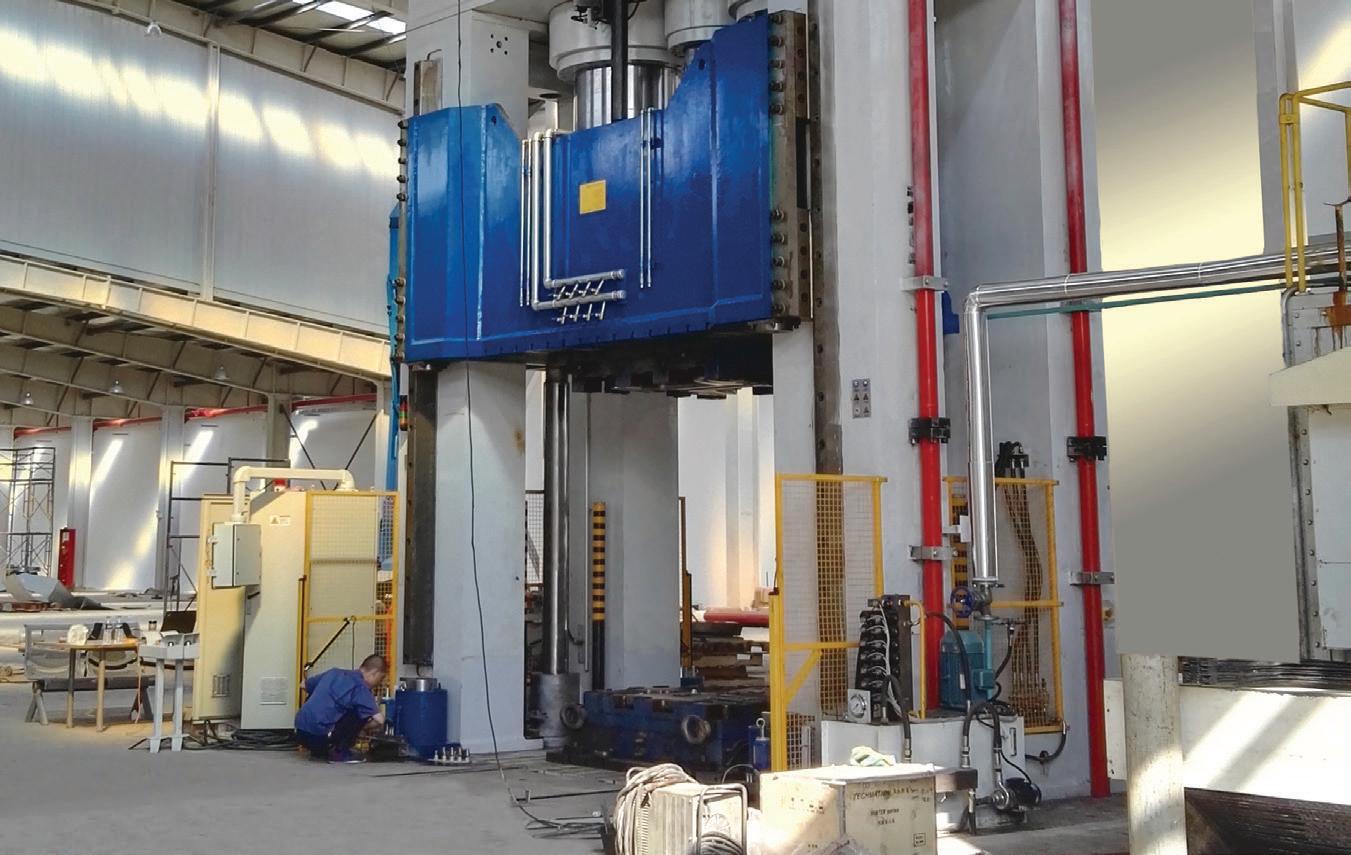
This press applies up to 3,000 tons of force to form composite automobile panels. Delta’s RMC provides multi-axis position and pressure control, ensuring perfect synchronization of every moving part.
Delta RMC motion controllers and graphical RMCTools software simplify complex motion design, making it smoother and more precise.
For the full case study on Wuxi LANLI Machine Tool Co. and other relevant applications, visit our website.
Watch our training videos to see how Delta Motion brings precision and harmony to your application.
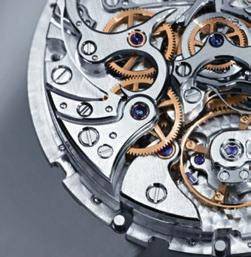
Now it runs like a Swiss watch
Delta RMC Motion Controller Family
FRICTION FLOUR FAILURE AND
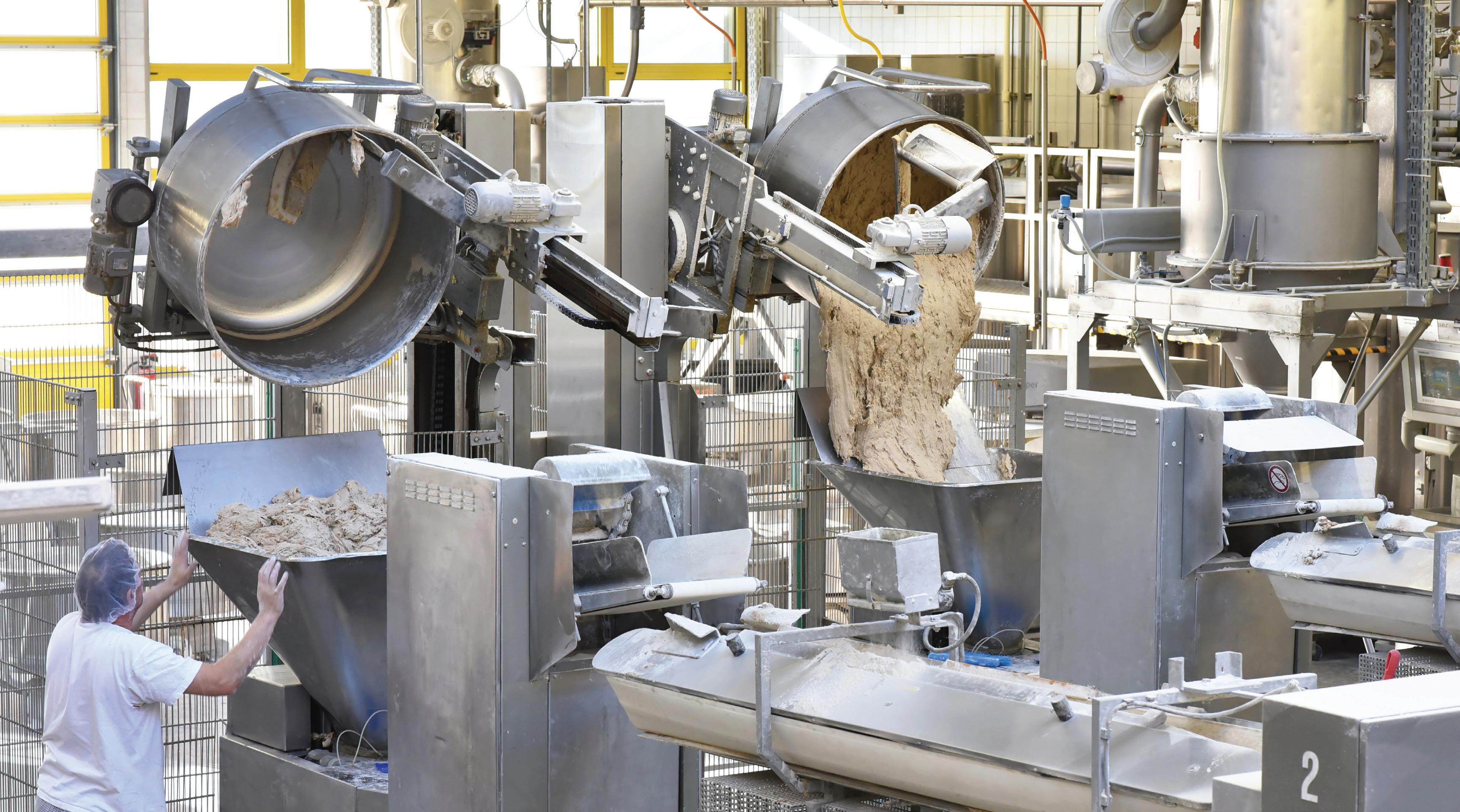
Spend five minutes in a commercial bakery and the environment speaks for itself. Ovens run hot, conveyors rarely stop and a fine layer of flour finds its way onto almost every surface. It’s an environment defined by temperature extremes, contamination, and tight production schedules. In this environment, small mechanical components are expected to perform flawlessly, and that includes industrial bearings. Here, Chris Johnson, managing director of bearing specialist SMB Bearings, explains how selecting heat resistant, sealed bearings can improve reliability in bakery operations.
The scale of the commercial bakery sector makes reliability non-negotiable. According to the Food and Drink Federation, food and drink manufacturing is one of the UK’s largest manufacturing sectors. It contributes over £35 billion annually to the UK manufacturing turnover, which is almost a quarter of the total.
Bakeries represent a significant share of that output. Because of this, high-throughput production, retailer supply contracts, and narrow operating margins leave little room for unplanned downtime.
Reliability isn’t a luxury
So, where do small industrial bearings fit into all of this? Industrial bearings are positioned near burners, within oven conveyors, or adjacent to industrial dryers. They operate under sustained elevated temperatures, conditions that accelerate lubricant oxidation and degradation.
Put simply, as oxidation progresses, grease loses its viscosity and film strength. This weakens the lubricating barrier between the rolling elements and raceways in bearings. Friction rises, and internal temperatures increase further, creating a cycle that rapidly shortens bearing life.
To give a bigger picture, around one-fifth of global energy consumption is used to overcome friction, according to the Global impact of friction on energy consumption, economy, and environment report from the Faculty of Mechanical Engineering, Belgrade. Therefore, tribological losses represent a measurable share of total energy demand in industrial systems.
Production stoppages
Bakeries that view bearing selection through the lens of heat stability, contamination control, and energy efficiency, will reduce disruption and protect both product integrity and margin.
Some bearings are designed specifically for moderate industrial temperatures. But, in many cases, these components only survive a fraction of their intended lifespan
Rotary Bearings
The FDA’s Current Good Manufacturing Practice regulations state that equipment must be adequately maintained and designed to protect against contamination. Mechanical failure is more than an engineering inconvenience. In food production, it’s a major safety concern.
inside demanding food manufacturing equipment, like a tunnel oven assembly. When grease breaks down, metalto-metal contact increases wear and can result in the bearing seizing up. Production does not slow gracefully in these moments; it stops entirely.
Another issue is thermal expansion, which introduces a second, less visible threat. As shafts heat up, they expand. As the shaft expands with heat, it can squeeze the bearing internally. That unwanted preload raises friction and stress, shortening service life.
Again, in line with the study from the Faculty of Mechanical Engineering, increased contact stress accelerates fatigue and raises power consumption. Over months of continuous operation, the cumulative effect becomes measurable, both in terms of maintenance frequency and energy demand, and impacts the reliability of equipment.
Contamination compounds the challenge
Not only should food equipment be reliable and well-maintained, but it must also be kept clean to prevent contamination, in line with the UK Food Standards Agency’s safer food better business guidance.
Similar rules apply to the United States, where the FDA’s Current Good Manufacturing Practice regulations state that equipment must be adequately maintained and designed to protect against contamination. Mechanical failure is more than an engineering inconvenience. In food production, it’s a major safety concern.
Flour dust is fine, persistent, and poses an airborne risk to machinery. Once inside a bearing, flour mixes with degraded grease to form an abrasive compound. This accelerates wear on raceways and rolling elements, particularly in high-speed conveyor applications.
Moisture from washdowns and steam from proofers adds another dimension. Bearings not designed for humid or chemically exposed conditions may begin to corrode. Surface pitting undermines load distribution and reduces fatigue life. What begins as minor surface damage can develop into vibration, noise, and early failure.
When failure occurs in a highthroughput bakery, the consequences extend beyond the component itself. Ovens must cool before maintenance teams can intervene safely. Product in process may be lost. Restart procedures consume both time and energy.
For manufacturers operating under strict delivery schedules, even short stoppages disrupt supply chains.
Specification should be strategic, not routine
Reducing friction through specialty bearings for food manufacturing and
When Space is Limited
Screw Sizes: 6, 10, 12, 16 mm
Lead Accuracy: 0.003"/ft. (76 μm/300 mm)
Machined Journals
Screw Sizes: 6, 8, 10
Accuracy Class: 5, 7, & 10
Machined Journals
Rotary Bearings
lubrication, therefore, contributes directly to efficiency gains. The right bearing choice protects uptime, supports compliance, and contributes to energy performance.
Bearing replacements are frequently treated as an unavoidable maintenance routine. In reality, many of these failures stem from specification that doesn’t reflect the true environmental conditions.
By examining operating temperature, contamination levels, and washdown exposure in detail, it becomes possible to recommend heat-resistant, sealed bearings and corrosion-resistant bearings that materially extend service life.
The objective is not to overengineer; it’s to align engineering decisions with operational reality. Let’s look at some examples.
Heat-resistant bearings equipped with high-temperature lubricants are formulated to resist oxidation and maintain film integrity under sustained thermal load. By preserving lubrication stability, they reduce friction and slow wear progression.
Specifying appropriate internal clearance for elevated operating temperatures helps accommodate thermal expansion without imposing excess stress.
Sealed designs are equally important in flour-heavy environments. Effective contact seals reduce particulate ingress while retaining lubricant within the bearing cavity. In washdown zones, corrosion-resistant materials such as 316 stainless steel provide added resilience against moisture and cleaning agents.
Control
What Matters
Intelligent pump features designed to manage complexity.
As the UK’s largest manufacturing sector continues to modernize and scale, reliability will define competitive advantage. Bakeries that view bearing selection through the lens of heat stability, contamination control, and energy efficiency, will reduce disruption and protect both product integrity and margin.
In environments where ovens never truly cool and conveyors rarely stop, small mechanical decisions make a measurable difference. DW
SMB Bearings smbbearings.com
Intelligence brings calm to complex systems. Our pumps with intelligent features give engineers the peace of mind to focus on what really matters – maximum certainty, no surprises. With our features for advanced pump control, you manage your system automatically and with ease, exactly when it matters most. Visit knf.com/control-what-matters to learn more about our cutting-edge intelligent pump features.
SENSING A
TREND:
Pepperl+Fuchs enables smarter movement across packaging lines
Packaging lines shift toward energy-efficient, zone-based operation as Pepperl+Fuchs highlights sensing-driven conveyor control that activates rollers only when packages are present.
SARAH WYNN • SENIOR EDITOR, PACKAGING OEM
As packaging lines handle more formats and operate at higher speeds, manufacturers are looking for ways to improve energy efficiency without slowing production.
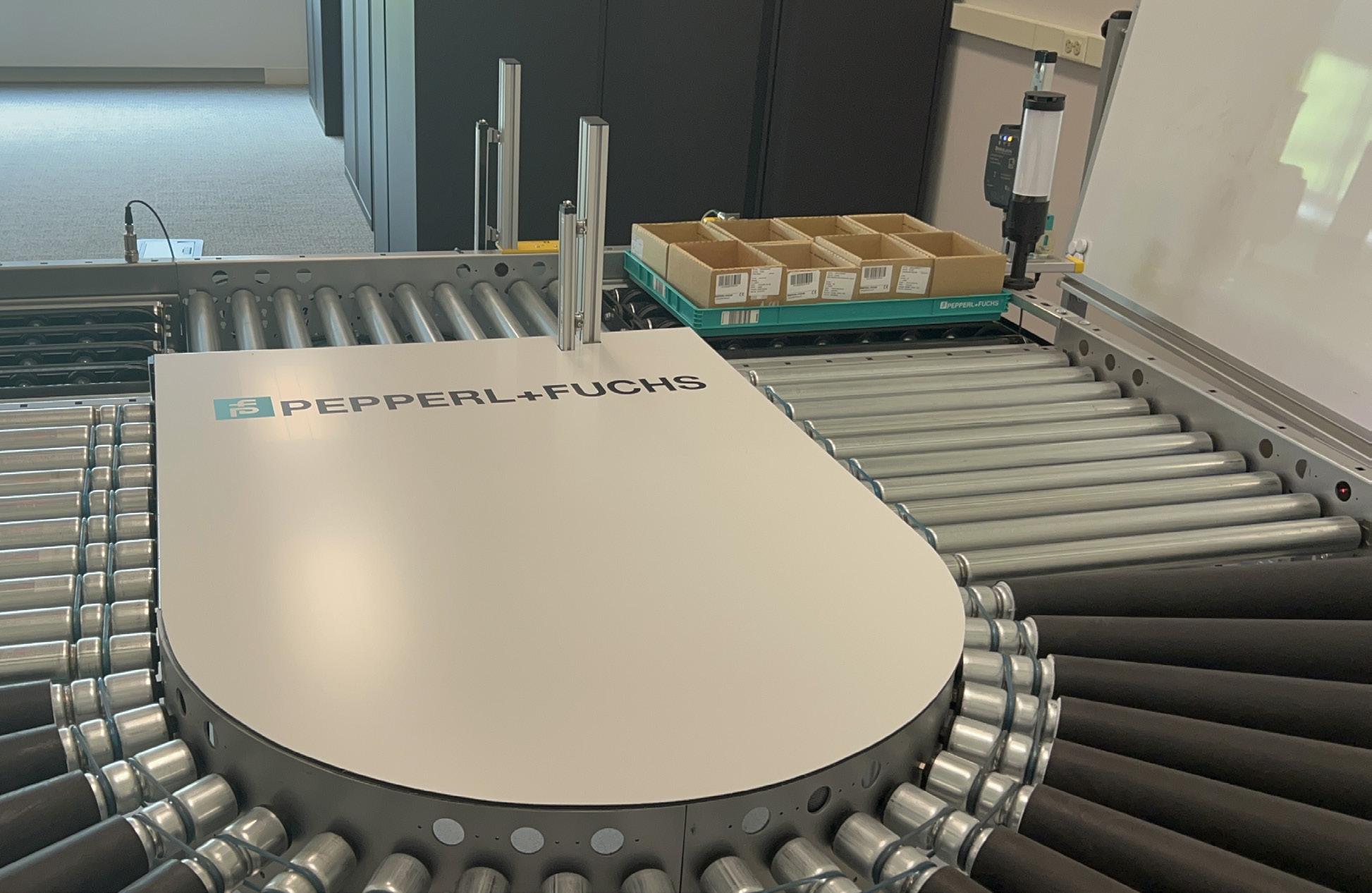
That challenge was on display inside the industrial sensor lab at Pepperl+Fuchs’ North American headquarters in Twinsburg, Ohio. During a recent on-site visit, Packaging OEM saw conveyor zones turn on and off in sequence instead of operating continuously across the entire line.
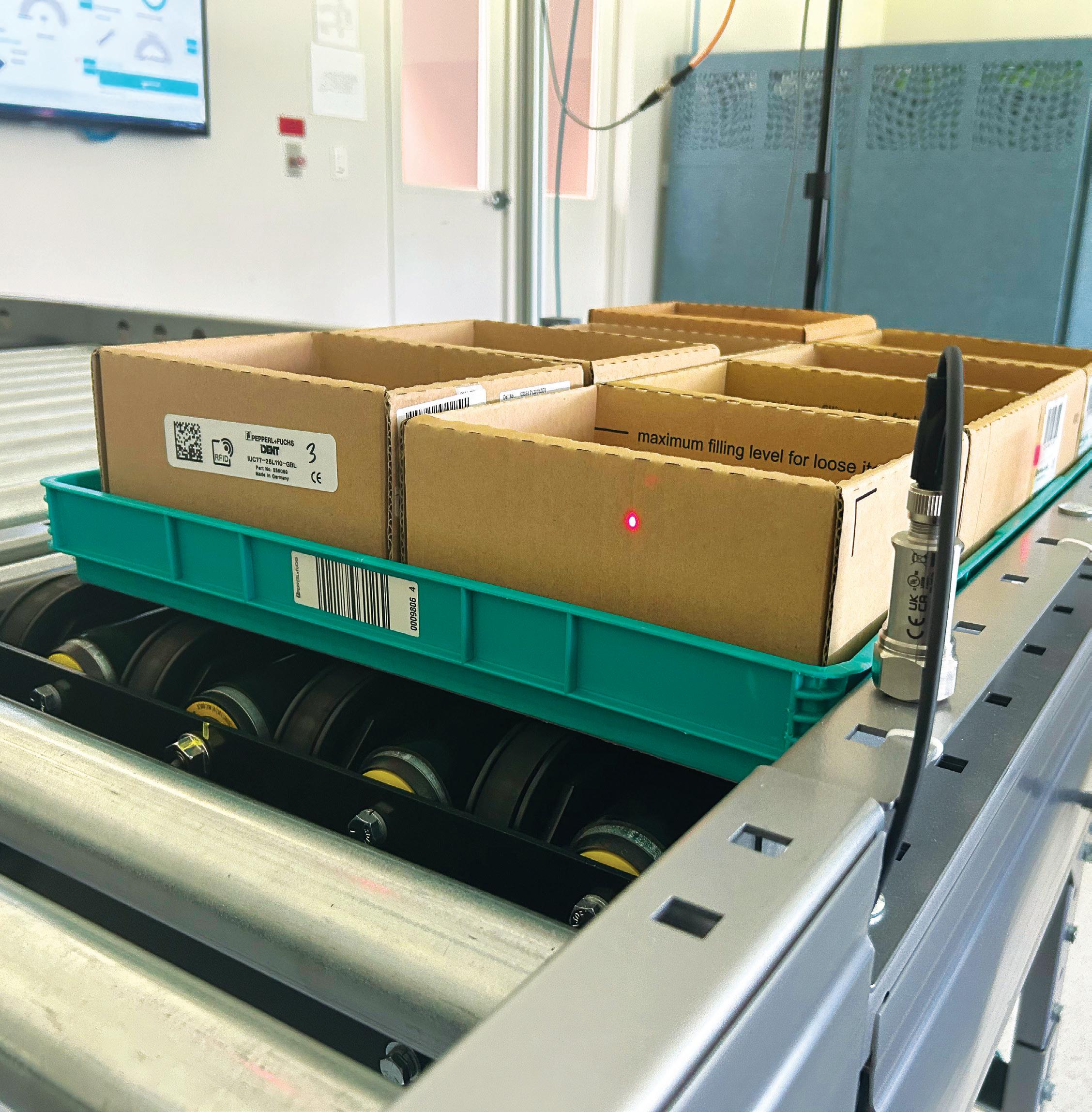
As products advanced through the system, Pepperl+Fuchs’ photoelectric sensors and G20 Ethernet motor control modules activated rollers only when packages moved into position, then shut sections back down once products cleared the zone.
The demonstration highlighted how packaging systems are becoming more responsive to real-time product movement through sensing, conveyor control, and tracking technologies designed to reduce unnecessary
operation, which also reduces unnecessary energy use.
It’s a shift that Gerry Paci, market manager for Pepperl+Fuchs’ material handling group, has witnessed firsthand.
“In my 10-plus years, we’ve seen efficiency go from something that’s not always running to running only when you need it,” said Paci. “It only needs to run when a package has been detected on the conveyor.”
Detecting different packaging formats
Photoelectric sensors are among the most common technologies Paci sees used across packaging lines for product presence detection. The sensors use light to identify when a package is in place and communicate with conveyor
controls to activate rollers only when products are detected.
Different packaging formats often require different sensing technologies, according to Paci. Flexible pouches may require a wider light array to distinguish products from the conveyor itself.
“Something that’s flat and thin like a pouch, we have one sensor that’s dedicated to pretty much just that,” said Paci, referring to the company’s R305 area sensor. “Instead of just one light spot, it has a wide band, or what we call an array of light, to detect those small, thin packages on a conveyor that’s equally as thin.”
For applications with totes, Pepperl+Fuchs uses more distance-based detection methods.
packaging oem
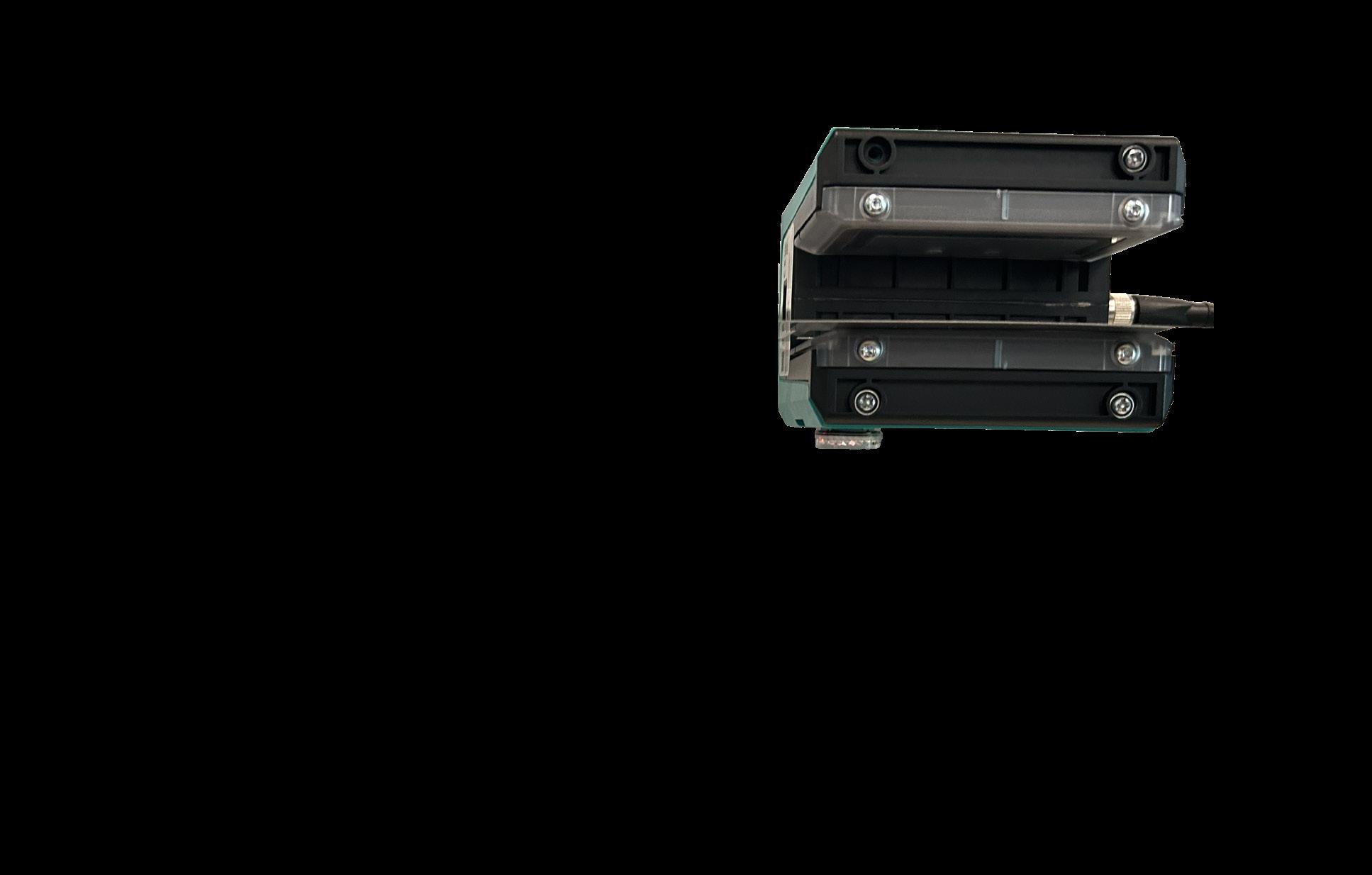
G20 Ethernet motor control module on display inside Pepperl+Fuchs industrial sensor lab, designed for conveyor control and Ethernet connectivity in packaging and material handling systems.
Sarah Wynn
and zone-based conveyor operation for packaging applications.
“When you have something that’s looking for a tote, and you want to know how far away it is, you’d use an R10X sensor that detects if the tote is there with a single beam of light,” said Paci.
Zone-based conveyor control drives efficiency
The sensors also work with Pepperl+Fuchs’ G20 Ethernet motor control modules, which operate conveyor rollers across packaging lines.
The G20 is designed to work with photoelectric sensors to activate conveyor
zones only when products move through the line, reducing energy use by avoiding continuous roller operation. Paci described the system as a “trigger sensor” approach, where one sensor detects when a package is coming into position, and another confirms when it has passed through the zone.
“Those rollers aren’t running all the time,” said Paci. “Our sensor detects the package and immediately tells the rollers to activate. Once the next row of sensors detects the package, it tells those rollers to stop.”
Tote travels through a roller conveyor system in Pepperl+Fuchs industrial sensor lab, showcasing photoelectric sensing
Sarah Wynn
The company recently added the Ethernet version of the G20 in response to customer demand for expanded connectivity in North American operations.
“Here in the Americas, Ethernet is very important,” said Paci. “Our customers and our market were telling us we needed an Ethernet option, and we listened to that.”
Improving visibility across the line
In addition to sensing and motor control technology, Pepperl+Fuchs also highlighted radio frequency identification (RFID) and data collection technologies to improve visibility and support predictive maintenance across packaging and material handling systems.
According to Zachary Steck, Pepperl+Fuchs’ market specialist for automated guided vehicles (AGV) and autonomous mobile robots (AMR), RFID systems give operators realtime visibility into where products are moving through a facility rather than
having to manually track them.
“RFID for us is more of an identification tool,” he said. “We’d see that in track-and-trace type applications, so that can get into sustainability as well.”
The company is also collecting diagnostic data through technologies such as IO-Link to support predictive maintenance and reduce unplanned downtime. Steck said access to operational data can help manufacturers avoid replacing components based only on scheduled maintenance intervals.
“We now have the data to know, ‘Oh, this product could have lasted three more years,’” he said.
Energy efficiency through responsive movement
Whether identifying a pouch on a conveyor or tracking a tote through a facility, the technologies demonstrated throughout the industrial sensor lab centered on creating more energyefficient packaging systems that respond only when movement is needed. OEM
Heat Sealing Tapes Improve Packaging Efficiency
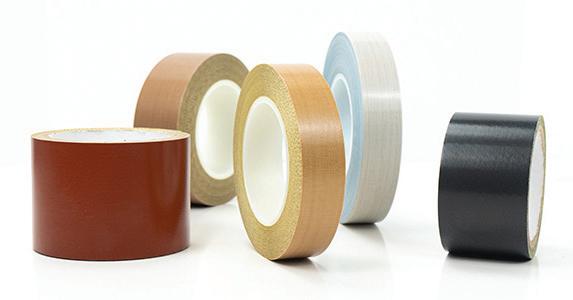
Engineered for high-performance and durability, our heat-sealing tapes ensure a seamless release, making them perfect for a wide range of packaging applications. Tapes include skived PTFE or PTFE coated substrates due to their release properties, extreme temperature resistance, and chemical resistance. Specialized materials include Rulon® bearing tape, a conformable self-lubricating substrate or TFL, a PTFE laminate, that has more durability and a longer cycle life compared to traditional coated PTFE materials. Different types of adhesive options are available to maximize adhesion or remove cleanly. Increase productivity and profitability by creating packaging efficiencies, such as longer production operating times, maintenance reduction and repair intervals, faster heat-sealing capability, platen protection, higher-quality seals, and lower operating costs.
to see more of the industrial sensor lab at Pepperl+Fuchs’ North American headquarters. SCAN THE QR CODE wtwh.me/SensingATrend
CS Hyde Company 39655 N. Illinois 83 Lake Villa, IL 60046 www.cshyde.com
Find the Right Part Faster
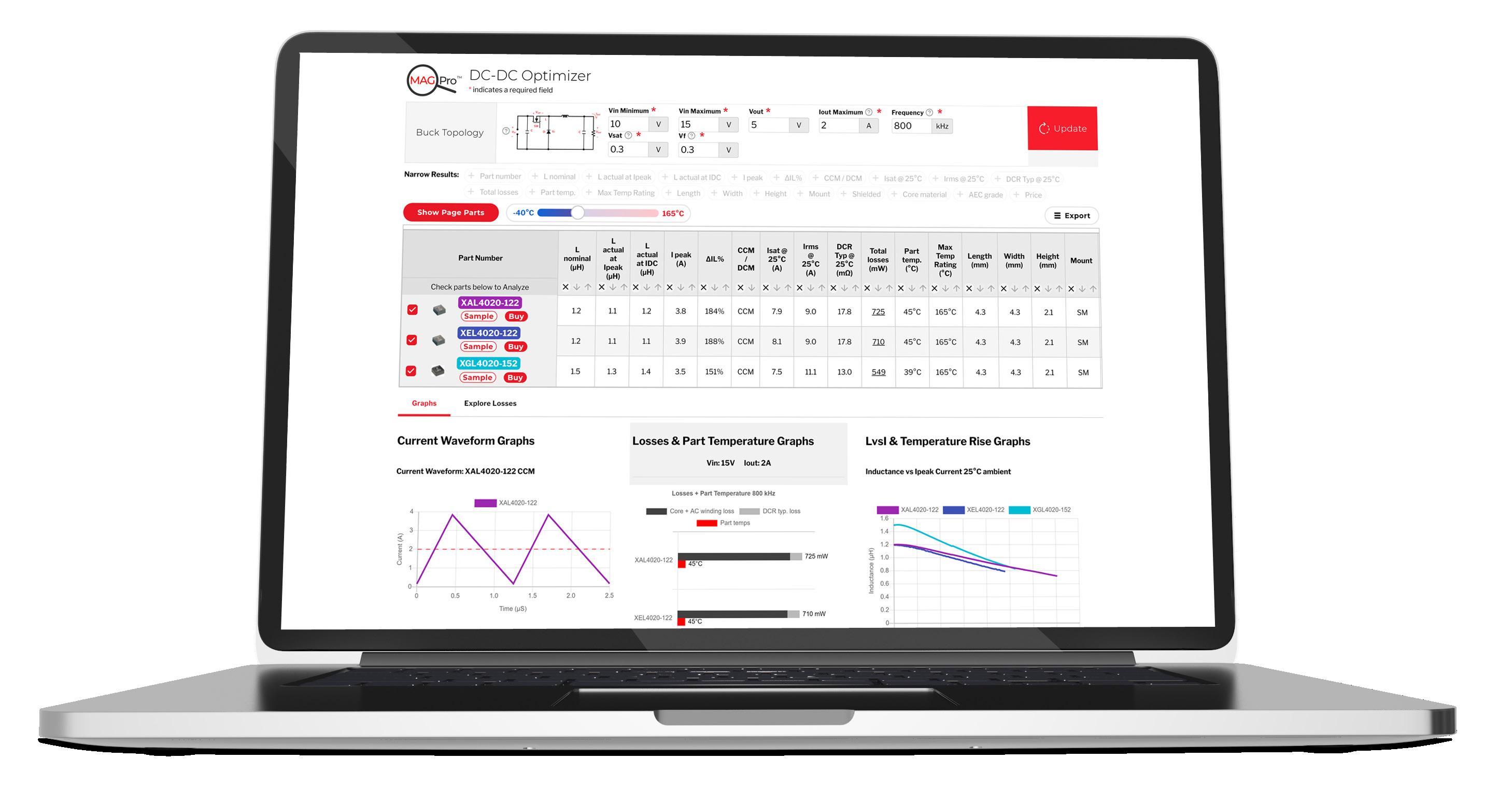
Designed by Engineers for Engineers, our DC-DC Optimizer helps you find the optimal power inductors for your converter designs quickly and easily, reducing your design cycle time.
Coilcraft’s patented MAGPro suite of online inductor analysis tools are designed to enable inductor selection and circuit optimization based on sound engineering principles and measured data.
The DC-DC Optimizer starts with your power converter parameters, calculates the needed inductor specifications, identifies off-the-shelf part numbers, and provides
side-by-side performance analysis.
The tool identifies optimal inductors for buck, boost, and buck-boost converters. With just a few clicks you can go from VIN /VOUT converter requirements to inductor selection complete with losses and saturation analysis, all based on verified inductor data.
Reduce your design cycle time with confidence at www.coilcraft.com/tools.
Drivetrain configuration significantly impacts electric vehicle (EV) range and efficiency. Automakers are introducing dual-speed and multi-speed gearboxes to improve EV performance. Let’s examine the benefits and drawbacks of adopting dual-motor designs and sophisticated drivetrain technology.
How does load differ between electric and ICE systems?
Unlike ICEs, which benefit from downsizing strategies, electric motors benefit from “upsizing” approaches that change drivetrain optimization. While ICE powertrains achieve only 12 to 20% fuel-towheel conversion efficiency, electric motors consistently deliver 85%+ efficiency across broad operating ranges.
The primary difference lies in load characteristics. Electric motors operate efficiently at partial loads around 30%, contrasting with ICEs that require roughly 70% load for optimal efficiency. This efficiency advantage creates opportunities for range optimization, with modern drivetrain configurations improving range by four to 11% through motor load management and power distribution.
These efficiency characteristics become increasingly important as the industry transitions from simple single-motor architectures toward multi-motor, multispeed systems designed to maximize electric propulsion capabilities.
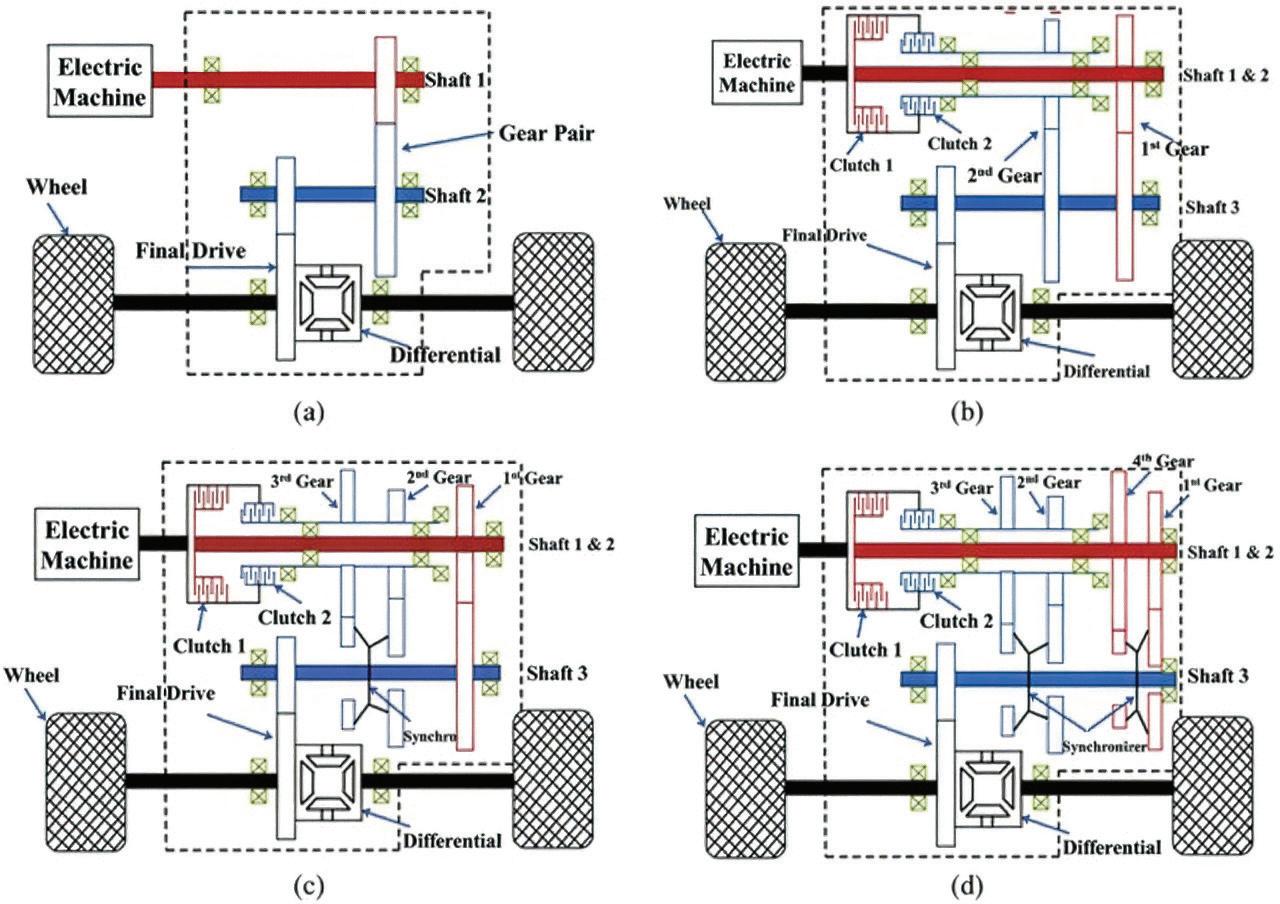
FIGURE 1. Evolution of EV transmission architectures showing (a) single-speed direct drive, (b) two-speed, (c) three-speed, and (d) fourspeed configurations with increasing mechanical complexity through additional clutches and gear sets. Sage Journals
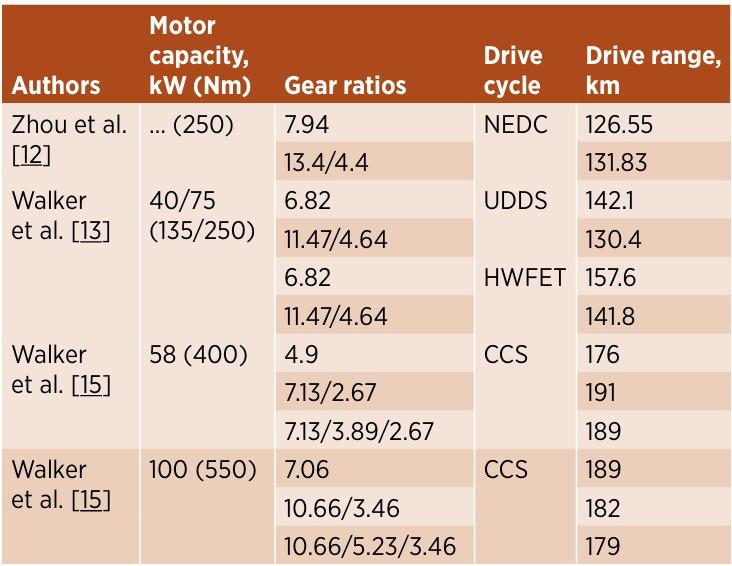
TABLE 1. Comparative range performance of single-speed vs. multi-speed EV transmissions across different driving cycles. ResearchGate
Why don’t single-speed systems optimize motor efficiency?
Single-speed systems dominate current EV architectures due to their simplicity, lower manufacturing costs, and higher mechanical efficiency through direct power transfer. However, this simplicity forces electric motors to operate outside their optimal efficiency zones across varying speed ranges, creating range optimization opportunities.
Figure 1 illustrates the mechanical evolution from single to multi-speed architectures, revealing trade-offs in EV transmission design. Configuration (a) shows the simplicity of single-speed systems with direct power transfer and minimal mechanical complexity.
As we progress through (b) twospeed, (c) three-speed, and (d) four-
speed systems, the addition of clutches and gear sets enables optimal motor operation across wider speed ranges. However, it comes at the cost of increased mechanical complexity and potential failure points. The clutch arrangements visible in configurations (b-d) enable smooth gear transitions while maintaining power delivery, which is important for smooth EV operation.
Multi-speed transmissions deliver documented range improvements by maintaining electric motors within their 90%+ efficiency zones. But how much improvement is possible?
Research shows that two-speed systems achieve 7.3 to 11.3% energy consumption reductions, while threespeed configurations show 9.3% energy savings compared to single-speed alternatives.
Table 1 provides quantified evidence that multi-speed benefits vary significantly by application. Zhou et al.’s NEDC testing showed a 4.2% range improvement with dual-speed configurations (131.83 km vs. 126.55 km baseline).
Here’s what’s interesting. Walker et al.’s city cycle testing achieved 8.5% range increases using two-speed systems (191 km vs. 176 km baseline), while highway results proved more variable. The data reveals that three-speed systems (189 km) performed slightly worse than twospeed configurations (191 km) in city driving, demonstrating diminishing returns that must be balanced against added complexity, weight, and cost.
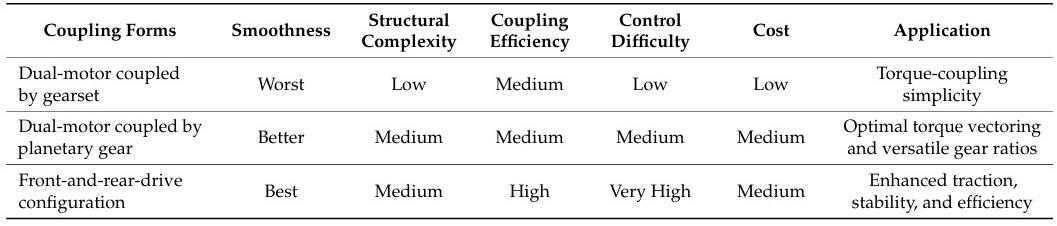
TABLE 2. Dualmotor configuration comparison showing trade-offs between performance and complexity.
What’s driving the rapid adoption of dual-motor configurations?
Dual-motor configurations are gaining market adoption by offering superior acceleration and improved traction while maintaining a strong balance between performance, cost, and efficiency compared to four-motor systems. This positioning explains why major OEMs from Tesla to Rivian are prioritizing dualmotor architectures across their portfolios.
Three primary dual-motor architectures dominate current development efforts. Direct gear coupling provides mechanical simplicity and lower costs but limits available gear ratios. Planetary gear coupling enables enhanced torque vectoring and versatile gear ratios with moderate complexity. Front-and-rear drive configurations provide the best traction and stability by utilizing independent motor control, although this setup comes with greater control complexity.
Table 2 reveals why different OEMs choose different approaches based on their priorities. Why would leading manufacturers choose the most difficult control approach?
Tesla and Audi prioritize front-andrear configurations despite “Very High” control difficulty because they deliver “Best” smoothness and “High” coupling efficiency for premium performance applications. This explains market success stories.
The Tesla Model S achieves 2.1-second 0 to 100 km/h acceleration with a 600
km range, while the Audi e-tron Quattro delivers a 349-mile range with 5.4-second acceleration times.
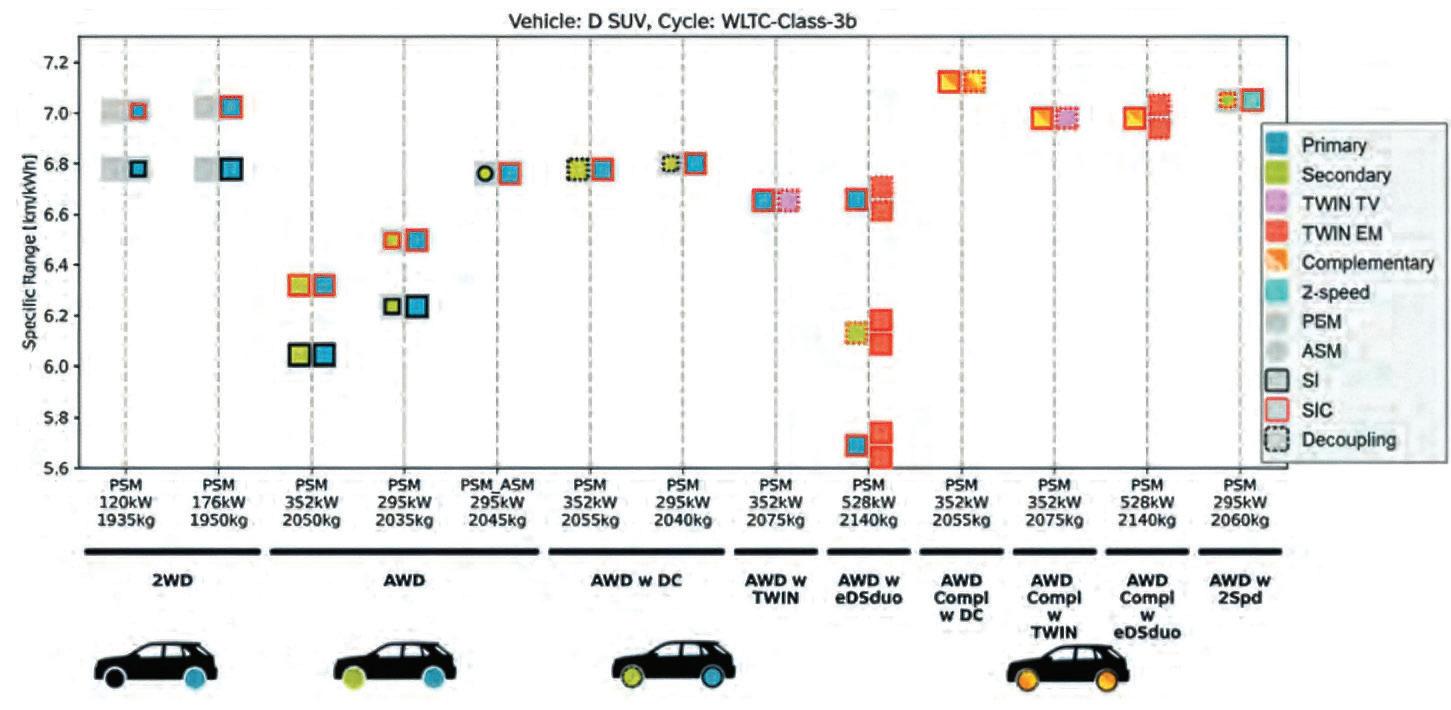
What’s surprising? Well-designed AWD systems can be more efficient than 2WD. Figure 2 shows that complementary eAWD systems exceed 2WD efficiency by two to three percent. The efficiency progression from left (2WD baseline) to right (advanced AWD) demonstrates how decoupling systems and complementary motor strategies improve efficiency alongside performance.
What options exist beyond conventional multi-speed systems?
Beyond conventional multi-speed systems, advanced drivetrain architectures offer approaches to optimizing EV range through different power delivery mechanisms. Dualclutch transmission systems achieve approximately 90% powertrain efficiency with smooth shifting capabilities, eliminating traditional clutch plates and synchronizers that create power interruptions during gear changes.
Automated Manual Transmission (AMT) systems demonstrate that twospeed configurations provide optimal cost-benefit ratios for many applications, while three-speed-and-above systems show diminishing returns due to increased transmission losses. However, inverse-AMT designs offer 50% traction loss compensation during gear shifts, which is important for maintaining
2. Drivetrain efficiency progression from 2WD baseline to advanced AWD configurations.
CTI Symposium
efficiency during variable driving conditions.
What if there were a transmission that never shifted gears at all? Continuously Variable Transmission (CVT) technology presents trade-offs for EV applications.
While CVT systems provide infinite speed ratios, enabling theoretically ideal motor operation across all conditions, their friction-based power transfer mechanisms result in lower mechanical efficiency compared to gear-based alternatives. This makes CVT suitable for applications prioritizing smooth operation over peak efficiency.
Summary and industry outlook
Compared to ICEs, EV drivetrain configurations create new opportunities for range optimization, with multispeed transmissions and well-designed dual-motor AWD systems delivering measurable efficiency improvements. The industry is increasingly adopting frontand-rear dual-motor setups because they provide strong smoothness, traction, and efficiency benefits despite greater control complexity.
As manufacturing costs decline and control algorithms improve, multispeed transmissions are becoming more practical for mainstream EVs. The remaining challenge is balancing efficiency and performance gains against added complexity and cost, but the benefits continue to support investment in advanced drivetrain architectures. EV
FIGURE
Wings
help
this device take on type 2 diabetes
in the duodenum
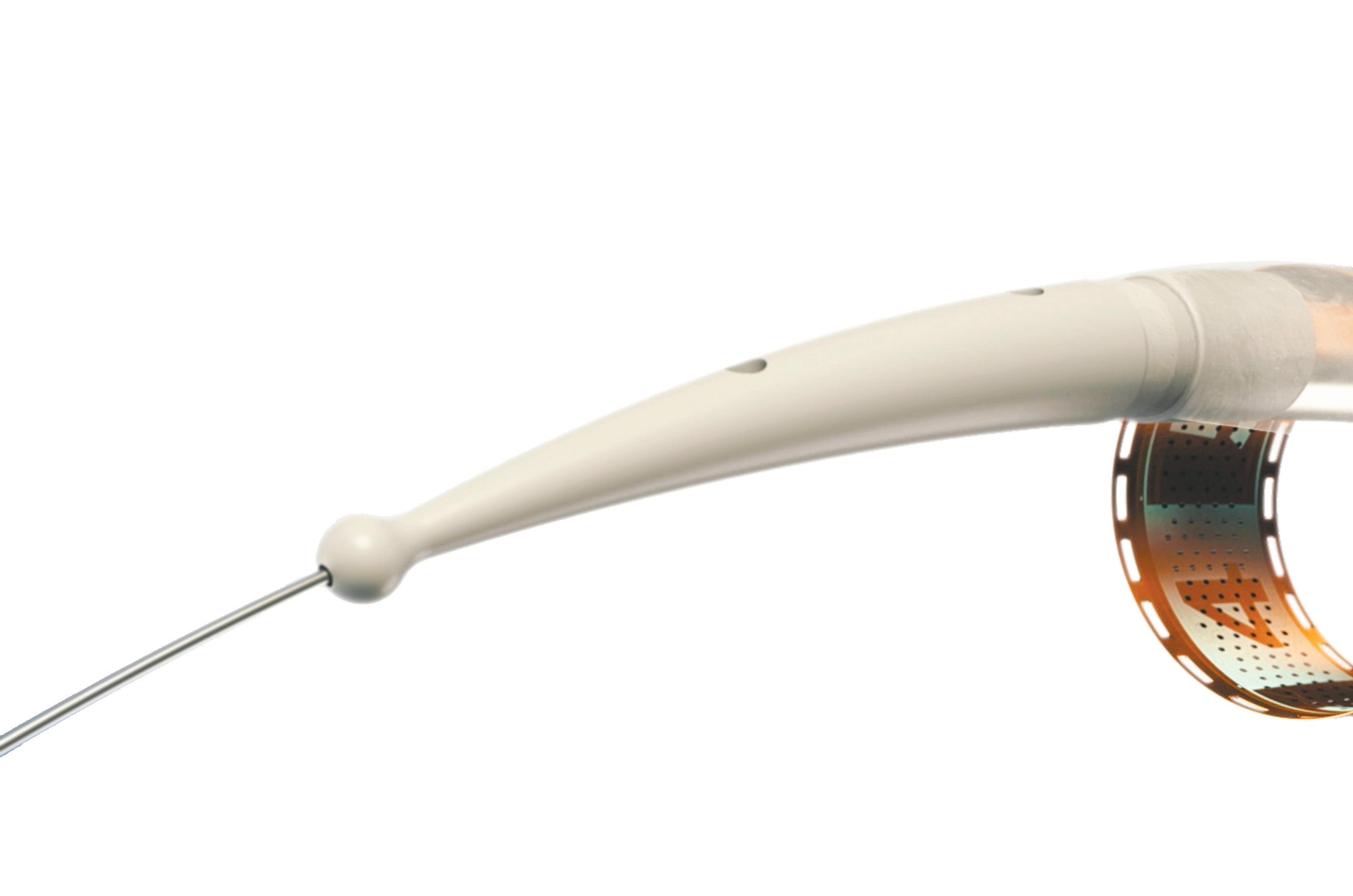
Endogenex designed its minimally invasive ReCET catheter with a simple feature for speed and safety.
Procedures in the gut are showing promise for treating type 2 diabetes patients, but not without a fight from the duodenum.
That’s where Minneapolis-based Endogenex’s investigational ReCET (Re-Cellularization via Electroporation Therapy) system delivers nonthermal pulsed electric field (PEF) energy to mucosal and submucosal tissue to initiate cell regeneration.
Overcoming that obstinate organ was an early obstacle for the startup, Endogenex CEO Stacey Pugh said in a Medical Design & Outsourcing interview.
“One of the biggest challenges we saw in our feasibility trials was the duodenum is an organ that’s designed to kick you out, and you don’t make it happy when you’re delivering highvoltage electrical pulses over and over again through it,” she said.
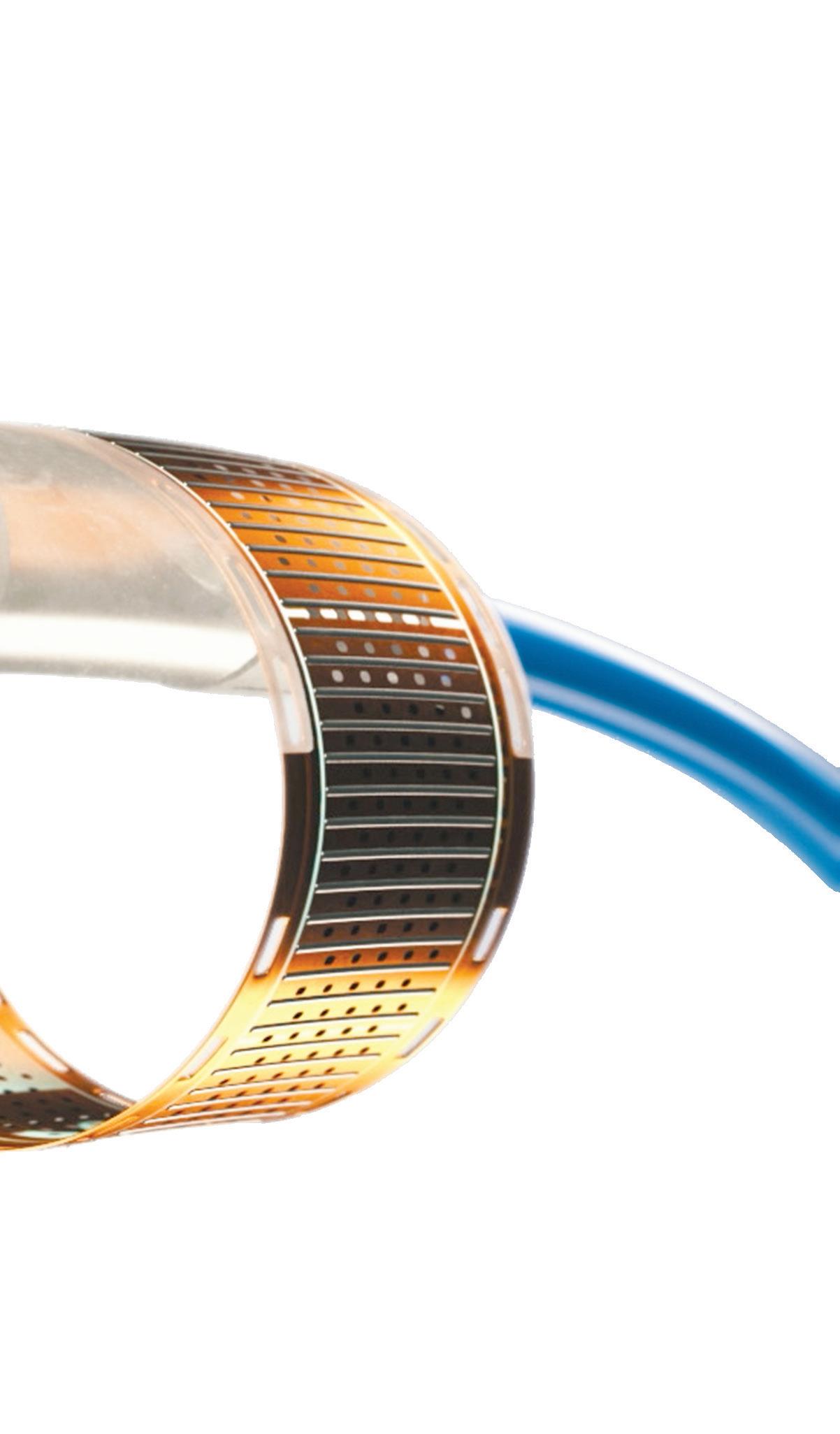
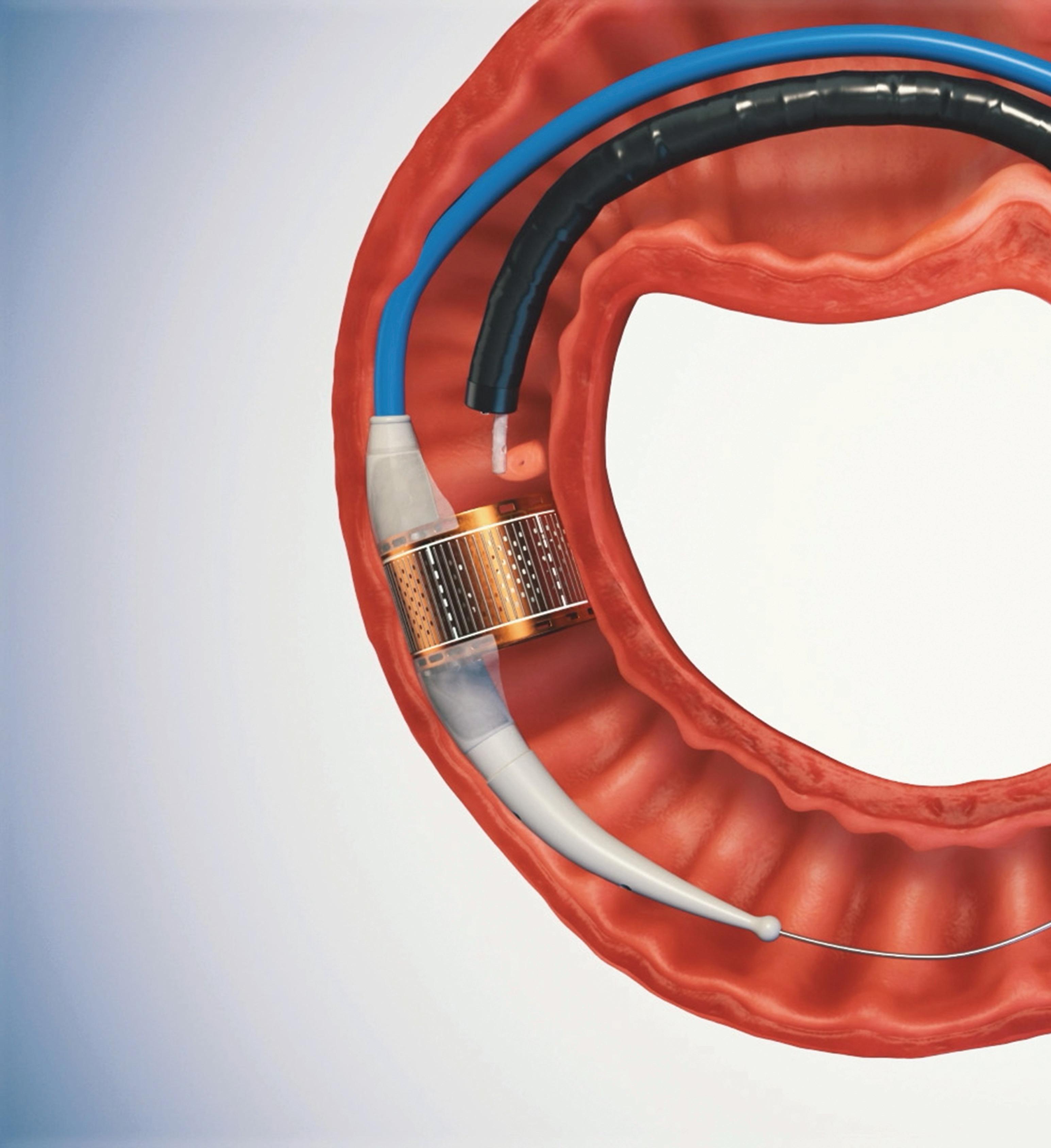
The minimally invasive catheter system has a metallic canister that deploys a flexible circuit against the
duodenum’s thin wall and delivers nanosecond energy pulses (which Pugh notes is not ablative or denervative) before returning into the canister.
“The goal is to create as much optimum wall opposition to that circuit and in adherence to that circuit while you’re delivering these nanosecond pulses,” Pugh said. “It takes us about a minute worth of total energy activation broken into two segments when we’re delivering these pulses, and we really want to hold that tight, consistent and still.”
But the circuit’s flexibility and a lack of clear visibility was causing a problem during the design stage, Pugh said. “When we would bring our circuit back in, we were constantly looking to make sure we weren’t catching tissue.”
Visibility was more of a challenge on the distal end than the proximal end. The team’s solution was to add triangular polyurethane wings that roll out with the circuit and keep the
duodenal tissue — the villus and modal structures — from getting caught in the process.
“Those wings, when they’re out, keep tissue away and it makes the act of opening and closing and moving so much more simple,” Pugh said.
Endogenex CEO Stacey Pugh
“It’s been a pretty radical simplification from our last generation of technology to this,” Pugh said. “Even though much of the energy signature’s the same, it was a big move forward in usability for the technology, something as simple as that.”
Endogenex recently released positive results of its technology from its REGENT-1 clinical studies in the U.S. and Australia. (REGENT is an abbreviation of parts of the study’s name, “Safety and Feasibility of Novel Therapy for Duodenal Mucosal Regeneration for Type II Diabetes.”)
“These results from the integrated REGENT-1 analysis provide the first peerreviewed evidence demonstrating that nonthermal pulsed electric field-based duodenal therapy can produce clinically meaningful and durable improvements in glycemic control, body weight, and markers of insulin resistance through 48 weeks with a single endoscopic procedure,” said Dr. David O’Neal, the corresponding author of the results published in Diabetes, Obesity and Metabolism
This illustration of the Endogenex ReCET catheter shows the polyurethane wings on each side of the expandable electronic circuit. Illustration courtesy of Endogenex
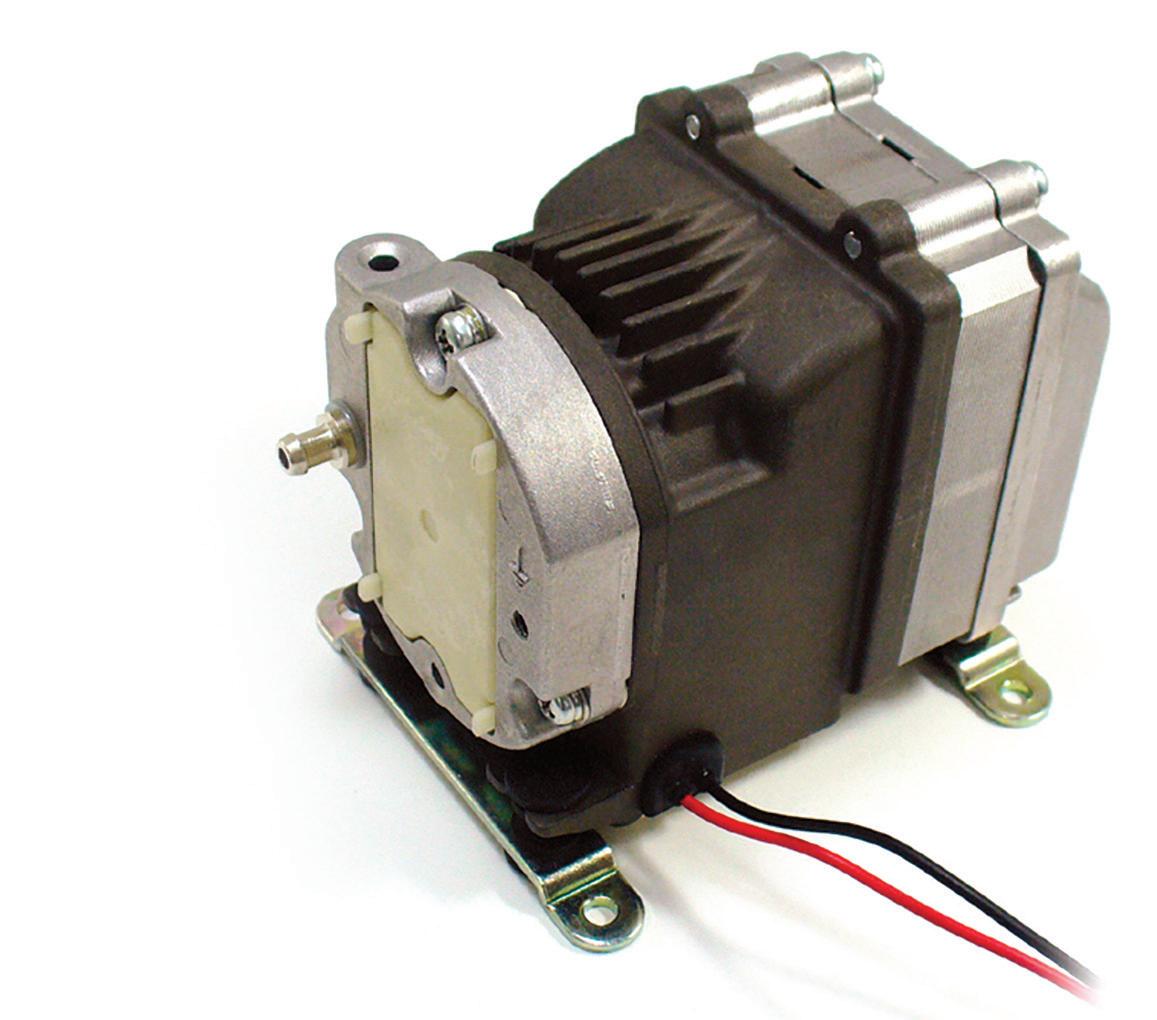
DC Motor-Driven Pumps
Nitto Kohki’s DC motor-driven air compressors and vacuum pumps are ideal for applications requiring exceptionally reliable air flow, pressure or vacuum performance. Featuring oil-free operation, a single moving part, low noise, and low vibration, this line of linear air compressors comes in 12V and 24V models. Other benefits include:
• Very low power consumption
• Self-cooling design
• Exceptional service life (rated at 10,000 hours)
• Easy maintenance
Ideal for demanding applications in the medical device and laboratory equipment industry, including dialysis machines, blood separators, blood analyzers, incubators, heart assist devices and more.
Labor shortages, the need for quality control and traceability, and ever-increasing e-commerce volumes are pushing supply chain operations to automate. Whether it’s a large third-party logistics provider or a micro-fulfillment center, robotics and artificial intelligence are meeting the need to quickly and accurately sort items.
The good news is that there have been advances in machine vision, gripping systems, and human-robot collaboration. However, challenges persist, including high installation costs, maintenance requirements, and getting cuttingedge systems to scale.
Fastenal builds its own sortation system
“I’ve been at Fastenal for 32 years,” said Paul Wisniewski, distribution project engineering manager at Fastenal Co., which claims to be the largest fastener distributor in North America.
“When I started, we had to push carts on mezzanines to get products to sorters,” he recalled. “Now, we use conveyors and sorters that we build in-house.”
“We don’t care what customer a product is for — a distribution center, a store, or an end customer — we pick, label, and sort it by store, put it into composites, and run our own truck network,”
EUGENE DEMAITRE • EDITORIAL DIRECTOR, ROBOTICS
Wisniewski told Automated Warehouse “The stores sort by customers and do the final mile.”
Why did Winona, Minn.-based Fastenal decide to build its own sortation system?
“When we started automating 20 years ago, we didn’t feel that what was out there was durable enough,” replied Wisniewski. “Our totes can weigh up to 100 lb. [45.3 kg]. The more we can control how it works, the most costeffective it has been for us. A lot of sorters today look pretty and may be fast, but if a box of nuts breaks open, it would be catastrophic for them. Ours are built like Sherman tanks.”
AI is needed for fast, varied grasping Real-world processes must account for a range of packaging, since some systems can be brought to a halt by variances, warned Dennis Williams, director of the automation group at Monoflo International Inc.
“In traditional or manual material handling environments, human beings can compensate for packaging
variables,” he said. “In that scenario, a 10-mm [0.3 in.] bulge would probably go unnoticed.”
“Unfortunately, automated sortation systems are not nearly as forgiving. They operate at high speeds, under constant mechanical load, with very little margin for dimensional inconsistency,” noted Williams. “In this precision-driven environment, that same 10-mm bulge could bring your entire automated operation to a halt.”
Another technology provider cited “perfect” boxes at trade shows as misleading.
IN TRADITIONAL OR MANUAL MATERIAL HANDLING ENVIRONMENTS, HUMAN BEINGS CAN COMPENSATE FOR PACKAGING VARIABLES... UNFORTUNATELY, AUTOMATED SORTATION SYSTEMS ARE NOT NEARLY AS FORGIVING. THEY OPERATE AT HIGH SPEEDS, UNDER CONSTANT MECHANICAL LOAD, WITH VERY LITTLE MARGIN FOR DIMENSIONAL INCONSISTENCY.
— DENNIS WILLIAMS MONOFLO INTERNATIONAL INC.
“This might be controversial, but at MODEX, I thought many exhibits were mediocre,” observed Ken Fleming, CEO of AI vision provider Fizyr. “There were demonstrations with perfect, square boxes; grippers that can grab anything and don’t need a tool changer but can’t go fast; and slowed singulation.”
When applied correctly, AI can help reduce the number of steps required for sortation, further hastening the supply chain and avoiding errors, said Fleming.
“We saw some attempts at singulation before stacking and palletizing, but we need to sit down with key business partners in the U.S. and Canada,” he said. “The logic and algorithms are done; now Fizyr needs to sit down with partners and ask, ‘Can you handle palletization of mixed goods as they come in?’ We don’t have to sort things downstream.”
Fizyr claimed that its AI4PALLETS system can classify, segment, and sort items quickly and accurately. The Delft, Netherlands-based company recently unveiled the technology at LogiMAT with manufacturing partners Pallet Sorting Systems and Automated Machine Systems.
AI helps derive value from data
In addition to improving robots’ ability to pick and sort autonomously, AI is improving the ability to collect and analyze data, noted technology experts.
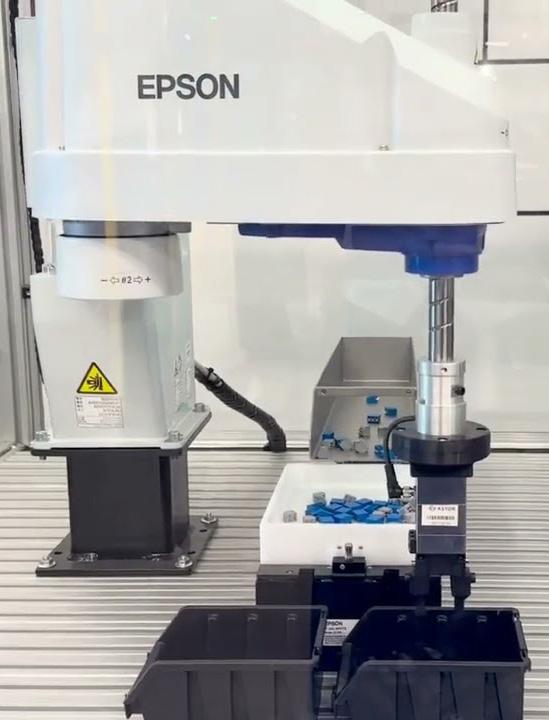
“We get asked all the time about AI, which is becoming prevalent in inspection, traceability, and archiving,” said Scott Marsic, group product manager at Epson Robots.
“Everyone’s trying to go to pick-andplace [operations],” he told Automated Warehouse. “We talk to a lot of physical
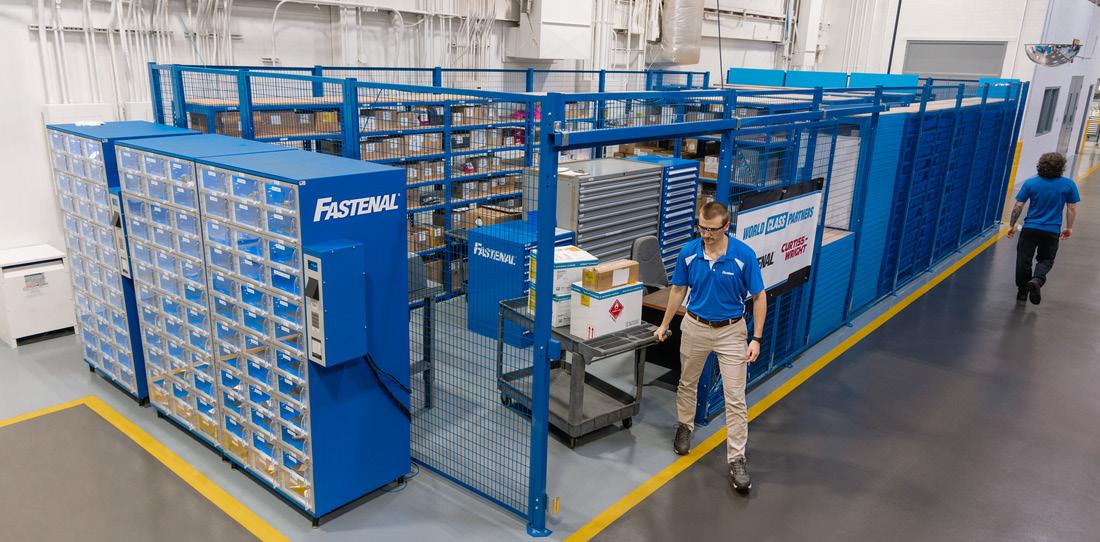
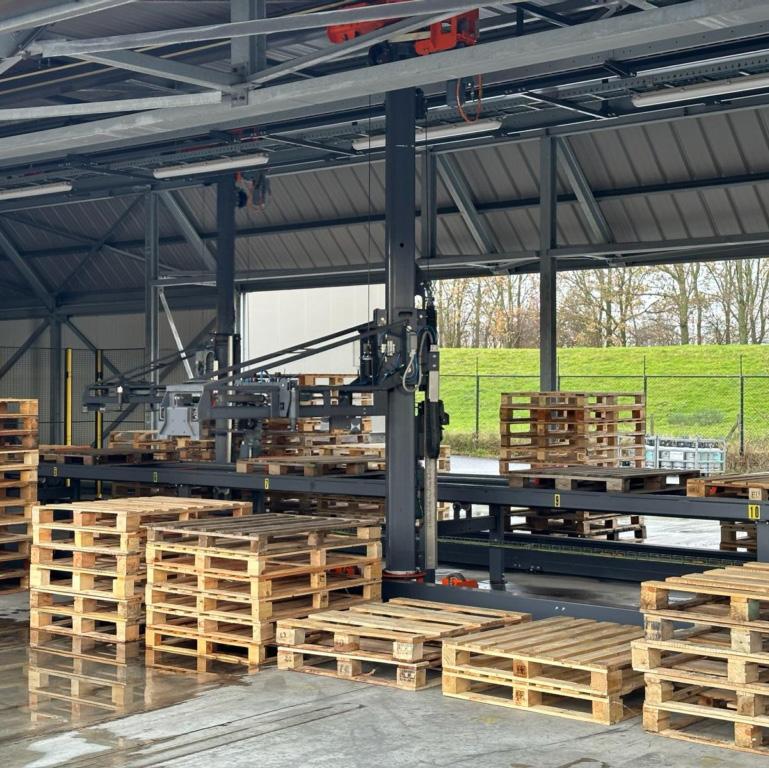
Fastenal has developed its own workcells and automation for sortation and fulfillment. Fastenal
AI4PALLETS can be modified to customer size and sorting preferences. Fizyr
AUTOMATED WAREHOUSE
AI startups, but they need more flexibility, more applications. They’re not yet at the point where a robot can autonomously do a big swath of tasks.”
“It’s still a hybrid with rules-based picking,” Marsic added. “How can I optimize what we’re doing or augment to improve the systems for sortation, picking, and parts feeding?”
Humanoids on the horizon
While conveyor-based processes and increasingly sophisticated, vision-guided robotic pickers are proliferating, what does the future hold for sortation?
“For me, it would be humanoid robots, because when we look at our receiving process, humans have to transfer 40 lb. [18.1 kg] boxes from 2,000 lb. [907.1 kg] pallets to totes,” said Fastenal’s Wisniewski. “Those boxes
have spent time on container ships and are not as durable as we’d like.”
“On the sortation side, we sort and stack product into walled composite,” he added. “Associates take it off rollers, lean, and put it into walled containers. These boxes can weigh up to 70 lb. [31.7 kg], and they come in waves throughout the day. This physically limits whom you can hire – we hire high school and college students to get things out on trucks to be delivered.”
The urgency to develop, deploy, and manage modern sortation systems is likely to continue, as hardware and software become more adaptable to a wider range of goods while maintaining accuracy. Humans will still be needed to troubleshoot edge cases, but all the experts said they expect intervention rates to continue to decline. AW
Vision advances are leading to product tracing combined with sortation. Epson Robotics
Ryan Ashdown rashdown@wtwhmedia.com 216.316.6691
Jami Brownlee jbrownlee@wtwhmedia.com 224.760.1055
Ashley Burke aburke@wtwhmedia.com 737.615.8452
Tom Duggan tduggan@wtwhmedia.com 773.724.1638
Mike Francesconi mfrancesconi@wtwhmedia.com 630.488.9029
Jack Gillerlain jgillerlain@wtwhmedia.com 773.909.2718
Adrian Nash anash@wtwhmedia.com 416-500-6906
Susan Powers spowers@wtwhmedia.com 708.341.3370
Judy Pinsel jpinsel@wtwhmedia.com 630.538.2638
Melissa Roberts mroberts@wtwhmedia.com 440.666.3111
CFO Ken Gradman kgradman@wtwhmedia.com 773.680.5955
DESIGN WORLD does not pass judgment on subjects of controversy nor enter into dispute with or between any individuals or organizations.
DESIGN WORLD is also an independent forum for the expression of opinions relevant to industry issues. Letters to the editor and by-lined articles express the views of the author and not necessarily of the publisher or the publication. Every effort is made to provide accurate information; however, publisher assumes no responsibility for accuracy of submitted advertising and editorial information. Non-commissioned articles and news releases cannot be acknowledged. Unsolicited materials cannot be returned nor will this organization assume responsibility for their care.
Subscription Rates: Free and controlled circulation to qualified subscribers. Non-qualified persons may subscribe at the following rates: U.S. and possessions: 1 year: $125; 2 years: $200; 3 years: $275; Canadian and foreign, 1 year: $195; only US funds are accepted. Single copies $15 each. Subscriptions are prepaid, and check or money orders only.
Subscriber Services: To order a subscription or change an address visit our website at: www.designworldonline.com
DESIGN WORLD (ISSN 1941-7217) USPS PUBLICATION #25146 is published 11 times per year: January, February, March, April, May, June, August, September, October, November, December by: WTWH Media, LLC; 1111 Superior Ave., Suite 1120, Cleveland, OH 44114. Periodicals postage paid at Cleveland, OH & additional mailing offices.
POSTMASTER: Send address changes to: Design World, 1111 Superior Ave., Suite 1120, Cleveland, OH 44114
Technical Thinking
By Mark Jones
The most interesting man in the world?
Doug Irwin’s death was in the news recently, as was the $11.56 million paid for a guitar he made. I’d never heard of Doug Irwin, who was Jerry Garcia’s luthier. I’ve heard of Jerry Garcia and Tiger, one of his iconic guitars.
I’ve only met one luthier in my life: Springsteen’s luthier. When I walked into Phil Petillo’s shop, in the basement of his New Jersey home, I was immediately in awe. As I left after that first visit, I was thinking, “Phil is the most interesting man in the world.” Dos Equis was running its iconic ad campaign at the time, with lines like “he once parallel parked a train” and other quips leading up to, “he is the most interesting man in the world.” The campaign was recently resurrected. That resurrection brought Phil to mind.
Phil’s shop was semi-curated chaos. A well-illuminated workbench sat near a window. More dimly lit areas contained a number of instruments in various stages of construction or repair. On one of my visits, he was repairing a Stradivarius for a museum, the Smithsonian, if my memory is correct.
Stradivarius and Springsteen are connected through Phil, part of what made Phil the most interesting man in the world. There is more.
At the entrance to the shop were three distinct areas with pictures and patents on the wall and binders in front. On the wall hung a gift from Bruce, the platinum Darkness on the Edge of Town. The book below contained pictures of many famous artists: Tom Petty, Eddie Van Halen, Steven Van Zandt, Nils Lofgren, Keith Richards, Johnny Cash, Paul McCartney, James Taylor, and more. Not Jerry Garcia. There were also musical instrument patents. Petillo invented a new fret shape, pointed and made with special alloys. Springsteen was a tester, 60 or 70 different alloys, each fret handmade until they selected a proprietary stainless-steel alloy. Other guitar and instrument patents decorated that area of the entrance.
Adjacent were the medical device patents. Lots of drawings for devices associated with delivery of stents and clamps. Phil collaborated with physicians
to make surgical interventions and equipment.
The third area was fuel cell patents. It was fuel cells that brought me to New Jersey. Phil worked with Millenium Cell, developer of a proprietary process using sodium borohydride to produce hydrogen on demand. Sodium borohydride is a chemical reducing agent that can serve as a chemical means to store hydrogen. Sodium borohydride reacts with water to release the hydrogen. In the technology Phil developed, a borohydride solution was passed through a proprietary catalyst to give a controlled release of hydrogen. That hydrogen went to a PEM fuel cell. Phil was instrumental at making a drivable, working car. He holds many patents on hydrogen generation.
Petillo held an Industrial Engineering degree from Columbia, a master's from LaSalle, and eventually a doctorate in engineering technology, also from LaSalle. He held 30 U.S. patents. In 2010, at the far-too-young age of 64, Phil Petillo died.
Springsteen paid Petillo $185 in 1973 for a Fender guitar made from a Telecaster body and Esquire neck. Petillo modified it over the years. It toured the world before being retired in 2005. Decades of intense, sweat-soaked, and physically demanding performances took their toll. It appeared on multiple album covers and was loaned to the Metropolitan Museum of Art for “Play It Loud: Instruments of Rock and Roll.” The guitar slung over Springsteen’s back on the Born to Run cover and tour poster — that’s the $185 guitar. It is every bit as, if not more, famous than Tiger.
Phil may never have parallel parked a train, but he deserves the title of most interesting man in the world. His craftsmanship, engineering excellence, and creativity were truly one-of-a-kind. The market may someday value the mutt guitar Phil sold Springsteen. It will be a letdown for me, putting a price on something that is truly priceless. DW
Expand your field of vision with B&R Vision Systems
B&R is expanding the field of vision with a complete portfolio of cameras, lenses, lighting and software – all fully integrated in the B&R ecosystem. With groundbreaking performance and scalability, B&R machine vision gives machines unprecedented new capabilities.
Precision Pressure & Flow Control
Designing efficient systems is about more than components and specifications—it’s about understanding how real requirements come together in the real world. By taking the time to understand the specific demands of your system, we bring decades of engineering experience and a people-first mindset to develop solutions that perform better, last longer, and fit exactly where they need to.
Have a challenge you’re working through? Call or email us today and let’s connect our engineers with your engineers.