GOOD OIL MARKS
The company is modernizing its Good To Go brand and stores under third-generation leadership with a focus on food, technology and footprint expansion.
•
•
www.cstoredecisions.com


EDITORIAL
VP EDITORIAL — FOOD, RETAIL & HOSPITALITY
Danny Klein dklein@wtwhmedia.com
EDITOR-IN-CHIEF
Erin Del Conte edelconte@wtwhmedia.com
SENIOR EDITOR
Emily Boes eboes@wtwhmedia.com
ASSOCIATE EDITOR Kevin McIntyre kmcintyre@wtwhmedia.com
EDITOR EMERITUS John Lofstock
COLUMNIST
Jeff Keune
CONTENT STUDIO
VP, CONTENT STUDIO
Peggy Carouthers pcarouthers@wtwhmedia.com
WRITER, CONTENT STUDIO
Ya’el McLoud ymcloud@wtwhmedia.com
WRITER, CONTENT STUDIO Drew Filipski dfilipski@wtwhmedia.com
SALES TEAM
SENIOR VP OF SALES & STRATEGY
Matt Waddell mwaddell@wtwhmedia.com (774) 871-0067
KEY ACCOUNT MANAGER John Petersen jpetersen@wtwhmedia.com (216) 346-8790
SALES DIRECTOR Patrick McIntyre pmcintyre@wtwhmedia.com (216) 372-8112
NATIONAL SALES DIRECTOR Amber Dobsovic adobsovic@wtwhmedia.com (757) 637-8673
ACCOUNT MANAGER Tanner Hartwick thartwick@wtwhmedia.com (571) 596-0375
PORTFOLIO MARKETING MANAGER
Jane Cooper jcooper@wtwhmedia.com
CREATIVE SERVICES VP, CREATIVE DIRECTOR Matthew Claney mclaney@wtwhmedia.com
CREATIVE DIRECTOR Erin Canetta ecanetta@wtwhmedia.com
LEADERSHIP
CHIEF EXECUTIVE OFFICER
Matt Logan mlogan@wtwhmedia.com
CHIEF OPERATIONS OFFICER George Yedinak gyedinak@wtwhmedia.com
CHIEF REVENUE OFFICER Scott Kelliher skelliher@wtwhmedia.com
VP OF MARKETING Annie Wissner awissner@wtwhmedia.com
SENIOR VP, AUDIENCE GROWTH Greg Sanders gsanders@wtwhmedia.com
EVENTS
VP, EVENTS Deena Rubin drubin@wtwhmedia.com
DIRECTOR OF EVENTS Cassidy Doller cdollar@wtwhmedia.com
EVENT MARKETING SPECIALIST Emma Paul epaul@wtwhmedia.com
EVENTS MANAGER Jeannette Hummitsch jhummitsch@wtwhmedia.com

of editorial excellence.
EDITORIAL ADVISORY BOARD
Nate Brazier, CEO Stinker Stores • Boise, Idaho
Robert Buhler, President and CEO
Open Pantry Food Marts • Pleasant Prairie, Wis.
Herb Hargraves, Chief Operating Officer
Sprint Mart • Ridgeland, Miss.
Bill Kent, Chairman and CEO
The Kent Cos. Inc. • Midland, Texas
Nick Triantafellou, Director of Marketing & Merchandising
Weigel’s Inc. • Knoxville, Tenn.
Dyson Williams, Vice President
Dandy Mini Marts. • Sayre, Pa.
NATIONAL ADVISORY GROUP (NAG) BOARD
Greg Ehrlich, (Board Chairman) President
Beck Suppliers Inc. • Fremont, Ohio
Joy Almekies, Senior Director of Food Services
Global Partners • Waltham, Mass.
Jeremy Burge, Chief Operating Officer
Louisiana Truck Stop & Gaming • Saint Rose, La.
Jeff Carpenter, Director of Education and Training
Cliff’s Local Market • Marcy, N.Y.
Richard Cashion, Chief Operating Officer
Curby’s Express Market • Lubbock, Texas
WTWH MEDIA, LLC 1111 Superior Ave. Suite 1120 Cleveland, OH 44114 Ph: 888-543-2447
SUBSCRIPTION INQUIRIES:







To manage current print subscription or for a new subscription: https://cstoredecisions.com/cstore-decisions-subscriptions/
SUBSCRIPTIONS: Qualified U.S. subscribers receive CStore Decisions at no charge. For others, the cost is $80 a year in the U.S. and Possessions, $95 in Canada, and $150 in all other countries. Single copies are available at $9 each in the U.S. and Possessions, $10 each in Canada and $13 in all other countries.
CStore Decisions (ISSN 1054-7797) USPS Publication #5978 is published monthly by WTWH Media, LLC., 1111 Superior Ave., Suite 1120, Cleveland, OH 44114, for petroleum company and convenience store operators, owners, managers.
Periodicals postage paid at Cleveland, OH, and additional mailing offices.
POSTMASTER: Send address changes to CStore Decisions, 1111 Superior Avenue, Suite 1120, Cleveland, OH 44114. GST #R126431964, Canadian Publication Sales Agreement No: #40026880.
CSTORE DECISIONS does not endorse any products, programs or services of advertisers or editorial contributors.
Copyright© 2026 by WTWH Media, LLC. No part of this publication may be reproduced in any form or by any means, electronic or mechanical, or by recording, or by any information storage or retrieval system, without written permission from the publisher.
Kalen Frese, Director of Merchandising
Warrenton Oil Inc. • Warrenton, Mo.
Joe Hamza, Chief Operating Officer
Nouria Energy Corp. • Worcester, Mass.
Beth Hoffer, Vice President
Weigel’s • Powell, Tenn.
David Land II, Director of Marketing
The Kent Cos. Inc. • Midland, Texas
Brent Mouton, President and CEO
Hit-N-Run Food Stores • Lafayette, La.
Lenny Smith, Vice President
Crosby’s • Lockport, N.Y.
Dyson Williams, Vice President
Dandy Mini Marts • Sayre, Pa.
Hussein Yatim, Vice President
YATCO • Marlborough, Mass.
Vernon Young, President and CEO
Young Oil Co. • Piedmont, Ala.




















































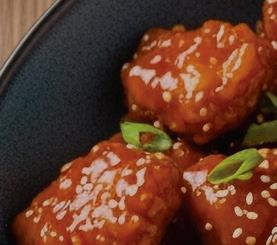


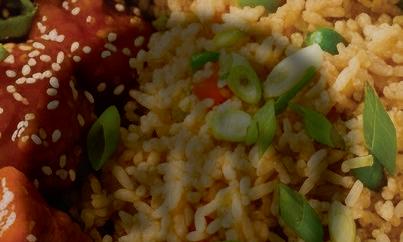


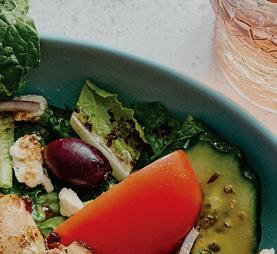
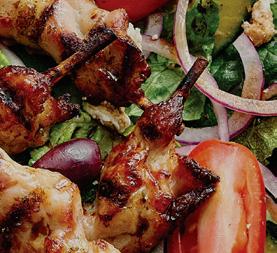
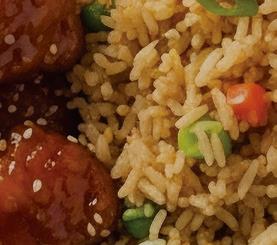























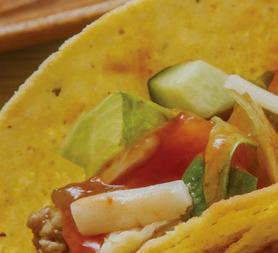
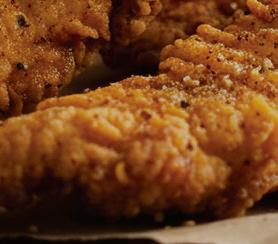
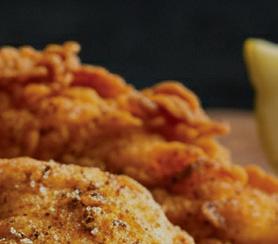











































































IN THIS MONTH’S COVER STORY, we hear from Good Oil CEO Nikki Earp and President Wyatt Good, third-generation members of the family business who now helm the company started by their grandparents. Like many next-generation leaders, they became acquainted with their family’s c-store business at a very young age and wore numerous hats as they climbed the ranks, starting at the bottom rung. The cousins credit their parents, the second generation of the business, for setting them up for success.
I hear time and again that succession planning and preparing the next generation to lead remains one of the most difficult challenges in family-owned businesses, and too often companies struggle as leadership transitions from one generation to the next. What sets Good Oil apart is the intentional effort its second generation made to prepare the incoming generation to lead.
“Get those processes and policies in place that help guide everybody to avoid any type of conflict or rub points that may arise,” Good advised. “Get those things in place ahead of time, so everybody knows the expectations.”
It’s never too early to start.
Right now, tomorrow’s c-store retail leaders, whether they’re category managers; marketing, operations or technology executives; or future CEOs, are already starting to make an impact. As they take on greater responsibility within their organizations, they are facing a rapidly evolving industry shaped by new technologies, changing consumer expectations and increased competition that far exceeds what previous generations had to navigate. On top of that, they’re managing the usual pressures, hurdles and opportunities that are unique to the early years of one’s career.
To help rising executives navigate these challenges and accelerate their professional growth, CStore Decisions launched CStore Momentum — a conference created specifically for convenience retail professionals in their 20s, 30s and early 40s. The event combines leadership development, peer-to-peer networking and industry education, giving attendees practical strategies they can apply within their organizations while building relationships with fellow emerging leaders from across the country.
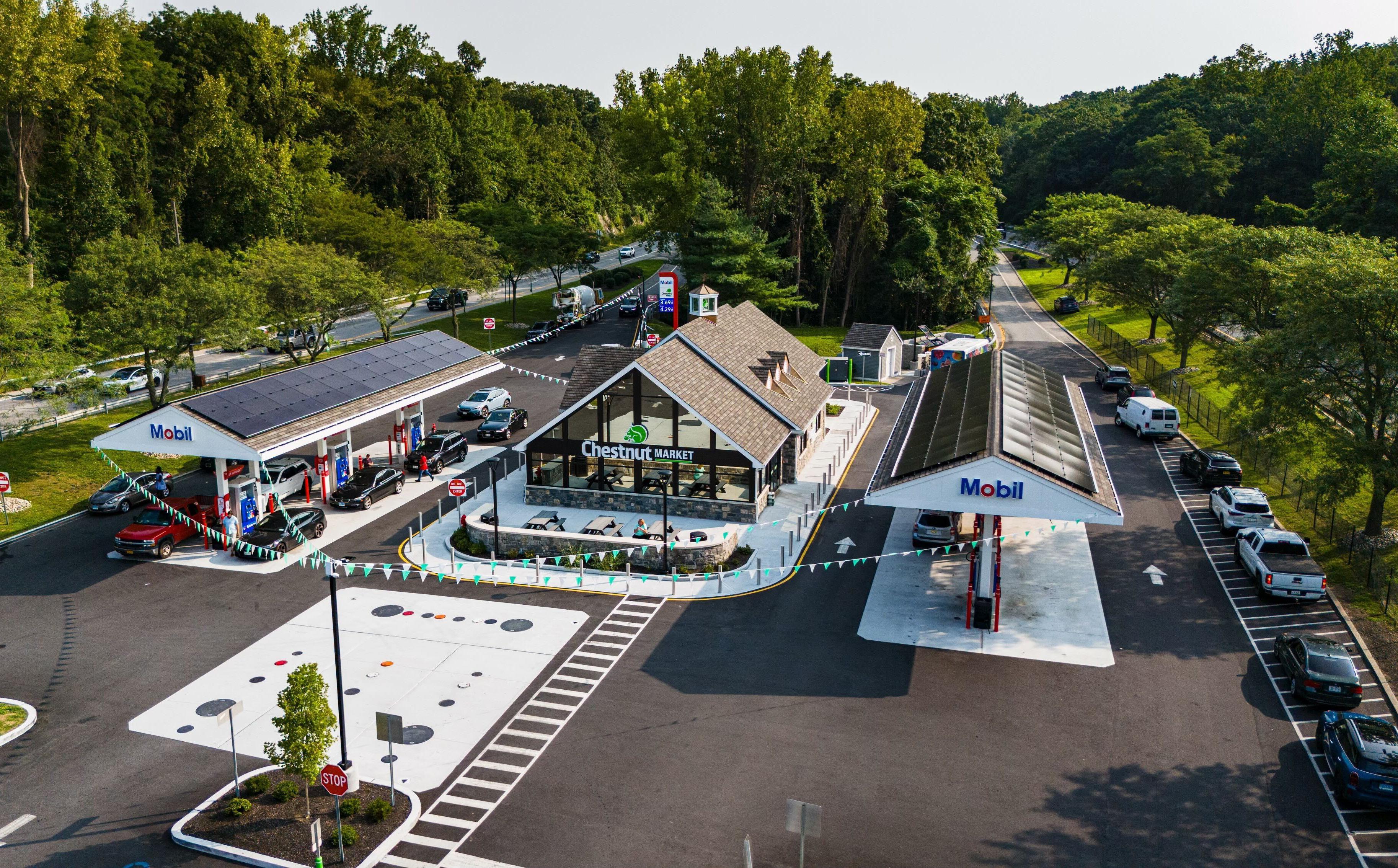
The 2026 CStore Momentum conference will take place Aug. 19–21 at the Westchester Marriott in Tarrytown, N.Y., in partnership with Chestnut Market. Chestnut Market is an innovative convenience retailer operating approximately 75 stores throughout New York, New Jersey and Connecticut while supplying fuel to roughly 230 locations across the Tri-State region.
Since introducing its new brand identity in 2020, Chestnut Market has focused on elevating the customer experience
through innovative store design, technology investments and foodservice development. Conference attendees will have the opportunity to see those initiatives in action through educational sessions and store tours, including a visit to the company’s acclaimed “The Hutch” location on the Hutchinson River Parkway, where attendees can sample Chestnut’s foodservice menu.
During the event, attendees will hear from Chestnut Market leaders Faheem Jamal, director of retail operations and a second-generation leader, and Rick Theilig, general manager, who will provide a behind-the-scenes look at the company’s operations and the strategy behind its renowned Retail Is Detail program as well as a look back at the company’s history and goals moving forward.
Jason Read, director of store operations at Wawa, will provide a keynote address, drawing on his more than 30 years of retail leadership experience to offer practical strategies for leading teams, advancing careers and finding both professional success and personal fulfillment. His session will provide attendees with actionable takeaways to help them stand out within their organizations and grow their leadership potential.
Technology innovation will be a key focus of the agenda, with insights from Jackie Halas, VP of business IT at Global Partners; Dana Moloney, chief operating officer of Warrenton Oil; and Abigail Cerra, director of marketing, loyalty and communications at Chestnut Market. Together, they will discuss the technologies reshaping convenience retail and how operators can leverage them to enhance efficiency, customer engagement and growth.
Foodservice also will take center stage as Farris Jamal, director of merchandising at Chestnut Market; James Fry, foodservice director at Dandy Mini Marts; and Jeffrey Russell, foodservice director at Crosby’s, explore emerging consumer preferences, innovative menu strategies and the evolving role of foodservice in convenience retail.
Beyond the educational sessions, attendees will participate in leadership-focused roundtable discussions and network with peers during receptions and breaks.
C-store chains that invest in opportunities like CStore Momentum demonstrate a commitment to professional growth and employee retention while developing confident, capable leaders who can help drive long-term business success. C-store retailers can learn more and register at CStoreMomentum.com. Supplier companies must sponsor to attend.



Technology is useful to convenience retailers when it’s used to drive specific business outcomes, such as increasing efficiency and bridging disconnect.
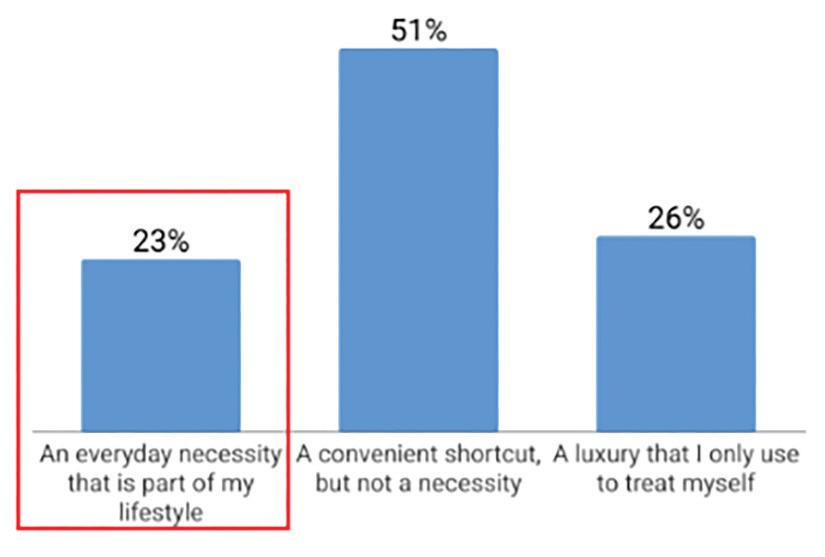
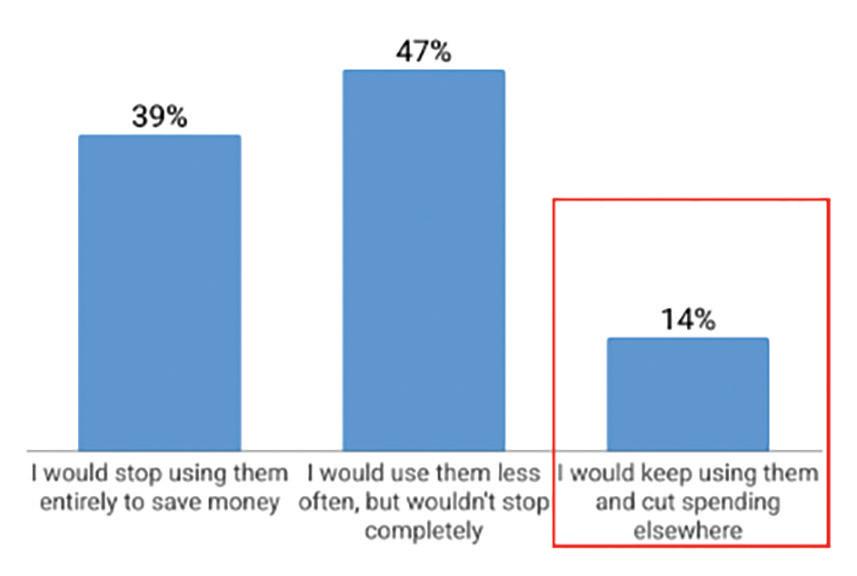
When asked which of the following best describes how you view convenience apps including delivery services, over half of respondents believe they are convenient, but not a necessity. When asked how you would handle spending on these services if you needed to cut your monthly budget, just under half of respondents would use them less often but not stop using them completely.
Last-minute urgent needs and quick fill-in trips dominate in-store shopping behavior. Convenience retailers looking to expand online delivery or pickup should consider offering weekly stock-up staples.
Shopping channel use varies by trip type: Online leads for planned stock-ups; in-store dominates urgent quick trips.
When asked, “How interested would you be in seeing the following types of technology from your local convenience stores?” respondents said:
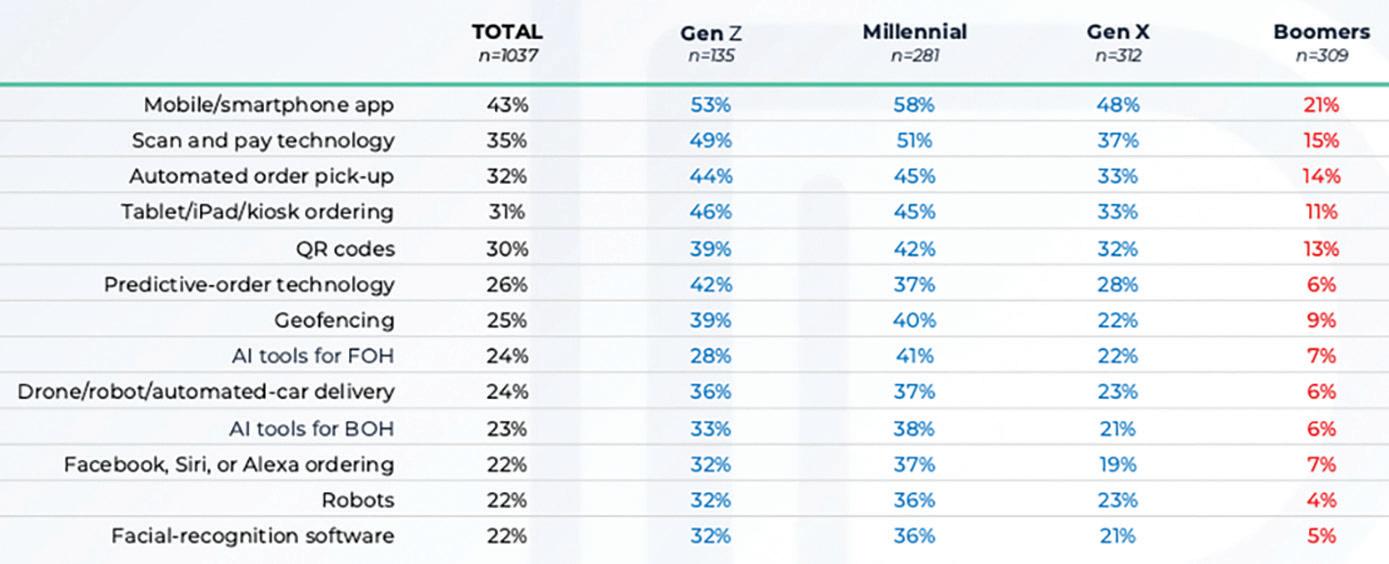
Customers want consistent and efficient store experiences. Connecting tech systems in a way to best improve communication and operations is necessary when investing in technology.
• 67% say it is important that associates can provide instant answers without leaving their side.
• 95% say getting help quickly matters to their in-store experience.
• 84% say consistency across locations improves their perception of a brand.
Thirty-three percent of diners are visiting c-stores more often. As brands expand ordering channels, creating consistent experiences across every touchpoint is important. According to Tillster, brands can leverage tech to orchestrate interactions to bridge disconnect and create experiences that provide real value.
• 64% of consumers use self-service kiosks regularly.
• 75% order via drive-thru at least several times a month.
• 61% order with a cashier just as often.
wednesday, august 19
12:00 - 4:00 PM
3:30 - 4:30 PM
4:30 - 6:00 PM
6:00 - 9:00 PM
thursday, august 20
7:30 - 8:30 AM
8:45 - 9:15 AM
9:15 - 10:00 AM
10:00 - 10:45 AM
Exhibitor Setup
Registration
CStore Momentum Welcome Mixer
Dinner on Your Own
Networking Breakfast
Welcome to Chestnut Market
Faheem Jamal | Chestnut Market
Behind the Curtain with Chestnut Market
Rick Theilig and Faheem Jamal | Chestnut Market
Charging Ahead with Tech
Jackie Halas | Global Partners
Dana Moloney | Warrenton Oil
Abigail Cerra | Chestnut Market
10:45 - 11:15 AM
11:15 AM - 12:00 PM
Networking Break
Evolving with Foodervice
Faheem Jamal | Chestnut Market
James Fry | Dandy Mini Marts
Jeffrey Russell | Crosby's
12:00 - 1:00 PM 1:00 - 1:30 PM
Networking Lunch
Burning Issue Exchange Roundtable #1*
Option #1: Shaping Company Culture as a Young Executive
Carmelia Bengochea-Glore | Chestnut Market
Option #2: Riding the Wave of Change
Abigail Cerra | Chestnut Market
1:30 - 2:00 PM
Burning Issue
Exchange Roundtable #2*
Option #1: Shaping Company Culture as a Young Executive
Carmelia Bengochea-Glore | Chestnut Market
Option #2: Riding the Wave of Change
Abigail Cerra | Chestnut Market
2:00 - 2:30 PM
2:30 - 3:30 PM
3:30 - 3:45 PM 4:30 - 6:00 PM
friday, august 21
8:30 - 9:00 AM 9:00 AM - 1:30 PM
Hosted by Chestnut Market | New York
*For Roundtables: Attendees will break into two groups and spend 30 minutes engaging with one of two discussion groups. Later they'll get a chance to experience the second discussion group.
Networking Break
Keynote Session: Leadership in Motion
Jason Read | Wawa
Final Wrap-up
Networking Reception
Networking Breakfast
Chestnut Market's Facility Tour and Lunch
CStore Momentum is an exclusive event tailored for young leaders in the dynamic world of convenience retail. This unique gathering is a transformative experience designed to propel emerging leaders to new heights of excellence. Immerse yourself in engaging sessions, interactive workshops, and networking opportunities that will not only expand your industry knowledge but also cultivate the skills needed to thrive in a fast-paced environment. CStore Momentum is more than just an event; it’s a catalyst for personal and professional acceleration, where young leaders converge to shape the future of convenience retail. To learn more please contact events@wtwhmedia.com

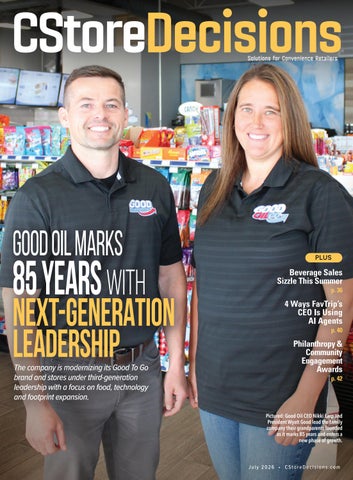
The company is modernizing its Good To Go brand and stores under third-generation leadership with a focus on food, technology and footprint expansion.
Erin Del Conte • Editor-in-Chief
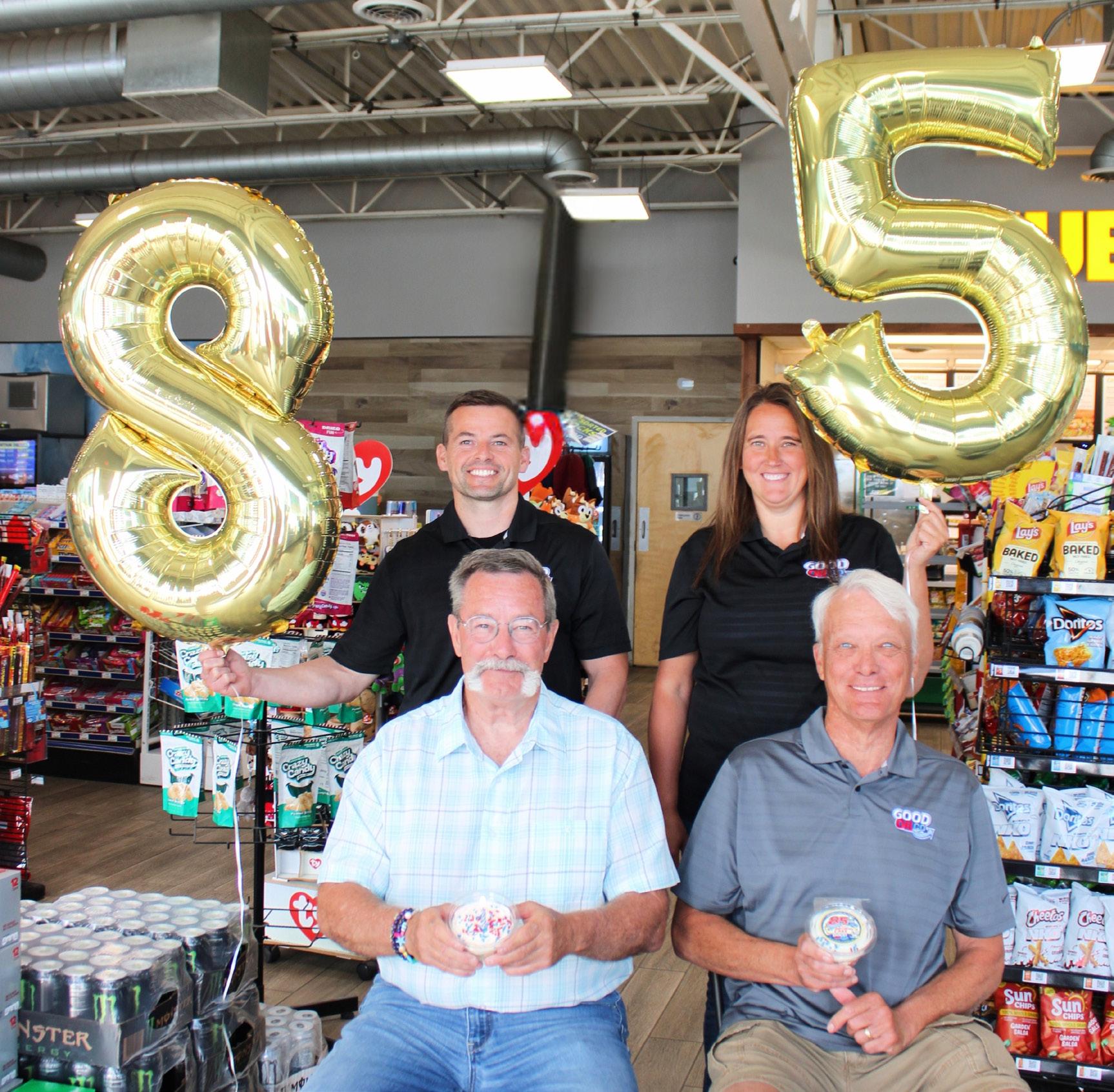
GOOD OIL, NOW HELMED by the third generation of the family business, is celebrating 85 years in business in 2026.
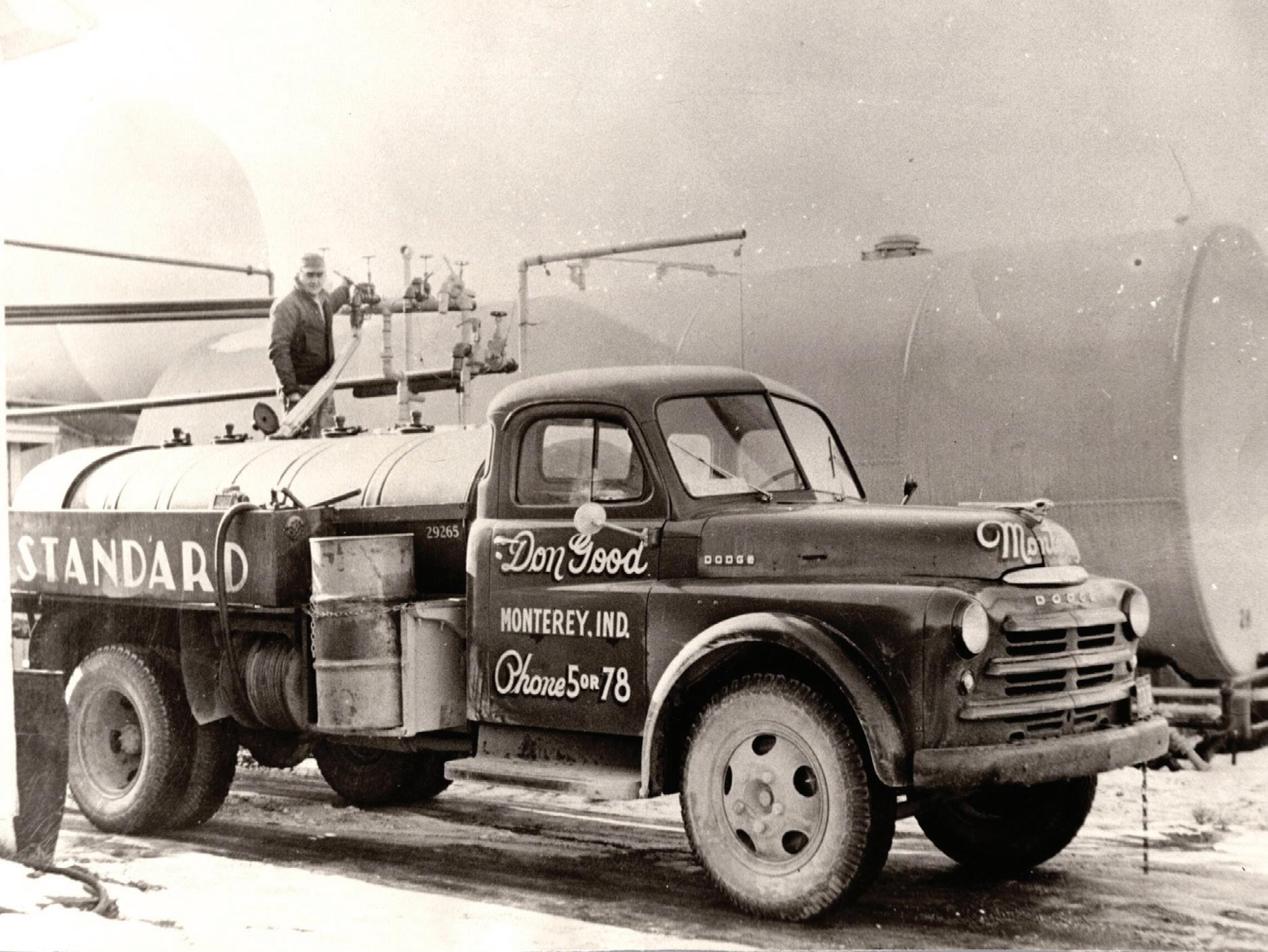
The chain was founded by Don Good Sr. and his wife, Mary Good, in Monterey, Ind., in 1941 and got its start as a small petroleum supplier serving local farms and homes. Their sons — Don Jr. and Dean — joined the business and developed the convenience store end of the company. They opened their first cstore in 1971 in Winamac, Ind., where the company’s headquarters are today.
That original store “was more of a traditional model,” said Nikki Earp, CEO of Good Oil, with a shop that included the full range of products and services customers expected at the time. From there, the brothers started slowly acquiring “a
store here, a store there, as opportunities arose,” Earp said. “It just kind of grew into a life of its own naturally.”
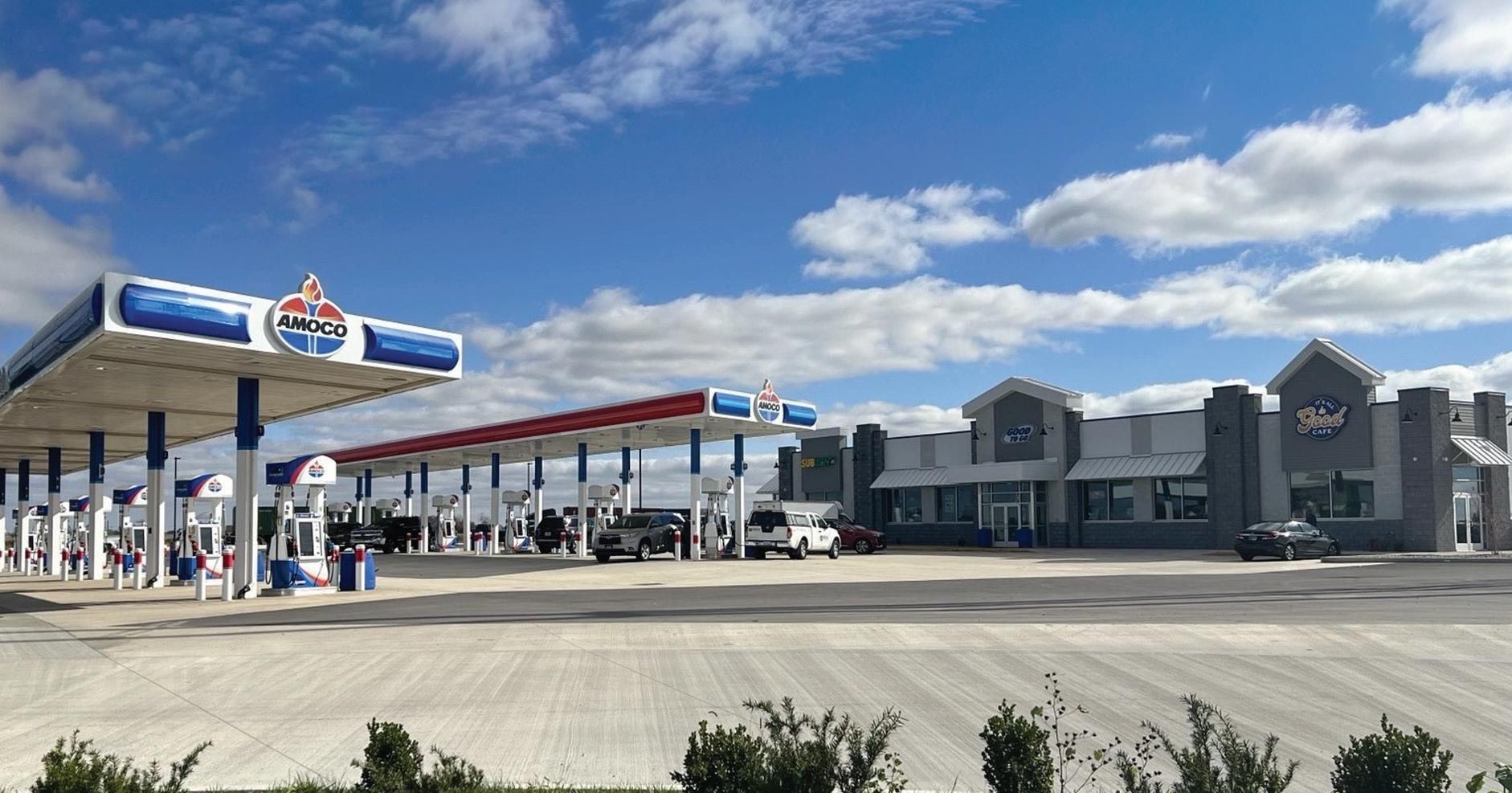
Today, the chain operates 19 stores — 13 in Indiana, five in Ohio and one in Illinois — under the Good To Go banner. Four of the sites are full truck stops.
Earp is Don Jr.’s daughter. She officially stepped into the CEO role earlier this year but, like many next-generation leaders, she’s been active in the family business her entire life.
“I worked through high school, worked through college, came out of college, worked in the stores, did various accounting functions and different positions in the accounting department, then moved to chief financial officer and then slowly transitioned into the CEO role. It’s
been a couple-year transition,” Earp said. “And I probably would say within the last year I really took a hold of the CEO role and moved into that role with my dad exiting more day-to-day (responsibilities).
It was a slow transition.”
Her cousin, Wyatt Good, Dean’s son, assumed the duties of president around the same time. Like Earp, he worked at the company throughout high school and moved up through the ranks.
“I came into the business full time in 2010 … working various positions on maintenance, environmental, transportation and then transitioning into the president role overseeing the real estate construction, still within our commercial bulk divisions and transportation,“ Good said.
Earp’s oldest daughter, Maci, who is in high school, has also entered the family business and is currently painting curbs and doing the type of tasks that the generation before her did at her age.
Succession planning in a family business isn’t for the faint of heart, but Earp and Good credit their parents for setting them up for success by preparing them to lead and making the transition, which is still underway, as easy as possible.
Don Jr. and Dean are finalizing the passing of the torch to the next generation, with Don Jr. transitioning out of the president role and Dean continuing to oversee environmental compliance but stepping back from daily operations.
“They set us up for a really good foundation coming in, with a very strong, financially healthy company that allowed us to look for continued growth,” Earp said.
One of the second generation’s most
significant contributions to the business has been its deep commitment to community involvement, Good pointed out.
“That was a big thing that they’ve built throughout the years — just how Good Oil has interacted with the communities and has given back, along with employees,” he said. “Even to this day, the family has a very close relationship with not only the employees, but also the customers, and I think that’s something that they’ve instilled in Nikki and I. …”
The key to keeping a family-owned c-store chain successful across three generations and counting goes back to surrounding yourself with great people, Earp noted.
“You can’t build anything if you don’t have a strong support team (where) you support them and they support you and build long-lasting relationships with your customers. We have employees that
have been with us over 30-some years. One of them used to tuck me into bed at night when I visited her daughter. So, you have those trustworthy people that help you along the way,” Earp said.
Knowing your customers is also key, she said. “I’ve known some of the customers since I was in elementary school, and they met my daughter when she was a baby, and now she’s painting their gas stations, so it’s fun to watch.”
Those close relationships with the team members and customers make the business successful and worthwhile, Earp added.
Earp and Good’s advice to other members of family-owned businesses is to be patient with each other and plan proactively for the future.
“Start early and have conversations to set expectations, (such as) what those roles look like and timelines,” Earp said.
“Don’t be scared to get outside help to help push that progress along.”
Good concurred that it’s important to have tough conversations. “Those are easy to avoid in family businesses. Nobody wants to hurt anybody’s feelings, but you know those tough conversations are part of it,” he said. “Get those processes and policies in place that help guide everybody to avoid any type of conflict or rub points that may arise. Get those things in place ahead of time so everybody knows the expectations.”
Good also credits his family’s practice of requiring family members to begin at the ground level and work their way up through the business in setting them up for a successful transition into leadership.
“You understand all areas because you’ve done it, and you can relate to the employees when they have something that arises. You can have those conversations and help them work through it, because you understand it,” Good said.
Being able to lead the company her grandparents started as it celebrates its
85th anniversary milestone “means the world to me,” Earp said. “I feel incredibly blessed to have this opportunity that a lot of people don’t get (to have). … I’ve never wanted to do anything else. There’s nothing else in the world I’d rather be doing than doing this and creating the opportunity for Wyatt’s and my kids to
“We worked with an outside marketing company and re-imaged our logo, so that will be coming to the stores soon.”
-Nikki Earp, CEO Good Oil Co.
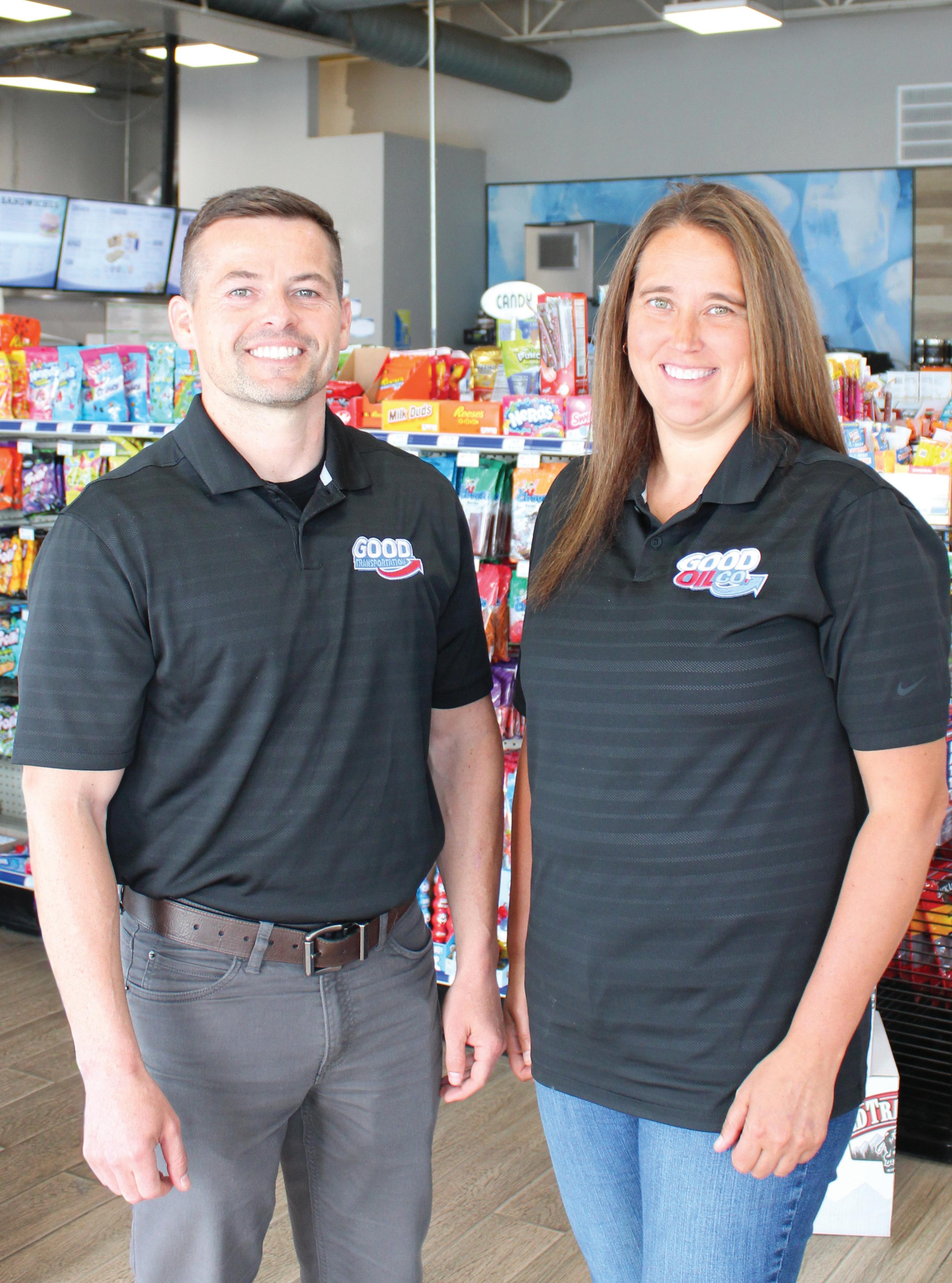
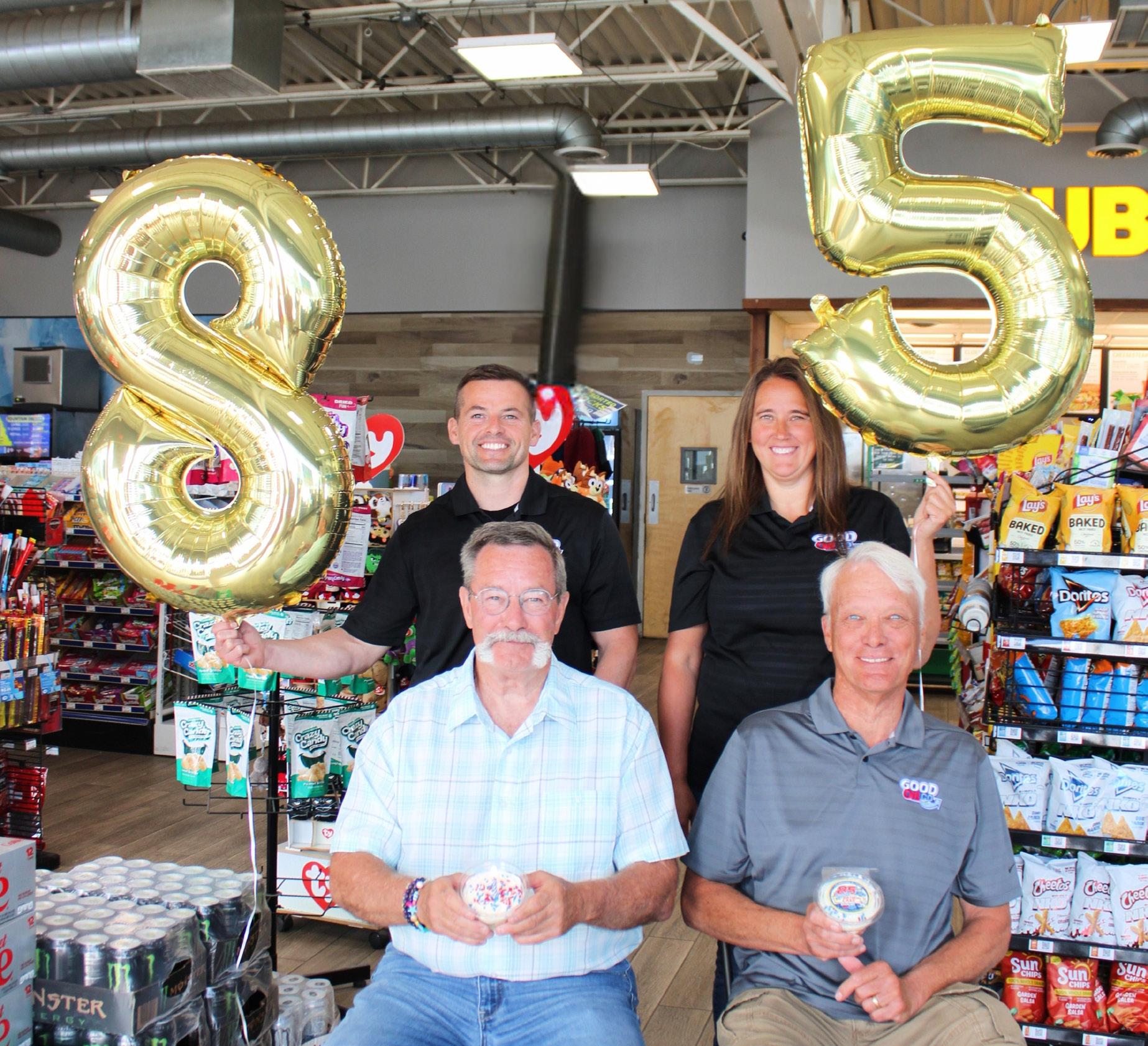
The Good family celebrates 85 years of Good Oil. The third generation of the family business, President Wyatt Good (back left) and CEO Nikki Earp (back right), stand behind their respective fathers, Dean Good (front left) and Don Good Jr. (front right), who represent the second generation and who are passing the torch of company leadership to their children.
continue that tradition and have those same opportunities that we were lucky enough to be afforded,” she said.
While Good Oil’s actual anniversary was May 15, it’s celebrating its 85th anniversary in July. “We wanted to get through some of the rainier weather so that we can do some fun stuff with the customers,” Earp said. That includes a number of giveaways.
“We’re going to be giving away tons of points on our loyalty cards,” Earp said. “There’s a lot of drawings for $85 on your loyalty cards throughout mostly July and August.”
Marketing Director Lynn Wood has created Good To Go’s 85th birthday cake design, and individual-sized cakes featuring the design are available for sale in the stores this July.
All employees are receiving 85th anniversary shirts to help celebrate.
With 85 years under its belt and a new generation leading the way forward, Good To Go is getting ready to grow under an updated brand image and store design.
In May of last year, Good Oil acquired five Big Mike’s c-stores in Ohio, which it rebranded to its Good To Go banner, increasing its retail presence in the Midwest by 33%. Good To Go also has about five new builds on the docket that are scheduled to open within the next one to two years, which will boost its retail presence by another 26%.
The chain is now planning to standardize its store design going forward after growing to 19 stores primarily through small acquisitions.
“We liked what the Big Mike’s stores offered over in Ohio, as far as the footprint and the layout on some of those








facilities,” Good said. “We are going to look at incorporating some of that into our store models going forward and, more or less, have a cookie-cutter layout and design based off of the market and what we feel those volumes are or (the revenue) that store is going to generate.”
The five new builds on the schedule are expected to measure around 4,800 square feet.
Good To Go recently launched a new logo and is in the process of finalizing a new interior design that it plans to introduce with its upcoming new builds and then roll out to its legacy stores.
“We worked with an outside marketing company and re-imaged our logo, so that will be coming to the stores soon,” Earp noted. “We haven’t realized the (interior design) theme yet, but it’s going to be a pretty cool interior design,
starting with those new stores — we’re almost there with it,” Earp said.
In the forecourt, Good To Go partners with a range of gas brands, including BP, CITGO, Phillips 66, Marathon and Shell. It also features Good To Go-branded diesel at its four truck stops.
The chain also operates four car washes on its c-store properties, and it plans to add electric vehicle (EV) charging to a location on I-65 within the next year.
“With that location, it could be helpful (to have EV) being right off the interstate. We’re trying to provide the customers with the services they need. We have two foodservice offerings (at that site), so it would just be a convenient place for them to stop,” Earp said.
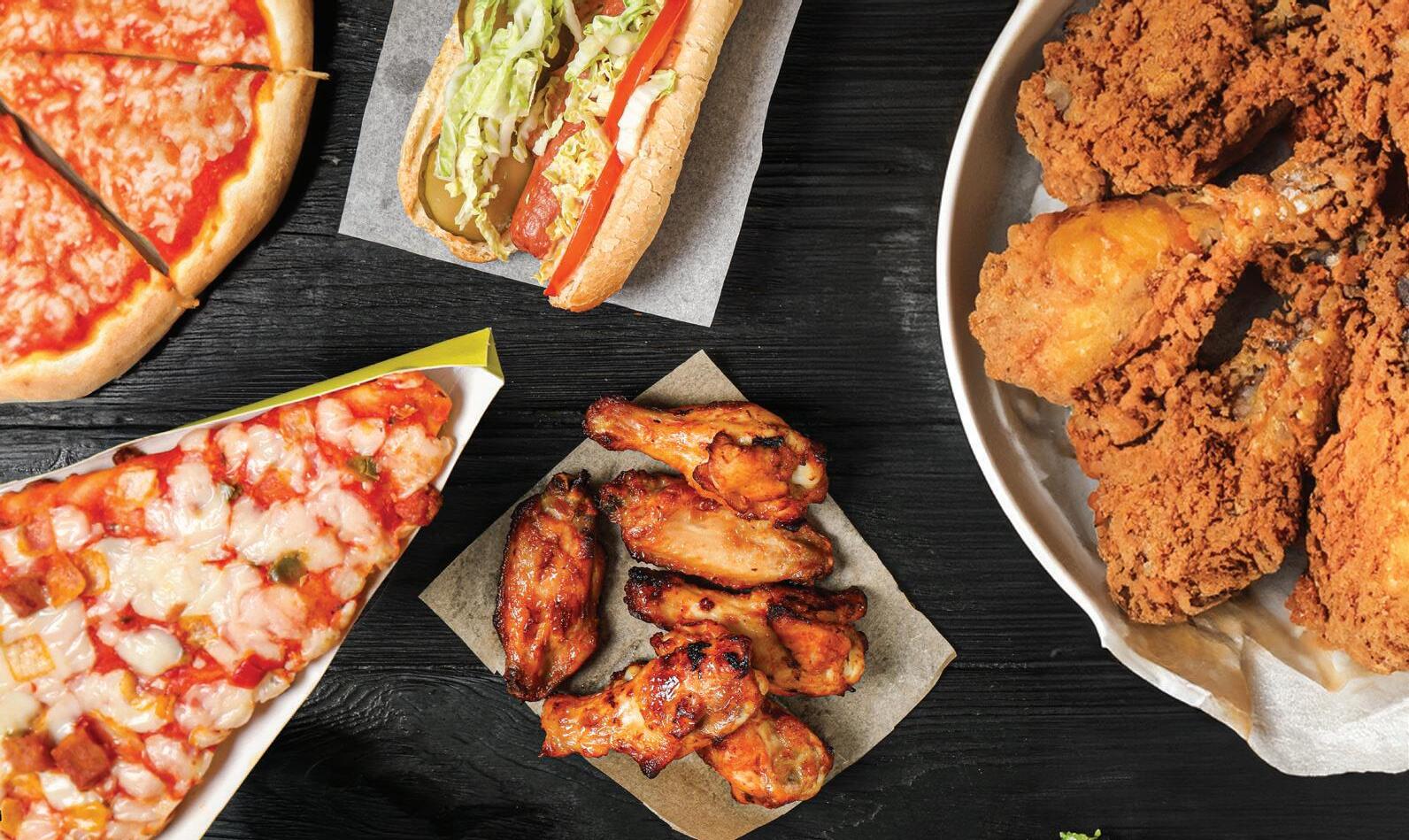
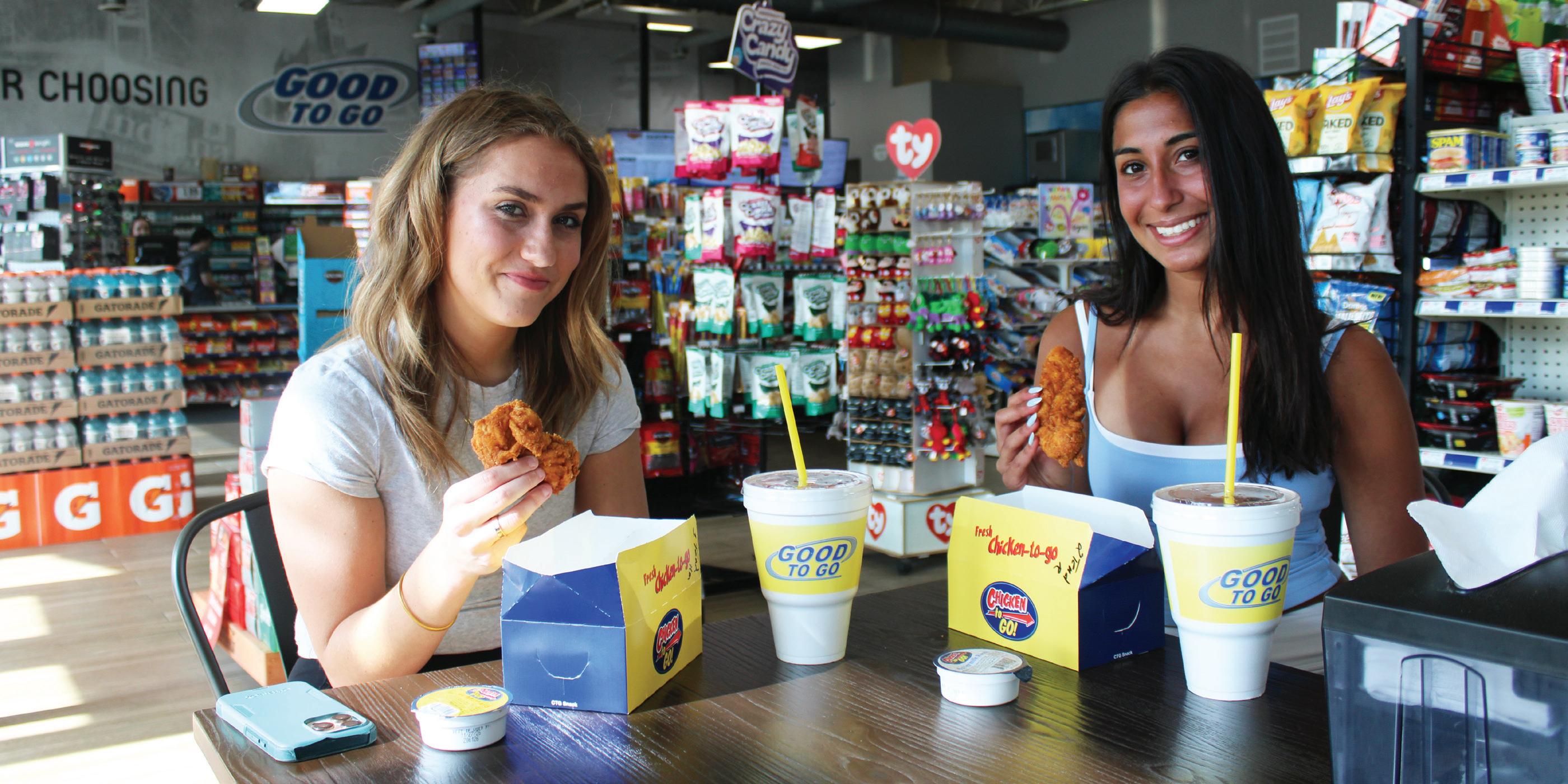
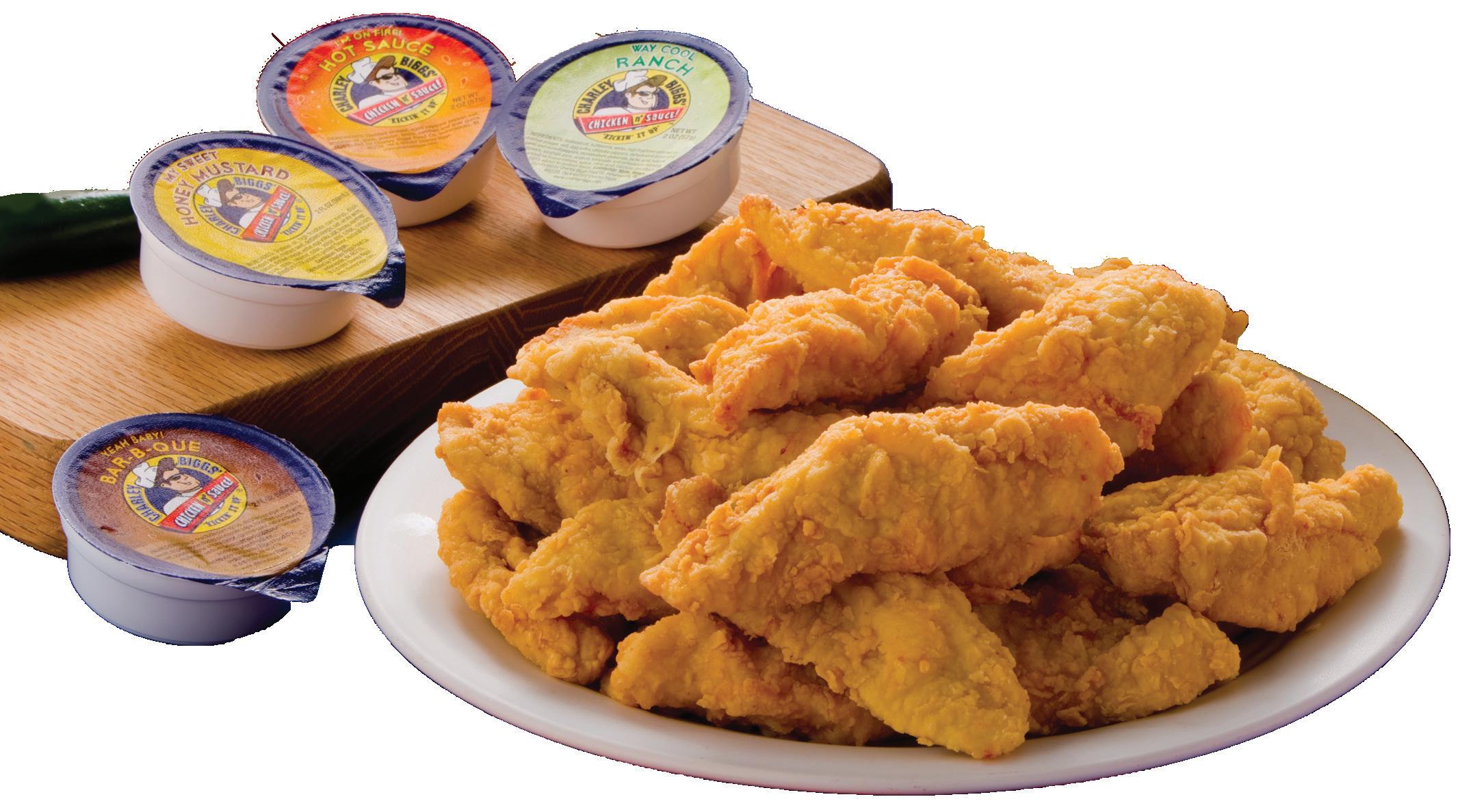
Foodservice is a high priority for the chain. Good To Go features a proprietary hand-breaded chicken offering at five locations, while all other sites feature a more traditional c-store proprietary food menu. Both food programs operate under the name Good To Go Café. The traditional c-store menu includes a wide variety of items, including hamburgers, egg rolls, stuffed jalapeños and cheese
sticks, prepared in-house. Two locations also feature Subway franchises.
“One of the most popular menu items at Good To Go stores with the chicken program is the hand-breaded fish. That’s a staple that a lot of people like, and shockingly, we bread livers and gizzards, and people actually are so excited that those are there,” Earp said.
At the other stores, egg rolls are a crowd favorite, including with team members. “Our accounting team goes up for breakfast egg rolls in the morning,” Earp added.
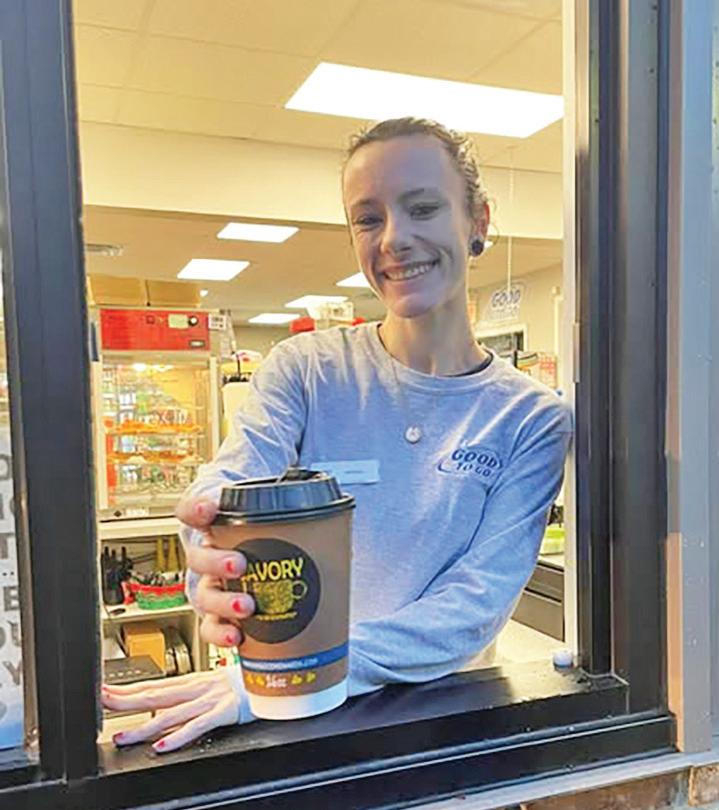
Customers can order ahead and pick up their order in-store, or at eight sites, they can go through the drive-thru.
The five stores acquired in Ohio feature full drive-thrus. “You pull into like a garage and your whole vehicle is covered,” Earp explained. The chain also has three traditional drive-thrus. Customers can order anything the stores offer through the drive-thrus.
“Most of our stores are in rural communities and don’t have delivery drivers,” Earp explained, making the drive-thru an even more convenient option.
Given Good To Go’s community-rooted approach, it’s no surprise that some stores have a section where guests can find local products, such as honey.
“For example, in Frankfurt, Ind., Glover’s Ice Cream is owned by a family from Frankfurt, so we sell their ice cream, do some customized local favorites,” Earp said.
That emphasis on local preferences extends beyond just the product selection. The chain’s Bedford Park site in Illinois, for example, features casino gaming machines.
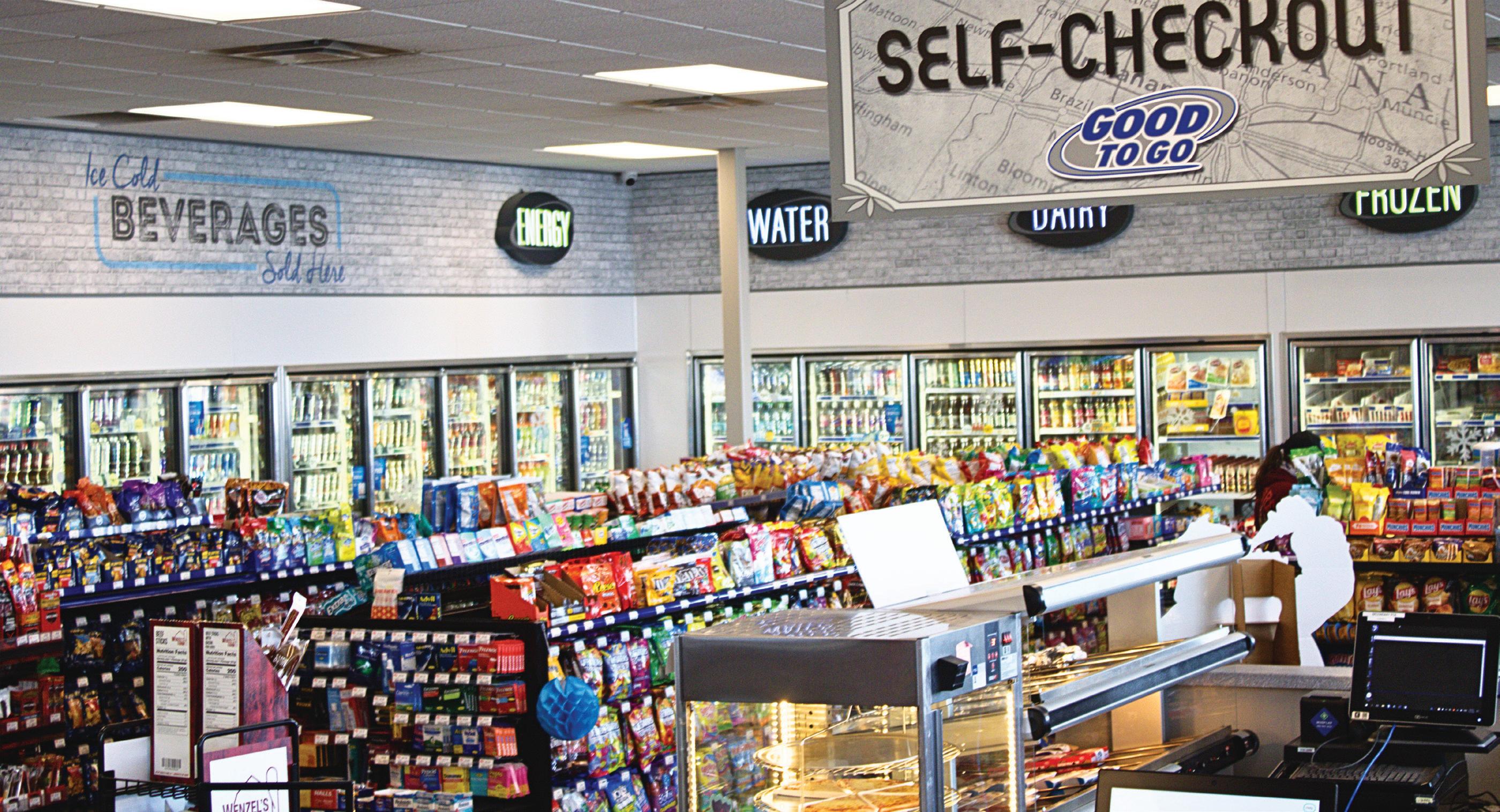
Good To Go is also committed to keeping up with technology trends. The chain features a loyalty program, mobile app and self-checkout kiosks.
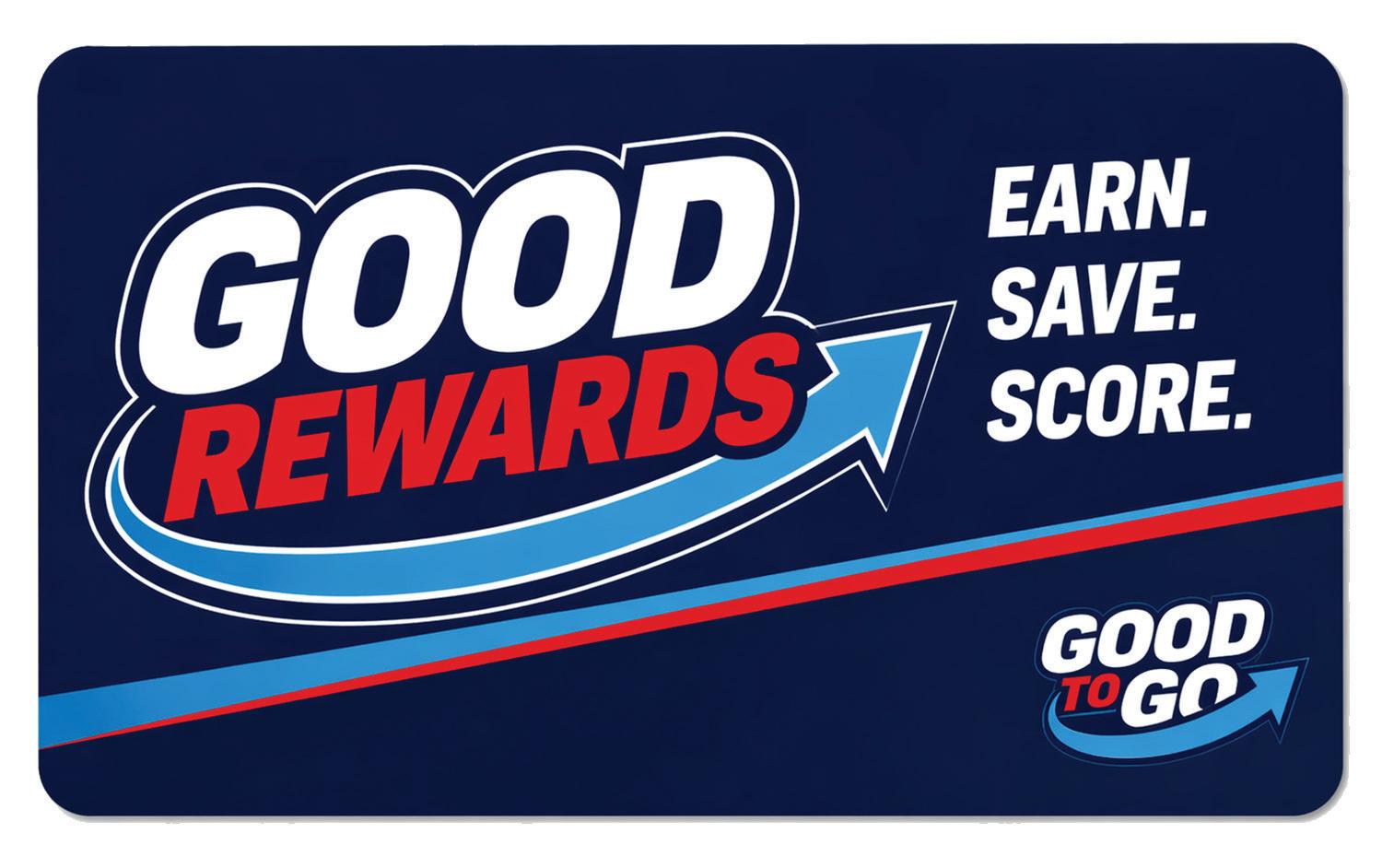
Good To Go’s My Good Rewards program has been a main focus this past year for the chain’s marketing director, Lynn Wood, who has been building out the program and better integrating it within the Good To Go Rewards app complete with specials and gaming. The effort has resulted in a 231% increase in loyalty redemptions in the past year and a basket size increase of $3.39.
When customers opt in to the My Good Rewards loyalty program, every transaction results in points that can be redeemed in-store. For example, customers earn two points per gallon on fuel and two points per dollar spent in-store. Plus, loyalty customers can participate in various club programs to earn free items. Loyalty customers can also take advantage of exclusive promotions — such as $5.99 for two pieces of chicken, a drink and chips — that are updated every two months.
Good To Go’s self-checkout kiosks feature “a flip screen,” Earp explained. “If we’re staffed, we’d like to wait on the
customers and have that interaction, but if for some reason we’re short staffed or something’s going on, we can flip the screen and turn it to a self-checkout and keep the customers moving.”
Three stores use the self-checkout option regularly, but all locations have the capability to use it.
As Good Oil looks ahead to the next 85 years, it’s poised for continued expansion.
“We’re growing in multiple different avenues,” Earp said. “We have our distribution growth. There continue to be a lot of opportunities for us to help
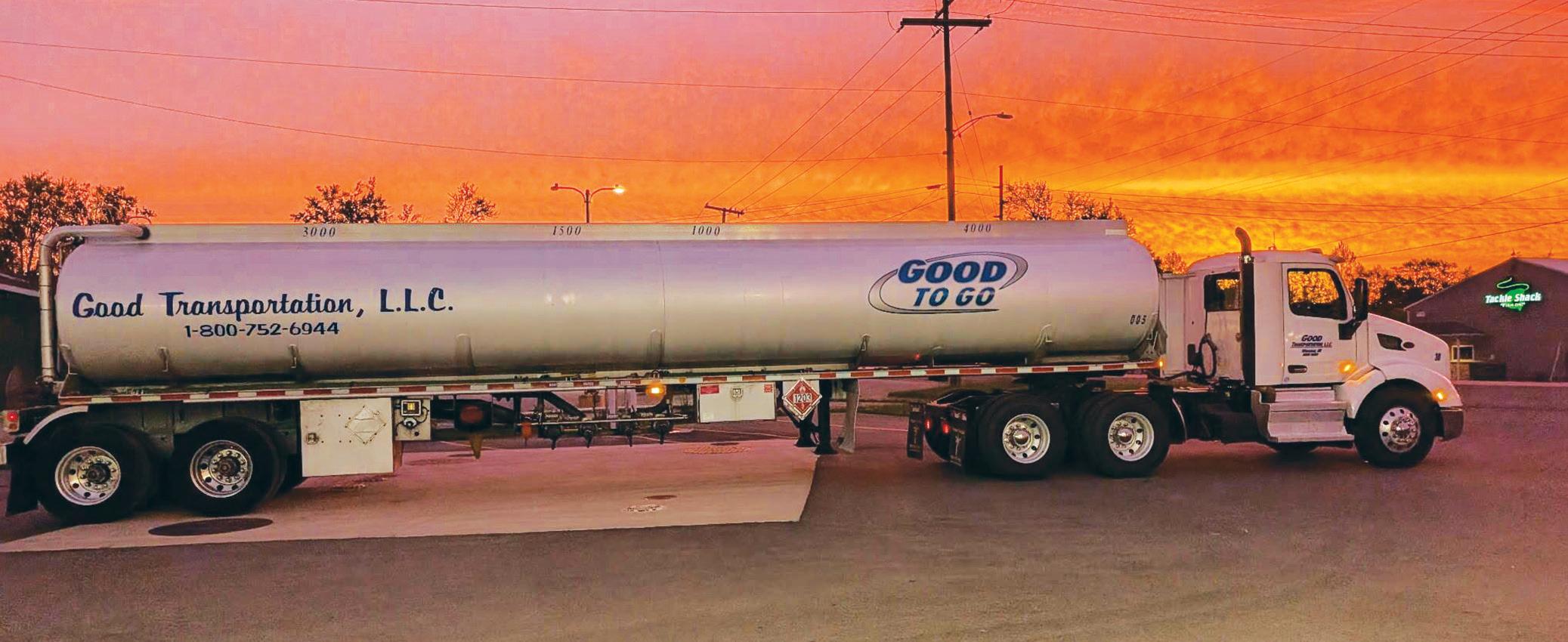
Top: Wyatt Good oversees the transportation end of the business. Over the last two years, Good Oil has acquired additional carriers.
Left: Good Oil got its start as a small petroleum supplier serving local farms and homes.
with that, whether it be commercial off the bulk plant or to other gas stations as a supplier. We really have a good team and are adding staff in that department for continued growth and new markets. We are still growing in the retail channel as well, with those land acquisitions that we’ve made, and will continue to grow.”
Good oversees the transportation end of the business where, over the last two years, Good Oil has acquired additional carriers. “One carrier that we purchased, they’re also a jobber so … we not only got their freight business, but we also picked up some additional gallons there for selling and hauling,” Good said.
The company has also established itself as a reliable carrier service-wise for outside suppliers. “Traditionally, a lot of the gallons that we hauled were just our company gallons and, over the recent years, we’re now hauling for other jobbers, other suppliers and hauling ethanol, which has really grown our transportation division,” Good said.
Today, the company supplies fuel to 150 gas station sites. “Those are Good Oil customers’ stores,” Good explained. On top of that, the transportation division handles additional distribution, including to farm accounts, factories, school corporations and other businesses.
When it comes to Good Oil’s convenience store business, Earp said her goal is to “seize every opportunity that we’re given. (That means), obviously, in the near-term, adding more retail stores along with other customers for distribution and helping service them long-term. It’s making sure we are staying up with the trends and remaining viable no matter what the changes in the industry bring so that we have secure jobs for our entire staff and that we’re ready to make the changes that are necessary as things come up.”
As it grows, Good Oil is committed to the community values and family-oriented company culture that have brought it to where it is today.
Eight Good To Go sites have a drive-thru. Three of the locations have traditional drive-thrus, while five look more like a garage where the whole vehicle is covered. Customers can order anything the stores offer at the drive-thrus.
“There’s a lot of companies out there where people are just kind of a number to the business, and that’s not us,” Good said. “Whether it’s a driver or staff at the store, we know them by name, and they know us by name. We go in and we have that personal relationship with them.”
“People are very important to us, both customers and employees,” Earp said. “We have a very open-door policy, where … Wyatt and I are accessible to the employees and talk to them on a daily basis, from the boots on the ground in the store and up. And that’s a very
important concept that came from the founder, our grandpa Don. That’s how he was, and that’s how we want our culture to continue to be.”
She added, “It’s a really exciting time in our company, and we’re extremely grateful for everybody that’s been part of this journey with us.” CSD



Borrow proven ideas and strategies from the best in the business to elevate your own foodservice program.
Jeff Keune • 4910 Consulting
AS RETAILERS AND VENDOR partners set their sights on new growth drivers and find costs are at risk of increasing, many of them are turning to their foodservice categories and platforms as an opportunity to compete in a new way. And with quick-service restaurants (QSRs) looking to innovation to compete in a challenging environment, many convenience store chains are finding success in elevating their foodservice offering to compete and win against traditional food destinations.
In other words, c-stores are going after traditional QSR and fast-casual restaurant concepts like never before. In fact, convenience retailers are looking past QSRs and instead looking to create a model more like fast-casual concepts to differentiate themselves from convenience stores’ base format, attract new convenience consumers and steal QSR diners.
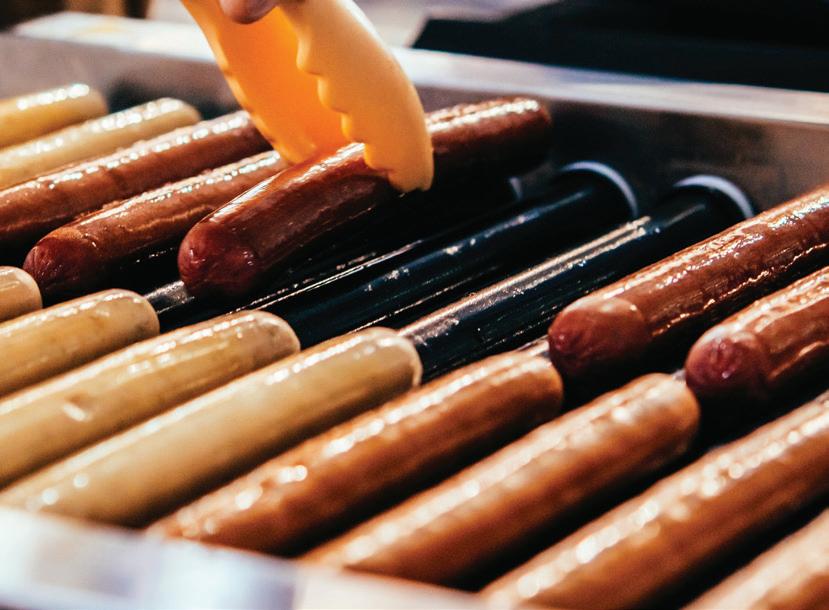
This trend does not discount c-store foodservice staples, like roller grill, pizza, chicken and sandwiches, etc. But rather, this challenges the brand, category managers and vendor partners to find ways to elevate these foodservice classics to develop products and concepts that leapfrog QSR and strive to equal fast-casual
restaurants — the fastest-growing segment in restaurants — to attract more and more guests.
Here’s how they do it: They strategically source and build products that are familiar, but feature unique ingredients and flavors, and provide strong quality cues.
Retailer 1: This respected chain does not simply call out the quality of the bread it uses for its sandwiches as unique and flavorful. Instead, it highlights that the sandwiches are made on focaccia bread, which essentially does the same thing. The hot case calls out burgers, and not just a cheeseburger but rather a cowboy burger, giving it character and creating an expectation. Its breakfast bowl in the hot case is dubbed a “loaded breakfast bowl.” And the hot dogs on the roller grill are Angus franks. Descriptors and names matter in driving trial, and these callouts are proof points of differentiation.
Retailer 2: This chain invests in quality ingredients and sources those ingredients locally where possible. The chefdriven convenience store chain features organic, made-to-order sandwiches,
smoothies and craft coffee, and it deliberately partners with local platforms to stock its shelves with regional artisanal brands. These choices make this retailer a food destination, capturing the flavors of local products whenever possible.
Retailer 3: A chain that labels itself a modern convenience experience focuses heavily on health partners, working with local producers and featuring clearly labeled produce, fresh juices and delistyle subs.
I could go on: One chain/local market and convenience store offers everything from daily organic staples to hot sauce and produce from local farmers. Another offers specialty foods, stocking its shelves with produce from trusted local businesses. It actively seeks out local, high-quality products and ingredients.
In each of these cases, the brands are choosing to build a reputation of innovation, quality and, where possible, capitalize on local trends and products. But they are not eliminating classic foodservice menu items. Rather, they’re upgrading and elevating them with the purpose of driving guest enthusiasm and increasing guest counts.
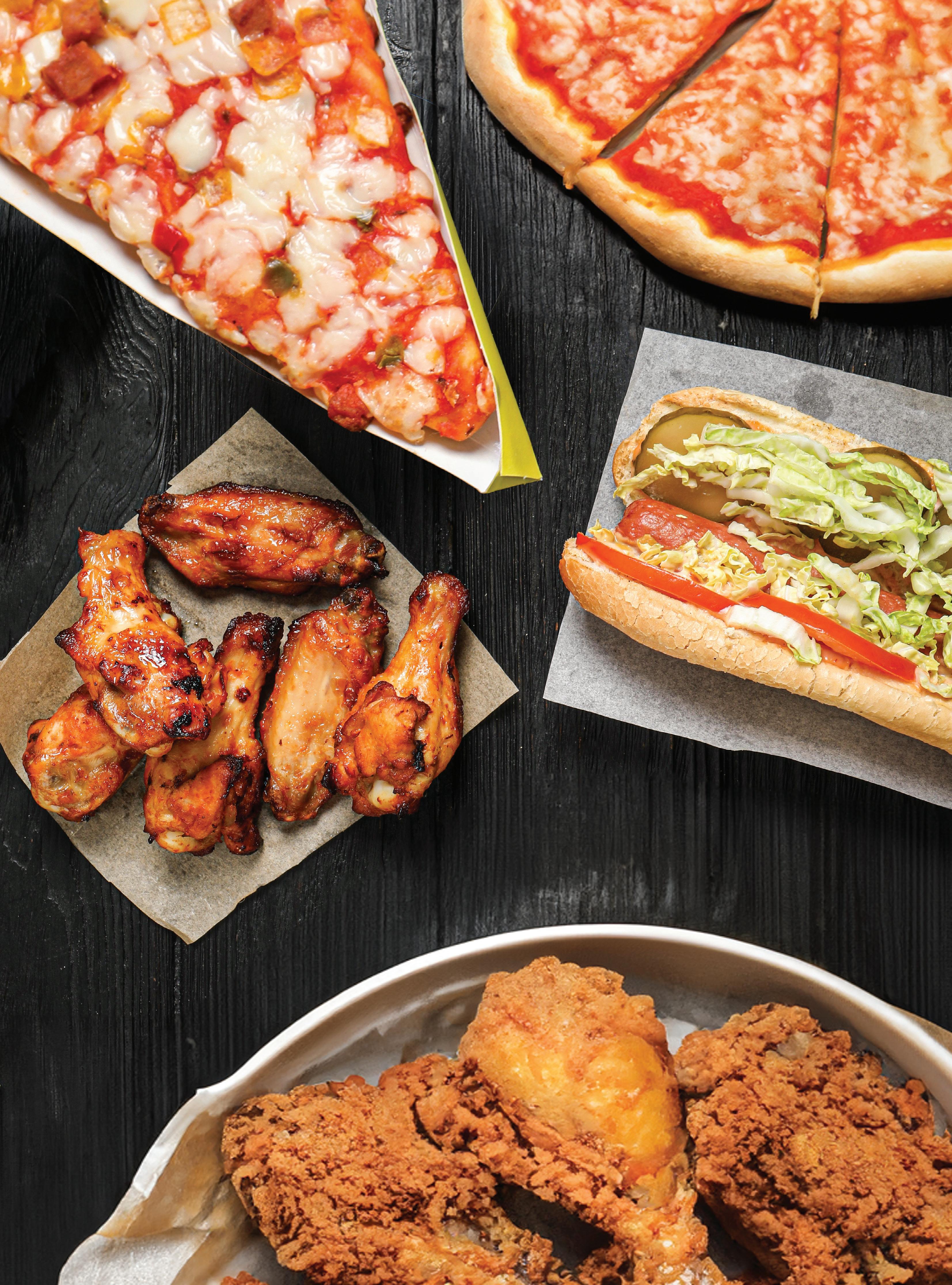
One opportunity some retailers miss is to complete the picture by not only elevating the sandwich, chicken, hot dog or pizza but also infusing indulgence into everything that goes into the experience.
Having an elevated product that tastes great is a very strong foundation, but if the complete experience isn’t examined, then the experience is not reaching the potential of the program. If you have introduced a best-in-class hot dog on the roller grill but do not complete the experience with higher quality and a variety of craveable condiments and ingredients, then the experience is incomplete. If the bun is the same as all other convenience stores, the investment in higher quality may fall short. Great retailers know this and invest in the details to create a destination-driving experience.
Finding a better-quality ketchup, offering an elevated hot sauce, or expanding
the variety of sauces and condiments that add flavor in new and unique ways are great strategies to use to elevate the base roller grill and hot case offer. These additions also create a craveable experience and an offer that is more likely to create destination-driving experiences.
A stronger hot food platform gives you a stronger brand and a higher-quality customer experience.
Pricing plays an important role, as well. Does high-quality food and a better dining experience require raising prices? Not necessarily.
Working with your vendors and driving unit sales can overcome the cost of higher quality. This is our business, and strong retailers use their judgment and partnerships to keep prices at a reasonable, competitive level.
These products in many cases become
a destination and traffic driver. That drives profit.
Improving quality should have a return on that investment, but best-in-class retailers also focus on traffic counts, unit sales and overall sales growth. Look beyond the financial investment in quality. All of these elements, collectively, help a brand differentiate itself and grow.
Jeff Keune is founder and principal consultant for 4910 Consulting, based in Boston. 4910 specializes in driving performance and profitability, physical space behavior, strategic initiatives, menu and merchandising innovation, brand management, and digital activation including loyalty optimization. Keune is a former retail executive who was instrumental in building successful food and merchandising programs for Yesway, Thorntons, American Natural and other convenience retailers and QSRs. Reach him at jeffkeune@4910consulting.com.





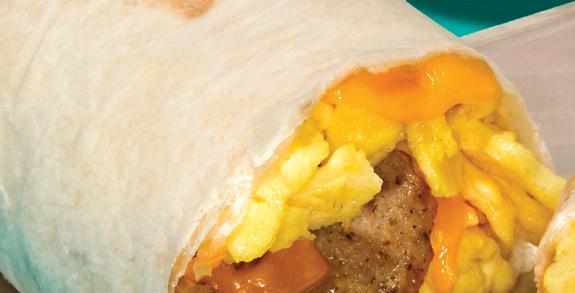
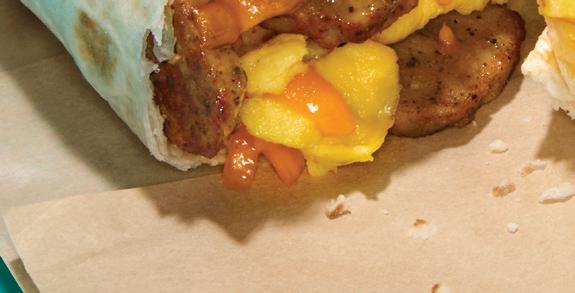


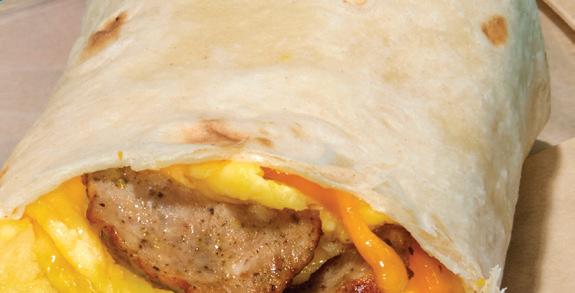
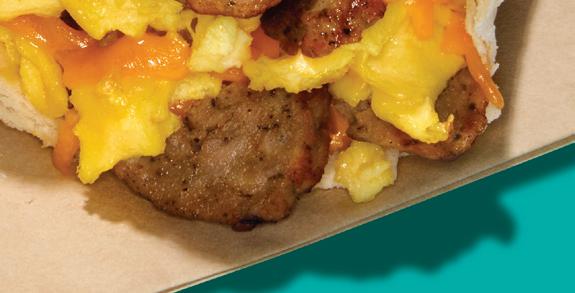











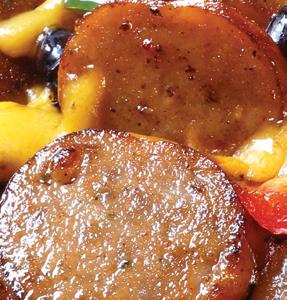
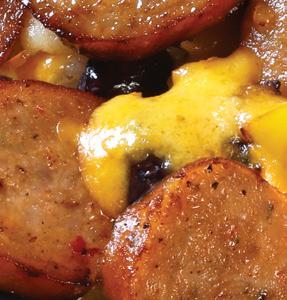



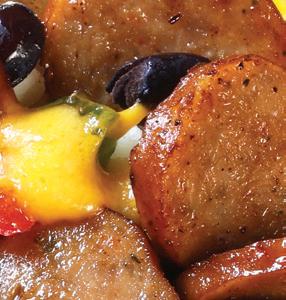
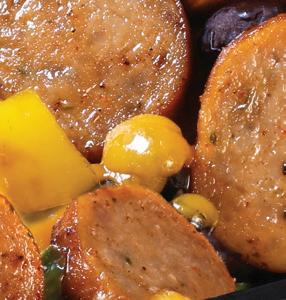











































What it actually takes for foodservice to move from startup to profit.
EVERY C-STORE OPERATOR has been pitched hot food before. The promise is familiar: more traffic, bigger baskets, and better margins. The hesitation? More labor, more complexity, and more chances for execution to slip. For operators already balancing fuel, packaged goods, staffing, and shrink, this is where the conversation around Krispy Krunchy Chicken® (KKC) begins. Not with a guarantee, but with a practical question: What does it actually take for a hot food program to start contributing to the business?
“It’s not plug and play,” Chris Schulz, vice president of U.S. Field—East for Krispy Krunchy Chicken, says. “But you’re also not building a foodservice program from scratch. You’re attaching it to customers who are already coming through the store.”
KKC offers a practical framework. In the first couple of weeks, stores are becoming operational, not chasing profitability. Teams are learning workflows, adjusting labor coverage, and figuring out how the program fits into key dayparts. Early on, the opportunity is about attaching food to traffic that already exists. Signage, merchandising, local store marketing, and a full hot case drive first-time trial and help operators start turning routine visits into meal purchases.
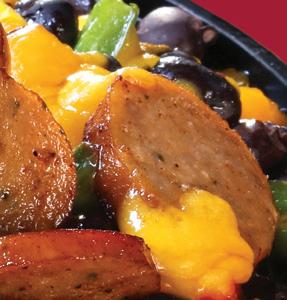
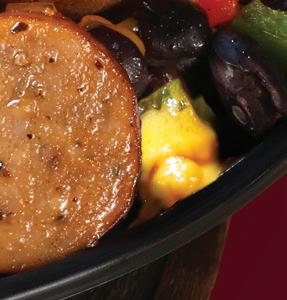
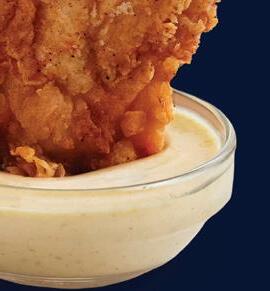
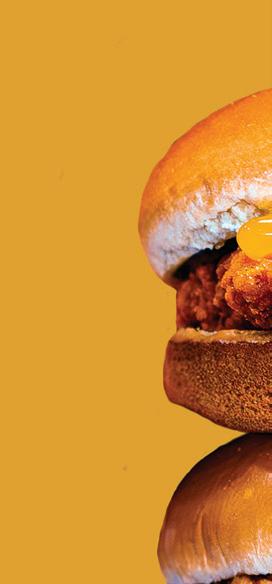
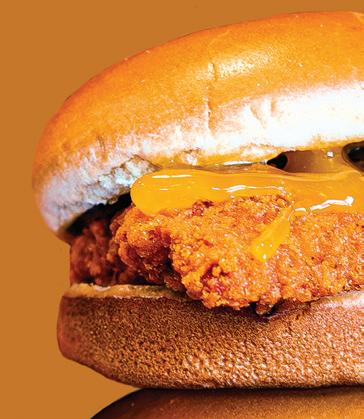
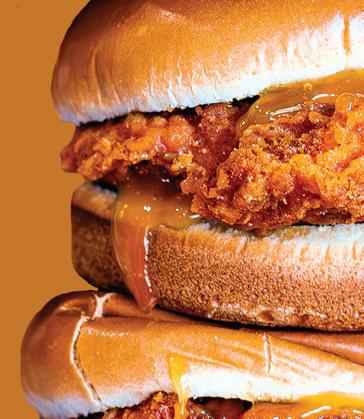
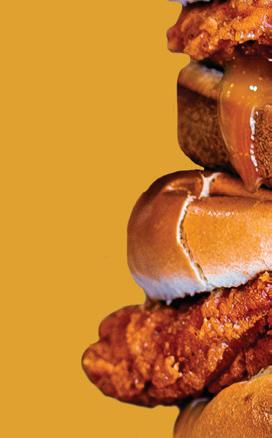
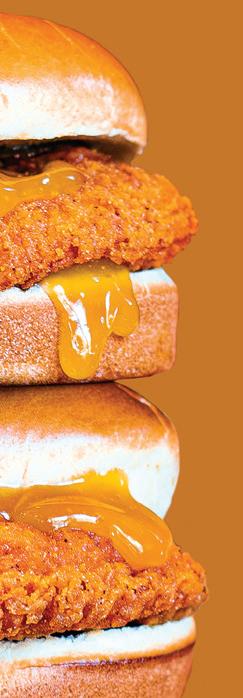
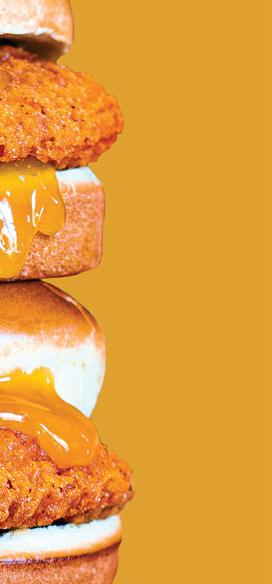
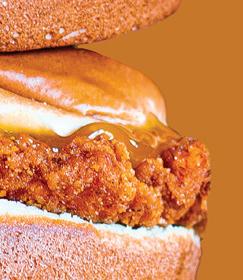
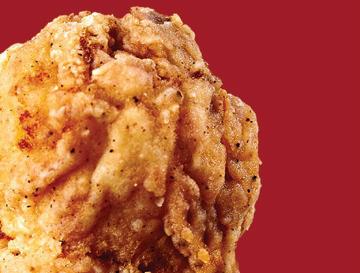
By the first month, the payback test becomes more measurable. Operators start to see which dayparts move product, how much labor is really needed, and where execution gaps are costing them sales. This is also when the first signs of momentum can show up. Stores that add Krispy
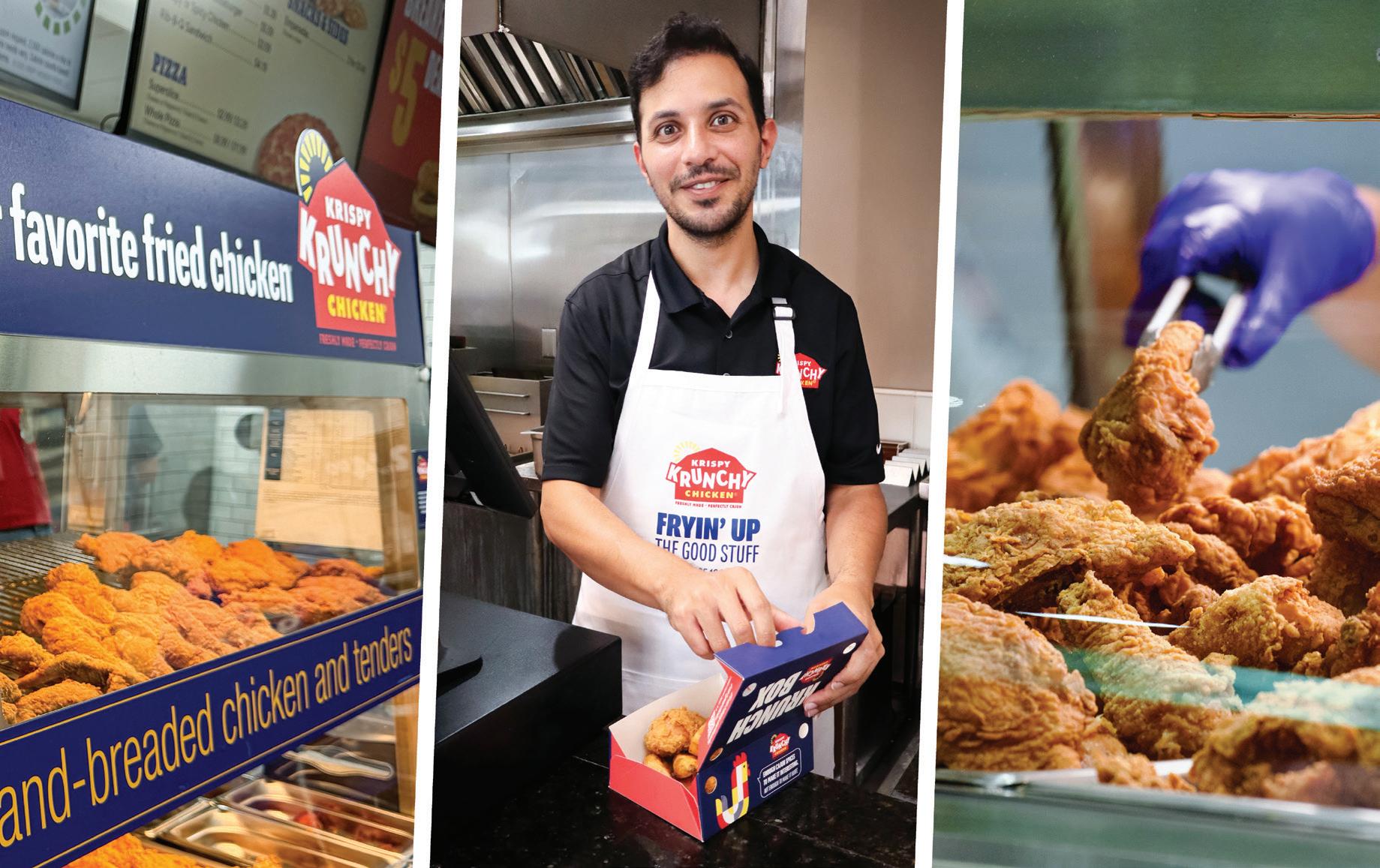
Chicken have seen foot traffic increase 10–12 percent and merchandise sales increase 15–20 percent, according to transaction-level analysis comparing stores before and after launch against similar control locations. That matters because the return is about both chicken sales coupled with add-on purchases like drinks, sides, and snacks that raise the total ring and make the store a more complete meal destination.
By around the three-month mark, stronger operators begin to feel real traction. Waste comes down, production gets tighter, and labor starts to look less like added overhead and more like productive labor tied directly to sales. Repeat behavior also starts to emerge, but only when the product is fresh, available, and visible. “Stores that struggle usually make the same mistakes: they under-merchandise the offer, leave the hot case light during
peak periods, or assume demand will build on its own,” Schulz says. “Stores that succeed treat foodservice like a business inside the business.”
That distinction helps explain why KKC now spans more than 3,600 U.S. locations, sells more than 1 million pounds of chicken per week, and earns strong credibility with operators. In Technomic’s 2026 c-store operator study, 80 percent of surveyed operators cited ease of execution as a top attribute of the program.
For c-store operators still weighing the leap into hot food, KKC is positioning itself as a realistic path to profitable foodservice growth. With a branded program, operational support, and a model built for real-world c-store conditions, it offers operators a clear way to turn existing traffic into incremental revenue over time.
-By Drew Filipski
































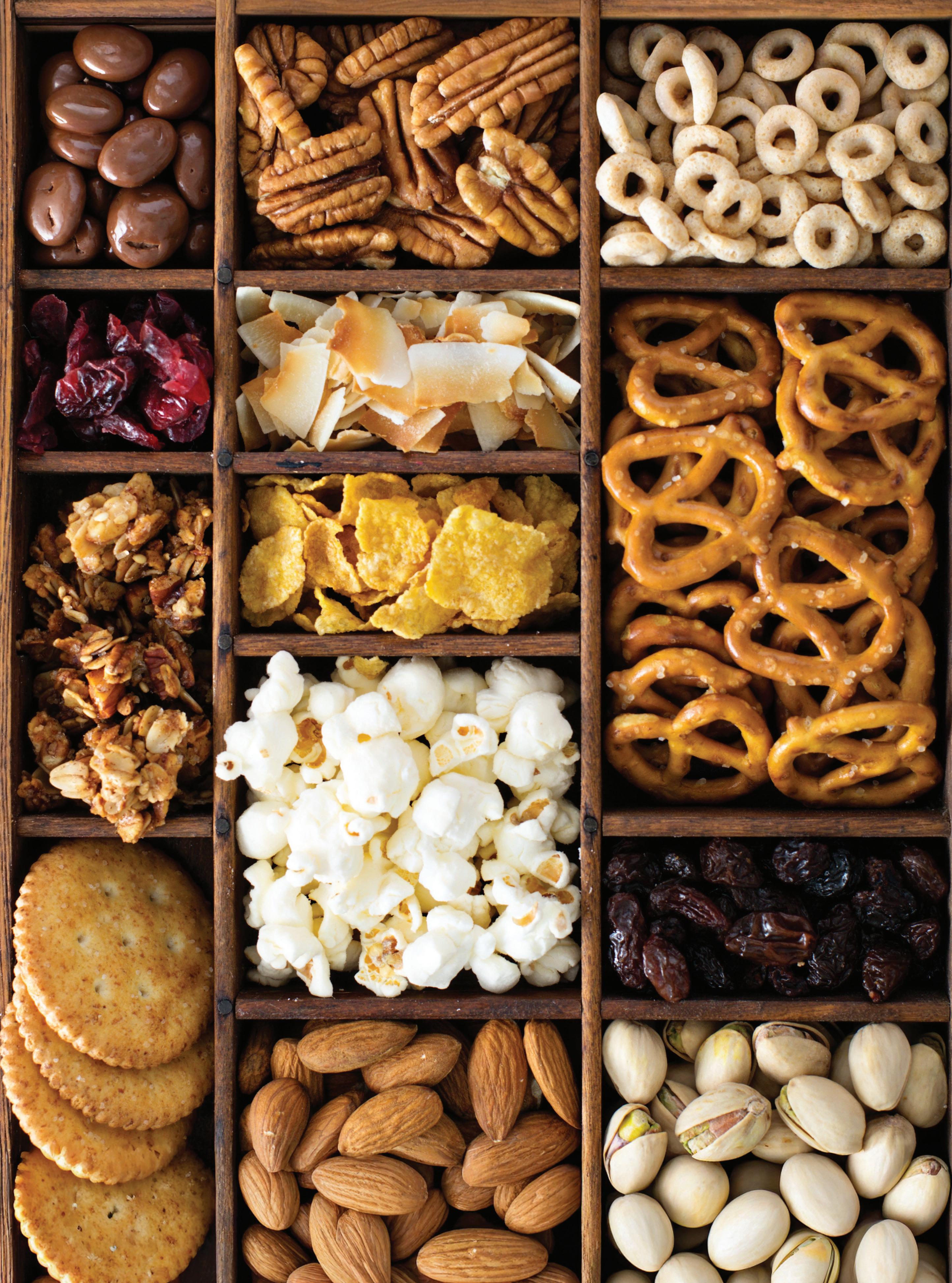
Snack sales are fueled by bold flavors, health trends and promotional value.
Emily Boes • Senior Editor
HEALTHY IS TRENDING in the center store, with growth in fiber and protein leading this charge. While customers certainly still value longtime snack staples, the search for functional ingredients and bolder flavors is increasing, and retailers and their vendor partners are responding.
Snack bars, granola bars and clusters, according to market research firm Circana, for example, jumped in sales by 10.3% for the 52-week period ending May 17. In units, the segment increased by 3.6%. Rice/popcorn cakes saw an extreme increase of 319.9% in dollars and 354.4% in units, likely also due to a decrease in price per unit. Jerky, which inched upward in unit sales by just 0.2%, upped in dollars by 4.8%.
The salty snacks that increased in unit sales for the period include tortilla/ tostada chips, other corn snacks, cheese snacks and pretzels.
Potato chips, however, dipped by 3.1% in units, and other salted snacks (not including nuts) decreased by 13.7% in units. Ready-to-eat popcorn/caramel corn and pork rinds both also saw unit sales declines.
For sweet snacks, cookies dropped 2.2% in units, fruit snacks following at a 2.1% dip.
FriendShip Stores, which operates 31 locations in Ohio, is noticing the broader trend toward health and function hit its snack shelves.
“The trends we are seeing are items that have protein and fiber listed on packaging. Customers are looking for products with less ingredients and cleaner ingredients. Another trend is items bringing a nostalgic feeling back to customers,” said Natalie Goldsmith, category manager for FriendShip.
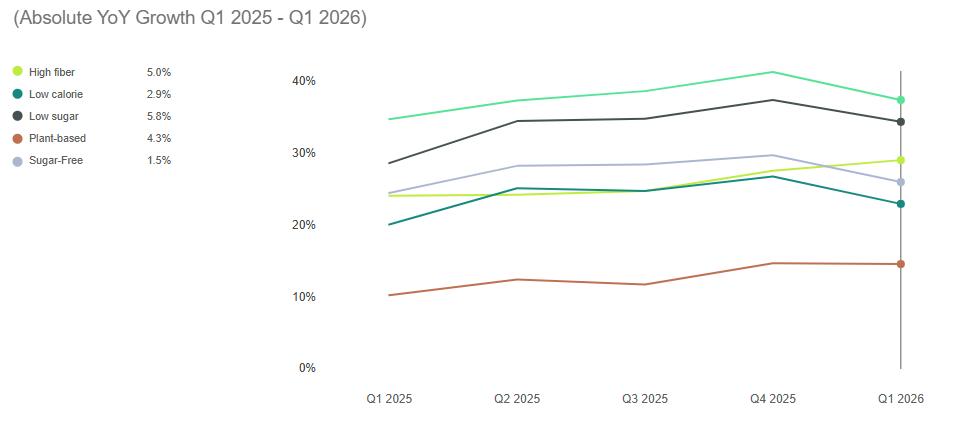
Indeed, according to consumer insights company Brightfield Group, high fiber increased as a label claim consumers looked for in food and beverage at c-stores by 5% from Q1 2025 to Q1 2026. Low sugar increased as a claim by 5.8%. C-store shoppers are also increasingly interested in protein (up 2.7%).
At Texas-based, 25-store Roadtrac, with five locations under construction to be opened within the next year, customers are prioritizing protein-based snacks. Beef jerky, protein bars, trail mix and protein chips have grown in popularity.
“And there’s so many new players to the game now, so that’s a new thing that these consumers are really wanting to target, especially being health conscious nowadays,” said Zain Sunesara,
partner at Roadtrac Stores.
Roadtrac increased its inventory with some of these protein items, such as protein bars, beef jerky and meat sticks.
Both Roadtrac and FriendShip noticed the influx of GLP-1 users contributing to the trend toward functional snacking.
These customers want items high in protein and fiber, Goldsmith noted.
Going forward, she believes proteinheavy items will continue to be added to shelves, as customer demand won’t be slowing any time soon.
Further demonstrating the uptick in healthier buys, Brightfield Group data found that year-over-year purchases of items such as individually wrapped snacking cheese and crackers in the convenience channel outpaced that of the general population.
Additionally, energy snacks saw a 2% growth rate for the period. Caffeinated snack bars saw a 1.1% lift.
Still, despite the increase in interest in function-forward snacks in the convenience industry lately, typical indulgent treats aren’t being left behind.
The same Brightfield Group data also found purchases of regular packaged cookies and packaged snack cakes in the convenience store channel outpacing the general population.
Low sugar (5.8%) and high fiber (5%) were the label claims that consumers who say convenience is one of their top channels for food and beverage were most increasingly interested in year over year.
Source: Brightfield Group Wellness CPG Consumer Survey Q1 2025–Q1 2026 N= 26,826 (Total Sample Gen Pop), N= 2,793 (Convenience Channel Shoppers)
FLAVORS AND PROMOTIONS
Goldsmith noted that not all trends last in the c-store channel. Dubai chocolate, for instance, was an “in/out” trending item that performed well at FriendShip.
“We like to watch trends and bring in new items to see if they are items that will be in-and-out items or items that will be sticking around for a while,” she said. FriendShip usually purchases trending
items as shippers or adds them to the counter or at the queue lines.
Beyond stocking trending snacks, FriendShip also offers promotions to bring dollars to the category.
“With the economy, customers are not purchasing like they did in the past. They like promotions, are looking at more generic labels vs. name brand (and are)
looking for products they can bundle,” said Goldsmith.
FriendShip partners with its vendors for everyday and loyalty app promotions. For segments that are trending down, everyday promotions can help lift the category. At the chain’s stores, meat sticks sell better than bags; promos for meat sticks makes buying them even more attractive.
Products such as packaged cookies, crackers, snacking cheese and packaged snack cakes are seeing year-over-year growth among consumers who report shopping convenience as one of their top food/beverage channels.
Packaged Cookies', 'Snacks and Bars')
('Tortilla Chips', 'Snacks and Bars')
('Peanut Butter', 'Snacks and Bars')
('Crackers', 'Snacks and Bars')
('Popcorn (Microwave, Bagged)', 'Snacks and Bars')
('Snacking Cheese (individually wrapped)', 'Snacks and Bars')
('Graham Crackers', 'Snacks and Bars')
('Packaged Snack Cakes (i.e. Little Debbie)', 'Snacks and Bars')
('Corn Chips', 'Snacks and Bars')
Source: Brightfield Group Wellness CPG Consumer Survey Q1 2025–Q1 2026 N= 26,826 (Total Sample Gen Pop), N= 2,793 (Convenience Channel Shoppers)






















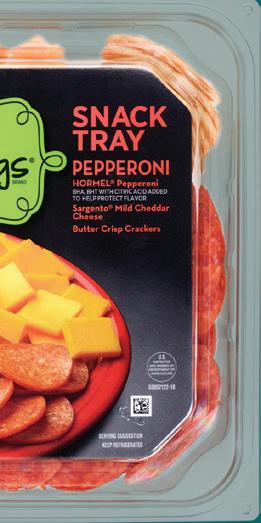



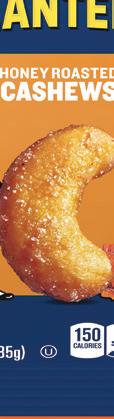


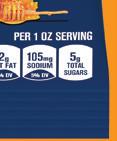

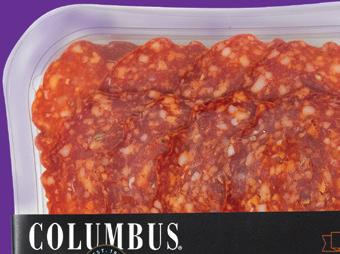
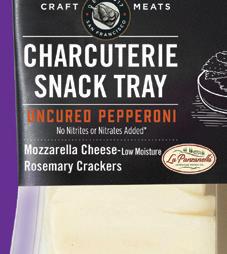




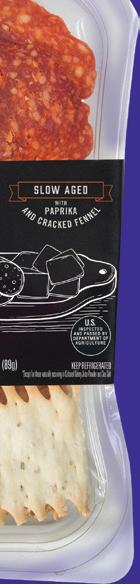










When top brands boost bottom lines, everyone wins. Start stocking the
snacks that keep your sales going up and customers coming back.



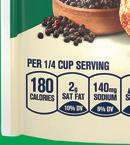




































Salty snacks dipped in dollars by 1.1% and units by 1.6% over the last year but still took home $7.83 billion in sales, more than any other snack segment. Rice/popcorn cakes saw the highest growth rate at 319.9% in dollars and 354.4% in units.
Source: Circana U.S. Total Convenience data for the 52 weeks ending May 17, 2026
Also, promotional prices for new items helps pique customer curiosity.
Aside from trends, FriendShip chooses its vendor partners based on how they distribute.
“Distribution is a huge thing, since we don’t have our own warehouse. If (the) product is in our wholesaler’s warehouse, that is a big plus,” said Goldsmith.
Customers are also gravitating more
toward promotional items compared to a few years ago at Roadtrac. They’re preferring bigger bags; two-for-one deals; or buy two, get one free.
“If a customer sees that maybe a bigger bag is worth more, or if they see some type of promo on the shelf, they’re more inclined to purchase those, and we’ve seen that especially in our chips category,” said Sunesara.
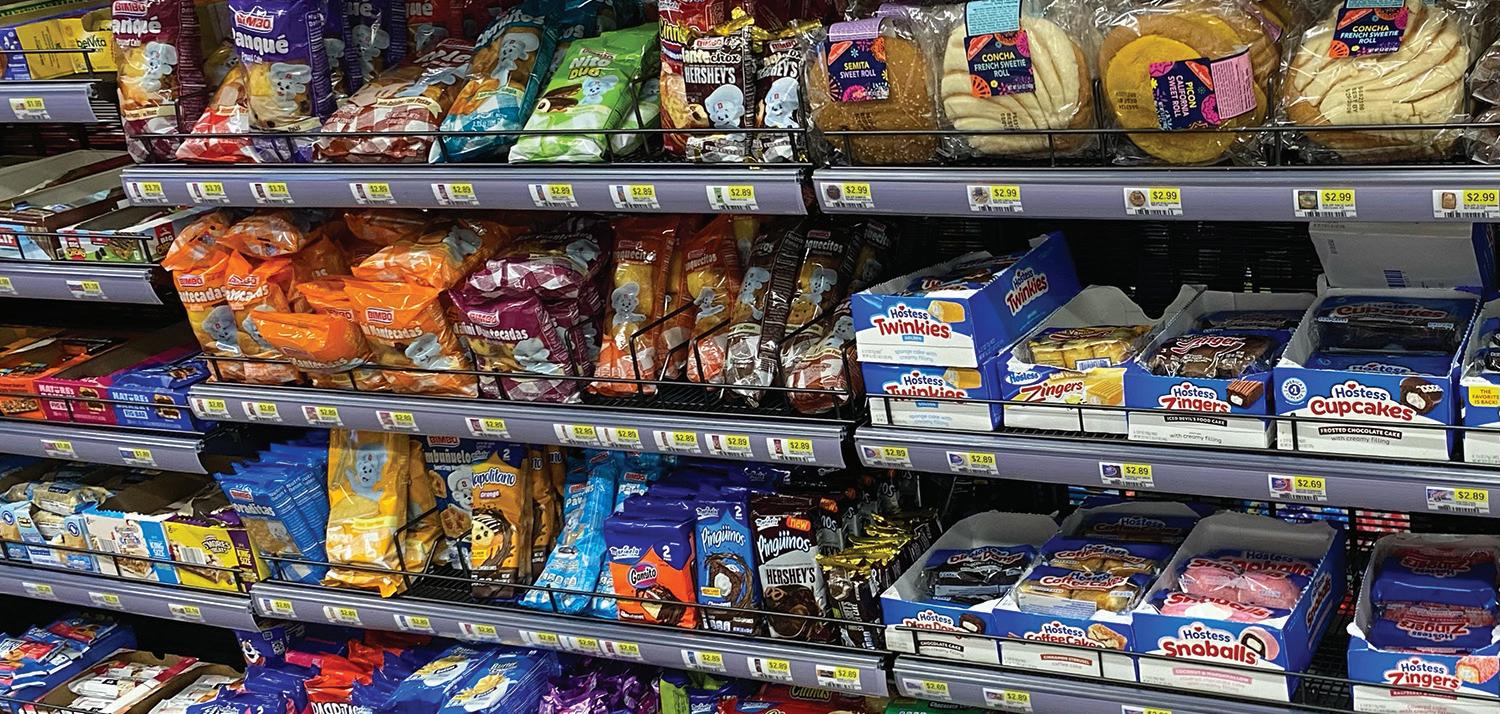
During the summer, Roadtrac increases its snack inventory that appeals to younger consumers.
“They do like these unique, bold flavors; they like trying them and testing them out. They also like these limitedtime flavors and these new TikTok-style snacks, international snacks,” said Sunesara. “And I think that’s eye-catching. I feel like this new Gen Z is more impulsive buying, so if they see something that really catches their eye, they’re inclined to try it, as compared to the other generations.”
The chain is also noticing an increase in cross-collaborations with brands, and it has added more international flavors to its snack aisle, such as Hispanic flavors.
As for the second half of 2026, Sunesara believes it will stay consistent to what the c-store industry has seen so far this year.
“People will still be more price conscious, and people will stick to the largersized items and respond better to the buy two, get one frees and the promotions,” he said. CSD






In 2026, functional beverages, better-for-you ingredients and bold flavors are driving seasonal c-store sales.
Kevin McIntyre • Associate Editor
AS C-STORE CUSTOMERS start to hit the road for the busy summer travel season, retailers are uniquely positioned to cash in on beverage purchases as travelers look for a quick pick-me-up or companion to their road trip snack.
In 2026, the convenience store customer is increasingly seeking out quick, easy beverage options with an emphasis on functionality, value and bold flavors.
“Summer tends to amplify immediateconsumption beverage occasions in convenience stores, particularly around hydration, energy, iced coffee, refreshers, frozen beverages and functional drinks,” said Tim Powell, managing principal at Foodservice IP. “From our ‘Emerging Beverages in Foodservice’ study, consumers increasingly view beverages as small indulgences and meal companions, especially during travel, commuting and afternoon snack occasions.”
Powell is noticing a shift from traditional indulgences to functional benefits when it comes to summer beverage sales and preferences.
“Consumers — especially Gen Z and millennials — are looking beyond traditional soft drinks toward beverages tied to energy, hydration, protein, probiotics, wellness and customization,” he said.
“Cold coffee, refreshers, flavored energy beverages and hybrid formats continue gaining attention.”
For packaged beverages, Powell sees single-serve and immediate-consumption formats picking up steam due to their portability and convenience. On the dispensed and frozen beverage side, he continued, “operators continue focusing on differentiation, premium flavors, seasonal offerings and higher-margin customizable experiences.”
“Looking ahead, consumers will likely continue expecting more premiumization, functionality, personalization and convenience from beverage programs,” Powell noted. “We also expect continued innovation around energy, hydration, frozen refreshment, better-for-you indulgence and crossovers between traditional packaged beverages and foodservicestyle experiences.”
Idaho Falls, Idaho-based Good 2 Go, which operates over 80 c-stores across the U.S. Mountain West region, sees summer beverage sales as “paramount to the success of the entire c-store,” according to Good 2 Go Senior Category Manager Sam Dearden.
“Summer is an extremely important part of the c-store business as a whole,” he said. “... I won’t share specific percentages, but the 100 days of summer, or Memorial to Labor Day, are what make or break the year. All levels — from strategy, planograms, pricing and promotions, down to in-store execution — need to be at their best. Our geographic area and strong seasonal travel only elevate this importance to our business.”
At Boise, Idaho-based Stinker Stores, which operates more than 90 locations across Idaho, Colorado and Wyoming, Ken Rash, the chain’s VP of merchandising, shares a similar philosophy.
“Summer beverages are critically important to Stinker Stores. They represent one of our strongest seasonal growth drivers, often contributing a significant double-digit percentage lift to in-store sales during peak months,” said Rash. “In our Idaho, Wyoming and Colorado markets, hot weather and tourist destinations drive higher traffic for cold drinks, which pair exceptionally well with our fresh food offerings. Beverages consistently deliver strong margins and help boost basket size with the current valuedriven promotions we are running.”
When it comes to specific segments,
Dearden noted that while they all get a lift to some degree in the summer, the big winners will be water, sports drinks and energy, mainly because of “growth compounded with foot traffic.” Beer also “sees strong seasonal trends.”
At Stinker, packaged beverages see the largest overall lift in the summer, with Rash noting that the highest-performing segments will likely be energy drinks, sports drinks, bottled water and carbonated soft drinks, with beer providing an additional uptick to sales.
“On the dispensed side, fountain drinks and frozen/slush beverages surge depending on the weather,” Rash continued. “Beer also performs very well in summer with seasonal and light options. In our region, the combination of outdoor recreation, road trips and warm weather makes these categories highvelocity performers.”
When it comes to merchandising beverage products at Good 2 Go, Dearden explained that it is a top-down process to ensure that each store is equipped and prepared to meet the influx of seasonal customers.
“First, we make sure the core parts of the business are taken care of, ensuring promotions are strong and ready for the summer,” he said. “Ensuring ops teams are excited and beverage focused is a part of this; the best laid plans and planograms are worthless when your coolers are 100% blown out. (We ensure) they have the resources to be the most efficient they can (be) while stocking coolers or are just aware of the increased velocity and needed attention.”
Rash noted that Stinker focuses on visibility and convenience when it comes to merchandising for the summer. Some of these tactics include adding “innovation coolers” which highlight functional energy drinks and new hydration options; cross merchandising with snacks, ice and coolers; implementing digital signage with seasonal point-of-sale (POS) offers; optimizing the cold vault and fountain layouts for faster grab-and-go; and leveraging the Stinker Rewards app for targeted offers.
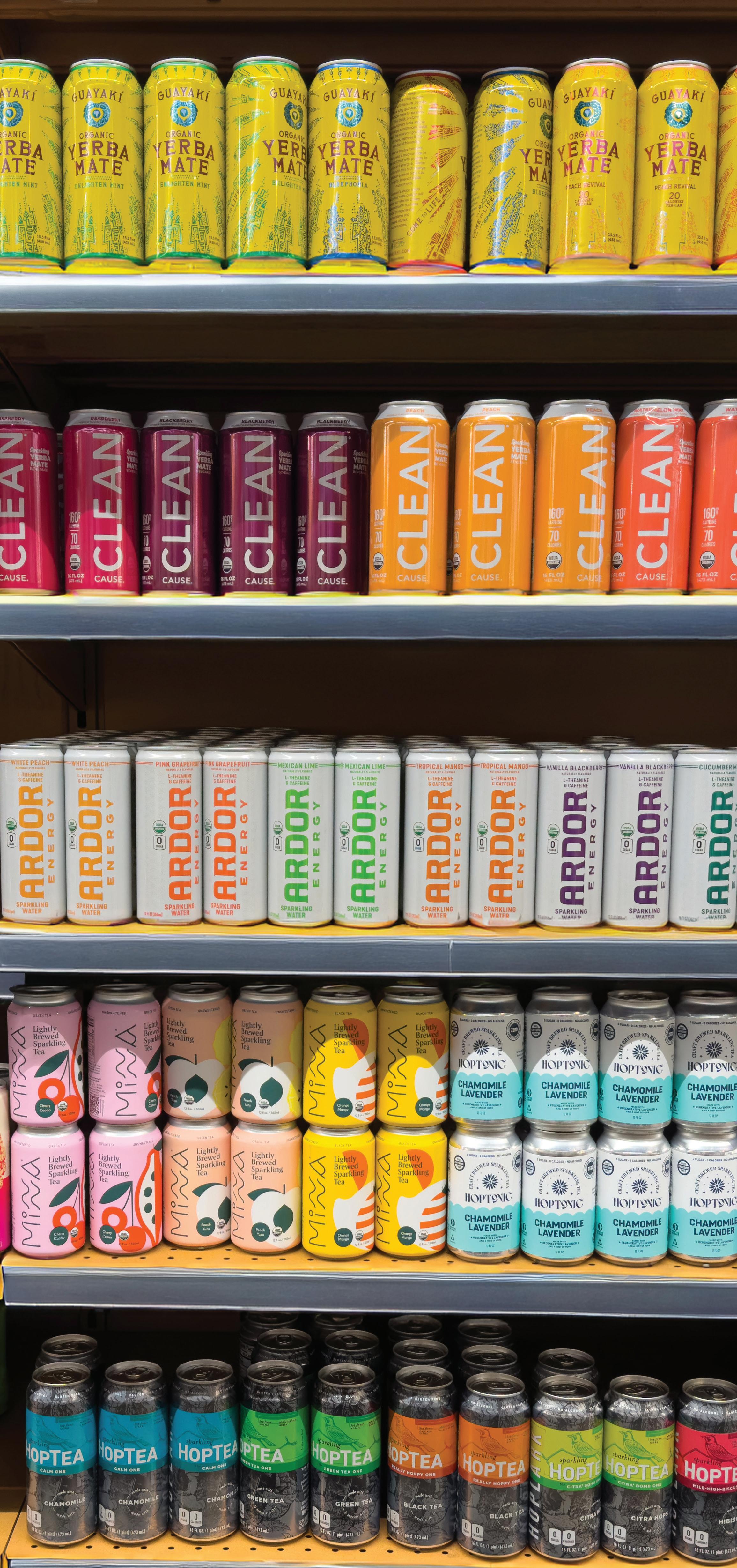
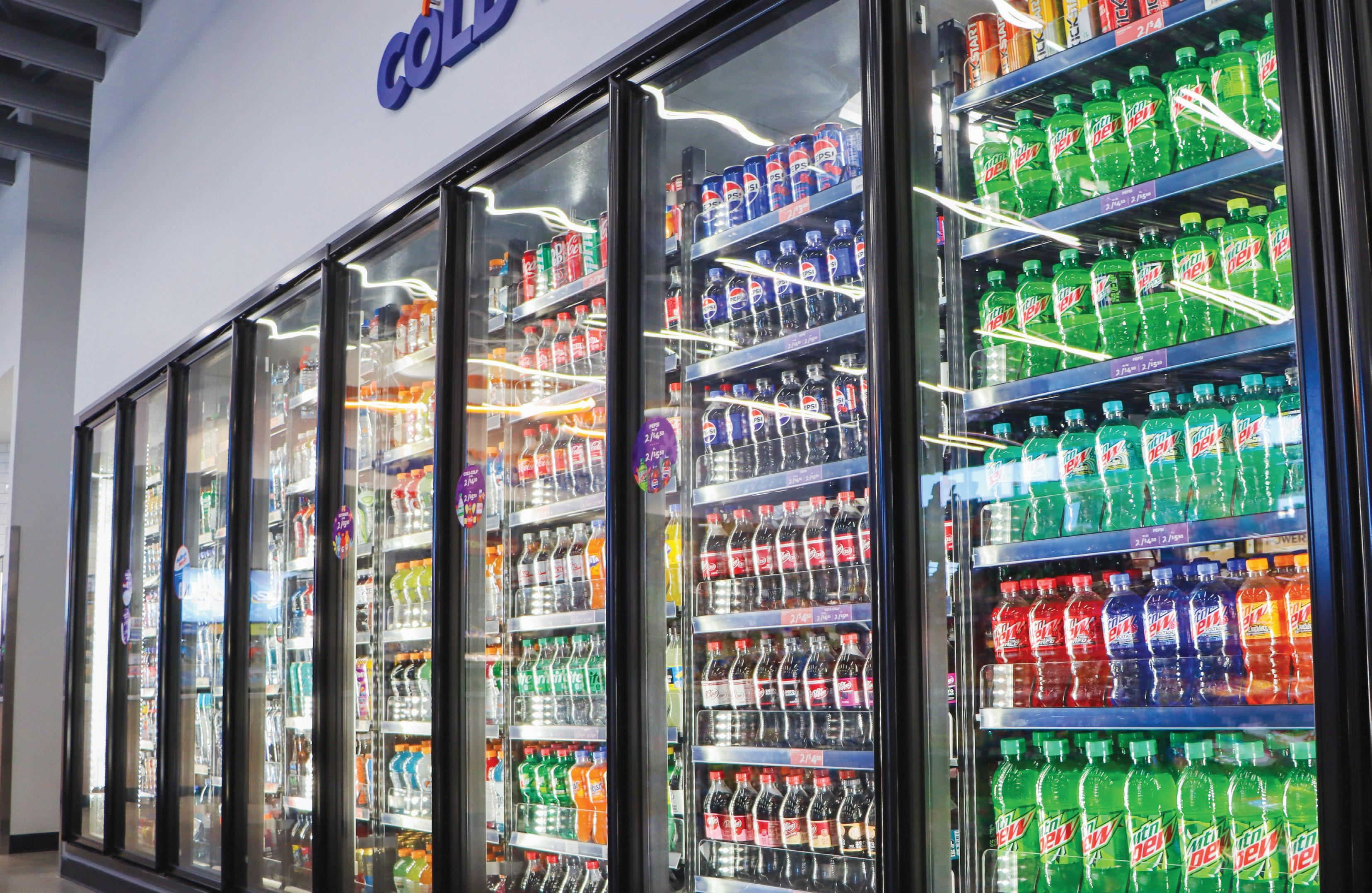
Additionally, Stinker Stores uses limited-time offers (LTOs) to “drive trial, social sharing and repeat visits while keeping our beverage wall fresh and exciting,” Rash noted.
“We rotate limited-time flavors aggressively — tropical, berry and citrus profiles perform especially well in summer,” he said. “We partner with suppliers for exclusive or early-access items and run “Summer Sip Series” type promotions with new frozen flavors or custom fountain combinations.”
Good 2 Go also harnesses the power of LTOs, with Dearden noting that incremental growth is crucial in this process, in addition to meticulous planning.
“Ensuring you have clear plans so the product lands is critical,” he said. “Without this, you will see growth, but not to its full potential.”
Looking ahead, both Rash and Dearden agreed that an underestimated beverage trend continues to be functional offerings, namely with caffeine, hydration and protein, driven by the rising influence of GLP-1 medications. Customizable beverage options, too, have been gaining steam in the beverage space and could see an additional lift this summer.
“Many retailers still treat beverages transactionally, but consumers — especially Gen Z and millennials — are looking for personalized experiences and drinks that do more than quench thirst,” said Rash. “Also, the ongoing strength of premium and better-for-you indulgent options. Retailers who invest in better equipment for frozen or custom drinks and highlight functional benefits on the shelf will win.”
This summer, Stinker will continue to
focus on its core values and initiatives, Rash noted, which include clean stores, friendly service and delivering real value.
“Summer is when our guests are out enjoying the incredible outdoors our region offers, whether hiking, camping or road tripping, so we focus on being their reliable stop for cold, refreshing beverages that fuel those adventures,” he said. “We’re always testing new ideas through our loyalty program and innovation sets to stay ahead of what our customers want next.”
Good 2 Go is also putting additional emphasis on the basics to ensure operations run smoothly and efficiently during the busy season.
“The summer is a key part of c-stores’ business, and beverages are a critical category,” said Dearden. “This is the time to get things right, execute the basics and ensure your big bets hit the mark.” CSD

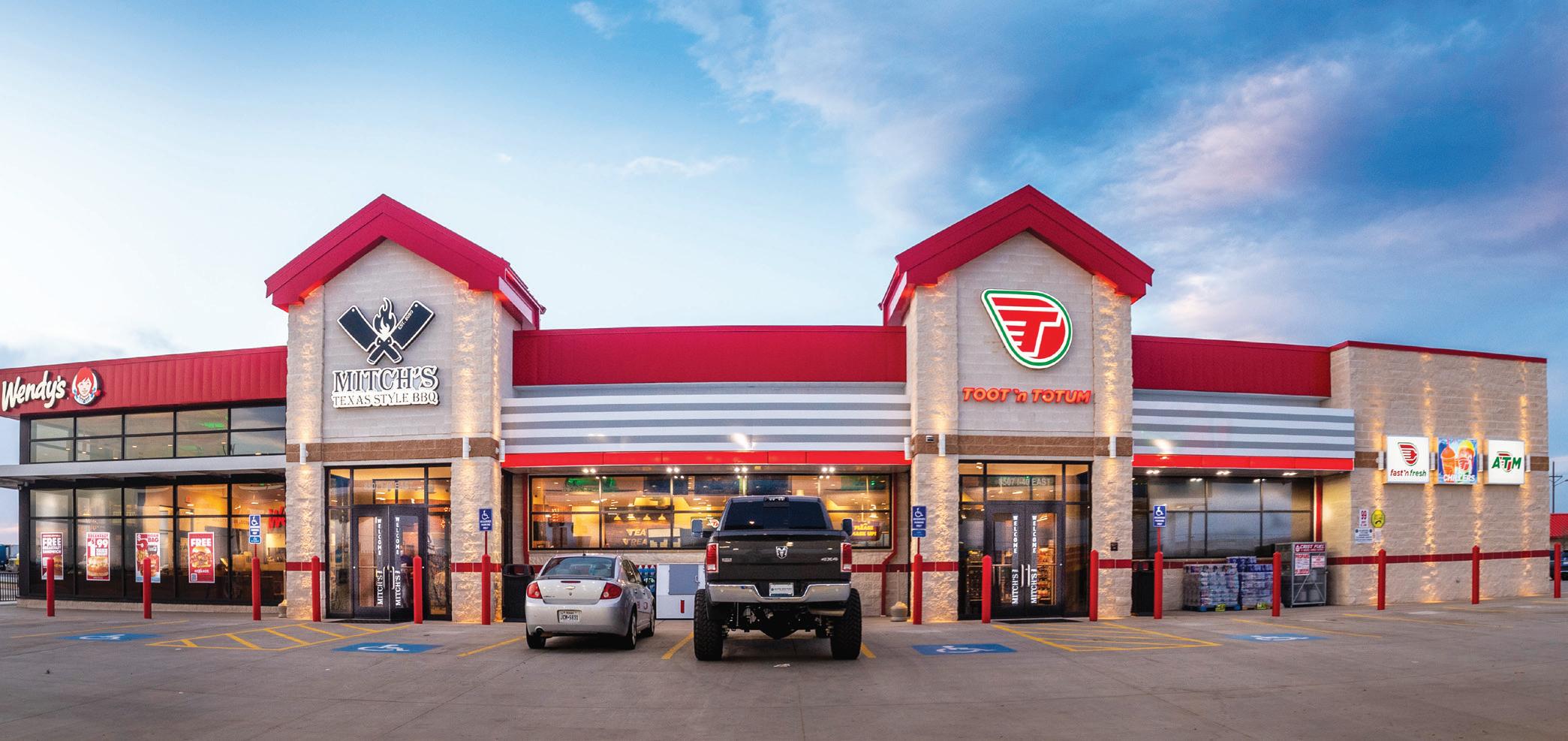
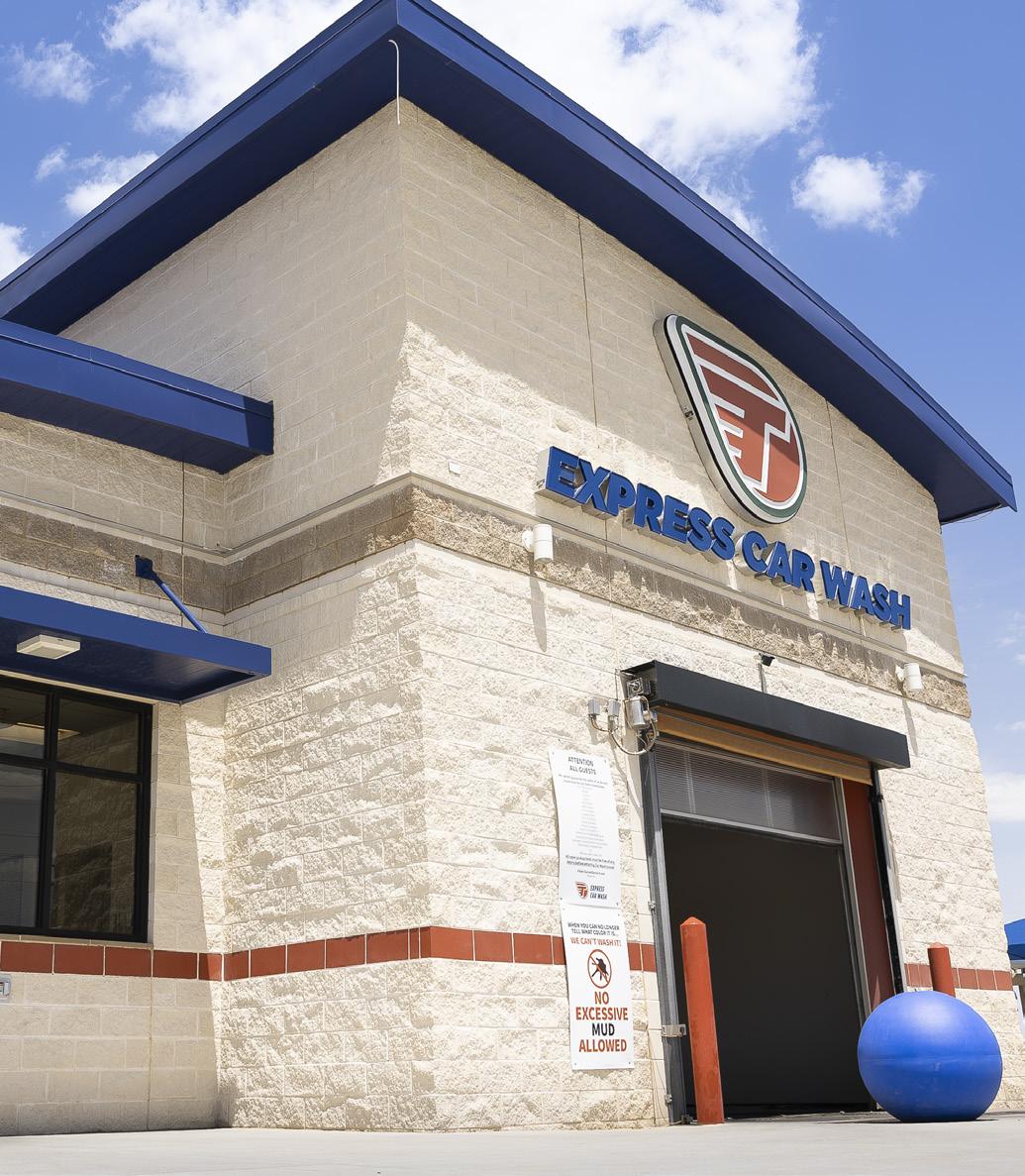
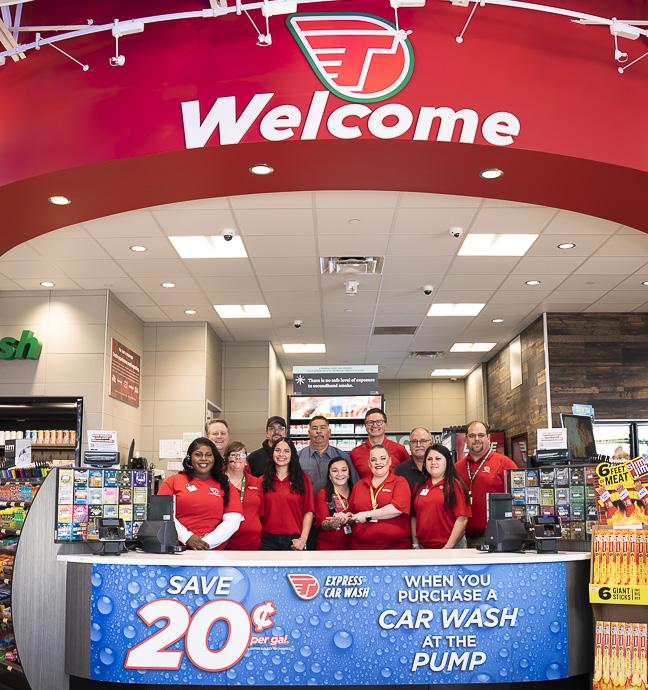
CStore Decisions is proud to announce Toot’n Totum as its 2026 Chain of the Year. With over 75 years in business and 125 locations in Texas, Oklahoma, Kansas and New Mexico, Toot’n Totum continues to grow and adapt while remaining deeply rooted in local values.
The Amarillo, Texas-based chain stands out for its people-first culture; commitment to tech innovation and vertical integration; its strong proprietary foodservice, grab-and-go and commissary program; and its stateof-the-art new-to-industry stores and focus on continued internal growth and footprint expansion.
CStore Decisions’ Chain of the Year Award honors a c-store, travel center or petroleum chain that has established itself as a superior retailer and innovator in the industry.
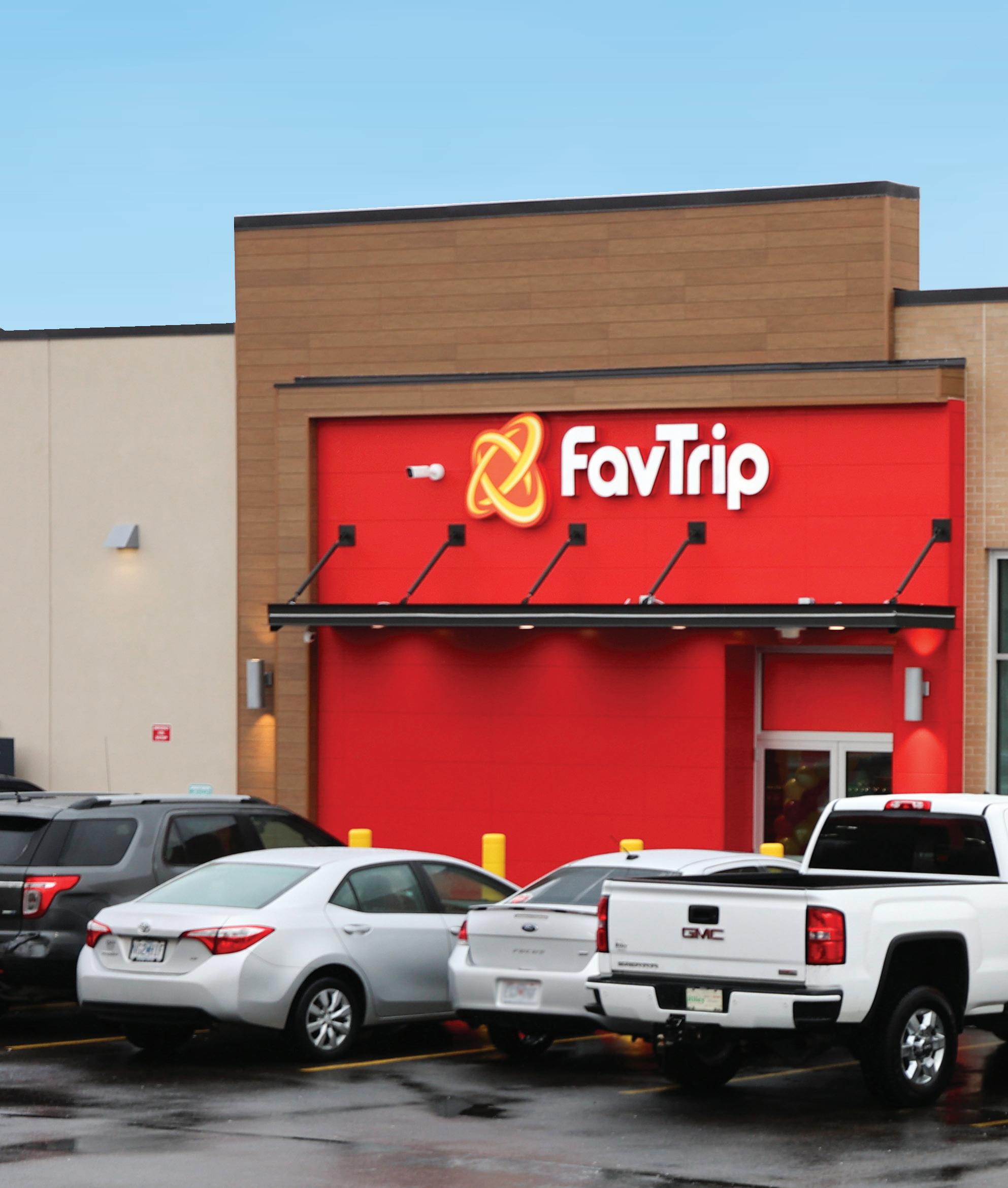
FavTrip’s Babir Sultan has found that four AI agents, each with a specific focus, are better than one agent with a broad scope.
Erin Del Conte • Editor-in-Chief
WHEN IT COMES to technology priorities, artificial intelligence (AI) tops the list for many convenience store retailers in 2026, but knowing how to get started is a different matter entirely.
One of the main pieces of advice that retailers give each other when talking about AI implementation is to first identify a problem and then enlist AI to help with that.
Babir Sultan, founder and CEO of FavTrip, which operates three stores in Missouri, recently did just that. He looked at some pain points that he was dealing with at his convenience store business, and then he selected four that he wanted to address.
His first step was to add four new AI-agent “staff members.” Each has a distinct role. One watches for trending snacks and makes suggestions for which snacks to stock; the second drafts social posts for FavTrip’s three social media
channels; the third is a billing agent that reconciles weekly gas invoices; and the fourth AI agent messages job applicants for open interviews.
A month later, Sultan announced on LinkedIn that he had learned three things training the four AI agents. First, he noticed that giving each agent a narrow focus, such as “just handle the gas
recon” worked best, while an agent that is expected to “do everything” doesn’t work as well.
Sultan also learned to let the AI agents prepare drafts for his approval, rather than letting the technology make decisions. And lastly, he found that the automation is great at highlighting processes that are broken.
“The day I trained the billing agent, it found gaps I’d been working around for months,” Sultan told his LinkedIn audience.
CStore Decisions caught up with Sultan to learn more about his lessons and advice for other retailers when it comes to employing AI.
CStore Decisions (CSD): Why did you make the decision to use AI for these four tasks, and how did you get started implementing it?
Babir Sultan (BS): I previously worked
with virtual assistants who were inconsistent with these tasks. I decided to take all of our existing training materials and use them to train the AI to handle these responsibilities instead. I am now one month into this transition, and the AI never misses a deadline.
CSD: Which one of these four do you find most helpful and why?
BS: The most helpful has been the agent for reconciling gasoline invoices. This was previously the most time-consuming task because it requires matching gas loads with invoices. Automating this has been a significant time saver, which is the main goal — opening up time for staff to focus on other things.
CSD: You noted that giving the AI agents a narrow task works best. Tell me more about what you’re observing here and how you arrived at this conclusion.
BS: The more complex and multistep an action is, the higher the chance of errors. Originally, I had one agent trying to do everything. Now, I have multiple agents with dedicated, individual jobs, and they perform much better at that level.

CSD: You noted you learned that AI is best used to draft work, but you make the final call. Why is this key?
BS: Human oversight is essential because AI can still make mistakes. I had to go through a process of training and retraining, but once the AI understands the task, it is highly reliable.
CSD: You noted you also learned that automation helps identify broken processes. Tell me more about how AI helped you identify these issues.
BS: I view AI as a “second brain.” For example, while brainstorming ideas, it
helped me identify that we lacked video procedures for certain staff processes. My current project involves using AI to organize myself and my staff to identify areas for improvement and training.
CSD: What advice do you have for other retailers that want to start using AI? How do they know where to start?
BS: Don’t be afraid of the technology. Start small and work your way up. List the specific problems you have and research which AI tools can help solve them.
Sultan also noted that even as he onboards AI agents, he’s not replacing any of his human employees. “I’m getting Friday afternoons back,” he said. CSD
Family Express takes a grassroots approach to community engagement, working with a variety of local organizations to help as often as possible.
Emily Boes • Senior Editor
VALPARAISO, IND.-BASED FAMILY EXPRESS has taken the idea of engaging with the local community and turned it into an everyday part of the company’s identity. Designed to say “yes,” Family Express’ commitment to its community is embedded deeply into its culture.
Through immediate-support efforts such as in-kind donations, long-term investments including sponsorships, and sustainable giving through food redistribution and waste-reduction partnerships, the 84-store chain has built a community engagement model focused on listening, responding and consistently being present for those in its communities.
CStore Decisions is recognizing Family Express with a Philanthropy and Community Engagement Award for its efforts in this area over the last year.
SAYING ‘YES’
Family Express’ community support includes schools and learning centers through teacher appreciation events, robotics programs, field days, theater
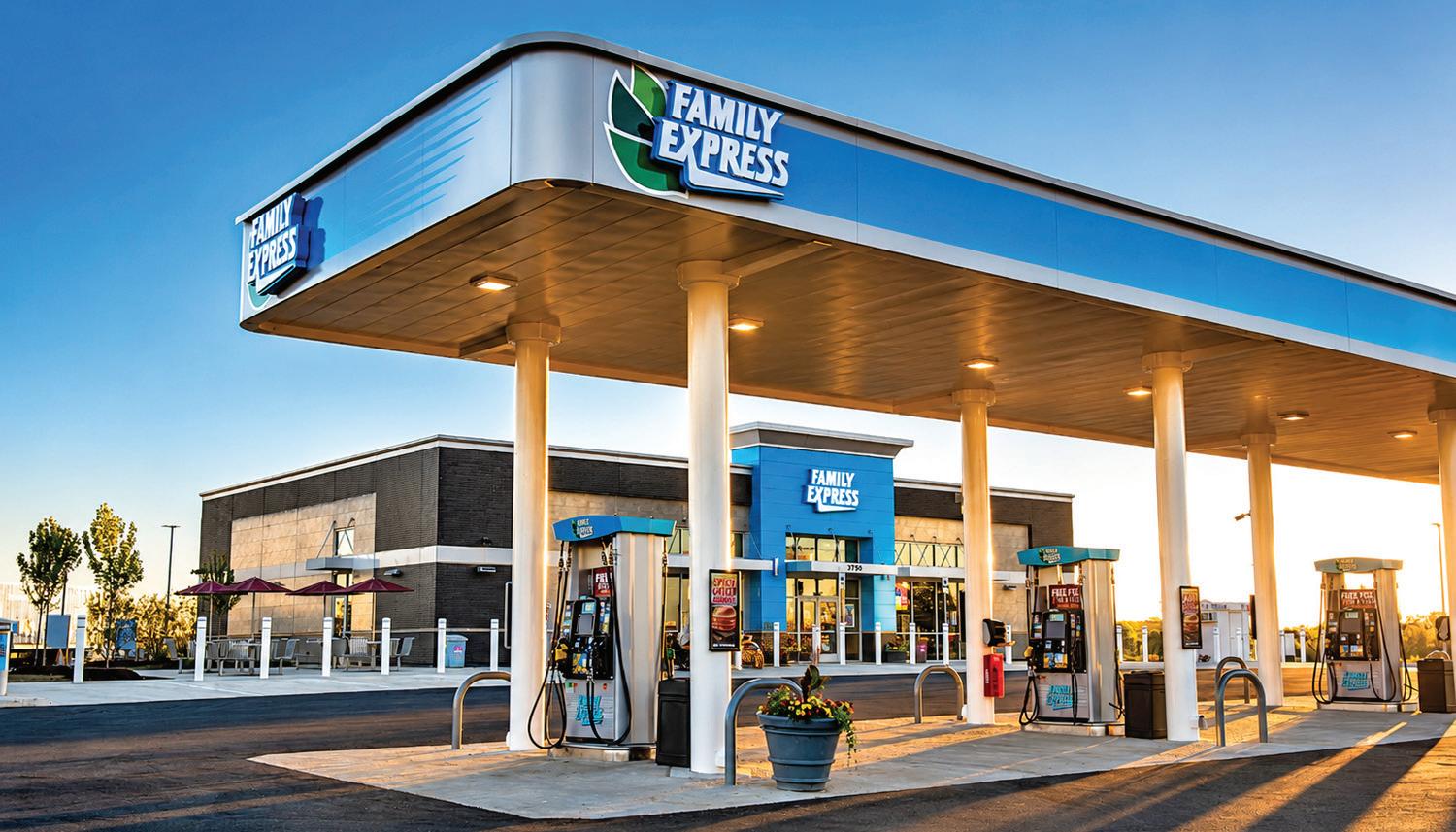
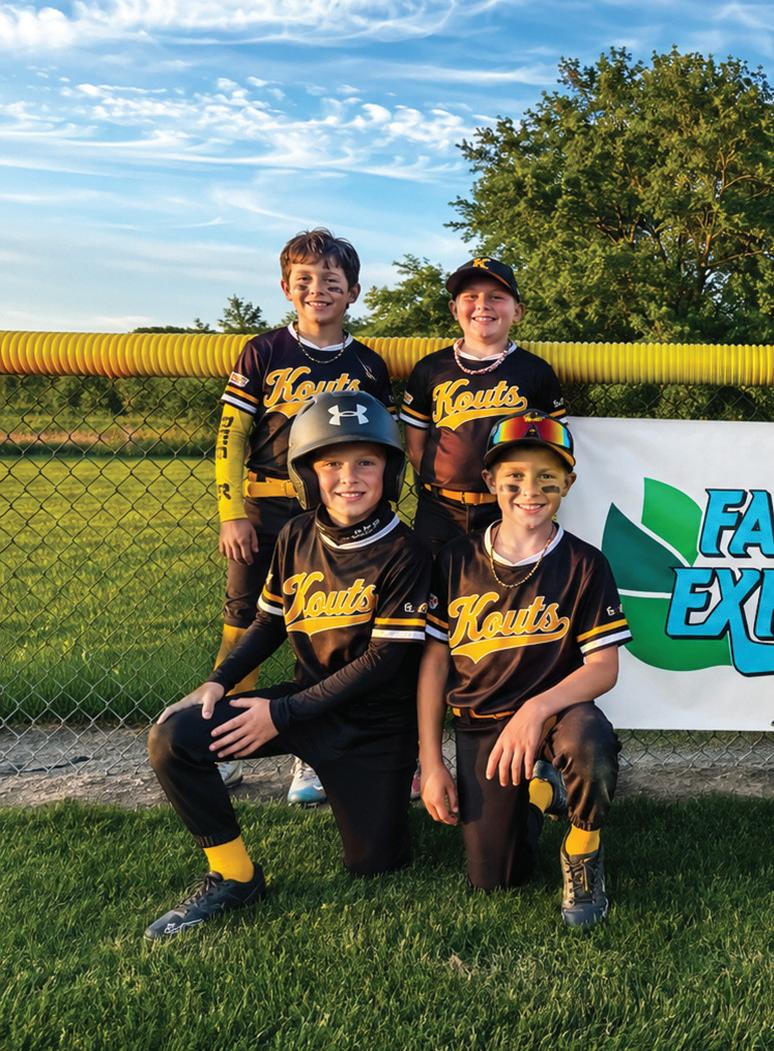
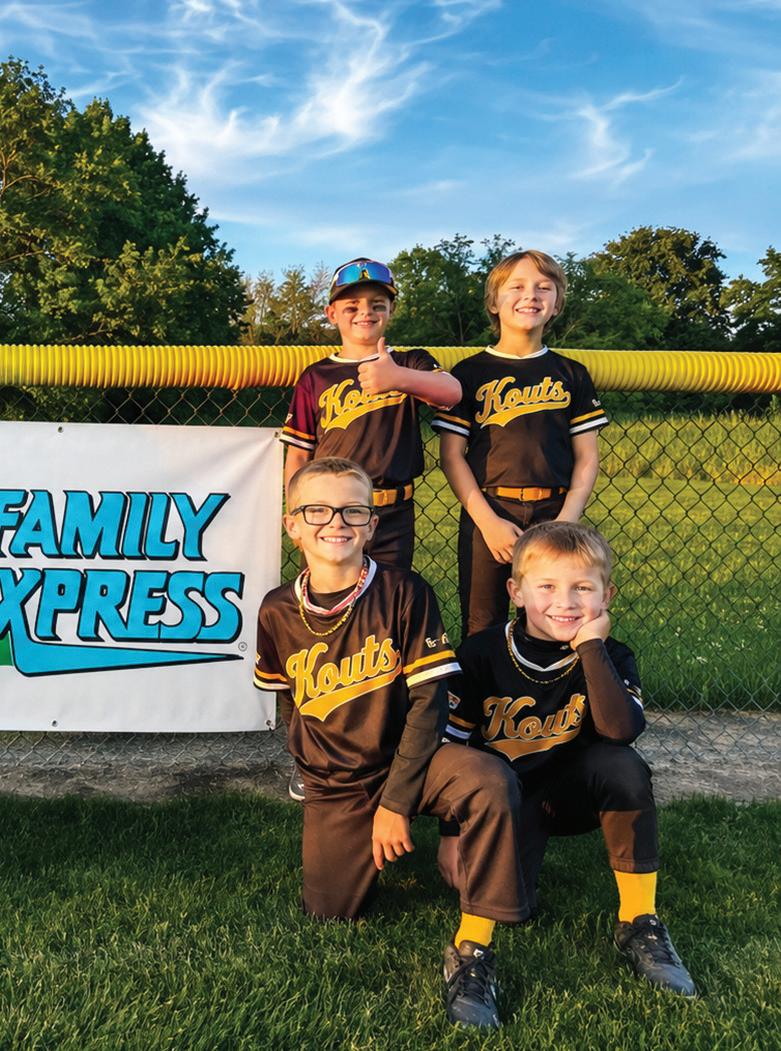
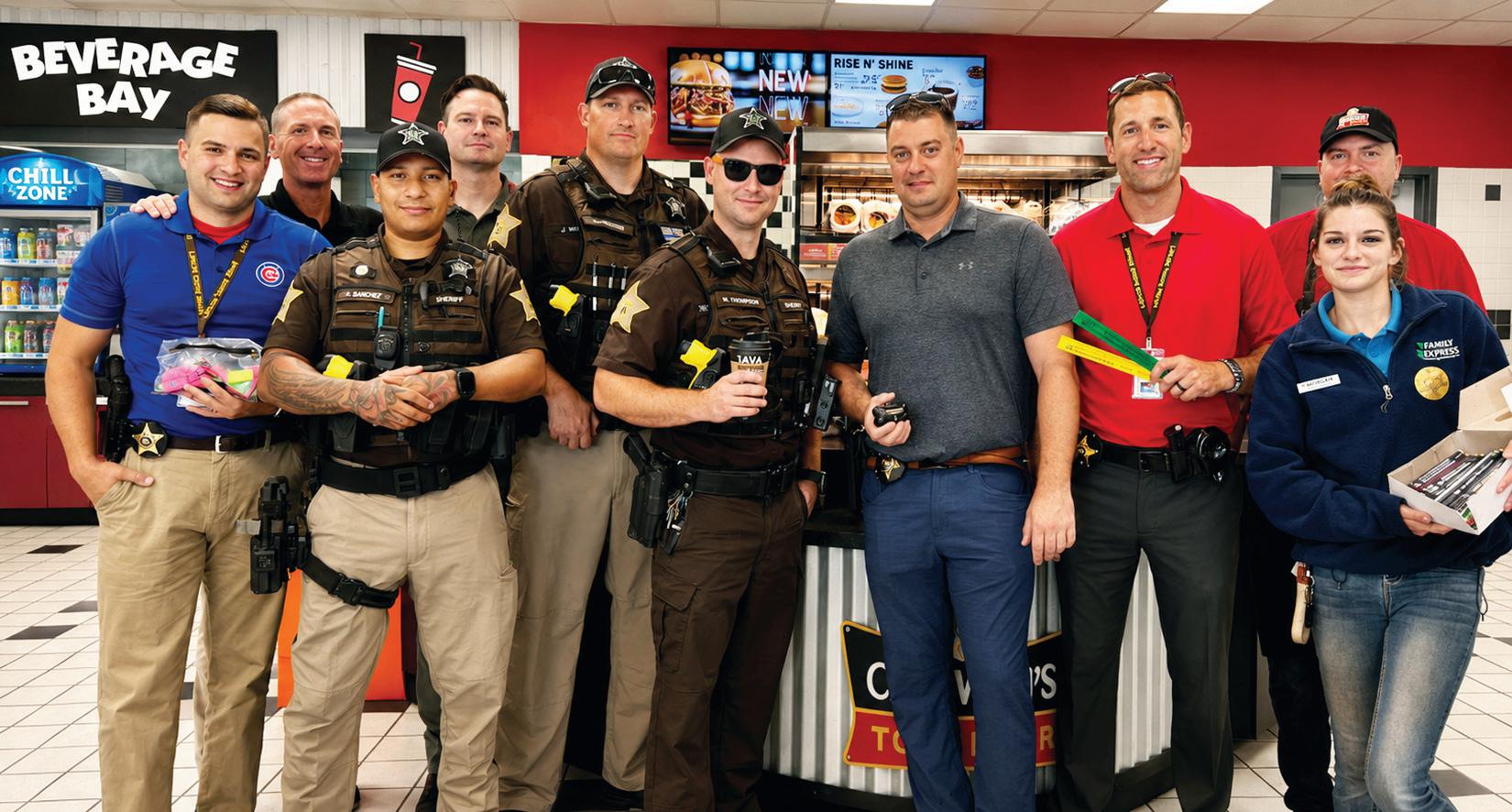
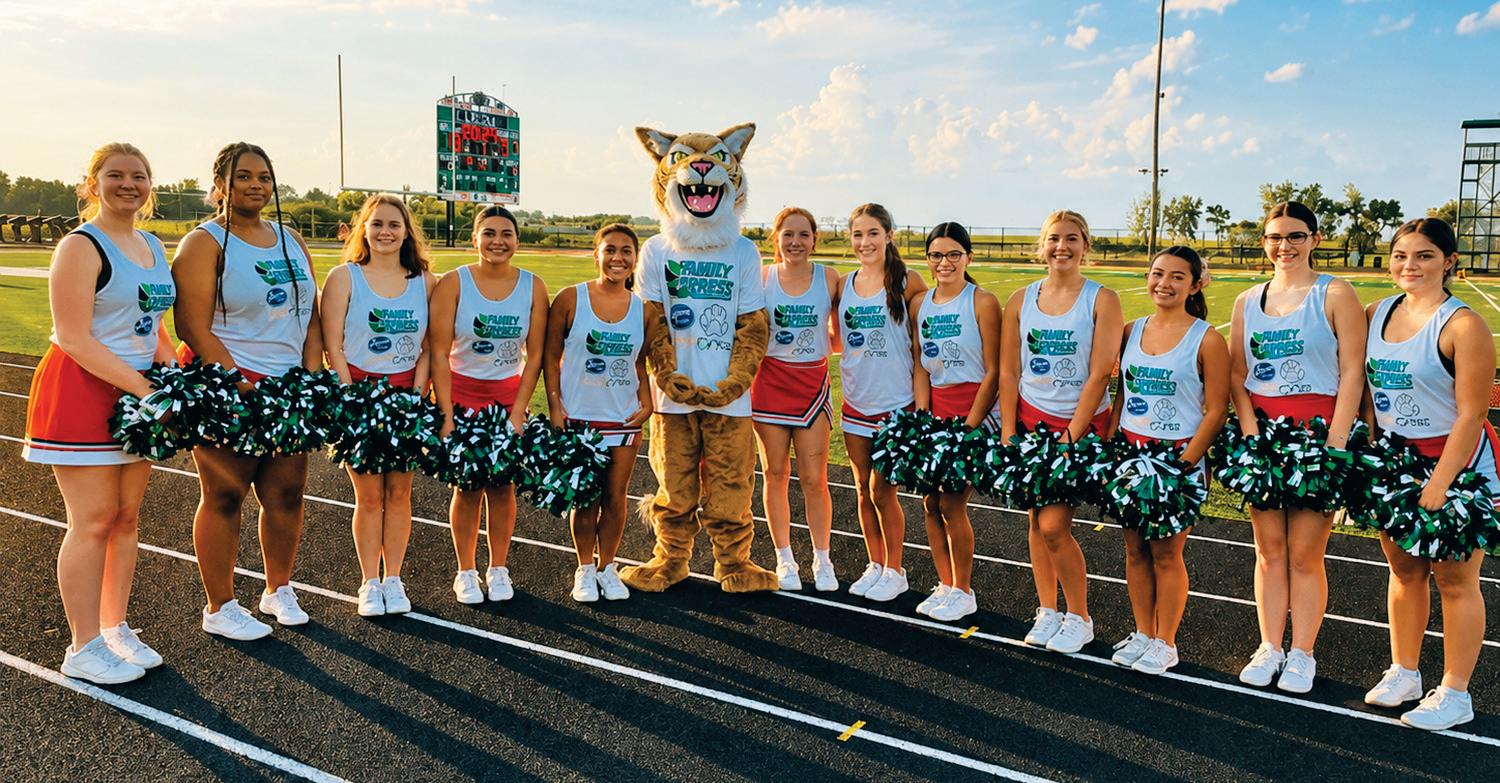
Left: Family Express proudly sponsors youth sports programs such as the Kouts Little League team, which is one example of how local sponsorships help provide opportunities for young athletes to learn teamwork, discipline, sportsmanship and confidence. Above: The chain also provides support to veterans and first responders.
productions, academic events and youth athletics; first responder organizations through donations, training support, emergency response assistance, memorial programs and community events; veteran organizations through food assistance programs, treatment courts, recognition events and Veterans Day initiatives; and food pantries, youth programs, parks, libraries, camps and local nonprofits providing direct support to those in need.
“It’s really an everyday initiative,” said Alex Olympidis, president of operations, Family Express. “(For example), first
responders come to our stores as they’re out on the road, and we’ve designed a system that is about saying ‘yes,’ and as they’re out on the road, (we) want to provide not only the big things that they need, but the little things as well, whether that be a free cup of Java Wave coffee or a free car wash.”
Beyond first responders, Family Express is deeply committed to veterans’ causes, stemming from the multitude of veterans in the organization.
“Anytime that a first responder or veteran is looking for something to brighten their day, we want to be there for them,” said Olympidis.
This past year, Family Express donated over 1,300 bakery items to educators during teacher appreciation events across 130 schools; provided over 6,300 bottles of water to first responder organizations; promoted more than 70 community and school recognition messages across its electronic message boards; and continued long-term partnerships with organizations such as YMCA, the MAAC (Multi Agency Academic Cooperative) Foundation first-responder training centers and food pantry redistribution programs.
“Our long-term partnerships come from a longstanding history of highly tenured employees in our workforce that have continually said, ‘The YMCA is important to us,’ or ‘The veterans’ causes are important to us,’” said Olympidis. “Really, it’s not about me, and it’s not about any one individual. Frankly, we’re supporting causes that, as individuals, (we) may not think of first or ever.”
As a result, Family Express greatly values the causes important to its employees.
“When we have a cause, when a brand-new hire in our pass
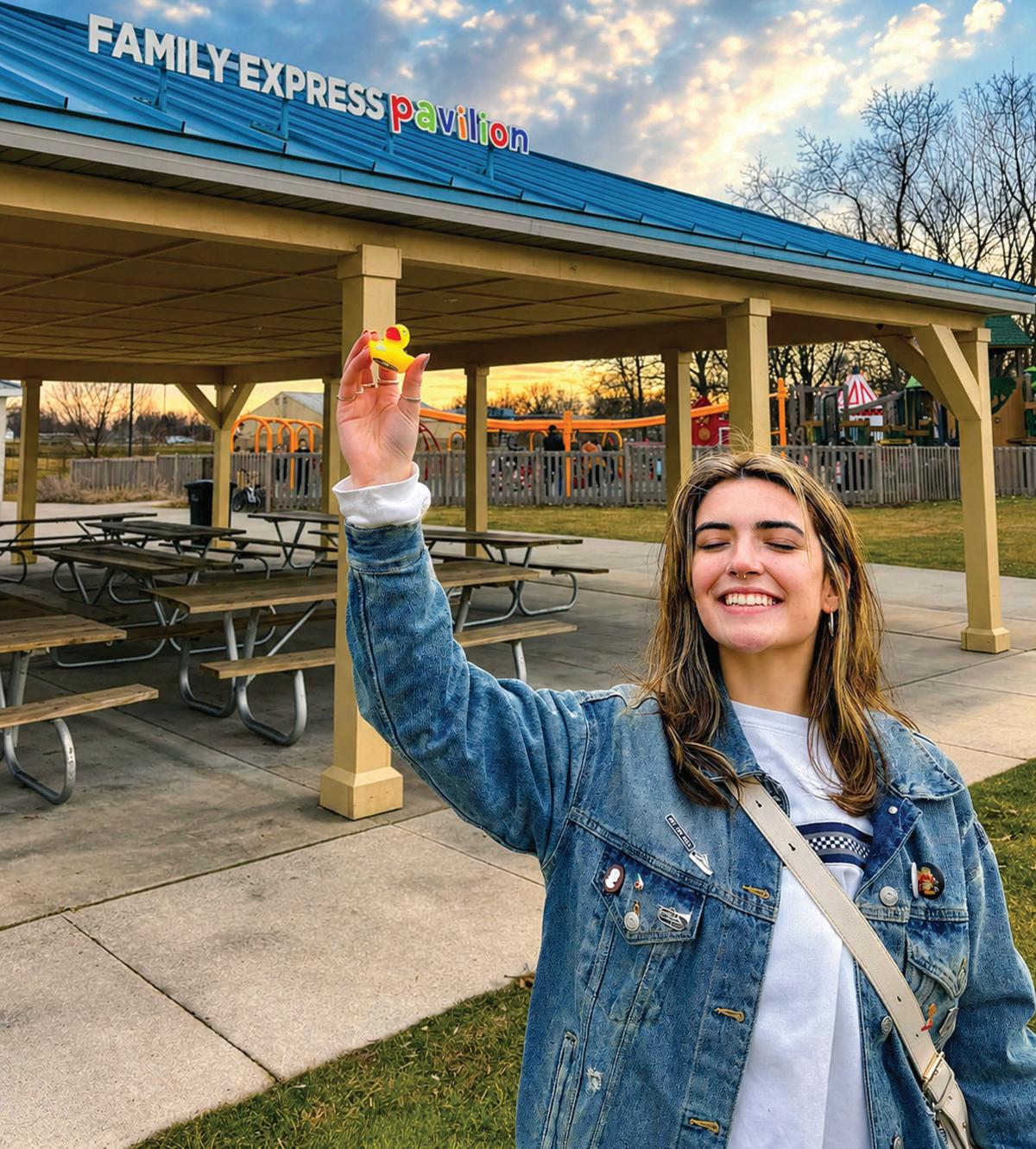
or fail orientation class, four-day training, says, ‘You know what’s really important to me? ...’ We try to say yes,” said Olympidis.
Community engagement is not measured in dollars donated at Family Express but in relationships built, communities strengthened and trust earned from showing up every year. For Olympidis, knowing that organizations or groups will know to call Family Express because the chain earned that trust is special.
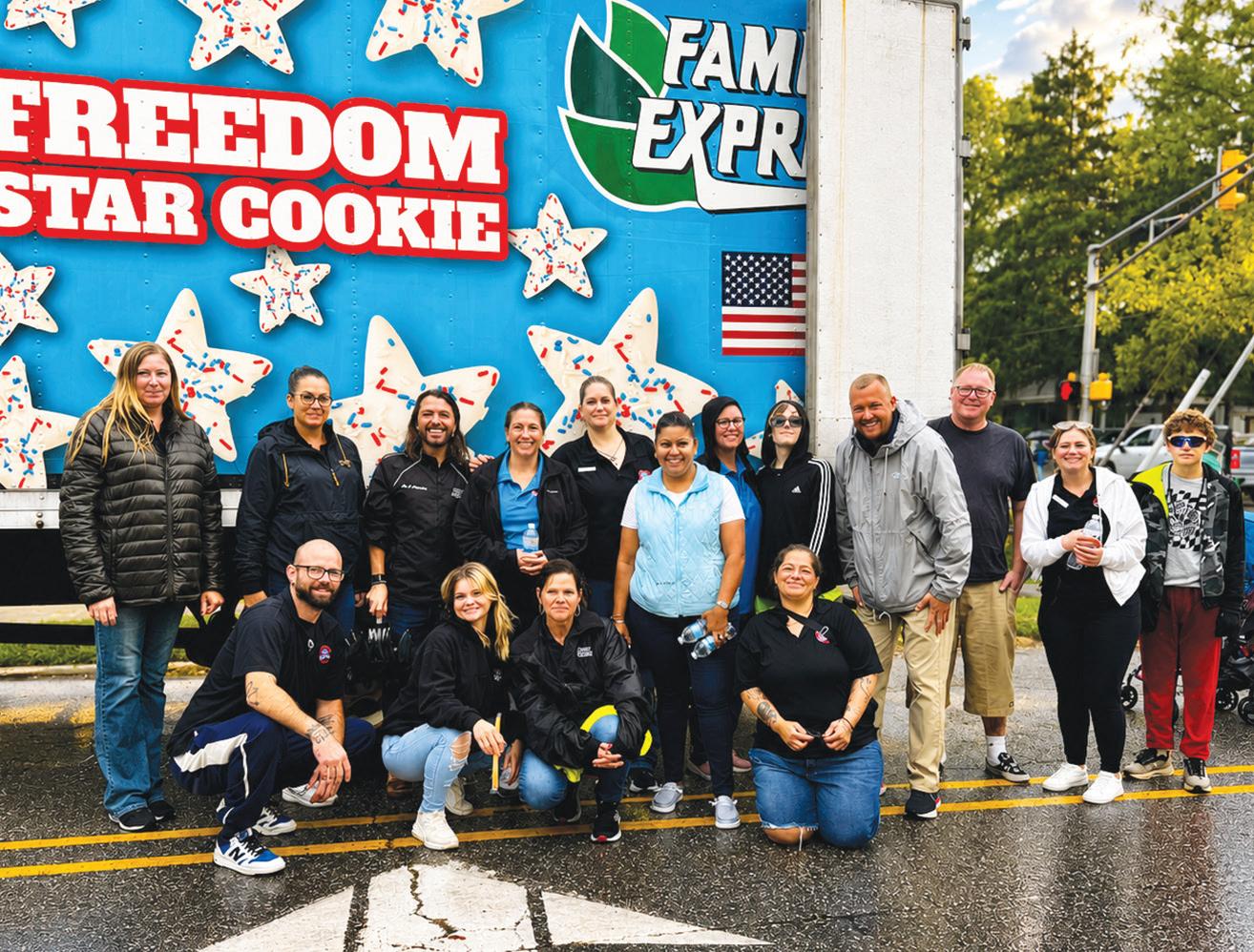
For example, if he sees a classroom at his child’s school stocked with Family Express water, he knows “it’s because we said yes before, and they say, ‘Aha! Family Express will be there for us.’”
Some of Family Express’ most-meaningful contributions are simpler acts, such as first responders receiving meals after emotionally difficult calls or a child receiving recognition through a library reading program.
“Our whole ethos has been: This is about you the community. This is about you the employee. … And maybe it’s not going to solve the big problem, but it’s going to be 1,000 little points of light throughout the year that make something particularly special,” said Olympidis.
Additionally, it’s operationally easier for Family Express to engage in many smaller community moments because it is centrally located.
“That’s one of our advantages as an exclusively Hoosier company. We can really be in the communities that we’re in, and because we’re tightly located and it’s not four states away, our distribution center — with our water and our fresh-baked doughnuts from Cravin’s Bakery — is sometimes on the way (to where the items are being donated),” Olympidis elaborated.
Family Express’ community engagement is centered on reliability and the ability to earn the trust of so many organizations, which further integrates its philanthropy into the day-today operations of the chain.
Its grassroots approach to philanthropy within the c-store industry has given the local communities a surety of support from Family Express. The chain’s relationships are rooted in trust and community connection, and its efforts create lasting and meaningful impact.
The culture of “yes” “isn’t new for Family Express. The only thing that’s new is the scale in which we’re doing it as our company has evolved and grown,” said Olympidis. CSD
Lassus Bros. served its communities through paid serve days for its employees, multiple fundraising campaigns and a recent 100-year-anniversary charity golf outing.
Emily Boes • Senior Editor
ROOTED IN A PHILOSOPHY of Love Thy Neighbor, Lassus Bros. Oil has built a culture where community impact is ingrained in daily operations, leadership priorities and store-level execution.
The Fort Wayne, Ind.-based c-store chain has led several large-scale and community-driven fundraising efforts over the last year that directly support local organizations and families.
Additionally, the chain activates the entire organization to serve, offering team members across its 35 stores paid time to go into the community and volunteer.
For its strong pursuit of philanthropy across its entire organization over the past year, CStore Decisions is recognizing Lassus Bros. with a Philanthropy and Community Engagement Award.
LOVE THY NEIGHBOR
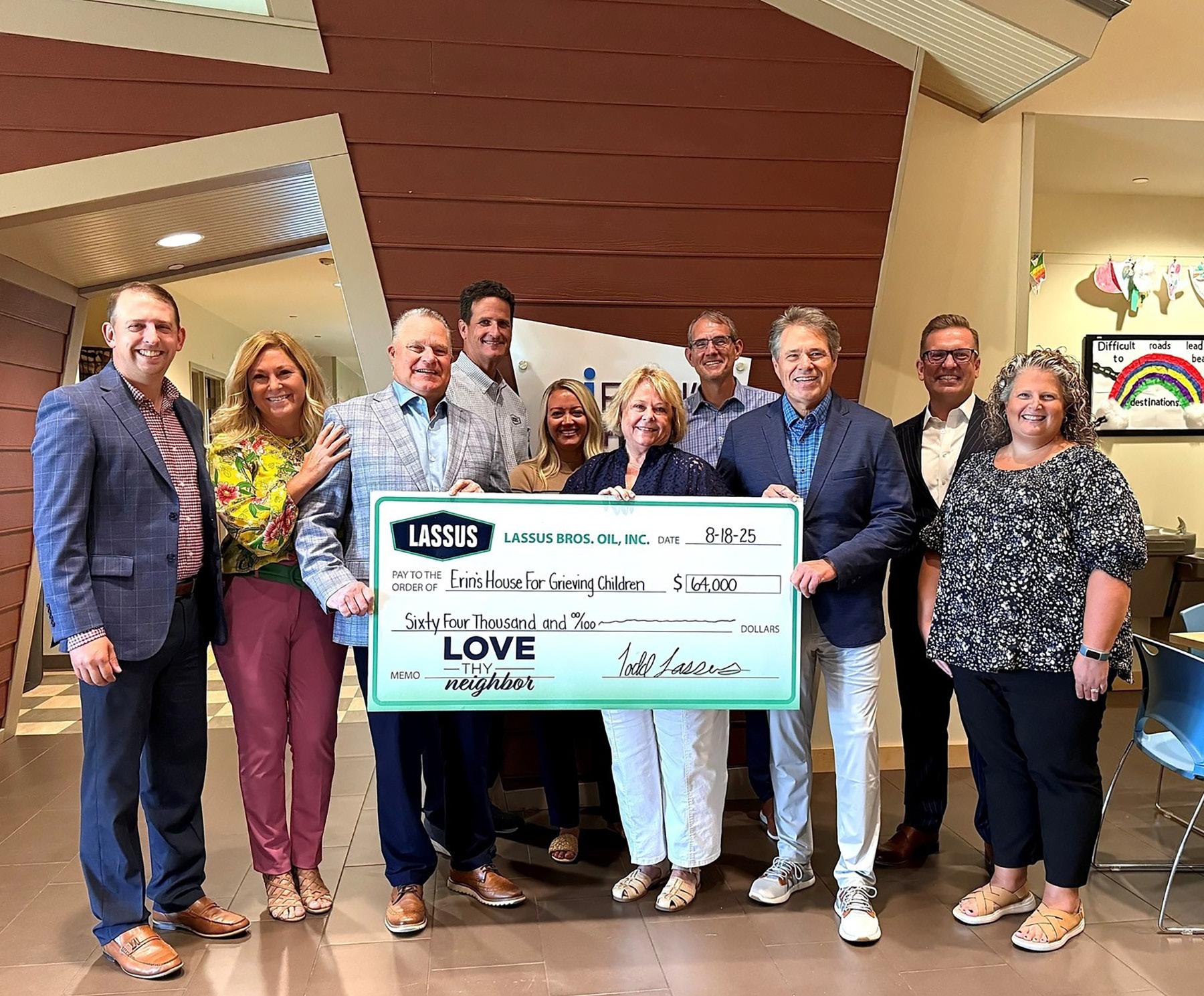
Recently, Lassus Bros. turned 100 years old, and in celebration of the milestone, the chain hosted a charity golf outing benefitting Erin’s House for Grieving Children. The fundraiser generated $64,000 to support children and families navigating loss.
Additionally, the chain holds two in-store fundraisers, one in spring and one in fall. Typically, it partners with an organization for three to five years, and it just completed its spring fundraiser for its third year of partnership with the Fort Wayne Children’s Zoo.
“We like to be able to share the love across more than just the same organization,” said Brittany Wilchar, director of sales and marketing for Lassus Bros. Oil.
In spring of 2025, Lassus raised $80,000 for the “Zoo for All”
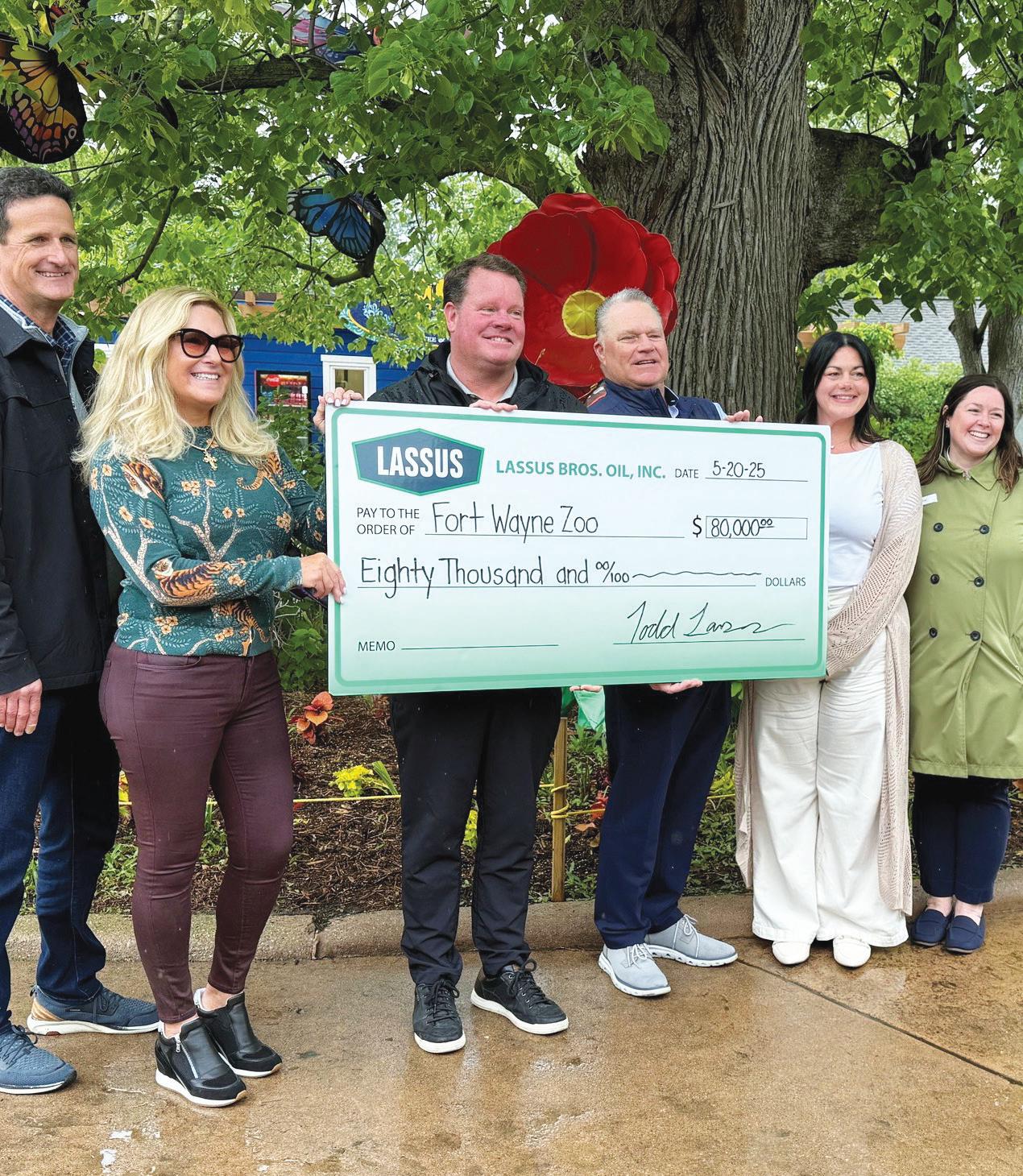
program through customer donations and roundups.
This past fall, during its Love Thy Neighbor campaign, the chain generated $62,172 in donations, $34,471 of which went to Blessings in a Backpack and $27,701 of which supported other local and regional charities.
Blessings in a Backpack fills goodie bags for students in the Fort Wayne area that they take home with them on weekends to help combat childhood hunger. With Lassus Bros.’ funds, the organization added an additional elementary school to its program.
“For these fundraisers, it’s just an ask at the register, and it’s really our community who’s participating by either rounding up to the nearest dollar, donating $1, $5, however much, and the community is very responsive, and it’s all thanks to them. They’ve really partnered with us in these efforts,” said Wilchar.
Lassus Bros. is committed to creating meaningful, lasting impact and investing in the well-being of its communities.
Lassus Bros. operates with a sustained, year-round commitment to philanthropy. The Lassus Foundation was established as a means to invest the chain’s profits back into the community. At the end of every year, the foundation board meets to review all applications for funding through the foundation. Organizations can apply for funding on Lassus’ website at any time throughout the year.
“If there are immediate needs for funding, we do pass those needs down for consideration for these fall and spring roundup campaigns, and then our stores also have a budget set aside every year where they can support charities close to their heart.
Lassus Bros. presents a check from its spring 2025 zoo fundraiser. The chain raised $80,000 for the “Zoo for All” program through customer donations and roundup contributions.
… That’s also for little league programs, (etc.) and whatever they want to invest their money back into. So, sometimes there may be an organization who applies for help through the foundation, but we see that the need is more immediate than waiting until year’s end, and in that case, we have other methods to support them,” said Wilchar.
Through the Lassus Foundation and in-store fundraising initiatives, the chain contributes over $100,000 annually to over 75 local charities. Employees are also empowered to reinvest directly into their own communities through sponsorships, school programs and local events.
Lassus Bros. sponsors three to four serve days per year where team members are paid for their hours serving. An example of how employees have spent these days is volunteering with local Junior Achievement programs, such as 3DE.
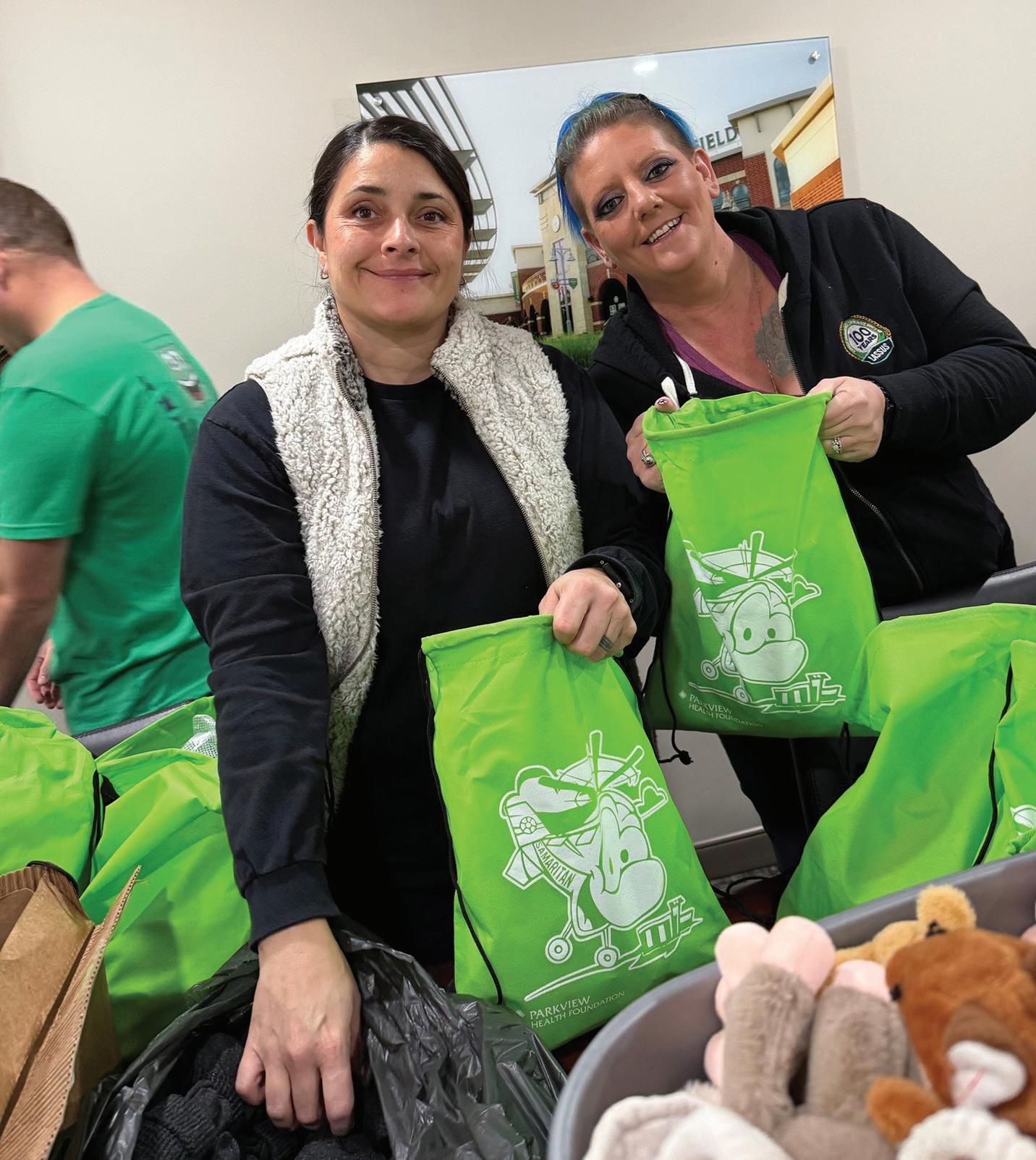
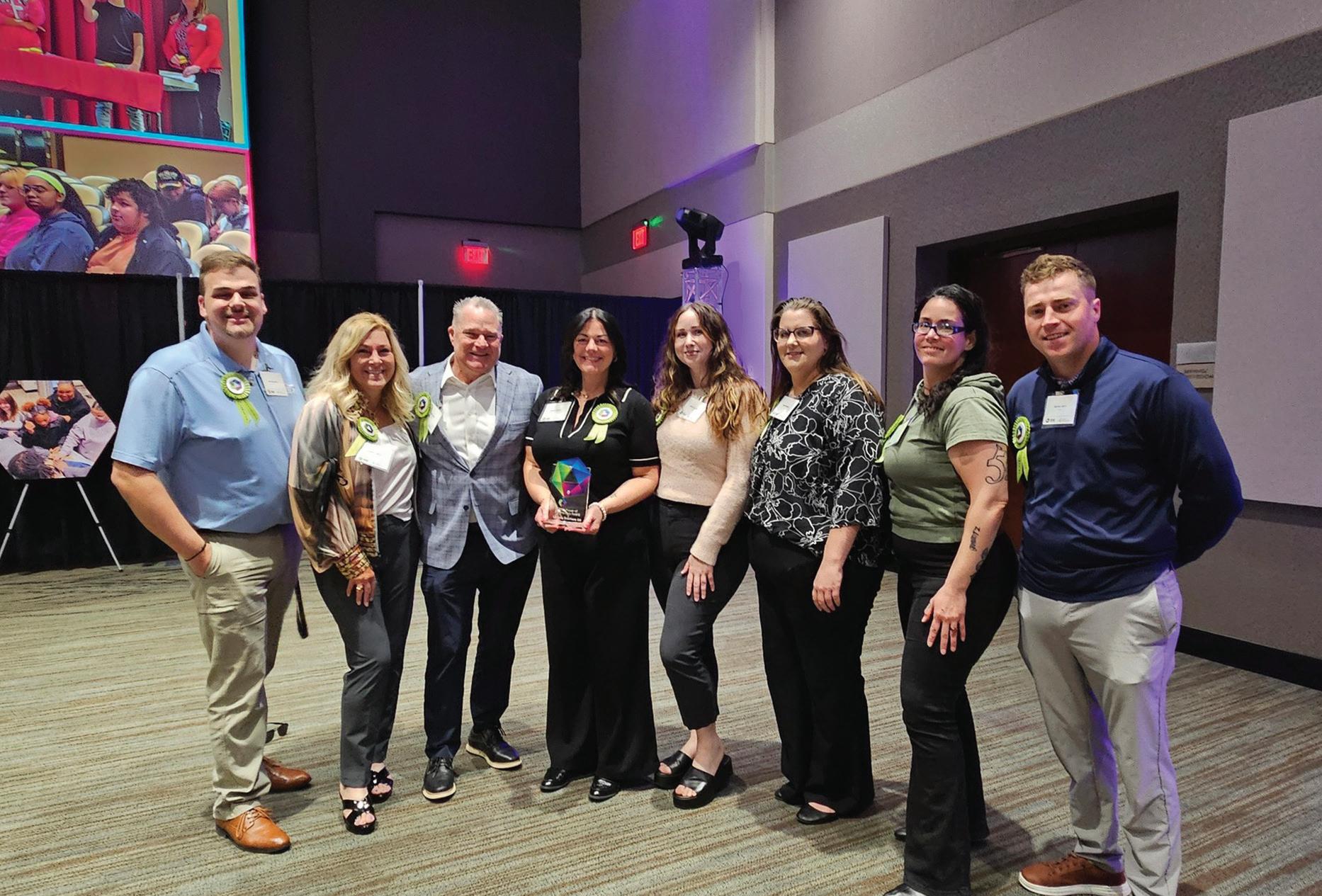
Lassus sponsors serve days for its team members, some of which were used to volunteer with the Junior Achievement 3DE program.
Top: The Lassus team accepts the Junior Achievement 3DE Power of Partnership Award (2026).
Right: The Lassus team serves at Northrop High School through the Junior Achievement 3DE program.
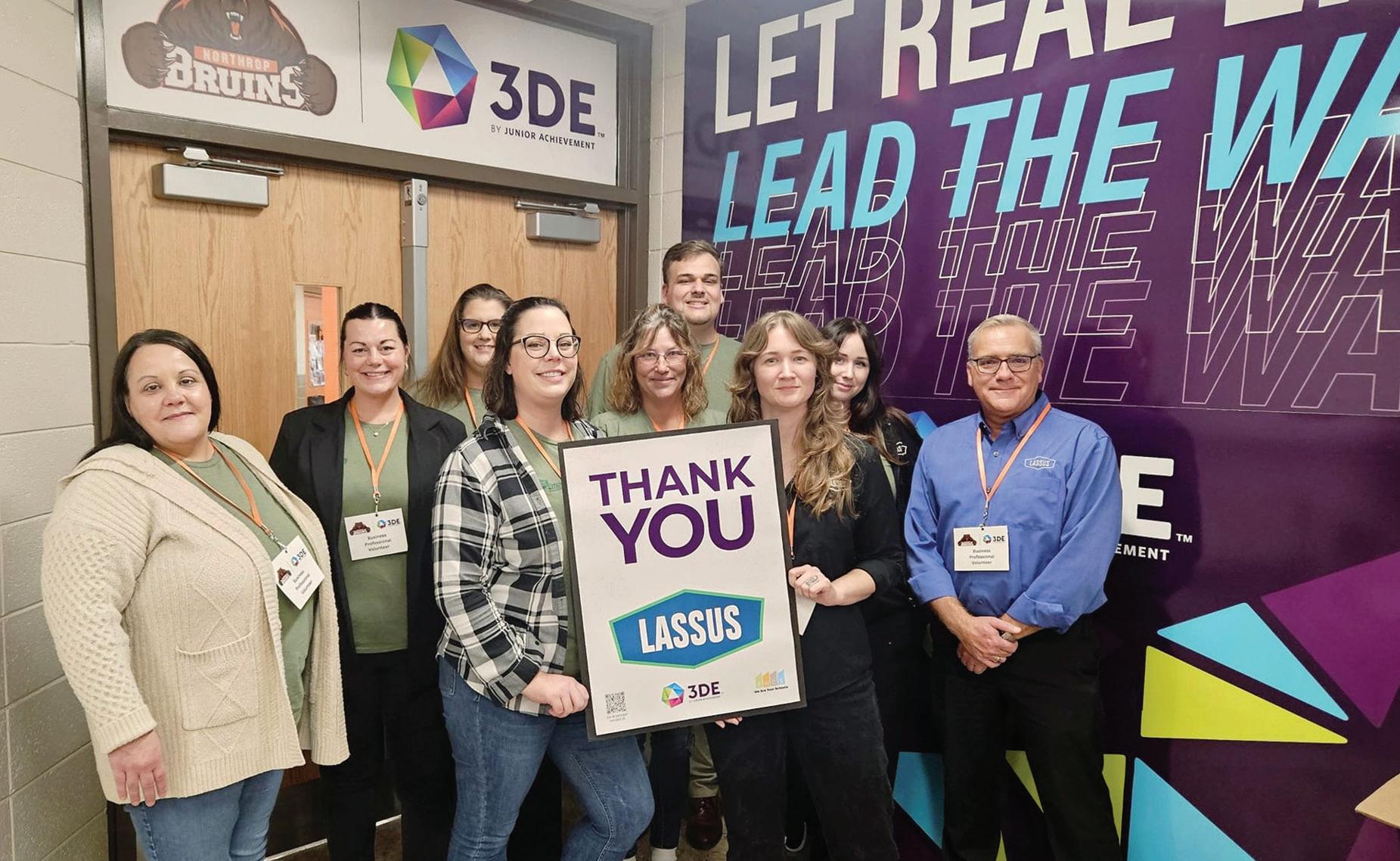
“(3DE is) a really cool new educational model in Fort Wayne Community Schools. As a part of the 3DE program, students in our Fort Wayne Community Schools high schools work on a Lassus case challenge throughout the year, and then in the fall, we get to send a team of Lassus team members to the schools to help coach the students on their case challenge. They spend a full day in one of the high schools talking to hundreds of high school students, coaching them through how they can connect their work to what they’re really going to experience in the workforce,” said Wilchar.
Another example was volunteering for A Mother’s Hope, an organization that runs a home for homeless mothers who are expecting. Team members have completed household projects here, such as cleaning out sheds and setting up for events.
“There’s been a lot of moments seeing our team members really get invested in these programs. They get really excited about
selecting organizations close to their hearts to donate their store funds to and to also go serve in person. That is always a highlight to us here, because that’s the whole point of it,” said Wilchar.
Lassus Bros. gives two awards to recognize employees for their efforts. The Love Thy Neighbor Award is an internal, peer-nominated award where team members recognize coworkers who go above and beyond in serving their communities. Each quarter, one recipient is selected and receives a wellness package as a small way to encourage them to take time for themselves. The Jon F. Lassus Legacy Award is presented annually to one team member who best exemplifies the mission to Love Thy Neighbor.
“Our mission is to Love Thy Neighbor, so when you see the team so connected, we know that it’s working. We’re spreading the word to love thy neighbor and to invest in the communities we serve, and it’s just really wholesome to see our mission in action,” Wilchar continued. CSD
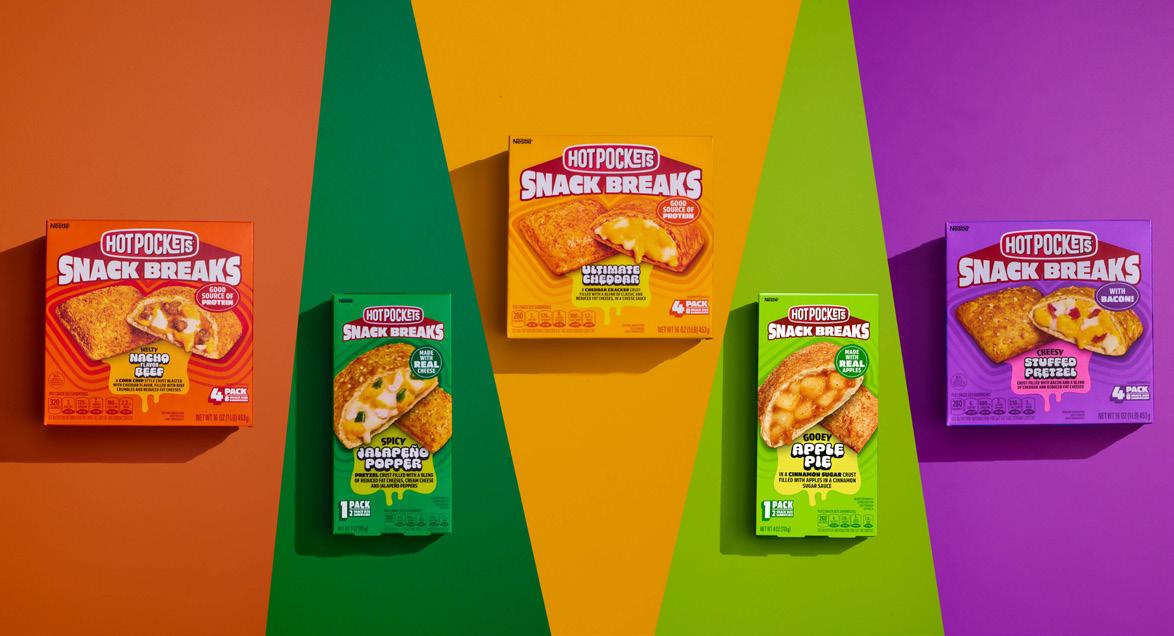
Hot Pockets is introducing new Hot Pockets Snack Breaks, a line of bite-sized squares that feature a warm, gooey center and a crisp, flaky crust, available in five flavors. Designed with perforated lines to easily tear apart, Hot Pockets Snack Breaks comes with two squares, offering flexibility and convenience. Hot Pockets Snack Breaks hits freezers nationwide this month, apart from Gooey Apple Pie, which debuted earlier this summer. A four-count pack has a suggested retail price (SRP) of $5.49, and a single has an SRP of $1.79.
• Hot Pockets Snack Breaks Gooey Apple Pie
• Hot Pockets Snack Breaks Ultimate Cheddar
• Hot Pockets Snack Breaks Spicy Jalapeño Popper
• Hot Pockets Snack Breaks Melty Nacho Beef
• Hot Pockets Snack Breaks Cheesy Stuffed Pretzel with Bacon
Nestlé USA
www.nestleusa.com
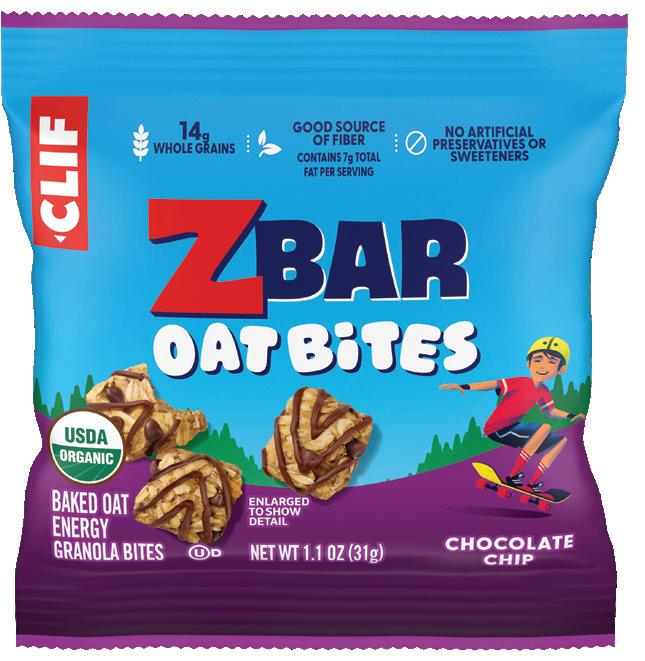
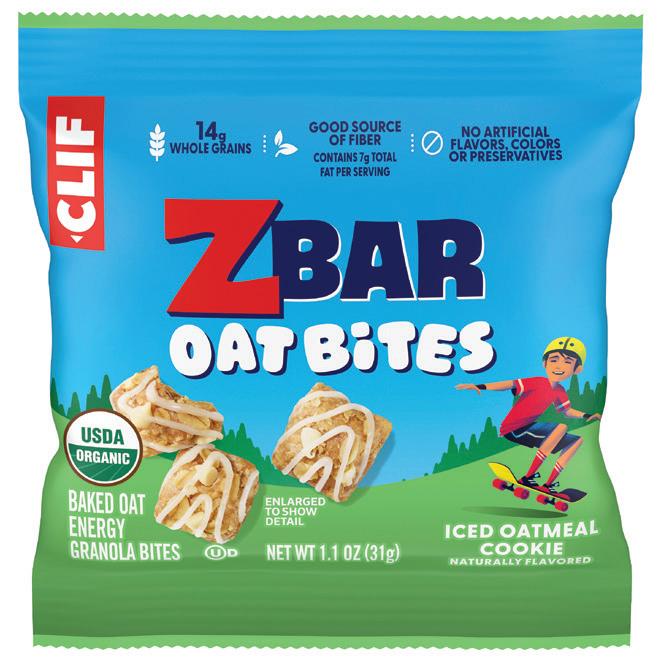
New Zbar Oat Bites have 14 grams of whole grains per pack. Available in Chocolate Chip and Iced Oatmeal Cookie, the convenient on-the-go format is great for snacking from the playground, on the field or anywhere kids’ activities take them. Zbar Oat Bites are available at retailers nationwide with a suggested retail price of $6.49 per six-pack.
Mondelēz International www.mondelezinternational.com
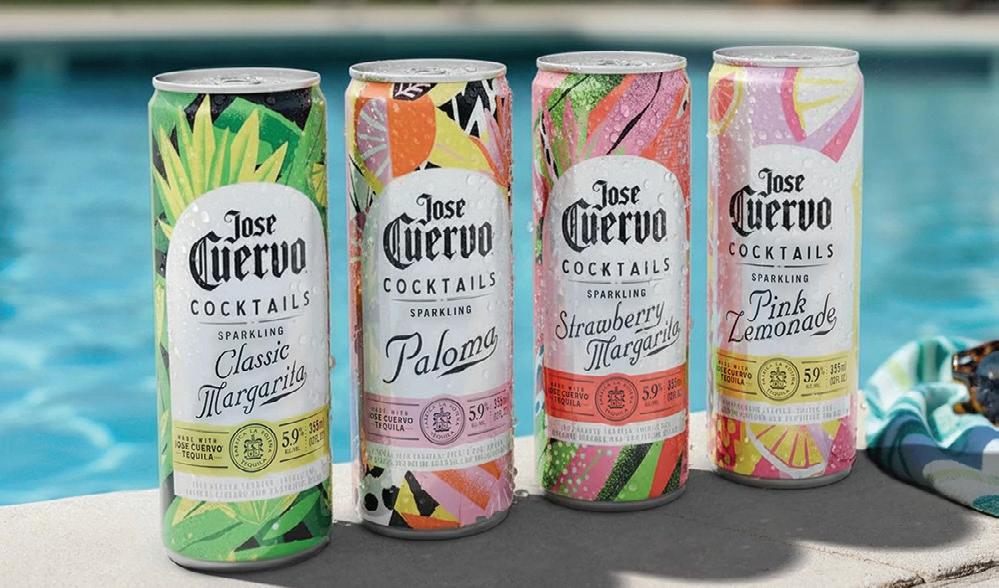
Cuervo launched new Cuervo Canned Cocktails: sparkling cocktails made with real Cuervo tequila. Featuring four bold and refreshing flavors, the cocktails are available in a brand-new eight-can variety pack with a suggested retail price (SRP) of $18.99 and single-flavor four-packs with an SRP of $9.99. Individual cans have an SRP of $2.99. The new ready-to-drink cocktails are 5.9% alcohol by volume and feature a bold new design. The Cuervo Canned Cocktails include the flavors:
• Classic Margarita
• Paloma
• Strawberry Margarita
• Pink Lemonade
Cuervo www.cuervo.com
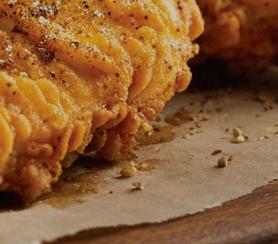
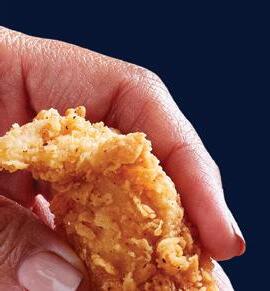
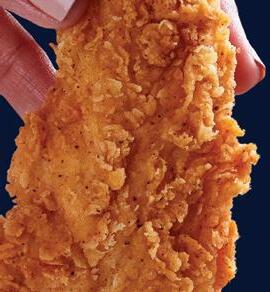
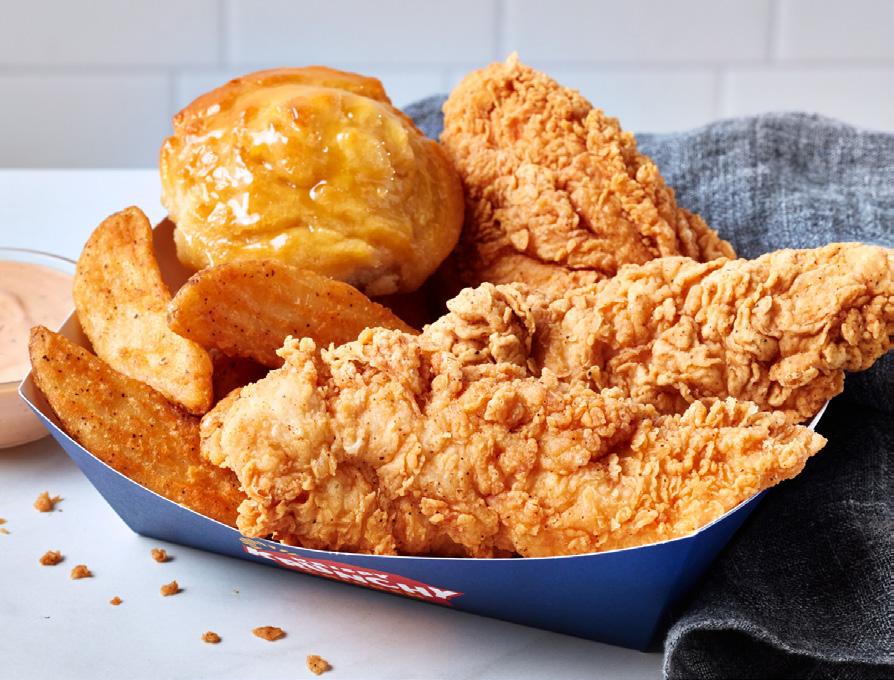
Krispy Krunchy Chicken Krunch Boxes deliver bold flavor and serious value in one package. Each box features the company’s signature handbreaded, Cajun-marinated chicken, freshly prepared in small batches for that crunchy bite every time. Paired with a warm honey biscuit and a choice of classic sides like jambalaya or red beans and rice, it’s a complete meal that satisfies on the go. With customizable options and crowd-pleasing appeal, Krunch Boxes are designed to drive traffic, boost ticket size and keep guests coming back for more.
Krispy Krunchy Chicken www.krispykrunchy.com
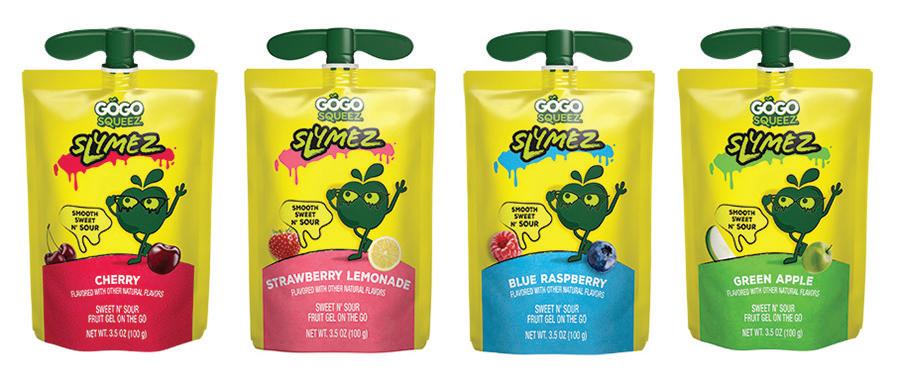
GoGo squeeZ SlymeZ is a better-for-you alternative that’s made with real fruit and no added sugar. It comes in sweet and sour flavors that are packaged in easy-to-carry, shelf-stable pouches. Offered in a smooth, fruit-gel-like texture, this product rolled out nationwide in four flavors: Blue Raspberry, Strawberry Lemonade, Cherry and Green Apple.
The Bel Group www.belbrandsusa.com
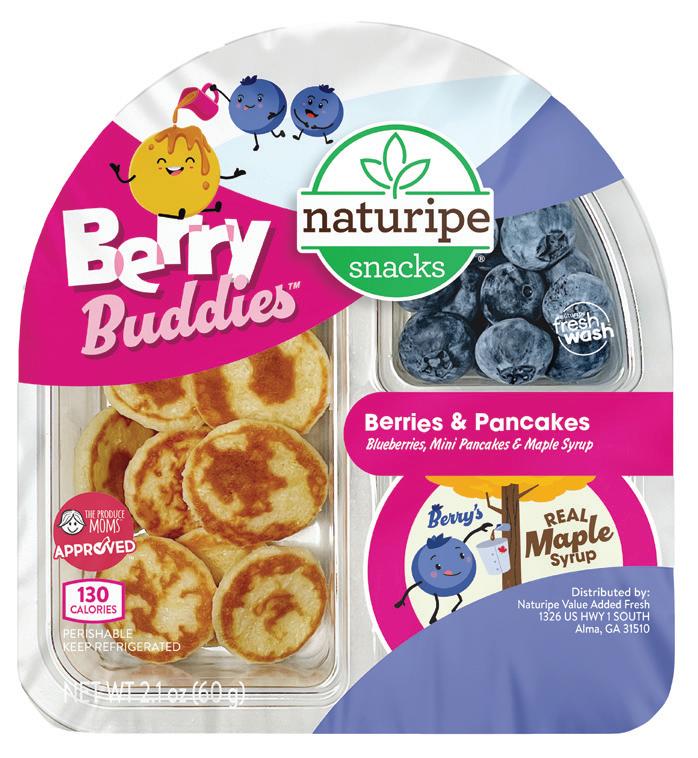
Naturipe Berry Buddies brings a better-foryou option to people looking for quick bites. Berry Buddies pairs fresh Naturipe berries with tasty and fun ingredients in packs designed for every snacking moment. Available in three combinations, like juicy blueberries with mini pancakes and maple syrup or crunchy pretzels with grapes and cheddar, these packs deliver balanced energy.
Naturipe www.naturipefarms.com
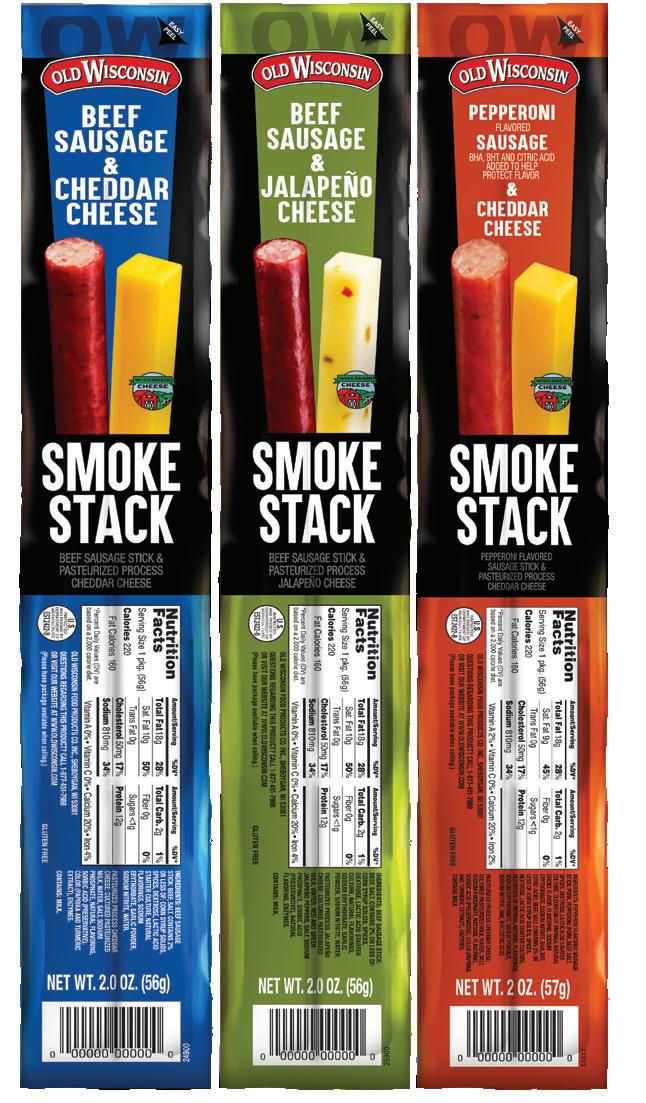
Old Wisconsin introduced a value-driven update to one of its top-performing product lines. The brand rolled out a new two-ounce version of its popular Smoke Stacks, previously offered in a 2.5-ounce size, delivering the same protein-packed meat-and-cheese combo shoppers know.
The new two-ounce value size, exclusively sold in convenience stores, offers a more accessible $3.49 price point, down from $4.49, making it an easy add-on at checkout. Like the rest of the line, it’s gluten free, contains zero grams of trans fat and no added MSG, and comes in a range of flavors spanning from classics like Turkey Sausage & Cheddar to more on-trend options like Bourbon & Bacon.
Carl Buddig and Co. www.buddig.com
H&S Energy’s digital shelf labels are improving operational efficiency and increasing savings.
Emily Boes • Senior Editor
DIGITAL SHELF LABELS are rolling out at retail, and some c-store operators are getting in the game. H&S Energy, which operates 250 locations in California, Oregon and Washington under the Power Market, Extra Mile and Pinnacle 365 banners, launched the technology in its stores, and CStore Decisions reached out to the company’s VP of operations, Fidaa Mohrez, to learn about the process.
{CStore Decisions (CSD)} What swayed you to switch to digital shelf labels?
{Fidaa Mohrez (FM)} Several factors drove the decision. The first was the efficiency of our pricebook department. We wanted to make sure prices were accurate and directly linked to our back-office system, leaving no room for the mispricing errors that can occur when tags are printed and placed manually. The second factor was operational efficiency. By eliminating manual pricing work at the store level, we could reallocate that time back to serving customers and improving execution on the floor rather than spending hours managing paper tags. When we evaluate any major investment, we ask three questions: Does it improve the customer experience? Does it improve operational efficiency? And does it deliver real savings over time? In this case, the answer to all three was yes. Our analysis showed that, even with the upfront investment, the return on investment (ROI) is guaranteed within a few
years. Those three factors together led us to move forward.
{CSD} What has the rollout looked like?
{FM} We always begin with a proof of concept. It gives us a chance to test everything, learn and prepare for any challenges that might come up at scale. We used that phase to train multiple store managers and operational leaders, and once the proof of concept was successful, we began expanding store by store.
The biggest challenge has actually been logistics more than execution. A project this size cannot be done in one shot; you have to plan it, schedule it, sequence the shipments and decide carefully which store comes next. The other major challenge has been on the software side. Our back-office system is locked and does not natively allow third-party integrations, which created real complications. Fortunately, we partnered with a strong vendor who was able to build a workaround for us.
{CSD} Where have you seen the biggest ROI?
{FM} The biggest ROI has been operational efficiency. The time and effort store employees previously spent on manual tags — printing them, placing them and later auditing to make sure each one was correct and in the right spot — is significant. With inflation and today’s economy, we are updating prices much more frequently than in the past, which

makes that work especially stressful when done manually. Removing that burden has driven meaningful labor savings.
We are also saving on materials, including the labels and paper themselves. But we cannot overlook the additional efficiencies the tags create beyond pricing; they support inventory control, ordering, merchandising and stocking. The tags include a range of features that benefit the operation well beyond price display.
{CSD} What should other retailers know before investing?
{FM} Be prepared for a large investment and be patient on your ROI. This is a long-term play, and it is also a risky one. You cannot choose your tags lightly. You need to do your research and your homework. The tags themselves are expensive hardware, and the batteries are expensive as well — so when you select a tag, you need to be confident the batteries will hold up over time. You also need to be sure you are choosing the right technology. This space is evolving quickly, and solutions can become outdated fast, so you don’t want to commit to something that is already near the end of its lifecycle.
Finally, choose the right partner. This is not an easy project to execute. It requires a real commitment of time and resources. We are still learning, and we are not yet at the point where we want to be. But we chose the right partners, and we know we still have work ahead of us.