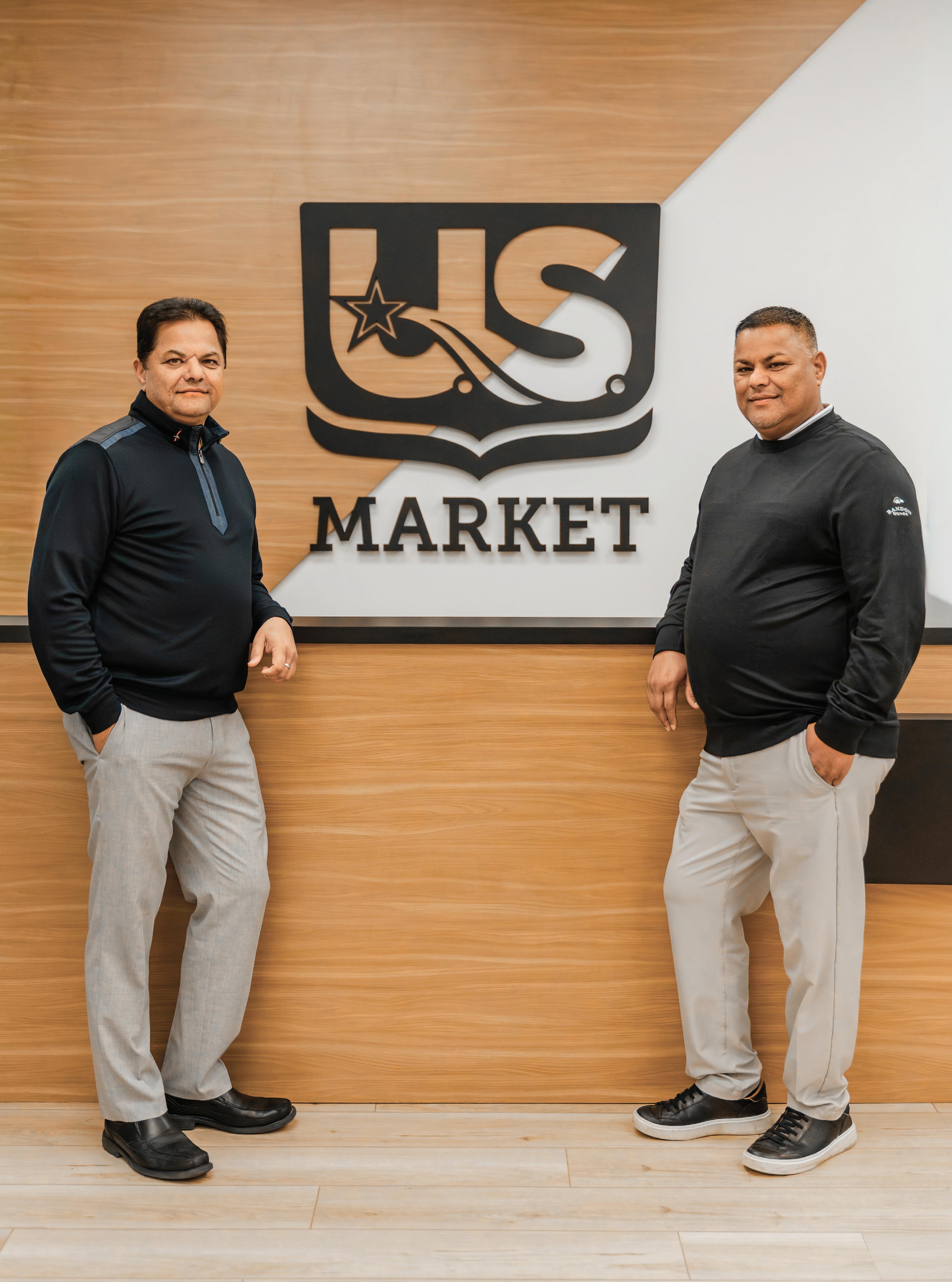

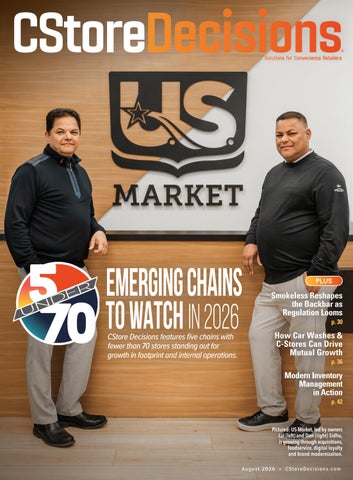
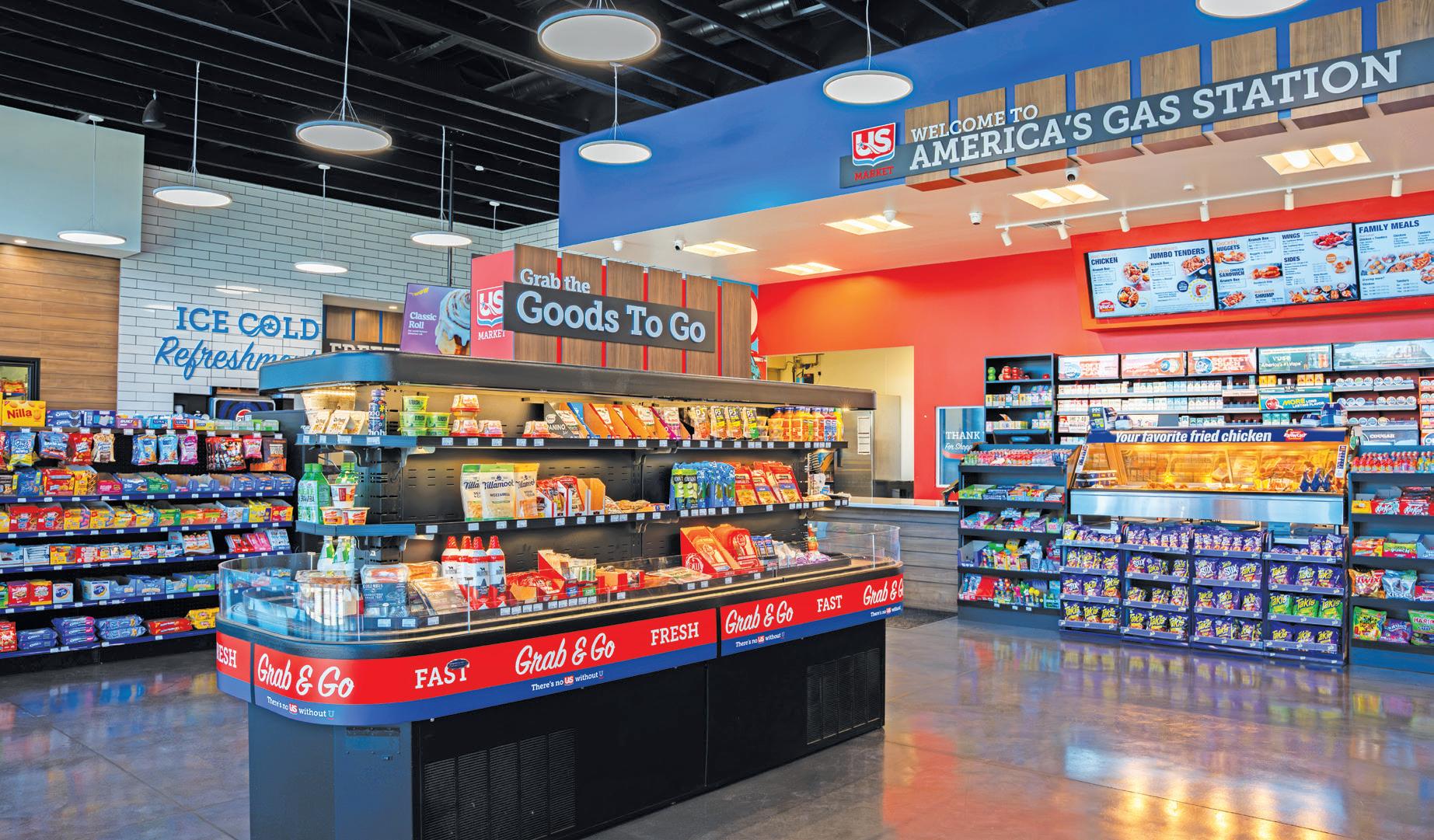
Pictured: US Market, led by owners Lal (left) and Don (right) Sidhu, is growing
digital loyalty
When customers get a taste of maximum Mexican flavor, they’ll come back again and again. Lucky you, the MegaMex Convenience portfolio of burritos, taquitos, mini tacos, guacamole, salsa and more offers just that.
60% of U.S. consumers choose Mexican handhelds at c-stores more than once a week.1
NEED . START WITHASAMPLE SCAN HERE




For more than 135 years, White Owl has delivered cigar innovation—Arctic Grape introduces a bold new cigarillo to our lineup.




www.cstoredecisions.com


EDITORIAL
VP EDITORIAL — FOOD, RETAIL & HOSPITALITY
Danny Klein dklein@arrowfly.com
EDITOR-IN-CHIEF
Erin Del Conte edelconte@arrowfly.com
SENIOR EDITOR
Emily Boes eboes@arrowfly.com
ASSOCIATE EDITOR
Kevin McIntyre kmcintyre@arrowfly.com
EDITOR EMERITUS
John Lofstock
COLUMNIST
Bruce Reinstein
CONTENT STUDIO
VP, CONTENT STUDIO
Peggy Carouthers pcarouthers@arrowfly.com
WRITER, CONTENT STUDIO
Ya’el McLoud ymcloud@arrowfly.com
WRITER, CONTENT STUDIO Drew Filipski dfilipski@arrowfly.com
CREATIVE SERVICES
VP, CREATIVE DIRECTOR Matthew Claney mclaney@arrowfly.com
CREATIVE DIRECTOR Erin Canetta ecanetta@arrowfly.com
SALES TEAM SENIOR VP OF SALES & STRATEGY
Matt Waddell mwaddell@arrowfly.com (774) 871-0067
KEY ACCOUNT MANAGER John Petersen jpetersen@arrowfly.com (216) 346-8790
SALES DIRECTOR
Patrick McIntyre pmcintyre@arrowfly.com (216) 372-8112
SALES DIRECTOR Tony Bolla tbolla@arrowfly.com (773) 859-1107
SALES DIRECTOR Susan Shepherd sshepherd@arrowfly.com (404) 386-1709
NATIONAL SALES DIRECTOR Amber Dobsovic adobsovic@arrowfly.com (757) 637-8673
ACCOUNT MANAGER Tanner Hartwick thartwick@arrowfly.com (571) 596-0375
PORTFOLIO MARKETING MANAGER Jane Cooper jcooper@arrowfly.com
CUSTOMER SERVICE REPRESENTATIVE Tracy Willingham twillingham@arrowfly.com
LEADERSHIP
CHIEF EXECUTIVE OFFICER Matt Logan mlogan@arrowfly.com
CHIEF OPERATIONS OFFICER
George Yedinak gyedinak@arrowfly.com
CHIEF REVENUE OFFICER Scott Kelliher skelliher@arrowfly.com
VP OF MARKETING Annie Wissner awissner@arrowfly.com
EVENTS
VP, EVENTS
Deena Rubin drubin@arrowfly.com
DIRECTOR OF EVENTS Cassidy Doller cdollar@arrowfly.com
EVENT MARKETING SPECIALIST Emma Paul epaul@arrowfly.com
EVENTS MANAGER Jeannette Hummitsch jhummitsch@arrowfly.com

1111 Superior Ave. Suite 1120 Cleveland, OH 44114 Ph: 888-543-2447
SUBSCRIPTION INQUIRIES:








To manage current print subscription or for a new subscription: https://cstoredecisions.com/cstore-decisions-subscriptions/
SUBSCRIPTIONS: Qualified U.S. subscribers receive CStore Decisions at no charge. For others, the cost is $80 a year in the U.S. and Possessions, $95 in Canada, and $150 in all other countries. Single copies are available at $9 each in the U.S. and Possessions, $10 each in Canada and $13 in all other countries.
CStore Decisions (ISSN 1054-7797) USPS Publication #5978 is published monthly by Arrowfly, 1111 Superior Ave., Suite 1120, Cleveland, OH 44114, for petroleum company and convenience store operators, owners, managers.
Periodicals postage paid at Cleveland, OH, and additional mailing offices.
POSTMASTER: Send address changes to CStore Decisions, 1111 Superior Avenue, Suite 1120, Cleveland, OH 44114. GST #R126431964, Canadian Publication Sales Agreement No: #40026880.
CSTORE DECISIONS does not endorse any products, programs or services of advertisers or editorial contributors.
Copyright© 2026 by Arrowfly. No part of this publication may be reproduced in any form or by any means, electronic or mechanical, or by recording, or by any information storage or retrieval system, without written permission from the publisher.
EDITORIAL ADVISORY BOARD
Nate Brazier, CEO Stinker Stores • Boise, Idaho
Robert Buhler, President and CEO
Open Pantry Food Marts • Pleasant Prairie, Wis.
Herb Hargraves, Chief Operating Officer
Sprint Mart • Ridgeland, Miss.
Bill Kent, Chairman and CEO
The Kent Cos. Inc. • Midland, Texas
Nick Triantafellou, Director of Marketing & Merchandising
Weigel’s Inc. • Knoxville, Tenn.
Dyson Williams, Vice President
Dandy Mini Marts. • Sayre, Pa.
NATIONAL ADVISORY GROUP (NAG) BOARD
Greg Ehrlich, (Board Chairman) President
Beck Suppliers Inc. • Fremont, Ohio
Joy Almekies, Senior Director of Food Services
Global Partners • Waltham, Mass.
Jeremy Burge, Chief Operating Officer
Louisiana Truck Stop & Gaming • Saint Rose, La.
Jeff Carpenter, Director of Education and Training
Cliff’s Local Market • Marcy, N.Y.
Richard Cashion, Chief Operating Officer
Curby’s Express Market • Lubbock, Texas
Kalen Frese, Director of Merchandising
Warrenton Oil Inc. • Warrenton, Mo.
Joe Hamza, Chief Operating Officer
Nouria Energy Corp. • Worcester, Mass.
Beth Hoffer, Vice President
Weigel’s • Powell, Tenn.
David Land II, Director of Marketing
The Kent Cos. Inc. • Midland, Texas
Brent Mouton, President and CEO
Hit-N-Run Food Stores • Lafayette, La.
Lenny Smith, Vice President
Crosby’s • Lockport, N.Y.
Dyson Williams, Vice President
Dandy Mini Marts • Sayre, Pa.
Hussein Yatim, Vice President
YATCO • Marlborough, Mass.
Vernon Young, President and CEO
Young Oil Co. • Piedmont, Ala.























































AS INDUSTRY COMPETITION CONTINUES TO GROW, more small and mid-sized chains are upping their game across several areas of operation.
Such was evident at the CStore Connections conference this past spring, where small, mid-sized, regional and family-owned chains came together to learn, share and discuss how to improve their business and compete in a crowded market in the year ahead. Emerging and growing chains today are tapping into technology, building state-of-the-art stores, planning for footprint growth and rolling out foodservice programs that rival much larger chains.
Rather than plotting how to rival national brands, many small and mid-sized operators are focusing on what they do best. That includes delivering high-quality customer service, curating products that reflect local tastes, focusing on their company culture, getting the basics right and responding quickly to changing consumer preferences. Smaller chains have the benefit of being nimble, and regional chains often have the benefit of deep community roots. By combining agility with a strong understanding of their communities, smaller c-store chains are carving out a competitive edge and demonstrating that convenience today is about delivering value, quality and a high-quality shopping experience that keeps customers coming back.

In this issue, CStore Decisions highlights five Chains to Watch in 2026 with fewer than 70 units. These small and mid-sized chains are taking bold steps, whether by rolling out electronic shelf labels, launching an employee stock ownership program, building new-toindustry stores, succeeding with foodservice or driving technology initiatives.
In October, CStore Decisions will highlight five Chains to Watch with more than 70 stores. Retailers can nominate their 70-plus store chains here: https://cstoredecisions.com/chains-to-watchsubmissions/?SL=OVER
Retailers: If you’re heading to the NACS Show in Las Vegas, don’t forget to register (it’s free) to attend CStore Decisions’ Chain of the Year celebration honoring Toot’n Totum. We’ll be at Piero’s Italian Cuisine, Oct. 7, from 6:15 p.m. to 9 p.m. Suppliers must sponsor to attend. Retailers register here: https://cstoredecisions.com/2026chain-of-the-year.






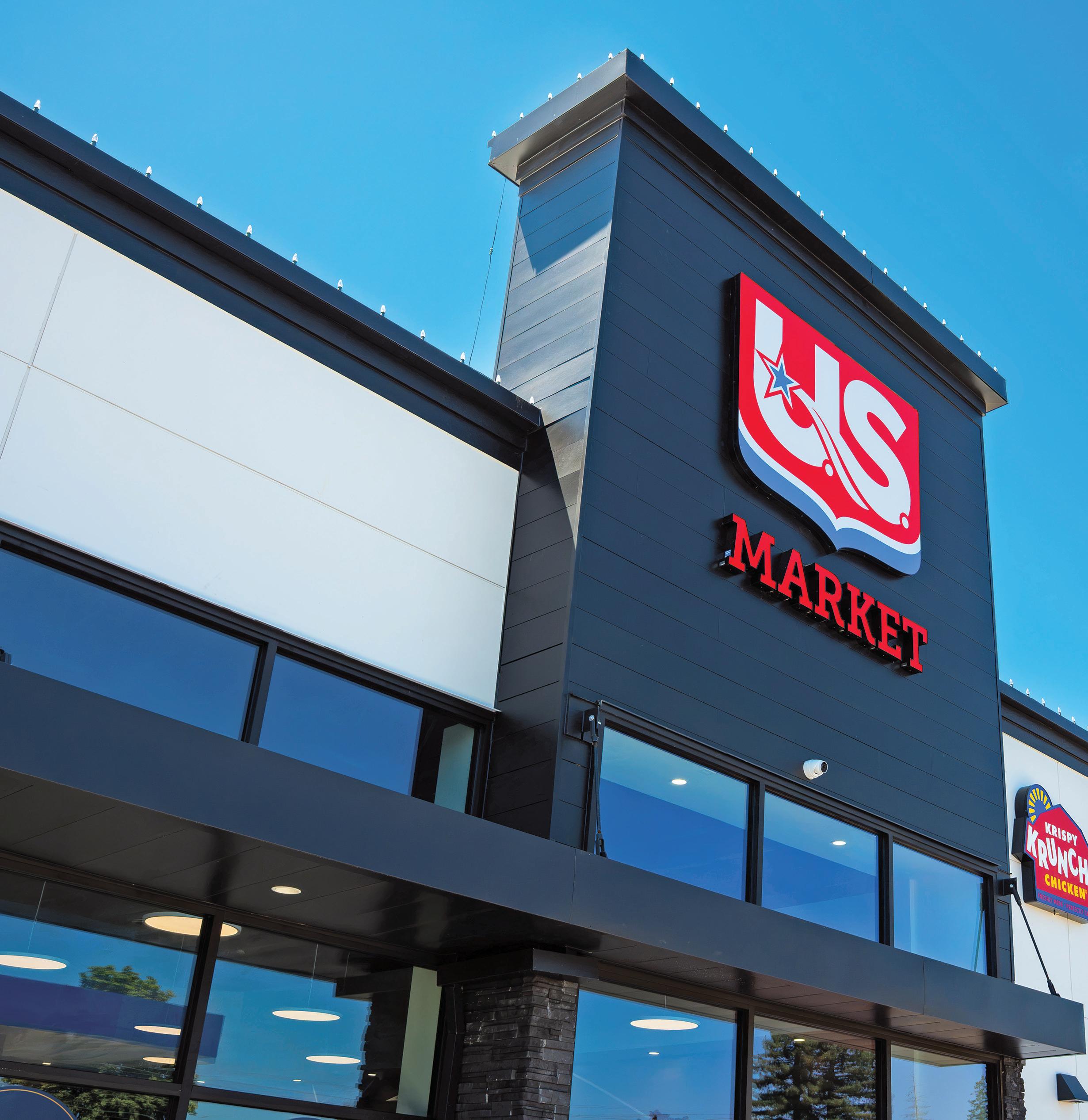

CStore Decisions features five chains with fewer than 70 stores standing out for growth in footprint and internal operations.
Emily Boes • Senior Editor
THE CONVENIENCE STORE INDUSTRY is teeming with chains large and small that are ready for market expansion, foodservice evolution and advancing technology, and they are actively growing their brand both externally and internally. In this issue, CStore Decisions is recognizing five chains with fewer than 70 stores that are demonstrating such growth through acquisitions, new-to-industry builds and remodels; technology and foodservice innovation; involved community engagement; or brand augmentation. These five chains are preparing for future growth and long-lasting impact in the industry and in their markets.
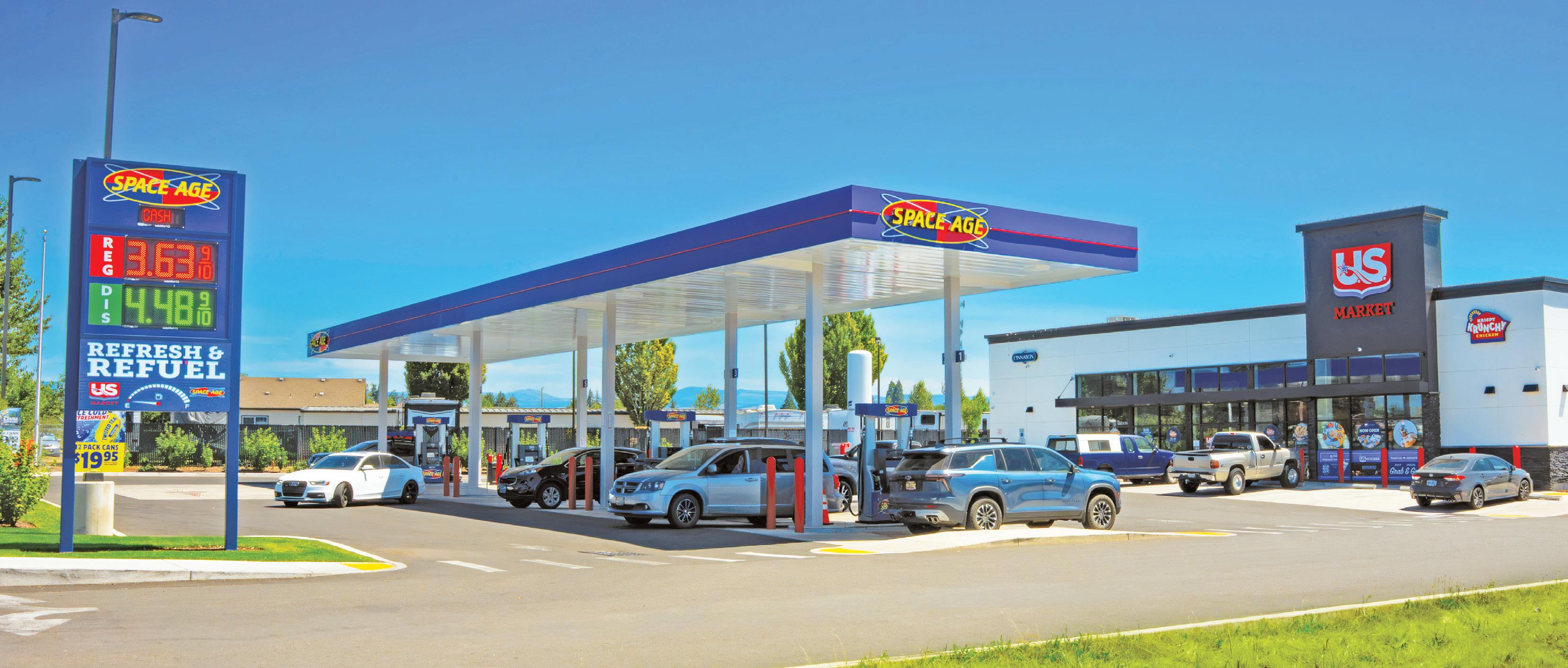
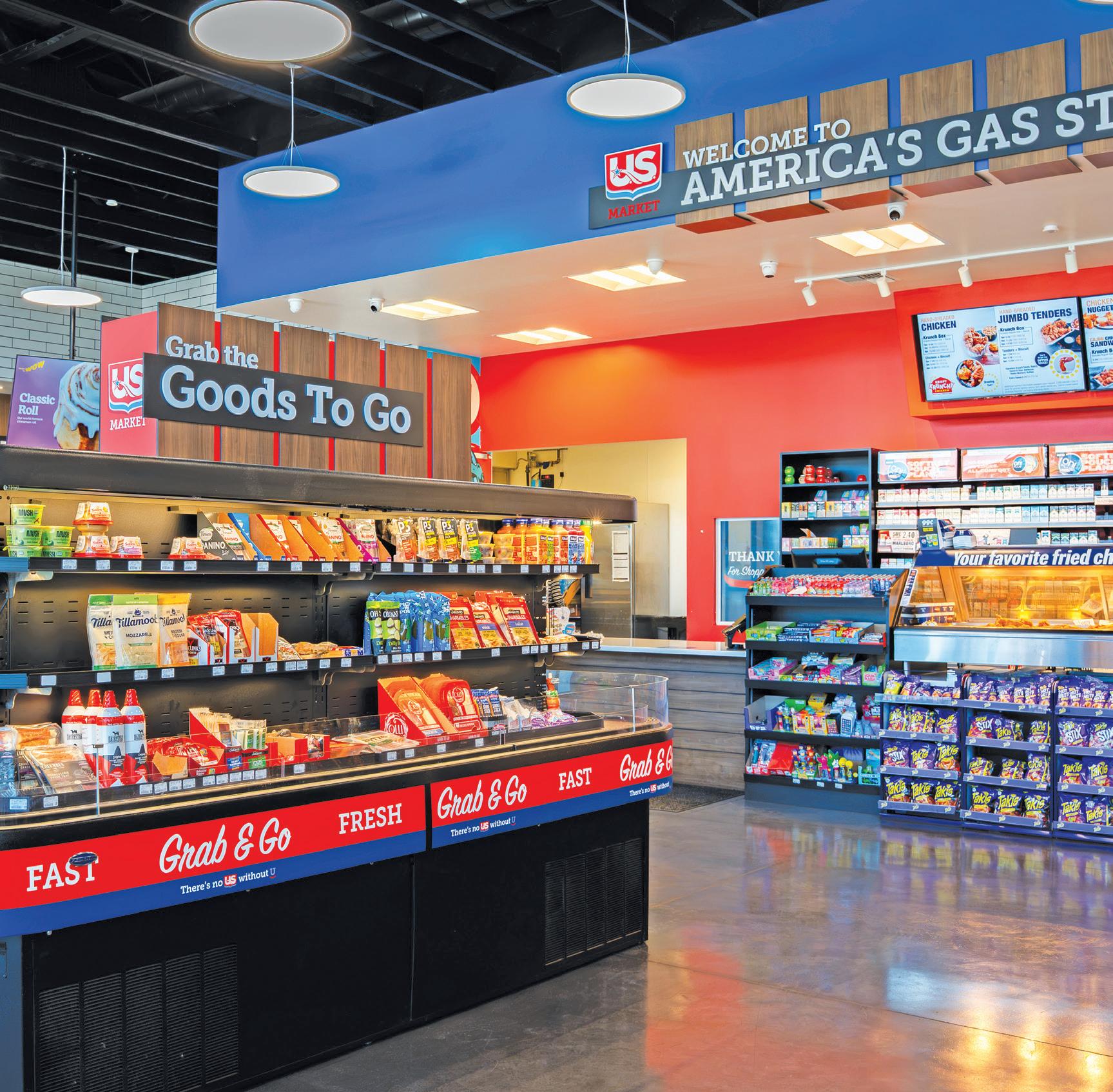
US MARKET STORES is on the fast track to regional expansion, growing from 30 convenience store-only locations in 2022 to 60 sites in Washington and Oregon in the present day. The Salem, Ore.-based chain is committed to maintaining a customer-first approach throughout its expansion, and over the past year, it has tapped into digital loyalty, foodservice growth, strategic acquisitions and brand modernization.
US Market completed 25 acquisitions and 10 new builds to double its store count in the past few years. Although its original locations are c-stores only, the newer sites offer fuel pumps for drivers. The chain constructed another five new builds this year. Ten additional new builds are set to open this year and into 2027. These new sites will all be food-forward destinations, featuring the chain’s new foodservice program.
“It was never to do it for the number. It was always to do it for the purpose of quality over quantity. …” said Amar Sidhu, director of business development, US Market Stores.
US Market operates with a “one-twostep” philosophy: buy one store and sell one store to buy two more stores.
“We purchased (stores) knowing that we can grow, we can excel. … I’d rather have one very good site than have three mediocre sites,” said Sidhu.
US Market isn’t only growing through store volume. It’s continuously evolving its operations, investing in new concepts and challenging industry norms.
At press time, US Market was set to launch its digital loyalty platform. Its plan is to build customer loyalty satisfaction, help customers save money and give them incentives to return.
“Whenever (customers) come into our
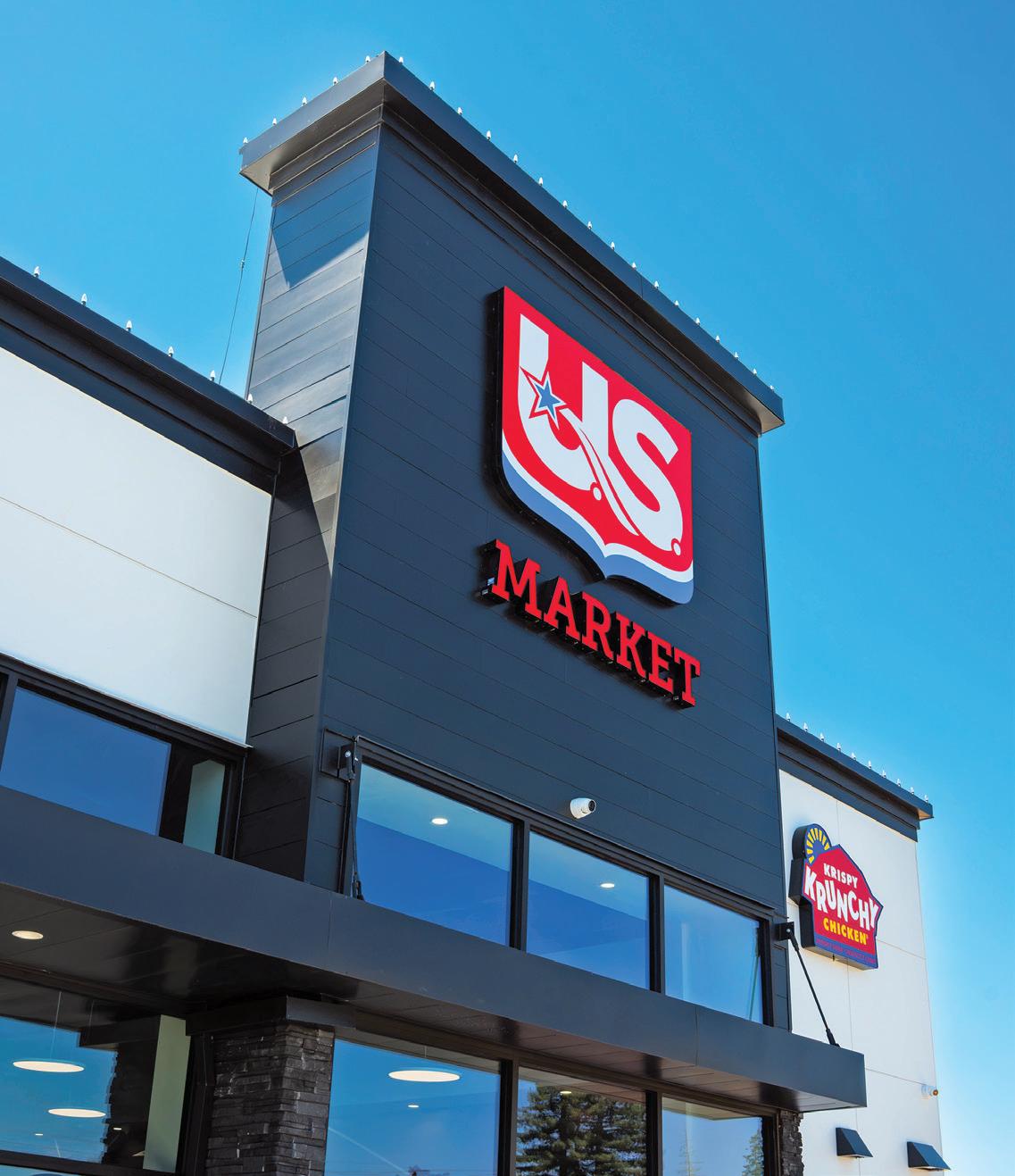
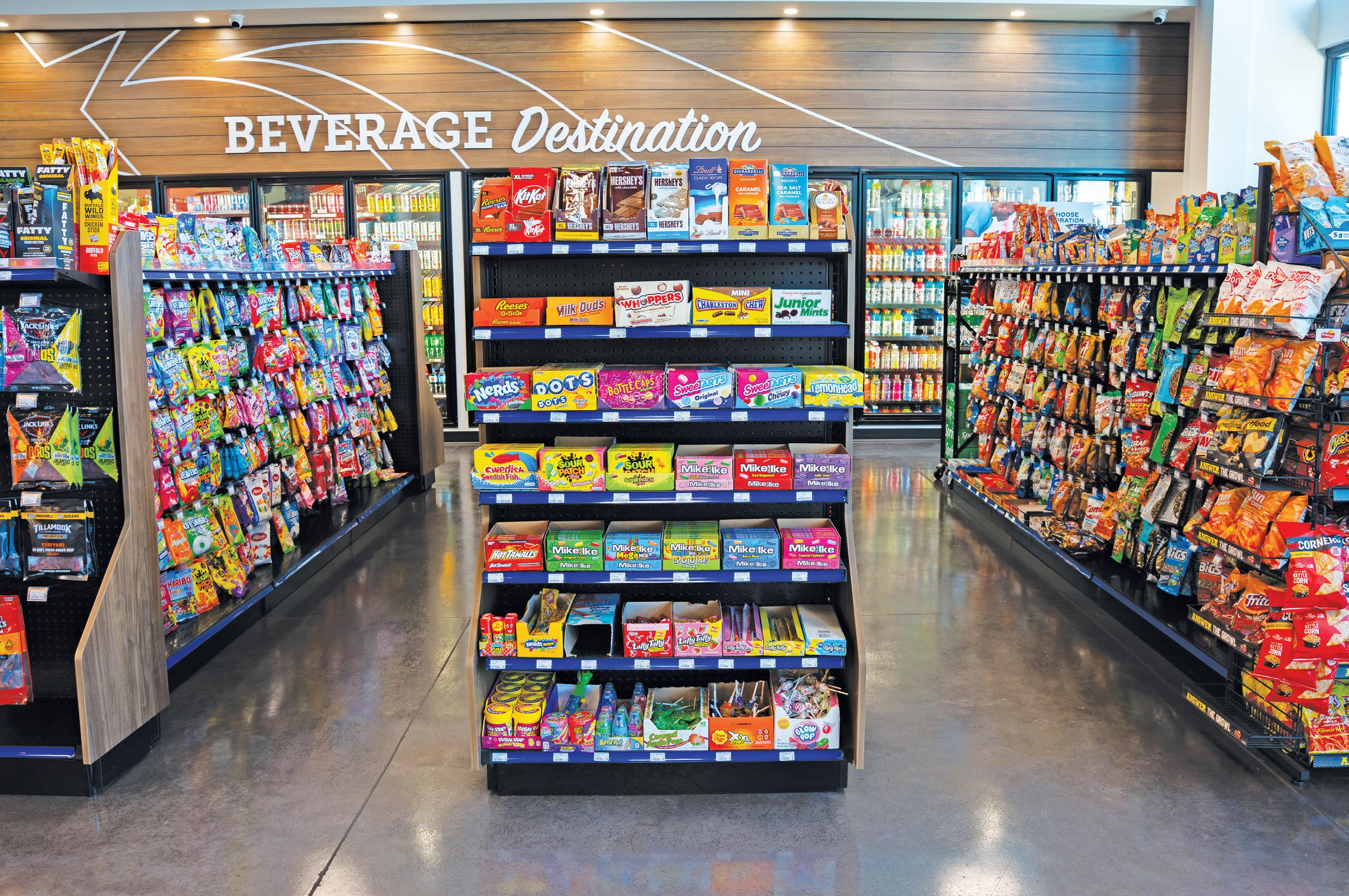
US Market completed 25 acquisitions and 10 new builds over the past few years to double its store count from 30 in 2022 to 60 in the present day.
Ingenious, adaptable solutions make Royston Group the hands-on choice for most any grocery retailing challenge. With over 50 years’ experience, our multifunctional capabilities combine three specialty companies in a single source for faster results and greater ROI. Royston, Southern CaseArts, and SignResource provide a comprehensive combination of cabinets, refrigerated & heated cases, shelving, checkstands, signage, installation, and maintenance. Rely on Royston Construction Services to make your remodels easier, more efficient, and cost-effective.
Make just one call and discover the time-tested resource that can do it all.

fuel stations, they’ll be able to get fuel discounts, and then they will also be able to redeem more points as they purchase more items, as they come into the stores.
… And as we progress through that, we want to be able to give the loyal customers something back. … Let’s find out what their niche is, and we’re going to find that exact customer’s best and core item that they continuously buy. How can I make it better for them? How can I give them something better?” said Sidhu.
US Market is also growing its food program. It hired an executive foodservice
director to oversee what will be a state-ofthe-art program, starting with a breakfast launch (which, at press time, was set for the next 30 days), followed by a lunch launch and a dinner launch.
Some of the items available will be the Big 10 Smash Burger, a specialized quesadilla and a Jalisco-style burrito.
Food will be customizable, as well. Customers can choose products from the store to give to the kitchen, and these will be added to their dish. For instance, gummy worms or chips can be added to a burger or candy can be added inside
the quesadilla.
“We’re going to bring convenience to convenience stores all over again because our core was convenience stores prior to us getting into fuel, so that’s where we understand how to make sure that we can make it the right thing for our consumers,” said Sidhu.
US Market also launched its own merchandise at its locations.
“What does that mean? Tailored hats to your community — so you’re in Oregon, you’re going to find Oregonian-style hats. If you’re in Washington, you’re going to find Washington-style hats, and you’re going to get the custom US Market ones, also,” said Sidhu.
Customers can also purchase a private-label 9.5 pH-balance alkaline water.
Overall, the chain demonstrates a commitment to growth, innovation, affordability and community impact simultaneously.
When asked what he wants customers to feel when they leave a US Market store that shows them this is more than an ordinary gas station, Sidhu homed in on culture. When customers arrive, they’re treated to an atmosphere of distinguished hospitality. They walk out with a bigger and better smile than they had when they arrived.
US Market’s vision, execution and commitment to innovation have made it a 2026 Chain to Watch.
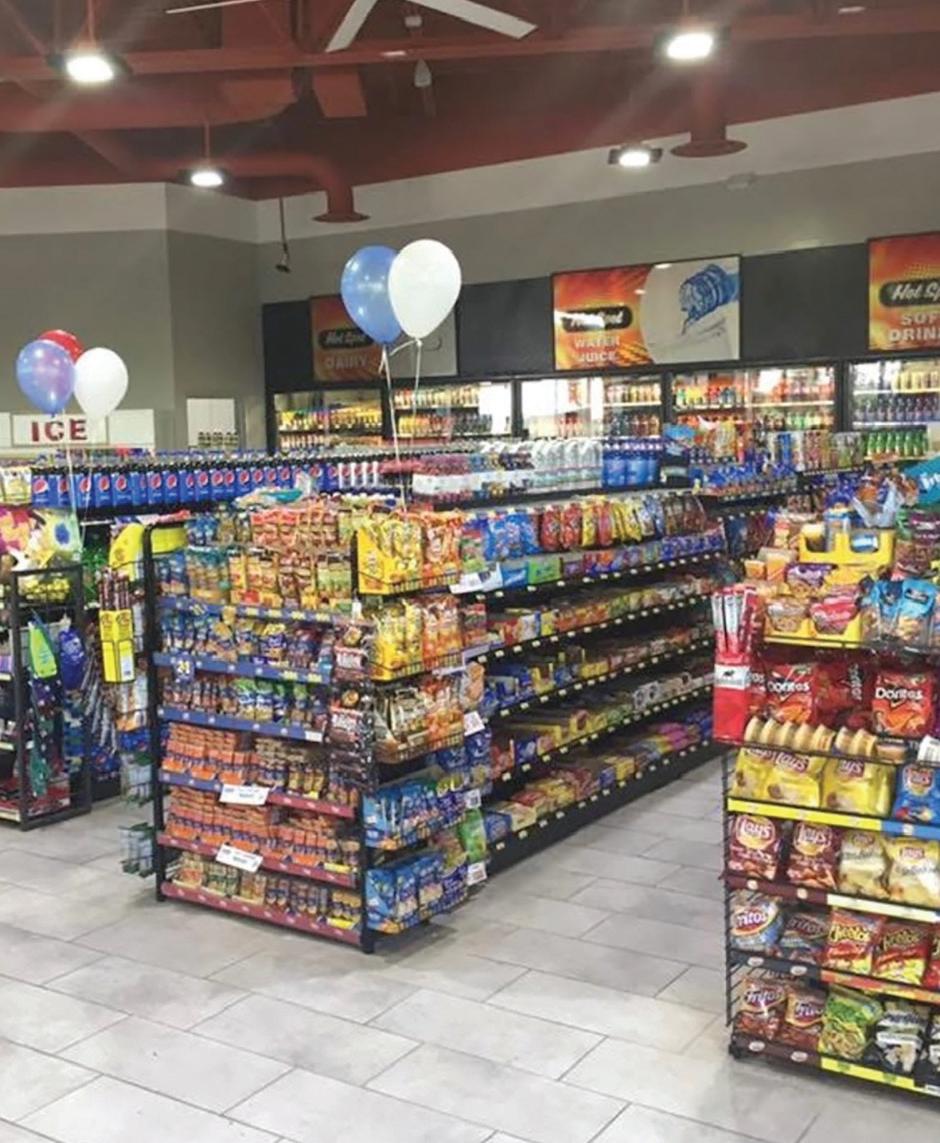
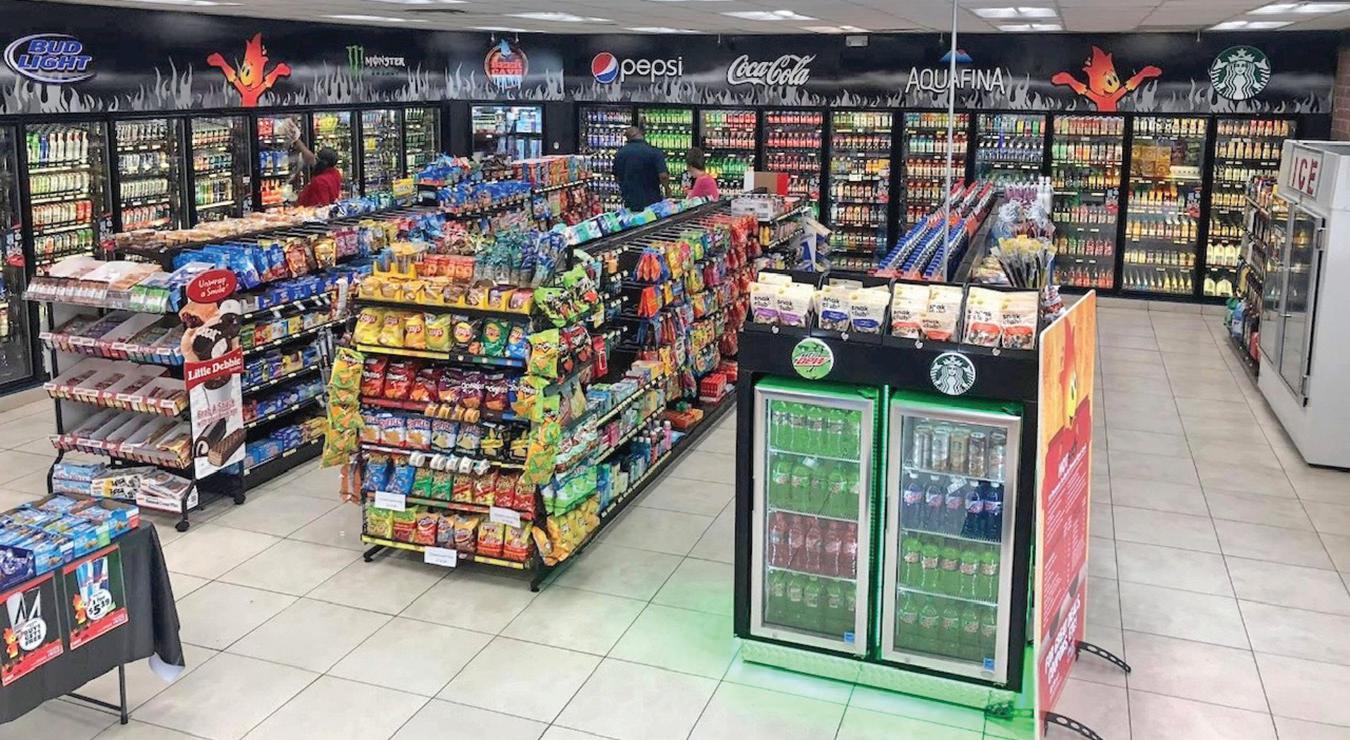
WITH 41 STORES IN THE CAROLINAS under its belt, Hot Spot is growing strategically through new-to-industry locations, the evolution of its Hotties Kitchen foodservice program, and the rollout of new mobile app features and electronic shelf tags.
Additionally, Hot Spot has been strategically competing with national chains through faster decision making, local market knowledge, strong vendor partnerships, flexible merchandising and personalized customer service.
“Hot Spot may not be the largest convenience store chain in America, but it is exactly the type of regional operator that industry leaders should be watching. With a growing footprint, strong operational culture, community focus, innovative product mix and commitment to developing its people, Hot Spot has the ingredients to be one of the standout convenience retail success stories of 2026,” said Shawn Holmes, corporate marketing and merchandising manager for the chain.
Hot Spot is opening a new store in mid-August in Sylva, N.C. After, the chain is opening new locations in Myrtle Beach, S.C., and Spartanburg, S.C.
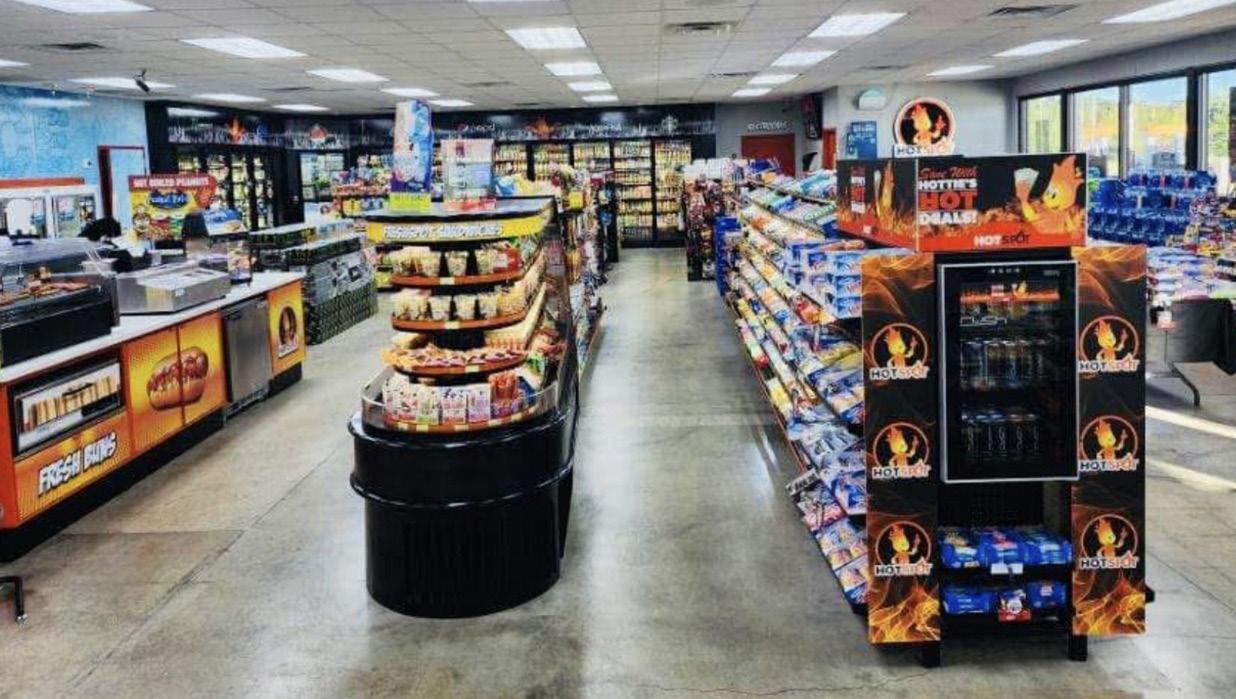
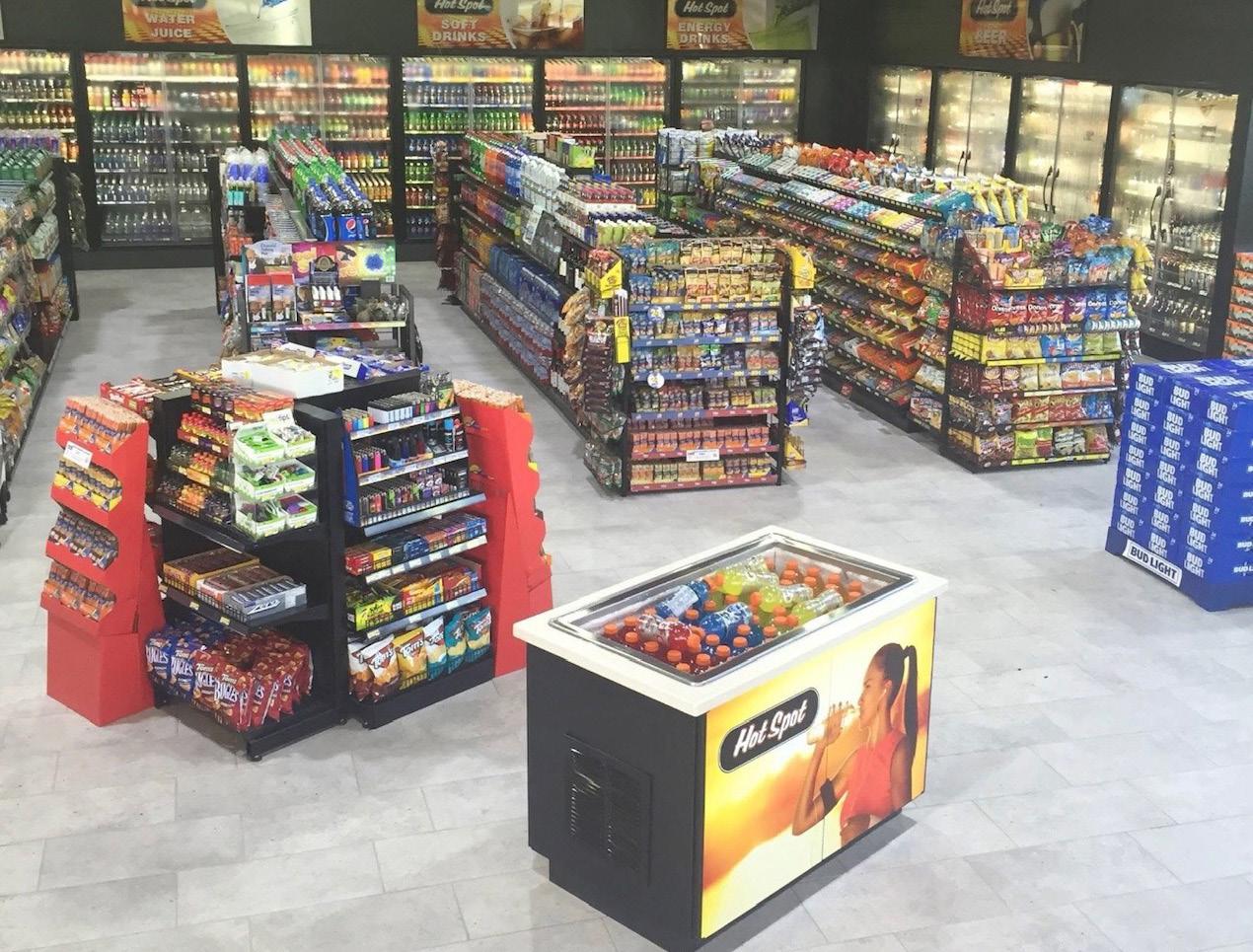
The stores will feature bigger layouts at 6,000 square feet, which allow them to have bigger foodservice operations, larger selections and more cooler doors. By opening these new stores, Hot Spot can introduce the latest store design, operational efficiencies and customerfocused amenities early. They also create additional career opportunities.
Furthermore, these stores will feature electronic shelf labels, which the chain is also rolling out at existing locations.
These provide real-time price updates from the corporate office across stores, improve pricing accuracy, reduce the labor spent on changing paper tags, allow for faster execution of promotions and vendor programs, and offer better compliance with pricing and promotional strategies.
“We really highlight the two-for deals, and it’s increased our two-for sales … because it really stands out. … It helps for sales, helps labor and it helps for the cost of tags,” said Holmes.
Hot Spot also redesigned its rewards






































































































































































































Hot Spot’s newly redesigned rewards app offers gamification, digital coupons and savings, and fuel programs for users. Customer engagement has increased, and special promotions and personalized rewards opportunities for members have been unlocked.
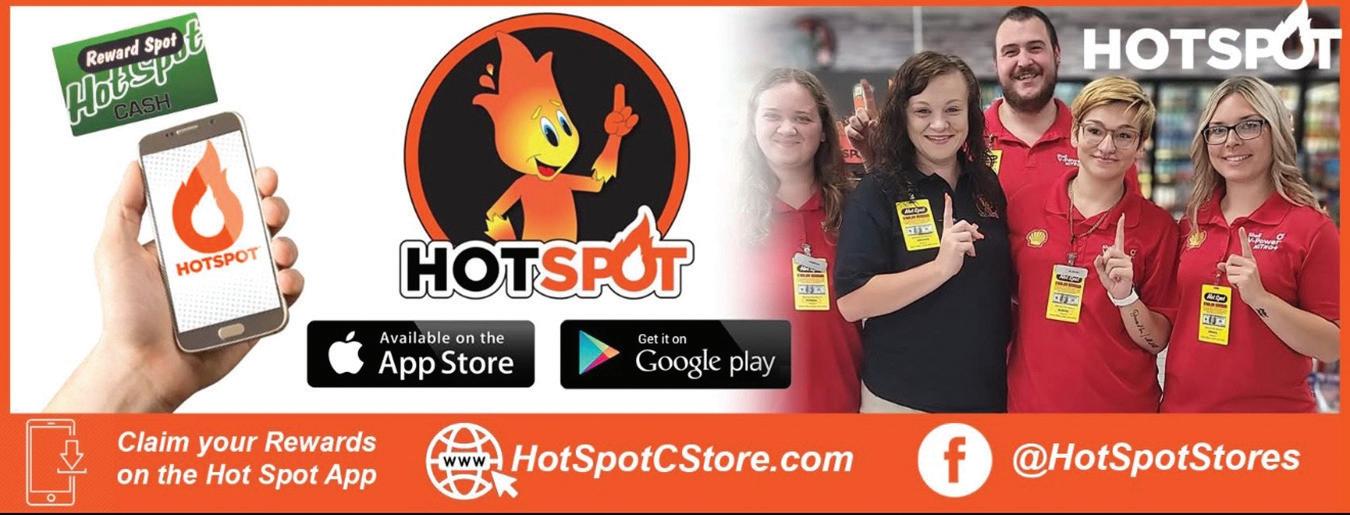
app, offering gamification, digital coupons and savings, and fuel savings programs for users.
These features have increased customer engagement, resulted in more frequent store visits, unlocked special promotions for members and offered personalized rewards opportunities, among other benefits.
“We do something called Wild Wednesday, where we give something free away to every customer that has a reward card, and we promote that on our app, and that’s huge. … We advertise our gas pricing on there, which customers love, and then it automatically comes up with your closest store when you log on to our app. The closest store tells you their fuel price, their location, how far it is from you. You can get directions to that store off of there, so it does a lot,” said Holmes.
Hot Spot also holds app takeovers, giving a vendor an opportunity to promote its item as the first thing a customer sees when they open the app.
“We found that to be huge for new items, as well as Wild Wednesday when we give something away for free. … A lot of times we do new items or newto-industry items that people haven’t ever tried. Now, they’re repeat buyers,” Holmes continued.
As a fast-growing profit center, foodservice is also an area that Hot Spot has decided to invest in heavily, and it added in-app food ordering to provide customers with reduced wait times, easy customization and greater convenience.
Hot Spot will have a Hotties Kitchen in every location, either in a full or express format. Currently, a full Hotties Kitchen exists in 15 locations, and 16 locations
host a Hotties Express Kitchen.
Hotties Kitchen is known for its cheeseburgers, wings and subs, among other menu offerings.
“By expanding menu offerings, improving food quality and focusing on consistency and speed of service, Hot Spot is successfully driving higher customer engagement and repeat visits,” said Holmes.
The goal is to position the c-store chain as a destination for fresh, made-toorder meals.
As Hot Spot has grown, it maintained its strong local identity and remained connected to the communities it serves.
“In an industry dominated by massive national brands, Hot Spot is proving that regional chains can still outperform through execution, community involvement and a relentless focus on the customer experience,” Holmes said.
Hot Spot is creating customer loyalty through building relationships in its market area and focusing on developing store managers, district managers and field leadership.
When asked why Hot Spot is a Chain to Watch, Holmes noted the chain’s commitment to evolving beyond the traditional store model. He also highlighted Hot Spot’s strategic growth, innovation mindset and dedication to delivering a best-in-class experience.
GAME® LEAF GIVES CUSTOMERS WHAT THEY WANT
In 2015 Game Leaf was introduced as part of the Garcia y Vega portfolio of cigars, revolutionizing the Rolled Leaf cigar category. Now, as part of our 10th anniversary celebration, we’re reintroducing Game Leaf with colorful, eye-catching, consumer-tested 3-cigar packaging designed to bring Rolled Leaf customers more of what they want.
AVAILABLE AT 3 FOR $2.19 TRIAL PRICING AND SAVE ON 3



3 REASONS FOR 3-PACK SALES










In 2024, the 3-pack was the only Rolled Leaf format to show volume growth, along with a 5.7% increase in share of the market.
While all other Rolled Leaf formats showed velocity declines in 2024, the velocity for 3-packs rose by 15%.
Rolled Leaf 3-packs were added to shelves in over 9,700 c-stores in 2024, an 11% increase in store count over 2023.


















3 REASONS TO GO WITH GAME LEAF



Game Leaf is able to build on the tremendous brand equity of Game, the #1 selling Natural Leaf cigar in the US.
Game Leaf’s commitment to quality and stringent quality standards—from broadleaf crop selection through manufacturing—ensure the best quality Rolled Leaf cigar available.
Consumers equate the Game Leaf brand with the Garcia y Vega tradition of quality and craftsmanship, as Garcia y Vega has been making Natural Leaf cigars since 1882.
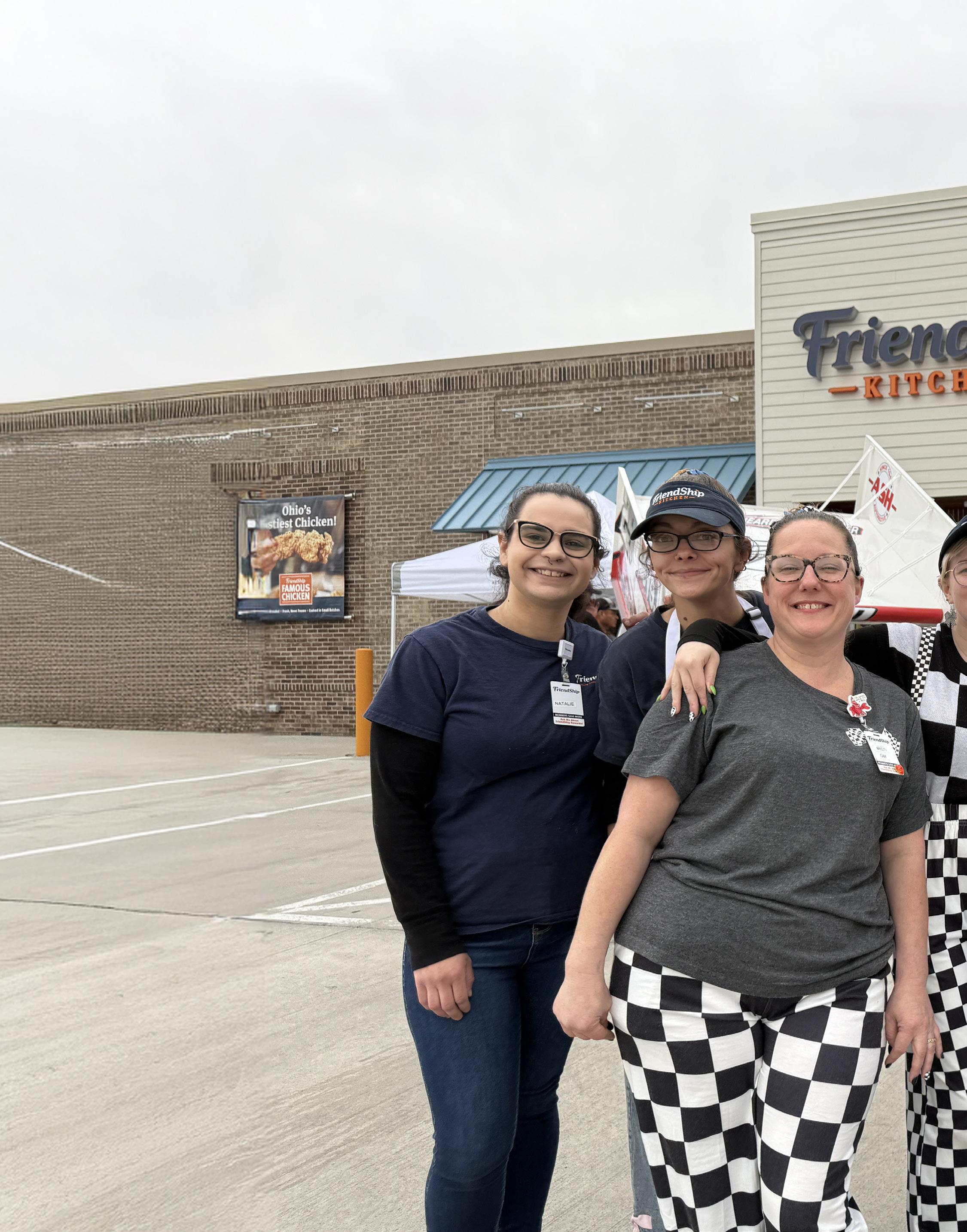
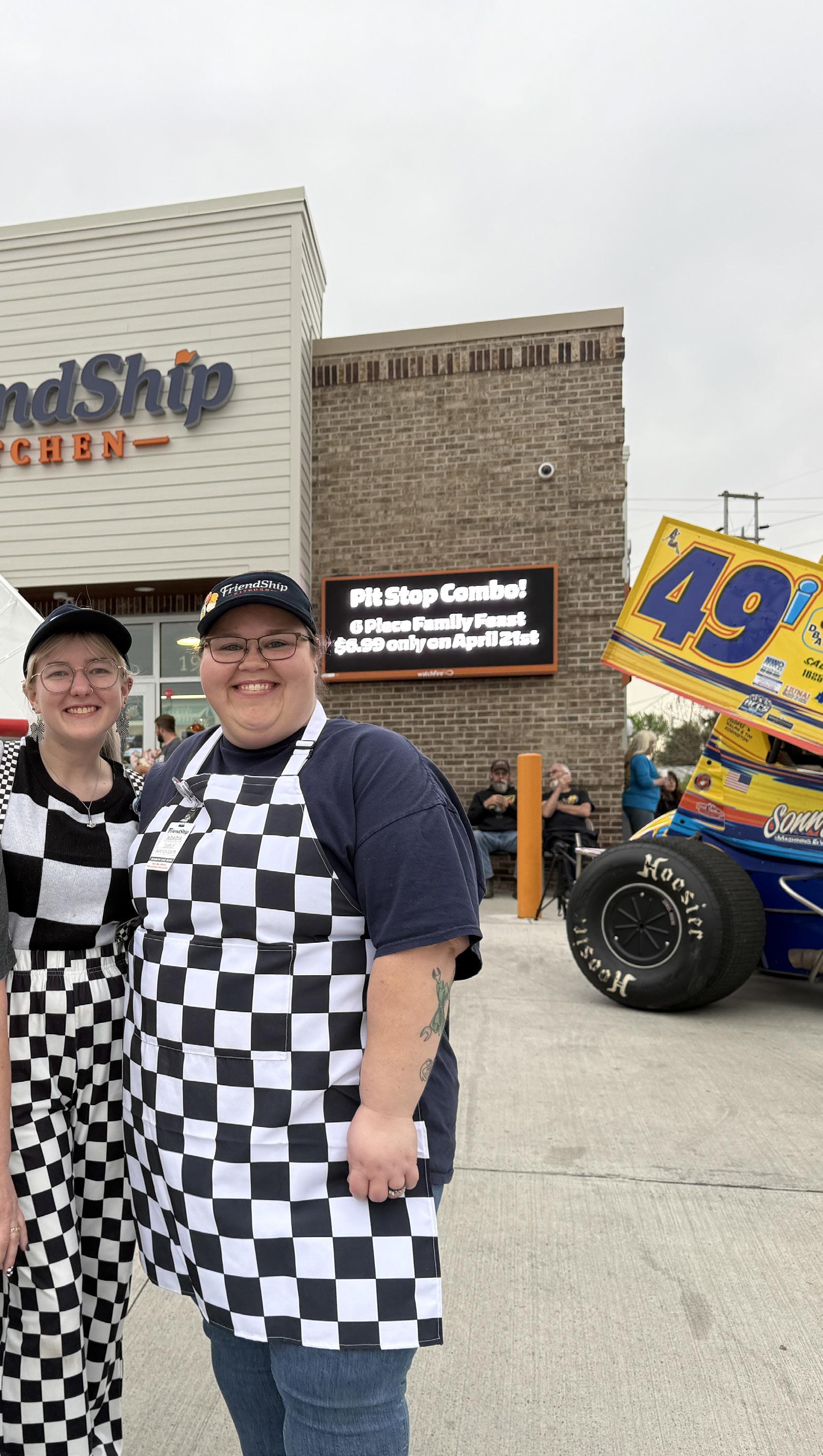
FOUNDED IN 1986, FriendShip Kitchen operates 31 stores in Ohio under a culture-first model that prioritizes its employees, deep engagement and growth opportunity. The chain has expanded through new builds and rebrands to the current proprietary FriendShip Kitchen model, which is food forward and anchored by FriendShip Famous Chicken. One year ago, FriendShip became a 100% ESOP (Employee Stock Ownership Plan), defining its commitment to and faith in its team.
FriendShip operates under parent company Beck Suppliers, founded in 1950.
“We’re part of Fremont, Ohio. We’ve been based here for 76 years now. We have about 45 people in the corporate office. If we sold to a larger company, most of those jobs would go away. All the work that we do for the community — and we raise and donate about $1 million a year — most of that funding would also go away,” said Greg Ehrlich, president, Beck Suppliers.
The chain is proud to have guaranteed that these jobs stay in the community through the ESOP, with a strong business model and dedicated management team driving the company.
FriendShip Kitchen celebrated the oneyear anniversary of the ESOP on June 30. During the week following, employees celebrated with games and prizes, and over the next weeks, hundreds of employee-owners received their first statement for the ESOP, revealing how many shares they have and their value.
Anyone who worked over 1,000 hours and is still employed at year’s end had shares allocated to them.
“Eventually, it’s going to be a meaningful part of their retirement. They’ll have a retirement that’s significantly funded through ESOP shares,” said Ehrlich.
The ESOP has created a renewed sense of conversation and engagement with employees. Turnover rate has decreased significantly, and employee satisfaction overall has increased.
“I think what it does is it lets everybody be comfortable knowing that, as an ESOP, this company is going to be here for future generations,” Ehrlich added.
For someone who plans to work with the company for 20-plus years, there will be a significant amount in their retirement account.
“It’s kind of life changing to a lot of people,” said Ehrlich.
FriendShip Kitchen built 10 out of its 31 stores in the past eight years. Each has been built to the current FriendShip
Kitchen standard — featuring a restaurant that offers FriendShip Famous Chicken and more — and 15 others have been remodeled to this standard. Moving forward, FriendShip Kitchen is reviewing six legacy stores for remodeling and continuing to pursue real estate and newto-industry stores.
On the technology front, the chain is launching mobile ordering, pickup and delivery between the third and fourth quarters of this year.
“We focus a lot on technology,” said Ehrlich. “We’re an early innovator with the mobile apps, we won awards for our loyalty program, and we just continue to build upon that.”
FriendShip Kitchen employs three data analysts and uses business intelligence platforms to create internal mobile apps
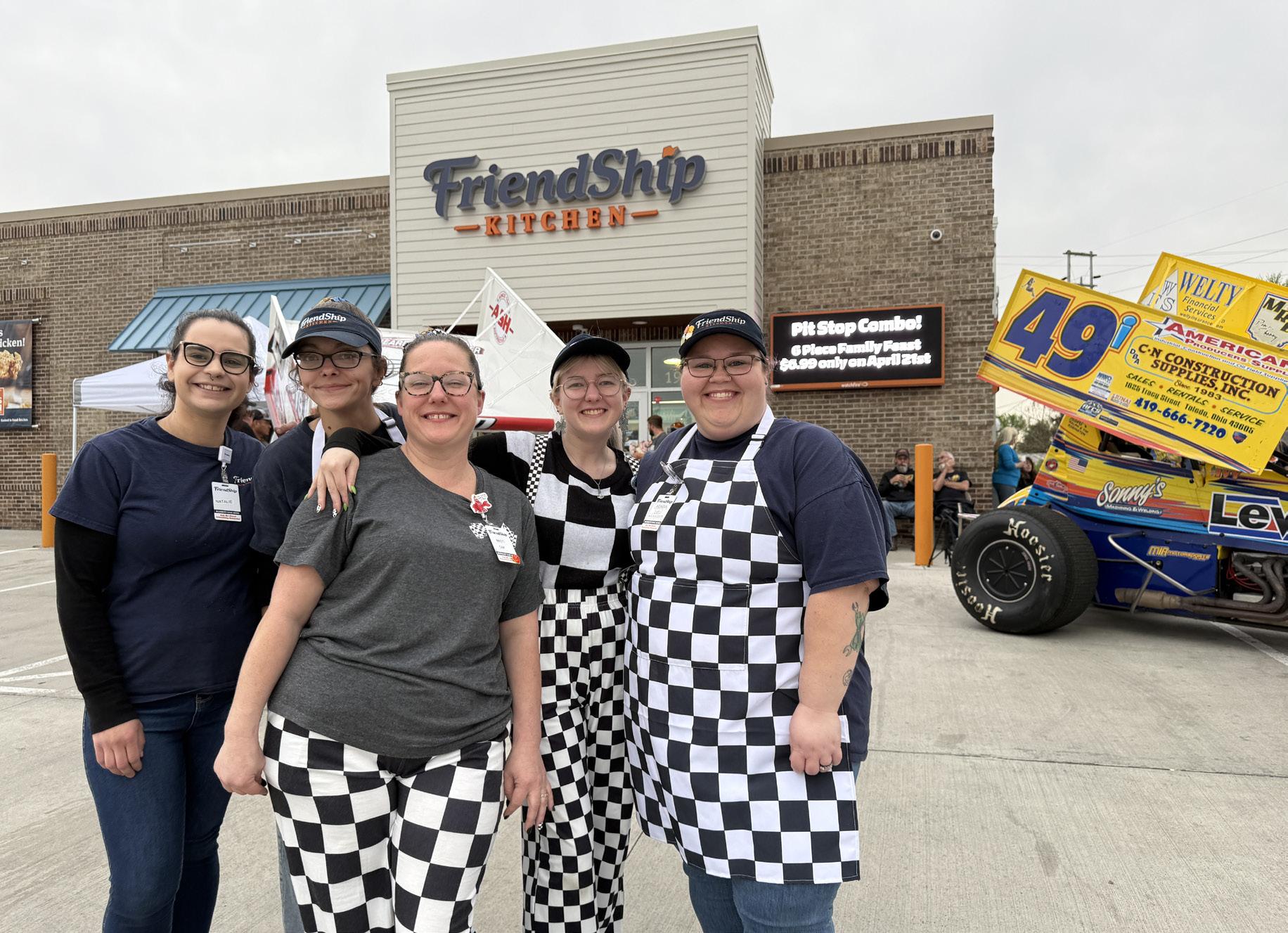
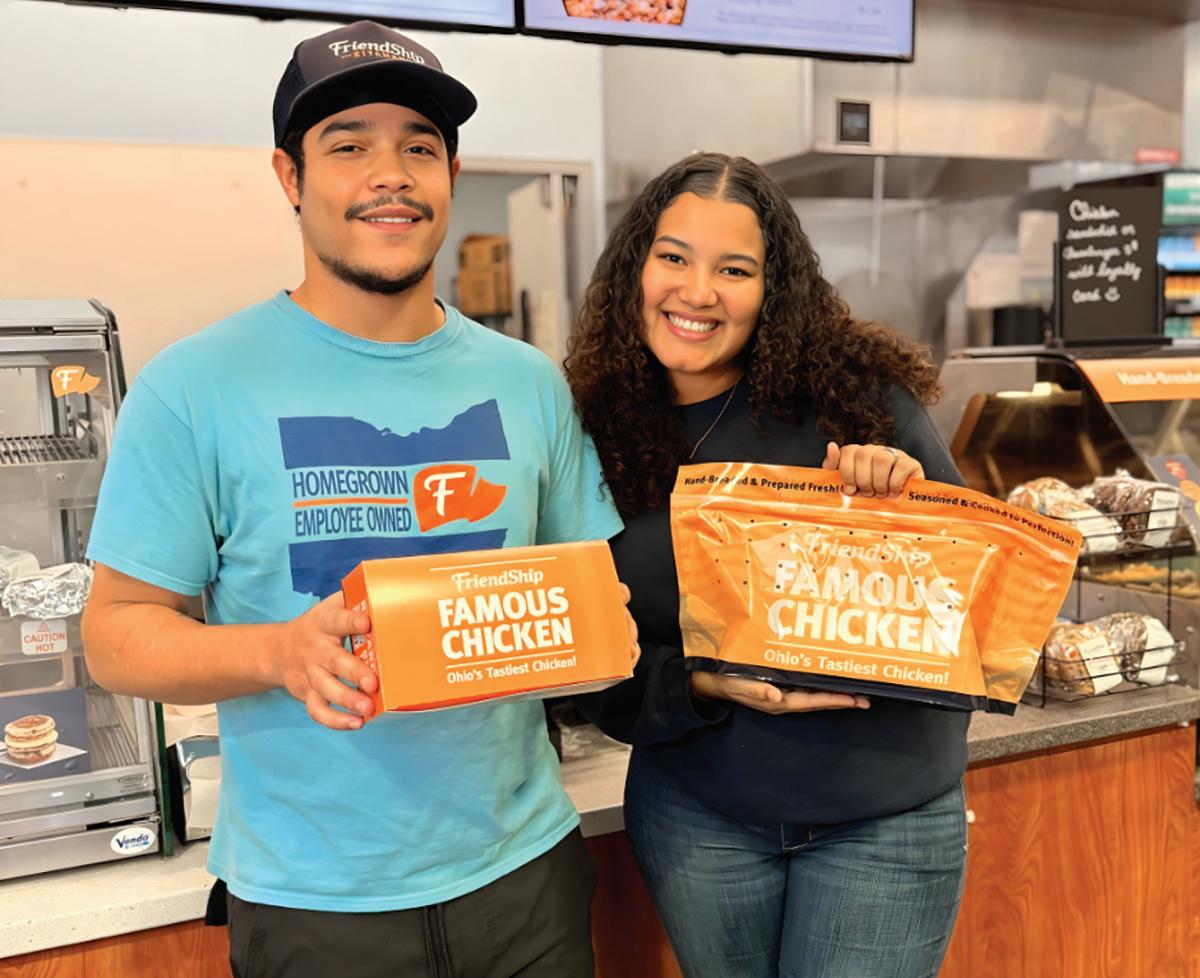
The new proprietary FriendShip Kitchen model is anchored by FriendShip Famous Chicken. Ten of its 31 stores were built in the past eight years, each featuring the new FriendShip Kitchen format.
that are built for driving operational excellence. Additionally, it’s diligently evaluating artificial intelligence use cases.
Outside of technology, the chain continues its work with the communities in which its stores are located.
Last year, the chain razed and rebuilt a store located nearby its corporate office in Fremont under the new FriendShip Kitchen model, and the Beck family donated $160,000 that was split evenly amongst 16 non-profit organizations.
FriendShip Kitchen structures its philanthropy strategy around supporting many organizations opposed to a single cause. These include children’s programs, schools and healthcare, among other initiatives.
“That’s one of the key reasons why we became an ESOP. Becoming an ESOP ensures that both our people and the communities are supported in the future,” Ehrlich said. “As we continue to grow, we would like to see our annual fundraising and donations grow, as well.”
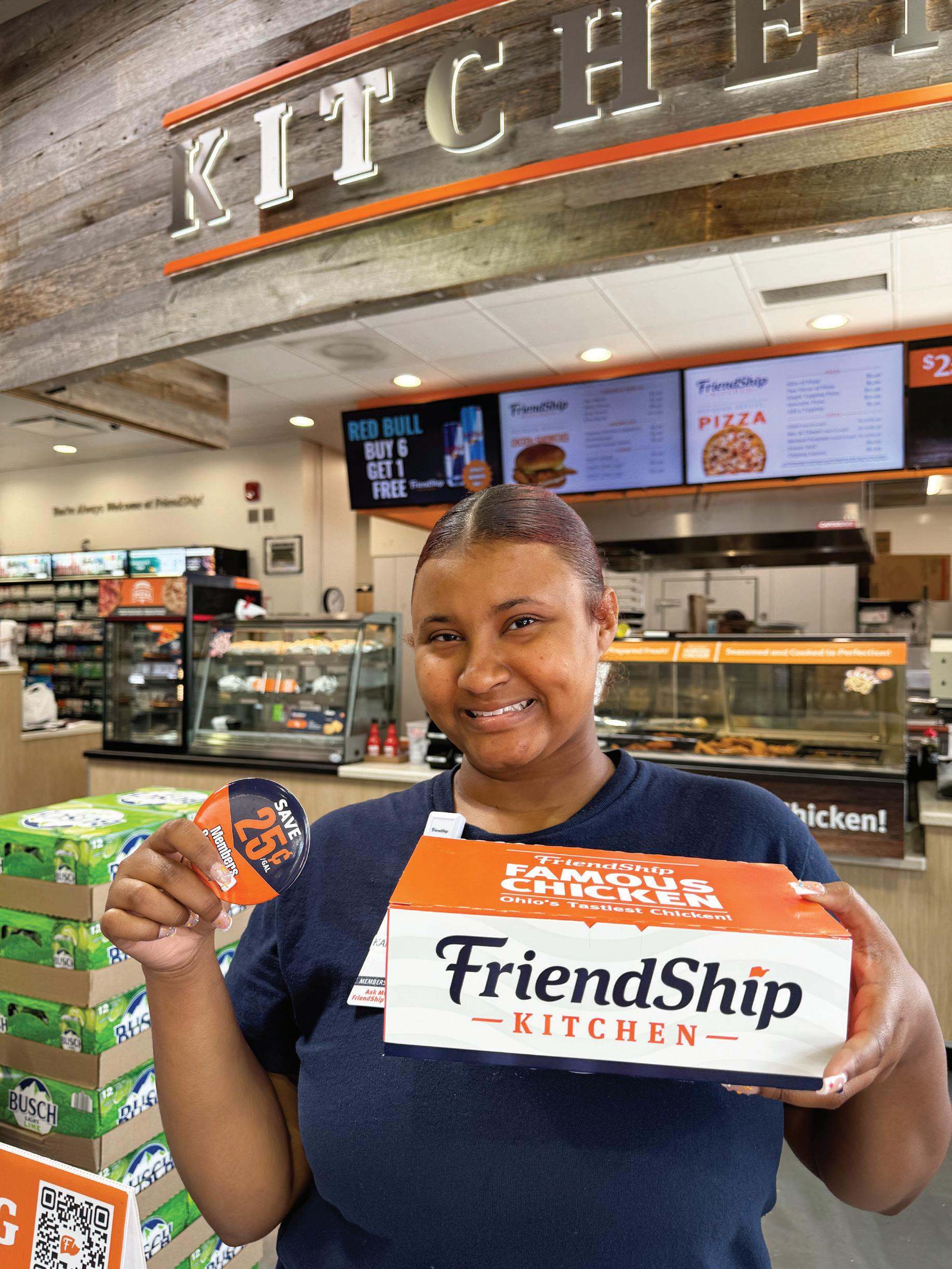
FriendShip Kitchen’s tagline was once “You’re Always Welcome!” Now, the tagline reads “Home Grown. Employee Owned. All Yours, Ohio.”
When FriendShip Kitchen became an ESOP, the business was given to the employees and the communities in which they live.
When asked what makes FriendShip Kitchen different, Ehrlich pointed to its unified team. “I think the recognition is that, as an organization, the product that we create or what we do is teamwork.”
“In our case, our team happens to sell
chicken, FriendShip Famous Chicken. But we could be selling shoes, we could be selling eyeglasses, whatever it was, that’s not our product. Our product is how we work together to create an incredible, cohesive environment where we are aligned and we attack opportunities collectively in a way where everybody’s aligned with the objectives, and the ESOP structure amplifies that,” Ehrlich continued.
FriendShip Kitchen’s loyalty to its employees, assiduous attention to company culture and brand growth, and care for its communities make it a Chain to Watch in 2026.
AT
JUST UNDER 70 LOCATIONS
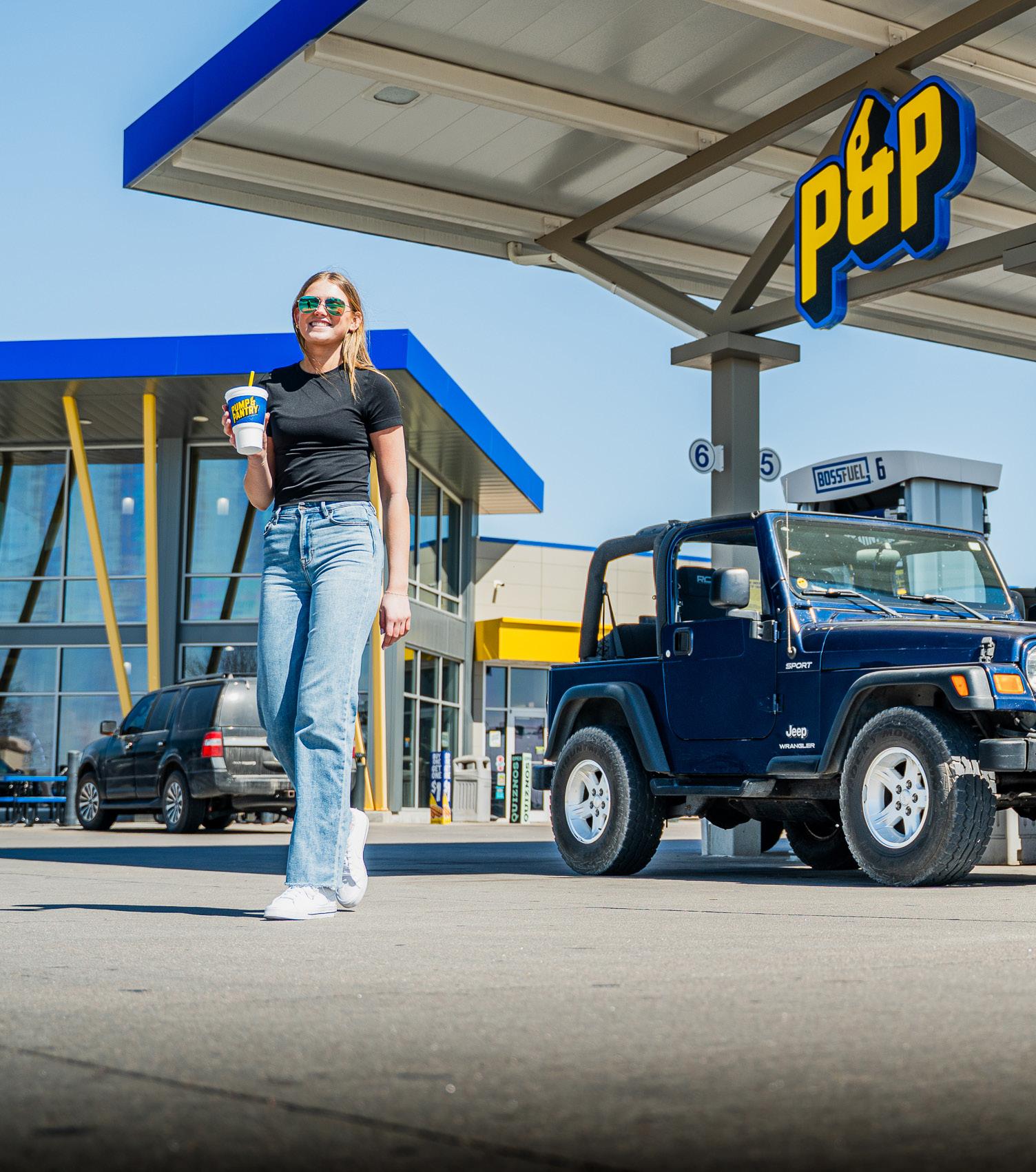
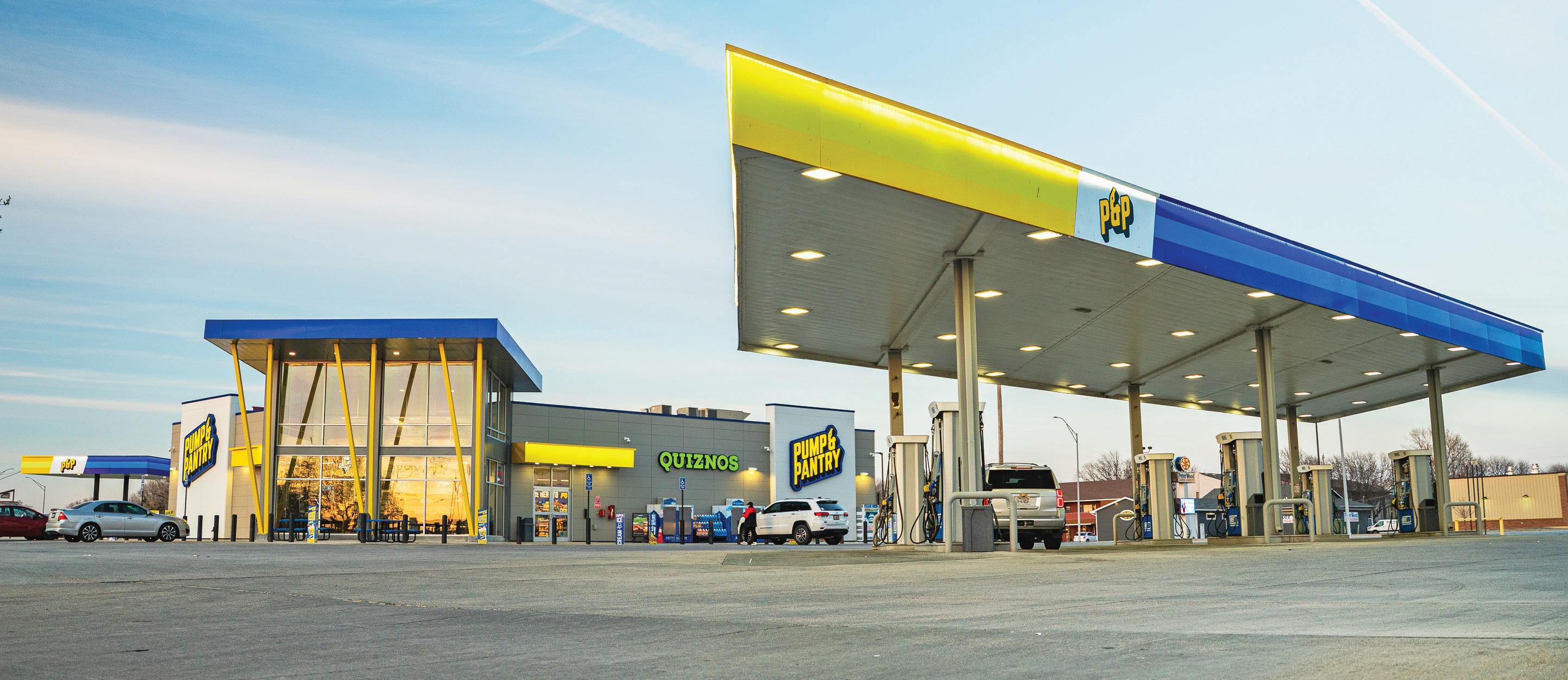
, Grand Island, Neb.-based Pump & Pantry is embarking on an aggressive growth campaign, aiming to open 200 stores by the end of 2030. In a strategic effort to further these plans, it officially acquired 21 standalone Hy-Vee Fast & Fresh cstores in Nebraska, Iowa and Minnesota, expanding the previously Nebraska-only chain into two new states.
As part of the acquisition, Pump & Pantry is also branching into the full-service coffee shop space and expanding its Pumped Up Rewards and existing Pump & Pantry food menu to the new locations.
“Hy-Vee’s a very homegrown, familyowned business on a very large scale, but it really just fit naturally with Pump & Pantry and our values as a fourth-generation family business,” said Carsten Bosselman, director of learning, development and inclusion for the chain.
As the chain looks to reach its 2030 goal, it has grown organically through
new-to-industry sites, but leadership knew acquisitions needed to be included in the overall strategy.
Pump & Pantry belongs to The Bosselman Enterprises, which started in 1948 as a truck stop. Four generations later, it has grown to include multiple brands, including lodging and restaurants, among other businesses.
Pump & Pantry was realized in 1971, and in 2025, the team behind the convenience store chain began talking about its 2030 ambition. The Fast & Fresh acquisition moved the needle on this in an exciting and major way.
“It’s going to be fun because we’re excited to bring a really strong Pump & Pantry experience to these stores. Customers that are used to frequenting Pump & Pantry will be able to have a very similar experience that they do in one of our existing 48 stores in Nebraska,” Bosselman said, “between our friendly customer service (and) our food offering. There’s some elements that are going to stay the same — our

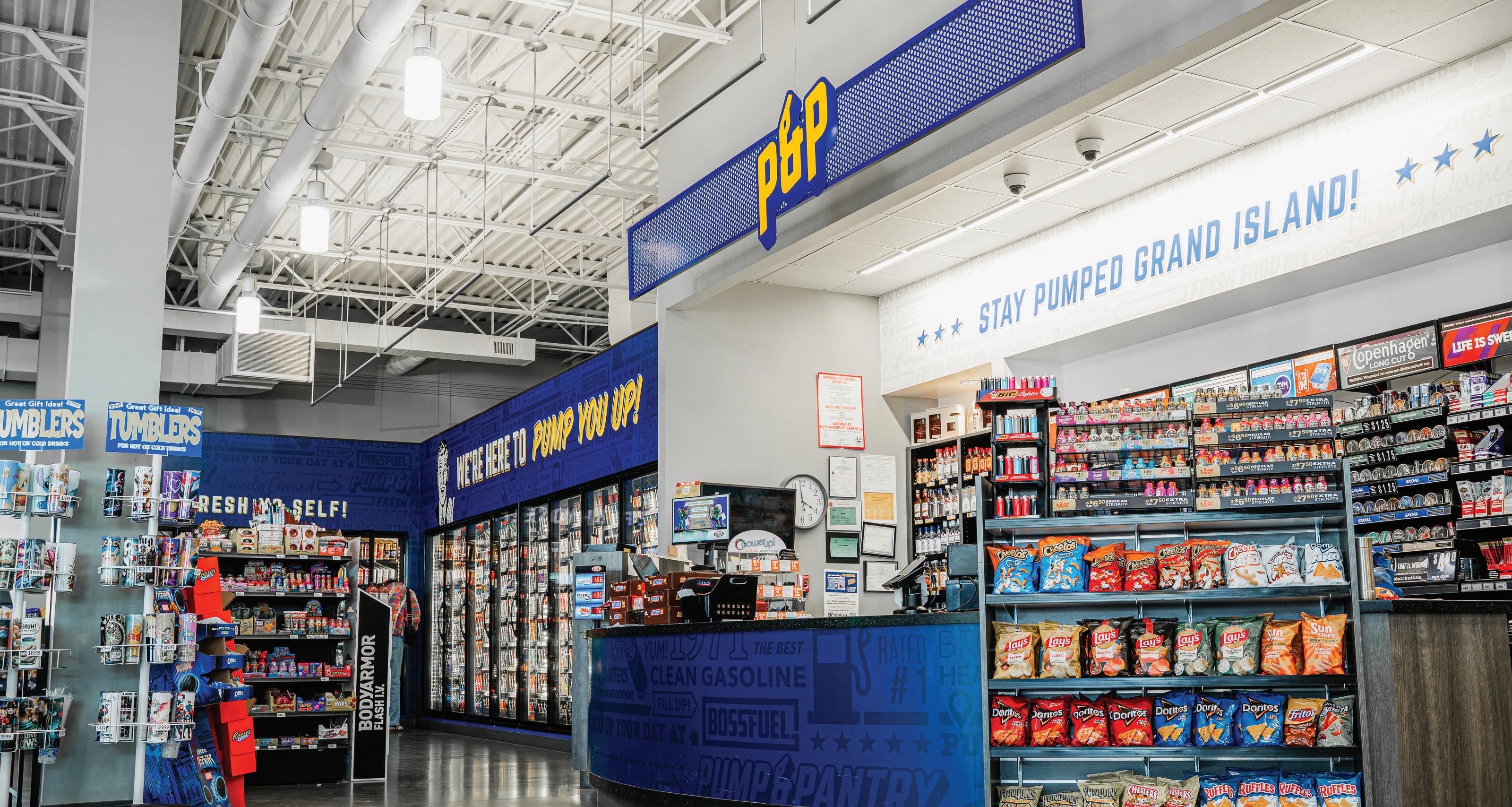
convenient fueling and grade options we’re expanding and adding what we do at our current 48 stores in Nebraska to these acquired 21 (stores).”
The chain is also entering new foodservice territory. Several of the new stores have full-service coffee operations: Starbucks and local Des Moines, Iowa, business Smokey Row Coffee.
As Bosselman described it, customers can “walk in and you to go to the c-store side or the coffee shop side.”
“Smokey Row and Starbucks have been great. We’re excited to start building those relationships and, who knows, maybe carry some of those into some of our other existing stores,” said Bosselman.
In addition to the coffee shops, these new locations will carry the Pump & Pantry food program in-store, which includes popcorn and ice cream options.
“A lot of these Hy-Vee Fast & Fresh standalone stores had some really nice and beautiful kitchens in them, so we’re excited to be in those kitchen spaces but bringing our existing Pump & Pantry food menu into these stores,” said Bosselman.
Presently, the chain isn’t expanding its other franchise concepts with whom
it partners, such as Cinnabon, to these stores, but it’s open to the idea.
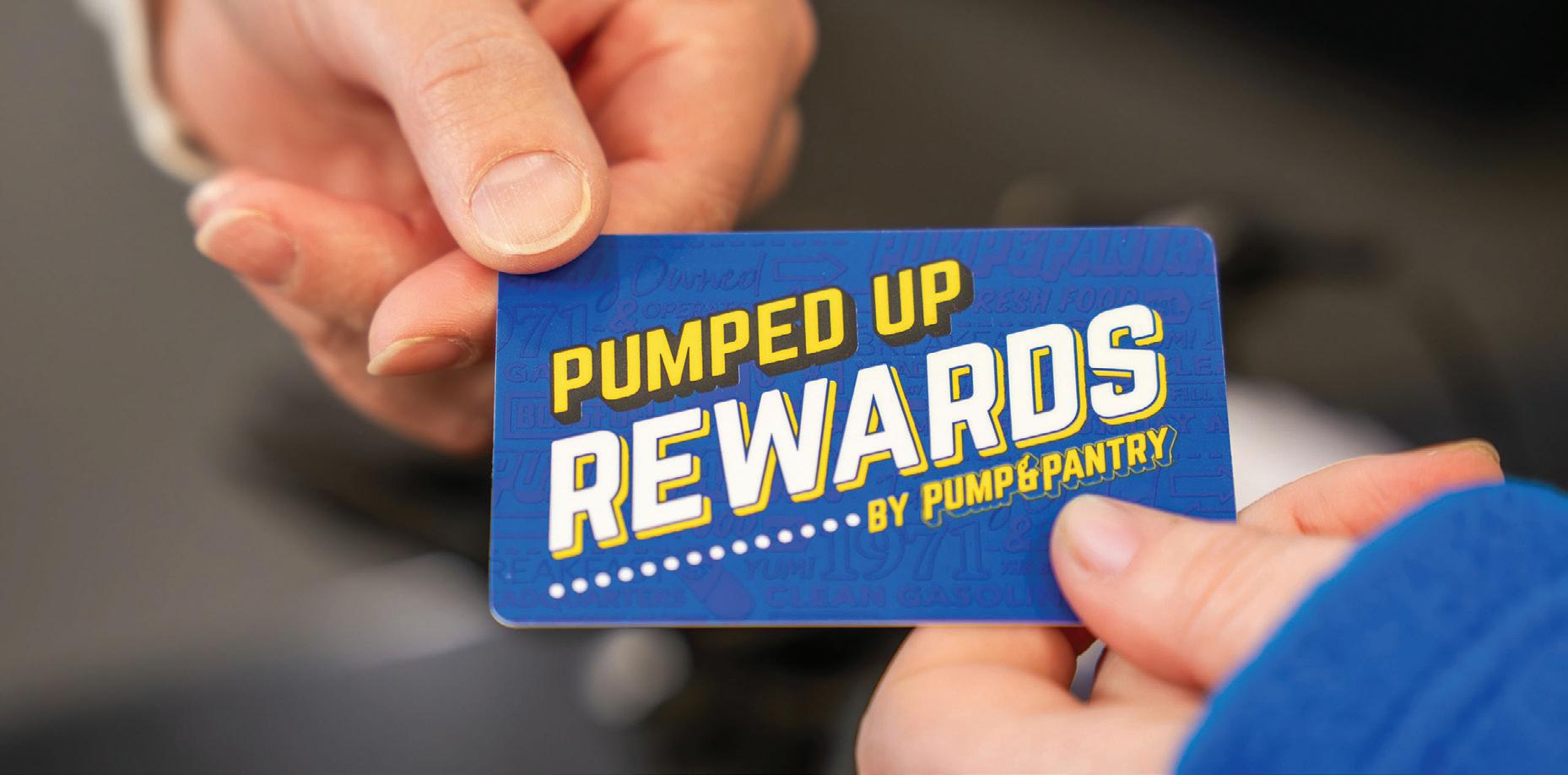
Pump & Pantry will also continue to offer Hy-Vee Fuel Saver rewards, at the new stores only for now, as well as its Pumped Up Rewards.
As for the once Hy-Vee employees at these stores, Pump & Pantry was able to offer a job to every single person in a similar role at the same hourly pay.
Pump & Pantry developed a vision statement for its 200-store goal with five focused areas.
“Our core focus going forward: to become the best c-store retailer in the Midwest,” started Bosselman.
Additional areas of focus are excellent execution and putting customers first, store expansion and staying innovative, growing the rewards platform and offering best-in-class food.
Throughout its growth and innovation, Pump & Pantry is determined to stay true
to itself with its customer service, friendliness and evolvement with the market. This entails speed of service, high-quality food and investing in technology that meets customers at where they are.
“Like an app that is fun to work with,” Bosselman elaborated. “We’re gamifying stuff; we have our summer sweepstakes.”
Something Bosselman pointed to as poignant in Pump & Pantry’s journey is the power of unified teams across all levels of the organization. The people he has worked with are fully committed, best in class and executing from the operational level to the corporate office.
Particularly as it navigates the acquisition, Pump & Pantry stands out for the support between local teams and leadership and across departments. Its ambitious growth plans, entrance into new spaces both geographically and internally, and dedication to its employees and customers are the reasons Pump & Pantry is recognized as a 2026 Chain to Watch.

Over two decades, WTWH Media has grown from its engineering roots into a diversified portfolio of 40+ trusted media brands, 45+ industry events, and marketing solutions serving professionals across Engineering, Healthcare, and Food, Retail & Hospitality. While many know and trust our individual brands, fewer know the company behind them.
Arrowfly gives us a stronger corporate identity that reflects the business we’ve become. The name represents forward momentum, direction, and growth, and our role in helping professionals and partners navigate change and move their businesses forward.
Arrowfly represents where niche professionals gather for trusted journalism, industry intelligence, and measurable outcomes.
Your Trusted Brands:
All 40+ media brands and publications remain unchanged
Our Events:
All 45+ industry events continue with the same teams, content, and quality
Editorial Independence:
Our commitment to credible, independent journalism remains our foundation
Clara Platform:
Our proprietary performance platform continues delivering real-time campaign visibility and measurable results
Arrowfly is the preeminent live and digital destination for professionals across Engineering, Healthcare, and Food, Retail & Hospitality sectors. Editorial authority. Engaged communities. Measurable outcomes.
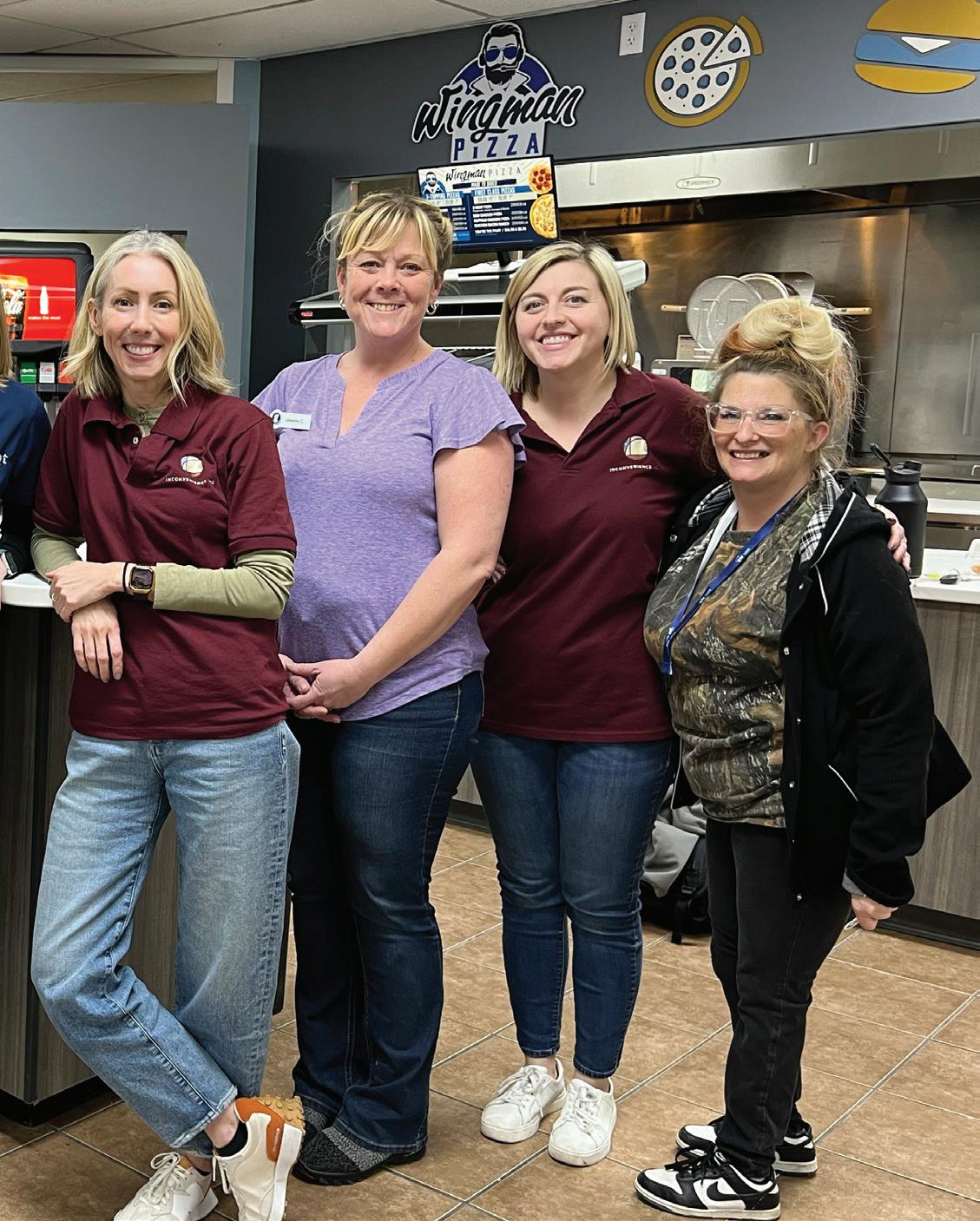
InConvenience Inc. has already made a name for itself in the convenience retail industry. Led by CEO Tiffany Fraley, the chain, headquartered in Chicago, recently expanded into Texas and is developing a loyalty app, offering firstand third-party delivery and launching a locally produced section in-store. Additionally, the chain is making a conscious effort to be a partner to its communities and employees, offering hands-on support and introducing itself to local community organizations.
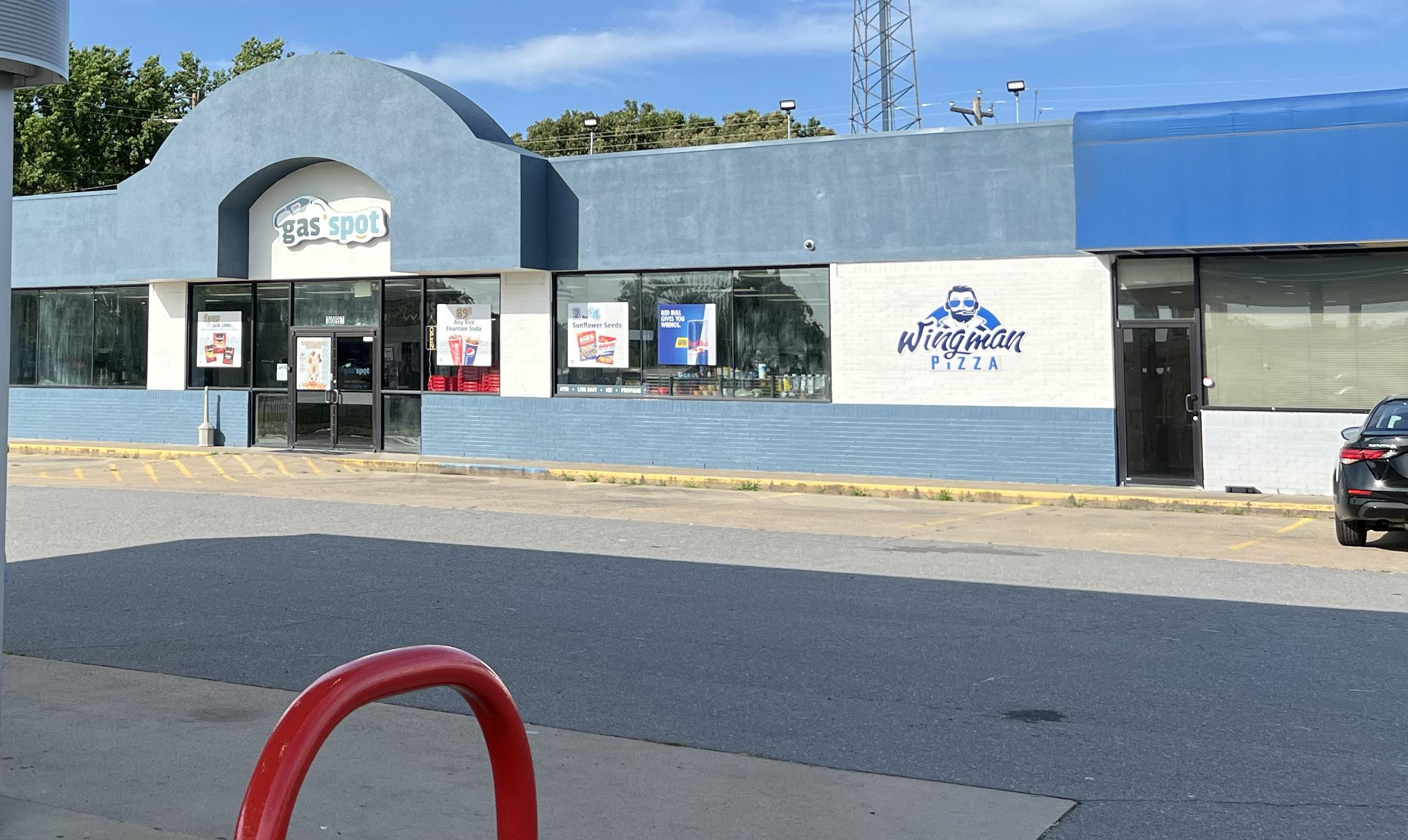
InConvenience Inc. encompasses both The Gas Spot and The Goods Spot brands (known as The G Spot) located in Iowa, Missouri, Arkansas and now Texas.
“While InConvenience Inc. is relatively new to the c-store industry, it’s made a splash in name, branding and dedication to customized community support,” said Lindsay Griffith, marketing and community engagement manager for the chain.
The G Spot has curated a deliberate and playful brand with a mission
of reliability for its communities and employees. Corporate visibility, too, is important to the company.
“We’re already in Chicago. We don’t have stores less than three hours away, so I think we’re working really hard to build an authentic connection even though we’re never down the street from our stores,” said Griffith.
The chain approaches each community in which its stores are located with the idea that everyone is a potential customer or employee. It strives to offer tailored outreach, leaning on its employees to advise how best The G Spot can serve its communities, “and maybe that’s not monetary, maybe that’s volunteering at an event that they need, or being a place where they can come and just hang out,” said Fraley.
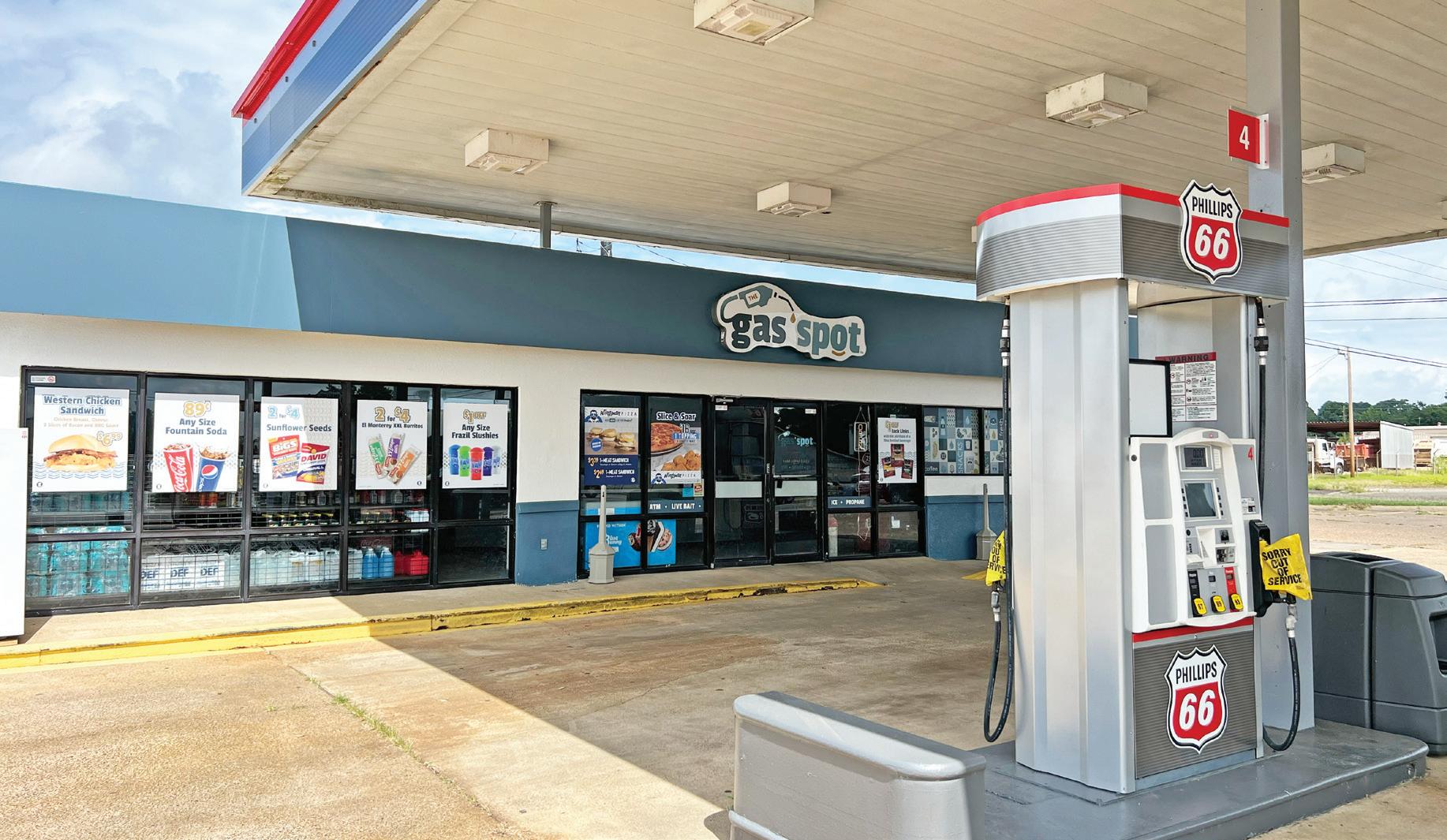
The G Spot recently acquired four stores in Texas, two in Mesquite and two in Fort Worth.
“We approach the market with the
same lens of we want to be good partners, we want to be involved, we want people to rely on us and know that we can be trusted,” said Fraley.
The G Spot team prioritized open communication with the employees of these stores.
“We welcome questions and concerns. … We want to be able to answer anything that we possibly can to make it easier for you to still want to come into work every day and know that you are going to be treated well, and you’re going to be paid on time. …” Fraley continued.
The G Spot brought its communityoriented perspective to Texas, introducing itself to new points of contact and demonstrating the value its team gives to relationships with communities and potential partners.
“We try to respect everyone, and we try to garner trust, as well. And I think, as long as we continue to do that, that’s
really the root of what all people want,” said Fraley.
As it grows in new markets, The G Spot is also developing through tech. The G Club loyalty app is expected to launch in late summer or early fall. It will present members with exclusive offers on fuel and in-store items, and it will integrate with all locations’ fuel brand loyalty programs in addition to its own loyalty rewards program.
“Our brand is a lot about standing out and being different, and that obviously translates to the app, as well,” said Alicia LaFollette, brand director, InConvenience Inc.
The chain is considering adding gamification and an employee resource portal as it asks itself, “What do loyalty members get that the regular person doesn’t?”

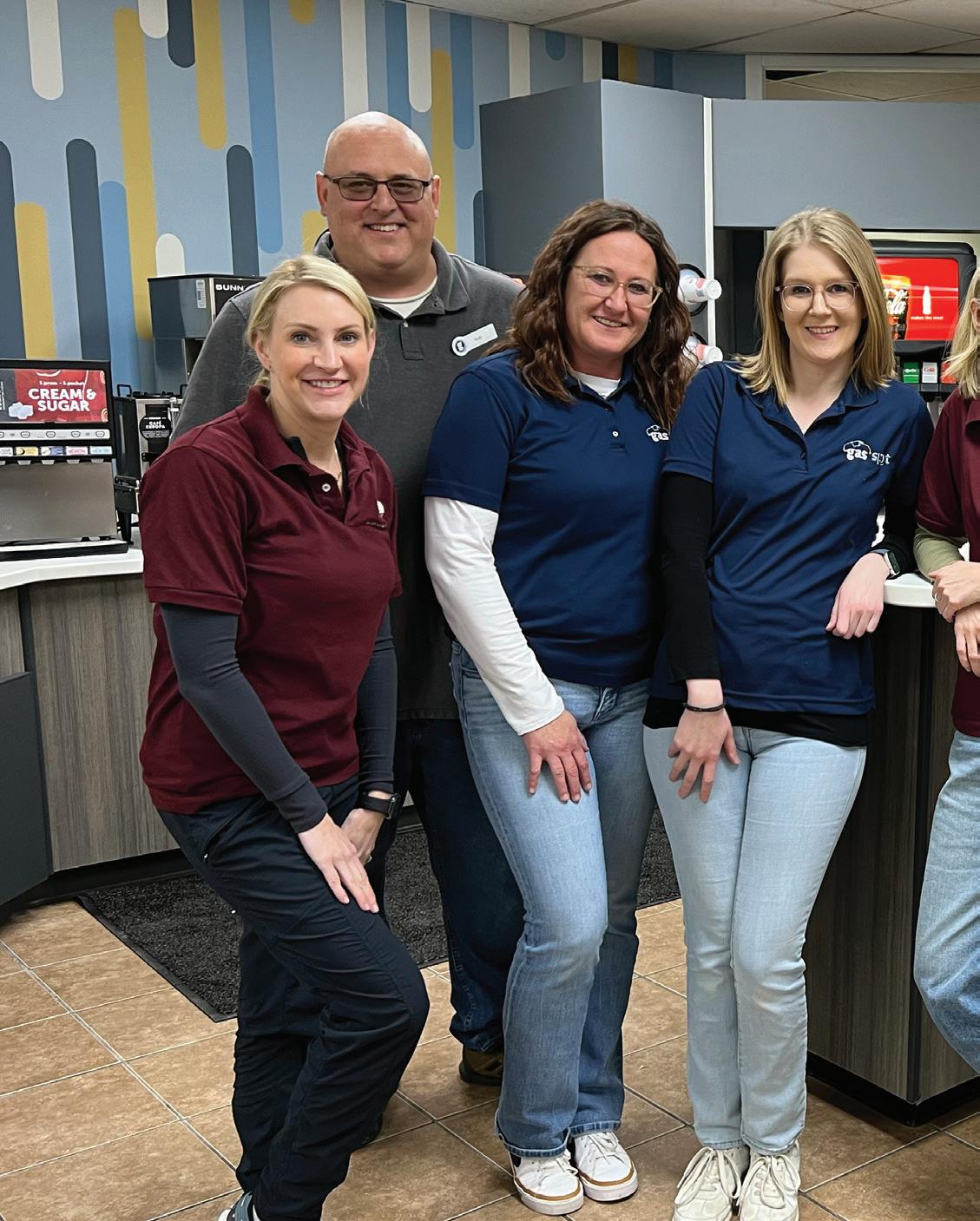
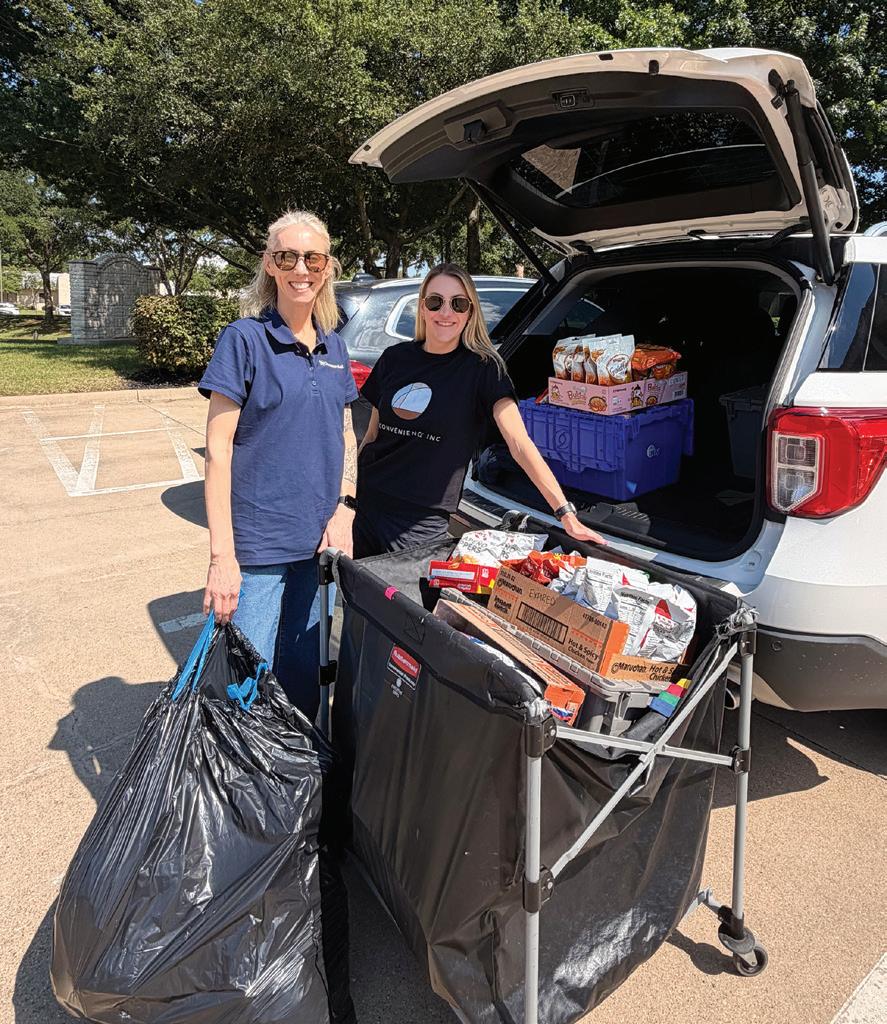
Left: The G Spot team at the chain’s Alma, Mo. location comes together. Top: The G Spot celebrates 2 million gallons of fuel sold. Right: The G Spot looked to support the communities it entered in Texas, including through donations.
The G Club, along with a web-based storefront and third-party companies DoorDash, Uber Eats and Grubhub, will also offer delivery options for customers.
And, Davenport, Iowa, customers will be able to shop locally produced products made from Iowa agriculture in an “Iowa Grown” cooler section at The Gas Spot at 303 W. Locust. The endeavor is partially funded by Iowa Agriculture and Land Stewardship’s ChooseIowa grant.
“The InConvenience Inc. team hopes customer demand for local products will lead to the dedicated cooler space for regionally grown sections in more of their stores,” Griffith said.
InConvenience Inc. is putting community at the center of its mission. When Fraley spoke about why The G Spot is a Chain to Watch, she homed in on the company’s community focus.
“I tell people I’m from a small town. I
know what that gas station meant to me, and meant to my family. … It was kind of the heartbeat of our little community that was out in the country, and I want to be that. …” she said. “(People will see how) we continue to really come into these communities and not just revive them but make that heart beat a little stronger.”
LaFollette pointed to the brand’s industry recognition despite its newness and credits its branding, approachability and transparency. “… I think the ripples of what we’re doing in this industry are bigger than the number of stores we have.”
Griffith noted that InConvenience Inc. is a Chain to Watch because it’s unburdened by legacy. “I think we come to this as the new kids, and it just comes with a magnetic freedom that has really built relationships quickly. …” CSD

Leaning into core ingredients and cross-utilizing them across dishes can help retailers as they work to maximize the popularity and profitability of menu items.
Bruce Reinstein • Kinetic12 Consulting
MENU EFFICIENCY STARTS with using existing ingredients in multiple recipes.
In Kinetic12’s Q2 report, 80% of operators felt that “brand fit” was the top limited-time-offer (LTO) development approach. This was definitely a change from previous results. This is essentially saying to stick to core ingredients and what you already do best.
However, there remains a tendency to reach instead for trendy ingredients that
an operator may not be equipped to execute well.
Ingredients must be used in multiple recipes, preferably having recipes within each category that use these same ingredients. Innovation is crucial to increasing and maintaining traffic as well as driving revenue, but only if it can be executed flawlessly. Without great execution, it can actually reduce traffic and lower consumer confidence in your brand.
Here are six approaches that result in menu efficiency and profitability.
1. Cross-Utilizing Ingredients
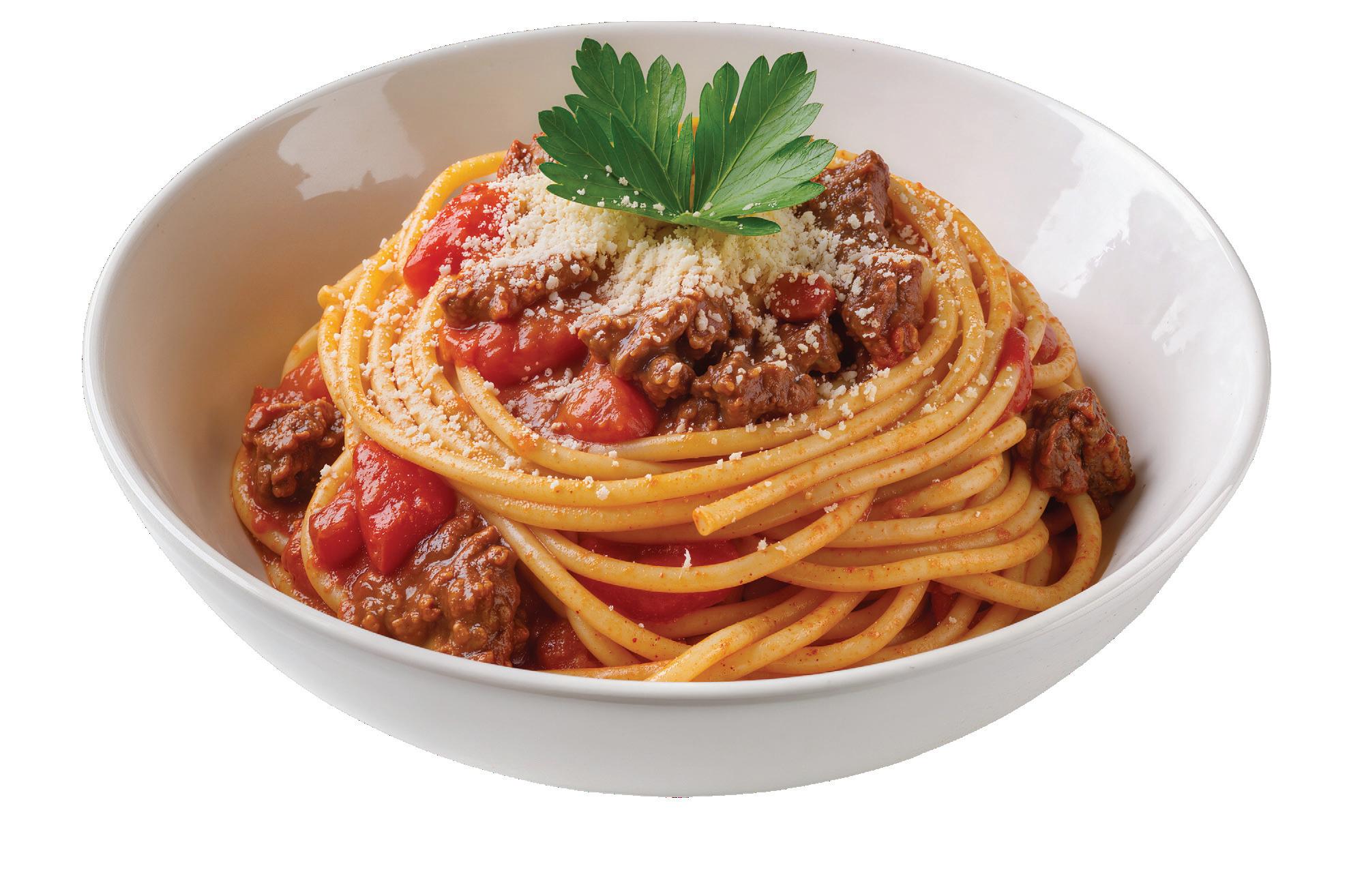
Cross-utilizing ingredients simply makes sense. Innovation was all about finding that special ingredient to create an LTO or menu item that would be trendy and drive revenue. What has changed is that some of those ingredients are already being used and, in many cases, are extremely popular. This makes them perfect candidates to be used in additional recipes. Cross-utilizing ingredients lowers inventory costs, streamlines kitchen operations and increases menu flexibility. An ingredient used in a salad, for instance, could be used in a sandwich, wrap, bowl or entrée. If you consider your pizza sauce to be the best and your customers rave about it, why not use it as a calzone or pasta dish? Keeping it simple should remain a key mindset.
2. Being Innovative & Staying on Trend
Foodservice operators must continue to be innovative and stay on trend to drive traffic and increase loyalty. You can increase consumer interest without adding complexity. Existing recipes can be adapted by adding heat or
using different cooking techniques on ingredients, such as roasting.
Trendy seasonings can be used in dressings, sauces, sandwich spreads and more to entice consumers to come in more frequently and give them consistent quality-prepared products. Popular menu items can be altered to develop trendy LTOs that will excite customers. If you have a great ranch dressing as well as a popular barbecue sauce, why not combine them and develop a new Asian BBQ chicken salad. There is so much opportunity to combine bold flavors that already exist in your kitchens. It is simply up to the operator to be creative.
3. Putting Core Ingredients/Recipes to Work
Menu efficiency must remain at the forefront of innovation. If you are putting your core ingredients and recipes to work, it is more likely that the end product will be consistent, and that ultimately leads to a greater perceived value for the customer. Greater menu efficiency also reduces inventory complexity, making it easier to order, receive and store products. It also simplifies kitchen operations and allows for individual ingredients to be used in multiple recipes. The overall profitability of the operation will also be improved through reduced waste, increasing inventory turnover, lowering labor cost and enhancing menu engineering. Keeping it simple does not mean keeping it basic. It is all about making it innovative without adding complication.
4. Avoiding Waste & Making Use of Value Ingredients
Having a “whole ingredient” philosophy has a major impact on avoiding waste and ultimately reducing costs. Examples of this would be to purchase broccoli and, instead of disposing of the stem, use it to make a slaw or add it to stir fry. Certain examples have always been used, such as stale bread for croutons and bread pudding, or protein ends or scraps for bowls, burritos, meatballs and more. It is also important to seek out ingredients that have an extended shelf life and can be used in multiple recipes. Some ingredients can be
used for stan dard menu items, but all operations should have a list of potential LTOs that can incorporate these ingredi ents. Ultimately, versatile ingredi ents will generally produce lower food costs. A great idea is to try to incorporate common ingredients into as many pos sible sections of a menu. Chicken, for instance, can be used as an entrée, sandwich, salad topping, bowl and more.

5. Pairing Premium Perception With Low-Cost Options
It is crucial to align perceived value with actual cost efficiency. Consumers must feel that they are receiving a premium experience regardless of the price they are paying.
Consumers judge value based upon their overall experience and the food product’s presentation and desirability. Adding a small amount of premium ingredients — example: aged cheese or fresh herbs — can make a basic item into a more premium-sounding offering and therefore increase the sell price to ultimately provide a favorable food cost. Using inexpensive ingredients combined with limited premium ingredients can also create better profitability. It is essential to create balance so there is the potential to promote premium menu items with a favorable profit margin. Sometimes it does not take much to elevate a menu item or LTO. For instance, using a premium sharp provolone on a sandwich will cost more per pound for the cheese, but you can do more than make up for the cost by charging accordingly.
The ultimate goal of a well-engineered menu is to feature popular items that are also highly profitable. This is not an easy
task. Most menus will have a combination of items that have different degrees of popularity and profitability. The key is to make sure that the overall menu meets the required costs and generates consumer traffic and loyalty.
Making it easier for customers to identify the menu items the operator wants to sell is important. It’s no different than the placement you’d find on a casual dining menu, but convenience foodservice has the added challenge of making it easier to order through menu boards, signage and kiosks. Menu engineering, in general, optimizes pricing, eliminates poor performers, simplifies operations, improves inventory management and speeds up service. Menu engineering is an ongoing process, and it can have an enormous impact on a company’s profitability and growth.
Bruce Reinstein is a senior partner with Kinetic12, a Chicago-based foodservice and general management consulting firm. The firm works with foodservice operators, suppliers and organizations on customized strategic initiatives as well as guiding multiple collaborative forums and best-practice projects. It also engages as keynote speakers at operator-franchise conferences and supplier sales meetings. Its previous leadership roles in restaurant chain operations and at foodservice manufacturers provide a balanced industry perspective. Learn more at Kinetic12.com. Contact Bruce at Bruce@Kinetic12.com.
As more tobacco consumers become “poly-users,” market share from vape and cigarettes are spilling into the modern oral nicotine segment.
Kevin McIntyre • Associate Editor

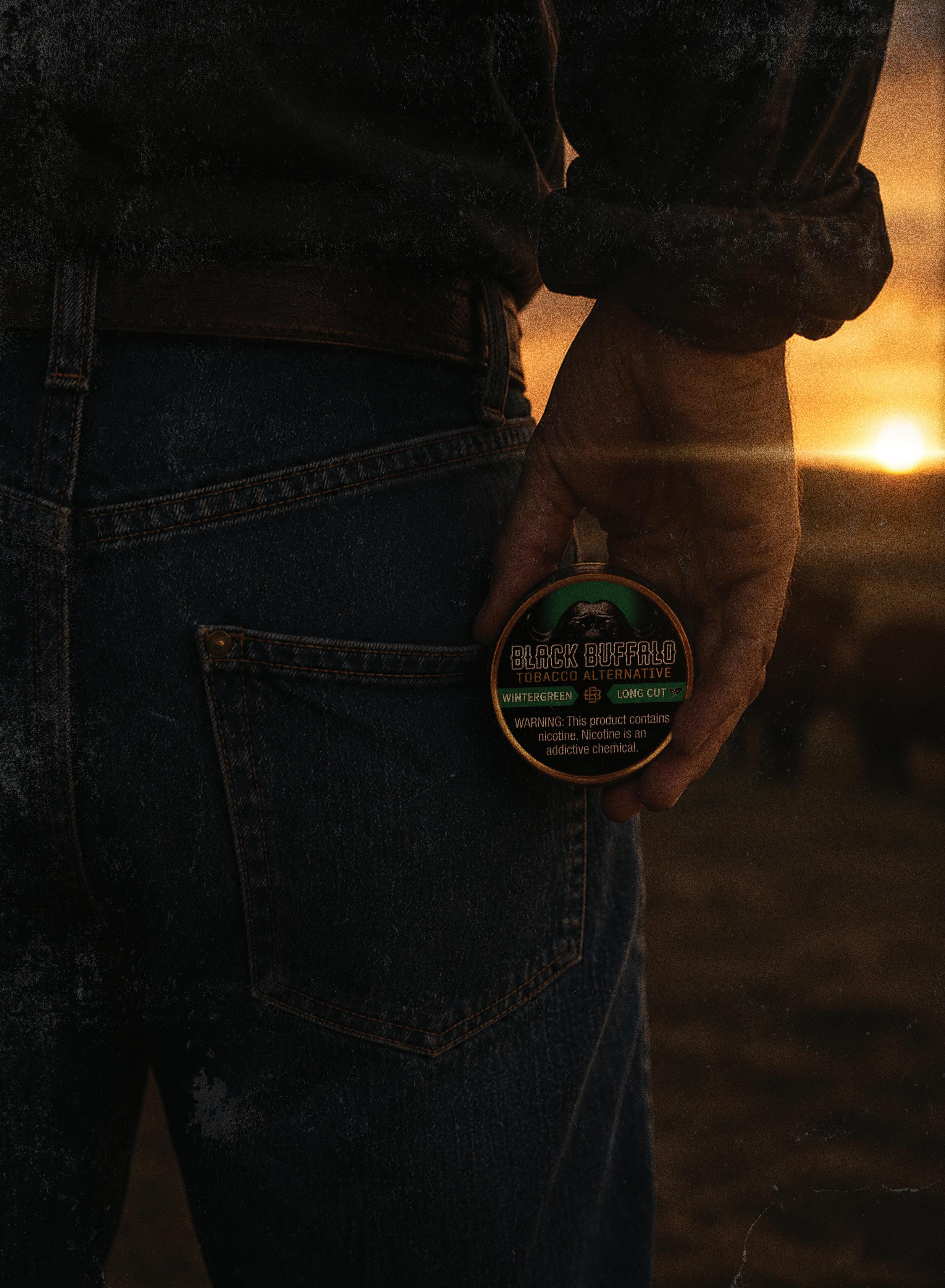
OVER THE PAST SEVERAL YEARS, a transformation has been taking place in the c-store backbar. While cigarettes, a long-time category staple, have experienced gradual volume declines, other nicotine segments have expanded to meet changing consumer preferences. Vape products have captured significant share in recent years, and in 2026, the continued growth of modern smokeless tobacco products is reshaping the category once again, creating new opportunities across the backbar.
This shift in purchasing behavior can be attributed to numerous factors, but overall, consumers are leaning into “less risky products” and “poly-use,” or the use of several different types of tobacco products, according David Spross, executive director of the National Association of Tobacco Outlets (NATO). This has opened the door for new, non-traditional tobacco offerings like spitless pouches.
Despite these shifts, cigarettes still remain the most purchased tobacco product throughout the country, notching over $50 billion in dollar sales in the c-store channel for the 52 weeks ending June 14, according to Chicago-based research firm Circana. Unit sales, however, dipped 5.3%, signaling consumers’ growing preference for alternatives.
Tobacco accessories are a bright spot in the space, with dollar sales ticking up 12%, and unit sales climbing to 7.1%.
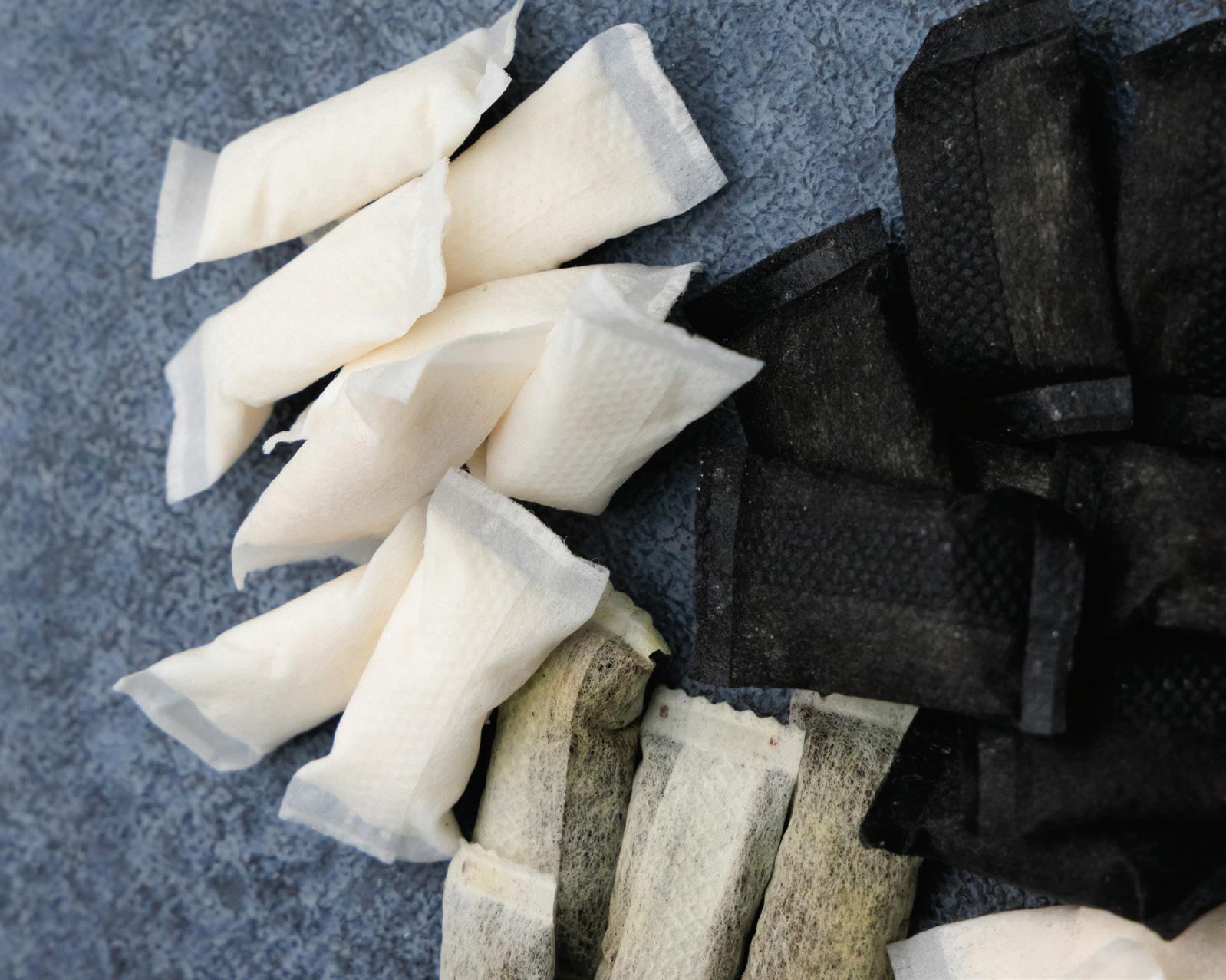
Still, the segment retailers should be keeping an eye on is smokeless, and spitless tobacco specifically, as dollar sales shot up by 12.7% and unit sales by 10% — a trend that has continued for several years now.







































































































































































































































































While dollar sales stayed flat, unit sales for cigarettes dipped 5.3% and cigar unit sales fell 5.6%.
Source: Circana OmniMarket Total U.S. Convenience data for the 52 weeks ending June 14
As consumers shift to smokeless offerings, vape sales are slowing. While still accounting for over $6 billion in dollar sales, the segment saw declines of 6% and 14% in dollar sales and unit sales, respectively, for the period.
And convenience store retailers are feeling the pressure.
“Performance has become more
challenging this year for certain with contributing factors such as economic pressures and tobacco promotion strategy changes,” said Jessica Starnes, director of loyalty and tobacco category manager for Knoxville, Tenn.-based Weigel’s, which operates over 90 stores across Tennessee. “Cigarettes remain the No. 1 driver in overall sales, however
(they are) still in a decline over the prior year. The most outstanding performer is the nicotine pouch segment.”
At Beaverton, Ore.-based Plaid Pantry, director of marketing Jon Manuyag said that as of May 2026, cigarette dollar sales and unit sales are down 2% and 8%, respectively, with moist chew also seeing downticks of 7% and 12%.

Spitless tobacco saw dollar sales increase by 27.2%, while dollar sales fell 6% for electronic smoking devices and 7.4% for vaping products.
The difference maker in stores, he said, is modern oral nicotine.
“Modern oral nicotine pouches continue to be the category offsetting those major declines,” said Manuyag. “Modern oral nicotine pouch trends are up 29% in dollars and up 17% in units. (There is) more innovation coming out of the big manufactures like ZYN and on! to drive a larger mix within their portfolio.”
Manuyag added that modern oral nicotine “continues to drive strong growth year over year,” and is “posting continued high double-digit increases in both dollars and units.”
Economic factors play a massive role in tobacco product purchasing behavior. In 2026, consumers’ wallets are tightening as inflation drives prices up industrywide.
As a result, many consumers are shifting to lower-tier cigarettes to offset inflationary effects.
“Consumers are price conscious, especially when gas prices rise, which results in downtrading to less expensive products,” said NATO’s Spross.
At Weigel’s, Starnes is seeing a similar “downtrading” trend, noting that fourthtier cigarette and nicotine pouch offerings are some of the “largest growth opportunities” in their stores.
“I believe, in the next five years, we will still have cigarettes on the backbar, (we will) possibly (add) heat-not-burn items, a continued expansion of nicotine pouches and hopefully a regulated vapor space,” she said.
As retailers try to make sense of the modern tobacco customer, regulation remains top of mind. The Food and Drug Administration (FDA) is reportedly finally making its way through a sea of pre-market tobacco product applications (PMTAs) to provide more clarity.
When it comes to regulation, Starnes mentioned that “the lack of regulation in the vapor category has been the most impactful. It is tough to compete in a category when your neighbor is not playing by the same rules.”
Plaid Pantry’s Manuyag, too, is looking for additional clarity from the FDA.
“Flavor bans continue to be the major watchful headwind to our business as we navigate both county and state legislation around the ban of flavored menthol or flavored tobacco and nicotine products,” he said.
Spross expects FDA action to become more prevalent in the coming months.
“I am expecting more PMTA authorizations particularly in the vapor and
nicotine pouch space,” he said. “Already this year, the first flavored vapor products were authorized by the FDA and late last year, the FDA authorized pouch products as part of the FDA’s pilot program that increases efficiency and streamlines the review process for PMTAs for nicotine pouch products.”
To prepare for upcoming developments, Spross recommended retailers become familiar with a recently proposed rule by the FDA regarding “Establishment Registration and Product Listing for Tobacco Products,” which would extend registration and listing requirements to foreign establishments that engage in the “manufacture, preparation, compounding or processing” of a tobacco product, he said.
“Under the proposed rule, registration and listing would be required from foreign manufacturers before the product is imported into the U.S. and extend FDA’s inspection authority to registered foreign establishments,” he continued. “Previously, FDA could inspect foreign establishments only in the context of PMTA reviews.”
The positive trend Spross is seeing from the FDA is that the agency plans to increase transparency for retailers.
“(The FDA) issued enforcement guidance in May which stated that the FDA
Cigar accessories dollar sales shot up 29.4%, with unit sales climbing 18.7%, while other accessory sales dipped for the 52 weeks ending June 14.
Source: Circana OmniMarket Total U.S. Convenience data for the 52 weeks ending June 14
generally does not intend to prioritize enforcement on new products such as vapor and nicotine pouches that are awaiting a decision on their PMTA applications,” he said. “Specifically, this guidance applies if a product is subject to an application that
is pending, and the application has been accepted by the FDA and is pending for more than 180 days. The FDA also intends to create and maintain a webpage identifying manufacturers and their associated products that FDA generally does not intend to prioritize enforcement.”
While many questions remain unanswered, it is likely that retailers will soon have a better understanding of the tobacco landscape in the coming months. CSD



Connecting car wash subscriptions with c-store loyalty programs, maximizing uptime and leveraging data-driven insights can drive higher revenue and profitability across the entire site.
Erin Del Conte • Editor-in-Chief

CONVENIENCE STORE RETAILERS are increasingly viewing car wash operations as a valuable complementary revenue stream to their c-store business.
Today, more retailers are integrating car wash offerings into their loyalty programs and creating stronger connections between the car wash and c-store businesses. In doing so, they’re driving profitability, increasing site traffic and enhancing customer engagement across both channels. Retailers have various reasons for the type of car wash they choose to implement, and they’re enhancing their overall operations by leaning into technological advancements.
H&S Energy, which has 297 c-stores under the Power Market, Extra Mile and Pinnacle 365 banners, operates Auto Spa locations across California and Oregon with over 50 car washequipped sites spanning both states.
“We chose the in-bay automatic format because it fits the convenience store model perfectly,” said Hana Hassan, director of marketing and public relations, H&S Energy. “Our customers are already stopping for fuel or a quick in-store visit, and the in-bay format lets them get a quality wash without leaving their vehicle or waiting in a long tunnel queue. It’s a lower footprint investment that integrates seamlessly into our existing forecourt and delivers a consistent, high-quality wash experience every time.”
H&S Energy offers the PM+ subscription program, which is a monthly unlimited wash subscription. “Members enjoy unlimited washes for a flat monthly fee, and (at press time) we’re offering 50% off the first two months as a promotional incentive to get customers into the program,” Hassan said.
The program is managed through the Power Market Rewards app, which makes it simple for members to access their
subscription, track usage and take advantage of in-store deals.
“Over the past year, we have continued investing in our car wash platform by enhancing our membership program, improving the customer experience and integrating our wash promotions more closely with our loyalty and mobile app programs,” Hassan said.
H&S Energy has also introduced a new premium wash package that features a Graphene Ceramic Coating as part its “top-tier offering.”
“This package provides customers with added protection and a sleek, high-gloss finish that helps their vehicle maintain that freshly detailed look long after the wash. As customer expectations continue to evolve, we remain focused on introducing products and technologies that deliver both convenience and exceptional results,” Hassan said.
Hassan noted that technology plays a significant role in the company’s car wash operations. “We utilize automated payment systems, license plate recognition and membership management tools where applicable and digital marketing integrations through our loyalty platform,” Hassan said. “We are also exploring emerging technologies that can help improve operational efficiency, equipment uptime, customer communication and predictive maintenance capabilities. Our focus is on using technology to create a seamless customer experience while maximizing reliability.”
Tiger Fuel Co., which operates 10 The Market by Tiger stores in Virginia, sees the benefit of both in-bay and tunnel washes. It features 11 TigerWash car washes — eight in-bay locations and three express tunnel locations. “We have one additional express tunnel location opening this fall with several more in the pipeline,” said
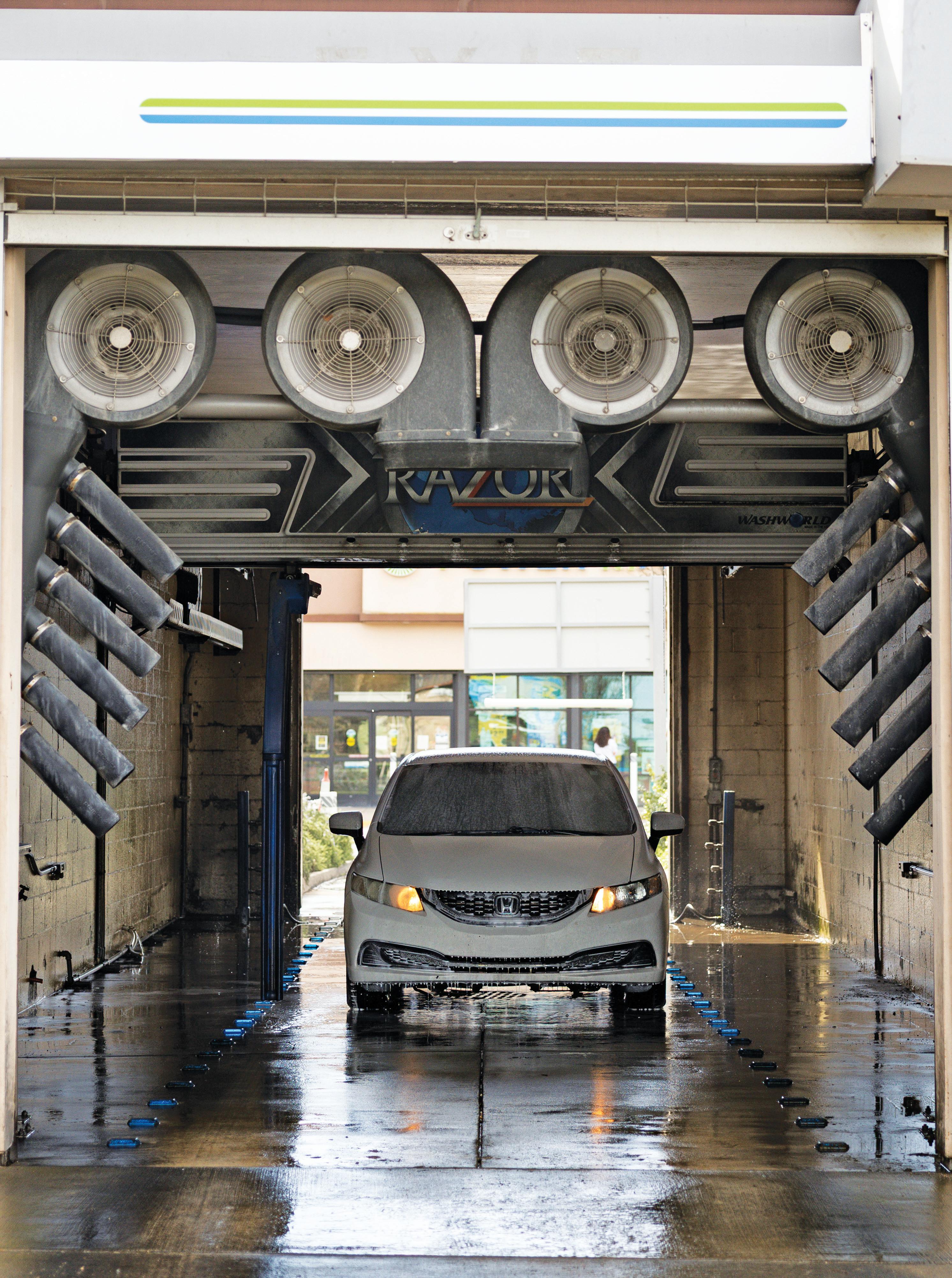
H&S Energy operates in-bay automatic car washes due to their suitability to the convenience store model. They integrate seamlessly into the existing forecourt and deliver a consistent, high-quality wash experience. The chain offers a subscription program for monthly unlimited washes.

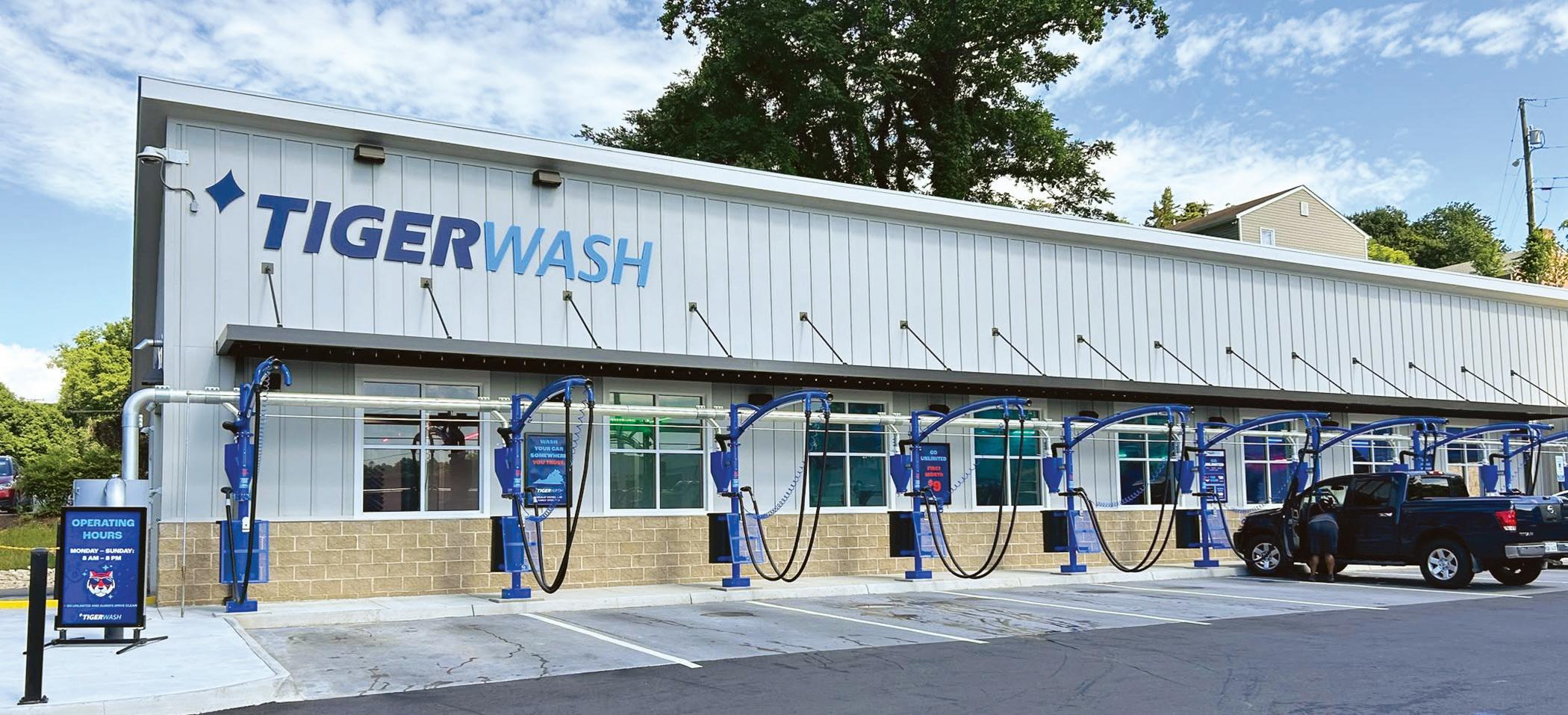
Tiger Fuel has eight in-bay car wash locations and three express tunnel locations. Additional express tunnel locations are in the pipeline. Customers can enroll in a membership program at certain locations and have unlimited washes each month as well as free vacuums, towels and window cleaner for one monthly price. Members can also take advantage of promotions throughout the year.
“TigerWash originally started as operating in-bay locations connected to our retail stores. …” Rogers explained. “As we’ve grown and seen the car wash industry change, our model is to grow our express tunnel locations where we can offer more benefits to our loyal wash members.”
TigerWash features a membership program known as “TigerWash Unlimited Club.” The program is tied to its express tunnel locations in Ruckersville, Long Street, Forest Lakes and the soon-to-come Waynesboro site set to open this fall.

“Customers can wash unlimited times in a month at these three locations and have access to free vacuums, towels and window cleaner for one monthly price,” Rogers said.
Members can take advantages of promotions throughout the year, such as free wash events at express tunnel locations with swag and samples provided by The Market. TigerWash also features holiday promotions that include giveaways, such as free washes and flowers for moms on Mother’s Day and “lotterystyle” scratchers on St. Patrick’s Day. On Halloween, car wash guests can participate in costume competitions for free washes.
“This year, we launched our first-ever Nonprofit November where we partnered with various local organizations to donate a portion of wash sales from the day to a different nonprofit,” Rogers said.
TigerWash also offers Family Plan deals where multivehicle households can receive $10 off additional vehicles when they join the Tiger Ceramic and Tiger Wax plans.
In the past year, it integrated its car wash customer relationship management (CRM) software with its loyalty program provider.
“This integration has allowed unlimited wash members that are also Market Rewards customers to enjoy special fuel discounts every time they fuel up at a Market by Tiger location,” Rogers said. “Our integration … is a great example of using technology within our car wash program. This has been a huge sales tool to reduce churn rate and increase membership count.”
TigerWash migrated to its CRM program two years ago, which has allowed it to communicate effectively with customers, track data and incorporate downsell opportunities to customers if they’re considering canceling their membership.
When the new Waynesboro location opens this fall, it will include an additional camera at the pay station that will collect data on vehicles.
The PRIDE Stores, which operates 18 company-operated stores in Illinois and Indiana along with 11 car washes and 10 quick-service restaurants, operates its car wash business under the name The PRIDE Car Wash. Like Tiger Fuel, it features a mix of different wash types.
“Nine of the 11 washes are tunnel washes and two are in-bay automatic,” said Mohammad Ahmad, VP, The PRIDE Stores. Local weather played into the retail chain’s decision on car wash type.
“With Midwest seasonality, car wash business tends to be heavy in the winter months, with the need to move cars in and out quickly and keep the lines moving. The best option for high volume is tunnel washes. In-bay automatic washes are suitable when the space is limited and the wash volume does not warrant the spend on a tunnel equipment, as the in-bay automatic tends to cost less,” he explained.
The PRIDE Car Wash features a subscription program called “The PRIDE Car Wash Pass,” where customers sign up for a monthly pass and gain access to unlimited washes.
“Once the guest signs up, they get a radio frequency identification tag that allows them to wash their cars at any of our car wash locations. For less than $1 per day, the guest has access to the ‘Premium Wash Package,’ which is our top-tier wash,” Ahmad said.

Ahmad noted when it comes to increasing car wash profitability, one of the most significant missed opportunities is maximizing uptime. “Measuring, tracking and quantifying the cost of downtime is an area of opportunity,” he said. “Every minute a wash is out of service is lost revenue and a bad guest experience.”
Operators also leave money on the table when they neglect to launch a subscription program or fail to actively grow the membership base for the program they have. “This would mean the operator is missing out on predictable, recurring revenue. Not only do subscription programs drive volume, but they also build loyalty,” Ahmad said.
Tiger Fuel’s Rogers advised other c-store retailers with car washes to ensure they’re measuring their membership, single wash and fleet pricing closely and regularly.
“We recently implemented fleet programs to encourage local businesses with fleets to wash with us at a lower cost,” he noted.
TigerWash also changed its chemical cost so that it’s only paying for chemical usage per vehicle instead of receiving one large order of chemical on a regular basis.
“This allows us to analyze our usage and make adjustments as needed to lower cost and increase profitability,” he said. “We also use water reclaim systems at all our express tunnel locations to decrease cost.”
One of the biggest missed opportunities, according to H&S Energy’s Hassan, is that some retailers fail to connect their car wash with the c-store experience.
“Car wash customers are already choosing to visit your location for something beyond a traditional fuel stop, which creates a valuable opportunity to drive additional in-store traffic and sales,” Hassan said. “Whether it’s offering a coffee, snack, meal deal or loyalty incentive, operators who create a seamless connection between the wash and the store can significantly increase the overall value of each customer visit.”
She said the most successful programs treat the car wash as a traffic driver for the entire site that benefits both the customers and the business.
When asked what he thinks will separate the most successful c-store car wash operators from the rest of the industry over the next five years, Rogers pointed to customer service, loyalty programs and staying on top of rising trends.
“We take extreme pride in how we treat our customers and the experience they have at our wash,” he said.
Hassan agreed that loyalty programs and data are keys to continued success.
“The operators who win will be those who know their customers — who they are, how often they wash, what they buy inside — and use that data to create personalized offers and genuine reasons to come back,” Hassan said. “A car wash without a subscription program and a loyalty ecosystem around it is just a commodity.”
Ahmad also pointed to subscription programs as a critical driver of growth and customer loyalty. “Executing on those programs will give those operators an advantage.”
Ahmad has also observed a change in mindset among convenience store retailers who can no longer afford to treat car washes “as simply the building next to the store.”
“It must be actively managed as a core part of the business,” Ahmad said. “This includes consistent maintenance, daily operational checks to ensure equipment is performing as intended and a focus on delivering a quality guest experience. Getting the basics right is a must.”
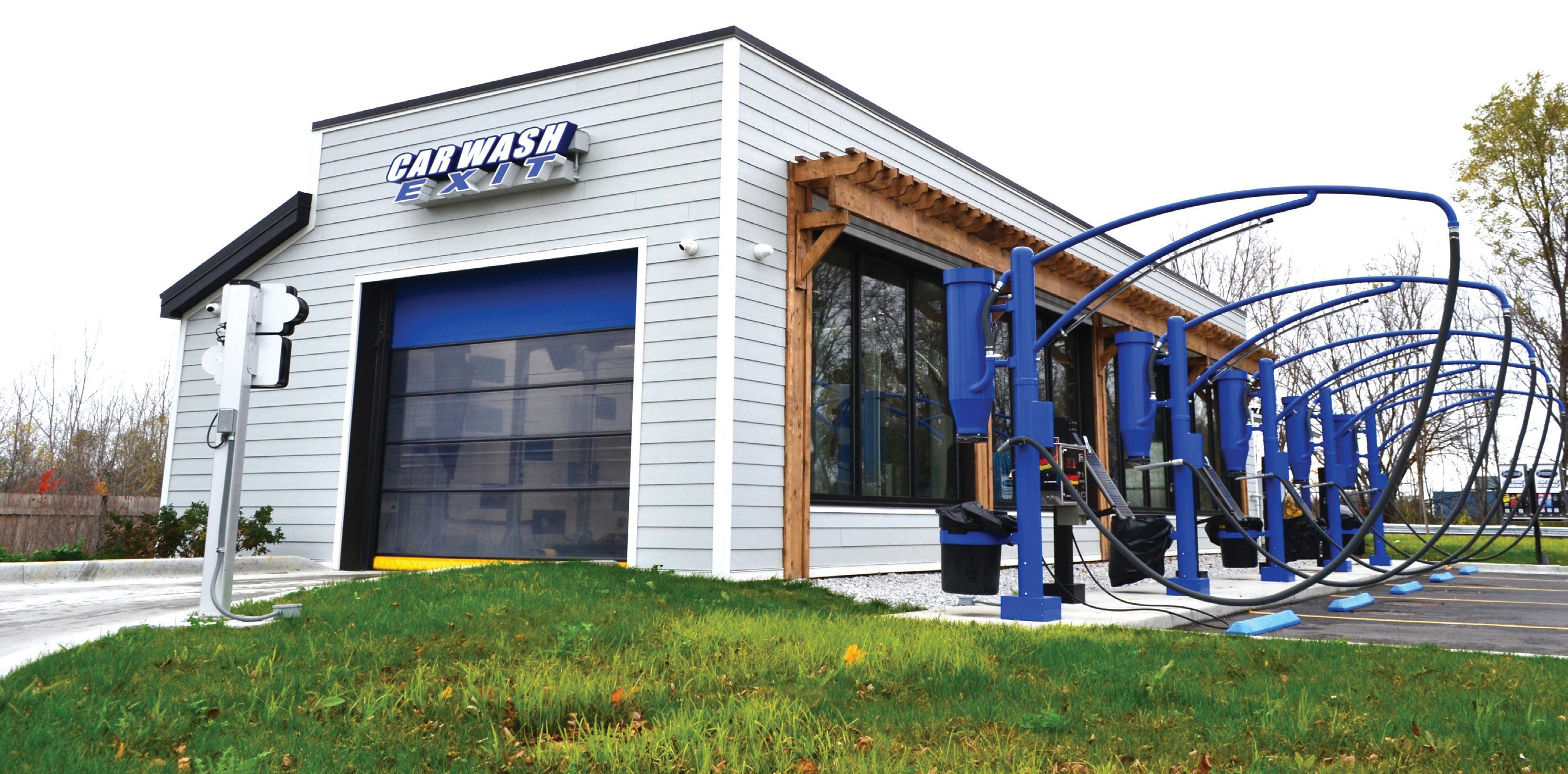
The PRIDE Stores operates 11 car washes: nine tunnel and two in-bay automatic. The chain offers a subscription program where customers sign up for a monthly pass and gain access to unlimited washes.
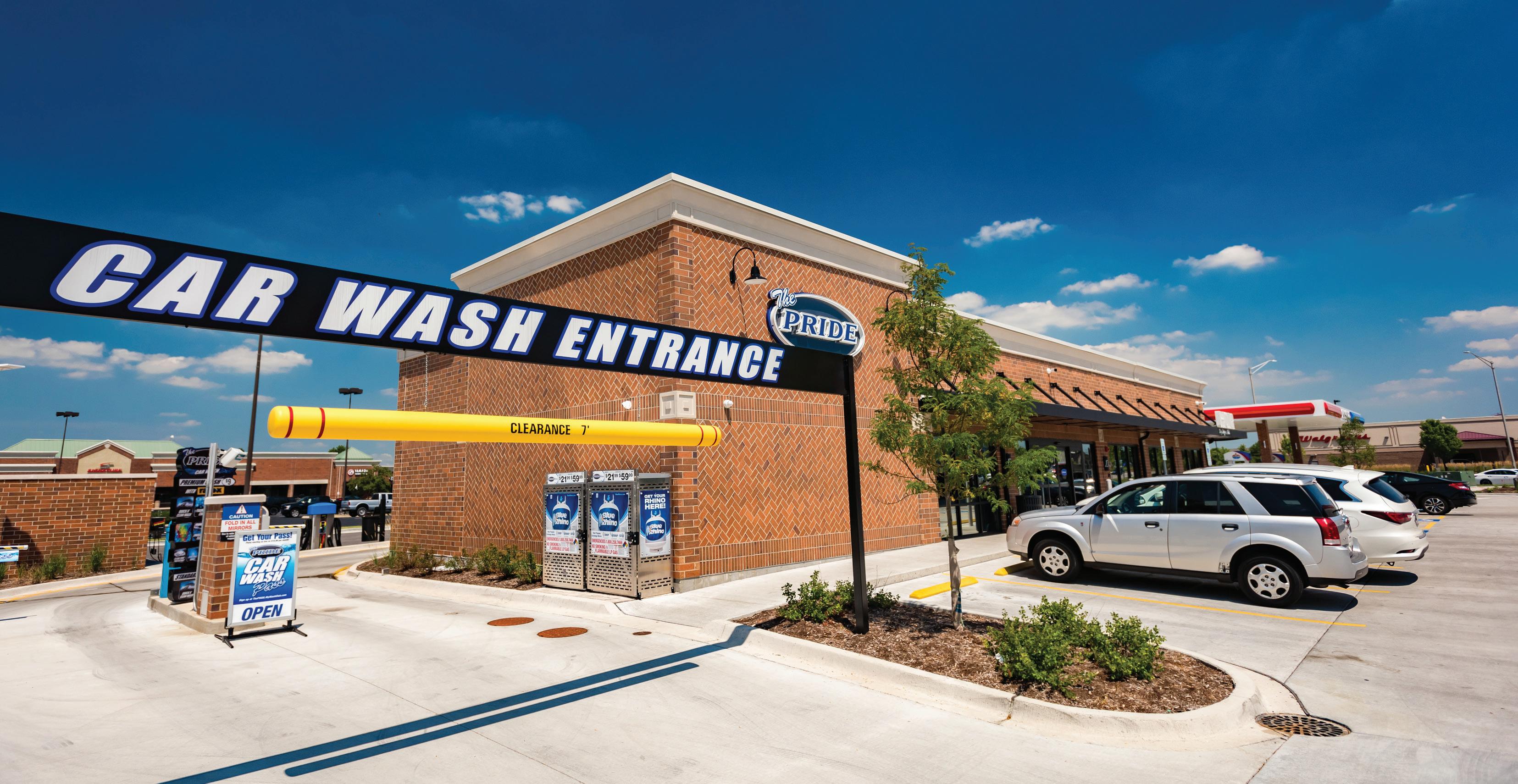
Mohammad Ahmad, VP, The PRIDE Stores, believes convenience stores are uniquely positioned to stand out by emphasizing the convenience of trip consolidation, offering seamless in-and-out experiences combining food, fuel, convenience and car wash in one stop. Chains that promote and market car wash and train teams to upsell washes will be successful.
He believes successful car wash operators five years from now will be the ones who invested today in promoting and marketing their car wash programs while consistently training their teams to upsell washes and engage customers.
“As convenience retailers, we are uniquely positioned to stand out by emphasizing the convenience of trip consolidation, offering customers fast, seamless in-and-out experiences combining fuel, food, convenience and car wash in one stop,” Ahmad said. “Leveraging this, along with providing value, will help in an increasingly competitive area of the business.”
Hassan agreed, adding she expects car wash operators who create recurring revenue by leveraging membership programs and then converting those wash customers to c-store shoppers will be the ones who have the most future success.
Retailers have plenty of strategies up their sleeves to help connect their stores and their washes.
At Tiger Fuel’s in-bay locations that are connected to The Market locations, TigerWash offers wash coupon packs at a discounted rate when they’re purchased in the convenience store. It also hosts monthly events at its c-store locations where it incorporates TigerWash through free wash coupons and swag to encourage customers to visit. When customers purchase a wash at the pump, customers can receive discounted fuel. “The hope

is they’ll continue to revisit us but (that it will) also drive them to go inside,” Rogers said.
But integrating its CRM and loyalty program is its biggest push to increase c-store sales. “By offering these customers special fuel discounts, we hope they’re seeing our on-site signage, media on the pumps, etc., to see the offers provided in-store,” he said.
Hassan also sees her company’s Power Market Rewards app as the thing that connects the car wash to the convenience store business.
“Members who sign up for PM+ are already in our loyalty ecosystem, which means they’re seeing our fuel deals, snack promotions and club offers every time they open the app,” she said. “We use the wash as an entry point into the relationship and get them washing with us regularly, and we earn more opportunities to pull them inside.”
In other words, H&S Energy doesn’t just view its car wash business as “just an additional service,” but as an important piece of its “customer experience strategy.”
“Our goal is to create destinations where customers can fuel up, grab a meal, shop for essentials and maintain their vehicle all in one convenient stop,” Hassan said. “As customer expectations evolve, we remain committed to investing in technology, innovation and service that make every visit easier and more rewarding.” CSD
Notice of Class Action Settlement
Authorized by the U.S. District Court, Eastern District of New York — Notice of Class Action Settlement —
Si desea leer este aviso en español, llámenos o visite nuestro sitio web.
TO: All merchants in the U.S. who accepted Visa or Mastercard credit or debit cards at any time since December 18, 2020. This notice (“Notice”) is authorized by the Court to inform you about an agreement to settle the equitable relief claims in a class action lawsuit, called In re Payment Card Interchange Fee and Merchant Discount Antitrust Litigation, No. 05-md-01720 (BMC)(JAM)(E.D.N.Y.). The lawsuit claims that Visa and Mastercard, separately, and together with certain banks, violated antitrust laws and caused merchants to pay excessive fees for accepting Visa and Mastercard credit and debit cards, including by adopting interchange rules and rates, and other network rules, which the lawsuit has claimed constituted unlawful price fixing, unreasonable restraints of trade, and monopolization.
The defendants say they did nothing wrong. They maintain that their business practices are legal, justified, and the result of independent competition, and have benefitted both merchants and consumers. The Court has not decided who is right because the parties agreed to a settlement, which was preliminarily approved by the Court on June 9, 2026.
A. What Merchants Will Get from the Settlement
During the lawsuit, the Court previously certified an Equitable Relief Class under Federal Rule of Civil Procedure 23(b)(2) and has now preliminarily approved a settlement of the Class claims (the “Rule 23(b)(2) Class Settlement” or “Settlement”). Under the Settlement, Visa and Mastercard have agreed to substantive changes to the Visa and Mastercard rules applicable to merchants who accept their cards as a form of payment.
The Class includes all persons, businesses, and entities that accept any Visa-Branded Cards and/or Mastercard-Branded Cards in the United States at any time during the period between December 18, 2020 and the date of preliminary settlement approval, or June 9, 2026. The Court has set November 16, 2026 as the date for a final approval and fairness hearing (the “Fairness Hearing”) in connection with the Settlement, after members of the Class have had the opportunity to evaluate the Settlement and exercise their rights, as set forth in the Notice. Further information regarding the Settlement and the Fairness Hearing will be posted on www.InterchangeEquitableReliefSettlement.com.
Under the Rule 23(b)(2) Class Settlement, Mastercard and Visa will modify certain rules to preserve, establish, or expand the circumstances in which merchants can, among other things, do the following:
• Decline acceptance of Visa- or Mastercard-Branded Commercial Credit Cards and/or Premium Consumer Credit Cards.
• Surcharge customers a fee for the use of any Visa or Mastercard-Branded Credit Cards, including based on the type of card used (e.g., a different surcharge for rewards and non-rewards cards).
• Offer discounts to customers who do not pay with Visa or Mastercard-Branded Credit Cards, or based on the financial institution that issued the Visa or Mastercard-Branded Credit Card.
• Decline acceptance of Visa or Mastercard-Branded Cards at all outlets that operate under the same trade name or banner, even if that merchant accepts those same cards at outlets that operate under a different trade name or banner.
• Engage in Pilot Programs whereby they accept Visa or Mastercard-Branded Credit Cards at some but not all outlets operating under the same trade name or banner for a limited duration or test out various acceptance, surcharging and discounting options at some but not all outlets operating under the same trade name or banner, including not accepting Commercial or Premium Consumer Credit Cards, for a limited duration.
• Accept some digital wallets at brick-and-mortar locations but decline others and enable some digital wallets for on-line transactions but not enable others, and “steer” among the cards within a digital wallet under the same rules that govern steering among traditional cards.
• Receive the benefit of credit interchange rate reductions: Visa and Mastercard will reduce published and negotiated Credit Card interchange rates for U.S. merchants.
• Receive the benefit of Credit Card interchange rate caps: The Settlement Agreement reduces and caps “Standard” Consumer Credit Card rates at a specified level and otherwise caps Credit Card interchange rates, such that neither Visa nor Mastercard will increase any of its published Credit Card interchange rates above the rates effective as of March 31, 2025 and each will reduce its network-wide average Credit Card interchange rate to or below the specified level.
• Form Merchant Buying Groups that meet certain criteria to negotiate with Visa and Mastercard.
• Receive access to a Merchant Education Program, established and administered under the Settlement Agreement, to help understand and maximize the benefits of the rule changes, including how to effectively “steer” in States that restrict surcharging.
B. Monetary Aspects of the Rule 23(b)(2) Class Settlement
There is no monetary payment to members of the Class in this Settlement. This Rule 23(b)(2) Class Settlement concerns only the Equitable Relief Claims set forth in the lawsuit. Claims for monetary damages arising out of the defendants’ alleged antitrust violations are the subject of a separate settlement for the Rule 23(b)(3) Class. For information concerning the separate Rule 23(b)(3) Cash Settlement Class, please visit the website: www.PaymentCardSettlement.com
The Settlement does provide for Visa and Mastercard to make certain payments into the Rule 23(b)(2) Class Settlement Escrow Account, which money will be used to pay:
• The cost of settlement administration and notice, as approved by the Court,
• The cost of Merchant Education Program expenses, as approved by the Court,
• The cost of an Independent Auditor who will ensure that Visa and Mastercard comply with the credit card interchange-rate reduction commitments, and
• Attorneys’ fees and expenses, including any named Class Representative service awards, as approved by the Court.
The money in this fund will be distributed only if the Court grants final approval of the Settlement, and the money for attorneys’ fees and expenses, and service awards to Class Representatives, will be distributed only if the Settlement has become final and all appeals are exhausted, and the Court approves the application for attorneys’ fees and expenses, and Class Representatives’ service awards. Attorneys’ fees and expenses, and service awards to the Class Representatives: For work done through final approval of the Settlement by the Court, as well as any work they will be required to do in the future, Class Counsel will ask the Court for attorneys’ fees and reimbursement of reasonable and necessary litigation expenses, and any service awards to the named Class Representatives that the Court may award, in an amount not to exceed $206,000,000. The Settlement Agreement requires Visa and Mastercard to pay these fees and expenses separately from the other Settlement financial obligations and they will not reduce any other benefits of the Settlement; members of the Class will not be required to pay any amount toward these fees and expenses.
C. Legal Rights and Options
Merchants who are included in this lawsuit have the legal right to Object to the Settlement. The deadline to object is: September 14, 2026. To learn how to object, visit: www.InterchangeEquitableReliefSettlement.com or call toll-free: 877-318-7713.
Note: You cannot elect to be excluded from the Rule 23(b)(2) Class Settlement. For more information about these rights and options, visit: www.InterchangeEquitableReliefSettlement.com or call toll-free: 877-318-7713.
D. If the Court Grants Final Approval of the Settlement
If the Court grants final approval to the Settlement, members of the Rule 23(b)(2) Class will be bound by the terms of the Settlement and will release all claims against all released parties listed in the Settlement Agreement. The Settlement will resolve and release any claims by payment card acceptors against Visa, Mastercard and other defendants that were or could have been alleged in the lawsuit, including any claims based on interchange or other fees, no-surcharge rules, no-discounting rules, honor-all-cards rules, and any other network rules. The Settlement will also resolve any payment card acceptor claims based upon the future effect of any Visa or Mastercard rules as they were or are in place on December 18, 2020 and up to the Settlement Final Date (as defined in the Settlement Agreement), the modified rules provided for in the Settlement, or any other rules substantially similar to those rules. The release will not bar claims involving certain specified standard commercial disputes arising in the ordinary course of business.
For more information on the release, see the Superseding and Amended Rule 23(b)(2) Class Settlement Agreement at: www.InterchangeEquitableReliefSettlement.com.
E.
On November 16, 2026 at 11:00 am ET, the Court will hold a hearing to decide whether to approve the proposed Settlement, Class Counsel’s request for attorneys’ fees and expenses, and service awards for the named Class Representatives. The hearing will take place at:
United States District Court for the Eastern District of New York U.S. District Judge Brian M. Cogan 225 Cadman Plaza East Brooklyn, NY 11201
You do not have to attend the Court hearing or hire an attorney, though you may do either at your own expense. The Court appointed the law firms of Hilliard Shadowen LLP; Grant & Eisenhofer P.A.; Freed Kanner London & Millen LLC; and Nussbaum Law Group, P.C. to represent the Class (“Class Counsel”).
F. Questions?
For more information about this case (In re Payment Card Interchange Fee and Merchant Discount Antitrust Litigation, MDL 1720), you may: Call toll-free: 877-318-7713
Visit: www.InterchangeEquitableReliefSettlement.com
Write to the Class Administrator: Interchange B2 Class Administrator, P.O. Box 6340, Portland, OR 97228-6340 or Email the Class Administrator: info@InterchangeEquitableReliefSettlement.com

C-store retailers are turning to data and automation to improve inventory accuracy, respond faster to demand and drive profitability.
Erin Del Conte • Editor-in-Chief
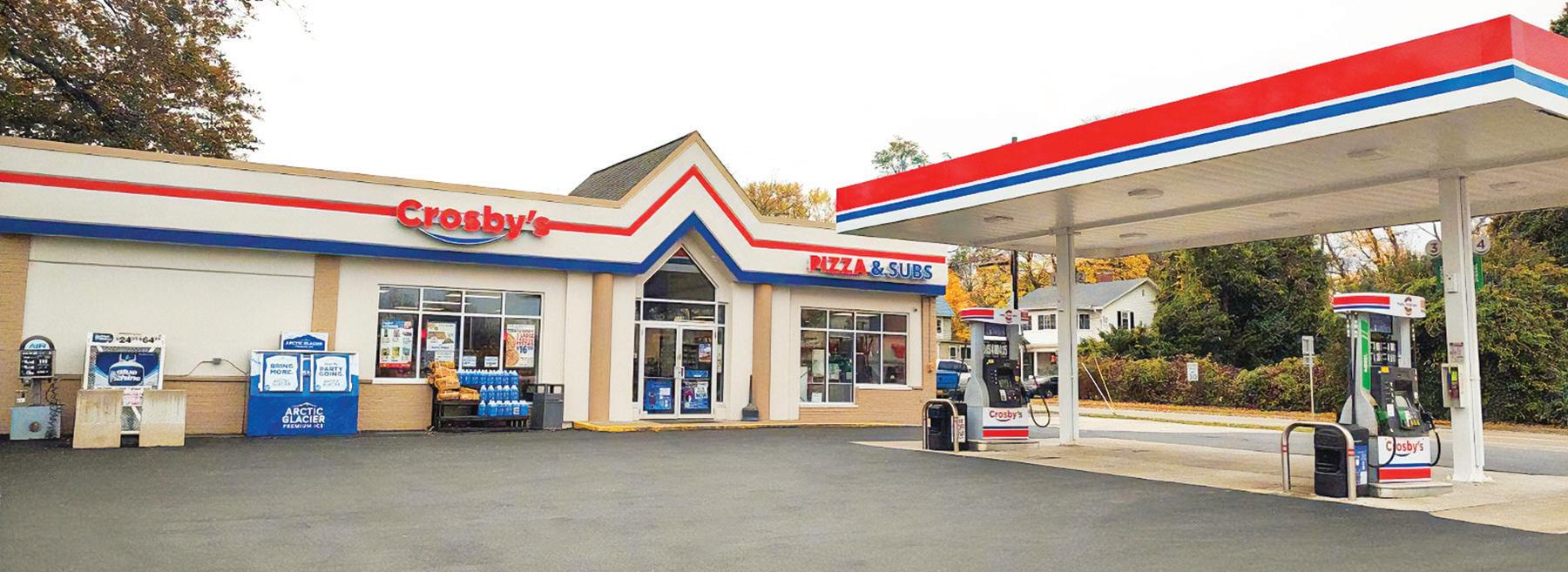
REID PETROLEUM’S CROSBY’S, which operates more than 88 c-stores in New York and Pennsylvania, takes a data-first and store-execution-focused approach to inventory management today.
“At Reid Stores and Crosby’s, we operate a small-format convenience store environment across multiple regions and districts, which means inventory decisions have to be precise. We don’t have the backroom depth to absorb mistakes the way a larger format can,” said Rob Augustine, director of sales and merchandising for Crosby’s Stores.
Having the ability to see and understand what’s driving performance in
each category is an important place to start on the road to better inventory management.
Crosby’s tracks sales, units and gross margin by category on a period basis via an Item Profitability Report (IPR), which covers multiple periods and records pre-shrink and post-shrink gross margin percentage alongside “bad merch” at the category and item level.
“That data drives everything from assortment decisions to how we communicate priorities to store managers,” Augustine said.
“On the operational side, we build order guides that take sales history,
calculate a smart average that excludes zero-sales weeks and give managers a starting point for a suggested order,” he said. “We pair that with shrink management, planogram compliance and vendor accountability to maximize our efforts.”
On the opposite end of the country, Vintners Distributors uses a combination of inventory management approaches at its 157 Loop Neighborhood Market and Poppy Market locations in California.
The company leverages daily manager counts for high-priority items using scheduled tasks in a task management platform. It also conducts a comprehensive physical inventory every four months

across all stores, explained Matthew Makarem, director of loss prevention & employee development for Loop.
“These scheduled physical counts coupled with daily managers’ counts and audits provide a financial baseline and ensure continuous operational accuracy while capturing shrink early on,” he said.
The biggest change Loop has made to its inventory management process in the last two years is combining the work of a security operations center that monitors “all red flags at stations” along with daily physical counts, ongoing scheduled detailed counts, pre-audit checks, educating staff and employing monitoring software, Makarem said. The move has contributed to a reduction in shrink across the chain.
For Crosby’s, the biggest shift in its inventory management approach has come from automating its reporting infrastructure and better positioning teams to take action in relation to the data they receive.
“We built system tools that take raw sales and shrink exports and automatically produce formatted, color-coded Excel workbooks that go directly into the hands of managers,” Augustine said. And, thanks to its IPR, the chain doesn’t have to worry about confusing margin performance with shrink performance. “That distinction matters more than most operators realize,” he said.
As a result of these changes, Crosby’s eliminated the “lag and error risk” that came from manual spreadsheet preparation. Now reports are consistent in how they’re structured, allowing managers
to trust and act on them. Intelligence is now built into the system, and items are flagged based on criteria set by Crosby’s.
Crosby’s is using historical sales pattern analysis combined with automation in its inventory management practices. When it comes to its Dairy Order Guide, for example, “we generate monthly order guidance from a six-week rolling sales window. The logic excludes weeks where a store had zero sales, which skews averages down artificially, and applies a formula on the average so we’re always in stock on an important perishable item.”
Then, on the analytics side, its IPR provides a multiperiod view of where margin is moving independently of volume. “For example, milk has shown strong gross margin percentage improvement year over year in recent periods, but the postshrink gross margin percentage tells a starkly different story; in several periods, it falls well below pre-shrink gross margin percentage,” he said. “Flagging that shrink is meaningfully eroding the category’s real profitability. That kind of analysis would be invisible if we only looked at top-line sales.”
Then, for supply chain visibility, Crosby’s built recurring backorder tracking that flags items based on how many consecutive weeks they have been unavailable. If an item has been backordered for three or more consecutive weeks, that issue is escalated, Augustine said. The chain sees which vendors are behind the issue and which categories are most impacted, allowing it to determine if there is a vendor
problem or an internal ordering issue.
At Loop, in addition to manual vendor orders based on physical inventory and suggested orders based on sales, the chain uses a suggested ordering software built within its back-office system, Makarem said. The suggested ordering software can also be manually altered to account for activities or events at each location. It measures on-hand inventory by item and forecasts orders based on historical sales. This keeps inventory on hand in stock and reduces the risk of running out of items while maintaining enough stock to satisfy customers. “We use frequent orders sometimes twice a week for high-turnover items,” Makarem added.
Balancing inventory levels to control costs without risking out-of-stocks and lost sales is an ongoing challenge for c-store operators.
“… It’s a constant tension, and the right balance depends heavily on the category,” Augustine said.
In the case of perishables such as dairy, Crosby’s focuses on adequate coverage because the cost of losing a sale or a customer outweighs the costs of modest outdates.
“Our order guides are designed to err on the side of coverage, and we build in a formula so managers can see the suggested quantity relative to what they have on hand rather than ordering blindly,” Augustine said.
But when it comes to center-store categories, the chain is more disciplined about how it approaches its assortment. In this area, Crosby’s has found that having too much inventory can dilute
facings, complicate ordering and result in slow-moving items taking space away from faster-moving ones.
“We use SKU productivity metrics to flag items that are below velocity thresholds and build a deliberate case for cuts rather than letting assortment creep,” he said.
Meanwhile, items that are chronically high waste from outdates might need a different placement or format or may need removed entirely, he explained.
For Crosby’s, vendor reliability remains its most persistent challenge.
“We have specific vendors, including some tobacco manufacturers, with items that have been on backorder for multiple weeks. In a convenience store format, tobacco is a traffic-driving category,” Augustine said, adding that being chronically out of stock on a top SKU puts c-stores at risk of losing customers.
“By tracking backorders week over week and flagging items that cross our expected time threshold, we can get into conversations with vendors and with our own ordering team before the problem compounds,” he said.
Crosby’s also evaluates whether category-level substitutions exist to fill holes.
“On the regulatory side, we’re actively preparing for the U.S. Department of Agriculture Food and Nutrition Service Supplemental Nutrition Assistance Program stocking requirement changes effective November 2026. The new rules increase the required number of distinct varieties across staple food categories, and dairy is the most challenging area for small-format stores. That’s requiring us to revisit our assortment strategy in a category where space is already limited,” Augustine said.
While Crosby’s isn’t operating with full real-time inventory at the item level across all stores, it has built “as close to near-real-time visibility as our systems allow, particularly for high-priority categories,” Augustine said. Today, managers have accurate and current data they can use to make better ordering decisions.
“That alone reduces both over ordering and under ordering,” he said.
“Visibility that used to take weeks of manual compilation is now available at the start of each period review cycle,” he added.
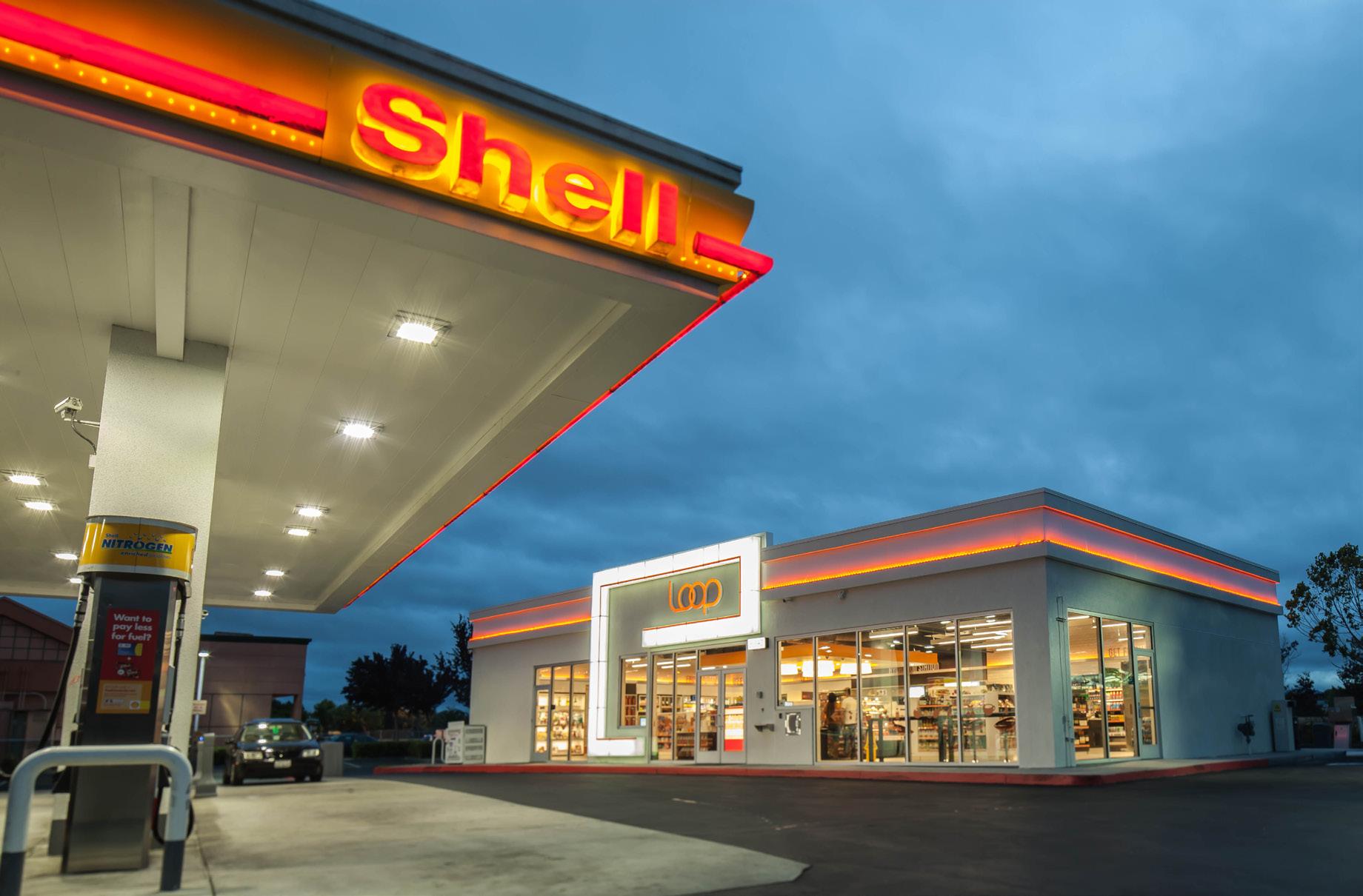
Meanwhile at Loop, real-time inventory management capabilities have been a huge asset and is built into the handheld devices store managers use, helping them better place orders and complete spot checks. When an item is scanned to be ordered or inventoried it displays the current inventory, and if that same product count is not available on the shelf, it raises red flags, Makarem said.
Daily scheduled counts, pre-audit visits by an audit team to prep stores, welleducated staff, security operations center monitoring and acting on issues are just some of the things that have had a big impact on inventory management success at Loop. So, too, has using state-ofthe-art surveillance monitoring software with intelligence leads and ongoing counts and recounts for stores that fail at over a certain percentage, Makarem said.
Augustine credits automating Crosby’s Bad Merchandise Focus Reporting for delivering the most concentrated return on investment.
Makarem noted that most retailers make the mistake of managing their inventory based on gut feelings rather than actual data. “Most retailers do not invest in software or hardware that we have invested in,” he said.
Assuming shrink is just part of the business instead of trying to control it leaves money on the table, he cautioned.
“Retailers, in my opinion, generally overlook the four main areas of shrink: external theft, which is 60-70% controllable; internal theft, which is 80% controllable; administrative & operational errors, which is 100% controllable; and vendor fraud, which is 100% controllable, while concentrating on ‘controlling the controllables,’” Makarem said.
Augustine sees retailers make mistakes in three specific areas.
“First, over-assortment. Retailers, especially in convenience, add SKUs more easily than they cut them,” he said. Another mistake is treating “bad merchandising dollars as a cost rather than a signal.”
“High waste on a specific item or in a specific store is diagnostic information,” he added.
The third mistake is vendor passivity.
“Backorders happen, but retailers who don’t systematically track them by vendor, by week and by item are not maximizing their efforts. When a single vendor is responsible for a disproportionate share of your out-of-stocks, that’s a vendor relationship conversation, but you can only have it if you have the data to back it up,” Augustine advised.
Looking ahead to the innovations that will have the greatest impact on inventory management over the next five years, Makarem pointed to artificial intelligence (AI)-generated shelf monitoring and inventory monitoring, as well as intelligent camera systems that synchronize with the point-of-sale and control items removed from shelves.
Augustine expects the biggest shift over the next few years to involve predictive analytics at the store level, even for smaller c-store operators.
“I expect the coming years to bring much more capable AI-assisted forecasting that accounts for local demand signals, weather, events and cross-category substitution patterns,” he said. “The retailers who invest in the data infrastructure now — clean, consistent, timely transaction and inventory data — will be the ones who can take advantage of those tools when they arrive.” CSD

Retailers are taking advantage of real-time data, AI and mobile interfaces as they advance their back office and POS, streamlining operations chainwide.
Emily Boes • Senior Editor
AS TECHNOLOGY BECOMES more sophisticated, the meaning of “modernization” is changing. Not long ago, back-office and point-of-sale (POS) modernization meant replacing bulky registers with tablets, migrating to the cloud and connecting previously siloed technologies. It now means leveraging mobile technology, artificial intelligence (AI) and real-time data to optimize operations and improve forecasting.
Along with refining operational efficiency and data visibility, updating the back office and POS can enhance the customer experience, and it supports faster decision-making and strengthened security.
“You have to stay up to date on the POS and back office to stay competitive in our industry,” said Barry Ahern, chief retail and people officer of Kayrouz Petroleum, which operates 12 stores in Massachusetts and Connecticut and one recently acquired location that’s being remodeled. At press time, the remodeled location was slated to open early this month.
“Being able to deliver on all features/ benefits that customers are asking for is why updating your POS and back office is crucial to the c-store business,” added David Barkett, director of retail operations at Triumph Energy, operating 46 locations in Ohio, Indiana, Kentucky and Tennessee.
When it makes business sense to update the back office and POS, the key is knowing what problems the update is meant to solve.
Barkett noted that when a retailer is reviewing its current system, it needs to fully understand all capabilities available to best utilize the platform.
“For Triumph Energy, we access our data in real time to make key decisions of staffing, product mix, promotional activity and loyalty offers. In reviewing different options, ease of use, cost and back-end support are three of the major factors in deciding on POS and backoffice options,” he said.
Pictured right, Triumph Energy has implemented new technology that has streamlined employee scheduling. The chain maps out the busiest times of day based on its data and staffs accordingly.
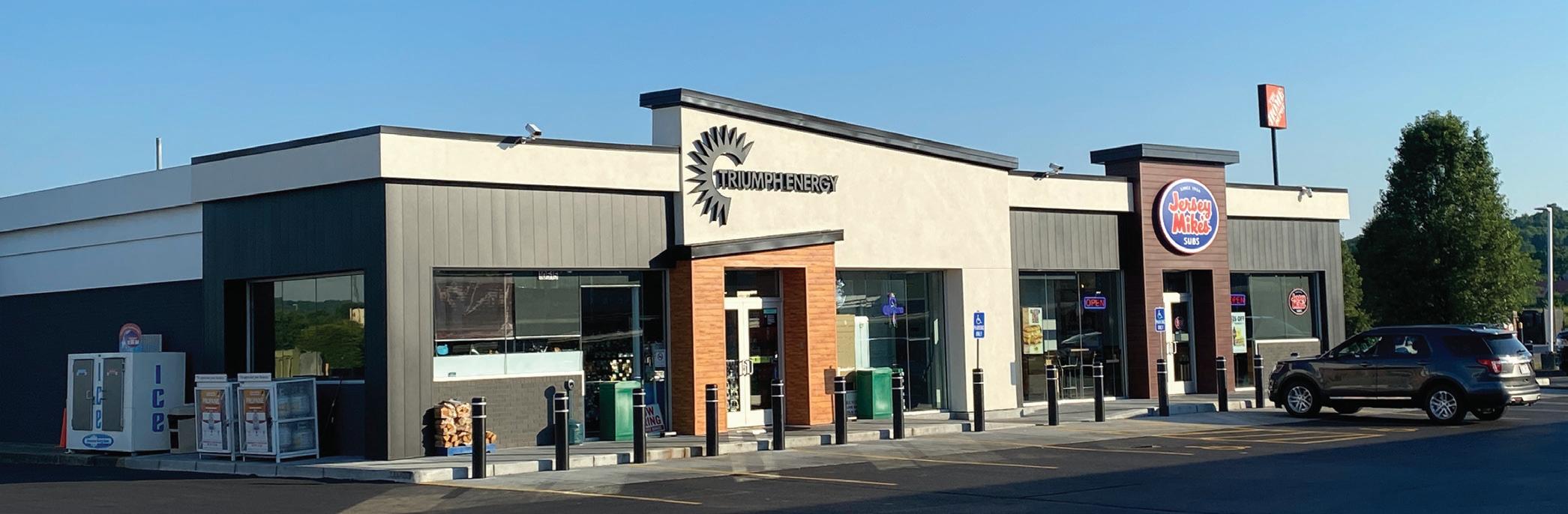
Accessing data in real time has been a game changer for the retail chain, which is now able to understand its data faster and more accurately. It no longer needs to wait to review different reports.
The chain is also in the process of testing AI to analyze the data for the retailer and make recommendations.
In addition, Triumph Energy’s new technology has streamlined employee scheduling. The chain maps out the busiest times of day with its data and staffs accordingly. It’s able to track customer traffic counts and sales data in real time.
“This has drastically changed the level of service our customers receive and maximizes the efficiency of labor that is deployed,” said Barkett.
Managing labor more effectively has been the biggest differentiator Triumph Energy found in utilizing its data.
“Labor is one of the biggest expenses for operators, and it is imperative that it be deployed effectively to maximize service to customers and increase overall profitability,” Barkett said.
At the stores, data entry has become more efficient: one hour per day saved during beta testing.
This has also improved the customer experience because store teams become additional eyes and ears on the store floor rather than sitting in an office.
Kayrouz Petroleum, too, schedules teams to better serve customers during the busier times through accessing customer counts and hour-by-hour sales. Modernizing its tech stack has allowed store leaders to perform tasks quicker and focus on other needs that make a larger impact on the store.
“In some cases, during our slow times later at night, we are able to analyze whether or not it makes business sense to stay open as late and, at times, we
have changed hours because the sales vs. payroll spent did not make sense for us to stay open,” said Ahern.
Ahern pointed out that accessing data more quickly is not just important from a sales perspective but also from the point of view of category analysis.
On the category management front, the category manager receives data more quickly and in more detail than in the past, allowing for an easier analysis that can be obtained by running fewer reports. In fact, one report can provide all the data they need, he explained.
Like Triumph Energy, Kayrouz Petroleum uses real-time data to make quicker decisions.
An example is remotely accessing the fuel it has in the ground, allowing the distribution department to react to inventory levels.
The chain is also able to monitor waste more easily.
“With us being at item-level inventory, we are able to accurately tell what items we might be short on during an inventory and then implement a cycle count plan for those or other items,” said Ahern.
“Also, by doing cycle counts periodically for the category, we know at that time what we might be short on in a category or specific item. Cycle counts also allow us to cut back on the amount of inventories we have to pay a vendor to do, which provides savings to the company.”
Modern POS systems offer mobile ordering, tap-to-pay and other forms of self-checkout.
At Kayrouz Petroleum, self-checkout has been implemented in stores, and although they are used, they are not used at the level initially expected.
“But for those that use it, they like the quicker sales process. Tap-to-pay inside and outside is definitely a customer convenience and allows again for a quicker sale at the POS,” Ahern added.
Barkett emphasized the importance of alternative payment methods besides cash and credit, as checkout must be quick and seamless.
“Today’s retail environment, especially convenience, must be all about the customer experience,” he said, adding the better the experience, the more likely customers are to make a second visit and refer other potential customers.
Upgraded equipment is needed now since the growth of mobile payments has changed retail. POS systems need to be able to work in sync with the retailer’s loyalty program.
“Loyalty customers visit more often and spend more money at your stores, so making sure all aspects are working properly is a key point of success,” Barkett said.
Retailers holding back from modernization might be scared by the “unknown,” according to Barkett, as older systems are reliable and have a well-trained user base, “but they lack the basic features to simplify operations and make them more efficient.”
There is also a time investment in upgrading operational systems and the POS.
Ahern pointed to cost as an initial stumbling block. “But the money you may make by having the data in order to do your category analysis and making sales decisions and saving on payroll efficiencies (and) store efficiencies help pay toward your investment.”
At the end of the day, Barkett said, technology is both the present and the future of convenience retailing and will be critical for sustained success. CSD

CStore Decisions is proud to announce Toot’n Totum as its 2026 Chain of the Year. With over 75 years in business and 125 locations in Texas, Oklahoma, Kansas and New Mexico, Toot’n Totum continues to grow and adapt while remaining deeply rooted in local values.
The Amarillo, Texas-based chain stands out for its people-first culture; commitment to tech innovation and vertical integration; its strong proprietary foodservice, grab-and-go and commissary program; and its stateof-the-art new-to-industry stores and focus on continued internal growth and footprint expansion.
CStore Decisions’ Chain of the Year Award honors a c-store, travel center or petroleum chain that has established itself as a superior retailer and innovator in the industry.
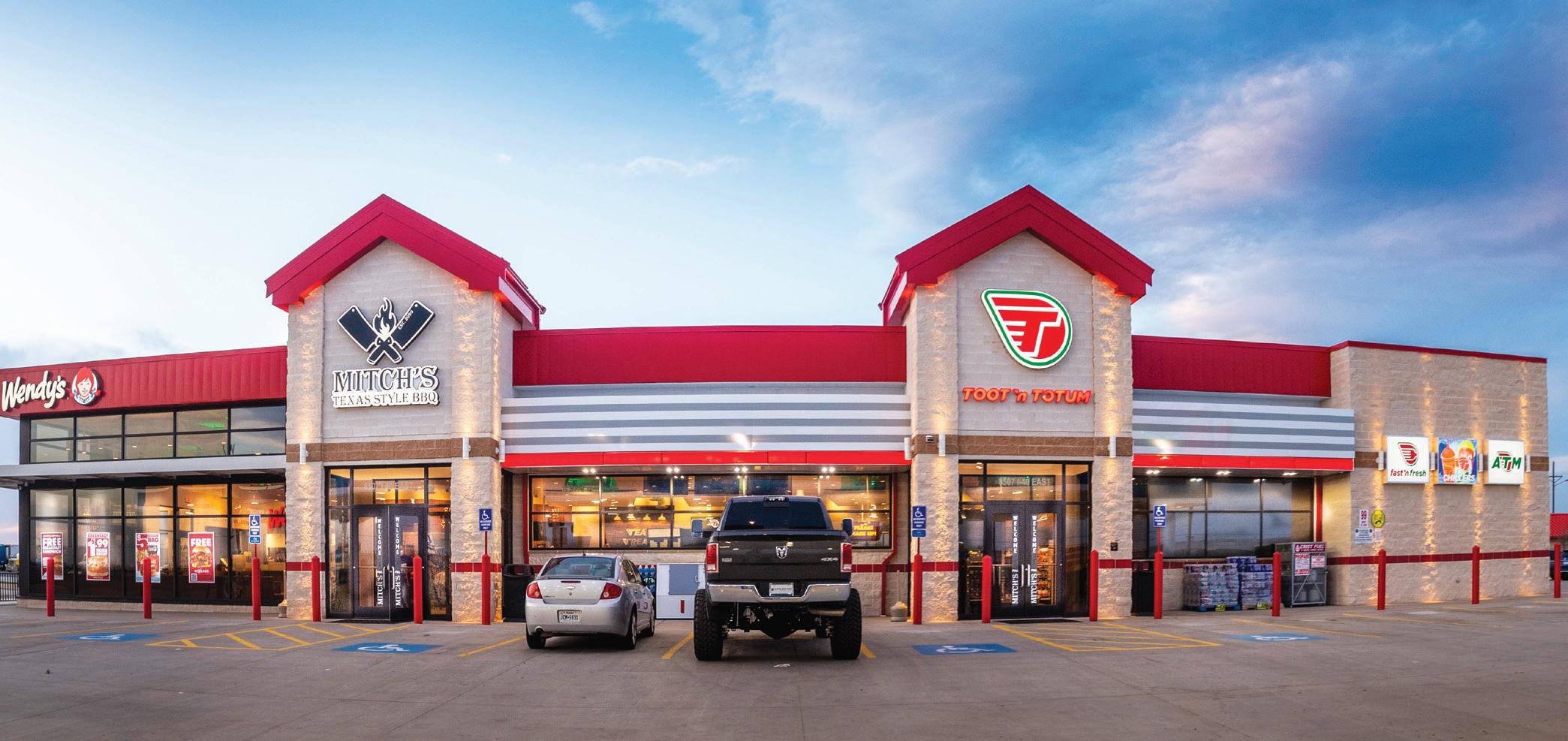
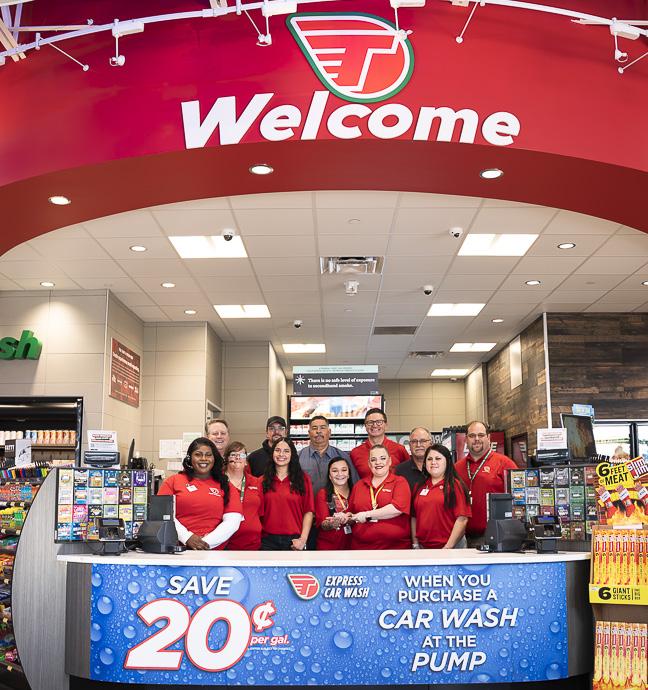
Dragon Fruit is the first flavor to emerge from Benson Boone’s growing role within Caliwater. Dragon Fruit pairs the naturally hydrating benefits of prickly pear cactus water with the vibrant tropical fruit known for its brilliant pink exterior and delicately sweet flavor. Made from sustainably sourced prickly pear cactus water, Caliwater delivers functional hydration in a light, refreshing beverage packed with naturally occurring benefits. Each can of Dragon Fruit contains powerful antioxidants, naturally occurring electrolytes and vitamins C and E.
Paramount Coffee introduces its first cold innovation: Joe Knows Coffee Cold Brew. The ready-to-drink (RTD) coffee comes in 12-ounce cans in four rich flavors: Caramel Café; Mocha Mo-Joe; Vanilla Chill; and Tall, Dark and Handsome. The premium coffeehouse-style beverage offers grab-andgo caffeinated refreshment in a can. Plus, operators can serve it as a base for specialty drinks customized with syrups, cold foam, whipped cream, caramel or dessert-style toppings. It’s an easy way for operators to offer a premium cold coffee without added equipment, labor or complexity. Joe Knows Coffee Cold Brew is packed 12 cans per case and is shelf stable for one year.
Paramount Coffee www.ParamountCoffee.com
Brown-Forman announced the national launch of el Jimador Tequila Spritz, a crisp canned cocktail for those who want refreshing, ready-to-drink beverages. Made with 100% Blanco Tequila, the new spritz reimagines a classic cocktail. It delivers a sophisticated, tequila-forward profile balanced with vibrant, natural fruit flavors. At 4.8% alcohol by volume, el Jimador Tequila Spritz debuts in three vibrant varieties: Mango, Lime and Orange. Each expression is available in convenient four-packs of 12-ounce sleek cans with a suggested retail price of $10.99.
Brown-Forman www.brown-forman.com
Mirabito grows in western New York with its acquisition of nine Quicklee’s stores as it approaches its 100-year anniversary.
Emily Boes • Senior Editor
BINGHAMTON, N.Y.-BASED MIRABITO, which now operates 120 stores throughout New York, Pennsylvania and Vermont, recently acquired nine of these sites from Avon, N.Y.-based Quicklee’s, a move that expanded its presence near Rochester, N.Y. CStore Decisions caught up with Marissa Sweeney, senior director of marketing for the c-store chain, as Mirabito’s 100th anniversary nears to learn more about the acquisition and what it means for the former Quicklee’s stores.
{CStore Decisions (CSD)} Why were these nine Quicklee’s locations attractive acquisition targets for Mirabito?
{Marissa Sweeney (MS)} These locations represent a natural next step in Mirabito’s ongoing growth strategy. Our growth via geographic expansion has traditionally been led by our fuel distribution divisions and, over time, we’ve expanded into complementary businesses that allow us to better serve the communities where we already have a presence. In 2015, Mirabito expanded its residential and commercial energy services into western New York through our acquisitions of Valley Propane & Fuels and Countryside Propane. As our presence in the region has continued to grow, expanding our convenience store footprint was a natural progression. These locations provide an opportunity to build upon the relationships we’ve established over the past decade while introducing the quality fuel, fresh food, convenience retail and customer-focused experience that define the Mirabito brand. As a family-owned company approaching our 100th anniversary, we’re committed to thoughtful, long-term growth and investing in the communities we serve.
{CSD} What changes can customers expect to see at the former Quicklee’s stores over the next six to 12 months?
{MS} Over the coming months, customers will begin to see the Mirabito brand introduced throughout the locations along with our premium fuel offerings, expanded fresh food and beverage selections, and the clean, welcoming convenience store experience that defines our brand. Customers will also gain access to the Mirabito Rewards loyalty and payment programs, providing opportunities to save on fuel, earn rewards and enjoy exclusive promotions through our mobile app.
As we continue the transition, we’ll evaluate each location individually to identify opportunities for enhancements while ensuring a seamless experience for customers. Our goal is to preserve the convenience and familiarity customers already value while introducing the products, loyalty benefits and customer-focused service that have made Mirabito a trusted destination throughout the Northeast.
{CSD} How important is local engagement when entering a new market?
{MS} Community involvement is one

of the core values of our company and has been a defining part of the Mirabito culture for nearly 100 years. While this c-store acquisition expands our retail presence in western New York, Mirabito has been serving the region since 2015 through our residential and commercial energy operations and has built strong relationships with many local organizations and community partners over the past decade.
Through our Mirabito Cares program, we support hundreds of nonprofit organizations across the Northeast with a focus on youth and families, veterans, healthcare, education and community development. As we continue to grow our presence in western New York, we look forward to building on those existing partnerships while creating new opportunities to give back. We believe strong businesses are built on strong relationships with the communities they serve, and our commitment extends well beyond the products and services we provide.
{CSD} Five years from now, what would you like customers and communities in Rochester to say about Mirabito’s presence in the market?
{MS} Success for Mirabito means becoming a trusted part of the community and the c-store customers choose because they know they can count on us. Five years from now, we hope people in western New York see Mirabito as more than just a place to fuel up or grab a cup of coffee; they see us as a dependable neighbor that delivers quality products, exceptional service and genuine convenience while investing in the communities we serve. ...











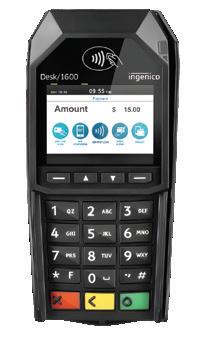
Chip card & contactless payment acceptance (Apple Pay, etc.)
Seamless integration with your current POS system**
One-time & recurring invoices that you can upload in bulk**
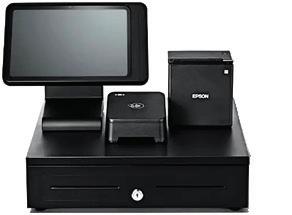
Chip card & contactless payment acceptance (Apple Pay, etc.)
Seamless integration with your current POS system**
One-time & recurring invoices that you can upload in bulk**