
W’SUP acknowledges the Darug, Dharawal, Gadigal, Gundungurra and Wiradjuri peoples and their traditional lands that we work and publish on. Always Was, Always Will Be.
W’SUP acknowledges the Darug, Dharawal, Gadigal, Gundungurra and Wiradjuri peoples and their traditional lands that we work and publish on. Always Was, Always Will Be.
By Sana Singh
With the launch of its 2026-2030
Indigenous Strategy, Western Sydney University is positioning itself as an anchor institution for Greater Western Sydney. The upcoming WSU Indigenous Expo is at the forefront of this shift,
institutional programming must prioritise early community-led networks and cultural safety.
Western’s Indigenous Expo steps right into this space, allowing high school prospects, undergraduate cohorts, academic staff, and
economic disadvantage, historical subordination and the failure to recognise cultural distinctiveness must be taken into account in order to redress inequality.” Acknowledging this, universities move from passive to active inclusion.
the heart of everything we do.”
The institution’s official framework states that the Badanami Centre “embodies a deep commitment to fostering the engagement and empowerment of our Indigenous students.”
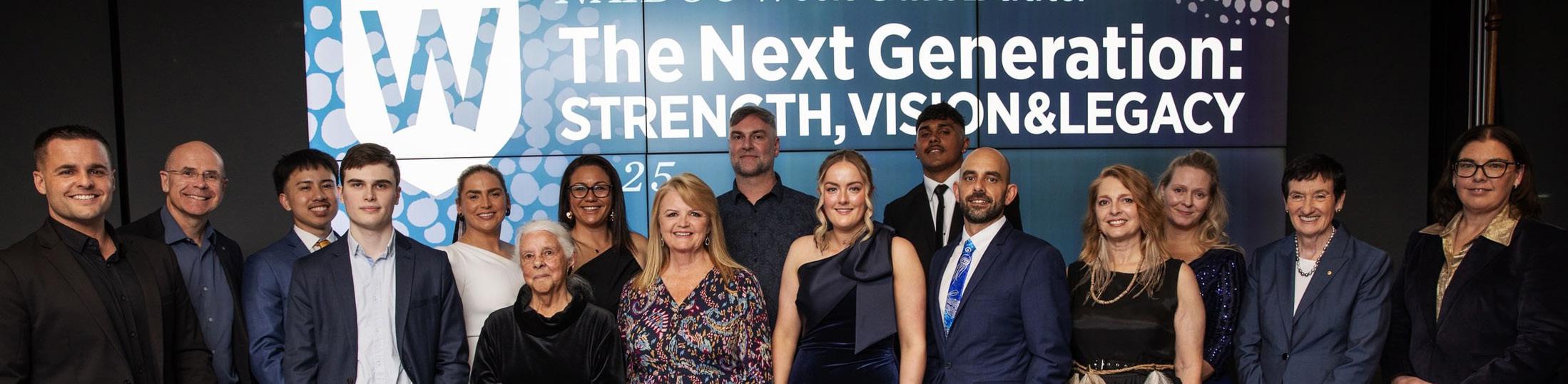
a milestone for the university’s First Nations enrolment and student retention targets.
The Expo will take place on the 28th of July 2026, from 3-6pm at Parramatta South Campus, on Dharug land, coordinated by the Division of the Deputy Vice-Chancellor Indigenous Leadership. This will support Indigenous students navigate study and career options in a culturally safe space.
But what does it take to grow a university campus into an environment of cultural belonging?
To confront the historical obstacles which often prevent First Nations people from entering tertiary education,
community elders to connect in a unified environment. The initiative goes beyond introductory seminars.
A 2014 report from the University of Notre Dame suggests that oncampus workshops and gatherings, like the Indigenous Expo, are essential for transforming abstract academic goals into authentic student confidence, ultimately, enhancing the formal application process and long-term sense of belonging for students.
Many First Nations students navigate institutional environments that have historically struggled to reflect their distinctive lives, something in need of urgent address.
The Human Rights and Equal Opportunity Commission (HREOC) observed, “racially specific aspects of discrimination such as socio-
WSU’s eight strategy objectives, listed on the Indigenous strategy website, aim to promote a sense of belonging, inclusion, support and diversity among Indigenous students. Additionally, the expo has officially committed to improving undergraduate Indigenous enrolment indicators over the next five years.
“This strategy reflects our ongoing commitment to Indigenous communities and reaffirms our responsibility to lead with integrity, respect and accountability,” said Deputy ViceChancellor Indigenous Leadership Professor Michelle Trudgett.
“It is grounded in Indigenous ways, knowing, being and doing, and places Indigenous knowledge and leadership at
The Expo would help turn these concepts into immediate, studentfacing resources aimed to foster a sense of belonging and community for students in a culturally safe environment. The Badanami Centre promotes a digital support initiative to Indigenous students to instantly connect them to Faculty Indigenous Student Success officers for guidance. Embedding these networks on day one, the Expo furthers Badanami’s goal of ensuring success in Indigenous student cohorts at Western.
By demonstrating to future generations that their heritage is prioritised, the university is ensuring that pipeline networks developed at the Indigenous Expo lead into an environment built for long-term academic success in First Nations peoples.
By Zahra Darwich
A massive new data centre development approved for Marsden Park is set to become the largest facility of its kind in the Southern Hemisphere, marking a significant step in Australia’s rapidly expanding artificial intelligence (AI) and digital infrastructure sector.
The $3.1 billion project, developed by CDC Data Centres, will consist of six four-storey data centre buildings. Located within Sydney’s north-west growth corridor, the facility is designed to store, process, and distribute digital information.
According to CDC, the Marsden Park development aims to meet growing demand for AIready infrastructure while strengthening Australia’s digital capabilities. Supporters argue the project will deliver substantial economic benefits to Western Sydney. The NSW Government estimates the development will “create approximately 220 construction jobs and 265 ongoing operational positions” while supporting broader growth

By Keely Marsh
While many students may be familiar with traditional university sports, Western Sydney University offers a range of lesser-known sporting and recreational activities that provide opportunities to stay active, meet new people and become part of the campus community.
WSU Sport Coordinator Brendan Hoey said the university aims to provide something for everyone.
“We have a range of offerings, from free social pickleball to dance fit classes, community social sports teams, learn-to-swim programs and our representative sports program,” he said. “There is something for everyone, regardless of fitness or skill level.”
These programs provide a welcoming environment for students who may be new to sport or simply looking for a way to stay active while studying. Beyond physical activity, participation in sport can help students build friendships and develop important life skills.
“Participation in sport is highly beneficial for university students as it promotes physical and mental wellbeing, reduces stress and enhances focus for academic success,’ Hoey said.
“It builds essential life skills like, teamwork, discipline. Resilience and time management, all traits that boost employability, while also fostering social connections and a sense of campus community.”
Students interested in joining a sport or recreational activity can find information through WESTERNLife, where all upcoming events, activities and opportunities are listed. The university offers a mix of free activities and subsidised programs, with options available during lunch, evening and across multiple locations throughout Western Sydney.
However, students who wish to engage in non-traditional sports beyond the available programs on WESTERNLIFE, such as darts and cue sports, will be required to search beyond WSU. This poses the question of whether WSU should expand their sports programs to become more inclusive of other nontraditional sports for students.
For those hidden sports programs that are available at WSU, students can view and register for the activities planned for the spring semester via WESTERNLIFE.

in the region’s digital economy. CDC has stated that the facility will inject billions of dollars into the economy and contribute to Australia’s growing position in the global technology sector.
Blacktown City Council Mayor, Brad Bunting, stated the project’s “size and scope… once again demonstrates that Blacktown City is
the destination of choice for worldclass, sustainable developments.”
However, the Marsden Park facility’s approved 504-megawatt capacity has been compared to the electricity consumption of approximately 140,000 homes. As reported by SBS, the United Nations raises concerns about the significant energy and water demands associated with AI data centres estimating that they are set to consume more water than every person on Earth by 2030.
Community submissions lodged during planning processes for major industrial developments in Marsden Park have previously raised issues relating to noise, visual impacts, and pressure on existing infrastructure. In a submission to Parliament from the Tomorrow Movement, an unnamed local Seven Hills resident suggested that the increased energy and water use in their local area may increase energy prices and the long-term impact of this could be global climate change. In response to submissions, Stantec
conducted an Impact Assessment to monitor any additional noise and reestablish the project noise threshold. The assessment found that common occurrences will include 1 to 2 levels above the noise decibel limit at the first row of houses directly south of the data centre development. This is expected to occur for up to 6 hours a month, which is representative of 0.8% of the year.
CDC and the NSW Government have highlighted sustainability measures incorporated into the project. The facility is expected to source the majority of its energy from renewable sources and has adopted water-efficiency targets aimed at reducing environmental impacts.
As AI becomes increasingly embedded in everyday life, communities such as Marsden Park may find themselves at the centre of Australia’s digital future. The challenge for policymakers will be to balance economic opportunities with the environmental and social concerns that accompany this new wave of technological development.

“...How would humans react if they ever encountered aliens?” - Nataša Aster-Stater in her review of ‘Disclosure Day’. Curious? Keep on reading.
“Is festival culture just shifting to adapt to the digital age...” - Angie Cherkas in ‘The Evolution of Concert Culture’. Continue on below.

Want to see your comic here? Get in touch: email us, DM us, or scan the QR code.

Hi! My name is Alissa. I have loved drawing ever since I could remember and hope to entertain people through my art!
@brierstudios
By the W’SUP Print Team
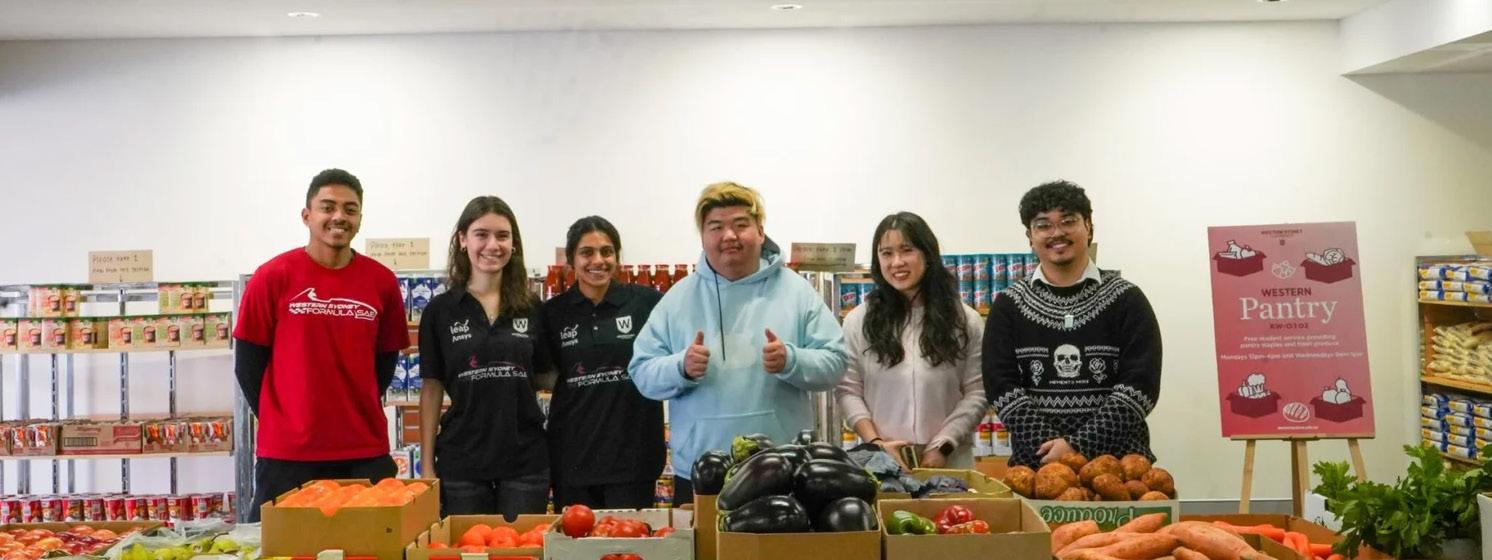
Miranda Zhang coordinates Western Sydney University’s Food Security Program, including the pantry, community dinners and, as of March 2026, the ‘Pantry to Plate’ Cooking Classes.
Zhang’s role involves planning the classes and managing logistics, while working closely with their community partner, Lorna Lee, who facilitates the sessions.
During the Covid-19 lockdowns, the previous Student Community team ran online cooking classes to maintain connection in a time of mass isolation.
Zhang said, “We wanted to bring that experience back in person, creating opportunities for students to learn, connect with others and share a meal together.”
With the cost-of-living crisis, Zhang reports an increase in demand from students seeking food support; what was expected to be shortterm now “an ongoing reality”.
But food insecurity is a rising issue even for students not traditionally considered ‘at-risk’. Zhang and her team are supporting increasing numbers of students who are employed but cannot consistently afford groceries.
“Many students describe skipping meals, reducing the quality... of food they purchase, or relying on instant and low-cost options.”
Zhang added that international students are particularly affected. While the Food Pantry program prioritises emergency food relied, the cooking classes address the need for more long-term support.
Students can register for the monthly cooking classes, regardless of cooking experience, to develop practical cooking skills and build confidence in the kitchen in a supportive setting.
Students and staff can also volunteer to assist during the session or in set-up and clean-up processes.
“One of the most rewarding aspects ... has been seeing students come together around food,” said Zhang.
She believes that, though the purpose is to assist with food security, these cooking classes also build a sense of community and belonging.
“Students have the opportunity to learn from one another, share cultural food traditions and connect with people they would not otherwise meet.”
After expressing gratitude for those involved, Zhang finished, “... we’re excited to continue growing the initiative as part of our broader commitment to supporting student wellbeing and food security.”
For information on upcoming classes, visit Student Community Food Security Programs on WesternLife.
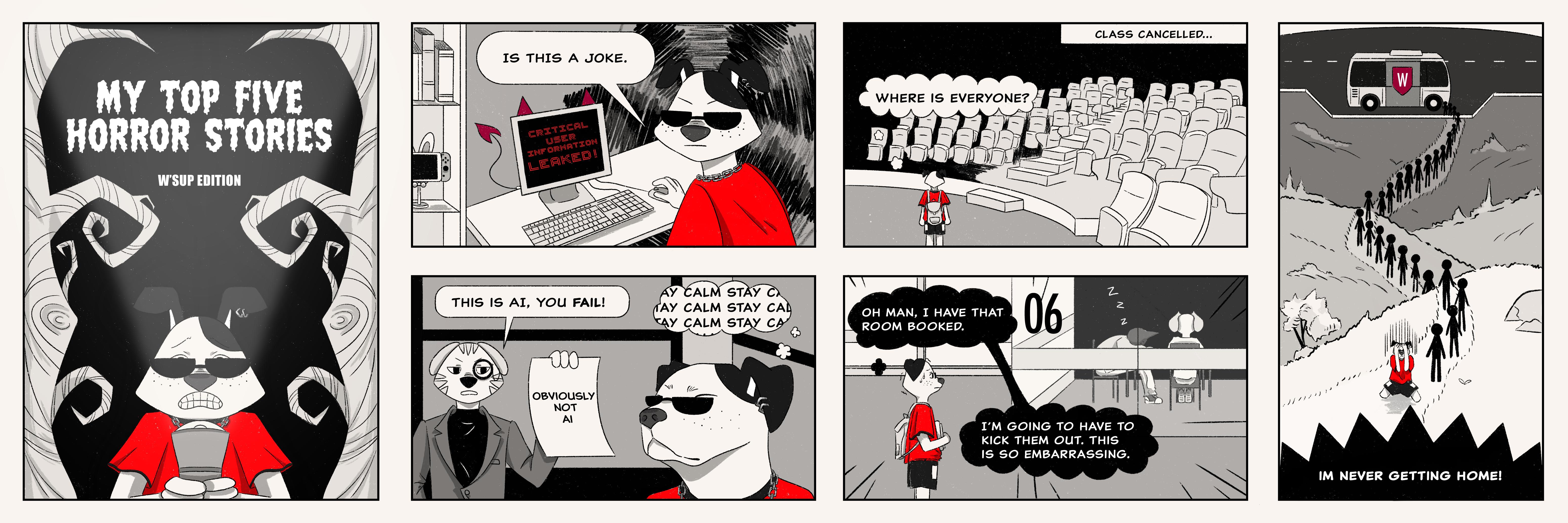
Illustrated by Alissa Wells. This comic follows D’Sup, a student navigating their way around the daily horrors of being a student. From security breaches to empty classrooms and dramatically long lines, D’Sup is experiencing it all. Outside of being W’SUP’s new mascot, D’Sup is all about fashion, gaming, and selfexpression. You could say they are the coolest student around, or not.
By Angie Cherkas
Despite the magic of concerts, rising ticket costs and the global economic crisis, large-scale festivals and concerts are becoming less affordable and harder to justify.
“I think marketing industries are draining the soul out of music due to prices. 30 years ago, you could get a ticket to a Jeff Buckley concert for $20 and now, for general admission it’s at least $200. I think music comes from the heart and to put it at such unreasonable prices limits dreams for a lot of people,” said Raine Badlan, a regular concertgoer and music fanatic in Sydney.
Of all the ways to experience music, festivals have become kingpin for the live music experience, starting with Woodstock 1969. Woodstock was located on a small
field fitting over 400,000 young people, where music, peace, and civil rights were celebrated. The festival was a beacon of hope and freedom amongst global tensions for young people at the time.
Nowadays, the annual Coachella festival is one of the 21st century’s most celebrated live music events. Since its inauguration in 1999, the festival has grown extraordinarily, having grossed over $200 million just this year according to TheStreet.
“[Coachella has] become more influencer focused... Brands are paying creators to go and engage and that is why it has become a business opportunity,” said influencer Justine O. in her interview with the Rolling Stone. Along with Coachella, Australia’s

own Laneway music festival has transformed from an intimate gig to a widespread commodity. Beginning in 2005 as a 1,400-person crowd in Melbourne’s Caledonian Lane, Laneway has now grown into a festival that attracts up to 50,000 people in six cities across Australia and New Zealand.
According to The Music, Laneway ticket prices have risen by approximately $200 in general admission prices over 20 years, in line with its skyrocketing popularity and rising production costs.
“We’re not business as usual. We’re nowhere near close to it. It all comes back to ultimately having a much higher breakeven for your show. And that reflects on the ticket price,” said Laneway general manager Jessie Parker in an interview with the
Sydney Morning Herald. Beyond the economic impact, the digital age had an enormous impact on the artist lineup for Laneway in 2025.
The festival utilised the “TikTokification” of music culture to tap into social media users as a target market. By booking artists who had built an online presence through TikTok fame, Laneway was able to attract young users on social media and drive-up ticket sales.
This begs the question: is festival culture just shifting to adapt to the digital age, or has it become completely overwhelmed by it?
Regardless, the demand for live music shows that the desire for connection remains unchanged, even after decades of evolution.
EDEditor

Hot for Journalism? Have your say with W’SUP, scan our QR code for more.

By Nataša Aster-Stater
Spielberg’s Disclosure Day asks the question many of us have often wondered: how would humans react if they ever encountered aliens? Emily Blunt’s TV meteorologist, Margaret, and Josh O’Connor’s whistle-blower, Daniel, are our main protagonists –with supporting characters that include a deer, a fox, a raccoon and a Cardinal bird, as Spielberg highlights through mise-enscene how animals are the true innocent creatures on earth. The sci-fi thriller is a visually sleek and fast-paced cat-and-mouse race about revealing and hiding truths. Throughout this race, Spielberg throws moral obstacles at the audience and the film’s heroes: would people’s faith be lost if higher beings were found and exposed? However, the perspective of the extra-terrestrials remain ambiguous as Spielberg does not allow the audience to see their perspective. Questions remain unanswered: what do these outer-space beings think of their treatment and what do they want on Earth? Viewers are left to their own fantastical theories.
“Volunteering was a wonderful experience and the organisers put a lot of work into ensuring that volunteers were confident in their roles and taken care of.” - Former W’SUP Editor Julia Bell
“I highly recommend attending, even just for a minute, as so many writers across various fields coming together to connect with Australian audiences certainly feels like magic.” - Print Design Editor Jasper Brady
“I’d compare walking into the SWF building like entering a bookshop and coffee shop all in one; books everywhere, excited lovers of stories, and the other best part is that you get to hear from the writers!” - Reporter Nataša Aster-Stater
“An annual delight, SWF proved more busy and joyful than ever. Event hosts were eloquent and enthusiastic, and the panellists were passionate and charismatic. I truly value the opportunity to connect with so many other readers and writers both locally and even internationally.” - Print Editor Eleanor Cooper