
“There’s no back button, and no mistakes.” - Bea Birett on how zines rock our world. Flip me over to read further and receive a comzine cutout.
Lorem Ipsum Dolor Sit Amet
Lorem ipsum dolor sit amet, consectetur adipiscing elit, sed do eiusmod tempor
“There’s no back button, and no mistakes.” - Bea Birett on how zines rock our world. Flip me over to read further and receive a comzine cutout.
Lorem Ipsum Dolor Sit Amet
Lorem ipsum dolor sit amet, consectetur adipiscing elit, sed do eiusmod tempor
By Nataša Aster-Stater

The Western Sydney University Student Union (WSUSU) was due to begin operations at the start of 2026 to represent student interests. But more than four months from the expected launch, WSUSU is reportedly facing numerous challenges.
A Western Sydney University spokesperson stated, “Students deserve strong and effective representation, and we recognise that this will take some time to be fully realised.”
But the President of the Student Representative Council (SRC), Bailey Anderson, told W’SUP, “We’ve seen enough delays.”
Staff Shortages
“The staff shortages are having the most direct impact on both students and staff...” Anderson said.
Out of the 22 full-time staff required to support the functions of the Student Union, there are currently only 8, and with limited working hours. The Western Sydney University spokesperson said the university is “working closely with the WSUSU Board to support it in bringing on board key staff”. In the meantime, there is only
one staff member currently supporting WesternLife who only works on Fridays, causing difficulties for student-run clubs and events that rely on the platform.
Start-Up Costs
In January, WSUSU Board Directors received training to support them in their roles, and an organisation was contracted to support the transition.
Both of these initiatives cost around $150,000, according to Student Representative Officer Grant Murray, “mostly covered by university operational funds however was garnished with SSAF funding.” Additionally, $1,700 worth of catering across 3 days added up to about $56 per head, and one Student Director resigned on the first morning.
This begs the question: Has this money been wasted?
Encouragingly, Murray predicts that in the next 12-18 months, the Union will “commence other revenue raising ventures”.
“Any delays that are not unavoidable will be condemned,” said Anderson.
Chair of the Board Shreya Sharma stated, “The Board is actively working to address current gaps...”
As of the 22nd of April 2026, the Board formally endorsed the appointment of a CEO who was due to begin on the 28th of April.
Sharma acknowledged that there is still more to be done, but the Board is “committed to ensuring that the Union develops into a strong, representative, and sustainable body that serves the interests of Western Sydney University students.”
Despite his critiques of the start-up process, Anderson acknowledges that the Student Union in concept is a positive outcome; “...particularly because of the options it gives us moving forward to address all the concerns that we couldn’t before –such as affordable food on campus.”
When the Union reaches full functionality, it should provide students with a far higher level of representation. Until then, students can visit wsup. news for ongoing updates.
By Zahra Darwich
You spent hours tailoring your resume, writing a cover letter, submitting your application, and likely completing assessments, only to never hear back.
If this sounds familiar, you’re not alone. Applying for jobs as a university student can feel like sending applications into the void. No rejection, no feedback, and no response at all; it’s easy to wonder what went wrong.
This experience is known as job ghosting – when an employer stops responding to an applicant at any stage of the recruitment process, without explanation or closure. Whilst discouraging, job ghosting is more common than many students realise, especially in competitive entry-level recruitment cycles (i.e., Graduate programs).
In many cases, job ghosting is not a reflection of an applicant’s ability or potential. Employers may receive hundreds of thousands of applications for student or entry-level roles.

By Keely Marsh
Free pickleball sessions are giving Western Sydney University students a new way to stay active, connect with others and support their wellbeing.

Run by Rally4Ever, sessions take place weekly on a Monday 12:30pm – 2:00pm ending June 1st, and are open to all current enrolled students, regardless of skill level or experience
According to WSU School of Business academic Brandon Gordon, who previously worked in human resources, recruitment responsibilities are often just one task among many competing priorities.
As application numbers have increased from around 50-200 per role a decade ago to several hundred today, responding individually to candidates has become increasingly difficult. As he explained, “the number of applicants is going through the roof, but recruiters still have a limited amount of time to reply to anyone personally”.
Gordon also noted that many organisations now rely on applicant tracking systems (ATS) that automatically scan resumes before a recruiter reviews them. In some cases, applications may be filtered out early if they don’t match key job description language, highlighting the importance of tailoring resumes carefully for each role. He also encourages students to go beyond simply submitting applications online by
contacting recruiters listed in job advertisements, and asking thoughtful questions about the role.
If you suspect you are being ghosted, there are several practical steps you can take:
Follow up
If you haven’t received a response within one to two weeks, sending a polite follow-up email demonstrates initiative and professionalism. Introduce yourself, confirm your application was received, and ask about next steps in the process.
Keep applying
Avoid pausing your job search while waiting to hear back from one opportunity. Focus on tailoring applications to roles aligned with your skills and interests rather than mass-applying broadly.
Track applications
Keeping a simple record of where and when you applied can reduce uncertainty and make follow-ups easier.
The beginner friendly program is designed to be inclusive and welcoming, encouraging students of all fitness levels to be involved. With no prior experience needed, participants can simply register, play and meet others in a relaxed social environment.
Rally4Ever uses sport as a tool to improve both mental and physical wellbeing, creating opportunities for students to build confidence, stay active and form meaningful social connections.
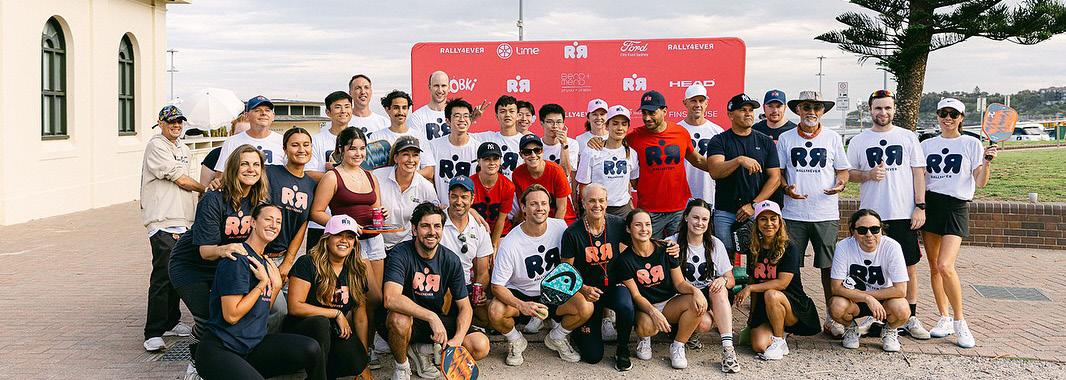
The sessions aim to provide a safe space where students can take a break from academic pressures and feel a sense of belonging in a supportive community.
The organisation was founded by Louise Pleming, after she witnessed the positive impact that friendship and tennis had on an individual she met at a homeless kitchen. Inspired by this experience, Rally4Ever was established to help
reconnect through movement and shared experiences. Since then, Rally4Ever has developed purposebuilt programs focused on bringing communities together, with a strong emphasis on inclusion, connection and long-lasting friendships.
At Western Sydney University, the pickleball sessions are becoming an accessible and engaging way for students to prioritise both their physical health and social wellbeing.

Protect your confidence
Most importantly, silence is not a judgement of your potential. Each application still helps build experience, clarity, and confidence as you progress through the recruitment process While job ghosting can be frustrating and discouraging, it is also a common part of navigating today’s early-career job market.
In many cases, silence reflects recruitment pressures rather than an applicant’s ability or potential. By reaching out to recruiters where possible, and continuing to apply for opportunities aligned with your goals, students can take practical steps to improve their chances of progressing. Not hearing back does not mean you are falling behind, it means you are gaining experience in a process every student learns to navigate over time.
You


“It’s got drama, but loses that loving feeling.” - Nataša Aster-Stater in her review of ‘The Drama’. Read below for more.

Want to see your comic here? Get in touch: email us, DM us, or scan the QR code.
From W’SUP’s editorial team
Youth
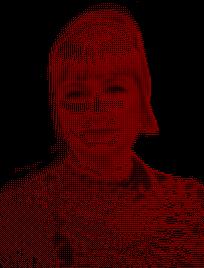
Associate Professor Milissa Deitz is a beloved member of the Western Sydney University community and a passionate advocator for foster care.
After working as a journalist in magazines such as Vogue and Marie Claire and completing a PhD at the University of Sydney, Milissa became a full-time academic at WSU in 2009 and now teaches core subjects in the Bachelor of Communications.
“My research aims to showcase the vital role played by storytelling in civil society,” Milissa says.
Her work on the lived experiences of youth in foster care “addresses urgent, under-researched areas relating to preventative mental health strategies.”
For 5 years, she has focused on Life Story Work (LSW), a framework designed to support youth in foster care, helping them to make sense of their personal histories over time.
“When delivered in supported and trauma-informed ways, LSW has been shown to demonstrably improve wellbeing and identity coherence...” Milissa says.
However, LSW is not consistently implemented, and even when it is, “it is often constrained by time pressures, workforce capacity, and staff turnover...”
As a result, many people leave the foster care system without meaningful
access to their own life stories.
“Access to narrative continuity is more than a therapeutic addon; it is foundational to identity, agency, and to cultivating a critical sense of belonging. It is also, as the UN Convention on the Rights of the Child (Article 8) mandates, a fundamental right.”
It is with this drive that she works to bridge gaps between academia, professional sectors and broader communities.
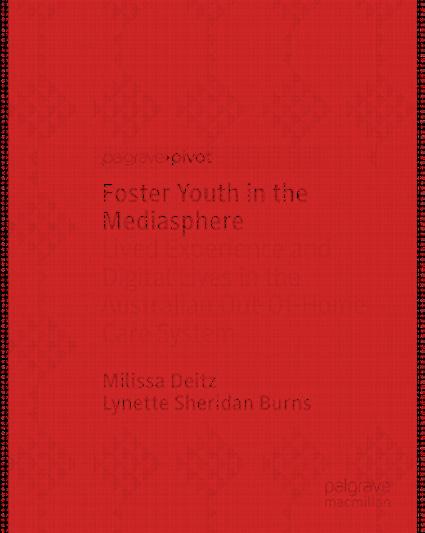
Her fourth book Foster Youth in the Mediasphere was published internationally in 2022 by Palgrave MacMillan, and she is currently drafting her second novel about an 11-year-old girl in her 13th foster home.
In 2024 she wrote, directed and produced a short documentary film with fellow academic and friend Rachel Morley, entitled Belonging: The Search for Identity in the Australian Foster Care System, which combines lived experience, advocacy and academic research.
Milissa says, “I believe translating complex research into human stories can have a profound impact in academia by bridging the gap between research and public understanding.”
To view Milissa and Rachel’s short documentary film, visit @StoriesThatMove123 on YouTube. To read more about Milissa’s work, visit wsup.news.
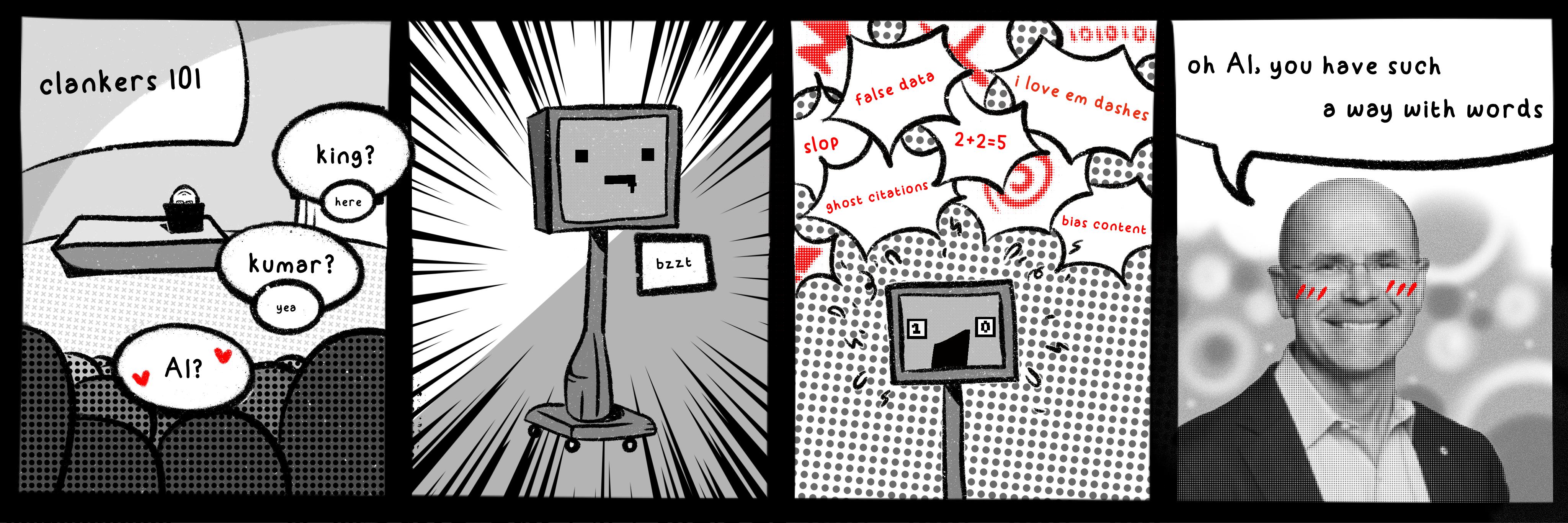
Illustrated by Jasper Brady. Inspired by Vice-Chancellor George’s interview with ABC Radio, this comic pokes fun at the VC’s description of AI as a “tool of the future”. It highlights common mistakes and indicators of AI, presenting it as a clunky machine that simply spits out false information. Hint: Cut out this comic and make a zine by folding it accordian style!
By Bea Birett
Zines (pronounced: zee-ns) have always been a tool of empowerment.
With their roots in activism, fandom and the punk movement, they’ve been a way for the working class to share ideas, art, information and joy with greater freedom from societal and financial constraints.


Sitting down with some paper and materials encourages mindfulness and imperfection; there’s no back button, and no mistakes.
So, it’s no surprise that many writers use zines as a means to connect and share their work.
With online platforms replacing third spaces and the AI slop forced onto social media feeds, people are craving for the return of physical media — CDs, DVDs, vinyls, magazines. Zines offer respite from the fast, endless consumption of content found in tech-centred spaces.

Writers aren’t immune to the starving artist trope — the 2022 National Survey of Australian Book Authors found that authors only make an average yearly income of $18,200, with poets earning the least at only $5,700 on average.
Authors are the last in a long line of people to get paid for their work on a book, so it’s no surprise more are bypassing the traditional publishing industry.
The survey found that more than a third of these authors self-

published at least one book. The zine community isn’t built on expectation of profit or gain, it’s driven by the desire to have agency over our own work, to publish what we want, on our own terms.
Nowadays, self-publishing looks a lot like a Substack, newsletter, or blog. But these reinforce this idea that writing is a lonely craft, existing in a vacuum until it reaches an audience.
Zine-making, however, fosters tangible community so you can share your physical creations with others.
Based in Parramatta’s Arts & Cultural Exchange, School of Zines encourages community as a core tenant of zine-making

this, teaching workshops centred around the belief that, by doing so, “you empower yourself and the community you represent”. They also offer private self-publishing workshops for individuals and groups to further support artists.
They truly embody the spirit of the zine: they’re anti-big tech and propeople. Last year, they also hosted their first Parramatta Zine Fair which gave dozens of local zinesters the opportunity to connect with the community and sell their work.
Other zine fairs worth checking out include Genderbility’s Spoon Fest, Strange Folds, and Other Worlds Zine Fair.
Hot for Journalism? Have your say with W’SUPscan our QR code for more, or see us at the bus stop.
EDEditor
By Nataša Aster-Stater
How many versions of a partner do you have to forgive and forget before you accept them? That’s a question ‘The Drama’ asks and answers in under 2 hours. Emma (Zendaya) and Charlie (Robert Pattinson) are a week out from saying “I do”. Emma’s got her something new, something blue, something borrowed... and something bad, too. When Charlie finds out, he questions their whole relationship, and the camera goes with him. The audience is flung into dreams and nightmares; cosy moments are spoiled with blood on Emma’s shirt; a coffee cup is suddenly disturbing. The couple let anxiety take control, and viewers are questioning: will their car say “just married” or self-destruct? The film is its own worst analyst, placing simple moments under a microscope until the emotion is lost on the screen.
It’s got drama, but loses that loving feeling.

“It feels like ever since all those staff cuts last year, the bus services became less consistent and I was missing classes because of it. Makes me wonder if the uni is trying to save money and just to push for students to pay to use the light rail instead”. - Jack
“I think the reduced services for the shuttle bus are highly inconvenient, as sometimes the light rail will overcharge. I also don’t want to walk halfway across campus for a class at the front. The shuttle services should go back to normal in my opinion, and there’s a petition for it, I believe!” - Maddison Bailey
“I remember my first time using the shuttle bus on my way to my first day of class. My aunt dropped me off at WSU Parramatta South. There were only four people on the bus – me, two girls, and the driver – and although I felt a bit nervous, the shuttle bus did help me reach my class at the end.” - Mariya Noun
Want to say your bit? Scan the QR code.