Change early, lead confidently — because standing still isn’t an option.
THIS IS WHAT MUNICIPAL ENGINEERING LOOKS LIKE TODAY
How cities are rethinking planning, design, and long‑term performance to build infrastructure that lasts.
AI IS YOUR ADVANTAGE
Transitioning from AI Overload to an AI Driven Mindset.
VOLUME 8, ISSUE 1 MAY / JUNE 2026
GROWING A MORE COMPLETE ENERGY PRACTICE
From generation to everyday use, WSB supports every step of the energy journey.
WHAT TEXAS TEACHES THE REST OF THE COUNTRY ABOUT WATER INFRASTRUCTURE
RESILIENCE
From short‑term fixes to systems built for decades.
Q&A: POWERING WHAT'S NEXT
Jamil Newell shares insights on growth, change, and the road ahead.
A message from our CEO
"CHANGE BEFORE YOU HAVE TO.”
— JACK WELCH
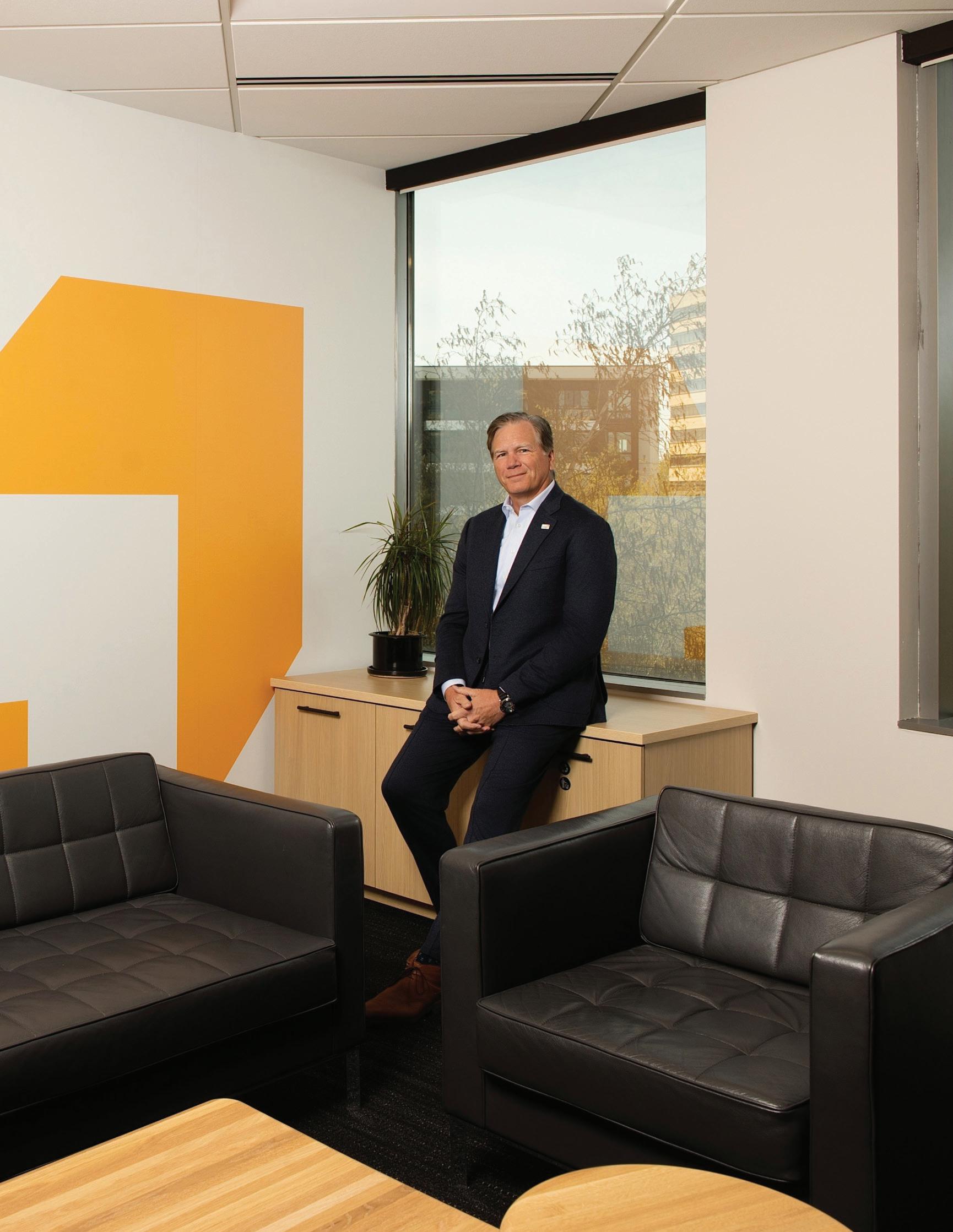
This is a quote that I use often when I am speaking. There are so many examples of people and companies that waited too long to change and in doing so missed out on opportunities and success. I meet so many people who are resistant to change and yet it is happening around us every day. Change isn’t something that we plan for once anymore; it’s constant. The way communities grow, how infrastructure is funded, and the tools we use to do the work are all evolving at the same time.
At WSB, we’re fortunate, and proud, that we embrace change with confidence. Starting WSB 30 years ago, we had to adapt in order to compete against much larger and more experienced firms. That adaptation became our culture and the type of person that we hire at WSB. We are curious and optimistic about what our clients need, how we can influence our industry, and who is developing the best tools.
I was at Mayo Clinic recently for a physical and was amazed at what they are doing just two years from when I was last there. The AI evaluation of your health compared to others used to have six categories and now has 15. This didn’t replace jobs but allowed the doctors to focus on improving the speed of diagnosis and treatment. It is the same in science and engineering. These new tools can improve our quality and recognize trends or mundane reviews that allow our staff to focus on creativity and ingenuity. AI is not going away and will help our industry as we learn to best use its power.
I was just in a client’s office the other day and they are trying to find ways to save costs through the use of AI. Cost reduction through AI isn’t a result of our engineering
fees but rather shows up in the reduction of errors, speed of delivery and other construction related activities. At WSB, we strive to lower our clients’ costs because we understand they often have more projects than available funding. Our industry is changing rapidly, but at the core are human experience and decision making.
As WSB continues to expand around the country, we are focused on collaboration between our teams. Each region has different challenges that we can solve by learning from other regions. Our “One WSB” philosophy pushes our teams to work together towards a common goal of doing what is best for our clients. We win when our clients are successful and that happens when we let our curiosity lead us. Thanks for taking a look at what we are doing to “change” in 2026!
Be your best,
Bret Weiss bweiss@wsbeng.com
This is What Municipal Engineering Looks Like Today
HOW CITIES ARE RETHINKING PLANNING, DESIGN, AND LONG‑TERM PERFORMANCE TO BUILD INFRASTRUCTURE THAT LASTS.
NOLAN HARVEY DIRECTOR, MUNICIPAL SERVICES NHARVEY@WSBENG.COM
to work — and they expect answers when they don’t.
That reality is exactly why municipal engineering has changed. And frankly, why it had to.
If you work in city leadership or public works, you already know this: there’s no such thing as a simple infrastructure decision anymore.
You’re juggling aging streets and utilities, limited funding, changing regulations, and weather that doesn’t behave the way it used to. At the same time, residents expect things
IT’S NO LONGER JUST ABOUT FIXING WHAT’S BROKEN
Most cities didn’t get into trouble overnight, and they won’t fix everything overnight either. What’s changing is how communities think about the work. Instead of asking, “What failed?” more cities are asking,
“What’s going to hold up for the next 20 or 30 years?”
That shift toward resilience isn’t about buzzwords. It’s about fewer late‑night emergency calls, fewer projects that need to be redone too soon, and infrastructure you don’t have to worry about every time it rains hard. At its core, resilience is about reducing stress — for city staff and for the people you serve.
THE REAL COST OF A PROJECT ISN’T THE PRICE TAG
Every city knows this feeling: a project looks affordable on paper, but years later it’s draining staff time and maintenance dollars. That’s why more communities are stepping back and saying, “Let’s be honest about what this will cost us over its life.”
Thinking in terms of lifecycle cost changes the conversation:
∙ Replacement versus repair becomes clearer
∙ Budget discussions feel more defensible
∙ Long‑term planning stops being guesswork
It’s not about spending more money. It’s about avoiding regrets later.
because it solves problems — managing stormwater, reducing flooding, improving water quality, and extending the life of traditional systems. And yes, it often makes streets and neighborhoods nicer places to be.
The best projects do double duty: they work hard and they show up well.
projects move forward with less friction and more trust.
DATA IS FINALLY CATCHING UP TO INSTITUTIONAL KNOWLEDGE
Public works teams have always known their systems. What’s new is having that knowledge captured, shared, and visible. With tools like GIS and asset management, cities can see patterns instead of isolated problems, prioritize work before things fail, and walk into funding conversations with real evidence.
This doesn’t replace experience — it supports it. And it makes decision‑making easier for everyone involved.
STREETS ARE BEING DESIGNED FOR REAL LIFE
Cities are also rethinking how streets function. Because streets aren’t just traffic corridors — they’re where people live, work, walk, bike, wait for buses, and run businesses.
Designing for all users:
∙ Improves safety
∙ Supports local economies
∙ Makes neighborhoods feel connected instead of divided
It’s not about taking something away. It’s about making streets work better for more people.
FUNDING IS PART OF THE PLAN FROM DAY ONE
Funding used to come after engineering. Now, it’s part of the conversation from the start.
Cities are thinking ahead:
∙ Is this project fundable?
∙ Does it align with local and state priorities?
∙ Are we ready if an opportunity opens up?
That alignment turns good ideas into real projects — and keeps momentum going.
GREEN INFRASTRUCTURE ISN’T A TREND — IT’S A TOOL
When cities use green infrastructure today, it’s not to check a box. It’s
BETTER PROJECTS START WITH BETTER LISTENING
One of the biggest changes we see isn’t technical — it’s cultural. Cities are involving residents earlier, asking better questions, and being clearer about tradeoffs. That approach doesn’t slow projects down. It usually does the opposite.
When people understand the “why,”
WHAT THIS ALL COMES DOWN TO
Municipal engineering today isn’t just about infrastructure. It’s about responsibility — to residents, to future city leaders, and to getting it right, not just getting it done.
Because at the end of the day, good infrastructure isn’t flashy. It’s reliable. It’s thoughtful. And it supports everyday life.
LET’S BUILD WHAT’S NEXT IN INFRASTRUCTURE — TOGETHER.
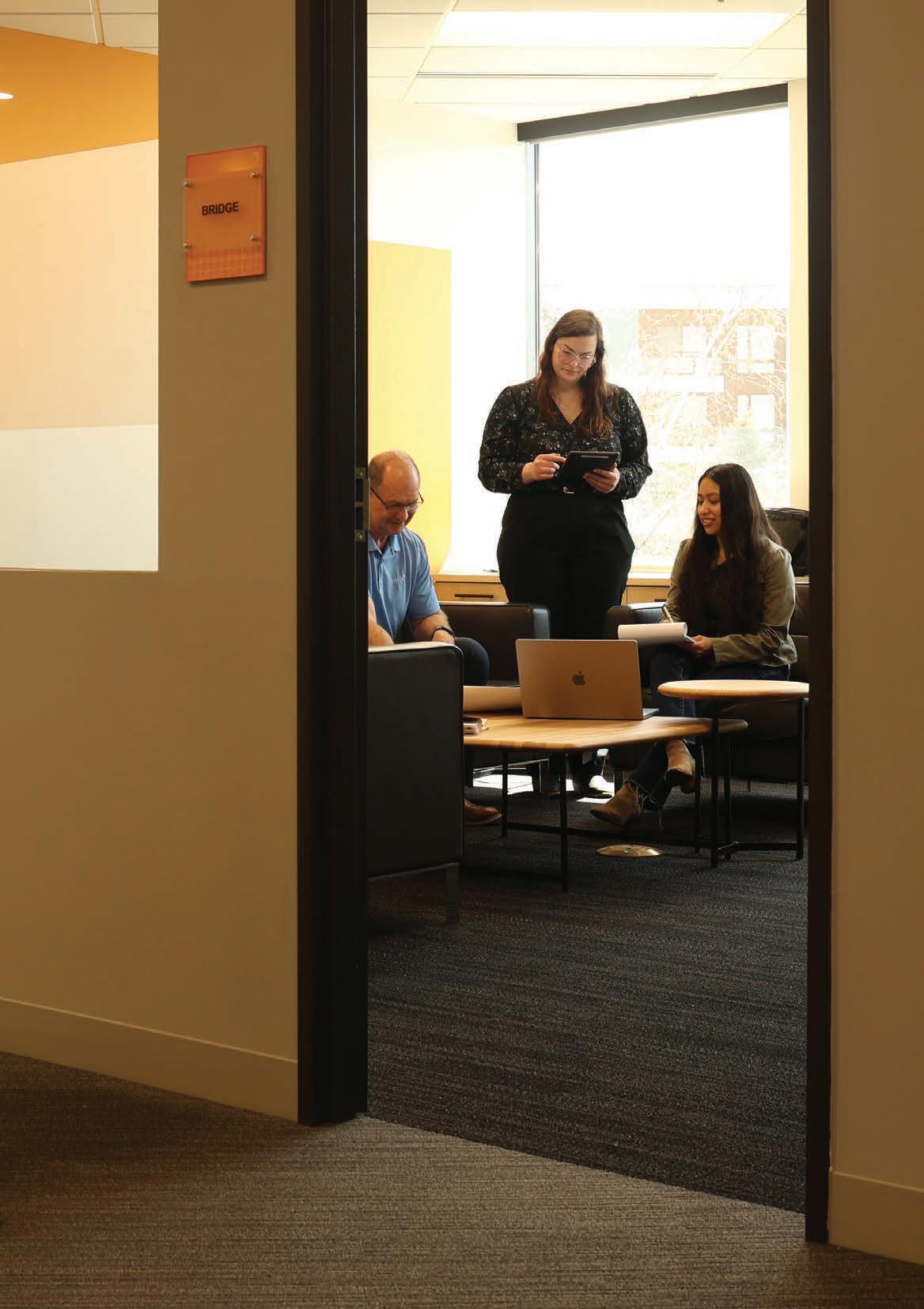
THE BEST IDEAS START WHEN PEOPLE COME TOGETHER.
BRIAN GLASER LEAD SOLUTIONS ENGINEER BGLASER@WSBENG.COM
TRANSITIONING FROM AI OVERLOAD TO AN AI ‑ DRIVEN MINDSET.
Eighteen months ago, the word ‘AI’ showed up in every vendor pitch, every conference keynote, and every trade publication in our industry. For many that design roads, analyze soils, and move infrastructure projects from concept to construction, most of it felt like science fiction being sold as procurement.
Every platform had an AI feature. Every sales call opened with a generative demo. The noise to signal ratio was brutal, and for an industry whose deliverables are measured in tons of asphalt and cubic yards of concrete, the disconnect between hype and the work can be real.
It all can be overwhelming. But overwhelm is not the same as dismissal. And curiosity, it turns out, is a more powerful force than skepticism.
Where others see AI as a disruptor to be afraid of – WSB saw it as an opportunity — one that will not replace our people and processes but streamline and support.
Leadership funded curiosity.
Our leadership didn’t hand down an AI mandate. They did something harder — they created space. The most curious staff were given room to apply the scientific method to a question that didn’t have an obvious answer yet: Where does AI actually create value in infrastructure development?
Not where the vendors say it does. Where it actually does.
That difference set the tone for everything that followed. Hypothesis, test, measure, iterate — the same rigor we apply to a geotechnical investigation or a traffic study, we applied to AI. What works? What doesn’t? Where does the output need a human eye, and where does it genuinely accelerate the process without compromising quality? Leadership met those questions with bold acceptance and gave the most innovative thinkers the freedom to find out.
It was a bet — on people, not on software. And it paid off faster than anyone expected.
We don’t use AI. We work with it.
Stanford Professor Jeremy Utley has helped popularize an important idea: AI isn’t just a tool or technology — it’s more like a collaborator on your team. You use a calculator. You use a survey instrument. You use a piece of software and then you close the window.
Working with AI is different. It’s a collaboration that supplements the talents, interests, and domain expertise of the people who already know what good infrastructure looks like. The judgment is still ours. The creativity is still ours. The institutional knowledge that comes from decades of delivering projects across every infrastructure sector — that’s irreplaceable. AI didn’t change what we know. It changed how fast we can act on it.
This philosophy runs through every application we’ve built, every workflow we’ve redesigned, and every conversation we have with clients about what’s coming next. AI at WSB supplements staff across every aspect of the business — from engineering and design to project management,
quality control, business development, and internal operations. It is not a department. It is not a product line. It is the way we work now.
Earned confidence.
One of the first concerns we heard — internally and externally — was about quality. If AI is doing the work, who’s checking the work? It’s the right question. Here’s the answer nobody expected: AI didn’t reduce our quality control. It funded it.
When AI helps streamline parts of our workflow, it creates more flexibility in how we use our time. We consistently reinvest that time into deeper quality review — taking a closer look at our work, collaborating more across teams, and catching details that often get compressed under tight schedules. The result is a more efficient process and a stronger end product for our clients.
Zero to hero.
Everyone is so focused on displacement — who loses their job, which industries get disrupted, which companies go under. The narrative is dominated by fear, and fear makes for great headlines but terrible strategy.
QUALITY AT WSB ISN’T AN AI OUTPUT.
IT’S A HUMAN OUTPUT THAT AI GAVE US TIME TO INVEST IN PROPERLY.
This is the part of the AI story that doesn’t get enough attention. Nobody talks about what happens when a 15 year veteran structural engineer discovers they have an aptitude for automation — and suddenly has the tools to act on it. Nobody talks about the geotechnical specialist who builds a data visualization tool over a weekend because the AI made the learning curve gentle enough to try.
These aren’t hypotheticals. These are our colleagues. And the pace continues to accelerate. New visions emerge daily.
We’re not automating critical quality checks or replacing the experienced judgment that defines good design. Instead, we’re giving our teams more time to apply that expertise — to take a second look, ask better questions, and bring a higher level of focus to the work. It’s the same experienced eyes, with more capacity to do what they do best.
Quality at WSB isn’t an AI output. It’s a human output that AI gave us time to invest in properly.
At WSB, we aren’t looking to replace anyone. We’re discovering what’s possible when the people who know this work best are given tools that match the scale of their ambition. The skeptical are becoming optimistic. The optimistic are becoming builders. And the builders are reshaping what an infrastructure engineering firm can be.
We can’t imagine going back. And honestly — we don’t want to.
We are
BOLD IS ACTION, MOVEMENT, AND STRENGTH . IT SHOWS UP IN THE DECISIONS WE MAKE, THE SOLUTIONS WE STAND BEHIND, AND THE MOMENTUM WE CREATE FOR CLIENTS AND COMMUNITIES. WE LEAD WITH PERSPECTIVE, CONNECT VISION TO REALITY, AND KEEP MOVING FORWARD—BECAUSE THE FUTURE IS OURS FOR THE MAKING.
WE’RE AMBITIOUS AND UNAFRAID TO HAVE A POINT OF VIEW. Forge Ahead.
From generation to everyday use, WSB supports every step of the energy journey.
BRIAN BOURASSA VICE PRESIDENT, STRATEGY BBOURASSA@WSBENG.COM
STEP-UP TRANSFORMER TRANSMISSION LINES GENERATION
SITE CIVIL + DRAINAGE + STRUCTURAL REVIEW
OSURVEY + RIGHT OF WAY
LANDSCAPE SCREENING
ver the past several years, WSB has been intentionally building a more connected energy practice — one that reflects how energy systems actually function in the real world. A key part of that evolution was the acquisition of Agbara Engineering and NEO Virtus Engineering, which strengthened our ability to support energy projects from planning through long‑term performance.
Together, these teams brought deep experience in transmission, distribution, and energy delivery, along with specialized expertise in renewable energy and
sustainability‑focused solutions.
Their integration expanded
ENVIRONMENTAL PLANNING + COMPLIANCE (BIRD / BAT STUDIES)
WSB’s technical depth and reinforced a shared goal: supporting energy infrastructure as a unified system rather than a series of disconnected phases.
From Generation to Everyday Use
Energy infrastructure is often invisible, yet it touches nearly every aspect of daily life — connecting generation sources to homes, businesses, farms, and communities. As systems evolve through renewable generation, grid modernization, and emerging technologies, our teams support the full lifecycle of energy infrastructure.
= ENERGY SYSTEM FLOW = WSB SERVICES AND EXPERTISE
TRANSMISSION
SUBSTATION DISTRIBUTION SUBSTATION
TRANSMISSION LINES
PAD-MOUNTED TRANSFORMER
HOMES, BUSINESSES AND ELECTRIC CHARGING STATION
DRONE QA/QC + AERIAL IMAGING + GIS
CIVIL GRADING + ACCESS
INSPECTION SUPPORT
From early planning and permitting through design, construction, and ongoing performance, multidisciplinary teams work together across each phase of the system. At the front end, we support generation projects with site civil engineering, environmental planning, structural review, and access design. As electricity is stepped up and transmitted across long distances, teams provide surveying and right‑of‑way services, structural engineering for transmission infrastructure, and public engagement along the corridor.
Closer to where energy is delivered and used, we support substations, distribution systems, and local delivery
VERIFICATION + ASSET DATA MANAGEMENT PUBLIC ENGAGEMENT
SUSTAINABILITY + POLICY SUPPORT
networks. Construction‑phase inspection, quality assurance, and tools such as drone‑based QA/QC and GIS help verify infrastructure is built accurately and performs as intended over time.
By bringing together environmental planning and compliance, geotechnical and materials testing, surveying, construction oversight, and data‑driven asset management, WSB supports both established utility systems and future‑focused technologies — guiding energy from generation to everyday use with reliability, resilience, and long‑term value in mind.
Grants & Funding
ALIGNING RESOURCES TO ADVANCE IMPACTFUL PROJECTS.
WSB’s Grants & Funding team helps turn well‑planned ideas into funded, deliverable solutions by aligning project goals with complex federal, state, and local funding programs across markets nationwide.
BY WORKING ALONGSIDE WSB’S TECHNICAL EXPERTS FROM THE START, WE ENABLE PROJECTS TO BE FUNDING‑READY, COMPETITIVE, AND POSITIONED FOR LONG‑TERM COMMUNITY BENEFIT— FROM CONCEPT THROUGH DELIVERY.
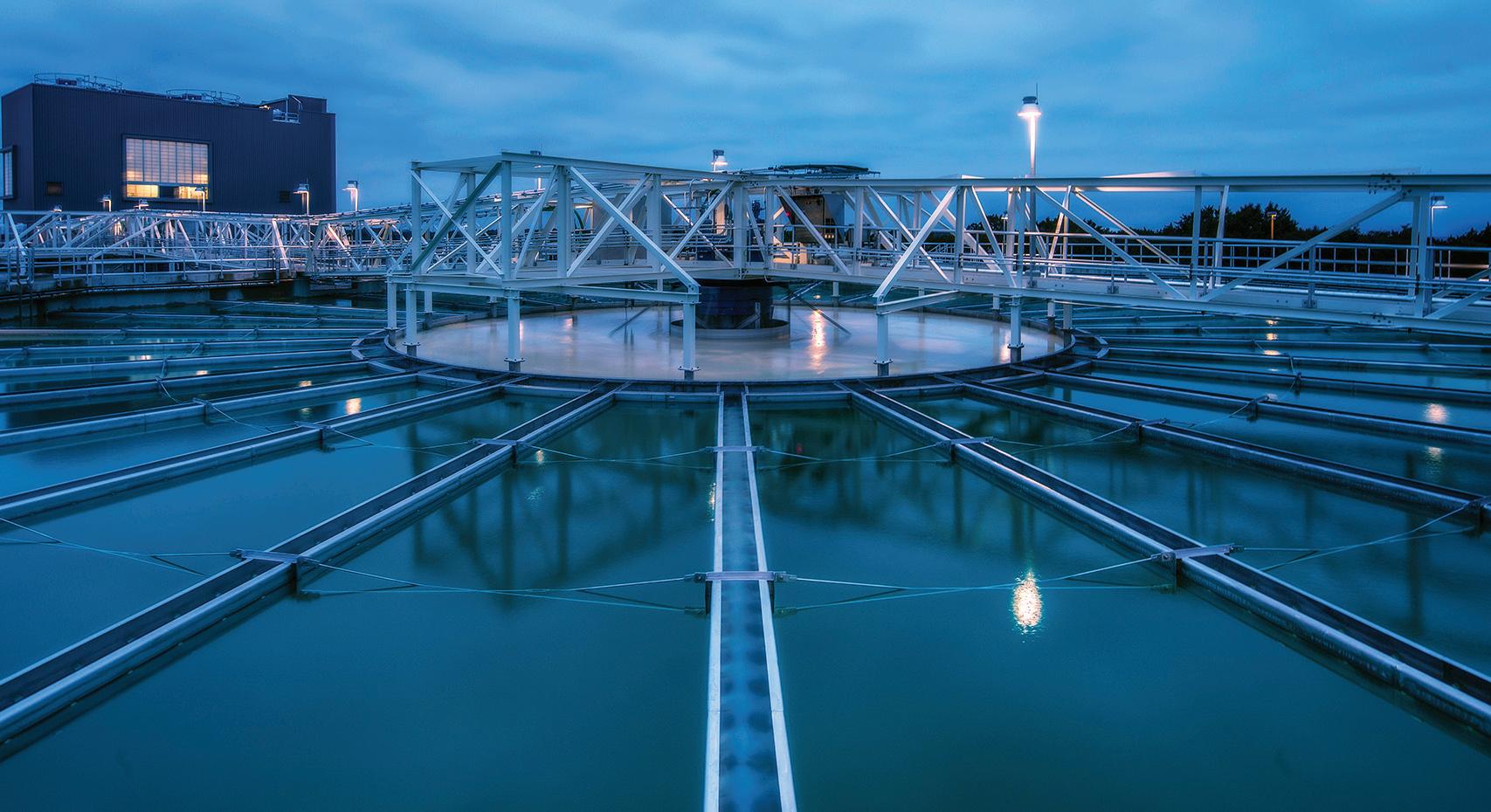
What Texas Teaches the Rest of the Country About Water Infrastructure Resilience
JESSE PENN, SENIOR DIRECTOR, W/WW & WATER RESOURCES JESSE.PENN@WSBENG.COM
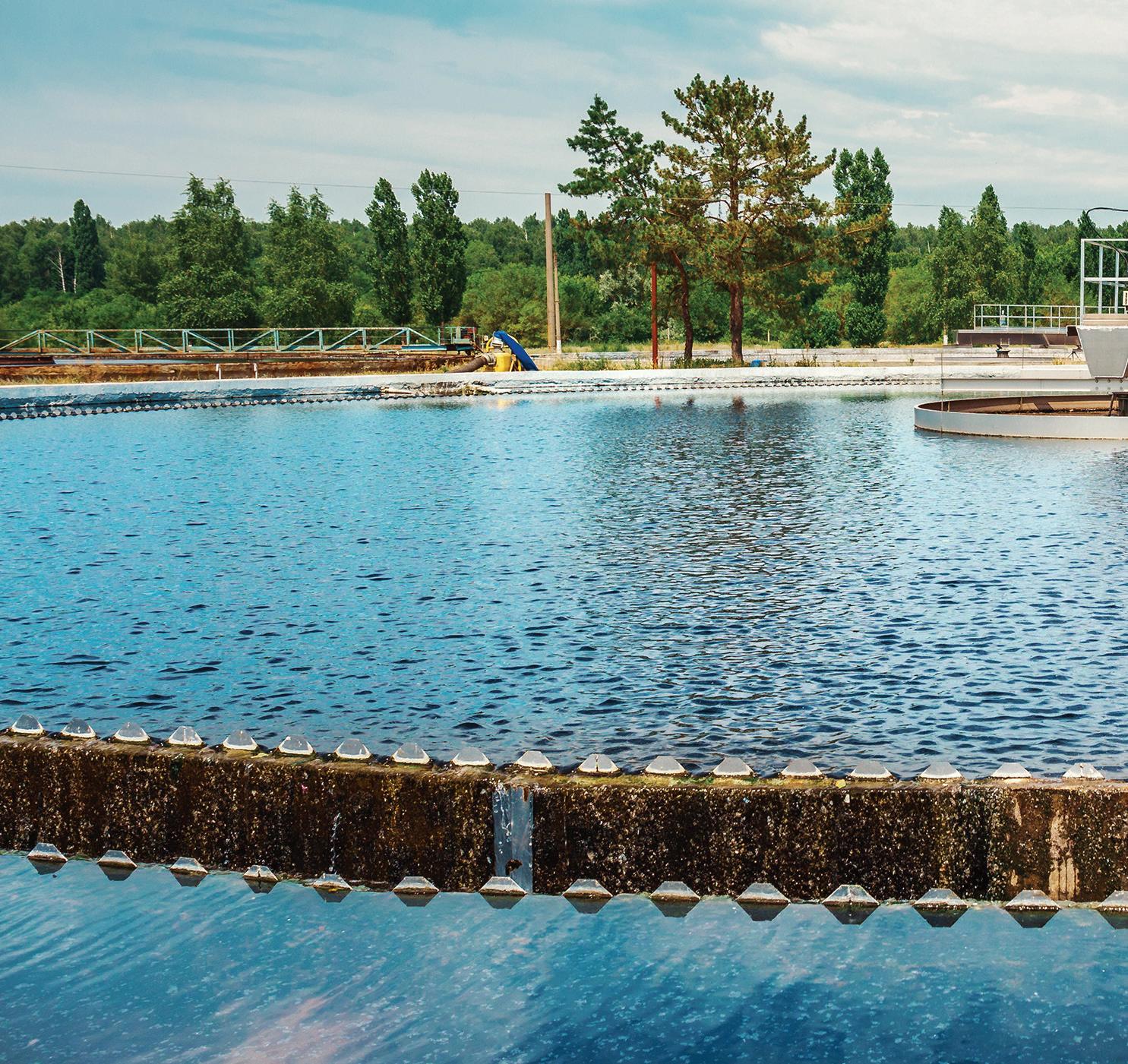
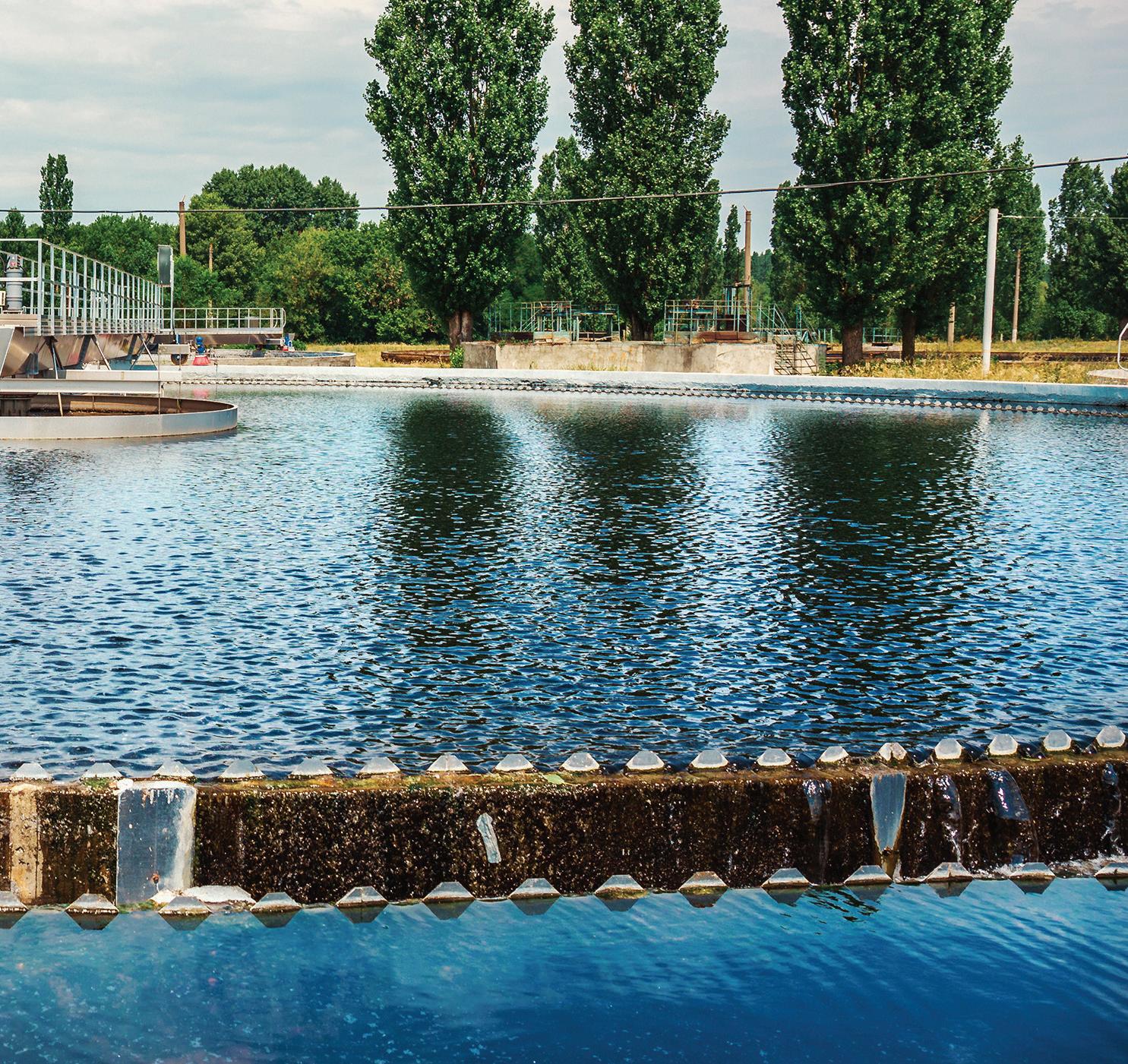
In Texas, long term drought, population growth, ecology, aging infrastructure, and extreme weather have intersected in ways that highlight challenges many regions are increasingly facing. This shapes how systems are planned, designed, and operated, offering lessons that extend well beyond state lines.
Planning for Scarcity Over Generations
One of the clearest lessons to emerge is that water scarcity must be treated as a lasting operating condition rather than a temporary disruption. Utilities that have worked through prolonged drought learned that short term relief — such as periodic reservoir recovery — does not eliminate supply risk.
In Central Texas, this reality has driven planning horizons well beyond traditional cycles. Some utilities have developed 100 year water supply plans, forcing difficult conversations about how water will be sourced, conserved, stored, and delivered for generations to come. That generational mindset is becoming increasingly relevant elsewhere as growth and climate variability place similar demands on systems nationwide.
Financial Resilience is System Resilience
Sustained conservation carries financial consequences that cannot be ignored. Reduced water use affects utility revenue, influencing affordability, capital investment, and maintenance programs. Utilities operating under these conditions have had to reevaluate rate structures and balance financial stability with resource stewardship.
The takeaway is straightforward: resilience cannot be achieved through engineering alone. Financial planning and technical planning must be aligned early, particularly when infrastructure is expected to perform reliably for decades.
Designing Beyond Historical Assumptions
Recent experience has reinforced the need to plan for conditions outside historical design norms. Systems accustomed to heat and drought have also been tested by flooding, ice storms, and prolonged freezing temperatures. Multiday freezes strained power supply, treatment processes, and distribution systems, while flooding introduced additional risks for facilities and critical infrastructure.
From Isolated Fixes to Adaptive Systems
In response, resilience has evolved into a broader planning framework. Utilities are moving away from one off fixes toward flexible systems capable of responding to a range of known and unknown challenges. This includes enhanced monitoring, clear emergency response
DELIVERING RESILIENT SYSTEMS REQUIRES THINKING ACROSS THE FULL CYCLE–FROM EARLY PLANNING AND DESIGN TO LONG TERM OPERATIONS.
planning, defined operational roles, reliable backup power, and communication strategies that support timely decision making.
The Expertise Required for Complex, Persistent Challenges
Delivering resilient systems in these conditions demands teams that understand how planning decisions affect lifetime operations, how construction choices influence adaptability and how systems behave under stress. Utilities increasingly need partners who can think across the full lifecycle from early planning and design through construction and ongoing performance while accounting for financial constraints, regulatory requirements, and real world operational realities.
Lessons learned under one set of pressures can inform smarter decisions elsewhere, helping utilities move from reactive solutions to robust strategies.
Strengthening WSB Through Legacy CAS Experience
In late 2025, WSB acquired CAS, a well‑established water and wastewater engineering firm with deep roots in Texas.
The integration expanded WSB’s water and wastewater capabilities by adding experience shaped through decades of complex project delivery. The Austin‑based team brings perspective across planning, design, construction, and operations on public and private infrastructure projects, informing how systems are planned and phased under conditions shaped by scarcity, growth, ecological constraints and extreme weather.
Legacy CAS adds depth in wastewater treatment and strengthens WSB’s capabilities in pipelines, lift stations, pump stations, and large‑diameter conveyance. Together with WSB’s existing water resources and treatment expertise, this integration supports a practical, systems‑level approach to water and wastewater infrastructure.
An Early Signal with Broader Relevance
The pressures shaping planning in Texas — ecology, scarcity, growth, extreme weather, financial constraints, and uncertainty — are no longer isolated. The lessons learned in response, particularly the discipline of planning for generations rather than cycles, offer a practical framework for communities nationwide as they work to build water and wastewater systems prepared not just for today, but for the long term.
Powering What's Next
The demand for power is growing faster than ever, reshaping how infrastructure is planned, designed, and delivered. In this Q&A, Jamil Newell, Vice President of Power Delivery at WSB, shares his perspective on what’s fueling that growth, how WSB is supporting clients through rapid change, and where the industry is headed next.
traditional construction work. Around the time I entered the industry, power delivery was accelerating while construction was slowing. Once I was exposed to it, I realized how much opportunity there was and how essential this work is. I’ve been in the industry ever since and never looked back.
HOW DO YOU FEEL ABOUT THE FUTURE OF POWER DELIVERY GIVEN TODAY’S ECONOMIC CLIMATE?
Power delivery is in a very strong position right now. Demand for electricity continues to increase — from data centers and AI to broader population growth and development across the country. The work is there, and it’s not slowing down.
The real focus for the industry is how quickly we can scale to meet that demand. This level of growth creates opportunity, but it also requires thoughtful planning, strong engineering, and the ability to move efficiently. Overall, it’s an exciting time to be in this space.
A Conversation with Jamil Newell, Vice President of Power Delivery at WSB.
WHAT ORIGINALLY DREW YOU TO POWER DELIVERY WORK AND WHAT MADE YOU DECIDE TO BUILD YOUR CAREER IN THIS SPACE?
I actually fell into power delivery. I’m a civil engineer by degree and originally planned to go into more
YOU MENTIONED PROJECTS THAT REQUIRE AS MUCH POWER AS A CITY THE SIZE OF MIAMI. WHAT ARE THE IMPLICATIONS OF THAT KIND OF DEMAND ON THE ELECTRICAL GRID?
It’s something the entire industry is actively figuring out together. From
a technical standpoint, it can work — but it puts pressure on how quickly generation and power delivery systems can scale. Our role in power delivery is essentially connecting the load to the source, making sure the system can keep up as demand grows.
In the short term, there’s an intense push to expand infrastructure fast enough to support projects of that size. Long term, the result is a much larger, more robust electrical system. It’s unprecedented, but it reflects how quickly technology and demand are evolving.
POWER DELIVERY IS A NEWER SERVICE OFFERING AT WSB. WHY WAS IT IMPORTANT FOR THE FIRM TO ADD THIS CAPABILITY?
Clients want fewer handoffs and more accountability. Utilities and end users are looking for partners who can support multiple workstreams — from surveying and routing to civil and electrical — within one organization.
When those services are integrated, communication improves, risk is reduced, and projects move more efficiently. Adding power delivery allows WSB to support clients in a more comprehensive way.
YOU JOINED WSB THROUGH AN ACQUISITION. WHAT HAPPENED BEHIND THE SCENES TO MAKE
THAT TRANSITION SEAMLESS FOR YOUR CLIENTS?
A lot of coordination across the firm. Every function — HR, IT, operations, technical teams — had dedicated workstreams focused on making sure nothing fell through the cracks. When that level of effort happens behind the scenes, the transition feels smooth to clients. That doesn’t happen by accident.
WERE YOU ABLE TO RETAIN YOUR CLIENT BASE THROUGH THE TRANSITION TO WSB?
Yes — and many clients were excited about it. Before joining WSB, we had a limited scope and capacity. By coming into WSB, we immediately added civil, structural, surveying, right of way, and geotechnical capabilities. Since then, we’ve continued expanding electrical capacity as well. Clients quickly saw the value and began asking how else we could support them.
WHAT ARE CLIENTS NAVIGATING RIGHT NOW IN TRANSMISSION, DISTRIBUTION, AND SUBSTATION WORK, AND HOW IS WSB HELPING?
Many utilities are being asked to deliver in a single year what used to be planned over a decade. That pace puts pressure on everything — internal resources, project management bandwidth, outside partners, and even material availability, since so many organizations are building at the same time.
WSB helps by providing strong engineering and design services, along with project management support when it’s needed. During design, we stay flexible so projects can move faster — whether that means ordering materials earlier or designing around available components. On the back end, we support construction with QA/QC and field coordination so clients have visibility and confidence throughout the process.
WHAT EXCITES YOU MOST ABOUT WHERE THE POWER DELIVERY INDUSTRY IS HEADED?
It’s the combination of unprecedented demand and advancing technology. Tools like artificial intelligence can help teams work more efficiently and expand what existing staff can accomplish. That’s especially valuable in an industry that’s scaling rapidly.
At the same time, the level of demand we’re seeing creates opportunity that simply didn’t exist before. It’s a moment where firms that are prepared can really grow and make an impact.
LOOKING AHEAD, WHAT ADVICE WOULD YOU GIVE ORGANIZATIONS PREPARING TO INVEST IN POWER DELIVERY PROJECTS?
Look for a partner who is technically excellent, communicates clearly, and stays engaged. The more involved your engineering partner is, the more value they bring over time. That relationship evolves from transactional to trusted — and that’s where the best outcomes happen.
As unprecedented demand reshapes the energy landscape, the future of power delivery will be defined by clarity, coordination, and the ability to act with purpose. At WSB, we approach this moment with strong engineering, integrated expertise, and a commitment to building systems that are resilient, scalable, and ready for what’s next.
THE COMBINATION OF UNPRECEDENTED DEMAND AND ADVANCING TECHNOLOGY... CREATES OPPORTUNITY THAT SIMPLY DIDN’T EXIST BEFORE.
Partnering to Build
BRET WEISS HONORED WITH INAUGURAL FINANCE & COMMERCE C LEVEL AWARD
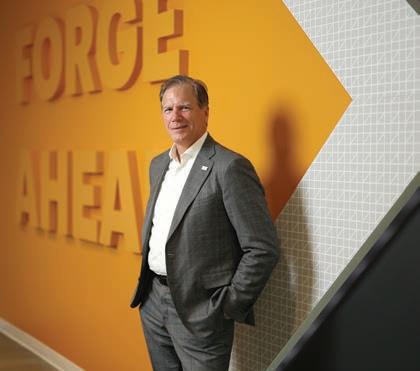
Bret Weiss, WSB President & CEO, has been selected as an inaugural honoree of Finance & Commerce’s C‑Level Awards. These awards recognize Minnesota business leaders for exceptional leadership, integrity, vision, and community impact.
Bret’s commitment to delivering innovative, future‑focused infrastructure solutions and fostering a people‑first culture strongly reflects the values celebrated by this honor. He was recognized at the awards and networking event in April at Quincy Hall in Minneapolis.
FAYE GILLESPIE NAMED IRWA CHAPTER 20 PROFESSIONAL OF THE YEAR
WSB is proud to congratulate Faye Gillespie on being named the International Right of Way Association (IRWA) Chapter 20 Professional of the Year. This recognition honors Faye’s exceptional contributions to the right of way (ROW) profession and her continued commitment to advancing the industry.
Faye’s leadership, expertise, and dedication have made a meaningful impact on both the ROW community and WSB’s ROW Group. Her work reflects a strong commitment to collaboration, professionalism, and service.
WSB ADVANCES ON ENR’S TOP 500 DESIGN FIRMS LIST
WSB has been named to Engineering News‑Record’s 2026 Top 500 Design Firms list, ranking #106 nationwide and advancing three spots from last year. The annual ranking recognizes the nation’s leading U.S. based design firms by revenue from design services.
This distinction underscores WSB’s sustained growth and enduring commitment to engineering excellence, trusted client partnerships, and infrastructure solutions that strengthen communities nationwide.
Build What’s Next
WSB EXPANDS EXPERTISE AND LEADERSHIP THROUGH STRATEGIC ACQUISITIONS
WSB announced the addition of key leaders following the recent acquisitions of CAS Consulting & Services (CAS), Agbara Engineering (Agbara) and NEO Virtus Engineering (NEO Virtus). The expansion of the leadership team enhances WSB’s expertise in water resources, construction management, and power delivery and design.
∙ Henry Leighton, Vice President, Construction Management
∙ Jesse Penn, Senior Director, Water/Wastewater & Water Resources
∙ Stephanie Blew, Director, Water Resources
AGBARA LEADERSHIP JOINING WSB:
∙ Jamil Newell, Vice President, Power Delivery
∙ Craig Cameron, Director, Transmission & Distribution
∙ Jon Hauser, Director, Business Development
∙ Syed Rizvi, Director, Project Management
NEO VIRTUS LEADERSHIP JOINING WSB:
∙ James Bing, Vice President, Distributed Energy Resources
∙ Michael Hendrickson, Senior Director, Distributed Energy Resources
∙ Griffin Anderson, Director, Distributed Energy Resources
REAPPOINTMENTS AND BOARD ASSIGNMENTS
WSB is proud to recognize several team members for their continued leadership and service through recent board reappointments and elections. These roles reflect our staff’s commitment to advancing professional standards, supporting industry organizations, and contributing to the communities we serve.
∙ Jason Amberg, Director of Landscape Architecture, has been reappointed to the Minnesota Board of Architecture, Engineering, Land Surveying, Landscape Architecture, Geoscience, and Interior Design. He serves on the Executive Committee and multiple discipline focused committees supporting licensed professions across the state.
∙ Justin Messner, Director of Municipal Services, has been elected to the APWA–MN Board of Directors as Consultant Director for the 2026–2027 term, supporting the advancement of public works across Minnesota.
∙ Shawn Poe, Director of Municipal Services, has been re elected to the Colorado Chapter APWA Board of Directors for another two year term — continuing his service as Director.
∙ Matias Mendez Larrain, Ph.D., P.E., Director of Geotechnical and Pavement Services, has been appointed to the Transportation Research Board’s Standing Committee on Geomaterials Behavior and Properties, contributing to national research that supports resilient and high performing infrastructure.